Spring Sale: Get 1 Year, Save 58%

Turkeys survived colonization and near extinction. Now they’re declining again, puzzling scientists

When scouting the state for wild turkeys to include in data collection, researchers found one nest right next to a rail road track in the middle of a 10-yard stretch of the road’s median, said Nicolle De Filippo, a PhD student at Ohio State University studying turkey disappearances.

“Surprisingly, she hatched one bird,” De Filippo told Salon in a phone interview. “It didn't survive very long, but it just shows their resilience — that even when they're nesting in something that is terrible, such as the side of the road next to a train, they can make it happen.”

Although most of the turkeys taking center stage on Thanksgiving dinner tables this week probably come from farms, turkeys do roam wild in many U.S. states. Considered one of the country’s greatest conservation success stories, wild turkeys made a comeback after facing near-extinction in the 20th century. But in the past decade or so, turkey populations have again declined in some regions, and scientists studying this phenomenon are unsure why.

“It's probably not one specific cause, and there's not going to be a silver bullet that's driving turkey population decline,” said Dan Kaminski, a wildlife research biologist with the Iowa Department of Natural Resources studying turkeys. “It's probably a combination of factors.”

As colonists landed in North America in the 1600s, they destroyed huge swaths of the native turkey’s forest habitat to make room for agriculture and nearly hunted the bird into extinction. By the 1930s, it’s estimated that fewer than 30,000 turkeys survived — which is roughly how many polar bears exist today.

Considered one of the country’s greatest conservation success stories, wild turkeys made a comeback after facing near-extinction in the 20th century.

Turkeys weren’t the only animals pushed to the brink of extinction through colonization, and sharp decreases in bison, prairie dogs, and passenger pigeon populations led the government to pass a series of some of the first conservation laws designed to protect them. While the damage was done for species like bison, which were often exterminated to starve Indigenous people, these laws helped wild turkeys bounce back across the country. By 2004, the wild population had ballooned to 7 million.

While turkey populations continue to bloom in some parts of the country like parts of the West and Northeast, their populations have declined in eight states across the South and Midwest within the last decade. One 2023 study published in Ecology & Evolution estimates that the population of one species of turkey (Meleagris gallopavo silvestris) found in the East declined by roughly 9% annually over the past 50 years. In Kansas and Oklahoma, two of the states with the largest declines, turkey populations have decreased by 60% since 2007 and 51% between 2014 and 2019, respectively. 

“In some areas, wild turkeys are doing great and are even considered kind of a nuisance, with stories of people having to shush them out of their neighborhood, or getting into those human-wildlife conflicts,” De Filippo said. “But in our situation and in other states in the Southeast, we are actually seeing that nest success rate, or the ability of hens to successfully make babies, is suffering.”


Want more health and science stories in your inbox? Subscribe to Salon's weekly newsletter Lab Notes.


Scientists aren’t completely sure what is causing declining turkey populations, and determining a cause-and-effect relationship in ecology can be challenging. In Oklahoma, research suggests turkey populations could be declining due to an increase in the number of predators such as raccoons, possums or coyotes, feeding on their eggs or hens before they are able to mature, De Filippo said. 

“She’s really vulnerable when she is in that nest,” De Filippo said. “She is sitting on the ground for two weeks, so anything can come and flush her off and eat the eggs.”

Habitat loss is also probably contributing to declining populations. Turkeys like to nest in grasslands or open forests. However, the U.S. has lost over 80% of its grasslands in the past decade due to agriculture, urban development, and invasive species. In Iowa, 45% of grasslands have been lost since 1990, Kaminski said.

"She’s really vulnerable when she is in that nest."

These losses affect many wild birds, and populations of several species that inhabit grasslands and open forests like turkeys have declined to a fraction of what their population once was. Prescribed burns in certain forests can help clear out forests to make them more suitable for turkey breeding and have been performed for this purpose by the U.S. Forest Service.

Turkeys have adapted and shown resiliency despite these habitat changes, Kaminski said. Like De Filippo, his research team often finds nests in odd places, with 10% of turkey nests in the state found in road ditches or patches of grass near waterways.

“These are not big, robust prairie fields — they are just little, narrow habitats that aren’t great for them,” Kaminski told Salon in a phone interview. “We have not seen a single successful nest out of a road ditch, but that is the available grassland habitat they are selecting.”

Other factors could be influencing the population as well, such as a massive decline in food sources like insects or disease outbreaks. Some states authorize people to hunt turkeys, but many that are experiencing declining populations have paused this practice until turkeys can be repopulated.

It could also be that turkey populations overshot their carrying capacity in the '80s and '90s and are now declining to a “new normal,” Kaminski said. 

We need your help to stay independent

Various research projects have been launched in Kansas, Iowa, Oklahoma and other states to try and better understand what’s behind declining turkey populations. Besides serving as a national cultural symbol, turkeys play an important role in the environment, dispersing seeds and helping to control invertebrate populations. They also serve as an important food source for large predators like bobcats in the Southeast.

Moreover, turkeys have had cultural significance for many tribes long before colonists threatened the bird the first time around. In Oklahoma, the Muskogee tribe has also launched turkey rehabilitation program to try and get these birds back.

Although climate change is expected to further reduce the habitats available for turkeys to breed, through these efforts, some states are seeing early signs that turkeys could once again s back. 

“After I left my master’s project and another student came in to finish out the grant, they had a successful hatch that actually made it to independence, which was something we hadn't seen in the last two years,” De Filippo said. “While it might not sound like the greatest number since it's only one brood surviving to independence, it's at least a little bit better than had been, and I think that little glimmer of hope helps.”

We bought a bigger house. Here’s how we’ll handle a bigger mortgage

Homeowners are reluctant to sell right now, and for good reason. On the one hand, taking advantage of the steep increase in home values—which are up by 47% from 2020—means you can net a sweet profit when you sell. But it also means dealing with expensive interest rates and high home prices if you need to buy a new property. 

My husband and I found ourselves in this scenario in 2024. Selling our condo would provide enough money to make a 20% down payment on a larger single-family house, but we were pretty nervous about our prospects in the new housing market. 

We decided to take the plunge, and our mortgage payment more than doubled in the process, going from $2,150 to $4,650. We can afford the larger payment and we’re happy we gained more privacy, more space and the freedom to customize our property. 

But it’s always important to plan for budget changes and even save money when possible. So before taking on the mortgage, my husband and I mapped out several ways to deal with the larger payments and save on interest costs. We also learned about other strategies that we’re not using at the moment, but other homeowners could look into. Here’s what we found out, starting with the easiest approach.

Biweekly mortgage payments

This strategy is one of the easiest ways to save on interest costs and pay off your home loan ahead of schedule. It involves splitting your monthly mortgage payment in half, then making that payment every two weeks instead of sending the full payment once a month. 

You’ll end up making 13 full payments over the course of the year instead of 12. And when you make more frequent payments toward the loan, interest compounds on a smaller principal balance. You also build equity faster. 

We need your help to stay independent

Setting up biweekly payments was quick and easy for us. I made a 10-minute phone call to our loan servicer, signed and submitted a form, and paid a one-time $75 fee. If we stick to the biweekly payment schedule for the entire loan term, we’ll save $144,080.38 in interest and will pay off the loan about four and a half years early.

Refinance when rates drop

We were lucky enough to close on our first mortgage with a 2.75% interest rate. But since rates have shot up in the last few years, we had to accept 6.49% this time around. So we plan to refinance as soon as rates settle—which could happen in the near future.

In its October 2024 Economic and Housing Market Outlook, the National Association of Realtors predicts the average 30-year fixed mortgage rate will fall to 5.8% by the end of next year. 

Of course, “There is no guarantee that rates will go down,” said Jennifer Beeston, a branch manager and SVP of mortgage lending at Guaranteed Rate Mortgage. With this unknown variable, Beeston said we should make sure we can afford the monthly payment with the current rate. (We can.)

"There is no guarantee that rates will go down"

We’re also planning to potentially use our current mortgage originator in the refinance, which is waiving closing costs on a new loan. However, Beeston cautions, lenders that offer no-closing-cost refinances usually increase your interest rate to recoup their costs. 

So we plan to get quotes from multiple lenders and negotiate when it’s time to refinance. But we’re also keeping in mind that a no-closing-cost refinance can still put us ahead as long as we’re lowering our current rate. 

Rent out a room

Renting out a room or any space on your property can be a great way to offset a portion of your monthly mortgage payment. This strategy, known as house hacking, “has become all the rage,” said Nicole Rueth, a branch manager and SVP at Movement Mortgage.

We see this as a good long-term plan, since our new house comes with a completely renovated basement and our town is a desirable location with loads of amenities. We plan to direct the rent money—around $1,500 per month—as an extra payment toward the mortgage loan principal. If we faithfully make the extra payment, it should save us $436,575 in total interest and shave 15 years off the repayment term. 

If you’re thinking about leveraging your own property somehow, Rueth suggests researching rental prices in your area and understanding the tax implications at your tax bracket. It’s also important to “make sure you’re comfortable sharing spaces and have a clear agreement in place to avoid any misunderstandings,” she said. 

Get a rate buydown

A rate buydown allows you to temporarily lower the interest rate on your mortgage in exchange for making an upfront deposit. The goal is to help you ease into your mortgage payments, especially during periods of high interest rates. 

For instance, if you get a “2-1 buydown,” the interest rate is lowered by 2 percentage points in the first year and 1 percentage point in the second year. The rate then rises to the regular, permanent rate in the third year. 

The deposit you make for the buydown can be pretty expensive. A 2-1 buydown on a $500,000 home with a 6.5% permanent rate, for example, would cost about $9,100 upfront. Your loan servicer keeps the deposit in a bank account and withdraws money each month to subsidize your mortgage payment. 

While you temporarily reduce your payments, this strategy only saves you money if someone else (like your lender or the seller) covers the upfront deposit. 

“Otherwise, you’re actually better off paying a higher interest rate and keeping your money in the bank,” said Melissa Cohn, the regional vice president of William Raveis Mortgage. “Then dribble out money from your savings to help you carry the larger payment in the beginning.” 

With our home loan, no one paid for a rate buydown on our behalf, so the savings won’t apply to our situation. But you can keep this option in mind for yourself. 

Recast the mortgage

Recasting a mortgage loan is one way to lower your monthly payments and pay less interest without refinancing. 

The strategy involves putting a lump sum (such as $20,000) toward your loan principal and asking your loan servicer to recalculate the remaining payment schedule based on the new, lower balance. 

Recasting a mortgage loan is one way to lower your monthly payments and pay less interest without refinancing

Borrowers often do a recast when they don’t want to change their mortgage rate and they have a large amount of cash on hand. It can also make sense when you’re several years into your repayment term, since your balance will be much smaller compared to when you originally took out the loan. This can help further shrink your new monthly payments.

If you’re considering a mortgage recast, you’ll need to discuss it with your loan servicer in advance. Some companies won’t recast loans, and ones that do may set a minimum lump-sum payment and charge a one-time fee.

When will we pay off the mortgage?

Though our current repayment term is 30 years, we’d like to pay off the debt in half that time. It’s hard to pinpoint a specific date when we’re not sure where mortgage rates will go and whether we’ll always have extra funds to put toward the loan. 

Some options, like making biweekly mortgage payments and putting rental money toward the loan principal, can help with this goal right now. Other options, like refinancing and recasting, may come into play at some point. 

But together, these strategies will help lower our interest costs, put less of a burden on our budget and help us get out of debt faster. 

“I was on their side”: Rogan laughs at idea of a liberal version of his show

Joe Rogan finds the idea that Democrats need a liberal version of his popular podcast to be ridiculous. 

The podcast host shared on Tuesday that he was once a big-time booster of the Democratic Party and that they pushed him away. 

"They're scrambling to try to create their own version of this show. This is one thing that keeps coming up like, 'We need our own Joe Rogan.' But they had me," Rogan said on his show, among the most popular podcasts in the United States. "I was on your side! I was on your side."

Rogan blows with the breeze politically, but he was a vocal proponent of the presidential campaign of Sen. Bernie Sanders in 2020. Just two years ago, he boasted that he'd turned down opportunities to interview Donald Trump, calling the president-elect a "threat to democracy." He also praised the Kamala Harris campaign as recently as September.

When he did finally cave to the idea of a Trump interview, Rogan pushed back against some of Trump's more egregious lies. When the incoming president repeated debunked claims about voter fraud in the 2020 election, Rogan challenged him to present any evidence. He also threw the brakes on Vice President-elect JD Vance when he claimed that women "celebrate" getting abortions. 

However, those tense moments weren't enough to keep Rogan from endorsing Trump, which he did the day before the election.

On Tuesday's podcast, Silicon Valley billionaire Marc Andreessen joined Rogan in laughing at the idea of a podcast like Rogan's for liberals.

"They also have, you know, ABC, NBC, CBS, CNN," Andreessen said. 

Rogan joked that that was like "using smoke signals" in an era when "everybody else has a cellphone."

Trump Ukraine envoy Kellogg has plan to end war by playing hardball with U.S. aid

Donald Trump has selected his former National Security Council Chief of Staff Keith Kellogg to join his second term as a special envoy to Ukraine.

President-elect Trump announced the move in a post to Truth Social, saying that Kellogg would help secure "peach through strength" and make America "safe again."

I am very pleased to nominate General Keith Kellogg to serve as Assistant to the President and Special Envoy for Ukraine and Russia," Trump wrote on Wednesday. "Keith has led a distinguished Military and Business career, including serving in highly sensitive National Security roles in my first Administration. He was with me right from the beginning!"

The retired lieutenant general presented Trump with a plan to end the conflict between Ukraine and Russia in June, per a report from Reuters. The plan called for the U.S. to pressure Ukraine to enter peace talks by making them a condition of future weapons shipments. 

Kellogg laid out the hardball aspect of the plan to Reuters, using U.S. aid as a tool to bring both sides to the negotiating table.

"We tell the Ukrainians, 'You've got to come to the table, and if you don't come to the table, support from the United States will dry up,'" he said. "And you tell Putin, 'He's got to come to the table and if you don't come to the table, then we'll give Ukrainians everything they need to kill you in the field.'"

Kellogg's plan, co-authored by former Trump admin figure Fred Fleitz, would base a ceasefire on current battle lines at the start of the peace talks, something that is likely to rankle Kyiv. Trump campaigned on ending the war in Ukraine and has spoken to Ukrainian President Volodymyr Zelenskyy in the days since winning the election. Notably, he had campaign financier and head of a planned "government efficiency" department Elon Musk sit in on the talk

“You can’t explain your way out of this”: CNN panelists slam Harris campaign’s excuses for loss

CNN panelists weren't happy with the excuses made for  ' loss by top campaign staffers this week.

A who's who of the Harris campaign stopped by the podcast "Pod Save America" for an episode released on Tuesday that attempted to serve as a post-mortem of the election and an explanation of Harris' stunning loss. Commentator Bakari Sellers and national affairs correspondent Jeff Zeleny both came away from the talk feeling that Democratic Party strategists had no interest in taking the blame for their own decisions. 

"It was disappointing at best, hearing their lack of self-awareness, their lack of self-reflection," Sellers said, laying into the staffers for a lack of clear messaging and for covering up flagging numbers. "[They showed an] inability to figure out a way in which you could win this race. Simply providing messaging and saying that we’re up whereby you don’t believe that in your heart of hearts to be true."

Zeleny was equally harsh in his critique of the campaign staffers' analysis.

"You can’t explain your way out of this loss," he said before laying into the campaign's lack of clear answers. "This did not answer a lot of the questions. They're right it was a short campaign, but was it a winnable one with Donald Trump as the opponent?"

The lack of soul-searching clearly rubbed CNN panelists the wrong way, as the Democratic Party's army of consultants appeared to be running away from their results before the ink dried on their checks. The Harris campaign raised more than a billion dollars and ended the campaign $20 million in debt. One critic called the Harris campaign's focus on paid media a "skim at every level” while speaking to Salon earlier this month. 

President-elect Donald Trump gloated over how effectively Democratic Party insiders bled the campaign coffers, offering to pay the Harris campaign's outstanding bills on social media. 

"Whatever we can do to help them during this difficult period, I would strongly recommend we, as a Party and for the sake of desperately needed UNITY, do,” Trump tweeted. “We have a lot of money left over in that our biggest asset in the campaign was 'Earned Media,' and that doesn’t cost very much. MAKE AMERICA GREAT AGAIN!"

“Violent, un-American threats”: Trump Cabinet picks terrorized with bomb threats, swatting

The controversies around Donald Trump's Cabinet picks have spilled outside of the Capitol building and into the daily lives of the nominees. 

Trump transition team spokesperson Karoline Leavitt said that several of Trump's executive appointees were targeted with bomb threats and "swatting" incidents, in which people call in a fake emergency that would require a heavily armed police response.

“Last night and this morning, several of President Trump’s Cabinet nominees and Administration appointees were targeted in violent, unAmerican threats to their lives and those who live with them,” Leavitt shared on Wednesday.

Republican New York Rep. Elise Stefanik and one-time Rep. Lee Zeldin were both targeted with bomb threats. Trump's picks for ambassador to the United Nations and head of the Environmental Protection Agency, respectively, both shared that they were unharmed on social media. 

"A pipe bomb threat targeting me and my family at our home today was sent in with a pro-Palestinian themed message. My family and I were not home at the time and are safe," Zeldin wrote on X. "We are working with law enforcement to learn more as this situation develops. We are thankful for the swift actions taken by local officers to keep our family, neighbors, and local community secure."

Dropping out of consideration for the attorney general position didn't save former congressman Matt Gaetz from grief in the wave of threats. He shared Zeldin's statement with the note "same" on X. 

Bomb threats have never been far from the headlines this election season. Springfield, Ohio was plagued by bomb threats after the Trump campaign repeatedly smeared the Haitian community there and used the town as a poster child for the perceived woes of immigration. Bomb threats disrupted voting on Election Day in Georgia as well, with authorities in the state pinning the blame on Russian assets.

Trump himself faced notable threats on his life on the campaign trail, including a near-miss of an assassination attempt in Pennsylvania and another apparent attempt in Florida.

Elon Musk wants to “delete” the Consumer Financial Protection Bureau, shifting power to Wall Street

Elon Musk on Wednesday called for the elimination of the Consumer Financial Protection Bureau, an agency that was founded in 2010 with a broad mandate to protect Americans from unfair and predatory financial practices.

“Delete CFPB," Musk wrote in an X post Wednesday morning, calling the Federal Reserve-funded agency an example of “too many duplicative regulatory agencies” in the federal government. That reasoning has been questioned by numerous experts, who note that the CFPB was founded precisely because none of the overlapping financial watchdogs at the time focused on consumer protection.

"But there's no reason to think facts or evidence have anything to do with Musk's views," Robert Weissman, co-president of consumer advocacy group Public Citizen, said in a statement. "Asking the world's richest person, with a direct interest in a wide range of business lines, to run a project to review the federal government's overall operations is absurd and fundamentally corrupt — and this issue highlights exactly why."

Musk's opinions on government reorganization carry more weight now that he has been appointed co-leader of the so-called "Department of Government Efficiency" by President-elect Donald Trump with a charge to cut federal spending across the board — with as little input from Congress as possible.

The billionaire owner of SpaceX did not specify why he objects to the CFPB, but it has often incensed the nation's most powerful banks, credit unions, debt collectors and other financial entities. And Musk takes advice from other wealthy members of Trump's circle like venture capitalist Marc Andreessen, who earlier this week accused the CFPB of "terrorizing financial institutions" in an appearance on Joe Rogan's podcast.

Andreessen’s firm has supported a number of technology companies that have run afoul of the CFPB, including a LendUp Loans, which the agency shuttered in 2021 on the grounds that it misled customers about its loan policy and overcharged military service members. The CFPB distributed nearly $40 million to consumers who had borrowed from that company. That's a fraction of the $19.6 billion in compensation, canceled debts and other kinds of relief that the CFPB has secured since its founding in wake of the 2008 financial crisis.

Under President Joe Biden, CFPB director Rohit Chopra has issued rules that would require banks to give consumers their financial data free of charge, shield consumers from medical debt and limit overdraft fees. Last week, the agency finalized a rule to scrutinize tech companies dealing with digital funds, a business where Musk is expanding his own footprint. In response to CFPB oversight, many large companies have sued the agency, complaining that it had exceeded its legal authority.

Musk's desire to eliminate the CFPB echoes calls by Trump's former aides who were involved with the Heritage Foundation's Project 2025. But even if Musk fails in this objective, Trump has other ways to render the CFPB impotent. Many of his top aides are looking for candidates to lead the agency that would rescind recent rules, cancel investigations and soften its enforcement. During Trump's first term, the CFPB under then-interim Director Mick Mulvaney, struck down rules targeting payday lenders, cancelled a number of lawsuits and requested a budget of zero dollars from the Federal Reserve.

What ancient Greek and Roman philosophers thought about vegetarianism

Writing in a letter to his friend Lucilius around AD62, the Roman philosopher Seneca outlined two arguments for vegetarianism. The first argument came from a Roman philosopher called Sextius whom Seneca particularly admired, who had lived in the first century BC and had been known for his simple lifestyle.

Sextius argued that humans can get all the nutrition we need from eating plants. This means that killing animals for food is done purely for the pleasure derived from eating meat. Sextius believed that killing animals for pleasure makes people develop the habit of cruelty. Morally speaking, people shouldn't develop the habit of cruelty, so we shouldn't kill animals just for the pleasure of eating meat.

This argument is different from most modern arguments for vegetarianism, which usually focus on animal rights, arguing that animals deserve care or that killing them causes unnecessary suffering.

The habit of cruelty argument does not focus on the animals at all. Rather it focuses how eating meat affects the people doing the eating. It warns us that by making cruelty a habit, eating meat harms people's character.


Looking for something good? Cut through the noise with a carefully curated selection of the latest releases, live events and exhibitions, straight to your inbox every fortnight, on Fridays. Sign up here.


Even if we theoretically agree that you can get all the nutrition you need from plants and that people morally shouldn't develop the habit of cruelty, there are still a couple of problems with this argument.

You might ask: "who is developing the habit of cruelty?" Most meat eaters are not doing killing the animals they eat themselves. So, arguably, it's those doing the killing that are developing cruel habits. Most of us aren't these people, but likely wouldn't want anyone to become cruel because of our own pleasure-seeking behaviour either.

All this depends, however, on whether killing animals for meat does in fact develop the habit of cruelty. Certainly, taking pleasure in killing for its own sake could. But most people don't enjoy killing animals, only eating them.

The transmigration of souls argument

Seneca discusses another argument, which he learned from the biographer Sotion, and which went back to Pythagoras (yes, the one with the theorem).

Pythagoras believed that each soul passed from one body to another after death. He called this "transmigration". So, when your parent dies, for example, their soul might move into the body of an animal. If you then kill that animal for food, you would have accidentally killed your parent.

You might reply: "Well I don't believe in the soul" or "I don't believe that it passes from one body to another". Sotion has a counter argument. Even if you don't believe in transmigration, it is still possible that transmigration is true. And if there's any chance at all that an animal might house the soul of a loved one, that chance alone should be enough to make you avoid eating meat.

Are you persuaded? It is interesting that Sotion argues that you don't need to accept transmigration to refrain from eating meat. You just need to think that transmigration is possible.

But even if you believe in transmigration, I don't personally think this argument means you should stop eating meat. Suppose transmigration is true and you kill the animal that happens to have your loved one's soul. Well, your loved one is fine – their soul simply moves to another body.

Maybe if you think that each soul only gets a limited number of lives, you might worry that by ending the animal's life you destroy the soul of your parent. But this depends on the version of transmigration you believe in.

Even if it fails, there is something compelling behind the transmigration argument. The thought behind Pythagoras' transmigration view is that humans and animals are alike. If a human soul can enter an animal body, humans and animals must be very similar kinds of creature. And if animals really are like us, why are we prepared to kill animals for food, but not other humans?

Vegetarianism wasn't common in the ancient world. But it did have some adherents, often from religious sects, such as the Pythagoreans. But eating meat was associated with religious observance too and there was a sophisticated debate between philosophers about eating animals.

We know this from Porphry's book-length defense of ethical vegetarianism On Abstinence from Animal Food (3rd century AD), which is a great place to find out more about ancient arguments for vegetarianism.

Matthew Duncombe, Associate Professor in Philosophy, University of Nottingham

This article is republished from The Conversation under a Creative Commons license. Read the original article.

Trump team debates “how much” they should invade Mexico, Rolling Stone reports

President-elect Donald Trump and his freshly selected Cabinet of loyalists are revisiting old plans to invade Mexico and “wage war” on its drug cartels, Rolling Stone reported on Wednesday. 

“How much should we invade Mexico? That is the question,” a senior Trump transition member told the magazine.

Another source told Rolling Stone that Trump is planning a “soft invasion” of Mexico where American military leaders would be tasked with assassinating top drug cartel members. 

Trump has long promised some kind of attack on Mexico’s drug cartels and ran his campaign on the promise of deporting millions of illegal migrants, who he blames for America’s fentanyl crisis, which was responsible for 70,000 deaths last year. 

“The drug cartels are waging war on America—and it's now time for America to wage war on the cartels,” Trump said in a 2023 statement. “The drug cartels and their allies in the Biden administration have the blood of countless millions on their hands. Millions and millions of families and people are being destroyed. When I am back in the White House, the drug kingpins and vicious traffickers will never sleep soundly again.”

In private conversations with GOP lawmakers, the president-elect said he would order Mexico to curb the flow of fentanyl in the U.S. or else he will order a military invasion, according to Rolling Stone’s report. Force could be used even if Mexican officials refuse to cooperate, making any such attack an act of war.

Data from U.S. Customs and Border Protection (CBP) and other federal agencies show the majority of fentanyl comes not from illegal border crossings smuggled by migrants but through legal ports of entry by American citizens.

On Monday, Trump vowed to implement a 25% tariff on goods coming from Mexico and Canada to crack down on drug imports, which could have detrimental economic impacts for all three countries. 

Many of Trump’s top Cabinet picks publicly support Trump’s plans to crack down on Mexican drug cartels. Vice President-elect JD Vance has expressed support for allowing the president to use "the power of the U.S. military to go after these drug cartels."

Trump's pick for defense secretary, Pete Hegseth, has previously referred to Mexican drug cartels as “terrorist-like organizations poisoning our population” and said on Fox News last year that military action may be required to “put the fear in the minds of the drug lords.” 

Last year, Rep. Mike Waltz, R-Fla., Trump’s pick for national security adviser, also introduced a bill to authorize the use of military force against Mexican drug cartels.

Trump's "border czar" Tom Homan, meanwhile, has claimed Trump will definitely use the military against cartels. “President Trump is committed to calling them a terrorist organization and using the full might of the United States special operations to take them out,” Homan said.

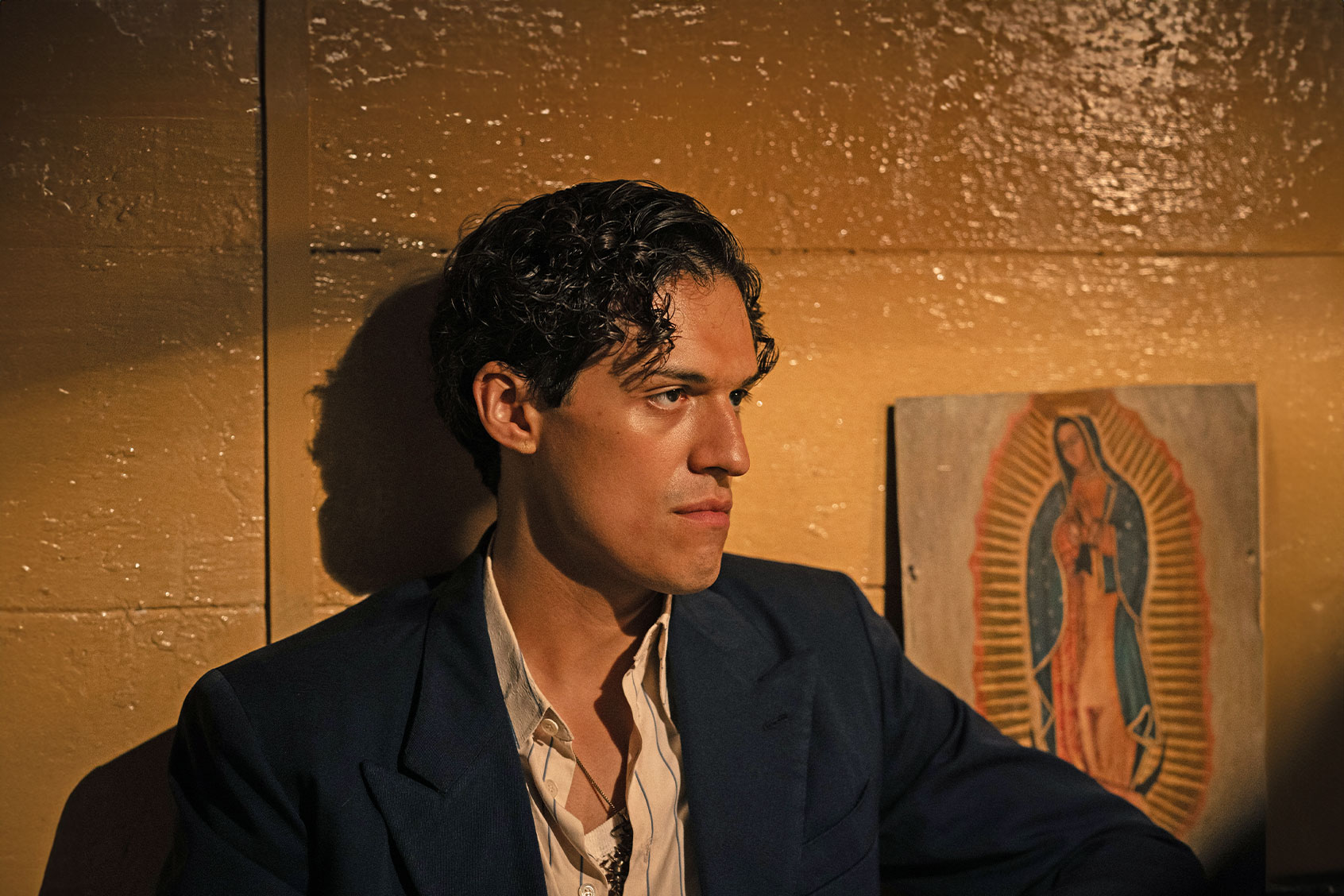
In “Queer,” Daniel Craig is blisteringly beautiful as he falls for love’s devastating power

On paper, it may seem like director Luca Guadagnino’s two 2024 releases are entirely different. The colossal hit “Challengers” was a hard pivot from the Italian director’s typical style, teeming with a bold, pulsating sexiness far more overt than most of his other efforts. The film was also Guadagnino’s most accessible yet, capturing a sex-starved zeitgeist looking to latch on to something truly horny amid modern sex scene discourse. But after making a hard tilt toward the mainstream just seven months ago, Guadagnino’s latest film “Queer” pivots back toward his softer, narratively opaque roots. And though the two movies look like diametrical opposites, they share a pair of undeniable throughlines: the aching, all-consuming feeling of desire and the remarkable actors chosen to depict it.

Guadagnino manages to adapt the otherwise unadaptable, challenging his actors as much as he does his audience.

“Queer,” adapted from William S. Burroughs’ 1985 novella, dials down the sheer athletic intensity of its predecessor in Guadagnino’s filmography. Still, the salty scent of sweat and the weight of unspoken yearning lingers in the atmosphere, waiting for a wholly committed Daniel Craig to saunter into the frame in a white linen suit to pick up where “Challengers” left off. In “Queer,” Craig plays William Lee, an addict in 1950s Mexico City whose dependence on drugs and alcohol is as torturous as his penchant for gay sex — though he’s better at concealing the former than the latter. Like any functioning addict, Lee is one push from falling off the edge where he has so carefully perched himself. When he meets the strapping young army vet Eugene Allerton (Drew Starkey), Lee is thrust into free fall, stricken by compulsion and fixation unlike anything he’s experienced before. 

Though “Queer” could be seen as a thematic companion to Guadagnino’s 2017 film “Call Me By Your Name” — which was adapted from equally controversial source material — the movies are more alike in feeling than form. With “Queer,” Guadagnino and screenwriter Justin Kuritzkes take an abstract approach to fleshing out the intricacies of Burroughs’ work. Through protracted, surrealist drug trips, striking production design, and sex scenes that are as erotic as they are realistic, Guadagnino manages to adapt the otherwise unadaptable, challenging his actors as much as he does his audience. Those aspects of the film are formidable and will surely leave some viewers bewildered, if not irritated. But that’s precisely how the raw pain of love often feels, and “Queer” conveys that unique torment more exquisitely than any other film this year.

[Craig]’s never had a role quite like Lee.

Falling in love is, of course, frequently mortifying, and Lee is no stranger to embarrassing himself in front of his paramours. When he first spots Allerton strolling past a cock fight in the street, Lee is transfixed. (Surely, it’s no accident that this lust-at-first-sight moment happens at such an appropriately named event.) In the Ship Ahoy, one of the many local bars that Lee and his band of homosexual flâneurs frequent, Lee orders a shot of mezcal for courage before standing up to bow in Allerton’s direction. The advance is brushed off by its recipient, and Lee exits in a huff to pursue a lover elsewhere, ultimately bringing a young man (Omar Apollo) back to a motel where the stark red hallway walls reflect the passion that takes place behind them.

QueerOmar Apollo in "Queer" (A24)Guadagnino has proven himself a master of imparting a feeling without words, and “Queer” is no different. Any narrative-driven dialogue is relatively sparse. Instead, Guadagnino’s frequent cinematographer Sayombhu Mukdeeprom beautifully illustrates emotions through color and framing. The glow of the red motel walls, the neutral whites of Lee and Allerton’s impartial meeting place the Ship Ahoy, and later, the verdant green of the jungle all say what the characters so often cannot. Lee makes no secret of his homosexuality, but he knows this type of candid personality can be abrasive and unwelcome in his era, meaning that he must be reserved in the right moments. This allows Guadagino and Kuritzkes to frequently leave it up to the audience to infer what characters feel at any given time, while breathtaking miniature sets and dreamy, painted skies remind us that Lee is but a small piece of a big world, fighting to find meaning in his insignificance. 

Lee uses heroin to escape the feeling of triviality, but when Allerton warms up to him, Lee’s focus shifts to a new drug: yagé. Lee is fascinated by the plant, specifically the rumblings he’s heard that it can be used for telepathy. At first, his mentions of yagé are fleeting, mere ways of making interesting conversation with a lover who only carries a passing interest in Lee. But despite Allerton rebuking any queerness in himself, Lee descends into an obsession with both the young man and yagé, convincing Allerton to accompany him on a trip to South America to find anyone who can administer the drug he believes will open the door between the two men.

“Queer” demonstrates that there is no other working director who can so vividly recall love’s immense power.

Craig is known for playing characters with a tough exterior, and in that way, “Queer” is a novel film for the seasoned actor. He’s never had a role quite like Lee, which allows him to approach the world with far less certitude than a James Bond or Benoit Blanc. Craig finds a blistering beauty in that ambiguity, reducing himself to a sniveling, lovestruck addict who wants nothing more than to understand why the person he’s falling for can’t open up in the same way Lee can. Starkey’s Allerton is just as lost as Lee, though far less forthright about it. As he moves Allerton between fascination and disinterest, Starkey — best known for being one of the leads in Netflix’s “Outer Banks” — matches Craig’s experienced aplomb and proves himself a stunning new talent.

When “Queer” makes its way to its third act in the South American jungles, things take a turn for the bizarre. But it’s in that abnormality where the film finds its most moving passages, given just enough comic relief by an almost unrecognizable turn from Lesley Manville as a wacky scientist who happens to be the world’s top yagé researcher. The drug trip sequences are inevitable, and by the time we reach them, Guadagnino has already done so much to remind us of the suffering we endure when those we love are just out of reach. The ephemeral caress of a lover’s touch is stunningly depicted through literal translucence, giving “Queer” some of its most unforgettable images whose only competition is the yagé scenes. For a director who has spent his entire career portraying the splendor and sadness of love in equal measure, Guadagnino’s third act isn’t shocking so much as it is thoroughly touching.


Want a daily wrap-up of all the news and commentary Salon has to offer? Subscribe to our morning newsletter, Crash Course.


“Queer” demonstrates that there is no other working director who can so vividly recall love’s immense power. Guadagino adapts the unadaptable, turning out highly original, stylish films that draw equally resplendent performances from his actors, and his latest is no different, even if it is far more ambiguous. Prioritizing a feeling over narrative sense is a daring risk in contemporary cinema, but with “Queer,” Guadagnino asserts that it’s a worthwhile one. Here, he asks us to think back to our great loves — realized or unrequited — and warns us that the longing never goes away. Impossible beauty only becomes more intense with the knowledge that you may never know its full extent. All we have is a caress, a stare or a lingering touch. And sometimes, those things are so powerful that we’ll go to the end of the world just for the chance to understand someone a little better. 

"Queer" opens in New York and Los Angeles on Nov. 27 and nationwide on Dec. 13.

Texas won’t review maternal deaths post-Dobbs: report

A Texas committee that is meant to review pregnancy-related deaths in the state won’t review cases from 2022 and 2023, the Washington Post reported. That means that pregnancy-related deaths since the U.S. Supreme Court overturned Roe v. Wade with the Dobbs decision won’t be reviewed in the state. In Texas, doctors who violate the state’s strict abortion ban face up to 99 years in prison. According to ProPublica, at least three women have died in Texas due to delays in care related to the state’s abortion bans. 

According to the report, Texas Maternal Mortality and Morbidity Review Committee members said in September the change was made to “be more contemporary.”

The move has reportedly left some committee members confused and full of concern. 

“If women are dying because of delays, and we have this huge new policy in Texas that affects their lives, why would we skip over those years?” one member of the Texas maternal mortality committee said, speaking on the condition of anonymity out of fear of retribution, told The Post. “I’m worried.”

According to the report, none of the members interviewed by The Post said they heard the decision was an attempt to cover up potential deaths related to abortion bans. The committee has skipped over previous years as well, the report stated.

According to the most recent data on maternal mortality rates in Texas, women who died while pregnant, during labor and delivery, or in the year after giving birth increased in 2020 and 2021. As The Post explained, experts have suspected that the COVID-19 pandemic could have contributed to the rise in deaths, in addition to the abortion ban the state passed in the second half of 2021. According to a separate investigation in JAMA Pediatrics, the number of newborn babies dying in Texas increased by 13% since the state's near-total abortion ban went into effect.

Cinnamon, spice and “everything nice” – why lead-tainted cinnamon products have turned up on shelves

Spices bring up feelings of comfort, cultural belonging and holidays. They can make our homes smell amazing and our food taste delicious. They can satisfy our cravings, expand our culinary horizons and help us eat things that we might normally dislike. Spices have health-enhancing properties and, in medicine, have been used to heal people since the ancient times.

Recently, however, spices have been getting a bad rep.

In September 2024, Consumer Reports, a nonprofit organization created to inform consumers about products sold in the U.S., investigated more than three dozen ground cinnamon products and found that 1 in 3 contained lead levels above 1 part per million, enough to trigger a recall in New York, one U.S. state that has published guidelines for heavy metals in spices.

The Food and Drug Administration issued three alerts throughout 2024, warning consumers about lead in certain brands of cinnamon products. Such notices rightfully put consumers on alert and have people wondering if the spice products they buy are safe – or not.

A Consumer Reports investigation of more than three dozen ground cinnamon products found that 1 in 3 contain lead levels above 1 part per million.

As an environmental epidemiologist with training in nutritional sciences, I have investigated the relationship between nutritional status, diets and heavy metal exposures in children.

There are several things consumers should be thinking about when it comes to lead – and other heavy metals – in cinnamon.

Why is lead found in cinnamon?

Most people are familiar with cinnamon in two forms – sticks and ground spice. Both come from the dried inner bark of the cinnamon tree, which is harvested after a few years of cultivation. For the U.S. market, cinnamon is largely imported from Indonesia, Vietnam, Sri Lanka, India and China.

One way that lead could accumulate in cinnamon tree bark is when trees are cultivated in contaminated soil. Lead can also be introduced in cinnamon products during processing, such as grinding.

When ground cinnamon is prepared, some producers may add lead compounds intentionally to enhance the weight or color of the product and, thus, fetch a higher sale price. This is known as "food adulteration," and products with known or suspected adulteration are refused entry into the U.S.

However, in the fall of 2023, approximately 600 cases of elevated blood lead levels in the U.S., defined as levels equal to or above 3.5 micrograms per deciliter – mostly among children – were linked to the consumption of certain brands of cinnamon apple sauce. The levels of lead in cinnamon used to manufacture those products ranged from 2,270 to 5,110 parts per million, indicating food adulteration. The manufacturing plant was investigated by the FDA.

More broadly, spices purchased from vendors in the U.S. have lower lead levels than those sold abroad.

There is some evidence that cinnamon sticks have lower lead levels than ground spice. Lead levels in ground cinnamon sold in the U.S. and analyzed by Consumer Reports ranged from 0.02 to 3.52 parts per million. These levels were at least 1,500 times lower than in the adulterated cinnamon.

There are no federal guidelines for lead or other heavy metals in spices. New York state has proposed even stricter guidelines than its current level of 1 part per million, which would allow the New York Department of Agriculture and Markets to remove products from commerce if lead levels exceed 0.21 parts per million.

What does it mean that 'the dose makes the poison'?

The current FDA guideline on daily intake of lead from diets overall is to limit lead intake to 2.2 micrograms per day for children. For women of reproductive age, this value is 8.8 micrograms.

The lead dose we are exposed to from foods depends on the level of lead in the food and how much of that food we eat. Higher doses mean more potential harm. The frequency with which we consume foods – meaning daily versus occasionally – also matters.

For spices like cinnamon, the amount and frequency of consumption depends on cultural traditions and personal preference. For many, cinnamon is a seasonal spice; others use it year-round in savory dishes or sauces.

Cinnamon is beloved in baked goods. Take a cinnamon roll recipe calling for 1.5 tablespoons (slightly less than 12 grams) of the spice. If a recipe yields 12 rolls, each will have around 1 gram of cinnamon. In the Consumer Reports investigation, some cinnamon products were classified as "okay to use" or "best to use."

The highest value of lead in cinnamon products in the "okay to use" category was 0.87 parts per million, and in the "best to use" category, it was 0.15 parts per million. A child would have to consume 2.5 or more rolls made with the "okay to use" cinnamon to exceed the FDA guideline on limiting lead intake from foods to 2.2 micrograms per day, assuming that no other food contained lead. To exceed this guideline with "best to use" cinnamon, a child would have to eat 15 or more rolls.

Can cinnamon contribute to elevated blood lead levels?

Because of lead's effects on development in early life, the greatest concern is for exposure in young children and pregnant women. Lead is absorbed in the small intestine, where it can latch onto cellular receptors that evolved to carry iron and other metals.

The impact of a contaminated spice on a person's blood lead level depends on the dose of exposure and the proportion of lead available for intestinal absorption. For several spices, the proportion of available lead was 49%, which means that about half of the lead that is ingested will be absorbed.

Lead absorption is higher after a fast of three hours or more, and skipping breakfast may contribute to higher blood lead levels in children.

People who have nutritional deficiencies, such as iron deficiency, also tend to absorb more lead and have higher blood lead levels. This is because our bodies compensate for the deficiency by producing more receptors to capture iron from foods. Lead takes advantage of the additional receptors to enter the body. Young children and pregnant women are at higher risk for developing iron deficiency, so there is good reason for vigilance about lead in the foods they consume.

Studies show that among children with lead poisoning in the U.S., contaminated spices were one of several sources of lead exposure. Studies that estimate blood lead levels from statistical models suggest that consuming 5 micrograms of lead or more from spices daily could substantially contribute to elevated blood lead levels.

For occasional or seasonal consumption, or lower levels of contamination, more research is needed to understand how lead in spices would affect lead levels in the blood.

For people who have other sources of lead in their homes, jobs or hobbies, additional lead from foods or spices may matter more because it adds to the cumulative dose from multiple exposure sources.

How to test for elevated blood lead levels

The Centers for Disease Control and Prevention recommends that children at risk for lead exposure get a blood lead test at 1 and 2 years of age. Older children can also get tested. Finger-prick screening tests are often available in pediatric offices, but results may need to be confirmed in venous blood if the screening result was elevated.

Adults in the U.S. are not routinely tested for lead exposure, but concerned couples who plan on having children should talk to their health care providers.

What to consider when using or buying cinnamon or other spices

If the product is on an FDA Alert or the Consumer Reports "don't use" list, discard it.

Other questions to consider are:

  • Does your household use spices frequently and in large amounts?
  • Do young children or pregnant women in your household consume spices?
  • Do you typically consume spices on breakfast foods or beverages?

If the answer to any of these questions is yes, then buy good-quality products, from large, reputable sellers. Think about using cinnamon sticks if possible.

And continue to enjoy spices!

Katarzyna Kordas, Associate Professor of Epidemiology and Environmental Health, University at Buffalo

This article is republished from The Conversation under a Creative Commons license. Read the original article.

“The Seed of the Sacred Fig” explores the ideology of Iranian family members who “submit to power”

Exiled Iranian filmmaker Mohammad Rasoulof’s “The Seed of the Sacred Fig” is a powerful indictment of totalitarianism and the Iran regime. The film, which won both a Special Jury Prize and the FIPRSECI award at this year’s Cannes Film Festival, and is Germany’s Oscar submission for best international film, is a gripping and incendiary drama. It prompted Rasoulof, who was sentenced to eight years in prison, to escape Iran on foot. The film was made in secret, with post-production done remotely. 

The filmmaker is no stranger to controversy. His outstanding 2020 film, “There Is No Evil” was an equally brilliant examination of the death penalty in Iran from four perspectives. It, too, was made in secret and, like all of Rasoulof’s films, banned in Iran.

"Patriarchy tends to become repressive, and if we pay attention, that’s what happens in Iran with the regime."

In “The Seed of the Sacred Fig,” Iman (Missagh Zareh), who works in the justice system, gets promoted to an investigator for the State. This puts his family at risk, but his supportive wife Najmeh (Soheila Golestani) is pleased they will soon be able to move to a less cramped apartment. She informs their teenage daughters Rezvan (Mahsa Rostami) and Sana (Setareh Maleki) that they need to be careful not to post anything on social media or reveal the identity of their father as it could put their lives and safety in jeopardy.

But when Rezvan’s friend from college, Sadaf (Niousha Akhshi) becomes involved in the “Woman Life Freedom” protests in Tehran, it emboldens both daughters and forces Najmeh to keep a secret from her husband, who is sure to disapprove.

As tensions rise, things are further complicated when Iman’s gun goes missing and he suspects one of his family members of stealing it. His efforts to get to the bottom of who took his weapon culminate in a series of very intense episodes.

Iman represents Iran, as well as submission, faith and absolute obedience. In contrast, his daughters are emblematic of the changing world, and his wife is caught in the middle, protecting both her husband and daughters. 

With the assistance of an interpreter, Iante Roach, Rasoulouf spoke with Salon about his remarkable and courageous film.  

This film tackles issues about state control. Can you talk about your strategy as a filmmaker to provoke and question authority? 

For me, the most important issue is the relationship between individuals and power and accepting responsibility and individual responsibility. This is something I think about all the time. I’m convinced that in a society where there is a high level of taking on personal responsibility it is harder, if not impossible, for totalitarianism to take root. On the other hand, there is also another concept, vis-à-vis, personal responsibility, which I tend to call [speaks Persian] which means “Handing your head over to someone else.” We could translate that as submission to power, to ideology. I try to tell stories about the relationship between individuals and power, and naturally, this leads to them having a political dimension.

“The court is not your home,” one character says when Iman gets authoritative. He wants to “restore” his family which he feels is splintering apart. Can you talk about the issues of public and private? How laws are applied in society, but different rules are applied within a family?

Totalitarian society is almost as if power and ideas are [configured] with the head at the top of the pyramid and projected downwards to member of society. In the film, there is a scene where Iman and his wife are praying. We see Iman praying and submitting to a higher power, in this case, a religious divinity, a god. Then we see his wife behind him, following him. He wants the same from his children. They should also follow him. It is as if the person who chooses to submit to power or an ideology wants others to submit to him or her. It is a chain of relations.

We need your help to stay independent

The film addresses protests against an authoritarian regime. Iman, the patriarch, becomes a microcosm for the macrocosm of Iranian society the film depicts.  

The film was made outside of the realm of Iranian censorship in defiance of it. But I think the main issue goes beyond patriarchy. In this specific case, it is set within a totalitarian, religious, theocratic regime, as patriarchy is the particular shape the submission to power takes within this country because men are clearly, within that system, considered superior to women. 

The Seed of the Sacred FigThe Seed of the Sacred Fig (Neon)

Did Iran specify what was objectionable about your film that was banned?

You would never be able to get permission to shoot such a film that posits these topics in Iran. It is more that they think the film in its entirety is wrong and should not exist. 

The gun in the film is a symbol. It is faith. It is “the law,” and it is the “system.” It is the father. What can you say about the ideas of authority and safety and paranoia?

The film sets out as a family drama where the family dynamics and relationships are the most important thing, and it slowly unravels in a quite different direction. The weapon is a symbol of power, and what I wondered was if the figure who impersonates power thinks or is afraid that they will lose that power, how will they react? In such circumstances, my guess is that patriarchy tends to become repressive, and if we pay attention, that’s what happens in Iran with the regime. I think that these concepts eventually transcend the family and that allows us to see the family as representing society at large, rather than just one specific entity. And as we approach the end of the film, there is a new layer which is a historical gaze at the story of Iran and the story of the film within context of Iranian history. 

I appreciate that “The Seed of the Sacred Fig” asks viewers to put themselves in the position of the characters: Do you protest like Sadaf? Do you help someone like Rezvan? Do you turn a blind eye to the protests like Najmeh? Or do you punish like Iman? I kept shifting my perspective and aligned with each character at different times. What do you want viewers to glean from your film?

I think it is important that you see the human facets of someone who collaborates with the regime and is a cog of the regime. A father loves his children and wants the best for them even if he collaborates with a highly repressive state. At the same time, Iman wants to choose what is best for his children in order to best protect them. If we look at the mother, she of course, to quite an extension in the film, is an active agent of patriarchy even though she is a woman. Because she thinks she can only achieve safety, even just for herself, by protecting the family. People who collaborate with regimes of this sort are not necessarily monsters. But what is scary about them is that they have given up their capacity for free thinking and they refer to an external authority. That’s why I insist on the fact that the main theme is submission to power or ideology.

All the characters lie, deceive or hide the truth. What observations do you have about this? 

The question is: Why do they do that? The totalitarian systems always want you to hide your real self. The father hides many things because he is afraid of power and those above him. The mother hides many things because she is afraid of the father. The children do the same because they are afraid of both parents. And what is lost here is trust. And that is absolutely what a totalitarian system needs in order to hold on to power and continue its job. It is the way society becomes atomized, and people cannot come together to effect change. What is interesting here is how at this way of operating it penetrates down from top of a pillar to a nuclear family.  When the father is so convinced of the ideas and of the truth, that he has chosen to submit himself to that, there is no other reality in the world. I think in the end what will happen is that this mistrust or distrust will pervade the system itself and destroy it from within. 

"People who collaborate with regimes of this sort are not necessarily monsters."

To give an example, one day, when I was in prison in 2022, at the height of the “Woman Life Freedom” movement, I was walking along a corridor and a prison guard took me by the arm and took me into another corridor, where we would not be filmed by the closed circuit cameras, and he asked me, “What do you think is going to happen?” I told him, “Well, actually, you are the person who can go out of here and see what is happening with all these protests. Perhaps you should be the one who tells me.” And the guard says, “If things get really bad and there is a regime change, would you be ready to say we treated you here very well?” And that is really the way this family [in the film] is impacted. The deep rift that takes place within it is a consequence of external events. 

The Seed of the Sacred FigThe Seed of the Sacred Fig (Neon)

It is the metaphor of the seed of the sacred fig of the title, which corrupts and takes over. It is the symbol of a tree killing its host to survive. Can you talk about this metaphor for Iran? 

Absolutely, but then again, I am convinced that the beauty of this metaphor as a title is that you can look at it from the perspective of each different character and draw a different conclusion, or see a different story being told by the title. If we look at the tree’s life cycle from the viewpoint of the daughters, what is beautiful and interesting is the hope that these new shoots represent. Whereas if we take on the father’s perspective maybe what would interest us are the unethical aspects of the tree story. I love playing with titles where you can read different meanings.

“The Seed of the Sacred Fig” is a very intimate and claustrophobic, especially the first half set in the family’s home. Can you talk about shooting close-ups of an injured face, or the detail of Najmeh shaving Iman?

I was very keen to get across how this man, Iman, has turned his own home into a prison — a prison within which life is still present, and still happening. The scene in which Najmeh is removing the fragments of the bullet from Sadaf’s face reminds us of the humanity that is present in all these characters. Because in the end it is a decision the mother takes to ignore what she sees in order to protect her husband’s job and what she perceives as the family’s safety and security. When she is shaving her husband’s face and taking intimate physical care of him, it is her way of helping him achieve his aims and dreams. In that scene, we hear a piece of music that refers to an Iranian poem which reminds us how in Iranian culture, even love is something where you have to submit. And that is what I really like to investigate — does that mean this submission to power has deep cultural roots and is that where it comes from and is that why it is allowed to continue? Or is it the other way around — is this culture and literature a result of a millennia of tyranny that has seeped into the culture?  


Want a daily wrap-up of all the news and commentary Salon has to offer? Subscribe to our morning newsletter, Crash Course.


The film is getting considerable Oscar buzz. What would it mean for you if this film gets shortlisted or even wins the Oscar? 

Well, I’m totally stunned. I never thought about the Academy Awards ever in my professional life. I saw a submission from Iran as the only way to have access to the Academy. Of course, all of my films are banned, so there is no way they will ever send them to the Academy. The way this film was made was quite different, and in the end, it led to Germany choosing to submit it as best international feature film. This has a great deal of significance for me. It feels to me as if whoever made this choice in Germany decided to have their people become the spokespersons for my people, for another people. I think this shows that the human aspect of cinema is stronger than its tribal one. 

Finally, if it is not prying, can you talk about living in exile? 

It’s very early days. I’ve been so busy and have been travelling non-stop that I have yet to get to that moment when I may feel I have some control over my time and can start thinking about this. I don’t know when that moment will come.

“The Seed of the Sacred Fig” opens Nov. 27 in select theaters with national expansion to follow.

Trump-appointed judge dismisses Texas lawsuit against Jack Smith

A Texas judge has denied an attempt by the state's top law enforcement official to prevent special counsel Jack Smith from destroying records related to his cases against President-elect Donald Trump, The Washington Post reported

In a complaint filed earlier this month, Texas Attorney General Ken Paxton asked U.S. District Judge Matthew J. Kacsmaryk, who was appointed by Trump in 2017, to order Smith to preserve all records and communications from his cases against Trump, which he fears “will never see daylight.” 

Paxton previously sought various records from Smith’s investigations under the Freedom of Information Act. In the complaint, he cited photos of a paper shredding truck parked outside the Department of Justice as proof that Smith planned to destroy the records.

“In order to ensure that he will be able to vindicate his rights under FOIA, Attorney General Ken Paxton seeks an order from this Court that Defendants preserve all of Jack Smith’s records— or, at a minimum, all records that Paxton has requested in his FOIA request," the complaint reads.

Kacsmaryk denied Paxton’s request on Monday, calling his reasoning and demand “unserious.” The same judge has previously sided with Trump's allies on numerous occasions, as when he sided with anti-choice activists in seeking to limit access to abortion drugs, a decision that was reversed by the Supreme Court.

“Defendants could shred paper for many legitimate reasons, and Plaintiffs have proffered nothing to suggest more nefarious intentions,” Kacsmaryk wrote in a four page order. 

Earlier this week, Smith filed motions to drop all federal charges against Trump related to his attempts to overturn the results of the 2020 election in the leadup to Jan. 6 as well the mishandling of classified documents. 

Smith cited a longstanding DOJ policy that sitting presidents cannot be criminally charged, which would apply when Trump is inaugurated on Jan. 20, 2025. Both of Smith’s requests for dismissal were approved, terminating all active federal criminal cases against Trump.

Trump prepares to block funding for sanctuary cities in pursuit of mass deportation

President-elect Donald Trump's advisors are drawing up plans to strip federal funding from cities that do not comply with the administration's deportation policies, three sources familiar with the conversations told The Washington Post.

Many of the president-elect's allies have also discussed the idea publicly, with billionaire entrepreneur Vivek Ramaswamy, the co-leader of Trump's "Department of Government Efficiency" emerging as a chief advocate. He and Elon Musk have been charged by Trump with slashing federal spending across all departments, and they might accomplish some of that goal by blocking federal money from being dispersed in particular jurisdictions.

“Not an iota, not a cent of government spending should go to subsidize this. Not to sanctuary cities, not to federal aid to people who are in this country illegally, and we’re going to see a large number, by the millions, of self-deportations as well," Ramaswamy said earlier this month on ABC's "This Week."

"Sanctuary cities" refer to municipalities that do not enforce federal policy on deportations, such as by denying U.S. Immigration and Customs Enforcement access to jails. Supporters of sanctuary policies argue that deportations wrench families apart and undermine anti-crime measures by deterring people from calling authorities in an emergency, for fear that doing so would lead to their banishment from the country. Furthermore, they say that local police are under no obligation to enforce directives from ICE without a criminal warrant signed by a judge.

"Self-deportation," meanwhile, refers to the idea that migrants will leave the country if life for them is made unbearable enough. But Trump is clearly not betting on most of them making what he views as the right decision. Instead, he has promised to use the full power of the federal government to enact mass deportations once he becomes president. Now that he has won, blue-state governors and Democratic mayors are pledging to defy him. It's a similar to what played out after 2016: Just as Trump faced difficulty in slashing funding to his foes then, he is likely to run into the same hurdles this time around.

Chicago Mayor Brandon Johnson, a Democrat, told the Post that “there will not be any cooperation” on deportations and that he would challenge any attempt by the federal government to defund the city.

“We’re not intimidated or in the least bit afraid of threats that wish to undermine our values or any effort to separate working people from one another,” Johnson said. “I’m certainly not going to compromise our local police department’s work by adding a component of their work that is not just.”

We need your help to stay independent

In his first term, Trump issued an order for federal agencies to block cities like Chicago from receiving grants, but a judge struck it down. In 2019, however, his Justice Department was permitted by a federal appeals court to give preferential treatment to cooperative cities on providing community policing grants. Trump reportedly wants to try a more extensive blockade again, but Matthew Lawrence, an assistant dean at the Emory University law school and former White House lawyer, told the Post that local governments could argue that spending decisions are the purview of Congress, not the president, if and when they sued the Trump administration over funding or lack thereof.

While Democrats might try to throw up roadblocks in Congress, both houses are controlled by the GOP in the coming session, and many Republican lawmakers have expressed support for some form of Trump's deportation agenda. Rep. Jeff Van Drew, R-N.J., a member of the House Judiciary Committee, told Fox Business on Monday that Congress should consider applying deductions to state and local taxes only for residents of states that enforce Trump's deportation laws.

Steve Bannon, the far-right operative who helped Trump win in 2016, told the Post that while the president-elect would be "remorseless" in rescinding federal funds, money would not be chief among the worries of Democratic governors and mayors. He maintains that Trump will also seek criminal prosecutions of those who defy him.

“This sanctuary cities thing will be an early administration showdown, and I believe Trump will come down as hard as you can see,” Bannon said. “The sanctuary cities movement will be finished under President Trump — he’s not going to play any games here; this is too important to the country. You can’t play too smashmouth with this crowd; you have to do it early, and you have to do it hard.”

Denver, Chicago and New York City are all potential targets, Bannon added.

“I think Chicago is going to be made an example of,” said one of the Post's sources.

Trump taps art collector with no experience to lead US Navy

President-elect Donald Trump has tapped an art collector and GOP megadonor with no military experience to lead the U.S. Navy, he announced on Tuesday.

John Phelan is the leader of the private investment firm Rugger management and was a major fundraiser for Trump’s campaign. He donated $834,600 to Trump’s joint fundraising committee in April, FEC filings show, and also hosted a dinner for the president-elect at his $38 million home in Aspen, Colorado, The Guardian reported. The dinner raised $12 million for Trump's campaign. 

“John will be a tremendous force for our Naval Servicemembers, and a steadfast leader in advancing my America First vision,” Trump wrote in a statement. “He will put the business of the U.S. Navy above all else.”

Trump selected Phelan after a series of interviews in Mar-a-Lago earlier this week, sources told Politico. 

Phelan previously oversaw the firm that handled investments for Michael Dell, the founder of Dell Inc. Phelan and his wife Amy are avid art collectors and regularly hold collection viewings for celebrity attendees at their Colorado estate, according to Art News. 

“John’s intelligence and leadership are unmatched. John holds an MBA from the Harvard Business School, and is a truly brilliant guy!” Trump said in his statement. “His incredible knowledge and experience will elevate the lives of the brave Americans who serve our Nation.”

Other candidates considered for the position included retired naval aviator Rep. Mike Garcia, R-Calif., and retired Rep. Ronny Jackson, R-Tex., who was Trump’s chief medical advisor during his first term, Politico reported

Phelan will serve under Trump’s pick for secretary of defense, Pete Hegseth, a former Fox News host facing allegations of sexual assault. Trump is also considering businessman Trae Stephens to be the Pentagon’s No. 2, The Wall Street Journal reported.

We need your help to stay independent

Throughout his first term in office, Trump was regularly frustrated with the military’s refusal to obey his every demand, which included firing missiles into Mexico to target drug labs and to "just shoot" protestors marching against police brutality.

His 2024 nominations suggest an intent to fulfill his promise to fill the government with loyalists and self-styled disruptors who will follow-through with his plans to use the military for mass deportations to go after the “enemy from within." The president-elect also said he would fire military generals who are “too woke” and has vowed to ban transgender people from serving in the military, which would result in at least 15,000 active members being forced to leave, The New Republic reported. 

Hegseth, who has promised to get rid of diversity initiatives in the military and wrote that America is head towards "some form of civil war," appears to have the right amount of inexperience and loyalty Trump is looking for. Though Phelan's views are lesser-known than Hegseth's, his similar lack of experience has invited questions as to why he's been selected.

“And of course, Phelan has not served in the Navy. Or any other branch of military service. But he is a big Trump donor,” Paul Rieckhoff, a veteran and founder of Iraq War Veterans of America wrote on X. “The least qualified and most overtly political cabinet in American history continues to expand. And #OurEnemiesAreCelebrating.”

"John Phelan, Trump’s nominee for Secretary of the Navy, appears to have absolutely zero relevant experience for the job — other than having hosted a fundraising dinner for Trump at his $38 million home in Aspen. He’s an art collector who runs a private equity firm," Democratic pollster Matt McDermott wrote on X. 

Ex-prosecutor: Jack Smith could still keep Trump cases “alive”

In a column on MSNBC's website Thursday, former U.S. attorney Barbara McQuade suggests that far from “obeying an authoritarian in advance,” special counsel Jack Smith's request to pre-emptively shut down his cases against President-elect Donald Trump was a shrewd move that could ensure their survival in the long run.

According to McQuade, nixing the cases "without prejudice" means that they can be filed against Trump when he eventually leaves office, stops Trump's incoming attorney general from permanently blocking them and lets Smith “explain his reasons for dismissing the case, rather than allowing Trump’s future AG to mischaracterize them."

Smith was in in the middle of several Justice Department cases against Trump charging him with election fraud and illegally retaining classified documents after leaving office. Trump has held a grudge against Smith and vowed to fire him upon entering office for his second term on Jan. 20. When Smith filed the motions to dismiss the cases, he cited the fact that the Justice Department’s Office of Legal Counsel, whose opinions are “binding” on the special counsel, asserts that a sitting president is constitutionally immune to indictment and criminal prosecution and must be allowed to carry out the duties of the office.

But, McQuade noted, Smith noted that this relief from criminal prosecution was "temporary" and only applies during the president's term in office.

"It may be that a future attorney general, whether serving in a Democratic or Republican administration, will lack the appetite to resuscitate the cases against Trump in 2029," McQuade concluded. "But Smith has done all he can to preserve that possibility."

Why “Hot Ones” said no to Kamala Harris

"Hot Ones," the popular YouTube show hosted by Sean Evans, has reached viral status since its debut in 2015, snagging bigger and bigger celebrity guests to publicly suffer through tiny bites of chicken (or cauliflower, if they're vegetarian) slathered with some of the hottest hot sauces on the market. Now on its 25th season, recent guests have included Jimmy FallonPaul Mescal, Bowen Yang, with even Demi Moore signing on for a special Thanksgiving appearance, but there's one very notable figure who was shut out from the opportunity to prove that they can withstand the "hot seat," Kamala Harris.

During an election post-mortem episode of the "Pod Save America" podcast, Jen O'Malley Dillon, the Harris-Walz campaign chair, Quentin Fulks, deputy campaign manager, and senior advisors Stephanie Cutter and David Plouffe revealed that they reached out to "Hot Ones" about having their candidate on during a point in Harris' campaign where she was angling for appearances on non-political shows, in an effort to appeal to young voters, but the creators of the show declined the request.

According to Stephanie Cutter, who ran messaging and media strategy for Harris, the show “didn’t want to delve into politics." 

Per The Daily Beast's coverage of the Harris campaign team's remarks on the rejection, Cutter said they "got that reaction nearly 'across the board' when trying to book the Democratic nominee on the same types of non-political media that happily welcomed Trump."

“I don’t think he had the same problem,” Harris campaign manager Jen O’Malley Dillon chimed in, adding that Trump “certainly was able to tap into some cultural elements in ways that we couldn’t.”

“Bad news for public health”: Jay Bhattacharaya, Trump’s pick to lead NIH, got COVID-19 all wrong

By most accounts, President-elect Donald Trump bungled the federal response to COVID-19, publicly downplaying concern about a virus that he privately admitted was “deadly stuff.”

“It’s going to disappear. One day — it’s like a miracle — it will disappear,” Trump said in Feb. 2020, at the same time he was admitting to journalist Bob Woodward that the virus was spreading fast and was more lethal than “even your strenuous flus.”

Dr. Jay Bhattacharaya, Trump’s pick to lead the National Institutes of Health and oversee some $47 billion in research funding, agreed with Trump at the time; the public version, at least.

In a March 2020 essay he co-authored with a fellow Stanford University scientist, Bhattacharaya, an epidemiologist at Stanford University, argued that COVID-19 was far less deadly than people feared. Although today The New York Times describes him as a doctor who “opposed lockdowns,” he inadvertently made the case for them in The Wall Street Journal — only to then try and knock that case down.

“If it’s true that the novel coronavirus would kill millions without shelter-in-place orders and quarantines, then the extraordinary measures being carried out in cities and states around the country are surely justified,” Bhattacharaya wrote. “But there’s little evidence to confirm that premise — and projections of the death toll could plausibly be orders of magnitude too high.”

Bhattacharaya argued that public health experts were almost certainly overstating the danger of the novel coronavirus, suggesting the fatality rate was far below what we were being told.

“If the number of actual infections is much larger than the number of cases — orders of magnitude larger — then the true fatality rate is much lower as well,” he wrote (“it could make the difference between an epidemic that kills 20,000 and one that kills two million,” he explained). “That’s not only plausible but likely based on what we know so far.”

Indeed, the actual mortality rate, he argued, is likely “one-tenth of the flu mortality rate of 0.1%.”

COVID-19 would go on to kill more than 1.2 million Americans, according to the CDC, and the mortality rate, even after vaccines and repeat infections, is still worse than the flu. While Bhattacharaya was right that “a 20,000- or 40,000-death epidemic is far less severe a problem than one that kills two million,” he was wrong that this would be that sort of outbreak. And critics argue his solution, premised on the virus being far less deadly than it proved to be, would have killed many more by letting COVID-19 rip through the country as all but the elderly and immunocompromised went about their regular business.

We need your help to stay independent

Critics of early 2020 lockdowns, like Bhattacharaya, point to similar mortality rates in states with leaders who adopted different approaches. Early on, for example, New York and California were worse off than Florida in terms of COVID-19 deaths — evidence, to some, that there was no downside to letting everyone enjoy a pre-vaccine happy hour at Applebee’s.

But a 2023 study published by The Lancet found that state governments’ “uses of protective mandates were associated with lower infection rates, as were mask use, lower mobility, and higher vaccination rate, while vaccination rates were associated with lower death rates.” And while Florida had a lower death rate than some blue states, a lead author of the study noted that was because Floridians continued to follow best practices — wearing masks, avoiding public gatherings — even after their political leaders began telling them not to. (Post-vaccine, Floridians, vaccinated at lower rates, are dying more often.)

In other words, Bhattacharaya’s claim to fame in conservative circles ― that he was an early, prescient critic of draconian lockdowns — requires ignoring that he grossly underestimated the danger of COVID-19 and that his advice, if followed, would have resulted in millions more pre-vaccine infections and ensuing deaths.

Now, though, Bhattacharaya is set to be a key player in shaping any future response to a viral outbreak, winning the race to lead NIH after earning the support of Peter Thiel, a far-right billionaire who previously sponsored Vice President-elect JD Vance, and Robert F Kennedy Jr., the anti-vaccine activist who Trump picked to lead the Department of Health (Bhattacharaya has not expressed flat opposition to vaccines but has instead cherry-picked studies to suggest their benefits are in doubt, while ignoring those that affirm they save lives). If confirmed, he will be well positioned to steer billions of dollars in funding toward researchers who share his biases and away from those pursuing the sort of science no longer favored in Washington.


Want a daily wrap-up of all the news and commentary Salon has to offer? Subscribe to our morning newsletter, Crash Course.


Speaking to The Washington Post earlier this year, Bhattacharaya framed his agenda in populist terms, claiming he would change how scientific research is funded to reduce the power of officials like the now-retired Anthony Fauci.

“I would restructure the NIH to allow there to be many more centers of power, so that you couldn’t have a small number of scientific bureaucrats dominating a field for a very long time,” he said. Whether the new bureaucrats will be interested in ceding their power, or amassing it for themselves remains to be seen.

Elizabeth Jacobs, a cancer and nutritional epidemiologist at the University of Arizona, summed up much of the scientific community’s feelings about a self-styled renegade leading NIH.

“This is bad news for public health,” she commented. “Every step Trump takes in his nominations,” she added, “is to dismantle community institutions.”

Trump’s hatchet woman: Pam Bondi is plotting revenge on the Department of Justice

Many Americans were sorely disappointed this week when special prosecutor Jack Smith decided to drag up and withdraw the Jan. 6 indictment and the appeal of the classified documents case dismissal against Donald Trump. Smith said in his filings that the government stood by the charges but because of the Justice Department's (DOJ) Office of Legal Counsel's rule that a sitting president cannot be prosecuted, he had no choice but to drop the charges.The judges in the cases acceded to his requests and dismissed them both without prejudice although the idea that anyone will bring these cases in 2029 when Trump is 82 years old is fanciful. It's over. He got away with it once again.

It's not that we didn't know it was coming one way or the other. In fact, from the moment the Supreme Court issued its shocking opinion on presidential immunity, the writing was on the wall that Trump would face no accountability even if he didn't win the election. It went without saying that if he won, he would order the cases dismissed and that would be that. So, this wasn't a surprise but like so much else we've experienced with Trump, not the least of which was this last election, it was just one more depressing, enervating event seemingly designed to drain the fight out of anyone who sees this man's lawlessness and corruption as a blight on our nation.

That's because one of the disturbing consequences of the repeated failures to hold him to account is the fact that he seems invincible, impervious to negative ramifications for his actions and is therefore seen by his followers as a kind of superhero with magical powers. It's not true, of course. He's no hero, super or otherwise. He's just a shameless, corrupt con artist who has lied his way out of trouble his whole life. And now that he knows he has immunity from any criminal acts he might commit as president, he is willing to use his power to punish his enemies. He's made it clear that Jack Smith and his team are among them.

On a radio show before the election, Trump said that he would fire Smith in "two seconds" because he now has immunity. He also declared that "we should throw Jack Smith out with them, the mentally deranged people. Jack Smith should be considered mentally deranged, and he should be thrown out of the country." Do you think he bears a grudge at all?

When former Congressman Matt Gaetz withdrew after Trump's daft nomination of the Florida man for Attorney General there was a great sigh of relief that someone so unfit would not be made the top law enforcement officer in the land. It was obvious that Trump had nominated Gaetz with the express purpose of going after his enemies in the DOJ and using the power of federal law enforcement to prove his accusations against the department's alleged "weaponization." He has scores to settle and Gaetz was champing at the bit to help him do it.

Unfortunately for Gaetz, he'd made so many enemies on Capitol Hill that Trump was forced to tell him he had to go. (It almost certainly wasn't because of any concerns about the sordid accusation of underage sex and drug use. Those were more likely considered qualifications since Trump related to his legal travails having a similar history himself.) There was hope after he dropped out that Trump might appoint someone more respectable to this important post and one who would be less likely to become his hatchet man. Fat chance.

She has all the credentials Matt Gaetz didn't have and will likely be much more competent in her pursuit of Trump's vengeance agenda.

He didn't name a hatchet man, that's true. He named a hatchet woman, one of his impeachment defense lawyers and the former Florida attorney general, Pam Bondi.

 As David Dayen at the American Prospect has reported, her tenure as Florida's top prosecutor was notorious for her ruthless treatment of Floridians whose homes had been unlawfully foreclosed upon. But America first became acquainted with Bondi during Trump's first campaign when it was reported that as Florida AG she had dropped out of the class action suit against the now-defunct Trump University after having received a $25,000 check from the (also now defunct) Trump Foundation. Bondi was an early Trump supporter when he ran for president, eagerly joining him on the campaign trail as one of his most energetic endorsers and making frequent appearances on Fox News. From that moment on she was always hanging around the periphery of Trump World in one way or another.

She gave a singularly unimpressive performance during Trump's first impeachment trial but turned up later with Rudy Giuliani and his motley crew contesting the election results in 2020. She was in Pennsylvania insisting that "cheating" was going on and was among those who gathered at that historically bizarre press conference at the Four Seasons Landscaping office, which they had evidently mistaken for the Four Seasons Hotel.

We need your help to stay independent

Bondi has also made it clear where she stands on the idea of seeking retribution for the indictments against Trump. As far back as 2023 she has said that the prosecutors should be prosecuted:

Coming from a former prosecutor and state attorney general that's quite a statement. It's clear that this sentiment is one of the main reasons Trump has chosen her for the job.

One of her most important tasks will be overseeing the mass deportation program. Trump's chosen "immigration czar" Tom Homan, who has been tapped to run it, calls her "one hell of an AG" declaring that they plan to prosecute anyone who stands in the way of their plans:


Want a daily wrap-up of all the news and commentary Salon has to offer? Subscribe to our morning newsletter, Crash Course.


The Washington Post reports that Trump wants to fire all of the DOJ attorneys who worked with the special prosecutor's office, including the career civil servants. That would require some extraordinary actions on the part of the new AG. And she seems up for the task.

And that's not all. According to the Post:

Trump is also planning to assemble investigative teams within the Justice Department to hunt for evidence in battleground states that fraud tainted the 2020 election, one of the people said.

You can bet that Trump's new attorney general will not make the mistake that former Attorney General Jeff Sessions made when he recused himself from the Russia investigation even though she clearly should, having been involved in his attempt to overturn the election. She's no doubt as eager to prove the Big Lie as he is. (If she isn't Trump will not be happy.)

Bondi is the perfect Trump choice for this particular gig and I'm surprised he didn't choose her in the first place. She has all the credentials Matt Gaetz didn't have and will likely be much more competent in her pursuit of Trump's vengeance agenda. It would be nice to think that she'll be stopped in the Senate but there's virtually no chance of that. It will be smooth sailing for her. She's right out of Central Casting.

Going in debt for a trip: “Was that really the right call?”

While there’s no place like home, since the pandemic people are traveling like there’s no tomorrow. Wanderlust is all but an addiction, and travelers are hitting the road whether it’s good for their bank account or not.

Forty seven percent of participants in a recent survey from Allianz Travel Insurance said they couldn’t really afford a vacation this year but nearly half of them said they were likely to take one regardless. Similarly, in a Forbes Advisor survey, 30% of parents and 23% of non-parents polled said they were willing to go into debt to fund their travel. 

The trend of vacationing now and paying later has a new phase — “justi-vacation.” You “justify” taking a vacation that you can’t afford for any number of reasons, like telling yourself you deserve it, or that it’s a bucket list trip.

There’s something to be said for living in the moment and seizing the day, but is it worth putting $5,000 to $10,000 or more on a credit card to travel? 

"Why not just go for it?"

Eli Itzhaki promised his wife they would finally take a break after all the years of grinding with their business Keyzoo Locksmiths. “Next thing I knew, I was staring at travel sites, booking tickets and borrowing around $10,000 to make it happen. It wasn’t exactly the smartest financial decision I’ve ever made, but I figured, why not just go for it?”

Last year they went to Indonesia, Singapore, Malaysia and China. They spent time at beaches in Bali, got lost in the temples of Yogyakarta, shifted gears to the modern mecca of Singapore and in Malaysia had a bit of both worlds — the buzzing city life in Kuala Lumpur and the peaceful side of Cameron Highlands. As for China, he said, “It was like living inside a history book and a sci-fi movie at the same time. Shanghai’s skyscrapers one day and exploring ancient Xi’an the next.”

We need your help to stay independent

However, “The debt felt heavy once the vacation buzz wore off," he said. 

"It’s not like business is always predictable, so there were moments where I felt the pressure. It’s one thing to take a trip and make memories, but another to realize you’ve got a chunk of money to pay back while still juggling everything else. Had a few sleepless nights thinking, was that really the right call?”

He doesn’t regret the trip, but at times wished he had waited, saved more and taken a less expensive trip. “It took a while to bounce back from that hit to the wallet — no extras, no fancy dinners out, cutting back where we could,” he said. But at the same time, those memories — snorkeling in Bali, walking through Chinatown in Singapore, standing on the Great Wall in China — stick with him. “It’s not just the places; it’s how we got closer, the stuff we laughed about, the random mish that turn into inside jokes later.”

"Would I do it the same way again? Probably not. But I wouldn’t trade the memories, either"

He says financing the trip was not ideal. “But in terms of living a little and keeping a promise, yeah, I think it had its own value. Would I do it the same way again? Probably not. But I wouldn’t trade the memories either, even if they came with a price tag.”

Jeff Powell and his wife took four trips this year: to Hawaii Volcanoes National Park, Haleakala National Park, the Great Smoky Mountains National Park and Mammoth Cave National Park. They hiked, explored, ascended volcanoes, descended into caves and chased waterfalls and bears.

While they used frequent flyer points to help pay for flights, they spent more than expected and put close to $5,000 on a credit card. Consequently, they canceled plans to go to Canada next year. They are eating out less and spending less on gifts and impulse buys.

Despite the pinch, he said, “The memories my wife and I created are worth much more to me than the cost. Traveling together, exploring new places and spending time outdoors are all investments in our health and the health of our marriage. Nothing is more important to me than that.”

What do experts think?

Alex Langan, chief investment officer at Langan Financial Group, said, “I strongly advise against going into significant debt for a trip, even if it’s a bucket list experience. Travel is an important and rewarding part of life, but taking on thousands of dollars in debt, especially high-interest credit card debt, can set you back financially for years.”

He said the better move is to save for the trip. “This way, you can enjoy the experience without the financial stress of repayments, and you won't jeopardize other important financial goals like saving for retirement or maintaining an emergency fund.”

Furthermore, be mindful not to max out your credit limits to take a trip. “Not only can this hurt your credit score, but it may leave you with no cushion should an emergency come up while traveling,” said Richard Barrington, a financial analyst for Credit Sesame.

"If a two-week trip leaves you with years of financial stress, it hardly seems worthwhile"

He added, “Never borrow before figuring out how payments on that debt fit into your budget. This can give you valuable perspective on whether the debt is worth it. After all, if a two-week trip leaves you with years of financial stress, it hardly seems worthwhile.”

The only time travel debt makes sense is for once-in-a-lifetime events with fixed dates, such as a destination wedding or a trip to see a sick relative, said Kevin Shahnazari, founder and CEO of FinlyWealth. But even with those caveats, he said the debt shouldn’t exceed three months of disposable income. 

If you use debt, use discipline and consider your overall financial health. Assess your current finances and any emergency funds, and determine whether your debts are under control and manageable.

“If not, adding more debt could put undue strain on your finances,” said personal finance coach Michael Ryan of Michael Ryan Money. But if you have those things in place, a splurge may be OK.

“If the experience is truly a once-in-a-lifetime opportunity that aligns with your values and personal growth, the emotional and experiential benefits may outweigh the financial costs," Ryan said.


No, progressives should not embrace conspiracy theories — it won’t win elections

If it wasn't for the American addiction to disinformation, Vice President Kamala Harris would have won the 2024 election. There's a lot of tap-dancing around this reality — pundits and politicians don't like suggesting that large numbers of voters are irrational — but it's true. People turned out by the millions to vote for a lying conspiracy theorist in Donald Trump because they are drowning in social media-driven nonsense and struggle to tell fact from fiction. Belief in conspiracy theories has risen dramatically, while consumption of reality-based news has plummeted. There's a high correlation between ignorance and voting for Republicans, so of course the GOP benefits as more Americans replace real news with a steady flow of baseless speculation spewed on popular podcasts and social media. 

Over time, belief in conspiracy theories pushes people rightward. Kennedy is a good example.

Democrats have reached the "bargaining" stage of post-election grief because some are starting to whimper about how maybe it's time to give in to the conspiracy theory juggernaut. The hope is that by indulging the disinformation fandom a little more, they can win over some voters otherwise sucked into the disinfo vortex. The first sign that some Democrats were flirting with conspiracy theorists was alarming: Colorado's Gov. Jared Polis praised Robert Kennedy after Trump nominated the vaccine denialist to run the Department of Health and Human Services (HHS). Polis has generally been regarded as a sensible Democrat, so it surprised people when he posted a lengthy and effusive tweet claiming Kennedy "will help make America healthy again by shaking up HHS and FDA." He then took some quotes from Kennedy out of context to falsely imply that Kennedy is interested in better health and nutrition for Americans.

In reality, Kennedy has pushed anti-science disinformation that has contributed to the resurgence of diseases like measles and the unnecessary spread of COVID-19. In the former case, one Kennedy-linked outbreak led to the deaths of 83 people in Samoa, including many children. That is the proportional equivalent of nearly 125,000 deaths in the United States. Kennedy also helped fund the film "Plandemic," which falsely suggests that COVID-19 was manufactured to sell vaccines. At least 200,000 Americans have died from vaccine refusal driven by this conspiracy theory.  There is nothing "healthy" about that much unnecessary death. 

Polis has defended himself by making a lot of noises about the duty to "meet people where they’re at" and classifying anti-vaccine views as "personal beliefs," instead of a deliberate disinformation campaign that killed hundreds of thousands of people. It would be one thing if he were just one politician operating under terrible logic. But this minimizing attitude is cropping up all over Democratic spaces. On the "Pod Save America" channel, hosts argued that Democrats should not be "scolds" who "get up in arms about conspiracy theories if they're not damaging." With millions of progressives leaving Twitter for Bluesky, we're being subject to liberal hand-wringing about whether the latter is an "echo chamber. This ignores the fact that what people are fleeing on Twitter isn't conservative views, but the deluge of exhausting lies and conspiracy theories that make up the vast majority of right-wing rhetoric. 

Yes, it's true that scolding people can backfire. We all know that persuasion means talking to people who don't already agree with you. I tend to agree with critics who say Harris should have gone on Joe Rogan's podcast, to reach his immense audience. But there's a way to do all that without indulging people who, wittingly or not, spread outright lies and disinformation. Going on Rogan's show doesn't mean playing along when he says false stuff. You don't have to be sanctimonious about it, but folks on the left should stand strong against falsehoods. 

Part of the problem is there is rarely, if ever, a truly harmless conspiracy theory. Conspiracy theories tend to crop up around topics that are heavy, like health, sexuality, social structures, and government power. Even the less bad ones — like false claims the government covers up evidence of alien visitation — breed paranoia that can lead to people embracing more dangerous conspiracies. It's been deemed "crank magnetism," because it's well-documented that once a person starts buying into one conspiracy theory, they tend to start falling for more. Jason Van Tatenhove, a former Oath Keeper who now speaks out against right-wing extremism, told Salon last year that conspiracy theories reminded him of "shooting heroin," in that the high people get from disinformation encourages them to seek out more. 

That's bad in itself, but it's also not great for Democratic prospects. Even if — and that's a big "if" — there's a short-term gain to be had in being more indulgent towards conspiracy theorists, in the medium and long run, only Republicans will benefit. Over time, belief in conspiracy theories pushes people rightward. Kennedy is a good example. He was once a solidly liberal Democrat, but after he got into anti-vaccination stuff, he went wild with all manner of conspiracies. Now he's not just a Trump loyalist but supports dangerous food deregulation schemes and spouts racist ideas


Want more Amanda Marcotte on politics? Subscribe to her newsletter Standing Room Only.


Nor is Kennedy an outlier. The anti-vaccine conspiracy theory was initially seen as a "liberal" one, associated with heavily blue jurisdictions like the Bay Area of California or attached to "wellness" influencers whose hippie aesthetics read as "left." But even a decade ago, it was becoming clear that the real epicenters of vaccine refusal were right-wing religious groups, not people with fading Barack Obama bumper stickers. But even the "progressive" vaccine-refusers — like Kennedy — were being misread. What they had in common wasn't a political lean, but wealth and privilege. For rich white liberals who rejected vaccines, the rhetoric echoed what we hear from the likes of Rogan now. They believe their expensive diets and exercise regimens — which function as status symbols — are superior protection against disease. It's not true, but it's an alluring idea for the status-signalers. They want to believe they enjoy a "first-class" level of health care, and that the shots are for the common people. 

As Naomi Klein documented in her book "Doppelganger," many, if not most, of the people who thought that way have taken a full turn away from voting for Democrats and toward their true orientation as Ayn Randian types. Some even go the next step, viewing disease favorably as a low-key eugenics experiment, to wipe out those they deem inferior. We've seen a similar eugenics-flavored journey with Elon Musk, who went from a guy supposedly ushering in the electric car era during Barack Obama's presidency to a far-right authoritarian and Trump benefactor. I suspect most of these folks had reactionary urges inside them, but it was conspiracy theories that created the conditions to fully travel from being vaguely liberal to what looks quite a bit like fascism. 

I'm dwelling on anti-vaccination because it's such a good example, but it's generally true that conspiracy theories push people to the right. Conspiracy theories flourish in a space of cognitive dissonance, where people feel conflicted between what they know is true and what their often-subterranean desires wish were true. Maybe that manifests politically in different contexts, but in ours, it's usually because someone is experiencing reactionary impulses that are not justified by either facts or decency. So they turn to conspiracy theories, which create a rationalization space for ugly feelings.

You have a lizard brain racist reaction to seeing immigrants walking down the street? You're freaked out at changing gender roles? You don't get the kids these days and their music that doesn't sound like what you grew up with? You could accept the boring truth that change is inevitable and also that you, like all people, are slowly dying. Or you could embrace a conspiracy theory that tells you all your knee-jerk, ungenerous reactions are the right ones, and you're the victim of evil forces trying to take away what's yours. 

People have always been like this, but what's changed is that the supply of conspiracy theories has grown overwhelming. In the past, if a person had a low moment of bigoted thoughts, it would often just pass away. Now, that bigoted impulse is being fed and watered constantly by a relentless drumbeat of people online telling you that the mean little voice inside is right, and everyone else is the "deep state" out to get you. While it can be tempting to try to win those people back by saying, "go ahead and enjoy your conspiracy theories," that attitude will backfire. Conspiracy theories aren't static things, but actively suck people rightward through this justification mechanism. As hard as it may be, the goal has to be stopping conspiracy theories before they warp people's brains. Otherwise, Democrats will be swept out to sea in the flood of disinformation. 

Picking through the debris of the 2024 election, Democrats are left soul searching

Democrats and the mainstream news media are still sorting through the wreckage of the 2024 election, seeking some insight into why and how Donald Trump and his MAGA movement were able to win both the popular vote, the Electoral College and control of both chambers of Congress. It has been 20 years since a Republican presidential candidate won the popular vote and the Electoral College.

When I imagine the Democrats and mainstream news media trying to figure out how they got this all so wrong, and the implications for their grand error, I visualize them as something like the FAA officials who sort through the debris of a plane crash, picking up every bit of wreckage and then reassembling the plane somewhere else.

Was it a pilot error? Mechanical failure? A design flaw? The weather? An Act of God? A crime? Some combination of the above? Or something else entirely?

In these weeks after the election, some answers are coming into focus.

Donald Trump and MAGA have always had a clear and simple brand. Moreover, I would suggest that “MAGA” is one of the most successful brands in recent advertising history in its unity of Trump the symbolic leader, the message, emotions and sense of community. By comparison, the Democrats have not established a compelling brand. Most certainly, they could not communicate in simple, clear and direct terms what they represent to the average American who has little if any interest in politics.

Donald Trump and his campaign told a better and more consistent story that spoke to the fears, worries, anger, rage, concerns and hopes of the voting public about “the economy” and “the border crisis” than did Kamala Harris and the Democrats. Harris and the Democrats incorrectly convinced themselves that emphasizing the existential danger that Trump and his MAGA movement represent to the country’s democracy would be a winning message. Unfortunately, for the Democrats and the nation, civic concerns were trumped by immediate material worries about the economy and inflation (even if those concerns are in many ways the result of misinformation, disinformation and fear-mongering).

The Biden administration did not consistently communicate their successes or explain how they directly improved the lives of the American people. Harris was also hamstrung by how she did not create enough separation between herself and President Biden, given his unpopularity. Biden did not step aside earlier, so Harris had the additional challenge of a very limited timeline to make her case to the voters.

Ultimately, the Democrats failed to find the right balance in calibrating their message to create the largest possible base of support instead of narrowcasting to some of the most liberal and vocal parts of the party’s base. The solution here is not for the Democrats to chase the Republicans to the right by becoming more corporatist and embracing neoliberalism and gangster capitalism even more. Instead, the Democrats need to capture the working-class vote on both sides of the color line, nurture the labor movement and show how its policies and vision are connected to a real social democracy that creates opportunities for all hard-working Americans.

At The American Prospect, Robert Kuttner observes:

In the endless postmortems about why Kamala Harris lost to Donald Trump, there is a truly stupid narrative that holds that Democrats "ran too far to the left."

Let’s unpack this myth. For starters, the cultural left is not the same as the pocketbook left.

Democrats did run into trouble by going left on the range of "woke" themes, of which more in a moment. But their stance on this set of issues was rendered far more problematic by the failure of the top of the ticket to articulate a credible and muscular economic populism.

For a strong rendition of the pocketbook left, we can look to Elizabeth Warren and Bernie Sanders. As Sanders put it the day after the election, "It should come as no great surprise that a Democratic Party which has abandoned working class people would find that the working class has abandoned them."

For 40 years, the economic security and living standards of working Americans have been undermined by increasing economic concentration at the top. That economic power has translated into political power to "rig the rules," as Warren famously puts it.

Payroll jobs have become insecure gigs; pensions have been eliminated by most employers. Housing has become unaffordable, and medical care unreliable. College requires debt unless you have the private head start of affluent parents. Daily life has become more of a hassle. With households requiring two incomes, day care has become a standard expense for families with kids. 

This is the experience of the entire working class and much of the middle class. This is especially true for non-college-educated Americans, who went so heavily for Trump.

Trump and his propagandists and other agents (including malign foreign actors) were much more skillful at leveraging the information environment and digital media space – specifically social media, podcasts and YouTube — than were Harris and the Democrats. This domination of digital media complements how the Republicans have spent decades creating a parallel media universe and echo chamber anchored by Fox News and the other “news” networks and outlets in its orbit.

Donald Trump and his agents also engaged in an expert campaign of disinformation and misinformation that demobilized key parts of the Democratic Party’s base and even pushed some of them to vote for Trump. Trump and his propagandists were also very effective in how they targeted low-information swing and independent voters and other late deciders. Voter nullification and voter suppression targeting African-Americans in the key battleground states also hurt Harris’ chances of victory. Polling locations in majority African-American areas were also the target of bomb threats that are suspected to be from Russia

Harris and her campaign did not consistently deploy a high-dominance leadership style to counter Donald Trump. During her first and only debate with Trump, Harris trounced him. However, in the weeks that followed, Harris often reverted back to a more traditional Democratic Party campaign strategy that was too conflict-avoidant and not aggressive enough. As political scientist M. Steven Fish summarized in a recent conversation with me here at Salon:

The proof of concept was there: When the Democrats switched to a higher-dominance mode, they controlled the narrative, their prospects brightened, and Trump stalled.

But the Democrats then reverted to their low-dominance norm. They fell back on their timeworn, futile tactic of ceding the spotlight to Trump. Rather than just ridiculing Trump’s victim complex, promising to kick his self-pitying butt and then immediately directing attention back to their own great plans for the country, the Democrats devoted precious campaign time, especially in the critical homestretch, to repeating Trump’s increasingly outrageous statements and enjoining everyone to join them in being afraid and offended. Trump knew what he was doing. He kept escalating his incendiary comments while the Harris campaign focused on desperately trying to highlight how extreme, divisive, and mendacious he was. As a result, he dominated news coverage, looking bolder and badder than ever and leaving the Democrats looking like sputtering, defensive, fact-checking, umbrage-filled morality police. The Democrats’ strategy of letting Trump be Trump and hoping everyone would finally come around when they saw how awful he was failed again.

We need your help to stay independent

The 2024 election was an almost textbook example of a referendum where a discontent public, angry at the incumbents about “the economy” and the general direction of the country and its future, voted for change. Trump’s win should also be understood in the context of a much larger pattern where incumbents were voted out of power in elections around the world.

The role of racism, white supremacy and hostile sexism in Harris’ defeat must not be minimized. Racism and sexism continue to structure life outcomes, privilege and access to power in American society. To suggest that Harris would not have to overcome the double burden of being Black and a woman in her historic quest for the White House — in an environment where the opposing candidate’s main appeal is white identity politics and white racial authoritarianism and nativism — requires extraordinary evidence, which to this point, does not exist. Based on what we know from decades of political science and other research, racism and hostile sexism boosted support for Donald Trump and the MAGA Republicans while depressing support for Kamala Harris.

Ultimately, the 2024 election can be explained by how more people in the correct combinations in the key battleground states and other parts of the country voted for Trump and the MAGA Republicans than they did for Harris and the Democrats. The story is both that simple and that complex.

In a series of stories, Politico summarizes the Democratic Party’s soul searching and blame shifting:

Some Democrats said they are looking less for a visionary who will oversee a massive strategic shift and more for a trusted neutral arbiter who will guide the party through the next presidential contest. There are also regional considerations. Rep. Chris Deluzio (D-Pa.), who won a battleground district in suburban Pittsburgh, said the next DNC chair must be focused on the Blue Wall.

“They gotta be able to put together a coalition that can win everywhere,” he said. “We cannot be a party that can only win in parts of the country. And frankly, our party has to be able to win the Rust Belt.”

In a second story, Politico continues with:

The progressive wing of the party has to recognize — we all have to recognize — the country’s not progressive, and not to the far left or the far right. They’re in the middle,” Joseph Paolino Jr., DNC committeeman for Rhode Island, told Politico. “I’m going to look for a chair who’s going to be talking to the center and who’s going to be for the guy who drives a truck back home at the end of the day.”

“I don’t want to be the freak show party, like they have branded us. You know, when you’re a mom with three kids, and you live in middle America and you’re just not really into politics,” a DNC member from Florida told the outlet. “And you see these ads that scare the bejesus out of you, you’re like, ‘I know Trump’s weird or whatever, but I would rather his weirdness that doesn’t affect my kids.'”…

“I do think there’s this whole sentiment that we just went too far out there on identity, and it allowed the Republicans to really attack us at every turn as a result, and that we just essentially did not focus on just the everyday issues of Americans,” another DNC member from California said.

So what comes next?

The Democratic Party and its leadership need to recalibrate and engage in some critical self-reflection. As Chris Hedges wrote after the election, “Donald Trump is a symptom of our diseased society. He is not its cause. He is what is vomited up out of decay. He expresses a childish yearning to be an omnipotent god. This yearning resonates with Americans who feel they have been treated like human refuse. But the impossibility of being a god, as Ernest Becker writes, leads to its dark alternative — destroying like a god. This self-immolation is what comes next.

Kamala Harris and the Democratic Party, along with the establishment wing of the Republican Party, which allied itself with Harris, live in their own non-reality-based belief system. Harris, who was anointed by party elites and never received a single primary vote, proudly trumpeted her endorsement by Dick Cheney, a politician who left office with a 13 percent approval rating. The smug, self-righteous “moral” crusade against Trump stokes the national reality television show that has replaced journalism and politics. It reduces a social, economic and political crisis to the personality of Trump. It refuses to confront and name the corporate forces responsible for our failed democracy.”

The Democrats, as well as the larger responsible political class and news media and other representatives of “the system” and “the institutions” need to confront reality and how matters have now changed on the ground in a fundamental way. By not engaging in critical self-reflection earlier and asking hard questions about the allure and power of Trumpism and the MAGA movement, the Democratic Party and its leaders and consultants (and the mainstream news media) may have squandered away their relevance and power and most importantly, American democracy, for an indeterminately long time to come.

As Tim Barker writes in The New Left Review, “Hegemony is more than a vibe, and critical realignment is not just a fancy name for a dramatic election night. It may be that one day it will be possible to interpret 2024 as a stage in the casting of a new political order. But that will depend on what happens next: what Trump does with his victory, and how everyone else responds to the domestic and international forces unleashed by his second administration.”

Bird flu is getting worse. Disease experts worry Trump and RFK Jr. will mangle response like COVID

As America gears up for the year's end and a change in administration, the topic of public health has dominated many conversations throughout the election season, but one facet has been noticeably absent: bird flu. Human infections of the H5N1 virus have sharply risen in the last few weeks, alarming many public health experts are wondering — and worried — what this means for another possible pandemic like COVID-19.

This week, public health officials detected bird flu in a sample of raw milk sold in California. According to a press release by the California Department of Public Health, the public is being advised to avoid consuming “one batch of cream top, whole raw milk” produced by the brand Raw Farm. The news comes after public health experts have warned that drinking or accidentally inhaling raw milk containing the bird flu virus may lead to illness.

It also comes at a time as the country’s incoming Secretary of the Department of Health and Human Services Robert F. Kennedy Jr. continues to promote the consumption of raw milk. Just this past summer, Kennedy bragged to an audience at an event that he only drinks raw milk, and more recently, claimed the Food and Drug Administration’s so-called “war on public health” includes “suppression” of raw milk

The bird flu crisis began several years ago but ramped up last April when dairy cows started becoming infected. Since then, 55 human cases have been reported across several states, according to the Centers for Disease Control and Prevention. Most of these infections occurred in farmworkers who came into contact with infected cows or poultry, with the exception of three cases that are mystifying health officials. The first is a case in Missouri in which health officials have yet to track the origins of the infection. The second is a Canadian teenager who has remained hospitalized in critical condition with bird flu, again with unknown exposure and stark in its severity. (No other bird flu infections in this crisis have required hospitalization.) The third is a case of a child in California, also with an unknown source of the infection.

"You can only imagine when you have certain individuals who are much more hostile towards these types of government action, it will get worse."

Since last spring, public health officials have publicly criticized the Biden administration for not properly handling and monitoring the situation, but they don’t have faith that the situation will improve under a Trump administration, either. In fact, they imagine things will only intensify, just like how the Trump admin botched the response to COVID.

“If the Biden administration is not doing a good job, you can only imagine when you have certain individuals who are much more hostile towards these types of government action, it will get worse,” Dr. Amesh Adalja, an infectious disease and senior scholar at Johns Hopkins Center for Health Security, told Salon in a phone interview. “It would be important for the Trump administration, as it's rolling out its team that's going to be heading CDC, HHS, USDA, that they talk about bird flu and how their plan may differ, and how they're going to correct the deficiencies that are occurring currently.”

Adalja added that the new Secretary of Agriculture is going to have to address bird flu, given that it spreads so much in factory farmed animals. Recently, news broke that Trump picked Brooke Rollins as his agriculture secretary, who has been influential in two right-leaning think tanks. "Brooke’s commitment to support the American Farmer, defense of American Food Self-Sufficiency, and the restoration of Agriculture-dependent American Small Towns is second to none," Trump said in the statement.


Want more health and science stories in your inbox? Subscribe to Salon's weekly newsletter Lab Notes.


But part of the problem in managing H5N1, Adalja said, has been the conflict between public health and the farm economy. Currently, the approach to monitoring bird flu in dairy cows is fragmented and depends on each state's cooperation. The CDC only mandates testing for herds if they’re traveling from one state to another. 

“What I think has constrained this entire outbreak response from the beginning is the fact that dairy cattle farmers do not want anything to impact their short-term economic interests,” Adalja said. “But they’re sacrificing the long-term for the short-term because they're not understanding that, if this [virus] becomes endemic in cattle, that's a major [financial] problem. And if it continues to affect humans and threaten their workforce, that's a major problem.”

Dr. Rajendram Rajnarayanan, of the New York Institute of Technology campus in Jonesboro, Arkansas, told Salon he’s concerned about proposed cuts to staff at various government agencies and how that will affect the future of bird flu monitoring. For example, Kennedy has claimed that he will gut the FDA once in power. Elon Musk, co-head of the Department of Government Efficiency — which is not an official government agency but acts as an advisory group to the Trump admin — has said they will recommend reducing headcounts to cut costs at federal departments.

A “weakened CDC” could exacerbate current tensions between the farm and public health sector.

“Cuts to these agencies could severely diminish their capacity to monitor and respond to emerging infectious diseases,” Rajnarayanan said. “The ability to conduct epidemiological studies and implement public health measures relies heavily on its workforce, reducing capacity may lead to significantly slower response times and create unnecessary gaps in surveillance thereby increasing the risk of a disease spreading undetected among both animal and human populations.”

One of the biggest fears regarding this outbreak of H5N1 is if human-to-human transmission is occurring. Rajnarayanan said one primary indicator of human-to-human transmission will be “the occurrence of clusters of cases where individuals have not had direct contact with infected animals.” He pointed to the recent California case as an example. Notably, the CDC states its risk assessment for the general public is low. 

“The CDC, FDA and USDA must work together seamlessly to manage outbreaks,” Rajnarayanan said. “Staff reductions could disrupt this collaboration, as seen during the current H5N1 outbreak where farmers and local officials have expressed reluctance to cooperate with federal health officials due to concerns over jurisdiction and trust.”

A “weakened CDC,” Rajnarayanan added, could exacerbate current tensions between the farm and public health sector, making it “harder to implement necessary biosecurity measures on farms.”

Regarding an ideal response from the next administration, Rajnarayanan said he’d like to see more biosecurity measures, comprehensive surveillance, and investments in research, as well as the development of rapid testing, therapeutics and vaccines.

We need your help to stay independent

Adalja said he’d like to see the next administration be much more “aggressive” with active cases. 

“Instead of being reactive, being very proactive, and saying we're going to assume that this is widespread, that it's not just in the 600 plus herds that have been identified,” he told Salon. “And encourage states to do testing of asymptomatic cows that are not meant for interstate travel.” 

The previous Trump administration, Adalja said, was “destroyed by the COVID-19 pandemic.” Infectious disease should be top of mind. 

“They should have this realization about how important infectious disease emergency response is,” Adalja said. “This is something that the HHS and CDC nominees need to be asked about, this is one of the pressing infectious disease threats right now — even if this doesn't cause a pandemic, they need to get this right, put systems in place.”