Spring Sale: Get 1 Year, Save 58%

Republicans are forcing Trump to touch the third rail

Considering that the country is in political crisis unseen in any of our lifetimes, it seems a little strange that the top issue being discussed among many in the media is a rehash of the story that people around former President Biden allegedly covered up that he aged demonstrably in office since we all saw that with our own eyes. Seeing as this issue will almost certainly never happen again and has no relevance for the future, it is odd that we are spending so much bandwidth discussing what feels like ancient history amid an overwhelming tsunami of critical political news.

I'm not particularly interested in the story, but for those who are, enjoy. However, I have been hearing a lot of the people who are obsessing over it repeat a devastating quote from the first debate, one which may have sealed Biden's fate. In his closing argument, Biden stumbled and inexplicably said, "We beat Medicare!" It was obviously bizarre, but in context, it was clear that he meant "we beat Pharma."

I thought of that when I heard our almost 79-year-old current president say this on his recent overseas trip:

Coincidentally, that weird comment actually referred to Big Pharma as well. It seems to be a common glitch among geriatric presidents. As it happens, both men were right — but in Trump's case, not in the way he thought he was.

Biden was referring to the provision in the Inflation Reduction Act that allowed Medicare, for the first time, to negotiate directly with the pharmaceutical companies to lower prices for some of the most commonly prescribed medications. They succeeded in substantially lowering the price of some commonly prescribed drugs for diabetes and heart disease and were going forward with others. So far, Trump has left that in place — but he did roll back a number of other initiatives that had just started to roll out as soon as he took office.

In that speech in Saudi Arabia, for example, he was boasted about his executive order directing the big international pharmaceutical companies to lower their prices to those paid by other countries or else. His order, as with everything else he's doing, will be met with a flood of litigation that could take years to work out. Who knows if anything will ever come of it.

But Trump saying "we've cut our healthcare by 50-90%" may actually be true, although as usual, he fudged the numbers. If the provisions in the so-called one big beautiful bill Republicans in the House just passed actually make it to his desk, Trump will have gone a long way toward cutting the healthcare of many millions of Americans. And this is despite his specific, repeated promises that he would not do it. He even went up to Congress earlier this week as they were marking it up and said "don't f**k around with Medicaid."

They did. And it's going to kick millions of people off their health insurance and potentially devastate hospitals and other health care providers.

This one huge hideous bill is a monstrous attack on the poor, most of them working poor, which he plans to sell as a big gift to the Real Americans by repealing the tax on tips and offering up a $1,000 "investment account" for newborns called "Trump Accounts" (the name changed at the last minute from "MAGA Accounts" no doubt to please Dear Leader.) Meanwhile, it slashes home heating assistance that will literally leave people out in the cold, features an almost 30% cut in food assistance, reduces the subsidies for Obamacare and implements the largest cuts to Medicaid in its history. And just to really make sure people can't get ahead, they're taking away $350 billion in aid for working-class families who want to send their kids to college.

And why are they doing this? Well, they say we just have to cut spending because the budget deficit is out of control. Except they are also cutting taxes and their cuts, as usual, will benefit the wealthy much more than the pittance they throw at the feet of the poor and the middle class. They are literally robbing the poor to give to the rich.

Economist Steven Rattner explains how that shakes out in this appearance on MSNBC:

We need your help to stay independent

They are also exploding the deficit beyond anything we might have imagined, adding at least $3.1 trillion. The alleged deficit hawks in the House grumbled, but they went along. After all, this is a tax cut bill and they're Republicans. They may not ever get much of anything done, but if there's one thing they always do, no matter the circumstances, it is cut taxes for their rich benefactors. It's as predictable as Donald Trump winning the championship at his golf course every year. And, as former Vice President Dick Cheney famously said, "Reagan proved deficits don't matter." It's always been just a talking point.

They usually talk big about cuts like this and then come back to Earth when they realize that many of their constituents and donors will be hit. But this time, they apparently are either resigned to losing their majority next year and want to pass as much of their sadistic policy wish list as possible before they are in the wilderness or they believe that Donald Trump really is so all-powerful that he will sweep in and save them. Or maybe they just figure they'll be able to get rich[er] and retire from all their insider trading on the financial market gyrations caused by Trump's erratic tariff policies. But their determination to turn America so toxic that the bond market is becoming very shaky and investors are starting to pull out could have some very serious unintended consequences. All that new debt they're creating is going to get mighty expensive.

Trump, for his part, has obviously given in on the Medicaid cuts. It's not like he ever really cared about any of his "populist" promises not to touch the "entitlements." They were just campaign slogans to appeal to the rubes. But it turns out that he might just be touching the real third rail. The Republicans are raising the deficit so high that it may trigger sequestration under the PAYGO act, which would require mandatory cuts to Medicare in the vicinity of half a trillion dollars.

It's possible that they'll finesse their way out of it somehow. They're just tossing aside norms and changing the rules willy nilly now whenever they need to. But if the Democrats are smart, they will make sure that the public is aware that this is now an issue because Republicans made it one with their over-the-top, budget-busting "Big Butt-Ugly Bill."

We are constantly hearing from Democrats that you have to talk about "kitchen table issues" in order to appeal to the voters. Well, the Republicans just threw a huge pile of issues, including the kitchen sink, right in the middle of the table for them to take to the country. The midterm campaign has begun. 

Strawberries are at their peak — here’s what to make

Once the weather gets warmer and the days get longer, I yearn for strawberries. It’s no surprise, considering that strawberries are one of the first fruits to ripen in the spring and continue their season well into the summer (fun fact: they aren’t botanically a true berry because they bear their “seeds” on the outside). As they make their rounds across farmers’ markets and grocery stores, strawberries remind us that harsh winter days are behind us.

Although the juicy, vibrant red fruit is commonly featured in desserts, like buttery tarts, spritzes, chocolate mousse and chiffon cakes, it’s also exceptional in more savory dishes. Take, for example, an aguachile, courtesy of chef Claudette Zepeda, that’s made with scallions, Persian cucumbers, radishes, fresh hoja santa, pequin chiles and microgreens. Or a simple salad with almonds and watercress or a garlic-strawberry sauce that’s great on pork tenderloins and grilled chicken.

“Strawberries can be a fun ingredient to add a little tartness, a little florality and a little sweetness, but without too much sugar,” said Ann Ziata, chef at the Institute of Culinary Education’s New York City campus. “Anytime we are using fruit in a savory recipe, we want to be careful to make sure the dish is not getting too sweet and using it rather to balance the salty and the savory or spicy flavors of the dish.”

Here are some recipes to make with strawberries this season:

01
Roasted Strawberry and Rhubarb Sundae with Pepita-Sesame Crunch

From Hailee Catalano's latest cookbook, “By Heart: Recipes to Hold Near and Dear,” this springtime sundae is “reminiscent of a cozy crumble or crisp but with a bit more lightness.” It features a roasted strawberry-rhubarb mixture made with rhubarb, strawberries, sugar, cardamom, star anise, vanilla and ginger that’s topped with a scoop of ice cream, a drizzle of olive oil, honey whipped cream and homemade crushed pepita-sesame crunch.   


“This is the perfect make-ahead dessert because both the roasted rhubarb and strawberry mixture and the pepita crunch can be made up to 3 days ahead,” according to Catalano.

02
Balsamic Syrup and Black Pepper Strawberries

Balsamic vinegar paired with fresh strawberries is a match made in heaven. As Nigella Lawson famously wrote in her first cookbook, “The balsamic vinegar seems to make the red of the strawberries against it shine with the clarity of stained-glass windows.” It’s simple yet elevated — and a must-try this season.


Inspired by “America's Test Kitchen” and "How to Eat" by Lawson, Salon’s Mary Elizabeth Williams whipped up a four-ingredient dessert that’s perfect for warmer days to come. It consists of fresh strawberries soaked in a balsamic sauce made from balsamic vinegar simmered in sugar. The strawberries are cooled and refrigerated before serving with a generous grind of fresh black pepper.

03
Strawberry Salsa

Per Ziata, strawberries hold their shape well, even when puréed. For that reason, they are great in a sweet-savory salsa with diced tomatoes, onion, garlic, cilantro and fresh lime juice. “The onion, garlic and cilantro take over, it’s really lovely,” Ziata said. “You can serve that with chips or over some seared fish. And it's just very bright and refreshing.”


If you’re looking for more variety, you can try pickling strawberries with thyme, peppercorns and vinegar. There’s also strawberry vinaigrette, a simple yet refreshing recipe that calls for frozen/fresh strawberries, honey, apple cider vinegar, olive oil, shallot, salt and ground black pepper.


“It’s going to have a nice texture that’s soft and may feel light and creamy, but without any cream — just getting the body from the fruit,” Ziata explained.

04
Strawberry Beet Salad

You can never go wrong with adding strawberries to a springtime salad. Ziata’s favorite strawberry salad incorporates chunks of beets, baby spinach, crumbled goat cheese and almonds, all seasoned with salt and fresh, ground black pepper.


“It's a really fun play on two flavors: beet and strawberry,” Ziata said. “They are kind of sweet, but very differently with floral and earthy notes. And the beets are pretty aromatic too.”


Another great salad is strawberries mixed with fava beans, radishes, greens and a garlic vinaigrette or shallot vinaigrette.

05
Strawberry Rhubarb Crumb Pie

Erin Jeanne McDowell revamped a seemingly ordinary pie with homemade streusel. It’s also baked in a cast-iron skillet! 


The pie's filling consists of sliced rhubarb and strawberries cooked in granulated sugar, cornstarch, nutmeg, and a pinch of fine sea salt. The streusel — made from a flour mixture of oats, all-purpose flour, whole-wheat flour, brown sugar, baking powder, cinnamon and sea salt — is sprinkled on top before baking.

06
Strawberry Rhubarb Icebox Cake
Continuing the theme of strawberries and rhubarb, Rick Martinez’s summery icebox cake flaunts chilled layers of lemon-vanilla mascarpone, strawberry rhubarb jam and crispy graham crackers. There’s also pistachio brittle, which also includes baked pine nuts, honey and salt.
07
Baked Feta With Honeyed Strawberries

“This is baked feta, yes, but there’s no pasta or tomatoes,” wrote Food52’s Emma Laperruque. “Instead, we’re turning to one of spring’s shiniest gems: strawberries.” Inspired by food blogger and artist Jenni Häyrinen’s viral feta pasta recipe, Laperruque’s seasonal creation calls for a pound of fresh strawberries, extra-virgin olive oil, honey, salt, freshly ground black pepper and a block of feta.  


“Those fruity juices, plus olive oil and honey, yield a ruby syrup perfect for spooning over molten cheese,” Laperruque added. “Go easy with the salt, since the feta itself is salty as can be. But be brave with the black pepper — floral and kicky, it’s a wonderful match for spring fruit.”


Enjoy with crusty bread or crackers. If you’re feeling adventurous, you can even add the baked strawberries to grilled chicken, pan-fried pork chops or seared duck, Laperruque recommended.

08
Japanese Strawberry Sando

The beauty of a Japanese fruit sandwich is that it can be a tea time snack, a dessert or even a meal, if you desire. All you need is whipped cream, fresh fruit and slices of milk bread.


To make a strawberry sando, or “ichigo sando,” simply layer sweetened, homemade whipped cream and sliced strawberries in between two pieces of Japanese milk bread. Be sure to arrange the strawberries in the same direction and in a diagonal line with one on each side of the middle strawberry. Wrap each sando tighly in plastic wrap and refrigerate for at least 30 minutes. Cut the sando in half along the diagonal line of strawberries.

Decades on, SSRIs remain mired in mystery and debate

In 2006, a new study on antidepressants was making headlines with its promising results: Two-thirds of participants who tried various antidepressants recovered from their depression symptoms within less than a year. The findings seemed to offer hope to the tens of millions of Americans who suffer from depression.

But Henry Edmund "Ed" Pigott, then a psychologist in private practice, wasn't buying it. After further exploring the study — a major National Institutes of Health trial that enrolled 4,000 patients — he was convinced that the researchers’ methods greatly inflated their results, almost doubling them. In other words, the drugs may work, but not for as many people as the study suggested.

“Once I got started on it, it was like, ‘Okay, this really needs to be exposed,’” said Pigott, who is now retired. His suspicion sparked a two-decade quest to correct the record and obtain a retraction from the authors of the NIH study, whose work had received $35 million of federal funding. In 2023, Pigott and colleagues published a reanalysis of the NIH data in BMJ Open, finding that the original study's remission rates were roughly half of what was reported.

Pigott isn’t against antidepressants wholesale — he said he just wants patients to understand the complete risks and benefits. And many experts and clinicians stress that antidepressants are lifesaving medications. David Matuskey, a psychiatrist and associate professor at Yale University, described them as vital tools to help patients in desperate need: “Is it a perfect tool? No, but it's an important one.”

The drugs are now widely prescribed in the United States. Around 13 percent of American adults regularly take an antidepressant, according to 2020 data, the most common of which are SSRIs — selective serotonin reuptake inhibitors — so called because they work to raise overall levels of serotonin, a neurotransmitter, in the brain.

Still, questions remain on how exactly antidepressants lift the symptoms of depression, which may include persistent feelings of hopelessness, low energy, and suicidal thoughts. In recent years, the drugs have also been criticized for potential side effects, such as loss of libido and dizziness, while some patients experience withdrawal effects when they stop taking them.

Among the most vocals critics has been Robert F. Kennedy Jr., who has made numerous statements about the overprescription of antidepressants, particularly among children. Advocates now worry that Kennedy’s influence as secretary of the U.S. Department of Health and Human Services could limit patients’ access to SSRIs. In an executive order signed in February, President Donald J. Trump established the Make America Healthy Again Commission, which would, among other directives, “assess the prevalence of and threat posed by the prescription of selective serotonin reuptake inhibitors,” alongside mood stabilizers and other drugs.

“These are not benign drugs. They have potential for benefit and harm. You gotta weigh out those risks.”

The American Psychiatric Association, National Network of Depression Centers, and other organizations shot back: The safety and efficacy of antidepressants had been clearly established through decades of rigorous study, they wrote. They further expressed concern that the MAHA Commission unfairly “casts doubt on this research.”

But other researchers concede that some measure of doubt, or at least uncertainty, has dogged SSRIs for decades — not just in terms of their potential benefits and side effects, but even their basic mechanism of action. Rifaat El-Mallakh, who leads the Mood Disorders Research Program at the University of Louisville Depression Center, said that while many clinicians believe that antidepressants help their patients, “nobody has ever been satisfied with how effective they are.”

To Pigott, that means more and better research is needed — at long last.

“These are not benign drugs. They have potential for benefit and harm,” Pigott said. “You gotta weigh out those risks.”


Until the 1950s, few pharmaceutical options were available to treat depression. At the time, the psychoanalytical theories of Freud and others emphasizing the role of the unconscious mind were dominant, but some clinicians were developing medical categorizations of mental conditions, and procedures like electroconvulsive therapy and lobotomy pointed towards somatic remedies — those focused on the physical body rather than psychology or emotions.

The early drugs were discovered somewhat by accident. One drug, iproniazid, was being used to treat tuberculosis when doctors realized that it helped improve patients’ mood. It was prescribed off-label as an antidepressant for just a few years before researchers realized that it could severely damage the liver.

More pharmacological discoveries followed, including the first tricyclic antidepressants — drugs that reduce the absorption of neurotransmitters called catecholamines. But adverse effects ranged from blurred vision and dry mouth to more serious outcomes. Adults could fatally overdose if they took a two-week supply at once, said Siegfried Kasper, a professor emeritus of psychiatry at the Medical University of Vienna, Austria. If a child found their parents’ medicine and took a single day’s dose, they could die.

Why, after nearly 40 years in existence and with wide support among psychiatrists, are the benefits and risks, the effectiveness, and even the mechanism of function of SSRIs still so hotly debated?

As doctors were beginning to prescribe these drugs to patients in the 1960s, two views on brain biochemistry came together to offer new models for depression. One was the brainchild of Joseph J. Schildkraut, a researcher from Brooklyn who spent most of his career at Harvard University and the Massachusetts Mental Health Center. Schildkraut had initially planned to become a psychoanalyst but completed training just as tricyclic antidepressants came into use. He began to explore the role of pharmacology in treating depression, and in 1965 published a seminal paper positing that depression arose due to low levels of certain neurochemicals, highlighting the role of one, norepinephrine. According to a psychiatrist and historian of the field, David Healy, Schildkraut’s paper “defined the psychopharmacological era.”

Around the same time, a psychiatrist called Alec Coppen was working in the United Kingdom. He was a less charismatic figure, according to Kasper, who was a young researcher at the time. “Alec Coppen did not communicate that well,” he said. “He was a smart guy, but Schildkraut was an excellent communicator.” Coppen was interested in mood disorders and studied the effect of lithium on major depression and bipolar disorder, and the role of serotonin imbalance as a cause of depression. His 1967 paper, titled “The Biochemistry of Affective Disorders,” reviewed studies of reserpine, iproniazid, and other recently discovered drugs, and proposed that low levels of a different neurotransmitter, serotonin, could underlie depressive illness.

That idea took hold in the pharmaceutical industry, which set out to find a pill that could address the chemical imbalance.

It took another 20 years for one to be brought to the U.S. market: the first SSRI, Prozac. Psychiatrists were enthusiastic. Patients could tolerate higher doses than earlier drugs; a fatal overdose was a much smaller risk. SSRIs had other more minor side effects, but at the time, Kasper said, their arrival was “a big revolution.” (Other SSRIs have since become available, including Zoloft, Paxil, Celexa, and Lexapro.)

David T. Wong, who helped develop Prozac at the drug company Eli Lilly, described the profound effect of that development in a co-authored account published in Nature Reviews: “Numerous lives have been saved from suicide by the widespread use of these drugs, as well as many relationships restored and careers saved.”

Wong and his colleagues explained that the idea of needing to boost serotonin helped reduce the stigma surrounding depression. “Having an underlying biological rationale for a treatment — that is, the modulation of serotonergic function — also helped to improve the public understanding of the role of mental-health professionals,” they wrote, “as it provided a clear basis for discussing the biology of a psychiatric disorder.”

And these medications really helped people, said El-Mallakh, who witnessed their introduction first-hand while working in the field in the 1990s and still values their role today. SSRIs were not more effective than tricyclics, but they “had fewer side effects and were generally safer,” he told Undark.

People who take antidepressants frequently testify to their efficacy. Maura Kelly, a writer who has described her experience with antidepressants in The Atlantic, told Undark by email that the drugs helped her feel less despair and rebuild many aspects of her life. But it took almost two decades to receive an accurate diagnosis and care, and to find the right medication. Depression “really upended my life and if I hadn't gotten treatment, it would have killed me — I thought a lot about suicide,” she wrote. “I can only imagine how hard it is for people who don't have a strong education, who don't have the confidence or assurance or language to push doctors to help them.” 

Hannah Gurholt, a 26-year-old graduate student, wrote an essay in Science magazine describing how antidepressants had quieted her anxiety. “Not having racing thoughts, and being able to sleep through the night is a huge win for me,” she told Undark.

And psychiatrists stress that research backs up these experiences. Among the array of scientific studies that have shown that SSRIs improve people’s mental health in both real-world and lab settings is the NIH-funded project Pigott came across in his morning newspaper. Nicknamed STAR*D — for the “Sequenced Treatment Alternatives to Relieve Depression” — it has been described by the NIH as the “largest and longest study ever conducted to evaluate depression treatment.” In developing its protocol, the researchers aimed to mimic real-world conditions, and included patients who had other illnesses beyond depression. In a summary for clinicians, they also offered guidance that doctors could follow if a patient did not initially recover.

The project laid out a four-stage approach, summarized in a 2006 paper giving an overview of the findings. At level one, patients received citalopram, an SSRI also known under the brand name Celexa; about 37 percent of patients recovered after six and a half weeks. Those who did not moved to level two, where they faced seven treatment options, including staying on Celexa and adding one of a range of antidepressants, switching to another drug, or switching to cognitive therapy (although only a small number chose the psychotherapy option); here, about 30 percent of those patients improved. Those who did not moved to level three. These patients would switch to other types of antidepressants, including tricyclics, or could augment the treatment with either lithium or the thyroid hormone Cytomel; close to 14 percent experienced remission of their depression symptoms.

Patients who continued to experience depressive symptoms were deemed highly treatment-resistant and progressed to level four, in which the researchers offered more aggressive treatments. Just 13 percent of those patients experienced improvements in the final stage.

There was no placebo arm because the treatments under scrutiny were already known to work, said Michael Thase, one of the researchers involved in STAR*D. The research question was to study the relative effectiveness of different regimens after a first treatment failed.

But cumulatively, the remission rate was 67 percent.

This finding has been regularly cited by scientists and the media ever since. Pigott noted that in 2009, the then-director of the National Institute of Mental Health, Thomas Insel, wrote that at the end of the 12-month study “with up to four treatment steps, roughly 70% of participants were in remission.” Last year, The New York Times stated that “nearly 70 percent of people had become symptom free by the fourth antidepressant. As of this May, the study’s flagship article has been cited over 1,800 times according to PubMed.

These medications really helped people, said Rifaat El-Mallakh, who witnessed their introduction first-hand while working in the field in the 1990s and still values their role today.

The investigators, led by Augustus Rush, now an emeritus professor at Duke University, wrote in 2008 that the drug used was not as important as the approach: giving patients adequate doses of medication, monitoring symptoms and side effects, adjusting the regimen, and switching drugs if needed after allowing adequate time to pass. In a summary article providing practical advice for doctors, the researchers wrote that “depression can be treated successfully by primary care physicians under ‘real-world’ conditions.” (Rush declined an interview with Undark, and instead provided by email two previously published responses to the STAR*D criticisms.)

The project formed the basis of dozens of publications, and has remained a touchstone for psychiatrists ever since. A recent paper by U.S. clinicians looking at depression in children and teens described STAR*D as a “landmark” trial of adults with depression. A 2021 European analysis that looked at treatment-resistant depression referred to the U.S. project as “the largest multistep treatment study of patients with depression to date,” which “provided key insights into treatment failure in the clinical setting.”

STAR*D still features in lectures and educational material on depression, said John J. Miller, a psychiatrist and editor-in-chief of the Psychiatric Times, an industry journal. “It was such an expensive study, and involved so many different algorithms,” he told Undark via email. “In today's climate it does not seem we will have another 'STAR*D' anytime soon.”


From the outset, critics of antidepressants have pointed to an array of potential side effects, ranging from the very rare possibility of brain damage and an increased risk of suicide, to more common ones like loss of libido. Others question the drugs’ efficacy. As early as 1999, Irving Kirsch, a lecturer at Harvard, began to explore the role of the placebo effect in antidepressant studies, asserting that the placebo response to medication was greater than any pharmacological effect. Kirsch, who is a co-author on Pigott’s 2023 paper, later published “The Emperor’s New Drugs,” an article and then book based on data obtained from the U.S. Food and Drug Administration, which found that the impact of antidepressants was not much greater than the placebo effect.

In 2017, a team of researchers from Denmark (who had also collaborated with Kirsch) concluded that, compared with a placebo, the side effects of SSRIs seemed to outweigh “any potentially small beneficial effects.” More recently, a small group of researchers have called attention to the fact that the hypothesis on which understanding of these medications is based have never been proven.

Before Pigott embarked on his project to reassess the STAR*D data, he knew little about antidepressants and had no bias against them, he said. (As a psychologist, he doesn’t prescribe medications.) In the 1980s and 1990s, he often dealt with suicidal patients at a crisis intervention service he had set up, where he worked with two psychiatrists who regularly prescribed the medications. “I do have psychiatrist friends, I really do,” he said with a laugh. “I'm not against psychiatry.”

But after spotting what he considered to be major flaws in how the STAR*D authors reported their results, and after what he described as “much obsessing,” he crafted his re-analysis. Over the next two years, he worked with other researchers, and published a review of research on antidepressants. In 2011, he connected with Kirsch, and in 2023 the group published their reanalysis in BMJ Open, a peer-reviewed general medicine publication.

Although Pigott and his colleagues pointed out a long list of methodological issues with the study. Among the problems, the researchers noted that the STAR*D’s own protocol proposed the use of one scale to assess symptoms, the Hamilton Rating Scale for Depression (HRSD or HAM-D) as a primary measure of outcome, but in the main summary article deployed a secondary measure, the Quick Inventory of Depressive Symptomatology–Self-Report (QIDS-SR), to report remission rates. The HRSD was blinded and conducted by phone, whereas QIDS-SR was reported by the patient at the clinician’s office, making the report more vulnerable to overstatement or bias. And the differences between the two were stark: When Pigott applied the Hamilton scale to the data, the cumulative remission rate of patients fell from 67 percent to 35 percent. The STAR*D researchers, Pigott pointed out, also included 125 patients in steps two through four who were already considered recovered prior to starting their next level of treatment.  

“It could have been an honest mistake on their part,” Pigott said of those patients’ inclusion. He said he could not imagine the investigators sitting around a table and choosing to fudge the data. But they should have corrected it once the error was pointed out, he added, and “now they’re complicit.”

Of the downswing from 67 to 35, Thase, one of the researchers on the STAR*D project, and a professor of psychiatry at the University of Pennsylvania, said: “This is the accusation, that we violated the protocol to fluff the rates.”  (Thase, like some other researchers who spoke in support of antidepressants for this story, has consulted for pharmaceutical companies that manufacture antidepressants. El-Mallakh has disclosed in publications that he is a speaker for various pharmaceutical companies.) He told Undark there was a simple reason why the team had used the QIDS rather than HRSD measure in the 2006 paper: The researchers took HRSD measures at the start and end of the project, but QIDS was taken more frequently. And although the HRSD was meant to be the primary measure of outcome, Thase said, some patients were unavailable for the final HRSD when their QIDS data pointed towards remission. In their 2006 summary paper, the researchers wanted to use all available participants and evaluate long-term outcomes. The QIDS measure allowed them to feature the outcomes of more patients, including those who missed a HRSD measure, he said. “Those self-reports actually reflect how the patient was doing,” he added. “They’re not false data, they’re the same data, just from a different vantage point.”

Thase said the calls for retraction had an accusing tone. It was, he said, “the only time in my 40-something-year career this has happened.”

In 2023 and 2024, Miller, the editor-in-chief of the Psychiatric Times, published a series of articles about the controversy. In a cover story titled “STAR*D Dethroned?” he called on the field to probe the gap between the 2006 analysis and that of Pigott in 2023, and he subsequently published a response by Thase and his colleagues. In an editorial that March, Miller wrote that he did not think the STAR*D team intended to inflate their results, but did think that using the original measure would have been “a more clinically relevant choice.” And in an email to Undark, he added that Pigott’s analysis was very important: “Because the STAR*D data is used so ubiquitously in lectures and articles on the treatment of major depression, the misrepresentation of the outcomes in each of the four steps of STAR*D are reinforcing percentages of response to antidepressant treatment that psychiatric providers are continuing to be told are accurate.”

Still, Miller suggested that many psychiatrists have probably not read either paper. The burden of electronic health records and increased productivity requirements take time away from self-education. “Psychiatric practitioners are so overbooked and stressed these days that it is likely they do not spend as much time as years ago reading complete articles in a wide range of journals,” he wrote in an email to Undark. “There has been no notable change in the field of psychiatry.”

Meanwhile, criticism of the study’s methods has featured in alternative publications, Substacks, and blogs. A slew of articles appeared on the website Mad in America with headlines like “STAR*D: The Harms of Orchestrated Psychiatric Fraud.” Apart from his publication, Miller said he was not aware of other platforms trying to engage the psychiatric profession to revisit the STAR*D data.

But the controversy did not go entirely unnoticed. Pigott’s 2023 co-authored piece was one of the most read BMJ Open articles for July that year. And commenting on the study, an editorial in Nature Mental Health stated that antidepressants have underpinned psychiatric care since the 1950s. Now, the authors wrote, “some of the bedrock of clinical wisdom in psychiatry has begun to erode.”

The STAR*D trial has not been the only pillar of antidepressant research to face critique: Around the same time that Pigott was questioning the effectiveness of antidepressants, the serotonin hypothesis — which posits that a chemical imbalance in the brain causes depression — was undergoing scrutiny.

From the outset, critics of antidepressants have pointed to an array of potential side effects, ranging from the very rare possibility of brain damage and an increased risk of suicide, to more common ones like loss of libido.

In 2022, Joanna Moncrieff, a professor of critical and social psychiatry at University College London, published a review in Molecular Psychiatry, a prestigious Nature publication, in which she wrote that there is “no consistent evidence of there being an association between serotonin and depression.”

Pigott and Moncrieff’s papers looked at different things — Pigott’s cast doubt on a landmark trial in the medication’s effectiveness; Moncrieff’s probed whether evidence exists to prove the serotonin hypothesis — but both poked at core beliefs underpinning why antidepressants are appropriate treatments for depression. Going even further, Moncrieff told Undark that the full implications of her paper are that “We don't know whether there is a link — whether there is a biological mechanism that underpins depression.”

Moncrieff is a leading player in critical psychiatry, a movement that challenges psychiatric norms. A polarizing figure, Moncrieff is not new to criticism, but the response to her 2022 paper, she said, was “extraordinary.” A profile in Rolling Stone described her as “the psychiatrist behind the antidepressant study taking over right-wing media,” and stated that her views “align with the right on other matters.” Moncrieff, who has said publicly she has always been to the left in politics, told Undark that she did she not agree with all of the statements made by Secretary Kennedy. But, she said, “It's good that he's raising questions about antidepressants.”

Her 2022 paper was not the first time the serotonin hypothesis had been questioned, but Moncrieff and her colleagues had presented a bank of data to back up a provocative conclusion: “This review suggests that the huge research effort based on the serotonin hypothesis has not produced convincing evidence of a biochemical basis to depression,” they wrote, and added, “We suggest it is time to acknowledge that the serotonin theory of depression is not empirically substantiated.”

The paper triggered a cascade of reactions: first a slew of letters to the editor, and then a formal counter-argument, co-authored by 35 academics and psychiatrists, charging that Moncrieff had excluded relevant studies and showed “an underappreciation of the complexities of neuroscience and neuropsychopharmacology.”

One of the authors of that critique was David Matuskey, who said some of his co-authors were shocked that Moncrieff’s article had made it through peer review into Nature’s distinguished pages. Some colleagues wanted the piece to be retracted, he said. “I think the scientific review process is good,” he told Undark, but added, “I think it's not perfect.” Another co-author, David Erritzoe, a researcher at Imperial College London, said Moncrieff’s team would have benefitted from involving researchers with expertise in areas relevant to the review, like biological neuroimaging.

Earlier this year, Moncrieff published a book titled, “Chemically Imbalanced: The Making and Unmaking of the Serotonin Myth,” which articulated a more explicit position. The book outlined how, as she painted it, a quest for money and professional status, scientific hubris, and patient desperation had led to “one of the most widespread and harmful delusions of recent times: the idea that emotional problems can be resolved with a pill.”

It received favorable reviews, including in The Sunday Times Magazine — an event that moved Awais Aftab, a psychiatrist and blogger, to write a post in response to the coverage. As he saw it, public understanding of depression as a chemical imbalance is vague, a “mishmash of buzzwords,” he wrote, and Moncrieff had used that misperception to attack the validity of antidepressants themselves. And while he acknowledged that the serotonin hypothesis is still, well, a hypothesis, the scientific literature strongly suggests serotonin plays some kind of role in mood regulation.

Aftab’s depiction sketched a faithful picture of critical psychiatry, according to Philip Cowen, a professor of psychopharmacology at the University of Oxford and another co-author on the response to Moncrieff who has spent decades examining the role of serotonin in depression. He said that Moncrieff and her colleagues fundamentally oppose pharmacological interventions in treating depression. “I have to say that this is a coherent and not uncommon point of view,” Cowen wrote in an email. “However, no evidence one could produce of relevant neurobiological changes in depression or the fact that antidepressants help some depressed people would ever change Moncrieff’s mind.”

“Psychiatric practitioners are so overbooked and stressed these days that it is likely they do not spend as much time as years ago reading complete articles in a wide range of journals.”

When Undark spoke to Moncrieff by phone, she said she first became interested in the topic after working in a psychiatric institution. This was the ’90s, and many patients seemed “zombified,” she said. These days, Moncrieff said she would not rule out prescribing the drugs to a patient who really wanted them, but she would make sure they were aware of possible side effects and withdrawal symptoms, and that they understood “that antidepressants are not treating a chemical imbalance or any other underlying mechanism, that there's little evidence that they're different from placebo.”

Even some researchers wary of Moncrieff’s broader stance towards antidepressants agreed with her point. Cowen, for example, said that Moncrieff is correct in stating that no evidence exists for a serotonin deficit causing depression.

And El-Mallakh, the director of the Mood Disorders Research Program at the University of Louisville School of Medicine, noted that determining the brain physiology behind depression wasn’t necessarily important so long as patient symptoms improve. “We don't know what is wrong with their brain, but that's okay,” he said. “We have a tool that makes them feel better.”


Research aboutthe side effects and adverse impacts of antidepressants side effects has led to some changes in guidance. Scientists have begun to look at the possible long-term impact on sexual function, referred to as post-SSRI sexual dysfunction. The difficulty some people may have coming off antidepressants has led to the publication of formal guidelines in the U.K. And there is widespread agreement even within the psychiatric community that the medications have been overprescribed.

But these shifts don’t always trickle down swiftly to individual patients. Hannah Gurholt, the graduate student who has had some success with the drugs, wishes that her psychiatrists had explained the potential side effects more clearly. She has found herself with acne or clammy hands, only to realize they are potential side effects when people are on some antidepressants. Often, now, she said, when she experiences side effects she ends up Googling them herself.

And Maura Kelly, the writer who has taken antidepressants for many years, said that because depression is so complex, the prescription of antidepressants should be done by psychiatrists alone: “I don’t think primary care docs should be allowed to prescribe antidepressants.”

Even as the MAHA Commission probes prescription rates, the ways in which antidepressants are prescribed make them vulnerable to scrutiny. “ I think the reason that a lot of people, including people like Kennedy, are against antidepressants, is because they are overused by physicians, at least in the United States,” El-Mallakh said. He ascribed this to the incompetence of physicians who think they are benign. “They're used in people who aren't depressed,” he said. “They're used in people who just feel bad. They're used to help people deal with life.”

Thase, the co-investigator of the STAR*D study, agreed. There are different ways of tackling depression, including exercising and spending time in the sun outside, he suggested, and medication should be part of a comprehensive approach. “These are natural and healthy ways to minimize your level of depression,” he said, later adding, “I think medication should be used, not at the drop of the hat.”

But, referring to the MAHA Commission, he noted there is a tension in trying to avoid overuse. In the early 2000s, the FDA cited a potential link between suicidality in young people taking antidepressants on its labeling. In the years that followed, doctors were more careful about prescribing the medication, and the teen suicide rate rose visibly. “When you try to do good and minimize the overuse of something, you can actually inadvertently put more people at risk," Thase said.

Nineteen years since he first came across STAR*D in the newspaper, Pigott and his colleagues are still subjecting the study’s data to investigation. They have an article in development probing the changes in suicidality after a switch in medications in the study’s step 2. In contrast to the original analysis, they say they found a 30 percent increase in suicidality among patients. As a result of this finding, he said, “People will be changing what they do.”

“When you try to do good and minimize the overuse of something, you can actually inadvertently put more people at risk of those who really need it.”

In terms of mechanism, the focus of research on depression has largely moved on from trying to verify the serotonin hypothesis. But Erritzoe, the Imperial College London researcher who did his doctoral thesis on serotonin markers in patients, recently published a study that gave weight to the hypothesis, which appeared after Moncrieff’s article. He did PET scans of the brains of 17 depressed patients not receiving medication and detected reduced serotonin release. The study offered the most direct assessment of the serotonin hypothesis, but needs to be replicated, ideally in greater numbers — the basis for a major project Erritzoe is now embarking on with funding from the U.K.'s Medical Research Council.

Erritzoe hopes his next study will help inform which patients are likely to respond to an SSRI. Most of his work now is on psychedelics, but he said that the classic psychedelics, like psilocybin and LSD, are “absolutely serotonergic drugs,” he noted. “The serotonergic system is an absolute focus, it’s just other aspects of the neurotransmission in the serotonin system that is gaining traction.”

To Erritzoe, the debate about the serotonin hypothesis remains a useful one because that’s what science is — agreeing and disagreeing about different kinds of evidence.

Thase made a similar point. “No one study answers all questions and is the definitive study,” he said. “All studies are estimates of some truths.”

This article was originally published on Undark. Read the original article.


UPDATE: An earlier version of this piece incorrectly stated that Pigott sought to obtain a review or retraction of the STAR*D study. He sought a correction and retraction of the study. The piece also did not make clear that Pigott and colleagues identified multiple methodological errors in the STAR*D study. Additionally, the piece mischaracterized a quote from Pigott. When he said "It could have been an honest mistake on their part," he was referring to the inclusion of 125 patients in steps two through four, not the drop from 67 to 35 percent. The piece has also been updated to clarify the accusation Thase was referring to. 

Kristi Noem’s proud MAGA bimbo act builds on the legacy of Sarah Palin

Does Kristi Noem know what habeas corpus is? One thing we know for certain: She would very much like Americans to believe she does not. On Tuesday, the head of the Department of Homeland Security (DHS) used a Senate hearing to insist the legal term means the opposite of its actual definition. "Habeas corpus is a constitutional right that the president has to be able to remove people from this country and suspend their right to," Noem said through her unnervingly Botox-inflated lips. She was interrupted by Sen. Maggie Hassan, D-N.H., who explained to a smug-looking Noem that, no, habeas corpus "requires that the government provide a public reason for detaining and imprisoning people" and is the reason it's illegal for Donald Trump to round up immigrants and imprison them in foreign gulags without offering a legal reason why. 

In the world of MAGA, stupidity is a badge of honor for both sexes, but the heads of women need to be thoroughly empty.

Was Noem legitimately confused? Jonathan Chait of the Atlantic thinks so, writing that Noem's "ignorance appears to be utterly genuine." After all, "habeas corpus" is a Latin term used by lawyers but not much by laypeople, especially those, like Noem, who got a college degree through online courses at age 40. But I'm not so sure that Noem, who has been neck-deep in this debate about basic human rights for months, is as dumb as she seemed in that moment. Those who keep watching will notice that Noem doesn't act embarrassed when she's corrected, like normal people do when they get something so terribly wrong. Instead, she insists that "the President of the United States has the authority under the Constitution to decide if it should be suspended or not." In this lie, Noem admitted that Trump is trying to suspend habeas corpus, not uphold it. It suggests that she knows full well what the actual legal battle is about. 

There was much mockery of Noem for being so dumb in mainstream and left-leaning media, but notably, neither Noem nor her allies have shown any shame or defensiveness about her alleged mistake. Whether Noem comes by her confusion honestly or she was just play-acting, she's there to play the role of the proud MAGA bimbo, in the grand tradition of figures like Sarah Palin. The MAGA bimbo isn't just ignorant. She's contemptuous of people who actually know what they're talking about, especially if those facts-laden human beings are fellow women.


Want more Amanda Marcotte on politics? Subscribe to her newsletter Standing Room Only.


In the world of MAGA, stupidity is a badge of honor for both sexes, but the heads of women need to be thoroughly empty. Book learning, in MAGA-land, is for lesbians and cat ladies. Intelligence gets in the way of the true duties of MAGA womanhood: keeping up your highly artificial appearance and, crucially, defending the man you serve with your whole heart and soul. Especially if said man, in this case Donald Trump, is himself dumber than a box of rocks. It's so much easier to be a yes-woman for such a man if you turn your own brain off completely. 

For decades in pop culture, the figure of the bimbo has boosted the egos of men who need women to be dumb to feel smart. Being dim means she's not threatening, which makes the bimbo sexy. The allegiance of the bimbo is assured. She has to be loyal to her man because she cannot survive without him. But the bimbo was always more fantasy than reality. Marilyn Monroe could get laughs with her dumb bunny act. Yet, offscreen, she was an avid reader with strongly held leftist political views, who chose divorce when her husbands tried to limit her professional ambitions. 

The 20th-century version of the "bimbo" was dim, but almost always good-hearted, exhibiting a childlike generosity to others. The innovation of the MAGA movement, however, is to make the bimbo a nasty figure, as cruel as she is dumb. In the past, what men wanted from a bimbo was someone with dog-like loyalty. For the right-wing man of our time, the craving is more for an attack dog, someone who will charge in to fight your battles, unconstrained by intellectual concerns about whether doing so makes sense.

Palin set the standard in 2008, when she was plucked out of obscurity as the governor of Alaska to serve as the presidential running mate to Sen. John McCain, R-Ariz. We can be more assured that Palin came by her empty-headedness naturally. During her infamous interview with Katie Couric, Palin seemed uneasy about her inability to answer basic questions about the news or civics. Soon, however, her shame turned to defiance, as crowds of base GOP voters — the kind of people we now understand to be MAGA — cheered lustily for Palin. Her fatuousness became a source of strength with that crowd because it fueled what they really loved: her ability to demonize anyone she didn't consider a "real" American. Even as she turned on McCain, Palin morphed into the fantasy attack dog the voters wanted. Ignorance is bliss, at least for bigots. 

The mean-spirited bimbo isn't just a right-wing political project. It draws on another 21st-century innovation: the rise of shrill reality TV like "The Apprentice." There is, of course, plenty of good-natured reality TV like "Great British Bake-Off" or "Queer Eye." But MAGA's aesthetic is closer to the "Real Housewives"-style shows, where petty and cruel behavior is rewarded over human decency. It's in reality TV where the bimbo morphed from the sweet-but-stupid image portrayed by Monroe to the vindictive trophy wife who takes out her pointless grievances by throwing glasses of wine. Noem drove this home Thursday night by tweeting "Suck it" in response to a small court victory in her campaign to illegally detain and imprison immigrants

The vision of the wine-throwing real housewife is the stereotype that Noem has shaped herself around, pairing her expensive clothes and plastic surgery with displays of breathtaking sadism, all performed as if she is literally too stupid to know better. That's how we get pictures of Noem in full makeup with a $60,000 Rolex parading around in front of half-naked men in a torture prison, like she's a real-life "Ilsa, She Wolf of the S.S." Or wearing various uniforms with full makeup and a blowout to conduct raids, earning the nickname "ICE Barbie."

Is she smart enough to know better? Is it all an act? Is she really this brainless?

It's hard to say, but in a sense, it doesn't matter. During her Senate hearing, Noem was perfectly clear on one issue: Trump has an absolute right to rule like a dictator, and lock up whoever he wants without regard for laws, evidence and especially human rights. Being — or at least acting — too dumb to understand what she's saying helps her. It works like a shield, deflecting serious questions about her sociopathic behavior into a discussion about her IQ. After all, no one expects higher moral reasoning from someone too stupid to learn what "habeas corpus" means before testifying publicly about it. Her intelligence, as portrayed, falls below the threshold of moral accountability. The bimbo can only act on impulse, never information. In this MAGA narrative, it's liberals who are the meanies for asking more of a woman viewed as mentally incapable of handling it. 

The “money for Texas” amendment: GOP budget could reward Greg Abbott for MAGA border stunts

Congressional Republicans slipped a provision into their budget passed Thursday that would hand out billions of dollars to pay for things like Texas Gov. Greg Abbot’s immigrant busing initiative and state-funded border wall.

An amendment to the House budget, passed Wednesday night, sets aside $12 billion for Secretary of Homeland Security Kristi Noem to allocate to states, specifically to pay for programs the Trump administration considers supportive of its border security mission. The provision makes the money available to reimburse states for any costs related to aiding the effort "to enforce the immigration laws, including through detention and removal, and to combat the unlawful entry of persons and contraband."

Under the provision, states would be able to obtain compensation for immigration-related activities dating back to January 2021, when former President Joe Biden was inaugurated.

But there’s a catch: The amendment to the bill also says that the secretary of Homeland Security cannot grant the money to any state that has received reimbursement under any other grant program managed by the department.

In practical terms, this prohibition targets FEMA’s Shelter and Services Program, a program created in order to help state and local governments as well as humanitarian groups pay for any costs associated with receiving immigrants while they await the outcome of their court proceedings. These costs can include anything from food, shelter, transportation, medical care or personal hygiene supplies.

In effect, this language in the bill means that states like Texas, Florida and South Dakota can apply to receive funding for actions decried as political stunts, like Abbot’s busing of immigrants to cities like New York, Gov. Ron DeSantis’ flights of immigrants to California or Noem’s own decision to send national guard troops to the southern border as South Dakota governor.

“Greg Abbott has been asking Congress to do this, and we've seen multiple GOP members of Congress request this funding. So this is, by and large, money for Texas,” Aaron Reichlin-Melnick, a senior fellow at the American Immigration Council, told Salon.

Adam Isacson, director for defense oversight at the Washington Office on Latin America, likewise noted in an analysis of the bill that the $12 billion provision appears largely being aimed at reimbursing Texas for its immigrant busing program, which cost the state roughly $1,900 per seat, as well as the state's other border initiatives, which included physically pushing immigrants back across the border and installing razor wire in the Rio Grande.

WOLA approximated that the funding is comparable to the Head Start preschool program for low-income families or 22 times the budget for the Corporation for Public Broadcasting, which funds NPR and PBS.

We need your help to stay independent

Republicans also larded up their budget bill with huge funding for ICE, enough to make it the best-funded federal law enforcement agency ever, as well as numerous provisions aimed at making navigating the immigration process more expensive and more difficult for immigrants. In terms of top-line numbers, Republicans allocated $15 billion to ICE for deportations, $16.2 billion for hiring new ICE agents, $46.5 billion for building barriers across the border and $45 billion for adult and family detention.

For example, the budget would require immigrants to pay a $1,000 minimum application fee to apply for asylum and a $500 fee for applying for Special Immigrant Juvenile Status, applications which are currently free. For immigrants in ICE detention, who earn about $1 dollar a day, this would mean it would take nearly three years for them to earn enough money to apply for asylum.

The bill also includes a provision imposing a $100 fee for immigrants who request additional time in immigration proceedings to obtain a lawyer, which only compounds the difficulties standing in immigrants' way in terms of finding legal counsel for their immigration proceedings.

“This puts a monetary price on defending yourself in court and seeking humanitarian protection,” Reichlin-Melnick told Salon. “It overcharges people for the right to defend themselves in court.”

Toddler finance: Parents are starting money lessons before kindergarten

Given a persistent state of economic uncertainty, it’s not surprising more American parents are taking financial education into their own hands. According to a recent survey, 93% of parents with children under 18 are now teaching their kids about basic personal finance principles — a significant jump from previous generations

Many are starting as early as ages three or four, motivated by a growing recognition that financial literacy is too important to leave to chance to schools.

This shift comes at a time when systems like Social Security and Medicaid are under threat, and when parents are determined to help their children avoid repeating their own financial mistakes

Even as schools expand financial literacy offerings, parents are still stepping in to help navigate and fill the gaps left by traditional classroom programs.

Since 2020, the number of states requiring public high school students to take a personal finance course has more than tripled from eight to 27, which means nearly two in three U.S. high schoolers will acquire basic financial knowledge before graduation. 

Many states have now incorporated financial literacy requirements into public education curricula, which financial planner Hersh Kumbhani calls “a huge win.” 

We need your help to stay independent

State government financial education resources for young children include Money Smart Wisconsin’s statewide activities, New York’s Office of Financial Empowerment initiatives, California’s K-12 Financial Literacy Initiative and Iowa’s Jump$tart Coalition programs — all providing free lessons, events and programs to teach kids basic money skills.

According to the Consumer Financial Protection Bureau’s 2016 report, "Building Blocks to Help Youth Achieve Financial Capability," middle childhood — ages 6 to 12 — is a critical period when children develop foundational knowledge and habits that shape their future financial behaviors, making early education essential for building lifelong financial capability.

Joline Godfrey, founder and CEO of Bounce10, a financial parenting membership platform, has seen this trend firsthand. 

“Financial education for kids sort of got started back in the 1990s, when during the Clinton years people were looking at the whole Welfare to Work movement, and it was seen as yet another strategy for getting mothers off welfare and back to work and then getting kids prepared,” Godfrey said. “People didn't understand the developmental approach to financial education, so they would start in the teen years, and by that time kids' habits were already pretty well baked.”

Her financial education startup, Bounce 10, is focused on kids as young as four years old.

“Because I'm trained developmentally, I thought we need to be getting to these children earlier and normalizing the acquisition of values of language and skill building in a way that they don't then reject down the line, when people make it very boring and dull,” she said.

Other paid financial education resources for kids such as KidVestors, goHenry and FamZoo also offer subscription-based platforms, apps or programs with interactive lessons and parental controls, typically charging monthly or annual fees for access to their financial literacy tools and services.

"I believe children learn a lot from open conversation. Humanizing a message makes it more relatable and therefore more powerful"

While the perfect age for financial education depends on whom you ask, many financial educators emphasize the importance of real-world learning at home. 

“A lot of this impact can come from parents just talking about money openly with their children,” he said. “In many families and cultures, money is a taboo topic. I believe children learn a lot from open conversation. Humanizing a message makes it more relatable and therefore more powerful.”

And you don’t need to pay hundreds of dollars for access to financial information; a lot of it is readily available. Recent financial literacy programs and resources for young children include FDIC’s Money Smart for Young People, the American Library Association’s Thinking Money for Kids Program Kits, the American Bankers Association’s Teach Children to Save initiative and Ally’s Adventures with Money.

“With the proliferation and advancement in technology, there are a lot of places where parents can go for financial information — blogs, social media, community organizations and financial advisers,” Kumbhani said. “While having access to these outlets is overall a good thing, I would advise parents to make sure that the sources are reputable and that the education is applicable to their own unique situation. Because personal finance is just that — personal.”

“Need to be defeated”: GOP Rep. Fine says Gaza should be “nuked” in response to DC shooting

Rep. Randy Fine called for dropping nuclear bombs on Gaza following the shooting of two Israeli staffers in Washington, D.C. 

During an interview with Fox News on Thursday morning, the Florida Republican called for the deployment of nuclear weapons on the 141-square-mile area that's been under siege and constant aerial bombardment since Hamas militants attacked Israeli civilians and military installations on Oct. 7.

"In World War 2, we did not negotiate a surrender with the Nazis. We did not negotiate a surrender with the Japanese," he said. "We nuked the Japanese twice in order to get unconditional surrender. That needs to be the same here." 

Fine went on to say of Palestinians that "there is something deeply, deeply wrong with this culture and it needs to be defeated."

The call for a nuclear strike is not far from Fine's typical rhetoric on the Palestinian territories. Immediately after a gunman killed two Israeli staffers outside the Capital Jewish Museum in D.C. on Wednesday, Fine said that there was "nothing peaceful" about pro-Palestinian protests and that "these demons must be put down by any means necessary." In 2023, he wrote that he hoped the "streets of Gaza [would] overflow with the blood of these animals."

Fine's not alone in his glee over the ongoing bombardment of Gaza on his side of the aisle. Rep. Andy Ogles, R-Tenn., told an activist last year that he hopes all Palestinians are killed.

"I think we should kill 'em all, if that makes you feel better," Ogles said. "Hamas and the Palestinians have been attacking Israel for 20 years. It's time to pay the piper."

President Donald Trump has repeatedly called for the complete removal of Palestinians from Gaza and once shared an AI-generated video of a proposed Mediterranean resort in a cleared-out Gaza.

“The U.S. will take over the Gaza Strip, and we will do a job with it too,” Trump said in February. “We’ll own it and be responsible for dismantling all of the dangerous unexploded bombs and other weapons on the site. Level the site and get rid of the destroyed buildings. Level it out.”


Editor's note: A previous version of this article mischaracterized Hamas' October 7 attack. Salon regrets the error.

“Restore the DOE”: Federal judge blocks Trump’s attempt to dismantle Department of Education

A federal judge threw a wrench into President Donald Trump's plans to dismantle the Department of Education, ordering the administration to reinstate hundreds of laid-off federal workers and blocking the president's executive order.

In an injunction issued on Thursday, U.S. District Judge Myong Joun called the Trump administration's actions a blatant end-run around needed congressional approval. 

"The record abundantly reveals that the defendants' true intention is to effectively dismantle the department without an authorizing statute," Joun wrote in the ruling.

Joun offered a host of reasons for granting a preliminary injunction, saying that the plaintiffs were likely to succeed on the merits, were facing imminent harm, and that the actions taken by Trump's administration were arbitrary and capricious and exceeded their authority under the law. 

The order required Trump officials to reverse the layoffs and halt any further actions to reduce the size of the Cabinet department.

Joun's ruling was one of several blows issued to the conservative movement against public education by the courts on Thursday. In a split ruling, the Supreme Court upheld a lower court's decision to block the creation of the nation's first religious charter school. 

The prospective St. Isidore of Seville Catholic Virtual School would have been the first religious school in the nation to operate under a privately run, publicly funded charter agreement. The school was opposed by Oklahoma's Republican Attorney General Gentner Drummond, who seemed to fear that the precedent set by St. Isidore would allow public funding for "radical Islamic schools."

Drummond called out the state's governor and superintendent of education by name in a post to X, celebrating their apparent loss at the high court.

"I fought them at every turn to uphold our Christian values and defend religious liberty—and won," he wrote.

Oklahoma offers tax credits to help offset tuition at private schools, including those run by religious institutions.

You snooze, you win: Trump’s “Big Beautiful Bill” almost failed thanks to congressman’s catnap

House Speaker Mike Johnson pushed through President Donald Trump's "One Big Beautiful Bill" Act through the lower chamber on Thursday, squeaking out a victory for the president's spending-slashing agenda by a margin of just one vote.

The recent deaths of three Democratic representatives made the bill's passage possible, and two defectors from the GOP made the vote incredibly close. Johnson, R-La., shared with reporters that the real margin was much more comfortable than the final tally implied, laying into one member of his party for missing the vote to catch some shuteye.   

“We actually had 217 votes this morning,” Johnson said. "Andrew Garbarino did not make it in time. He fell asleep in the back. No kidding. I know, I’m gonna just strangle him. But then — but he’s my dear friend."

Garbarino, R-N.Y., was one of two Republican representatives to miss the vote. While he had been present for much of the overnight session to pass the bill, he apparently nodded off at the worst possible time. 

A spokesperson for Garbarino did not confirm the bedtime story in a statement, offering that he “briefly stepped out and inadvertently missed the vote.” Garbarino later shared that he was "moments away from the House floor, to vote  ‘yes,’ when the vote was closed.”

Former Trump adviser Roger Stone called for Garbarino's removal, per the New York Post.

"If Garbarino can’t be bothered to support the president, on what is perhaps the single most significant tax reduction legislation to pass the House since the 1980s, then the President’s supporters can’t be bothered to support Garbarino,” he said.

Trump's big bill becoming law is by no means a given. The act still has to make its way through the Senate and could face significant snags even with the chamber's Republican majority.

There’s more film and television for you to watch than ever before — good luck finding it

A couple of weeks ago, while out for drinks with a friend, I casually mentioned that I was looking forward to seeing the new Wes Anderson movie, “The Phoenician Scheme.” The look of confusion and distrust she shot across our gin and tonics and bar fries was a more hostile response than I would’ve preferred, but when she explained herself, the reaction became clearer. “What do you mean new Wes Anderson?” she asked me, baffled. “That can’t be right. He just put out ‘Asteroid City,’ like, last year!” (Note: “Asteroid City” came out in 2023, which I also was shocked to remember.)

Maybe the Wes Anderson advocates and aficionados will be upset to hear it, but up until mid-April, I didn’t know Anderson had a new movie on the horizon, either. And my job is to know this stuff! But rather than fall into a hole of imposter syndrome and spend the night self-flagellating, I realized that there’s a whole multitude of factors keeping avid media lovers and filmgoers, as well as their casual viewer counterparts, from the films, television and art that they love — things they genuinely would want to watch. 

The digital avenues at our disposal are littered with roadblocks, and all the swerving that average audiences do keeps them from the films and television they want to watch. In trying to make media-watching “easier,” tech has slowed the process to a maddening plod. 

With the way tech has inserted itself into our day-to-day lives, it has become nearly impossible to be a consumer of culture without being plugged into the mainframe. If you want to know what movie is playing near you or what television show is popular, you’re forced to look online. Or, if you’re seeking something streamable, you can choose to go to your streaming service of choice, where even the new additions are buried under random titles you have no interest in — so much for those algorithms! And that’s if you can get a laggy, frustrating streaming service to work intuitively. The digital avenues at our disposal are littered with roadblocks, and all the swerving that average audiences do keeps them from the films and television they want to watch. It’s too late to pivot backward from the merging of art and tech, but if the two must be inextricable, the solution to being lost in their fusion is to keep one foot outside the fold at all times. 

Not long ago, if you wanted to see a movie at your local theater, you could pick up the paper and look at the daily advertisements to find showtimes. That lasted even through the brief Moviefone boom, where users could dial a number to get automated showtimes, which was still a low-tech way to find out what was playing nearby. But then came the internet, and every piece of useful technology exploded, with the shrapnel extending to the far recesses of the digital Rubicon. Some theaters featured digital ticketing, others did not, causing services like Fandango to prioritize movie houses with digital tickets, allowing the platform to earn a service fee on top of a customer’s purchase. For smaller theaters — whether they were independently owned or just a single or few-screen theater in a corporate chain — the digital revolution spelled disaster. The multiplex boom at the turn of the millennium saw theaters that couldn’t adapt to new, digital revenue streams crushed under the financial pressure. In 2000 alone, Carmike Cinemas, Edwards Theatres and General Cinema all filed for bankruptcy. 

The ripples of this roaring tech age are still being felt. There is now such a proliferation of digital media that navigating between apps, emails, videos and texts just to find something to watch feels like a massive undertaking. The window between a movie trailer being released and the film itself being released into theaters has tightened, and the window between a film’s theatrical release and its streaming release is sometimes even shorter. With the expansion of streaming, there are more titles at our disposal than ever. But when it comes to finding something you want to watch, good luck fighting against the algorithms, shoddy user interfaces and glitchy applications. In trying to make media-watching “easier,” tech has slowed the process to a maddening plod. 

A television in a fieldTV in a field (Getty Images/Lisa-Blue)“If I ever try scrolling through endless titles on a specific streamer’s landing page, it can feel like a Herculean task,” says Cameron Nudleman, an avid film-lover based in Austin, Texas. Nudleman prefers to use his Amazon Fire Stick’s voice search feature to look for specific titles he’s interested in, but that experience is its own can of worms. “I chose a Fire Stick because, as an existing Prime customer, it felt like the easiest and cheapest way to host all of my streaming services in one place. While the experience isn’t entirely awful, I would rate it a six at best.” Nudleman says the attachment designed to enhance the selection and viewing process has only made it more exasperating. “[The Peacock app] is hit or miss,” he adds. “Occasionally, it will crash out for no discernible reason. Paramount+ and Max have issues nearly every time I use them. Paramount+ crashes any time I try to switch shows, and Max turns on closed captioning every time a new episode or a film starts, despite me having closed captions off as the default setting.”
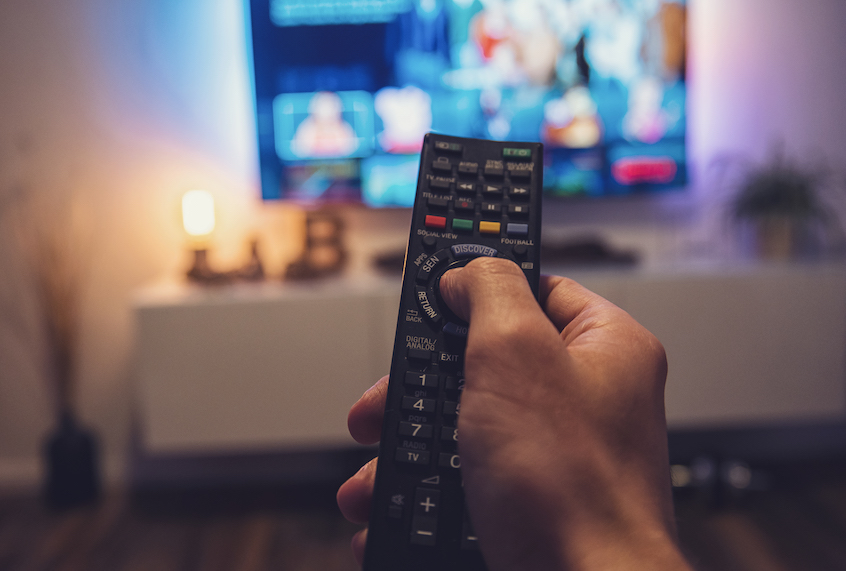
Nudleman’s exhaustion mirrors the complaints many average users have with their streaming tech. Earlier this month, my sister and brother-in-law spent a good few minutes trying to figure out how to return to the Apple TV landing page, given that the remote didn’t feature a clearly marked “back” button. Newer versions have since added a button with a backward arrow, which has caused chaos whenever my parents try to type in the title of a specific title and make a typo, sending themselves out of the search function entirely by hitting the unintuitive back arrow.

“If I ever try scrolling through endless titles on a specific streamer’s landing page, it can feel like a Herculean task.”

Tim O’Reilly, a media writer in Chicago, says that if he didn’t come to a streaming service with a title already in mind, the search would be a madhouse. “I have all the services at my disposal and every single interface is complete garbage except for Netflix’s,” O’Reilly says. “Though Netflix has made garish changes in the last few months that tarnish the user experience. Disney+ has a problem where, if it cuts to a commercial, it often crashes. Hulu has a large library but unwieldy UX, and HBO doesn’t know what to do with itself since the Discovery merger.” 

Brandon Lewis, a critic and founder of the site When Things Go Pop, agrees that Netflix’s platform is the easiest and most reliable to use when it comes to recommending what he wants to watch. But searching for something he’s already got in mind on the streamer is another matter. “I’ll usually pop over to Netflix first and search to see if a movie is there,” Lewis says. “[But I get frustrated] typing in the first few letters and seeing, ‘If you’re looking for…,’ and the results are a bunch of films that aren’t what I want,” Lewis says. If that fails, he turns to Google to find a streamer that has what he’s looking for, but that method has its issues. “It’s a pretty even split if a film is streaming, or available to purchase or rent digitally, which can also be frustrating because I’m frequently specifically looking for a stream.” 

This is a fight I’ve had on my own countless times. Often, if I’m seeking a film or television show, it’s from a separate, running watchlist, or it was recently recommended to me by a friend. I don’t know where it could be streaming, so I use my Apple TV’s voice search feature to locate it. What follows is a series of questions that feel like I chose to stand in front of a baseball pitching machine on its highest setting. 


Want a daily wrap-up of all the news and commentary Salon has to offer? Subscribe to our morning newsletter, Crash Course.


“Would you like to stream this movie?” my Apple TV asks. “Or, would you like to purchase it? How about renting it? We know you can’t commit. And if you’d like to rent it, would you like a standard-definition or high-quality stream, which will cost you one extra dollar, yet display a negligible difference between the two? Ooh, want to stream this horror movie on Shudder? We can see that they have it ready. Come on over! Just kidding, they actually don’t, you idiot. But it’s available on Prime Video to stream, you will just have to watch a four-minute series of advertisements in the middle of your movie, which you won’t know until you start it. It’s fine, that character who got shot just before the ad break won’t get any deader by the time you’ve finished watching this ad for Cymbalta, which you’re going to need after getting so depressed on this sojourn that you just want to give up and watch YouTube videos.”

“Streaming seemed like such a good way to democratize movies so that anyone could see anything. Instead, we ended up with a system that requires so many subscriptions, searching and effort. It’s turned art into work.”

One might think a simple solution to these problems is to return to prioritizing the theatrical experience. While that’s something I’ve long been a proponent of, it’s not quite that easy, especially when much of the appeal of streaming in recent years has been how quickly new theatrical titles are made available on digital streaming services. These deals, a notable result of the pandemic kneecapping the movie theater business, haven’t changed much since they were first implemented at the top of the decade. Max no longer has same-day streaming releases for its theatrical titles, but they do typically appear within a few weeks of a theatrical release, contrary to reports that the service would be widening the 45-day gap between theater and streaming. And Netflix famously holds a deal that allows some theaters to show its films for four weeks before they hit the streamer. When asked about this at a Cannes press conference last week, IMAX CEO Rich Gelfond said he wasn’t worried about this limited window “cannibalizing” the box office for Greta Gerwig’s upcoming “Chronicles of Narnia” films for Netflix.

Close-Up Of Hand Holding Television Remote Control (Getty Images/eyeem)Though box office profits are critical to theatrical stability, they are also an entirely separate issue when it comes to making the public aware that a movie is in theaters at all. Claire Tuley, an attorney in Tennessee, says that she initially hoped smaller theatrical-to-streaming windows would be good for people like her, who live in towns that only have multiplexes. “I remember thinking that, although the theatrical experience is better, the shorter window between theatrical and streaming meant I would be able to see indie or international movies more quickly than I had previously been able to,” Tuley says. “I live in a smaller city with no independent movie theater, and with the death of movie rental stores, it was just harder to see things.”

“Streaming seemed like such a good way to democratize movies so that anyone could see anything,” she continues. “Instead, we ended up with a system that requires so many subscriptions, searching and effort. It’s turned art into work.”

The channels that we get information from are broken. Our digital feeds are asynchronous, hindered by advertisements and algorithms that either show us exactly what we want or desperately try to turn us onto something new. Streaming has democratized film and television, in a sense, but a fair number of people still want to leave their homes to experience art out in the wild. But the marketing has to reach the consumer first, and that’s not always a given, especially because actively hunting down a movie trailer or news that a film is approaching its release date means glugging down 50 more ads along the way.

People like my parents are going out to the movies less in general, and often look to me to recommend them new titles. How can we find a happy medium between the theater and the streaming release that lets us see the things we want without getting crushed by massive amounts of “content”?

People who frequent AMC Theatres have this avoidance down to a science. The chain’s affection for 30 straight minutes of trailers before a feature is admirable, but occasionally exhausting. And their pre-show programming featuring Maria Menounos hawking her health podcast isn’t all that appealing either. The solution many customers have adopted is to skip this portion entirely, arriving right when the movie starts. Aside from inconveniencing other moviegoers as they shuffle past, stepping on toes and grabbing seatbacks after the lights have gone down, they’re missing every single trailer for an upcoming attraction.

Because this multi-pronged problem of digital frustration is so common, there isn’t a one-size-fits-all solution. Tuley and Lewis try to keep track of new films coming to their local AMC, and Lewis says the AMC A-List subscription service, which allows members to see more movies at a smaller price, helps kick the problem. Nudleman agrees and says he’s fortunate that his Alamo Drafthouse season pass can guarantee him a wide variety of film programming. 

We need your help to stay independent

But then there are people like my parents, who are going to the movies in person less in general, and prefer to stay home to find something streamable. They’re thankful for the insight from their critic son (I hope), but if even I can’t keep track of a new Wes Anderson movie, how will I recommend it to them if I think they’d like it? How can we find a happy medium between the theater and the streaming release that lets us see the things we want without getting crushed by massive amounts of “content”?

For starters, there are more and more boutique physical media shops, and most theatrical films still get some sort of physical release. Even if streaming has curbed the amount of offerings available in retail stores, online avenues are wide open. There are also free options, too. “To this day, I find going to my local library and going through the Blu-Ray shelf is a far more effective way to discover new films than scrolling through a streamer recommendation list,” Nudleman says. “Seeing all those titles together in one place makes them blend into one vast nothingness.” This void is what so many consumers are desperately trying to claw their way out of. It’s a problem that’s not going away anytime soon, which means that being vocal about the irritation it causes is perhaps the best way to alleviate the nuisance. Talking about it with other people strikes up genuine conversation and commiseration. There’s joy to be found in tackling an issue together, and I’ve found that having a close friend who’s my go-to movie companion is a godsend. Maybe that seems archaic in an increasingly disconnected, disaffected world. But in the case of a problem caused by contemporary headaches, doing things the old-fashioned way is our best bet at a brighter, simpler future.

Mahmoud Khalil holds infant son for first time, over objections from Trump administration

Mahmoud Khalil, the legal U.S. resident detained by the Trump administration over his pro-Palestine activism, was able to hold his infant son for the first time on Thursday.

Khalil, a graduate of Columbia University, was arrested in March by agents with Immigration and Customs Enforcement. Despite possessing a green card and being married to a U.S. citizen, the Trump administration is seeking to deport him, claiming his opposition to Israel's war in Gaza poses a threat to U.S. national security interests.

According to the Associated Press, Khalil, was able to meet and hold his child Thursday, just over a month after he was born. The Trump administration had objected to the meeting, insisting that father and so be "separated by a plexiglass barrier," per the AP.

Khalil, a New York City resident who is being detained in Louisiana, was also able to meet with his wife, Dr. Door Abdalla, The New York Times reported. The meeting took place before a hearing on his case in which attorneys planned to argue that he would be in grave danger if deported.

The Trump administration has sought to deport scores of foreign students who it claims are undermining U.S. interests by speaking out against Israeli actions. On Tuesday, Secretary of State Marco Rubio said he had likely revoked thousands of visas, conflating peaceful activism — including one student writing an Op-Ed in their school newspaper — with violent extremism.

Israeli embassy staffers were likely “targeted” by alleged shooter who yelled “free Palestine”

Two employees of the Israeli embassy were shot and killed in Washington, D.C. Wednesday evening as they were leaving an event at a Jewish museum. The suspect, who yelled "free, free Palestine" during his arrest, according to police and video from the scene, was quickly taken into custody. 

Washington Metropolitan Police Chief Pamela Smith said at a news conference that a man opened fire on a group of four people outside the Capital Jewish Museum, hitting the pair. The victims, locally employed staff who the Israeli foreign ministry said were working to promote reconciliation between Israelis and Palestinians, were identified as Yaron Lischinsky and Sarah Lynn Milgrim. 

The lone gunman, identified as Elias Rodriguez, 31, of Chicago, was seen pacing outside the museum ahead of the shooting and walked into the museum afterward, where event security detained him, Smith told reporters at a news conference.   

"Once in handcuffs, the suspect identified where he discarded the weapon, and that weapon has been recovered, and he implied that he committed the offense," she said, per Reuters, adding that Rodriguez had no prior contact with police.

Deputy FBI Director Dan Bongino said on X that local police and the FBI were interviewing the suspect, noting that early indicators point to the shooting being "an act of targeted violence."

"Our FBI team is fully engaged and we will get you answers as soon as we can, without compromising additional leads," he said.

The Department of Justice leveled four charges against Rodriguez  on Thursday, at least one of which carries the possibility of the death penalty. Rodriguez is facing charges of murder with a firearm, murder of foreign officials, using a firearm to commit a violent crime and first-degree murder.

The fatal shooting comes amid heightened tensions over Israel's war in Gaza, as the government of Prime Minister Benjamin Netanyahu continues its bombardment of the territory and blockade of aid with the United States' unconditional support, and faces increased condemnation on the global stage. Since Israel's 1.5-year-long offensive in Gaza started following Hamas' Oct. 7 attack, rights groups have seen a notable uptick in antisemitism and anti-Arab hate in the U.S. 

With President Donald Trump's battle with higher education escalating — hinging access to federal funding, in part, on universities agreeing to stifle student protests — the shooting is also likely to increase scrutiny of pro-Palestinian activists on college campuses across the nation. Two immigrant student protesters made headlines earlier this year after Immigration and Customs Enforcement arrested and detained them. 

The president condemned the shooting early Thursday.

“These horrible D.C. killings, based obviously on antisemitism, must end, NOW!” Trump posted on social media. “Hatred and Radicalism have no place in the USA.”

We need your help to stay independent

Netanyahu said Thursday that he was "shocked" by the "horrific, antisemitic" shooting and that his heart breaks for the victims. 

“We are witnessing the terrible price of antisemitism and wild incitement against Israel,” he said in a post to X.

However, Yair Golan, head of the Israeli opposition, argued that Netanyahu was himself to blame for the incident.

“I share the grief of the families of those murdered in the attack in Washington and support all employees of the State of Israel's Foreign Service,” he wrote on X. “It is Netanyahu's Kahane Hai government that is fueling anti-Semitism and hatred of Israel, and the result is unprecedented political isolation and danger to every Jew in every corner of the globe."

The activist group Jewish Voice for Peace, which opposes Israeli military actions in Gaza and the West Bank, also spoke out against the attack.

"We condemn last night’s fatal shooting of two staff of the Israeli embassy in Washington D.C.," the group said on X. "We are grounded first and foremost in the belief that all human life is precious, which is precisely why we are struggling for a world in which all people can live in safety and dignity."

The two victims of Wednesday night's attack were a young couple about to be engaged, according to Israel's ambassador to the U.S., Yechiel Leiter. He said Lischinsky had just purchased a ring with the intent of proposing to Milgrim next week in Jerusalem.

The shooting occurred after the American Jewish Committee's annual Young Diplomats reception, billed as a special event that brings together Jewish young professionals and Washington's diplomatic community. 

“This is a shocking act of violence and our community is holding each other tighter tonight,” Ted Deutch, the American Jewish Committee’s CEO, said in a statement early Thursday, according to the Associated Press. “At this painful moment, we mourn with the victims’ families, loved ones, and all of Israel. May their memories be for a blessing.”

Forgetting Joe Biden

Donald Trump has lost it — but then again, I don’t think he ever had it. The president has become dramatically unhinged on several occasions recently. Coupled with his statements about shark electrocution, and his evident confusion about where and how groceries are sold, how tariffs function, Russia versus Ukraine, trade with China, immigration and a variety of other topics, Trump often sounds like an escapee from a mental ward run by Nurse Ratched. 

As the depleted White House press pool gathered Wednesday in the Oval Office, NBC’s Peter Alexander attempted to ask Trump a very simple question about the Boeing 747 that the president claims the government of Qatar gave him as a gift.

Trump went nuts. “Number one, you don’t have what it takes to be a reporter. You’re not smart enough,” Trump yelled at Alexander, who has spent more years reporting than Trump has spent in politics. “You’re a terrible reporter,” he concluded.

He then tried to lecture South African President Cyril Ramaphosa on the supposed “white genocide” in South Africa. He forced Ramaphosa to watch a four-minute propaganda film pushing the conspiracy theory that South Africa's government is victimizing white farmers in racially targeted killings.

All Ramaphosa could do was say he was sorry that he didn’t have a plane to give him.

This was not America’s finest hour.

Earlier on Tuesday, Trump blew up at a reporter on Capitol Hill who asked him a question about his so-called big, beautiful bill. The reporter asked him to respond to a statement by Representative Andy Harris, a Republican representing Maryland’s First District: “Andy Harris said that you didn’t adequately convince enough people to vote for the bill?”

Trump, visibly upset, asked the reporter who he worked for, to which the reporter replied “NOTUS,” which stands for News of the United States.

 “Who?” Trump replied. “I don't even know what the hell that is. Get yourself a real job.”

Later, when meeting with Republican members of Congress, Trump melted down, according to several congressmen who were present, and unleashed an expletive-laden warning against further gutting Medicaid.  Whatever else, just be sure to know Trump’s rants can’t disguise the fact that this horrendous budget bill will take money out of the mouths of the poor and pour it into the bloated mouths of the rich.

At 1:34 a.m. Monday morning, Trump found himself awake and rage-tweeting about Kamala Harris and Bruce Springsteen, threatening to investigate both of them after Springsteen said on a Manchester, England, stage last week that the Trump administration was “corrupt, incompetent and treasonous.”

If you think Biden’s administration was complicit in hiding his cognitive decline, take a look at those who work for Trump.

Trump is angry, apparently unstable and growing visibly worse by the day. His comments about former President Joe Biden’s cancer diagnosis were muddled, angry and accusatory, including references to “auto pens” and cognitive tests. Maybe he was just promoting Jake Tapper’s new book. Maybe he is getting a cut.

“Look at politics today,” former Missouri Republican Senator John Danforth told me Wednesday. “Every politician associated with the president always looks angry.” The 88-year-old former senator is currently working for the group “Our Republican Legacy” and trying to “drag the party back toward the center and our traditional values.”  Perhaps his success can best be measured by how often he interacts with the current senator from Missouri, Republican Josh Hawley. “I haven’t spoken to him in seven years,” Danforth said.

Hawley is not only a part of the Trump machine, but one of its leading advocates in the Senate.

Hawley infamously raised his fist and pumped it for Donald Trump on January 6. After a recent spate of disastrous storms, Hawley found himself this week in Congress begging for FEMA aid for his state – after Trump’s DOGE cuts have rendered FEMA a political eunuch.

“We are desperate for assistance in Missouri,” he told Secretary of Homeland Security Kristi Noem. “FEMA assistance will be the only assistance,” he emphasized. Because of DOGE cuts, FEMA recently reported it is understaffed, underfunded and probably couldn’t handle the coming hurricane season.

DOGE, as run by Elon Musk — who is apparently on his way out the Trump door – has been criticized by Democrats and Republicans alike; Sen. Danforth among them. “The effect that DOGE thing is going to have on the national debt is negligible. It's very small. It could be worth doing, but it should be done with a scalpel, not with a meat axe.”

We need your help to stay independent

Trump, meanwhile, still hasn’t dealt with the storms that killed at least 28 people when tornadoes struck Kentucky, Missouri, and Virginia last Friday. Yet he was swift to criticize former President Joe Biden’s recent prostate cancer diagnosis. So was his vice president, whose reaction was certainly wooden. "Whether the right time to have this conversation is now or sometime in the future, we really do need to be honest about whether the former president was capable of doing the job," JD Vance insisted. 

One of Trump’s interchangeably moronic adult sons even ridiculously asked why Biden’s wife, Dr. Jill Biden (who has a doctorate in education), didn’t diagnose the former president’s cancer earlier. “What I want to know is how did Dr. Jill Biden miss stage five metastatic cancer," the businessman wrote above the post, "or is this yet another coverup???"

The Trump team’s only response to anything is to blame Biden and draw attention away from the ineptitude, corruption and anger that continues to tear the country apart and is clearly the responsibility of the befuddled huckster living at 1600 Pennsylvania Ave. And if you think Biden’s administration was complicit in hiding his cognitive decline, take a look at those who work for Trump.

“They’ve gotten to the point where the facts are solely what is said by the President,” former Bill Clinton press secretary Joe Lockhart explained to me recently on “Just Ask the Question.”

The greater threat is “that future presidents from both parties will take their cues from Trump because he’s been effective at manipulating the press to his benefit.”

If you are concerned about Biden’s cognitive abilities when he was president, why can’t you spend the same amount of energy on Trump, who is currently the president? I don’t want to wait until Jake Tapper writes a post-mortem book about Trump and then goes on another mea culpa tour to publicize it. If you think we made a mistake about Biden, fine.

But, we dare not make the same mistake about Trump. Trump is a danger to Democracy; a blithering idiot and those around him do not care. They take advantage of it. People like Stephen Miller feed Trump what they want him to hear and Trump spits it out. For they all know the bottom line that guides everything: It’s only a fact if Trump says it is.

That is a frightening and sobering realization. When our reality has less to do with our shared experiences and facts, and more to do with the prejudices of a single (warped) mind, we all suffer. 

Trump doesn’t believe in an empirical reality based on facts and science, but only on what he proclaims to be factual and true. The morons and monsters on his staff, in his Cabinet and kissing his, ahem, ring in Congress are all complicit in his corruption of reality in order to hold on to power and money. 

How far have we fallen? 


Want a daily wrap-up of all the news and commentary Salon has to offer? Subscribe to our morning newsletter, Crash Course.


I grew up believing in a free press. During this administration, the Washington Post, Los Angeles Times, ABC News and CBS News have all bent the knee to Donald Trump. This week I read a CNN headline saying that Trump’s “credibility” is on the line. What credibility? The man told more than 30,000 lies during his first four years in office. He’s not getting better. And everyone with an ownership stake in media is kissing Trump’s, ahem, ring. 

Trump’s meltdown in the Oval Office on Wednesday is just the latest indication that the land of the free and the home of the brave are a fiction from our past. Today, we are the land of the entitled led by the demonically befuddled. Why is it that the richest are like visitors to a family barbecue who take 90 percent of the food and refuse to share with the rest of us?

The rich get tax cuts, health care and preferential treatment. The rest of us get screwed and have to watch a bad fictional film in the Oval Office presenting the ludicrous claim that white farmers in South Africa are the victims of genocide. “He’s saying to white people that you’re being oppressed, which is ridiculous,” Danforth said.

There is no fact that Trump won’t bend, no rule he won’t break and no law he won’t ignore. We haven’t even talked about every judge who rules against him being accused of political activism.

Our founding fathers’ overriding concern was the concentration of political power in a few hands. Today, it is distilled into the hands of one man: an aging septuagenarian who doesn’t even know that his greatest responsibility is to uphold the Constitution. He swore an oath to it, but he is too far gone to either acknowledge that or admit to it. He wants his options open so he can make transactions that only favor him and his family business. So, stick around and enjoy his multi-million dollar, taxpayer-subsidized military parade to celebrate his birthday on June 14. 

“That really is a serious problem for America,” Danforth said. “It's important to understand that problem. I'm not sure what to do about it. But it is important to understand that it is the case that a lot of power has been concentrated in a very few hands. And with regard to executive orders, a lot of political power has been concentrated in the hands of one person.”

Who is appealing to our better angels? It’s all anger all of the time from a White House that is trying to control the economy through tariffs and silence anyone opposed to them. His supporters? Danforth says they can be reached — but not from the far left. “With Trump, it isn't that they're just delighted with him, but they view him as the only alternative. They think that the country is going down the drain and their kids are being taught all kinds of things in elementary school that they don't like. They think the left is just shoving the rest of the country into the arms of Donald Trump.”

Donald Trump. The aging, cognitively dysfunctional monarch wannabe who screams at reporters, threatens entertainers and prosecutes those who oppose him runs this country while being fed a steady diet of intellectual drivel from his loyal henchmen. Forget Joe Biden. Concentrate on Trump.

“You know, it's not to say that Trump is just some kind of ogre,” Danforth said. It's just saying, well, take him at his word. He's ignorant.”

The truth is that Donald Trump and his entire administration are both.

Republicans expand “Trump bucks” scheme with “MAGA savings accounts”

In his role as president and political gameshow host, Donald Trump loves to give away money (or at least pretend to) as he makes "amazing deals." As media scholar David Altheide explained to me, "President Trump’s relentless assault on American institutions, economic theory, and the world economy is front and center of the world’s media."

Trump’s faux daily press briefing and access is more akin to the established TV format of game show host. See 'Let’s Make a Deal.' The super game show host masquerading as a President is seeking ratings, approval and recognition….As it should be. Or not. Trump continues to play at being the star of the show, and in keeping with the entertainment format and media logic that got him his start, continues to strive to be the dominant personality of the world. 

It is Trump’s understanding of “pocketbook voting” in the most literal sense (which includes turning the White House into a personal ATM for himself, his family, and inner circle) that may secure his and the MAGA movement’s hold over American politics for the foreseeable future.  

During his first term in office, Donald Trump made sure to put his name on the COVID relief checks that were sent to the American people. In a country where most Americans do not have $1,000 in case of an emergency, these COVID relief checks were a literal lifeline. These checks also created a personal connection between Donald Trump and the tens of millions of low-information and undecided voters who ultimately decided the outcome of the 2024 election. In contrast, President Biden made a choice not to sign the COVID relief checks that were sent out during the first term of his presidency. Moreover, Biden promised the American people $2,000 in relief money and then reneged (the final check was $1,400). Biden was punished at the polls for this choice, which was one of many errors in that sunk his electoral fortunes and those of Kamala Harris and the Democrats.

Now Trump and his MAGA Republicans in Congress are continuing with the “Trump bucks” strategy. As part of Trump's “Big Beautiful Bill” that is being forced through the Republican-controlled Congress (which is most certainly not “beautiful” for the American people as it takes hundreds of billions of dollars away from the neediest Americans and gives it to the very rich and corporations) the newest ploy is a proposed $1,000 in the form of “MAGA saving accounts” for children.

Business Insider reports:

The "big, beautiful bill" that aligns with President Donald Trump's broader economic agenda and was unveiled by House Republicans on Monday includes a so-called "MAGA" savings accounts for kids.

Within the bill's draft is the creation of "Money account for growth and advancement" accounts, or "MAGA accounts," laying out a pilot program to launch the accounts with $1,000 each.

GOP Sen. Ted Cruz of Texas recently talked about the plan with Semafor after he pushed the idea to his fellow Republicans as they attended a party retreat earlier this month.

"The case I made to my colleagues is: We should ask ourselves in this bill, what will be the legacy that people will remember and talk about 10 years from now, 20, 30, 40 years from now?" Cruz said at the time.

In the House bill, the item is listed as the "MAGA Accounts Contribution Pilot Program." The plan would give parents with a qualifying child a "one-time credit of $1,000" that'd be payable into the child's account.

To be eligible for the program, the child must be a US citizen "at birth," possess a Social Security number, and have a birthdate after December 31, 2024, and prior to January 1, 2029.

In the House bill's draft, the MAGA accounts are specified as being "exempt from taxation."

If enacted beyond the pilot program, the MAGA savings accounts would be extended to children born before 2024 and who are under eight years old.

Trump and his MAGA Republicans’ “MAGA accounts” are a version of the “baby bond” program that Democrats, liberals and progressives have long supported in various forms. The right wing generally opposed such a program as “wasteful spending,” “socialism,” and “government handouts.”  

In a conversation with Semafor, Sen. Ted Cruz explained how he views the difference between "MAGA accounts" and the Democratic Party's "baby bonds": “

That is just a government program, where this is very much designed to get the next generation to invest in the market.

 You see a lot of young people who in public opinion surveys, say they have a negative view of capitalism and they embrace socialism….And what is powerful about this is, when every child has invested, it’s no longer an abstract idea.

We need your help to stay independent

It will be very difficult for an already ineffective and uncoordinated Democratic Party and its spokespeople to oppose these new “Trump bucks.” The most obvious challenge is that the Democrats will be accused of being “anti-family” and against “family values” and that they must hate children. The Republicans and the right-wing disinformation machine and echo chamber have spent decades branding the Democrats in that way.

Donald Trump and his Republican Party will also use “MAGA accounts” to summon up the zombie idea of “compassionate conservatism,” even though the American right has spent decades expanding and amplifying the culture of cruelty and a Terrordome that is now growing even faster under Trump’s direction.

In a new essay at the LA Progressive, social theorist Henry Giroux warns, "We are not witnessing a temporary crisis. We are witnessing collapse: of public institutions, civic imagination, and the ethical vocabulary that once made collective life thinkable. Neoliberalism, far from dead, has mutated into a violent form of capitalist necropolitics or neoliberal fascism, one that celebrates greed, rewards cruelty, and administers violence and death in slow and spectacular forms."

The Democrats will likely make the correct intervention that “MAGA accounts” are a distraction and bait-and-switch trick because they are a paltry substitute as compared to the hundreds of billions of dollars that the Republicans are cutting away from healthcare, education, food and housing assistance, the social safety net, science, protecting the environment, and other investments in the country and its well-being that offer much larger tangible benefits for children and young people and the American people as a whole.

Unfortunately for the Democrats, decades of political science and other research show that the American voter is not sophisticated. Their political decision-making is largely made in response to emotions, messaging and storytelling, more than a sophisticated understanding of facts and public policy. In total, the average American voter tends to be imagistic, emotional and biased towards immediacy and the short-term in their political decision-making. “Trump bucks” in their various forms are a tangible incentive to support Donald Trump and the MAGA Republicans.

As seen with the right-wing lie that millions of “illegal aliens” are receiving Medicaid, MAGA savings accounts will also serve as another attack point in the Trump administration’s racist and nativist campaign to end birthright citizenship and the 14th Amendment. Per this argument, “if we are going to give $1,000 to children and families, then we need to make sure it is going to 'real Americans' and not 'illegals!’”

The Democrats and others who correctly see these MAGA saving accounts and other examples of “Trump bucks” as a ploy and long con that takes advantage of the American’s people’s economic desperation (and shortsightedness and lack of political sophistication) will likely protest that “MAGA savings accounts” are divisive and polarizing because they are not named something “unifying” and “tasteful” like “baby bonds” or “a child saving’s bond”. As the Democrats should have learned in 2016, “When they go low, we go high!” is not a winning political strategy or messaging. Politeness, moral superiority, and principles are no substitute for $1,000 when so many Americans exist in such a financially precarious state.


Want a daily wrap-up of all the news and commentary Salon has to offer? Subscribe to our morning newsletter, Crash Course.


The potential for more “Trump bucks” to do substantial damage to the Democrats is reinforced by political consultant Stanley B. Greenberg’s new article in The American Prospect about the Democratic Party’s doomed 2024 presidential campaign(s) and the role of message discipline and branding in that defeat:

It was emblematic of the entire campaign: unable to focus on the most obvious line of attack, switched between different campaigns, did not battle to win each day, and allowed the opponent to score many free hits. Harris did indeed benefit immensely from her launch, the Democratic convention, and debate. But then it fell apart. In my post-election poll, the top reasons to vote for Harris were to save democracy and stop fascism and to save the Affordable Care Act—not the issues that were at the top of voters’ minds.

And after she lost, Biden said he would have won.

For the past 15 years, the great working-class majority has heard Democratic presidents and nominees praise the American economy. Along with the mainstream media and economists, they cheer it as “the envy of the world.”

Did our leader notice that the great majority have been largely treading water or worse for 25 years? The top 0.1 percent and 1 percent and 5 percent are devouring a growing share of income and especially wealth. At the same time, the obscene wealth of billionaires gives them tremendous political influence….

Democrats can learn from that moment when Harris was poised to win. She was for the middle class, mainstream on cultural issues, and pushing clearly and consistently for economic and political change.

Whatever the state of the economy and the country’s political life in 2026 and 2028 (it is a huge assumption that there will even be “free and fair” elections as the Trump administration expands its autocratic reach), the American people will be asking the respective candidates “What have you done for me lately?” and then saying, “Show me the money!”

The New York Times reports that Wednesday night, House Republicans changed the name of these proposed "MAGA Accounts" to make the connection between Donald Trump and this money even more explicit and undeniable. In the most recent version of Trump's "big beautiful bill," the $1,000 will now be deposited in a "Trump account."

The Times adds, "Under the bill, children born between Jan., 1, 2025, and Jan. 1, 2029, would receive the money, which would be invested on their behalf in financial markets. Once they had grown up, they could withdraw the proceeds to pay for certain expenses, including going to college or buying a house. The child’s parents, or other third parties, could also contribute to the account. While the benefit of the $1,000 initial investment from the government is clear, the accounts have otherwise puzzled tax experts."

Democrats need a concrete plan with clear deliverables if they want to take back power and begin to do the extremely difficult work of slowing down and eventually stopping Trumpism and the larger American (and global) authoritarian movement.

A tax cut for the “merely wealthy” finds bipartisan support in Congress

Self-described moderates in the GOP are rallying behind a policy favored by centrists of both parties and which economists consider a major tax cut for America’s “merely wealthy” professionals. At the same time, President Donald Trump, who is now attempting to push through the bill as is, appears to have flipped on the issue multiple times.

In the current GOP budget bill, expected to go to a floor vote as soon as this week, GOP “moderates” appear to have successfully tacked on a major increase to the State and Local Tax Deduction cap, a policy that allows households to deduct their state and local taxes on their federal tax filings.

As it stands, the SALT deduction cap is set at $10,000. House Speaker Mike Johnson, R-La., now says that he’s reached a deal with a group of Republicans hailing from New York, New Jersey and California to raise the SALT deduction cap to $40,000. 

The issue of raising the SALT cap has long been a hobby horse for both Republicans and many Democrats from the three states, with proponents of the policy, like Rep. Mike Lawler, R-N.Y., claiming that it’s an affordability issue in their districts.

“We want to be able to provide real tax relief to middle-class and working-class families,” Lawler told News 12 Westchester.

Democrats like Rep. Tom Suozzi, D-N.Y., have also championed the issue, with Suozzi saying at a press conference Wednesday that he supports eliminating the SALT cap as a way of encouraging wealthy New Yorkers to stay in the state instead of leaving to lower tax states like Florida. He also said he supports raising the top marginal federal tax rate alongside any change to SALT to prevent the change from being a tax break for the wealthy.

The current version of the GOP bill contains no such provision to recoup tax revenue lost through an increased SALT deduction cap.

Trump has met with congressional Republicans to pressure them to accept the current form of the bill, a pivot from his campaign promise of "restoring the SALT deduction." Earlier this week, Trump slammed the changes to SALT saying, "The biggest beneficiary, if we do that, are governors from New York, Illinois and California." In Trump's first term, he and the Republicans oversaw the lowering of the SALT cap to $10,000, which at the time was considered a slight against states like New York, California and other Democratic states where taxpayers disproportionately take advantage of the SALT deduction.

The problem for members from both parties, however, is that the policy has almost nothing to do with middle-class and working-class families, but everything to do with some of the highest-income households in the United States.

Howard Gleckman, a senior fellow at the Urban-Brookings Tax Policy Center, said in an interview with Salon that for the vast majority of tax filers, even in states with higher tax rates like New York and California, the SALT deduction “doesn’t do them any good.”

The main reason the SALT deduction doesn’t matter for most filers in these states, Gleckman said, is that few households have enough yearly income for raising the cap to have much or any impact on the taxes that they will have to pay.

We need your help to stay independent

“Remember that many states have essentially a flat income tax, so it doesn't make a lot of difference if you're making $100,000 a year or making a million dollars a year, you're paying essentially the same state income tax rate. Think about the number of people who are paying $30,000 or more in [state or local] taxes. It's just not a lot of people,” Gleckman said.

An analysis of various proposals for raising the SALT cap performed by Gleckman and the Tax Policy Center earlier this year divided up American households by income to calculate who stood to benefit the most from raising the SALT cap. The analysis, which used raising the SALT cap to $20,000 for the purposes of the analysis, found that the policy would overwhelmingly benefit the top 20% of households by income.

The analysis also found that Americans in the bottom 60% of households by income would see little to no changes in their taxes paid, while Americans in the fourth quintile of income would see a modest decrease in federal taxes paid. In real terms, this means households making $200,000 or less a year would see basically no change in their after-tax income.

Meanwhile, households making between $430,000 and $1 million a year, which represent the top 95% to 99% of earners, would see a substantial tax cut, and collect around 90% of the benefit of an increase in the SALT cap.

Members of this group aren’t members of the super-wealthy; Gleckman referred to them as the “merely wealthy.” Gleckman said that people should think about professionals like partners at law firms, doctors or very successful business owners as being representative of this group.

To be clear, the proposal percolating in Congress goes beyond the $20,000 cap used in the model, with Congress apparently on track to pass a $40,000 cap, increasing by 1% every year for ten years. Politico also reports that Republicans are looking to limit the new cap to households making below $500,000 a year, though how exactly this would work remains unclear.

Michael Madowtiz, an economist at the Roosevelt Institute, pointed out that in order to even take advantage of the SALT deduction, people need to be in a situation where itemizing their returns makes sense, which isn’t the case for most American households.

Madowtiz said that, although you could imagine situations where there are households with two working parents in high-cost-of-living areas like Manhattan, where they might be able to take advantage of a higher SALT cap while not being considered wealthy for their area, though he said that this is “deeply stretching the definition of middle class.” He also noted that these members of the “professional class” in urban areas were exactly the people Republicans were trying to “stick it to” in 2017, when they imposed the $10,000 SALT cap.

“For most families, SALT is irrelevant because the sales taxes they pay aren't even eligible for a SALT deduction," Madowitz added, "so you have to be in pretty rarified air before this is even about you.”


Trump’s border war won’t stop overdoses. In fact, it might make things worse

I’m an addiction and emergency medicine physician in southern Arizona, a region highly politicized by the war on drugs. Both my home and the hospital where I work are less than 100 miles from Mexico, and one of our fire departments serves a city split in two by the border wall. Although I love the ways in which the cultural milieu of the borderlands enriches our community – the school mariachi bands, colorful adobe houses in the barrios, saguaro cactus in a surprisingly verdant desert, some of the best bicycle infrastructure in the country, and even the most delicious food – Tucson was the first UNESCO city of gastronomy in the U.S. – we still have our challenges.

Although Arizona doesn’t have the highest rates of opioid overdose in the country, our rates aren’t the lowest, either: we are slightly above average. Nearly one in four Arizonans rely on Medicaid for their health insurance, and these rates are even higher in the rural communities along the border. Based on the Trump administration’s frequent visits to the borderlands and promises to help us, one might be optimistic that proposed policies would reduce overdoses and improve health outcomes.

Unfortunately, the administration is also threatening to drastically cut the very programs that actually reduce overdose deaths, both here in the borderlands and across the country at large. If staff and funding are slashed — from Health and Human Services, Substance Abuse and Mental Health Services, Health Resources and Services Administration, Centers for Disease Control and Prevention, and perhaps even Medicaid — so too will the most effective tools we have to prevent fatal overdose: naloxone and medications for addiction treatment.

Instead of focusing on evidence-based health approaches to save lives, the Trump administration is enacting punitive policies: arresting immigrants, militarizing the border, implementing tariffs against Mexico, and building more walls. During his inaugural address, President Trump promised to deport “millions and millions of criminal aliens,” and he has since mandated quotas for arrests from Immigration and Customs Enforcement. According to his America First Priorities, his administration will “take bold action to secure our border” by “building the wall” and deploying the Armed Forces.

This isn’t the first time our country has used drugs as an excuse to target minoritized populations.

In April, Trump signed an executive order to impose tariffs upon Mexico and signed a memorandum authorizing the deployment of thousands of National Guard troops to the Southern border. Currently, the administration is seeking bidders for a contract to extend the border wall between Nogales and Naco, Arizona. But without also stymying the demand for drugs, none of these supply-side approaches will work — we know this from past mistakes. Even worse, these policies will cause senseless harm in our communities.

Although the current scapegoat is Mexican people, this isn’t the first time our country has used drugs as an excuse to target minoritized populations. When an economic downturn hit San Francisco in the 1870s, white people blamed Chinese immigrants for stealing their jobs and began to villainize opium, a substance associated with the Chinese community. Many whites even believed that the Chinese community was trying to hook them on opium in order to undermine American society. And so, the city criminalized it, passing our country’s first anti-drug law.

In the early 20th century South, the target became the Black community. Although influential whites such as Sigmund Freud and the former surgeon general of the U.S. Army had publicly lauded the benefits of cocaine, many believed that the drug would cause Black men to “become oblivious of their prescribed bounds and attack white society.” Some police departments at that time so believed that cocaine made African Americans impervious to standard bullets that they actually increased the caliber of their revolvers, an erroneous idea that still has reverberations today.


Want more health and science stories in your inbox? Subscribe to Salon's weekly newsletter Lab Notes.


During the 1930’s “reefer madness” era, officials rebranded cannabis with the Spanish name “marijuana” to link it to Mexican immigrants, beginning a propaganda campaign to associate its use to depravity and crime. Within a few years, cannabis was criminalized, and the mandatory sentences mandated by the Boggs Act ensured that people arrested for possession faced a minimum of two to ten years of incarceration. Although whites and people of color use drugs at the same rates, mandatory sentencing unfairly targets communities of color and is one of the greatest contributors of mass incarceration.

And, perhaps most notoriously, the Anti-Drug Abuse Act of 1986 set mandatory minimums that were one hundred times greater for crack cocaine, associated with Black users, than for powder cocaine, associated with white users. Crack is just a more concentrated formulation of cocaine — the drug is otherwise the same. Enforcement became the primary way to fight the war on drugs, with over one million arrests for simple drug possession each year. As a result, one out of every five people behind bars now lives in the United States. Not only that, but incarceration actually increases someone's risk for a fatal overdose: drugs are present, effective treatment is rare, and people very often relapse as soon as they are released. Although we have certainly tried to arrest our way out of our country’s drug problems, it has never worked. It never will.

And that’s partly because addiction is not a crime but a treatable, chronic disease defined primarily by continued use despite the harms. And thus, increasing the severity of punishments — such as those mandated through the HALT Fentanyl Act or fentanyl homicide laws — doesn’t get people to stop using. Nor will arresting undocumented immigrants or sending them to prisons in El Salvador. Instead, we have to remove someone’s desire to use via medical treatments; in the economic terms of supply-and-demand, we have to reduce their demand for fentanyl.

Here in Southern Arizona, Trump’s policies will directly weaken many of our most effective tools in the fight against the opioid crisis.

Although it sounds simple to fix our country’s overdose crisis by removing the supply, it's not so straightforward. In the middle of the 20th century, some politicians thought that we could forever end heroin overdoses by buying (and destroying) all of the opium in Burma, now known as Myanmar. But whenever one region decreased their heroin production, operations just shifted elsewhere. During the 1990s, prescription opioids replaced heroin as the main driver of fatal overdoses, and many thought we could end addiction by forcing doctors to prescribe less painkillers. And although we did drastically decrease our opioid prescriptions, a wave of illicit heroin rose to fill the demand. And when law enforcement cracked down on heroin, dealers then switched to fentanyl, a highly potent, synthetic opioid that is much easier to produce (and transport) than heroin, a crop that requires adequate land and good weather.

As one Mexican cartel operative told the New York Times in March, “Demand will never end, the product is still being consumed. Addiction means demand never ends.” With the right ingredients, fentanyl can be synthesized almost anywhere, even domestically — in tiny kitchens or rudimentary mountain labs — and that as long as Americans want fentanyl, it will get made, even if it requires increasing violence to do so.

Luckily, we do have a very effective way to prevent people from dying — naloxone and overdose prevention centers. And to reduce the demand for illicit drugs we have addiction treatment. The FDA has approved three medications to treat opioid use disorder: methadone, buprenorphine and naltrexone. Not only do these medications keep people alive by preventing fatal overdoses, but they also reduce the transmission of hepatitis C and HIV. In fact, these medications are some of the most effective treatments we have for any chronic disease, more so than those that many Americans take daily for conditions such as coronary artery disease, hypertension, diabetes and obesity. Unfortunately, less than one in five people with opioid use disorder receive these life-saving medications, and proposed funding cuts threaten to reduce this figure even further.

Here in Southern Arizona, Trump’s policies will directly weaken many of our most effective tools in the fight against the opioid crisis. When the Department of Health and Human Services abruptly canceled more than $12 billion in federal grants to states in March, a program for pregnant women with substance use and unstable housing was immediately shuttered in Tucson. At the University of Arizona, our addiction medicine fellowship receives funding from  a federal program that is slated to be cut. If we lose our addiction medicine fellowship, we will lose our addiction physicians at the university hospitals — and hundreds of patients every year will miss out on life-saving treatment. Across the state, a naloxone distribution program has been largely funded through a SAMHSA grant that is now at risk of termination.

We need your help to stay independent

Although it is less obvious the ways in which general federal and staffing cuts will affect addiction treatment on the ground, I am worried that my patients will still be negatively affected. Many health departments rely heavily on federal funding, as do non-profits like Cochise Harm Reduction, which directly help people who use drugs along the U.S.-Mexico border. With every cut, such organizations might experience reduced prioritization, program disruption, and overall dilution of services.

Similarly, the Trump administration has talked about cutting Medicaid spending. In the borderland counties of Southern Arizona in which I live and work, 30% to 41% of the population rely on Medicaid for their insurance coverage, and it is estimated that nearly 90% of medical treatment for fentanyl addiction across the country is provided by Medicaid. If that were to go away, they would risk losing coverage for their addiction treatment.

But no matter which of these proposed changes are actually passed, they will all end with the same result: more lives lost from fentanyl and overdose. If the administration actually cared about borderland communities and reducing fatal overdoses as much as they claimed, they would be prioritizing harm reduction and treatment in Arizona, not dismantling it. Instead of repeating the past mistakes of punitive policies — arrests, militarization, walls aimed at reducing supply — we would bolster existing health approaches to reduce demand and save lives. But perhaps saving lives was never the real goal.

“You work for us”: Neil Young trashes Trump, supports Springsteen in fired-up screed

The Boss didn't call for aid, but it's good to know that Bruce Springsteen has Neil Young's axe in the ongoing war between musicians and President Donald Trump

The Canadian-American rocker laid into the president in a post to his website on Tuesday, asking him to get his priorities straight and focus on the business of running the country. 

"What are you worryin' about, man?" Young wrote. "Bruce and thousands of musicians think you are ruining America. You worry about that instead of the dyin' kids in Gaza. That's your problem."

Young's missive comes after a week-long war of words between Springsteen and Trump. The "Born in the USA" singer campaigned against Trump during the most recent presidential election and called him "incompetent and treasonous" during a concert in England earlier this month. Trump replied on Truth Social last week, saying he "never liked" the New Jersey rock star and calling him a talentless "old prune."

"Stop thinking about what rockers are saying," Young wrote. "Think about saving America from the mess you made. Taylor Swift is right. So is Bruce. You know how I feel."

Young went on to share a message to the voting public, after reminding the president that he "works for" the American people.

"Wake up, Republicans! This guy is out of control," he wrote. "We need a real president!"

“Don’t have a plane to give you”: Trump pushes “white genocide” claims in chaotic Ramaphosa meeting

President Donald Trump derailed a meeting with South African President Cyril Ramaphosa on Wednesday, halting their talk in the Oval Office to play a video about an alleged "white genocide" in Ramaphosa's country. 

While taking questions from reporters, Trump played footage of white crosses along a rural highway in South Africa. The crosses represent the victims of farm attacks in the country since 1990. South Africa-born Trump adviser Elon Musk has been extremely vocal about the plight of white South Africans and seemingly prompted his social media chatbot Grok to promote the idea earlier this month. 

“Over a thousand white farmers and those cars are lined up to pay love on a Sunday morning. Each one of those white things you see is a cross, and there are approximately a thousand of them,” Trump said, erroneously, before falsely claiming that the monument was a mass grave.

The United States admitted several dozen Afrikaners as refugees earlier this month. The truth of farm murders in the country doesn't bear out their story. Of the 225 murders reported on farms in the last four years, only 53 of those were white farmers.

South African officials have continuously denied claims of genocide from the country's white Afrikaner population. Those claims have grown louder in recent months, after South Africa passed a law allowing the government to expropriate rural land that was not in use. Ramaphosa has defended the law as a move toward racial equity in a country where a white minority owns nearly half of all farmland.

At the meeting on Tuesday, Ramaphosa repeatedly questioned Trump's assumptions. When the meeting grew tense after a reporter asked about Trump's gifted plane from Qatar, Ramaphosa offered a mocking apology.  

"I'm sorry I don't have a plane to give you," he said.

What Judy Blume’s “Forever” still gives us — and the teen dramas that followed her won’t

Remembering Judy Blume’s books without replaying our own childhood memories might be impossible. This is mainly a guess, formulated after reading passionate reactions to Mara Brock Akil’s “Forever,” a montage of lip gloss-smacked frames from across ages of girldom.

“Forever,” the TV show, is one of the first coming-of-age shows in a long while about a period of time in the life of a Black girl that rides the express highs and lows of adolescence, and one of the first to place a Black boy in the same place of emotional tenderness.

Akil continues down the road that Blume's 1975 novel forded, accurately capturing adolescence's hidden longing and confusion. In eight episodes, "Forever" strolls us through a year and a half during which the central concern isn’t "will they or won’t they," but whether high school lovers Keisha (Lovie Simone) and Justin (Michael Cooper Jr.) can hang on to what they have.

Longform dramas like “Forever,” stories lacking inciting tragedies or tensions beyond misunderstandings and a few cases of unfortunate timing, are not easy sells. And yet, “Forever” plainly speaks to something missing from the gratification machinery propping up our age: a view of two people maturing into their understanding of intimacy.

Lovie Simone as Keisha Clark and Michael Cooper Jr. as Justin Edwards in "Forever" (Elizabeth Morris/Netflix). Keisha and Justin are magnets, pressing against each other until, for one reason or another, one suddenly repels the other. Their love story includes stretches of time where Keisha blocks Justin's number and social media contacts, then lets him in, only for him to turn around and do the same to her. Once they reach an understanding of who they are to each other, they become attentive custodians of the other person's anxieties and hopes, even as they weigh what they want beyond their relationship. The sex, when it happens, is sweet and a little clumsy, the way inexperienced love can be. But the action isn’t holding up this show. We’re much more into the conversation.

“Forever” is not a direct adaptation of Blume’s book. Still, Akil’s high school lovers aren’t terribly dissimilar to Blume’s couple. Keisha and Justin meet at a New Year’s Eve party, like Katherine and Michael do in the novel.

This love story begins in 2018 and takes place in Los Angeles instead of a town in New Jersey. Another key difference is that the main characters are Black kids who either attend or used to attend private schools with predominantly white student bodies. Justin is still currently attending his private school, part of the path that his wealthy and connected parents, Dawn (Karen Pittman) and Eric (Wood Harris), have paved in their efforts to give him the best chance of professional success.

Michael Cooper Jr. as Justin Edwards, Wood Harris as Eric and Karen Pittman as Dawn in "Forever" (Elizabeth Morris/Netflix)

“Forever” plainly speaks to something missing from the gratification machinery propping up our age: a view of two people maturing into their understanding of intimacy.

Justin meets Keisha as she's getting her life back to normalcy, having transferred out of her previous school after a sexually explicit video featuring her circulated among her peers. This happens more commonly than some might think. One University of New Hampshire study estimates that 23% of respondents between the ages of 18 and 28 that they surveyed had engaged in sexting as minors. Within that group, the study found that 37% were subjected to some form of image abuse.

These numbers tell us nothing about the weight of keeping that secret from a parent, as Keisha somehow manages to do. Justin, however, is understanding and much more aware of how vicious teenagers can be when their mistakes are caught on camera. Besides, her ambition is undeniable — she's a track star who has set her heart on attending Howard University. But her mother, Shelly (Xosha Roquemore), works multiple jobs to make ends meet, trusting that Keisha is making that sacrifice worth it.

Xosha Roquemore as Shelly Clark and Lovie Simone as Keisha Clark in "Forever" (Elizabeth Morris/Netflix)Meanwhile, Justin's mother constantly reminds her son of her high expectations for him and all the ways his golden ticket to a prestigious college could be ripped away by one trigger-happy cop or the whim of a white classmate’s litigious parents.

These details freight the path to their loss of virginity with different hazards than those Blume’s couple faced in the ’70s, in that they’re not simply nice, good kids. They’re emotionally and physically vulnerable ones whose dreams can easily be shattered.

We need your help to stay independent

Some may be drawn to “Forever” for reasons similar to those that made “Adolescence” into a worldwide sensation, in that it thoughtfully fosters our understanding of a time of life that, in its present form, seems alien to older generations.

But where “Adolescence” provided an unsparing gaze at online culture’s power to distort a kid's moral framework in ways the parents of the young boy at the center of the show couldn’t conceive, “Forever” is more reassuring. Once the deed is done (and done again, a few times), we see that sex isn’t what holds Keisha and Justin together. It's the way they figure out how to lend support when it matters — sometimes with parental encouragement but mostly following where their emotional intelligence guides them. That must be validating for people watching the show with their teenagers, especially since scenes show them behaving as their natural selves without pretense or app filters.

Some may be drawn to “Forever” for reasons similar to those that made “Adolescence” into a worldwide sensation, in that it thoughtfully fosters our understanding of a time of life that, in its present form, seems alien to older generations.

Few who survive the teen years would want to relive them except, perhaps, if it were possible to rewind into one of Blume’s stories.

This superpower made her stories rite-of-passage classics. Her fans didn’t and don’t simply read her, they empathize with her characters’ insecurities about their changing bodies and lives. Thus, some parents were happy to hand a copy of her 1970 menstruation diary, “Are You There, God? It’s Me, Margaret,” to their daughters once they hit double-digit birthdays. Otherwise, the book passed from friend to friend, which is how I came to receive Blume’s relatable insights, much of which no teacher would or could explain.


Want a daily wrap-up of all the news and commentary Salon has to offer? Subscribe to our morning newsletter, Crash Course.


“Forever” was nowhere nearly as widely sanctioned; in fact, it was quite the opposite. Although its protagonists are “two nice kids who have sex without either of them having to die,” as Blume describes on her website, a mainstream novel about teens deciding to lose their virginity was the kind of book one hid within another’s cover if only to prevent the embarrassment of being caught with it. (Speaking for my awkward teenage self here.)

Fifty years and many primetime teen soaps later, “Forever” holds the No. 7 slot on the American Library Association’s list of Top 100 Most Frequently Challenged Books: 1990-1999. Meanwhile, TV’s evolution brought us “Euphoria” and its explicitly nightmarish visions of adolescent sexuality. That doesn’t hold a candle to the bleak sexual scripts lurking on the Internet, spreading dangerous myths about what “good” sex is or should be.

Lovie Simone as Keisha Clark in "Forever" (Elizabeth Morris/Netflix). As such, we quickly come to understand that the deed itself isn’t what scares Keisha and Justin. It’s the risk of tangling their expectations and desires, and the fear that their hunger to stay together might get in the way of their separate futures.

“Forever” leaves us heart first, the same way it draws us in. Justin kisses Keisha on the head, and they lovingly part — acknowledging that nothing is everlasting — except, maybe, what we decide to hold close.

 “Forever” is streaming on Netflix, which has officially picked up a second season.

“Wasting our time”: Democrats dismiss Trump impeachment — revealing their cynicism

The president of the United States is engaged in open and shameless corruption, defying the plain language of the Constitution and glibly defying the Supreme Court. He has ordered hundreds of people to be deprived of liberty in a foreign gulag, without charge or trial, and his administration is illegally impounding funds authorized by Congress. By year’s end, hundreds of thousands of people are projected to die because of his unilateral cuts to foreign aid, women and children wasting away from a lack of food or treatment for their HIV.

Few Democrats would disagree with that stark assessment of President Donald Trump and his first 100 days in office. Fewer still are willing to act on it.

Impeaching and removing a president from office is the constitutional remedy for a lawless executive. It’s also an inconvenience: Democrats, presented with an opportunity to demonstrate their opposition to a man they have labeled a singular threat to American democracy, elected instead to go nuclear on one of their own.

Idiotic.” “Unserious.” “Wasting our time.” “The dumbest f***ing thing.”

That’s how leading congressional Democrats described an effort by Rep. Shri Thanedar, D-Mich., to force an impeachment vote on the House floor last week.

“I have zero patience for distractions,” Rep. Greg Stanton, D-Ariz., head of the centrist New Democrat coalition, told CNN. “Any Democrat not focused on getting us to 218 is either wasting our time or helping Republicans — and either way, it’s hurting the mission.”

The mission is getting Democrats back in the House majority come 2027. In a two-party system, where the only way to punish the bums in power is to vote for the bums you previously threw out, caution can make some sense as a political strategy. Issuing press releases about your opponent’s mistakes, while avoiding any stunts that could make the conversation about you and your coalition’s failings instead, might well be enough to eke out a win 18 months from now.

That was the thinking that led Senate Minority Leader Chuck Schumer, D-N.Y., to sign off on giving Trump a fresh pot of taxpayer money despite his refusing to spend existing appropriations for the purposes for which they were appropriated.

“Our goal, our plan, which we’re united on, is to make Donald Trump the quickest lame duck in modern history by showing how bad his policies are,” Schumer explained. But the Democratic leader also hinted at future “extraordinary action” should the lawlessness of the administration become too great to ignore.

“If he defies the Supreme Court, then we are in uncharted territory that we haven't been in for a very long time, and our entire democracy, this whole beautiful enterprise of democracy that we've had for over 240 years, is at risk,” Schumer said.

That is the moment we are in. Kilmar Abrego Garcia remains in an El Salvador prison despite having never been convicted of or even charged with a crime — there are hundreds of others similarly being detained by an allied dictator — and the administration has been adamant about the fact that it has no intention of facilitating his return to the United States, despite the nation’s highest court ordering it do so. Some Democrats traveled to El Salvador to demand proof of life and Abrego Garcia’s release, forcing the White House to defend both its lawlessness and incompetence, but in late April, Democratic leaders reportedly decided they’d seen enough.

“They want to let the El Salvador stuff slow down,” one senior House staffer told The Bulwark, spooked by Trump’s historic domination on the question of whether foreigners deserve rights. There have been no trips since.

We need your help to stay independent

Bribery, from the perspective of someone with little faith in the morality of the American voter, is the cleaner hit. The president of the United States having his own cryptocurrency is an obvious and indeed acknowledged vehicle for buying his time, but it’s the $400 million gift from Qatar, in the form of a giant luxury jet, that is the clear political winner. The Constitution could not be more direct: The president cannot, without the consent of Congress, “accept any present … of any kind whatsoever, from any King, Prince, or foreign State.”

Here, too, though, there is a problem: What are you going to do about it? The remedy for a president openly contravening the country’s founding document is impeachment and removal from office. But the remedy put forward by Democrats is a non-binding resolution expressing the sense of Congress that it would really be great if Mr. Trump asked them for permission before accepting any bribe from a Gulf state.

“It is what the Constitution requires and what previous presidents have always done,” Rep. Jamie Raskin, D-Md., said in a statement. “The Constitution charges Congress with ensuring the president does not use the highest office in the land as a get-rich-quick scheme to pocket lavish gifts from foreign presidents, dictators, and emirs. It is high time that Congress do its job.”

Congress won’t, though. That’s largely because Republicans will, of course, never decide that the head of their party has gone too far this time. But if Trump defies the law of the land so he can jet around the globe in a luxury counter-intelligence nightmare, Democrats will have to explain to their own voters why they didn’t even ask their GOP colleagues to do their job.


Want a daily wrap-up of all the news and commentary Salon has to offer? Subscribe to our morning newsletter, Crash Course.


And that’s where the prevailing wisdom stops making much sense. The 2024 election was lost in part because too many Democratic voters stayed home, their party’s nominee playing it “safe” on issues like Gaza at the likely expense of turnout. Some critics of Thanedar’s unilateral push for impeachment accused him of just trying to win an election, noting that the 70-year-old faces a primary challenge, but Democrats would do well to try the same: Attempting things their voters would like them to do so that those voters continue to reward them with votes.

“I drafted these articles of impeachment because it’s clear that President Trump has committed impeachable crimes,” Thanedar told Salon. Among the offenses he cited are Trump’s denial of due process to expelled immigrants, impoundment of congressionally authorized spending and open solicitation of foreign emoluments.

“I haven’t heard anyone disagree with the substance of the articles,” Thanedar said, describing the effort as both the right thing to do and “what constituents overwhelmingly want.”

“It’s a matter of when the president will be impeached,” he added, “not if.”

That argument has isolated Thanedar within the Democratic caucus, prompting him to drop his push for an immediate vote on the matter. But he’s not entirely alone.

Rep. Al Green, D-Texas, has announced that he, too, plans to force a vote on impeachment “at a time to be determined.” He also reminded his colleagues: It’s important to show the public that, when describing Trump as a danger to the very foundations of the country, you mean what you say.

“I opposed authoritarian President Donald John Trump’s behavior that made him a threat to our democracy prior to his election, and have witnessed that threat become a reality,” Green said in a May 15 letter to his fellow Democrats. “Therefore, I cannot, in good conscience, fail to take the action the Constitution provides to protect the American people.”

Democrats alone cannot remove Trump from office, but they can at least raise the issue of whether he should be, and in the process — attention: consultants or others just sick of hearing about, say, Joe Biden — shift the conversation away from less desirable topics. Dismissing impeachment as a stunt ignores the fact that stunts can be an effective means of doing politics, particularly at a time when the opposition has no legislative power, in this case reminding the base that it’s not taken for granted and reminding others that the rhetoric about a constitutional crisis is not how it seems to be: empty words from cynics who lack the conviction to follow through.

Gerry Connolly, top Democrat on House Oversight Committee, dies of cancer at 75

Rep. Gerry Connolly, D-Va., died Wednesday at the age of 75, his family said in a statement. The veteran lawmaker, who served as the top Democrat on the House Oversight Committee, was diagnosed last year with esophageal cancer.

In late April, Connolly announced that he was "stepping back" from his role as ranking member on the oversight panel, saying that his cancer, "while initially beaten back, has now returned."

“I am heartbroken over the loss of my dear friend,” Sen. Mark Warner, D-Va., said in a statement, per the Associated Press. “To me, he exemplified the very best of public service," Warner said, adding that he “met every challenge with tenacity and purpose, including his final battle with cancer, which he faced with courage, grace, and quiet dignity.”

Connolly's death will reignite a conversation about age and ability within the Democratic Party. Despite his cancer diagnosis, Connolly last year fought to serve as ranking member on the House Oversight Committee, with a majority of the Democratic caucus choosing him over the 35-year-old Rep. Alexandria Ocasio-Cortez, D-N.Y., a victory that reportedly came after lobbying from former House Speaker Nancy Pelosi, D-Calif., who is 85.

Since November 2022, eight members of Congress have died in office. All were Democrats.

Republicans want to make it easier to carry a gun almost anywhere

In the 2024 election, pro-gun advocates coalesced around a primary request for President Donald Trump’s second administration: a dramatic loosening of concealed carry regulations nationwide, something that Republican leaders in both the House and the Senate have been vocal advocates of in the past.

National concealed carry reciprocity has become the main policy request from pro-gun advocates and the gun lobby in Trump’s second term. The policy would require states to recognize the concealed carry permits from other states, allowing permit holders from states with looser regulations to carry weapons in states with stricter regulations.

“I will protect the right of self-defense wherever it is under siege. I will sign concealed carry reciprocity. Your Second Amendment does not end at the state line,” Trump said in a campaign video last year.

The policy, as proposed by Rep. Richard Hudson, R-N.C., would make concealed carry permits akin to driver's licenses in that a permit from one state would be valid in any other. For residents of permitless carry states, like Texas, all a gun owner would have to do is show that they are a resident of a permitless carry state.

While this policy has been proposed perennially going back years, gun lobbyists see the current Congress as their opening to push the policy through the Republican Congress and onto the president’s desk. Both Speaker Mike Johnson, R-La.., and the Senate majority leader, Sen. John Thune, R-S.D., have been vocal advocates for the policy in their time in Congress, with Thune introducing the bill in the Senate during Trump’s first term and Johnson advocating for the policy on the floor of the House in 2017. 

“Our constitutional right to keep and bear arms should not be confined by state lines,” Johnson said in 2017. “It’s critically important to me that the fundamental right of every law-abiding citizen to keep and bear arms is protected. And yes, this legislation is about preserving our God-given freedoms.”

In the 119th Congress, Johnson has promised to bring the bill, which passed in the House Judiciary Committee in January, to a floor vote, where the bill has passed in previous Republican pushes for the policy. The bill has 182 co-sponsors, including one Democrat, Rep. Jared Golden, D-Maine, who helped usher through the GOP’s spending bill earlier this year. Johnson has not provided a timeline for when he plans to bring the bill to the floor and his office did not respond to a request for comment.

“There you have it, President Trump, Speaker Johnson and Majority Leader Thune are all lined up to pass the GOA-backed concealed carry reciprocity act into law,” a Gun Owners of America lobbyist, Ben Sanderson, said on the organization’s YouTube channel earlier this year.

While the current Republican leaders have all been outspoken advocates for the shift in, the Senate Democrats who have supported the loosening of concealed carry laws in the past have all left office. Even in past attempts with significant Democratic support, the filibuster killed the push, and it could do the same in 2025. The 2017 effort for the law ran aground in the Senate after passing the House without the bill even going to a floor vote, probably because Republicans understood they didn’t have the votes to pass it based on when the issue came up for a vote in 2013.

In the 2013 push for concealed carry reciprocity, the bill failed 57 to 43 in the Senate, with 44 Republicans and 13 Democrats voting in favor of the legislation. The problem for Republicans now, however, is that of the 13 Democratic senators who voted for the bill in 2013, only two remain in office: Sens. Martin Heinrich, D-N.M., and Mark Warner, D-Va. Republicans would need five more Democratic senators to support the policy to get it through the upper chamber.

While Republicans have moved to attach changes in gun regulations to budget reconciliation bills in the past, there is no permitless carry provision in the current budget reconciliation bill that congressional Republicans are working on. They have, however, attached other gun-related legislation to the bill, namely a change to the way suppressors are taxed. A national concealed carry reciprocity provision would also likely violate the Senate's Byrd Rule, a policy implemented to exclude extraneous, non-budget-related legislation from the reconciliation process.

We need your help to stay independent

Nick Suplina, a vice president for law and policy at Everytown for Gun Safety, a pro-gun control advocacy organization, told Salon that he sees “real headwinds” that could thwart passage of the bill.

“It's because this is such a dangerous issue, because from even a state’s rights perspective, there's a lot to be concerned with,” Suplina said. “You know, in a city like New York, where I am, there are tens of millions of tourists every year. These are folks that don't know their around town. They may have heard on the news that New York is a dangerous place, even though it’s actually has one of the lowest rates of gun violence in the country. And they decided to bring their sidearm with them, and they’re lost in the West Village, or stumbling through Hell’s Kitchen, and that’s going to lead to really bad outcomes for them."

"It’s the lack of thought in a bill like this that makes it so dangerous," he added. "I think it's also what makes it so unpopular.”

Often, gun rights advocates compare the policy to someone with a driver’s license being allowed to drive in any state in the country. Suplina said that comparison would only work if some states were handing out licenses without “requiring a road test or any understanding of traffic law."

Suplina also highlighted how the policy would allow residents of permitless carry states to carry a firearm throughout the country without so much as passing a background check, a fact that has spurred opposition from law enforcement agencies from around the country, including in Texas, Louisiana and West Virginia.

The policy has also drawn criticism for the risks it poses to survivors of domestic abuse, something highlighted by Nashville District Attorney Glenn Funk when Tennessee passed its permitless carry law in 2021.

“We will see some disastrous consequences from the expansion of the percentage of the population that will have weapons on them at all times,” Funk told WPLN, Nashville’s NPR affiliate, upon the passage of the state’s permitless carry law. “We have had a number of domestic violence-related killings, and many of those, probably most of those, are gun-related.”

There are also Republicans who don’t think national concealed carry reciprocity goes far enough in terms of loosening gun regulations. Rep. Thomas Massie, R-Ky., offered an amendment to the bill that would make it so that any gun that was legal to own in a given state would be legal to carry. 

“[The bill] sets up a situation where if you are in a state like Kentucky that has constitutional carry and you travel to a state like California, which does not have constitutional carry, I can, I have in some ways more rights to carry a gun in California than does a California resident under the framework that [this legislation] would establish,” Massie said during the bill’s markup.

Lindsay Nichols, policy director at the Giffords Law Center, which advocates for policies to reduce gun violence, told Salon that, despite Republicans promising to pass the policy through multiple election cycles, concerns over public safety have always won out in Congress.

“This is a bill that's been introduced for almost a decade in every session of Congress. It's been a long-time priority for the gun lobby, largely because it does encourage people to buy guns. And the gun lobby is largely driven by the desire for profits of the gun industry, and they have marketed guns as useful tools for when you're out in public — for carrying a gun, for for all the situations that occur when you're out in public, meeting and interacting with strangers, despite the fact that we know that guns in those situations do pose huge threats, risk of escalating everyday arguments into fatal encounters.”

A recent analysis of 11 states that removed licensing requirements for concealed carry, conducted by the Johns Hopkins Center for Gun Violence Solutions, found that removing training and proficiency requirements for permitting was correlated with a 32 percent increase in assaults with a firearm.  The policy is also historically unpopular, with a Pew Research survey from 2023 finding that only 24% of Americans support allowing people to carry concealed firearms without a permit.

Nichols also highlighted how eliminating regulations on concealed carry between states could serve to escalate situations like the Jan. 6 U.S. Capitol riot.

“I think my biggest fear is that situations like this, in which carrying out firearms becomes more prevalent than it already is, and comes to places like D.C., is that it will present a real threat to democratic institutions. So this is not something this is definitely something that affects everyday people, and I don't want to minimize that, but that is something that's hanging over in the back of my mind,” Nichols said.

DOGE deflated: Elon Musk has lost his political power

Elon, we hardly knew ye. After spending the last six months stuck to Donald Trump like quick-drying cement, Elon Musk is backing away from politics and sounding mighty petulant about the whole thing. Appearing at the Qatar Economic Forum, Musk was questioned if he was going to donate more money to politics, and he said no, that he had "done enough." It's not because he's hurting for cash, of course. His car business is indeed in big trouble but he still has plenty of lucrative government contracts all over the world and remains the richest man in the world. His political contributions equal what you or I would find between the couch cushions. No, he's backing out of politics because his feelings are hurt that people don't love him the way they used to.

Here he is lamenting that people criticize him for making what appeared to be a Nazi salute (after publicly pushing for German voters to elect a neo-Nazi party to run their government) because, after all, he's never harmed a single person:

I would just point out that many thousands of the poorest people in the world who are suffering because he took his chainsaw to the USAID program that was their only lifeline for food and medication, might have something to say about whether he's "harmed" anyone.

Musk has had a very rude awakening about politics, the kind of awakening most of us have sometime in our late teens when we realize that not everyone thinks like we do. He went at politics like a college freshman, assured that he was right, that he knew everything and that everyone except the rankest moron agreed with him. He even bought Twitter so that he could have fun trolling them, secure in the knowledge that he was in the majority. He soon found out that there are millions of people in this country who are not impressed with his adolescent philosophizing.

And apparently, it never occurred to him that mercilessly attacking the left and the center left might impact his car sales, even though they are his customer base. Donald Trump's followers don't even believe in climate change, much less want to drive electric vehicles. What kind of so-called entrepreneurial genius wouldn't have thought about that?

It's taken its toll. Musk's approval ratings are worse than Trump's and his companies' reputations have sunk in the public mind just as much. The 2025 Axios Harris Poll 100 survey, which looks at the public approval of the most famous companies in America, found that Tesla fell 50 spots in one year to #83. Even SpaceX, his sexy spaceship company, dropped 36 spots to #84.

Sales of his cars are in the dirt around the world. They've fallen 9% in the first quarter of 2025 in the U.S., at a time when EV sales are up 11%. The Cybertruck, which some have referred to as the Edsel of the 21st century (which, for you kids who don't know what that means, it's a reference to a famously ugly car back in the 1950s that was a total dud in every way), is a disaster. The company is stuck with an inventory of somewhere in the vicinity of 10,000 units to the tune of about $800 million. And they just built a shiny new factory to build 250,000 more. In the words of one analyst, the car is "hemorrhaging" sales in Europe. (In fairness, that's not just a Tesla problem, it's the Trump effect. Sales of many American brands are all being hit hard in Europe for obvious reasons.)

We need your help to stay independent

As you can see from the video above, Musk is very hurt that people don't like him anymore. And one has to think that might just include Donald Trump. It wasn't that long ago that he was having sleepovers at the White House and sharing bowls of ice cream late at night with the president. He seemed to appear at every press conference and Cabinet meeting and was almost always getting on and off Marine One as Trump's first bud. But lately, he's been very scarce even though his "special employee status" isn't technically expired.

It's hard to know exactly when things between them might have changed, but there is some speculation that it happened around the time that Trump's Cabinet staged a temper tantrum over Musk's DOGE crew usurping their power to fire whomever they wanted. Trump took their side, saying that Musk needed to start using a "scalpel instead of a hatchet." That was probably another hurtful moment for Elon.

His pet project, DOGE, has failed to deliver any real savings and basically just caused havoc in the federal government. For instance, their recent foray into the Social Security Administration has resulted in massive delays of service while finding essentially no fraud:


Want a daily wrap-up of all the news and commentary Salon has to offer? Subscribe to our morning newsletter, Crash Course.


Over the last months or so, the bloom is definitely off the DOGE rose and the administration has allowed their other henchmen, like HHS Secretary Robert F. Kennedy Jr., to assume much of the slashing and burning of vital, life-saving programs.

But for all that, I suspect the freeze actually came from the Wisconsin Supreme Court humiliation when Musk went all in on the race, spending $100 million, making it the most expensive judicial race in history. It was expected to be very close and most people put their money on the conservative winning in the wake of Trump's victory in the state. Musk was everywhere, wearing a cheese-head hat and running contests to give away million-dollar checks. He was the face of the right wing and Trump's emissary.  Yet his campaign flopped bigly. In a major upset, the liberal won by 10 points.

I think from that moment on, Musk's shine was off for Trump because it embarrassed him that they lost so badly when Musk had spent all that money. More importantly, it showed that Musk and his money were not some kind of Death Star that could automatically take out any Republican in a primary who failed to do his or Trump's bidding. It turns out that money isn't everything and Musk himself is a liability on the campaign trail.

That's not to say that Trump has actually disowned the richest man in the world. He would never do that. In fact, he brought him along on his Middle East Grift Trip where he was hawking his companies to all the same kings and potentates. And just as the Trump family has been doing ever since he got back in the White House, Musk's parents and his brother have all been over there putting together deals to further enrich themselves. Billionaire birds of a feather stick together.

I have no doubt that Elon Musk will still participate in politics. Despite his pledge to stop spending, he could very well change his mind. But he has now demonstrated that his alleged power and command of business and politics were highly overvalued. He's still sickeningly rich but the Musk bubble has floated down to Earth. 

On Biden’s prostate cancer and dealing with disease “down there”

A diagnosis of prostate cancer is a kick in the proverbial slats. Really. You don’t want to hear the word, “cancer,” at all…anytime…ever. But if you’re male, the best time to hear it is after a blood test comes back with your PSA number unusually elevated. The PSA number isn’t in and of itself a diagnosis, but it gets your attention.  Nobody wants to hear that there is a strong likelihood they’ve got cancer, but a high PSA number means that if you’ve got cancer, it’s down there, which lightens the diagnosis considerably. Joe Biden’s office announced on Sunday that he had been diagnosed with stage four prostate cancer on Friday. They did not provide many details beyond that, other than to say the cancer had spread from the prostate to nearby bones.  

Stage four prostate cancer is a 10 on the Gleason scale, which measures the severity of the disease, with 6 being the lowest score and 10 the highest. It's not a good diagnosis, but treatments have progressed to the point that it is not a death sentence. Specialists told the New York Times that with today’s treatments, Biden could be expected to live five to ten years after diagnosis and end up dying of natural causes rather than cancer of the prostate.  One specialist noted that Biden’s “moonshot” program to reduce cancer deaths, begun when he was vice president after his son Beau’s death from a brain tumor in 2015, probably contributed to the advances in treatment for the disease from which he now suffers. As vice president, Biden negotiated with Republicans in Congress for a $264 million increase in funding for the National Cancer Institute. As president in 2024, Biden announced $150 million in new research grants to eight cancer research centers at universities around the country, including Dartmouth, Rice, and Johns Hopkins.

My diagnosis came in 2018, when I was 71, when a blood test came back with an elevated PSA. My urologist did a biopsy and confirmed that he found I had a mild-to-medium case, a seven on the Gleason scale, with little spots of cancerous cells throughout the prostate, which meant they had spread, but were not yet fast-growing.  It was terrible to hear, but I felt lucky, because he said the PSA test had caught it early.  The cancer could be treated one of three ways: by removing the prostate altogether, with chemo or with radiation. Surgery sounded pretty extreme, and the doctor explained that it wasn’t recommended, so I chose radiation.

We need your help to stay independent

First, however, I went through six months of treatments with testosterone blockers to lower my testicles’ ability to produce testosterone.  This involved monthly shots that included androgen blockers that reduced any testosterone the testicles managed to produce after being hit with testosterone blockers.  The thing about testosterone is that it feeds the prostate’s cancer cells, so by knocking down testosterone production, you are reducing the size and number of the cancer cells before radiation takes care of the rest of them.

Bye-bye chest hair, bye-bye pubic hair. Bye-bye sex drive.

The next generation of people who are diagnosed with cancer will have to look abroad for new cures, because four years of Donald Trump is likely to do 20 years of damage to the search for cures.

The radiation treatments lasted three months, for five days a week, ten minutes under the gun each time. There were side effects. I won’t go into them in detail, but they were more than unpleasant. After all, everything down there is getting blasted for 50 minutes a week. Suffice to say, my stuff didn’t like it.  Neither did I.

But the tradeoff was knocking down the cancer to the point it’s undetectable. The word “remission” didn’t have much meaning for me until I heard it from the lips of my urologist.

Something else I never paid much attention to when I saw it mentioned in headlines in the Times or on the cable news shows was funding for cancer research, or the blizzard of acronyms that came under the acronym, HHS, for the Department of Health and Human Services: NIH, FDA, CDC, NCI, NIA, NHGRI, NIBIB. Those letters stand for National Institutes of Health, Food and Drug Administration, Centers for Disease Control, National Cancer Institute, National Institute for Aging, National Human Genome Research Institute, National Institute for Biomedical Imaging and Bioengineering. 


Want a daily wrap-up of all the news and commentary Salon has to offer? Subscribe to our morning newsletter, Crash Course.


To say that those letters catch my attention now is an understatement. It was reported last week that a Senate report found that funding for cancer research had been cut by 31 percent between January and April — 31 percent! The National Cancer Institute alone lost $300 million in funding compared to 2024. Its parent agency, National Institutes of Health, was cut by $2.7 billion. 1,660 grants to research institutions at universities and hospitals have been either eliminated altogether or cut significantly. In all, the Senate report found, $13.5 billion in health funding had been cut by DOGE and the Trump administration by April.

Sure, there have been stories that all of a sudden the new secretary of Health and Human Services realized he had cut too deeply and has been trying to rehire people to staff up the decimated NIH, and court decisions have reinstated a portion of the funding of research grants for universities. But there have also been stories reporting that the damage has been done, that health experts in many fields who were fired have moved on and are not going back to work for the federal departments of health that have been taken over by people recommending that the measles virus be treated with vitamins and antibiotics, neither of which are approved treatments for viruses such as measles.

Joe Biden, who did more for cancer research to find cures than any president in recent memory, will now benefit from some of the research that he promoted. While Donald Trump Jr. charges Jill Biden with “covering up” her husband’s illness – which was announced two days after he was diagnosed – and Donald Trump also questions the timing of Biden’s diagnosis, Trump has effectively thrown this country’s leadership in the realm of cancer research, medical imaging and biomedical cures into the trash. American researchers are taking jobs in Great Britain and Europe to carry on their search for cures.

We may have a trade deficit in manufactured goods, but we have a surplus when it comes to exporting talent in every area of medical research there is. The next generation of people who are diagnosed with cancer will have to look abroad for new cures, because four years of Donald Trump is likely to do 20 years of damage to the search for cures to cancer, heart disease, and ailments we thought we had eliminated such as measles, which are now being welcomed back to our shores by a federal government being run by quacks and charlatans.