Spring Offer: Get 1 Year, Save 58%

Elevated heat may be linked to more than half a million stroke deaths, especially in poor countries

Chinese scientists analyzing health data from more than 200 countries and territories discovered people are more likely to suffer fatal or disabling strokes when the climate changes. While the recent study in the journal Neurology does not directly attribute the strokes to human-caused climate change, it notes an increase in the number of strokes clinically diagnosed as at least partially caused by "sub-optimal temperatures." The total number of patients whose strokes fall into that category — 521,031 stroke deaths in 2019 alone — is higher than one would anticipate even when adjusting for other variables that could explain it (such as obesity, lifestyle and income).

There is important context for that figure. "Sub-optimal temperatures" refers to temperatures both warmer and colder than the range associated with lower death rates. Among the more than half-million 2019 stroke deaths in which sub-optimal temperatures were a factor, 474,002 were on the lower rather than higher end of the spectrum. At the same time, the number of strokes linked to heat is increasing rapidly, with the victims disproportionately coming from low income regions such as Africa and Central Asia.

"The current burden of stroke due to nonoptimal temperature is enormous," the authors write, adding that lower temperatures may increase the likelihood of suffering a stroke by stimulating the sympathetic nervous system and thereby elevating one's blood pressure. "Cold exposure is also related to thermogenesis and inflammation," the authors write. "In addition, high temperature may cause dehydration, elevated blood viscosity and dyslipidemia."

Elevated heat is linked not only to strokes, but to a wide range of cardiovascular diseases. Tony Wolf, a postdoctoral scholar at Pennsylvania State University's Noll Lab who studies thermoregulation and microvascular physiology, told Salon in 2022 that the cardiovascular system struggles to help the body regulate its internal temperature when an overheated person can no longer easily redistribute heat between internal organs. People sweat when this happens as the body's last resort effort to cool off. When that fails, the result can be fatal.

"Eventually, the temperature and/or humidity is too high for us to be able to compensate physiologically through sweating and that convective heat loss, and we're no longer able to maintain a stable body temperature, and we have a continuous rise and internal or core temperature," Wolf said.

Case of the Mondays: Trump starts week with Truth Social rant attacking Manhattan judge, prosecutor

With the jury selection process beginning in Donald Trump's hush-money trial, the former president stormed on to Truth Social with a rant that targeted an assortment of people that he believes are unfairly persecuting him.

"Just four years ago I was a very popular and successful President of the United States, getting more votes than any sitting President in history," Trump wrote Sunday evening. "Tomorrow morning I'll be in Criminal Court, before a totally conflicted Judge, a Corrupt Prosecutor, a Legal System in CHAOS, a State being overrun by violent crime and corruption, and crooked Joe Biden's henchmen 'Rigging the System' against his Political Opponent, ME!"

While a gag order prohibits Trump from making public statements about jurors, likely witnesses, court staff, and the relatives of both Judge Juan Merchan and Manhattan District Attorney Alvin Bragg, neither Merchan nor Bragg are themselves included in the order. Bragg has charged Trump with 34 felony counts related to falsifying business records in order to hide $130,000 worth of hush money payments to adult film actress Stormy Daniels, who claims that Trump cornered her in a hotel room before the two had sex. The former president has denied the allegation.

On Monday morning, Trump continued his Truth Social tirade, making four additional posts that called the trial a "Biden Manhattan Witch Hunt Case," accused "Radical Left Democrats" of cheating in the 2024 election by supposedly directing his prosecution.

Trump's lawyers tried repeatedly and unsuccessfully to delay the trial last week, claiming that the presiding judge had a conflict of interest and trying to move the trial somewhere else due to pretrial publicity in Manhattan.

Legal experts: Trump’s “whining and making faces and pouting” could badly “backfire” in court

Former President Donald Trump’s rants and whines may play well at a rally, where supporters are primed to cheer any word that journeys out of his mouth, but legal experts say the Republican nominee will only hurt his own case if he brings his petulant routine on the campaign trail to the inside of a Manhattan courtroom.

Trump, facing 34 felony counts related to the cover-up of an election “hush” payment to adult film star Stormy Daniels, has repeatedly tried and failed to push back his day in court. Now, though, with jury selection beginning Monday, Trump’s audience will include a judge whose family he has repeatedly attacked on Truth Social.

While the former president never did pivot to presidential behavior, his lawyers will have likely told him he should comport himself with dignity as a criminal defendant in the state of New York. His freedom could depend on it.

“I think he’s likely to face to face a sentence of incarceration if he’s convicted,” Norm Eisen, a senior fellow at the Brookings Institution, told USA Today.

That’s far from a given. Other experts say Trump’s lack of previous convictions could mean, if convicted, a sentence of probation – a sentence that would still be unprecedented and humiliating for someone who is seeking a return to the White House.

If Trump is convicted, and what kind of sentence he would receive if so, depends at least in part on whether he can behave himself. His social media attacks on Judge Juan Merchan – who would decide his sentence – already suggest that the courtroom setting, where his bullying tactics won’t be “liked” and reposted, could go badly for him.

"You start whining and making faces and pouting in front of the judge, what tends to happen in a trial is things stop going your way,” David Henderson, a trial attorney and MSNBC legal analyst, said over the weekend.

Writing for The Daily Beast, Ryan Brescia, an associate dean at Albany Law School, noted that Trump’s boorish behavior plays well with his fans but is unlikely to be viewed as reflecting innocence by a jury of his peers.

“Unlike in the court of public opinion, where Trump’s bluster and bullying may help win supporters and cause some to cower, when court is in session, the rules of evidence and procedure kick in,” Brescia wrote. “The same tactics that might give Trump some public relations wins do not really work in court. In fact, they often backfire.”

We need your help to stay independent

Trump has already shown himself more than capable of losing it at court. In January, during the second defamation lawsuit from writer E. Jean Carroll, Trump stormed out during closing arguments. “The record will reflect that Donald Trump just rose and walked out of the courtroom,” the judge noted. Trump was in turn found liable for defaming Carroll, again, after a jury earlier found him liable for sexually abusing her.

But some argue it won’t even get that far. That is, Trump’s fate could be sealed before he even gets the chance to act out.

“Jury selection is going to be the whole ball game,” Elie Mystal, a legal analyst at The Nation, said in a Sunday appearance on MSNBC. “All Trump needs is one cultist, one dyed-in-the-wool Trump supporter, to sneak into that jury,” Mystal said, arguing that such a juror could “hang the whole thing.”

To avoid that prospect, Judge Merchan will question prospective jurors on their political activities and whether they are members of any extremist organizations. Both sides will have an opportunity to disqualify people they do not want to see on the jury. After selection, however, it’s an open question how jurors will view not just Trump’s behavior during trial, but the credibility of those testifying against him, like former personal attorney Michael Cohen.


Want a daily wrap-up of all the news and commentary Salon has to offer? Subscribe to our morning newsletter, Crash Course.


Jennifer Rodgers, a former federal prosecutor, told CNN that while Trump could harm his own case with any in-court antics, he does indeed benefit, like any criminal defendant, from the fact that it only takes a single person on a jury to derail a conviction. Prosecutors “need 12 jurors unanimously to convict the former president,” Rodgers said, “whereas Trump only needs one juror to say they won’t convict to hang [it].”

But before a jury decides Trump’s fate, the trial itself will serve as a reminder of Trump’s character – that he is accused of cheating on his wife, with a porn star, just after she’d given birth – with voters reminded daily of just who he is. After nine years and an “Access Hollywood” tape in which he bragged about sexual assault, such reminders perhaps shouldn’t be necessary, but there’s no question that Trump and his campaign would prefer we talk about something else.

Unfortunately, for Trump’s team, this is but one of several cases where discussion of the former president’s criminality will be front and center, not just on cable news but inside a courtroom. After Manhattan District Attorney Alvin Bragg makes his case, special counsel Jack Smith will hope to make his in trials over Trump’s mishandling of classified national security documents and efforts to overturn the 2020 election.

But, while Trump has tried to downplay the importance of the Stormy Daniels case – how he is accused of having “falsified business records to conceal an agreement with others to unlawfully influence the 2016 presidential election,” as prospective jurors are being told – some argue it’s the perfect opening chapter.

“This case is an early chapter in the story of Trump’s willingness to cheat in elections and break the law in order to win,” Joyce Vance, a former U.S. attorney during the Obama administration, wrote Monday. “In that sense, it’s the most fitting place for prosecution to start.”

Mike Johnson kisses the ring — and boosts Trump’s Big Lie

Donald Trump likes to proclaim himself the greatest businessman, greatest president, greatest everything — and none of it is even remotely true. Well, there is one category in which he is the undisputed greatest of all time: He's the greatest sore loser in world history. He's such a sore loser that even when he wins, he whines that he was cheated out of winning even bigger.

The best example of this was his lament after the 2016 election, when he won in the Electoral College but lost the popular vote by nearly 3 million, that those votes were all illegal. He couldn't live with the fact that even though he had technically won the election, it was not by popular acclamation. He used to say, "People get in line that have absolutely no right to vote and they go around in circles. Sometimes they go to their car, put on a different hat, put on a different shirt, come in and vote again." (That does not happen, needless to say.) And of course he claimed that most of those supposedly illegal votes came from undocumented immigrants.

Almost immediately upon taking office he convened a Commission on Voter Integrity and tapped Vice President Mike Pence and right-wing "vote fraud" activist Kris Kobach to head it up, larding the rest of the board with Republican hacks. Kobach and his various henchmen quickly lost whatever slight chance of credibility they might have had by trying to strong-arm the states into turning over massive amounts of private voter data. That resulted in a succession of lawsuits that blocked most of the commission's activities and caused chaos for election officials all over the country.

One of the Democratic members of the commission was forced to file a lawsuit in federal court to get Kobach and company to share working papers with the other commission members. After a federal judge agreed, the commission was abruptly disbanded without ever issuing a report. They purportedly turned the whole matter over to the Department of Homeland Security and that was that.

But as we all know too well, that did not stop Trump from continuing to insist that the election system was rigged despite absolutely no evidence. That question was adjudicated more than 60 times after the 2020 election, and of course Trump's claims went nowhere. But the Big Lie persists because he has relentlessly flogged it virtually every day since then. Polls show that two-thirds of Republicans still believe that election was stolen. In fact, going back to his first election in 2016, Trump has planted the seeds even before voting begins that the system is somehow rigged against him. As we found out on Jan. 6, 2021, he has many followers who agree that he had better win, or else.

These pilgrimages to Mar-a-Lago have become a ritual for all Republicans with any ambition. In fact, Trump's resort has become a required stop for foreign politicians eager to cover all their bases as well.

After he incited that insurrection, it briefly appeared that the Republican establishment would finally break with Trump and put an end to this insanity. Party leaders stood up on the floor of the Congress and denounced Trump's behavior. A few even brought themselves to vote for conviction in his impeachment trial, which would presumably have prevented him from running again. But not quite enough of them were able to summon the courage and it wasn't long before Kevin McCarthy, then the House minority leader, scurried down to Mar-a-Lago to kiss the ring and make clear that Trump remained the GOP's dominant figure despite his coup attempt and numerous crimes. That set the stage for his inevitable comeback.

These pilgrimages have become a ritual for all Republicans with any ambition. (In fact, it's become a required stop for foreign politicians eager to cover all their bases as well.) Just last week House Speaker Mike Johnson made the trek, obviously to beg for protection from his arch-nemesis, Rep. Marjorie Taylor Greene of Georgia, who is contemplating a power play aimed at stripping Johnson of power, and possibly his position as speaker as well. (She is threatening a vote to "vacate the chair," something made possible by McCarthy's 2023 deal with the GOP far right.)  

We need your help to stay independent

Trump was noncommittal about that whole mess: He'd like to keep Greene onside, since she's hugely popular with the MAGA crowd and he apparently agrees with her on cutting off aid to Ukraine. But he also wanted to support Johnson, whom he clearly views as a puppet. It was a sad display on the whole, with Johnson looking like an eager schoolboy as Trump stood behind him grimacing like a stern headmaster.

Although we know why Johnson went running to Big Daddy, his ostensible reason was to announce a new proposal for — you guessed it! — "election integrity." The speaker made a noble pledge to introduce legislation to make it illegal for non-citizens to vote, specifically undocumented immigrants, claiming that “potentially hundreds of thousands of votes” could be cast by migrants in the November election.


Want a daily wrap-up of all the news and commentary Salon has to offer? Subscribe to our morning newsletter, Crash Course.


Trump and his allies seem to want to convince the public that a major priority for the desperate people making their way across the southern border — who Trump claims are a bunch of criminals and escaped mental patients — is somehow registering to vote. Are they suggesting that these wily migrants are thinking ahead to the future when voting for Democrats might someday entitle them to citizenship? Of course the entire scenario is absurd, and as usual it's not backed up with any evidence. As CNN reports:

The right-leaning Heritage Foundation’s database of confirmed fraud cases lists less than 100 examples of non-citizens voting between 2002 and 2022, amid more than one billion lawfully cast ballots. And the left-leaning Brennan Center for Justice analyzed more than 23 million votes from the 2016 election and found an estimated 30 examples.

All of this amounts to just another way for Trump to play to his base's prejudice and pump the paranoid "great replacement" theory, a formerly fringe belief that has now become mainstream on the right, which maintains that immigration from largely nonwhite countries is a plot to displace native-born white folks and create a permanent Democratic majority. Trump is folding all this together into his Big Lie Redux preview as a two-for-one package of xenophobic outrage.

Perhaps Democrats should just let the Republicans pass this redundant piece of flimflam so that when Trump loses again, they can say, well, the election must be legitimate since Donald Trump and Mike Johnson ensured that the integrity of the vote was fully protected. I'm sure that wouldn't stop Trump from his inevitable primal-scream ritual — but it would be pleasurable to say it anyway. 

City-country mortality gap widens amid persistent holes in rural health care access

In Matthew Roach’s two years as vital statistics manager for the Arizona Department of Health Services, and 10 years previously in its epidemiology program, he has witnessed a trend in mortality rates that has rural health experts worried.

As Roach tracked the health of Arizona residents, the gap between mortality rates of people living in rural areas and those of their urban peers was widening.

The health disparities between rural and urban Americans have long been documented, but a recent report from the Department of Agriculture’s Economic Research Service found the chasm has grown in recent decades. In their examination, USDA researchers found rural Americans from the ages of 25 to 54 die from natural causes, like chronic diseases and cancer, at wildly higher rates than the same age group living in urban areas. The analysis did not include external causes of death, such as suicide or accidental overdose.

The research analyzed Centers for Disease Control and Prevention death data from two three-year periods — 1999 through 2001 and 2017 through 2019. In 1999, the natural-cause mortality rate for people ages 25 to 54 in rural areas was only 6% higher than for city dwellers in the same age bracket. By 2019, the gap widened to 43%.

The researchers found the expanding gap was driven by rapid growth in the number of women living in rural places who succumb young to treatable or preventable diseases. In the most rural places, counties without an urban core population of 10,000 or more, women in this age group saw an 18% increase in natural-cause mortality rates during the study period, while their male peers experienced a 3% increase.

The disparity warrants greater attention from state and national leaders.

Within the prime working-age group, cancer and heart disease were the leading natural causes of death for both men and women in both rural and urban areas. Among women, the incidence of lung disease in remote parts of the nation grew the most when compared with rates in urban areas, followed by hepatitis. Pregnancy-related deaths also played a role, accounting for the highest rate of natural-cause mortality growth for women ages 25 to 54 in rural areas.

The negative trends for rural non-Hispanic American Indian and Alaska Native people were especially pronounced. The analysis shows Native Americans 25 to 54 years old had a 46% natural-cause mortality rate increase over those two decades. Native women had an even greater mortality rate jump, 55%, between the two studied time periods, while the rate for non-Hispanic White women went up 23%.

The rural-urban gap grew in all regions across the nation but was widest in the South.

The increased mortality rates are an indicator of worsening population health, the study authors noted, which can harm local economies and employment.

As access to and quality of health services in rural areas continue to erode, rural health experts said, the USDA findings should spur stronger policies focused on rural health.

Alan Morgan, CEO of the National Rural Health Association, said he found the report “shocking,” though, “unfortunately, not surprising.”

The disparity warrants greater attention from state and national leaders, Morgan said.

The study does not address causes for the increase in mortality rates, but the authors note that differences in health care resources could compromise the accessibility, quality, and affordability of care in rural areas. Hospitals in small and remote communities have long struggled, and continued closures or conversions limit health care services in many places. The authors note that persistently higher rates of poverty, disability, and chronic disease in rural areas, compounded by fewer physicians per capita and the closure of hospitals, affect community health.

Roach said his past job as an epidemiologist included working with social vulnerability indexes, which factor in income, race, education, and access to resources like housing to get a sense of a community’s resilience against adverse health outcomes. A map of Arizona shows that rural counties and reservations have some of the highest vulnerability rankings.

Janice C. Probst, a retired professor at the University of South Carolina whose work focused on rural health, said many current rural health efforts are focused on sustaining hospitals, which she noted are essential sources of health care. But she said that may not be the best way to address the inequities.

“We may have to take a community approach,” said Probst, who reviewed the report before its release. “Not how do we keep the hospital in the community, but how do we keep the community alive at all?”

The disparities among demographics stood out to Probst, along with something else. She said the states with the highest rates of natural-cause mortality in rural areas included South Carolina, Mississippi, Georgia, Alabama, and others that have not expanded Medicaid, the joint federal and state health insurance program for low-income people, though there are efforts to expand it in some states, particularly Mississippi.

It’s an observation the USDA researchers make as well.

“Regionally, differences in State implementation of Medicaid expansion under the 2010 Affordable Care Act could have increased implications for uninsured rural residents in States without expansions by potentially influencing the frequency of medical care for those at risk,” they wrote.

Wesley James, founding executive director of the Center for Community Research and Evaluation, at the University of Memphis, said state lawmakers could address part of the problem by advocating for Medicaid expansion in their states, which would increase access to health care in rural areas. A large group of people want it, but politicians aren’t listening to their needs, he said. James also reviewed the report before it was published.

According to KFF polling, two-thirds of people living in nonexpansion states want their state to expand the health insurance program.

Morgan added the study focused on deaths that occurred prior to the covid-19 pandemic, which had a devastating effect in rural areas.

“Covid really changed the nature of public health in rural America,” he said. “I hope that this prompts Congress to direct the CDC to look at rural-urban life expectancies during covid and since covid to get a handle on what we’re actually seeing nationwide.”

In Arizona, the leading cause of death for people 45 to 64 in 2021 in both rural and urban areas was covid, according to Roach.

KFF Health News is a national newsroom that produces in-depth journalism about health issues and is one of the core operating programs at KFF—an independent source of health policy research, polling, and journalism. Learn more about KFF.

Subscribe to KFF Health News' free Morning Briefing.

Trump’s right to fear Stormy Daniels — she could be a devastating witness

As a lifelong lover of the English language, I'm being slowly driven mad by one word that haunts the news coverage these days: "affair." It's the favorite word that journalists and pundits use to describe the interaction between adult film actress Stormy Daniels and Donald Trump, a onetime meeting that led to a series of alleged crimes aimed at covering up what happened between them at a Nevada golf resort in 2006. Journalists like the word "affair" because it manages to be both tawdry and discreet. It invokes a sexual relationship without getting into the unseemly and — considering the alleged butt-and-ketchup stank of the defendant in this case — stomach-turning details. 

But the word "affair" is misleading. Yes, an affair is illicit by definition, and quite likely a bad idea. But an affair is also exciting, erotic, possibly even romantic. An affair suggests two people who can't keep their hands off each other, despite knowing it's wrong. None of this comes close to describing the nauseating single encounter that Daniels has described, whether to journalists or in her memoir. She has insisted, repeatedly, that she did not want to have sex with Trump and gave in because it seemed easier than resisting his advances. 

For those who missed this at the time or have simply forgotten, Daniels explained the situation to Anderson Cooper in her 2018 interview for "60 Minutes." She says she met with Trump alone in a hotel suite in hopes of getting a spot on "The Apprentice." When she came out of the bathroom, he was "perched" on "the edge of the bed." She continued:


Want more Amanda Marcotte on politics? Subscribe to her newsletter Standing Room Only.


Stormy Daniels: And I was like, "Ugh, here we go." (LAUGH) And I just felt like maybe — (LAUGH) it was sort of — I had it coming for making a bad decision for going to someone's room alone and I just heard the voice in my head, "well, you put yourself in a bad situation and bad things happen, so you deserve this."

Anderson Cooper: And you had sex with him.

Stormy Daniels: Yes.

Anderson Cooper: You were 27, he was 60. Were you physically attracted to him?

Stormy Daniels: No.

Anderson Cooper: Not at all?

Stormy Daniels: No.

Anderson Cooper: Did you want to have sex with him?

Stormy Daniels: No. But I didn't — I didn't say no. I'm not a victim.

Daniels, whose legal name is Stephanie Clifford, is expected to testify in Trump's Manhattan criminal trial, which is scheduled to begin this week. While she has always said that the sex was "consensual," we can see why Trump was intent on silencing her after the 2016 release of the infamous "Access Hollywood" tape in which he brags about sexually assaulting women. Her story wasn't dangerous because it was evidence of adultery. It was yet more evidence of Trump's long history of acting entitled to women's bodies. 

Trump struggles with basic emotional regulation on the best of days, but even by his low standards, his abject terror over this trial is remarkable. He posts hysterically on Truth Social at all hours. His lawyers, always trying to manage the feelings of their volatile client, have filed a series of increasingly silly motions aimed at delaying the trial, all of which have been shot down. No doubt he's afraid of being convicted, especially since the evidence is much stronger than skeptical media reporting initially led people to believe. Polls suggest that 64% of respondents — including four out of 10 Republicans — believe the charges to be serious. 

I suspect there's another underrated source of Trump's fear and rage: He knows Daniels will be taking the stand. Hers is a story that is likely to make him look bad, well beyond garden-variety adultery. The fact that he was an adulterer was probably the best-known aspect of his life going into the election. There's a reason the "Access Hollywood" tape sent his team into overdrive, trying to pay Daniels to shut up. Trump and his minions are able to wave away many of the odious aspects of his personality with seeming ease, from his proud ignorance to his childish insults to his relentless efforts to cheat every system, including elections. But his predatory sexual behavior cannot be explained away by yelling "deep state" or claiming he was "just joking" or insisting that "all politicians do it."

Trump's conduct with women makes clear that he's both a bully and a coward, who victimizes vulnerable people in situations where they have no real way to fight back. It also undermines his lifelong effort to portray himself as an irresistible Lothario and sexual dynamo. The ladies don't swoon over Donald Trump. They spend every minute wondering when it will be safe to wriggle free from his stubby fingers. 

While plenty of men, including former White House chief of staff John Kelly, have spoken out about their negative experiences with Trump, women have generally been the most compelling witnesses against him. Former journalist E. Jean Carroll testified in two civil trials about how Trump sexually assaulted her and then defamed her. Juries found her persuasive enough to award her nearly $90 million. Former White House aide Cassidy Hutchinson wasn't sexually abused by Trump (although her interaction with Rudy Giuliani is a different story), but became the most striking witness in the Jan. 6 hearings during the previous Congress. Her accounts of Trump as a petulant child who throws ketchup and flails impotently at Secret Service agents rang true in a way that was difficult for even the most delusional MAGA heads to deny. 

It's hard to say why women have been able to cut through the noise and speak truth about Trump with such sobering clarity. Maybe it's precisely because they lack power, at least in relative terms. Trump sees all other people as nothing more than objects to step on as he grasps for money and domination, but he has special contempt for women, as do so many of his rabid followers. We recognize that women who speak out against Trump are doing so from a position of moral urgency, and often at great risk to themselves. That's hard to dirty up with the usual MAGA mudslinging. 

As Salon's Melanie McFarland notes in her review of the recent Peacock documentary "Stormy," Daniels has been relentlessly "co-opted to suit others’ purposes," and her history of sex work makes it easier to see her as "a prop to be hoisted when it’s convenient for a particular constituency and abandoned at will." We'll no doubt see more of that, from all sides of the Trump political melodrama, during and after this trial. 

But consider that E. Jean Carroll was actually able to wrestle control of her story back through her testimony against Trump, as difficult as that clearly was. The stakes are lower for Daniels, who has never described herself as a victim or accused Trump of assaulting her — but still. She has been through hell, and now she'll get an opportunity to tell her side of the story, in a situation where everyone else has to shut up and listen. From what I've seen of her, she is plenty capable of rising to the challenge. Trump tells lies all day every day, especially about the women he has mistreated and abused. When one of them gets to look him in the eye and tell the truth, that's a rare moment. And I suspect it will be a powerful one. 

Mongeese are some of the only animals that go to war. Scientists could soon find out why

She’s the authoritarian matriarchal warlord with a fart so powerful it strikes terror in the heart of honey badgers. She rolls with a posse that’s 30-strong, uses warthogs like DoorDash for her tick snacks between brawls, and has a cousin who catches birds with his butt cheeks. Her ancestors were sailing to Madagascar more than 65 million years before the British Empire, and she gets turned on by the hyper-violence of gang fights. Exalted with mummification in ancient Egypt, she’s the Rikki-Tikki Riot Grrl of the east African plains, the erotically berserk mob tactician that turns cobras into ballpark brats on the daily. If you can see her coming, it’s already too late. Nothing can stop the battle-hardened banded mongoose.

And in case you missed the news, self-organized mongoose warfare has become so brutally hardcore that the call of scientific inquiry has rung out across the globe, seeking to make sense of (or at least seek safety from) the species’ ceaseless fury. And that call has been answered. An elite and seemingly fearless international crew of mongoose-minded researchers are now setting out to figure out how these thrash-metal freak weasels are capable of such merciless violence between their warring tribes — and what we humans might learn about our own war-party tendencies from the aggressive behavior of these vicious mammals. 

Lighting beacons of hope from their home universities of Cambridge, York, Swansea and Bielefeld, Germany — the scientific fellowship will gather under the lead of Professor Michael Cant of the University of Exeter, and travel to the heart of Africa under the auspices of a $3.2 million grant. On a mission that can only be described as either unflinchingly courageous or lethally naïve, the team will rendezvous with an expert field team of brave Ugandan scientists currently at the front of the seemingly unstoppable mongoose madness.

From a clandestine perch, the academics will conduct mongoose reconnaissance to analyze the desert hellcats’ rampage tactics at a safe remove, trying to understand how the forces of evolution can culminate to create one particular species with a taste for actual warfare and extreme violence. And to presumably do the only thing we humans can when faced with such unstoppable lawlessness — figure out what it takes exactly to make the wild bandit hordes call a truce and end their reigns of terror.

Mongoose warfareMongoose warfare (Harry Marshall)

“An outstanding problem in evolutionary biology is to explain how cooperative groups evolve by natural selection,” Cant said in a release from the Centre for Ecology and Conservation at Exeter. “Classic research on this question has shown that factors that operate within the group, such as kinship and reciprocity, can select for altruism. Yet there is now substantial evidence from humans and other social animals that conflict between groups – or warfare – can also exert a profound influence on social behavior.”

Thankfully, the mongoose rampage isn’t targeting humans, though they aren’t above ground-based kitchen invasions when pushed into an environmental threat, and their toxic bites can quickly become lethal.

The theory so far is that the female generals have bawdy motives when they go to war in the first place.

This isn’t Cant’s first tour of duty, though. He’s the head of Exeter’s long-term Banded Mongoose Research Project and his previous attempts to understand bloodthirsty mongoose warfare led him to Uganda before, where he witnessed an extremist mongoose beheading in the wild. He lured one mongoose mob out of its hideout by smearing an enemy gang’s feces on the property then blasting a rival gang’s fight-taunts out of a Bluetooth speaker. Presumably ready to mount-up and roll hard, the mob came out to find crap on their doorstep — and that’s when Cant launched a drone-camera to capture the action. 


Want more health and science stories in your inbox? Subscribe to Salon's weekly newsletter Lab Notes.


Cant was right to keep his distance. All the unchecked rage in their five-pound, furry bodies seems too powerful — suggesting that instead of having brain cells, the creatures just have an endlessly looping, full-volume mix of the screaming mid-bridge wax-rips of The Beastie Boys’ “Sabotage.” Because when mongoose mobs wake up and choose violence, they don’t just choose it once — they choose it over and over again. Hammering neighboring gangs mercilessly for what scientists say can amount to four vicious terroristic assaults a day, the resulting territorial scatterplot of bloodbaths makes the final season of the Sopranos look like an episode of Paw Patrol.

And it gets even more intense somehow. These things are the Amazonian Klingons of ground mammals. Their female generals lead troops of between 6 and 40 of these little berserker weasels into battle with a plan of attack coordinated beside grizzly mongoose war veterans. They send their males to form a quasi-Roman-phalanx position around an enemy gang in an attack so unhinged that the females become wild with battle lust. Claws akimbo and fully disrespectful, the ladies will straight-up just start mating with enemy males — right then and there — while their own dudes are mid-scrap. They’re often witnessed bailing on their own brawls to get down on a gang-war breeding frenzy that has only made their diverse gene pools more unstoppable. 

The theory so far is that the female generals have bawdy motives when they go to war in the first place.

We need your help to stay independent

“But covert mating isn't the only casus belli. When they looked more closely at their records, the researchers discovered that 417 of the 579 wars didn't involve females in oestrus [heat]. These appear to be more about status, territory, resources – and genocide,” New Scientist author Graham Lawton wrote last year.

These matriarchal battle queens are scandalous too. They synchronize all their tribe’s pup births to happen at once, so nobody ever figures out whose daddy is whose. Then they participate in some collective radical childcare and enlist grandparents to babysit while they ride back off to the battlefield, presumably seeking the glory of Valhalla.

“Intergroup conflict could in principle act as a fundamental molding force in the evolution of animal societies, shaping not just behavior but also life history and social organization, but this idea has not been tested. We will test this hypothesis through an integrated theory, field and lab study using two animal societies as model systems,” Cant said. “The outcome will be a significant advance in our understanding of how social life forms and societies evolve.”

An earlier version of this article originally appeared in Salon's Lab Notes, a weekly newsletter from our Science & Health team.

“I wish I had been wrong”: Miles Taylor on the dire threat of Trump 2.0

Donald Trump’s first criminal trial is finally scheduled to begin this week in Manhattan, on charges of paying hush money to adult-film performer Stormy Daniels. With three other criminal cases pending in Florida, Georgia and Washington, D.C., the corrupt ex-president faces at least the hypothetical possibility of incarceration, in addition to the hundreds of millions of dollars he already owes in civil penalties and legal expenses. As a practical matter, given Trump’s advanced age and his precarious political position, a prison sentence in any of these criminal trials would be likely to end his career in public life and amount to a de facto life sentence.

Salon columnist Brian Karem recently cut straight to the heart of what Trump faces in his upcoming trials:

While he faces charges related to insurrection, election denial and classified documents that sound extremely frightening, and are, there is no doubt about the facts in the Manhattan district attorney’s case against Trump. They are solid. Rock solid. … Having researched this for months, it’s obvious what was done and why. And right now, Trump will do anything to keep from facing those charges because he knows exactly what he did. If you’ve ever seen “My Cousin Vinny,” you also know that through discovery Trump has all the factual information that will be presented against him.

On background, one of the people close to the prosecution maintains that “Trump is toast.”

His only hope is to find one juror who loves him and will see it his way. In Manhattan, that’s not a likelihood. So, the next few weeks Donald will remain extremely tense, cornered and frightened. And we all know the danger of cornering a New York sewer rat.

But in many ways, Trump’s criminal trials are a type of anticlimax. For decades, he has shown himself to have wanton disregard for the law and the rules of normal society — and to this point has been able to escape serious consequences for his antisocial behavior. But perhaps the most vexing aspect of Trump’s crime spree as president is how many people within his administration personally witnessed his lawless and dangerous behavior yet remained silent. Sometimes these high-ranking members of the Trump regime were praised by the media and other observers as “adults in the room” for supposedly moderating Trump’s behavior. Their power to accomplish that has been greatly exaggerated, both then and now.

These same so-called adults, such as former White House chief of staff John Kelly, are now admitting publicly that Trump’s danger to America and the world was far worse than was generally known. In a recent interview with CNN, Kelly confirmed that Trump had expressed admiration for Adolf Hitler.

Unlike many others at the highest levels of Trump’s regime, Miles Taylor, who served as chief of staff in the Department of Homeland Security, spoke out early about Trump's unfitness for office, as author of the 2018 New York Times “Anonymous” editorial. Since then, Taylor has written two books, “A Warning” and “Blowback: A Warning to Save Democracy from Trump’s Revenge.” His new paperback edition of “Blowback” has just been published, incorporating an argument that Trump's second administration will be far more competent and formidable in its assault on American democracy and the rule of law than the first one was.

I recently interviewed Miles Taylor. This is the first installment in a two-part conversation. 

How are you feeling, given recent events? Trumpism endures. He appears to be tied with Biden in the polls. Russia’s war against Ukraine continues. The Middle East is on the verge of a wider regional war.

These are tumultuous times, and it's hard not to feel a mix of concern and responsibility. Almost every day it seems like we’re witnessing the fragility of our democratic institutions and the ongoing threats to stability. This isn’t just a Donald Trump phenomenon. Populism is here to stay, and it will be the greatest test of human freedom in the modern age.

You recently emailed me to say that we need to talk because “things have changed” regarding the danger of Donald Trump. What did you mean by that?

Last year, I released this book to explain in precise detail what would happen if Trump or another MAGA figure retook the White House, including the specific ways they would weaponize American government against their foes. Many people dismissed the warning. 

Trump is "more unhinged. Second, he’s less restrained by semi-rational advisers, most of whom are gone. And third, he has vastly more command and influence over his followers and the GOP than ever before. Add those up."

I wish I had been wrong, but Donald Trump has borne out my predictions. Since the publication of "Blowback," he has let slip his true intentions again and again. Trump admitted he wanted to use the Justice Department against his enemies if re-elected, saying the “genie” had already been let “out of the box.” He admitted he would purge civil servants en masse, vowing “retribution” to “destroy the deep state” by “firing all of the corrupt actors in our National Security and Intelligence apparatus.” He admitted he would reinstate policies like the so-called travel ban to the United States that would be “even bigger than before.” He hinted that he would seek to deploy the military on U.S. soil to enforce his edicts. (“The next time, I’m not waiting.”) He even admitted he would govern like a dictator, at least on “Day One.”

Trump’s first criminal trial will apparently begin this week. Do you think it's possible that he issued himself a pardon as president, and will try to unveil it if convicted for his federal crimes — and likely other crimes too? To anticipate the incredulity of those who are still in denial about the reality of this situation, Donald Trump does not care about the law, institutions or norms of any kind.

This possibility has been way under-covered. I certainly think it’s possible. It would be yet another aspect of this ongoing drama that would create legal chaos. I suspect it wouldn’t hold up in the courts — but not before millions of his supporters rally to his defense.

You know Donald Trump and worked with him during his first term. When you look at his behavior at present, what do you see? How is it similar or different?

Three differences: First, he’s more unhinged. Second, he’s less restrained by semi-rational advisers, most of whom are gone. And third, he has vastly more command and influence over his followers and the GOP than ever before. Add those up. The sum is one of the greatest dangers to America in the modern age.

What version of Donald Trump are we seeing now?

His apparent cognitive decline is evident. The man is unwell. More alarming than that, he sees winning the presidency as life-and-death. In his mind, if he loses, he’s liable to lose his fortune, his freedom and his future. Literally. He’s rightfully worried he’ll go to prison if he doesn’t retake power and try to use that power to prevent such an outcome. You do the math. A man like that is more dangerous than any presidential candidate in American history.

We need your help to stay independent

You chose to speak out much earlier than many of your fellow members of the Trump administration about his danger. Now we are hearing, years later, from people who were close to Trump in the regime, as with John Kelly revealing that Trump idolized Hitler. Others are saying that they knew well before Jan. 6 what he was capable of. As I see it, these people have little moral authority or credibility. Why did they wait so long to speak out?

Citizens should be wary of a leader who claims to be a “man of the people” but quietly detests them, who brags about being a strategic genius but is impulsive, who styles himself as a dealmaker but readily breaks promises, who claims subordinates are devoted with “unconditional loyalty” but is paranoid about a disloyal bureaucracy conspiring against him, who is charming in private but pugilistic in public, who calls for jailing opponents but frets about going to jail, who manipulates the media for personal gain but attacks the “lying press” as enemies, who vows to root out corruption but abuses official powers, who knows that small lies aren’t believable but “big lies” become gospel, and who pledges to make the country great again while plotting to sabotage its very foundations.

This is not Donald Trump. This is a description of Adolf Hitler. I’ll let other people interpret the similarities.

"His apparent cognitive decline is evident. The man is unwell. More alarming than that, he sees winning the presidency as life-and-death. In his mind, if he loses, he’s liable to lose his fortune, his freedom and his future."

Regarding speaking out: It’s never too late to do the right thing. I don’t begrudge folks who are coming to the game late. We need them, and we should offer the opportunity for redemption. The truth is most of them aren't “getting rich” by speaking out. Folks say the same about me — like being on TV and publishing books about Trump has made me wealthy. It’s the opposite. I don’t get paid to go on TV to talk about these issues, and I donated the profits from my book "A Warning" (I’d be a lot better off if I hadn’t). Speaking out cost me my home, a high-paying job, relationships, my life savings and my family’s security. We still endure death threats. We had to go into hiding and live in a safe house under armed guard. That ain’t the good life. And a lot of the ex-Trumpers who came forward have, or will, endure the same.

Trump has been clear and direct with his threats to prosecute and imprison his “enemies,” or perhaps do worse than that. This should be a much bigger story. A former president, now the de facto 2024 Republican presidential nominee, who is tied with the incumbent in the polls, is publicly announcing he will be a dictator who imprisons and seeks to execute his political foes.

This shouldn’t surprise anyone. Hitler’s plans were similarly feared and foretold before he cemented his grip on power. Military officials said his future was “a dark one”; elected leaders warned that he would “bring Germany to disaster”; intellectuals envisaged the “disappearance of German democracy”; public officials worried dissenters would be “gagged”; reporters expected “tyranny internally” and “world war” as a result of his actions; and foreign correspondents foresaw bloodshed, telling Jews in the country: “Get out, fast.” Donald Trump is not Adolf Hitler. The differences are vast. But the similarities here should give us extraordinary pause.


Want a daily wrap-up of all the news and commentary Salon has to offer? Subscribe to our morning newsletter, Crash Course.


How are you feeling given that you are most certainly on Trump’s enemies list? Are you afraid?

I often get asked what I think about being targeted by Trump in a second term. The answer is that I don’t. Nothing’s a better antidote for fear than the truth. Because whatever happens to me, I’m comfortable knowing there’s no way Donald Trump can erase the fact that I helped expose his true nature.

Donald Trump and the MAGA Republicans have elevated the Jan. 6 terrorists to the level of martyrs, heroes and “political prisoners.” Your thoughts?

I can’t justify it with a response. Suffice it to say those thugs and criminals earned their sentences — and then some. 

In an earlier conversation with me, you described Donald Trump as basically stupid and lazy. But what about the people around him who are intelligent and devious, and who will use Trump and the power he gives them to create an authoritarian regime and end democracy, as detailed in the Project 2025 and Agenda 47 plans?

Trump is a reckless fool. But history has shown us that the only people more destructive than such impulsive leaders are the slavish supplicants who surround them. Trump will have many in a second term. They could be the architects of democracy’s undoing.

Climate change is making homelessness worse — but experts say we can help

As climate change worsens, extreme weather events are becoming more common and more intense, from heat waves to floods to freak storms. For the most part, people can escape these events by going inside. But for the unhoused, things are obviously not so easy. For people without housing, they are the most vulnerable to dramatic shifts in climate, as they cannot easily cool off during a heat wave, warm up when it is below freezing or protect themselves from elements like fire, wind, rain and snow.

"Communities have to prioritize increasing affordable housing."

Additionally, as millions more become climate refugees thanks to their homes being wiped out by fires or floods, the number of unhoused people will significantly increase. A report from UNICEF released last year found that 43 million children have been displaced by climate disasters in just a five year period while another report released in January from the anti-homelessness nonprofit Community Solutions sheds light on how the climate change impact on homelessness is not a looming threat; it is a present crisis, one that continues to get worse.

The report includes a number of bleak statistics. Unhoused people in California comprise 13% of heat-related hospitalizations despite making up less than 1% of the state's population; one in 10 U.S. residential properties were damaged by extreme weather in 2021; and African Americans disproportionately live in areas that are projected to have the greatest increases in climate-related mortality. Most importantly, though, the Community Solutions report broke down how climate change fuels homelessness in a vicious, self-sustaining cycle.

"Climate change intensifies extreme weather events, subjecting people experiencing homelessness (PEH) to dangerous conditions," said Adam Ruege, director of strategy and evaluation at Community Solutions. Even people with homes are — as climate change-caused weather like wildfires and hurricanes destroy their residences — more likely to become homeless. This is especially true for marginalized populations.

"Vulnerable communities, including people of color, the global majority, and low-income individuals, are more likely to live in areas most affected by climate change, leading to greater displacement and homelessness risks," Ruege said, citing the IPCC's 2022 report showing that more than 20 million people are displaced every year due to extreme weather events. Climate change is also expected to drive between 32 million and 132 million people into extreme poverty during this decade.

"For example, recent findings suggest that roughly 2% of PEH in California — where the highest number of structures were lost to wildfire in 2022 — had lost their housing due to a fire or another natural disaster," Ruege said.


Want more health and science stories in your inbox? Subscribe to Salon's weekly newsletter Lab Notes.


"Vulnerable communities, including people of color, the global majority, and low-income individuals, are more likely to live in areas most affected by climate change."

Sean Kidd, a senior scientist and psychologist at Centre for Addiction and Mental Health (who was not involved in the Community Solutions report), supported Ruege's conclusions about climate change both exacerbating the suffering of homelessness while creating more unhoused people. Kidd also observed that the predicament is more dire for people in poorer countries.

"Globally, particularly in low income contexts, climate change has profound impacts on access to safe housing and subsistence – leading to large scale migration within and between countries – affecting health and wellbeing and compounding issues related to homelessness," Kidd said. "For instance, communities who are significantly impacted by climate change in Latin America and Africa do not have a 'safety net' that will support and ensure that they do not experience homelessness and severe poverty."

For nations that are fortunate enough to be able to provide a safety net for their homeless citizens, Ruege offered concrete suggestions about ways they can help.

We need your help to stay independent

"Communities can develop disaster preparedness plans inclusive of people experiencing homelessness," Ruege said. "Tailoring disaster response plans to include provisions for homeless populations, such as emergency shelters and health services during extreme weather events, can provide immediate protection."

Ruege also suggested that local leaders improve urban infrastructure so that it reduces heat, and in particular the urban heat island effect. Expanding access to health services to all populations, particularly when they involve heat-related and respiratory conditions, may also offset the growing health crisis involved in climate change.

"Lastly, communities have to prioritize increasing affordable housing," Ruege said. "Investing in affordable and resilient housing reduces homelessness and ensures that housing can withstand extreme weather, thereby preventing displacement due to climate change."

Although Ruege talks about ways for people to avoid displacement as a result of climate change, to a certain extent experts agree that no one can hide from climate change. "Temperature is just too fundamental and inescapable, and drives so many process changes in the Earth system — everything is connected," Dr. Peter Kalmus, a NASA climate scientist, told Salon in January. (Kalmus made clear he was speaking for himself, not for NASA or the federal government.) While some places are more unsafe than others — Kalmus singled out Miami and Phoenix as two cities where he has "no plans to move" — ultimately "there is no safe place."

Kalmus also noted that becoming a climate refugee is not as easy as simply making a choice to move out of a suddenly-uninhabitable location. Uprooting one's life is inherently difficult, and the current geopolitical climate is not exactly welcoming to would-be climate migrants.

"It's hard for most people to find the available energy, time and mental bandwidth to voluntarily move somewhere else, especially to avoid a diffuse threat that is getting gradually stronger every year," Kalmus. "Moving is expensive, and poorer people around the world are perhaps becoming less welcome in other nations as authoritarianism and fascism rise around the world." 

Since all of these conditions are only going to increase the prevalence of homelessness, Kidd advises that the most responsible thing for governments to do is start addressing the underlying socio-economic and health disparities that cause suffering among PEH.

"Individuals experiencing homelessness have higher risks of heat stroke, dehydration and respiratory diseases," Kidd said. "In addition, because of the systemic inequity, they are more exposed but have less access to resources to mitigate and adapt to climate-related risks. Homeless individuals, who frequently face limitations on their mobility, might find their social networks significantly constrained. This reduction in social interactions can have an impact on their mental well-being. In fact, another risk factor for death from extreme heat is social isolation." 

HBO’s “The Sympathizer” is an enthralling sift through identity, memory and Vietnam after the war

War blurs clean-cut reasoning despite the concrete "one versus another" description. "The Sympathizer" reminds us of this in its opening frames, presented in the style of aged celluloid dated to the New Hollywood era alongside text that reads, "In America it is called the Vietnam War. In Vietnam it is called the American War."

One, other, good, bad, upside down, right side up? These quandaries battle within the Captain, the protagonist of Viet Thanh Nguyen's 2016 Pulitzer Prize-winning novel and our primary guide through six out of the seven episodes of Park Chan-wook and Don McKellar’s enthralling adaptation.

Nguyen writes the Captain as a measured, sardonic and angry figure defending his life to a faceless Commandant in a post-war re-education camp. Hoa Xuande, the Australian actor who brings him to life for the screen, captures his fatigue at enduring 12 months of interrogation and having to endlessly rewrite his "confession."

Captain claims to be exactly who he says he is at the novel's start, as well as the first line of his confession: "I am a spy, a sleeper, a spook, a man of two faces." He goes on to describe himself as being cursed to see every issue from two sides, setting the basis of Nguyen’s blackly comic inquiry of our understanding of not only this conflict but also the conflict raging within the Captain.

A blue-eyed half-French, half-Vietnamese communist mole who infiltrated the South's CIA-propped secret police, the Captain vividly writes and describes what he has done to serve Vietnam's cause — or betray it, as his interrogator believes — amid episodes that leap through time. The narrative rewinds by years, days, hours and occasionally seconds, portraying the Captain's memory as a fickle fiend that equally protects him and exposes his fraud.

He begins by running down the nature of his assignment to his American-backed boss, General (Toan Le), with whom he was ordered to leave Saigon in 1975, contrary to the Captain’s wishes.

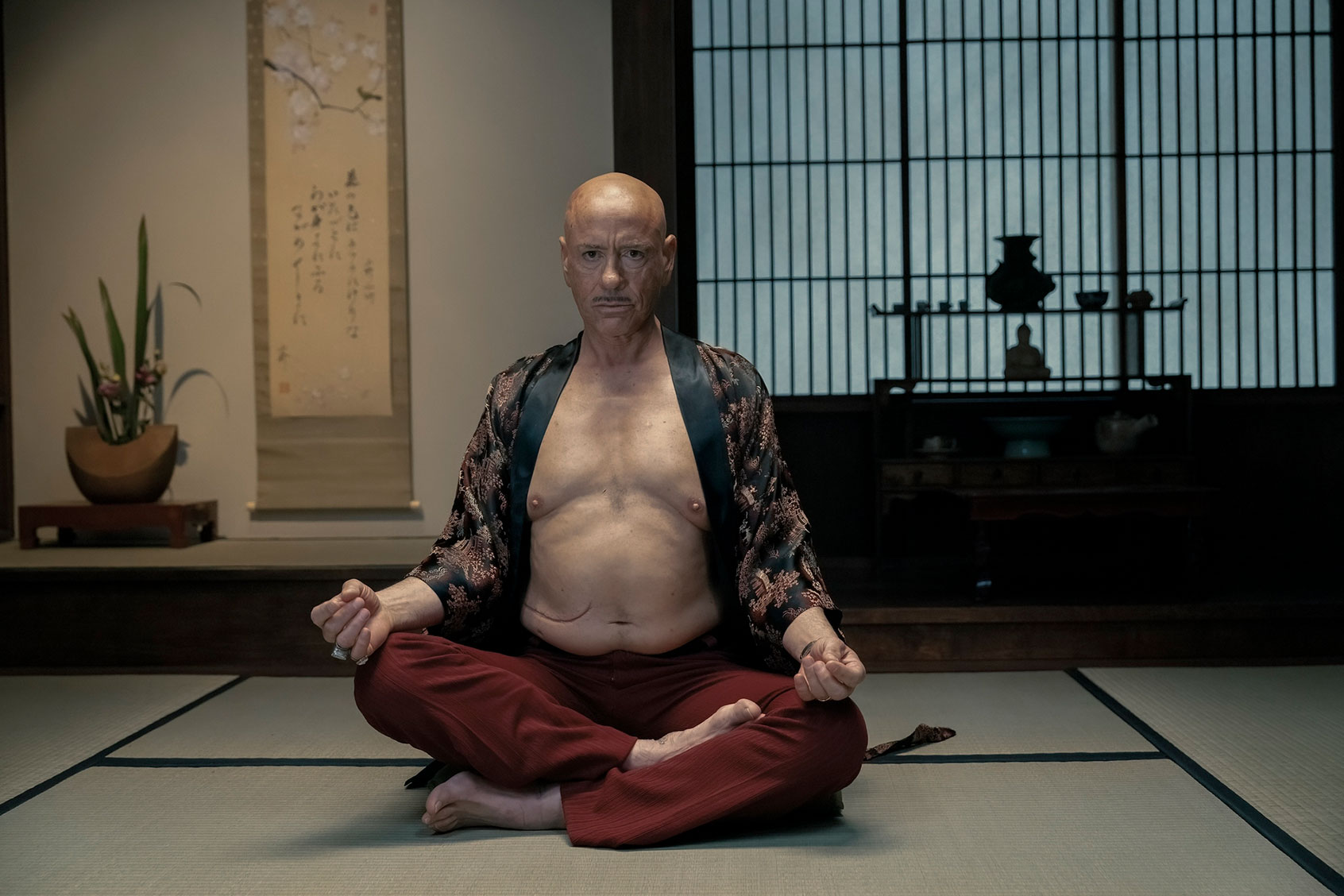
The SympathizerRobert Downey Jr. in "The Sympathizer" (Hopper Stone/HBO)
But our untrustworthy hero is also a double agent who keeps tabs on the General's activities on behalf of his CIA handler, Claude (Robert Downey Jr.), the slippery slimeball who trained him. At Claude's behest, once he arrives in Los Angeles, the Captain reconnects with his Orientalist grad school professor (also Downey Jr.), presses the flesh with a Reaganesque politician keen on supporting the Vietnamese community (guess who?) and takes a job as a consultant on a war movie directed by the Auteur.

Presenting Downey Jr. as at least four characters is one of Park's more inventive reworkings of the book. Not only does this escalate the feverish wackiness of the Captain's turbulent escapades in the America, but it also claws at our assumptions of what "The Sympathizer" is supposed to be.

"The Sympathizer" warns us that any singular view of a broad-scale event is undependable at best.

This series is a big swing for HBO, with much of the action conveyed in Vietnamese translated with English subtitles. A large accomplishment is the way Park and McKellar ferry the audience through Nguyen's intentional thematic tangles. "The Sympathizer" is a spy tale, a black comedy, a hazy war memoir and a coming-of-age story, to name a few genres it touches on. Park evokes all of this while maintaining an electrified focus on ordering the Captain's journey into pleasing progressions, like a jazz or funk solo on one of the many American soul songs he loves.

The series firmly roots in the specific effect colonization had on Vietnam, as well as the Captain, who at all times has to remind himself of his mother's assurance that he is "twice of everything," as the world in his internalized hatred haunts him with reminders that he will never be enough.

Ideological representatives populate "The Sympathizer"; few characters are only a mother, wife or lover. Several, including the Captain’s lifelong friends, Bon (a moving performance by Fred Nguyen Khan) and Man (Duy Nguyễn), are both. Bon is a true believer in the South's colonized version of democracy, who suffers greatly when Saigon falls.

We need your help to stay independent

Man and the Captain are secretly in league with the Communists, only Man has the honor of remaining behind to experience the victory for which they fought. Having one of his best friends as his Vietnam contact comforts the Captain until time and circumstances set him adrift, floating in a limbo point between the illusionary American dream, the dream of becoming American and the dream of returning to Vietnam and being embraced as Vietnamese.

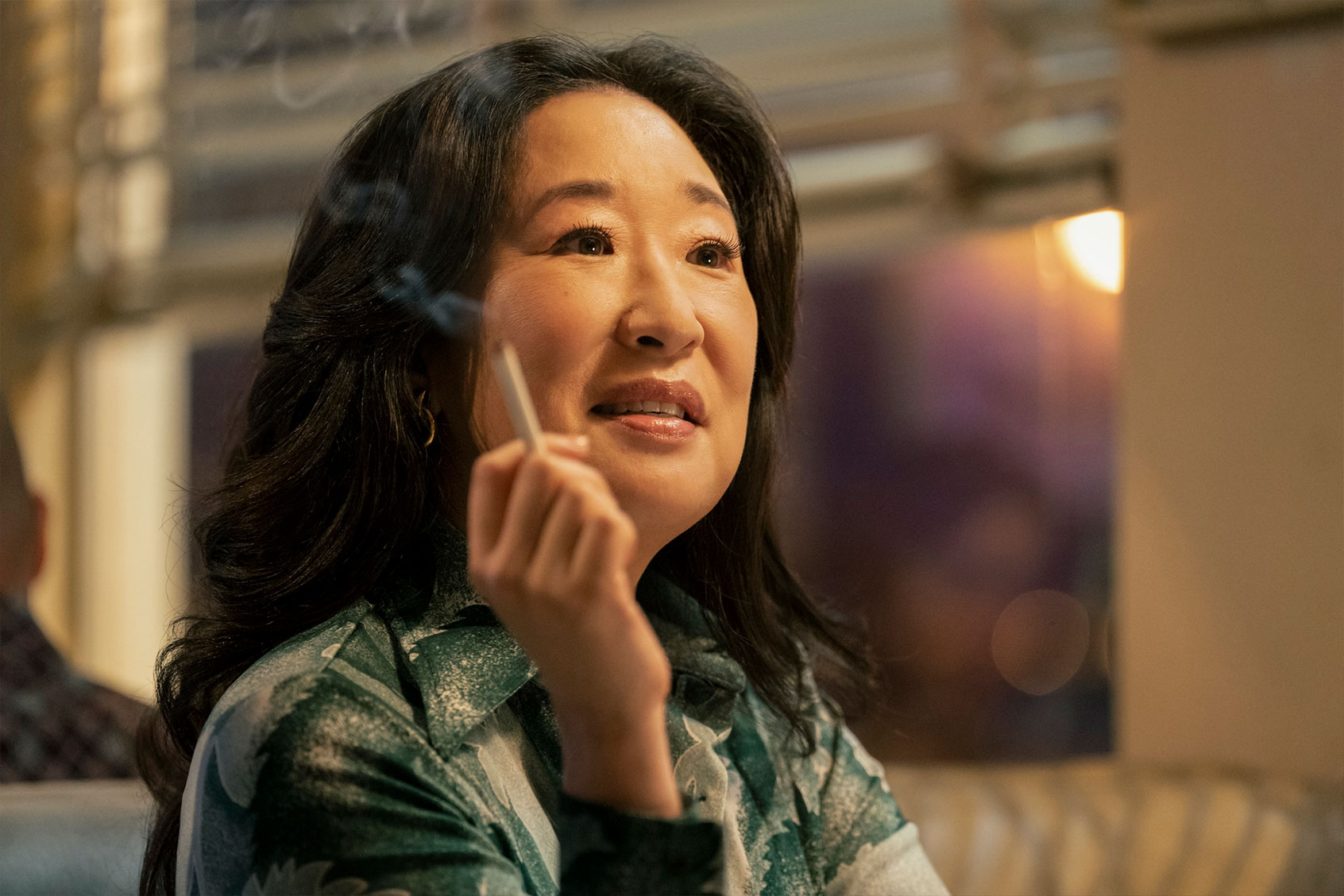
"The Sympathizer" warns us that any singular view of a broad-scale event is undependable at best. America's view of Vietnam tends toward one perspective defined by Hollywood filmmakers. The Auteur, who dominates the fourth episode, represents this along with the damage such image-setting does to a people and country's reputation, as does the professor, a man so given to appropriation that he chastises his assistant California and raised assistant Sylvia Mori (Sandra Oh, both superbly understated and perhaps underutilized) for failing to be Japanese enough by his standard.

The SympathizerSandra Oh in "The Sympathizer" (Hopper Stone/HBO)Watching the newly-minted Oscar winner trippily evoke these types from underneath an assortment of prosthetics is distracting to a degree that may put off some people, which appears to be Park's strategy. Should the Auteur episode strike a few folks as more reminiscent of "Tropic Thunder" than "Apocalypse Now," that is probably deliberate. 

If the goal is to critique America's careless white hegemony through several archetypes, casting the man who spent more than a decade playing a comic book billionaire military industrialist savior is an economic means of getting that point across. (David Duchovny is far more cartoonish, yet plausible, as a method actor who goes off the rails.)

Xuande's profoundly rich and emotionally agile work stabilizes this stylized and situational madness, defying the quotidian "sane man in an insane world" characterization by aiming for something more complicated. Through him, the Captain shifts between having a grip on his deceit and fraying under the uncertainty of it. Even when he is smoothly adjusting to whatever new abnormal lands in his lap, Xuande's eyes carry a flicker of uncertainty until at last, when the world is entirely off-kilter, he falls apart.


Want a daily wrap-up of all the news and commentary Salon has to offer? Subscribe to our morning newsletter, Crash Course.


This is foretold at the start, when the opening card quotes a phrase from "Nothing Ever Dies: Vietnam and the Memory of War," another of Nguyen's works. "All wars are fought twice," it reads. "The first time on the battlefield, the second time in memory."

Our titular character can't be relied on to precisely recall his homeland as it was, or his real self for that matter, but his heart and sorry soul don't lie. Regardless of the evil the Captain's paranoia and self-doubt drives him to do, you may still ache for him in the end, proving "The Sympathizer" successfully wins us over to its cause.

"The Sympathizer" premieres at 9 p.m. Sunday, April 14 on HBO and will be available to stream on Max.

Conan O’Brien reveals which president he’d like to interview while eating spicy wings on “Hot Ones”

The season 23 finale of “Hot Ones” featured not one, but two talk show hosts indulging in a platter of spicy hot chicken wings. Conan O'Brien — whose eponymous travel series, “Conan O'Brien Must Go,” will be released next week — sat down with Sean Evans to reveal the worst thing that a talk show guest can say during an interview along with which US president he’d like to interview on his podcast. 

The retired late-night talk show host admittedly didn’t grow up eating much spicy food, but he still handled the heat like a champ. At one point, O'Brien drank some of the sauces straight out of the bottle and even brought out his “very inexpensive” personal doctor Dr. Arroyo to check his body temperature.

O'Brien is best known for having hosted late-night talk shows for almost 28 years, beginning with “Late Night with Conan O'Brien” (1993–2009), followed by “The Tonight Show with Conan O'Brien” (2009–2010) on NBC and “Conan” (2010–2021) on TBS. O'Brien previously worked as a writer for “Saturday Night Live” from 1988 to 1991, and “The Simpsons” from 1991 to 1993. He currently hosts the comedy podcast series “Conan O'Brien Needs a Friend,” which debuted in November 2018.    

When asked if talk show hosts actually converse with their guests during commercial breaks, O'Brien said it all depends on the host: “In the old days — back in the days when I was doing it and it was just a couple of us — oftentimes it wasn’t much chat, really not much at all. If you were talking to a Letterman, he wouldn’t say too much…I always tried to make something happen. I tried to keep the rhythm going. And sometimes if I couldn’t get them interested, I’d try to say something provocative like ‘I bet you live four years tops’ and you can see them get a bit rattled.”

“I remember I said that to Bea Arthur and I was right,” O'Brien added.

O'Brien then took a moment to commend Evans and his interview style, saying “You are a very serious interviewer, you take it seriously and you ask really good questions. I’m very impressed with your dedication to it.”

Elsewhere in the episode, Evans wanted to know the worst thing a guest can do while being interviewed on a talk show, to which O'Brien answered, “Tell the audience it’s not going well.” 

“I’ve seen it happen many times. It’s an amateur move because the host can do a lot to let people think it’s going great, even if it’s not,” he continued. “There are many things the host can do. The host can be enjoying. The host can act a little bit.

“Audiences want to see a good show, they want to see a good interview. And I was always amazed when someone would come out and they’d be doing OK… and then they would just go, ‘This just isn’t going well is it?’ I’d look out at the audience and it'd be 200 people sitting there and I’d see 200 souls leave 200 bodies because they were just told they were not getting a good show. That’s not show business.”


Want more great food writing and recipes? Subscribe to Salon Food's newsletter, The Bite.


O'Brien, who frequently featured animal experts on “Conan,” also recalled his most harrowing experience with wildlife. It involved O'Brien getting on the back of a water buffalo, per the request of one of his producers. The water buffalo “freaked” out when O'Brien was sitting on it and “tossed” him into the air before O'Brien fell and landed on his hip on the cement floor. “I had a hematoma on my hip that was so big I couldn’t get my jeans on or off,” O'Brien said.

Before taking on the wings of death, O'Brien shared which president he thinks would make a great guest on his podcast: “Richard Nixon — oh my god, it’d be fantastic! He’s such a comedy figure when you think about it and we could get him to Watergate.”

O'Brien also isn’t opposed to interviewing Abraham Lincoln because he’s got a great voice.

Watch the full episode below, via YouTube:


Conservative media blasts José Andrés after Israeli airstrike kills World Central Kitchen workers

Several conservative critics have blasted José Andrés for being a so-called anti-Israel “radical” in the wake of the deadly World Central Kitchen (WCK) drone strikes. On April 1, seven WCK aid workers were killed in an airstrike carried out by the Israel Defense Forces (IDF) in the Gaza Strip. The workers were from Australia, Poland, the United Kingdom, a dual citizen of the U.S. and Canada, and Palestine.

Andrés is the founder of WCK, the not-for-profit organization that provides fresh meals in response to humanitarian, climate and community crises, per its official website.

In response to the attack, Daily Wire host Ben Shapiro took to X (the platform formerly known as Twitter) to accuse Andrés of “blood libel.” 

“World Central Kitchen does good work, but this is a blood libel unsupportable by logic or evidence,” Shapiro wrote in a post. “Also, Andres has been accusing Israel of targeting civilians and hospitals for months on Twitter, and called for a ceasefire on October 13, less than a week after October 7.”

Shapiro also called Andrés a “political radical” during a recent episode of his eponymous conservative talk show: “He's been a political radical for quite a while. Those two things are not in particular contradiction. You can do good things and you can do bad things. Life is filled with these sorts of things.” Shapiro suggested that accusing Israel of facilitating “a war against humanity itself” is an “incredibly vicious proposition.”

The Federalist’s David Harsanyi also accused Andrés of “blood libel,” saying “many Democrats have taken to cynically spreading this blood libel to help Joe Biden mollify the (un-mollifiable) pro-Hamas faction within the Democrat Party.” Harsanyi slammed Andrés’ New York Times guest essay in which he urges Israel to open more land routes for food and medicine to Gaza, calling it “self-aggrandizing.”

Similarly, Newsmax TV host Greg Kelly called Andrés a “swamp favorite” and claimed his “attitude and his attention-seeking may have helped lead to” the deaths of the WCK workers. In a separate episode of his show, “Greg Kelly Reports,” Kelly attacked Andrés’ character, claiming the chef is “not that nice — yelling and screaming at people all over the place.” Kelly also said that while the WCK is an “interesting concept,” it “needs to be disbanded immediately.” He previously said the organization “is in way over its head,” and “maybe it’s time for it to go away.”

Other conservative critics said Andrés was influenced by “pressure from radical anti-Israel activists” and attacked him for calling for a ceasefire. “Who does Andrés think he is … ? … He's a gourmand who serves traif [non-kosher food],” wrote Matthew Continetti, Director of Domestic Policy Studies at the American Enterprise Institute, for The Washington Free Beacon. In the same vein, Newsmax TV host Christopher Plante slammed Andrés for “serving gourmet meals to the terrorists.”  

“Well, why aren't you inside Russia feeding the Russian troops that are attacking Ukraine?” Plante said. “You know, they're the bad guys in this and they're in there saying, ‘Oh, we're so great. We're feeding Hamas because they need food.’”

Following the attack, Andrés said he is “heartbroken and grieving” in an online statement: “These are people…angels…I served alongside in Ukraine, Gaza, Turkey, Morocco, Bahamas, Indonesia. They are not faceless…they are not nameless.”

“The Israeli government needs to stop this indiscriminate killing,” his post continued. “It needs to stop restricting humanitarian aid, stop killing civilians and aid workers, and stop using food as a weapon. No more innocent lives lost. Peace starts with our shared humanity. It needs to start now.”

In addition to his plea in The New York Times, Andrés said the airstrike is “unforgivable” and something he will “have to live with” for the rest of his life during an exclusive interview with ABC News. He noted that Israel is engaged in a “war against humanity itself,” saying it’s “been six months of targeting anything that moves.”

“This doesn’t seem [like] a war against terror,” Andrés said. “This doesn’t seem anymore a war about defending Israel. This really, at this point, seems [like] it’s a war against humanity itself.”

The comment garnered pushback from the White House, which asserted that changes are necessary in order to prevent similar “operations” from taking place again. “There’s going to have to be some changes to the way Israeli defense forces are prosecuting these operations in Gaza to make sure this doesn’t happen again,” said John Kirby, the White House national security communications adviser, in an April 7 episode of ABC’s “This Week.”

“There have got to be changes in the deconfliction process, between aid workers on the ground and the IDF headquarters so that this kind of targeting can’t happen again.”


Want more great food writing and recipes? Subscribe to Salon Food's newsletter, The Bite.


In a statement made on April 2, Joe Biden accused Israel of “not doing enough” to protect aid workers trying to deliver “desperately needed help” to civilians. The president added that he’s repeatedly urged Israel to “deconflict their military operations against Hamas with humanitarian operations, in order to avoid civilian casualties.”

Kirby refrained from commenting on the possible consequences the US may impose if Israel fails to stay true to its commitment to increase humanitarian aid and reduce violence against civilians in Gaza.

“We have to judge it over time. We have to see past the announcements and see if they actually meet these commitments over time in a sustained and verifiable way so that confidence can be restored, not just between aid workers and the IDF, but between the people of Gaza and Israel,” he said.

When asked if he would rule out slowing down or pausing weapons transfers to Israel, Kirby said it’s not his place “to rule anything in or out today.” 

“What I can tell you is that as the president made clear to Prime Minister Netanyahu, we’ve got to see some changes in the way they're prosecuting these operations or we’re going to have to think about making changes in our own policy towards Gaza.”

On Wednesday, WCK announced that another one of its volunteers was hurt in an IDF airstrike that took place on April 1, separate from the attack that occurred just 15 minutes later. WCK said a Palestinian staff member, named Amro, was “gravely injured” in a reportedly deadly airstrike at al-Bashir Mosque in Deir al-Balah. Both April 1 airstrikes took place within miles of each other.

Rachael Ray’s 7 best vegan and vegetarian recipes

Rachael Ray is an icon, through and through.

One of the foremost culinary inspirations that got me cooking as a preteen, Ray's unpretentious yet quasi-elevated fare is the perfect gateway into home cooking. Her recipes aren't basic by any means, but are always delicious, typically take little-to-no-time to whip up and oftentimes call for ingredients you probably already have on hand. 

Ray also provides kind, suggestive tips with a guiding hand, never condescendingly and always with a smile. I owe her a lot, from my mastery of chicken and pasta dishes to possibly my career at large, to be frank.

So yes, it should go without saying that I'm an enormous fan. 


Want more great food writing and recipes? Subscribe to Salon Food's newsletter, The Bite.


Ray also has an excellent grasp on vegetarian, vegan and plant-based cuisine at large. Of course, you can make any of her dishes and make your own swaps and substitutions to align with your diet, or you can follow these recommendations if you're looking to omit meat in general.

No matter how you interpret Ray's recipes in your own kitchen, you're sure to be very, very satisfied.

Tomato soup is a classic for good reason. Here, Ray gussies up the staple with fire-roasted flavor, leaning more into a decidedly bisque direction than a thinner soup. 
 
The soup also boosts the nutritional component with fennel and carrot, plus two types of tomato (fire-roasted canned tomatoes plus tomato sauce). If looking to keep things entirely vegan, obviously omit the optional 'nduja, as well as the cream – and be sure to use vegetable stock. I'd also personally omit the sugar, but that's up to you!
This is such a bright, original recipe. It makes for a perfect brunch dish or a really lovely dinner with a green salad. Ray enlivens a baked omelet with potatoes, leeks, garam masala and tons of herbs (2 cups!). This also feeds a small group incredibly well. It's such an inventive dish. 
This dish is a veritable cornucopia of various textures, from the bite of the polenta cakes to the chew of the sharp arugula to the bite of the lemon. If you're unfamiliar with making polenta, this is an excellent starter recipe, and if you're a texture lover (like me), you'll appreciate the subtle crispness of the polenta cakes over the soft-on-soft texture of the polenta itself.
 
If you're vegan, use vegetable stock and the milk substitute of your choosing and omit the cheese and honey. This also makes for an excellent lunch dish.
This vegetarian dish is such a winner, with a chili-forward flavor and tons of smoky cheese (of course, aim for a dairy-free cheese substitute if you're eating vegan). Don't skimp on the sour cream or vegan sour cream, fresh cilantro and salsa verde. Or, if you're in the mood, make your own salsa verde so you can control the heat level. Ray calls for flour tortillas but feel free to swap in corn if that's your preference. 
 
Cheese pulls galore!
This recipe is entirely vegan, as is, so if you actually are vegetarian, feel free to swap in dairy milk, non-vegan mayo and regular butter. The avocado spread is fantastic, the buffalo sauce is sharp and pungent and the raw (or pickled) garnishes help to add such a bright, fresh crunch.
 
There's a ton of components here, so make sure you read though the recipe and have all of your ingredients out and ready to go because this moves pretty quickly. It's so worth it!

We need your help to stay independent

This is a seriously top-notch vegan pasta dish.
 
With both harissa and tahini, complemented by garlic, lemon, asparagus, scallions and lemon, you'll be amazed by the depth of flavors. If you're not familiar with campanelle, it's a wonderful noodle shape that captures tons of sauce. Also, if you haven't tried charring lemon and asparagus before, you're in for a real treat.
 
If you're not vegan, top this with lots and lots of grated cheese; you'll thank me later.
This is a super-classic pot de creme, which is very similar to a mousse or classed-up pudding. You probably have all of these ingredients on hand, too — sans maybe the whiskey and espresso powder, but those can both be omitted anyway. This creamy, rich dessert is the perfect way to end any meal. Don't forget the whipped cream on top!
 
Vegan? Use milk and egg substitutes and a vegan whipped cream.

“Not about cooking and learning”: Valerie Bertinelli is “sad” over the state of the Food Network

Valerie Bertinelli has now joined the chorus of dissenting voices disappointed in the once-commanding juggernaut The Food Network. On Threads, she wrote "I fell in love with Food Network two decades ago because of all the amazing ITK (in the kitchen) shows. 30 minute meals, Ina, Giada . . . the list goes on. I learned so much. It’s sad it’s not about cooking and learning any longer. Oh well, that’s just business, folks."

Bertinelli's comment was in response to a cookbook author named Marlynn Schotland who asked the question that many have been pondering over the past decade or so: "I miss actual cooking shows on @foodnetwork. Remember those? Do you know what this world does NOT need? Yet another cooking competition show."

Bertinelli, an actress who rose to fame in the mid-1970s on the original "One Day at a Time", was one of the first "nostalgic," non-culinary casting choices by the network, along with Tiffani Amber-Thiessen and Trisha Yearwood. Her show "Valerie's Home Cooking" premiered in 2015; the show was in the vein of the "cook with me" type shows pioneered by the likes of Sara Moulton, Alton Brown, Rachael Ray, Ina Garten and Giada DeLaurentiis in the nascent days of The Food Network. This programming then became the go-to in the early-to-mid 2000s — and was a beacon for many young and up-and-coming beginning cooks (like me). 

Bertinelli then also went on to host Kids' Baking Championship alongside Duff Goldman, as well as Family Food Showdown and Family Restaurant Rivals. She also won two Daytime Emmys for Valerie's Home Cooking, which was then canceled in 2022. She was also then dismissed from Kids' Baking Championship earlier this year, "citing budget cuts," according to Wesley Stenzel at Entertainment Weekly.

The show's shift from "ITK (in the kitchen)" — as Bertinelli puts it — programming to a lineup of almost nothing but competition shows has been derided by longtime fans for years now, but it appears that the network's core audience and network executives must have no qualms since there's been no major changes in the direction of current programming. 

Consumer Reports wants schools to stop serving Lunchables on their menu, urges USDA to take action

A consumer watchdog group is urging schools to remove Lunchables and similar lunch kits from school menus because they contain high levels of sodium and high levels of chemicals found in plastic. 

The US Department of Agriculture currently permits two Lunchable kits, Turkey & Cheddar Cracker Stackers and Extra Cheesy Pizza, to be served to nearly 30 million children through the National School Lunch Program. In accordance with the program’s requirements, Kraft Heinz — the manufacturer of Lunchables — amped up the nutritional profile of its school Lunchable kits, adding more whole grains to the crackers and overall protein. But according to a Tuesday report from Consumer Reports, the Lunchable kits served in school have even higher levels of sodium than the kits available for purchase in stores nationwide. 

Consumer Reports compared the nutritional profiles of two school Lunchable kits, ultimately declaring the food kits are an unhealthy meal option for children. 

“Lunchables are not a healthy option for kids and shouldn’t be allowed on the menu as part of the National School Lunch Program,” said Brian Ronholm, director of food policy at Consumer Reports. “The Lunchables and similar lunch kits we tested contain concerning levels of sodium and harmful chemicals that can lead to serious health problems over time. 

“The USDA should remove Lunchables from the National School Lunch Program and ensure that kids in schools have healthier options.”

Consumer Reports also tested 12 store-bought versions of Lunchables and similar lunch and snack kits from Armour LunchMakers, Good & Gather, Greenfield Natural Meat Co., and Oscar Mayer. They found that the kits contained “relatively high levels” of lead, cadmium and sodium. The sodium levels in the lunch and snack kit labels reportedly ranged from 460 to 740 milligrams per kit — nearly a quarter to half of a child’s daily recommended limit. The school version of the Turkey and Cheddar Lunchable contained 930 milligrams of sodium compared to 740 milligrams in the store-bought version. Additionally, the school version of the cheesy pizza Lunchable contained 700 milligrams of sodium compared to 510 milligrams in the store version.

All but one of the aforementioned kits (Lunchables Extra Cheesy Pizza) tested positive for phthalates, known endocrine disruptors found in plastic that have been linked to several health issues, including diabetes, reproductive problems and certain cancers. The National Institute of Health categorized phthalates as “detrimental to human health.”


Want more great food writing and recipes? Subscribe to Salon Food's newsletter, The Bite.


None of the tested kits exceeded the federal limit of lead and cadmium levels, but five of the twelve kits would expose someone to 50% or more of California’s maximum allowable dose level (MADL). Even in small amounts, such heavy metals can cause developmental problems in children, along with hypertension, kidney damage, and other health problems in adults. The risks associated with heavy metals worsen from regular, prolonged exposure over time.

Consumer Reports has launched a petition to the USDA, urging the agency to remove Lunchables from the National School Lunch Program. The petition is seeking 25,000 total signatures, At this time, it has received over 15,000 signatures in support of the initiative.

According to the School Nutrition Association, over 95,000 schools and institutions serve school lunches to 28.5 million students each day through the federal National School Lunch Program. Nearly 5 billion lunches are served annually: 18.9 million of those lunches are free, 1.1 million of those lunches are reduced price and 8.5 million lunches are full price.

Mike Johnson basks in Trump’s shadow while all flood lights turn to Marjorie Taylor Greene

House Speaker Mike Johnson (R-LA) brags that Donald Trump has him covered, in the midst of Marjorie Taylor Greene’s threats to boot him from office.

In a recent Fox News "Sunday Morning Futures" interview with anchor Maria Bartiromo, Johnson claims that he spent hours with the former president on Friday. He elaborated on their long-standing relationship, wherein they speak multiple times a day, saying, “He’s 100 percent with me!”

Johnson’s claims seem to track, as Politico reported that Trump and his allies disagreed with Greene’s characterization of Johnson.  “One hundred percent distraction. Unwanted. And just stupid,” one Trump insider said Wednesday night.

Another person close to Trump said that Greene was not being “constructive,” and that “The internal fighting is not appreciated by [Trump].”

The Republican Party’s deeper concerns lie with the consequences of Johnson’s removal. This would create a black hole in the power structure, when a sense of unity is integral to the party’s sustenance.

“Even if Greene’s effort is foiled, most likely with Democratic help, there’s a clear understanding that Johnson’s position in the party would be greatly hobbled — and that a weakened speaker means a weakened GOP apparatus,” Politico reported. 

Johnson highlighted Greene’s failure to notice the fight on the border and added that it would be counterproductive to the GOP cause to allow a government shutdown. He extrapolated that this would affect TSA agents, Border Patrol agents, and troops — all of whom would not get paid. 

Trump extended his vote of confidence in Johnson during a press conference on Friday, saying, “I think he’s doing a very good job. He’s doing about as good as you’re going to do. And I’m sure that Marjorie understands that.”


“The curtain was pulled back”: The producers of “Food Inc. 2” on why transparency in food matters

“Food, Inc. 2,” the long-awaited sequel to the 2008 Oscar-nominated documentary "Food, Inc,” follows in the footsteps of its revelatory predecessor. The horrifying yet thought-provoking showcase, courtesy of directors Melissa Robledo and Robert Kenner, once again meshes science, data and emotions to illustrate how our industrialized food system has gotten worse nearly 15 years later.  

Much of the focus is on corporate consolidation, which has become a dire problem amid a raging global pandemic that further weakened an already vulnerable system. Several meatpacking plants — notably Tyson Foods facilities — essentially transformed into COVID super spreaders due to corporate corruption and an executive order issued by the Trump administration. In particular, “Food, Inc. 2” spotlights a Tyson meat slaughterhouse based in Waterloo, Iowa, where 13,000 out of 25,000 workers tested positive for COVID. It’s just one of many examples of how corporate power continues to fuel disparities in various sectors of society: health, economics, the environment and so much more.

Special attention is also placed on ultra-processed foods, a new category of dangerous foods that have increased in popularity and consumption in recent years. Such foods (think ice cream, chips, candies, sweetened carbonated beverages and some breakfast cereals) currently make up an estimated 73% of the US food supply. Ultra-processed foods, the documentary reveals, are major money makers for big businesses. They aren’t mass-produced solely because they taste good. They’re primarily made for capitalistic motives.

In addition to Robledo and Kenner, “Food, Inc. 2” sees the return of journalists Michael Pollan and Eric Schlosser, this time as co-producers. The duo famously co-narrated the first film and has since covered the food system at large, including workers’ rights and antitrust law. Despite the troubling situation, Pollan and Schlosser are confident that the system can be changed for the better. The documentary itself ends on an inspiring note, urging viewers to visit a campaign website that includes ways to take immediate action.

Following the documentary’s theatrical premiere, Pollan and Schlosser sat down with Salon to discuss why it’s necessary to have greater transparency within our food system. They also delved into food legislation along with the pros and cons of food science technology.

This interview has been lightly edited for length and clarity.

What encouraged you both to work on a “Food, Inc.” sequel more than a decade after the first film was released?

Michael Pollan: So, neither of us had any interest in doing a sequel. We'd been asked to do one — as had Robert Kenner and Melissa Robledo, the directors — until the pandemic. Something really interesting happened early on in the pandemic, as I say in the film, the curtain was pulled back. There's a great line from Warren Buffett: “Only when the tide goes out do you learn who has been swimming naked.” And we saw who was swimming naked and it was the food system. I wrote a piece for The New York Review of Books about what we were learning, talking about concentration and antitrust and how specialized the food system had gotten. The companies  that were supplying institutional buyers, like schools and factories and offices, their market fell apart. But they were so specialized that they couldn’t adapt. It was a real sign of how brittle and non-resilient the system was — I wrote a piece about that. 

Unbeknownst to me, because we hadn’t been in touch, Eric published a piece, I think a week before mine in The Atlantic talking also about what we had learned and we realized the story had changed. It was time to take another look and this was the occasion for all of us to dig in and start reporting again and see what had happened. Was the system more concentrated? Yes. And you had other developments too, like the rise of the category ‘ultra-processed food,’ which was not something that people talked about in 2008 or really even understood.

We didn’t want to do a sequel just to do a sequel. We wanted to do a sequel because the story had advanced and we’d learn things too.

Eric Schlosser: I’d originally gotten engaged in food issues by following the harvest and writing about migrant farm workers. During the pandemic, both of those groups were sacrificed for profit. Michael wrote an article that was more an overview of how brutal the system was. And the article that I wrote was specifically looking at how meatpacking workers were risking their lives to keep meat getting shipped out the door and the very close relationship between the big meatpacking companies and the Trump administration. When I wrote the case, it seemed outrageous that Trump would issue an executive order preventing local health departments from shutting down meatpacking plants that were the vector for COVID into rural communities. But it was only months later, after we'd already decided to make the film, that we learned that that executive order was written by the legal department of Tyson Foods. You can hardly find a better example of the corruption of government by big business, which ties into all these issues about consolidation and oligopolies and monopoly power.  

We need your help to stay independent

Let’s focus on ultra-processed foods for a bit. When would you say the conversation surrounding such foods escalated? Was it during the onset of the pandemic or prior to then?

Pollan: I first heard about it from Carlos Monteiro, this epidemiologist in Brazil. He reached out to me and I actually went to Brazil and met him and his team of graduate students who were doing all this research at the time. It was a pretty specialized little niche in nutrition until Kevin Hall at the National Institutes of Health — a skeptic of the idea that there was such a thing that had unique properties that imperiled our health — did this study. It was a side-by-side study and he created two sets of meals with equivalent amounts of salt, fat and other macronutrients and found that people who ate the ultra-processed version of the same nutrients ended up eating about 500 calories more per person per day, which is an astonishing result. There's good evidence that there's something uniquely harmful about these foods. We don't know exactly why, or what it is. We know they've been engineered to make you crave them in various ways. But that's the next step in that research. I foresee a day when we regulate all processed foods by calling them out on labels and educating the public. That's very hard to do in the current political climate, but I think it's coming.

What kind of progress have you made with trying to get ultra-processed foods labeled?

Pollan: We've talked to people in government and the first argument they make is that we don't have a really good definition yet. Lots of marginal cases that are fairly simple. A potato chip only has two ingredients. But Doritos has got like 20 ingredients — that’s a very complex corn chip. So, what do you do about those marginal cases? That's one thing. The other thing is do you need to establish causality? Is it the additive? Is it the emulsifier? Or the lack of fiber? Or the colorings? Or the flavorings that are the problem and that's making people eat too much? That science hasn't been done yet. So that needs to happen to bulletproof the concept against charges that it's anti-science or it's vague. I mean, junk food is pretty vague too. Some countries have had success though. In Mexico and Chile and Brazil, they figured out a workable definition of junk food. I think they have a different attitude toward the food companies. If you're in South America, US and European food conglomerates are imperialist opponents. That’s why it was a little easier to come after them in those countries. But here, it’s going to be tougher and it comes back to campaign finance issues. They wield a huge amount of power. And that too brings us back to concentration. It's one of the ways the ‘ultra-processed foods’ story and the ‘concentration’ story dovetail.

"I foresee a day when we regulate all processed foods by calling them out on labels and educating the public. That's very hard to do in the current political climate, but I think it's coming."

Ultra-processed foods have been expressly designed for a purpose. Not to satisfy you, which is how your parents cook for you, but to make provability and snackability and, essentially, addictiveness. We don't like being hoodwinked. To put out information that tells you here's what's going on with your food and here's why you can’t stop eating those Doritos, it seems to me would be helpful information to people. And if companies are so proud of their products, they should be proud of the ingredient list.

Schlosser: One of the other things is these are new foods. How long have people been consuming Baconator-flavored Pringles? So it would make sense that the harms of these new foods would only now be becoming apparent. I'm not in favor of banning them, or immediately taxing them. But notifying people, this is what seems to be de minimis. The industry's argument has been that there are all these great benefits of processes, including increased shelf life and all these terrific things. If it’s so terrific then they shouldn’t have any problems with labels. It’s in the marketplace of ideas and free speech that you get the right answer.

This was almost 25 years ago when I visited a flavor factory and what was stunning to me is that companies are not required to list the ingredients in their flavors. If they had a list of ingredients in their flavors, it might be longer than the list of ingredients in the product. By using a phrase like ‘natural flavor,’ it sounds like a good thing. Whereas if it were ‘natural flavor’ and then in parenthesis a long list of bizarre chemical names, you might think twice about eating it.

I wanted to discuss some current food legislation. On April 1, California’s $20 minimum-wage mandate officially went into effect, much to the dismay of franchisees and big businesses. I’m curious to hear your thoughts about this new law.

Schlosser: I applaud the law. Specifically in the state of California before the passage of this law, one-third of the fast food workers relied on public assistance, either Medicare or food stamps. If you’re going to work, you should be paid a wage that allows you to buy food — especially if you’re working for food companies — and pay you rent. The minimum wage is $7.25 at the federal level. It's the longest period since the minimum wage was established in 1938 that there hasn't been an increase. And I feel badly for some of the franchisees because the franchisees in the fast food industry have very limited power over any of the operations. They have to sell certain goods. They have to install certain equipment. It’s a very clever policy that the one thing that franchisees have control over are the wage rates and the major companies don't take responsibility for these workers. So for the franchisees to earn a profit, they feel like they have to screw over their workers. And that's just wrong. 

The president of McDonald's is paid $20 million a year. Before the passage of this bill in California, the median annual income of the fast food worker was $15,000 a year. If you do the math, a fast food worker in California would have to work 1,333 years to earn what the head of McDonald's earns in a year. To me, that’s the perfect symbol of how excess corporate power has fueled inequality in this country. 

"If you do the math, a fast food worker in California would have to work 1,333 years to earn what the head of McDonald's earns in a year."

Pollan: I also think those fast food companies are gonna find that when you pay people more money, they have more money to spend on food. This is Fordism, this was an old ideology in America. Henry Ford figured out you had to pay people enough money that they could buy the cars. And this was a really driving ideology in America for much of the 20th century. And it worked. You had a vibrant middle class that could afford all these consumer goods and it was a virtuous circle. We've gotten away from that, and so doing things like what California did is taking us a few baby steps in that direction.

There’s also Kentucky’s Senate Bill 16, which aims to criminalize the use of any recording equipment inside concentrated animal feeding operations (CAFOs) and commercial food processing and manufacturing plants without consent from the operation's owner. If this bill were to become law, how would it impact our already vulnerable food system?

Pollan: This is really happening in a lot of places. I know it’s proposed in Kentucky, but it’s in place in several states — I think there are 14 total states that have similar bills. What we need in the meat industry, particularly, is transparency. If more people could do what we both had the chance to do, which is go to a slaughter plant and go to a feedlot, It would change everything about how people eat meat. If you want to change meat eating habits, go to a feedlot. Factory farms understand that. They understand that their business is only ideologically sustainable to the extent we don't know what they're doing and how they're doing it. I used to say that these laws would never survive Supreme Court review. But I’m much less sure of myself now.  

Schlosser: The bill itself is a confession of guilt because it says that there’s something wrong.  It will make life more difficult for whistleblowers, but the truth will always come up.

The documentary spotlights Impossible Foods, the company that develops plant-based substitutes for meat products. On one hand, the brand’s Impossible Burger helps cut down on industrialized meat production. But on the other hand, it is “built on commodity agriculture,” as you said Michael. It’s ultimately an ultra-processed food, not quite a healthy food. Should we vilify technology-fueled plant-based foods then? How exactly should we view them?

Pollan: You should have your own thoughts about them. I'm equivocal. I think a company like Impossible Foods was really born of idealistic motives, a desire on the part of a scientist who happened to be vegan to destroy the American meat system. That was his avowed goal, although he's quiet about it for a long time. But there's some problems with it. Compared to a lot of food processing, this is a more interesting, more publicly beneficial application of that food science technology. But the result is — although it presumably means less meat will get eaten if it's successful — is an ultra-processed food. It’s a complicated food and it's got at least one ingredient that hasn't been in the diet. But they're interesting efforts, so I didn't feel I needed to condemn it. However, it is a mixed bag.

What do you hope viewers will take away from “Food, Inc. 2”?

Schlosser: That there’s still some serious problems within our food system. That there are very powerful interests that are profiting from it. But it’s not inevitable and it can be changed in a way that’s sustainable and just.

“SNL” pokes fun at Donald Trump’s centrist view on abortion bans

"Saturday Night Live" weighed-in on Donald Trump's abortion ban claims, with "Weekend Update" hosts Colin Jost and Michael Che shining a light on the former president's centrist view.

"This week, Donald Trump said that he supports abortion laws being decided by the states instead of the federal government," said Che, referring to the former president’s video on Truth Social, in which he says, "This is all about the will of the people," urging to "follow your heart."

Calling bologna on Trump's stance, Che continued on a comically long tangent, saying, “Why not go even smaller and leave it up to the county or the city or, even better, take the government out of it completely and leave the choice about what women can do with their bodies to the person who knows what they can do with them the best, their husbands?”

Jost steps in here to explain the origin of Trump's skewed opinion as stemming from his own past as a baby, when “a bunch of time travelers showed up and tried to kill him.”

Watch here:

Kurt Cobain and Me: The Gen X poster child and rock legend is my Gen Z hero, too

The boys spilled out of the locker room in a gnashing horde.

They pitched their bodies into the air and flung clumps of sweaty hair from their faces, headbanging in line with the stomping bass that had just cracked across the gym’s sound system. 

Full of flowing hormones and covered in dried sweat, the entirety of my high school gym class began to move to the music — each individual in their own way — enraptured by its energy and still thrumming with adrenaline from 2v2 basketball scrimmages. 

For a few fleeting minutes, social stratification was entirely dismantled by one rotating guitar riff. Sports jocks, guys who stuffed their bottom lip with dip in the back of class, girls who smelled like vanilla and bright artificial fruit, and reticent wallflowers, all churning together.

By the time the bell rang, prodding us toward precalc or a quiz on “The Sound and the Fury,” it did, in fact, smell like teen spirit. 

We filed out of the gym, buzzing and bedraggled. A shared ecstasy lingered, if only until the next period began. 

Experiencing that subtle, shimmering solidarity, the threading of different social subgroups together, is intrinsic to my attachment — as a member of Gen Z, not X — to Kurt Cobain, frontman of the iconic '90s grunge rock band Nirvana. 

Since the genesis of the band in 1987 — and Cobain’s subsequent, seismic fame, then tragic death by suicide — he’s functioned as something of a talismanic leader for generations of morose, angsty and disaffected fans. Some of this posthumous cultural longevity is surely due to his premature death, which preserved him in amber, devoid of a flop era and safe from cancellable offense. But that doesn't entirely explain his enduring appeal. Cobain’s emotional melancholy is something members of Gen Z — widely understood as prone to trauma-dumping on the internet and hyper-sensitivity — can find particularly relatable. 

Raised by Gen X parents like mine whose early adulthoods were largely defined by Nirvana and Cobain, his music became part of a shared, familial identity they could pass down to us. In a recent essay for The Guardian, writer Hannah Ewens opines that “Just as the Beatles defined the construct of a rock band, Nirvana redefined what a band was — both in the public consciousness and to other musicians: unpretentious, tough and sensitive, embraced by the system while threatening it.” It's not particularly rebellious to embrace your parents' definition of good music, but over time, I forged my own relationship with Kurt Cobain, distinct from theirs. 

In all honestly, I’ve always felt several standard deviations away from what feels normal (an entirely subjective term). I know this sounds moderately insufferable, but bear with me. My life has been overwhelmingly positive in so many ways. And yet, setting aside personal conflicts and a heady amalgam of ADHD and anxiety, much of it has also felt very different to me than how it’s appeared outwardly to others. I don’t have a complex, philosophical explanation for this discrepancy. I don’t think you always need one. Cobain's music gives me a language for reconciling my own contradictions. We aren't the same by any means: I've had no meteoric rise to fame, no heroin addiction. But there was still a person named Kurt before all that happened to him. 

During my first years of college, like many, I struggled with finding my sense of self. Flush with insecurities of every kind, I tried on different personalities (and some bad outfits) in an effort to, if not wholly reinvent myself, at least discover something about myself that I actually liked or felt secure about. It was a process that ultimately backfired — by trying to be someone I wasn’t, I inadvertently jettisoned some of the most fundamentally defining pieces of myself. And all the while, I was still as sullen and angsty as ever. That all changed on Christmas Day, 2018, when my parents gave me my first pair of Doc Marten boots. 

Laugh if you will, but getting my Docs was like finding my glass slipper. At nearly 6 feet tall, I’d always felt something like Cinderella’s stepsisters, trying to cram my oversized foot into a tiny, dainty, acceptably pretty and interesting shoe. I wear them most days now. Aside from being comfortable, they're equipped with a steel-toed tenacity ideal for navigating New York’s perpetually crusty streets. 

And yes, Docs were a subcultural fashion item of the ‘90s — my dad still owns the pair he wore moshing at a Nirvana show with my mom at the now-shuttered Roseland Ballroom in New York in 1993. While Cobain wore Converse for that particular performance, I’m certain he laced up his boots often too. I often find myself gravitating toward those looks: slouchy pants, oversized jackets and knitwear, the occasional grandpa cardigan. As I’ve grown older, I’ve become increasingly confident in myself and my fashion choices, aware that the old adage is true: What you wear is truly a reflection of who you are. I’m sure that’s what Cobain was trying to convey every time he opted for a skirt or floral-patterned dress for a live performance. That has always been an inspiring exemplar of unabashed confidence to me.

But carrying yourself with confidence in public doesn’t necessarily equate to comfort with — or suitability for — fame, as Cobain's conflicted relationship to the celebrity status that accompanied his artistic success showed me. Regardless of whether he sought to be an international star before it happened, the “slings and arrows” of fame that writer Michael Azerrad wrote about in part for the 2021 New Yorker essay, “My Time With Kurt Cobain,” underpinned the rocker’s mental and emotional health struggles. 

It's not particularly rebellious to embrace your parents' definition of good music, but over time, I forged my own relationship with Kurt Cobain, distinct from theirs. 

In all likelihood, I’ll never be famous, and that’s OK. It’s not exactly something I aspire toward. But the essence of Cobain’s fame has always been incredibly relatable to me. There’s something so vulnerable and real — in an attention economy that demands performance from us all — about someone trying to keep a firm foothold in two warring worlds simultaneously, straddling the ever-oscillating line of what the public sees and what it can't. (“I’m not like them, but I can pretend,” resonates.)

This tension that seems innately bound into Cobain's persona — and Nirvana more broadly — is accurately reflected in the band’s lyrics. Dark, atmospheric themes abound — anger, personal struggles, violence, real and figurative — and while the sometimes disturbing subject matter can be difficult to take, I found the messages braided into them intriguing. His lyrics reflected Cobain’s chaos and mystique, which is to say, I didn’t necessarily understand them all, especially as a kid. All I knew was — mingled with his raspy voice and the band’s splintering sounds — they made me feel at an entirely unprecedented level. And some latent part of me was drawn to that brooding sentiment.

It came as no surprise to me when I learned that he was also a Pisces. 

Whether you believe in astrological signs or find it all to be a bit hokey, I find that Cobain embodied the compassion, sensitivity and emotional profundity that have come to be associated with the symbol of two fish swimming in opposite directions. That division between fantasy and reality — a liminal space I constantly turn to — is one that Cobain ostensibly occupied just as frequently. It’s something like the Vitruvian man, constantly splayed in different directions by our thoughts and ever-shifting emotions. It’s an identity Cobain internalized so intensely that he even carried it with him into his death in April of 1994, writing in his suicide note that he was a “sad little, sensitive, unappreciative Pisces, Jesus man.”

I’ve always known that finding comfort in the music and fashion of my parents’ generation, specifically the elements of it that have since become canonical, is a byproduct of my close-knit and large immediate family. It’s an idiosyncratic, shared existence — something that makes me feel comforted and protective at once. And yet, I’m my own person. While I would be remiss to ignore the inescapability of influence, my relationship with Cobain and his work could never precisely mirror theirs. And I think that’s part of his legacy. He was able to transcend space and time so seamlessly, so acutely, that his aura — which has spoken to my mom and dad for nearly 40 years — now screams to me from a stage set in an entirely different void. 

So consider me influenced, if that’s what becoming secure in my tastes and personhood means. I won’t be running from that anytime soon. 

If you are in crisis, please call the 988 Suicide and Crisis Lifeline by dialing 988, or contact the Crisis Text Line by texting TALK to 741741.

Iran’s attack on Israeli soil caused little damage, but now it’s Israel’s move

On Saturday night, Iran launched a barrage of over 300 drones, cruise, and ballistic missiles toward Israel as a response to a suspected Israeli attack earlier this month on an Iranian diplomatic complex in Damascus, Syria.

In what a former senior U.S. official called a “performative” attack, only a small portion of the missiles landed in Israel on a military base in Israel’s south, Israel said. A southern Israeli hospital reported that it is treating 12 patients

Israel is yet to decide on an appropriate response to the attack, although Iranian President Ebrahim Raisi warned of “a decisive and much stronger response.” In the meantime, it reopened its airspace early Sunday and lifted a sheltering order, with the expectation of no further major aerial threats in the short term.

For President Biden, who had to cut his weekend trip to his beach house in Delaware short in light of the attack, this “amounts to a scenario he’d greatly sought to avoid since the start of the current Middle East conflict,” CNN reported.

Despite his tensions with Israeli Prime Minister Netanyahu over the war in Gaza, in light of the drone strike, NSC spokesperson Adrienne Watson confirmed Biden’s support of Israel is “ironclad.” 

Biden’s decisions are weighed down by the importance of positioning himself favorably in the upcoming elections. His failure to call for a permanent ceasefire in Gaza after the events of October 7th  eroded “his support with key constituencies.”


“Teacher Spice”: What should an artist in academia look like? Not like me, I’ve learned

"You don’t look like an artist" is a dismissal I've heard since my 20s, when I first entered a Master of Fine Arts in creative writing program. It was actually the first thing anyone said to me, at the sign-in table for new students. When I gave my name to collect a lanyard and information folder, the person laughed. “You don’t look like an artist.”

I still remember what I was wearing that day because I had put such nervous and excited care into the decision: a navy-blue sheath dress from a consignment shop and gray suede wedge heels. For me, as I know is the case for many first-generation students from working-class backgrounds, school is serious business. The clothes that I’d carefully chosen reflected that attitude. Compared to the other new students, I realized, I was both overdressed and plain, but I’d wanted to look professional. Later in the day, another student would mistake me for an office worker and ask me where to collect their keys.

From my appearance — which is in many ways traditionally feminine — fellow writers have often come to a reductive conclusion: If I don’t look like an artist, then I must not be one. While this appearance-based assumption followed me throughout graduate school, nothing could have prepared me for how it would negatively impact my experiences as a new professor. Though many members of my graduate cohort would revise their assumptions after getting to know me, this has largely not been the case with faculty colleagues throughout my career.

For me, as I know is the case for many first-generation students from working-class backgrounds, school is serious business. The clothes that I’d carefully chosen reflected that attitude.

To me, it should be obvious that physical presentation is in no way a reliable indicator of artistic ability. The question of what an artist is supposed to look like, is, I think, a silly one, but because of the ways it has shaped my experience, it's one I’ve posed to myself as many times as I’ve told anxious students there is no “correct way” to be a writer — which is to say a lot. Like a lot.

Having considered this question across my years in the field, I believe the answer has to do with how one’s appearance can be used to code an individual, suggesting their memberships and alliances. Researchers in the social sciences have long recognized that people intuitively make assumptions about others based on their style of dress — often defaulting to unfair and unflattering stereotypes. In our current socio-political moment of exceptional division, distrust and anger, I now believe that my appearance allows miscoding. It can tell a story about me that I do not mean to tell, one that, in the fiercely liberal space of academia, inaccurately aligns me with conservative values. In my professional capacity, meeting a person for the first time, having not exchanged more than names, I am overlaid with a story that is dependent on assumptions about my identity, appearance and beliefs.

I am, of course, not alone in my traditionally feminine appearance activating a critique that spirals outward to encompass assumptions about political views and values. We see it in the controversy surrounding TIME’s decision to name Taylor Swift their 2023 Person of the Year. Though the magazine made a point to cite the unquestionable impact of Swift’s music globally, the millions of dollars she has donated to food banks and cancer research, and her rise from teen songwriter to international superstar, I have seen many responses that are mocking and dismissive. For some, Swift’s physical presentation and personality activate genuine vitriol. Opinion pieces describe her as “pleasant” and mean it as a dig. None of this is to say that Swift is undeserving of criticism, or has never been a bad actor, and it is unquestionable that she exists in a bubble of privilege. Rather, I am interested in how frequently critiques rely on elements of Swift’s appearance to insinuate that she is mediocre, unintelligent, and insincere. For two years, "Taylor Swift" was the nickname given to me by a small group of colleagues and graduate students, a shorthand evoking whiteness, blandness, a lack of intelligence, and the absence of any real artistic ability. I know that they believed I was too dumb to understand the insult. The truth is that I refused to escalate by responding. 

"Taylor Swift" is not the only name-calling I’ve experienced as an artist in higher education. A senior professor — a person I barely knew — used to call me “Teacher Spice” (as in, the lost Spice Girl), and regularly commented on my clothes and shoes. For a semester, we taught back-to-back in the same classroom, and they would wait as their class filed out and mine filed in, cracking jokes about what I was wearing that day. If not enough to establish a pattern — Taylor Swift, Teacher Spice — there is certainly a relationship between these two nicknames: pop, unserious, frivolously feminine. Several years ago, a group of students I had not interacted with went to a colleague to express their distress at my “tradwife style.” Thirdhand accounts are inevitably distorted, but I was told the students believed working with me would be unsafe. For all of our well-being, we decided this group should not be forced to interact with me, and they were not. The next cohort of students — who got to know me through the experience of taking a class with me — took no issue. We are, in fact, quite close. There is mutual respect and care.

Taylor Swift, Teacher Spice — there is certainly a relationship between these two nicknames: pop, unserious, frivolously feminine.

While I’m certain that people miscode me because of my appearance, I’m also sure that my somewhat traditional femininity would invite less negative attention if I were traditionally attractive. 2023 was the year of "Barbie," and the film brought a renewed awareness that the hyper femme can still be feminist. While "Barbie" received fair criticism for her proximity to girlboss-style white feminism, we more generally watched as women around the world — even those who consider themselves quite progressive — enthusiastically donned heels and pink dresses to pose in the Barbie Box at theaters and celebrate the undeniable beauty of Margot Robbie. For a moment, the traditionally attractive woman could be admired for her smarts and savvy.  But just as I don’t “look like an artist,” I don’t look like a Barbie. Though my presentation is traditionally feminine, I’m five foot one, wear a size twelve, have curly hair that tends to frizz, and sport a gap in my teeth. The sudden acceptance of Barbie was not an acceptance of me.

Part of the reason that I dress as I do is a matter of practicality. Yes, I’m short. Yes, I’m chubby. I’m also a 36 DD. I do not carry my weight “well.” My proportions make finding pants difficult. A blouse is nearly impossible. This is the reality of living in my body. Dresses spare me a daily struggle to clothe myself in a way that is both comfortable and professional. Besides that, my students regularly tower above me, and I can only reach halfway up the whiteboard. Truthfully, heels give me just a little bit of lift, and I feel more confident in them. It’s a boost I need.

The secondary reason I dress as I do is just as personal. I grew up working class, wearing my brother’s hand-me-downs. When I started school, I was teased mercilessly for being “poor” and looking like a “boy.” Neither of these things is shameful to me, but that said, even as a child, I was attracted to what I called “pretty dresses.” Having worked so hard for my career as an artist and educator, the clothes I wear are now a gift to myself.

I love teaching, but my job as a professor — surrounded by artists and intellectuals — has obliterated my self-confidence. For years, I avoided publicity for any of my books. I rarely did events. I turned opportunities down. I did this because any positive attention for my work has consistently translated into attacks on my person. Now, I am trying to reclaim myself. I know I am a good teacher; I put my heart into the work. I know I am a good writer; I put my heart into the work. Despite years of bullying and belittlement, I have stayed in this profession because I believe education can positively change lives. I also believe that, at their core, those who choose to work in education, including the majority of my students and colleagues, are fundamentally good. Among their number are people I am grateful to know and feel lucky to work with. I just wish that the few who judge me on my appearance would make the effort to learn who I am instead.

Can’t we get a nationwide gag order against Trump’s violent threats?

On Christmas Day in 1170, as the story goes, King Henry II, exasperated by his disputes with Thomas Becket, the Archbishop of Canterbury, said something along the lines of “Will no one rid me of this turbulent priest?” Days later, Becket was dead, murdered by knights who had heeded his majesty’s call. 

Future despots and mob bosses admired Henry’s example, and that would include Donald Trump — whether or not he knows the story — who was trained in the art of getting even by his father and later by notorious lawyer and fixer Roy Cohn, a despicable man who also ruined lives for his living.

As you’ve probably heard by now, this all-too-familiar tactic is called “stochastic terrorism,” a term often deployed over the past few years by Salon's Chauncey DeVega, among others: 

For at least the last six years, Donald Trump and the larger neofascist movement behind him have been using the propaganda technique known as stochastic terrorism, in which ‘dog-whistle’ and other coded appeals are used to encourage political violence. In itself, this is nothing new: Stochastic terrorism has been a key feature of right-wing media and the ‘conservative’ movement for several decades.

We could come up with other terms: “solicited terrorism,” maybe, or "leader hate speech or “political mob-speak.” At the other end of the process, the unfortunate but predictable result is known as “scripted violence.”

Whatever we call it, we know how it works: Those who foment violence give themselves just enough room to deny any clear intent, or at least enough to fend off legal liability, and pretend to disapprove when someone acts on the obvious message, sometimes with lethal effect. 

During a Slate podcast discussion of the E. Jean Carroll case back in February, host David Plotz wondered about a shortfall within our legal system:

There’s something happening in the American system that is unsettling to me. And you see it with Trump, you see it with Alex Jones, you see it with Fox News, which is there’s a certain category of people or organizations for whom the benefits of being monstrous — in attacking people and causing people harm — outweighs the costs…. And the ability to put off the judgment makes it pretty easy. What Alex Jones has done in the face of the Sandy Hook judgments is disgusting and it’s also incredibly demoralizing. The incapacity of the American legal system to effectively punish him is really confusing to me.

We have laws about defamation of character, as Trump has discovered at great expense in the two lawsuits brought by Carroll, as well as about witness tampering. But what can we do about a shameless, coddled politician who not only regularly defames others but also encourages threats and violence against them with a smirk, using the cheap rhetorical tools of despots — including demonizing and dehumanizing so-called enemies — while leaving himself that tiny window of plausible deniability? 

What can we do about a shameless, coddled politician who not only regularly defames others but also encourages threats and violence against them with a smirk, using the cheap rhetorical tools of despots?

Trump has repeatedly been hit with gag orders from judges in his numerous criminal and civil trials, including a broader order imposed in the Manhattan hush-money case that's finally supposed to go to trial this week. That resulted from Trump’s repeated social media harassment of Judge Juan Merchan and his daughter, who Trump claims is a Democratic operative out to get him. Predictably, Trump kept it up even after the gag order, causing a sitting federal judge to speak out, in highly unusual fashion, about the ex-president’s attacks on the rule of law.

Wouldn’t it be great — wouldn’t it be a sign of some return to civilization and order — if we could somehow impose a nationwide gag order on Donald Trump’s appeals to violence?

I’m not exactly kidding, although I’m also well aware of the potential or perceived First Amendment conflict. But here’s the thing: 1A, as we like to call it on the internet, clearly protects the rights of citizens to express their opinions, even (or especially) when they’re unpopular, obnoxious or offensive. It also protects freedom of the press, although that’s come under some pressure lately — and could come under a lot more if Trump returns to the White House. But I would argue that the framers understood that political leaders have a higher responsibility to society, and must meet a higher standard.

The First Amendment prohibits Congress from abridging free speech, as well as from establishing an official religion or limiting religious liberty. The Supreme Court plays its role in interpreting what constitutes protected speech and religious liberty (and, of late, they’ve been quite expansive about the latter). What most people in Europe and around the world would consider hate speech has largely been protected by the court

As historian Joseph J. Ellis has noted, John Adams was worried about an oligarchy of wealthy families with little virtue seizing power. Thomas Jefferson wrote of his fear that the U.S. could devolve into a “tinsel democracy” dominated by privileged people unworthy to hold power. Yahtzee!

First Amendment: A "demagogue carve-out"?

With the unanticipated arrival of a deeply troubled and shameless leader to the highest office, we need the Supreme Court — someday, perhaps, with a new set of justices — to consider a new category of inflammatory language, or “fighting words.” We might think of this as the “demagogue carve-out” to the First Amendment.

Trump finally found out he couldn’t get away with absolutely everything in the case of at least one woman he sexually assaulted, and he shouldn’t be able to get away with assaulting our democracy by threatening citizens who are simply performing their civic duties. Those he attacks repeatedly should be entitled to sue him, with a reasonable expectation that courts will take them seriously. 

The last time the Supreme Court ruled on inflammatory speech that might incite lawless behavior was in the landmark Brandenburg v. Ohio case of 1969. In an unsigned decision, the court overruled an appellate court’s application of Ohio’s “criminal syndicalism” statute to a Ku Klux Klan leader. The court cited the concept that the “marketplace of ideas” must remain free in order to self-correct. 

That Klan leader, Clarence Brandenburg, was an odious white supremacist who delivered a speech full of hateful fulminations. But he was not a public servant of any kind. Yes, even detestable speech of that kind should remain as free as possible. 

To stick with the marketplace metaphor, we might note that when spoiled produce, rotten meat or other unsafe goods are discovered in any marketplace, they are routinely removed as a public health hazard. We have laws governing food and product safety — which, admittedly, many Republicans would like to roll back — and we desperately need similar standards applied to political speech that is clearly intended to promote or inspire acts of violence. 

Trump’s trickle-down violence

Trump appears to endorse the failed Republican concept of trickle-down economics — but he’s an even bigger fan of what we might call trickle-down violence. Whenever he develops a new grievance with a new opponent, or just wants to divert attention from his own misdeeds, he mob-whistles to his troubled followers. Even when he’s explicitly called out for such mob-speak, he rarely retreats, telling his would-be thugs to "stand back and stand by."

Not only should Trump face charges for inciting his followers to stage an insurrection on Jan. 6, 2021, he and others like him should also be held accountable for encouraging his supporters to act against poll workers, prosecutors, judges and governors. Of course there must be genuine legal standards, beyond impressions or opinions: A preponderance of the evidence, a pattern of behavior, would have to indicate clear responsibility for tacitly encouraging violence.

Many of those arrested for invading the Capitol on Jan. 6 said they did so because their president asked them to. These were not “lone wolves,” in the sense often encountered with leader-directed terrorism; this was a pack of wolves lured to Washington by their "favorite president" (“Will be wild!”) and told what to do, a lot more explicitly than usual. Trump is singing their praises and calling them “hostages,” which may be as close as he gets to acknowledging responsibility: He summoned them, and he’s responsible for their criminal charges and possible incarceration. As is typical of a man who demands loyalty but gives none in return, he has exploited his loyalists over and over.

Trump’s demonizing and dehumanizing xenophobia has been on display for years, from his call for the execution of five young men of color wrongly convicted of a crime to his fairytale about Muslims in New Jersey celebrating the 9/11 attack to his infamous slur of Mexican immigrants as criminals, drug dealers and rapists. (As I have argued, a subconscious confession of sorts.) More recently, he has specifically echoed Nazi rhetoric about invaders “destroying the blood of our country” and suggested that some immigrants are not human.

History tells us this is precisely the kind of language that leads to people killing other people.

Many of those arrested for invading the Capitol on Jan. 6 said they did so because their president asked them to. These were not “lone wolves”; this was a pack of wolves lured to Washington by their favorite president (“Will be wild!”) and told what to do.

When Trump proclaims on his social media platform that Joe Biden, Jack Smith and various unnamed world leaders should “ROT IN HELL” (that was in his 2023 Christmas greeting!), he knows he may incite some troubled lone wolf out there to do something very bad. So do the rest of us. Beyond the embarrassing childishness, it’s essentially the same as calling for a “Second Amendment remedy.” If you don’t think that’s exactly inflammatory language, let’s call it “tinder and matches” language; he’s laying the groundwork for someone else to start a blaze. 

Trump understands perfectly well that there are several hundred million guns in this country, just as he knew that the mob he summoned to Washington in January 2021 was armed with various kinds of concealed or makeshift weapons. As we know, he demanded that metal detectors be removed. Former White House aide Cassidy Hutchinson testified that Trump simply said, “They’re not here to hurt me.”  

Weaponizing the First Amendment

The right would like you to believe the First Amendment has no limits, at least when applied to them. But it was never intended to allow for lies and invective, especially coming from the government itself. When you read the drafts of the clause (originally by James Madison), you can see that the intent was to protect the speech, primarily or exclusively, of ordinary citizens and members of the press. Judges who call themselves “originalists” or “textualists” should note that Jefferson “suggested to Madison that the free speech-free press clause might read something like: The people shall not be deprived or abridged of their right to speak, to write or otherwise to publish anything but false facts affecting injuriously the life, liberty, property, or reputation of others or affecting the peace of the confederacy with foreign nations” [my emphasis].

In other words, a politician or elected official who feels unjustly attacked in the press or in the courts is entitled to respond in civil fashion or through political debate, but not through insinuations that serve to spur violent attacks against the press, the judiciary or other individuals. Nearly every day, Trump defames the rule of law, numerous public officials, the institutions of democracy and the country itself. Doesn’t saying  that the press is "the enemy of the people put journalists at risk? His running claim that “Democrats are destroying this country" would be hilarious psychological projection if it weren’t so dangerous. Yes, he has the constitutional right to say despicable and divisive things in many contexts. But no political leader should be able to threaten those who are doing the essential work of democracy.


Want a daily wrap-up of all the news and commentary Salon has to offer? Subscribe to our morning newsletter, Crash Course.


We need new limitations on political mob speech by public servants to protect other public servants, especially election workers, teachers and librarians, school board members, prosecutors and judges, sitting governors and members of Congress (as well as their family members) — those who quietly and resolutely constitute the very fabric of our society.

I don’t claim that this “demagogue carve-out” would be easy to put into effect, and I certainly don’t claim that the Supreme Court under John Roberts is likely to embrace any such action. (The current justices are likelier to move in the opposite direction.) In the same Slate podcast mentioned above, journalist Emily Bazelon was clear about the First Amendment issues and the unique problem of this mob-speak:

The attack problem is about speech. If your method of attack involves speech, and we want to continue to give broad protections for speech, we have defamation as a tool against that. But what we don’t have a really good way of grappling with is setting a whole mob after people — it’s all the other people who you instigate who then can truly intimidate, threaten, make people’s lives miserable. That exponentially multiplying factor is not something, I think, that we have figured out how to deal with within the legal system. And there would really be a downside to trying to address it more, because then you’d be chilling a lot of speech. But there is no question that if you’re on the receiving end of the kinds of abuse, verbal abuse, that someone like E. Jean Carroll has taken — and you can think of other examples of this — it’s really destabilizing and harmful.

Could allowing people to sue for these kinds of mob-like statements open a proverbial can of worms? That’s possible, and the related legal and moral issues are undoubtedly complex. But Trump is gleefully opening barrels of vipers and shaking them loose just to see where they might go and whom they might bite. Those who hear their Dear Leader’s call are far too likely to show up armed to the teeth in our schools, our churches and our public squares.

I’ve been working on this article for several weeks, and have constantly been compelled to update it to include the latest examples of Trump’s winking (and not-so-winking) calls for violence.

I’m not proposing enacting new laws to restrict speech — that's exactly what the First Amendment says Congress may not do. I’m suggesting that citizens should have the right to sue prominent public figures for attacking them in a manner likely to lead to real harm. With the coming of Trump, there is effectively a new category of grievance: He is repeatedly telling lies about me, and his followers are making my life a nightmare.

This is closely akin to the common-sense gun regulations most Americans want: They want themselves and their loved ones to feel safe to go about their lives in the “pursuit of happiness,” a right that far outweighs those supposedly conferred by our antique Second Amendment. Similarly, our right to do the basic work of democracy without a public bully with an outsized megaphone prompting his most unhinged followers to threaten us with violence should outweigh smirking, specious claims of freedom of speech. Based on his lifetime of privilege, Donald Trump believes he is immune from any form of prosecution for any reason. He should not be immune from consequences for his repeated use of stochastic terrorism.

I’ve been working on this article for several weeks, and have constantly been compelled to update it to include the latest examples of Trump’s winking (and not-so-winking) calls for violence: Judge Merchan’s new gag order, Trump’s refusal to abide by it, his false posts about Merchan’s daughter, his reposting of an image depicting Joe Biden hogtied in the back of a pickup. Then, in yet another social media rant about Merchan, Trump sounded almost exactly like King Henry: “How many Corrupt, Biased, Crooked Joe Biden-”Protection Agency” New York Judges do I have to endure before somebody steps in?”

Maybe he does know the story after all.

Could Donald Trump cause a market collapse? It might really happen

Wall Street commentary during this election year has a distinct flavor of Soviet-style disinformation, at least to this point. The elephant in the room has been air-brushed out of the photo. 

The vanishing pachyderm in that metaphor is the question of what Donald Trump will do to American democracy if he again becomes president. It should be clear to everyone by now that he would like to govern as a fascist. If you’re a Wall Street strategist, however, you can’t mention his, uh, authoritarian tendencies, his attempted coup, his indictments or his encouragement of violence. Too many big-money clients, or potential clients, support Trump, so best not to go there. Your bosses would fire you if you did. 

So no one says a word. The silence is deafening. Strategists are happy to discuss Trump’s impact on trade and taxes, but not his potential effect on democracy. A Schwab strategy piece in March was headlined, “Don’t Bet Your Portfolio on Election Year Fears.” Ah, now I feel better. It’s all another sign, as Liz Cheney would say, that we may be “sleepwalking into dictatorship.”

I know: There’s something more than a little obscene in writing about the impact of Trump’s possible election victory on the stock market. There are more important things at stake here. 

Still, money matters. If Trump wins and people manage their money well through that disaster, we will have more left to fund the resistance. I’ve developed a strategy: Anticipating the possibility of a 50 percent stock market decline, I’ve been selling one percent of my stocks every week. I now have 21 percent in cash and, if the election remains a toss-up, I plan to have 50 percent in cash by Election Day. (All my selling is in retirement accounts and I’m earning 5 percent while I wait.)

Why should you care what I’m doing? I was a market-beating money manager for 15 years. Since retiring nine years ago, I’ve continued to beat the market. What I can’t do, however, is predict the economy or time the stock market. No one can do that.

So, I’m kind of an expert here — except that I’m not, since there is no historical record to analyze how American capitalism would fare under autocratic rule. Nonetheless, I have some guesses.

I’m trying hard not to base my investment decisions on my political passions. Historically, that’s a terrible idea. While the stock market has performed far better under Democratic presidents (even if you eliminate Herbert Hoover), it has also done fine under some Republicans — Dwight Eisenhower, Ronald Reagan and, yes, Trump. The market rises over time no matter who’s in charge. 

My financial worries about fascism are both general and specific. I fear that the warping or destruction of institutions (the actual, rather than fictional, “weaponization” of the Justice Department, the elimination or decimation of the FBI and other key government agencies) will startle slumbering domestic and international investors awake, causing them to reallocate assets to cheaper, and now perhaps safer, global markets. Imagine if the Trump administration, peeved that a major corporation refuses to pledge allegiance to the leader, enacts policies that slash the company’s profits. The company’s stock would crater, as would investor confidence. 

I fear that the warping or destruction of institutions and key government agencies will startle slumbering domestic and international investors awake, causing them to reallocate assets to cheaper, and safer, global markets.

Then, with his known tendency for retribution, Trump targets another company, and then another. It’s easy to imagine him acting like Chinese President Xi Jinping, laying waste to the share price of any company that displeases him. (Xi single-handedly made the Chinese stock market into a global pariah, driving it down by 50 percent since May 2015, which ranks among  the worst-performing markets on the planet over that time.) Perhaps some foreign companies then complain about raised import duties, and they’ll be targeted as well. We might soon see a Night of the Long Knives, corporate-style.

Industrial policy could range from vengeful to capricious to corrupt. Some companies will run ad campaigns on Truth Social to get out of the corporate doghouse. That will be great for Trump’s bottom line, less so for America’s. 

Around the world, appalled observers may reconsider their next planned U.S. investment. How can they be sure it will work out? What unforeseen costs might there be? What if the president of the United States turns on them too?

I’m leaving out Trump’s terrifying trade policy declarations (the impact of a 60 percent tariff on Chinese goods, or more, could be dire for inflation and the global economy, and global trade wars tend not to comfort investors) and his general lack of competence in, well, everything. Granted, his desire to reduce corporate taxes further, from 21 to 15 percent, would likely buoy the market temporarily, although it would balloon the deficit.

Both the movement of money away from U.S. equities and the slowdown of direct investment in the U.S. economy could depress the stock market for years, even after Trump leaves office. If he leaves office, that is. 


Want a daily wrap-up of all the news and commentary Salon has to offer? Subscribe to our morning newsletter, Crash Course.


OK, but why not wait until after the election to start selling stocks? Because surprises happen. What if there is a hung jury in the New York hush money case, and it becomes clear that Jack Smith won’t have enough time to bring the Jan. 6 federal charges, let alone the Mar-a-Lago documents case? What if Joe Biden has a serious health setback? What if the economy tanks before November? All those things would be bullish for Trump — but what if investors decide that, despite what muzzled strategists aren’t saying, they really aren’t sanguine about the prospect of a second Trump administration?

Of course, Trump might win the election and things might work out OK anyway. (They did last time — I mean, at least for the stock market, if not for the human population.) His wished-for war on democracy could fizzle out. Then I’ll put my cash right back into the market. Be mindful of one important thing, however: The smart people who could have warned you about the risks ahead had a powerful economic incentive not to.

Have humans triggered a new geologic era? Geologists disagree if the Anthropocene exists or not

Earth's 4.5 billion year geological history is full of death and rebirth, mass extinctions and explosions of biodiversity, with different periods often marked by cataclysmic changes that radically reshaped environments and climates. Whether it was major ice ages or meteor impacts, these changes encompass everything from the shape of our continents to the composition of our oceans.

One of the biggest ongoing debates in science is whether or not human activity, such as burning fossil fuels and triggering climate change, has had enough of an impact to create what can be considered a new geologic era. After all, scientists repeatedly remind us that our rapidly-heating planet is sending us into "uncharted territory" as we regularly break heat records and seem to be triggering a mass extinction some have called a "biological holocaust."

"The Anthropocene as a new unit of the time scale formally acknowledges that our planet has been forced into a new functioning trajectory."

The scientific consensus is that people have lived in the Holocene epoch for roughly 11,700 years, but some scientists argue human activity like mass extinctions, climate change, plastic pollution and nuclear fallout have fundamentally altered the planet, creating a new geological epoch in the process. Will our devastation ripple through the future for millions or even billions of years? Some argue yes, and this new era has been dubbed the "Anthropocene." But other experts have pushed back against this label, suggesting it's too soon to say whether or not our carbon footprints will be washed away in the waves of time.

In March 2024, the International Union of Geological Sciences (IUGS) aroused controversy when they voted down a proposal to officially call our evolving geological epoch the Anthropocene. The IUGS decision provoked heated debate within the scientific community about its accuracy.

While an overwhelming majority of experts agree that climate change is anthropogenic — that is, human-caused — not everyone is so certain our influence is as dramatic or influential as some make it out to be, at least on geological timescales.

In 2001, atmospheric chemist Paul Crutzen was first to dub this alleged new epoch the Anthropocene, and by 2009 a multidisciplinary team of scientists known as the Anthropocene Working Group (AWG) was formed to determine whether Crutzen's theory is correct. After 14 years of research, the AWG decided that humanity began living in the Anthropocene starting in 1952, a year they chose because a stratotype section at Crawford Lake, Canada revealed a sharp upturn in sedimental plutonium concentrations from thermonuclear bomb testing occurring all over the world at that time.

But the IUGS disagrees this constitutes enough global impact to be a formal unit of the Geologic Time Scale.

"It is extremely disappointing that 14 years of research and the data compiled by the AWG and included in our submission were overlooked by many of the voting members of SQS [the Subcommission on Quaternary Stratigraphy]," Dr. Colin Waters, who chaired the AWG and is an honorary geography and geology professor at the University of Leicester, told Salon. He alleged that the voting process was so flawed as to be "illegitimate," arguing it should have been suspended until suitable reforms were implemented. Indeed, Waters argues that seemingly unprofessional behavior continues to this day.

We need your help to stay independent

"We believe that our official Anthropocene Working Group has been disbanded by ICS [the International Commission on Stratigraphy], though again they have not felt it of importance to notify us of this," Waters said. "A proposal can be submitted at a future date only if a new working group is established by the governing bodies. There is no time limit on when this can be done, but it does require those bodies to be sympathetic to the idea of investigating this further in the future." Waters expressed hope that, when the current executives of the IUGS' various bodies leave their offices, their replacements will be more sympathetic.

"Irrespective of the vote, the AWG stands fully behind its proposal," Waters said. The AWG demonstrated "beyond a reasonable doubt" that the "relatively stable interglacial conditions" that existed since the start of the Holocene Epoch 11,700 years ago no longer exist because of human activity; that the changes are irreversible; that geological strata associated with these changed conditions are "distinct from Holocene strata"; and that the plutonium concentrations from the stratotype section at Crawford Lake, Canada have been confirmed by precisely similar results in strata around the world.

"All these lines of evidence indicate that the Anthropocene, though currently brief, is – we emphasize – of sufficient scale and importance to be represented on the Geological Time Scale and terminating the Holocene," Waters said.

Dr. Martin Head, a professor of Earth sciences at Brock University, said that the IUGS decision is "very strange," characterizing it as occurring through a seemingly "illegitimate process" that he "must accept but cannot approve." Head said he was puzzled by the objections to formalizing the term "Anthropocene."


Want more health and science stories in your inbox? Subscribe to Salon's weekly newsletter Lab Notes.


"We believe that our official Anthropocene Working Group has been disbanded by ICS, though again they have not felt it of importance to notify us of this."

"The main objection seems to be that the Anthropocene as a new epoch is too short (at around 72 years) and that the future is not geological time (which starts with the present and extends backwards)," Head said. "These are both true of course. But the future will surely become geological time and we have firm evidence from Earth System science that conditions outside of Holocene norms will persist for tens of thousands of years."

Head also observed that "professional jealousy" seems to be a factor in this debate, as "the Anthropocene attracts a great deal of attention because of its links to climate change. My sense is that other stratigraphers working in deeper time feel eclipsed."

Regardless of the other stratigraphers' feelings, though, Head is convinced that the Anthropocene concept is both scientifically valid and socially useful.

"The Anthropocene as a new unit of the time scale formally acknowledges that our planet has been forced into a new functioning trajectory," Head said. "It left the old trajectory in the mid-20th century as a result of overwhelming human impacts. Without acknowledging this, humans risk not taking ownership of the problem and doing too little to ameliorate our future footprint."

"This discussion about a formal epoch is a dead end."

Dr. John Vidale, a geophysicist at the University of Southern California, also told Salon that "an Anthropocene epoch makes good sense." Vidale said that "etching mankind’s impact on the environment with a term that would gain popularity and be backed by a scientific definition would highlight the bad (and good) changes in our planet, some of which are by choice. The existence of the Anthropocene would make it harder to deny or push under the rug."

Dr. Erle Ellis, a professor of geography and environmental systems at the University of Maryland, told Salon the Anthropocene is a "critical concept for science communication about anthropogenic global change, so it really matters how it is portrayed."

He told Salon that the people who care about the evidence already accept that humanity is changing the planet irreversibly, and an "official" label will not alter public perceptions. "In fact, the hardest thing to explain to people is why 1952 is relevant to this — or why a dozen centimeters of sediment in a lake in Canada can represent the Anthropocene better than all the other evidence," Ellis said. "In other words, in the end, this discussion about a formal epoch is a dead end. It's time to move on with the science of the Anthropocene. And most of the public never knew this discussion existed — just like most of the public don't know what epoch they officially live in (the Holocene) — because it doesn't really matter."

At the same time, even Ellis acknowledges that the concept of an Anthropocene is useful for scientists, though he argues if it should not be formalized as a geological epoch.

"It is really important right now to clarify that the Anthropocene remains an important scientific concept and that geologists accept it (as a geological event)," Ellis said. "The only thing that happened with the vote is that the 'Anthropocene epoch' was not formally defined in the Geologic Time Scale. 'The Anthropocene' remains just the same as it was before the vote."

The President of the IUGS, professor John Ludden CBE, said essentially the same thing in the statement shared with Salon about their decision.

"Despite its rejection as a formal unit of the Geologic Time Scale, Anthropocene will nevertheless continue to be used not only by Earth and environmental scientists, but also by social scientists, politicians and economists, as well as by the public at large," Ludden said. "It will remain an invaluable descriptor of human impact on the Earth system."

These reassurances seem to be cold comfort to people like Waters, who characterized attempts to play Devil's Advocate by understanding the IUGS position as efforts "to defend the indefensible."

"There are many examples of previous paradigm shifts in science, such as evolution and plate tectonics, where some geologists have proved reluctant to accept the overwhelming evidence," Waters said. "Darwin was fortunate that he did not have to get his theory approved by committee."