Spring Sale: Get 1 Year, Save 58%

Republicans panic over Trump tariffs: Last time “we lost the House and the Senate for 60 years”

On Tuesday, a liberal judge cleaned out her conservative rival in a pivotal court race in Wisconsin, while GOP House candidates in two Florida districts underperformed Donald Trump's 2024 result by more than 15 points, sending jolts of panic through a Republican Party wary of what those portend for the 2026 midterms. And that's before the president announced "reciprocal" tariffs Wednesday that some Republican lawmakers fear will wreak havoc on both the economy and their standing among voters.

Sen. Thom Tillis, R-N.C., was a beneficiary of both the 2010 and 2014 midterm backlash against former President Barack Obama, which carried him to the speakership of the North Carolina House of Representatives and then to the Senate, respectively. On Wednesday, he warned in an interview with Politico that Republicans risk inviting the same fate in 2026, when he is up for re-election.

“What we don’t want to do is overreach,” Tillis said. “We’ve got to be careful not to do the same thing. And I think that these elections are going to be proxies, or almost like weather devices for figuring out what kind of storm we’re going to be up against next year.”

Some of his colleagues see precedent even further back in time, worrying that voters, already restive over Trump's cuts to vital government services, will blame the GOP for any fallout from the tariffs and inflict on the party the kind of electoral devastation not seen since the Great Depression.

"When [President William McKinley], most famously, put tariffs on in 1890, they lost 50% of their seats in the next election,” Sen. Rand Paul, R-Ky., told reporters. “When Smoot and Hawley put on their tariff in the early 1930s, we lost the House and the Senate for 60 years. So they’re not only bad economically, they’re bad politically.”

Paul also criticized the tariffs in an interview with The Hill, arguing that tariffs will hurt Americans more than U.S. competitors. "Tariffs are a tax, and if you tax trade or if you tax anything, you’ll get less of it," he said.

Trump, it seems, is not open to criticism, calling Paul and three other GOP senators "disloyal" for voting to roll back his tariffs against Canada, a longstanding trade and strategic partner. He has claimed that the policy is merely a response to heavy tariffs that other countries already impose on American goods, but fact-checkers have pointed out those so-called tariffs by other countries are actually just the Trump administration dividing the country's trade deficit by its U.S.-bound exports in half.

In response to the special elections on Tuesday, the White House is attempting to project confidence. “President Trump is the only Republican in nearly 40 years to destroy the Democrats’ blue wall, and it’s embarrassing to see them spike the football after their massive defeat in November,” said White House spokesperson Harrison Fields.

Americans might not be as confident in Trump's policies, however. Just four in 10 voters view his handling the economy and trade favorably, according to an AP-NORC poll conducted in late March.

“Liberation Day” surprise: Trump gets outmatched

Donald Trump strode into the Rose Garden Wednesday with the elegance and subtlety of a sledgehammer. He was there to enact a variety of “reciprocal tariffs” on a host of nations, friends and foes, on what he called “Liberation Day.” Within a minute of smiling and walking to the podium, he talked about “punishing” our allies and told us “in many cases the friend is worse than the foe” in trade. He pointed at the Oval Office about 60 feet away from where he stood, and as the brisk April breeze danced through his thinning hair, he said he blamed former presidents and past leaders for destroying the manufacturing base of the U.S. “To an extent no one can even believe.”

Then he tried to gild the lily by saying the Great Depression would have never happened if there had been tariffs at the time. The problem is, there were. And, worse,  President Herbert Hoover signed the Smoot-Hawley Tariff Act into law in 1930. The law exacerbated economic strife in America, which led to less international trade, cooperation and trust among nations. The economy, as we all should know, if we took any American history in 12 years of mandatory education, did not improve because of the tariffs. 

Historians and economists argue that those conditions led to rising tension and violence around the globe and were an indirect cause of World War II. Ronald Reagan, another infamous Republican, actually blamed Smoot-Hawley for causing the Great Depression.

Trump doesn’t care. “This is going to lead to growth like you’ve never seen before,” he said. “This country was heading for a collapse.” Trump also chided our international allies, calling some of them “foreign cheaters” and “scavengers” who ripped off and “brutalized” Americans for 50 years. The media, of course, was still “fake news” and the Democrats were still crazy leftists while the judiciary was incompetent and partisan.

The image that Trump painted of America and our future was far different from the one we saw in the U.S. Senate the day before. On Tuesday, for the first time during his new administration, Donald Trump failed to suck all of the media oxygen out of the room.

On day 72 of the new Donald Trump regime, New Jersey Senator Cory Booker took it. But to Donald’s credit, Booker had to stand up for 25 hours straight, without a bathroom break, without eating, without resting, and had to hold the floor of the U.S. Senate to accomplish the task.

That tells you just how ingrained Trump is in the American psyche and how hard it is to take the microphone from his gnarled little hands.

Apparently it is possible, as Booker proved, that you could stand up and speak for a day straight and still not list every way Donald Trump has screwed the U.S. in his first 100 days back in office.

Booker was a tour de force, with a seemingly unending well of energy. Toward the end, he got a little punch drunk, calling the first 72 days of the Trump administration “72 years,” but you don’t have to be standing on your feet speaking for 25 hours to feel that way. Republicans and Democrats praised him for his stamina and clarity. Booker, after 25 hours, was still more cogent than Trump is after 25 minutes. 

Booker apparently fasted and cut his water intake so he could reduce the need to visit a bathroom. He had a chair removed so he wouldn’t be tempted to sit. Part of his motivation was to outlast Strom Thurmond, who spoke for 24 hours and 18 minutes in a failed attempt to block the Civil Rights Act of 1957. More recently, Republican Senator Ted Cruz spoke for 21 hours and 19 minutes in 2013 to protest the Affordable Care Act, which had been law for three years when he got an itch.

And while members of the GOP applauded Booker’s tenacity, they also secretly snickered that “he’ll be as successful as Thurmond was holding back civil rights.”

At the heart of Booker’s marathon speech was the idea that the U.S. is at a “moral moment” and it isn’t about left or right, but “right or wrong.” When Trump spoke on Wednesday, he played up the old tropes of rugged individualism for America and said our allies “profited at our expense.” The day before, Booker said, “Rugged individualism didn’t beat the Nazis or get us to the Moon,” and he praised America’s long term allies including Canada, Mexico and our friends in Europe as being integral to peace.

Wednesday, Trump decried our allies and said the U.S. has had to “subsidize countries” like Canada and Mexico to the tune of hundreds of billions of dollars. Fans in the Rose Garden audience dutifully cheered — even as Trump blatantly lied. Some of them wore the “MAGA” red hat. Some wore hard hats. All of them smiled as Trump announced that, through his actions, foreign companies will come racing back to the country “almost overnight” to open up production. These are the same supporters who believe “Signalgate” means nothing. They don’t care if “Pedro caught a bad flight. That was collateral damage,” when discussing a father who had no criminal past being transported to a foreign prison by Trump’s ICE teams. As for Trump taking over the press corps and kicking out reporters he doesn’t like, one Trump supporter told me, “After the propaganda put forth by legacy media and their silence on the border and Biden’s cognitive decline and silence about what a dimwit Kamala is, they deserve to be booted and reassigned. No credibility.”

We need your help to stay independent

To them, Trump’s revenge tour (i.e. his new administration) is “Liberation Day,” above and beyond what Trump did in the Rose Garden Wednesday. “He liberated us the moment he walked into the White House,” his followers continue to preach. So, if Trump says domestic production will increase exponentially “overnight,” then they believe it.

That is diametrically opposed to what Booker said in his opening remarks before he stood up to oppose Trump in the Senate. “In just 71 days, the president has inflicted harm after harm on Americans' safety, financial stability, the foundations of our democracy, and any sense of common decency," Booker said in his introductory remarks. "These are not normal times in our nation. And they should not be treated as such in the United States Senate."

Booker castigated the Senate and his own party for failing to stand up to Trump. He said he hoped his speech would encourage others to take heart and take a stand.

The question for Booker is: Do you think anyone heard what you had to say? His move may have made an impression on the Democrats, who have been criticized for giving in to Trump, and the New Jersey senator accurately outlined dozens of times that happened. In a telling note, though Booker stood for 25 hours, he didn’t repeat himself much. Apparently it is possible, as Booker proved, that you could stand up and speak for a day straight and still not list every way Donald Trump has screwed the U.S. in his first 100 days back in office. 

Senators Chuck Schumer and Chris Coons, and others, stood time and again, thanking Booker for doing what he did and commending him for pointing out the hypocrisy of the government in which they all participate. They listened. But it remains to be seen what, if anything, will be done by Congress to check Donald Trump. “We live in a country where we don’t ask what we can do for our country,” Booker said, paraphrasing President John F. Kennedy. “We live in a country where we ask, what can you do for Donald Trump?”

Trump probably smiled at that when he heard it. Hell, he probably thought about that and smiled as he delivered his “Liberation Day” tariffs Wednesday. He loves it when people say his name.


Want a daily wrap-up of all the news and commentary Salon has to offer? Subscribe to our morning newsletter, Crash Course.


Booker wondered out loud if government officials engaged in a discussion on the Signal app that mentions a pending U.S. military attack, the time in which it would happen and the weapons used, shouldn’t be held accountable for their sophomoric and potentially criminal actions. “Am I crazy?” he asked as he demanded the Senate conduct hearings on “Signalgate.”

But the White House has already said they’re done with that issue. Moving on. Nothing to see here. By Wednesday, it was all about the tariffs. All about Trump. And Trump acknowledged how great he was on several occasions as he continued to tell us how ineffective and feckless everyone else has been.

Booker asked, “Where are the checks and balances in this dereliction of duties?” 

Most economists and politicians predict trade wars, turmoil and increased international tension because of Donald Trump’s “Liberation Day.” Our allies feel wronged, and our enemies feel giddy at the prospect of Trump tearing the world asunder through tariffs. 

Booker proposed an era of cooperation among congressional members (both Republican and Democrats) to put a check on Trump’s burn it to the ground mentality. But he probably won’t get it. Speaker of the House Mike Johnson and several congressional members of the GOP were present Wednesday in the Rose Garden. They appeared to be “all in” on Donald’s latest divergence from reality. Maybe not. I suppose the smiling faces could mean they all have gas – kind of like when my infant granddaughter smiles. 

We’re the most powerful and wealthiest country on the planet, but Donald would have us believe there are “unfair” trade barriers, “unrelenting economic warfare” and the U.S. is headed to an economic collapse or “unilateral economic surrender,” unless we issue tariffs. Most sane people believe it will be the tariffs that will lead to the economic downfall that Trump says we are currently facing. Others, namely those who’ve known him the longest, think Trump is filled with vile hatred and wants to burn the world down before he dies.

One guest speaker at the Trump event said he couldn’t wait to see what will happen six months from now. Trump himself said April 2, 2025, will go down “as the most important day in modern American history.”

He may be right. But I don’t think that means what he thinks it means.

Mike Johnson melts down after House proxy vote failure exposes MAGA’s “pro-family” lie

Speaker of the House Mike Johnson, R-La., once famously said that, to understand his "worldview," all one needs to do is "pick up a Bible off your shelf and read it." A few months into Donald Trump's second term, however, Johnson has displayed a lot of tolerance for injustices that would outrage the Jesus of the Bible: redentioning innocent men to a torture prison in El Salvador, falsely accusing grandparents of being "frauds" as a pretext to take away their Social Security checks, and condemning children to die of preventable diseases like HIV and measles. None of this has perturbed Johnson, who backed Trump throughout the spiraling sadism of the administration. 

This week, however, Johnson found one policy he cannot abide by: allowing representatives to serve their constituents while simultaneously caring for their newborn infants. On Tuesday, Johnson attempted to block a bipartisan bill to permit House members to vote by proxy, aided by technology, when on parental leave. Even though the speaker has extensive control over what bills come up for a vote, he couldn't stop this one. Nine Republicans crossed the aisle to help Democrats meet the threshold to force the bill onto the floor. After it passed, Johnson was so irate he canceled all congressional activity for the week and sent members home. 

"Given the chance to actually support families, they turn their backs," Rep. Jim McGovern, D-Mass., said of the Republicans who backed Johnson's maneuver. Much of the response from the left echoed this rhetoric, pointing out that Republicans claim to be a "pro-family" party, but when given a chance to make life slightly easier for new parents, Johnson and his caucus refuse. As many critics pointed out, Johnson himself voted by proxy multiple times during the pandemic, but somehow has decided it's "unconstitutional" to give the same right to people who have parenting duties that physically pull them away from Congress. 


Want more Amanda Marcotte on politics? Subscribe to her newsletter Standing Room Only.


But it's not quite right to attribute this to hypocrisy. Johnson's behavior is perfectly consistent with the renewed Republican enthusiasm for pushing women out of public life and back into the kitchen. As David Graham at the Atlantic wrote in a recent article on how Republicans are implementing Project 2025, the party under Trump has made the "effort to restore traditional families" a priority. "In this vision, men are breadwinners and women are mothers," he writes, pointing out how the Project 2025 blueprint spells out different policy ideas to force women out of the workplace and into roles as stay-at-home wives. 

"When I was pregnant, I couldn’t fly towards the end of my due date because it was unsafe," Rep. Brittany Pettersen, D-Colo., said during debate over the proxy vote policy. Rep. Anna Paulina Luna, R-Fla., a new mother who led the anemic Republican support for parental leave, declared that it demonstrated "the importance of female members having a vote in Washington, D.C." 

Johnson himself voted by proxy multiple times during the pandemic, but somehow has decided it's "unconstitutional" to give the same right to people who have parenting duties that physically pull them away from Congress. 

Of course, the reason most Republicans oppose the policy is because they don't value women's voices in politics. Especially for the religious right, which most Republicans are aligned with, the goal is getting women out of the dirty business of politics, so they can focus their energies on tending home and hearth. From that vantage point, there is no reason to create accommodations for parents of young children in Congress. Mothers are expected to stay at home and not work. Fathers are expected to come to work, no matter what is going on at home, as domestic labor is left to women. One of the few Republicans to back the bill, Rep. Wesley Hunt of Texas, tried to plead that fathers are sometimes needed at home, telling Johnson he regrets leaving a sick son behind in the hospital so he could return to Congress to vote. But in the increasingly rigid gender politics of the MAGA-fied GOP, even tending a sick child is seen as women's work that men should not be bothered with. 

This is a piece of a larger Republican Party revolt against the work-from-home culture that rose during the COVID-19 pandemic. One of Trump's first actions when he returned to the White House was to issue an executive order forcing federal workers to cease remote work and show up at the office, whether their jobs required it or not. He justified this by falsely accusing remote workers of "not working" but "playing tennis" or "playing golf." Part of this is his usual psychological projection, as Trump spends an inordinate amount of his work week on the golf course. Part of it was the Project 2025 and Elon Musk's agenda of making the job so miserable that people quit. But Johnson's tantrum is a reminder that another central Republican concern is that work-from-home policies might help women's equality. 

During the height of the pandemic, there was reason to fear that work-from-home was hurting women more than helping. The burden of childcare and domestic labor fell disproportionately on women, especially with married couples where both spouses were trying to work from home to avoid the virus. But much of that was due to the inability to get kids into school or day care. Now the ability to work remotely, at least some of the time, seems to help women out. It's not just because it allows women flexibility to handle domestic chores, which still fall mostly on their shoulders. Additionally, with more men working remotely, it could slowly build a culture where men pick up more domestic labor. If a wife has to be in the office that day, but her husband doesn't, it makes sense for him to fetch the kids from school or make dinner. That's exactly the future Republicans are trying to prevent with the relentless insistence that a physical presence is needed in the office for work to "count." 

Luna's leadership on the proxy voting bill underscores how this ideological pressure is increasingly a paradox for female Republican politicians. It's one that Republican women have often tried to minimize by leaning into a "tradwife" aesthetic, hoping that a submissive voice and affect could distract from their ambition. The nation saw this most clearly during the uncanny State of the Union response speech from Sen. Katie Britt, R-Ala, last year. Britt spoke in what's mockingly called the "fundie baby voice" and sat in her kitchen, trying hard to look like a submissive wife. The act didn't work, collapsing under the contradictions that arise from playing housewife while auditioning to be Trump's running mate. She's sitting in a safe seat in the Senate, but Britt likely has to kiss goodbye her hopes of climbing the power ladder even higher. 

As I wrote about in February, GOP leadership has set its sights in recent months on disempowering conservative-coded women, especially. The state-level laws restricting reproductive rights disproportionately affect Republican-voting women. Proposals to restrict voting rights would disenfranchise married women more than single women, which would again do more harm to Republican women. And there's been a big push to take female leaders down a peg, with MAGA influencers now openly saying women shouldn't be in leadership. Johnson's tantrum is more of the same. Republican men really mean all this talk about strict gender roles, and women in their party are starting to pay a personal price. 

The Trump-MAGA experience machine goes into overdrive

With his return to the White House, Donald Trump now has the singularly powerful bully pulpit and megaphone of the presidency, and with that, great control and influence over a vast multimedia propaganda communications machine which includes not only television, radio and print but also social media, podcasts, YouTube and other online spaces and digital culture.

Donald Trump, like other historically powerful authoritarians and autocrats, is a master of spectacle and distraction. This spectacle is disseminated through and amplified by a type of political and social experience machine that compels Trump’s MAGA people and other followers and supporters by entertaining, “educating,” and emotionally training and conditioning them into TrumpWorld, the MAGAverse and the larger right-wing echo chamber and alternate reality. The Democrats and other mainstream establishment political voices (including small “c” conservatives and traditional Republicans) who believe in America’s democratic institutions, the Constitution, the rule of law and “normality” have not built an equivalent experience machine. This is one of the main reasons why Donald Trump and his authoritarian populist MAGA movement and the larger global antidemocracy movement have been so effective in their revolutionary project to end America’s multiracial pluralistic democracy and civil society.

In an essay at the BBC, Deena Mousa explains the concept of the experience machine as commonly depicted in science fiction and philosophy:

This year marks another anniversary: 50 years ago, the philosopher Robert Nozick foresaw the themes of The Matrix – and much more about contemporary life – by proposing an intriguing thought experiment. In his 1974 book, Anarchy, State, and Utopia, he asked his readers: would you willingly plug your brain into a simulated "experience machine" if you could live out your deepest desires? Would it matter to you if it wasn't "real"?

In the current moment, where virtual experiences are becoming more prevalent and intertwined with our daily lives, and technology can increasingly simulate pieces of reality, Nozick's question feels more prescient than ever. Whether spending an afternoon in the metaverse, using a chatbot as a stand-in for a human friend, or creating an AI-generated video, it is asked of us repeatedly in small but important ways. Nozick was ardent that most would prefer reality, but is it possible that Cypher got a few things right?

Similar to the Matrix, Nozick's experience machine would be able to provide the person plugged into it with any experiences they wanted – like "writing a great novel, or making a friend, or reading an interesting book". No one who entered the machine would remember doing so, or would realise at any point that they were within it. But in Nozick's version, there were no malevolent AIs; it would be "provided by friendly and trustworthy beings from another galaxy". If you knew all that, he asked, would you enter the experience machine for the rest of your life?….

When Nozick first introduced the experience machine, the idea was purely hypothetical. Today, however, the lines between his philosophical musings and our reality in the digital age are not just blurred – they are increasingly intertwined. We face Nozick's question on smaller scales every day as we choose how to interact with technology. As those tools become more advanced, it is increasingly obvious how well they reflect the enduring relevance of Nozick's thought experiment, and are revealing of our evolving relationship with the concept of reality.

Podcasts, YouTube and other social media play a central role in the Trump MAGA experience machine. During the 2024 election (and beyond) Trump and his messengers used these platforms to get and keep new voters and supporters, most notably disaffected and alienated young men across the so-called “manosphere.” Kamala Harris and the Democrats were not able to do this effectively. Moreover, Harris was advised to avoid “the manosphere” and Joe Rogan’s and Theo Von’s shows, which collectively have an audience of millions of viewers. Trump’s appearances on Joe Rogan and Theo Von’s shows were humanizing and played to his strengths. I regularly watch Joe Rogan and Theo Von’s shows on YouTube. While watching Trump talk to Theo Von and Joe Rogan, my conclusion was (again) confirmed, that the Democrats and Kamala Harris had no answer for Trump’s appeal and that they would be easily defeated.  

Public opinion polls and other research have shown that one of the deciding factors in support for Trump in the 2024 election, especially among “low information” voters, was their use of social media, apps, YouTube and podcasts as the main source for “news.”

The Trump campaign and its agents also made innovative use of targeted ads that were delivered via streaming services to persuadable voters — these are typically low-information and other members of the public who do not pay close attention to politics.

The New York Times details how the Trump-MAGA experience machine sucked them in:

Donald J. Trump’s super PAC called them the streaming persuadables.

It was shorthand for some of the most important voters of the 2024 election — the sliver of truly undecided voters who they believed skewed young and diverse, and disproportionately consumed content on streaming services like Max, Tubi and Roku.

Both broadcast and cable television allow campaigns to advertise almost exclusively by where voters live or what programs they are watching. But many of the ascendant streaming services and smart TVs allow advertisers to be far more precise — down to picking specific individuals to serve ads to.

How the leading Trump super PAC and his campaign targeted these streamers provided a critical yet unseen edge in Mr. Trump’s sweeping victory last month. It helped the Trump team make up for Kamala Harris’s mammoth financial advantage and narrow its dollars and focus on the roughly 14 percent of battleground-state voters it had identified as swayable.

The Harris side, awash in cash, mostly ran streaming television ads the old-fashioned way — targeting by geography….

“It saved us an enormous amount of money,” said Chris LaCivita, one of Mr. Trump’s campaign managers. “You’re targeting by house.”

A new report by Media Matters details the right wing’s extreme dominance of the online media space, where "right-leaning online shows had at least 480.6 million total followers and subscribers — nearly five times as many as left-leaning."

In a new essay, Democratic Party strategist Waleed Shahid and political commentator Francesca Fiorentini diagnose these failures of messaging, communication, and organization and argue how the search for a “Joe Rogan of the left” is a waste of valuable time and limited energy:

Conservative media isn’t just successful because it’s entertaining. It’s successful because it is a parallel political infrastructure—one that fuses ideology, entertainment, donor money and mobilization into a self-reinforcing loop.

Right-wing media does not react to the Republican Party; it defines it….

Progressive media, by contrast, remains trapped in a reactive, defensive posture, often litigating GOP narratives rather than setting its own. And unlike its conservative counterpart, it is too often tethered to party elites, hesitant to challenge institutional Democratic power, and still operating as if gatekeepers hold the same influence they did 30 years ago.

Unlike their right-wing counterparts, most political content creators on the center-left and left operate as independent freelancers, without institutional backing, full-time salaries, or basic benefits like healthcare. Many juggle multiple income streams—subscriptions, ad revenue, crowdfunding—just to sustain their work, leaving them vulnerable to burnout and reactive rather than strategic in their output. They often work alone, without the support of editors, researchers, or political operatives who could sharpen their messaging and deepen their impact.

In contrast, right-wing content creators are frequently embedded within a well-funded ecosystem, backed by think tanks, billionaire donors, and political organizations that provide research, staff, and media connections. The result? Right-wing media functions as an ideological machine, while left-wing content creation remains scattered, precarious, and too often detached from the movements and institutions that could amplify its reach.

This is the real asymmetry: the right’s media ecosystem is unabashedly ideological, intentionally insurgent, and generously resourced. The left’s remains reactive, scattered, and deferential to the Democratic Party. Until that changes, the left will continue losing the battle for public opinion—one podcast, one news cycle, one election at a time.


Trump and his agents and strategists are continuing to expand their ability to rapidly (if not almost instantaneously) shape and control the information space. The Washington Post recently profiled Trump’s White House social media “war room” and offers these details of how it works:

The effort was part of a new administration strategy to transform the traditional White House press shop into a rapid-response influencer operation, disseminating messages directly to Americans through the memes, TikToks and podcasts where millions now get their news.

After years of working to undermine mainstream outlets and neutralize critical reporting, Trump’s allies are now pushing a parallel information universe of social media feeds and right-wing firebrands to sell the country on his expansionist approach to presidential power….

The team is made up of roughly a dozen employees — people mostly in their 20s and 30s from outside politics — who work out of the White House and are given wide leeway to craft content. By removing layers of bureaucracy before publishing, the team avoids the “analysis paralysis” of other messaging shops, Dorr said.

And members are expected to move at internet speed. When a federal judge declined to block the White House from banning the Associated Press from certain news events, the team raced to declare “VICTORY” in graphics that members slapped across White House TVs and social accounts….

As the administration has expanded its marketing arm, it has also worked to uproot the classic structure of the White House press corps. In her first briefing, Leavitt called on “podcasters, social media influencers and content creators” to apply for credentialed access to a briefing room long filled by legacy news outlets. More than 12,000 have since applied, according to the White House, and several have been ushered to exclusive new-media seats near the podium.

Administration officials have said the change reflects a fundamental shift in American culture, as journalists compete for relevance with a new generation of influencers who speak to audiences of millions online.

Trump’s agents and strategists are also using artificial intelligence as part of their experience machine strategy to shape (and control) the public’s mood and perceptions of reality in service to the global authoritarian and neofascist (and techno feudalist) revolutionary project. In a recent example, on his Truth Social media platform, the president shared an AI-generated video of what Gaza would look like if his dream of “emptying” it of Palestinians and turning it into a Trump-branded resort area were to be realized.

We need your help to stay independent

The Guardian reports on the dystopia of politics and news mated with artificial intelligence:

Hany Farid, a professor at the University of California, Berkeley, who specialises in identifying deepfakes, said this was “not the first time and won’t be the last time” that AI-generated clips about news events would go viral. He noted there had been a flurry of content created around the LA wildfires, including a video of a burnt Oscars trophy.

He said Avital’s experience should make people realise “there’s no such thing as ‘I just shared with a friend’. You make something, assume you don’t have control.”

He added the fact the video was intended as political satire but repurposed as “very compelling, visceral” propaganda by Trump highlighted the risk of AI-generated video.

“It allows individuals without a lot of time, money and, frankly, skill you would normally need, to generate some pretty eye-popping content. That is really cool, you can’t argue,” he said….

Although this video is obviously computer-generated, since videos are typically not hyper-realistic, he warned: “it’s coming”. “What happens when you get to a point where every video, audio, everything you read and see online can be fake? Where’s our shared sense of reality?”

In a new essay at The Jacobin, Reece Peck and Anthony Nadler (both are professors of media studies and culture) offer an alternative strategy for mainstream progressives and liberals that uses authentic populism and appeals to social democracy to reach working-class communities and to counter the Trump-MAGA Experience Machine. Their essay  “The Left Needs Media That Competes — and Wins” merits being quoted at length.

In the 2024 election, Donald Trump wielded yet another mass communication medium that conservatives have managed to conquer: podcasting and online video. Trump’s brash “alt-media strategy” overwhelmed Kamala Harris and the Democrats’ ground game, propelling the twice-impeached, convicted felon back into the White House. Many on the Left have long romanticized on-the-ground politicking, but no amount of door-knocking can match the reach of conservative influencers who build parasocial bonds with one’s neighbors and provide them, each day, with powerful stories that make sense of political life.

Murdoch and Trump have always held a media-centric theory of power, and, for the most part, their theory has proven to be correct. With the decline of unions and so many other forms of civic life, media organizations have filled the void and have even usurped some of the traditional duties political parties once played….

We are scholars who have spent years studying right-wing media and interviewing those who consume and produce it. We have little sympathy for its ideological content, yet we can’t help but envy how the Right has spent decades building an alternative media sphere — one with many strengths the Left lacks. While the Left has a vibrant sphere of publications, Substacks, and niche podcasts, these overwhelmingly cater to an already highly engaged, college-educated audience. The Right, meanwhile, has dedicated much more effort to reaching working-class communities and audiences beyond conservative elites.

Peck and Nadler continue:

To build a media ecosystem that rivals right-wing media in both reach and impact, progressives need moving and compelling stories of public life that reach new audiences. Left politics must be presented in ways that make working-class experiences central, using storytelling that is dynamic, accessible, and engaging. This media can’t be boring or overly wonky — it must speak in popular vernaculars with style and panache. More than just informing, it should create pathways for weak partisans and nonideologues pathways to feel connected to a broader left community. This is a media-movement strategy that is fundamentally oriented toward democratic persuasion.

There’s understandable disillusionment about persuasion today. People rarely change their minds — especially on big political questions — just because they are presented with “the better argument.” At the heart of media building, however, is a persuasion different in kind from the narrow notion of debaters’ talking points. As the Right’s best propagandists intuitively understand, much of the real persuasion happens before the policy debates even occur.

It is a game of creating long-term cultural and emotional bonds between media and audiences. This can happen through a political talk radio program, a Fox News morning show, or even ostensibly nonpolitical spaces. After all, some of those who appear to have been Trump’s most potent messengers this past election came from outside traditional news media — video game streamers, YouTube pranksters, anti-woke comedians, and mixed martial arts (MMA) fighters. When the moment for arguing Trump’s case arrived, vast portions of the online public were already pulling for the Right to win the exchange of ideas. The goal wasn’t just to win debates; it was to position Trump as the champion of pink- and blue-collar workers, farmers, multiracial small business owners, Christians, young men, and any other group the Right could claim to represent.

The Democratic Party is facing an uphill battle in this moment of populist rage because in the minds of many “working-class” everyday Americans, it has been made into the face of “the elites,” the status quo, and “political correctness” with its empty symbolic politics that have failed to protect them from the vicissitudes of cannibal capitalism and declining social mobility. Donald Trump and MAGA have filled that political void.

The Democratic Party needs to rebrand itself. Central to that effort must be the creation of its own experience machine. Of course, the Democrats and “the resistance” cannot and should not copy the content of the Trump-MAGA Experience Machine. But they can learn from its design and the decades-long strategy by the right-wing that created it. Unfortunately, the Democrats and the larger pro-democracy movement do not have years and decades to build their own experience machine and integrated media apparatus. They must act quickly and create something scalable.  

The Democrats and the larger pro-democracy movement have the people, money, talent, and other resources to build a powerful experience machine. There is also a huge audience in America which is desperate for an alternative to Trumpism and the larger right-wing and its authoritarian populism. In this time of rapidly worsening crisis, the question is do the Democrats and the pro-democracy movement and “the left” broadly defined have the discipline and will to give those Americans what they want and also need? Even more importantly, will they be able to do it fast enough as the window to stop Trump’s victory march over American democracy and civil society is rapidly closing?

“Trade war with penguins”: Trump places 10% tariff on uninhabited Antarctic islands

For once in his life, Donald Trump underpromised and over-delivered. 

The president announced a 10% duty on all imports on Wednesday, along with a raft of reciprocal tariffs on U.S. trading partners. An extensive graphic released by the White House showed how far Trump was willing to take his tit-for-tat trade war, including a shocking levy of 10% on all imports from the Heard and McDonald Islands

If you haven't heard of this powerhouse of global trade and territory of Australia, you aren't alone. Few have outside of Antarctic researchers and seals. These extremely remote islands about 1,000 miles north of Antarctica consist mostly of barren tundra. They're also entirely uninhabited. 

The news that we were starting a trade war with penguins spread quickly after Trump's announcement. Barring a mass sell-off of stock from Feathers McGraw, its inclusion in the tariff regime is unlikely to contribute to the ongoing market shock.

U.S. stock futures crumbled following the news of Trump's widespread tariffs. Dow futures fell by nearly 1,000 points while NASDAQ and S&P futures fell by 3 to 4%. American companies' stock values rapidly tumbled after the announcement, with large retail importers seeing significant losses. Dollar Tree and Walmart stocks fell by 11% and 6%, respectively in after-hours trading.

Trump has promised that the short-term price increases and stock market pain will put the country on the path toward an era of revitalized American manufacturing.

"More production at home will mean stronger competition and lower prices for consumers," he said. "We’re gonna come back very strongly."

Val Kilmer, Hollywood’s oddball bad boy, was the real deal until the end

Val Kilmer, the enigmatic actor, revered as much for his relentless authenticity as he was for his bevy of charismatic onscreen performances — playing everyone from the Caped Crusader to Jim Morrison — died at the age of 65. The news of Kilmer’s death was first reported by the New York Times and was later confirmed by Kilmer’s daughter, Mercedes, in an email to the Associated Press, adding that the beloved actor, who died of pneumonia, was “surrounded by family and friends” at the time of his passing.

Kilmer’s notion that only the unintelligent could perceive him as difficult is striking in that it’s almost remarkably self-aware. He was part of a dying breed in Hollywood, one of the last actors who wasn’t afraid of authenticity, onscreen and off.

Kilmer was previously diagnosed with throat cancer in 2014, for which he underwent two tracheostomies. The operations left Kilmer without much of a voice but still able to speak, a feat he credited to vocal exercises he learned while studying at Juilliard right out of high school. At 17, Kilmer was once the youngest to be accepted into the prestigious art college. But the regimented way of conservatory learning was an affront to Kilmer’s wily country-boy sensibilities. Though he was born and raised in the greater Los Angeles area, Kilmer preferred to avoid the industry town’s notorious glitz and loved to be outdoors whenever he could. “I always related to the wilderness and spent a lot of time in the wild,” he told The Juilliard Journal in 2005. In the same interview, Kilmer talked about how he’d go to Central Park and hug trees to feel grounded while studying drama.

That rustic presence translated well on the silver screen, blown up 50-feet-tall in films like 1992’s “Thunderheart” and the following year’s “Tombstone,” the latter of which gave Kilmer one of his most notable roles as the legendary gunslinger Doc Holliday. In “Tombstone,” Kilmer more than held his own against industry vets like Sam Elliott, Kurt Russell and Bill Paxton, earning his top billing and becoming commercially viable in the eyes of Hollywood producers. 

But behind the scenes, Kilmer was already developing a reputation for being tough to work with. Kevin Jarre — the original director of “Tombstone” who was replaced by George P. Cosmatos after a month of filming — told Entertainment Weekly, “There’s a dark side to Val that I don’t feel comfortable talking about.” According to Jarre, Kilmer told the director, “As you know, I have a reputation for being difficult. But only with stupid people.”

Kilmer’s notion that only the unintelligent could perceive him as difficult is striking in that it’s almost remarkably self-aware. He was part of a dying breed in Hollywood, one of the last actors who wasn’t afraid of authenticity, onscreen and off. Had Kilmer come up in the industry today, he would’ve been eaten alive before he even had the chance to prove himself “difficult,” tossed out on his haunches for moving against the status quo for the sake of his craft. 

In the ’90s, Kilmer came close to such unceremonious dismissals. The production of 1996’s “The Island of Doctor Moreau” was famously tortured, producing the type of unmitigated chaos that feels almost mythic today. A May 1996 Entertainment Weekly cover story, titled “Why Val Kilmer is the man Hollywood loves to hate,” chronicled the chaos. Another director was fired, the production stopped and started countless times, lines were thrown out and Kilmer allegedly burned a camera operator’s face with his cigarette. Kilmer and his co-star Marlon Brando traded barbs and clashed egos. At one point, Brando told him, “Your problem is you confuse your talent with the size of your paycheck.” Big talk from the guy who had his lines fed through an earpiece while filming.

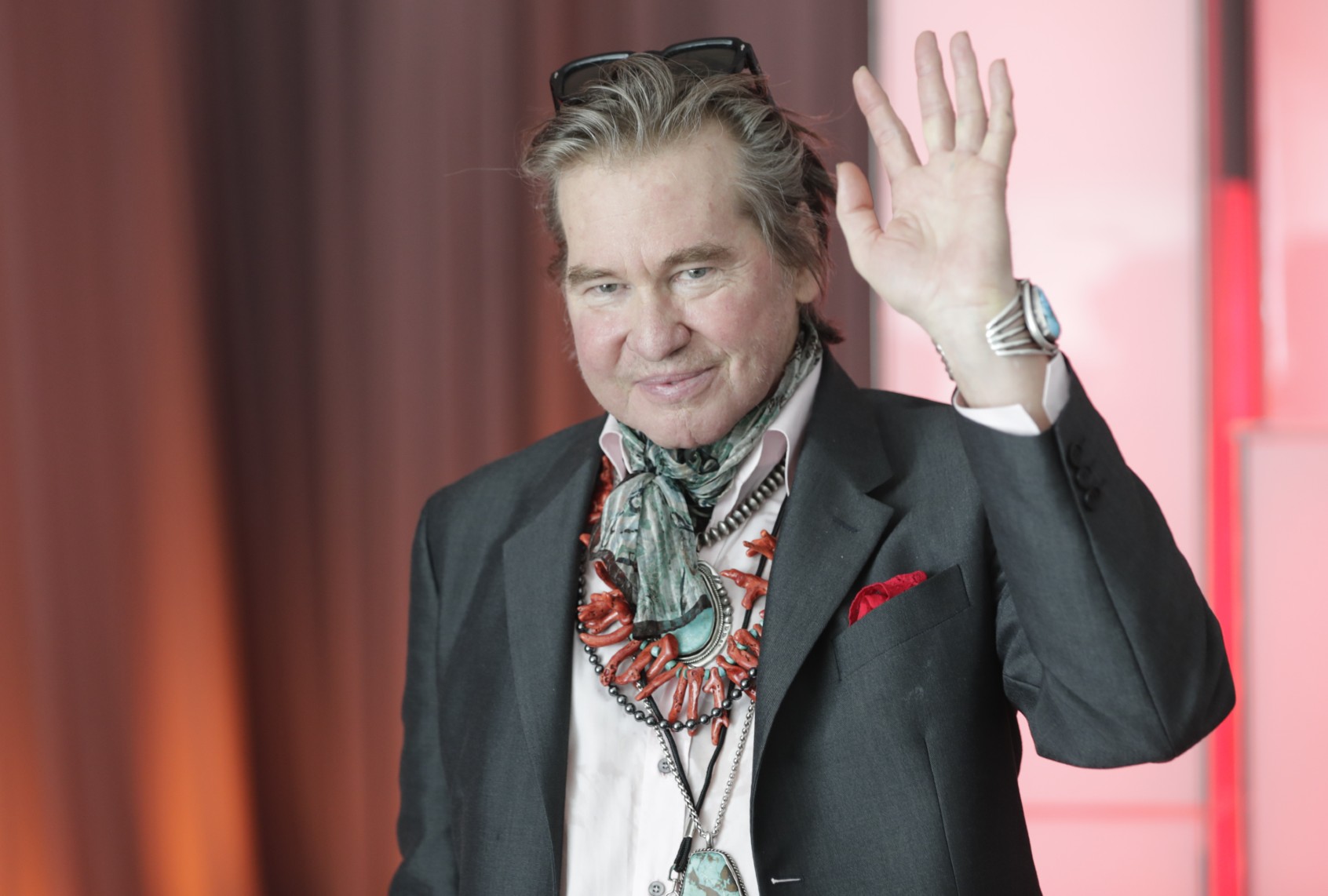
Val Kilmer visits the United Nations headquarters in New York, New York, to promote the 17 Sustainable Development Goals (SDGs) initiative, July 20, 2019. (EuropaNewswire/Gado/Getty Images)

Though Kilmer’s questionable behavior was well-documented, it never negated his talent. He was a sought-after performer because of his ability to tap into a character, going deep into their idiosyncrasies to flesh them out far beyond the pages of a script. And what’s more, he could do this in mainstream films made to be enjoyed by wide audiences just as ably as he could in smaller features, playing peculiar supporting roles. Maybe it wasn’t the egomania that fueled Kilmer's reputation, but his fervent desire to make everything he did undeniably interesting, sometimes at the expense of the films around him. Genuine care for the art is a surprisingly rare thing in the movie business, and anyone who studies Kilmer’s performances can see that, even with shoddy material, he gave himself to his films every minute in front of the camera.

His unfettered commitment and remarkable presence scored Kilmer a sizable fanbase long before his ailments forced him to reduce his work later in life. “Top Gun” made Kilmer a household name with a relatively minuscule role. This was thanks in no small part to the beach volleyball scene, in which Kilmer oozed the sort of hunky machismo that’s even more beguiling the more you try to resist it. Iceman the fighter pilot left viewers swooning, but the part also underscored his power to carry a movie, even when he wasn’t billed as its lead. 

In 1991’s “The Doors,” Oliver Stone pushed the boundaries of a music biopic to make a calamitous, imperfect work that could accurately reflect the spectacle that was Jim Morrison’s life. Whether or not Stone’s film was successful in that respect is arguable, but Kilmer’s performance as The Doors’ frontman certainly is not. Kilmer’s star turn embodies sex, drugs and rock ‘n’ roll. It also recognizes that the fabled idea of sex, drugs and rock ‘n’ roll is utter bulls**t. Kilmer’s take on Morrison is wrapped in the singer’s own myth, and it’s a searing look at how destroying yourself for the sake of your work is not an inherently noble artistic cause. 

One might say that Kilmer adopted that outlook during the latter half of his career. “Batman Forever,” Joel Schumacher’s 1995 take on the Dark Knight, received a middling response from critics and audiences. Yet, Kilmer provided the inherently goofy superhero with just the right amount of absurdity (aided by Schumacher’s addition of hard nipples built into the Batsuit). In an Entertainment Weekly cover story — one year before the magazine’s “Moreau” chronicle — Kilmer said, “I’ve done an absurdly commercial cartoon, and now I’m more likely to get a job I couldn’t get before.” Maybe a quote like that might lend itself to industry power players positing that Kilmer was difficult. I’d say it’s as good an argument for the merits of his unyielding honesty and authenticity as any.

Following “Batman Forever” was a slew of weirder, more exciting projects like “Heat,” “The Saint” and “Kiss Kiss Bang Bang,” which further demonstrated Kilmer’s knack for surprising audiences by using his leading man looks to develop oddball characters. (The catty, gay private investigator in the latter is a tried and true late-period Kilmer favorite.) In the 2010s, Kilmer wound down his output, focusing more on his art, painting and drawing regularly, and selling his works directly to consumers through his website. There, he updated his fanbase with journal entries, reflections on his current artistic pursuits and the occasional bit of news about new film projects. 

Val Kilmer and Tom Cruise on the set of "Top Gun" (Paramount Pictures/Sunset Boulevard/Corbis via Getty Images)Ten minutes spent flicking through his site will tell you far more about Kilmer and his artistic philosophy throughout his entire career as any trenchant '90s print exposé will. In tandem with the 2021 documentary “Val,” which sifts through hundreds of hours of self-recorded tapes shot throughout Kilmer’s life, his website and the works he sold through it are the best possible look at his artistic sensibility. Retreating to the nature he grew up in and unburdened by the press and the stinging lights of Hollywood, Kilmer created works that were entirely from his perspective. After decades of clashing with actors and directors about his vision for the films he worked on, Kilmer could make art according to his own standards and at his own pace. “I’ve been living with this new series of abstract prints for a couple of weeks now and they make me happy every day,” he wrote last summer on X. “Sometimes life feels like a splash of chaos that somehow just works. Take some time to be quiet for a bit each day and look at something that will feed your mind's eye. It will open you up to wonderful things.”

Life can soften you and harden you in equal measure. Perhaps it was either of those versions that any one of Kilmer’s collaborators met on a given day and why his colleagues all had something entirely different to say about him.

Kilmer’s gentle, introspective view of his artwork is especially stirring when remembering that, for many years, the actor was more famous for his reputation as a menace on film sets than for his performances. These warring images of Kilmer — one as the bulldozing boor who wasn’t afraid to voice his opinions to his directors and fellow actors, the other as a tenderhearted artist trying to capture life’s fleeting charm — present a far more nuanced picture of an actor who lived for his work than any Hollywood tall tale could. In a fantastic New York Times profile from 2020, features writer Taffy Brodesser-Akner began to get at the heart of Kilmer’s eccentricity. “His gift was so overt and so subtle that he became the best part of the movies he merely supported,” Brosser-Akner wrote. “But the bigger [the roles] came, the more empty and cavernous too.” The piece, published in May of that year, extols Kilmer’s dogged positivity, even at the pandemic’s terrifying peak. “You can’t cancel the world, right?” Kilmer said in the profile. “Bad things happen, but you still need art.”

I don’t think it’s unfair to say that quote could be Kilmer’s lifelong doctrine, and now, the legacy he’ll leave behind. Life is a horribly awkward, complex and demanding thing. You can be a difficult person — even close to radioactive at times — and still admire the beauty of the world and be a proponent of all of the gifts it can supply you. Life can soften you and harden you in equal measure. Perhaps it was either of those versions that any one of Kilmer’s collaborators met on a given day and why his colleagues all had something entirely different to say about him. But how boring would this existence be if it were one monotonous walk toward the end? Maybe Kilmer strayed from that rigid path too often for some people’s liking, but his deviations from the expected also made hundreds more fall head over heels for his work. He wasn’t an actor for fame or fortune, but to look at life from all of its different vantage points.

In the final edition of his email newsletter — another fabulously Val Kilmer-ian feature of his website — Kilmer stressed the importance of admiring those new perspectives whenever we might stumble onto them. “I’m hoping you’re all in a place where you can appreciate all of the small joys that sneak up on us every day,” Kilmer wrote. “Like the sound of a friend’s voice or that odd and specific color of blue that happens in the sky — that shade, right there . . . and now it’s gone. Enjoy. Have fun. Slow down and look and listen deeply to what’s around you. You will be rewarded.”

“American industry reborn”: Trump announces minimum 10% tariffs on all imports, 25% tariff on autos

After weeks of delay, President Donald Trump unveiled tariffs on all imports into the United States on Wednesday. 

The president announced 10% baseline tariffs on all imports and an across-the-board 25% tariff on all imported automobiles. In addition to the blanket duties, Trump shared a comprehensive set of reciprocal tariffs on specific countries, hoping to reduce what he sees as an imbalance between the U.S. and its trading partners.

Combined with already announced tariffs, Trump's new plan will place an overall duty of 34% on all Chinese imports. Trump exempted Canada and Mexico from the 10% tariffs and reciprocal duties while a 25% tariff on imports from the countries remains in effect.

“We will supercharge our domestic industrial base, we will open foreign markets and break down foreign trade barriers,” Trump told reporters at the White House.

Trump stuck to the rosy side of a potential trade war in his remarks, speaking of a future in which American manufacturing has been revitalized out of necessity. He said April 2 would "be remembered as the day American industry was reborn, the day America's destiny was reclaimed, and the day that we began to make America wealthy again.” The 10% tariff will take effect on April 5 and the reciprocal tariffs will begin on April 9.

"More production at home will mean stronger competition and lower prices for consumers," he said. "We’re gonna come back very strongly."

While tariffs are likely to raise prices in the short term, Trump said that historians would look back on his tariff announcement as "one of the most important days in the history of our country."

The markets failed to take the long view, immediately dropping after Trump's tariff announcement. Futures of all three major U.S. stock exchanges fell sharply and stocks from U.S. mega-corporations also took a hit. Apple, Amazon and Walmart's stock prices all fell by more than 4% immediately following the press conference.

“One-man wrecking ball”: Trump hints to White House insiders that Musk might be on the way out

Elon Musk may have worn out his welcome in D.C.

A new report from Politico says President Donald Trump is quieting concerns within the White House around the Department of Government Efficiency head, telling associates that Musk will soon be shown the door.

Musk's hack-and-slash tactics and lack of subtlety on the mic have frustrated Republicans, per the magazine. An unnamed Trump ally told the outlet that Elon "takes a lot of bullets for Trump," serving as the face for certain unpopular priorities of the Trump administration. Even in that useful role, Musk's tendency to directly attack popular programs like Social Security have made him a nuisance for party strategists.

“There’s a lack of an understanding about communications and why it’s important, that you massage things, that you talk about things, that you qualify things — they just don’t do it,” one Trump ally shared.

Another anonymous Trump adviser Musk was far from the "genius" tinkerer that Republicans pitched to the public.

"He's a one-man wrecking ball," they shared.

White House Press Secretary Karoline Leavitt called the report from Politico "garbage" in a post to X.

"Elon Musk and President Trump have both *publicly* stated that Elon will depart from public service as a special government employee when his incredible work at DOGE is complete," she wrote.

The news comes as Musk's popularity is flagging among voters. A new poll from Marquette University Law School found that 60% of Americans have an unfavorable view of the billionaire and nearly the same share think he's doing a bad job as the head of DOGE.

Over 200,000 pounds of liquid egg products recalled due to potential cleaning solution contamination

More than 200,000 pounds of liquid egg products have been recalled because they may contain cleaning solution.

The U.S. Department of Agriculture's Food Safety and Inspection Service (FSIS) announced on March 28 that Cargill Kitchen Solutions recalled approximately 212,268 pounds of liquid egg products over possible contamination with sodium hypochlorite, the main ingredient in bleach. 

Products include 32-ounce cartons of Egg Beaters branded Original Liquid Egg Substitute, Cage-Free Original Liquid Egg Substitute and Cage-Free Original Frozen Egg Substitute, along with Bob Evans branded Better'n Eggs Made with Real Egg Whites Liquid Egg Substitute. The recalled items include establishment number “G1804” ink-jetted on the carton and were produced on March 12 and March 13. They were shipped to distributors in Ohio and Texas and “for foodservice use in Arizona, California, Colorado, Florida, Illinois and Iowa,” FSIS said, adding that there’s a “possibility that the products were distributed nationwide.”

“The problem was discovered when FSIS received a tip about the potential contamination of these products,” the agency explained. “After conducting an investigation and thorough assessment of the contents of the cleaning solution, FSIS scientists concluded that use of this product should not cause adverse health consequences, or the risk is negligible, resulting in a Class III recall.”

According to the U.S. Food and Drug Administration (FDA), a Class III recall involves products that are “not likely to cause adverse health consequences” following exposure, consumption or use.

At this time, there have been no confirmed reports of adverse reactions due to consumption of the recalled products, per FSIS. Consumers who purchased the products should not consume them. Instead, they should throw the products away or return them to the place of purchase, FSIS urged. Food service locations are also urged to not serve the recalled products.

Randall Park wants to “make the world great” for his daughter — even if he loves playing evil

"We know how cruel and harsh the world is" is not necessarily a statement you'd expect to hear from Randall Park. In a career spanning from the YouTube cult classic "Ikea Heights" to a breakout cameo on "The Office," through "Fresh Off the Boat," "Always Be My Maybe" and his recurring presence as Agent Jimmy Woo in the MCU, Park has consistently proven himself one of the most reliably affable actors in entertainment.

And in the twisty new Netflix whodunit series "The Residence," he brings his trademark light touch to the role of a flummoxed FBI agent trailing in the shadow of the world's greatest detective, played by Uzo Aduba.

But off camera, Park is also a serious creative artist — he's a founder of UCLA's Asian American theater company, the director of 2023's acclaimed feature "Shortcomings" and a passionate advocate for people with invisible disabilities — like his daughter.

During our recent "Salon Talks" conversation, Park discussed how raising a daughter who's on the autism spectrum made him understand "the problem isn't her" and inspired him and his wife to put their attention not on changing her but on making the world "a better place" for her to grow up in. Park, who isn't on social media, explained that imperative means cultivating the positive. "I'm not immersed in the vitriol," he said. "That's kind of useless."

Watch my "Salon Talks" with Park here on YouTube, or read below, to learn more about the "camaraderie and celebration" of his Asian-American acting community, the iconic historical figure he'd most love play and his surprising new dark turn as Moriarty on "Watson."

The following conversation has been lightly edited for clarity and length.

Talk to me about "The Residence." This show is very Agatha Christie, very "Knives Out." A million characters. One place. One mystery. And you. 

"The Residence" is an "Upstairs, Downstairs" screwball murder mystery set in the East Wing, the residence wing of the White House, during an Australian state dinner. It's about the people who run the White House every day throughout every administration, the ones who stay and keep the White House afloat, and a murder that takes place. The greatest detective in the world, Cordelia Cupp, played by Uzo Aduba, comes in and is hired on for the job, and the FBI agent Edwin Park, played by me, is assigned to assist her.

This show has had many fits and starts. You were halfway through shooting it, and then…

The actors strike, the writers strike. A death in the cast. The great Andre Braugher was originally cast as the character A.B. Wynter. [He] shot half of his stuff, and then the strike happened, so we were delayed there. Then Andre passed away, which was just such a shock for all of us and so tragic to lose one of our greats, for everyone. So we had to reshoot those scenes with the great Giancarlo Esposito, who was close friends with Andre. It was a very beautiful thing for him to pick up what his friend started and do it in honor of his friend. The whole process took a couple of years just because of those things.

You are a funny guy, but here you're the one who is watching everybody else. It's a very restrained part. Is there a backstory for your character? Are you thinking about how to get jokes in?

"Diversity and inclusion are being targeted."

In the story, Cordelia Cupp is very hard on Edwin, especially at the beginning, because she is the greatest detective in the world. She knows she is, and she resents the fact that this guy has been hired to help her, because she could do it on her own. Edwin Park is very aware of her reputation and very respectful of Cordelia because of it. He genuinely wants to help, and he also wants to learn from her. A lot of what he does throughout the show, standing there, just being there, and occasionally throwing some things in, really shows his commitment to solving the murder. 

You founded a theater company at UCLA for Asian Americans, you have been part of that community of elevating other Asian American voices throughout your whole career. Did you have that when you were coming up in the world and you were starting out as an actor? 

Not on a national or international scale, but on a local scale, yes. When I first started, I was involved in an Asian American theater company that branched out from the college theater company. I was always working with great actors and then, it's just how my career has evolved and continued forward. It's great fun to work with a large group of talented people. Really, any show, it's a team, and everyone plays their part. I just love going in there, and giving what I give, and bouncing off of other actors. It's a great blessing. 

What does it look like for you now in the Asian American community of actors, producers, writers, checking each other out, helping each other? Is it the same, or do you feel any of that Hollywood competitiveness getting in?

No, and I never really have because we were such a small community in the entertainment world when I first started, it still felt very supportive. As we've changed and grown and all these great projects sprung, we all know each other. It's still a small community, and, at least for me, it is one of camaraderie and celebration. Everyone wants "Everything Everywhere All At Once, "Crazy Rich Asians." These are all wins for all of us.

You are the a son of immigrants. We are now in a very different era in our country where immigrants are being targeted, children of immigrants are being targeted.

Diversity and inclusion are being targeted.

That also includes people with disabilities, people with invisible disabilities. 

Yup. And my daughter. 

You and your wife have been her advocates for so long. One of the things you said that strikes me is, "When she first got diagnosed and we first found out, I wanted to fix her." That has changed for you, but there are a lot of people who still want to fix people. 

When she first got diagnosed on the spectrum, we obviously didn't know much about autism. Immediately upon diagnosis, it was like, "OK, well, what do we do? What do we do?" Because we know how cruel and harsh the world is, what do we do to get her ready for this world? The thought was, "What do we do for her specifically?"

"I just love my daughter, and we want to do what we can to make the world great for her."

Over time, growing with her, and seeing her grow, and just loving her so much and realizing how perfect she is to us, it became clear to us that, no, the problem isn't her, it's the cruel world that she's growing into. So, what could we do to make the world a better place for her, as opposed to putting it all on her? My wife and I joined a charity called Kulture City, which is focused on inclusion and acceptance of people with invisible disabilities. We're very passionate about that organization and passionate about making sure the world is a better place for her. 

When we are now living in a culture where anti-science is so accepted, and "Vaccines cause autism" is somehow back on the table as a conversation point, what do you, as a parent and as an advocate, want to say when you see things like this happening or when you hear that discourse? 

I clearly don't believe the same things that a lot of people are saying. There is a constant barrage of opinions and counter-opinions. Everything becomes this binary in today's culture, where everything becomes a point of division, but I don't concern myself too much with that. I'm not on social media. I'm not immersed in the vitriol. I just love my daughter, and we want to do what we can to make the world great for her. I love my community. We just want to do what we can to make the world better for people in my community. I love all groups of people and doing what we can, as opposed to engaging in constant arguing. That's kind of useless. 

You've said that, for a long time, you would get cast as the Asian friend or the Asian coworker. What does that look like for you, and how do you avoid being typecast?

"There's some evil in me. There's a little bit of evil there that I get to put out there and explore."

I see it as a part of the job, and I don't think it's an exclusively Asian thing. All actors, especially when something connects and does well, people see them in that way and want to cast them for other similar parts. I mean, I get it, that's just how the industry works. I'm happy to just work. I still have that working actor mentality where any job is a great blessing, but I also love the idea of branching out. 

As I've progressed in my career, I've gotten more opportunities to branch out here and there. I'm playing Moriarty in "Watson," and I played Kim Jong Un of all people. There are always opportunities to do something different, and I seek those. At the same time, I do not begrudge anything that's more how people see me, and I'm happy to do that. 

Your executive producer on "Watson" said that it would be fun to cast the friendliest man in the world in this role. Is this something you're looking for, to get to be the bad guy? 

There's some evil in me. There's a little bit of evil there that I get to put out there and explore. There's good and bad in all of us, so it's very fun to indulge in those sides of me and to get to do something different. 

Moriarty is a classic, iconic baddie. Is there a role, villain or otherwise, that you still want to take on?

I'd love to play Genghis Khan. A villain in many ways, but also very complex. I'm obsessed with Genghis Khan and the history of the Mongol Empire. It's very fascinating to me. Very complex person. That would be really fun. 

A TikTok star says Democrats are “scared of wielding their power.” How would she be different?

Kat Abughazaleh, a progressive political commentator and social media influencer, announced a primary campaign against Rep. Jan Schakowsky, D-Ill., last month, promising a mutual aid-focused campaign strategy and striking a generational contrast against the 80-year-old incumbent.

Abughazaleh, 26, made a name for herself online, analyzing conservative media at outlets like Media Matters and Mother Jones, frequently antagonizing of right-wing pundits like former Fox News host Tucker Carlson. Her campaign used this notoriety to help raise more than $275,000 from 7,000 donors in its first week. She is urging Democrats to go into 2026 and beyond with an agenda focused on Americans’ material needs and with a resolve to wield power, if and when they do win.

This interview has been edited for length and clarity.

You pitch yourself as asking, “What if Democrats didn't suck?” which I think is a message a lot of Democrats are ready to hear. However, I'd also like to ask why you chose to run in the district you've chosen to run in, especially given the fact, as I understand it, that you're fairly new to the area. Why should people vote for someone who's recently moved to the area and also someone who doesn't currently live in the district?

So I did a video about this the other day, and I talked a lot about it at our kickoff event, but basically my partner and I moved to the Chicago area on very short notice, and we just kind of hit the first furnished apartment that met our needs and was friendly to our cat. 

Then we looked for neighborhoods we wanted to live in and had planned to move to, like Edgewater, Andersonville and Rogers Park, which is in the southern part of the district that was planned to do to happen this year, way before I even thought about running for Congress. That's the main thing. We were planning on moving, and so I would rather run the district I wanted to live in, that we were planning on living in with or without a congressional run, rather than stay in the same apartment. 

But as far as the pitch, I tell people: “You should be skeptical of me.” I think you should be skeptical of anyone who is asking you to give them power. This is a district that's 25% foreign-born. This is a district with, I think, over 50,000 college kids. A lot of new families have been coming here, and there are a lot of people moving to Chicago for fears of climate change, authoritarianism and bad financial realities. So I'm not the only transplant. There are a lot of transplants here. 

Overall, people have been very welcoming. But all I say is just keep an open mind. We're trying to make this campaign not about words but about actions. We raised an entire SUV's worth of period products for people who can't afford them in the community, just on our first event. We plan to keep doing things like that for the entire campaign and beyond, so just keep an open mind. And I'm trying to live by my actions. I just got sick of seeing — of waiting around for someone to do something and hoping that that would happen.

I understand you're the only declared candidate in this primary at the moment, and there's a real chance that Ms. Schakowsky might choose to retire. But in your messaging, you've acknowledged that she is one of the more progressive members of Congress, and you've even praised her for it. However, I'm curious why you're choosing to take this approach rather than maybe going after her on some of the issues where you do, I think, differ, like, for example, in the United States, and its unconditional support for arming Israel.

I've said that I would have voted differently on some votes over the last few years. As a Palestinian person, not a lot of lawmakers — more lawmakers now than ever have even acknowledged our humanity and Schakowsky’s been pretty good on this issue, especially for American lawmakers. 

I am very skeptical of people in power. When I say what I've been saying about her, I mean it very sincerely. I don't really have any interest in going on the offense for “A” someone who's not even, you know, running right now, but also, it doesn't really fit my campaign style. I guess that's “B.” I think there's a new way of doing politics, and I think there's a new way of doing campaigns, and that's what I'm trying to do. And that means focusing on mutual aid and direct action, filling in these gaps that Trump has created. 

That means having a really big ground game, and not just in population centers. I want to try to talk to voters who don't traditionally vote in primaries. In Illinois, you don't register under a party, so it's kind of an open primary. Going out to the western parts, where I had people drive in and say they didn't feel represented, of people that were Republicans, and they're saying, “I'm willing to give you a shot, because we just haven't our representatives, as these districts keep getting redistricted and redistricted, come all the way out to see us, because they just don't think we'll vote,” same with college kids. My strategy isn't really to focus on this one versus one, or if it opens up to multiple candidates, one versus five, or whatever we're doing type strategy. 

I want more people to come in the race. And I think if more people adopted our tactic of not wasting money and instead trying to spend it on the community as much as we can, it would be really enriching for everybody, and it makes everyone bring their A game. I know sound kind of like a Pollyanna talking about this, but that's genuinely what I believe.

I'd like to ask you a little bit about that campaign strategy because it’s in some ways reminiscent of some of the tactics from the Sanders campaign. You've promised no focus-tested messages, no wasted money on ads and you've kind of described what seems to me sort of a mutual aid network through the campaign. But I'd be curious to hear how you square this with what appears to be the prevailing force in the party, which is to move away from what some conservative Democrats decry as “small dollar dominance.” They seem not to want to be beholden to any actual constituency and are hoping to raise money from large dollar donors. So, I'm wondering how you see your campaign fitting into a party moving in that direction.

My campaign doesn't fit in that direction. If they don't want small dollar donors, hell, I'll take them. We've taken no corporate cash, just individual contributions. Our average donation is less than $38 right now. 

I think that that's disgusting. I think that this is supposed to be the big tent “We’re for the people” party. And you're saying we need to move away from the people. I did a video about this, like last month, where I said, “Small dollar donors, m*therfucker, you mean constituents?” Like, that's ridiculous to me. 

I'm not sure who will come in the race, and they might be taking these big dollar donors, might be taking corporate cash, and that's fine by me. I think that this strategy, yeah, it might, we might, might not be blanketing every single second of TV commercial space, but people will actually know me and will either be helped by this campaign and by the groups in their community who are doing the work or will know someone who has been.

I'm tired of just agreeing that this is how it's always been done, so we have to keep doing it this way. Let's try something different.

We need your help to stay independent

You know, I understand, in your current district, the primary is probably essentially the real election. I'm wondering if you think that what you're doing now can be translated to a general election where you will be going up against billionaire money, corporate money and the sort of resources that Republicans pull in from large dollar donors.

Yeah, I mean, I think so. I think that this is a very progressive district and a very progressive area. It's been kind of on the forefront of progressive policy for years and years and years. I'm not sure it'll be that easy for Elon Musk or whoever to just buy a general election here. But once again, I think that a person-to-person approach — we are in a time where politics is so faceless and it's so impersonal, and by trying to recenter it around people, there's only so much that money can buy, and that's really what I'm trying to go for.

Especially people my age, we know that we probably will never buy a house. We will probably be in medical debt by age 40. This type of connection that's not on Zoom, that is fostered in helping people, is really all we have.

I'd also like to ask you about some characters currently in the party. As I've mentioned there, the dominant force in the party is pushing for it to become more conservative, more business friendly. You've seen some overtures towards deregulation among Democratic thinkers recently. You are still running as a Democrat, and I am hoping to ask you if there are people in the party you see as a role model for your own political trajectory and why.

Oh, absolutely. I mean, Bernie and AOC are packing stadiums in a non-election year in states that they don't even represent. AOC is a political icon. She walked so the rest of us could run. You know, she brought out this anti-establishment but also intelligent, compassionate, empathetic style of leadership that we hadn't seen in a long time. 

I think it's what they're doing right now is very reminiscent of like FDR Democrats, of we don't have to accept this. We can push back, and we can make things better, and we don't have to compromise on making things better. We can just do it and that's the type of future I want to live in.

Do you think that the rest of the party is malleable enough to go in that direction if it does prevail in a primary? I'm curious whether or not you think that there is an ability in the party infrastructure to be shaped by popular opinion in this way.

I think it's going to take a lot of pressure, and I think that I am just one of many, not just young people, but people that are ready to stand up and say, “We need to change things.” I had a lot of older people show up to our kickoff event, and they were like, “I was considering running.” I told them, “You should run, run against me. Let's make this a race in a very genuine way.” People are ready for a change, and I think that with enough pressure, when you threaten their power, that's when they change things. And we don't just have to threaten their power; we can take it for ourselves, and we can show people that this is what you can vote for instead. You can vote for someone who actually cares about you, cares about the future, and is not just beholden to corporate interests.

I think that there's a lot of jockeying in 2026 ahead of 2028, and what I'm curious to hear from you is what you think the marquee policy should be for the Democratic Party. You've mentioned some Democrats embracing New Deal interventionism in the economy. I've talked to other people who have suggested that a public option for health care should be the leading policy. I'm wondering, if you had your way, what would be the one policy that Democrats would unite behind in the 2026 and 2028 elections?

Besides anti-authoritarianism, which isn't really a policy, it's more just a “We don't like Nazis type of thing.” In terms of actual policy on my website, we have what I call “basic existence,” and I think that's really what should be the core tenet of life and of how politics should work. 

It's not just health care, it's not just the economy, it's not just housing, it's not just support, it's not just immigration — it's a lot of different things rolled up into one, and right now, a lot of people, including myself, have to pick two, sometimes pick one, sometimes pick zero, of housing, health care and groceries. You should be able to afford all of those with money left over to both save and go to the movies or take your kids to the zoo. That should just be the very baseline because we shouldn't be just surviving but thriving. I think their main thing should just be basic existence. 

I think a lot of people in Congress have lost touch with what that means because they haven't had to worry about out-of-pocket medical costs. They haven't had to worry about which groceries have gotten more expensive. They haven't had to worry about being a renter because they've owned their home outright for years and years and years. And I think, I just think that that is really what we should be if we want to connect with voters. What should we be talking about? 

What would you say? I know that there are some in the party and in the press who, they'll hear arguments like the one you've just made, and they’ll contest it, saying, “We tried that, especially in the first few years of the Biden administration, and it didn't work.” What would you say to people who suggest that populism didn't deliver for Democrats and are trying to pull the party in a different direction or trying to make it more conservative with the idea of triangulating?

Yeah, they, I mean, they didn't deliver. They didn't actually try that. They tried a ghost of it, but also tanked so much legislation in the name of bipartisanship, which is all fine and dandy if you agree on basic human rights. But you know, we tanked voting rights, we tanked so many things, in the name of “We need to compromise.” No, we don't. If it's people's basic human rights, you do not need to compromise on that. We tried going to the right in 2016 with Hillary. It didn't work. We tried going to the right in 2024 with Kamala. It didn't work. I don't know why we keep trying this.

Democrats are so scared of wielding their power, and frankly, it's pathetic. If you are actually in office to help people, you should be doing everything you possibly can to do so. And if people are not on board, if your opponents, if the Republicans, are not on board with helping Americans, then they can just stand by and watch as we do it ourselves. 

Do you think the current members of the party have the credibility to make that argument with the public? Do you think they have that goodwill with the voters, or if people will even believe that they will do something for them?

A lot of them don't. I mean, Chuck Schumer certainly doesn't. Hakeem Jeffries doesn't. If they reversed every single one of their tenets of governance and went hard on resisting Trump and on communicating with their communities, then maybe it might be different. I think that there's still time to do that. I'm not sure if they will, and I think that's the reason there are going to be a lot of primary challenges. People are talking about a democratic Tea Party, and I wouldn't be surprised to see it, frankly, even if not all of those candidates win, it sends a message, and it says, “You took the big tent and you just shifted it right, and you left all these people out in the sun.” It's time that we take it back

In terms of existing pieces of political infrastructure, have you begun working with any outside organizations? I'm thinking specifically. I've spoken with people from the Justice Democrats, for example. I'm wondering if you've coordinated with any groups like that, or if you would consider doing so in the future.

Right now. I mean, it's just been me and my campaign manager, Sam Weinberg. I’ve been putting out feelers and things like that. We really wanted to drop this as a surprise for everyone on launch day, so we didn't tell a bunch of people. But now that we've kind of gotten through the chaos of the first week, we're interested in talking with groups and people and trying to find goals that align with both of our values,

I've got one last question, which is whether you have a message for people at home who might be thinking about running for office or otherwise getting involved with politics.

If you're thinking of running for office, do it. Whether that’s a state or local office, you can go to runforsomething.net. If you want to run for Congress, I'm doing a series of videos on how to do it to try to demystify this process. I am 26, I have four digits in my bank account, and I have no health insurance and I am running for Congress. I can do it. You can do it. Leadership shouldn't just be reserved for the already rich and powerful. We are supposed to be a country by the people, for the people, and you are the people. So let's take it back. I keep saying this — it’s corny — but be the change you want to see. If you have an idea that you think more people should be doing, you can tell them, or you can do it yourself. That's what I'm doing with my campaign, and I would love to see you do it with yours. 

I think Maxwell Frost may have started his campaign from a similar position. Have you spoken with anyone who's kind of done something similar to what you have done or what you're trying to do in the past?

Like I said, you know, we kept it kind of quiet before we launched, and this week, it's been very chaotic. So no, not yet, but we’ve gotten a lot of encouragement and also heard from a lot of people that are in a similar position and are now thinking of running for Congress. 

Fired White House Correspondents’ dinner host Amber Ruffin has learned her lesson. The WHCA has not

Since recent events revealed a comprehension gap on two significant fronts, Amber Ruffin and Seth Meyers took it upon themselves on Monday’s “Late Night with Seth Meyers” to explain a few things about false equivalency and journalism’s purpose.

The first lesson was explicit, with Meyers pretending to close his March 31 monologue by briefly mentioning that Ruffin, a writer and featured performer on his show, had been fired over the previous weekend from her hosting gig for White House Correspondents’ Association’s annual dinner. As a big fan of Ruffin’s, Meyers says, “I would have loved to hear what she had to say.”

Then, he pretends to plow past that to the next headline. “And finally tonight, a bodega was robbed in Brooklyn this week. The burglars shattered the store's front door, emptied the cash register and set fire to the ATM. When asked why –”

Before Meyers can make a joke at the perpetrator's expense, Ruffin enters and cuts him short. “Seth, Seth, I'm gonna stop you right there . . .The problem is, that’s divisive. Take it from me – if there's one thing I learned from this weekend, it's you have to be fair to both sides.”

What does that mean here? Meyers cites this story as a plain example of one party being in the wrong. An innocent bodega owner was minding his business when a criminal caused massive damage to his property, stole his money and topped it off with arson.

Or . . . did the burglar “provide an innovative ventilation system” while “[receiving] a microloan” and “bravely [fighting] inflation”?

Comedy loves a callback, but the “both sides” rimshot reaches back to the 2017 white supremacist rally in Charlottesville, Virginia, and Donald Trump’s refusal to condemn the mob that stoked violence in that city. One anti-racist demonstrator, Heather Heyer, died after one such extremist drove his car into a crowd.

As the WHCA’s excuse for dismissing Ruffin reminds us, there’s simply no beating a classic. “When you watch ‘The Sound of Music,’” she tells Meyers later in the bit, “you have to root for the singing children and the other people.”

Yes. What should have been a moment for the media to learn from is now the industry's equivalent of that old Henny Youngman wisecrack: Take my democracy! Please!

Ruffin, who also co-stars on CNN’s “Have I Got News For You,” had been set to host the dinner since Feb. 4, when WHCA president Eugene Daniels called her talents “the ideal fit for this current political and cultural climate.”

“Her perspective will fit right in with the dinner’s tradition of honoring the freedom of the press while roasting the most powerful people on all sides of the aisle and the journalists who cover them,” he added.

The problem with the head of a journalists’ association making such declarations under a Trump administration is that you’d better have the stones to stick by it, regardless of what happens. And I’m not just talking about the presumed reason for Ruffin’s firing, which stems from her recent appearance on a podcast by The Daily Beast.

You’re obligated to stand by that principle of honoring the First Amendment above all else after your colleagues at the Associated Press have had their access limited for refusing to call the Gulf of Mexico by Trump’s new name for that body of water, the Gulf of America.

You stand by it when an antagonistic White House wrests control of the press pool from your grip. And you fight hard for it when that same White House starts rearranging its briefing room’s seating charts to curtail policy-challenging coverage by major media outlets, as it did on Monday.

What did Amber do that so offended the Washington press corps? She announced her intent to call out this administration’s egregious abuses of power and lawlessness. You know, the job we expect journalists to do.

That’s the same day Meyers and Ruffin called out the WHCA and mainstream media at large for its failure to stand up for free speech, whether in their day jobs or at night. That brings us to that second lesson about journalism’s purported function versus how the WHCA believes that it should operate.

“When people are objectively terrible, we should be able to point it out on television!” Meyers says to his colleague.

“I thought that too — on Friday,” Ruffin replies. “But today is Monday. And Monday's Amber knows that when bad people do bad things, you have to treat them fairly and respectfully.”

Ruffin is referring to Daniels' widely circulated Saturday memo to WHCA members.

“At this consequential moment for journalism, I want to ensure the focus is not on the politics of division,” his statement reads, “but entirely on awarding our colleagues for their outstanding work and providing scholarship and mentorship to the next generation of journalists.”

Nominally, that is the function of the Correspondents’ dinner – to honor the most accomplished Beltway coverage. Politicians, lobbyists, billionaires and movie stars also treat it as a PR opportunity; if they get razzed, they can show us what good sports they are.

The annual gala dates to 1921, although the first president to attend the dinner was Calvin Coolidge in 1924. Since then, nearly every American president has attended at least one of the organization’s dinners. Trump is the exception. He never showed up to a single WHCA dinner during his first administration and isn’t bothering with this year’s, scheduled to take place on April 26.

Celebrities began headlining the event in 1944, when Bob Hope, Gracie Fields and Ed Gardner became the first comedians to step into the hosting gig – or, rather, co-hosting. Bandleader Spike Jones became the first solo WHCA dinner host, although Hope headlined twice after that. Since then, many comedians have headlined the dinner, ranging from middle-of-the-road talents like Jay Leno to outspoken icons like Richard Pryor and George Carlin.

"This is why America is amazing, right?" Andrew Schulz effuses on a recent "Club Shay Shay" episode. "The leader of the free world, the leader of our country . . . submits themselves for public humiliation once a year."(Again: except for Trump.)

Schulz continued, "This is how you know that we don't want tyranny, right? The king would never step down to be made fun of in front of the whole world or in front of the whole country . . . Oh, it's beautiful, it's like why comedy is so important to me . . . it's so important to the American identity. It's this great tool to let you know, hey, you're regular."

Note to the WHCA: Schulz, another white guy in a long line of white comics who have hosted, wants the gig. Trump might even show up for that plate of rubber chicken since Schulz happily hosted him on his podcast.

We need your help to stay independent

Only six women have ever solo-hosted the event, starting with Paula Poundstone in 1992. Elayne Boosler, Wanda Sykes, Cecily Strong and Michelle Wolf round out the comedians in that group. The late Aretha Franklin headlined in 1999 when the dinner landed shortly after Bill Clinton was acquitted in the Senate of impeachment charges against him.

The prevailing views of the institution changed after 9/11 and the Iraq War. Critics like New York Times columnist Frank Rich accused the WHCA of looking like stooges, "just sitting there and clapping and lending what credibility they have to a completely disingenuous appearance by the president of the United States," he told NPR at the time, referring to George W. Bush.

"These dinners have become propaganda events for a White House that has really staked almost its entire politics on creating propaganda events, whether it be uranium from Africa or 'Mission Accomplished,'" Rich added.

What did Friday’s Amber do that so offended the Washington press corps? She announced her intent to call out this administration’s egregious abuses of power and lawlessness. You know, the job we expect journalists to do.

“I'm not 100% interested, in like, 'Ha, you're here, look at your stupid head, you’re burned!'” she says on the Daily Beast podcast. “I care that, like, you're kind of a bunch of murderers.”

Beltway journalists are supposed to appear impartial and polite. The comedians they tap to host are chosen for their skill at stating uncomfortable truths that need to be said to people in power.

Ruffin further explained that the WHCA urged her to be an equal opportunity roast master, hitting the press and Trump’s administration with equal force.

“I was like, ‘There's no way I'm going to be freaking doing that, dude. Under no circumstance,’” she recalled. “And they want that false equivalency that the media does . . . It feels great. It makes them feel like human beings. But they shouldn't get to feel that way, because they're not.”

In a Monday discussion about this hot topic on “The View” co-host Sara Haines expressed surprise that the WHCA invited a comedian this time. “I just don't think this is an administration with a lot of sense of humor, so I think in hearing kind of the direction she was going, this wasn't going to be a fun like, 'throwing it out at everyone in the room,'" Haines says. "That's why a lot of comedians work as hosts when it comes to Oscars, and they go after everyone. I would prefer it to be funny.”

Haines doesn't seem to be familiar with the host's role at these dinners. Beltway journalists are supposed to appear impartial and polite. The comedians they tap to host are chosen for their skill at stating uncomfortable truths that need to be said to people in power, whether in newsrooms or the White House.

Take Wolf’s supposedly controversial set in 2018, when she said she could call Trump “a racist, a misogynist or xenophobic or unstable or incompetent or impotent. But he’s heard all of those, and he doesn’t care.”

The part that got her in trouble was when she called out the silken dishonesty of Sarah Huckabee Sanders, Trump's press secretary at the time. “I actually really like Sarah. I think she’s very resourceful. Like, she burns facts, and then she uses the ash to create a perfect smoky eye. Like, maybe she’s born with it; maybe it’s lies. It’s probably lies.”

Later, she added, “Like, what’s Uncle Tom but for white women who disappoint other white women? Oh, I know: Aunt Coulter.”

Wolf’s came after the WHCA called another “Daily Show” alumnus into service, Hasan Minhaj. He served volleys such as, “We are here to talk about the truth. It is 2017, and we are living in the golden age of lying. Now is the time to be a liar, and Donald Trump is the liar-in-chief. And remember, you guys are public enemy No 1. You are his biggest enemy. Journalists, ISIS, normal-length ties.”

With no acknowledgment of that history, Haines expressed concern about Ruffin rhetorically “blowing the place up” with her set – which, to be fair, the comic didn’t disavow on “Late Night." ("Ooh baby — I would have been so terrifically mean. I would have been on one!” she confesses with a devilish giggle.)

That is part the host's job, as Daily Beast podcast co-host Samantha Bee (who counterprogrammed the "Not the White House Correspondents' Dinner" in 2017) explains on that same episode. The WHCA dinner headliners are obligated to entertain. But the organization chooses its emcees with intent. “Some people are more culpable than others. They get more jokes made about them, and the jokes are meaner because they're doing things that are worse,” Bee says.  


Want a daily wrap-up of all the news and commentary Salon has to offer? Subscribe to our morning newsletter, Crash Course.


In case you haven’t been paying attention, Trump and his cronies threaten or have already gutted organizations devoted to caring for veterans, the elderly, the medically vulnerable and other marginalized populations. He’s targeted immigrants for deportation, including those who are here legally.

In eliminating the U.S. Agency for International Development, Trump’s administration is denying financial support for life-saving medical interventions and access to clean water, food and shelter in countries ravaged by war, famine and natural disasters. One global health organization, Gavi, warned the BBC that one million children may die from preventable diseases as a result of this decision.

Trump’s GOP allies know this will happen. They’re celebrating it. Over the weekend, the House Foreign Affairs Committee’s official account on X shared a repurposed meme showing Ghana's dancing pallbearers, only with JD Vance’s, Trump’s and Elon Musk’s heads pasted on them, shouldering a casket marked with the agency’s seal.

By any conscionable person's moral definition, that is inhuman. And yet having a Black queer woman speak about this and other horrific developments to a roomful of journalists is simply too divisive. So Ruffin and Meyers had to settle for the “Late Night” audience.

“I thought when people take away your rights, erase your history and deport your friends, you're supposed to call it out,” Ruffin concludes. “But I was wrong.”

As the kicker, she told Meyers she intended to return the dress she was going to wear for the event. “I already took the tags off, but I'm gonna just say they blew off in the wind,” Ruffin casually shares.

“That’s – that’s lying, Amber!” Meyers protests. “That’s wrong!”

“Ah-ah-ah, you can’t say that!” Ruffin counters before delivering the death blow with a wink and faintly disdainful sneer: “That’s journalism.”

“Clear attack on our voting rights”: Arizona college students sue to stop Trump’s election order

A coalition of advocacy organizations sued the Trump administration Monday over President Donald Trump's executive order requiring Americans to present proof of citizenship to register to vote. Such a requirement — beyond exceeding the president's authority over state-run elections — would effectively silence the voice of college students registering for the first time, unsheltered voters and Native voters, argued the Arizona Students' Association, one of the parties to the lawsuit.

"We really saw firsthand what it looks like in Arizona if we do have these onerous citizenship requirements, so we really wanted to be a part of the voice fighting back to make sure that doesn't happen across the country," Kyle Nitschke, the organization's co-executive director, told Salon, referring to a now-blocked state law that also requires proof of citizenship. In a statement accompanying the lawsuit, he described Trump's order as a "clear attack on our voting rights," arguing that a federal proof of citizenship requirement would further disenfranchise college students.

The lawsuit, whose plaintiffs also include the League of United Latin American Citizens and military voter rights group Secure Families Initiative, is one of several legal challenges to arise from the order since Trump authorized it last Tuesday. It also comes amid the bevy of active litigation spawned from the Trump administration's crackdowns on immigration, targeting of diversity, equity and inclusion at the federal level and efforts to slash federal funds from public services. 

Ostensibly seeking to address unfounded claims of widespread voter fraud via noncitizen voting, President Donald Trump's executive order purports to require eligible voters to present a U.S. passport, an ID compliant with the 2005 REAL ID Act, an official military ID card that indicates citizenship, or a valid federal or state ID that indicates citizenship to successfully register. Among other provisions, the order also prohibits the 18 states that accept absentee or mail-in ballots received after Election Day when they're postmarked on or before Election Day from counting those ballots. 

In their complaint, the plaintiffs argue that Trump lacks the constitutional authority to make sweeping changes to federal voting laws and election rules or to require states to toss out valid absentee and mail-in ballots. They ask the court to declare that the parts of the president's order they flagged violate the U.S. Constitution, prevent them from taking effect and block the administration from taking actions to enforce the provisions. 

"Through the Order, the President attempts to exercise powers that the Constitution withholds from him and instead assigns to the states and to Congress," lawyers from State Democracy Defenders and the Campaign Legal Center, who filed the suit on behalf of the plaintiffs, wrote in the complaint. "The Order violates and subverts the separation of powers by lawlessly arrogating to the President authority to declare election rules by executive fiat."

Nitschke said that the Arizona Students' Association decided to join the lawsuit after seeing the impact of a state proof-of-citizenship law on the out-of-state college students it serves. During the 2024 voter registration period, the organization mobilized to register around 3,000 students, half of whom could only register to vote in federal elections under the Arizona law using the federal form because they lacked proof of citizenship or residency.

If a federal requirement had been in place, those 1,500 out-of-state college students would not have been able to register to vote at all, Nitschke said.

We need your help to stay independent

A December Votebeat analysis of registered voter data in Arizona found that, while most of the state's 1,700 precincts have a dozen or fewer federal-only voters, the highest densities of federal-only voters were located around Arizona's college campuses. The analysis also found that more than 7% of those active federal-only voters live in precincts on or close to Native reservations — compared to the just 2.5% of registered voters who live on tribal land in the state — and that the precinct that's home to the state's main homeless shelter, which has mailboxes unsheltered people can use as a mailing address, had more than 265 federal-only voters. 

"They say they want to make sure that noncitizens are not voting, but really this impacts college students, people moving frequently" and Native voters, Nitschke said. 

Nitschke added that he hopes the lawsuit will resolve quickly so that Trump's executive order doesn't impede college voter registration ahead of the state's special election in September to fill the seat of former U.S. Rep. Raúl Grijalva, D, who died last month. 

"It's coming up very quick here, a really important congressional election, and we have a lot of students who are going to be eligible to vote in that election, too," he said.

“Our courts are not for sale”: In setback for Musk, liberal candidate wins Wisconsin court seat

Money can't buy everything, it seems — not even $25 million of Elon Musk's money. The billionaire and President Donald Trump ally took drastic measures that critics said were illegal, such as giving $1 million checks to some voters who signed a petition, in order to overturn the 4-3 liberal majority on the state Supreme Court. But it was not enough to stop Susan Crawford from defeating her conservative opponent by a 10-pont margin.

Crawford's victory, buoyed by a surge in turnout by left-leaning voters, provides a much-needed boost for liberal hopes in a time when the party leadership has often seemed divided, listless and incapable of effectively opposing Trump. Her opponent, Brad Schimel, ran on his loyalty to Trump and conceded much of the spotlight to Musk, who personally traveled to campaign in the state, at one point donning a cheese hat. 

In an election that largely became a referendum on Musk and Trump's slashing of federal government services, the billionaire's presence seemed to animate furious Democrats — and perhaps others feeling the brunt of the cuts — more than Republicans.

Never before had a single donor sought to influence a judicial election to the degree that Musk did. His super PAC spent $11.5 million on a ground game that urged voters to help Trump by supporting Schimel. Another Musk-aligned group poured $7.7 million into television ads, according to AdImpact. Voter turnout, remarkably high for an off-year, nominally non-partisan state election, blew past the numbers for the previous Wisconsin Supreme Court race: With nearly all precincts reporting, more than 2 million voters are reported to have cast a ballot compared to 1.8 million in 2023.

"Wisconsinites fended off an unprecedented attack on our democracy, our fair elections and our Supreme Court,” Crawford said in her victory speech Tuesday night. “Wisconsin stood up and said loudly that justice does not have a price. Our courts are not for sale.”

With Crawford's triumph, the Wisconsin Supreme Court appears poised to deliver liberal victories in pending cases on abortion and labor rights. Democrats and voting rights activists also anticipate that the court will order new congressional maps to replace the current, heavily gerrymandered map passed by GOP legislators, which gives Republicans a 6-2 edge in seats. Crawford herself had told liberal donors that her campaign offered a chance to put two further GOP-held seats in play, which Musk and Schimel repeatedly invoked.

“What’s happening on Tuesday is a vote for which party controls the U.S. House of Representatives — that is why it is so significant,” Musk said at one rally. “And whichever party controls the House to a significant degree controls the country, which then steers the course of Western civilization. I feel like this is one of those things that may not seem that it’s going to affect the entire destiny of humanity, but I think it will.”

Elon Musk delivers hope and change for Democrats

There is so much bad news happening in politics daily that sometimes you feel like you've been physically pummeled by it. The Trump administration's "shock and awe" campaign to overwhelm the country with one extreme policy after another, dismantling most of the government institutions that make the United States a global leader, is extraordinarily punishing. You can't blame people for opting to tune out a bit and care for their emotional well-being.

I obviously can't do that because it's my job to pay attention — but I have to admit that I find myself fighting pessimism, if not total despair. It's not my nature to feel that way, but after last November and everything that's happened since, it's been hard for me to find my usual resilience. This has been especially difficult as I've watched the leaders of the Democratic Party appear to be paralyzed in the face of their defeat and read what seems like hundreds of election postmortems that indicate that the party is facing years in the wilderness — even though Trump only won by 1.5% and didn't even reach a majority. ( I haven't seen such energetic self-flagellation since 1984 when Walter Mondale lost to Ronald Reagan by 18 points and only won 13 electoral votes — his own state.)

It's just so hard to accept that after Jan. 6 and all his criminal behavior, that people would actually restore Trump to the White House, and even worse that he and his henchmen would call that puny win a mandate. But that's what they've done, and it's felt as if we're all just bystanders watching as they take Elon Musk's metaphorical chainsaw to everything that's good about America while openly celebrating our society's darkest predilections.

I made a promise to myself that I was not going to get my hopes up about elections after all that. No more hopium for me. I said that I would certainly root for Democrats to win wherever possible and would do what I could to make that happen. But I just couldn't let myself pore over polling and racehorse analysis anymore or allow myself to put too much stock in any individual victories.

I also pledged that I would not put my faith in Democratic leaders to show any creativity or inspiration. Whatever will get the party and the out of its funk is going to have to come from the ground up, not the top down

During the Trump years, the off-year elections have been the exciting bellwethers of the Resistance. In the past I would have been gleefully reading everything I could about the Pennsylvania state house races and following what was going on down in Florida in the two deep red GOP seats trending towards upsets. Not this year. I made a mental note, crossed my fingers that it would go well and just decided to wait and see what happened. The big Wisconsin Supreme Court race piqued my interest, but I still didn't look too closely, having spent one too many late nights waiting for the Waukesha returns. I just couldn't face it.

Well, I'm here to tell you that April 1 changed everything, for me at least, and it's no April Fool's.

As I said, I have not put much faith in the leaders in DC, especially since they caved on the continuing resolution a couple of weeks ago. Unlike some people, I didn't disparage them for holding little rallies in front of the agencies where Elon Musk's DOGE boys were swinging their wrecking balls. They were trying things, and that's important. But for the most part, they've just seemed ineffectual — until now.

We need your help to stay independent

On Monday evening, New Jersey Senator Cory Booker began a marathon floor speech to break the record that the odious Dixiecrat Strom Thurman set when he filibustered the Civil Rights Act on 1957 for 24 hours and 17 minutes. The symbolism of Booker, a Black senator, doing that was obvious and excellent under our current circumstances, where the Trump administration is doing everything it can to erase the story of racial minorities in American life. But I had no idea how thrilling it would be to see him stand there for what turned out to be 25 hours and 4 minutes and lay out the case against what Trump and the Republicans are doing. He opened his speech by saying:

“These are not normal times in our nation. And they should not be treated as such in the United States Senate. The threats to the American people and American democracy are grave and urgent, and we all must do more to stand against them."

Apparently, it thrilled a lot of people. According to The Hill, "more than 350 million people liked the speech on TikTok live, as the senator approached 25 hours of holding the floor in the Senate chamber." Hundreds of thousands of people watched it on C-SPAN. CNN and MSNBC all carried portions of it live throughout the afternoon. And what he said was great. No reading from the phone book or "Green Eggs and Ham." No matter when you tuned in, he was telling it like it is, for 25 straight hours with passion, insight, inspiration and empathy, like something out of a Frank Capra movie.

And then came Tuesday's election returns. The two Florida races were won by Republicans as expected — but by about 15 points, half the margin Trump received last November. The big one in Wisconsin was a banger. I'd certainly paid attention in recent days to Elon Musk's antics there, where he poured more than $20 million into the right-wing candidate's campaign and handed out million-dollar checks along with other cash goodies. He made the race a referendum on himself, even turning up in person on Sunday to tell people that it would be the end of America if the liberal won.


Want a daily wrap-up of all the news and commentary Salon has to offer? Subscribe to our morning newsletter, Crash Course.


That didn't work out for him. The liberal candidate, Susan Crawford, won by 10 points. The upshot is that Musk's threats to spend millions to punish rogue Republicans in primaries and Democrats in the general may not be quite as ominous as previously thought. The more people get to know him, the less they like what they see.

And even Trump's clout may be more diminished than he realizes:

Jeffries: "One point that should have my Republican colleagues quaking in their boots. In the Florida 6th race, which was Trump +30 district, the margin was cut in half. There are 60 Republicans in the House who currently represent districts where Trump did worse than 15 or 16 points."

Aaron Rupar (@atrupar.com) 2025-04-02T02:41:49.545Z

I couldn't help but remember that the Democrats lost 63 seats in 2010, the Tea Party year when all those people were showing up at town halls to protest. It happens.

I still haven't completely let out that big breath I took in last November but I'm starting to feel like the country is waking up to the reality of what's going on. The Democrats are offering some leadership and the grassroots has the energy that's going to be needed to fight this fight. I don't think I'll be smoking any hopium any time soon, but I can feel some optimism and energy rising. I'll take it. 

Pam Bondi’s push for the death penalty in Luigi Mangione’s case is not about justice

On Tuesday, Attorney General Pam Bondi announced what seems to be the second Trump administration’s capital prosecution. For a president who loves creating a stir, it’s little surprise that the announcement made such a big splash. That is why the administration chose Luigi Mangione to be its death penalty poster boy. Who better to help the president’s full-throated embrace of capital punishment than one of America’s most infamous alleged killers?

Recall Magione’s arrest and the sensation that led up to it. Here’s the way Bondi described what Mangione is accused of: “Luigi Mangione,” she said, “stalked and murdered UnitedHealthcare executive Brian Thompson on Dec. 4, 2024. The murder was an act of political violence.” Bondi continued this was a “cold-blooded assassination that shocked America.” 

But shock was not the only reaction to the killing.

The Justice Department’s push for the death penalty shows it has “moved from the dysfunctional to the barbaric.”

Some Americans celebrated it as revenge against a ruthless or indifferent health care system. They treated Magione like a folk hero, America’s Robin Hood. And as CNN reports, “Mangione has received widespread support from a growing fan base, raising more than $700,000 toward his legal bills.”

That support is why the decision to seek the death penalty made headlines here and abroad.

The federal government has jurisdiction in Mangione's case because he allegedly crossed state lines to commit his crime. But there was something odd and contradictory in Bondi’s explanation of her decision. 

On the one hand, she said that she decided only after “careful consideration.” On the other, she paid homage its political basis. 

In Bondi’s view, putting Mangione to death would “carry out President Trump’s agenda to stop violent crime and Make America Safe Again.” 

The death penalty is serious business. It is bad enough when politicians use it to throw red meat during campaigns. Still, it is shocking when the Attorney General of the United States does so. It indicates how little regard for the jurisprudence of capital punishment.

The Supreme Court has been clear that where death is a possible punishment, government officials must exercise the utmost care lest anyone be treated unfairly or prosecuted to satisfy political imperatives. As the Death Penalty Information Center explains, “In the 1970s, the United States Supreme Court famously declared that ​‘death is different’ from all other punishments, and, as such, required the provision of heightened procedural safeguards to ensure that its application was not cruel or unusual.”

That is why before January 20, 2025, when President Trump returned to the White House, the Department of Justice went through an elaborate process if any federal prosecutor wanted to move forward with a capital prosecution. Before they could do so, the department’s Capital Case Section conducted a painstaking and thorough review of any such recommendation

It did so to assist “the Attorney General's Review Committee on Capital Cases in its evaluation of capital cases submitted by United States Attorneys to the Department of Justice for review and recommendation to the Attorney General concerning the appropriateness of seeking the death penalty.”  The Capital Case Section analyzed “the factual and legal issues that are relevant to the Committee's recommendation to the Attorney General whether to seek the death penalty.”

Just laying out those steps shows how methodical the decision to proceed with a capital prosecution has been. But Bondi is moving in a different direction.

Instead of waiting for line prosecutors to decide for themselves whether to seek the death penalty, she directed them to “seek the death penalty…for the most serious, readily provable offenses.” She even ordered the Capital Review Committee to go back through the Biden administration's decisions not to seek the death penalty in the hope of finding cases where the new administration could still do so.

It seems bloodthirsty. That is the style of the Justice Department that wants Mangione dead.

We need your help to stay independent

But make no mistake, impatience with the deliberative approach to death penalty decisions emanates from the Oval Office. On day one of his second term, President Trump showed his hand when he issued an Executive Order restoring federal death penalty prosecutions and executions.

His order declared, “It is the policy of the United States to…counteract the politicians and judges who subvert the law by obstructing and preventing the execution of capital sentences…” It directed the attorney general to “pursue the death penalty for all crimes of a severity demanding its use… regardless of other factors…”

But, it was precisely those other factors, including careful consideration of the defendant’s background and the social and psychological circumstances that might help explain why they committed a capital crime, that traditionally have been cornerstones of prosecutorial charging and jury sentencing decisions. Without attending to those things, the death penalty process becomes an assembly line rather than an example of individualized judgment driven by a commitment to making the punishment fit the criminal as well as the crime.

That brings us back to Mangione. 

There is a long way to go before he faces the real prospect of execution. First, as CNN notes, Mangione will be tried in New York on state charges. 

He was indicted there “on 11 counts, including one count of murder in the first degree and two counts of murder in the second degree, along with other weapons and forgery charges. He faces a sentence of life in prison without the possibility of parole if convicted on the state charges.”

Only then would the feds get their shot. However, the Trump administration seems determined to wait its turn, no matter what New York does in Mangione’s case.

Even if he is convicted and sentenced to death in a federal trial, it would be years before he would be executed, assuming any conviction stood up on appeal. Still, the attorney general and the president want to score points now merely by announcing that they want Mangione to die.

As his lawyer, Karen Friedman Agnifilo, points out, the government’s desire to do so is not just bad for her client. It is bad for this country. She calls that desire “political.” Moreover, in Mangione's case, Bondi’s decision to seek the death penalty “goes against the recommendation of the local federal prosecutors, the law, and historical precedent.” We have already seen more than enough of such behavior from the Trump administration in other areas; now, we see it when someone’s life is on the line. As Agnifilo puts it, the Justice Department’s push for the death penalty shows it has “moved from the dysfunctional to the barbaric.”

And that should worry all of us, both those who think of Mangione as a cold-blooded killer or as Robin Hood.

Trump’s cruel calculus on public health is slashing lifelines for the most vulnerable

On March 25, Andrew Nixon, director of communications at Health and Human Services, said “The COVID-19 pandemic is over, and HHS will no longer waste billions of taxpayer dollars responding to a non-existent pandemic that Americans moved on from years ago.”

This is not a policy clarification. It’s a betrayal wrapped in spin.

While the White House justifies its clawback of $11.4 billion in public health funds by declaring the pandemic “over,” the truth — buried beneath rhetoric — is that this money was never solely about COVID. These funds were the only significant investments in behavioral health infrastructure in a generation, targeting deeply underfunded mental health and substance use services long before and long after the virus.

According to the 2025 SAMHSA Congressional Justification report, much of the rescinded funding supported:

  • The 988 Suicide & Crisis Lifeline
  • State and Tribal Opioid Response Grants for overdose treatment and harm reduction
  • Behavioral health programs serving children, LGBTQ+ youth, and rural communities
  • Community mental health systems and workforce development initiatives

These were not “emergency pandemic tools.” They were lifelines — a fragile but vital safety net for communities devastated by opioids, trauma, suicide and structural neglect. To erase that with one sentence is not just dishonest. It’s inhumane.

Calling COVID “non-existent” is more than false — it is gaslighting on a national scale.

But the clawbacks were only the beginning. Just two days later, on March 27, HHS Secretary Robert F. Kennedy Jr. ordered the layoffs of 10,000 federal health workers, slashing the agency’s workforce from 82,000 to 62,000 as part of a sweeping Trump administration effort to “streamline” federal health authorities. Among the workers cut were specialists in maternal health, food safety, and infectious disease prevention, as well as entire review units within the FDA. The plan will also consolidate 28 HHS divisions into just 15, including the creation of a new ideologically driven super-agency: the Administration for a Healthy America, a centerpiece of Kennedy’s “Make America Healthy Again” agenda focused on chronic disease rather than equitable public health.

This isn’t a policy pivot. It’s a paradigm shift — one that openly seeks to defund and depoliticize science-based public health systems, while reframing chronic illness as a moral crisis and individual failing.

The language of erasure and the great defunding of vulnerability

Calling COVID “non-existent” is more than false — it is gaslighting on a national scale. As of March 2025, the CDC still reports hundreds of COVID-related deaths weekly, with long COVID disabling up to 15% of those infected — including working-age adults.


Want more health and science stories in your inbox? Subscribe to Salon's weekly newsletter Lab Notes.


The HHS statement serves as rhetorical camouflage, designed to ignite fatigue and resentment among voters who want to “move on.” But what they’re being told to move on from is mental health access for their children, lifesaving treatment for opioid addiction, and suicide prevention for LGBTQ+ teens.

Among the first casualties of the federal clawback include HIV outreach and PrEP promotion; vaccine misinformation and public health communication research; behavioral health programs targeting Black, Indigenous and LGBTQ+ populations; and crisis response services in tribal, rural and low-income communities. 

This is not fiscal discipline. It is calculated abandonment of those least able to recover without support.

The false math of the fentanyl pivot

To justify this sweeping reallocation, the administration invoked a new economic estimate: $2.7 trillion in annual costs from illicit fentanyl. While the opioid overdose crisis is real and tragic, the math used here is economically questionable and politically convenient, first by using an inflated valuation of death.

The estimate applies a $13 million value of a statistical life (VSL) to each overdose death, derived from a 2017 NIH figure adjusted for inflation. While VSL is legitimate for regulatory analysis, applying it uniformly to overdose deaths without regard to age, socioeconomic status, or employment introduces methodological bias.

It also uses stacked categories and double counting. Specifically, the $2.7 trillion estimate includes: $1.1 trillion for lives lost; $1.34 trillion for reduced quality of life; and $277 billion in healthcare, productivity and criminal justice costs.

This triple-counting occurs when the same losses — such as missed wages, hospital bills, and suffering — are priced multiple times under different labels. Both the VSL and QALY (quality-adjusted life year) frameworks already incorporate economic productivity and health care costs. Adding those again under a separate heading inflates the total far beyond what public health economists or agencies like the CDC would report.

What the real cost likely is

If we correct for overlap and apply conservative VSL values or QALY-based models without stacking them, most peer-reviewed studies estimate the true economic burden of the opioid epidemic in the range of $500 billion to $800 billion annually, not $2.7 trillion. That’s still devastating — but it also reveals the administration’s number to be 3 to 5 times higher than best-practice estimates, weaponized rhetorically to gut public health programs that have nothing to do with opioids.

Following these false equivalencies, the administration then compares opioid losses to the 0.4% GDP drag from tariffs, implying the former is categorically worse. But this is economic sleight-of-hand: tariffs impact macroeconomic trade flow, while opioid costs are microeconomic and mostly internalized losses — these are not comparable categories.

Exploiting one crisis to bury another

There’s no question the fentanyl crisis is urgent. But the administration’s decision to dismantle COVID-era programs — which were finally beginning to deliver real infrastructure for behavioral health — means they are choosing to rob Peter to pay Paul.

We need your help to stay independent

Instead of expanding the toolkit, they’re discarding some of the only tools that work for underserved populations.

Legal and policy pushback ahead?

This move is unlikely to go unchallenged. Legal experts suggest that civil rights groups could argue Title VI violations due to disparate impact on LGBTQ+ populations and people of color. State attorneys general may also file claims under the Administrative Procedure Act if grant terminations occurred without required rulemaking and states that committed funds based on multi-year agreements could sue for breach of reliance or grant assurances.

On April 1, 2025, 25 states and the District of Columbia filed a federal lawsuit against HHS and Secretary Robert F. Kennedy Jr. in the U.S. District Court for Rhode Island, seeking to block the clawback of $11 billion in public health funds. The suit challenges the terminations under the Administrative Procedure Act and requests emergency injunctive relief. While it’s a critical step forward, the complaint missed opportunities to include a Title VI and ADA disparate impact claim, which could form the basis for future civil rights intervention, and declarations from clinicians, youth, tribal leaders, and social workers that could humanize the harm in support of injunctive relief. These omissions don’t diminish the case’s value — but they leave room for others to build on what’s begun

Compassion is not a COVID line item

These cuts and attacks on public health aren’t about bureaucratic bookkeeping. It’s about whose lives matter enough to fund. The administration has chosen a cynical path: leveraging pandemic fatigue to erase programs that were finally beginning to undo decades of public health neglect. To call that “recovery” is an insult to every community still grieving, struggling, or dying for lack of care.

This was never just COVID money — it was hope. And this policy kills it.

Scammers are getting smarter. Here are their most common tricks

Recent Federal Trade Commission data shows American consumers lost more than $10 billion to fraud in 2023 — the highest total ever recorded. And with fraudsters constantly switching their tactics and using AI to make their schemes more convincing, it’ll only get harder for consumers to spot red flags

“Scams vary in scale and process, but all result in the victim's participation in a fraudulent operation,” said Alexander Hall, a former fraudster and trust and safety architect at Sift. “Typically, these operations are used to extract value in four forms: identity information, account information, payment information and authorized payments.” 

As technology advances, so do the tactics scammers use to exploit unsuspecting victims. Here are some of the most popular financial frauds to watch for.

Most common financial frauds  

AI-driven impersonation. With AI-driven impersonation scams, fraudsters use artificial intelligence to create highly realistic fake audio or video messages to impersonate trusted individuals or organizations.

“These deepfake scams can convincingly mimic voices and appearances, deceiving victims into transferring money or divulging sensitive information,” said Pete Nicoletti, Check Point's global chief information security officer for the Americas. “Plus, the sophistication of AI makes these scams increasingly difficult to detect.” 

We need your help to stay independent

Phishing emails and messages. A phishing scam is when cybercriminals send emails or messages that appear to be from legitimate sources, like banks or reputable companies, to make the recipients click on malicious links or provide personal information. “These phishing attempts often create a sense of urgency so that they could pressure individuals to act quickly without verifying the authenticity of the request,” Nicoletti said. 

Investment and cryptocurrency scams. These scams are on the rise, with fraudsters taking advantage of people looking for quick and easy profits. According to the 2023 Cryptocurrency Fraud Report by the Internet Crime Complaint Center, losses from cryptocurrency-related investment fraud schemes reported to the complaint center rose from $2.57 billion in 2022 to $3.96 billion in 2023. 

With these types of scams, fraudsters will promise you high returns on investments, particularly in emerging markets like cryptocurrencies. “They may use fake platforms or impersonate financial advisors to gain trust,” Nicoletti said. “Once victims invest, the fraudsters disappear with the funds, leaving investors with significant losses.”

Tech support scams. Tech support scams happen when fraudsters pretend to be technical support representatives from well-known companies, claiming that your device is compromised. “They’ll persuade you to grant remote access to your computer or to pay for unnecessary software or services, which could lead to serious financial loss and potential identity theft,” Nicoletti said. 

Romance scams. “Romance scams have become the quintessential con, wherein a bad actor manipulates their target into establishing a digital relationship via phone calls, video calls, text messages and more,” Hall said. “Once trust has been established, the bad actor claims to need money and coerces the victim to send funds.”

Reported losses to romance scams totaled $1.14 billion in 2023, with the median losses per person being $2,000

According to the FTC Consumer Sentinel Data Book, reported losses to romance scams totaled $1.14 billion in 2023, with the median losses per person being $2,000 — the highest reported losses for any form of imposter scam. 

So if you’re an avid online dater, be extra careful of these types of deceptions. 

Red flags to watch for

Jacob Kalvo, a cybersecurity expert and founder and CEO of Live Proxie, says there are a few giveaways that you might be dealing with a financial scam. If a message feels rushed, has slight inconsistencies or comes from a sketchy-looking email address, you’ll want to proceed with caution.

“If it’s a deepfake scam, you’ll often notice subtle irregularities like lip-sync mismatch, unnatural pauses while speaking and weird facial movements. You can catch these by analyzing the video frame by frame,” he said. “And even though AI is building grammatically perfect phishing emails, most still have very minor inconsistencies in tone, strange URL patterns or attachments demanding immediate downloads.” 

How to protect yourself 

The most straightforward way to become less susceptible to online financial fraud is to think before you click. “If you get an email or text claiming there's an urgent issue with your bank account, a package delivery, a prize you’ve won or a service you use, don’t click on any links,” Nicoletti said. “Instead, visit the official website directly by typing the address into your browser.” 

You'll also want to take concrete steps to protect your accounts. Start by creating strong and hard-to-guess passwords for every site. Yes, it’s annoying to remember multiple passwords, but using the same one everywhere makes you an easy target. To make your life easier, Nicoletti suggests installing a password manager on your device to store your passwords securely. 

For added security, you’ll also want to enable two-step verification on your important accounts. “Just make sure your phone can receive text or email alerts for password changes,” Nicoletti said. 

The most straightforward way to become less susceptible to online financial fraud is to think before you click

And if you’re asked to set up security questions when you create an account online, don’t use obvious answers. Instead, Nicoletti recommends using unrelated answers to make it harder to guess. For example, if the question is "where were you born?" make the answer something like "green," so that fraudster will be less likely to guess it right since it doesn’t make sense. 

Ways to boost your online security

Nicoletti also recommends taking the following steps to strengthen your online protection:

  • Set up alerts on your accounts to notify you of changes
  • Visit HaveIBeenPwned.com to see if your email or passwords have been leaked in a data breach
  • Install antivirus software like ZoneAlarm and scan your devices routinely
  • Use a VPN when browsing online to keep your connection private
  • Change the default password on your home router and make sure your Wi-Fi uses a strong password
  • Never provide sensitive information like Social Security numbers or banking details over email, text or social media messages
  • Use fingerprint, PIN or facial recognition on your mobile devices
  • Use incognito mode when browsing sensitive sites
  • Enable pop-up blockers to prevent malicious ads from appearing
  • Avoid storing passwords directly in your browser

Falling victim to financial fraud can be extremely devastating because it undoes years of your hard work and savings in an instant. So, if you haven’t already, take some time to go through the steps above to safeguard your finances. 

And remember: If something sounds too good to be true, it probably is.

Trump’s Social Security sleight of hand: MAGA’s magic trick will make your benefits disappear

President Trump is a master showman, but an amateur magician. Look at the trick he’s trying to pull on Social Security. He warms up his audience with a grand promise—“I will not cut one penny from Social Security.” Then he riles them up: he’ll even cut their taxes, by eliminating the tax Social Security beneficiaries pay on their benefits. But it’s all a sleight of hand. 

The trick is done in two parts. 

The first part is what he wants you to pay attention to: the big pledge — not only to protect Social Security, but to make it even better. He won’t cut your benefits; he’ll cut your taxes. Because of how enticing this sounds, he’s hoping it will be an adequate distraction — that while today’s retirees are cheerleading for their newfound tax savings, none of us will notice part two.

To finance his plan, President Trump will loosen the spigot out of the Social Security trust funds — exacerbating the ongoing drawdown of these government accounts that hold the money all of us pay into the program. Because it’s just a slow drip, he’s counting on no one noticing. Just like a teenager taking a little bit out of his parents’ liquor bottle every weekend, praying they can’t tell the difference. It works until it doesn’t. 

In about ten years’ time, the Social Security trust funds will be bled dry. When the next generation of retirees comes around, they’ll find that not only did they miss out on the tax savings the president is promising today, but they won’t even get the full benefits they’ve been promised their whole lives. That’s because while President Trump had us rapt with his bold promises, he instructed congressional Republicans to mortgage future generations to pay for trillions of dollars in tax cuts for America’s wealthiest families.

Those tax cuts will send our country’s debt spiraling, leaving a future president with few ways to replenish the trust funds. Instead, President Trump’s successor will be left with little option but to cut retirees’ checks or raise the retirement age. By then, President Trump and his billionaire pals will be enjoying the money they’ve sucked out of the system and leaving the rest of us to deal with the consequences. 

It doesn’t take Benoit Blanc to see through this charade. Just follow the numbers.

Let’s start with the trust funds. 

About half of Social Security beneficiaries already don’t pay a tax on their benefits because they have lower incomes. On the other hand, the top 20 percent of retirees—those making over $205,800 — pay 20 percent. This group of the richest retirees are the ones who will benefit the most from the President’s proposal,  saving  $7,250 per year.

Today, by law, about three-fifths of those tax revenues go into Social Security trust funds, helping to keep them solvent. By no means do they make up the bulk of the trust funds’ revenues, but, by one estimate, one of the funds would run out of money a full year earlier without these revenues. And when the trust funds run out of money, 81 million retirees, people with disabilities, and their families will only receive a fraction of what they are owed unless the president and Congress figure out a way to make up the difference.

We need your help to stay independent

It’s true that we’ve long known that under current policy, the trust funds are slated to run out of money in a decade. President Trump’s proposals will make them run out quicker and make it nearly impossible to fund them anew. 

That’s because the president has called on Congress to extend his 2017 tax cuts, which cost $4 trillion over ten years and funnel the bulk of the savings to the wealthiest Americans. He wants to run up the tab, knowing that the bill will come due in about ten years, right around the same time the trust funds will be exhausted and when he will be long gone from office. 

When that happens, a future president and Congress would normally have a choice. They could raise taxes, they could cut benefits, or both. President Trump’s tax plan will tie their hands.

It will chart America’s debt to a path of unsustainability where future policymakers will have to make drastic decisions. To start, President Trump’s successors will certainly need to hike taxes to be able to pay off our existing debt, protect our national security and respond to crises like natural disasters or a pandemic. If, on top of that, they need to shore up Social Security, they could raise taxes even further, perhaps to a level unprecedented in post-war years. But what’s more likely is they will start to slash Social Security — at the cost of retirees, future generations or both.

No magician likes a ruined trick. But if Trump’s tax bill reaches his desk and he says it will make Social Security great again, now you will know what’s really going on.

Randy Fine, a swamp creature so vile even DeSantis hates him, wins special election in Florida

Stick around the ultra-slim-suited and oddly shiny lawyers who have ridden MAGA momentum into power long enough and you'll notice an archetype. Ivy League-educated sons of the silver-spooned stand tall behind lecterns in GOP-controlled legislatures throughout the United States, pressing their weight down into their Loro Pianas and claiming to speak for the working class.

The Josh Hawleys and Ted Cruzes of the world are all unrepentant strivers, sweating out a concentrated dose of naked ambition that stains the armpits of their tailored shirts a sickly yellow-green and keeps regular people at a respectable distance. Still, even this glossy set of petty tyrants can recognize a creep and a phony in their ranks, sussing which one of their ilk is showing off their veneers for a half-second too long. Matt Gaetz faced the consequences for being one such nauseating twerp. In a sane world, Randy Fine would have, too. 

The Floridian state senator won a seat in the House of Representatives on Tuesday, taking the place of current National Security Adviser Mike Waltz. The win helped the GOP hold on to their slim majority in the lower chamber. If you think they're happy about it, you don't know Fine.  

The politician from Palm Bay has made a name for himself over nearly a decade in the Florida legislature, lending his name to some of the most controversial state laws in recent memory. He was a co-sponsor of the act restricting educators from discussing LGBTQ+ topics in schools, known nationwide as the "Don't Say Gay" bill. He's repeatedly said that the United States has a "Muslim problem." He's moved to ban drag shows in the state. 

But that's all par for the course in conservative Florida politics. Fine's tarnished rep in the Sunshine State comes back to the way he has carried himself in office. As a state rep and senator, Fine has made more news for the way he speaks to people than the bills he's passed.

In texts shared by Florida Today in 2022, Fine called a school board member a "whore" and threatened Special Olympics funding over a lack of an invitation to a fundraiser at a local Chick-Fil-A.

"Jenkins just put your project and Special Olympics funding on the veto list," Fine wrote to West Melbourne City Councilman John Dittmore. "I'm not going to jack s**t where that whore is at."

In 2019, Fine called a Jewish constituent who supported Palestinians a "Judenrat," a term for Jewish Nazi collaborators. Fine was held in contempt of court and ordered to attend anger management courses late last year after he made obscene gestures at a judge.

It's easy to see how Florida Gov. Ron DeSantis came to oppose someone so uncouth. The Yalie glad-hander with a legendary pained half-smile campaigned heavily against Fine in the days leading up to the special election, even as he knew it was useless. He said that Fine would no doubt win the election thanks to the imprimatur of the Republican Party.

“It’s almost impossible for someone with an ‘R’ by their name to lose that district. So I would anticipate (the) Republican candidate is still going to be successful. Do I think that they will get even close to the margins that that I received or President Trump received? No," he said. "Is that a reflection on the president? Absolutely not. It’s a reflection of the candidate that’s running in that race.” 

DeSantis was correct, as Fine bested Democrat Josh Weil by 14 points. An endorsement from Trump all but sealed the deal. But who knows how long Fine will be able to hold his place in D.C.? For any of this representative democracy stuff to work, it has to mean something when GOP politicians look up from nibbling on the scraps of the president's long-forgotten past grievances and say, "I smell a rat."

“He recognizes the limitations”: Johnson thinks Trump third-term talk is hot air

Donald Trump might like to dangle the promise of third presidential term but Speaker Mike Johnson isn't holding his breath.

The Louisiana Republican told reporters on Tuesday that President Trump had a "high bar" to clear if he wanted to stick around once this go-round in the Oval Office ends.

"I just told everybody to read the Constitution. There’s a constitutional path, so you have to amend the Constitution to do it, and that’s a high bar,” Johnson said.

Trump has repeatedly floated the idea of a third presidential term, an idea that is unconstitutional under the 22nd Amendment. While Trump has told reporters that he's deadly serious about lingering on Pennsylvania Ave, Johnson played the president's comments off as a joke.

"The president and I have talked about this, joked about it. He’s joked with me on stage before," he said. "You know we take him at his word."

On Sunday, Trump told NBC News's Kristen Welker that there were "methods by which" he could retain the office. When asked why he would want to stay in Washington well into his eighties, Trump said, "I like working."

Never far from the script, Johnson turned Trump's remarks into a reflection of the supposed performance of the GOP in recent months.

"I understand why so many Americans do wish that he could run for a third term, because he’s accomplished so much in this first 100 days that they wish it could go on for much longer," he said, before putting a damper on the idea. "I think he recognizes the constitutional limitations, and I’m not sure that there’s a move about to amend the Constitution."

For the love of fried okra: A guide to (safely) deep-frying at home

I have a special place in my heart for home cooked fried okra. It kind of makes me swoon. It definitely makes me happy. But how could it not? It ticks all the boxes: crispy, salty, green and even a little naughty.

Honestly though, good fried food makes people happy, and I include all in that assertion, not just Southerners. Everyone everywhere — every culture in the world — loves perfectly seasoned, expertly cooked, just cool enough to pop in your mouth, audibly crunchy morsels of fried meat, fish, fowl or vegetables.

Dredged, battered, breaded or a mix of ingredients spooned into edible wrappers or pressed into patties held together with little more than an egg; you would be hard pressed to find a better start to a meal or to accompany a cold bubbly libation than finely fried finger food.  

When I fix okra the way my mother did, the best way — dusted with a nicely seasoned mix of flour and cornmeal and shallow-fried in a cast iron skillet — then dunk a few bites in plain ketchup, I can literally taste some of my earliest memories. Young enough to still require a booster seat at our family table, I loved fried okra at an early age.

Mom knew how to fry and did not need a candy thermometer, as I do, to tell her when the oil was ready. Temperature is paramount to a good fry. If your oil is not hot enough, your food will be greasy and soggy, and if it is too hot, the inside will be undercooked and the outside burned. 350F-355F is a fairly agreed upon temperature range to aim for, but some go as high as 375F. Use a 4” to 6” deep heavy-bottomed or iron skillet and clip your thermometer to the side if possible for easy monitoring.  

When Mom thought the oil was close, she would flick a little flour into it, and if it sizzled and shimmied just right, she knew it was ready. I know other flour-flickers who have a feel for oil temperature, but that is not something to which I even aspire. Give me a gauge any day — one less thing for me to overthink.

At any rate, when Mom knew the oil was ready, in went the okra, and after only a couple of minutes, those pale and powdery looking sliced rounds were transformed into a gorgeously crackled golden brown. With a large slotted metal spatula, she scooped each crispy piece out and onto a platter lined with paper towels. The first batch never made it to the table. You just cannot stay out of them. When I make them now, my husband and I eat the first batch, as soon as we can touch them, standing at the counter. 

It is important to have paper towels, not just a cooling rack, because they pull the excess grease off, making whatever you fry even more perfect.

And with home frying, even if you are deep-frying, you choose your oil. That, and keeping the temperature well under 400F, your home-fry can be healthier than you might think. Additionally, the less gluten in your dry mix, the less oil will be absorbed.  

We need your help to stay independent

There are a few more things that go a long way towards making the best ever fried foods: One, make sure each piece has room: no crowding when frying. Fry in batches, adding more oil as needed. Two, only flip once. Make sure the underside is done before turning. And lastly, if you constantly tinker with what you are cooking, you must refrain when you fry. You will knock off the batter, disturb the edges and basically mess everything up. Leave it all alone until it is time to flip.     

There may be no better way to cook okra than to slice it up and fry it, but as I got older, I discovered plenty more delicious options to add to my enjoyment. I regularly sear it, roast it, grill it and sauté it whole. I am ever experimenting with various seasonings and spices — they never disappoint me and are a great vehicle for a favorite dipping sauce. Simply wash and pat dry and rub with a little olive oil. A few char marks from your chosen cooking method and they are ready. Eat all but the tiny cap at the top.   

Although the flowers are edible, what we pick and eat are the seed pods off these beautiful, humidity-loving okra plants. Originating in Africa, okra travelled the globe by way of ancient trade routes and became a relied upon food source in South Asia and the Middle East before making it to America, where it is a staple crop in the South from April to October. 

Respectably high in nutrients, it is also loaded with fiber, which keeps it on health experts’ recommended foods lists. It is easy to digest, good for your bones, boosts heart health, helps keep your blood sugar in check — and on top of that, it is utterly delicious.  

But there is one little thing: Okra, like marshmallow root and aloe vera, is mucilaginous, meaning it can get slimy when sliced and cooked. In the case of gumbo or succotash, it is a good thing. It acts as a thickener. But it is not such a good thing when you are serving it as a side dish on its own. The key is to avoiding the slime is to keep it dry and cook it quickly. Even though you may wet it during some part of the precooking process — like dipping it in egg before dredging it in flour — it should be dry or only lightly oiled before cooking.   

Fried Okra
Yields
4 servings
Prep Time
15 minutes
Cook Time
5 minutes

Ingredients

Either 1 egg plus a 1/8-1/4 cup milk or buttermilk *or* use 2 eggs

Enough oil to reach 3/4” depth in skillet

1 1/4 cup cornmeal

1/4 cup flour

1 1/2 teaspoon salt, divided

1/2 teaspoon black pepper

Pinch of cayenne, optional 


Directions

  1. Wash, dry and trim upper tops of okra pads, then cut crosswise into 1/2” pieces.

  2. Beat egg lightly with 1/2 teaspoon salt and a touch of milk or buttermilk, or omit milk and use 2 eggs. Add okra and allow to soak 10 minutes.

  3. Pour 3/4” oil to large cast iron or heavy bottom skillet and heat to 355F to 375F (max)

  4. While oil heats, add cornmeal, flour and 1 teaspoon salt, black peeper and optional pinch of cayenne to a gallon sized ziplock and toss to combine.

  5. Drain okra from egg-milk soak using a slotted spoon or spider and place in bag of flour-cornmeal mixture.

  6. Using a colander or other method of choice, shake off excess flour-cornmeal before lowering okra into hot oil. Fry in two separate batches until golden brown all over, about 3 minutes.

  7. Transfer to a paper towel lined plate and sprinkle with additional salt. 

Wallen reportedly wasn’t game for “Saturday Night Live” sketch

Whatever Morgan Wallen's issue with "Saturday Night Live" might be, it started well before the cast tried to close out his appearance last Saturday.

Variety reports that the country superstar balked at a chance to star in a sketch alongside Bowen Yang and host Mikey Madison. Joe Jonas replaced Wallen in the sketch "Big Dumb Line," a musical number written with the "I'm the Problem" singer in mind. 

Wallen made an abrupt exit at the end of the episode, whispering something to host Mikey Madison before storming off the stage. Wallen's team told the trade magazine that he had no issues with "SNL" and enjoyed his time on the program. However, an Instagram post later in the evening showed that Wallen was itching to be out of New York City as quickly as possible. 

"Get me to God's country," he wrote over a photo of his private jet. 

Long-time "SNL" castmember Kenan Thompson called Wallen's exit stage center a "spike in the norm."

"I don't know what goes through people's minds when they decide to do stuff like that," he told Entertainment Weekly. "I don't know if he understood the assignment or not, or if he was really feeling a certain kind of way,"

Thompson took offense to the "God's country" crack, saying that Wallen's attitude toward New York was "not necessarily my favorite."

"The 'God's country' of it all is strange because it's like, what are you trying to say? You trying to say that we are not in God's country?" he said. "We're not all under God's umbrella?"

Thompson, who has worked on "SNL" for 22 seasons, said that Wallen is not the only musical guest to make a quick exit.

"Prince did the same thing," he said, "I'm not saying Morgan Wallen is Prince, but we weren't surprised because Prince was notoriously kind of standoffish. It's just how he was."

“Jay and Pamela” and the problem with being a “good” disabled person on reality TV

At the beginning of March, TLC debuted its latest reality series, “Jay and Pamela." The series follows an engaged couple living with osteogenesis imperfecta, aka brittle bone disease—which "Real Housewives of Atlanta" newbie Kelli Ferrell brought awareness to in a recent episode of the Bravo show, helping to raise money at an event in support of those who live with the disease. 

In TLC’s furthering of awareness on OI, the series introduces Jay Manuel and Pamela Chavez by highlighting their upbeat, can-do attitude butting up against the harsh realities of society and their own medical limitations. I knew that, for better or worse, I’d have to watch it, especially considering Jay and Pamela’s “rare disorder” was my own. I have lived with osteogenesis imperfecta my entire life and am a full-time wheelchair user. I’ve also watched a lot of content that seeks to talk about my disability. Most of these fall in the same trope of emphasizing those with OI as fragile china dolls, even if they don’t have the short stature and other physical attributes commonly associated with OI. The 2000 superhero film “Unbreakable” and its 2019 sequel “Glass” are prime examples, where the villainous Mr. Glass (Samuel L. Jackson) only retains the extremely breakable bones and nothing else. 

Shows like “Jay and Pamela” continue to sell the idea that a good disabled person is one who is 100% able to take care of themselves and who doesn’t need a community or a safety net.

Watching "Jay and Pamela" on TLC, I wasn’t so much concerned with how accurately it portrayed life with OI—I was more concerned with how the couple fit the stereotype of the “good” disabled person. This is a major trope in disabled representation, specifically in the reality TV community. Disabled people are often depicted on screen as positive and resilient. When they face challenges, they adapt and are always grateful. Society may react to them negatively, but these are shown as fleeting interactions and/or the disabled people in question emphasize how they use these opportunities to create teachable moments. And there are plenty of these teachable moments on display in “Jay and Pamela.” When out and about at a bar, or at a bowling alley, the couple say that when people rudely stare at them, they wish they'd just say, "Hi." There’s never a confrontation or attempt to call the starers to the carpet; the show just focuses on how Jay and Pamela are living their best lives in the face of these ignorant people. They are of use to the predominantly able-bodied audience, not only teaching someone how to interact with a disabled person but, through the act of watching them, the abled audience sees how they can feel better about themselves through them. If these clearly disabled people can make the most of things, then you certainly can’t complain. 

To an abled-audience, Jay and Pamela blur the line between unique and oddity. The goal is to illustrate their disability, their appearance and dive into their prurient interests (of course, they’re asked how they have sex), but never to show what the majority of people like them face, like financial independence. One in four working-age disabled people has an income below the federal poverty limit. Over 10 million people qualify for Medicaid based on disability, with 5.4% claiming some form of Social Security assistance, per a 2022 poll. Those who qualify and collect from either of the two disabled Social Security programs, SSI or SSDI, generally make about $1500 a month and are limited in regards to how much they can save, with marriage usually being something that threatens their disability payments due to its ability to throw them over the income threshold. 

The system is rigged, to be sure, but shows like TLC’s reality programming play a part in only showing severely disabled people who are independently wealthy.

You won’t find any of this discussed on “Jay and Pamela.” It’s said that Jay is a music producer and Pamela works in corporate America, so while it’s never specified if they collect any government assistance or utilize government programs, their jobs would certainly threaten that. Jay lives in an affluent part of Georgia with his parents, with a fully tricked out wheelchair accessible van. Both utilize motorized wheelchairs. One episode sees the pair go to buy a house, a surprising moment considering nearly 4 million disabled people collecting SSI can’t afford to pay rent in the US. The only time money is discussed is in regard to their wedding. Financial concerns otherwise are non-existent. But this is the point of “Jay and Pamela,” they are the good examples of disabled people because they aren’t utilizing (some might say living off) the government, ignoring the generational wealth of Jay’s family. Their good attitude and ability to support themselves, or have others support them, furthers the presumption that the majority of those on government disability don’t need it. If these two clearly disabled people don’t need it, no one else does.


Want a daily wrap-up of all the news and commentary Salon has to offer? Subscribe to our morning newsletter, Crash Course.


Contrast this with other TLC shows like their staple series “My 600-Lb Life,” which follows morbidly obese people as they struggle to lose weight and get gastric bypass surgery. The viewer watches the subjects spend what is presented as the majority of their day eating bad food and not working. Even with jobs, they often spend the day working from their bed or sitting. Some clearly display handicapped plaques as they go to the store. Though never specifically stated, the level of impairment these subjects have leaves the viewer to believe they’re collecting government assistance. Unlike “Jay and Pamela,” the audience watches “My 600-Lb Life” and sees the main disabled stereotype writ large: people sitting at home eating cookies and living off people’s hard-earned tax dollars. 

The problem today is the real attacks on disabled services. Because reality shows like this don’t explore the nuances of disability, abled audiences are unaware of how a person’s healthcare is tied into their ability to qualify for programs like SSI and SSDI. If you qualify for SSI, you also have access to in-home healthcare services, all of which are currently under threat by the Department of Government Efficiency. So, even if a disabled person doesn’t need the money, many intentionally stay under federal poverty limit thresholds because their job doesn’t have healthcare, or they aren’t able to function without a home health aide. The system is rigged, to be sure, but shows like TLC’s reality programming play a part in only showing severely disabled people who are independently wealthy. They focus on the exceptions, not the norms. 

As someone who has utilized both SSI and SSDI throughout my entire life, it’s frustrating to see how TLC shows like “Jay and Pamela” continue to sell the idea that a good disabled person is one who is 100% able to take care of themselves and who doesn’t need a community or a safety net. This has real-world consequences. In a conversation with a family member earlier this year, wherein I expressed my own fears about disabled children being removed from schools, or the loss of services, I was told to not worry about it because “you’re not that type of disabled person. They’ll know you’re one of the good ones.” But who defines that and how? I don’t worry about how representation like this affects me; I note my privilege, but I do worry about how it affects those more disabled than myself. Until viewers are willing to look deeper at their own programming, it’s, unfortunately, up to us to set them straight.