Spring Sale: Get 1 Year, Save 58%

Suppressing negative emotions may actually benefit your mental heath, study finds

If you struggle with depression, it can be a challenge to imagine feeling better even for a minute. Yet a new study by scientists at the University of Cambridge found that there is a technique which consistently helps people combat their feelings of depression. Even three months after the 16 country-spanning experiment had ended, these patients often reported that their depression symptoms remained less than they had been before.

“Clinical psychology has often conflated avoidance with thought suppression.”

This technique was simply training themselves to effectively suppress their negative thoughts and emotions — even though bottling up one’s the inner darkness goes against conventional wisdom, which holds doing so worsens your mental health.

Published in the peer reviewed journal Science Advances, the study includes research on 120 adults who underwent three days of online training to learn how to suppress thoughts they described as fearful, as well as some thoughts which were neutral.

Instead of an increase of patients experiencing anxiety, post-traumatic stress and depression, the opposite occurred: They felt better. “Suppression reduced memory for suppressed fears and rendered them less vivid and anxiety provoking,” the authors found. “After training, participants reported less anxiety, negative affect, and depression with the latter benefit persisting at 3 months.”

Professor Michael Anderson, the corresponding author of the study and senior scientist and program leader at the University of Cambridge’s MRC Cognition and Brain Sciences Unit, explained in an email that the traditional alternative for treating anxiety, post-traumatic stress and depression is to try to put positive images in one’s head. Suppressing the negative thoughts and emotions, by contrast, is viewed as unhealthy, an invitation to having those bad ideas fester in the psyche until they are uncontrollably released later.

“Clinical psychology has urged us to not suppress our thoughts,” Anderson explained. “Freud said that this would simply push them into the unconscious, where they will come back to bite us and make us mentally ill. Modern clinicians often urge patients to not suppress their thoughts due to the widespread (and incorrect) belief that this will only make them come back more forcefully. Indeed, thought avoidance is labeled a maladaptive coping strategy, and national guidelines often instruct clinicians to try to mitigate it.”

Anderson points to the neurology of the brain itself for proof that these assumptions are in error.


Want more health and science stories in your inbox? Subscribe to Salon’s weekly newsletter Lab Notes.


“Modern clinicians often urge patients to not suppress their thoughts due to the widespread (and incorrect) belief that this will only make them come back more forcefully.”

“Over the last two decades, research in cognitive neuroscience has established very clearly that people can engage a mechanism known as inhibitory control (supported by the prefrontal cortex) to suppress memory retrieval, and disrupted intrusive thoughts and memories,” Anderson pointed out, adding that his own group has engaged in this work since 2001.

“Nobody has ever experimentally tested whether training people to suppress distressing thoughts had an effect on mental health,” Anderson said. “This is what we have done. It is the first causal, experimental test, showing that when you randomly assign people to suppress their fear, or to instead suppress neutral events.”

Having some patients learn to suppress neutral thoughts was important as a control because it made sure that there were people who received the same training and social interactions with the experimenter. “The former group shows significant and durable mental health improvement (and a 57% decline in the chances of worsening depression, for example), whereas suppressing neutral events does nothing.”

As Anderson describes it, thought suppression is a perfectly healthy and legitimate way of coping with negative emotions and ideas. Instead of trying to curb patients’ understandable and natural instincts to suppress their thoughts, mental health professionals should allow them to explore what works best for alleviating their symptoms.

“Our data shows that when people are encouraged to consistently confront reminders to their fears and negative thoughts and retrain their mind to ‘not go there’ by suppressing thought and imagery are in fact much happier and healthier in the end, with durably reduced depression and worry— especially if they started off with depression, anxiety or PTSD,” Anderson pointed out. “This is the opposite of what is believed clinically at present. So, we believe the advice is simply incorrect and deprives patients of an incredibly valuable tool to improve their mental health.”

This is not to say that the researchers believe patients should entirely avoid their negative thoughts. “Avoidance,” or the practice of a person trying to never encounter reminders of things at all, deprives individuals of important chances for self-adjustment. At the same time, “the problem is that clinical psychology has often conflated avoidance with thought suppression,” Anderson said. “But thought suppression, as we have trained it forces people to confront their reminders, and then learn to simply not get carried away.”

We need your help to stay independent

Yet if the best test of a method’s success is that it gets widely used, then the thought suppression techniques used during Anderson’s experiment abundantly succeeded.

“Despite the fact that we didn’t tell them to suppress their thoughts over the 3 month interval until our followup, more than 80% of our participants continued to do so,” Anderson told Salon. “That is amazing buy-in — which means that people were pretty convinced by the training.”

Right-wing conspiracists flock to support Russell Brand and counter sexual assault allegations

Several far-right influencers and commentators have hopped on the support band wagon for Russell Brand after the British comedian-actor vehemently denied all sexual assault allegations made against him. Following the release of a joint investigation by The Times of London, The Sunday Times and Channel 4, Brand questioned the media’s intentions, thus opening the door for conspiracy theorists to challenge the claims made about him. 

“Is there another agenda at play?” Brand asked in his video response to the investigation, which spotlights several allegations of sexual assault, abuse or rape. Brand’s video was uploaded on YouTube, X (formerly Twitter) and the conservative video site Rumble. In addition to denying the allegations, Brand asserted that his previous sexual relations have been consensual.

Elon Musk, the owner of X, quickly defended Brand, claiming the allegations were made because of Brand’s long-standing skepticism of the media.   

“Of course. They don’t like competition,” Musk replied to Brand’s video.

In the same vein, Fox News host Tucker Carlson drew parallels between the allegations and Brand’s prior conspiracy theories on issues like COVID-19 and the war in Ukraine: “Criticize the drug companies, question the war in Ukraine, and you can be pretty sure this is going to happen.”

Conservative political commentator Ben Shapiro questioned the timing of the allegations’ publication, saying the media once championed Brand when he “was pretty flagrantly and obviously not only promiscuous, but incredibly vile in the sorts of things that he said publicly about sex and about women.” Shapiro said Brand was “a hero of the left at this time” and “treated as some sort of person to emulate at this time.”

That treatment, Shapiro claimed, only changed “when Russell Brand has fixed his life and is trying to make a better life for himself.

“And all I can imagine here is that Russell Brand crossed a particular political line that, if he had still been on the right side of the line, the media definitely would not have been going after him,” he continued. “Because you have to — you do have to learn about the motivations. What exactly changed?”

Fellow conservative commentator Jordan Peterson offered his support on X, where he posted a link to an article in the Sunday Times and said, “Someone wants @rustyrockets [Brand] destroyed.” Disgraced media personality Andrew Tate also tweeted, “Welcome to the club @rustyrockets,” alongside a picture of a cartoon knight with the caption: “On my way to fight the crazy b**ch allegations.”


Want a daily wrap-up of all the news and commentary Salon has to offer? Subscribe to our morning newsletter, Crash Course.


This isn’t the first time Brand has appealed to conservative fans. Brand frequently spewed far-right rhetoric and takes on his YouTube channel, which boasts 6.6 million subscribers. In the wake of the allegations, YouTube announced in a statement that it had “suspended monetization” on Brand’s channel for violating its “creator responsibility policy.” 

Brand also has 11.2 million followers on X and 1.4 million followers on Rumble, making him one of the most-followed accounts on the platform.

On Saturday, four women — including a 16-year-old — accused Brand of sexual assault, rape or abuse, with addition women coming forward Monday with further allegations, The Times reported.

“One political stunt after another”: Rep. Jerry Nadler rips into Jim Jordan during House hearing

In his opening statement at the House Judiciary Committee hearing on Wednesday, Rep. Jerry Nadler, D-N.Y., tore into Chairman Jim Jordan, R-Ohio, the committee chairman, for touting "completely refuted" claims in his own opening remarks.

Appearing before the committee Wednesday morning was Attorney General Merrick Garland, who delivered testimony clarifying his duties in the Biden administration and defending the Justice Department's investigation into Hunter Biden. Republicans have claimed that President Joe Biden's son, who was indicted on gun charges last week, had received special treatment from a "two-tier justice system" while former President Donald Trump has been made a target of partisan prosecution. 

After Jordan's opening statement, Nadler dug into the Ohio Republican, raising two points about Jordan's comments at the outset of his own statement.

"One: Just about every assertion you made in your opening statement has been completely refuted by witnesses who have testified before this committee," Nadler began. "Two: Far from being favored, many commentators have noted that people accused of simple gun possession while under the influence of a drug, when that gun was not used in the commission of a crime, are rarely, if ever, prosecuted the way Hunter Biden is being prosecuted."

Nadler went on to further reprimand Republicans for calling Garland to testify, noting the committee's responsibility to "ensure that the DOJ uses the enormous amount of power it is granted in a fair and just manner that respects the civil and human rights of all Americans." He then accused GOP hardliners of straying from that duty in detracting from more pressing matters like gun violence, drug trafficking and tax and civil rights.

"Extreme MAGA Republicans have poisoned our vital oversight work. They've ignored our legitimate oversight responsibilities and used their power to stage one political stunt after another," Nadler said. "They have wasted countless taxpayer dollars on baseless investigations into President Biden and his family, desperate to find evidence for an absurd impeachment, and desperate to distract from the mounting legal peril facing Donald Trump."

Watch below, via MSNBC:

Is rice the “climate-change crop” the Northeast needs?

Rice growing in the U.S. is today mostly associated with Arkansas or California and historically, the Lowcountry and Mississippi Delta. But this summer, Cornell Cooperative Extension launched what it hopes will be a long-term project to develop a regional rice growing system in the Northeast.

“We wanted to identify possible flood-tolerant crops for our farmers,” said Cornell professor Jenny Kao-Kniffin, who is overseeing the project. Over the past decade, intense precipitation events have caused disastrous consequences for farmers around the region. Rice is flood-tolerant but doesn’t require flooding conditions and the grain is just as profitable on the East Coast as other high-value crops that don’t fare as well in the event of an extreme downpour. The Cornell initiative brings agronomy, education and infrastructure for scalability under one umbrella to support small-scale growers — joining a small group of farmers and academics in the region who are studying this cereal to optimize land affected by climate change, support farmers and foster local, resilient crops, crop diversity and a healthy, flavorful food supply.

Building this new system and particularly in a new area, presents an opportunity to address problems in the industry. Most rice-breeding work over the centuries has been devoted to the varieties traditionally grown in rice paddies, flooded fields that create conditions for greenhouse gas-emitting bacteria; rice production is estimated to be responsible for 12% of total methane emissions globally. Rice in flooded fields will also more readily absorb naturally occurring arsenic, an issue that will be exacerbated by warmer temperatures. Some growers in the Northeast are experimenting with reducing the climate impacts of the paddy system. Others, since rice can be grown without flooding, are turning their focus to “upland” rice varieties — which can be planted in rows and grown with a combination of rain and irrigation, known as “dryland growing” in the world of rice. Cornell is trialing 11 varieties from Japan, China and unconfirmed origin both in paddies and in raised beds.

Cornell professor Susan McCouch, a plant geneticist and rice expert who is assisting on the project, sees particular potential in upstate New York, where the university is located; she ultimately aspires to make rice growing a major economic activity for the region, akin to how the wine and brewing industries have developed (a process in which Cornell was similarly involved). This will take time: She estimates 10 years to increase the number of rice farmers and availability of information and 20 to breed rice well-adapted to the region and to see the industry become economically important.

Over the years, McCouch has worked with Glenn Roberts, the founder of artisan grain company Anson Mills, who through his research efforts has plenty of wisdom to share. Intriguingly, he says rice growing may not be entirely new to the Northeast. Responsible for reviving Carolina Gold rice and other notable southern heirloom grains, Roberts recalls stories he’s heard while working on the ground in the South Carolina Lowcountry — potentially oral history that’s been lost to time. He says people have told him that rice was grown on Martha’s Vineyard in the 18th and 19th centuries, for use for medicinal purposes on whaling ships, by communities who escaped from slavery in South Carolina and headed north to hide in the Wampanoag territory, though few if any official records exist. (He also cites current rice growing efforts underway on the Vineyard.)

However, a niche regional rice movement has been germinating for several decades, though growth has been piecemeal. In the early 1980s, Christian Elwell, founder of South River Miso Company in Conway, Massachusetts, started growing Duborskian rice — a hardy Ukrainian variety — using dryland methods, for use in his products. He switched to paddy production in 2008 after seeing the success of Takeshi and Linda Akaogi on their Westminster, Vermont property. The Akaogis had written a manual of their work and connected with McCouch, who secured funding for conferences at their farm. Connections were made, information shared. Today, close to a dozen farmers in the Northeast are producing rice, adapting and implementing an assortment of approaches.

Erik Andrus of Boundbrook Farm in Vergennes, Vermont, was an early adopter in the U.S. of the aigamo method, a Japanese style of rice farming in which ducks are introduced to the rice paddies. With his farmland too wet for successful wheat production, Andrus, who had lived in northern Japan and seen the Japanese approach to growing rice in a cold climate, turned to rice farming in 2010. It took seven years — in semiaquatic agriculture, the farmer must learn how to manage not just the soil, but the soil and water together — plus many varietal trials, a well-worn English translation of “The Power of Duck” and a visit to Japan, before he felt he’d turned a corner.

“Once it’s set up, it really works amazingly,” Andrus says. “The ducks keep the field clean of weeds and the rice is so much more green and vibrant than it would be in a static field with no ducks.” With the birds as automatic pest-killers and fertilizers, there is no need for chemical inputs, which are widespread in conventional rice farming. Their paddling prevents weed growth, stimulates growth of the rice plants and improves tillering (creation of side shoots necessary for good production). This style of rice-duck farming has been shown to potentially reduce methane emissions by more than 6%

A well-executed field can be quite productive; by doing his own processing and retail, Andrus has grossed over $15,000 an acre. Andrus now uses female Canadian moulard ducks, raising them to full size and selling them as a value-added product. A consultant on the Cornell project, he hopes it will provide farmers with support he did not have. “There are so many marginal ag assets that could become nodes of new successful rice farming in the northeastern landscape,” he says, adding that intercultural experience would support learning.

Some of these Japanese techniques meet time-honored West African methods at Ever-Growing Family Farm in Ulster Park and Kerhonkson, New York. After starting out with some of Andrus’s seeds, Nfamara Badjie, Dawn Hoyte, their son Malick and Nfamara’s cousin Moustapha Diedhiou have been growing rice in these paddies since 2015. Members of the Jola people of West Africa, rice farming is an intrinsic part of Badjie and Diedhiou’s culture; following custom, harvest time includes traditional song and drumming and a percentage of sales are donated to their villages back in Gambia so residents can buy rice.

Everyone in Badjie’s family had other primary jobs when starting out, but thanks to a grant, Malick is now farming expanded acreage full-time. Hoyte notes, as has Andrus, that the paddies encourage ecological and wildlife diversity, attracting dragonflies, damselflies, frogs and many kinds of birds. Over the years, Hoyte has also observed that the growing seasons have become slightly longer. “That means we could grow more rice,” she says. Small-scale rice farmers grow seedlings in a green- or hoop house and transplant them, which can now happen earlier in the year, meaning planting more varieties with varying maturation times could even result in two growing seasons.

The Ever-Growing team worked with Cornell professor and tropical agronomist Erika Styger to develop an approach that would work in the Hudson Valley. Styger is an expert in the System of Rice Intensification (SRI), a climate-resilient agronomic method which improves rice productivity while regenerating soils and reducing chemical and water use. Developed in Madagascar and increasingly popular among smallholder farmers in the Global South, SRI has been shown to reduce water use by 25 to 50% and methane emissions by up to 70%. One of the tenets of SRI, intermittent flooding, is also used by Roberts down in South Carolina, who says the rice grown in the U.S. is “much happier” when water is used more as a wash than a flood.

Another method of rice farming that reduces methane emissions by using far less water is the dryland approach of growing without paddies. McCouch credits Jim Lyons of Blue Moon Acres farm in Pennington, New Jersey, with being “a real innovator” in dryland growing in the region. Lyons had played around with growing paddy rice 40 years ago — he’d adopted a macrobiotic diet, which emphasized the grain — but at the time had no way to process it and he worried about the cereal’s arsenic levels. Lyons tried again around a decade ago, but this time began farming paddy-style varieties in permanent raised beds. His rice has low or non-existent levels of arsenic, which he also attributes to working with nature as best he can, employing regenerative and certified organic farming techniques.

Though he sells to white-tablecloth restaurants as well as consumers, Lyons characterizes his efforts as “a failed concept” because of continued challenges, particularly weeds. Despite the obstacles, he says he remains “ridiculously optimistic” about growing rice. He’s currently trialing, in deep mulch beds, six paddy-style varieties that grow shorter, are less prone to blast disease and fare well with less water.

That sense of optimism is shared at one of the region’s most acclaimed farm-restaurants, where the team is eager to share the results of an experimental dryland growing program with farmers, geneticists and chefs. Four neat rows of rice plants, approximately 2 feet high, now wave gently in the late-summer breeze just outside the two Michelin-starred kitchen of Blue Hill at Stone Barns in Pocantico Hills, New York. Of the 18 rice varieties being trialed at the Stone Barns Center for Food & Agriculture, some are green, some have flowered or display curved golden panicles heavy with grains. Still others sport purple-tinged leaves. Some grains are elongated, others short and squat. “You can already tell we’re definitely going to have some agricultural successes,” says Stone Barns farmer Jason Grauer. The varieties were selected by Anna McClung, a recently retired longtime geneticist at the USDA’s Dale Bumpers National Rice Research Center in Stuttgart, Arkansas, as ones that might have the best possible success in the Northeast’s short growing season.

“It’s always fascinating for us to introduce a new crop into the system and go into unchartered territory.” – Jason Grauer, Director of farm innovation, Stone Barns Center for Food & Agriculture

“In the Northeast, I think there’s a real place for grains and a missing opportunity in grains,” explains Dan Barber, Blue Hill’s chef, who has already experimented extensively with wheat. He says his friend Roberts opened his eyes to the prospects of rice. Enthused about the idea of adapting these varieties to grow as row crops distinctive to the region, Barber is already thinking about next steps: “How do we mill it in a way that preserves the integrity of the bran and gives us that distinctive rice flavor?” he asks, hoping that regionally developed varieties will offer “flavors in rice we do not normally appreciate or don’t have access to.” And then there’s the kitchen R&D, from the various ways of cooking the grain to creating products like granulated rice “sugar.”

Grauer, who says it’s key for the seeds to adjust genetically as the seasons and environments change, is excited to see how the system in the Northeast develops. “It’s always fascinating for us to introduce a new crop into the system and go into unchartered territory,” he enthuses. “We’re trying out things we think they’ll like, exploring whether that’s effective.” One of the coolest parts, he adds, is “we have this new relationship forming, coming from the response we’re seeing to the plants being in this environment. Any chance we get to increase the biodiversity in our system, I think, is an amazing thing.”

The next-generation “forest army”: Biden launches civilian climate corps program

The Biden Administration today launched a civilian Climate Corps program intended to employ 20,000 Americans to build and restore public lands. The idea is to create jobs while also working toward the Biden Administration’s promise to reach net zero emissions by 2050, deploying corps members to work in wind and solar production as well as environmental conservation projects. Created in the image of a Great Depression-era civilian climate corps program incorporated by former President Franklin D. Roosevelt, Biden’s program aims to “mobilize the next generation of conservation and resilience workers and maximize the creation of accessible training opportunities and good jobs.” However, the program will employ far less than the more than 3 million men in Roosevelt’s era.

The program was initially outlined in an executive order Biden issued during his first month in office. Originally, $30 billion was set aside for the program as a part of the Inflation Reduction Act, but this was ultimately removed. Administrative officials declined to tell the Washington Post how much or from where funding will come from instead, the outlet reported.

On Monday, House Democrats called on Biden to move forward with the program, citing the urgency of the climate crisis as demonstrated by recent flooding, extreme heat and devastating wildfires like those that ravaged Maui in August. “By leveraging the historic climate funding secured during your Administration, using existing authorities and coordinating across AmeriCorps and other relevant federal agencies, your Administration can create a federal Civilian Climate Corps that unites its members in an effort to fight climate change, build community resilience, support environmental justice and develop career pathways to good-paying union jobs focused on climate resilience and a clean economy,” they wrote.

On Sunday, tens of thousands of protestors marched in New York City urging Biden to declare a climate emergency, which he still has not done in spite of experts warning of an ongoing “biological holocaust” while humanity dangerously pushes our planet to its extreme limits. Meanwhile, record-shattering heatwaves made summer 2023 the hottest in humanity’s history and the U.S. experienced a record-breaking 23 natural disasters exceeding $1 billion in damages.

Angelica Ross alleges “American Horror Story” co-star Emma Roberts misgendered her

“American Horror Story” and “Pose” actress Angelica Ross alleged Tuesday on an Instagram live that co-star Emma Roberts was transphobic to her on the set of “American Horror Story: 1984.”

Ross said that behind the scenes, Ross, Roberts and the episode’s director were having a conversation in which Robert told the director in a light tone that Ross was being mean to her. Ross recalled that the director said, “OK ladies, that’s enough. Let’s get back to work,” to which Roberts allegedly replied back, “Don’t you mean lady?” Insinuating that Ross, who is a trans woman, is not a woman.

Following the alleged incident, Ross said that she did not speak to Roberts for the rest of the time they filmed together. Ross said that her “blood [was] boiling because I’m like, ‘If I say something, it’s going to be me that’s the problem.’ I know this because there was someone who spoke up about what she was doing, and they got repercussions from it. Not her, they did.”

After Ross’s statements went viral, she tweeted on Wednesday that Roberts had apologized: “Thank you @RobertsEmma for calling and apologizing, recognizing your behavior was not that of an ally. I will leave the line open to follow up on your desire to do better and support social justice causes with your platform.”

Also, Ross also alleged that Roberts created a tense environment on set by playing mind games with people on set. “Folks seemed like they wanted to fight her all the time because she was playing psychological games on set.”

When it comes to providing insight, Apple’s “The Super Models” only goes skin deep

The supermodel‘s artistic medium is assumption – reflecting it, shaping and defying it. They take on characters and tell stories without using dialogue, or leave enough room in their expressions for the beholder to project personalities on them.

Washington Post columnist Robin Givhan reminds us at the beginning of “The Super Models” that before the era when fashion was defined by four major names – Naomi Campbell, Linda Evangelista, Cindy Crawford and Christy Turlington – models were the equivalent of hangers. They were called mannequins, and with a few exceptions, nobody knew their names or what they thought.

Directors Roger Ross Williams and Larissa Bills posit that this quartet changed that by recognizing their bankability and riding a wave of pop cultural transformation facilitated by emergence of cable TV. Through Elsa Klensch’s fashion coverage on CNN and the rise of MTV, New York culture invaded Middle America, making models among the first major influencers.

This is presented with the greatest clarity midway through “The Super Models,” when the series stops being about the origin stories of four individual women and connects them to the collision of mass media and high art. In this era of new superstars being born, including Madonna and RuPaul, why wouldn’t the fashion seek to participate in and define it?

But this gets ahead of what “The Super Models” sells above all, which is a sense of shared memory of a time and a theory that these women represent power. The filmmakers establish that minutes into the first episode with archival footage of Dick Cavett marveling to modeling magnate Eileen Ford, “not a very feminine word, but let’s face it: you are powerful.”

Years later Naomi, Linda, Cindy and Christy became familiar enough to Generation X for the average person to refer to them on a first-name basis – which, to hear Crawford and Turlington talk about it, is intentional.  Crawford, who parlayed her editorial success into hosting MTV’s “House of Style,” talks about eschewing the haute couture world to court a larger audience through advertising for national brands like Pepsi and agreeing to pose for Playboy — only if she were shot by Herb Ritts.

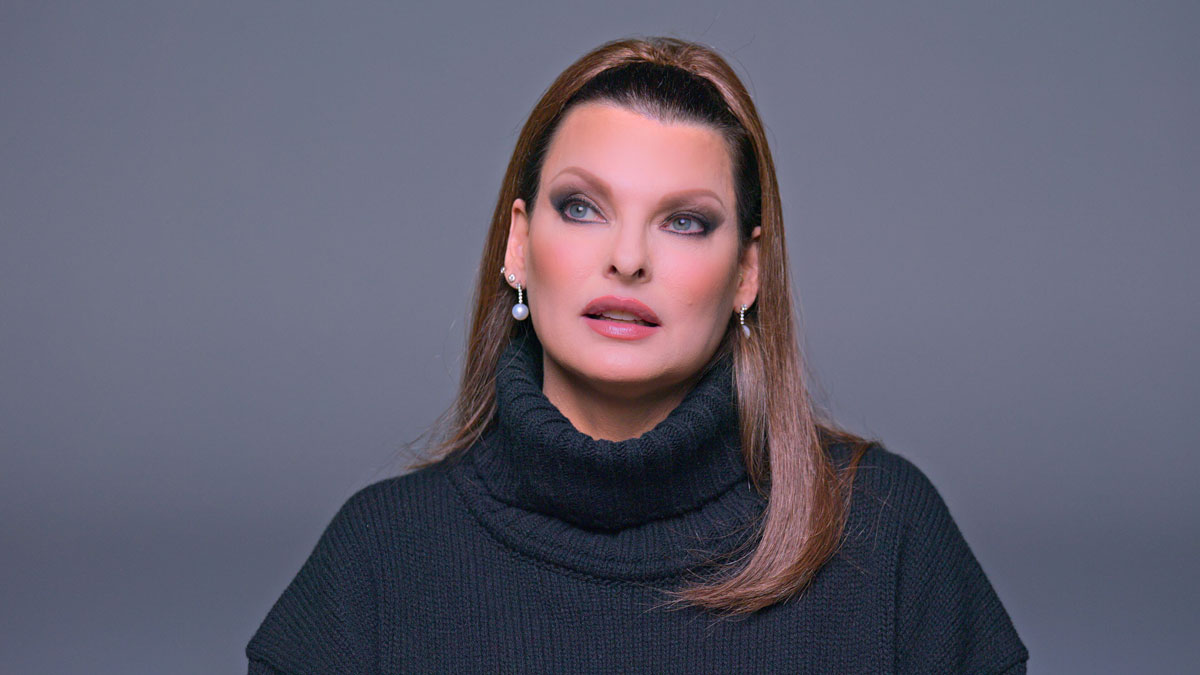
The Super ModelsLinda Evangelista in “The Super Models” (Apple TV+)Turlington, whose exclusive contract with Calvin Klein made her a household name in the early ’90s, recognized the opportunities she was letting pass by remaining shackled to one designer. They understood their worth as marketable commodities and dealt with the industry’s primarily male power brokers accordingly.
Evangelista and Campbell, meanwhile, had to battle for every victory they gained – the former having to fight her way out of an abusive marriage to Gérald Marie, the head of the Elite modeling agency in Paris, and the latter contending with the racism few in the industry dared question. Campbell also expresses gratitude for the sense of protection granted to her by certain designers she refers to as her chosen family, like Gianni Versace and Azzedine Alaïa, whom she lovingly calls “my papa.”

What “The Super Models” sells above all is a sense of shared memory.

All told, this is a great fall for fashion worshippers. In addition to “The Super Models,” HBO recently debuted the ethereal “Donyale Luna: Supermodel,” a swim through the biography of the first Black model to appear on the cover of Harper’s Bazaar in 1965, by way of a sketch artist, and British Vogue in 1966. Her prominent role in fashion history has largely been blotted out.

Between this and Frédéric Tcheng’s “Invisible Beauty” in theaters, we have a well-rounded cinematic tour through Western style from the 1960s onward. To watch either of those documentaries is to see how incompletely “The Super Models” develops the overall picture.

Even so, it does a bang-up job of showcasing these women’s lives and personalities through the work of seminal photographers such as Arthur Elgort, Richard Avedon and Steven Meisel, whose lens heavily defines the series’ tone. Regardless of the criticisms concerning its execution, you cannot claim that this show isn’t gorgeous.

The lensmen set the mood for each hour’s walk through the foursome’s claimed history of influencing culture by elevating certain designers. Isaac Mizrahi, Todd Oldham, Marc Jacobs and Anna Sui were all up-and-comers whose shows Campbell, Turlington, Evangelista and Crawford walked in as a favor at a time when their rates were among the highest in the industry.

We know these names because their designs have been made available to us through Target and other big box retailers eager to make runway fashion accessible to everyone. “The Super Models” proposes that without these four models towing them along in the current they created, perhaps we wouldn’t.

However, the filmmakers’ assumption that the audience knows these women also informs the series’ slightness in some areas, especially throughout the first two episodes. Williams and Bills emphasize each woman’s personal history in the opening act, which is understandable. 

Inserting their origin stories into the longer history of the modeling industry is where “The Super Models” falters. Frustratingly, this happens at the top of its runway.

We need your help to stay independent

Crawford, Campbell, Evangelista and Turlington rose to the pinnacle of high fashion into the late-’80s and the ’90s, two socially and economically disparate eras whose differences are mainly explained by grunge confusing the social order.

However, the level of specificity with which the filmmakers connect societal transformation and the couture industry after the models’ fame peaked is nearly absent in the explanation of how they achieved a level of prominence prior generations of models did not. One glaring example concerns its usage of  Bethann Hardison, the main subject of “Invisible Beauty” who put Black models on the map, presented here as simply another expert on how impactful Campbell, Turlington, Crawford and Evangelista are and continue to be.

Another is a scene where Crawford says that suddenly the print girls – as in, she and the others – were doing runway shows, and an expert explains that brought these inert two-dimensional goddesses into the real world. This is presented with little insight into the forces that made that happen or why there was a delineation between print and runway in the first place. Or, for that matter, the economic and cultural conditions in the ’80s that made the culture ripe to be conquered by these four particular women.

Sometimes the most generous favor a documentary can do for its audience is to explain the circumstances that enable a phenomenon not simply to occur but to take root and last. 

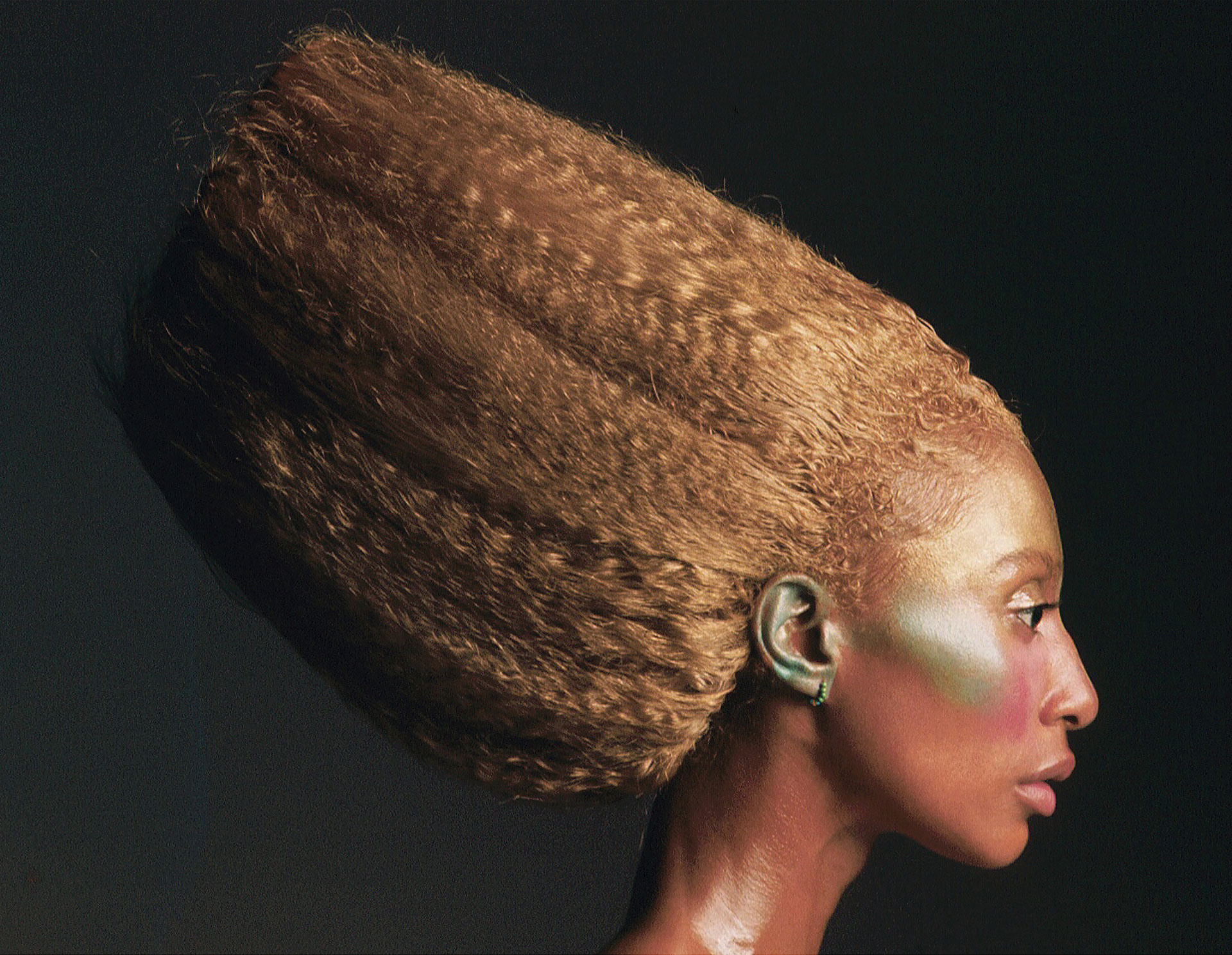
Donyale Luna: Super ModelDonyale Luna: Super Model (HBO)This thought occurred to me after watching “Donyale Luna: Supermodel” in the wake of seeing “The Super Models.” That film’s director Nailah Jefferson uses her subject’s disappearance to her advantage, placing Donyale Luna into the context of the 1960s to build an argument as to why she was influential that also explains her erasure.


Want a daily wrap-up of all the news and commentary Salon has to offer? Subscribe to our morning newsletter, Crash Course.


Luna was one of Andy Warhol‘s muses, appeared in films by Salvador Dali and Federico Fellini, dated one of the Rolling Stones and for a time was one of the most sought-after women in London and Paris. “I know I’m beautiful. I know I’m the best model. So why aren’t I being photographed?” she wrote in the journal that gives her a presence in the film, read by her daughter Dream Cazzaniga, an executive producer.

The answer to all of it rested in the America she left behind – the place where the racially ambiguous Donyale Luna sprung from the imagination of an awkward Black girl from Detroit named Peggy Ann Freeman. Luna’s career peaked during the height of the Civil Rights movement, a time when she was quoted as wishing she were white and refused to claim any ethnic or cultural identity.

Sometimes the most generous favor a documentary can do for its audience is to explain the circumstances that enable a phenomenon to take root.

All the great photographers recognized her rare beauty, including Avedon, who, in an archived exchange he had with then-Vogue editor Diana Vreeland, told the editor that Luna was “extraordinary. “And she said, ‘So was King Kong.'”

The American fashion world would not claim her, so who would?

Jefferson reads that passage out loud to Beverly Johnson, one of the supermodels to arrive on the scene in Donyale’s wake and, for many years, the woman Vogue claimed as the first Black model to grace its cover. (She was the first on the American edition.) The camera stays with Johnson as she processes hearing that, nods knowingly, and is reduced to tears. “It’s not fair. . . I’m not a cryer . . . I’m not a cryer. . .” she says between pauses to weep. “It’s an accumulation of all the pain . . . .all the ancestors, all . . . it’s why it hurts so bad.”

“The Super Models” never moves the viewer this way. Maybe our collective knowledge about its subjects makes such emotional epiphanies impossible to achieve. Thus, since so many of us grew up bombarded by images of these women and coverage of their lives, the filmmakers assume – yes, we’re bringing it back – that knowing the broadest strokes about their careers is enough.

Regarding the details that we don’t know, including the sexual assaults Marie is alleged to have committed, Evangelista uses this forum to speak up about his physical abuse during their marriage and reiterate her sorrow at hearing his accusers’ accounts, including that of fellow model Carré Otis.

The Super ModelsNaomi Campbell in “The Super Models” (Apple TV+)Its capacity as historic corrective works most potently for Campbell, whose legacy and career were toxically skewed by modeling agency titan John Casablancas responding to her demand for equal compensation by spreading the rumor that she was difficult.
Black women have spoken up about this recently but in Campbell’s career heyday, she had few shields from the tabloids’ mudslinging. Seeing all the ways Campbell thrives despite this is especially rewarding. Its emotional match may be Evangelista’s determination to reclaim her career after surviving a financially devastating divorce, recurrences of cancer and permanent disfigurement related to a cosmetic procedure.

Through these passages, we may not necessarily feel we know these women much better than before, but at least “The Super Models” dissolves some of the illusion separating them from the rest of us. Cameras once made them divine. It’s appropriate that one would remind us that they’re human.

“The Super Models” is streaming on Apple TV+. “Donyale Luna: Supermodel” is streaming on Max.

Former White House lawyer said Trump acted like a “mob boss” and ordered staff to obstruct evidence

Former Trump-era White House lawyer Ty Cobb claimed during a recent CNN interview that Donald Trump told his staff to commit obstruction.

Asked by anchor Erin Burnett on Tuesday for his thoughts on Trump reportedly telling his assistant, Molly Michael, “You don’t know anything about the boxes” in regards to troves of classified documents stowed at his Mar-a-Lago resort, Cobb, concluded that Trump’s alleged orders may be evidence of witness tampering, in addition to mishandling documents. 

“I hear Trump — really, for the first time in terms of the way this evidence has rolled out — speaking in the terms of a mob boss, giving a direct order to somebody that he probably should have no reason to believe would lie for him, but expecting [Michael] to do so,” Cobb said. “There’s a difference between loyalty and breaking the law, and that’s not a line she was going to cross. So it really is Trump directly ordering obstruction, and that will certainly be helpful to enhance the credibility of others who will testify about the obstruction.”


The “Real Housewives” diet: Why we are seeing caviar everywhere when Americans can’t afford eggs

Last summer, I was staying in an AirBnB with some friends, and we had some downtime before heading to dinner. My friend called a few of us into the living room. “You have to see what Kathy Hilton does in this episode of ‘Real Housewives of Beverly Hills,'” she said.

So, I meandered over to the living room and watched as Kathy nonchalantly heaped spoonfuls of gleaming orbs of caviar onto a steaming, just-cut-open baked potato. She glibly topped it with some sour cream (or maybe creme fraiche?), then both Hilton and her sister, Kyle Richards, began eating it. Kyle had a confessional or two joking about the relative absurdity of the dish being served so casually — but then that was that. The sisters began arguing over who knows what and my friends and I had a good laugh, then resumed getting ready.

I know that a lot of viewers tune into the series because it offers a taste of “lifestyle porn,” with the absurd homes, cars, dinners and the like. But that caviar moment? It stuck in my head.

The wealth, the nonchalance, the privilege was particularly galling to me. And I watch a lot of “Housewives!”

Over the last year, there’s been a huge push to make caviar appear to be an everyday luxury, especially among younger Millennials and Gen-Z. For example, in February, TODAY published an article with the headline “How caviar became TikTok’s favorite snack.” I am incapable of reading this headline without rolling my eyes. In my mind, a snack implies a loose, easy, simple-to-eat food that you can enjoy on the go.

It does not imply caviar.

We need your help to stay independent

Furthermore, in a year in which people cannot afford (chicken) eggs, we’re expecting 20 year olds to buy caviar willy-nilly? It sounds ludicrous. However, just yesterday the concept of caviar as a casual snack was propositioned yet again — and this time by Pringles. According to a press release, this “Real Housewives of New York”-inspired collaboration, called the “Crisp and Caviar Collection,” features a luxe, black box filled with a canister of Pringles, a container of creme fraiche and a small tin of caviar from The Caviar Co.

Box prices range from $49 to $140.

Perhaps most interesting? The press release’s mention that the collaboration was indeed inspired by “The Real Housewives of New York.” Clearly, the culture cache and appeal of housewives cannot be overstated.

“From TikTok reviews to reality TV housewives, the nation is craving Pringles and caviar – and in true Pringles fashion, we’re satisfying the caviar-curious,” said Mauricio Jenkins, US marketing lead for Pringles. “Our partnership with The Caviar Co. not only embraces the trending snacking behavior in an approachable manner, but expertly curates our beloved crisp flavors with this seafood delicacy for a Pringles tasting experience unlike one you’ve ever had before.”

So what is behind the cultural obsession with turning caviar — once reserved for special occasions or splurges — into an everyday snack food, especially during a time when many people are struggling to afford basic groceries?


Want more great food writing and recipes? Subscribe to Salon Food’s newsletter, The Bite.


Within the “Real Housewives” universe — which is always a fascinating microcosm of class, privilege and clashes between old and new money — caviar plays an outsized role compared to other food items. New York housewife Erin Lichy had an event complete with “caviar caterers” who served the pricey fish eggs with (you guessed it) Pringles, which was touted as a perfect juxtaposition of low-and-high brow tastes. Over on the “Beverly Hills” franchise, housewife Dorit Kemsley threw a caviar-centric party for her husband, PK.

Outside the bounds of the television show, the “Real Housewives” still turn to caviar. Meredith Marks of the “Salt Lake” franchise just released a caviar line of her own, and Margaret Josephs of the New Jersey franchise released a book called “Caviar Dreams, Tuna Fish Budget.”

On the television program that many people turn to see what out-of-touch luxury looks like, caviar is in the spotlight. But that reputation is steadily changing (or at least companies and restaurants want us to believe that).

“While caviar has traditionally been supplemental on expensive, often stuffy restaurant menus, caviar bars are caviar-first — sometimes caviar-only,” writes Diana Spechler of Bon Appetit, “And although caviar is a splurge (prices vary based on size and color, sturgeon species and branding), there’s a broad push to make it feel accessible to a new generation. That means bar stools instead of white tablecloths, caviar ‘bumps’ to be slurped off the wrist and chefs appearing with their sleeves rolled up to talk caviar with customers.”

Perhaps unsurprisingly, many of the people pushing for caviar to become regarded as accessible have some skin in the game. For instance, mononymous social media darling Danielle, dubbed “The Queen of Caviar TikTok,” is the granddaughter of Mark Zaslavasky, who co-founded the original Marky’s Caviar back in 1983; her family still owns the restaurant and accompanying caviar store.

“Lots of people think of caviar and assume it’s extremely expensive,” Danielle said in a feature with Town and Country. “I’m trying to educate my followers, make caviar more universal and show them that there are super affordable entry price points.”

And she’s right. There are some tins of caviar out there for under $100. They are also lower quality. If a TikTok user is enamored with Danielle’s videos or a huge fan of Kathy’s Hilton’s baked potato-caviar explosion, that high-quality caviar could cost between $200 and $800 per ounce, per Town & Country. Aspirational luxuries are one thing, but there seems to be a mismatch between the narrative about caviar actually being an accessible snack and many Americans’ bank accounts.

As Salon Food reported back in March — and then followed up on again and again and again as food insecurity continued to worsen — experts predicted that our country was “racing towards a looming ‘hunger cliff,’ complicated even further by the expiration of SNAP benefits. More Americans than ever are having to turn to “buy now, pay later” apps and installment plans to buy basic groceries.

And as Bettina Makalintal succinctly put it in Eater, “The concept of caviar (luxurious) as a snack (functional) is a practice in contradictions, especially in light of food inflation.”

Now, I’m not trying to dissuade anyone from splurging. If you can afford it, go ahead! Grab a $100 tin of caviar (or perhaps one of those Pringles sets) and enjoy feeling rich while you spoon it over chips; in the end, perhaps that’s the feeling many people are chasing right now amid such a profound period of social, political and financial upheaval. A little bit of luxury at home never hurt anybody.

It also feels like an especially weird time for companies to push caviar on the masses.

So, if you do struggle to buy eggs, turn on Bravo, get a kick out of the whacky ladies on your screen, maybe have a pang of aspirational approach for their lives (caviar included), but please don’t feel like you need to go out and spend a paycheck to buy an infinitesimal tin of caviar to impress your friend with.

Let’s be honest: You’d probably have more fun (and it’d be much more economical) just watching “Housewives.”

Is it rude to eat groceries in the store before paying for them?

Some shoppers say it’s acceptable to open a bag of produce and sample a few bites before purchasing, while others beg to differ. After all, it’s not an uncommon sight to see — even if it may earn a few raised eyebrows.

You may have seen a fellow shopper sneakily pop a few grapes into their mouth before stashing the entire bag in their cart. Or, you may have done that yourself. Whether it’s produce, packaged snacks or even prepared meals, no food item is too big or too small for several hungry shoppers.

The divisive topic of whether it’s acceptable to eat grocery foods before purchasing recently made rounds on TikTok. Internet personality Cecily Bauchmann posted a video of herself checking out her groceries, which included an empty sushi carton that Bauchmann had eaten in its entirety while shopping.

“I also opened this in-store. I’m sorry, I was so hungry,” she said before the cashier replied, “OK. You’re good.”

Underneath Bauchmann’s video were a few sympathizers, who said they see no problem with sampling food as long as it’s paid for in the end.

“I do that too haha,” wrote one user. “If you pay for it at the end [then] I see no problem.” Similarly, another user commented, “I always do that bro it doesn’t matter. [And] when I was little I thought I was gonna get jumped or something if I did that.”

Others, however, criticized Bauchmann, asserting that what she was doing was illegal and flat out wrong.

“[M]y husband works at a store that sells some food and he says it’s still stealing unless you paid first,” wrote one user while another complained, “”Isn’t that illegal? Just asking cause it seems like it’s illegal.”

We need your help to stay independent

Those who are fans of sampling products before purchasing argue that eating one grape, one cherry tomato, one chip or even a whole carton of sushi isn’t harmful as long as the food is all paid for in the end. And while that justification does make sense, it certainly doesn’t make the practice of sampling food at the grocery store necessarily right. Simply put, eating at the grocery store doesn’t fall under proper grocery store etiquette. 

It’s why stores like Whole Foods and Costco offer samples of certain foods so shoppers aren’t caught opening and eating products that are available for purchase. Trader Joe’s even has its own stall where employees prepare and serve samples of ready-to-eat meals to customers.

That being said, if one feels compelled to snack at their local grocery store, there are a few food items that they can reach for. “Dry, individually priced items like chips, trail mix and berries in containers are, to me, totally fine for snacking, provided that you give the cashier a heads up, so they don’t spill your Ghost Pepper potato chips or blueberries all over the floor,” wrote food writer and former Trader Joe’s employee Mackenzie Filson. “Bottled drinks (with their top securely back on) are also okay in my book.”


Want more great food writing and recipes? Subscribe to Salon Food’s newsletter, The Bite.


However, loose fruit like bananas, apples and pears or bulk items weighed by the pound like cherries, grapes and bags of peaches are an absolute no-no. So are snack packs with dips, yogurt cups, canned sodas and juices, which are incredibly messy for cashiers to ring up once opened.

For prolific grocery store snackers, Filson said the best way to be respectful and helpful is to read out the product’s SKU (or stock keeping unit, the alphanumeric code near the barcode) at check-out so it can be entered manually. That way cashiers don’t have to touch any trash, which should be disposed of by the customer on their way out. Self-checkout is also another great option. 

At the end of the day, eating groceries before buying them isn’t illegal. So, if you’re not a fan, enjoy your purchased foods in the comfort of your own home. And if you must, just remember to do it mindfully.

Bijou Phillips files for divorce from Danny Masterson following his rape sentencing

Danny Masterson‘s wife, Bijou Phillips, has filed for divorce less than two weeks after her husband was sentenced to 30 years to life in prison for rape. Phillips filed for divorce on Monday in Santa Barbara Superior Court, per court records. She cited “irreconcilable differences” as the reason for the couple’s split after nearly 12 years of marriage and is seeking spousal support and legal fees. In her filing, Phillips also petitioned to have her legal name changed to Bijou Phillips. 

“Ms. Phillips has decided to file for divorce from her husband during this unfortunate time. Her priority remains with her daughter,” her attorney Peter A. Lauzon said in a statement obtained by NBC News. “This period has been unimaginably hard on the marriage and the family. . . . Ms. Phillips acknowledges that Mr. Masterson is a wonderful father to their daughter. She hopes that everyone will respect her family’s privacy in these difficult times.”

Phillips’ filing comes after she penned a letter of support for Masterson amid his trial. She described her husband as “an amazing father,” who “was devoted to our daughter, would read her books, take her on walks and to ballet lessons.” She also praised Masterson for being a hard worker — even after he was accused of sexual abuse back in 2017 and fired from “The Ranch,” Masterson “devoted himself to finding other ways to earn a living.”

Masterson was convicted of raping two women at his Los Angeles residence two decades ago. He was accused of and tried for the rape of a third woman, but there was no verdict due to a hung jury.


MAGA lawyer named as state’s witness in Georgia case swears he hasn’t flipped on Trump: “Zero truth”

One of the most prolific peddlers of the false claims that Donald Trump lost the 2020 election due to widespread voter fraud, attorney Lin Wood, appears to have flipped on the former president, becoming a state witness in Trump and 18 other defendants’ sprawling racketeering case in Georgia, Fulton County prosecutors revealed Wednesday. Buried in Atlanta-area District Attorney Fani Willis’ 103-page filing arguing that lawyers for Trump’s co-defendants may have conflicts of interest, according to The Messenger, prosecutors listed Wood as one of the individuals serving as “witnesses for the state” in the case, which alleges the 19 defendants conspired to overturn the 2020 election results in Georgia. A special purpose grand jury had recommended Wood be indicted, but prosecutors declined.

Wood, however, denies any suggestion he has flipped on the former president. 

“There’s zero truth to that,” Wood told The Hill on Wednesday. “I’m always willing to go in under subpoena, I’ll go testify and answer their questions, honestly, like I did in the grand jury.” 

We need your help to stay independent

The once-acclaimed defamation lawyer gained national recognition for representing the parents of slain child beauty queen JonBenét Ramsey and aiding in the vindication of Richard Jewell, a security guard falsely accused of scheming to set off pipe bombs at Atlanta’s 1996 Summer Olympics. 

He surrendered his law license in July as disciplinary proceedings — connected to his work for Trump allies and associates under federal investigation by Special Counsel Jack Smith — threatened to disbar him. A Georgia special grand jury also recommended Wood for criminal charges over his involvement in the alleged scheme, but Willis decided against indicting him. 

“I’m probably the second most persecuted person in America, wouldn’t you say?” Wood told The Messenger in a July interview shortly after he announced his retirement, adding that Trump is the first.

After the 2020 election, Wood rose to prominence among the election fraud conspiracy-theory pushers with his name appearing on the pleadings of lawsuits filed by Trump attorney Sidney Powell and him representing himself in a separate election-related lawsuit in Georgia. While each of the lawsuits — which Powell filed in Arizona, Michigan, Wisconsin and Georgia federal courts — was defeated, a Michigan federal judge brought down a sanctions order recommending Powell, Wood and seven other co-counsel for disciplinary proceedings over their “historic and profound abuse of the judicial process.”

Georgia’s state bar counsel cited that opinion as a reason for seeking Wood’s disbarment in the state, where he was first granted a license to practice in 1977. In his disciplinary proceedings, Wood was accused of violating an array of professional rules, including those regarding the scope of representation, fairness to the opposing party, cooperation with disciplinary authorities and trial publicity. Wood’s “contempt” for the judiciary was enough to qualify him for disbarment, Georgia’s disciplinary counsel Robert Remur argued to the Georgia State Disciplinary Board. 

“He’s accused the Supreme Court, the Special Master, counsel for the State Bar of being communists, pedophiles, child traffickers,” Remur told the board earlier this year. “No lawyer fit to practice in this state would make such allegations as a lawyer in a proceeding in which he has signed the pleading as a lawyer representing himself.”

Wood posted transcripts of his remarks to the board, which suggest that his disciplinary proceedings kicked into high gear a move toward retirement he told The Messenger had actually begun in 2019. The former attorney told the State Disciplinary Board that he’d rather quit working as a lawyer than be stripped of his license, adding that he would instead take up arms in the “court of public opinion.”

“So I’m doing it for myself because if I’m — if I’m disbarred, which I’m quite sure that the judge is going to recommend that — it’s been the goal from day one even though I don’t care,” Wood said to the board. “I’m going to retire. I don’t need a law license to get to heaven, so it doesn’t mean anything to me; but it’s unfair and it’s injustice.” 

At the end of the May proceedings, Special Master Thomas E. Cauthorn III indicated that he would release his report within 45 days from the receipt of the transcript. The stenographer certified the document on June 4, signaling that Wood’s fate would likely have been sealed only days after he announced his retirement.


Want a daily wrap-up of all the news and commentary Salon has to offer? Subscribe to our morning newsletter, Crash Course.


Legal experts were surprised by the revelation of Wood’s cooperation with Georgia prosecutors Wednesday morning, with some appearing to express doubt about the efficacy of the lawyer’s strategy.

“Wow. I did not have Lin Wood flipping on my bingo card,” Bradley Moss, a national security attorney, wrote on X, the platform formerly known as Twitter. 

“‘It’s a bold move, Cotton. Let’s see if it works out for them,'” former federal prosecutor Renato Mariotti added, quoting 2004 film “Dodgeball: A True Underdog Story.”

“If he has documents and all, sure,” Georgia State law professor Anthony Michael Kreis said. “If it is just him? Yeesh. I don’t know.”

Cassidy Hutchinson says Giuliani groped her on Jan. 6: “Like a wolf closing in on its prey”

Cassidy Hutchinson, the former Trump White House aide turned January 6 whistleblower claims in a new memoir that on that day, she was groped by Rudy Giuliani in the presence of John Eastman, two people accused of helping to orchestrate the plot to overturn the 2020 election. 

In her new memoir, “Enough,” excerpted in The Guardian, Hutchinson described the day of the Capitol insurrection, writing that Giuliani forced his hand “under my blazer, then my skirt.”

“I find Rudy in the back of the tent with, among others, John Eastman,” said the former aide to Mark Meadows, the former White House chief of staff under Donald Trump. “The corners of his mouth split into a Cheshire cat smile. Waving a stack of documents, he moves towards me, like a wolf closing in on its prey.”

She continues: “I feel his frozen fingers trail up my thigh,” she writes. “He tilts his chin up. The whites of his eyes look jaundiced. My eyes dart to [Trump adviser] John Eastman, who flashes a leering grin.”

“I fight against the tension in my muscles and recoil from Rudy’s grip,” she continues. “… filled with rage, I storm through the tent, on yet another quest for Mark,” referring to her ex-boss and former White House Chief of Staff, Mark Meadows.

“‘We have the evidence. It’s all here. We’re going to pull this off.’ Rudy wraps one arm around my body, closing the space that was separating us. I feel his stack of documents press into the small of my back. I lower my eyes and watch his free hand reach for the hem of my blazer.”

“‘By the way,’ he says, fingering the fabric, ‘I’m loving this leather jacket on you.’ His hand slips under my blazer, then my skirt,” Hutchinson writes. “I feel his frozen fingers trail up my thigh,” Hutchinson writes.

According to The Guardian, the memoir, slated to be released domestically next Tuesday, details Hutchinson’s ” journey from Trump supporter to disenchantment,” as well as her pivotal testimony before the House committee on Jan 6.

Giuliani, meanwhile, remains mired in legal and political scandal. On Monday, Trump’s former lawyer was sued by his own attorney for $1.36 million after failing to pay his legal fees. Along with a spate of other co-conspirators, he was also recently indicted by Fulton Country District Attorney Fani Willis on racketeering charges in the Georgia fake elector scheme. Giuliani also faces potential disbarment in connection to his efforts to assist Trump in subverting the 2020 election and had his law license suspended in June of 2021.

Giuliani’s political advisor called Hutchinson’s claim “a disgusting lie.” 

“It’s fair to ask Cassidy Hutchinson why she is just now coming out with these allegations from two and a half years ago, as part of the marketing campaign for her upcoming book release,” ed Goodman said in a statement to Salon. “This is a disgusting lie against Mayor Rudy Giuliani—a man whose distinguished career in public service includes taking down the Mafia, cleaning up New York City and comforting the nation following September 11th.” 

South Africa’s smallholder vegetable farmers aren’t getting the finance they need

Fresh efforts are being made to increase the share of black ownership in South Africa’s agricultural sector. This follows decades of missteps and badly designed interventions that have failed to significantly change the ownership patterns in the sector.

The latest plan — known as the agriculture and agro-processing master plan — aims to provide, among others, comprehensive farmer assistance, development finance, agricultural research and development and extension services.

It also aims to increase the share of black ownership and the contribution of small-scale producers in the country by 2030.

The master plan has been signed by government and representatives from various businesses and civil society organizations within the agricultural sector. It is the first multi-stakeholder strategic plan in the country. Its aim is to promote transformation in agriculture and agro-processing sectors affected by apartheid.

However, farming is a capital and resource intensive business, which requires access to sufficient finance. In a recent study we looked at the funding challenges facing smallholder farmers in the vegetables value chain. A smallholder farmer is someone engaged in agricultural activities on a small scale, generally farming less than 10 hectares of land, selling part of their crop and farming for subsistence.

The study provides valuable insights that could help inform the implementation of the masterplan. For example, one of the main findings is that there is an urgent need for government to provide “patient” finance — such as longer repayment periods — to allow farmers to build capabilities, accumulate returns and be profitable. The current problem with government funding is that it’s limited in both scale and scope and provided on a piecemeal basis.

This is not to suggest that there is no financing available for farmers. What’s in contention is whether what’s available helps farmers enter, expand and grow.


How financing is offered affects who gets to farm

Farming needs substantial investment in on-farm infrastructure and equipment. This includes fencing, farming tools, tractors, boreholes and pumps, irrigation systems, shade nets and greenhouse tunnels.

Research by the Centre for Competition, Regulation and Economic Development found that it can cost a farmer between R2.5 million and R3 million (around US$159,000) to install an irrigation system and greenhouse tunnels on a 5-hectare farm. These are substantial investments for smallholder farmers.

Short repayment periods mean that farmers are required to pay back their loans sometimes before they have even become profitable.

The issue of financing is particularly concerning given that smallholder farmers are self-financed or have limited access to debt finance.

As one farmer put it:


The problem why farmers are collapsing and exiting the vegetable farming business is because farmers get a loan to start farming and they make losses in the first years which means that they can’t re-pay the loan, so they start selling farm assets to repay the loan.


This is counterproductive. If a farm goes under, all the funding and non-financial support previously provided to get the enterprise started is lost.

Patient funding is the answer. Patient financing in agriculture is financing and support that’s made on a longer-term basis and that recognizes the extended time frames and risks associated with agricultural cycles and the time it takes for the farmer to become profitable.

The lack of patient financing also stands in the way of farmers being able to access reliable and consistent markets, such as supermarkets. Supermarkets have stringent requirements which often entail farmers needing to invest further in their farms. The investment required can be in the form of infrastructure such as packhouses, pack sheds, cold rooms, proper financial statements and refrigerated trucks to deliver to the stores.

Government support does not cover weather and climate change related risks. These are increasingly affecting smallholder farmers who still practice open field farming.

Many farmers also complained of complicated application forms and bureaucratic application processes to obtain finance. Often small farmers don’t have all the requirements stipulated on the forms, such as bookkeeping. This limits their chances of getting access to finance. There is also a lack of assistance from the department on how applicants can fill out the forms when they encounter difficulties.

As one farmer suggested:


The challenge with government support is that it comes and helps in piecemeal and they don’t go all the way. Also, government does not come to visit the farm to check and evaluate or monitor progress.


What needs to be done

Government needs to provide patient finance to allow farmers to build capabilities, accumulate returns and be profitable.

This will safeguard the participation of smallholder farmers by allowing them to access more reliable and consistent markets. It will also benefit consumers through better quality produce and avoid potential food shortages in the wake of high inflation and the energy crisis in South Africa.

Having the agriculture and agro-processing master plan in place is helpful. But it needs to be put into practice properly. If smallholder farmers are its focus, then more emphasis needs to be placed on providing them with access to finance, to equip them with the tools to achieve better production.

Karissa Moothoo Padayachie, Researcher for the Centre for Competition, Regulation and Economic Development, University of Johannesburg

This article is republished from The Conversation under a Creative Commons license. Read the original article.

“Insecure” star Yvonne Orji reflects on DMX and her destiny: “God’s out here playing tricks on me”

Dreams fuel our existence. They give us the ability to envision ourselves in better careers, living in better homes, driving better cars and having the opportunity to provide our families with more than we had, even more than they actually need. But what happens when a dream is just a dream? When a person talks about doing something but never takes any steps toward turning any of those dreams into reality? Stand-up comic and actress Yvonne Orji identified people with that mentality as extremely dangerous and explain how urgent it is for us to stay away from them on the recent episode of “Salon Talks.”

Yvonne Orji is most known for her HBO comedy special “Momma, I Made It!” in addition to playing Issa Rae’s stylish, hyper ambitious best friend Molly on the hit HBO show “Insecure.” Orji’s betrayal of Molly earned her an Emmy nomination, which was just a part of God’s plan and one of the many dreams she checked off her long list and wrote about in her bestselling memoir “Bamboozled by Jesus.” 

“Bamboozled by Jesus” documents Orji’s life through the lens of faith, biblical stories and witticisms. Orji’s family had their own dreams of her becoming a doctor, but according to Orji, God had different plans. Orji writes that God told her to pursue a career in comedy. This vision could have seemed absurd because Orji didn’t exactly have direct access to the comedy industry; however, she remained rooted in faith. Orji’s initial break came when asked to participate in a beauty pageant. She listed her talent as comedy, because she listened to God, even though she had never did stand up before. Orji tore the show down, started booking gigs, and the rest is history. 

You can watch my “Salon Talks” episode with Yvonne Orji here or read a Q&A of our conversation below to learn more about “Bamboozled by Jesus,” how she’s keeping faith during the SAG-AFTRA and WGA strikes and her prediction for the future of television after Hollywood opens back up. 

 The following conversation has been lightly edited for length and clarity.

Congratulations on the book and the paperback publication because everyone doesn’t get that. It caught me off guard because I didn’t know how much I needed it at this particular time. Can you unpack the title for me?

Well, first of all, that’s one of the biggest compliments. “It’s a book that I didn’t know I needed in this season.” One, thank you. It’s funny. You can do a lot of things in your life, and then the thing that is probably the most vulnerable or the most self-excavating, that’s the thing that I’m like, “This will always be mine.” You can be a wife, you can be a sister, but then when you become a mom, it’s like “The baby is mine,” and I feel like I birthed this baby. 

“You’re just like, ‘Hey God, did you forget about me? Where you at? Remember when we was winning? We want more of that.'”

“Bamboozled by Jesus,” the title, came because sometimes that’s how I feel. Even though I know I’m in lockstep and in alignment with my destiny and with my purpose, sometimes I feel like God’s out here playing tricks on me though. Because he’ll tell me to do something, and one thing he knows that he has from me is my obedience, but that doesn’t mean that my obedience doesn’t come with questions. I’d be like, “Wait, wait, what are we doing? And why?”

He doesn’t give me all the information. He doesn’t give a lot of us all the information because I think if he did, we would never go forward doing the thing that we are supposed to do. If he was like, “I want you to be a comedian, but also for five to seven years you’re going to be poor.” I’ll be like, “So then I guess I’m not going to be doing comedy.” I’m like, “What are we doing? Why would I do this willingly?” Maybe it helps if you know when the end date is, like, “Oh, five to seven? Okay, I could pace myself.” Maybe that would help, but then also maybe you’d be like, “Or I could get a job right now and never start this thing and be able to eat. Yeah, I’m not going to do comedy.”

It doesn’t sound fun.

It doesn’t sound fun. But I live a very fun and fulfilled life now. In the process, I think that’s what it is, the process bamboozles you. Because there’s some moments where you’re like, “Man, favor came through and I’m getting this opportunity and that . . . God is so good.” And then you’re like, in the next breath, you’re just like, “Hey God, did you forget about me? Where you at? Remember when we was winning? We want more of that.”

But you also, you don’t cheat the work.

No.

You talk about the idea of faith and how faith and fear can’t live in the same space, but it doesn’t mean you could just sit back on your hands. You have to be active. You have to get up and do something. 

And sometimes you have to do something before you know what it is you’re doing. Like in the book, I talk about two times, really, when I moved to New York. I bought a bus ticket and I signed up for a class. I had nowhere to live, but I was on that bus, you know what I mean? Because class starts in two days, so I’m going to still go to the class. I’m going to still go to the bus. 

“We always say Black is not a monolith, but I’m like, but yes, let’s see more of these stories that present us not monolithically.”

While in the four hours it took me to get from PG County, Maryland, to Manhattan, I got a Facebook message from somebody who saw my Facebook message of “Anybody have a couch I can sleep on in New York?” And she was like, “Call me.” And she was like, “You can sleep in my basement apartment.” So I stayed rent-free in a basement apartment in New York for six months, but I was already on the bus. If I stayed in Maryland, like, “Oh man, no one responded to my [message].” I’d have missed a class. I bought the bus ticket. I bought the class. 

Then when I was coming to L.A., I stopped taking work as a wedding MC because I was like, “I already know what this gets me. I know exactly what I can do as a MC. I want to know what I can do in L.A. as an actress or comedian.” My bread and butter stopped, and I bought a plane ticket. The day that I was supposed to land in L.A. is the day that the internship I ended up getting two months after I bought the ticket was supposed to start.

I know people, I meet people, I have people in my family, in my circle of friends — well, not in my close circle of friends because I’m like . . . I don’t want to say I can’t be friends with these kind of people, but we all know them. They’re just like, “I would totally move to L.A. as soon as I get a job and an apartment.” And you’re just like, “So then I guess you’re never moving to L.A.”

You have to be in somebody’s face to even get the opportunity.

Yes. The best advice I got was from Stacey Evans Morgan when I was jump roping between New York and L.A. and I was like, “Just keep me in mind for any projects.” And she said, “In the six hours it’ll take for you to get from New York to L.A., I would’ve already given your job away.” I said, “Ooh, I’m moving to L.A.”

That’s real.

In the six hours? That’s so real.

I was in the barbershop a couple of days ago and I was reading your book and I told one of the dudes in the barbershop, “Wow, Yvonne Orgi is royalty.” You are actually Nigerian royalty.

My grandfather was the Ogbuefi of our village, which means basically, in our village, whenever there was a dispute or anything that had to be settled, everyone came to his home. Now my dad is a title chief as well, but I think there are few. Every village has their own Ogbuefi.

So do you have a crown? Can you grant wishes? I’ve been to Lagos, actually.

You’ve been to Lagos? Ain’t no wishes being granted in Lagos.

It’s a fun place. I was in Abuja, so we only went there for a weekend.

Abuja is more chill. Abuja is Maryland, and Lagos is Brooklyn.

Reading this book made me think about my grandma a lot because she always had scriptures. She had a clip full of scriptures just ready to go. 

So you’re saying I’m saying I am a grandma? That’s what I’m deducing from this.

I’m saying that you’re like a newer version, but in a good way.

Walking it out Black man, walk it out.

I’m walking that out. Let me walk it out. I know you had the challenge where you read the Bible for a year and you did the YouTube videos. I was wondering, did you always have this many biblical stories in you or was it something that had to be refined for the book?

I say in the book, I was like, “This is not your grandma’s Bible studies.”

You’re better than my grandma because she didn’t put DMX into her Bible stories.

For those of you who don’t know, when you get this book, there are DMX references. If you listen to the audiobook there is a bark.

“I bought a bus ticket and I signed up for a class.”

DMX will always be one of my top favorite rappers. Why? Because once I listened to “It’s Dark and Hell Is Hot,” I always felt like there was just a battle for his heart and his soul. He knew what to do, but then he had these demons that were like, “Do you really want to do that?” It was like he had a moral compass. You could tell in his songs, he was trying to push that. And also, it’s like, how many hardcore rappers are like, “Yeah, let’s pray?” And you’re like, “What? Let us pray?” I rock with DMX for a lot of reasons, but what was the question? Oh, did I always have that?

Here’s the thing: I was raised Catholic, and so Catholicism I think gave me order and structure. Then when I turned 17, I was already a freshman at George Washington University in D.C. and I went to a bible study. It was more like a non-denominational church vibe. I got a lot of practicality, like how do you apply the things of the Bible. That really helped me understand the stories. Then it was like, well, if the Bible is supposed to be applicable to today, how do I take this story and make it relevant for my life today?

It was just kind of like, we hear these stories like, “Joseph had a coat of many [colors] on him . . .” Like, nah, nah, nah, fam. Joseph was sold into slavery because his brothers hated on him. They was hating on him. And then, when he was trying to do right, he got put in jail. That, to me, is just like, yo, everything’s going wrong for this young man. What was it about his faith or his belief in whatever the dream was that he got to be like, “But I’m going to make it though.” It was like, well, no, no, no. Maybe he didn’t have that, but what he did have was favor. So even though the situations was trash, he, some way, somehow, always came out on top. So that’s why there’s a chapter in the book where it’s like, “I may not win, but I always win.”

Even if you look at Coco Gauff, who just won, it’s like, yeah, she won the U.S. Open, and then you could look at the other young lady and be like, she lost the U.S. Open, but it’s like, the day she lost, the very next day, she became number one in the world. I’m sure she would’ve liked the W, but it’s like, I always say God gives you a backdoor blessing.

If we looking at her, we’re all chanting for Coco because we wanted her to win, but at the same time it’s like, well, sis, you didn’t lose either. You’re still the world number one. You can take that how you want to take that. The story of Joseph’s gave me perspective in the midst of trash situations.

My favorite story in the Bible is The Good Samaritan. Do you have a favorite?

Oh, why?

Because the people who were supposed to help, didn’t. You don’t know where it’s going to come from, so you can’t project, or judge, or lose faith in people. The person who you think is the op might be your biggest resource, and you don’t know.

And that’s what my mom would always say, “You make sure you are nice to everybody you meet. You don’t know if you’re entertaining angels without your knowledge.” 

Treat everybody like they’re Jesus.

Treat everybody like they’re good because you don’t know who’s who.

I rock with Joseph, but I think a lot of times in my life I have felt more like Gideon. Because he was minding his business. For someone who’s bullied, for someone who always felt like on the outside, but in my heart of hearts knew there’s more. But you could know that there’s more in you but when your environment doesn’t feed that moreness, you kind of feel like, “Well, maybe? I don’t know.” I was looking, I was looking for God to tell me “You’re more.” But Gideon wasn’t. Gideon was like, “Hey, I’m cool with being the lowest. I’m cool with my tribe being the weakest.” 

When he gets this word like, “Nah, this is what you’re supposed to do,” and he’s like, “I want to believe you. I do. Hold on. OK, make this grass wet.” “Oh, you made it wet.” “OK, make it dry, and then I’ll believe you.” 

And then, again, this is the bamboozlement of Jesus. God’s like, “Hey, I need you to go save the people. You going to go to war. By the way, you got too many people. These 3,000 need to become 300.” I know. He’s like, “Fam, I already told you I wasn’t really a warrior like that. That’s not my plan.” And then it’s like, “All right, now you’ve got 300. Cool, cool, cool. I know you thought you was going to fight with weapons. Yeah, put down your weapons and just blow the trumpet.” That’s when me and God are fighting, you know what I mean? That’s when we are throwing balls because now you’re playing with my mind.

I’m a screenwriter. We’re on strike now. You’re a screenwriter and an actor, so you’re double striking, right? 

Double striking, yeah.

Could you talk about the future of the industry and what you would like to see? I’ve read stories about some artists having to sell their homes. I read Viola Davis wrote that only 1% of actors make over $50,000 a year. It’s really, really, really difficult, but we can do better. 

I think people don’t understand that the term “working actor,” it’s a job. It’s a job. I think Hollywood has done a good marketing job of the glitz and the glamour, so I think most people, when they think Hollywood, they think it’s glamour. But part of the people that make up Hollywood are people who are every day, living job to job, paycheck to paycheck, gig to gig. 

“I think people don’t understand that the term ‘working actor.'”

By the grace of God, I can be so grateful that I’m fortunate. But seven years ago, again, this book came from all of the things that I experienced just seven years ago. It’s not like 20 years ago. No, this was seven years ago, fam. I remember sharing salads with my roommate, and that was because I had a dream. This strike is affecting so many people who also have a dream.

It’s like, can you imagine if you’re like, “Hey, I want to be a coder for a tech company,” and there’s no technology that can be thought about, or created, or even talked about. Or it is just like, so how do we advance? How do we move things along? I think the future of entertainment, in general, is probably going to be more global. I think what we’re seeing, just the solidarity that people in the UK have, people in other places, because their structure is different. The UK, their TV is government-run. I’ve had a chance to go there and talk to writers and they’re like, “It’s a debt ceiling. It’s a salary cap, in a way. Because if Network X is like, ‘We already have a Black show,’ it’s just like, ‘So all my Black show ideas have to just go into the abyss.'” And it’s just like, whoa, whoa, whoa, whoa.

I think now we have a really good opportunity of bridging that gap. One thing that I want to do specifically is to be that bridge. Because I think there’s so many stories to be told. Not only of the immigrant experience, the Black experience, the international experience, it’s like, the Nigerian-British experience is different than the Nigerian-American experience. The Caribbean experience, the Haitian experience, whatever, the Brooklyn experience. We always say Black is not a monolith, but I’m like, but yes, let’s see more of these stories that present us not monolithically. I think that’s a joy of mine in terms of the kind of work I particularly want to do.

Legal experts on Trump’s “me too” court strategy: His co-defendants “do the heavy lifting”

A new report from The Messenger found that despite Donald Trump’s extensive array of criminal defense attorneys, the former president’s legal team has essentially latched onto the arguments of other co-defendants who also stand charged with racketeering in the Georgia fraudulent electors case, per new filings. 

At least nine of Trump’s recent defense motions in defiance of Fulton County District Attorney Fani Willis’ indictment, The Messenger notes, have co-opted stances taken by his less wealthy co-conspirators. And it may be paying off in his favor — Trump has thus far managed to postpone trial before a Fulton County jury, a move which The Messenger’s Alessandro Marazzi Sassoon and Adam Klasfeld attribute to co-defendants Kenneth Chesebro and Sidney Powell’s success in securing separate trials. 

According to Georgia State University law professor Caren Morrison, who has attended recent Trump-adjacent hearings, the ex-president is simply allowing his former allies to “do the heavy lifting.” And, as Atlanta-based criminal defense attorney Andrew Fleischman said, in the majority of legal situations, “That’s totally normal.”

“Just basically let your co-defendant do the work and spend the money and then just be like: ‘Okay. I’ll just add my name to that, please,'” Morrison added. As another legal expert told The Messenger, Trump has essentially adopted a sort of “me-too” legal defense, drawing from the arguments of his former associates. 

We need your help to stay independent

Morrison also noted that it behooves Trump to push for delays and let his co-defendants’ trials unspool first, as it could give him the advantage of seeing Willis’ strategy ahead of time. “It’s always helpful if there’s a trial of your co-defendants first, because you get a preview of the prosecution’s case,” Morrison said.

Pushing to have Trump’s case moved from state to federal court, as former White House Chief of Staff Mark Meadows and ex-Justice Department staff Jeffrey Clark have attempted to do, could also pay dividends. As The Messenger observes, doing so would mean a more GOP-heavy jury pool, the removal of a “home field advantage” for Georgia prosecutors, and a more linear arc for using executive privilege as a defense for his alleged 2020 election crimes. 

Legal experts have also quashed the notion of any kind of coordinated strategy among the 19 defendants, despite the fact that Trump has primarily absorbed others’ assertions, such as refuting Willis’ use of Georgia’s RICO legislation, her theory of criminal liability in the fake electors scheme, and the First Amendment defense against her case.

“I see no overall strategy so far,” said Georgia defense attorney and former prosecutor Noah Pines. “I’ve had cases with other lawyers where we’ve had those conversations and have done things, towards a common goal. I just don’t see that so far, in anything I’ve read.”

Georgia State University law professor Eric Segall said Trump’s legal squad’s ostensible strategy is a “cheap way of doing it.” 

“I don’t know if his lawyers are savvy enough to do this the right way,” Segall continued. “But I think it’s very common, with a lot of different defendants, for defendants to get together and make motions, but that’s not really what happened here.” 

However, Morrison said the MAGA attorneys could merely be using a “wait and see” tactic. “It may be a clever way of moving when you don’t have an army of associates at your disposal and lots of other people are kicking up a lot of dust, and he’s just waiting to see how things shake out,” she said. “It is the smart move to sort of let everybody else make all the fuss and do all the motions,” Morrison added, “because every day that goes by, he learns something new.”

Don Trump Jr. hacked on X: “My father Donald Trump has passed away”

Donald Trump Jr.'s account on X, the platform formerly known as Twitter, was hacked Wednesday morning, a representative for Trump Jr. confirmed to The Hill. The hacker wrote a number of inflammatory and false posts, now deleted, on the younger Trump's profile, including a fake death announcement for his father. 

"I'm sad to announce, my father Donald Trump has passed away. I will be running for president in 2024," the post read.

The hacker also launched an attack at President Joe Biden, writing "F–k @JoeBiden" followed by a racial slur. "This just in: North Korea is about to get smoked," another post read. "Richard Heart is innocent, when I become president I am going to burn the SEC @RichardHeartWin," the hacker said in another, referring to a crypto YouTuber who the Securities and Exchange Commission charged earlier this year with misappropriating millions of dollars of investor funds from unregistered crypto asset securities offerings that raised more than $1 billion.

The posts were deleted from the account just before 9 a.m. on Wednesday and were up on the page for under an hour. Trump Jr. has more than 10 million followers on X and regularly uses it despite his father's divestment to Truth Social, which the former president has a financial stake.

Kevin McCarthy has officially lost all control of his GOP “clown show”

It seems like only yesterday that we were on the cusp of defaulting on the debt and many of us were predicting that the kamikaze Freedom Caucus in the House of Representatives was going to make it happen. They sure sounded serious. Speaker of the House Kevin McCarthy, R-Calif., was unable to keep that extremist right flank under control and they were threatening to unseat him under the rule they insisted he adopt in order to get the votes he needed to attain office if he didn’t meet their demands. With a four-vote margin, he had almost no room to maneuver. After the interminable 15 rounds of voting and all the backroom deals he had to make to get the gavel back in January, the prospects for a deal looked very slim. Yet, with all that working against them, McCarthy and President Biden surprised everyone by managing to pound out an agreement that could get the required number of votes in both chambers of Congress. A number of House Republicans were livid, especially the Freedom Caucus, and refused to vote for it. But Democrats filled in the gaps and saved McCarthy — and the country — from catastrophe at the last minute.

There was a lot of grumbling but no one took any action to unseat McCarthy. Instead, the House Republicans picked up where they left off with their performative investigations. But some of them aren’t stupid and they knew they would soon get another chance to force their will on the country. While the debt ceiling deal ostensibly “capped” all spending at 2023 levels for two years, nobody said that appropriations bills which had to be finished by September 30 couldn’t be cut to the bone.

And so here we are, less than two weeks before the deadline and no appropriations bills have been passed while the House GOP is at each other’s throats. They may not even be able to agree on a continuing resolution to extend the deadline so they can keep the government open beyond the week after next. If McCarthy can’t pull something out of his hat again, and it really doesn’t seem likely, we are almost certainly headed for another shutdown.

We need your help to stay independent

Last week McCarthy authorized an impeachment inquiry for Joe Biden without bringing it to a vote as he had earlier vowed to do. This was widely seen as a sop to the MAGA extremists who were shrieking “Impeach!” at the top of their lungs every five minutes despite the fact that there is no evidence to support such an action. It didn’t work. Not only were they unsatisfied, but they believe impeachment isn’t nearly good enough.

Last week the simmering feud between Matt Gaetz, R-Fl., and McCarthy finally boiled over when Gaetz openly threatened to take the necessary steps to remove the speaker if he didn’t agree to all of his demands. McCarthy finally lost his temper and responded, “If you want to file a motion to vacate, then file the fucking motion.” Shortly afterward, McCarthy had to forego plans to have the House vote on a defense spending bill because he couldn’t get the votes.

“How about just move the fucking spending bills?” Gaetz fired back.

So that went well. And so far, this week it’s going any better. Now the Freedom Caucus itself is at each other’s throats. On Tuesday, five hardcore MAGA Republicans stopped that proposed defense spending bill from even coming up for debate, once again paralyzing the House and making it impossible to move forward. This maneuver is very unusual and appears to be a tactic designed solely to embarrass Kevin McCarthy.

When asked about it McCarthy was clearly rattled:

Ask those five why they voted against it.  Think about what they’re voting against. They’re voting against even bringing the bill up to have a discussion about it to vote on. If you’re opposed to the bill, vote against the bill at the end…You could change it if you don’t like it. But the idea that you vote against a rule, to even bring it up, that makes no sense to me,”

Mike Garcia, R-Ca., was also fit to be tied and called out his fellow Republicans. He said, “out of fear, they decided to vote against the rule to even allow this to come to the floor for debate, This city, Washington DC, is riddled with Chinese sympathizers.” You read that right. He said those five Republicans were Chinese sympathizers.

Who else could get enough votes if McCarthy is forced out?

Things went downhill from there. Over the weekend, the Freedom Caucus and the leadership negotiated a stop-gap Continuing Resolution to take them through October 31st and avoid an imminent shutdown. It was a ridiculous agreement that no Democrats would sign on to but they thought they could bring together the GOP caucus to at least buy some more time. But no. When it came time to vote on Tuesday, the whole thing unraveled and 16 Republicans balked. McCarthy had to withdraw that one from the floor as well.

The recriminations were swift and nasty. The Daily Beast reported:

Rep. Matt Gaetz (R-FL), who opposed the bill’s continued funding of the office of Trump prosecutor Jack Smith, took potshots online at one of the bill’s sponsors, Rep. Byron Donalds (R-FL), who shot back, “You’ll need more than tweets and hot takes!!” Meanwhile, The Hill reported that Rep. Victoria Spartz (R-IN) blamed “weak Speaker” McCarthy, who hit back by calling Spartz a quitter for deciding to retire at the end of her term to spend more time with her family. 

Congressman Mike Lawlor, R-N.Y., told CNN, “This is not conservative Republicanism, this is stupidity, these people can’t define a win, they don’t know how to take yes for an answer. It’s a clown show.” That is 100% correct. And it’s not going to get any better.


Want a daily wrap-up of all the news and commentary Salon has to offer? Subscribe to our morning newsletter, Crash Course.


I have no predictions as to where this is going to end up. A government shutdown seems to be inevitable, but we just don’t know when it’s going to happen. It’s possible they’ll get some kind of extension with Democrats’ help if they can do it without any conditions. But Gaetz and his cronies don’t seem to be in the mood for that sort of thing and they are obviously eager to call for a vote of no-confidence in McCarthy.

One big question remains, however, and it may be McCarthy’s trump card in the end. As I’ve wondered before, who else could get enough votes if McCarthy is forced out? More importantly, what kind of masochist would want it? No, I think he’s probably safe. The country, however, couldn’t be in worse hands than those of this insane GOP House majority.

Late yesterday we had this strange report:

That it was found on a baby changing table in a bathroom is just too perfect. 

Trump is lying about his “moderate” abortion stance — he will ban it nationwide

Donald Trump does not care about the issue of abortion. That’s why if he’s elected, he will sign a national ban on the procedure the second he has a chance. If, heaven forbid, he gets back to the White House, it will be because the Christian right carried him. Banning abortion in all 50 states will be a way to pay them back, without having to give up anything he cares about. 

This should be obvious, and yet, somehow, many in the press are being fooled by Trump’s latest public posture about abortion, even though it’s transparently dishonest. During his recent NBC News interview with Kristen Welker, Trump tried to strike a “moderate” pose on abortion. Referring to what the press misleadingly calls a “six-week” ban (it’s really a two-week ban) on abortion in Florida, Trump said it was “a terrible mistake” for Republican Gov. Ron DeSantis to sign the draconian legislation.

“You will win on this issue when you come up with the right number of weeks,” Trump asserted about a topic that has dogged the Republican Party at the ballot box since the Supreme Court overturned Roe v. Wade. 

Trump then went on to talk about this medical procedure like he was negotiating alimony for his next ex-wife.

“We’re going to agree to a number of weeks or months or however you want to define it,” he said, boldly claiming, “Both sides will come together. And for the first time in 52 years, you’ll have an issue that we can put behind us.”


Want more Amanda Marcotte on politics? Subscribe to her newsletter Standing Room Only.


The pomposity of that statement should have been a reminder that Trump should be assumed to be lying about his abortion position, just as he lies about most things. And yet, much of the press took his statements at face value, even going so far as to report that he had angered anti-choice activists, which of course, only helps bolster Trump’s false claims of moderation.

From Trump’s personal point of view, there’s no downside and only upside to banning abortion.

Never-Trump Republican Matt Lewis swallowed Trump’s bait whole in a Daily Beast response that assumes Trump’s “true” position is pro-choice. “[A]t some point, Trump’s presidency might even be a net-negative for pro-lifers,” Lewis wrote, arguing anti-choice voters “will have no one to blame but themselves” for believing Trump will back their cause.  But Lewis is wish-casting here. It’s a fantasy to think that all of these anti-abortion Republicans will wake one day, rueful that they sold out their “family values” to back a guy who wouldn’t even ban abortion for them. However, the evangelical voters who appear ready to hand Trump the GOP nomination soon are making a very safe bet. They know that Trump is just lying to Welker and that he will sign a national abortion ban if he wins — likely within a few weeks of being inaugurated. 

Evangelical voters know Trump doesn’t care about abortion and has likely caused a few himself. But that’s why they’re right to believe he’ll sign any ban put in front of him, no matter how draconian. Trump takes a wholly transactional view of politics, and his only concern is amassing power for himself. Certainly, he doesn’t care how many women die or are maimed because of a ban. If he wins the White House, he’ll want to keep the religious right on his side, and giving them a total or near-total ban on abortion is a way to do that that costs him nothing.

In a political environment where very little is predictable, there is one thing we can count on: If Trump is returned to the White House, a national abortion ban is a near-certainty. After all, if Trump wins, that means Republican turnout was high and Republicans are probably taking Congress, as well. Looking at state legislatures should kill any hope that Republicans will show constraint on this issue. Republicans keep banning abortion, despite strong public opposition. And when voters turn out to protect abortion rights in the states, Republican politicians retaliate by passing more laws to curtail voting rights.

For Trump, who opposes democracy, this is a win-win.

Anti-choice fervor in the GOP is driving anti-democracy fervor, which only makes it easier for Trump to sell his “why not end democracy altogether” plan. Giving evangelicals an abortion ban will just ensure their support for Trump’s unsubtle yearning to be dictator-for-life. And if it makes Trump less popular with the larger public, well, that’s why he wants to destroy democracy. The end goal is to put his power out of the reach of voters. 


We need your help to stay independent


It’s always wiser to look at what a politician does more than what he says, but with Trump, it’s triply important. No other politician lies as much as Trump. No other politician has been less interested in keeping his promises. Trump himself doesn’t even really bother to hide that he’s lying. To one audience, he pretends to be “moderate” on abortion. To others, he brags that “I was able to terminate Roe vs. Wade.” There is simply no relationship between what he says and what he does. What he says is worse than useless. 

On the “what he does” front, the track record is clear: Trump gives all the power to fundamentalist Christians.

During his first term, Trump nominated judges from a list compiled by the far-right Federalist Society, which was initially founded for the purpose of banning abortion. Trump also let anti-choice radicals use White House powers to wage war on birth control access, filling health care offices with people who oppose any effort to prevent unwanted pregnancy. Trump’s Department of Health passed rules making it harder for women to use their insurance to pay for birth control, and his administration repeatedly tried to cut funding for contraception services for low-income women. Trump officials spent the entire four years of his administration trying to destroy Planned Parenthood altogether. 

This will all be much worse if Trump takes office again, starting with the near-inevitable national abortion ban he’ll sign. He won’t be worried about voter backlash. After all, he won’t legally be able to run for a third term, so his focus will be on trying to find a way to install himself illegally in office on a permanent basis. To get that done, he will need the most fanatical forces in the GOP on his side. One way to do that is give them what they want, which is an abortion ban. From Trump’s personal point of view, there’s no downside and only upside to banning abortion. And the smartest bet of all is that Trump will always do what he thinks benefits him, no matter who gets hurt in the process. 

The key to a tiny bee’s health is having a good mom, study finds

There is a tiny species of carpenter bees known as the spurred ceratina (Ceratina calcarata) that behaves unlike any other known species of bee. With their elongated and shiny bluish-black bodies, the spurred ceratina is perhaps best known as a pollinator of delicious gourds like cucumbers and watermelons. At around 6.5 millimeters long, it’s about half the length of an aspirin. It’s known as a carpenter bee because they typically nest in wood.

In 2016, they became the first bee species to have its entire genome published, and they are often studied by scientists because of the unique relationships between parents and their offspring. While they are otherwise solitary except when mating, spurred ceratina parents spend significant time caring for and interacting with their offspring.

The infected bees displayed behavioral changes, stunted developments in their eyes and brains and even saw alterations in their gene expressions.

Now a recent study from the peer reviewed journal Communications Biology reveals an important reason why these carpenter bee mothers spend so much time with their young: Maternal care is linked to the young bees’ ability to ward off potentially deadly diseases.

It all comes down to pathogens, a term for microorganisms that can cause disease. Researchers from York University in Toronto studied the carpenter bees through four stages of their lives, starting at the larval (the equivalent of being an infant) — but denied some of those bees the maternal care they needed to survive. When comparing the genes and microbiomes of the bees that had maternal care with the ones that did not, the scientists discovered that the latter group’s microbiomes “ballooned,” according to a press statement. Most of the new pathogens were fungi (85 percent), but there was also plenty of bacteria (8 percent), and the consequences were clear: The infected bees displayed behavioral changes, stunted developments in their eyes and brains and even saw alterations in their gene expressions.

Small carpenter bee (ceratina calcarata) in a nestSmall carpenter bee (ceratina calcarata) in a nest (Sandra Rehan/York University)
Perhaps most horrifyingly, many of them developed a fungal infection from a pathogen known as Aspergillus. In honeybees, this fungus causes an illness known as stonebrood disease, which mummifies the young bees. Yet the small carpenter bees have their own problems: when their microbiomes are out of balance and their bodies riddled with fungal infections, they are more susceptible to all kinds of diseases.

“There are fitness affects resulting from these fungal infections,” senior author Sandra Rehan, a professor in York’s Faculty of Science, said in the press statement. “We are documenting the shifts in development, the shifts in disease loads, and it is a big deal because in wild bees there is a lot less known about their disease loads. We are highlighting all of these factors for the first time.”


Want more health and science stories in your inbox? Subscribe to Salon’s weekly newsletter Lab Notes.


Maternal care is linked to the young bees’ ability to ward off potentially deadly diseases.

The study emphasizes that it is contributing to an existing body of research about the role of maternal care in helping animals develop healthy immune systems. As the authors point out, there is already considerable evidence that organisms depend on their mothers in order to have the right bacteria in their bodies to fight off diseases.

“Parental care has marked impacts on immunity and microbiome, such as the transfer of core microbes essential for offspring survival as observed in earwigs, burying beetles, African clawed frogs and mice,” the authors write. “The neurobiological and behavioral effects of parental care have been widely researched in social species, as it plays an essential role in the evolution of social behavior.”

This research is important because we don’t know much about the health of bees other than honeybees, which are technically domesticated species not native to North America. The globe is currently suffering through a pollinator crisis and we don’t entirely know how to protect insects other than agriculturally-beneficial species.

“To our knowledge, our study is the first to provide metatranscriptomic insights into the relative role of maternal care on offspring development and a foundational framework for the developmental microbiome, a critical component of bee health,” the authors concluded. We have much to learn about the basics of bee health, it would seem.

We need your help to stay independent

A July study in the Journal of Economic Entomology, analyzed as many studies as the authors could find about whether bees are adequately protected from pesticides. To their consternation, they discovered that the studies were not broadly useful because most only tested on two species of honeybee. It is unclear whether pesticide mitigation policies are effective for the more than 20,000 different species of bee worldwide.

The need to protect bee populations could not be more urgent, given that bees are pollinators who are essential to human food production. A 2022 study in the peer reviewed journal Scientific Reports found that modern honey bees have lifespans only half as long as they did back in the 1970s. The authors speculated that the declining lifespan could be due to genetic rather than environmental factors, but it remains unclear exactly why that is happening and what the implications are for other bee populations. Bees continue to be imperiled today due to everything from climate change to the overuse of dangerous pesticides.

The bee mom research is also surprising because we don’t typically think of bugs being good parents, but it adds to the growing evidence that even insects are quite intelligent. A July study in the peer reviewed journal PLOS Biology transformed our understanding of bee evolution by revealing that five honeybee species and five wasp species — despite having very different evolutionary histories — both came to the same conclusions when constructing their nests. Specifically, all of the species determined that hexagons were the most architecturally sound structure for what they wished to accomplish, and all of the species used the same geometric tricks to solve various problems that arose when building their hexagon-based nests.

“I think the most interesting result is that we’re finding that collective systems come up with the same solutions for the same problems, despite being separated by millions of years of evolution,” Dr. Michael Smith, who teaches at Auburn University’s Department of Biological Sciences, told Salon by email at the time.

“Meet the Press” deserves the backlash: NBC shows the worst way to interview Donald Trump

NBC’s “Meet the Press” is an American institution. It has been on the air for 76 years and is thus the longest-running show in American television history. I fondly remember hearing the show’s iconic theme music blaring every Sunday morning from the television in the kitchen of my childhood home. My mother used “Meet the Press” as a type of household alarm clock. She would shout out the name of that week’s important guest, urging me to come watch it. I usually ignored her and went back to sleep — unless the guest was Black. To see a Black person as a featured guest on the “serious” Sunday morning news programs was a major happening in the 1980s and even into the early 1990s. Although Black and brown faces now appear more frequently on those news programs, they are still a relative novelty.

Now, “Meet the Press”, like other legacy news media programs (and networks), is struggling. The show’s viewership has declined, in large part because of changing demographics. Its core viewers are getting older and younger viewers are not replacing them. The right-wing media echo chamber and its disinformation lie that the mainstream news media such as NBC, ABC, CBS, the New York Times and the Washington Post have a liberal bias has also helped to create a highly polarized and fragmented media environment. As a result, fewer Americans now watch (and trust) the same news programs and outlets. This means that the American people do not have a common frame of reference for politics and truth.

In the Age of Trump, NBC and other legacy news media have tried to remain relevant (and profitable) by obsessively focusing on Donald Trump and his MAGA movement. On Sunday, “Meet the Press” decided to do business — with an emphasis on business —with Donald Trump by providing him a platform for an interview.

We need your help to stay independent

As Hannah Arendt famously warned in her seminal book “The Origins of Totalitarianism”, “the ideal subject of totalitarian rule is not the convinced Nazi or the convinced communist, but people for whom the distinction between fact and fiction…..true and false…..no longer exist.” During his Sunday morning “interview” on “Meet the Press”, ex-president Donald Trump personified Arendt’s warnings. Trump lied, bragged about his crimes, acted like a political strongman and a bully, and wallowed in conspiracy theories. Trump received little to no substantive resistance from host Kristen Welker.

Upon deeper thinking, I decided that this spectacle was better described as being a public political BDSM sex show.

Here are the facts: Donald Trump is an enemy of democracy. He is a fascist. A dictator in waiting who with his Agenda 47 and Plan 2025 has publicly detailed his plans to end multiracial pluralistic democracy and replace it with a Christofascist plutocracy. A court of law has determined that Trump is a sexual predator. Trump is now facing four criminal trials where he could potentially be sentenced to hundreds of years in prison. The American news media cannot assume that “everyone knows” these facts and then use that incorrect conclusion as a reason to stop repeating them. Trump’s perfidy and danger to American democracy and society must be emphasized at every opportunity.

If “Meet the Press” once occupied hallowed ground among the American news media, it has fully lost that distinction by hosting Trump last Sunday.

As mental health experts have repeatedly warned, Trump is a sociopath if not a psychopath. He has most certainly shown himself to be a megalomaniac, a fabulist, a malignant narcissist, and a pathological liar. Instead of denying Donald Trump a platform to spew his poison, “Meet the Press” and NBC were collaborators in normalizing his fascist demagoguery.

As I watched Trump’s interview after the fact, I kept thinking of the type of relationship that I was watching between the ex-president, the host, “Meet the Press” and NBC, and what it all reveals about the American news media in this moment of worsening democracy crisis. Initially, I thought of how this is all a “work,” as they say in professional wrestling, where there is cooperation between the two parties to achieve a shared goal (money and attention) even while they pretend to fight it out before the public. Conflict creates cash; Trump and the American news media know this, and as seen on Sunday they are following that script very closely. But upon deeper thinking, I decided that this spectacle was better described as being a public political BDSM sex show.

Trump, like other fascists and fake right-wing populists and authoritarians, is a political sadist. The American news media are increasingly desperate to remain relevant. As such, they are willing to be masochists and submissives for Donald Trump and the American right-wing if they believe that it will make them money, get the public’s attention, and preserve their cherished access to the powerful.

In an essay here at Salon, Andrew O’Hehir offered this description of Trump’s “interview” on “Meet the Press”:

Even to describe the things Donald Trump says as “opinions” or “positions” that justify debate or discussion is once again to fall into the Heffalump trap the media has constructed for itself, in the impossibly naive belief that this time it will outsmart its quarry. (If you’ve forgotten the source of this metaphor, Pooh and Piglet build a trap to capture a mythical beast, then follow their own footprints in a circle and tumble into it themselves. Too perfect, right?) Every journalist, it would seem, not-so-secretly believes that in an interview with Trump, their integrity and independence of mind will lead them to triumph where all others have bitten the dust. That kind of hero’s-journey arrogance is virtually a professional requirement; I will not claim that I or any other journalist I know would turn down the opportunity.

If we conceive of Donald Trump as a dark enchanter whose power to warp the texture of reality and cloud men’s minds must be resisted or overcome, we’ve already gotten it backward. As every parable about the devil and every horror movie about teenagers who find a forbidden book make clear, the real adversary is human pride and human vanity, not some demonic entity. Trump is a mind parasite, who only has the power we willfully allow him to drain from us. He feeds on the vanity of the media, which believes it can capture and study him; the vanity of Republican leaders who believed they could ride him into a new era of political hegemony and then cast him aside; the vanity of his millions of supporters who believe they’re in on the joke and that Trump’s nihilistic fantasies of revenge against the privileged classes can never hurt them.

A chorus of voices also condemned “Meet the Press” on social media. 

Journalist and author Wajahat Ali intervened:

Meet the Press…I really hoped for the best. But it serves as proof that most corporate media isn’t built for this fight against fascism, not made for this moment, and they just don’t have the skill set to take on right-wing authoritarianism & lies. They haven’t learned a thing….

Historian Ruth Ben-Ghiat warned:

Ego stroker & supplier of openings for him to tell his lies and depict himself as a victim. Every interview given to this skilled propagandist is a chance for him to indoctrinate and cultivate more followers. People who don’t normally watch Fox.

Anticipating the backlash it would receive for the interview, NBC News hosted a panel discussion that tried to explain the necessity of providing Trump, a former president and likely 2024 presidential nominee, a platform. The network also posted a fact check online of Trump’s lies. Such efforts, however, were weak camouflage for an attempt to normalize Donald Trump and make money from his outrageousness and dangerousness.

Meet the Press

@MeetThePress

Former President Trump made a spate of false and misleading comments about immigration, foreign policy, abortion and more in a wide-ranging interview with #MTP moderator Kristen Welker. Here’s an @NBCNews fact check of the interview. https://nbcnews.com/meet-the-press/meet-the-press/fact-checking-trump-meet-press-interview-rcna105297

To this former MSNBC host Keith Olbermann responded, “And Kristen Welker failed to identify any of them as false or misleading, and thus by the standards of your own tweet, should be relieved of her job.”


Want a daily wrap-up of all the news and commentary Salon has to offer? Subscribe to our morning newsletter, Crash Course.


Writing at the Daily Beast, media reporter Corbin Bolies offered this critique of how “Meet the Press” “interviewed” Trump:

In her debut turn as moderator for Meet The PressKristen Welker wanted to be the latest to prove to critics that he could be challenged.

But like those who have tried before, her inherent skills as an interviewer were no match for a chaotic interview subject like Trump.

….

The framing of her questions was also puzzling. Welker introduced some subjects to Trump like a writer would script a pilot episode of a television show. “Tell me how you watched all this unfold,” she asked about Jan. 6. There would be some merit if an item was a fresh development, as was the case with Hunter Biden’s criminal indictment, but Americans have heard Trump ramble on the issues of Jan. 6, abortion, Vladimir Putin, and immigration for years. A new platform for Welker should not be a reason to treat these ongoing stories—and Trump’s position on them—as new, as it permits Trump to challenge the basis of fact in the question while regurgitating false information.

Welker herself attempted to head off the inevitable criticism during the broadcast. “He is the former president,” she noted to a panelist. “He’s facing four indictments, as journalists just set the scene, the backdrop why there is still news value and value for the public to hear from him.”

In an excellent essay at the Courier News Room, Mark Jacob, who is a former metro editor at the Chicago Tribune, wrote:

What if TV news interviewers told their upcoming political guests: “Don’t come on my show and lie. If you do, I’ll end the interview immediately and inform you on camera that you’ll never appear on my show again.”

That won’t happen, of course.

But it should.

Taking a firm stand for the truth would prevent abominations like Kristen Welker’s interview of Donald Trump in her debut as host of NBC’s “Meet the Press” on Sunday. It was a shameful piece of journalism in which Welker cleared the street for Trump’s parade of lies, pushing back only occasionally and ineffectively….

When NBC announced that the Trump interview would not be shown live, some naive observers thought NBC chose to tape it in order to fact-check Trump’s comments before airing them. But the main motive was obvious: NBC taped the interview so it could market it more successfully, producing sneak-peek news stories and video clips for days before the “Meet the Press” broadcast…

NBC’s apparent strategy was to let Trump con the audience while Welker postured that she was being tough on him. She asked him repeatedly whether he thought a fetus had constitutional rights. But she never demanded an answer nor stipulated for the audience that he didn’t answer. When journalists ask tough questions but allow the guest to ignore them, that’s not being tough. That’s being a performer.

The whole interview was an assault on the truth and a triumph for Trump – another disappointing performance by mainstream news media.

At The New Republic, Michael Tomasky strongly intervened against the mainstream news media’s enabling of Trumpism through “bothsidesism” and “balance” and “fairness”:

So, no—on matters like these, both sides absolutely cannot be treated equally. One side lies all the time, and with specific intent. On the other side, lies and exaggerations are sometimes told to gain advantage or gild a lily (by the way, this used to describe the Republican Party as well as the Democrats, but no longer). But for the right, lies are a weapon. The media must recognize the difference, and they must point it out, over and over and over….

Simple rule: When fairness and the truth are in conflict, journalism has to choose the truth. If it doesn’t, there goes democracy—killed off, in part, by the free press that is supposed to be its frontline defender….

What matters is that the mainstream media, as a machine, loves Trump. Or at least, the machine loves how useful he is. He seeks constant attention, he provokes, he’s self-centered, he’s bombastic; he and the media beast feed off each other. Biden, on the other hand, is none of those things, and he has qualities that the media beast finds uncompelling. He’s serious, knowledgeable, not flashy, not attention-seeking, and empathetic. It’s just not a fair fight.

So that’s where we are. What should the mainstream media do? I don’t have all the answers, but here are a few thoughts.

Call a lie a lie.

Don’t seek to create false equivalencies in the name of “balance.”

Don’t be afraid to say that one side lies constantly and with the specific intent of muddying facts, while the other side lies far less frequently or maliciously.

Remember that we are not just in the “news” business. We’re in the information business. We’re in the preservation of the civic fabric business. And we’re in the business of people: Wherever people need the intervention of journalists, we don’t check to see how they voted first. It’s our responsibility to try to build an informed public. This means for example reminding voters of the lies Trump told as president and the norm-crushing actions he took. That’s not “news” per se, but it’s information the electorate tends to forget and will need in order to make an informed decision.

In a much discussed (and deservedly so) essay at the Guardian, Margaret Sullivan said the following about the “Meet the Press” spectacle and how the American news media is continuing to fail in its responsibilities as supposed guardians of democracy:

I identified what I called the big problem and the big solution.

The big problem is that the mainstream media wants to be seen as non-partisan – a reasonable goal – and bends over backwards to accomplish this. If this means equalizing an anti-democratic candidate with a pro-democracy candidate, then so be it.

Add to this the obsession with the “horse race” aspect of the campaign, and the profit-driven desire to increase the potential news audience to include Trump voters, and you’ve got the kind of problematic coverage discussed above.

It’s fearful, it’s defensive, it’s entertainment – and click-focused, and it’s mired in the washed-up practices of an earlier era.

The big solution? Remember at all times what our core mission is: to communicate truthfully, keeping top of mind that we have a public service mission to inform the electorate and hold powerful people to account. If that’s our north star, as it should be, every editorial judgment will reflect that.

Headlines will include context, not just deliver political messaging. Overall politics coverage will reflect “not the odds, but the stakes”, as NYU’s Jay Rosen elegantly put it. Lies and liars won’t get a platform and a megaphone.

And media leaders will think hard about the big picture of what they are getting across to the public, and whether it is fair and truthful. Imagine if the New York Times, among others, had stopped and done a course correction on their over-the-top coverage of Clinton’s emails during the 2016 campaign. We might be living in a different world….

Donald Trump has called the news media “the enemy of the people”. He has incited his followers to commit acts of violence against reporters and journalists and his other “enemies”. Trump has also used fascist eliminationist Nazi language such as “lugenpresse” (which translates to “lying press”) to describe the news media. If Trump returns to power, he has plans to limit the First Amendment and other rights of the free press – and the American people en masse.

As an institution, the American news media must and can do much better in how it defends democracy by speaking truth to power and shining a light on Trump. Instead, the American news media believes that it can somehow accommodate or moderate Trumpism and the neofascists by being fair and balanced and objective. Such an approach is to de facto surrender. Trump and his anti-democracy movement are transparent and direct, they are consistently announcing what they plan to do to their “enemies” if they take back the White House. Denial of this reality is no salvation.

Dopamine is a brain chemical famously linked to mood and pleasure, but this is often oversimplified

Dopamine seems to be having a moment in the zeitgeist. You may have read about it in the news, seen viral social media posts about “dopamine hacking” or listened to podcasts about how to harness what this molecule is doing in your brain to improve your mood and productivity. But recent neuroscience research suggests that popular strategies to control dopamine are based on an overly narrow view of how it functions.

Dopamine is one of the brain’s neurotransmitters – tiny molecules that act as messengers between neurons. It is known for its role in tracking your reaction to rewards such as food, sex, money or answering a question correctly. There are many kinds of dopamine neurons located in the uppermost region of the brainstem that manufacture and release dopamine throughout the brain. Whether neuron type affects the function of the dopamine it produces has been an open question.

Recently published research reports a relationship between neuron type and dopamine function, and one type of dopamine neuron has an unexpected function that will likely reshape how scientists, clinicians and the public understand this neurotransmitter.

Dopamine is involved with more than just pleasure.

Dopamine neuron firing

Dopamine is famous for the role it plays in reward processing, an idea that dates back at least 50 years. Dopamine neurons monitor the difference between the rewards you thought you would get from a behavior and what you actually got. Neuroscientists call this difference a reward prediction error.

Eating dinner at a restaurant that just opened and looks likely to be nothing special shows reward prediction errors in action. If your meal is very good, that results in a positive reward prediction error, and you are likely to return and order the same meal in the future. Each time you return, the reward prediction error shrinks until it eventually reaches zero when you fully expect a delicious dinner. But if your first meal was terrible, that results in a negative reward prediction error, and you probably won’t go back to the restaurant.

Dopamine neurons communicate reward prediction errors to the brain through their firing rates and patterns of dopamine release, which the brain uses for learning. They fire in two ways.

Phasic firing refers to rapid bursts that cause a short-term peak in dopamine. This happens when you receive an unexpected reward or more rewards than anticipated, like if your server offers you a free dessert or includes a nice note and smiley face on your check. Phasic firing encodes reward prediction errors.

By contrast, tonic firing describes the slow and steady activity of these neurons when there are no surprises; it is background activity interspersed with phasic bursts. Phasic firing is like mountain peaks, and tonic firing is the valley floors between peaks.

Diagram depicting the phasic peaks and tonic valleys of dopamine levels

This diagram shows the phasic peaks and tonic valleys of dopamine levels, the former encoding unexpected rewards and the latter encoding expected events. Dreyer et al. 2010/Journal of Neuroscience, CC BY-NC-SA

Dopamine functions

Tracking information used in generating reward prediction errors is not all dopamine does. I have been following all the other jobs of dopamine with interest through my own research measuring brain areas where dopamine neurons are located in people.

About 15 years ago, reports started coming out that dopamine neurons respond to aversive events – think brief discomforts like a puff of air against your eye, a mild electric shock or losing money – something scientists thought dopamine did not do. These studies showed that some dopamine neurons respond only to rewards while others respond to both rewards and negative experiences, leading to the hypothesis that there might be more than one dopamine system in the brain.

These studies were soon followed by experiments showing that there is more than one type of dopamine neuron. So far, researchers have identified seven distinct types of dopamine neurons by looking at their genetic profiles.

A study published in August 2023 was the first to parse dopamine function based on neuron subtype. The researchers at the Dombeck Lab at Northwestern University examined three types of dopamine neurons and found that two tracked rewards and aversive events while the third monitored movement, such as when the mice they studied started running faster.

Dopamine release

Recent media coverage on how to control dopamine’s effects is based only on the type of release that looks like peaks and valleys. When dopamine neurons fire in phasic bursts, as they do to signal reward prediction errors, dopamine is released throughout the brain. These dopamine peaks happen very fast because dopamine neurons can fire many times in less than a second.

There is another way that dopamine release happens: Sometimes it increases slowly until a desired reward is obtained. Researchers discovered this ramp pattern 10 years ago in a part of the brain called the striatum. The steepness of the dopamine ramp tracks how valuable a reward is and how much effort it takes to get it. In other words, it encodes motivation.

The restaurant example can also illustrate what happens when dopamine release occurs in a ramping pattern. When you have ordered a meal you know is going to be amazing and are waiting for it to arrive, your dopamine levels are steadily increasing. They reach a crescendo when the server places the dish on your table and you sink your teeth into the first bite.

Diagram of ramp pattern dopamine release, which shows a steep rise that levels off

This diagram shows a ramp pattern dopamine release, reaching a peak when a reward is obtained. Collins et al. 2016/Scientific Reports, CC BY

How dopamine ramps happen is still unsettled, but this type of release is thought to underlie goal pursuit and learning. Future research on dopamine ramping will affect how scientists understand motivation and will ultimately improve advice on how to optimally hack dopamine.

Dopamine(s) in disease and neurodiversity

Though dopamine is known for its involvement in drug addiction, neurodegenerative disease and neurodevelopmental conditions like attention-deficit/hyperactivity disorder, recent research suggests how scientists understand its involvement may soon need updating. Of the seven subtypes of dopamine neurons that are known so far, researchers have characterized the function of only three.

There is already some evidence that the discovery of dopamine diversity is updating scientific knowledge of disease. The researchers of the recent paper identifying the relationship between dopamine neuron type and function point out that movement-focused dopamine neurons are known to be among the hardest hit in Parkinson’s disease, while two other types are not as affected. This difference might lead to more targeted treatment options.

Ongoing research untangling the diversity of dopamine will likely continue to change, and improve, our understanding of disease and neurodiversity.

“Damning” testimony from former Trump aide: He scribbled notes on classified docs

Donald Trump’s longtime assistant has told federal investigators that the former president repeatedly wrote to-do lists for her on White House documents marked as classified, sources familiar with the matter told ABC News

The aide, Molly Michael, informed investigators that she received to-do lists from Trump on multiple occasions that were written on the back of notecards she later identified as confidential White House materials with visible classification markings on them, which had been used to brief the president on phone calls with foreign leaders or other international matters, according to ABC.

“Michael’s testimony is damning in the classified documents case,” former federal prosecutor Neama Rahmani told Salon, arguing that it demonstrated “Trump’s knowledge that he unlawfully maintained classified documents,” and also “his intent to keep them from the FBI and to obstruct justice.”

The notecards with classification markings were found during the FBI’s search of Trump’s Mar-a-Lago estate in Florida last year, but the FBI did not take them, sources familiar with the matter told the news outlet. 

Michael said she visited Mar-a-Lago a day after the search and located the documents beneath a drawer organizer and delivered the documents to the FBI that same day, the sources said.

“Sophisticated criminal defendants do not often admit to committing crimes, but if the jury believes Michael, that is exactly what Trump did,” Rahmani said. 

Earlier this summer, Trump was indicted for stashing documents at Mar-a-Lago and obstructing government efforts to retrieve them. After receiving a subpoena from the Department of Justice demanding the return of classified documents, Trump and his team returned of them, but the subsequent FBI raid of the private Palm Beach club that serves as Trump’s residence yielded more than 100 classified documents.

Michael informed investigators that last year she grew increasingly concerned about the way Trump handled recurring requests from the National Archives for the return of government documents, sources told ABC. 

Trump allegedly told Michael, “You don’t know anything about the boxes,” after he heard that the FBI wanted to interview Michael last year, according to sources.

If that amounted to the ex-president instructing a former aide to “follow his guidance” about the classified documents he retained after leaving the White House, that would “add further credence” to the argument that Trump purposefully ignored requests from the National Archives and Department of Justice to return all such documents prior to the August 2022 Mar-a-Lago raid, said Javed Ali, a former senior counterterrorism official at the Department of Homeland Security.

We need your help to stay independent

Trump pleaded not guilty in June to 37 criminal counts related to his handling of classified materials containing intelligence on nuclear weapons programs and information on the nation’s defense capabilities. That case was filed in Florida federal court, and is separate from his criminal indictments in New York, Georgia and Washington, D.C.

Michael, who began worked as Trump’s executive assistant in the White House in 2018, left her position last year, apparently due to Trump’s alleged refusal to comply with federal requests, ABC News reported.

In her discussions with federal investigators, Michael described how close to 90 boxes containing materials from Trump’s presidential tenure were relocated, late in 2021, to a basement storage area within Mar-a-Lago. She explained that as requests from the National Archives intensified, she and Trump aide Walt Nauta (who is now also under indictment) transported boxes to Trump’s residence for him to review.

Trump eventually agreed to return 15 boxes of materials, which Michael viewed as a positive step, according to sources who spoke with ABC. But after the National Archives found nearly 200 classified documents in those boxes and alerted the FBI, Trump’s willingness to cooperate reportedly waned. 

He allegedly “asked Michael to help spread a message that no more boxes existed,” sources told ABC. 


Want a daily wrap-up of all the news and commentary Salon has to offer? Subscribe to our morning newsletter, Crash Course.


Rahmani, the former federal prosecutor, said that “Trump’s defense team will have a difficult time overcoming evidence of Trump’s disregard for the security of classified material and his decision to basically ignore the grand jury subpoena obtained by the DOJ to demand the return of the documents.”

Another legal expert, Nina Marino, a partner with the white-collar criminal defense firm Kaplan Marino, pointed out that the government will likely use Michael’s testimony to support the prosecution narrative that Trump was “knowingly and intentionally obstructing the federal investigation.”

The apparent “combination of blatant disregard with deliberate concealment,” Marino suggested, could serve as “strong evidence of guilt for the government in the classified documents case,” Marino added. Using such documents as “note paper,” she said, demonstrated that “blatant disregard.” 

As president, Ali noted, Trump had access to the “full suite of intelligence” obtained by the government, which may include information so sensitive that even within the president’s national security circle only a few people would have similar access. “No president, whether in office or after leaving, can unilaterally declare classified intelligence to be declassified” without following clearly specified procedures,” Ali said.

Climate change linked to deadly flood in Libya that killed thousands, study finds

When two dams in the Libyan city of Derna failed last week, the result was a flood that has claimed more than 11,000 lives, with thousands of people still missing. Because there were ample advance warnings that the dams needed to be repaired, much blame has been placed on the shoulders of local officials like the mayor and city council. Yet experts are pointing to an additional culprit in the dams’ destruction — climate change.

A recent report by an international team of scientists known as World Weather Attribution found that the low-pressure system called Storm Daniel was “up to 50 times more likely and up to 50% more intense” than it would have been in a scenario where Earth was 1.2º Celsius cooler. They cited among their reasons the uncharacteristic increase in rainfall intensity which could not be otherwise explained. This same increase also contributed to flooding in Spain, Greece, Turkey and Bulgaria. The scientists found that “for the large region including Greece and parts of Bulgaria and Türkiye,” anthropogenic climate change likely caused the storm to be up to 10 times more likely and up to 40% more intense than would otherwise have been the case.

These experts are not alone in identifying climate change as a likely factor in causing the Libyan floods. As National Oceanic and Atmospheric Administration (NOAA) climate scientist Dr. Stephanie Herring told Salon earlier this month, “increases in heavy rainfall (or extreme precipitation) such as observed in Libya are consistent with what we expect in a warmer world.”