Spring Sale: Get 1 Year, Save 58%

From space lasers to civil war: Marjorie Taylor Greene’s long audition to be Trump’s running mate

Marjorie Taylor Greene has shown herself to be a geyser of bad ideas and outrageous proposals designed to own the libs and grab time on conservative media outlets. On March 1, the congresswoman from Georgia erupted again, claiming on Fox News that MAGA Republicans deserve their own “safe spaces” and that political power in this country should be returned to the states.

Move over John Calhoun, the legendary white supremacist whose love of states’ rights and advocacy of nullification helped lead to the Civil War.

Greene’s Calhoun-like advocacy of a “national divorce” has already caused something of a media frenzy. Was she proposing secession: Red states separating from blue? Was she encouraging  civil war? Or was it just “more paranoid fantasy” from the same brain that had tweeted about Jewish space lasers causing wildfires?

Ask the wrong question, get the wrong answer. Instead, we should start with basics whenever Greene  spouts off and remember that she embodies the quality that drives Americans’ disgust about politiciansshe’s in it for herself.

Like Donald Trump, Greene is a self-serving transactionalist, not someone who thinks about what’s best for the country or anyone but herself.

The media, Democrats and everyone who believes in our constitutional republic should respond to Greene by pointing that out whenever she spews her hot water. Make no mistake: She’s running for the No. 2 spot on Donald Trump’s 2024 ticket. The narrative that she’s only about Marjorie Taylor Greene is the one that needs to predominate over specific responses to the content of her latest provocation.

Take the one about secession. We know that no thinking person would truly advocate that “red states” go their own way. They would sink without federal money. The Tampa Bay Times reported last year that citizens in Mississippi and West Virginia, received $1.71 to $2.13 for every tax dollar sent to Washington. Meanwhile, California, Connecticut, Massachusetts, New Jersey and New York were federal tax revenue losers: Citizens there received between 74 cents and 96 cents. 

Now that’s MAGA-world “owning the libs.” In cash.

As for a civil war, even when Trump was president, the chairman of the Joint Chiefs of Staff, Gen. Mark Milley expressed his horror to the House Jan. 6 committee at an attempt to “overthrow the Constitution.” In the unlikely event that red states try that via violence, count on the U.S. military to defend the union and to overwhelm some newly formed red-state army. 


Want a daily wrap-up of all the news and commentary Salon has to offer? Subscribe to our morning newsletter, Crash Course.


Which brings us back to space lasers, Greene’s 2017 Facebook post. She was channeling a QAnon post, as she had regularly done on her way to electoral success and to building her conspiracy-theory base. Her quick deletion of that particular post suggests that she never believed it, but that it had already served her dog-whistling purposes. 

As with Trump, Greene’s performative politics play well in our overheated clickbait media environment. Her maneuvers, similarly,, are aimed at amassing personal power. Check out her expedient alliance with Kevin McCarthy to help him gain the House speakership, and help her regain her committee seats so she can play a central role in the drama. 

In Greene’s first term in Congress, her relationship with McCarthy was fraught. She stormed into his office to accuse him of not backing her when Speaker Nancy Pelosi removed her from committees. Ultimately, as we see now, she reversed course and formed a partnership of convenience with McCarthy. 

In other words, she understood on which side the bread of future power would be buttered.

To get Trump’s vice-presidential nod in 2024, she needs to keep feeding red meat to his MAGA base, amping it up to keep attracting its loyalty for her own ends. Ambition fuels her tweets and taunts, and each of her provocations serves her ambition.

Of course Greene’s “national divorce” would be devastating for the denizens of red states. That’s irrelevant: She’s appealing to emotions, not pocketbooks.

It’s irrelevant that her call for a national divorce would undermine the economic interests of red-staters. She’s appealing to their emotions, not their pocketbooks, and saying, “I’m with you.” She evidently hopes that if she keeps them riled up, they won’t notice her lack of interest in their actual well-being.  

Nor does the danger to America matter to her. She’s happy to divide us to serve herself. In this she’s allied not only with Trump and McCarthy, but also with Russian President Vladimir Putin, the international king of sowing discord and violence in America.

That kind of division can do plenty of damage. Think of Brexit, largely fueled by fear of immigration, with results that have been economically ruinous for the United Kingdom.

In the next 20 months before the 2024 election, expect increasingly extremist tweets and aggrieved rants from Greene. MTG’s gonna go full MTG until she’s defeated. 

That’s why it’s important for Democrats and the media to reinforce the message that everything she says is for personal gain. That message must be heard by the swing voters who determined the 2020 election and the 2022 congressional elections in competitive districts. If Greene’s drive to out-crazy everyone else lands her on the Republican ticket along with Trump, their congenital self-interest – along with their extremism – is sure to alienate independent-minded voters.

Mind you, a Trump-Greene nomination is not something to hope for; the potential consequences are too dangerous. But if they turn out to be the 2024 GOP ticket, citizens who care about democracy, social security and kitchen-table issues over conspiracy and division will need to organize prodigiously to defeat them.

For all the divisions we have faced in our history and all the serious trauma of recent years, the U.S. has endured to build, by fits and starts, a more perfect union. The call of democracy is to live with our differences, not flee from them, and in fact to use them to make America better. 

Marjorie Taylor Greene wants precisely the opposite. That’s what you get with politicians who are in it for themselves.

Woman arrested in South Carolina for allegedly taking abortion pills in 2021

A woman in South Carolina was arrested and charged this week for allegedly taking abortion pills in 2021.

As first reported by The State, the woman sought medical care associated with labor pains in October 2021, according to the police report, which was obtained and posted online by Jezebel. She told health care workers that she had taken pills that would end her pregnancy.

After the fetus was determined by a coroner to be stillborn at 25 weeks, the coroner’s office reported the patient to the Greenville Police Department. The police then obtained a warrant for her arrest in September 2022. The police report identifies the woman as Black. She was reportedly released after posting a $2,500 bond.

Though the alleged abortion occurred before extremists on the Supreme Court overturned federal abortion protections established under Roe v. Wade, South Carolina was one of a few states with a law in place banning self-managed abortions. Abortions up to 22 weeks of pregnancy are currently legal in South Carolina, after the state Supreme Court blocked a law banning abortion around six weeks.

It’s unclear why law enforcement officials took so long to arrest and charge the woman — but the incident does line up with experts’ warnings that ending Roe would lead to far more people being arrested and criminalized for exercising their right to bodily autonomy. It also lines up with trends of Black, brown and Indigenous people being disproportionately criminalized for reproductive care-related incidents both before and after the fall of Roe.

“This case predates the reversal of Roe, but we sadly know it’s indicative of where we’re headed. Self-managing an abortion with medication is extremely safe; it is the criminalization of it that makes it dangerous,” Pregnancy Justice acting executive director Dana Sussman told Jezebel. “Like so many cases, the sharing of personal medical information with a provider led to criminal charges. Seeking care or self-managing an abortion should never lead to criminal prosecution.”

Experts and abortion advocates have warned that it can indeed be dangerous for a patient to tell a medical provider that they are self-managing their abortion. If/When/How found in a report last year that, of the 61 cases of people arrested for ending their pregnancy or aiding someone else in doing so between 2000 and 2020, 45 percent of the cases were brought to the attention of police by health care providers or social workers. Twenty-six percent were reported by acquaintances and 18 percent through means like police finding fetal remains.

Advocates recommend that patients be extremely mindful of the information they share with health care workers. They say that patients do not have to inform health care workers if they took abortion pills, and that they can say they are experiencing a miscarriage — after all, the medical term for a miscarriage is “spontaneous abortion.”

Advocates also say that now is the time for information about safely carrying out or aiding in self-managed abortions to be widely known. There are a variety of sources online about how to manage an abortion with a combination of mifepristone and misoprostol, or with just misoprostol — though advocates also recommend being cautious about leaving a digital trail of evidence about obtaining an abortion.

Jezebel points those needing assistance with self-managing a miscarriage or abortion to two hotlines: the Miscarriage and Abortion Hotline, at (833) 246-2632 for medical support, and If/When/How’s Repro Legal Hotline at (844) 868-2812 for legal information and support. Both hotlines are confidential.

Recent laws passed and introduced by far right lawmakers have not just been outlawing abortions, but also criminalizing people who obtain them or people who help someone obtain the procedure.

Another extremely dangerous bill recently introduced by Republicans in South Carolina would allow the state to convict someone who obtained an abortion under the same penalties as a murder, opening people up to potentially being subject to the death penalty for getting an abortion. Iowa Republicans have introduced a bill that would sentence people to up to five years in prison if they received abortion pills in the mail.

Make Republicans great again?: Nikki Haley’s diet-MAGA problem

In 2015, according to the talking points being floated by former South Carolina governor and Republican presidential candidate Nikki Haley and her team, she alone heroically removed the Confederate flag that flew on the grounds of the state capitol and so healed racial wounds. She implied as much right after it happened, again at the 2020 Republican National Convention, and in subsequent interviews. This “achievement” remains a critical part of her story about why she aspires to become president. Given the weakness of the South Carolina governorship, Haley doesn’t have a lot to show for her time in office or, for that matter, defending President Donald Trump as his ambassador at the United Nations.

Still, even her claim to that is problematic on multiple levels. First, she and other state Republicans like Senators Lindsey Graham and Tim Scott had ignored decades of resistance to that flag by African Americans and their local allies. And unlike Haley and crew, those protesters, of course, never bought into the “Lost Cause” rhetoric of the Confederacy, the historical revisionism filled with intentional mythology that has long suggested the stars and bars are nothing but a benign neutral symbol of “our” past.

Haley bought into that very tale when she claimed that flag symbolized “service, sacrifice, and heritage” and was essentially devoid of harmful racist significance until “hijacked” by white supremacist murderer Dylann Roof in his mass shooting at a church in Charleston in 2015. In fact, scholars Spencer Piston and Logan Strother found that white southern support for the Confederate flag had long been associated with racist intolerance.

For African Americans and racial-justice advocates, it’s always been painfully clear that the Confederate flag remained a white supremacist message the state’s racial hierarchy sought to defend at all costs. That flag at the state capitol was installed in 1961, exactly 100 years after the start of the Civil War, as freedom riders, sit-ins, and civil rights rallies were steamrolling the white racial hegemony of southern life. It would enjoy a privileged position first atop the capitol itself and then on a flagpole adjacent to it for decades.

The horrific 2015 massacre of eight black worshipers and their parson at the legendary “Mother” Emanuel African Methodist Episcopal Church in Charleston by the Confederate flag-loving Roof, and the fearless action 10 days later by Bree Newsome, who climbed that flagpole and physically took down the stars and bars — only to be arrested and see it raised again — finally spurred Governor Haley and state officials to remove it. Deflecting blame for the racist symbolism of the flag onto Roof was a way of defending generations of white nationalist support for it, allowing Haley to claim hero status for its removal. Still, in 2023, it remains beyond disingenuous for her to eternally praise herself because “we” got rid of that flag.

An Ever More Extreme Republican Party

No less dishonest has been Haley’s reshaping of her own record on the issue. As the PBS Newshour noted, “For years, Haley had resisted calls to remove the Confederate flag from the Statehouse grounds, even casting a rival’s push for its removal as a desperate stunt.” Embarrassingly, CNN uncovered a 2010 interview in which she defended not just the flag, but Confederate History Month and the Lost Cause ideology that went with it.

In a recently surfaced interview with the Palmetto Patriots (a far-right group with links to brazen white nationalists), when asked about the controversy surrounding that flag, she responded, “I will work and talk to them about the heritage and how this is not something that is racist.” She also supported “Confederate History Month,” adding outrageously enough, “Yes, it’s part of a traditional — you know, it’s part of tradition. And so, when you look at that, if you have the same as you have Black History Month and you have Confederate History Month and all of those.” Equating Black History Month with Confederate History Month is not only contemptuous, but previews the kind of pandering, lowest-common-denominator politics a future Haley administration in Washington would undoubtedly embody.

No less problematic, one of those Palmetto Patriots interviewers she so happily chatted with was a virulent racist, Robert Slimp. He also had been a member of the Sons of Confederate Veterans and the white nationalist group, the Council of Conservative Citizens (CCC), the latter one of the groups that Roof claimed had inspired him through videos on its website of “black-on-white” crime. There is no record of Haley denouncing Slimp, though there is a record of her being forced to purge a member of her 2013 reelection steering committee who had ties to CCC.

Worse yet, Haley seems to believe that she can succeed in a run for the presidency because she — and only she — can navigate the turbulent waters of the MAGAfication that’s seized the Republican Party by the throat. She clearly thinks that her candidacy could appeal to both the far-right white nationalist wing of the Republican Party and the we-don’t-want-too-much-overt-racism “moderates” among Republican and independent voters. The battle inside the GOP, to the degree that it exists in 2023, is no longer between Trump supporters and anti-Trump forces. That fight ended long ago with a clear loser, the almost nonexistent anti-Trump crew (as opposed to the candidates that want to out-Trump the former president).

No, the war in 2023 is between what might be thought of as ultra-MAGA and diet-MAGA Republicans. Ultra-MAGAism has not only pollinated much of the party but is rapidly moving past Trump himself. The tenets of MAGAism — voter suppression, election denialism, Great Replacement paranoia, white victimization, undemocratic governance, full-spectrum bigotry, the threat (and reality) of political violence, and Christian nationalism — have been embraced, enhanced, and enlarged across the nation and, indeed, other parts of the globe.

Trumpism, led by Trump himself, has effectively mobilized white Christian nationalist forces, uniting the right and reconfiguring, not to say redefining, what constitutes acceptable political behavior in America. In fact, his corruption, blatant abuse of power, obstruction of justice, naked nepotism, malignant narcissism, and ultimate untrustworthiness make him an increasing liability to the very authoritarian project he put at the center of contemporary Republican politics.

Although diet-MAGA has the same objectives and vantage point, it differs in its strategy for achieving those goals. Its proponents correctly recognize that the majority of American voters increasingly abhor Trumpism, as every national election and many state elections have shown since he first won in 2016.

In the last dozen years, victories by Democrats have ushered in a sea change in political governance at the state level. In 2023, the 17 states where Democrats control both chambers of the state legislature and the governor’s seat have more than 140 million Americans (42% of the country’s population) compared to about 131 million in the 22 states fully under Republican control. This represents a giant leap from 2018, in the middle of the Trump administration, when Democrats had full control over just seven states with a population of only about 64 million compared to the 155 million in GOP states.

The most clear-eyed, though cowardly, Republican leaders understand these dynamics. But diet-MAGA itself continues to lose ground. Some of Trump’s biggest failures like Herschel Walker and Dr. Mehmet Oz have indeed vanished into the political holes from which they emerged. However, others remain MAGA warriors and, in some instances, are being rewarded despite historic defeats and even rejection by Trump himself.

For example, in Michigan on February 18th, the state Republican Party selected MAGA fanatic and election denier Kristina Karamo as its new chair. From denying she lost her own election as Michigan’s secretary of state (by a whopping 14 points) to blaming Antifa for the January 6th uprising, she checks all the boxes for MAGA fever. Notably, however, she also defeated the candidate Trump himself endorsed, Mathew DePerno, another denier, but apparently not quite strident enough for the Michigan party. The GOP, in other words, is not becoming less extremist as it heads toward the cliff. It’s pressing its foot on the gas pedal as hard as it can.

“I Don’t Want to Go Back to the Days Before Trump”

Into this fray comes Haley who — it’s already clear — can’t find the right rhetoric or spin to convince current GOP voters that she’s the elixir needed to heal the party’s electoral wounds. She’s already attacked the elders of the party although there’s no indication that will win her any support from its “youth” wing. She’s zigged and zagged when it comes to her view of Donald Trump, knowing that it’s as hard to win without his support as it is with it. She denounced Trump — lightly — immediately after the January 6th insurrection and months later went all Kevin-McCarthyite, as she pledged fealty to the former president, stating, “We need him in the Republican Party. I don’t want us to go back to the days before Trump.”

Tactically, Haley skipped any mention of the removal of the Confederate flag in her campaign announcement for an obvious reason: it’s viewed as a negative move by a significant sector of the MAGA base, especially in her home state. She has little hope of winning South Carolina’s Republican voters without leaning into the states’ rights and “perseverance of southern heritage” gospel that tolerates no “wokeness” when it comes to Confederate flags.

She took a big step toward bulking up her far-right credibility by having controversial conspiracist Reverend John Hagee provide the opening prayer at her campaign launch. Hagee is a notorious repeat offender when it comes to antisemitism, homophobia, and all-around bigotry. Haley made it clear that he was not there by accident when she offered this comment: “To Pastor Hagee, I still say I want to be you when I grow up.” It will be difficult to make a case for her not being so out there when she found one of this country’s most notorious out-there ministers to be at her side.

On the other hand, with little to sell and desperate to convince the nation that the Republican Party is about more than divisiveness, she wants to hold that lowered flag in her quiver, too, so that, after winning the nomination, she can pivot ever so slightly toward a vanishing middle. While this will win her few if any black votes, she understands the necessity of playing a game of anti-racist posturing to reach anxious white GOP and swing voters uncomfortable with the party’s overt intolerance.

“Toleration,” Haley-Style

Spoiler alert. Haley’s Machiavellian maneuvering notwithstanding, count on one thing: she won’t be able to beat either Donald Trump or Ron DeSantis, even in South Carolina. Admittedly, it’s still a year before any primary voting begins, but she has yet to make her way out of polling’s low single digits. In a recent Morning Consult poll, for instance, she was at 6%, which, on the bright side, was six times higher than an Associated Press-NORC Center for Public Affairs Research poll that had her languishing at 1%.

The Haley campaign (and some journalists) believe that, at a time of war in Europe and Chinese spy balloons, her foreign policy experience as a former U.N. ambassador will work to her benefit. In fact, this is unlikely to help her any more than it will another potential 2024 candidate, former Secretary of State Mike Pompeo. Being on the Trump foreign-policy team and so linked to his disastrous international profile should be the first item scrubbed from both their résumés. In addition, the American public rarely votes on foreign-policy concerns. While some GOP voters prioritize China or international terrorism as their top issues, the rest of the country does not.

Even if Trump’s own candidacy were to collapse due to indictments, fear of a humiliating loss, or physical or mental health issues, Haley is unlikely to survive a slew of Republican primaries where she’ll be vying for the same voters with former Vice President Mike Pence, Ron DeSantis, Pompeo, and perhaps even South Carolina Senator Tim Scott.

The race politics of the GOP have only become rawer and more aggressive with each election. Trump is increasingly hysterical about projecting himself as a victim of anti-white bias, while calling out “radical, vicious, racist prosecutors.” He’s taken particular aim at black elected officials investigating multiple allegations about him, including New York Attorney General Letitia James, former chair of the House January 6th Committee Representative Bennie Thompson (D-MS), and Atlanta-based District Attorney Fani Willis. At the January 2022 rally in Texas where he made that charge, he also dog-whistled that a goal of his in 2024 would be to “take back that beautiful, beautiful house that happens to be white.”

Other denizens of Trumpworld are also playing the anti-white card. His former speechwriter Stephen Miller, who launched an “alternative” to the ACLU called America First Legal, ran ads in last year’s election season that opened with “When did racism against white people become OK?”

Haley, who is a woman of color, has tolerated such racist forays and so much more. She never condemned Trump or offered an apology for his vile statements including, while she was U.N. ambassador, his reference to nations in Africa and Latin America as “shithole” countries.

When Trump’s immigration policy harkened back to the overt racism of the 1882 Chinese Exclusion Act by calling for a total ban on Muslims entering the United States and he tried to implement that once in office, where was global expert Haley? Where was she when Trump was launching racist and misogynist attacks on women of color, whether elected officials or journalists? Again and again, she absolved Trump of any responsibility for the toxic racist and political environment that defined his presidency.

And in those years, she was exactly where she undoubtedly will be when the dust settles on the 2024 race — nowhere to be seen.

“Pay-to-play theatrics”: Watchdogs call BS on Jim Jordan’s FBI “whistleblowers”

Government watchdogs on Friday accused Republicans on the U.S. House Judiciary Committee of illegitimate “theatrics” as Democrats released a 300-page report outlining major weaknesses in the GOP’s investigation into supposed political bias at the FBI.

Chairman Jim Jordan, R-Ohio, is leading a probe into anti-Republican bias at the law enforcement bureau and has claimed that his party has heard from “dozens and dozens of whistleblowers” about how the FBI has been “weaponized” against the right—but having heard the testimonies of three witnesses, the Democrats said, they can confidently say the people selected by the GOP “are not, in fact, ‘whistleblowers.'”

“These individuals, who put forward a wide range of conspiracy theories, did not present actual evidence of any wrongdoing at the Department of Justice or the FBI,” reads the Democrats’ report, titled GOP Witnesses: What Their Disclosures Indicate About the State of the Republican Investigations.

The report outlines the testimony given by retired FBI analyst George Hill; suspended former FBI special agent Garret O’Boyle, and former special agent Stephen Friend.

The three witnesses failed to offer convincing evidence of wrongdoing at the agency, and unlike whistleblowers who risk their careers and personal safety to alert the public about malfeasance in the government or a corporation, said the Democrats, their testimonies appear to be the result of “the active engagement and orchestration of disturbing outside influence on the witnesses.”

“A network of organizations, led by former Trump administration officials like Kash Patel and Russell Vought, appears to have identified these witnesses, provided them with financial compensation, and found them employment after they left the FBI,” reads the report. “They have a story to tell, and they appear to be using House Republicans to tell it.”

For example, Friend said he was given $5,000 in November 2022 by an organization run by Patel, who served as acting chief of staff in the Defense Department under former President Donald Trump. Patel also connected him with the Center for Renewing America, a right-wing think tank where Friend now holds a fellowship.

Friend claimed that the FBI did not follow its own operating procedures in investigations it opened into the January 6, 2021 attack on the U.S. Capitol, but as Politico reported, he “wilted” when “actually pressed for details and had no firsthand knowledge” of any abuses.

O’Boyle also said he had received financial support from Patel before testifying that FBI agents were pressured to open January 6 cases and keep them open. In his testimony to the committee, he admitted that he was never threatened or retaliated against for closing a case in which he found insufficient evidence.

“At the end of the day, you exercised your judgment, and you weren’t—there were no consequences for that?” he was asked.

“As far as I know,” O’Boyle replied.

The former agent “does not show a violation of any law, rule, or regulation, or gross mismanagement, a gross waste of funds, an abuse of authority, or a substantial and specific danger to public health or safety,” wrote the Democrats. “Rather, this appears to be a situation in which two special agents engaged in dialogue regarding a case process.”

The three witnesses have also demonstrated support for numerous conspiracy theories regarding January 6 and Covid-19, with Hill tweeting at various times that the insurrection was “a setup” and that the FBI are “the brown shirt enforcers” of the Democratic Party, and O’Boyle comparing Covid vaccines to the actions of the Reserve Police Battalion 101, a Nazi police force. The witnesses have also questioned the validity of the 2020 election.

“The report shows that the first three witnesses the House majority referred to as ‘whistleblowers’ have offered little knowledge of broken laws or wrongdoing,” said Lisa Gilbert, executive vice president of Public Citizen. “Instead, they have trafficked in conspiracy theories about the insurrection and even more shockingly, received financial support from close allies to former President Trump. Pay-to-play theatrics have no place in serious oversight.”

Gilbert denounced Jordan’s conflation of government whistleblowers with former employees who have close ties to Trump and subscribe to anti-Democratic conspiracy theories that members of the Republican Party have promoted for years.

“Legitimate whistleblowers must be protected, and these witnesses are clearly not legitimate,” she said. “Whistleblowers are brave employees of conscience who disclose information they think shows violations of law, abuses of authority, or specific dangers to public health and safety. Disagreements with policy or management decisions alone are not protected whistleblowing speech, and this trio of witnesses are not objectively defined whistleblowers.”

Whistleblowing, added the Government Accountability Project, is “a matter of promoting truth and justice for the betterment of society”—not partisanship.

“In an attempt to prove their ‘weaponization’ allegations, Republicans have turned to three individuals who have not only failed to provide any evidence of wrongdoing but are also entirely lacking in credibility,” said the Democrats in their report. “Committee Democrats thus conclude that Republicans are not running good-faith investigations. Instead, they are using this committee as a political messaging campaign designed ‘make sure’ that Donald Trump wins in 2024.”

Bruce Willis’ wife to paparazzi: Stop with the “yippee-ki-yays” and yelling

Bruce Willis’ wife, Emma Heming Willis, has asked paparazzi to maintain their distance and refrain from yelling at the 67-year-old “Die Hard” star, who was recently diagnosed with dementia.

In an Instagram video posted Saturday, Heming Willis recounted a recent incident in which photographers attempted to speak to her husband while he made a rare public appearance to meet friends for coffee in Santa Monica. Heming Willis firmly told paparazzi to “just keep your space” to respect her husband’s condition.

“If you are someone who is looking after someone with dementia, you know how difficult and stressful it can be to get someone out into the world and to navigate them safely, even just to get a cup of coffee,” she said. “It’s clear that there’s still a lot of education that needs to be put worth. So this one is going out to the photographers and video people that are trying to get those exclusives of my husband out and about. Just keep your space.”

Heming Willis continued, “I know this is your job, but maybe just keep your space. Please don’t be yelling at my husband, asking how he’s doing, whatever. The woo-hooing and the yippee-ki-yays — just don’t do it. Give him the space. Allow for our family or whoever’s with him that day to be able to get him from Point A to Point B safely. That’s my PSA.”

https://www.instagram.com/p/CpX_DYdJuXb/?utm_source=ig_embed&utm_campaign=embed_video_watch_again

Heming Willis and Willis married in 2009 and have two daughters, Mabel and Evelyn.

Her statement comes a few weeks after Willis’ family announced that he had been diagnosed with a form of dementia called frontotemporal dementia. In 2022, Willis was diagnosed with aphasia — a speaking disorder that affects a person’s ability to communicate — and subsequently retired from acting.


Want a daily wrap-up of all the news and commentary Salon has to offer? Subscribe to our morning newsletter, Crash Course.


“Today there are no treatments for the disease, a reality that we hope can change in the years ahead. As Bruce’s condition advances, we hope that any media attention can be focused on shining a light on this disease that needs far more awareness and research,” Willis’ family said in a statement to CNN.

“Bruce always believed in using his voice in the world to help others, and to raise awareness about important issues both publicly and privately,” his family continued. “We know in our hearts that — if he could today — he would want to respond by bringing global attention and a connectedness with those who are also dealing with this debilitating disease and how it impacts so many individuals and their families.”

Ex-Trump ethics lawyer may face disbarment for allegedly trying to influence Hutchinson testimony

A former Trump White House ethics lawyer accused of seeking to influence former White House aide Cassidy Hutchinson’s testimony to the House Jan. 6 committee was hit with a complaint from a group of prominent attorneys on Monday.

Hutchinson, who was a top aide to former White House chief of staff Mark Meadows, provided damning information during the House committees January 6 probe and revealed that her previous lawyer, Stefan Passantino, had tried to influence her testimony and encouraged her to withhold information from the committee.

In a complaint filed by the group Lawyers Defending American Democracy on Monday, several dozen leading attorneys accused Passantino of subornation of perjury, obstruction of justice, witness tampering, and bribery, all of which are crimes. 

The letter cited Hutchinson’s testimony as well as her claim that Passantino assured her she would get a “really good job in ‘Trump world'” while seeking to coach her testimony.

“The Office of Disciplinary Counsel should promptly initiate an investigation of Mr. Passantino’s conduct and, if the facts described above are confirmed, seek his disbarment,” the complaint stated. 

Passantino’s lawyer, Ross Garber, shared a similar response to the one he provided for a group called the 65 Project, which filed a similar complaint against Passantino in Georgia last month. Garber’s statement called attention to the fact that Hutchinson testified that Passantino told her “not to lie,” and that Passantino facilitated copious amounts of testimony including “information unfavorable to former President Trump.”

Passantino, who is licensed to practice law in New York and Georgia, took a leave of absence from his firm in December, though he denied any wrongdoing in regard to his representation of Hutchinson.


Want a daily wrap-up of all the news and commentary Salon has to offer? Subscribe to our morning newsletter, Crash Course.


Stephen Gillers, a legal ethics specialist at NYU’s law school, told The New York Times that unlike “the other Trump lawyers, who crossed lines in what they did for their client, the complaint here alleges that Passantino betrayed Hutchinson by encouraging her to lie under oath and obstruct Congress.” 

“The work of other Trump lawyers harmed the nation. But it was visible and could be challenged,” Gillers added. “Passantino was allegedly prepared quietly to sacrifice Hutchinson to protect others.”

“Egregious security breach”: Experts alarmed over McCarthy’s “unusual” Fox News Jan. 6 footage deal

House Democratic Leader Hakeem Jeffries, D-N.Y., on Sunday said he has “no indication” whether the Capitol Police has vetted Jan. 6, 2021 surveillance footage that Fox News host Tucker Carlson says he plans to air this week. 

House Speaker Kevin McCarthy provided Carlson access to 41,000 hours of surveillance footage despite being criticized by Democrats over security concerns. 

“The apparent transfer of video footage represents an egregious security breach that endangers the hardworking women and men of the United States Capitol Police, who valiantly defended our democracy with their lives at risk on that fateful day,” Jeffries wrote in a memo to colleagues.

Democrats are worried that the release of such videos will reveal sensitive security details about the Capitol, including the placement of cameras, evacuation routes, and floor layouts. 

“Releasing sensitive material related to the 1/6 insurrection to a single TV personality, on a network that continues to push disinformation about that attack, is outrageous and unacceptable,” tweeted Sen. Alex Padilla, D-Calif.

Rep. Eric Swalwell, D-Calif., echoed similar sentiments, telling MSNBC that there’s “no good ending” here and that the footage could be used for “the next insurrection.”

“It’s either going to be used to distort what happened on January 6th by Tucker Carlson, or you just gave the proudest boy of all a blueprint for the Capitol,” Swalwell said. 

But, McCarthy has defended his actions saying he has taken steps to ensure lawmakers’ safety won’t be risked by the release of the material and that Carlson pledged to not show “any exits” used by lawmakers and staff at the Capitol.

“It’s not clear to me yet that any material footage that any news personality at another network may have has been vetted, but it must be vetted before anything is released into the public domain,” Jeffries told CNN.

Carlson, who has spread conspiracy theories about Jan. 6 and downplayed the insurrection as “vandalism,” told Axios that “there was never any legitimate reason for this footage to remain secret.”

“If there was ever a question that’s in the public’s interest to know, it’s what actually happened on January 6,” Carlson said. “By definition, this video will reveal it. It’s impossible for me to understand why any honest person would be bothered by that.”

But government watchdog groups sounded the alarm over the deal.

“Kevin McCarthy happily handed over January 6th attack footage to a conspiracy-pushing, far-right Fox News host — endangering Congressional lawmakers and staffers — but refused to cooperate with a bipartisan congressional commission created to pursue the truth,” said Yael Sheinfeld, a spokesperson for the left-leaning government watchdog group Accountable.US. “McCarthy and his MAGA majority are only interested in protecting their own power, even if it means choosing extremists over our democracy.”


Want a daily wrap-up of all the news and commentary Salon has to offer? Subscribe to our morning newsletter, Crash Course.


McCarthy’s actions have also alarmed national security experts who question why the speaker released sensitive footage, especially amid the ongoing Jan. 6 investigation. 

“Definitely seems like an unusual move to release footage that I would have to believe is pertinent to an ongoing investigation because the FBI and the Department of Justice still have hundreds of people who have been arrested, most of whom are still either awaiting trial or sentencing, and then perhaps another pool of folks who are also under investigation, but haven’t been charged,” said Javed Ali, former senior counterterrorism official at the Department of Homeland Security.

He added that making the footage accessible to Fox News can lead to a “slippery slope,” opening the possibility for other officials to use sensitive information “for political or partisan purposes”.

Ali also questioned why McCarthy only released the footage to Fox News and not other outlets. 

“If this was done in the public interest then why not post it on the speaker’s website and have it open to everybody?” he asked. “It just seems unusual to only provide it to one outlet in particular, not a wider arena of folks.”

The release of the footage has angered other right-wing hosts, who have asked similar questions about the videos not being made available to other outlets.

“Why not other media? Why not Newsmax? Why did he just give one host, on one cable network, this information?” Newsmax TV host Eric Bolling questioned. 

Longtime Trump ally and MyPillow CEO Mike Lindell told The Daily Beast that “Lindell TV” sent out an official request to McCarthy and Congress to release the tapes.

“All of us have that right to that 44,000 hours of video,” Lindell said, while suggesting Fox News would “filter out whatever would benefit them.”

Fox News is facing a $1.6 billion defamation lawsuit the network faces filed by Dominion Voting Systems for amplifying false claims about former President Donald Trump’s election loss.

Fox Corp. Chairman Rupert Murdoch testified in a deposition that he was aware there was no evidence of widespread fraud or irregularities but did nothing to stop the network from spreading false claims after the election suggesting Dominion machines supposedly changed or deleted votes to help President Joe Biden get elected.

Murdoch confirmed under oath that Fox was “trying to straddle the line between spewing conspiracy theories on one hand, yet calling out the fact that they are actually false on the other.”

“Immoral” spy program: DHS collecting domestic intelligence in “shady” operation

The Department of Homeland Security has been operating a nearly unknown domestic intelligence gathering program for years and employees are concerned that it could be illegal, according to reporting from Politico. As revealed in a trove of documents obtained by the outlet, the Overt Human Intelligence Collection Program is run by the DHS Office of Intelligence and Analysis, and gathers intelligence on transnational drug trafficking and organized crime, drawn from American sources. The program’s employees reportedly fear retaliation if they speak out about what they say are potentially illegal tactics and political pressures. 

Among its other elements, OHICP allows officials to interview nearly anyone in the U.S., including those held in detention centers and Customs and Border Patrol facilities, local jails and federal prisons, while bypassing interviewees’ lawyers. According to the program’s documentation, interviewers must explicitly state that they work for DHS, participation is voluntary and an interviewee may end the interview at any time. But the document doesn’t prohibit interviews with people who are awaiting trial, and a law enforcement officer must reportedly be present when these interviews take place. Critically, there’s nothing in the program’s rules that would to stop such an officer from sharing whatever they overhear, whether with their superiors and colleagues, prosecutors or others.  

Internal concerns prompted the interviews to pause last year. In a statement, DHS Under Secretary for Intelligence and Analysis Kenneth Wainstein didn’t address OHICP, but told Politico that the department had taken steps since September 2020 to address employee concerns. 

“The true measure of a government organization is its ability to persevere through challenging times, openly acknowledge and learn from those challenges, and move forward in service of the American people,” Wainstein said. “The Office of Intelligence and Analysis has done just that over the past few years. … Together, we will ensure that our work is completely free from politicization, that our workforce feels free to raise all views and concerns, and that we continue to deliver the quality, objective intelligence that is so vital to our homeland security partners.”

DHS did not immediately respond to Salon’s request for comment. 

Through its Regional Intelligence Office, DHS reportedly works with state, local and private sector partners (although no private companies are named) to collect and analyze intelligence focused on domestic terror attacks, cyber attacks, border security issues and natural disasters. But in an April 2021 internal survey, more than half of the 126 respondents within DHS said they had alerted managers to activity that was inappropriate or illegal in the program.

In a Nov. 12, 2020, email, DHS’ former regional office head, Robin Taylor, summarized employees concerns heard in an earlier listening session. 

“Many taskings seem to be law enforcement matters and not for an intelligence organization,” Taylor wrote about the OHICP assignments. “How is any of this related to our Title 50 [statutory] authorities? Even if we are technically allowed to do this, should we? What was the intent of Congress when they created us? ‘Departmental Support’ seems like a loophole that we exploit to conduct questionable activities.”


Want a daily wrap-up of all the news and commentary Salon has to offer? Subscribe to our morning newsletter, Crash Course.


“Showing where we provide value is very challenging,” Taylor wrote, relaying another employee concern she’d heard in the session.

In further listening sessions the following year, with problems still seemingly unresolved, employees reportedly began asking for the Intelligence and Analysis Office to provide field workers with professional liability insurance. An April 2021 document in Politico’s trove quotes one unnamed employee who said DHS leadership in the Intelligence and Analysis Office was “shady” and was run “like a corrupt government.” 

Carrie Bachner, who now runs a consulting firm, formerly served as senior legislative adviser to the DHS under secretary for intelligence and was a Capitol Hill liaison from 2006 to 2010. She repeatedly told Congress that DHS’ Intelligence and Analysis office didn’t collect intelligence in the U.S., and told Politico she was concerned about OHICP. 

“I don’t know any counsel in their right mind that would sign off on that, and any member of Congress that would say, ‘That’s OK,'” she said. “If these people are out there interviewing folks that still have constitutional privileges, without their lawyer present, that’s immoral.”

The rise of the flexitarian: Is a social omnivore diet the way of the future?

It’s Sunday and your family are sitting at the dinner table. There’s a roast, gravy and then there’s your vegan brother Tom. Your mom’s upset that he will not try a bit of the gravy on his vegetables and Grandpa is surprised that chicken even counts as meat.

We can be certain that the dinner conversation will soon circle around to how “normal, nice, necessary and natural” meat eating is. These are the four main rationalization strategies that omnivores use to defend their dietary choices.

A vegan’s intentions are good. Most of them avoid using animal products because they don’t want to cause animals harm. But this can put your relationships under strain. When people first go vegan, “eating with others” is one of the main reasons it ends up not working out.

But a new type of meat-reducer is emerging: the “social omnivore“. This growing trend refers to people who will go for a kebab with their friends but will not eat meat when at home or on their own. It’s hard to say how common the phenomenon is, but the mantra is to avoid eating meat where you can and avoid social conflict when eating out.

Barriers to eating less meat:

A chart showing common barriers to meat reduction actions showing

Self-reported barriers for not sticking to planned daily meat reduction actions.
Frie et al (2022), CC BY-NC-ND

Why don’t you eat meat?

There are many reasons to avoid eating meat. No other food releases more greenhouse gases into the atmosphere or causes more habitat destruction than meat. Red meat in particular is also associated with an increased risk of heart disease, certain cancers and suffering a stroke.

Then there’s the uncomfortable truth that sentient animals have to die in order for us to eat meat.

What kind of meat-avoiding diet is right for you will depend on your underlying motivations. If you see meat as murder, then you will have to go all the way and follow a vegan diet. Around 2%–3% of people in Britain currently declare themselves to be vegan.

If you feel that consuming dairy is okay, becoming vegetarian may be a better option. The vegetarian population stands at 5%–7% of British people.

But if your dietary choices are driven by concerns for your health or the environment, an occasional meaty treat should not make you question your identity. Research from 2012 found that even by eating half as much meat and dairy, we could cut greenhouse gas emissions by 19% and prevent almost 37,000 deaths each year in the UK.

If this diet reflects you, then you can join the 13% of Brits who eat meat only occasionally – called “flexitarians“.

A social omnivore is a kind of flexitarian with a very clear rule about when they will eat meat: when it is served in a social setting. This can be much more effective than a general flexitarian intention to eat “less meat”. In this case, how much less meat or when to have it are decided on a moment-to-moment basis.

Clear rules

Research shows that a gap exists between our good intentions and behavior. Whether it’s exercising more or eating fewer calories, we all tend to suffer from optimistic bias. This is the mistaken belief that we are closer to our goal than we really are.

If your intentions are not underpinned by clear rules, this gap can quickly become a gulf. We have to make many decisions about what to eat every day and often under time pressure. If there are no clear rules to follow, we may fall into old habits rather than follow our good intentions.

Setting rules can help change behavior because they reduce the cognitive load of multiple decisions every day. At the University of Oxford, we tested whether an online program, called Optimise, could help prospective flexitarians reduce their meat consumption more effectively.

The program involves completing a questionnaire to establish how much meat you currently eat before choosing from a range of different strategies each day for nine weeks to reduce your meat intake.

These might include suggestions like: “avoid the meat and fish aisle when shopping” or “go to a vegetarian or plant-based restaurant”. At the end of the program, you will have a set of meat-reducing strategies or rules, to put your low meat-eating intentions into practice.

In 2020, we trialled the program on 151 meat eaters. After five weeks, the program led to a 40g per day reduction in meat intake. This equates to between one and two fewer slices of bacon each day.

Is it going to make a difference?

Given the largely linear association between meat intake and harm to health and the planet, any reduction in the amount of meat you consume is likely to be beneficial.

A report from the EAT-Lancet Commission on Food, Planet, Health (a global group of scientists who define targets for healthy diets and sustainable food production) suggests that a diet that is both healthy and sustainable should contain no more than 98g of red meat, 203g of poultry and 196g of fish per week. That’s plenty for an occasional feast with friends.

Big journeys begin with small steps. Becoming a social omnivore today will be better for your health and the environment than a plan to become a vegan tomorrow.


This article is part of Quarter Life, a series about issues affecting those of us in our twenties and thirties. From the challenges of beginning a career and taking care of our mental health, to the excitement of starting a family, adopting a pet or just making friends as an adult. The articles in this series explore the questions and bring answers as we navigate this turbulent period of life.

You may be interested in:

Long COVID: a range of diets are said to help manage symptoms – here’s what the evidence tells us

How running can help you cope with stress at work

Hope from despair: how young people are taking action to make things better


Susan Jebb, Professor of Diet and Population Health, University of Oxford and Elisa Becker, Postdoctoral Researcher, University of Oxford

This article is republished from The Conversation under a Creative Commons license. Read the original article.

Are burnt foods really bad for you — and why do we love them so much?

Should I be worried about Dave Grohl? The Rock and Roll Hall of Fame great turned up last month at a homeless shelter in Northridge with his smoker and a whole lot of meat — and proceeded to barbecue for 450 unhoused Californians in the midst of a massive storm. The big-hearted Food Fighter, who told Bon Appetit in 2019 that he’s “hooked” on barbecuing, reportedly then inquired about when he might return for an encore. But if recent renewed concerns over the health risks of burnt food are to be believed, should he bring a big sous vide next time instead?


Want more great food writing and recipes? Subscribe to Salon Food’s newsletter, The Bite.


The allure of smoky, crispy, blacked, charred food is something plenty of us can relate to. Forget salty vs. sweet — my vote, always, will be burnt. You will have to pry my blowtorch out of my cold, dead, singed hands. Yet as Jessica Bradley wrote in February for BBC Future, “That habit of scraping the burnt bits off your toast might not be such a bad idea.” Bradley was noting the longstanding — and contradictory — research into the potential carcinogenic effects of eating food that has been cooked at high heat. 

“You will have to pry my blowtorch out of my cold, dead, singed hands.”

Registered dietitian Brittany Lubeck and consultant for Oh So Spotless, explains the controversy. “When food is cooked at high temperatures (frying, roasting, baking), a substance called acrylamide may form. The formation of acrylamide is natural. According to the FDA, some animal research has shown that acrylamide causes cancer.” The Department of Health and Human Services’s National Toxicology Program classifies acrylamide as “reasonably anticipated to be a human carcinogen.” But research on rodents exposed them to far higher levels of the compound than humans would consume, and evidence suggests animals also metabolize acrylamide differently than we do.

Wendy Lord, a registered dietitian and consultant for Sensible Digs, also notes that not all burned foods are created equal. “Eating a piece of chargrilled steak is not the same as eating a slice of burnt toast,” she says. “The char on the food may appear similar; however, it is made up of complex chemicals. Carbohydrate foods such as bread, potatoes, and root vegetables contain sugars and an amino acid called asparagine, which react with each other when exposed to heat, forming acrylamide…. Therefore, if you have a high risk of developing cancer, such as having a family history of cancer, it is recommended that you limit your intake of browned and charred carbohydrate foods such as burnt toast, roast potatoes, and grilled root vegetables.”

She continues, “Of greater concern are the carcinogens produced when animal protein foods such as meat and chicken are exposed to high temperatures during cooking, producing a char on the surfaces of the meat to create a carcinogenic chemical called heterocyclic aromatic amine.” She recommends, “Limit the amount of grilled meat you eat, both in frequency and quantity. Instead, you can cook your meat using different cooking methods, such as steaming or boiling, which don’t result in the browning of the meat.”

Okay, I enjoy a steamed and boiled situation just fine, but my heart will always want to throw that thing under the broiler. What is the deep power that burnt food has over us? Well, for starters, there’s the incredible flavor. “The main reason that food tastes better when cooked on high heat is due to the Maillard Reaction,” explains chef Ron Stewart, founder of ChefRon. “This chemical reaction occurs when proteins in the food react with carbohydrates at temperatures above 300 degrees Fahrenheit. This reaction causes sugars to caramelize, and gives off an intensely flavorful and complex taste with subtle hints of smoky umami.” And that smokiness lends incredible depth and balance to a variety of foods. The sugars make a beautifully cooked steak a little sweeter, while the smokiness makes a creme brûlée decadently complex.

Our attachment to burnt food is emotional and often, nostalgic. “Adding charr to meat gives it a nice flavor, one that reminds us of summer cookouts,” says Shawn Hill, pitmaster and founder of The Grilling Dad. Brittany Lubek, meanwhile, sees the novelty appeal in browned foods. “Some could argue that the Maillard reaction improves the flavor,” she says. “We may love these flavors so much simply because they’re unique and not experienced daily.”

“The answer to this one is pretty much primal, at least my end of it.”

But for Chip Carter, host of Rural Media’s “Where The Food Comes From,” “The answer to this one is pretty much primal, at least my end of it,” As Carter tells it, that love of burnt food imprinted on us at the dawn of civiliation and the harnessing of fire. “One glorious day one of our long-lost forebears came into a clearing or forest after a wildfire or lightning strike. And something smelled amazing. Smelled a lot like… well, barbecue,” he says. “We had discovered cooking.”

“That accidental barbecue not only tasted great,” he says, “it was a lot easier to eat. It also lasted longer than a decomposing carcass (so you didn’t have to eat that ancient antelope in one sitting). Our sense of smell quickly became attuned to search for that charred aroma — because it meant a quick, easy, delicious, sustaining meal and maybe even leftovers. Once we learned to control fire, humans advanced rapidly.” It’s the story of humanity — it starts with a nice carcass on an open flame, and the next thing you know, blam, pyramids, printing presses, Netflix. 

You’re never going to find any nutritional value in a pile of ashes, and the research on the potential hazards of burnt foods indicates there’s still a lot we don’t yet know. As in all things, basic moderation and a sensible lifestyle will likely have a bigger impact than swearing off the burnt ends. “One of the best things you can do to decrease your cancer risk is to follow an overall healthy and well-balanced diet,” reassures Brittany Lubeck. “You have nothing to worry about if you eat burnt toast here and there.” Or if Dave Grohl and his smoker show up at your next gathering. 

Kari Lake wins CPAC straw poll to be GOP VP nominee — but the poll is a “terrible result” for Trump

Failed Arizona Republican gubernatorial candidate Kari Lake won the straw poll for the 2024 vice presidential nomination at last weekend’s Conservative Action Political Conference (CPAC), edging out Florida Gov. Ron DeSantis, who has been slowly unfurling his campaign for the 2024 presidential election over the last year.  

Lake, who still refuses to concede her November loss to Democratic Gov. Katie Hobbs, also beat out former United Nations Ambassador Nikki Haley, former Secretary of State Mike Pompeo, and entrepreneur Vivek Ramaswamy — all of whom have launched their own presidential bids or are rumored to be exploring their own White House runs.

After the poll was conducted, Lake’s zombie campaign responded by echoing her false claim that she is the true winner of last year’s Arizona gubernatorial election.

“We’re flattered, but unfortunately our legal team says the Constitution won’t allow for her to serve as Governor and VP at the same time,” the Kari Lake War Room account tweeted.

After delivering an impassioned speech at CPAC’s Ronald Reagan dinner — in which she praised Trump and his disgraced former White House chief strategist Steve Bannon — Lake took heat from a former Trump lawyer who called her presentation “lackluster.”

Jenna Ellis quoted a line from Lake’s speech in which she said she stands with “JFK (John F. Kennedy), Ronald Reagan, Steve Bannon, and Donald Trump.”

“Kari Lake’s keynote speech is… Lackluster and cringe,” Ellis wrote. “Barely any applause.”

“Sorry not sorry people are so offended by this tweet, including Kari’s own ‘war room.’ It’s just true. Honestly I expected a much better speech from her, because her best asset is media presence,” Ellis added in a subsequent tweet.

Like Lake, Trump swept the straw poll of declared and likely Republican 2024 presidential nominees, winning with 62% of the vote. But former Republican strategist Susan Del Percio, a political analyst for MSNBC, says the results are not as favorable as they seem.


Want a daily wrap-up of all the news and commentary Salon has to offer? Subscribe to our morning newsletter, Crash Course.


“Sixty-two percent of CPAC in a straw poll is a horrible result for Donald Trump,” Del Percio said on Sunday. “I mean, this has been dubbed TPAC. This is Donald Trump’s show, and he can only get 62% of his own people.”

Former New Jersey Gov. Chris Christie, underscored the skimpy showing during Trump’s keynote speech at CPAC, calling the room “half full” on ABC News.

“You saw the scenes at CPAC, that room was half-full,” Christie said. “The reason I don’t think the rallies are going on … I don’t think the rallies would be nearly as big as they were before. There are lots of indicators here, that he’s not what he used to be, in most respects, you’re talking about and so we’re going to see how that plays out.”

“Racist”: Trump rages at Fani Willis on Truth Social for fighting GOP crackdown on local prosecutors

Fulton County District Attorney Fani Willis — the Georgia prosecutor investigating former President Donald Trump’s efforts to overturn his loss in the state — slammed new proposed Republican legislation targeting local prosecutors as “racist.”

Two of the proposed measures in the state legislature would create an oversight board that could punish or remove local prosecutors for “willful misconduct,” among a number of other vague reasons — which critics called a thinly veiled conservative attempt to oust prosecutors deemed to be too liberal. 

The Senate sent Senate Bill 92 to the House last week, after voting 32-24 to pass the legislation. The House is currently debating a similar bill, House Bill 231.

Willis first criticized the bills in a Senate Hearing last month, and reaffirmed her sentiment in an interview this week.

“For the hundreds of years we’ve had prosecutors, this has been unnecessary,” Willis told The New York Times. “But now all of a sudden this is a priority. And it is racist.”

Willis called out white Republican lawmakers, who she said are targeting Black and Hispanic Democratic prosecutors. 

Republicans fumed over Willis’ comments, including Trump himself.

“The Racist District Attorney in Atlanta, Fani T. Willis, one of the most dangerous and corrupt cities in the U.S., is now calling the Georgia Legislature, of course, RACIST, because they want to make it easier to remove and replace local rogue prosecutors who are incompetent, racist, or unable to properly do their job,” Trump wrote on Truth Social. “This is a great development for Georgia, but also other parts of the Country. Congratulations to the Georgia Legislature for having the courage to act boldly, fairly, and fast!”

Republican lawmakers criticized Willis at a hearing where she called the legislation racist.

“You’re being emotional,” Republican state Sen. Brian Strickland told Willis.

“For you to come in here and try to make this about racism, that this bill is directed at any district attorney or solicitor because of racism, is absurd, and it’s offensive,” added Republican state Sen. Bill Cowsert. “It’s a racist statement on its own.” 


Want a daily wrap-up of all the news and commentary Salon has to offer? Subscribe to our morning newsletter, Crash Course.


Willis, the first Black woman to lead Georgia’s largest district office, is also leading the criminal investigation into Trump’s efforts to overturn the election in the state. Willis launched the investigation in 2021 after a phone call between Trump and Georgia Secretary of State Brad Raffensperger emerged, in which Trump suggested that Raffensperger could “find” the 11,780 votes needed to flip the state election in his favor. 

Recent revelations by the Fulton County, Ga. special grand jury suggest that Trump could be criminally charged. Emily Kohrs, the forewoman of the special grand jury, said in media interviews last month that the panel recommended about a dozen indictments but did not say whether they include Trump.

“You’re not going to be shocked. It’s not rocket science,” she told The New York Times.

The investigation has led to other Republican legislation. Lawmakers in Georgia sought immunity from testifying before bodies like the special grand jury after a judge presiding over the Trump inquiry required several lawmakers to do so, The New York Times reported. Republican state Sen. Brandon Beach also recently introduced legislation that would curb the kinds of information that members of a grand jury might share about their dealings. Beach was sent a letter informing him that he could be indicted last July.

Alaska says it’s now legal “in some instances” to discriminate against LGBTQ individuals

ProPublica is a Pulitzer Prize-winning investigative newsroom. Sign up for The Big Story newsletter to receive stories like this one in your inbox.

In June 2020, after the U.S. Supreme Court ruled that workplace discrimination against people based on their sexual orientation or gender identity was illegal, Alaska quickly moved to follow suit.

It published new guidelines in 2021 saying Alaska’s LGBTQ protections now extended beyond the workplace to housing, government practices, finance and “public accommodation.” It updated the website of the Alaska State Commission for Human Rights to explicitly say it was illegal to discriminate against someone because of that person’s sexual orientation or gender identity.

The executive director for the state commission co-wrote an essay describing the ruling as a “sea change under Alaska law for LGBTQ+ individuals’ rights to be free from discrimination.”

But a year later, the commission quietly reversed that position. It deleted language from the state website promising equal protections for transgender and gay Alaskans against most categories of discrimination, and it began refusing to investigate complaints. Only employment-related complaints would now be accepted, and investigators dropped any non-employment LGBTQ civil rights cases they had been working on.

An investigation by the Anchorage Daily News and ProPublica found the decision had been requested by a conservative Christian group and was made the week of the Republican primary for governor, in which Gov. Mike Dunleavy was criticized for not being conservative enough. The commission made the change on the advice of Attorney General Treg Taylor and announced it publicly via its Twitter feed — which currently has 31 followers — on Election Day.

The LGBTQ advocacy nonprofit Identity Alaska called the reversal “state-sponsored discrimination.”

The group noted that discrimination against LGBTQ people can occur in a variety of domains, including housing, financing and other decisions by the state. “The real-world consequences of these policies are harms to LGBTQIA+ Alaskans,” Identity Alaska’s board said in a written statement to the Daily News and ProPublica.

“Without regard to sexual orientation or gender identity, all Alaskans should be protected against discrimination at the Alaska State Commission for Human Rights,” the statement said.

Robert Corbisier, who has been executive director of the Alaska State Commission for Human Rights since 2019, said the attorney general directed him to make the change in an email, though Corbisier said he would not provide the news organizations with a copy of it. He said that Taylor said the Supreme Court case, known as Bostock v. Clayton County, was limited to employment discrimination and therefore the agency should limit its own enforcement to employment matters, unless the state Legislature expanded its authority.

Taylor is Dunleavy’s third attorney general appointee. The governor’s first choice, Kevin Clarkson, resigned in August 2020 when the Daily News and ProPublica reported he sent hundreds of unwanted texts to a colleague. Dunleavy’s next nominee to lead the Alaska Department of Law, Ed Sniffen, resigned as the newsrooms were preparing an article about a woman who had accused him of sexual misconduct that occurred in 1991. (Based on those accusations, the state charged Sniffen with three felony counts of sexual abuse of a minor. He has pleaded not guilty and is awaiting trial.)

Taylor refused to be interviewed. In response to questions about the timing and purpose of his communications with the commission, his office provided a written statement.

“The Department of Law’s role is to provide legal advice to state government based on the law. The department does not make policy. Policy decisions are left up to the department’s clients, which include most executive branch departments, divisions, agencies, boards and commissions, including ASCHR,” Taylor said. “As necessitated by changes in the law or the need to correct prior advice, the department will update the advice it has previously provided to its clients.”

The office noted that Alaska joined other states in suing the federal government in August 2021 to block the application of the Bostock decision to LGBTQ people in schools and government jobs. A federal judge sided with the states and issued a preliminary injunction last year; the federal government is appealing.

Dunleavy declined interview requests. In a written statement, a spokesperson said, “The Governor’s office was not involved in the Department of Law’s legal advice on LGBTQ+ discrimination cases.”

Asked why the commission changed its policy based on a brief communication from the attorney general, Corbisier said, “The attorney general is counsel to the agency. And, I mean, I’m a lawyer. I’ve been in private practice. I think you should do what your lawyer tells you to do.”

The human rights commission describes itself as an impartial, nonpartisan arm of state government. Dunleavy ordered an investigation into the former executive director in 2019, for example, after she made a post to the agency’s Facebook page criticizing a “black rifles matter” sticker as racist.

The post drew an outcry from Alaska conservatives and gun owners, and the director was suspended for 15 days. She soon resigned, followed by the commission chairman, a gay Black man. Both said at the time that they hoped their departures would help the commission put the controversy to rest and allow it to resume its work.

The current commission chairperson said he once filed an equal opportunity employment complaint claiming he had been passed over for a job in the U.S. Army because he is a man. He has in the past year posted tweets questioning the validity of transgender identity.

“So this Roe v. Wade leak is said to be a preview of an attack against women. To the Left, what’s a woman,” the chair, Zackary Gottshall, tweeted on May 3, 2022. Two months later he retweeted a statement by Rep. Jim Jordan, R-Ohio, saying, “Crazy this needs to be said, but men can’t get pregnant.”

Asked by the Daily News and ProPublica about his views on transgender issues, Gottshall wrote: “As per my religious beliefs and convictions, I believe in the family unit as a whole, that being a primary social group consisting of parents and children. Everyone has the right to define themselves and/or identify themselves as they see fit. Everyone also has the right to respectfully disagree based upon the protections under the 1st Amendment.”

Gottshall’s wife, Heather Gottshall, served as campaign field director for Kelly Tshibaka, who lost to incumbent Republican Sen. Lisa Murkowski last year. As a Harvard Law student, Tshibaka wrote in support of an organization that advocated for gay conversion therapy, stating that “unlike race or gender, homosexuality is a choice.” Heather Gottshall also is one of three registered directors for a nonprofit called Preserve Democracy, created by Tshibaka in December.

The commission reelected Zackary Gottshall as chairman at its annual meeting on Feb. 22.

State law does not explicitly offer civil rights protection to gay and transgender people.

But under federal law, Title VII of The Civil Rights Act of 1964 “prohibits employment discrimination based on race, color, religion, sex and national origin.”

With the Bostock ruling, the U.S. Supreme Court found sex discrimination includes discrimination against people based on sexual orientation or gender identity. In Alaska, the state Supreme Court has found that Title VII of the Civil Rights Act provides the framework for Alaska’s civil rights laws.

It was based on that precedent that the Alaska State Commission for Human Rights began accepting all categories of anti-LGBTQ discrimination complaints in 2021.

“The guidance we received from the Department of Law was, ‘You should be taking all LGBTQ cases'” in the areas in which the commission has jurisdiction, Corbisier said in a recent interview. “So employment, public accommodation, sale and rental of real property, credit and financing, and government practices. Retaliation is also a covered jurisdiction.”

That legal advice, he said, came from Kevin Higgins, an assistant attorney general assigned to advise the commission.

Neither Higgins nor Corbisier would provide the written advice, saying it was covered by attorney-client privilege.

Even so, the advice from the state Department of Law suggested that the Bostock decision had broader implications for LGBTQ rights in Alaska.

“We started thinking we had the ability to take cases across the board,” Corbisier said.

Jim Minnery, the president of the conservative Christian group Alaska Family Council, became aware of the new policy. The family council does not hesitate to criticize Republican candidates for what it considers to be too liberal a view of LGBTQ issues.

“The AK State Commission on Human Rights is simply another bureaucracy trying to seize power to make its own laws. This can’t pass in Juneau through elected office holders so they’re trying to pull an end run,” Minnery said in a text message.

Minnery said his group informed the Dunleavy administration in the beginning of 2021 that “the ASCHR was trying to use the Bostock ruling to circumvent having to pass legislation.”

The attorney general’s office said Minnery’s group did not influence its guidance.

What is clear, however, is that around the time of last year’s primary election, the attorney general personally got involved.

Unlike in most states, the Alaska attorney general is appointed by the governor rather than elected.

Dunleavy appointed Taylor as acting attorney general after Sniffen resigned in January 2021. Taylor had twice run unsuccessfully for local political office. Since becoming attorney general, he has appeared on public records as the director for a group that paid for attack ads on Democratic candidates during the 2022 election cycle and is advertised as the host for a $15,000-a-head fundraiser the group is planning this summer.

Dunleavy entered the summer facing two well-funded Republicans who positioned themselves as more conservative than the incumbent.

On a July 8 talk radio show in Kenai, host Bob Bird called on the governor’s spokesperson to explain why Dunleavy had settled a federal lawsuit that now allowed public funds to be used for transgender surgeries and hormone treatments.

What would Dunleavy do, Bird hypothesized, if the Supreme Court “ruled that white males were not fully human,” according to an account by the conservative faith-based news website Alaska Watchman.

“At what point would say a governor, a so-called conservative governor, say we’re just not going to obey that because white males are human beings?” Bird asked, according to the website.

The Dunleavy spokesperson, Dave Stieren, said he had asked the same question in an effort to understand the state’s choices for paying for gender-affirming surgeries, the site reported. He said his understanding, at the time, was that Alaska’s federal Medicaid funding was at risk if the state refused the payments.

Bird at one point told the governor’s spokesperson: “The people will rally to somebody who shows spine.”

On July 11, the commission received a briefing on the status of LGBTQ protections in Alaska at the request of Gottshall. According to a copy of the briefing, provided by Gottshall, the commission at that time was still investigating all categories of discrimination against Alaskans based on gender identity and sexual orientation.

Within the next few weeks, the director for the state human rights commission received a new email about the Bostock ruling and LGBTQ rights law in Alaska. This time it was from the attorney general himself, Corbisier said in a phone interview.

He said the email was “not a formal AG opinion.”

“The substance of it was, you know, ‘Your jurisdiction is for LGBTQ, is just employment,'” he said.

The Department of Law has not yet responded to a records request for the email.

It’s unclear when Taylor sent the email, but Corbisier said it was just before the commission posted a note about the change to Twitter and Facebook on Aug. 16, the day of the primary election.

“Based upon updated legal advice, ASCHR will only be able to take LGBTQ+ employment discrimination cases filed under AS 18.80.220. Our position that LGBTQ+ discrimination applied to places of public accommodation, housing, credit/financing, and government practices is void,” the social media posts said.

The agency issued no press release saying it was rolling back enforcement of equality laws. There was no essay or editorials. The human rights commission’s social media posts reached only a smattering of followers on the day of the statewide primary elections.

The commission also began deleting language from its website.

The homepage, as of Aug. 15, had stated, “In Alaska it is illegal to discriminate in employment, places of public accommodation, sale of rental or real property, financing and credit, practices by the state or its political subdivisions because of race, color, religion, sex, sexual orientation / gender identity or ‘expression,’ national origin, physical disability.”

According to the Internet Archive, the page was changed sometime between Aug. 16 and Aug. 18 to remove the words: “sexual orientation / gender identity or ‘expression'” from the list of reasons it is illegal to discriminate against someone.

A line was added lower on the page saying that it is “in some instances” illegal to discriminate against someone based on sexual orientation and gender identity.

Elsewhere on the website, the commission removed a link to a document called “ASCHR LGBTQ Discrimination Guide.”

In the meantime, the commission stopped accepting complaints of LGBTQ discrimination except for those that are workplace related.

It’s unclear how many non-workplace complaints the commission received during the year it was accepting those cases. At first, Corbisier said he couldn’t provide that number because complaints are confidential under state law.

When reminded that the commission does publish an annual report that provides the number of complaints received based on the category of discrimination, Corbisier said, “You might have just caught me because I know we started tracking LGBTQ (complaints) when that jurisdiction originally changed.”

The director later called back to say no statistics would be available on the number and nature of anti-LGBTQ complaints the commission received because that information was not tracked within its database. (Any such complaints would have been filed under the more broad category of sex discrimination, he said.)

The commission’s 2022 annual report showed 134 complaints were filed in 2022, including 25 based on sex.

Brandon Nakasato served on the human rights commission from 2016 to 2019. He resigned as chairman around the same time the former director was suspended for publicly criticizing the “black rifles matter” sticker she saw on a truck in the agency’s parking lot.

It hasn’t been a smooth ride since. The agency made headlines in November 2022 when its former executive director, a black woman, sued the state saying that she was subjected to a hostile work environment, underpaid compared with past directors and fired because of her gender, race and status as a military veteran. The state denied the claims in a November answer to the lawsuit; the case is awaiting trial in federal court.

Nakasato had been part of an effort in 2016 to try and convince the Alaska Legislature, unsuccessfully, to change state law to enshrine civil rights protections for gay and transgender people so that the commission wouldn’t have to rely on the whims of judges.

“I think legislators need to hear how this lack of protection is hurting people,” he said. “I was one of those little gay kids that considered killing themselves, living in a rural area, who believes that they were the weirdest person on earth. And there are teens like that in the (Alaska) Bush right now who need to hear that their leaders are caring for them too.”

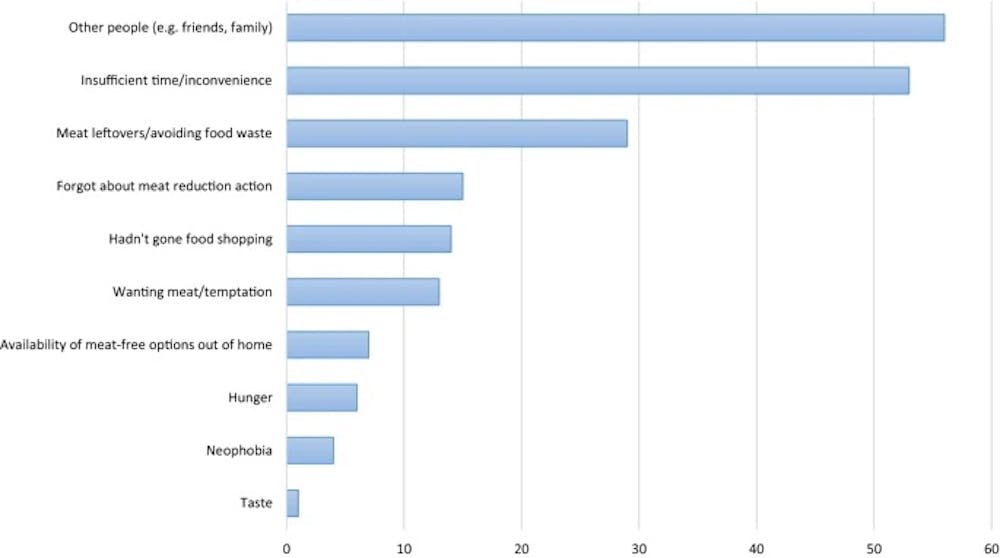
In Norway, Indigenous-led protests against a wind farm heat up

Indigenous Sámi activists intensified their protests against an illegal wind farm on Thursday, blocking the entrances of several Norwegian ministries. Led by Sámi youth, protesters are demanding the removal of a wind farm built in Sápmi, the traditional territory of the Sámi, which stretches across northern Norway, Sweden, Finland, and into Russia. 

The Fosen Vind park, one of Europe’s largest onshore wind farms, consists of 151 turbines near the city of Trondheim, on the country’s central-west coast. The park is owned by Norwegian, Swiss, and German energy companies, and was built in a grazing area crucial to Sámi reindeer herders, threatening their traditional livelihoods and culture. 

“The state must immediately stop the ongoing violations of the Sámi reindeer herders’ human rights and take measures to reparation (sic) to redress violations of human rights,” Silje Karine Muotka, president of the Sámi Parliament of Norway, wrote in a letter to the U.N. “The windmills must be demolished, and the area restored to reindeer grazing land.”

Norway’s Supreme Court ruled in 2021 that the wind farm violated the Sámi’s human rights and was constructed illegally. The Norwegian government has yet to take action on the ruling. Sámi land defenders in Norway’s capital of Oslo were not available for comment, but campaigners told Reuters they would close down the state, ministry by ministry, until the windmills are removed. Sámi leaders say Norway’s failure to follow the law has left them with little choice but to protest

Norway’s government-run broadcaster, NRK, reported that Sámi reindeer herders from the Fosen district have begun traveling to Oslo to support the protests, and on Thursday morning, Greenpeace activists climbed the Ministry of Oil and Energy to hang a banner reading “Land Back.” Some campaigners chained themselves to the entrance of the Ministry of Culture and Equality before being removed, detained, and fined by police. Representatives of the Sámi Parliament have also begun consultations with the Ministry of Petroleum and Energy and the Minister of Agriculture — Sámi reindeer herders have demanded the handling of Fosen be handed to the Ministry of Agriculture to avoid conflicts of interest.

“They should have seen it coming for violating human rights,” environmental activist Greta Thunberg, who has joined Sámi land defenders in Oslo, told Reuters

As protests spread, the Sámi Parliament of Norway has appealed to the United Nations Special Rapporteur on the rights of Indigenous peoples to intervene.

In 2018, a U.N. human rights committee asked Norway to stop construction on a power plant that would become part of the final wind farm. However, the Norwegian government disregarded the request once construction passed domestic legal hurdles. 

Representatives for Prime Minister Jonas Gahr Støre and the Government Security and Service Organisation, the security force responsible for detaining Sámi land defenders, did not respond to a request for comment. Attempts to reach the U.N.’s Special Rapporteur also went unreturned. 

Norway is often seen as a leader in global human rights and is home to the Nobel Peace Prize, but, like other Nordic countries, it has a long history of racism directed at the Sámi people. There’s also a long history of Sámi resistance in the region.

Most of Norway’s electricity is generated by hydropower, but approximately 10 percent comes from wind generation. That’s according to Edgar Hertwich, a professor in industrial ecology at Norwegian University of Science and Technology, who said growth in energy demand has outstripped production. That increase, coupled with delivery “gaps” in the country’s electrical grid, have led to the construction of more green energy projects. 

“The wind park that’s under discussion is about the amount of energy that’s needed for the city of Trondheim with 220,000 inhabitants or two of the largest industrial companies in the region,” Hertwich said, adding that the location of Fosen and other wind farms also threaten local ecosystems, particularly those of birds and bats. 

“It’s clear that the locations that have been chosen are not the ones that lead to the lowest environmental impacts, and they obviously don’t lead to lower social impacts,” Hertwich said. “There are some poor decisions that were made 10 years ago that we have to live with today.”


This article originally appeared in Grist at https://grist.org/global-indigenous-affairs-desk/in-norway-indigenous-led-protests-against-a-wind-farm-heat-up/.

Grist is a nonprofit, independent media organization dedicated to telling stories of climate solutions and a just future. Learn more at Grist.org

Rich people are hogging Ozempic, making the drug harder to access for people with diabetes

The newest Hollywood weight-loss fad isn’t a trademarked diet, but a drug called Ozempic. Typically marketed as a diabetes drug, Ozempic, which is also sold under the brand name Wegovy, is formally known as semaglutide. Celebrities and the rich rave about the drug, including Tesla and Twitter CEO Elon Musk who credits the drug with his weight loss.

“Everyone is on Ozempic,” comedian Chelsea Handler said in January. “My anti-aging doctor just hands it out to anybody.” In recounting her own experience with the drug, Handler claimed she “didn’t even know” she was on it.

Handler’s comments imply that Ozempic is readily available to anyone who wants it, yet that is not exactly the case. Indeed, as buzz builds about the drug’s weight-shedding potential, reports have surfaced that the drug has become increasingly harder to access, especially for those with type 2 diabetes who take it for its originally intended use. As recently reported by the Houston Chronicle, type 2 diabetes patients are struggling to refill their prescriptions, a situation endocrinologists have called a “headache.”

“I see this every week, all the time,” Dr. Jill Crandall, chief of the division of endocrinology at Albert Einstein College of Medicine/Montefiore Health System, told Salon in an interview. “The patients that I treat are people who have been on these medications for a long time, and they can’t get it anymore.”

Danish biotech giant Novo Nordisk, which manufactures the drug, said that the company has been experiencing “intermittent supply disruptions on the Ozempic pen” in the United States. They anticipate these shortages will continue through the middle of March. Specifically, they are experiencing a shortage of the Ozempic pen that delivers 0.25 mg and 0.5 mg doses – not the drug itself. For managing type 2 diabetes, a patient usually takes the injection once a week in the arm, stomach or thigh.


Want more health and science stories in your inbox? Subscribe to Salon’s weekly newsletter The Vulgar Scientist.


“While product continues to be manufactured and shipped, patients in some areas of the country will experience delays with these doses,” Novo Nordisk told Salon in an emailed statement. “While we recognize that some healthcare providers may be prescribing Ozempic® for patients whose goal is to lose weight, Novo Nordisk does not promote, suggest, or encourage off-label use of our medicines and is committed to fully complying with all applicable US laws and regulations in the promotion of our products.”

“The patients that I treat are people who have been on these medications for a long time, and they can’t get it anymore.”

When asked why the company is experiencing supply disruptions, the company said it’s “due to the combination of incredible demand coupled with overall global supply constraints.”

According to the World Health Organization (WHO), there were 422 million people with diabetes in 2014, nearly four times the 108 million people diagnosed with the condition in 1980. Type 1 diabetes occurs when the pancreas produces little to no insulin. Type 2 diabetes occurs when one’s body either resists or does not produce enough insulin, which is the hormone that manages the glucose level in the body. There are conflicting theories over whether type 2 can be reversed, as Salon previously reported, though it is well-established that it can be managed through diet and exercise. As a whole, diabetes remains one of the primary causes of heart attacks, kidney failure, strokes, blindness and lower limb amputation.

Ozempic was first approved by the Food and Drug Administration (FDA) in 2017 for type 2 diabetes. A new formulation, Wegovy, was approved in 2021 for obesity.

As previously reported for Salon, semaglutide can help with obesity and diabetes because it works on GLP-1 receptors, which control blood sugar. Dr. Ahmet Ergin, founder and entrepreneur of SugarMD, told Salon that Ozempic works as a “gastrointestinal hormone mimicker,” by creating the hormones that signal appetite or fullness. “Then it notifies the pancreas to inform that there’s food that needs to be processed and insulin is needed,” Ergin said. “With type two diabetics on most obese insulin resistant-patients, that mechanism is broken and they are resistant to the effect of that hormone not that they don’t have it— it’s just that hormone does not work anymore.”

Ozempic helps the body overcome that resistance. If a person can’t refill their prescription, Ergin said a person’s blood sugar can go up. He clarified that Ozempic is not a replacement for insulin, and hence patients don’t become dependent on it; rather, if they can’t refill their prescription, “their sugar goes up and they gain weight back, then they’re not happy about it, but doctors typically try to find an alternative.”

Dr. Crandall, from the Albert Einstein College of Medicine, told Salon she tries to prescribe alternatives, but those are typically unavailable right now, too.

“Each time we have to change prescriptions and try a different, maybe similar medication, frequently that initiates a whole sequence of prior authorization requests and calling the insurance company and providing them data and filling out forms,” Crandall said. “And there’s a cost to that for the healthcare system.”

“These medications are phenomenally expensive, whether they’re being used for obesity or being used for diabetes.”

Crandall emphasized that treating obesity with semaglutide is an important use for the drug. She believes that it is important to differentiate between the demand for the drug to treat clinical obesity, and the demand for those who use it for cosmetic purposes. If a type 2 diabetes patient is unable to refill their prescription, the situation is not quite “as acute and critical” as when someone can’t refill their insulin prescription, which has also been an issue for people with diabetes. High costs, supply chain disruptions and patent issues have been to blame for insulin’s inaccessibility. In 2018, a study in the Lancet Diabetes and Endocrinology journal estimated that 79 million people with type 2 diabetes will need insulin by 2030, and half of them will not be able to receive it.

“Some patients who have been taking Ozempic or similar medications who can’t get it now, we’re having to temporarily have them start using insulin, which is not to say that insulin is a bad drug or that’s a big tragedy,” Crandall clarified. “But the side effect profile with insulin is different, the requirement for frequent blood sugar monitoring because of the risk of low blood sugar is greater.” Crandall added that many people who use insulin gain weight, which is “not a good thing for most people with type two diabetes.”

Crandall said the interconnectedness of both Ozempic and insulin shortages speak to hardships diabetes patients face in accessing treatment.

“These medications are phenomenally expensive, whether they’re being used for obesity or being used for diabetes,” Crandall said. “And that said, lots of people even though it may be covered by their insurance, their payment is still several hundreds of dollars a month and they can’t afford it.”

Trump calls U.S. democracy a “very dangerous system” at CPAC

The former presidents of Brazil and the United States took the stage CPAC on Saturday where both fascist politicians continued to sow doubt about their respective electoral defeats as they received standing ovations from the annual convention’s far-right attendees.

Brazil’s disgraced former leader Jair Bolsonaro—whose supporters stormed government offices in January after his successor, leftist President Luiz Inacio Lula da Silva, was sworn into office—was brought onto the stage this year’s “diminished” CPAC gathering to blaring rock music and loud cheers from the crowd.

Addressing the American audience, Bolsonaro indicated once more his doubts that he lost the Brazilian election fairly, saying, “I had way more support in 2022 than I had in 2018, and I don’t understand why the numbers said the opposite.”

“I thank God for the mission of being president of Brazil for one term,” he said, but hinted at a possible third run for president by adding: “But I feel deep inside that this mission is still not over.”

When Trump took the podium as the convention’s keynote appearance, there again was raucous applause.

During his speech, he singled out Bolsonaro in the audience and said it was a “great honor” to be appearing with the “very popular” former president.

“Our getting back in the White House is their worst nightmare,” Trump said of Democrats and his other political opponents. “But it is our country’s only hope.”

Trump went on to call the electoral process in the United States a “very bad” and a “very dangerous system” that only he and the far-right attendees at CPAC can overcome.

During the speech, Trump vowed to “finish what we started” as the enthusiastic crowd chanted “Four more years! Four more years!”

In the traditional straw poll taken each year by CPAC attendees, Trump won in a landslide, the convention’s organizers announced on Saturday, with the former president taking 65 percent of the vote.

The second-place finisher was Florida’s far-right Gov. Ron DeSantis, who did not attend the gathering this year despite many viewing him as the strongest GOP challenger to Trump in a possible 2024 primary matchup.

“Big, big blow”: Legal experts say “ominous” DOJ memo could pave the way for two Trump indictments

Legal experts a recent Justice Department memo could open the door to a criminal indictment against former President Donald Trump for his role in the deadly Jan. 6 Capitol riot.

Following guidance from the District of Columbia’s appellate court, the DOJ last week submitted a legal memo pertaining to a civil lawsuit filed by Capitol police officers injured on January 6, 2021, rejecting Trump’s claim of presidential immunity against the complaints.

The department asserted that a president cannot be wholly absolved for a speech on a matter of public concern if the speech is found to have incited violence. Additionally, the department clarified that his inflammatory speech was not protected by his own free speech rights under the First Amendment. “No part of a president’s official responsibilities includes the incitement of imminent private violence,” the DOJ said in a friend-of-a-court brief.

Former prosecutor Charles Coleman Jr. called the DOJ memo a “blockbuster” that could open the door to a flurry of civil lawsuits against the former president. 

“This is a big, big blow to Donald Trump and significant news. Because it opens the proverbial floodgates for lawsuits,” Coleman told MSNBC. “Now, the downside to this is, while there may be a significant political strain that comes from this, and also the stain on reputation that does further damage to Donald Trump, I don’t necessarily know that a victory in court is going to yield much money in terms of them being able to collect whatever judgment they will ultimately be able to get.”

But beyond just potential lawsuits, legal experts say the memo could also help lay the groundwork for a criminal indictment against Trump.

“If they took the position that the president was absolutely immune, then they wouldn’t be able to bring a criminal prosecution,” a source familiar with the DOJ investigation told The Daily Beast.

“Had DOJ concluded that incitement unprotected by the First Amendment could nevertheless be within the president’s official functions, that could conceivably have impacted criminal charging decisions related to the same speech,” former federal prosecutor Mary McCord, a professor at the Georgetown University Law Center, told the outlet. 


Want a daily wrap-up of all the news and commentary Salon has to offer? Subscribe to our morning newsletter, Crash Course.


The DOJ stressed in its memo that it “expresses no view on that conclusion, or on the truth of the allegations in plaintiffs’ complaints” but legal experts say the memo leaves Trump defenseless.

“If they’re saying it’s outside the scope of immunity of civil suits, and outside the scope of protected speech, there really isn’t anything else out there protecting Trump,” one unnamed attorney told The Daily Beast. 

The DOJ memo could also aid Fulton County, Ga. District Attorney Fani Willis, who is leading an investigation into Trump’s efforts to overturn his loss in the state. By stating that some actions by a sitting president fall outside of legal behavior, the DOJ memo could help strengthen Willis’ case if she indicts Trump.

“It has profound implications for the Georgia case, and they are ominous for Trump,” attorney Norm Eisen, who served as Democratic co-counsel during Trump’s first impeachment, told The Daily Beast.

“Indeed, the Georgia conduct may be even more outrageous and unrelated to his official duties or his First Amendment rights than giving a speech on the Ellipse,” he said. “This brief is going to be utilized by the Fulton County prosecutor because it is so powerfully indicative of the only possible logical conclusion here: that an attempted coup cannot be part of the job description of a president under the United States Constitution.”

CPAC brings simmering GOP tensions to the surface

Last Friday I took a look at the first day of this year’s CPAC gathering where it was obvious that the attendees were overwhelmingly Trump followers but the crowds were also thinner than usual, which says something —but nobody can agree on exactly what it is. Since that dispatch reporters and other observers of the event have characterized this CPAC as an unusually desultory affair that didn’t improve much as the days wore on. Speeches were sparsely attended and the presentation was lackluster. Everyone seemed bored with the outrage.

Could it be that after seven long years of Trump-style politics, they’re finally getting worn out?

According to this report from Laura Jedeed at The New Republic, attendees she spoke with felt that having the event in Washington was a mistake. They suggested that instead it should have been held in Orlando, as it was last year. After all, Florida is now the center of the Republican universe. Florida Governor Ron Desantis, the new GOP dreamboat, didn’t show up, instead opting to spend the weekend at a donor retreat, signaling that he didn’t think it was worthwhile to mingle with the MAGA faithful. Apparently, he believes that his record of destruction in Florida will be enough to bring them into his fold.

Jedeed also pointed out that CPAC has competition from the more exciting Turning Point USA confab called AmericaFest. She describes its December event as “a bacchanale, an indoctrination session: ComiCon for politics nerds” where “speakers emerged onstage to thundering bass, a light show, and often pyrotechnics.” Poor old CPAC could only come up with this:

The GOP has been declared to be cracking up many times and it didn’t happen so I’m not going to suggest that. But the truth is that there is a growing schism around the Trump cult of personality and many of the rest of the party who are anxious to move on. It’s not about ideology, around which the aspiring presidents club is pretty much in agreement: “woke” is bad, China is bad, Democrats are bad and America First blah, blah, blah. What’s starting to happen is some very serious infighting and calamity among important players and it includes the right-wing media apparatus as well as the political actors.

We all know about Fox News’ implosion with their Dominion libel case revelations. But as Jedeed reports, there is also the implosion of Project Veritas, this throwdown between the Club for Growth and CPAC, the Matt Schlapp sex scandal, a feud between  The Daily Wire vs Stephen Crowder and more. Despite the reluctance of those who are running or planning to run in the GOP presidential primary to take on Trump directly, it’s only a matter of time before full-scale war breaks about among them. Trump has already declared war on on the GOP establishment which probably illustrates the current state of the GOP better than anything else:


Want a daily wrap-up of all the news and commentary Salon has to offer? Subscribe to our morning newsletter, Crash Course.


Needless to say, the Big Lie about the 2020 election also remains in circulation, especially by Donald Trump. And the list of lies in his big final speech of the event was even longer than the cumulative total of everyone else’s. That’s just to be expected. His plodding yet angry speech went on for 90 minutes and he did not seem happy, most likely because the not-very-big room was only three-quarters full. It was a very dark speech. He claimed that “for seven years he had been engaged in an epic struggle to rescue our country from the people who hate it and want to absolutely destroy it” and promised, “we started something that was a miracle. We’re going to complete the mission, we’re going to see this battle through to ultimate victory.” But the line that will be remembered in the history books will be :

In 2016, I declared: I am your voice. Today, I add: I am your warrior. I am your justice. And for those who have been wronged and betrayed: I am your retribution.

He’s not making any bones about the fact that he’s running to wreak revenge on his enemies, and they are legion. 

He also said we are going to have WWIII but also that he’s the only one who can prevent WWIII. He promised, “before I arrive in the Oval Office, I will have the disastrous war between Russia and Ukraine ended… I know what to say.” Sure he does.

His crowd seemed happy enough to see him. But it wasn’t the delirious love fest we would have seen a couple of years ago. I have to wonder what would have happened if he’d decided to deliver a speech with the theme of his latest video instead of the negative pile of grievance upon grievance. The video is called, “A New Quantum Leap to Revolutionize the American Standard of Living”

He wants to use federal land to create 10 new “freedom cities” where “hundreds of thousands of young people and other people — all hard-working families — a new shot at homeownership and in fact, the American dream.”There would be “baby bonds” to create a new “baby boom” (no doubt so immigration can be blocked) which he characterized in his typically crude way in the CPAC speech:

He also wants to invest in flying cars and tear down ugly buildings in a beautification campaign.

This is what passes for Trump’s “positive agenda”, which he just mentioned in passing in his dark “retribution” speech at CPAC. Would it have resonated better these days than his usual litany of complaints and threats? I don’t know. The right has been addicted to grievance for a very long time. But from the sound of it this event didn’t thrill the folks like it used to. With all the infighting and angry diatribes against “wokeness” you have to wonder if this Disneyfied, fascist “Tomorrowland” vision of the future might be the antidote. 

The Alex Murdaugh verdict matters: No shame in being fascinated by this true crime

The trial of Alex Murdaugh, the scion of the famous (and infamous) South Carolina family that amassed generations of legal power, concluded last week. He was found guilty and sentenced to life without parole for the murders of his wife and son, Maggie and Paul Murdaugh. The whole thing was breathlessly covered on cable news. Sure enough, it was also breathlessly complained about by political pundits who believe there’s more “important” news that needs covering. 

Ah yes, why would cable news fixate on this truly bonkerballs string of crimes — corruption, fraud, drug abuse, and of course, murder — that would put any Southern gothic novel to shame? It hardly seems a mystery, especially when it seems that time spent not on this murder is instead dedicated to endless speculation about presidential primaries that are a year away and already have painfully predictable outcomes. (It’s Donald Trump and Joe Biden again, folks. Sorry to spoil the surprise.) And it’s not like they’re going to suddenly start having fruitful discussions on policy that will no doubt invite viewers to turn the channel. 

This was one situation that a rich white guy couldn’t blather his way out of.

Accusations of frivolity are something true crime fans have had to deal with for roughly forever. It’s a charge that has more than an air of sexism to it, as most such enthusiasts are women. But the Murdaugh case thoroughly exposes how wrong the “crime stories don’t matter” talking point is. The case cuts straight to the heart of so much of what is driving our current social-political climate, and in a more insightful way than most of the content the Beltway press is producing. (Oh boy, another interview with weaselly Trump voters in diners!) We’re in the midst of what is likely a decade, if not longer, of American crisis over exactly how much impunity we’ve allowed white men, especially those with money.


Want more Amanda Marcotte on politics? Subscribe to her newsletter Standing Room Only.


Donald Trump attempted a coup that led to a violent insurrection and he is not in prison yet. (And may be president again!) Social media owners like Mark Zuckerberg and Elon Musk are profiting off the destruction of democracy, and there seems to be no check on their power. Sure, Harvey Weinstein finally went to prison, but the powers that protect pampered white men have come roaring back, shielding other accused abusers like Johnny Depp and Kevin Spacey from consequences. Endless whining about “cancel culture” and “wokeness” is the battle cry of white male privilege — they will never fold to the forces demanding accountability! 

The Murdaugh family story resonates because it’s so in tune with these societal concerns.

Men are always pissing on our legs and telling us it’s raining. We’re drowning in it. 

For those who haven’t followed it closely, it’s almost unbelievable how much this family got away with because they’re rich, white power brokers in the South. Even before Alex Murdaugh killed his wife and son, a housekeeper died at their house, and then, if you can believe it, Alex Murdaugh cheated her family out of over $4 million. There was also the possible murder of a 19-year-old gay kid near the Murdaugh home, with suspicions aimed at the family. And finally, there was the accidental killing of a 19-year-old girl in 2019, for which Paul Murdaugh was awaiting trial when he was killed. 

I watched chunks of Alex Murdaugh’s testimony when his lawyer put him on the stand. I’m not a legal expert, but like most Americans, I’m aware defendants rarely testify during their own trials. Clearly, however, Murdaugh and his lawyer hoped he could bullshit his way out of this situation. It wasn’t a baseless belief. Murdaugh has a long history of evading justice that suggests he could pull it off. So it wasn’t hard to draw the connection between Murdaugh and the endless stream of glib rich white guy liars we’re subjected to on a daily basis: Trump. Tucker Carlson. Steve Bannon. Ben Shapiro. Ron DeSantis. I could go on forever. Men are always pissing on our legs and telling us it’s raining. We’re drowning in it. 

But this was one situation that a rich white guy couldn’t blather his way out of, it seems.

“A good liar, but not good enough,” one juror told “Good Morning America” after the verdict was announced. The jury spent 45 minutes on deliberation. 

Trumpism, as a political movement, exists primarily to protect the privilege that people like Murdaugh coast on. From their whiny orange leader on down, it’s a coalition of people who see fairness and equality as a threat, and want to preserve whatever unfair advantages — be it from wealth, race, gender, or sexual orientation — that they have over others. So it was satisfying seeing, for once, that justice is done. It was almost cinematic watching Judge Clifton Newman — a Black son of a domestic worker who graduated from a segregated high school — issue the sentence. Newman spoke bluntly of how Murdaugh’s privilege still protected him. 

“Your family — including you — have been prosecuting people here in this courtroom, and many have received the death penalty, probably for lesser conduct,” Newman told Murdaugh. 


Want more Amanda Marcotte on politics? Subscribe to her newsletter Standing Room Only.


The Murdaugh crimes aren’t from a novel, but they’re so rich with symbolism that you’d think Flannery O’Connor or William Faulkner had invented them. A housekeeper, a gay teenager and a young woman just trying to have a good time. Those are the deaths connected to the family. They are also the kinds of vulnerable people that are currently under assault by an increasingly angry right wing that will brook no challenge to traditional power structures. 

Despite having one son still alive, Alex Murdaugh’s murders have echoes of other family annihilations. It is the most patriarchal of crimes, as most family annihilators are men who cannot stand the idea that their wives and children may have lives beyond what use they have to him. It also calls to mind the nihilism that fuels the MAGA movement, people who were willing to spread COVID-19, justify an attempted overthrow of democracy and who are currently calling for a “national divorce” (read: civil war). It’s the same impulse as family annihilation: If they can’t control the country, they’ll destroy it. 

Of course, as those who resent the heavy coverage of the Murdaugh trial will point out, this one case doesn’t change any of that. Watching Murdaugh finally pay doesn’t do much to put Trump in prison, much less take down the larger MAGA movement.  It’s just one dude who kept testing the bounds of his privilege and found, much to his apparent surprise, that it finally had a limit. But it doesn’t mean that the rest of the tyrannical, whiny brats who are tearing apart our country have run out of rope. 

To which I say, sure, there’s no direct line from this trial to other desired outcomes. But that doesn’t mean the public attention to this story is useless. People are drawn to stories over statistics because they provide the emotion and meaning that are often missing from drier discussions of policy and politics. Academic discourse about the function of privilege leaves people cold. The Murdaugh trial tells the same story in vivid colors, helping a lot more people put the pieces together. If it were just an isolated phenomenon, it might not mean much. But in the larger context of our moment in time, anything that educates is helpful. It plants seeds in people that may eventually grow into flowers. 

“The Last of Us” makes an unholy meal of starving childhood innocence, served by a bloody preacher

Post-apocalyptic dystopias rarely consider childhood with much care, expecting young survivors to relinquish immaturity to focus on staying alive. This legitimizes their adultification: Carl Grimes quickly becomes his father’s backup on “The Walking Dead.” “Hunger Games” heroine Katniss Everdeen becomes her family’s sole provider after her dad dies and her mother mentally checks out.

The Last of Us” feints at demanding the same of Ellie (Bella Ramsey), a 14-year-old who puts up a tough front at first, but her caretaker Joel (Pedro Pascal) realizes that her juvenile mischievousness can’t be denied. Try as he might to squelch them, Joel’s paternal urges rise up to meet her playfulness when she regales him with puns or teases him for his seriousness.

That figurative tug of war wends through the season, mainly focusing on Joel’s emotional evolution regarding Ellie. Only in the seventh episode, “Left Behind,” and the season’s penultimate, “When We Are in Need,” do we zero in on her perspective as a teenage girl longing to be accepted by someone who understands her.

Childhood is a luxury, but girlhood holds a discrete status within it, even after the world ends. In the throes of its highs, female juvenescence moves Ellie to risk anything for and with her best friend. Through the events of “When We Are in Need,” she comes to understand that her girlhood marks her as a target for men like David (Scott Shepherd), a preacher, leader, and . . . other things.

David is Joel’s opposite. He has compassionate eyes, reads Bible passages in a gentle voice, and radiates certainty. And his people need him because they are frightened. One of them was killed by an unknown man. Joel.

At the close of “Left Behind” Ellie was running out of time to save Joel, whose stabbing wound is dangerously infected. “When We Are in Need” opens by showing David’s group holed up in a town called Silver Lake. They would seem to be her hope. But they are starving inside of a steak house – now there’s some foreshadowing – while listlessly praying.

Joel’s dead attacker left behind a wife and a bereft daughter. But the girl’s grief doesn’t prevent David from striking her hard enough to knock her out of her chair, all while maintaining his patient smile.

The Last Of UsThe Last Of Us (Liane Hentscher/HBO)

Then he informs the girl that she’s to regard him as her father now. No one objects. David is a Man of God, after all. He’s also led his followers into cannibalism – perhaps out of necessity, but one suspects not.

Series co-creator Craig Mazin writes David as a metaphor for the twin perversions of absolute power and male supremacy. He is willing to take what and who he wants, consuming anyone who crosses him and justifying his sociopathy with the divine right apportioned to him by the desperate. His most trusted soldiers fear him. Ellie does not, at first. Nor does she recognize that her defiance flips his switch.

They meet as she’s hunting a deer and discovers David and his right-hand man standing over her kill. She has the drop on the men, but David talks her out of pulling the trigger, persuading her to trade at least half of the deer for penicillin. He sends his lieutenant to retrieve the medication while he waits in the snow with her. And talks.

One of the first things many young women learn is that the nefarious have a habit of announcing who they truly are by identifying with what they aren’t. “I’m a decent man, just trying to take care of the people who rely on me,” he tells Ellie, moments before his man circles behind Ellie with a gun trained on her back. But David has him hand over the antibiotic and lets the girl return to Joel to administer it. They’ll hunt her later, David assures him, which they do, and successfully.

The Last Of UsThe Last Of Us (Liane Hentscher/HBO)

In a recent story Salon’s Allison Stine points out that the literal monsters in “The Last of Us” aren’t scary. But Shepherd’s take on David is bone-chilling due to his serene familiarity. We read news reports about men like David on the regular, who abuse their power and ensnare young women. During their campfire chat, David tells Ellie that he taught students who were about her age before the apocalypse, which is when he claims he found God.

“So you went from teacher to preacher because, what, it f**kin’ rhymes?” she deadpans. He laughs softly at this, securing in the knowledge that she doesn’t know to recognize the connection between schools and churches as perfect predatory environments.  

So when we see his people cooking up cubes of human flesh, knowing what it is despite a claim that it is venison, this is somehow less gut-churning than that chat. Or his attempt to woo Ellie after he’s caged her in the back of the steakhouse kitchen, where the meat is butchered.

Once she’s cornered, he offers her status as his equal, claiming an appreciation for her toughness. Reaching to touch her through the metal bars, he places his hand on top of hers, and for a moment she plays along. Then she cracks one of his digits, making this holy man curse her with the C-word – a very intentional choice on Mazin’s part. The slur reduces Ellie to an object, a body part, the meat he always intended to consume.


Want great food writing and recipes? Subscribe to Salon Food’s newsletter, The Bite.


She reclaims her humanity, and her girlhood, by telling her potential rapist who she is. “Ellie. Tell them that Ellie is the little girl who broke your F**KING FINGER.”

The evil preacher is, of course, a dystopic trope as common as cannibalism. But it also leaves no pretense for humanity in David, reinforcing Ellie’s fighting instinct. It’s not only her life on the line, but her flesh and spirit. “I’ve changed my mind. I’ve decided you do need a father,” David purrs, cleaver in hand, and ready to corner her. “So I’m going to keep you. And I’m going to teach you.” Ugh.

Despite Joel battling through David’s men and feverish wheezing, Ellie saves herself, setting the building on fire and, right when her captor thinks she’s overpowered, chopping him to pieces with his cleaver, screaming all the while. She stumbles out of the building and straight into Joel, who finally confirms that he sees her as she is. “It’s OK, baby girl. I got you,” he says, walking her away from that hell, shoulder to shoulder.

“We need a 20-year plan”: The fight for progress — and why it requires reaching out to conservatives

America is very broken.

Language like “divided” does not even begin to adequately describe the feeling of wrongness that the Age of Trump and his fascist fever dream have unleashed. Social scientists and others have shown that Americans are self-segregating along lines of partisanship and other political values. These questions of political identity are increasingly not peaceful or civil.

On Jan. 6, America’s domestic political cold war turned hot, as Donald Trump attempted a coup, and his followers launched a lethal terrorist attack on the Capitol. Jan. 6 was the crescendo — at least for now — of a much larger pattern of right-wing political violence against Democrats, liberals, progressives, women, black and brown people, Jews, Muslims, the LGBTQ community, migrants, refugees, and others deemed to be “the enemy” and somehow “un-American.” 

Ultimately, the American people cannot have a healthy and functioning democracy if they cannot even talk to one another in a civil way or agree on what it means to be an American and a civically responsible member of society. So what, if anything, can be done to begin to heal these deep divides? And who gets to decide the rules of engagement?

In an attempt to work through these questions, I recently spoke with Justin Gest, an associate professor at George Mason University’s Schar School of Policy and Government. He is the author of several books including The New Minority: White Working Class Politics in an Age of Immigration and Inequality and The White Working Class: What Everyone Needs to Know. His new book is Majority Minority.

This conversation has been edited for clarity and length.

Given the state of the world and all of these overlapping challenges and changes, how are you making sense of it all? How do you feel?

I think we’re at a crossroads.

“That question of whether we are uniting or dividing society is critical to pretty much every question that we face.”

There are countervailing forces. Right now, the proverbial winds are blowing in different directions and when that happens, they sometimes create tornadoes. Some of these countervailing forces are pointing towards cosmopolitanism and globalism; towards inclusion and a larger sense of belonging. And then there are other winds that point towards exclusion and nationalism.

We are at a crossroads in America and the world in terms of the liberal democratic project and its future.

Using that tornado analogy with all these countervailing forces, how are you orienting yourself?

I think we should all — individuals, governments, nonprofits, businesses — ask ourselves one simple question before we act civically: Are my actions going to be a bridge across divides that help to transcend social and political differences? Or am I about to do something that is going to reinforce these divisions and ossify the boundaries between people?

“We learn a lot from talking to people we disagree with.”

That question of whether we are uniting or dividing society is critical to pretty much every question that we face. There are very strong incentives to fan the flames of division and to not reach out to one another. Those defensive impulses are an effort to stay safe but, in reality, they are endangering our civil society and democracy, our ability to compromise and self-govern.

On an almost daily basis, I receive emails from civil society groups that are trying to bring people together across the political divide – especially between the Trumpists and MAGAites and White Christian Right and those of us who support democracy and normal politics. These organizations claim that our problems can be solved if Democrats and Republicans somehow get over “polarization” and “partisanship” and find areas of shared concern.

I have no interest in talking to these people.

I have no interest in talking to Trumpists, MAGAites, Republican fascists and most “conservatives” and members of the larger white right. Black and brown folks, and others who are committed to democracy should not be tasked with expending our energy on these questions of “coming together” and “consensus” with people who want to do us harm and make us second or third class (or even worse) citizens in our own country. I don’t think it should be our obligation as defenders of democracy to reach out to such people; It is the responsibility of the Republican fascists and others in that orbit to come back to normal society. I am not interested in rehabilitating them.

Our problem is not that we’re not reaching out to neofascists and white nationalists. Our problem is that we are not reaching out to other conservatives who we broad-brush with the neofascists and white nationalists. The neofascists and white nationalists are, in general terms, a fringe element. When a society is making progress, there are always people who resist. I am personally less concerned about them. They’re loud, they’re distracting. What they say is salacious and gets lots of attention but in terms of numbers, they are ultimately much smaller than the large group of Americans who may (or may not) vote every two to four years, but are otherwise pretty apolitical and just trying to get on with their lives. Those Americans — including most conservatives — are really worth having a conversation with. We learn a lot from talking to people we disagree with. And if we just resist labeling people as fascists until we hear their full story, I think we’ll find some shared sense of purpose and ways to identify with each other.

“Political divisions are now superseding our racial and ethnic and religious divisions in an unhealthy way. “

A few caveats: I’m not insisting on being friends. But we should be able to have a beer together, share a meal, learn about one another, and agree to disagree. However, I am also of the mind that these conversations need to be organic and sincere. We don’t have to go to some awkward town hall meeting with a bunch of strangers or a training session. Despite residential segregation based on race and partisanship, we all already participate in institutions that bring us into touch with people who are different — a workplace, a store, a recreational facility, or a place of worship. You likely already have a coworker with whom you may have real political disagreements. They’re your neighbors. They’re probably fellow parents or people you know from church. They may even be your partner or spouse. You don’t have to go out of your way to actually be someone who bridges differences in this country.

But what if we don’t want to build a bridge with these folks? Moreover, I don’t want to build a bridge with anyone who voted for Trump – especially twice given that the world had confirmation of how horrible he was. The public opinion data also shows that a large percentage if not the majority of white Republicans do not believe in multiracial democracy or pluralism.

So, what is to be gained or lost by building a bridge with these people? Again, I don’t want anything to do with them and the feeling is, no doubt, mutual.

I don’t believe that all Trump voters reject multiracial democracy and the other values you are referencing. In America, we only have two choices on each ballot, the Democrat or the Republican, Biden or Trump. Not all Trump voters support his most despicable views. Some Trump voters may have been voting for perceived economic interests. They may be social conservatives or religious in some sort of way. They may be concerned about other matters, and they are just tolerating the white identity politics. Yes, that may seem damning. But the people you are building a bridge with have other identities outside of politics. 

Similarly, not all Democrats are the woke social justice warriors or socialists that Republicans want to think they are. They may also be parents, or a fellow Christian. Politics does not have to be at the center of our identities. There is new research that I have worked on which shows that political divisions are now superseding our racial and ethnic and religious divisions in an unhealthy way. In many ways, politics in America has become our new religion and that is very counterproductive and dangerous because we have so much in common that we otherwise agree upon.

One of the issues that has become so vexing is that our partisanship has become racialized. The boundaries of our ethnic, religious and ideological divisions are now overlapping, and aligning with our partisan divisions to create these consolidated “mega-identities,” which makes everything feel so much more existential. The result of that dynamic is that everybody is less willing to lose and more willing to break rules in order to win. We need to preserve our democratic institutions — and that means being willing to compromise or lose on issues that are not matters of human or civil rights.


Want a daily wrap-up of all the news and commentary Salon has to offer? Subscribe to our morning newsletter, Crash Course.


People may forget, but Barack Obama’s 2008 candidacy represented a willingness to reach out and to find areas of compromise and communication with our political antagonists, to recognize the vulnerability and the sense of fear and threat they may have felt. I strongly believe that we do not make progress as a society unless we extend a hand towards such people who we have deep political disagreements with. It will then be on them to reach back out or not. But if we don’t do our part, it is never going to be mutual. The challenge that is before us as a country is to be open to a conversation and listening, and perhaps even holding empathy for people whose views you disdain. You’re not going to lose anything by doing that.

Channeling Samuel Huntington for a moment, what does it mean to be an American right now? Who are we?

I don’t actually think we have to answer that question so definitively such that there is only one America. We are a country of 330 million people dispersed geographically, in all kinds of different settings with all different walks of life and backgrounds. There’s always going to be diversity built into what it means to be an American. But having some idea, a civic purpose, something distinguishing among us is so important for the survival of a nation and for its solidarity.

“You don’t have to go out of your way to actually be someone who bridges differences in this country.”

To be clear, Huntington answered that question by talking about how it was the imposition of the Anglo-Protestant creed that he said has led to this country’s success and endurance. I disagree. I think that what actually holds us together are two interrelated things: A shared understanding of struggle, and a common belief in dreams.

America is a country, a nation, with a real sense of possibility to it. It is part of our character. And in other Americans’ stories, across social and political boundaries, we can hear echoes of our own family’s struggles and relate to each other’s dreams.

“America will soon be a majority minority country”. What does that language mean? For many people, mostly black and brown folks and some white folks too, that is an exciting concept and moment to imagine. For many White Americans that same language and concept is terrifying.

“Majority minority” refers to the demographic milestone when non-Hispanic white people will no longer be the majority of the American population. It’s just a milestone. It doesn’t mean white people will disappear; quite the opposite they’ll remain the largest group in the United States indefinitely and will likely hold disproportionate resources. It doesn’t mean the power dynamics will change drastically either because we still do not see a lot of solidarity between “non-white” minorities. And in fact, the milestone is based on an understanding of whiteness that does not account for the possibility of race-based solidarity between “white-adjacent” people like mixed-race individuals or Latinos who self-identify as “white.” Those factors and others could postpone that demographic milestone even further.

But yes, some people eagerly anticipate the milestone, and expect changes in political power; or they may just feel invigorated by human diversity. But I think social scientists understand more about the fear and the sense of threat that this milestone concurrently causes among white Americans. There’s a fear of subjugation, a fear of lost status, and a fear of lost power. There may also be a fear of retaliation. And all of that is unfounded.

The claim that the country will be “majority minority” is very ahistorical given that who is considered “white” has always expanded to maintain the group power of white people and Whiteness. Nonetheless, the language and concept are intoxicating for both the left and the right, albeit for different reasons and in different ways.

It motivates people. In a democracy, the altering of population distributions that we associate with political or social power gets people’s attention. There is fearmongering on one side and hope and inspiration on the other. That gets people’s energy and attention.

“The boundaries of our ethnic, religious and ideological divisions are now overlapping, and aligning with our partisan divisions to create these consolidated ‘mega-identities, which makes everything feel so much more existential.”

But here is a qualifier and caution for people on the left who are excited about majority minority America and that possibility. Ultimately, the assumption that demography is destiny can make people complacent. That logic has proven to be false. Obama’s election and its aftermath proved that there are stronger forces at work. Democrats still need to work hard and adapt to the political environment. Demographics do not lock in their success. That logic is problematic on many levels. First, it presumes that people of color in particular are not going to change and are going to always be motivated by their self-perceived racial or ethnic identity. Second, it also takes Black and brown people’s support for Democrats for granted. More Latinos shifted towards Donald Trump in 2020, than in 2016. And there is new evidence that the Republican Party more broadly is continuing to make marginal gains among people of minority backgrounds.

On “diversity”, we have seen a mainstreaming and narrative laundering of white supremacist talking points throughout the Age of Trump and beyond. From “the great replacement” to “anti-racism is anti-white” and “diversity is weakness” to claims that teaching “critical race theory” and “diversity, equity and inclusion” programs is somehow “oppressing” white people. For example, there are things said on Fox News on a daily basis that not too long ago one would have to subscribe to KKK and neo-Nazi newsletters and zines to read such vileness.

Well, aside from the ongoing defamation suit, Tucker Carlson is getting way too much airtime. We are paying attention to the tallest blade of grass, the shiniest star, because it’s so salacious. That fact that Tucker Carlson is so crass and politically incorrect gets him attention. He and others who say such controversial things are not actually a reflection of what most Americans think. The public opinion data does not support that conclusion. Yes, Tucker Carlson has a highly-rated TV show. But ultimately, far more people watch reality television or football than him. And reactionary news stories amplify his ideas much further than Fox News could ever reach.

There are right-wing ethnic violence entrepreneurs such as Donald Trump, Ron DeSantis, and other malign actors in the Republican Party, “conservative” movement, and across the larger white right who are successfully using white racial resentment, white victimology, white supremacy, and other animus and fear to undermine the country’s democracy. They are growing in power and are undeterred in their attacks.

How do we fight back against that?

First, I think law enforcement must target violent extremists domestically with the same urgency and force of law that they have previously targeted violent extremists internationally. Our domestic terrorism and intelligence officers are much less resourced, and prosecutors are much more cautious about charging white supremacist groups than they are about charging Al Qaeda cells.

Beyond law enforcement, much of the angst that fuels these groups and their ideology is the sense that the country is throwing itself into an uncertain future with uncontrollable demographic change. And in this narrow way, they are actually right. We do not have any plan for how we will navigate the demographic change ahead of us. There is no congressional subcommittee, no White House office, no special envoy tasked with ensuring national solidarity, cohesion, and simultaneously the preservation of cultural heritage and recognition.

For so long, we have assumed that national unity is a constant, but we have also not been this polarized in over a century, and we have previously benefitted from the way foreign threats like the Nazis, the Soviet Union, and Al Qaeda have made Americans circle the wagons. But national unity for the purposes of successful self-governance requires strategy in the face of a diversifying nation. Strategy by government, sure. But also strategy from civil society organizations, and businesses who do better in a socially stable marketplace that doesn’t demand that they choose sides.

Demographic change is the greatest social challenge of our time in America. Yet, there is no institution devoted to actually preserving it. We need to make demographic change, and how to prepare for it, a national priority. We need a 20-year plan.

Is working out always better for depression than therapy and medication? Not so fast, experts say

A new study suggests that exercise might work better than therapy or medications for treating mental health issues — but don’t ditch your therapist and your Zoloft just yet.

In a promising research review on the “Effectiveness of physical activity interventions for improving depression, anxiety and distress” published late last month in the British Journal of Sports Medicine, researchers indicated that physical activity can be up to “1.5 times more effective” than counseling or leading medications for certain types of mental health issues.

Yet while this is yet another important validation, the research comes with caveats.

“Physical activity can significantly reduce symptoms of depression and anxiety in all clinical populations.”

The University of South Australia (UniSA) review, which Science Daily has called “the most comprehensive to date,” examined research on the effects of exercise on healthy individuals, those with mental health issues, and those with chronic physical conditions. And what’s exciting — if not entirely surprising — is that, as lead UniSA researcher Dr Ben Singh told Science Daily, “Our review shows that physical activity interventions can significantly reduce symptoms of depression and anxiety in all clinical populations, with some groups showing even greater signs of improvement.”

That little word, “all,” is key there.

Singh further noted that “higher intensity exercise had greater improvements for depression and anxiety,” but “all types of physical activity and exercise were beneficial, including aerobic exercise such as walking, resistance training, Pilates, and yoga.”


Want more health and science stories in your inbox? Subscribe to Salon’s weekly newsletter The Vulgar Scientist.


We know instinctively that moving around makes us feel good; “an early-morning walk is a blessing for the whole day,” wrote Henry David Thoreau. Scientific research into the benefits of fitness stretches back decades: a 1978 study published in The Physician and Sports Medicine found running an “effective supplement to psychotherapy for treating depressed patients.” And a 1985 study published in Public Health advised that “physical activity and exercise might provide a beneficial adjunct for alcoholism and substance abuse programs.”

The reasons exercise can be so powerful for our emotional health are manifold. Among the easiest to identify are the immediate and external ones. Practiced regularly and safely, it can instill a confidence-boosting sense of strength and achievement. “Exercise can help us develop a sense of purpose by providing structure and giving us something to strive for,” says Dr. Flora Sadri-Azarbayejani, medical director at Psyclarity Health in Boston. “This in turn can increase our sense of self-efficacy, the belief that we are capable of achieving our goals.”

In the midst of our national epidemic of sleep deprivation, physical activity also helps us sleep better, which is an enormous, and often overlooked, component of overall mental health. 

There’s more. Dr. Joseph Trunzo, Professor & Chair of the Department of Psychology at Bryant University and President Elect of the Rhode Island Psychological Association, notes the cathartic benefits. “Exercise can serve as a distraction, allowing you to find some peace and quiet to break the cycle of gloomy ideas that promote depression.” He also observes that “You might let your anger out through exercise. Exercise can divert you from unpleasant thoughts.”

But science shows us the advantages go even deeper. Exercise affects our stress hormones like adrenaline and cortisol. “This allows for the body to physically expel stress and any trauma which may be stuck within our bodies,” explains Katie McLaughlin, a licensed professional clinical counselor and owner of Cedar Rose Counseling & Wellness. “It also helps the nervous system learn to regulate which means we can recover from stress quicker.” There’s more — “Moving your body also churns out a powerful neurochemical called Brain-Derived Neurotropic Factor. Without getting too sciencey here,” she says, “BDNF allows us to think helpful/positive thoughts more easily by increasing our brain’s ability to create brand new neural pathways and neural connections.” And because creating those new thoughts and patterns is also the bedrock of Cognitive Behavioral Therapy, it’s easy to see how helpful exercise could be for people who are also good candidates for CBT, including individuals with OCD, PTSD and anxiety. 

An assumption that working out — or working out in a way that doesn’t work for every body — is the cure for mental illness is an extremely disheartening message for a depressed person struggling just to get out of bed. 

Some of the most fascinating work on this has tied the effects of exercise on the human endocannabinoid system, which plays a key role in emotional processing. Harvard Health explains, “All of us have tiny cannabis-like molecules floating around in our brains.” And recent research from Wayne State demonstrates that “Exercise reliably increases levels of the body’s endocannabinoids.” In other words, the runner’s high appears to be real — and endorphins aren’t the only game in town.

But despite the encouraging advantages of physical activity, mental health is never a one-size-fits-all proposition. While exercise can be a component of a strong mental health plan, in excess, it can also be a symptom of an underlying problem. Over-exercising behavior often shows up in individuals with compulsive disorders and addiction, as well as those with body dysmorphia and eating disorders.

And Dr. Flora Sadri-Azarbayejani reminds that “There are certain risks associated with physical activity, such as injury or overtraining, which should be monitored and managed appropriately.” Sadri-Azarbayejani continues: “Some individuals may also find exercise difficult due to existing mental health issues, medical conditions, or physical impairments.”

An assumption that working out — or working out in a way that doesn’t work for every body — is the cure for mental illness is an extremely disheartening message for a depressed person struggling just to get out of bed. Los Angeles clinical psychologist Dr. Lauren Cook says, “While another person may be able to go out for a run fairly easily, that can be a monumental task when someone is struggling with their mental health. Medication and therapy can provide that stepping stone for improvement when exercise is feeling too difficult.”

And while exercise isn’t a replacement for other forms of mental health treatment and maintenance, it is certainly effective enough to make you wonder why it’s not more routinely introduced into the conversation about it. A 2018 study out of Michigan State found that “fully 84% of respondents reported a link between [physical activity] and their mood or anxiety level and 85% wanted to be more active,” but “only 37% reported their [mental health] providers regularly discussed [physical activity] with them.”

Maybe it’s in part because exercise takes time and effort. While it should be a part of everyone’s life to their own ability level, we live in a quick-fix culture in which Americans will literally spend thousands of dollars for a drug to make them not eat. If we really want the mental health benefits of physical activity, we need to look realistically at how committed and consistent we are about making it a priority.

Mental health is never a one size fits all proposition, and all those memes telling us that a walk in the woods an antidepressant but medication is somehow “sh*t” are not actually helping anybody. As London counseling psychologist Dr Raffaello Antonino, founder of Therapy Central, says, “Exercise on its own can rarely resolve a mental health problem. Especially if the problem is fairly severe and has a long history, exercise alone would hardly be able to remove all symptoms. There are numerous individuals who are very physically active and still have depression, anxiety, or other issues.” 

I know the life changing effects of therapy and medication, and have seen it firsthand in members of my family and myself. I likewise know that when I am regularly blasting my workout jams and running through my park, I’m less anxious all day and I sleep better at night. 

It’s not a competition; it’s a toolkit. We all just need to figure out the best ways to build ours, in conversation with our mental health providers, and without denigrating any one aspect of treatment over any other. Dr. Raffaello Antonino reminds, “All three — exercise, medication, and psychotherapy are ways to deal with mental health problems, and they are not mutually exclusive.”

Why your bar cart needs a spray bottle

If you’ve ever ordered a Sazerac, you might’ve noticed your bartender pour a quarter shot of absinthe into the glass, swish it around, and then dump the liquid into the sink. This isn’t some ceremonious act of wastefulness—it’s a bartending technique called “rinsing” that incorporates the flavor of a strong alcohol into a drink without having it take up any space in the glass.

While the rinse is most ubiquitous with the Sazerac, according to Esquire’s​​ David Wondrich, other applications include rinsing malted Scotch into a Manhattan, mezcal into a margarita, and Campari into a cosmo. Of course, there’s still tons of rinse-based exploration to be done, and we encourage you to try anything that your bartending brain believes in.

Although the traditional method (pouring, swishing, dumping) works fine, thanks to Food52’s resident drinks expert John deBary, we’ve learned a better, cooler way to rinse a cocktail—and all you need is a tiny spray bottle. For John’s preferred method, you’ll pour an ounce of the rinsing spirit into a small (roughly 50ml) spray bottle. Then, instead of pouring, swishing, and dumping, simply give the empty cocktail glass a few sprays and the job is done.

We love this trick for a few reasons. First, it looks fancy, and that alone can transform a simple, homemade drink into something grand. Second, if you plan on making a lot of rinsed cocktails, the convenient spray bottle will save you time and effort. Lastly, the spray bottle will make it easier to rinse the entire inside of the glass.

If you want to see John use the spray bottle himself, he demonstrates the technique in his Tompkins Square Cocktail tutorial, featured below. While you’re there, you might as well make the drink, too (it’s really good—we promise).

Want better poached eggs? Microwave them

With prices in truly exorbitant territory, eggs are a hot topic. Nowadays, you don’t want to waste a single egg, especially if you’re lucky enough to get your hands on some that are priced well.

The poached egg, though, is a gem of egg cookery that sometimes transcends the hodgepodge of omelets, frittatas, hard-or-soft boiled, over-easy and sunny-side-up varieties. There’s an inherent elegance to the poached egg. It is lovely over a salad, atop avocado toast, or — of course — in Eggs Benedict, arguably the piece de resistance of poached egg dishes. It’s also excellent all on its own.

Traditionally, though, poaching eggs is … an undertaking, to be frank. You have to bring a pot of water to a gentle, rolling boil, you have to add some vinegar to the water, you have to create a “vortex” in the pot, you have to crack your egg into a ramekin or a small bowl. Then you have to gingerly place the egg in the water and then use your wooden spoon to gather up some of those errant stands of egg white and wrap them carefully around the cooking yolk. It’s by no means a cooking technique that lends itself well to frenzied, rush-rush weekday morning pacing.

A few months back, though, at our annual family Christmas Eve gathering, my cousin introduced me to a whole new concept: microwave-poached eggs.

What a world! According to my cousin, she has this every single morning before leaving for work. She said that she places an egg, some vinegar and a touch of water in a ramekin before covering it and placing it in the microwave for a super quick cook-time.

We were chitchatting a bit about it with some other relatives before the topic changed, but I was fascinated by the ease and simplicity of this approach versus the “classic” technique. Could it really be that simple? Would the quality of the poached egg be comparable to one made in a pot of boiling water? Would it still poach properly if you didn’t cover the ramekin? I thought I’d tackle at least these questions (and maybe more) and try the technique out.

Upon further research, I found out that this is actually a tried-and-true method that has been around for years. 


Want more great food writing and recipes? Subscribe to Salon Food’s newsletter, The Bite.


Some quick notes: only poach one egg at a time. You needn’t microwave for any longer than a minute or a minute and a half and you actually don’t even really need the vinegar. Some outlets recommend poking a hole in the yolk with a toothpick “so it doesn’t explode,” but if you’re covering the vessel you’re microwave-poaching in, that shouldn’t be much of a concern. You do, however, need to cover the ramekin, bowl, or mug in order for the egg to properly poach.

This method is also pretty user-friendly. If you pull the ramekin out and the egg is a bit undercooked, feel free to throw it back in for another 10 seconds or so, which should help. You want the white to be fully cooked with a slightly loose, runny yolk. Still not done to your liking? Aim for yet another 10 seconds, cooking it until you are satisfied with the doneness. In trying this method out a few times, I found that the runny yolk gets decisively un-runny around the 1 minute and 20 second mark, so if you’re aiming for a loose yolk, definitely cook your poached egg for less than 80 seconds.

Sara Bir at Simply Recipes references a 1987 cookbook by Janet Emal and Barbara Kern called “Kids Cook Microwave,” which takes the approach in a slightly different direction. “By reducing the water to 1/4 cup and microwaving for 60 seconds before adding the egg, their method is not only quicker; it eliminates some of the variables” inherent in microwaving eggs, which can sometimes differ dependent on microwave wattage and power, the ramekin used and the quality or freshness of the egg itself.

No matter your approach, though, this method is no joke and shouldn’t be discarded or brushed off.

Also, it’s a little fussy, but if you have one on hand, use a slotted spoon to transfer your microwave-poached egg to a plate. If you’d like, you can get even fussier and dab it on a paper towel or napkin before transferring it to your plate and seasoning it with flaky salt.

Though it may take a bit of time to really get the hang of how eggs poach in your microwave and with your desired cooking vessel, you’ll be pretty set once you get a hang of it. While the quality can sometimes be a bit lacking, if you’re just looking for a super-quick breakfast or you’re planning on slathering them with Hollandaise, cheese, or hot sauce, a microwaved poached egg is “better than fine,” to quote the illustrious Fiona Apple.

Microwave-Poached Eggs
Yields
01 serving
Prep Time
00 minutes
Cook Time
01 minute

Ingredients

  • 1 egg
  • Water
  • Kosher salt, to taste


Directions

  1. In a ramekin, glass measuring cup, or small bowl, fill about halfway with water (usually between 1/4 and 1/3 cup) 
  2. Place egg into cooking vessel, submerging it as much as possible.
  3. Cover with plastic wrap, a lid, or a small plate. Transfer to microwave and cook for 1 minute.
  4. If the egg isn’t cooked to your liking, cook in additional 10-second increments until it is.
  5. With a spotted spoon, transfer to paper towel to drain. Season with salt and enjoy.