Spring Sale: Get 1 Year, Save 58%

Marjorie Taylor Greene accuses CNN’s Jim Acosta of “harassment”

Rep. Marjorie Taylor Greene, R-Ga., accused CNN anchor Jim Acosta of “harassment” after the host asked the Republican lawmaker about her alleged texts supporting “Marshall law” in the leadup to the Capitol riot.

On Wednesday, Greene appeared rebuffed reports that she had asked former White House Chief of Staff Mark Meadows to encourage former President Donald Trump to declare martial law, saying in a Fox News interview that she couldn’t “recall” whether she’d sent the messages. 

But on Thursday, just outside of the Capitol building, Acosta confronted the Georgia lawmaker about that claim, pressing her for the truth.

“Did you send a text asking for the president to declare martial law? Did you do that?” he asked her.

RELATED: Don’t let the leaks fool you: Marjorie Taylor Greene — not Kevin McCarthy — leads the House GOP

“Why don’t you be honest?” Greene responded. “You’re just another one of those liars on television. And people hate it, they hate it. They can’t stand the liars on television.”

At one point, Greene repeatedly badgered Acosta to read the text message aloud from his phone. “If you want to talk about a text message, read the text message,” she said. “Do something real.”

“You know why people don’t like you?” she asked Acosta. “You’re a liar.”

Later, Acosta asked Greene whether she’ll comply with a potential subpoena by the January 6 committee. 

“Stop harassing me,” she said. “Stop harassing me.”


Want a daily wrap-up of all the news and commentary Salon has to offer? Subscribe to our morning newsletter, Crash Course.


Acosta also brought up recent comments she made about the Catholic Church – an institution, Greene alleged, that was being controlled by Satan because of its work in helping undocumented people resettle in America. 

RELATED: Marjorie Taylor Greene to right-wing Catholic site: How come “God hasn’t destroyed” America?

“Why don’t you read my statement for your viewers,” she said. “You’re trying to lie about me, and I’m tired of it.”

After the exchange, Greene took to Twitter, claiming that she was “repulsed” by the CNN host. “I want to think good things about the press, but they behave like this and it makes me sick to my stomach,” the lawmaker wrote. 

Numerous commentators on the left rejected the notion that Greene had been harassed by Acosta, and many argued that Greene herself has been guilty of harassment in the past. 

Last January, a video resurfaced of Greene accosting David Hogg, a survivor of the Stoneman Douglas High School shooting in Florida. The video shows Greene, who has alleged that the shooting was staged, following Hogg around and calling him a “coward.” 

Trump “doubled down” on support for GOP candidate after 8 women accused him of sexual assault

After Nebraska GOP gubernatorial candidate Charles Herbster, a businessman endorsed by former President Donald Trump, was accused of sexually assaulting eight women, including a state senator, Republicans throughout the state washed their hands of him, and sitting Republican Gov. Pete Ricketts told him to end his campaign and “get help.”

But according to POLITICO on Thursday, Trump himself is still all in on Herbster’s candidacy.

“Trump did not withdraw his support for Herbster, or scrap plans to hold a Friday evening rally for the candidate in Nebraska. Instead, he doubled down: The former president relayed word that Herbster wasn’t fighting back hard enough, backing plans for Herbster to hold a press conference aggressively denying the allegations and pushing back at his adversaries,” reported Alex Isenstadt.

“Herbster followed suit, blasting the allegations as a ‘smear campaign’ taken from the same ‘playbook’ used to target Trump and Supreme Court justices Clarence Thomas and Brett Kavanaugh, when they faced accusations of sexual misconduct,” Isenstadt continued. “And Herbster … boasted to reporters that he had brought on a law firm used by Trump to defend himself.”

Herbster faces two opponents in the GOP primary for governor: state Sen. Brett Lindstrom, and hog farming executive Jim Pillen. But Trump shows no signs of moving his support to either.

“Trump’s unflinching support of Herbster, who served on a Trump White House agricultural panel and has known the former president since 2005, starkly illustrates the all-encompassing emphasis the former president places on loyalty,” noted the report. “When Trump associates have faced allegations of misconduct, the question of what they did has often taken a back seat to how close they’ve been to Trump — who has then offered allies everything from pardons to campaign support in their time of need.”

Trump himself has faced numerous allegations of sexual misconduct, from forcible kissing and touching to rape.

Manafort hit with $3M DOJ lawsuit for hiding more than 20 foreign bank accounts despite Trump pardon

The breadth of former President Donald Trump’s pardon of Paul Manafort will be put to the test after the Department of Justice filed a lawsuit arguing that penalties beyond prison are not covered.

“The Justice Department is suing Paul Manafort, the former Trump campaign chairman, for almost $3 million in penalties related to his alleged failure to file reports disclosing more than 20 bank accounts he controlled in foreign countries, including Cyprus, the United Kingdom and St. Vincent and the Grenadines” Politico reported Thursday.

In his 2018 trial, the jury deadlocked on charges of Manafort failing to file a Foreign Bank Account Report in 2013 and 2014, although it convicted him for the same charge in 2012. The Justice Department is now arguing that the pardon covers the year 2012 — for which he was convicted — but not 2013 and 2014.

“An attorney for Manafort expressed disappointment in the Justice Department’s decision to file the case, which was brought near Manafort’s legal residence in Palm Beach Gardens, Fla.,” Politico reported. “Manafort told Politico earlier this month that he was planning to head back to work soon doing what he called ‘general business consulting.'”

Read the full report.


“Not backing down”: Ted Cruz ramps up effort to defeat Trump’s candidates in key Senate races

Like Sen. Lindsey Graham of South Carolina and “Hillbilly Elegy” author J.D. Vance, Sen. Ted Cruz of Texas went from being a scathing critic of Donald Trump in 2016 to being a devoted and obsequious sycophant after that. And Trump went from slamming the far-right Texas Republican as “Lyin’ Ted Cruz” in 2016 to endorsing his reelection campaign in the 2018 midterms; Trump, never known for his humility, believes that Cruz would have lost that race to Democrat Beto O’Rourke were it not for him.

Trump and Cruz, despite all the bad blood between them in 2016, are generally regarded as allies in the Joe Biden era. But reporter Burgess Everett, in an article published by Politico on April 28, stresses that Trump and Cruz are “on opposing sides” when it comes to some key races in the Rust Belt in the 2022 midterms.

Trump has endorsed Vance over former Ohio State Treasurer Josh Mandel in Ohio’s GOP U.S. Senate primary and Dr. Mehmet Oz over David McCormick in the Republican U.S. Senate primary in Pennsylvania. Those candidates are running for Senate seats being vacated by Republicans who decided not to seek reelection: Sen. Rob Portman in Ohio and Sen. Pat Toomey in Pennsylvania.

Cruz, however, has endorsed Mandel and McCormick.

“Cruz endorsed his candidates before Trump — Josh Mandel in Ohio and David McCormick in Pennsylvania — and didn’t exactly plan to go toe-to-toe with his 2016 presidential rival,” Everett explains. “But Trump’s late interventions certainly aren’t scaring him off. In fact, Cruz is dropping into Ohio this weekend to try and push Mandel across the finish line just days before the May 3 primary. And he says he’ll probably head back to Pennsylvania to bolster McCormick against Oz ahead of the May 17 contest.”

Everett adds, “Trump’s blessing is boosting Vance and Oz, but both states’ Republican primaries are tight enough to be toss-ups. The races amount to a test of whether Trump’s attraction to celebrity candidates can sway the GOP base more than Cruz’s preference for doctrinaire conservatives. And it’s a reminder that before they were allies during Trump’s presidency, the two had very different ideas about the direction of the Republican Party.”

Interviewed on Wednesday, April 27, Cruz told Politico, “He makes his own endorsement decisions. I had endorsed Mandel well before President Trump got involved.”

The far-right Texas senator added that although he hasn’t made the same endorsements as Trump in the Ohio and Pennsylvania races, they have made the same endorsements in some others — for example, Trump and Cruz have both endorsed Rep. Ted Budd in North Carolina’s Republican U.S. Senate primary.

“Even so,” Everett writes, “Cruz’s decision to keep working for his candidates opposite Trump is captivating the GOP. Cruz is making clear he’s not backing down in Pennsylvania either.”

Cruz, discussing Pennsylvania’s Senate race, told Politico, “I’ve already done a couple of events for Dave, and I certainly would anticipate that I may well do more.”

Toomey, who was part of the minority of Senate Republicans who voted “guilty” in Trump’s second impeachment trial, also discussed Pennsylvania’s Senate race with Politico —saying, “People exaggerate the value of political endorsements…. I’m not suggesting (Trump) doesn’t have any influence, but I suspect people generally, probably overestimate the value of it. It’s definitely not dispositive. It’s a boost for Oz, it’s a bump for him. But I think it’s still a close, competitive race.”

Trump’s puppets: McConnell and McCarthy have lost all control

It’s been a big couple of weeks in Republican Party inside gossip. Newly leaked audio tapes and text messages illustrate the utter hypocrisy of virtually everyone in the party. But it’s not as if we didn’t know that about them already, just as we already knew about their utter cowardice and cynicism. That, too, has been on full display ever since Donald Trump won the nomination for president six years ago. But considering the stakes now, the cravenness of their opportunism can still shock even after all of this time.

In their new book, “This Will Not Pass,” New York Times reporters Jonathan Martin and Alexander Burns reveal both House Minority Leader Kevin McCarthy, R-Calif., and Senate Minority Leader Mitch McConnell, R-Ky., to be even more nihilistic than we knew. Most people seem to think that because they said to various parties in the aftermath of January 6th that they were appalled by the events of that day and that they were done with Trump that they were showing what they truly believed. Upon reflection, it seems more likely to me that they simply thought that the American people would be so upset by the insurrection and Trump’s incitement that they would turn on him and so they assumed that was the smart place to be. But when it became evident that their voters were actually supportive of the assault and more devoted to Donald Trump than ever, they changed their minds. Why should we assume that they were telling the truth at any point in that series of events, private or public? They lie about everything, just like Trump.

And it’s not as if that’s the first time we’ve seen this dynamic.

Going all the way back to Trump’s dissing of GOP Senator John McCain to the Access Hollywood tape to talking about the size of his manhood in a presidential debate, the 2016 campaign laid out the template for Donald Trump behaving in insanely inappropriate ways, Republicans deciding it was the smart move to distance themselves from him only to find out that their voters loved every minute of it. By the time he was done he had created a situation in which millions of people were taking snake oil cures in the middle of a deadly pandemic and storming the Capitol, threatening to hang the vice president. Republican leaders and elected officials thought that was the end and it wasn’t. Trump famously said he could shoot someone on 5th Avenue and not lose any voters and he was right.

If GOP establishment figures like McCarthy and McConnell had truly felt that what Trump did was egregious, and deep in their hearts wanted him gone, they could have led instead of followed. After all, it would have only taken 10 more Senators to vote to impeach Trump to prevent him from running again. From what we’re seeing in this latest reporting, they didn’t even try.

There have been examples of principled Republicans, however, they just aren’t in Washington.

As we saw during the post-election period, state and local officials around the country actually put up a fight. (It was lucky they did, too.) The battle is ongoing with state parties still facing tremendous pressure from Trump and his followers and while it’s hard to determine their real motives there are some outside groups still invested in the party who are also pushing back.

The Times reported on Thursday that the Michigan GOP is involved in a serious battle between Trumper extremists and the old guard which is unwilling to go along with the anointment of 2020 election deniers to the ballot for the offices of Secretary of State and Attorney General. According to the Times:

This week, Tony Daunt, powerful figure in Michigan politics with close ties to the influential donor network of the DeVos family, resigned from the G.O.P.’s state committee in a blistering letter, calling Mr. Trump “a deranged narcissist.” Major donors to the state party indicated that they would direct their money elsewhere. And one of Mr. Trump’s most loyal defenders in the State Legislature was kicked out of the House Republican caucus…

“Rather than distancing themselves from this undisciplined loser,” Mr. Daunt wrote in his resignation letter, “far too many Republican ‘leaders’ have decided that encouraging his delusional lies — and, even worse — cynically appeasing him despite knowing they are lies, is the easiest path to ensuring their continued hold on power, general election consequences be damned.

The whole state party is in turmoil and nobody knows how it’s going to end in November. But at least they’re trying.

In neighboring Wisconsin, the Trump faction continues to argue for “de-certification” of the 2020 election with a GOP “investigation” released in early March advancing the argument that the state legislature could do it even though there was no mechanism for overturning the election. Republican Wisconsin Assembly Speaker Robin Vos rejected the idea saying that it’s “legally impossible” and tried to disband the so-called investigation. Trump intervened, implicitly threatening to back Vos’s primary challenger if he didn’t keep the investigation funded because it’s continuing to beat the Big Lie drum. So he took the path of least resistance and kept the office going, adding to the $680,000 of taxpayer money that’s already been wasted.

According to Vice news, this whole issue has made the Wisconsin GOP melt down, with the state establishment and Trumpers going at it constantly. Nobody knows how this one will turn out either, but you can be sure that if Trump’s people prevail, the 2024 election will be a three-ring circus.

In Ohio, you have the fierce fighting among all the primary candidates, all of whom spent months attempting to curry favor with Trump. J.D. Vance was the big winner there with the venerable right-wing group the Club for Growth backing his rival and spending a lot of money attacking Vance for not being Trumpy enough. It didn’t work. Trump’s endorsement vaulted him to the lead in the polls. Rolling Stone reported that Trump was persuaded to pick Vance largely on the basis of crude sexual gossip from Fox News celebrity Tucker Carlson about the head of Club for Growth David McIntosh. Perhaps the Club for Growth should have appealed to the voters on principle — they used to have them — instead of playing this game and they might at least have come out of this with some dignity intact. Nonetheless, they did try to go up against Trump, however ineffectively.

Other battleground states like Georgia and Pennsylvania also have their own internal fights between the establishment and the Big Liars. Unlike what we see in DC, there are at least some Republican attempts to stop the Trump train still happening around the country. Unfortunately, it doesn’t look very promising. It appears that job is going to be left for the Democrats to do in the fall — and that’s a terrifying subject for another day. 

Feuding Boebert and Greene had to be broken up at GOP meeting during “heated” confrontation: report

Reps. Lauren Boebert, R-Colo., and Marjorie Taylor Greene, R-Ga., had to be broken up during a “heated” confrontation at a House Freedom Caucus event last month, according to Politico.

Though Boebert and Greene appear to be “MAGA twins,” Boebert privately “detests” being linked to Greene and tensions boiled during a recent meeting of the House Freedom Caucus board of directors near the Capitol, according to the report.

The two Republicans “tangled” over Greene’s February appearance at a conference organized by white nationalist Nick Fuentes, sources told the outlet.

An unnamed Republican lawmaker told Politico that the confrontation grew “so heated” that at least one onlooker feared that the exchange could “escalate beyond the verbal cage match” if another board member did not step in to de-escalate.

The incident underscored growing rancor inside the Freedom Caucus, a once-fringe group of far-right lawmakers that has grown in size and power since the Trump era. The group is “starting to split” on key issues as the caucus becomes more “populist and nationalist, but less bound by policy principles,” wrote Politico’s Olivia Beavers.

“We need to reevaluate where we’re heading,” Rep. Scott DesJarlais, R-Tenn., a caucus member, told the outlet. “I like the principles that the Freedom Caucus was founded on, but I think that if we can’t work together as a group and push our ideas in a civil manner, then we’re not going to be very effective.”

RELATED: Lauren Boebert introduces bill to stop TSA modernization, slams “gender-neutral” screenings as woke

The group was initially founded in 2015 after right-wing lawmakers like former Rep. Mick Mulvaney, R-S.C., who went on to become former President Donald Trump’s top aide, split from the conservative Republican Study Committee over concerns that it was not right-wing enough. But now founders like Mulvaney fret about the direction of the group since Trump’s election.

“We were not designed to be just obstructionists,” told Politico. “We were not designed to be an extreme outrage machine.”

The group appears to be particularly split on House Minority Leader Kevin McCarthy, R-Calif., who stands to become the next House speaker if Republicans win enough seats in the midterms. Members like Boebert and Greene did not criticize McCarthy over his leaked comments vowing to press Trump to resign and calling for Twitter to ban Republican lawmakers who made incendiary comments ahead of the January 6 Capitol riot. Some of the group’s members are taking a “wait-and-see” approach as they prepare to seek concessions from Republican leadership if they win back the House, according to Politico. But other members aren’t as reserved.

Rep. Andy Biggs, R-Ariz., the former chairman of the Freedom Caucus, told far-right news outlet OAN that McCarthy’s comments created a “huge trust issue” and said in another interview that if he is going to be speaker, he “needs to be a different leader than he is today.”

Rep. Matt Rosendale, R-Mont., criticized McCarthy for denying that he vowed to call on Trump to resign before a leaked tape showed him doing just that.

“I don’t see how you can deny that it happened when it’s out there,” he told Politico.


Want a daily wrap-up of all the news and commentary Salon has to offer? Subscribe to our morning newsletter, Crash Course.


House Republicans have pressed the group to focus its rhetoric on Democrats but members have continued to snipe at one another and other members of the GOP. Some members expressed concerns that the group may lose influence if Republicans win the House with a big enough majority.

“If it’s a slim majority, leadership can’t afford to lose a lot of Republicans and get things passed,” Rep. Jeff Duncan, R-S.C., told Politico.

The group has also gone through growing pains and changes within the group in recent years have led frustrated members to consider breaking off and starting new offshoot groups, according to the report.

The addition of far-right bomb-throwers like Boebert and Greene has also caused tension in the group. Despite Boebert’s reported disdain for Greene, the two Republicans joined together to heckle President Joe Biden during his State of the Union address. Viral photos showed Boebert and Greene chanting “Build the Wall” as fellow Rep. Byron Donalds, R-Fla., sat uncomfortably between them.

Freedom Caucus member Rep. Ken Buck, R-Colo., took a jab at his two colleagues over the incident by tweeting a photo montage of Donalds sandwiched between the two congresswomen set to a Stealers Wheel song “Stuck in the Middle With You.”

“Clowns to the left of me, jokers to the right,” the song goes, “here I am, stuck in the middle with you.”

Read more:

From the Pilgrims to QAnon: Christian nationalism is the “asteroid coming for democracy”

If the New York Times’ “1619 Project” and Donald Trump’s 1776 Commission mark two defining moments in American history, as well as opposite sides of an ideological chasm, a new book by sociologists Philip Gorski and Samuel Perry identifies a third defining moment. It’s not a new proposed founding, but rather an “inflection point,” the moment when the nation’s history could have gone in another direction. 

In “The Flag and the Cross: White Christian Nationalism and the Threat to American Democracy,” Gorski and Perry argue that in the years around 1690 — when Puritan colonists began envisioning their battles against Native Americans as an apocalyptic holy war to secure a new Promised Land, when Southern Christians began to formulate a theological justification for chattel slavery — a new national mythology was born. That mythology is the “deep story” of white Christian nationalism: the notion that America was founded as a Christian nation, blessed by God and imbued with divine purpose, but also under continual threat from un-American and ungodly forces, often in the form of immigrants or racial minorities. 

The result was an ethnic nationalism sanctified by religion as it established a new “holy trinity” of “freedom, order and violence,” meted out variously to in-groups and out. 

RELATED: How this tiny Christian college is driving the right’s nationwide war against public schools

When rioters driven by that vision broke into the U.S. Capitol on Jan. 6, 2021, they were just reenacting a story that has been told in this country for centuries. But it’s a story that again threatens to “topple American democracy” unless, Gorski and Perry write, a new “united front” is formed to defend it.

Perry spoke with Salon this April.  

You describe white Christian nationalism as the “San Andreas Fault” of American politics.

We see America torn apart by an authoritarian populism that was characteristic of Trump’s movement, which distrusts any opinion not tied to the nationalist leader. There’s a lot of distrust for experts, even medical experts when it came to COVID, in favor of somebody like Trump or organizations that put a conservative slant on all news related to politics, COVID, immigration, Muslims, all those things. So when we say white Christian nationalism is the San Andreas Fault, we mean it is a thread running through all of our current conflicts. 

And the implication that we’re waiting for the big one. 

Rather than seeing Jan. 6 as a fringe event and the religious symbols seen there as puzzling, we see it as an eruption of forces that have been building for a long time.

Exactly. We all observed the events that took place on Jan. 6 with horror and shock, but there’s this puzzling juxtaposition of images from that day: violent chaos, suffused with Christian symbolism. There are “Jesus Saves” signs and Christian flags and a prayer in Jesus’ name in the Senate chamber. Rather than see that event as fringe and those religious symbols as puzzling, we believe Jan. 6 should be thought of as an eruption of forces that have been building for a long, long time.  

I appreciated the book’s long historical view: You weren’t just focusing on Jan. 6, but looking to the past to understand this idea of the “deep story” behind contemporary Christian nationalism. 

From our perspective today, the white Christian nationalist deep story is that we as a country have our roots in white Anglo-Protestant culture, and that’s what made us prosperous and successful. In the colonial era, we wouldn’t have called it white Christian nationalism, but it would have tied together all the same elements: race, religion and nation. In the time of the Puritans, it could be called white Protestant Britishism: that the people to whom the land rightly belongs are white as opposed to Native American, Protestant as opposed to Catholic or any indigenous religious group, British as opposed to French or certainly the nations of Native Americans. White Christian nationalism in that form was just as exclusive, just as brutal, even apocalyptic in its thrust. 

Manifestations of white Christian nationalism have ebbed and flowed throughout America’s history, and usually they ebb and flow in response to threats against the ethno-cultural majority. Sometimes the enemies change. Early on it was Native Americans; later it was the French and Roman Catholics. At different times it was Asians and certainly Black Americans who were the out-group. Starting in the mid-20th century, it was socialists and all things associated with communism — which is racialized but also religious, because communists and socialists are thought to be godless. So all throughout American history, you see this tying together of race, religion and nation in the boundaries of who is and is not truly American. Who is not changes in response to the enemies. But the in-group is almost always the same. It’s white, Christian and those who are either born in the U.S. or at least “belong” here as part of the dominant ethnic group. 

The book includes a lot of original data research that’s often absent from these conversations. What were some of your most surprising or compelling findings?

One thing we really wanted to contribute is to operationalize this thing called Christian nationalism and see how it plays in response to various issues. We collected all this national data over the last two years that allowed us to track national events — the election, COVID, George Floyd’s and Ahmaud Arbery’s murders, all these different factors. One of the most surprising findings is how differently Christian nationalism works for white and Black Americans, how stark the contrast is to the same questions. When African Americans hear the language of “Christian values” or “Christian nation,” either it doesn’t change their attitudes at all or they seem to think aspirationally about the country America should have been, but never was. When white Americans hear that language, they seem to think nostalgically about a time when the right people ruled and the right culture dominated. 


Want a daily wrap-up of all the news and commentary Salon has to offer? Subscribe to our morning newsletter, Crash Course.


I was also not only shocked but discouraged at how Christian nationalist ideology shaped responses when we asked who Americans went to for information about COVID. White Christian nationalism was powerfully associated with rejecting everybody’s opinion about COVID-19 except for Donald Trump’s. 

I was also taken aback by how powerfully Christian nationalist ideology was associated with responses to the Capitol insurrection. White Christian nationalism powerfully predicted people blaming the violence on antifa or Black Lives Matter and placing none of the blame on Trump. We saw even a correlation between Christian nationalist ideology and supporting the rioters or being reluctant to say they should be prosecuted. 

Christian nationalist ideology strongly predicted people blaming the violence of Jan. 6 on antifa or Black Lives Matter, and placing none of the blame on Donald Trump.

The association between Christian nationalist ideology and violence used for political purposes is one of the more sobering findings. We’ve collected more recent data since we finished the book, and there is a quite linear association between affirming Christian nationalist ideology and believing that things have gotten so far off track that true patriots may have to resort to physical violence. This is an ideology that doesn’t just acknowledge violence as a possibility but in some ways actually affirms it as the way to get things done in our society. 

White Christian nationalism supports the idea that the best way to stop a bad guy with a gun is a good guy with a gun; it affirms the use of torture if it means national security; it affirms that police should be able to use any means necessary to maintain law and order. There seems to be this powerful connection between Christian nationalist ideology and support for violence to accomplish political goals, and often that means to control “problem populations.” 

You describe a “holy trinity” within white Christian nationalism of freedom, order and violence.

White Christian nationalism seems to be characterized by a libertarian mindset that’s only applied to the inside group. The ideology powerfully predicted a belief that we need to protect the economy rather than the vulnerable during COVID and that socialism is anathema — actually, that socialists are the worst. White Christian nationalism predicts antipathy towards atheists and Muslims, but socialists are the real demonized group, because socialism represents everything that is leftist or “anti-American.” It is not only an economic threat, but a cultural, ethnic and religious threat.

White Christian nationalism advocates for maximum freedom for our group. But there is also this connection between authoritarian violence and social order. Christian nationalism wants order in the form of hierarchies. Men on top. Whites on top. Christians on top. Heterosexuals on top. And any threats to that order are met with justified, righteous, good-guy violence. That is what we saw on Jan. 6: the justification of righteous violence in taking back our country from, in the words of the QAnon Shaman, “the tyrants, the communists and the globalists,” and showing them “this is our nation, not theirs.” So there is this kind of holy trinity: Freedom for us, order for everybody else. And when that order is violated, they get the violence. 

You include a number of historical examples of how this played out, long before Jan. 6, at various times in American history, including in the post-Reconstruction era and through lynchings, which you describe as the “high mass” of white Christian nationalism. Why is violence such an important element? 

A thread through our narrative is this metaphor of blood. White Christian Americans’ place in the cosmos and in our country has always been interpreted through the idea of blood purity — that we are distinct and superior people. There is also the idea of bloody conquest: that America is out there and the land is ours and we are justified in using violence to take what God has given us. Then there is this idea of bloody apocalypse — that violence is an inevitable part of the story, that there is a cosmic struggle going on that will involve us going to war against evil forces who try to take away what God has given us. 

One thing we try to underscore is that Americans gripped by the white Christian nationalist deep story see violence as inevitable. Christian nationalism doesn’t seem to be too strongly associated with violence for its own sake. But violence in the service of our group and of control is what white Christian nationalism is about — not a celebration of it, but an endorsement of violence as a tool to maintain order and maximize our freedom and power. 

Tell me about the idea behind “The Spirit of 1690” and where that fits into the narrative battle between “The 1619 Project” and Trump’s 1776 Commission. 

The 1776 project is one narrative of America’s past: this whitewashed story where Anglo-Protestant values are the secret to our national prosperity, and yes, slavery was real, but it was an aberration. Obviously, “The 1619 Project” has a completely different narrative that sees slavery and white supremacy as a constant thread throughout our history, and that we as a nation were set on the trajectory of white supremacy because our roots are founded in it. 

We take a slightly different approach from “The 1619 Project.” We see contingency. We see opportunities throughout America’s history where oppression could have been lifted. And yet we decided not to go in that direction but to continue to live according to this white Christian nationalist mythology. And of course, different from the 1776 project, we believe that white supremacy has been a constant thread throughout our nation’s history, not one that had to be, but one we chose again and again and again. 

Much of this mythology involves white Christian nationalism framing itself in a position of victimhood. 

White evangelicals — the group most beholden to Christian nationalist ideology — have long been characterized by what sociologist Christian Smith called an idea of “embattlement.” They constantly feel they are at war with a surrounding culture that aims to persecute or marginalize them. This is part of the Christian nationalist story, because when you believe your culture is inextricably linked to the state of the nation, and you believe it is not your story but America’s story, when you start to see cultural change, you perceive that as an attack on your group. 

It used to be that people like Jerry Falwell could look at pornography and say, “That is immoral” and use the language of “filth” or “degradation.” America has shifted so profoundly that what Christians on the right now do is to evoke the language of religious freedom — to claim the defensive posture and say, “We are under attack for claiming our moral views.” What is happening now is that language of rights or religious freedom is no longer a shield but a sword and a battering ram to slash at your cultural enemies and justify discriminating against certain populations, even in agencies that take money from the government. 

It seems that language is also being used to cast voter suppression in defensive terms.

When we surveyed Americans in October 2020, we found that white Christian nationalism was the most powerful predictor that you already thought voter fraud was rampant, that we make it too easy to vote and that you would support hypothetical civics tests in order to vote or disenfranchising certain criminal offenders for life. This paints a picture of white Christian nationalism being fundamentally anti-democratic, that it supports limiting voting access to those who prove worthy — and the people who are worthy are the people like us. If there is a thread tying together today’s white Christian nationalists with the founding fathers, it is that only white landowning Anglo-Protestants should be able to vote. 

In subsequent surveys, we asked, “Is voting a right or a privilege?” Thankfully, the majority believe that voting is a right, which it is. But we found that white Americans who affirm Christian nationalist ideology are more likely to think voting is not a right, but a privilege. In other words, something we can take away. 

The book discusses figures like Christian right revisionist historian David Barton. How has historical misinformation played a role in both getting us to this point as well as the conflicts we’re seeing now around education? 

One of the things we document is that Christian nationalist theology is powerfully associated not just with believing misinformation about COVID, QAnon or the Capitol insurrection, but about religion in American history. That you believe the Constitution references our obligations to God, which it does not. Or that the First Amendment says Congress can privilege Christianity, which it does not. 

For years, we have known that evangelical Christians tend to do poorly on quizzes of scientific knowledge, not because they’re ignorant per se, but because when they’re asked questions about the Big Bang theory or evolution or even continental drift, they get those answers wrong because of ideology. Not because they don’t know what the answer is, but because they intentionally say, “That isn’t the way it went down.” We find the same thing with Christian nationalism: It inclines Americans to affirm answers that paint Christianity as central to American history. Part of that is ideology, but another part is the misinformation put out by agencies like Barton’s WallBuilders that contribute to the narrative that America has been evangelical throughout history. 

We see the effort to try to control American history in Trump’s 1776 Commission, which was led by executives at Hillsdale College, none of whom are professional historians. They threw together this document that is supposed to be a counter to “The 1619 Project,” talking about American exceptionalism and slavery as an aberration, but all in all, America is great and here are the reasons why. That is an effort to control the narrative about who we are as a people. 

We have always seen this and it’s often tied to race. A great recent book, “The Bible Told Them So” by J. Russell Hawkins, argues that there was a segregation theology that motivated white evangelicals in the South. It wasn’t just explicit racism, but this interpretation of the Bible that said segregation is good and God wants it that way. Over time, as it became clear they were losing, they developed separate institutions, and separate schools were among them. So in the late ’70s, segregation theology started to morph into this “family values” conservatism that was ostensibly about protecting children. 

The Christian right has always wanted to control education. How do you scare enough parents? By saying that nefarious elements are infiltrating the schools, and they’re going to infect your children.

So you have always seen this move on the Christian right to control education and raise fear about what children are being taught. How do you scare enough parents to be mobilized? By saying that nefarious elements are infiltrating the schools and they’re going to infect your children. Within that, you have this push for homeschooling, for vouchers to defund public schools and support privatized education in which parents on the right can raise kids who are white, Christian conservatives, and you can maybe stave off the forces of secularization and diversity. 

Toward the end of the book, you write about how other camps on the right, like Catholic integrationists and post-liberals, are also advancing ideologies complementary to white Christian nationalism. Can you talk about that coming together? 

What we’ve seen in the political and religious realignment over the last few decades is the concern that the Christian right is no longer strong enough by themselves to win victories politically. That required them to relax the bounds of who is part of their team. So you see Christian conservatives on the right uniting groups that formerly did not like one another, like Catholics, evangelicals, Mormons and even “pro-Christian” secularists. Increasingly, we can’t talk about a Christian right so much as a “pro-Christian right,” because Christian identity isn’t really necessary anymore. You can be a secular pro-Christian American and think “Christian” is an ethno-cultural category that supports traditional values. All of these identities are on the same team, since what you want is an institutionalization of white Christian ethno-culture and victories for the political right. 

Over on the Democratic side, they have nothing close to that. This is why Republicans are a lot stronger as a group than many realize, because they’re united around ideology and ethno-religious belief in a way that Democrats are constantly fractured.

Even though we see demographic decline among white Christians, the unity on the right belies the demographic numbers. We also know that Christian nationalist ideology ebbs and flows in response to threats: When you tell white Christians about their imminent demographic decline, they respond with greater Christian nationalism. If you are a savvy politician, you can stoke a Christian nationalist response that mobilizes people in your target audience to collective action. 

You also talk about the need for a popular front that could counter white Christian nationalism. What would that look like and what would it require? 

I think it will take everybody from never-Trump evangelicals all the way to the secular left. It’s going to take concentrated effort to not only name this, but to make sure it can’t be institutionalized any further in the name of religious liberty, and that political candidates can’t continue to deploy the language of Christian threat without it being called out as dog-whistle language that just means white Christian ethno-culture. It’s going to take organizations like the Baptist Joint Committee and Americans United for Separation of Church and State, who are already trying to do this, and coalitions of Americans from all kinds of backgrounds to say this is what we’re against. 

That is difficult. Evangelical Christians, say, are understandably reticent to sign a document alongside people they fundamentally disagree with. Abortion is always going to be a sticking point. But we are confronted with a situation where the stakes may be high enough.

I’ll say it this way: COVID should have been the asteroid that united us, but it just polarized us further. But if an asteroid was headed towards Earth, I wouldn’t ask the neighbor next to me who they voted for in the last election. We would recognize that the threat is great enough to just focus on defeating this thing. For many Americans, it’s going to take a recognition that the threat is that great. 

One of the reasons we wanted to write the book is to say: This is the asteroid. This is the thing that is coming for democracy. And we’ve got to unite to overcome that. 

Read more from Kathryn Joyce on religion and the far right:

“Extensive evidence of fraud and forgery”: Michigan Dems say GOP submitted fake signatures

The Michigan Democratic Party on Tuesday challenged the petition signatures submitted by three Republican gubernatorial candidates, accusing them of “fraud and forgery” that could disqualify them from the ballot.

State Democrats submitted more than 250 pages worth of complaints ahead of the deadline to challenge candidates’ nominating petitions, accusing candidates James Craig and Perry Johnson of submitting forged signatures and fellow Republican candidate Tudor Dixon of a disqualifying error. Candidates must submit at least 15,000 voter signatures to qualify for the ballot, but Democrats say Craig and Robinson used dead people’s names and names of people who are not registered to vote, and in some cases had people sign multiple petitions. The complaints accused the two candidates of using a team of campaign workers to sign petitions using names and addresses of unwitting residents.

RELATED: Battleground Michigan: GOP joins with militant far right in campaign against democracy

“The extensive evidence of fraud and forgery found throughout the nominating petitions submitted by James Craig, Tudor Dixon, and Perry Johnson indicate not only that their irresponsible campaigns are grossly negligent, but that they are not capable of being accountable leaders,” Lavora Barnes, chair of the state Democratic Party, said in a statement.

Barnes called for a “full review of nominating petitions,” not just of those three candidates but the “entire field” of Republicans.

“The Bureau of Elections and the Board of Canvassers should conduct a thorough examination to ensure they possess the integrity to stand up against Michigan election law,” Barnes said.

The party challenged more than 9,000 of the 21,000 signatures submitted by Craig, a former Detroit police chief.

Michigan elections have never seen “a set of petitions as flawed” as those of former Detroit police chief James Craig, according to the Democratic complaint.

“Michigan statewide elections have never seen a set of petitions as flawed as those of James Craig,” the party’s complaint said, accusing the campaign of “round-robining,” which means using when a group of people to sign multiple petitions. The party submitted more than 100 pages of handwriting analysis to show that nearly 7,000 signatures in Craig’s petitions were forged and alleges that Craig’s team relied on out-of-state canvassers, who failed to properly fill out the forms.

Another Democratic-backed complaint filed by attorney Steven Liedel also alleged that Johnson employed six of the eight paid circulators accused of “round-robining” to use the same strategy as Craig. The party alleged that at least 66 signatures were from voters who are dead. That complaint also included a sworn declaration from an alleged signer who said she never signed the petition.


Want a daily wrap-up of all the news and commentary Salon has to offer? Subscribe to our morning newsletter, Crash Course.


The findings “demonstrated to us an apparent pattern of fraudulent activity that’s further exacerbated by the number of duplicate signatures” filed by Johnson, the complaint said.

Johnson’s campaign rejected the allegations as “absurd.”

Michigan Strong, a super PAC backing Dixon, also challenged more than 7,000 signatures submitted by Craig.

“The combination of incompetence, invalidity, unregistered voters, and apparent fraud means that there is a strong probability that Craig submitted insufficient signatures to qualify as a Republican candidate for governor — and it’s likely that the Craig campaign knows it,” Michigan Strong spokesman Fred Wszolek told Bridge Michigan.

Like the Democratic challenge, Michigan Strong noted that many of the voters appeared to have identical handwriting.

“By submitting them this way, it was super simple for us to catch it,” Wszolek said. “Bonkers.”

Craig did not immediately respond to a request for comment but a spokesperson told Bridge Michigan that he has “total confidence in the signatures we submitted.”

Craig’s campaign dismissed the complaint as a “last-ditch effort by our opponents who are terrified” by his “overwhelming grassroots support and momentum.”

“We have total confidence in the signatures we submitted, and we look forward to defeating Gov. Whitmer this fall,” campaign spokeswoman Marli Blackman said in a statement to Salon.

Dixon faces a challenge as well. Democrats in a complaint cited the header of her nominating petitions, which said her term would end in 2026 when under the state Constitution it would technically end on the first day of 2027.

“While the Michigan Election Law permits deviations from requirements relating to petition form requirements in limited specific instances, no provision of the Michigan Election Law permits the inclusion of false, inaccurate, or misleading information in the heading of a petition,” the complaint said, arguing that the signatures should be voided.

Dixon rejected the complaint as “desperate” and “bogus.”

“The other two may not have enough signatures. For us, they are claiming that valid signatures should be disqualified because the Democrat lawyers find the gubernatorial term ending in 2026 to be confusing,” Dixon said in a statement to Salon. “We are proud to have submitted over 29,500 signatures, just under the maximum 30,000 allowed by law and far more than any other Republican candidate,” she added. “We will easily defeat this phony challenge.”

Read more on political warfare in the Mitten State:

Ending the Ukraine war is possible, but time is running out: Here’s how U.S. can help

On April 21, President Biden announced new shipments of weapons to Ukraine, at a cost of $800 million to U.S. taxpayers. Four days later, Secretary of State Antony Blinken and Defense Secretary Lloyd Austin announced over $300 million more in military aid. The U.S. has now spent $3.7 billion on weapons for Ukraine since the Russian invasion, bringing total American military aid to Ukraine since 2014 to about $6.4 billion.

The top priority of Russian airstrikes in Ukraine has been to destroy as many of these weapons as possible before they reach the front lines of the war, so it is not clear how militarily effective these massive arms shipments really are. The other leg of U.S. “support” for Ukraine is its economic and financial sanctions against Russia, whose effectiveness is also highly uncertain.

UN Secretary General AntĂłnio Guterres is visiting Moscow and Kyiv this week in an effort to kick-start negotiations for a ceasefire and a peace agreement. Since hopes for earlier peace negotiations in Belarus and Turkey have been washed away in a tide of military escalation, hostile rhetoric and politicized accusations of war crimes, Guterres’ mission may now present the best hope for peace in Ukraine.  

RELATED: Marie Yovanovitch on Trump, Putin, Zelenskyy, Ukraine’s courage and the future of democracy

This pattern of early hopes for a diplomatic resolution that are quickly dashed by a war psychosis is not unusual. Data on how wars end from the Uppsala Conflict Data Program (UCDP) make clear that the first month of a war offers the best chance for a negotiated peace agreement. That window has now passed for Ukraine. 

An analysis of the UCDP data by the Center for Strategic and International Studies (CSIS) found that 44% of wars that end within a month end in a ceasefire and peace agreement rather than the decisive defeat of either side, while that proportion decreases to 24% in wars that last between a month and a year. Once wars rage on into a second year, they become even more intractable and usually last more than 10 years.

CSIS fellow Benjamin Jensen, who analyzed the UCDP data, concluded, “The time for diplomacy is now. The longer a war lasts absent concessions by both parties, the more likely it is to escalate into a protracted conflict. … In addition to punishment, Russian officials need a viable diplomatic off-ramp that addresses the concerns of all parties.”

To be successful, diplomacy leading to a peace agreement must meet five basic conditions:

First, all sides must gain benefits from the peace agreement that outweigh what they think they can gain by war.

U.S. and allied officials are waging an information war to promote the idea that Russia is losing the war and that Ukraine can militarily defeat Russia, even as some officials admit that that could take several years.      

In reality, neither side will benefit from a protracted war that lasts for many months or years. The lives of millions of Ukrainians will be lost and ruined, while Russia will be mired in the kind of military quagmire that both the Soviet Union and the U.S. have experienced in Afghanistan, and that the U.S. infamously experienced in Vietnam. 

Neither side will benefit from a protracted war that lasts for years: Ukraine will be devastated, and Russia will be mired in another Afghanistan or Vietnam.

In Ukraine, the basic outlines of a peace agreement already exist. They are: withdrawal of Russian forces; Ukrainian neutrality between NATO and Russia; self-determination for all Ukrainians (including in Crimea and Donbas); and a regional security agreement that protects everyone and prevents new wars. 

Both sides are essentially fighting to strengthen their hand in an eventual agreement along those lines. So how many people must die before the details can be worked out across a negotiating table instead of over the rubble of Ukrainian towns and cities?

Second, mediators must be impartial and trusted by both sides.

The U.S. has monopolized the role of mediator in the Israeli-Palestinian crisis for decades, even as it openly backs and arms one side and abuses its UN veto to prevent international action. This has been a transparent model for endless war.  

Turkey has so far acted as the principal mediator between Russia and Ukraine, but it is a NATO member that has supplied drones, weapons and military training to Ukraine. Both sides have accepted Turkey’s mediation, but can Turkey really be an honest broker? 


Want a daily wrap-up of all the news and commentary Salon has to offer? Subscribe to our morning newsletter, Crash Course.


The UN could play a legitimate role, as it is doing in Yemen, where the two sides in that nation’s long-running civil conflict are finally observing a two-month ceasefire. But even with the UN’s best efforts, it has taken years to negotiate this fragile pause in the war.    

Third, the agreement must address the main concerns of all parties to the war. 

In 2014, the U.S.-backed overthrow of Ukrainian President Viktor Yanukovych (who had been legitimately elected, whatever his flaws) and the massacre of anti-coup protesters in Odessa led to declarations of independence by the self-described Donetsk and Luhansk People’s Republics. The first Minsk Protocol agreement in September 2014 failed to end the ensuing civil war in eastern Ukraine. A critical difference in the Minsk II agreement in February 2015 was that DPR and LPR representatives were included in the negotiations, and it succeeded in ending the worst fighting and preventing a major new outbreak of war for seven years.

There is another party that was largely absent from the negotiations in Belarus and Turkey, people who make up half the population of Russia and Ukraine: the women of both countries. While some are fighting, many more can speak as victims, civilian casualties and refugees from a war unleashed mainly by men. The voices of women at the table would be a constant reminder of the human costs of war and the lives of women and children that are at stake.    

Even when one side achieves military victory in a war, the grievances of the losers and unresolved political and strategic issues often sow the seeds of new outbreaks of war in the future. As Benjamin Jensen of CSIS suggested, the desires of U.S. and Western politicians to punish Russia and gain a global or regional strategic advantage must not be allowed to prevent a comprehensive resolution that addresses the concerns of all sides and ensures a lasting peace.     

Fourth, there must be a step-by-step roadmap to a stable and lasting peace that all sides are committed to.

The Minsk II agreement led to a fragile ceasefire and established a roadmap to a political solution. But the Ukrainian government and parliament, under President Petro Poroshenko and more recently President Volodymyr Zelenskyy, failed to take the next steps Poroshenko agreed to in Minsk in 2015, which included laws and constitutional changes to permit independent, internationally-supervised elections in the DPR and LPR, and granting them autonomy within a federalized Ukrainian state.

Now that these failures have led to Russian recognition of the DPR and LPR’s independence, a new peace agreement must revisit and resolve their status, and that of Crimea, in ways that all sides will be committed to, whether through the autonomy promised in Minsk II or through formal, internationally recognized independence from Ukraine. 

A sticking point in earlier peace negotiations in Turkey was Ukraine’s need for solid security guarantees to ensure that Russia won’t invade again. The UN Charter formally protects all countries from international aggression, but it has repeatedly failed to do so when the aggressor, most often the United States, wields a Security Council veto. So how can a neutral Ukraine be reassured that it will be safe from attack in the future? And how can all parties be sure that the others will stick to the agreement this time?

Fifth, outside powers must not undermine the negotiation or implementation of a peace agreement.

Although the United States and its NATO allies are not active warring parties in Ukraine, their role in provoking this crisis through NATO expansion and the 2014 coup, and then through supporting Kyiv’s abandonment of the Minsk II agreement and flooding Ukraine with weapons, make them an “elephant in the room” that will cast a long shadow over the negotiating table, wherever that is.

In April 2012, UN Secretary General Kofi Annan drew up a six-point plan for a UN-monitored ceasefire and political transition in Syria. But at the very moment that the Annan plan took effect and UN ceasefire monitors were in place, the U.S., NATO and their Arab monarchist allies held three “Friends of Syria” conferences, where they pledged virtually unlimited financial and military aid to the al Qaida-linked rebels they were backing to overthrow the Syrian government. This encouraged the rebels to ignore the ceasefire, and led to another decade of war for the people of Syria. 

Turkey’s foreign minister has suggested that unnamed NATO members “want the war to continue,” in order to further weaken Russia.

The fragile nature of peace negotiations over Ukraine makes success highly vulnerable to such powerful external influences. The U.S. backed Ukraine in a confrontational approach to the civil war in Donbas instead of supporting the terms of the Minsk II agreement, and this has led to war with Russia. Now Turkey’s foreign minister, Mevlut Cavosoglu, has told CNN Turk that unnamed NATO members “want the war to continue,” in order to weaken Russia.

Conclusion  

How the United States and its NATO allies act now and in the coming months will be crucial in determining whether Ukraine is destroyed by years of war, like Afghanistan, Iraq, Libya, Somalia, Syria and Yemen, or whether this war can end quickly through a diplomatic process that brings peace, security and stability to the people of Russia, Ukraine and their neighbors.

If the U.S. genuinely wants to help restore peace in Ukraine, it must diplomatically support peace negotiations, and make it clear to its ally, Ukraine, that it will support any concessions that Ukrainian negotiators believe are necessary to clinch a peace agreement with Russia. 

Whatever mediator Russia and Ukraine agree to work with to try to resolve this crisis, the U.S. must give the diplomatic process its full, unreserved support, both in public and behind closed doors. It must also ensure that its own actions do not undermine the peace process in Ukraine as they did the Annan plan in Syria in 2012. 

One of the most critical steps U.S. and NATO leaders can take to provide an incentive for Russia to agree to a negotiated peace is to commit to lifting sanctions if and when Russia complies with a withdrawal agreement. Without such a commitment, the sanctions will quickly lose any moral or practical value as leverage over Russia and will be only an arbitrary form of collective punishment against its people, and against poor people everywhere who can no longer afford food to feed their families. As the de facto leader of the NATO military alliance, the U.S. position on this question will be crucial. 

So policy decisions by the United States will have a critical impact on whether there will soon be peace in Ukraine, or only a much longer and bloodier war. The test for U.S. policymakers, and for Americans who care about the people of Ukraine, must be to ask which of these outcomes U.S. policy choices are likely to produce.

Read more on the war in Ukraine:

Holocaust survivor wants Elon Musk to keep Twitter free of hatred

Gabriella Major has made it her life’s mission to ensure the world never forgets the horrors of the Holocaust. She has good reason. As a two-year-old in 1944, Major and her family were rounded up by the Nazis who had just invaded her native Hungary. Twenty-eight members of her family were murdered at Auschwitz, but somehow the rail car she was put on never made it to the death camp and she emigrated to the United States in the late 1950s.

Major now is a New York City-based docent and speaker at the Museum of Jewish Heritage. As reported by The Daily Beast, she is imploring the owners of social media platforms not to allow the forums to be used for Holocaust denialism under the guise of “free speech.”

Two years ago she criticized Facebook and and its Jewish founder Mark Zuckerberg for not eliminating such hate speech. Today, on Holocaust Remembrance Day, she has the same message for Elon Musk.

“Now that Elon Musk has purchased Twitter for $44 billion—though the deal has yet to go through—critics have expressed worry that the site may soon be even more overrun by neo-Nazis, given the edgelord fan base he’s somehow cultivated, his numerous nods to allowing all manner of speech (eerily reminiscent of Zuckerberg’s 2018 defense of Facebook permitting Holocaust denialism),” according to the Daily Beast report.

Musk’s past posting of Hitler-themed memes, including one comparing Canadian Prime Minister Justin Trudeau to Hitler, prompted a strong rebuke from the Auschwitz-Birkenau museum.

“There should be zero tolerance. That’s what I want to hear: zero tolerance,” Major says. “What we can do, before it really takes hold—and takes roots—on Twitter, is to caution [Musk] and say, we’re glad we have this other social media, but we’re concerned that it should not become a platform for hatred. It’s a very big platform and we would like to support it, but only if it’s disallowing expressions of hatred—like antisemitism or the targeting of any people, including spreading the unfortunate hatred that exists right now.”

She is concerned about one person, who has demonstrated little sensitivity to the Holocaust, having control of the worldwide social media outlet. “We need to make this a better world, and he can be an ambassador of that because he has a very big platform. Unfortunately, when so much is in the hands of one person who’s monopolizing it, who knows,” she said.

“Under the Banner of Heaven,” like Mormons, fixates on faith and shortchanges its women

You can be forgiven for perhaps assuming at the start of “Under the Banner of Heaven,” the new limited series on Hulu, that the family of Jeb Pyre (Andrew Garfield) is fundamentalist. His two daughters play in long, old-fashioned prairie dresses, nearly tripping over the ruffled hems as they ride bikes. 

But it is simply “Pioneer Day” in the suburbs of Salt Lake City, Utah, and the girls are dressed in costume as their Mormon ancestors. For others in the show, for some women: antiquated and modest dress will be standard, expected, as is their role of being subservient to men in a radical form of fundamentalism — and one that splinted off from the Latter-day Saints (LDS).

If you’re not familiar with some of the tenets of LDS — the avoidance of caffeine and alcohol, for example, or the role of men as the “holder of the priesthood” — “Under the Banner of Heaven” can be a little intimidating. It’s not an easy entry in the five episodes given for review, at least not when it comes to 1980s Mormonism, where the bulk of the story is set. When it comes to historical Mormonism, the founding of the religion by Joseph Smith, the show is all lesson.

RELATED: “Outer Range” is Amazon’s creepier answer to “Yellowstone” with a yawning hole of a mystery

“Under the Banner of Heaven” is based on the 2003 book by the same name by Jon Krakauer, a journalist who also wrote “Into the Wild.” Krakauer’s bestselling “Under the Banner of Heaven,” subtitled “A Story of Violent Faith,” is a history of Mormonism woven with the thread of a contemporary Mormon crime: the gruesome murder of Brenda Lafferty and her 15-month-old baby Erica. Creator Dustin Lance Black makes the smart and kind decision to never show images of the murdered child.

The violence here is a casual violence, the kind that passes down for generations.

There’s plenty of other horrible stuff, including an incredibly tense meal where Brenda meets her future husband Allen Lafferty’s (Billy Howle) very large extended family. You know instantly from her smart, independent ways she will not be a good fit for the clean-cut and suspicious crew. That her bubbliness will be squashed and her spark, extinguished.  

The violence here is a casual violence, the kind that passes down for generations. A domineering patriarch (Christopher Heyerdahl) raises rageful sons, anger and entitlement simmering inside them. Rory Culkin gives an unhinged performance as Samuel Lafferty, and Wyatt Russell (who bears a startling resemblance to the real-life Allen Lafferty) channels a kind of frantic, hippie cult leader in Dan Lafferty as several of the men descend into dangerous, fanatical fundamentalism. Long hair and beards and what they symbolize are a big part of the show.   

Garfield plays Jeb, an earnest Mormon who dismisses his wife’s concerns about his mother’s dementia and would sooner blame anyone, at first, other than Mormons for these heinous crimes he’s tasked with investigating. The “Losing My Religion” storyline is not new, and Jeb as a detective, an invented composite character in a departure from the book, takes up a lot of screen time. His soul searching just doesn’t feel very searching, though his clean-cut act is believable. When Jeb fanboys over the Prophet praying for his case, it’s painful how real Garfield makes it seem. (Jeb might also be a stand-in for Black, who was raised a Mormon.)

Jeb has a nice rapport with partner Bill Taba (Gil Birmingham of “Yellowstone”) a Native, non-Mormon who tries to watch his swearing around Jeb and offers him fast food on the sly. The always commanding Birmingham, like Daisy Edgar-Jones from “Fresh” as the effervescent Brenda, is not given enough to do. He tries to support his partner’s faith and to understand. Likable Bill, who charmingly says “thank you” when told he’s a bad influence on Jeb, is the closest thing the audience has to a guide to Mormonism, but his talents are underused. 

This is an ambitious undertaking, to turn a nonfiction bestseller into a true crime thriller, but it’s not exactly thrilling.

The show attempts to circumvent an audience’s potential unfamiliarity with its central religion with artificial-feeling history lessons. One of the strengths of the book was the sense of history, how Krakauer interwove the far past with interviews he had conducted with one of Brenda’s convicted killers. That’s not the case in the adaptation, where historical flashbacks of the beginnings of Mormonism seem a bit like “Unsolved Mysteries” re-enactments. Hopefully the history will get more seamless as the show goes on. 

In the first few episodes, the transitions falter, with the men held for questioning in the murders going into long tirades that lead into the pioneer flashbacks. It feels didactic and odd. Wouldn’t Jeb already know well some of the history of his own faith, even if he is not yet ready to acknowledge its darkness and the pain it has caused women, girls and others? The historical insertions also take the audience away from some intense action, making the pacing of the show feel off at times.

This is an ambitious undertaking, to turn a nonfiction bestseller into a true crime thriller, but it’s not exactly thrilling. The 1980s look brooding and gritty here, moody as a western noir. The pioneer times look theatrically staged, especially when compared to the stark and rough American West of recent fare like “The Power of the Dog.”

It’s also interesting what the show skips over. So far, for example, we’ve not been shown a part in the book where Joseph Smith allegedly received the divine revelation about taking multiple wives (called “The Peace Maker”), supposedly only after his wife caught him cheating with a serving girl. We do get the resistance of Smith’s wife, Emma (the quietly commanding Tyner Rushing) to his polygamy. But, like Brenda’s story, the story of the women — and all the stories here — take a backseat to the invented one: Jeb questioning his own faith.


Want a daily wrap-up of all the news and commentary Salon has to offer? Subscribe to our morning newsletter, Crash Course.


The strongest scenes of “Under the Banner of Heaven” are set in Brenda’s past, her attempts to fit into a new family more strict and damaging than her own Mormon upbringing, where her father was a Mormon bishop but one who believed in his daughter’s right to have an actualized life for herself. There’s an intense stand-off to come, but overall, the show struggles under the weight of its history lessons, how to balance them with action and how to convey them to what may be an unfamiliar audience.

“Under the Banner of Heaven” premieres Thursday, April 28 on Hulu. Watch a trailer for it below, via YouTube.

More stories like this:

As “Godfather” origin stories go, “The Offer” is so bad it’s criminal

Despite being one of cinema’s most influential works, I’m not a fan of “The Godfather” – purely for personal reasons, understand. Never have I questioned its essentiality, and I certainly appreciate the revolutionary cinematic touches Francis Ford Coppola uses to bring the Corleone saga to life. Even so, it has never been one of my central, can’t-live-without-it pleasures.

“The Offer,” which confuses a baring-it-all origin story with a botched whale flensing, does not substantively change that. However, it deserves credit for elevating my overall esteem for “The Godfather” in one respect: At no point in all of my viewings of Coppola’s epic was I ever moved to scream at random intervals, “OH MY GOD, WHO CARES?”

Feeling something for Michael Corleone, Kay Adams and the rest of the main players in Mario Puzo’s story is never a problem. But it’s amazing that “The Offer” series creator Michael Tolkin neglects this all-important facet of this story, perhaps assuming famous people playing storied producers provides enough gravitational pull to keep viewers interested.

RELATED: The cutthroat casting of “The Godfather”

That could indeed be true for the hardest-core “Godfather” fans and Hollywood trivia specialists. Want to see a modern-day actress swan about as Ali MacGraw? Have at it. (If you just asked yourself, “Who is Ali MacGraw?” then stop reading right and move along; this is your grandpa’s jawn, not yours.)

But this tests the average person’s fascination with the film industry and its history by forgetting the reason Hollywood exists – which is to generate entertainment.

Series creator Michael Tolkin has solid experience with fictionalizing Tinseltown yarns; he adapted the screenplay for “The Player” from his own 1988 novel.Patrick Gallo as Mario Puzo and Dan Fogler as Francis Ford Coppola in “The Offer” (Nicole Wilder/Paramount+)

Theoretically, that makes him the impeccable choice to get into the mindsets of “The Godfather” author Mario Puzo (Patrick Gallo), along with Coppola (Dan Fogler) and all the other personalities linked to the story. But why do that when we can view the film’s making-of story from the perspective of producer Albert S. Ruddy (Miles Teller), a guy who made the jump from unfulfilled Rand Corporation drone to become the brainchild behind “Hogan’s Heroes”?

There can be value to riding along with the unsung, lesser-known people involved in a renowned true story, of course. Their first-hand accounts have a measure of “they were there” plausibility, which has the bonus effect of lending an air of veracity to whatever narrative embellishments the writers shove into the sauce.

Mainly that works when the unsung subject understands that people aren’t necessarily tuning in to see them. If their role is to be a witness and guide for the audience, they stand aside and let the oversized characters drive the narrative. If the production intends to persuade us that we know them better, then he should be written to command our attention.

If the intent is to examine the perpetual tension between art and commerce – as Gallo’s author does at the top of the premiere when he’s broke and laments, “Hacks sell books. They can pay for the education for their kids,” to which his impatient wife replies, “F**k art, Mario. Start typin’!” – there’s your first example of how cleverly that plays out.

This tests the average person’s fascination with the film industry and its history by forgetting the reason Hollywood exists – which is to generate entertainment.

But Tolkin and showrunner Nikki Toscano don’t sufficiently sculpt Ruddy to serve as a load-bearing centerpiece for the story beyond a few too many passages that explain a producer’s importance instead of proving it. And Teller, whose capabilities are showcased in better pieces, doesn’t justify the story’s focus on his producer.

So when Ruddy slides into a production deal with producing giant Robert Evans (Matthew Goode) and talks his way into producing a best-selling novel Paramount has optioned about the mob we’re expected to go with it. Now that may be what happened, but that doesn’t necessarily make watching that career step and many others worthwhile.

Still, this is Ruddy’s take on this game-changer, and since we already know that “The Godfather” will exceed hit status at the box office, this makes Ruddy the stalwart, determined visionary unafraid to lock horns with Evans, who insists gangster films are dead.

Once Evans comes around, mainly in a play to keep his job, the two of them stand together against doubting executives from Paramount’s corporate owners Gulf + Western played by Colin Hanks (who portrays Barry Lapidus) and Burn Gorman (cast as Charles Bluhdorn).

And when I refer to the executives butting heads with the artists, I mean over every detail. Some sequences dramatize widely known lore, like the fact that the studio wasn’t that hot on Coppola and didn’t want Al Pacino or Marlo Brando

From the moment the series opens with the millionth establishing shot of Little Italy’s Feast of San Gennaro, and a goon instructs an underling … to “leave the cannoli,” you know this thing of theirs is in trouble.

Simultaneously Ruddy was obligated to calm the actual mob, who were already displeased with Puzo, viewing his mainstream success as an insult and a risk. Once Ruddy gets New York crime family boss Joe Colombo (Giovanni Ribisi) on his side everything is . . . not exactly copacetic. However, it works out precisely and to stereotype in the manner one would expect of any mafia-adjacent venture.

In other words, much of the plot progresses on a raft of threats, interrupted by a shoot-out here and there. Ruddy navigates with threats from studio bosses and mob enforcers. To mix things up a bit, sometimes the mobsters threaten the studio bosses. When that isn’t happening the Gulf + Western guys threaten to pull the plug at various junctures when Coppola makes creative choices they don’t agree with.

When taking on a story whose outcome is already established and universally known, the script had better be stellar and the performances dead-on. But from the moment the series opens with the millionth establishing shot of Little Italy’s Feast of San Gennaro, and a goon instructs an underling passing a table of baked goods to “leave the cannoli,” you know this thing of theirs is in trouble.


Want a daily wrap-up of all the news and commentary Salon has to offer? Subscribe to our morning newsletter, Crash Course.


From there we’re accosted with an array of faces wearing the skins of Hollywood legends like rented tuxedos, and a slew of jaw-slackening mobster conversations one might charitably describe as a few degrees south of basic, with Ribisi standing out by appearing to portray the mafia’s surliest turtle.

Teller … against all odds works the hell out of a hairstyle that’s a centimeter or two shy of a Mike Brady perm-a-fro.

Every heterodox work of art worth celebrating is attached to some fable that involves overcoming pushback, a paucity of faith, and many other unforeseen difficulties. Given the right presentation, they can augment our consideration of the movies we adore or barring that, appreciate (in a whole new way!).

Juno Temple as Bettye McCartt and Miles Teller as Al Ruddy in “The Offer” (Nicole Wilder/Paramount+)“The Offer” looks like it has the resources to play that role; the sets are incredible, the costumes are fetching, and all told, everybody and everything about it looks impressive – including Teller, who against all odds works the hell out of a hairstyle that’s a centimeter or two shy of a Mike Brady perm-a-fro.

Juno Temple provides a waft of joy as Bettye McCartt, Ruddy’s trusted right-hand and a ’70s-era stand-in for Rosalind Russell. But seeing her in this amateurishly arranged cock-up only made me yearn for her release back into friendlier and more natural habitats that make better use of her talent.

I submit your time would be better spent watching “The Godfather III” three times in a row than taking in the whole of “The Offer.”

I suppose we’re supposed to appreciate the similarities between Hollywood’s corrupt system and that of organized crime. However – to circle back to the refrain that colored most of my 10-plus hour viewing order – and at some point, you can help but wonder, who cares?

By the way, you read that correctly. For the most part each episode clocks in at around an hour, with the brain-smoothing finale pushing its luck at nearly 64 minutes. Now, 64 minutes doesn’t come close to the two-hour, 42-minute runtime of “The Godfather III.” However, I submit your time would be better spent watching “The Godfather III” three times in a row than taking in the whole of “The Offer.” I don’t love that film either, but I appreciate its place in Coppola’s trilogy enough understand exactly what that opinion implies.

The first three episodes of “The Offer” are available to stream on Paramount + beginning April 28. New episodes debut Thursdays. Watch a trailer, via YouTube.

More stories like this:

Not everyone has the luxury to leave Twitter

Shortly after Elon Musk threatened to buy Twitter, Twitter’s board agreed to the $44 billion takeover offer (which looks, more and more, less than certain). And shortly after that, Twitter users began making threats of their own. To leave.

Outraged that yet another billionaire could seize control of yet another supposed venue for free speech – or that the space bro would make the social media site, often criticized for its already lukewarm handling of harassment, even more of a vipers’ nest perhaps reinstating Donald Trump’s Twitter account – some users acted on those threats. At the time of this writing, I’ve lost about 200 followers, and I’m far from alone in that, though it remains to be seen what exactly is happening, whether it’s a purge or glitch or people are actually jumping social media ship, as some swore they would.

It doesn’t matter to me. As many women and users from marginalized communities have pointed out, the more Twitter followers you have, the less the site becomes enjoyable, even tenable. Like most of those women, I receive a lot of unsolicited direct messages from men via Twitter, some of them horrifying: sexual or violent or both. Long ago, I put protective settings, the few that Twitter offers, in place. I don’t get notifications from anyone I don’t follow, and often set replies to my tweets to be only from those I follow as well.

It doesn’t matter to me — but it might to my future livelihood. As a writer in the 21st century, I’m expected to have a social media presence. I’m expected to promote my work online, but not too much. To be charming, but not too charming (see: DMs from strange men). I’m certainly not the only one. From freelance writers to book authors, from artists to disabled folk, not everyone has the luxury to leave Twitter, even if they want to.

RELATED: Twitter should have died long ago — let Elon Musk take it out back and shoot it

Years ago, the rumor started going around literature circles that books, particularly memoirs, were being rejected by editors because the writers did not have a large enough presence on social media. At least 10,000 followers were needed, went some of the rumors. 25,000 followers, went others. In 2019, Publishers Weekly wrote, “The moment agents or editors hear an author has a small following or no following, it’s over,” calling a “huge” social media following “a must for a book deal.” The idea was that memoirs especially, with their focus on a singular life, would not sell well unless readers were already familiar with that life, were already fans.

That idea doesn’t exactly play out in book sales. As The New York Times wrote in a piece about social media and sales of books, particularly those penned by celebrities: “Even having one of the biggest social-media followings in the world is not a guarantee.” Yet still the pressure has persisted for authors. To have a platform and to use it in a certain way. What way, of course, keeps changing. 

I’m not sure someone reads a witty, dashed-off brief on Twitter and thinks yes, I definitely want to read a novel by this person.

As a writer of published books, I’m constantly bombarded with advice on social media best practices. Post on Twitter at least twice a day. Post three times as much about others’ work than about your own. Have a pinned tweet with links to buy your book. The only thing that’s certain is that no one knows what they’re doing — but you have to do it. Authors are expected to “establish online presences and cultivate followings — in other words, to do their own publicity,” wrote Publishers Weekly in 2022. “This meant not only promoting their books on social media but also crafting a public identity to attract potential readers.”

I’ve had articles go viral and I’ve had tweets go viral – but I’ve certainly never had a book go viral. I’m not sure someone reads a witty, dashed-off brief on Twitter and thinks yes, I definitely want to read a novel by this person. And yet, the expectation holds. Failure to have social media in the present day is considered a sort of warning sign, like Joe on Netflix’s “You” — what are you hiding, you psychopath?

It’s not a pressure older generations may always understand, but the days of being an elusive artist who publishes a book once a decade then disappears like a literary Brigadoon are over for all but the most privileged. If you’re already well-known, maybe you can do that. For everyone else? You’re going to be expected to have an online presence. 

Publishing is not the only field with social media expectations. Journalists have a reputation for always being online, particularly on Twitter, but often it’s a given. At my last full-time newsroom job, where I was an editor, I was required to have a public Twitter feed.

News still tends to break on Twitter. Alongside that, jobs and opportunities are posted there. As Scarlett Harris, a cultural critic, author and editor, wrote to me (yes, on Twitter): “I won’t be leaving unless [Twitter] fundamentally changes. I’ve made so many professional contacts and friends on here. I wouldn’t be able to work or promote my work in the same way.”

I wouldn’t have been able to pay my rent without Twitter in those days.

That sentiment was echoed by Mike Hipple, a photographer and writer who said he does use Instagram to promote his work, but when it comes to Twitter: “I think I’m going to have to stay — just in terms of contacts and opportunities plus the mere fact that it’s a way to promote my work. There’s so much out there and, while Instagram is more useful for me as a visual person, every little bit helps.” 

Twitter, much more so than other social media, functions as a hub for journalists looking for sources (some admitted to me they’ve stopped calling for sources on Twitter because they get overwhelmed with responses) as well as editors posting work. Many editors from a variety of publications use Twitter to post calls for pitches: stories they’re hoping to hire out to freelancers. Journalist Lola MĂ©ndez tweeted: “Unless editors leave Twitter I literally can’t . . . Unfortunately, there isn’t another platform as sufficient for freelance writers as Twitter.”

News happens fast and so does the assigning of who gets paid to write about it. For the years I worked as a freelance reporter, a competitive and difficult job, I answered multiple calls for pitches on Twitter. I found work there, earned bylines and established long-term relationships with editors and publications. I wouldn’t have been able to pay my rent without Twitter in those days.

For some, Twitter has also functioned as a community, one they are loath to abandon. This is perhaps especially true among people who are disabled, including myself. As the pandemic continues to isolate particularly the most vulnerable, Twitter remains a place to share resources and find support. I’m on several Twitter message threads of deaf and disabled writers, few I know in “real life,” yet all who have offered encouragement to each other over the years, along with sharing vital advice and information, including job leads and health resources.    

“If we leave a space, we leave behind friends who stay.”

I got my child a vaccine appointment because of Twitter. An internet friend tweeted the day the vaccine was approved for kids under 12 that she had found an appointment at a local children’s hospital and when I asked her, a stranger to me, known only through the internet, how, she sent me a link to the sign-up sheet. 

As writer and critic Lorraine Berry wrote to me: “I thought about leaving, but I’ve given up Facebook and don’t use Instagram. Twitter is my best connection to other writers. It’s the only place to socially interact with folks who are working on similar things and feel community. Writing is solitary work. Company is good.

“But, more importantly to me,” Berry continued, “if we leave a space, we leave behind friends who stay, and we cede more of that space to the right-wing echo chamber. Tweeting is not resistance, but it’s also not being silent. I’d rather stay and make a noise.”


Want a daily wrap-up of all the news and commentary Salon has to offer? Subscribe to our morning newsletter, Crash Course.


Concerns over Musk’s threatened takeover include not only one more public forum owned by a billionaire, but that this particular billionaire could contribute to the spread of misinformation and the proliferation of trolling, a toxic online behavior Musk himself engages in frequently. 

But as Jennifer Pullen, a professor and fiction writer, told me: “Social media, including Twitter, was already owned by rich tech bros, anyway. There has always been plenty of toxicity, so unless it gets markedly worse, its usefulness matters more to me.”

Keith Roysdon, a journalist and true crime writer, told me when the news broke about Musk: “I signed up for one of the alternative sites people recommended and thought, OK, I can do this. I didn’t know what to do with Twitter when I got here in 2009 or whenever it was. But then I saw people today posting about how the fight was on Twitter. 

“So, I’m not leaving.”

More stories like this:

Lauren Boebert introduces bill to stop TSA modernization, slams “gender-neutral” screenings as woke

Rep. Lauren Boebert of Colorado introduced a bill last week that would prevent upgrades for TSA security scanners in an effort to stop trans-inclusive measures from being implemented. 

The bill — called the “Securing Americans from Transportation Insanity Act” — was introduced in response to a recent Department of Homeland Security (DHS) announcement that security procedures are modernizing in order to make traveling easier for transgender and gender nonbinary passengers. 

Current technology requires TSA workers to enter a gender for passengers being scanned based solely on appearance. The security revamp includes deploying a gender-neutral scanning system, working with airlines to better serve people with an “X” gender marker, and using less invasive screenings for people who trigger the security scanners in a “sensitive area” until the new scanning system is implemented. 

“By replacing the current, gender-based AIT system, this new, more accurate technology will also advance civil rights and improve the customer experience of travelers who previously have been required to undergo additional screening due to alarms in sensitive areas,” the DHS said in a statement. 

In a press release for touting her bill to block the change, Boebert claims that the Biden administration is jeopardizing national security in the name of “woke, transgender policy.” DHS has said the new measures will not compromise security. 

“If you doubt the Biden regime is on a woke crusade to remake America in its own image, then look no further than the TSA’s new trans screening policies,” Boebert stated. “Decreasing pat-downs and identity validation measures for people identifying as transgender might validate delusional leftists, but it does nothing for passenger safety. In fact, they are practically inviting terrorists to take advantage of our weak and woke security systems. The TSA literally has one job—and this isn’t it.”

Boebert also claimed that transgender and gender-non-conforming passengers would receive “special treatment,” though the same machines and procedures will be utilized for all passengers.

Several House Republicans are co-sponsoring Boebert’s bill, including Florida Reps. Matt Gaetz, Brian Mast and Byron Donalds, as well as Texas Reps. Ronny Jackson and Louie Gohmert. 

This is not the first time Boebert has been outright bigoted toward transgender people. In October 2021, she mocked Rachel Levine, the first transgender four-star admiral U.S. Public Health Service Commissioned Corps. 

“Welcome to woke medicine, America,” Boebert tweeted alongside a photo of Levine being sworn in.

The best chicken caesar salad I’ve ever had

The miracle of this marinade would have been enough. Stir together a few ingredients, pour off half for a feisty Caesar dressing and save the rest to marinate your chicken? Brilliant.

But then, don’t let that marinade sit for hours to soak in. Don’t even wipe any off. Just sizzle the chicken and its protective cloak in a nonstick skillet, till the oil breaks free from the marinade and the Parm and anchovy all frizzles and browns. This can only be described as Whoaaa.

Ali Slagle learned the power of mayonnaise-based marinades from her New York Times colleague J. Kenji López-Alt: Mayo browns beautifully, carries flavors well, and protects seasonings from burning (you can read all about it here). Next, Ali put the trick to use in a popular Ginger-Lime Chicken of her own.

But when faced with creating 150 dinner recipes for her debut cookbook “I Dream of Dinner,” each done in 45 minutes and under 10 ingredients, Ali started dreaming about how to make that marinade do even more work.

“I always thought about it as wiggling loose teeth,” Ali told me. “I would, in my mind, wiggle each ingredient and think, ‘What would that dish be without it? Will it still be good?'”

So the marinade pulled double-duty as dressing, and Ali continued questioning every bottle and leaf, to make sure they all pulled their weight in efficiency and joy. Here’s how the rest wiggled out, and changed what I thought a chicken Caesar salad could be.

The dressing players:

In addition to some of the punchy classics like lemon, anchovy, and garlic that define this salad’s flavor as resolutely Caesar, Ali brings in some unexpectedly welcome characters.

Instead of Worcestershire sauce, which doesn’t always justify the space it rents in the fridge door, Ali turns to more ubiquitous soy sauce for umami and well-rounded salt. She also adds Dijon mustard — “another prickly ingredient,” she told me — and lemon zest, a freebie with the juice, for even more brightness.

The lettuce(s):

Inspired by Samin Nosrat’s Caesar, Ali likes a mix of sweet, juicy lettuces like Romaine or Little Gems and bitter chicories like endive, escarole, or radicchio, to bring out more dimension and make a dinner salad as compelling as a multicourse meal.

She also sprinkles the greens with lemon juice and salt before dressing — yet another layer of blandness prevention.

The giant crouton: 

Ali starts her croutons in a skillet as big slices of fried toast, then cuts them bite-size. This frees us from the inevitable smaller crumbs that will start to smolder before the rest, and gives us a new crouton paradigm: crispy edges, yes, but also warm, fluffy middles.

And all of this thoughtfulness, all of this flavor, can take as little time as your favorite podcast. The marinade is still enough to make this recipe genius, but Ali has handed us many more miracles to take to our kitchens, too.

Recipe: Not Just Another Chicken Caesar Salad from Ali Slagle

This post contains products independently chosen (and loved) by our editors and writers. As an Amazon Associate, Food52 earns an affiliate commission on qualifying purchases of the products we link to.

White House expands access to life-saving COVID-19 drug Paxlovid

The White House is making efforts to expand access to life-saving COVID drug Paxlovid, manufactured by Pfizer, which previously suffered from shortages yet which now is widely available in most parts of the country.

A combination of two different anti-viral drugs, Paxlovid has been shown to reduce risk of hospitalization or death from COVID-19 by around 88 percent compared to a placebo in a double-blind trial. Following FDA emergency use authorization, Paxlovid became available for emergency use, Dec. 22, 2021. At the time, the omicron variant was dominant in the United States. As fear of another deadly wave mounted, shortages prevented the wide distribution of the highly effective antiretroviral therapeutic drug — though fortunately, that is no longer the case.

Vice President Kamala Harris, who tested positive for COVID-19 on Tuesday, is taking Paxlovid to treat the virus. Fortuitously, Vice President Harris has reported having no symptoms.

Earlier Tuesday, newly appointed White House Coronavirus Response Coordinator Dr. Ashish Jha indicated that a persisting scarcity mentality was to blame for previous shortages. 

“When Paxlovid first became available, the word on the street was these things are not widely available, you should restrict it to the highest risk patients,” he told reporters. “Too many physicians still have that mindset, and what we need to do is to help American physicians and nurse practitioners and others who can prescribe understand that we now have plenty available.”

Meanwhile, the White House is reaching out to doctors to encourage them to prescribe the once-scarce drug to patients. The administration is also planning to distribute the pill to pharmacists directly. The U.S. also ordered enough pills to treat 20 million people. 

“The bottom line is that we want to make this therapeutic available to all Americans,” Jha continued.

Department of Health and Human Services data show 175,000 doses of the drug are available every week. States, Tribes, territories, and community health centers can receive them for free, but only two-thirds of these federal supplies are being used, reported Axios, mirroring early vaccine rollouts. Addressing the most vulnerable populations first, already limited supplies went to waste.


Want more health and science stories in your inbox? Subscribe to Salon’s weekly newsletter The Vulgar Scientist.


Vice President Harris, aged 57, is indeed at higher risk of developing severe symptoms as is anyone over the age of 50, according to the CDC. Despite more than 81% of deaths occurring in those over the age of 65, having received the booster and being asymptomatic do not disqualify her by official guidelines. 

Initial trials have indicated that a five-day treatment course administered early on in mild to modest cases reduced the chances of severe illness by 85%. Formal approval of Paxlovid, a combination of active ingredient ​​nirmatrelvir and ritonavir, has not been issued, but its use has been greenlighted for its potential to reduce hospitalizations and deaths. In laboratory settings, Paxlovid has also been shown to be effective against subvariant BA.2.

RELATED: The difference between “FDA approval” and “emergency use authorization”

“Any high-risk person should have it. Timing really matters. The earlier the better. People should not wait until they develop symptoms to start taking it,” Dr. Leana Wen told Axios.

Physicians, nurse practitioners, and others eligible to prescribe antiretroviral drugs thus far have restricted access to those at the highest risk. According to Press Secretary to the Vice President Kirsten Allen, Vice President Harris began treatment following consultation with physicians. Allen tweeted the update, following an initial press release regarding her positive PCR and rapid test results.

“She has exhibited no symptoms, will isolate and continue to work from the Vice President’s residence,” maintained Allen in her official statement. “She will follow CDC guidelines and the advice of her physicians.”

Having received the second booster on April 1, just three days after it became approved for adults over 50, Vice President Harris has publicly maintained a cautious approach to COVID-19. The White House has yet to make official statements regarding her treatment with Paxlovid.

In a statement, WHO expressed extreme concern about the availability and pricing of the drug in low- and middle-income countries, which were likewise snubbed by Pfizer and other pharmaceutical companies responsible for producing the drug.

“Lack of transparency on the part of the originator company is making it difficult for public health organizations to obtain an accurate picture of the availability of the medicine, which countries are involved in bilateral deals and what they are paying,” they wrote. “In addition, a licensing agreement made by Pfizer with the Medicines Patent Pool limits the number of countries that can benefit from generic production of the medicine.”

Read more on COVID-19 drugs:

“You can get killed”: Trump feared death by “very dangerous” fruits, deposition reveals

Former President Donald Trump testified that he feared being pelted with “very dangerous” fruits — specifically tomatoes, pineapples and bananas — at rallies, according to transcripts from an October 2021 deposition filed Tuesday in court.

As The Daily Beast first reported, Trump made the revelation while being questioned under oath in a civil lawsuit brought by protesters who alleged that “they were assaulted by his security guards outside his New York offices in 2015.”

Examining whether Trump had “incentivize[d] people to engage in violence,” an attorney representing the protesters zeroed in on remarks made by the Republican politician during a 2016 campaign speech in Cedar Rapids, Iowa.

“If you see someone getting ready to throw a tomato — just knock the crap out of them, would you?” Trump said during the speech.

RELATED: Trump’s self-destructive diet: Psychiatrist says unhealthy food choices may affect his mental health

When asked about that statement, Trump testified that his election team had received a very specific threat: “They were going to throw fruit.” 

“And you get hit with fruit, it’s — no, it’s very violent stuff,” Trump continued. “We were on alert for that.”

There’s a well-established history of protesters hurling foods such as eggs, milkshakes, and yes, tomatoes at politicians. While officials have a history of making statements that equate these items to dangerous weapons — like when police in Portland made unsubstantiated claims that left-leaning protesters were tossing “quick-drying cement” disguised as milkshakes — protesters who slug food typically seek to embarrass rather than harm their targets.

As Dr. Ivan Golobov, a politics teaching fellow at the University of Bath who specializes in radical youth subcultures and anti-politics, told The New Statesman, “today’s politics are hugely performative.” 

RELATED: “Lactose against intolerance”: How milkshakes became a tool for protest and sparked police mistrust 

“Street action itself is worth almost nothing if it does not have an online follow-up,” he said. “Milkshake on a figure who pretends to be serious and well-established has become an incredibly powerful image destroying the platform of seriousness.” 

However, Trump maintained during the deposition that hurled tomatoes were “very dangerous stuff.” 

“You can get killed with those things,” he said. 

Trump indicated that he wasn’t attempting to incite violence, but rather he wanted “people [to] be ready because we were put on alert that they were going to do fruit.”


Want more great food writing and recipes? Subscribe to Salon Food’s newsletter.


“And some fruit is a lot worse than — tomatoes are bad, by the way,” he said. “But it’s very dangerous. No, I wanted them to watch. They were on alert. I remember that specific event because everybody was on alert. They were going to hit — they were going to hit hard.”

For what it’s worth, no one at the event “did fruit,” though the cross-examining lawyer asked if Trump thought an appropriate response to seeing someone with a tomato in the crowd would be having someone “knock the crap out of” them. Trump promised attendees that he would pay the legal fees of anyone who beat up protesters. 

“To stop somebody from throwing pineapples, tomatoes, bananas, stuff like that, yeah,” Trump responded. “It’s dangerous stuff.”

Read more: 

“Mutually abusive”: Therapists weigh in on how to interpret expert testimony in the Depp-Heard trial

The Johnny Depp-Amber Heard defamation trial has not only captivated a nation obsessed with celebrity culture, but has captured the attention of psychologists and therapists across the country. From TikTok to Twitter, mental health therapists are taking to social media to weigh in on the trial, as the intersection of mental health, past traumas and domestic violence come into question.

The civil trial concerns Depp suing Heard for $50 million over defamation over an essay she wrote for The Washington Post in 2018. In the essay, Heard said she had become the “public figure representing domestic abuse.” Heard wrote, in the essay, that she wanted to “ensure that women who come forward to talk about violence receive more support.” While Depp was never named directly in the essay, his attorneys argue it indirectly refers to the allegations she made against him during their divorce.

RELATED: How shame became cultural currency

Last week, the jury heard a pre-recorded deposition from Laurel Anderson, a clinical psychologist who provided couples psychotherapy to the couple in 2015. In her deposition, Anderson described their dynamic between the two as one of “mutual abuse.” She said that Depp told her that Heard “gave as good as she got.”

“It was a point of pride to her, if she felt disrespected, to initiate a fight … her father had beaten her,” Anderson said, adding that Heard allegedly would rather be in a fight with Depp than see him leave. “Their process is a back and forth firing to each other,” Anderson said.

Anderson did say she saw photos of Heard’s face bruised from the alleged abuse and Heard’s face bruised in person. Anderson added that Heard said she “fought back” after Depp became physical.


Want more health and science stories in your inbox? Subscribe to Salon’s weekly newsletter The Vulgar Scientist.


The revelations and comments made by their couples therapist raise many questions— mainly, what is the role of a couples therapist when there’s suspected, or evident, abuse in a relationship?

As the National Domestic Violence Hotline explains, couples therapy is not advised in an abusive relationship. “Relationship counseling can help partners understand each other, resolve difficult problems, and even help the couple gain a different perspective on their situation,” the National Domestic Violence Hotline states. “It cannot, however, fix the unequal power structure that is characteristic of an abusive relationship.”

As Angela Amias, a couples therapist and co-founder of Alchemy of Love, explained to Salon, the client of a couples therapist is not either individual, but the relationship between them.

Nickerson told Salon that it would be difficult to decipher from the snippets viewers have heard in court whether there was “mutual abuse.” But typically, therapists don’t see “mutual abuse in a relationship.”

“The role of a couples therapist is different from the role of an individual therapist in that couples therapists are focused on the relationship between the two people — sometimes, we might say that our client is the relationship,” Amias told Salon. “And so while an individual therapist would be focused on one person, and what is in the best interest of that person, couples therapists more broadly — look at the relationship and then also, of course, are mindful of both people in the relationship and looking at their best interests individually.”

But what’s a couples therapist to do when there is suspected or obvious abuse? Amias said that in such a case, couples therapy is “contraindicated,” adding the usual couples therapists screen for domestic violence during an initial intake with the clients.

“If there is domestic violence, [the couples therapist] provides resources for the person who is experiencing abuse, to get support and help and generally there’s a recommendation for individual therapy, in lieu of couples therapy, to support that person in responding to the abuse that they’re experiencing,” Amias said.

“There’s a difference between harmful behaviors and abuse; from what I have heard, both Johnny and Amber spoke to each other in emotionally harmful ways, ways that would have damaged their relationship, but did not rise to the level of emotional abuse.”

This idea of “mutual abuse” has also become a point of discussion. Dr. Kathy Nickerson is a licensed clinical psychologist and nationally recognized relationship expert who has been making TikTok videos about the hearing from a therapist’s perspective. Nickerson told Salon that it would be difficult to decipher from the snippets viewers have heard in court whether there was “mutual abuse.” But typically, therapists don’t see “mutual abuse in a relationship.”

“We see one person being the initiator and one person responding,” Nickerson said. “There’s a difference between harmful behaviors and abuse; from what I have heard, both Johnny and Amber spoke to each other in emotionally harmful ways, ways that would have damaged their relationship, but did not rise to the level of emotional abuse.”

Nickerson added: “Physically hitting someone is often abuse.”

Saba Harouni Lurie, a licensed marriage and family therapist and founder of Take Root Therapy, told Salon via email it’s difficult to know what happened between Depp and Heard. However, in her opinion, mutual abuse in relationships is not “uncommon,” in part because people come into relationships with their own “trauma and potentially harmful communication methods.”

“Additionally, in the case of Depp and Heard, it’s reported that they both endured childhood trauma and abuse… if this is the case, it is possible that they both experienced a trauma response in their marriage when they were having an altercation,” Lurie said. “Many that endured childhood trauma and abuse may wind up in relationships where they are vulnerable to further abuse; childhood trauma and abuse may also lead some to enact abuse as well.”

Did their couples therapist fail them?

“No, I think this was a very complex case that would have challenged even the best of therapists,” Nickerson told Salon. “Couples therapy is most effective when we have two individuals who are relatively emotionally healthy and stable; neither one of them was in a very stable place at the time.”

Lurie added that, unfortunately, “the therapist doesn’t have any obligation to work with or protect either of them as they are both adults.”

“And furthermore, as it pertains to protection, there are often many laws around what would justify a therapist’s breach of confidentiality,” Lurie said. “Sadly, abuse in a relationship between two adults does not fall under that umbrella.”

Legally, in the state of California, therapists cannot “report past abuse or even abuse that is actively occurring between two adults if neither adult is defined as vulnerable or dependent,” Lurie said.

“We can only breach confidentiality if a client reveals plans and intends to harm someone or themselves in the present or future,” Lurie said.

More mental health stories: 

Marjorie Taylor Greene rebuked by right-wing Christians for attack on Catholic Church

Conservative Christians are quickly piling on Rep. Marjorie Taylor Greene, R-Ga., who this week accused churches that help resettle undocumented immigrants of being controlled by Satan. 

Prominent right-wing pundits and Catholic organizations alike castigated the freshman GOP congresswoman from Georgia. 

Bill Donohue, President of the Catholic League for Religious and Civil Rights, called Greene “a disgrace,” saying that “she slandered the entire Catholic Church.”

RELATED: Marjorie Taylor Greene to right-wing Catholic site: How come “God hasn’t destroyed” America?

“Satan is controlling the Catholic Church? She needs to apologize to Catholics immediately,” Donohue said in the statement. “We are contacting House Minority Leader Kevin McCarthy about this matter. He’s got a loose cannon on his hands.”

Donohue’s remarks are in reaction to an interview Greene gave with the Church Militant, a Christian news organization, last week, first reported on by Salon’s Kathryn Joyce. 


Want a daily wrap-up of all the news and commentary Salon has to offer? Subscribe to our morning newsletter, Crash Course.


“The church is not doing its job, and it’s not adhering to the teachings of Christ,” she claimed, speaking of churches that help undocumented people. 

Her comments drew immediate backlash from a number of conservative religious leaders, including the right-wing radio host Erick Erickson. 

“It is inexcusable to accuse the Christian community of being controlled by Satan for stepping up to help immigrants, illegal aliens, and refugees the United States government, not the church, has allowed into this country,” Erickson tweeted.

James J. Martin SJ, a priest and the editor-at-large of the Jesuit magazine America, also condemned the freshman lawmaker. 

“Marjorie Taylor Greene thinks the Catholic Church is controlled by Satan. She also believes that caring for the stranger is ‘perverting the Gospel,'” Martin tweeted. “Jesus disagrees, saying that caring for the stranger *is* the Gospel (Mt 25). I’ll side with Jesus.”

Greene, herself a Christian, has since walked back her remarks, claiming that she was rebuking church leadership rather than the Catholic Church writ large.

“I refuse to use kinder, gentler language as Bill Donohue might prefer when I talk about his disgusting and corrupt friends, who have made him rich with the donations from ordinary churchgoing Catholics,” she added.

It isn’t the first time Greene has made controversial remarks about religion. Back in December, the Georgia Republican expressed a desire to “restore” America’s Christian principles. That same month, Greene denounced Kwanza as a “fake religion created by a psychopath.”

Check your freezers: Massive recall and public health warning issued over contaminated ground beef

Earlier this week, a Lakeside Refrigerated Services, based out of Swedesboro, New Jersey issued a recall for over 120,000 pounds of frozen ground beef after routine inspections from the Food and Drug Administration (FDA) found possible contamination from a variant of the E. coli virus. 

So far, there have been no reported illnesses or reactions, but on Wednesday, the Food Safety and Inspection Service (FSIS) issued a separate public health alert for a different batch of contaminated beef and urged consumers to check their freezers. 

“The problem was discovered after a consumer submitted a retail package of ground beef produced by Empire Packing bearing a use or freeze by date of ‘December 24, 2021 to a third-party laboratory for microbiological analysis,” the FSIS release said. “The consumer reported previously becoming ill but did not get tested for E coli.  The third-party laboratory confirmed the ground beef sample was positive for E. coli O26.”         

The affected brands include Laura’s and Kroger store brands.        

Related: More than 30 fruit and veggie products are being recalled over listeria concerns

Meanwhile, the FDA recall announcement states that the products in question were produced between February 1st and April 8th of this year. The product list contains dozens of different labels, under brands like Thomas Farms, Nature’s Reserve, Tajima and Weis store brands. 

All included brands are listed here, with more information available on the official USDA website.

Any products included in this recall will have an establishment number printed on the packaging; in this case, any products that have “EST. 46841” under the USDA mark of inspection should be disposed of or returned to the store they were purchased from immediately.

Part of why this outbreak went undetected was because this form of E.coli — E. coli O103 — can be harder to detect via routine tests, according to the USDA press release. 

However, E. coli O103  still poses health risks to any who may ingest it, and can induce severe diarrhea and vomiting that can escalate, especially in those who are immunocompromised, like children and the elderly.

Some of our most popular weeknight meals: 


The price kids pay: Schools and police punish students with costly tickets for minor misbehavior

The courthouse lobby echoed like a crowded school cafeteria. Teenagers in sweatshirts and sneakers gossiped and scrolled on their phones as they clutched the yellow tickets that police had issued them at school.

Abigail, a 16-year-old facing a $200 penalty for truancy, missed school again while she waited hours for a prosecutor to call her name. Sophia, a 14-year-old looking at $175 in fines and fees after school security caught her with a vape pen, sat on her mother’s lap.

A boy named Kameron, who had shoved his friend over a Lipton peach iced tea in the school cafeteria, had been cited for violating East Peoria’s municipal code forbidding “assault, battery, and affray.” He didn’t know what that phrase meant; he was 12 years old.

“He was wrong for what he did, but this is a bit extreme for the first time being in trouble. He isn’t even a teenager yet,” Shannon Poole said as her son signed a plea agreement that came with $250 in fines and fees. They spent three hours at the courthouse as Kameron missed math, social studies and science.

The nearly 30 students summoned to the Tazewell County Courthouse that January morning were not facing criminal charges; they’d received tickets for violating a municipal ordinance while at school. Each was presented with a choice: agree to pay a fine or challenge the ticket at a later hearing. Failing to pay, they were told, could bring adult consequences, from losing their driving privileges to harming their future credit scores.

Across Illinois, police are ticketing thousands of students a year for in-school adolescent behavior once handled only by the principal’s office — for littering, for making loud noises, for using offensive words or gestures, for breaking a soap dish in the bathroom.

Ticketing students violates the intent of an Illinois law that prohibits schools from fining students as a form of discipline. Instead of issuing fines directly, school officials refer students to police, who then ticket them for municipal ordinance violations, an investigation by the Chicago Tribune and ProPublica has found. (Use our interactive database to look up how many and what kinds of tickets have been issued in an Illinois public school or district.)

Another state law prohibits schools from notifying police when students are truant so officers can ticket them. But the investigation found dozens of school districts routinely fail to follow this law.

“Basically schools are using this as a way to have municipalities do their dirty work,” said Jackie Ross, an attorney at Loyola University Chicago’s ChildLaw Clinic who specializes in school discipline. “It’s the next iteration of the school-to-prison pipeline. Schools might be patting themselves on the back and saying it’s just the school-to-municipality pipeline, but it’s the same philosophy.”

At the assembly-line hearings where many of these cases are handled, students have no right to legal representation and little chance to defend themselves against charges that can have long-term consequences. Ticket fines can be hundreds of dollars, presenting an impossible burden for some families, and administrative or court fees of up to $150 are often tacked on.

Unpaid fines are sometimes sent to collections or deducted from parents’ tax refunds. And, unlike records from juvenile court, these cases can’t be expunged under state law.

No government entity tracks student ticketing, either in Illinois or nationally. Though a handful of communities in other states have sought to limit the practice, Illinois has not tried to monitor it, even after lawmakers attempted several years ago to stop schools from fining students as discipline. The Tribune and ProPublica quantified school tickets through more than 500 Freedom of Information Act requests to school districts and police departments, focusing on nearly 200 high-school-only districts and large K-12 districts.

In all, the investigation documented more than 11,800 tickets issued during the last three school years, even though the COVID-19 pandemic kept students out of school for much of that period and even though records show no students were ticketed in the state’s biggest district, the Chicago Public Schools.

The analysis of 199 districts, which together encompass more than 86% of the state’s high school students, found that ticketing occurred in at least 141. In some K-12 districts, tickets were issued to children as young as 8.

Though school officials and police say ticketing keeps students from facing more serious criminal charges, the process routinely draws them into a legal system for infractions that would never be considered sufficiently serious to be heard in juvenile court. Many parents noted angrily that their children already had been suspended, given detentions or otherwise disciplined at school for their behavior.

The quasi-judicial hearings for these tickets often take place at police stations or village halls, and they’re presided over by lawyers who are not judges. Even when tickets are handled at a courthouse, as in central Illinois’ Tazewell County, local prosecutors resolve most cases informally before getting a perfunctory signoff from a judge.

Tribune and ProPublica reporters attended more than 50 hearing dates, observing hundreds of cases around the state. Some communities hold as many as three sessions a month, with students making up the vast majority of cases.

The revenue from the student tickets goes to the municipalities, not the schools, and essentially funds the ticketing system, including the employees who manage the hearings, lawyers who prosecute the cases and hearing officers who rule on them.

With few watchful eyes on the school ticketing system and few rules to govern it, inequities have gone undetected. The investigation examined the race of students ticketed in dozens of school districts and found that police had issued tickets disproportionately to Black students. Even in predominantly white schools, Black students sometimes received most of the tickets. In some communities, Latino students also were ticketed at disproportionate rates.

The fines and punishments, which are set by local governments, vary widely. That means the penalty for disorderly conduct violations might be $450 in one town, $50 in another and community service in a third. Towns also have different policies about whether and when they pursue unpaid ticket debt.

Some police departments choose not to ticket students at school; they say it’s not an effective way to change behavior or help young people. Some schools have police officers on campus but direct them to stay out of minor disciplinary matters.

At schools where police routinely ticket students, officials argued that some young people need consequences beyond school discipline. They said students returning to school after pandemic closures have shown an increase in troubling behavior that has been difficult to manage.

That’s reflected in recent patterns of police ticketing.

At Pekin Community High School near Peoria, police issued 62 tickets totaling more than $10,000 before Halloween. Officers wrote 13 tickets for truancy on a single November day at Dundee-Crown High School in suburban Carpentersville. At McHenry Community High School this fall, police issued dozens of tickets for disorderly conduct, property damage, or possession of e-cigarettes or cannabis.

One woman kept track of students’ fines and hearing fees in a notebook while accompanying her 15-year-old daughter to a packed December hearing in the McHenry City Council chambers. The total came to more than $5,000, including her daughter’s $450 ticket for disorderly conduct.

“Merry Christmas,” the hearing officer said sarcastically as he handed down the punishments.

“Instead of counseling these children, they are giving them tickets,” said the mother. “When they are handing out citations in this volume, you have to stop and say, ‘What’s going on here?'”

Schools aren’t allowed to fine students for misbehaving in Illinois. When legislators passed a broad overhaul of school discipline in 2015, they specifically banned fines as a “disciplinary consequence.” That change was inspired by a Chicago charter school that had been fining students for issues like tardiness and uniform infractions.

But the law, still known to educators as Senate Bill 100, doesn’t apply to police. Some school officials argue they are following the rules as long as police officers write the tickets and municipalities issue the fines.

“We’re not the issuer of the ticket,” said Marjorie Greuter, superintendent of East Peoria Community High School District 309. One of the deans there pointed out that the high school also does not make money from the tickets.

But families and advocates for children see little distinction — they just know there’s a financial consequence for misbehavior at school.

“If the school is involving police, the school is issuing the ticket. There really is no difference between the officer and the school,” said Jessica Gingold, an attorney who encountered the ticketing system while representing a child through Equip for Equality, the federally appointed watchdog for people with disabilities in Illinois.

In an emailed statement, the Illinois State Board of Education’s spokesperson said it is unfortunate that state law doesn’t clearly prohibit using police to ticket students at school, adding that the board is committed to helping lawmakers “eliminate ineffective and harmful practices that have no place in our schools.”

The lawmakers who wanted to put an end to school fines said they were troubled to learn that police were issuing tickets to students.

Senate Majority Leader Kimberly A. Lightford, a Democrat who was a chief sponsor of the legislation, said it’s “totally shocking” that schools are still creating financial penalties for children and families. “Unfortunately we have school districts and systems that, no matter what, will not follow the law, will find that loophole to get around being responsive to the law,” she said.

The chief sponsor of the discipline legislation in the House, Democratic Rep. William Davis, called school-related ticketing “in opposition” to the law. Current House Speaker Emanuel “Chris” Welch, also a sponsor, agreed and said legislators should revisit the law.

“The whole point of Senate Bill 100 was about keeping kids in school, keeping kids on track to graduate, on a path for success by not creating a pipeline of discipline that creates these records that will follow kids for the rest of their lives. That’s not the goal,” Welch said in an interview.

“Certainly double punishment was not intended by the law either,” Welch said of adding a ticket to suspension or detention.

The Tribune-ProPublica investigation found that school employees and police often work hand in hand to discipline students. In many cases a police officer, called a school resource officer, is already stationed in the building.

At Bradley-Bourbonnais Community High School, 10 school security workers patrol the hallways and stand guard outside the bathrooms. If they spot vaping devices, fights or other trouble, they alert school administrators, who decide whether to share the information with the school resource officer.

On the school police officer’s desk is a book of blank tickets.

“We will do our discipline, but it is up to the officer to ticket,” said Principal Brian Wright. For disorderly conduct tickets, a school official signs as the complaining witness. Wright said he thinks the school is obligated to report students to police if they may be breaking a village ordinance. He also said he thinks the practice doesn’t conflict with state law as long as the school isn’t writing the ticket and has a separate process for imposing its own discipline.

“The bottom line is correcting behavior,” Wright said. But he also acknowledged: “I don’t know how effective this is.” He noted that the village’s relatively new ordinance on vaping hasn’t deterred students from bringing the devices to school.

Greuter and other school officials say that while the tickets can be costly, young people need consequences. “It’s a product of their decisions — poor decisions,” she said. “While it might be expensive in the short term, the consequences of not stopping that behavior in the long term has much more serious consequences.”

That kind of thinking goes against research that has found that involving law enforcement in school incidents is harmful and counterproductive. Illinois officials just last month urged schools to reevaluate punitive disciplinary policies; the guidance did not address police citations.

Kip Heinle, a spokesperson for the Illinois School Resource Officers Association, said he thinks ticketing is uncommon and used as a “last resort.”

At the high school where he works in Madison County, Heinle said he’s probably written 10 tickets in 16 years. The other school resource officers he knows across the state have the same philosophy, he said: “Let the school handle as much as they can. … We don’t want to hem up a kid with a court date and fines and stuff like that.”

But the news organizations’ investigation found that ticketing was the most likely outcome when school officials involved police in student incidents. In the roughly 200 Illinois districts examined for the investigation, police were involved about 17,800 times in the last three school years, records show. Sometimes police arrested students; sometimes they took no action. In more than half the incidents, they issued a ticket.

In 66 of those districts, police ticketed students at least 50 times in three years, the Tribune-ProPublica investigation found. Police issued at least 100 citations to students in 36 districts.

Across the state, police ticketed students most frequently — about 3,300 times — for possessing tobacco, e-cigarettes or other vaping materials. Many towns have passed new vaping ordinances in response to concerns about underage use. Students were ticketed for possession of drugs or drug paraphernalia — almost always related to cannabis — about 1,900 times.

Fights among students led to more than 700 tickets, and police issued more than 1,200 tickets to students for disorderly conduct, which could include anything from using profanity to slapping someone.

The investigation also found that police had issued more than 1,800 tickets for truancy across at least 40 municipalities. More than 1,000 of those tickets were issued after Jan. 1, 2019, when a state law went into effect that prohibited schools from notifying authorities about truant students so police can ticket them.

Carpentersville police issued 649 truancy tickets to students at Dundee-Crown High School between January 2019 and December 2021, the most truancy tickets issued in any district the reporters examined. The fines totaled nearly $50,000.

Police and school officials in the city of Harvard, near the Wisconsin border, have worked together to issue 105 truancy tickets since the law went into effect.

“It’s all on what the school wants to do,” said Harvard Deputy Chief Tyson Bauman. “The school official has to be the person who says, ‘Yes, issue a ticket.'”

Sixteen truancy tickets were issued to Harvard high school students on March 1 alone.

Administrators at the Harvard school district and at Dundee-Crown did not respond to requests for comment.

“It is illegal and it shouldn’t be happening,” said Eve Rips, a former Loyola University ChildLaw Clinic fellow who has studied Illinois’ 2018 truancy law. “Schools should be following the law here, and it is a serious concern if they aren’t. Parents should be able to get these tickets dropped if they’re getting improperly ticketed.”

Superintendent Tony Sanders of School District U-46 in Elgin, the second-largest district in the state, said he was upset to learn from reporters that dozens of students in his district, including some at a middle school and two high schools, had been ticketed for truancy after the state ban took effect. He said principals and school resource officers have now been told to stop.

“It was clearly done against state law,” Sanders said.

For years in East Peoria, students were ticketed for truancy by the school’s truancy officer, who is not a police officer but had been given a book of police tickets. The high school handbook says students are considered truant if they repeatedly arrive more than five minutes late to school and warns tickets could be issued if phone calls, letters and home visits aren’t effective.

The tickets ordered students to the Tazewell County Courthouse, where they faced fines and court fees of $200.

After the Tribune and ProPublica questioned school officials in February about why the employee was writing truancy tickets in violation of state law, attorney Katherine Swise said in March that schools had stopped issuing the tickets. She declined to comment further, citing attorney-client privilege.

“We had been proceeding under this practice for a long time,” said Swise, whose law firm represents both the city and its schools. “Tickets are no longer being written.”

Confronted with hundreds of dollars in fines, parents often plead for extra time to pay or ask whether their children can do community service instead. They say the fines would eat up their entire paychecks and point out their children have no income.

But in most cases, families have only two choices: admit wrongdoing and agree to pay the amount offered by a prosecutor, or fight the ticket and risk paying a much higher penalty.

In the Tazewell County Courthouse last spring, Morton village prosecutor Pat McGrath sat at a long table at one end of the lobby telling a teenage girl that she could resolve a ticket for an e-cigarette for $25, plus $100 in court costs: “$125 out the door,” McGrath said.

They could fight back by hiring a lawyer or they could go to trial without one. The family chose to pay.

“She doesn’t have another option. She can’t hire an attorney,” the girl’s aunt told McGrath.

At the opposite end of the lobby, East Peoria prosecutor Austin Nichols told each family “I would be willing to offer you …” and then named a fine: $75 for tobacco, $250 for disorderly conduct, $100 for truancy. Plus $100 court costs in each case.

Susan McCoy’s son took one of Nichols’ deals to pay $350.50 in fines and fees for consumption of alcohol. The 17-year-old later said school workers had questioned him after he threw up at the bus stop, and he admitted that he’d drunk whiskey at home during the night.

“That’s a lot of money to certain people. It is a lot to me,” said McCoy, who worked at a shoe store at the time. The family couldn’t pay it all that day, so they agreed to a plan to pay $60 a month. Nearly a year later, McCoy had paid only about $100. “I hate to say I have more important bills that have to be paid, but I do.”

When several families asked Nichols for community service instead of a fine, he told them the city doesn’t offer that option.

“He is 14. He can’t even get a job,” one boy’s guardian said to Nichols, frustrated with the $175 the freshman was charged for vaping at school. “I’m not paying it. I already lost $160 today losing work.”

Many municipalities add as much as $150 in administrative costs, mimicking court fees, to each fine. Some have made the hearings mandatory, making it impossible for students to avoid the fees.

Other communities don’t require students to enter a plea in person, allowing them to admit liability and pay the ticket cost ahead of a hearing date. But municipalities often penalize families who don’t pay promptly, and in some communities, the amount they owe can quickly grow.

That’s the case in Manteno, where Amanda Piker learned her son’s $100 ticket for tobacco possession would double if not paid within 48 hours. After two weeks, the penalty could increase to $750 plus a $50 fee.

Piker’s sixth-grade son was ticketed in 2019 after a friend gave him a vaping device and he put it in his backpack. School officials found the device after they searched his bag while he was in physical education class, she said.

“We were just absolutely shocked, but you had no choice. You have to pay,” said Piker. “People don’t believe me when I say Manteno does this.”

The financial harm can trail students after they leave school, the Tribune-ProPublica investigation found.

Kathryn Patterson’s son Chris was 16 when he was ticketed for possession of tobacco and drug paraphernalia at Hoffman Estates High School. She said she told village officials the family didn’t have $200 to pay for the tickets and asked that Chris be allowed to do community service instead. That wasn’t an option, she learned.

About three years later, her son got a letter from a collections agency. The amount due had grown to $270. “They waited until he was 18 and threw him into collections as he was trying to start his own life,” Patterson said. He has yet to pay, she said.

The cost of tickets issued to students at the village’s two high schools from August 2018 through September 2021 totaled nearly $37,000, records show. About $13,000 was unpaid.

At least 38 municipalities try to collect on juvenile debt, either through parents or from the students themselves once they turn 18, the Tribune and ProPublica found. Some use private collections companies. Others employ the state’s Local Debt Recovery Program, which allows the comptroller’s office to deduct money for unpaid debts from individuals’ tax refunds and payroll checks.

The village of Bradley has tried to collect unpaid fines from about 40 tickets issued to high school students from 2018 through 2020, totalling about $10,000. The village uses both a private collections company and the state comptroller’s program; Bradley has collected about $1,800 in student debt through the state program, records show.

Samantha Corzine and her daughters were living in a motel when the girls were ticketed at Bradley-Bourbonnais Community High School for truancy and possession of cannabis. She said she told Bradley officials she didn’t have the money to pay the fines.

“They told me you have to figure out something because if they go to collections, they automatically get garnished from your wages and your tax forms,” she said.

And they were. Just as Corzine was trying to move into a home, she learned that $800 would be deducted from her tax refund in 2020, interfering with her plans to put that money toward a down payment. The family had to spend several additional months in the motel.

“I was devastated,” she said. “I could finally get my kids out of the motel situation and into an actual home, and it was down the drain because they took what I was expecting to get.”

Hearings for municipal ordinance violations in Illinois were created to deal with parking tickets, then were expanded in the late 1990s to handle any violation of local laws: excessive noise, jaywalking, lawns overgrown with weeds.

Barack Obama, then a state senator, sponsored the legislation that empowered Illinois municipalities to broaden the use of the hearings, with a goal of easing the strain on the circuit courts. The law also allowed cities and towns to keep the fines and fees that tickets generate.

Around the same time, the mass shooting at Columbine High School prompted schools to start bringing in police to keep students safe, putting many more young people in contact with law enforcement.

These seemingly unrelated changes had an unanticipated outcome: students being ticketed by police and then funneled into systems designed for adults, not children.

At the hearings, students have little or no opportunity to explain the circumstances surrounding a school incident. There’s often no counseling or other help offered to kids who may need it, only punishment. And cases are decided by lawyers who are not trained to work with young people.

In fact, there are few requirements for the lawyers who oversee hearings. They must have been a lawyer in Illinois for at least three years and must complete “a formal training program” that includes studying the hearing rules and municipal code, observing other hearings and taking part in hypothetical cases. But there’s no certification process to ensure the training takes place.

Few cases are decided in students’ favor. The hearings use a lower standard of proof than criminal cases. Students can be found liable if the allegation is more likely to have occurred than not, and a ticket is itself considered evidence.

In hundreds of cases the Tribune and ProPublica observed, it was exceedingly rare that a student was not found to be at fault. Data obtained from suburban Crystal Lake showed that of the 1,888 ordinance violation cases on the city’s docket from May 2018 through December 2021 — which includes both adults and minors — only seven people were found not liable.

Students are frequently confused by the process. Hearing officers are not courtroom judges, yet they are often called “judge” or “your honor.” The hearing rooms often have a bailiff, and students sometimes are sworn in at a lectern.

“Is this a courtroom?” a McHenry High School freshman asked as he walked into the city council chambers where his hearing was held. That afternoon, Semrow presided over a full docket in which nearly every case involved a student. He told the crowd they could be there for a while.

“I don’t care,” Semrow said. “I get paid by the hour.”

Records show he gets paid $150 an hour.

Students have the right to appeal the hearing officers’ decisions to a circuit court, but they are not always told about that option. At all but one of the four McHenry hearing dates reporters attended, Semrow did not inform students they could appeal.

Even though the city code calls for it, McHenry also no longer records the proceedings, having abruptly stopped in December soon after reporters began attending. McHenry Deputy Police Chief Thomas Walsh said state law does not require a recording, and he and the police chief decided it “created an unnecessary record.”

Contacted by reporters, Semrow declined to discuss the hearing process or the investigation’s findings. The principal at McHenry High School, Jeff Prickett, defended the use of municipal tickets for school incidents, saying it is a way “to restore justice.” Walsh said the ticketing process keeps young people out of criminal court while still providing consequences. But he said he and the police chief are evaluating the cost of the fines, including the $400 fine set by the city council for disorderly conduct.

Other local officials also say young people should be glad their misbehavior is being handled with a ticket instead of through the criminal justice system.

“I could refer it to juvenile court. You could face charges there,” John Grotto, a hearing officer in DeKalb, told a student with a ticket for cannabis possession. “Do you understand the seriousness of this?”

But it’s unlikely that a state’s attorney would prosecute a scuffle in the school hallway or underage possession of a tiny amount of marijuana. When matters are serious — if a weapon is involved, for example — police can and do arrest students.

“For the most part, these are not going to be prosecuted in juvenile court for truancy or tobacco. If they’re receiving a ticket, that’s in every case a net widening, not a diversion” from the legal system, said Stephanie Kollmann, policy director of the Children and Family Justice Center at the Northwestern University Pritzker School of Law.

The local hearings do not provide young people with legal protections that are common in juvenile court. Children do not have a right to an attorney or an interpreter, for example.

“It is especially troubling that in the United States of America, where we see young people as a vulnerable population that deserves protection, that they are going toe-to-toe with a prosecutor with no help from someone who understands the law,” said Mae Quinn, director of the Youth Justice Clinic at the University of the District of Columbia law school who has studied the impact of municipal courts on juveniles.

The records created by the ticketing process also can follow a child. Reporters found details of some students’ violations in online case dockets and municipal records, including the offenses they were accused of, how much they were fined and even information about debt collection efforts.

While Illinois allows juvenile arrest and court records to be expunged — meaning they are erased from a person’s record — state law considers ordinance violations to be “adult offenses” that are ineligible for expungement.

“These records are visible to a lot of people,” said Hannah Berkowitz, a staff attorney with Legal Aid Chicago who has tried to find ways to get children’s citations expunged. “They can be seen. They can be used to make decisions that would hurt kids.”

The process overall is at odds with the goals of the juvenile justice system, which seeks not to punish students but to help them get on a better path. It also is out of step with a national trend toward eliminating juvenile justice fines and other costs.

For many students pushed into this system, the closest thing to help that’s available to them is the well-worn advice of hearing officers.

“Show me your friends and I’ll show you your future,” Grotto, in DeKalb, likes to say.

“You run with the crows, you fly with the crows, you get shot with the crows,” Semrow told one McHenry student. “Think about that.”

About 3,700 students attend Evanston Township High School. But in at least the last three years, the two school resource officers have not written a single ticket, records show.

The school, one of the largest in the state, offers a reminder: Police have discretion. They don’t have to ticket young people.

“There are times when staff or administration has said, ‘Can you arrest this student? Can you cite this student?’ The question isn’t can we, but is it best? It is not,” said Officer Loyce Spells, who has been stationed at the school for five years.

It’s not that students aren’t vaping or fighting. But when they do, school workers decide the consequences: detention, suspension, mandatory counseling.

“We cannot enforce our way out of these situations,” Spells said. “That does not foster and build stronger or positive relationships.”

In the Rochester school district near Springfield, school and police officials have agreed that the officer working at the high school shouldn’t be involved in routine discipline.

“That’s not the environment we want. That’s not what we want for kids,” said Rochester Superintendent Dan Cox. “We’re trying to create a better person. They need consequences, but we’ve got to have … teachable moments. I’m not being soft here. There’s discipline.”

Cox said that if there’s a fight at school, for example, “the principal is going to be the disciplinarian.”

In Chicago, the school district and police say they believe officers should not play a role in everyday disciplinary issues. A spokesperson for Chicago Public Schools said the district’s student code of conduct advises school administrators “against contacting police in non-emergency incidents.”

If there is criminal activity at school, such as a fight that involves a weapon or leads to an injury, “that is where we get involved” and maybe arrest a student, said Director Glen Brooks of the Chicago Police Department’s Office of Community Policing.

“If it is a disciplinary issue or behavior or noncriminal offense, it is really the school’s purview to handle those kinds of incidents,” Brooks said. “The idea here is not to fine children. We don’t go around trying to collect money from children.”

In California, the Los Angeles Unified School District’s police department said in 2014 that it would stop ticketing students at school for fighting, possession of tobacco or small amounts of marijuana, and other minor offenses, instead referring them to school administrators, counseling or other programs.

In Texas, citing concerns that police were ticketing students too often for misbehavior, lawmakers passed legislation in 2013 that prohibits ticketing for some offenses at school.

Police in some Illinois municipalities continue to write tickets, but young people are required to do community service or participate in counseling or an educational program rather than pay a fine.

Students at New Trier Township High School in Winnetka aren’t fined because village officials decided options such as community service and apology letters are more beneficial to everyone involved. Nonetheless, the village still requires students to pay a $40 administrative fee. Round Lake, Glenview and Roselle, among other places, also offer community service in lieu of fines.

Police in Elgin recently began offering counseling with a social worker instead of imposing fines for tickets, part of the police department’s rethinking of how to best help younger residents.

From 2017 through 2020, Elgin imposed fines for disciplinary matters at the city’s three high schools in 78 cases, city records show; the penalties ranged from $50 to $1,000. In 2021, the city issued no fines for school tickets but ordered counseling in 14 cases, including for an Elgin High School student cited for disorderly conduct for pulling a fire alarm. She completed the counseling. Young people can still be fined if they don’t show up on their hearing date.

“When I took over, it was ‘fine, fine, fine,'” said Jeff Adam, a retired police lieutenant who began overseeing the city’s administrative hearings a decade ago. Gradually, he began to doubt that the fines helped children.

“When you slap a fine on a family trying to get by, you are not helping them,” he said. “The whole thing is to get these kids to come around. The fine doesn’t do that. Especially when kids can’t work. There had to be a better way.”


How We Reported the Story

Neither the state of Illinois nor the federal government tracks how often police give tickets to students in public schools for violations of municipal ordinances.

To understand how frequently and for what reasons police cited students, reporters from the Chicago Tribune and ProPublica filed more than 500 requests for public records with schools and law enforcement agencies under the Illinois Freedom of Information Act.

The requests were sent to 199 school districts: high-school-only districts and large K-12 districts. The requests sought records that would show how many times police were involved in student incidents during the school years that ended in 2019, 2020 and 2021; how often students were arrested; and how often tickets were issued in those incidents. Reporters also asked for the race of students who had been referred to police.

Some school districts said they did not track whether police issued tickets to students, so reporters then filed requests with the hundreds of law enforcement agencies that have jurisdiction over high schools in those districts. The requests sought information on where each ticket was issued, the age of the ticketed person or an indication whether they were a juvenile, the race of the person ticketed, the offense and the amount of the fine.

From those records, reporters built a database documenting more than 11,800 tickets issued by police in 141 school districts during the three school years examined. The database included police tickets issued at a school address to a person younger than 18, while excluding tickets issued for traffic or parking violations or for curfew violations.

Reporters also collected information about ticketing in the 2021-22 school year in select districts, but this data was not included in the database.

In addition to logging the number of tickets issued by each police department at each school examined, reporters documented the reasons tickets had been issued, how the tickets are adjudicated in each community, what the possible fines and fees are, and whether the community attempts to collect unpaid juvenile debts.

If a school district or police department provided the race of the young people ticketed, that information was documented in a separate database used to analyze the rates at which students of color were ticketed in their schools.

Because the forms used to document tickets varied between districts and police departments, reporters made informed judgments to group tickets into broader categories. For example, reporters classified tickets for possession of drug paraphernalia and tickets for cannabis use into one category for drug-related tickets.

A separate team then took a selection of records and spot-checked them to ensure that data had been entered consistently and to look for systemic flaws in the data entry. No widespread problems were found; any small errors that were identified were fixed.

To understand how tickets are handled after they’re issued, reporters attended more than 50 hearings across Illinois, observing hundreds of cases. They spoke with dozens of families affected by the process; with school, police and municipal officials; with attorneys and hearing officers; and with juvenile advocates. Reporters consulted with families about how to identify young people in the story and, as a result, did not include full names in most cases.

Nine districts contacted by the Tribune and ProPublica did not provide records on police interactions at their schools: Belleville Township High School District 201, O’Fallon Township High School District 203, Streator Township High School District 40, Vienna High School District 133, Bethalto Community Unit School District 8, Collinsville Community Unit School District 10, Harlem School District 122, Indian Prairie Community Unit School District 204 and Community Unit School District 200 in Wheaton.

Twenty-three police departments either did not provide records or excluded information in ways that prevented reporters from determining whether tickets were issued to students at a school in their jurisdiction: Belvidere, Cahokia Heights, Calumet City, Channahon, Crete, Dolton, Fox Lake, Grayslake, Harvey, Kankakee, LaSalle, Lemont, Mount Prospect, North Chicago, Northbrook, Pinckneyville, Richmond, Rockton, Rolling Meadows, Streamwood, Summit, Waukegan and Wood Dale.

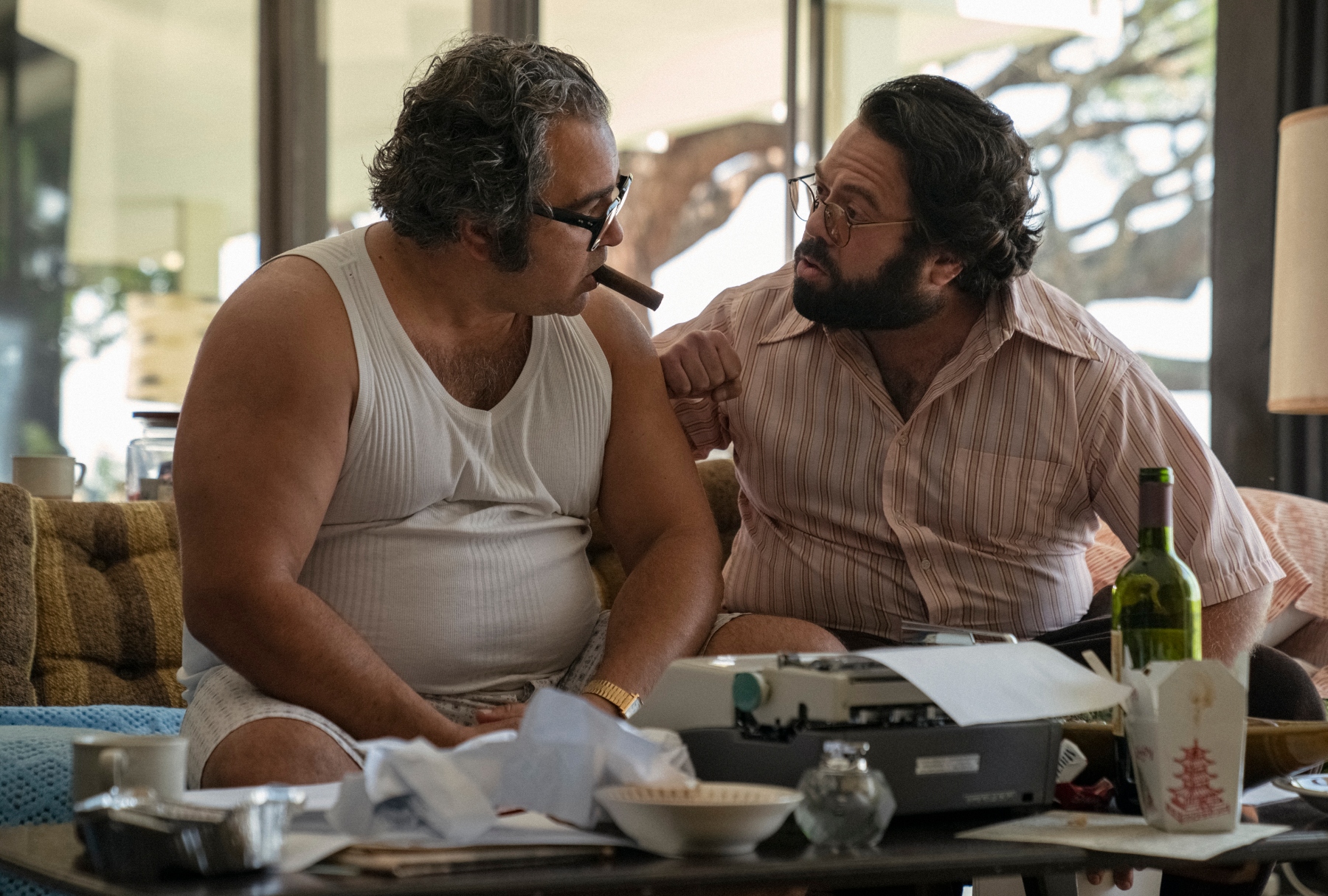
Inside the fall of Alex Jones: Conspiracy theories catch up to Trump ally as legal threats grow

Lenny Pozner doesn’t understand why people are surprised to learn he used to be a regular listener of Alex Jones’ show.

Pozner’s 6-year-old son, Noah, was one of the 26 children and adults who were killed during the 2012 Sandy Hook Elementary School shooting in Newtown, Connecticut. Soon after the tragedy, Jones began using his Austin-based media juggernaut to spread bogus claims that the shooting was a staged government conspiracy made up of crisis actors and fake personas.

Still, for Pozner — one of the Sandy Hook parents involved in a series of defamation lawsuits that have turned into a fierce legal reckoning for Jones — the fact that he used to tune into the right-wing conspiracist’s broadcasts during long car drives is less a twist of fate and more a reflection of something obvious and unremarkable: Jones has reach.

“People repeat that as if it’s a big deal. But what I’ve noticed is that a lot of people pretend they don’t know who Alex Jones is,” he said. “That’s bullshit. Everybody knows who Alex Jones is.”

At the height of his influence in 2018, Jones boasted an audience of about 1.4 million daily visits to his websites and social media accounts, according to The New York Times. And from 2015-18, Jones’ Infowars store raked in more than $50 million annually, HuffPost reported.

But while Jones built his brand and fortune on a keen and brazen use of misinformation, he has been unable to distance himself from his Sandy Hook falsehoods and his role in a rally that preceded the Jan. 6, 2021, riot at the U.S. Capitol.

Jones recently sought immunity from federal prosecutors investigating the Capitol riot and has been subpoenaed by the U.S. House committee investigating the attack.

In the past year, Jones has lost all the defamation lawsuits filed by 10 families of Sandy Hook victims, including Pozner’s. Juries in the cases still have to decide how much Jones must pay the victims, but on April 17, three of Jones’ companies — Infowars, Prison Planet TV and IW Health — filed for bankruptcy. The next day, Jones told his listeners he was “totally maxed out” financially.

While the Chapter 11 filings may be part of Jones’ legal strategy to obstruct court proceedings — he used them to delay his Austin jury trial, and Sandy Hook parents pushed to dismiss them last week — they’re also the latest development in Jones’ downswing from his spot at the top of far-right media. Along with a sweeping ban on social media, the loss of a fawning president and looming legal penalties, Jones’ troubles have weakened his once massive reach and influence. Close observers of his operations say the fate of the state’s most infamous misinformation peddler is more uncertain than ever.

Neither Jones nor his company Infowars responded to multiple requests for comment for this story.

The “Walter Cronkite” of misinformation

Jones has used Infowars — his primary media company that airs shows he claims are syndicated on radio stations across the U.S. — to share his conspiracy theories with his millions of followers. According to Jones, the U.S. government has meddled with water supplies and the weather, the COVID-19 pandemic was planned, and Bill Gates is a master eugenicist working to control world populations.

During the pandemic, Jones sold products like “Nano Silver” toothpaste and “Superblue Silver Immune Gargle” via his Infowars store, claiming they would fight COVID-19. He also sells doomsday prepper materials and dietary supplements, which he presents as antidotes to the false threats he drums up on his show.

His show usually features loud, energetic rants and appeals to save the country.

“Alex Jones is unique; he’s entertaining,” Pozner said. “A lot of people mistrust their government. People want a fresh perspective outside of the corporate media’s version of news.”

Jones got his start advancing bogus theories on Austin Community Access Television and local radio in the early 1990s. From those pulpits, he spread falsehoods like claiming that the 1993 siege of the Branch Davidian compound in Waco was a government conspiracy, that government authorities carried out the 1995 bombing of the Alfred P. Murrah Federal Building in Oklahoma City, and that authorities in Austin used “black helicopters” to surveil the public.

A graduate of Austin’s Anderson High School and an Austin Community College dropout, Jones was removed from his local talk radio spot in 1999 after executives said his fringe views were unsavory for advertisers.

That year, Jones founded Infowars.com. In the early years of the platform, Jones claimed the 9/11 attacks were an inside job and helped produce a feature-length film purporting to expose the tragedy as a government plot.

About a decade and a half later, Jones had attracted millions of viewers, was grossing millions in annual revenue and had captured Donald Trump’s attention.

Rachel Moran, a postdoctoral researcher at the University of Washington’s Center for an Informed Public who studies how disinformation and misinformation spread, said conspiracy theorists like Jones are able to build wide audiences in part because they provide their followers with a sense of community.

Jones “is very good at building a community of people who think the same things as him and providing them with what they want,” she said. “I think it’s easy for us when we don’t like a figure to demonize them and pretend they are not good at what they do. Actually, Alex Jones is very good at what he does.”

Moran said Jones is masterful when it comes to harnessing skepticism and deftly toes the line between information and misinformation. He often frames his bogus theories in a way that makes his viewers believe he’s engaging in healthy questioning.

“One of the things that I always hear from people who work in my field is they lament the lack of trusted news figures,” Moran said. “They always say, ‘I wish we had Walter Cronkite during these times, and then people would trust the information.’ It’s not that we don’t have trusted figures. It’s that in the internet age, we have trusted figures like Alex Jones.”

From Sandy Hook to Trump

Trump received support from Jones during his 2016 presidential campaign.

Former Trump adviser and Republican strategist Roger Stone was a paid Infowars host in 2015, and Stone connected Jones with Trump for an Infowars interview in December that year in which the soon-to-be president lauded Jones.

“Your reputation is amazing,” Trump told Jones on his show.

Jones likely played an outsized role in Trump’s election, according to Elizabeth Williamson, author of “Sandy Hook: An American Tragedy and the Battle for Truth.” The book investigates how the shooting warped into an attack on the truth from Jones and online conspiracy theorists.

Williamson said Jones was able to foresee how disaffected individuals who were also highly distrustful of the government could propel Trump to a primary victory.

“He became something of a kingmaker in the race, and with that came a really high profile that he didn’t understand completely,” Williamson said. “I think he’s reaping the results of that.”

All the while, Jones continued to advance conspiracy theories and misinformation to a growing audience.

Since the day of the Sandy Hook shooting, Jones has spread bogus claims about the massacre. Like many of his other conspiracy theories, Jones falsely claimed that the government was behind the shooting. But this time the lies were different.

In one 2015 show, Jones told his listeners, “Sandy Hook is synthetic, completely fake, with actors, in my view, manufactured.” In other episodes, he mocked Sandy Hook parents weeping over the deaths of their children. Jones even shared addresses, maps and personal information associated with the families of Sandy Hook victims, including revealing information about Pozner.

Only weeks after the 2012 shooting, Pozner remembers reaching out to Infowars by email to ask the outlet to stop labeling the shooting as a government hoax to take away Americans’ guns.

“I called them out on it very early on, and I was very polite about it,” Pozner said. “I asked them to be more responsible with this particular tragedy that affects me personally. And of course, they responded and replied and said, ‘No, no, we’re not denying the tragedy,’ and totally lied, and continued to do their thing.”

Jones’ Sandy Hook lies circulated online on platforms like Facebook, YouTube and Twitter, and soon after, Infowars followers began harassing Pozner and other victims’ parents.

Pozner said he has had to move about a dozen times since the shooting to evade Jones’ followers. In 2017, Infowars listener and Sandy Hook conspiracist Lucy Richards was sentenced to five months in prison for sending death threats to Pozner. Today, Pozner lives in hiding and goes to multiple post office boxes to receive his mail. Despite his efforts, individuals occasionally call and file false police reports on Pozner in attempts to get him in trouble with local law enforcement.

First: Noah Pozner and his twin sister, Arielle, at kindergarten graduation. Middle: Lenny Pozner and his former wife Veronique De La Rosa. Last: Arielle Pozner at the grave site of her twin brother, who died in the 2012 Sandy Hook shooting. Credit: Courtesy of Lenny Pozner

Jones’ previous falsehoods “are not harmless theories, but they did not single out individual vulnerable people the way he did with Sandy Hook. That was really crossing a rubicon,” Williamson said.

In April 2018, after facing years of harassment from Jones’ fans, Pozner; Noah’s mother, Veronique De La Rosa; and Neil Heslin, the father of 6-year-old victim Jesse Lewis, filed defamation lawsuits against Jones in Austin. A lawsuit from eight other families soon followed.

Legal troubles

Jones has attempted to slow or obstruct legal proceedings in the Sandy Hook defamation suits by refusing to follow court orders to turn over documents, filing late settlement offers and, in one instance, claiming that a medical problem that included vertigo prevented him from appearing in court. On April 15, Jones and his companies were ordered to pay more than $1 million in fines for his refusal to hand over pretrial information.

In September, a Travis County judge found Jones liable for defamation in lawsuits filed by two families of Sandy Hook victims. About one month later, Jones again lost in separate suits filed by the families of eight other victims. In both instances, the court found Jones liable by default for his unwillingness to cooperate with court orders.

Jones’ legal troubles also include a federal investigation into his role in the Jan. 6, 2021, attack on the U.S. Capitol. Jones has suggested that inquiry could damage him more than the Sandy Hook defamation suits.

Jones, who has denied without evidence President Joe Biden’s victory in the 2020 elections, helped obtain at least $650,000 from Julie Fancelli, an heiress to the Publix grocery chain and Infowars fan, to pay for a pro-Trump rally that preceded the attack on the Capitol. Of that money, $200,000 was deposited into one of Jones’ business accounts, according to the U.S. House’s committee to investigate the Jan. 6 attack.

On his Infowars broadcast that day, Jones told his supporters, “This is the most important call to action on domestic soil since Paul Revere and his ride in 1776.” And at the Capitol, Jones used a bullhorn to excite crowds by chanting, “Stop the steal!”

He also has strong ties to individuals arrested in the attack on the Capitol, including Joe Biggs, a former Infowars staffer and a leader of the far-right group Proud Boys.

In late January this year, Jones told Infowars listeners he was questioned in front of the House committee and said he invoked his Fifth Amendment right to remain silent “almost 100 times.”

Booted by social media

Williamson said the way Jones’ falsehoods propagate and turn into harassment in the real world speaks to his reach and influence.

“He is a salesman,” Williamson said. “And when you have millions of people watching, it only takes a small fraction of those individuals to turn it into something that really travels and disrupts people’s lives.”

In 2014, Pozner founded the HONR Network, an organization that works to defend victims of tragedy from online harassment.

The group has lobbied for the removal of hundreds of thousands of pieces of harmful content on social media. It also played a role in removing Jones from many online platforms.

In July 2018, Pozner and De La Rosa wrote an open letter to Facebook CEO Mark Zuckerberg calling on him to protect victims of tragedies online.

“We are unable to properly grieve for our baby or move on with our lives because you, arguably the most powerful man on the planet, have deemed that the attacks on us are immaterial, that providing assistance in removing threats is too cumbersome, and that our lives are less important than providing a safe haven for hate,” Noah’s parents wrote.

A month later, Jones’ content was removed from Facebook, Apple, YouTube and Spotify.

Jones’ Infowars.com saw a drop in web traffic after the bans, though the number of visitors he receives is back to early 2020 levels, an analysis for The Texas Tribune performed by digital intelligence platform SimilarWeb shows.

Pozner said his organization has also seen a significant decrease in the harassment of victims online after social media companies changed their policies to include victims of tragedies as a protected group. The platforms now seek to prevent online harassment of victims of mass casualty events and limit the use of their names and likenesses, Pozner said.

But appealing to technology companies may not do much to stop conspiracy theories from spreading, Moran said.

While social media companies have changed policies and banned harmful content like Jones’ to address the spread of misinformation, the platforms’ profit model fundamentally relies on user engagement — and conspiracy theories, Moran said, are uniquely engaging.

“You would go into a rabbit hole just reading about them because they’re interesting, and that’s the bread and butter of social media,” she said.

Instead of targeting social media companies, the use of legal remedies to show how misinformation actually harms people’s lives may be the best bet for holding those like Jones accountable, Moran said.

“A lot of our conversation around the spread of misinformation has been on the platform side: What can and should Facebook and Instagram and Twitter be doing?” she said. “Actually, there’s a lot more legal frameworks that we have in place that haven’t necessarily been tested as avenues to remedy misinformation when it has actively harmed people in real life.”

An audience still dedicated

How much damage the Sandy Hook lawsuits could do to Jones remains to be seen. He’s up against plaintiffs with a highly sympathetic story who are determined to hamstring his ability to spread misinformation. The lawsuits have drawn comparisons to the case that brought down Gawker Media, in which billionaire Peter Thiel funded Hulk Hogan’s lawsuit for invasion of privacy, earning Hogan $140 million in damages and essentially forcing the company to shut down.

But while Jones may be facing more difficulties today than at any point in his career, he has been known to use his lowest moments to rake in more money from supporters.

After his ban from social media, Jones presented himself as a martyr silenced by slanted technology companies for telling the truth. As the Sandy Hook defamation lawsuits have developed, Jones has directed fans to donate to a legal defense fund. And after filing for bankruptcy earlier this month, Jones hosted an “Emergency Blowout Sale” on his website.

Despite his diminished reach and prolonged legal battles, Jones’ audience remains loyal, Williamson said.

The SimilarWeb analysis shows that since 2019, monthly web traffic to Jones’ Infowarsstore.com has soared from about 427,000 visitors in 2019 to nearly 834,000 in March. During the height of the pandemic, the store attracted even more viewers, with over 1 million visits in November 2020.

“He has a dedicated audience, and they support him not only by buying Infowars merchandise, but by actually donating to him,” Williamson said.

Pozner wonders if he would have been spared from the years of relentless harassment that followed Noah’s murder if Jones had never amassed such a following, if social media didn’t exist or if the two had not experienced a simultaneous surge in popularity.

“We would have had more private lives,” Pozner said. “It was an intersection of a terrible tragedy and the expansion of the internet.”

Disclosure: Apple, Facebook and The New York Times have been financial supporters of The Texas Tribune, a nonprofit, nonpartisan news organization that is funded in part by donations from members, foundations and corporate sponsors. Financial supporters play no role in the Tribune’s journalism. Find a complete list of them here.

This article originally appeared in The Texas Tribune at https://www.texastribune.org/2022/04/28/alex-jones-sandy-hook-january-6/.

The Texas Tribune is a member-supported, nonpartisan newsroom informing and engaging Texans on state politics and policy. Learn more at texastribune.org.

Chef Romel Bruno’s furikake has a sweet, oniony, garlicky, Doritos twist

I came up with this combo way back when I was living in my old hood in New York. I’d ordered some sushi from a spot next to my apartment — spicy salmon, eel, veggie tempura, the usual suspects — and I was snacking on some Sweet Chili Doritos. When the sushi came, I dug in right away. And I kept eating the chips. And my mind was blown.

Furikake is a Japanese seasoning, traditionally sprinkled on rice. It often consists of nori, bonito flakes, and sesame seeds, but there are tons of variations. Mine has sweet, oniony, garlicky, Doritos twist. Definitely a munchy, cozy vibe. I love to put this on poke bowls, hand rolls, or even on a cucumber salad. The possibilities are endless. Just try to use it up in a day or two to avoid staleness. 

***

Recipe: Doritos Furikake

Yields
2 cups
Prep Time
10 minutes
Cook Time
15 minutes

Ingredients

  • Canola oil, for frying
  • 7 large garlic cloves, finely chopped
  • Kosher salt, to taste
  • 1 large shallot, thinly sliced into rings
  • 1/2 cup cornstarch
  • 1 sheet nori
  • 1/3 cup sesame seeds, toasted
  • 1 cup finely crushed Doritos (Sweet Chili, Cool Ranch, or Spicy Nacho)
  • 1/4 cup bonito flakes
  • 1 tablespoon gochugaru (Korean chile flakes)


Directions

  1. To a small pot, add enough canola oil to come halfway up the sides of the pan. Set over medium-high heat and bring to 250°F. (If you don’t have a thermometer, test a piece — it should gently bubble.)
  2. Add the garlic to the hot oil. Cook, stirring frequently with a heat-proof spoon, for 3 to 6 minutes, until crispy and light golden brown. Use a slotted spoon to transfer the fried garlic to a paper towel-lined plate. Season with salt.
  3. In a small bowl, toss the shallot rings in the cornstarch, then shake off any excess. Return the oil to 250°F, then add the shallot rings. Cook, stirring frequently, for 5 to 6 minutes, until light golden brown. Use a slotted spoon to transfer the fried garlic to a paper towel-lined plate. Season with salt.
  4. Mince the nori, either by hand with a knife or scissors, or in a spice grinder.
  5. In a large bowl, combine the fried garlic, fried shallot, minced nori, sesame seeds, crushed Doritos, bonito flakes, and gochugaru. Mix until combined, then taste and adjust if needed.

“Hissy fit”: Top GOP donor ramps up attacks on Trump-backed candidate as pricy feud escalates

President Ronald Reagan believed in a big-tent approach to the Republican Party and the conservative movement, famously saying that someone who agreed with him 80% of the time was an 80% ally rather than a 20% enemy. Donald Trump, on the other hand, tells Republicans who dare to disagree with him “Go fuck yourself” — which, according to CNN’s Gabby Orr and the New York Times’ Maggie Haberman, is what Trump had to say about Club For Growth President David McIntosh when McIntosh refused to withdraw attack ads slamming “Hillbilly Elegy” author and U.S. Senate candidate J.D. Vance.

In Ohio’s 2022 Republican U.S. Senate primary, Vance and former Ohio State Treasurer Josh Mandel have been fighting a bitter, ugly, mudslinging battle to show who is the most MAGA. Trump has endorsed Vance, who was a vehement critic of the former president back in 2016 but has since flip-flopped and is now running for the U.S. Senate as a devoted Trump sycophant and a far-right MAGA culture warrior. The equally far-right Mandel has attacked Vance as an insincere opportunist, arguing that he is only pretending to be MAGA.

McIntosh is supporting Mandel, and he isn’t withdrawing that endorsement just because Trump is having a hissy fit.

Orr notes that Trump praised McIntosh at an April 9 rally in North Carolina, saying, “He’s a winner. He’s a fighter. We are undefeated when we work together.” But that was before Trump endorsed Vance on April 15.

“The duo’s partnership came to a screeching halt last week after the Club for Growth refused to end its negative ad campaign against Ohio Senate candidate J.D. Vance at the former president’s behest and doubled down with new ads against the Trump-backed ‘Hillbilly Elegy’ author,” Orr reports in an article published on April 27. “The group has backed former State Treasurer Josh Mandel in the heated Republican primary for the seat being vacated by Sen. Rob Portman. Unnerved by McIntosh’s defiance, Trump reportedly asked an intermediary to deliver a curt text message to him. ‘Go f*** yourself,’ it read.”

Orr reports that according to a source “close to Trump,” McIntosh and the former president “haven’t spoken since.” On April 27, Orr notes, the Club for Growth “launched a new ad once again targeting Vance for his past criticism of Trump.”

On April 21, New York Times reporter Maggie Haberman tweeted:

According to Orr, there were already tensions brewing between Trump and McIntosh before Trump decided to endorse Vance. But McIntosh’s refusal to go along with the Vance endorsement and quit attacking the “Hillbilly Elegy” author was the straw that broke the camel’s back.

“McIntosh’s swift exile from Trump World has now left some Republican candidates reeling,” Orr reports. “Meanwhile, four people familiar with the situation said the Club for Growth is grappling with frustrated board members and donors, who worry its influence will plunge if it doesn’t quickly patch things up with Trump. It’s the latest episode in the former president’s quest for singular influence over the GOP, further underscoring Trump’s expectation that allies either bend to his will or get out of his way. But even if the Club acquiesced to regain its foothold in Trump’s post-presidency operation, some of his allies plan to urge the former president to keep the group at arm’s length.”