Spring Sale: Get 1 Year, Save 58%

Jonathan Majors’ assault and harassment trial – what’s happened so far in the first week

All eyes are on actor Jonathan Majors who's currently on trial on misdemeanor assault and harassment charges in New York City.

Majors was arrested on March 25 on charges of assault, strangulation and harassment stemming from a domestic dispute with his ex-girlfriend, Grace Jabbari. Majors was released from custody that same day, with his legal team asserting that the "Creed III" star is “completely innocent.” 

Majors himself has pleaded not guilty to all charges. If convicted, he could face up to a year in prison.

"I'm a great man. A great man. I do great things for my culture and for the world."

The arrest wasn't without consequence for the actor. The United States Army announced that it would pause its advertising campaign with the actor, who was the narrator of two ads that were part of the Army's "Be All You Can Be" campaign. Majors was later dropped by his management company Entertainment 360 and his publicists at the Lede Company. His invitation to the 2023 Met Gala was also rescinded.

As for Majors’ movie projects, Majors will no longer star in or executive produce an upcoming film adaptation of Walter Mosley's 2004 novel "The Man in My Basement.” He is also no longer under consideration to star in a biopic about late musician Otis Redding. Additionally, Majors stepped down from the board of the Gotham Film and Media Institute and his work with the Sidney Poitier Initiative.

Variety reported back in April that “multiple alleged abuse victims” of Majors had come forward in the wake of his arrest and were working with the district attorney’s office. Majors currently faces four remaining charges of misdemeanor assault, aggravated harassment and harassment. Four of the previous eight charges were dismissed and merged into one count of assault ahead of Monday’s opening statements “due to the nature of the injuries,” per The Hollywood Reporter.

Here’s everything that’s happened so far:

Monday, Dec. 4: Opening statements

Assistant District Attorney Michael Perez claimed Majors had “engaged in a cool and manipulative pattern” of psychological abuse prior to committing domestic violence against his then-romantic partner, Grace Jabbari, on March 25. The pair had met on the set of "Ant-Man" in 2021, which was before the “defendant’s true self emerged,” Perez said. Majors allegedly snapped at Jabbari, controlled and manipulated her, withheld affection and threatened suicide to “control her actions,” Perez said.   

Perez recalled a September 2022 incident, in which Majors threw belongings and yelled at Jabbari after she returned to their home with a friend she had gotten drinks with that same night. In a recording Jabbari made with her iPhone, Majors is heard demanding she behave like Coretta Scott King or Michelle Obama.

“I'm a great man. A great man. I do great things for my culture and for the world. . . . The woman that supports me needs to be a great woman,” Majors is heard saying. “Two nights ago, you did not do that. Which took away from the plan.”

As for the altercation that took place on March 25, Perez said it began after midnight when Majors and Jabbari were in the car heading home from dinner in Brooklyn. During the car ride, Jabbari saw a text message on Majors’ phone saying, “Wish I was kissing you right now” from a woman named Cleopatra. Jabbari then grabbed the phone before Majors “grabbed her arm and right hand, twisted her forearm and then struck her right ear,” per the complaint. Perez said Majors also threw Jabbari back into the car “like a football” when she attempted to leave.

The pair ultimately abandoned the car and parted ways. Majors made arrangements to stay at a hotel, while Jabbari went to a club with three strangers she ran into on the street. Perez said Jabbari accepted the strangers’ invitation to go out so she could “block out the experience” with Majors. It was while she was at the club that Jabbari received a text from Majors ending their relationship.

Jabbari later returned to Majors’ apartment and called him multiple times before taking two sleeping pills. When Majors returned to the apartment, he saw the top door locked, called a handyman to unlock it, found Jabbari on the floor and called 9-1-1. Perez claimed Jabbari was hesitant to tell the police how she got her injuries. Jabbari was taken to a local hospital and received treatment.

Defense attorney Priya Chaudhry accused Jabbari of making up the allegations in an effort to taint Majors’ career and reputation following their breakup. “In revenge, she made these false allegations to ruin Jonathan Majors and to take away everything he had spent his whole life working for,” Chaudhry said. 

Chaudhry also claimed Jabbari was the aggressor who slapped, clawed and scratched Majors while they were in the car. Majors, Chaudhry claimed, didn’t throw Jabbari into the car but rather, “scooped her up and put her back in the car” because she was in danger of running into traffic. Jabbari was allegedly unharmed and unhurt while Majors was left bloodied and ran to a hotel to hide from her. 

“This is a case about the end of a relationship, not about a crime, at least not one that Mr. Majors committed,” Chaudhry said.

Tuesday, Dec. 5: Grace Jabbari testifies against Majors

Jabbari, a professional dancer, took the stand on the second day of the trial. She said the first time Majors became angry with her was in December 2021: “It was the first time I felt scared of him.”

Jabbari also recalled a July 2022 incident when Majors started throwing things at her in their shared home in West Hollywood.

“The first thing that he threw was the candle,” Jabbari said, as she showed the jury a photo of the room. “The dent in the wall is one of the candles.”

She continued, "I took the photo because the shift in his temper was something that I was aware of. I just wanted to remember. I know I kept forgiving him but I wanted to have a bit of a memory of it.”

By September 2022, Jabbari was living with Majors in London while he was shooting a movie. She recalled the time she came home with a few friends she had been at a pub with.

“[Majors] was getting a bit snappy. Just quick with his responses," Jabbari said. She continued, saying she and Majors met up at a park the following day. He accused her of being an alcoholic, tore the headphones off her head and started shouting at her.

"Better not be in the house when I get home," Majors allegedly had told her that day.

Jabarri later returned to their home to pack her belongings but “froze” when she heard Majors coming. "He proceeded to grab everything . . . and was just throwing it, swiping it, moving it and throwing it, anything I had bought him he was breaking," she said. "I just said, 'You can stop, I'm leaving, just please stop.'"

The incident, Jabarri said, left her scared and confused. She added that Majors was “blaming” her because she “disturbed the peace, or something like that.”

Wednesday, Dec. 6: Jabbari takes the stand again

Jabbari testified that she did not want to involve the police after Majors allegedly assaulted her in March. She told jurors that she “didn’t want to put him in that situation” because Majors had previously warned her about trusting the police due to “what they would do to him as a Black man.”

Jabbari said she felt anxious after Majors was arrested: “I felt like it was my fault. I should have lied and said nothing happened so he wouldn’t be in trouble or upset with me. I wanted to fix it.”

Earlier in the day, Jabbari briefly left the room to collect herself after she opened up about the trial’s impact on her life, Variety reported.

“I’m a very private person,” she said. “It’s been very difficult to see a lot of unwanted attention. I like to keep quiet.”

Cross-examination also began Wednesday afternoon with Chaudhry asking Jabbari about Majors’ upbringing along with their two-year relationship history. The defense asked if her drinking habits had been a “constant source of tension” in the relationship. Jabbari responded that Majors “would get upset with me and use my drinking as an excuse."

Experts: Filing shows how Trump plans to go around Judge Chutkan to stop case “dead in its tracks”

Former President Donald Trump on Thursday sought to stop all proceedings in his D.C. election subversion case after U.S. District Judge Tanya Chutkan rejected his presidential immunity claim.

Trump’s lawyers in a filing argued that Chutkan no longer has any power over the case while he appeals her ruling, a process that could take weeks or months, according to Politico. Trump’s lawyers argue that Chutkan must delay all deadlines because the former president is entitled to an “automatic stay.”

“The filing of President Trump’s notice of appeal has deprived this Court of jurisdiction over this case in its entirety pending resolution of the appeal,” Trump attorneys Todd Blanche and John Lauro wrote. “Therefore, a stay of all further proceedings is mandatory and automatic.”

Trump’s lawyers also indicated that they plan to ask the D.C. Circuit Court of Appeals to grant a stay if Chutkan does not do so. Unless Chutkan rules otherwise, the lawyers wrote, they plan to ignore all upcoming pretrial deadlines in the case.

The Trump filing says that special counsel Jack Smith’s team has acknowledged that Trump can’t be forced to go to trial while the appeal is pending but plans to oppose the stay on proceedings such as pretrial motions, hearings and trial planning, according to Politico.

Trump’s lawyers rejected the special counsel’s argument, writing that Trump is entitled to avoid “the burdens of litigation” while his appeal is pending.

“Concerns regarding judicial resources and costs from continued litigation during the pendency of the appeal — including financial, reputational, and political costs to President Trump and this country — are significant,” Blanche and Lauro wrote.

Chutkan on Thursday ordered Smith’s team to file their response by Sunday.

Trump’s “goal is clear: prevent this case from making it to trial before the election,” tweeted national security attorney Bradley Moss.

“Trump knows his only way out is making sure the trials never happen,” agreed former U.S. Attorney Joyce Vance.

MSNBC legal analyst Lisa Rubin explained on Thursday that it is "not just an appeal to the D.C. Circuit, but potentially an appeal to the Supreme Court."

"So when you talk about running out the clock, it's certainly possible that we could get through this appellate process and give Judge Chutkan time before the 2024 election to try this case," she said. "But Donald Trump is going to try every play in the book, both to stay the case pending appeal, and then to delegate that appeal and not expedite it so that he doesn't have to be tried before November, in the hopes that by January he can stop this case dead in its tracks."

We need your help to stay independent

Chutkan last week rejected Trump’s presidential immunity argument, writing that the office of the president "does not confer a lifelong 'get-out-of-jail-free' pass."

"Former Presidents enjoy no special conditions on their federal criminal liability," Chutkan wrote. "Defendant may be subject to federal investigation, indictment, prosecution, conviction, and punishment for any criminal acts undertaken while in office."

Chutkan also rejected Trump’s claims that the indictment violates his free speech rights, writing that "it is well established that the First Amendment does not protect speech that is used as an instrument of a crime."


Want a daily wrap-up of all the news and commentary Salon has to offer? Subscribe to our morning newsletter, Crash Course.


"Defendant is not being prosecuted simply for making false statements … but rather for knowingly making false statements in furtherance of a criminal conspiracy and obstructing the electoral process," she wrote.

Former federal prosecutor Denis Aftergut wrote on Monday that Chutkan’s opinion is “meticulously crafted with the Supreme Court in mind.”

“The decision deploys every methodology of constitutional interpretation, including textualism, each variety of so-called originalism, attention to constitutional structure and underlying premises, functional considerations, and history,” he wrote in Slate op-ed. “All point ineluctably to her conclusion.”

Taylor Swift gets it: Cats are better than (some) men

Reader, I have a confession to make: I am a woman who owns cats. 

This may seem like a strange thing to call a "confession." The word is associated with secrets and shame. Like most cat owners, I struggle to stop bragging about my cats. Like all cats, they are the funniest and sweetest and cutest pets to ever grace Instagram. But with regularity, one of my many male critics will seek out my Instagram profile, and, in a tone suggesting they are exposing my darkest secret to the entire internet, unveil their accusation: That I am a "cat lady." Usually on a post about my cats. 

I laugh every time, because it's funny how misogynists can't come up with fresh material. "Cat lady" has been aimed for decades at any woman who believes there's more to life than snagging a wedding band. Do you want a career? An education? A little fun in your youth? Your "punishment": To live alone with cats

Taylor Swift's answer to the "cat lady" insult? Don't threaten me with a good time. 

Swift was declared "Person of the Year" by Time in 2023, which was already going to draw a lot of ire from people who are skeptical that either women or artists can be important people. (Plenty of overlap in those views!) So, like a cat owner dangling an irresistible toy in front of her pet, Swift baited her haters by posing for the cover with her cat.  


Want more Amanda Marcotte on politics? Subscribe to her newsletter Standing Room Only.


In my conversations with Swifties, I've learned a lot of lovely things about why they adore her. A big part of it is, with a cheeky sense of humor, she channels their anger over the pressure on women to clip their own wings to live a life of domestic servitude. In a world where even the Washington Post editorial board is begging women to lower their standards to marry Trump voters, Swifties love that one of the world's biggest pop stars offers her counternarrative: Given a choice between cats and some bossy, ungrateful husband, we choose cats. Whine all you want, dudes on the internet, but there's no changing facts. Cats are obviously better. 

Hard to imagine what that guy has to offer, besides a sinkful a dishes and a lifetime of ennui.

And boy, a lot of men are responding to this cat picture by proving that cats are better. Like this prince, who calls himself the "host at @HardMenPodcast." (Best part of this is he correctly assumes his out-of-touch audience won't know who this woman is.)

One look at his beard and you know it's better to have a cat in your bed. Reading his Twitter feed ends all doubt. Lots of crap about how a man's "mission is the glory of establishing godly households & generations." Hard to imagine what that guy has to offer, besides a sinkful a dishes and a lifetime of ennui. The hilarity continued in the responses of Mr. Beardy Patriarch's fans, all apt illustrations of internet slang like "cringe" and "cope." Most of it in the form of fruitlessly claiming that Swift is sad and lonely, or that she will regret being a famous pop star instead of an anonymous housewife. Or my favorite, the guy who threatened that she would end up like Madonna, whose song catalog he believes has been largely forgotten. 

Truth told, these male tears are so tasty because, as silly as it may sound, the "cat lady" stereotype once held a lot of power. In a patriarchy, even the dumbest male opinions dominate. But more than a stereotype, "cat lady" should be understood as a threat: Comply with sexist demands on women, ladies, or you will die alone and sad. It's often paired with the "tradwife" propaganda or the more distinguished op-eds telling women happiness is only achievable by settling for an inadequate man. 

All this "cat lady" talk says little about women's actual lives, and more about the anxieties of the people who push the myth. These fixations are both deeply sexist and racist. On the sexism front, there's anger at women for not subsuming their lives and labor to be unpaid support systems for men. On the racism front, which is becoming less hidden in the MAGA era, there's a lot of anger at white women for not marrying young and having oodles of children, so that white people can maintain the demographic dominance right wingers believe is their due. 


Want more Amanda Marcotte on politics? Subscribe to her newsletter Standing Room Only.


Swift has become a lightning rod for this racist, sexist rage, and not just because she's a beautiful blonde who seems in no hurry to give up her freewheeling life as a famous musician. It's also because of her artistic evolution. She started off as a country western ingenue from rural Pennyslvania, but has remade herself into a New York-dwelling icon of cosmopolitan sophistication. She's the opposite of those Hallmark movies that relentlessly tell reactionary stories of the wayward professional daughter coming to her parent's suburban/rural home to marry the boy next door.

If only more men could be like cats!

Swift may be a billionaire with preternatural good looks, but her story still resonates with her millennial-and-younger fan base, because their life trajectories often map hers: Out of the constricted lives of conservative America and into the more exciting and fulfilling lives of urban professionals. Swift's music, not just her persona, speaks to this as well. Her songs are often about the complicated dilemmas that crop up as more women embrace the relatively recent opportunity that is true independence, especially when it comes to where love fits in their lives. But it's also romantic, optimistic music that reflects the experiences of listeners, who would rather have lives that are complex and interesting than simple and boring. 

Lives that include cats, of course. Because cats are the perfect pets for a person who sometimes works late, goes on dates or has lots of nights out with friends. Cats love to have you around, but won't come unglued if you're not around to clean up after them for a few hours. If only more men could be like cats! 

Certainly, the "cat lady" insult was on its way out long before Swift offered us a sexy reminder that single women with cats are not sad and homely spinsters. Much of this is due to feminists sharing evidence that single women are, on average, happier than married women — in part because they don't have to work as hard. Much of it is due to ordinary women telling the truth about their lives, showing that it's perfectly possible to live freely while also having a lot of love and joy in your life. Many of us have even revealed — shocker! — that one can have both a partner and cats, even if it makes the bed a little crowded. Cats have also done their part, by becoming the internet's favorite animal, making it seem downright weird to hate on cats.

Still, I think will look back at Taylor Swift's Time cover as the final nail in the coffin of the dumb "cat lady" slander. The dudes who responded with whining showed everyone the male insecurity fueling those who sling the smear. Fellas, if you're having so much trouble competing with cats for a woman's affection, that is very much your problem to solve, not hers. Taylor has decreed it so. 

“Trump’s fantasy of infallibility” has been destroyed: “Narcissistic injury” made him more dangerous

Donald Trump has finally stated the obvious. In a Tuesday “townhall” hosted by Fox News personality Sean Hannity, Trump declared that he will be a dictator on day one of his “presidency” – but then will stop.

Of course, Trump, the master propagandist and fascist, mixed truth with lies. In reality, Trump is going to be America’s first dictator and ruler for life. By definition, Trump will not surrender such power once he invokes it. A permanent “state of emergency” is a textbook way that dictators and totalitarians get and keep power as they end democracy. The most notable example being Nazi Germany and Adolf Hitler.

Trump’s open declaration of his goal to be an American dictator and leader of a Fourth Reich, is just the next predictable escalation in his and the American neofascists’ attack on democracy, the rule of law, civil society, human decency, and reason.

Last weekend, at a campaign rally in Iowa, Trump declared that he is essentially the Chosen One, protected by “god” and “Jesus”, two supernatural entities that will supposedly help make him the next president of the United States by intervening in the 2024 election on his behalf.

"The problem for Trump is that because he is driven by narcissistic omnipotence, he has experienced one of the worst and biggest types of narcissistic injury anybody could ever have."

What type of God King Dictator will Donald Trump be? Based on his statements, threats, and other behavior, Trump will be vindictive, cruel, and evil as he embarks on a campaign of retribution, revenge, and destruction against his “enemies” (meaning anyone who dares to oppose him and the MAGA movement’s plan to end multiracial pluralistic democracy).

Trump would not have such great power and potential in his claims on God King Dictator status if not for the many tens of millions of people who support him as part of the MAGA cult and those others who see him as a means of getting (more) power. Trump’s dangerousness would not be so severe if he did not have the institutional support, financing, planning, and agents who are willing to do his bidding as apparatchiks, "Little Eichmanns", and as senior leaders in the American neofascist movement.

We need your help to stay independent

In an attempt to make sense of Trump’s megalomania and God complex and what it further reveals about his mind, behavior and overall dangerousness, and what may come next in America’s democracy crisis, I asked a range of experts for their thoughts and suggestions.

Joe Walsh was a Republican congressman and a leading Tea Party conservative. He is now a prominent conservative voice against Donald Trump and the host of the podcast "White Flag With Joe Walsh."

It’s too late. It’s much too late for Republican voters and Trump supporters. Trump has moved from their champion to their cult leader, to a martyr, and now to some sort of deity. You combine the need for an authoritarian with the evangelical/fervent belief in God’s ordained plan, presto – you have Donald Trump. My engagement every day with these good folks has made crystal clear to me that this “God complex" contagion had spread, its spread beyond the GOP base and it’s spread to lower information voters who really dislike either party and believe our political system is aloof and broken. For them, Trump does not come from the normal political system, he comes from the world they come from, he’s been hugely successful, he’s enormously flawed, but who gives a damn, he’s chosen to turn the political system upside down and make it work for them. This is the kind of stuff I hear all the time. What can be done to stop him? The unlikely coalition of voters who came together to barely stop him in 2020 needs to do it again – from young voters to progressives to principled conservatives – we all gotta lock arms again and support a candidate none of us are excited about.

Dr. Lance Dodes is a former clinical professor of psychiatry at Harvard Medical School and a training and supervising analyst emeritus at the Boston Psychoanalytic Society and Institute:

Recently some media outlets have finally begun to be concerned that Donald Trump is planning to become a dictator and end democracy in America. It’s good that the media are finally recognizing this, but they are very, very late. An enormous number of observers, including tens of thousands of mental health experts, have been warning about this since 2016. Mr. Trump is an obvious and severe sociopath, an antisocial person lacking the capacity for honesty, empathy or respect for the rule of law. His endless self-centered drive for power at any cost makes him an extreme risk of discarding democracy in favor of his personal rule. His recent comments about attacking judges, pardoning the traitorous attackers from January 6, and eliminating his “enemies” are not new ideas, but rather a sign that his façade of decency and normality is falling away under the stress of having to be accountable for his actions, for the first time in his life.

"Trump is now saying God is protecting him. This too is a form of psychic retreat for Trump."

Trump’s pattern is not different from other tyrants. As a “populist” dictator, Trump’s central con is that he represents the people. Of course, the opposite is the case as populist sociopaths — Hitler, Stalin, Saddam Hussein, Putin, and the many other dictators who take power with the promise to eliminate imagined “enemies of democracy” – are seeking to solely benefit themselves and become godlike rulers.

The risk is extremely high. It is simply not true that it couldn’t happen in America. We need to remember that Hitler was democratically elected when a large number of citizens were fooled by his Trump-like psychotic claims that only he could save them, and, importantly, those who saw through the lies thought it could never happen there.

The media failed for years in continually repeating Trump’s lies and treating him as a legitimate leader. The time has come for all of the media to now speak out or to live with the fact that they were silent when democracy was about to die.

Trump's linking himself to Jesus or God reflects his delusional grandiosity, as well as his contempt for others who he believes will be easily conned into following anyone who proclaims himself to be a god.

Marcel Danesi is Professor Emeritus of linguistic anthropology and semiotics at the University of Toronto. His new book is "Politics, Lies and Conspiracy Theories: A Cognitive Linguistic Perspective."

By suggesting that the states which voted against him in the last election were deceived by an evil entity, Trump is employing a tactic that has been used by dictators of the past (and present) to claim that they were chosen by God to save the world. Conspiracy groups, such as QAnon, have promoted this very belief system with images and words designed to highlight Trump’s role as a godly figure. A while back, the group posted an image on social media that showed Trump wearing a Q lapel pin, looking angrily at the camera, much like his mug shot, as he awaited the “storm” that will finally catapult him to the seat of power permanently, from which he will rule the world by divine right.

Aware of the psychological power of such images and themes, it is little wonder that Trump, as a master con man, often takes the opportunity to present himself as a Messianic figure, who is fulfilling a divine mission.

"Despite the lies, fraud, and multiple indictments, Trump can still count on his many evangelical supporters."

In the latest speech, he even put himself above Jesus, cleverly claiming that even Jesus would have been duped to vote for Biden in states that were manipulated by the evil entity that exists in the deep state. This type of sermonizing language hardly shocks his fervent followers, who might indeed believe that there is an evil entity in the world, possessing the ability to deceive anyone. Trump has consistently depicted himself as an anointed spiritual leader, and the only one with the capacity to rid America of its satanic enemies—the very ones responsible for the machinations that led to his temporary exclusion from power. This strategy has now become dominant, as Trump constantly portrays the next election as a cultural-spiritual war, which he must win, in order to finally put America back on the right spiritual path.

André Gagné, Professor and Chair of Theological Studies at Concordia University in Montreal, Canada, and author of "American Evangelicals for Trump: Dominion, Spiritual Warfare, and the End Times."

The kind of language used by Trump at a recent “Save America” Iowa rally, saying that “if you had a real election and that Jesus came down and God came down [from heaven] and said that ‘I’m gonna be the scorekeeper here,’ I think we would win here, I think we would win in Illinois, and I think we would win in New York,” is a reflection of his self-importance and aligns with the view his American evangelical supporters had of him as being “Chosen by God.” Throughout his presidency, Trump was characterized as a “messianic figure,” modeled on the 6th Century BCE Persian King, Cyrus the Great, by many evangelical leaders. The comparison went to Trump’s head. One only needs to remember how Trump referred to himself as the "Chosen One" during a press conference in 2019, while defending his trade war against China.

Many evangelicals used biblical examples to defend their support for Trump despite his immoral conduct. They strongly defended themselves against those who criticized them for backing a morally corrupt candidate. Trump was compared to figures from the Old Testament, such as King David or the prophet Moses, arguing that greatness does not preclude imperfections.


Want a daily wrap-up of all the news and commentary Salon has to offer? Subscribe to our morning newsletter, Crash Course.


Recall how in 2019, when Trump’s impeachment trial began, some Republican senators drew a parallel between the trial of Jesus before Pontius Pilate and that of the American president before Congress! And this support will continue! Despite the lies, fraud, and multiple indictments, Trump can still count on his many evangelical supporters. A case in point is that a group of pastors were seen praying for Trump before his “Save America” Iowa rally. One of the pastors praying for Trump can be heard using the same kind of “spiritual warfare” prayer used by Paula White-Cain, Trump’s spiritual advisor, at the time of his presidency. Nothing has changed since 2016, and the story is bound to repeat itself for the 2024 elections: Trump can say or do anything he wants and will still get the support of many White Evangelicals.

Dr. Justin Frank is a former clinical professor of psychiatry at the George Washington University Medical Center and the author of "Trump on the Couch: Inside the Mind of the President."

Trump does believe that God is on his side and that he is the Chosen One or some such figure. Trump suffers from narcissistic grandiosity. Such people have to protect themselves always from possible external dangers. So, what they do is develop what's called a "psychic retreat." This is common with psychotic people, where they develop a retreat for themselves, almost like an inner structure for their mind, like a turtle putting his head inside of a shell. Wherever the turtle goes, he carries his house with him, and he can always duck inside it for safety.

Trump started doing this as a young man, with the Trump Towers for example, the various golf courses and places with his name on it. With a psychic retreat a person essentially withdraws into total self-love, and they interact even less with other people. Trump has retreated into Mar-a-Lago now. He is also using Truth Social and his rallies as his psychic retreats. The people at Trump's rallies are also a type of psychic retreat. They surround him and keep him safe. They tell him what's happening, they make sure everything's gonna be okay. They reassure him that he's safe and good and right. Trump is now saying God is protecting him. This too is a form of psychic retreat for Trump.

People like Trump who have narcissistic grandiosity try to predict the future, and part of that is making statements about how they will be safe from any kind of attack and harm. The problem for Trump is that because he is driven by narcissistic omnipotence, he has experienced one of the worst and biggest types of narcissistic injury anybody could ever have. Trump knew he was going to defeat Biden in 2020 — and he didn't. Trump predicted the future and he lost. That is an attack on Trump's fantasy of infallibility, which may be unconscious. Trump's loss to Biden was devastating to him.

Juicing power from the abyss: How black hole batteries could be the energy of the (distant) future

Black holes, despite their name, are far from being an empty space in the dark abyss. These condensed areas of space have mesmerized scientists for decades because gravity pulls so much that even light can’t escape them. Black holes are mountains of matter.

While we usually think of black holes as being inescapable, something humans should stay far away from, a recent paper published in the peer-reviewed journal Physics Review D resurfaces an ongoing idea in astronomy that there could be a use for black holes for us on Earth in the future  — as an energy source.

The paper comes from researchers at Tianjin University in China who proposed that spatially tiny black holes that have no spin, called primordial black holes, could essentially be turned into batteries and nuclear reactors. According to their calculations, a primordial black hole would have a 25% efficiency rate, which is pretty impressive. Residential solar panels range from 13% to 22.8% efficiency. Wind turbines range from 20% to 40% efficient at converting wind into energy.

Clearly, there is a need on Earth to generate energy without greenhouse gas emissions and negative consequences to the environment. Fossil fuels are slowly being phased out in many places around the world. Could black holes be a futuristic, and clean, energy source for us on Earth — maybe in hundreds or even thousands of years? 

A primordial black hole could have the similar efficiency as a nuclear reactor.

Getting close to a black hole, spin or no spin, is a very difficult task, especially considering how whatever gets close enough to it could possibly be lost forever. But the researchers posit this could be possible. Particles moving around a spinning black hole are tossed and hurled away from the black hole with more energy than they go in, under certain conditions.

In fact, another recent study, this one in The Astrophysical Journal, presents some of the first ever proof that black holes can actually lose energy, which lends to the idea that it can be harvested via a mechanism known as the Blandford–Znajek process. First proposed in 1977 and named for astrophysicists Roger Blandford and Roman Znajek, it draws on a theory that rotating supermassive black holes will cause magnetic fields to twist into a helix that creates a voltage and brings energy out of the hole.

Previously, researchers suggested that these particles being thrown around outside of the primordial black hole could be harvested for their energy. But without a spin, researchers of the Physics Review D paper suggest feeding the tiny black hole with charged alpha particles. The gravitational pull of the black hole would outweigh the electric charge allowing the tiny particles to get sucked in and not spat out. This would allow the black hole to be able to be recharged several times, but it would have a limit. To extract the energy, they would surround the black hole with an electrically-charged field. Basically, an electrical grid for black holes. 


Want more health and science stories in your inbox? Subscribe to Salon's weekly newsletter Lab Notes.


The researchers also concluded that a primordial black hole could have the similar efficiency as a nuclear reactor. However, there is one big caveat to this study, which is that there is no definitive proof that primordial black holes actually exist. 

In a phone interview, Janna Levin, a professor of physics and astronomy at Barnard College, Columbia University, said the researchers cast their results in a clever way, and create enthusiasm around black holes in their purest form, which might be primordial ones.

“It is kind of an irony that the darkest phenomena in the universe figures out a way to become the brightest,” she said. “It engineers a way to become a particle accelerator.”

“It is kind of an irony that the darkest phenomena in the universe figures out a way to become the brightest.”

As mentioned, the idea of extracting energy from black holes isn’t new. Other physicists, such as Sir Roger Penrose, have theorized other ways to extract energy from a rotating black hole with the “Penrose Process." It hinges on the idea that particles falling into a black hole's ergosphere — a region outside the event horizon where space-time is dragged around by the spin of the black hole — are sped up so fast they break in two. One part goes into the black hole and the other one shoots out with more energy than before. However, Penrose himself has said this method is incredibly inefficient for energy harvesting.

More recently, a study published in 2020 in Nature Physics tested the physics of this possibility and verified it was possible. In an article published in The Conversation about their paper, the scientists didn’t discredit the possibility of using black holes for energy in the far away future. 

“While we are not anywhere close to extracting energy from a rotating black hole, this doesn’t mean it couldn’t be done by a very advanced alien civilisation – or indeed our own civilisation in the distant future,” the researchers wrote. “Such a civilization could build a structure around the black hole that rotates with it and then drop asteroids or even electromagnetic waves into it what would be reflected with more energy.”

In 2021, the U.S. National Science Foundation funded research that concluded the possibility could become a reality with spinning black holes for an advanced civilization as well. Luca Comisso, research scientist at Columbia University and first author on the study, said at the time that the biggest barrier is a “technological problem.”

We need your help to stay independent

"Thousands or millions of years from now, humanity might be able to survive around a black hole without harnessing energy from stars," Cosmisso said. “If we look at the physics, there is nothing that prevents it." 

Levin told Salon gravitational energy is “surprisingly rich.”

“If you can convert gravitational energy into light energy, or electric energy, like circuit energy, the stuff that power supplies, you should be able to do pretty well,” she said. “But they're not going to be replacing coal or fossil fuels.”

At least, not yet. 

“Who knows what somebody will be able to make in a laboratory,” she said.

Hunter Biden charged with nine federal tax crimes

In a newly unsealed federal indictment, President Joe Biden's son, Hunter Biden, is charged with nine federal tax crimes for what prosecutors are calling "a four-year scheme to not pay at least $1.4 million" in federal income taxes for the years 2016 through 2019.

The details of the indictment, which we learned of first via reporting from CBS News, break down that Hunter's total gross income for this period of time, in addition to the majority of 2020, was $7 million, indicating that he had plenty of funds during the years in question that could have been used to pay his taxes, including a $1 million payment from a Chinese businessman who had been indicted in the U.S.

In full, Hunter is being charged with failure to file and pay taxes, evasion of assessment and filing a false or fraudulent tax return. This is the second indictment from the office of special counsel David Weiss, the first being back in September in relation to prosecutors alleging that Biden's son unlawfully possessed a Colt Cobra 38SPL. Hunter pleaded not guilty to those charges. 


Hugh Grant says working on “Wonka” was “like a crown of thorns”

During a recent press event to promote his role as an Oompa Loompa in "Wonka," Hugh Grant all but spat on the floor when asked to describe his experience working on the highly anticipated film, which tells the origin story of the eccentric chocolatier first made famous by Gene Wilder in 1971, with Timothée Chalamet picking up the title role in the prequel that premieres in theaters on December 15.

Speaking to Metro.co.uk and several other outlets, Grant admitted to taking the role because he has lots of children and needed the money, expressing a great deal of frustration and general dissatisfaction with the "apparatuses" and animation used to make his character come to life on screen.

Calling the process "drivel," Grant went in even harder on his descriptors, saying that working on the film was "like a crown of thorns" and "very uncomfortable," which people are having some fun with on social media, pointing out that actors usually wait until many years after a film's release to trash talk it, where Grant is letting it rip before the thing has even been released. 

Factoring in other comments Grant has made leading up to the release of "Wonka" — such as in a recent interview with Access Hollywood, where he casually says that Chalamet reminds him of his mother — one can see that he knows what he's doing here, and that his signature crabby charm is all part of the fun. In the clip below, he jokes about bringing misery to all of his sets whenever he possibly can, and that he's in the "freak show stage" of his career.


“Chicago” stunt casting: 13 performers tapped to play Roxie Hart

"Chicago" the musical has long been a revolving door for celebrity castings.

The Broadway staple premiered in 1975 and was revived in 1996. Still going strong after 26 years, it's the longest-running Broadway revival ever.

In the musical set during Prohibition-era 1920s Chicago, a promising but untalented chorus girl named Roxie Hart and Velma Kelly, a star whose light has dimmed, are facing a murder trial for a man whom Roxie shot and was having affair an affair with. Both scandalous women compete for the services of a lawyer Billy Flynn, who promises to get them off and turn them into megastars. 

The musical is based on a 1926 play of the same by reporter Maurine Dallas Watkins. Ultimately the story of "Chicago" is a satire on corruption in the criminal justice system and the idea of the celebrity criminal. But most importantly, the musical earned six Tony Awards — one Tony for best revival of a musical in 1997, two Olivier Awards and a Grammy because of its killer score and ensemble cast. Rob Marshall also adapted the musical for his 2002 film starring Renée Zellweger and Catherine Zeta-Jones. It went on to win six Oscars including a best picture win, making it the first musical win since "Oliver!"

Outside all the accolades, "Chicago" is mostly about Roxie's life on the edge. It is a role well-suited to celebrity casting because it can accommodate a range of vocal and dance abilities. This has opened the door to singers, actors and even reality stars to be the next to don the top hat and play the musical murderer.

Let's take a look at some of the celebrities who've played Roxie on stage.

01
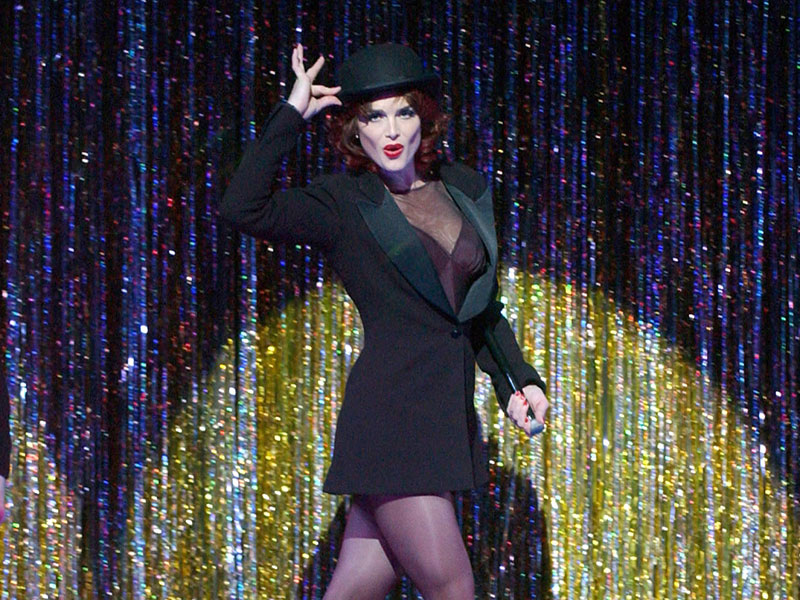
Melanie Griffith
Melanie GriffithMelanie Griffith during Chicago the Musical Celebrates its 10th Anniversary on Broadway – Dress Rehearsal at Ambassador Theater in New York City, New York, United States. (James Devaney/WireImage/Getty Images)
Melanie Griffith, who was nominated for an Oscar for "Working Girl," portrayed the murderess from July to October 2003. 
 
Of her performance, The New York Times theater critic Ben Brantley wrote, "Ms. Griffith is a sensational Roxie, possibly the most convincing I have seen." Some said that Griffith's singing and dancing were the weaker points of her performance.
 
Griffith is one in a line of Hollywood royalty. She's the daughter of Tippi Hedren – Alfred Hitchcock's muse in films like "The Birds" and "Marnie" – and is the mother of "Fifty Shades" star Dakota Johnson with Don Johnson.
02
Ashlee Simpson
Ashlee SimpsonAshlee Simpson-Wentz poses backstage while making her broadway debut as "Roxie Hart" in "Chicago" on Broadway at the Ambassador Theatre on November 30, 2009 in New York City. (Bruce Glikas/FilmMagic/Getty Images)

"Pieces of Me" singer Ashlee Simpson played Roxie in 2006 for a five-week run from September to October. She was 21 when she took on the role in the West End in London. Her singing abilities made her a perfect candidate for the role but it was the first time the singer was on stage for a theatrical production. 


She also made her Broadway debut reprising her role as Roxie in New York City.


Sister Jessica Simpson said, "I think Ashlee made Roxie who she wanted to make Roxie [into]. It was her stage tonight. She was brighter than the lights. She was it. My girl!"

03
Brooke Shields
Brooke ShieldsActress Brooke Shields performs on stage for her first night playing Roxie Hart in the West End show "Chicago – The Muscial" at the Adelphi Theatre on April 28, 2005 in London, England. (Dave Benett/Getty Images)
Model and actress Brooke Shields took on the role of Roxie, replacing Charlotte d'Amboise, from September to October in 2005. Shields had recently played Roxie in the West End production only a few months before and left London to join the Broadway production. 
 
She was one of the first performers to have starred in "Chicago," "Cabaret" and "Grease" on Broadway, three long-running revivals that are known for their stunt casting. Some critics called Shields too wholesome for the role of Roxie.
04
Jennifer Nettles
Jennifer NettlesJennifer Nettles behind the scenes of her photo shoot for her Broadway debut as Roxie Hart In "Chicago" on December 10, 2014 in New York City. (Jenny Anderson/Getty Images)
Grammy-winning musician Jennifer Nettles, known for fronting the country band Sugarland, also starred in "Chicago's" most popular role. The singer played Roxie for eight weeks in 2015. 
 
She had a  No. 1 country album with her solo debut "That Girl." and as the lead singer of Sugarland, she garnered worldwide sales of over $22 million. 
 
The Chicago Tribune said Nettles was "chatty, charming and energetic, Nettles was an accessible presence throughout." 
05
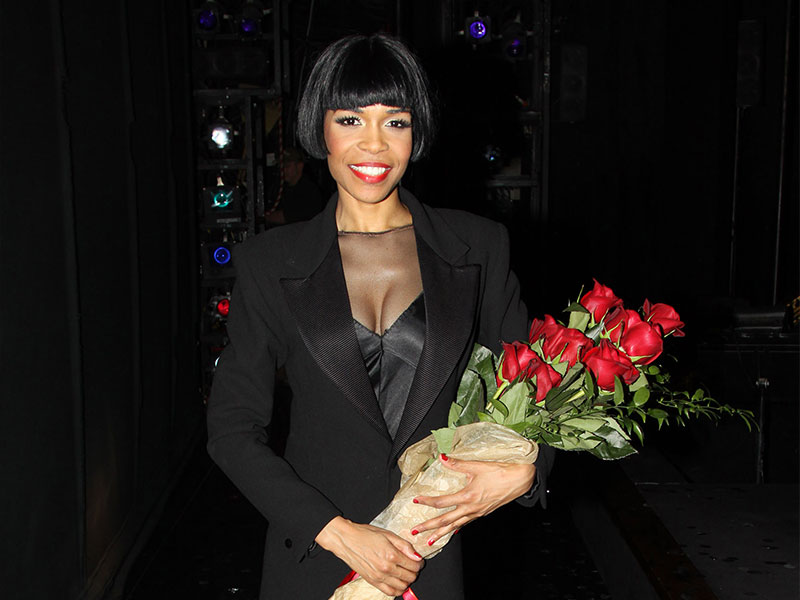
Michelle Williams 
Michelle WilliamsMichelle Williams as Roxie Hart poses backstage at Chicago on Broadway at the Ambassador Theatre on February 8, 2010 in New York City. (Bruce Glikas/FilmMagic/Getty Images)
Singer Michelle Williams is most known for her role as one-third in the Grammy-winning pop/R&B group Destiny's Child, but she has also dabbled in theatre. As a former girl band member with the ability to sing and dance at such a high intensity, Roxie fits the starlet perfectly. Williams joined the revival as Roxie in a limited seven-week engagement from February to March in 2010.
 
But she didn't only play Roxie on Broadway, she went across the pond to London to play the character in the West End production of "Chicago" too. The multi-talented Williams was also in the Broadway production "Aida" and also joined the national touring company of the hit musical "The Color Purple."
 
06
Olivia Holt
Olivia HoltOlivia Holt as "Roxie Hart" during the curtain call as Olivia Holt makes her broadway debut in the hit musical "Chicago" on Broadway at The Ambassador Theatre on April 10, 2023 in New York City. (Bruce Glikas/Getty Images)
Disney star Olivia Holt, known for her Freeform drama "Cruel Summer" and '80s-set slasher film "Totally Killer," made her debut as Roxie earlier this year, from April to June.
 
Holt is another actor-singer who grew up in the Disney pipeline, which requires performers to learn to do both skillfully and gracefully. Her songs "Phoenix" and "History" have racked up millions of views on YouTube and streams on Spotify.
 
"This character is such a powerful female role. Roxie is so layered and has so many dimensions. She's up, she's down. She's quick. She’s smart and has this amazing wit,” Holt told Forbes.


07
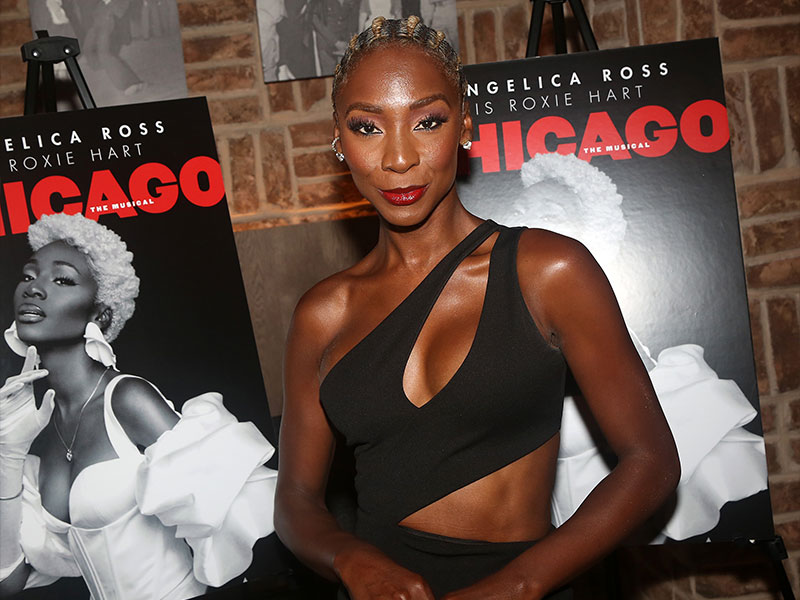
Angelica Ross
Angelica RossAngelica Ross during a photocall for her Broadway debut as "Roxie Hart" in the hit musical "Chicago" at The CIVILIAN Hotel on August 24, 2022 in New York City. (Bruce Glikas/Getty Images)
"Pose" and "American Horror Story" standout Angelica Ross made history as the first openly trans woman to play a leading role on Broadway. The star played Roxie from September to November 2022 in an eight-week limited engagement. Ross is one of the very few transgender performers on Broadway, a list that also includes "Wicked's" Alexandra Billings, "A Strange Loop's" L Morgan Lee, and "Straight White Men's" Kate Bornstein.
 
“There are moments to be had of joy and affirmation and creativity,” Rosss said. “Being trans is not all about suffering and challenge . . . There’s still a determination, and there’s a certain determination within me . . . to break through and have this moment.” 
08
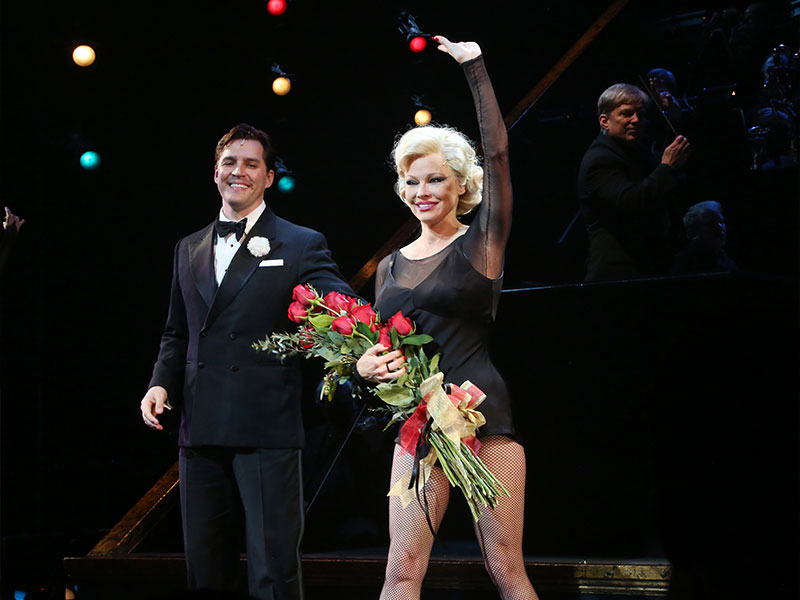
Pamela Anderson
Pamela AndersonPamela Anderson waves during the opening night curtain call of her Broadway debut as Roxie Hart in the musical "Chicago" on Broadway at the Ambassador Theatre on April 12, 2022 in New York City. (Bruce Glikas/Getty Images)
"Baywatch" star Pamela Anderson had a successful run as Roxie from April to June 2022. Anderson's portrayal of Roxie was met with love from audiences and critics alike. The Guardian wrote Anderson "finds a way around the limits of the feminist redemption plot." Critics said she took "back the narrative in 'Chicago.'"
 
Anderson has been enjoying a renewed time in the spotlight since the release of her memoir and Netflix documentary "Love, Pamela" in January 2023. In her documentary, we witness Anderson's excitement over being asked to play Roxie and glimpses of the star rehearsing for the musical.
09
Brandy
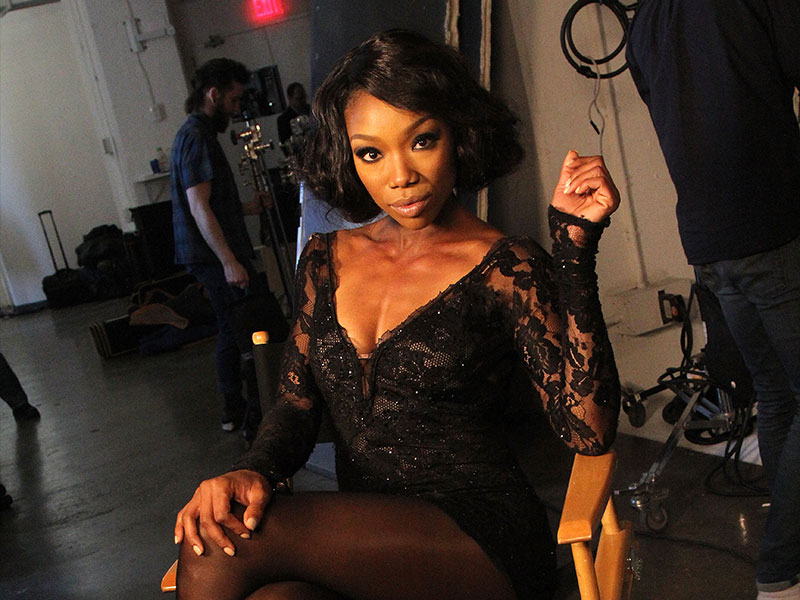
Brandy NorwoodBrandy Norwood prepares for her Broadway debut as "Roxie Hart" in "Chicago" with an ad photoshoot at Splashlight Studios on April 2, 2015 in New York City. (Bruce Glikas/FilmMagic)
R&B superstar Brandy famously played Roxie Hart in June 2015.
 
"I didn’t want to be the new R&B chick that comes in and messes everything up. It was the music that sustained me; these are the kind of solid, jazzy numbers I saw myself singing," Brandy told the New York Times about tackling the role. "And I knew I could put my own flavor into them without disrespecting their very Broadway style."
 
The singer has sold more than 40 million worldwide including her poppy R&B hits “I Wanna Be Down” and “The Boy Is Mine.” Luckily for the singer, she's also a well-established actress starring in the long-running sitcom "Moesha" and Disney's beloved TV adaptation "Cinderella," which co-stars Whitney Houston and Whoopi Goldberg, in 1997.
 
 
10
Erika Jayne
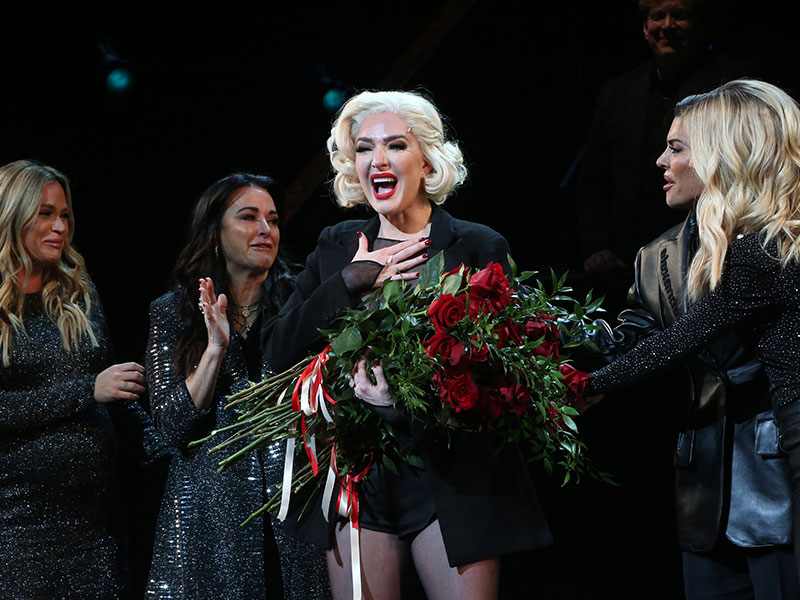
Erika Jayne“The Real Housewives of Beverly Hills” cast surprise Erika Jayne as "Roxie Hart" onstage at the hit musical "Chicago" on Broadway at The Ambassador Theatre on January 14, 2020 in New York City. (Bruce Glikas/WireImage/Getty Images)
"Real Housewives of Beverly Hills" star Erika Jayne is one of the handful of reality TV personalities to play Roxie. Her storylines are said to be some of the most interesting on this iteration of the "Housewives" franchise. Thankfully, she has also starred in some minor roles and has released an occasional single to give her extra acting and singing experience that could be transferred to Broadway.
 
The infamous "RHOBH" member is said to have played "a perfect Roxie Hart," Vulture reported. Her stint as Roxie lasted from January to March 2020 with the show ending abruptly when Broadway shut down because of the COVID-19 pandemic.
 
11
Rumer Willis
Rumer WillisRumer Willis as "Roxie Hart" behind the scenes at a photo shoot for her broadway debut in "Chicago" on Broadway at The Highline Studios on July 20, 2015 in New York City. (Bruce Glikas/FilmMagic/Getty Images)
The daughter of actors Bruce Willis and Demi Moore, Rumer Willis also had her shot at playing Roxie on Broadway. The actress made her debut as Roxie from September to November 2015.
 
The actress has singing chops (like her dad), but she also proved she could move as well, ending up winning the reality competition series "Dancing With the Stars" in 2015.
 
Of her performance as Roxie, The New York Times wrote, "Her voice is strong with a wailing upper register that she wielded with an awareness of how far to go before reaching a point of diminishing returns."
12
Lisa Rinna
Lisa RinnaLisa Rinna as "Roxie Hart" and Harry Hamlin as "Billy Flynn" in "Chicago" (Bruce Glikas/FilmMagic/Getty Images)
Another "Real Housewives of Beverly Hills" cast member, Lisa Rinna, also had her stint to Roxie. The former reality TV star and soap actress played Roxie throughout the summer of 2007 and actually starred opposite her husband, "Clash of the Titans" star and longtime soap actor Harry Hamlin.


Unfortunately for Rinna, critics gave her performance negative reviews. The Oregonian said that she wrecked "Chicago." The review went on to declare, "Every once in a while, it's worth it to see a performance that completely recalibrates your sense of what's bad."

embed

13
Ariana Madix
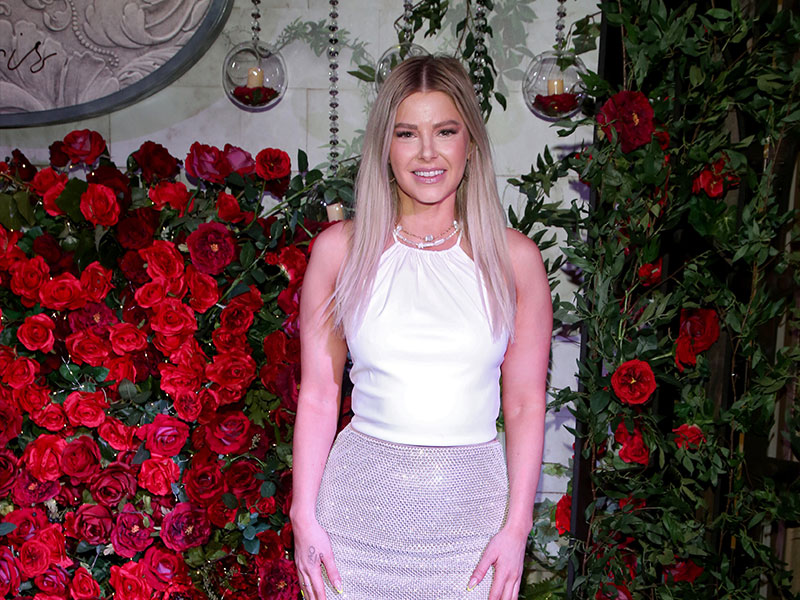
Ariana MadixTelevision personality Ariana Madix attends the grand opening of Vanderpump à Paris at Paris Las Vegas on April 21, 2022 in Las Vegas, Nevada. (Gabe Ginsberg/Getty Images)
Calling all "Vanderpump Rules" super stans! Ariana Madix, the wronged party at the center of Scandoval earlier this year, is set to play Roxie in 2024, reports People. The reality TV star is yet another Bravoverse personality to snag the role of Roxie, which is reportedly one of Madix's dream roles. 
 
However, Madix hasn't had the easiest year. After finding out her partner of nearly 10 years, Tom Sandoval, had been cheating on her with her best friend Raquel Leviss, everything fell apart. What's worse is that Bravo's cameras were trained on them the whole time, so Madix had to relive the humiliation as it played out during the season. Her misfortune paid off big for Bravo though, earning the series an Emmy nomination.
 
But since then, Madix has been on the rise with new brand deals, placing third on "Dancing with the Stars," and being named the reality TV star of the year by Us Weekly. Now that she'll be seen on Broadway, it seems that she's also benefited from being the Scandoval victim.


Trump wants presidential immunity appeal wrapped-up before Jan. 6 case continues

Donald Trump's legal team filed a notice with the federal district court for the District of Columbia on Thursday, appealing Judge Tanya Chutkan's order that shot down his request to dismiss the charges against him in the Washington, D.C. election-subversion case. In his initial request, Trump argued that he couldn't be charged for actions he took within the "outer perimeter" of his official duties as president, to which Chutkan ruled that the Constitution’s text, structure, and history "do not support that contention." But he's not letting it go.

According to The Messenger, Trump's attorneys also filed a motion to pause the proceedings in the case "pending the final resolution of his recently filed appeal," requesting that Chutkan rule on the matter within 7 days. As the outlet points out, "If granted, a pause of proceedings in the case could have major legal and political implications for Trump as he mounts his bid to return to the White House." As of now, Chutkan is set to preside over Trump's trial starting in early March 2024, but the former president's team has signaled that they're prepared to appeal an adverse ruling in their latest effort all the way to the U.S. Supreme Court.

"The goal is clear: prevent this case from making it to trial before the election," national security lawyer Brad Moss said in a post on X.


CDC director recommends masking against tide of rising respiratory illnesses, including COVID

CDC director Mandy Cohen released a video this week about how to take precautions this winter as the pirola clan outpaces previously dominant COVID-19 variants, alongside the rise of other respiratory viruses across the country. In the video, Cohen said respiratory syncytial virus (RSV) cases are “elevated.” COVID-19 is starting to increase again, and pneumonia cases are also on the rise. Cohen specifies the CDC hasn’t seen anything new in terms of viruses or sickness.

Still, she recommends taking specific precautions for people to protect themselves, like getting the updated COVID-19 vaccine, this season’s influenza vaccine, and the RSV vaccine for those over the age of 60. Additional layers of protection, she said, include washing your hands, improving ventilation, and wearing a mask.  

As masking recommendations eased up over the summer, the CDC appears to be tightening its guidance on masking this winter in light of Cohen’s latest video briefing. In May 2023, the CDC advised healthcare facilities to take a risk-based approach when it came to universal masking in healthcare facilities. In addition to masks, Cohen urged Americans to get tested when they’re sick in order to receive proper treatment. As of November 20, 2023, households in the U.S. are eligible for another order of four free coronavirus tests.

“CDC will continue to closely monitor respiratory illnesses including respiratory viruses and pneumonia spreading across the US and around the world,” Cohen said. “And we'll be sure to share additional updates and information.”


The importance of traditional Hawaiian food systems after the Lahaina blaze

Centuries before the historic West Maui fire of August 8, 2023, Lahaina was a lush and breezy coastal flat of utopian-level food productivity. Kalo (taro), the starchy root and central ingredient of the traditional Polynesian staple poi, sprouted heart-shaped edible foliage (luau) from wetlands irrigated by mountain streams. A jungle’s worth of niu (coconut) and ‘ulu (breadfruit) trees were laden with ripened drupes. A 17-acre spring-fed pond teemed with so many fish that a fresh catch required only a handnet. And on Moku‘ula, a small island in the middle of the water, stood a private residence of King Kamehameha III.

With this history in mind, it’s no surprise that many Hawaiians believe that they are living in a time of intense hulihia, or “turning” — a cosmological reckoning, if you will. Lahaina had been a paradise lost well before that fateful Tuesday, when a high-pressure system from the north converged with a hurricane-fueled low-pressure system from the south to unleash a wrath of wind and fire. By the mid 19th century, the town had become a rollicking port for whalers; around that time, wealthy European plantation owners, seeking tropical climes to grow pineapple and sugarcane, had set their sights on Maui. They decimated its native forests for plantations, and after felling Lahaina’s famed ‘ulu trees became illegal, they circumvented the law by burning them down instead. Pasturelands had begun replacing the mid-elevation forests of the West Maui Mountains as early as 1793, when an English naval explorer introduced six head of cattle to the islands.

This disrupted more than just the traditional systems of food production. Noa Kekuewa Lincoln, a University of Hawai‘i professor studying Indigenous crops and cropping systems, tells of the fabled maunalei, a cloud ring that once encircled the mountaintops around the island archipelago, providing cooling and nourishment for soil health and plant life — also known as evapotranspiration. “The disappearance of that phenomenon happened when those slopes were deforested,” he says.

Lorenzo Lyons, an early missionary, also noted changing winds over a more than 50-year period during the 19th century. “Cattle destroying the forest has changed the mumuku,” he wrote of the powerful gales that blow across the mountain ridges toward the ocean, which occurred more infrequently.

The six inaugural bovines have since multiplied into approximately 140,000 head state-wide, making cattle commerce in Hawai’i worth about $48 million annually. The plantation industry, however, once all-powerful across the archipelago, has dried up within the last decade, leaving in its wake plains of degraded soil from centuries of undiversified cultivation, or monocropping. Though Pu’u Kukui, the highest peak in the West Maui Mountains, remains one of the rainiest locations on the planet, the once-flourishing mid-elevation hillsides are droughted and eroding. Guinea grass, molasses grass and buffelgrass, nonnative plants brought in for cattle grazing, now pervade the pasturelands and the former plantation fields — and were among the 18 invasive species identified by the U.S. Department of Agriculture more than a decade ago as wildfire threats for Hawai‘i. Characteristically dry and fast-growing, this foreign vegetation turned out to be kindling for August’s fatal blaze.

In the aftermath, many are taking stock of how the land is being used, on Maui and across the islands. More than ever, the ongoing work of Indigenous farmers to revitalize traditional agriculture is in the spotlight.


Seeing possibility in Indigenous food systems

While climate change escalates the likelihood and intensity of wildfires, the same goes for hurricanes. If a category 5 tropical cyclone shuts down Hawai’i’s main port, Honolulu Harbor, which receives 1.1 million tons of food imports annually, there would be just five to seven days’ worth of commercial sustenance to feed residents and visitors on the islands. Since 85 to 90% of the state’s food production is outsourced, leaving massive swaths of unused agricultural lands susceptible to harmful grasses, Hawai‘i is doubly vulnerable to climate change and interruptions to its food supply. But 7,500 small farms, which comprise more than 95% of Hawai‘i’s agricultural sector, are working to secure the state’s fragile food sovereignty.

With the current food system so flawed, a small minority of those farms have attempted a return to Hawai’i’s pre-colonial era — that is, before first contact with the Europeans was made in 1777 — by using Indigenous farming methods like lo‘i (flooded wetland), mala (sunny and rainfed dryland farming) and agroforestry (a multi-story, multi-species food-production system that incorporates trees) to cultivate traditional Hawaiian foods. These include ‘ulu, niu, and kalo, a few of the two dozen tropical “canoe plants” that the first Polynesians brought with them when they settled Hawai’i between 1000 and 1200 AD.

“We’ve gone from totally surviving off these plants to importing most of our food,” says Lehia Apana, cofounder of Polipoli Farms, an agroforest in Waiehu, on Maui’s north shore. “We’ve drifted way off course.” According to a study published in Nature Sustainability, Hawai’i’s pre-colonial food production would be enough to sustain its current population. By contrast, modern-day food production on the islands — approximately 151,700 tons per year — is likely only a fraction of what native Hawaiians were producing before 1777. Indigenous farming practices have a proven track record of upholding Hawai’i’s food security.
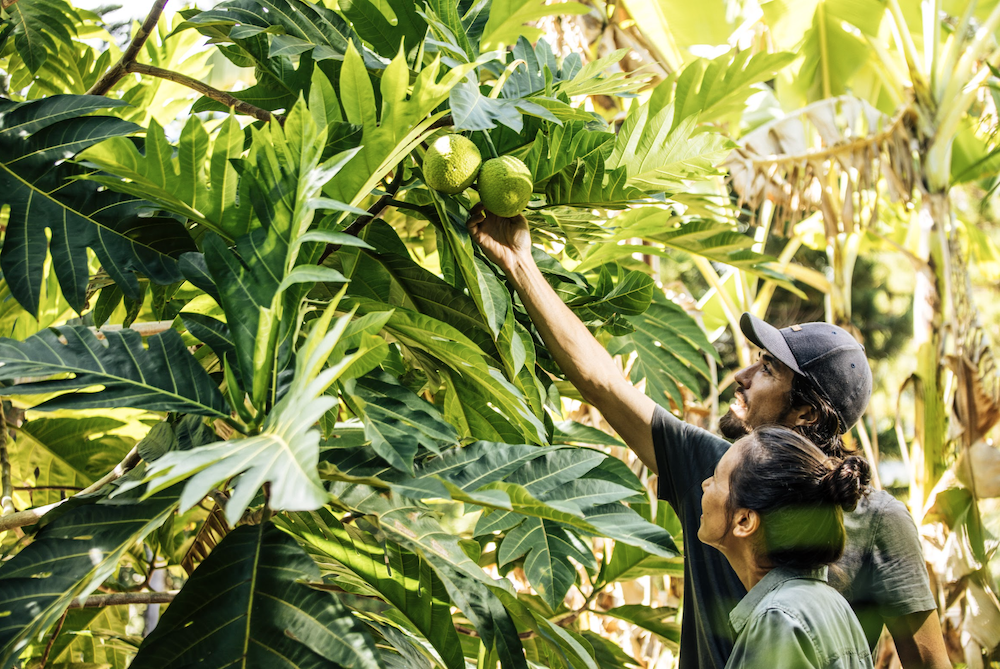
examining breadfruit

Lehia Apana and Brad Bayless, founders of Maui’s Polipoli Farms, harvest native ‘ulu, or breadfruit. Photo courtesy of Polipoli farms.

Not only are agroforests an archetype of regenerative farming, needing little to no pest controls or fertilizers or any other aggressive technologies that would harm, rather than nurture, the soil, but they can also triple the amount of plants in an equivalent area of monoculture. Agroforestry’s natural biodiversity creates healthy soil that produces nutrient-dense food and sequesters more carbon to mitigate climate change than any old sugar or pineapple plantation. Other traditional approaches to agriculture have their own climate benefits: “Lo‘i do a lot to support a resilient ecosystem,” says Lincoln of how the wetlands recharge aquifers, reduce flooding potential and enhance evapotranspiration.

“Indigenous agriculture, not just in Hawai‘i, but globally, is being recognized for its ability to procure food, fiber and fuel while preserving the integrity and function of ecosystems,” the professor continues. “With the growing recognition of industrial farming’s ecological impacts and the increasing manifestation of climate change, we’re seeing more interest in understanding how Indigenous agricultural systems have persisted over millennia without harming the earth.”

Apana and her husband, Brad Bayless, both born and raised on Maui, began tending their agroforest from a three-acre plot of unruly jungle in 2018. In its plushest, most prolific pocket, ‘ulu trees, with their large, glossy-green leaves outstretched, hold court. The endemic māmaki shrub grows in sun-dappled spots around the ‘ulu. The long, oar-shaped foliage of mai‘a (banana) and the spear-like leaves of kō (sugarcane) eventually turn into nutrient-rich leaf litter that keeps the soil moist and healthy. In a modern twist, the farmers plant a cover crop of fast-growing sunn hemp, buckwheat and pigeon pea, which grow quickly to provide shade, nitrogen-fixation, nematode control and “chop-and-drop” material to fortify a fertile forest floor.

Some Indigenous farmers prefer even less intervention, eschewing cover crops and tilling in favor of a rich composting program and the traditional observance of lunar cycles to determine times of planting and harvesting. Owing to the thick canopy and the remarkable ability of trees to absorb heat, food forests are refreshingly climate-controlled places to farm, compared to sunbaked plantations. Bayless would know: He spent his teenage years working in Maui’s pineapple fields. “This is agriculture?” he thought. “No thanks.”


Colonial legacies persist

In 2016, Alexander & Baldwin, one of the Big Five (a conglomerate of corporations that controlled Hawai’i’s economy and politics for much of the 19th and 20th centuries), shut down Maui’s last sugar plantation, which had been illegally diverting tens of billions of gallons of water per year to the detriment of small farms. But even though the once-dominant plantation industry is now defunct, outside industrial agriculture interests still persist in Hawai’i through GMO enterprise and other agricultural development by wealthy off-island investors that threatens to displace traditional methods and homegrown farmers.

Biotech seed companies like Monsanto (which was absorbed by chemical giant Bayer in 2018) have longstanding island operations, at times criminal due to illegal pesticide use. These global agrochemical corporations could arguably be considered the 21st-century counterparts to 19th-century plantationers, since they are drawn to Hawai’i’s year-round growing environment and engage in farming practices that harm the natural world while profiting off of land that is not theirs. Approximately 90% of the GMO corn grown in the U.S. was developed on Kaua‘i, in the chemically sterilized soil required for such testing. “Hawai’i [has hosted] more than 2,230 field trials of genetically modified crops…more than any other state,” according to Scientific American.
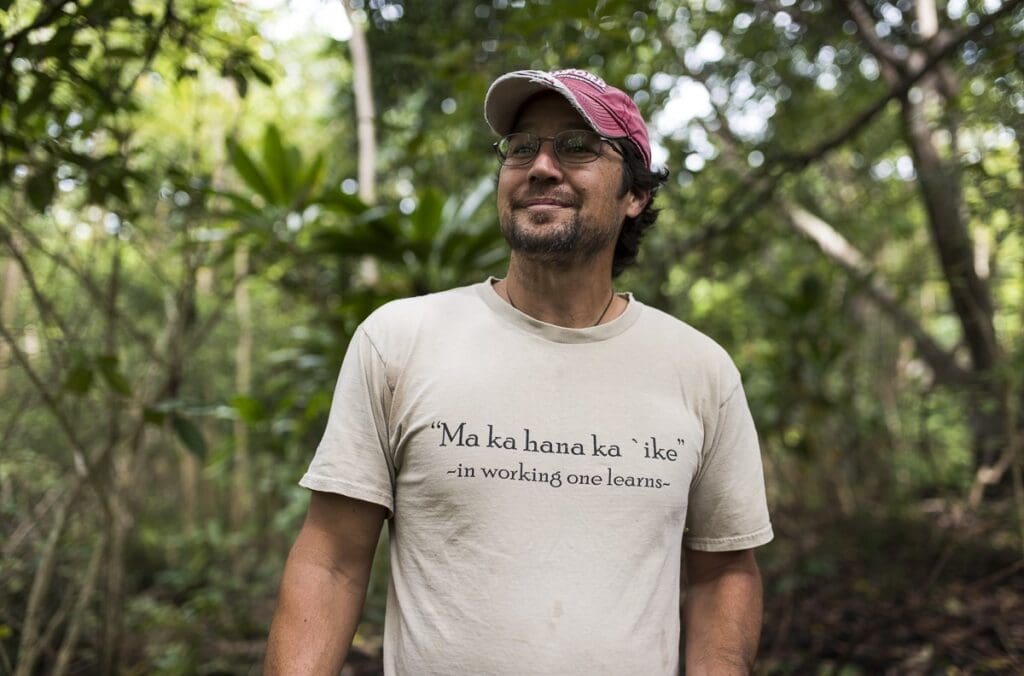
Noa Kekuewa Lincoln

Noa Kekuewa Lincoln, professor of Indigenous crops and cropping systems at the University of Hawai’i, was a founding member of the Hawai‘i ‘Ulu Cooperative. Photo courtesy of Noa Kekuewa Lincoln.

“Now with no money coming in through plantations, there’s no political motivation to use those ag lands to provide opportunities for other agriculture to fill the void,” explains Lincoln. Instead, development with high-revenue potential takes priority, and local agriculture gets the short end of the stick — less than 1% of the state’s annual budget.

Alexander & Baldwin sold 41,000 acres of its former Central Maui plantation lands to a Canadian pension fund, which started a “sustainable and diversified” agricultural venture called Mahi Pono in 2018. So far, it’s proven to be a complicated and controversial enterprise for many reasons, not least of which include the aggressive acquisition of water rights and a reportedly export-heavy business plan. Nevertheless, Mahi Pono, now Maui’s largest landowner, has planted 1.8 million citrus, avocado, macadamia, ‘ulu, coffee and coconut trees to date. By the end of this year, 2.3 million pounds of row crops like kale, lettuce, sweet onions, watermelon and pumpkins will have been harvested, with an undisclosed percentage slated to stay in Hawai‘i. Since 2020, Mahi Pono has also been the majority owner of Maui Cattle Co.

While Lincoln declined to comment on outside companies like Mahi Pono or the California-headquartered Sensei Farms, tech titan (and Hawai‘i transplant) Larry Ellison’s large-scale hydroponic agricultural system on Lāna‘i, he did express concern over their vertically integrated business models in a February 2020 op-ed. “Mahi Pono and Sensei Farms are large enough that, presumably, they will handle all aspects of the food chain,” he wrote. “Not only will they grow and harvest the food, but also chill, process, market and distribute that food as a necessary path to market.” These setups, Lincoln says, have been attractive to Hawai‘i’s government because they require little state support, unlike small farmers for whom much of this infrastructure is out of reach. As he puts it, this kind of “‘local food’ does not necessarily mean locals benefit.”

Lincoln makes a case for local food hubs, which help navigate that labyrinthine infrastructure for the small farms that wouldn’t otherwise be able to organize or afford widespread distribution of their hard-earned harvest. Today, there are 14 food hubs across the state, including Hawai‘i ‘Ulu Cooperative, of which Lincoln and his wife Dana Shapiro — who also own a small ‘ulu farm in Kona on Hawai‘i island — are founding members. “Food hubs provide a social and cultural network of collaboration and organization that is really, really critical for small farmers to contribute to a sustainable food system,” Lincoln tells FoodPrint. “Even today, people say that we couldn’t feed the world without industrial farming. But that’s kind of b.s. Most of the world is still fed by smallholder producers.”


Indigenous foodways take on new urgency

Growing up, traditional foods were not part of Apana’s family table, a fairly common plight of Indigenous people whose cultural customs are often forcibly erased or eclipsed by the technological temptations of modern society. Not only does she claim Chicken McNuggets as a childhood staple, she remembers only eating traditional Hawaiian food at baby showers and graduation parties. Producing a Polipoli pantry — a line of shelf-stable packaged foods made from the agroforest crop — is Bayless and Apana’s way of increasing accessibility of traditional Hawaiian ingredients to locals.

In the aftermath of the Lahaina blaze, ancient Hawaiian customs from ceremonial chanting to Indigenous foods have been even stronger spiritual touchstones for the community. Many even believe that Lahaina’s scorched earth provides a rare opportunity to restore the town’s ancient ‘ulu trees, underscoring the value of traditional subsistence. “I would very much like to see that deeper history honored in what is eventually revived,” says Lincoln.

When three Lahaina shops that sold Polipoli Farms pantry goods were destroyed in the fire, the Maui Hub, born of the pandemic, intervened to help Apana and Bayless supply their chewy banana snacks and māmaki-‘ulu loose-leaf tea to three other islands. “What happened in Lahaina will always be an epic reminder that community brings resiliency,” says Apana. To that end, a new Maui Food Innovation Center opened in November, just in time to aid fire recovery by improving food security through the development of local “farm-to-shelf” products. According to Honolulu Civil Beat, “the lack of facilities for value-adding agricultural products is seen as a key chokepoint in Hawaii’s food supply chain,” and the center will help farmers “take the risk out of trying to scale a business.”

Kealoha Domingo, chef-founder of O‘ahu-based catering company Nui Kealoha, admits that he grew up eating poi from a plastic bag and “didn’t really know anything about being Hawaiian” until he reached adulthood. As a kind of course correction for the soul, he’s dedicated his cooking career to helping people see the complete picture of Hawaiian food. He now pounds poi in the traditional way, foremost to set an example for his three sons, part of the next generation of stewards for the Hawaiian culture.

“The most important thing for me is connecting Hawaiian people spiritually and culturally to the food that sustains them,” says Domingo. “I help them understand how the food got to the table and why it’s there.” That includes passing over limited resources like opihi (blackfoot limpet) and oio (bonefish) for more abundant ingredients: His trademark dishes include ‘ulu poke and lawalu fish poached in coconut water.

Many of the problems underlying August’s landmark fire persist throughout the Hawaiian Islands. Domingo has also been able to witness the impacts of climate change on agriculture firsthand: His commercial kitchen is located on Kāko‘o ‘Oīwi, an ‘ulu farm and lo‘i kalo in Kāne‘ohe, O‘ahu and he is also part-owner of an agroforestry enterprise. “It’s mid-October, and to my memory, ‘ulu season should be wrapping up by now,” he told FoodPrint. “But I noticed some fruit on the trees two days ago that are at least a month out from being ready. The seasons are definitely pushing.” As for kalo, he attests that the local supply doesn’t meet local demand — Hawai’i imports 2 million pounds of the staple food from Fiji per year — and envisions a return to self-sufficiency. “I personally think everyone should be growing kalo,” he says.

Whether traditional Hawaiian farming will ever look exactly like it did centuries ago remains to be seen. Though interest continues to gain momentum in the wake of the Lahaina tragedy,  Bobby Pahia, a dryland kalo farmer on Maui, believes that innovations in agricultural technology may have obscured some important cultural practices in the process. After all, one or two high-tech machines will do the work of hundreds of collaborative hands in the field. The Hawaiian art of kilo, or keen environmental observation, has been usurped by newfangled instruments that can determine weather and soil conditions with the push of a button.

Still, Pahia hopes that the ancient Hawaiian law of kānāwai, which encourages everyone to help and protect each other, isn’t irretrievably broken. “The motive of traditional farming was different back then,” he says. “It was a kako‘o: a ‘we’ thing, a village concept.” With that hulihia — that turning — in motion, it’s possible that ancient ways are cycling through once again.

This mixologist-crafted eggnog is unlike any other you’ve ever tried before. And it’s stupendous

Aged a minimum of three weeks — although thirty days is even better — this original concoction will change everything you thought you knew about how to make the most delicious eggnog. It certainly did for me. 

“Liquid silk,” “otherworldly,” “heaven in a cup,” and more resounding, grandiloquent, highly praiseful words and phrases fill your mind when you taste this amazing brew.

My apologies for failing to get the recipe to you sooner — how is it already December?!

Hopefully, as soon as you finish reading, you will rush out for all you need in order to have this intoxicating beverage ready for the week of Christmas and into the New Year. It is like no eggnog you have ever had, and once you try it, your palate will be far too recherché for the lowly, ready-made sort found in cartons showcased along cold case shelves at your local supermarket. Leave it me to spoil your taste buds, but this eggnog is special, even if you do not have time to age it for as long as recommended.

Hear me out before you dismiss aging something containing both raw eggs and dairy as a really bad idea, if not downright unsound. I can assure you that human beings have drunk, and thrived upon, “uncooked," boozed-up, eggy, milky mixtures since medieval times. There is a long, documented history of using alcohol to ‘pickle’ precious food sources, like milk and eggs, for future consumption.

Eggnog in general, and aged eggnog in particular, is a descendant of something called “sack posset “ or “posset,” a 17th-century, upper-class, custard-like, creamy English drink made with a fortified wine like Madeira or sherry. Posset was thought to have health-giving, curative qualities, so it was most commonly made to have on hand for family members who fell ill. I cannot say that I reach for a cup of this egg nog when I am feeling unwell, but I can tell you that you will be feeling no pain after a taste or two. 

With written recipes dating back to the mid-1600’s and before, we have a substantial amount of evidence, enough upon which to rest easily, that these aged protein and nutrient rich potions were and are perfectly safe, with some suggesting aging periods of varying lengths. Numerous recipes preceding this one are records off how to preserve eggs and dairy for leaner times down the road when chickens and cows were not producing as much or any at all.


Want more great food writing and recipes? Subscribe to Salon Food's newsletter, The Bite.


We now have science to confirm the safety of such brews. Lab tests prove that three weeks is the magical amount of time for any and all bacteria/salmonella to be fully destroyed as long as your batch is made up of at least 15%-20% of no less than 80 proof alcohol. Well, check, check and check; Alison’s Aged Egg Nog is a nothing if not heavy on the ardent spirits! 

Alison, a Princeton graduate with a lifelong passion for mixology, created this egg nog recipe after extensive research. Aside from her Ivy League pedigree, Alison spent years honing her craft both behind the bar and in her own kitchen, where she created innovative cocktails with unique, homemade and oftentimes heirloom or historic ingredients. After graduating, she left New Jersey and bartended at Max Fish, the iconic New York City bar on the Lower East Side that opened in 1989. From there, she moved to Atlanta where she continued to impress at local hot spots and music venues. She kindly and freely shares her recipes with friends and continues to amaze and inspire with her uncommon syrups and infusions.

When you read over Alison’s recipe, you will most likely think that the alcohol content will taste overwhelming. It does not. Not even a little bit. It is the smoothest, most sensational holiday drink you can imagine. The longer it ages, the better it tastes.

I know you are going to be blown away! 

We need your help to stay independent

Alison’s Aged Eggnog 
Yields
Varies greatly, but can serve many
Prep Time
10 minutes
Aging Time
021-30 days (see cook's notes)

Ingredients

Regular Batch-

1 dozen eggs

2 quarts cream (whipping cream [preferred], heavy cream or a mixture of cream and half-n-half)

1 3/4 cups sugar, divided

4 to 6 ounces each: gin, brandy and rum

1 quart bourbon (a fifth plus another 6-6.5 oz)


Tiny Batch-

3 eggs

2 cups cream

1/3 cup sugar

2 ounces each: gin, brandy and dark rum

1 cup bourbon


Directions

  1. Separate eggs, each into a mixing bowl. 

  2. Add 3/4 cup sugar to yolks and whisk until frothy and sugar is dissolved.

  3. Whisk in cream, then slowly whisk in alcohol. You must go slowly so cream does not curdle. Whisk constantly while adding.

  4. To egg whites, add 1 cup of sugar and beat to stiff peaks.

  5. Fold sweetened whites into yolk-cream mixture. Repeat folding every 2 days for 30 days, or at least 21 days.

  6. Serve in small glasses with an optional sprinkling of freshly ground nutmeg.  

**Consuming raw or undercooked eggs may increase your risk of contracting foodborne disease, especially for those with particular medical conditions.


Cook's Notes

Aging and Flavor: Many taste this egg nog the very day it is made and continue to sample it often during the 21-30 day initial aging period. Similar to homemade mayonnaise or cocktails that use egg whites as a way to upgrade the foamy froth, if you use pasteurized eggs, or irradiated eggs, there is virtually no risk associated with consuming this egg nog early. I have access to, and use, farm eggs, which have not been pasteurized, and have never encountered a problem. Just as aging brings complexities and nuances in wine and other spirits, it is the aging process of this egg nog that creates its magical taste. It mellows over time and the bite of the alcohol is completely gone.

Legal scholar: “Influential” Colorado Trump ballot challenge could set off chain reaction

The Colorado Supreme Court on Wednesday heard arguments on whether former President Donald Trump’s role in the Jan. 6, 2021, attack on the Capitol would disqualify him from running for president in 2024. 

The seven justices grappled with the technical question of whether a U.S. Constitution amendment from the Civil War era, which prohibits "officers of the United States" from seeking office again after participating in an insurrection, applies to presidents.

The outcome may dictate whether the court bars the former president from appearing on the 2024 Republican presidential primary ballot in Colorado. It could also have nationwide implications.

There have been lawsuits filed in 28 states to have Trump’s name removed from the ballots, Bennett Gershman, a former New York prosecutor and law professor at Pace University, told Salon. While legal decisions in one state do not have to be recognized as “authoritative” by other states, a finding by Colorado’s appellate court that Trump engaged in an insurrection would mark the first appellate court to make that determination. 

It could be “influential and a valid legal basis” for other states to similarly rule that Trump’s actions on January 6th, in the language of Section 3 of the Fourteenth Amendment, amounted to leading an insurrection against the United States or “giving aid” and “comfort to the mob that rampaged and ransacked the U.S. Capitol,” Gershman said.

District Court Judge Sarah B. Wallace in her ruling last month dismissed the argument by Trump’s attorneys that rallying his supporters to the Capitol was merely an expression of free speech. While she found that Trump engaged in an insurrection by inciting a riot at the Capitol, she contended that the ex-president is exempt from Section 3, noting that it explicitly lists all federal elected positions except the presidency.

Once she issued her ruling, the Colorado Supreme Court agreed to hear appeals from both Trump and the group of Colorado voters involved in the case. Trump challenged Wallace's determination that he had "engaged in insurrection," while the voters contested the assertion that Section 3 does not extend to the presidency.

Several of the court’s justices seemed to agree, to some extent, with a trial judge's conclusion that the events of the Jan. 6 attack constituted an insurrection, Politico reported. They challenged Trump's lawyer's argument that the violence didn’t constitute an insurrection because it was only three hours long.

“As to insurrection, why isn’t it enough that a violent mob breached the Capitol when Congress was performing a core constitutional function,” Justice William Hood III said. “In some ways, that seems like a poster child for insurrection.”

The comments from Hood and other justices “suggest that the Colorado Supreme Court could be the first top state court to officially recognize the attack as an insurrection,” Politico reported.

This could prove to be a crucial legal decision, particularly as courts and election officials across multiple states wrestle with issues surrounding Trump's eligibility under the 14th Amendment. 

Lawsuits have been filed by various groups nationwide, but as of now, these cases have fallen flat, allowing Trump to remain on the ballot in Minnesota, Arizona, Michigan, and others.

“If Trump is found to have engaged in an insurrection against the United States, a court could rule that under the text of section 3 of the 14th Amendment, Trump would be disqualified from holding the office of the presidency,” Gershman said. “The provision is self-executing. It does not require supporting legislation.”

We need your help to stay independent

It is unclear whether a court could immediately remove Trump from the ballot or wait until the conclusion of the presidential election when it will determine whether Trump was elected, Gershman explained. Section 3 does not disqualify Trump from running for president, only from holding that office if he is elected.

A number of the justices criticized Trump's lawyer Scott Gessler for his argument that January 6 was only a riot and not an insurrection. He mentioned that the term lacks a clear definition and asserted that the entire matter is not something that courts can fairly resolve.

The Constitution does not define the term “insurrection,” or “rebellion,” but courts will look to the plain meaning of the language, Gershman said. Courts will also look at the final report of the January 6th House committee “which declared that Trump instigated a criminal insurrection to overturn the lawful result of the 2020 election.”


Want a daily wrap-up of all the news and commentary Salon has to offer? Subscribe to our morning newsletter, Crash Course.


The judges will note that there have already been 600 criminal convictions stemming from the Jan. 6 attack, a large portion of which involve the commission of violent felonies involving assaults on the police, Gershman continued. 

The extensive videotapes of the attack on the Capitol and the “voluminous testimony” before the January 6th committee “prove overwhelmingly” that the mob attack spanned many hours during which rioters “rampaged through the building, caused government officials to frantically escape, wreaked destruction and terror,” he added.

“Courts do not have to shield their eyes from the obvious facts staring them in the face,” Gershman said. 

“This is insane”: Experts horrified by report revealing Trump’s rumored “cabinet of losers”

Former President Donald Trump plans to build a Cabinet and select White House staff based on two criteria: pre-vetted loyalty to him and a commitment to pushing legal and governance boundaries, sources who talk often with the GOP nomination frontrunner told Axios

The sources added that should he win in 2024, Trump would seek out loyalists who share his enthusiasm for punishing critics, disregarding opponents and making controversial legal and military moves, filling the most powerful government roles with men like ex-Trump senior advisor Stephen Miller, Ohio Sen. J.D. Vance and former Pentagon chief of staff Kash Patel. 

While Trump hasn't settled on specific roles for specific people and hates when staff and members of his circle speculate otherwise, he's also not one to carry out detailed personal planning and many decisions depend on who he's last talked to, according to Axios.

But in conversations with friends and advisors, he's been clear about the type of men — most of whom are mostly older, white men — he'd want to serve in his administration. Last month, the outlet also reported that allies of the former president launched a multimillion-dollar effort to pre-screen loyalists for up to 50,000 lower-level government jobs in a potential Trump administration. His prospective cabinet members would serve as those employees' bosses.

The former president and his prospective top officials have been vocal about their aims of targeting and jailing critics, including government officials and journalists, deporting or detaining undocumented immigrants, and using the military to target drug cartels in Mexico or potentially crackdown on criminals and protesters in the United States. The group also wants to cut rules that curtail their ability to do away with government workers they deem disloyal.

"It's unclear who would land where, but make no mistake: These are specific prototypes of Trump Republicans who would run his government. This is very different from the early days of his first term, when he was restrained by more conventional officials, from John Kelly to James Mattis to Gary Cohn," Axios reports. "This time, it'd be all loyalists, no restraints."

According to the outlet, Trump openly talks with friends about several possibilities for his running mate, establishing a belief that the 2020 election was stolen and that former Vice President Mike Pence showed cowardice by allowing for the election's certification.

Those up for consideration are Vance, the "Hillbilly Elegy" author and a MAGA-base favorite; Arkansas Gov. Sarah Huckabee Sanders; Kari Lake, a leading election denier and current candidate for the U.S. Senate in Arizona; and South Dakota Gov. Kristi Noem. Rep. Byron Donald, R-Fla, one of the few Black Republicans in Congress, has traveled with Trump and would love to be vice president, while Rep. Marjorie Taylor Greene, who lost her committee assignments over pushing unsubstantiated conspiracy theories, is also mentioned.

Former first lady Melania Trump has also advocated for ex-Fox News star Tucker Carlson to assume the role, sources close to Trump told Axios. However, Carlson as a VP pick has been discounted by others close to the former president because they believe he won't pick someone who could outshine him and Trump's staff thinks Carlson can't be controlled.

Miller, the architect of Trump's most controversial immigration plans — including family separation — could become the next attorney general and, if not that, receive a Cabinet-level role to greatly influence immigration policy. Miller has been leading efforts to recruit a litany of right-wing lawyers to staff a MAGA-dominated executive branch. 

Carlson told Axios that Miller would be his first choice to head the Department of Justice. "He's a serious person and he understands how the system works," Carlson said.

Donald Trump Jr. has pitched Mike Davis, the former chief counsel for nominations to then-Senate Judiciary Chairman Chuck Grassley, R-Iowa, to be Trump's interim attorney general. In his public appeals for the gig, Davis has promised a "three-week reign of terror" during which he would "put kids in cages" and jail prosecutors and journalists who have gone after Trump. He even told former MSNBC anchor Mehdi Hasan that he "has his spot picked out in the D.C. gulag."

Former White House chief strategist Steve Bannon could become the next White House chief of staff, an idea Carlson and a few others are pushing to Trump. Bannon — who is appealing a contempt of Congress conviction — boasts authoritarian beliefs and reads most things as an existential war between good (Trump) and evil (Democrats, establishment Republicans and the media).

Patel, who threatened to "come after" critics in the media during a recent appearance on Bannon's podcast, would be considered for a top national security job in Trump's possible next administration, potentially even as the head of the CIA or NSC.

"One thing we learned in the Trump administration the first go-round is we've got to put in all of our compatriots from top to bottom," Patel told Bannon this week on the "War Room" podcast. "And we've got them for law enforcement … [Defense Department], CIA, everywhere. … Yes, we're going to come after the people in the media who lied about American citizens."

We need your help to stay independent

Johnny McEntee, the director of the Presidential Personnel Office during Trump's first term, may return to the role with greater power, Axios reports. He may also be Trump's gatekeeper as head of Oval Office operations, or act as the Cabinet secretary. The 33-year-old former UConn quarterback was empowered by the end of Trump's term to systematically purge officials deemed disloyal and make significant staffing changes without consent from agency heads.

A former colleague described McEntee to Axios as "Trump's utility player — a guaranteed loyal ally, wherever you place him, who'd make sure the Trump agenda was being implemented."

Jeffrey Clark, a former assistant attorney general for Trump and one of his co-defendants in Fulton County, Georgia, could get a top Justice Department slot, while Ric Grenell, an ex-ambassador to Germany and Trump's acting director of national intelligence, would be in the running for Trump's secretary of state. 

Among some members of Trump's camp, Susie Wiles, the longtime Florida political operative heading Trump's campaign, is believed to be in the running for chief of staff. John Ratcliffe, a former Texas congressman who served as Trump's final DNI, would be considered to lead the CIA, for a return to DNI, for defense secretary or even vice president, and Jamie Dimon, a Democrat and the CEO of JPMorgan Chase, to head Treasury.

"He wants a big name," a source close to the campaign told Axios, explaining Trump's potential interest in Dimon. "And he loves billionaires."


Want a daily wrap-up of all the news and commentary Salon has to offer? Subscribe to our morning newsletter, Crash Course.


Arkansas Sen. Tom Cotton and Lee Zeldin, a veteran and former congressman from Long Island, would be considered to head the Pentagon, while Jared Kushner, who has mostly kept his distance from the campaign so far, may return to the White House with a continued interested in Middle East policy, Axios notes.

The heads of Cabinet departments don't have complete powers unless they're confirmed by the Senate, and many of Trump's prospective secretaries would have difficulty winning confirmation. 

"But Trump made unprecedented use of 'acting' Cabinet members, who have temporary power over agencies even without Senate approval," Axios notes. "And we're told he'd be prepared to push the envelope on ambiguities about how many stints an 'acting' could serve."

"This is insane," Brian Klaas, a professor in global politics at University College London who studies democracy and extremism, wrote on X/Twitter in response to the report.

"As I write in #Strongmen, insecure and grandiose authoritarian leaders require certain kinds of people around them: fanatic loyalists, bureaucrats who scale up repression (Arendt called them 'desk killers'), skilled liars," wrote Ruth Ben-Ghiat, a New York University history professor who researches fascism and authoritarianism. "This list has them all."

"It's a long way from Lincoln's cabinet of rivals to Trump's cabinet of losers," quipped former U.S. Attorney Joyce Vance.

“You’re not going to pass out on me, are you?” Andrew Friedman on what it takes to make “The Dish”

Think about the last time you ate out. Think about how much it took to get that meal to your table. It took farmers and ranchers and drivers and chefs and wait staff; it took creativity and time management. It’s a story, one with a diverse cast of characters and interwoven dreams, ambitions and disappointments. 

Andrew Friedman wanted to tell one such story. In his meticulous, engrossing new book “The Dish: The Lives and Labor Behind One Plate of Food” the author of “Chefs, Drugs and Rock & Roll” and “Knives at Dawn” traces the provenance of a single meal in a single night in a Chicago restaurant. “I just woke up one day with this idea,” Friedman told me during a recent “Salon Talks” conversation, adding “The very last line in the book was exactly the last line that I knew it was going to be when I woke up that morning five years ago."

While you’ll have to read the book to learn what that final thought was, you can watch my full interview with Friedman here, or read the transcript of our conversation below, to find out what the self-described “chef-centric writer and interviewer” learned from witnessing a slaughtering, how he thinks the food service industry is evolving — and what “The Bear” gets right about life inside a Chicago kitchen.

What is "The Dish"?

The dish at the heart of the book is a dry-aged strip loin of beef with tomato and sorrel, and it is almost that simple a dish. There's some things that aren't named in the title, like a red wine reduction and some herbs, but that is the dish.

This book came to you in a dream. Tell me how you got the dream to follow this plate of food back and forth between this Chicago restaurant and the farms that it originated from. 

"The very last line in the book was exactly the last line that I knew it was going to be when I woke up that morning five years ago."

It goes back to a writer who did a lot of work for The New Yorker over the years, John McPhee. He was very famous for taking a subject and just blowing it out into incredible detail. He did a famous piece about a chef that figured prominently in “Chefs, Drugs and Rock & Roll,” my last book. He also did a book I'd loved called “Levels of the Game” where he takes a tennis match [and] does a point by point recounting of the match and uses the player's style and mindset and whatnot to tell their life story throughout. I've always loved that book, and I think when I was writing “Chefs, Drugs and Rock & Roll,” I honestly had John McPhee on the brain. I'm not comparing myself to John McPhee. I think he's a genius, but this is very much something he might have done.

I've spent my life around restaurants and chefs. I was reading a lot of John McPhee stuff, and I just woke up one day with this idea, I'm going to write a book told during a dinner service and during the service, you're going to meet in great detail all the key people who help cook it, serve it, clean the plates, and then the farmers, the delivery people. I don't want to say what it is, but the very last line in the book was exactly the last line that I knew it was going to be when I woke up that morning five years ago.

The book takes place in Chicago, at this restaurant called Wherewithal. What about this book surprised you? When we're watching these shows like "The Bear," what does that show get right, and what is different that we don't know about?

That show is probably the best anyone's ever done at putting the life of a restaurant and the personalities of a restaurant on film or on video. It's pretty much in line with that. The restaurant in this book has a real commitment to sourcing locally, getting their stuff from farms that raise or grow what they're raising and growing very ethically. “The Bear” is not that kind of restaurant per se, although I imagine the place where the main character worked before, the three star Michelin restaurant they talk about, probably would've been that kind of a restaurant. I think “The Bear” got a lot right. I don't think people call each other "chef" quite as much as they do on that show,

One of the things I saw a parallel to is about trying to unlearn these toxic practices and change this culture of the sadism that we associate with these great restaurants. You have these characters who have experienced intense sexism, racism, discrimination, abuse.

Harassment, abuse.

This is a story about people who are trying to do it differently. Do you think that that is indicative of where the restaurant community in general is going, or was it unique to this group of people?

I think certainly in this country, that's a very widespread thing. I wouldn't say it's universal. The motives can be very different. It was very deliberate that I chose a couple at the center of the book, the chef owner couple that run this restaurant that I knew from mutual acquaintances and friends. They're really ethical people and they very much are trying to enact change in the industry. 

In this social media age and this digital age, there are certainly people out there who are just kind of following along out of self-preservation. Those tend to be some of the older chefs who think the industry's gotten a little soft, but you can't be that way anymore. Everyone's got a movie camera in their pocket. There are blogs that are hungry for these stories. We've seen a lot of them come out over the last few years. So I won't say it's universal, but it's very widespread. But I do think the motivations can be very different. I think the younger generation very much wants to see a change.

This book is about people and their interconnectedness with food. One of the most fascinating parts is when you talk about the inconvenient truths of our food and our relationship with it. There is a scene where you witness an animal being slaughtered.

I saw it go from live to carcass.

How does it change you as someone who still consumes meat?

Not as much as I thought it would because I've seen people speak about the process. There are a lot of people who believe if it skeeves you or makes you uncomfortable to learn about the process or to witness it, you probably should not eat meat because that's how it got to you. I had never seen it. I'd never seen a video of it. That was actually the one place in the book where I went where no photographs were allowed, for good reason. 

"They bring in this lamb and they have a two-prong electric stun gun."

In the book it's beef that's being served. The day I was able to go to this farm, it was a lamb they were slaughtering. They bring in this lamb and they have a two-prong electric stun gun, and they zap it and it just drops. Like a knockout punch, just drops. Then they flay it—not filet, flay—meaning remove the skin. They insert an air hose where the hoof basically meets the leg and they pump it. It inflates almost like a parade float, which facilitates cutting and removing the skin. Then they disembowel it and it all just comes spilling out. It starts going through the process of being cleaned, being chilled. Temperature is very much something that's controlled all through the process. 

It gets loaded on a truck almost like most people would probably think of a garment rack. There are these big racks with these carcasses on them. They haven't been broken down yet, and it goes on a truck and it's driven two blocks to their processing facility and it's butchered. If need be, it's aged or sometimes the meat might be ground, whatever they need to do to it. It's a huge production. I was sort of prepared by Louis John Slagel, who's the head honcho at Slagel Family Farms. Right before we walk into the slaughterhouse, he looks over his shoulder and he says, "You're not going to pass out on me, are you?" And my response was, "I've seen animals butchered." Which I have, but as I say, butchery is a Disney movie next to this.

I have friends in Chicago, and every night during my research trip, I would have dinner with friends or meet them for a drink or something. When I was telling them about that visit, a lot of people said to me, "Are you a vegetarian now?" No. I mean, I'd never seen it, but I knew it. It wasn't as shocking to me. But it is interesting. Everybody who's read the book, that is one of the first three things that comes up. Was it traumatizing to you?

No.

Did it make you not want to eat meat?

I still eat meat. I still love meat.

Did it make you not want a burger?

No, but it made me think about, how do we eat it in a way that is responsible? I don't have time to respectfully thank every animal every day, but how do we have that kind of consciousness in our shopping, in our eating and in our restaurant going?

There's always going to be outliers that are just flat out gouging their customers, but most restaurants are actually pricing their menus lower than they should be. The rate of price increase for restaurants has gone up much more slowly than the rate of inflation because there is a fear that customers will have sticker shock and stop coming to your restaurant. This is why when the lockdown happened in 2020 everyone learned about, “Oh, restaurants operate on a 2% margin or a 3% margin and they've been closed for four days and they can't make their payroll this week.” That was shocking to a lot of people. A lot of that problem starts with the fact that they have kept kicking the can down the road for good reason. 

"There is no definition of sustainable."

But now there's a monster that needs to be slayed. At some point, the band-aid of restaurant pricing, it's going to have to be ripped off. Customers who care about the things we're talking about need to be open to that. The few people I know who did make a major adjustment after COVID, it's about 30% increase from their old menu from 2019. That's significant. But that is what it takes to maybe offer health insurance, for the chef owner to not have to rely on all the parties they do in December for their take home draw and to know what their personal income is going to look like. It's a myth that you see chefs on magazine covers and websites and television. Most of them don't really make a lucrative living, even the ones who work in great restaurants. Of course there are people who are on television and product lines and all that kind of thing, but most of them don't. A lot of them don't know until the holiday season what they made for the year. So it starts with pricing. 

Then I think going to farmer's markets is a good thing. You talked about time. I understand that and I certainly relate to it, but I think there are just certain habits that could be shifted that wouldn't necessarily take more time. In my case, the farmer's market that comes to my neighborhood is actually closer to my apartment than the local grocery store. So if I can just make a point of remembering when it's there, it's actually more convenient for me to shop there. It's probably a little less expensive because buying directly from the people who grew it, but that kind of thing goes a long way, and you can take it as far as you want buying things that are organic.

Everyone in this book in their own way was very respectful of the environment. Louis John, the meat purveyor, was very honest with me. They became certified organic as a business decision because it wasn't that hard to do, and they could charge significantly more for the product. A couple of the farmers are basically conservationists. They make room on their property for where birds can hang out. They leave things growing that they have no use for, just for the habitat. But all of that takes land, takes time, takes employees, and it's money. A big piece of the answer is being open to the cost.

You say in the book that everybody has a different definition of sustainable. It's a word that we love to throw around, but I want to know, what does it mean to you? What are good sustainable practices for us?

There is a definition of "organic." A lot of these terms, buzzwords, in the food world have definitions. But there is no definition of sustainable. You may be the first person who's ever asked my humble opinion. Maybe because I'm a writer, I take a literal meaning, is this something that can be sustained? 

I learned a lot about soil science in this book and what certain pesticides and other things that people use to make the growing process easier do to the soil, and then what that does to the land overall. It's making the land infertile basically.

That's when we talk about regenerative farming. I think its practices, if taken to their logical conclusion, will result in not being able to do something anymore. That could be growing, that could be how we treat our water and where the fish come from. It can also be how we treat our employees, because you could say the old model of the restaurant industry was unsustainable. It lasted over 100 years the way it was, but it's probably changed more in the last 10 than it did over the 100 years before that. To me, you could call that sustainable, but I take a literal view of it.

Here’s how much your holiday dinner will cost this year

The holiday season is fast approaching and Canadians of all backgrounds are gearing up to celebrate by sharing food with loved ones. For many, traditional Christmas foods like turkey are front and center, with vegetable dishes playing supporting roles.

But as the demographic makeup of Canada changes, so too does the Christmas table, with many choosing plant-based alternatives or creating a hybrid holiday with traditional meals from home countries.

Regardless of one's background, many of us tend to indulge — or indeed overindulge — during the holidays. This year, however, indulging in holiday foods will be an expensive proposition.

For the past few years, our Agri-food Analytics Lab at Dalhousie University has been researching food prices. The cost of food has reached record highs, shaped by a number of factors, including adverse weather affecting growing and harvests, geopolitical events driving up the cost of energy and labor disputes disrupting supply chains.

Since the advent of the pandemic, food price inflation has risen over 20%. Food bank usage is up 78.5% since 2019, with one-third of those relying on food banks being children. The high cost of living has put many families in a precarious position, causing some to recalibrate their holiday traditions.


Costs of a holiday dinner

Many Canadians are worried about the cost of hosting family dinners over the holidays this year. The traditional Canadian holiday meal is typically centered around turkey with side vegetables or meat pies, followed by a dessert of some kind.

However, this year, prices are higher than they have been in the past. According to data we've gathered at our lab, a traditional Christmas meal for a group of four to six people will cost consumers approximately $104.85 on average.

Although food prices are slowly dropping back down to normal, the food items typically associated with the holidays are still fairly high.

Turkey is up 5%, potatoes are up 6.6% and carrots are up 12.8%. The per unit costs of a full turkey dinner with gravy and rolls, fruitcake and eggnog is approximately $9.77 per person: arguably a reasonable price to overindulge with those you love.

Celebrations of the holidays are more joyful when shared with loved ones. Still, the upfront cost of feeding a table full of people may be too much for the average Canadian to bear this year and holding on to family traditions may create undue stress and anxiety.


Share the stress of cooking

The great thing about traditions is that we can establish new ones. Because of high food prices, we expect to see many Canadians moving away from turkey and stuffing, choosing lower cost alternatives to share with family and friends. Ham for example, will reduce the cost of the meal to roughly $7.79 on average.

A simple Google search will net you thousands of dish ideas for both show-stopping side dishes and comfortable favorites. Ultimately, it matters less what's on the table than who is seated around it.

But there are ways of cutting costs this Christmas that don't require sacrificing our most beloved meal items. The holidays are a chance to share meal costs without putting too much financial or social pressure on hosts or guests. Potlucks can be a fun conversation starter for new guests, an introduction to new and delicious foods or the start of a tradition that celebrates new and chosen family members.

Holiday traditions provide celebrants with a sense of belonging and joy, togetherness and connection. But this doesn't mean traditions can't change over time. Many immigrants embracing a new life in Canada bring their own customs and rituals, resulting in new celebrations and traditions.

The potential for cross-cultural exchange within children's schools or new romantic or working relationships could result in a blend of new and old traditions, offering a chance to cut back on financial costs and ease the stress of getting holiday meal traditions just right.

Instead, this year, new traditions could infuse the holidays with fresh meaning. The holidays remind us that we have the power to choose how we celebrate, freeing ourselves from the social pressure to maintain traditions that may no longer bring joy or fit our budgets, whether it involves turkey or not.

Janet Music, PhD Student, Social Anthropology, Dalhousie University and Sylvain Charlebois, Director, Agri-Food Analytics Lab, Professor in Food Distribution and Policy, Dalhousie University

This article is republished from The Conversation under a Creative Commons license. Read the original article.

Emma Stone is astonishing in “Poor Things,” Yorgos Lanthimos’ smart and bonkers masterpiece

The first reel of Yorgos Lanthimos’ latest cinematic masterpiece, “Poor Things,” is shot largely in black and white and with a fish-eye lens. It features several WTF moments and sight gags, which prompt viewers to embrace its prickly charms. This no-hold-barred film will take viewers on a weird, wild and wonderful journey that is simultaneously funny, feisty and feminist. 

The real strength of the film is Stone’s fearless performance.

Bella Baxter (Emma Stone) is seen early on (in a color sequence) dying by suicide. Her corpse is soon reanimated by God(win) (Willem Dafoe in mad scientist mode, complete with Frankenstein-ian facial scars), but she has the mind of a child. Bella behaves erratically, breaking plates, screaming and having tantrums. Stone is remarkable in these early scenes acting out physically, and her performance only gets more astonishing as the film progresses. Like Lanthimos, Stone is only just getting started. Meanwhile, God absurdly burps bubbles.

Since Bella needs to have someone monitor her progress as she learns language and motor skills, Godwin asks one of his students, Max McCandles (Ramy Youssef), to be a companion for her. Godwin has kept Bella shielded from society, but when Bella gets a taste of life outside — Lanthimos has depicted the impact of seclusion from society since his brilliant breakout film, “Dogtooth” — she becomes hungry for adventure. Despite becoming engaged to Max, Bella runs off with Duncan Wedderburn (Mark Ruffalo), a handsome cad, shortly after discovering how to pleasure herself in a rather . . . resourceful way.

“Poor Things” takes off at this point in ways that astound and amuse. The plot borrows heavily from “Pygmalion,” “Frankenstein” and “Prometheus” among other narratives. Duncan thinks he can control Bella, and they initially exhaust each other with copious bouts of sex. Well, Duncan is fatigued; Bella keeps wanting more, such is her insatiable appetite for carnal knowledge. 

Poor ThingsMark Ruffalo in "Poor Things" (Atsushi Nishijima/Searchlight)

Bella also wants intellectual knowledge. Her speech is also something to behold as she talks in ways that are initially simple, even backward, but soon grow more complex as she becomes more worldly. One of the funniest lines has her declaring what she must do to quiet a noisy infant. Hilarity also ensues when Duncan and Bella dance, moving their bodies in ways the defy nature and logic. (A hallmark of Lanthimos’ films are wacky dance sequences, and “Poor Things” does not disappoint.) 

But Bella starts to irritate Duncan, who “kidnaps” her, taking her on a ship that blows green and yellow smoke in one of the film’s many imaginative touches. Equally inventive are the eye-popping costumes; Bella often wears dresses that look like they have been stolen from Bjork’s closet. Duncan, in contrast, is outfitted in fabulous dapper suits.

Aboard the ship, Bella soon meets Martha (Hanna Schygulla) and Harry (Jerrod Carmichael). She starts to learn philosophy from Harry, which further frustrates Duncan, who wants her to be docile. As Bella gains knowledge, Duncan becomes more controlling and enraged by her autonomous actions. His rants are hilarious, and Ruffalo’s mugging is a comic highlight. The actor can wring laughs by revealing his incredulity at Bella’s behavior; his expressions of shock are priceless. Watching Ruffalo process what Bella has done provides a giddy pleasure, especially when he deadpans, “Oh,” or “Bella!” because he expresses so much emotion in a single word response. The actor gives what may be a career best performance here. 

It is, arguably, the best film of the year.

Ashore and broke, Bella turns to Swiney (Kathryn Hunter from “The Tragedy of Macbeth”), a brothel owner, to both earn money and fulfill her insatiable need for sex. This further infuriates Duncan, and his rants get even more outrageous and more outrageously funny. Bella, meanwhile, continues to become more feminist, even asking Swiney if the women can choose the male customers that they want to have sex with, rather than the other way round — since it would only please the man to have been selected by someone who has enthusiasm to service them. Her logic is hardly cockeyed. 

Poor ThingsPoor Things (Searchlight)

“Poor Things” is always canny, from its fantastic world-building, which includes the cavernous spaces of Godwin’s mansion, to the odd-looking ships flying in the sky, to the Art Deco style of the ocean liner and more. The film's visuals are extraordinary and look like something Terry Gilliam mighty create in his fantasy worlds. 

Lanthimos’ cheeky, quirky approach also makes the film so enjoyable. He pitches the humor both broad and dark with slapstick-y bits involving dragging bodies and surrealist touches, like hybrid animal experiments. The clever script, by Tony McNamara, who adapted Alasdair Gray’s novel, is chock-full of quick-witted wordplay. Bella’s absurdist language is wonderfully subversive, and Stone’s halting, wide-eyed, deadpan delivery of her lines — as if she is working things out as she says them — adds pizzazz.


Want a daily wrap-up of all the news and commentary Salon has to offer? Subscribe to our morning newsletter, Crash Course.


The real strength of the film is Stone’s fearless performance. She shows an incredible flair for physical comedy, as when she plays the piano with her feet in one scene or dances. Stone makes Bella a manic pixie dream girl who bewitches Max and Duncan (as well as others). She portrays Bella’s transformation with a mix of guile, awareness and cunning. The feminist themes are also prominent as Bella (and other women) often get the best of the men. Watching Bella reduce various gentlemen to quivering hair-pullers or braying animals is quite delightful. 

“Poor Things” is smart and bonkers in all the right ways. This is why it is, arguably, the best film of the year.

“Poor Things” opens theatrically nationwide Dec. 8.

Norman Lear was a true Hollywood liberal, for better and for worse

One of the few occasions I spoke to Norman Lear was in 2017, while we were waiting for an Outfest panel on “One Day at a Time” that I moderated. The Netflix remake of Lear’s ‘70s classic about a single mother raising two kids while caring for her own aging mother had just been renewed. Lear, along with its co-creators Gloria Calderón Kellett and Mike Royce, were in a wonderful mood.

This was a man who believed in the half-hour comedy’s power to show America’s people in their complexity, struggle and conflict.

We were discussing other great TV comedies that transformed the medium, and Lear spoke with special fondness about “The Mary Tyler Moore Show,” a legendary comedy he wasn’t involved in creating. I had just indulged in a rewatch and marveled at how rare and timeless its writing was.

Everything holds up, I said in agreement, adding “Come to think of it, even the fashion is on point.”

At this, Lear turned his full attention to me, and deadpanned, “Fashion? That’s what you took away from watching that show?” He was joking. I think. I recall not being too sure at that moment.

Lear, who died Tuesday at the age of 101, altered the American sitcom from the stuff of ephemeral escapism to a platform that both entertained and illuminated the human condition. He was as serious about his vision for America as he was funny, and always earnest in communicating his progressive values.

This was a man who believed in the half-hour comedy’s power to show America’s people in their complexity, struggle and conflict – not simply rich, white suburbanites but working- and middle-class families like the Bunkers in "All in the Family,” the Evanses of “Good Times” and “The Jeffersons.”

His life’s work revolved around providing windows into the homes and lives of families who lived and looked like the people watching his shows. And here I was, admiring another groundbreaking comedy for its curtains.

MaudeBea Arthur, as Maude Findlay, shows her bandaged arm to Dr. Arthur Harmon, played by Conrad Bain, in an episode from the television series Maude. (Getty Images/Bettmann)Lear is one of the few Hollywood figures whose impact on the medium has no peer. Many of his most-acclaimed series aired in the 1970s, like the aforementioned titles, “Sanford and Son” and “Maude,” which, like “The Jeffersons,” was a spinoff of “All in the Family.” But that broadcast comedy and so many others afterward from “The Cosby Show” and Fox’s “Roc” on through the excellent “Superstore,” are Lear’s descendants.
“The reason that his shows were so good, among many, is that everyone had a leg to stand on,” said Jim Reynolds, creator of CBS’ long-running comedy “The Neighborhood,” in a 2018 TCA press conference. “Everyone had their own logic that you could follow.”

And each in their way aligned with Lear's progressive vision for America. Lear’s legacy is such that he could fully embrace his identity as a liberal long after the right-wing mediasphere transformed the term into a pejorative.

At times in his career, he played out the more negative meaning of the Hollywood liberal.

He communicated his progressive values through his work and advocacy, prominently realized through his founding of People for the American Way, through which he dedicated himself to counteracting the Christian Evangelical right-wing's sway over on American politics.

More directly, he communicated his thoughts and concerns about America nearly up to his death through short videos posted on Instagram, many of them filmed while holding his morning cup of coffee.

“I'm thinking about two little words that we don't think about often enough, that we don't pay enough attention to: ‘over’ and ‘next,” Lear offered as he turned 101 in July. “When something is over, it is over. And we have the joy and privilege of getting on to the next. And if there were a hammock in the middle between those two words, it would be the best way I know of identifying living in the moment. That hammock between over and next. I'm living in that moment now with all of you and bless all of you and our America.”

We need your help to stay independent

But at times in his career, he played out the more negative meaning of the Hollywood liberal – as in someone who profits from gesturing toward equality and representation without always walking the walk.

The behind-the-scenes stories of how “Good Times” was made and the near-total erasure of co-creator Eric Monte is perhaps the most significant instance on record in which Lear’s reaction comports with that of a business-minded Hollywood producer as opposed to an advocate for marginalized voices.

Good TimesThelma (Bernadette Stanis, left), J. J. (Jimmie Walker) and Willona (Ja'net DuBois, right) argue about the safety of the child of Mrs. Gordon (Chip Fields) with her, in Part III of a four-part story on Good Times, Wednesday, Sept. 28, (8:00-8:30 PM, ET), on the CBS Television Network. (Getty Images/Bettmann)Both the L.A. Times and NPR spoke with Monte in 2006 when he was living in a Salvation Army shelter, all but forgotten by the press and entertainment industry establishment.

In the ‘70s Monte was one of very few Black TV writers experiencing success in Hollywood, first working with Lear when he wrote an episode of “All in the Family” before going on to co-create “Good Times” with Mike Evans, who went on to play Lionel Jefferson. Monte says he left "Good Times" when fellow producers ignored his complaints that its scripts amplified stereotypes, in particular the clownish antics of Jimmie Walker’s J.J., at the expense of the Evanses' dignity.

He was not alone in that opinion. Esther Rolle, who died in 1998, seethed at the show’s increased emphasis on J.J. as "Good Times" found more mainstream success. “He’s 18 and he doesn’t work. He can’t read and write. He doesn’t think,” she told Ebony in 1975. “Little by little . . . they have made him more stupid and enlarged the role.

“I resent the imagery that says to [B]lack kids that you can make it by standing on the corner and saying, ‘Dyn-o-mite!'” she concluded, citing the character's famous catchphrase.

“Good Times” star John Amos also pushed back against this trajectory and was written off the show in 1976. He appears briefly in the 2016 “American Masters” documentary “Norman Lear: Just Another Version of You,” and sums up the strife thusly: “My thing was, take the crap out, or let’s fight.”

Monte, who went on to write the 1975 classic “Cooley High,” which inspired 1976’s “What’s Happening!!” filed a lawsuit against Lear and his co-producer Bud Yorkin along with CBS and ABC. He received a $1 million settlement and a modest slice of residuals from "Good Times." Afterward he was blackballed in the industry, and invested most of his settlement in a producing a play he wrote that flopped. He also lost his home and struggled with drug addiction.

“Good Times” was part of a career-high for Lear, who in the 1974-75 season dominated the Nielsen ratings with five of his shows in the Top 10. This was at a time when TV consisted of three major networks, and hit primetime shows regularly averaged viewerships north of 10 million viewers. In its third season “All in the Family” pulled series-best averages in being watched by nearly 21.6 million households.

But that also meant Lear functioned as more of a TV executive than an advocate. The “Good Times” writing staff was almost if not entirely white. In that 2016 PBS documentary Lear, when given a chance to present his side of the story, explained that he viewed the cast’s criticisms about their characters as “extraneous to the needs of a show that had to be done every week.”

Some version of that explanation still pops up in bleak coverage of industry wrongdoing today.

Citing this isn’t meant to besmirch Lear’s legacy but, rather, to highlight his flaws as a part of his evolution. In “American Masters” Lear himself says it took the Black Panthers storming his office and calling him “The Garbage Man” due to the stereotypes “Good Times” perpetuated to inspire him to create “The Jeffersons,” about a financially successful middle-class Black family. Hip-hop mogul Russell Simmons characterizes that show’s legacy as “aspirational, angry to some degree” and decidedly for Black people.  

A corrective, in some ways, although so-called “lovable bigot” Archie Bunker was ultimately more popular with American viewers.

Actors and producers make mistakes like every other human, the difference being that the public has a greater chance of hearing about them.

Lear may not have sufficiently made amends for not taking the “Good Times” cast’s criticisms seriously. One also might point to his later work as proof that he learned from that chapter. The Netflix remake of “One Day at a Time” could have revived the 1975 show with another white cast. Instead, Lear followed Calderón Kellett’s lead to feature a Cuban family headed by a single mom who is also a veteran, and whose daughter is queer.

One Day at a TimeMarcel Ruiz, Rita Moreno, Justina Machado, Todd Grinnell, Isabella Gomez in "One Day at a Time" (Netflix)When I caught up with Calderón Kellett a year later as the second season of “One Day at a Time” was underway, she recounted her experience of working with Lear and her partner Mike Royce by saying, “I felt comfortable that they would protect me in the journey. Which they did. The first year was a lot of, 'Ask the White Guy.' And they said, ‘No, no, no. Ask her.’ Nobody does that.

“Now everybody asks me,” she added. “I needed those men to lift me up. I did. And they have been incredible allies in that way.” Calderón Kellett has since inked a production with Amazon Prime, for whom she created “With Love.”  

“Norman changed my life; he changed everybody's life,” Royce offered Wednesday on X,  formerly known as Twitter. And Lear also evolved through the decades, never pulling back from communicating his desire for America to do better and be better.


Want a daily wrap-up of all the news and commentary Salon has to offer? Subscribe to our morning newsletter, Crash Course.


On his 101st birthday Lear was a bit more plaintive with his Instagram followers, recalling a time when he knew and was friends with prominent Republicans. “I've always been the progressive. I've always been the Democrat I've always been. But I  . . . spent time with Barry Goldwater, as I did with Ronald Reagan when he was running for the presidency.

“What a different time,” he said. “I just pray for a return to that America that I grew up with in my first childhood, as I reach my second.” By that, he means America as he wished it to be, a place where common ground existed and where he thought everyone should see everyone else as another version of themselves. That was not the America most people knew or know now. Lear did what he could to help us see it that way.

“Deeply unserious”: 3 Democrats join GOP to censure Jamaal Bowman over fire alarm incident

The House on Thursday voted to censure Rep. Jamaal Bowman, D-N.Y., for pulling a Capitol Hill fire alarm in September, CNN reports. The GOP-led House just last month voted to also censure Rep. Rashida Tlaib, D-Mich., for her criticism of Israel. The Bowman resolution passed 214-191 with five members voting “present.” Three Democrats joined the House Republicans to back the censure, which was introduced by Rep. Lisa McClain, R-Mich.

Bowman was caught on surveillance footage pulling a fire alarm in the Cannon House Office Building, which was subsequently evacuated. Bowman said the incident was an accident: “I was trying to get to a door. I thought the alarm would open the door, and I pulled the fire alarm to open the door by accident… I was just trying to get to my vote and the door that’s usually open wasn’t open, it was closed.”

Bowman pleaded guilty to a misdemeanor charge for falsely triggering the fire alarm. The progressive lawmaker repeatedly slammed the censure effort. “It’s painfully obvious to myself, my colleagues, and the American people that the Republican Party is deeply unserious and unable to legislate. Their censure resolution against me today continues to demonstrate their inability to govern and serve the American people,” Bowman said on Wednesday. “The legal process on this matter has played out. In no way did I obstruct official proceedings … Unfortunately, Republicans are here trying to rehash an already litigated matter.”

Fox News panelist touted as “Democrat voter” outed as anti-vax activist who hates Democrats

A "Democrat voter" that Fox News invited to discuss former President Donald Trump's Iowa town hall is actually a "politically homeless," anti-vaccine activist who has said Democratic candidates "are an automatic no-no for me" and that she was "voting down ballot Republican" in last year's midterm elections, The Daily Beast reports. The voter, Stephanie Edmonds, appeared on a "Fox & Friends"-hosted panel of six voters on Wednesday morning about Trump's Tuesday night event. Afterward, liberal watchdog Media Matters for America revealed that Edmonds, the panel's alleged lone Democrat, is a political activist who has publicly rebuked Democrats for years.

Co-host Ainsley Earhardt introduced Edmonds as "undecided" and possibly "leaning a little bit toward Trump," saying to Edmonds "I know you’re a Democrat” before asking her how she's feeling after watching the town hall. With a graphic describing her as a "Democrat voter," Edmonds then accused Trump of socialism for helping to develop COVID vaccines during the height of the pandemic. “He teed up a socialist vaccination program that then led to mandates, which caused people like me and thousands of other teachers to lose their jobs,” Edmond, who lost her job for refusing the COVID-19 vaccine, said before plugging a documentary she's making about the 2020 lockdowns.

Though she added that “Democrats like me are fleeing from the Democratic Party,” Edmonds has previously been very vocal about how she is more Libertarian and only registered as a Democrat because she resides in a very blue district. Earhardt even referenced that aspect of Edmonds' political identity directly during a Sept. 28 voter panel on the show, Media Matters reported. Fox News has previously misrepresented on-air guests, according to the Daily Beast, having presented GOP activists simply as "concerned parents" and Republican political candidates as merely local business owners


“Voldemort”: Christie rips opponents for being afraid to mention Trump — and torches Vivek Ramaswamy

Former New Jersey Gov. Chris Christie unloaded on his 2024 rivals and the moderators of Wednesday night's GOP presidential debate, likening Donald Trump to "Harry Potter" villain Lord Voldemort while calling out his competitors for refusing to name the former president. The ex-governor, who waited more than 15 minutes to get a chance to speak, criticized the panelists and the moderators for being too soft on Trump, according to The Daily Beast. “It’s often very difficult to be the only person on the stage who’s telling the truth, and the only person who’s taking on [Trump],” Christie said, shaming his competitors for “acting as if the race is between the four of us.”

Christie, who previously told The Daily Beast he had no intention of dropping out of the race to make room for an anti-Trump challenger, went on to scold the moderators for not asking about the former president for the first 17 minutes of the debate, referring to him at "Voldemort," the evil fictional character "who shall not be named." He implied the rest of the field is "timid" when it comes to criticizing Trump, “maybe because they have aspirations, maybe those future aspirations are now, maybe they’re four years from now,” referring to a potential second Trump administration and the 2028 election. Christie also threw jabs at Trump directly, repeatedly calling him "unfit" to serve as president. Later on in the night, Christie shouted at Vivek Ramaswamy in a fiery exchange, torching the entrepreneur for repeatedly interrupting others and blasting him for insults he flung at fellow candidate Nikki Haley, The Hill reports. “This is the fourth debate that you would be voted in the first 20 minutes as the most obnoxious blowhard in America. So shut up for a little while,” Christie told Ramaswamy.

6 of the biggest revelations from Taylor Swift’s TIME person of the year profile

Taylor Swift's year just keeps getting bigger and better, as the artist has just been named TIME's person of the year.

Unofficially, 2023 was the year of girl and all things girl-coded and Swift played a major role in that. From Greta Gerwig's billion-dollar feminist take on "Barbie" and Beyoncé's showcase of Black queer liberation at the Renaissance tour to Swift's billion-dollar economy-reviving Eras tour — all intersected to create “a three-part summer of feminine extravaganza.” 

Even Swift herself said that the success of girly things is a sign of changing times. She listed: "Girlhood, feelings, love, breakups, analyzing those feelings, talking about them nonstop, glitter, sequins! We’ve been taught that those things are more frivolous than the things that stereotypically gendered men gravitate toward, right?” But now "if we’re going to look at this in the most cynical way possible, feminine ideas becoming lucrative means that more female art will get made. It’s extremely heartening.” 

She added, “This is the proudest and happiest I’ve ever felt, and the most creatively fulfilled and free I’ve ever been."

Here are six revelations about the pop star in her first interview in four years:

1
Travis Kelce and Taylor Swift were officially a couple before she first showed up at his game
Tayvis, or just simply Taylor and Travis, has taken the country by storm. In October, Swift began publically dating NFL star and Chief's tight end Travis Kelce. A star of America's favorite sport and arguably the country's most influential pop singer coupling up played out like modern-day fanfiction for Swifties and a nightmare for football bros and conservatives. Swift said to TIME: “I’m just there to support Travis . . . [and] "have no awareness of if I’m being shown too much and pissing off a few dads, Brads, and Chads.”
 
Swift admitted that while most of their relationship has played out publicly, she revealed that when Kelce put her on the spot on his podcast, they began seeing each other privately immediately after that.
 
“So we actually had a significant amount of time that no one knew, which I’m grateful for, because we got to get to know each other," she said. "By the time I went to that first game, we were a couple. I think some people think that they saw our first date at that game? We would never be psychotic enough to hard launch a first date.”
 
She said that the public nature of their relationship doesn't deter her from "going to see him do what he loves. We’re showing up for each other, other people are there and we don’t care,” she said. “The opposite of that is you have to go to an extreme amount of effort to make sure no one knows that you’re seeing someone. And we’re just proud of each other.”
2
Kelly Clarkson inspired Swift to rerecord her albums
Swift's current pop culture moment mostly stems from the rerecordings of her previous albums, cleverly renamed Taylor's Version. The singer lost ownership of most of her music catalog when her former label Big Machine Records sold it for a reported $140 million to music manager Scooter Braun. The music manager shaped the careers of stars like Justin Bieber and Ariana Grande but no longer represents them.
 
“With the Scooter thing, my masters were being sold to someone who actively wanted them for nefarious reasons, in my opinion," she said. But to regain some control over her music, another pop powerhouse Kelly Clarkson told her to "'just redo it.'"
 
"My dad kept saying it to me too. I’d look at them and go, ‘How can I possibly do that?’ Nobody wants to redo their homework if on the way to school, the wind blows your book report away," she said.
 
Because of her rerecorded albums, Billboard reported that the singer is the first person to hold five of the Top 10 albums on the Billboard 200 chart. Swift released "Speak Now (Taylor's Version)" and "1989 (Taylor's Version)" this year.
 
The singer's next rerecording is "Reputation (Taylor's Version)." Swift said that the era is "a goth-punk moment of female rage at being gaslit by an entire social structure."
3
She still resents the Kim Kardashian and Kanye West scandal
Every Swiftie remembers where they were when Kanye West interrupted Swift's 2009 VMA win for video of the year. Neither musician had any idea it would shape the discourse around their careers for a decade after the incident. But after apologies were made, the beef everyone thought had been laid to rest was resuscitated in 2016. West had written the song "Famous" with the line "I made that b***h famous" referring to Swift and claimed that she consented to it. Swift denied this. But Kanye's then-wife Kim Kardashian leaked an audio conversation of the singer that seemingly "proved" that Swift agreed to the lyrics of the song. The audio went viral, and as a result, Swift was labeled a snake. 
 
Swift said that the scandal felt like “a career death . . . Make no mistake — my career was taken away from me.”
 
Looking back, Swift called the incident "a fully manufactured frame job, in an illegally recorded phone call, which Kim Kardashian edited and then put out to say to everyone that I was a liar.” 
4
The 2016 scandal drove her to become a recluse
As a result of the 2016 scandal, Swift had become publicly unpopular. She said that it “took me down psychologically to a place I’ve never been before." 
 
It even drove her to become a recluse. It was also when she met her longtime ex-boyfriend and British actor Joe Alwyn, and the couple sheltered in secret together. It was during this time that she "moved to a foreign country. I didn’t leave a rental house for a year."
 
Swift described herself at the time as very paranoid and withdrawn: "I was afraid to get on phone calls. I pushed away most people in my life because I didn’t trust anyone anymore. I went down really, really hard.” 
 
5
"Mastermind" is based on Paul Thomas Anderson's movie "Phantom Thread"
Swift is known for the Easter eggs she plants for fans, and they tend to be pretty elaborate, prompting Swifties online to call her a genius. So it only makes sense that Swift would write a song called "Mastermind" on her 10th album "Midnights." 
 
In the song, she reveals some intimate fears about her overanalytical brain, singing:
 
“No one wanted to play with me as a little kid
So I’ve been scheming like a criminal ever since
To make them love me and make it seem effortless
This is the first time I’ve felt the need to confess
And I swear I’m only cryptic and Machiavellian because I care.”
 
Moreover, she said she wrote the song after watching Paul Thomas Anderson's historical drama "Phantom Thread." In the film, it is revealed that the protagonist has been plotting against her love interest for a while.
 
“Remember that last scene?” Swift said. “I thought, wouldn’t it be fun to have a lyric about being calculated?” She pauses. “It’s something that’s been thrown at me like a dagger, but now I take it as a compliment.”
6
The singer was sober throughout Eras tour except for Grammy night
The sprawling and lucrative billion-dollar tour required Swift to hop through all her different album eras, which include 10 albums and more than 40 songs.
 
To prep for the intensity on the tour she would "run on the treadmill, singing the entire set list out loud,” she said. This meant the singer trained for three months and that meant staying sober the whole time so that she could continue to perform at such a high level.
 
But the singer did allow herself to cheat on the strict regimen at the Grammys. Swift went viral that night for dancing the night away to Bad Bunny and winning her 12th Grammy.

Ex-U.S. attorney: Trump motion may lay groundwork for Jack Smith to demand “Judge Cannon’s recusal”

Former President Donald Trump’s lawyers asked U.S. District Judge Aileen Cannon to grant them access to a Justice Department filing on classified details in the case that special counsel Jack Smith wants removed from discovery proceedings. "Given the security clearances that have been extended to President Trump and counsel, and the volume of classified discovery produced to date, there is no case-specific reason for ex parte proceedings," Trump’s lawyers wrote in the filing.

"The Court should be skeptical of boilerplate invocations of vague national security concerns and citations to factually distinguishable cases by the Special Counsel’s Office, particularly in light of the post-CIPA development of bodies of law under the Freedom of Information Act ('FOIA'), in habeas proceedings, and in motions to suppress Foreign Intelligence Surveillance Act ('FISA') evidence, where parties are granted greater access to filings that summarize sensitive and classified information,” the lawyers argued.

Former Mueller prosecutor Brandon Van Grack noted that motions on classified documents to remove from discovery “are almost always filed ex parte (not provided to defense counsel.” He predicted that if Cannon grants Trump lawyers access, “expect the DOJ’s first appeal” in the case. “Not only would there be an appeal, but it would give rise to grounds to ask the court to direct Judge Cannon's recusal,” added former U.S. Attorney Joyce Vance. “She's likely to follow the law unless she really wants to go through that process. The real question is, how long will it take her to rule?”

America’s sick and tired of politics

“Every generation of Americans has had to fight to protect some aspect of our democracy in one way or another. Now's our time.” — President Joe Biden.

It is all a matter of perspective.

Talk to any astronaut. Hell, talk to the original Captain Kirk— William Shatner, who became a rocket man: Until you see the big blue marble in space, you don’t really have the perspective that we’re all in this together. 

But once that is seen, I’m told, you can’t unsee it.

I can only imagine it.

But I understand it. Many politicians don’t get it.

America is sick of them.

Don’t take my word for it. Get out of the D.C. bubble. Visit America. For the first time, Time Magazine has named someone who is primarily an entertainer as their “Person of the Year”: Taylor Swift. Even Time is done with politicians. Better yet, if you need more evidence, go to a comedy club, a PTA meeting, a church gathering; any place where people gather and just listen. No matter the issue, the political tastes or the venue, after more than two decades of growing divisiveness, people are tired of politics and most politicians.

Granted, we’ve elected them and that’s a different issue, but neither the Democrats, who mean well, nor the strange MAGA Republicans, who only worship greed, get it. America has had enough — and, incidentally, so have some of the politicians. Just ask Kevin McCarthy, who threw in the towel Wednesday, or any other member of Congress who has recently retired. American politics has all the appeal of dog vomit on hot asphalt in the steamiest part of August. 

Even President Joe Biden seems sick of politics.

America has a problem. It is apparently tired of both Trump and Biden – but for different reasons.

Tuesday night, while speaking at a fundraiser in Boston, he said the main reason he’s running for president is because Trump is — and he is determined not to let Trump win. Of course, Wednesday morning in the White House Roosevelt Room, Biden also said there are “probably 50” other Democrats who could beat Donald Trump next year. That’s only funny because recent polls show Biden isn’t one of them.

Everyone wants to keep Trump out of the White House, except Trump, and that’s because recapturing the White House is Trump’s only, slim, chance of staying out of the big house. He knows it and has vowed to prosecute politicians and the press who remind people of that fact.

But maybe there’s a better reason to run for president. Maybe it really is about the future.

On the campaign trail in early March 2020, Biden said, “Look, I view myself as a bridge, not as anything else,” as he campaigned with Cory Booker, Gretchen Whitmer and future Vice President Kamala Harris on a stage in Detroit. “There’s an entire generation of leaders you saw stand behind me. They are the future of this country.”

Apparently, the future meant 2028, because he’s not standing down in 2024, despite his acknowledgment that others could beat Trump. And, of course, there are the polls that show his approval rating sagging. Reuters reported Monday that it is still hovering around 40 percent.

Biden’s trouble is that people still want to saddle him with high gas prices and inflation. Some even want to blame him for rising unemployment, though employment is around 3.9 percent — historically low and, in the past, a number that would have triggered the term “full employment.” Gone are the days of my youth when employment surged to around nine percent.

We need your help to stay independent

Still, Biden can’t get a break. At an appearance in Boston this week, he tried to outline his successes at a fundraiser. “The biggest investment of rebuilding America's infrastructure since President Eisenhower's rebuilding of the roads and highways and bridges and with the interstate highway system.  And we've done the same now delivering clean water, high-speed Internet to every American, and cheaply,” Biden explained. There is no doubt Biden has done a lot in four years. There’s also no doubt he’s having trouble getting people to listen and agree with him — even though he’s helped them.

Biden defends his re-election efforts (he famously did not confirm on the campaign trail in 2020 that he would commit to such a campaign) by saying “America is back” and that he’s rebuilt alliances damaged internationally by Donald Trump. He’s quoted former Secretary of State under Bill Clinton, Madeleine Albright, in saying that we are “the essential nation.” Frequently he’s claimed “It’s not hyperbole” but that America’s future is “literally” at risk, “Because this time we’re running against an election denier-in-chief.”

Biden is determined to beat Trump one more time — and there’s a good reason for it. Trump is determined to destroy American democracy. You only have to listen to Trump’s words to understand the severity of the challenge.

Trump has sent emails to supporters and shouted from stages across the country that “2024 is the final battle,” and he claims that he is “your retribution” while also saying we are a failing nation. He’s called his opponents “vermin” and has said “the blood of our country is being poisoned.” That’s a deep dive into language familiar to anyone who is a student of history; It’s straight from Nazi Germany. 
 
Of course, Biden is correct. Listening to Trump is to listen to a soul-scourging scream from the deepest, demented depths of Dante’s Inferno; a weak cry of a Vampire staked to a post and left in an empty field during a severe thunderstorm; a death-rattling threat from a cornered New York sewer rat; a man who only cares about himself and has convinced millions of those he’s fleeced that he is the sole source of salvation.

But is Biden the man to lead the country? Part of the appeal for younger voters, in 2020, was his stop-gap approach. The idea that he was a “bridge to the future” meant that younger leaders would step up. But Biden’s re-election bid has quashed the efforts of many of those potential leaders as Biden doubles down on taking out Trump again.

California Governor Gavin Newsom, debating Florida Governor Ron DeSantis on Fox News last week, even made light of this in one of the night’s most entertaining putdowns. “Neither one of us will be the nominee of our party” in 2024, Newsom said. 

Meanwhile, in the House, the MAGATS are busy trying to lay the groundwork for a new Donny presidency. Marjorie Taylor Greene called for the release of all Capitol surveillance footage from Jan. 6 and the creation of what one congressman called a “January 6 revenge committee” to go after those who prosecuted the insurrectionists. House Speaker Mike Johnson is fine with that, as long as the faces of the insurrectionists are blurred so they cannot be identified. 

In the past, the MAGATS said the January 6 insurrection was a Black Lives Matter fiasco, or an “Antifa stunt” or even an FBI “false flag” operation. If that’s the case, then why blur the faces? Wouldn’t you want to know who they were and prosecute them?

Julie Farnam, the former Capitol Police Department assistant intelligence chief whose book “Domestic Darkness” comes out in January called out Congress for the move and said that Trump “doesn’t care about anybody but himself.”

That is a big reason that while in Boston, President Biden said, “If Trump wasn’t running, I’m not sure I’d be running.” 

America has a problem. It is apparently tired of both Trump and Biden — but for different reasons.

Even as Biden positions himself as the bridge to the future, there are those who want the future now. Don’t take it from me.

Last week at a comedy show in beautiful downtown Burbank (apologies to Johnny Carson), Arsenio Hall appeared on stage at Flappers comedy club and said “Biden is old . . .” and followed it with a joke about the president’s gait and speech. It got a great round of applause in suburban Los Angeles, among a crowd as diverse as America. That doesn’t mean Arsenio is a Trump fan. “I can’t vote for Orange Satan,” he said. “I was an Apprentice. That man is the devil.”

Arsenio mused about winning “Celebrity Apprentice.” And said, “I was already a celebrity. It’s like a demotion.” Yeah, the white guy still runs the show.

Jay Leno, appearing on stage following Arsenio, said he’s tired of the division in this country. He said people are feeling alone and isolated. “If you’re lonely, you’re not alone,” he said to a room that responded with laughter. He even told a non-partisan political joke that went over well. But it’s obvious — the country is tired. Tired of it all.


Want a daily wrap-up of all the news and commentary Salon has to offer? Subscribe to our morning newsletter, Crash Course.


Comedian Bill Burr went even further. Recently appearing on Jimmy Kimmel’s show, Burr said, “I want somebody in their 40s, somebody that’s gonna have to live with their decisions.” He continued: “With any luck, they’ll both die of natural causes before the election and maybe you could get somebody that still has something to live for.”

Burr drew a lot of heat for that comment, but it’s obvious many people have similar thoughts. While they also understand that Biden is right, this election is important. They want more than someone who is the same age as Trump running against the brigand.

The country needs and wants an infusion of John F. Kennedy-style hope. Kennedy challenged us with just 17 simple words: “Ask not what your country can do for you — ask what you can do for your country.”

No president in peacetime had ever so challenged the citizenry to raise expectations and envision new possibilities. Kennedy, the youngest elected president, did that and ushered in an era that gave the world a much-needed lift.

It needs the same thing today.

Donald Trump cannot deliver that lift. He’s too busy tearing things down. And it appears people do not currently believe Biden can do it either.

But the person who delivers hope will save American democracy. It’s that simple.