Spring Sale: Get 1 Year, Save 58%

“The Yes Album”: Skillful remix proves why the band is prog rock’s reigning master

Released in February 1971, "The Yes Album" has already stood the test of time. For Yes, one of progressive rock’s stalwarts, the LP marked a critical juncture in the band’s creative life. After two lackluster albums, the group was on the chopping block, poised to be dropped by Atlantic Records before they could find their footing as one of the 1970s' standout acts.

For the one-time covers band, "The Yes Album" marked a critical and commercial breakthrough — and one that clearly arrived in the nick of time as far as the group’s future was concerned. One of the key ingredients in their good fortune was producer Eddy Offord. 

As his maiden voyage with the group, "The Yes Album" portended things to come. At the time, he had already proven his mettle with Emerson, Lake and Palmer, Yes’ prog rock brethren. And he was poised to do the same for Yes. Indeed, Offord would helm several LPs during the band’s heyday, including such masterworks as "Close to the Edge" (1971), "Fragile" (1972) and "Tales from Topographic Oceans" (1973).

With Rhino’s new four-disc box set devoted to "The Yes Album," Offord’s original production has received the kind of deluxe treatment that the LP so richly deserves. The album’s contents have been skillfully remixed by Steven Wilson, who “spatialized” the LP’s song cycle. In layman’s terms, Wilson has succeeded in opening up the album’s tracking in such a way that each song’s instrumentation seems disaggregated, less “muddy” in terms of the overarching quality of the mixes. 

Take “Yours Is No Disgrace,” "The Yes Album's" triumphant opening track. Guitarist Steve Howe and keyboard player Tony Kaye’s music has never sounded more tight, yet at the same time, the listener can differentiate the band’s instrumentation. And then there’s “Starship Trooper,” the magnum opus at the heart of the album. For my money, it doesn’t get any better than the majestic musical climax that punctuates the epic song’s final third.


Want a daily wrap-up of all the news and commentary Salon has to offer? Subscribe to our morning newsletter, Crash Course.


In terms of sheer beauty, nothing matches Jon Anderson’s buoyant vocal mastery on “Your Move,” the first segment of the “I’ve Seen All Good People” suite. In Wilson’s hands, Anderson’s vocals soar about Kaye’s keyboards in splendid repose. Among the box set’s bevy of bonus material, the instrumental versions of "The Yes Album's" contents are particularly valuable. In their own way, they highlight the band’s incomparable musicianship as arguably prog rock’s reigning masters. It’s that good.

Our unelected monarchy makes a joke of our democracy

The foundational pin holding the American rule of law together is that no man is above it. 

Early on, when George Washington refused to be king, he did so in recognition of man’s worst instincts. If the colonists embraced another king, free to write the law as he went along, they soon would be right back under lawless control and plunder, a fate too many Patriots gave their lives to escape. It wasn’t “if” early America would fall back under tyranny, the lawless caprice of monarchy, but when. 

Despite the historical imperative of assuring that all free governments answer to one rule of law, the U.S. Supreme Court recently announced, with its empty code of ethics, that it answers to no one. 

The Supreme Court insulated itself from oversight 

Federalists, now a self-proclaimed 6 to 3 majority on the high court, claim adherence to the original intentions of the men who drafted the Constitution, which they tease from a subjectively curated version of history. But no legal scholar has ever seriously questioned whether the drafters intended for the three branches of government they had just created to exist co-equally.By design and text, no branch of federal government- executive, legislative or judicial- was given primacy over another. The powers of each were carefully delineated in the Constitution’s structural components, Articles I, II, and III, which wove an ingenious system of checks and balances among the three. 

We need your help to stay independent

And yet, today’s “originalist” court rejects the drafters’ original intent to structure co-equal branches of government into perpetuity, by claiming that it stands above and alone. Justice Alito, basking in the largess of guns and big oil, claims Congress is powerless to impose ethics on the Supreme Court. The embarrassing new code of conduct they drafted concurs. 

The Court’s reluctant response

The opening statement of the “Code of Conduct” drips with hubris: “The absence of a Code has led in recent years to the misunderstanding that the Justices of this Court, unlike all other jurists in this country, regard themselves as unrestricted by any ethics rules.” Do they really need to behanded up the memo? America’s “misunderstanding” didn’t form in a vacuum. Justices Alito and Thomas don’t just “regard themselves” as unrestricted by ethics, they have so egregiously violated the rules of fair play that they shouldn’t be allowed to serve. They certainly shouldn’t be allowed to impose their 18th century religious views on the nation.

Alito, after all, accepted an expensive Alaskan fishing retreat with Paul Singer, a major GOP donor, fossil fuel investor, and hedge-fund manager with multiple cases before the court. Following the junket, Alito failed to recuse himself from at least 10 cases involving Singer. Alito also voted to dismantle EPA climate protections while his wife was profiting from fossil fuel sales on family land. Right after Mrs. Alito leased her Oklahoma land for oil and gas production, negotiating profits of 3/16ths of the fossil fuel sales, Alito voted to block the EPA from limiting greenhouse gas emissions.

Thomas, for his part, has luxuriated for decades in extravagant gifts from his own conservative benefactor, Harlan Crow, who has spent billions funding cases before the court. Crow, a politically conservative megadonor, lavished Thomas with extravagant gifts valued at millions, which Thomas failed to disclose. Crow directly represented corporate interests that filed briefs in eight different Supreme Court cases, and Thomas supported Crow’s preferred outcome in every single one of them. 

While living in the arms of donor largess, Thomas has also repeatedly ruled against donor disclosure requirements. Small wonder.  Recall, even the legalized bribery of Citizens United, which allows corporations to buy elections with unlimited campaign contributions, didn’t go far enough for Thomas. He dissented just to issue a scathing tirade against the public’s right to know which uber-wealthy donor contributed how much, to whom, and when. 

An aspirational Code of Conduct has no teeth 

One of the most glaring deficits of the Court’s new code is its lack of enforcement. Instead of mandating, directing, or using the word “shall,” the code grovels before its own authors, flattering them with meek suggestions that justices “should,” “should not” and might “endeavor to” act in certain ways. 

The code only looks forward, not backward, and there are no penalties and no provisions for investigating Alito and Thomas’ conduct anyway. The code fails to create an inspector general, a retired jurist panel, or any other entity with oversight authority over the court, so the members will continue to be their own personal judges.

Another outrageous defect is the lack of recusal, a matter raised consistently after Alito and Thomas ruled in favor of their benefactors and self interests, and after Thomas flat out refused to recuse himself from a case involving Trump’s efforts to stay in power, a cause his wife, Virginia, was deeply involved in.  While the Federal law on recusal mandates recusal in conflicts like these, this code merely says the justices “should” disqualify themselves. 

Given that Alito and Thomas are in bed with the deadly NRA and fossil fuel agendas, their refusal to recuse in climate and gun cases has enormous life and death implications. They cherry pick which history to embrace — and overruling decades of precedent to strike down federal abortion protections made clear they make it up as they go along. 

It seems we’re under an unelected monarchy after all. 

“Powerful influence of wealthy lobbyists”: Right-wing group pressures lawmakers on pro-Israel bills

The American Legislative Exchange Council, a right-wing lobbying group, is securing commitments of unconditional support for Israel's attack on Gaza from state legislatures across the country, The Guardian reported Monday.

The group, which spearheads many conservative state legislative efforts, is now promoting a model resolution that declares “support for Israel’s right to pursue without interference or condemnation the elimination of Hamas,” the outlet reported. This resolution has been adopted by legislatures in at least eight states, including Pennsylvania, Nebraska, and North Dakota.

The resolution claims that Hamas receives “support and funding from foreign state sponsors of terror, namely Iran” and uses civilians as “human shields.”

ALEC has played a crucial role in mobilizing political influence by advocating for local legislation and resolutions endorsing the Jewish state. This includes the enactment of laws aimed at hindering and penalizing support for the boycott, divestment, and sanctions (BDS) movement, which pressures Israel to stop its abuses against Palestinians.

“The efforts by the ALEC to influence state legislatures to pass resolutions to support the policies of a foreign country are an example of the powerful influence of wealthy lobbyists in our political system,” Michael Bradley, coordinator for the Arizona Palestine Network, told Salon. “We oppose any laws that attempt to block or punish American citizens or legislators from exercising their long-standing legal right to boycott, divest, or sanction any entity or country.”

The efforts of ALEC “to disempower” U.S. citizens should be “vigorously opposed,” he said. It is crucial for citizens to stay informed about their attempts to undermine their BDS rights and to actively strive to prevent ALEC's initiatives from succeeding, he added.

Since 2015, 36 states have passed laws with the aim of suppressing boycotts against Israel. These anti-boycott measures eliminate the longstanding legal protection afforded to boycotts, providing governments with the authority to tie employment opportunities to political views. In recent years, lawmakers have increasingly relied on these laws to restrict how Americans use boycotts as a tool for social and political change.

The right to boycott has been practiced in America for centuries and has achieved positive results, Bradley said, pointing to how British colonists boycotted British Tea in the 1760s because they didn't approve of the British government's monopoly of the tea trade. He also noted the example of the Montgomery bus boycott led by Martin Luther King Jr. in the mid-1950s, which “proved to be a very effective way to advocate for civil rights for African Americans.”

ALEC advocated for the model resolution in state legislatures following an urgent meeting two weeks ago, according to the Guardian. The group is backed by corporate funding but has strong connections to pro-Israel Christian evangelicals.

Rabbi Aryeh Lightstone, who has close ties to Israel's Prime Minister Benjamin Netanyahu, presented the case for supporting Israel, according to an agenda obtained by the Center for Media and Democracy. Lightstone previously served as a senior adviser to Donald Trump's Ambassador to Israel, David Friedman.

We need your help to stay independent

Others who spoke during the meeting included Texas state Sen. Phil King, a member of the group’s board of directors and lead sponsor of a bill in support of Israel’s attack on Gaza passed by the Texas senate two days after Hamas' deadly attack on Oct 7.

King has played a leading role in advocating for additional pro-Israel legislation in Texas, co-authoring a law opposing boycotts of Israel and helping Texas become the first state to establish a commission responsible for overseeing the enforcement of the controversial International Holocaust Remembrance Alliance definition of antisemitism. Critics argue that this definition has, at times, been employed to suppress criticism of the Jewish state and has led to widespread restrictions of the right to free speech.

He introduced his bill after the Texas Holocaust, Genocide, and Antisemitism Advisory Commission submitted its first study on antisemitism in Texas to the Legislature in December. The study proposed eight recommendations to increase awareness and combat hate against Jewish people in Texas, including asking the Legislature to consider a ban on academic boycotts, The Austin American-Statesman reported. 


Want a daily wrap-up of all the news and commentary Salon has to offer? Subscribe to our morning newsletter, Crash Course.


Texas has had other instances of restricting virtually any criticism of Israel. In 2018, a school district refused to renew the contract of a Palestinian-American school speech pathologist who refused to sign an anti-boycott pledge.

The Nebraska legislature incorporated ALEC’s language, asserting that Hamas uses Palestinians as "human shields" and expressing unequivocal support for Israel's attacks in Gaza. Meanwhile, North Dakota passed a resolution that also echoed claims made by ALEC that Hamas was in “receipt of support and funding from foreign state sponsors of terror, namely Iran” and that Israel has the right to continue its war in Gaza “without interference or condemnation,” The Guardian reported. 

In Pennsylvania, a version introduced by politicians affiliated with ALEC stated that "Israel has every right to defend itself with all due and overwhelming force." In Wyoming, a resolution supported by a third of the legislature asserted that Israel is engaged in a "battle over good over evil" and opposed calls for a ceasefire in Gaza, according to the Guardian. 

ALEC pushed out a modified version of a resolution previously adopted by multiple states. This resolution included a statement asserting that "Israel is neither an attacking force nor an occupier of the lands of others," seemingly endorsing the claim by the Israeli right-wing that Palestinian territories belong to the Jewish state. Earlier iterations of the resolution explicitly endorsed "the establishment of a national home for the Jewish people in the historical region of the Land of Israel," encompassing the occupied West Bank, the news outlet reported.

Why alien life could be thriving on the “terminator line” of exoplanets

In distant galaxies exist stars that are smaller and cooler than our own Sun. These so-called red dwarf or M dwarf stars also live 10 times as long as stars like ours and are the most numerous in our galaxy, outnumbering stars like ours 10 to 1. Because of their longevity and quantity, they have become a prime target for the constantly evolving search for life outside our planet.

However, there are a few things about these solar systems that may make it difficult for water, the primary indicator of habitability, to exist. Some planets in these systems reside very close to red dwarf stars and rotate with them in synchronicity. This casts one side of these exoplanets into perpetual, icy darkness, never seeing the sun's light, while the other side of the globe is continuously exposed to the red dwarf’s scorching heat. From what we know about the habitability of the one planet we know supports life — Earth — balance is key, and it’s unlikely the harsh climates of either side of these planets would give way to the conditions necessary to sustain life. 

However, a study published earlier this year that applied climate simulations to exoplanets orbiting red dwarfs with Earth-like atmospheres found there might be one region that is conducive to habitability. Writing in The Astrophysical Journal, a team from UC Irvine reported that the line running smack dab in the middle of these opposing sides, ironically named the “terminator line,” could theoretically produce the conditions necessary to support life. 

“Overall, the lack of abundant surface water in these simulations could pose a challenge for life to arise under these conditions, but mechanisms, including glacier flow, could allow for sufficient surface water accumulation to sustain locally moist and temperate climates at or near the terminator,” the team wrote.

As our understanding of the universe expanded, so too did the range of what could be considered habitable.

Since the first exoplanet was detected in 1992, more than 5,500 have been discovered in our galaxy alone. Extrapolating those numbers to the 200 billion galaxies in the universe, the number of exoplanets out there quickly becomes astronomical, increasing the chances that life could exist on any number of them. 

Generally, like on Earth, if the energy a planet receives from its star allows some form of water to exist, it is considered to rest in a habitable zone, said Stephen Kane, a planetary astrophysicist at the University of California, Riverside, who was not involved in the study. However, hundreds of factors influence habitability apart from a planet’s sun. 

Think of Earth, which is affected by the magnetic fields of its moon and neighboring giant planets like Jupiter that both block external objects from flying into Earth’s orbit and launch things inward. The latter is thought to be how Earth gained much of its water not long after the solar system’s formation, Kane explained.


Want more health and science stories in your inbox? Subscribe to Salon's weekly newsletter Lab Notes.


“I think a big part of the challenge is trying to understand which of all of these factors have the most important effects,” Kane told Salon in a phone interview. “Right now, we have thousands of planets and we're going to be finding many thousands more. How do we decide which planets we're going to examine more closely?”

Another challenge to determining habitability is that astronomers are still debating what exactly qualifies as the building blocks of life. Initially, it was thought the detection of oxygen and an ozone layer on a planet meant photosynthesis was occurring and, therefore, life could exist there, said Ingo Waldmann, an astrophysicist at the University College London, who wasn’t involved in the study either. 

However, as our understanding of the universe expanded, so too did the range of what could be considered habitable. We now know exoplanets could be similar to Jupiter’s moon, Europa, for example, which is blasted by too much radiation to sustain life on the surface but is thought to have underground oceans below ground.

“There are over 100 definitions of what life is in itself,” Waldmann told Salon in a phone interview. “So if we struggle to define what life is on Earth, it's difficult to ascertain what habitability or life might be like on another planet. That doesn't mean we can't find out about it, but we just don't have the data yet.”

While it makes sense to prioritize studying exoplanets orbiting stars like our Sun in the search for planets in this habitable zone, the distance at which planets in these solar systems orbit their stars makes them more difficult to track down when they’re light years away compared to exoplanets orbiting M-dwarfs, which tend to stick relatively close by. 

Studying what went “wrong” with Venus help prevent Earth from ending up with the same fate due to climate change and also illuminate the “right” conditions for a planet to be habitable.

However, even if exoplanets like those in this study have the conditions necessary to maintain water in some form once their solar systems have matured, M-dwarfs are 100 to 1,000 times more luminous when they’re young. And they can be temperamental, with lots of solar flares and ultraviolet radiation, said Jonathan Fortney, an astrophysicist at UC Santa Cruz who was not involved in the study either.

That might mean that a lot of volatile elements to support life such as water, carbon, oxygen and nitrogen-bearing molecules “might be baked off and sort of lost to space,” Fortney told Salon in a phone interview. Still, that could also just mean that these exoplanets need to begin their lives with a larger inventory of water to maintain their habitability throughout this stage, he added.

We need your help to stay independent

The most studied solar system besides our own is the TRAPPIST-1 system 40 light-years away. There, three of seven exoplanets orbiting an M-dwarf lie in the habitable zone where temperatures are just right for water to potentially exist. While some of these exoplanets have conditions that would support liquid water, those further away from the star could have ice and those closer could have atmospheric water vapor.

Astronomers are also interested in finding “super-Earths,” which are similar in composition to our Earth but, as the name hints, larger. One advantage of looking for habitability on these planets is that their size may make them easier to detect. 

Kane is also studying Venus, which was once Earth’s twin but became a scorching, inhospitable planet after its runaway greenhouse effect turned all surface water into vapor. Studying what went “wrong” with Venus can not only help prevent Earth from ending up with the same fate due to climate change but also help astronomers understand what the “right” conditions are for a planet to be habitable.

Although this study used climate models to estimate the habitability of M-dwarf exoplanets, observational evidence of what truly exists on many more exoplanets could be forthcoming as early as 2060 with the construction of telescopes powerful enough to detect them. The 2023 National Science Foundation decadal survey listed the habitability of exoplanets as a top research priority, and more powerful telescopes like the Extremely Large Telescope (ELT) under construction are expected to be completed within a decade.

“Habitability is the Holy Grail,” Waldmann said. “Before we get there, understanding what planets are and how they form is a more tangible and very fundamental piece that I think we will be able to answer in our lifetime.”

Biden is gaslighting us about natural gas exports

Imagine you woke up one morning to find out that the government approved the construction of a giant “natural” gas processing facility in your backyard. Though your community already suffers from elevated levels of asthma, respiratory disease and cancer from polluting industry, no one asked you or your neighbors whether you wanted yet another source of air pollution.

Now imagine that the federal government told you that your new polluting neighbor was a solution to climate change and the escalating extreme weather disasters that routinely devastate your community.

That kind of gaslighting is the current reality for communities in Southern Louisiana, as President Biden’s Department of Energy considers granting a license to build a new “liquified natural gas” export terminal called Calcasieu Pass 2 (CP2). This is the latest in the oil and gas industry’s mad dash to build gas export facilities that will make countries around the world dependent on fossil fuels for decades to come.

For years, the industry has pushed a myth: that “natural” gas is a clean energy solution that can act as a “bridge fuel” until clean energy like wind and solar are ready. In reality, wind and solar are now the most affordable source of new energy and are being deployed at record levels across the planet. And “natural” gas is mostly methane, a powerful greenhouse gas that warms to the atmosphere more than 80 times as quickly as carbon dioxide; it constantly leaks (or is purposefully released) from fracking sites, gas pipelines, and storage and processing facilities like CP2.

We need your help to stay independent

When all that methane pollution is taken into account, it erases any supposed climate benefit that gas has over coal power. According to researchers at Cornell University, it could even make gas worse than coal in terms of its contributions to extreme weather. Robert Howarth, a professor of ecology and environmental biology at Cornell, found that even under a best-case scenario with as few leaks as possible, the greenhouse gas emissions from the entire gas export cycle are 24% worse than those caused by digging up and burning an equivalent amount of coal.  

In addition to their vast climate impacts, exporting vast amounts of gas fuels inflation and raises energy prices for American families, as US utilities are forced to compete with entire foreign countries for the same limited supply of fuel. The price of gas nearly tripled last year as the industry rushed to make top dollar selling it overseas following Russia’s invasion of Ukraine. Huge new facilities like CP2 would only further tie US consumers to volatile international gas markets and risk higher monthly energy bills.

These revelations about “natural” gas may be shocking to DC politicians who have been fed a steady diet of misleading marketing and industry lobbying, but it’s no surprise to Gulf Coast communities that are living next to these facilities. They see the bright red flames of methane that the industry routinely burns off, and can feel in their lungs the invisible pollutants these facilities release. A new poll released this month found that respondents want limits on natural gas exports by a 2-to-1 margin. 62% support a pause on the construction of new export facilities until the proper reviews are completed.

Even though pollution from gas export facilities is supposedly “regulated,” the industry often ignores those laws in order to keep reaping the profits on the sale of gas. Just down the road from where CP2 would be built, Venture Global’s Calcasieu Pass 1 LNG exceeded its air pollution limits 139 times last year but kept operating because any potential fines are minuscule compared to the profits that executives can make selling gas overseas.

Does polluting Gulf Coast communities, warming the planet with more methane gas and raising US energy prices sound like its “in the public interest?” That’s the metric that President Biden’s Department of Energy (DOE) is supposed to be weighing to determine whether gas export facilities like CP2 can be built. But as a group of Democrats in Congress have noted, “DOE’s case-by-case approach to approvals ignores the aggregate impact that the explosive growth in U.S. LNG exports is having on climate, communities, and our economy.” 

The reality is that the rush to expand gas exports has more to do with the interests of oil and gas executives than the public, which will be stuck with more extreme weather disasters, higher energy bills and air pollution in frontline communities in Southern Louisiana. It’s time for Biden and DOE to slow down and actually weigh the impacts that gas exports are having on the American public.
 

Did Banksy reveal his real name … 20 years ago?

Whether it's the element of surprise in Banksy's work or his elusive identity, the street artist wins fans by unsettling them. What happens then, when part of that mystery may have been peeled away?

A resurfaced interview recorded 20 years ago may have uncovered his real name. The kicker? The artist may have been the one to unmask himself. According to CNN, a bonus episode of the 10-episode BBC podcast series "The Banksy Story" released Tuesday uses audio from a 2003 interview in which former BBC arts correspondent Nigel Wrench asks Banksy if his name is Robert Banks.

In the audio, the artist responds, "It's Robbie."

Wrench shared this old interview with "The Banksy Story" podcast host James Peak after it had played NPR's unverified audio of the artist from 2005. Naturally, as a self-identified Banksy "super fan," Peak is looking at the possible identity revelation with a healthy side-eye.

“A name comes out,” Peak said to CNN. “Is it the right name? Is it a clever joke?” He points out that after all, "Robbie Banks" could be a cheeky pun about stealing money. 

We wouldn't put it past the artist to have effected a misdirect about anything made public, which would be just another opportunity to make a subversive statement.

“Free Palestine” protesters demonstrate at Macy’s Thanksgiving Day Parade

Pro-Palestine protesters demonstrated during the annual Macy's Thanksgiving Day Parade on Thursday morning, some staging a sit-in on the parade route.

According to ABC 7 New York, about 30 protesters dressed in white coveralls doused in reddish juice – presumably to mimic blood – and adorned with words like "Racism," "Colonialism," "Consumerism" and "Ethnic Cleansing" ran into the streets, shouting "Free Palestine" or sitting down on the pavement. Some also brandished a banner that read, "Liberation for Palestine and Planet" featuring images of a cut watermelon and sunflower, symbols for Palestine and Ukraine. 

Floats for LEGOs, Minions and "Dragon Ball" veered around the protesters. A few activists could be seen taken into police custody, reports ABC News. Many onlookers could be heard booing.

Separately, other protesters not dressed in jumpsuits marched along chanting, "Not another nickel, not another dime. No more money for Israel's crimes," while holding signs and banners that read, "Genocide Then, Genocide Now." Some flashed Palestinian flags.

The theme of protesting the war during a consumerist holiday with roots in colonialism was not lost on many who took to social media to add their voices to the protest.

On Wednesday, Israel and Hamas agreed to a four-day ceasefire to enable the exchange of prisoners.


20 years on, “Elf” reminds us that it’s OK to not feel secure in our adulthood

Over the last 20 years, I’d like to think that America as a whole has become a collective of “Elf” aficionados. The film’s culty, Christmastime appeal has solidified it as a canonical holiday classic, melding memorable quotes with comedy and feel-good charm. There aren’t many Christmas movies that my family will quote on a year-round basis. And yet, we often find ourselves reminding each other that ribbon curls should be six inches, “honey.” Or accusing one another of sitting on a throne of lies and smelling like beef and cheese.

We, as adults, may often feel as lonely, confused and out of place as we did in our youth.

But iconic quotes aside, “Elf” finds its enduring appeal — at least for those of us who no longer believe in Santa Claus (but will always believe in the Christmas spirit, damnit!) — for its honest depiction of adulthood: nebulous, half-formed and something that we are certainly uncertain about.

I was five years old when “Elf” was released on Nov. 7, 2003. The movie was filmed in New York City in 2002, shortly after the nation had been deeply shaken by the terrorist attacks of Sept. 11. As my mother, a 9/11 survivor, has often pointed out, shimmers of national solidarity are evident in the film’s inclusion of American flags. The extent to which the film is a response to a sobering nation in need of an ostensible, cinematic pick-me-up is something I won’t endeavor to determine. Nonetheless, the film’s tugging at this certain thread undeniably lends to the way some viewers may interpret its reputation and significance years on. Setting that aside, Manhattan as “Elf”’s primary setting embodies a sort of gritty honesty and adultness that sets the film apart from its far mushier Hallmark contemporaries, which tend to over-dramatize love, relationships and other aspects of reality.  

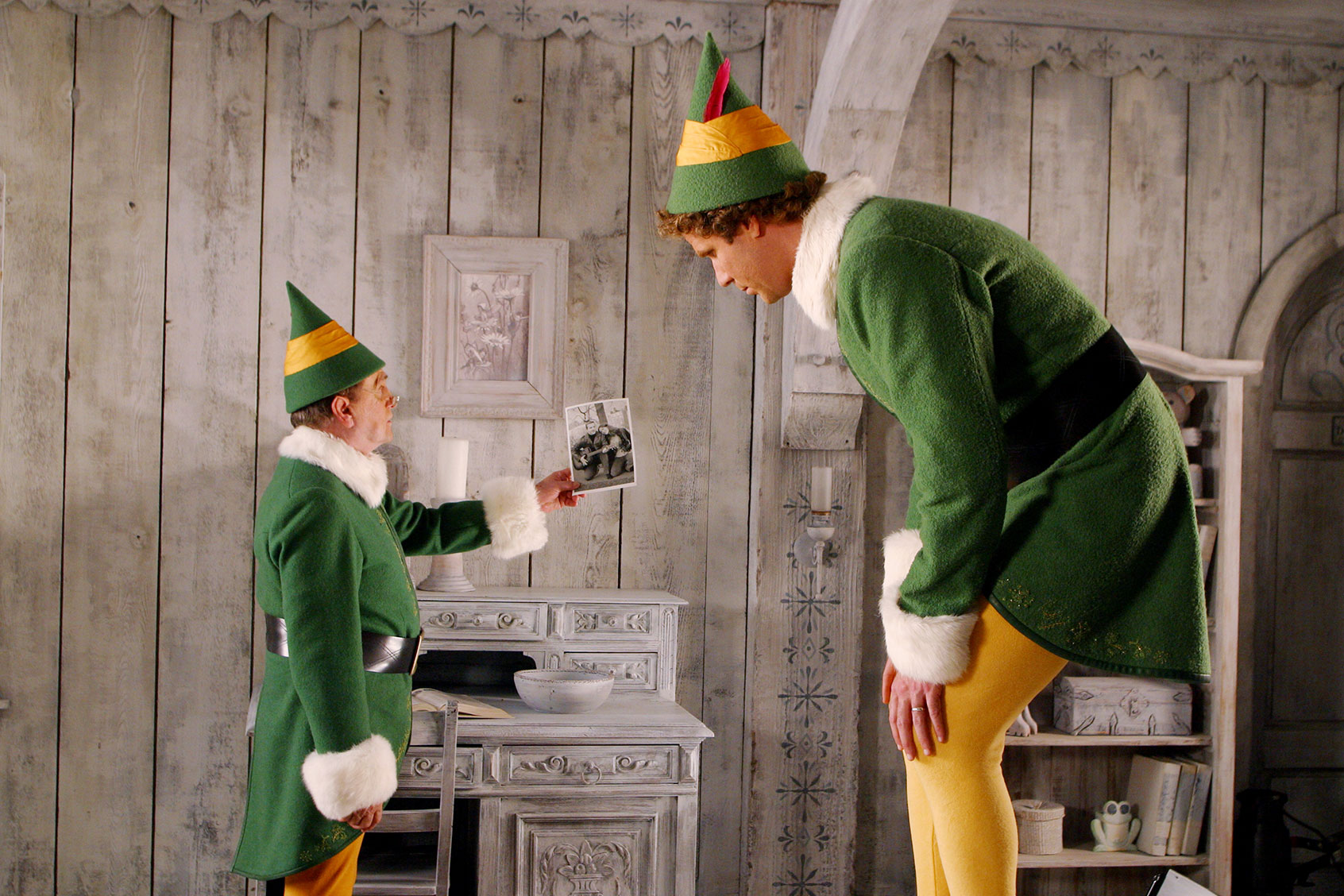
What “Elf” more directly addresses, through the character of Buddy the Elf (Will Ferrell), is a sort of uneasiness surrounding adulthood. In the film, Buddy is an orphaned human who through an accident, ends up in the North Pole and raised by Santa as an elf. But once grown, he learns the truth of his parentage and is tasked with getting his human bio dad – corrupt publishing exec Walter Hobbs (James Caan) – off the Naughty List with a dose of Christmas spirit.

ElfBob Newhart as Papa Elf and Will Ferrell as Buddy in "Elf" (New Line Cinema/Hulu)Buddy's rocky journey of embracing the human world and his own place in it earnestly illustrates the sense that we, as adults, may often feel as lonely, confused and out of place as we did in our youth. What most of us don’t say out loud, Buddy does, through his childlike naivete. 
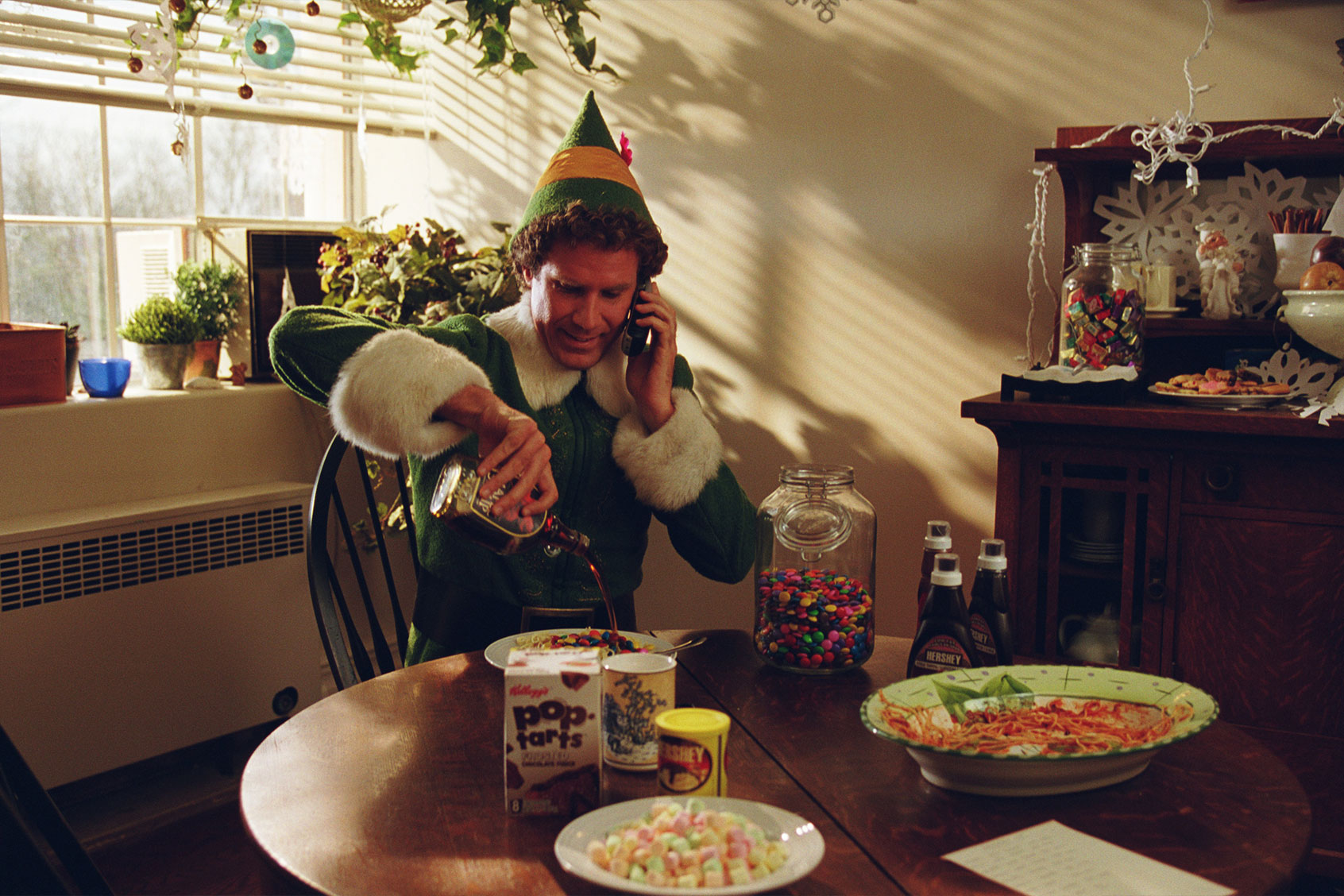
After landing in New York and making contact with his estranged father, Buddy attempts to please him by assimilating into the world of corporate Manhattan. Walter rejects Buddy’s proposed Etch A Sketch-drawn itinerary, which includes some of his favorite and most commonplace activities during his time at the North Pole. “First we’ll make snow angels for two hours, and then we’ll go ice skating, and then we’ll eat a whole roll of Toll House cookie dough as fast as we can, and then to finish, we’ll snuggle!” he says, looking something like a medieval minstrel in a bright green elf suit, yellow tights, and point-toed shoes. Christmas curmudgeon Walter is not on board, believing his son is a “certifiably insane” man living under the deranged delusion that he is an elf. Walter even tries to get Buddy to ditch his yuletide ensemble. “You’re not in the North Pole any longer," he says. “Look, you want to make me happy, don’t you? Then lose the tights.” 

Much to his chagrin — and Emily Hobbs’s (Mary Steenburgen) surprise — Buddy sheds his sugar-plummed regalia in favor of a suit and briefcase and accompanies his father to work at Greenway Press, a children’s book publishing firm. While at the office, Buddy tries coffee (which he hates) and works in the building’s shiny mailroom. “This place looks like Santa’s Workshop!” he says. “Except it smells like mushrooms, and everyone wants to hurt me.” Buddy even inadvertently gets drunk when another worker shares “maple syrup” with him, which leads to a mailroom-wide dance party. 

ElfWill Ferrell as Buddy in "Elf" (New Line Cinema/Hulu)Though Buddy has put on the trappings of adulthood, inside he’s still the same whimsical dude, a fact which is glaringly apparent to the viewer as we watch him wholesomely and haplessly blend with his new world. This tension is the crux of what “Elf” addresses. Does anyone actually know what’s going on? Is there a right or wrong way to live our lives? Why can’t I seem to fit in? Why does it seem like everyone else has it all figured out, has their sh*t together? Santa’s Workshop vs. Corporate America? “The Cut”’s Kathryn Jezer-Morton recently touched on this idea by analyzing parental insecurities to get at a shared fundamental anxiety with how we are publicly perceived. Though Buddy is far from hung up on what others think of him (in fact, he is blissfully unaware of social norms), his journey of demystification from perceived elfhood to humanness ultimately mimics the process of becoming an adult.
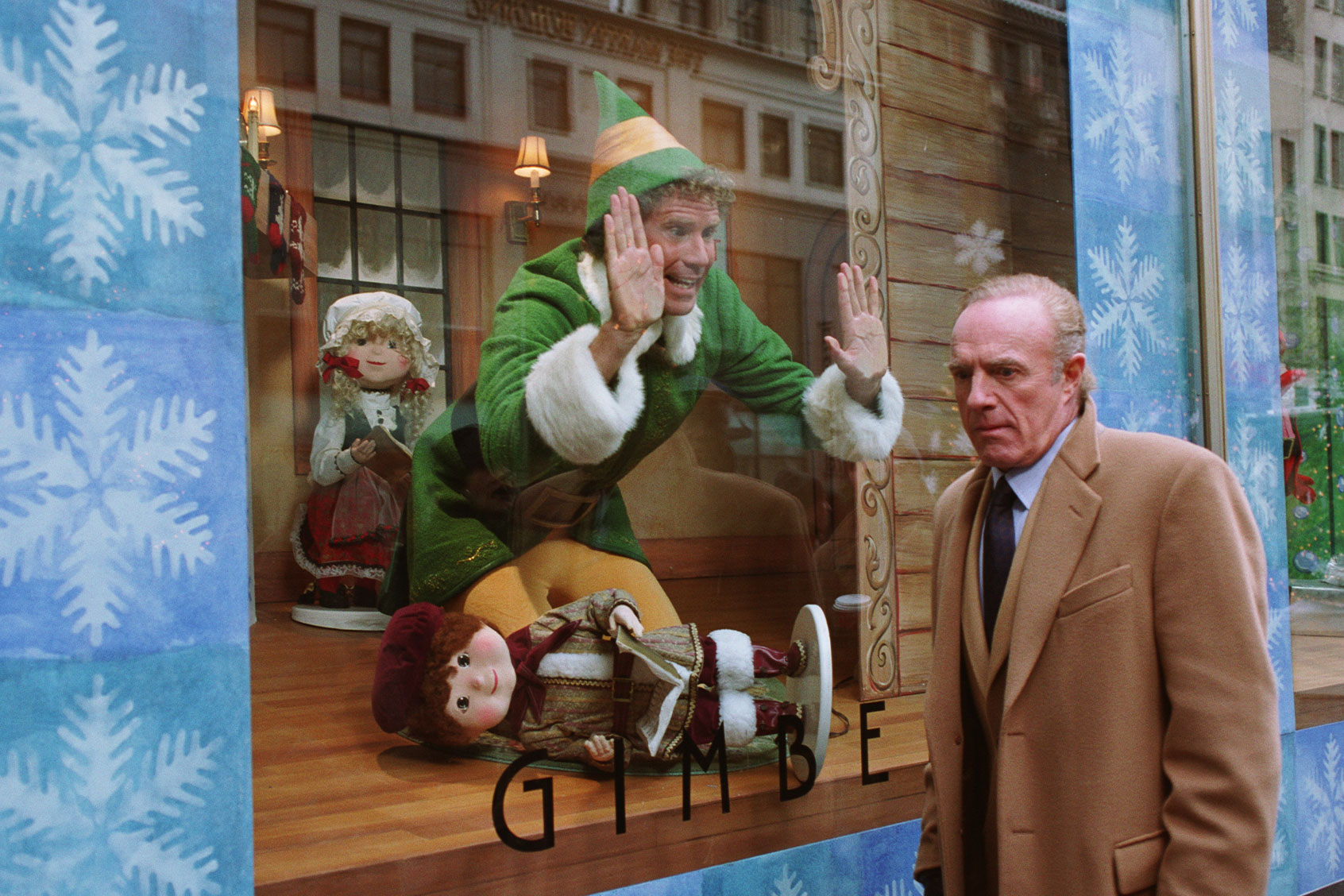
Towards the end of the film, Walter becomes irate when Buddy foils a business partnership between Greenway and children’s book author Miles Finch (Peter Dinklage), confusing the writer who has dwarfism for a rather "angry elf." Not only does Miles grow increasingly grow angry, but he beats up Buddy before storming out of the office.

Walter has had enough and tells Buddy to leave. “I don’t care where you go,” he fumes. “I don’t care that you’re an elf, I don’t care that you’re nuts, I don’t care that you’re my son. Get out of my life — now!” 

ElfWill Ferrell as Buddy and James Caan as Walter in "Elf" (New Line Cinema/Hulu)After a heartbroken Buddy departs, we see him sitting in the Hobbs’ apartment, furiously twisting the Etch A Sketch’s knobs as he pens an apology letter. “I’m sorry I ruined your lives and crammed [11] cookies into the VCR,” he writes. “I don’t belong here. I don’t belong anywhere. I’ll never forget you. Love, Buddy.” Even the ornery and Scrooge-like Walter can’t help but become emotional at reading that. Buddy is soon cast into a deep state of emotional limbo, unsure of himself and his place in life. I won’t speak for everyone, and although I wasn’t raised as a Christmas elf, I’ve spent much of my adulthood experiencing these same thoughts and feelings. 

It can also serve as a reminder to us adults . . . to not take ourselves, or life for that matter, too seriously.

But when Buddy witnesses Santa’s sleigh erratically cutting across the sky on Christmas Eve in a state of apparent malfunction, he springs into action, returning to his elfin roots to save the day and stoke Christmas spirit amongst hardened New Yorkers. Buddy clings to the back of Santa’s newly airborne sleigh, waving to his family below, signaling us to see that this is the world he belongs in. 

Certainly, the end of “Elf” can be taken at face value for what it is: a big red bow tied around a film that, at its core, is about the holidays. But it can also serve as a reminder to us adults, no matter what generation we identify with, to not take ourselves, or life for that matter, too seriously. To remain true to our most authentic selves, a lesson which, although a cliche platitude of sorts, is something I think we could all benefit from. Sure, adulthood carries along with it some inherent roles and responsibilities. But not all of them are humdrum and grey-suited. Nor are they aspects of our adultness that we should (or shouldn’t) feel secure in. Though “Elf” doesn’t advocate for us to act like kids outright — and perhaps even advises us against combining pasta with Pop-Tarts and candy — it reminds us that it’s perfectly acceptable to be in flux, evolving and wondering where our lives will carry us, even if we’re already in the middle of them.

 And no, you definitely don’t have to drink coffee. 

"Elf" is now available to stream on Hulu and is in select theaters for its 20th anniversary.


From kiddie table drink to sober curious sparkler: The enduring allure of Martinelli’s

Long into my adulthood, Thanksgiving meant a holiday defined by brand names. A Butterball turkey. Ocean Spray cranberry sauce, coaxed out of the can with its ringed indentations intact. A pie made from Libby's pumpkin puree. And always, always, plenty of Martinelli's sparkling cider. 

I grew up in a teetotaling family and then married in to one (both, uncoincidentally, abutted on all sides with plenty of alcoholism), so Martinelli's has long been the drink of choice at holiday gatherings. Even now, as an adult who will absolutely supplement any family gathering with a nice pinot, I still don't feel prepared for seasonal get-togethers without a few bottles of Martinelli's chilling in the fridge. Then I spend a good part of the rest of the year forgetting how damn good the stuff is — no sugar, no water, essentially just apples and bubbles with a little vitamin C thrown in to keep the color fresh. But I only recently learned that the libation I most closely associate with non-alcoholic festivity began its life in a much tipsier incarnation.

"The first third of the company's existence was as an alcoholic product," explains Gun Ruder, President and Chief Executive Officer of Martinelli's, "because pasteurization had not been applied to juices broadly. From [Stephen Martinelli's founding the company in] 1868 through the onset of Prohibition, we were hard cider, apple wines, sparkling apple wines. And that," he says, "was it." The California company chugged along successfully for decades with its fermented products, but a well-timed innovation changed its trajectory forever. 

"The first third of the company's existence was as an alcoholic product."

While second-generation Martinelli, Stephen G. Martinelli, Jr. was a student at Berkeley in the early 20th century, he crossed paths with a professor who'd been experimenting with new techniques for pasteurization. "They applied it to apple juice, and wow, now you can make a shelf-stable product," says Ruder. And as the temperance movement began picking up steam and local counties started going dry, Martinelli's had their alternative locked and loaded when the 18th Amendment passed.

"During Prohibition, the company pivoted to non-alcoholic business," says Ruder. After it ended in 1933, the company went right back to making hard ciders, but kept the popular nonalcoholic branch of the business going as well. By 1977, Martinelli's had moved entirely to non-alcoholic cider production. As Ruder explains, "To make hard cider, it takes a very large footprint and about ten days of process. It was very space intensive, and the site at the time was relatively small. So they had to make the hard choice of exiting hard cider to support the non-alcoholic business." (In 2018, Martinelli's did release a limited edition hard cider to celebrate the company's 150th birthday.)

We need your help to stay independent

For many of us, that sparkling cider in its champagne bottle-like packaging evokes memories of sitting at the kid's table or partying with our more religious friends and family members. There's a wholesomeness associated with a bottle of Martinelli's. But with a rise in sober curious culture, a bubbly without the buzz has a broader, cooler appeal. A recent Gallup poll found that American adults aged 18 – 34 drink alcohol less frequently and less excessively than their older peers. Among my own generation, even a single cocktail hits harder these days, and it's nice to feel like you can keep the party mood going without switching over to water. 

Though Ruder says the company's sparkling cider drinkers are still "primarily children who aren't of drinking age" followed by "folks that are choosing to have an alternative to alcohol at an event" — they've begun to see a "huge upswing" among folks in their 20s and 30s. "It's an important part of our consumer base," Ruder says, adding, "The benefit we have is that those consumers many of them grew up drinking our product anyway." Mixing familiarity with a more contemporary vibe, the company rolled out a blush version of their sparkling cider in 2019. And those who want a more Instagrammable experience might opt for its Heritage Label version, with its evocative, old school typography. 

Image and perception, after all, are everything — down to the names we call our seasonal beverages. As the company explains on its site, "Martinelli’s apple juice and cider are the same; the only difference is the label." Ruder confirms, "There is no difference. At different times of year, with the exact same product, if you put them side by side, everybody will buy the cider. There's a concept there that makes cider more popular." 

And while Martinelli's has a solid, all-year-long thing going on with its juice, the company hopes its fans can expand our appreciation of the fizzy stuff beyond the holidays. "We do resonate with tradition and family and celebration," says Ruder. "We have a core resonance this time of year, with that iconic champagne bottle on the table. He adds, "We think there's opportunity in occasions where people who love our product don't think about us in the same way as they do it from Thanksgiving through New Year's. Everybody thinks about buying a bottle of Martinelli's Thanksgiving through New Year's, because they always have." But why not also raise a glass when "going on a picnic or celebrating a birthday or just made it through to the end of a long day of work? 

"We believe that there's a place for celebration and indulgence every day throughout the year," says Ruder. And while that sounds more like a great New Year's resolution than a Thanksgiving intention, this effervescent season of joy, I'll drink to that. 

A perfect Thanksgiving — Donald Trump on the rocks

Each Thanksgiving my family goes through an extended ritual of talking about things we’ve been thankful for during the previous year. This all started several Thanksgivings ago when my friend and I went to visit Alice at the church near the restaurant in Stockbridge, Massachusetts. I was thankful then for the meal she provided. And I figured I should do something for her.

This Thanksgiving I am extremely thankful for those who are injected, inspected, detected, neglected and all kinds of mean, nasty ugly things for democracy.

The millions of poll workers, precinct captains and local election judges who give us their time to make sure our elections are fair, accurate and safe have my thanks. 

Those who walk away, complaining about how they’ve been pressured and hounded, do not. Don’t let the bastards win. All that it takes for evil to succeed, as wiser men than I have noted in the past, is for good people to do nothing. I mean, I mean, I’m just sitting here on the bench and noticing all those who’ve walked away from the Republican Party while complaining about it yet doing nothing. They do not have my thanks. I’m also tired of hearing from former Trump staffers and administration officials who didn’t fess up to the boss’s insanity while they worked for him. They only found their conscience after they left Trump and signed lucrative book deals. None of them stood up to him when it mattered – when they were on the inside. 

The coming presidential election is the ultimate test of survival and it’s going to be a struggle. 

President Biden often refers to this in his stump speech. “Right now, we face an inflection point – one of those challenging moment in history where the decisions we make today will determine decades to come. But I don’t see a dark, dismal, divided future for America. I see an America about to take off,” Biden said when he opened his latest social media account on the new platform Threads for his 81st birthday.

We need your help to stay independent

The agents of despair and chaotic despotism are smaller in numbers, but louder and more threatening than Biden. They are led by Trump, who rarely speaks of hope but always speaks about division, revenge and hate. The seditionists who love Trump have driven people with little stomach for the fight from the ranks of the Republican Party. They’re overwhelming us on social media with their scatological politics, their brazen threats and their attempted rewriting of history. They are a cult and supported by various corporate media and social media companies, mostly because of money, but also because some who run corporate and social media companies are as racist and misogynistic as everyone else in the cult.

These fascists who threaten the United States should not have their time in the sun. They deserve time in prison. Donald Trump is chief among them.

I spent too much time in and around Trump during the four years of his stain-spreading cancer in the White House. He is an empty threat — if you vote against him. I’m thankful for those who see that. He is a demented, devious, delusional, disgustingly disingenuous, dreary, despicable, destructive destroyer of worlds. He is destined to be historically synonymous with Benedict Arnold.

When all is said and done, if Donald Trump faces prison time, I still suggest we refurbish Alcatraz just for him. Call it Mar-a-Lago West. Put in a one-hole golf course. Let it be his compound staffed by his Secret Service agents and federal prison guards — no one else. Trump can live there unable to leave. His only contact with the outside world should be two hours, twice a day when he has to dress in an orange jump suit and stand in a cage. Tourists can visit him and get their picture taken for $20 a pop. It’ll pay for his incarceration and may help pay down some of the national debt incurred during his presidency. For that, I’d be thankful.

I’m thankful when people who haven’t spent as much time with him as I have, recognize the vile, villainous creature for what he is. “Make no mistake: the twice-impeached, 4-time indicted Donald Trump is still a fool. But we can’t let our fellow Americans write him off like one. Evil thrives in the shadow of dismissive mockery, which is why we must take the danger of Donald Trump very seriously. So today we issue another warning. From this place where Abraham Lincoln spoke — right here in the beating heart of New York — to the rest of America: This is our last chance. Democracy won’t survive the return of a wannabe dictator. And it won’t overcome evil if we are divided.” Those words were spoken by actor Robert De Niro. 

The fact is, I’m also thankful many are aware that Trump is nothing but an empty suit who loathes everyone and everything on Earth — including himself. I also remain thankful, and have always been, for those who are capable of critical thinking and those who have the ability to discern vetted facts from craven lunacy aimed at dividing and conquering.

The price of liberty is, indeed, eternal vigilance as Thomas Jefferson taught us, but you need vetted factual information in order to be vigilant; so I also am thankful for my colleagues in the press, slim that their numbers are, who are dedicated to providing vetted facts to the American public for us to decide how best to use them.

You see, we still have choices. The most difficult of which, for some, will be who we will vote for in the presidential race next year.


Want a daily wrap-up of all the news and commentary Salon has to offer? Subscribe to our morning newsletter, Crash Course.


Some of those people are thankful for and say “God Bless Donald Trump” every day and pray for his ascendency as President and to replace Jesus on the throne. You can’t argue with the fact that he’s given millions of people a voice they never had before. Those people see Trump as a savior who restored American dignity, gave us tax cuts, cured a virus that many also believe didn’t exist, and he has “fought the deep state”, drained the swamp and built thousands of miles of wall, thus securing borders and he also single-handedly kept oil prices low. They also see the January 6 insurrection as a simple protest against Joe Biden — because Biden, according to them, didn’t actually win the election — Trump did (in a landslide no less). Of course, none of this is true, but his followers are thankful for Trump’s continued efforts to make it so.

Me? I’m also thankful for education and only wish more people took advantage of it. There are those who believe only Trump can set us free. There are others, more critical and educated, who know Trump is a phony, but he’s their phony. And then there are the racists, misogynists and assorted misanthropes who are happy to burn it all down and Trump is both the gasoline and the match to get this fire sale started. They have no hope, but are thankful Trump is contributing to their fatalistic cause. The rest are morons.

Many people have forgotten the horror of Trump and listen eagerly as Trump and his minions try to preach that Biden is the problem. The press, mindful of the Trump-led bat guano show, find themselves going easier on Biden — and that is not helping. Millions, who are capable of critical thinking are thankful Biden is around, but scared to death he’ll be defeated in 2024. Many who are incapable of critical thinking believe that Biden is the worst president ever, is on the take, and is both befuddled and an evil mastermind.

I’m thankful the election isn’t today, because a lot of people just don’t get it. Maybe we need four-part harmony.

What the MAGA supporter believes, on a very fundamental level, is that Donald Trump is the ultimate middle finger to the establishment that has been grifting and fleecing the middle-class and the poor for years. What those who oppose Trump understand is that he’s just the ultimate grifter. And he is by far the most dangerous to crawl out of the primordial ooze and infect the hopeless with imagined enemies, contrived inconveniences, and fill them with false hope since Lucifer fell from heaven. Yes. If you’re an evangelical, he’s not only amoral and dangerous, but that combination makes him truly evil. Donald Trump is the deacon of disaster. 

I have just one question for the Don. Kid, have you ever been arrested? Did you ever go to court? I’m thankful that all of his mean and nasty and ugly, horrible crime-type stuff is now on display in a court of law complete with 27 eight-by-ten color glossy photographs with circles and arrows and a paragraph on the back of each one explaining what each one is to be used as evidence against Don. I’m thankful that so far, at least three of the judges in the four criminal cases against Trump aren’t a typical case of an American blind to justice.

You know what else I’m thankful for? Alice, Ray and Sasha the dog. So I’m going to get a friend of mine, go over to the church in my red, VW Microbus, loaded with shovels and rakes and other implements of destruction and load up their garbage for Thanksgiving. 

Anybody know where the nearest dump is? And don’t tell me about the one that’s closed on Thanksgiving. I hear officer Obie gets mighty persnickety about that.

Democracy’s last Thanksgiving: Experts imagine America in a year if Trump wins the 2024 election

Trump and his allies and acolytes are publicly planning to make him America’s first de facto dictator, which will mean the end of the country’s democracy. Their plans are detailed in such documents and organizations as Agenda 47, Project 2025, and the Red Caesar scenario.

Journalists, pundits, the mainstream political class, other experts, and everyday Americans who follow politics and current events closely assume that the average member of the public does so as well. There are decades of research by political scientists and other experts, however, that shows this to not be true. In reality, most Americans are politically disengaged, lack a sophisticated understanding of political matters, are imagistic and emotional, have a difficult time retaining and understanding complex information, do not pay close attention to elections until they decide to vote, and more generally are civically illiterate. More than half of the American public reads below a sixth-grade level.

In all, the average voter also makes political decisions based on “calculations” and concerns that mainstream professional politics watchers — especially liberals and progressives — would find “irrational." The 2024 election is less than one year away and, at this early point, Trump is tied with or leading President Biden in the polls. Trump is also ahead of Biden in key “battleground” states as well. Given the Electoral College, voter nullification and voter suppression, gerrymandering and other structural failings in American “democracy” there is a very real and growing probability that Donald Trump will return to power in 2025.

The sum effect is that these discussions and warnings about America’s “democracy crisis” and “fascism” are often ignored or filtered out by large portions of the public as being just more “partisan bickering” and “politics as usual." Intervening against that dangerous tendency requires making the stakes and implications of Trump’s return to power and the end of American democracy very clear, very direct, and very real for the average person. The mainstream news media and political class have largely failed in that task.

To that point, this may be the last Thanksgiving where the American people will live in a democracy, however flawed and ailing it may be, where their basic Constitutional and other civil rights are relatively secure.

In an attempt to reflect on the meaning of this Thanksgiving in a time of such great troubles, and what this holiday will mean (and what they will be doing) when and if Dictator Trump takes power next year in 2024 and beyond, I reached out to a range of experts who I have spoken with previously for my conversation series here at Salon:

We need your help to stay independent

Brynn Tannehill is a journalist and author of "American Fascism: How the GOP is Subverting Democracy."

I'm thankful for my loving little family. Our world may be on the verge of burning down, but at least we have each other — that and my wife's Canadian citizenship.

How will I spend Thanksgiving in the years following a Trump is re-election? In Canada, on the second Monday of October. I suppose we'll be thankful we got out, because Republicans at both the state and federal level are making it clear that their goal is a future with every trans person either in the closet or detransitioned.

How will I spend Thanksgiving in the years following a Trump is re-election? In Canada, on the second Monday of October.

If Trump goes down, the status quo holds for another 4 years. We'll see if the GOP continues to be just as dedicated to "eradicating transgenderism" in 2028. Based on the core characteristics of fascism, my guess is yes. For the foreseeable future, every general election will be a referendum on whether we should have meaningful elections ever again.

Rick Wilson is a co-founder of The Lincoln Project, a former leading Republican strategist, and author of two books, "Everything Trump Touches Dies" and "Running Against the Devil: A Plot to Save America from Trump – and Democrats from Themselves".

This Thanksgiving, I'm deeply thankful to see both of my children happy, successful, and married to loving, smart, supportive spouses. (We Wilson's can be a handful.) I'm grateful for my beautiful, brilliant fiancée Renee and the energy and joy she brings to my life every day.

If Trump wins in 2024, it'll be a dark Thanksgiving indeed. Like millions of Americans, I'll be contemplating how to protect my family from the coming authoritarianism Trump and his people have promised. As someone Trump ordered Bill Barr to investigate back in 2020, I'm likely on their list. It almost seems absurd to type those words, but it's important to plan for the worst.

If Trump loses in 2024, I'll raise a glass (or several) that Thanksgiving Day to every damn American who stayed in the fight until the end.  Once he's gone, I'll keep giving groups and parties advice on keeping the lights of democracy and liberty on in a world where even if Trump is off the stage, authoritarianism and extremism still has a foothold. Aside from that, I hope I'll be watching my kids have their kids, traveling, writing more books, and flying and restoring antique airplanes.

Steven Beschloss is a journalist and author of several books, including "The Gunman and His Mother." His website is America, America.

I feel fortunate that Joe Biden is our president and a fierce advocate for democracy. In another time, that would be the most obvious expectation. But Donald Trump and his fascistic enablers have made it necessary to be clear who’s committed to American values like equality, diversity and justice—and who’s ready to toss it all away. Over the next year leading up to the 2024 elections, I expect Biden will further ramp up the pro-democracy agenda and messaging. That includes continuing to push back against the GOP role in stripping away women’s reproductive freedom and ignoring the will of the people, what we’ve learned is a powerful motivator to get people to the polls. Biden won in 2020 by over 7 million votes with the largest turnout (66.3 percent) in half a century.

I anticipate—and surely hope—2024 will generate the same passionate engagement, if not surpass it. That bodes well for Democrats, even though the various third-party candidates are a reason to worry they could tip the outcome in Trump’s favor.

The idea that a majority or sufficient plurality would choose to usher in an autocratic government with no mission beyond enabling Trump to seek vengeance against his enemies remains improbable. If I’m right, next Thanksgiving will be cause for great celebration. But if I’m wrong? Thanksgiving 2024 will look more like a funeral—the demise of the American democratic project—than a time to give thanks.

Nate Powell is a graphic novelist and the first cartoonist to win the National Book Award. Powell has also won four Eisner Awards. His forthcoming graphic novel, Fall Through, will be released in February 2024, followed by a comic adaptation of James Loewen’s influential "Lies My Teacher Told Me" in June.

The stakes of everything at ongoing risk always illuminate my relative safety, health, comfort, choice, voice, and the people with whom I share this life. I’m deeply thankful for the ability to safely be with friends and members of my creative communities again after three and a half years working our way out of the deepest depths of social isolation. I have so much gratitude for the continuing privilege of making ends meet by doing what I have wanted to do since I was 11 years old—and for people’s faith and support in my strange and emotional work in an often-undervalued medium. I’m thankful for the strangers throughout much of my local community who show basic humanity and decency, calling out my own tendency for judgment and dismissal and helping to reinstill much-needed faith in people. I’m thankful for having a chance to see one of my all-time favorite bands, The Hated, at a one-off reunion show deep in Maryland back in January—and how that experience helped galvanize much of the above gratitude throughout this foreboding year.


Want a daily wrap-up of all the news and commentary Salon has to offer? Subscribe to our morning newsletter, Crash Course.


If Trump wins in 2024?  I spend a lot of time focused on just how eagerly people have memory-holed much of the last nine years (in fact, I made an entire book built on counteracting that urge in real time). Fragmented senses of continuity and context have been powerful conditions to allow the multiple, ongoing crises and inhumanities we witness and experience every day. I will be doing what I was doing for Thanksgiving every year since 2016: acknowledging the ongoing horror and radically deepened stakes, weeping, swearing, remembering, and then turning my phone off to focus on gratitude and love for the day, surrounded by a handful of people whose very right to exist in peace has (hypothetically) been destroyed. But Thanksgiving is my very favorite holiday, and I find it very moving to observe the day with all the mess cut out, on my own terms. I will not let fascists take away that observance of humanity, that interconnectedness.

If Trump loses? In this best-case scenario (which I still, in fact, feel is more likely), I will do exactly the same thing as if the fascists won—there will be mass violence, fear, paranoia, and resentment to different degrees in either outcome. We are a decade into a massive, collective human struggle for the survival of multiracial democracy itself—and this era is only a chapter of the last century’s fight against white supremacy and fascism. This will be the rest of our lifetimes, and everyone needs to understand that fact. At the same time, allow yourself time and space for quiet, for sacredness, for love and human connection—do not relinquish these under any conditions.

Norm Ornstein is an emeritus scholar at the American Enterprise Institute and contributing editor for The Atlantic.

It is hard to come up with a bundle of things to be thankful for given the state of the country and its politics. I am grateful that Glenn Youngkin and Virginia Republicans were rejected by voters in that state, that Pennsylvania chose a good justice for its Supreme Court, that Ohio rejected the disgraceful and dishonest Republican effort to impose draconian restrictions on abortion, that Kentucky chose to reelect its superb governor. I am grateful we do not have a government shutdown over the holidays. But our situation otherwise is pretty dire.

If Trump wins, I will likely spend my Thanksgiving talking to family about whether we should leave the country, and where we should go. That, sadly, is not an exaggeration. He has made clear what he will do, turning American into a fascist hellscape. If we decided to stay, I would have to think through how to fight back to keep some fragments of our decency and democracy.

If Trump loses, I will be very thankful. But if Republicans gain back the Senate, I will not be very hopeful that the next four years will provide the opportunities we need to tackle the big problems we face.

Rich Logis is a former right-wing pundit and high-ranking Trump supporter. He describes himself as "a remorseful ex-Trump, DeSantis and GOP voter." 

Palpable dread, despair and hopelessness are pervasive throughout our communities on this Thanksgiving; I understand why so many feel politically paralyzed. However, our history shows that we are a resilient people, and I believe it’s because the vast majority of us are, despite our flaws, good and decent people—even, yes, most MAGA voters, who have been exploited by Trump, MAGA and the Republican Party. As a former devout MAGA activist, I left MAGA in 2022, after a year of struggling with the reality that I erred in supporting Trump and MAGA, and playing some role in getting him elected. I give thanks, on a daily basis (sometimes multiple times!), for my personal and political epiphany; because the scales fell from my eyes in my Road to Damascus transformation, I know it can happen for others. My own story is one of hope and redemption, and I see this as possible for our nation. To paraphrase the late, venerable American poetess, Maya Angelou: our nation is a multi-colored ocean, leaping and wide, welling and swelling, we bear the tide. We rise. We rise. We rise.

If Trump wins in 2024? I believe a second Trump presidency will irreparably damage our democracy. What would such an America look, and feel, like? I don’t know; no one does. In the most accurate definition of the word, the U.S. is exceptional, in that we are the only exception in world history: there is no other multi-racial, multi-ethnic, multi-religious (including freedom from religion), diverse, tolerant republic/democracy hybrid, in which the people directly participate in government representation and commerce; and is also both the most powerful military, and largest economy by GDP, in world history. We are, for the most part, on our own, in figuring out how to make this American experiment work with the least amount of combustibility, as possible.

Our progress over the last 247 years, since our founding, has never moved linearly; while we are a more equitable society today, much more work is needed, and it will be accompanied by struggle. We have it in our power to ensure that we never have to answer the question of, “what if Trump is re-elected”? Remember: there is a will of the people, and it is one of the tenets that renders us exceptional, albeit imperfect.

Yes, I believe our alliance will be victorious; electorally repudiating MAGA, however, will not cure all our civic ills. Apologies for tempering good news, but a defeat is the start—not the end—of helping others leave MAGA (which my work focuses on) and equipping our nation to go on the non-violent offensive against whatever follows MAGA. MAGA is the latest—but not the last—embodiment of politically traumatic mythologies designed to make millions panicked and desperate over an increasingly diversifying America, and an increasingly engaged youth. Let’s work together to ensure the highest voter turnout in our history; all of us doing a little will make good trouble and history.

Mark Jacob, former Chicago Tribune metro editor and current author of the Stop the Presses newsletter at stopthepresses.news.

I am thankful this Thanksgiving for pro-democracy advocates in MAGA-dominated states. People who work against the odds, standing up for their principles even though their chances of success are not great. The prospects seemed dim in Georgia a few years ago, but they’re not dim anymore. The state has two Democratic senators and voted for Biden in 2020. Perseverance is so important. So, I’m thankful for blue dots in red states.

If Trump wins in 2024? I would be preparing next Thanksgiving for the biggest crisis in American history since the Civil War. I would be protesting and speaking out. Resisting the rise of authoritarianism. I desperately hope I never have to find out the answer to this question.

If Trump loses, he won’t accept the loss. He and his extremist followers may well make a second coup attempt. This is a long-term struggle for the survival of our democracy. Whether he wins or loses, I’ll keep speaking out and fighting fascism. I invite all people of good will to join us.

Cheri Jacobus is a former media spokesperson at the Republican National Committee and founder and president of the political consulting and PR firm Capitol Strategies PR.

I don't know if "thankful" is the accurate descriptive word for how I feel about the election next year, or the state of the world. I will, however, admit to, despite the past 8 years of Trump thuggery, bigotry, treason, (and taking several direct hits from him and his flying monkeys, myself), still maintaining a glimmer of hope that Justice will prevail. I maintain a degree of faith that the American people's love of Democracy will save us, despite the daily reminders that our institutions have largely failed us so far, when it comes to Trump.

Why this hope and faith with media still relying so heavily on Trump ratings, after Merrick Garland sat on his hands and let us down for so long, and after social media oligarchs increasingly control the flow and access to accurate information? I have hope and some faith because of Ohio, Virginia, Kentucky. Because of Fani Willis, Tish James, Jack Smith. Voters in an off-year election this month turned out to defeat Trumpism and MAGA fascism, giving me hope they will do so again next year. Some in our justice system appear to have the competency, backbone, and commitment to holding criminals accountable, despite a long history of Trump and some of his team skating on obvious crimes. 

The collective of non-MAGA cult Americans understand in our bones that failure next November means the effective end of our democracy. That is not hyperbole. We also know an election win will not be the end of the war on democracy, but it is a battle that must be won in order to prevail long term. If successful, we will celebrate at Thanksgiving 2024, but will re-arm for battle, knowing the wind is at our backs. Failure is not something I am willing to contemplate, consider, or plan for at this time.  

The case for bringing a dish of gossip to Thanksgiving this year

Across America, people are spending more time in their kitchens preparing a Thanksgiving meal for their families and friends. Some might be roasting a traditional turkey. Others might be baking brussel sprouts, mashing potatoes or even stirring very buttery hominy. But what if I told you that there was another dish you should consider bringing. One that is extra juicy, and delicious, but doesn’t require you to set another kitchen timer. One that is healthy, easily shareable, and might keep guests coming back for more. 

Bonus: it could even keep politicized conversations around politics and religion off the table. What if I told you that it’s not food, and instead it’s a spoonful of good-old fashioned gossip? 

“Exchanging gossip is a lot safer than broaching dangerous topics like politics and religion,” said David Ludden, a professor of psychology at Georgia Gwinnett College. “So, when crazy Uncle Joe starts carrying on about his pet conspiracy theories, don’t get angry or argue with him, just politely say, ‘that’s interesting,’ and then move on to gossiping about someone.”

That’s because despite the common belief that gossip is toxic, low-brow and considered rude to partake in, psychologists say that the right kind of gossip is actually good for our health. Not only are there health benefits, but humanity needs it to survive and actually thrives on it. Sharing good gossip, it turns out, can bring people closer together.

Anytime you talk about another person, it’s technically gossip, he said. But it’s the way in which it is used that determines if it’s “bad” or not. 

In 2021, researchers published a study in the journal Current Biology strengthening the case for the value of gossip, positioning it as a tool for cooperation. In the study, neuroscientists invited participants to play an online game called “public goods” to test the tension between cooperative and selfish behavior. In the game, points earned could later be exchanged for dollars where players could choose to either keep the points, or invest them in a group fund. 

In this game, psychologists often find that participants change their behavior based on whether or not other players contribute, or don’t contribute, to the group fund. In this study, the researchers allowed participants to exchange private messages with each other, essentially allowing them to gossip about one another. When they did, they found that the groups who gossiped felt the most connected with each other by the end of the game. They also found that the groups who gossiped also made more money, signifying a stronger willingness to cooperate and work together. 


Want more health and science stories in your inbox? Subscribe to Salon's weekly newsletter Lab Notes.


But wait, isn’t gossip bad? There’s the old saying: “If you have nothing nice to say, don’t say anything at all.”

Not exactly, as researchers who are trying to promote the benefits of gossip are quick to distinguish there are differences between “good” and “bad” gossip. Ludden said in psychology, gossip is simply defined as “the exchange of social information.” Anytime you talk about another person, it’s technically gossip, he said. But it’s the way in which it is used that determines if it’s “bad” or not. 

“‘Bad’ gossip is ‘toxic’ gossip used for the purpose of manipulating others for your own benefit and at the expense of others.”

“The difference between ‘good’ gossip and ‘bad’ gossip isn’t about whether you’re saying positive or negative things about another person,” he said. “Rather, it’s about whether you’re using gossip in ways that are beneficial to your social group.”
He provided me with a couple of examples. For instance, if you are sharing information about someone that will help other people improve their interactions with that person, that is “good gossip.” Even if you had an unpleasant experience with someone, another person might know about what’s going on in their life that can help change your perspective on the event. This is still good gossip.

“‘Bad’ gossip is ‘toxic’ gossip,” Ludden said. “It is gossip used for the purpose of manipulating others for your own benefit and at the expense of others.”

One example of this is if someone is jealous that their friend is getting close to another person. As a result, they might tell their friend something bad about that person. It might be true, or it might not be true. Either way, their purpose of sharing this gossip isn’t to help but rather to hurt them. This is bad gossip. 

When it comes to the benefits of gossip, there are a myriad of ways it can bring people together, Ludden said. It all goes back to its evolutionary roots: the need to maintain social cohesion in large groups. Hunter-gatherers lived in groups of 100 to 150 people. It was impossible for them to keep tabs on everyone, so they relied on gossip to maintain social cohesion. Psychologist Robin Dunbar wrote a book that compared gossip for humans to grooming for apes, a means of social bonding.  

“It is our ability to use language as a means of exchanging social information that enabled our ancestors to live and work in these larger groups,” Ludden said. “Since we can’t keep track of what’s going on in the lives of all the members in our group, we benefit from other people’s experiences with them by what they report to us.”  

We need your help to stay independent

And yes, there is science to support that it does feel good to gossip. In 2015, scientists were curious to look at the brain while hearing good and bad gossip — about themselves, their friends and celebrities. In general, hearing all types of gossip showed more activity in the prefrontal cortex, the brain’s reward system, confirming the pleasure many feel participating in some good gossiping. 

This Thanksgiving, you have permission to indulge in some guilt-free gossip. In fact, you could be the one to bring it up — just make sure your intentions are good.  

“You’re going to gossip at the Thanksgiving dinner table anyway, so you might as well make it pleasant,” Ludden said.

How to “move beyond the concept of gratitude” and decolonize your Thanksgiving dinner

For over a century, growing recognition of the historical inaccuracies and blatant cultural misrepresentations embedded in the traditional narrative of American Thanksgiving — which often gloss over the brutal impact of colonization on Indigenous and Native communities — has led to calls to reassess how the holiday is celebrated, if at all. 

This is something that Brad Lopes, who is an Aquinnah Wampanoag citizen as well as the Director of Wampanoag and Indigenous Interpretation and Training at Plimoth Patuxet Museums, located in Plymouth, Mass., thinks a lot about on both a personal and professional level. 

“I do not celebrate ‘Thanksgiving,’ although a harvest feast around the same time the federal US holiday takes place has occurred in family history,” Lopes said. “However, this is a tradition for Wampanoag families and still is for many of us. During this period, I spend time reflecting and engaging in remembrance and mourning practices, taking time to visit historical locations associated with King Philip’s War and our history.” 

The Plimoth Patuxet Museums, which has been in operation for over 75 years, was founded by Harry Hornblower and its aim is to "tell the story of the English settlers, popularly known as Pilgrims, who landed in Wampanoag Homelands in 1621,” according to Lopes. To accomplish that mission, the museum shares information through enclosed exhibits, “four history sites that use a variety of interpretation techniques” that represent the time period between 1621 and 1627, and a recreation of the Mayflower, fittingly called the Mayflower II. 


Want more great food writing and recipes? Subscribe to Salon Food's newsletter, The Bite.


In order to tell the complete story of the English settlers, however, the perspective of the Native Americans whose land they colonized is essential, which is why the museum founded the Wampanoag Indigenous Program or WIP, 50 years ago. It pushes back on the narrative that the first Thanksgiving was a happy meal between the Pilgrims and the Wampanoag. 

“I think there are dozens of harmful discrepancies, disparities and stereotypes that have been romanticized by the mistelling of the Thanksgiving story and the use of imagery that suggest historical truth where there is none,” Lopes said, noting that the story itself is harmful because it only promotes the "ongoing process of settler colonialism." 

Harvest FeastHarvest Feast (Courtesy of Plimoth Patuxet Museums)
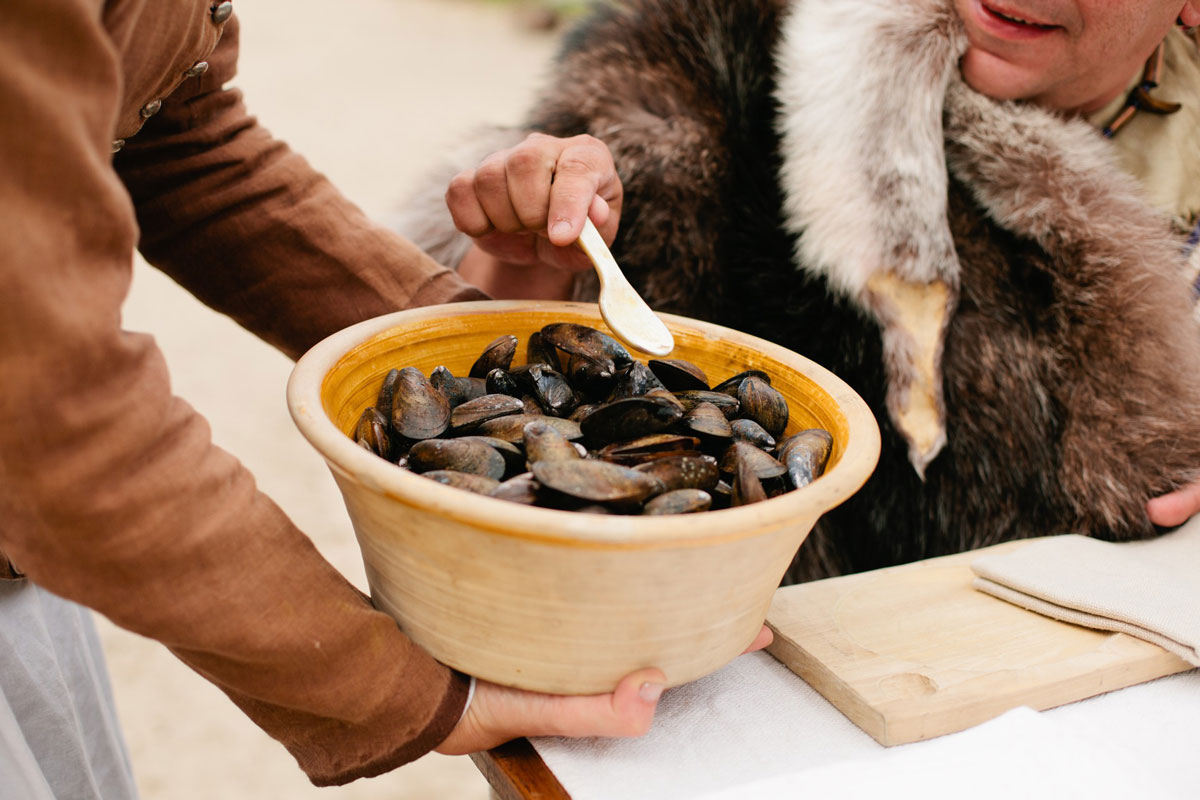
Essentially, these English settlers “were practicing a Christian Separatist Thanksgiving to express their gratitude for surviving in our homelands” and it was a meal packed with polarizing political leaders, including Captain Myles Standish — the military adviser for Plymouth Colony who had already murdered Indigenous peoples in the area — and Massasoit Ousamequin, the sachem or leader of the Wampanoag confederacy whom, as Lopes explained, is a contentious figure among many Indigenous people who think he “should not have assisted this fledgling group of religious extremists.” 

“In some circumstances I find that the only truth about Thanksgiving is the lie itself,” Lopes said. 

Of course, Lopes said, the experience of being Native American isn’t monolithic. 

1621 Harvest Feast1621 Harvest Feast (Courtesy of Plimoth Patuxet Museums)
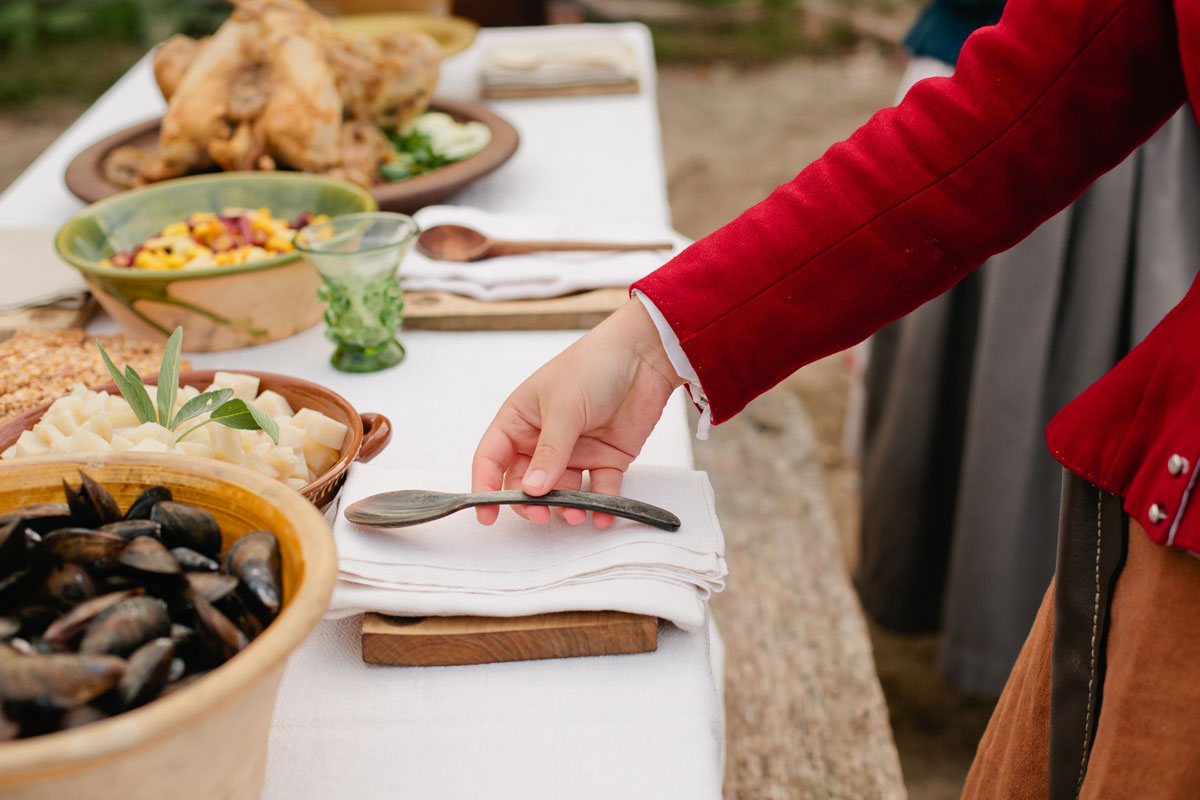
"Some folks recognize and celebrate Thanksgiving in my community (Aquinnah),” he said. “Others do so without the attached historical concepts and events and spend time among family and harvest foods. While others choose not to celebrate it at all and instead choose to mourn, acknowledge our lost ancestors and sovereignty and work toward collective action that will result in a better future for Native folks and the rest of the world." 

Whether or not you are Native, Lopes said there are ways for all Americans to further decolonize the holiday. He recommends starting by supporting the tribal nations in your area, such as Native American Lifelines in Boston, looking into land back initiatives and land conservancy, like the Native Land Conservancy, and supporting indigenous-owned and operated nonprofits and businesses, like the Aquinnah Cultural Center. 

He also recommends buying directly from indigenous creators and families (Red Rock Designs, IndigenoUS, Ockway Bay Wampum, Redtail Boutique and NoLooseBraids are some of his recommended vendors) and supporting indigenous food sovereignty efforts. 

Pilgrim Thanksgiving TablePilgrim Thanksgiving Table (Courtesy of Plimoth Patuxet Museums)

Many of the items that are considered traditional for Thanksgiving — including mashed potatoes and pies —weren’t present during the original meal, which likely included items like corn, beans and venison, items that Lopes describes as the “"backbone of the Wampoanog diet" in the winter months. If you're looking to incorporate other ingredients, dishes or staples into your traditional Thanksgiving meal, Lopes recommends honoring the harvest foods in your community or region.

We need your help to stay independent

For many in the Wampanoag community, that means the aforementioned corn, beans, squash and venison. It also means recognizing other harvest foods, such as sunflowers, Jerusalem artichoke, raspberries, wild onions, sassafras, tubers and nuts, plus various types of shellfish. For preparation ideas, try the “Cape Cod Wampanoag Cookbook: Wampanoag Indian Recipes, Images & Lore” by Earl Mills and Betty Breen, or visit Sly Fox Den Too, a restaurant serving authentic Northeast Indigenous cuisine created by James Beard Award-winning Chef Sherry Pocknett. 

Harvest CelebrationHarvest Celebration (Courtesy of Plimoth Patuxet Museums)

Stepping away from the table, Lopes is also motivated by "moving beyond the concept of gratitude" for Native people, instead toward the concept of reciprocity. "Our entire world and by extension even our language, is reciprocal in nature. Everything is in relation with one another and therefore has an impact,” he said. In addition to expressing gratitude, Lopes notes that this also means "upholding the responsibilities we have to these relations in whatever way might be necessary." 

Pilgrim Harvest Feast Pilgrim Harvest Feast (Courtesy of Plimoth Patuxet Museums)

“We are responsible to our mother, to the land and her waterways,” Lopes said. “For us to partake in her gifts, we need to ensure we do so with respect, caring and the goal of working towards cultural perpetuity.” 

This, he says, is what grounds the Wampanoag and is their driving force, both in the past and to this day. 

At least two people dead after car crashes and explodes on bridge connecting U.S. to Canada

On the brink of Thanksgiving, authorities are piecing through details to deliver updates on a fatal crash that took place on the Rainbow Bridge connecting Canada to Niagara Falls, N.Y during one of the busiest travel days of the year.

According to CNN, a vehicle entering the bridge from the U.S. side drove at a high speed, hitting a median and going over an eight-foot fence, which resulted in a massive explosion killing two people inside of the vehicle and injuring a U.S. Customs and Border Protection officer. After initial speculation as to whether or not this could have been a terrorist situation, New York Gov. Kathy Hochul issued a statement on Wednesday afternoon saying there are no signs of that being the case.

In one of her latest updates, Hochul says that it's looking like the car may have been traveling from a nearby casino and that the identity of the driver has already been determined. “It’s a Western New York resident who was most likely in that vicinity prior to the extraordinarily high rate of speed that led to the crash into the median that sent the vehicle airborne,” she said.

Three land crossings between Canada and the U.S. have reopened following investigations. The Rainbow Bridge remains closed, as of now, while authorities wrap things up. 


These simple mashed sweet potatoes are healthier than grandma’s, but you won’t notice the difference

Let's talk about making perfect sweet potatoes. Not yams — sweet potatoes.

I would never publicly introduce myself as a "foodie," mainly because I can't say it with a straight face. The term foodie, or the phrase, "Well, you know I am a foodie," always makes me laugh. When I was coming up, there was no such thing. If you loved food and liked to eat, you were just called "greedy."

I've always been fine with being greedy, so the fact that Thanksgiving is one of my favorite holidays should surprise no one. Obviously, we never lined up to celebrate the colonizing Pilgrims. Like my greedy cousins, I lined up to celebrate the meats, the macaroni and cheese, the spicy collard greens, and most importantly, the yams.

Though the yam is an actual vegetable, it became a slang term in my house. Yam might mean money, but also so many different things. "His yam a**" was the phrase thrown out at a dude who was afraid to fight, while "She got them yams" referenced an attractive woman. The sweet potatoes were always yams, as in "Who in the hell is making the yams? Please don't say Gloria!" Forgive me, but I would eat all of the jean jackets for sale at Old Navy before trying a teaspoon of Aunt Gloria's yams.

"They swear by the act of chopping up the sweet potatoes into a pan and covering every single last one up with sugar until the dish looks like the cocaine buffet at a Wall Street banker holiday party."

My family never made actual yams, though — and maybe yours didn't, either. The difference between sweet potatoes and yams is relatively simple: Sweet potatoes are sweet and tend to be smooth with orange, red or white skin and orange, red or white flesh. Yams have brown or black skin with white or purple flesh and aren't available as widely in the U.S. as sweet potatoes. Also, if nurtured right, yams can surpass 100 pounds, whereas a healthy sweet potato would be lucky to weigh in at 6 ounces (unless it's shot up with hormones).

The folks in my family all have similar recipes for their sweet potato dishes: They never call for marshmallows, crumbled pecans or anything of the like. They swear by the act of chopping up the sweet potatoes into a pan, covering every single last one up with sugar until the dish looks like the cocaine buffet at a Wall Street banker holiday party, then drowning all the contents with sticky, thick King syrup.

Before you assume, the answer is yes, most of the people in my family have diabetes. Honestly, how would we not? Beyond genetics, sweet Kool-Aid, cakes, pies, collard greens and string beans, there are potatoes that live and die in pools of sugar.


Want more great food writing and recipes? Subscribe to Salon Food's newsletter, The Bite.


The end result makes it to your plate as a side dish that is quite soupy, almost like a sticky sweet sauce you can use on your turkey if it's too dry. I truly loved these sweet potatoes as a kid, but the thought of eating them today makes me cringe, leaving me with a mind-numbing headache and a sore jaw.

Luckily, I didn't give up on sweet potatoes, but I did do my homework — and I found out they can be just as delicious without ridiculous amounts of sugar and syrup.

If you don't like your sweet potatoes mashed, you may want to stop here . . .

Mashed Sweet Potatoes
Yields
9-12 servings
Prep Time
10 minutes
Cook Time
35 minutes

Ingredients

  • 3 pounds sweet potatoes
  • 1/2 cup melted butter
  • 1/4 cup oat milk
  • 1/2 cup cinnamon
  • 1/2 cup raw agave 
  • 1/4 cup nutmeg
  • 1 tablespoon vanilla extract


Directions

  1. Peel the sweet potatoes and cut into 1-inch pieces. Place in a large pot and add just enough water to cover.
  2. Over high heat, bring water to a boil. Cook sweet potatoes for about 30 minutes. Drain.
  3. Place potatoes in a mixing bowl and mash.
  4. Mix in butter, oat milk, cinnamon, agave, nutmeg and extract. Serve immediately.

Daryl Hall files lawsuit and obtains restraining order against John Oates

Darly Hall, the co-founder and lead vocalist of pop duo Hall & Oates, has taken legal action against his fellow bandmate John Oates. On Nov. 16, Hall filed an undisclosed complaint, which deals with “contract/debt,” in Nashville Chancery Court, according to online court records. Little information about the lawsuit is publicly available, as the court documents are sealed

Alongside the suit, Hall filed a motion for a temporary restraining order, which was issued the following day on Nov. 17. The restraining order is set to begin Nov. 30.

“Beginning as two devoted disciples of earlier soul greats, Daryl Hall & John Oates are today soul survivors in their own rights. They have become such musical influences on future generations of popular artists that Spin Magazine’s September 2006 cover headline read: ‘Why Hall and Oates are the New Velvet Underground,’” read the duo’s official website.  

“One of the most sampled artists today, their impact can be heard everywhere from boy band harmonies to neo-soul to rap-rock fusion.”

Together, Hall and Oates have recorded 21 albums and released several major hits, including “Rich Girl,” “You Make My Dreams (Come True)” and “Maneater.” In 2003, the duo was inducted into the Songwriters Hall of Fame.

Both Hall and Oates have solo recording careers and have toured separately in recent years but never officially split up.

Watch “Jimmy Kimmel Live” mock Twitter CEO who can’t deal with Elon Musk’s nonsense

On Tuesday’s episode of “Jimmy Kimmel Live,” host Jimmy Kimmel poked fun at X CEO Linda Yaccarino and her continued loyalty to X boss Elon Musk. Earlier this week, Yaccarino announced that she is committed to staying at X, even after several brands pulled their advertising from the social network in the wake of Musk’s endorsement of an antisemitic conspiracy theory.

In the skit, Yaccarino (played by “Jimmy Kimmel Live” writer Blaire Erskine) does damage control, albeit unsuccessfully, on Musk's most controversial and inflammatory statements.

“Yeah, I’m pretty sure he didn’t say that all Taiwanese people eat kittens. That would be crazy. Let me check,” says the fake Yaccarino on a phone call. “Nope, he said all Taiwanese people eat kittens. OK, thank you so much.”

Kimmel then joins the line, asking Yaccarino if everything’s under control at X headquarters. Yaccarino assures him, “Everything’s going great, I don’t know what you’re talking about” while pouring herself an obscene amount of wine . . . because all the vodka had been consumed.

Later, Yaccarino snapsher laptop in half and cut off a portion of her hair during a fit of rage. 

“Listen, Elon is outspoken, OK? But I can fix him, you know? I just have to shrink myself down and hide under his chef hat and kind of control everything he does,” she told Kimmel, clearly referencing the plot of the 2007 film 'Ratatouille.'"

The skit ends with Yaccarino receiving yet another phone call and calmly dealing with it by smashing her desk with a hammer.

Capitol rioter gets sentence quadrupled after meltdown in court

A New York massage therapist who joined Trump-supporting rioters in storming the U.S. Capitol was sentenced on Tuesday to three months in jail after he dodged court hearings, insulted a prosecutor and verbally attacked the judge who punished him. According to the Associated Press, Frank Giustino pleaded guilty in February to a misdemeanor charge related to the Jan. 6 insurrection but was arrested last month after failing to appear in court for a previously scheduled sentencing hearing.

U.S. District Judge James Boasberg admonished Giustino on Tuesday, stating that he seemed to have no remorse for his conduct during the attack or any respect for the nation's authority. “Your behavior from the moment of the (guilty) plea until sentencing has been about the worst of any January 6th defendant I’ve had,” the judge said. Giustino, however, said he condemned the violence and didn't intend to be disrespectful. “I just want to go home,” said Giustino, who will remain in custody for about two more months after receiving a roughly 30-day credit for the time he has been detained while awaiting a sentence. 

Prosecutors recommended a four-month prison stint for Giustino. They had initially requested a 21-day sentence but pursued a longer term of incarceration after the massage therapist defiantly disrupted a June 23 court hearing. During that proceeding, Giustino dubbed his case “an absolute clown show of a prosecution,” used language that appeared to reference the sovereign citizen extremist movement's believe that the U.S. government is illegitimate, and said, "Why don’t I issue a warrant for your arrest?" after the judge threatened to order one against him because of his courtroom conduct. 

Don’t bring your pistol to the holiday party, and other advice on how to be a stellar guest

Enthusiastic hosts thrive on throwing holiday affairs people remember for the right reasons. Smoothly executing a party or dinner is a thoughtful way to celebrate friendship, and for a homebody like me, it’s the easiest way to see the people you enjoy without leaving the house.

Over the years, however, it has been brought to my attention . . . and my door . . . and my bathroom . . . that not everyone knows how to be a proper guest. Understandable! Plenty of etiquette guides exist for hosts, but guests are bereft of guidance beyond table manners. In the post-COVID world when people are still figuring out how to behave around others, all of us, including yours truly, could stand to tighten up our skill set on how to be good company.

To that end, here’s a brief list of how to act right while living it up during jingle bell season. And if you recognize yourself in one of these entries, don’t feel bad! Just do better next time.

 
Consider what type of event you’re attending and RSVP accordingly


For the unaware, that classic acronym comes from the French phrase Répondez s'il vous plait. That means, "Please respond." So respond, dingus. Some invitations don’t include an RSVP request, and that’s fine! For those that do, respect your host and let them know if you’re coming.


The general rule is that if you are invited to an intimate event, respond as soon as possible with a yes or no. This assists the host in their planning. If you’ve replied yes, you are obligated to go unless you are physically unable to.


If it’s a large party you should also reply as soon as you can. Most soiree veterans are accustomed to getting an influx of “yes” confirmations not long after the invites go out and another wave of affirmatives days before the party starts.


If you don’t know and there isn’t a “maybe” option, gauge whether you really want to go. I say this as both a host and a lazy guest. Answer “no” but make the host aware that you'd like to come if your existing conflict vanishes; they’ll be delighted to see that “no” shift to a “yes.” If you’d rather bed rot that day, just say “no” and leave it at that.  


What to bring, Part 1: Listen to your host


You’ve accepted the invitation. You’re excited to go. You’re also a nice person, so you will probably offer to bring something. If your host genuinely wants to delegate, they will tell you what to contribute. If you agree to provide an item, be it a side dish or a dessert, do not deviate from your plan. Your host is counting on your contribution.


Just as importantly, if the host tells you not to bring anything other than yourself, take them at their word. 


This goes against what those of us with home training have been taught, I know. (Keep reading.) But take it from someone who has held a lot of dinners and thrown her share of bacchanals – if the host tells you to show up and nothing else, that means they have a vision of what they’re serving.


Do not be the person who shows up to a meticulously prepared multicourse Tuscan feast with a bucket of chili.


A good host will accept this generosity, mind you. And they will never let you know that they’re going to talk about that breach of manners for years. Possibly in print. Don’t do it.

 
What to bring, Part 2: Listen to the people who raised you

In many cultures, showing up to an event empty-handed is considered rude. Speaking as a host, I get it! But I also don’t want to be stuck with that chili or five desserts at the end of the night – unless I request five desserts. (I will never ask you to bring chili. Trust.)


So what’s a gallant guest to do? Bring wine. Bring a nice beer. Even better, bring a non-alcoholic beverage option – there’s an array of fancy sodas and mocktails on the market that fit any situation.


You can also be a hero by reaching out earlier in the day and offering to bring a bag of ice. Many hosts forget to grab ice before their event or make ice and end up running out. Ice is also inexpensive and, if not needed, can easily be set into a utility sink, tub or shower to melt off.


Host gifts are nice too but err on the side of a small consumable token of appreciation. Good chocolates, tea, or coffee are splendid. Even small fancy soaps are delightful. Flowers? Lovely. That said . . .

 
What to bring, Part 3: Don’t create more labor for your host


Unless your friend or loved one has hired caterers or has servants, they will probably be very busy placing appetizers on platters or making sure the food isn’t burning. They do not have the bandwidth to engage in theatrical ooh-ing and ah-ing at that Beaujolais you're raving about. And they really don't have time to excavate a vase for the daylilies you brought.


Want to gift flowers? Provide the vase as well. Bringing a special wine? Unless you’ve previously made arrangements with your host to serve the wine with dinner, add it to their bar or wine rack. If you mean for your gift to be just for that person, let them know.

We need your help to stay independent


When you should arrive


As with all things, the rules differ between dinner parties and crowded cocktail extravaganzas. If you’re expected at someone’s home for dinner, show up on time or within 15 minutes of the designated hour. But life happens. If you’re going to be late, contact the host and let them know.


I’ll confess I’m not great at following this rule as a guest, but my friends understand, as do I whenever they’re late. Gauge your host’s temperament. If you’re invited to the home of a new friend or you’re the guest of a friend — Be. On. Time.


Going to a cocktail party where lots of folks will be mingling? Do not show up on time or early. Seriously, your host is probably tending to last-minute matters when the start time rolls around, and nothing spikes the blood pressure more than hearing the doorbell ring right at 6 o’clock and knowing your hot appetizers are coming out of the oven at any second.


If you suspect you’re the first person, stay in your damn car until you see another group arrive. Then go in with them and socialize. Your harried emcee will thank you.

 
Don’t bring an inappropriate or high maintenance guest


Seasoned hosts are accustomed to living by the rule of “the more, the merrier” and are happy to accommodate your plus one or two for parties – and for dinner, with adequate notice.


But that has its limits. This is not the time to spring your acquaintance who is “misunderstood” and “admittedly a lot to handle” on a roomful of people you’d like to associate with again. Forty-year-old toddlers are only entertaining in Will Ferrell movies. In real life, not so much.

 
Offer to help, then abide by your host’s answer


You see the host darting about like a squirrel. He or she looks stressed. You offer your assistance. They politely decline. The proper response is for you to make yourself scarce.


Seriously.


They may look like their skull is about to explode. Doesn’t matter. If they say they don’t need an extra pair of hands, repeating “Can I help? Can I help? Can I help?” like a mynah bird on crank is the opposite of helping. You are forcing them to placate you while they’re juggling an assortment of tasks. Just shove off. If you must, remain within earshot and without staring at them so if they change their mind, you’re not far away. Otherwise, beat it.

 
Introduce yourself to people you don’t know


Generally, the person who invited you to the party is responsible for connecting unfamiliar folks, but sometimes your host is uncorking bottles and shooing away mynah birds. Take the initiative and say hello to a friend who is still a stranger you haven’t met.

 
Don’t mess with anything without asking the host first


Let’s say you find yourself in the host’s kitchen during a cocktail party. You notice that the oven is empty but on. Ever the helpful guest, you turn it off.  


Elsewhere in the house, the host is eyeing the mini quiche plate and noticing it’s running low. She heads to the kitchen to throw a fresh batch into the oven she assumes is preheated only to find . . . a cold appliance. Thanks to your unsolicited assistance, she’ll now have to add 10 minutes of preheat time to the 20 minutes it takes to bake them. 


Ask before you act.


The same is true of an obstacle your host may not have accounted for. Another past guest of mine moved a stack of boot trays that were impeding her ability to comfortably lean against a wall by tossing them onto our patio. But she neglected to place them clear of the steps, as we discovered when my husband tripped over them later in the evening while he was taking out the trash, bloodying his knees.


I cannot stress this enough. Ask before you act.

 
Don't get so drunk that you collapse in the host's tub


Try not to cast yourself as the event’s Fun Bobby.


Refraining from overindulging at a friend’s house is basic good manners. Of course, sometimes it happens – that’s what rideshare apps and taxis are for. Under no circumstances is it acceptable to drink yourself blotto at another person’s house. If you can’t help yourself, you might have a problem. Don’t make it someone else’s problem.


Want more great food writing and recipes? Subscribe to Salon Food's newsletter, The Bite.


Don’t show up to your friend’s or loved one’s holiday event packing heat


I want to pretend that I can’t believe I have to say this, but this is America in 2023. I absolutely have to say this. Even if you have a concealed carry permit, even if your host is a member of a local rifle club, it is rude and dangerous to bring a gun into someone’s home.  


Toting a gun to a special occasion needlessly puts the lives of your host and their guests at risk and conveys to the person who invited you that you don’t feel safe in their sanctum or their neighborhood. 


I’m not quoting Miss Manners here, although I’m sure she’d agree with me. This is basic etiquette dating back to Roman times, if not before. In Tombstone, Arizona, circa 1880, Marshall Virgil Earp required visitors to disarm as soon as they entered town. If that safety rule was decent enough for the Earps, it’s good enough for the people who invited you over for eggnog.


Leave the gun. Take the cannoli – unless your host indicate otherwise. In that case, good wine and a cheerful mood are more than enough.


NY AG condemns ex-State Department official’s viral “disgusting, hateful” harassment of food vendor

A former State Department employee in recent weeks was recorded harassing a halal food vendor in Manhattan, calling the man a "terrorist," The New York Times reports. Stuart Seldowitz, who held positions in both Democratic and Republican administrations including deputy director of the State Department’s Office of Israel and Palestinian Affairs, was seen in several videos posted to X/Twitter, taking pictures of the vendor and pelting him with Islamophobic comments. After a brief, tense exchange about children being killed, Seldowitz tells the man, "If we killed 4,000 Palestinian kids, you know what? It wasn’t enough.” The recordings of the encounters went viral online as tensions have intensified between pro-Israel and pro-Palestinian groups across the country since the beginning of Israel's war on Hamas.

The video clips show Seldowitz returning to the same vendor over several days — once at night and twice during the day — and refusing to leave each time. In one clip, he's heard saying, “It’s a free country — it’s not like Egypt" and calling the vendor "ignorant" for not speaking English before continuing to make inflammatory comments about the founder of Islam, the Prophet Muhammad. While the Times was unable to reach the vendor for comment, Seldowitz told the outlet that the back-and-forths started after he asked the vendor if he was Egyptian. As the conversation continued, Seldowitz said the man expressed support for Hamas. No such claims, however, are shown in any of the public videos. Seldowitz also expressed regret for the remarks he made toward the vendor, said he returned to the location to ask if the man was "still a supporter of Hamas” and insisted he is not Islamophobic. "This is disgusting, hateful, and New York won’t tolerate it," New York Attorney General Letitia James tweeted of Seldowitz's conduct. "We won’t stand for Islamophobia or any kind of hate in our state."

“Incriminating”: Trump NY fraud trial defense witness backfires — and cries on the stand

Ex-Trump Organization accountant Jeffrey McConney broke down in tears on the witness stand Tuesday as Donald Trump's civil fraud trial in New York pressed on into its eighth week. While McConney expressed how tired he was of being the former president's scapegoat, his tears fell as he lamented the way law enforcement keeps targeting him as a way to get to Trump. 

“I'm an honest person,” he mumbled through tears as he reminisced about his time at the real estate company, according to The Daily Beast. “I got to do things that a normal accountant wouldn't be able to do… I'm very proud of the work I did in the 35 years.”

He described all the ways prosecutors had pressed him in the last five years, bemoaning how they have subpoenaed him, compelled him to testify at the Manhattan district attorney's tax fraud trial against the Trump Organization last year, and made him appear at the New York Attorney General's current bank fraud trial.

When speaking to a friendly defense lawyer, however, McConney, who is also one of the defendants in the lawsuit, did not say anything damaging or scathing about the company. He, instead, dragged on about documents for hours.

In her $250 million lawsuit, New York Attorney General Letitia James has accused McConney of aiding the Trump family and former chief financial officer Allen Weisselberg in doctoring business paperwork to secure better deals with banks and insurance companies. 

“I just want to relax… and stop being accused of misrepresenting assets with the company that I was working for,” he said. “I think everything was justified… I feel proud of what I did.”

His tearful response came after a question from defense lawyer Jesus Suarez asking why McConney no longer works for the Trump Organization.

McConney was the company's comptroller for years, overseeing its internal finances and approving transactions made by Trump himself. That role also included presiding over the billionaire's questionable business dealings. Court records from previous court cases show that he played a key role in Trump's scheme to direct charitable funds to then-Florida Attorney General Pam Bondi, a plot that eventually ended with the New York attorney general shutting the charity down.

The Manhattan district attorney's trial last year revealed how McConney also helped executives evade taxes, with him admitting that he "tried to help them in any way I could… with some suggestions.” The company was convicted of all charges and fined $1.6 million.

In that case, McConney attempted to shoulder all the blame and attribute it to personal "mistakes." A juror later told The Daily Beast that the jury grew tired of him after realizing "he was stonewalling the prosecution and just could not say enough for the defense.”

He employed the same tactic last month when lawyers with the attorney general questioned him about his role in the alleged fraud scheme, which involved nearly a dozen real estate projects over the course of 10 years.

The retiree had an easier time on the witness stand Monday and Tuesday as he fielded questions from the defense. 

But the story of his departure from the Trump Organization failed to include the crucial fact that he was promised a $500,000 severance package when leaving the company. When state investigators questioned him in court early last month, McConney revealed that he had already received $375,000 of the sum and was still owed $125,000. 

"That monetary arrangement raises obvious red flags, given the concern that his former employer may still have considerable influence over a witness in the case," The Daily Beast's Jose Pagliery reported. 

The situation mirrors the agreement McConney's former supervisor, Weisselberg, made ahead of his testimony in the district attorney's criminal trial last year. He revealed when he testified that he was actually still earning the same $640,000 annual salary and receiving the same $500,000 yearly bonus, including a payout that he admitted he was looking forward to receiving shortly after that trial. Former prosecutors who spoke to The Daily Beast at the time decried it as a blatant method of keeping Trump's trusted workers in check.

McConney quickly regained his composure on Tuesday and then took questions from Andrew Amer, special litigation counsel for the attorney general. He also quickly resumed his strategy of claiming ignorance when asked about holes in his testimony. 

We need your help to stay independent

On Monday, the former Trump employee said that external-hired accountants at the firm Mazars USA wrote a particular paragraph in Trump's 2015 statement of financial condition that was littered with caveats. The assertion supported the defense's attempt to cast away blame by creating distance between Trump and certain details in his vastly inflated financial statements. 

During cross-examination on Tuesday, however, Amer displayed an image in the courtroom and pointed out that McConney had written the very same paragraph in blue pen on a handwritten note that lauded Trump's "brand value" and how it "afforded Mr. Trump the opportunity to participate in licensing deals around the globe as reflected on the balance sheet herein.”

Upon being questioned about it, McConney claimed he didn't remember who wrote it. 

McConney's testimony went on to prove injurious to himself, Trump, the former president's eldest sons and Weisselberg as he was questioned about the blue-ink notes written on the sides of several net-worth statement drafts presented by prosecutors, Business Insider reports.

Another cautionary note from the 2015 draft showed McConney wrote that "this computation also includes forecasted deals that have not signed yet" and asked whether Trump wanted to exclude $151 million in as-yet-fictional assets from the statement.

The final version of that year's net-worth statement indicates that McConney's suggestion went ignored, possibly by Trump himself. In the civil case, the attorney general alleges that Trump fluffed up his net-worth statements with those sorts of nonexistent assets. 


Want a daily wrap-up of all the news and commentary Salon has to offer? Subscribe to our morning newsletter, Crash Course.


During Tuesday's cross, McConney was also handed a draft of Trump's 2014 statement and was asked to look at a note on the draft's first page — "DJT TO GET FINAL REVIEW" — which he said he had written.

The former president has repeatedly denied involvement in preparing the decade's worth of financial statements and, in a pretrial deposition denied knowing who had written the note on the draft. The attorney general had alleged that the 2014 net-worth statement contained $3.5 billion in exaggerations. 

"Donald Trump would get final review?" Amer asked the retired accountant.

"That was my understanding, yes," McConney answered from the stand.

Amer asked next whether Trump would get the final review of every statement until leaving for the Oval Office in 2017, after which Eric Trump would approve the drafts.

"That was my understanding, yes," McConney answered again. When asked if it was his handwriting on the drafts — the blue pen marks — McConney also confirmed that it was. 

McConney's slew of handwritten notes indicate that it was Trump and his top executives who made the final changes and signed off on these net-worth statements. As such, those notes deal a serious blow to the Trump team's primary defense of blaming the external accountants. 

The attorney general's office also seems prepared to argue that these handwritten notes show McConney, Weisselberg and Trump intentionally plotted in doctoring the numbers each year.

While presiding Judge Arthur Engoron has already found before the trial that Trump and the other defendants committed fraud in inflating his wealth on the statements, the trial is to determine whether they further violated six specific state laws: falsifying business records, filing false financial statements, insurance fraud, and conspiracy to commit each of these counts — all of which require proof of intention.

McConney's notes could also come back to bite the Trumps and their company by the end of the trial. 

"The fact that these incriminating, hand-scrawled drafts were turned over to authorities by Mazars but not by the Trump Organization could come up at the end of the trial as evidence that Trump's side failed to retain and turn over documents as required by state subpoenas," Business Insider's Laura Italiano reported.

“Saltburn” director on bad behavior, Jacob Elordi’s eyebrow piercing and many “types of seduction”

Writer/Director Emerald Fennell’s sophomore feature, “Saltburn” is not unlike her Oscar-winning “Promising Young Woman” in that it features manipulation and men behaving badly. This story is told from the point of view of Oliver (Barry Keoghan, from “The Banshees of Inisherin” and "Eternals") who befriends the wealthy and handsome Felix (Jacob Elordi) at Oxford. 

"We live twin lives of self-delusion, thinking and hoping we are good people and secretly knowing we’re probably not."

Oliver is a scholarship student, but he helps Felix out of a jam, and his kindness is repaid a thousandfold. Oliver is eventually invited to summer at Saltburn, Felix’s family estate. Felix’s mother, Elspeth (Rosamund Pike) and father Sir James (Richard E. Grant) welcome him, as does Felix’s sister, Venetia (Alison Oliver), but Felix’s cousin Farleigh (Archie Madekwe, from “Gran Turismo”) clocks Ollie as a sly fox. Needless to say, things good and bad start to happen. Lies are told, trouble ensues and before long, bodies pile up. 

Fennell captures all the bad behavior in a way that seduces viewers, but also makes them complicit in the manipulation. Watching Felix in the bathtub, as Oliver does in one scene that is sure to have viewers gasping, is quite naughty. As Oliver tries to maintain a sense of control in a hothouse environment, “Saltburn” reveals some dark truths about human nature.

Salon chatted with Fennell about her devious new film. 

Your films depict men who behave very badly. The features you have directed are all about manipulation. Why explore this dark side of human nature?

I supposed because we all behave badly. We live twin lives of self-delusion, thinking and hoping we are good people and secretly knowing we’re probably not. That tension between “I’m a good person,” and “I’m not a good person,” is what I’m interested in. I suppose people do behave badly in “Saltburn,” but there is a certain amount of wish fulfillment in that.

Oliver almost passes with the privileged class as Farleigh indicates. What observations do you have about Oliver’s codeswitching?  

He hesitates. When you live in a world where everyone pretends there are no rules, and there are rules everywhere, the hesitation is all everyone notices. It grinds things to a halt. The kind of complaint is not overt. But it’s difficult to talk about him because of the construct of this genre and this film, because you don’t know if he’s the lamb or the wolf. 

Codeswitching is what we all do when we try to seduce someone, or become friends, or get a job, or do a phone interview with Salon.com. We are all different people all the time. I am acutely aware of that myself. How worryingly adaptable I am. Everyone is, whether they acknowledge it or not. What I find endlessly fascinating and wonderful about Oliver is his almost supernatural ability to see something in someone even if they don’t know what it is they want. 

As a writer, director or actor, your job is to see people and understand what is underneath the action, what is the motive? I feel Oliver-y maybe in that sense. You are giving people what they want — or think they want. Or what they don’t want, but in a way they do. That’s the game, the dance and it’s thrilling. Oliver is doing what we’re all doing, just better.  

 SaltburnBarry Keoghan as Oliver in "Saltburn" (Amazon Studios/MGM)

As you say, he gives people what they want or think they want. What is the appeal of the cuckoo-in-the-nest story? Can you talk about shaping his interactions with others? 

Absolutely, with that cat amongst the pigeons, there is a sense that you see someone who comes in and takes everyone down one by one in a different way. You see Oliver take info and use it. It is immediate; everything is a clue — that someone is a masochist, or not comfortable with their body. It’s also about the different types of seduction, not necessarily sexual. It’s about making others feel good. That’s the role of the acolyte — to see and anticipate and know the other person better.  

Why is Felix attracted — if that is the right word — to Oliver? 

"Obsession is so deep and intense that it explodes everything else."

In Hollywood, the star doesn’t see the things stylists and PAs see when another person comes in. Felix is very, very beautiful and rich and charming. He’s not terribly bright. He doesn’t have to be. What he likes and wants is to be a real person, a normal guy. Just a guy. Like all stars. They all want to be normal, but they are not. Like all rich don’t want to marry gold diggers even though they made money to get women. We are all engaged in this kind of stupid denial all the time. 

How did you work at presenting the relationship between Oliver and Felix? You do fetishize Jacob Elordi in the film, especially with that eyebrow piercing that I found so incredibly sexy.

I fought so hard for that eyebrow piercing! Here’s the thing — if “I wasn’t in love with him” is the first thing a person tells you, followed by the most beautiful pics of this beautiful man, do you take that at face value? Do you believe him? He says it, but does that make it true?

Obsession is so deep and intense that it explodes everything else. It punctures things like unrequited love. You are so alive with desire it electrifies everything else around you. Felix is so used to being an object of desire, it is almost not peculiar to him — it’s a way of living. A [bathroom] door left ajar does not mean an invitation, but there is an acknowledgement. It is giving people what they want. There is pleasure in being watched, too.  

“Saltburn” certainly addresses issues of race, class and sexuality. Are you satirizing the idle rich? 

Don’t you want to be there? I hope I’m skewering us as much as them for wanting something we can’t have and being permanently engaged in a voyeuristic life. We are all in a state of permanently wanting things we can’t have and don’t need. I am interested in what that is and why that is. 

You worked as an actress most recently in “The Crown” and “Barbie.” Can you talk about shifting your career to writing and directing? 

When I was working on a show in England for four years, I would write a novel every time I was on break. I wrote and grew in parallel. Everything has enabled me to get to the place where my heart lies, which is in writing and directing. 

“Saltburn” opens in select theaters on Nov. 17, and in theaters everywhere Nov. 22.


Stuffing feelings: Experts offer their advice for avoiding the toxic positivity of Thanksgiving

I will never for the life of me accept the appeal of holidays that revolve around inciting specific emotions. I'm a loving person who cringes at everything associated with February 14, a fan of democracy who wants to hide every time July 4 rolls around and a very grateful individual who actively dislikes Thanksgiving. There's something about the implied enforcement of appreciation always trips me up, a sense that the gathering around a turkey and the counting of blessings is a requirement, that chafes like a command to "Smile, baby" from a passing stranger on the street.

This November, I have so much more to be thankful for than I have in a very long time, and I'm also dodging the holiday more resolutely than ever. And if the sometimes toxic positivity of Thanksgiving isn't your thing either — or you're wondering how to manage your guests who are struggling — there are some simple strategies you can employ to make the season more in line with everyone's true feelings, and even come away with a strengthened sense of togetherness.

First, remember that even for the most cranberry sauce-adoring, parade and football-loving, home-is-where-the-heart-is types among us, the holidays can be a bit of a charade. A 2019 Instacart survey of more than 2,000 U.S. adults found that 21% of those who'd hosted the holiday only "pretended to enjoy it," and 68% said they "secretly dislike a classic Thanksgiving food but eat it anyway." A similar 2019 OnePoll and Sabra survey of respondents aged 18 – 39 found that 62% said they "don’t enjoy hosting or even attending a traditional Thanksgiving."

So if you're feeling like you have to reach deep to go to your sister's house and put on a happy face, you are far from alone.

Start by being honest about how you're feeling. "This time is of year is fraught with a lot of complex emotions," says Chris Reina, founder and executive director of the Institute for Transformative Leadership at Virginia Commonwealth University. He recommends setting yourself up for a better experience by being honest about where you are emotionally and what you need.

"The season brings up a lot of interesting family dynamics, conversations that have to be carefully navigated, and perhaps most of all, expectations," Reina says. "If we communicate upfront and in advance in a compassionate and caring way to others about how we are feeling, what we have gone through and what our expectations are about the holiday, then we have a much better chance of more skillfully navigating the challenges that come about — and not having to pretend we’re experiencing any emotions that we aren’t (which is exhausting and taxing)."

He adds, "In many cases, a discussion of expectations helps get others as much on the same page as possible. We may never get there fully, but advance notice can help. In doing so, we take a much more proactive role in helping create the experience that we want or need, rather than letting the experience unfold as it may, and reactively responding to it."

We need your help to stay independent

Clinical psychologist Noah Lau Branson of Mixed Roots Therapy reminds that recognizing our more difficult experiences and emotions can actually help enhance feelings of gratitude that may accompany them. "We often do not want to sit in ambivalent emotions. We want to make things feel better by fixing the problems, focusing on the positive — or just ignoring things altogether," he says. "The only way to get to honest and true gratitude is to accept everything that is."

"The only way to get to honest and true gratitude is to accept everything that is."

Branson recommends tweaking the traditional Turkey Day script a little for a richer, more thought-provoking dinner conversation. "Instead of asking for what people are grateful for," he says, we can ask something like, 'What was something beautiful you saw/experienced this year?' Or we can ask, 'What was a meaningful moment or human connection you had this year?' Expand the prompts that we ask, to capture a wider range of human experience."

Aura De Los Santos, a clinical and educational psychologist and specialist at Ehproject.org, offers a similar perspective, reminding that there is value in acknowledging the tougher times and our darker moods.

"Thanksgiving is indeed a night of thanks, but those who feel they are not having a good time can add their own meaning to it," she says. "It is important for people to know that they do not have to feel forced to give thanks when they feel things have not gone well." De Los Santos advises against trying to cheerlead for guests who may not be all smiles. "During dinner, if we see a family member or friend who doesn't feel like talking or doesn't have anything to be thankful for," she says, "instead of forcing them to say something they don't want to, we can change the subject or offer support if they say they don't feel like talking."

"It is important for people to know that they do not have to feel forced to give thanks when they feel things have not gone well."

And if we're the ones who don't feel like talking, we can be true to our own feelings while still showing up for our loved ones. Sarah Puskavich, a licensed clinical professional counselor in Maryland, notes that "There can be strong pressure to show up to the holidays smiling and in a great mood. If this behavior is not congruent with how you feel, then allow yourself permission to break away from those expectations. Being more reserved, not forcing smiles, or taking some space from the socializing at holiday events can be ways that you align your behavior more authentically to yourself."

But she also recommends deploying your curiosity to get outside your head. When someone is sharing good news or gratitude, "Ask questions about what is going on," she says. "Ask about their emotional experience related to the situation, and show interest through attentive listening. This technique takes pressure away to show happy emotions, but rather shows support through interest and involvement by listening to the details of the situation."

And she advises that if the holiday itself feels too difficult, consider offering a rain check. "The holidays can be tough and emotionally draining," says Puskavich. This can be especially true if you struggle with mood disorders. If you feel that given your current emotional state you can’t fully engage with others in a supportive way, plan on revisiting the topic when you can." She adds, "It makes sense you might want to celebrate someone else’s happy moments when you have more energy." 

This Thanksgiving, my family and I are going to a theme park in Orlando and eating dinner at an Italian restaurant. I'm immensely excited and happy that I'll be with the people I love the most in the world, in a setting that will be relaxed and playful. That's what authentic gratitude looks like to me. And in past years that have been harder, I've had a similar sense of thankful relief for everyone in my life who gave me the space to feel grief or anxiety or fatigue, with no external pressure to count blessings. 

"For those who are not having a good time and a date like Thanksgiving is coming up, we can tell them that it's okay not to be okay," says Aura De Los Santos. "There are good seasons and not-so-good seasons, and they don't decide when to come. Not everyone is in the same season of life — even if they are in the same holiday."

Half of Europe’s tested caviar products are illegal, and some aren’t even caviar

A new study published in the journal “Current Biology” found that a large amount of commercial caviar products from Europe are illegal. Some of the products don’t even contain any trace of sturgeon roe. Because wild sturgeons are currently on the brink of extinction, only farmed sturgeons can be used to produce legal, internationally tradable caviar. Although strict regulations exist to help protect the species, sturgeon experts found that illegal poaching is still occuring.

After conducting genetic and isotope analyses on caviar samples from Bulgaria, Romania, Serbia and Ukraine, researchers learned that half of those commercial caviar products are illegally sourced. This is a pretty big deal considering that the four nations all border the remaining wild sturgeon populations.

Researchers tested 149 samples of caviar and sturgeon meat purchased from several sources, including local markets, shops, restaurants, bars, and aquaculture facilities. They found that 21% of the samples came from wild-caught sturgeons, which were sold in all of the countries studied. Twenty-nine percent of the samples violated CITES (Convention on International Trade in Endangered Species of Wild Fauna and Flora) regulations and trade laws. And 32% of the samples were labeled as “customer deception” because they actually originated from aquaculture despite being listed as wild products.

Three of the samples, served in Romania in a dish called “sturgeon soup,” were devoid of any sturgeon. Instead, they contained European catfish and Nile perch. Per the findings, researchers suggested that local seafood vendors are partaking in increased illegal poaching activity due to inadequate income opportunities. They also noted the lack of effective law enforcement in the studied regions.