Spring Sale: Get 1 Year, Save 58%

Bob Barker — host of “The Price Is Right” for 35 years — dies just short of his 100th birthday

Months short of his December 12th birthday — which would have been his 100th — Bob Barker, host of “The Price Is Right” for 35 years, has passed away.

Roger Neal, who served as Barker’s publicist from 1987 to 1994 and again from 2020, broke the news in a statement obtained from NBC News, saying, “It is with profound sadness that we announce that the World’s Greatest MC who ever lived . . . has left us.” According to representatives for the iconic game show host, he died peacefully at his home in L.A. on Saturday morning from what’s presumed to be natural causes, although exact details have yet to be disclosed.

In 1996, Barker made a memorable cameo in the comedy film, “Happy Gilmore,” playing outside the happy-go-lucky personality he was known to have by portraying a rough-and-tumble version of himself, engaging in a fight with co-star Adam Sandler during a golf tournament. In a recent feature from Collider, Sandler discusses how that casting came to be, saying, “We… and Bob knows this. We initially wrote it for Ed McMahon. Ed McMahon said he was busy and we were like, imagine if Bob Barker did it, he’ll never do it. Next thing you know, Bob Barker, whose neighbor was Chuck Norris at the time and Chuck and Bob used to spar, was like, ‘Yeah, if I get to fight, if I get to throw punches, I’m doing it.'”

Shortly after the news of Barker’s death, CBS issued the following statement: “We lost a beloved member of the CBS family today with the passing of Bob Barker. During his 35 years as host of THE PRICE IS RIGHT, Bob made countless people’s dreams come true and everyone feel like a winner when they were called to ‘come on down.’ In addition to his legendary 50-year career in broadcasting, Bob will be remembered as a dedicated animal rights activist. Daytime television has lost one of its most iconic stars.”


“Rich Men” versus the rest of us: A country hit embodies the GOP’s narrative

American conservatism has always been excellent at storytelling. Convincing people to back regressive policies isn’t easy and therefore stories generating fear and resentment in particular work quite well to help garner support for lowering taxes on the wealthy or pouring money into militarism and policing instead of into health care and housing.

Effective storytelling is the reason why right-wing commentators like Joe Rogan and Laura Ingraham elevated “Rich Men North of Richmond,” a song with a simple message by a relatively unknown country artist, and helped boost it all the way to the top of the Billboard Hot 100 chart. The new song from country musician Oliver Anthony has suddenly become an anthem of the right, so much so that it was featured in the Republican Party’s first candidate debate for the 2024 presidential nomination.

Fox News debate moderator Martha MacCallum asked Florida Gov. Ron DeSantis, “Why is this song striking such a nerve in this country right now?” DeSantis answered that it was because “our country is in decline right now. This decline is not inevitable, it’s a choice.”

Anthony’s song lyrics have a pithy answer to why the United States is apparently in decline: “We got folks in the street, ain’t got nothin’ to eat.” He then pivots to the source of this injustice: “the obese milkin’ welfare.”

While he explicitly engages in fat-shaming, he doesn’t spell out that he’s actually referencing people of color when he talks about people milking welfare. But that’s because he doesn’t have to. Welfare recipients have long been a dog whistle for Black Americans in particular, a trope that Ronald Reagan popularized all the way to the White House, building on white people’s resentment of Black people benefiting from tax-funded programs. The myth that Black people disproportionately use welfare programs has persisted within the American public, even though in reality, welfare programs have disproportionately benefited white people and even excluded Black people.

No wonder Republican politicians and their voting base love Anthony’s song. It correctly identifies economic insecurity but instead of laying the blame at the feet of wealthy corporations who are hiking up food prices, or GOP representatives who are cutting food stamps, it instead scapegoats poor people of color and paints them as wily, greedy fraudsters who take advantage of hard-working (read: white male) Americans.

But, what about the “rich men” Anthony sings about? That too could be coded language for Democrats who are painted in the GOP’s worldview as well-educated, privileged liberal elites and embodied by people like Hunter Biden. These “rich men” are ensuring that welfare recipients (read: people of color) suck up all the resources, sending white men like Anthony to an early grave.

The victims of injustice in Anthony’s song are precisely the ones that the GOP has been trying to uplift: white men. “Young men are puttin’ themselves six feet in the ground, ‘Cause all this damn country does is keep on kickin’ them down,” sings Anthony. He doesn’t explicitly say “white men,” because — again — he doesn’t have to. He signals it with his own demographic, saying, “It’s a damn shame what the world’s gotten to for people like me …” To be fair, he adds, “and people like you.”

Without actually spelling out the idea that people of color are taking over the nation and forcing white men to an early grave, Anthony’s song cleverly implies this powerful right-wing myth.

The counter-narrative to this grim tale of white male resentment is a far more seductive story: America is a multi-hued nation where everyone has rights and everyone deserves freedom from hunger, homelessness and illness.

The narrative through-line of Republican ideology is the myth that America was a country built by white men but is now a nation where white men are deeply suffering. As America falls apart from this tragic turn of events, only white men can save it and can “Make America Great Again.”

Given how hard the GOP has beaten this drum it’s a wonder more Americans don’t buy this ludicrous, racist and false idea. Just under a quarter of all Americans believe it. And nearly double that amount actively rejects it. And that is because the counter-narrative to this grim world of white male resentment is a beautiful and far more seductive story: that America is a multi-hued nation where everyone has rights and everyone deserves freedom from hunger, homelessness and illness. Although this is an ideal that has never been realized, especially for Black and brown people, it remains an aspirational goal.


Want a daily wrap-up of all the news and commentary Salon has to offer? Subscribe to our morning newsletter, Crash Course.


Indeed, even Anthony can’t help but embrace this collectivist idea. In an interview, the young singer identified “the roots of what made this country great in the first place” as “our sense of community.”

He then said, “We are the melting pot of the world, that’s what makes us strong, is our diversity.” There’s no other way to interpret his words than the idea that the nation’s racial diversity is a good thing.

He then went further, saying, “We need to learn to harness that and appreciate it and not use it as a political tool to keep everyone separate.”

Whether or not Anthony actually believes such ideas that seem to be the opposite of his own hit song, or whether he was simply pandering to the cameras, is unclear. What is clear is that even the GOP’s newest poster boy, when asked to explain his position, publicly backed collectivism and embraced racial diversity.

In fact, in a video he released on YouTube, Anthony even disavowed being associated with the GOP, saying it was ironic that his song was played at the Republican debate. He “wrote that song about those people,” he said, adding, “I do hate to see that song being weaponized.”

The truth, of course, is that rich men from the Democratic Party, but even more so from the Republican Party, represent the wealthiest people in the nation and routinely use that power to make themselves and their ilk richer. When a reporter asked House Speaker Kevin McCarthy in May if his party would consider increasing taxes on the wealthy, he spat out “No” before the question was over.

The GOP’s cover story, to obscure its real agenda of making rich men richer, is one of white racial resentment. And to the party, Anthony’s song embodies this cover story. But his interview reveals what most Americans, given the chance to think for themselves, would embrace: that it’s rich men versus the rest of us.

British folk singer Billy Bragg attempted to rewrite the GOP’s new anthem to better reflect the sort of working-class ideals that are popular all over the world. He identified the true perpetrators of injustice as “Rich men earning north of a million,” who “wanna keep the working folk down.”

Instead of fat-shaming and echoing right-wing dog whistles about people of color, Bragg sang:

If you’re struggling with your health, and you’re putting on the pounds,
Doctor gives you opiates to help you get around,
Wouldn’t it be better for folks like you and me,
If medicine was subsidized and health care was free.

In a Facebook post, Oliver revealed that he has struggled with depression and anxiety. Clearly, he, like the rest of us, would benefit from tax-funded, free health care.

Anthony also laid out his financial troubles and struggle with unemployment, one that so many Americans can relate to. Again, Bragg had a good answer to this problem in his version of the country music hit: “Join a union, fight for better pay… join a union, brother, organize today.” Given Anthony’s reluctance to be co-opted by the right, perhaps he may yet be convinced by this.

French government allocating big bucks to dump wine due to lack of demand

The French government is allocating €200m ($215m+) to dump a surplus of wine and provide aide to its producers, due to a creeping lack of demand now that more and more drinkers seem to favor craft beers. 

According to BBC, overproduction and the cost of living crisis factors in to this need to adjust, citing European Commission data for the year which shows that wine consumption has fallen 7% in Italy, 10% in Spain, 15% in France, 22% in Germany and 34% in Portugal. Per their reporting, “most of the €200m will be used to buy excess stock, with the alcohol sold for use in items such as hand sanitizer, cleaning products and perfume.” 

Agriculture Minister Marc Fesneau says that the French government aims to stop “prices collapsing… so that wine-makers can find sources of revenue again.” He adds that, “the wine industry needs to “look to the future, think about consumer changes … and adapt.” This new trend is not exclusive to the countries referenced above. According to Forbes, wine sales have been declining in the U.S. as well. 

“Increasingly, the U.S. is becoming a two-pronged wine market, where less-engaged, more price-sensitive (and often older) consumers are reducing their activity or leaving the category altogether,” says Richard Halstead, COO Consumer Insights, IWSR Drinks Market Analysis.


“The Summer I Turned Pretty”: Why someone you know is likely obsessed with this young adult series

If you were to conjure the idealistic, dreamy summer romance of a teenage girl’s dopamine-filled brain — “The Summer I Turned Pretty” would be the physical manifestation of the delusional, teenage girl dream and mine. 

In the summer of the repackaged girlhood – from the mega heights of Greta Gerwig’s “Barbie,” Beyoncé and Taylor Swift’s outfit-slaying tours, and most importantly, Megan Thee Stallion coining “Hot Girl Summer” in 2019 – literally changed the fabric of how girls and women on the internet describe menial tasks like walks (hot girl walk) or just dinner (girl dinner) — all of these moments are intertwined with the massive explosion and appeal of “The Summer I Turned Pretty”

The Prime Video series is based on the trilogy of the same name from “To All the Boys I l Loved Before” author Jenny Han — who also serves as the show’s creator and co-showrunner. The YA drama follows Isabel (Lola Tung), a teenage Asian American girl who goes by the embarrassing family nickname Belly. She’s been summer vacationing in the beach town called Cousins since her early adolescence alongside her mom Laurel (Jackie Chung) and older brother Steven (Sean Kaufman). They join her mom’s best friend Susannah (Rachel Blanchard) and her now teenage sons — Conrad (Chris Briney), the older brother and object of Belly’s longtime affection, and Jeremiah (Gavin Casalegno), the younger Fisher brother and also another love interest for Belly.

The show really starts when Belly returns to Cousins at 15 turning 16 and has blossomed into a bonafide hot girl. Boom, a messy brotherly love triangle and summer high jinks commence. Think “Dawson’s Creek,” “90210” and “The OC.”

The teen drama formula only works when it hits the zeitgeist at the perfect moment, and then it’s just magic. It’s able to grow and take off just like the second season of “The Summer I Turned Pretty” did. The show is still in the Top 10 most streamed shows on the platform since the second season’s release on July 14, has already renewed for a third season and has been trending on TikTok and Twitter throughout July and August. Women and people of all ages dissect each episode online, arguing about #TeamConrad and #TeamJeremiah until they’re blue in the face. It has reignited an audience’s investment and passion for love triangles again.

So more than that — why is “The Summer I Turned Pretty” having a moment right now? This is the summer I list all the ways why the series turned into a mega-hit. 

01
Online chatter and a weekly release created buzz
The Summer I Turned PrettyThe Summer I Turned Pretty (Prime Video)
The show did relatively well in its first season, which was released as a binge, and really hit the ground running when it blew up on TikTok last year. Creator Jenny Han posted a plethora of behind-the-scenes footage of the cast on TikTok, helping create a bond or parasocial relationship between the fans, the cast and the characters.
 
But something shifted this season when only the first three episodes were released in its first week in July, followed by solo episode drops weekly, following the broadcast linear model. This allowed people behind to catch up and stream as the rest of the world was waiting for new episodes. And during that time they got online and discussed the show. This created a kind of word-of-mouth chain reaction which resulted in increased viewership and interest in the show and the quickly unraveling love triangle. Somehow this infected an even bigger circle, reaching people who were offline and removed from the shipping discourse.
02
The Fisher brothers’ addictive love triangle
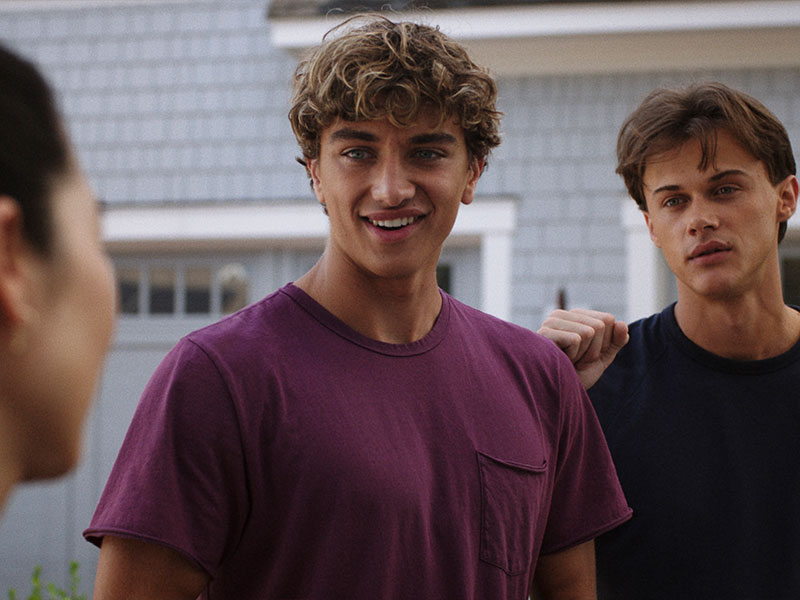
The Summer I Turned PrettyGavin Casalegno as Jeremiah and Christopher Briney as Conrad in “The Summer I Turned Pretty” (Prime Video)

In the first season, we saw Belly dip her toes into her messy crushes for both Fisher brothers. She made out with Jeremiah a couple of times. But the big moment was when the season ended in a sweeping first kiss with Conrad – her childhood first love – right before daybreak on the beach while Taylor Swift’s “This Love” serenaded the young couple.
 
The new season elevated the love triangle with every episode flashing to the past and present, building on the depth of their feelings. Viewers received a glimpse of the earnest beginning and inevitable unraveling of the volatile relationship between Conrad and Belly. The spark between Jeremiah and Belly reignites in a grand kiss and Conrad catches the two entangled in one another despite Conrad’s deeply buried love for his ex-girlfriend Belly. In the meantime, the brothers throw each other jealous daggers, pine for a confused and grieving Belly, and launch verbal darts at each other’s hearts.
 
What’s better than two boys fighting over you? Oh yeah, two blood-related brothers — please note my sarcasm. But regardless of how you feel about the type of love triangle that it is — Han’s writing and the actors sell the angst and romance, and the audience ate it up. You can hate me for it but I myself am #TeamConrad.
03
Belly’s teenage messiness
The Summer I Turned PrettyLola Tung as Belly in “The Summer I Turned Pretty” (Prime Video)
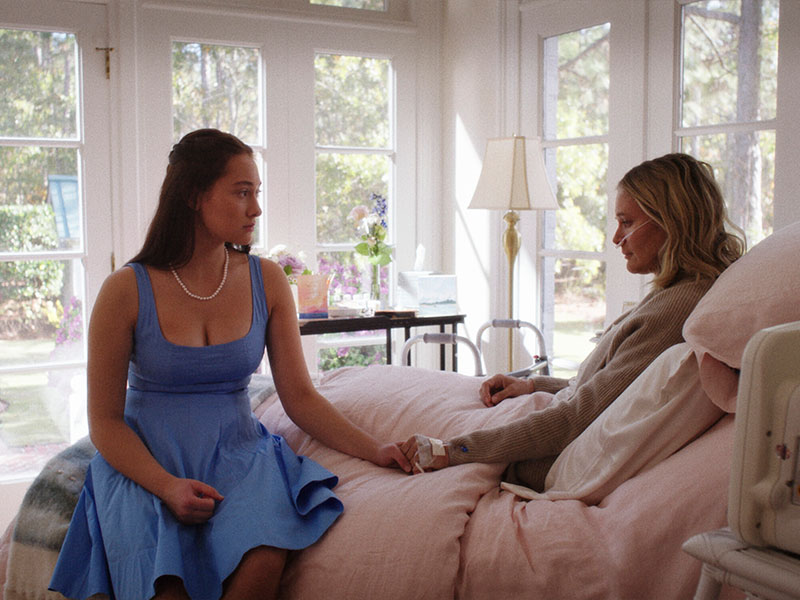
Love her or hate her – Belly is an effective protagonist. She gets a rise out of people – so much so that people were cheering when her mom slapped her this season (I know, yikes). Putting aside the corporal punishment, Belly’s messiness is one of the many reasons people stay tuned into the show weekly. She’s not the smartest person in the room and doesn’t pretend to be. She’s impulsive, she’s imperfect and she’s in love while grieving. Her complicated, wishy-washy feelings for Conrad and Jeremiah feel like they’re larger than life because they are; she’s a 16-year-old girl, after all. She makes mistakes, is fairly judged for them and then is given grace. That is a refreshing change of pace for a female Asian-led teen drama. She is at the front and center of her own story, as the desirable, wanted messy hot girl.
04
Grief and love: polar opposite emotions and experiences
The Summer I Turned PrettyLola Tung as Belly and Rachel Blanchard as Susannah in “The Summer I Turned Pretty” (Prime Video)
Outside of the love triangle and Belly, Conrad and Jeremiah’s mom Susannah also saw the recurrence of her cancer in flashbacks throughout the season. The nonlinear storytelling shows the audience that Susannah is slowly fading, becoming weaker, while we already have seen in flashforwards that she will die.

All the other characters are shown grappling with what losing Susannah will mean to them and how they will continue life without her. Some live in denial and avoidance (Laurel), some live in deep grief (Conrad), some try to find the light (Belly), and others become a stable, grounding force (Jeremiah). But it all implodes when she dies. Belly and Conrad try to love the grief out of each other and of course, it’s all too conflicting and painful to work. The show’s honest, raw depiction of intertwined grief and love rings true to the reality of life and the complexities of the human condition.

People just want to watch television that they can see themselves in, something that can trigger emotion so we can scream at our TVs, something that will give us the cathartic release our real lives can’t. Then again, we’ve all shared in a collective grief for the past few years, so for a show that balances the heartache of first love with the pain of losing someone, it boils down what we’ve all come to understand matters most. I would say we can’t really escape from “The Summer I Turned Pretty” so you might as well join in on the girlish, angsty mess while Beyoncé and Taylor Swift serenade the soundtrack of your life. 


Grim expectations: An expert explains how toxic achievement took over American childhood

It’s not just getting into that prestige preschool. It’s not just SAT scores. It’s not just the tutoring and the violin lessons and right resume gilding internship. “The bar of what it is to achieve has risen for all kids,” says journalist Jennifer Breheny Wallace, “and it is in all areas of their lives.”

And that stress-inducing drive to turn American childhood and adolescence into a competition cuts across class and income lines — and is burning out kids and their guardians alike. Last year, research from the Health Resources and Services Administration revealed that rates anxiety and depression among children ages 3-17 have increased dramatically since 2017 — and that “Parents and caregivers also experienced greater mental health needs.”

The roots of the problem, Wallace says, are a cultural and economic shift that has narrowed our options while removing many of our social supports. But we don’t have to treat childhood like “a zero-sum game,” as Wallace puts it. In her new book, “Never Enough: When Achievement Culture Becomes Toxic-And What We Can Do about It,” the Wall Street Journal and Washington Post contributor explores how the best thing we can do for our children is cultivate their sense of community, and of mattering to others and themselves.

“Parents can either choose healthy fuel or dirty fuel to motivate their kids,” Wallace explained during a recent video chat. “Dirty fuel, the overemphasis on external markers of achievement,” she says, “over time is going to clog up your kid’s engine.” But by drawing on the lessons of “healthy high achievers,” Wallace says we can reclaim our time, our sanity and our children’s own childhoods. “It’s only been in the last several decades that we have focused so in such an unhealthy way on individual achievement,” she says, adding, “There’s never been a time where it’s been more obvious that this achievement culture is toxic.” 

This conversation has been lightly edited for clarity and length.

We need your help to stay independent

The narrative is that with this kind of pressure, this success and achievement oriented toxicity, we’re really talking about the kids whose parents are trying to push them to go to Ivy League schools. We’re really talking about Operation Varsity Blues families. The idea is that this isn’t about public school kids in America who are struggling. 

“Kids as early as five years old are being put on travel teams. Everything is about excellence. 

When I started researching this book, I thought, “Is this just like a few pockets of the East Coast, the West Coast?” The first thing I did was conduct a parenting survey with a researcher at the Harvard Graduate School of Education, to see if this was just a problem of a few elite communities. Within a few days, my survey had reached 6,500 parents around the country.

This is happening in Maine, Texas, Alaska, in Cleveland, Ohio — this pressure to achieve. This is not about getting kids into an Ivy League anymore. Maybe that’s where it began. But I would point out the Varsity Blues people were trying to get their kids into a school like USC. The bar of what it is to achieve has risen for all kids, and it is in all areas of their lives. It is not just about getting into an elite university. This is about, “How do I look on social media? How many followers do I have?” Sports used to be a way to reduce stress. Now, kids as early as five years old are being put on travel teams. Everything is about excellence. 

What I found in my survey was that this was affecting parents. This is not a book about the 1% or even the 10%. We are talking about the top 20 to 25% of household incomes. We’re talking about public schools and private schools. We are talking about kids who may be growing up in an affluent community but also kids who aren’t, who are trying to get into the same types of schools or have the same types of outcomes. 

How did we get to this to this place? A generation ago, going to school, having a future, getting a job was all at a somewhat less high stakes level. What happened?

I wanted to know this, too. I interviewed historians, anthropologists, psychologists, sociologists to find out. Why was my childhood in the ’70s so different than my own kids’ childhoods?

I remember standing in sleet in the pouring rain with my son in fifth grade at his travel soccer team, an hour and a half away from New York City. I looked around all these freezing parents. I actually asked out loud, “Why are we doing this? Why?” Bizarrely, I thought people would be like, “I totally agree.” No one answered. They thought I was just the crazy person thinking out loud. 

“Parents are betting big that getting their kid into a quote unquote ‘good’ college is the only way to protect them in a country that offers very few and increasingly fewer social safety nets.

In the ’70s, when I was growing up, life was generally more affordable. There was slack in the system. Housing was more affordable; health care was more affordable. Higher education was more affordable. At the same time, over the last several decades, there are macro economic forces to play. What I really focus on is the crush of the middle class, and this steep inequity that we have seen. Parents have had that big message that childhood success is about getting a child into a good school that can act as a life vest in a sea of economic uncertainty.

We might not even be understanding what we’re doing and why we’re feeling this intensity and why we’re so stressed out. But we are absorbing these macro economic forces and we’re becoming social conduits and changing how we parent at home. 

I wasn’t believing this narrative that is in the popular culture that parents just want bumper stickers on the backs of their cars. I knew there was something deeper going on. What I found is that parents are betting big that getting their kid into a quote unquote good college, or really college at all, is the only way to protect them in a country that offers very few and increasingly fewer social safety nets. Parents, particularly mothers, have been tasked with weaving these individualized safety nets to catch their kids because they can’t rely on the government to do that. The pressures that parents are feeling, and the way childhood has changed, are so much bigger than any one family, any one school, any one community.

On the other side of this, what is the price of resisting that hyper competitiveness and that hyper anxiety? I hope that my kids have good values and strong support and friends and happy lives, but is that enough to be okay, in this world, right now?

Parents can either choose healthy fuel or dirty fuel to motivate their kids. I would argue that the fuel that you have used to shepherd your children into their own future, not focusing excessively on external markers of achievement, is a healthy fuel that over their lifetime will serve them. This isn’t just my my idea. This is what I have found in interviewing families all over the country, that focusing on healthy fuel is what is going to help a child over the long run. That dirty fuel, the overemphasis on external markers of achievement, will get you a short term win. But over time — and the literature and the research bears this out — it’s going to clog up your kid’s engine and they are going to burn out. 

I begin the book by talking about the struggles, but really the book is focused on the healthy achievers. I wanted to raise healthy achievers. I’m super high achieving, but I’m ambitious for more than just my career. I want my kids to be ambitious for more. I want a deep community. I want a great marriage. I’m ambitious for a fuller life. 

“The kids who were suffering the most felt like their mattering was contingent on how well they were performing.”

I was looking for whether these healthy high achievers have anything in common. What was home life like for them? What was school? What were their relationships like? What did they see as their goal in the larger community? I found lots of threads they had in common. When I was looking for a framework, I found this idea of mattering. Kids who who enjoyed healthy achievement had this high level of mattering. They felt valued by their family, their friends and their community. It didn’t mean that these healthy achievers weren’t depressed sometimes. They certainly experienced failure, but mattering acted like a buoy that lifted them up and helped them carry on.

The kids who were suffering the most felt like their mattering was contingent on how well they were performing. The other group of kids who seem to be suffering the most were those who were overly focused on themselves and their own resumes, and were never depended on to add meaningful value back to anyone other than themselves. What those kids lacked was social proof that they mattered. They might have gotten the messages at home, “We love you so much unconditionally,” but they never got the social proof that they mattered for more than their resumes. 

That gets to this idea of interdependence. 

Interdependence was a huge lightbulb moment in my research. I always focused on things like, “I want to raise independent kids who can flourish on their own.” I still do. I still want my kids to enjoy hitting goals and knowing that they can always rely on themselves. But what I have learned in researching this book is that there is a higher goal that I want for my kids, and it is interdependence. It is knowing that they are worthy of support. They are worthy of other people helping them, and they have a responsibility to help others.

They have a responsibility to be dependable, and life is not a zero-sum game. We are tricked into believing that it is, and it just isn’t. Ask anyone who has lived a happy, fulfilling life, and they will tell you, they did not get there on their own. In our hyper-individualistic culture, we are made to think that it’s our own rugged independence. But nothing I have achieved, have I done on my own. It is only because of the kindness and generosity of people around me.

I want to ask about the specific toll this kind of achievement culture has on moms. We know a lot about the crisis in our young people. But there is less conversation around what this is doing to moms, many of whom are taking care of older parents at the same time, maybe at the most critical stages of their careers. 

Intensive parenting serves our society, this idea that that mothers need to be the safety nets for our kids, because we can’t rely on any other safety nets. We saw this during COVID. This takes an enormous toll on caregivers, and in particular mothers. Understanding the importance of maternal well being and mental health and social support was perhaps the most important finding in my research. 


Want more health and science stories in your inbox? Subscribe to Salon’s weekly newsletter Lab Notes.


Suniya Luthar emphasized this with me in every conversation we had. Every conversation would come back to the number one most important thing we can do for our kids is to make sure their primary caregiver’s — most often the mother’s — support system is intact, that her psychological well-being is there and solid. Children’s resilience rests fundamentally on the adults in their lives, the resilience of their teachers, their coaches, their parents. We can’t be first responders, as Suniya Luthar puts it, to kids’ struggles if we are not shored up and our resilience is not there in ourselves.

I was writing this book during COVID, and I was reading all of this research on how important “mothering the mother” was for caregivers. It was a really fraught time for parents, particularly working mothers. What I found in this research was, in order for me to be there for my kids during a crisis like COVID, or during a crisis of friendship, or any number of things, was to make sure that I put myself first. This is not a message that parents and mothers are given.

The self-care that is most meaningful for parents and mothers is their own support system. A parent’s resilience, a mother’s resilience, rests on her relationships. In visiting dozens of communities around the country, for busy working parents, it’s not that we don’t have friends. It’s that we don’t have the time, too often, to invest in our relationships, so that when we need them, they can be the source of support we need. 

You talk about this idea of self-care as sometimes feeling like just one more thing to do. Talk a little bit more about we how we flip that switch, because it’s so fraught with guilt. It’s so fraught with, “Am I also not taking care of myself the right way?”

Throw out what the multibillion dollar self-care industry is selling you. Focus, above and beyond all, on your relationships. You don’t need a ton of them. You need one or two really good friends who you are willing to be vulnerable with, and who are willing to be vulnerable with you. Find those deep reciprocal, not transactional, relationships that you can be seen and loved for who you are, no matter what, warts and all.

“The most resilient kids, the most resilient families, rely on others.”

You don’t need a lot of time — you need deliberate time. You need to say to your partner, to your kids, “I need this time for me.” What you are doing is not only building up your own resilience and resources, you are modeling for your spouse, for your kids, here’s what you do to build up your own resilience.

There is something different about having relationships that give you a social proof that you matter. I think we have lost the skills of friendship in our busy lives, and as a society, we have not prioritized it. What the research shows and what I have found in four years researching and writing this, the most resilient kids, the most resilient families, rely on others. 

I have been raised in this culture that tells me I am most worthy when I achieve. I have worked really hard to flip that switch. You literally have to practice the importance of not being productive. It’s a really radical new way of thinking that is not always rewarded socially, but I’ll tell you where it where it’s rewarded. It’s rewarded in your friendships.

Is it possible that this crisis that we have been looking at over the past few years, has crested? We see this anti-work, anti-capitalism pushback. We see kids saying, “Wait a minute, I don’t want to go into the workforce and live like my millennial elders did and get the same bill of lies.” Has this ideology changed? 

During COVID, when everything slowed down and schools were focusing on relationships over rigor and everybody was having family dinners again, I honestly said to my husband, “Maybe I don’t have to write this book.” Unfortunately, it quickly went back to normal and actually supersized. Parents felt, “Now my kids are really behind.”

There are some signs that we are having these critical, important conversations and that the needle may be moving in the right direction. Here’s what I fear, and where I think mattering can help us. What I don’t want to happen is for the quiet quitters and the Gen Z resistance to become about focusing on their own happiness. I think that’s a dead end and is going to ultimately lead to their unhappiness. What I hope we can do is shift the conversation beyond this extreme focused on individual achievement, to how we make our society healthier. How can we go back to focusing on the greater good and not the individual?

“I hope we can shift the conversation beyond this extreme focused on individual achievement, to how we make our society healthier. How can we go back to focusing on the greater good and not the individual?”

I hope we can shift the conversation from unhealthy individual achievement burnout to the solution. The solution to burnout is not logging off. The solution to burnout is reengaging, and seeing where you fit in the larger picture, and how you can contribute meaningfully to the world around you. What scares me is I’m hearing people saying they want to log off, they want to travel and relax on the beach and get their time back. That’s great and that’s important. But that shouldn’t be our ultimate goals as humans.

We are meant to be interdependent; we are meant to want to contribute to the greater good. This is not some radical new way of parenting, to focus on these greater goals. This is the way we have focused as the human race forever. It’s only been in the last several decades that we have focused so in such an unhealthy way on individual achievement. There’s never been a time where it’s been more obvious that this achievement culture is toxic. I am not saying, do not be ambitious. I want my kids to enjoy success and achievement. But it is one part of the of a bigger picture. Personal achievement should just be one slice of life, it should not be life itself.

Naming suicide in obits was once taboo. Changing that can help loved ones grieve

When Deborah and Warren Blum’s 16-year-old died by suicide in November 2021, they went into shock. For two days, the grief-stricken Los Angeles couple didn’t sleep.

But when it came time to write a death notice, Deborah Blum was clearheaded: In a heartfelt tribute to her smart, funny, popular child, who had recently come out as nonbinary, she was open and specific about the mental health struggles that led to Esther Iris’ death.

“Esther’s whole thing was that people should know and talk about mental health and it shouldn’t be a secret,” Deborah Blum told KFF Health News. “The least I could do was to be honest and tell people. I think being embarrassed just makes it worse.”

While it was once unheard-of to mention suicide as a cause of death in news obituaries and paid death notices, that has been changing, especially in the past 10 years, said Dan Reidenberg, a psychologist and managing director of The National Council for Suicide Prevention. High-profile suicides — such as those of comic actor Robin Williams in 2014, fashion designer Kate Spade in 2018, and dancer Stephen “tWitch” Boss in 2022 — have helped reduce the stigma surrounding suicide loss. So has advertising for depression and anxiety medications, which has helped normalize that mental illnesses are health conditions. The covid-19 pandemic also drew attention to the prevalence of mental health challenges.

“The stigma is changing,” Reidenberg said. “There is still some, but it’s less than it used to be, and that’s increasing people’s willingness to include it in an obituary.”

While there’s no right or wrong way to write death announcements, mental health and grief experts said the reluctance to acknowledge suicide has implications beyond the confines of a public notice. The stigma attached to the word affects everything from how people grieve to how people help prevent others from ending their own lives.

Research shows that talking about suicide can help reduce suicidal thoughts, but studies have also found that spikes in suicide rates can follow news reports about someone dying that way — a phenomenon known as “suicide contagion.” The latter is an argument people make for not acknowledging suicide in obituaries and death notices.

However, Reidenberg said, the subject can be addressed responsibly. That includes telling a balanced story, similar to what Deborah Blum did, acknowledging Esther Iris’ accomplishments as well as their struggles. It means leaving out details about the method or location of the death, and not glorifying the deceased in a way that might encourage vulnerable readers to think dying by suicide is a good way to get attention.

“We don’t ever want to normalize suicide, but we don’t want to normalize that people can’t have a conversation about suicide,” Reidenberg said.

Having that conversation is an important part of the grieving process, said Holly Prigerson, a professor of sociology in medicine at Weill Cornell Medical College in New York and an expert on prolonged grief disorder.

“Part of adjusting to the loss of someone is coming up with a story of what happened and why,” she said. “To the extent that you can’t be honest and acknowledge what happened if it’s a death due to suicide, that will complicate, if not impede, your ability to fully and accurately process your loss.”

People close to the deceased often know when a death was by suicide, said Reidenberg, particularly in the case of young people. “Being honest can lead to information and awareness, whereas if we keep it shrouded in this big mystery it doesn’t help,” he added.

A study about caregiver depression that Prigerson recently conducted identified avoidance as an impediment to healing from grief. “Not acknowledging how someone died, denying the cause of death, avoiding the reality of what happened is a significant barrier to being able to adjust to what happened and to move forward,” she said.

Researchers are increasingly seeing bereavement as a social process, Prigerson said, and as social beings, people look to others for comfort and solace. That’s another reason the stigma attached to suicide is harmful: It keeps people from opening up.

“The stigma is based on the perception that others will judge you as being an inadequate parent, or not having done enough,” Prigerson said. “This whole thing with obituaries is all about others — it’s about how people are going to read what happened and think less of you.”

Stigma, shame, and embarrassment are among the reasons grieving family members have traditionally avoided acknowledging suicide in obituaries and death notices. It’s also why, if they do, they may be more likely to address it indirectly, either by describing the death as “sudden and unexpected” or by soliciting donations for mental health programs.

Economics can also factor in — sometimes people are secretive because of life insurance plans that exclude payouts for suicides. Sometimes they’re trying to protect reputations, theirs as well as those of the deceased, particularly in religious communities where suicide is considered a sin.

Sometimes they’re operating under what Adam Bernstein, the obituary editor at The Washington Post, sees as “a mistaken belief” that an obituary is a form of eulogy that should speak to the highest memories of a person, and suicide doesn’t fit that agenda. People don’t include the word in paid death notices for the same reason. Bernstein, who is also president of The Society of Professional Obituary Writers, said that at the Post, obituaries mention suicide when the reporter can confirm it as a cause of death.

Avoiding the word suicide doesn’t necessarily mean someone is in denial. In the days after a loss, which is when most obituaries and death announcements are written, it’s often profoundly difficult to face the truth, especially in the case of suicide, according to Doreen Marshall, a psychologist and former vice president at the American Foundation for Suicide Prevention.

Even when people can admit the truth to themselves, they might have trouble expressing it to others, said Joanne Harpel, a suicide bereavement expert in New York who works with mourners through her business, Coping After Suicide. In the support groups she runs, she said, people vary in how open they are willing to be. For example, in the group for mothers who have lost a child to suicide, everyone acknowledges that reality — after all, that’s why they’re there — but they don’t all do so the same way.

“Some of them will refer to ‘when this happened’ or ‘before all this,'” Harpel said, cautioning against holding all mourners to the same standard. “They’re not pretending it was something else, but using the word ‘suicide’ is so confronting and so painful that even in the safest context it’s very, very hard for them to say it out loud.”

KFF Health News is a national newsroom that produces in-depth journalism about health issues and is one of the core operating programs at KFF—an independent source of health policy research, polling, and journalism. Learn more about KFF.

Subscribe to KFF Health News’ free Morning Briefing.

Artificial stupidity and me: If AI can do this to my book, what will it do in an actual war?

At first, I admit, I was a bit flattered to learn that online entrepreneurs were selling study guides for my new book. I thought of CliffsNotes from long ago, helping fellow students who were short on time or interest to grasp the basics of notable works. Curiosity quickly won out. I pulled out my credit card, paid $9.99 plus tax for one of the offerings, and awaited its arrival in the mail. 

The thin booklet got off to a reasonable enough start, explaining with its first sentence, “The U.S. media coverage that makes it easier to sell wars to the public, as well as the often-hidden cost of civilian casualties from errant U.S. attacks, are all harshly criticized by journalist Solomon.” That wasn’t a bad summing-up of my book.

But the study guide’s second sentence was not nearly as good: “He guarantees that when Russia designated Ukrainian communities during the new attack, the U.S. media was everyone available and jumping into action with compassionate, piercing revealing.” Rereading that sentence a few times didn’t improve it. I began to worry.

To the extent that any meaning could be grasped from them, the following pages seemed to include some praise: My book “constructs a convincing case that an excessive number of mysteries are being kept from people in general.” What’s more, “the creator presents a sharp and provocative outline of the outcomes of the media’s horrifying disappointments in spreading the word.”

But the study guide also included mild criticism, albeit so oddly worded as to be almost incomprehensible: “Solomon might have offered a fairly more profound examination of why American newscasting neglects to satisfy its beliefs in covering war and the justifications for why political pioneers could feel a sense of urgency to deal with misdirection while tending to people in general.”

The computer-programmed assaults on the English language escalated. And so the “war on terror” became the “battle on dread.” A key source of meticulous research that I cite in my book, the Costs of War project at Brown University, became “the Expenses of War project at Earthy Colored College.”

At one point, my book’s actual title — “War Made Invisible” — somehow became “War Caused Imperceptible.” But the laughable malapropisms provided by artificial intelligence became more serious matters when I saw several dozen words forming badly mangled phrases — all attributed to me — inside quotation marks. I could imagine bleary-eyed students cramming on the night before a test or a term-paper deadline, reading the ostensible quotes and thinking that the author of my book must be an idiot.

We need your help to stay independent

Likewise, any would-be scholars seeking to glean the gist of the book’s themes in exchange for their $9.99 purchase will surely come away mystified, at best, after encountering sentences like this: “It’s totally unsuitable for writers to toe the conflict line for a really long time, and afterward, at last report, essentially, it tends to be informed years past the point of no return.”

I’m not among the authors who claim to never read reviews of their books. In fact, I remember them. So I could recognize the uber-clumsy efforts of a large-language-model AI that had sifted through nearly a dozen reviews of “War Made Invisible,” lifting bits and pieces while weirdly substituting supposed synonyms to steer clear of plagiarism lawsuits.

So let’s hear it for digital “free enterprise.” Or maybe that’s “unshackled business.” Nice AI work if you can get it.


Want a daily wrap-up of all the news and commentary Salon has to offer? Subscribe to our morning newsletter, Crash Course.


That brings us, however, to a vastly more substantive matter. Artificial so-called intelligence is hardly immune to a dynamic that computer experts long ago dubbed “GIGO” — garbage in, garbage out. With AI, no matter how sophisticated it might seem, the consequences in war are apt to be horrific. Six decades after Martin Luther King Jr. warned of “guided missiles and misguided men,” the missiles are even more terrible, the people ordering launches are no less misguided, and the mentalities bent on war are eager to twist AI technology for their own lethal purposes.

A couple of weeks ago, the Department of Defense announced “the establishment of a generative artificial intelligence task force, an initiative that reflects the DoD’s commitment to harnessing the power of artificial intelligence in a responsible and strategic manner.”

If they were still alive, the 4.5 million people who have died as direct and indirect results of U.S. wars since 9/11 might cast doubt on how “responsible” the Defense Department’s manner has been.

Let’s hope that the people running the Pentagon’s AI task force didn’t graduate from Earthy Colored College.

“Hit list”: Trump grand jurors face violent threats after names and addresses shared on QAnon forums

Users on far-right online forums are publishing private information about members of the Georgia grand jury that indicted former president Donald Trump and 18 of his allies in a sweeping criminal case focused on alleged 2020 election interference earlier this month, leading to jurors receiving threats online.

The Fulton County Sheriff’s office announced last week that they were working on tracking down where the threats were coming from and were coordinating with “law enforcement partners to respond quickly to any credible threat and to ensure the safety of those individuals who carried out their civic duty.”

After the release of the indictment and the grand jurors’ names, users on far-right message boards began sharing their addresses, identities, social media accounts and other information targeting the jurors, according to Media Matters.

“It’s a serious problem,” Heidi Beirich, co-founder of the Global Project Against Hate and Extremism, told Salon. “These grand jurors’ names and other personal information have been linked on dangerous sites, in particular 4chan. That’s where multiple terrorist manifestos have been posted and the site is filled with white supremacists and other extremists.”

On a forum that has served as a hub for “Q,” the central figure of the QAnon conspiracy theory, a user shared the names of the jurors alongside their addresses. Meanwhile, on another platform where the QAnon conspiracy theory originated, a user appeared to make a veiled threat about following these individuals to their residences and photographic their faces, Media Matters found.

Some users also made explicit threats aimed at the jurors on these message boards. One user referred to the grand jurors’ names as a “hit list,” prompting another user to reply with, “Based. Godspeed anons, you have all the long range rifles in the world.” 

In addition to facing online harassment, jurors are at risk of several other dangers — varying from receiving menacing phone calls to having people show up at their houses to swatting and even receiving death threats, Beirich said. 

“We’ve seen this in other cases where people have been targeted by far-right figures,” she added. “Their families can also be targeted. It can be a dangerous and scary situation. We can never forget the two poll workers in Georgia that Trump targeted and who had to go into hiding afterward.”

After Trump posted on his social media website Truth Social that authorities were going “after those that fought to find the RIGGERS!” — Advance Democracy, a nonpartisan research group founded by Dan Jones, a former FBI investigator and staffer for the U.S. Senate Intelligence Committee,  pointed out that Trump supporters were employing the term “rigger” as a substitute for a racial slur in their online posts.

“There is a lot of anger out there on the part of pro-Trump actors and given the harassment that is faced by public officials lately, the same could happen here,” Beirich said. “It’s unfortunate Georgia law doesn’t provide any protections. These people are doing their civil duty; they shouldn’t have to face this.”

Under Georgia law, the names of grand jurors are included on indictments – a practice aimed at promoting transparency. However, this approach has come under scrutiny given the continuing threats following the recent indictment of Trump and 18 co-defendants.

The only way Georgia or any other state would change the current practice is if there is a widespread outcry over the harassment or if there is actual violence that takes place, said Donald Haider-Markel, a University of Kansas political science professor who studies domestic extremism.

“Much like election workers after the 2020 election, we may begin to see more efforts from potential jurors to ask for an excuse not to serve on a [grand jury], which could also incite a change in the law,” he added.

We need your help to stay independent

Verbal attacks and harassment have been common for a long time on the extreme right and left, Haider-Markel explained. He pointed to the example of “wanted” posters targeting doctors who perform abortions by the anti-abortion movement since the 1980s.

Individuals would go as far as disclosing the addresses, phone numbers, car descriptions, and license plates of abortion clinic workers, he said. 

“This practice won’t influence the way most people behave, but it only takes one true believer to use the information to harass and potentially use violence against the target and/or their family members,” Haider-Markel said.

The same tactics have been employed by environmental and animal rights activists against those they believe are threatening the environment or exploiting animals, he continued. The Unabomber, for example, selected targets for his mailing campaign in the same manner, going after executives and researchers.

“Many observers believe that these practices have led to violence against abortion clinic workers and that these practices have led to individuals leaving the field,” Haider-Markel said. “Certainly, there are plenty of stories about election workers that have left the field since 2020 because of the harassment and threats they faced.”


Want a daily wrap-up of all the news and commentary Salon has to offer? Subscribe to our morning newsletter, Crash Course.


These message boards have even gone as far as targeting two NBC News reporters who wrote about the grand jury incident. They had their own supposed addresses posted online, according to the Advance Democracy’s latest report, Reuters found.

The group also identified posts containing aggressive language targeting Fani Willis, the Fulton County district attorney who brought state racketeering and conspiracy charges against Trump and his allies. 

Trump himself has gone after the DA and accused her of prosecutorial misconduct. He also criticized her time in office, asserting that she had been excessively lenient on crime allowing Atlanta “to become one of the most dangerous cities anywhere in the world.”

“He makes everything worse because he just doesn’t seem to care what effect his words have in inciting his followers,” Beirich said. “That has been true since his 2016 campaign. I’m sure Willis is facing a deluge of threats and will need protection.”

His verbal attacks against Willis come as no surprise though as the former president has a habit of denigrating prosecutors who are investigating him. 

Trump has used Truth Social to harass Manhattan District Attorney Alvin Bragg, New York’s Attorney General Letitia James and special counsel Jack Smith, who brought two federal indictments against him.

In a post against Bragg, he warned that there would be “death and destruction” if he was indicted. Shortly after his threat, the Manhattan DA’s office received a death threat letter with suspicious powder, which was later determined non-hazardous, with the letter saying: “ALVIN: I AM GOING TO KILL YOU!!!!!!!!!!!!!” 

In other posts, Trump has called Smith “deranged” and accused him of taking away his First Amendment Rights. The former president even called for U.S. District Judge Tanya Chutkan’s recusal, saying he was calling for the move “on very powerful grounds.” 

Chutkan is the federal judge overseeing the criminal case of Trump’s efforts to overturn the 2020 election in Washington DC.

Last week, a Texas woman was arrested and charged with threatening to kill Chutkan, The Associated Press reported. Abigail Jo Shry called the federal courthouse in Washington and left a threatening message. 

“You are in our sights, we want to kill you,” the documents said.

Despite public officials receiving such threats, the former president has continued his attacks. In some social media posts, he has even warned “If you go after me, I’m coming after you!”

“It’s important not to underestimate the chilling effect that personal targeting and online harassment can have on jurors, on voters, on elected officials [and] on community members,” Lindsay Schubiner, director of programs at Western States Center — an anti-extremism watchdog, told Salon. “And the publication of personal details, especially physical locations, is a huge risk factor for potential violence.”

Schubiner pointed to the examples of mass shooters, who were active in online hate forums prior to their crimes. There’s also a “big risk” for the translation of online harassment into direct physical violence, she added. 

“Trump’s words and his actions have normalized bigotry and harassment, and even political violence for a long time,” Schubiner said. “From the beginning of his campaign,  he opened the door to normalizing overt bigotry in politics and opened the door for bigoted and anti-democracy groups like the Proud Boys, like the Oath Keepers, to play a much more prominent role in our political system.”

From “Bottoms” to “Booksmart” and “Fire Island,” queer cinema deserves to be silly and fun again

Last month, many cinephiles and casual moviegoers reveled in “Barbenheimer,” the internet phenomenon that began in anticipation of the simultaneous theatrical release of two major films: Greta Gerwig’s “Barbie” and Cristopher Nolan’s “Oppenheimer.” The event has been hailed as America’s big return to the movies. And while that’s true, there’s also another — albeit more subtle — cinematic phenomenon that has been occurring in tandem. 

The latter is the surge in queer films, specifically silly, feel-good queer films. LGBTQ+ representation in film has been at an all-time high in recent years but lately, there’s been an uptick in queer-centric comedies and romances. In August, audiences have been able to watch the son of the U.S. president and the grandson of the British king start an unlikely romance in Prime Video’s rom-com “Red, White & Royal Blue”; a pair of lesbian besties start their own fight club in the newly released teen sex comedy “Bottoms”; and an aspiring queer toy designer struggle to navigate the New York City art scene in A24’s surrealist comedy “Problemista.”

Queer joy and queer love that end in “happily ever afters” also exist.

Such films were also quite popular (and prominent) just a few years prior. Take a look at the most-anticipated films from the past five years and you’ll notice that a handful of them are, well, incredibly queer. There’s the 2018 romantic comedy-drama “Love, Simon,” which tells the heartfelt tale of a closeted gay teen struggling to come out and come to terms with his own sexuality. There’s the 2019 comedy “Booksmart,” in which Kaitlyn Dever’s Amy Antsler attempts to get with her crush, the tomboyish Ryan, before graduating high school. There’s Emma Seligman’s 2020 comedy “Shiva Baby,” which follows a directionless, 20-something bisexual woman who has an awkward encounter with her sugar daddy and her ex-girlfriend at a Jewish funeral service. There’s also “Fire Island,” “Single All The Way” and “Bros,” which all earned much praise from viewers. 

Quirky queer films are plentiful. And, they are a nice change from the more solemn LGBTQ+ cinematic masterpieces we’ve seen fairly recently, like “Moonlight,” “Call Me By Your Name,” “Portrait of a Lady on Fire,” “Ammonite” and “Carol.” This isn’t to say that those films shouldn’t be watched. After all, there’s a reason why they’ve scooped up awards and garnered widespread acclaim from critics. But they also tend to hyper-focus on the hardships of being queer, which is validating but, quite frankly, exhausting and depressing.

We need your help to stay independent

So much of queer cinema has been rooted in trauma to showcase the real-life consequences of homophobia, marginalization and living in a patriarchal society. For sure, the queer experience has its fair share of hardships. But when films are overtly grim in the name of being “real” or “raw,” they in turn box queer folks into a single kind of story, even if it isn’t reflective of their own life experiences. Not all queer stories are tragedies. And not all queer stories end in heartbreak, death or great loss. Queer joy and queer love that end in “happily ever afters” also exist.


Want a daily wrap-up of all the news and commentary Salon has to offer? Subscribe to our morning newsletter, Crash Course.


Perhaps the best critique of queer representation appeared in a 2022 article from The Daily Utah Chronicle: “Whether gradual or brisk, where do we draw the line when despair creates a deeper story and when gloom outweighs film integrity? . . . Tragedy is an integral vessel within the art of storytelling, yet why do gay people suffer disproportionately?”

Happy endings in queer cinema can be credited to “Maurice,” the 1987 romance drama based on E.M. Forster’s novel of the same name. In the epilogue written in 1960, Forster explained why he believed it was important a gay love story ended on a positive note:

“A happy ending was imperative. I shouldn’t have bothered to write otherwise. I was determined that in fiction anyway two men should fall in love and remain in it for the ever and ever that fiction allows, and in this sense Maurice and Alec still roam the greenwood. I dedicated it ‘to a happier year’ and not altogether vainly. Happiness is its keynote — which by the way has had an unexpected result: it has made the book more difficult to publish… If it ended unhappily, with a lad dangling from a noose or with a suicide pact, all would be well, for there is no pornography or seduction of minors. But the lovers get away unpunished and consequently recommend crime.”

“Maurice” may not be a rom-com or a sex comedy, but it certainly paved the way for queer fiction to end with hope and happiness. That being said, the queer experience is not universal, so it shouldn’t be portrayed (or characterized) solely as tragic or painful. It’s time more movies highlighted queer stories filled with fun and glee.

“He looks good. He looks hard”: Fox News’ Jesse Watters gushes over Trump’s mug shot

During a segment of Fox News on Friday, conservative political commentator Jesse Watters gushed over the mug shot taken of former president Donald Trump in a way that could be referred to as intimate. Joking that he’s going to book the Fulton County photographer for his Christmas card, he followed up with a statement that few could guess was coming next, but many delighted in re-sharing to social media directly after the words left his lips: “I say this with an unblemished record of heterosexuality: he looks good, and he looks hard.”

Trump himself must agree. He’s been sharing variations of the mug shot to his Truth Social account since it was taken in Georgia on Thursday, following his arrest and booking on 13 felony counts in relation to his involvement in overturning the results of the 2020 presidential election. Additionally, the photo has been posted to his official website, and his joint fundraising committee is already selling a variety of merchandise emblazoned with the “hard” image. 


“Little bit of this, whole lot of that”: A curry tuna salad sandwich inspired by my dad

It’s embarrassing to say now, but I thought I hated tuna.

“Bastard, you damn lie!” my father said when I tried to explain this to him, “You love tuna fish as much as you love reefer. Matter of fact, you been eating canned fish since you fell out of muva, please!” 

And he’s right, I had always eaten it as a child. But only when he made it with a little sugar, extra salt and pepper and served on toasted rye. This was true–– but I wasn’t nine years old when I rejected the most famous canned fish. I was 16 and lived in the world where I enjoyed broiled jumbo lump crab cakes and chicken cheesesteaks topped with shrimp, Margarita pizza and fried lobster fingers. I felt like I reached culinary heaven and had no time for something as pedestrian as tuna. 

Dad didn’t make his special tuna for me anymore, and the only place to get it was from the market, but I wasn’t going to make it or my high school cafeteria. High school tuna was a shade of grayish purple that I can’t really explain: slimy, flooded with mayo and, I swear, sometimes it moved across your plate without any assistance. It was the last thing in the world that anyone would want to eat and tasted so bad that I probably wouldn’t feed into my worst enemy. 

Tuna was out of my life for about a decade before resurfacing with a vengeance. 

One day, I was sitting in the crib, thinking about my father and his famous sandwiches. Not only did he not cook anything for me anymore, but he had also up and moved to Colorado for a financial opportunity. I remembered how he always loved to make a batch of tuna fish, and then a bowl of egg salad, and then give me half of a tuna sandwich and half of an egg salad sandwich. Obviously, the other pair went to him. I still can’t stomach egg salad as an adult; however, I sure was craving that tuna, so I gave him a call.

“Dad, what you put in your tuna?” I asked. 

“Regular s**t,” he said, “Not too much mayo, a boiled egg, more pepper than salt, and some yellow mustard, French’s, not that bull sh*t.” 

I try my best to provide clear instructions, but that’s one of the beauties of cooking and sharing recipes in my family. We are nontraditional cooks who really don’t use measuring cups or write things down — instructions always go, “Add a little bit of this and a whole lot of that, and you’ll be in business. Oh, and don’t mess up. We’ll laugh at you.” 

I took that suggestion and made a delicious batch of tuna, served on rye bread with a side of Utz potato chips. It’s been over a decade since we had that conversation, and my ingredients have changed. I can tell you what I put in my tuna fish, but I can’t tell you how much to use because, like my dad says, everything should be seasoned to taste.

Curry tuna salad 
Yields
1 servings
Prep Time
5 minutes
Cook Time
0 minutes

Ingredients

  • Can of organic tuna in fresh water
  • Organic mayonnaise
  • Curry powder
  • Red pepper
  • Salad supreme mix
  • Chopped onions
  • Dijon mustard
  • Organic relish
  • One boiled egg per can
  • Black pepper
  • Sea salt


Directions

  1. Combine and season to taste. 
  2. This is best served with lettuce, and tomato —but only if tomatoes are in season. Preferably on toasted rye with a side of your favorite potato chips.

Spanish soccer chief won’t resign after World Cup kiss, despite players’ refusal to play in protest

Seventy-nine female Spanish soccer players and at least one male player are refusing to compete until Royal Spanish Football Federation president Luis Rubiales steps down for kissing multiple players and grabbing his crotch after the team won the World Cup on Sunday, Aug. 20. Video shows him kissing player Jenni Hermoso on the lips while she receives her medal, an action Spain’s equality minister Irene Montero called “a form of sexual violence.”

On Friday, Rubiales announced that he would not resign, calling his critics “false feminists” and accusing them of attempting “social assassination.” “Do you think this is so serious that I should go, after the best management in the history of Spanish football?” he said shortly before the Spanish government stepped in and announced an investigation into his actions. “Let me tell you: I’m not going to resign. I’m not going to resign. I’m not going to resign.”

In an open letter, the Spanish World Cup squad and 56 additional players condemn Rubiales and refuse to play if he continues as a manager. Hermoso’s own statement refutes Rubiales’ claims that the kiss was consensual. “I felt vulnerable and a victim of an impulse-driven, sexist, out of place act without any consent on my part,” she said, adding that  the organization has been pressuring her to issue a statement to defend Rubiales. “We as a team do not deserve such a manipulative, hostile, and controlling culture.”

Much of the soccer world has spoken out against Rubiales, including two U.S. soccer players, Alex Morgan and Megan Rapinoe. Morgan shared she was “disgusted” and Rapinoe, when asked about it by The Atlantic, said, “What kind of upside-down world are we in?”


The latest right-wing panic? Joe Biden is coming for your ceiling fans!

Much like any attempt to tighten up gun safety policies (or gas stoves, for that matter) tends to lead to a “MY COLD DEAD HANDS!” panic, news that the U.S. Department of Energy is proposing a new rule that would make ceiling fans more energy efficient is sending right-wingers into a flurry of heated emotion — with Joe Biden as the first choice for where to hurl the blame.

As Newsweek points out in their coverage of this, using intel from a DOE spokesperson, “These proposed standards, which are required by Congress [and] wouldn’t take effect until 2028, would give Americans more energy efficient options to choose from, and would save hardworking taxpayers up to $369 million per year, while substantially reducing harmful air pollution—a crucial fact that some have conveniently failed to mention.” They add that, “Biden has made climate change and the green energy transition a massive focus of his administration by passing laws like the Inflation Reduction Act . . . and has also has taken smaller steps to reduce the nation’s carbon footprint as well, such as establishing stricter regulations for gas stoves and dishwashers.” And while none of this accurately translates to him personally ripping appliances out of the wall, the intent here does not compute for a certain faction of the population. Texas Congressman Ronny Jackson is a good example of this, expressing his all-caps concern to social media on Friday with the message: “GET YOUR FILTHY TYRANT HANDS OFF OF MY CEILING FANS!!” 

According to a proposed rule from the DOE published on June 22, “DOE’s analyses indicate that the proposed energy conservation standards for ceiling fans would save a significant amount of energy.” Where’s the issue? Well, another Congressman, Ben Cline from Virginia, will present you with one, adding his own take on the matter: “First, they went after your car. Then, they targeted your gas stoves. Now, they are coming for your ceiling fans. America will continue to reject the Biden Climate Police’s authoritarianism.” Wait till these men learn about sunscreen! In the wake of that event, Biden could very well be accused of coming for the sun. 


Emperor penguins may become “quasi-extinct” by end of century in Antarctica, study suggests

Record-breaking amounts of ice are melting from high temperatures caused by global warming, and we lost a chunk the size of Argentina this year alone. Although some are forecasting what a future without polar ice would look like, that is already the reality for many creatures whose habitats rest on the planet’s poles.

In five regions of the Antarctic Peninsula, the loss of polar ice likely caused “catastrophic breeding failure” for emperor penguins that typically lay their eggs in the region, according to a new study in the journal Communications Earth & Environment. Four of the five breeding sites near the Bellingshausen Sea studied likely had zero chicks that survived the breeding season. At this rate, the melting of sea ice is predicted to cause over 90% of the penguin species to be quasi-extinct, or unable to sustain their population naturally, by the end of the century.

Antarctica has lost millions of kilometers of ice over the past several decades, with the lowest levels ever recorded through satellite imagery in 2021 and 2022. Between 2018 and 2022, 30% of emperor penguin colonies in Antarctica were displaced by polar ice loss. Typically, the species can move to high ground to breed, but as ice continues to melt in the region, they may someday have no place else to go. Researchers suggest the ice melted in the region this year before baby penguins developed waterproof feathers and learned to swim.

“We know that emperor penguins are highly vulnerable in a warming climate — and current scientific evidence suggests that extreme sea ice loss events like this will become more frequent and widespread,” said study author Peter Fretwell, Ph.D., of the British Antarctic Survey, in a press release.

It’s a scientific fact: “What We Do in the Shadows” vampire Laszlo is the friend we need, in deed

What We Do in the Shadows” loves showing the ludicrous extent to which vampires will go to fulfill their needs, but only Laszlo Cravensworth (Matt Berry) would lapse into a near non-verbal catatonia for three weeks to have a good think.

This is the ultimate punchline to the eighth episode of Season 5, “The Roast,” throughout which the usually talkative Laszlo only brings himself to say, “Yes yes, very good, thank you!” to every variety of stimulus – sexual, intellectual or possibly lethal. His wife Nadja (Natasia Demetriou) and roommate Nandor the Relentless (Kayvan Novak) are at a loss.

Nandor’s familiar Guillermo (Harvey Guillén) fears he’s broken Laszlo by asking him to help him with his ponderous secret. Colin Robinson (Mark Proksch) is perplexed – nothing he does allows the energy vampire to drain his easily miffed roommate.

This long-running subplot casting Laszlo as Guillermo’s secret-keeper is similar to the farcical setup in Season 5 of “Friends.”

So they throw Laszlo a roast, which goes wrong in all the ways while revealing Laszlo’s influence on this usually self-serving group. That includes Baron Afanas (Doug Jones), whose time among humans has led him to embrace peaceful domestication instead of slaking his ancient destructive blood lust. He can only admit this after he adopts a passel of fanged frogmen that he somehow finds charming.

“I suppose with the right company, it can be beautiful, this eternal existence,” the Baron sighs in epiphany after flushing one of the dead amphibians down a toilet.

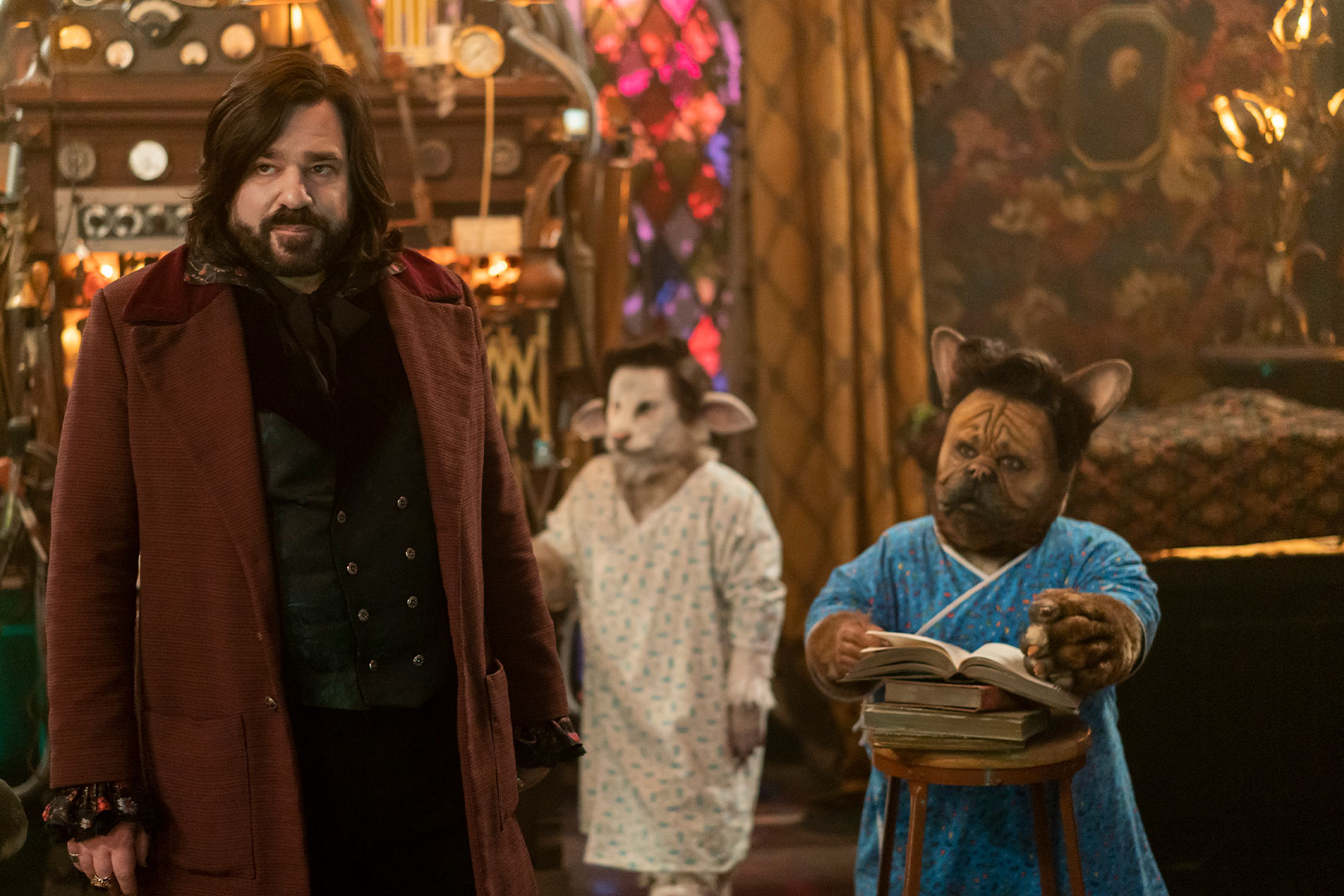
It should not go unnoticed that the monstrosities that softened up the Baron are Laszlo’s creations, achieved by merging Guillermo’s DNA with that of a small petting zoo’s worth of animals. The resulting hybrids insist on calling Guillermo “daddy” in the most unsettling voices one could imagine, gentle hideosities Guillermo donates to a retirement home to serve as emotional support creatures.

What We Do In The ShadowsWhat We Do In The Shadows (FX)They’re also twisted physical evidence of Laszlo’s higher purpose in “What We Do in the Shadows,” other than the bloodsucking family unit’s go-to for a quick-witted comeback or horny repartee. Between his fourth season turn as the foster father to the infant version of Colin Robinson 2.0 and his latest partnership with Guillermo, Berry’s Laszlo secures his place as the human soul of this vampire clutch – a good neighbor, willing father and now, Guillermo’s main hope for redemption.
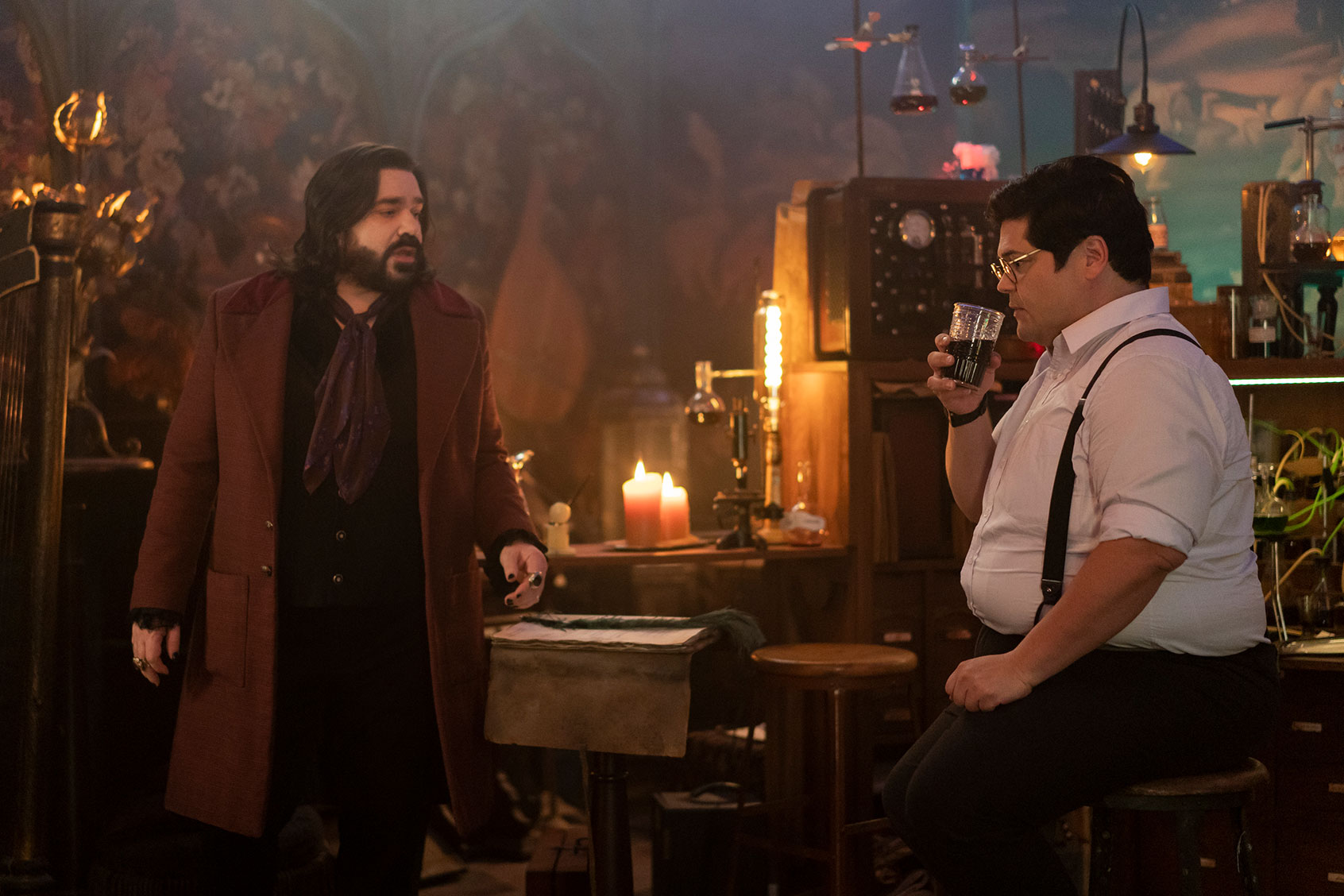
That role kicked in at the end of the second episode when Laszlo pushed Guillermo to reveal that he’s been made into a vampire, but enlisted someone other than Nandor to sire him, a mortal sin among their kind. But even before this, Laszlo’s influence on Nandor is revealed when Nandor reveals he’s been studying “an ancient book of wisdom . . . that lay buried in Laszlo’s library of precious volumes for years and years. This book has taught me to focus on what is really important.”

He’s referring to Thomas Anthony Harris’ 1967 self-help book “I’m OK – You’re OK.”

This long-running subplot casting Laszlo as Guillermo’s secret-keeper is similar to the farcical setup in Season 5 of “Friends,” where the writers wrung mileage out of Joey helping Monica and Chandler hide their romance from Monica’s brother Ross, along with Phoebe and Rachel. Most of its jokes revolved around the creative lengths to which Joey went to maintain Monica and Chandler clandestine affair, despite Joey being an idiot.

“What We Do in the Shadows” differs by making Laszlo’s intellect his and Guillermo’s shield. As a renaissance man and amateur enlightenment philosopher, Laszlo champions reason over violence, and loyalty to his heart over any law that would compel him to do otherwise. He doesn’t let anything get in the way of a flamboyant good time – not even his vampirism.  That’s made him the show’s most enchanting character, which is saying something in a comedy with an ensemble this solid.

Berry’s been a main draw for the show since the second season, when Laszlo introduced his alter ego Jackie Daytona, regular human bartender, concocted to hide out in a small Pennsylvania town.

Without question, though, these episodes’ most successful experiment has been teaming Guillén with Berry.

Even in disguise, he showed a soft spot for humans by raising funds for the local women’s volleyball team to play in the state tournament. This altruistic streak continued when Laszlo returned to Staten Island and forged other unlikely relationships, developing real feelings for the baby Colin Robinson and, stranger still, the idiot next door Sean (Anthony Atamanuik) — this show’s “Fun Bobby,” who even the Baron concedes is “cool, he’s a good time” after railing against his progeny going soft by consorting with humans.

What We Do In The ShadowsWhat We Do In The Shadows (FX)Sheltering a familiar from a nasty demise is another matter. Guillermo’s transgression is one the gravest of insults and is punishable by death, both Guillermo’s and Nandor’s. There’s a touch of sorrow within all this since Guillermo has genuine affection for Nandor, who feels the same but can’t bring himself to reciprocate.

But Laszlo rarely showed any deep feelings for Guillermo before this season. He still calls him Gizmo not out of affection, but because he can’t bring himself to remember the familiar’s real name. Nevertheless, when Guillermo accidentally spills the beans Laszlo doesn’t rat him out. He tries to help him.

We need your help to stay independent

This isn’t entirely altruistic on Laszlo’s part because Guillermo is a genuine biological curiosity. His transformation hasn’t fully taken hold, enabling him to eat food, walk in daylight and generally continue living like a normal human. And Laszlo, an (undead) man of science, enjoys a few benefits from his discoveries. An early find allows him to make sunblock from Guillermo’s sweat, allowing him to enjoy a day at the beach. The darker side of his dabbling with the human helper’s DNA yielded a talking pooch person that would haunt our dreams.  

Without question, though, these episodes’ most successful experiment has been teaming Guillén with Berry.

Five seasons of any show necessitates pairing actors who don’t usually work together to see what shakes out. Few better means exist to keep a comedy sharp and vital. Season 4 puts Demetriou together with Kristen Schaal, yielding outstanding returns as Nadja and The Guide run a nightclub together that rises as spectacularly as it burns out. Teaming Proksch with Berry, whose characters shared few storylines before Colin Robinson was resurrected as a baby, created one of the best parent-child comedies going.

Guillermo assisted Laszlo’s parenting, but almost always in the background. Having Laszlo turn his full attention to Gizmo for a season, then, adds a seam to a character that already had the audience in his thrall.

Those who know Laszlo respect him enough to go along with keeping Guillermo’s secret. When Nadja finds out, her love for Laszlo wins her over while also hinting that somewhere in the depths of her black soul she may actually care about old Gizmo. Maybe not as much as “Mamma Mia” and singing inappropriately raunchy wedding reception ditties, but it counts.


Want a daily wrap-up of all the news and commentary Salon has to offer? Subscribe to our morning newsletter, Crash Course.


By the time Guillermo drops the news on the Baron, he’s so angry about other slights (including the fact that Guillermo was responsible for burning him to a crisp) that Guillermo’s betrayal of Nandor barely even registers. “Please know that I am rooting for you, hmm?” the Baron tells Guillermo. “Do not get killed. But . . . these things happen!” Moments later, Gizmo almost accidentally kills the Baron again, causing the Baron to hunt him again and kill one of Laszlo’s hybrids, revealed by a quick and nasty dissection by Mr. Cravensworth.

The agony the Baron witnesses over Guillermo’s near death changes him . . . or rather, inspires him to admit that he’s already changed. “It can be lonely, this American dream,” he says. Then a few adorable man-frogs emerge from the bowels of the hybrid’s corpse, and the Baron is inspired to take up a new hobby.

It will be some time before Laszlo gives Bill Nye or Neil deGrasse Tyson much competition as a scientific spokesperson. But as an advocate for defending and seeking to understand the unknown, TV could do a lot worse than Laszlo. Through his time with Gizmo and many lab trials, he directly and inadvertently proves that no heart is beyond changing, even ones that haven’t beat for centuries.

“What We Do in the Shadows” airs new episodes 10 p.m. Thursdays on FX and the next day on Hulu.

Arizona prosecutors “aggressively” investigating fake elector “ringleader” Rudy Giuliani: report

Arizona prosecutors are “aggressively” intensifying their criminal probe into the 2020 fake electors scheme seeking to keep then-President Donald Trump in office, paying special attention to the role his attorney Rudy Giuliani played as “ringleader” in the plot, two sources with knowledge of the matter told Rolling Stone. In recent weeks, state prosecutors have been asking potential witnesses and other individuals specific questions about the former New York City mayor’s background conduct as well as that of other key Trump associates at the time.

Prosecutors have taken interest in a range of notable meetings and phone calls in connection to the plot, including a late November 2020 meeting Trump’s legal team called with members of Arizona’s state legislature, which featured unfounded claims of voter fraud and urged lawmakers to “take over” the state’s selection of electors, the sources told the outlet. State investigators have also asked about Trump’s level of involvement in the Arizona leg of the fake electors scheme, one of the sources added.

Arizona Attorney General Kris Mayes, who has assigned investigators to the case, called for patience in public comments following Trump’s indictment in Fulton County, Georgia earlier this month. “We are doing a thorough and professional investigation, and we’re going to do it on our timetable as justice demands,” he said. At this early stage in the probe, it is unclear whether Arizona prosecutors will choose to file any charges. In addition to the Georgia charges, the former president also faces a federal indictment in connection to his alleged efforts to undermine President Joe Biden’s 2020 victory. 

Check your freezers: The FDA has issued a recall on these vegetable items

If you have frozen vegetables in your freezer, you might want to check out which brands you have on hand. Earlier this week, the U.S. Food & Drug Administration shared an announcement stating that Twin City Foods, Inc. is recalling their products “IQF” Super Sweet Cut Corn and Mixed Vegetables due to potential Listeria contamination.

According to the announcement, Listeria “can cause serious and sometimes fatal infections in young children, frail or elderly people, and others with weakened immune systems.” The products were sold at Food Lion, Signature and Kroger grocery stores and the recall encompasses multiple products and listed “best if used by” dates. You can view the full list here. The announcement also declares that “to date, there have been no actual consumer reports of human illness or other complaints associated with this product.” If you do have these products in your freezer, do not consume them and immediately return the product for a refund or discard it.

Food Safety News writes that “food contaminated with Listeria monocytogenes may not look or smell spoiled,” but it’s important to not dismiss or downplay any potential consumption or exposure because it can be very dangerous. Customers can contact Twin City Foods, Inc. with any questions.

“Disgrace to my profession”: Legal experts blast Prof. Jonathan Turley for excusing away Trump call

Jonathan Turley, a George Washington University law professor, on Thursday claimed that former President Donald Trump was merely seeking a recount when he demanded Georgia Secretary of State Brad Raffensperger “find” enough votes to overturn his 2020 election loss in the state.

Trump called Raffensperger on Jan. 2, 2021, and pressured him to “find” the 11,780 votes he needed in order to declare him the victor. Raffensperger’s office had completed a recount of the votes the month prior at Trump’s request, marking the third time public officials counted the state’s votes, which Trump lost each time.

Turley, who was a Republican witness during Trump’s first impeachment inquiry, told Fox News host Sean Hannity that Trump was merely seeking another recount when he made the call.

“I think this is criminalizing the challenging of elections,” Turley said during the segment. “Basically, you have a Democratic prosecutor saying, ‘How dare you challenge a Democratic victory?'”

He then compared Trump’s attempts to push public officials to congressional Democrats voting against certifying the former president’s 2016 victory.

“But in Donald Trump’s case, he insists that he does believe that Georgia could have been flipped with a recount. And the way [District Attorney Fani Willis] portrayed that phone call to Raffensperger I think is really evidence of the bias and unfairness of aspects of this indictment,” he added.

“You know, it makes perfect sense when you’re challenging an election to say, you know, ‘I only need around 11,000 votes,'” Turley continued. “So, if you do a statewide review, that’s not a lot in a state like Georgia. That’s not criminal. That’s making a case for a recount.”

The Trump-Raffensperger call is one of the more than 160 acts listed as evidence of an alleged plot to overturn the 2020 election in the indictment handed up by an Atlanta grand jury earlier this month. The former president was charged with 13 counts related to his efforts, one of which pertains to claims Trump made in the call, and is one of 19 defendants. 

According to The Washington Post, Turley leveled a similar argument in Trump’s defense earlier this month, asserting in another Fox News appearance that the “more obvious explanation” for Trump’s request during the call was that he was advocating for a recount.

“The Georgia officials were saying that further state recounts might not be necessary. It would be natural for Trump to say, look, you only need to find 11,000 to turn the outcome of this election,” he said. “So I don’t need that many votes. Thus, a state recount is justified.”

We need your help to stay independent

The Post notes, however, that 11,000 votes is a pretty sizeable sum when it comes to a recount. While recounts in federal or statewide races may scrounge up a few hundred votes that were uncounted or miscounted the first time, those random omissions typically benefit candidates randomly with changes in results being much smaller than the uncovered votes. 

“It’s only in the closest races that a recount can make a difference — and 11,000-plus votes is not a particularly close race in that sense,” wrote WaPo columnist Philip Bump.

Bump went on to detail the call between Trump and Raffensperger in the analysis of Turley’s defense, pointing out that the former president never once asked for a recount during the exchange and outlining the “litany of suppositions about where there might have been errors or flaws in the votes cast” Trump had said.

“All of which is to say that Turley’s argument is obviously weak. A candidate simply hoping to ensure that all avenues were closed — even after months of scrutiny and multiple recounts — would receive information that those avenues had already been demonstrably closed with resignation and acceptance,” Bump concluded. “That was not the way Trump received Raffensperger’s pushback.”

Turley himself even criticized Trump for the phone call when The Post first reported it in 2021. 

“Telling Raffensperger to ‘find’ the votes on the Saturday before the certification is breathtaking,” he wrote on Twitter, the platform rebaranding as X, linking to the article. “I am as mystified by the request as I am the logic. Such an opportunistic move to secure the 16 electoral votes would not work to change the outcome.”


Want a daily wrap-up of all the news and commentary Salon has to offer? Subscribe to our morning newsletter, Crash Course.


Turley walked back his 2021 comment in a statement to Mediate two weeks ago, arguing that he was misinformed about the conversation because the “transcript presented a sharply different context and meaning.”

“The next day, I gave interviews on those differences and I then ran a column stating that the transcript shows a clear alternative meaning,” he said in the statement. “I later wrote on the errors in The Post account of the calls. To its credit, The Post admitted the errors in its original story. I stated, as I have continued to state, that reasonable people can disagree on that meaning.”

However, Turley’s account, Bump says, is misleading. While the outlet did correct an article about a different call where Trump attempted to pressure Georgia officials, the article linked in his tweet remained accurate. 

“Notice how he conflates the two, describing them as the ‘Post account of the calls’ and suggesting that it was our error that misled him,” Bump said. “In reality, the error was — and continues to be — his own.”

Legal experts called out Turley’s defense on social media.

“I’m not asking every law professor out there to agree with my view. But… would a fourth recount weeks after certification and just a couple of days before Congress convened have changed the election? No. This argument is obscene. Simply because it is devoid of logic and reason,” wrote Georgia State Law Prof. Anthony Michael Kreis. 

“There’s just no way if someone understood the basics of what happened in Georgia or cared to look at the timeline of events in at least a superficial way, that the Trump phone call comes off as a casual chat,” he added, pointing out that “One might also want to ask why anyone felt the need to record the phone call if the entire episode was so innocent. It sure seems that folks had reason to be suspicious of Trump’s overtures.”

Longtime Democratic election lawyer Marc Elias called Turley’s defense of Trump “more proof that Jonathan Turley is Mike Lindell with tenure,” referring to the MyPillow founder who continues to espouse election conspiracy theories while facing multiple defamation lawsuits.

“A disgrace to my profession,” wrote Eric Segall, the Ashe Professor of Law at Georgia State University.

These two states are finally getting their very first Costco stores

Costco may be a household name in several states across the country. But for a select few, the beloved wholesale warehouse is an uncommon sight. 

That’s about to change for two states that are gearing up to welcome their first-ever Costco store. On August 23, Cranston, Rhode Island Mayor Kenneth Hopkins announced that the state will be getting its own Costco. 

“After many months of speculation, discussions, and development meetings, I am pleased that the formal steps will be rolled out that will soon lead to the establishment of a Costco Wholesale facility in Cranston,” Hopkins said in a statement.

Costco’s first Rhode Island location was initially proposed three years ago, but the plan was ultimately scrapped over objections. The upcoming Costco is slated to go up in about 18 months.

Following suit is Maine, which will get its first Costco store in the city of Scarborough. Plans for a 161,100-square-foot store, alongside a gas station and parking lot, were approved by the Scarborough Planning Board back in August 2022. At this time, the Costco is expected to open in late 2023 or early 2024.

There are currently 860 Costco warehouses, with 591 locations in 46 U.S. states and Puerto Rico. California currently takes the top prize for the most Costco locations, with a whopping 134 open stores. Next in line is Texas, with 38 stores, followed by Washington state, with 33 states. Now that Rhode Island and Maine are scheduled to get their own stores soon, only two states remain completely Costco-free: West Virginia and Wyoming.

Costco warehouses are between 80,000 to 230,000 square feet in size, with an average of 146,000 square feet. As for membership data, the store boasts 124.7 million cardholders across 69.1 million households.

For many customers, Costco remains their go-to place to fulfill all their shopping needs, whether that’s groceries, household essentials, electronics or other budget buys. And while most Costco locations offer positive shopping experiences, some rank significantly higher than others, per consumer reviews. 


Want more great food writing and recipes? Subscribe to Salon Food’s newsletter, The Bite.


FinanceBuzz, a finance-focused online platform, found that South Carolina locations continue to hold the highest average rating in the nation, with customers praising their overall cleanliness and friendly staff. Right behind are Ohio and Tennessee, which both boast clean facilities, friendly staff and great variety and availability of products.

The platform also noted that the single highest-rated store in the country remains the Costco located in Cumming, Georgia. The second highest-rated Costco location in the country can be found in Kansas City, Missouri, while the third can be found in San Antonio, Texas.

R. Kelly ordered to pay over $500K in his music royalties to compensate his victims

R&B singer R. Kelly will be dipping into his music royalties to pay up.

On Aug. 23, U.S. District Judge Ann Donnelly ordered the convicted sex offender and his longtime music publisher Universal Music Group to pay over $500,000 in music royalties to cover fines that R. Kelly still owes, reports Bloomberg Law. Previously, Donnelly had also ordered the singer to pay almost $28,000 in his prison inmate account to cover his unpaid fines.

R. Kelly is currently serving 30 years in prison for his 2021 conviction when he was found guilty of nine counts of sex trafficking and racketeering. The six-week trial was rife with bombshell testimonies, stories and allegations from young women who claim to have survived sexual abuse, imprisonment and even reproductive coercion from the singer. 

For years, many of these claims went ignored. Some have attributed the momentum of his trial and conviction to the influence of the 2019 Lifetime documentary, “Surviving R. Kelly.” In the docuseries dozens of women interviewed claimed to have survived abuse from the now disgraced singer over the decades, eventually leading to Kelly facing criminal charges.
 

“Far fewer people than debate”: Trump claim that 200+ million watched Tucker interview off by 200M+

Former President Donald Trump touted the dubious viewership numbers for his interview with former Fox News star Tucker Carlson but video metrics appear to show that far more people watched the Fox News Republican debate.

Carlson posted the 46-minute interview, pre-taped at the former president’s golf course in Bedminster, New Jersey, on X, formerly Twitter, just minutes before the first GOP debate began airing on the conservative network Wednesday night. The interview garnered upwards of 75 million views on the platform the night it went live, according to X’s view counter, and hundreds more since.

“The Tucker Carlson Interview with me was a BLOCKBUSTER. Could hit 200,000,000 Views, and more!” Trump posted on Truth Social Thursday morning. When Carlson’s post later reached around 231 million views, Trump declared it “The Biggest Video on Social Media, EVER, more than double the Super Bowl,” which drew more than 115 million viewers when it aired in February. 

In a Thursday night appearance on Newsmax, the former president continued to boast about the interview’s ratings, telling host Greg Kelly that it reached “record-setting numbers” and was up to 257 million views with a potential to garner up to 300 million before it loses traction. 

“The biggest ever interview was Oprah with Michael Jackson,” Trump said, adding, “I think we’ve doubled it up.”

As of late Friday morning, Carlson’s tweet with the conversation displayed a count of 254.6 million views. 

The former president went on to surmise that the reason for the high viewership was because “our country is dying for a good country again,” asserting that, under his administration, the U.S. had “the safest boarders, the biggest tax cuts” and was all around doing better compared to the current “failing nation” that it is.

We need your help to stay independent

But the metric on X is not a sum of the views Carlson’s video received, but a sum of the number of views the tweet itself got. 

According to Mashable, Carlson’s interview with Trump had only received 14.8 million video views on X as of Thursday evening. While the tweet’s impressions — which counts when a user actively clicks on a tweet, the tweet appears in a user’s timeline after being retweeted and when it appears in a user’s timeline via the algorithm — grew toward 300 million, the actual video view count was 220 million views less than that.

Video views only count the amount of times a piece of media is played for two or more seconds on the platform, which includes when a user has 50 percent of the content visible on the screen for that length of time and when the media autoplays.

“To break down what this means for Tucker Carlson’s Trump interview: The video itself was actually played only 14.8 million times, for at least two seconds of the more than 46-minute interview — or just over six percent of the total 236 million times someone saw the post on X,” Mashable’s Matt Binder explained.


Want a daily wrap-up of all the news and commentary Salon has to offer? Subscribe to our morning newsletter, Crash Course.


Under Elon Musk’s leadership, Twitter began removing the video view count from public view in May months after he added a “views” count metric to tweets in general. While both metrics displayed on users’ tweets for a time, the company ultimately scrapped the typically smaller, though more accurate, video view count and kept the higher, though inaccurate, tweet views.

Some older Android versions of the Twitter app continued to show the public video view metrics on X, and Mashable was able to access and pull the data from it.

The outlet also found that Carlson’s new show on X routinely displayed an impressions total that was five or six times greater than the actual video views per episode. Carlson’s interview with contentious right-wing influencer Andrew Tate in July, as of Thursday evening, had 17.9 million video views on X but some 107 million impressions. By comparison, despite having fewer than half the impressions of his interview with Trump, which had an impressions-to-video-views ratio of almost 17:1, Carlson’s Tate interview raked in over 3 million more video views.

Despite being lauded as counter-programming to the Fox debate, Trump’s interview with Carlson “was seen by far fewer people than the Fox News debate,” wrote Mediaite’s Aidan McLaughlin, though the metrics are measured differently.

Nielsen reported that the Republican presidential debate drew 12.8 million viewers. But that count measures the average concurrent viewers of a program, meaning that the event’s total viewership is far higher.

“In TV, the standard measurement unit for viewership is the average-minute audience — how many viewers there are in an average minute of content,” Steve Hasker, Nielsen’s former president and the current CEO of Thomson Reuters, explained in 2015. “In the digital space, on the other hand, video measurement is commonly expressed as the gross number of times the video is viewed, even if only for one minute or one second. These two metrics are quite different, and comparing one to the other unfairly tilts the comparison against TV.”

Rating the MAGA mug shots: Donald Trump and his posse pose as supervillains

It’s finally here: Donald Trump’s mug shot. The former president and lifelong criminal finally got the moment he’s no doubt been expecting all his life. He was booked at the Fulton County jail on Thursday, in a RICO case filed by District Attorney Fani Willis that describes him as the leader of a “criminal enterprise” that tried to steal Georgia’s 2020 presidential election.

For most people, being arrested on organized crime charges would be a low moment, but Trump and his alleged co-conspirators are leaning into it. They’ve all tried to strike poses meant to be menacing or carefree in their mug shots, and have celebrated their walks of shame on social media. Sadly, this makes sense. As I’ve written before, MAGA leaders self-consciously identify as villains, from the way they dress to the bad-guy rhetoric they employ. Trump’s “I am your retribution” speech, for instance, gave of strong “wishes he were Tom Hardy playing Bane in a Batman movie” vibes. The Georgia 19 are, for the most part, pampered country-club types, but play-acting as fictitious master criminals is an excellent chance to fundraise by burnishing their malevolent image with the MAGA faithful. 

Unsurprisingly, Trump used the moment to return to Twitter. With his usual delusional grandiosity, he declared, “NEVER SURRENDER” over a photo taken on the day that he, um, surrendered. 


Want more Amanda Marcotte on politics? Subscribe to her newsletter Standing Room Only.


A friend of mine who’s a critic often tells me that he tries not to assess a film or theater performance through the lens of his own personal taste. Instead, he asks what the creators were trying to accomplish and whether they met their own goals. That view shapes the tawdry task of reviewing the mug shots of the Five-Iron Cartel. The five-point scale I’m using here is not a measure of their moral worth, which is zeroes across the board. Our task here is to rate how well the members of the Trump cartel struck their poses of cartoonish evil. 

Donald Trump: 1/5

Donald TrumpFormer President Donald Trump poses for his booking photo at the Fulton County Jail on Aug. 24, 2023 in Atlanta. (Fulton County Sheriff’s Office via Getty Images)

Trump spent months hyping up the idea of his mug shot. He’s tried desperately to romanticize his criminal indictments, as if he were Bonnie and/or Clyde. MAGA has been doing their part, donating more money after each set of charges and pretending he’s a sex symbol, à la Frank Sinatra circa 1938. But without the glamour shot of Trump holding his prisoner number, it was a hard sell — to the point where he actually sold merch featuring a fake mug shot so fans could feel the fantasy. 

With expectations set that high, he was bound to fail. Even so, this is a major disappoinment. Despite spending hours on his hair and makeup, Trump still looks disheveled. His eyes are bloodshot. His combover has a disturbing unnatural sheen and those overgrown eyebrows are an unfortunate reminder that, as he told the magistrate judge in Washington a few weeks ago, his age is “seven-seven.”

Trump also undermined his efforts to seem like a hardcore maverick renegade by describing his hair color as “strawberry” on his booking form. (Seriously: strawberry?) He also complained to Newsmax, “I had never heard the word ‘mug shot.’ They didn’t teach me that at the Wharton School of Finance.” 

Even one point out of five may seem generous, but at least he managed not to smear his makeup on his collar. No doubt Trump thinks the photo is “perfect” and “beautiful.” He also listed his height at 6’3″ and his weight at 215 pounds, another reminder that there’s no limit to his delusional self-assessment. 

David Shafer 4/5

David ShaferFormer Georgia State Sen. David Shafer poses for his booking photo on Aug. 23, 2023 in Atlanta. (Fulton County Sheriff’s Office via Getty Images)

This photo is drastically overexposed, but that only adds to the ominous effect of this mug shot of David Shafer, the former Georgia Republican Party chair. Let’s give credit where it’s due: Shafer isn’t a nationally famous villain like your John Eastmans or your Rudy Giulianis. But in one flash-heavy moment, he went from a guy you never heard of before to someone you hate with every fiber of your being.

As far as villain entrances go, it’s not quite Darth Vader emerging from battle smoke to gaze on the fallen bodies of the Rebel Alliance. What it lacks in drama, however, it makes up for in seedy menace. You worry that he will somehow persuade you to buy a flood-damaged Grand Cherokee (or the swampland where it died) or cheerfully start telling you about the 20 bodies buried under his basement. Chilling. 


Want more Amanda Marcotte on politics? Subscribe to her newsletter Standing Room Only.


Jenna Ellis: 5/5

Jenna EllisFormer Trump lawyer Jenna Ellis poses for her booking photo on Aug. 23, 2023 in Atlanta. (Fulton County Sheriff’s Office via Getty Images
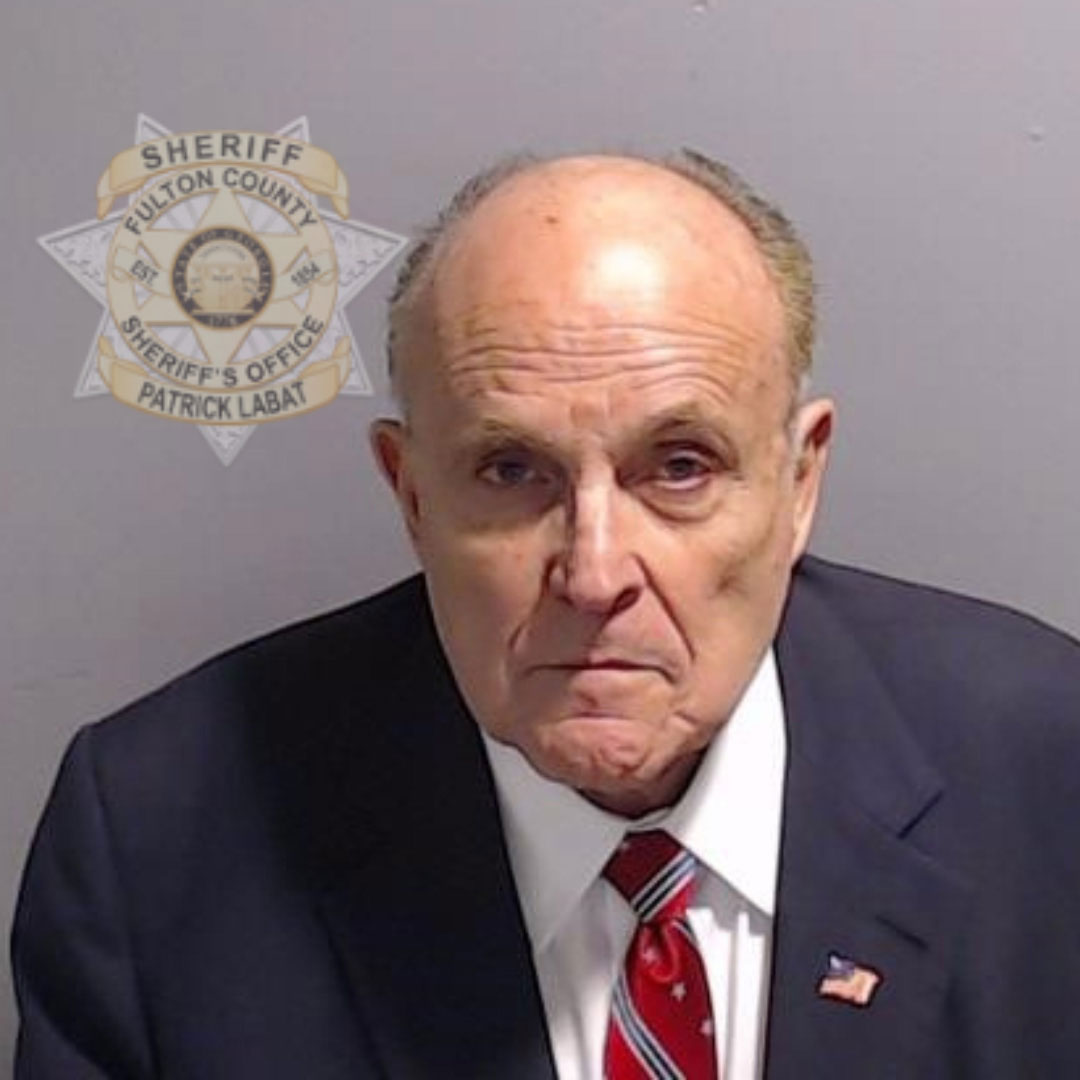
Is this photo tasteless? Absolutely. Is Ellis failing to take this situation seriously? 100%. Is that a grin one wants to see wiped off her face in record time? Totally. 

Nonetheless, one must give former Trump aide Jenna Ellis her due for hitting all the marks. As a fundraising ploy, her s**t-eating grin surpasses all Trump’s bragging that he would “proudly be arrested” in Georgia. One can hold out hope that Ellis’ bravado will dissipate when confronted with the reality of this situation. For the moment, however, she’s done everything she can to impress the rubes and scare up more hard cash for her legal defense. Since Trump ain’t footing her legal bill, it’s no surprise Jenna is hustling. 

Rudy Giuliani: 0/5

Rudy Giuliani booking photoRudy Giuliani, former personal lawyer for former President Donald Trump, poses for his booking photo on Aug. 23, 2023 in Atlanta. (Fulton County Sheriff’s Office via Getty Images)The owner of a Manhattan apartment you can have for a cool $6.5 million turned in the most satisfying mug shot — at least for those of us who long to see the insurrectionists pay for their misdeeds. Rudy’s not even trying for that “eff you, liberals” vibe that most of the geniuses behind the Country Club Coup are aiming for. He just looks like a beatdown dog.

Perhaps that’s because, unlike his fellow defendants, Giuliani has personally (and successfully) prosecuted wealthy criminal defendants on RICO charges. He knows that ending up in the hoosegow is a real possibility. He can’t even pretend to be happy about it. 

Or maybe he’s just hung over. Either way, this counts as a massive fail when it comes to opening the wallets of the MAGA faithful. He better hope that apartment sells soon, or he may end up being represented by an Atlanta public defender. 

Sidney Powell: 3/5

Sidney Powell booking photoAttorney Sidney Powell poses for her booking photo on Aug. 23, 2023 in Atlanta. (Fulton County Sheriff’s Office via Getty Images)If someone unfamiliar with the Chardonnay Conspiracy were asked what this lady was charged with, they might guess it had to do with the arsenic found in the crème brulée she’d served to her sixth husband. “Kraken” lawyer Sidney Powell was always going to have a hard time overcoming her Chanel silk blouse sensibilities to refashion herself into a truly scary figure. The dead-eyed stare certainly helps. No one thinks she’s capable of stabbing Janet Leigh to death in a shower, but you definitely want to keep a close eye on your Scotch-and-soda when she’s around. 
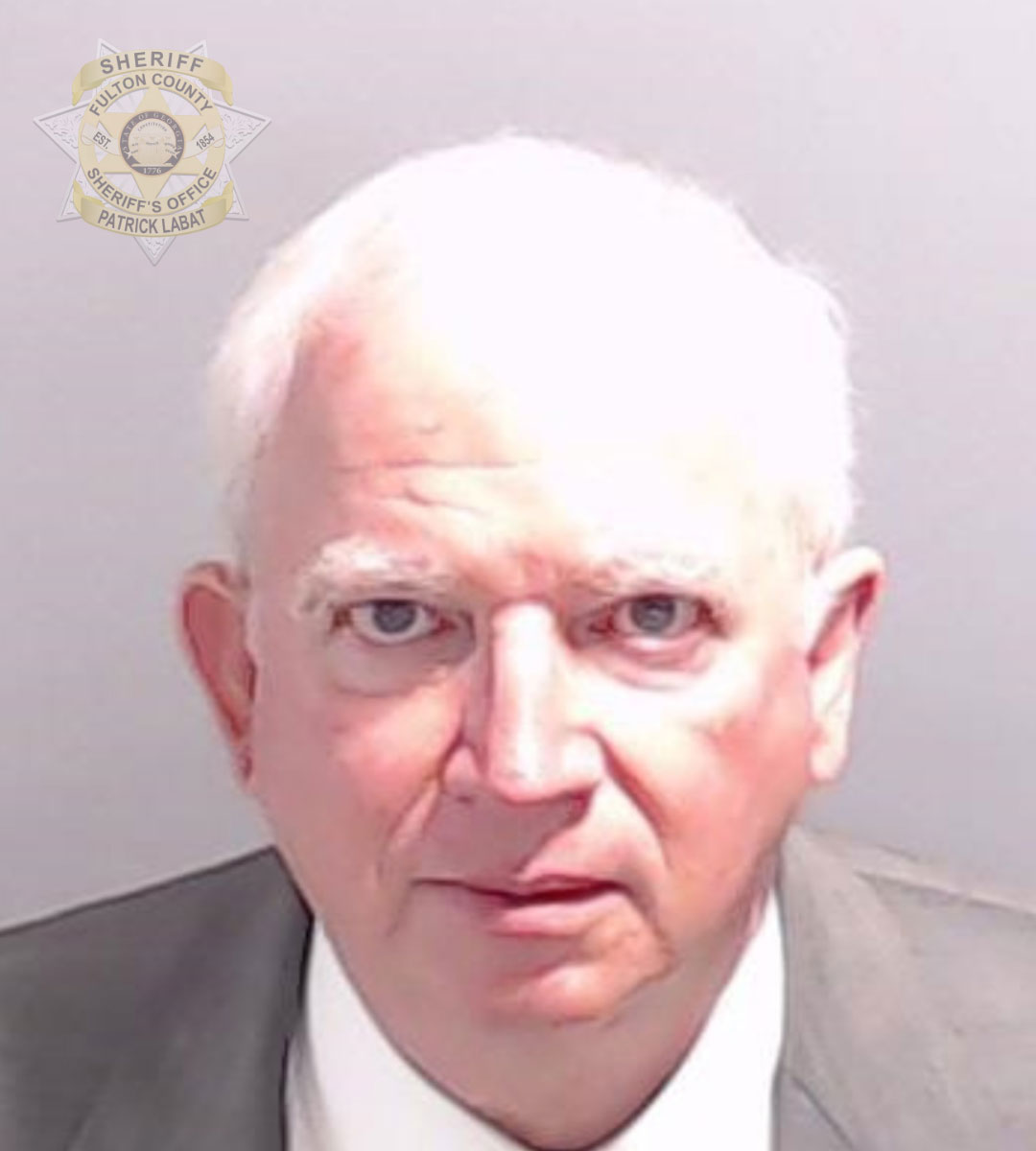

Want more Amanda Marcotte on politics? Subscribe to her newsletter Standing Room Only.


John Eastman: 1/5

John EastmanJohn Eastman, former lawyer to former President Donald Trump, poses for his booking photo on Aug. 22, 2023 in Atlanta. (Fulton County Sheriff’s Office via Getty Images)Look, there’s no doubt that this guy, one of the chief architects of the “fake electors” plot, has a disturbing affect. I doubt even John Eastman’s wife would be surprised if he were picked up on peeping-Tom charges. But Eastman has failed to embrace the creepiness that truly makes him unnerving. Instead, he portrays himself in media interviews as a true heir to the American Revolution, like he’s about to grab a musket and have a run at the Redcoats, shouting, “Give me liberty or give me death!”

Johnny boy, you hid in your fancy library while the Capitol insurrectionists you inspired ran over the barricades. If you want to scare people, you’d do a lot better by leaning into the panty-sniffing darkness just below the surface of your personality. 

Ray Smith: 5/5

Ray SmithGeorgia lawyer Ray Smith poses for his booking photo on Aug. 23, 2023 in Atlanta. (Fulton County Sheriff’s Office via Getty Images)I don’t even know who this Ray Smith character is. Fox 5 Atlanta describes him as “a business, real estate, election and probate litigation attorney.” But if you told me this was the guy they arrested for the Gilgo Beach murders, I would believe you. 
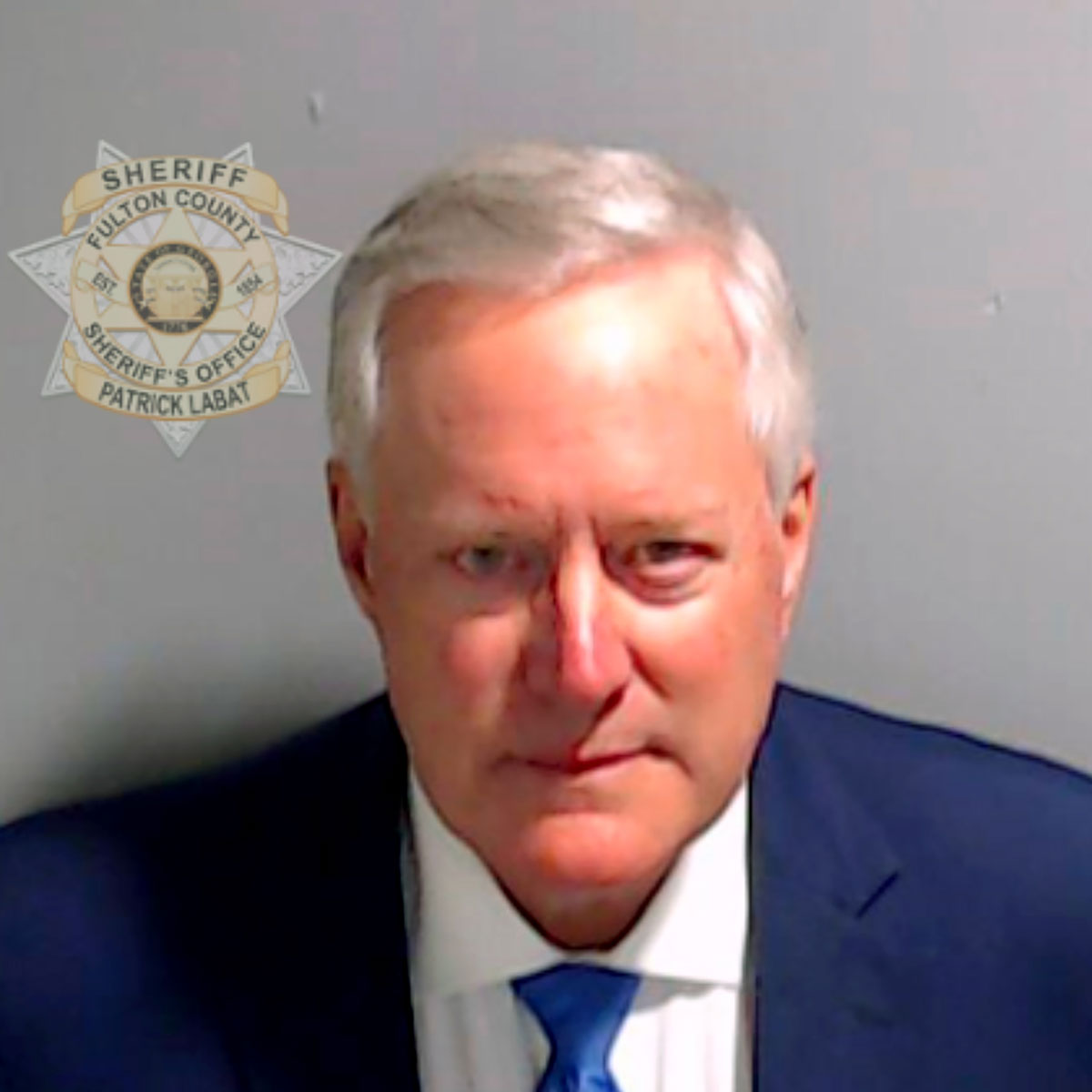
Mark Meadows: 1/5

Mark MeadowsFormer White House chief of staff Mark Meadows poses for his booking photo on Aug. 24, 2023 in Atlanta. (Fulton County Sheriff’s Office via Getty Images)Donald Trump’s last and most consequential White House chief of staff (I won’t even try to list the others) went the ill-advised route of trying to look like a tough guy in his mug shot. Instead, he looks like the guy who just found dog poop on his well-manicured lawn and wants to blame you for it. You don’t scare anyone, Mark. This photo is more likely to remind folks of how former Meadows aide Cassidy Hutchinson described his Jan. 6 behavior in her testimony to the House select committee: slumped on the couch, listlessly scrolling through his phone as a mob stormed the Capitol.
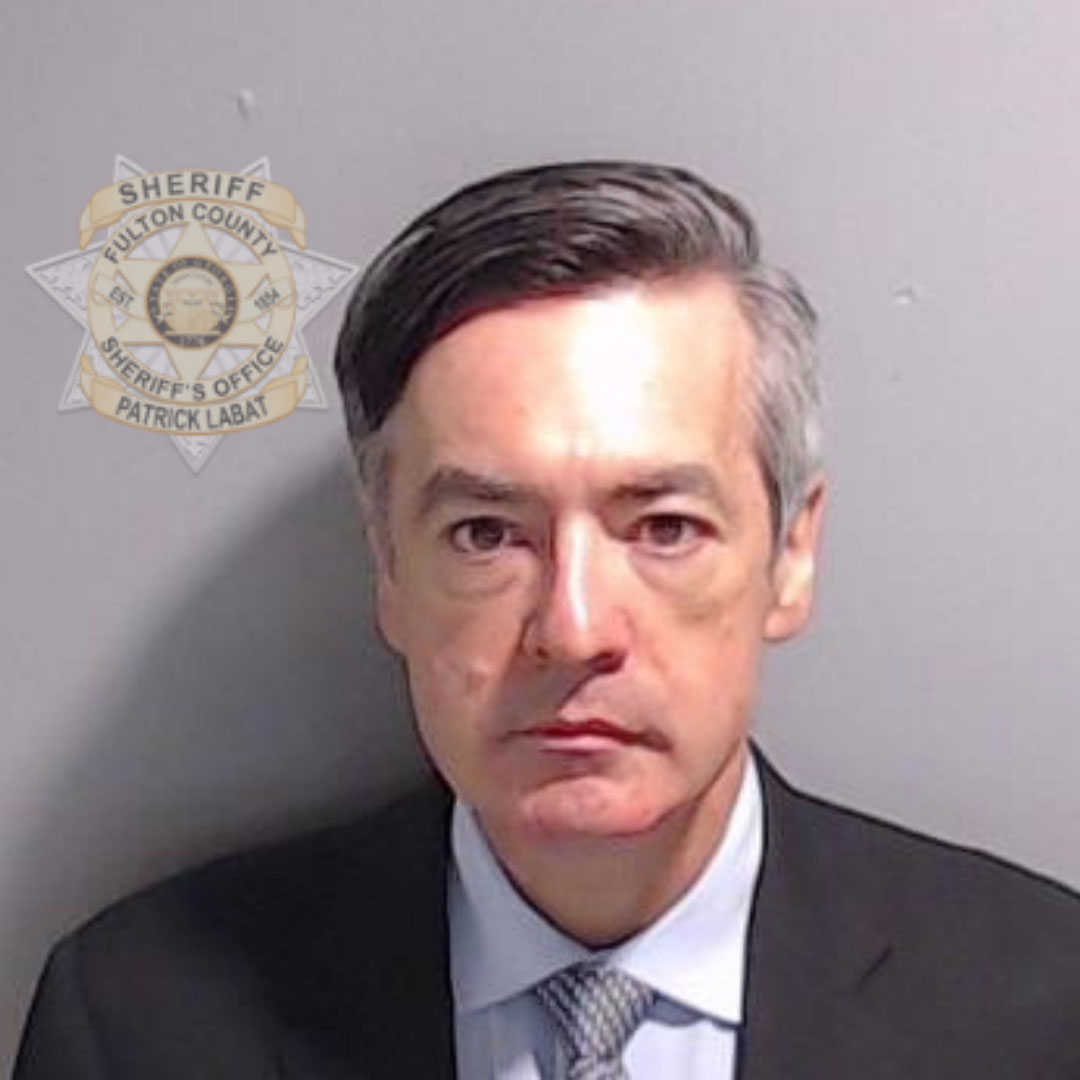
Kenneth Chesebro: 2/5

Kenneth ChesebroFormer Trump lawyer Kenneth Chesebro poses for his booking photo on Aug. 23, 2023 in Atlanta. (Fulton County Sheriff’s Office via Getty Images)Unlike Eastman, his fellow alleged conspirator in the “fake electors” plot, Trump lawyer Kenneth Chesebro actually did join the crowd that stormed the Capitol on Jan. 6, 2021. (Though he apparently shied away from actual violence.) So you might think he’d do a better job looking like a true baddie for the Fulton County jail staff. Alas, along with his meme-worthy surname, Chesebro looks like a guy who just called the chef out from the kitchen to complain that his Angus steak was absolutely not medium-rare, dammit. 
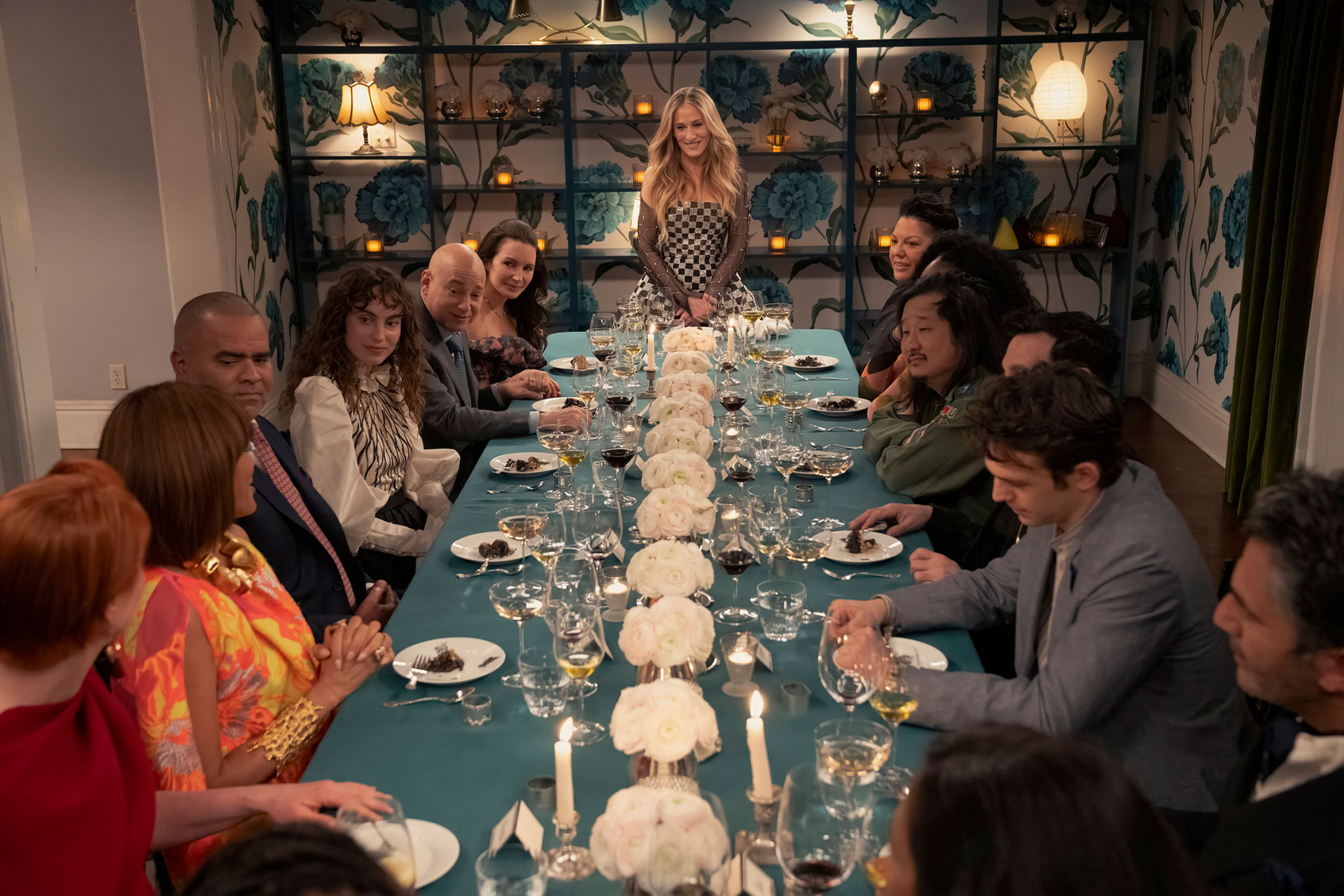
Despite the weak facial expression, Chesebro gets a bonus point for the strongly villainous hairdo, bringing his score up to just below mediocre.

Rep. Marjorie Taylor Greene, R-Ga.: 0/5

Being so thirsty for your own mug shot that you end up faking one is always likely to be an epic fail, but Greene makes it even more pathetic by flashing a beauty pageant grin. Her little photo shoot is part of a larger MAGA trend of putting your own face into the Fulton County mug shot frame, with results cringeworthy enough to revive the “OK boomer” catchphrase of a couple years ago. These folks may think they’re serving up Sex Pistols, but they’re really just giving us Blink 182. That ought to serve as a welcome reminder that no matter how hard they strive to spin fascism as a countercultural movement, there will never be anything cool about MAGA. 

“And Just Like That,” Carrie’s last supper serves up Samantha’s cameo and just maybe, a fresh start

At long last, “And Just Like That” gives us a season worth anticipating.  We mean its third, which Warner Bros. Discovery officially announced this week. The way that the second season finale, “The Last Supper Part Two: Entrée,” plays out, it looks like series creator Michael Patrick King did not take the show’s continuation for granted regardless of the buzz surrounding it.  

Or maybe its resolution is a matter of the writers recognizing that the show is transitioning, emotionally, to paraphrase Sara Ramirez’s Che. “The old me is f**ked,” they admitted to someone asking for a career update, “and the new me is not here yet.”

This second season improved from the first, albeit in increments.

As Che’s professional and personal identity goes, so goes this “Sex and the City” sequel. Where the two diverge is that King, who wrote and directed the two-part finale, leaves his show and everyone in it in a definitively solid place – save, perhaps, for Carrie (Sarah Jessica Parker).

Nevertheless, Carrie’s Michelin chef-prepared farewell dinner for more than a dozen, hosted in a tiny space that was barely large enough for one, realizes a dream so many of us want but few ever receive: closure, with wine pairings.

And Just Like ThatAnd Just Like That (Max)Despite offing Mr. Big in the series opener “And Just Like That” has been reluctant to loosen its grip on its decades-old legacy. To be fair, so has its audience. Viewers still yearn for these characters to behave like the people they used to be. That discounts the essential struggle of middle age, which involves acclimating to circumstances that force you to contend with your previous identity’s obsolescence.

If Season 1 was a shock to the system, that’s because Carrie and Miranda (Cynthia Nixon) were wrecks. People adored Charlotte (Kristin Davis) through it all, owing to the relative stability offered by her happy marriage to Harry (Evan Goldenblatt).

The emotional peak of “The Last Supper” coalesces these notions in Carrie’s address to her assembled guests. “In honor of my letting this place go, which has meant everything to me, I would like us all to go around the table and say something we want to let go of. Only one word. One word, and no repeats. . . . Those are the rules.”

Carrie’s word is “expectations.” “I’m talking about, you know, assuming things will go the way we think they should, for whatever reason, because you never know what tomorrow will bring and it might be greater than anything you ever expected.”

From our girl’s lips to the writers’ ears, hearts and heads.

“And Just Like That” has been in search of a purpose as the scripts struggled to evolve our main trio and four new characters they failed to flesh out.

This second season improved from the first, albeit in increments. Mario Cantone’s Anthony enjoyed a pleasant second act. Miranda pulled out of her intolerable spin in these final episodes, during which we enjoyed witnessing Charlotte reclaim the parts of her she placed in cold storage to focus on domestic life. On top of all that, swoons for the Samantha Jones of it all – an amuse bouche successfully served that’s bound to create issues to surmount down the road.

Season 2 also coaxed Seema (Sarita Choudhury), the show’s most successful new character, closer to the story’s heart, and ours, although much about her remains undiscovered.

Viewers still yearn for these characters to behave like the people they used to be. That discounts the essential struggle of middle age.

At the same time, Nicole Ari Parker’s Lisa Todd Wexley and Karen Pittman’s Nya Wallace remained side players – Nya more than LTW, who at least got to serve a few looks here and there. While LTW was allowed to slay all day in the role of the woman who has it all, Nya spent most of the season inside her Brooklyn apartment flitting between her bed and her kitchen table.

And Carrie functioned as everyone’s story glue – except for Nya’s; she’s still mainly Miranda’s friend – until reconnecting with Aidan gave us something to hold onto.

This is how the “Entrée” portion of “The Last Supper,” which is less of a multi-course feast savored slowly than a pitstop at a department store’s gift-wrapping station on Black Friday. A heaping armful of storylines dropped onto that rented table in that 42-minute episode, most of which tied up neatly, with a few details taped up to be revisited in the future. 

Top dish: Samantha Jones’ cameo. The main attraction keeping even the hate-watchers seated at the “And Just Like That” table was Kim Cattrall’s promised return, momentary though it was.

Samantha Jones dropped in for all of a minute by way of a trans-Atlantic phone call, explaining that a delayed flight would prevent her from attending her dinner. But she pays her respects to Carrie’s apartment by addressing it directly.

“Thank you for everything, you f**king fabulous, fabulous flat!” Ms. Jones declares with a slight British accent. When Carrie asks her about that, she quips, “Who’s Samantha? This is Annabelle Bronstein! I’m from In-jah!” a shout-out to an alter ego she introduced precisely 20 years ago to crash another exclusive venue, Soho House, in the sixth season episode “Boy, Interrupted.”

With that, Ms. Jones is out with a “Tah, and cheerio. And have a great night.”

Carrie acquires a new Shoe. This is what Carrie names her recently adopted kitten, who is indoor-only. This detail is both a responsible portrayal of pet ownership and has symbolic relevance; keep reading.

And Just Like ThatSarah Jessica Parker in “And Just Like That” (Max)Charlotte and Harry successfully revisit the terms of their marriage. Although the Goldenblatts very much exemplify the ideal marriage even now, Charlotte’s resumption of her career temporarily transforms her doting husband into a gigantic whiner. As he’s waking up a hungover Charlotte — mainly to handle Anthony, who has dropped by to discuss his, “a** virginity” — he complains about getting the kids ready by himself by yelling, “I can’t do it all, Charlotte!” 
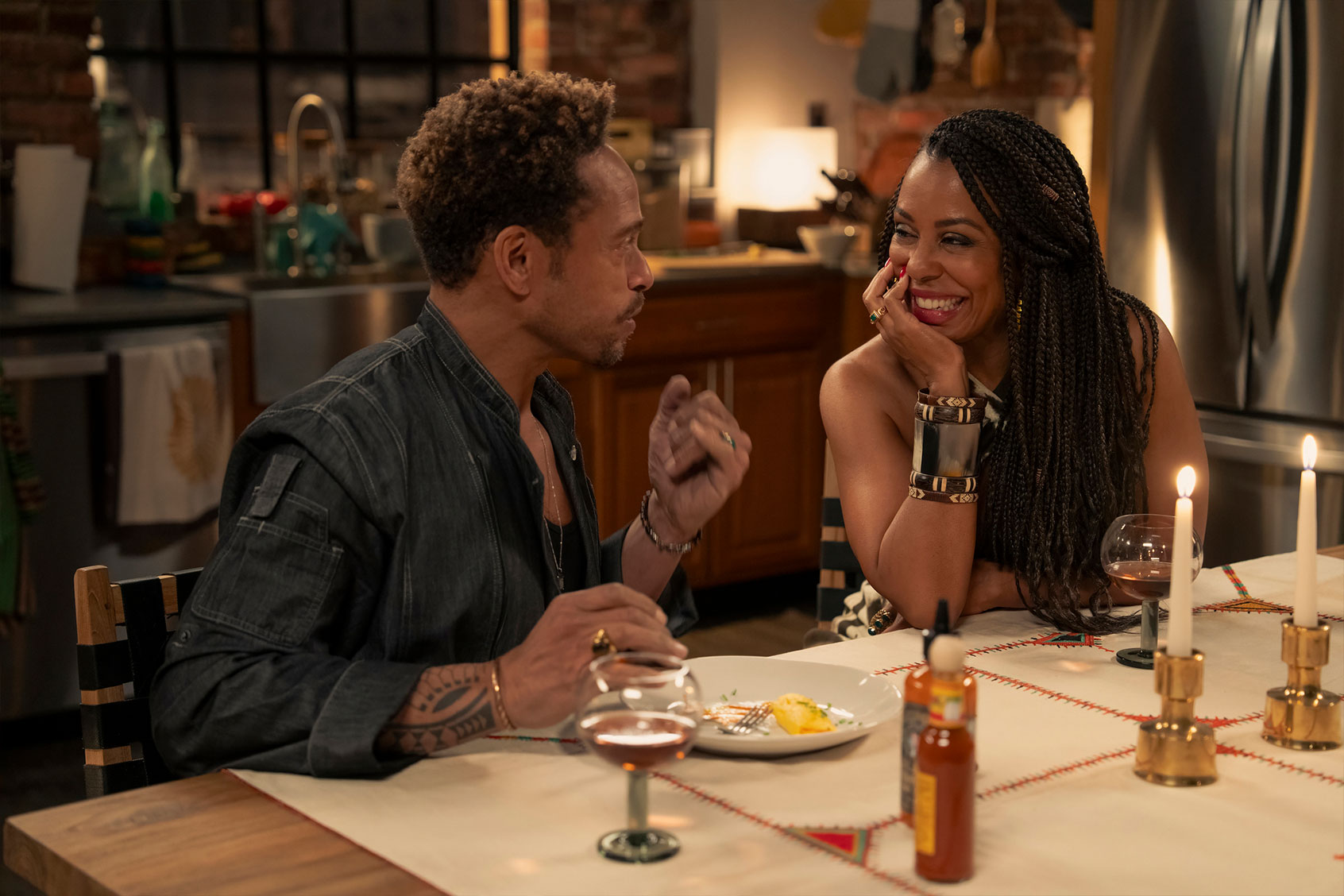
Charlotte’s whispered rebuttal rivals America Ferrera’s feminist call-to-arms in “Barbie.” “I can’t talk loud, so please, just listen: You are not doing it all,” Charlotte says. “I know, because you made a few breakfasts and ran a few errands, that it feels like you are. But in fact, you are doing the bare minimum of what I and other women have been asked — no, expected — to do around the house for years and years and years.”

“And now,” she continues. “I am asking — no, no expecting – you to help me with part of it. Not all of it. Because I love my work and I’m good at it. . . . So I need your help and your support. Not your words of help and support.” 

This is the Charlotte I want to see more of in the third season, although slightly less than others begging for more development. 

For what it’s worth, Harry pledges to let go of possessiveness. Charlotte’s word is “limits.”

We need your help to stay independent

Anthony’s Roman holiday. Out of everyone embarking on new relationships, Anthony’s unexpected fling with his poet and poster model Giuseppe (Sebastiano Pigazzi) is among the season’s tenderest developments. Cantone’s Anthony was always the brash but it’s long been understood that his harsh candor hides a generous heart that bruises like a peach.

Bringing the insistent, romantic Giuseppe into his story allows Cantone and the writers to showcase that side of him and his stubborn insistence on pushing away frightening unknowns. At the Supper, Anthony says he wants to release “control.” At this Giuseppe, who’d been threatening to return to Italy, says he’ll let go of Rome.

Anthony’s unexpected fling with Giuseppe is among the season’s tenderest developments.

Seema’s ready for her close-up: When love strides into Seema’s life in the form of a handsome director, Ravi Gordi (Armin Amiri), she can’t help questioning it. Then again, Ravi doesn’t give us much to evaluate his worthiness other than his word that after a five-month shoot in Cairo, he’ll be coming back to her.

Seema pledges to let go of mistrust even as she declares later that night, “I’m not giving up my career and this person I’ve worked so hard to become for a man. Full stop.” 

Herbert and Lisa Todd Wexley show up to dinner in the aftermath of her miscarriage, which they briefly talk about in Carrie’s thimble of a bathroom where LTW retreats to privately weep at the thought that she may have wished the baby away. Herbert (Chris Jackson), to his credit, says all the right things and reaffirms his status as Harry’s equal in the Good Husband category. LTW breaks Carrie’s rule and claims the same word Miranda calls out, which is guilt.

Miranda, at last, updates her personality software after her catastrophic drop-in to Che’s dreadful and abusive stand-up act, closing the night with a triumphant last-minute appearance on BBC for her job. Before all that she heads to Coney Island to make amends with Steve (David Eigenberg). They resolve to remain friends; Miranda even admits he was smart about a lot of things, including buying their Brooklyn home and “being good parents” which is debatable!

“The only thing you weren’t right about was us,” she says.

Steve gently demurs. “Nah. I was right about us for a very long time.” Down the beach, a glowing image of Stanford Blatch appears beside the ghosts of Obi-Wan Kenobi, Yoda and Anakin Skywalker. Just kidding – but truly, Steve’s display of satori verges on this level of supernatural. Maybe that explains why he’s not at Carrie’s dinner – he’s let go of all attachments to these people.

And Just Like ThatGary Dourdan and Karen Pittman in “And Just Like That” (Max)Nya finally gets around to dessert. Remember at the top of the season when Nya turned down former “CSI” star Gary Dourdan in that restaurant? Apparently, we were supposed to. On the same day as Carrie’s dinner, Nya finds out that she’s been elected to the prestigious American Law Institute, and realizes she doesn’t have a man to share her news with, other than that Tinder himbo, and who knows if he can even read?

Anyway, she threatens to bail on dinner, but Miranda lures her back in with the reminder that a Michelin chef is making it – and of course, that chef turns out to be Dourdan’s Toussaint Feldman, who still very much wants her to taste his to-die-for chocolate sweetness. With that Nya, announces she’s letting go of yesterday. Let’s hope this means she’ll have more to do tomorrow.


Want a daily wrap-up of all the news and commentary Salon has to offer? Subscribe to our morning newsletter, Crash Course.


On that note, we return Ms. Bradshaw and her late arrival: Aidan (John Corbett). Country Lurch breaks his pledge to never enter her old apartment so he can tell Carrie he can’t move into her new palace either. That’s not all. Aidan doesn’t think it’s a good idea for her to visit him in Virginia because his boys need all his attention.

“But I won’t lose you again. OK? I won’t,” he says. Just give me some time.”

How much? Until Wyatt’s out of his teens. Five years. So along with Shoe, Aidan expects Carrie to be an indoor-only pussy cat waiting for his return. Symbolically, she blows out a candle and mutters about letting go of expectations.

Following one last night of lovemaking for a few years, if not forever, she sees him out of her much bigger domicile by telling him that no matter what happens, “this” – she says, indicating her fantasy gigs — “and this” – she says, motioning at the two of them – “was not a mistake.”

Maybe not. If “And Just Like That” aspires to truly move on, answering our question of what might have been with the other guy is essential. We can’t say we never found out what could have been.

Who knows? Aidan may end up being the home to which Carrie returns at the end of all of this, a destination at which we won’t arrive for a while. In the meantime we leave Carrie and Seema on a beach in Greece, drinking Cosmopolitans. Some habits are tougher to abandon than others.

All episodes of “And Just Like That…” are streaming on Max.


“Can’t afford a $200K bond?”: Lawyers question why “billionaire” Trump needed help of bail bondsman

Former President Donald Trump is working with a local Georgia bonding company to foot the bill for his $200,000 bail, according to the Atlanta Journal-Constitution. The CEO of the Lawrenceville, Ga.-based Foster Bail Bonds LLC, Charles Shaw, confirmed to the outlet Thursday evening that the company would be posting Trump’s bond but did not confirm the former president’s fee, which CNN reported would be 10 percent, citing anonymous sources.

“Somewhat surprising because it means a $30,000 non-refundable payment to the bond company,” Palm Beach State Attorney Dave Aronberg wrote on X, formerly Twitter. Other legal experts also questioned Trump’s decision to enlist the help of the company online Thursday evening. “Why does a billionaire need the help of a bonding company?” national security lawyer Bradley Moss asked. “A man who owns resorts and a private plane can’t afford a $200,000 bond?” he added

Conservative lawyer George Conway found the move “really puzzling.” He tweeted, “If you have the cash, it seems a waste of money to use a bail bondsman. The only reason I could think of is that he didn’t want to use his own money, and instead chose to have his PAC take the hit for the bonding fee. Don’t know if that makes sense, but who knows?”