Spring Sale: Get 1 Year, Save 58%

Matthew McConaughey talks gun “responsibility” and his grant program for school safety after Uvalde

Matthew McConaughey made his stance on gun control clear in conversation with host Jonathan Karl on ABC’s “This Week.” The actor discussed the launch of his new grant program to address school safety issues and foster safer learning environments following last year’s mass shooting in Uvalde, Texas. Called the Greenlights Grant Initiative, McConaughey’s project is described as “a first-of-its-kind, non-partisan program” that “is focused on helping school districts apply for and receive federal school safety grants.” Specific funding includes resources for mental health services, school security systems and “other common-sense measures to ensure our kids can learn in peace.”

This comes in the wake of increased questioning about his possible career in politics. When asked by Karl if he could see himself running for office, McConaughey said, “There’s a great question that I’m still answering. As of right now, to be a private citizen with my wife and to come up with an idea like the Greenlights Grant Initiative — to work with the government publicly to help them, not doing the job for them, helping them pull off what they set out to do in the first place — there is an argument that that’s more useful, what I’m doing right now, in a small way.

“No one wants to be controlled. But responsibility is still something that we can all go, ‘Yeah, I’ll take responsibility,'” he said about the divisiveness of gun control, and added, “The Second Amendment defenders could talk responsibility. They could look you in the eye and talk responsibility with someone from the other side of the aisle.”


Why is Prince William serving veggie burgers out of a food truck?

It looks like Prince William has a new (albeit temporary) gig within the food industry. As CNN reported, some Londoners were recently gobsmacked when it was revealed that the man dishing up veggie burgers out of a food truck was actually the prince. But why is he manning the grill? 

Well, it’s a bit of a stunt, but arguably one for a good cause. Prince William is the founder and president of The Earthshot Prize, which “was designed to find and grow the solutions that will repair our planet this decade,” according to the official website. The prince collaborated with YouTube channel Sorted Food to showcase the work of three recent Earshot victors, all of which operate in the food sector. Prince William served the burgers during filming for a Sorted Food YouTube video.

The packaging  — produced by the company Notpla — was made from seaweed, while the burgers were cooked using Mukuru Clean Stoves, which, per CNN, produce 70% less air pollution than a traditional cookstove. Meanwhile, the vegetables used to make the plant-based burgers were grown in a Kheyti greenhouse, which “require 98% less water and yield seven times more crops,” according to the the Earthshot website. Jamie Spafford, the co-founder of Sorted Food, describe being joined by Prince William at their studio and in the food truck as a “real ‘pinch me’ moment.”


Trump spent the weekend raging on Truth Social as the walls close in

Former President Donald Trump spent his weekend firing off a series of grievances about his ongoing legal woes on Truth Social and teased that he expects to be indicted again “any day now.”

Trump repeatedly accused special counsel Jack Smith of “election interference” because of the timing of the charges. On Friday, Trump focused on the recent superseding indictment filed in his Mar-a-Lago documents case, arguing that he never deleted video evidence connected to his reported mishandling of national security documents at his Florida estate as alleged in the new charges.

“The Security Tapes that were VOLUNTARILY given to Deranged Jack Smith and the DOJ were not, I am told, deleted in any way, shape, or form,” Trump wrote, accusing Smith of “prosecutorial misconduct.”

Trump on Saturday claimed that the timing of the new charges was intended to “Interfere and disturb my run for the White House.”

“Why did the Radical Left Democrat Prosecutors wait so long to bring these ridiculous cases against me,” Trump ranted. “They could have been brought years ago but no, they waited to bring them in the middle of my campaign for President because that way they could Interfere and disturb my run for the White House. Two more coming, I guess? What they didn’t count on is the fact that the people of America understand these thugs and lowlifes, and my poll numbers have only gone up!”

Several hours later, Trump posted a 1987 letter from former president Richard Nixon, in which Nixon seemingly endorses Trump’s future political aptitude. In the letter, Nixon notes Trump’s appearance on “The Donahue Show,” and while Nixon did not view the program, his “expert on politics” wife, Pat Nixon, did. 

“She predicts that whenever you decide to run for office you will be a winner!” Nixon wrote.

Not long after sharing Nixon’s correspondence, Trump once again lambasted the “CORRUPT MARXIST PROSECUTORS” investigating him, falsely arguing that Smith and his team are trying to “STEAL ANOTHER ELECTION.”

“WHY DIDN’T THE CORRUPT MARXIST PROSECUTORS BRING THESE RADICAL & UNJUSTIFIED CHARGES AGAINST ME 2.5 YEARS AGO, LONG BEFORE MY PRESIDENTIAL CAMPAIGN HAD BEGUN. NOW DERANGED JACK SMITH WILL PROBABLY BRING ANOTHER CASE, ALONG WITH THE RACIST D.A. IN CRIME RIDDEN ATLANTA, WHO HAS BEEN WAITING FOR THE PERFECT TIME DURING MY CAMPAIGN TO FILE. THIS IS ELECTION INTERFERENCE & PROSECUTORIAL MISCONDUCT! THEY ARE ALL, IN A COORDINATED ATTACK, TRYING TO STEAL ANOTHER ELECTION, BUT WE WON’T LET THEM!!!” he wrote.

On Sunday, Trump circled back to his latest charges, refuting allegations that surveillance footage from Mar-a-Lago was intentionally deleted. 

“MAR-A-LAGO SECURITY TAPES WERE NOT DELETED. THEY WERE VOLUNTARILY HANDED OVER TO THE THUGS, HEADED UP BY DERANGED JACK SMITH. WE DID NOT EVEN GO TO COURT TO STOP THEM FROM GETTING THESE TAPES. I NEVER TOLD ANYBODY TO DELETE THEM. PROSECUTORIAL FICTION & MISCONDUCT! ELECTION INTERFERENCE!” he raged. 

We need your help to stay independent

Trump claimed that Smith’s team is “admitting that the Mar-a-Lago Security Tapes were NOT DELETED,” even though the indictment only alleges that he ordered aides to delete the footage. No one has been charged with deleting any footage.

The former president went on to compare his situation to that of President Joe Biden, who had national security documents in the garage of his Delaware family home but returned them as soon as they were identified.

“Also, whatever happened to Crooked Joe’s Documents? Where are the ones he sent and stored in Chinatown? Is Deranged Jack going to Indict him for this and, at the same time, receiving BRIBES FROM CHINA?” Trump wrote, referring to unfounded bribery allegations related to Hunter Biden that have been pushed by Republican allies.


Want a daily wrap-up of all the news and commentary Salon has to offer? Subscribe to our morning newsletter, Crash Course.


Trump then singled out special counsel Robert Hur, who has been tasked with investigating documents found in Biden’s Penn Biden Center, attempting to draw out perceived discrepancies between Biden’s classified documents case and his own.

“Is Special Counsel Robert Hur going to step up and behave like Deranged Jack Smith with regard to Crooked Joe Biden’s MANY Document crimes (remember, unlike me, Biden is not covered by the Presidential Records Act!) and all of the other crimes committed by him and the Biden Crime Family? Will Hur prosecute these grifters? Everybody is laughing at Robert Hur, saying he is not tough like Deranged Jack Smith. Show them, Robert, that you are every bit the man as the ‘Deranged One,'” Trump wrote.

On Sunday evening, Trump poked at a longstanding GOP fixation with Hillary Clinton, who is often used as a political scapegoat by Republicans after facing a federal probe in 2016 for reportedly disseminating classified information from a personal email server while acting as secretary of state.

“Hillary Clinton deleted 33,000 Emails, many of them Classified, after getting a Subpoena from Congress,” Trump posted. “Nothing happened to her, & stupid James Comey, then head of the FBI, stated that no reasonable prosecutor would prosecute this. Then why is Deranged Jack Smith prosecuting me when I did nothing wrong, as per the PRA? The answer is Election Interference – They are using the Department of Injustice in an attempt to Rig & Steal the Presidential Election on 2024. This is Prosecutorial Misconduct!”

On Monday morning, Trump asserted that his federal probes should be disallowed “during, and in the middle of, my campaign for President.”

“Why didn’t they file these ridiculous charges 2.5 years ago?” he asked his Truth Social followers. “They waited because they wanted to illegally and negatively influence the 2024 Presidential Election, arguably the most important Election in the history of the USA. We are going to take our now Third World Nation (Airports, Elections, Roads/Highways, Borders, etc.) and, MAKE AMERICA GREAT AGAIN. BE STRONG!”

Trump followed up by revealing that he expects to be charged in Smith’s Jan. 6 probe “any day now.”

“I assume that an Indictment from Deranged Jack Smith and his highly partisan gang of Thugs, pertaining to my ‘PEACEFULLY & PATRIOTICALLY Speech, will be coming out any day now, as yet another attempt to cover up all of the bad news about bribes, payoffs, and extortion, coming from the Biden ‘camp,'” he wrote. “This seems to be the way they do it.”

This year is so hot, Antarctica is missing sea ice equivalent in size to Argentina

New data from the National Snow and Ice Data Center (NSIDC) reveals that Antarctic sea ice is growing at its lowest rate in recorded history, with the continent missing an Argentina-sized amount of sea ice.

Because climate change is melting Antarctic sea ice at an unprecedented rate, scientists have mostly focused on the problems caused by the infusion of so much water into the ocean — problems like rising sea levels and collapsing ocean currents. Yet glaciologists who study Antarctica are warning of a red flag that few predicted, a development so freakish that if not for climate change, experts believe it would not happen except every few million years.

The issue here is that the sea ice, instead of naturally building up to previous levels after melting during the warmer months, is staying gone. As a result, the extent of sea ice is now at its 12th lowest level since scientists began recording them 45 years ago with the growth rate of sea ice far below-average rates, reaching “an unprecedently low level for this time of year,” according to NSIDC. As of mid-July 2023, sea ice levels were 2.6 million square kilometers (1 million square miles) below the average from 1981 to 2010. This amounts to a land area analogous to the size of Argentina. Put another way, that’s the combined size of Texas, California, New Mexico, Arizona, Nevada, Utah, and Colorado.

“The game has changed,” University of Colorado Boulder glaciologist Ted Scambos told CNN. “There’s no sense talking about the odds of it happening the way the system used to be, it’s clearly telling us that the system has changed.”

This news comes on the heels of a report by the World Meteorological Organization that sea ice levels around Antarctica are 17 percent lower than normal for this time of year. If all of Antarctica’s ice melts, global sea levels are predicted to rise by 190 feet.

New York City’s ban on some to-go plastic utensils goes into effect

A new law is going into effect throughout New York City on Monday which may change what comes in the bag with your future food delivery orders.

The "Skip the Stuff" law "prohibits city restaurants, as well as delivery apps operating in the city, from providing customers with utensils, condiment packets, extra containers and napkins in takeout or delivery orders, unless requested by the customer" according to Spectrum NY1. Once the law goes into effect, there will be warnings — followed by fines — for any restaurants or delivery apps that don't abide by the new law. 

As the NYC.gov page states, the law aims to "save businesses money by cutting down their costs," help environmental efforts because "single-use plastic forks and spoons can end up in landfills for centuries," and ensuring a "cleaner, greener city." Of course, if or when a patron notes that they would like extra napkins or plastics, then they will be delivered — but if there's no mention of it, their delivery will simply consist of the items they specifically ordered. 


Menacing Jonathan Majors shows up in new “Loki” trailer

Despite being arrested on assault, strangulation and harassment charges in March, Jonathan Majors’ MCU presence appears to be uninterrupted, judging from the new “Loki” trailer. Tom Hiddleston’s Loki is making his big return soon and it looks like he’s got a lot on his plate from the get-go. Taking place after the first season’s explosive finale, Season 2 of the Disney+ series follows our main antihero as he works with the Time Variance Authority (TVA) to find Sylvie (Sophia Di Martino), a female variant of Loki; Ravonna Renslayer (Gugu Mbatha-Raw), a TVA judge; and Miss Minutes (Tara Strong), an animated anthropomorphic clock mascot of the TVA, who are all wreaking havoc in various timelines of the multiverse. Of course, Loki’s journey is no easy feat. We can’t forget about his impending showdown with the many variants of Kang the Conqueror (Majors).

That being said, “Loki” promises plenty of one-on-one showdowns, gnarly combat scenes and even pie from an Automat, which Loki is seen enjoying with his comrade Mobius M. Mobius (Owen Wilson). The series also introduces several new faces, including “Everything Everywhere All at Once” Oscar winner Ke Huy Quan, Rafael Casal, Kate Dickie and Liz Carr.

Watch a trailer for the second season of “Loki” below, via YouTube:


Sexual violence is a pervasive threat for female farm workers

Television crime shows often are set in cities, but in its third season, ABC’s “American Crime” took a different tack. It opened on a tomato farm in North Carolina, where it showed a young woman being brutally raped in a field by her supervisor.

“People die all the time on that farm. Nobody cares. Women get raped, regular,” another character tells a police interrogator.

The show’s writers did their research. Studies show that 80% of Mexican and Mexican American women farmworkers in the U.S. have experienced some form of sexual harassment at work. Rape is common enough for some to nickname their workplace the “fields of panties.” For comparison, about 38% of women in the U.S. report experiencing some kind of workplace sexual harassment.

In a recent report, the U.N. Food and Agriculture Organization called for transformative changes to the formal and informal social systems that disempower women who work on farms and in the food sector around the world. While violence against women in agriculture may seem like an issue mainly experienced in developing countries, the truth is that it also happens all too often to women and girls on farms in the U.S.

As we see it, sexual exploitation perpetrated by men in positions of power instills fear that keeps farm laborers obedient, despite precarious working conditions — and keeps fruits and vegetables cheap.


Vulnerable workers

In our research on rural development, agriculture and rural gender inequality, we have found that gender-based violence against female workers is frighteningly common on U.S. farms.

According to the U.N., violence against women and girls includes “any gender-based act that creates sexual, psychological, or physical harm or suffering.” Men and boys can, of course, experience gender-based violence on U.S. farms, but to our knowledge no corroborating research exists.

Most often, sexual violence against women is committed by men in positions of power, such as foremen, farm labor contractors, farm owners and co-workers. Unfortunately, farm workers often buy into the myth that women bring sexual harassment on themselves. This belief makes it difficult for victims to get support.

Immigrant women farm workers are vulnerable because of power imbalances in their male-dominated workplaces. Women represent 28% of the nation’s farm workers, making them a minority on many farms. Most are immigrants from Latin America and many are undocumented.

Female farm workers also face a gender wage gap of about 6%, partly because of parenting responsibilities that limit the number of hours they can work. Researchers have documented how men in positions of power take advantage of this vulnerability by offering hours and job perks in exchange for sexual favors and threatening to fire women if they refuse.


The role of child labor

Girls under the age of 18 are particularly vulnerable to sexual harassment and abuse on farms. While much-needed reporting has generated a public outcry against arduous work conditions for migrant child laborers, migrant children have worked in agriculture in the U.S. for decades — legally.

Agriculture holds a special status under federal labor laws, which permit farm owners to hire children as young as 12. Facing low wages and high poverty rates, farm worker families often rely on income from children’s work.

Experts say young girls may be especially vulnerable to sexual harassment and violence on farms because they are less likely to recognize and report abuse. Currently, children as young as 12 can be hired on farms without a cap on the number of hours they work, as long as they don’t miss school.

Democrats in Congress have repeatedly introduced versions of the Children’s Act for Responsible Employment and Farm Safety (CARE) Act since 2005. The bill would help address the vulnerability of young girls in farm work by aligning the legal farm working age with other industries.


U.S. labor law allows children as young as 12 to work in agriculture, putting young girls at risk of sexual violence.


Are guest worker visas the answer?

Since one major driver of the threat of violence against female farm workers is the fact that many of them are undocumented, could expanding the national H-2A agricultural guest worker visa program be a solution?

The H-2A program has exploded in popularity among farmers as a way to address agricultural labor shortages. The number of U.S. farm jobs certified for H-2A workers increased from 48,000 in 2005 to 371,000 in 2022 as farmers pressed Congress to allow more foreign nationals into the U.S. to fill temporary agricultural jobs.

This program, at least in theory, addresses several of the structural vulnerabilities of female farm workers. A visa confers a legal right to enter the country, alleviating the severe risk of sexual assault during clandestine border crossings. Legal status should also eliminate fear of deportation, which would bolster women’s courage to speak up against sexual violence in the workplace.

But the key word here is “should.”

Concerningly, migrant labor advocates have charged that the H-2A program promotes “systemic sex-based discrimination in hiring.” Only 3.3% of H-2A guest workers admitted in 2021 were women, a level that reflects historical trends. Some foreign advertisements for H-2A workers explicitly state that recruiters are looking for capable male workers.

When female farm workers are few in number, they have less collective capacity to protest or report sexually abusive conditions. Moreover, one 2020 report on labor conditions among H-2A workers found that 12% of participants — including women and men — had experienced sexual harassment. The authors believed this figure represented a gross undercount.

Guest worker visa programs can actually make workers more likely to tolerate  abusive situations, because the workers’ legal status in the U.S. by definition is tied to their employment. Guest workers are often particularly fearful of employer retaliation if they complain about sexual abuse. In our view, guest worker visa programs institutionalize workers’ uncertain position instead of solving it.


A path forward

We agree with the U.N. that sweeping change is needed to empower women, raise farm productivity and promote human rights in the global food system. As U.S. lawmakers craft the next farm bill, they could do enormous good for women around the world by setting an example in American fields and farms.

As a first step, we believe lawmakers should pass the CARE Act, which would raise the legal working age on farms to 14, reducing the number of young girls who are vulnerable to abuse.

Second, legalizing the nation’s approximately 283,000 unauthorized farm workers would make those workers less vulnerable to sexual abuse by expanding employment opportunities outside of the agricultural sector.

Third, in our view, efforts to legalize farm workers — most recently through the Farm Workforce Modernization Act — should strengthen labor law enforcement and provide well-funded channels for reporting abuses and changing jobs when abuse occurs.

Bills proposing a pathway to legalization for agricultural workers have focused on providing enough labor for farm employers. For example, some proposals would expand the H-2A program and require workers already in the U.S. to continue working in agriculture for a number of years to receive a green card.

But without steps to improve labor protection systems, such changes could make workers even more vulnerable to sexual and other labor abuses and have the counterproductive result of making them more likely to want to leave agriculture as soon as they can.

Kathleen Sexsmith, Assistant Professor of Rural Sociology, Penn State; Francisco Alfredo Reyes, Ph.D. Candidate in Rural Sociology & International Agriculture and Development, Penn State, and Megan A. M. Griffin, Student Community Engagement Specialist, Connecticut College

This article is republished from The Conversation under a Creative Commons license. Read the original article.

Why do I cook like a Sicilian? Seeing myself in the food of Italy

I’m not quite sure why I cook like a Sicilian; I’m not one ounce Sicilian, for one thing. My family tree is half Irish, the rest German and Croatian. Nor had I ever visited Sicily, the volcanic island jewel just off Italy’s southern coast, until this summer. But somehow I’ve cobbled together a home-cooked diet over 39 years that mirrors that of many Sicilians: lots of tuna and oily fishes in starring and supporting roles, a love of minimalist pasta- and grain-based dishes, nutty pestos, capers, and savory uses of dried fruit, of slow-cooked squashes, tomatoes and eggplant. 

A few of these tendencies I can explain. I cook eggplant parm sort of like a Sicilian because my German immigrant grandmother had an immigrant neighbor from southern Italy with whom she swapped recipes. My grandmother also cultivated a massive garden that forever imprinted a love — ahem, compulsion? — to incorporate seasonal produce into every meal, which she passed to my mom. I started tossing tinned sardines with pasta and oil-fried breadcrumbs around 2010 because Mark Bittman did, for “The New York Times” dining section. Soon enough, this led to topping things like braised veggies and pan-fried oily fish with breadcrumbs too.

Yet for the most part, every time I opened a restaurant menu throughout Sicily and Pantelleria, the tiny island almost halfway to Tunisia, I felt like I was bumping into a dear friend in an unexpected place. 

Sicilian cuisine, like its history, is characterized by long centuries of foreign dominations, starting with Corinthian colonists who arrived from Greece in 734 B.C. and planted hazelnuts, vineyards and olive trees. Then came the Romans who brought hard durum wheat, and the Arabs who introduced sherbet, couscous and eggplant, not to mention a penchant for stuffed foods, pistachios and spices like saffron and cinnamon. Spanish rule brought tomatoes and chocolate to Sicilian pantries, while shipments of prickly pear cactus from the New World began a tradition of eating the fruit raw after meals that continues in Sicily today. 

It’s a remarkably rich larder, whose origin story made me reflect on the development of my own cooking style. Why do certain ingredients and cooking methods imprint on us more than others? 

Of course, Americans as a whole can’t seem to get enough of Italian food, wine and culture. Some of this can be explained by the fact that approximately 17 million people of Italian ancestry live in the U.S., and about one-eighth of U.S. restaurants serve Italian food. Italy likewise remains a beacon of aspirational travel for Americans. According to a 2019 survey by vacation home rental company Vrbo, Italy was the top dream destination among millennial travelers ages 18 to 34 by more than 9 percent (travelers 35 and over chose Australia). Food and travel networks have continued to bank on our fascination with Italy by feeding us a steady diet of stars from Giada de Laurentiis (Food Network’s “Giada in Italy”) and Stanley Tucci (CNN’s “Searching for Italy”) to Phil Rosenthal (“Somebody Feed Phil”) romping around the boot in a FOMO-inducing feedback loop. 

It’s a disservice in many ways to repeatedly uplift places that are already so familiar, capitalizing on our inherent risk aversion. There are plenty of other places that merit our attention and hardwon disposable income. Yet travel is intimidating to many. Why not edge out into the world on a comforting foundation of pasta and pizza?

It’s also beautiful, irresistible even, to visit a place far from home and feel so connected to it. I’ll never forget my first tastes of squid tartare and caponata packed with eggplant, tomatoes and capers in vinegary, sweet sauce — when I realized I’d found my kindred cooking spirit. From there, every bite was a tiny, jubilant revelation. 

We need your help to stay independent

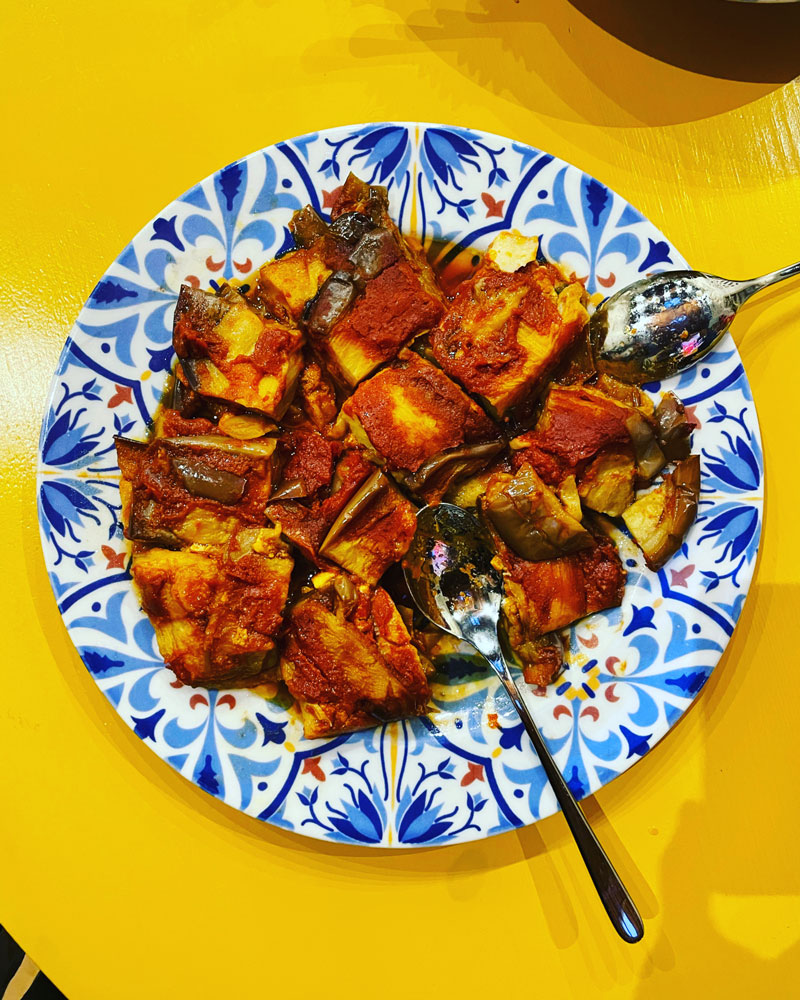
In Marsala, I went back for seconds then thirds of Ristorante I Bucanieri’s eggplant parm, trying to unriddle its confoundingly luxe texture. I later learned from chef Nino Chirco that the vegetable is painstakingly coaxed from raw to silkily tender over three and a half hours in a low oven between layers of sweet tomato sauce, basil, hard-cooked eggs and parmesan. 

Eggplant parm from Ristorante I Bucanieri'sEggplant parm from Ristorante I Bucanieri’s (Photo courtesy of Maggie Hennessy)At the no-frills Trattoria da Antonio in Catania, an appetizer of baked sardines stuffed with breadcrumbs and currants tasted like weeknight pasta I’d made only days before. The rich, satisfying pasta that followed, curled-edged casarecce with pistachio pesto and bacon, tasted like one that would join my repertoire as soon as I got home.
I dragged fried anchovies through caper mayonnaise at the seaside osteria El Principe e il pirata in Pantelleria, reveling in the rare chance to eat them in a form other than packed in oil or salt, which is how I most often use them. 

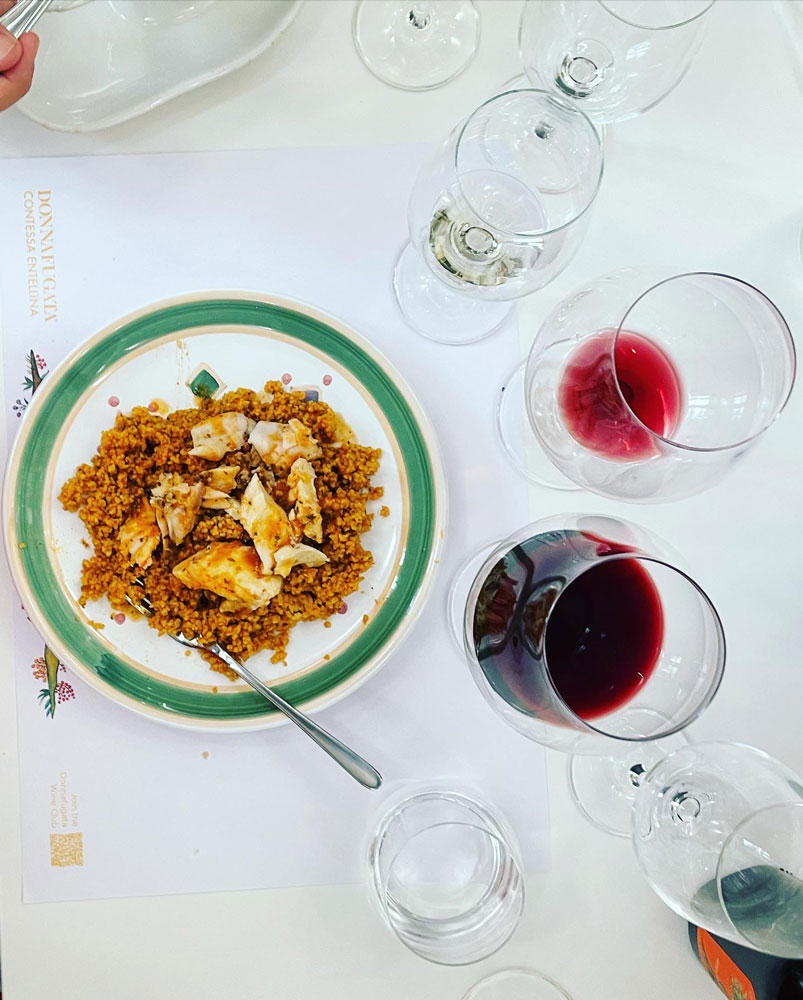
Baked sardines stuffed with breadcrumbs from Trattoria da Antonio in CataniaCouscous with rockfish at Donnafugata’s Contessa Entellina (Photo courtesy of Maggie Hennessy)When I audibly marveled over the al dente texture and nuttiness of impeccable couscous served at a pairing lunch at Donnafugata’s Contessa Entellina estate in Palermo, an employee showed me a video on his phone of him learning to make the tiny semolina pasta by hand from the Rallo family’s longtime chef Signora Michela Novara through a patient series of finger rakes and palm rolls. The housemade couscous was topped with sweet, delicate rockfish cooked in tomato broth for a soothing lunch we’d see variations of across the island over the ensuing days.

One pasta dish in particular, at Ristorante Le Lumie in Marsala, captivated me such that I rudely opened the notes app in my phone, mid-bite, to get it down: “6/7/23: pistachio, tuna, mint, pasta.” 

It was savory yet delicate; bright, rich and textural; new yet so familiar, like unlocking a memory that had been just out of reach my whole life. I couldn’t wait to recreate it in my own kitchen, to pocket another edible treasure from this place whose food feels like coming home 5,000-odd miles away.


Cook’s Notes

I generally reject ingredient snobbery, but you’ll benefit from spending a little extra on really good-quality, bronze-extruded pasta, finishing olive oil, sustainably caught tuna and preserved anchovies. When the component parts are great, this simple assemblage yields beautiful harmony.

Spaghetti with tuna, pistachios and mint
Yields
2 hearty servings
Prep Time
5 minutes
Cook Time
20 minutes

Ingredients

Salt, as needed

Everyday extra virgin olive oil (I like California Olive Ranch)

3 cloves garlic, bashed

Zest of ½ lemon

1 oil- or salt-cured anchovy or ¼ tsp Colatura di Alici

⅓ cup fresh mint leaves, julienned and divided

6 ounces oil-packed, sustainably caught tuna, chopped (or minced if you want more of a bolognese consistency to the sauce)

Lemon juice, as needed

¾ lb. spaghetti (I like Martelli and Faella

⅓ cup roasted, unsalted pistachio meats, chopped, plus a small handful more for garnish

⅓ cup grated fresh Parmigiano-Reggiano 

Your best extra virgin olive oil, for finishing


Directions

  1. While you bring a large, generously salted pot of water to a boil, heat a wide skillet or Dutch oven over medium heat. Add a few glugs (2 or 3 Tbsp) of olive oil. When the oil slides easily around the pan, add the bashed garlic, lemon zest, anchovy or Colatura and about half the mint leaves. Sauté for 2-3 minutes, until the mint has softened and you can smell the garlic. 
  2. Drain about half the oil from the tuna can; add the tuna and remaining oil to the skillet, along with the juice of half the lemon. Cook for 5-7 minutes, breaking up the fish with a wooden spoon or spatula. Taste, and adjust with salt and lemon juice if needed.
  3. Meanwhile, cook the pasta according to the box directions. When the noodles are al dente, add them to the skillet along with pistachios and a splash of starchy pasta water, tossing to combine. Kill the heat, add about half the Parmesan, a bit more mint, a squeeze of lemon and a drizzle of olive oil. Taste and adjust the seasoning if needed.
  4. Plate the pasta in wide, shallow bowls, and top with the remaining chopped pistachios, mint, and parm, plus a finishing drizzle of your finest olive oil. Serve and savor. 

Salon Food writes about stuff we think you’ll like. While our editorial team independently selected these products, Salon has affiliate partnerships, so making a purchase through our links may earn us a commission.

Experts: Trump employee “almost certainly cooperating” — and may have “incriminating” evidence

A Mar-a-Lago employee responsible for overseeing the surveillance camera at the Florida club received a letter from federal authorities last month indicating that he is a potential target in the ongoing criminal investigation into former President Donald Trump’s alleged mishandling of classified documents after leaving office — but he hasn’t been indicted alongside other aides that allegedly took part in efforts to obstruct the government probe, according to CNN

Yuscil Taveras, who has been identified as “Trump Employee 4” in the updated indictment, received the letter when Trump was first indicted in June. 

Though it remains unclear whether Taveras is cooperating with prosecutors, certain new allegations against Trump included in a recent superseding indictment filed last week were partially derived from the information he provided during that interview, according to CNN. 

“Taveras is almost certainly cooperating because if he was served a target letter, he wouldn’t talk to the government unless he was proffering evidence or attempting to cooperate,” former federal prosecutor Christine Adams, a partner at Los Angeles-based Adams, Duerk & Kamenstein, told Salon. 

Otherwise, Taveras wouldn’t want to talk to the government because anything he said could be used against him, she added. “The government tries to protect the privacy of people who are not charged.”

The indictment alleged that Taveras was approached by a fellow employee, Carlos De Oliveira, asking him how to delete surveillance video at Mar-a-Lago in late June 2022, following a subpoena for security footage.

De Oliveira, who is a third defendant in the case, said “the boss” wanted the footage deleted after Taveras said “he would not know how to do that, and that he did not believe that he would have the rights to do that,” according to the indictment.

Prosecutors claimed De Oliveira insisted “the boss” wanted the server deleted and pressed Taveras asking the IT director, “what are we going to do?”

Unlike De Oliveira and Trump’s longtime valet Walt Nauta, Taveras is not currently facing charges in the classified documents case despite having been informed he is a target in the probe, CNN reported. 

Taveras can be useful in the case as he can authenticate the surveillance footage that prosecutors will use in court, particularly the surveillance footage of Nauta and De Oliveira moving boxes, Adams pointed out.

We need your help to stay independent

“Prosecutors can correlate that footage to what was occurring around the same time, which was that Trump and Nauta had talked on the phone before the boxes were moved, and before an attorney was scheduled to arrive at Mar-a-Lago to review the documents,” Adams said.

Since prosecutors don’t have direct evidence of what Trump and Nauta discussed, they have to use circumstantial evidence to prove that Trump told Nauta to move the boxes, she added.

“Testimony from Taveras authenticating surveillance footage of the boxes being moved and authenticating the time stamps for when the video was captured would be key to proving that Trump ordered the boxes to be moved to hide evidence,” Adams said. “It’s the timing that matters.”


Want a daily wrap-up of all the news and commentary Salon has to offer? Subscribe to our morning newsletter, Crash Course.


Trump, Nauta and De Oliveira are all charged with two counts of obstruction stemming from allegations that they tried to delete surveillance video at Mar-a-Lago. 

The Trump campaign issued a statement after the indictment was released on Thursday saying that the charges were designed to “harass” Trump and his supporters. 

“Deranged Jack Smith knows that they have no case and is casting about for any way to salvage their illegal witch hunt and to get someone other than Donald Trump to run against Crooked Joe Biden,” Trump’s campaign team said.

Taveras changed lawyers after receiving the target letter. His attorney Stan Woodward, who was paid by a Trump-aligned PAC, also represented Nauta, which presented a conflict, sources told CNN.

“The government needs other people who can testify to what the defendants did and what they said,” Adams said. “Taveras was at the property. He might have observed other events connected with moving the boxes or he may have been present during other conversations that could shed light on the intent of removing the documents. He might have incriminating text messages.”

Fixing the global childhood obesity epidemic begins with making healthy choices the easier choices

The global childhood obesity epidemic has exploded. Over the past four decades, the world has witnessed a tenfold increase in obesity in children and adolescents between 5 and 19 years old.

More than 124 million children across the world are currently considered to be obese. In children under age 5, obesity used to be nearly unheard of. Now, more than 38 million young children live with this condition.

Researchers now estimate that there are more obese children than underweight children worldwide. Children and adolescents who are obese are more likely to become obese adults, setting them up for a lifelong trajectory of poor health.

With this growth in childhood obesity comes an increase in associated poor mental and physical health outcomes. Conditions that were once rare in children are now becoming increasingly common. These debilitating and costly diseases include hypertension, type 2 diabetes and others.

I am a public health researcher who studies and teaches about the factors underlying the obesity epidemic. My research seeks to understand what is driving these trends. Why are more and more people, including children, becoming obese?


Parsing the numbers

Childhood obesity was once predominantly an issue within developed nations. But it has become an emerging health concern even in the poorest countries and regions.

The standard measure used to determine obesity in children and adolescents has long been the body mass index or BMI. This is a measure of an individual’s height as compared to their weight. Children whose BMI is a set threshold above the mean, or average, are considered obese. The role of BMI in defining obesity in children and adults may be changing, however.

Although BMI remains a low-cost and practical method for assessing obesity across populations — such as estimating the percentage of children in a particular nation who are obese — growing evidence has shed light on its limitations for use at the individual and clinical level. Leading medical organizations and researchers are encouraging physicians to consider the use of alternative measures, which may change the way children are screened for health risks related to their weight at the doctor’s office.


Critical role of parents and caregivers

In essence, childhood obesity is the result of kids eating and drinking more calories than they are burning off through play, movement and growth. Because of this, researchers have largely focused on understanding the individual eating and physical activity habits of these kids.

In the case of childhood obesity, researchers like me also know that parental figures play critical roles in both mirroring and creating opportunities for physical activity and healthy eating.

However, attempts to address childhood obesity have often focused excessively on individual behaviors of parents and children and too little on the environment where children and their families live. Research and statistics make it clear that this approach has failed and that new strategies are needed to understand and address why more children are becoming obese.


Social determinants of childhood obesity

Social determinants of health refer to the conditions where people live, learn, work, play and worship that affect health and quality of life.

The U.S. Department of Health and Human Services has described five broad categories of social determinants of health. These include:

  • economic stability
  • education access and quality
  • health care access and quality
  • neighborhood and the built environment, such as access to sidewalks and playgrounds
  • social and community context

Social determinants can promote health. For example, neighborhoods with access to safe parks and green spaces and healthy food retailers may support healthy eating and physical activity for families.

But social determinants can also facilitate or encourage unhealthy behaviors. Because of their underlying role in contributing to health outcomes like childhood obesity, social determinants have been described as the “causes of the causes.” In other words, if poor diet is one of the causes of childhood obesity, then the social determinants that shape a child and their family’s food environment — such as lack of neighborhood grocery stores or limited income to purchase healthy foods — would be a cause of that poor diet.


Role of processed foods and physical inactivity

Globally, people are spending more time in cars and less time walking — one of the most basic forms of physical activity. Even in the poorest nations, private car ownership rates are skyrocketing. Kids who would inadvertently be engaging in physical activity just by walking or biking to school are more likely to be taking cars and buses to school instead.


Inactivity from, for instance, excessive time spent sitting in front of the TV and other devices and lack of safe areas to play after school, is a major driver of the childhood obesity crisis.


When it comes to food, societies in the U.S. and around the world are producing and consuming more calorie-dense ultra-processed foods. Advertisers are targeting children with these food products and sugar-sweetened beverages online and on television.

But for working parents with long hours or those who are unable to afford healthy groceries, these are often the easiest or affordable options for feeding their children. In fact, poor families are more likely to live in communities designated as “food deserts,” areas where there are few or no grocery stores and a high concentration of fast-food restaurants and convenience stores.

And children’s lifestyles have changed drastically, shifting away from outdoor physical activity into an increasingly sedentary way of life, in large part due to social media and screen time. The role of screen time in the childhood obesity epidemic is a significant and growing area of concern and research.

In my own research in Peruvian communities, parents identified many of these same factors as barriers to their children being physically active. Mothers complained about the lack of safe spaces for their kids to play. Local parks were full of crime and yards were congested with traffic and other safety hazards. Mothers felt it was safer for their young children to be inside watching TV than outside playing.

This example is not unique to Peru. Parents around the world are contending with these challenges.


Addressing the underlying causes

The field of public health prioritizes making the healthy choice the easy choice. Combating the childhood obesity epidemic means making healthy eating an easier choice for children and families than staying inside and eating processed foods.

However, the reality is that much of the world’s population now lives, works, plays and worships in places that make it more difficult to choose healthy behaviors.

Policies and programs that address the social determinants of health are a critical part of curbing the childhood obesity epidemic. These include investing in community resources like playgrounds and free programs that get kids outside.

Some nations and even U.S. cities have implemented “sin taxes” on sugar-sweetened beverages to discourage consumption. In Chile, policies have been created that limit television advertising of unhealthy food products toward children. Other policy examples include tax incentives and programs that increase access to healthy foods and lower their cost.

In my view, every kid should be able to swim in the safe and accessible community pool rather than relying on their living room TVs to escape the blistering summer heat or access fresh and affordable produce in their neighborhood instead of having to rely on fast food as the only close food resource. Childhood obesity is a preventable condition that communities can reduce most effectively by increasing access to resources that will allow them to live healthy lives.

Kathleen Trejo Tello, Assistant Professor of Public Health, College of Charleston

This article is republished from The Conversation under a Creative Commons license. Read the original article.

“Is Trump tired of losing yet?”: Judge torches Trump lawyers over desperate bid to block Ga. charges

A Georgia state judge on Monday rejected former President Donald Trump’s bid to halt Fulton County District Attorney Fani Willis’ grand jury investigation into his efforts to challenge the legitimacy of the 2020 presidential election. 

Fulton County Superior Judge Robert McBurney, who has provided oversight for Willis’ probe for more than a year, stated in a lengthy ruling that Trump and his legal team can’t do anything to quash the probe since he has not been charged.

“[W]hile being the subject (or even target) of a highly publicized criminal investigation is likely an unwelcome and unpleasant experience, no court ever has held that that status alone provides a basis for the courts to interfere with or halt the investigation,” McBurney wrote. 

Willis recently indicated that she will have finalized a decision about potential criminal charges within a month. McBurney noted that whenever she elects to do so will be the appropriate time for Trump to legally refute the proceedings that led to hypothetical charges. 

“Guessing at what that picture might look like before the investigative dots are connected may be a popular game for the media and blogosphere, but it is not a proper role for the courts and formal legal argumentation,” he wrote.

In a footnote, the judge observed the ex-president’s attempts to turn his legal woes “into golden political capital, making it seem more providential than problematic,” a la “Rumpelstiltskin.”

We need your help to stay independent

“While both sides have done enough talking, posting, tweeting (“X’ing”?), and press conferencing to have hit (and perhaps stretched) the bounds of Georgia Rules of Professional Conduct … neither movant has pointed to any averments from the District Attorney or her team of lawyers expressing belief that Trump … is guilty or has committed this or that offense,” the judge wrote.

Though the judge acknowledged the potential for a wrongful indictment to evince reputational damage, writing that “a wrongful indictment is no laughing matter; often it works grievous, irreparable injury to the person indicted,” Trump’s “overwrought accusations of prosecutorial overreach and judicial error do not suffice to show that there is significant risk of ‘wrongful’ indictment.”


Want a daily wrap-up of all the news and commentary Salon has to offer? Subscribe to our morning newsletter, Crash Course.


Georgie State University Law Prof. Anthony Michael Kreis noted that McBurney is typically “unflappable and exceedingly careful with his orders” but the ruling shows he “is obviously disgruntled with Team Trump’s baseless claims.”

Kreis also underscored another footnote to show how “displeased” the judge is with Trump’s lawyers, in which McBurney candidly advised Trump’s legal team, writing, “In the future, counsel is encouraged to follow the professional standard of inquiring with chamber’s staff about timing and deadlines before burdening other courts with unnecessary and unfounded legal findings.”

“Is Trump tired of losing yet?” tweeted former Watergate prosecutor Jill Wine-Banks.

Trump loses bigly on “Big Lie”: His own judge rules against him on bogus suit against CNN

On Friday, Donald Trump lost again in court. This time, it was in a $475 million defamation lawsuit he brought against CNN alleging that the network damaged his reputation by falsely describing his refrain about 2020 ballot fraud as the “Big Lie.” 

His aim in bringing this action was political more than legal. He wanted revenge against CNN — and to be able to tout, on the campaign trail, a court’s judgment that his debunked claims that the 2020 election was stolen were in fact not big lies. 

He got the exact opposite of what he wanted. 

Judge Raag Singhal, a conservative federal district judge, delivered a particularly stinging blow to the man who appointed him and who has made political hay by attacking the media in general and CNN in particular. Singhal stood up to the former president just as other Trump-appointed judges have repeatedly done. 

Singhal’s opinion offers a civics lesson that likely will be lost on Trump. The judge defended press freedom and insisted that in a constitutional democracy facts and legal principles matter, things the former president seems incapable of understanding.  

Notably, Trump’s latest setback occurred notwithstanding his shameless “judge shopping” — Trump filed this suit in the Southern District of Florida, where four in five of the district court judges were appointed by him.

As for his courtroom losing streak, it’s hard to square that with his 2016 campaign boasts that he’d “start winning” for America so often that “people are gonna get sick of it.” 

We need your help to stay independent

That boast has not fared well in his lawsuits. To claim that a news outlet, its writers, hosts and contributing scholars — including NYU historian Ruth Ben-Ghiat, an expert on authoritarianism and author of “Strongmen: Mussolini to the Present” — had defamed him by calling out his “Big Lie” took a special brand of chutzpah.

Trump, who has made baseless accusations and political defamation his stock in trade, wanted CNN to pay him millions in damages. He contended that the network had wrongly associated his name with those of Hitler and Joseph Goebbels, the infamous Nazi propaganda minister.

Goebbels is frequently credited with the line, “If you tell a lie big enough and keep repeating it, people will eventually come to believe it.”

Trump has certainly followed that strategy, in large part by continually repeating his claim that the 2020 election was stolen by Joe Biden and the Democrats, with the aid of sinister outside forces. Indeed, it’s his political brand.   

He has continued to make this assertion long after he was told he had lost by then-Attorney General Bill Barr, as well as Acting Attorney General Jeffrey Rosen, his longtime aide Kellyanne Conway, his own daughter, Ivanka Trump, and two research firms hired by his campaign. 


Want a daily wrap-up of all the news and commentary Salon has to offer? Subscribe to our morning newsletter, Crash Course.


Reportedly, in the aftermath of the 2020 election, Trump him said in a White House meeting that he didn’t want the American people to know that “we lost.”    

Judge Singhal gave his response to all this, writing that CNN journalists and commentators calling out Trump’s “Big Lie” were not making “factually false statements.” Rather, they were stating opinions — and opinions, even those one may find “odious and repugnant,” as the judge noted, cannot form the basis for a defamation action. 

A free press not only must be able to report the news but also, as the Digital Media Law Project puts it, “to voice opinions, criticize others, and comment on matters of public interest.”

Moreover, Singhal’s decision states, “CNN’s use of the phrase ‘the Big Lie’ in connection with Trump’s election challenges does not,” as Trump alleged, “give rise to a plausible inference that Trump advocates the persecution and genocide of Jews or any other group of people.”

This ruling is especially noteworthy from a conservative judge who appears to share Clarence Thomas and Neil Gorsuch’s view that New York Times v. Sullivan, the landmark defamation case, should be overturned.

This ruling is especially noteworthy from a judge so conservative that he supports the apparent view of Supreme Court Justices Clarence Thomas and Neil Gorsuch that New York Times v. Sullivan, the 1964 Supreme Court decision that established protections for journalists in defamation cases, should be overturned. Trump agrees with this view and wants to make it easier to sue reporters and media outlets by getting rid of Sullivan.  

That seminal First Amendment ruling provides “breathing room” for news organizations by protecting them from defamation suits unless their published statements about public official figures are “knowingly false or made in reckless disregard of the truth.” The Sullivan decision ensures a lively fourth estate that unafraid to be critical of powerful people such as Trump, or for that matter Joe Biden or any other prominent public figure. 

Despite Judge Singhal’s critical view of Sullivan, he was careful to note that the 1964 decision is still “looked upon with favor by a majority” of the Supreme Court. He correctly recognized that he was bound by precedent to reject Trump’s request that he hold Sullivan inapplicable in his case.  

In the end, Singhal offered a much needed and vigorous defense of the press that stands in sharp contrast to Trump’s characterization of it as “the enemy of the people.” Trump learned once again that his legal dogs won’t hunt in courts of law, and he will just have to learn live in a country where CNN and other media outlets can go on calling his election hoax what it is, a Big Lie.


Didn’t watch “Secret Invasion”? Why Marvel projects have become increasingly irrelevant

Two and a half years ago the Marvel Cinematic Universe officially crossed the TV threshold with “WandaVision,” a creative homage to classic TV that used family sitcom tropes to explore the extents to which humans will go to avoid processing grief. The series also constructed a runway for “Doctor Strange in the Multiverse of Madness,” which arrived a year later.

It’s also a launchpad for several next-generation MCU characters including Monica Rambeau (Teyonah Parris) who returns in the studio’s next major theatrical release “The Marvels,” due out in November. “Ms. Marvel” is another point of connection, along with being one of 2022’s underappreciated diamonds and another of Marcel’s ever-rarer creative swings.

“Secret Invasion” doesn’t directly follow “Ms. Marvel,” but given Captain Marvel’s connection to its main man Nick Fury (Samuel L. Jackson) you may be wondering what it lends to Carol Danvers’ (and Brie Larson’s) return. Franchise followers have been primed to track relevant character changes and subplots through Marvel’s TV series and its movies, a tactic to make subscribing to Disney+ seem necessary.

However, and to my simultaneous regret and relief, “Secret Invasion” holds fewer FOMO molecules than unnecessary irritations.

There are a few updates concerning Fury and his relationship with the Skrulls, a race of aliens he and Danvers assist in “Captain Marvel,” that may be referenced in the sequel. The bad news is a violent splinter faction of them infiltrated the highest levels of government and tried to eradicate humanity. They also played like green-skinned versions of the terrorists that Bucky and Sam chased on “The Falcon and the Winter Soldier.” And a questionable headline concerns Emilia Clarke joining the MCU tent, and the finale’s massively silly CGI battle to show off how overpowered her character G’iah is.

“Secret Invasion” holds fewer FOMO molecules than unnecessary irritations.

“Secret Invasion” also kills off Fury’s right hand at S.H.I.E.L.D., Maria Hill (Cobie Smulders), a longstanding character in this universe. One can argue over whether this qualifies as a classic fridging: she was shot down both to motivate Fury’s mission and make him a hunted man, thereby forcing him into space on a near-permanent basis.

Secret InvasionCharlayne Woodard and Emilia Clarke in “Secret Invasion” (Marvel Studios)Death isn’t always permanent in the comic book world, but maybe murdering one of Marvel’s better-known non-powered women a few months before “The Marvels” comes out isn’t the best look for a studio concerned about retaining its fans.
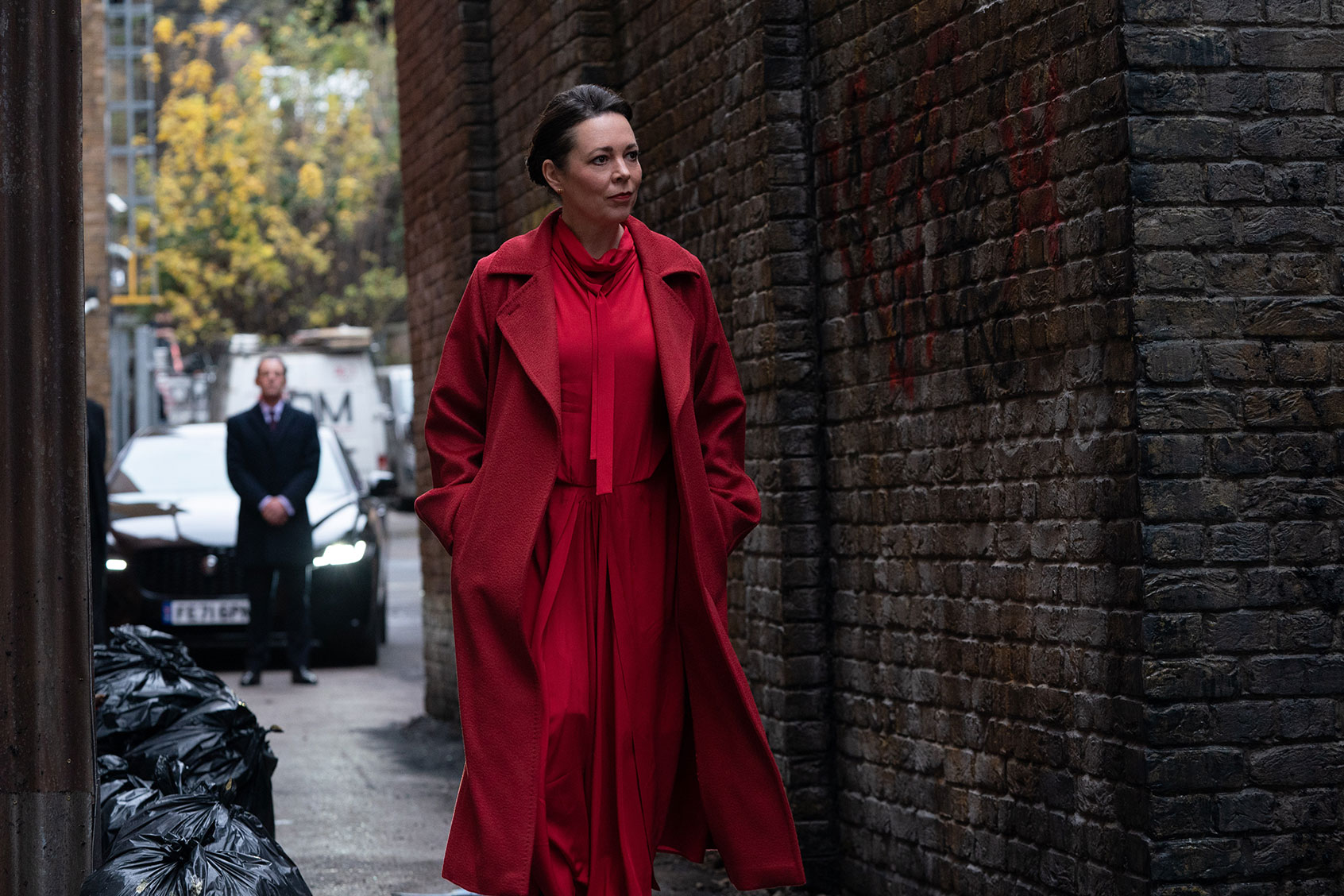
Technically “Secret Invasion” is a lead-in to “Armor Wars,” an upcoming feature starring Don Cheadle’s James Rhodes, aka War Machine, and it forces a major retcon on his character that may end up irritating fans more than jump-starting his story. Even taking that into account, along with the fantastic cast (with Olivia Colman elevating the whole enterprise with her portrayal of top MI6 agent Sonya Falsworth), the entire series is defined and dogged by a lack of necessity.

Around this time last year, I observed that the popularity of a brand as stalwart as Marvel doesn’t crash in a day. “It happens inch by inch, individual by individual, until enough of us awaken to the realization that diversions we once anticipated with a child’s buzzy glee are slightly altered versions of the same increasingly mediocre commodity.”

Consider us awake, then, and maybe a bit over it. Not at Marvel’s oversaturation – we passed the waterlog point long ago. But the tendency to treat nearly every new character as a chess piece or two-dimensional symbol is tiresome.

We need your help to stay independent

Instead of introducing the audience to unfamiliar people with flaws and frailties that no amount of superstrength can entirely overcome, we’re handed a slat in a bridge to the next project each of which feels less consequential than the last.

The state of TV and film has given me and many others plenty of reasons to rail against media companies’ excessive reliance on franchising the life of existing IP. The very rich people feeding this addiction know its problem.

Michael Ireland, one of the co-heads of Paramount’s motion picture group, was quoted in a recent Variety story admitting, “There needs to be a reason to make a sequel . . . It can’t just be we’ve made six other versions of this same story, and here’s a seventh.” 

We can rue the fact that superheroes and the Skywalker saga devour attention and eyeballs while admitting that some of these titles earn their keep.

This may sound like acquiescence or wisdom, but all he’s saying is a different version of what Disney CEO Bob Iger told CNBC in early July about Marvel’s future and that of “Star Wars,” which he augurs will be leaner than in the past.

He condemned the glut of MCU-related TV shows for the subpar performances of such films as “Ant-Man and the Wasp: Quantumania,” explaining the TV properties “diluted focus and attention” from its movies. I didn’t agree with a lot of what Iger said in that interview but in this, we are of like mind.

This is also why I am hesitant to be excited about “Ahsoka.” The “Star Wars” side of Disney+ yielded “Andor” and “The Mandalorian” but it also made us suffer through “Obi-Wan Kenobi” and “The Book of Boba Fett.”

And yet, wasn’t “Andor” worth our attention? Wasn’t “Loki” and “Ms. Marvel,” and on the theatrical side of the equation, “Spider-Man: Across the Spider-Verse”? We can rue the fact that superheroes and the Skywalker saga devour attention and eyeballs while admitting that some of these titles earn their keep. Mining IP isn’t evil. Stripping stories of their potential and magic by reducing them to CGI slugfests might be.


Want a daily wrap-up of all the news and commentary Salon has to offer? Subscribe to our morning newsletter, Crash Course.


Even so, it isn’t quite fair for Iger to place full blame for Marvel’s decline on its TV shows. Many of its theatrical releases were striking out on their own, saddled with astronomical budgets while neglecting to establish why we shouldn’t wait for their video-on-demand release.

Secret InvasionOlivia Colman in “Secret Invasion” (Marvel Studios)Box office earnings overall are down 20% from what they were before the pandemic made people retreat to their living rooms, and until they’re given compelling reasons to leave them, they won’t.

The summer’s loudest arguments in favor of the theatrical experience take the form of a biopic about the man who ushered the atomic bomb into existence and, pertinent to this topic, a movie about a doll that blends bumper sticker feminism with Gen X humor.

Mattel is already rubbing its palms together in anticipation of constructing a universe out of its toy box, but its big bang will be short-lived if it doesn’t learn from the dilution of the franchise that started us down this path.

Eleven years ago in “The Avengers,” Nick Fury launched a monologue that came to define the MCU. “The idea was to bring together a group of remarkable people to see if they could become something more,” he explained. Thanks to a platform featuring these heroes and almost everyone they’ve met, that group has expanded well beyond the remarkable while sacrificing narrative discipline, purpose and power. “Secret Invasion” is simply the latest exhibit of this. Hopefully, the next few will be among the last. But don’t count on that.

Trump complains it’s “unpleasant” telling Melania about indictment — while she’s reportedly “livid”

Former President Donald Trump expressed dismay at sharing updates about his legal status with his wife, Melania. “It’s always unpleasant when you have to go in and tell your wife that, ‘By the way, tomorrow sometime I’m going to be indicted,'” Trump said during a Friday radio interview. “And she says, ‘For what?’ And I say, ‘I have no idea. I have absolutely no idea,'” he added. 

Fredericks also asked Trump how his family was doing amid the barrage of legal battles the ex-president finds himself mired in. “Well, I try to keep them shielded and out of it,” Trump said. “I just stay away from the standpoint of this.”

Trump last week was hit with a superseding indictment, adding to his classified documents case, after the Justice Department alleged that he attempted to get rid of surveillance footage from his Mar-a-Lago estate in West Palm Beach, Florida. Though the former first lady has remained relatively mum about her husband’s ongoing legal plights, two unnamed sources told the New York Times that Melania was “livid” over Trump’s legal team’s failure to raise more objections during the deposition in his sexual abuse and defamation case with longtime columnist E. Jean Carroll. Melania has also expressed support for Trump’s bid for the 2024 presidency, maintaining her role as his “most trusted and most transparent adviser,” per Trump adviser Kellyanne Conway.

Trump lawyer claims new indictment is “bogus” because he’s “the most ethical American I know”

Trump attorney Alina Habba defended the former president as “the most ethical person I know” in the wake of a new superseding indictment filed in his Mar-a-Lago classified documents case alleging that he and his associates attempted to delete surveillance video at the West Palm Beach resort last year. Speaking to Fox News’ Shannon Bream on Sunday, Habba said, “When he has his turn in court and when we get to file our papers, you will see that every single video, every single surveillance tape that was requested, was turned over.” 

“If President Trump didn’t want something turned over, I assure you, that is something that could have been done, but he never would act like that. He is the most ethical American I know,” she continued. “The new superseding indictment that came out, which they tried to get another headline for President Trump, was facts that said that President Trump did what? What was the obstruction of justice because no tapes were deleted. He turned them over, he cooperated as he always does. But they would like the American public to believe in these bogus indictments that there are some facts that say that President Trump was obstructing justice.”

“Georgia is the most dangerous prosecution for Trump”: Fani Willis declares she’s “ready to go”

Fulton Country District Attorney Fani Willis said she is “ready to go” in her ongoing grand jury probe into former president Donald Trump’s role in challenging the results of the 2020 presidential election. 

“Some people may not be happy with the decisions that I’m making,” Willis told Atlanta news outlet 11Alive, speaking candidly about the potential indictment she could be handing Trump in upcoming weeks. “And sometimes, when people are unhappy, they act in a way that could create harm.” 

While Willis did not go into further detail, she observed that she and Fulton County Sheriff Patrick Labat have taken measures to increase security in the courthouse. 

“I think that the sheriff is doing something smart in making sure that the courthouse stays safe,” Willis said. “I’m not willing to put any of the employees or the constituents that come to the courthouse in harm’s way,” she added.

In regards to impending charges against the ex-president, which would tack onto Trump’s already swollen legal record in recent months, Willis stated that she would provide an answer by September 1. 

“The work is accomplished,” Willis said, “We’ve been working for two-and-a-half years. We’re ready to go.”

We need your help to stay independent

Willis is reportedly considering charging Trump and his associates under Georgia’s RICO statute, which does not “require prosecutors to demonstrate an underlying criminal enterprise, only the commission of a range of illegal acts that furthered a single criminal goal,” The New Yorker noted.

Volkan Topalli, a professor of criminology at Georgia State, told the outlet that the breadth of the law can create a “whirlpool” effect in conspiracy cases.

“If you capture one person in the whirlpool, everyone else gets sucked in along with them,” he explained.

Norm Eisen, who served as Democratic counsel during Trump’s first impeachment, told the outlet that it’s “almost as if Trump and his alleged co-conspirators utilized Georgia’s RICO statute as a punch list for election interference in the state after the 2020 election.”


Want a daily wrap-up of all the news and commentary Salon has to offer? Subscribe to our morning newsletter, Crash Course.


Eisen noted that Trump had a long list of allies helping his scheme, including former chief of staff Mark Meadows and attorneys Rudy Giuliani, Kenneth Chesebro and John Eastman.

“Trump converted a political campaign into a criminal organization,” he said.

Topali said that Willis is stretching the RICO statute beyond its traditional applications but argued that “Georgia is the most dangerous prosecution for Trump” and will be boosted by parallel prosecutions in other jurisdictions.

“Every previous and ongoing prosecution provides evidence and data and strategy to the ones that follow,” Topalli said. “So Fani Willis is in a good position here.”

Team Trump has fully wired the GOP primary to Trump’s advantage

Donald Trump stepped on the stage in Des Moines, Iowa on Friday night to the ubiquitous GOP rally song “Only in America” just as the lines “one could end up going to prison, one just might be president” were blaring over the loudspeakers. Everyone in that room has probably heard the song a thousand times, Trump included, but never have the words been more relevant.

If the Trump campaign is mad at Gov. Kim Reynolds they shouldn’t be. The song was played for every candidate who spoke. It’s just that those particular lyrics only apply to one of them.

The crowd cheered lustily for the former president and current frontrunner for the Republican presidential nomination, as they always do. It’s doubtful any of them even heard those lyrics, and if they did they no doubt saw it as more evidence of the massive conspiracy against Trump. We know this because earlier in the evening one lone Republican candidate tried to tell them the truth:

Reporters inside the room said the booing of former Texas congressman Will Hurd was much louder and more energetic. One man reportedly yelled, “Go home you son of a bitch!”

We need your help to stay independent

Hurd said “the truth is hard,” but these people don’t think so. Here’s a typical Trump voter from the next day at Trump’s rally in Erie, Pennsylvania:

The scene of those surreal moments with Trump and Hurd was the Iowa Republican Party’s Lincoln Day dinner on Friday night. It’s where a whole gaggle of candidates appeared to make their pitch to “Real Americans.” Trump, for his part, was fairly low-key, mostly sticking to his prepared speech and staying under the allowed 10 minutes. It was low-energy enough to even be noticed by some in the crowd. 

As of now, Trump is facing 40 federal felony charges in the Mar-a-Lago stolen documents case and 32 state felony charges in New York in the Stormy Daniels hush money case.

You can understand why. All week long the press had been on indictment watch, waiting for news about the assumed impending charges against Trump in the January 6 investigation but instead, a superseding indictment had been brought against Trump and another conspirator in the Mar-a-Lago stolen documents case. As of now, Trump is facing 40 federal felony charges in the Mar-a-Lago stolen documents case and 32 state felony charges in New York in the Stormy Daniels hush money case. It’s enough to make any criminal defendant feel a little bit despondent.

And anyway, Trump hates appearing in venues with other candidates. He feels it lowers him to have to compete head-to-head with people he considers his inferiors. Although he’s qualified for the upcoming first debate in Iowa next month he’s said he doesn’t think he’ll bother. I’m not sure why. The crowds loved it back in 2016 when he talked about his penis size and crudely demeaned and insulted his rivals and the moderators.

A spat with Iowa’s popular GOP governor over her refusal to endorse Trump — or anyone — in the primary and the not-so-paranoid suspicion that she favors Florida Gov. Ron DeSantis may have affected some inside players in the Iowa Republican Party, at least one of whom switched his allegiance to DeSantis. It’s all inside baseball. The GOP base still loves Trump. He’s polling 30 points ahead of DeSantis with everyone else in the crowded field still trying to get a foothold. When Trump said, “There’s only one candidate — and you know who that candidate is — to get the job done,” the crowd went wild.

Clearly, quite a few Republicans who believe he did something wrong are more than happy to vote for him anyway.

It is possible that there has been a slight shift in the national polling in light of all his felony indictments.

According to a new NPR/PBS NewsHour/Marist National Poll, only 13% of Republicans believe Trump did something illegal, a number unchanged since the last poll, but they report that “Republicans who say Trump has done nothing wrong dropped 9 points (50% to 41%) since our June poll.” And he’s dropped six points, from 64% to only 58%, on the question of who Republican voters say they are more likely to back if he stays in the race. Clearly, quite a few Republicans who believe he did something wrong are more than happy to vote for him anyway. Such is the MAGA phenomenon. You can see why the rest of the GOP field is stuck in low numbers. There is no shaking him loose from the top spot.


Want a daily wrap-up of all the news and commentary Salon has to offer? Subscribe to our morning newsletter, Crash Course.


So the Republican primary looks like it’s going to be a re-run of 2016 at this point. And that’s pathetic since back then nobody really knew what to make of Trump. You’d think they would have figured out a different strategy by now. This crop of candidates each has their own reasons for trying it, some more understandable than others, and they probably all figure that they might be the last man (or Nikki Haley) standing in case Trump drops out.

DeSantis clearly thought he was presidential timbre and could go one-on-one with Trump. He has learned otherwise. The spectacle of his floundering campaign is downright pitiful these days and it’s illustrated by the fact that he no longer seems to be running against Trump, the frontrunner, and is instead in a race for second place with South Carolina Sen. Tim Scott, a media darling who is reportedly starting to get some attention from donors, especially those who are feeling disenchanted with the anti-woke governor as he’s rolled out his very expensive and ineffectual campaign. And former vice president Mike Pence persists in believing he has a constituency as does former South Carolina Gov. Nikki Haley. Previously unknown gadfly Vivek Ramaswamy is having his 15 minutes and former New Jersey Gov. Chris Christie is eagerly invited on every cable news show to deliver some zingers against Trump each week.

A few others are pretending to run as well but the strategy is the same as 2016: Don’t alienate the Trump vote, challenge the other candidates so they will drop out and you will be Trump’s heir apparent when he flames out. It didn’t work then and it’s highly unlikely it will work now, especially since Trump’s minions are changing the rules all over the country to make it harder for second-place finishers to collect delegates.

The Washington Post reports that in California this past weekend Trump operatives finagled a change to the delegate rules giving him a much better chance at securing all of the state’s 169 delegates. Similar changes have been engineered in other states after Trump’s henchmen set about working the state parties some time back. Whether it’s pushing for winner-take-all or caucuses over primaries or any number of other strategies, his operation has fully wired the primaries to Trump’s advantage.

Events like that Lincoln dinner, and probably the debates as well, are really just political pageants designed to give the impression that there is a contested primary in the Republican Party. There’s a lot of money to go around to line the pockets of media companies and Republican operatives for months, so why not? But unless something catastrophic happens to Trump (and criminal indictments obviously don’t count) all indications are that he’s going to be the nominee. The rest of these people are just running in place. 

“Damning new evidence”: Expert says Trump employee “had second thoughts” after replacing lawyer

Yuscil Taveras, the Mar-a-Lago IT employee who oversees the resort’s surveillance cameras, provided information to special counsel Jack Smith’s team after he replaced his Trump PAC-funded lawyer when he received a target letter in the classified documents investigation, according to CNN.

Taveras, who has not been indicted alongside fellow Trump employees Walt Nauta and Carlos De Oliveira despite receiving a target letter, met with prosecutors after former President Donald Trump’s initial indictment in the case, sources told CNN.

Taveras changed his lawyer after receiving the target letter because his attorney, Stanley Woodward, also represented Nauta, which presented a conflict, sources told the outlet.

Though it is “unclear” if Taveras is cooperating with prosecutors, some of the new allegations against Trump that were included in the superseding indictment last week were based, at least in part, on information Taveras provided to prosecutors in that interview, according to the report.

The superseding indictment refers to Taveras as “Trump Employee 4.”

Taveras had an exchange with De Oliveira, who was indicted last week, on June 27, 2022, the same day that Trump was hit with a subpoena for surveillance footage. De Oliveira asked to have a private conversation in an “audio closet” with Taveras where he questioned how long Mar-a-Lago security footage is stored and whether it could be deleted, according to the indictment.

Taveras said he “would not know how to do that and that he did not believe that he would have the rights to do that,” according to the indictment.

De Oliveira told him “the boss” wanted it deleted, prosecutors allege.

We need your help to stay independent

Taveras’ testimony could be “crucial” for Smith’s prosecutors in establishing a conspiracy to delete the footage and obstruct the investigation, according to The New York Times. But the Trump Organization ultimately turned over the tapes and the indictment does not accuse any employees of destroying the footage. Taveras remains a Mar-a-Lago employee, according to the Times, but it is “unclear who is paying his legal bills.”

“Taveras was represented by Stan Woodward, Walt Nauta’s longtime attorney,” tweeted MSNBC legal analyst Katie Phang. “It was only after he retained the second lawyer that Taveras spoke to investigators.”

Former federal prosecutor Andrew Weissmann, who served on special counsel  Bob Mueller’s team, added that “an independent lawyer can make a huge difference.”


Want a daily wrap-up of all the news and commentary Salon has to offer? Subscribe to our morning newsletter, Crash Course.


“What Taveras did reminds me of the move Cassidy Hutchinson made during the January 6th hearings,” wrote former federal prosecutor Renato Mariotti. “Both had second thoughts about their interviews with investigators (accompanied by a Trump-affiliated attorney), so they found new lawyers and came forward with damning new evidence.”

Mariotti also wondered whether De Oliveira and Nauta would “flip” now that they’ve seen their colleague escape charges.

“Who’s going to flip first? Is one going to flip against Trump? Are they both going to flip?” he said on MSNBC. “There’s a dynamic now where Walt Nauta, he can’t just be assured of the fact that he is going to be the low man in the trial. Now you have two potential employees, and neither of them know what the other might do.”

But CNN legal analyst Carrie Cordero predicted that the opportunity for the two indicted aides to cooperate with prosecutors “probably has passed.”

“At this point it does seem like the special counsel has enough information, they’ve gone ahead with charging, it seems like they probably have given those individuals time to cooperate in the past, and it’s sort of unclear whether at this point the special counsel would need their testimony or whether they just now are part of the criminal prosecution itself,” she said.

New charges raise an old question: Why are so many people willing to risk it all for Donald Trump?

We didn’t get the fresh new round of Donald Trump indictments many were waiting for last week. But late Thursday, special prosecutor Jack Smith did drop a fascinating new document: an indictment, which supersedes the previous one, in the case against Trump for stealing classified documents and refusing to give them back to the federal government. The new charges stem from one of the many alleged attempts Trump made to either hide documents or hide that he had stolen them. The government is accusing the former president of ordering staff to shuffle documents around in hopes to evade federal authorities. 

The most interesting wrinkle is that there’s a third defendant added to the case, along with Trump and his valet, Walt Nauta, who had previously been charged with working with Trump on this crime. Carlos De Oliveira is the head of maintenance at Mar-a-Lago and is now facing a possible prison sentence for allegedly assisting Nauta, on Trump’s orders, to hide documents and destroy evidence. De Oliveira’s role in this is fascinating precisely because of how ordinary he seems to be. He’s a 56-year-old man who has worked at Mar-a-Lago for a long time, and all his neighbors and landlord could say about him is that he seems nice and likes to golf. It’s a similar story with Nauta, who was born in Guam and enlisted in the Navy in 2001. Nauta met Trump after the military assigned him to valet service in the White House. When Trump left office, Nauta retired from the Navy and went to work for Trump.

Former Trump attorney Ty Cobb, who has become an outspoken critic of Trump’s, characterized Nauta as a victim to PBS, saying, “I think Walt is easy prey” because he takes pride in his service. “I think it’s really sad that people were not able to convince him of his misplaced loyalty,” Cobb added. 

We need your help to stay independent

In other words, neither of these men resemble some of the more colorful characters that surrounded Trump during his attempted coup, such as MyPillow founder Mike Lindell, former New York City mayor Rudy Giuliani, or right-wing lawyers like Sidney Powell or John Eastman. Those folks may seem nutty, but it’s not a mystery why they were involved in Trump’s alleged crimes, and frankly appear to have been egging Trump on. Those folks have a political agenda, focused on dismantling American democracy. They aren’t even really loyal to Trump per se, but see him merely as a vehicle to achieve their authoritarian ends. 

It’s hard not to feel some sympathy for people who seem to have gotten caught up in Trump’s orbit for entirely personal reasons, such as believing he offered exciting employment opportunities.

In contrast, we don’t know anything about the personal politics of Nauta or De Oliveira, and in a sense, they seem irrelevant. There’s nothing about hiding classified documents or destroying evidence that makes sense from a political perspective. The alleged co-conspirators in Trump’s coup were focused on political goals, however evil or far-fetched as those goals may be. But there are no political gains to be made by helping Trump hide classified documents or obstruct justice. The only motive appears to be personal loyalty to Trump. Worse, that personal loyalty appears to be ongoing, at least for Nauta, who has so far stuck by Trump’s side. We have yet to learn the full story with De Oliveira, but he, too, seems to still be in Trump’s camp. Both men are represented by lawyers who were hired by Trump, and De Oliveira’s lawyer, John Irving, has received $200,000 from Trump super PAC. 

As foolish as political loyalty to Trump may be, personal loyalty makes even less sense. Trump’s sociopathic worldview, in which he expects loyalty but gives none in return, has been long-established. It’s like the law of gravity, that Trump will throw anyone under the bus to save himself. As legal experts have repeatedly pointed out, it’s in Nauta and De Oliveira’s interest to flip on Trump, testifying against him in exchange for leniency from the prosecution. 

That these two men may not see this suggests very strongly that the lawyers hired by Trump to supposedly advise these them are more focused on serving Trump’s interests than those of their supposed clients. That’s something White House aide Cassidy Hutchinson realized during the House committee’s investigation into the events of January 6th. As she told the committee, she had started off with a lawyer provided by Trump, who she said advised her to focus on covering up for Trump, even as she worried it opened her up to prosecution. She decided to hire her own lawyer who, sure enough, told her to be honest with the committee and save herself, instead of saving Trump. 


Want more Amanda Marcotte on politics? Subscribe to her newsletter Standing Room Only.


The whole thing is a window into how Trump leverages his power and wealth to manipulate the people who work for him. Most people don’t know the first thing about hiring a defense attorney, and so Trump can pretend he’s being magnanimous by hiring one for them. Hutchinson, a college graduate who spent years working on Capitol Hill before her stint in the White House, had enough support and resources to realize, eventually, that she needed to hire her own lawyer. But people who don’t have her privileged background are likely easier to manipulate into taking “help” that isn’t help at all. 

What is remarkable is how few people have seen the light like this person did, and know well enough to wash their hands of Trump before ending up as another one of Trump’s endless string of victims. 

The most famous case, of course, of someone who found out that Trump never returns loyalty is his former lawyer, who admits he worked more as a fixer, Michael Cohen. Cohen conspired with Trump during the 2016 election to commit campaign finance fraud to conceal hush money payments to a porn actress Trump once had sex with. For his role in this, Cohen went to prison, while Trump skirted away, consequence-free. (Manhattan District Attorney Alvin Bragg is trying to right that wrong now, hitting Trump with 34 felony charges for his role in that conspiracy.) After he was convicted, Cohen testified to Congress about his regrets and warned others not to follow in his footsteps. 

Those who “follow Mr. Trump as I did, blindly, are going to suffer the same consequences that I’m suffering,” Cohen gravely said. 

Not everyone at Mar-a-Lago has failed to absorb the message, it seems. As legal experts have been arguing publicly, the new indictment makes it all but certain that at least one former Mar-a-Lago employee, an IT director, has offered testimony about how Trump’s people pressured him to destroy evidence. But what is remarkable is how few people have seen the light like this person did, and know well enough to wash their hands of Trump before ending up as another one of Trump’s endless string of victims. 

Perhaps the answer is simple: People who have the wherewithal to see through Trump also have the sense not to get involved with Trump in the first place. That rule of thumb doesn’t apply to GOP leaders, like Speaker of the House Kevin McCarthy, who know Trump is scum but feel their only path to political power goes through kissing Trump’s ass. Those Republican leaders deserve to be laid as low as possible for selling themselves out. But it’s hard not to feel some sympathy for people who seem to have gotten caught up in Trump’s orbit for entirely personal reasons, such as believing he offered exciting employment opportunities or, as Cobb suggested of Nauta, that there’s prestige in working for a former president. One hopes that both Nauta and De Oliveira don’t make Cohen’s mistake, and see the light about Trump until it’s too late to avoid prison. 

It’s time to believe Donald Trump

Donald Trump’s attorneys were told by the Department of Justice last week that he may soon be indicted and arrested for alleged crimes connected to the Jan. 6 coup attempt. That would make the third time that Trump is indicted and arrested for allegedly committing crimes this year. The ex-president also faces an indictment in Georgia for additional alleged crimes connected to the events of Jan. 6 and the plot against American democracy. Also on Thursday, special counsel Jack Smith and his investigators filed additional charges against Trump that include obstructing justice in connection with the Mar-A-Lago stolen classified documents case.

If Trump is found guilty of committing all of these alleged crimes, he may spend the rest of his life in prison.

How is Donald Trump going to respond? Predictably. He will threaten and encourage, through direct means as well as stochastic terrorism and other veiled commands, acts of violence, chaos, mayhem and murder. To that point, in response to his impending indictment and arrest for the crimes of Jan. 6, Trump is behaving like an unrepentant reprobate, as he rants and throws a fit on his Truth Social disinformation platform. Trump’s verbal explosions there these last few days include statements such as:

“We’ll have fun on the stand with all of these people that say the Presidential Election wasn’t Rigged and Stollen. THE TRIAL OF THE CENTURY!!!”

 “2024 ELECTION INTERFERENCE!!!” “PROSECUTORIAL MISCONDUCT!!!” “MAKE AMERICA GREAT AGAIN!!!”

“They ought to throw Deranged Jack Smith and his Thug Prosecutors in jail, with Meritless Garland and Trump Hating Lisa Monaco. They have totally Weaponized the Department of Injustice. Whatever happened to the Crooked Joe Biden Boxes Case? Why was Hillary Clinton allowed to delete 33,000 emails, many of them Classified, AFTER getting a Subpoena from Congress? Why was Bill Clinton allowed to take tapes out of the W.H. in his socks? Why has no other President ever been charged? ELECTION FRAUD!”

“How can Deranged Jack Smith bring a case on January 6th., as ridiculous as it is anyway, when I have already won such a case, and been fully acquitted, in the U.S. Senate? In other words, I was Impeached on this, and WON!!! ELECTION INTERFERENCE & PROSECUTORIAL MISCONDUCT, all rolled up as one. We are truly a Nation In Decline!”

“At the direction of Crooked Joe Biden and his Weaponized DOJ, Deranged Jack Smith is attempting to destroy the lives of two fine people who have worked for me (and have done a great job!) for a long time. They are being persecuted with one goal, to “Get Trump.” This is textbook Third World intimidation by rabid, lawless prosecutors. These same craven tactics were used, and failed, during the Russia, Russia, Russia Witch Hunt and other Hoaxes. We will not let Radical Lunatics destroy our Country!”

We need your help to stay independent

To reiterate: There is no evidence of real election interference against Trump and the Republican Party. Trump is again trafficking in the Big Lie, where any such “election interference” or related skullduggery in the 2020 election was actually committed by Donald Trump and his Republican Party and other agents to suppress, nullify, and outright rig and steal votes to keep him in power against the will of the American people.

Violence, malice, and menace are the animating energy for Donald Trump’s 2024 presidential campaign.

Yet at a rally held in Eerie, Pennsylvania on Saturday, Trump continued with his fascist-authoritarian Big Lie verbal fusillades and other mouth noises against reality, the truth, and human decency as he continued to proclaim that he is being “persecuted” by some vast conspiracy because he is a champion of the MAGA movement and “real Americans”:

They waited two and a half, almost three years, so that they could bring this up right in the middle of my presidential election because it’s election interference. They’re crooked people…You know they’re not indicting me; they’re indicting you. I just happen to be standing in their way that’s all it is….Until the FBI, DOJ, and IRS hand over every scrap of paper they have on the Biden Crime Families corrupt businesses dealings. We have to know, and the public deserves to know.

Fake news is all you get. They refuse to discuss the Biden crime family, but enjoy covering false indictments of Donald Trump, who has done nothing wrong

During his speech, Trump made an exceptionally vulgar attack on President Joe Biden, calling him “a dumb son of a bitch”:

We have somebody that’s not at the top of his game, never was at the top of a game. Never was…We have a guy who’s a dumb son of a b***h to allow this to happen… Every dollar spent attacking me by Republicans is $1 given straight to the Biden campaign if he makes it.

The crowd of MAGA faithful in Eerie was in ecstasy.  

Donald Trump is not going to change or otherwise modify or correct his behavior. He is 77 years old; violence is core and central to his personhood, identity, and way of being in the world. As mental health professionals continue to warn, Trump has shown himself to be a sociopath if not a psychopath. His collective behavior such as the coup attempt on Jan. 6, democide in response to the COVID pandemic, being impeached twice, the multiple indictments and arrests, embrace of neofascism, massive corruption, malignant narcissism and utter disregard for reality and facts, political cultism, and other pathological behavior by an American president is unprecedented in the country’s history.

Thus, the problem and growing peril for the nation: what happens when the unprecedented keeps repeating itself and by doing so becomes normalized and no longer “shocking” or “surprising”?

Trump’s threats and plans are not hyperbole, bluster, or just “politics” and “polarization.”

In continuing with his many and varied incitements to violence and civil disorder, last Monday Trump shared an image on his Truth Social disinformation platform with the caption, “‘Nothing can stop what is coming.” This is language associated with the antisemitic Qanon conspiracy cult and a threat of massive destruction and violence in the form of a “storm” – a bloody revolution and purge – against the “deep state” and other “enemies” of the movement and “White Christianity” and “real Americans.” A large percentage of Republicans believe in some or all of the Qanon conspiracy-lie and its claims about how Democrats, liberals, progressives, “the left” and other elements of some global cabal-secret society control the world using superpowers they obtain from drinking the blood of children and other victims.

The mainstream news media, however, with several notable exceptions such as MSNBC, was mostly silent about Trump’s renewed Qanon threats.

And not to be ignored by a public and news media that are afflicted with a very short attention span and what too often appears to be a form of organized forgetting and collective amnesia, several weeks ago Donald Trump shared what he believed to be the Washington DC home address of former president Barack Obama on his Truth Social disinformation platform. As Trump intended, one of his MAGA cult members, who was armed with two guns, a machete, and hundreds of rounds of ammunition, attempted to gain access to Obama’s home with the goal of assassinating him.

On his Truth Social disinformation platform, Trump shared audio of him saying that “If you f**k around with us, if you do something bad to us, we are going to do things to you that have never been done before.”


Want a daily wrap-up of all the news and commentary Salon has to offer? Subscribe to our morning newsletter, Crash Course.


The ex-president continues to harangue, insult, and generally make threats against Attorney General Merrick Garland, Special Counsel Jack Smith, and the other prosecutors and members of law enforcement who are attempting to hold him accountable – like any other person in the United States should be – under the law.

Trump has also threatened that if he were to go to prison for his alleged crimes that “I think it’s a very dangerous thing to even talk about, because we do have a tremendously passionate group of voters, much more passion than they had in 2020 and much more passion than they had in 2016.” So there is a move to keep the names of the jury members in Trump’s impending criminal trials a secret because of concerns about their safety in the face of death threats and other acts of intimidation and violence.

Violence, malice, and menace are the animating energy for Donald Trump’s 2024 presidential campaign and his Hitlerian promise of a final battle and revenge against him and his MAGA movement’s perceived enemies such as the Democrats, liberals, progressives, the news media, and any others who dare to oppose them and their plans to end multiracial pluralistic democracy. Trump’s threats and plans are not hyperbole, bluster, or just “politics” and “polarization.” These are real threats that should be responded to appropriately and with extreme haste.

On this, we should heed journalist Masha Gessen’s wisdom:

Rule #1: Believe the autocrat. He means what he says. Whenever you find yourself thinking, or hear others claiming, that he is exaggerating, that is our innate tendency to reach for a rationalization. This will happen often: Humans seem to have evolved to practice denial when confronted publicly with the unacceptable.

National security, law enforcement, and other experts are continuing to warn that right-wing extremism is 1) the greatest threat to the country’s domestic safety and security and 2) that there are many millions of Trump’s followers who believe that President Biden and the Democrats are usurpers, otherwise illegitimate, and who “stole” the White House from Trump and the MAGA movement.

What should be done to stop Donald Trump and his repeated incitements and commands to violence and mayhem?

In a recent interview with host Dean Obeidallah on SiriusXM, Glenn Kirschner, who is a former federal prosecutor, explained why Donald Trump should be taken into custody immediately:

Donald Trump should be detained pending trial….And I say that not from my own personal preference or animosity, I have for the man….I say it because the law provides that when there is clear and convincing evidence that a defendant pending trial presents a danger to the community he is supposed to be detained, or she is supposed to be detained pending trial, that’s the law….Everyone has ignored that when it comes to Donald Trump.

Psychiatrist Dr. Justin Frank, who is the author of the book “Trump on the Couch”, agrees with Kirschner. In a recent conversation here at Salon, Dr. Frank told me that:

He gives permission to unstable people to carry out their grievances at a murderous level. This is not just because violent people love Trump, but because they are following Trump’s stated practice of striking back “ten times as hard” with any means available when he feels wronged.

I’m beginning to think a warning, or even a gag order is not sufficient. He needs to be secured where nobody can hear his genuinely dangerous outpourings. And it needs to be now.

As I continue with my efforts to warn the American people about how dangerous Donald Trump and his neofascist movement continues to be, there are many moments when I feel like I am in a documentary film or TV series that is being directed by Joshua Oppenheimer or Errol Morris. I imagine myself sitting across from a detective, discussing a mass murderer, a cannibalistic serial killer, mad bomber or terrorist, or some other evildoer. I slowly read off the long list of arrests and criminal incidents and other warnings – the proof – of what this man was doing in the years and decades before he was finally arrested and put in prison. The detective, nervous, looks away sheepishly, his eyes searching for some type of explanation or deflection. He mutters, “We couldn’t have imagined, it was all so shocking. Who could have ever guessed such a thing was happening? I press back, “The evidence was right in front of you. The police could have stopped him years ago and his victims would still be alive.” I say nothing; Silence is an interviewer’s friend. The camera focuses back in on the detective’s face and lingers on it for a few seconds. He has nothing else to say. The screen then fades to black as he takes off the mic, gets up from the chair, and then exits the room.  

That is America in the Age of Trump.

Will there be an epilogue and some satisfying closure from Donald Trump’s criminal trials? That is the stuff of Hollywood movies. The Trumpocene is real life. 

Almost one million people a year get blood clots, but the risks aren’t always obvious

“It’s been a scary few days,” singer Tori Kelly said in a handwritten note shared on her Instagram page on July 27. Four days earlier, the Grammy winner had been out to dinner in Los Angeles when she felt her heart racing, and reportedly passed out. Her companions took her to Cedars-Sinai Medical Center, where, according to reports, the medical staff discovered blood clots in her legs and lungs.

Now, nearly a week later, her husband says she’s “smiling and feeling stronger,” but “not fully out of the woods yet.” How could a young and and otherwise seemingly healthy wind up in such a crisis, so quickly?

While blood clots rarely get the attention that other health conditions like heart disease or diabetes do, they’re a common — and sometimes fatal — issue. The CDC estimates that 900,000 Americans experience them per year, and 100,000 of them die. The National Clot Alliance puts the number of fatalities even higher, up to 300,000 individuals a year. (The number is tricky to pin down because blood clots can often accompany other health issues.)

That, as the National Clot Alliance notes, is considerably higher than the number of people who die of car accidentsAIDS or breast cancer. Yet few of us with direct experience of blood clots even know what they are, let alone how to recognize the warning signs.

“Being able to identify an active blood clot is important in medical treatment.”

Anyone who’s ever bled has some experience with clotting. As Tony Gilbert, a communications associate with the Masonic Medical Research Institute, a non-profit research center in Utica, explains, “A blood clot is simply a clump that occurs when blood hardens. When you cut yourself shaving, your body’s nature response for blood clotting is actually preventing you from over-bleeding.” He notes, “Blood clotting is not inherently bad or good, it all depends on the context.”

For example, Gilbert says, “People with hemophilia are unable to clot blood properly, which means that even a minor cut can have serious consequences.” And when a clot occurs inside the body, it can be life threatening. 

We need your help to stay independent

When Tori Kelly had her health scare, the Los Angeles Times reported that her doctors “found blood clots around the ‘Never Alone’ singer’s lungs and in her legs,” and that “a medical team was working to determine if clots were present near the Grammy winner’s heart.” In a blood clots crisis, determining exactly where they are in the body, and then containing them, can become a race against time.

Another high risk factor is the increased estrogen brought on by hormonal birth control, pregnancy and childbirth.

“Being able to identify an active blood clot is important in medical treatment,” Gilbert explains, “because an adult person has 60,000 miles of blood vessels in their body, which means that identifying the exact location of a blockage in that complicated system is crucial.” He compares it to needing to find the scene of a traffic-blocking car accident on 60,000 miles of highway. “An imaging agent to identify blood clots is like a huge neon sign on the road pointing us to the exact location of the problem.” 

Clots in the veins, usually the arms or legs or pelvis, are known as deep vein thrombosis, or DVT. While they can happen to anyone at any time, lack of movement, even from sitting on long flights, can be a risk factor. More dangerous are clots that move to the lungs, causing pulmonary embolism, or to the heart, causing coronary thrombosis. Twenty years ago, NBC correspondent David Bloom died in Iraq of a pulmonary embolism. A blood clot that had started in his legs — perhaps due to his frequent traveling in cramped vehicles as a war correspondent — led to his sudden death at just 39. 

Another high risk factor is the increased estrogen brought on by hormonal birth control, pregnancy and childbirth. Blood clots are a leading cause of maternal mortality in the United States, and the numbers have not gone down in the 20 years. Five years ago, Serena Williams revealed that she almost died of a pulmonary embolism after the C-section delivery of her daughter. Williams was, fortunately, proactive about her symptoms. “Because of my medical history with this problem, I live in fear of this situation,” she wrote at the time. “When I fell short of breath, I didn’t wait a second to alert the nurses… I am lucky to have survived.”

Time is of the essence with blood clots — and it helps to have good guidance and good instincts. When I heard earlier this week about Tori Kelly’s situation, I was thrust right back to the day my friend Kira calmly texted me that her arm was swollen and her doctor had recommended she go to the hospital. Because she’d been treated for breast cancer a few years earlier, she’d initially thought her symptoms might have been related to lymphedema.

Instead, by the time I met up with her in the emergency department, her doctors were scrambling to make sure that the clot in her subclavian vein under her collarbone wasn’t moving toward her heart. “It didn’t hurt,” she recalls now. “It just felt a little bit strange and looked a little bit strange.” 


Want more health and science stories in your inbox? Subscribe to Salon’s weekly newsletter The Vulgar Scientist.


Without her history of breast cancer, Kira might have been tempted to put off medical attention until the situation had become far more dire. “The people in the ER told me, ‘Your case is the most serious thing we’re dealing with right now,'” she says. “I was like, ‘I feel fine.’ And then I was in the hospital for three days.” She was fast tracked for surgery to remove the clot, and for three months afterward, she says she “couldn’t really use my dominant arm.”

The risk factors for blood clots can be mysterious and the symptoms difficult to identify, but there are some things to be on the lookout for the minimize the chances of getting them or being seriously affected by them. Blood clots can happen to anybody, at any time, but people with heart disease, obesity, smokers and those with a family history of blood clots are higher risk. 

Likewise, while the exact causes aren’t known, early research suggests people who’ve had COVID-19 are at “significantly” higher risk of venous thromboembolism. Earlier this year, when I had a case of COVID so severe I felt like a felt like a fish flopping on a hook, I had to go for X-rays twice to rule out pneumonia and pulmonary embolism. Like Kira, I already knew I had a higher chance of blood clots because I have a history of cancer — in my case one that metastasized into my lungs. 

Early research suggests people who’ve had COVID-19 are at “significantly” higher risk of venous thromboembolism.

So how do you know if you’re experiencing a blood clot, and when to seek medical attention? Like my friend Kira did, take any unusual redness, swelling or tenderness in your legs or arms seriously — it could be an early warning sign of DVT. Sudden shortness of breath, chest pain, rapid heart rate or sudden light headedness or fainting — like Tori Kelly’s reported symptoms — can be signs of a pulmonary embolism. Trust your gut: you know your body and if something doesn’t feel right in it, listen to it and get it checked out.

Blood clots can move quickly and the after effects can linger long after treatment. But prompt action can save your life, and full healing is, eventually, possible. The Journal of Circulation assures that “Most patients with DVT or PE recover completely within several weeks to months without significant complications or long-term adverse effects.”

Four years after my friend Kira’s close call, she’s healthy and has no further incidents or complications. And just a few days after her hospitalization, Tori Kelly shared to her fans that “I’m feeling stronger now & hopeful.” Then she added, “Unfortunately there are still some things to uncover.” 

With Mr. Big out of circulation, “And Just Like That” recycles Aidan into the story

For some of us, the phrase “All of your old friends are back!” sends a pile of invisible millipedes scuttling down our spines. No matter the context, those words can be enough to change your evening plans because, be honest, do you really like all your old friends? The aggressive drunks? The one who, oopsie, can’t believe she forgot to tell you about that party she’s having tomorrow? How about the aggravating hipster who’s always playing devil’s advocate?

Nope. When someone has been gone from our lives, and we don’t miss them or try to restore contact, there’s a reason for that.

For those who still claim they love all their classic acquaintances I have two words: “Friends” reunion. You probably thought you wanted it, only for that special to remind us that wish fulfillment yields mixed results.

Aidan Shaw’s return to “And Just Like That . . . ” renews that feeling, not due to anything John Corbett did onscreen or off. If anything he slipped back into the alternate position without much fuss at all, although his fashion sense has taken a nosedive; Aidan greets Carrie (Sarah Jessica Parker) in an outfit that screams Death Star Middle Management.  Aside from that, he’s the same guy he always was — which is to say, in case we’ve all forgotten, the wrong man.

“What are the chances this would ever happen?” Aidan says after laying eyes on Carrie for the first time in a decade.

Judging by this show’s track record I’d say the chances were always somewhere between excellent and a sure thing.

Bringing him back may please Team Aidan, but it also proves afresh that this show is too timid to conclusively evolve Carrie.

There’s nothing wrong with leaning on a few holdovers from “Sex and the City,” of course, if they serve a purpose. Charlotte (Kristin Davis) and Harry (Evan Handler) are a fine constant and finding them together happily married after all this time makes sense. Marriage was always Charlotte’s endgame, although in “Sex and the City” she had a prince in mind, not Mr. “Ugly Sex Is Hot.”

“And Just Like That” makes fine use of the Goldenblatts and fellow marrieds Herbert (Christopher Jackson) and Lisa Todd Wexley (Nicole Ari Parker) by using them to portray the commitment and challenges inherent to long-lived unions in midlife.

They’re also a contrast to the stagnancy pulling Miranda (Cynthia Nixon) and Steve (David Eigenberg) into despair, a mismatch that’s also overstayed its welcome. They also relatably exemplify how tough it is to sever a reliable partnership that could easily keep going if both parties compromised their needs. Plenty of people do that.

But Miranda and her new friend Nya (Karen Pittman) – who is also in the process of ending her marriage, albeit cleanly – are gingerly relaunching into the world of singledom and its many-varied terrors. Regardless of how we feel about Miranda and Steve, and what disasters they are separately and together, their storyline is gutsy enough to strike a nerve.

Bringing Aidan back proves afresh that this show is too timid to conclusively evolve Carrie. 

“I may be different, but dating isn’t,” Miranda tells Carrie in a phone call. They’re both waiting for their dinner partners, but Miranda is inside a crappy, dirty apartment belonging to a filthy (and not in a good way) romance writer who cleans up well for public appearances. Miranda’s peek at the author’s private life kills the fantasy, revealing a disorganized loner who sleeps on flannel sheets and doesn’t clean her pet’s litterbox.

“It’s still a s**tshow!” Miranda concludes. “A cat s**tshow!”

For whatever excuse this show doesn’t have the bravery to subject Carrie to any of these toils and snares, preferring to recycle the dog-eared pages of her little black book as an easy way to avoid alienating the faithful.

That also hinders the possibilities for her midlife adventure, which is still new and, so far, vicariously playing out through her new bestie Seema (Sarita Choudhury). We love the qualities Seema brings to the brunch table, one of them being that any old Ghosts of Boyfriends Past that might haunt her would be completely new to us.

Aidan, though, is post-consumer recycled content. “Sex and the City” sculpted him to be Mr. Right – he was stable, creative like Carrie, and works with his hands. But he lacked the titillation Mr. Big represented; besides, Carrie wasn’t looking for Happily Ever After at that point.

The show ended up busting that storefront window by having Big “save” Carrie in Paris in its finale only to jilt her at the altar before marrying her anyway at the end of the first movie.

“Sex and the City 2” resurfaces Aidan for no good reason, although the same thought applies to the film itself.  “And Just Like That” could have let him remain a sexy 10-year-old memory left in Abu Dhabi, but none of Carrie’s relationships with any staying power shall remain in amber; we know that now.  Carrie shoots Aidan an email, and Aidan replies with an update every girl wants to hear: he’s divorced, rich and going to be in town. They meet on Valentine’s Day. 

We need your help to stay independent

True to form, their reconnection isn’t entirely smooth. Carrie waits for him at the agreed-upon location – a restaurant that happens to be next to the restaurant he meant. But they’re forgiving now, greeting each other with a warm hug. He apologizes for not reaching out when he heard about John’s death, then tells her he read her book.

He asks Carrie if there’s anyone new in her life, and if this were a different show flashes of Franklyn the Radio Producer (Ivan Hernandez) and George the Workaholic Tech Entrepreneur (Peter Hermann) would have zipped across the screen.

That didn’t happen, but let’s talk about those guys.

We barely got to know Franklyn outside of the workplace he shared with Carrie and their once-a-week sex fling because — gasp! — he wanted to date her. She wasn’t ready for anything serious so soon after Big’s Peleton ride to the stock exchange in the clouds, and that’s fine!

Aidan is post-consumer recycled content.

George was a classic one-and-done in the old show’s mold, in that he was sexy and a bit inaccessible at first, then warmed to Carrie and, ooh look, a chic condo with an open floor plan! Veteran “SATC” viewers recognize these as red flags; sure enough, Carrie walked out on the guy following a second c-blocking from his business partner.

Now, this is in no way advocating that “And Just Like That” adopt some type of consistency when it comes to Carrie’s emotions. Grief kicks the bereft all over the place, making Carrie’s urge to spend Valentine’s Day with a familiar face fathomable.

Counterpoint: did it have to be Aidan’s? If the show has to revisit old scenery, how’s this — Carrie and Miranda spent the holiday together in the past, and that didn’t end well. Carrie also knows both Steve and Miranda’s latest love and recent ex Che (Sara Ramirez). There are items on the docket to discuss that could push each of them a little farther down the road. Still, why is that date between two people who remain present in each other’s lives less worthy of a do-over than this one?

The answer, presumably, is that this reunion is what “And Just Like That” audience wants, in the same way “Sex and the City” compromised the independence its main heroine insisted upon for six seasons only to settle her down with the difficult man she tamed.


Want a daily wrap-up of all the news and commentary Salon has to offer? Subscribe to our morning newsletter, Crash Course.


Irby’s script deserves credit for briefly acknowledging how miserably Carrie and Aidan ended when he balks on the doorstep of her old place, which was briefly their old place before she wrecked their engagement by running back to Big (which, again, is what HBO believed the audience wanted). Aidan remarks how great it felt to be with her in the restaurant.

“We’re back where we started,” he says. “But this is where we ended, with the f**king wall I couldn’t break through. And those floors? Remember the floors I redid? I mean, that’s all bad. It’s all in there.” Viewers may notice how much this sounds like Steve’s observations about home repair and sweat equity in the previous episode. That was not a pretty scene.

This one, however, is rom-com perfection. Carrie can’t get Aidan to go back to her place. “I’m never going in there again,” he says, and for a moment we mentally applaud his wisdom.

Just as it looks like he’s going to walk away, Aidan changes his mind. “It’s New York. They have hotels, right?”

And just like that, they’re “back on the same page,” she says, perhaps regressing this supposed next chapter to a past refrain. But who knows? Hotel sex has a way of shining up tarnished relationships. 

With our luck they’ll run into Berger stealing stationery in the lobby.

New episodes of “And Just Like That” debut Thursdays on Max.

Brazil’s 3-ingredient national cocktail is the real drink of summer

Summer is about beautiful weather, creating glorious memories on vacation and enjoying the family you may not see as much during the hustle and bustle of the winter seasons. I agree with all this — but would also like to add finding the best cocktail to the list.

Over the past few months, I’ve been transitioning into being a wine guy, mainly for health reasons, but also because I don’t enjoy hangovers. The problem is that being a wine guy isn’t always fun during the summer; there’s only so much chardonnay and pinot grigio and frosé one can enjoy before drinking themselves into a perpetual state of boredom. And nobody wants to be bored. We want people to have fun and get lost in new experiences or reconnect with the old ones that once brought us joy. 

So, if you are like me and you appreciate a classic drink, then let me be the one to remind you of the caipirinha: a smooth cocktail that is refreshing, bitter-sweet, easy to make, and pairs well with summer. 

I don’t know why I always forget about caipirinhas–– after all, it’s Brazil’s national drink. I was first introduced to the cocktail at a small Brazilian steakhouse in D.C. that has since closed. The tiny restaurant was overflowing with flavor; everything on the menu was delicious, from the juicy picanha to the golden-brown pastels. But my favorite was the flavored caipirinhas. 

The spot treated them like margaritas, in a way, by adding muddled peach, mango, passion fruit and strawberry. I was young and kind of pedestrian, so it wasn’t strange to hear me saying, “Gee whiz bartender, I sure would  enjoy the strawberry flavor!” 

But a few years of fine dining helped dive into the true essence of the classic drink. 

We need your help to stay independent

The drink originated sometime in the 1500s. Cachaça, also known as pinga which is similar to rum, is normally the main ingredient. Most rums are distilled from molasses, while cachaça is distilled from the fermented juice of sugar canes, giving it a completely different flavor. While I strongly recommend cachaça, rum can be used if that’s all you have. 

There’s also a lot of takes on the drink floating around like the fruit concoctions I drank years ago. A bartender even slid me a caipiroska once, which features vodka instead of rum, but it didn’t work for me as I don’t dig super sweet gimlets. If you know like I know, sticking to classic caipirinha is the best option. 

Caipirinhas are perfect when served in the classic form, and again–– they are so easy to make, that you could get your kid to whip it  up for you. That’s a joke, here’s my recipe. 

Classic caipirinha 

Ingredients

1 teaspoon of sugar (turbinado sugar if possible as it retains molasses) 

1 lime, sliced into wedges

3 ounces cachaça or white rum 

(Some people use soda water, however, soda water sucks and always kills the vibe. So don’t use soda water) 


Directions

  1. Muddle the lime and sugar together, directly in your glass. 
  2. Drop in few ice cubes, or one huge block of ice if you are fancy
  3. Add the cachaça or rum, stir and enjoy


“We are all implicated in this system” — A philosopher’s advice for surviving unethical times

There are no softballs in Arianne Shahvisi’s “Arguing for a Better World: How Philosophy Can Help Us Fight for Social Justice.” Instead, the Kurdish-British author, ethicist and academic sets up the reader with exactly the sort of provocative questions many of us heard from our most whataboutist friends and family members. “Has ‘political correctness’ gone too far?” she asks in one chapter, before proceeding to query “Do all lives matter?” And “Is it sexist to say ‘men are trash’?”

What makes Shahvisi’s writing so refreshing is that she then explores these concepts with a serious and open mind, one that accepts that “Mistakes are unavoidable in political movements.” Hers is a voice that presumes a degree of good intentions from us, while challenging our seemingly inescapable complicity. Toggling between despair and hope, Shahvisi offers a practical and forgiving path into the tough discussions we have with each other — and our own consciences. 

Salon talked to the author recently via Zoom about doing good when everything feels pointless, recognizing that there’s a “hierarchy of harms” and making space for “learning and forgiveness.” And if you want to argue well, she advises, “Let’s look for the agreement first. Let’s be charitable.”

This conversation has been edited and condensed for clarity.

There’s a part early in the book where you talk about making space for learning and forgiveness. That’s an element that is often lost in these deeply polarized conversations. 

Being an educator, working in a university, my first instinct is to find a way for somebody to understand where I’m coming from. I obviously wouldn’t do a job like mine unless I felt that was possible. You wouldn’t do a job like yours unless you thought that was possible either. It’s got to be at the core of it somewhere, that you feel as though there’s that possibility of taking somebody who feels quite differently about something and actually changing their mind. But there’s so little space for that in social media, for example, when most of these conversations are happening.

You talk about how we balance our understanding that we are very small in relation to climate change and corporate irresponsibility and other social issues, with that need to lean in the direction of moral justice. Is my metal straw really making any difference in the world?

“The actions of corporations and governments are the real movers and shakers in these discussions, but they’re relying on our consent.”

There are two answers to the question. The first is that we operate at the level of greater political organization. Yes, these individual acts are not going to be enough, they’re certainly not going to be enough if we’re doing them quietly. Individual acts can have an impact if they’re done loudly. For example, somebody who has a very large following or impact in the society, if they act in a particular way, that can have a huge impact.

But if we can organize ourselves, in terms of boycotting particular goods and services or carrying out particular acts of protest, then we’re no longer talking about individual tweaks to our lives. We’re talking about great, big, organized actions. 

I also think about ensuring that whatever kind of a life a person is leading right now in this deeply imperfect world, that they have an attitude of openness and support for the world we clearly want. Individual actions don’t matter, but it is nonetheless the case that the collection of those actions is what creates the problem. The actions of corporations and governments are the real movers and shakers in these discussions, but they’re relying on our consent.

Every time we do one of these things that we think abstaining from would not make a difference, that adds to this widespread consent. For example, buying and driving an SUV that is clearly highly emitting [greenhouse gases] takes far more than a person’s share of what the planet can handle acts as a form of consent to the idea that governments should permit such vehicles to be produced and sold, and that corporations have a market to sell to. 

“We’ve got to be ready in our attitudes for a different kind of world.”

We have to operate those two levels. We’ve got to operate at the very clever and difficult level of getting our political acts in order. And we’ve got to be ready in our attitudes for a different kind of world. That’s where some work needs to be done. At the moment, someone might be driving an SUV, might be eating lots of meat and might buying clothes that were made in sweatshops. But when the realistic opportunity arises to have a different sort of political system, you’ve got to be there for that, and to have helped to have get to have got there as well.

We need your help to stay independent

I believe most people genuinely don’t want to give offense, most people genuinely don’t want to hurt. And yet there is no hard line agreement on the best ways to talk to each other. There isn’t one right way to be an ally. There’s disagreement within different groups and identities and movements. How do we reckon with that?

There are two levels at which you could approach that question. One is to acknowledge that, yes, there are all these differences. There are some interesting examples of people disagreeing with each other on on terminology or a particular agenda within a movement. For example, what do we need to be doing first, or what’s more or less important?

In the book, you use the example of saying “victim” as opposed to “survivor.” That was a choice you had to make, and you knew might exclude some people. 

The important thing to recognize with that, and in many of the other examples that I mentioned in the book, is that the ultimate aim is the same for everybody. The person who’s writing about victims of domestic violence, and the person who’s writing about survivors of domestic violence, both of those people want to end domestic violence. Both of those people want more resources to go towards refuges, but they also want to tackle some of the higher level issues that lead to domestic violence, like poverty and poor mental health services.

That’s the thing to focus on, in all this noise of all these different terms and disagreements. If you feel at some higher level you have common ground with somebody, then you have really good reason to approach the whole discussion with generosity. To say, “Look, our objective is the same here.”

Which isn’t to say that the terminology isn’t important. A huge part of the book is saying language is important. It’s important because it changes the way that we think about things, usually something rooted in material reality. But we’ve got to first of all acknowledge that we’re fighting for the same thing. When we’re talking about a person with a disability or a disabled person, usually, the reason we’re even using those terms is because we’re having a discussion about making the world more accessible, about making the world less prejudiced, and so the objective is going to be the same. It helps to hold on to that. 

If we’re not holding on to that, then those people who have no interest in improving the material conditions of the lives of marginalized people are winning, because they have us shouting at each other over something that is important but is not the ultimate objective of us having the conversation in the first place. 

Let’s look for the agreement first. Let’s be charitable, and then we can go to the questions about language. If we’ve got that overarching objective secure in our minds, and our agreement on the objective secure in our minds and our alliances with one another secure on some level, then that can hold the disagreement. Part of what I’m saying in the book is disagreements are more much more productive when you know why you disagree. 

“Alliance and solidarity can support disagreement. Thoughtfulness will take us in different directions.”

Alliance and solidarity can support that disagreement. Thoughtfulness will take us in different directions at different moments. I think we also just have to celebrate it in some ways, rather than finding it annoying. It can be annoying, right? Somebody calls you out on something and it slows down the discussion and it derails it slightly. Maybe you feel like you were talking about that broader aim and suddenly you’re talking about language.

The way I see it with language is, every time you’re asked to use more thoughtful language, or you’re told that the morally acceptable language on a particular issue has changed, what you’re really being told is some voices that were not previously heard have now been heard, and they have spoken out. They have said the following, and it differs to what the conventional wisdom was, and it differs to what you were used to. What that’s telling us is that some progress has been made. Some people who were previously ignored have now spoken up, and there’s got to be some kind of a gladness about that, even if it makes us feel left behind sometimes.

And uncomfortable, which I think is a big part of why people get so defensive. That’s one of the things that I thought was so interesting in the book, when you talk about these ideas of “reverse racism” and “reverse sexism.” Tell me a little bit more about why those phrases and those concepts are a little disingenuous.

It comes down fundamentally to a hierarchy of harms. Clearly masculinity is harming men, patriarchy is harming everybody. It’s easy to just say, “Okay, so we’re all harmed by the system.” But it’s fairly obvious, even on a very kind of cursory survey of how the world works, that the people who are most harmed by patriarchy are women.

The reason for that is because there isn’t a way to win. If you’re a man, and you are prepared to suppress your emotions, are prepared to work out and get really big and strong, and you’re white, and you’re cis and you’re heterosexual and you’re able to get a well earning job, and people listen to you, and all the other sorts of things, you will win as a man. You will succeed. Clearly very few people do, in fact, win. But there’s the possibility of doing reasonably well by the system’s own terms, even if the system’s terms are deeply problematic. The difference for women is there just isn’t a way to win, whatever you end up doing. 

Even when things are going reasonably well, as a woman, there are very many ways to lose and to be made to feel bad. One of the things that makes women successful as women is being beautiful — but beautiful women have to contend with the fact that every time they look a little bit less than beautiful, everyone is going to pounce on that, and criticize them for it. And then also, people are going to criticize them for putting too much time and effort into their appearanceand being shallow. It just feels as though wherever you turn, society’s going to punish you.

When we’re thinking about race, yes, the system of racial segregation is psychologically bad for everybody in some way. Racial discrimination is clearly harmful to society as a whole. We all lose out as a result of it. We lose out on the talent of people of color, especially with affirmative action. That is a huge loss. Clearly, we lose out in many other ways, as well. But Black people are losing out much, much more than white people are losing out.

Once you’ve recognized that that’s the case, you then need some words to describe what’s going on. That’s what [words like] racism and sexism are doing — describing the very particular and very acute harms that certain groups have in the face of a system which is rotten right the way through. For me, it’s about saving those words racism and sexism for that very serious, repetitive, deeply rooted structural set of harms, while at the same time acknowledging that it’s good for nobody. 

It’s holding those two things at once. Clearly, we are all implicated in this system. Anybody can be sexist, anybody can be racist. In fact, we all are, because that’s the system we’ve been raised in. But just preserving those words for those very particular harms which encourages us to begin with undoing the harms from that place.

As we’re all trying to move forward in a way that is is helpful, I like that you end this book wrestling with your own hope and fear.

Generally, I do feel very negative, which for me, is actually quite a motivating force in some ways. The anger then drives me to think, “Well, I’d better keep shouting about this thing.” It may not do any good, but I can’t see what else I can do with myself in this scenario.

One of the things that does make me positive — and September’s coming around — I’m going back and the students will be back. My students give me hope. I think there’s a lot of really problematic stuff circulating. And I think social media is playing a major role in almost radicalizing people in strange, toxic ways. But for the most part, young people are further to the left as a general rule than the generations before them, especially when it comes to things like climate crisis, gender, race.

I’m not saying all of them, but there is a general trend in that direction. Every year teaching students, I am heartened by the place they begin at when I start teaching them. Because there’s also a lot of stuff circulating on social media that’s actually really positive and is actually informative, and it’s helping people to learn about these things and organize themselves. I do feel hopeful about younger people. I really do.