Spring Sale: Get 1 Year, Save 58%

The Indian Ocean’s mysterious gravity hole may be the result of a prehistoric ocean erased by time

There is a place on Earth where the laws of gravity as we know them do not apply. Officially known as “the Indian Ocean geoid low” (IOGL), it is informally referred to as the Indian Ocean gravity hole. At the IOGL, the sea level dips by a staggering 328 feet (100 meters) and Earth’s gravitational pull is weaker. This anomaly has baffled scientists for years — but experts from the Indian Institute of Science in Bengaluru, India believe they have solved the puzzle.

It turns out, it all comes down to liquid hot magma.

These plumes, along with the nearby mantle structure, are believed to form the “gravity” hole.

As explained by the scientists’ new paper in the journal Geophysical Research Letters, there are “mantle density anomalies” that are not present immediately below the IOGL, but are nevertheless actually there. This is because the Earth is not shaped like a perfect sphere but rather closer to an ellipsoid, with its thickness from the equator being roughly 70,000 feet wider than from the poles.

What’s more, because some areas of Earth are more dense than others, they exert different types of gravitational pull on the mass above it. As a result, if all of Earth’s ocean existed under gravity without factors like wind and tides, the planet would more closely resemble a geoid: Imagine a golf ball melted to the point where some of its dimples expanded and other collapsed, and you have a good approximation a geoid’s appearance.

The new paper hypothesizes there are plumes of magma which exist around the IOGL. These plumes, along with the nearby mantle structure, are believed to form the “gravity” hole because it winds up being the lowest point in that geoid, creating its biggest gravitational anomaly. In the case of the IOGL, this equals a circular depression roughly 1.2 million square miles (3 million square kilometers).

Those plumes in turn seem to have been created during an ancient phase in Earth’s history. As the planet’s tectonic plates shifted over molten rock 140 million years ago, and as India’s land mass collided with the Asian continent, a previously-existing ancient ocean known as Tethys could have disappeared. This in turn would have sent the oceanic plate down in the mantle, catalyzing the creation of the magma plumes.

This is merely a hypothesis, one created after the researchers ran 19 sophisticated computer simulations based on various plausible scenarios involving the Earth’s ancient geological history. Though published in a peer-reviewed journal, the hypothesis ultimately remains only as sound as the models themselves. At least one scientist has criticized their paper on that basis: Dr. Alessandro Forte, a professor of geology at the University of Florida in Gainesville, who was not involved with the research. In an interview with CNN, Forte claimed that “the most outstanding problem with the modeling strategy adopted by the authors is that it completely fails to reproduce the powerful mantle dynamic plume that erupted 65 million years ago under the present-day location of Réunion Island.”


Want more health and science stories in your inbox? Subscribe to Salon’s weekly newsletter The Vulgar Scientist.


2023 has been full of interesting papers that redefine how human beings examine Earth as a planet.

He added, “The eruption of lava flows that covered half of the Indian subcontinent at this time — producing the celebrated Deccan Traps, one of the largest volcanic features on Earth — have long been attributed to a powerful mantle plume that is completely absent from the model simulation.” Forte also claimed the computer simulations did not accurately project the actual shape of Earth as a geoid.

Study coauthor Attreyee Ghosh told CNN in reply that “we do not know with absolute precision what the Earth looked like in the past. The farther back in time you go, the less confidence there is in the models. We cannot take into account each and every possible scenario and we also have to accept the fact that there may be some discrepancies on how the plates moved over time.”

Ghosh concluded, “But we believe the overall reason for this low is quite clear.”

2023 has been full of interesting papers that redefine how human beings examine Earth as a planet. Last month a study in the scientific journal Geophysical Research Letters found that humans have changed the Earth’s axis from too much groundwater extraction. As a result, the True North Pole has shifted at a rate of 4.36 centimeters (or more than 1.7 inches) every year. This is not as surprising as it sounds when scientists consider that between 1993 and 2010 alone, more than 2 trillion tons of groundwater was extracted from the Earth for drinking, irrigation, sanitation and manufacturing.

We need your help to stay independent

Meanwhile, in January a study published in the scientific journal Nature Geoscience revealed that Earth’s inner core is currently rotating at a slower rate than the rest of the planet — and may even have hit a temporary “pause.” Yet before one conjures up imagines of disaster akin to the 2003 film “The Core,” in fact this slowing has only had the most mild effects.

“It has effects on the magnetic field and the Earth’s rotation, and perhaps the surface processes and climate,” Xiaodong Song, the leading author on the study and a geoscientist at Peking University responsible for pioneering work in 1996 on the inner core, told Salon by email at the time. “It may have a long-term effect (decades and centuries), but the effect on daily life is likely small.”

Don’t count Trump out: He could still win in 2024 — or destroy the GOP

As I navigate the latter stages of the Trumpocene era, I continue to be guided by the principles of “pessimistic optimism.” I will not fully surrender to pessimism because there may be no recovery from that state of learned helplessness. Likewise, I will not fully embrace optimism because to do so in such dangerous times would be naive and foolish. The hope-peddlers in the mainstream media can push those fictions; most of them are privileged enough that they will never face the consequences of being wrong.

But allowing for my pessimistic optimism, these last few weeks, in which Donald Trump and his cabal appear to be further encircled and cornered by the law, brings some hope that, with work and struggle, the people of this country may be closer to escaping the Trumpocene than we were even a few months ago. Let us remember Trump himself is a symptom, not the disease; Healing America’s deep cultural and political rot is another matter entirely, but escaping the Trumpocene is a required first step.

As we now know, last week Trump received a “target letter” from the Department of Justice indicating that he will likely be charged with more federal crimes — this time, specifically in connection with events surrounding his coup plot of Jan. 6, 2021. Trump himself has said he will soon be arrested and indicted in Washington for a number of alleged crimes, which of course he describes as more evidence that he is being persecuted and is the victim of a conspiracy. He may also face indictment in Georgia for his “fake elector” scheme and related efforts to overturn the 2020 election.

If there is one thing we know about Donald Trump, it is that he is a vengeful, angry person. He has been lashing out almost constantly against special counsel Jack Smith, Attorney General Merrick Garland, President Biden, the Democrats in general, prosecutors and law enforcement, the imaginary “deep state” and other perceived enemies. He may finally realize that, for the first time in his life, he faces real consequences for his antisocial behavior — which could even mean federal prison.

Pessimistic optimism and its auxiliary order to “prepare for the worst and hope for the best” keeps returning me to the following questions: Is this really the moment of Trump’s downfall? If so, why did it take so long? Where would we be now if Garland and the Department of Justice had moved faster investigating and indicting Donald Trump?

What will become of Trump’s tens of millions of MAGA followers, the largely subservient Republican Party, the right-wing news media and all the other tools and weapons at his disposal? Will they once again help him escape justice and accountability for his innumerable alleged crimes? In an attempt to make sense of what comes next with Donald Trump and the future of American democracy, I recently asked a range of experts for their thoughts and insights.

This is the second article in a two-part series.

Noah Bookbinder is the president of Citizens for Responsibility and Ethics in Washington (CREW) and a former federal prosecutor. He previously served as chief counsel for criminal justice for the Senate Judiciary Committee. 

I am hopeful that there is beginning to be a real possibility of meaningful accountability for the attack on our republic and for Donald Trump’s many anti-democratic abuses. Accountability is crucial here, not just as a way to begin to repair the guardrails of our system of checks and balances, but more concretely to ensure that Donald Trump doesn’t orchestrate the same kind of attack on our democracy again.

Even 18 months ago, it seemed almost inconceivable that Donald Trump would ever actually face criminal charges for his multitude of abuses, but now he has been indicted twice and it seems likely that he will be indicted twice more — federally in the coming week or two and in Georgia a few weeks later. These two likely indictments will concern Trump’s most serious and dangerous conduct: his attempt to remain in power despite losing an election and his incitement of a violent attack to do it. I think there is also a real chance of enforcing the 14th Amendment’s disqualification clause, which says that anyone who swore an oath to support the Constitution and engaged in insurrection is disqualified from office, and which the facts and law strongly support applying to Trump. These likely indictments will make that effort even stronger.

“Even 18 months ago, it seemed almost inconceivable that Donald Trump would ever actually face criminal charges for his multitude of abuses. But now he has been indicted twice and it seems likely that he will be indicted twice more.”

Many pitfalls and risks remain. The window for real accountability is narrow and closing. Donald Trump will push hard to delay and evade, and there are many ways he could succeed. But the more different strong and credible accountability efforts he faces, the better the chance that one or several will succeed and that an understanding of his criminality will break through to more of the American people. 

Had the Department of Justice moved quickly and decisively, it is possible that indictments could have been returned with plenty of time to ensure trials before the 2024 election, which could have removed some of the uncertainty and risk we now face. That could have made real accountability a more likely result. Earlier indictments also could have moved public opinion and perhaps allowed for less resulting polarization.

Indicting a former president is an unprecedented and difficult step, and in some ways it is unsurprising and even reasonable that it took the attorney general time to understand the necessity of this step and become comfortable with it. It’s not clear what the level of public support would have been without some of the intervening steps like the Jan. 6 select committee hearings and the Mar-a-Lago national security investigation, which likely couldn’t have started earlier. Indeed, Jack Smith seems to have moved very quickly once he was appointed, and it’s not clear moving at that pace would have been possible earlier since his work was built on many earlier investigations and prosecutions.

I do see some benefits to the way this unfolded and, more to the point, multiple likely indictments of a former president is an absolutely extraordinary result, and an important and necessary one for our democracy. I am grateful that it seems like we’ve gotten to that place, even if it took us some time to get there.

Trump will do everything in his power to delay trials until after the next election, in part in the hope that he is elected president and can then cause the Department of Justice to abandon prosecutions or even pardon himself. Jurors may be polarized, just as the country is. Finding a jury that will give these cases a fair hearing will be a challenge. The14th Amendment’s disqualification clause has been little used in the past 150 years, and enforcement will surely face obstacles. And we should not ignore the possibility that Donald Trump could win an election. He has been very transparent about what he would do if he does win, including using the Department of Justice to go after his perceived enemies, consolidating unprecedented power in the presidency, and decimating the career civil service — all of which are key steps toward authoritarianism. So, the worst-case scenario seems pretty dark, and no part of it seems implausible to me.

That said, I think the causes for cautious optimism outweigh the reasons for deep anxiety. We expect that there will be three and likely four indictments of Donald Trump. His influence over state cases will be less than over the federal ones, even if he is elected president. I think prosecutors have brought extremely strong factual and legal cases thus far, and I have confidence in their ability to prove their cases in court. I also have confidence in the legal case, which CREW and others will bring, to disqualify Donald Trump under the 14th Amendment. 

“Repeated indictments, court presentations and public explanations of Donald Trump’s criminality will continue to change the views of large segments of the American people, just as four years of devastating stories of his corruption as president did.”

My experience also tells me that, even though it may be difficult to reach hardcore Trump supporters, telling a strong narrative over and over again is effective with the American people. Repeated strong indictments, court presentations and public explanations of Donald Trump’s criminality and dangerously anti-democratic conduct will continue to change the views of large segments of the American people — just as four years of devastating stories of Trump’s corruption during his presidency did.  Ultimately, the American people care deeply about democracy and about free and fair elections. I think a significant portion of the American people will come to the conclusion that accountability, both constitutional and criminal, for the attack on our democracy following the 2020 election is appropriate.

It’s going to be a perilous and twisting road for the next couple of years. But I believe our republic will come through it.

Charlotte Hill is a political scientist and policy analyst who focuses on revitalizing democracy. She is director of the Democracy Policy Initiative at UC Berkeley’s Goldman School of Public Policy.

We’ve all heard the phrase “cautiously optimistic.” Well, I feel a variation of that — let’s call it “anxiously optimistic.” A few years ago, it was hard to imagine a successful Trump prosecution that didn’t result in the total breakdown of U.S. society. And yet we’re fully on the path toward his indictment and prosecution, and society is still chugging along, largely unperturbed. Threats of violence loom, but America’s streets are mostly peaceful — for now.

I was certainly among those who vociferously argued for swift action against Trump, including during his presidency. I don’t know where that would have led us, but I’m skeptical the prosecutorial process would have been so calm or quiet if it had gained momentum earlier in Biden’s presidency, when Trump’s baseless accusations of a stolen election carried more of an emotional charge on the political right. Trump may still be the most influential political voice among Republicans, but he is also clearly struggling to mobilize MAGA adherents against the indictment. That’s a big point in favor of Garland’s slow-and-steady approach.

We need your help to stay independent

There’s also something to say for the entire country, especially journalists, having the mental space to come to terms with the idea of a former president being prosecuted for major crimes like conspiracy, obstruction and civil rights violations. As Trump’s presidency itself showed, even the most unfathomable ideas can indeed become fathomable with time. The human mind is nothing if not adaptable. Garland’s choice to slow-roll the indictment has given many of us the opportunity to settle into a new reality in which former presidents are held accountable.

I don’t have a strong sense of what will happen with the 2024 election, other than that it’ll be chaotic. Even if Ron DeSantis wins the nomination, he is going to continue degrading American democracy, and he’ll likely be more effective at it than Trump ever was.

“The most authoritarian strongman-esque figure in modern American history is actively being pursued by the Justice Department, and for the most part the country isn’t falling apart. There’s something to be said for the indifference that most Americans seem to feel toward politics.”

That said, I take significant solace from the fact that political life has not devolved further this year. Yes, Biden is struggling in the polls; yes, Trump is still very popular with his base; yes, the democratic process continues to be attacked by GOP-led statehouses in ways that will give the Republican nominee a leg up next year. But the fact remains that the most authoritarian strongman-esque figure in modern American history is actively being pursued by the Justice Department, and for the most part the country isn’t falling apart. There’s something to be said for the indifference that most Americans seem to feel toward politics. It just might end up being the secret sauce that enables Trump to be held accountable.

Gregg Barak is an emeritus professor of criminology and criminal justice at Eastern Michigan University and author of “Criminology on Trump.” He is a frequent contributor to Salon.

Without the indictment and based on the little we think we know, at minimum charges are pending against Trump in at least three areas of criminality. These are deprivation of rights under color of law, conspiracy to defraud the United States and witness tampering in the context of obstructing justice.   

Overall, I am quite pleased by these developments, and I like the implications of the charges likely to come against Trump for several reasons, including that Jack Smith has apparently focused on, among other things, the nationwide fake elector scheme to deprive the people of their constitutional and democratic right to have all their votes counted. I also like the fact that in relation to the other criminal charges facing Trump, committed either before or after he was president, these alleged crimes were all committed while he was in the White House. 

In other words, these criminal matters of conspiratorial fraud for the purposes of trying to overturn (or actually rig) the outcome of the 2020 election strike at the very heart of American democracy and the constitutional rule of law.

I do not see any reason to speculate where things might have been had Merrick Garland acted with the same urgency back in the winter of 2021 as Jack Smith has done since he was appointed. I suspect that had there never been the House select committee investigation with its televised hearings and 800-page final report, and had Trump not announced his 2024 candidacy, Smith would never have been appointed to handle either the classified documents case or the attempt by Trump to overturn the peaceful transition of power, let alone both simultaneously. How unprecedented was Garland’s appointment of one special counsel to handle two criminal investigations at the same time?


Want a daily wrap-up of all the news and commentary Salon has to offer? Subscribe to our morning newsletter, Crash Course.


The former president, who is very likely a sociopath and a malignant narcissist, has been spilling out his inner rage for his entire life, at every slight imaginable. Now he does so more than ever with each new criminal charge, and his rage will only continue to escalate as he sees his legal power withering away. Boss Trump has the backing and support of most of the GOP leadership (as well as other backstage multinational economic interests), not because they believe any of his disinformation or phony talking points, but rather because they are too afraid to speak and act on what they actually know to be the case.

Republicans have publicly doubled down again and again on normalizing Trump’s preposterous behavior and insane narratives, making fools of themselves in the process. They are permanently stuck acting in accord with the Big Lies — the latest one being that Trump is only being prosecuted for his zillion crimes because he is the leading candidate for the 2024 Republican nomination — and are also stuck fruitlessly trying to weaponize the rule of law on Trump’s behalf, in much the same vein as he did when he used Bill Barr and the DOJ for the benefit of his criminal associates and against his political enemies.

Best of all from my perspective, with Trump as their 2024 candidate they are stuck with their politically indefensible positions. Trump already trails Biden by five points or so in national polls, and these figures will only get better for Biden and worse for Trump as the calendar of criminal prosecutions plays out concurrently with the 2024 presidential campaign.

“Trump running as the sociopathic, vengeful, supposedly persecuted victim who has done ‘everything perfectly’ could cause the Republican Party to implode. Any other Republican nominee, win or lose, would keep post-Trump Trumpian authoritarianism very much alive.”

Finally, as a part of this optimistic scenario, Trump running as the sociopathic, vengeful and supposedly persecuted victim who has done “nothing wrong” and “everything perfectly” could ultimately cause the Republican Party to implode. Any other Republican nominee, win or lose, would keep the post-Trump Trumpian authoritarianism very much alive in the body politic. Whereas Trump’s final defeat, not by the forces of law enforcement per se but rather by the democratic electoral process, could very well become the death knell of the GOP.  

Rick Wilson is a co-founder of the Lincoln Project, a former leading Republican strategist and author of the books “Everything Trump Touches Dies” and “Running Against the Devil: A Plot to Save America From Trump — and Democrats From Themselves.”

Trump’s arrests are a feature of his candidacy to his followers, not a bug. He will raise enormous sums of money from this, and he will remain by and far away the leading candidate for the GOP nomination. 

No one should discount what can happen in this election. Democrats need to start acting like his arrests will do nothing and he can win this election. 

We are all frustrated by the pace of the investigation, but that only speaks to the fact that the Department of Justice is being methodical and making sure it is doing everything appropriately. This is the most consequential investigation in American history, and they have to get it right the first time. 

No one should doubt Trump’s ability to run strongly in the election. Nor should anyone assume that Trump will go to jail or drop out of the race. 

Donald Trump is a threat to democracy who is using the threat of violence to scare his opponents and encourage the worst among his followers. He has an innate ability to create chaos and still has the support of an enormous number of American voters. No one should take for granted that this election is guaranteed for President Biden. 

One of the biggest concerns is the emergence of No Labels as a third party. Every single poll shows that a third-party candidate will take votes away from President Biden, and no third party has even received an Electoral College vote since the 1960s. 

The election of 2020 was close, and 2024 will be just as close. This is not a normal election, as Donald Trump has already shown he will do anything to stay in power. Now is not the time to flirt with third parties who have zero chance of winning and will only act as a spoiler to Biden and bring about another Trump presidency.

From “Only Murders” to “Sex Lives,” disability onscreen is improving but “still not enough”

On the 33rd anniversary of the passing of the Americans with Disabilities Act, it is important to reflect on how disabilities are portrayed in films and TV series. Characters with a mix of visible and invisible disabilities have been featured, and there has been a greater effort to have disabled actors be cast authentically. Considering that 27% of adults in the U.S. identify as having some type of disability, it is astonishing that disabled characters are not featured more prominently in films and TV series.

Many Hollywood films that showcase disabled characters tend to play on the ignorance of the non-disabled audience or toward stereotypes. Characters with disabilities are often cast as villains, superpowered by disability, victims, the butt of a joke or simpletons rather than fully realized humans. They are often meant to be pitied, cheered on for triumphing against adversity, exploited or used to educate an able-bodied individual and make a non-disabled hero “better.” 

Surprisingly, some consider “Game of Thrones” to be one of the best series to feature characters with disabilities.

It has not gone unnoticed that able-bodied actors portraying characters with disabilities often win or get nominated for Oscars (see: “Sound of Metal,” “Rain Man”), whereas only three disabled performers have ever won Academy Awards: Troy Koster for “CODA,” Marlee Matlin for “Children of a Lesser God,” and Harold Russell for “The Best Years of Our Lives.”

That said, there has been an uptick in positive representations. 

Deaf actor James Caverly, who plays Theo Dimas in “Only Murders in the Building.” One of the best episodes in Season 1 was told from his perspective, and he’s a recurring character who’ll return in the third season in August. In addition, series lead Selena Gomez has non-visible disabilities. Her recent documentary, “My Mind & Me” addressed her mental illness diagnosis.

Meanwhile, Lauren “Lolo” Spencer, who has ALS, can currently be seen as Jocelyn on Mindy Kaling’s Max series, “The Sex Lives of College Girls.” She has played authentically written film and TV roles, most notably in her breakout performance in “Give Me Liberty” as Tracy, who gets involved with her paratransit driver. 

Sex Lives of College GirlsAmrit Kaur, Alyah Chanelle Scott, Lauren “Lolo” Spencer in “Sex Lives of College Girls” (Max)And Kurt Yaeger, an amputee, has a supporting role in “The Beanie Bubble,” out on AppleTV+ July 28. He had a memorable arc on “Sons of Anarchy” as Greg the Peg a few years ago. 

There is also a deaf superhero, Makkari (deaf actress Lauren Ridloff), in “The Eternals.”

Surprisingly, some consider “Game of Thrones” to be one of the best series to feature characters with disabilities. Colleen Donnelly, a Professor of English, Health Humanities, and Disability Studies at the University of Colorado Denver, appreciates that the show “ran the gamut” in its representation. At the top was Peter Dinklage’s Tyrion, a dwarf and a three-dimensional character who provided a positive display of disability. (Author George R.R. Martin reportedly had Dinklage in mind when he wrote Tyrion).

“He was mean, smart, funny, dastardly and more. That issue of full representation is important. His brother Jaime gets his hand amputated, and he doesn’t deal with it well. There is a ‘woe is me’ feeling. You see [Jaime] struggle with it. But he works through it,” Donnelly said, adding that the show also had negative portrayals and characters who are ostracized because of their disabilities, such as the Stone Men, who have a debilitating skin disease.

“People with disabilities use adaptive equipment and they know how to adapt.”

Other realistic and positive portrayals of disabled characters on TV include Walter White Jr. (Roy Frank “RJ” Mitte III) on “Breaking Bad,” and JJ Dimeo (Micah Fowler) on “Speechless.” Both series showed someone who has Cerebral Palsy. Donnelly praised “Speechless” for illustrating “how a family deal with it, and what it’s like to go to school. It showed ablism and the issue of having to deal with the world.” 

We need your help to stay independent

In contrast, Donnelly notes that in the Marvel Cinematic Universe, the representation of disability in “Doctor Strange” is questionable. “They destroy timelines, so what you did wrong doesn’t matter, and disabilities disappear because you go into a parallel universe. There is no culpability and no responsibility. None of your actions matter.” 

She has also seen Disney trending towards redeeming villainous characters who have disabilities and making them sympathetic, for example, in “Cruella” and “Maleficent.”  

Troubling are shows like “The Good Doctor,” which take “one step forward and one step back.” Adapted from a K-drama, the series stars neurotypical actor Freddie Highmore as an autistic surgeon. Beyond that casting, however, the series makes an effort to feature actors with disabilities, such as Dr. Clay Porter (Michael Patrick Thornton), who uses a wheelchair, and Dr. Danica Powell (Savannah Welch), an amputee. But another character, Audrey Lim (Christina Chang), who is paralyzed in one season, later learns that her disability may not be permanent. This “fantasy” narrative rankles the community.

The Good DoctorFreddie Highmore in “The Good Doctor” (ABC)Donnelly likes knowing that a disabled actor is cast authentically. She praised two recent examples — deaf actress Sandra Mae Frank’s Dr. Elizabeth Wilder on “New Amsterdam,” and Daryl Mitchell, who uses a wheelchair like his character Patton Plame on “NCIS: New Orleans.” But she cautions against people ascribing a disability to a character who is not disabled. It is problematic to label Sheldon (Jim Parsons) in both “The Big Bang Theory” and “Young Sheldon” as autistic when he is not. 

What is crucial in Donnelly’s eyes is not just disability representation on screen, but behind the scenes as well. There are not enough disabled writers in the writers’ room or as producers or directors. 

Hiring actors with disabilities who can advise about films and TV shows is essential, stresses Beth Haller, co-director of the Global Alliance for Disability in Media and Entertainment. “That kind of collaboration, where actors feel empowered enough to tell folks what’s authentic, is important.”

On “Switched at Birth,” she noted that a scene depicting a closeup of deaf actor Sean Berdy getting fitted for a hearing aid was cut because the deaf community objected to “medicalizing a culture.” (“Fixing” characters with disabilities if often seen as insulting to the disabled community.) She also reports that Marlee Matlin had it written into her contract for “CODA” that she would walk off the film if hearing people were hired to play her family.

CODATroy Kotur and Marlee Matlin in “CODA” (Apple TV+)Haller especially appreciates the work of disabled actor Kiera Allen in the thriller, “Run.” Allen plays Chloe, a 17-year-old who has arrhythmia, hemochromatosis, asthma, diabetes and paralysis. She is cared for and homeschooled by her mother, Diana (Sarah Paulson).  When Chloe suspects something is not right with the medication she is being given, she investigates and makes a startling discovery. And when she is trapped inside her house, she uses her intelligence and her physical abilities to escape. 

“Run” depicts what Haller calls a “disability gain,” that is, a positive aspect of disability. She observes, “Chloe can interact in the world where everyone thinks she can’t. She ‘MacGyvers’ her way through the film. People with disabilities use adaptive equipment and they know how to adapt.”

Haller acknowledges that many people in wheelchairs, like Chloe/Allen, have strong upper bodies and have had to get out of their wheelchairs and crawl. “Run” illustrates this in its action scene, when Chloe cleverly devises a plan to escape from a room that she is trapped in by maneuvering herself out the window, onto the roof and into another room in the house. When her wheelchair lift is inoperable, she figures out an alternate path. Allen also shows her dexterity with her wheelchair in another scene where she races out of a movie theater, across a street and into a pharmacy.  

RunKiera Allen in “Run” (Allen Fraser/Hulu)Films like “Run” are certainly trending in the right direction. Likewise, “The Peanut Butter Falcon,” written and directed by Tyler Nilson and Michael Schwartz, was specifically made to showcase actor Zack Gottsagen, who has Down Syndrome. 

Haller approves of the way a character’s disability can be incorporated into the story, and not be the story. She referenced Yaeger’s character on “Sons of Anarchy,” indicating, “[You] don’t want to erase [the disabled actor’s] qualities or make the whole show about him having only one leg. You want interesting plot. Sometimes you are reminded [of his disability] and sometimes not. It’s about the story [not the disability]. That’s why things are getting better.”

However, a film like “Champions,” released earlier this year, despite being notable for featuring a cast of actors with intellectual disabilities and autism, the story mostly used them to educate the main character (Woody Harrelson), who is ordered to perform 90 days of community service by coaching disabled athletes. 

Despite some poor examples of representation that trade in cliches and stereotypes, Haller is optimistic that things will continue to improve, stating, “We are doing a better job than most” towards creating understanding about people with disabilities. Then she adds, “But it’s still not enough.”

Outlaw superpower: The United States refuses to play by the world’s rules

In 1963, the summer I turned 11, my mother had a gig evaluating Peace Corps programs in Egypt and Ethiopia. My younger brother and I spent most of that summer in France. We were first in Paris with my mother before she left for North Africa, then with my father and his girlfriend in a tiny town on the Mediterranean. (In the middle of our six-week sojourn there, the girlfriend ran off to marry a Czech she’d met, but that’s another story.)

In Paris, I saw American tourists striding around in their shorts and sandals, cameras slung around their necks, staking out positions in cathedrals and museums. I listened to my mother’s commentary on what she considered their boorishness and insensitivity. In my 11-year-old mind, I tended to agree. I’d already heard the expression “the ugly American” — although I then knew nothing about the prophetic 1958 novel with that title about U.S. diplomatic bumbling in southeast Asia in the midst of the Cold War — and it seemed to me that those interlopers in France fit the term perfectly.

When I got home, I confided to a friend (whose parents, I learned years later, worked for the CIA) that sometimes, while in Europe, I’d felt ashamed to be an American. “You should never feel that way,” she replied. “This is the best country in the world!”

Indeed, the United States was, then, the leader of what was known as “the free world.” Never mind that, throughout the Cold War, we would actively support dictatorships (in Argentina, Chile, Indonesia, Nicaragua, and El Salvador, among other places) and actually overthrow democratizing governments (in Chile, Guatemala, and Iran, for example). In that era of the G.I. Bill, strong unions, employer-provided healthcare, and general postwar economic dominance, to most of us who were white and within reach of the middle class, the United States probably did look like the best country in the world.

Things do look a bit different today, don’t they? In this century, in many important ways, the United States has become an outlier and, in some cases, even an outlaw. Here are three examples of U.S. behavior that has been literally egregious, three ways in which this country has stood out from the crowd in a sadly malevolent fashion.

Guantánamo, the Forever Prison Camp

In January 2002, the administration of President George W. Bush established an offshore prison camp at the U.S. Naval Base in Guantánamo Bay, Cuba. The idea was to house prisoners taken in what had already been labelled “the Global War on Terror” on a little piece of “U.S.” soil beyond the reach of the American legal system and whatever protections that system might afford anyone inside the country. (If you wonder how the United States had access to a chunk of land on an island nation with which it had the frostiest of relations, including decades of economic sanctions, here’s the story: in 1903, long before Cuba’s 1959 revolution, its government had granted the United States “coaling” rights at Guantánamo, meaning that the U.S. Navy could establish a base there to refuel its ships. The agreement remained in force in 2002, as it does today.)

In the years that followed, Guantánamo became the site of the torture and even murder of individuals the U.S. took prisoner in Afghanistan, Iraq, and other countries ranging from Pakistan to Mauritania. Having written for more than 20 years about such U.S. torture programs that began in October 2001, I find today that I can’t bring myself to chronicle one more time all the horrors that went on at Guantánamo or at CIA “black sites” in countries ranging from Thailand to Poland, or at Bagram Air Base in Afghanistan, or indeed at the Abu Ghraib prison and Camp NAMA (whose motto was: “No blood, no foul”) in Iraq. If you don’t remember, just go ahead and google those places. I’ll wait.

Thirty men remain at Guantánamo today. Some have never been tried. Some have never even been charged with a crime. Their continued detention and torture, including, as recently as 2014, punitive, brutal forced feeding for hunger strikers, confirmed the status of the United States as a global scofflaw. To this day, keeping Guantánamo open displays this country’s contempt for international law, including the Geneva Conventions and the United Nations Convention against Torture. It also displays contempt for our own legal system, including the Constitution’s “supremacy” clause which makes any ratified international treaty like the Convention against Torture “the supreme law of the land.”

In February 2023, Fionnuala Ní Aoláin, the U.N.’s Special Rapporteur on the promotion and protection of human rights and fundamental freedoms while countering terrorism, became the first representative of the United Nations ever permitted to visit Guantánamo. She was horrified by what she found there, telling the Guardian that the U.S. has

“a responsibility to redress the harms it inflicted on its Muslim torture victims. Existing medical treatment, both at the prison camp in Cuba and for detainees released to other countries, was inadequate to deal with multiple problems such as traumatic brain injuries, permanent disabilities, sleep disorders, flashbacks, and untreated post-traumatic stress disorder.”

“These men,” she added, “are all survivors of torture, a unique crime under international law, and in urgent need of care. Torture breaks a person, it is intended to render them helpless and powerless so that they cease to function psychologically, and in my conversations both with current and former detainees I observed the harms it caused.”

The lawyer for one tortured prisoner, Ammar al-Baluchi, reports that al-Baluchi “suffers from traumatic brain injury from having been subjected to ‘walling’ where his head was smashed repeatedly against the wall.” He has entered a deepening cognitive decline, whose “symptoms include headaches, dizziness, difficulty thinking and performing simple tasks.” He cannot sleep for more than two hours at a time, “having been sleep-deprived as a torture technique.”

The United States, Ní Aoláin insists, must provide rehabilitative care for the men it has broken. I have my doubts, however, about the curative powers of any treatment administered by Americans, even civilian psychologists. After all, two of them personally designed and implemented the CIA’s torture program.

The United States should indeed foot the bill for treating not only the 30 men who remain in Guantánamo, but others who have been released and continue to suffer the long-term effects of torture. And of course, it goes without saying that the Biden administration should finally close that illegal prison camp — although that’s not likely to happen. Apparently it’s easier to end an entire war than decide what to do with 30 prisoners.

Unlawful Weapons

The United States is an outlier in another arena as well: the production and deployment of arms widely recognized as presenting an immediate or future danger to non-combatants. The U.S. has steadfastly resisted joining conventions outlawing such weaponry, including cluster bombs (or more euphemistically, “cluster munitions”) and landmines.

In fact, the United States deployed cluster bombs in its wars in Iraq, and Afghanistan. (In the previous century, it dropped 270 million of them in Laos alone while fighting the Vietnam War.) Ironically — one might even say, hypocritically — the U.S. joined 146 other countries in condemning Syrian and Russian use of the same weapons in the Syrian civil war. Indeed, former White House press secretary Jen Psaki told reporters that if Russia were using them in Ukraine (as, in fact, it is), that would constitute a “war crime.”

Now the U.S. has sent cluster bombs to Ukraine, supposedly to fill a crucial gap in the supply of artillery shells. Mind you, it’s not that the United States doesn’t have enough conventional artillery shells to resupply Ukraine. The problem is that sending them there would leave this country unprepared to fight two simultaneous (and hypothetical) major wars as envisioned in what the Pentagon likes to think of as its readiness doctrine.

What are cluster munitions? They are artillery shells packed with many individual bomblets, or “submunitions.” When one is fired, from up to 20 miles away, it spreads as many as 90 separate bomblets over a wide area, making it an excellent way to kill a lot of enemy soldiers with a single shot.

What places these weapons off-limits for most nations is that not all the bomblets explode. Some can stay where they fell for years, even decades, until as a New York Times editorial put it, “somebody — often, a child spotting a brightly colored, battery-size doodad on the ground — accidentally sets it off.” They can, in other words, lie in wait long after a war is over, sowing farmland and forest with deadly booby traps. That’s why then-Secretary General of the United Nations Ban Ki-moon once spoke of “the world’s collective revulsion at these abhorrent weapons.” That’s why 123 countries have signed the 2008 Convention on Cluster Munitions. Among the holdouts, however, are Russia, Ukraine, and the United States.

According to National Security Advisor Jake Sullivan, the cluster bombs the U.S. has now sent to Ukraine each contains 88 bomblets, with, according to the Pentagon, a failure rate of under 2.5%. (Other sources, however, suggest that it could be 14% or higher.) This means that for every cluster shell fired, at least two submunitions are likely to be duds. We have no idea how many of these weapons the U.S. is supplying, but a Pentagon spokesman in a briefing said there are “hundreds of thousands available.” It doesn’t take much mathematical imagination to realize that they present a real future danger to Ukrainian civilians. Nor is it terribly comforting when Sullivan assures the world that the Ukrainian government is “motivated” to minimize risk to civilians as the munitions are deployed, because “these are their citizens that they’re protecting.”

I for one am not eager to leave such cost-benefit risk calculations in the hands of any government fighting for its survival. That’s precisely why international laws against indiscriminate weapons exist — to prevent governments from having to make such calculations in the heat of battle.

Cluster bombs are only a subset of the weapons that leave behind “explosive remnants of war.” Landmines are another. Like Russia, the United States is not found among the 164 countries that have signed the 1999 Ottawa Convention, which required signatories to stop producing landmines, destroy their existing stockpiles, and clear their own territories of mines.

Ironically, the U.S. routinely donates money to pay for mine clearance around the world, which is certainly a good thing, given the legacy it left, for example, in Vietnam. According to the New York Times in 2018:

“Since the war there ended in 1975, at least 40,000 Vietnamese are believed to have been killed and another 60,000 wounded by American land mines, artillery shells, cluster bombs and other ordnance that failed to detonate back then. They later exploded when handled by scrap-metal scavengers and unsuspecting children.”

Hot Enough for Ya?

As I write this piece, about one-third of this country’s population is living under heat alerts. That’s 110 million people. A heatwave is baking Europe, where 16 Italian cities are under warnings, and Greece has closed the Acropolis to prevent tourists from dying of heat stroke. This summer looks to be worse in Europe than even last year’s record-breaker when heat killed more than 60,000 people. In the U.S., too, heat is by far the greatest weather-related killer. Makes you wonder why Texas Governor Greg Abbott signed a bill eliminating required water breaks for outside workers, just as the latest heat wave was due to roll in.

Meanwhile, New York’s Hudson Valley and parts of Vermont, including its capital Montpelier, were inundated this past week by a once-in-a-hundred-year storm, while in South Korea, workers raced to rescue people whose cars were trapped inside the completely submerged Cheongju tunnel after a torrential monsoon rainfall. Korea, along with much of Asia, expects such rains during the summer, but this year’s — like so many other weather statistics — have been literally off the charts. Journalists have finally experienced a sea change (not unlike the extraordinary change in surface water temperatures in the Atlantic Ocean). Gone are the tepid suggestions that climate change “may play a part” in causing extreme weather events. Reporters around the world now simply assume that’s our reality.

When it comes to confronting the climate emergency, though, the United States has once again been bringing up the rear. As far back as 1992, at the United Nations Earth Summit in Rio de Janeiro, President George H.W. Bush resisted setting any caps on carbon-dioxide emissions. As the New York Times reported then, “Showing a personal interest on the subject, he singlehandedly forced negotiators to excise from the global warming treaty any reference to deadlines for capping emissions of pollutants.” And even then, Washington was resisting the efforts of poorer countries to wring some money from us to help defray the costs of their own environmental efforts.

Some things don’t change all that much. Although President Biden reversed Donald Trump’s move to pull the U.S. out of the Paris climate accords, his own climate record has been a combination of two steps forward (the green energy transition funding found in the 2022 Inflation Reduction Act, for example) and a big step back (greenlighting the ConocoPhillips Willow oil drilling project on federal land in Alaska’s north slope, not to speak of Senator Joe Manchin’s pride and joy, the $6.6 billion Mountain Valley Pipeline for natural gas).

And when it comes to remediating the damage our emissions have done to poorer countries around the world, this country is still a day late and billions of dollars short. In fact, on July 13th, climate envoy John Kerry told a congressional hearing that “under no circumstances” would the United States pay reparations to developing countries suffering the devastating effects of climate change. Although at the U.N.’s COP 27 conference in November 2022, the U.S. did (at least in principle) support the creation of a fund to help poorer countries ameliorate the effects of climate change, as Reuters reported, “the deal did not spell out who would pay into the fund or how money would be disbursed.”

Welcome to Solastalgia

I learned a new word recently, solastalgia. It actually is a new word, created in 2005 by Australian philosopher Glenn Albrecht to describe “the distress that is produced by environmental change impacting on people while they are directly connected to their home environment.” Albrecht’s focus was on Australian rural indigenous communities with centuries of attachment to their particular places, but I think the concept can be extended, at least metaphorically, to the rest of us whose lives are now being affected by the painful presences (and absences) brought on by environmental and climate change: the presence of unprecedented heat, fire, noise, and light; the presence of deadly rain and flooding; and the growing absence of ice at the Earth’s poles or on its mountains. In my own life, among other things, it’s the loss of fireflies and the almost infinite sadness of rarely seeing more than a few faint stars.

Of course, the “best country in the world” wasn’t the only nation involved in creating the horrors I’ve been describing. And the ordinary people who live in this country are not to blame for them. Still, as beneficiaries of this nation’s bounty — its beauty, its aspirations, its profoundly injured but still breathing democracy — we are, as the philosopher Iris Marion Young insistedresponsible for them. It will take organized, collective political action, but there is still time to bring our outlaw country back into what indeed should be a united community of nations confronting the looming horrors on this planet. Or so I hope and believe.

DOJ sues Greg Abbott over “barbaric” Rio Grande buoy barrier

The Department of Justice on Monday sued the state of Texas and Republican Gov. Greg Abbott over a buoy barrier installed in the Rio Grande along the U.S.-Mexican border that critics have called a deadly “drowning device.”

The DOJ suit, filed in the U.S. District Court in the Western District of Texas, seeks an injunction to block the state from placing more of the wrecking ball-sized, razor wire-topped buoys, which have already reportedly injured several people. The complaint accuses Texas and Abbott of violating the Rivers and Harbors Appropriation Act by erecting the barrier in a U.S. waterway without permission.

“This floating barrier poses threats to navigation and public safety and presents humanitarian concerns,” Associate U.S. Attorney General Vanita Gupta said in a statement. “Additionally, the presence of the floating barrier has prompted diplomatic protests by Mexico and risks damaging U.S. foreign policy.”

The lawsuit came on the same day that Abbott defiantly refused a DOJ request to dismantle the 1,000-foot barrier, which was installed along with netting and razor wire in and along the river that Mexicans call the Río Bravo near Eagle Pass in Maverick County.

“Texas will fully utilize its constitutional authority to deal with the crisis you have caused,” Abbott wrote in a letter to U.S. President Joe Biden in response to the DOJ’s request. “Texas will see you in court, Mr. President.”

In a weekend CNN appearance, U.S. Rep. Joaquin Castro, D-Texas, called Abbott’s anti-migrant efforts “barbaric” and “extreme cruelty.”

“For him, this isn’t about border security—it’s about using taxpayer money to feed red meat to right-wing extremists,” Castro said of Abbott on Twitter.

In a separate interview on MSNBC, Castro called the buoys state-sanctioned “drowning devices,” a description also given by others including former Democratic congressman Beto O’Rourke.

Recent weeks have seen an escalation of Abbott’s Operation Lone Star, a campaign aimed at stopping asylum-seekers and other migrants from entering the United States.

Texas is investigating claims made by a whistleblower state trooper who said the barrier and razor wire have injured migrants, including a pregnant woman who had a miscarriage while ensnared in the wire, a 4-year-old girl who passed out from heat exhaustion after she was forced back into the river by Texas National Guard troops, and a teenager who broke his leg trying to circumvent the barrier.

Over the weekend, a fifth busload of migrants arrived in downtown Los Angeles from Texas, which along with Republican-run Florida and Arizona have been sending asylum-seekers to states with sanctuary immigration policies. Authorities in California and other states have accused Republican officials of lying to migrants, often with false promises of work or benefits, in order to get them on buses and planes.

The DOJ complaint is the second lawsuit filed over the Texas floating barrier. Earlier this month, Jesse Fuentes, owner of Epi’s Canoe and Kayak Team, an Eagle Pass outfitter offering lessons and tours, sued claiming the buoys threaten his livelihood and the local ecosystem.

“It not only shuts my business down, but it shuts me down emotionally, spiritually,” Fuentes told KENS. “I’m connected to that river. It’s my culture, it’s our history.”

Fuentes added that Operation Lone Star and its attendant increase in border militarization have already harmed his business.

“Nobody wants to get close because, I mean, there’s armed guards there under the bridge. They’re in the water. They’re in the air,” he explained. “Not a very inviting environment. And that’s not what I grew up with.”

“We’re huge in learning loss!” Cashing in on the post-pandemic education crisis

For the nation’s schoolchildren, the data on pandemic learning loss is relentlessly bleak, with education researchers and economists warning that, unless dramatic action is taken, students will suffer a lifelong drop in income as a result of lagging achievement. “This cohort of students is going to be punished throughout their lifetime,” noted Eric Hanushek, the Stanford economist who did the income study, in ProPublica’s recent examination of the struggle to make up for what students missed out on during the era of remote learning.

For the burgeoning education technology sector, however, the crisis has proven a glimmering business opportunity, as a visit to the industry’s annual convention revealed. The federal government has committed $190 billion in pandemic recovery funds to school districts since 2020, and education technology sales people have been eagerly making the case that their products are just what students and teachers need to make up lost ground.

“We’re huge in learning loss,” said Dan DiDesiderio, a Pittsburgh-area account manager for Renaissance Learning, a top seller of educational software and assessments. He was talking up his company’s offerings in the giant exposition hall of the Philadelphia Convention Center, where dozens of other vendors and thousands of educators gathered for three days late last month at the confab of the International Society for Technology in Education. For DiDesiderio, who was a school administrator before joining Renaissance, this meant explaining how schools have been relying on Renaissance products to help students get back on track. “During COVID, we did see an increase across the board,” he said.

Renaissance is far from the only player in the ed tech industry that is benefiting from the surge in federal funding, and the industry enjoyed a huge wave of private funding as the federal tap opened: The annual total of venture capital investments in ed tech companies rose from $5.4 billion to $16.8 billion between 2019 and 2021 before tailing off.

The largest chunk of the federal largess, $122 billion that was included in the American Rescue Plan signed by President Joe Biden in March 2021, requires that schools put at least 20% toward battling learning loss, and companies are making the case that schools should spend the money on their products, in addition to intensive tutoring, extended-day programs and other remedies. “The pandemic has created a once-in-a-lifetime economic opportunity for early stage companies to reach an eager customer base,” declared Anne Lee Skates, a partner at venture capital firm Andreessen Horowitz, in a recent article. (Her firm has invested in ed tech companies.) The federal funds “are the largest one-time infusion of funds in education from the federal government with almost no strings attached.”

Five days before the convention, the National Center for Education Statistics had released the latest devastating numbers: The decline in math scores for 13-year-olds between the 2019-20 and 2022-23 school years was the largest on record, and for the lowest-performing students, reading scores were lower than they were the first time data was collected in 1971.

But the mood was festive in Philadelphia. The educators in attendance, whose conference costs are generally covered by their district’s professional development funds, were excited to try out the new wave of nifty gadgets made possible by the advances in artificial intelligence and virtual reality. “For a lot of us, it’s like coming to Disneyland,” said one teacher from Alabama.

One could also detect the slightly urgent giddiness of a big bash in its final stages. Schools need to spend most of their recovery funds by 2024, and many have already allocated much of that money, meaning that this golden opportunity would soon close. And summer is the main buying season, with the fiscal year starting July 1 and with educators wanting their new tools delivered in time for school to start in the fall.

Hanging over the proceedings was an undeniable irony: The extent of learning loss was closely correlated to the amount of time that students had spent doing remote learning, on a screen, rather than receiving direct instruction, and here companies were offering more screen-based instruction as the remedy. Few of the companies on hand were proposing to replace the classroom experience entirely with virtual instruction, but to the degree that their offerings recalled the year-plus of Zoom school, it could be a bit awkward. “A lot of people don’t like us, because we can do remote-school stuff,” said Michael Linacre, a salesperson for StarBoard Solution, before demonstrating one of the cool things a StarBoard whiteboard could do: He jotted 1+2= with his finger and up popped 3. “There’s a mixed feeling about that now.”

Most of the vendors were not about to let that awkwardness get in their way, though, as they cajoled teachers to listen to their pitch, often with the lure of free swag.

“I love the shirt — I’m a huge ‘N Sync fan,” said a library technology specialist from a New Jersey elementary school at the booth for BrainPOP, a group of educational animation websites whose display included a T-shirt that nodded to the 1990s boy band. The vendor praised the teacher for getting the reference — the union guys setting up the expo had totally missed it, he said — and told her that all one had to do to get one of the shirts was attend one of several pitch sessions during the day. “Students who use BrainPOP two or more times a month show measurable gains toward grade-level proficiency,” asserted a large poster listing the various sessions.

Nearby, a Microsoft salesperson named Mike had a full audience sitting on white settees arrayed in his zone as he launched into his demonstration of the company’s new AI tools for helping kids learn to read aloud. He showed how a program called Reading Coach captured video of a student reading a passage aloud and flagged mispronunciations, with an automated voice declaring, “These words were the most challenging for you.” There were even more features in the offing, Mike said; the program would soon produce comprehension questions to ask about whatever passage the teacher gave the students to read, and it would soon be able to gauge students’ level of expressiveness, too.

One might wonder what all this would leave to the actual teacher, but Mike assured the audience that Reading Coach would simply allow educators to focus on other tasks. “It’s a time saver,” he said.

In fact, education technology is replacing teachers in another sense: A large share of the vendors on hand were themselves former educators who had left the classroom for jobs with tech companies, where they could still feel like they were involved in education, but without the stresses of the classroom and often with higher pay. One former first grade teacher who had made this transition herself two years ago said she had seen the trend accelerate among her colleagues during the pandemic, when the challenges of juggling hybrid online and in-person instruction and managing students who were struggling with learning loss and delayed socialization had made jobs in ed tech seem especially alluring.

Remote learning “flipped the field on its head,” she said. “We were getting a lot more responsibilities than before, a lot more hours, a lot more stress.” At the first of the two ed tech companies she has worked for, she said, “almost everyone was an ex-teacher hired the past couple years. Ed tech is a good space for teachers to go to: It’s a corporate job, but they respect the skills that teachers have.”

Knowing that the ed tech sector was not only seeking a large share of federal recovery funds for schools but also playing a role in the teacher shortage gave the proceedings an extra edge. The profusion of inventively named vendors was overwhelming: Beanstack, Impero, Bluum, Archangel, Teq, Ozobot, Nuiteq, Vivacity, Figma. Kami and Hāpara sounded more like Ikea furniture, but no, they were here, too.

Among the rookie attendees wandering the hall was Joseph Tey, a Stanford computer science major. He was there with a classmate to ask teachers how they felt about the rise of AI. Were they worried about students cheating? Were they going to incorporate AI into their instruction? “Tech adoption in education is tough,” Tey said. “Do you adopt something only when the fire is under your ass? COVID was one fire. This is another fire.”

The COVID-19 fire had been great for one vendor, Wakelet, a website that allows users to pull together videos, images and text files into a single webpage, for use by individuals who want to to promote a resume or body of work or by teachers seeking to present information on a given subject. Its use by teachers had boomed during remote learning, said co-founder Rick Butterworth. “The pandemic was really a benefit for us because we had so many users who came on board,” he said. “2020 was an interesting year for us.” The site has been free to use, with the company funded for several years by angel investors, he said, but it was now about to start offering tiered paid plans for schools, ranging up to $6,000 per year. Among the features available to paying customers: “bespoke professional development.”

Across the aisle, a vendor named Whitney, a former elementary school librarian, was corralling passersby for her next pitch session for MackinMaker. “Have a seat! We’re about to have a demo. It’s really fun. Just fill out the card for the giveaway.” The giveaways were T-shirts that were waiting on each chair.

“It’s all about the giveaway,” said one teacher, with gentle sarcasm, as she took her seat.

Whitney gave her pitch for MackinMaker’s online e-book marketplace. After she was done, her colleague Ethan told the teachers, “If you need a different size T-shirt, let us know.”

Luring teachers into pitches was easiest at the various sellers of virtual reality headsets, some of which had long lines of educators waiting their turn. I tried a headset from ClassVR that was playing virtual reality programs from Eduverse. The first scene was a pastoral landscape of fields and stone walls whose context was unclear until the vendor explained that it was a scene from the Civil War. She clicked over to another of Eduverse’s 500-odd options, this one featuring men building railroads in the 19th century, where I accidentally got myself hit in the head, virtually, by a sledgehammer.

Schools could buy eight of the headsets for $4,299, or 30 for $16,999, the vendor said. Sales in recent years had been “amazing, in terms of rapid growth.”

The afternoon of the convention’s opening day was wearing on, and the conference tote bags were already getting overstuffed with all the free swag. Conveniently, Kahoot (an Oslo-based operation with the slogan “Make learning awesome”) was giving out tote bags as prizes for those who won in demonstrations of its AI-generated quiz games. I participated in a game with questions about the Fourth of July and was frustrated to accidentally input the wrong answer on my smartphone in response to a question about the size of the U.S. population in 1776. (The correct answer was 2.5 million.)

The Kahoot vendor handed out the three tote bags to the victorious educators, who would have two more days of conventioneering to fill them up. “Did you learn something about Independence Day?” she said.

A few weeks later came a reminder that the stakes for the ed tech sector went far beyond tote bags and T-shirts: Kahoot announced that a group led by Goldman Sachs’ private equity division was buying it for $1.7 billion.


European and US heatwaves “virtually impossible” if climate change wasn’t happening, study finds

Billions of humans are sweating bullets as the hottest summer in recorded history continues. From the United States to Europe, thousands of temperature records have been shattered due to greenhouse gases released by burning fossil fuels. The Mediterranean Sea hit its highest-ever temperature, reaching 83.1ºF (28.4ºC), while the waters in southern Florida hit literal Jacuzzi temperatures at 100ºF (37.8ºC), also a record. In Phoenix, Arizona, temperatures have exceeded 110ºF (43.3°C) for 26 days in a row, by far the longest streak on record.

Lest there be any doubt that such climate change is caused by human activity, a rapid attribution report was recently put together proving precisely that. After collecting weather data from three continents during the ongoing heatwave and analyzing it with a peer-reviewed computer simulation model, an international team of scientists called World Weather Attribution deduced that as a result of climate change the current extreme heat waves are both more frequent and more intense. Indeed, they’d be “virtually impossible” without climate change.

“Without climate change we wouldn’t see this at all or it would be so rare that it would basically be not happening,” explained Friederike Otto, a climate scientist at Imperial College London and co-leader of the project, told NPR.

Although that study itself has not yet been peer reviewed, the same cannot be said of research published earlier this month in the scientific journal PNAS. It drew from numerous state-of-the-art simulations and found that the current compound drought and heatwaves (or CDHW events) are expected to happen roughly twice a year all over the world. “It’s a ‘new abnormal’ and it is now playing out in real time,” study co-author Dr. Michael E. Mann of the University of Pennsylvania told Salon at the time.

COVID-19 data shows early signs of an increase in cases

Emerging data suggests that COVID-19 cases in the U.S. are on the rise again for the first time since January 2023, though the uptick is relatively small so far. According to data from the Centers for Disease Control and Prevention (CDC), both test positivity and emergency department visits related to COVID are on the upward climb. The CDC stopped tracking individual cases in May, choosing instead to focus on hospitalizations and deaths. While neither metric shows an increase yet, they typically lag several days or weeks behind positive tests.

Across the nation, signals of COVID in wastewater have also been on the rise over the past few weeks, according to the epidemiology tracker Biobot Analytics. The company’s data measures viral concentrations, extrapolating the likely number of cases in the U.S. before they result in infected cases or hospital visits. Overall, COVID cases have been on a steep decline since January, but available data shows this trend is starting to reverse.

Elsewhere in the world, many countries are also enduring prolonged upticks in cases, with Japan experiencing a gradual increase for eight straight weeks since May 8. On July 20, the World Health Organization warned that while “the public health emergency of international concern for COVID-19 was declared over on [May 5,] 2023, COVID-19 remains a major threat.” The agency added, “Some countries continue to report high burdens of COVID-19, including increases in newly reported cases and, more importantly, increases in hospitalizations and deaths — the latter of which are considered more reliable indicators given the reductions in testing.”

It’s too early to tell if this will result in another massive surge, or if the level of immunity (either from vaccines, previous infections or both) will provide a buffer against a potentially serious outbreak. Regardless, more infections will likely equal more cases with long-term, persisting symptoms, a debilitating condition known as “long COVID.” Nonetheless, the tools to fight the continued spread of COVID haven’t changed. Critical tools that can help keep the pandemic at bay still include masking, staying up to date on vaccines and improving indoor air quality.

Ken Paxton’s far-right billionaire backers are fighting hard to save him

Sign up for The Brief, The Texas Tribune’s daily newsletter that keeps readers up to speed on the most essential Texas news.


Hours before the Texas House overwhelmingly voted to impeach Ken Paxton in May, a well-funded supporter of the attorney general issued a threat to his fellow Republicans.

A vote to impeach Paxton, Jonathan Stickland wrote on Twitter, “is a decision to have a primary.”

“Wait till you see my PAC budget,” he later added.

Stickland is the leader of Defend Texas Liberty, a political action committee that has donated millions of dollars to far-right candidates in the state. It is a key part of the constellation of political campaigns, institutions and dark-money groups that a trio of West Texas oil tycoons — Tim Dunn and brothers Farris and Dan Wilks — have pumped small fortunes into as part of a long-term crusade to push Texas to the extreme right.

And, until last month, no state politician had received more money from those groups than Paxton, who has in turn used his office to push ultraconservative priorities while declining to defend state agencies in numerous lawsuits filed by groups connected to Dunn and the Wilks brothers, including those seeking to undermine the state’s campaign finance laws.

Now, with the clock ticking toward Paxton’s September impeachment trial before the Texas Senate, Stickland and his far-right friends are fighting hard and spending big to protect their most important ally — and to stave off a major loss amid their ongoing fight for control of the Texas GOP.

The Paxton drama comes at a crucial time for the state’s ultraconservative wing, which has been increasingly criticized by moderate Republicans who have grown weary of their purity tests and attacks even as the state drifts further to the right. The Wilks and Dunn orbit also has been hobbled by a series of divisive, costly — and largely unsuccessful — primary races and the removal of former Rep. Bryan Slaton, whose political life was subsidized by Defend Texas Liberty until he was expelled from the House in May for having sex with a 19-year-old aide he got drunk.

Those losses, coupled with intraparty animus, have raised the groups’ stakes in the Paxton trial.

“​The Paxton impeachment could be the most high-profile stumble for the far right of the Texas GOP,” said Brandon Rottinghaus, a University of Houston political science professor. “Paxton was their shining star but now looks more like a shooting star.”

The Wilks brothers could not be reached for comment. Dunn did not respond to multiple interview requests or a detailed list of questions emailed to him. Stickland declined an interview and did not respond to questions via text.

An old relationship

Over the past 20 years, Dunn and the Wilks brothers have sunk nearly $100 million into a sprawling mix of nonprofits, political campaigns, think tanks, fundraising committees and websites to advance their far-right religious, economic and anti-LGBTQ+ views.

But their groups were not always so laser focused on the red-meat social issues that they’ve helped thrust into the mainstream of today’s GOP. In the mid to late 2000s, their primary influence came from Dunn through a handful of groups — the Texas Public Policy Foundation, Texans for Fiscal Responsibility and Empower Texans — that pushed libertarian, small-government economic and tax policies.

As with now, the strategy was simple: Pull the party’s middle further to the right by labeling other Republicans — particularly Joe Straus, the GOP speaker of the House from 2009-19 — as ineffective moderates in bed with liberals to suppress conservative priorities. Those attacks were disseminated through a well-funded media ecosystem to a grassroots base motivated by the election of President Barack Obama, the Tea Party movement, the proliferation of social media and an influx of dark money unleashed by the 2010 U.S. Supreme Court decision in Citizens United v. Federal Election Commission.

Since the beginning, the groups have aimed “to force retirements or defeat moderate incumbents in primaries, really almost to the exclusion of any other strategic goal,” said Matt Mackowiak, chair of the Travis County GOP and a longtime Republican political consultant.

“It’s about convincing incumbents that if they don’t vote as conservatives, then they’ll be put at political risk,” he said.

And the billionaire-backed groups have always liked Paxton.

In 2009, Texans for Fiscal Responsibility gave Paxton, who was then a state representative, the “Taxpayer Champion Award.” A year later, the group hailed him for his bill rejecting Obama’s signature Affordable Care Act. And, ahead of the 2011 legislative session, Empower Texans wrote glowingly of Paxton as he challenged Straus for House speaker, framing the McKinney Republican as a man-of-the-people conservative who was unafraid to confront the House’s effete RINOs — Republicans in Name Only — and their supposed liberal allies.

“This is the first time in modern history when Texans can express their preference on the speaker’s race and involve themselves in it,” Empower Texans wrote in November 2010. “Some in the Austin power elite — including the media — don’t like it.”

Paxton dropped out of the speaker’s race shortly before the vote but a year later was elected to the Texas Senate, where he spent two years before launching his 2014 bid for attorney general. Despite initially trailing in the polls, Paxton defeated the better-funded, establishment candidate Dan Branch in the GOP primary runoff — with help from his West Texas friends.

In what The Dallas Morning News described at the time as an “unusual arrangement,” Dunn and Empower Texans backed a $1 million loan to Paxton that helped narrow Branch’s financial edge and pay for a late TV advertising campaign. Paxton also received a boost from freshmen U.S. Sen. Ted Cruz, a Tea Party darling whose unexpected rise was aided by a super PAC that received $15 million from the Wilks brothers.

One year later, as news broke of Paxton’s indictment for securities fraud, those allies again came to his defense. Previewing the claims they’d make after his 2023 impeachment, Empower Texans insinuated conspiracy theories that framed Paxton as the victim of a witch hunt orchestrated by House Republicans and left-wing activists.

“Time will tell how long it will take for Paxton to clear his name and rebut the politically-charged attacks against him,” Tony McDonald, a longtime attorney for Dunn- and Wilks-connected groups, wrote at the time for Empower Texans. “But will we ever know the true role Republican House leadership played in launching the probe?”

The 2015 securities fraud charges, related to Paxton’s work soliciting investors in Servergy Inc. without disclosing that the McKinney tech company was paying him for the work, have yet to go to trial amid a series of appeals by prosecutors and defense lawyers.

In the years since, a mutually beneficial relationship has continued, with Paxton pushing policies favored by the far right as the billionaires filled his campaign coffers with millions of dollars.

Campaign finance records show that since 2002, Dunn, the Wilks family and their affiliated groups have collectively given more than $2.85 million to Paxton — 6.8% of his total fundraising, and nearly double what he’s received from his second-biggest donor, Texans for Lawsuit Reform PAC. Add in the two loans that they’ve backed or given — including one that remains outstanding for $750,000 — and their support tops $4.65 million.

That money has helped keep Paxton afloat in recent years as his legal troubles mounted, approval ratings dipped and some key donors invested elsewhere.

After Texans for Lawsuit Reform PAC gave $626,000 to Paxton’s 2022 primary challenger Eva Guzman, Defend Texas Liberty helped lift his campaign, giving him more money than ever and floating him a $750,000 loan. And last month, as Paxton and his high-profile defense team continued to spar with House impeachment managers, Dunn donated another $150,000 to the suspended attorney general’s campaign. Neither Paxton nor his attorneys have disclosed who is paying for his impeachment defense.

Recent financial disclosures also show that in June, Defend Texas Liberty gave $3 million in loans and donations to Lt. Gov. Dan Patrick, who will preside over Paxton’s impeachment trial in the Texas Senate.

Hours after the donations were made public, Stickland again took to Twitter. “This is just the beginning,” he wrote. “Wait till you see the next report. We will never stop. Ever.”

Texas is among a handful of states with no limits on individual political contributions in state races. Since Defend Texas Liberty PAC was created in 2020, Dunn and Farris Wilks have given at least $14.5 million to the organization. They also helped bankroll Stickland’s career in the Legislature before he took over the group.

The Texas Tribune sent interview requests and lists of questions to Paxton’s lead impeachment attorney, his campaign and two communications firms working on his behalf. None responded. Patrick’s campaign and office did not return requests for comment.

“So too has Ken Paxton”

Millie Black, a political science professor at Collin College’s Wylie campus, said it’s often difficult to gauge the extent to which high-dollar donors impact politicians once they’re in office, particularly on social issues.

But it’s clear, she said, that Paxton’s public evolution from a small-government budget hawk into a red-meat social conservative has corresponded with the Texas GOP’s move to the right, a shift that was influenced heavily by Dunn and the Wilks brothers.

Publicly, “he has not always been so far to the right,” Black said of Paxton, whose legislative career mostly emphasized conservative economic policy. “But as the Republican Party has grown in its conservatism, so too has Ken Paxton.”

Since his election as attorney general, Paxton has used his office to rally behind the ultraconservative social issues and anti-LGBTQ positions favored by his biggest donors and their allies.

In 2017, Paxton pitched business leaders on the controversial “bathroom bill” that would have cracked down on transgender-friendly restroom and locker room policies. And he has routinely issued legal opinions that bolstered priority issues for groups connected to Dunn and Wilks, including “school choice” programs, challenges to Texas’ prohibitions on giving public money to religious institutions and bans on gender-affirming care for transgender minors.

Paxton has wielded power in other ways as well.

“Policymaking is not just what you do, but also what you don’t,” Rottinghaus said. “By ignoring some things and emphasizing others, politicians are effectively reshaping policy. The attorney general … has a lot of ability to shape policy at the margins” as the state’s top lawyer.

A handful of times, Paxton has declined to perform a core function of his office: defend state agencies from lawsuits — including those directly connected to his biggest donors.

In one instance, Paxton declined to defend the Texas Ethics Commission against a lawsuit, filed by Empower Texans, that sought to strip the agency of its core oversight of campaign finance. As a result of Paxton’s decision — which watchdog groups called “rare” at the time — the ethics commission made an emergency, $600,000 budget request in 2018 to lawmakers to pay for private lawyers in the matter.

In a separate lawsuit, Paxton’s office again did not represent the ethics commission after Empower Texans head Michael Quinn Sullivan challenged his $10,000 fine for failing to register as a lobbyist while leading the group in 2010 and 2011. In that case, Empower Texans’ lawyers argued that Sullivan was the victim of a “witch hunt” orchestrated by Straus’ “cronies,” and that he and his group should have been exempt from registering as lobbyists because they were acting as journalists.

Those two lawsuits and their subsequent appeals have collectively cost the ethics commission more than $1 million in outside legal expenses, general counsel Jim Tinley said last week. That total is likely to climb if Sullivan successfully petitions for the case to be heard by the Texas Supreme Court. Tinley declined to comment on other questions about Empower Texans, citing pending litigation.

The attorney general’s office did not respond to a request for comment, but officials have previously said the decisions aligned with the office’s “first obligation to defend the Constitution and the basic rights it guarantees to each and every Texan.”

The commission’s former chair still disagrees.

In an interview this month, Chase Untermeyer said Paxton’s hands-off approach in the Empower Texans lawsuits was upsetting, if somewhat expected given his ties to the group. But even if Paxton disagreed with the agency’s mission, Untermeyer said, he still had a duty to protect it as it carried out its “obligations under the state constitution to pursue” violations.

At one point, Untermeyer said, Paxton’s office stopped enforcing subpoenas issued by the agency — a “particularly appalling” decision that Untermeyer said undercut an investigation into Empower Texans.

“The only thing worse than not being represented by Ken Paxton would have been to be represented by Ken Paxton — because we did not have full faith that he was on our side,” Untermeyer said. “We can understand how the attorney general, for some reason of his own choosing, might not want to represent the ethics commission in a district or appellate court. But to not even support the principle of a state agency, a constitutional agency, issuing subpoenas, was a particular aggravation.”

Paxton has had his own issues with the ethics commission: He has repeatedly been criticized for failing to timely disclose significant campaign donors or the addresses of some properties owned by him and his wife, state Sen. Angela Paxton.

In 2016, the agency ruled that Paxton could not accept out-of-state donations to a legal defense fund in his securities fraud case. And last year, the Houston Chronicle found that Paxton had declined to sue hundreds of political candidates and lawmakers to collect more than $700,000 in fines for campaign disclosure violations assessed by the agency.

“Rules for thee, not for me”

For six years, Zachary Maxwell saw firsthand how West Texas oil money slowly reshaped the state’s political landscape — including through the numerous conservative campaigns he helped lead and, later, as chief of staff for former Rep. Mike Lang, the leader of the House’s ultraconservative Freedom Caucus. He also briefly worked for the Empower Texans-affiliated Texas Scorecard as a staff writer.

Maxwell ultimately left that world because of what he said was hypocrisy from the Dunn and Wilks cohort, who he said were almost singularly focused on conservative “chest beating” as a means of pulling the party’s mainstream views to the right and accumulating political power.

“It is rules for thee, not for me,” he said of Empower Texans and its affiliated groups, including Defend Texas Liberty. “They do not care about how Austin is run — they care about running Austin. They care about who can scream the loudest, and usually that ends up being people with the least amount of integrity. And the entire Legislature is sick and tired of it. Nothing is good enough. And the second you get off course, you’re going to get hammered.”

“It’s just exhausting,” added Maxwell, who still works in conservative politics. “But it’s the cost of doing business.”

Maxwell is not the only Texas Republican to express such frustrations. In recent years, prominent conservatives have complained about the groups’ frequent attacks from the right, and the perpetual purity tests that they worry may ultimately push the Texas GOP too far to the extremes.

The backlash was evident during the 2018 primaries, when conservative business leaders, worried about the effects of Empower Texans’ social policies on the state’s business climate, spent more than $3 million to defeat the group’s slate of far-right candidates. Bemoaning the races’ vitriol at the time, one prominent conservative commentator compared the West Texas billionaires to an “oligarchy,” hellbent on destroying anyone who “didn’t get on their knees and kiss the ring.”

“They romanticize the rural Texan,” Brandon Darby, editor of Breitbart Texas, a right-wing news site that had previously employed Sullivan, said at the time. “They wear the hat, the boots and the Wrangler jeans, but their policies actually strangle rural Texas communities.”

Meanwhile, Empower Texans continued its attacks on House leaders, accusing them of being RINOs and sparring over legislation and media credentials that would have given the group better access to representatives during floor debates. The latter conflict came to a dramatic head in 2019, when Sullivan released secret recordings with then-House Speaker Dennis Bonnen that prompted the Republican leader not to seek reelection.

In 2020, Empower Texans officially disbanded after its news blog, Texas Scorecard, was spun off into a new nonprofit that’s led by Sullivan. The website has remained one of the most vocal supporters of anti-LGBTQ and other far-right legislation, as well as candidates bankrolled by Defend Texas Liberty.

Chief among them: Slaton, the former Royse City representative who was removed from office.

Since running for office in 2020, Slaton received roughly $680,000 from Defend Texas Liberty — among the most of any other officeholder besides Paxton and Patrick — and was in turn a reliable bomb thrower and annoyance to House leadership, needling his fellow Republicans even as they passed a litany of conservative bills.

The Texas GOP’s campaign finance records show that in the first week of April — as rumors about Slaton’s inappropriate sexual relationship swirled around the Texas Capitol — the party received a $100,000 donation from Defend Texas Liberty PAC and another $35,000 from Dunn.

Leaders of the party were later criticized for what some said was a muted and delayed response to the allegations against Slaton, a “family values” conservative who often touted his career as a Southern Baptist youth pastor.

The Texas GOP and its chair, Matt Rinaldi, declined interview requests and did not respond to a list of questions last week. In an email, Rinaldi condemned what he said was an attempt to frame Phelan and other House Republicans as the “mainstream in the Party and Paxton, Cruz, Trump, Patrick, and all others in the actual mainstream as a fringe group.”

A party spokesperson disputed the timing of the $100,000 donation from Defend Texas Liberty, saying it arrived March 30 — two days before Slaton allegedly had sex with his aide — but wasn’t posted until April 4 “due to processing times.” Asked twice to provide documents backing that claim, Rinaldi responded that “we can but don’t feel the need to.”

Members of the House General Investigating Committee — which also launched the inquiry into Paxton this year — later said their investigation of Slaton was hampered by obfuscation from him and members of his staff who refused to meet with an investigator. The staff members were represented by McDonald, the longtime Empower Texans lawyer who, in 2015, wrote that Paxton’s securities fraud charges were the result of a conspiracy orchestrated by House leadership.

McDonald declined an interview request but has previously said the House committee’s “statement that Slaton’s staff refused to cooperate is completely false,” and that “any condemnation of them is unfair, spurious and based on false information.”

New scandal, old tactics

Two weeks after Slaton’s ouster, the chance of also losing Paxton suddenly became real for the far right. As news of the House’s investigation into Paxton broke, Stickland, Sullivan and their allies went on the offensive.

They again blamed the attorney general’s mounting troubles on a shadowy cabal of liberals and House Republicans, and said his strong opposition to President Joe Biden made him a target of the deep state. (The inquiry began after Paxton asked lawmakers to cover a $3.3 million lawsuit settlement with whistleblowers fired from the attorney general’s office after they reported Paxton to law enforcement for allegedly misusing his authority to help a friend, real estate investor Nate Paul.)

Supporters posted about the “coming political war” and made overt threats to anyone who might support Paxton’s impeachment and the “witch hunt” that Sullivan said was orchestrated by Phelan’s “cult.” Occasionally, Paxton responded on social media with a simple “thank you.”

The day of the impeachment vote, Stickland’s PAC sent mass text messages comparing Paxton to twice-impeached former President Donald Trump and urging supporters to inundate their representatives with complaints.

And, in the wake of the 121-23 vote for impeachment, they excoriated the 60 Republicans who voted to advance the 20 articles of impeachment to the Texas Senate, calling it an attack on grassroots conservatives by the “crony establishment” that had been after Paxton since 2015.

A screenshot of a text message sent by Defend Texas Liberty defending Ken Paxton the day before the Texas House impeachment vote.

A screenshot of a text message supporting Ken Paxton sent by Defend Texas Liberty the day before the Texas House impeachment vote. Credit: Phone screenshot

Particular attention was given to longtime Paxton allies and deep-red conservatives who voted for impeachment. After Rep. Briscoe Cain, one of the most conservative lawmakers in the state, said he voted for impeachment out of a duty to due diligence, Sullivan compared Cain to Pontius Pilate, the enabler of Christ’s crucifixion.

Since then, Dunn and Wilks-backed groups and individuals have continued to attack virtually every aspect of the Paxton impeachment process — and fellow conservatives who supported it. In June, Defend Texas Liberty paid for billboards accusing Rep. Glenn Rogers, R-Graford, of having “joined 61 democrats to impeach Ken Paxton.”

Rogers, who fended off a well-financed 2020 primary challenge by Farris Wilks’ son-in-law, responded forcefully, noting the deep-pockets relationship between Dunn, Farris Wilks and Stickland, the “big puppeteer” who does “their dirty work.”

“They hide behind their money and a pious front in order to create chaos and division in the Republican party,” Rogers wrote on Facebook. “Get ready for a barrage of misrepresentations, deceit, and outright lies financed by these ‘fine Christian gentlemen.'”

Longtime political observers expect the acrimony to worsen in the coming months as Stickland promises expensive primary challenges to more-moderate incumbents next year, and Defend Texas Liberty continues to receive heavy backing from West Texas — including a new, $3.5 million infusion from Dunn and Farris Wilks in June.

The Texas GOP, chaired by Rinaldi, a former representative who was bankrolled by Dunn and Wilks, has gone all-in on attacking House leadership, accusing Phelan and others of subverting the will of voters by impeaching Paxton, and claiming that it is part of a broader plot against grassroots conservatives.

That schism is likely to deepen ahead of an expected October special legislative session on contentious “school choice” legislation and the 2024 primary elections, said Mackowiak, the Travis County GOP chair. He said it would be extremely difficult for Defend Texas Liberty and its allies to mount serious challenges to every Republican who approved Paxton’s impeachment. Mackowiak also said he doubts the Paxton impeachment vote will be the primary, animating issue for voters next year.

But he said Defend Texas Liberty could attack incumbents from the right by packaging together their votes on school voucher-like programs, Paxton and bills on social issues that did not make it out of the House during the last legislative session. And while losing Paxton would be a blow to that ultraconservative wing of the Texas GOP, Mackowiak does not believe that it would change the faction’s tactics, which he said have been proven successful by the state’s gradual turn to the far right over the past decade.

“It’s a proxy battle,” he said. “And, in a way, their movement is bigger than it’s ever been.”

Disclosure: Collin College, Texans for Lawsuit Reform, Texas Public Policy Foundation and University of Houston have been financial supporters of The Texas Tribune, a nonprofit, nonpartisan news organization that is funded in part by donations from members, foundations and corporate sponsors. Financial supporters play no role in the Tribune’s journalism. Find a complete list of them here.


Join us for conversations that matter with newly announced speakers at the 2023 Texas Tribune Festival, in downtown Austin from Sept. 21-23.

This article originally appeared in The Texas Tribune at https://www.texastribune.org/2023/07/24/ken-paxton-impeachment-dunn-wilks/.

The Texas Tribune is a member-supported, nonpartisan newsroom informing and engaging Texans on state politics and policy. Learn more at texastribune.org.

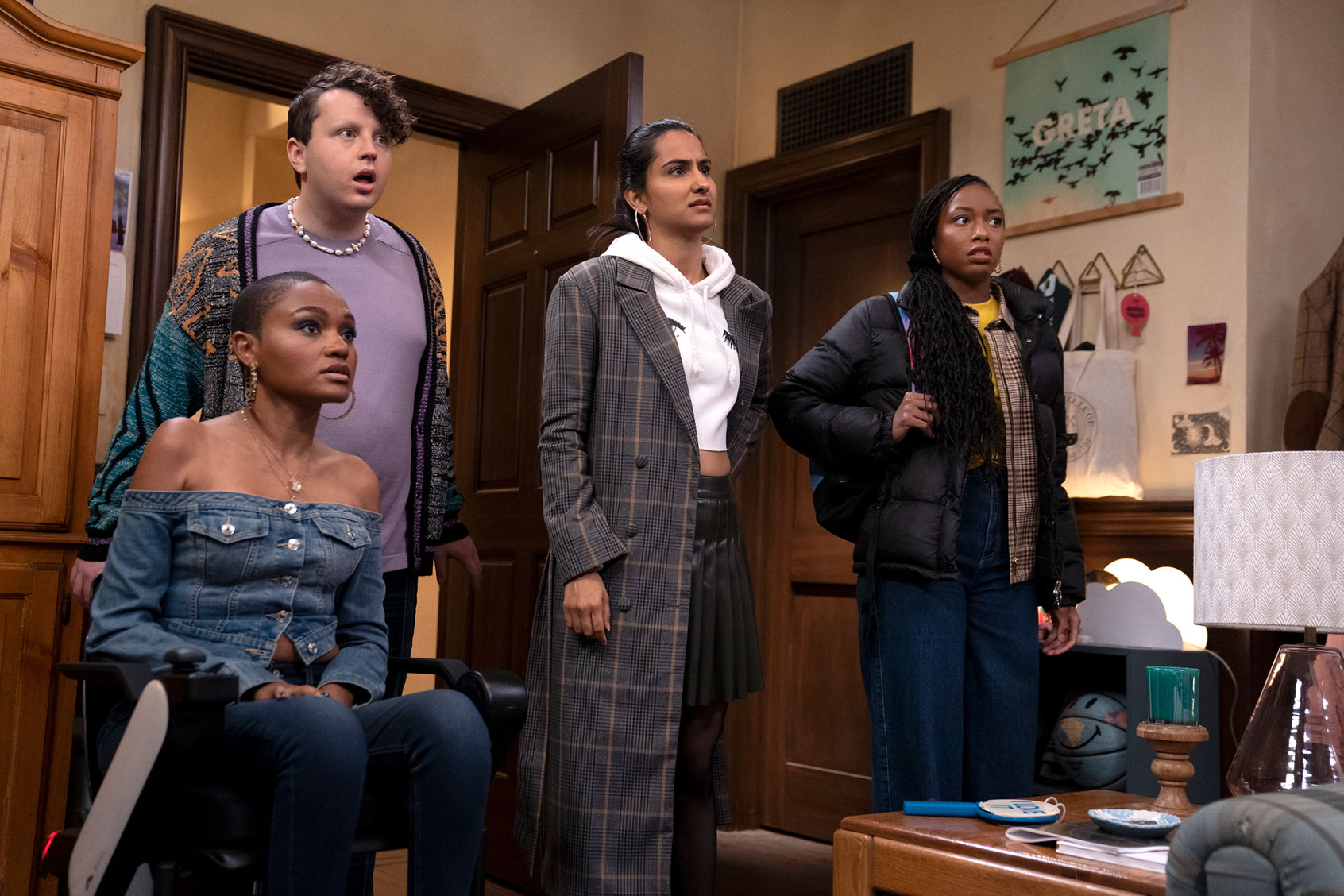
“It’s a movie about a doll!” : “The View” mocks right-wing “Barbie” haters who feel “emasculated”

On Tuesday “The View” hosts blasted right-wing personalities and politicians for their staunch anti-woke brigade against “Barbie.”

The film which focuses on themes of girlhood and feminism caused a firestorm with conservatives like Sen. Ted Cruz, Rep. Matt Gaetz and Ben Shapiro — targeting yet another film at the center of the right-wing culture wars. 

Host Whoopi Goldberg expressed frustration with conservatives: “I thought y’all would be happy. [Barbie] has no genitalia so there’s no sex involved. Ken has no genitalia so he can’t be doing it,” she said.

Conservative host Alyssa Farah Griffin stated that many of her Republican and Democrat friends saw the film and “right-wing influencers are actually out of touch with actual Republicans,” mentioning the conservative backlash with Bud Light and trans influencer Dylan Mulvaney as an example.

“Also, I’m so taken by these right-wing men who have all these thoughts on masculinity like somehow the Barbie movie is going to make them feel emasculated. No, caring so much about it is honestly the most emasculating thing I can think about,” Griffin said.

Host Joy Behar took a dig at Gaetz, addressing prior allegations of sex trafficking and having sex with a 17-year-old girl. “It’s rated PG-13 — that’s his crowd,” she said.

Watch the clip via YouTube:


How does ice cream work? A chemist explains why you can’t just freeze cream and expect results

Ice cream seems like a simple concept. Take some dairy, add some sugar and flavors and freeze.

But to get a perfectly creamy, smoothly textured frozen treat, we need more than just a low temperature — it takes a careful interplay of chemistry and three states of matter: solid, liquid and gas.


What’s in the box?

Commercial ice cream includes many ingredients: air, water, milk fat, so-called milk solids (mainly milk proteins and lactose), sweeteners, stabilizers, emulsifiers and flavors. The ingredients are mixed and pasteurized for food safety.

Homemade ice creams tend to use milk, heavy cream, sugar and flavorings, such as fruit, berries or chocolate. The exact quantities vary with the recipe, but the processing steps are similar.

Milk is composed of everything a young cow needs to grow and develop — water, fats, carbohydrates, proteins, minerals and vitamins. These components respond in different ways when they are frozen.


First, the crystals

As the mixture of ice cream ingredients is cooled down, small clusters of water molecules assemble to form tiny ice crystals. The size of the ice crystals is responsible for the mouth feel of the ice cream — the smaller the crystals, the smoother the feel.

If the crystallization is not well controlled, these crystals can get very large. Ice cream makers (commercial or for home use) ensure small ice crystals by agitating or beating the liquid as it freezes. This keeps the water molecules moving and prevents the crystals from growing larger.

The mixing process also incorporates air, which is the secret ingredient to give ice cream a lighter texture.


Next, the fat

The fat in the milk exists as globules surrounded by proteins. These proteins bridge the fat and the water, helping to keep the fats suspended. (Milk looks white because light scatters off these fat globules.)

These dairy fat molecules have different properties at different temperatures. At room temperature they are semi-solids (like butter) and are about two-thirds solid when at 0℃.

The fat globules can stick together — that’s why you get a layer of cream on top of unprocessed milk. A process called homogenization forces the milk through a small opening under very high pressure, breaking large fat globules down into smaller ones. This process makes many small fat globules — as many as a trillion per liter. Homogenized milk ensures the mixture will freeze evenly and separated fats won’t get stuck to the mixing machinery.

Freezing the fat globules makes them clump together, with the surrounding proteins acting as bridges to other fat molecules and to the ice crystals. These fats melt in your mouth, giving a creamy feel and taste.


Then, the sugar

The sugar and other dissolved ingredients in milk are also essential to the final texture of ice cream. The presence of sugars in the water lowers the mixture’s freezing temperature to below 0℃.

Here’s why that’s important. As ice crystals start to form, the concentration of sugars and other dissolved materials in the unfrozen liquid increases, which further lowers its freezing point. By the time the majority of the ice crystals have formed, the resulting liquid is very concentrated in sugars.

This concentrated liquid, known as the “serum”, bridges between the ice crystals, solid fat globules and air bubbles. The serum remains a liquid well below 0℃ and adds enough flexibility to the mixture so the ice cream can still be scooped or shaped.

In this way, the unique chemical properties of water, fats, proteins and sugars come together with air to give the solid, liquid and gas mixture we know and love.


Not everything is ‘ice cream’

What’s called “ice cream” is actually governed by a food standards code. That’s why not all frozen desserts can be legally called ice cream, because they don’t contain enough milk fat.

There are lots of variations on the standard ice cream recipe. Gelato uses more sugar, incorporates less air and typically has less fats and other solids. Sorbets do away with the dairy and typically contain more sugar, but have historically used egg or gelatin as a protein source.

Regardless of the exact recipe, the fundamental ice crystal formation, fat solidification and serum phase separation steps are the same.

Product names like “soft serve”, “dairy dessert” or “ice confection” are often an indication the ingredient list includes vegetable fats rather than more expensive milk fats.

Soft serve products are also formed by agitation as the mixture freezes, but tend to contain less air than ice cream you’d buy in a tub, due to the constant agitation inside the dispensing machine.

Icy poles, ice blocks, freezies or freeze pops (depending on your local phraseology) and other “water ices” are frozen inside a mould or plastic tubing. The shape of the mould limits the ability to stir the mixture, so the freezing process is typically done “quiescently”, meaning at rest. The crystallization of the ice is not well controlled and you may have experienced large crystals that have grown (technically “seeded”) from the popsicle stick.

Humanity has enjoyed ice cream for centuries. It’s a marvelously versatile food with endless variations of flavors, additives and toppings coupled with memories of happiness, comfort, indulgence and nostalgia. And plenty of chemistry, too.

Nathan Kilah, Senior Lecturer in Chemistry, University of Tasmania

This article is republished from The Conversation under a Creative Commons license. Read the original article.

DeSantis fires one-third of staff in attempt to stop bleeding money just weeks after campaign launch

Republican Florida Gov. Ron DeSantis has axed more than a third of his campaign staff — 38 jobs in total — across various departments, per a report from Politico that was confirmed by advisers. The move comes amid broader internal reshuffling by DeSantis’ presidential campaign team as it attempts to consolidate finances and whittle down its payroll. Politico also reported that the DeSantis team recently saw the departures of senior campaign advisers, Dave Abrams and Tucker Obenshain, who are expected to support external pro-DeSantis organizations. 

“Following a top-to-bottom review of our organization, we have taken additional, aggressive steps to streamline operations and put Ron DeSantis in the strongest position to win this primary and defeat Joe Biden,” DeSantis campaign manager Generra Peck said in a statement. “Gov. DeSantis is going to lead the Great American Comeback and we’re ready to hit the ground running as we head into an important month of the campaign.”

Politico reported that Peck conceded last week during a donor retreat in Deer Valley, Utah, that the campaign had gone over budget in various areas, which will allegedly be ameliorated by limiting travel and decreasing the scope of events. 

Tom Cruise, our messy messiah of movies

Over the span of his 40-year career, Tom Cruise has been many things: Hollywood heartthrob, celebrated Short King (he’s 5-foot-7), Scientology spokesperson, reticent actor and now . . . the savior of cinema. Earlier this year, Steven Spielberg made the decree at the annual Oscars luncheon, telling the actor he “saved the entire theatrical industry,” as “Top Gun: Maverick,” Cruise’s highest grossing movie ever ($1.49 billion globally), achieved the rare and coveted task of bringing moviegoers back to the theaters. The claim has regained traction now that the star has joined negotiations with SAG-AFTRA in order to protect actors from being replaced by artificial intelligence — nevermind the fact that he has declined to join the picket line for the unions’ ongoing strike.

He’s famously known for performing his own stunts no matter how terrifying, just one of the many reasons people refer to him as the last remaining movie star.

It’s no mere coincidence then that the villain in Cruise’s latest movie, “Mission Impossible — Dead Reckoning Part One,” is, of all things, AI. In the seventh installment, notoriously rogue spy Ethan Hunt is tasked with finding the key that controls the sentient AI called “The Entity” that can manipulate digital reality. Good guy that he is, Ethan doesn’t stop at obtaining the key, he sets out to destroy The Entity for the sake of mankind.

Like his character, Cruise is fighting to preserve reality by tackling AI, merging his persona with his performance and reinforcing himself as the movie messiah. Since the pandemic, the public has been awoken to his staunch defense of The Movies. In a leaked clip captured while filming “Dead Reckoning” during the pandemic, he was heard yelling at crew members who were not following COVID-19 precautions. While he was audibly angry and intense, the clip was widely interpreted as Cruise being dedicated to the craft that is moviemaking. To top it off, he’s famously known for performing his own stunts no matter how terrifying, just one of the many reasons people refer to him as the last remaining movie star.

In an era where Hollywood is ruled by IP and franchises in place of actors, Cruise feels like the last of his kind. What allowed his stardom to endure and evolve in ways Brad Pitt’s, Sandra Bullock’s and so many others’ did not?

Unlike other celebrities, the persona of Hollywood’s last star has always loomed larger than life. It’s not always a tidy reputation, but it is always intriguing and full-on — even his fall from publicity grace. The early aughts through to 2012 were dark times for the actor’s public image. In 2004, he opened up about joining the Church of Scientology, an organization suspiciously structured like a pyramid scheme, purported to be a religion, founded by the science fiction writer L. Ron Hubbard. The cult-like group comes with many controversies, including allegedly profiting from human trafficking and forced labor and practicing abusive behavior. The optics for Cruise at the time weren’t great, but they were still surrounded by buzz and an intense need to know more about the actor. 

The more investigations and self-reports from the actor about his ties to Scientology, the more complex and unhinged he appeared to be. There was the time he criticized Brooke Shields for taking antidepressants because psychiatry is not within the church’s belief. Or, that time when a former Scientologist alleged that he had not seen his daughter Suri Cruise for 10 years because she is not a Scientologist. At one point, he also used the church to find new love interests, as Scientologists reportedly recruited actress Nazanin Boniadi, giving her a makeover to Cruise’s preferences, to become the actor’s girlfriend. He dated her for a while before letting the church break up with her for him. When she told a friend what happened, she was punished by the church with months of menial labor. 

Tom Cruise; Jay LenoIn this handout photo provided by NBC, actor Tom Cruise (L) stands on the couch during an interview on “The Tonight Show with Jay Leno” June 8, 2005 in Burbank, California. (Paul Drinkwater/NBC via Getty Images)

Even when he’s not speaking about Scientology, everything about Cruise is sensational. His infamous 2005 couch-jumping Oprah Winfrey interview (which he’s since enthusiastically reenacted) is case in point. Looking back, the interview feels like an “I Think You Should Leave” skit with Cruise, the Tim Robinson stand-in, taking emotions to the unsettling extreme until they cross social norms. He randomly and repeatedly jumps up onto the couch, grabs Oprah by both shoulders and shakes her, drops to his knees and then, when Katie Holmes is invited onto the stage, finds the actress, restrains both of her arms and almost drags her to the stage; all because he’s just so passionate about his love for her. Perhaps what’s even more perplexing than the actor’s behavior is how the live audience uproariously cheers him on.

Such is the power of Tom Cruise.

After watching the interview, it’s easy to see how Cruise was the character inspiration for the onscreen take on sociopathic killer Patrick Bateman in “American Psycho,” which Christian Bale came to realize after watching a 1999 appearance of Cruise on “Late Show with David Letterman.” During his appearance, the actor recounted a story about co-piloting a private plane and turning off a passenger’s oxygen supply. When Letterman asks him if that’s attempted manslaughter, he laughs so hard he can’t string a full sentence together to finish the story. Creepy as this interview is, it adds yet another conundrum to the puzzle that is Tom Cruise. Attempting to solve that puzzle keeps us coming back. His eerie antics keep us glued to the screen, like witnessing something horrific you just can’t look away from.

It’s almost as if Tom Cruise The Person and Tom Cruise The Character are one and the same.

Eventually, the star learned to shut up about Scientology, entering a newly reticent era and becoming known for turning down in-depth interviews. Who he is now and what he gets up to has become so mysterious that the New York Times recently went on their own impossible mission to find him in the wild. His increasingly private life and determination to keep making movies has essentially repaired his hurt reputation. As Rolling Stone points out, Cruise “effectively replaced Scientology with a different public-facing religion: The Movies.”

Shielding his private life only added fuel to the fire that his mysterious, larger-than-life persona created. Now, when people hear any details they can about the star, they revere it and pick it over. He has a signature white chocolate coconut cake bundt cake and he sends it to celebrities every year? He taught Zac Efron to ride a motorcycle? He rescued a family from a burning sailboat? Wow, he’s so fearless and heroic, like a real-life Ethan Hunt and all the other action heroes he’s fully leaned into playing and that don’t at all try to distract from his Scientology scandals . . .

It’s almost as if Tom Cruise The Person and Tom Cruise The Character are one and the same. The conflation has bolstered the star’s allure and ability to bring people to theaters, as his deep lore and real heroics draw people to see him, and specifically him, in films — and we eat it up. Journalist Justine Smith puts it best, “People didn’t come back to the cinema to watch a new ‘Top Gun’ movie, a sequel 30 years in the making — they came to the cinema to watch Tom Cruise.” 

Whether or not you believe this one white man, who stood with SAG-AFTRA most when it benefits his own movies, can fix a systemic issue of exploitation and capitalism is irrelevant, because Cruise will act like he did. That’s the whole point of the latest “Mission Impossible.” And we watched it, we enjoyed it if its Rotten Tomatoes score (96% for critics and 94% for the audience) is any indication, and we will continue to watch when Cruise puts on another performance. While he is many things, no one can accuse him of not committing to the bit.

Cruise’s allure can be best captured by his acceptance speech video for “Top Gun” at the MTV Movie & TV Awards. He didn’t just accept his speech, he got into a helicopter and thanked the audience for going to the movies. Right before he jumps out of the helicopter to finish his speech mid-fall, he shouts, “I love entertaining you!” From Scientology to Movie Savior, Cruise does exactly that. He is a star because he never stops entertaining, and we love him all the more for it. 

Roman Polanski, Woody Allen and Luc Besson comprise Venice Film Fest controversial lineup

Woody Allen, Roman Polanski and Luc Besson are slated to make their world premieres at the 80th Venice International Film Festival, the organizers of the event announced at a Tuesday morning press conference. Allen’s French-language feature “Coup de Chance” and Polanski’s “The Palace” will be screened out of competition, meaning they won’t compete for the main prize — the festival’s Golden Lion award — but will still be presented live. Besson’s “DogMan” will be screened in competition.    

All three filmmakers have been accused of sexual abuse, which is why the controversial lineup (which also comes in the wake of the SAG-AFTRA and WAG strikes) is likely to draw protests — both in person and online. Polanski pleaded guilty to a charge of unlawful sexual intercourse with a 13-year-old girl in August 1977 before fleeing to France to avoid the possibility of extradition to the United States. Allen’s adoptive daughter Dylan Farrow alleged he sexually assaulted her when she was seven, although Allen has adamantly denied those claims. And Besson’s case involving an alleged assault of Dutch-Belgian actress Sand Van Roy was dismissed in 2021 following an investigation.


“Trump knew better”: Experts say key White House meeting could doom Trump’s January 6 defense

Special counsel Jack Smith’s office has questioned former officials about a February 2020 Oval Office meeting during which then-President Donald Trump commended new changes made to the security of the elections, sources familiar with the matter told CNN.

Trump specifically highlighted his administration’s efforts to promote the use of paper ballots and support security audits of vote tallies during this meeting with senior officials and White House staff, CNN reported. He even went so far as to suggest that the FBI and Department of Homeland Security hold a press conference to take credit for their work in safeguarding election systems. 

But weeks later, he told a much different story, convincing his supporters of voter-fraud conspiracy theories he later relied on to cast doubt on the validity of the 2020 election results.

“The meeting suggests Trump had no qualms about the security of the upcoming presidential election until he started to fear that he might lose,” former federal prosecutor Kevin O’Brien told Salon. “Obviously, this is relevant to Trump’s state of mind and whether he knew his claims of election fraud were baseless, and therefore could be used as evidence by the prosecution in any trial.”

Smith’s office has conducted interviews with multiple former officials with knowledge of the meeting. During these interviews, Smith’s team inquired about Trump’s response to his advisors telling him that election systems were secure and questioned whether he was well-informed on the topic, one source told CNN.

At the time the Oval Office meeting took place, the election was almost 10 months away. This makes it easier for Trump to argue that later events, including the vote counting, revealed irregularities he didn’t foresee in February, O’Brien added.

“More probative of Trump’s criminal state of mind would be statements Trump reportedly made right after the election – such as his remark to one aide, ‘Can you believe I lost to that guy?’ (referring to Biden); or his statement to Mark Meadows, ‘I don’t want people to know we lost, Mark,'” O’Brien said.

We need your help to stay independent

The focus on the meeting is the most recent sign that Smith’s team is seeking testimony about Trump’s state of mind concerning the claims he would later make regarding the legitimacy of the 2020 election. 

Investigators have also questioned multiple witnesses about whether Trump retaliated against top officials, who challenged his narrative concerning election security, two sources familiar with the matter told CNN.

The disclosure of Trump’s private conversations surrounding US elections could provide prosecutors a significant understanding of his state of mind and potentially undermine his defense that he genuinely believed the election was stolen.

“Though his veracity when it came to the statements he was making might play some role in their investigation, it really isn’t the central question on which this case is going to turn,” former Los Angeles County prosecutor and criminal defense attorney with El Dabe Ritter Trial Lawyers, Joshua Ritter, told Salon.  


Want a daily wrap-up of all the news and commentary Salon has to offer? Subscribe to our morning newsletter, Crash Course.


If Trump plans to argue that he cannot be prosecuted for simply questioning the integrity of the election process, then it becomes relevant to investigate whether he made statements that directly contradict that defense, Ritter added.

“But the thing to remember here is that this is not a question of some sort of perjury allegation, and they are not investigating whether or not Trump actually believed what he was saying publicly, before or after the election,” Ritter said. “The central question is whether or not he interfered with the electoral process, or incited violence on the part of his followers. It’s about if this was actually an attempt to overturn an election and incite a riot, not whether he believed what he was saying publicly or not.”

However, evidence that reveals “Trump knew better, but did not do better” is important in showing that he acted with criminal intent, pointed out Temidayo Aganga-Williams, white-collar partner at Selendy Gay Elsberg and former senior investigative counsel for the House Jan. 6 committee.

“A critical part of any successful criminal prosecution is proving what was in the defendant’s head when the conduct occurred,” Aganga-Williams said. 

On November 12, 2020, just nine days after the election, DHS’s cyber agency issued a statement characterizing the election as “the most secure in American history,” CNN reported. 

Shortly after this statement was released, Trump fired Chris Krebs, the head of DHS’s cyber agency, who had refuted Trump’s allegations of widespread voter fraud.

Smith’s team has interviewed Krebs, whose testimony about his agency’s work could be useful as it would serve as “another example of someone around President Trump telling him that his actions to overturn the election were baseless,” Aganga-Williams said.

“Bulls**t apology”: Boebert blames AirPods after throwing Uvalde victim’s memorial pin in the trash

Rep. Lauren Boebert, R-Colo., apologized after a video showed her throwing out a pin and a pamphlet memorializing a child killed in the Uvalde mass shooting.

In a video posted on Tuesday to Twitter, Boebert can be seen discarding the sneaker-shaped pin — a reference to the Converse sneakers 10-year-old Maite Rodriguez was wearing when she was fatally shot — as well as the supplementary information about Rodriguez seconds after being handed it by a group of gun-control activists.

Boebert on Monday apologized in a video published by Patriot Takes for hastily throwing out the items and the “appearance” of “disrespecting a child,” justifying her actions by stating that she had been wearing AirPods at the time of the incident. The far-right lawmaker also claimed that the individual who handed her the pin was someone who had approached her “aggressively” in the past.

“I was walking, had AirPods in, tried to tell the man that I was occupied, and he continued, and as he was handing me what turned out to be a memorial pin, I recognized him as a man who came at me very aggressively just a few weeks prior during a press conference,” Boebert said. “He was so aggressive that he was apprehended by another member and detained by Capitol Police officers.”

She added that she had been “very vocal” about the tragedy, and wanted to “make it very clear that I did not want to receive anything that this man had to give me, nor did I know what he was handing me.”

We need your help to stay independent

However, the person who handed Boebert the pin and pamphlet, a man named Elijah Pelton, told The Independent that Boebert had confused him with an advocate named Jake Burdett, who was physically ousted from a protest by Rep. Clay Higgins, R-La., for inquiring about Boebert’s divorce.


Want a daily wrap-up of all the news and commentary Salon has to offer? Subscribe to our morning newsletter, Crash Course.


The father of another Uvalde victim posted a heated response to Boebert’s tepid apology, blasting it as “bullsh*t.”

Brett Cross, the father of Uziyah Garcia, posted his own video response to the Colorado Republican, accusing Boebert of “lying” and underscoring notable physical differences between Pelton and Burdett. Pleton, Cross said, is “a big dude” who “towers over a lot of people.” He added that Boebert had willingly taken the items from Pelton, saying, “You grabbed it from him. He’s holding it up and you take it from him.”

“You looked down at the pamphlet. You looked down at the pin. You knew what it was and you threw it away when you thought nobody was f***ing looking. You got caught and now you’re trying to spin a web of lies.”

Trader Joe’s recalls two types of cookies for potentially containing rocks

On Friday, Trader Joe's reported that two cookie varieties currently being sold in their stories may contain rocks, according to a recall notice. In an announcement on their website, Trader Joe's is reporting a recall for "potential foreign material (rocks) in Almond Windmill Cookies and Dark Chocolate Chunk and Almond Cookies."

Almond Windmill Cookies with sell-by dates of Oct. 19, 2023 through Oct. 21, 2023, and Dark Chocolate Chunk and Almond Cookies with sell-by dates of Oct. 17, 2023 through Oct. 21, 2023 are potentially affected. Per the recall notice, "all potentially affected product has been removed from sale and destroyed."

The company urges any customers who have purchased the cookies to "discard the product or return it to any Trader Joe's for a full refund." 

Report: The number of children receiving free summer lunches is down by 45% compared to last year

According to a new report by the Food Research & Action Center (FRAC), an anti-hunger organization, there was a there was a decrease of almost 2.4 million children receiving free summer lunch when comparing participant data from July 2021 to July 2022. This is a nearly 45% decrease, while the number of children receiving free breakfast dropped by 60% year-to-year.

This, unfortunately, is not because there are fewer children in need of this service. As FRAC reported, the steep decline coincides with "Congress's delay in extending the pandemic child nutrition waivers that allowed all communities to offer summer meals and provided operational flexibilities," as well as 'staffing challenges [and] supply chain distribution." According to the FRAC, Summer Nutrition Programs — which are funded by the United States Department of Agriculture and administered by individual state governments — provide free meals and snacks to "children 18 and under at sites in low-income communities or that serve primarily low-income children."

The organization reports that every state saw a decrease in average daily participation in summer lunch from 2021 to 2021, however participation is still higher than pre-pandemic levels. The FRAC reports that there are multiple ways to help feed more children during the summer, including lowering the eligibility threshold for participation in Summer Nutrition Programs, allowing summer meal sites to serve three meals a day and leveraging summer learning funding to assist in the effort. 


Trump lawyer claims bad headlines about him count as “election interference”

Trump lawyer Alina Habba claimed on Monday that unfavorable headlines about the former president are evidence of “election interference.” Rep. Matt Gaetz, R-Fla., acting as a guest on the conservative media network Newsmax, pressed Habba about a recent report from the Daily Beast that ex-New York City Police Commissioner Bernie Kerik would share a trove of documents with Jack Smith, the special counsel heading the investigation into the Capitol insurrection and attempts to subvert the 2020 election.

“Every headline that comes out in media — I don’t even know if I would recognize the Daily Beast as a valuable media source — but the Daily Beast, you know, they come out with these leaks and, you know, I read a little bit more reputable newspapers, but listen, they come out with this for a reason, and everything is done in specific timing. Headlines are done for election interference. Watch,” Habba said. “We know that Hunter’s associate was supposed to come out and testify on Monday, I heard now he may not be doing so, but watch, they’ll come after Trump again around the same time so that, again, they say, ‘Look at the shiny ball, guys. Don’t look over here. We don’t want you to see it. We wanna give you another headline.'”

Experts stunned after Alabama “blatantly disregards” SCOTUS order to fix racially gerrymandered map

Voters in Alabama are preparing for another legal battle after the state’s GOP-dominated Legislature and Republican Gov. Kay Ivey on Friday approved new congressional districts that critics say defy a surprising recent decision from the U.S. Supreme Court.

The latest map “is really a slap in the face, not only to Black Alabamians but to the Supreme Court,” state Rep. Barbara Drummond, D-103, asserted during a floor debate this week, according to ABC News.

Legal experts and voting rights advocates were shocked last month when two right-wing members of the high court joined the three liberal justices for a ruling in Allen v. Milligan that sided with Black voters who argued that Alabama’s map was racially gerrymandered by the state’s GOP legislators in violation of the federal Voting Rights Act (VRA).

“Following the U.S. Supreme Court order, I called the Alabama Legislature into a special session to readdress our congressional map,” Ivey said Friday. “The Legislature knows our state, our people, and our districts better than the federal courts or activist groups, and I am pleased that they answered the call, remained focused, and produced new districts ahead of the court deadline.”

Meanwhile, Scott Douglas, executive director at Greater Birmingham Ministries, one of the Allen plaintiffs, declared Friday that “Alabama lawmakers appear hell-bent on preventing Black voters from fully participating in the democratic process and they are blatantly ignoring their constituents, federal law, and the highest court of the land to disenfranchise us.”

“Alabama lawmakers appear hell-bent on preventing Black voters from fully participating in the democratic process.”

The plaintiffs from Allen—represented by the Alabama and national ACLU, the Legal Defense Fund, and two law firms—have already pledged to challenge the updated map, which was sponsored by state Sen. Steve Livingston, R-8, and does not include a second majority-Black district.

“Let’s be clear: The Alabama Legislature believes it is above the law. What we are dealing with is a group of lawmakers who are blatantly disregarding not just the Voting Rights Act, but a decision from the U.S. Supreme Court and a court order from the three-judge district court,” the plaintiffs said Friday in a joint statement.

“Even worse, they continue to ignore constituents’ pleas to ensure the map is fair and instead remain determined to rob Black voters of the representation we deserve. We won’t let that happen,” they added. “Since the beginning of the redistricting process, we have testified before the state Legislature, sent letters, and proposed maps—then we sued to defend Black representation and won. We will not rest until the state of Alabama complies with the Voting Rights Act and enacts a map with two districts where Black voters have a real opportunity to elect their candidates of choice and the Legislature fulfills its duty to obey the law.”

A federal court hearing about the new districts is set for August 14. As The Associated Press reported Saturday:

The state’s Republican legislative supermajority boosted the percentage of Black voters in the majority-white 2nd Congressional District, now represented by Republican Rep. Barry Moore, from about 31% to almost 40%. The plan also dropped the Black voting-age population in the state’s sole majority Black district, now represented by Democratic Rep. Terri Sewell, to 50.65%.

[…]

Republicans, who have been reluctant to create a Democratic-leaning district, are gambling that the court will accept their proposal or that the state will prevail in a second round of appeals.

The office of Republican Alabama Attorney General Steve Marshall claimed that “the Legislature’s new plan fully and fairly applies traditional principles in a way that complies with the Voting Rights Act.”

“Contrary to mainstream media talking points, the Supreme Court did not hold that Alabama must draw two majority-minority districts,” the office added. “Instead, the court made clear that the VRA never requires adoption of districts that violate traditional redistricting principles.”

However, Sewell said in a statement that “the Supreme Court was very clear … This map does not comply with the Supreme Court’s order and is an insult to Black voters across our state. I fully expect that it will be rejected by the courts.”

If a three-judge panel finds that the Alabama districts approved Friday violate the VRA, it can appoint a special master to draw another map. Political boundaries for the 2024 election could help determine who has a majority in the U.S. House of Representatives, which is now narrowly controlled by the fractured Republican Party.

Citing GOP attacks on voting rights, Democrats in the U.S. House and Senate on Tuesday reintroduced the Freedom to Vote Act—a move that was widely praised by democracy defenders, even though the bill is unlikely to pass this session given current divisions in Congress.

Political stunts and an uphill battle: Breaking down Cruz and DeSantis’ proposed Bud Light lawsuits

It’s been a defining year for Bud Light, and its parent company Anheuser-Busch, as the brand misstepped its way into being boycotted by both conservatives and liberals. 

After Bud Light partnered with trans activist and influencer Dylan Mulvaney on a short sequence of social media posts, several enraged conservative conservative public figures — including Kid Rock and Dan Crensaw — called for a boycott until the brand severed ties with Mulvaney and apologized. 

However, amid increasing threats of violence towards the transgender community, Bud Light instead issued a tepid response.

“We never intended to be part of a discussion that divides people. We are in the business of bringing people together over a beer,” Anheuser-Busch (AB InBEV) CEO Brendan Whitworth said in an April 14 statement titled “Our Responsibility to America.”

This caused the Human Rights Campaign (HRC), which rates companies based on their commitment to LGBTQ safety and equality, to suspend Anheuser-Busch’s Corporate Equality Index, effective immediately. 

Then, NBC News reported in May that sales volumes of Bud Light for the week ending May 13 sank 28.4%, extending a downward trend from the 27.7% decline the week before. In the months since, sales have been slow to rally as conservatives continue to use their interactions with the brand as a way to campaign and grandstand, like in the case of Texas senator Ted Cruz and Florida governor Ron DeSantis

Both politicians have called for investigations into Bud Light and Anheuser-Busch, which could lead to lawsuits. However, does either case actually have any merit? Let’s break it down:

Why is Ted Cruz (and Marsha Blackburn) threatening litigation against Bud Light? 

In May, Ted Cruz announced that he was calling for an investigation into Bud Light — or more specifically, he was calling for Whitworth, Anheuser-Busch’s CEO and the chairman of the beer industry’s self-regulatory body, the Beer Institute, to investigate whether his brand had somehow broken the law by partnering with Mulvaney. 

Cruz’s reasoning? As the Houston Chronicle reported, Cruz, who is the the top Republican on the Senate Commerce Committee, says Anheuser-Busch is marketing to minors because Mulvaney’s audience “skews significantly younger than the legal drinking age.”

Marsha Blackburn, the Republican senator from Tennessee, sent a letter to Whitworth in support of Cruz. 

We need your help to stay independent

“We would urge you, in your capacity at Anheuser-Busch, to avoid a lengthy investigation by the Beer Institute by instead having Anheuser-Busch publicly sever its relationship with Dylan Mulvaney, publicly apologize to the American people for marketing alcoholic beverages to minors, and direct Dylan Mulvaney to remove any Anheuser-Busch content from [her] social media platforms,” the letter, which purposely misgendered Mulvaney, said. 

A month later, Cruz submitted a 13-page memo “detail[ing] how Bud Light’s sponsorship of Dylan Mulvaney violated industry standards that prohibit marketing to underage individuals.” A three-panel board at the  Beer Institute’s Code Compliance Review Board will now conduct an official review of Anheuser-Busch’s decision to sponsor Mulvaney. 

Why is Ron DeSantis threatening litigation against Bud Light? 

In a Thursday interview with Fox News, DeSantis accused Anheuser-Busch of maintaining a “political agenda at the expense of your shareholders” because of its short-lived partnership with Mulvaney, and toyed with the idea of calling for an investigation of the company. “That’s not just impacting very wealthy people. It impacts hardworking people who were police officers, firefighters and teachers in terms of the pension,” DeSantis said. 

He told the network that the investigation could lead to a derivative lawsuit filed on behalf of the shareholders of the Florida pension fund against AB InBev. “Because, at the end of the day, there’s got to be penalties for when you put business aside to focus on your social agenda at the expense of hardworking people,” DeSantis said.


Want more great food writing and recipes? Subscribe to Salon Food’s newsletter, The Bite.


As CNBC reported, DeSantis then instructed Lamar Taylor, the interim executive director of the State Board of Administration, to immediately launch a review into “how AB InBev’s conduct has impacted and continues to impact the value of SBA’s AB InBev holdings.”

Both Cruz and DeSantis face uphill legal battles 

Cruz’s argument, that Bud Light knowingly marketed to minors by partnering with a social media influencer with younger followers, doesn’t seem to hold a lot of water. In an emailed statement to media, an Anheuser-Busch spokesperson said that the company adheres to Beer Institute rules that influencers “reasonably appear” to be over 21 and not appeal primarily to underaged people. 

“All of Anheuser-Busch’s marketing is directed to adults of legal drinking age, and the engagement of this social media influencer was in compliance with the Beer Institute’s Advertising and Marketing Code,” the statement said.

As Salon Food reported in May, several political writers, including Huffington Post’s Ron Dicker, have pointed out that the nature of Cruz and Blackburn’s request — as well the fact that Whitworth actually chairs the organization they’re petitioning — makes it seem like a political stunt. 

Legal experts also predict that DeSantis will face an “uphill battle”in his lawsuit against Bud Light. 

As Newsweek reported on Monday, a spokesperson for Florida’s State Board of Administration (SBA) confirmed to the publication that its “Global Equity Asset Class held 819,880 equity shares of AB InBev, with a market value of nearly $48 million on behalf of the Florida Retirement System Defined Benefit Pension Plan.” 

However, attorney Arash Sadat, partner at Mills Sadat Dowlat LLP, told Newsweek that it’s not entirely clear what action, if any, DeSantis wants AB InBEV to take to correct the alleged “breach of duties” and that we won’t know until the shareholders — not DeSantis alone — make a formal demand or file a lawsuit. 

Sadad added that corporate executives are given a great deal of latitude under the law to make decisions they feel are in their company’s best interests. Rainbow capitalism aside, the fact that Bud Light produced an advertisement that is in line with how other brands that have aligned themselves with the LGBTQ community works in their favor. 

“This is called the ‘business judgment rule’ and it presents a fairly high bar for shareholders to overcome,” Sadad said. “Even assuming that the recent dip in Bud Light sales was caused by either the Mulvaney marketing campaign or Bud Light’s failure to fire those responsible for it, it’s not at all clear that these decisions were so ill-conceived that they justify court intervention.” 


Texas A&M suspended professor accused of criticizing GOP Lt. Gov. Dan Patrick in lecture

Sign up for The Brief, The Texas Tribune’s daily newsletter that keeps readers up to speed on the most essential Texas news.


Joy Alonzo, a respected opioid expert, was in a panic.

The Texas A&M University professor had just returned home from giving a routine lecture on the opioid crisis at the University of Texas Medical Branch when she learned a student had accused her of disparaging Lt. Gov. Dan Patrick during the talk.

In the few hours it took to drive from Galveston, the complaint had made its way to her supervisors, and Alonzo’s job was suddenly at risk.

“I am in a ton of trouble. Please call me!” she wrote to Chandler Self, the UTMB professor who invited her to speak.

Alonzo was right to be afraid. Not only were her supervisors involved, but so was Chancellor John Sharp, a former state comptroller who now holds the highest-ranking position in the Texas A&M University System, which includes 11 public universities and 153,000 students. And Sharp was communicating directly with the lieutenant governor’s office about the incident, promising swift action.

Less than two hours after the lecture ended, Patrick’s chief of staff had sent Sharp a link to Alonzo’s professional bio.

Shortly after, Sharp sent a text directly to the lieutenant governor: “Joy Alonzo has been placed on administrative leave pending investigation re firing her. shud [sic] be finished by end of week.”

The text message was signed “jsharp.”

For free speech advocates, health experts and students, Texas A&M’s investigation of Alonzo was a shocking demonstration of how quickly university leaders allow politicians to interfere in classroom discussions on topics in which they are not experts — and another example of increasing political involvement from state leaders in how Texas universities are managed.

The revelation comes as Texas A&M is reeling over concerns that the university allowed politically motivated outsiders to derail the hiring of Kathleen McElroy, a Black journalism professor at the University of Texas at Austin, to revive the journalism school at Texas A&M. The subsequent outcry over how Texas A&M handled the situation prompted the university president to resign last week, and the interim dean of arts and sciences stepped down from that role but will remain a professor.

In an email obtained by The Texas Tribune through a public records request, Alonzo told Self the investigation had been kicked off by a student “who has ties to Texas A&M Leadership.”

The Texas A&M system confirmed the series of phone calls and text messages that led to Alonzo’s investigation was kicked off by Texas Land Commissioner Dawn Buckingham, a graduate of UTMB’s medical school. The Tribune confirmed her daughter, a first-year medical student at the time, attended Alonzo’s lecture. Buckingham served six years in the Texas Senate with Patrick, who endorsed her run for land commissioner last year, and she recently attended Sharp’s wedding in May.

Buckingham declined to comment.

A few hours after Texas A&M started looking into the complaint, course leaders at UTMB sent an email to students in the class saying Alonzo’s comments “about Lieutenant Governor Dan Patrick and his role in the opioid crisis” did not represent the opinion of the university.

The email also included a “formal censure” of Alonzo, although it did not specify what she said that was offensive.

Neither UTMB nor Texas A&M would confirm what Alonzo said that prompted such a reaction, and UTMB students interviewed by the Tribune recalled a vague reference to Patrick’s office but nothing specific.

UTMB declined to comment for this story, and Alonzo declined to be interviewed.

Ultimately Texas A&M allowed Alonzo to keep her job after an internal investigation could not confirm any wrongdoing.

In a statement, Texas A&M University System spokesperson Laylan Copelin said Sharp’s text to Patrick was a “typical update,” saying it is not unusual for the chancellor to “keep elected officials informed when something at Texas A&M might interest them.”

“It is not unusual to respond to any state official who has concerns about anything occurring at the Texas A&M System,” said Copelin, who said the system followed standard procedure to look into the claim.

Patrick did not respond to a request for comment.

Adam Steinbaugh, an attorney with the Foundation for Individual Rights and Expression, a nonprofit legal group focused on protecting free speech on college campuses, said “it would be highly inappropriate for a university to conduct an investigation if a faculty member says something critical of a state leader or a government official.”

“That is, I think, a misuse of institutional resources, and it’s one that will have a chilling effect and that has a chilling effect even if you wind up clearing the professor,” Steinbaugh said.

A day after the complaint about Alonzo’s talk, Marcia Ory, a professor at Texas A&M Health and co-chair of the university’s Opioid Task Force with Alonzo, warned about the long-term consequences.

“The incident in Galveston yesterday is probably an indicator of how sensitive and politically charged this topic is and the need to tread lightly and be aware that anything can be taken out of context,” Ory wrote in an email to Jon Mogford, vice president of Texas A&M Health.

“It’s a shame because all we want is to make people aware of harm-reduction strategies that can save lives, especially among youth and young adults who are especially vulnerable these days,” wrote Ory, who did not respond to a request for comment.

An expert with a solid reputation

Alonzo has spent more than two decades as a pharmacist in Japan, Missouri and elsewhere, and has taught college students in Texas for more than a decade. She now teaches at Texas A&M while working as an ambulatory care pharmacy director at a free health clinic in Bryan.

She has helped bring millions of federal research dollars to the university, and last year Texas A&M’s pharmacy school named her the early career researcher of the year.

One of Alonzo’s recent projects focuses on training people to use Narcan, a nasal spray that reverses opioid effects and can save lives in overdose cases. She’s also advised state leaders on other public policies that could improve the fight against opioid overdoses.

Fentanyl, a synthetic opioid often illegally manufactured by Mexican drug cartels, is a growing problem. Between 2019 and 2021, overdose deaths involving fentanyl in the state rose nearly 400%.

This year, Gov. Greg Abbott declared cracking down on fentanyl as one of his seven priority issues for the legislative session.

Lawmakers allocated $18 million over the next two years toward providing naloxone, an opioid-reversing drug, to police, schools and community organizations on the front lines of the epidemic. To improve the government’s response to overdose spikes, they also passed laws requiring police and other public entities to report overdoses to a public health agency.

But instead of backing other recommended strategies to reduce overdose deaths, such as legalizing test strips that can detect the presence of fentanyl in other drugs, lawmakers focused on a more punitive approach, approving laws that increase criminal penalties for providing fentanyl that leads to an overdose death.

Public health experts like Alonzo have largely supported harm-reduction efforts rather than increasing punishments for drug users. As the crisis intensified, Alonzo often received urgent emails from Texas school districts and law enforcement agencies eager for training and naloxone kits. In the past, she estimated she had given away more than $4.5 million worth of naloxone through her training sessions.

Statement of formal censure

Self, the professor at UTMB, scheduled Alonzo to give the lecture to the first-year medical students months in advance.

“I can’t tell you enough how much the students value this presentation,” Self wrote in October, according to emails obtained through an open records request. “I get feedback all the time from them telling me how important they view this talk. They’ll come up to me even months later to tell me.”

On March 7, the two started the day with breakfast at the laid-back Mosquito Cafe in Galveston before heading to the lecture, which was mandatory for students to attend.

The lecture was not recorded, but according to presentation slides obtained by the Tribune through an open records request, Alonzo gave students a broad overview of the opioid crisis and the science behind opioids. She walked them through how to prevent opioid deaths, how to recognize an overdose and how to administer naloxone. She even touched on what to do if a police dog was exposed to fentanyl.

The slides show that Alonzo discussed how a lack of infrastructure limits the state’s ability to respond to the crisis, noting that many Texas counties lack a medical examiner; reporting on opioid deaths by emergency rooms is infrequent; and many law enforcement agencies and local health departments don’t track opioid deaths.

This means the U.S. Centers for Disease Control and Prevention considers Texas a nonreporter when it comes to opioid data, which makes it more difficult for researchers to receive grants to tackle the issue. (Alonzo gave her presentation before the Legislature passed new reporting laws this year.)

The lecture ended around noon. Afterward, students gathered at the front of the class to grab free naloxone kits provided by Alonzo. Some stuck around to ask Alonzo questions.

The course’s instructors gave no indication anything had gone awry.

Alonzo got in her car and started her two-and-a-half-hour journey home.

At 4:22 p.m., as Alonzo was learning that a controversy was brewing, a course coordinator sent an email to the entire class distancing UTMB from comments Alonzo allegedly made about Patrick. The subject line read, “STATEMENT OF FORMAL CENSURE.”

“The statements made by the guest lecturer do not represent the opinion or position of the University of Texas Medical Branch, nor are they considered as core curriculum content for this course,” the email said.

“UTMB does not support or condone these comments. We take these matters very seriously and wish to express our disapproval of the comment and apologize for harm it may have caused for members of our community,” the email continued. “We hereby issue a formal censure of these statements and will take steps to ensure that such behavior does not happen in the future.”

The email did not specify what comments had led to the censure.

The trouble had started several hours earlier when Buckingham called Patrick to alert him that an A&M professor had made negative comments about him during a guest lecture at UTMB, said Copelin, the A&M system spokesperson. Buckingham then called Jenny Jones, the university system’s vice chancellor for governmental relations.

Copelin said a text message had alerted Buckingham of the comments, but he did not provide information on who sent the text message.

Patrick then called Sharp and Kevin Eltife, the chair of the University of Texas System’s board, Copelin said. The call between Sharp and Patrick was short. Patrick’s chief of staff, Darrell Davila, followed with the text to Sharp that linked to Alonzo’s faculty page. Eltife declined to comment.

Sharp asked then-A&M President M. Katherine Banks to investigate Alonzo’s comments.

Copelin said Sharp’s request went through the chain of command at A&M’s Health Science Center and ended up with Kevin McGinnis, the system’s vice president and chief compliance officer.

At the same time, the government relations team alerted the Health Science Center and the pharmacy school, which are affiliated with Alonzo, Copelin said.

A&M officials received a copy of UTMB’s censure statement and reached out for more information, but UTMB did not cooperate, Copelin said.

“By the close of the day, McGinnis decided to put Alonzo on paid leave and investigate to determine what really happened,” Copelin said in a statement.

As the situation developed, A&M officials updated Patrick and his team.

At 4:43 p.m., just 15 minutes after UTMB sent its official censure letter, Jones alerted Patrick’s deputy chief of staff, Marian Wallace, that the investigation was underway.

“joy alonzo placed on administrative leave pending firing investigation this week js,” read the message from Jones obtained by the Tribune through a public records request.

Copelin said the university’s handling of the complaint against Alonzo followed standard procedure and appropriately updated the relevant lawmakers on the investigation’s progress.

“The investigation into the matter was a reasonable step to take, particularly after UTMB issued a public statement ‘censuring’ one of our faculty members,” he said. “In fact, it would have been irresponsible not to look into it.”

Texas A&M would not answer questions about what specific policy Alonzo may have violated with her comments or provide documents pertaining to the investigation, citing state law that allows a university to withhold such information if a person is cleared of wrongdoing.

The timing of the complaint came as the legislative session was heating up. Universities, including Texas A&M, were making pitches to lawmakers to devote some of the state’s multibillion-dollar surplus to fund special projects.

Alonzo’s predicament also comes as Texas universities are dealing with increasing government involvement in ostensibly independent public universities, particularly at the hand of Patrick, whom Alonzo was accused of criticizing. This year, Texas lawmakers banned diversity, equity and inclusion offices on college campuses, a priority for Patrick. These offices target underrepresented groups on campus to help them succeed, but critics accused them of pushing “woke,” left-leaning ideology on students and faculty.

Patrick also prioritized a bill that would limit certain conversations about race and gender in college classrooms. When professors at UT-Austin publicly reaffirmed their academic freedom to teach critical race theory last year, Patrick pledged to ban tenure in public universities. Ultimately, that proposal was unsuccessful, but faculty say the broad attack on higher education has made Texas a less appealing and more difficult place to work.

Students scramble to understand what happened

When students at UTMB received the email hours after the lecture, several started texting each other, trying to figure out what Alonzo had said that was so offensive.

According to one student who asked to remain anonymous for fear of retaliation from the school, some students wondered if it was when Alonzo said that the lieutenant governor’s office was one of the reasons it’s hard for drug users to access certain care for opioid addiction or overdoses.

A second student who also asked to remain anonymous for the same reason said Alonzo made a comment that the lieutenant governor’s office had opposed policies that could have prevented opioid-related deaths, and by doing so had allowed people to die.

A third student who also spoke on the condition of anonymity said Alonzo talked about how policies, like the state’s ban on fentanyl test strips, have a direct impact on the ability to prevent opioid overdoses and deaths. A push to legalize the test strips died earlier this year in the Patrick-led Senate despite support from top Republicans, including Abbott.

All of the students interviewed said they felt Alonzo’s comments were accurate and they were not offended by anything in the presentation.

In a statement provided by Copelin, the A&M system spokesperson, Alonzo said “her remarks were mischaracterized and taken out of context,” but she did not confirm exactly what the comments were.

“She added that she had no issue with how the university handled the situation,” Copelin said.

The third student at UTMB said the email from the school was frustrating because it was unclear which comments the university found problematic.

“We’ve been left wondering exactly what it was they objected to,” the student said. “That vagueness just leads to some more self-censorship, since it’s hard to tell what is and isn’t allowed.”

Steinbaugh, an attorney with the legal nonprofit FIRE, said schools have the right to criticize an employee or guest speaker for statements they make, but issuing a formal censure sends a strong and unambiguous message.

“That is a suggestion that if you repeat this language or these criticisms, then you will be subject to disciplinary consequences that go beyond formal censure,” he said. “That is a way to really put an exclamation point on the chilling effect.”

In a statement last week to faculty who were upset about the fallout over the botched hiring of McElroy to the journalism department, Sharp expressed concern about outside influences in the hiring and promotion of faculty, saying it was “never welcome, nor invited.”

Sharp said he only participates in hiring questions over the school’s president and vice chancellors for agriculture and engineering.

“Other than that, I don’t believe it is my place to be part of the hiring process for faculty,” he wrote.

Fear of a chilling effect on life-saving information

A few hours after Alonzo reached out to Self about the trouble she was in, she finally heard back. But the tone of the email was notably different from the earlier cordial exchanges.

Self said she did not record the lecture and noted that “all further correspondence will be funneled through our Office of Education.”

Self referred a request for comment by the Tribune to UTMB’s media relations department, which declined to discuss the situation.

Meanwhile, emails obtained through an open records request show that opioid experts and advocates across the state started sending Alonzo letters of support that evening.

“I’ve never seen her to be anything other than professional, knowledgeable, and compassionate,” wrote Kathy Posey, who helped start the Montgomery County Overdose Prevention Endeavor, an opioid overdose awareness group made up of people whose family members have been addicted to opioids or died from an overdose.

Lucas Hill, a clinical associate professor of pharmacy at the University of Texas at Austin, wrote in his letter that Alonzo was not a divisive educator.

“While I was not present during her guest lecture at the University of Texas Medical Branch this morning, my interactions with Dr. Alonzo gives me great confidence that she engages learners in discussions of controversial topics with the professionalism and restraint described in established principles of academic freedom,” he wrote.

The stakes are high for professors who simultaneously work in their fields and teach, many of whom, like Alonzo, do not have tenure. And it raises concerns that medical experts working on high-stakes issues like the opioid crisis might withhold important, life-saving information out of fear of reprimand or punishment.

“When we’re dealing with basic life-saving interventions, chilling effects can have much more deep consequences,” said Aaron Ferguson, an addiction treatment expert in Austin who works with researchers at public universities to combat opioid overdoses. “People don’t feel emboldened to share basic science that could save people’s lives.”

“Some members of the audience” were offended

On March 21, two weeks after she was placed on paid leave, Alonzo received an email saying her leave had been lifted.

The following day, pharmacy school Dean George Udeani said in a memo to Alonzo that during the lecture she “related an anecdote and an interaction with a state official.”

“I understand that your comment did not assign blame. However, some members of the audience felt that your anecdote was offensive,” he wrote.

“While it is important to preserve and defend academic freedom and as such be able to discuss and present to students and the public the results of research observations and strategies, you should be mindful of how you present your views,” Udeani said.

Disclosure: Texas A&M University, Texas A&M University System, University of Texas at Austin, University of Texas System and Kathleen McElroy have been financial supporters of The Texas Tribune, a nonprofit, nonpartisan news organization that is funded in part by donations from members, foundations and corporate sponsors. Financial supporters play no role in the Tribune’s journalism. Find a complete list of them here.


Join us for conversations that matter with newly announced speakers at the 2023 Texas Tribune Festival, in downtown Austin from Sept. 21-23.

This article originally appeared in The Texas Tribune at https://www.texastribune.org/2023/07/25/texas-a-m-professor-opioids-dan-patrick/.

The Texas Tribune is a member-supported, nonpartisan newsroom informing and engaging Texans on state politics and policy. Learn more at texastribune.org.

Gotta get back in time: The current explosion of time travel novels goes beyond sci-fi and fantasy

Maybe I just had time travel on the brain in 2020-21 when I was working on my own time travel novel,
Vaulting through Time,” but suddenly it seemed that everywhere I turned I found new books about temporal displacement, time loops, time skips, time slips or parallel timelines, and the onslaught continues today. What’s going on? Have we traveled to an alternate universe with a whole new set of literary expectations around time?

Already in the pipeline before the pandemic, many of these novels may have struck at the right moment, given a boost by a widespread distorted perception of time.

After all, during shutdowns it felt like many of us were stuck in time loops, repeating the same day over and over. In addition, “It felt like during the pandemic the timeline split, like we’re in an alternate timeline we’re not supposed to be in,” says writer and avid time travel fan Rebecca Johns-Trissler. “It’s like something is off. Something feels deeply messed up. If we could have seen what was coming at the end of 2019, what would we change?”

Most of the novels I encountered aren’t easily classified as science fiction or fantasy. Discussion of the butterfly effect, the grandfather paradox, or big balls of wibbly wobbly, timey wimey stuff are scarce. This new tsunami of mainstream novels, many of which have hit bestseller lists, are often described as “genre-bending,” categorized as women’s, literary, and teen fiction; as mysteries and thrillers, horror and romantic comedy.

“People are fed up. Time travel provides a mental escape.”

And most often, the novels in this new wave straddle more than one genre as they use time tropes to explore relationships and probe mysteries. Notably absent are characters who set out to kill Hitler or use time travel as a contrivance, à la Mary Pope Osborne’s long-popular kids’ “Magic Treehouse” series to deliver lessons in history—although history provides a rich backdrop in, say, Kiku Hughes’s 2020 YA graphic novel “Displacement,” about Japanese internment camps, and Leah Henderson’s 2020 middle grade “The Magic In Changing Your Stars,” which evokes a rich history of dance in 1930s Harlem.

The proliferation of time travel novels is staggering. Take the following examples:

In The New York Times Book Review, Elisabeth Egan attributes the popularity of “The Midnight Library” partially to “the life-altering, priority-jumbling pandemic” — an explanation that perhaps applies to the popularity of time travel in general.

Paul Booth, organizer of a pop culture conference at DePaul University with time travel as its May 2023 theme, also links the popularity of time travel to our current moment: “There’s a common distaste for the current climate — political, cultural. People are fed up. Time travel provides a mental escape. There’s an apocalyptic sense in the world today.”

What better way to come to terms with the inevitable erasure of time than through an ability to break the boundaries time imposes on us?

While on the rise in our literature for decades, the idea of time travel didn’t even exist until the late 1800s. The human ability to travel through space vertically via hot air balloon and the greater freedom to travel horizontally via the railroads incited the imaginations of writers like H.G. Wells to wonder what would happen if we could also travel through time.

Over the course of the next century, concepts like time slips, time loops and alternative timelines gradually entered the mainstream, becoming more firmly entrenched by the early 21st century with such influential works as Audrey Niffenegger’s 2003 “The Time Traveler’s Wife,” a richly layered portrait of a marriage. In it, time travel becomes a potent metaphor for the transience of even the most permanent relationship, of love, loss, absence and longing, of the fragility and complications of our connections. In her hands, time travel was impossible to dismiss as a hokey gimmick.

Subsequent decades saw exponential increases in books, TV shows, and films centered on time travel-related themes, from “Outlander” (based on the series of books published beginning in the early 1990s) to Canada’s “Being Erica” to France’s “The Seven Lives of Lea” to U.S. shows like “Manifest” to our ongoing vast cultural obsession with the possibilities of the multiverse. In an article on board games, Booth notes that more than 100 games with a time travel theme are cited on BoardGameGeek. 

While works like “The Time Traveler’s Wife” highlight tensions between our desire for control and our ultimate lack of it, in general, time travel may feel so appealing because of its ability to suggest that our existence is purposeful, that our choices have power. Otherwise, why, as a popular meme suggests, are time travelers to the past so often warned that even a random small act can impact the future?

Choice was also a prevalent theme during the pandemic, Booth points out. “There was a lot of discourse about our individual power to protect the herd, and conversely, about our individual rights, to wear a mask or not, to be vaccinated or not.”

We need your help to stay independent

He cites a variety of other influences on the popularity of time travel, including the internet and the increasing fragmentation of our lives. “The mashup of online technology with traditional technology reflects a growing change in the way our culture understands and deals with time, memory, and history,” Booth says. “For example, on Facebook the persona continues to live long after the person has died.” Social media, he says, makes experiences feel at once timeless and fleeting.

The pandemic brought on a widespread heightened awareness of death as well, and what better way to avoid — or process — the reality of that? What better way to come to terms with the inevitable erasure of time than through an ability to break the boundaries time imposes on us?

Certainly, in the relative isolation of our pandemic bubbles, many of us were grappling with regrets or applying hindsight to personal as well as larger political and social issues. Maybe it’s a natural progression to imagine turning back time, playing the hero, changing outcomes — or to imagine visiting the future, making better choices as a result. Maybe greater confinement fueled our wanderlust or led us to seek comfort in nostalgia, to indulge in the wish fulfillment and possibility offered by the seemingly infinitely flexible fictional device that is time travel.

Salon has affiliate partnerships, and purchasing a book through our links may earn us a commission. 

Pennsylvania mayor demands Trump pay up for rally after getting stiffed last time

Erie, Pa., Mayor Joe Schember is seeking reimbursement from former President Donald Trump’s campaign for an upcoming Saturday rally after it stiffed the city five years earlier. Schember told the Erie Times-News that he plans to once again seek reimbursement even though the Trump campaign did not repay more than $35,000 to the city for a rally at Erie Insurance Arena in 2018. Nearly all of the costs were related to overtime pay for city workers assigned to cover the event, including police officers.

“I think we have to try, and I feel like my team feels the same way,” Schember told the outlet. “We’re going to see whether we can get some payment from them in advance this time. It’s important to do this because we’re talking about taxpayer money being used to help make his visit more safe.”

The city formally requested a reimbursement after the 2018 rally when Trump’s campaign had more than $35 million on hand. Erie is one of dozens of cities that have incurred significant costs when hosting Trump rallies that have not been reimbursed even as others received repayments. “Trump has been able to bring in millions of dollars for his campaign,” Schember said. “He should be able to easily pay these costs to cities.”