Spring Sale: Get 1 Year, Save 58%

Deepfake videos are so convincing — and so easy to make — that they pose a political threat

No one wants to be falsely accused of saying or doing something that will destroy their reputation. Even more nightmarish is a scenario where, despite being innocent, the fabricated “evidence” against a person is so convincing that they are unable to save themselves. Yet thanks to a rapidly advancing type of artificial intelligence (AI) known as “deepfake” technology, our near-future society will be one where everyone is at great risk of having exactly that nightmare come true.

Deepfakes — or videos that have been altered to make a person’s face or body appear to do something they did not in fact do — are increasingly used to spread misinformation and smear their targets. Political, religious and business leaders are already expressing alarm by the viral spread of deepfakes that maligned prominent figures like former US President Donald Trump, Pope Francis and Twitter CEO Elon Musk. Perhaps most ominously, a deepfake of Ukrainian President Volodomyr Zelenskyy attempted to dupe Ukrainians into believing their military had surrendered to Russia.

Yet deepfakes are no longer so technologically sophisticated that they require the efforts of intelligence agencies or Hollywood digital artists to produce. Indeed, the tools that one needs to create a deepfake are so easy to learn such that even a marginally computer-savvy person can produce a relatively convincing one using off-the-shelf tools. That means that even ordinary citizens can also be the subjects of deepfakers’ malice, as I learned the hard way on Feb. 28th when “Dilbert” cartoonist Scott Adams tweeted an anonymously-created deepfake of me.

“One particularly disturbing example of malicious use of deepfakes is revenge pornography.”

Although Twitter eventually took down the deepfake, many people who saw it before that happened told me they had no clue it had been altered. Even some of my closest friends initially thought the video was authentic. The video contained footage of my face and voice that had been disturbingly altered to depict me promoting the great replacement theory, an antisemitic conspiracy theory which holds among other things that Jews only live among other Jews while aiming to destroy the white race through integration. More than 50,000 of Scott Adams’ followers saw the clip before it was taken down.

If current trends continue, many others will soon have experiences similar to mine.

How did deepfake technology become so accessible, and so easy to use, that it would usher in a new political and social crisis? To answer this, Salon spoke by email with Dr. Siwei Lyu, the Empire Innovation Professor of Computer Science and Engineering at the University at Buffalo School of Engineering and Applied Sciences, who is an expert in deepfakes. As Liu explained, the AI used to make deepfakes operates by manipulating countless images and video frames of a given target.

“For example, if someone wants to create a deepfake of a celebrity, they would gather thousands of images or video clips of that person from different angles, lighting conditions, and expressions,” Lyu told Salon. Once the deepfaker has what they need, their data is fed into something called a deep neural network, or a computer model that has been trained to recognize a person’s or object’s key features and use them to generate convincing false video. Deep neural networks are iterative, meaning they will continue to improve their output as they process increased amounts of data.

Perhaps the most unsettling of all deepfake tactics is the manipulation of a person’s face. Lyu explained that if a deepfaker wants to “face swap” (transpose their target’s face over that of someone from an authentic video), “this involves generating a realistic image of the new face and aligning it with the original face’s position, angle, and lighting conditions.” By contrast, if a deepfaker merely wishes to put words in their target’s mouth — known as lip-syncing — the model will alter the person’s mouth movements and manipulate their voice to literally form the words that the malicious party wishes to put in their victim’s mouth.

“The resulting video may need further adjustments to ensure the final video looks seamless and realistic,” Lyu concluded. “This can involve blending the edges of the manipulated areas with the original footage or correcting any inconsistencies in lighting and color.”

“The current state of generative AI means that often there are problems with the hands, waxy skin, unrealistic shadows, eye reflections that don’t make sense in the real world.”

Sam Gregory — the executive director of the human rights non-profit WITNESS, and who for five years has run a global initiative called “Prepare, Don’t Panic” that focuses on preparing for the rise of deepfakes — broke down why deepfake technology has become easier and more accessible in recent years.

“One of the advances in recent years in audio and making short videos from images has been to require fewer and fewer images, or indeed just one image or just one short clip of audio, to create a simulation of a particular individual,” Gregory told Salon through direct messaging. Because full-fledged face swaps require tools known as “Generative Adversarial Networks” (GAN) that use two competing neural networks to perfect the final product, “full-face deepfakes in real-life scenes remain challenging to do really well.” This, however, is not true of less ambitious deepfakes, such as those which rely merely on audio or on animating a still photograph.

“Lip-sync dubbing and puppetry tools are among the most accessible — the idea being that you can make someone’s lips match an audio track, or you can animate a human-looking avatar to speak,” Gregory explained. “Recent advances in the broader ‘generative AI’ technology space include ‘text-to-image’ tools like Dall-E or Midjourney. These again rely on training an algorithm on massive amounts of labelled image data to then enable it to create entirely novel images.” While they are not as sophisticated as GAN, they can still do the job of tricking unsuspecting consumers into believing manipulated footage.


Want more health and science stories in your inbox? Subscribe to Salon’s weekly newsletter The Vulgar Scientist.


“I imagine over time these platforms will require users to acknowledge that they have the lawful use of the underlying video they are manipulating.”

That all makes it seem as though we’ve opened Pandora’s Box.  Yet the situation is not entirely hopeless. For people who want to spot and call out misinformation, there are methods for identifying deepfakes.

“There are several things ordinary news consumers can do,” said Shawn DuBravac, an expert on synthetic media, founder of Avrio Institute, and author of the New York Times-bestselling book “Digital Destiny: How the New Age of Data Will Transform the Way We Work, Live, and Communicate.” Although he added a caveat — most people are not able to reliably detect any deepfake that is reasonably competent — DuBravac urged news consumers to nevertheless exercise basic discernment skills.

“Check the source,” DuBravac told Salon. News consumers should try to verify videos — either by tracing them to their origin or by confirming their authenticity with multiple sources — instead of simply believing a compelling video because it fits with their pre-existing beliefs.

In addition, consumers might try to analyze a given video “for inconsistencies or irregularities in either the media format or the actual content. This might include examining the context of the information being conveyed.” For example, in the case of the deepfake that targeted me, the anonymous creator had me refer to a Jewish place of worship as a “church,” even though Jews worship at buildings called synagogues. Similarly, the anonymous creator left clues revealing its falseness; this is not uncommon among those who make and spread deepfakes, yet want to stay on the right side of the law. The anonymous creator included a faintly-visible D-ID watermark tucked into the corner “which identifies it coming from an AI generated video creation platform.”

“I imagine over time these platforms will require users to acknowledge that they have the lawful use of the underlying video they are manipulating,” DuBravac speculated. Even without those kinds of requirements, though, deepfakes can still include visual evidence of their fabricated nature. For instance, DuBravac noted that often in a deepfake “the mouth movements are not perfectly aligned with the spoken words.” Similarly, the technology will often struggle to distinguish between a target’s head and body and the background, or in general not seem to properly blend with their surroundings. These things are difficult for untrained users to spot — research finds that it is notoriously difficult — but it is not entirely impossible.

“Some activities, such as realistic full-face deepfakes in complex scenes, are still hard to do well — and are unlikely to be used for deceptive videos in, for example, local politics.”

“If you’re thinking about AI-generated images, the current state of generative AI means that often there are problems with the hands (for example, distortion), waxy skin, unrealistic shadows, eye reflections that don’t make sense in the real world, and objects that appear to blend into other objects outside the laws of physics,” Gregory told Salon. “AI tools also do not do well with directly creating text within an image, and won’t for example necessarily capture the correct logo or tag for a law enforcement officer.” At the same time, Gregory warned that “we shouldn’t rely on these trends; these systems improve fast, get better and better, and aim to achieve a more realistic look. We know from previous experience that these ‘clues’ go away quickly — for example, people used to think that deepfakes didn’t blink, and now they do.” Consequently journalists should stay up-to-date on the evolution of deepfake technology so that, when these flaws are fixed, they can be aware of other flaws that will alert themselves and their audiences to fraudulent content.

“For example, it’s helpful to know what is increasingly easy to do right now — fake audio, or create realistic images quickly — while some activities, such as realistic full-face deepfakes in complex scenes are still hard to do well, and are unlikely to be used for deceptive videos in, for example, local politics,” Gregory told Salon. “This will change over time but it is part of the role of the media to keep people informed.”

Since online detection tools for deepfakes are notoriously unreliable, the burden is on journalists to do the leg work.

“Most importantly, the burden and the blame shouldn’t be on the viewers and individuals to detect increasingly sophisticated and indiscernible-to-the-eye fakes,” Gregory said. “We can’t just tell people to stare at the pixels and the details on every image and video they encounter online. We heard repeatedly in the global work and research we’ve done that we need to push the responsibility onto the companies developing tech, the platforms and distributors, who should watermark the content and develop provenance and detection technology that can help us see that images were synthesized, manipulated and shared and ensure those traces remain with images as they circulate.”

All of these measures will take time, however, and in the interim deepfake technology will continue to evolve. This means that disturbing scenarios involving deepfakes will continue to occur — including those that seem all the world like nightmares come true.
 
“One particularly disturbing example of malicious use of deepfakes I have experience with is revenge pornography,” Lyu told Salon, referring to the practice of creating “non-consensual explicit content, often targeting ex-spouse or ex-partner, and the victims are usually women.” In these images, the victim’s face is swapped with the face of an actor in a pornographic video, creating realistic-looking videos or images that appear as if the person is engaged in explicit acts. “These deepfakes are often shared online without the victim’s knowledge or consent, causing significant emotional distress, reputational damage, and even legal consequences,” Lyu added.

States maintaining reserve of abortion pills after Supreme Court’s hold on limitations

On Friday, Supreme Court Justice Samuel Alito placed a hold on restrictions previously put in motion for the abortion pill mifepristone. As the hold is set until Wednesday, this creates a window of time to stockpile available supply, which certain states are actively doing. 

In a report from The Baltimore Sun, Maryland Gov. Wes Moore announced that “the state has begun the process of stockpiling the drug mifepristone as the federal courts wrestle over the U.S. Food and Drug Administration’s long-standing approval of the medicine.”

“This purchase is another example of our administration’s commitment to ensure Maryland remains a safe haven for abortion access and quality reproductive health care,” Moore said Friday in a statement.

Prior to Alito’s hold on restrictions, other states such as Massachusetts made an early call to stockpile in anticipation of whatever was to come.

Massachusetts Gov. Maura Healey requested that the University of Massachusetts place an order for 15,000 doses of mifepristone ramping up to the ruling, according to Boston.com.

“This political intervention into basic medical care hurts women at what can be a difficult and heartbreaking time, putting those experiencing pregnancy loss through greater discomfort, greater pain, and in some cases threatening their lives,” Healey said earlier this week. “It harms patients, undermines medical expertise, and takes away freedom. It’s an attempt to punish, to shame, to marginalize women.”


Want a daily wrap-up of all the news and commentary Salon has to offer? Subscribe to our morning newsletter, Crash Course.


As NPR point out, “Friday’s hold was in response to a formal request earlier in the day from the Justice Department to block a federal appeals court decision that limits access to the abortion drug mifepristone.” From here, Alito has put it in the hands of anyone challenging the F.D.A.’s approval of mifepristone to file their briefs by noon on Tuesday. 

“The court is very likely to act before then and could in the coming days further curtail access to abortion, even in states where it is legal,” according to The New York Times

Pentagon leak: Dangerous radicalization of American white youth now a national security threat


The photograph, in retrospect, seems quaint.  Taken in 1969, it depicts helmeted SDS Weathermen marching through the streets of Chicago during their “Days of Rage” demonstration. It shows young men and women, most of them college students or college-age, who were radicalized by the war in Vietnam.  The slogan for the demonstration, which lasted for three days in October, was “Bring the war home.”

That is as good a description as any for what Jack Teixeira, who is about the age of the Weathermen radicals, did when he stole top secret documents from his job as a junior airman in the Air National Guard and posted them on a gamers’ chat group on the social media site Discord.  The documents, largely slides and pages from top secret briefing books for the Joint Chiefs of Staff at the Pentagon, contained reams of information about the war in Ukraine and the role the United States is playing in support of its army there.  Dozens of the documents found their way from the chat room on Discord onto Telegram, a social media site similar to Twitter, which is used by the Russian intelligence services and the Russian military. 

Not much is known about Teixeira’s motive in stealing the documents and posting them.  Teixeira named his group on Discord “Thug Shaker Central,” apparently as a racist joke playing on a hip-hop phrase that refers to young black men performing a “rump shaker” dance to popular rap songs. Reports about posts on the chat group say that members shared racist and antisemitic jokes and memes.  According to the Washington Post, whose reporters interviewed a teenage member of the group and saw more than 300 secret documents shared on Discord, Teixeira posted a video of himself wearing protective glasses and ear covers at a shooting range.  “He yells a series of racial and antisemitic slurs into the camera, then fires several rounds at a target,” the Post reported.

The New York Times reported that Teixeira had posted the documents on the chat group to “teach the young acolytes who gravitated to him about actual war.”  A 17-year-old recent high school graduate who is a member of the group said of Teixeira, “This guy was a Christian, antiwar, just wanted to inform some of his friends about what’s going on.  We have some people in our group who are in Ukraine. We like fighting games; we like war games.”

While teaching someone about “actual war” does not usually include stealing top secret Pentagon intelligence documents, in the case of Teixeira and his little gang of gamers and racist Jew-haters, it was all part of the fun they were having combining their love of video games, guns, and Christianity in a toxic mix of right-wing online sludge.

On Thursday, after the arrest of Teixeira on charges of violating the Espionage Act, the greater right-wing media and political sphere took up for Teixeira and started turning him into a conservative cause-celeb.  Right-wing Republican Congresswoman Marjorie Taylor Greene tweeted, misspelling his first name, “Jake Teixeira is white, male, Christian, and anti-war.  That makes him an enemy to the Biden regime. Ask yourself who is the real enemy?  A young low level national guardsmen? Or the administration that is waging war in Ukraine, a non-NATO nation, against nuclear Russia without war powers?”

Tucker Carlson was right behind her with his show on Fox News, claiming that Teixeira’s arrest was part of some kind of vast conspiracy to cover up the secret involvement of American ground forces in Ukraine.  “Tonight, the news media are celebrating the capture of the kid who told Americans what’s actually happening in Ukraine. They are treating him like Osama Bin Laden, maybe even worse actually, because, unlike Al Qaeda, apparently, this kid is a racist,” Carlson said.

Carlson’s reference to Teixeira as “a racist” was apparently meant to be a sarcastic baiting of liberals, who he regularly accuses of calling anyone they don’t like a racist.

Vice News reported, “On the rabidly pro-Trump message board known as The Donald, members were openly hailing Teixeira as a hero for what he had done. Among the numerous threads dedicated to his arrest were ones titled: ‘Fucking Legend,’ ‘May God Watch Over Him,’ and ‘American Hero Busted for Telling the Truth.'”

This is just the beginning of the lionization of the secret-stealer who called himself “OG” on his Discord chat room, an apparent racist reference to the initials for “Original Gangster,” long used by rappers and members of street gangs to refer to older, senior members deserving of respect. 

The FBI and other law enforcement organizations are not spending enough time trolling the edges of the web.

Some of this stuff is just political signifying, making a symbol of someone who is under criticism by the so-called liberal media by turning him into a right-wing hero.  But I think it’s deeper than that.  Marjorie Taylor Greene and Tucker Carlson believe this stuff.  They are real admirers of signifiers who bubble up out of the racist swamp for whatever reason.  In the case of Teixeira, the fact that his emergence is tied to his theft of government secrets about the war in Ukraine makes it all the better.  Carlson and Greene are reflexively against American support of Ukraine in its war against Russian aggression because Biden and “the libs” are for it.

This little cell of radicalized racists and gamers was hit by a shaft of sunlight because the documents Teixeira stole got shared on Twitter and Telegram and were seen around the world, exposing secrets the Pentagon and U.S. intelligence agencies had successfully kept out of the hands of Russia and other foreign adversaries since the Ukraine war began. 


Want a daily wrap-up of all the news and commentary Salon has to offer? Subscribe to our morning newsletter, Crash Course.


But there are other radical cells out there.  They might not be stealing secrets, but they’re using violent video games and racist, antisemitic propaganda as recruiting tools to lure young people – nearly all of them white and associated with Christian nationalism and white supremacy – into the larger sphere of right-wing politics that now has a national focus:  the Republican Party.  Some of the members of Teixeira’s “Thug Shaker Central” aren’t yet old enough to vote, but those who are form a key part of the base of the Republican Party.  Some of them might end up as shock troops for the party in groups like the Oath Keepers and The Proud Boys, who celebrate guns and God and embrace antisemitic beliefs.

When the SDS Weathermen hit the streets of Chicago back in 1969, they had already been under the watch of COINTELPRO, the FBI’s program of infiltrating and surveilling the radical Left in this country. It was a massive program that spied on every corner of the Left, from the off-shoots of the Communist Party like the Young Socialist Alliance and other splinter groups, to the Moratorium, the organizers of the largest demonstrations against the war.  The FBI didn’t care if you were a bomb-maker like some of the Weathermen or a peaceful organizer like Sam Brown and David Mixner of the Moratorium.  They watched them all.

That’s not going on with the radicalized Right in this country today.  As we saw from the attack on the Capitol on Jan. 6, 2021, the FBI and other law enforcement agencies had little knowledge of the plans of radical groups like the Oath Keepers and the Proud Boys in advance of the largest insurrection against the government in recent times.  An FBI report on right-wing radicalism in 2009 was buried under a barrage of conservative criticism by Republicans, and surveillance of right-wing groups was curtailed, allowing armed militias to proliferate around the country.

The FBI and other law enforcement organizations are not spending enough time trolling the edges of the web like Discord and Telegram looking for the kinds of things that just happened with the release of top secret national security information by a tiny group of young racist and antisemitic gun-lovers.

Teixeira is described as “charismatic,” apparently because of the ability he showed to gather young gun lovers and gamers and racists around him.  There are other such groups – the Rod of Iron Ministries, run by descendants of Reverend Sun Myung Moon, glorifies the AR-15 rifle and uses it as a symbol of the Biblical “rod of iron,” a so-called instrument of God’s will.  Followers of the ministry are required to own the weapons as the “accoutrement which allows people to always keep their political servants in check.”  The Southern Poverty Law Center describes the Rod of Iron Ministries as “an anti-LGBTQ cult.”

The whole mess over the stolen top-secret documents and the damage they’ve done to our national security is a wake-up call to the danger posed by radicalized white youth.  Because many of them are comparatively sophisticated with technology, their power to burrow into important parts of the country like our military and police forces makes them inherently dangerous. 

How many other sleepers like Jack Teixeira are out there in military units, being trained to accurately shoot weapons and learning the tactics of war – and as we’ve learned in this case, its most important secrets?  It’s time for law enforcement to start paying attention, and it’s time for the Pentagon to up its game when it comes to the recruitment of young soldiers, sailors, and airmen.  

Midwestern leaders want to sell ethanol in summer despite smog risks

Despite concern over increased air pollution, greenhouse gas emissions, and the potential to harm endangered species, a bipartisan group of Midwest governors and fuel industry leaders are pushing the federal government to approve increased ethanol sales this summer.

Ethanol, a renewable fuel made out of corn, is not normally available in the summer months as it is linked to increased levels of smog. The strain of ethanol known as E15, which means it is at most 15 percent ethanol and 85 percent gasoline, can not be sold in the summertime, specifically from June 1 to September 15. 

The fuel releases more pollutants in warmer, more humid conditions and its production and discharge from vehicles are linked to an effect known as “summertime smog,” due to its chemical makeup. 

Generally, states have had to request one-time waivers to sell E15 in the summer months. Just this last year, many states were granted a waiver to sell E15 in the summertime to help shore up increased costs in the fuel sector caused by Russia’s invasion of Ukraine

With the summer driving season around the corner, Midwestern governors have been advocating for a permanent reversal of the limits on summertime sales, which are set by the Environmental Protection Agency. If reversed, the states would be able to sell E15 year-round without the need for a waiver in the future.

The EPA released its decision in early March and decided to allow the petitioning states — Iowa, Illinois, Minnesota, Missouri, Nebraska, Ohio, South Dakota, and Wisconsin — to sell E15 fuel year-round. 

But this wouldn’t start until next year, a detail that has some states ready to take the EPA to court.

“At best, this delay is arbitrary and capricious. At worst, it is plainly unlawful,” Iowa Attorney General Brenna Bird and Nebraska Attorney General Mike Hilgers wrote in a letter to the EPA that urged the agency to enact this new rule by the end of April of this year. Otherwise, the duo wrote, Iowa and Nebraska plan to sue the federal agency over the delay.

In addition to state governors, industry groups have taken their demands for a waiver to the White House directly, citing the ongoing Russian invasion as well as an “increasing uncertainty in the domestic fuel supply.”

Midwest states have a direct interest in increasing the amount of ethanol drivers can buy year-round. Iowa leads the country in ethanol production, according to the Iowa Corn Association, accounting for roughly 30 percent of all the country’s production. Nebraska, Illinois, and the majority of those who petitioned the EPA follow behind in ethanol production. 

Geoff Cooper, president and CEO of the Renewable Fuel Association, welcomes the EPA’s decision to increase E15 sales and commended the demand from Midwest states to have sales start this year. He said he was “quite disappointed” that the EPA delayed their decision, which put off E15 sales until the summer of 2024. 

“There’s a tremendous amount of uncertainty in the marketplace right now about what is going to happen this summer,” Cooper said. 

Cooper said an eventual nationwide sale of E15 ethanol is the next step to replace petroleum and other fossil fuels with “lower-carbon options.” He said the summertime ban on E15 sales is a roadblock for the Biden administration’s stated goals of net-zero emissions by 2050 or earlier.

Research from the U.S. Department of Energy and the Department of Agriculture has found that ethanol and other biofuels emit at least 40 percent less greenhouse gas emissions than their petroleum counterparts. 

While the fate of this corn-based fuel and economic powerhouse remains in limbo, new research has shown that increased production could endanger protected species and the fuel isn’t as green as some claim.

Tyler Lark is a research scientist with the University of Wisconsin-Madison’s Center for Sustainability and the Global Environment. In a newly released study, Lark outlined how increased biofuel production could harm the nation’s endangered species as the need for massive acres of corn and other commodity crops has historically changed the nation’s geography and environment.

In 2021, the U.S. Court of Appeals for the District of Columbia Circuit ruled in favor of environmental groups who argued the same point. The court wrote that the EPA’s actions were “contrary to the record evidence,” and that the agency violated the Endangered Species Act when it did not consult with federal wildlife management groups ahead of setting renewable fuel standards. 

The renewable fuel sector has boomed while the energy sector continues to move away from fossil fuels, with more and more expansion on the horizon. Lark said that while the shift away from fossil fuels is an immediate need, how the industries go about this shift will greatly impact land use and environmental health. 

“We would expect to see farmers respond by switching crops to corn, which is a lot more intensive to grow, requires more fertilizers and generates more problems with runoff and soil erosion,” Lark said.

Lark said prairies and grasslands are being converted to acres of corn that have to be tilled and have their soil disrupted on an annual basis. The new study linked increased corn production to water pollution and threats to aquatic species by way of fertilizers and pesticides running off into rivers and streams, creating “dead zones” across the country.

The EPA is in charge of mandating how much renewable fuel, such as ethanol or biogas, is needed each year under guidance known as the Renewable Fuels Standard. This guidance aims to stabilize this fuel sector, but environmental groups have been critical of the agency’s reliance on fuel sources that are harmful to the environment and public health. 

In a study released last year, Lark and other researchers found that while ethanol has been touted as a greener fuel than pure gasoline, the whole cycle of the fuel is at least 24 percent more carbon-intensive than gasoline.

“The role of corn ethanol is up in the air at this point because we know it’s not as climate friendly as we’d hoped,” Lark said.

Silvia Secchi is a researcher and professor at the University of Iowa’s Department of Geographical and Sustainability Sciences. She said she’s seen the “destruction of the state’s landscape” that ethanol has brought about, given that Iowa is the nation’s top corn-producing state, as mass production of corn to fuel the industry has led to increased soil damage and water pollution from chemical runoff.

Her research predates Lark’s and also points to a decrease in land conservation linked to increased corn commodities used for ethanol production. Secchi said the push for year-round E15 sales is not a solution to the climate crisis, but a distraction. 

“Ethanol is not a substitute for gasoline; it is a complement to them,” Secchi told Grist, referencing the fact that gasoline and ethanol are blended. “The industry is essentially trying to slow down and put off the transition away from fossil fuels for as long as they can.”


This article originally appeared in Grist at https://grist.org/energy/midwest-sell-ethanol-summer-smog-risk/.

Grist is a nonprofit, independent media organization dedicated to telling stories of climate solutions and a just future. Learn more at Grist.org

“Not going nowhere”: Justin Pearson on Tennessee Three’s expulsion, code switching and a new South

On a college campus with an unofficial uniform of sweatpants and down jackets, one young man stood out to me because of his attire. He was not on his way to an interview and was not giving a class presentation, but he was wearing a suit. He entered my office to ask for my help. 

The young man wearing a suit, not just that first day, but every day, was Justin J. Pearson, the Democratic House representative from the 86th District of Tennessee. We met in my first year as Director of Writing and Rhetoric at Bowdoin College, as he neared graduation. He wanted to be a better writer and a stronger speaker, he said. He wanted to hone his voice. So we made a plan. We met each week for a year, discussing current issues, and reading news articles. He wrote reactions and I responded with feedback and questions. But mostly, I held space for him. I affirmed that his ideas were worth reading and that his voice was worth hearing. 

Over the past ten days, Justin’s voice has garnered national attention—inspiring celebration and drawing criticism. His critics do not point to flaws in his argument. They do not call out his political objectives. Instead, he has been criticized for challenging the status quo. First for his appearance, and second for the way he used his voice.

At his swearing into office earlier this year, Justin proudly wore a dashiki in honor of his ancestors. Republican Representative David Hawk scolded him, alluding to a rule that male lawmakers must wear suits and ties.

There is no such rule. 

There are, however, powerful unwritten rules about the status quo. And when Pearson, a young black man who is a powerful orator, wears his hair natural and chooses a formal dashiki over a western suit and tie, his very presence is a challenge. It’s respectability politics

On March 27, a mass shooting at Covenant School in Nashville left six people dead. When the Tennessee House of Representatives convened on March 30, Pearson and others walked past thousands of protestors as they entered the State House. Some held signs that read: “Do Something.” Seeing that the House was not planning to address the mass shooting, Pearson joined with two other representatives—Justin Jones of Nashville and Gloria Johnson of Knoxville—to protest within the state house to call for gun laws. 

The three were stripped of their committee assignments. On April 6, Pearson and Jones, both young Black men, were expelled from their positions by vote in the Republican-led House of Representatives. Gloria Johnson, a white woman, was not.

In a country founded on protest, when he took part in a peaceful protest to amplify the voices of his constituents begging for safer gun laws, Justin was silenced. It’s respectability politics.

But for Justin J. Pearson to be successful at Bowdoin College, he learned how to deal with respectability politics. He knew how to code switch. He modulated to adapt to the rhetorical conventions of Government class discussions and commencement speech contests. As a Black man at a predominantly white institution, he was deeply aware of the expectations placed upon him as the son of two teenage parents who returned late to college and worked their way out of poverty through education. His mother is an educator currently pursuing her doctorate, his father is a minister who earned his Masters of Divinity when Justin was a child. He understood the opportunities education offers just as much as he understood how he was expected to behave. So he wore a suit. He wrote in a way that was legible in that setting and spoke with fluency in the language of that context. 

Code switching is a practice of moving from one way of speaking to another. To be successful in the contemporary American system of education, one must navigate a colonial framework. One must use the language of the colonizer. Educator and scholar Vershawn Ashanti Young advocates for what he calls codemeshing, asserting that code-switching creates segregated codes that are separate but unequal. Instead, Young says, writing teachers should “teach how language functions within and from various cultural perspectives. And we should teach what it take to understand, listen, and write in multiple dialects simultaneously.” 

Some of the work that Justin and I engaged in had to do with understanding rhetorical contexts. Some of what we did together had to do with code switching and code meshing. The work of an educator—perhaps especially a teacher of writing and rhetoric—requires an understanding of systems of oppression and the needs of a student.  

At minimum, you can say something.

When I reached out to Justin this week after his expulsion, I asked how he was navigating these codes from within the institution. What does it mean to inhabit a rigid space like the legislature and does he feel that it is a productive space to bring about change? We discussed the foundational quote from Audre Lorde: “The Master’s tools will never dismantle the master’s house.”

“It’s true,” he agreed.

“If we wanted to operate with the tools of white supremacy and patriarchy, or we were using the tools of hatred toward the poor. If we were using the tools of exploitative capitalism, of militarism… if we were using those tools, then no way that you could change the institution that you’re a part of. Those tools will never dismantle the house because the house was built with those tools. And so you’ve got to come with new tools. Something entirely different that’s not adjacent, not tangential to, but some tools that are entirely different than the ones that built the institutions.”

Instead, he explained, “we are using a different set of tools to dismantle it. Brick by brick. Pillar by pillar. Piece by piece. And it is a painful, grueling process because these institutions are designed this way over centuries to be immovable. To be untouchable.”

“Right?” 

That’s right, I nodded. Sitting in my office after a day of teaching composition and now being reminded by this former student about all the ways that change can happen. About all the tools we might use. We must use.

“I believe being within this institution but not being of this institution is quite important,” Justin continued. “Institutions do not change because the people within them all suddenly get more courage. Rather what actually happens is that there are a few good folk within them that have some moral courage. And there is a mass movement of people outside of the building, outside of the institution, who push it to change. That actually leads to progress.”

Raised in the black church and educated at an elite college, Pearson bridges worlds. He understands rhetorical situation and code meshing. In the wake of yet another school shooting, he responds with humanity to the families from Covenant School inside the building. He responds with compassion for the high schoolers who are pleading for their lives outside the building. And when it becomes clear that lawmakers will not address the issue, he and two others use their voices. Their voices are disruptive not because they know of no other way to speak, but because the situation called for disruption. Later, when offered an opportunity to speak before the vote for his expulsion, Pearson’s voice is defiant and full of emotion because the situation calls for that. And when I sit down to talk with Pearson about all of this, he speaks quietly with reflection—calling me to see the situation in a new light. Because that is what was needed.

When I asked how he still felt optimistic despite the challenges, he said, “I don’t believe [the challenges are] permanent. There’s nothing in my body that says all the bad things that are happening are permanent. What I was getting to and what you helped me to get to, too, is that at minimum, you can say something.”

“This is a generational awakening that is going to demand solutions.”

Pearson feels empowered, despite all of the obstacles and silencing, because he so deeply believes in this truth. “The reason why it’s worth it is that I’m assured that there is a victory date. I know it in my soul. And the reason I know it is because what we are fighting for is not because there is a financial interest associated with it. It’s not because there’s a lot of fame or recognition that comes with it. It’s not that. It’s that we believe in our hearts that this is true. And so, that cannot be taken. That cannot be easily lost or gained because of what the stock market is doing. Because of what people in power are doing. And the main thing is that we will never quit, so how can we lose? If you never quit, there is no way for you to lose.”

When he was expelled from the House, though, did it not feel like a loss? I wonder. 

Pearson leans back and smiles, taking in the question and shaking his head. “What I ask is ‘What if we did give up?’ Then what happens? What if we never fought back? The governor of Tennessee today wouldn’t be talking about red flag laws as he is talking about in this red state where they have a super-majority Republican legislature. The governor of Tennessee said we need to pass red flag laws, which is what myself and my colleagues screamed about on the House floor.”

“So it’s a victory?” I ask. 

“It’s a victory.” He pauses. “It’s a start of a victory. But that doesn’t happen without thousands of people marching. That doesn’t happen without people having some courage.”


Want a daily wrap-up of all the news and commentary Salon has to offer? Subscribe to our morning newsletter, Crash Course.


It took courage for Pearson to move to Maine from Memphis. It took courage for him to ask for help—to share his messy drafts and take the feedback. It took courage for Pearson to put on a suit at Bowdoin. And it takes courage for Pearson to wear a dashiki and to pick out his hair each day that he walks into that white-dominated space not built for him. It takes courage for Pearson to evoke the rhythms of Black vernacular and the images of the black church on the floor of the House. 

When Pearson was reinstated by a unanimous vote on Wednesday, the day after we spoke, he wore a dashiki with a suit. From the clothes that he wears to the tones he uses, to the spaces he inhabits, Justin J. Pearson is drawing from his various lived experiences. He is claiming his multiple ways of being. He is codemeshing and bridge-building as he claims his space among the next generation of leaders. 

“We’ve got to be the folks who say, this is not something we want to preserve. We need a new status quo, we need a new South, a new Tennessee, a new country.”

As he looks ahead, Pearson is inspired by the young people he sees. “This is a generational awakening that is going to demand solutions. And they not going nowhere. They’re only growing up. They’re only becoming more voters.” 

And as I look ahead, I am inspired by this young man. Following his lead, I am eager to use new tools to build a house worth inhabiting, and grateful that he determined to hone his voice and to use it for good.

New health study strengthens case for a four-day workweek

While most Westerners take it as gospel that full-time work means working a five-day workweek, many labor groups, progressive businesses, and even governments are touting (and even testing) the viability of a four-day work week. Indeed, there are many well-studied benefits to only being required to work for four days instead of five, including improved employee mental health (without loss in productivity) and increased opportunities for personal productivity.

Now, a new study in the International Journal of Behavioral Nutrition and Physical Activity reveals that there is another significant benefit to having more time off from work: Employees are healthier physically, as a result of being more likely to be physically active during their days spent not working. The authors extrapolate from this data conclusions about what would happen if four-day work weeks became more common.

People were five percent less sedentary for each additional day they took off from work — which amounts to being 29 minutes less sedentary each day.

“This study provides empirical evidence that people have healthier lifestyle patterns when they have a short break, such as a three-day weekend,” explained a study co-author, University of South Australia researcher Dr. Carol Maher, in a statement. “This increase in physical activity and sleep is expected to have positive effects on both mental and physical health, contributing to the benefits observed with a four-day work week.”

The study also found that a three-day weekend improves sleep for workers. 

“Even after a short holiday, people’s increased sleep remained elevated for two weeks, showing that the health benefits of a three-day break can have lasting effects beyond the holiday itself,” Maher continued.

Using information collected from 308 adults in Australia and New Zealand using a fitness tracker (Fitbit Charge 3), the researchers found that people were five percent less sedentary for each additional day they took off from work during vacations — which amounts to being 29 minutes less sedentary each day. They similarly engaged in roughly 13 percent more moderate-to-vigorous physical activity for every additional day (amounting to five minutes more) and slept four percent more each day (amounting to 21 minutes or more).

“When people go on holiday, they’re changing their everyday responsibilities because they’re not locked down to their normal schedule,” University of South Australia researcher Dr. Ty Ferguson, a co-author of the paper, said in a statement. “In this study, we found that movement patterns changed for the better when on holiday, with increased physical activity and decreased sedentary behaviour observed across the board.”


Want more health and science stories in your inbox? Subscribe to Salon’s weekly newsletter The Vulgar Scientist.


These are not the first studies to reveal that longer weekends might be better for us. In fact, unless one’s work environment is both physically and mentally stimulating, research indicates that spending too much time there is generally bad for your health. A February study released by the University of Cambridge found that companies which reduced their work weeks from five days to four had employees with 71% less “burnout” and 39% less “stress,” while requests for sick days dropped by almost two-thirds. Just as notably, the University of Cambridge study found that there was a 1.4% increase in revenues among companies that had a four-day work week, meaning that the loss of that fifth day not only didn’t hurt productivity, but actually helped it.

Four-day work weeks are also good for the environment, studies have found. In a 2013 study for the Center for Economic and Policy Research — a liberal-leaning think tank whose contributors include Nobel Memorial Prize in Economic Sciences winners Robert Solow and Joseph Stiglitz — it was determined that if the United States adopted a less time-intensive weekly work model, it could through that alone take a large bite out of the greenhouse gas emissions fueling climate change.

“For all practical purposes, some amount of climate change is inevitable,” the authors wrote as a caveat, before noting that if major policymakers and business leaders chose “a more European response to productivity gains rather than following a model more like that of the United States,” this would on its own make a big difference. “By itself, a combination of shorter workweeks and additional vacation which reduces average annual hours by just 0.5 percent per year would very likely mitigate one-quarter to one-half, if not more, of any warming which is not yet locked-in.”

Banks with ‘net-zero’ pledges are among the top funders of fossil fuels

Fossil fuel projects require money — and that money is coming from the world’s top private banks, including many with net-zero climate pledges. That’s according to a new report from the Rainforest Action Network, which looked at the major financial institutions funding oil and gas infrastructure since the 2015 Paris Agreement.

“Banks and financial institutions need to be held accountable for their role in financing false solutions that cause serious life-threatening intensity and threats to Indigenous peoples worldwide,” said Tom B.K. Goldtooth, executive director of the Indigenous Environmental Network, in a press release.

According to the report, fossil fuel companies reaped $4 trillion in profits in 2022, with 60 of the world’s top banks providing $673 billion in financing. The top fossil fuel-lending bank of 2022 was Royal Bank of Canada, or RBC, which allegedly spent over $42 billion dollars funding fossil fuel projects. These included $4.8 billion related to tar sands and $7.4 billion connected to fracking. Also in 2022, RBC released a statement in which it promised to “align our lending activities with net-zero by 2050,” and “help our clients transition to net-zero.”

RBC was not the only major financial institution to make climate promises while still lending billions to fossil fuel companies. According to the report, 49 of the 60 banks — including JPMorgan Chase, Citigroup, Wells Fargo, Bank of America, Morgan Stanley, and Goldman Sachs — had net-zero commitments. JPMorgan Chase remains the world’s top funder of fossil fuel projects since the Paris Agreement, followed by Citi, Wells Fargo and Bank of America.

In response to the report, JPMorgan Chase told the Financial Times that it provided financing “across the energy sector,” including “energy security.”

Gerry Arances, executive director at the Center for Energy, Ecology, and Development, told the Rainforest Action Network that banks funding fossil fuel projects are putting vulnerable habitats at risk, both as a result of increased carbon emissions and hazards associated with oil and gas infrastructure. “It’s a stark reminder of the destruction that coal, gas, oil, and all other fossil fuels are capable of wreaking upon the environment and people,” he said, “and banks like JPMorgan Chase and investors like BlackRock are bankrolling that destruction.”

The report also listed out which banks were connected to specific fossil fuel projects, such as the Coastal GasLink fracked gas pipeline. The project, which is being built in Wet’suwet’en territory in British Columbia, is just one of many funded by RBC that advocates say jeopardize Indigenous health and sovereignty.

“Publicly, RBC spends millions on greenwashed advertising, claiming support for Indigenous rights,” said Richard Brooks, climate finance director at Stand.earth told the Rainforest Action Network. “In reality, the bank is polluting our communities, bankrolling climate chaos and Indigenous rights violations to the tune of billions.”

Even if these banks were able to meet their net-zero pledges, activists like Goldtooth say it wouldn’t be enough: True climate action requires keeping fossil fuels in the ground, not offsetting them. “As Indigenous peoples, we are on the front lines of climate change and continue to be targeted by carbon brokers who want to enclose Indigenous lands and territories and justify more finance to the fossil fuel industries,” he said.


This article originally appeared in Grist at https://grist.org/energy/banks-with-net-zero-pledges-are-among-the-top-funders-of-fossil-fuels/.

Grist is a nonprofit, independent media organization dedicated to telling stories of climate solutions and a just future. Learn more at Grist.org

Trump speaks at NRA convention days after mass shootings

Just days after deadly mass shootings that occurred in Kentucky and Tennessee, Former President Donald Trump spoke at a NRA convention in Indianapolis to deny the existence of a “gun problem” in America. 

On Friday afternoon, Trump took to the podium grinning and clapping along to a Biblical sounding version of Lee Greenwood’s “God Bless the U.S.A.” Addressing the crowd at the conclusion of his intro song, Trump got in only a few words before pausing to bask in cheers of “U.S.A! U.S.A!” that drowned out his voice.

“I’m thrilled to be back with the hardworking, God-fearing, card-carrying patriots of the NRA,” Trump said to further cheers.

Going on to address whether or not guns are, in fact, a problem in America, Trump leaned towards “no,” saying “Our country has been chocked full of guns for centuries and there was no talk of massacres of school children until around the year 2000.” Elsewhere in his speech, he proposed forming a panel to investigate whether or not being trans and/or smoking dope could be the cause of all of these shootings.

Going into further detail on what this panel will look into, Trump specified that it will work to determine if “transgender hormone treatments and ideology increase the risk of extreme depression, aggression and even violence.”


Want a daily wrap-up of all the news and commentary Salon has to offer? Subscribe to our morning newsletter, Crash Course.


“Lot of problems, we’re having problems we’re never seen before,” he continued.

According to Snopes, the claim that there were no mass shootings during Trump’s presidency have been proven incorrect. 

“The claim that there were no mass shootings under Trump is simply false,” writes Dan Evon. “In fact, the deadliest mass shooting in modern U.S. history took place during the Trump era. In October 2017, a gunman shot and killed nearly 60 people at a music festival in Las Vegas.”

While not an exhaustive list of every mass shooting that took place during the Trump administration, here are some of the deadliest incidents while Trump was in office:

  • In November 2017, 26 people were killed at a church in Sutherland Springs, Texas. 
  • In February 2018, 17 people were killed at a high school in Parkland, Florida. 
  • In May 2018, 10 people were killed at a high school in Santa Fe, Texas. 
  • In October 2018, 11 people were killed at a synagogue in Pittsburgh, Pennsylvania. 
  • In November 2018, 12 people were killed at a restaurant in Thousand Oaks, California. 
  • In May 2019, 12 people were shot and killed at an office building in Virginia Beach, Virginia. 
  • In August 2019, 22 people were killed at a Walmart in El Paso, Texas.

“Let’s be very clear. The issue is not too many guns. The issue is too many hoodlums and savage criminals . . . that’s really what the issue is,” said the former President. 

Following Trump’s speech, HRC National Campaign Director Geoff Wetrosky issued a statement on his remarks saying:

“Anti-equality extremist politicians, led by Trump, continue to go out of their way to attack transgender Americans rather than address the real issues impacting all of us — notably the scourge of gun violence, the leading killer of children and teens in America. This weekend, in the wake of a number of mass shootings in places like Louisville and Nashville, Trump pandered to the gun lobby and  again focused his ire on an already marginalized population in a desperate attempt to rile up his base. But we know that attacking LGBTQ+ people doesn’t win elections, as we saw in the 2022 midterms, and it won’t work in 2024. As long as Trump, DeSantis, and other anti-equality politicians continue these discriminatory attacks, they will have no viable pathway to victory.”

In Washington state, a new initiative to boost urban tree cover

Urban trees bring clean air and shade to many city dwellers — but those trees aren’t always equitably distributed between rich and poor neighborhoods. In Washington state, a first-of-its-kind effort is underway to fix that.

Representatives from the Washington state Department of Natural Resources, the government of Seattle, and the nonprofit American Forests gathered in Seattle on Thursday to announce the country’s first statewide collaborative on “tree equity,” a measure of people’s access to tree coverage and all the benefits it entails. The program aims to bring together cities, tribes, community groups, companies, and researchers to expand the tree canopy in all of Washington’s urban areas — especially those that are home to underserved populations.

“We must invest like never before, in order to ensure our most vulnerable communities have cleaner air and are better protected from extreme heat,” Hilary Franz, Washington’s commissioner of public lands, said in a statement. She told reporters on Thursday that members of the collaborative could leverage $6 million in urban and community forestry funding allocated to Washington state by the Biden administration’s landmark climate spending law, as well as some portion of another $1 billion in federal grants that the administration announced on Wednesday. 

Washington’s Department of Natural Resources is also pushing state lawmakers for another $8 million in funding for urban forestry this legislative session. If approved, one-fourth of that money would be used to establish a statewide program allowing middle and high school students to participate in conservation projects.

A term coined by American Forests, tree equity takes into account not only the number of trees in a given city, but also how those trees are distributed. The concept often reveals stark disparities along racial and economic lines: Thanks to discriminatory housing policies and practices, poorer communities of color tend to experience sparser tree coverage than their whiter, more affluent counterparts.

In Seattle, for example, tree coverage tends to be high in the wealthy neighborhoods that abut Lake Washington and Puget Sound, while the opposite is true for many of the diverse and lower-income areas of South Seattle. And although citywide canopy coverage has declined by about 1.7 percent since 2016 — thanks in part to climate change-related stresses like extreme heat, as well as new development — a recent analysis from Seattle’s Office of Planning and Community Development found that the most disadvantaged communities lost tree cover more than 11 times faster than the least disadvantaged communities.

Willard Brown addresses an audience from a podium
Duwamish Alive leader Willard Brown addresses a crowd in Seattle’s Roxhill Park. Dave Wischer / State of Washington Department of Natural Resources

Willard Brown, a leader for Duwamish Alive, an environmental coalition of community groups and government agencies in the Seattle area, said a lack of tree cover has elevated temperatures in many of the low-income neighborhoods of color that he works in — a well-documented phenomenon known as the “urban heat island effect.” Because trees provide shade and release water from their leaves, tree-filled areas can cool ambient air temperatures by up to 9 degrees Fahrenheit, helping prevent excess mortality from heat waves and potentially lowering people’s energy bills. Trees can also reduce the risk of respiratory disease by scrubbing pollution out of the air.

As a founding member of the new tree equity collaborative, Seattle pledged on Thursday to plant 8,000 more trees on public and private properties, sow 40,000 more seedlings in parks and natural areas, and perform maintenance on 40,000 existing trees to keep them healthy — all within the next five years. Seattle’s mayor, Bruce Harrell, said at a press conference that these goals would advance the city’s existing commitment to achieve 30 percent citywide canopy coverage by 2037.

Other initial members of the collaborative include the City of Tacoma, just south of Seattle, as well as nonprofits in Spokane and Bellevue. Other entities are expected to join in the coming months. Municipalities can become members by setting their own tree canopy targets, while community groups can enroll by pledging to plant trees, conduct research, or perform community outreach.

According to American Forests, 13 million more trees are needed across the state of Washington for every city to achieve a “tree equity score” of 100 percent.

Eric Candela, American Forests’ director of local government relations, said Washington state’s push for tree equity could be a model for other states, helping uproot dated paradigms that view trees as liabilities rather than assets. Yes, trees can get in the way of power lines, he told Grist, but they also address systemic inequalities, combat climate change, and create new jobs. “If you just Google ‘benefit of trees,’ it’s almost embarrassing how many things come up,” he said. “I’m hoping that other elected officials at the state level will sit up and say, ‘Hey, that’s something that’s important in my jurisdiction.'” 


This article originally appeared in Grist at https://grist.org/equity/in-washington-state-a-new-initiative-to-boost-urban-tree-cover/.

Grist is a nonprofit, independent media organization dedicated to telling stories of climate solutions and a just future. Learn more at Grist.org

15 celebrities in Hollywood who got engaged – and married – at a really young age

Earlier this week, when Millie Bobby Brown announced her engagement to Jake Bongiovi (son of musician, Jon Bon Jovi), many reacted with shock — and, even, disapproval. Many felt congratulations were in order for the couple, who have been together for two and a half years. But several critical Netizens couldn’t shake the fact that the “Stranger Things” star was betrothed at just 19 years old. 

What followed was online discourse about when the appropriate age for marriage is, with some commenting on the complexities of marrying young and others bashing the couple’s recent decision. The debate later accompanied the trending hashtag #Shes19, under which critics commented that Brown was “far too young” to be engaged or think about marriage. Some anticipated a looming divorce and a life full of regret, with one asserting that at 19, Brown doesn’t have her life figured out.

At the crux of it all is Brown’s own fame and public image. Brown secured her first major acting role when she was 12 years old as Eleven on Netflix’s hit series “Stranger Things.” From then on, she’s maintained her tween/teen persona and played similar juvenile characters in “Enola Holmes” and “Godzilla vs. Kong.” So, it comes as no surprise that her ardent fanbase, who often struggle to differentiate her from the characters she plays, have reacted so strongly. In their eyes, Brown is both Eleven (character) and 11 (age) — a cringey association and joke that has been made time and time again.

In Hollywood, celebrities getting engaged — and married — at a very young age has been a common occurrence. While some relationships have been celebrated, others have been heavily criticized over their vast age gaps, which have also raised questions about consent, autonomy and agency. It’s a tricky topic that remains divisive and controversial.

Alongside Brown and Bongiovi, here’s a closer look at 15 celebrities in Hollywood who got engaged — and, eventually, married — at a very young age:

01
Olivia Wilde and Tao Ruspoli
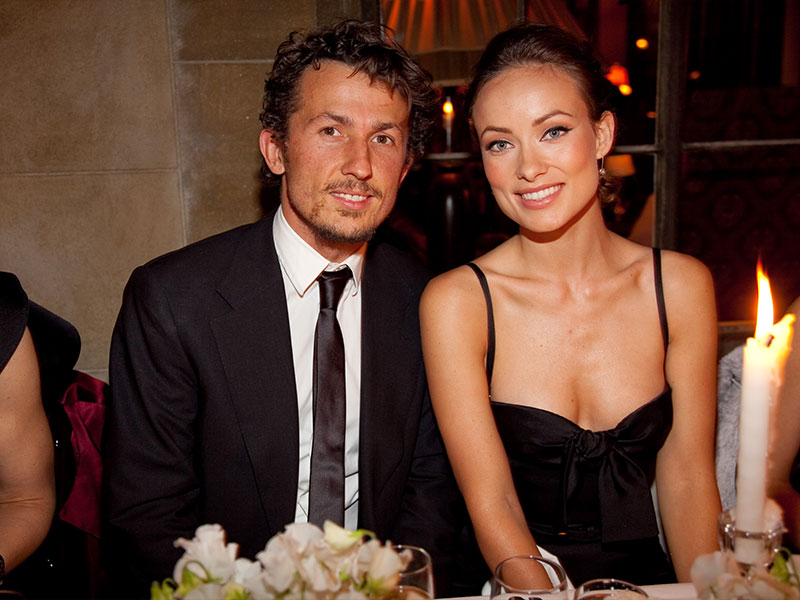
Tao Ruspoli and wife Olivia WildeTao Ruspoli and wife Olivia Wilde attend the Dior Beauty 5th Annual Hollywood Glamour dinner held at Chateau Marmont on March 4, 2010 in West Hollywood, California. (Brian To/WireImage/Getty Images)

Wilde and Ruspoli — the son of aristocrat Prince Alessandro Ruspoli, ninth Prince of Cerveteri and Austrian-American actress Debra Berger — tied the knot in 2003 when Wilde was 19 years old and Ruspoli was 28.


“I really had a sense that I had stunted my growth. I think that’s one of the things that made me feel so uncomfortable in my marriage,” Wilde told Lifetime’s “The Conversation With Amanda de Cadenet” in 2012. “It was really no fault of my husband. It was me realizing that I had sort of arrested development. I knew the only way I was going to grow the f**k up was to learn to take care of myself.”


In a 2013 interview with Marie Claire, she said, “I had grown up with Tao; we had just drifted. I felt I had something to prove. If you fall off a horse, you get back up. I am not a quitter. I hung on for as long as possible, until it was more hurtful to stay.”


Wilde filed for divorce on March 3, 2011, citing “irreconcilable differences.” The pair’s divorce was finalized on September 29, 2011.

02
Kim Kardashian and Damon Thomas

Kardashian was just 18 years old when she met Thomas, a music producer who was 10 years her senior. The pair eloped in 2001, a year after meeting each other.


Years later, Kardashian recalled her first marriage in an episode of “Keeping Up With the Kardashians,” saying she was high on during her wedding night. “I did ecstasy once and I got married. I did it again, I made a sex tape. Like, everything bad would happen,” she said.


Kardashian later accused Thomas of domestic violence, stating in court documents obtained by the Daily Mail, “Damon decided what we would do and when we would do it. He was very much the King of the castle.” Thomas also forced her to quit college, wouldn’t let her work and didn’t allow her to leave the house without his permission. Kardashian added that Thomas also grew increasingly violent after their marriage and began hitting her on multiple occasions.


The pair eventually divorced in 2004.


“I used to be so dependent on the guys I was in a relationship with,” Kardashian said in a 2011 interview with Harper’s Bazaar. “I don’t know why, because I wasn’t raised that way. If I looked at myself at 19, I would shake myself and be like, ‘Wake up; you are way too smart for this!'”

03
Drew Barrymore and Jeremy Thomas
Drew Barrymore and her husband Jeremy ThomasActress Drew Barrymore and her husband Jeremy Thomas attend the premiere of “Bad Girls” April 19, 1994 in Los Angeles, CA. (Barry King/Liaison/Getty Images)

Amid her rising fame and struggles with childhood drug and alcohol addiction, Barrymore met Thomas at his bar in Los Angeles in 1994. On March 20, 1994, Barrymore, who was 19, and Thomas, who was 31, spontaneously got married at his bar after a friend suggested the idea to the couple. Their marriage, however, was short-lived as the pair called it quits just 19 days later.


In 2019, Barrymore recalled her controversial marriage, telling Star, “I realized my mistake the day I married him.” Barrymore had filed for divorce and claimed that Thomas, who is British, had only married her for money and a green card.


“He turned out to be the biggest schmuck I’ve ever met,” she said. “He gained everything. . . . It was a green card situation. That’s why I couldn’t tell anybody.”

04
Macaulay Culkin and Rachel Miner
Macaulay Culkin & Rachel MinerMacaulay Culkin & Rachel Miner (SGranitz/WireImage/Getty Images)
The pair originally met at New York’s Professional Children’s School and after two years of dating, tied the knot in 1998 when they were both 17 years old. Just one year prior, Culkin was granted emancipation from his parents after claiming that his father mismanaged his earnings and made him sleep on the couch.


Culkin and Miner’s bombshell marriage and young age garnered widespread media and tabloid attention. The couple eventually split in April of 2000 and per Macaulay’s representative at the time, “It is very amicable and they remain best of friends.”


Their divorce was finalized in 2002.

05
Janet Jackson and James DeBarge
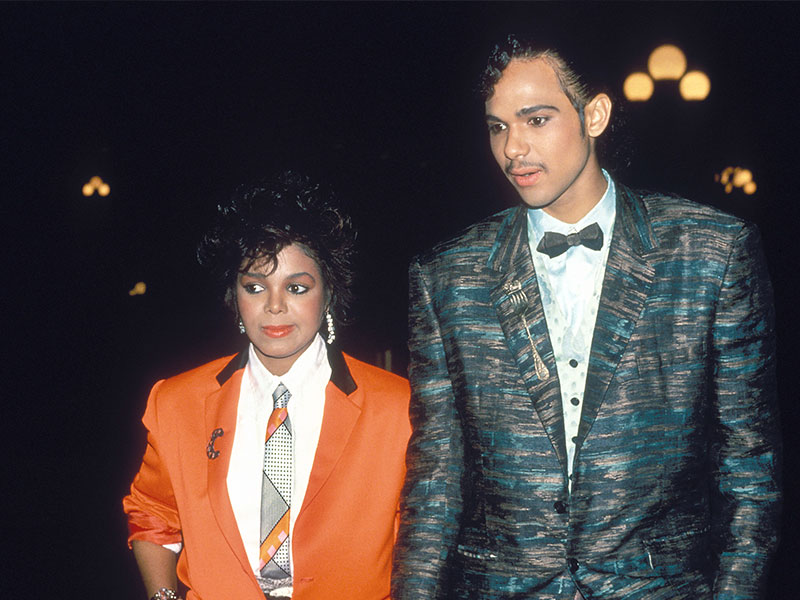
Janet Jackson and James DeBargeJanet Jackson and James DeBarge in July 1984 (Vinnie Zuffante/Getty Images)
Jackson and DeBarge began dating in the early ’80s, when Jackson was 16 and DeBarge was in his late teens. In her recent A&E docuseries, Jackson reminisced about their relationship, saying the pair developed a connection based on their similar backgrounds in musical families.


In 1984, Jackson and DeBarge secretly wed, with Jackson receiving the blessings from her sister LaToya Jackson. Janet Jackson was 18 years old while DeBarge was 21 years old. In 1985, the marriage was annulled due to DeBarge’s addiction to painkillers and sleeping pills.


Jackson said in her documentary that she suspected DeBarge was using drugs on their wedding day when he left her alone at a hotel after they got married: 


“He said, ‘OK, I’ll be right back,'” she recalled. “And I’m sitting in a hotel room in Grand Rapids, Michigan, by myself, just 18. And for three hours, he never came back.


“I remember times when I would find the pills and I would take them and try to flush them down the toilet, and we would be rolling around on the floor fighting for them. That’s not a life for anyone,” Jackson added.


She continued, “I cared so much for him, and I saw the good in him as well, and I just wanted that to take precedence as opposed to this ugliness, because I knew that he needed help. But I wasn’t the help that he needed.”


Jackson also addressed the decades-long rumor that she had a “secret child” with DeBarge. The rumor was further pushed by DeBarge, who told Radar Online in 2017 that his child with Jackson was “not a secret” and that a woman had reached out to him to reveal herself as his daughter. It was later revealed that the woman and DeBarge weren’t related at all.   


“I could never keep a child away from James,” Jackson said. “How could I keep a child from their father? I could never do that, that’s not right.”

06
Bo and John Derek
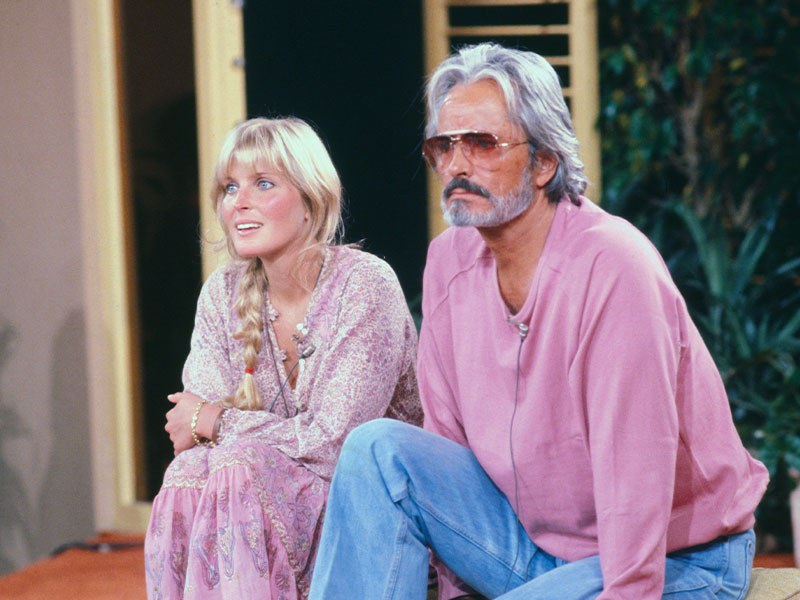
Bo Derek; John DerekActress, Bo Derek, best known for her nude role in the film, Ten, with her director husband, John (Getty Images / Bettmann / Contributor)

Bo met actor, director and producer John on the set of his 1981 drama film “Fantasies.” An underage Bo had been cast in the film’s lead role and appeared in several risqué scenes, including ones that required her to be fully nude, per John’s request. The pair eventually began a romantic affair during filming, when Bo was 17 years of age and John was 46. 


The eyebrow-raising age gap was met with plenty of backlash, so much so that one of Bo’s agents even threatened to press charges of statutory rape against John. But that wasn’t enough to convince the pair to call it quits and instead, they moved to Germany to avoid any legal troubles and only returned to the states when Bo turned 18.


Bo and John tied the knot in 1976, when the she was 19 and he was 49. They had been married nearly 22 years until John’s death in 1998.


“I don’t know about you, but when I was 17, I knew everything,” Bo said in a 2020 interview with Variety. “I was so grown up and so adult. Now, when I look back at the photos of me, I was young – 17 is young.”


She continued, “There was no #MeToo-ing with John. But, yeah, I’m very conflicted about (the age gap) when I look back. . . .  It felt right at the time. I was so in love with him, and we ended up together for 25 years. I’m just so grateful he was a good person.”

07
Melanie Griffith and Don Johnson
Melanie Griffith and Don JohnsonActors Melanie Griffith and Don Johnson attend the “How To Be Single” New York premiere at NYU Skirball Center on February 3, 2016 in New York City. (Jim Spellman/WireImage/Getty Images)

Griffith and Johnson met in 1972 on the set of the coming-of-age film “The Harrad Experiment,” in which Johnson starred alongside Griffith’s mother Tippi Hedren. Griffith was 14 at the time and worked as an extra on the film while Johnson was 22. The two began dating and later moved into a rental home together in Hollywood when Griffith was 15 and Johnson was 23. In January 1976, Griffith and Johnson got married when Griffith was 19 and Johnson was 27. They separated that July and divorced in November.


In 1989, the pair rekindled their relationship and together had daughter Dakota Johnson. They were married once again from that year until 1996.

08
Marilyn Monroe and James Dougherty
Marilyn Monroe James DoughertyNorma Jeane Baker, future film star Marilyn Monroe (1926 – 1962), with her first husband, Merchant Marine James Dougherty (1921 – 2005) in Avalon, Santa Catalina Island, circa 1943. (Silver Screen Collection/Hulton Archive/Getty Images)

On June 19, 1942, Monroe married LAPD policeman Dougherty, who was 21 years old, when she was 16 years old. According to Schani Krug, producer of the documentary “Marilyn’s Man,” the pair met at Van Nuys High School in California. Their relationship, however, wasn’t rooted in romance. Rather, it was an escape for Monroe, who spent time in an orphanage when her mother, Gladys Baker, and her maternal grandparents were institutionalized for mental health.


Per biographer Barbara Learning, Grace McKee, Gladys’ friend, was appointed Monroe’s legal guardian: “McKee announced she and (her husband) were moving to West Virginia and could not take Norma Jeane with them. She offered Norma Jeane a choice: either she married a young man Grace had selected, or she would have to return to the orphanage.” Monroe chose the former.


In his biography “Marilyn Monroe,” Donald Spoto quoted Monroe describing her marriage to Dougherty: “My marriage didn’t make me sad, but it didn’t make me happy, either. My husband and I hardly spoke to each other. This wasn’t because we were angry. We had nothing to say. I was dying of boredom.”


Monroe eventually filed for divorce in 1946, when she was 20 years of age. In 1997, Doughtery wrote a book titled, “To Norma Jeane with Love.”

09
Elizabeth Taylor and Conrad Hilton Jr.
Elizabeth Taylor sits with Conrad Hilton Jr.Elizabeth Taylor sits with Conrad Hilton Jr. in a booth at the El Morocco nightclub (Getty Images / Bettmann / Contributor)
The pair got married on May 6, 1950, when Taylor was 18 and Hilton Jr., heir to the Hilton Hotels chain, was 24. The actual wedding was a grand media event, considering that 3,000 fans (all standing outside the Church of the Good Shepherd in Beverly Hills) and 600 guests were in attendance. MGM also organized and covered all the wedding expenses, including Taylor’s $3,500 dress.


On Jan. 29, 1951, Taylor filed for divorce after realizing that she and Hilton Jr. had very few interests in common and that he was abusive and an alcoholic. Following Hilton Jr.’s death in 1969, Hilton Jr.’s stepmother Zsa Zsa Gabor claimed that she had an affair with Hilton Jr. in 1944, when he was 18.

10
Milla Jovovich and Shawn Andrews

Jovovich married her on-screen boyfriend Shawn Andrews in 1992 while filming the coming-of-age film “Dazed and Confused.” According to Jonathan Burkhart, one of the film’s producers, “Milla Jovovich and Shawn Andrews were always stoned and staring into each other’s eyes. They were always making out. Always.” 


Actor Catherine Avril Morris added, “They had a long row of individual cast member trailers, and Milla and Shawn were just doin’ it every night. Because all of our trailers were connected, they would all be rocking.”


At the time of their marriage, Jovovich was 16 years old while Andrews was 21. Two months later, the marriage was annulled by Jovovich’s mother, Russian-American actress Galina Jovovich. The pair remained married for 10 months before they divorced in December 1993.

11
Courtney Stodden and Doug Hutchison
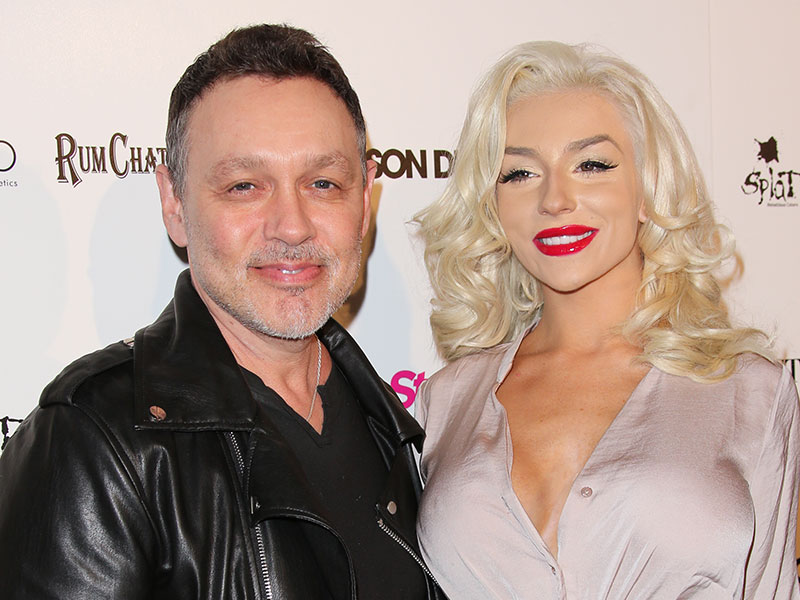
Doug Hutchison; Courtney StoddenActor Doug Hutchison (L) and TV Personality Courtney Stodden (R) attend the listening party for Jason Derulo’s “Everything Is 4” at The Argyle on April 15, 2015 in Hollywood, California. (Paul Archuleta/FilmMagic/Getty Images)
The “Celebrity Big Brother” alum garnered public attention in 2011, when they tied the knot with character actor Doug Hutchison. The controversial relationship first began over email, where Hutchison shared acting advice with Stodden. Only a week after their first meeting, Hutchison convinced Stodden’s parents that they should get married as soon as possible.


At the time of the marriage, Stodden was 16 while Hutchison was 51. Stodden later accused Hutchison of becoming “extremely emotionally abusive” and physically abusive.


“I think that’s the ultimate power a groomer has over a child, that emotional abuse and control,” they said on an episode of the “Call Her Daddy” podcast. “I feel like I didn’t even have control over my own body, my own finances.”


After separating and reconciling multiple times, the couple called it quits in 2016. Stodden recounted the tumultuous marriage in their upcoming memoir, telling Fox News, “And that’s really one of the main reasons why I’m speaking out is because I want past victims and survivors to really tap into that part of themselves. We are so strong. It just really made me very fearless.”

12
Demi Moore and Freddy Moore

Moore’s first marriage was to musician Freddy Moore, who was 29 years old, when the actor was 18. Prior to their marriage, Moore began using Freddy’s surname as her stage name and continued to do so even after their divorce was finalized on August 7, 1985. 


In her memoir “Inside Out,” Moore looked back on her relationship with Freddy and revealed that she was unfaithful to the musician before their wedding night:


“The night before we got married, instead of working on my vows, I was calling a guy I’d met on a movie set,” Moore wrote, per People. “I snuck out of my own bachelorette party and went to his apartment.”


She continued, “Why did I do that? Why didn’t I go and see the man I was committing to spend the rest of my life with to express my doubts? Because I couldn’t face the fact that I was getting married to distract myself from grieving the death of my father. Because I felt there was no room to question what I’d already put in motion. I couldn’t get out of the marriage, but I could sabotage it.”

13
Aaliyah and R. Kelly

Rumors regarding the pair’s infamous relationship first circulated in 1994, when a then 14-year-old Aaliyah recorded her debut album “Age Ain’t Nothing but a Number” with R. Kelly as a lead songwriter and producer on the project. Following the album’s release, many speculated that there was a relationship between the 15-year-old Aaliyah and the 27-year-old who was also her mentor and later, a convicted sex offender.


The pair secretly married in August 1994 — marriage certificates falsified Aaliyah’s age as 18. In February 1995, the marriage was annulled by Aaliyah’s parents. 


In Lifetime’s bombshell docuseries “Surviving R. Kelly,” it was revealed that R. Kelly had silenced Aaliyah and her family through a non-disclosure agreement following the pair’s marriage.


“It’s a harrowing document,” journalist Jim DeRogatis, who first broke news of R. Kelly’s sexual abuse more than two decades ago, told The New York Times. “A non-disclosure agreement on both her part and Kelly’s, vowing not to pursue further legal claims for physical abuse. So, it wasn’t just an underage sexual relationship, he hit her, allegedly, according to that court document.”


The documentary’s executive producer Jesse Daniels also told Variety that the producing team hoped to spotlight the abuse that Aaliyah had endured as a teenager without exploiting the late singer:


“We have had a lot of conversations about how to tell Aaliyah’s story every time because we really want to be respectful of her legacy,” Daniels said. “But what she went through, we can’t turn our backs on.”

14
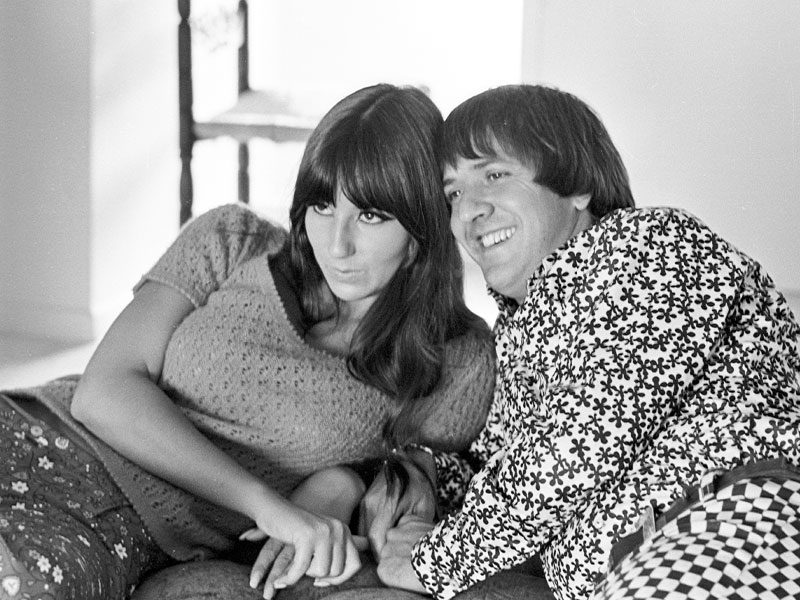
Cher and Sonny Bono
Sonny Bono & CherEntertainers Sonny Bono & Cher pose for a portrait session at home in August 1966 in Los Angeles, California. (Michael Ochs Archives/Getty Images)

From 1964 to 1975, Cher was married to her singing partner Sonny Bono. The pair met at a party in 1962, when Cher had just dropped out of high school and moved to Los Angeles to pursue her dreams of making it in Hollywood. The day after the party, she learned that Bono, who was 28 at the time, was moving in next door to her apartment. Initially roommates, the pair quickly became lovers and tied the knot in 1964, when Cher was 18 and Bono was 29.


Together, Cher and Bono became a Hollywood “It” couple and rose to popularity as the pop duo Sonny & Cher. However, their relationship wasn’t what it seemed. In 2010, Cher told Parade that Bono had become controlling following their marriage: “He didn’t want me to grow up or have any freedom. I wasn’t allowed to do anything except work. We worked more than we lived.” There were also issues with infidelity.


Cher filed for divorce in 1974, citing “involuntary servitude.” Their divorce was finalized in 1975.

15
Ava Gardner and Mickey Rooney
Ava Gardner; Mickey RooneyAmerican actors Ava Gardner (1922 – 1990) and Mickey Rooney smile while sitting together behind a table at a charity event. (Hulton Archive/Getty Images)

Gardner was only 19 years old when she married fellow MGM contract player and actor Mickey Rooney, who was 22, on January 10, 1942. Gardner divorced Rooney on May 21, 1943, citing mental cruelty and later, disclosing his infidelity and gambling habits.


“That doesn’t mean I let Mick off the hook. I brought up his cheating all the time. I couldn’t help myself. We fought constantly. ‘I’ve had it with you, you little s**t,’ I’d scream at him,” Gardner told Vanity Fair’s Peter Evans. “He’d look all hurt and innocent — a real Andy Hardy look. Boy, he was some actor. He’d say that no one could love me more than he did. No one could be more faithful than he was. Not once did he admit to two-timing me. Neither did he ever say he was sorry.”


Following their split, the two remained close friends:


“Being married to Ava Gardner was one of the most memorable moments of my life,” Rooney reflected in an orientation film for the Ava Gardner Museum. “And I wish her well wherever she is.”

Elon Musk calls to “defund” NPR after it quits Twitter

Elon Musk went on a tirade against NPR on Wednesday, calling for the outlet to be “defund[ed]” after it announced that it will no longer be posting on Twitter in the wake of the right-wing billionaire’s latest attacks on journalism and the free press.

“Defund @NPR,” Musk wrote on Wednesday afternoon as he fired off numerous tweets attempting to justify the decisions that ultimately drove the outlet off the website. Earlier that day, NPR said that it will no longer be posting on the website after Twitter labeled its account “state-affiliated media.”

“At this point I have lost my faith in the decision-making at Twitter,” said NPR CEO John Lansing, adding that he “would need some time to understand whether Twitter can be trusted again,” before deciding whether NPR would ever return to the platform.

The “state-affiliated media” label, seemingly assigned at Musk’s behest, has been condemned by journalists and free press advocates as an attempt to delegitimize NPR‘s work, likely motivated by the right’s perception of the outlet as left-leaning. That lean has long been disputed by those actually on the left, who maintain that NPR routinely elevates right-wing voices and whitewashes and legitimizes imperial violence — all while parroting talking points hand-picked by its corporate sponsors.

To the right, however, it’s irrelevant that the gap between NPR‘s and Musk’s ideologies may not be as wide as it appears — it only matters that the public believes that NPR leans left, as with other establishment outlets frequently attacked by the right, like CNN or The New York Times. Ultimately, far right attacks on the media serve to push traditionally “center” outlets, like NPR and The New York Times, even further to the right; right-wingers have also hurled unfounded accusations of left-wing bias against other U.S. institutions, like the FBI, with the aim of pushing them further into fascism.

In order to bolster its claims that NPR is biased toward the left, the right has been attempting to inflate the proportion of funding that the outlet gets from the government; Musk claimed on Twitter on Wednesday that because NPR once pointed to federal funding as “essential” to its reporting, the outlet should not be considered legitimate. NPR shot back, pointing out that it gets less than 1 percent of its funding from federal sources and that, regardless of the proportion, the outlet operates independently, without government influence.

Largely excluded from the conversation, however, is the longtime left-wing position that public funding for the media is often a healthy function of a fair and democratic society. Without public money for journalism, media outlets become more and more reliant on corporate funding, which presents its own biases; according to NPR‘s website, about 39 percent of its funding in recent years has come from corporate “sponsorships.”

Biases due to corporate sponsorship have been well-documented. Politico has long accepted sponsorship from corporations like Lockheed Martin and major fossil fuel companies, leading the outlet to parrot industry talking points; outlets like Axios have operated similarly. Meanwhile, corporations are gutting local news outlets across the country, posing a threat to democracy at large.

Twitter users and pundits have also pointed out that Musk’s companies have gotten tens of billions of dollars from federal and state governments, and have lobbied for yet more money from the government, even as Musk has publicly complained about government funding.

For many conservatives, however, the thrust of the squabble appears to boil down to a longtime struggle between the left and the political establishment: For the right, it is okay for the government to spend endless amounts of money funding corporations — socialism for the rich — but it is irresponsible or bad for the government to spend even a fraction of that amount on public goods — rugged capitalism for the poor.

Before jumping into the final “Maisel” season, here’s a tight five refresher

Last season of “The Marvelous Mrs. Maisel” ended in a flurry. Literally, as a snowstorm of historic proponents hit the Big Apple, and our intrepid Midge drudged forward resolutely and inappropriately dressed. The smash Prime Video show is returning for its fifth and final season and ambitiously, will try to tie up more loose ends than Midge’s hatboxes. 

“Mrs. Maisel” introduced the world to Midge (Rachel Brosnahan), a hilarious and smart housewife who loses her husband (to a secretary named Penny Pann) and finds a second act as comedian in 1960s New York. Those moving in Midge’s orbit include Susie (Alex Borstein), her cranky and completely lovable manager, struggling to make her own way backstage in show biz; ex-husband Joel (Michael Zegen); the former couple’s parents; and a beloved figure from comic history: Lenny Bruce (Luke Kirby). As is typical of an Amy Sherman-Palladino show, the supporting cast has as many hopes, dreams, quirks and gets in almost as much trouble as the talkative star. 

Where did we leave everyone at the conclusion of last season, and what do you need to know to get right back on that stage? Put your you-know-whats up and stride confidently into the spotlight. Here’s a tight five, in classic comedy parlance, catching up with the major players and what might await them in the glittering farewell tour of the lovely, heartfelt and “Marvelous Mrs. Maisel.”

01
Midge
Image_placeholder“The Marvelous Mrs. Maisel” (Prime Video)

After being rightfully dismissed from Shy Baldwin’s tour in an earlier season, Midge’s financial problems landed her in a burlesque club. She performs sets in between dances. It’s a good fit for her, and her colleagues of the glitter and glamour are super supportive, but she’s still struggling to find her big break; she’s also mistaken for a sex worker and arrested. She turns down hush money to keep Shy’s secret about his sexuality (she says she will keep his private life private simply because it’s the right thing to do, no bribe needed). Midge is at the club — and so is her old pal, Lenny Bruce — when the place is raided by the police. They both escape, and the drama brings them back to Lenny’s hotel room and closer together (more on that later). 


A blizzard, which really happened in history, has hit Manhattan and Midge decides to walk home in a dress. Will she arrive in Season 5 unfrozen, and why did the last season end with a lingering shot of a billboard for the talk show “The Gordon Ford Show,” haunting Midge through the ever-deepening snow? Frustrated by sexism in the comedy industry, Midge swore an oath earlier, vowing — in her steadfast, headstrong and often foolish way — that she will never be an opener again, only a headliner. 

02
Susie
Image_placeho“The Marvelous Mrs. Maisel” (Prime Video)lder

At times, Susie seems closer to making it than Midge. She has a new client, the one and only Sophie Lennon (Jane Lynch), Midge’s former rival, who bombs on Broadway but Susie books her for a surprisingly emotional turn on The Gordon Ford show. Despite her humble beginning and abode, initially sharing a cramped and dark basement studio with Jackie (the late, wonderful Brian Tarantina), Susie moves into some sweet new digs, in part because she can’t bear to be in her old place without her friend. She has a real office now, a telephone line (she needs another one) and a plucky secretary (Alfie Fuller as Dinah). But with more space comes more problems. Midge wants her tour money from Susie but the manager lost it to gambling and ended up borrowing from Midge’s ex Joel. Those two have always had an uneasy relationship, bordering on dangerously hostile, and becoming beholden to him didn’t help. She’s eventually able to pay him back, thanks to her sister. 


Susie also owes quite a lot, including her life, to two henchmen who so far have been the happy, friendly kind of hired muscle. But the two encourage her to take on new clients, and she does, including drolly adorable magician Alfie (Gideon Glick) and an exciting new comic. Midge blithely takes Susie, against Susie’s will or knowledge, to a lesbian bar, hoping to set the manager up with someone. Susie, whose sexuality has been teasingly cloaked throughout the show, to the frustration of many viewers, doesn’t react well. Will it ever be Susie’s time?

03
Joel and Mei
Image_placeholder“The Marvelous Mrs. Maisel” (Prime Video)

As with “Gilmore Girls,” where lead Lorelai’s ex, Christopher, kept showing up, Midge’s ex Joel has always had a large role in “Maisel.” His position in Midge’s life keeps shifting — the two of them keep shifting it — but last season, it seems like he finally found his own. Earlier in the show, he opened a nightclub, altering his ill-advised dream of becoming a comic to a different, more realistic dream. Because this is the Sherman-Palladino universe, beautiful, colorful and not known for an understanding of socioeconomics, the nightclub is a success! Everyone loves it! But Joel’s landlords, who run an illegal gambling den in the basement, aren’t happy with the attention.


Joel’s personal life was also improving, thanks entirely to the addition of Oscar nominee Stephanie Hsu’s Mei. Mei’s nervous about it but finally agrees to meet Joel’s parents. Joel and Mei’s big bombshell is that Mei is pregnant. Joel breaks the news about his girlfriend’s existence to his father Moishe (Kevin Pollak) — who then dramatically collapses. 

04
The parents
Image_placeh“The Marvelous Mrs. Maisel” (Prime Video)older

It’s a heart attack, and Moishe lands in the hospital. He knows about Mei, but Joel’s mother Shirley (Caroline Aaron) — who tried to match Joel up with a pregnant woman — still doesn’t, and he tells Joel that Mei is going to have to convert to Judaism for this to work (or be told to Shirley). The Maisel patriarch makes a recovery, despite Abe (the always phenomenal Tony Shalhoub) writing him a premature obit; Moishe is moved by the gesture. 


On the maternal parents side, Abe continues writing happily at The Village Voice (where Chris Eigeman has a great turn as his editor). Rose (Marin Hinkle) has her own successful career as a matchmaker. Too successful. Her entrance into the couple business prompts the organized crime network of matchmakers to threaten Rose in ways both big and small, including menacing Abe. But her husband backs her, and she shares her daughter’s determination: Rose won’t give up.


Want a daily wrap-up of all the news and commentary Salon has to offer? Subscribe to our morning newsletter, Crash Course.


05
Lenny Bruce
Image_placeholder“The Marvelous Mrs. Maisel” (Prime Video)

One of the most absorbing aspects of “Maisel” has always been the insertions from history, the alterations, the slight shifts and the true stories. The character of Lenny is the best example of this, especially as played with so much empathy by Kirby. Midge and Lenny keep running into each other, with Midge once finding him drunk on the side of the road and bringing him to her place to sober up. 


In many ways, last season was the highlight of Lenny’s career — he performs at Carnegie Hall, and Midge attends — and the beginning of his lowest points too. Midge finds a needle and vial in his things in his hotel room. They’ve escaped to his room after the raid at the strip club, and finally end up acting on the attraction that’s been palpable between them for the entire show. They sleep together. Lenny has always been a stalwart supporter of Midge, sexism be damned, and afterward, he gives her an inspiring pep talk that she needs to stop fearing failure and simply perform. It moves the viewer too, but as the real Lenny Bruce died young and tragically at 40, how much longer will this delicate and meaningful relationship get to last?

“The Marvelous Mrs. Maisel” Season 5 starts streaming on Prime April 14. Watch a trailer via YouTube below:


Senator calls to refer Clarence Thomas to attorney general over “week of silence” from John Roberts

Sen. Sheldon Whitehouse on Thursday urged the top policymaking body for U.S. federal courts to refer Supreme Court Justice Clarence Thomas to the attorney general, citing the lack of immediate action from the high court amid fresh evidence that the right-wing judge violated disclosure laws.

“It would be best for the chief justice to commence a proper investigation, but after a week of silence from the court and the latest disturbing reporting, I’m urging the Judicial Conference to step in and refer Justice Thomas to the attorney general for investigation,” the Rhode Island Democrat said in a statement.

The senator’s call came shortly after ProPublica revealed that a company owned by billionaire real estate mogul and GOP megadonor Harlan Crow bought property from Thomas in a deal that the justice did not disclose. The Thursday piece built on ProPublica‘s bombshell story last week detailing years of luxury trips that Thomas took on Crow’s dime without disclosing them—reporting that sparked calls for Thomas’ resignation or impeachment.

But with impeachment unlikely given Republican control of the House, Democratic lawmakers have demanded that conservative Chief Justice John Roberts launch an investigation into Thomas’ apparent disclosure law violations—something the high court’s top judge has failed to do in response to other Thomas scandals, including his decision not to recuse himself from cases involving the 2020 election even though his wife was actively involved in efforts to overturn the results of that contest.

Thomas, who has worked to weaken federal transparency laws, also previously failed to disclose his wife’s income from right-wing organizations.

In a statement last week, Thomas claimed he was “advised” by colleagues that the gifts from and trips with Crow—which included cruises on the billionaire’s superyacht and private jet flights over a period of two decades—amounted to “personal hospitality” that shouldn’t be reported.

Whitehouse on Thursday urged Congress to pass his Supreme Court Ethics, Recusal, and Transparency (SCERT) Act, which would strengthen recusal standards and disclosure rules on the high court and establish a clear process for investigating misconduct.

The Supreme Court, which has outsized power that it has recently used to roll back basic freedoms, is currently the only U.S. federal court without a binding code of ethical conduct.

According to ProPublica, Crow’s purchase of property from Thomas and his relatives “marks the first known instance of money flowing from the Republican megadonor to the Supreme Court justice.”

“The Crow company bought the properties for $133,363 from three co-owners—Thomas, his mother, and the family of Thomas’ late brother, according to a state tax document and a deed dated Oct. 15, 2014, filed at the Chatham County courthouse,” ProPublica noted. “The purchase put Crow in an unusual position: He now owned the house where the justice’s elderly mother was living. Soon after the sale was completed, contractors began work on tens of thousands of dollars of improvements on the two-bedroom, one-bathroom home, which looks out onto a patch of orange trees. The renovations included a carport, a repaired roof, and a new fence and gates.”

“A federal disclosure law passed after Watergate requires justices and other officials to disclose the details of most real estate sales over $1,000,” the outlet added. “Thomas never disclosed his sale of the Savannah properties. That appears to be a violation of the law, four ethics law experts told ProPublica.”

Whitehouse said in response that “Justice Thomas told us that he didn’t disclose free vacations on a superyacht and private jet because it was personal hospitality from a friend and that’s just what friends do.”

“Well, friends don’t also buy your properties and deck them out for your family members to continue living in,” the senator added. “And if all of this was on the up and up, why didn’t Justice Thomas disclose it to the American people as the law clearly requires? The Supreme Court justices are so deeply ensconced in a cocoon of special interest money that they can no longer be trusted to police themselves without proper process.”

“Yellowjackets” makes “Lord of the Flies” seem like Dr. Seuss — “Old Wounds” goes beastie-mode

Laughing, Ralph looked for confirmation round the ring of faces. The older boys agreed; but here and there among the little ones was the doubt that required more than rational assurance.

“He must have had a nightmare. Stumbling about among all those creepers.”

More grave nodding; they knew about nightmares.

“He says he saw the beastie, the snake-thing, and will it come back tonight?”

“But there isn’t a beastie!”

“He says in the morning it turned into them things like ropes in the trees and hung in the branches. He says will it come back tonight?”

“But there isn’t a beastie!”

– “Lord of the Flies,” – William Golding (1954)

We’ve officially entered “beastie” territory, and with “Old Wounds” nearing us towards the halfway mark of “Yellowjackets” Season 2 . . . the hunt is on. Up to this point, we’ve been busying ourselves with wondering who The Antler Queen is, but from this point on that will seem to take a back seat to the question of “Who is Jack, Simon and Ralph?” once a split takes place and sides are chosen. 

In my primer leading up to this season, I referenced a quote from “Lord of the Flies” author, William Golding that was a source of inspiration for the show’s creators, Ashley Lyle and Bart Nickerson. In the quote, Golding talks of the decision to center his 1954 novel on the feral unraveling of a group of school boys stranded on an island, rather than a group of girls, because “a group of little boys are more like scaled down society than a group of little girls will be.”

To offer further example of why women, or girls, left to govern themselves as a secluded group wouldn’t commit the same acts of savagery depicted in his most famous book, the author went on to say “women are foolish to pretend they’re equal to men – they’re far superior, and always have been.” In a 2017 tweet, feminist author Roxane Gay agreed with this line of thought, writing, “An all women remake of ‘Lord of the Flies’ makes no sense because . . . the plot of that book wouldn’t happen with all women.” 

Darkness knows no gender (I know, so woke!) and sees us all as equally shaped doors of opportunity. Some just open a bit easier.

This discourse circulated over five years ago when there were rumblings of a possible Warner Brothers film reimagining “Lord of the Flies” with an all female cast, which never took shape, allowing Lyle and Nickerson to say “hold our beers,” stepping in with an idea for a series that has already proven to be more savage than its inspiration ever was because, contrary to an example of “mandela effect” mis-remembering, there is no cannibalism in the book that, in part, influenced “Yellowjackets.” The girls of the Wiskayok High School Yellowjackets soccer team have already consumed one teammate, down to the bone, and are ready for the second course, proving Golding’s views on women to be so terribly incorrect because he forgot one major element in them. Darkness knows no gender (I know, so woke!) and sees us all as equally shaped doors of opportunity. Some just open a bit easier.  

There was no sequel to Golding’s “Lord of the Flies,” so we’ll never know what happened after Jack, Ralph, Roger and the others were rescued off their island by the Navy. Beyond our imaginations, the closest we’ll get to understanding what life back in society was like for the boys can be found in the present-day lives of Shauna (Melanie Lynskey), Taissa (Tawny Cypress), Misty (Christina Ricci), Natalie (Juliette Lewis), Van (Lauren Ambrose) and Lottie (Simone Kessell) who – after so many years – is tormented by her own “beastie” once again. 

“Fancy thinking the Beast was something you could hunt and kill!” said the head. For a moment or two the forest and all the other dimly appreciated places echoed with the parody of laughter. “You knew, didn’t you? I’m part of you? Close, close, close! I’m the reason why it’s no go? Why things are what they are?”

– “Lord of the Flies,” – William Golding (1954)

Courtney Eaton as Teen Lottie (Kailey Schwerman/SHOWTIME)
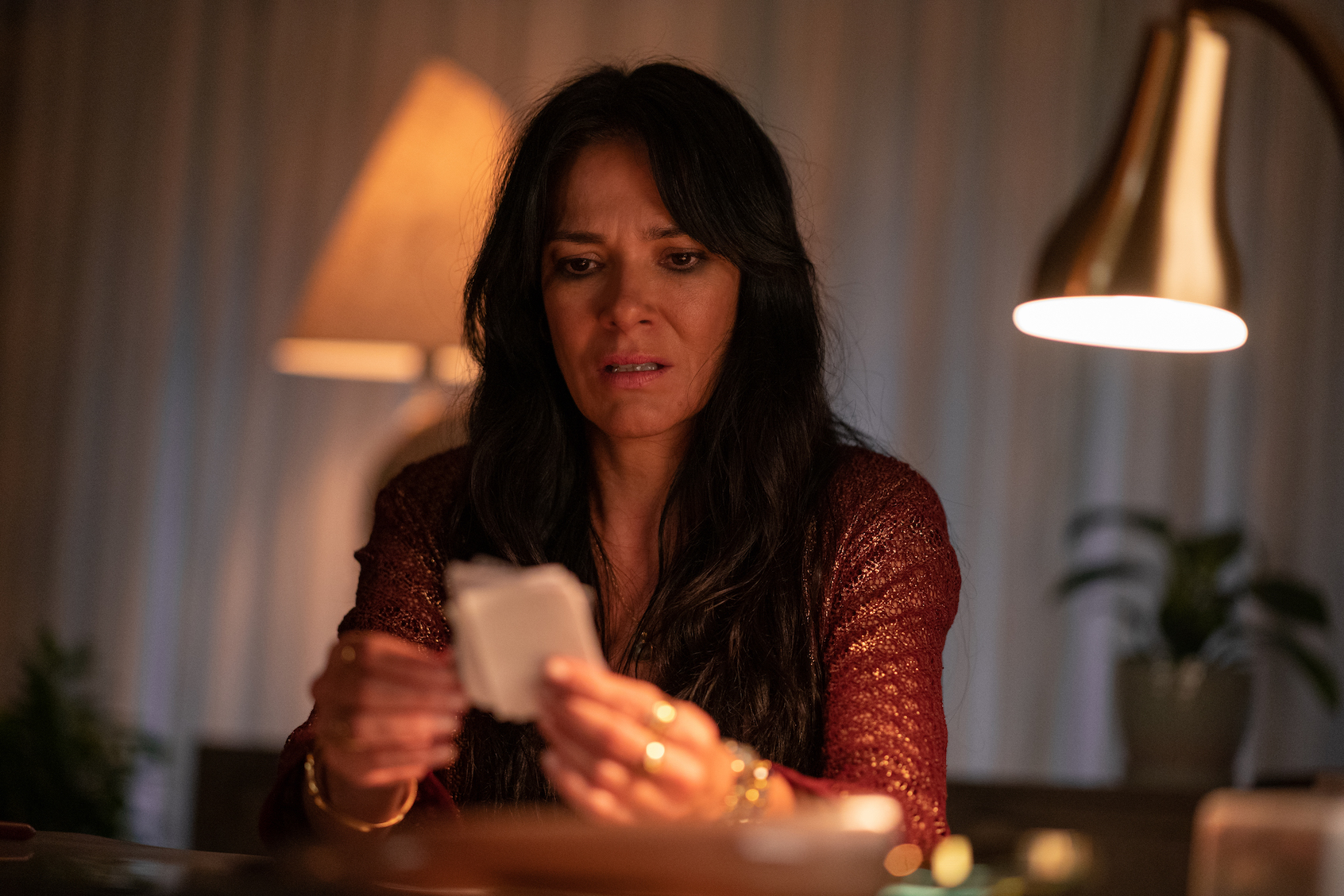
A lot goes on in Episode 4 — Javi (Luciano Leroux) is found in the woods, Van gets a surprise visit from Tai, Natalie puts a live goldfish in her mouth — but what stood out most was Lottie’s journey into darkness, out of it and back again, and how our watching that play out in “Old Wounds” will affect how we view the rest of the season, and the series as a whole.

In the wilderness timeline, we see Lottie (Courtney Eaton) agree to a hunting contest with Natalie (Sophie Thatcher), encouraged by Mari (Alexa Barajas) and a few of the others to prove that her “powers” can produce food better than Natalie’s rifle. Visibly reluctant, but not wanting to break the spell of influence she’s cast over that cabin, Lottie sets off into the snowy woods with only a knife, which she uses to cut herself as an offering to something that not even she quite believes in. While Natalie quickly locates a dead moose frozen in the lake, which could have fed them through the winter had she and the rest of the cabin only been strong enough to pull it out, Lottie flounders in the cold, coming back with nothing more than frostbitten feet. 

With no one watching in her efforts, and no one there to help her convince herself that her powers were anything other than coincidence, Lottie got too close to reality so her mind took over. Passing out in the snow, she envisions coming upon Laura Lee’s (Jane Widdop) plane where she finds her gold cross necklace — a symbol of the faith she inspires in others — and under it, a trap door that leads to a mall, where she seeks comfort in the things any average girl would seek comfort in: mall court Chinese food and a table of friends. As she sits there, broken down to her most basic self, Laura Lee is at her side and tells her to go, pushing her back into consciousness as the vision of goodness that Lottie holds in a part of her that now seems so far removed. She’s not a healer. She’s not The Antler Queen. But she’s not ready to give up on all of this just yet.

Simone Kessell as Lottie (Kailey Schwerman/SHOWTIME)Present day, with Natalie back in her life, Lottie is once again forced to confront that addiction to “power” and influence that still lives within her. She visits a doctor and asks to have her meds upped because she’s having visions again, but is told not to push them away so she can figure out what they’re trying to tell her.

“Nothing,” Lottie says in exhausted exasperation. “Because they’re not real.”

Back at her commune, left with no option for self-soothing other than to return to her old tricks, she cuts her hand and lets it bleed into the dirt.

“Can this just be enough? Please?” she says.

And just like Simon in “Lord of the Flies,” the sensitive isolate whose character hers most closely resembles, the answer to that will be “No.”

Lottie may not have died in the wilderness like Simon did, but there’s a lot more to come in the series, and she’s not out of the woods yet. 


Want a daily wrap-up of all the news and commentary Salon has to offer? Subscribe to our morning newsletter, Crash Course.


 “Kill the beast! Cut his throat! Spill his blood!”

The sticks fell and the mouth of the new circle crunched and screamed. The beast was on its knees in the center, its arms folded over its face. It was crying out against the abominable noise something about a body on the hill. The beast struggled forward, broke the ring and fell over the steep edge of the rock to the sand by the water. At once the crowd surged after it, poured down the rock, leapt on to the beast, screamed, struck, bit, tore. There were no words, and no movements but the tearing of teeth and claws. 

– “Lord of the Flies,” – William Golding (1954)

As evidenced in politics and pop culture alike, people are too often built up as leaders and influencers only to be energetically torn down by the very ones who championed them. William Golding didn’t see a place for women in all that back in 1954. If only he’d lived long enough to meet the Lord of the Yellowjackets. Is there one main “villain” in this show? Or is it asking the same question that Golding asked in his book, “What if it’s all of us?”

QUICK BITES:

  • Notice that the intro song, “No Return,” sounded a little different this episode? It was sung by Alanis Morissette!
  • Akilah (Nia Sondaya) better keep that little mouse she found in the pantry well hidden. I hope it doesn’t wind up in the chili pot.
  • When Walter (Elijah Wood) and Misty check into the bed and breakfast before going to visit Lottie’s commune, Misty gives the name Lady Mallowan, a name bestowed upon Agatha Christie after her husband Max Mallowan was knighted for his archaeological work.
  • Tai’s “bad one” is doing the most in this episode. 
  • “Here’s your f**king fish,” – Natalie. (By the by, I found a $25 sterling silver dupe of the safety pin necklace she wears in this scene on Etsy. I need help.)
  • Shauna taking Callie to that park seemed like a threat. Right?
  • RIP to Natalie and Travis’ relationship now that he knows she lied about Javi being dead. Also, how was Javi able to survive by himself all alone in the woods for two months?

This Dollywood-inspired Southern Country-Fried Steak comes together in no time

Sitting down to supper at the Front Porch Café feels like visiting your Mamaw’s house on a Saturday afternoon. Try serving this dish over a bed of Creamy Mashed Potatoes with some simple buttered corn and a Garlic Cheddar Biscuit.

Buy the book here!

Served at: Front Porch Café, Showstreet


Want more great food writing and recipes? Subscribe to Salon Food’s newsletter, The Bite.


Country-Fried Steak with White Pepper Gravy
Yields
04 servings
Prep Time
05 minutes
Cook Time
40 minutes

Ingredients

For Country-Fried Steak:

4 (8-ounce) cube steaks, pounded 1/4″ thick

1 1/2 teaspoons salt

1 teaspoon ground black pepper

1 cup whole milk

2 large eggs

1 1/4 cups all-purpose flour

1⁄8 teaspoon cayenne pepper

3/4 teaspoon paprika

1 teaspoon onion powder

1/2 teaspoon garlic powder

1 cup canola oil

For White Pepper Gravy:

4 tablespoons (1/2 stick) unsalted butter

1/4 cup all-purpose flour

2 1/2 cups whole milk 2 teaspoons ground black pepper

3/4 teaspoon salt


Directions

  1. To make Country-Fried Steak: Pat steaks dry with paper towels and season both sides with salt and pepper.

  2. In a shallow container with a wide bottom, whisk milk with eggs. In a second shallow container with a wide bottom, stir together flour, cayenne pepper, paprika, onion powder, and garlic powder. Dredge a steak in flour mixture on both sides, shake off excess, then dip both sides in egg mixture, letting excess drip back into container. Dredge once more in flour mixture and place on a clean work surface. Repeat with remaining steaks.

  3. Fry Method: In a large cast iron skillet fitted with a thermometer, add oil 1/4″ deep and set over medium heat. Heat oil to 375°F. Working in batches, fry steaks 6 minutes or until golden brown and cooked through, flipping halfway through. Transfer to a large plate lined with paper towels.

  4. Oven Method: Preheat oven to 400°F. Place an oven- safe metal rack over a large baking sheet and spray generously with cooking spray. Place coated steaks on rack and spray flour coating lightly with cooking spray. Bake 12 minutes, flip steaks, and bake 10 more minutes or until golden brown and cooked through.

  5. To make White Pepper Gravy: In a medium saucepan over medium-low heat, melt butter. Sprinkle flour onto butter and whisk to form a paste. Increase heat to medium and drizzle in milk while whisking constantly to prevent lumps.

  6. Add pepper and salt to pan and continue whisking occasionally until gravy has thickened, about 5 minutes. Spoon over Country-Fried Steak and serve.

Excerpted from The Unofficial Dollywood Cookbook by Erin Browne. Copyright © 2023 by Erin K. Browne. Photos by Harper Point Photography. Used by permission of the publisher. All rights reserved. 

Salon Food writes about stuff we think you’ll like. While our editorial team independently selected these products, Salon has affiliate partnerships, so making a purchase through our links may earn us a commission.  

Kyra Sedgwick knows we’re obsessed with her marriage to Kevin Bacon: “I totally feel pressure”

“In the world that we’re living in today, it’s very easy to check out,” says Emmy Award-winning actor Kyra Sedgwick. And in her directorial feature debut “Space Oddity,” the main character Alex (Kyle Allen) wants to check out in the biggest way possible — by hitching a one-way ride to Mars.

The movie, costarring Sedgwick’s husband Kevin Bacon and scored by her son Travis, is at once a delicate romance and a sharp exploration of grief, a meditation on the urgent truth that, as Sedgwick says, “There is no Planet B.”

“I thought it was an incredibly entertaining, beautiful, funny, sad, but hopeful journey,” she told me recently on “Salon Talks.” And in a career spanning over 30 years, she’s had her own entertaining, hopeful journey, one of continuous risk-taking, adventure, and collaboration — often with her own family. Sedgwick opened up to us about becoming a director in her 50s, her activism around climate change and the secret of her durable marriage.

Watch the “Salon Talks” episode with Kyra Sedgwick here, or read a Q&A of our conversation below.

This conversation has been lightly edited for clarity and length.

Tell me about “Space Oddity” how you discovered this film and why you wanted to get involved.

The movie centers around this young 25-year-old who is in a lot of despair. But when we find him, he is joyfully preparing for a one-way trip to Mars. There really are places that you can give your money to, and they tell you that you are preparing for a journey to go in about 10 years. Understandably, his family is flipping out. He falls in love with a young woman in the town, and that’s where the romantic comedy comes in. 

This script came to us in about 2017. I thought it was an incredibly entertaining, beautiful, funny, sad, but hopeful journey. And it was a great container; within it was a lot of issues that are deeply important to me, like the depression of young people around climate change and what happens to a family when they lose a loved one and how the whole family has to restructure itself while it’s jolting and quaking.

“I was reaching critical mass with watching directors screw up my performances.”

All of these family members are in their own corners but desperately trying to come back together, and they’re all checking out in one way or another. The dad’s checking out with his obsession around the farm. The mom’s checking out with her obsession around her living son, and the sister’s obsessing about her brother and work. She’s a real workaholic. That’s also something that I can really relate to. I think that in the world that we’re living in today, it’s very easy to check out. Often we check out because things are hard, life is hard, but we check out easily with more distractions now.

Ultimately, the message of the movie was, we have to fight the good fight here. We have to fight. There’s no planet B, there isn’t a family B. Even though people die, even though there’s climate issues here, we have to fight the good fight here and it’s really worth it. You see the family get to the other side of it, and that’s really where they end up. For me, that’s just something that I have to think about every day. It’s worth it. It’s all very scary, the world is scary, but it’s worth it.

You have been an activist for climate change for a long time. Do you see film as a different way into that conversation and as a way of bringing other people into these issues?

Yes, absolutely. Because the movie is so beautiful physically, I think that it works on you in much the same way as when you go to a zoo and fall in love with the animals and then want to take care of the animals. The movie is such a love letter to the planet, visually, and to see these people actually working the soil. Also, flowers for me, that’s nature’s parade. She’s just dancing around showing us her most beautiful wares. The fact that this movie took place on a flower farm and then we got to shoot it in July on this perfectly stunning piece of property, you can’t help but fall in love with the planet. When you fall in love with the planet, you want to protect her.

We’ve been polluting her for so long, and hopefully on a visceral, cellular level, you will understand how connected we are to nature and how we must take care of her, as well as taking care of each other. You see this family take care of each other and love each other and come together. What I loved about the movie was that it doesn’t hit you over the head with this climate message, but simply by virtue of the fact that this kid wants to go to Mars, we’re talking about a planet B.

Actually, the world is actually discussing it as a possibility, colonizing this planet, which is so incredibly devastating on so many levels because it’s uninhabitable, and we live in heaven on earth. We’ve trashed this heaven on earth, and now we’re going to go out to another planet, just trash that planet. Not an option, in my opinion. So all those things were definitely part of my evil plan with this movie.

You started directing in your 50s. I love when people try something new at any point past 21. You said you were scared to do it before then. So what changed for you?

I think I was reaching critical mass with watching directors screw up my performances, to be perfectly frank with you. Also, I spent a lot of time dissecting movies and TV shows, and my husband was like, “You think so directorially. Why don’t you direct? You should be directing.” It always scared me because I thought I won’t be great at it. There’s such a lack of humility in, “If I’m not going to be great, I’m not going to do it.” I think you do get to a certain age where you’re like, “I do some things well, and I know I do them well. The world has told me I do them well, so I don’t want to step out of my comfort zone.” I also started skiing when I was 40, and that was way out of my comfort zone.

What a great gift to, at 50, go, “You know what? I’ve got to do this.” I had this script, called “Story of a Girl,” and I’d been trying to make it for 10 years as a producer because for some reason I had been producing since I’m 25. I don’t know where I got the chutzpah that I thought that I could totally produce. But I did, and I had this piece of material and I tried to get it made for 10 years as a film. Finally I actually went in and had a meeting with Lifetime as a producer to talk to them about passion projects and they said, “Is there anything you want to do?” I said, “Yeah, I want to do ‘Story of a Girl’ and I want to direct it.”  I was like, wait, who just said that? Literally I was like, was that me? But as soon as I said it, I couldn’t unsay it. 

“We’ve trashed this heaven on earth, and now we’re going to go out to another planet, just trash that planet. Not an option, in my opinion.”

I’ve been in this business professionally since I was 16 years old and I didn’t see a lot of female directors. If you can’t see it, you can’t dream it. Someone brilliant said that. I don’t know who it was, it definitely wasn’t me. When I finally got enough courage to go, “You know what? I’m going to do this thing,” I was terrified all the way up until the absolute first day of shooting. I rehearsed my first scene, even before we shot it. The actors went off to finish getting ready and I had a quiet moment with myself, and I was like, “You totally have this. You know this. You know it in your cells. You know it in your body. You know how to be a storyteller on this bigger level. You’ve always been a storyteller. This is just a bigger piece of that pie.” It requires more of me, and that’s awesome because I’m 50 and there’s more of me to be had. 

Have you found it challenging also to be moving into a different stage in your career as an actor now?

Always. But you know what? It’s all been hard. It’s so funny because I had an agent who, when I was 25, was like, “Well, you’re getting older.” A man, of course. I remember it was so incredible that he said that to me, and I was so deeply offended at the time, but I appreciate it because the truth is it was so laughable that I was getting old at 25. It’s like I’m 57 and it’ll be laughable at 70 when people tell me I was getting old at 57. All those stages of my career have been hard. I have been a working horse actor. I will be a working horse director my whole life. Nothing gets handed to me. I have to work hard for everything, for whatever reason. That’s great because then I know it’s not supposed to come easy.

The truth is, I got one of the greatest opportunities when I was 40. I did “The Closer” when I was 40. I won awards when I was in my 40s. That didn’t happen before, so that doesn’t scare me so much. Although there’s no question that unless you’re a very big movie star, you’re not going to get offered great, great parts, I still get offered really great parts. I’ve gotten some best parts of my career in the last couple of years. And now I can direct and so I feel like I’m not worried at all about it.

You also get the pleasure of working with your husband and son on this film. You’ve also worked with your daughter. You seem to gel so well as a team. How do you do that? 

“I have been a working horse actor. I will be a working horse director my whole life. Nothing gets handed to me. I have to work hard for everything.”

I feel really lucky that I get to give [Kevin Bacon] a platform to do different kinds of work. I do know him so well, and I know his instrument so well, that I think it helps having me giving him notes, and he’s also more willing to try them because he has to go home with me.

I’m able to work with my daughter, [Sosie Bacon]. I don’t think it was easy for her. I know it wasn’t easy for me because I’m pushing her. I’m always pushing my actors and everybody to be the best they can be and I’m nice about it, but I’m also asking her to do it again. I’m saying to Travis [Bacon], “I love this cue, but it’s not going to work here. Let’s find something else.” I think we tolerate each other really well, and I think that we can argue, but usually, we get to the other side of it. What we all have in common as artists is that we want it to be the very best it can possibly be. We all are really hard workers and aren’t afraid of working hard so I think that has a huge amount to do with it as well. 

Everybody always asks you about your long and happy marriage. I don’t want to ask you about that part of it, because I don’t even want to know what the secret is. But do you ever feel pressure?

My gosh, I totally feel pressure. I feel pressure, but I also feel pride, which is funny because I think that for so many years I was quietly proud of us. It felt, there’s this word again, but like a lack of humility to be proud somehow. Now I’m like, actually, there’s humility in the pride. Because it’s been a long time and it hasn’t always been easy, of course. But definitely pressure, no question. It’s funny because it’s been a lot of years, but one time we were in our 10th or 20th year and we had a fight at a restaurant. I ended up in the paper and it was just like, “Oh, can’t even have a little argument?” It was barely even an argument. We didn’t fight, it wasn’t loud, but whatever, they saw. I feel like we have a lot of people counting on us to make it work.

We’re all rooting for you. Like, if these two don’t make it . . .

But the truth is, the secret to a happy marriage is not getting a divorce. I just heard that, now I’m going to steal it. Someone said it. I can’t remember who.

Your central character in “Space Oddity” wants to go to Mars. What is your go-to “I want to leave the planet” place? Do you have one?

I really like to just go into nature when I feel like that. When I feel really scared, I touch a tree. If I’m in New York, I get to go to Central Park or any green space, the High Line, whatever. If I’m in Connecticut, if I’m in the country, I get to go walk outside and just see nature taking care of itself in its most beautiful and kind way and that supports not only the animals, but the planet. They all take care of each other, and we need to learn a lesson from that.

Trump made $160 million in foreign business deals as president: watchdog group

Former President Donald Trump made tens of millions of dollars in foreign business deals while he was in office, pointing to numerous potential conflicts of interest, a report from a nonprofit government watchdog reveals.

The report, released by Citizens for Responsibility and Ethics in Washington (CREW) on Thursday, examines Trump’s tax records and financial data, finding that the Trump Organization made up to $160 million in international business deals while Trump was president.

Trump and his family assured the American people during his campaign that he wouldn’t be influenced by his company’s international business dealings as president — but he refused to financially divest from the Trump Organization while in office, the report pointed out. Though he handed over management of the business to his adult sons, Trump claimed only that they wouldn’t engage in any new business contracts, failing to address deals the company made before he became president.

But Trump and his family couldn’t even stick to that standard. “When it came to foreign conflicts of interest, Trump and his company pledged to pause foreign business. They did not,” CREW wrote in its report.

The organization went on:

The full extent to which Trump’s foreign business ties influenced his decision making as president may never be known, but there is plenty of evidence that Trump’s actions in the White House were influenced — if not guided — by his financial interests, subverting the national interests for his own parochial concerns.

The report provided several examples of Trump prioritizing his own financial interests as president.

During his presidential campaign in 2015, for example, Trump told his followers that he liked the Saudi Royal Family “very much” due to their business deals with the Trump Organization, which he continued to benefit from after taking office. Later, when Washington Post journalist Jamal Khashoggi was brutally murdered in accordance with orders from the Saudi government, Trump defended the royal family, publicly questioning U.S. intelligence reports that contradicted his stance, CREW said in its report.

CREW also noted Trump’s withdrawal of U.S. troops from Syria, an action that benefited neighboring Turkey, where the Trump Organization did business. In another instance, the former president held off on enacting tariffs on Argentina until he received approval for trademarks for his company, the watchdog pointed out.

The Trump organization also broke its promise not to sign on to new international business deals. A post-presidential analysis from The Washington Post found that the Trump Organization worked with the Indonesian government to create transportation access to a residence and hotel estate he owned in the country. The company also made a deal while Trump was president to build more than 500 houses in Scotland.

Other analyses have similarly revealed Trump’s huge profits from domestic and international business dealings as president. According to one estimate, Trump made around $1.7 billion in the four years he was in office, millions of which came at the expense of U.S. taxpayers.

CREW concluded its report by suggesting that there are likely instances of corruption that have yet to be uncovered.
Trump’s tax records and other financial documents leave “much to discover about the extent to which he truly abused the presidency for his own profit,” the organization said.

Clarence Thomas “must be impeached” over $133K “shady land deal” with billionaire GOP donor: critics

New revelations about U.S. Supreme Court Justice Clarence Thomas’s business dealings with Texas Republican megadonor Harlan Crow on Thursday led to intensified calls for the right-wing justice’s impeachment, as ProPublica reported on a previously undisclosed real estate transaction between the two men.

A week after the first report on Crow’s funding of Thomas’ travel was published, ProPublica revealed that Crow purchased two vacant lots and the home where Thomas’ mother lived, all owned by Thomas and his family, in Savannah, Georgia in 2014.

The purchase, completed for $133,363, marked “the first known instance of money flowing from Crow to the Supreme Court justice,” the news outlet reported.

Federal disclosure laws state that in most cases, Supreme Court justices and other government officials must disclose real estate transactions over $1,000.

“Thomas did not disclose the purchase as required by law. He must be impeached,” said Democratic strategist Sawyer Hackett.

Exceptions to the law include cases in which someone sells “property used solely as a personal residence of the reporting individual or the individual’s spouse,” but legal experts confirmed to ProPublica that the sale of the Savannah properties did not meet the criteria for any of the exemptions.

“He needed to report his interest in the sale,” Virginia Canter, chief ethics counsel at watchdog group Citizens for Responsibility and Ethics in Washington (CREW), told ProPublica.

The news outlet’s previous reporting on Crow and Thomas revealed that the billionaire paid for Thomas to travel on a Bombardier Global 5000 jet, to Crow’s ranch in Texas, and to his private resort in the Adirondacks—all of which was left off federal disclosure forms.

“Given the role Crow has played in subsidizing the lifestyle of Thomas and his wife, you have to wonder if this was an effort to put cash in their pockets,” Canter said of the real estate sale in Savannah.

Crow released a statement on Thursday saying he had purchased Thomas’ family home—which he still owns and where the justice’s mother continued living until at least 2020, according to public records—to “one day create a public museum at the Thomas home dedicated to telling the story of our nation’s second black Supreme Court Justice.”

“I approached the Thomas family about my desire to maintain this historic site so future generations could learn about the inspiring life of one of our greatest Americans,” said Crow.

Critics suggested the statement raised more questions than it answered.

“Clarence Thomas previously said that free flights on Harlan Crow’s private jet counted as ‘hospitality’ and thus did not have to be disclosed,” said Slate journalist Mark Joseph Stern. “That made no sense, but this is even worse. How is a covert real estate deal that enriched Thomas ‘hospitality’? This is pretty brazen.”

Brett Edkins, managing director of policy and political affairs for Stand Up America, said the new reporting offers clear evidence that “Justice Thomas’ vote on the Supreme Court is bought and paid for by right-wing billionaire Harlan Crow.”

“Crow is not, as Thomas claims, his ‘dearest friend’ so much as his corrupt benefactor,” said Edkins. “Thomas is unfit to serve on any court, let alone our nation’s highest court. His failure to disclose his close financial dealings with a GOP billionaire has single-handedly destroyed what little credibility this MAGA Court had left.”

“Failing to hold Justice Thomas accountable, hold hearings, and pass a Supreme Court code of ethics,” he added, would be a dereliction of duty by federal lawmakers.

Demand Justice released polling data showing that 70% of Americans would back a federal investigation into alleged ethics violations of Supreme Court justices.

“This shady land deal amounts to a payoff of a sitting Supreme Court justice, plain and simple. Senate Democrats need to announce a thorough investigation into the details of Clarence Thomas’ ties to Harlan Crow, including calling witnesses to get to the bottom of their financial relationship and Thomas’ apparent lawbreaking,” said Demand Justice executive director Brian Fallon.

“[Former Supreme Court Justice] Abe Fortas resigned under threat of impeachment for less,” he noted, “and while impeachment may not be possible here with Republicans in control of the House, Thomas needs to face real accountability for his likely illegal behavior. Polls show that if Senate Democrats act, the public will strongly support them.”

“Holy s**t”: New docs reveal racist messages by man Abbott wants to pardon in BLM protester killing

Newly unsealed court documents show that Daniel Perry, an Army sergeant convicted of murdering a racial justice protester at a 2020 Black Lives Matter rally, talked about killing people and repeatedly made racist comments, per a Houston Chronicle report. 

The messages, unsealed by a Travis County judge on Thursday, were sent over the course of several years and were originally filed on March 27. 

Perry, a 35-year-old white man, fatally wounded another white man, Garrett Foster, after shooting him in the chest four times at the 2020 rally. Foster was protesting the 2020 murder of George Floyd, a 46-year-old Black man, by former Minneapolis police officer Derek Chauvin.

The newly revealed documents show that in May of 2020, several weeks ahead of the shooting, Perry wrote in a Facebook message that he “might have to kill” some of the individuals protesting outside his apartment.

Perry also sent a text in the same month that read, “I might go to Dallas to shoot looters,” and included other “white power” memes.

The Houston Chronicle also reported a 2019 message written by Perry saying that it was “to [sic] bad we can’t get paid for hunting Muslims in Europe.” 

Perry repeatedly made racist comments about the Black Lives Matter protests.

“It is official I am a racist because I do not agree with people acting like animals at the zoo. I was on the side of the protestors until they started with the looting and the violence,” he wrote in June 2020.

The documents also show that Perry also compared “black lives matter movement to a zoo full of monkeys that are freaking out flinging their sh*t.”

In another post from May 31, 2020, Perry wrote, “If this symbol represents racism in America… (shows confederate flag) SO DO THESE (shows NAACP logo, Hispanic Scholarship fund, America Association for Affirmative Action, BET, UNCP, the democratic party logo, etc.”


Want a daily wrap-up of all the news and commentary Salon has to offer? Subscribe to our morning newsletter, Crash Course.


Following Perry’s conviction, Republican Texas Governor Greg Abbott rushed to his aid, seeking a pardon for Perry.

Abbott wrote in a tweet that he was “working as swiftly as Texas law allows regarding the pardon of Sgt. Perry.”

“I have made that request and instructed the Board to expedite its review,” Abbott said in a statement. “I look forward to approving the Board’s pardon as soon as it hits my desk.”

In addition to his murder conviction, Perry was found not guilty of aggravated assault with a  deadly weapon. A deadly conduct charge is still pending.

Violence in schools dropped dramatically in California. Could it be a model for the country?

The relentless beat of horrifying school shootings feels like an unending trend. The contemporary threat of violence in American schools — there have been 377 school shootings since Columbine in 1999 — has incontrovertibly changed the nature of campuses: law enforcement and security presence has increased, even the youngest schoolchildren routinely perform lockdown drills, and students are heavily scrutinized by counselors and peers for any signs that they might perpetrate violence. 

Researchers reported a 70 percent decrease in reports of guns being carried on school campuses in California.

Headlines might lead one to believe that violence in schools is inexorably on the rise. Yet at least one state in the union has, intriguingly, bucked this trend: California. We are not talking about a small blip: impressively, “measures of violence” in California schools are down precipitously over the past two decades. Understanding what the state is doing right, and whether other states can emulate their policies, might be key to lessening the number of school shootings. 

The research comes from a new study from the University of California, Los Angeles (UCLA) that traces violent trends at schools in California. The research, published in the World Journal of Pediatrics, analyzed nearly two decades of data encompassing 6.2 million students from more than 3200 middle and high schools in California. Across the board, all measures of violence dropped over the 18 year period. And these reductions were clear in 95 percent of all California schools, not just the ones in wealthy districts.

Researchers reported a 70 percent decrease in reports of guns being carried on school campuses in California, a similar trend (68 percent) for other weapons like knives and a 56 percent drop in physical fights. All of this goes in the “opposite direction” of public perception that school violence is a growing problem, the authors report.

“The reductions in school violence raise the possibility that the efforts, norm shifts, and two decades of massive social investment in school safety contributed to dramatically less victimization for California’s students,” the authors write. “The sharp declines in rates of victimization at school should be part of the public policy discourse that is currently overshadowed by school shootings.”

The UCLA researchers define school violence as “any behavior intended to harm, physically or emotionally, individuals in school, their property, or their school’s property,” which covers bullying, physical violence, theft, property damage, weapon use, sexual harassment and assault.

To see how these issues are trending, they drew from the California Healthy Kids Survey, which is an anonymous survey given twice a year. The questionnaire asks students about their experiences being victimized, either with weapons or from physical abuse such as being shoved, slapped or kicked, as well as being harassed based on their race, religion, gender identity or disability. It also asked about “school climate” or the feeling of safety, belongingness and adult support. There were larger declines in victimization reported by Black and Latino students compared to white students, but regardless of ethnicity, the decline was significant across the board.

However, this data was from 2001 to 2019, notably before the COVID-19 pandemic temporarily shuttered schools. It’s not clear if these trends have changed, but given the level of mental health issues related to the pandemic, it might be expected that trends in violent outbursts reversed.

Nonetheless, what we can glean from this data could be applied to school safety in the future.

“Relatively speaking, few studies have been done collecting this data, as it was conceived as a tool to help schools and school districts at the local level,” Ron Avi Astor, a professor at the UCLA Luskin School of Public Affairs and one of the study’s co-authors, told Salon in an email. “Cleaning and pulling this data is a massive task and took us more than four years to do … We stopped at 2019 since so few schools were open in 2020 and 2021 and the return also had many missing students due to COVID-19 issues. Hence going till 2019 makes sense given most everyone we met believes it was going up over those two decades. Not sure how reliable the data is during COVID and afterwards. Starting this year [it] would be good to look at, since almost everyone is back full time.”


Want more health and science stories in your inbox? Subscribe to Salon’s weekly newsletter The Vulgar Scientist.


“There are several indications that the pandemic led to multiple negative mental health outcomes for children and adolescents and that returning to school may be associated with higher levels of school violence,” Astor and his colleagues concluded in the paper, urging officials to monitor this potential increase closely. “It is important to learn from the policies and interventions that have helped reduce school violence in the last two decades to face these new challenges.”

It’s not entirely clear what is driving this trend. This is a observational study, meaning it looked at data in the past and isn’t designed to looked at causal factors. Additionally, this kind of data isn’t always easy to obtain — not every state collects it like California does — and it often relies on small sample sizes. However, Astor said that similar trends are being seen nationally, as well is in Canada and many South American and European countries. “[It] seems like if countries and states work hard at it and provide resources, the capacity of people trained to work on it, and policy, we start seeing reductions in day-to-day violence,” Astor said.

This study was able to analyze more than six million student opinions, demonstrating that something California is doing is clearly working, which future research can hopefully tease out in detail.

“The reductions in school violence raise the possibility that the efforts, norm shifts, and two decades of massive social investment in school safety contributed to dramatically less victimization for California’s students,” Astor and his co-authors wrote. “However, more detailed and nuanced mixed methods and qualitative studies are needed to better understand whether the implementation of these collective policies possibly reduced victimization levels. Furthermore, it is important to study to what extent findings in California are similar to other regions that may implement different programs and policies.”

Because it involves children, school violence is always devastating, but despite endless rashes of gun violence in schools and other spaces, yet overall things seem to be trending in the right direction, at least in California.

“The researchers make important points that are most often not addressed in the news. That is, nationally there has been a reduction in the total victimization rates, and specific crimes occurring in schools,” Dr. Philip Lazarus, an associate professor at Florida International University, who was not involved in the research, told Salon by email. He emphasized the difference between typical school violence with the horrors of school shootings.

“In the first wave of school shooters starting in the late 1990s, the shooters typically were students in the school which they attacked,” Lazarus said. “Now we have perpetrators that were former students coming back to attack the school as well as other violent shooters who had no connection to the school at all and just wanted to kill as many people as they could. We need to make a distinction and not list all violent attacks at school as connected or related to the present climate and culture of the school.”

“Each school shooting is a devastating act that terrorizes the nation, and there is a growing sense in the public that little has changed in two decades to make schools safe,” Astor said in a statement. “But mass shootings are just one part of this story. Overall, on a day-to-day basis for most students, American schools are safer than they’ve been for many decades.”

Missouri Republican who wants to ban trans healthcare defends 12-year-olds being married

Republican Missouri state Rep. Mike Moon, on Tuesday defended child marriage while advancing legislation that would ban gender-affirming healthcare for minors.

During Tuesday’s testimony in the House General Laws Committee over Moon’s bill to ban people under age of 18 from receiving “gender transition procedures,” Democratic state Rep. Peter Meredith pressed Moon over why he’d previously voted against making it illegal for children to marry adults at the age at 12 if they obtained parental consent.

“Do you know any kids who have been married at age 12?” Moon replied. “I do. And guess what? They’re still married.”

The Kansas City Star reported that Moon was attempting to qualify his proposed legislation, which has drawn sharp criticism from the LGBTQ+ community and its allies, as a method of shielding children. 

“Holy shit,” wrote progressive political host Brian Tyler Cohen. “A Democrat just called out Missouri Sen. Mike Moon (R) for voting against a bill that would ban adults marrying 12-year-olds & the Republican doubled down.”

https://mobile.twitter.com/NoLieWithBTC/status/1646238567767891968

“The fact that Missouri Senator Mike Moon said that 12 year olds can be married off to adults just sickens me,” tweeted Jess Piper, executive director of Blue Missouri. “My daughter is nearly 11 and still plays with Barbies and her baby dolls. We are living in a hellscape in Missouri under a GOP supermajority.”


Want a daily wrap-up of all the news and commentary Salon has to offer? Subscribe to our morning newsletter, Crash Course.


Moon released a video Thursday in light of the criticism he received, attempting to clear up “confusion” around his stance.

“Democrats are desperately trying to discredit my name and reputation to keep this important legislation from passing in Missouri,” Moon said. “Let me set the record straight: I do not support adults marrying minors.”

He asserted that rapists should be prosecuted “to the full extent of the law,” before doubling down on his argument that he knows a couple that married as pre-teens after the girl got married. “Tragic circumstances such as these can only be overcome through one avenue, the grace and mercy of God and the word of the Lord,” Moon said.

“Strong evidence of obstruction”: Bill Barr says Mar-a-Lago case “most threatening” to Trump

Former Attorney General Bill Barr told CNN on Thursday that the Justice Department investigation into classified documents found at Mar-a-Lago poses the biggest legal risk to former President Donald Trump.

Barr called out Republicans who complained that the FBI raided Mar-a-Lago instead of simply asking the former president to return the documents.

“It turns out… that they jawboned him for a year-and-a-half,” Barr said on Thursday. “They did subpoena him. And I think the real question there is not whether he kept the documents and had them in Mar-a-Lago, so much as, once this was raised with him, and it was clear that he was being asked to return the documents as the government’s property, that games were played for quite a long time.”

Ultimately Trump had documents that “he shouldn’t have had” and he was subpoenaed, Barr said.

“If he doesn’t provide them and hides them from the government, there’s both an underlying offense and there’s the offense of obstruction,” he said. “But the thing that I think actually brings this — that raises this and makes it a more significant threat is the obstruction aspect of it.”

There is a “high risk” of an obstruction charge, Barr said. “I suspect that they have some evidence that they would consider to be strong evidence of obstruction. And that’s why I feel that this is probably the most threatening case.”


Want a daily wrap-up of all the news and commentary Salon has to offer? Subscribe to our morning newsletter, Crash Course.


Pressed on why he believed it was a strong case, Barr noted that the judge overseeing the case already allowed the DOJ to pierce attorney-client privilege in Trump’s attorneys’ testimony, “which was to say there was evidence of a crime here.”

He added that reports suggest the DOJ has “people who have cooperated with the government and may be able to establish that he well knew he had not delivered all the documents back to the government.”

Barr said that the DOJ still has to decide whether to prosecute Trump if they have enough evidence but the appointment of special counsel Jack Smith suggests that “if the facts are there to sustain a case, that it’s a supportable case that would ordinarily be indicted, that they have made the decision to indict it, and that they’re not going to tank the case because of these discretionary considerations.”

MTG defends alleged Pentagon leaker: He was arrested for being “white, male, Christian, and antiwar”

Far-right Rep. Marjorie Taylor Greene, R-Ga., on Thursday defended Jack Teixeria, a Massachusetts Air National Guardsman accused of leaking classified intelligence documents about the war between Russia and Ukraine.

The F.B.I. arrested the 21-year-old in North Dighton, Massachusetts on Thursday, alleging that he posted the confidential material to an online Discord gaming chat group called Thug Shaker Central in early March. The New York Times reported that the small online community consisted of “mostly young men and teenagers, came together over a shared love of guns, racist online memes and video games.”

The New Republic reported that the documents were verified as legitimate, though some had been altered before being shared online. The secret papers included information pertaining to Russian and Ukrainian strategies, as well as further intel on Canada, China, Israel, South Korea, the Indo-Pacific military theater, and the Middle East. The documents also detailed how the U.S. spies on adversaries and allies, per The Washington Post.

Mere hours after Teixeria was apprehended, Greene took to Twitter to sharply criticize the arrest, claiming that because the guardsman was “white, male, christian, and antiwar” he was automatically an “enemy to the Biden regime.”

“And he told the truth about troops being on the ground in Ukraine and a lot more,” she continued. “Ask yourself who is the real enemy? A young low-level national guardsmen? Or the administration that is waging war in Ukraine, a non-NATO nation, against nuclear Russia without war powers?”

Fox News’ Jacqui Heinrich refuted Greene’s claim.

“US troops are not fighting in Ukraine,” she tweeted in response to Greene. “NSC’s John Kirby tells Fox there is a small military presence at the Embassy in conjunction with the Defense Attaché’s office working on accountability of material – not providing battlefield support.”


Want a daily wrap-up of all the news and commentary Salon has to offer? Subscribe to our morning newsletter, Crash Course.


Greene wasn’t the only member of the GOP to condemn the arrest.

Donald Trump Jr. on his podcast compared Teixiera to Julian Assange and Eric Snowden, other figures known widely for leaking federal secrets.

“Maybe it’s just the US government is a bad actor,” he claimed, adding that if there is indeed U.S. presence in Ukraine, Teixeira could potentially help “avert World War III.”

“Are we on the brink of going in because elected officials aren’t telling the American public exactly what’s going on?” Trump Jr. asked.

“I used to think they’re the villains. I’m like, I don’t know, maybe they’re actually heroes,” he added.

Though it remains unclear how Teixeria was able to obtain access to the classified documents, an anonymous U.S. official told The Washington Post that he may have been able to do so by performing support service for active-duty units, including intelligence support. 

CNN’s Jake Tapper tweeted that according to House Intelligence Chairman Mike Turner, R-Ohio, the charges will likely reveal Teixeira “betrayed his country.”

“Top Chef: World All Stars” meets “Downton Abbey” for an elevated picnic Mrs. Patmore would hate

To be frank, this episode felt like a letdown.

Aside from Nicole’s lovely story (and subsequent win!), I didn’t find anything especially exciting about it, from the conceptualization of the challenge to the food itself. We learned a bit about Amar’s mom, we saw some really good attitude and team player abilities from Dale, Sara delivered some fun confessionals and Ali was as wholesome as ever, but the overall 75-minute episode was . . . uneventful.

Padma drops in and the conclusion of “Last Chance Kitchen” (Round 1)

Sylwia and Charbel discuss how Charbel had never been on the bottom, and I’m still not sure of the relevance of that conversation, but I’m a Charbel fan, so I hope it bodes well. The “Padma stops by out of nowhere” trope is always fun and I liked seeing the cheftestants maraud through the halls letting their fellow competitors know that they should go downstairs. Unbeknownst to them, it’s the final round of “Last Chance Kitchen,” which (also) isn’t very fun to watch.

The two chefs trying to make it back to the competition are challenged to make a three-tiered British afternoon tea tower, complete with scones, tea sandwiches, pastries and the like. Padma and Tom would have one vote and the remaining cheftestants would also have a collective vote. 

[Dale] also got a hug from Padma, so win-win!

Begoña seems “off” right from the jump. I think she’s a prime example of a mind-boggling talented chef who just may not fare especially well in the competitive format (especially one that abides by U.S. rules). The timing seems to get to her repeatedly throughout the competition and aside from her dish week 1 and her collaborative winning dish with Gabri in Episode 2, she seems to flounder a bit. I feel bad for her once she’s unable to plate an entire dish (and those eclairs!) Dale handily wins and is light, breezy and humble as can be throughout the rest of the episode. He also gets a hug from Padma, so win-win!

Nicole Gomes, Victoire Gouloubi, Begoña Rodrigo, Dale MacKay, Tom Colicchio and Padma Lakshmi on “Top Chef: World All Stars” (David Moir/Bravo)
An elevated “Downton” picnic

Here’s where else I struggled with this episode. The rules of the elimination challenge are convoluted and silly. I can’t stand a challenge that sets up the competitors to fail and while only a few wind up fumbling, this is a poorly designed elimination challenge right off the bat: The cheftestants are asked to make a picnic dish that’s easy to eat yet elevated, but it has to be served room temperature and has to sit overnight prior to being served. The shopping is interesting because the cheftestants are offered time and money at two locations this time around: the requisite Whole Foods, as well as Fortnum & Mason, a super-upscale establishment that was apparently the Queen’s favorite (the carpeted floors!).

The rules of the elimination challenge were convoluted and silly.

The location of the elimination challenge picnic, Highclere Castle was constructed back in the 1600s (!) before being renovated in the mid-1800s. It’s now best known (as we were repeatedly told) as being the filming location for “Downton Abbey.”

Gabriel Rodriguez, Tom Goetter, Sylwia Stachyra, Amar Santana, Ali Al Ghzawi in “Top Chef: World All Stars” (David Moir/Bravo)

Our cheftestants split into two groups. One consists of Dale (with immunity from his “Last Chance Kitchen” Quickfire win), Sara, Buddha, Nicole, Charbel and Victoire, and the other consists of Amar, Ali, Gabri, Tom and Sylwia. It’s a blink and you miss it moment, but the budding Sara/Buddha tension (which we also saw a bit of in the last episode) is a compelling subplot. I wonder what that’s setting up? Otherwise, everyone else amicably decides on their dishes overall without much fanfare or conflict.

The shop is a bit contentious, with lots of references and confessionals to Tom’s spending habits. I think the most egregious is when he asks Sylwia if she “really needed” one of her items, which is pretty asinine knowing all that he had already purchased with the limited joint budget.

Tom’s fluctuating energy (either humorous and lax or very tense and irritable) continues to fascinate me. Sylwia’s oddly conceptualized dish consisting of potato, chicken and sausage over a muffin of sorts (?) and a sweet lemon posset on top is a mishap from the start. It’s also fascinating to see the cheftestants pivot to take the picnic basket packing into consideration timing-wise.

I love the honesty this whacky cooking show sometimes taps into, which for me, oftentimes feels rawer and more genuine than most other reality shows — even in its 20th season and as many other competitive reality shows go down well-worn paths full of platitudes and placeholders.

Nicole is wonderfully candid, revealing that this is her third time doing “Top Chef” and for her, “It’s all about the money” because she’s gotten approved for adoption, but is waiting on a final payment. There “is a child waiting in Hanoi, Vietnam,” and Nicole hopes to be able to use the winnings to finalize the adoption.

I love the honesty this whacky cooking show sometimes taps into, which for me, oftentimes feels rawer and more genuine than most other reality shows — even in its 20th season and as many other competitive reality shows go down well-worn paths full of platitudes and placeholders.

Gabriel Rodriguez, Tom Goetter and Sylwia Stachyra on “Top Chef: World All Stars” (David Moir/Bravo)

Picnic time and judges’ table

Gabri’s dish of a smoked fish tostada with compressed watermelon sounds fantastic, but his execution iss lacking. Charbel’s mezze is very simple, but super visually striking. Ali’s dish gets a good review, which is odd since day-old lettuce and muhammarra would be strange from a textural perspective, but the judges love it. Sara’s dish — as usual — sounds terrific (a side dish of broccolini, cheeses and cured meats) but it doesn’t garner much attention. Victoire hardly has any screen time overall, but makes a foie gras mousse wrapped in a cabbage leaf.

Tom “begrudgingly” likes Nicole’s dish, a Niçoise-like dish with salmon instead of tuna. I feel like we haven’t seen Tom complain like that in a few seasons, but it’s fascinating to see that he’s proven wrong (much like the okra debacles from the earlier seasons). Nicole wins the elimination challenge, officially giving her enough money for the final installment of the adoption money: hooray! It’s such a lovely win and story.

Nicole wins the elimination challenge, officially giving her enough money for the final installment of the adoption money: hooray!

Competition-wise, I’m also intrigued by how this season is shaping up; there’s no Kristin Kish, Brooke Williamson or Paul Qui with a meteoric run of consistent wins. There’s no clear “bottom feeders” — it really seems like the high level of talent has allowed the wins to be evenly dispersed amongst the group. One thing is for sure, nearly halfway through the season: There is no far-and-away winner here . . . at least not yet. 


Want a daily wrap-up of all the news and commentary Salon has to offer? Subscribe to our morning newsletter, Crash Course.


BFFs Amar and Ali are called out as being the only successful dishes on their (losing) team, with Sylwia and Tom on the bottom and Gabri in the middle. Unfortunately, Sylwia’s dish is odd and ill-conceived while Tom’s “cioppino salad” is deemed overly ambitious.

Sylwia is seemingly accepting of her place in the bottom, while Tom is disappointed with himself. Unlike most episodes, though, Padma switches it up, telling Sylwia and Tom to “please come with me.” They follow her around the bend and behind the castle, where we see a kitchen set up, and everyone immediately discerns there will be a cook-off.

So herein lies my other issue: I’m never fond of inexplicable “twists” or formatting changes; why a Bottom 2? Why this week’s episode?  Furthermore, to take it back even further, the kitchen for the “Last Chance Kitchen” returnees is right on the other side of the castle, so why not let the cheftestants have another half hour or so prior to service to finalize the dishes, instead of everyone’s serving soggy, day-old food? I’m just not grasping it. 

We’re left to believe that one cheftestant will go home while the other will be the first person to enter the next round of “Last Chance Kitchen” for yet another second chance. I think I’m rooting for Tom, but I wouldn’t be disappointed to see Sylwia pull out a win. 

After dinner mints

The dishes in the promo for next week look stunning

This is the second episode in a row in which Tom references “over-cheffing.” I’m intrigued to see if this keeps up throughout the season. 

The dishes in the promo for next week look stunning

This challenge is yet another example of how simplicity really does always seem to work best on modern “Top Chef.”

Until next time! 

“Top Chef: World All Stars” airs Thursdays at 9 p.m. on Bravo and streams next day on Peacock.