Spring Sale: Get 1 Year, Save 58%

A girl’s skeleton in the museum: On runaways, the Jersey Shore and a cold case that haunted me

Once I got it in my head to go visit the girl skeleton at the Smithsonian, I couldn’t shake it. Her name was New Jersey Skeleton 1972, but everyone called her Sandy: forever 15, presented to the museum’s anthropology department by the police. A strange gift. I learned about her in a book published the year I was born, as I read up on teen runaways in the late ’60s and early ’70s, a group that included my own mother, for my memoir. My mom is the only grown-up teen runaway I know, but she was apparently a drop in a wave. New Jersey Skeleton 1972 was the phantom girl I was taught to fear becoming myself: the girl with the trusting smile, the girl with the grabbed wrist, the girl kept in the room, the girl dumped in a ditch.

Sandy had been spotted hitchhiking near the Jersey Shore in the spring of 1971, around the same time my mother left home the second time, for good. Six months later, two hunters discovered Sandy’s body in a gravel pit on the side of US 30 near Egg Harbor, with nothing but a hotel key in the pocket of her flared denim trousers.

For six months, he told no one about the girl who had vanished.

There was a man. Isn’t there always? But he was cleared by the cops, deemed a good enough guy, though he was also old enough to book himself and Sandy into a motel and buy her the bell bottoms she had on when she died. In “America’s Runaways,” Christine Chapman reports what the man told the police: that she had said her name was Sandy, but he didn’t believe her; and that she was on her way to Atlantic City to get a summer job with no bag, no nothing. He took care of her, bought her clothes, fed her, got them a motel room, and spent the night there. He went off to work in the morning, and when he came back two days later, she was gone. “He seemed kind, and she needed a place to stay,” Chapman writes, though Sandy’s bones could not corroborate this account. After waiting for her at the motel for two days—without calling the police—the man checked out and “returned to his routine and forgot about Sandy until New Jersey police confronted him with the fact of her death.” For six months, he told no one about the girl who had vanished. Nobody tied a known missing person to the bones found in a roadside gravel pit. He seemed kind.

Six months after that, in 1972, the cops gave her body—a young and recent specimen, a rare prize for the anthropology department—to the Smithsonian, where they read her bones to see what story she might tell.

“Teenagers are an abstraction,” a Smithsonian anthropologist told Chapman. “Until you know one, as I know Sandy, they are not very real to you.”

But did she know Sandy? What could she know of her? Like Bruce Springsteen’s Sandy, the South Jersey girl he pleads with in his song “4th of July, Asbury Park,” she is a creation, a composite of every girl who took off from or toward something and ended up in a drawer, attached forever to some guy’s story that frames him as the hero, the one who tried to save her and lost something of himself in the process. Imagine being left with only that. Could Madame Marie read this Sandy’s fortune better than the cops could? What would she make of that man in the motel room? Of Sandy’s parents, who never claimed her? Of the Smithsonian, that temple of knowledge?

* * *

How could a missing girl go missing again, decades later?

I emailed the collection manager of archaeology and ethnology in the Smithsonian’s Department of Anthropology to ask about Sandy. I wanted to see her. I couldn’t quite articulate why in a way that didn’t make me sound like a weirdo with a true crime podcast. Maybe I wanted to reassure her that someone remembered her, even if it was someone she had never met, someone who wasn’t even alive when she had died. Maybe it was to confront the end I grew up fearing the most. This collection manager couldn’t help me, but he referred me to one of the museum’s forensic anthropologists. He also couldn’t help, but he referred me to another anthropologist who had been at the museum when Sandy was admitted to the collection. That senior anthropologist had no recollection of this “specimen,” as he called her, and he referred me back to the forensic anthropologist. The emails were polite but dizzying. How could a missing girl go missing again, decades later? The first time was a tragedy. Losing her again was a farce.

At my persistent request, the forensic anthropologist took a closer look at the records and discovered that Sandy had been “deaccessioned” from the collection.

“These are restricted files, so I will have to go to the National Anthropological Archives to look at this file and see what documentation is in this file,” he told me. “If you want access to the file, you will have to get written permission (on letterhead) from the Atlantic Co. Medical Examiner’s office.”

When I looked for a contact there, I found yet another roadblock. The Atlantic County Medical Examiner’s office had vanished—along with, presumably, its letterhead—the casualty of a bureaucratic merger. Once again, Sandy lay in limbo, unclaimed. I tried to deaccession her from this story, to put her out of my mind, but I couldn’t.

* * *

I found the right form to submit to the consolidated New Jersey Southern Regional Medical Examiner’s Office, and I mailed my request for a letter of permission to view Sandy’s files in the National Anthropological Archive, which I acknowledged was “a little odd.” A medicolegal death investigator emailed me back. She couldn’t release any information about Sandy to me because the case of her death, while cold, was still open. She gave me what she could: a missing persons number to look up in the national database and an offer to have a staff anthropologist run DNA or dental records of any missing person I might suspect could be Sandy against her records.

“Stay safe,” she signed off.

I plugged Sandy’s number into the database. There she was, in more detail than I thought possible. She was small: 5’3″, 118 pounds. She dyed her hair, which was found in shades of blond, brown, and red brown. “Body discovered in woods off of Jim Leeds Road near milepost #42 of the Garden State Parkway in Galloway Township, New Jersey,” it read. “All parts recovered; not recognizable—near or complete skeleton.” She wore “a ribbed blue cotton or synthetic shirt”; “white, blue, and orange striped canvas or cotton trousers of the hip-hugger variety”; underwear and a white bra; and brown leather sandals—all found on her body. On her wrist, she wore a wide brown leather band inlaid with small brass grommets, a delicate ladies Westclock watch embedded in it—a perfect contradiction of girlish and rocker style.

And there was her face, or at least several artistic renderings of it, no two looking alike: a couple of scowling, crude police sketch composites from 1971 and ’72; one 3D computer model in which she looked a bit like Mariel Hemingway the year she filmed “Manhattan.” One girl can be so many girls all at once. There was also one more recent portrait: home-trimmed bangs framing her alert eyes, her mouth almost ready to smile at a man’s jokes.

I found myself feeling attached to Sandy, but I was just the latest person to fail her. I had no leads for the medicolegal death investigator’s cold case, no DNA for the anthropologist to cross-reference against hers. I had nothing to give this girl. I wanted someone to know—the clothing store clerk, the motel manager, the diner waitress, the man who had bought her those striped hip-huggers and then forgotten about her until the police came calling—that a girl doesn’t just vanish as if she never existed. 

I found myself feeling attached to Sandy, but I was just the latest person to fail her.

Where was Sandy going when she met the man who bought her new clothes, fed her at a diner, and then took her back to a motel? When did she decide to name herself Sandy, leaving her given name behind? If she had a little sister, had that sister ever visited the Smithsonian on a school field trip, or later as a parent taking her own kids, without even knowing whose secrets the anthropology department contained?

I thought about what she had told the man, who seemed kind, about her plan to go to Atlantic City and find work. In Springsteen’s “Atlantic City,” which I love for its Catholic embrace of redemption through sacrifice and resurrection, the protagonist attempts to explain to his girl why he’s pinning his last hopes for the future on a desperate crime. The song is a mournful confession and, depending on how you hear it, possibly not entirely truthful. He has insurmountable debts, but he doesn’t mention how they have been incurred. Resentful and bitter over his lot, he is willing to gamble on this path, which he knows is a cheat, and bring her along with him into the aftermath. All he asks of her is that she fix herself up nice and be there waiting after he does a favor that presumably will lead to the squaring of his debts. We don’t know if the girl believed him or not, if she ripped up the ticket or pinned her hair up and put on her lipstick and went after her man. We don’t get to know how she felt when he failed to show up, as this doomed man almost certainly did, at their boardwalk meeting spot. The song is not her story. Sandy’s bones couldn’t tell me hers, either.

In high school, when I was just a year older than Sandy was when she died, I memorized all 206 bones in the human body. I learned how to name a skeleton part by part, from parietal to distal phalanx. It helped to carve the whole down into parts. I’d start with a small, manageable story: one hand has twenty-seven bones, split into three types—the carpals, the metacarpals, and the slippery phalanges. My practice skeleton was a body scribbled over, a story constantly revised and worn thin by eraser, a constellation of arrows surrounding each carpal by which she could be lured, dragged, pinned: trapezium, scaphoid, lunate, capitate. Rough jewels clustered like sea-tumbled shells, like gravel on a highway shoulder.

Everyone loves a villain, but in “The Rings of Power,” maybe we shouldn’t

Never trust the hunk.

For eight exciting — if sometimes overwritten — episodes, Prime Video’s new fantasy series “The Rings of Power” doled out hint after hint as to the identity of Sauron, the familiar villain of J.R.R. Tolkien‘s popular novel “The Lord of the Rings,” leaving viewers to play a game of Guess Who? each week. After an early fake out in the Season 1 finale, “Alloyed,” we finally learned the truth: It was Halbrand (Charlie Vickers) all along. 

Brooding and mysterious, hunky and conflicted, he was written in a way that all but guaranteed viewers would be instinctively drawn to him.

A seemingly mortal man whom Galadriel (Morfydd Clark) encountered floating on a piece of wreckage on the Sundering Seas, Halbrand eventually — and rather reluctantly — left Númenor at Galadriel’s request to join her on her quest to find and stop, well, himself. It’s really quite funny when you think about it. But if we’re supposed to hate Sauron — and by all accounts, we should hate him, for we already know how evil he becomes and the danger he poses to the inhabitants of Middle-earth — perhaps the show’s writers shouldn’t have tried so hard to first make us love Halbrand.

For much of the inaugural season of the fantasy series, the character played like the show’s version of Aragorn (memorably portrayed by Viggo Mortensen in Peter Jackson’s film trilogy). Brooding and mysterious, hunky and conflicted, he was written in a way that all but guaranteed viewers would be instinctively drawn to him. His perceived role as the series’ reluctant hero is naturally appealing, while his apparent impenetrability is meant to draw us in and make us want to know more about him.

So when Galadriel identified him as the heir to the Southlands — without a shred of evidence beyond a piece of jewelry, which Halbrand claimed he took from a dead man — a part of us wanted to believe he was the heroic king who was promised. But at the same time, another part of us had to wonder if he was simply an illusion, perfectly designed to make us fall for him (it’s a very Hollywood thing to do to cast a good-looking man to trick us), so that when his true identity and nefarious objectives were eventually revealed we’d be shocked and emotionally devastated (it’s a pretty common trope).

Lord of the Rings: The Rings of PowerCharlie Vickers as Halbrand in “Lord of the Rings: The Rings of Power” (Prime Video)It turned out to be the latter. Only not all fans were shocked by the finale’s big reveal; there were hints that Halbrand was secretly Sauron throughout the first season, including the character’s interest in blacksmithing. Moreover, most viewers likely were not too emotionally devastated by this new knowledge given the many years TV has spent obsessing over the morally gray antics of anti-heroes in addition to just loving straight-up villains. If there’s one thing we know, it’s evil hotties with questionable intentions (see also: Netflix’s “You”). Still, one has to admit, it is a little unfortunate this is how things have played out.

Introducing the primary antagonist of one of the most popular and best known fantasy epics in pop culture as an attractive, conflicted man has now allowed for the possibility that we might never quite view Sauron as the serious evil threat we all know him to be. In fact, it might make viewers sympathetic to him. And while it’s true this introduction doesn’t deviate too greatly from Tolkien’s work — Sauron appeared in disguise as the beautiful elf Annatar, Lord of Gifts, in order to influence the Elves and forge the Rings of Power — Halbrand was ready to stay in Númenor, so his deceit in the show is more calculated and deliberate, meant to fool not just Galadriel and Celebrimbor (Charles Edwards), but also the fans.

“If deception is an important part of the journey, we wanted to preserve that experience for book readers too,” co-creator Patrick McKay told Vulture after the Season 1 finale. “The idea that the shadow can take many forms was part of what we were attracted to.”

It’s also now impossible to fully hate Sauron.

This is all well and good, but there are aspects of this particular decision that the writers might not have fully considered when they decided on this plan of action, like Vickers and Clark’s chemistry, which has led to an army of Galadriel/Halbrand shippers who are destined to live the rest of their lives drowning in fanfic after Galadriel refused to join Sauron in his attempt to rule Middle-earth. Of course, theirs would not be the first pairing to follow this path — pop culture is seemingly built on the backs of complicated ships (see: Hermione/Draco, Caroline/Klaus).

And that is part of the problem, because these pairings, canonical or not, whether they mean to or not, can push the idea that people who do bad things can ultimately be saved if we just try hard enough. Draco was a product of his upbringing. So was Klaus. Both were redeemed. But Sauron cannot be saved. There is no redemption now that Galadriel has unwittingly dragged him to Middle-earth and cleared a path to power.

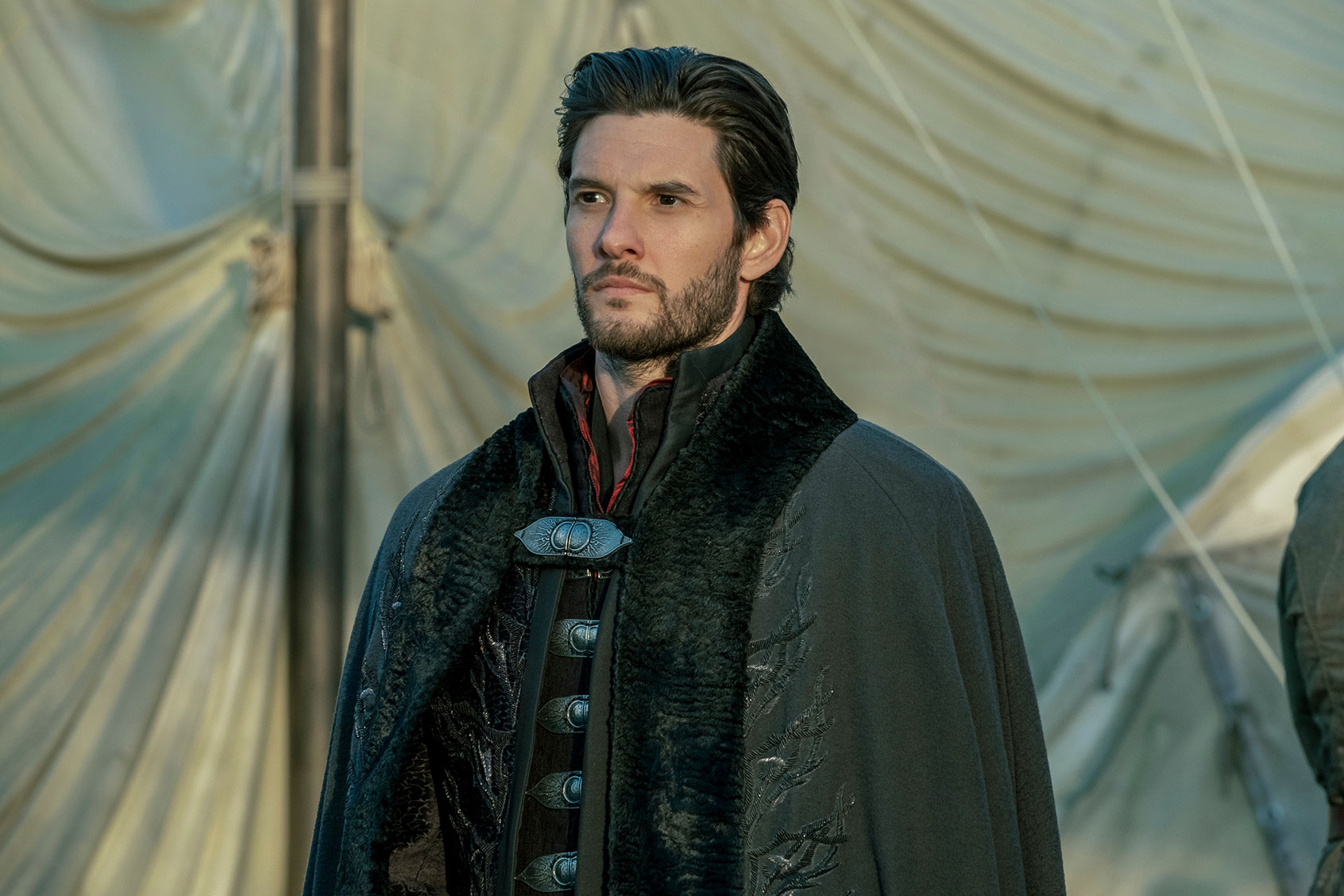
Shadow and BoneBen Barnes as The Darkling/General Kirigan in “Shadow and Bone” (David Appleby/Netflix)And yet, it’s also now impossible to fully hate Sauron. His time as Halbrand, which has been described as his “repentant phase,” has made him a problematic fave, much like The Darkling of Leigh Bardugo’s Grishaverse novels, which have been adapted into the Netflix fantasy series “Shadow and Bone.” In the popular book series, as in the show, the character is introduced as a powerful Grisha, someone with the ability to manipulate matter in its basic form. In addition to being the leader of the Second Army and second in command of the country of Ravka, he also briefly fills the role of potential love interest for the series’ heroine, Alina Starkov, who has the ability to summon and control light, making her the clear yin to The Darkling’s yang, as he has the equally rare ability to control shadow and darkness. 

By introducing the main antagonist as a friend (or lover) rather than an obvious foe, Bardugo’s novel follows familiar tropes while ensuring that The Darkling’s eventual betrayal cuts deep. But it also allows doubt to slowly creep in — maybe he’s not beyond redemption, maybe he can still be saved. The Darkling is a deeply controversial and tragic character, and it’s all by design. He’s a product of a world in which Grisha are threatened by persecution, while his relationship with and connection to Alina reveals a bone-deep loneliness and desperate yearning for someone to see and understand him. But he’s also a wannabe tyrant who has been corrupted by power to the point of no return. 

There are shades of this in Halbrand, who was not created evil, and it’s impossible to miss the similarities between The Darkling’s desire to rule Ravka in order to save it and Sauron’s desire to rule Middle-earth to supposedly do the same. But the difference between “Shadow and Bone” and “The Rings of Power” is that we’ve known how this particular saga ends for nearly 70 years. And on the heels of viewers thirsting after Evan Peters as notable serial killer Jeffrey Dahmer in Ryan Murphy’s misguided “Dahmer — Monster: The Jeffrey Dahmer Story,” (approximately the 4,000th show about serial killers) I’m not sure we need yet another vehicle to explore how or why a man (or someone being perceived as a man) becomes wholly evil.


Want a daily wrap-up of all the news and commentary Salon has to offer? Subscribe to our morning newsletter, Crash Course.


Yes, “The Rings of Power” is obviously fiction. Yes, it’s more interesting with a complex, nuanced villain. And yes, Sauron’s relationship with Galadriel strengthens both characters and the overall narrative. But when we’re already intimately familiar with Sauron as the primary antagonist, I’m not sure the right course of action was to give us an origin story and make us love him as the sympathetic Halbrand. Sometimes it’s OK to let tyrannical villains be tyrannical villains. There’s still plenty of fun in that.

Legal experts: Trump “just blasted his own defense apart” in Truth Social rant about rape accuser

Former President Donald Trump may have undercut his legal defense in a defamation lawsuit after lashing out on Truth Social against rape accuser E. Jean Carroll.

Carroll, a longtime Elle Magazine columnist, accused Trump of rape in a 2019 book, alleging that he raped her in a Bergdorf Goodman dressing room in the mid-1990s. Carroll claimed Trump pushed her against the wall, pulled down her tights and forced himself on her. 

Trump at the time claimed that he and Carroll had never met and that she was “totally lying,” arguing that she was “not my type.” Carroll filed a defamation suit against the former president, claiming that his attacks harmed her reputation.

Trump this week on Truth Social claimed that the “‘Ms. Bergdorf Goodman’ case is a complete con job,” and repeated that Carroll was not his “type.” 

“It is a Hoax and a lie, just like all the other Hoaxes that have been played on me for the past seven years,” Trump wrote. “And, while I am not supposed to say it, I will.”

Carroll’s legal team declined to comment on the matter. “The latest statement from Donald Trump obviously does not merit a response,” a spokesperson for Carroll’s legal team said in a statement.

The tirade may have blown a hole in Trump’s defense in the case. His lawyers have long argued that he couldn’t be held personally responsible in the suit because any denials of the allegations came during his term and thus were a part of his official duties as president. 

However, his latest denial and online harassment of Carroll were made as a private citizen, at a time when he is no longer protected by the presidency.

Barbara McQuade, a former federal prosecutor for Detroit, said Carroll would benefit from amending her complaint to include an additional count based on the Truth Social post. “Because Trump is no longer president, this statement was most certainly not made in the scope of his federal employment,” McQuade told VICE News.

Harvard Law Professor Laurence Tribe agreed that “Trump just blasted his own defense apart in the defamation suit brought by E. Jean Carroll.”


Want a daily wrap-up of all the news and commentary Salon has to offer? Subscribe to our morning newsletter, Crash Course.


A Washington D.C. court is now deciding whether Trump was an official federal employee when he made his statement of denial in 2019 — if so, the United States could be listed as the defendant in the case, essentially nulling the suit as the federal government cannot be sued for defamation.

Manhattan Federal Judge Lewis Kaplan in 2020 rejected the notion that Trump was performing official duties when he made his first statements about Carroll. Kaplan wrote that “the allegations have no relationship to the official business of the United States.” He said this month that Trump “should not be permitted to run the clock out.”

The judge ordered Trump to sit for a deposition on Wednesday. 

Trump’s team is sticking by the claim.

“We are confident that the D.C. Court of Appeals will find that our client was acting within the scope of his employment when properly repudiating Ms. Carroll’s allegations,” Trump attorney Alina Habba said in a recent statement to the New York Times

The announcement comes just weeks after Habba asked Kaplan to delay the deposition until the D.C. appeal was decided, arguing that if her client won, the case would disappear. The request was denied on Oct. 12, as Kaplan found that Trump had brought the case to Washington “with the effect and probably the purpose of delaying it.” A trial date has been set for Feb. 6, 2023.

Carroll’s lawyers have also said that she plans to file another case against Trump in November under a new state law allowing victims of sexual assault a one-time opportunity to sue, even if, as in this case, the statute of limitations has expired.

“The question whether Mr. Trump in fact raped Ms. Carroll is central to this case,” Judge Kaplan explained. “It will be central also to the new case.”

CNN legal analyst Paul Callan warned that the case could be “dangerous” for Trump as his legal problems mount.

“He is being charged, essentially in a defamation case, with rape,” Callan explained. “[Carroll] brings the case not as a rape case but as a defamation case because the statute of limitations was gone on the rape case. However, when he gives this press conference saying, ‘She’s a liar, I never raped her, she’s not my type, she’s just doing it to amp up book sales,’ she says he defamed her and that gets the rape case in.”

“There’s one sleeper fact in this case that I think is very dangerous for Trump,” Callan added. “She claims she still has an article of clothing that she was wearing 23 years ago when the former president allegedly raped her and she wants to be able to have DNA sample testing done with respect to that in connection with this case. So we will see how that plays out.”

Conservative attorney George Conway, a frequent Trump critic, wrote on Twitter that Trump had a chance of winning the defamation case if he had not issued “a BRAND NEW statement REPEATING all the earlier defamatory statements, but since you’re no longer POTUS, you NO LONGER HAVE THAT DEFENSE you’ve been pushing for years that you made the statements while you were president!!!”

Louis Pasteur’s scientific discoveries from decades ago continue to save lives

Some of the greatest scientific discoveries haven’t resulted in Nobel Prizes.

Louis Pasteur, who lived from 1822 to 1895, is arguably the world’s best-known microbiologist. He is widely credited for the germ theory of disease and for inventing the process of pasteurization — which is named after him — to preserve foods. Remarkably, he also developed the rabies and anthrax vaccines and made major contributions to combating cholera.

But because he died in 1895, six years before the first Nobel Prize was awarded, that prize isn’t on his resume. Had he lived in the era of Nobel Prizes, he would undoubtedly have been deserving of one for his work. Nobel Prizes, which are awarded in various fields, including physiology and medicine, are not given posthumously.

During the current time of ongoing threats from emerging or reemerging infectious diseases, from COVID-19 and polio to monkeypox and rabies, it is awe-inspiring to look back on Pasteur’s legacy. His efforts fundamentally changed how people view infectious diseases and how to fight them via vaccines.

I’ve worked in public health and medical laboratories specializing in viruses and other microbes, while training future medical laboratory scientists. My career started in virology with a front-row seat to rabies detection and surveillance and zoonotic agents, and it rests in large part on Pasteur’s pioneering work in microbiology, immunology and vaccinology.

First, a chemist

In my assessment, Pasteur’s strongest contributions to science are his remarkable achievements in the field of medical microbiology and immunology. However, his story begins with chemistry.

Pasteur studied under the French chemist Jean-Baptiste-André Dumas. During that time, Pasteur became interested in the origins of life and worked in the field of polarized light and crystallography.

In 1848, just months after receiving his doctorate degree, Pasteur was studying the properties of crystals formed in the process of wine-making when he discovered that crystals occur in mirror-image forms, a property known as chirality. This discovery became the foundation of a subdiscipline of chemistry known as stereochemistry, which is the study of the spatial arrangement of atoms within molecules. This chirality, or handedness, of molecules was a “revolutionary hypothesis” at the time.

These findings led Pasteur to suspect what would later be proved through molecular biology: All life processes ultimately stem from the precise arrangement of atoms within biological molecules.

Wine and beer — from fermentation to germ theory

Beer and wine were critical to the economy of France and Italy in the 1800s. It was not uncommon during Pasteur’s life for products to spoil and become bitter or dangerous to drink. At the time, the scientific notion of “spontaneous generation” held that life can arise from nonliving matter, which was believed to be the culprit behind wine spoiling.

While many scientists tried to disprove the theory of spontaneous generation, in 1745, English biologist John Turberville Needham believed he had created the perfect experiment favoring spontaneous generation. Most scientists believed that heat killed life, so Needham created an experiment to show that microorganisms could grow on food, even after boiling. After boiling chicken broth, he placed it in a flask, heated it, then sealed it and waited, not realizing that air could make its way back into the flask prior to sealing. After some time, microorganisms grew, and Needham claimed victory.

However, his experiment had two major flaws. For one, the boiling time was not sufficient to kill all microbes. And importantly, his flasks allowed air to flow back in, which enabled microbial contamination.

To settle the scientific battle, the French Academy of Sciences sponsored a contest for the best experiment to prove or disprove spontaneous generation. Pasteur’s response to the contest was a series of experiments, including a prize-winning 1861 essay.

Pasteur deemed one of these experiments as “unassailable and decisive” because, unlike Needham, after he sterilized his cultures, he kept them free from contamination. By using his now famous swan-necked flasks, which had a long S-shaped neck, he allowed air to flow in while at the same time preventing falling particles from reaching the broth during heating. As a result, the flask remained free of growth for an extended period. This showed that if air was not allowed directly into his boiled infusions, then no “living microorganisms would appear, even after months of observation.” However, importantly, if dust was introduced, living microbes appeared.

Through that process, Pasteur not only refuted the theory of spontaneous generation, but he also demonstrated that microorganisms were everywhere. When he showed that food and wine spoiled because of contamination from invisible bacteria rather than from spontaneous generation, the modern germ theory of disease was born.

Pasteur’s discoveries resonate to this very day.

The origins of vaccination in the 1800s

In the 1860s, when the silk industry was being devastated by two diseases that were infecting silkworms, Pasteur developed a clever process by which to examine silkworm eggs under a microscope and preserve those that were healthy. Much like his efforts with wine, he was able to apply his observations into industry methods, and he became something of a French hero.

Even with failing health from a severe stroke that left him partially paralyzed, Pasteur continued his work. In 1878, he succeeded in identifying and culturing the bacterium that caused the avian disease fowl cholera. He recognized that old bacterial cultures were no longer harmful and that chickens vaccinated with old cultures could survive exposure to wild strains of the bacteria. And his observation that surviving chickens excreted harmful bacteria helped establish an important concept now all too familiar in the age of COVID-19 — asymptomatic “healthy carriers” can still spread germs during outbreaks.

After bird cholera, Pasteur turned to the prevention of anthrax, a widespread plague of cattle and other animals caused by the bacterium Bacillus anthracis. Building on his own work and that of German physician Robert Koch, Pasteur developed the concept of the attenuated, or weakened, versions of microbes for use in vaccines.

In the late 1880s, he showed beyond any doubt that exposing cattle to a weakened form of anthrax vaccine could lead to what is now well known as immunity, dramatically reducing cattle mortality.

The rabies vaccine breakthrough

In my professional assessment of Louis Pasteur, the discovery of vaccination against rabies is the most important of all his achievements.

Rabies has been called the “world’s most diabolical virus,” spreading from animal to human via a bite.

Working with rabies virus is incredibly dangerous, as mortality approaches 100% once symptoms appear and without vaccination. Through astute observation, Pasteur discovered that drying out the spinal cords of dead rabid rabbits and monkeys resulted in a weakened form of rabies virus. Using that weakened version as a vaccine to gradually expose dogs to the rabies virus, Pasteur showed that he could effectively immunize the dogs against rabies.

Then, in July 1885, Joseph Meister, a 9-year-old boy from France, was severely bitten by a rabid dog. With Joseph facing almost certain death, his mother took him to Paris to see Pasteur because she had heard that he was working to develop a cure for rabies.

Pasteur took on the case, and alongside two physicians, he gave the boy a series of injections over several weeks. Joseph survived and Pasteur shocked the world with a cure for a universally lethal disease. This discovery opened the door to the widespread use of Pasteur’s rabies vaccine around 1885, which dramatically reduced rabies’ deaths in humans and animals.

A Nobel Prize-worthy life

Pasteur once famously said in a lecture, “In the fields of observation, chance favors only the prepared mind.”

Pasteur had a knack for applying his brilliant — and prepared — scientific mind to the most practical dilemmas faced by humankind.

While Louis Pasteur died prior to the initiation of the Nobel Prize, I would argue that his amazing lifetime of discovery and contribution to science in medicine, infectious diseases, vaccination, medical microbiology and immunology place him among the all-time greatest scientists.


Rodney E. Rohde, Regents’ Professor of Clinical Laboratory Science, Texas State University

This article is republished from The Conversation under a Creative Commons license. Read the original article.

Male birth control options are in development, but a number of barriers still stand in the way

In the wake of the reversal of Roe v. Wade, developing more contraception options for everyone becomes even more important.

Women and people who can become pregnant have a number of effective birth control methods available, including oral pills, patches, injections, implants, vaginal rings, IUDs and sterilization. But for men and people who produce sperm, options have been limited. Two options, withdrawal and condoms, both have high failure rates. Withdrawal has a failure rate of about 20%. Condoms have a failure rate of only 2% when used correctly, but that rate rises to 13% based on how people typically use them. Vasectomies have a failure rate of less than 1%, but they require minimally invasive surgery and are seen as a permanent method of contraception. Neither vasectomies nor withdrawal protect against sexually transmitted infections.

There has not been a new form of male birth control since the introduction of the “no-scalpel vasectomy” in the 1980s. I, along with my team, have been developing male contraception methods since the 1970s. I believe that new safe, reversible and affordable contraception options can help men participate and share contraceptive responsibilities with their partners, and reduce the rate of unintended pregnancies.

Taking responsibility for family planning

A 2017 survey of 1,500 men ages 18 to 44 found that over 80% wanted to prevent their partner from getting pregnant and felt that they had shared or sole responsibility for birth control.

Men who are dissatisfied with condoms are more likely to either use withdrawal as a form of birth control or never use contraception. Of those dissatisfied with condoms, however, 87% percent are interested in new methods for male contraception. This translates to an estimated 17 million men in the U.S. who are looking for new methods of contraception to prevent unintended pregnancies.

Similarly, a 2002 survey of over 9,000 men in nine countries over four continents found that over 55% would be willing to use a new method of male birth control. Importantly, a 2000 survey across three continents found that 98% of women would trust their partner to use a male birth control method.

Barriers to male contraception

Strong interest in a new male contraceptive raises the question of why there haven’t been any new male birth control methods since the ’80s.

Male contraception development has primarily been supported by governmental and nongovernmental organizations, including the World Health Organization working with academic medical centers. However, these agencies frequently do not have a drug development infrastructure comparable to pharmaceutical companies, with programs typically run by only a handful of personnel assisted by clinical research organizations. Limited financial resources further slow down development.

Lack of interest from pharmaceutical companies may also play a role in deterring male contraception development, and there are a number of possible reasons the drug industry shies away from male birth control. One reason includes weighing the cost of development with uncertainties about the potential market. Other reasons include uncertainties about who would dispense these drugs and unclear regulatory requirements for male contraceptive methods to receive FDA approval. Companies may also be concerned about liability if pregnancy occurs.

New methods currently in development

Researchers are currently looking into several different methods of male contraception.

Hormonal methods are usually taken as a gel applied to the skin, injection to the muscle or oral pill. These methods typically contain testosterone and a progestin. The progestin suppresses two pituitary hormones that control the testes, the organs that produce sperm. While the testes require high concentrations of testosterone to make sperm, testosterone is typically included in hormonal methods to ensure that there is an adequate level of the hormone for other bodily functions. Counterintuitively, taking testosterone may also help suppress sperm production, because increasing circulating testosterone levels above a certain level suppresses the same two pituitary hormones. The addition of a progestin further enhances the suppression of sperm production.

The hormonal contraceptive candidate furthest along in development is currently in an ongoing second stage clinical study that has recruited over 400 couples across four continents. I served as the principal investigator of this trial at the Lundquist Institute. The results of the study, sponsored by the Eunice Kennedy Shriver National Institute of Child Health and Human Development and the Population Council, have so far been promising with minimal side effects, and the couples have found the gel acceptable to use.

My team and I are also developing drugs that function like both testosterone and progestin, but in a single compound. These drugs are currently undergoing early testing in people as a daily oral pill or a long-acting injection.

Scientists have been trying to develop male birth control pills for decades.

Nonhormonal methods typically involve drugs that specifically target sperm-producing organs to decrease sperm concentration or function. Nonhormonal drugs show efficacy in animal models, but preclinical toxicology results are needed before clinical studies to demonstrate safety, tolerability and efficacy in people can begin. A few of these methods are working toward first-stage clinical trials.

Another nonhormonal method involves reversibly blocking the vas deferens, an organ that transports sperm for ejaculation. Studies sponsored by the Male Contraceptive Initiative and Parsemus Foundation are testing hydrogels, a type of polymer that retains water, that block sperm from traveling through the vas deferens.

People are ready for new contraceptive methods. I believe that collaboration across academic, government, nonprofit and pharmaceutical sectors can help deliver new birth control methods that are safe, reversible, acceptable and accessible to all.

Christina Chung-Lun Wang, Physician/Investigator at Lundquist Institute at Harbor-UCLA Medical Center and Professor of Medicine at David Geffen School of Medicine, University of California, Los Angeles

This article is republished from The Conversation under a Creative Commons license. Read the original article.

Katie Porter pulls out chart at hearing to show corporate greed is the “biggest driver of inflation”

During a House of Representatives hearing on Wednesday, United States Congresswoman Katie Porter (D-California) grilled Mike Konczal, the director of Macroeconomic Analysis at the Roosevelt Institute, over the primary cause of inflation in the post-COVID-19 economy.

Equipped with one of her easy-to-read, data-filled posters, Porter got Konczal to admit that surging corporate profits are forcing American consumers to pay significantly more for goods and services.

“According to this chart, what is the biggest driver of inflation during the pandemic? The blue – the dark blue is the recent period,” Porter pointed out.

READ MORE: Why the global inflationary tsunami is made in the United States and not Ukraine

“It would be corporate profits,” Konczal confirmed.

“And what is that percentage?” Porter asked.

“It is 54 percent,” Konczal replied, “and that number does stay that level of high if you update that number to more recent numbers as well.”

Porter asked if that meant that “over half of the increased prices people are paying are coming from increases in corporate profits?”

READ MORE: ‘The elephant in the room’: Top Fed official says corporate price hikes are fueling inflation

Konczal said that it did and that “the unit price index is reflected in corporate profits as opposed to other costs.”

Porter questioned Konczal, “how does that compare to, historically, other periods of inflation or over other periods of economic time?”

Konczal noted that “it is significantly higher in this recovery – 11.5 percent.”

Porter added, “and what is it today?”

Konczal conceded that it is “53 percent.”

Porter then had Konczal clarify what her graphic is representing:

So I want to make sure everyone in America understands this chart. What is a ‘unit labor cost?’

Konczal:

The cost in wages and associated work.

Porter:

But we can just say wages. What is a ‘non-labor input cost?’

Konczal:

A variety of things, including maintenance and investments.

Porter:

Okay, so I have to buy the stuff to make the widget. I have to have a factory. I have to keep the lights on. I have to hire someone to make the widget. That’s this stuff. And this is what I add on, on top?

Konczal:

Yes.

Watch below or at this link.

Legal experts mock failed Durham probe: No other prosecutor “has ever posted such a dismal record”

Special counsel John Durham, who was appointed by Trump Attorney General Bill Barr to investigate the origins of the Russia probe, ended his three-year investigation after failing to convict yet another frequent target of former President Donald Trump.

Igor Danchenko, a think tank analyst who provided much of the research for the infamous Christopher Steele dossier, was acquitted Tuesday on charges of lying to the FBI about where he got his information.

The defeat marked likely the final blow of his investigation, though Durham is expected to submit a report to the Justice Department later this year.

Durham was appointed in 2019 by Barr. His first two cases ended in an acquittal and a guilty plea with a sentence of probation.

After nine hours of deliberations for over two days, the jury reached its verdict on Tuesday. Despite Trump and his supporters’ claims that the Durham inquiry would reveal a “deep state” conspiracy against him, the three-year investigation failed to produce evidence of such a conspiracy.

“While we are disappointed in the outcome, we respect the jury’s decision and thank them for their service,” Durham said in a statement. “I also want to recognize and thank the investigators and the prosecution team for their dedicated efforts in seeking truth and justice in this case.”

So far, no one charged by Durham has ended up in prison and only one government employee has pleaded guilty to a criminal offense, according to the Washington Post

Legal experts mocked the legacy of Trump’s failed Durham probe and called out his record in court.

“Wow. Don’t think any other special counsel or independent prosecutor has ever posted such a dismal record,” tweeted former U.S. Attorney Harry Litman.  

Neal Katyal, a former Acting Solicitor General, added that “Durham wins about as much as every other Trump lawyer.”

Former federal prosecutor Renato Mariotti also took a jab at the special counsel’s career, adding that “Many federal prosecutors have lost fewer trials in their entire career than John Durham lost in the past year alone.”

“It is apparent that his judgment is poor and that he overcharged these cases. His use of the legally meaningless ‘no collusion’ phrase at trial betrays his bias,” he wrote.


Want a daily wrap-up of all the news and commentary Salon has to offer? Subscribe to our morning newsletter, Crash Course.


“Along the lines of the late Sec. Raymond Donovan’s famous question— ‘Which office do I go to to get my reputation back?’—I’d like to ask, where do we taxpayers go to get our money back for Durham’s frivolous, ridiculous, and politically motivated frolic and detour?” tweeted conservative attorney George Conway.

Others, like former U.S. Attorney Joyce Vance White, described the Durham investigation as a “complete bust”. 

It is “an abject lesson in what happens when the Justice Department is weaponized to do a president’s political bidding. It will be held up to generations of prosecutors as a cautionary tale about what not to do,” Vance wrote

CNN legal analyst Jeffrey Toobin called the investigation a “disgrace” and a “fiasco”.

“Two acquittals at trial in a system where the feds win 95% of their cases. Trump and Barr said Durham would prove the Russia investigation unjustified. He’s proven the opposite,” he tweeted.

National security attorney Bradley Moss recalled right-wing claims that the “Durham probe was going to indict half the Beltway and send all kinds of evil Trump haters to jail.” But, Moss wrote, “Durham couldn’t convict a ham sandwich.” 

Marjorie Taylor Greene thought she was honoring “Confederate soldiers” at Union army monument

Georgia Republican Rep. Marjorie Taylor Greene on Tuesday appeared to publicly struggle with her state’s history during the Civil War.

“Tonight, I stopped at the Wilder Monument in Chickamauga, GA, which honors the Confederate soldiers of the Wilder Brigade,” Greene posted to Truth Social. “I will always defend our nation’s history!”

Union Army Colonel John T. Wilder commanded the brigade of mounted infantry armed with 7-shot Spencer repeating rifles.

The Indiana War memorial states, “‘From the many, one’ may best describe Col. John T. Wilder’s Lightning Brigade. The unit was made up of ‘citizen soldiers’ from the farms of Indiana and Illinois. The brigade was unique because it was created as a unit that could move with the speed of cavalry but fight with the power of infantry.”

“This new concept was tested during the long days of fighting at the battle of Chickamauga where Wilder’s Brigade saved the Union Army from almost certain destruction on two occasions,” the Indiana War Memorial explains. “Due to the brigade’s performance, Gen. George H. Thomas was able to make a rock-like stand to save the Union Army. From that day forward, General Thomas would be known as ‘The Rock of Chicamauga.'”

She also posted video showing she had climbed the 136 stairs to the top of the 85-ft tower.

James Corden’s Balthazar ban shows that it’s OK to 86 the “customer is always right” mindset

In less than 24 hours, James Corden has been unbanned from Balthazar, the swanky Michelen-starred restaurant based in New York City, after he “apologized profusely” to the restaurant’s owner, Keith McNally.

On Tuesday, McNally took to Instagram to post a blurry photo of the comedian alongside a lengthy caption explaining the apology and his own sudden change of heart:

“James Corden just called me and apologized profusely. Having f**ked up myself more than most people, I strongly believe in second chances,” wrote McNally, who once came under fire for his posts on Ghislaine Maxwell following the convicted sex offender’s arrest. “So if James Corden lets me host his ‘Late Late Show’ for nine months, I’ll immediately rescind his ban from Balthazar. No, of course not. But….anyone magnanimous enough to apologize to a deadbeat layabout like me (and my staff) doesn’t deserve to be banned from anywhere. Especially Balthazar. So Come Back to the 5 & Dime, Jimmy Corden, Jimmy Corden. All is Forgiven.”

Just hours prior to the post, McNally publicly slammed Corden, specifically criticizing his brash behavior towards Balthazar’s staff and thus, banning him from the restaurant. In an equally lengthy caption, McNally wrote, “James Corden is a hugely gifted comedian, but a tiny cretin of a man. And the most abusive customer to my Balthazar servers since the restaurant opened 25 years ago.”

“I don’t often 86 a customer, [today] I 86’d Corden,” he continued. “It did not make me laugh.”

McNally then described two instances of Corden’s nasty behavior. The first took place in June and involved Corden berating the restaurant’s manager after he found a hair in his main course. The second took place more recently, on Oct. 9, and concerned a mixup with his wife’s order of an “egg yolk omelette.” The omelette allegedly contained “a bit of egg white mixed with the egg yolk” and was sent back to the kitchen to be remade. Once ready, however, the omelette was served alongside home fries instead of the salad that Corden’s wife had originally asked for. 

“That’s when James Corden began yelling like crazy to the server: ‘You can’t do your job! You can’t do your job! Maybe I should go into the kitchen and cook the omelette myself!'” McNally said.

The latest hoopla succeeds an ongoing — and honestly long overdue — trend of prominent restaurants banishing high-profile customers due to poor behavior, disorderly conduct or other conflicts of interest.

Many of these bans have been leveled at politicians. In June 2018, Former White House press secretary Sarah Huckabee Sanders was kicked out of Lexington, Virginia’s Red Hen restaurant because the owner said that “many members of her LGBT staff were uncomfortable serving Sanders.” Almost a year after the incident, Red Hen’s owner, Stephanie Wilkinson, disclosed that the decision was ultimately for the best as it helped boost the restaurant’s business.

“When we opened after a 10-day hiatus, our dining room was full. In the following weeks, people who had never been to the Shenandoah Valley traveled out of their way to eat with us,” Wilkinson wrote in an editorial for the Washington Post. “Hundreds of orders for our Red Hen spice blend poured in. And the love spread far beyond our door, as supporters sent thousands of dollars in donations in our honor to our local food pantry, our domestic violence shelter and first responders.”

“After nearly a year, I’m happy to say that business is still good,” she said. “Better than good, actually. And besides the boost to our area charities, our town’s hospitality and sales revenue have gone up, too.”


Want more great food writing and recipes? Subscribe to Salon Food’s newsletter, The Bite.


Within Hollywood, other celebrities who have been 86’d include Ruby Rose (who was asked to leave Rebellion Bar and Urban Kitchen in New Orleans per the owner’s request), Stewart Rahr (who was banned from Nobu for life) and Jamie Kennedy (who was asked to leave The Yard House).

The mindset that “the customer is always right” has long held precedence within the food service industry and stressed the importance of customer satisfaction over worker safety and well-being. In an era of self-righteous a**holes, from sanctimonious celebrities to anti-maskers and retail Karens, de-escalation training has arisen as a necessary tool amongst staff to “better equip them for more civil interactions with customers,” as Salon’s Ashlie D. Stevens wrote

But recent instances, namely the Corden disaster, prove that it’s time to abandon the mindset, especially when abusive and rowdy customers gain an unfair advantage. Simply put, some customers are nasty and in the wrong. Their bad behavior should not be excused or forgiven — it should just be penalized.

What exactly are “best by” dates — and how do they contribute to food waste?

Whether you’re a strict follower of best by/use by/expiration dates (like my brother) or you merely shrug off any printed numbers and instead rely on your own senses of sight and smell, there is something undoubtedly suspect about the entire process.

Whilst some things are inarguable — mold on your bread, questionable skins forming on yogurt, rancid-smelling milk — there are a host of foods, drinks and foodstuff that can safely be enjoyed past the expiration date written on the carton. So where do these dates come from? Is it all just a big scam to get you to throw out perfectly healthy goods, inevitably spending double the money to replace everything that’s gone “bad”? 

The USDA itself published a post earlier this month titled “Before You Toss Food, Wait. Check It Out!” The article note that: 1) food poisoning bacterias cannot lie or grow in the freezer 2) long-frozen foods may be dry or not-as-robust flavor-wise, but they’ll still be safe.

Furthermore, “most shelf-stable foods are safe indefinitely,” including canned goods which last years. Packaged, dried foods are also often safe past the “best by” date. In many instances, the food quality or taste may have diminished, but there’s nothing inherently “unsafe” about these foods. Clearly, the line between “throw out food that’s past the expiration date!” and “do your best to limit food waste!” has blurred more and more in recent years, which is evidenced by the existence of this literature from the USDA. 

If you’re wondering about the ins-and-outs of best by dates, use by dates and expiration dates, CNN outlines it pretty well: “There’s no national standard for how those dates should be determined, or how they must be described. Instead,  there’s a patchwork system — a hodgepodge of state laws, best practices, and general guidelines.”

The same article notes that “sell-by dates actually are more about protecting the brand than safety concerns.” A 2019 FDA post notes that approximately 20% of food waste is due to packaging with incorrect or improperly labeled expiration dates. In most instances, companies are estimating a date by when that food item might still taste best, but legally, the only foodstuff required to list a use-by date is baby formula, as stated by CNN.

Because there is no catch-all system, varying companies dictate their own rules on use-by dates. CNN does note, though, that some “fresh meat and poultry could go bad even before the date on the label,” so always be sure to use your eyes and nose to determine if you should be cooking up that chicken cutlet or not.

The entire notion of use-by dates came to be in the 1970s, called “open dating,” which was reported about in The New York Times in February 1973. At that time, it was apparently deemed a success because “open dating had slashed … half the number of consumer complaints of purchasing stale or spoiled food.”

By 1979, though, another study by a now-defunct Office of Technology Assessment noted that “there is little evidence to support or to negate the contention that there is a direct relationship between open shelf-dating and the actual freshness of food.” 

Because of the lack of uniformity amongst purveyors and food companies, this practice is still just as dubious — practically 50 years later. To go further into the debate, what’s the difference between “best by” and “use by” dates?

2021 Food Date Labeling Act notes that safety issues come under “use by,” while food quality issues go by “best if used by.” However, how the heck is the average shopper or consumer to know this? There are also “enjoy by” and “sell by” dates, as well as general expiry dates. To sum it all up, it’s a mess, and has been for nearly half a century (and there is no government solution to make it more clear in sight). 

In a Vox article, Alissa Wilkinson notes that “40% of food produced in America heads to the landfill or is otherwise wasted … every year, the average American family throws out somewhere between $1,365 and $2,275, according to a landmark 2013 study.”

Vox also notes that while these “use by” and “best by” dates may be “mostly well-intentioned,” they’re also “not actually expiration dates at all,” which in turn compounds the aforementioned issues, including “wasted food, wasted revenue, wasted household income, and food insecurity.”

There are also disparities not only from company to company, but also state to state: a package of chicken in Nebraska may be packaged with totally different “use by” dates than a chicken package in Utah. But as Wilkinson puts it, the fact that so many Americans read a “best by” label as a “bad after” date is partially a public education problem — one that manufacturers haven’t worked too hard to combat. 

To put it into context, Philly Magazine notes that according to a 2013 study, a whopping 90% of Americans don’t know that this is what the labels mean. Rosemary Trout, program director of Culinary Arts and Food Science at Drexel University’s Center for Food and Hospitality Management, tells Philly Magazine that “there’s a difference between spoilage and safety.”

Philly Magazine also notes an interesting observation: “The more whole, unprocessed foods you buy and eat, the less you’ll find yourself confronted by expiration dates.”

Most loose, bulk fruits and vegetables are completely unencumbered by expiration dates, and most people rely entirely on their own intuition and senses to determine once an apple has gone bad. Philly also notes that “the big food-poisoning outbreaks you read about aren’t caused by foods that are past their expiration dates.” Instead, they are likely the result of contamination, cross-contamination or the presence of allergens, as opposed to “the presence of bacteria or viruses” as a result of truly expired food. 

To put this notion into practice, Bon Appetit has even offered advice on safe ways to utilize technically “expired” milk, such as baking with it, cooking with it, using it as you would buttermilk or — of course —making cheese. Taste of Home lists some items that can generally be consumed past their use-by dates, as well, ranging from eggs, bread (without any mold, of course) and pasta, as well as packaged and frozen foods.

Again, I’m not advising you to rebel and radically oppose any form of an expiration date, feverishly drinking expired milk and eating chicken that smells odious. But, it’s important for your wallet, your food consumption and our world at large that you’re not just haphazardly tossing any item that has come close to its “use by” date. Use your discretion, use your sense of smell and perhaps we can all help out a bit and mitigate the sheer amount of food waste.


FBI raided ABC News journalist over classified info. Then he “fell off the face of the earth”

On Tuesday, Rolling Stone reported that an Emmy-winning ABC News producer James Gordon Meek has withdrawn from public and professional life following an FBI search at his home that allegedly turned up classified information on his laptop.

“To his detractors within ABC, Meek was something of a ‘military fanboy,'” reported Tatiana Siegel. “But his track record of exclusives was undeniable, breaking the news of foiled terrorist plots in New York City and the Army’s coverup of the fratricidal death of Pfc. Dave Sharrett II in Iraq, a bombshell that earned Meek a face-to-face meeting with President Obama. With nine years at ABC under his belt, a buzzy Hulu documentary poised for Emmy attention, and an upcoming book on the military’s chaotic withdrawal from Afghanistan, the 52-year-old bear of a man seemed to be at the height of his powers and the pinnacle of his profession.”

According to the report, FBI agents allegedly found classified information on Meek’s laptop in the search, which was approved by a federal magistrate judge in the Eastern District of Virginia one day prior.

“In the raid’s aftermath, Meek … has made himself scarce,” said the report. “None of his Siena Park neighbors with whom Rolling Stone spoke have seen him since, with his apartment appearing to be vacant. Siena Park management declined to confirm that their longtime tenant was gone, citing ‘privacy policies.’ Similarly, several ABC News colleagues — who are accustomed to unraveling mysteries and cracking investigative stories — tell Rolling Stone that they have no idea what happened to Meek. ‘He fell off the face of the Earth,’ says one. ‘And people asked, but no one knew the answer.'”

The search raises questions about whether the Biden administration is targeting a journalist for actions done in the course of their reporting — a controversial move that has occurred under multiple presidents over the years.

This also comes amid the much higher-profile FBI investigation into boxes of highly classified documents found at former President Donald Trump’s Mar-a-Lago country club in Palm Beach, Florida, which may include foreign nuclear secrets and clandestine human sources. This investigation is currently tied up as Trump and the DOJ battle in federal court over which documents seized in the FBI’s recent search can be reviewed by federal investigators.

“Those are so top secret”: Bob Woodward releases hours of Trump tapes — including damning admission

Former President Donald Trump during his time in office often boasted about his attempted bromance with North Korean Supreme Leader Kim Jong-Un, which reached its apex when Trump declared that he and Kim “fell in love.” Although the relationship involved exchanges of personal letters, the two men were never able to publicly strike a deal to have Kim dismantle his nuclear weapons program. Kim even once referred to Trump as a “dotard” after he threatened to annihilate North Korea with “fire and fury.”

Nonetheless, Trump has remained proud of the coziness that he believes he cultivated with the reclusive autocrat (as well as other dictators).

On Tuesday, previously unheard recordings were released of Trump sharing the notes with reporter Bob Woodward, who featured his conversations with Trump in his new audiobook, “The Trump Tapes: Bob Woodward’s Twenty Interviews with President Trump.”

“Treat them with respect,” Trump warned Woodward in December 2019 according to excerpts obtained by The Washington Post. “And don’t say I gave them to you, okay?”

He told Woodward that “I’ll let you see them” but stressed that “I don’t want you to have them all.” Trump also asked Woodward if he intended to make “a Photostat of them or something” — referencing a form of photocopying that went extinct in the mid-1900s.

“No, I dictated them into a tape recorder,” Woodward replied.

Then, in January 2020, Trump admitted that “those are so top secret.”

The Post noted that “in hindsight, the comments by Trump show he was well aware that the 27 letters exchanged between himself and Kim were classified, despite his repeated claims that none of the documents he improperly took from the White House when leaving office, including the Kim letters, were in that category. The FBI and Justice Department this year executed a court-authorized search of Trump’s private Mar-a-Lago Club and residence — turning up 103 documents marked classified and roughly 11,000 not marked classified as part of an ongoing criminal probe into Trump’s handling of sensitive material.”

The Post explained that “the English translations of the letters, which Woodward includes as an appendix to a written transcript of the audiobook, shows page after page of pen-pal niceties — birthday tidings, ‘best wishes’ for friends and family — between the then-president and the autocratic leader of one of the world’s most repressive regimes.”

Is it time to add schizophrenia to the list of unusual “long COVID” symptoms?

While many cases of COVID-19 — particularly among the vaccinated — are mild, the virus’ potential to incapacitate or impair its victims cannot be underestimated. For one, SARS-CoV-2, the virus that causes COVID, can trigger literal brain damage. In addition to all the other organs that can be affected by COVID, such as the lungs, heart and kidneys, the virus has found a way to worm inside the skull. And the more we learn about this relationship, the more concerning it becomes.

A new study published in the journal Psychiatry Research suggests severe cases of COVID are associated with an 11 percent increase in risk for schizophrenia, with the authors suggesting that schizophrenia should probably be added to the growing constellation of symptoms known as long COVID.

The good news is that this trend only seems to apply to people who had severe cases, so mere infection doesn’t increase this risk, just hospitalization. It also isn’t clear if COVID is directly causing this increase. But it adds to a growing body of research that links COVID infection to serious mental health deficits.

To find this link, an international trio of researchers analyzed two public genetic databases, one for mere COVID infections (122,000 cases) and another with infections requiring hospitalization (32,000 cases) and a combined 4.5 million controls. To better understand the cause and effect relationship, they applied a method called Mendelian randomization, a study design used since the early ’90s that relies on principles pioneered by Gregor Mendel, known as the father of modern genetics.

The researchers used a few different models to make sure their results were accurate.

Since early on in the pandemic, patients with schizophrenia have been reported to be more likely to die from COVID, with one 2021 study of New Yorkers finding schizophrenia patients were almost three times more likely to perish.

“While the viral infection may not increase the risk for schizophrenia, COVID-19 hospitalization was associated with an 11% increase in the risk of schizophrenia,” they reported.

While an 11 percent increase may not seem like a lot, it’s a big deal when considering how debilitating schizophrenia can be. This mental disorder is often misunderstood and stigmatized, even by mental health professionals, no thanks to misrepresentations in film and TV.


Want more health and science stories in your inbox? Subscribe to Salon’s weekly newsletter The Vulgar Scientist.


The National Institute of Mental Health defines schizophrenia as experiencing a “distorted” reality punctuated by disordered thoughts, hallucinations and delusions. But it doesn’t make people more violent or prone to breaking the law. In fact, “people with schizophrenia are more likely than those without the illness to be harmed by others,” according to NIMH.

Since early on in the pandemic, patients with schizophrenia have been reported to be more likely to die from COVID, with one 2021 study of New Yorkers finding schizophrenia patients were almost three times more likely to perish, second only to age as a risk factor for mortality. This tracks with data available since the ’80s showing people with schizophrenia are more prone to premature death.

Mental health disorders have experienced a steep rise since the pandemic began, with increases in depression, anxiety, post-traumatic stress disorder, insomnia and more. Finding a link between COVID hospitalization and schizophrenia adds evidence to how severe this illness can be.

However, the researchers note several limitations to their research, including using genetic datasets of people with only European ancestry. They were also unable to factor in the environmental variables, “which are critical for both schizophrenia and COVID-19,” the authors report. But, as mentioned, they tried to control for this by using different models.

They conclude that schizophrenia should be explored as one of the possible symptoms of long COVID, a condition characterized by long-term health problems that linger for months or even years. Many people with long COVID report “brain fog” or cognitive dysfunction, as well as extreme fatigue, headaches, heart palpitations, joint pain and blood disorders. A recent study from Scotland compared 33,000 people who had contracted COVID with 62,000 never infected individuals and found that 1 in 20 people still hadn’t recovered between six and 18 months after infection. Another 42 percent only partially recovered.

It may seem like COVID is associated with so many diseases, it begs the question: What health problem can’t you link to the virus? But the reason why COVID appears so overwhelming and prevalent is because SARS-2 is so good at infecting so many different parts of the body. This is because the receptor SARS-2 uses to enter cells — called the ACE2 receptor — is everywhere in our body, giving the virus many different ways to attack. This manifests as multiple types of disease.

Schizophrenia is still an undertreated condition that raises the risk of death and serious diseases. A recent study in Molecular Psychiatry looked at hospitalizations in France that were non-COVID related and found “Patients with schizophrenia were less admitted for several somatic diseases (especially cancer, circulatory and digestive diseases and stroke).”

It seems that COVID is no exception and more attention should be given to this relationship.

What will a GOP majority actually do? Almost nothing — but in the worst possible way

Every day I hear fans of Donald Trump earnestly telling reporters that what they admire most about him is that he accomplished more than any president in American history. And I hear squeamish Trump voters who admit that the tweeting and the ranting may not have been ideal, but they just love his policies. Whenever I hear this, I have to wonder: What accomplishments and policies are they talking about? 

Trump came into office with an economy running at full steam after a slow and gradual recovery from the catastrophic financial crisis of 2008. He instituted a number of policies that were struck down by the courts either partially or in full, such as his odious Muslim ban and family separation policies. He never got his wall built, even though he deployed U.S. troops to the border and precipitated the longest government shutdown in history in an attempt to force Congress to fund it. He certainly didn’t “drain the swamp.” His own personal corruption and conflicts of interest as president are legendary, and numerous members of his administration were charged with criminal behavior. Many others were dismissed in the face of ethics scandals.

He constantly claimed he was going to bring back manufacturing but all that meant was some flamboyant announcements that never actually materialized. His trade war ended up costing taxpayers both in terms of consumer prices and massive subsidies for producers who faced retaliation, with no discernible change in the behavior of foreign trade partners. He kissed up to tyrants all over the world and antagonized U.S. allies but did not end America’s overseas wars as he promised. He failed to repeal Obamacare, the holy grail of Republican politics for nearly a decade.

So what did Donald Trump actually do? He reversed a lot of Barack Obama’s policies, like the Paris climate accords and the Iran nuclear deal. The only substantial thing he accomplished through legislation was those tax cuts for the rich — largely the doing of then-House Speaker Paul Ryan.

What Trump really did was dominate the political world and escape all accountability. That’s the “policy” his followers love. 

But right-wing congressional Republicans are different animals. If they win the majority in next month’s midterm elections, they too want to dominate — but they bring a different set of skills and goals to the table. First of all, of course they will vote to extend the Trump tax cuts and offer more to corporations. That goes without saying. Joe Biden will veto any such bill, but voting for tax cuts is a Republican religious ritual. They have to appease the gods of wealth.

Like Trump, they are also driven by revenge and have already made clear they plan to begin broad “investigations” into various Democratic officials and affiliates, including Hunter Biden and Dr. Anthony Fauci. Various members have stated they may seek to impeach the secretary of state, the secretary of education, the attorney general and the head of Homeland Security, as well as President Biden and Vice President Harris.

Presumptive Republican House Speaker Kevin McCarthy is trying to soft-pedal all this investigation-impeachment zeal, but as Rep. Marjorie Taylor Greene more or less told New York Times reporter Robert Draper, either he does what she wants or she’ll sic the rabid GOP base on him. She filed articles of impeachment against Biden the day after his inauguration. In fact, she’s already filed five of them.

But fired-up congressional Republicans aren’t simply going to be content with harassing Biden and the Democrats for sheer entertainment value. In order to truly dominate the political landscape and set the table for Vengeance Tour 2024, they will seek to turn the country, and perhaps the world, completely upside down. To that end, they’ve been signaling that they plan to run one of their standard plays and hold the government debt ceiling hostage (I wrote about this here last week) to force the elimination of numerous Biden programs and fulfill their long-standing goal of destroying Social Security and Medicare. McCarthy confirmed this on Tuesday. (Donald Trump, let us recall, repeatedly vowed to protect Social Security and Medicare, but there’s no sign that he’ll try to intervene.)

Washington Post columnist Catherine Rampell recently addressed the likely consequences of gambling with government default under the current economic circumstances, and let’s just say they are dire. Such a move might not just destroy the creditworthiness of the U.S. treasury, but “might accidentally blow up every other financial market on Earth too… Boom, financial crisis.” It’s not as if the global economy is especially healthy at the moment as it recovers from the pandemic shock and struggles with the ripple effects of war in Ukraine. Playing these games now is the height of irresponsibility. But that’s how the Republican Party has done business for at least the past 25 years.

And as if that weren’t enough, they are also planning to re-run one of the great moments in “If he’s for it, I’m against it” foreign policy sophistry of the past quarter-century. Kevin McCarthy has suggested that his party not only plans to hold the debt ceiling hostage, but support for Ukraine as well. Apparently, Republicans intend to refuse more military aid to Ukraine because — despite the massive unaccountable sums the U.S. spends on its own military — we just can’t afford it right now. (After all, we’ve got the Space Force to pay for!)


Want a daily wrap-up of all the news and commentary Salon has to offer? Subscribe to our morning newsletter, Crash Course.


Tempting as it is to lay this on the new Trumpist “America First” philosophy, that actually isn’t true. GOP isolationism goes way back. Just as the government shutdown maneuver comes straight out of the 1990s Newt Gingrich playbook, so too does this gambit to shut down military support for allies in Europe.

Kevin McCarthy’s threat to shut down aid to Ukraine isn’t actually a product of Trumpist “America First” philosophy. It’s old-time GOP isolationism, straight out of the Newt Gingrich playbook.

After several years of watching idly as ethnic cleansing and war crimes took place in Bosnia during the early ’90s, NATO had finally concluded it needed to step in to stop the Kosovo conflict from spreading. As dissonant as this was coming from a party that often gleefully endorses violence and claims to worship the military, Republicans fought hard to prevent Bill Clinton from intervening with NATO in the Kosovo conflict, saying that it wasn’t our fight and could lead to a wider war. If Ronald Reagan had proposed military intervention, they would of course have wrapped themselves in the flag and started singing “The Yanks Are Coming.” But since a Democrat was in office and after 1994 Republicans held the Congress for the first time in decades, they decided it wasn’t America’s place. Senate Majority Leader Trent Lott even snidely pronounced, “Give peace a chance.”

Reflexive GOP hyper-partisanship has been with us for a long time, as Salon’s Amanda Marcotte illustrates in her recent interview with historian Nicole Hemmer. Trump didn’t invent any of this. Divided government gives Republicans a chance to do what they truly love to do, and what their voters demand: Own the libs. If they have to destroy the global economy, accommodate war crimes and explode the Atlantic alliance, that’s a price they are more than willing to make the world pay.

“Where’s the beef?”: Special master calls out Trump lawyers’ “bungling missteps” in Mar-a-Lago case

The special master tasked with reviewing thousands of documents seized from former President Donald Trump’s Mar-a-Lago residence called out Trump’s lawyers for failing to provide evidence of his privilege claims.

Longtime federal Judge Raymond Dearie complained during a phone conference on Tuesday that a log of documents Trump is seeking to withhold from the Justice Department lacks information to determine whether his privilege claims are valid. He asked Trump’s lawyers to explain why Trump believes the documents should be shielded from the Justice Department’s criminal investigation, according to The New York Times. The call focused on a small set of documents that the Justice Department has already reviewed for potentially privileged information and set aside.

“It’s a little perplexing as I go through the log,” Dearie said. “What’s the expression – ‘Where’s the beef?’ I need some beef.”

Dearie has repeatedly pressed Trump’s legal team to provide evidence of his public claims but they have resisted.

“I guess Donald’s Whoppers don’t count before Judge Dearie,” tweeted conservative attorney George Conway.

Dearie also called out “bungling missteps by Trump counsel” in the case, noted New York University Law Professor Ryan Goodman. Dearie during the call pointed out that Trump’s lawyers claimed that one of the documents was both Trump’s personal property and that it was protected by executive privilege, which means it is a government record that cannot be personal property.

“Unless I’m wrong, and I’ve been wrong before, there’s certainly an incongruity there,” Dearie said.

Dearie also pressed Trump’s legal team to provide more information on documents he claims are protected by attorney-client privilege. Dearie suggested that Trump’s lawyers had invoked privilege over records involving a third party, which suggests they were not confidential.

“Where third parties are involved in the document, I need some understanding why the presence of the third party doesn’t defeat the privilege,” Dearie said.

Trump attorney James Trusty told Dearie that they would provide a response to his requests.

Dearie during the call also called out the Trump team’s estimate that the 11,000 documents seized from Mar-a-Lago amounted to about 200,000 pages. But the DOJ said the actual number of pages is only 21,792, pointing to an inaccurate estimate by a company hired to scan the documents electronically.

Dearie also criticized both Trump’s team and DOJ lawyers for clashing over the review process.

“I don’t want to be dealing with nonsense objections, nonsense assertions, especially when I have one month to deal with who knows how many assertions,” he said.


Want a daily wrap-up of all the news and commentary Salon has to offer? Subscribe to our morning newsletter, Crash Course.


Dearie gave both sides until November 12 to estimate how many of the documents might be privileged, citing a December 16 deadline set by U.S. District Judge Aileen Cannon to complete the review.

Cannon, a Trump appointee, named the special master in response to a lawsuit from the former president two weeks after the FBI seized thousands of documents from Mar-a-Lago. Cannon, whose rulings in the case have perplexed legal experts, initially barred the DOJ from using about 100 documents marked classified in their criminal probe but the 11th Circuit Court of Appeals overturned that part of her order, agreeing with the DOJ that she had abused her authority. The Supreme Court also declined to intervene in the matter in response to an emergency request from Trump. The DOJ has since appealed Cannon’s entire order naming a special prosecutor. Legal experts this week predicted that the DOJ had a strong chance to win the appeal but the review may already be completed by the time the appeals process plays out.

The DOJ appeal “supporting prompt dismissal of the entire case Trump filed with Judge Cannon is as close to being conclusive and irrefutable as any brief I have ever read,” tweeted Harvard Law Professor Laurence Tribe. “I don’t even see a need for oral argument.”

Violence towards transgender people has increased dramatically, study finds

The ongoing right-wing culture war against transgender people paints them as threatening to those who aren’t trans. Yet scientific studies overwhelmingly show that the opposite is true, meaning that cisgender individuals are quite a threat to them.

There has been plenty of previous research on emotional distress in trans people, which is perpetuated by transphobic attitudes (a recent study found that 82% of trans people have considered suicide and 40% have attempted it, although trans people who receive gender-affirming surgeries have reduced suicide rates). Yet beyond the mere emotional, physical violence against transgender people is a real and present danger, research attest.

“Bias-motivated crimes based on race, religion, nationality, disability, and gender remain at troublingly high levels, and LGBTQ+ people hold many of these identities as well.”

Hence, a recent study by Everytown for Gun Safety Support Fund — an organization that monitors gun violence — has added its own contribution to the growing body of literature on anti-trans violence. Specifically, the authors found that homicides against transgender people almost doubled between 2017 and 2021, with crimes involving firearms fueling that trend.

There were 29 known killings of transgender people in 2017 and 56 in 2021, with 73% of the people in the latter category being murdered with a firearm.

The authors also noted that Black transgender women were killed at disproportionately high rates, with 73% of the tracked homicides between 2017 and 2021 having Black trans women as victims — even though they only comprise 13% of the total transgender population.

The study’s authors framed their research as part of the broader problem of firearm-driven hateful violence in America.

“On an average day there are 69 hate crimes with a firearm, accounting for 4 percent of all hate crimes,” the authors write. “It’s not only the LGBTQ+ community that is affected by hate-fueled violence. Bias-motivated crimes based on race, religion, nationality, disability, and gender remain at troublingly high levels, and LGBTQ+ people hold many of these identities as well.”


Want more health and science stories in your inbox? Subscribe to Salon’s weekly newsletter The Vulgar Scientist.


Speaking with Salon by email, the Intelligence Project researchers from the Southern Poverty Law Center (SPLC) explained how they have found 65 active anti-LGBTQ hate groups in the United States as of 2021, a number that has increased steadily over the past decade including a peak in 2019 of 70 active anti-LGBTQ hate groups.

“In a recent study conducted by the Southern Poverty Law Center and Tulchin Research to examine the extent to which the extremist beliefs and narratives that mobilize the hard right have been absorbed by the wider American public, we found concerning trends with regards to anti-LGBTQ sentiments,” the Southern Poverty Law Center (SPLC) told Salon. “In the study, the 1,500 respondents were asked if they believe ‘gender ideology has corrupted American culture.’ The term ‘gender ideology’ is widespread on the right, and generally refers to a belief that LGBTQ people are a threat to children and families and that men and women should adhere to ‘traditional’ notions of masculinity and femininity.”

The SPLC also drew a direct line between trends toward transphobic violence and anti-trans policies such as the so-called “Don’t Say Gay” bill pushed by Florida Gov. Ron DeSantis.

The SPLC/Tulchin Research study found that 34% of Democrats, 72% of Republicans, and 45% of Independents agreed with this anti-LGBTQ position. They also found that 41% of Republicans, 34% of Democrats and 29% of independents agreed with the statement that “some violence might be necessary to protect the country from radical extremists.”

The SPLC also drew a direct line between trends toward transphobic violence and anti-trans policies such as the so-called “Don’t Say Gay” bill pushed by Florida Gov. Ron DeSantis, a widely perceived frontrunner for the 2024 Republican presidential nomination.

“Florida Gov. Ron DeSantis’ press secretary Christina Pushaw declared in a tweet defending the bill that it was an ‘anti-grooming bill,'” the SPLC pointed out, referring to a common criminal designation that is also used to slur LGBTQ people. They noted that the term “grooming” has “exploded online as a new anti-gay slur seeing a 400% increase, even inspiring protests and an uptick in anti-LGBTQ violence, which appears to have stemmed from the rising tide of anti-LGBTQ legislations. Florida has also adopted a policy to deny both Trans youth and adults coverage for gender affirming care through Medicaid. In September, the Pride Community Center of North Central Florida in Gainesville was vandalized in what local police have defined as a hate crime.”

Anti-trans violence is hardly limited to the United States, with a recent study in the Journal of Interpersonal Violence finding that anti-trans violence is also a significant problem in the Latin American country of Colombia. Likewise, Russia has seen an increase in attacks on LGBT people since 2013, when the country passed a law that outlawed the distribution of information about LGBT relationships to children, according to the NGO Human Rights Watch.

Kanye West is the latest — and most famous — example of the misogyny-to-fascism pipeline

Rapper and producer Kanye West — who now goes simply by “Ye” — has been in a slow-moving, disquieting public meltdown for years. Still, he apparently mined new depths of depravity this month, as Ye has aligned himself with the far-right Christian nationalist movement, with actions like trolling Black Lives Matter activists with “White Lives Matter” T-shirts and spreading conspiracy theories about the death of George Floyd. This is delighting America’s increasingly powerful fascist faction, blessing them both with his celebrity and his race, which can be used to confuse people over the role racism plays in right-wing politics.

Earlier this month, Ye did a sit-down interview to Tucker Carlson at Fox News, which was carefully edited to remove some of the star’s most bizarre conspiracy theories and overt antisemitism. Vice News got hold of the full interview, however. Despite Carlson’s suggestions that Ye is entirely is level-headed, the leaked footage shows him suggesting that “fake children” were “placed into my house to sexualize my kids” and invoking antisemitic conspiracy theories. Shortly after the heavily edited interview aired, Ye was barred from Twitter for writing he plans to go “death con 3” on “JEWISH PEOPLE.” He is now in talks to buy Parler, a far-right Twitter competitor, presumably so he can write all the racist tweets he wants. 

Ye’s mental health troubles have been heavily discussed in the coverage of his recent behavior, but what may be less obvious is the role played by his obsessive anger at his ex-wife, reality-TV star Kim Kardashian. This aspect should not be overlooked. Ye has been throwing a very public tantrum for more than a year, ever since Kardashian filed for divorce. He may be rich and famous, but in this sense he’s just the latest example of the misogyny-to-fascism pipeline that is used to radicalize men to authoritarian politics. 


Want more Amanda Marcotte on politics? Subscribe to her newsletter Standing Room Only.


As I’ve written about extensively before, white nationalists and other authoritarian groups figured out years ago that an effective way to lure men into the fascist cause is by appealing to their resentment toward women. The internet has created a bunch of different misogynist communities that fascists latch onto, looking for new recruits. There are the “men’s rights” communities, primarily composed of bitter divorced men, like Ye, who blame feminism for the breakup of their marriages. There are the “incel” communities, where younger men blame feminism for their inability to find sex partners. There are men who position themselves as dating and fitness gurus, only to turn around and feed their audience far-right politics. The Proud Boys, who played a major role in the Jan. 6 insurrection, were founded by right-wing video host Gavin McInnes, after he realized that male insecurity creates an ample recruiting opportunity for the far-right cause. 

“This is not like the Charlie Sheen situation,” Angelo Carusone of Media Matters told Salon, referring to the celebrity mental health breakdown that captured national attention during the Barack Obama administration. Instead, he argued, Ye’s situation reflects a “larger pattern” of how men are radicalized into far-right politics after buying into “men’s rights” rhetoric. 

“Oftentimes these things start from real pain,” Carusone noted. The “men’s rights” rhetoric appeals to those who are suffering because of divorce or other emotionally fraught situations and are looking for answers. But instead of offering real help, “men’s rights” forums have “fabricated this alternative narrative to help explain what these people were going through, which is that basically people were out to get men.” 

That can be an appealing story, because it allows a person to avoid self-examination and the role they played in their own troubles. The big problem is that once a man has adopted a conspiratorial mindset about feminism, the door swings open to believing similar fever dreams about shadowy cabals. As the Anti-Defamation League (ADL) explained in a 2018 report, “a deep-seated loathing of women acts as a connective tissue between many white supremacists” and “the largely anonymous outrage of the men’s rights arena acts as a bridge to the white supremacist and anti-Semitic ideology of the alt right.” In a 2021 report, the ADL noted that the “great replacement” — a white nationalist conspiracy theory championed by Tucker Carlson, among others — as much reflects “a hyper-fixation with controlling women’s bodies” as it does racist fears about a diversifying America. 

It seems indisputable that Ye has immersed himself in the toxic ideology peddled by “men’s rights” activists. Even during the parts of the Carlson interview Fox News was willing to air, he repeatedly asserted that he had a right to control Kardashian’s life, career and body. 

“Kim is a Christian, but she has people who want her to go to Interview magazine and put her ass out while she’s a 40-something-year-old multibillionaire with four Black children,” he told Carlson. Kardashian, it must be noted, was a nude model before she started dating Ye, and did a pictorial for Playboy in 2007


Want more Amanda Marcotte on politics? Subscribe to her newsletter Standing Room Only.


That was just the latest comment from Ye in months if not years of public griping that Kardashian rejects his authority over her. Last spring, Ye even publicly threatened the life of “Saturday Night Live” performer Pete Davidson, who briefly dated Kardashian after she filed for divorce. But even before he and Kardashian split up, Ye’s behavior regarding her was at times overtly misogynist. During his brief and bizarre run for president in 2020, for instance, Ye claimed that he and Kardashian had considered aborting one of her pregnancies. He said he was criticizing himself for not doing enough to support her. But this public disclosure reportedly distressed Kardashian and may have contributed to her eventual decision to leave him. 

Ye’s comments about the hypothetical abortion sound a lot like the rhetoric heard at a “men’s march” in Boston last weekend. Hundreds of men marched against reproductive rights, justifying it by claiming they were just telling men to step up and take responsibility. But as with Ye’s own self-flattering narrative, “taking responsibility” in this context does nothing for women’s autonomy. It’s just a cover for the real agenda: subjugating women to male power. 

Truth be told, there have been signs for years that Ye was inclined toward the misogynist rhetoric of the “men’s rights” movement, as in his song “Gold Digger.” But the links go deeper than that. Lyrics to the confessional song “Runaway” from 2010 read like any random rant from a “men’s rights” or “incel” forum: “I sent this bitch a picture of my dick/ I don’t know what it is with females/ But I’m not too good at that shit.” The song offers a “toast for the douchebags” and sounds way too much like online misogynists who brag about having the “dark triad” personality psychologists have linked to antisocial behavior. 

Whatever is going on with Ye personally, he is being clearly being validated and encouraged by people like Carlson and right-wing figurehead Candace Owens, who see him as a powerful tool for radicalizing more people to white nationalism. “Converts end up becoming the biggest evangelizers,” Carusone warned. Ye’s planned purchase of Parler, he added, is another sign that the far right is now “building infrastructure and capabilities.” Ye’s own dark journey may be a personal tragedy, but his behavior symbolizes the accelerating radicalization of far too many American men. 

As midterms near, immigrants and voters of color being targeted with rampant misinformation

Election deception has taken on many different forms over the years, but voting advocates see a particular danger in the current charged political climate: Misinformation and disinformation targeting voters of color and immigrant communities has become increasingly amplified and poses a clear threat in the upcoming midterms. 

New U.S. citizens, who are often first-time voters, “face special risks in encountering misinformation stemming from information gaps,” according to research from the Brennan Center for Justice. Since they may lack familiarity with U.S. voting procedures or the normal workings of the political system, they are more likely to be affected by election misinformation and disinformation.

When a high demand for information about a topic isn’t met with a supply of accurate and reliable information, the result is what the Brennan Center terms an “information gap,” which can allow misinformation and blatant propaganda to emerge and spread. Much of this is happening in communities where English isn’t the primary language, advocates say, and different communities are susceptible to different types of misinformation that specifically target platforms they are most likely to interact with. 

For example, an online network tied to Chinese businessman Guo Wengui, a friend and ally of former Trump adviser and right-wing podcast host Steve Bannon, has spread falsehoods about coronavirus vaccines, promoted unfounded election fraud claims and even spread baseless QAnon conspiracy theories, according to the research firm Graphika

These efforts have used “home country biases and sensitive topics such as the Chinese Cultural Revolution” and catered their messaging to target members of the Asian American diaspora, according to the advocacy group Asian Americans Advancing Justice.

These messages are most likely to impact first-generation immigrants who may not speak fluent English, according to AAJC. The group says some Asian immigrants began to subscribe to Donald Trump’s “big lie” about the 2020 election, or became concerned that their children were being “indoctrinated” with “critical race theory” in public schools..

“We’re seeing so much right-wing extremism and mistruths about certain issues, including COVID vaccination, including the pros and cons of affirmative action, basically anything that would be considered like a political issue,” said Vincent Pan, co-executive director of Chinese for Affirmative Action.

What may differentiate Chinese-language spaces from English spaces is the relative lack of diversity of viewpoints, he added.

“In English, you could probably find a range of perspectives from left to right,” Pan said, “but in Chinese-language spaces, it tends to be much more one-sided, because more conservative media efforts and political efforts are intentionally targeting these voters with misinformation.”

Pan’s organization is trying to fill that gap by providing accurate information in multiple languages, but there is no easy fix for this “structural issue,” he said. 


Want a daily wrap-up of all the news and commentary Salon has to offer? Subscribe to our morning newsletter, Crash Course.


Several organizations have called on social media platforms to take more action in combating conspiracy theories and electoral misinformation aimed at non-English speaking communities. Rep. Joaquin Castro, D-Texas, has joined a coalition of Latino organizations in these efforts, for example.

“I’ve been disappointed to see [social media platforms] tolerate lies in Spanish that would never be tolerated in English,” said Castro during a press call by the Spanish Language Disinformation Coalition.

Last year, SLDC released a statement denouncing online hate and misinformation targeting Latinos and called for more rigorous moderation:

We know that online platforms are not only spreading hate and lies about Latinos, but also targeting our community with false information. There is less oversight of disinformation in Spanish and other non-English languages. Latino communities have been relentlessly targeted by online disinformation campaigns which include political fake news, human smuggling ads, COVID-19 conspiracies and lies about COVID vaccines. Platforms must do more to moderate this deeply harmful content.

Spanish speakers are particularly vulnerable to misinformation on YouTube and WhatsApp, which are popular in Latino immigrant communities, according to SLDC. 

Election-related disinformation has started to spread on these platforms as the 2022 midterms approach, but that’s not the only kind of false information targeting immigrants and other vulnerable groups. 

YouTube has not removed dozens of Spanish-language videos claiming that fraudulent ballots were coming to the U.S. from China and Mexico, or that 1.8 million “ghost voters” had voted in 2020.

Last month, a group of 48 asylum-seekers in Texas — most of them originally from Venezuela —were handed misleading brochures that promised cash assistance, housing and job placement services in Massachusetts in order to lure them onto the infamous flights to Martha’s Vineyard orchestrated by Florida Gov. Ron DeSantis. Immigrant rights groups have equated DeSantis’ political stunt with human trafficking, and he now faces both civil suits and possible criminal charges.

“The percentage of Americans whose primary language is not English is very large,” Pan said, “especially in states where the political outcomes are razor-thin.” With many midterm races likely to be extremely close, he said, these communities may well “make the difference.”

Dozens of Spanish-language YouTube videos containing blatantly false election misinformation have spread online, Media Matters found. For example, the platform has not removed videos in Spanish that claimed fraudulent ballots were coming to the U.S. from China and Mexico, or alleged that 1.8 million “ghost voters” had voted in 2020.

Right-wing activists within Spanish-speaking communities have also enabled the spread of false claims about Dominion and Smartmatic voting systems since the 2020 presidential elections. Some of these videos have tied these voting systems to election fraud cases in Mexico and Venezuela.

While YouTube has explicit policies regarding election misinformation and has committed to combating Spanish-language election misinformation ahead of the midterms, Media Matters notes that the platform often rolls out such policy changes too late to make much difference. 

There are also other forms misinformation targeting communities of color and coming from other sources. A Senate Intelligence Committee investigation into Russian interference in the 2016 election revealed that information operatives specifically targeted Black Americans more than any other group. Another CNN investigation found that Russian-funded troll farms in Ghana and Nigeria posted content emphasizing racial division in the U.S., often with the explicit aim of discouraging Black people from voting for Democrats, as well as the broader goal of provoking social unrest and racial tension. 

Such attacks may be effective at times because of worsening inequality, “vulnerability” and “Black pain,” said LaTosha Brown, co-founder of the voting rights group Black Voters Matter Fund​. 

“There is an embedded frustration in our community about the process because we see the growing inequities,” Brown said. “We see economic inequity, we see political inequity. So there are forces that seek to actually exploit Black pain and Black discontent.”

To offset that, Brown’s group has launched a campaign called “We Won’t Black Down,” which organizers travel by bus to different communities in an effort to address voters’ concerns and share real-time information about the most important issues.

When it comes to misinformation spread on online platforms, Brown echoed Pam’s concern that the issue is structural. “We have to democratize all platforms,” she said, since essentially all major social media platforms are controlled by “wealthy white men.” While there is no way to eliminate misinformation and disinformation entirely, she said, making such platforms more democratic would “create a space for there to be accountability, and I would like to see more of that.”

Recent social media campaigns have targeted Black Americans by sowing doubt about COVID-19 vaccines and trying to suppress turnout among Black voters, according to the Bulletin of the Atomic Scientists.

Such efforts have not discouraged Black Voters Matter Fund from continuing its work, Brown said. Instead, it has made her look toward future generations. “It is our unfettered desire to literally achieve Black liberation that makes us get up in the morning,” she said. “We are obsessed with the concept that we should live free of racism — that we can live free of all forms of oppression.” 

A federal prisoner’s gruesome and shameful mistreatment — and why it was all too typical

Frederick Bardell was a convicted felon, but he deserved much better treatment than he got from the Biden administration’s Bureau of Prisons (BOP) in his dying days. On Oct. 4, Federal District Judge Roy Dalton issued a scathing indictment of federal prison officials who had treated Bardell with what the judge called “callous disregard” before his death last year at age 54.

The judge noted that Bardell, after being diagnosed with metastatic colon cancer, had tried to obtain compassionate release from prison so that he could get the life-saving, specialized medical care that he needed. 

The BOP initially resisted his request for compassionate release, claiming, as Judge Dalton wrote, that his condition was “not critical” and that he could “receive adequate care in custody.” It relented more than a year later, but by that time Bardell was so sick that he only had days to live. 

Then, in a further display of heartlessness, the BOP insisted that his family pay the cost of flying him from Texas, where he was incarcerated. to their home in Jacksonville, Florida. Although he was gravely ill, Bardell was dropped off on the sidewalk outside the Dallas-Fort Worth Airport and left to fend for himself.

The compassionate release Bardell sought is supposed to be available for elderly and sick prisoners who can show a compelling reason why they should not have to serve their full prison terms. It can also be requested by inmates who demonstrate that they have an urgent need to care for a child. 

But according to the prison reform advocacy group FAMM, the BOP recognizes few situations as “compelling enough to warrant releasing the prisoner.” In 2018, the New York Times reported “that prison officials reject many prisoners’ applications on the grounds that they pose a risk to public safety or that their crime was too serious to justify early release.” 

In the preceding five years, the Times said, “the Bureau of Prisons approved 6 percent of the 5,400 applications received, while 266 inmates who requested compassionate release died in custody. The bureau’s denials, a review of dozens of cases shows, often override the opinions of those closest to the prisoners, like their doctors and wardens.”

The reluctance of the BOP to grant compassionate release is only one symptom of the more pervasive dehumanization of prisoners in America.

As a candidate for president, Joe Biden promised to change that. He offered an ambitious criminal justice reform agenda, saying among other things that this country needed to “rethink… how we treat those in jail” so that they are dealt with humanely. 

Frederick Bardell’s case shows how far American prisons fall short of achieving that goal.  


Want a daily wrap-up of all the news and commentary Salon has to offer? Subscribe to our morning newsletter, Crash Course.


Bardell does not make for an especially sympathetic protagonist. In 2012, after his retirement from the Coast Guard, he was convicted of possessing what the Orlando Sentinel characterized as “a massive collection of child pornography he amassed over two decades.” The paper said that his “computer had 16,500 images and 415 movies of child pornography involving prepubescent children.”

Facing 12 years in prison and 20 years of supervision when he completed his prison term, Bardell pled guilty. 

He was sentenced to serve 151 months in a minimum-security federal prison in Seagoville, Texas. That prison houses 1,751 inmates in its detention center and satellite camp and has long been severely overcrowded. It runs a Sex Offender Management Program, and 40% of its inmates are sex offenders.  

The Seagoville facility made headlines in July 2020 because at that time it had a larger number of COVID-19 infections than any other federal prison in the country.

It was four months after that when Bardell filed his first, unsuccessful request for compassionate release. 

More than a year later, in February 2021, he tried again. This time his request was supported by a medical oncologist who said that his “medical condition was emergent and likely critical.” 

After reviewing evidence of Bardell’s deteriorating medical condition, Judge Dalton ordered the BOP to “release him from custody AFTER having an approved release plan.” But BOP officials ignored the judge and released Bardell without such a plan.

The result was disastrous. Bardell went straight from the Jacksonville airport to a hospital, where he died nine days later. 

While his offenses were undoubtedly disturbing, as Reason Magazine’s C.J. Ciaramella puts it, he had not been “sentenced to death by medical neglect.”

Judge Dalton responded to the BOP’s failure to comply with his order, and its evident contribution to Bardell’s suffering death, by holding the bureau in civil contempt for being “indifferent to the human dignity of an inmate in its care.” 

Indifference to the dignity of those we incarcerate has a long history in this country. 

It can be traced back to the mid-19th century when, as one court said, a prisoner “has as a consequence of his crime, not only forfeited his liberty, but all his personal rights…. He is for the time being the slave of the State. He is,” the court continued, “civiliter mortuus [civilly dead].” 

In the 19th century, prisoners were described as “slave[s] of the State” and “civilly dead.” Even now, medical neglect in U.S. prisons and jails remains “an ongoing constitutional disaster.”

Recent court decisions have disavowed that view and affirmed the right of prisoners to receive adequate medical care and be treated with dignity. Yet as the Bardell case makes clear, the U.S. has not yet translated that commitment into real change that improves treatment of the people we incarcerate. As Ciaramella observes, medical neglect in U.S. prisons and jails remains “an ongoing constitutional disaster.” 

On Oct. 14, Department of Justice Inspector General Michael Horowitz announced an investigation into “the circumstances surrounding the release from prison and subsequent death of Frederick Marvin Bardell.” This step is certainly warranted, but making the changes necessary to ensure that prisoners are treated humanely requires much more than investigating a single tragic case. 

In May, the president issued an executive order promising “to ensure that conditions of confinement are safe and humane, and that those who are incarcerated… have access to quality health care.” He ordered Attorney General Merrick Garland to review conditions of confinement in federal prisons and report back within 240 days.

Biden’s promise came too late to spare Bardell from what Judge Dalton rightly called his shameful mistreatment by this administration’s Bureau of Prisons. Ending such shameful behavior will require significant changes in that hidebound and recalcitrant agency. 

It will also require a sustained effort to root out prison cultures that allow inmates to be treated like slaves of the state. To accomplish this, the president and the Justice Department must be willing to hold officials at all levels of the federal correctional system accountable when they fail to respect the rights and dignity of those in their custody and care. 

None of this will happen without the kind of determined and persistent leadership that Biden and Garland have yet to provide on the issue of prison reform. 

There will be little political payoff for improving the treatment of federal prisoners. But maybe the horror of what happened to Bardell will prompt the administration to make prison reform a priority and move it to the top of its agenda. 

With barely two years until the next presidential election, the time for action is now. 

Greg Abbott accused of “patronage system” as mega-donors score access — and cushy appointments

Sign up for The Brief, our daily newsletter that keeps readers up to speed on the most essential Texas news.


Since Greg Abbott first declared he would run for governor on July 14, 2013, he’s raised the equivalent of $83,793 per day to fund his pursuit of power.

That’s $20,000 more than the median Texas household earns in a year.

Throughout his political career, Abbott has amassed a mountain of campaign cash unrivaled in Texas. He is easily the most prolific fundraiser in state history — even compared with his two predecessors, George W. Bush, who went on to become president, and Rick Perry, who served as governor for a record-breaking 14 years. Since 1995, when Abbott made his first bid for statewide office for a seat on the Texas Supreme Court, he has raised $348 million in campaign donations when adjusted for inflation, a sum greater than the cost to build the new Longhorn basketball arena at the University of Texas at Austin.

In his 25 consecutive years in public office, Abbott’s ability to court donors has become central to his political livelihood. His robust campaign treasury has allowed him to scare off potential opponents, bulldoze those who dare to challenge him, whip a Legislature keen on passing his agenda, fund a sprawling grassroots organization and generally reshape Texas politics in his image.

“That Greg Abbott is the most successful fundraiser in the history of Texas politics is not a meaningless statement. Being more successful than Bush 43, being more successful than Perry — one was president and one had two different chances to be the nominee — is saying something,” said Matt Mackowiak, an Austin-based Republican strategist. “I think people have underestimated Greg Abbott, at their peril, for 20 years.”

The Texas Tribune reviewed 25 years of campaign finance records covering the entirety of Abbott’s political career. The Tribune also examined every political appointment he’s made while governor. Texas is one of 11 states without contribution limits, enabling Abbott to raise enormous sums from some of the nation’s richest families and individuals. His donors enjoy access to the governor; appointments to boards and commissions, including influential regulatory bodies and even a COVID-19 task force that set guidelines for reopening businesses; and a chance to bend the ear of a politician who may well harbor presidential aspirations like his two predecessors.

At its worst, critics say, Abbott’s fundraising prowess can give the appearance of a patronage system. That was the case when Kelcy Warren, co-founder of a pipeline company that made $2.4 billion off of the deadly winter storm last year, was accused of giving $1 million to thank Abbott for going easy on the oil and gas industry in 2021 as the Legislature attempted to improve the reliability of the state’s power grid. Warren, who did not respond to a request for comment, was just one of the oil industry players who gave a total of $4.6 million to the governor after that session concluded.

“If a candidate takes millions of dollars from someone, you can be sure that they know who that donor is, know what that donor wants out of state government and are at least thinking carefully about giving the donor what they want,” said Ian Vandewalker, who researches the influence of money in politics at the Brennan Center for Justice. “The people that can afford the most expensive fundraising dinners get to tell the chief executive of the state exactly what they want, whereas the person who can’t afford that doesn’t have that access.”

Abbott’s campaign declined requests for an interview for this story and did not respond to a list of emailed questions, instead issuing a statement saying people support him because they “know he will keep Texas the best place to live, work, start a business, and raise a family.” But at a news conference earlier this month in New Braunfels, a Tribune reporter asked whether his donors have an oversized influence on state government. He said the notion was “completely bogus.”

“By far, most of the people I appoint to positions have never given me a penny,” he said, adding that he had no idea who in the crowd he was speaking with that day donated to his campaign. “The people here — I’m unaware if you’ve given me anything … and so I have equal access to everybody across the state.”

Abbott’s most generous donors are often titans of the state’s oil and gas, real estate and construction industries — who stand to benefit broadly from Abbott’s posturing against business regulations and in favor of lowering corporate tax burdens. And some have wealth that is much more directly tied to the state government.

One of Abbott’s top donors is J. Doug Pitcock, chief executive of Williams Brothers Construction, who has given a total of $4.3 million. His firm is one of the top recipients of Texas Department of Transportation contracts and has been awarded $1.9 billion in work since 2020. Hunter Industries owner John R. Weisman has donated $1 million to Abbott; the firm received $464 million in TxDOT highway contracts over the past three years. Together, the two firms received 13% of all TxDOT highway work in that period. Although these types of projects are competitively bid, Abbott appoints the members of the state transportation commission, which approves TxDOT contracts.

Thanks to Abbott, many other donors enjoy glamorous political appointments or serve on consequential regulatory boards. For example, oil tycoon Paul L. Foster, who was named chair of the board of the Electric Reliability Council of Texas after the 2021 freeze, has given Abbott more than $2.1 million.

But donors insist it’s not about pay for play. Mary and Michael Porter, a ranching couple from the tiny Hill Country town of Doss, have given Abbott $3.5 million, including three $1 million checks.

“So much is on the line with this election,” Michael Porter said in a statement. “Abbott is a good man who is fighting hard to keep our communities safe, our southern border secure, and our economy growing. That’s all we expect. Greg Abbott’s leadership helps keep Texas exceptional.”

A formidable war chest

Raising money from wealthy business people who stand to benefit from friendly policies is nothing new in American politics. And rewarding them with access and appointments is especially nothing new in Texas, where Abbott’s predecessor, Perry, was well-known for stocking his administration with political supporters.

But for Abbott, the donations by just a small number of people are notable.

Thirty-nine donors have contributed more than $1 million each over the course of Abbott’s political career, with Midland Energy CEO S. Javaid Anwar leading the pack at $6.3 million. Although this group of seven-figure donors makes up only a tiny fraction of Abbott’s 746,742 individual donations, they have contributed more than one-fourth of his total haul.

Anwar is a Pakistani immigrant who has built an oil-and-gas production fortune in the Permian Basin. In an interview, he said the top issues that drive his support for Abbott are public safety and the economy.

“The business environment Gov. Abbott has created in this country is great,” Anwar said. “You can do business in the state of Texas without paying a lot of taxes, unlike a lot of other states.”

Anwar said he has “never asked” Abbott for anything in exchange for his financial support. Calling Abbott “very kind,” Anwar noted the governor appointed him to the Higher Education Coordinating Board in 2015 and invites him to his Christmas parties.

“That’s all I get in return,” Anwar said with a laugh.

Abbott’s prodigious fundraising has helped him win each of the seven statewide campaigns he’s mounted since 1996, none by a margin closer than 13 points. But he now faces a formidable opponent in O’Rourke, the Democratic nominee for governor and a former congressman. O’Rourke broke fundraising records in his 2018 race against U.S. Sen. Ted Cruz and outraised Abbott during two consecutive reporting periods this year — a once-unthinkable feat. O’Rourke has long crusaded against big money in politics, and he made a point of not accepting money political action committees in 2018. But he has taken PAC money in the current race. He said he did not want to contest Abbott “with a hand tied behind our backs” but has sought to distinguish between his fundraising and Abbott’s.

“If you want access to him, if you want an appointment to a position of power, if you want something for your community, you have to pay Greg Abbott to get it,” O’Rourke said in an interview.

As an El Pasoan, O’Rourke said he can appreciate how major Abbott donors like Foster and real-estate developer Woody L. Hunt — have used their influence with the governor to bring state resources to the city, like the dental school that bears Hunt’s name. “But on the other hand,” he said, “that is pretty damn corrupt — that you have to pay the governor to do his job for your community.”

O’Rourke is not without his own large donors, even if he has far fewer of them. He has received a combined $1.5 million from George Soros, the New York-based Democratic megadonor; a $1 million contribution from the young cryptocurrency billionaire Sam Bankman-Fried; and $2 million from an Austin couple, Simone and Tench Coxe. Simone Coxe told The Texas Tribune in July that there were “no strings attached.”

If Abbott fends off O’Rourke, as polls suggest he will, the victory will be due in no small part to the decades he spent stashing away millions. His war chest topped out last year at $65 million, and even after spending that total down to $45 million, partly to crush his primary opponents, he still had more than double O’Rourke’s reserves through June. That allowed Abbott to launch TV ads more than three weeks ahead of O’Rourke.

In the final month of the race, O’Rourke has erased Abbott’s cash-on-hand advantage — and the latest filings show Abbott is leaning heavily on his large donors.

Nationally, few governors have money to spend like Abbott. Comparisons are difficult, given varying state populations, costs of travel, and advertising and campaign finance laws. A gubernatorial candidate benefits from the enormous size and wealth of Texas — the second-largest state in both area and population — as well as the absence of term limits and restrictions on donation size. But even then, Abbott is eclipsed by Gov. Ron DeSantis of Florida, a fellow Republican with a national profile and potential White House aspirations. As of early September DeSantis’ political operation had raised a staggering $177 million for his November reelection campaign — and recently received a single $10 million donation — far more than Abbott has ever gotten at once. (Florida caps contributions to campaigns, but politicians also fundraise through separate political committees that face no such limits.)

So while Abbott is well-positioned to hold on to power in Texas, his campaign fortune may not translate to a larger national profile. If he or DeSantis ran for president, they would have to start from scratch, as statewide candidates are barred from transfering over any money raised for federal campaigns.

“No shame, dial for dollars” 

Abbott is easily the strongest fundraiser Texas has ever seen. Most of his haul — $282 million when adjusted for inflation — was raised during his time campaigning for governor over the past decade. Adjusted for inflation, Abbott’s predecessor, Perry, raised $171 million over 14 years while the previous governor, Bush, raised $79 million over six.

Abbott is uncommonly dedicated to fundraising, a task that some politicians treat with weariness, if not disdain. But Abbott relishes the competition and the measurable success that comes with fundraising, rarely opting out of his call time — the period that he budgets in his day, which can often span hours, to call donors.

One operative who has worked with Abbott and other GOP officials said he has never seen Abbott cancel call time just because he does not feel like doing it, unlike some other candidates.

But Abbott also builds donor relationships more informally.

“He’s not the kind of politician that only calls when he needs something,” said Matt Hirsch, a former deputy chief of staff to the governor. “He regularly touches base and checks in with these folks to see what’s happening in their lives, their businesses, their communities. It’s a way to stay connected to what’s happening outside the Capitol.”

A voracious consumer of news, Abbott will often call up a donor to discuss an article he just read. He’s a night owl, known to stay up until the early morning hours catching up on news and talking with staff.

When it comes time to formally ask for money, he is unflinching.

“He’s an animal on the phone,” said one Republican operative familiar with Abbott’s fundraising, who was not authorized to speak to the media. “No shame, dials for dollars, runs through call lists like crazy.”

Abbott, other sources say, is unbothered not only to make a direct ask, but also to ask for a specific amount. People who have worked for him say it is part of a fearlessness about failure borne out of the 1984 accident that paralyzed him from the waist down and left him wheelchair-bound for the rest of his life.

At fundraisers, Abbott is known to stay on script in his remarks to donors but will often linger around for one-on-one conversations afterward even if it means running behind schedule.

Abbott’s fundraising can create perception problems. On May 24, when a gunman killed 21 people at an elementary school in Uvalde, the governor learned of the tragedy while in Abilene assessing the state’s wildfire response. He later flew from Abilene, some 210 miles northwest of Austin, to Huntsville, which is more than 150 miles east of the capital, to attend a fundraiser. Abbott portrayed the Huntsville trip as a quick stop “on the way back to Austin”; his staff said that the fundraiser had been previously scheduled and that the governor subsequently postponed events to deal with the tragedy.

James Dickey, the former chair of the Texas GOP, attributed Abbott’s fundraising prowess to hard work, practice and timing.

“He’s been attorney general and governor of Texas as Texas has grown and grown in influence and grown in the success of the economy, not coincidentally because of great Republican policies that people want to see continued,” Dickey said. “So there’s a larger donor pool.”

It also helps that Abbott has been fundraising for a long time. And it began when he was a judge, a position that carries cachet with donors, said Susan Lilly, a longtime GOP fundraiser in Texas.

“I think those core relationships back when he was on the bench … just laid the groundwork,” Lilly said.

Abbott will also take donor concerns raised in conversations to heart.

Speaking to a group of Houston business leaders in 2021, Abbott offered an example of at least one time a conversation with donors moved him to take action on a hot-button social issue.

He said a group of businesspeople, including Dick Weekley and Jeff Hildebrand, came to meet with him months earlier with their “hair on fire” over a book they had discovered was being taught in fourth grade that he said espoused “the indoctrination of critical race theory,” which explores how race is embedded in society.

“They brought this book to me, and they explained exactly what was going on in our schools, which I had heard before, but not as pointedly as I did that day,” Abbott said, adding that the meeting “catalyzed” efforts by him and other state leaders to crack down on so-called critical race theory. That year, the Legislature, with Abbott’s backing, passed a law restricting the way race and gender can be talked about in public schools.

Hildebrand and his wife have given Abbott $2 million in total, while the influential PAC that Weekley helms, Texans for Lawsuit Reform, has donated $1.1 million to Abbott over the years. Neither of them responded to requests for comment.

Coveted board appointments 

One token of appreciation Abbott can dole out to donors is in the form of appointments to state boards and commissions, which are unpaid designations.

These include coveted assignments like the Parks and Wildlife Commission, which, among other duties, sets hunting seasons and limits on the number of fish and game animals that can be killed by hunters and fishers per year. All but one of the governor’s 12 appointees on that board donated to Abbott since 2013, contributing $923,000 on average.

The governor also selects members of professional regulatory bodies, like the Texas Medical Board, where 15 of his 22 appointees have contributed an average of $43,000 to his campaign. This group of doctors and residents develops regulations and handles discipline for the state’s medical professionals.

Donors are especially common among those Abbott has appointed to boards of regents for state universities. These boards have vital responsibilities such as overseeing university finances and growth plans, as well as selecting university presidents and hiring football coaches.

“Those are socially prestigious positions, and they are desirable for high donors,” said Craig McDonald, executive director of Texans for Public Justice, a left-leaning nonprofit with a focus on campaign finance and political corruption. “Many high donors are hunters. That’s why they like the parks job, and many of them like football ’cause they’re Texans.”

About 70% of people Abbott appointed to the Texas Higher Education Coordinating Board or one of the university systems’ boards of regents have donated individually through their political campaigns, or their spouses have donated, according to a Tribune analysis.

More than 43% of the 114 Abbott appointees to these 10 boards have given more than $25,000 since he first ran for governor in July 2013, including donations from spouses and businesses if the person is the CEO. Thirty-five appointees chipped in at least $100,000; eight of them spent more than $1 million. This includes longtime University of Houston alumnus and regent Tilman Fertitta, who owns the Houston Rockets and has donated $1.8 million, and oil and gas executive Jay Graham, a Texas A&M University graduate who has contributed nearly $1.7 million and serves on the Texas A&M System Board of Regents.

Neither Fertitta nor Graham responded to requests for comment.

The Tribune analysis shows megadonors who are appointed to university boards are often concentrated on the larger and arguably more powerful and prestigious university systems in the state.

Eight of the 11 people appointed by Abbott to the University of Texas System Board of Regents are donors who have given over $100,000 to the governor’s campaign. At the Texas A&M University System, eight of 10 regents whom Abbott has appointed have given more than $200,000. Seven of the 10 individuals appointed to the University of Houston System Board of Regents have donated at least $80,000 each, and seven of the 14 donors Abbott has appointed to the Higher Education Coordinating Board have individually given over $100,000.

Anwar, Abbott’s top donor, who sits on the statewide Texas Higher Education Coordinating Board, said his interest in higher education stems from his life story. Raised by a single mother, his family helped put him through private school in Pakistan before he bought a one-way ticket to the United States, where he attended the University of Wyoming and studied petroleum engineering.

Some state and higher education leaders say these appointees aren’t just Abbott loyalists; they are often proud alumni who have a deep interest in giving back to their universities while bringing a business acumen necessary to manage the complex finances of a university system. Indeed, the vast majority of regents Abbott has appointed are business executives in industries including energy, transportation, engineering and automobiles, but also lawyers and doctors.

Others say the positions are ego boosters.

“They simply like the prestige,” said Raymund Paredes, who served as Texas Higher Education commissioner for nearly 16 years, of board members, pointing to football tickets and VIP parking. “They care about higher education, they want to be involved, but they like the prestige.”

Democrats and Republicans emphasize that Abbott is not the first governor to appoint donors to state boards and commissions.

“I doubt that you would find that much different going back to the Connally era,” said Sen. Kel Seliger, R-Amarillo, referring to John Connally, the Democratic governor of Texas from 1963-69. Seliger said university board positions are often the most high profile and interesting among board appointments.

But in 2018, Lubbock developer George McMahan got crosswise with Abbott’s team after speaking too plainly about how to become a board member.

“You make a large donation to the governor, and in turn you are eligible for appointment to the Board of Regents,” he told a local reporter, referring to Texas Tech. According to a Tribune analysis, eight of 10 Tech regents appointed by Abbott have donated over $30,000 to his campaign since 2013. Half have donated over $165,000.

According to McMahan, Abbott’s chief of staff called him the next day and denied the governor made appointments based on donations. His check to the Abbott campaign was returned, and he was uninvited from the fundraiser.

In an interview with the Tribune in late September, McMahan said his comments had been taken out of context and blown out of proportion.

“What nobody remembers what I said was, ‘Those are all very successful businesspeople. And that’s who you want on your board.’ You don’t want the guy that’s, well, a clerk at Walmart. And I don’t mean that in a demeaning manner,” he told the Tribune. “You want the absolute best people to be on the Board of Regents.”

McMahan said he was able to clear the air with the governor at a recent campaign event in Lubbock. After years of not giving, campaign finance reports from last week show he’s again donated $10,000 to the governor in September.

Good for business

Fertitta, the University of Houston regent, signaled how his coziness to the governor also helped his businesses in the early months of the COVID-19 pandemic, when he was given a seat on Abbott’s statewide COVID Strike Force to help advise him on reopening plans for the state. Fertitta, a Houston restaurateur, was among 41 other appointed Texans who met via Zoom throughout spring 2020.

A Tribune analysis at the time found 27 of those members were donors to Abbott’s campaign, collectively giving $6 million, including in-kind donations, since January 2015.

When Abbott decided to reopen restaurants at 25% capacity in April 2020, Fertitta — who had publicly complained that state-mandated COVID shutdowns were hurting his businesses — endorsed the decision in a local television interview and shared his involvement with the Strike Force.

“I definitely had input with the governor. I’ve been a supporter of the governor for years,” Fertitta said in an interview with KPRC, Houston’s NBC affiliate, stating that he had been involved in committee meetings and individual meetings with Abbott.

Fertitta did not respond to several requests for comment.

Another Abbott megadonor, Robert Rowling, who owns the Omni hotels and is former owner of Gold’s Gym, was also appointed to the Strike Force. Rowling has given more than $2.1 million to Abbott’s campaign.

In May 2020, the governor asked Rowling if it was OK to reopen fitness clubs. Rowling — who still owned Gold’s Gym — approved, The Dallas Morning News reported. Rowling did not respond to a request for comment.

The next month, Abbott shut down bars during a spike of COVID-19 cases and was sued by a handful of Dallas bar owners.

The judge directed Fertitta and Rowling to be deposed in place of Abbott, reasoning in case documents that the two men owned other businesses in the state that were not subject to closure under Abbott’s order, and that they were both large financial donors to his campaigns.

“In short, Rowling and Fertitta’s testimony is critical to understanding whether [the governor’s executive order] has a rational basis or was it a result of political influence or political pandering,” the presiding judge wrote.

Abbott announced in October that bars could reopen at 50% capacity, essentially making the lawsuit moot and preventing Fertitta and Rowling from being deposed.

This wasn’t the first time that questions were raised about whether donors had an influence on Abbott’s decision-making while in office. When Abbott was attorney general in 2013 — around the time he was ramping up his campaign for governor — he intervened in three federal cases on behalf of Baylor Regional Medical Center in Plano.

The hospital had been sued for allegedly protecting neurosurgeon Christopher Duntsch, nicknamed Dr. Death, who is serving a life sentence for assaulting patients, two of whom died. At the time, Abbott argued he intervened because state law grants hospitals broad legal immunity for mistakes made by doctors during an operation.

The Dallas Morning News raised questions about that intervention. It was reported that Baylor Scott & White Health hospital system chair and GOP donor Drayton McLane had given Abbott two large donations around that time even though McLane had not donated large amounts of money to Abbott previously.

First, McLane donated $100,000 to his campaign in June 2013, the day after the Texas Medical Board suspended Duntsch’s license. The second donation of $250,000 came in January 2014, just two weeks after a second malpractice lawsuit was filed against the hospital and the doctor.

Abbott and McLane denied ever discussing the lawsuits, and McLane told the Morning News at the time that he donated to Abbott before he had learned of the lawsuits against the hospital. McLane did not respond to a recent request for comment from the Tribune.

Dominating elections

Money doesn’t guarantee victory. That was made clear when O’Rourke lost to Cruz in 2018 despite outraising him.

But for a governor, the benefits of being well funded stretch far beyond the incumbent’s own election, said John Weingart, director of the Eagleton Center on the American Governor at Rutgers University. He can use his wealth to help like-minded down-ballot candidates in primaries and general elections and to gain political control of different parts of the state.

“The money can have an impact during the campaign, and it can have an impact on governing and make a governor better able to do what he wants to do,” Weingart said.

In a state where Republican infighting is common, Abbott has easily won all three of his primaries for governor. That puts him in contrast with the state’s other most well-known Republican officials like U.S. Sens. John Cornyn and Cruz, Lt. Gov. Dan Patrick and Attorney General Ken Paxton, who have each had to endure at least one competitive primary.

With his sizable warchest, Abbott was the odds-on favorite to be the Republican nominee for governor when the seat came open in 2014, and his most credible opponent, Tom Pauken, bowed out before the filing deadline because he struggled to raise $2 million against Abbott.

Abbott got 90% in the 2014 primary, 91% in 2018 and 66% earlier this year, when he faced his most serious group of challengers yet, including a wealthy former state senator, Don Huffines.

While Huffines was not able to go toe-to-toe with Abbott financially, his ability to self-fund provided an unprecedented test for a governor used to facing primary opponents with paltry resources. The governor took no chances, protecting his right flank by embracing far-right legislation like the state’s near-total abortion ban. Warren, the oil tycoon who cut a $1 million check to Abbott in June 2021, later suggested it was because he was worried about Huffines and his “independent wealth.” Still, Abbott’s advantage was never in doubt, and Huffines conceded less than an hour after polls closed.

Democrats, who haven’t won a statewide seat since 1994 and who are routinely outspent, say Texas’ lax campaign finance laws, along with gerrymandered legislative districts, are among the tools Republicans leverage to maintain power.

Worse, Democrats say, some corporations and their principals are afraid to contribute to their candidates and causes for fear of angering Republicans who shape policy that can affect businesses’ bottom lines.

“Greg Abbott and Dan Patrick’s vindictiveness is well known inside the Texas Legislature,” said Manny Garcia, a Democratic strategist who previously served as executive director for the Texas Democratic Party. “It’s pretty clear that business voices have been very cautious to come out on certain issues.”

Chris Hollins, the outgoing finance chair for the Texas Democratic Party, who is now running for mayor of Houston, said limits on how much individuals and businesses can contribute each cycle would help level the playing field between incumbent and challengers.

“You should not be able to write a seven-figure check to the governor after he does your bidding in the Legislature,” Hollins said. “That takes power away from regular folks and puts it in the hands of the uber-wealthy and big business.”

O’Rourke said he supports “some common-sense limit” on the size of campaign contributions. He did not provide a specific threshold but promised to work with both parties in the Legislature to determine it if elected.

Additionally, O’Rourke said he would only make appointments “based on merit and the appointee’s ability to deliver for the state of Texas.”

The 2018 Democratic nominee for governor, Lupe Valdez, also said a “pay-to-play” culture is bad for democracy, making it hard for challengers to compete on a level playing field. Valdez, the former Dallas County sheriff, said it is “extremely difficult, if you want to stay decent, to go against him.”

“It’s making it impossible for good people to get into politics,” Valdez said. “Good people often choose the honest road, and they don’t take all those funds [that have strings attached].”

Abbott crushed Valdez in fundraising — her campaign never reported more than $303,000 in the bank — and beat her by 13 points in what was otherwise a challenging election for Texas Republicans.

Pursuit of the presidency?

Abbott’s fundraising prowess, combined with the Republican Party’s two decades of dominance, means that he may be able to hold power in Texas as long as he wants. His two predecessors, however, had higher ambitions. Bush was elected president in 2000; Perry tried twice but floundered, ending his campaigns in 2012 and 2015.

Abbott has not ruled out a White House bid but has waved off the speculation as he seeks reelection.

“I have one job I’m focused on, and that’s governor of Texas. Period,” Abbott said in a TV interview that aired Sunday. “My only goal is governor of Texas.”

Abbott has avoided some of the moves of other potential 2024 candidates, like visiting the early-voting states of Iowa and New Hampshire. But he has joined them at some national conservative conferences, and his spike in out-of-state donations in recent years suggests a deliberate effort to build a more national base of support.

Even setting aside former President Donald Trump, who retains significant influence in the party and has hinted he will run in 2024, Abbott would likely need to best DeSantis, who is widely considered the other most viable candidate.

Mackowiak, the Republican strategist based in Austin, said conservative voters appreciate Abbott’s decorous, cautious demeanor as a former judge, and may prefer it to DeSantis’ over-the-top persona.

“Abbott is different. He doesn’t necessarily want to be on cable all the time,” Mackowiak said. “Abbott is careful, he just is. There are strengths and weaknesses to that.”

Anwar said he would like to see Abbott pursue the presidency.

“He’s a very good governor,” Anwar said. “He would be a very good president, but that’s up to him.”


Disclosure: Baylor Scott & White Health, Texans for Lawsuit Reform; Texas A&M University; the Texas A&M University System; Texas Tech University; the University of Houston; the University of Texas at Austin; the University of Texas System; Walmart Stores Inc.; J. Doug Pitcock, Williams Bros. Construction; Javaid Anwar; Paul L. Foster; Tench and Simone Otus Coxe; Raymund Paredes; and Drayton McLane Jr., McLane Group, Woody Hunt and Robert Rowling have been financial supporters of The Texas Tribune, a nonprofit, nonpartisan news organization that is funded in part by donations from members, foundations and corporate sponsors. Financial supporters play no role in the Tribune’s journalism. Find a complete list of them here.

This article originally appeared in The Texas Tribune at https://www.texastribune.org/2022/10/18/greg-abbott-texas-fundraising-governor-donors/.

The Texas Tribune is a member-supported, nonpartisan newsroom informing and engaging Texans on state politics and policy. Learn more at texastribune.org.

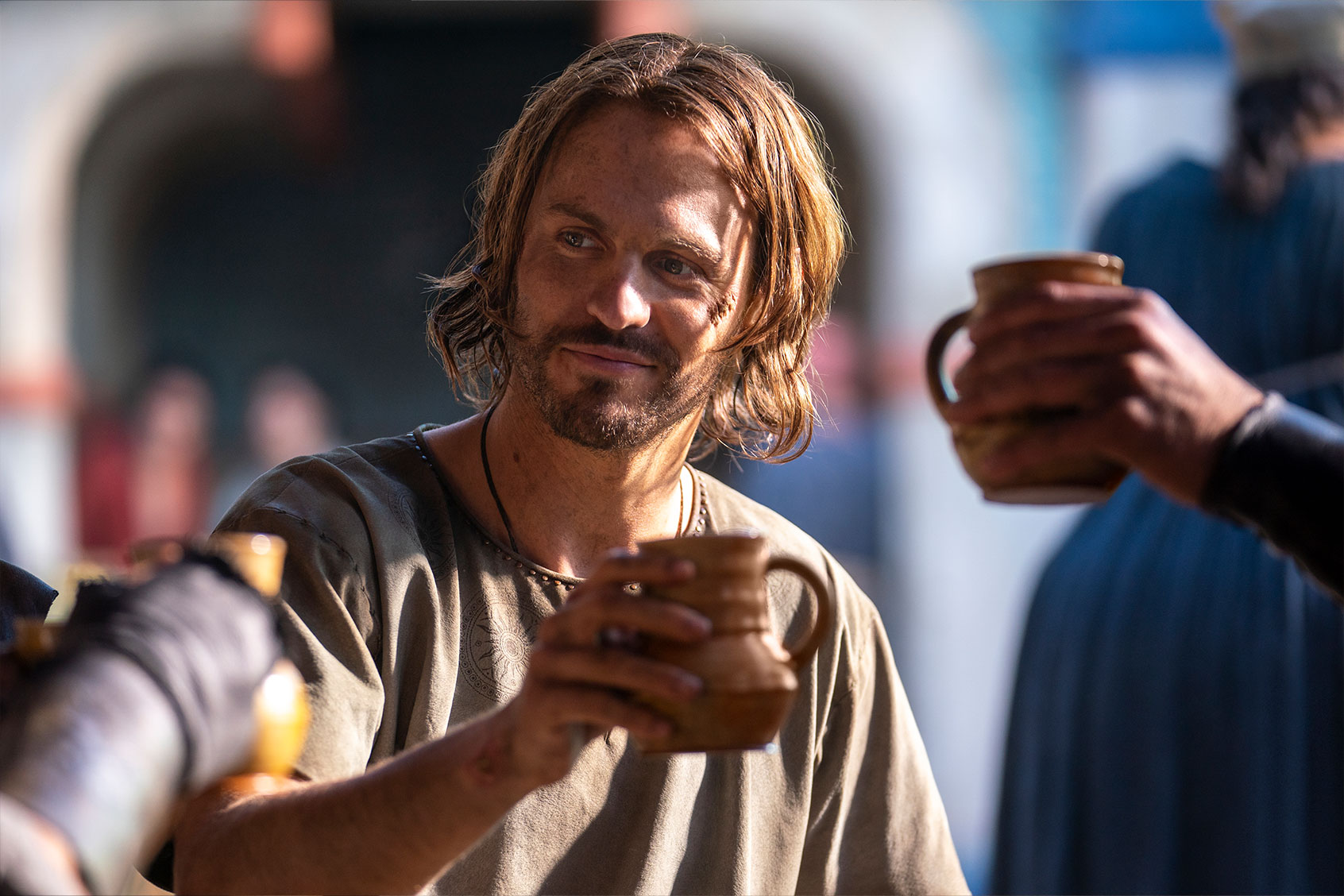


Is social media ready for midterm election misinformation? Experts grade Facebook, TikTok, Twitter

The 2016 U.S. election was a wake-up call about the dangers of political misinformation on social media. With two more election cycles rife with misinformation under their belts, social media companies have experience identifying and countering misinformation. However, the nature of the threat misinformation poses to society continues to shift in form and targets. The big lie about the 2020 presidential election has become a major theme, and immigrant communities are increasingly in the crosshairs of disinformation campaigns – deliberate efforts to spread misinformation.

Social media companies have announced plans to deal with misinformation in the 2022 midterm elections, but the companies vary in their approaches and effectiveness. We asked experts on social media to grade how ready Facebook, TikTok, Twitter and YouTube are to handle the task.


2022 is looking like 2020

Dam Hee Kim, Assistant Professor of Communication, University of Arizona

Social media are important sources of news for most Americans in 2022, but they also could be a fertile ground for spreading misinformation. Major social media platforms announced plans for dealing with misinformation in the 2022 U.S. midterm elections, but experts noted that they are not very different from their 2020 plans.

One important consideration: Users are not constrained to using just one platform. One company’s intervention may backfire and promote cross-platform diffusion of misinformation. Major social media platforms may need to coordinate efforts to combat misinformation.

Facebook/Meta: C

Facebook was largely blamed for its failure to combat misinformation during the 2016 presidential election campaign. Although engagement – likes, shares and comments – with misinformation on Facebook peaked with 160 million per month during the 2016 presidential election, the level in July 2018, 60 million per month, was still at high levels.

More recent evidence shows that Facebook’s approach still needs work when it comes to managing accounts that spread misinformation, flagging misinformation posts and reducing the reach of those accounts and posts. In April 2020, fact-checkers notified Facebook about 59 accounts that spread misinformation about COVID-19. As of November 2021, 31 of them were still active. Also, Chinese state-run Facebook accounts have been spreading misinformation about the war in Ukraine in English to their hundreds of millions of followers.

Twitter: B

While Twitter has generally not been treated as the biggest culprit of misinformation since 2016, it is unclear if its misinformation measures are sufficient. In fact, shares of misinformation on Twitter increased from about 3 million per month during the 2016 presidential election to about 5 million per month in July 2018.

This pattern seems to have continued as over 300,000 Tweets – excluding retweets – included links that were flagged as false after fact checks between April 2019 and February 2021. Fewer than 3% of these tweets were presented with warning labels or pop-up boxes. Among tweets that shared the same link to misinformation, only a minority displayed these warnings, suggesting that the process of putting warnings on misinformation is not automatic, uniform or efficient. Twitter did announce that it redesigned labels to hinder further interactions and facilitate clicks for additional information.

TikTok: D

As the fastest-growing social media platform, TikTok has two notable characteristics: Its predominantly young adult user base regularly consumes news on the platform, and its short videos often come with attention-grabbing images and sounds. While these videos are more difficult to review than text-based content, they are more likely to be recalled, evoke emotion and persuade people.

TikTok’s approach to misinformation needs major improvements. A search for prominent news topics in September 2022 turned up user-generated videos, 20% of which included misinformation, and videos containing misinformation were often in the first five results. When neutral phrases were used as search terms, for example “climate change,” TikTok’s search bar suggested more phrases that were charged, for example “climate change debunked” or “climate change doesn’t exist.” Also, TikTok presents reliable sources alongside accounts that spread misinformation.

YouTube: B-

Between April 2019 and February 2021, 170 YouTube videos were flagged as false by a fact-checking organization. Just over half of them were presented with “learn more” information panels, though without being flagged as false. YouTube seems to have added information panels mostly by automatically detecting certain keywords involving controversial topics like COVID-19, not necessarily after checking the content of the video for misinformation.

YouTube could recommend more content by reliable sources to mitigate the challenge of reviewing all uploaded videos for misinformation. One experiment collected the list of recommended videos after a user with an empty viewing history watched one video that was marked as false after fact checks. Of the recommended videos, 18.4% were misleading or hyperpartisan and three of the top 10 recommended channels had a mixed or low factual reporting score from Media Bias/Fact Check.


The big lie

Anjana Susarla, Professor of Information Systems, Michigan State University

A major concern for misinformation researchers as the 2022 midterms approach is the prevalence of false narratives about the 2020 election. A team of misinformation experts at the Technology and Social Change project studied a group of online influencers across platforms who amassed large followings from the “big lie,” the false claim that there was widespread election fraud in the 2020 election. The Washington Post published an analysis on Sept. 20, 2022, that found that most of the 77 accounts the newspaper identified as the biggest spreaders of disinformation about the 2020 election were still active on all four social media platforms.

Overall, I believe that none of the platforms have addressed these issues very effectively.

Facebook/Meta: B-

Meta, Facebook’s parent company, exempts politicians from fact-checking rules. They also do not ban political ads, unlike Twitter or TikTok. Meta has not released any policies publicly about how its rules specifically protect against misinformation, which has left observers questioning its readiness to deal with disinformation during the midterms.

Of particular concern are politicians benefiting from microtargeting – targeting narrow demographics – through election misinformation, such as a congressional candidate who ran an ad campaign on Facebook alleging a cover-up of “ballot harvesting” during the 2020 election. Election disinformation targeted at minority communities, especially Hispanic and Latino communities, on messaging apps such as WhatsApp is another major enforcement challenge for Meta when the company’s content moderation resources are primarily allocated to English-language media.

Twitter: B

Twitter does not allow political advertising and has made the most effort at reducing election-related misinformation. Twitter has highlighted its use of “prebunking,” the process of educating people about disinformation tactics, as an effective way of reducing the spread of misinformation.

However, Twitter has also been inconsistent in enforcing its policies. For example, Arizona gubernatorial candidate Kari Lake asked her followers on Twitter if they would be willing to monitor the polls for cases of voter fraud, which led civil rights advocates to warn of potential intimidation at polling stations.

TikTok: D

TikTok does not allow political advertising, which makes microtargeting from election-related misinformation less of a problem on this platform. Many researchers have highlighted TikTok’s lack of transparency, unlike platforms such as Twitter and Facebook that have been more amenable to efforts from researchers, including sharing data. TikTok’s stated content moderation approach has been that “questionable content” will not be amplified through recommendations.

However, video and audio content may be harder to moderate than textual content. The danger on platforms such as TikTok is that once a misleading video is taken down by the platform, a manipulated and republished version could easily circulate on the platform. Facebook, for example, employs AI-assisted methods to detect what it calls “near-duplications of known misinformation at scale.” TikTok has not released details of how it will address near-duplications of election-related misinformation.

Internationally, TikTok has faced immense criticism for its inability to tamp down election-related misinformation. TikTok accounts impersonated prominent political figures during Germany’s last national election.

YouTube: B-

YouTube’s policy is to remove “violative” narratives and terminate channels that receive three strikes in a 90-day period. While this may be effective in controlling some types of misinformation, YouTube has been vulnerable to fairly insidious election-related content, including disinformation about ballot trafficking. A disinformation movie titled “2000 mules” is still circulating on the platform.

Observers have faulted YouTube for not doing enough internationally to address election-related misinformation. In Brazil, for example, sharing YouTube videos on the messaging app Telegram has become a popular way to spread misinformation related to elections. This suggests that YouTube may be vulnerable to organized election-related disinformation in the U.S. as well.

Journalist and author Max Fisher discusses the nature of misinformation on social media and how it affects U.S. politics.


A range of readiness

Scott Shackelford, Professor of Business Law and Ethics, Indiana University

Many of the threats to American democracy have stemmed from internal divisions fed by inequality, injustice and racism. These fissures have been, from time to time, purposefully widened and deepened by foreign nations wishing to distract and destabilize the U.S. government. The advent of cyberspace has put the disinformation process into overdrive, both speeding the viral spread of stories across national boundaries and platforms and causing a proliferation in the types of traditional and social media willing to run with fake stories. Some social media networks have proved more able than others at meeting the moment.

Facebook/Meta: C

Despite moves to limit the spread of Chinese propaganda on Facebook, there seems to be a bipartisan consensus that Facebook has not learned its lessons from the 2016 election cycle. Indeed, it still allows political ads, including one from Republican congressional candidate Joe Kent claiming “rampant voter fraud” in the 2020 elections.

Though it has taken some steps toward transparency, as seen in its Ad Library, it has a long way to go to win back consumer confidence and uphold its social responsibility.

Twitter: B*

Twitter was among the first social media platforms to ban political ads on its platform, following similar actions by LinkedIn, Pinterest and TikTok. It has faced criticism for inconsistent enforcement, though. The Indiana University Observatory on Social Media, for example, has a tool called Hoaxy that enables real-time searches for a wide array of disinformation.

The * for this grade lies in the concern for Twitter’s future efforts to fight disinformation given its potential acquisition by Elon Musk, who has been vocal about his desire to permit uninhibited speech.

TikTok: F

The fact that TikTok does not allow political advertising on the surface bodes well for its ability to root out disinformation, but it has been apparent that its ability to do so in practice is very limited. AI-enabled deep fakes in particular are a growing problem on TikTok, something that the other social media networks have been able to monitor to greater effect.

Its efforts to set up an election center, ban deep fakes and flag disinformation are welcome but are reactive and coming too late, with primary voting already underway at that time in some states. Even after its August 2022 announcement about new reforms, for example, a report found that “nearly 1 in 5 of the videos automatically suggested by the platform contained misinformation.” Now that it is the second-most-popular domain in the world, behind only Google, its growing reach and influence underscore the need for TikTok to lead proactively to better police the integrity of their content.

YouTube: C+

Google has announced new steps to crack down on misinformation across its platforms, including YouTube, such as by highlighting local and regional journalism, but as we’re seeing in the “Stop the Steal” narrative from the Brazilian election, so far misinformation continues to flow freely.The Conversation


Dam Hee Kim, Assistant Professor of Communication, University of Arizona; Anjana Susarla, Professor of Information Systems, Michigan State University, and Scott Shackelford, Professor of Business Law and Ethics, Indiana University

This article is republished from The Conversation under a Creative Commons license. Read the original article.

Abigail Disney’s dream: Living wages for workers

When Abigail Disney was growing up in Los Angeles, she was told never to publicly disparage her family business. Her grandfather, Roy O. Disney, founded the company with his brother Walt. She followed those instructions for most of her life, but in 2018, she opened a Facebook message from a Disneyland worker pleading with her to visit him and his fellow cast members, as Disney calls its park employees, to hear their stories. When she got to Anaheim, she was so struck by their hardships that she decided to make a documentary film, The American Dream and Other Fairy Tales. Through the stories of Disneyland cast members and of her own family, Disney (a philanthropist who previously made several other documentaries) explores how and why today’s political and economic system keeps workers in poverty while enriching executives — both to levels unthinkable a generation ago.

In one scene Disney is shown sitting in a circle with a group of Disney workers. “How many of you know someone who has slept in their car in the last year?” she asks. Hands go up. “How many know somebody who has gone without medical care because they can’t afford it?” More hands. 

Later, she is shown testifying before a congressional committee, saying, “Disney could raise the salary of all of its workers to a living wage. It was possible to do this when my grandfather and great-uncle built the company, it’s possible now.” Committee members immediately tell her “that is socialism” and call her a Marxist. 

Disney emphasizes that she is merely calling for the kind of economic balance that existed during her childhood. Her film notes that as Disney CEO her grandfather earned about 80 times the salary of the average Disney worker. Bob Iger, Disney CEO when she filmed the documentary, was paid about 1,400 times the average Disney worker salary. 

Disney believes corporate CEOs and workers are now “part of a complicated system that constrains us all,” with corporations devoted solely to shareholders without regard to their broader role in society. The film opens with a quote from the poet Gwendolyn Brooks, “We are each other’s business; we are each other’s magnitude and bond.” It is that consciousness Disney hopes to inspire in U.S. society, so that workers can live without want for daily necessities.

Speaking to Capital & Main, Disney said returning to those social norms would require the “courage and imagination” to change our tax and labor laws, the very values which her grandfather and great-uncle claimed to define the Disney company. 

This interview was edited for clarity and brevity. The American Dream and Other Fairy Tales is streaming on various platforms.


Capital & Main: What’s your view of how your grandfather did business, and what do you think happened that has broadened this divide to where we are today?

Abigail Disney: I would go in the back with him through the cast members’ entrance [at Disneyland] when I was a little girl. And I remember very clearly how people greeted him. There was no like, “Oh my gosh, it’s the boss. I better be on my best behavior” sort of feeling around him. 

People knew his name, he knew their names. He asked about their children. He asked, “Did you move into that house you told me about?” He would know details about people who were the people who poured the sodas and took your tickets. They were not the big muckety-mucks at the company.

And the thing that I always tell people about him was that he would always pick up a piece of garbage, no matter where he was, no matter who was there, no matter what was going on. He would always bend over and pick a piece of garbage up off the sidewalk. 

And I asked him once why he did that, and he said, “Because no one’s too good to pick up a piece of garbage.” And when I think about the modern CEO class and how they would feel about picking up a piece of garbage, it’s almost laughable. That’s absurd. And that’s what I mean by the way my grandfather did business.

So when I say what’s happened to the way my grandfather did business, all of those things have been discredited and driven out of boardrooms, driven out of corporate priorities, because the idea has taken hold that the only thing that has value is monetary value. Everything else is kicked to the wayside. You can get laughed out of a room for suggesting that authenticity is a higher priority.

So there is this cultural shift, but at the same time, your grandfather, and I think your parents, were very conservative people, but government and labor unions also held them accountable.

Disneyland was a union place from the day that it opened in 1955. And I suspect if my grandfather had had a choice in the matter, he wouldn’t have had it be that way. He didn’t love unions. 

But it’s interesting, he didn’t love unions because he was a paternalist; he wasn’t an abuser. What he wanted was to be able to decide what people were paid based on what he decided because he was a nice guy and not because these were people’s rights. And that’s a pretty important and fundamental difference, but it is not the orientation toward business of a contemporary conservative. So yeah, his politics were pretty far on the right wing, but there was no unkindness in him.

You say in the film that you feel that Bob Iger (then-CEO of Disney) is part of a complicated system that constrains us all. Talk a little about the complexity of the world where we’re now in versus the world maybe of the 1960s, and how that is constraining us.

If you worked at an investment bank in 1968, you had a pretty lowkey job. You earned a pretty decent salary and lived in a nice house, probably drove a Cadillac back and forth to work, but you didn’t have any idea of having a private plane. That was the furthest thing from your mind. 

What happened in the interim was partly that ideology shifted about the place of money in contemporary society and the right of an individual to seek out and fight for every penny that they can possibly lay their hands on.

The financial system was unleashed by law and has become this kind of all-consuming monster that eats everything in its path. The percentage of the economy that was spent just on pure financial activities was infinitesimal compared to now. So it has sucked up so much of the energy in our economy and crowded out so much that most of the loss on the other end of those transactions has accrued to workers.

You state in The American Dream that after you sent an email to Bob Iger, he responded saying he understood the hardship of the workers, but put more of the responsibility on the government to improve their conditions.

He said that it was more complicated than just raising their wages, which is absolutely true, it is more complicated than that. Housing is expensive, and not because it’s Disney’s fault. But what was infuriating about his response was that [he said] raising their wages wouldn’t make a difference and therefore we’re not going to raise their wages. It honestly felt to me what he was really saying was, “I will do anything except raise their wages.” And that’s the part that really made me angry.

Among young people, there is now broad support for labor unions and for improving health care, housing and wages. But we see in your film when you’re testifying before Congress, when you try to have a conversation about these things, you literally were called a socialist and Karl Marx was evoked. How can we have a more evolved conversation about achieving a more humane economy? 

The majority of Americans agree at a general level with the idea that wages for workers are too low, unions and collective bargaining are important, the tax structure is wrong and needs to be changed. 

The government isn’t all bad, and maybe it’s appropriate for it to behave in certain ways and intervene in the world in certain kinds of ways. So the view that I’m describing there is what you might call a left of center view. Over there on the right, there is a reflex to react against anything that smells left of center.

And I don’t think that reflex necessarily comes from the thinking part of your brain. I honestly believe that the word “socialist” is coming out of a lot of people’s lizard brain. It’s not a genuine conversation. It’s a bludgeon, not a word.

So the way to handle that is to just keep talking sensibly and keep going forward, keep pushing on policy and let the people who are panicking and freaking out and being unreasonable do what they’re going to do. Just keep talking to the American people because they’re with us.

At the close of the film, you say that the progress we need will require courage and imagination. And it seems like the workers in your film have courage and imagination. But again there’s this corporate structure that is against imagination and courage in some ways because it just complicates things too much; and it exists in government and politics as well. What do you see as some of the obstacles that could be removed to foster that kind of courage and imagination in voters, maybe in politicians?

I think we foster courage and imagination in politicians by being different voters, by actually holding people accountable for their positions. And that includes corporate Democrats who have not been that helpful as we’ve tried to turn the tide on this as well as conservatives who are so corporate that it’s destructive to people. 

When I say courage and imagination, what I’m describing is a visionary. And a visionary is not a person who weighs a risk before making decisions about things. And corporations are risk- phobic, politicians are risk-phobic, but who are the people who push the world forward?

Who are the people who genuinely change things? Who are the politicians we actually remember? They are visionaries. Martin Luther King was a visionary. He was all about courage and imagination, and most of his best speeches were conjurings. They were asking the listener to imagine with him a space that was different and transformed. And that’s what I’m trying to do with this film.

I’m not comparing myself to Martin Luther King, but I’m asking people to imagine that it could be different. And unless people will get into the space of that imagining and have the courage to really push for that, nothing is ever going to change.

What should this younger generation that is just starting work in a Disney park or is among the 77% of young people who support unions, what should they be doing now to actually bring about change?

I think what young people need to be doing right now and as well as people across the board in the labor sector is to be supporting unions, giving their time to unions — not just their dues, but actually working to make them succeed.

Because right now, they’re strapped, they’re underpopulated, they’re not well thought of. So if you want to make a difference in the world, change the way people around you think about unions and things will start to materially change. I think that’s really important.

And then ask for better from our politicians. It’s not just a question of voting, but holding their feet to the fire for all the years in between every time you show up at the polls.

Call them, write them letters. Do everything in your power to get money out of politics. Nothing’s going to change till we do that. So those are the things that I think are most important.

What should policy makers be doing?

The IRA [Inflation Reduction Act] is a massive step in the right direction.

It’s thrilling to me that finally after all these years, the government has taken a positive step in the direction of concrete action on climate change and married that concrete action to justice for workers and people of color. 

The way the bill is written is actually quite brilliant, and I’m really happy about that. We need to vote Kyrsten Sinema out of office and go after that carried interest loophole and rethink the entire tax structure. Top marginal rates if they went up, they cannot be gamed, they cannot be avoided.

If you push top marginal rates up for the top earners, then you will have a very different pay structure in companies. And when the pay structure changes, the behavior will start to change.

Your grandfather, and probably for much of his career your father, probably didn’t like the top marginal rate, but they paid a substantially different amount of taxes, didn’t they?

They paid a lot more in taxes, it was between 70% to 90% for most of my grandfather’s working life and my father’s life until Ronald Reagan came in, and they hated it, they complained about it the way people at the time also complained about the phone company. But there was no winking about the cheating. There was no, “I’m going to the Cayman Islands to my house because I love the Cayman Islands so much.”  It wasn’t like this jokey, “I don’t pay taxes because I’m smart” ideology.

I think my father and my grandfather would’ve been horrified by the level to which tax cheating has become a socially acceptable way of operating.

Where did your grandfather live? His house is shown in the film.

He lived in a pretty standard upper middle class neighborhood. He was not living a rough life at all. He had land around his house and it was a beautiful place, but it was a ranch home with three bedrooms and open to the street. In the film, my grandfather picks a rose from one of the rose bushes. Those were my grandmother’s favorite rose bushes. And I think actually probably right after that shot, she yelled at him because she would’ve killed him for doing that on camera. But that was the life they had.

They had a nice garden, they had a nice lawn, but they didn’t want other houses, for instance. They had access to a corporate jet, but only when they were traveling on business. They flew first class, but they didn’t have an expectation that they didn’t have to wait in line with everybody else. They didn’t see themselves as different from or better than other people. I think that’s really the key.

“The Watcher”: The real-life stalking case behind Netflix’s seriocomic mystery thriller

An ominous letter writer who stalks a wealthy family in their suburban New Jersey home is the latest true crime case to receive the Netflix treatment in Ryan Murphy’s limited series “The Watcher.”

For the couple, buying this New Jersey home had “fulfilled a dream.”

Despite being based on true events, “The Watcher” shouldn’t be considered true crime. Instead, it’s a highly stylized and fictionalized seriocomic mystery thriller that employs a slew of heavy hitters, including Jennifer Coolidge, Mia Farrow, Margo Martindale and Richard Kind. Let’s just say Ryan Murphy took storytelling license, going far beyond the experiences of real-life couple Maria and Derek Broaddus, whose fictionalized counterparts Nora and Dean Brannock are portrayed by Naomi Watts and Bobby Cannavale.

In real life, upon purchasing their new 657 Boulevard residence in Westfield, New Jersey, the Broadduses and their children received a slew of tormenting letters written and signed by an anonymous stalker named The Watcher. The bone-chilling case was first made famous in a November 2018 piece published by New York Magazine. But despite the publicity, the case remains unsolved and The Watcher’s identity remaining a mystery.

Here’s everything you need to know about The Watcher case that inspired the series:

The first letter

Naomi Watts as Nora Brannock, Bobby Cannavale as Dean Brannock in “The Watcher” (Netflix)In 2014, the Broadduses bought their 657 Boulevard residence, which was priced at a whopping $1.3 million and had six bedrooms. For the couple, buying this New Jersey home had “fulfilled a dream.” Maria, who was raised in Westfield, now lived just a few blocks from her childhood home while Derek, who worked his way up at an insurance company to become a senior vice-president, now had enough money to make the purchase. The house was bought just after Derek celebrated his 40th birthday, and together, the family planned on renovating it before settling in.
The Broadduses received their first letter from The Watcher in June 2014, during the renovations on their house. The letter, addressed simply to “The New Owner,” was inviting at first before it grew threatening. 

It read:

Dearest new neighbor at 657 Boulevard,

Allow me to welcome you to the neighborhood…

657 Boulevard has been the subject of my family for decades now and as it approaches its 110th birthday, I have been put in charge of watching and waiting for its second coming. My grandfather watched the house in the 1920s and my father watched in the 1960s. It is now my time. Do you know the history of the house? Do you know what lies within the walls of 657 Boulevard? Why are you here? I will find out.

The Watcher also identified the Broadduses’ Honda minivan and the workers renovating their home. They continued, “I see already that you have flooded 657 Boulevard with contractors so that you can destroy the house as it was supposed to be. Tsk, tsk, tsk . . . bad move. You don’t want to make 657 Boulevard unhappy.” The stalker also noted that the Broadduses had three children, who were 5, 8 and 10 years of age at the time. They wrote:

Do you need to fill the house with the young blood I requested? Better for me. Was your old house too small for the growing family? Or was it greed to bring me your children? Once I know their names I will call to them and draw them too [sic] me.

The letter didn’t stop there and only became more unsettling. The Watcher wrote, “Who am I? There are hundreds and hundreds of cars that drive by 657 Boulevard each day. Maybe I am in one. Look at all the windows you can see from 657 Boulevard. Maybe I am in one. Look out any of the many windows in 657 Boulevard at all the people who stroll by each day. Maybe I am one.

“Welcome my friends, welcome. Let the party begin,” The Watcher concluded, adding their signature in a typed cursive font. The envelope that the letter had arrived in also had no return address. 

“The letters could be read closely for possible clues, or dismissed as the nonsensical ramblings of a sociopath.”

Following the incident, the Broadduses contacted the previous homeowners, John and Andrea Woods, to ask if they knew who The Watcher was and why they had written. The Woodses said they had received a similar “odd” note from The Watcher, but they had thrown it out without much thought.

The letters get more personal

Mia Farrow as Pearl Winslow, Terry Kinney as Jasper Winslow, Jeffery Brooks as Officer, Duke Lafoon as Neighbor, Naomi Watts as Nora Brannock, Bobby Cannavale as Dean Brannock in “The Watcher” (Eric Liebowitz/Netflix)In the same vein as the Woodses, the Broadduses thought nothing of the letter until they received four more letters from The Watcher.

These new letters included more intimate details about the family, including the couple’s personal names (albeit misspelled), their children’s ages (organized by birth order) and their children’s nicknames. “I am pleased to know your names now and the name of the young blood you have brought to me,” The Watcher wrote. “You certainly say their names often.” 

The letter continued:

657 Boulevard is anxious for you to move in. It has been years and years since the young blood ruled the hallways of the house. Have you found all of the secrets it holds yet? Will the young blood play in the basement? Or are they too afraid to go down there alone. I would [be] very afraid if I were them. It is far away from the rest of the house. If you were upstairs you would never hear them scream.

Will they sleep in the attic? Or will you all sleep on the second floor? Who has the bedrooms facing the street? I’ll know as soon as you move in. It will help me to know who is in which bedroom. Then I can plan better.

All of the windows and doors in 657 Boulevard allow me to watch you and track you as you move through the house. Who am I? I am the Watcher and have been in control of 657 Boulevard for the better part of two decades now. The Woods family turned it over to you. It was their time to move on and kindly sold it when I asked them to.

I pass by many times a day. 657 Boulevard is my job, my life, my obsession. And now you are too Braddus family. Welcome to the product of your greed! Greed is what brought the past three families to 657 Boulevard and now it has brought you to me.

Have a happy moving in day. You know I will be watching.

A separate letter from The Watcher read:

657 Boulevard is turning on me. It is coming after me. I don’t understand why. What spell did you cast on it? It used to be my friend and now it is my enemy. I am in charge of 657 Boulevard. It is not in charge of me. I will fend off its bad things and wait for it to become good again. It will not punish me. I will rise again. I will be patient and wait for this to pass and for you to bring the young blood back to me. 657 Boulevard needs young blood. It needs you. Come back. Let the young blood play again like I once did. Let the young blood sleep in 657 Boulevard. Stop changing it and let it alone.

The Broadduses eventually notified law enforcement, who found that the letters had been processed in Kearny, the U.S. Postal Service’s distribution center in northern New Jersey. Despite the investigation along with a separate investigation led by the Broadduses and some possible leads, the case had stalled by the end of 2014. Per the article, The Watcher “had left no digital trail, no fingerprints, and no way to place someone at the scene of a crime that could have been hatched from pretty much any mailbox in northern New Jersey. The letters could be read closely for possible clues, or dismissed as the nonsensical ramblings of a sociopath.” 

Scott Kraus, who helped investigate the case for the Union County Prosecutor’s Office, said the entire investigation was “like trying to find a needle in a haystack.” Following the closure of the case, Derek showed the letters to his priest, who agreed to bless the house the Broadduses never moved into. 

The Watcher’s identity still remains a mystery today.

The aftermath

The Broadduses never moved into the 657 Boulevard residence. Instead, they moved in with Maria’s parents while continuing to pay the mortgage and property taxes on their would-have-been home. 

Six months after receiving the threatening letters, the Broadduses decided to sell their 657 Boulevard house but they weren’t successful until 2019, when they finally sold the house for $400,000. 

Despite the fabricated nature of “The Watcher” series, it did have the blessing of the Broadduses, but with a few caveats. According to Mashable, the family requested two big changes to the Netflix production. The first was not to use the family’s real names, and the second was that the show’s family would not look like the real Broaddus family. In the show, the Brannocks have two older children rather than three children in elementary school.

On a more surprising note, the real Broadduses also suggested that they wouldn’t mind if the show’s version of their house was burnt to ashes . . . for storytelling effect of course.

It’s not hard to see why that specific suggestion was made in the first place.

Netflix’s “The Watcher” is currently available for streaming. Watch a trailer below, via YouTube:

Study: Climate anxiety is spreading all over the planet

If you’re feeling anxious about climate change, the common wisdom goes, there’s an antidote: Take action. Maybe you can alleviate your worries by doing something positive, like going to a protest, becoming an advocate for mass transit, or trying to get an environmental champion elected.

New research reveals that these anxieties are not just Western concerns — they’re common among young people on nearly every continent — but that the ability to do something about them depends on where you live. “The question is whether you have the opportunity or not to engage in those behaviors,” said Charles Ogunbode, a psychologist at the University of Nottingham in the United Kingdom.

The study, recently published in the Journal of Environmental Psychology, takes the broadest look yet at climate anxiety around the globe. Ogunbode and researchers all over the world surveyed more than 10,000 university students in 32 countries, asking how climate change made them feel. They found that it was hurting people’s mental health virtually everywhere, from Brazil to Uganda, Portugal to the Philippines. 

Almost half of the young people surveyed said they were “very” or “extremely” worried about climate change. Nearly a quarter felt “terrified,” and even more felt either “very” or “extremely” anxious. Previous research has suggested that climate anxiety is widespread: Last year, a survey in 11 countries around the world found that 45 percent of teens and young adults said that climate anxiety was affecting their daily lives and ability to function.

“Climate anxiety” has become a catch-all for how worries about our overheating planet affect people’s mental health. Experts say that feeling grief, fear, and anxiety is a logical response to the catastrophic situation. But some researchers have argued that the phrase “climate anxiety” is ambiguous — a buzzword, not a clinical diagnosis — and that it tends to resonate more with white and wealthy people than those experiencing the most severe effects of climate disasters. 

While the study didn’t look at how people respond to the phrase itself, the results show that it’s not just those in wealthier countries like the United States who are wrestling with tough emotions as a result of climate change. Ogunbode thinks developing countries should play a bigger part in the conversation, since the link between emotions and mental health is “just as strong” as it is in rich countries.

“We very rarely find anyone talking about how people in Ghana or the Philippines feel about climate change,” he said. “It’s almost like, ‘Look, as long as we can provide the basic stuff — people can eat, they have a place to sleep, they have water — that’s it. That’s fine.'”

The new study found that across the board, people’s concerns about climate change motivated them to want to take action. But anxiety played a role in motivating people to adopt environmentally-friendly behaviors, especially in richer, more individualistic countries — places where people are more likely to fly carbon-guzzling planes or drive large cars for small trips.

The most apparent barriers to direct action were political. It’s not as easy to protest climate change in a country that doesn’t protect the right to free speech or demonstrations. People worrying about the climate were more likely to engage in demonstrations in just under half of the countries studied, most of them in Europe. The connection was the strongest in Finland, one of the world’s most democratic countries, and the weakest in China, among the world’s least.

In three-quarters of the countries studied, climate anxiety appears to lead to eco-friendly behaviors — avoiding food waste, for instance, or walking and biking instead of driving. The exceptions were Egypt, Iran, Japan, Malaysia, Oman, Pakistan, and Tanzania.

In some places, people don’t have access to much information about what kind of actions are effective, Ogunbode said. Looking at open-ended responses to the survey, people in countries like the Philippines and Malaysia indicated that the survey questions themselves — about saving energy and reducing waste — had provided them with new information, Ogunbode said. “I got the sense that a lot of people only realized when they were reading through the questions, ‘Oh, maybe there’s something I can be doing.'”