Help keep Salon independent

Republicans are using ruse of “election integrity” to pull off another round of Big Lie chicanery

All of the American media was atwitter on Thursday afternoon from rumors that CNN was going to release a bombshell report about North Carolina Lt. Gov. Mark Robinson, the Republican nominee for Governor. It turned out to be a gross and salacious story about his porn habits and comments calling himself a "Black Nazi." It was reported during the day that the Trump campaign wanted him to drop out, presumably because they suspected Robinson was already dragging down the ticket, but he refused. There was a midnight deadline to (possibly) remove him from the ballot, so that seems to be that.

This is not a court I would trust to be judicious when it comes to this presidential election.

North Carolina is very close, according to the polls, as are all the swing states. And while this possible help for Trump landed in the Trump campaign's lap at the last moment, in other states they are working overtime to subvert the vote and contest the election results if they don't go Trump's way. Ground zero for those plans is Georgia, one of the states, along with North Carolina and Pennsylvania, considered a must-win for Donald Trump assuming he manages to hold on to all the other states he won in 2020. Georgia election deniers have been working behind the scenes for the past year laying their plans.

The Trumpy Georgia’s State Election Board voted to give local boards the authority to challenge election officials before certifying county election results. Trump was so happy about it that he even praised by name those on the board who made it possible at one of his rallies. At the very least those local boards can create chaos by refusing to certify the election canvas due to what they will say is suspected fraud and foment more right-wing conspiracy theories. They could also end up in court and win the day.

They don't have unlimited power to delay but if they do this it will require intervention by the state courts, by the state official charged with certifying the electors, or the federal court. Suppose a presidential candidate wants to bring an action. In that case, the new Electoral Count Reform Act (ECRA) provides for such cases to be heard on an expedited basis in federal court by a three-judge judicial panel consisting of two circuit court of appeals judges and one district court judge. Any appeal would go to the Supreme Court which is required to rule before the electors meet. Does any of that sound like a recipe for an outcome that is accepted as legitimate by the whole country?

The ECRA resolved some other issues stemming from the 2020 Big Lie and subsequent insurrection. It makes clear that the role of the vice president is ministerial only and requires that 1/5 of the House and Senate must vote to object to the certification in a particular state. That's not impossible but it is a much heavier lift than before. The certifications are now required to be done by December 11, when before it was governed by the vague "safe harbor" provision.

The election deniers had hoped to have some secretaries of state and other top election officials in their pocket for this election but they have failed to win at the ballot box so being reduced to the county level is something of a failure. Still, there is little doubt that this could cause delays and dissension — which is part of the plan. We know what Trump is capable of after a loss when it comes to riling up his voters. He's already planting seeds everywhere about the election being rigged against him. He did the same in 2016 and 2020.

There are other plans afoot besides post election challenges in various states. For instance, South Carolina Senator Lindsey Graham, who was deeply involved in trying to get Georgia to overturn their election results in 2020, is up to his old tricks. He's leading a delegation for Donald Trump to Nebraska to try to convince the Republican legislature to change their electoral college system to winner-take-all all. (Currently, two electoral votes go to the winner of the popular vote in the state and the other three are split among the three congressional districts and are awarded to whoever wins the popular vote in each one.) With the swing states so close, the one district in the state that reliably votes Democratic could be the winning margin for Kamala Harris.

We need your help to stay independent

This first came up a few months back but it didn't go anywhere because Maine, which has a similar system, said they would do the same which would make it a wash. Unfortunately, the deadline for Maine to do that appears to have passed which explains why the Republicans are moving on it now.

Graham thinks it's perfectly legitimate to have them change the law 6 weeks before the election for the clear purpose of benefiting Donald Trump but they screamed bloody murder over some rules changes in 2020 to deal with the deadly pandemic. They like to call this "election integrity."

There are also concerns about the role of the House Speaker should the Republicans maintain their majority. The current Speaker Mike Johnson, wrote an amicus brief back in 2020 on behalf of Trump asking the Supreme Court to essentially overturn swing-state results. There are concerns that if he is the speaker next January 6 he will use the power of his office for Trump's benefit once again. Politico reports there are several possibilities ranging from changing the rules, which merely exist by tradition, for the counting of the votes on January 6 to asking the courts to rule on the constitutionality of the ECRA. That would inevitably end up in the Supreme Court as well.

In fact, it appears that if they really push this, all roads lead to the high court which is terrifying. The last time that happened with Bush v. Gore we had a strict partisan decision with fatuous reasoning that even they realized should not ever be used in any other case. And that court was a model of unbiased integrity compared to what we have now. After the stunning revelations in the epic New York Times report over the weekend, based on some unprecedented leakage from inside the normally secretive institution, it's clear that Chief Justice John Roberts is leading the charge to protect Donald Trump from accountability and we already knew that he has been the driving force behind the court's overturning of voting rights cases for the past few years. This is not a court I would trust to be judicious when it comes to this presidential election.

It's not exactly going to be easy for the Republicans this time. People know what they're up to and the Democrats are prepared with legal responses every step of the way. Luckily the voters have managed to keep the most powerful would-be usurpers out of office and Congress set up some serious roadblocks. And Trump isn't president so he won't have the government available to do his bidding. But if the election is very close and it ends up in the Supreme Court as Bush v. Gore did, there is a very good chance they will hand the presidency to him. They clearly have no care for whatever legitimacy they once had.

Will climate change bring an end to America’s world order?

Once upon a time in America, we could all argue about whether or not U.S. global power was declining. Now, most observers have little doubt that the end is just a matter of timing and circumstance. Ten years ago, I predicted that, by 2025, it would be all over for American power, a then-controversial comment that’s commonplace today. Under President Donald Trump, the once “indispensable nation” that won World War II and built a new world order has become dispensable indeed.

The decline and fall of American global power is, of course, nothing special in the great sweep of history. After all, in the 4,000 years since humanity’s first empire formed in the Fertile Crescent, at least 200 empires have risen, collided with other imperial powers, and in time collapsed. In the past century alone, two dozen modern imperial states have fallen and the world has managed just fine in the wake of their demise.

The global order didn’t blink when the sprawling Soviet empire imploded in 1991, freeing its 15 “republics” and seven “satellites” to become 22 newly capitalist nations. Washington took that epochal event largely in stride. There were no triumphal demonstrations, in the tradition of ancient Rome, with manacled Russian captives and their plundered treasures paraded down Pennsylvania Avenue. Instead, a Manhattan real-estate developer bought a 20-foot chunk of the Berlin Wall for display near Madison Avenue, a sight barely noticed by busy shoppers.

For those trying to track global trends for the next decade or two, the real question is not the fate of American global hegemony, but the future of the world order it began building at the peak of its power, not in 1991, but right after World War II. For the past 75 years, Washington’s global dominion has rested on a “delicate duality.” The raw realpolitik of U.S. military bases, multinational corporations, CIA coups and foreign military interventions has been balanced, even softened, by a surprisingly liberal world order — with sovereign states meeting as equals at the United Nations, an international rule of law that muted armed conflict, a World Health Organization that actually eradicated epidemic diseases which had plagued humanity for generations, and a developmental effort led by the World Bank that lifted 40% of humanity out of poverty.

Some observers remain supremely confident that Washington’s world order can survive the inexorable erosion of its global power. Princeton political scientist G. John Ikenberry, for example, has essentially staked his reputation on that debatable proposition. As U.S. decline first became apparent in 2011, he argued that Washington’s ability to shape world politics would diminish, but “the liberal international order will survive and thrive,” preserving its core elements of multilateral governance, free trade and human rights. Seven years later, amid a rise of anti-global nationalists across significant parts of the planet, he remains optimistic that the American-made world order will endure because international issues such as climate change make its “protean vision of interdependence and cooperation… more important as the century unfolds.”

This sense of guarded optimism is widely shared among foreign policy elites in the New York-Washington corridor of power. The president of the influential Council on Foreign Relations, Richard Haass, has typically argued that the “post-Cold War order cannot be restored, but the world is not yet on the edge of a systemic crisis.” Through deft diplomacy, Washington could still save the planet from “deeper disarray” or even “trends that spell catastrophe.”

But is it true that the decline of the planet’s “sole superpower” (as it was once known) will no more shake the present world order than the Soviet collapse once did? To explore what it takes to produce just such an implosion of a world order, it’s necessary to turn to history — to the history, in fact, of collapsing imperial orders and a changing planet.

Admittedly, such analogies are always imperfect, yet what other guide to the future do we have but the past? Among its many lessons: that world orders are far more fundamental than we might imagine and that their uprooting requires a perfect storm of history’s most powerful forces. Indeed, the question of the moment should be: Is climate change now gathering sufficient destructive force to cripple Washington’s liberal world order and create an opening for Beijing’s decidedly illiberal one or possibly even a new world in which such orders will be unrecognizable?

Empires and world orders

Despite the aura of awe-inspiring power they give off, empires have often been the ephemeral creations of an individual conqueror like Alexander the Great or Napoleon that fade fast after his death or defeat. World orders are, by contrast, far more deeply rooted. They are resilient global systems created by a convergence of economic, technological and ideological forces. On the surface, they entail a diplomatic entente among nations, while at a deeper level they entwine themselves within the cultures, commerce and values of countless societies. World orders influence the languages people speak, the laws they live by, and the ways they work, worship, and even play. World orders are woven into the fabric of civilization itself. To uproot them takes an extraordinary event or set of events, even a global catastrophe.

Looking back over the last millennium, old orders die and new ones arise when a cataclysm, marked by mass death or a maelstrom of destruction, coincides with some slower yet sweeping social transformation. Since the age of European exploration started in the 15th century, some 90 empires, large and small, have come and gone. In those same centuries, however, there have been only three major world orders — the Iberian age (1494-1805), the British imperial era (1815-1914) and the Washington world system (1945-2025).

Is climate change now gathering sufficient destructive force to cripple Washington’s liberal world order and create an opening for Beijing’s decidedly illiberal one?

Such global orders are not the mere imaginings of historians trying, so many decades or centuries later, to impose some logic upon a chaotic past. Those three powers — Spain, Britain and the United States — consciously tried to reorder their worlds for, they hoped, generations to come through formal agreements — the Treaty of Tordesillas in 1494, the Congress of Vienna in 1815 and the San Francisco conference that drafted the U.N. charter in 1945. Should Beijing succeed Washington as the world’s preeminent power, future historians will likely look back on its Belt and Road Forum, which brought 130 nations to Beijing in 2017, as the formal start of the Chinese era.

Each of these treaties shaped a world in the most fundamental ways, articulating universal principles that would define the nature of nations and the rights of all humans within them for decades to come. Over this span of 500 years, these three world orders conducted what could be seen, in retrospect, as a continuing debate over the nature of human rights and the limits of state sovereignty over vast stretches of the planet.

In their spread across disparate lands, world orders become coalitions of contending, even contradictory, social forces — diverse peoples, rival nations, competing classes. When deftly balanced, such a system can survive for decades, even centuries, by subsuming those contending forces within broadly shared interests. As tensions swell into contradictions, however, a cataclysm in the form of war or natural disaster can catalyze otherwise simmering conflicts — allowing challenges from rival powers, revolts by subordinate social orders, or both.

The Iberian age

During the last thousand years, the first of these transformative cataclysms was certainly the Black Death of 1350, one of history’s greatest waves of mass mortality via disease, this one spread by rats carrying infected lice from Central Asia across Europe. In just six years, this pandemic killed up to 60% of Europe’s population, leaving some 50 million dead. As lesser yet still lethal epidemics recurred at least eight times over the next half-century, the world’s population fell sharply from an estimated 440 million to just 350 million people, a crash from which it would not fully recover for another two centuries.

Historians have long argued that the plague caused lasting labor shortages, slashing revenues on feudal estates and so forcing aristocrats to seek alternative income through warfare. The result: a century of incessant conflict across France, Italy and Spain. But few historians have explored the broader geopolitical impact of this demographic disaster. After nearly a millennium, it seems to have ended the Middle Ages with its system of localized states and relatively stable regional empires, while unleashing the gathering forces of merchant capital, maritime trade and military technology to, quite literally, set the world in motion.

As Tamerlane’s horsemen swept across Central Asia and the Ottoman Turks occupied southeast Europe (while also capturing Constantinople, the Byzantine empire’s capital, in 1453), Iberia’s kingdoms turned seaward for a century of exploration. Not only did they extend their growing imperial power to four continents (Africa, Asia and both Americas), but they also created the first truly global order worthy of the name, commingling commerce, conquest and religious conversion on a global scale.

The Black Death ended the Middle Ages with its system of localized states and relatively stable regional empires, while unleashing the gathering forces of merchant capital, maritime trade and military technology to literally set the world in motion.

Starting in 1420, thanks to advances in navigation and naval warfare, including the creation of the agile caravel gunship, Portuguese mariners pushed south, rounded Africa, and eventually built some 50 fortified ports from Southeast Asia to Brazil.  This would allow them to dominate much of world trade for more than a century. Somewhat later, Spanish conquistadors followed Columbus across the Atlantic to conquer the Aztec and Incan empires, occupying significant parts of the Americas.

Just weeks after Columbus completed his first voyage in 1493, Pope Alexander VI issued a decree awarding the Spanish crown perpetual sovereignty over all lands west of a mid-Atlantic line so “that barbarous nations be overthrown and brought to the [Catholic] faith.” He also affirmed an earlier papal bull (Romanus Pontifex, 1455) that gave Portugal’s king rights to “subdue all Saracens and pagans” east of that line, “reduce their persons to perpetual slavery,” and “possess these islands, lands, harborsand seas.”

To settle just where that line actually lay, Spanish and Portuguese diplomats met for months in 1494 in the tiny city of Tordesillas for high-stakes negotiations, producing a treaty that split the non-Christian world between them and officially launched the Iberian age. In its expansive definition of national sovereignty, this treaty allowed European states to acquire “barbarous nations” by conquest and make entire oceans into a mare clausum, or a closed sea, through exploration. This diplomacy would also impose a rigid religious-cum-racial segregation upon humanity that would persist for another five centuries.

Even as they rejected Iberia’s global land grab, other European states contributed to the formation of that distinctive world order. King Francis I of France typically demanded “to see the clause of Adam’s will by which I should be denied my share of the world.” Nonetheless, he accepted the principle of European conquest and later sent navigator Giovanni da Verrazzano to explore North America and claim what became Canada for France.

A century after, when Protestant Dutch mariners defied Catholic Portugal’s mare clausum by seizing one of its merchant ships off Singapore, their jurist Hugo Grotius argued persuasively, in his 1609 treatise "Mare Liberum" (“Freedom of the Seas”), that the sea like the air is “so limitless that it cannot become a possession of any one.” For the next 400 years, the twin diplomatic principles of open seas and conquered colonies would remain foundational for the international order.

We need your help to stay independent

Sustained by mercantile profits and inspired by missionary zeal, this diffuse global order proved surprisingly resilient, surviving for three full centuries. By the start of the 18th century, however, Europe’s absolutist states had descended into destructive internecine conflicts, notably the War of Spanish Succession (1701-1714) and a global Seven Years War (1756-1763). Moreover, the royal chartered companies — British, Dutch and French — that by then ran those empires were proving ever less capable of effective colonial rule and increasingly inept at producing profits.

After two centuries of dominion, the French East India Company liquidated in 1794 and its venerable Dutch counterpart collapsed only five years later.  Final fatal blows to these absolutist regimes were delivered by the American, French and Haitian revolutions that erupted between 1776 and 1804.

The British imperial era

The British imperial age emerged from the cataclysmic Napoleonic Wars that unleashed the transformative power of England’s innovations in industry and global finance. For 12 years, 1803 to 1815, those wars proved to be a Black Death-style maelstrom that roiled Europe, leaving six million dead in their wake and reaching India, Southeast Asia and the Americas.

By the time the Emperor Napoleon disappeared into exile, France, stripped of many of its overseas colonies, had been reduced to secondary status in Europe, while its erstwhile ally, Spain, was so weakened that it would soon lose its Latin American empire. Propelled by a tumultuous and historic economic transformation, Britain suddenly faced no serious European rival and found itself free to create and oversee a bifurcated world order in which sovereignty remained a right and reality only in Europe and parts of the Americas, while much of the rest of the planet was subject to imperial dominion.

Admittedly, the destruction caused by the Napoleonic wars may seem relatively modest compared to the devastation of the Black Death, but the long-term changes engendered by Britain’s industrial revolution and the finance capitalism that emerged from those wars proved far more compelling than the earlier era’s merchant companies and missionary endeavors. From 1815 to 1914, London presided over an expanding global system marked by industry, capital exports and colonial conquests, all spurred by the integration of the planet via railroad, steamship, telegraph and ultimately radio. In contrast to the weak royal companies of the earlier age, this version of imperialism combined modern corporations with direct colonial rule in a way that allowed for far more efficient exploitation of local resources. No surprise, then, that some scholars have called Britain’s century of dominion the “first age of globalization.”

From 1815 to 1914, London presided over an expanding global system marked by industry, capital exports and colonial conquests, all spurred by the integration of the planet via railroad, steamship, telegraph and radio.

While British industry and finance were quintessentially modern, its imperial age extended key international principles of centuries past, even if in grim secular guise. While the Dutch doctrine of “freedom of the seas” allowed the British navy to rule the waves, the earlier religious justification for domination was replaced by a racialist ideology that legitimized European efforts to conquer and colonize the half of humanity whom the imperialist poet Rudyard Kipling branded the “lesser breeds.”

Although the 1815 Congress of Vienna officially launched the British era by eliminating France as a rival, the 1885 Berlin Conference on Africa truly defined the age. Much as the Portuguese and Spanish had done at Tordesillas in 1494, the 14 imperial powers (including the United States) present at Berlin four centuries later justified carving up the entire continent of Africa by proclaiming a self-serving commitment “to watch over the preservation of the native tribes and to care for the improvement of the conditions of their moral and material well-being.” Just as that designation of Africans as “native tribes” instead of “nations” or “peoples” denied them both sovereignty and human rights, so the British century witnessed eight empires subjecting nearly half of humanity to colonial rule premised on racial inferiority.

Only a century after its founding, however, the contradictions that lurked within Great Britain’s global rule erupted, thanks to the way that two cataclysmic world wars coincided with the long-term rise of anti-colonial nationalism to create our current world order. The alliance system among rival empires proved volatile, exploding into murderous conflicts in 1914 and again in 1939. Worse yet, industrialization had spawned the battleship and the airship as engines for warfare of unprecedented range and destructive power, while modern science would also create nuclear weapons with the power to potentially destroy the planet itself. Meanwhile, the colonies that covered nearly half the globe refused to abide by the institutionalized denial of the very liberty, humanity, and sovereignty that Europe prized for itself.

While most of the 15 million combat deaths in World War I emerged from the destructive nature of trench warfare on the western front in France (compounded by 100 million fatalities worldwide from an influenza pandemic), World War II spread its devastation globally, killing more than 60 million people and ravaging cities across Europe and Asia. With Europe struggling to recover, its empires could no longer constrain colonial cries for independence. Just two decades after the war’s end, the six European overseas empires that had dominated much of Asia and Africa for five centuries gave way to 100 new nations.

Washington’s world order

In the aftermath of history’s most destructive war, the United States used its unmatched power to form the Washington world system. American deaths in World War II numbered 418,000, but those losses paled before the 24 million dead in Russia, the 20 million more in China, and the 19 million in Europe. While industries across Europe, Russia and Japan were damaged or destroyed and much of Eurasia was ravaged, the United States found itself left with a vibrant economy on a war footing and half the world’s industrial capacity. With much of Europe and Asia suffering from mass hunger, the swelling surpluses of American agriculture fed a famished humanity.

Washington’s visionary world order took form at Bretton Woods, New Hampshire, in 1944.  There, 44 Allied nations created an international financial system exemplified by the World Bank and then, at San Francisco in 1945, by a U.N. charter to form a community of sovereign nations. In a striking blow for human progress, this new order resoundingly rejected the religious and racial divisions of the previous five centuries, proclaiming in the U.N.’s Universal Declaration of Human Rights the “equal and inalienable rights of all members of the human family,” which “should be protected by the rule of law.”

Within a decade after the end of World War II, Washington had 500 overseas military bases ringing Eurasia, a chain of mutual defense pacts and a globe-girding armada of nuclear-armed warships and strategic bombers.

Within a decade after the end of World War II, Washington also had 500 overseas military bases ringing Eurasia and a chain of mutual defense pacts stretching from the North Atlantic Treaty Organization (NATO) to the Australia, New Zealand, United States Security Treaty (ANZUS), and a globe-girding armada of nuclear-armed warships and strategic bombers. To exercise its version of global dominion, Washington retained the 17th-century Dutch doctrine of “freedom of the seas,” later extending it even to space where, for more than half a century, its military satellites have orbited without restraint.

Just as the British imperial system was far more pervasive and powerful than its Iberian predecessor, so Washington’s world order went beyond both of them, becoming rigorously systematic and deeply embedded in every aspect of planetary life. While the 1815 Congress of Vienna was an ephemeral gathering of two dozen diplomats whose influence faded within a decade, the United Nations and its 193 member states have, for nearly 75 years, sustained 44,000 permanent staff to supervise global health, human rights, education, law, labor, gender relations, development, food, culture, peacekeeping and refugees. In addition to such broad governance, the U.N. also hosts treaties that are meant to regulate sea, space and the climate.

Not only did the Bretton Woods conference create a global financial system, but it also led to the formation of the World Trade Organization that regulates commerce among 124 member states. You might imagine, then, that such an extraordinarily comprehensive system, integrated into almost every aspect of international intercourse, would be able to survive even major upheavals.

Cataclysm and collapse

Yet there is mounting evidence that climate change, as it accelerates, is creating the basis for the sort of cataclysm that will be capable of shaking even such a deeply rooted world order. The cascading effects of global warming will be ever more evident, not in the distant future of 2100 (as once thought), but within just 20 years, impacting the lives of most adults alive today.

Last October, scientists with the U.N.’s Intergovernmental Panel on Climate Change issued a “doomsday report,” warning that humanity had just 12 years left to cut carbon emissions by a striking 45% or the world’s temperature would rise by at least 1.5 degrees Celsius above preindustrial levels by about 2040.  This, in turn, would bring significant coastal flooding, ever more intense storms, fierce drought, wildfires and heat waves with damage that might add up to as much as $54 trillion — well over half the current size of the global economy. Within a few decades after that, global warming would, absent heroic measures, reach a dangerous 2 degrees Celsius, with even more devastation.

The cascading effects of global warming will be ever more evident, not in the distant future of 2100 (as once thought), but within just 20 years, impacting the lives of most adults alive today.

In January, scientists, using new data from sophisticated floating sensors, reported that the world’s oceans were heating 40% faster than estimated only five years earlier, unleashing powerful storms with frequent coastal flooding. Sooner or later, sea levels might rise by a full foot thanks to nothing but the thermal expansion of existing waters. Simultaneous reports showed that the rise in world air temperature has already made the last five years the hottest in recorded history, bringing ever more powerful hurricanes and raging wildfires to the United States with damages totaling $306 billion in 2017. And that hefty sum should be considered just the most modest of down payments on what’s to come.

Surprisingly fast-melting ice sheets in Greenland and the Antarctic will only intensify the impact of climate change. An anticipated rise in sea level of eight inches by 2050 could double coastal flooding in tropical latitudes — with devastating impacts on millions of people in low-lying Bangladesh and the mega-cities of southeastern Asia from Mumbai to Saigon and Guangzhou. Meltwater from Greenland is also disrupting the North Atlantic’s “overturning circulation” that regulates the region’s climate and is destined to produce yet more extreme weather events. Meanwhile, Antarctic meltwater will trap warm water under the surface, accelerating the break-up of the West Antarctic ice shelf and contributing to a rise in ocean levels that could hit 20 inches by 2100.

In sum, an ever-escalating tempo of climate change over the coming decades is likely to produce massive damage to the infrastructure that sustains human life. Seven hundred years later, humanity could be facing another catastrophe on the scale of the Black Death, one that might, once again, set the world in motion.

The geopolitical impact of climate change may be felt most immediately in the Mediterranean basin, home to 466 million people, where temperatures in 2016 had already reached 1.3 degrees Celsius above pre-industrial levels.  (The current global average was still around 0.85 degrees.) This means that the threat of devastating drought is going to be brought to a historically dry region bordered by sprawling deserts in North Africa and the Middle East. In a telling example of how climate catastrophe can erase an entire world order, around 1200 B.C. the eastern Mediterranean suffered a protracted drought that “caused crop failures, dearth, and famine,” sweeping away Late Bronze Age civilizations like the Greek Mycenaean cities, the Hittite empire and the New Kingdom in Egypt.

From 2007 to 2010, ongoing global warming caused the “worst three-year drought” in Syria’s recorded history — precipitating unrest marked by “massive agricultural failures” that drove 1.5 million people into city slums and, next, by a devastating civil war that, starting in 2011, forced five million refugees to flee that country. As more than a million migrants, led by 350,000 Syrians, poured into Europe in 2015, the European Union plunged into political crisis. Anti-immigrant parties soon gained in popularity and power across the continent while Britain voted for its own chaotic Brexit.

Projecting the Middle East’s history, ancient and modern, into the near future, the ingredients for a regional crisis with serious global ramifications are clearly present. Just last month, the U.S. National Intelligence Council warned that “climate hazards,” such as “heat waves [and] droughts,” were increasing “social unrest, migration and interstate tension in countries such as Egypt, Ethiopia, Iraq and Jordan.”

If we translate those sparse words into a future scenario, sometime before 2040 when average global warming is likely to reach that dangerous 1.5 degrees Celsius mark, the Middle East will likely experience a disastrous temperature rise of 2.3 degrees. Such intense heat will produce protracted droughts far worse than the one that destroyed those Bronze Age civilizations, potentially devastating agriculture and sparking water wars among the nations that share the Tigris and Euphrates rivers, while sending yet more millions of refugees fleeing toward Europe. Under such unprecedented pressure, far-right parties might take power across the continent and the EU could rupture as every nation seals its borders. NATO, suffering a “severe crisis” since the Trump years, might simply implode, creating a strategic vacuum that finally allows Russia to seize Ukraine and the Baltic states.

As tensions rise on both sides of the Atlantic, the U.N. could be paralyzed by a great-power deadlock in the Security Council as well as growing recriminations over the role of its High Commissioner for Refugees. Pummeled by these and similar crises from other climate-change hot spots, the international cooperation that lay at the heart of Washington’s world order for the past 90 years would simply wither, leaving a legacy even less visible than that block of the Berlin Wall in midtown Manhattan.

Beijing’s emerging world system

As Washington’s global power fades and its world order weakens, Beijing is working to build a successor system in its own image that would be strikingly different from the present one.

Most fundamentally, China has subordinated human rights to an overarching vision of expanding state sovereignty, vehemently rejecting foreign criticism of its treatment of its Tibetan and Uighur minorities, just as it ignores equally egregious domestic transgressions by countries like North Korea and the Philippines. If climate change does, in fact, spark mass migrations, then China’s untrammeled nationalism, with its implicit hostility to the rights of refugees, might prove more acceptable to a future era than Washington’s dream of international cooperation that has already begun to sink from sight in the era of Donald Trump’s “great wall.”

In a distinctly ironic twist, a rising China has defied the long-standing doctrine of open seas, now sanctioned under a U.N. convention, instead effectively reviving the mare clausum version of imperial power by claiming adjacent oceans as its sovereign territory. When the Permanent Court of Arbitration, the original world court, unanimously rejected its claim to the South China Sea in 2016, Beijing insisted that the ruling was “naturally null and void” and would not affect its “territorial sovereignty” over an entire sea. Not only did Beijing in that way extend its sovereignty over the open seas, but it also signaled its disdain for the international rule of law, an essential ingredient in Washington’s world order.


Want a daily wrap-up of all the news and commentary Salon has to offer? Subscribe to our morning newsletter, Crash Course.


More broadly, Beijing is building an alternative international system quite separate from established institutions. As a counterpoise to NATO on Eurasia’s western extremity, China founded the Shanghai Cooperation Organization in 2001, a security and economic bloc weighted toward the eastern end of Eurasia thanks to the membership of nations like Russia, India and Pakistan. As a counterpoint to the World Bank, Beijing formed the Asian Infrastructure Development Bank in 2016 that quickly attracted 70 member nations and was capitalized to the tune of $100 billion, nearly half the size of the World Bank itself. Above all, China’s $1.3 trillion Belt and Road Initiative, 10 times the size of the U.S. Marshall Plan that rebuilt a ravaged Europe after World War II, is now attempting to mobilize up to $8 trillion more in matching funds for 1,700 projects that could, within a decade, knit 76 nations across Africa and Eurasia, a full half of all humanity, into an integrated commercial infrastructure.

By shedding current ideals of human rights and the rule of law, such a future world order would likely be governed by the raw realpolitik of commercial advantage and national self-interest. Just as Beijing effectively revived the 1455 doctrine of mare clausum, so its diplomacy will be infused with the self-aggrandizing spirit of the 1885 Berlin conference that once partitioned Africa. China’s communist ideals might promise human progress, but in one of history’s unsettling ironies, Beijing’s emerging world order seems more likely to bend that “arc of the moral universe” backward.

Of course, on a planet on which by 2100 that country’s agricultural heartland, the north China plain with its 400 million inhabitants, could become uninhabitable thanks to unendurable heat waves and its major coastal commercial city, Shanghai, could be underwater (as could other key coastal cities), who knows what the next world order might truly be like? Climate change, if not brought under some kind of control, threatens to create a new and eternally cataclysmic planet on which the very word “order” may lose its traditional meaning.

Abortion clinics — and patients — are on the move, as state laws keep shifting

Soon after a series of state laws left a Planned Parenthood clinic in Columbia, Missouri, unable to provide abortions in 2018, it shipped some of its equipment to states where abortion remained accessible.

Recovery chairs, surgical equipment, and lighting from the Missouri clinic — all expensive and perfectly good — could still be useful to other health centers run by the same affiliate, Planned Parenthood Great Plains, in its three other states. Much of it went to Oklahoma, where the organization was expanding, CEO Emily Wales said.

When Oklahoma banned abortion a few years later, it was time for that equipment to move again. Some likely ended up in Kansas, Wales said, where her group has opened two new clinics within just over two years because abortion access there is protected in the state constitution — and demand is soaring.

Her Kansas clinics regularly see patients from Texas, Missouri, Oklahoma, Arkansas, and even Louisiana, as Kansas is now the nearest place to get a legal abortion for many people in the southern U.S.

Like the shuffling of equipment, America’s abortion patients are traveling around the nation to navigate the patchwork of laws created by the Supreme Court’s Dobbs v. Jackson Women’s Health Organization decision, which left policies on abortion to the states.

Since that ruling, 14 states have enacted bans with few exceptions, while other states have limited access. But states that do not have an abortion ban in place have seen an 11% increase in clinician-provided abortions since 2020, according to the Guttmacher Institute, a national nonprofit that supports abortion rights. Over 170,000 people traveled out of their own state to receive abortion care in 2023, according to the institute.

Organizations in states where abortion remains legal feel the ripples of every new ban almost instantly.

Not all of the increase in abortions comes from interstate travel. Telehealth has made medication abortions easier to obtain without traveling. The number of self-managed abortions, including those done with the medication mifepristone, has risen.

And Guttmacher data scientist Isaac Maddow-Zimet said the majority of the overall abortion increase in recent years came from in-state residents in places without total bans, as resources expanded to improve access.

“That speaks, in a lot of ways, to the way in which abortion access really wasn’t perfect pre-Dobbs,” Maddow-Zimet said. “There were a lot of obstacles to getting care, and one of the biggest ones was cost.”

Last year, the estimated number of abortions provided in the U.S. rose to over 1 million, the highest number in a decade, according to the institute.

Still, abortion opponents hailed an estimated drop in the procedure in the 14 states with near-total bans.

“It’s encouraging that pro-life states continue to show massive declines in their in-state abortion totals, with a drop of over 200,000 abortions since Dobbs,” Kelsey Pritchard, a spokesperson for Susan B. Anthony Pro-Life America, wrote in a statement.

Organizations in states where abortion remains legal feel the ripples of every new ban almost instantly. One Planned Parenthood affiliate with a clinic in southern Illinois, for example, reported a roughly 10% increase in call volume in the two weeks following the enactment of Florida’s six-week abortion ban in May. And an Illinois-based abortion fund, Midwest Access Coalition, experienced a similar pattern the day the Dobbs decision was announced in June 2022.

“Our hotline was insane,” said Alison Dreith, the coalition’s director of strategic partnerships.

People didn’t know what the decision meant for their ability to access abortions, Dreith said, including whether already scheduled appointments would still happen. The coalition helps people travel for abortions throughout 12 Midwestern states, four of which now have total bans with few exceptions.

After serving 800 people in 2021, the Midwest Access Coalition went on to help 1,620 in 2022 and 1,795 in 2023. Some of that increase can be attributed to the natural growth of the organization, which is only about a decade old, Dreith said, but it’s also a testament to its work. It pays for any mode of transportation that will get clients to a clinic, including partnering with another Illinois nonprofit with volunteer pilots who fly patients across state lines on private flights to get abortions.

“We also book and pay for hotel rooms,” Dreith said. “We give cash for food, and for child care.”

The National Network of Abortion Funds, a coalition of groups that offer logistical and financial assistance to people seeking abortions, said donations increased after the Dobbs decision, and its members reported a 39% increase in requests for help in the following year. They financially supported 102,855 people that year, including both in-state and out-of-state patients, but have also seen a “staggering drop off” in donations since then.

Increased awareness about the options for abortion care, spurred on by an increase in news stories about abortion since the Dobbs decision, may have fueled the rise in abortions overall, Maddow-Zimet said.

Both sides now await the next round of policy decisions on abortion, which voters will make in November. Ballot initiatives in at least 10 states could enshrine abortion rights, expanding access to abortions, including in two states with comprehensive bans.

“Lives will be lost with the elimination of laws that protect more than 52,000 unborn children annually,” wrote Pritchard of Susan B. Anthony Pro-Life America, citing an analysis on the group’s website.

In the meantime, Wales said her clinics in Kansas don’t have enough appointments to accommodate everyone who reaches out about scheduling an abortion. In the early days after the Dobbs decision, Wales estimated, only 20% of people who called the clinic were able to schedule an abortion appointment.

The organization has expanded and renovated its facilities across the state, including in Wichita, Overland Park, and Kansas City, Kansas. Its newest clinic opened in August in Pittsburg, just 30 miles from Oklahoma. But even with all that extra capacity, Wales said her group still expects to be able to schedule only just over 50% of people who inquire.

“We’ve done what we can to increase appointments,” Wales said. “But it hasn’t replaced what were many states providing care to their local communities.”

KFF Health News is a national newsroom that produces in-depth journalism about health issues and is one of the core operating programs at KFF—an independent source of health policy research, polling, and journalism. Learn more about KFF.

Subscribe to KFF Health News' free Morning Briefing.

The play behind Melania Trump’s delayed defense of her nude pictures

As part of the Trump family's larger efforts to snatch every MAGA dupe's nickel in the last days of the campaign season, Melania Trump — well, someone purporting to be Melania Trump, anyway — wrote a book. While her husband, Donald Trump, travels around the country with white nationalist Laura Loomer by his handsy side, Melania Trump has been releasing book promotion videos that are equal parts vapid and uncanny. The latest raised eyebrows mostly because Melania Trump is defending herself against imaginary "media" attacks on her nude modeling. 

Trump, like her husband, is lying. There is no meaningful evidence that "the media has chosen to scrutinize" her alleged "celebration of the human form." These criticisms are as fictional as the cheering crowd Donald Trump swore he saw at the audience-free presidential debate. As puzzled late-night host Stephen Colbert said in response, "No one—absolutely no one—is asking about your nude modeling."

Nothing new about a Trump family member inventing phantom oppressors to claim victim status. But it's likely there's something else going on with whoever came up with this idea to have Melania Trump resist the invisible stones thrown by a fake media mob. In a word, it's bait. 


Want more Amanda Marcotte on politics? Subscribe to her newsletter Standing Room Only.


The GOP has long been the party of prudes, captured by a Christian right that wishes to punish any sexual expression, especially by women, outside the bounds of procreative marital intercourse. Trump, with his playboy reputation, managed to trick a lot of voters into thinking Republicans were finally moving past the decades-long obsession with being the panty police.

In the past couple of years, however, Trump has lost some ability to leverage his promiscuous past to reassure Americans that he's not out to control their sex lives. The 2022 Dobbs decision that ended federal protection for abortion rights was his fault, as he stacked the Supreme Court with anti-abortion justices. The public has learned about Project 2025, and how it proposes a national abortion ban and restrictions on contraception. The addition of Sen. JD Vance to the ticket didn't help, as the Ohio Republican has a nasty habit of calling women who haven't had children yet "sociopathic" and "miserable cat ladies." Trump posting "I HATE TAYLOR SWIFT!" reinforced how he's as misogynistic and joy-killing as the rest of his party. The alliance with the book-banning Moms for Liberty wasn't a great look, either. 

It's a welcome sign that, after nine years of MAGA trolling, liberals have learned how not to fall for these manipulative tactics.

Donald Trump took another round of bad press when he refused to say whether he'd sign a national abortion ban in office during the presidential debate earlier this month. So it's likely not a coincidence that suddenly Melania Trump is reminding everyone she once did nude photoshoots. But in the crowded political news environment, even naked pictures aren't enough to get attention.

That's probably why Melania pretended to be crucified by the "media." This is ham-fisted trolling, an obvious attempt to get some impulsive liberal commentator, ideally a woman, to denounce her for the nude photos. Then the Trump campaign can pretend they're the great defenders of sexual freedom and it's those evil feminists that want to take your erotic rights away.  

The good news is that, so far at least, most folks have not given into temptation. There are a few engagement farmers on Twitter yelling about the sexual hypocrisy of the Trumps, but most political commentators and feminist activists have wisely decided to pass on condemning Melania Trump for long-past naked photos. Most folks on the left seem aware that accusing Melania Trump of hypocrisy will only be read as shaming her for the provocative photos. So they're walking right around that trap. It's a welcome sign that, after nine years of MAGA trolling, liberals have learned how not to fall for these manipulative tactics.

It's a big victory for the cause of willpower. Melania Trump's post was so weird and stupid, that it was hard for Trump critics to resist the bait. On Wednesday, I watched — with no small amount of amusement — Nicole Wallace, Molly Jong-Fast, and Maya Harris on MSNBC try to talk about the story without saying anything that could be misconstrued as sex-negative. Wallace joked that she'd never wear clothes if she looked like that and Wiley added, "Melania Trump should be able to be who she wants to be." There was some talk about the hypocrisy of this coming from the party that wants to ban books, but mostly the three women seemed not to care at all, and quickly moved onto another topic. 

This is not garden-variety hypocrisy, however. It's more sinister. And it's complicated in a way that defies cable news chatter. Melania Trump's defense of her nudes is part of the larger anti-equality, anti-democracy view of the Trump campaign. Yes, the Trumps are sending a "sexual freedom for me, but not for thee" message. But that's less hypocrisy and more part of their larger ideology that separates Americans into two classes: an elite that enjoys the privilege of erotic expression and the rest of us, for whom sex is a procreative duty and not a pleasure. 

In her video, Melania Trump compares herself to famous works of art, like Michaelango's "David." This is both hilariously weird and also a sign that this is more about an elitist worldview than plain old hypocrisy. Putting her nudie photos in the pantheon of great art isn't arguing for sexual freedom for all, but framing it as a privilege of the upper echelons of society who can be trusted to handle such provocations, unlike the grubby commoners. 

We need your help to stay independent

That Trump imagines himself royalty rather than a citizen of the U.S. is not exactly hidden, from his wealth-flaunting to his repeated insistence he enjoys "immunity" from prosecution. Bringing Vance onto the campaign was about putting an "intellectual" veneer on this authoritarian impulse. Vance is a devotee of Peter Thiel and Curtis Yarvin, two pseudo-academics who use big words and high word counts to refashion their anti-democratic yearnings into a phony philosophy. As Marin Scotten wrote at Salon, Yarvin literally advocates for a dictatorship, arguing that "the current system of government should be replaced by one leader." It's a group of fascist geeks who think the common people aren't smart enough to be trusted with self-governance and need to be ruled over by an intellectually superior elite. The invalidity of this worldview should be evident in their backing of known "supergenius" Donald Trump. 

At first blush, this wouldn't seem to have much to do with Melania's sexy pictures, but it's all poisonous fruit from the same tree. If you believe the elite are smarter than normal people and the only ones who can be trusted with power, that logic will replicate in all areas of life. The elite are the only ones who can be allowed to read what they want, but common people will get censorship. The elite can make up lies, even ones that tear up working-class communities, as Vance and Trump are doing to Springfield, Ohio, and the little people should just take their abuse. And, of course, the elite are permitted to express their sexuality how they wish, while the common people's sexuality is controlled through abortion bans and other restrictions on our rights. This isn't experienced as hypocrisy but as the natural social order. 

Yes, even Donald Trump believes this. Normal people see him as a half-literate puddinghead, but he is always raving about how he's got a high IQ and was born a genius. He may not put the intellectual gloss on it that his running mate does, but he really does constantly talk about how he's inherently superior to the rest of us, with the implicit understanding this entitles him to power and privileges the rest of us should not have. 

Kamala Harris’ rise triggered a primordial rage in Donald Trump. Expect him to ramp up the racism

Vice President Kamala Harris’s performance during her first (and now only) debate against Donald Trump last Tuesday was one of the most dominant in modern American history. In many ways, it was a mirror image of President Biden’s massive failure of a debate against Trump months earlier. Harris utterly exposed the corrupt ex-president for the racist, ignorant, demagogue, and blusterous aspiring dictator that he truly is.

As I and others have explained, Donald Trump is best understood as a political version of a professional wrestling heel (villain) who lies, cheats, steals, and will do anything to win as he gains power from the boos and ire of the crowd. Trump is truly excellent in the role; the mainstream news media and political class are still unable to effectively grapple with Trump and his MAGA movement because they refuse to understand fascism and Trumpism as forms of political performance art.

In the context of professional wrestling, Kamala Harris would be what is known as a “shooter”: someone who has actual fighting skills, usually from boxing, martial arts, or Olympic wrestling, and can force an opponent to submit during a match if need be. In the world of professional wrestling “shooters” are among the most feared opponents because they have the potential to embarrass and cause serious physical harm to their opponents if they choose to.

During their debate, Harris metaphorically did exactly that. She is a former prosecutor who deftly presented her case against Trump as being unfit for office before an audience of tens of millions. In all, “The Prosecutor” versus “The Felon” was and is a marquee matchup right out of professional wrestling — and it more than lived up to its billing.

However, during the debate, there was something else happening with the 78-year-old Donald Trump. What transpired was disturbing and all too familiar for Black and brown Americans (especially those of a certain age with the lived experience of surviving the Jim and Jane Crow white supremacist terror regime). Trump’s face and overall emotions and demeanor were a portrait of White (male) rage. Kamala Harris, a Black South Asian woman, was humiliating Trump publicly and showed no outward fear of him. This was a type of narcissistic injury to the country’s first White president, his MAGA supporters, and others who are materially and psychologically invested in the white authoritarian political project. For many Black and brown folks (and I imagine a good number of white people too), watching Trump be made so uncomfortable by a Black woman was beautiful even though his menace and threat were palpable.

It has been reported that Trump uses misogynistic language when he talks about Harris in private. Trump’s nephew alleges that he uses racial slurs when discussing Black people in private as well. One does not have to be psychic to imagine what two-word phrase was repeatedly going through Trump’s mind during his losing debate against Harris on that Tuesday evening.

In the week or so since his defeat by Kamala Harris, Trump and his campaign had a choice to make. Would they pivot to “the issues” and be more “disciplined”? Or would they double and triple down on their feral horror politics? Digging deeper into that old ugly offal and waste-filled bucket of racism, white supremacy, hatred against Black women, and other vile things and smearing it on themselves as they attack Harris, the Democratic Party, and by extension its voters, and specifically Black and brown people?

The question is, will that approach backfire among those potential voters who are outside of the 47 percent of Americans who consistently support Trump and the MAGA political cult? The political polls and other data strongly suggest it may – but that is far from guaranteed.

As part of their feral racist white supremacist attack strategy, Trump and his agents have both explicitly stated and implied Harris is dumb and have repeatedly attacked Harris’ personhood, suggesting that she is some type of racial “fraud” or trickster who cannot be trusted because she identifies as a Black woman whose mother is South Asian.

On Sunday, Vance echoed a racist slur about Harris, fried chicken, and curry. Trump and Vance are now going so far as to advance the conspiracy theory that Haitian refugees in Springfield, Ohio are stealing (white) people’s dogs, cats, and other pets and eating them like some type of barbaric savages. This is an extension of the now standard right-wing talking point that President Biden, and specifically Harris in her role as the fictive “border czar,” have orchestrated an “invasion” across the “Southern border” of brown and Black migrants, refugees, and undocumented immigrants who are rampaging in white communities, as they rape, murder, “steal jobs” and commit all manner of crimes like a band of “Hannibal Lecters” and drug cartel members against (white) Americans.

We need your help to stay independent

JD Vance has been forced to publicly admit that his attacks on the Haitian community in Springfield, Ohio that they are stealing people's dogs and cats and eating them is a lie. But this has not stopped him: Vance is now saying that Haitians are disease carriers who are polluting and infecting the United States with HIV and tuberculosis.

Trump and his agents’ race war fantasies and weaponized conspiracy lies have, predictably, resulted in bomb threats and other terrorist menacing in Springfield against the Haitian community and other non-whites. Unfortunately, it is only a matter of time before a Haitian or other person of color is injured or killed because of Trump and his propagandists’ racist lies and provocations. In a powerful new essay in the Financial Times, Ed Luce condemns Trump and his hate campaign, writing that “Trump and Vance are playing roulette with real human beings."

Trump’s feral political campaign is an example of what is known as “old-fashioned” racism. This type of racism was largely believed to have been vanquished from the mainstream of American life by the successes of the civil rights movement.

Social scientists and other experts have shown that since the 1960s American society was changing to one where the “new racism” (“symbolic racism”) with its code words and dog whistles about Black people and their supposed “bad culture,” “laziness,” “welfare queens”, and how they violate traditional norms of patriotism and “American values” would be the predominate language of white racism in this country.

The Age of Trump with its white backlash politics and resurgent white supremacy combines both the new racism and the old racism. As seen on Jan. 6, and in Charlottesville, Buffalo, El Paso, Pittsburgh, and many other places across America, this mix is synergistic and highly combustible. As philosopher Jason Stanley explained to me in a recent conversation here at Salon, “Donald Trump has made explicit xenophobia acceptable, and explicit racism more acceptable. But it is still the case that in America you need some code words for racism.”

In the last week or so since their debate, I have been returning to how Harris publicly humiliated Trump, a very rich, very powerful, and very dangerous White Man, during their debate. If Harris defeats Trump and the MAGA movement in November that will be a historically supreme humiliation for him and those who flock to his banner. Not too long ago, for a Black person, especially a woman, to humiliate, resist, or otherwise assert their dignity, humanity, and autonomy against a white man in public (or private) would have been de facto illegal and punishable by death and the lynching tree (and even worse acts for a woman).

This fact and experience live simultaneously alongside the reality that America is no longer that country in the same way because of the great triumphs and sacrifices of the Black Freedom Struggle and the leading role that Black women played in it.

Vice President Harris is very brave as she carries that legacy and burden on her shoulders, risking her health and safety as she is marching forward against the tides of American history while also being propelled forward by them to become the country’s first Black and South Asian woman president.

On Election Day the American people will decide if they are going to channel the best parts of who they are as a people and protect multiracial democracy and freedom by supporting Kamala Harris or will they succumb to their worst impulses and some of the worst parts of their past and national character by putting Donald Trump back in the White House.

Who are we really? We will soon find out.

Lunar guest: Earth is getting a second Moon for two months

Scientists aren't sure if 2024 PT5 is an asteroid. At roughly 10 meters in length, 2024 PT5 is difficult to spot without a telescope. Yet a new study reveals that for the next two months, 2024 PT5 will join our Moon in orbit around our planet, which means Earth will (temporarily) have a second moon, from September 29 to November 25.

Technically known as a "mini-moon event," celestial bodies like asteroids and comets will occasionally be captured by Earth's gravitational pull and temporarily orbit around our home. If they complete full revolutions of our planet while doing so, they are considered to be so-called "mini-moons." The leader researcher on the study, Universidad Complutense de Madrid professor Carlos de la Fuente Marcos, told Space.com that "The object that is going to pay us a visit belongs to the Arjuna asteroid belt, a secondary asteroid belt made of space rocks that follow orbits very similar to that of Earth at an average distance to the sun of about 93 million miles (150 million kilometers)."

The Arjuna asteroid belt contains a diverse array of asteroids and comets which periodically wander into our neighborhood. This is not the first time Earth has developed a surprise mini-moon. In 2020 an asteroid known as 2020 CD3 became a mini-moon, and two years later an asteroid called 2022 NX1 first became an Earth mini-moon in 1981 before returning in 2022. It is expected to reappear in 2051, while 2024 PT5 will return four years later in 2055.

NASA’s “Hidden Figures” awarded Congressional Gold Medals

Four Black women who worked as scientists and mathematicians at NASA during the Space Race​​​​, known colloquially as “Hidden Figures,” were awarded Congressional Gold Medals on Wednesday for their instrumental role in the space program.

Katherine Johnson, Mary Jackson, Dorothy Vaughan and Christine Darden were awarded the medals, the highest civilian honor granted by Congress. 

The four subjects of Margot Lee Shetterly’s 2016 book, “Hidden Figures: The American Dream and the Untold Story of the Black Women Who Helped Win the Space Race,” made advancements in their fields despite intense segregation and racial inequalities within the workplace.

“The pioneers we honor today, these Hidden Figures — their courage and imagination brought us to the Moon. And their lessons, their legacy, will send us back to the Moon,” NASA Administrator Bill Nelson said at a ceremony at NASA’s Langley Research Center in Virginia. "Awarding them the Congressional Gold Medal honors their lives and work and ensures that they will continue to inspire Americans for years to come."

Johnson was instrumental in John Glenn's first orbit of the Earth. The legendary astronaut asked that Johnson check the calculations personally, as he did not trust the computer's work. When she gave the green-light, he agreed to take on the flight.

Johnson, Vaughan, and Jackson were awarded the medals posthumously, while Darden watched from home as family members of the four trailblazers accepted the honor. The recognition comes years after Rep. Eddie Bernice Johnson, now deceased, introduced a bill to honor the pioneers in 2019.

Also honored at the ceremony on Wednesday were all women who served as mathematicians, and engineers for NASA from the 1930s and the 1970s. Their award accepted by Andrea Mosie, a senior lab manager for NASA’s Apollo samples.

“We’re not taking them from infested countries”: Trump promises to bring back Muslim ban

Former President Donald Trump vowed to restore one of the most widely-criticized policies of his first administration on Thursday in a Washington D.C. speech on combatting antisemitism.

Trump told a crowd at the Israeli American Council’s annual conference that he’d bring back his infamous Muslim ban, which barred entry to the U.S. from a list of Muslim-majority countries. 

“I will ban refugee resettlement from terror-infested areas like the Gaza Strip,” Trump said. “We will seal our border and bring back the travel ban. Remember the famous travel ban? We didn’t take people from certain areas of the world.”

Trump accused "foreign jihad sympathizers" of "ripping down and burning our shopping centers" and "killing people."  

Trump's travel ban initially targeted citizens of Iran, Iraq, Libya, Somalia, Sudan, Syria, and Yemen. It expanded over time to include citizens of countries as wide ranging as Venezuela, Kyrgyzstan and North Korea. The ban was struck down by federal courts three times before the Supreme Court gave a pared-down version the green light. All restrictions were repealed on President Joe Biden's first day in office.

The suggestion that countries included in the initial Muslim ban are “infested” comes as Trump’s dehumanizing rhetoric against immigrants accelerates. Trump has spent the last week touting a lie about Haitian immigrants eating cats and dogs. He told a crowd earlier this year that Venezuelan immigrants were “not humans" and has referred to political opponents as “vermin”

The former president, who has dined with avowed neo-Nazis like Nick Fuentes, said on Thursday that it didn’t make sense for Jewish voters to back Democrats. 

“You have to defeat Kamala Harris,” Trump said. “More than any other people on Earth, Israel, I believe, has to defeat her.”

“Love your child!”: Wayans calls out Musk’s transphobia towards daughter

Marlon Wayans has advice for billionaire Elon Musk on raising transgender children: be a parent.

In an interview with Shannon Sharpe on his podcast “Club Shay Shay,” Wayans joked that the Tesla CEO's treatment of daughter Vivian Jenna Wilson was making him second-guess his choice in vehicle.

“I have a Tesla that I'm about to drive over a cliff because I don’t like what he be saying about his trans child, that made me mad. You don’t treat them babies like that. You don’t disown your babies,” the comic said. “Love your child!”

While Wayans acknowledges that it can be difficult to understand at first, he emphasized the importance of compassion.

"I'm not proud of the things that I went through, but I'm proud that I got there in a week," Wayans said. “I'm sad to say some parents and some family members, it'll take them a lifetime. And they'll never get to that magical place that I’m at.”

Musk went on an anti-trans rant in July about Wilson. Musk claimed she was “killed by the woke mind virus” and defended his choice to disown her. Musk’s transphobic rhetoric drew scrutiny from LGBTQ+ activists and Wilson herself.

“I’m legally recognized as a woman in the state of California and I don’t concern myself with the opinions of those who are below me,” Wilson wrote on Threads earlier this year. “Elon can’t say the same because in a ketamine-fueled haze, he’s desperate for attention and validation.”

Wayans' son Kai came out as trans last year. He preached accepting your children as they are on an appearance on "The Jennifer Hudson Show.”

“Those are my babies. I went through the five stages of grief to get to that beautiful, magical place of acceptance,” Wayans said. “My child, same child they was before. They’ve just got a beard now.”

Springfield mayor granted emergency powers amid threats against Haitian community

Springfield Mayor Rob Rue is claiming temporary emergency powers amid a wave of threats against Haitian immigrants in the Ohio town.

In a proclamation released on Thursday, Rue cited the continued threat of violence stemming from racist rhetoric repeated by presidential candidate Donald Trump and running mate JD Vance. The order suspended typical purchasing and contracting procedures to “enable departments to respond more efficiently to emerging risks, including civil unrest, cyber threats, and potential acts of violence.” 

The Republican mayor has been vocal in rejecting GOP smears claiming that recent Haitian migrants in Springfield were eating local pets. Trump has promised a visit to the town beset by bomb threats in recent days, though Rue told reporters earlier this week that a visit from Trump could strain the city even further.

Trump has dismissed threats that followed his presidential debate claims that residents were "eating the cats." Vance, who shared the rumors of pet-eating before Trump took them to primetime,   admitted the story was a fabrication. Still, Rue says the stories the Trump campaign tells could pose very real risks.

Haitians living in Springfield told Salon earlier this week that they were feeling the effects of the rhetoric, noting that they feel the need to stay inside when possible.

“We are addressing these threats with the seriousness they warrant and are taking immediate steps to ensure the security of both our community and our employees. Our commitment to preventing harm is unwavering,” Rue said on Thursday.

N.C. gubernatorial candidate Robinson called himself a “Black Nazi” on porn forums: report

North Carolina Lt. Governor Mark Robinson once called himself a "Black Nazi" and shared pro-slavery comments on a pornography website's message board, according to a new report.

CNN unearthed sexually explicit and fascist comments posted by the gubernatorial candidate under the handle minisoldr on the Nude Africa forum. That username has been used extensively by Robinson across the internet. The profile was linked to an email address belonging to Robinson.  

The comments, made more than a decade ago, stand in stark relief to Robinson's conservative public persona. Robinson, who previously argued that transgender women should be arrested for using public restrooms, interacted with multiple videos featuring transgender women.

“I like watching tranny on girl porn! That’s f*cking hot! It takes the man out while leaving the man in!” Robinson reportedly wrote. “And yeah I’m a ‘perv’ too!.

Robinson has repeatedly quoted Adolf Hitler on the campaign trail and that tendency was on display in the forums of Nude Africa.

“I’d take Hitler over any of the sh*t that’s in Washington right now!” he said in 2012.

In one thread from 2010, Robinson denounced Martin Luther King Jr. as a “commie bastard” and suggested he supported slavery.

“Slavery is not bad,” Robinson wrote. "I would certainly buy a few.”

In one anecdote, Robinson shared details of peeping on women in the shower as a teenager.

“I sat there for about an hour and watched as several girls came in and showered,” Robinson wrote. “I went peeping again the next morning, but after that I went back the ladder was locked! So those two times where the only times I got to do it!"

Robinson's denied all allegations made by CNN, saying that the posts were not made by him.

“This is not us. These are not our words. And this is not anything that is characteristic of me,” Robinson said.“I’m not going to get into the minutia of how somebody manufactured this, these salacious tabloid lies.”

Robinson canceled several campaign events ahead of the story being released, and is under pressure from Republican Party operatives to leave the swing state race. He told CNN that he would not bow to the pressure to drop out.

“We are not getting out of this race. There are people who are counting on us to win this race,” Robinson said.

Lorne Michaels promises a “re-invented” Trump on 50th season of “SNL”

“Saturday Night Live” knows it has to “reinvent” its approach to depicting Donald Trump in 2024.

Ahead of the storied show’s 50th season, creator Lorne Michaels and head writers Michael Che and Colin Jost spoke to The Hollywood Reporter about their plans to cover the upcoming election, including how they navigate casting for the four biggest names in politics.

“As soon as news like Kamala's [Harris] running happens, America just starts debating who’s going to play them on SNL. Before we’ve even had a conversation about it, there’s a list of 10 people who should play Tim Walz,” Jost said.

Asked if cast member James Austin Johnson will reprise his Donald Trump spoof, Michaels dodged the question, adding that he doesn’t “want to get into what I’m doing.” 

“Trump has morphed. James, who I think is brilliant, played Trump as the sort of diminished Trump. The guy at the back of the hardware store holding court, and that played because it felt relevant,” Michaels said. “But we are going to have to reinvent it again because, well, you saw the debate.”

Jost also defended the decision to cast non-cast members as politicians after the show announced that SNL alum Maya Rudolph would reprise her Kamala Harris impression for the season, noting that “it’s probably frustrating” for cast members but that “it’s sort of the reality of our show.”

“Maya and some others coming back for the election will be fun for everybody. And, at the same time, there will be new people emerging, a different generation,” Michaels said.

The sketch show announced its star-studded host and musical guest pairings for the first five episodes of the season earlier this week, boasting spots from Chappell Roan, Jean Smart, and John Mulaney.

“Trump is taking cues from Nazis”: Maddow shares history of pet-eating lie on “Colbert”

Rachel Maddow has heard enough Donald Trump and JD Vance’s smears against Haitian immigrants.

The MSNBC host dug into the racist and dangerous lie that Haitian people in Springfield are eating pets during a visit to “The Late Show with Stephen Colbert,” linking it directly to talking points from Nazis and the Ku Klux Klan. 

“I think it’s helpful to note that this is a recurring racist urban legend that happens every few decades. From the late '70s through the late '80s, there were multiple instances of ‘refugees eating dogs and cats’ urban legends,” Maddow said. “It's just a racist urban legend that gets regurgitated every few years every few years whenever Klan-type groups like it.”

Maddow has spent years sounding the alarm on growing far-right influences influence within the GOP and told host Stephen Colbert that Nazi groups in Springfield were responsible for “promulgating this old urban legend about that group of immigrants in Springfield.”

“So they’re taking their cues from Nazis?” Colbert asked.

“The Trump-Vance campaign is taking their cues from a literal Nazi group that started this thing in Springfield. So that tells you all you need to know,” Maddow said, drawing boos from the live audience.

Maddow's dressing down is unlikely to move the needle for either Trump or Vance. They've stuck to the story in spite of repeated debunkings and admonitions from fellow Republicans in Ohio (including Springfield's mayor and the state's governor). Earlier this week, Vance outright admitted that he was "creating a story" to push wider anti-immigrant grievances in his base when pushed on the smears. 

Watch the full clip here:

Georgia Republicans are pushing election-law changes that could undermine the 2024 vote, critics say

Georgia’s GOP-controlled State Election Board is teeing up votes on nearly a dozen election rule changes on Friday, worrying officials who say that the proposals and their timing would disrupt an election process due to start in a matter of weeks — and open the door for board members to block certification of results at will, NPR reported.

Some of the proposals include adding hand counts of absentee ballots; requiring the publication of all registered voters in the 2024 election; giving poll watchers expanded access to voting centers; and permitting local election board members to vote against certifying an election if they claim to find discrepancies or do not receive access to every election document they request.

Some election officials are questioning why such changes are needed now, noting that all three elections in Georgia this year went smoothly. “We’ve been through three elections. We’re feeling pretty good. Let’s not change anything in the next three months,” Gwinnett County elections director Zach Manifold recalled telling his deputies. “I wish everybody had that view," he said, adding that it would be complicated and costly to retrain over 2,000 poll workers on the eve of an election.

“You can’t just tell me on Saturday you want to see a document from all 156 precincts in Gwinnett,” Manifold said. “I can’t just pull that out and get that to you the next day.”

The office of Secretary of State Brad Raffensperger, a Republican in charge of the state's elections, sent a letter to the board highlighting "the absurdity of the timing" and requesting that it put the brakes on any changes until at least after the election. The Georgia Association of Voter Registration and Election Officials also sent a letter noting that its more than 500 members are “gravely concerned that dramatic changes at this stage will disrupt the preparation and training processes already in motion.”

The proposed changes are causing concern over their potential to subvert or delay election results and fuel misinformation about the legitimacy of elections. Many of the proposals were crafted with input from activists and groups who spread baseless claims about widespread 2020 election fraud, approved by GOP board members who also indulged in those conspiracy theories and praised by former President Donald Trump.

Raffensperger and other election officials say that some of the board's efforts are not only unnecessary but illegal. Voting against an election's certification, for example, is barred by Georgia state law, these officials say, though that hasn't stopped GOP board members from trying anyway.

Two lawsuits have been filed against the certification rules. One of them is led by Democratic organizations, while another is being managed by a group of election officials, including a Republican board member in Chatham County.

“SNL” 50th season lineup to include Ariana Grande, John Mulaney and Chappell Roan

"Saturday Night Live" is returning with a bang for its 50th season on air.

The variety sketch show has announced its hosts and musical guests for the first five episodes of the new season, which will premiere on Sept. 28 led by newly minted Emmy winner "Hacks" star, Jean Smart, alongside musician Jelly Roll, who will both be making their debuts on the show.

Other big names stopping by the 30 Rock building for a Saturday evening will be pop star and "Wicked" lead Ariana Grande, doubling with the legendary Stevie Nicks as the guest musical performance.

Additionally, comedian Nate Bargatze will host with musical guest Coldplay. Four-time host, Michael Keaton will be joined by Billie Eilish on Oct. 19. After a one-week break, six-time host John Mulaney will host on Nov. 2 with musical guest Chappell Roan

https://www.instagram.com/p/DAEj945Pdb_/?hl=en&img_index=1

This season will feature new cast members Ashley Padilla, Emil Wakim and Jane Wickline. Returning members from last year — Marcello Hernandez, Michael Longfellow and Devon Walker — have been promoted to main cast members this season.

For the show's 50th anniversary, NBC is set to premiere a primetime special in February 2025, The Hollywood Reporter said.

To commemorate the show's impact on culture, the movie "Saturday Night" — focusing on the sketch show's early beginning in the '70s, with a young Lorne Michaels played by Gabriel LaBelle — will be released to audiences on Oct. 11.

Michelle Obama spotted at Costco promoting her new line of healthy drinks, Plezi Fizz

Former first lady Michelle Obama was at a Costco in Livermore, California, Tuesday promoting her new line of youth-friendly health beverages, TMZ reported.

The drinks, called PLEZi FiZZ, are made for children ages 6 and up, according to PLEZi Nutrition’s official website. Obama currently serves as a co-founder and strategic partner of the beverage company.

In a TikTok video, Obama is seen advertising the beverage in front of a crowd of customers. “This is healthy. This is a healthy drink,” she says. “Low-calorie, and it tastes good.”

@shakeandstirco2024 Costco in livermore! #costcodeals ♬ original sound – Shake&Stir

PLEZi (a healthy juice-like beverage) and its cousin PLEZi FiZZ (a healthy soda-like beverage) are both described as a “worry-free alternative” to commercial brand drinks that are filled with sugar and other ultra-processed ingredients. PLEZi beverages contain less sugar and more nutrients, like fiber and potassium.

“We’re starting with a beverage because we know how much concern parents and pediatricians have about sugary drinks,” Obama wrote in a letter on PLEZi’s website. “Make no mistake, water and milk — along with whole fruits and vegetables — are still the best options for your kids. And the latest guidelines confirm that kids shouldn’t be regularly drinking anything other than water or milk until they’re at least five years old.”    

Obama’s latest health-centric initiative comes after her Let’s Move! campaign, which she launched in 2010 as a national public awareness effort to prevent and combat childhood obesity. At the initiative's launch, the Obama administration signed a presidential memorandum establishing the first-ever Task Force on Childhood Obesity, which utilizes federal resources to promote child nutrition, health and wellness.

Harris takes 4 point lead over Trump in latest Pennsylvania poll

The election is two months away and could come down to Pennsylvania, where recent polls indicate that Vice President Kamala Harris is enjoying increased support from young voters and people of color following her debate with former President Donald Trump. According to a Philadelphia Inquirer/New York Times/Siena College poll released Thursday, Harris has now taken a 4-point lead in the commonwealth.

The survey, conducted Sept. 11-16, shows Harris beating Trump 50% to 46%. It comes after Harris enjoyed a week of positive news coverage following the Sept. 10 debate, which even some Republicans deemed "disastrous" for the Trump campaign.

The same poll did not find Harris leading in the national race, however, suggesting she is tied with the Republican candidate at 47% a piece. Other recent polls have shown her with a modest lead, reflected in a 2.8% advantage in the 538 average of national surveys.

Another poll released Thursday by Marist College shows the race in Pennsylvania also tied at 49% each. That poll found that Trump (49%) has a slight advantage over Harris (45%) among independents who are likely to vote, roughly tracking with his performance in 2020 (44%), when he lost the state to President Joe Biden; Harris is underperforming within this voting group compared to Biden (52%). Trump (54%) also outpaces Harris among Pennsylvania voters who say they will vote in person, while Harris (68%) received a large majority of support among those who plan to vote by mail or absentee ballot.

A poll released Wednesday by Quinnipiac University, meanwhile, is closer to the Inquirer/Times/Siena findings, suggesting Harris is leading in Pennsylvania by 6 points, 51% to 45%. The same poll found Harris leading in Michigan 50% to 45% and in Wisconsin by 48% to 47%.

TRUTH in Labeling Act would heighten the warning for shoppers

With rising rates of obesity in the U.S. and increasing attention being paid to the health harms of processed foods, it's clear that far more could be done to help consumers make healthy food choices.

A bill known as the TRUTH in Labeling Act has been sitting before Congress since late 2023. If passed, it would require U.S. food manufacturers to add a second nutrition label to the front of product packages, in addition to the ones currently found on the back or side panel. It would also require the label to highlight any potentially unhealthy ingredients in the product, such as the amount of sugar, sodium and saturated fat it contains.

The proposed legislation would provide consumers with a standardized, easy-to-read and quick way to decide whether a product is a healthy choice. Should the bill, which is still in committee, become law, the front-of-package label would be regulated by the U.S. Food and Drug Administration.

The current nutrition facts label, typically featuring more detailed nutritional information and found on a product's side panel, would remain unchanged.

Consuming more vitamin D, calcium, iron and potassium can reduce the risks of osteoporosis, anemia and hypertension.

As a food safety extension specialist who works with farmers, entrepreneurs, manufacturers and the government to help bring healthy food to shoppers, I believe that consistent front-of-package labeling would greatly benefit consumers by offering a straightforward way to compare multiple products, helping them make more informed choices.

Even if passed, it will take time for the FDA to interpret the law and standardize the design and format. And it might be years before all food manufacturers are required to use the new label. In the meantime, more than 175 million Americans are overweight or obese, and with each passing day, that number grows.


Why the change?

The newly proposed legislation is the latest effort by lawmakers to educate the public about smart food choices. Congress began requiring standardized nutrition labels on food packages through the Nutrition Labeling and Education Act of 1990.

A black-and-white nutritional graphic that shows the sodium, saturated fat and added sugar content of a product is

The FDA has not made a final decision on the front-of-product label's content and look, but it is testing a variety of designs, including this one. FDA

But in the 34 years since that first label appeared, the obesity rate has more than tripled; 40% of Americans are now obese. Another 31% are overweight, and diet-related chronic illnesses, including heart disease, stroke, cancer, hypertension and Type 2 diabetes are rampant. About 60% of U.S. adults – 130 million people – have at least one of these chronic illnesses.

All of these diseases are associated with consuming too much sugar, sodium or saturated fat – three key ingredients the front label will focus on.


Labels help shoppers make better choices

There's another reason to require a second, easy-to-notice, easy-to-comprehend label. Only about 40% of Americans frequently read the existing nutrition facts label; some shoppers say they don't understand it. A simpler label with a more direct message might help those consumers. In fact, some studies suggest front-of-package labels do assist shoppers in making smart choices.

Research shows that those who frequently read the current label tend to have healthier diets than those who don't. For example, frequent readers are almost four times more likely than rare readers to meet the recommended daily fiber intake.

Now the bad news: Even the frequent readers met their fiber goals only about 13% of the time. That isn't good, but it's an improvement over the rare readers, who meet their goals a paltry 3.7% of the time.

For the record, the daily recommendation for fiber is 25 grams for women and 38 for men under 50; its slightly less for those over 50.

The existing nutrition facts label.

This is what the current nutrition facts label looks like. Note the serving size for this particular product is two-thirds of a cup. So if you have a 1-cup serving, you need to add 50% more to all the values listed below the serving size, including calories, fat and saturated fat. FDA


Some foods still exempt

It's possible you've already seen some front-of-package nutritional labels on food products. But these labels are not regulated by the government. Known as the "facts-up-front" labeling system, it's strictly voluntary and a choice of the individual food manufacturer, with label designs and formats provided by the Consumer Brands Association, a trade association representing the food industry. Only a small number of manufacturers have chosen to put these labels on their products.

That said, more research is needed to know how long-term behavior may change due to front-of-package labeling. But at least one food safety advocacy organization, while supportive of front-of-package labels, says the trade association's facts-up-front system is less than optimal.

Even if the TRUTH in Labeling Act passes as currently written, some foods could remain exempt from the nutritional label requirement, including fish, coffee, tea and spices.

There is one caveat, however. If any product makes a nutritional or health claim on its package – including those that are normally exempt – then a nutrition facts label must be on it.

Kimberly Baker, Food Systems and Safety Program Team Director, Clemson University

This article is republished from The Conversation under a Creative Commons license. Read the original article.

Nebraska Republicans are considering a last-minute change to the state’s election laws to help Trump

If the presidential election somehow comes down to Nebraska, Republicans have a plan to make sure it works out in former President Donald Trump's favor.

Democrats haven't won Nebraska in a presidential election since 1968, but the Cornhusker State's post-1992 system of allotting three of its five electoral votes based on congressional district results allowed former President Barack Obama and President Joe Biden to each pull one electoral vote in 2008 and 2020 respectively by performing well in the 2nd district, which includes the Omaha metro area. According to a report by the Nebraska Examiner, state Republicans want to stop the leak by passing legislation that would turn Nebraska into a winner-take-all state like every other state in the union except for Maine, and they're getting help from the Trump campaign.

GOP legislators had made this push before but were never able to find the 33 votes in the state senate necessary to overcome a filibuster. This time, however, they're as close as they have ever been, with Nebraska Gov. Jim Pillen, a Republican, and some national GOP leaders turning up the pressure on a few remaining holdouts.

On Wednesday, Pillen and Nebraska Secretary of State Bob Evnen hosted two dozen state senators at the Governor’s Mansion. Several of the attendees told the Examiner that there were skeptics who left the meeting with a much more cooperative attitude.

One of the potential defectors is state Sen. Mike McDonnell, an Omaha-area Republican who switched from the Democratic Party earlier this year. He once said that he would never support a winner-take-all election in Nebraska, but five people attending the meeting told the Examiner that he was now looking for a way to get to "yes." Republicans whipping votes for a winner-take-all system believe that McDonnell's support would open the floodgates for other wavering legislators.

Democrats insist the effort will fail.

“Republicans are bullying legislators,” Nebraska Democratic Party Chair Jane Kleeb told the Examiner. “They do not have the votes, and this is all political theater for Trump.”

One of the out-of-state actors urging a change is Sen. Lindsey Graham, R-S.C., who visited the meeting at the Governor's Mansion to stress the national security and economic stakes of making sure Trump wins the election, which could come down to Nebraska's sometimes-errant electoral vote breaking a tie.

On Wednesday evening, Rep. Mike Flood, R-Neb., used his X account to post a letter from the five members of Nebraska's all-Republican House delegation supporting a switch to winner-take-all. It is “past time that Nebraska join 48 other states in embracing winner-take-all,” the letter said. A spokesperson for the Trump campaign told the Examiner that they and other Republicans have been calling, texting and going door-to-door for months in hopes that any holdouts would also hear from their own constituents over the proposal.

Tupperware’s pop culture legacy will outlive its parties

Everyone knows that a good party can’t last forever, and such is the case for Tupperware, the iconic food storage brand, whose leadership announced on Wednesday that the company had voluntarily initiated Chapter 11 bankruptcy proceedings. Laurie Ann Goldman, the company’s president and CEO, assured customers in a statement that they would continue producing “the high-quality products they love and trust throughout this process,” but noted Tupperware had been “severely impacted by the challenging macroeconomic environment.” 

“As a result, we explored numerous strategic options and determined this is the best path forward. This process is meant to provide us with essential flexibility as we pursue strategic alternatives to support our transformation into a digital-first, technology-led company better positioned to serve our stakeholders,” added Goldman.

Regardless of how exactly the company moves forward, this development seems to officially mark the end of an era for Tupperware, and for America at-large — one in which tightly-sealed plastic containers offered pastel skirt-clad housewives an opportunity for entrepreneurship within their post-war suburban households. Tupperware parties, which flourished in the 1950s and ‘60s, were an ingenious blend of social gathering and sales pitch, a precursor to modern direct-selling and multi-level marketing strategies. There, women would gather at the seller’s house for an afternoon of snacks, conversation and a demonstration of the brand’s newest plastic containers. 

In the ensuing decades, the allure of the Tupperware party dimmed as cultural shifts transformed both the workforce and the marketplace. More women began working outside the home and kitchen, while at the same time, big-box stores and supermarkets with increasingly expansive selections of homeware offered more efficient ways to buy household goods (it’s also worth noting the brand didn’t begin selling in Target until 2022). Then, the internet came and with it, the advent of online shopping. The exclusivity and personal touch that once defined Tupperware parties were no match for the convenience and speed of modern click-to-shop buying, leading to their gradual decline.

In their bankruptcy petition, Tupperware reported more than $1.2 billion in total debts and $679.5 million in total assets, while the data gathering and visualization platform Statista reports global sales of Tupperware have declined by more than 50% since peaking at $2.67 billion in 2013.

However, while Tupperware, as we once knew it — rooted in its iconic in-home parties and pioneering sales strategies — has faded into the background of contemporary consumerism, its presence in our cultural imagination remains undiminished. This enduring relevance is largely thanks to its continued representation in pop culture, from period pieces like “The Marvelous Mrs. Maisel” to more anachronistic indie gems like “Napoleon Dynamite.” 

We need your help to stay independent

Sometimes the inclusion of Tupperware in pop culture is used to simply set the stage for the time period being represented; for instance, era-appropriate Tupperware is featured in the kitchens in both the second season of the Max original “Julia,” set in the 1960s, and Apple Original series “Lessons in Chemistry,” which takes place in the early 50s and 60s. Often, though, it’s meant to say something about the character using or selling it. 

For instance, in the fourth season of “The Marvelous Mrs. Maisel,” it’s 1960 and Midge is struggling with her comedy career. In a bid to navigate her financial difficulties, she turns to selling Tupperware, using the parties as a means to both support her family and regain a semblance of control over her life. It’s a turn that represents a kind of push-pull moment for the titular character. While being a housewife — the kind who eschewed a housekeeper to make her own brisket, which she frequently trots out to make an impression — is interwoven with Midge’s identity, even her on-stage identity, will that end up being her only identity? 

This is a plot point that’s similarly visited in the Netflix adult animated series “F is for Family,” in which Laura Dern voices Sue Murphy, a beleaguered, but ambitious 1970s housewife in the fictional town of Rustvale, Pennsylvania. After having an emotional breakdown after feeling like she’s been reduced to nothing but a wife and mother, she begins selling Plast-a-Ware, this universe’s play on Tupperware. 

(This moment seems like the right time for noting that Tupperware’s legacy will also likely endure well beyond our lifetimes, thanks to the good-natured vigilance of its legal team in protecting the Tupperware trademark. Many food writers and editors, myself included, have received amicable cease-and-desist letters for casually referring to “Tupperware” when we meant to say simply “plastic food storage container.” While the fact that these terms have become synonymous speaks volumes about Tupperware’s long standing dominance in the industry, a food writer I recently texted about this news quipped, “I feel like I should send their legal team a fruit basket after all we’ve been through together.”) 

Sue has bigger ambitions than just selling Plast-a-Ware; she wants to design it, too. After developing a product for a plastic lettuce spinner, Sue takes it to the company founder, Henrietta Van Horn, only for Henrietta to steal it as a way to be taken seriously by the male Plast-a-Ware executives who have essentially rendered her a powerless figurehead for the company. Henrietta is tired of living off residual sales from the comfort of her living room. She wants back in the action, but sidelines Sue in the process (who then ends up getting pregnant with her fourth child, putting more strain on her professional ambitions). 

"While the product offered women a way to participate in the labor market, it also reinforced the idea that their place was in the home."

This is part of what makes Tupperware’s cultural symbolism so interesting and multi-layered. While the product offered women a way to participate in the labor market, it also reinforced the idea that their place was in the home. And while Tupperware represented innovation, it also became a harbinger of multi-level marketing, a business model that many argue takes advantage of participants, often promising more than it can deliver. 

Even in “Napoleon Dynamite,” Uncle Rico’s plastic food storage container hustle isn’t about domestic bliss; it’s about desperation, clinging to the last vestiges of the American Dream. Even though there’s something deeply sad about watching the character schlep plastic containers from house to house with a canned sales pitch at the ready (“You see, this ain’t your run-of-the-mill ‘crapper-ware,’ these are serious Nupont fiber-woven bowls”) one also can’t help really but root for him to get a win because his efforts are earnest. 

Still, for all its complications, Tupperware endures as a symbol of a certain time and place — of women in ’50s kitchens, of suburbia, of the post-war economic boom. Its omnipresence in pop culture reflects its deeper role as a metaphor for American life. 

And it’s not alone. Other household products have similarly transcended their utilitarian roles to become pop culture icons. The red Solo cup, for instance, is shorthand for parties and youthful recklessness, cemented into the collective American consciousness by innumerable college comedies and coming-of-age stories. Post-it Notes, meanwhile, symbolize the minutiae of modern life, from Carrie Bradshaw’s infamous Post-it breakup in “Sex and the City” to the near-constant use of sticky notes as visual shorthand for cluttered thoughts and overwhelmed minds in films and TV shows. These products serve as cultural shorthand, evoking far more than their intended purpose.

In the end, Tupperware’s true staying power may not lie in its products, but in what those products have come to represent. Long after the parties stop, the idea of Tupperware — and all the ideals it encapsulates — will persist in the American imagination.

“Agatha All Along” knows exactly what it’s doing

Ever since the second season of "Yellowjackets" wrapped last spring, there's been a gaping hole in ambiguously queer television content. And, no, “True Detective: Night Country” doesn't count, receiving LGBTQ+ canon demerits for all the times we were made to watch extremely queer-coded Chief Liz Danvers (Jodie Foster) sleep with some old man. But, in imagining Marvel Studios coming to the realization that Pride Month should really take place in spooky season and that holding out hope for brief, queerbaiting scenes in major studio releases is the equivalent of a mini-Snickers, in terms of satisfaction, "Agatha All Along" scratches an itch with the perfect thing . . . gay witches.

A nine-episode miniseries spinning off from the 2021 Disney+ hit, "WandaVision," Kathryn Hahn — a favorite of queer women near and far — resumes her role as Agatha Harkness, a snarky ancient witch whose powers were stolen by Wanda Maximoff (Elizabeth Olsen), stuck in a fabricated realm of The Scarlet Witches' making in Westview, New Jersey, until she fights her way out of both the spell put upon her, and her clothes, with the help of top-energy character Rio Vidal (AKA, Green Witch), played by Latinx bisexual sassy pants, Aubrey Plaza.

And if you don't think this is great news . . . you haven't heard their witchy fight banter yet.

In "WandaVision," Agatha assumed the era-hopping role of nosey-neighbor Agnes — feigning befuddlement in '80s legwarmers and poofy hair, and pie-carrying '50s garb, to keep an eye on Wanda as she used the townsfolk as puppets in her forced fake reality for herself and her long-dead vibranium-based male android husband, Vision (Paul Bettany) — but, as the lyrics of the song that plays in Episode 7 of that particular miniseries portend . . . it was Agatha all along

When we meet back up with Agatha in "Seekest Thou the Road," the first episode of the spinoff, she's now stuck in the role of a gum-cracking stereotypically "why I oughta”-voiced detective, investigating a fake murder in a new fake narrative devised by her neighbors (including "Buffy the Vampire Slayer" alum Emma Caulfield as Sarah Proctor) to keep her busy. But when Vidal — masquerading as a federal agent — instructs her to "claw her way out" of her many previous identities, things get really interesting. And really homo.

Agatha All AlongRio Vidal (Aubrey Plaza) in "Agatha All Along" (Marvel/Disney)"It's a universally acknowledged truth that a lady cop cannot be good at her job and have a healthy personal life at the same time," Plaza as Vidal says, standing at Agatha's door holding a large pizza box and wearing an outfit that — if purchased at Spirit Halloween — would be labeled "lesbian detective." 
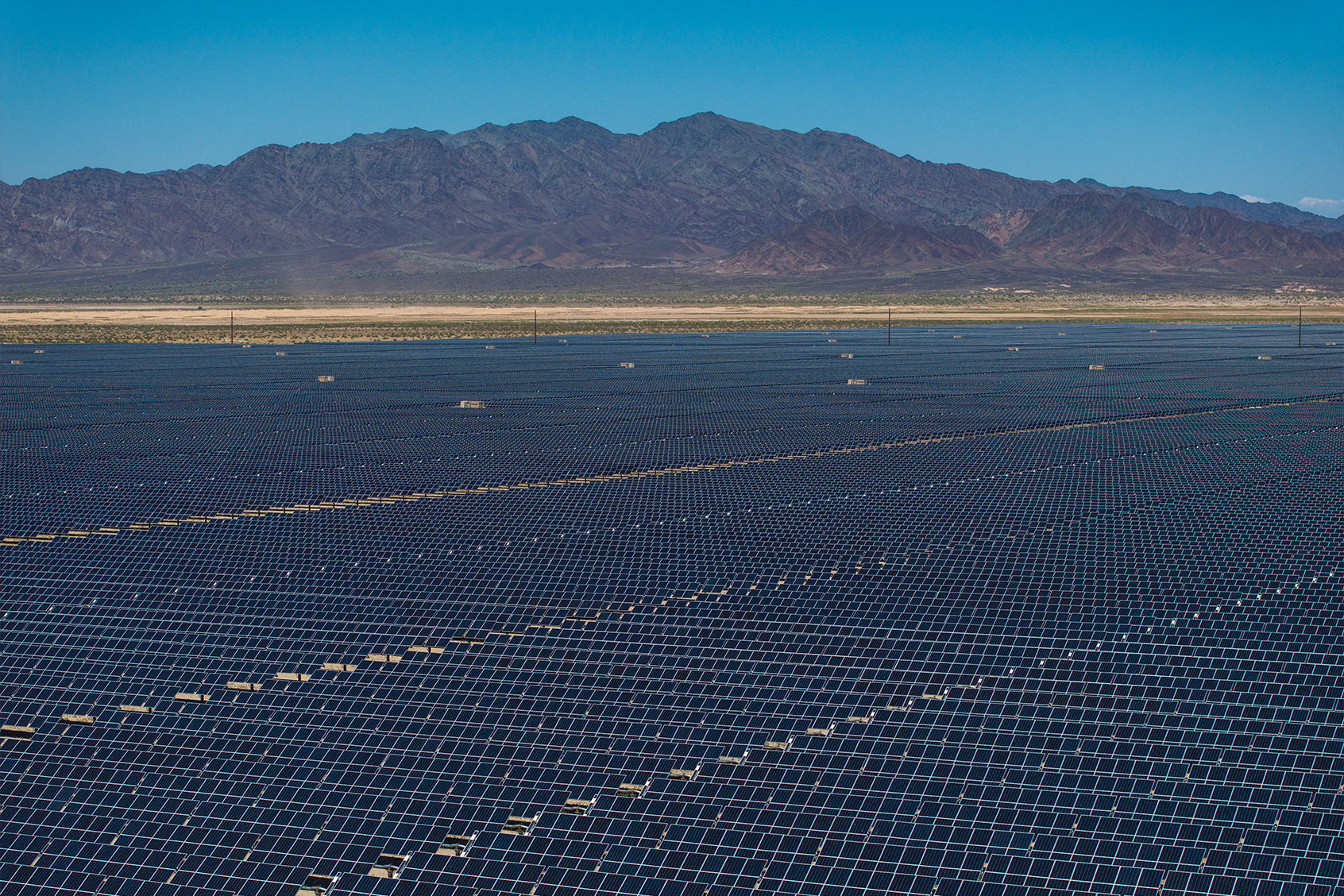
Later, when Agatha tells her, "I have a lead in the case," Vidal responds, "That's not why I came here, but go ahead." And the subtle/not-so-subtle sexual tension doesn't end there.

"If you wanna be in control, you can be," Vidal tells Agatha in an earlier scene, as they're verging on revealing their true witchy selves to each other. And, at this, millions of gays watching from their various electronic devices cheered. 

A scroll through social media following the "Agatha All Along" premiere party in Los Angeles on Monday will reveal countless fans picking up on the fact that, yes, Marvel knows exactly what it's doing with this show.

"I knew Agatha wasn’t straight when I saw her sitting and standing like this," writes @scarletwdaily in a post to X, sharing photos of Harkness looking like a character from "The L Word."

And the cast themselves are down with the show being referred to as "the gayest Marvel project yet." 


Want a daily wrap-up of all the news and commentary Salon has to offer? Subscribe to our morning newsletter, Crash Course.


At the premiere in Los Angeles, Plaza was asked by a reporter for Variety to weigh in on the show being referred to as such, and said, "It better be, because that's what I signed up for. I think it is."

And Hahn, fielding a question on that same subject at the event, said, "I love it. I mean, I think it's pretty . . .  well, what I think is most exciting about it is, that's not exactly what it's about. It's so normalized. But, yeah. I definitely think it is."

Joining Hahn and Plaza's queer witches is another key character referred to only as "Teen," played by Joe Locke ("Heartstopper"), who I marked in my notes while watching as "eyeliner gay," due to him never being named in the first episode. His character is first introduced as he's breaking into Agatha's house to steal some manner of relic, quickly revealing himself to be a newbie witch himself, uttering a cantation that aids in breaking Maximoff's spell over her.

As someone who knows an intermediate amount about the MCU beyond what's gay, what's not gay, and that "Guardians of the Galaxy Vol. 3" is one of the saddest movies I've ever seen in my life, this "Teen" character is very mysterious, but fans on the internet seem to have a pretty good idea as to his true identity. 

In Episode 2, "Circle Sewn with Fate Unlock Thy Hidden Gate," "Teen" is driving Agatha to rally up a makeshift coven of witches including Lilia Calderu, A 450-year-old Sicilian witch played by the always delightful Patti LuPone, and when asked by Agatha to talk about who he is, and where he's from, his words are muted. In other scenes, such as one where he's specifically asked his name, squiggle lines appear over his lips, suggesting that a spell has been cast to prevent him from revealing himself. I can only assume that the redacted dialogue was something along the lines of, "Yeah, I'm gay too," and/or, fall in line with what the rest of the internet is saying, which is that "Teen" is actually Billy Maximoff, one of Wanda's sons who we saw as children in "WandaVision," who grows to develop his own powers to become an ultra-powerful witch going by the name Wiccan. But, again, I know very little about the mythology here. I'm mostly watching for gay reasons, because the writing is good, and because I wear a locket around my neck with a photo of Kathryn Hahn inside of it. 

Just kidding about that last part. But not not the rest of it.

Gay revelry aside, "Agatha All Along" is a sharp and hilarious bag of tricks that far exceed the expectations I had for this spinoff. Even the credits are cool as hell. And making an offer like this for the queers makes MCU okay in my book. The nerds have had enough courses, it's time for us to feast now. 

Oh no, it truly is the season of the gay witch. Blessed be. 

The first two episodes of "Agatha All Along" are available to stream now on Disney+, with new episodes airing on Wednesdays.

Federal plans to open up the desert for massive solar farms has angered environmentalists

Most people recognize that our current relationship with fossil fuels is untenable. The more we burn them, the faster we cook our planet, turning the climate hotter and "weirder," triggering disastrous and deadly extreme weather, withering crops and undermining infrastructure.

Renewable energy (and arguably nuclear power as well) is presented by scientists and environmentalists as our ticket out of this mess. So an ambitious new proposal from the U.S. Bureau of Land Management (BLM) that aims to overhaul our renewable energy sector would presumably be seen as welcome news. According to a report BLM released in late August, the government is proposing to make 31 million acres across 11 western states available for solar energy development. It would also streamline the permitting process, making it easier for energy companies to quickly build solar.

But instead, a large number of environmentalist groups are upset with the plan, claiming that it will utterly destroy fragile desert ecosystems in the process.

In theory, BLM's proposal will help the environment by bringing the United States closer to President Joe Biden's goal of achieving 100% clean energy by 2035. Yet scientists told Salon this project may come with a serious environmental toll of its own.

"It covers a very significant amount of area," Naomi Fraga, director of conservation at the California Botanic Garden and research assistant professor of botany at Claremont Graduate University, told Salon. "It makes available to solar areas that are ecologically sensitive, areas that include sensitive species. It stands to significantly impact and alter ecosystems across the Great Basin and Mojave Desert."

Chuckwalla Valley solar panels solar energy projectIn an aerial view, thousands of solar panels spread across Chuckwalla Valley, just outside the proposed Chuckwalla Mountains National Monument, which was reduced 40,000 acres to placate rapidly expanding large-scale solar energy projects, on April 24, 2024 near Chiriaco Summit, California. (David McNew/Getty Images)Unlike other extractive use of public lands, constructive solar energy panels "causes significant harm to the environment," Patrick Donnelly, the Great Basin director at the Center for Biological Diversity, told Salon.
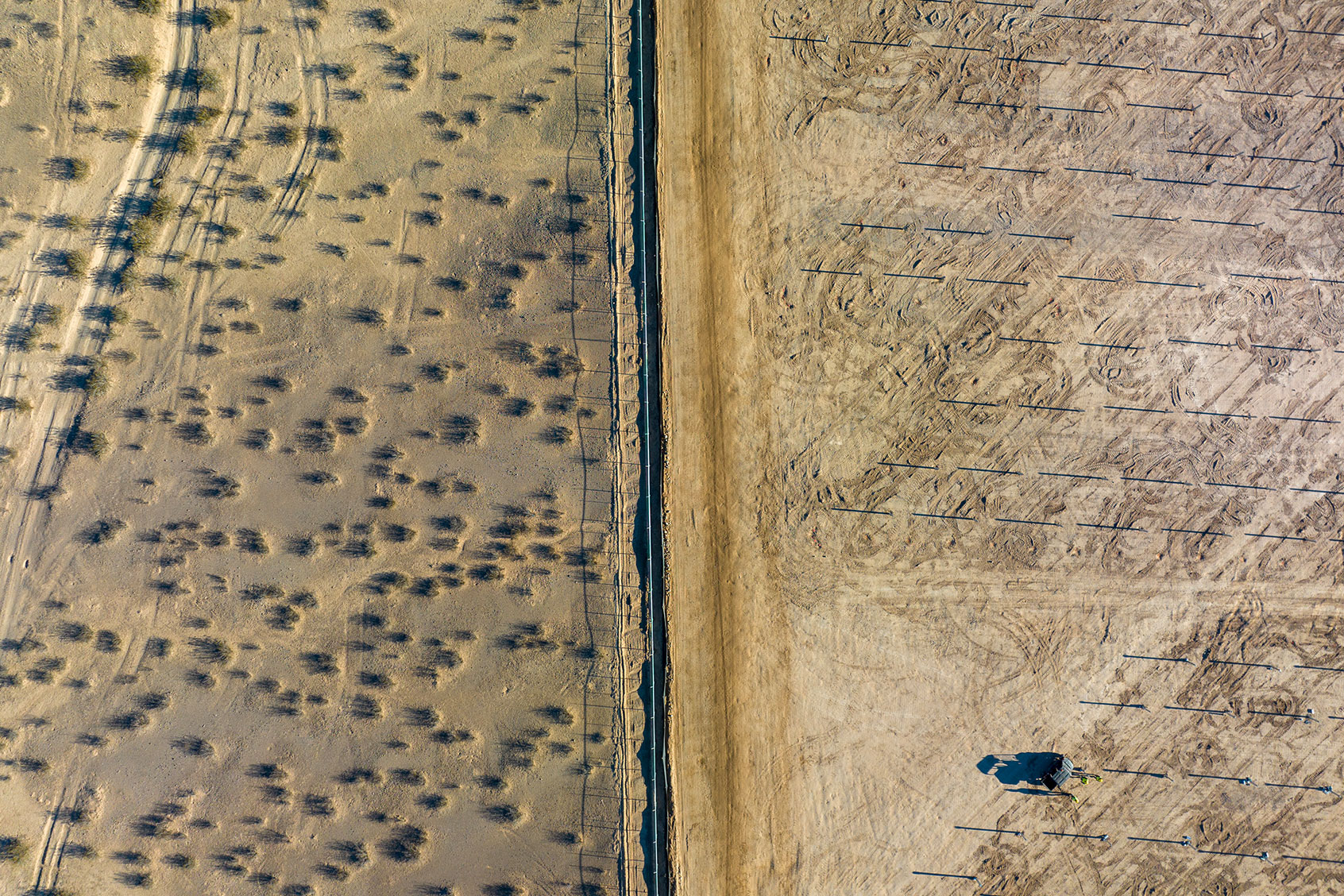
"These projects are enormous in size — a single project is typically 3,000 acres," Donnelly said. "And much of that land will be graded flat for the panels. So you can expect large-scale land transformation as a result."

Donnelly warns that pristine habitats will be bulldozed, native wildlife will be displaced, groundwater will be consumed and contaminated. The air will be filled with dust while patterns for hydrology and drainage will be altered, perhaps with unanticipated consequences.

"It stands to significantly impact and alter ecosystems across the Great Basin and Mojave Desert."

"These effects are well documented at existing solar projects including Ivanpah Solar Energy Generating Station, the original big solar project in the desert, but also many others," Donnelly told Salon.

Brian Hires, the press secretary and spokesperson for the Bureau of Land Management pushed back against these criticisms.

"The BLM has working with diverse state, federal, local and industry partners to permit responsible clean energy going back to the 1970s," Hires said. "In every case, we undertake National Environmental Policy Act (NEPA) reviews to carefully evaluate the proposed project and the potential impacts and work with others to mitigate those impacts. The purpose of the BLM's proposed Western Solar Plan updates is to guide solar development applications to areas where they would encounter fewer resource conflicts."


Want more health and science stories in your inbox? Subscribe to Salon's weekly newsletter Lab Notes.


"We are not opposed to solar energy on public lands – in fact we support it!"

Hires added that the BLM's proposed plan would exclude development "in areas with a high likelihood of resource conflict, including with sensitive wildlife or cultural resources," only apply to solar projects "that are 5 megawatts or larger and connect to the grid" and ensure project requirements to avoid, minimize and compensate for adverse impacts.

"Based on our extensive work permitting responsible solar, we know we can strike this balance," Hires said. "We continue to improve how we are permitting clean energy, based on advances in solar deployment technologies and new information. For example, rather than clearing lands for solar projects, companies are now maintaining native vegetation and ground cover. The BLM's updated Western Solar Plan also proposes to improve protections for imperiled species."

Fraga specifically pointed to the plight of the endangered desert tortoise (Gopherus agassizii) that some experts believe will soon be extinct because of development in the southwest, including solar panel construction. This problem has a long history, dating back to President Barack Obama's first term.

"Once you grade the desert floor you cannot restore it," John Moody, who is on the board of directors of Desert Survivors, a desert advocacy organization, told Salon in 2009. "In the Mojave Desert, you can still see the old Spanish mule paths from the 1700s. The time cycle for the desert is very slow. It doesn't heal very quickly."

Dry Lake Energy ZoneCreosote grows on the desert floor, left, and a cleared construction site on the other side of a fence, right, at the Dry Lake Energy Zone where a new solar array is being constructed 25 miles north of Las Vegas, NV. (Brian van der Brug / Los Angeles Times via Getty Images)"We know that there have been significant impacts to desert tortoise," Fraga said. "They've worked to translocate the desert tortoise, but there has been a lot of loss to desert tortoise habitat. In addition, it really increases invasive species in the landscape. It's a whole disturbance, basically industrializing intact landscapes."

The recently permitted Yellow Pine Solar Project in Pahrump Valley, Nevada destroyed the habitat for almost 150 desert tortoises, according to Donnelly.

"The tortoise is a federally protected threatened species that is the icon of the Mojave Desert. These tortoises were translocated elsewhere," Donnelly said. "Studies show that translocation is ineffective and results in a loss in genetic diversity and often direct mortality. Over 30 of the translocated tortoises were later found to have been eaten by badgers. So the solar project was a death sentence for those 150 tortoises. The project also introduced disturbance to a very pristine region."

We need your help to stay independent

As far as Donnelly is concerned, these deaths are not just tragic; they are unnecessary. But just because these environmentalists are highlighting the negative impacts of solar power doesn't mean they are against it in principle. Like many things, it all comes down to location.

"There are millions of acres of public land across the West that have been degraded due to human use and would be ideal for solar energy development," Donnelly said. "We are not opposed to solar energy on public lands – in fact we support it! And we support building that solar on lands which are already degraded and are of negligible use to wildlife."

For example, Donnelly highlighted solar panel construction in regions of northern Nevada where the invasive grass cheatgrass (Bromus tectorum) has become too widespread. "We call them 'cheatgrass monocultures.' In these areas, native vegetation, which is the food wildlife eats, have been decimated by fire and invasive species, so wildlife are no longer using these areas. They are also not useful for humans – for instance, cattle cannot graze there. These are ideal places for placing solar projects, and there are millions of acres available."

Although climate change is a growing existential threat, the ways to lower emissions can be done more strategically, experts argue. Some have argued the best place to place solar panels is rooftops or above parking lots, which avoids killing delicate desert plants like Joshua trees.

"We strongly support rooftop solar as an alternative to big solar in the desert," Donnelly said. "And we have programs pursuing aggressive rooftop solar policies across the country. That said, some amount of large-scale solar is already being permitted and built, with a lot more coming. While I would prefer all solar is built on rooftops, the reality is we need to plan for what is coming to our deserts. That’s why we don’t oppose the Western Solar Plan in concept, we just disapprove of the particulars in the decisions they reached. We believe they could do a lot better."

"We are at an inflection point," Fraga said. "This is a very critical time where we do need to advance our renewable energy goals, but we need to do that in a very smart way that is inclusive of nature and, and doesn't degrade whole ecosystems."

“Wise Guy” director Alex Gibney on the legacy of “The Sopranos” and lovable bad guys

Alex Gibney is the Academy Award, Grammy, and Emmy Award-winning director, writer, and producer of "Taxi to the Dark Side," "Enron" and "Going Clear," among many other films and countless accolades. 

Gibney's latest project, a two-part documentary, “Wise Guy: David Chase and The Sopranos,” tells the story of making the hit HBO show "The Sopranos," now streaming on Max. The film is a collection of interviews between Gibney and "Sopranos" creator David Chase.

I spoke to Gibney about his connection to the show a week before the documentary aired and why he thinks it's so special to so many people. 

"The three-way relationship between two real people and one fictional character. And that is David Chase, Jim Gandolfini and Tony Soprano," Gibney explained. "They had a kind of peculiar three-way relationship that got very deep and sometimes a little bit uncomfortable for all of them. But it did something extraordinary for the show itself because it made Tony a really, really, really extraordinary and rich character."

That was the magic of Tony Soprano: you loved the way he loved his family, even though he was an abusive cheater; the manner in which he valued loyalty, even though he wasn't loyal to anyone; the way he showed up for his guys when they were in need, even though he wouldn't hesitate to put a bullet in their heads. Viewers never thought they could fall in love with someone so complex and visibly evil, but we did, and we love the show for that.

Gibney and I discussed the complex history of "The Sopranos," the challenges of casting such a dynamic series and why we may never see programming like the legendary show again.

Our conversation has been lightly edited for length and clarity.

Congratulations on this wonderful new documentary. The making of "The Sopranos" seems super relevant to the situation we're facing today, where it's more and more difficult to get unusual shows off the ground. So it seemed like a way in to understanding this show from the inside out. I was wondering what made you want to put out "Wise Guy?"

I'm interested in the creative process and how you go from something very personal — in this case, David Chase's relationship with his mother, who was a very difficult woman — and how that becomes a gangster show about a guy who's having panic attacks and has to secretly engage in therapy. So how does that happen? How do you write it? How do you cast it? How does it get made on a network when so many others were hostile to it? So it was that part of just being super interested in the creative process that really brought me to this film.

You mentioned casting. As a fan, I was so inspired by the segment that you did on casting, just pulling back and looking at it, it feels perfect. The only other shows that I think compare . . . there are a lot of great shows, but when I think about shows that are cast so well . . .  I think about "The Wire." I think about "The Bear." What do you think viewers should know about the struggle to find the right Tony or the right Carmela and how you lay that out?

I mean, the struggle is that you've written a character that you believe in, but then inevitably the act of casting somebody to play that character is a mysterious process because they're going to bring something extra that you had never considered. And the question is, when does that something extra . . .  when does that unique quality both mesh with what you had thought about as who that character is, but then bring something entirely fresh that you hadn't even considered that seems so exciting that you want to go there. 'Cause now suddenly there's a mystery on top of a mystery, on top of a mystery. Where's this character going to take me? Where's this actor going to take this character that I've started to write? That to me is what seems so exciting about it. And sometimes it's just little things. Like David said, he cast Drea de Matteo just because of the way she said the word ow.  

She's like, "Ow-wah."

Yeah. And that was just so funny to him that he felt that she had already gotten some place way beyond where he was writing the character. So it's that mysterious process of just . . . There's nothing to be done except sit in a room and see how you respond to the performance of an actor who's put in front of you.

"The thing that HBO wondered was, can we cast as our lead a really bad guy, but he's a bad guy you love? And then you have to wonder, why do I love this guy so much if what he does is so bad?"


I can't think of another anti-hero who we all rooted for in television before Tony Soprano. Am I wrong?

No. That was the thing that HBO wondered . . . can we cast as our lead a really bad guy, but he's a bad guy you love? And then you have to wonder, why do I love this guy so much if what he does is so bad? Or you go along thinking why he's so charming, he's so much fun and then he brutally kills somebody sometimes seemingly for no reason. You're thinking, whoa, how is it that I can like that guy? So that gets at the essence of the mystery of who we are as human beings. And it seems to me that's what makes the show so powerful.

Like "Six Feet Under" and "The Wire," "The Sopranos" was so original. It was so different. And you talk about this in the film, because HBO was still trying to find its footing. They were still trying to identify themselves as a network. And as I pull back and look at a lot of the new stuff, it almost feels like it was the end of an era. Do you think something like "The Sopranos" could be created today?

Well, it's hard right now, but I think what's going to happen is a show like "The Sopranos" is going to be so original and maybe it's going to come out on a network or a platform that's different than the platforms we see now. That's the other thing you have to remember about back in the day. In 1990, the TV universe was dominated by the big three or big four networks. They were in the business of selling audiences to advertisers, which meant that they didn't really want to offend people. They wanted people to like stuff, okay, but they didn't want people to feel either passionately about it or they didn't want to offend anybody. Along comes HBO and they don't care about offending some people. They want to speak directly to consumers and directly to the viewers. And the viewers buy the shows. They're interested in the shows themselves, not the products that are being advertised. And so suddenly you created a new paradigm and there was an interest by the network to make a few shows that people would feel passionate about, and we just got to get to that place again.

Yeah, I was surprised in the film when it came up that Martin Scorsese wasn't a fan of the show.

Well, he thought, what do mobsters have to do with suburban New Jersey? But David's experience was very different. Marty grew up in New York and David grew up in rural New Jersey. He saw the mob there. They were there and they were for real. So, I just think it was two different visions and that was kind of the originality of the vision because suddenly it was the gangster next door. It wasn't the guy who was lurking around the street corner in the hustle and bustle of the big city. He was the guy who was mowing the lawn.

David Chase and David Simon have a lot in common when it comes to not trusting . . . I'm not going to say not trusting . . . but not hiring TV writers. Maybe they found the secret to great TV is that you gotta stay away from television writers.

Yeah, I mean, David hired some TV writers, but I think he hired folks who were both skilled writers and also were willing to invest emotionally. And obviously, they went on to great things, like Terry Winter and Matt Weiner both went on to do great shows themselves. But I think it was that willingness to dig deep and not settle. That's what, for David, was the way in.

What is "Sopranos" ranked for you in talking about the greatest shows of all time?

Well, it's always hard to say GOAT because there are different reasons for different shows. But I think "The Sopranos" would be it.

As a filmmaker, was it easy for you to make a film talking to another filmmaker and just going through that process and what happened behind that project?

Well, that was fun. I mean, we have to talk shop, but I think — as you saw from having seen the film — just for fun, I constructed a facsimile of Melfi's office and I also got personal with David, which was also interesting. So it was that combination of talking shop and then just understanding who he was as a human being. 

Are you a fan of any of the newer versions of "The Sopranos" coming out? 

I saw "The Many Saints of Newark." I mean, I liked it. I liked "The Sopranos" better.

Okay, because I heard they were going to do two more.

I don't think so. I don't think David is going to go into to that territory. David's at work on a couple of feature scripts, which are pretty great, and I'm looking forward to seeing those.

Do you think the world is ready for a reboot, or can we just go ahead and re-watch?

Let's just watch it again.

What's next for you?

I'm working on a doc about Elon Musk.

Tupperware files for Chapter 11 bankruptcy

After 78 years in business, food storage industry icon Tupperware has filed for bankruptcy. 

According to a statement released by the company, Tupperware Brands Corporation announced the company "voluntarily initiated Chapter 11 proceedings in the United States Bankruptcy Court" as of Wednesday. "Tupperware will seek Court approval to continue operating during the proceedings and remains focused on providing its customers with its award-winning, innovative products through Tupperware sales consultants, retail partners and online," the statement continued. "The Company will also seek Court approval to facilitate a sale process for the business in order to protect its iconic brand and further advance Tupperware's transformation into a digital-first, technology-led company."

Laurie Ann Goldman, the company's president and CEO, indicated the company plans to continue operations. 

"Whether you are a dedicated member of our Tupperware team, sell, cook with, or simply love our Tupperware products, you are a part of our Tupperware family," Goldman said. "We plan to continue serving our valued customers with the high-quality products they love and trust throughout this process." 

Ramishah Maruf and Olesya Dmitracova wrote in CNN that the company "only began selling in Target in 2022" after years of selling through "Tupperware parties." Susannah Street of the UK-based investment platform Hargreaves Lansdown also credited some of the issue to "eco-aware consumers" who don't want to purchase plastic.