Spring Offer: Get 1 Year, Save 58%

Why is JD Vance being so weird about Mountain Dew?

While filming a Newsmax segment about the dangers of fentanyl crossing the southern United States border last week, Republican vice presidential nominee JD Vance shared a story about his own mother’s drug overdose and said “there are millions of Americans who could have a second chance with their loved ones if we make smarter decisions.” 

“I know what it feels like when we make dumb decisions and people suffer,” Vance said, seconds before a member of the Newsmax crew handed both him and host Bianca de la Garza bottles of Diet Mountain Dew. “Yes you do, firsthand,” de la Garza replied. 

“Should we toast here?” Vance asked as he unscrewed the plastic cap from the bottle. De la Garza acquiesced and the pair shared a quick toast before taking their respective swigs. “This is the good stuff here,” Vance said. “High caffeine, low calorie.” 

This isn’t the first time in recent weeks that Vance has referenced Mountain Dew during public appearances, and it’s been done with enough emphasis that the phrase has trended with his name alongside words like “couch” and “dolphin.” However, the tonal mismatch of segueing from a story about a family member’s coma to a soda tasting is notable and leads one to ask: Why is JD Vance being so weird about Mountain Dew? 

The short answer to that question takes us back to July, when Vance put on his first stand-alone rally as former President Donald Trump’s 2024 running mate. While on stage, Vance attempted to bond with the crowd by delivering a joke about how liberals are too easily offended and quick to point out what they perceive to be racist behavior. 

“Democrats say that it is racist to believe — well, they say it’s racist to do anything,” he said. “I had a Diet Mountain Dew yesterday and one today. I’m sure they’re going to call that racist too.”

Vance then held for applause, which, aside from a few scattered claps, didn’t come. The joke bombed and other politicians, including those eying a spot as Kamala Harris’ potential 2024 vice presidential pick, quickly jumped on the awkwardness. 

For instance, Kentucky Governor Andy Beshear appeared on CNN the day after the rally to discuss Vance’s perceived shortcomings, including the fact that he reportedly referred to Trump as “the next Hitler” behind closed doors, but was now publicly supporting him. Beshear also simply described Vance’s Mountain Dew comments as “weird,” questioning who actually drank the beverage (he later apologized for this characterization, though notably only to Diet Mountain Dew — not to Vance). 

Underpinning both Vance’s rally joke, and the broader response to it, are questions about whether Vance is actually as much of an everyman as he says he is, specifically when it comes to what he says are his Appalachian roots. While Vance wrote “Hillbilly Elegy” — a stereotype-packed book that award-winning Appalachian writer and Duke University professor Mesha Maren describes as having “eugenics-tinged genetic arguments that stain the text” — many in the Appalachian region don’t want to claim him. 

We need your help to stay independent

Some of this is based on geography; reportedly, the New York Times standards desk sent an email out in July to reporters cautioning them to avoid referring to Vance as a “son of Appalachia” because of this. 

“It’s natural to think that someone who wrote a memoir entitled ‘Hillbilly Elegy’ is from Appalachia,” the memo read. “But there is an official government definition of Appalachia, and it’s quite expansive running all the way from counties in Mississippi to counties in New York State. And even by that expansive definition, Middletown, Ohio, where Vance grew up, is not Appalachia.” 

However, some of the hesitation from those in the region about Vance is rooted in something deeper — a sense that he doesn’t actually understand them. To them, Vance's portrayal of Appalachian in both his book and on rally stages feels like an outsider's perspective, oversimplifying the complexities and resilience of their communities. They argue that his lens of individual responsibility overlooks systemic issues and the strong sense of solidarity that binds them together. For these Appalachians, Vance's account does not resonate with their lived experiences or reflect the nuanced, multifaceted reality of life in the region. 

Gov. Beshear put it plainly in the same press conference where he apologized for dunking on Mountain Dew. Of Vance, Beshear said: “Let me just tell you, JD Vance ain’t from here.” 

Mountain Dew, however, has become a neon-hued cultural symbol in the region. 

Originally created in Tennessee as a whiskey mixer (its name a wink to the term for homemade moonshine) the soda was heavily marketed for decades in rural and working-class communities throughout Appalachia and the American South at large. As a result of this, it has both suffered being characterized as a lower-class indulgence, while also being celebrated for its flavor and pop culture ubiquity. 

It makes sense that Vance would want to associate his name with the beloved, if occasionally ridiculed, brand — though his current strategy obviously isn’t working. 


The health benefits of seaweed

Seaweed, the colorful macroalgae that grows in the ocean, is a food source for marine life and humans. Each type of seaweed has a unique set of nutrients and can boost vitamin and mineral intake if eaten regularly.

Seaweed is widely consumed in Asia, and a staple ingredient in many Japanese, Korean and Chinese dishes. For example, nori is well known as the seaweed used to wrap sushi rolls, while wakame or kelp are often found in comforting ramen noodle dishes. These seaweeds impart an instantly recognizable savory taste – known as umami flavor – to food and can add a variety of vitamins and minerals to meals.

Seaweed types can be broadly classified according to their color: red, green and brown. Around 145 species of seaweed are eaten around the world. Seaweed is valued for its antioxidant properties, which helps protect cells against free radical damage.

Many seaweeds contain phenolic and flavonoid compounds, which are important antioxidants, as well as omega-3 fatty acids, amino acids, fibre, vitamins A, C and E – and minerals such as copper, zinc and iodine.

The seaweeds with the greatest nutritional value include those often referred to as the "wracks". Bladder, toothed and spiral wracks often have notably higher antioxidant contents than many other seaweeds. However, nutritional content varies depending on the type of seaweed, harvest location and the season in which it's harvested.

As well as being nutritious, seaweed has potential as a source of valuable antimicrobial agents. Research from Queen's University Belfast has shown that seaweed species can fight off the growth of harmful microorganisms in animals, some of which are becoming resistant to antibiotics.

While eating seaweed has an array of benefits, there are a few things to watch out for. Due to the high iodine content in many seaweed species, seaweed consumption could exacerbate thyroid conditions or interfere with thyroid medications.

Some reports also suggest that, depending on the habitat, seaweed species may accumulate heavy metals such as cadmium, which has been reported to cause liver and kidney toxicity, and mercury, a known neurotoxin.

It's important, then, to check different countries' maximum contaminant levels (MCLs) for heavy metal concentrations in seaweed products and only purchase those which have been tested and deemed safe for consumption.


Seaweed bathing

But diet is not the only way to experience the benefits of seaweed.

In recent years, there has been an upsurge in seaweed bathing, which is believed to be beneficial to health. A bath full of bladderwrack might not seem very appealing – but this strap-like, olive colored seaweed, found along the coasts of the North Sea, Atlantic Ocean and Pacific Ocean, has been shown to have beneficial effects as a topical treatment for various skin issues from skin aging to wound healing.

The tradition of seaweed bathing, which has been practized for hundreds of years, was originally recommended for arthritis sufferers to ease pain, stiffness and inflammation of joints. Nowadays, it is also recommended for athletes after a strenuous workout because seaweed's high magnesium content is believed to be soothing for aching muscles.


Swimming, sailing, even just building a sandcastle – the ocean benefits our physical and mental wellbeing. Curious about how a strong coastal connection helps drive marine conservation, scientists are diving in to investigate the power of blue health.

This article is part of a series, Vitamin Sea, exploring how the ocean can be enhanced by our interaction with it.


Many companies that specialize in the harvesting of seaweed for bathing purposes aim to do so sustainably. This means that the seaweed is cut from the reef at low tide and is never pulled from the root to ensure regrowth. As demand increases, there is a growing awareness of the challenges around growing and harvesting methods, technical know how and environmental impact of expanding production.

The moisturizing effects of seaweed are also prized by the beauty industry as today's consumers place greater value on natural – and environmentally friendly – skincare ingredients.

Containing extracts of seaweeds such as toothed wrack and sea spaghetti, seaweed-based skincare lines claim anti-photoaging, hydrating and protective, nourishing and skin-plumping effects. But check the label: the closer to the top of the ingredient list, the greater the amount of seaweed in the product.

So, to enhance your health, seaweed can be easily incorporated into your lifestyle. Add to your diet, in moderation, by exploring seaweed recipes and by sprinkling dried, ground seaweed mixtures featuring dulse, wakame, sea spaghetti and wracks into smoothies, over salads and even on pizza.

It is also possible to buy hand harvested seaweed products for adding to the bath so that the benefits of submerging in marine algae can be realized from home – no matter how far from the sea we may live.

Leanne Timpson, Lecturer in Microbiology, Department of Biosciences, Nottingham Trent University

This article is republished from The Conversation under a Creative Commons license. Read the original article.

In Arizona, schools are now targets of election misinformation, spurring fears of violence

Arizona’s largest public school district is refusing to open its schools as polling sites amid threats against workers and a steady stream of misinformation from right-wing activists in the state.

Since President Joe Biden won Arizona by just over 10,000 votes in 2020, the state has become a national center of election denialism. Misinformation pushed by former President Donald Trump and Senate candidate Kari Lake has led to protests outside voting centers, harassment of election workers and a wealth of distrust among voters, the Associated Press reported.

The distrust has reached local elections too,

In a state Senate race last year, skeptical voters in Maricopa County engaged in confrontations at schools acting as polling stations, even though most of the voting was supposed to be done by mail, The Washington Post reported. Some voters confronted school staff and accused them of disenfranchising voters. The controversy was too much for the state’s largest public school district, Mesa Public Schools.

“I couldn’t imagine it in 2024. We just don’t know how to make it work,” Assistant Superintendent Scott Thompson told the Post. 

In 2016, 37% of county polling locations in Maricopa County were schools. This year, schools make up just 14 percent of polling locations, according to data analysis from The Post. 

For school officials, refusing to participate on election day is about safety. In 2022, there were many reports of people armed with guns watching over ballot boxes. One man showed up to a Phoenix school to vote with a firearm on him. 

“We’re in the highest state of ambiguity, uncertainty and anxiety around school safety than we’ve ever been in my more than three decades in this field,” Kenneth Trump, president of National School Safety and Security Services, told The Post.

The decision by many school leaders to withdraw their participation in elections comes as pro-Trump Republicans recently notched a key primary victory. Last week, Stephen Richer, a GOP official known for defending election integrity in Maricopa County, lost his primary election to state Rep. Justin Heap, who has called local elections a “laughing stock.” Heap will face Democrat Tim Stringham in November’s general election.

Elon Musk’s pro-Trump PAC is now under investigation for falsely claiming to register voters

Residents in battleground states are submitting personal information to a pro-Trump PAC whose website invites them to "register to vote" — but instead of actually registering any voters, the PAC is just storing their precious voter data. Now Michigan's top elections official is opening an investigation in the so-called "America PAC," which was founded and partially funded by billionaire Tesla CEO Elon Musk, for potential violations of state election law.

“Every citizen should know exactly how their personal information is being used by PACs, especially if an entity is claiming it will help people register to vote in Michigan or any other state,” a spokeswoman for Michigan Secretary of State Jocelyn Benson, a Democrat, said in a statement to CNBC.

When visitors to the PAC's website access the page from safe Democratic or Republican states, they are typically directed to an actual voter registration page. However, those who enter zip codes in a battleground state like Pennsylvania or Georgia are given a highly detailed form in which they are prompted to submit their address, cellphone number and age. Even after the user submits that information, the website does not help them register to vote, despite promising to do so, instead steering them towards a "thank you" page.

As of Aug. 4, following criticism of the deceptive tactic, the form disappeared from the website.

According to CNBC, which was the first to report on America PAC, the committee has spent over $21 million since June on canvassing, digital media, text message services and phone calls, per Federal Election Commission filings. Around $800,000 of that money went into digital marketing ads targeted at voters in battleground states, with many encouraging voters to visit their website and "register to vote."

"America PAC is focusing on door-to-door canvassing in support of Trump," Brendan Fischer, deputy executive director at campaign finance watchdog Documented, told CNBC. "I think it is safe to assume that the voter data gathered through these digital appeals are going to inform America PAC's canvassing and other political activities."

Fischer noted that FEC ruling permits billionaire-funded PACs and presidential campaigns to directly coordinate on door-to-door canvassing activities, which "ensures that the PAC's activities are maximally beneficial to the campaign, and frees up the campaign's own funds for other use."

Some legal experts said the Musk-backed PAC's deceptive tactics might be legal. “I am not aware of any laws being broken,” Barbara McQuade, a former U.S. attorney for the Eastern District of Michigan, said in an email to CNBC on Sunday.

Musk is not the only tech executive bankrolling the effort. America PAC, which raised more than $8 million between April 1 and June 30, has also received donations from venture capitalist Doug Leone, as well as cryptocurrency investors Cameron and Tyler Winklevoss; it has also, according to CNBC, received funds from a company run by Palantir co-founder Joe Lonsdale. The records do not yet list Musk as a donor, though he has said repeatedly that he is making donations to the committee.

Musk's support for the PAC comes after he's used his social media platform, X, to amplify pro-Trump voices and manipulate community guidelines to suppress anti-Trump speech. Last week, he violated his own platform's rules in sharing a doctored video of Vice President Kamala Harris, with X also temporarily suspending several pro-Harris accounts.

“Lev’s story is un-put-down-able”: Rachel Maddow set to release Parnas documentary

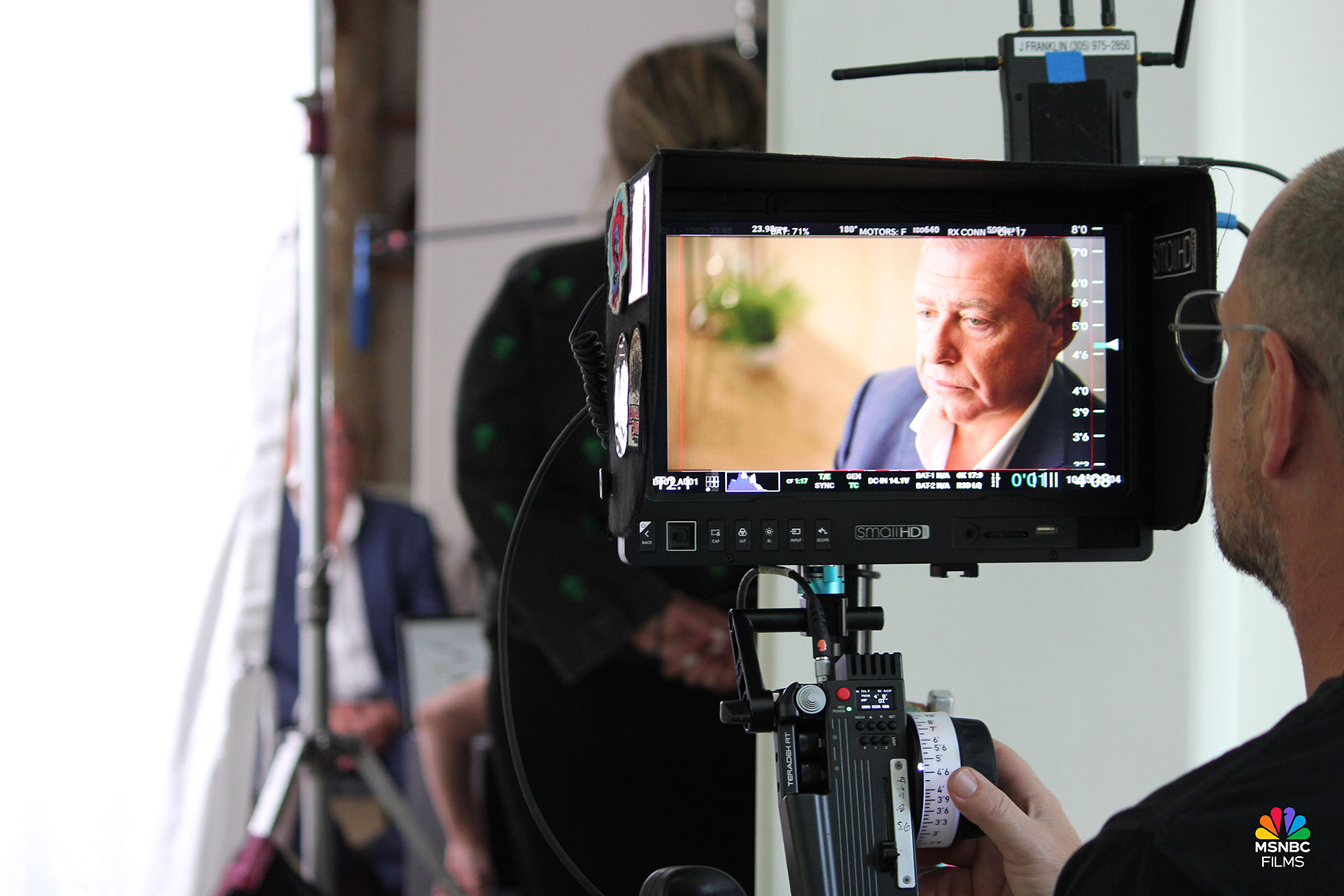
On Monday, MSNBC Films announced that host Rachel Maddow will debut "From Russia With Lev," a documentary she executive produced highlighting Lev Parnas, a former associate of Trump attorney Rudy Giuliani. In 2020, Parnas was indicted on campaign finance charges and subsequently turned over documents contradicting claims made by Trump and his legal team to investigators in the House of Representatives. 

The film will makes its premiere on Sept. 7 at MSNBC Live: Democracy 2024 at the Brooklyn Academy of Music. "From Russia With Lev" traces the role of Ukrainian-born Parnas' dealings with the former president, pulling back the curtain on the scheme that led to Trump's impeachment. Using more than 30 hours of interview footage and a trove of photos, documents and recordings, the film traces how Parnas "reveals the ham-handed workings of the furtive campaign to dredge up false but damaging allegations against then-candidate Joe Biden," presenting "a view of former President Trump that is unfiltered and unavailable anywhere else," per a press release. 

"Lev Parnas' story is like Tom Clancy if Jack Ryan was played by Jackie Mason," says director Billy Corben. "This film is a continuation of rakontur's signature subgenre of 'Florida Men Behaving Badly with World-Changing Geopolitical Stakes.'"

From Russia With LevFrom Russia With Lev (MSNBC Films)Born out of Maddow's 2020 interview with "a remorseful" Parnas at the time of Trump's first impeachment trial. The interview earned "The Maddow Show" an Emmy nomination and one of its most sizeable audiences ever. 
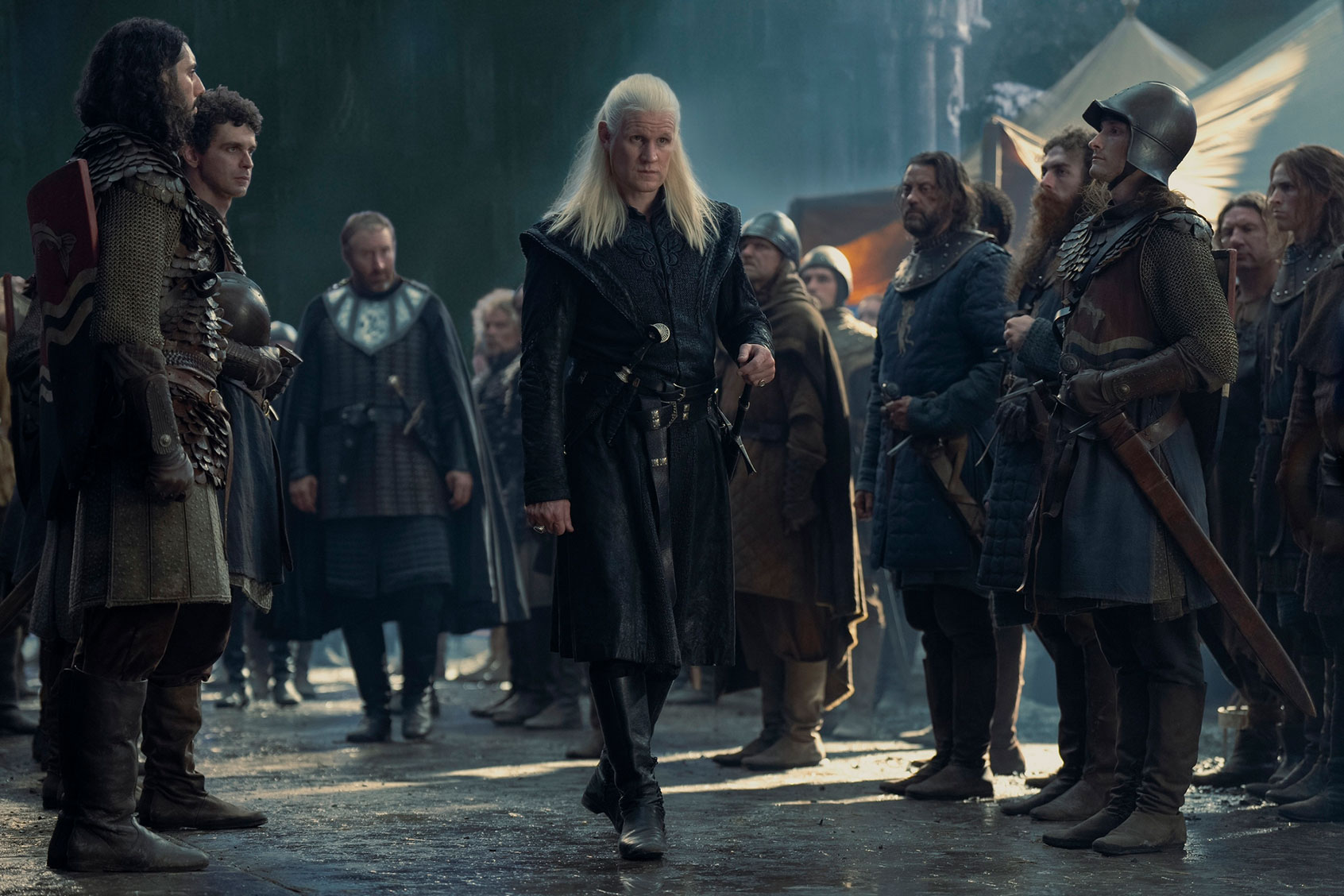
"President Trump knew exactly what was going on," Parnas, during the televised interview, alleged at the time. "He was aware of all of my movements. . . . He lied. He knew exactly who we were. He knew exactly who I was especially because I interacted with him at a lot of events . . .  I was with Rudy when he would speak to the president — plenty of times."

“There should be more documentaries from an insider’s perspective about the Trump presidency," Maddow, whose Surprise Inside company produced the film, said. "There should be a Mike Pence documentary. There should be a John Kelly documentary, or a Rex Tillerson documentary. But it takes someone like Lev Parnas to be brave enough to speak up first. Lev’s story is un-put-down-able.”

Co-executive producers for the documentary include Rashida Jones, Rebecca Kutler and Amanda Spain. Alfred Spellman acts as producer. The film will be released in theaters and will be broadcast on MSNBC later in September.

GOP plans to win this election — in court, if not at the ballot box

House Speaker Mike Johnson’s threat got overwhelmed by the news of Joe Biden’s departure from the presidential race, but it may have given away the Republican Party's fall strategy.

On the same Sunday that Biden announced his exit and endorsed Vice President Kamala Harris, Johnson predicted that his party would file lawsuits to keep Biden’s name on the ballot in several states, including such competitive battlegrounds as Georgia, Nevada and Wisconsin.

Republicans wouldn’t have had much of a case. Biden, after all, had yet to be nominated, so any lawsuit would have looked to force his name on a ballot where it hadn’t yet appeared. 

But the fact that Republicans greeted Harris’ entry into the race with the threat of litigation provides a sobering reminder that the GOP has little intention of conceding an electoral loss on Nov. 5. That’s simply when a second contest will begin — one aimed not at swing-state voters but a battalion of right-wing Federalist Society-approved judges installed on federal courts and the deeply conservative supermajority on the U.S. Supreme Court.

Look closely and that second battle is already underway. While the usual rituals of an election play out nationwide — rallies, TV ads, conventions, sofa memes — a shadow fight is already unfolding in battleground-state courts. They include lawsuits in Michigan, Arizona and Nevada that seek to knock voters off the rolls in the weeks before the election, as well as litigation in Nevada and elsewhere hoping to void absentee ballots received after Election Day.

These lawsuits rely heavily on unsubstantiated Republican fantasies about dead people and non-citizens casting ballots. Even if these cases go nowhere, they could redound to the GOP’s benefit simply because they seed the groundwork for claims that the election has been stolen and cast doubt among the party’s base about the process and the legitimacy of the results. 

But while most such cases are likely to be dismissed or brushed aside, as were nearly five dozen cases related to similar claims after the 2020 election, it’s a mistake to remember Rudy Giuliani’s press conference outside Four Seasons Landscaping and write these off as a joke. 

The GOP’s election-denial legal machinery has been fine-tuned since then. The promotion of discredited fraud assertions is now at the very heart of the Republican Party: The Republican National Committee, now co-chaired by Lara Trump, the ex-president’s daughter-in-law, is already part of more than 90 active voting and election cases across nearly two dozen states. Many of the GOP’s failed challenges in 2020 were dismissed by courts because they were filed too late, after the election; Republicans learned their lesson and got a head start this time.

The RNC, now co-chaired by Lara Trump, is already part of more than 90 active voting and election cases across nearly two dozen states. Republicans learned their lesson from 2020 — and got a head start this time.

Sharper and more sober legal minds abound in 2024 as well. Consovoy McCarthy, the elite Washington, D.C., law firm that’s deeply connected to the GOP and the conservative legal movement — well known for hiring Justice Clarence Thomas' former clerks after their tenure and training at the Supreme Court — is at the forefront of several important cases.  

Conservatives have also mastered the intricacies of circuit-shopping, the dark art of placing the nuttiest legal theories cooked up in Federalist Society hothouses before the most rabidly ideological judges. File even the most ludicrous election-related case in Amarillo, Texas, and it there is a nearly 100 percent chance it will be heard by Judge Matthew Kacsmaryk. He founded the Fort Worth chapter of the Federalist Society and was later plucked from an extreme religious liberty organization by right-wing judge whisper Leonard Leo and installed as the only federal judge at the Amarillo courthouse; Kacsmaryk then suspended nationwide access to mifeprestone, a drug used to induce abortion, and overruled the Biden administration to reinstate the Trump-era “Remain in Mexico” immigration policy. 

We need your help to stay independent

It’s all too easy to imagine a Judge Kacsmaryk, or a Judge Aileen Cannon, causing chaos with a decision that slows down the certification process after Election Day and before the Electoral College meets in mid-December. This, in turn, could open the doors to all sorts of potential chicanery regarding elector slates in GOP-led state legislatures and multiple questions that the U.S. Supreme Court would need to decide.

The Roberts court has already demonstrated, during this year's case on presidential immunity, that the conservative supermajority is happy to slow-walk the process to benefit Trump and the Republicans, aiding his strategy to postpone any prosecution until after the election, before ultimately placing Trump above the law. The same court moved quickly, on the other hand, to reverse Colorado's decision to Trump from its primary ballot for his actions in fomenting an insurrection on Jan. 6, 2021.


Want a daily wrap-up of all the news and commentary Salon has to offer? Subscribe to our morning newsletter, Crash Course.


It’s cases like these where many Americans still want to believe that the court will come to the defense of American democracy. They — along with many in the media — cling to the hope that Chief Justice John Roberts is the umpire and institutionalist that he has long claimed to be, rather than the lifelong Republican who has looked to unravel the Voting Rights Act since his earliest days in Washington. He is also the jurist responsible for the decisions that have gutted and corrupted our politics, drowning it in billions of dollars in dark money (Citizens United), unleashing a new era of voter restrictions and suppression across the South (Shelby County) and blessing the most extreme partisan gerrymanders in our nation’s history (Rucho v. Common Cause).

After all, the GOP’s determination to capture the courts — which comprise the third branch of the federal government, not a neutral tiebreaker — has always been about cementing its control over power and elections, determining which voices count and which do not. It is worth remembering that three of the current justices proved their bona fides to the Federalist Society and the conservative legal movement that put them on the bench through their work for the GOP on the 2000 case Bush v. Gore, which halted the Florida recount and installed a Republican in the White House.

John Roberts is not your friend. Now this muscular conservative supermajority, secure in its power, has come into its own. One need not be a democracy doom-and-gloomer to worry about the litigious six weeks that will surely follow this election. One need only remember Bush v. Gore. 

On Nov. 5, 175 million of us will cast ballots. Sometime after that, nine justices might render the only votes that count. 

GOP gaslighting gets weirder: Why Trump and Vance spread lies about race and gender

After Donald Trump denied that Vice President Kamala Harris is Black, several Republicans worried that their presidential nominee had stepped in it this time. During his appearance at the Association of Black Journalists convention, Trump tried out a new attack on Harris, whose father was Jamaican and mother was Indian: "I don't know, is she Indian or is she Black?" Raving about the horrors of miscegenation only confirms the Harris campaign's characterization of Trump as "old and quite weird," so it's no surprise that other Republicans are scurrying away from his remarks. The cowards mostly remained anonymous, telling Axios that they found his performance "embarrassing," "awful" and "not a demonstration on how to win over undecided voters."

Well, they'd better buckle up. It looks like this was no accident or gaffe from Trump, but a summation of his campaign's strategy. As Matt Gertz writes at Media Matters

But this wasn’t just a one-off comment, however despicable; it was the launch of a new talking point. Trump doubled down on social media, his campaign projected purported evidence of Trump’s claim at an event Wednesday night, his surrogates went on TV to defend his comments, and Vance — who once described his running mate as potentially “America’s Hitler” — told reporters Trump’s remark was “hysterical” and that the former president “pointed out the fundamental chameleon-like nature of Kamala Harris.”

Even the event itself suggests deliberation. The reporter did not ask Trump to opine on the legitimacy of mixed-race people. She asked if Trump believes Harris is qualified to run for president. He was looking for a way to say this and forced it into the conversation. 

There's an exhausting rationale, involving false claims that Harris "switches" her identity and that somehow makes her "phony." This is a lie, of course, as there's a long public record of Harris identifying with both of her parents for her entire life. As Adam Serwer writes in the Atlantic, "The point of this rhetorical maze is simply to justify racist attacks on a particular target while deflecting accusations of bigotry." Trump wants to make a spectacle out of Harris' racial heritage, in hopes of provoking white anxieties about how multiracial societies are too "confusing" to be tolerated. 


Want more Amanda Marcotte on politics? Subscribe to her newsletter Standing Room Only.


It's been long-documented, if not publicized enough, that Trump has an unsettling obsession with racial "purity" and eugenics. It's not something he bothers to hide, as evidenced by his claims that nonwhite immigrants are "poisoning the blood of our country." But that the larger campaign is harping on this suggests they really think it's smart strategy. As political scientist Nicholas Grossman writes in the Bulwark, MAGA devotees have convinced themselves "their ideas have widespread appeal, and the only reason their ideas aren’t dominant is that right-wing viewpoints are being erased from the public discourse by the people who control it." 

In this case, the presumption is that most voters share Trump's repulsion for "impure" people whose gender or race falls outside rigid boundaries he has defined for them. In the same week he appointed himself the arbiter of Harris' race, he also decided he could strip her husband, Doug Emhoff, of his Jewishness. In an interview with a right-wing radio host, Trump agreed that Emhoff is a "crappy Jew" because he married Harris. There was an elaborate excuse for this accusation, involving false claims that Harris "doesn’t like Jewish people." But, as with the whining about Harris' parentage, this is mostly about drawing the public's attention to what old-timey racists called "race-mixing." 

Trump repeatedly mocks others for what he perceives as physical flaws, as if that will distract people from noticing that he's a lumbering 78-year-old man with a comical combover.

The campaign is making the same play with gender, as well. On Fox News this week, Trump and host Laura Ingraham were making unfunny jokes about "gender-fluid" people and Trump issued a bizarre proclamation: "I don't want pronouns." As many folks noted, he used a pronoun in the sentence, but his audience understood what he meant. He's expressing anger at the practice of sharing pronouns, which developed because it's not always easy or wise to guess someone's gender identity. To MAGA conservatives, it's an outrage that anyone's gender could be ambiguous enough that you can't just assume it. 

It got even uglier on Thursday, when Trump's running mate, Sen. JD Vance, R-Ohio, labeled a cis woman a "man" because he disapproves of her inborn biology. The whole thing started when Algerian boxer Imane Khelif beat Italian boxer Angela Carini at the Paris Olympics. Khelif was previously disqualified from another organization's tournament based on what the IOC has called an "arbitrary" gender test. Olympic officials, however, say Khelif was "born female, was registered female, lived her life as a female, boxed as a female, has a female passport." Anti-trans bigots pounced, falsely claiming that Khelif is a "man" with an unfair advantage.  There is nothing wrong with being trans, but it's simply false to apply that label to Khelif, based on a vaguely defined test. This doesn't appear to be a case of obvious athletic advantage, as Khelif has lost matches to other cis women

But none of this matters to the candidate for vice president of the United States. He decided to pander to the worst people on the internet by smearing an Olympic athlete he knows nothing about. Vance tweeted on Thursday, "This is where Kamala Harris's ideas about gender lead: to a grown man pummeling a woman in a boxing match."

This is the same Vance who has repeatedly denounced women who have not given birth as "sociopathic" and "miserable cat ladies." He was called out by actress Jennifer Aniston, who pointed out that some women want to give birth but cannot. Vance wouldn't even apologize to the unhappily infertile. Instead, he said they should "try everything" to have biological children, "because I believe families and babies are a good thing." 

No one denies that babies or families are a good thing, for people who want them. But Vance's apparent definition of a "good thing" is that everyone should do it, at the same time and in the same way. This rigid view excludes even those who, for medical reasons, cannot follow his strict blueprint for a "good" life. If there's any lingering doubt about Vance's desire to control women's basic biology, he stripped it all away by denying a woman's gender based on evidence that isn't public and that he doesn't understand. 

We need your help to stay independent

No wonder Trump picked Vance, despite so many warnings from other Republicans that the Ohio senator was bad news.  Both men express contempt for people whose body or identity doesn't conform to their exceedingly narrow views of what it "should" be. It calls to mind the story of Trump expressing irritation at the sight of disabled veterans at Army events, telling his staff, "No one wants to see that." 

Vance even made excuses for Trump's sneering at biracial people, even though Vance's wife is Indian-American and his kids, like Harris, have a biracial heritage. This hypocrisy is something he shares with Trump. Trump repeatedly mocks others for what he perceives as physical flaws, as if that will distract people from the fact that he's a lumbering 78-year-old man with a comical combover. That's how it's always been with fascists, who never meet their own impossible standards of Aryan perfection. No one can — and no one should even want to, since it's all made-up nonsense anyway. 

The good news is that Harris is responding with both humor and grace, calling Trump's faux-confusion over her race "the same old show" of "divisiveness and the disrespect." Maybe I'm being a Pollyanna, but I suspect Trump and Vance's gambit won't work. Most Americans find this obsessive policing of other people's bodies and identities gross, even if they don't know its deeper fascist history. It feels "old and quite weird" to want a full readout of everyone's biological and ethnic heritage, so Old Man Trump can decide if it's good enough for his liking. But if this is what the Trump-Vance campaign is setting out as its principal strategy, we're in for an ugly fall season. 

What unites Trump and Hitler: “Fierce determination and self-imposed blindness”

Following last month's assassination attempt, Donald Trump briefly postured as a changed man who would strike a new tone and seek to unify the country. Of course that was a lie. At a recent rally in Minnesota, Trump told a crowd of cheering followers, "I want to be nice. They all say, ‘I think he’s changed. I think he’s changed since two weeks ago. Something affected him. No, I haven’t changed. Maybe I’ve gotten worse. Because I get angry at the incompetence that I witness every single day."

In various ways, Trump continues to channel the dark history of Adolf Hitler's rise. This is not simply an interpretation of his metaphors or vague dog-whistle statements. Trump has literally said he wants to purify the blood of the nation by eliminating "vermin," a term he has applied on several occasions to nonwhite immigrants. In a throwback to early 20th-century eugenics and "race science," Trump has expressed pride in his "good German genes" and racial background. Trump and his allies have floated plans for a system of concentration camps aimed at collecting and deporting migrants, refugees and undocumented immigrants. Hitler proposed strikingly similar plans before he enacted eliminationist and genocidal policies aimed at achieving them.

Trump has also reportedly praised Hitler at times, and certainly continues to admire modern-day tyrants such as Vladimir Putin and Xi Jinping. Some of Trump’s most loyal allies are found among neo-Nazis and white supremacists, groups he infamously praised as including “very fine people.” He has dined with white supremacists and antisemites at Mar-a-Lago. Antisemitic hate crimes, along with violence directed at Muslims, Black people and immigrants, have greatly increased since he began to dominate the political scene.

Channeling Hitler almost verbatim, Trump is threatening a campaign of revenge and retribution against journalists and political enemies, as part of the MAGA movement's revolutionary project to remake American society. Trump continues to amplify the Big Lie that he did not lose the 2020 election, and has repeatedly said he will not respect any election he does not win. 

Donald Trump continues to suggest that democratic elections will no longer be necessary after he regains power in 2025. He made headlines last week at the Turning Point Action Believers' Summit by urging evangelical Christians to "get out and vote, just this time." He continued, "You won't have to do it anymore. … It'll be fixed. It'll be fine. You won't have to vote anymore, my beautiful Christians. … In four years, you don't have to vote again. We'll have it fixed so good, you're not going to have to vote.”

That statement was purposefully ambiguous: Will Trump’s Christian followers no longer need to vote because he has taken dictatorial power, or because those who would oppose him have been crushed, exiled or imprisoned? (His supporters, to be sure, have offered other apologetics.) He has repeatedly described the news media as the “enemy of the people,” another echo of the Nazi era, and has expressed contempt for the free speech protections embedded in the U.S. Constitution. There are almost too many other examples to list.

This is the second part of my recent interview with historian Timothy Ryback, director of the Institute for Historical Justice and Reconciliation in The Hague and the author, most recently, of "Takeover: Hitler's Final Rise to Power." (Read the first part here.) His earlier books on the Third Reich include "Hitler’s First Victims," "Hitler's Private Library" and "The Last Survivor: Legacies of Dachau." Ryback's writing has also been featured in The New Yorker, The Atlantic, the Financial Times, The New York Times Magazine and elsewhere. 

In this portion of our conversation, Ryback goes deeper into the disturbing similarities between the Nazi Party’s rise to power in 1930s Germany and the Trump-MAGA movement today, focusing specifically on their similar rhetorical styles, their promises of national renewal and economic security, and their use of the legal and judicial system to undermine democracy and corrupt civil society. Ryback also highlights important differences between Hitler and Trump, and urges the American media to learn the lessons of history in order to avoid being manipulated by Trump's neofascist movement.

If you were to compare and contrast the rise of the MAGA movement to that of Hitler and the Nazis, what would be the greatest similarities and overlaps?

Hitler began his political career with seven men sitting around a table in the back room of a Munich beerhall back in the autumn of 1919. Trump entered politics descending the escalator of Trump Tower in midtown Manhattan to a media blitz. Hitler was a former frontline soldier, twice wounded and decorated for valor. Trump is a draft-dodging "billionaire." Both were convicted of felonies. And both were political outsiders who promised an alternative to the established political order and appealed to the basest nationalist instincts of the people.

Let me cite several alignments I see between the rise of the National Socialist and the MAGA movements, especially in regard to their leaders. First, taking the message to the people with the promise of economic security and securing national dignity. Hitler literally promised to make Germany great again.

Next, preaching to the base. Hitler once claimed that 37% represented 75% of 51%, i.e., that he had the relative majority of the absolute majority, and leveraged that to great effect, cooperating, sidelining or crushing right-wing challengers. Ditto Trump.

Then there's the imperviousness to public disgrace, disdain, degradation or humiliation. “I have endured so much persecution and political attacks during the 13 years of my political struggle for Germany,” Hitler wrote to one political opponent, “that I have learned to put the great cause I serve above myself.” What did fill him with bitterness, Hitler continued, was watching the “hope, belief and trust” of the people squandered by the government. It reads like a Trump screed on Truth Social.

“'I have endured so much persecution and political attacks during the 13 years of my political struggle,” Hitler wrote, 'that I have learned to put the great cause I serve above myself.' It reads like Trump on Truth Social.”

There is a fierce determination and self-imposed blindness to any setback or defeat. Both men practiced what Calvin Coolidge preached — that persistence and determination are omnipotent. I could go on, but to my mind one of the most striking similarities was brought home to me by a recent Politico article about Trump’s appeal to his MAGA minions. “It’s the laughter,” Michael Kruse wrote, describing Trump’s “stubborn and undeniable appeal” to his MAGA minions, “from repeated ridicule of his rivals to more impromptu and innocuous asides to physical pantomimes — the resulting laughter a consistent and key piece of their cadence and pull.” Kruse could just as well have been describing a Hitler rally.

We tend to think of Hitler's speeches, as presented and preserved in newsreels and documentaries, as spit-splattering rants, brimming with hatred and mendacity. In fact, Hitler’s early appeal was his toxic blend of hatred and humor. He called Alfred Hugenberg, a key political opponent, a “woof-woof,” and President Hindenburg a “gramophone record” who kept repeating himself. If God had intended the country to be ruled by elites, Hitler said at one rally, “we would all have been born with monocles.”

Hans Prinzhorn was a psychiatrist who attended a Hitler rally in spring 1930 and was struck by Hitler’s mesmerizing effect. Prinzhorn suggested that audiences responded to Hitler’s rhetorical devices — volume, rhythm, modulation, repetition — emotionally rather than rationally, which rendered him impervious to attack by political opponents. That may help explain the fierce loyalty of Trump’s MAGA base as well as his apparent imperviousness to personal scandal, criminal prosecution and political attack.

“They keep thinking they’ve hit on a crucial point when they say Hitler’s speeches are meaningless and empty,” Prinzhorn wrote. “But intellectual judgments of the Hitler experience — Hitler-Erlebnis — miss the point entirely.” With Hitler, as perhaps with Trump, the medium is the message.

So what about the differences between them. First of all, how do you see the American context in this historical moment?

That 37%. As mentioned above, that was the best Hitler ever achieved in a free and open national election. That was in the 1932 presidential election, which was the only time Hitler ran for public office. The Nazi Party also got 37% in the July 1932 Reichstag elections. The New York Times called that number Hitler’s “high water mark,” and the Times was right. Hitler vowed to secure 51% in the November Reichstag elections, but he lost two million votes and four percentage points.

What does that tell you about the German political landscape? What does it tell you about America when Trump’s polling numbers, depending on the source, are easily north of 50%? There is a deep strain of conservatism, never mind radical extremism, that runs through the American electorate, which is pretty scary.

Like Hitler and the Nazis, Donald Trump and the other neofascists in the Republican Party are using the courts to advance their anti-democracy movement.

When Hitler appeared before a judge in September 1930 and outlined his plans to destroy democracy through democratic processes, the judge asked, “So, through constitutional means only?” Hitler replied with a brisk “Jawohl.” As much as the Nazis hated democracy, they understood its structures and processes as well as anyone, and exploited both with apocalyptic effectiveness.

Those who said "'Hitler's speeches are meaningless and empty,' wrote Hans Prinzhorn, 'miss the point entirely.' With Hitler, as perhaps with Trump, the medium is the message."

Hitler discovered that courtrooms were the perfect platform for his political grandstanding. He ended the 1924 Beer Hall Putsch trial, in which he was convicted of treason and sentenced to five years in prison, with the ominous warning to the judge: “You can declare us guilty a thousand times, but the eternal court of history will tear up the indictment and conviction with a smile and will acquit us.” 

Hitler's lawyer, Hans Frank, calculated that he represented his star client in more than 140 cases, mostly for defamation, which ultimately turned to Hitler’s favor. Frank observed: “His opponents always ended up causing more harm to themselves, even though they thought they were damaging this ascending figure with their slander.”

Most consequentially, Hitler used his relative majority in the Reichstag to gridlock and paralyze the legislative processes, forcing Hindenburg to rule the country by emergency decrees, essentially transforming the Weimar Republic into a constitutional dictatorship. As a Reichstag delegate, Joseph Goebbels observed, “The big joke on democracy is that it gives its mortal enemies the tools to its own destruction.” 

What similarities are there between Hitler’s attacks on the media and freedom of speech and how Trump and his propagandists are trying to silence dissent?

The press played a significant role in undermining and ultimately destroying the Weimar Republic. The "lying press," or Lügenpresse, was everywhere, on the left, right and center. The unquestioned master of “fake news” was Alfred Hugenberg, the Rupert Murdoch of the day, a right-wing media magnate who controlled more than 1,400 newspapers.  


Want a daily wrap-up of all the news and commentary Salon has to offer? Subscribe to our morning newsletter, Crash Course.


While Hitler battered the Weimar Republic from the right-wing fringe, Hugenberg sought to hollow out the political center, which he knew was vital to sustaining consensus in a democratic society. He was a master of the wedge issue and flooded the public space with fake news and incendiary stories with the intent of polarizing public opinion, hollowing out the political center and letting democracy collapse of its own accord. Hugenberg used the term Katastrophenpolitik.

One of Hugenberg’s most notable pieces of fake news, to my mind, was a report that the government was enslaving German teenagers and selling them to the World War I Allies in order to service German war debts imposed by the Treaty of Versailles. Hugenberg also advanced a public referendum that called for the abrogation of the Treaty of Versailles, and the public trial and execution of any government official who had signed or helped implement the treaty’s punitive provisions.

Hannah Arendt claimed that the purpose of the political lie was not necessarily to make people believe in the lie itself, but rather “to ensure that no one believes anything anymore.” Those who can "no longer distinguish between truth and lies cannot distinguish between right and wrong.” she wrote. “With such a people, you can do whatever you want.”

“House of the Dragon”: When the best action in the finale is mud wrestling, that’s a problem

Game of Thrones” took an Alaskan winter’s worth of shade for its poor decision-making, but ending seven of its eight seasons well was its saving grace. Missteps notwithstanding, we could depend on that much.

"House of the Dragon" reminds us of this by flashing back to one of the series’ most magnificent moments: Daenerys hatching her three dragons, generations after they’d been thought to have disappeared from the world. Season 1 cut to black with Drogon’s screech cutting through that darkness.

Much more happened in that hour that set up the next season, but that dragon call announced Daenerys, an exiled royal none took seriously, and drastically altered the stakes overnight.

“House of the Dragon” teased something similar by having Rhaena Targaryen (Phoebe Campbell) abandon her nanny post and run for the hills in search of a wild dragon, and without even a water skin or a power bar in her purse! 

Finally, she catches up to her quarry. Dragon sees girl, girl sees dragon. And . . . that's all we get until 2025? Maybe 2026?

This is intercut between scenes of Rhaenyra (Emma D’Arcy) staring out her doorway on Dragonstone, Alicent (Olivia Cooke) staring at a sunrise, Daemon (Matt Smith) staring at his army – and hosts of Driftmark, Stark (yes, the wolves have entered the chat), Lannister and Hightower men on the move, the Hightowers accompanied by a dragon we haven’t seen before. (But one you would recognize if you read book.) Otto Hightower (Rhys Ifans) is getting back in the fray too, I guess.

Editing these into a montage weights all these developments equally. In terms of their emotional gravity, they simply aren’t. Rhaenyra, Alicent, Daemon and their bannermen represent the inevitable. Rhaena’s mad desire diverges from the plan, much like Dany’s rise from the ashes. But that encounter never culminates, submerged in the chess pieces flooding the board one, possibly two years before anyone makes a move.

Seriously, how long will it take “House of the Dragon” to figure itself out?  It gives us new dragon riders in the penultimate episode only to have the most despicable ruin the mood; it annihilates the key tension between two key characters by shoving in a “come to the blood of wood Jesus” moment; and it makes Prince Jacaerys Velaryon (Harry Collett) look like a whiny punk.

The second season finale’s empty soul repeats the same mistakes as the first, compounding its flaccidness by setting up consequential conflicts without sufficiently establishing the groundwork for caring about anyone. Aemond (Ewan Mitchell) loses control, lights up a town for no good reason, and roughs up his clairvoyant sister, who helpfully tells him he’s going to die.

Seriously, how long will it take “House of the Dragon” to figure itself out?

Whatever I feel for Rhaenyra is a credit to D’Arcy's heartfelt performance, especially in this hour’s second major confrontation between her and Cooke’s Alicent. The tossed-aside dowager queen sneaks out of King’s Landing to Dragonstone to say, “Know what? You were right; I was wrong, I’ll do the peacemaking thing now,” only to be shocked when her ex-BFF brushes her off with, “Beech, please – I have seven kaiju now, and all you have is a weird daughter and couple of angry incel sons, and one is burnt up like bad KFC.”

It isn’t fair to put all this on the finale’s writer Sara Hess, since meaningful plot progression has been a casualty of this show since the start. Showrunner Ryan Condal and his team are squandering the relatively open slate George R.R. Martin writes in “Fire & Blood” in terms of character specifics.

They appear to be aware of this, indicated by the spirited writing for Oscar Tully and this episode’s saving grace Sharako Lohar. Barely mentioned in Martin’s texts, the Lyseni pirate (Abigail Thorn, who dominates in her performance) explodes onto the scene by cutting Tyland Lannister (Jefferson Hall) down to size and making the lion debase himself for our pleasure.

Thorn’s Admiral Lohar adds something this show desperately lacks, which is a sense of humor that costs them nothing and cuts one of those stodgy lords down to size. Since we’re praising this pirate leader – introduced using he/him/his pronouns – now is as fine as time as any to break down what worked in the finale (fire!), and what didn’t (tired!).

Fire: Mud wrestling and pirate-on-Lannister snu-snu.

All told, the Triarchy pirates negotiated a crazy deal in their favor by forcing an outmatched Tyland to give the Stepstones, contested territory off the coast of Dorne. Unable to give them the fortune they demand, instead Tyland weakly agrees, but isn’t prepared to fulfill the final condition to seal the deal. “You’re thin,” Sharako Lohar says, adding, “I will not sail with a man who cannot best me.”

“At what?” Tyland asks . . .  and the next thing you know, he’s taking a beatdown in a filth pit while Lohar laughs at him. This only ends when he slams the pirate with a low blow and follows that with a crack to the jaw, hard enough to impress the Admiral. Lohar laughs, invites him to a banquet, makes him sing for his dinner and, in a last demand before he retires, says. “I wish to have children by you,” demanding that Tyland smash with their wives.

“Uh, how many wives do you have?” With that, it’s settled: death by snu-snu! (Kidding. He lives on to sail to war against the Velaryon blockade.)

House of the DragonMatt Smith as Daemon Targaryen in "House of the Dragon" (HBO)
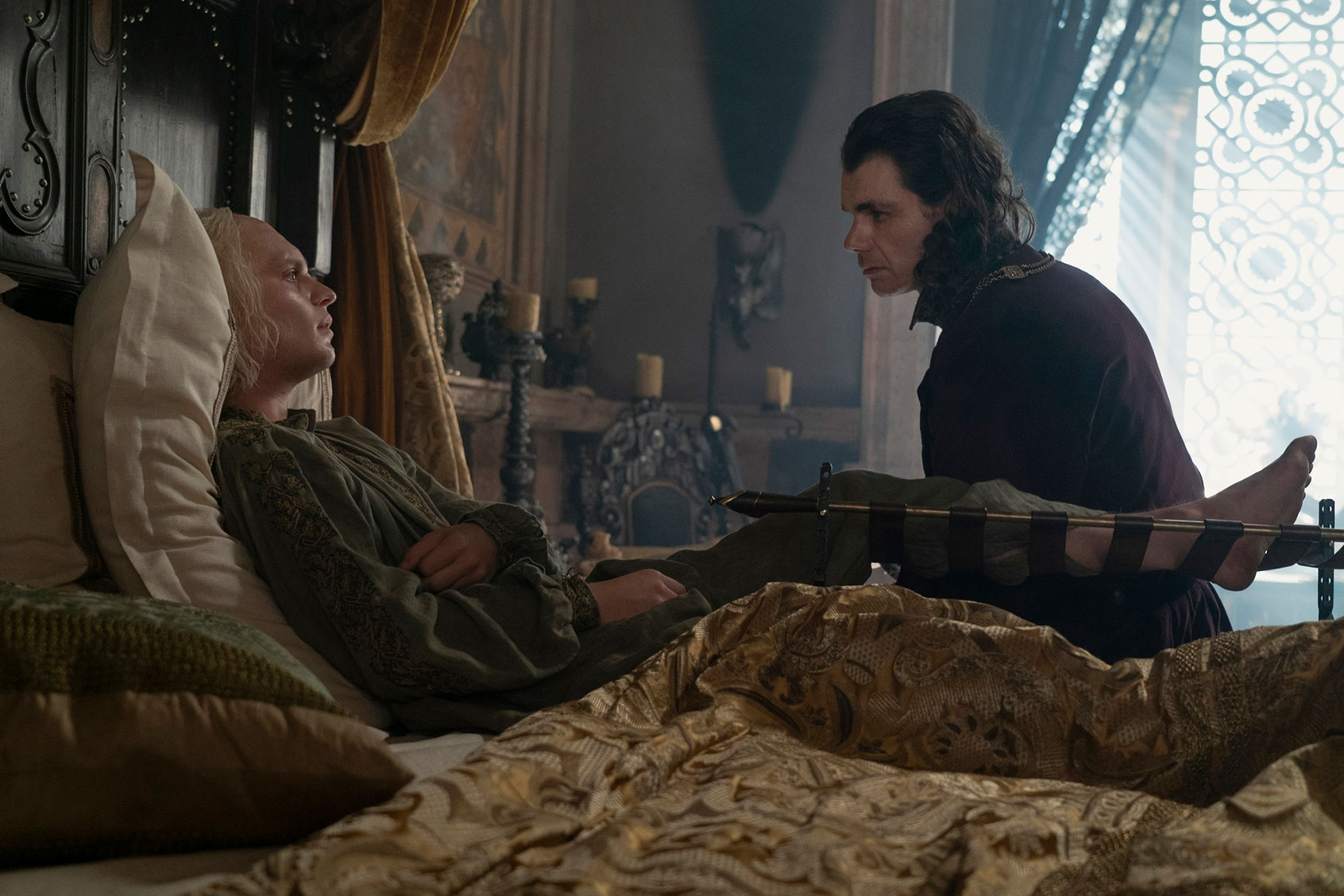
Tired: Daemon’s haunted spa getaway.

Yeah, yeah, it’s in the books, but Daemon’s poorly timed men’s empowerment retreat at Harrenhal was this show’s version of Hershel’s farm. Lasting too long and dragged through too many dream sequences, it asked a lot of us while trying to sell a half-hearted flirtation with going hustle bro.

Now that he has an army, he loudly brags that his niece-wife and the true heir to the Iron Throne could join him and sit at his side after he single-handedly takes King’s Landing. Then Alys Rivers (Gayle Rankin) slapped that out of his mouth by leading him to the godswood to feel up its heart tree, which shows the past, present and future, including Rhaenyra on the throne.

That, finally, sets him right. When Rhaenyra shows up to Harrenhal unannounced, Daemon ends their marital spat by kneeling before her in front of all of them – including Ser Alfred Broome (Jamie Kenna), who Rhaenyra trusted as her emissary only to tell Daemon he’d back “a king.” So: that’s all settled.

We need your help to stay independent

Fire: Rhaenyra and Alicent, Part Two

I speak for a lot of folks when I say this show could ease up on the dramatic chatter, but the midnight tête-à-tête between Rhaenyra and Alicent perfectly captured that “I was wrong to steal your boyfriend” energy with which many high school girls are familiar. Alicent played the part of the mean girl who realizes her mistake after her dude gives her the clap and wrecks the car daddy gave her while driving drunk.

Rhaenyra, cross-armed and righteously indignant, does not feel sorry for this traitor, even after Alicent offers to hand over King’s Landing to prevent bloodshed. Alicent smoothly tries to negotiate an easy out for Aegon (Tom Glynn-Carney) which is, of course, an additional insult. Rhaenyra demands Aegon’s head as a price for her former confidante’s betrayal, and Alicent, craven as she is, agrees.

All she wants is to disappear with her daughter Helaena (Phia Saban) and her granddaughter. “I cast myself on the mercy of a friend who once loved me,” Alicent says, agreeing to set up Rhaenyra to take King’s Landing three days (and for us, possibly a year or years) from now. Then she tries the whole, “So, friends?” gambit, which never works, and that’s that.

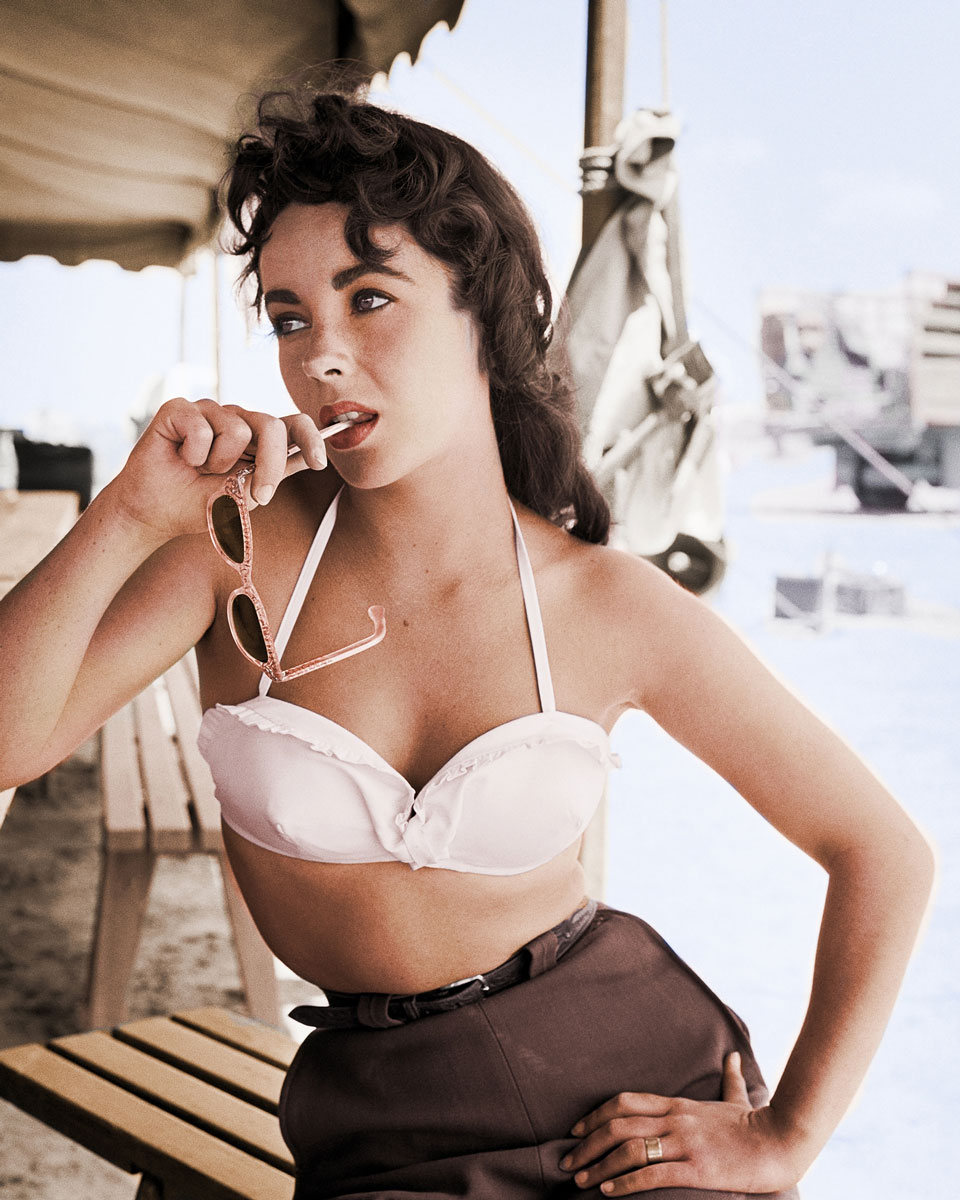
House of the DragonTom Glynn-Carney as Aegon Targaryen and Matthew Needham as Lord Larys in "House of the Dragon" (HBO)

Fired: Aegon the Grilled and Larys “Footsy” Strong (Matthew Needham)

Larys, at the King’s bedside: “Look, man. Your brother's gone ham and made Vhagar light up Sharp’s Point like Three-Mile Island, just 'cause he’s salty. I’ve defrauded Harrenhal and hid the cash in Braavos. Let’s ghost this place.”

Aegon: “Braavos. Stinky. Ew. Hard pass. Also, did you know Vhagar’s fire made my gherkin into jerky? I can’t even whiz right.”

Larys: “Aemond’s gonna kill you too, you know.”

Aegon: “Braavos, you say?”

Tired: Rhaenyra’s hesitancy

The queen struggles to have the men surrounding her take her seriously, including Daemon. But she doesn’t exactly give us a reason to disagree with her. First, she obtains three new riders for her riderless dragons, including one that desperately needs to be stabbed, Ulf (Tom Bennett), bringing her arsenal to seven.

“I had hoped my advantage may be a deterrent,” she tells Corlys Velaryon (Steve Toussaint). “Vhagar is overmatched.” But even after he counsels her to make a move, she can’t even take control of her own house, with Jace giving her lip and having to put up with Ulf mouthing off and touching Jace (!), and Ulf’s general rudeness.

House of the DragonTom Bennett as Ulf in "House of the Dragon" (HBO)
Also tired: Ulf.

Seriously though, why hasn’t anybody stabbed this man? Stab him. Rhaenyra already has Hugh (Kieran Bew) and Addam of Hull (Clinton Liberty), and four more dragons aside from theirs. This loser will not be missed.

And that’s a factor of bad acting and writing.  “Game of Thrones” had plenty of backstabbing boors, Bronn being the best of them. Who didn’t love Bronn? Even Tyrion couldn’t help sidling up to the old scamp after Bronn betrayed him.

Whereas nobody likes Ulf, and while Martin wrote a reason for that, Bennett doesn’t lend any subtlety to his coarseness that would explain Rhaenyra’s patience with his disrespect. She's the queen! Why does Silverwing’s terrible taste in men have to ruin all our lives? Ditch this fool and hold a new round of open auditions.


Want a daily wrap-up of all the news and commentary Salon has to offer? Subscribe to our morning newsletter, Crash Course.


Fire: Episodic symmetry

Props to director Geeta Vasant Patel for the visual redux of Rhaenyra landing Syrax on the long walk to the front gate of Harrenhal with Daemon’s Caraxes on its tower, recalling the character’s similarly situated Season 1 confrontation with Daemon at Dragonstone. In that second episode, the child Rhaenyra (Milly Alcock) persuades Daemon to renounce his claim to her birthright, which he renews, along with his devotion in these scenes. It would be downright romantic if he weren't also Rhaenyra's uncle.

Fire: Alyn of Hull telling off Corlys his father

Whatever compelling moments lurk in this episode are carved out by a few outstanding performances, and Abubakar Salim’s scathing monologue is one of them. Corlys spends the entire season strutting around his remaining boys without finding the stones to directly acknowledge them, forcing Alyn to bow when he suddenly raises him up without saying why, although they both know. That confrontation was eight episodes in the making and legitimately earned drama, which is more than can be said of most of the nattering that fills these hours.

Well done: Ser Simon Strong, castellan of our hearts

Simon Russell Beale's restrained humor is a welcome respite from the season's gloom, and Harrenhal and without. He is a Westerosi national treasure that must be preserved at all cost — with fire and blood, if need be.

Tired: Ser Criston Cole (Fabien Frankel), soft boi

Now he chooses to wax philosophic after watching dragons roast his companions and betraying Alicent? Indeed – as Gwayne Hightower (Freddie Fox) holds a sword on the man sniffing his sister’s favor, Criston mourns his poor choices. “The dragons dance and men are like dust under their feet, and all our fine thoughts, all our endeavors are as nothing. We march now to our annihilation. To die will be a kind of relief. Don’t you think?”

Agreed. At least that would mean something worthwhile happened.

All episodes of "House of the Dragon" are streaming on Max.

RFK Jr. shares bizarre video about him dumping a dead bear in Central Park

Early Sunday afternoon, Independent Presidential hopeful Robert F. Kennedy Jr. dropped a grim offering to his social media followers, revealing an intimate look at how he chooses to spend his downtime.

In the clip shared to X (formerly Twitter), Kennedy sits at a dinner table in front of a huge tray of meat, telling a story to Roseanne Barr — a staunch Trump supporter — about a time he dumped a dead bear cub in New York’s Central Park a decade ago, as she laughs and sips a cup of coffee.

Introducing his share of the video by writing, "Looking forward to seeing how you spin this one, @NewYorker," in reference to a forthcoming article which is anticipated to be a juicy read, Kennedy makes sure to specify in the clip that he was not drunk when this bear situation took place, but that the people he was with at the time very much were, and encouraged him to do it. As he moves along in the story, he shares that a lot of bicycle accidents had been occurring in the city around this time, which led to the idea of casually disposing of the bear — which he chanced upon while out on a “falconing” excursion in Goshen, N.Y.  and put in his van to skin and eat later — in such a way, as to make it look like another similar accident had occurred because bears are, of course, being taken out by bikes all of the time in New York City.

"It'll be funny for people," Kennedy laughs in the video, regarding his bear death prank. 

Watch here:


The food delivery bubble is bursting — and maybe that’s not a bad thing

On-demand food delivery saw truly explosive growth during the pandemic. With restaurants closed to in-person dining and takeout’s ability to turn “a lethally depressing Saturday night into a lethally boring Saturday night with pad thai,” as “Last Week Tonight” host John Oliver recently put it, apps like GrubHub and DoorDash experienced a surge of new users and global revenue for the industry skyrocketed from $90 billion in 2018 to $294 billion in 2021. 

However, new reports show they still aren’t profitable. 

According to a 2024 analysis from the Financial Times, leading online food delivery groups in Europe and the U.S. “have racked up more than $20 [billion] in combined operating losses since they went public,” reportedly leaving investors queasy at the idea of funding more loss. Not only that, but consumer reports indicate customer dissatisfaction with the apps is on the rise, while labor groups continue to decry the ways in which they say the food delivery industry takes advantage of gig economy workers

Put another way: On-demand food delivery is not working for customers, couriers, restaurants, or even the companies behind the apps themselves. The food delivery bubble is definitely bursting — but maybe that’s not a bad thing. 

To understand why the industry is flailing, it helps to understand how it actually began. 

Desire for novelty and convenience has always helped drive food delivery. 

Texts from the Korean Joseon Dynasty dated around 1770 indicate that scholars and government officials would occasionally order in naengmyeon, chilled buckwheat noodles served with pickled radish, thin strips of cucumber and slices of Korean pear. By the late 19th century, dabbawalas — which translates to “one who carries the box” — began operating in colonial Mumbai, delivering hot lunches to workers. Across the globe, in Naples, Italy, Queen Margherita placed what is now recognized first delivery pizza order from Pizzeria di Pietro e Basta Così in 1898; after the queen fell ill, the shop’s head chef, Raffaele Esposito personally brought a mozzarella and basil pie to her doorstep.

The advent of the telephone meant that average diners could receive similarly royal treatment. In 1920s Los Angeles, the Chinese cafe Kin-Chu would fulfill orders via phone until 1 a.m., a stroke of prescience that forecasted the eventual and immense popularity of late-night delivery. 

Technology continued to inspire shifts in the industry. For instance, after the second World War, many restaurants began advertising “television menus,” dishes meant to be ordered for takeout or delivery and enjoyed in front of TV sets, which were becoming increasingly commonplace in middle-class American homes. In 1994, Pizza Hut launched one of the first internet-based food delivery websites, Pizzanets, which allowed customers in Santa Cruz (though only in Santa Cruz) to order delivery. 

We need your help to stay independent

Then smartphones came to market, quickly followed by food delivery apps, like DoorDash, GrubHub and UberEats, now the three top food delivery companies in the United States, which collectively account for 80% of the sector’s revenue. The introduction of these apps completely upended how food had previously been delivered. 

Instead of customers calling a restaurant and placing an order, which would then be delivered by a restaurant employee and often paid for in cash, customers now place an order and pay through one of these third-party apps, which connect a local courier with that order. Unlike typical restaurant delivery, the majority of these couriers are contract workers, while restaurants are also charged hefty commission fees for each order. 

Especially in recent years, local restaurant owners and chefs have tried to educate their customers on what a toll on-demand, third-party delivery apps take on their businesses. In a 2021 story for Eater Chicago, Philip Foss, the chef and owner of the Michelin-starred EL Ideas and Boxcar BBQ, wrote that the restaurant industry has been “cannibalizing itself” by joining delivery services like Grubhub, DoorDash, and UberEats.

“As a consumer, I get it,” Foss wrote. “The convenience and the wide selection of restaurants makes takeout in recent years as good as it’s ever been. And as someone who used the apps a lot (pre-pandemic), ordering delicious food from the sofa speaks powerfully to the lazy side of my heart.” 

He continued: “The allure as a restaurant owner is obvious: Our goal is to get our succulent barbecue in front of people. And if the customer’s goal is to get dinner on the table as quickly as possible, the best way to do that is to open an app and have it delivered. So it’s on restaurants to try to make that happen. Well, we tried. But here’s the thing: Delivery apps are destroying restaurants, from mom-and-pop places to chefs with Michelin stars. They’re a terrible deal.” 

Foss laid out how, after accounting for normal restaurant costs plus paying the commission fees third-party apps charge — which can range between 15% and 30% — he makes $1.50 on a $30 check. The delivery app? They would make $4.50 on the same order. 

"New studies show that gig work is less profitable than it used to be as the cost of fuel, insurance and car maintenance have increased — and as the rate of tipping on food delivery has decreased."

It’s a staggering discrepancy, but the couriers coming to pick up the order aren’t seeing that profit, either. For instance, the typical Uber Eats driver earns a base fare per delivery, ranging from $2 to $4, depending on the market. However, new studies show that gig work, in addition to being driven by sometimes unpredictable consumer demand, is less profitable than it used to be as the cost of fuel, insurance and car maintenance have increased — and as the rate of tipping on food delivery has decreased

This, in turn, speaks to reports of customers’ growing dissatisfaction with on-demand food delivery. From research done by Consumer Reports to the annals of delivery app-specific subreddits, customers complain about growing wait times, cold food and exorbitant fees. 

“As a customer that uses multiple food delivery apps: Grubhub, DoorDash, Uber Eats, I find that prices for each menu item are higher through the apps than if I ordered directly through the restaurant,” one respondent who spoke to Consumer Reports said. “Some apps also then charge a ‘Service Fee’ and/or ‘Delivery Fee.’ I have no idea how much of those added charges go to the restaurant, driver, or app company. It is not clearly outlined at all. Plus I need to tip on top of all those extra charges to make it work the driver’s time and effort. So, it quickly becomes ridiculously expensive to order through the apps.”

In 2023, New York Magazine officially declared food delivery a rip-off. 

“It’s not exactly clear when it got out of hand, but at some point fees were eclipsing the cost of the actual food, especially in New York, the largest market for delivery apps,” wrote New York’s Kevin T. Dugan. “A Chinese-food order in Park Slope that totaled about $28 in May 2022 cost an extra $24 a year later via Grubhub. A $17.95 order for a chicken-and-rice bowl with chips at Chipotle nearly doubled to $32.06 after tip. A 30-something-dollar sushi order approached $50.” 

Julia Craft, a hairstylist in Bushwick, told Dugan she’d have to give up the habit. “I’m not struggling too hard, but when I see how much money I waste by ordering, it’s kinda nuts,” Craft said. “When I don’t order, I’m amazed at how much farther my money goes, because it really eats up a lot of my income.”

"It’s not exactly clear when it got out of hand, but at some point fees were eclipsing the cost of the actual food, especially in New York, the largest market for delivery apps"

And even with all that, on-demand food delivery apps are still having trouble figuring out a profitability model that works post-pandemic, thanks largely to high operating costs, low margins and the deeply competitive market. So what’s the answer? According to chef Phillip Foss, there’s no single solution that is completely convenient and completely profitable for everyone, though there are some simple steps that can be taken to drive a more equitable delivery ecosystem. 

“Most of the public wants what it wants when it wants it, and asking a consumer to give up a quality-of-life attraction like having food from their favorite restaurant delivered to their door is like asking a kid to give you back candy they’ve already put in their mouth,” he said. 

Some companies, like ChowNow and Slice, are positioning themselves as ethical alternatives to big-name apps by prioritizing fair wages for drivers and offering more reasonable fees to area eateries. However, Foss maintains that  one of the most responsible ways to get delivery is just by going old-school— simply picking up the phone and calling local restaurants for delivery or take-out. 

“I ask the general public to take action by supporting restaurants that are just saying no to delivery app services,” he wrote. “The connection with the eatery will be more intimate, and you will feel good for supporting hard-working people through difficult times.” 

“I’m a very strange man”: Dylan Sprouse talks good yogurt, bad twin roles and finding a butt double

“We wanted to frame it in a very morally gray area,” says actor Dylan Sprouse. The premise of his new movie sounds at first like a uniquely American tale of what one character refers to as a classic case of “toxic masculinity” — betrayal, anger and inevitably, guns. But the protagonists of the twisty black comedy “The Duel” don’t erupt into sudden violence; they don’t whip semiautomatics out of their glove compartments. Instead, they settle things like gentlemen — with an old-fashioned challenge and a set of antique pistols.

The premise appealed to the former “Suite Life of Zack & Cody” and "Big Daddy" star in part because of his own upbringing, sharing a household with his father and twin brother Cole. “My father's a very sensitive man,” he recalled during our “Salon Talks” interview, “and he was always good about making sure we were not being a**holes.” For him, the film (which he also executive produced) is an examination of “the idea of honor” and of conflict resolution in a world where men aren’t encouraged to talk through their differences. 

In a candid and surprisingly R-rated conversation, Sprouse also opened up about why he wants to make Indiana the new Hollywood, which actor he thinks played identical twins best, and what he learned when he had to choose his own stunt butt double for his last film. “I asked a few other people,” he admits. “I was like, ‘If you're comfortable, would you help me pick a butt?’”

The following conversation has been lightly edited for clarity and length.

“The Duel” is a movie about, as the tagline says, modern problems. Tell me about the concept and this crazy idea of this film. 

The movie follows two best friends who gravely wrong each other. One of them decides the only way to handle this is to challenge the other to an old-timey duel to the death, and all the problems that arise from that idea. There are some twists and turns along the way, which add to the chaos of the movie. It's a dark comedy. I made this quite a while ago now, three or four years ago, with some of my best friends in the world. We filmed this down in Indiana, and I'm very, very proud of this movie. It's the first one I've ever executive produced. 

I saw the AMA that you guys did recently. You said it was also inspired by you and your co-star Callan McAuliffe. That's an interesting thing to throw out there, and I have to say it left me with a thousand questions. 

None of the subject matter, I should say, thankfully. 

I worked on a movie called “Banana Split” years ago. My best friend in that movie was Luke Spencer Roberts, one of the two director-writers (with Justin Matthews) of this movie. When they were writing the two leads and their characters and how their personalities match up, Luke was inspired by me and Callan. Callan is another very longtime friend of his. And then we added all the trouble into that. 

You were working with friends on this production. You grew up working with family. I would imagine that can be a double-edged sword.

For me at least, I always think it's better to work with friends and family, because there's a shorthand towards taking and making creative risks too. When you know and trust people on set, everything comes easier. I know actors talk a lot about chemistry. But the backbone of good chemistry, whether you're acting angry or sad or happy or trying to make jokes, it's always made better if you're actually friends or like the people behind the scenes. Having that, not only with the cast but also the crew in this particular scenario, allowed us to stretch our wings and make choices that I'm proud to say panned out in this movie well. 

A lot has changed in the time since you made this movie. We now know about the difficulties of gun safety on sets. We know what can happen, because of what happened on “Rust.” When you're doing a movie like this, are you thinking about, “How do we protect each other? How do we keep each other safe?” 

It's a great point and it's very topical. We had a good armorer on set, as was required of us. We were also dealing with old flintlock pistols, though. Those are a little harder in general to misfire or mess up with. You have to be particular about muzzle-loading a flintlock and making sure the flint is in place. 

Guns aren't safe really in general, but flintlocks are pretty safe for shooting, at least a movie. But that was always in the back of our minds. We shot this during COVID, so our safety precautions were pretty extreme in general. This was right during the height of COVID. We did over a thousand tests over a month and a half, and the six-feet rule and masks on set, all of the above. 

Were you all quarantined together? 

The four main cast were quarantined together, which ended up becoming a little bit of a frat house. I think that made the chemistry look more real. 

There is a moment in the film where someone says out loud the words “toxic masculinity.” This movie dances around these ideas of how men resolve their problems. Tell me what that phrase means to you coming into this character, and what you brought with it from your own experience as a man, as a husband, as a brother. 

All of us on set, even the writer-directors, have similar views on that subject matter and in our personal lives. For the movie, we wanted to frame it in a very morally gray area. We're neither [dismissing] it, we're neither pedestaling it, we're just presenting it as it is. That's been part of the fun of the screenings too. We're interested to hear groups of people arguing about what they think of the characters and the lost causes and solutions, or the exit ways they have along the way, without spoiling anything. 

"There's not a lot of good twin roles in general. It's either pretty slapstick or it's very out there."

It's an incredibly topical thing, in general. I grew up in a family with my father and my brother. My father's a very sensitive man, though, and he was always good about making sure we were not being a**holes, pardon my French. I think it's more relevant than ever. The idea of honor is another thing that plays largely in this movie. Another subject matter, which is pretty topical too, is conflict resolution and speaking to each other. That's a line that we say, No one talks to each other anymore.” We're presenting all of that in this movie. We're hoping to hear fan reactions and audience reactions. That's been my favorite part of all of this. 

Even though this movie is a dark comedy, I have been calling it a love story about friendship, because that's what it is. To embark on a journey like dueling, you have to love your friend. You have to be pretty remorseful about what you've done. 

You took a break for a couple of years to go to university. You got a degree in video game design. You are also an entrepreneur. You have been involved in mead making. You're a co-founder of a skyr business. Two questions for you. First, what are mead and skyr? And second, how did you get into the food and beverage industry? 

Especially with food and bev, in general, I'm just a very strange man. I like the things that I like and I like supporting weird people. That is something that I love. All my friends are strange people too. 

With mead, I started brewing when I was young, about 16. I learned that you could buy the ingredients legally, but not buy the booze legally. My friends were very happy. So I started brewing, and then I fell in love with the process of doing it. I like making things. I like cooking, I like brewing, I like figure painting. Nerdy guy. 

With skyr, I was traveling through Iceland, which is one of my favorite places in the world. The buddy who was traveling with me, Unnar, was bringing me to all these skyr bars, which seemed pretty cool out there. There were these yogurt concept bars. You would see families in there. And then I met Hafthor Bjornsson, the strongest man in the world. He's like 6-foot-9, 350 pounds, and he's shoveling this stuff down to gain weight and power lift. I was like, This is the weirdest overlap of what I'm looking at.” I've always followed my heart in concepts that are a little against the grain. But concepts have found me that tend to lean Scandinavian. I don't know why, but I like all that stuff. 

We'll see what comes next. Maybe horn hats business. 

I'm bringing back the helmets. 

I was wracking my brain to think of another case in show business where there are identical twins who are acting, not together as a team. When it comes to you and your brother Cole, are you sometimes looking at the same scripts or going up for the same parts? Are you still in communication about the business side of it?

Definitely. It's funny, we talk to each other and be like, Hey, did you get this?” Or, Did you get sent that?” Or, "What are you auditioning for right now?” We'll oftentimes, we'll do the self-tapes with each other, or auditions with each other. 

It was practical growing up because a child can only work so many hours on set. But, if they have the same child, you double your hours. So, we came into the business on a practical notion. Then you reach a certain age and that's not necessary at all. We haven't worked as twins in a while. 

Also, there's not a lot of good twin roles in general. It's either pretty slapstick or it's very out there. Or there's a twin role that comes through, and the actor who it's being offered to decides they want to take a chance on playing two people on a green screen. I have high hopes for us working together again. But, I definitely think it's going to be something that we have hands in making. That's becoming more of a reality with all that we're doing in Indiana, and now after this executive production thing, we're looking a little more seriously into more projects. 

The movie was shot in Indiana; you just did the premiere in Indiana. Tell me how you wound up there. 

I'm so thankful we did. We wound up in Indiana through a producer of ours named Zach Spicer over at Pigasus Pictures. While they were finishing and finalizing a redraft for the script, my writer-directors of this project ended up during COVID camping in a tent on his land and finishing the script. By the end of their camping excursion, he told them, “OK, a few caveats: you got the money, but we're also going to need to do this in Indiana,” where he shot plenty of times with his partner Gordon Strain. 

We were trying to make Indiana look like Venice Beach and Mexico at one point. I will say this, I don't think we could have made that movie anywhere else. For what we had and what we did, I'm so glad we shot in Indiana, because we just had our premiere there, not even two days ago. The amount of support and hospitality we've received from that state was unlike anything I've ever seen, truly. We had about 1,600 people show up to the premiere. We had our after-party at their beautiful museum Newfields. The support that we felt, people are so fiercely loyal and loving of their state there, that they were so excited to see what we made. That was a very exciting experience, and I want to make more there, for sure. 

I'm a little embarrassed to ask you this. You had a butt double on your last movie "Beautiful Wedding," and I understand that you got to choose. Walk me through what the process is like when you're looking at butts and saying, “I'll take that one.”

How vulgar am I allowed to get? I did not know I had a butt double before going in. There have been a few really good things in the industry that have evolved over the last 10 years. I feel so old saying that. Intimacy coordinators are part of that, which is a great change in the industry. A lot of stuff that I wouldn't have presumed would be written in the contract is included. One of those things was a butt double. By the time we were getting close to shooting this scene, which was, pardon my French, an insertion shot, shot from behind, they were like, Hey, do you want to use your butt double for this one?” I was like, What? What are you talking about?"

They're like, Yeah, you have a butt double.” I did not know that. They were like, Come over here. Let's show you the list," and it's literally just shots of guys with their a**es. They're like, "Choose which one that you want." There were like 10. I was like, I don't know.” So, I asked for help. I asked my co-star Virginia [Gardner], and I asked a few other people. I was like, "Hey, look. If you're comfortable, would you help me pick a butt? Because I don't know. I don't know what a good butt on a guy looks like” 

Do you ask your wife? Do you say, “Which one looks most like mine?” 

I did send it to my wife. I didn't ask which one looks like mine. I was like, Maybe that's not what they want." And unanimously around the board, everyone chose the fattest donkey, the bubbliest butt possible. And I did not expect that. I did not see that coming. I didn't know that that was a desirable trait on a guy. I didn't know a big, round, bubble butt was a desirable trait. 

So, your character's really caked up

I am caked up in this. Now, I want to tell you the vulgar part of the story. 

Oh, that's not the vulgar part? 

That's not even the vulgar part. They asked me ahead of time, You picked your butt double. How's about this? We're going to shoot this quick scene. Ten seconds of a scene. It's just a pull-in. It's supposed to be erotic, romantic. Why don't we shoot the rehearsal with the butt double first, and then if you feel comfortable, you jump in? We'll keep you in video village. It's a closed set. I say, OK. All right. That's fine.” 

I'm standing in video village and they call action. It's the butt double and it's Virginia Gardner, who is a brilliant actress. She’s lying [down in] the scene and they call action and she goes to pull in the butt double. The thing is, when you're pulling in someone you want to pull in straight, right? But, she pulled in like this (moves hands apart). Now, I swear I saw out of this man's mouth. That was the coldest air he probably ever felt in his life. I looked at my producer and I said, I think we'll just continue using the butt double for this scene. I'm good.” So, what you see is what you get in that. It's not my butt. Sorry, guys. 

I'm going to pivot like you would not believe. You've said how there aren't a lot of great roles for twins, because they usually get snapped up by some actor who wants to stretch their wings. I want to know, what is a good twin performance by a single actor that you've seen? There are a lot of them. 

The last one that comes to mind is Tom Hardy. I remember my brother coming up to me — this is such a specific complaint — but he's like, Dude, another movie where a single actor takes a job away from identical twins.” I was like, Cole. I don't think those producers were even looking in the direction of us if they're hiring Tom Hardy. We're very different people, bro.” 

You were not going to play English gangsters in the 1960s? 

No. I don't think that works the same with us. 

Julia Louis-Dreyfus will infuse the DNC with “Veep” energy

"Veep," the HBO political satire comedy series starring "Seinfeld" star Julia Louis-Dreyfus as a snarky vice president who goes on to be elected as president, has taken on new life since Kamala Harris became the presumptive Democratic nominee for the 2024 presidential election — with a 353% surge in viewership numbers, post-"Kamalanomenon." And now that Harris has won enough support from Democratic delegates to formally secure her party's nomination, Louis-Dreyfus plans to infuse even more "Veep" energy into Harris' campaign.

In a recent interview with The Times of London, Louis-Dreyfus commented on the comparisons being made between her "Veep" character and Harris, saying, “If Selina [her character's name on the show] had any advice for Kamala, she had best not take it. I think Kamala is so intelligent she wouldn’t take the call.” But, self-deprecation aside, she says she's "gobsmacked" to see her show get tied in with the excitement of Harris' campaign, and has plans to get "extra involved," personally.

When asked if she'll be at the Democratic National Convention in Chicago this month, Louis-Dreyfus says, “I probably will be, yes,” building excitement for an IRL "Veep" to Veep moment that will surely send the show's resurgence through the roof.

According to Variety, Harris has been a fan of "Veep" for a while now, and in a 2023 interview, Louis-Dreyfus recalls being told by her that the show is "more like D.C. than anyone would care to admit.”


Ballerina Farm and the ways dancers embrace life after hanging up their pointe shoes

I’m a retired professional ballet dancer and on paper, I’m a traditional wife. My husband, also a retired ballet dancer, is the breadwinner. I’m the bread-maker. The chauffeur for three teenagers. The stay-at-home mom. Because the algorithm doesn’t differentiate between the art of dance and the art of branding, Ballerina Farm has slipped into my social feeds. Mom. Wife. Ballet. We must be the same right? 

If you need a refresher on the Ballerina Farm narrative, ballet educator and Instagram influencer Cynthia Dragoni of @thedancerlens sums it up nicely: Young, ‘pretty-talented’ dancer gets distracted by boyfriend. Makes a different choice in life.” 

I am made to feel like this is an either/or situation and that I am supposed to take sides.

But the viral articles will make you think otherwise. Fold in some provocative visuals such as “pregnant Juilliard undergrad,” “billionaire cowboy-ish husband” and “mother of eight” into everything this homestead ballerina doesn’t have — no nannies, no epidurals, no ballet studio in the barn — and watch the controversy light up faster than the gas on an Aga stove. 

The thing that bothers me most is that I am made to feel like this is an either/or situation and that I am supposed to take sides. 

Is Hannah Neeleman a ballet-student-turned-beauty-queen who feels trapped by her life and pines for what could have been as she milks cows and gathers eggs? I don’t know. Not my choice. Not my sacrifice. 

Or is she living her best life with her gaggle of kids, her nine million social media followers, and her undisputed financial security via marriage? Again, I don’t know. Not my sacrifice. Not my choice. 

But I do know that once you are boxed in by an either/or narrative, it’s really hard to claim the both/and reality behind the labels. 

I’m a wife, a mom and an artist. I don’t work outside the house — by the traditional definition — but I write and publish books. I’m an active member of my literary community and I foster other artists and creatives. I have it all. 

Can I be in a traditional marriage and still have a husband who does all the grocery shopping and all the dishes? Because I do. 

When I had kids, I knew I’d never go back to dancing. Am I still a ballet dancer? I think so. In our marriage, my husband and I make all our decisions together, and yet, I have no financial independence. Are we still equals? You bet. 

This is the kind of both/and that I want my daughter to witness. 

But not just my story. I want her to read about Ingrid Silva, the Brazilian ballerina from the Dance Theater of Harlem, who, pregnant and in pointe shoes, graced the cover of Vogue Brazil in 2020. Now she’s returned to the stage as a dancer. She has added “choreographer” to her résumé and last month she was on the cover of Harper’s Bazaar Brazil. 

"I don’t want our daughters to make themselves small."

Celia Fushille was in her early 20s recovering from a knee injury when she got married and had two kids. She returned to the ballet studio mostly to stay in shape, but she caught the eye of Michael Smuin, a prominent San Francisco choreographer looking to found his own ballet company. Fushille took the job offered her — first as a ballet dancer, then as a principal, and eventually as associate artistic director. When Smuin passed away in 2007, she was appointed artistic director of Smuin Ballet, a post she held for 17 years. These are not isolated incidents. There are mothers all over the world who have found a way to nurture their children and their artistic passions without sacrificing one for the other. Our circumstances are different as are our support systems. We don’t fit into cookie-cutter formulas and our stories don’t get fueled by clickbait. But we are out there, doing our thing, knowing that what works for some doesn’t work for others. 

We know there is no formula to “having it all” but we know it’s out there and we can make it happen for ourselves. 

Case in point: 

Right now I am in Paris. 

It’s not a vacation. My daughter and I are on our way to Berlin where she will attend a 10-day ballet intensive with teachers from some of the most prestigious ballet companies in the world. 

My original plan had been to send her to a 10-day ballet intensive closer to home in a city commonly not known for its support of the arts. I’d known the director of the school from my own days as a professional ballet dancer. My daughter auditioned and was accepted. 

But then a friend of mine — also the mother of an aspiring ballerina — found the Berlin course. Room, board, tuition and plane fare were still cheaper than my original stateside option. Flying into Paris during the Olympics paradoxically made the trip even cheaper. 

It was practically a no-brainer, and my husband agreed. He stayed home to work, and I made arrangements to accompany my daughter to Europe. 

My friend is also a former dancer and mother of three. In her world, she is the stable paycheck, and it is her partner who does the household logistics. Her job flies her to Barcelona and Munich, and in her spare time, she started a ballet photography company. Her life looks very different from mine but she too, has it all. Wife. Mother. Artist. 

On our first night, we walked away down the Champs-Élysées back to our lodging. Our teenagers walked half a block in front of us, already navigating the streets like locals. “I don’t want our daughters to make themselves small,” she said. “I want them to know there’s a bigger world and they can be a part of it.” 

It is a big world, and one mother’s choice is another mother’s sacrifice. I’d love to think that we can be happy for the mother who lives her life differently from what we’d like for ourselves. But maybe we just need to start by being happy for ourselves when we live life differently from what’s expected of us.


The cognitive load of household chores hurts maternal mental health, study finds

Despite a new generation of fathers in straight marriages spending more time with their children, the majority of household and childcare work still falls on women. It’s not just the physical labor, but the mental load. Also known as cognitive labor, the term encompasses anticipating needs, planning, organizing and delegating household tasks. 

Darby Saxbe, professor of psychology at the University of Southern California (USC), used an example of summer camp. The cognitive labor is researching camps, comparing rates, filling out the forms, and scheduling the camp week.

“All of the kind of organizational work versus, the daily work of taking the kid to and from camp,” Saxbe told Salon. 

Cognitive labor has been at the forefront of public discourse for some time now, from Gemma Hartley’s viral article "Women Aren’t Nags; We’re Just Fed Up,” to Eve Rodsky’s book "Fair Play.” There is no shortage of discussion around the topic, but instead a lack of research — that is, until recently. Researchers, including Saxbe, at USC are one of the first to investigate the cognitive dimension of household labor and its effects on maternal mental health. 

“We found that while mothers did more of the overall domestic labor than their partners, the division of cognitive labor was particularly gendered, such that women’s share of cognitive labor was more disproportionate than physical household labor,” the researchers wrote in the study, published in the journal Archives of Women's Mental Health. “We found that cognitive labor was associated with women’s depression, stress, burnout, overall mental health and relationship functioning.”

Mothers reported being responsible for about 73 percent of mentally demanding chores compared to their partners' 27 percent.

In the study, the researchers asked over 300 mothers of young children about who in their family was responsible for 30 common household tasks — such as calendar keeper, helping with homework, bathing and grooming, laundry and garbage. They then divided the tasks into cognitive planning and physical execution and to see how partners shared them.

The researchers found that mothers reported being responsible for about 73 percent of mentally demanding chores compared to their partners' 27 percent. 

They also found that mothers took on 64 percent of physical tasks, while their partners managed 36 percent. The one task in which fathers did more planning and execution was taking out the garbage.


Want more health and science stories in your inbox? Subscribe to Salon's weekly newsletter Lab Notes.


Saxbe said there are a few reasons why cognitive labor could lead to poorer mental health outcomes among women, due in part that it is frequently “unrecognized.”

“I think a lot of heterosexual couples will say there's conflict around who's doing what at home and there's a sense from one partner that they need to be told what to do or be given directions,” she said. “And that's not an egalitarian division of labor. One person's giving you a list and saying, 'here are the things we need at the store,' and you're not sharing the vision of how you want your family to run.”

At the same time, Saxbe said, it’s a difficult issue to have conflict about because the labor isn't visible.

“The other partner may not even realize that so much is going on behind the scenes,” Saxbe said. “That there's so much thinking, planning and researching that goes into, say, summer camp or the after-school program.” 

The person on the receiving end of cognitive labor may not realize how much time they're exhausting on it.

“They might just feel like stressed, but they may not realize it's because they're constantly doing all this household cognitive labor,” Saxbe said. “The other part of it is that it takes mental energy and focus away from other tasks, interests or priorities.” 

We need your help to stay independent

If a partner is constantly running to-do lists of things that need to happen in the household, then they don’t have as much free mental space to to do other things.

Notably, the data was self-reported, and it only surveyed mothers within co-habitating heterosexual relationships. Still, the researchers believe there is much to learn from the data that could have a bigger social impact.

“The UN has tried to document unpaid care work and generally unpaid household labor as a really important kind of contributor to differences in women's economic potential,” Saxbe said, adding that so much of the economy is built on women’s unpaid labor but it’s not factored into the country’s GDP. “I think studies that see it as a valid thing to try to study and quantify can help just get us all talking about, ask what are we doing within our households, and how does that fit into the larger global picture for women and their health, happiness and earning potential.”

Trump congratulates Putin for Biden’s historic prisoner swap

During a campaign rally in Atlanta, Georgia on Saturday, Donald Trump took a break from his extended comments on Kamala Harris being a "low IQ individual" and her perceived agenda to stop people from saying "Merry Christmas" to heap praise, once again, on the president of Russia, Vladimir Putin.

Congratulating Putin for this week's historic prisoner swap trumpeted by the Biden Administration, which brought home three Americans detained in Russia: Evan Gershkovich, Paul Whelan and Alsu Kurmasheva, Trump gave full credit to Putin for having made "yet another great deal," receiving a response of almost total silence from the crowd, which he elsewhere commented on as not being as packed as he would have liked.

“We got our people back, but boy we make some horrible, horrible deals,” Trump said. “It’s nice to say we got ’em back, but does that set a bad precedent?” he added.

Earlier this week, the White House spoke to press about the details of the swap, clarifying that no money was exchanged and no sanctions were loosened to facilitate this deal, according to a reporter quoted by Reuters in their coverage of the presser. 

"Trump congratulates Putin and not Biden. He is not loyal to the United States. This is not opinion. This is fact," writes journalist and lawyer Daniel Miller in a post to X, just one of many expressions of a similar sentiment circulating in the wake of Trump's comment.

Trump's allegiance to Putin is not a new thing and has raised concerns over how it could impact America, should Trump get a second term.

“Trump views Putin as a strongman,” said Fiona Hill, a senior fellow at Brookings Institution and a national security official in the first two years of Trump’s administration, in a quote from The Guardian. “In a way they’re working in parallel because they’re both trying to weaken the U.S., but for very different reasons.”

Kamala Harris must lean in: The left doesn’t have to pick between woke and working class

Conservatives have already begun attacking Vice President Kamala Harris as an unqualified “DEI hire,” language that evokes the broader right-wing narrative that the left has become too “woke” and no longer represents the average American. With Harris’ ascension to presumptive Democratic presidential nominee, many political commentators have expressed fear that voters may buy into the idea that liberals have, indeed, become too woke to connect with voters in the swing states needed to secure an Electoral College victory. But this election doesn’t have to be a clash of the “woke” versus the working class, and liberals don’t have to sacrifice one to win over the other. 

The left has long struggled to win back working-class voters. Americans without a college degree have steadily moved to the right in recent decades, resulting in a diploma divide where political views are largely split along educational lines. In 2021, progressive groups surveyed working-class voters in five swing states and concluded that “‘woke,’ activist-inspired rhetoric is a liability” to winning them over – a perspective echoed by other recent analyses.

Meanwhile, liberals are also courting the next generation of voters, many of whom value social justice and progressive ideals. In a recent study, my colleagues at Harvard University and I found that Gen Z is replacing the traditional American Dream – now financially unattainable for many of them – with the dream of inclusion

As a sociologist who has spent decades studying everyone from working class American men to immigrants in France to Gen Z college students, I’ve found that we all share certain core values: We want dignity and recognition. We want to feel valued by our community and our country. While Gen Z may call out inclusion as a priority, it’s something all of us strive for in one form or another. 

This includes working-class people who don’t see themselves represented with dignity in our culture. Our media praises entrepreneurs for disrupting the status quo and CEOs for creating jobs. For a fleeting moment during the Covid-19 pandemic, essential workers were celebrated, but that quickly faded. Working-class people were back to feeling invisible and undervalued. 

We need your help to stay independent

We see the hunger for dignity reflected in recent labor mobilizations demanding restroom breaks at Amazon, air-conditioned cabins for UPS delivery drivers, and the right to display pride flags at Starbucks. My colleagues and I also found it when we analyzed the language Donald Trump uses to appeal to white working-class voters in his campaign speeches, especially in response to perceived elite condescension. His selection of Ohio Sen. JD Vance, a vocal critic of America’s elite, was meant to reinforce the image of the Trump campaign standing with a significant portion of the working class. 

So contrary to conventional political wisdom, concern for dignity and inclusion is not a weakness. Rather, it is liberals’ best shot at winning back the working class. From LGBTQ+ rights to Black Lives Matter and #MeToo, progressives excel at building identity-based social movements that promote the humanity of marginalized groups. These movements succeed because they understand that equality isn’t only about legal rights or economic benefits. People also want recognition and respect. 

Unions have traditionally been the biggest source of working-class dignity. They’ve also been a reliable supply of left-leaning voters. With unions on the decline for decades in the U.S. (the rate of union membership among workers is half what it was in the 1980s), it is high time for the left to forcefully refocus on shared dignity as an electoral strategy. 

Liberals should use their movement-building magic – and the Gen Z passion for social justice – to build a movement that prioritizes the humanity of all people, including the working class. Here are four strategies they can take from past successes.  

First, embrace the values we all have in common, whether that’s our longing for recognition, our desire for health and well-being, or our need to provide for our families. For my latest book, I interviewed dozens of change agents – creatives, activists, thinkers, and innovators reshaping our society. From an activist in Florida fighting for voting rights to a Catholic nun managing global humanitarian projects, so many of the people I interviewed emphasized the importance of centering our shared humanity.

Second, speak to working class culture. Cultural representation has been key to advancing inclusion for people of color and LGBTQ+ people. And class is an identity like any other, with its own cultural markers. The right excels at linking themselves to cultural symbols of the white working class, from country music to NASCAR. The left should look for new points of connection in various corners of American culture – whether that’s professional athletes “taking a knee” against racism or Gen Z singers like Olivia Rodrigo promoting reproductive rights.

Third, promote broad definitions of who is worthy in our society. Capitalist rhetoric focuses on economic measures of success like what people earn or consume and how productive they are. The left should refocus on values that are achievable by anyone and beneficial to everyone, such as creativity, care for others, and contribution to community. The push for paid family leave, for example, acknowledges that people not only have value as workers, but also as parents and family members.

Finally, eliminate the moral blame placed on the working class for their economic situation and refocus on the social conditions they are up against. Working class people are frequently portrayed as lazy, uneducated, or unsophisticated, but we also have a long history of recognizing their hard work, savvy, and perseverance. Replacing stigma with positive portrayals was critical to the success of movements for same-sex marriage (“love is love”) and for HIV patients, bringing these people into the fold as members of our society deserving of respect. 

Progressive activists are already drawing on these lessons to build 21st-century labor movements. Organizations like the National Domestic Workers Alliance (NDWA) and the One Fair Wage Campaign (OFWC), whose leaders I interviewed for my book, emphasize respect and empowerment while scoring concrete wins. They understand that a living wage and dignified working conditions are symbols of “cultural citizenship,” of being acknowledged as a worthy contributor to society. Gen Z has also been bringing their dream of inclusion into the labor movement, sparking new approaches and demands during recent strike actions.

Progressives know how to stand up for the dignity and respect of different groups and create a big tent where everyone feels valued. It’s time to do that for the working class.

If Kamala Harris picks a white man, is that “identity politics”?

One meme shows a rack of wine at a supermarket labeled “Interesting Whites.” Another shows a different rack, this time labeled “Exciting Whites.” Yet another shows a menu, including “Light Crisp Dry Whites,” “Light–Medium-Bodied Off-Dry Whites,” and “Rich Whites.” The memes aren’t mocking the after-dinner selections of the suburban middle class, but lightly poking at Kamala Harris’ likely choices as a running mate. Several lists of potential hopefuls have been produced, and one thing is clear: Harris’ VP pick will be white and almost certainly a man.

We were here four years ago, when Joe Biden had pledged to select a woman of color as his running mate. But there is one noticeable difference. Biden had “boxed himself into a corner” and was “playing identity politics at its worst.” He was, the sentiment went, trapped by identity politics. That sentiment is notably absent today. Whatever is said about Harris, no one is complaining that she is seeking a diversity hire, except in jest. The disparity tells us something.

Some pundits have tried for years to convince us that all politics is identity politics, insofar as all political calculations are made through the lens of some identity. K. Anthony Appiah and Francis Fukuyama have insisted that the grievance politics of straight white Christian men is just as much identity politics as any other form. And when it's phrased in that way they have a point, or part of one. Clearly, though, their point hasn’t caught on.

A leading reason for the disparity in perception is that identity politics is frequently used as a derogatory term. It is leveled as an accusation, as if it were wrong to consider one’s own interests in voting, when those interests are tied to race, gender or some other key identity category. Identity politics, in common speech, is what other people do. This, in fact, is a key reason many want to see white identity politics called out.

But why should we think that selecting white candidates to satisfy white voters is identity politics in the first place? Much of the appeal comes from a liberal way of understanding equality. The same sentiment, for example, is behind the thought that affirmative action policies are just another form of racist discrimination. If identity politics is just a matter of “people evaluating issues through the lens of their association with a specific group,” then white men do it just as much anyone else.

What would be the point of identity politics as a category if all politics were identity politics? It may be more useful to think of identity politics not as something everyone does, but as a political strategy. The term itself comes from The Combahee River Collective Statement, compiled in 1977 by Black, mostly queer, feminists who argued for approaching politics through their identity because “the major systems of oppression are interlocking.” Breaking the systems of oppression they faced due to their identities, they argued, was a way of breaking the systems of oppression everyone faces. And identifying one’s own oppression is the first step in building solidarity with others oppressed by the same systems.

Seen in this way, appointing white men to positions of power, even if done for political considerations that appeal to white identity, is not an instance of identity politics. When white people do it, they aren’t seeking to build solidarity or to remove anyone’s oppression. They are trying to maintain the status quo.

Still, shouldn’t we treat everyone equally and, as many liberals hold, consider all forms of group solidarity equivalent? Political philosophers sometimes make a distinction between ideal and non-ideal theory. Ideal theory tells us what a just world would look like and how people in such a world should act. Perhaps that would be a world where there are no groups at all, and people are evaluated only as individuals. Or perhaps it would be a world where groups exist, but all are treated equally. In either case, identity politics might be unnecessary, and anyone who engages in it would be equally blameworthy.


Want a daily wrap-up of all the news and commentary Salon has to offer? Subscribe to our morning newsletter, Crash Course.


But since the real world doesn’t match the ideal, some argue, we also need non-ideal theory, which tells us how to act in light of ideals while taking account of our distance from them. In a world where groups are not treated equally, it makes sense for some to engage in a strategy — identity politics — to improve their position, bringing us closer to the ideal. But since not everyone’s pursuit of group advantage does bring us closer to the ideal, not every group-based politics is identity politics.

We are right, then, to consider Harris’ original selection as Joe Biden's running mate in 2020 as a case of identity politics — and a perfectly legitimate one — but that her choice of running mate is unlikely to be. But if we draw that conclusion, we should do it for the right reasons.

Netflix’s “Inside the Mind of a Dog” shows that dogs really do love us

"Inside the Mind of a Dog" delivers on the promises in its title, both stated and implied. The movie is packed with adorable dogs of every conceivable breed; it puts readers inside the mind of humanity's best friend; and — to address a question it poses at the very end — it lets us know whether or not dogs truly love humans.

"There are things that people can do with their dogs to improve their relationships."

"There is a lot of what we call convergence between dogs and humans," Dr. Vanessa Woods, the director of the Puppy Kindergarten at Duke University, told Salon. Woods, who is featured in the documentary, mentioned that humans will often notice a dog staring at them quietly and not understand what it means. Woods explained that this relates to the fact that dogs and humans both rely on eye contact when they are young to connect with their parents. Even as adults, humans and dogs still experience a rush of oxytocin — the so-called "love hormone" — when they make sustained eye contact with other individuals they care about. In a very real sense, they are hugging humans with their eyes.

"Basically they've hijacked this oxytocin loop," Woods said. "When your dog stares at you and you stare back at your dog, it increases your oxytocin and it increases their oxytocin. Basically they've taken over this neurological loop that we developed between our children and ourselves. And for another species to do that is quite extraordinary."

Woods' observation about translating dog stares appears in "Inside the Mind of a Dog," and the documentary (narrated by Rob Lowe, who takes the opportunity to show off his own pets) also includes many other tips so that dog owners can enter their friends' minds. We are informed that dogs bark to express emotions or recruit a human's attention — but that a bark is never "just a bark." In a high stress situation, dogs will bark at a higher pitch; if their high pitch bark repeats itself without pausing, they are in a state of outright distress; if they bark and pause, that means they still have some cognitive ability. Then again, some dogs are just more inclined to bark than others based on their breed, with Siberian huskies particularly notorious for being whiny.

Similarly, the movie teaches viewers that dogs communicate with their tails: loose equals curiosity, tight means anxiety, tucked or wagging low suggests stress and helicopter tail and/or butt wiggle indicates a very positive emotional experience (such as love for their owner). Scientists have even learned that if dogs' tails wag to the right, it means they have a positive association with a specific human being — suggesting, once again, affection.

Although dogs only have 16 different facial expressions (compared to humans' 27 expressions), they use their eyes, barks and tails to make up for their limited facial expressiveness. Also like humans, canine intelligence is built around problem-solving in the world around them, even though they rely on a different primary sense (smell) than humans (vision). If dogs did not share this basic intelligence with humans, they would not work with us so closely… or be so similar to us.

For instance, some researchers suggest that dogs can have ADHD just like humans. Additionally, puppies whose mothers let them figure out problems on their own wind up being better guide dogs than puppies whose mothers micromanage them, an observation that also has parallels to human experiences. The very fact that dogs are the most diverse animal on Earth is because they were subject to humanity's genetic meddling. (The movie does not mention the ugly connection between the history of dog breeding and many dogs' chronic health issues, as well as the dog breeding movement's ties to the racist eugenics movement.)


Want more health and science stories in your inbox? Subscribe to Salon's weekly newsletter Lab Notes.


"Understanding how the puppy mind develops helps us manage our expectations of what puppies can do or learn while they are growing up."

According to Dr. Brian Hare, a professor of evolutionary anthropology at Duke University, all of the movie's pieces of trivia add up to a single important takeaway, which is that doggie brains are far more complex than the popular perception often admits.

"We now have overwhelming evidence that dogs have multiple intelligences — these different types of cognition already emerge in puppies but first appear at different times," Hare said. "Some cognitive skills appear early, like the ability to read human gestures, and other cognitive skills, like self-control, come online a bit later. Understanding how the puppy mind develops helps us manage our expectations of what puppies can do or learn while they are growing up."

Some can grow up to be guide dogs or perform other services, like rescuing trapped people or detecting diseases including cancer, diabetes and Parkinson's disease. There are dogs that can learn hundreds of words (one learned up to 1,000), while others have very limited verbal comprehension. In some cases, there are dogs best suited to simply serve as a happy companion to a human family. As people learn more about dogs, though, scientists like Hare hope it will be easier for scientists to train large numbers of smart canines to help people.

"Dogs have more jobs than ever, but there is a shortage of professionally-trained dogs," Hare said. "A big factor behind the shortage is the difficulty of knowing what job any individual dog might be best at doing. The holy grail is to use a puppies' performance on our cognitive games to predict which job they will be best suited for as an adult. Will they be best at helping someone with a physical disability, a child with autism, search and rescue, or a veteran with PTSD?"

We need your help to stay independent

Hare added, "If we can predict this early in a dogs life we will have much more success training them and we will greatly increase the supply of dogs available for all the amazing jobs they do."

Just as learning more about dog minds will help humans train dogs, it will also make it easier for dogs to train humans. "Inside the Mind of a Dog" reminds us that the famous "puppy dog eyes" exist because dogs intentionally make the whites of their eyes (or the sclera) more visible to humans.

"There are things that people can do with their dogs to improve their relationships," Woods said. "We have this game in the documentary where you put a treat in a container and then close it. When puppies played this game, just for five minutes every two weeks, they actually had twice as much eye contact with the experimenter, which is really important for dogs and their people. Just by playing little fun games, it can really improve the relationship that people have with their dogs."

Trump warns “very bad” Google may be “shut down”

Donald Trump unleashed a tirade against Google during a Friday interview with Fox Business host Maria Bartiromo, accusing the platform of refusing to apologize for blocking some results related to his attempted assassination.

In the segment, in which Trump attempted to outline the dangers of AI before Bartiromo redirected him to the subject of big tech companies, Trump went after the search engine.

Noting that Facebook representatives called him to apologize for flagging some posts featuring photos of his assassination attempt with fact checks, Trump said, “Google, nobody called from Google,” before unloading on the tech company.

In the rant, slammed by the Harris campaign as “unintelligible,” Trump seemingly, though not clearly, accused the search engine of biased search result ranking, a complaint he espoused nearly six years ago.

Trump’s less-than-succinct description, possibly referring to Google’s practice of algorithmic search result ranking, which conservatives have blasted as unfair in recent days, was followed with a harsh warning message to the tech giant.

“​​Google has been very bad. They’ve been very irresponsible. And I have a feeling that Google’s going to be close to shut down, because I don’t think Congress is going to take it,” the former president told Bartiromo. “I really don’t think so. Google has to be careful.” 

Toward the end of the Fox segment, he also mulled stripping Google of its Section 230 protections and praised Elon Musk and X,  as Musk throws cash behind a PAC supporting his re-election bid.

Trump’s tenuous relationship with Silicon Valley has improved in many ways since his first term, strengthening ties with tech billionaire Peter Thiel, who groomed Trump’s VP pick JD Vance for office, and seeing bans on his accounts imposed after January 6th lifted. But Google continues to face attacks from the far-right, including accusations of suppressing Trump.


Jimmy Carter hopes to live long enough to vote for Kamala Harris

Nearing his 100th birthday on October 1, former President Jimmy Carter — who entered hospice care on February 18, 2023 — has revealed one goal at the top of his bucket list, which is to cast his vote for Kamala Harris in her presidential race against Donald Trump

According to the Atlanta Journal-Constitution, Carter told his son Chip this week, “I’m only trying to make it to vote for Kamala Harris.” Having voted in the Georgia primary in May, despite his ailing health, Carter's grandson, Jason Carter, commented at that time on the former president's will to keep going, saying, “He’s not going to miss an election. It’s important to him. I mean, that’s the person he is,” per USA Today

“Vice President Harris has the benefit of being part of this ticket and having been a part of this ticket for the last several months and years," Jason Carter said to Fox 5 Atlanta back in July. "She’s run before nationally; she’s been part of the team that beat Trump last time, and she knows how this works." 

In 2022, Harris was called "Jimmy Carter 2.0" by Fox News commentator Michael Tammero, after her comments regarding there being a "level of malaise" among Americans two years into the pandemic, which some believed was reminiscent of Carter’s “malaise speech” of July 1979.


“There was a lot of infamy”: Elizabeth Taylor fought scandal and slut-shaming throughout her career

Elizabeth Taylor’s life, romances, and films have generated considerable media attention even after her death in 2011. Now, HBO's revealing documentary “Elizabeth Taylor: The Lost Tapes” features a series of interviews journalist Richard Meryman conducted with the two-time Oscar winner, eight-time married actress, activist and celebrity back in 1964.

Directed by Nanette Burstein, the film traces Taylor’s career from her early childhood performances in “Lassie Come Home” and “National Velvet,” to her adult roles including “A Place in the Sun," “Giant,” “Cat on a Hot Tin Roof” and “Suddenly, Last Summer,” leading up to her groundbreaking $1 million payday for the epic “Cleopatra.” 

“Elizabeth Taylor: The Lost Tapes” also chronicles the actress’ personal life, starting with her short-lived marriages to Conrad “Nicky” Hilton and Michael Wilding before she met the love of her life, producer Mike Todd. After Todd’s untimely death, Taylor had an affair with Eddie Fisher, who was married to Debbie Reynolds at the time. Ironically, Taylor cheated on Fisher, with her “Cleopatra” co-star Richard Burton, whom she would marry twice and with whom she'd make 11 films together. 

The candid recordings recount Taylor’s thoughts about her public image, her performances and her relationships, as well as her perceptions on being a “bad girl” and a “sex goddess.” Burstein amply and nimbly illustrates the conversation with film clips, newsreel footage, photographs and interviews. What emerges is an intimate look at a legend that feels confessional.

In a recent interview, Salon spoke with Burstein about her new documentary and her thoughts on Elizabeth Taylor.

Elizabeth Taylor has both a persona and reputation that is larger-than-life. Your documentary is not judgmental. It allows Taylor to “speak for herself.” What is your impression of Liz Taylor? 

"When you were a contract player, you didn’t have control over your career . . . You were basically chattel."

I think Elizabeth was way ahead of her time. She was legendary. She lived life big and hard. I have mad respect for the way that she lived her life. But it was not without its consequences. She was slut-shamed, and considered a homewrecker, and she was insecure about herself — not just in regard to her private life being under public scrutiny, but also how she was perceived as an actress, and legitimately so. She was seen as a sex symbol and a pretty face, and not as an actress one should respect for her chops and talent. She was an amazing actress. She had to fight for these edgy roles. That is what she gravitated to. It wasn’t just a good role, like a complicated messed-up woman and not a pretty face. The roles she most loved are the ones she aged up for and did not look like an ingenue. 

Like Martha in “Who’s Afraid of Virginia Woolf?” 

Yes, and “Giant.” Carroll [Baker] is older than she is, and Elizabeth plays her mom! All her favorite roles are ones where people said, “You shouldn’t do that movie. Are you crazy?” Those were the films she most admired and was proud of and celebrated for.

But then there is “Butterfield 8”. . . 

She is great in it as an actress. She didn’t like that film because the studio is humiliating her. At a different time in her life, she would have been fine playing it. She’s been slut-shamed in public, and now they are making her play a sex worker, and casting Eddie Fisher, the guy she married, and is seen as a homewrecker because he left America’s sweetheart [for Liz]. We’re casting him as your best friend, who is really in love with you and whose fiancée [Susan Oliver] looks exactly like Debbie Reynolds. They are taking the most humiliating parts of how Elizabeth has been judged and putting it on the screen and making her play this role of the slut of all time. And then she wins an Oscar for it. She cannot believe she is winning an Oscar for this role. But she resents the fact that she has to do it because of how she is being depicted and how art is imitating life. 


Elizabeth Taylor: The Lost TapesElizabeth Taylor: The Lost Tapes (Frank Worth/HBO)
There were not too many actors in the studio system era who had any control over their careers.

That was the problem. When you were a contract player, you didn’t have control over your career, so it was such struggle to get parts you wanted to play. You were basically chattel. You are doing this film . . . They would even lend you out. You were like their slave. She fought for these roles when it was not only tough under the contract system but tougher as a woman.  

She was the first actress paid $1 million for a film…

Actor or actress, by the way. No man had been paid that even, which is kind of remarkable given the pay inequalities between men and women. 

In the tapes, Taylor’s vulnerability is revealing. She had relationships with men who were no good for her and she never tried to be alone. She had men controlling her career. But as you say, she was tough and fought. What do you make of her character? 

She couldn’t be alone. She was very reactive. She did this so young. She is in her third marriage and still in her 20s! I am constantly reminding the audience of her age in the film, because you assume she is older than the age she is — not because she looks old but because of the life she is living. She has this great line in the film. She says it so poetically, and I love it so much: “There are two Elizabeth Taylors. One is a commodity, and one is the real Elizabeth Taylor who doesn’t care about the commodity. One is flesh and blood, and one is cellophane.” Her private life was under scrutiny. They judged her, but they didn’t understand her completely. Now we get to understand her in a way we never did. She was a walking contradiction in many ways. She is powerful but likes to be dominated by men. She is insecure but demands $1 million and 10% of the gross for a film. There is nothing straightforward about her.

How did you come in possession of the tapes and decide to take the approach you did of telling her story through her movies and marriages? I liked the parallel tracks of personal and professional. 

"There are two Elizabeth Taylors . . . One is flesh and blood, and one is cellophane."

I came to the movie because these recordings were made in 1964 between her and this journalist, Richard Meryman, who was ghostwriting a biography about her. He recorded their conversations as research, and they were not meant to be shared. She had control over the book; she said, “You can’t put that in the book.” The recording sat in his attic for decades and then posthumously, his wife discovered them. They came to the attention of the [Taylor] estate, and she bequeathed them. [Editor's Note: House of Taylor reclaimed the tapes from Richard Meryman's widow in 2019.] The family felt she was misunderstood, and they get how she wasn’t willing to say this during her lifetime because of the judgment she faced. They wanted someone to use this asset to make a movie. They also had this really good personal archive of her that no one had taken advantage of before. They found a producing team they were excited about and trusted, and they came to me. There were these gems in these 40 hours. People always ask, how did you cut 40 hours down to two?

I wasn’t going to ask that, but since you brought it up . . .

Believe me, you could cut it. There is a lot of nonsense. But there was some wonderful silliness. They were drinking martinis and talking late night for many nights over the course of a year. 

I just want to be there!

[laughs] I know! You get to do that now. 

I loved that about your film. Watching it is like eavesdropping on their conversations. Did anything surprise you about what Taylor said in the recordings?

It surprised me this megastar is really insecure about how she is perceived and that she is thought of as a sex symbol as opposed to a talented actress. That so upsets her. She is asked, “What do you think your public image is?” She says, “Immoral, not too pretty inside . . .” It’s all very negative. She talks about things she never discussed, like her first marriage.  

Elizabeth Taylor: The Lost TapesElizabeth Taylor: The Lost Tapes (The Elizabeth Taylor Estate/HBO)

Where did you find all the footage you assembled and what decisions did you make about what you included, and how you edited it together?

Some of it came from the estate. There is a personal archive they have that was really a gold mine of home movies and personal photos — not just the publicity photos you see. I also have an amazing archivist who unearthed so much footage. The estate also assembled a bunch of photos and shared that with us, but they didn’t control the rights.  We continued to [add images during] cutting — we would cut a scene and realize we needed more, so we’d look for more and find them. I started my career as an editor, and I love that part of making films.

You include a coda in the film — an interview conducted in 1985 by Dominick Dunne that talks about her charitable work with AmFAR, and her experiences in rehab. Why did you choose to include this content?

I did it because I didn’t feel the point of her story ended in 1964 — even though in this moment in time in which she was very confessional at the height of her fame. To not include these pivotal moments that happened in the 1980s, particularly her philanthropy, wouldn’t have told Taylor’s story. One of the big themes is of the story is how fame or infamy affected her. It became her albatross. In the 1980s, she realized fame could be her superpower. All of her best friends were gay men who are closeted to the public. Those were her most enduring relationships. The AIDS crisis happens, and no one is doing anything about it. Reagan won’t even utter the word AIDS. Homophobia is at the heart of this, and she’s appalled. She realized that her fame could do what she was wanted to do in life. She was most proud of that more than any movie role she played. 

It a five-minute coda. It is an interview off camera with a reporter where she is being confessional. But she is at a different stage in her life. She has been through rehab and learned how to be single for first time ever and be OK with it, and she learns how to use her fame for good and has this optimism about it. I didn’t want to end in 1964.

Do you think there is someone today who is on the level Taylor was back in her day?

The mega-level celebrity scrutiny and paparazzi that Elizabeth had was on the level of Princess Diana. We don’t have movie stars now like we did in that era. The culture does not exist in same way. Elizabeth was rare and legendary. There are few comparisons. When you see archival footage, it’s like The Beatles or Princes Di, with scary amounts of paparazzi. 


Want a daily wrap-up of all the news and commentary Salon has to offer? Subscribe to our morning newsletter, Crash Course.


Why do you think we are still fascinated by Liz? 

She was a talented actress. She was beautiful. She was in the public eye since she was a child. There was a lot of infamy. We are fascinated by scandal and by this woman who lived life the way she wanted at a time when you are not supposed to do that. She didn’t play the game and suffered for it. She tried to create this balance of being a badass and pretending to still follow the norms of society. When she is married to Mike Todd or Richard Burton, she says she is going to quit acting and stay home and be a housewife. Of course, she never does! Does she ever really mean it, or is she just saying that because you feel that people threatened by your power in the world, and you have to undermine it in this way? There is a lot to be learned about how we look at gender and continue to. I think she’s revered because she lived life the way she wanted to. 

And what lesson did she impart to you? Will you live life the way you want to?

I’m not under public scrutiny like her, so I can live my life the way I want to. No one’s going to judge. [Laughs] I appreciate how big she lived. I admire her for her. Maybe I won’t get married eight times, but I appreciated her enjoyment of that.

“Elizabeth Taylor: The Lost Tapes” begins streaming on Max on Saturday, Aug. 3.

Can we stop trying to control Black Olympians’ hair?

Simone Biles is an Olympic powerhouse. Her comeback at the 2024 Paris Olympics has kept eyes glued to screens as she racks up gold medal after gold medal.

But Biles’ dominance hasn’t stopped critics from telling her to "gel up" and "pin up" her hair, or commenting, "Her messy hair is a choice.” The Olympian took to Instagram to respond, “Gonna hold your hand when I say this, next time you want to comment on a Black girl's hair, JUST DON'T."

This isn’t the first time Biles has received disparaging comments about her hair; it certainly won’t be the last. This criticism isn't a new experience for Black women but with the spotlight on them in high-profile sports, these athletes are drawing more attention — and inevitably, more people with opinions about their appearance.

From Biles and Gabby Douglas to Dominique Dawes and Sha’Carri Richardson, and many others, Black female Olympians are still pressured to explain themselves to hair critics despite the evolving education around Black hair.

Gymnasts hounded about their appearance

Before there were superstar Gen Z athletes like Biles, Douglas and Richardson, there was Dawes. In 1996, Dawes became the first Black person to win an individual Olympic medal in gymnastics. However, while in Atlanta, the 19-year-old was criticized for her hair being “askew.” She wore her pressed-out or relaxed hair in a slicked-back bun with a gold scrunchie. She also had wispy bangs to match. 

She said of the experience in 2012, “As gymnasts, we are not concerned about our hair. If you look back at videos of myself at the Olympics, you’ll see I wasn’t so concerned with how I looked and if I was, I may have never made it to the Olympic games. My focus wasn’t on appearance, it was on achievement.”

This isn’t the first time Biles has received disparaging comments about her hair; it certainly won’t be the last.

Similarly, nearly 20 years after Dawes’ gold win, 16-year-old Douglas entranced the country with her gymnastics at the 2012 London Olympics. She wore her hair straightened in a slicked-back ponytail, but even this style was targeted by both white and Black critics who called into question the edges of her hairline. In the Black community, if edges are not slicked back with gel or edge control, the appearance can be deemed as “unkept” and “embarrassing.” 

During the Rio Games in 2016, Douglas said, “Did I choose my hair texture? No. I’m grateful for having this hair on my head. When you read that hurtful stuff you’re like ‘OK, wow.’”

In an article from the Daily Beast, a Black woman interviewed by the publication said, “I just hate the way [Douglas’] hair looks with all those pins and gel. I wish someone could have helped her make it look better since she’s being seen all over the world. She representing for Black women everywhere.”

“It’s taboo culturally to be seen in public with a kinky hairline and your ponytail is straight," celebrity hairstylist Larry Simms for Mary J. Blige and Gabrielle Union told The Daily Beast. “The textures don’t match her own hair and the added-on hair, and that’s a problem. I think Black girls in particular view her as a representation of themselves for the world to see. She just needs some Smooth and Shine gel and she’d be OK.’’

Daily Beast's reporter Allison Samuels explained, "The texture of black and African-American hair varies, and extreme heat and sweat can cause the strands to revert to their natural state. Natural hair can be difficult to maintain and usually runs in sharp contrast with traditional society’s idea of beauty."

Years later in 2020, Douglas shared a now-deleted social media post describing her complicated and much-talked-about relationship with her hair. It turns out that years of wearing the tight ponytail for gymnastics irreparably harmed her hair and even caused "bald spots on the back of her hair." Eventually she cut off all of her hair because of the damage.

Unfortunately, the public ridicule also harmed Douglas emotionally as well. As a result she said she “cried and cried and cried” over her damaged hair and the racist online trolling.

Controlling Black hair beyond aesthetics

The perceived messiness isn't the only issue Black Olympians have faced regarding their hair at the Games. One ruling tried to limit how Black swimmers performed by controlling what they wore. Many Black female swimmers wore the Soul Cap because its extra-large design accommodates “thick, curly, or voluminous hair," features of Black hair texture and styles ranging from natural to braids.

However, three years ago, the International Swimming Federation (formerly FINA, now known as World Aquatics) banned those swim caps because they did not "[follow] the natural form of the head,” NPR reported. This decision was made by the governing body, because, to their “best knowledge, the athletes competing at the international events never used, neither require to use, caps of such size and configuration," according to the AP.

Simply put, Black hair is not allowed to be Black hair.

Unfortunately, this decision revealed just how limited the scope of who was historically welcomed to swim in public. The ban was met with backlash from athletes like Black British swimmer Alice Dearing, who told The Guardian, "Back in the 1960s, I’ve seen those images of a black woman in a swimming pool and a white man pouring acid into it while she’s there. And there were instances where Black people were just outright banned from pools. So it’s not really a surprise that we get to 2020 or the 21st century and we see these issues occurring and there’s a lack of Black people in swimming, because it’s just been decades and decades of historical and cultural racism."

Fewer Black swimmers (and competitive swimmers at that) meant that World Aquatics – which is based in Switzerland where the Black population is in the minority and faces racism – based their decision on the majority of swimmers with thinner hair that would lay flatter on the head, not on Black hair textures. Soul Cap stated, “Traditional swimming caps often do not accommodate these hair types, hindering participation.” 

Fortunately, the decision to ban the caps was reversed in 2022 after it went under a year of review and discussion with the cap's creators. Soul Cap said the approval “is a huge step in the right direction – bringing inclusive swimwear into competitive swimming, and helping to bring down some of the obstacles that are keeping swimmers away from the sport.”

Reclaiming Black hair in sports

In a few years, we've come a long way. In 2024, Simone Manuel, the first Black woman to win an individual gold medal in swimming, created her own foundation to provide equity for communities of color to increase positive swimming experiences. She also has publicly shared her hair care routine in and out of the pool.

Another example of this defiance is with sprinter Sha'carri Richardson, who is no stranger to criticism, especially after having been disqualified previously from the Olympics for testing positive for marijuana. Following that, Richardson was ridiculed with countless racist comments calling her “hood-rat,” “ghetto” and “low-life” – often aimed at how she decided to present herself with false eyelashes, bold wigs and long, decorated nails. 

Despite the noise, the runner continues to wear her power through her colorful array of wigs, ranging from blue, blonde, and red to her signature orange. She hasn’t only worn wigs either. Last year, in a viral clip before a race, Richardson tossed off her orange wig to reveal hidden silver ombre braids.

She's also been known to sport braids that are rainbow-colored, mermaid green and more. Never content with just one look, Richardson also stunned in a new Olay advertisement with her natural curls. In a Vogue interview, the track star acknowledged how she is perceived but said, "I’m not gonna change the confidence that I have in myself ever."

We need your help to stay independent

Incremental changes like reversing the Soul Cap ban that appear to accept more Black hairstyles from athletes have been made. Our evolving culture has unlocked larger conversations about Black hair education. There have been documentaries like “Hair Tales” and Oscar-winning short films like “Hair Love.” They have highlighted the sensitivities and cultural connections Black people have to hair.

Unfortunately, there is still evidence that Black female Olympians will always be held to incredibly high standards. Their hair must be respectable. It should be digestible so audiences feel comfortable watching them. The athlete’s comfort does not matter. 

Biles’ response to this: "Don't come for me about my hair.”

This inappropriate scrutiny is partly fueled by ignorance about the realities and cultural meanings attached to Black hair. Black hair is not easily defined; it is not a one-size-fits-all category. It is versatile. Not one Black person’s hair is exactly the same as the next. But even with that knowledge, there is still a level of misogynoir that is perpetuated by both non-Black and Black people alike who feel that Black hair has to look one specific way.

Simply put, Black hair is not allowed to be Black hair.

Black hair can’t coil. It can’t curl. It can’t frizz. It has to be slicked back with pounds of gel – not an edge out of place. Respectable and kept. Even if you are the most decorated gymnast of all time.


DOJ lawsuit: TikTok illegally collected personal data from children

The Department of Justice announced a sweeping suit against TikTok on Friday, accusing the social media platform of collecting personal data from children in violation of federal law.

The lawsuit, filed in the U.S. District Court for the Central District of California, could make TikTok liable for billions in damages, if successful.

“This action is necessary to prevent the defendants, who are repeat offenders and operate on a massive scale, from collecting and using young children’s private information without any parental consent or control,” Brian Boynton, the head of the DOJ Civil Division, said in a statement.

The suit, which accuses the platform of violating both the Children’s Online Privacy Protection Act and a 2019 settlement between TikTok parent ByteDance and the Federal Trade Commission, accuses TikTok of enabling underage users to create accounts without parental permission, and knowingly store their data.

Other allegations include TikTok collecting data on “Kids Mode” users in violation of the settlement and sharing that data with advertising partners including Facebook, and failing to comply with parental requests for account deletion.

TikTok, which faces a ban after President Biden signed into law a bill to force the sale of the company away from Chinese company ByteDance on the grounds of national security concerns, denied the allegations in a statement, per the New York Times.

“We disagree with these allegations, many of which relate to past events and practices that are factually inaccurate or have been addressed,” TikTok spokesman Alex Haurek said. “We are proud of our efforts to protect children, and we will continue to update and improve the platform.”

The platform has faced increasing criticism for its privacy mechanisms, as well as for the content its algorithm often serves to children. Despite attempts from Democrats and Republicans alike to shut down or sell off the platform, it has also become an increasingly important tool for political campaigns in the United States.