Spring Offer: Get 1 Year, Save 58%

Is tech making learning foreign languages obsolete?

I wouldn't exactly say the French has been going well. A few decades after I left behind my high school language requirement (and the middling grades that accompanied it), I decided recently it was time to take another crack. So now, most days, I fumble through my Rocket lessons and feel like nothing has stuck. But while my travels over the last few years have made me as grateful for Google Translate as I am to be a native English speaker — they've also made me painfully, embarrassedly aware of how uniquely monolingual so many Americans are.

New technology in the form of apps and tools offering real time translation have simplified the world so much that we don't really need to learn other languages any more. Perhaps we can compare it to what the calculator did for math equations. Why then am I doing it?

It's typically considered easier to learn multiple languages in childhood, when the brain has considerably more plasticity. For us adults, that's an easy excuse to throw in the towel before getting out of the gate. I mean, what's the point if you're never going to speak like a native? But encouraging research in the last few years suggests that our ability — even fluency — isn't doomed if we're trying to pick up a language later.

"It’s the distinction between learning something faster and learning something better," Northern Illinois University's Dr. Karen Lichtman, explained to the New York Times in 2020, "and that’s where people are confused." And while 2018 data out of MIT did seem to confirm that children are more successful at language learning, a thoughtful Medium feature by writer Scott Chacon considered the social factors involved, noting that often, "Adults don’t have as much time to be exposed as children." But even if in theory I could with great and focused effort someday become not entirely embarrassing in my French, there's still the question of why bother.

We need your help to stay independent

The benefits aren't simply that I might endure a modicum of less scorn from the locals when I try to get around France. There are a multitude of cognitive pluses — early research suggests language learning can help us multitask more efficiently and improve attention span and abstract thinking. The memory building might even help stave off dementia. The journal Behavioral Science reports that "Even late-life foreign language learning without lifelong bilingualism can train cognitive flexibility," a balm to those of us with concerns about our aging brains.

But all kinds of skill acquisition endeavors can produce similar mental benefits, with some evidence for video games, supplements and much more. What language uniquely seems to also offer is a deeper sense of place in the world. Way back in 2007, an NEA paper on "The Benefits of Second Language Study" warned direly that "A pervasive lack of knowledge about foreign cultures and foreign languages threatens the security of the United States as well as its ability to compete in the global marketplace and produce an informed citizenry." Speaking — and thinking — in another tongue can mitigate that. 

"When you make the effort to learn another person's language, you demonstrate respect."

Arturs Peha, the CSO of the translation service Skrivanek, acknowledges that "Technology has revolutionized communication, enabling us to bridge linguistic barriers more easily than ever before," but he also makes the case for the human touch.

"Learning a language goes beyond mere communication," he says. "It fosters empathy, cultural appreciation, and a sense of belonging. When you make the effort to learn another person's language, you demonstrate respect for their culture and a willingness to engage on a deeper level. I speak four different languages." Peha adds, "I can genuinely say that people talk and treat me very differently when I communicate with them in their native language compared to when I use a lingua franca or rely on an app." 

Lukas Van Vyve, author and founder of Effortless Conversations book, is a believer in a hybrid approach. "While tech tools help bridge language gaps quickly," he says, "they can sometimes miss the emotional depth of true human conversation. On Effortless Conversations, we create practice worksheets with the help of AI but have human proofreaders and teachers who always check the practice worksheets and we also tailor to the needs of our students. When we use tech wisely, it can enhance traditional language education."

And Clifford Barkley, founder of the English learning service English Synopsis observes that "The advent of technologies such as Apple Vision Pro heralds a new era in communication, one where barriers seem increasingly surmountable without traditional language learning." But he adds that "It's imperative to understand that language acquisition extends beyond mere communication. While technology facilitates instantaneous translation, it it influences how we think by streamlining our interaction into binary comprehensions — either/or scenarios — potentially diminishing nuanced thinking facilitated by multilingualism."

Seung Oh, CEO of Engram, an AI-powered grammar checker and proofreader for non-native English speakers, offers a different — and deeply thought provoking — perspective. "There absolutely are neurological and social benefits to language learning, but the whole experience is often romanticized and looked at from the view of a monolingual English speaker learning a second language for fun," he says. "But there’s a difference between someone choosing to learn a new language to talk to locals as they travel and being pressured to learn English to participate in the global economy. The latter is the case for many of the one billion plus non-native English speakers around the world, and it’s not likely to become obsolete anytime soon."


Want more health and science stories in your inbox? Subscribe to Salon's weekly newsletter Lab Notes.


Oh believes emerging tech can bridge the gap between language inequalities. "They can make it easier for non-native English speakers to access information and opportunities," he continues. "They can help English-centric institutions and businesses better foster global diversity and inclusion. Academic conferences and global trade shows can proceed more like U.N. meetings, with live captions in the real world. Hopefully, these technologies put an end to judging people’s intelligence based on their second language skills and instead celebrate their ideas." 

I was born on the linguistic third base. Last summer, I spent two weeks in a seminar in Switzerland with participants from Korea, Turkey, Italy, Mongolia, Azerbaijan and Slovenia, and everybody communicated in my language. I'm grateful that I have a device in my pocket that could enable me to offer even a few words back to them. And I'm shambling through my daily French lessons not because I have to, and not even because I hope they help my brain stay a little bit sharper.

I'm doing it to deepen my curiosity about French history, literature and politics. I'm doing it so I can one day talk confidently with my French friends, instead of my phone talking to them for me. To be humbled and vulnerable and human. To ask myself, as Arturs Peha does, "Which scenario seems more appealing to you: someone who genuinely attempts to speak to you in your native language, or someone who simply relies on an app to convey a message?"
Notorious conservative activist’s lawsuit threatens grant program for Black women amid anti-DEI push

The same conservative activist that led the legal push behind last summer's Supreme Court takedown of race-based college admissions has set his sights on the corporate sector, now challenging the legality of a grant intended to support Black businesswomen's ventures.

Edward Blum's American Alliance for Equal Rights filed a complaint against venture capital firm Fearless Fund in early August, accusing the Black-women-founded group of discriminating against other races in offering a grant program solely to Black businesswomen.

The lawsuit, currently being considered in a federal appeals court which held oral arguments in the case last week, is a symbol of an active conservative legal assault — bolstered, in part, by the Supreme Court's June decision on DEI and race-consciousness in a number of venues, the most recent being private businesses. The case, alongside a spate of others like it, is poised to spark a nationwide reckoning with corporate DEI policies, spurring other challenges that could ultimately upend a swath of efforts meant to assuage racial and ethnic disparities.

The Alliance and other organizations filing similar lawsuits "see an opening because of the Supreme Court's decision," Olatunde Johnson, the Ruth Bader Ginsburg '59 Professor of Law for Columbia Law School, told Salon, noting that these groups are taking on employment programs, corporate DEI programs and other initiatives like the Fearless Fund.

These sorts of cases will likely test the ability of public and private employers to address discrimination and take affirmative steps to address the disparity it causes, Johnson explained. 

"We do expect over the years to come  — not immediately — that we're really going to respond to the question of whether or not corporate DEI programs, fellowship programs and other affirmative efforts to address racial inequality are permissible," added Johnson, who specializes in constitutional and anti-discrimination law. 

At issue in the Fearless Fund case is the firm's Strivers Grant Contest, which awards $20,000 to Black women seeking funding to boost their small businesses, according to The Associated Press. In order to be eligible for the program, the business must be at least 51 percent owned by Black women, revenue-generating (with a $50,000 minimum revenue "strongly preferred") and formed and operated under U.S. law, a 2023 webpage for the contest described. 

The Alliance filed the suit on behalf of three of its members — anonymous businesswomen whom the Atlanta Journal-Constitution reported included white and Asian women — who it said felt they incurred personal harm by being deemed ineligible to receive the grant solely based on their racial identities. The lawsuit did not identify the women, referring to them only as Owner A, Owner B and Owner C.

The Alliance argues that "entry in the program forms a contractual relationship between Fearless Fund and the applicant" with the applicant agreeing to the official eligibility requirements — what the Alliance considers the contract — through their application. 

"Under that contract, the applicant obtains a chance at $20,000," the original lawsuit reads. "In exchange, Fearless Fund obtains, among other things, the right to use information about the applicant for publicity and to use the ideas in the application without further compensation."

The conservative organization hinges its claim on section 1981 of the 1866 Civil Rights Act, a Civil War-era law intended to protect formerly enslaved Americans from discrimination. The law provided equal rights and benefits to all citizens of the U.S. as "enjoyed by white citizens" to "make and enforce contracts" among other legal maneuvers.

The Alliance and other anti-DEI entities in their own suits argue that the provision means race can't be taken into account in contracts at all. 

“The common theme shared by all of these lawsuits is the challenge to race-based factors in corporate, governmental, cultural and academic endeavors,” Blum told the Wall Street Journal. “All of the lawsuits are attempting to eliminate race as a factor in these programs and policies.”

That argument, however, contradicts the original intent and historical context of the law they cite, according to Margaret Russell, a Santa Clara University professor of law, specializing in civil rights and constitutional law.

"If you take into account that section 1981 was really intended to prohibit discrimination on the basis of race, color and ethnicity when making and enforcing contracts and ensure that individuals have the same rights and benefits as quote 'enjoyed by white citizens,' that is not a flat out rule that you don't take race into account," Russell said. "It is very much rooted in time periods."

We need your help to stay independent

Fearless Fund also rejects the claim, arguing that the program constitutes a charitable donation and is considered a form of protected expression under the First Amendment. The firm cites as support the Supreme Court's 303 Creative v. Elenis ruling from last June that saw the justices establish an evangelical, Colorado web designer's right to refuse hypothetical commissions for same-sex wedding websites under the First Amendment on the grounds that she should not be forced to produce speech she disagrees with.

By that logic, lawyers for Fearless Fund argue, the firm can't be made to adhere to a “colorblind-at-all-costs viewpoint” it disagrees with, according to The Wall Street Journal. 

“We are solving the disparities that exist,” chief executive and co-founder Arian Simone told the outlet. “It’s very disheartening, the moment we are in right now, to see the economic progress due to the racial reckoning of 2020 and seeing where we are four years later.”

A 2019 Harvard University Kennedy School Women and Public Policy Program report found that women received a slim 2.4 percent share of the billions of dollars in venture capital funding. While 2020 marked a year of growth in the amount of money invested in Black women's companies, just 0.34 percent of venture capital firm investments went to companies with them at the helm, according to Crunchbase, which analyzes venture capital data. 

Through its Strivers Grant Contest, which is currently paused, the firm endeavored to bridge that gap between the overwhelming majority of venture capital funding that goes to white men and the dismal margin that ends up in the hands of Black women business owners. 

"Honestly, I actually have the same belief as the plaintiff," Simone told a reporter, in part, following last Wednesday's hearing, according to a clip shared on her Instagram. "I would like a world that race-based things do not matter. But guess what? We live in America, and there are disparities that have to be solved for for us to get to that point."

Attorneys for Fearless Fund navigated tough questioning from the three-judge panel of the 11th Circuit Court of Appeals in Miami, composed of two Trump appointees and an Obama appointee, about the legality of the firm's grant program under the First Amendment and whether its exclusive support of Black women amounts to racial discrimination, according to the Atlanta Journal-Constitution. 

Broadly speaking, current law permits efforts like the Fearless Fund as long as they are "remedying past or contemporary discrimination if there is a basis that's established … for determining that there is past or present discrimination," Johnson said. "Whether any particular case rises or falls depends on whether they can prove that in their sector, whether that informed the design of their program, whether or not they tried other efforts."


Want a daily wrap-up of all the news and commentary Salon has to offer? Subscribe to our morning newsletter, Crash Course.


Fearless Fund sought a reversal of the October preliminary injunction suspending the operation of their grant program through the duration of the lawsuit. The foundation asked the court to rule in line with the U.S. District Court for the Northern District of Georgia's September decision that found it "clearly intends to convey a particular message in promoting and operating its grant program: ‘Black women-owned businesses are vital to our economy.’… The Foundation’s conduct at issue is, therefore, expressive and subject to the First Amendment,” per the Journal-Constitution.

The Alliance had appealed the ruling and an injunction was granted by an 11th Circuit panel days later. A decision on Fearless Fund's appeal following last week's hearing is still pending. The way the case is playing out in the lower courts signals it's likely to wind up before the Supreme Court, Russell told Salon.

The Supreme Court's emboldening ruling against affirmative action policies in college admissions determined that those programs were in violation of the Equal Protection Clause of the Constitution and arose from two cases brought against Harvard University and the University of North Carolina by Students for Fair Admissions, another non-profit led by Blum.

Though the decision did not apply to corporations or their DEI policies, it did open the door for a slew of additional challenges to racial preferences in other sectors to take hold amid the number of them that had already been filed against corporations in recent years.

"It's really tragic that the Supreme Court ruled the way that it did in the affirmative action cases, both for public and private institutions, Russell told Salon, noting that "measures of racial equality and equity have happened really only since institutions of higher education opened their doors."

"Ignoring that history of discrimination is, I think, at best it's disingenuous. It's trying to reinforce existing inequities," she added, arguing that the ruling also illustrates the extent of conservative thought's shift farther to the right from the era of Republican President Richard Nixon, who authorized early affirmative action programs. 

According to Time, the volume of anti-affirmative action cases has vaulted since the Supreme Court determination with some minority- and woman-targeted business resources being hit with suits of their own; others have removed specific mention of DEI initiatives and policies from their websites to avoid legal trouble.

Three major law firms sued by the Alliance over fellowship programs for students of color, particularly those from underrepresented demographics in the field, expanded their programs to all students, prompting the alliance to drop the suits, Time noted.

The groups behind these suits are "ignoring" the baseline conditions of racial and gender discrimination in various sectors, Johnson argued.

"I think that these cases — and they're successful at doing so, no doubt, because they attract a lot of attention from media and other resources — they focus attention on the discriminatory point as being [what is actually] the remedy for discrimination," Johnson told Salon. "And I would like to see more attention paid to what are the barriers, how do we address those barriers, including by the groups that bring these suits."

Johnson expects to see a spike in legal challenges to race-conscious programs or efforts to address racial inequality over the next few years that will result in an array of appellate rulings — and possibly a Supreme Court decision — and determine the scope of section 1981 and Title VII to address racial inequality and past or present discrimination.  

"Fearless Fund is really just the tip of the iceberg," Russell said, adding that these "challenges are not just legal challenges. They are very much rhetorical challenges to try to change public perceptions of what racial equality means."

"If I were writing about this I would want to know, why is this the goal of these organizations? What kind of America do they want to see at the end? Who's financing them?" Johnson added, "because they adopt a very zero-sum view of economic prosperity in this country, and I think ultimately, that's a dangerous thing. We have to think about how we're going to design an inclusive democracy."

“We didn’t yield”: Trump brags to NRA about lax gun control during his time in office

In 2019, a year in which Donald Trump served as president, the U.S. suffered more mass killings than any other year on record — according to a database compiled by the Associated Press, USA Today and Northeastern University — but in a speech delivered at the National Rifle Association presidential forum on Friday night, the 2024 Republican frontrunner brags about not yielding to pressure in terms of tightening up on gun restrictions.

In his remarks given to a crowd of fellow gun enthusiasts at the Pennsylvania Farm Show Complex, Trump praised himself for championing a right to self-defense — seemingly at any cost — saying, "You’ve always had that right, and during my four years, nothing happened, and there was great pressure on me having to do with guns. We did nothing. We didn’t yield. And once you yield a little bit, that’s just the beginning. That’s when the avalanche begins."

Referencing President Biden as ushering in "four more years of anti-gun communists" should he be re-elected at the end of this year, he furthered that, "They’re gonna run it . . . they’re running it now, just in case you have any questions. But it means hundreds of more radical left judges waging a crusade against law-abiding gun owners, and four more years of Joe Biden means a non-stop war on gun manufacturers, dealers, and sellers designed to put the entire industry right out of business. They want to put it out of business."

Watch here:


Matt Gaetz sex trafficking inquiry moves forward with witness cooperation

In early 2023, a federal investigation looking into claims that Rep. Matt Gaetz, R-Fla. paid or illegally trafficked a 17-year-old girl for sexual purposes while he was serving in Congress seemed to have concluded, with the DOJ opting against any charges. But, with the cooperation of a key witness, the case is picking up again.

According to a report from The New York Times on Friday, Gaetz’s former friend and political ally Joel Greenberg — who previously told federal investigators that he had witnessed Gaetz having sex with the girl — has provided documents to the House Ethics Committee regarding the claims.

Greenberg is currently serving an 11-year prison sentence, having pleaded guilty in May 2021 to charges including sex trafficking, and is aiding in the inquiry after receiving a request from the committee. If Gaetz is found guilty of similar crimes of his own, he faces a minimum of 10 years in prison.

In a statement from Gaetz spokesperson Jillian L. Wyant, she references the submitted documents as being "unreliable," adding that the news media “should not be laundering smears from people in prison.”


Classic rock, reframed: Journey and Bee Gees books confront each group’s “complicated history”

As the Baby Boomers age into full-blown retirement and beyond, the Classic Rock brand has continued to pay dividends. If you ponder the genre’s growing significance over the years, it’s made for an incredible ride for music fans. When those records first saw release in the 1960s and 1970s, popular music didn’t carry much in the way of cultural freight. But in the ensuing decades, we’ve been inundated by a much-needed reevaluation of Classic Rock’s finest practitioners.

David Hamilton Golland’s "Livin’ Just to Find Emotion: Journey and the Story of American Rock" provides a welcome study of one of rock’s most enduring musical fusions. With his background in contemporary race studies — as demonstrated by such previous books as "Constructing Affirmative Action: The Struggle for Equal Employment Opportunity" and "A Terrible Thing to Waste: Arthur Fletcher and the Conundrum of the Black Republican" — Golland explores the racial dynamic inherent in Journey’s rise to fame. 

In Golland’s careful hands, Journey’s story, and their music in particular, receives a much-needed critical treatment. Golland is clearly a lifelong fan, yet at the same time, he never shies away from confronting the group’s complicated history. Journey’s progress to superstardom was the product of several lineup changes, not to mention considerable interpersonal strife. When it comes to the band’s ascendancy during the Steve Perry era, Golland doesn’t pull any punches, writing that “like so much of what has moved American history, Journey’s popularity has to do with race. It was made possible by a unique combination of Black-oriented Motown and white-oriented progressive rock, a cultural appropriation made palatable to the white teenage audience of the post–civil rights era. Journey’s popularity was made possible because it was white. In a modern form of minstrelsy, these white musicians safely provided ‘Black’ music to white audiences.”

Perry’s emergence as the band’s lead singer heralded a key shift in both Journey’s style and fortunes. Gone were the group’s progressive rock pretentions, having been replaced by Perry’s silky and soulful vocals. In Golland’s words, Perry was nothing short of “a white Sam Cooke aspiring to be a white James Brown.” And Journey rode his considerable talents into the stratosphere, notching a raft of blockbuster albums and hit singles. Their standout success during the 1980s and beyond can be attributed, Golland presciently reveals, to a bedrock audience that includes a working-class listenership that could accept the Motown sound as peddled by a white band with the chops to back it up.

To Golland’s great credit, "Livin’ Just to Find Emotion" will find you absentmindedly humming “Don’t Stop Believin’” and other Journey mainstays in the same breath in which you reconsider the racial and cultural dynamics that brought them to rock’s highest heights in the first place.

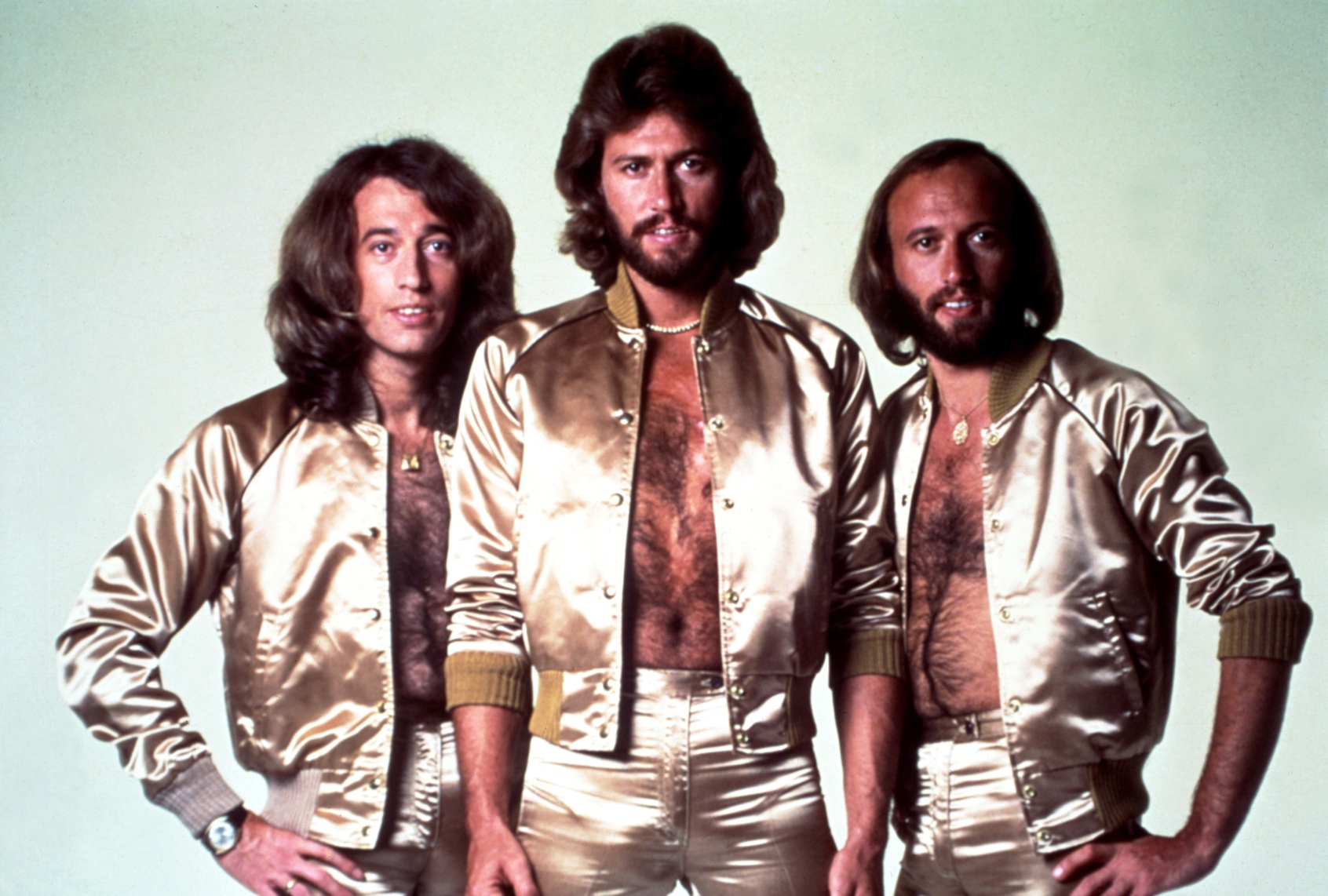
Disco group the Bee Gees pose for a portrait in gold lame outfits in 1977 (Michael Ochs Archives/Getty Images)And then there’s Bob Stanley’s "The Story of the Bee Gees: Children of the World," a vital reassessment of one of popular music’s most chameleonic acts. While they may be known for their Disco preeminence during the "Saturday Night Fever" era, the Bee Gees enjoy the distinction of landing hit records across four decades, from the 1960s through the 1980s. Incredibly, the Brothers Gibb were able to withstand one generic shift after another on their road to becoming one of rock’s bestselling groups. Stanley takes great pains to not only explore the Gibbs’ musical growth across the decades, but to afford readers with a stirring look at the dramatic arc of the relationships and experiences that marked their lives. He is to be commended for elevating the human story at the heart of the Bee Gees’ music. 


Want a daily wrap-up of all the news and commentary Salon has to offer? Subscribe to our morning newsletter, Crash Course.


Some readers may be surprised to discover that behind the group’s hitmaking veneer, the Brothers Gibb suffered from numerous false starts and interpersonal discord, not to mention the highly public failure and ensuing PR disaster associated with the "Sgt. Pepper’s Lonely Hearts Club Band" film, an incredible misstep in the wake of "Saturday Night Fever’s" global success. As with Golland’s "Livin’ Just to Find Emotion," Stanley provides us with a powerful reevaluation of one of popular music’s most enduring stalwarts.

Ozzy Osbourne blasts Kanye West for using his song — “He is an antisemite”

After Ozzy Osbourne denied Kanye West permission to sample the Black Sabbath song "War Pigs" on his new album, the rapper went against his wishes and used it anyway.

Learning that unauthorized use of the track was included as part of West's album listening party at the United Center in Chicago on Thursday night, Osbourne blasted him in a post on X (formerly Twitter), writing, @kanyewest ASKED PERMISSION TO SAMPLE A SECTION OF A 1983 LIVE PERFORMANCE OF “WAR PIGS” FROM THE US FESTIVAL WITHOUT VOCALS & WAS REFUSED PERMISSION BECAUSE HE IS AN ANTISEMITE AND HAS CAUSED UNTOLD HEARTACHE TO MANY. HE WENT AHEAD AND USED THE SAMPLE ANYWAY AT HIS ALBUM LISTENING PARTY LAST NIGHT. I WANT NO ASSOCIATION WITH THIS MAN!"

West hosted the listening party for the new album, “Vultures,” with Ty Dolla $ign and it was expected to be released on Friday, but has yet to drop. In various coverage of the Chicago event by outlets including TMZ, livestream audio cut out after he rapped the lyrics, "And I'm still crazy, bipolar, antisemite."

Watch here:

Cheesy, onion-y and savory: This decadent dip will become your new get-together go-to

I'm a sucker for a good dip. I can almost never pass one up, regardless of the "dippers" that accompany it, especially if there is a copious amount of cheese. So, you can rest assured that the cheese quotient of this dip is . . . high.  And that's putting it lightly!

I served a variation of this to a few pals at a Christmas party and they truly ate it ravenously. All that was left after about two minutes was a stained baking dish with nary a dollop of dip remaining. Conversely, I've also eaten this — by myself — for dinner. So it's truly a "choose your own ending" type deal. A large crowd, boisterously enjoying a dip whilst chitchatting and chortling, or a quiet night at home with nothing but your dip and a ton of chips and crudite. 

I promise it's just as good no matter the company (or lack thereof).


Want more great food writing and recipes? Subscribe to Salon Food's newsletter, The Bite.


It should go without saying, but this dip is by no means light, so pair it with some raw veggies and that may help to offset the heavy dip. My go-to? Raw carrot sticks are unbeatable, but I know the siren song of tortilla chips is sometimes too much to resist.

We need your help to stay independent

A very, very cheesy allium dip
 Yields
servings
Prep Time
15 minutes
Cook Time
25 minutes

Ingredients

2 tablespoons extra virgin olive oil

2 large onions (I used 1 red, 1 yellow), peeled and thinly sliced

1 large shallot, peeled and thinly sliced

5 cloves garlic, peeled and minced

8 oz. cream cheese (at room temperature)

1/2 cup sour cream or labneh

1 tablespoons sherry or balsamic vinegar

1 ½ cups cheese of your choosing (I opted for Parmesan, fontina, mozzarella and sharp cheddar, but you obviously do not need to use that many iterations), divided 

3 tablespoons flat-leaf parsley, roughly chopped

Kosher salt

Freshly ground black pepper

1 lemon, juiced and zested

Dippers of your choosing (pita bread, raw carrots, tortilla chips, crackers, baguette, celery, radish, cucumber, potato chips, etc.) 


Directions

  1. Preheat oven to 400. Heat oil over medium-low heat, add onions and shallots and cook, stirring often, until tender and translucent (you're not looking to caramelize them).

  2. Add garlic, stir and cook 30 seconds until fragrant. 

  3. Deglaze with sherry vinegar, raise heat to medium-high and cook until vinegar has reduced by half (don't directly stand above pan when doing this; the vinegar is intensely pungent when it starts to reduce).

  4. In a large bowl, mix cream cheese, sour cream, 3/4 of the cheese, lemon juice and zest, salt and pepper.

  5. Using a slotted spoon, add allium mixture (try to leave as much oil as possible in pan). Mix well.

  6. Transfer to baking dish, top with remaining cheese and bake in oven for 25 minutes. Turn to broil and cook until top of dip is deeply browned (keep a close eye on it because it can go from "deeply browned" to "burnt" nearly instantaneously).

  7. Garnish with parsley, let cool 10 minutes, serve with dippers and enjoy.


Cook's Notes

You can totally substitute some citrus juice or any other vinegar for the vinegar; I just like the sherry because it pairs so well with the sautéed alliums.

Report: Taylor Swift sells “Eras Tour” film rights to Disney+ for more than $75 million

Singer Taylor Swift has reportedly sold the rights to her "Eras Tour" concert film to Disney+ for a hefty sum, according to a report fom Puck News that was cited by Variety. Disney won in a bidding war against Netflix and Universal Pictures for the streaming rights of "Taylor Swift: The Eras Tour (Taylor's Version)," per the report. 

Disney+ announced that the streamed version of the movie will include "cardigan" plus four other acoustic songs that were not featured in former versions. It will stream beginning March 15.

The actual tour garnered more than 2.4 million tickets on the first day of sales, leading Ticketmaster's website to crash. The "Eras Tour" movie, the highest-grossing concert film to date — earned $261.7 million at the global box office after it premiered on Oct. 13. 

Ancient frog had a belly full of eggs in oldest fossil discovery of its kind

Frogs have a unique distinction among all living land vertebrates. There are over 6,000 living species of frogs known to scientists, as well as countless extinct species — and yet they all contain roughly the same skeletal body plan. While this is convenient in terms of helping experts classify frogs, it also makes it difficult to understand the biology of skin, inner organs and other soft tissues of extinct frog species. Yet a recent study from the journal Proceedings of the Royal Society B revealed that at least one frog fossil has been discovered with some of the soft tissues intact. Even more intriguing, the frog was clearly gravid, or pregnant with eggs.

Anuran eggs within body cavities of the fossil frog Gansubatrachus qilianensis (paratype JQ-HX-QW-02) and extant ranid frog. (a) G. qilianensis, enlarged view of left red box in figure 2a, showing fossil eggs arranged in columns and likely enclosed within oviduct; (b) G. qilianensis, enlarged view of right red box in figure 2a showing cluster of eggs, possibly within ovary; (c) passage of eggs through the paired oviducts in the extant frog Rana pipiens (Image revised from the Biodiversity Heritage Library. Contributed by MBLWHOI Libraries (Baoxia Du et al., Royal Society B: Biological Sciences, 2024 )
The authors explain that frog fossils with discernible soft tissues are "scarce." In the case of this fossil — dubbed with the clunky moniker JQ-HX-QW-02 — the experts observed that the frog did not seem to have died either of old age or being preyed upon, and that the sheer quantity of eggs indicates the female frog was neither starving nor hibernating. So how did she die?

"The most likely cause of death for the female represented by JQ-HX-QW-02 is drowning or exhaustion in relation to mating, constituting the first Mesozoic case of death linked to mating behavior," the authors explain. "This latter cause of death has also been considered to be a major cause of death in some Cenozoic anurans [frogs]."

Last year a study in the journal PLOS One revealed the existence of the world's smallest fanged frog, the Limnonectes phyllofolia. Measuring at 1.2 inches (30 millimeters) from vent to snout, this frog indigenous to Sulawesi Island has a pair of seeming "fangs" that jut out from its lower jawbone.

Jonathan Majors accused of abuse by two more women

Two more women have come forward to accuse actor Jonathan Majors of emotional and physical abuse, per a Thursday report from the New York Times that was based on interviews with 20 people. Majors, the star of "Creed III" and Marvel's "Ant-Man and the Wasp: Quantumania," was arrested in New York in March of 2023 after his ex-partner, Grace Jabbari, alleged that he assaulted her at an apartment. He was eventually convicted of reckless assault in the third degree and harassment. 

Now, two of Majors' former girlfriends, Emma Duncan and Maura Hooper, told the NYT that Majors had also previously abused them. Duncan claimed in the report that she was pushed and thrown around, choked and left bruised by Majors. She also alleged that she suffered emotional abuse by Majors, as did Hooper. Hooper also claimed that she got pregnant a few months into her relationship with the actor, and subsequently scheduled an abortion. She added that Majors did not pick her up from the procedure, which required an escort home, saying that he told her he had a rehearsal to attend.

Priya Chaudry, Majors' attorney, wrote in an email statement to USA Today that "Looking back, he [Majors] is embarrassed by some of his jealous behavior and has been addressing these personal, lifelong depression issues with counseling." Chaudry also described Majors' relationships with Duncan and Hooper as a "love triangle" — the NYT reported that the relationships briefly overlapped — and "toxic" but denied the part of the Times' investigation that found Majors had a "history of volatility" on the set of HBO's "Lovecraft Country." 

Hiding Joe Biden won’t help him

Once, while standing in a press scrum at the Capitol many years ago, I watched Joe Biden take questions for about 20 minutes from a gaggle of reporters. He was friendly with some, polite with others, and tenacious about his talking points. He had a slight stutter, and on occasion tripped over a few points. I knew him peripherally but had never questioned him before. On that day, I was there to talk about Tom Capano, the former Delaware deputy attorney general who’d recently been convicted of murdering Anne Marie Fahey, the appointments secretary to then-Governor Tom Carper.

I was writing a book, “Above the Law,” about the murder and, of course, I’d spent far too much time covering Capano’s trial. Until I’d met Donald Trump, I’d never met anyone as narcissistic or bat guano crazy as Tom Capano. He tried to implicate most of Delaware’s politicians in the murder he committed and was successful in embarrassing a friend or two about their sexual exploits, but nothing else. 

My question to Biden was perfunctory as there was no indication – despite Capano’s vague aspersions – that Biden had anything to do with Fahey, and had very little to do with Capano. He deflected my question, and then said “Tom Soprano was no friend of mine.” I chuckled. After all, “The Sopranos” was a hot show at the time and many in Delaware had made jokes about the Capanos being the Delaware Sopranos – including one man who drove around in a convertible during jury deliberation outside of the courthouse playing the theme song from the Godfather. 

I took it as a good joke, but a reporter friend of mine who covered Biden often said he was a “human gaffe machine.” Meh. I didn’t see it that way, but that has long been his reputation and during his tenure as vice president many in the West Wing often made such remarks.

Now, however, the man who was once called a human gaffe machine is viewed as suffering from dementia and some are calling for his ouster as the Democratic candidate for president in 2024. 

If he did nothing else Thursday night, he should have put those thoughts to rest. With a combative press corps facing him, Biden showed up to make a statement about the special prosecutor who investigated him for keeping sensitive government documents from his tenure as vice president. The investigation showed he had done nothing wrong, but the prosecutor made several snarky comments about Biden’s age – including allegations that Biden couldn’t remember when his own son died. 

If there is a problem figuring out who the better choice is, perhaps mental acuity problems are more widespread than we thought.

Donald Trump immediately said Biden lied to the nation. (This from a guy who rarely told the truth to the nation and was so prolific at lying that many pundits made bank on simply counting the lies). He also accused Biden of being an old man who wasn’t charged with a crime because he was suffering from dementia. This also coming from a man who can’t recall who the Speaker of the House of Representatives is, or who ran for president a few years ago.

“My memory is fine,” Biden said during his 20-minute statement.

He then took fewer than 10 questions from the gathered press. He acknowledged his age, denied he had memory problems, made a joke at the expense of a few reporters, fired back against another and called us out for asking a question that was an opinion, or a “judgment”. Of course, Biden ended it all with one final gaffe, confusing Egypt’s president for Mexico’s. 

Yes, the President’s age is an issue. But no more so than Donald Trump’s. They are essentially the same age. The difference is that, as Biden pointed out, he handled an international crisis in Gaza, and at the same time sat down for five hours with prosecutors to answer their questions.

Biden took responsibility for not overseeing his staff during the storage of sensitive material. Trump, on the other hand, infamously answered a question I asked him about COVID by saying “I take no responsibility.”

We need your help to stay independent

The snarky question regarding Biden’s memory of the death of his son brought out rancor in the president when recalled on stage. He let his humanity show. You could see his lips pursed as he seethed recalling the question from the special prosecutor. 

In those moments, when he is ferociously defending himself and his family, Biden is at his best. But, it does not dismiss legitimate concerns regarding his age. But the press fails the public when we don’t hold Donald Trump accountable for the very same things. Yes, Biden said something about Mexico that was silly, but if you’ve covered him enough, you understand that he is still a human gaffe machine.

Biden’s fiery declaration and his handling of the press was Biden at his finest. But it exposed the inherent weakness in Biden’s presidency: He’s not around enough.

He has had just two full-fledged press conferences in the White House. He’s notoriously absent when we need questions asked and answered. His appearance before the press was not for the “Open Press” it was for pre-credentialed media and the pool of reporters who always cover him.

Biden’s appearance of having mental acuity problems are of his own making. By this time in the Trump White House, that moron had at least started showing up in the Brady Briefing room to take questions about COVID and other issues.

Biden refuses. On the few occasions where he has spoken to the press and taken questions, however, he has done extremely well. If he wants to show that he has no mental acuity problems he needs to show up more often and before a full press. If he doesn’t, then he has no one to blame but himself for the perception that he is losing his marbles.


Want a daily wrap-up of all the news and commentary Salon has to offer? Subscribe to our morning newsletter, Crash Course.


Look at Trump. He almost certainely has mental problems, yet he shows up all the time and never shuts up. His people still love him. Because Biden won’t show up, he leaves oxygen in the room that Trump happily steals.

This does not bode well for the coming election.

There are some in the Democratic Party who would love to see Biden step aside. There were questions about that Thursday night in the Diplomatic room. The answers Biden provided should be amplified if he wants to persuade others. Otherwise he’s going to be hearing a lot more where there that came from – because everyone wants something to talk about – even if it’s not important to talk about.

That has never been more apparent than the fact that Biden had to spend five hours answering questions about his handling of sensitive material while also having to handle an international crisis. 

I’ve covered both presidents. Biden is Biden. Trump is Trump. One is an aging politician who is known as a gaffe machine, and the other is a narcissistic mentally incompetent fascist. If there is a problem figuring out who the better choice is, perhaps mental acuity problems are more widespread than we thought.

“Mawa’s Way”: How chef Mawa McQueen redefined Aspen dining with Afro-fusion cuisine

Near the airport in Aspen — the Colorado city known both for its snow-covered slopes and glitzy affluence — is a restaurant that offers diners a true reprieve from the sometimes sterile-feeling winter conditions outside. At Mawa’s Kitchen, Chef Mawa McQueen serves bold, Afro-Fusion food like Berbere Spiced Chicken Yassa and Colorado Lamb Tagine in a bright, welcoming dining room. 

Both McQueen and her restaurant, which is the only Black-owned restaurant in the city, have earned numerous accolades in recent years, including a Michelin recommendation, a James Beard nomination and being dubbed the Colorado Governor’s Minority Business of the Year in both 2020 and 2022. 

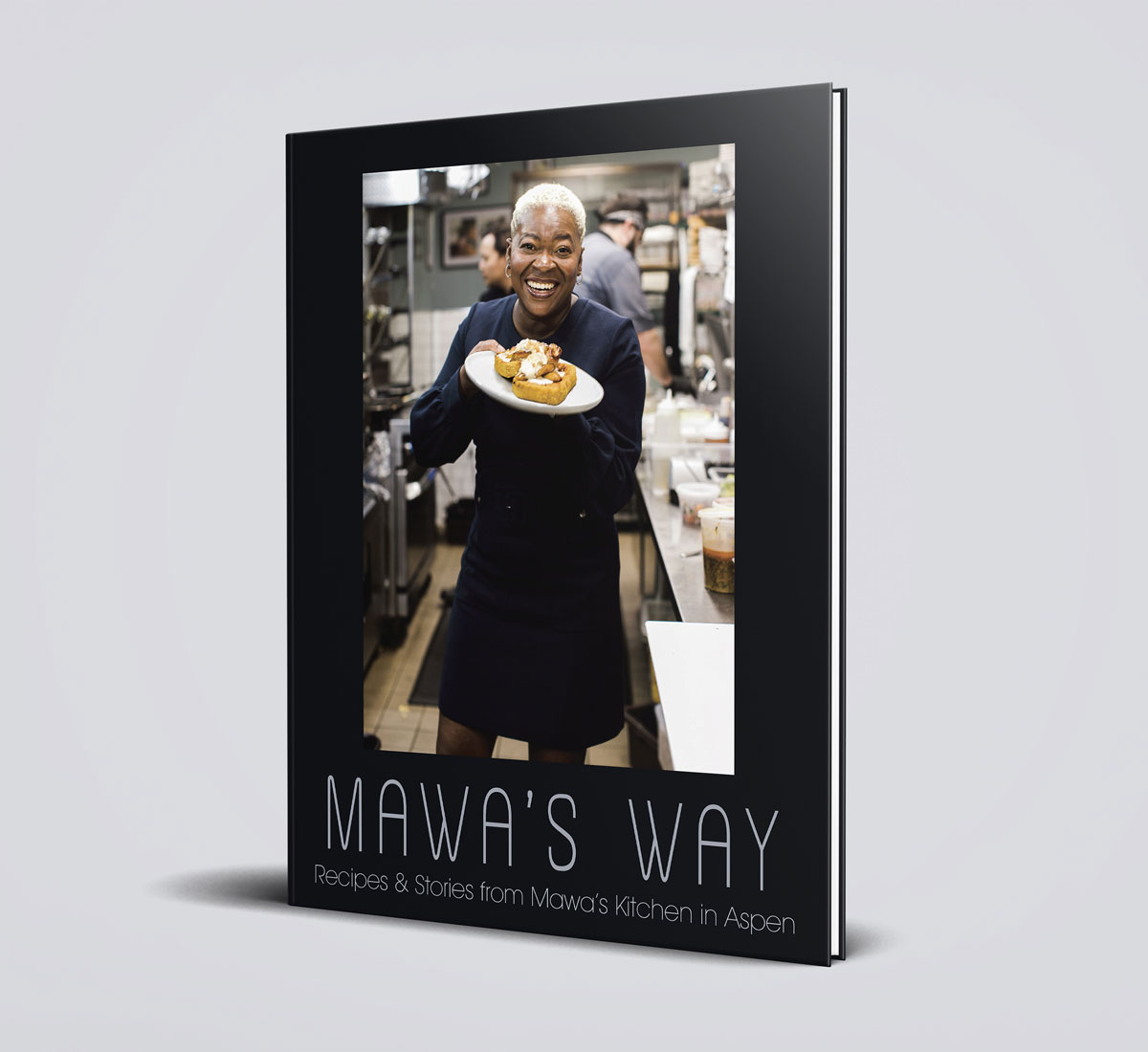
Her first cookbook, “Mawa’s Way,” which is a showcase of her career and approach to food and restaurants thus far, further establishes her as a trailblazer in an industry that often skews younger, white and male. "I want readers to learn about my beginnings with Mawa's Kitchen, the grit and determination it took to keep this dream going and how I've evolved since I've started,” McQueen told Salon Food. 

Cover of Mawa's Way, Chef Mawa McQueen's new cookbookCover of Mawa's Way, Chef Mawa McQueen's new cookbook (Photo courtesy of McQueen Hospitality)

McQueen grew up in Africa’s Ivory Coast and was the oldest of 11 children. She learned some of the culinary basics while caring for them, which launched a passion for cooking that she carried through time living in France where she learned cooking styles from Tunisian, Algerian and Moroccan friends. McQueen says that the blend of her African roots and Parisian culinary knowledge and experience are “such a festival of color and taste.” Over time, though, McQueen has melded these varying influences and styles into a genre that is entirely hers unto itself.

“I am always refining and reinventing recipes and adding pieces of my cultures and experiences in them through ingredients, cooking techniques, plating, [etcetera],” McQueen said. “Usually when I create an African dish it is not a thing you are going to find in Africa, it’s my own touch because I am in Aspen, Colorado, and sourcing the right ingredients is hard."

So, it must be asked — why Aspen? It’s actually a simple story, per McQueen. 

“The first time I saw Aspen it was on an episode of ‘The Young and the Restless,’” she said. “It looked like a Hallmark Channel town, just beautiful with the snow and the scenery and the whole romance of it. All it took was that one look and I knew I needed to be there."

McQueen now has three restaurants in the city. There’s Mawita, which serves Afro-Latin cuisine, The Crepe Shack — a “love letter from France to American,” which McQueen says is “a childhood dream realized” — and Mawa’s Kitchen. When McQueen first opened Mawa’s Kitchen in 2012, it initially focused entirely on healthy eating since that’s what her customers wanted, but she’s since transitioned to healthy food in an Afro-fusion style “with hints of French and American classics because I was tired of doing what everybody else was doing.” 

Mawa's Kitchen interiorMawa's Kitchen interior (Photo courtesy of Darren Bridges)
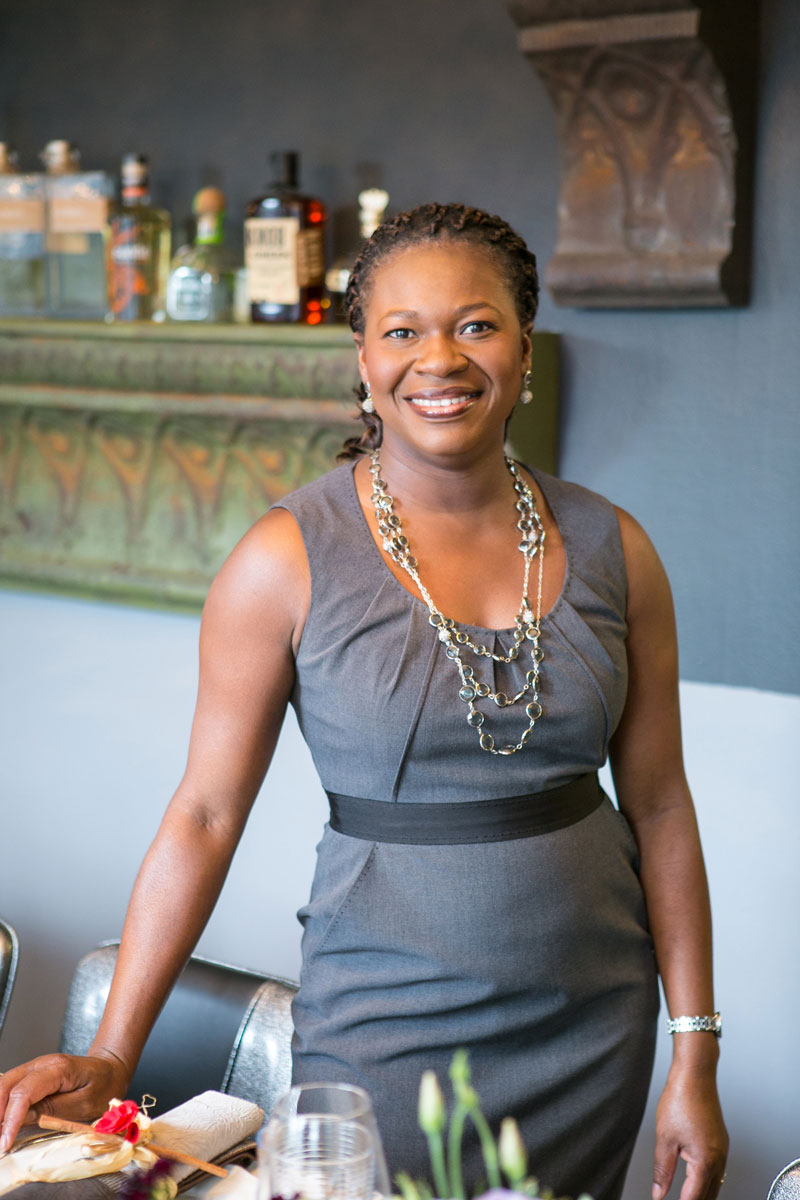
She continued: “I wanted to bring myself and my culture into the dishes … [and not] play it safe.”

We need your help to stay independent

That’s exactly what McQueen brings to her cookbook, “Mawa’s Way,” as well. It is packed with recipes that point to her own heritage, like her West African Gumbo with Fou Fou, as well as dishes that reflect her various influences from Tunisia, Algeria and Morocco, like the tagine, tabbouleh and batata harra. 

If you’re unfamiliar with fou fou, it is, as McQueen puts it, “essentially the starchy vessel” with which to eat many traditional West African stews and sauces. “Sometimes it’s made from pounded yam, but in the Ivory Coast, where I am from, we do it with plantain and yucca,” she said. 

The produce is steamed or boiled before being pounded and made into a type of stretchy dough (“a real arm workout,” McQueen jokes) that becomes essentially an edible utensil since “in West Africa, you use your hands to eat everything.” She recommends making a little depression in the middle of the dough, and then putting the sauce or stew into the fou fou. 


Want more great food writing and recipes? Subscribe to Salon Food's newsletter, The Bite.


In terms of differentiating between West African gumbo and gumbo from the Southern United States, McQueen says there are a few distinctions. West African gumbo tends to be made with way, way more okra and, instead of relying on a roux or mirepoix to impart flavor, it contains dried fish powder, shrimp powder and “heavy-duty spices.” 

However, the biggest difference comes down to texture and “sliminess.” 

“If it’s not slimy, you f**ked it up and people from West Africa won’t eat it,” McQueen said. 

At this point in her career, McQueen oversees a lauded, awarded restaurant and has also been featured in the 2019 book "Toque in Black: 'Savor' The Extraordinary Diversity of Black Chefs," featuring over 100 of the most talented chefs across the country.

Given all her recent success, it would make sense if McQueen wanted to kick back for a bit to enjoy the winter wonderland where she lives, but she doesn’t see herself slowing down anytime soon. So what's next? 

Chef Mawa McQueenChef Mawa McQueen (Photo courtesy of McQueen Hospitality)

"I am so honored with what I have and what I have received, but they don’t mean squat until I am at the very top,” she said. “My accolades are driving me to want to accomplish more, to get to the top and win the awards, not simply be nominated. Now I want to get a Michelin star and I want to win a James Beard Foundation Award."

Also, McQueen says that “Mawa’s Way” is only a warm up of what’s to come in terms of her writing career. She’d love to work on a “full African recipe cookbook,” too. 

“Curb Your Enthusiasm” proves that it’s only a matter of time before we all become Larry David

Can I admit something? I never liked Elmo. “Sesame Street” isn’t to blame for that. The fault lies with my mummified heart, I guess, along with the toy manufacturer that unleashed Tickle Me Elmo on the public in 1996. If you’re a Millennial or younger, maybe that doll was your best friend. We of the more crotchety generations, however, suffered through the plaything’s shrill, maniacal giggles for a sustained period – months, years maybe. Time itself quivered with the sound, that terrible, haunting chirping, adversely impacting our mental health forever.

So I completely get why Larry David would lay hands on the world’s kindliest Muppet on live TV. I never would, but David has made a career out of reminding the world that propriety is, eh, not really his thing. While his attack may have shocked the “Today” anchors, those of us who can never forget the late 20th century's Toy Troubles understood what he meant when he cried out,  “Somebody had to do it!”

Twelve seasons and 23 years of “Curb Your Enthusiasm” have taught us to recognize how David arcs his jokes. The targeting system works something like this: He encounters something or someone that rubs him the wrong way. He wonders what obligates him to be deferential to this person or bow to the dictates of decorum that no one can justify.

Reflexive manners offend him. So do highly publicized acts of kindness – like, say, a sweet fictional three-and-a-half-year-old responding to a nationwide primal scream by reminding people he hears and loves them. And that is a beautiful sentiment.

David’s problem, I'm guessing, is that Elmo got higher billing than he did. That is a vaudevillian death sentence: as a rule, one never follows animal acts or children or child-like Muppets.

That morning he apologized to Elmo in the presence of Hoda, Al and the rest. But when he sat down on “Late Night with Seth Meyers” later, David's attitude waned many shades darker.

“Elmo was talking, OK?” David told Meyers. ”I was waiting to be interviewed, and Elmo was” – at this, David condescendingly assumed the puppet’s innocent soprano tone – “he's was going on about your mental health, and I had to listen to every word, and I was going, ‘Oh my god, oh my god, I don’t think I can take another second of this!’

“And so I got off my chair, and –" David resumed his normal speaking voice at this point, “I approached him and I throttled him! I couldn’t take it! And you know what? I would do it again!”

David hasn’t changed much. Maybe we have.

HBO and David didn’t bombard us with an elaborate promotional campaign leading to the 12th and supposedly final season premiere of "Curb Your Enthusiasm," but it’s tough to think of a better way to organically remind the public of what David and his show are about.

Not everyone thought the gag slayed. Wil Wheaton, for one, was horrified. "What the f**k is wrong with that guy? Elmo is, like, the best friend to multiple generations of children," Wheaton wrote in a Feb. 3 Facebook post. "In the Sesame Street universe, ELMO IS A CHILD, who is currently putting mental health and caring for others in the spotlight.

"And Larry F**king David . . . did . . . that? And thought it was going to be . . . funny?" he continued. "What? . . . What an a**hole. What a stupid, self-centered, tone deaf a**hole."

Just goes to show that humor is relative. David saw a bit and went for it. Elmo's puppet dad Louie, responded to the unprovoked assault semi-humorously while threatening to sue.

And our reactions to Elmo's wellness check-in and David's outburst are related. Elmo was genuinely being nice when he asked, “Elmo is just checking in! How is everybody doing?” Read some responses to his query and you may notice that several have a David-esque spite to them, as if to question the legitimacy of a puppet pretending to care, or recognizing that burdening a fictional innocent with nihilistic confessions about failing marriages and the world being on fire is, well, kinda hilarious.

Unless you suffer from PTSD, as Wheaton points out. "Like, read the room, d**khead," Wheaton says. "Elmo inspired a deeply meaningful and important moment of collective support among disparate people who have been struggling through the traumas of a pandemic, daily mass shootings, the rise of fascism and everything associated with Trump's violence and cruelty.

"And sh*tty idiot Larry David couldn't leave it alone, for some reason."

“Curb Your Enthusiasm” recently premiered its latest season, and the opening episode maintains David’s aggressive refusal to bow to the tyranny of maudlin sentiment. In a swift 30 minutes, he fat shames a corgi, makes a hotel housekeeper's final week a living hell and makes a man's party unpleasant. He also gets arrested for bringing water to someone waiting in line to vote. (The bulk of the episode's action takes place in Georgia.)

If you’ve always loved the show, David vs. Elmo probably won’t change that. But if you remember loving its first season before tiring of the star's repetitive schtick and wandering away, you may relate to  these final misadventures, and David's offscreen antics, a bit differently.

Larry David on "Curb Your Enthusiasm" (John Johnson/HBO)

Wheaton has a point in reminding people that kids were probably watching "Today" along with their parents. He also shared a personal story about his father abusing him by grabbing him by the shoulders and shaking him, which contextualizes his point of view. We should be more sensitive to the Elmo situation's optics.

David hasn’t changed much, understand. In the years since our initial introduction to his show, maybe we have.

“Curb Your Enthusiasm” isn’t uniformly brilliant. David’s 2017 return after a six-year absence was especially creaky. But the 11th season's pandemic response tapped a swollen vein of solipsism and antipathy running under our collective skin. We may nod at publicized sermons extolling kindness and advising consideration, agreeing that they are valuable virtues, but the reality is that many of us are at our limit.

Those same events Wheaton cite as negative impacts on our mental health also numbed many people to the point that the sight of an old guy taking out his frustrations on a Muppet was emotionally purgative.

Mind you, Wheaton is right. David is not a great man. The people who "TV Larry" crosses frequently remind him of how rich and privileged he is so that they and we know that nobody should feel sorry for the minuscule misfortunes he brings upon himself.

We need your help to stay independent

Why would we? The show's Larry is a curious combination of picky and compromising to a self-destructive degree. He’ll botch a gig over his annoyance at not being allowed to call a stranger by a pet name she reserves for her closest friends. And yet, he'll endure borderline disgusting intimacy with irritating, gassy councilwoman Irma Kostroski (a stunning Tracy Ullman) in the hope that she'll repeal a law requiring him to fence his pool.

TV Larry's misanthropy seemed heightened at the show's outset. Some 23 years later, along with a few financial crises and a long span of social distancing, many more of us find his confident antagonism validating rather than horrifying.

Alongside this feeling strolls the usual fears concerning relevance and our mortality, a pair of invisible monsters amply fed by the usual panic that accompanies a generational changing of the guard. 

“Hark, the Millennial Death Wail” cried a recent New York Times headline written by a 39-year-old writer who adorably admits under his byline that “sometimes he feels really old,” and realizes on behalf of his generation that the passage of time is a real thing that impacts all of us. Like, really real you guys.

While Larry despises people individually, he loves mankind.

Forgive the mocking tone, which is the product of witnessing Larry and his permanent squatter Leon (J.B. Smoove) putting up with Maria Sofia Estrada, Keyla Monterroso Mejia’s character who is a hilariously untalented actor. She's part of Gen Z, the folks who never knew a world without Elmo, the ones nipping at Millennial heels and chipping away at their relevance. Gen Xers can relate, having writhed through that angst years ago before realizing how much better it is to resume not caring anymore. 

Ellia English, Larry David and Keyla Monterroso Mejia on "Curb Your Enthusiasm" (John Johnson/HBO)We should also praise Meija, the 25-year-old mistress of the dark arts of portraying hysterical incompetence. She plies a similar jovial egocentrism as a substitute teacher on “Abbott Elementary,” and both characters are insufferable to the adults in the room. The Olds, if you want to be a jerk about it.

In “Curb” Mejia is David’s foil, attracting the attention that his character both believes he deserves and finds repulsive. Leon, Larry’s loyal Xer buddy, thinks she’s doing too much too but, again, doesn't care as long as he gets his cake. 


Want a daily wrap-up of all the news and commentary Salon has to offer? Subscribe to our morning newsletter, Crash Course.


Larry’s inevitable offenses regularly require him to explain himself and his ridiculously twisted view of the world. When asked to define what the word "cordial" means, he responds, ”It means to be polite, to be friendly, and not to tell people what you really think of them, and what a**holes they are – yes, that’s cordial!”

Agreed. Does this explain why mustering the will to be out in public for sustained periods of time can require days' worth of internal pep talks? Or why so many folks brushed off Wheaton's outrage at a viral moment played broadly for laughs? Our numbness is a society-wide problem, and it's driving too many of us online to fester, accepting the illusion of community over in-the-flesh togetherness and the consideration that requires.

That makes the attitude of David's fictional self somewhat heroic. TV Larry refuses to be a hermit, bravely choose to inflict himself on strangers come what may. As he explains at one point, while he despises people individually, he loves mankind.

“I’ve been expecting more from myself for my whole life,” he admits to the person he most recently offended, “and it’s just not there.” That, my friends, is knowing thyself. Long after "Curb Your Enthusiasm" ends, we will never stop picturing David wondering why the world doesn’t see things his way. As we journey into its swan-song season, though, many more of us do. If we don’t, we will — given enough time, irritations, and the wrong figure asking us how we’re doing at the right moment.

New episodes of "Curb Your Enthusiasm" air at 10 p.m. Sundays on HBO and stream on Max.


Trump lawyer’s admission could “come back to haunt” him in other cases, attorney warns

Former President Donald Trump’s lawyer’s comments during oral arguments on his ballot challenge before the Supreme Court could come back to bite him in other cases, Democratic election attorney Marc Elias predicted on Thursday.

The Supreme Court justices widely expressed skepticism that Colorado or any state could boot Trump off the ballot under the Constitution’s “Insurrection Clause” but Elias said that doesn’t mean “that the argument itself was a total loss.”

“I think there were some things that came out of it that actually may wind up having some long-term consequences, including, by the way, Donald Trump's lawyer saying that though January 6th was not an insurrection, the events were shameful, criminal, and violent. I think Donald Trump, in some other courtrooms, is going to be arguing that it was not criminal and violent,” Elias said.

“He's got nine justices looking at him today and figures we'll worry about tomorrow tomorrow. That doesn't mean when that tomorrow doesn't come, right, tomorrow does come. But I think he made those concessions, whether it was playing this democracy card that may frankly come back to haunt him in some of the election cases that I and others litigate, or it is this violent point that, you know, Donald Trump is — has said it was a peaceful gathering.

"I think he thinks the way he wins the day today was to take the insurrection point off the table," he added. "And you know, he did. You know, there were almost no questions from the court after that about whether or not it was an insurrection."

“Serious aggravating facts”: Special counsel’s Biden report implicates Trump

Special counsel Robert Hur’s report explained why former President Donald Trump’s classified documents case is worse than President Joe Biden’s.

Hur, who was appointed as a U.S. attorney by Trump and picked as special counsel by Attorney General Merrick Garland, in a report released on Thursday concluded that Biden “willfully” stored classified documents after leaving office but would not face charges in the probe.

Though Hur’s commentary about Biden’s memory drew criticism from legal experts, the report also detailed why Trump’s case seriously differs from that of the current president.

“It is not our role to assess the criminal charges pending against Mr. Trump, but several material distinctions between Mr. Trump’s case and Mr. Biden’s are clear. Unlike the evidence involving Mr. Biden, the allegations set forth in the indictment of Mr. Trump, if proven, would present serious aggravating facts,” the report said.

“Most notably, after being given multiple chances to return classified documents and avoid prosecution, Mr. Trump allegedly did the opposite,” it continued. “According to the indictment, he not only refused to return the documents for many months, but he also obstructed justice by enlisting others to destroy evidence and then to lie about it. In contrast, Mr. Biden turned in classified documents to the National Archives and the Department of Justice, consented to the search of multiple locations including his homes, sat for a voluntary interview. and in other ways cooperated with the investigation.”

“Comey 2.0”: Legal experts say Republican special counsel’s Biden attack “entirely inappropriate”

Legal experts on Thursday criticized a report from special counsel Robert Hur that cleared President Joe Biden in the classified documents case but criticized his memory.

Hur, who was appointed as a U.S. attorney by former President Donald Trump before being tapped by Attorney General Merrick Garland to probe classified documents found in Biden’s residence and office, wrote in his report that Biden “willfully” retained materials but would not face charges.

“It would be difficult to convince a jury that they should convict him — by then a former president well into his eighties — of a serious felony that requires a mental state of willfulness,” Hur wrote, calling Biden’s memory “hazy,” “fuzzy,” “faulty” and “poor” and claiming that Biden could not recall when his son Beau died or when he served as vice president.

“My memory is fine,” Biden said Thursday, denying he forgot when his son died but later mistakenly referring to Egyptian President Abdel Fattah El-Sissi as “the president of Mexico.”

Biden said the report’s descriptions of his memory were “extraneous commentary” that “had no place in this report.”

Biden blasted the part about his son’s death.

“How in the hell dare he raise that?” he said.

“Frankly, when I was asked the question, I thought to myself, it wasn’t any of their damn business,” he continued. “Every Memorial Day we hold a service remembering him, attended by friends and family and the people who loved him. I don’t need anyone, I don’t need anyone to remind me when he passed away.”

Former federal prosecutor Andrew Weissmann, who served on special counsel Bob Mueller’s team, agreed that Hur’s commentary was “entirely inappropriate.”

“It is also exactly what you’re not supposed to do, which is putting your thumb on the scale that could have political repercussions,” Weissmann said, calling Hur’s comments “irrelevant” and “gratuitous.”

“You either decide to go forward, that there is proof here, or you don’t say anything at all with respect to your opinions about the case,” he said.

Weissmann compared the report to former FBI Director James Comey’s press conference announcing that he would not charge Hillary Clinton in the private server probe while criticizing her for mishandling documents.

“The appropriate thing to do there is to just say ‘we’re declining, there’s insufficient proof,’” Weissmann said. “It is not a time to have a press conference to state, ‘Oh, by the way, let me give you my personal views.’”

Former acting Solicitor General Neal Katyal agreed that the commentary was “totally gratuitous.”

“I’m not aware of anything quite like this, in which you’ve got a special counsel going after the sitting president for being too old and having a faulty memory,” he said.

We need your help to stay independent

National security attorney Bradley Moss tweeted that what Hur did “with these irrelevant and extraneous remarks is the same thing DOJ used as the basis to fire James Comey in 2017.”

“Seven years later, they did it again. Seriously. Unreal,” he wrote.

Hur “crossed a line,” wrote former U.S. Attorney Joyce Vance.

“Hur’s comments about age and memory, which are the predictable headlines today, were a cheap shot with a capital ‘C.’  Barely disguised as going to proof, they were a rank political gift to Trump,” agreed former U.S. Attorney Harry Litman.

CNN legal analyst Jeffrey Toobin called Hur’s report an “outrage” and a “disgrace” and criticized Garland for his “mistake” in appointing a Republican prosecutor.

“I mean, the idea that they that he would make such a big point of Biden being elderly is not something a prosecutor needed to do,” he said. “That report didn’t have to be 300 pages. I mean, that report showed that Merrick Garland again made the classic Democratic mistake, which is ‘I know I’ll appoint a Republican, a Republican partisan, to investigate, and that will give us credibility.’ No, it never works,” he continued, arguing that Hur did “exactly the same thing” as Comey.


Want a daily wrap-up of all the news and commentary Salon has to offer? Subscribe to our morning newsletter, Crash Course.


Dave Aronberg, the state attorney for Palm Beach County, told MSNBC that Hur’s report was “sloppy” and a “political gift” to Trump. Aronberg suggested that Hur’s report was aimed at avoiding the criticism from Republicans aimed at David Weiss, the prosecutor who investigated Hunter Biden.

“The question to me is why did he do this? I think the reason is he was motivated to avoid David Weiss's fate. David Weiss is hated by his own party. I think that's why Robert Hur did this. It's Comey 2.0,” he said.

“Cuisine is an art”: Juliette Binoche and “The Taste of Things” director make magical movie meals

The first 30 minutes of the superb new film, “The Taste of Things,” features Eugenie (Juliette Binoche) sifting, straining, pouring, stirring and spooning as she cooks turbot, crawfish and veal loin, among other dishes. Viewers can practically smell the sauces, feel the weight of the pots, and savor the aromas coming from her kitchen. The film features authentic period recipes that were reviewed by Pierre Gagnaire and overseen by chef Michel Nave.

"When you have pleasure in doing what you do and love, it tastes better and feels better, and looks better."

The cooking scenes are extraordinary, and director Trần Anh Hùng (“Norwegian Wood”) captures the magic of making the meals. Set mainly at a late 19th century French countryside estate, “The Taste of Things” has Eugenie cooking with (and for) Dodin (Benoît Magimel of “Revoir Paris”), who feeds his gourmet friends. The film is a romantic reunion of sorts for Binoche and Magimel, who were once in a relationship together in real life.

There is not much in the way of plot. Eugenie hopes to train Pauline, a young girl who can detect almost all of the ingredients in her recipes. (A Baked Alaska Eugenie serves practically makes Pauline cry when she first tastes it.) Meanwhile, Dodin hopes to marry Eugenie. He has had a romantic relationship with her during their 20 years together, but she has resisted his proposals, enjoying her independence at being his cook, not his wife. 

“The Taste of Things” depicts the love these characters have for each other and how they express it through their love of food. Hùng and Binoche spoke with Salon about food and their exquisite new film.

Let me start with an icebreaker: Have you ever cried when you ate something?

Trần Anh Hùng: [Laughs] Juliette, please. 

Juliette Binoche: As a child I cried to have sweets. I loved all the sweets.

Hùng: It never happened to me. I know people who have cried when they eat or drink something. Once I was in Harvey Keitel’s apartment and made a tea ceremony for him. When he had the first sip, he started to cry. 

Food can be very powerful. Your film is immensely pleasureful, especially that lengthy opening sequence in the kitchen. There are several other elaborate cooking scenes. Can you talk about creating these episodes? 

Hùng: I wanted to find a setting the actors can work in and move around. The rest came from Juliette and the other actors because everything was about their bodies, and how they appeared on screen. How gracious and how truthful they can be. 

Binoche: When you have the best ingredients to cook . . . and we had really great ingredients. We had Pierre Gagnaire, who chose the recipes, and we had his right hand [Michel Nave], who was helping us. We had this combination with someone who can shoot like Hùng and make choices. All the stakes and expectations were there. Benoît and I, as actors cooking, needed to give grace to the expectation. I know Benoît. He is a very good cook, and I cook myself. I may not be as good as he is. But the pleasure of sharing those moments — and we did share those moments many years ago when we lived together. So, to be able to embody that was emotionally very moving. I remember Hùng always asking me to smile and express happiness _ the commitment Eugenie gives to the food, her love, Dodin and his friends. When you have pleasure in doing what you do and love, it tastes better and feels better, and looks better. The whole combination of being on a set, with my history with Benoît , and to plunge into this world — I’ve never played a cook before — was enlightening, and exciting, and special.

Did making this film help you become a better cook? 

Binoche: It made me feel for a few hours and days that I was a better cook than ever. [Laughs] But then things happen, like shooting another film, so I didn’t keep up with the cooking. I do cook. I don’t think I’m the best cook. I love doing it, but everyday basic life, I am not loving it, because it’s too much. I like to eat, so I try to cook something decent for my children or friends or even myself. 

Hùng: I started cooking after the film. I made the same dish three times, and it was not good. I will keep on trying.

Can you describe the research and food consultation you had for creating the menus of the era and the preparation of the food? It felt very authentic. 

Hùng: During the script writing, I worked with a historian who helped me be precise on the period. When we had a menu, I worked with Pierre Gagnaire. He checked everything and modified some recipes. That’s how we built the menu. He cooked for me for five days in his kitchen so I can see how everything works and I can think of how I can film it later. For the shooting, we had his collaborator, Michel Nave, work with us. He was close to Juliette and Benoît during shooting and he would give them advice on set about how to do things. 

"The Taste of Things" (Courtesy of Carole Bethuel and IFC FIlms)
One of the things I admired was how the camera was often circling around the action, filming it in a way that kept me riveted. Trần, can you talk about your visual approach to the storytelling? The sequences seemed wonderfully choreographed.

Hùng: Cuisine is an art, and I wanted [to shoot in] real time as you see the characters cooking. It was important to give this feeling of continuity and harmony in their work. That’s why I wanted to have all these camera movements mix with the movement of the actors and make it really appealing. It gives the audience a feeling of the momentum of cinema. For me, we should receive a film like we receive a piece of music; that’s why I like this feeling of movement, this feeling that something that never stops. It is to create a kind of music. 

Binoche: We shot until we got one good [take]. We didn’t excessively do it over and over. We didn’t have a lot of time and money to make the film, so we had to be efficient. The choreography was definitely what Hùng wanted to shoot, so we got that very easily. I wanted to make sure that I was the cook to start with. Benoît loved cooking so much and he was frustrated that he wasn’t cooking enough. But that is part of the story. [Later], he is cooking, so we had to find the balance of who was doing what. As we were going along, Hùng was specific about what he wanted. 

"You have to give something of yourself . . . something that happens between your intention and the ingredients."

I felt a sense of working together and what needs to be done in order to have an amazing dish. It’s specific. There is a chronological way of doing things. It has to be not perfect, but truthful and real. Finding the right gesture. That’s what I love about how Pierre described cooking. He is not trying to put his ego on the plate or be perfect; he is trying to provide the sensuality of the food. He transforms it in a certain way and presents it like his heart on his plate. I loved that. It felt like a piece of art. You have to give something of yourself, but it is not ego, it’s something different, something that happens between your intention and the ingredients.

Hùng: Beside the cooking scenes, the most important thing is the relationship between Dodin and Eugenie, and the beauty of it. It was difficult from the beginning to know how this relationship would be. We discovered it step by step. Juliette and I had some little fights on set about how she saw Eugenie and how I saw her. I saw her a little softer than Juliette did, and she wanted a stronger woman — and she was right. 

Binoche: It’s interesting, because I didn’t feel that. I don’t see from “outside,” I feel from inside. The confrontation between what I learn, my lines, the situation and being in front of Benoît, reveals itself while shooting. I don’t have a vision of my character. I like to empty myself somehow in order to be revealed by what the scene needs. The confrontation we had was on specifics of acting. I asked myself, what can I bring to Hùng? I watched your films and after seeing your last film, “Eternity,” I thought I’m going to bring all the emotions I can bring to him. [Laughs] When you said, “Can you be neutral?” meaning, not act, I was thinking, “No, Hùng, you’re not going to get that on that film. You’re going to get all the emotion I can give to you.” That’s where I have to push you as a director. It is not only the director asking the actor, but the actor pushing the director to where he can go, and where he needs to dare to go. Maybe it was presumptuous for me to interfere in that, but it was my way to resist and allow you to be totally emotional. [Laughs]

Hùng: It was great because this is how I like to work with actors. I don’t want to talk too much about the characters. We have to discover everything on the set. I really enjoy the process.

Eugenie is very independent given the era. She allows Dodin to be with her sexually but does not want to be married or controlled. She also wants to train Pauline but declines the opportunity to eat with Dodin and his friends. Can you discuss how the film portrays women’s roles in this patriarchal society?

Binoche: Eugenie is truthful to herself, and where she excels. She is a cook. She is responsible to be the best cook she can be. She is not going to sit down with boys and eat and enjoy the food. She needs to be cooking. She is the creator of the meal. There is no way that she can sit and relax when she has to think ahead of what she needs to do. You can’t eat what you just cooked. It’s like an actor wanting to sit down in the audience and watch the film you are making. It doesn’t make any sense. You are acting, and you are in the middle of making it. There is no way to relax. It is where she needs to be. 

As a woman, she does not want to get married, because she is so happy. What would she get being married? She doesn’t have that dream. Her dream is being realized with [Dodin], living in his place, and doing her passion of cooking. She is not interested in the rank of bourgeois or aristocrats. It’s the bonne chance, as we say in French. She is acting out of her heart and being, not out of an idea. I like it because it’s genuinely what she needs. She is not betraying her needs. She is living what she wants. It feels natural and real.

I want to talk about the ortolan scene. I am fascinated by this controversial practice. 

Hùng: This is how they eat them in the Southwest of France. It’s a tradition, and today, it’s forbidden. They are a protected species. You can’t eat them anymore. For the film, we had to make an ortolan out of another bird. It was quite a funny scene, because it was something that looks sexual; it’s part of the food. Sex and food are the two sources of sensuality in our life. I wanted to show it here.

Eugenie says she converses with others through the food she makes. At one point, Dodin prepares food for Eugenie to show his love for her. He even asks, “Can I watch you eat?” which is incredibly intimate. What observations do you have about how these characters express themselves through cooking? 

Binoche: Usually, she is cooking, and in the kitchen, and all of a sudden, it is upside down for her. Now she is being put on a pedestal and having candles and flowers and meals. And she’s overwhelmed by the love through food. She is overwhelmed by the specific wines he is choosing for her. He is worshipping her through this act of cooking for her.

You are working with Benoît, an actor you had a relationship with two decades ago. Can you talk about that experience? 

Binoche: I had not seen Benoît for a lot of time — we had a child together — and this was also overwhelming. I took it as a gift, thanks to Hùng. Benoît found the film in him, and we were able to do it together after two months of [anxiety]. For a moment we thought this was not going to be made. We had this fear. Hùng had more fear than I did. He is living everything so intensely because he had been waiting to make this film. Me too, but as a director, I think it is more overwhelming. 

How much of the food you made was eaten and what was done with the leftovers?

Hùng: We ate it all. We had a big team, so we ate everything we cooked on set. 

Binoche: It was generously given to all the crew by Michel Nave.

What foods in the film or not, do you most like and is there anything you dislike or won’t eat?

Hùng: I liked the fish with the hollandaise sauce. It was really very sensual. In your mouth everything melts in an unexpected way. The flavor was quite amazing. The only thing I cannot eat is this Japanese dish, nattō, small [fermented] soybeans. How they make it, it is something I cannot eat. It is the only thing I know that I cannot eat. 

Binoche: My favorite… I have too many favorites… I love a good broth, because a good broth is going to your blood, and it will transform you. It makes you feel at home and energized and light. A good broth is fantastic. And I like sweets. Lots of sweets, and that is why I chose broth! [Laughs]. What I dislike is tripe. All the innards and organ meats. I can’t think of that. It’s brutal!

"The Taste of Things" opens Friday, Feb. 9.

The Beatles on “The Ed Sullivan Show,” 60 years later: “Life went from black and white to color”

On February 9, 1964, a group of four 20-something musicians from Liverpool made their debut on U.S. television and forever changed popular music. The Beatles’ appearance on “The Ed Sullivan Show” that Sunday evening was watched by some 73 million people, sending many viewers on completely new paths in their lives.

As we celebrate the 60th anniversary Friday and prepare to officially kick off the sixth season of “Everything Fab Four,” a podcast co-produced by me and Kenneth Womack (a music scholar who also writes about pop music for Salon) and distributed by Salon, we’ve got a special episode showcasing the stories of our many guests who were influenced by this pivotal event in cultural history – by far the No. 1 “Beatles moment” mentioned on our show.

But how did Ed Sullivan end up booking the band in the first place? Margo Precht Speciale, Sullivan’s granddaughter and the daughter of producer Bob Precht, was a guest on “Everything Fab Four” last year and told Womack, “There are two stories – the PR story and the real story. There’s an oft-repeated tale of my grandfather discovering them at an airport, but no – the truth is a lot more involved than that.”

Emmy- and Grammy-winning producer Andrew Solt (who purchased “The Ed Sullivan Show” library in 1990) also joined Speciale on that episode. “All the stars lined up,” he said, “but it was the music that had us. And when they walked out on that stage, there was no way that anybody who was of a certain age wasn’t going to be watching.”

LISTEN:

Subscribe today through Spotify, Apple Podcasts, GooglePodcasts, Stitcher, RadioPublic, Breaker, Player.FM, Pocket Casts or wherever you're listening.

Other guests over the seasons concurred with that statement. Toto guitarist Steve Lukather said for him, “Life went from black and white to color. There was life pre-Beatles and life post-Beatles, and nothing was ever the same. The music hit my soul and I thought, I gotta learn how to do that.”

E Street band member Steven Van Zandt said, “On February 8th, there were no bands in America. On February 10th, everybody had a band in their garage.” Heart guitarist Nancy Wilson likened the Beatles’ appearance that night to “the lunar landing. It changed the trajectory of the rest of my entire life.” Singer-songwriter Rickie Lee Jones commented that “by the end of their first song, the world was changed.” And Academy Award-winning actor Billy Bob Thornton said, “That was the kind of rock ‘n’ roll that informed the rest of our lives.”

Similar sentiments were also expressed from guests such as singers Judy Collins, Darlene Love and Kenny Loggins, “Get Smart” actress Barbara Feldon (who once performed as a dancer on “The Ed Sullivan Show” herself), and TV producer and author Debbie Gendler, who was actually in the studio audience on February 9, 1964.

As for what Ed Sullivan was like personally, Margo Precht Speciale said, “He loved people, he loved engaging with people, and he loved talent. When the Beatles came, it was a breath of fresh air. They brought light. So many people remember my grandfather because of them.”

Listen to this entire special “Everything Fab Four” episode, plus previous episodes of the show, and subscribe via Spotify, Apple, Google or wherever you’re listening.

“Everything Fab Four” is distributed by Salon. Host Kenneth Womack is the author of a two-volume biography on Beatles producer George Martin and the bestselling books "Solid State: The Story of Abbey Road and the End of the Beatles” and “John Lennon, 1980: The Last Days in the Life.” His latest book is the authorized biography of Beatles road manager Mal Evans, “Living the Beatles Legend,” out now.

Joe Biden falls victim to Democrats’ special prosecutor delusion

Perhaps someday Democrats will learn their lesson but I'm not holding out much hope at this point. They suffer from an inexplicable habit of allowing only Republicans to hold the job of a special prosecutor. This has been going on for decades now and the results have been predictable each time.

For Democrats, the idea is to prove how noble and non-partisan they are in comparison to the hacks on the GOP side but it just ends up coming back to bite them in the end. The habit goes back to Watergate after President Richard Nixon fired special prosecutor Archibald Cox, a Democrat, in the Saturday Night Massacre. Nixon had Cox replaced with one of his supporters, Texas Judge Leon Jaworski, whom everyone assumed would be sympathetic to the president. As it turned out, Jaworski was appalled by what he saw and issued subpoenas for Nixon's White House tapes, a case that eventually wound up in the Supreme Court. However, it was later revealed that Jaworski didn't agree with the Grand Jury's recommendation to criminally indict the president and resigned from the job just as the cover-up trials began. As we know, it all became moot when President Gerald Ford pardoned Nixon.

Until the appointment of Jack Smith, who has been assiduously apolitical during his career, there has never been anything but Republicans in the job since Archibald Cox and it's a problem.

When the Reagan White House came under investigation for the Iran-Contra Affair, a Republican judge named Lawrence Walsh was appointed by a three-judge panel under the new independent counsel statute. Walsh was a pretty zealous prosecutor and uncovered quite a bit of dirt but in the end, he was thwarted by President George H. W. Bush and his Attorney General William Barr, who pardoned all the possible defendants just before Bush left office in 1992. Funny how that worked out for Republicans again.

During the Clinton years, Attorney General Janet Reno named Republican Robert Fiske as special prosecutor to investigate the Whitewater scandal and he was later replaced in the job by ultra conservative Republican judge Kenneth Starr after Clinton himself signed the reauthorization of the Independent Counsel Act giving a three-judge panel of right-wing partisans the ability to assign one of their cronies.

I'll never forget when Newt Gingrich and the House Republicans put the Starr Report, sight unseen, on the internet only to find out that it was a downright pornographic romance novel (partly written by the man who became Supreme Court Justice Brett Kavanaugh) which had as much resemblance to a legal document as a grocery store receipt. It ushered in a new era in right-wing hit jobs that ended up backfiring on the Republicans but not before causing massive damage to the lives and reputations of dozens of people.

Fast forward to 2016 and the Russia Investigation, headed by yet another Republican, former FBI Director Robert Mueller. The GOP Department of Justice knew it wouldn't be right to have a Democrat investigate a Republican president. Why they might be partisan!

Special prosecutor is a Republican job, no matter what. Until the appointment of Jack Smith, who has been assiduously apolitical during his career, there has never been anything but Republicans in the job since Archibald Cox and it's a problem.

I bring this up because yesterday the special prosecutor assigned to investigate whether President Joe Biden committed any crimes by retaining some classified documents from his time as a senator and vice president announced that he was declining to prosecute for lack of evidence that Biden had willfully taken them or obstructed the investigation, as Donald Trump had done. Like former vice president Mike Pence, it appears that Biden unknowingly took some classified documents when he left office, which is apparently not all that uncommon. What is uncommon is for someone to try to hide them from the authorities and refuse to give them back as Trump has been indicted for doing.

We need your help to stay independent

But special prosecutor Robert Hur is a Republican, Trump-appointed Justice Department holdover who, once again, was appointed by a Democratic attorney general in order to prove just how "nonpartisan" the department is. So Hur wrote a voluminous 388-page report which most legal observers believe could have been done in 50, if not less. He could have simply said he declined to prosecute and left it at that but what he did was nothing less than a partisan hit job masquerading as a prosecutorial declination.

Despite laying out in detail that he could find no evidence that Biden committed any crime, making it clear that what he did was far less egregious than what Trump is accused of doing and declaring that he would not prosecute Biden even if he were out of office, Hur wrote what amounts to a chatty little novel about what he thinks of Biden's personality and mental capabilities. Perhaps his parents really wanted him to be a psychiatrist or a neurologist instead of a lawyer and this was his big chance to make them proud but it was entirely inappropriate.

Hurr opens the report with what amounts to a character study of Biden that suggests he has delusions of grandeur for saving papers from early in his career because he thought he might be president someday. Then he embeds in the report a fatuous rationalization that he personally believes that if he were to bring the case to a jury — a case which he has already stated he could not find the evidence to prove — they would feel sorry for Biden because he is a "well-meaning, elderly gentleman with a bad memory." He dug deep to find a way to get that in there. He pretty much implies that the president is demented because he didn't perfectly remember dates from the past, something that defense lawyers commonly tell their clients to be careful about trying to do under oath.

It's a nasty piece of slander that Hur no doubt believed served the purpose of preserving his place in MAGAworld without him having to recommend charges based on nothing. As one of Barack Obama's top advisers put it:


Want a daily wrap-up of all the news and commentary Salon has to offer? Subscribe to our morning newsletter, Crash Course.


This reaction from Tennessee GOP Senator Marsha Blackburn is typical:

It's hard to imagine House Republicans would use this heavily padded tome as the basis for an impeachment article since it would also put Trump's stolen documents case on the front burner again but they might just do it. Lord knows the rest of their case is going nowhere. If I were a conspiracy-minded person I might even think that Hur took a page out of Ken Starr's bodice-ripper and wrote it just for that purpose. If so, they might want to check in with Newt Gingrich about how well that worked out for them.

This was a shamefully inappropriate cheap shot against President Biden but in the end, despite the media's febrile "but her emails" reaction, I doubt that this changes much in the dynamic as long as the Republicans are all genuflecting to a man whose memory is so bad that he mistakenly identified his rape victim as his former wife during a deposition. They have much bigger problems on their hands.

Giada De Laurentiis’ 8 best vegan and vegetarian recipes

Giada De Laurentiis is known for her simple, delicious Italian and Italian-American fare, much of which can be easily made on a frenzied weeknight. What she's not as well known for, however, is the bevy of vegan and vegetarian recipes in her repertoire — which, in many instances, are even quicker and just as delicious. 

With pastas, salads, drinks, starters and snacks,  De Laurentiis's vegan and vegetarian fare runs the gamut. These dishes are great for dinner parties, soirees or a simple night in. They are all customizable and straight-forward, too.


Want more great food writing and recipes? Subscribe to Salon Food's newsletter, The Bite.


So no matter if you're craving something fresh and light or something a little heavier, De Laurentiis has got you covered. 

A bright, sharply flavored potato and bean salad, accentuated with red onion, grape tomatoes, lemon, oregano and two types of olives, this is an amazing starter or a terrific lunch option. Giada serves it room temperature, but I bet an hour or two in the fridge would round out the flavors all the more. It's vegan, but feel free to add some feta or goat cheese if you're so inclined, or even some  grilled chicken or shrimp to amp it up into a full meal.
The incredibly-fun-to-say Italian word (which basically just means "Italian sorbet cocktail") is literally just as it sounds: Prosecco, vodka, fresh mint and — as you might assume — lemon sorbet! This is wildly refreshing anytime of year, but it's especially delicious during the summertime. If you're going non-alc, use spirit-free prosecco and omit the vodka. Also, be sure not to let this sit for too long! You want to sip it while the sorbet is still somewhat frozen and intact
There's an argument to be made that arancini might be the perfect party food or finger food. Essentially a fried risotto ball — thought some are just made of rice, not risotto — they're crisp on the outside, tender and soft inside and perfectly handheld. This version is both dairy-free and vegan, coincidentally enough, and is packed full of rice (of course), wine, soy sauce, artichoke and basil before being breaded. Be sure to fry just before serving. 
 
Don't be spooked: Making risotto is so much easier than you might think — and trust us, deep-fried risotto balls are just as good as they sound. Serve with marinara! 
Bruschetta is a classic for good reason. This version uses whipped ricotta and roasted cherry tomatoesbefore being topped with "sweet-and-spicy Calabrian chili honey" tomatoes, as per Giadzy. The whole shebang is then finished with some fresh basil. 
 
Your guests may think this is a good ol', regular bruschetta, but once they take a bite, they'll know they've stumbled upon something unique and wildly flavorful. 

We need your help to stay independent

Giadzy says this dish is comprised of "roasted beets, fresh orange segments, meaty Castelvetrano olives, herbaceous kale, crunchy hazelnuts and tangy feta cheese" … and that about sums it up, does it not? What a terrific combination! 
 
If need be, feel free to omit the feta so this is fully vegan. The bright, pungent dressing of apple cider vinegar, orange juice, orange zest, olive oil and salt is simple, but amazingly delicious, so be sure not to skimp on it. The hazelnuts might be the secret star here, though; they add such texture and crunch. 
 
You can't compile Giada recipes without including one for a pasta dish, right? That'd just be silly.
 
This simple, weeknight-friendly pasta dish is made with garlic, shallot, myriad mushrooms, wine, vegetable stock and mascarpone before being tossed with hot, cooked pasta and topped with Parmesan and chives. Yeah, it's as terrific as it sounds.
 
Don't forgot the starchy cooking water!
 
Humble, economical, straight-forward and filling, this lentil salad is a fantastic lunch option as well as a wonderful side for any meal. A bright vinaigrette highlights lentils, scallions, grapes, cucumber, peppers and hazelnuts. The end result is so much more than the sum of its parts. 
 
Add cheese or even a grilled, chopped protein to bulk it up a bit.
If you're a slow cooker person, this is an ideal bet for you, especially if you're having people over for the Super Bowl.
 
Boasting chilies, potatoes, onions, tomatillos and hominy, this chili is bursting with flavor and is totally plant-based. Serve it with an assortment of accoutrements, from plant-based cheeses and sour cream, to avocado, scallions, limes and jalapeños. Giada serves hers with a buttermilk cornbread.

“Manifest injustice”: Jack Smith calls out Judge Cannon’s “clear error” in new filing

Special counsel Jack Smith’s team on Thursday said U.S. District Judge Aileen Cannon made a “clear error” by refusing to shield witnesses in former President Donald Trump’s documents case.

Smith’s team asked Cannon to reconsider her order granting Trump’s request to unredact portions of their motions for discovery, rejecting the Justice Department’s concerns about potential harm to witnesses.

The special counsel’s motion argued that Cannon made a “clear error’ that defied 11th Circuit Court precedent and would cause “manifest injustice.”

"That discovery material, if publicly docketed in unredacted form as the Court has ordered, would disclose the identities of numerous potential witnesses, along with the substance of the statements they made to the FBI or the grand jury, exposing them to significant and immediate risks of threats, intimidation, and harassment, as has already happened to witnesses, law enforcement agents, judicial officers, and Department of Justice employees whose identities have been disclosed in cases in which defendant Trump is involved," the filing said.

Smith’s team on Wednesday revealed that authorities are already investigating a series of online threats made to potential witnesses in the case.

"The Court's conclusion that the Government's witness-safety concerns are too speculative or generalized is misplaced," Thursday’s filing said. "A court's duty is to prevent harms to the witnesses or the judicial process 'at their inception,' before they are realized and dysfunction envelops the trial."

Smith argued that Cannon wrongly stated that the DOJ must show a compelling interest to keep the documents private.

"The Eleventh Circuit has held that the compelling-interest standard applied by the Court does not apply to 'documents filed in connection with motions to compel discovery,' which instead may be sealed or redacted simply upon a showing of 'good cause,'” the filing said. "Because the Court applied the wrong legal standard… reconsideration is warranted to 'correct clear error.'"

Chemicals used in plastic food packaging linked to 10% of preterm births in 2018

A class of chemicals commonly used in plastic food containers and cosmetic products may have caused about 10 percent of the United States’ preterm births in 2018, according to a study from environmental health experts at New York University. 

The chemicals, called phthalates, are typically added to plastics like food packaging, shopping bags, and shower curtains to make them more flexible. They’re also used in scented cleaning and beauty products, as they make fragrances last longer. There are dozens of different kinds of these chemicals, and when ingested, they can interfere with hormones that regulate the reproductive system.

The NYU study, published in Lancet Planetary Health, examined a cohort of more than 5,000 mothers in the United States, and found that those with the most phthalate in urine samples collected at three points during their pregnancies were the most likely to experience a preterm birth — a finding that the researchers said is consistent with other studies. After controlling for confounding factors such as the mothers’ age, tobacco use, race, and education, they estimated phthalate exposure contributed to more than 56,000 preterm births in the U.S. in 2018. 

A birth is considered preterm if it happens before 37 weeks of gestation, compared to 39 to 41 weeks for “term” births, and a birth that’s even a week or two early can have profound impacts on a child’s development.

“You might think a few days in a pregnancy isn’t such a big deal, but those are crucial days of fetal development,” Leonardo Trasande, an environmental health researcher at NYU and lead author of the study, told Grist. Babies born prematurely often require costly neonatal care and are more likely to experience health problems as they grow older. Taking into account those negative health outcomes — both the immediate costs of caring for preterm babies and their potentially reduced productivity later in life — Trasande’s team estimated that the phthalate-related preterm births in 2018 could cost society as much as $8.1 billion.

Phthalate exposure is just one way the plastics industry externalizes harms. Its products are of course made from fossil fuels, and making them release billions of tons of greenhouse gas every year — not to mention toxic air and water emissions that disproportionately affect frontline communities. The material can also leach a variety of hazardous chemicals as they’re used, and when they’re incinerated, sent to a landfill, or cast off as litter.

Less than 10 percent of plastics are recycled worldwide, and some evidence suggests that recycling may actually increase their toxicity.

Less than 10 percent of plastics are recycled worldwide, and some evidence suggests that recycling may actually increase their toxicity.

The American Chemistry Council, which represents the nation’s plastics and petrochemical industries, objected to the NYU study. The group’s High Phthalates Panel — which describes itself as “dedicated to promoting the benefits” of three kinds of phthalates — told Grist the study inappropriately grouped phthalates that are “toxicologically distinct from each other” and established an associative, not causal, relationship between the chemicals and adverse health outcomes.

“Studies such as these have been criticized for lack of scientific quality, credibility, and reliability,” the group said.

Kimberly Yolton, a developmental psychologist and epidemiologist at the Cincinnati Children’s Hospital Medical Center, disagreed. It’s difficult to draw a direct causal link between specific chemicals and birth outcomes, she told Grist, but the large sample size included in the NYU study paints a “very strong association” and is consistent with previous research.

“The findings reinforce a lot of other studies that have already come out,” she added.

Indeed, the new research isn’t the first to raise concerns about phthalates. In 2022, a landmark study led by the National Institute of Environmental Health Sciences suggested that phthalate exposure is associated with a 14 to 16 percent greater likelihood of a preterm birth. Other research has linked phthalates to cancer and male reproductive problems, and found that people of color face disproportionate exposure to them.

Scientists aren’t sure exactly how phthalates cause preterm births, but some hypothesize that the chemicals lead to inflammation that can contribute to preeclampsia, a pregnancy complication characterized by high blood pressure.

In 2008, the Federal Drug Administration banned several phthalates from children’s toys, clothes and childcare items. A handful of states have gone further — Maine, for example, explicitly prohibits the sale of food packaging that contains phthalates, and Washington’s Toxic-Free Cosmetics Act bans the chemicals from personal care and beauty products.

Still, the federal government lacks strong rules for phthalates in common items like food packaging, and the chemicals remain ubiquitous. Last month, Consumer Reports tested a wide selection of fast foods and supermarket items, and found phthalates in almost everything — iced tea, chicken nuggets, canned tuna. The organization warned that the chemicals may be coming not only from plastic food packaging, but also from conveyor belts, tubing, and other machinery used to process foods. Phthalates can also enter meat when animals eat crops grown in contaminated soil or drink contaminated water.

Other common places to find phthalates include plastic wall coverings and flooring, medical devices, furniture, electronics, and coatings for medication. Previous studies have found phthalates in the bodies of more than 90 percent of all adults and children sampled. Some companies have begun replacing the most common kinds of phthalates with less-studied substitutes, but the NYU researchers found that these alternatives also heightened the risk of preterm birth.

To avoid phthalate exposure, Trasande suggested buying fragrance-free products and avoiding foods that come in plastic packaging. “We need to reduce our plastic footprint,” he said, suggesting stainless steel and glass as safe alternatives. 

Although phthalate-free plastics exist, there are still thousands of other potentially hazardous chemicals used in the manufacturing of plastics, and Trasande said it would be better to avoid the material altogether. On a more systemic level, he urged policymakers to restrict plastic production as part of the global plastics treaty currently being negotiated by the United Nations.

This article originally appeared in Grist at https://grist.org/science/chemicals-used-in-plastic-food-packaging-linked-to-10-of-preterm-births-in-2018/.

Grist is a nonprofit, independent media organization dedicated to telling stories of climate solutions and a just future. Learn more at Grist.org


MAGA media pushed “great replacement” theory to turn Republicans against their own immigration bill

By any reality-based measure, the collapse of Republican support for the recent immigration bill is bizarre. For years, Republicans have been complaining that the U.S.-Mexican border is in "crisis." In recent months, that narrative has gained traction even among reasonable people, who may harbor no ill will towards refugees, but still understand that it's not great that the immigration system is collapsing under the weight of thousands of people crossing every week, asking for asylum. Having whipped voters into a frenzy over this issue, Republicans finally had a chance to pass a draconian immigration bill that was a veritable wish list of anti-immigrant policies they've been demanding for years. And yet, as any news consumer can tell you, the bill died this week, voted down by the very Republicans who wrote it

The reason for this isn't mysterious: Donald Trump demanded it because he believes the continuing chaos at the border will help his political chances in November. But that puts Republican leaders and right-wing media in what should be an impossible contradiction. On one hand, they keep telling their base that refugees are an existential threat and a national emergency. On the other hand, they now have to justify doing absolutely nothing to fix the problem. Even for a voting base as nihilistic as the GOP's, it's hard to square the circle between "we're in immediate danger!" and "but we won't do a damn thing to change that." 

To sidestep their self-contradiction, Republicans are employing their favorite tool when it comes to justifying their illogical and incoherent views: Conspiracy theory. In this case, a hateful lie that first got its start in neo-Nazi circles, but was mainstreamed by powerful right-wing pundits like Tucker Carlson: The "great replacement" theory. This theory holds that a secret cabal — originally alleged to be Jews, but eventually just more vaguely "Democrats" — is deliberately trying to "replace" white Christians with darker-skinned foreigners. The racists who believe this theory argue that darker-skinned people are less intelligent than white people and easier to manipulate. Fictional conspirators, the far-right contends, are merely using these immigrants as tools to "take over" America.


Want more Amanda Marcotte on politics? Subscribe to her newsletter Standing Room Only.


The new talking point to explain why it's OK for Republicans to do nothing on immigration? "President Joe Biden wouldn't enforce the bill anyway." It's an absurd argument on its face, but its immediate and widespread adoption in Republican circles is a sign of how much "great replacement" theory has become acceptable in the GOP. 

"This president is not going to use those tools anyway," Sen. Mike Rounds, R-S.D., told the Washington Post, justifying killing the bill. The corollary argument, echoed by Republicans in Congress and throughout right-wing media, is that Biden can already stop the migrant influx by "executive order" and is simply refusing to do so. 

It's an argument that doesn't make any sense in the real world, of course. In the real world, Biden has been desperate to make the refugee situation go away, understanding that the images of masses of people at the border are not going to help him in a general election. Indeed, as the Washington Post reported late last month, Biden has done far, far more than Trump ever did to get the situation under control. He's "taken more than 500 executive actions" on immigration, "already surpassing former president Donald Trump’s four-year total." 

But Republican voters won't believe any of this, because they've been swimming in "great replacement" theory for years now. Instead, they believe that Biden is part of this secret cabal that is "shipping" the immigrants in to "replace" white Americans. Steve Bannon was repeating this lie again on his podcast on Tuesday, claiming Democrats have a "partnership with the cartels" to traffic immigrants into the U.S. "to have Democrat votes." Rep. Marjorie Taylor Greene was raving on Fox Business last month that "Democrats are going to bring in millions and millions of illegals and turn them into Democrat voters." 

Tesla CEO Elon Musk, whose efforts to conceal his true political opinions have collapsed under their own weight, is going all-in as well. On Tuesday, the white nationalist website VDare pushed the false claim that "4 million whites still in South Africa" need political asylum to the U.S. but are being denied by Biden. Of course, there are no photographs, videos, or other documentation to show that four million white South Africans are trying to escape their country. But Musk replied "True" to this lie on Twitter. Again, this is "great replacement" nonsense, based in the entirely false belief Democrats are deliberately manipulating the asylum system in order to change the complexion of American demographics. 

Having convinced themselves the refugees are puppets of this elaborate Jewish-Democratic conspiracy, Republican voters now reject all evidence that shows that no, actually, Biden is trying to find some way to slow down what is an overwhelming number of migrants. Conspiracy theories work as closed-loop systems in this way, repelling all counter-evidence that should, in a reasonable mind, dispel the false narrative. Yes, it may look like Biden is trying to pass a bill to deal with the border situation. But that's part of the larger conspiracy, man! Really, it's all a hoax so they can "ship" more people in!

In reality, of course, the migrants are mostly people from Central America who are fleeing violence and poverty in their home countries. No elaborate conspiracy is necessary to explain their presence. They are self-motivated and for obvious reasons. It's flat-out racist to argue these folks are incapable of knowing their own minds and thus must be pawns of a Democratic conspiracy. And any evidence that Democrats would like to help them — such as bill provisions expanding green card access or speeding up the asylum process — is rooted in compassion, an emotion that does exist, even if Republican pundits have never experienced it. 


Want more Amanda Marcotte on politics? Subscribe to her newsletter Standing Room Only.


Hiding behind elaborate conspiracy theories seems like a lot of work, when, in theory, Republicans could just lie about the bill. And many have tried that. Fox News and other right-wing media are blasting disinformation, falsely painting the bill as "soft" on immigration. Speaker of the House Mike Johnson, R-La., has been lying his head off, claiming it would "incentivize illegal immigration," when he knows full well it would do the opposite. 

But one reason simple lying isn't working so well is that there are Republicans out there, willing to tell the truth about the bill.

Far-right Sen. James Lankford, R-Okla., helped write the bill and has done plenty of media explaining what is actually in the package. He went on Fox News and argued the bill would "dramatically increase detention beds, deportation flights, lock down the border, to be able to change the asylum laws to be able to accelerate the process." (All true!) Rep. Chip Roy, R-Tex. debunked the claim that a president can simply "shut down" the border, pointing out "that didn’t happen in 2017, 2018, 2019 and 2020," when Trump was president. 

Because it's Republicans saying it, these facts are leaking into the typically reality-averse bubble that is the right-wing media. That makes it that much harder for the MAGA media to lie about what's in the bill. So instead, they are turning to this "Biden won't enforce" lie, which only makes sense in light of a white nationalist conspiracy theory that has fueled multiple deadly terrorist attacks. The original Republican bill was repugnant in its many racist assumptions. But it's a sign of how depraved the party has become that, in order to kill their own bill, they are getting even more aggressive spreading white nationalist disinformation. 

FCC bans robocalls using deepfake voice clones

The Federal Communications Commission on Feb. 8, 2024, outlawed robocalls that use voices generated by artificial intelligence.

The 1991 Telephone Consumer Protection Act bans artificial voices in robocalls. The FCC’s Feb. 8 ruling declares that AI-generated voices, including clones of real people’s voices, are artificial and therefore banned by law.

The move follows on the heels of a robocall on Jan. 21, 2024, from what sounded like President Joe Biden. The call had Biden’s voice urging voters inclined to support Biden and the Democratic Party not to participate in New Hampshire’s Jan. 23 GOP primary election. The call falsely implied that a registered Democrat could vote in the Republican primary and that a voter who voted in the primary would be ineligible to vote in the general election in November.

The call, two days before the primary, appears to have been an artificial intelligence deepfake. It also appears to have been an attempt to discourage voting.

The FCC and the New Hampshire attorney general’s office are investigating the call. On Feb. 6, 2024, New Hampshire Attorney General John Formella identified two Texas companies, Life Corp. and Lingo Telecom, as the source and transmitter, respectively, of the call.

Injecting confusion

Robocalls in elections are nothing new and not illegal; many are simply efforts to get out the vote. But they have also been used in voter suppression campaigns. Compounding this problem in this case is the application of AI to clone Biden’s voice.

In a media ecosystem full of noise, scrambled signals such as deepfake robocalls make it virtually impossible to tell facts from fakes.

The New Hampshire attorney general’s office is investigating the call.

Recently, a number of companies have popped up online offering impersonation as a service. For users like you and me, it’s as easy as selecting a politician, celebrity or executive like Joe Biden, Donald Trump or Elon Musk from a menu and typing a script of what you want them to appear to say, and the website creates the deepfake automatically.

Though the audio and video output is usually choppy and stilted, when the audio is delivered via a robocall it’s very believable. You could easily think you are hearing a recording of Joe Biden, but really it’s machine-made misinformation.

Context is key

I’m a media and disinformation scholar. In 2019, information scientist Brit Paris and I studied how generative adversarial networks – what most people today think of as AI – would transform the ways institutions assess evidence and make decisions when judging realistic-looking audio and video manipulation. What we found was that no single piece of media is reliable on its face; rather, context matters for making an interpretation.

When it comes to AI-enhanced disinformation, the believability of deepfakes hinges on where you see or hear them or who shares them. Without a valid and confirmed source vouching for it as a fact, a deepfake might be interesting or funny but will never pass muster in a courtroom. However, deepfakes can still be damaging when used in efforts to suppress the vote or shape public opinion on divisive issues.

In many ways, AI-enhanced disinformation such as the New Hampshire robocall poses the same problems as every other form of disinformation.

AI-enhanced disinformation campaigns are difficult to counter because unmasking the source requires tracking the trail of metadata, which is the data about a piece of media. How this is done varies, depending on the method of distribution: robocalls, social media, email, text message or websites. Right now, research on audio and video manipulation is more difficult because many big tech companies have shut down access to their application programming interfaces, which make it possible for researchers to collect data about social media, and the companies have laid off their trust and safety teams.

Timely, accurate, local knowledge

In many ways, AI-enhanced disinformation such as the New Hampshire robocall poses the same problems as every other form of disinformation. People who use AI to disrupt elections are likely to do what they can to hide their tracks, which is why it’s necessary for the public to remain skeptical about claims that do not come from verified sources, such as local TV news or social media accounts of reputable news organizations.

It’s also important for the public to understand what new audio and visual manipulation technology is capable of. Now that the technology has become widely available, and with a pivotal election year ahead, the fake Biden robocall is only the latest of what is likely to be a series of AI-enhanced disinformation campaigns, even though these calls are now explicitly illegal.

I believe society needs to learn to venerate what I call TALK: timely, accurate, local knowledge. I believe that it’s important to design social media systems that value timely, accurate, local knowledge over disruption and divisiveness.

It’s also important to make it more difficult for disinformers to profit from undermining democracy. For example, the malicious use of technology to suppress voter turnout should be vigorously investigated by federal and state law enforcement authorities.

While deepfakes may catch people by surprise, they should not catch us off guard, no matter how slow the truth is compared with the speed of disinformation.

This is an updated version of an article originally published on Jan. 23, 2024.The Conversation

Joan Donovan, Assistant Professor of Journalism and Emerging Media Studies, Boston University

This article is republished from The Conversation under a Creative Commons license. Read the original article.