Spring Offer: Get 1 Year, Save 58%

The time for denial is over: Republicans are really nominating Donald Trump

Tuesday night's primary results from New Hampshire are going to be a shock to a lot of people's systems. For weeks, the Beltway press heavily hyped the notion that former South Carolina Gov. Nikki Haley had a real chance of winning the first Republican primary of 2024. Instead, as in Iowa last week, Donald Trump won so handily that the Associated Press called the race a mere 10 minutes after polls closed.

For devoted political watchers — the kind of people who have opinions about FiveThirtyEight vs. Real Clear Politics — Trump's curb-stomping win did not come as a surprise. We read the polls and saw that Trump was consistently up over Haley by about 15-20 points in New Hampshire's primary. This was only "close" relative to where the two candidates stand in the rest of the states. National polls show Trump is up an average of 55 points over Haley in the GOP primary race, a gap she almost certainly can't make up even if she had managed to eke out a miracle win in New Hampshire. 

Focus group attendees "have not grokked yet" that this is going to be a Trump-v.-Biden rematch. 

Ordinary people who don't obsess over poll minutia can be forgiven, however, for thinking Haley had a real shot. Nearly every time I flipped on MSNBC in the days before the New Hampshire primary, I was subjected to segments about how the state often delivers a "surprise" win, with special focus on how Bill Clinton's underdog performance in 1992 led eventually to the Democratic nomination. The Washington Post leaned into this style of hopium, reaching all the way back to Dwight Eisenhower's 1952 New Hampshire GOP win to stoke the idea that Trump might be toast. Mainstream media outlets frequently paired the words "Haley" and "upset" in headlines in the Tuesday run-up. The hype machine went into overdrive after Dixville Notch, a tiny town whose schtick is closing the polls shortly after midnight, saw all 6 people who showed up voting for Haley


Want more Amanda Marcotte on politics? Subscribe to her newsletter Standing Room Only.


Coverage like this goes a long way towards explaining why large numbers of voters simply do not believe Trump will be the candidate bellowing from the Milwaukee stage at the Republican National Convention this July. Earlier this month, an Economist/YouGov poll showed that a plurality of Americans — 43% — did not expect Trump to be the nominee this year. The number goes up when excluding Republicans, who obviously know they're voting for Trump. Over half of Democrats and 47% of independents answered "not sure" or named someone else when asked who would win the Republican nomination. 

This comports with reporting from CNN that Biden's internal campaign polling shows that a strong majority of undecided voters simply don't grasp yet that the GOP is lined up behind Trump. According to the Biden campaign officials, nearly three-quarters of undecided voters "simply do not seem to believe – at least not yet – that Donald Trump is likely to be the Republican presidential nominee." Polling expert Sarah Longwell has long been sounding this alarm as well, noting that focus group attendees "have not grokked yet" that this is going to be a Trump-v.-Biden rematch. 

Not all these people are the "low information voters" we hear so much about. A lot of these folks take in a fair amount of the news and could do fairly well on a "current events" quiz. I've spoken to such folks online and off. They are generally well-informed about the political landscape and the stakes of an election where one candidate, Trump, attempted to overthrow democracy last time he lost. But they still struggle to believe Trump will be the nominee. 

Haley herself is not making it easy for folks to grasp reality.

"This race is far from over," she declared, mere minutes after losing the primary most analysts saw as her final hope for any viability as a candidate. "And the next one is my sweet state of South Carolina," she hollered. But the polls are even worse for her there: Real Clear Politics has Trump up over Haley by 30 on average. FiveThirtyEight's aggregate puts Trump 37 points over Haley in her home state. 

No doubt, part of the reason voters are confused is the misleading news coverage. Part of it, however, is an understandable inability to accept, on a deep emotional level, that Republican voters can be this stupid and/or evil. They're not wrong, either, to feel like it doesn't make sense. Trump is under 91 felony indictments. He stole classified documents from the government. He sicced a mob on the Capitol on January 6 in an effort to steal the election from President Joe Biden. He has been found liable by a jury for what the judge keeps reminding us meets the federal definition of rape. He's insanely racist and is getting louder about it all the time. He's quite likely on the verge of losing his vastly overstated wealth due to his decades of fraud. 

In the past, any single one of those liabilities would have sunk a politician immediately and permanently. Of course, it's hard to believe Republicans would nominate this jackass again. Politically aware readers are pulling their hair out and screaming, "After all this time, who do you think Republican voters are?!"

But think about it from this point of view: Most of us know some Republican voters. As a rule, most of them don't act like an emotionally incontinent psychopath like their Dear Leader.

Most go to work every day and rarely get taped bragging about how they like to "grab 'em by the pussy." They pay their bills by working, instead of defrauding people. They don't call on their social media followers to murder their colleagues and then run around afterward, telling everyone the victim had it coming. They don't sexually assault women in department stores and then, when sued over it, act victimized because men have been able to get away with rape for "the last million years." Most Republican voters act normal enough in person. It's hard to imagine their souls are so dark that they think this man — a fascist who sends violent goons after people and is currently harassing a woman he once sexually assaulted — is their number one pick for president. It's hard to believe it, but true: They may not act that way in person, but on some level, they really wish they could. 


Want more Amanda Marcotte on politics? Subscribe to her newsletter Standing Room Only.


When truth is stranger than fiction, it is often easier to disbelieve, at least until the facts make it impossible to ignore reality. For those of us who have Republican voters in our lives who are also loved ones, this is especially difficult. Certainly, a major stress point for me personally is knowing that so many of my relatives back a man who committed a sexual assault against E. Jean Carroll, an assault that is almost identical to the one they know full well I endured. Indeed, thinking about it sometimes creates a sense of disassociation that is reminiscent of how you feel during an assault or an accident. The word "incomprehensible" was coined for these moments, when you know it must be real, but it makes so little sense your brain is sending "doubt" signals anyway.  

Unfortunately, this is indeed happening: Trump is the Republican nominee. The good news is that most people do start to accept even surreal realities, once the facts on the ground become unavoidable. Most 2024 election polls were conducted with nearly half of respondents thinking it was silly to ask about Trump as a candidate. Now that they know it's an accurate portrayal of the year to come, most will get back on board the Stop Trump train. A Tuesday report from Politico suggests this shift may already be happening. Polls show that Trump will struggle "to win back the people he’s alienated, including those once willing to vote Republican." Meanwhile, while Biden's approval ratings are shaky, he seems to be solidifying votes from those leaning his way faster than Trump is doing with maybe-Republican voters. 

Will it be enough to keep Trump from eking out a narrow victory in a few swing states, enough to slide back into the White House? That remains to be seen. But the first obstacle for Biden to overcome was getting people to believe this is real. With Trump securing the win in New Hampshire, hopefully voters will start waking up. 

“What if the Jan. 6 insurrection had been successful?”: The key to making the Trump threat real

Three years ago on Jan. 6, Donald Trump and his cabal attempted a coup to end America’s multiracial pluralistic democracy and install himself as dictator. Central to that coup attempt was a lethal attack on the Capitol by thousands of Trump’s political cultists. This attack, and the larger coup plot, came perilously close to succeeding. America remained a democracy (albeit a much weakened and more flawed one) on Jan. 6 because of luck, the determination of the Capitol police and other law enforcement to risk their lives (and lose them) to stop Trump’s attack force. The quick thinking of the Democrats and those few Republicans in Congress to follow through on their constitutionally mandated responsibilities by counting the Electoral College votes saved American democracy that day. 

But Trump and his Republican supporters were not deterred by their failed coup on Jan. 6. It was a trial run for another coup. Three years later and after numerous investigations, many questions remain about the events of that horrible day:

  • Where did all the money come from that financed the Jan. 6 conspiracy?
  • Why are these donors and other financiers not being investigated and prosecuted?
  • "Ginni" Thomas, the wife of Supreme Court Justice Clarence Thomas, was an active participant in the coup plot. Why has she not been investigated properly and charged with crimes? What role would Justice Thomas play if the “disputed” election had come before the Supreme Court?
  • How close was the United States to martial law?
  • And most importantly, what would have happened if Trump’s coup attempt on Jan. 6 had succeeded?

Alan Jenkins takes on these frightening and difficult questions in his new graphic novel series “1/6: The Graphic Novel." (Issue number 2 is available now.) Jenkins is a Professor of Practice at Harvard Law School where he teaches courses on Race and the Law, Communication, Law, and Social Justice, and Supreme Court Jurisprudence. Before joining the Harvard faculty, he co-founded and led The Opportunity Agenda, a social justice communication lab that harnesses the power of media and popular culture to move hearts, minds, and policy.

In this conversation, Jenkins reflects on the events of Jan. 6, the role of racism and white supremacy in the coup attempt and larger campaign to end the country’s multiracial pluralistic democracy, and the challenge of crafting a believable “what if?” narrative about an America in which Donald Trump succeeded in ending democracy and the rule of law on Jan. 6, 2021.

Jenkins also explains why Donald Trump should be removed from the presidential ballot per the Constitution because he engaged in an act of insurrection against the United States government on Jan. 6 and beyond.

This interview has been lightly edited for length and clarity

How are you feeling given all that is happening with the country’s democracy crisis and Trump’s enduring power and popularity?

This is a chilling moment for our democracy, but I am nonetheless hopeful that we can reclaim our democratic values and institutions. The forces that drove the 2021 insurrection — disinformation, white nationalism, antisemitism, the resort to political violence — have only grown stronger in the years since January 6, 2021. But I’ve been heartened by the activism and courage of everyday people around the country. People who believe in democracy and equal justice have been organizing, educating, and demanding accountability.

How close are we to escaping the Trumpocene? All these discussions about “the walls closing in” and how “justice is blind in America” and “no one is above the law” are not ringing very true given Trump’s ability to evade justice.

Our system of justice has flaws and biases, to be sure. The rich and powerful have always been more likely to escape accountability, and that’s especially likely with the current Supreme Court. But one of the important things about our legal system is that facts and the truth still matter. While Trump and his allies have been able to deceive their supporters through lies, smoke, and mirrors, the courts overwhelmingly rejected his claims of election fraud as unsupported and, in many cases, rank hucksterism. That included many judges and justices who were appointed by former President Trump himself. I don’t know how Trump’s many indictments and other legal challenges will turn out.  But I do believe that our courts can be an important forum for separating truth from fiction and seeking accountability.

As a legal scholar and expert on the Constitution, what are your thoughts on the 14th Amendment and removing Trump from the presidential ballot?

Donald Trump is constitutionally disqualified from holding future office. Section 3 of the 14th Amendment makes clear that Trump and others who took an oath to support the Constitution then engaged in insurrection or gave “aid or comfort” to those who did cannot again hold such a position in our government. I think it’s entirely legitimate to debate what constitutes an insurrection and which officeholders are covered by the provision. But at the end of the day, we should be focused on the purpose of that provision: to prevent demonstrated traitors from regaining official power, no matter how politically popular they might be. In my view, there’s no question that Donald Trump is disqualified by that provision.

What does “justice” mean for Trump and his obvious crimes? 

For me, our justice system should promote safety, prevent harm, and uphold the values of equal justice and accountability. In this instance, that means that Trump should be tried based on the facts and the law, treated no better nor worse than anyone else in his position would be treated, and held accountable for any proven misconduct. Amazingly, we heard Trump’s attorneys argue in court this week that a president could not be criminally prosecuted for assassinating his political rivals, unless he was first impeached and convicted by Congress. That’s chilling and wrong in every sense. Beyond the obvious reality that any president who could engage in assassination with impunity could also prevent his own impeachment by violence, it’s absurd to think that the framers of our Constitution—who feared unrestrained monarchy more than almost anything else—would allow that kind of unchecked presidential power. 

We need your help to stay independent

It’s also important to note that Section 3 of the 14th Amendment provides another check and another form of accountability for any politician or former politician who engages in insurrection. It provides that such people are barred from future office. The U.S. Supreme Court will soon decide whether that provision applies to Donald Trump. In my view, it clearly does.

How are Trump’s trials and charges another test for the Constitution and the rule of law and democracy? What is your assessment of our institutions?

As I mentioned, I think the courts have performed reasonably well so far in the era of Trump. I’ve agreed with some rulings and disagreed strongly with others, but our system of justice has largely maintained its integrity under tremendous pressure to do otherwise. I would say the same of the vast majority of state and local election officials—Republican, Democrat, and independent—who Trump and his allies pressured, threatened and intimidated to void a valid election. (Many of those public servants have since been driven from office, however, and some have been replaced by Trump acolytes).

Congress, by contrast, has failed miserably, in my view, with most Republicans becoming Trump apologists or facilitators and most Democrats lacking the strategic or oratorical skill to overcome that recalcitrance.

Looking back on Jan. 6 and what we saw: the MAGA violence, White “Christian” crosses that signaled to the terror of the Ku Klux Klan and the lynching tree, Nazis and other white supremacists, white right-wing paramilitaries and other street thugs, the Confederate flag, the racial slurs and threats being lobbed at the black and brown police officers, etc. Jan. 6 was a literal attack on the very idea that black and brown people should have an equal voice with white people in American democracy and society. Three years later, what do you see now in the events of Jan. 6 that you didn’t see then?

I have a much better understanding now of how the different elements of the insurrection — the intimidation of election officials and vice president Mike Pence, the fake elector scheme, and the violent attack on the Capitol — fit together as a larger conspiracy to topple our democracy. Many of the journalists and experts who we interviewed in writing our graphic novel noted that the Jan. 6 attack was, in many ways, a last-ditch effort when the other elements failed.

I also have a much better, much more chilling, sense of how close we came to disaster and authoritarian rule that day. The guns being held in waiting by extremist militias just across the DC/Virginia border, the calls from within Trump’s inner circle for him to declare martial law and deputize the militias, the idea under consideration to have the military seize voting machines, all came very close to happening and would have changed everything in an instant.

Finally, I see more clearly now that Donald Trump’s call to action was the match that lit the Jan. 6 insurrection, but it was fueled by longstanding vectors of white supremacy, Christian nationalism, antisemitism, and other forms of bigotry and authoritarianism. In order to understand the insurrection, and prevent another one from happening, we need to understand and reckon with that reality. 

Jan. 6 was practice and a trial run. Trump and the larger white right are not stopping or deterred in their plot to end American democracy.

There’s no question in my mind that the same types of groups are preparing to take similar, but more effective, action in the event of a close 2024 election. Many of the militia leaders like Proud Boy Enrique Tarrio and Oath Keeper Stewart Rhodes are serving long prison sentences, but their organizations and movements persist. Even more ominously, over 150 election deniers were elected or reelected to Congress in 2022, and many honorable state and local election officials — people of both parties who helped save our democracy in 2020 — have been hounded from office by Trump loyalists. Dozens of laws have been changed around the country, moreover, to make it more difficult to vote and easier to subvert accurate voting. This is a time to strengthen our voting systems and democratic institutions, not to neglect or weaken them.

What are some questions that still need to be answered about Jan. 6?

Plenty of unanswered questions still remain about the election and insurrection. Near the top of the list for me are details of the roles that key members of Congress played in facilitating the deception and subversion of democracy leading up to Jan. 6 and the role that social media companies played — through both action and inaction — in enabling the misinformation, hatemongering, and incitement leading up to that violent day.

Your new graphic novel is a type of what if? and counterfactual about Jan. 6 and what would have happened if Trump and his forces had succeeded. As a lifelong comic book and graphic novel reader, I love the what if? narrative device.

There’s a long, proud history of comic books and graphic novels standing up for democracy and challenging bigotry. The first issue of Captain America featured Cap socking Adolf Hitler in the jaw, some nine months before the U.S. entered WWII. The star-spangled hero’s creators were young Jewish Americans who understood Hitler’s villainy well, at a time when Der Fuehrer was being defended by American Nazi sympathizers like Charles Lindbergh. Superman fought the KKK in the 1950s and again in the 2010s, as did the Black Panther in the 1970s. So, it seemed natural for my co-author Gan Golan and I to choose that medium to tell a cautionary tale about fascism, bigotry, and real threats to democracy.


Want a daily wrap-up of all the news and commentary Salon has to offer? Subscribe to our morning newsletter, Crash Course.


1/6 dramatically asks and answers the question: What if the Jan. 6 insurrection had been successful? Issue #1 introduces readers to an America nine months after a successful insurrection. It’s dystopic, to be sure, but also not far from reality; a country in which a re-installed Trump has declared martial law and deputized right-wing militias who roam the streets of major cities. There are humorous elements, like the golden statue of Trump or the renamed Clarence and Ginni Thomas federal office building, as well as darkly familiar elements like organized attacks on news operations. And, importantly, the story is driven by compelling characters, including a congressional staffer, a news reporter, a first responder, and a MAGA voter. We’ve worked hard to treat each character with empathy and to understand those different perspectives.

In Issue #2, we go back in time to travel the road that led to the successful coup. Rooted in real events, it’s a road that goes from the neo-Nazi rally in Charlottesville to backroom meetings with fake electors to the White House and through the Four Seasons Total Landscaping parking lot. Throughout, we’re clear with readers about the scenes that are based on documented facts, those that are speculative, and those that are purely fictional.

Issues #3 and #4 will return to the dystopian “present” and follow our characters as they work to restore democracy — even as they argue amongst themselves about what that renewed democracy should look like. There won’t be easy answers, but ultimately our story is a hopeful one: Defending and renewing democracy is in our hands and it’s going to take hard work and commitment.

What were the rules, “the story bible” as it is often called, for the project?

The great thing about comic books as a medium is that there is room for the accurate, the barely believable, and the fantastical. We’ve included all three but worked to make the fantastical elements just an extension of the absurdity that marks our current reality.  We were definitely not afraid to be ridiculous, and readers will also find that here. After all, what’s more ridiculous than Rudy Giuliani, dripping hair dye and defending a defeated president at an impromptu press conference in a landscaping company parking lot?

I am very excited about A24 Film's new "Civil War" movie, which is being written and directed by Alex Garland and features one of my favorite actors, Stephen Henderson. Art is reflecting life in this time of democracy crisis and great anxiety.

A24’s upcoming "Civil War" movie looks provocative, and I know they will do something really interesting with the idea — "Everything Everywhere All at Once" is one of my favorite movies of the decade. I hope that, as we are trying to do, they include an element of hope and a way forward. That, to me, is what makes these stories worth telling.

Do the Trumpists and larger neofascist movement and white right even need another Jan. 6 to complete their plan to end democracy in America?

I think it would be a mistake to underestimate the power of those of us committed to an equitable, multicultural democracy. In just the last decade, we’ve seen massive, impactful movements for racial justice, women’s rights, economic equality, LGBTQ+ liberation, gun safety, climate justice, and beyond. There has been backlash to each, but it’s time for a backlash to that backlash. The wave of electoral victories for abortion rights around the country (including in some very red places) is one indication that forward progress is within reach.

Trump wins in New Hampshire; Nikki Haley’s campaign on life support

Former President Donald Trump is projected to win the New Hampshire Republican presidential primary, according to The Associated Press.

Trump led Nikki Haley, the former South Carolina governor who served as his ambassador to the United Nations, by a margin of 54.1 percent to 44.3 percent as of 10:30 p.m. Eastern time, with 63% of precincts reporting. In the raw vote count, Trump led by nearly 20,000 votes, with the margin expected to grow larger.

While that's not the blowout victory Trump was hoping for, it's also not a narrow enough margin for Haley to claim a moral victory. She is likely to remain in the race, at least for now, but polling data had suggested that New Hampshire was her best shot for an upset win over the former president. Trump appears to hold large leads in the next states to vote, including Nevada (a Feb. 8 caucus) and Haley’s home state of South Carolina (a Feb. 24 primary), where she trails Trump by at least 30 points. Haley is the last significant candidate standing against Trump in the Republican field. Florida Gov. Ron DeSantis dropped out or the race and endorsed Trump over the weekend after finishing a distant second in the Iowa caucuses.

Trump, who won the Iowa GOP caucus by 30 points last week, sought to project an image of unity ahead of the contest, appearing at a Monday rally with former primary rivals Sen. Tim Scott, R-S.C., North Dakota Gov. Doug Burgum and entrepreneur Vivek Ramaswamy.

“Every day the Republican Party is becoming more and more unified,” Trump claimed during a rally in Laconia, New Hampshire. “We started off with 13 (opponents) and now we are down to two people, and I think one person will be gone probably tomorrow.”

Despite the ex-president's gesture toward a unifying theme, the rally highlighted the most extreme aspects of Trump’s candidacy.

“Twelve years of Trump!” a man in the rally crowd shouted.

“You’re right,” Trump responded. “Don’t say that too loud. … You know they love to call me a fascist.”

We need your help to stay independent

At another point in the Laconia rally, as organizers played theme music associated with the QAnon conspiracy theory, another man in the crowd shouted “Free the J6ers!”

“We will," Trump replied, describing those arrested for storming the Capitol on Jan. 6, 2021, as “hostages.”

In Haley's final campaign appearances in New Hampshire, she sought to warn GOP voters that nominating Trump could badly backfire on the party.

“Republicans have lost the last seven out of eight popular votes for president, and that is nothing to be proud of,” she said. “We should want to win the majority of Americans — but the only way we’re going to do that is if we elect a new generational conservative leader.”


Want a daily wrap-up of all the news and commentary Salon has to offer? Subscribe to our morning newsletter, Crash Course.


It was not initially clear on Tuesday evening whether Haley will remain in the race after falling short in New Hampshire. Her campaign has already reserved ad time in South Carolina, although several prominent state Republicans, including Scott and Rep. Nancy Mace, have endorsed to Trump.

Haley’s campaign said earlier Tuesday it hopes to keep her candidacy alive through Super Tuesday on March 5, when primaries will be held in 16 states.

"This has always been a marathon. It's never been a sprint," Haley said at an event in Hampton, New Hampshire.

Trump’s campaign is hoping Haley will capitulate before South Carolina in hopes of turning their attention to President Joe Biden. A Trump adviser told The Washington Post that the campaign intends to “make it miserable” for Haley as long as she stays in the race.

Ed O’Neill reveals why he feuded with “Married . . . With Children” co-star Amanda Bearse

The bitter feud between "Married. . .With Children" co-stars Ed O'Neill and Amanda Bearse has been revealed — and it was because of a magazine cover.

During an episode of "Modern Family" co-star Jesse Tyler Ferguson's podcast "Dinner's On Me," O'Neill reflected on the point of contention with Bearse, who played Marcy, the Bundy family's  neighbor who was the nemesis of Al Bundy (O'Neill) in the hit '80s sitcom.

O'Neill said that for a 1989 issue of TV Guide Magazine, O'Neill, Katey Sagal, Christina Applegate and David Faustino – the four actors who played the Bundy family members – were picked to be on the cover. But, Bearse and another cast member David Garrison – who played married couple Marcy and Steve Rhoades – were not, USA Today reported.

“Her and David Garrison were the neighbors, and they were told they could not be on the cover. Because they had a rule: only so many could be on the cover," O’Neill said. "Now, they violated that for like two shows – I think it was 'M.A.S.H.' and 'Dallas.' That was an exception; weren't doing it for us."

However, O'Neill said that Bearse and Garrison allegedly asked him to use his power to fight for them to also be included on the cover. But O'Neill said he didn't because he feared he would lose out on the opportunity and added that if he could go back in time, he "would have" tried. "That's my regret."

Bearse has not responded to a request to comment, USA Today said.

In 2018, Bearse said of O'Neill that she follows "the Thumper (from 'Bambi') rule. If you don't have something nice to say, don't say anything at all."


Anne Hathaway walks out of Vanity Fair photoshoot in support of Condé Nast work stoppage

Anne Hathway walked out of a photo shoot with Vanity Fair to support the more than 400 workers in the Condé Nast Union who staged a work stoppage on Tuesday morning.

Variety reported that Hathway was unaware of the walkout when she arrived for the photo shoot in New York City. While the actress was still in hair and makeup, her team was notified by a person from the actor's union SAG-AFTRA. Hathaway was encouraged to support the walkout.

“They hadn’t even started taking photos yet,” a source told Variety. “Once Anne was made aware of what was going on, she just got up from hair and makeup and left.

Since last week, the media company has seen backlash from its employees and union for recent layoffs at the music publication Pitchfork and announced the website will be folded into the men's magazine GQ. Condé Nast employs people across publications like Vanity Fair, Vogue, GQ and Architectural Digest.

Anna Wintour, Condé Nast’s chief content officer, told Pitchfork staffers that the "decision was made after a careful evaluation of Pitchfork’s performance and what we believe is the best path forward for the brand so that our coverage of music can continue to thrive within the company.”

Soon after the layoffs, Condé Nast Union shared online its plans to walk out of work: “Nearly 400 of us have pledged to STOP WORK when our bargaining committee calls for a 24 hour walkout." The union urged people to stand against "breaking the law, stop union busting, and stop the layoffs."


Lily Gladstone makes Oscars history as first Native American nominated for best actress

The Oscar nominations were announced Tuesday, and while there were several major snubs, there was also one notable achievement worthy of great praise.

Lily Gladstone, who stars in Martin Scorsese‘s Western crime drama “Killers of the Flower Moon,” made Oscars history by becoming the first Native American woman to be nominated for best actress at the Academy Awards. Gladstone plays Mollie Burkhart, an Osage woman whose family is murdered over their rights to valuable oil reserves. The film also stars Leonardo DiCaprio as Mollie’s husband Ernest Burkhart and fellow Oscar nominee Robert De Niro as William King Hale, Ernest’s crime boss uncle.

Prior to her Oscar nomination, Gladstone made history at this year’s Golden Globes, where she became the first Indigenous woman to win the award for best actress in a motion picture.

“This is a historic win. It doesn’t belong to just me. I’m holding it right now. I’m holding it with all of my beautiful sisters in the film at the table over here, and my mother, standing on all of your shoulders,” Gladstone said during her speech.

“This is for every little rez kid, every little urban kid, every little Native kid out there who has a dream and is seeing themselves represented in our stories told by ourselves, in our own words, with tremendous allies and tremendous trust from within, from each other,” she continued.

“Killers of the Flower Moon” was nominated for seven awards at the Globes. Gladstone’s win was the only award the film took home that night.

Gladstone, who is of Piegan Blackfeet and Nez Perce heritage, is the first Native American actress to be nominated for an Oscar. She's the fourth Indigenous actress overall to ever earn a nomination in the category. 

Her nomination comes four years after Yalitza Aparicio, who is of indigenous Mixtec descent, was nominated in the same category for her role in Alfonso Cuarón’s 2018 film “Roma.” Alongside Aparicio is Sri Lankan actress Merle Oberon, who is believed to have Māori heritage, for her performance as Kitty Vane in Sidney Franklin's 1933 film “The Dark Angel.” There’s also Keisha Castle-Hughes, who is a New Zealander of Maori descent, for her performance as Paikea in the 2022 adventure drama “Whale Rider.”

Gladstone previously starred in independent films like Kelly Reichardt’s 2016 drama “Certain Women” and 2019 drama “First Cow.” She also appeared in episodes of HBO's “Room 104,” Showtime's “Billions” and FX's “Reservation Dogs.”


Want a daily wrap-up of all the news and commentary Salon has to offer? Subscribe to our morning newsletter, Crash Course.


Ahead of the premiere of “Killers of the Flower Moon” at Cannes Film Festival, Gladstone told The Hollywood Reporter that she almost quit acting prior to landing the role of Mollie.

“You just wonder if it’s going to be sustainable,” Gladstone said. “So I had my credit card out, registering for a data analytics course.”

Scorsese’s “Killers of the Flower Moon” scored 10 total Oscars nominations. In addition to the best actress nomination, the film is nominated for best picture, actor in a supporting role, achievement in directing, costume design, original song, original score, production design, achievement in film editing and achievement in cinematography.

“If Trump does testify, he likely will be destroyed”: Legal expert warns Trump’s plan may backfire

Former President Donald Trump may testify as soon as Wednesday in his defamation trial over his comments about E. Jean Carroll, after a last-minute delay in the case due to a sick juror.

The trial is set to continue on Wednesday following a shift in plans after the court asked for COVID-19 tests on all the jurors. Trump’s lawyer, Alina Habba, also reported symptoms of a fever after coming into contact with at least one of her parents, who has COVID-19.

Trump's legal team asked to postpone his next appearance until after Tuesday's New Hampshire primary. U.S. District Judge Lewis Kaplan did not immediately rule on a decision on the timing of Trump’s testimony, but the court system later announced that the trial was off until Wednesday.

Last week, as Carroll testified about how the former president defamed her after she accused him of rape in the 1990s, Trump sat in the courtroom muttering phrases like “con job” and “witch hunt.” 

The former longtime Elle magazine advice columnist recounted how her life changed as Trump continued to deny her allegations and branded her a liar – a narrative that has continued to persist. She told jurors that he “shattered” her reputation.

Carroll portrayed herself as an “intelligent, articulate, and sympathetic” person, Bennett Gershman, a former New York prosecutor and law professor at Pace University, told Salon. Her “powerful” testimony described how Trump “tore her life apart” by sexually assaulting her, then denying he did it and then vilifying her in the media and online with “repeated cruel and unhinged rants” for her effort to bring him to justice for what he did to her. 

Kaplan has already found that Trump's comments in 2019, calling Carroll a liar and suggesting that she was motivated by money, were defamatory. The ongoing trial is now centered on determining the extent of damages Carroll should be granted. A jury previously awarded her $5 million in damages after finding Trump liable for sexually assaulting her and defaming her on another occasion.

It's uncertain whether Trump will testify, but Gershman expressed skepticism about the former president's likelihood of doing so pointing to an “unsympathetic jury, a tough judge, and aggressive lawyers” representing Carroll.

“If Trump does testify, he likely will be destroyed,” Gershman said. “He can deny and deny and try to attack the proceedings but the judge will not allow him to make kinds of unhinged rants that he customarily makes online and in public. We know from his deposition video that he may start off calmly but as the jury will see, he becomes loud, indignant, and defiant and then goes off the rails.”

His “performance” can only strengthen the jurors' understanding of what Carroll must have experienced and might elicit empathy from the jury. As a consequence, Trump could be forced to pay a substantial amount in damages, he added.

However, “sensationalizing” the trial and all allegations of misconduct directed toward Trump is a “persistent” strategy and goal that the former president relies on, trial attorney Bernard Alexander told Salon. It serves to “undermine” each legal claim as just another “unwarranted political and personal attack.”

“Successfully characterizing the attacks as a ‘circus’ feeds into the portrayal of Trump as an untouchable master showman who is above the law and incapable of being reined in,” Alexander said. “While each active litigation against Trump is factually separate, every ruling nevertheless seems to weigh on the successive other legal proceedings lodged against him.” 

We need your help to stay independent

While judges give the appearance of making “wholly independent” rulings, they cannot help but take into account the “successive and growing number” of adverse rulings, which seem to be “falling like dominoes” against Trump, he continued. 

“These adverse rulings perhaps embolden judges to make their own critical rulings despite the potential unpopular public response from Trump’s protectors and enablers,” Alexander said. “If Trump is successful in creating a ‘circus’ impression of the proceedings, rulings against him will carry less sting and minimize their impact."

Trump, known for using his court appearances as a platform for campaigning, has often spoken in front of the news cameras stationed outside the Manhattan courtroom, telling reporters that the judge “already made up his mind” and should be “disbarred.”

On his first day of the trial, he used his 2024 presidential campaign to send out email blasts as an opportunity for fundraising requesting that his supporters make a contribution “to peacefully DEFEND our movement from the never-ending witch hunts.”


Want a daily wrap-up of all the news and commentary Salon has to offer? Subscribe to our morning newsletter, Crash Course.


His fan base outside the courtroom will “undoubtedly accept” his characterizations of a "fake story" and a "witch hunt" as true, Alexander said. But the fact that a jury previously found Trump liable for defamation of Carroll suggests that jurors are “unlikely to be swayed” by Trump’s “non-fact-based denials.”

“It only takes one determined juror to block a verdict,” Alexander said. “Perhaps Trump is hoping to connect with one or more potential holdouts. But if the jury is successful in reaching a unanimous decision, it is likely to be against him and is likely to fuel a high jury verdict in response to (and perhaps as punishment for) Trump’s unsubstantiated denials.”

On social media, Trump has relied on similar tactics portraying himself as a victim and pushing claims that he was “wrongfully accused by a woman he never met, saw, or touched.” But in the courtroom, Kaplan has little patience for Trump’s commentary. 

The judge warned to remove him from the courtroom last week as he uttered phrases while Carroll delivered an emotional testimony. 

Trump’s removal from the courtroom may “reinforce” for the jury Trump’s “aggressive, unhinged, and unpredictable behavior” – the same qualities that “drove his sexual attack” on Carroll, his denial and then his “vilification” of her, Gershman said. 

“If the judge does his job properly, he will rein in Trump from testifying about his opinions or any facts that are not relevant to the question of damages in this case,” former U.S. Attorney Barb McQuade, a University of Michigan law professor, told Salon. “As a result, Trump may decide against testifying and instead focus his efforts on criticizing the process from outside the courtroom.”

In most trials, jurors take their cues from the judge, Alexander explained. Showing disrespect toward Kaplan or his rules tends to “disfavor” the party violating the rules.  Even without the judge informing the jury that it can hold Trump’s misconduct against him, jurors have the ability to “bake in” an implied levy for a party’s bad conduct. 

“The judge can always follow through on the threat to remove Trump from the courtroom if there are further outbursts,” Alexander said. “But the mere admonition and the threat of punishment can eat away at the credibility of the party violating the rules."

“The Daily Show” may be moving forward without a host. Is this a good thing or simply inevitable?

Chalking up the best talk series Emmy win for “The Daily Show with Trevor Noah” as merely a part of the ceremony’s overall tardiness is easy enough to do. When Noah claimed the award on Jan. 15, more than a year had passed since he ceded his time behind Comedy Central’s nightly news satire’s desk. 

This was also the first ever Emmy for Noah’s “Daily Show.” During his seven-year tenure "The Daily Show with Trevor Noah" received 17 nominations in various categories, but Television Academy voters rewarded “Last Week Tonight with John Oliver” instead time and again. 

Oliver was a correspondent on Jon Stewart’s “Daily Show” before “Last Week Tonight,” which should not be lost on anyone. On the contrary, his winning streak in this category confirms what we already know about the TV late-night audience’s loyalty to certain shows and their hosts. We never miss something, or someone, so acutely until we don’t have them anymore.

A reporter implied as much backstage after Noah and “The Daily Show” writers and correspondents present and, in Roy Wood Jr.’s case, former, claimed their long overdue statue. “How are you going to help all of us get through this year when we're not going to be able to see you every single night?” the man asked.

Noah responded, “The good news is I didn't make this show by myself. You're looking at all of the people who made it,” gesturing at “The Daily Show” writers and correspondents. “. . . 'The Daily Show' is still there, and you're looking at them.”

A few days later, Variety released a story indicating that for the foreseeable future, those correspondents will be the show’s main faces. After more than a year of cycling through celebrities and tryout weeks for members of the show’s existing team, pausing between May and October for the Writers Guild of America’s strike, the show is reportedly moving forward without attaching its title to one name.

Instead, the team currently comprised of Dulce Sloan, Michael Kosta, Ronny Chieng and Desi Lydic will steer “The Daily Show” ship as the 2024 presidential election heats up. 

Financially this makes the most sense. Bumping up one of these correspondents to become the show’s new face or investing in a more established star comes with risks Comedy Central’s parent company Paramount Global may not be in the mood to absorb right now. It’s also a gamble to forgo a tradition that has been core to “The Daily Show” mission since the show’s inception.

Noah's and Stewart's respective visions shaped “The Daily Show” during their eras, with their comedic insight guiding their audiences during extremely anxious times. Stewart and his correspondents hit their stride during the post-9/11 portion of George W. Bush's presidency. Noah took a while to cultivate a newer, younger audience, providing an essential contrast to the rising xenophobia of Donald Trump’s administration. He became TV's go-to truth broker in the wake of George Floyd’s murder. Noah’s viewers are also more likely to turn to social media for both up-to-the-minute information updates and comedy fixes.

As such, “The Daily Show” audience shrunk from Stewart’s heights. According to a 2022 IndieWire story tied to Noah's departure, Stewart’s final season of “The Daily Show” in 2015 drew an average of 1.309 million total viewers per episode, versus Noah's 372,000 per-episode viewership average during his last year. Stewart also announced his retirement six months before his final show, whereas Noah’s departure runway was slightly longer than two months.

Smaller audiences equal dwindling advertising revenue, and that impacts series’ overall budgets. As cited in my previous story about late-night’s history and its challenges, ad revenue for "The Daily Show" rose between 2020, when it pulled in $12.7 million, and 2021 when it earned $35 million, according to statistics supplied by to Salon by advertising intelligence firm Vivvix. It went up in 2022, with the show raking in just shy of $40 million.

That run came to an end in 2023, according to Vivvix data reported by Variety, indicating the show is on track to bring in around $19 million for 2023. However, that’s $19 million during a year that includes a double strike by the WGA and SAG-AFTRA that sidelined all of TV for six months. "The Daily Show" went dark between May and mid-October. (Salon's unionized employees are represented by the WGA East.)

Ratings for “The Daily Show" rose 13% year over year during the first quarter of 2023 when Leslie Jones, Wanda Sykes, D. L. Hughley, Chelsea Handler, Sarah Silverman, Hasan Minhaj, Marlon Wayans, Kal Penn, Al Franken and John Leguizamo took turns in the host’s chair. 

We need your help to stay independent

When new episodes returned in October after the WGA strike ended, Kosta was the first correspondent featured and received the highest ratings based on Nielsen's live-plus-seven data. But that may not provide the fullest picture of the existing team’s performance since new episodes only ran until mid-December. 

Comedy Central hasn’t officially confirmed Variety’s scoop; the report cites three unnamed sources “familiar with the matter.” Asked for comment, Comedy Central spokesperson provided to Salon this statement that released last week, directly in the wake of the show’s Emmy win.

“We are grateful to the Television Academy for recognizing our incredibly talented team and want to take this week to honor and thank them. Next week, we’ll be sharing our plans for The Daily Show’s next chapter.” 

Variety’s sources also indicated that executives may yet name a solo host – just not right now. Both Lydic and Wood previously expressed their desire for the job to Salon, although Wood left the show in October

They and others in the current crew can offer knowledgeable, personalized perspectives on topics driving the 2024 presidential hell ride – like race relations and reproductive rights, for example – that your standard issue late-night white guy can’t.

The same was also said of “The Nightly Show,” which was canceled two and a half months before the 2016 election, and “Full Frontal with Samantha Bee,” which aired its last episode the day before Roe V. Wade was overturned. 

As many people to whom I’ve spoken about this show and late-night as a whole have observed, all of the business-as-usual formats are overdue for an overhaul because the medium itself is in the midst of a massive transformation. 


Want a daily wrap-up of all the news and commentary Salon has to offer? Subscribe to our morning newsletter, Crash Course.


Comedy Central’s current slate of original programming basically amounts to “Awkwafina is Nora from Queens,” Andy Samberg’s animated series “Digman!,” “The Daily Show” and “South Park,” which airs endlessly in syndication. In contrast, aside from a few timeless clips, the value of “The Daily Show” is in its freshness factor. 

This is why I’m reminded of what Bee, a former “Daily Show” correspondent, told me when I spoke to her last year. There's no safety in television, she said: “Nobody from these enormous conglomerates is out there going, ‘What do the people need right now?’ Like, no. Sorry. I hate to disabuse you of that notion.”

Trying a news team approach may be a solid start. But whether that works or not is ultimately not up to critics or the show’s most loyal fans. It’s up to Paramount’s suits. 

As none other than Stewart discovered when he decided to end “The Problem with Jon Stewart” in October 2023, a show or star’s reputation or utility to political or civics-related conversation is meaningless when pitted against a corporation’s bottom line. 

Regardless of who is sitting at the desk during this election year, it remains an essential destination for anyone seeking to make sense of the escalating lunacy gripping the current campaign season. Keep that in mind when the show returns if you depend on its voices to make it through what is sure to be a bumpy trip.

Veganuary: four surprising perks of a plant-based diet

If you're not consuming animal products this month then you just passed the halfway mark. Congratulations. Every chicken breast and milk carton you spurn lowers the demand on industries responsible for egregious environmental harm – and spares countless animal lives from needless suffering.

But you already knew this. So what else is taking part in Veganuary good for? If you need some motivation to keep going with your plant-based diet, researchers have uncovered a selection of benefits that might surprise you.


            Imagine weekly climate newsletter

This roundup of The Conversation's climate coverage comes from our weekly climate action newsletter. Every Wednesday, The Conversation's environment editor writes Imagine, a short email that goes a little deeper into just one climate issue. Join the 30,000+ readers who've subscribed.


First, did you know that animal farming is a major source of air pollution?


Cleaner air

Keeping cows, pigs and other livestock locked in sheds generates a lot of urine and feces. The result is ammonia: a gas which can irritate and burn the skin and eyes.

That's bad enough for the animals, but ammonia can travel a long way in the air. This noxious gas reacts to form smog and fine airborne particles which can penetrate your lungs and contribute to heart disease and lung cancer.

Of the 4 million premature deaths linked to outdoor air pollution in 2019, animal farming was probably responsible for one-fifth. Toon Vandyck, an economist at KU Leuven in Belgium and Marco Springmann, a health researcher at the University of Oxford, modelled what would happen to the air if more people reduced their intake of animal products.

In places like Iowa in the US where there are reported to be eight pigs for every person, a shift away from meat and dairy would slash particulate pollution.

"These health benefits increase as people eat fewer animal products," say Vandyck and Springmann.

"For example, if everyone went vegan, the number of premature deaths from air pollution could fall by more than 200,000. In Europe and North America, adopting vegan diets could reduce premature deaths from all air pollution by about 20%."


You seem smarter

Adopting a vegan diet can reveal a lot about you to other people. The good news is that it tends to confer positive qualities.

"Knowledgeable, disciplined, able to support oneself, but also able to form social connections," according to marketing experts Thomas Robinson (City, University of London) and Outi Lundahl (University of Groningen), who studied perceptions of veganism in the media and among the general public.

"Vegans generally need to be not only vigilant about ingredients, but able to unpack their meaning for animal welfare, climate change, sustainability, and personal health. The accomplished vegan therefore signals a wealth of knowledge in a society where educational attainment has high social value," they add.

(Other studies have found that this can sometimes come off as annoying, so think twice before flaunting your high-minded principles.)


A smaller food bill

Going vegan might be good for trendy posh people, but what about the rest of us?

Despite the stubborn notion that a plant-based diet is usually more expensive than an omnivorous one, research suggests that a diet with less meat can save you money.

In fact, if you live in the UK, US or EU, going vegan could shrink your food bill by a third says Marco Springmann.

"The results of our analysis came as a bit of a surprise," says Springmann, who used price data to calculate the average cost of different food groups.

"Over the course of a year, you could save almost US$900 (£709) per person by switching to a more plant-based diet."

Springmann's findings refer to the prices of basic ingredients like vegetables, meat and fish, not highly processed foods, takeaways and ready meals.

"That means, if you want to realize these savings, go for minimally processed foods and try out some new recipes," he says.

That's where being wealthy makes things a lot easier for would-be vegans.

"Learning new skills, like how to cook plant-based recipes to cut down on your meat consumption, can take time which wealthy people can more readily afford by working part-time, retiring early or paying others to take care of cleaning and childcare," say climate and health experts Emma Garnett (Oxford) and Charlotte A. Kukowski (Cambridge).

"More equality in free time, such as a four-day working week, can help people make lifestyle changes that benefit the planet."


Less period pain

If you menstruate, a plant-based diet might make your periods less painful.

Wellbeing expert Shireen Kassam of the University of Winchester describes one study in which a low-fat vegan diet lowered oestrogen levels over two menstrual cycles for 33 participants, who later reported less intense and shorter bouts of period pain.

Kassam points to plenty of other examples, including reduced arthritic pain and a lower risk of urinary tract infections.

If you're still wavering, listen to one academic who decided to take up veganism and study its effects as part of a scientific "self-experiment".

"I found that veganism had benefits for my waistline, did not reduce the pleasure I derived from eating and – contrary to some previous research that suggested a vegan diet could increase the risk of depression – had no effect on my mental health whatsoever," says Eric Robinson, a professor of psychology at the University of Liverpool.

"As I write this, nine months after the experiment finished, I'm still a committed vegan. For me, the likely benefits for my health, the environment and reducing animal suffering outweigh the minor inconveniences associated with being vegan."

Jack Marley, Environment + Energy Editor, The Conversation

This article is republished from The Conversation under a Creative Commons license. Read the original article.

In “Society of the Snow,” consumption is a sacrament in which the dead and the living become one

A Spanish-speaking friend of mine recently proposed that we watch “Society of the Snow” together, partly because she knew I’d been practicing my second-language skills. Neither of us had seen the film yet, and ultimately, only one of us would: she decided to renege on her promise after reconsidering the movie’s subject matter. And that is because, despite being a tale of perseverance and triumph, the most enduring legacy of the 1972 Andes plane crash is also its most grim.

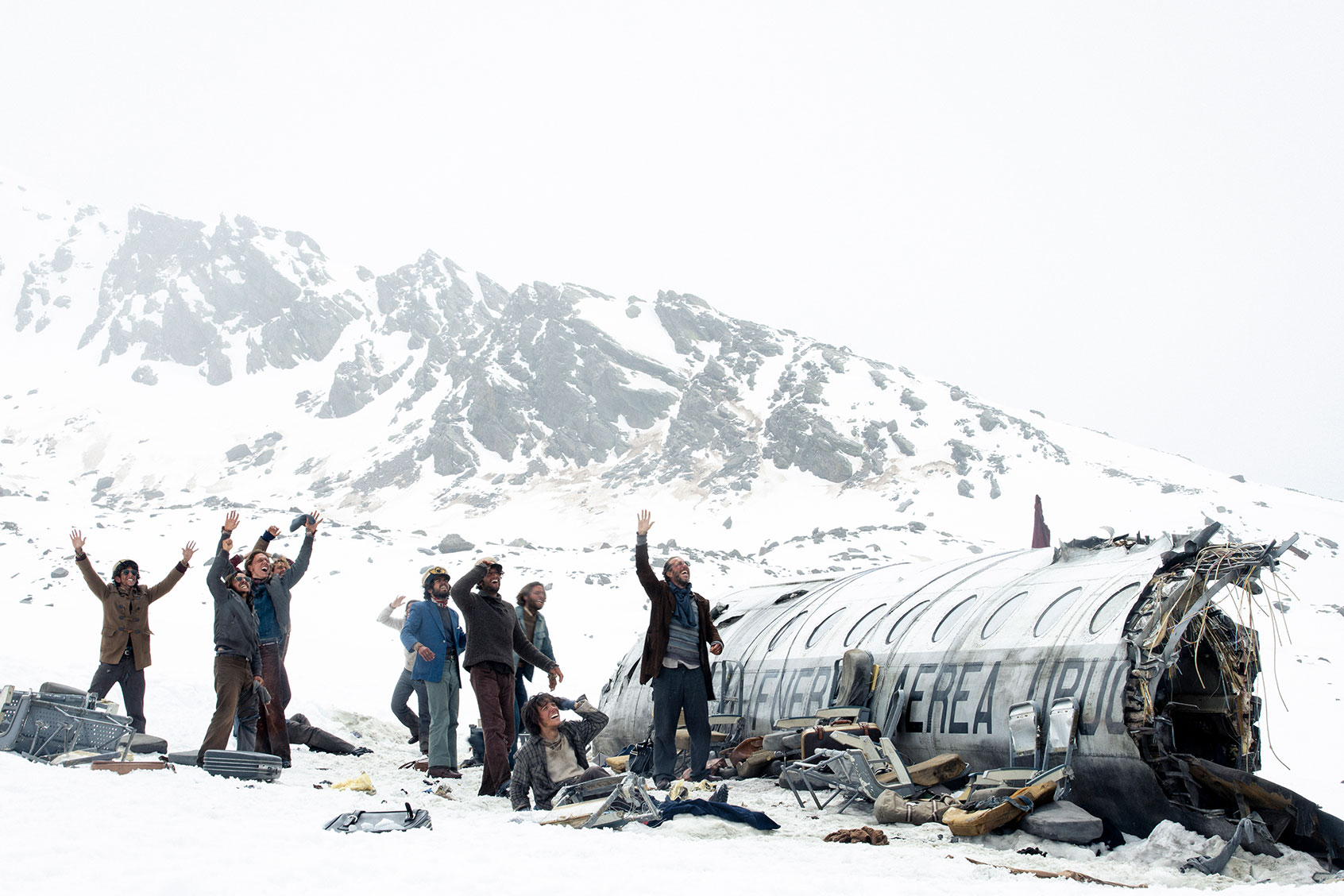
In Netflix's “Society of the Snow” cannibalism is both desensationalized and overwhelmingly humanized.

J.A. Bayona’s take on the tragedy wallops its viewers with 2 hours and 24 minutes of unrelenting intensity. After a plane carrying a team of Uruguayan rugby players and some of their supporters plunges into the frigid and bleakly uninhabitable South American mountain range, the survivors must resort to unthinkable extremes to muddle through. 

Cannibalism in film and television is never a shiny subject, no matter how much social media’s prurience attempted to smooth out Jeffrey Dahmer’s indisputably demented proclivities. But Dahmer was a criminal, a person who, for all accounts, relished the killing and consumption of innocent people. And as Carlitos Páez, one of the 16 survivors of the fateful flight from Montevideo, Uruguay to Santiago, Chile told The Washington Post four years after the crash, “We didn’t do that.”

Speaking about rumors in the immediate aftermath of the survivors’ rescue that they had killed some of the others for food, Páez said, “This bothered us, really, because it wasn't true and it put some doubts in the minds of the families of the other boys that died.”

Thankfully, in Netflix's “Society of the Snow” cannibalism is both desensationalized and overwhelmingly humanized. It’s also woven through with spirituality.

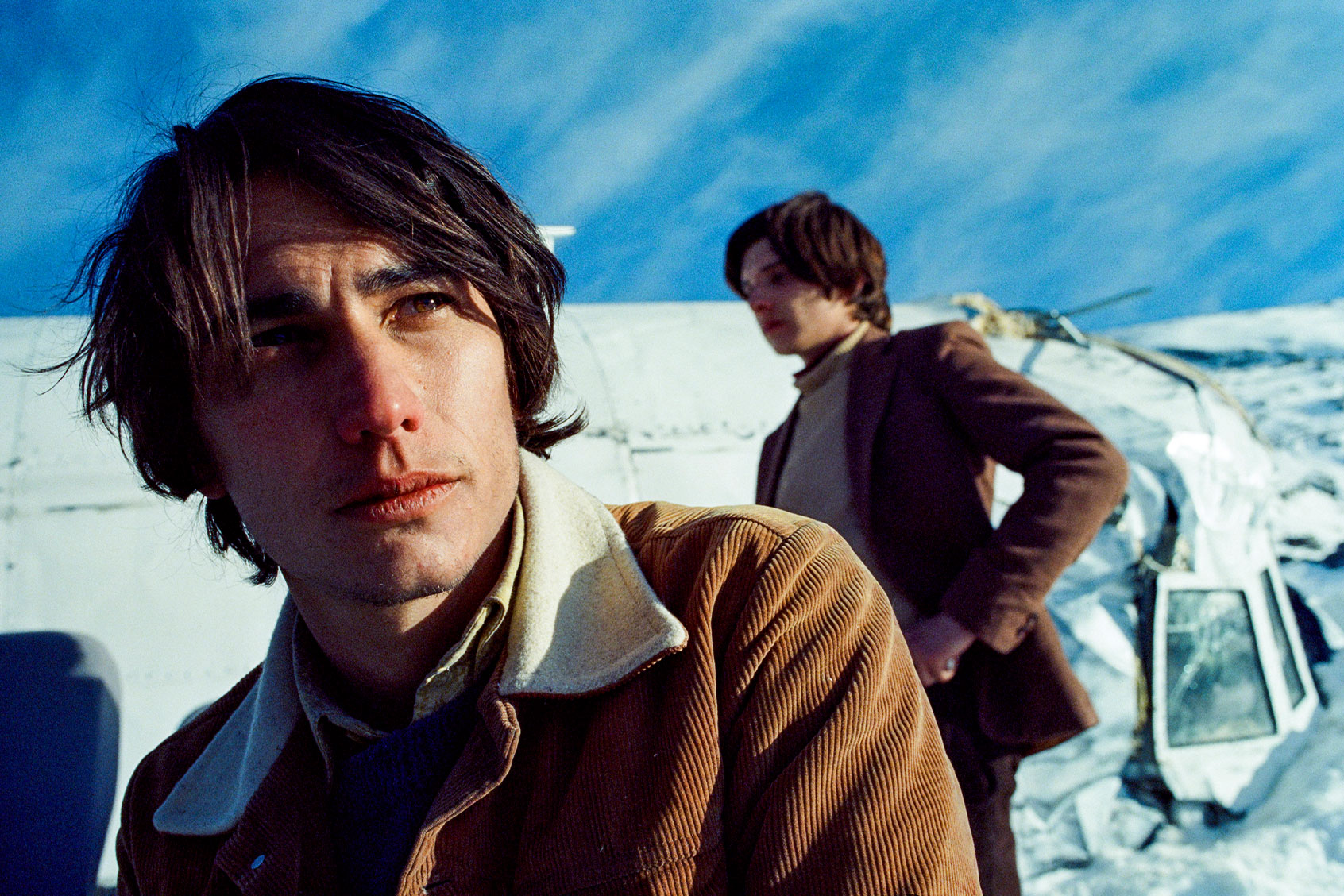
At the start of the film, we see several of the players at a Catholic mass in the seaside capital city of Montevideo. Gastón Costemalle (Jaime Martín James, aka Argentine musician Louta) passes a note through the pews to Numa Turcatti (Enzo Vorgrincic), a law student who is not on the team, which is aptly named Old Christians Club. Gastón is trying to convince Numa to join them on the trip to Chile for a match, which the team has chartered a plane for. But then we hear the sermon.

“No sólo de pan vive el hombre,” says an elderly priest reading to the congregation, quoting a verse from the New Testament. “Man shall not live by bread alone.” Already, even before the fateful trip, the film foreshadows how the concept of eating will be tied to religion and community.   

The notion of corporeal consumption — of both a literal and figurative kind — factors heavily into Catholicism. Growing up in a religious, partly Hispanic household, I learned from an early age that eating the Eucharist at church was representative of consuming Jesus’ body and blood. In the real-life Andes story, this belief is what ultimately convinces the most morally averse in the group to eat the dead. 

Eventually, they had to tell the world how they were able to survive. At a press conference in Montevideo shortly after their rescue, the men described how they likened eating their friends to the Last Supper, a Catholic belief that Jesus offered himself in the form of bread and wine to his apostles the night before being crucified. 

Society of the SnowSociety of the Snow (Netflix)“When we ran out of food, we thought of Jesus and how in the Last Supper he had divided his body and blood to all the Apostles,” one survivor said, per The New York Times’s rehashing of the conference in December of 1972. “Then we understood that we had to do the same, to take his body and blood which had been reincarnated, and that was an intimate communion among us. It was what helped us to subsist.”
“Society of the Snow” is judicious in what we see of the actual cutting and cleaving.

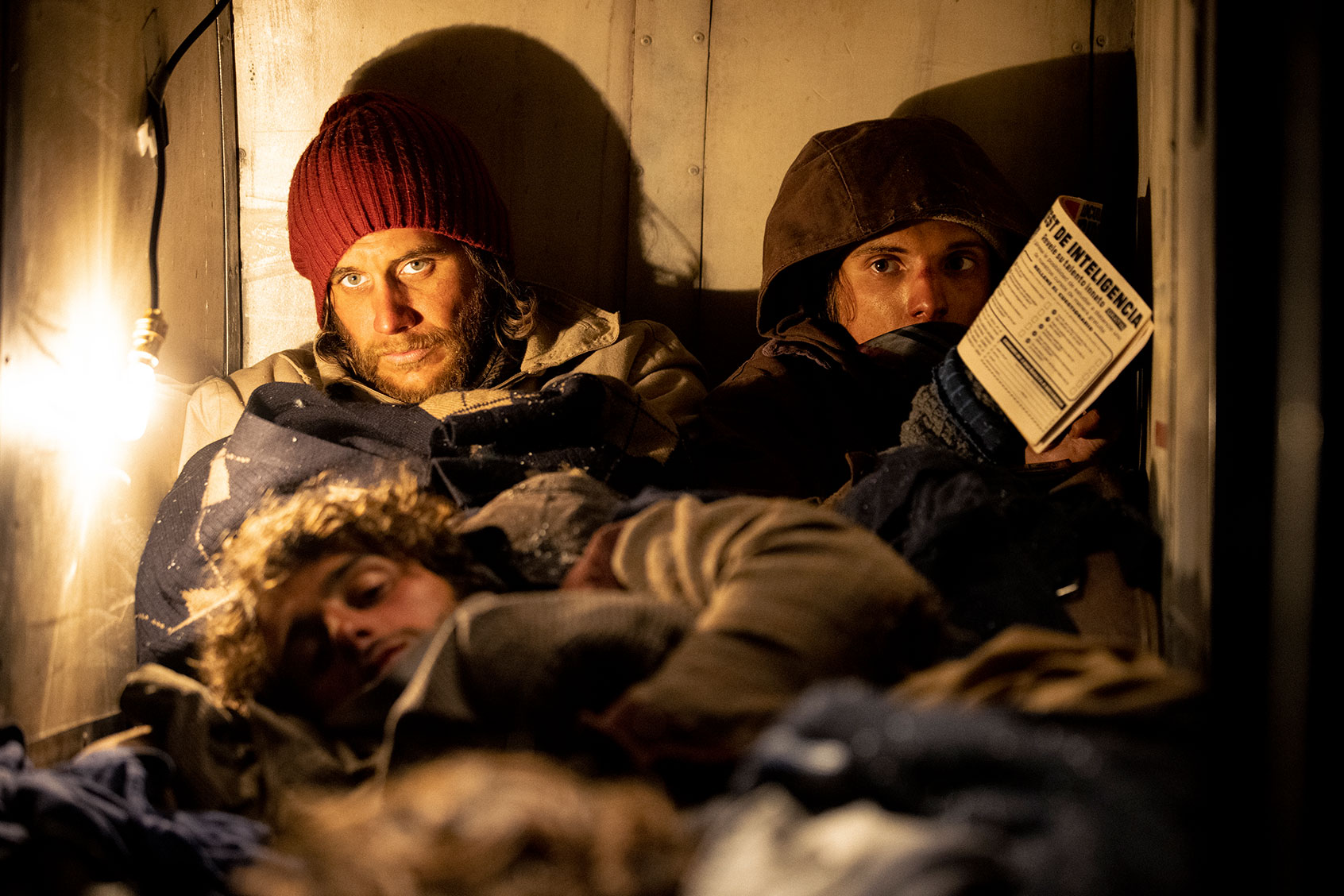
In the film, after the first week of piercing temperatures and several fatalities, we see the group huddled together in the plane’s shredded fuselage, contemplating the idea of cannibalism for the first time. The wreckage, cradled by the mountains, is invisible to passing aircraft overhead. The group’s meager rations are already gone. They are wracked with hunger, made only worse by the freezing weather’s steady depletion of their energy and caloric reserves. Their urine is black from severe dehydration, like spots of oil slick against the bright snow. Several of them are injured or infected. Eating is clearly on everyone’s mind, but no one seems willing to go there until Nando Parrado (Agustín Pardella) speaks up. 

“There’s food outside,” Nando says bluntly, which immediately evinces a simpatico reaction from Roberto Cannessa (Matías Recalt), a medical student. “There’s protein outside,” Roberto echoes. “Energy that we need. Know what happens when you stop eating? The body dries out, just like plants. You can’t use your brain.”

The players quibble briefly over the religious implications of cannibalism, wondering whether God will forgive them or fling them into some damned hellscape. “God put us in this situation,” Roberto says. “He’ll understand we need to survive.” 

But just as Roberto begins to assuage concerns about the group’s eternal salvation, the rule of man interjects. One member of the group ponders the legality of consuming another person and asks if they’ll go to prison, a thought which, whether you know the outcome of their plight or not, feels icily ironic: at this point, it seems like none of these guys will make it out of the Andes alive to find out. 

After someone conflates cannibalism with organ donation, seemingly to soften the mental blow to the group, Numa delineates doing so as criminal. “We can’t just take, defile and desecrate someone’s body without consent,” Numa says. This scene introduces us to Numa’s principled conscience and ethics, which guides the audience’s experience since it’s his voice that narrates the movie.

The Strauch cousins – Fito, Eduardo, and Daniel (Esteban Kukuriczka, Rafael Federman, Francisco Romero) – volunteer to be the butchers, doing the dirty work in secret away from the rest of the group. “Society of the Snow” is judicious in what we see of the actual cutting and cleaving: a brief shot of pale pink meat, which sort of resembles pieces of frozen sashimi, atop a plate of warped steel; a frame of plucked rib cages, hip bones and spines littering the foreground of the fuselage before the rescue. “What should we do with all this?” Fito asks Eduardo.

Society of the SnowSociety of the Snow (Netflix)

One by one, the group begins to sample human flesh, once they accept that their survival necessitates it. The cinematography during a number of these scenes plays up a sense of disorientation, darkness and confusion — distorted and blurry, fish-eye close-ups of the men’s tear-slicked faces remind us that by doing what they must to survive, they are also losing their sense of self. Clearly, this decision was not made lightly. 

“Society of the Snow” resists positing the consumption of the survivors’ dead friends as a gruesome act. While it doesn’t shy away from acknowledging the group’s revulsion and horror, the film’s depiction of cannibalism transcends the confines of its conventionally abhorrent definition by comparing it to a form of communion with one’s fellow man.  

As the movie progresses, the definition of God evolves into something sweeping and panoptic. Stark shots of the jagged mountains evoke a new sense of divine authority, in nature — looming portentously during the uber-visceral crash scene; lining the horizon of a bruised and starry sky next to thin clouds; wind howling through them at night before a quiet, orange dawn. “This is a place where life is impossible,” Numa narrates. They are no longer governed by the rule of God, but rather, must contend with the law of the mountains. 

Bayona neatly squares this concept of the divine in nature later in the film. Arturo Nogueira (Fernando Contigiani García), whose legs were broken in several places during the crash, is strung up toward the rear of the fuselage in a makeshift hammock. He seems fairly clear-headed about his tenuous grasp on life, but Numa nonetheless encourages him to keep the faith. 

“I have more faith than I’ve ever had in my whole life,” Arturo counters. “'Cause my faith — sorry, Numa — isn’t in your God. . . . I believe in another God. I believe in the God that Roberto keeps inside his head when he comes to heal each of my wounds. In the God that Nando keeps in his legs that lets him continue walking no matter what. I believe in Daniel’s hands when he cuts the meat, and Fito, when he gives it to us without saying which of our friends it belongs to.” 

Once again, we see how “Society of the Snow” emphasizes a transferring of spirituality into people and things — consumption is equated with a pervasive sense of godliness, whatever form God takes. It becomes a form of sacrifice and “generosity” on behalf of those who died, as Bayona told NPR. Eating is a way for the living to honor the memory of the dead, a reciprocal act forged by a pact amongst them: they each preemptively concede their remains to their friends in the event of their death, so that they may carry on. Each fellow man is part of this spiritual existence — be it ordained by God or the mountains — through this agreement, bound by blood.

Right before the film’s turning point, when Roberto and Nando venture out for help, viewers are taken for yet another emotional ride when Numa, our trusty and gritty guide, eventually succumbs to the infected wound in his leg. Before dying, Numa confides in Nando that, despite knowing that the end is near, he is “so happy to know that you guys are gonna make it.” In this moment, we see that Numa is both terrified by his impending mortality and peacefully accepting of it. He knows his death will be what ensures the existence of his companions.

Society of the SnowSociety of the Snow (Netflix)

Numa dies clutching a piece of paper that paraphrases John 15:13 in the Bible: “No hay amor más grande que el que de la vida por sus amigos.” 

“There is no greater love than to give one’s life for friends.” 

We see the remaining survivors once again crowded in the fuselage reading Numa’s note, just as they were when they were debating cannibalism. But this time feels decidedly less dire. Instead, there’s a renewed vigor for survival, for salvation. Driven by the same dogged survival instincts that saw them broach the idea of eating corpses, Nando and Roberto embark on a 10-day hike into Chile in search of help, leading to the group’s subsequent rescue.  


Want a daily wrap-up of all the news and commentary Salon has to offer? Subscribe to our morning newsletter, Crash Course.


Despite being physically gone, Numa continues to narrate the course of the film, a deliberate storytelling choice by Bayona that inculcates the theme of consumption as a type of communion. When the survivors return home, Numa’s voice overlays the throngs of journalists jostling to get near them, the doctors prodding their sun-baked bodies, and the embraces from their incredulous loved ones.

“But they don’t feel like heroes,” Numa tells us.

“Because they were dead like us, and only they got to come back home. Now when they remember us, they ask themselves, ‘Why didn’t we all get to come back? What does it all mean?’ You’ll need to find out yourselves. ‘Cause the answer is in you.” In his final moments of narration, Numa equates the dead with the living once more, reminding us of this fusion's permanence. 

By the end of “Society of the Snow,” things feel placid, serene, warm. The dominance of the spirit of those who survived is overwhelming, as is the sacrifice of those who enabled them to. 


“I absolutely hate Trump”: A “whole swath” of GOP voters say they’re not falling for MAGA again

A new report from Politico suggests that former President Donald Trump may have a difficult time winning the White House because, despite how he fares in the New Hampshire primary on Tuesday, there is a "whole swath" of Republicans who are committed to voting against him.

The outlet cited a recent NBC News/Des Moines Register/Mediacom poll of Iowa voters, conducted ahead of the Iowa caucuses, in which 43 percent of Nikki Haley supporters indicated that they would vote for President Joe Biden over Trump.

"2024 is different," Politico's report claimed, largely because Trump is being evaluated by voters, not for the strength of his current campaign, but rather, for his prior time spent in the White House. "And that, political veterans warn, makes it much harder for him to win back the people he’s alienated, including those once willing to vote Republican," Politico added.

“I don’t think I can vote for Trump,” one New Hampshire voter and former MAGA supporter said. “I vote in every election, I’ve never left a box blank. And I might have to this time.”

Another independent voter from the state expressed a similar sentiment, claiming that Trump is “dangerous and the people around him are, too.” If Haley succeeds in garnering the nomination, the second voter said he was likely to side with her over Biden. “I absolutely hate Trump," he added.

Before the Iowa poll, Politico reported, a separate survey done by the New York Times/Siena College found that Biden eked out more support from Democrats and Democrat-leaning independents (91 percent) than Trump did among the GOP and Republican-leaning independents (86 percent). Though the margins were slim, Politico observed that "it could be enough to tip the scales for Democrats. At a minimum, it is a major liability for the GOP should the party, as expected, push Trump through as its nominee." And, in the New York Times/Siena College poll last month, Biden took the lead among all independents with 50 percent to Trump's 38 percent. As Politico noted, however, Biden's track record amongst the electorate has nose-dived in recent months, with some formerly staunch supporters considering other alternatives or not voting entirely.

Speaking about the GOP's odds of winning the state in the general election if Trump is the nominee, New Hampshire Governor Chris Sununu, a Republican who supports Haley, said, “It would be a massively difficult hill to climb, without a doubt. And he’s already proven that. He’s lost before and according to the polls he will lose even bigger this time.”

“This is a horror show”: Ex-judge warns Trump lawyer is “playing with fire” by irking Judge Kaplan

Trump attorney Alina Habba has faced her fair share of reprimand from the federal judge overseeing the former president's second defamation trial from writer E. Jean Carroll, earning 14 scoldings from the judge in just one day of court last week after making simple mistakes during the proceedings. But U.S. District Court Judge Lewis Kaplan has actually exercised restraint in his admonishment of Habba, a former federal judge told Business Insider

"I think Kaplan is being really measured under the circumstances in his reactions to both Trump and Habba," said John Jones, who served as a U.S. District Judge for the Middle District of Pennsylvania for more than 20 years.

Kaplan "was really careful about not overreacting, and I don't think he overreacted to Habba either," Jones continued. "I think he's trying to send her signals, which is what a good judge does, about how to try her case and what to do, and she's just blowing past those signals."

Jones added that Habba's behavior in the courtroom is playing to Trump's goal of making the proceedings chaotic. 

"It's an unprofessional and bad look," Jones told the outlet. "But I think Habba doesn't care about any of that. What she cares about is making Trump happy."

That tactic, however, is likely to backfire, Jones argued, saying that Habba is "playing with fire" by prioritizing pleasing her client over respecting the judge. 

"The inescapable conclusion the jury members get is that she's run afoul the judge and that she's doing something wrong," Jones told Business Insider, adding that Habba not only lacks "a strategy and a clear defense, rather than to just be disruptive in court, but she's got an impossible situation with her client. So I mean, this is a horror show from a defensive standpoint."

“Disgrace”: Florida GOP bill to use taxpayer money to cover Trump legal fees goes down in flames

A plan spearheaded by some Florida Republicans to use taxpayer funds to assist former President Donald Trump in covering fees tied to his numerous legal woes was ditched after Gov. Ron DeSantis said he would veto the proposal, per Politico.

The bill was filed earlier this month by Sen. Ileana Garcia, R-Fla., for this year's legislative session, and could allow Florida to give Trump up to $5 million as he navigates four criminal indictments at the federal and state level as well as a second defamation trial with writer E. Jean Carroll. Politico reported that the proposed legislation, which would give money to presidential candidates who were Florida residents, had already received backing from Florida's Republican chief financial officer and a member of DeSantis's Cabinet, Jimmy Patronis.

“It’s in Florida’s best interest to make sure their champion for the President is allowed a fair shot at the White House without being taken down by some fake witch hunt,” Patronis said Monday, per The Washington Post.

Patronis also alleged that having taxpayers pay for Trump's legal bills was a financially sound move. 

“If we can help and support a Florida candidate for the White House, that’s just good from a dollars and cents perspective,” he said, according to Politico. “From all the decisions the federal government makes with regard to military installations, to roads, to disaster aid — it’s in Florida’s best interest to make sure their champion for the President is allowed a fair shot at the White House without being taken down by some fake witch-hunt. Moreover, if Governor DeSantis makes another run at it, he has said that he too could face the same legal headwinds that President Trump is facing.”

Garcia on Monday said in a release disseminated by Patronis' office that “we’re in the midst of an historic moment where we’re watching an election that’s trying to be stolen by left wing prosecutors, the Biden Administration and even Blue States. They’re not trying to win at the ballot box; they’re trying to keep President Trump off the ballot by weaponizing the courts. Having a Floridian in the White House is good for our state — and anything we can do to support Florida Presidential candidates, like President Trump, will not only benefit our state, but our nation.”

But by Monday night, Garcia stated that she would withdraw the bill after DeSantis, who on Sunday announced the suspension of his 2024 presidential campaign, took to X/Twitter to express his opposition. 

“Some Florida Republicans want taxpayers to pay Trump’s legal bills,” the governor wrote. “But not the Florida Republican who wields the veto pen."

We need your help to stay independent

“This bill was filed on January 5th amidst a crowded primary, including two Florida residents,” Garcia tweeted in response to the governor. “My concern was the political weaponization against conservative candidates, and while @JimmyPatronis brought me this bill at a time when all candidates were committing to campaign through the primary, one frontrunner now remains, and he can handle himself. I will be withdrawing the bill.”

Senate President Kathleen Passidomo, in a statement forwarded by her office, told Politico, “President Trump has the means to cover his legal expenses; however, many people do not, which is Senator Garcia’s concern."

“You should reach out to Senator Garcia about her bill," Passidomo added. "She does a great job. It is not helpful or necessary for me to weigh in on every bill.”


Want a daily wrap-up of all the news and commentary Salon has to offer? Subscribe to our morning newsletter, Crash Course.


As Politico noted, despite DeSantis' rejection, the future of the bill remained decidedly murky — "There was no House companion to the bill, and it was not something that Republican legislative leaders have been promoting during the start of this year’s session."

Democrats sharply condemned the bill, blasting it as "a disgrace."

“What this shows you is who the Florida GOP is loyal to because it’s certainly not the people of Florida,” wrote Nikki Fried, Chair of the Florida Democratic Party, in a text to Politico. “Senator Garcia’s victim-card bill is a disgrace and should inflame any Floridian who cares about where their tax dollars are going.”

In response to DeSantis's public disapproval of the legislation, Rep. Anna Eskamani, D-Fla., tweeted  “Absolutely not." 

Ex-Mueller prosecutor: Trump “desperately” trying to avoid trials out of fear of what will come out

Donald Trump isn't just trying to delay his federal criminal cases so that he can dismiss them should he return to the Oval Office — the former president also fears what the trials could do to his campaign, former Mueller prosecutor Andrew Weissmann speculated. In a Monday appearance on MSNBC, the former prosecutor argued that Trump is really hesitant to go to trial in the cases because he's afraid he'll lose support among Republican voters.

"I think one of the reasons that Donald Trump is so desperately trying to put all of these trials off is because you cannot be sure that two-thirds is so solid," Weissmann told political analyst Michael Steele, possibly referencing the 66 percent of Republicans who said in 2021 that they wanted to see Trump run for president in 2024. "Right now, Donald Trump doesn't want to have his day in court, doesn't want to have to deal with facts in court." That concern motivates Trump's conduct around the cases, which has involved claiming they are false and attacking the judges and prosecutors, Weissmann suggested. 

"He wants to deal with spin and say this is a witch hunt, and this is all bogus," Weissmann said. "But if there is a trial, it remains to be seen whether it will be like the January 6th hearings, which really broke through in terms of changing people's minds — not everyone, of course, and it won't be everyone — but, to [Rep. David Jolly, R-Fla.]'s point, enough people who think, 'You know what, I'm actually being confronted with facts." The federal election subversion case could change people's perspectives especially because most of its witnesses have close ties to Trump and his administration, Weissman said. "I think there really could be a needle that moves because of that trial," he added.

Conbody workouts give the formerly incarcerated “an opportunity to get employment right away”

Conbody, a prison-style bootcamp workout, was developed by Coss Marte while he was incarcerated. He lost 70 pounds in six months in his 9-by-6-foot solitary confinement cell doing body weight and cardio exercises. He also ran in the yard when possible. After being released in 2013, Marte started training people in the park the very next day. He opened his gym in the Lower East Side of New York City in January 2014 as a way of giving back to the community he was a part of when he sold drugs, which got him incarcerated. What is more, Marte hires formerly incarcerated folks first as interns, then, after certification, as trainers.

"Formerly incarcerated people have the same rates of unemployment as people did in the Great Depression."

“Conbody VS Everybody,” an engaging six-part documentary series, directed by Debra Granik (“Winter’s Bone”), chronicles Marte and several of his employees over an eight-year period. The series, which premiered at this year’s Sundance Film Festival, traces how Marte, as well as Syretta, Sultan, Shane and others, get a second chance but struggle with getting jobs and finding housing after getting out of prison. Significantly, working at Conbody has helped these formerly incarcerated folks maintain a 0% recidivism rate. 

Marte spoke with Salon about his experiences and the inspiring “Conbody VS Everybody.”

What inspired you to create this prison-style bootcamp program and create an opportunity for others? 

My inspiration — that’s a hard question. I try to keep progressing and keep moving forward. I try to do the right thing and live a righteous path. This is the way I was able to provide for myself and my family and help others gain employment and advocate for them. 

You developed the “body builder burpee” which involves doing one jumping jack as well as a push-up. The exercises you developed are all body weight based. Can you describe the exercise regime?

We call it a prison-style bootcamp, because in prison we did workouts back-to-back, with a partner or without, and without stopping. At Conbody, we do 45 minutes of cardio and strength training exercises. We concentrate on a different part of the body every day of the week. We have “Better Booty” Wednesdays and “Hardcore Thursdays.” 

You hire interns who need to get certified to coach. Can you talk about hiring and training your employees? 

I have them go through the process of being a paid intern for two months to see if they are gearing up to get certified. If they get certified, they become a group fitness instructor. Then we hire you after that. Not everyone commits to two months. It’s not an easy internship, but it is an opportunity to get employment right away.  

Conbody vs EverybodyConbody vs Everybody (Participant)

The formerly incarcerated have difficulties with employment. You participated in programs and cleaned toilets for $8 an hour after getting out.  What can you say about the difficulties of finding a job after being released? 

For a person with my background and everything stacked against me, it was 20 times harder than for a normal person. Formerly incarcerated people have the same rates of unemployment as people did in the Great Depression. It’s a crazy system, and we are trapped in it. Once you are trapped in it, it is hard to get out. I was fortunate to get out because I did not stop working. I took every opportunity, whether it was cleaning people’s toilets or training in the park. I just kept moving and working. I didn’t raise funds. I bootstrapped and finally raised money during the middle of the pandemic. The whole Black Lives Matter movement — and more people wanting to invest and helping — was the first investment I basically got. 

What observations do you have about the prison system and how you (and your colleagues) were treated after release, and dealing with parole?

Parole visits were one of the scariest things ever. You go on a parole visit, and one incident in that office can put you away for two years on a violation. I’ve seen that happen every time I’ve gone on a parole visit. Someone gets thrown on a wall or have really stupid arguments and people end up violating parole for two years. It’s scary. Your freedom can be taken right away in any instant. 

There is discussion in the series about the difficulties of finding housing. Can you talk about that?

"We committed a mistake. We did our time. Why do we have to keep judging people?"

It’s hard for anyone. I was fortunate enough to have my brother. If you don’t have family, it is going to be hard to have success. If you come home to a halfway house and don’t have anyone to live with, what’s your next step? My brother helped me find an apartment under his name. It is frustrating. I feel blessed that I am in the position that I am in now. 

Syretta, one of the subjects in the documentary, talks eloquently about how she is perceived as someone who was formerly incarcerated. What are the responses Conbody clients have to the staff? You are trying to destigmatize what a formerly incarcerated person looks like. 

Syretta is a very special person. She did 22 years, and she is a very loving person — so happy, and welcoming, and reformed. Not everybody has that warm touch. We push to destigmatize because a lot of people see something in movies and all this bullsh*t and they perceive this is a bad person. We need to show people for who they are. They are human beings. We committed a mistake. We did our time. Why do we have to keep judging people for looks, or race or whatever? It doesn’t make any sense. 

What can you say about fear and racism the formerly incarcerated face?

There is a lot of racism that still exists, and people judge a book by its cover. How do we stop that? That’s the difficult part. We need to communicate with each other. It is a generational thing that has been passed along for so many years, we need to continue spread the word and change [minds].

There is a scene of the staff having dental appointments in the Conbody lobby because they do not get to see dentists while incarcerated. Two guys discuss they still sleep on the edge of a bed because that is how they slept in prison. Can you talk about what folks have to deal with after they get out? 

These are loaded questions! [Laughs] It’s a process. Coming out, you have to learn so many new things. It is very hard to cope with putting that all in one sentence. Everyone has their own hurdles. There are so many stories. I’m just one of them. 

Can you describe something you had to deal with?

For me, technology was a shock. When I went in, everyone had flip phones, and coming out, everyone had touch screen phones. It was weird hoping on the D train, and everyone is staring at their phones, and no one is looking at anyone. Life was different before I went inside. I got dizzy when I went on the train!

Can you talk about being inside and being outside? 

Dealing with prison — it is a whole different world inside. It’s a different law and order. It’s a different society and dealing with that is traumatic. Stepping into that world is different, so coming out to a different world is shocking. It is difficult to process and learn and adapt to right away. Trying to recap the last 10 years is wild. I’ve been home almost 11 years. It’s difficult to process and tell you about the whole journey in one interview. 

How did you get your business going given the difficulties of being outside? 

It was extremely difficult. A lot of times I wanted to give up and say f**k it. I felt I had no other choice but to keep moving forward. Running a business is a rollercoaster with up and downs. You just gotta keep running. 


Want a daily wrap-up of all the news and commentary Salon has to offer? Subscribe to our morning newsletter, Crash Course.


You are not planning to go back to prison. Your program has 0% recidivism rate. What can you say about what you and your trainers face with that? You talked about the pressure of parole visits.

We have had trainers get re-arrested, but not convicted of any crime. The film shows that. People say recidivism rates are when you get arrested or convicted, but we never had anyone get convicted. We advocated for them to get out of the system, and we’ve won and had them released. It’s a wild journey. 

How can folks support Conbody? 

We have just one location now. We had more locations pre-pandemic. During the pandemic we kept the Lower East Side location open. We do virtual videos, and we do live video on demand. We are working on franchising now. We filed our franchise disclosure documents and ready to move forward. Are you going to come to my workout Monday at 8:00 a.m.? You can livestream it!


Stewards of the kelp forests: New research reveals how sea otters dramatically influence the climate

With their roly-poly bodies, child-like eyes, long whiskers and tiny padded paws, otters are some of the most charismatic animals in nature. But while being cute doesn't serve much purpose in the wild, new research suggests these little furballs have been helping mitigate climate change.

"We found similar trends among the Channel Islands with kelp canopy gains along islands where sea otters are observed or recovering (San Miguel and San Nicolas Islands) balancing dramatic losses among all others."

A recent study in the journal PLOS Climate, led by researchers from the Monterey Bay Aquarium, details how southern sea otters (Enhydra lutris) off the coast of California have helped kelp forests remain resilient to the impacts of climate change. First the scientists analyzed US government records that inventoried California kelp forests as far back as 1910, compared them with modern information about those same kelp forests today. Then they used a machine learning framework to ascertain and rank the factors that have altered kelp forest density since 1910.

The results were intriguing: While kelp forests suffered dramatic losses along the Northern and Southern coastlines, they had increased in abundance in central California. That is because this is the only region where, despite attempts to hunt them to extinction in pursuit of their fur, southern sea otters have managed to carry on. In fact, in the places where kelp forests were most healthy, otter population densities were at their highest.

The sea otters' survival proved to be the primary factor in keeping those Central California kelp forests alive and thriving; in fact, they were so successful that those kelp forests helped compensate for losses elsewhere in the state. Kelp canopy declined in Northern California by 63 percent between 1910 and 2016 and by 52 percent in Southern California between 1910 and 2016. But it increased by 56 percent in Central California, thanks to these little creatures in the weasel family. As a result, the overall decline in kelp canopy throughout California between 1910 and 2016 was only six percent.

In terms of fighting climate change, this is quite beneficial as well. Kelp forests contribute immensely to carbon storage and thereby offset the negative impact of humanity's greenhouse gas emissions. Indeed, kelp forests all over the world capture 4.5 million tons of carbon dioxide from seawater each year. In addition to this benefit, kelp forests aren't just a metaphor — they really are complex ecosystems home to a variety of lifeforms not unlike a forest on the surface world. During storms, kelp forests shield the coast from destructive erosion, and they also can act as nursery grounds for fisheries. Southern sea otters engage in a number of natural behaviors that help preserve these underwater forests wherever they inhabit — and this is a trend that exists beyond the California coastline.

"Absent from our model, we found similar trends among the Channel Islands with kelp canopy gains along islands where sea otters are observed or recovering (San Miguel and San Nicolas Islands) balancing dramatic losses among all others, where sea otters are absent (Santa Rosa, Santa Cruz, Anacapa, Santa Barbara, Santa Catalina and San Clemente)," the authors explained in their study.


Want more health and science stories in your inbox? Subscribe to Salon's weekly newsletter Lab Notes.


Three otter species occurring in the Himalayan region — Aonyx cinereus, Lutra lutra and Lutrogale perspicillata — were all vulnerable to climate change as well as an additional ecological menace, poor land use.

“Our study showed that kelp forests are more extensive and resilient to climate change where sea otters have reoccupied the California coastline during the last century," lead author Teri Nicholson, Senior Research Biologist with the Monterey Bay Aquarium Sea Otter Program, said in a statement. "Where sea otters are absent, kelp forests have declined dramatically. In fact, we found sea otter population density as the strongest predictor of change in kelp canopy coverage across this hundred-year span."

Despite the valiant effort from otters against climate change, they are not immune to it. A 2021 paper in the journal Diversity and Distributions found that three otter species occurring in the Himalayan region — Aonyx cinereus, Lutra lutra and Lutrogale perspicillata — were all vulnerable to climate change, as well as an additional ecological menace: poor land use. Between the two factors, the three otter species are expected to experience a reduction between 6% to 15% and shifting of their geographical range by 2050.

We need your help to stay independent

Similarly, a 2018 study from the journal Biological Conservation found that freshwater otters in Africa would as a group be negatively affected by climate change, although some species would suffer more than others; that an Asian freshwater otter known as Lutra sumatrana would actually have an increased and less fragmented range, but one that would often put them in conflict with humans; and that some vulnerable South American species like Pteronura brasiliensis, Lontra provocax and Lutra perspicillata might actually be spared exposure to climate change.

Indeed, a 2023 study in the journal Animals offered a brighter climate change-related prospect for one species of otter, albeit at the expense of another animal. Scientists investigated how climate change and land use policy alterations impacted the interactions of Eurasian otters (Lutra lutra) with Pyrenean desman (Galemys pyrenaicus), a semi-aquatic mammal closely related to moles and shrews.

"We found that the otters will take advantage of these environmental alterations, while desmans will undergo a drastic reduction of their suitable habitats," the authors write. "In addition, the availability of overlapped range margins between the two species might increase, exposing desmans to a potential increased predation risk by otters."

All of this research goes to show that animals like otters do a lot more than look cute and sometimes attack swimmers. They play an outsized role in their ecosystems and without them, it would have devastating impacts not just on the coasts of California, but on us. We need these kelp forests to thrive, to absorb our outsized carbon output and to protect our beach front properties from slipping into the ocean thanks to coastal storms and erosion. (Not to mention otters have an inherent right to exist.) Humans are currently driving a mass extinction across the planet — which some experts have described as a "biological holocaust" — with many species at risk of slipping into oblivion. As this otter research demonstrates, the effects of this will not be benign. If we protect otters and other species, we'll end up protecting ourselves.

The GOP primary is in a parallel universe. Republicans are about to get a reality shock

This is what was happening in Manchester, New Hampshire, on Saturday night.  Donald Trump was speaking at a rally he said was the biggest ever held there in Manchester, because every one of his rallies is the biggest ever held in whatever venue, wherever he is.  He was speaking to Republicans in New Hampshire about the same things he spoke to Republicans about in Iowa just days before, describing to them a new place in a new country where they had never been.  They didn’t know where they were going yet, but if they listened closely to him, he would take them there.

“We need to come together and focus all of our energy and resources on defeating crooked Joe Biden,” Trump said at the rally.  Adopting the language Biden has used effectively against him, Trump said of the president, “He is a threat to democracy. He really is.  We have to get him out.  You know why he is a threat to democracy?  A couple of reasons.  He’s grossly incompetent.  We will end up in a world war because of this guy.  The bomb thrower.  Look at the Middle East now again.  Here we go again.  The bombs are being dropped all over the place.  The Secretary of missing in action.  And then they find him.  You know how he’s running the war?  Laptop from his stomach waiting in a hospital bed.”

Referring to a war started in the year 2001 by another Republican president, Trump conflated Biden with every president who had served in office since that war began, including himself:  “Same people that gave us Afghanistan,  I think the most embarrassing event in the history of our country, those are the people running his wars.  Nobody ever gets fired.  I fired Comey.  I fired a lot of people.  When somebody’s bad, you have to fire them.  Here’s a guy they don’t win wars, they don’t do anything right, and nobody ever gets fired. I guess they know too much.  Does anyone know what that means?  I know what that means.”

He paused to let the thought sink in, how much he knows, how much he appreciates what people like those in his audience don’t appreciate, but he’s going to tell them: “Sadly, not everyone is willing to put our country first. This is called America first territory.  It’s America first.  So here in New Hampshire, Nikki Haley.  I know her well.  The guy is screaming, birdbrain.  Only in New Hampshire.  Only in New Hampshire.”

Folks, I think I have finally reached an understanding of what is going on in our country: We are living in parallel universes.  

We need your help to stay independent

In one universe, Joe Biden is president, the unemployment rate is under four percent and has been for 21 straight months, the economy added 216,000 jobs in December, the homicide rate nationally is down 13 percent over the last year, the stock market just reached a record high, the Federal Reserve sees inflation easing more than a full percentage point over the next year and indicates that it will hold interest rates steady, and next month, a recalcitrant Congress is expected to be dragged kicking and screaming into not shutting down the government.

Not only are there parallel universes, but one of them is upside down and spinning backward.

In the other universe, Ron “We Hardly Knew Ye” DeSantis dropped out of a presidential run practically nobody noticed he was engaged in any way.  I mean, what was the point?  He never looked like he wanted to actually be president.  He never uttered two consecutive sentences of a rationale for his campaign, unless you count propping up the private jet rental industry as a reasonable goal he was attempting to attain.  All he ever did on a debate stage was look angry and sound angry, but he looked angry and sounded angry every time he appeared in public anyway, especially if anyone wearing press credentials was nearby.

And let’s just stop right there and ask a question I never heard anyone ask over the last six or seven months, and that is, what was the deal with DeSantis and his hatred of the media?  It’s yet another example of one of the parallel universes we’ve been in, this one the universe where people who are standing around with cameras and notebooks ready to record everything you say and transmit it for free to the people you’re trying to get to vote for you, those people are the enemy.  Huh?  What the hell was that all about?  I mean, Donald Trump constantly calls the media the enemy, but he’s ready at the drop of an invite from a podcaster with a listening audience in excess of eight to jump in there and babble his lips off in the hope that he’ll gain a zillionth of a point in the polls.  Sure, the hatred of DeSantis for Trump was so blatant not even Botox could help conceal it but adopting the polar opposite of Trump’s media strategy fit the political playbook of the too online right, “failing to recognize,” Salon’s Heather “Digby” Parton points out, “that Donald Trump owns them.”


Want a daily wrap-up of all the news and commentary Salon has to offer? Subscribe to our morning newsletter, Crash Course.


You could of course write the whole parallel universe thing off to yet another successful Trumpian effort to come up with a world of lies and put them across with more aplomb than a cable TV preacher, but I think it’s more than that.  The whole thing of having a presidential primary race isn’t just falling apart, it has gone away completely.  Trump is left with a single opponent, whom he cannot distinguish from Nancy Pelosi, a Republican boogey-woman nobody else in the Republican Party can remember the name of either, most of them having switched their boogey-people to her successor, Kevin McCarthy, and then quickly to someone whose name they didn’t know in the first place, Mike “I’m Gobbling White Bread and Mayo As Fast As I Can” Johnson.  Talk about a lack of imagination!  What happened with labeling somebody from the other party as the enemy?  Geeeez…

See what I mean?  Not only are there parallel universes, but one of them is upside down and spinning backward. Man, every time I turn on the news or pick up the newspaper, I breathe this gigantic sigh of relief that I don’t have the job that used to be regarded as the pinnacle of a journalism career: national political reporter. I knew people who spent decades in the trenches of the newspaper game working their way up the slippery pole to get that moniker after their byline in the paper or on a TV chryon.  There was a time, and it wasn’t so long ago, when having that job during a presidential campaign would get you a six-figure advance from a New York publisher to write a (hopefully) definitive book on the campaign, which with a little bit of luck might put you on the fast track to a cushy sinecure on the op-ed page where you could stroke your whiskers or smooth your coif and sit back and finally get to that point every newspaperman or woman longs for when you are blessed with the experience and wisdom to Make It Look Easy as you ride into the golden vistas of the journalism sunset…

Can you imagine working your ass off in the trenches of the ink-stained trade for this pathetic excuse of a Republican primary?

The question we should be asking at this point is, when the Republican primary is over, will anyone notice?  If Nikki Haley achieves what we used to call A Close Second, will it matter?

In fact, how would you like to be Nikki right now, when what you are is someone with a first name Donald Trump can easily turn into a racist epithet and then promptly get you confused with Nancy Pelosi?  Man, that’s an ambition worth an endless roundelay of soulless mid-level convention venues, empty hotel rooms and backseat rides in SUVs sitting next to people telling you how many points you’re down in the polls.

Ron DeSantis’ campaign may be done, but his brand of MAGA petulance will continue to plague us

Gov. Ron DeSantis of Florida finally pulled the plug on his mortally wounded bid to be the Republican nominee for president. In a typical fashion for the man who drew speculation about what fingers he uses to eat pudding, DeSantis went out trying to act tough but only ended up highlighting his servility to bigger bullies. He described himself as "leading with conviction, championing an agenda marked by bold colors." In reality, however, DeSantis bent the knee to Donald Trump, a man who routinely called him names like "Meatball Ron" and "DeSanctimonious." 

No one will be sad to see DeSantis go. But in clomping back to Florida in his (alleged) heel lifts, DeSantis leaves one major question unanswered: Why so mad, Ron? 

DeSantis still matters because he represents a type that's increasingly prevalent in our political landscape: The petulant MAGA nerd.

On paper, DeSantis has everything a man should hope for: power, money, status and, yes, even love. His seems like a charmed life. He has degrees from Yale and Harvard, and a distinguished legal and military career. He's been a congressman and the governor of a massive state. He married a beautiful, fashionable woman and they have three lovely children. He's a millionaire. Even going back to his Little League career, DeSantis was a success. He should be glowing with gratitude for the unbelievable number of blessings in his life. 

And yet, every day on the DeSantis campaign trail started from the wrong side of the bed. No matter the subject, DeSantis sounded perpetually aggrieved. Sometimes he was snappish, and sometimes just whiny, but always bristling. Even when he was trying to sound upbeat, the river of resentment would burble up in his mannerisms and his peevish voice. Reporters got used to the way he seemed to always have sand in his underwear, but stepping back, it's just plain weird that DeSantis was so irritable all the time.


Want more Amanda Marcotte on politics? Subscribe to her newsletter Standing Room Only.


Now that the Grinch Who Stole Disney (or wanted to, anyway) has dropped out, his anger issues may not seem relevant any longer. But DeSantis still matters because he represents a type that's increasingly prevalent in our political landscape: The petulant MAGA nerd.

Trump himself is barely literate, and his rise accelerated the exodus of college-educated voters from the GOP. Subsequently, most coverage of MAGA has focused on supporters not known for remembering what they scored on the SATs: Fox News-addled Boomers eating bacon in a rural diner. Proud Boys with more "drunk and disorderly" arrests than diplomas. Christian fundamentalists who believe Jesus rode a dinosaur. Bug-eyed conspiracy theorists raving about QAnon. What they share is whiteness and a distaste for reading anything longer than a bad meme. 

But there is one strain of MAGA loyalist that rejects the identity of the proud ignoramus, instead imagining himself a man of letters. Indeed, such types don't just think they're smart, they fancy themselves towering giants of intellect. But they also believe they are belittled by a small-minded "establishment" of academics, creatives and professionals who are too allegedly addled by liberal pretensions to recognize the brilliance of their right-wing betters. 

This type has always been with us. Ask anyone who shared a high school debate team with a kid who wore pocket squares in his ill-fitting suit jacket. They're the dudes who actually read Ayn Rand and William Buckley. What they share is whiteness and a baseless belief they are smarter than everyone else — but they reserve special disdain for the cognitive capacities of women and people of color. 

Despite Trump's struggles with basic literacy, his rise has somehow caused a proliferation of smarmy pseudo-intellectuals like DeSantis on the national radar. In Silicon Valley, you have the Elon Musk and Peter Thiel breed, who have made billions of dollars yet spend most of their time pouting because middle-class journalists on Twitter think they're dumb. Then there's Christopher Rufo and his army of white men on a mission of vengeance against universities like Harvard and New College for the alleged sin of gifting "their" degrees to minorities and women instead. There are also religious ones, like Leonard Leo of the Federalist Society or Sohrab Ahmari of Compact Magazine, who hope five-dollar words and thick eyeglasses will decimate the snake-handling image of fundamentalism. 

MAGA nerds, as a whole, are a small fraction of the movement — they just have an outsized presence. That's because they're heavily overrepresented online and in the media, which is true of college-educated people generally. DeSantis initially looked like a contender against Trump because he had the backing of the corduroy jacket conservatives at places like the National Review and the Wall Street Journal. It wasn't just that DeSantis was "Trump without the baggage," either. In him, they saw one of their own.

DeSantis often speaks in incomprehensible acronyms like "ESG" or "DEI," revealing that he was so immersed in the world of elite right-wing discourse that he lost the ability to speak plain English. Or witness the contemptuous way he dismissed criticism from actual historians when he passed a law forcing public schools to scrub lessons about the full extent of racism in America's past. "These are the most robust standards in African-American history probably anywhere in the country," he groused. It's all there: The insistence he knows more than the experts, and the bitterness towards those who disagree. He often subjects medical experts to the same treatment, sneeringly dismissing the science behind COVID-19 prevention, as if decades of research on the biology of immunity has no more validity than a Tarot card reading. 

We need your help to stay independent

Of course, like DeSantis himself, the faux-intellectuals of the far-right will line up behind Trump, just like they did in past elections. As erudite as they imagine themselves to be, they share important qualities with the diner-dwellers DeSantis could barely pretend to like. Whiteness, of course. But also an ever-present fury at the so-called "liberal elite" for looking down their noses at them. 

It's always wild hearing MAGA millionaires and billionaires curse the "elite," a group that is mostly composed of people who make a lot less money than they do: adjunct college professors, freelance writers, creative professionals and progressive activists. But it makes more sense when viewed in light of the intellectual insecurities of people like DeSantis. "Liberal elite" is just a gussied-up way of complaining about being rejected by the Cool Kids. It's channeling rage at people who think you can't be that smart if you got beat by a guy who keeps forgetting Barack Obama is not the president. 

That's the great irony: DeSantis and his ilk imagine they are fierce warriors sticking it to a "liberal elite" who shunned them. In reality, they are just submitting to Trump, an imbecilic bully who responds to self-important book-readers by shoving their heads in toilets. Petty authoritarians like DeSantis and Musk set out to show those liberals who's boss, by running for president or buying Twitter. All too often, however, their efforts end in even more pointing and laughing from the same people who already make them feel inadequate. 

Don’t fall for the trumped-up charges against Fani Willis

In the Trump era, Republicans have developed a dark but effective strategy to deflect from his staggering criminality. They appear willing to lodge any complaint or investigation, without an underlying good faith basis in law or fact, against any Democrat to create false equivalencies for Trump’s many felony charges.  The noise from their constant false allegations produces the desired effect of minimizing Trump’s crimes in the court of public opinion, leading exhausted voters to tune out and lump together all politicians facing legal charges.

And because of the mainstream media’s “performative neutrality,” as the Guardian’s Margaret Sullivan put it, the GOP’s obvious political stunts garner excessive coverage. It is all meant to equalize coverage of Trump’s traitorous conduct, which has no equal. 

Under MAGA ethos, a man can rape a woman, and brag about grabbing female genitalia without permission, and still occupy the highest office in the nation, but a woman in a consensual affair with outside counsel is disqualified from service as a county prosecutor.

The new motion to dismiss and disqualify Georgia’s Fulton County Prosecutor Fani Willis from the state’s 2020 election interference case is just more of the same noise from the right.

The allegations against Willis 

Earlier this month, one of Trump’s co-defendants in the Georgia election interference case, former director of Election Day operations Michael Roman, filed a 127-page motion to dismiss the indictment and disqualify Willis and her entire team from the case based on allegations that Willis had an “improper, clandestine personal relationship” with Nathan Wade, a private lawyer whom Willis retained to work on the election interference case.  

The motion alleges that Willis personally profited from Wade’s contract, under which Wade was paid $653,881 over several years, because Wade paid, or helped to pay, or shared the cost, for romantic trips he took with Willis. Roman alleges that “Willis and Wade have traveled personally together to such places as Napa Valley, California, Florida and the Caribbean… Wade has also purchased hotel rooms for personal trips with funds from the same account used to receive payments under his contract with Willis.”

These facts, Roman claims, show that Willis and Wade profited significantly from Trump’s prosecution “at the expense of the taxpayers.” 

The motion to disqualify is 127 pages of amped-up language amounting to nothing  

Wade’s personal use of “funds from the same account used to receive payments under his contract,” cited in the motion, just means he deposited his pay into his personal bank account, then spent his own money, like everyone. “Same account… contract” is only used here to sound suspicious.  

Also, if it isn’t obvious, government prosecutors and their outside counsel are always paid with taxpayer funds, so Willis and Wade “profiting” at “taxpayer expense” just means they got paid for their work. They can spend their income on vacations, lavish or otherwise; they can spend it on Skittles and kittens if they want.

Mainstream media’s heavy coverage of Republicans’ attempt to disqualify Willis will likely crescendo in a big, fat “so what?” A romantic affair isn’t a nefarious conflict of interest, nor is traveling together, nor is getting paid. It’s another attempt to distract the public from damning recorded evidence of a defeated Trump on the phone pressuring Georgia Secretary of State Brad Raffensperger to “find” 11,780 non-existent votes, a clear election felony. Indictment-adjacent, it gives Fox News a plausible substitution to avoid discussing the damning fusillade of evidence against Trump. 

Specific “disqualifying” allegations

On Monday, Roman’s attorney successfully petitioned a Georgia court to unseal Wade’s ongoing divorce proceedings, looking for embarrassing and salacious but legally irrelevant flair.

Roman has alleged, without evidence, that Fani Willis could have handled the Trump case within her office, but chose instead to hire “her boyfriend” as a private special prosecutor in order to benefit financially from his fees. Roman offers no analysis of staffing levels, caseload or professional expertise at the Fulton County prosecutor’s office to support his claim that outside counsel was unnecessary to prosecute one of the most consequential cases in U.S. history. And he offers only bootstrap arguments that the Willis-Wade personal relationship created a conflict of interest.

We need your help to stay independent

The gravamen of the disqualification attempt is that Willis hired Wade because they were involved romantically, and she wanted to benefit financially from his hourly compensation, which Roman claims is excessive. But according to a newly released book from veteran award-winning investigative journalists Michael Isikoff and Daniel Klaidman, “Find Me the Votes,” Willis tried to hire two other outside attorneys before she offered the work to Wade.  Willis first approached Roy Barnes, a former Georgia governor, to serve as senior counsel in the Trump prosecution, but Barnes declined, According to CBS News, Gabe Banks, a former federal prosecutor, was next, and also turned down Willis’ offer. Both men are reported to have been concerned about Trump supporters’ threats to their personal and family safety, with Barnes asking, “Hypothetically speaking, do you want a bodyguard following you around for the rest of your life?"

The fact that Willis only hired Wade after two other private attorneys turned her down wholly defeats Roman’s claim that she hired Wade in order to benefit financially from his contract. 

Regarding Wade’s hourly fee, Willis ultimately retained two additional outside attorneys to work on the election interference case. She paid all three outside attorneys the same hourly rate, but the motion to disqualify targets only Wade, and targets only his hourly rate.  Wade is black; the other two outside attorneys are white.    

A trumped-up claim that Wade was hired without county authority

Roman has moved for an order disqualifying Willis, “her office, and (Wade) from further prosecuting the instant matter on the grounds that (they) have been engaged in an improper, clandestine personal relationship during the pendency of this case…”

Roman argues that under Georgia law, Willis was required but failed to obtain Fulton County’s approval prior to appointing Mr. Wade as special prosecutor to work on the case, which means “the indictments he assisted in securing suffer from a structural and irreparable defect and must be dismissed.”  

Roman’s motion concedes that Georgia law authorizes a district attorney to retain additional prosecutors who are compensated from county funds, but claims the indictment must be dismissed because Willis did not have specific authority from Fulton County to contract with Wade.  Roman also concedes that the Fulton County prosecutor’s office had access to surplus funding to clear a COVID-era backlog and to hire additional counsel, but alleges that the use of that money in the election case was somehow illicit. “Covid backlog,” according to Roman’s argument, would not include Trump’s felony prosecution, even though Trump’s election interference in Georgia took place in Nov. 2020 and continued through 2021, during the heart of COVID

The extent to which Willis consulted with county officials prior to retaining Wade, and her office’s staffing protocols, if relevant at all, will be addressed when she files her response to the motion on February 2.

But where is the conflict of interest?

The motion devotes pages to Willis’ alleged attempt to “defraud the public” by personally benefiting “from an undisclosed conflict of interest” without identifying exactly where Willis’ conflict of interest lies. 


Want a daily wrap-up of all the news and commentary Salon has to offer? Subscribe to our morning newsletter, Crash Course.


Whitworth v. State, cited in the motion to disqualify, dealt with bribery, and a Georgia statute that prohibits state employees from receiving “anything of value” to which they are not entitled in return for procuring a specific outcome. The appellant in Whitworth tried but failed to show that the prosecutor who secured his conviction had “a personal interest or stake” in his conviction due to a pre-existing employment conflict, which is neither alleged nor relevant to Wade. Roman does not claim, because he cannot, that Wade and Willis were not entitled to their income, nor that getting paid for their work “influenced” any kind of outcome in the Trump election interference case.

Despite all the real estate Roman devotes in his brief to a presumed conflict of interest, he doesn’t identify any “personal stake” in his indictment.  Wanting to succeed on a case, like expecting to get paid, does not rise to an unethical ‘personal interest’ in a defendant’s conviction, or attorneys would be acting unethically every time they care about the outcome of a case or submit an invoice for their work.

Roman relies on Georgia Rules of Professional Conduct’s instruction that, “[a] lawyer shall not represent or continue to represent a client if there is a significant risk that the lawyer's own interests … will materially and adversely affect the representation of the client.” But neither Willis nor Wade had or have their own interests which conflict with their client’s interest.  The client here is Fulton County; the county’s interest is in securing a just conviction if that is where the facts and law lead. There is no “conflict” where attorneys and their client want the same outcome.

Having an affair and taking romantic trips together is not the same as when a judge, or a Supreme Court justice, receives millions of dollars in gifts from a litigant appearing before the court, then rules in favor of the gifting party in hidden quid pro quo. There is no allegation here that anyone accepted a bribe, or that either Willis or Wade are pursuing Trump’s conviction for financially illicit purposes, unless the desire to get paid for their work is somehow ‘illicit.’  Both Willis and Wade want to secure a conviction; there is no allegation that they received “gifts” to influence how they go about getting one.

Roman asserts, not incorrectly, that Wade has an incentive to continue working on Trump’s prosecution because that’s his source of income. But that is no different from any attorney who represents clients because they get paid (unless their client is Donald Trump, known to stiff his attorneys.) A “financial incentive” to prosecute Trump in this context sounds sinister, but it means nothing other than the expectation of receiving pay for work performed. 

The glaring double standard

A jury in New York recently found Donald Trump liable for sexual assault, which has the same legal meaning as rape, yet Republicans still consider him qualified to serve as President of the United States. Under MAGA ethos, a man can rape a woman, and brag about grabbing female genitalia without permission, and still occupy the highest office in the nation, but a woman in a consensual affair with outside counsel is disqualified from service as a county prosecutor.  Got it.

Will Roe v. Wade ever be restored? How certain legal challenges could reinstate abortion protections

Fifty-one years ago this week, the United States Supreme Court ruled that the Constitution protected a person’s right to choose to have an abortion.

This happened after a woman under the pseudonym "Jane Roe,” who was later revealed to be Norma McCorvey, got pregnant with her third child in 1969. At the time, abortion was illegal in her home state of Texas, aside from the “life of mother” exception. At 21, she had a physically abusive husband. After dropping out of high school, she bounced around from unstable service jobs. Since she couldn’t get an abortion, she sought out the help of an adoption lawyer. This led her to being approached by other lawyers who were specifically looking to find a case that would challenge widespread abortions bans in the United States.

They eventually filed a lawsuit in Texas which made its way to SCOTUS. A few years later, on January 22, 1973, the Supreme Court ruled 7-2 in Roe’s favor. The ruling stated that the Constitution does support the right to choose to have an abortion until a fetus becomes viable, a right that was based on a right to privacy contained in the Due Process Clause of the 14th Amendment. As a consequence, abortion bans were ruled unconstitutional. McCorvey never got her abortion and gave her child up for adoption. But ultimately, McCorvey’s lawsuit paved the way for women in the future to have a legal right to abortion care as it challenged the constitutionality of the laws that criminalized it.

In another world, the country could have been celebrating this landmark ruling this week. But history had other plans. On June 24, 2022, the SCOTUS ruling in Dobbs v. Jackson Women’s Health Organization — a case that challenged a Mississippi ban on abortion at 15 weeks of pregnancy — overturned Roe v. Wade, which effectively ended the federal constitutional right to choose to have an abortion in the United States. 

But nothing lasts forever and laws are always evolving in the courts of the United States. Could the landmark ruling be reinstated in the future?

If it really wanted to, the Supreme Court could say it was wrong in overturning Roe v. Wade.

Technically, yes — but the path to such a future in which Roe v. Wade's right to abortion in part of our reality again would be long. David S. Cohen, a professor of law at Drexel Kline's School of Law, told Salon, the U.S. Supreme Court can say whatever it wants. If it really wanted to, it could say it was wrong in overturning Roe v. Wade. 

“They could do that, absolutely, but it would obviously require new justices on the Court,” he said. “Or a completely, unlikely, change of mind by justices currently on the Court.”

A more realistic pathway to reinstating Roe v. Wade, or bringing another case in front of the U.S. Supreme Court that could set another pro-abortion precedent with widespread protections, starts with electing a president who will appoint justices that will get the U.S. to such a place. Alternatively, a president who will elect Congress members who will pass a law that preempts state laws. Those are really the only two viable options, Cohen said. 


Want more health and science stories in your inbox? Subscribe to Salon's weekly newsletter Lab Notes.


“You either have a Congress passing a law that says there's a national right to abortion,” he said. “Or there are openings on the Supreme Court, caused by retirement or another reason for leaving the bench for conservative justices, filled by justices who are more liberal and feel that there's a right to abortion.”

"If the composition of the Supreme Court changed, it could consider similar facts to Roe."

There will be no shortage of opportunities for the Supreme Court to rule in favor of overturning Dobbs v. Jackson Women’s Health Organization — or not. For example, this year it will have to consider whether or not the Emergency Medical Treatment and Labor Act (EMTALA) takes precedence in hospitals or if state laws do. In this case, Cohen said, the Supreme Court could say “this is proof that Dobbs didn't work, because we've got these problems caused by the conflict between federal law and state law.”

“Now, obviously, it's not going to happen with this case because the Supreme Court hasn't changed,” he said. “But it is an example of how overturning Dobbs can be a part of a wide variety of cases.”

Seema Mohapatra, a law professor at the SMU Dedman School of Law, told Salon that there are other ways that the outcome of Roe v. Wade can be reached. For example, there are theories that abortion rights can be found through “equal protection.” 

“So not allowing the right to an abortion is disadvantageous to one group over the other,” she said. “If the composition of the Supreme Court changed, it could consider similar facts to Roe and find a right that is not based on what Roe was based on.”

In an ideal world, this could lead to even stronger protections. While Roe v. Wade was a start, many believed it was flawed. Particularly because the ruling provided people with the right to choose an abortion — and didn't include the right to access it. Thissignificantly impacted people at or below the poverty line because Medicaid’s coverage for abortion care is very limited. 

Mohapatra said unfortunately, she predicts very egregious cases will have to reach the Supreme Court to understand the nuance of Dobbs. For example, she noted that Dobbs didn't say there has to be a health exception for an abortion. But a horrible case, where women are dying, could possibly clarify that. 

We need your help to stay independent

“I find it very unlikely that in the next couple of generations that we're going to have a case come up and have the Supreme Court find that there is an abortion right embedded in the Constitution,” she said. “Even if they find it from another theory that wasn't considered in Roe.” 

Mohapatra emphasized that people have to think “long term” for this, and that progress might not happen in the next 10 to 15 years — but it could happen in another 50. 

“We're getting to another election, and unfortunately, people don't realize how important they are in terms of how the courts are — not just the Supreme Court, but how the federal courts are composed,” she said. “And how much who’s president can make a difference.”

“You only live once”: Reese Witherspoon defends her choice to eat snow

Reese Witherspoon is defending her choice to eat snow as critics express skepticism online over how safe and sanitary it is to do so.

"The Morning Show" star recently posted a TikTok video featuring her recipe for a "snow salt chococcino," which raised more than a few eyebrows on social media. The recipe itself calls for a heaping amount of snow packed into a coffee mug, which is then topped with generous drizzles of chocolate and salted caramel sauce. It's finished off with some cold brew, which adds a "yummy coffee flavor," according to Witherspoon.

Some who are skeptical of Witherspoon's snowy dessert have questioned whether eating snow is a wise thing to do. (For the record, scientists say it's safe to eat snow, but there are important caveats.)

"We went and took snow from the backyard and we microwaved it and it's clear. Is this bad?" Witherspoon asked in one of three videos defending her choice to eat snow. Ultimately, she was "in the category of 'you only live once.'"

In the process, Witherspoon revealed that she had grown up drinking unfiltered water: "We drank out of the tap water. We actually put our mouths on the tap."

"What you're saying to me is I have to filter the snow before I eat it?" she added.

Witherspoon deems her chocolatey, snow-filled cold brew to be "delicious." The jury is out.

Elle King’s drunken Dolly Parton tribute at Grand Ole Opry sparks backlash

Dolly Parton, the queen of country music, turned 78 in style amid some controversial drama thanks to singer Elle King.

Even though Parton wasn't at the birthday celebration, the iconic Nashville concert hall, Grand Ole Opry, held a Dolly-themed birthday bash at the Ryman Auditorium on Friday, Jan. 19. The Dolly-inspired evening was supposed to be filled with a night of performances dedicated to the music icon from other country musicians. Still, it turned into what some described as a "lackluster karaoke performer wasted out of their minds," leading to an apology from the Opry after people complained about King's supposed drunken performance, The Tennessean reported.

On Friday evening, numerous musicians were set to take the stage to perform Parton's hit songs. When King took the stage to sing Parton's "Marry Me," she didn't sing the correct lyrics. The singer-songwriter and daughter of Rob Schneider was filmed by fans who expressed their frustrations with what they said was a tasteless cover.

In the widely circulated videos of King's performance, the 34-year-old singer seemed to flub the lyrics to Parton's song.

"I don't know the lyrics to these things in this f**king town/Don't tell Dolly 'cause it's her birthday." A heckler chimed in and King responded: "I'm not even gonna f**king lie … Y'all bought tickets for this s**t, you ain't getting your money back."

According to UsWeekly, the singer said "I’ll tell you one thing more: 'Hi, my name is Elle King (and) I’m f**king hammered.'"

Soon after the performance, fans took to the internet to express their outrage, saying that King ruined what was supposed to be a family-centered celebration of Parton. One user on X said: "Elle King ruined the night with her horrible, drunk and profane performance. Dolly Parton would’ve been mortified. For our first time at The Opry, it was a shame we all had to witness that."

The venue responded to the complaint with the apology: "Hi Judas, we deeply regret and apologize for the language that was used during last night’s second Opry performance."

The user replied that the experience was "such a disappointment to spend $300 on tickets for a show where one of the artists ruined an entire night. I mean it's The Opry, the greatest country venue in the world. That performance was like lackluster karaoke performer wasted out of their minds. Awful."

Neither Parton nor King have responded to any requests to comment on the incident, CBS News reported. But King has been known to put on edgier personas while performing. In an interview with the San Diego Tribune, the singer shared that she has performed both drunk and sober "and they are different."

"They don't call it 'liquid courage' for nothing. I mean, how many jobs do you show up for and there are bottles of liquor on the table for you [in your dressing room]? There are not a lot," she continued.

However, she shared that "I really like to drink and sing. I don’t want to get as drunk as I used to.” But drinking "makes me less nervous about hitting the notes when I sing. If I don't make them, it won't sting as much." Last year, she said that her new tour life would be different "because I put being a mother way, way, way above having a good time."

Weather underground: What caves can reveal about climate change, both past and future

During the so-called Little Ice Age, medieval European were afflicted with bitterly cold winters and unusually mild summers. Extreme weather disasters became more common, bringing with them the scourges of disease and famine. Because we didn't entirely understand climate science back then, many blamed evil or magic for the prolonged cold snap.

"Witches" were persecuted all over Europe, but of course this did nothing to break the planet out of the Little Ice Age. Historical records show that Europe during the Little Ice Age struggled through a seemingly endless series of natural calamities. As one example, during the 16th and 17th centuries the Free Imperial City of Nuremberg — the most powerful and culturally important city-state in the Holy Roman Empire — regularly experienced intense floods, one of the harshest aspects of life in a society otherwise flourishing due to the German Renaissance.

"Witches" were persecuted all over Europe, but of course this did nothing to break the planet out of the Little Ice Age.

Thanks to new research published in the journal Earth and Planetary Science Letters, ordinary people alive in the 21st Century can understand the mysteries of the Little Ice Age in ways that were impossible for the era's victims, like the accused witches and flooded Nuremberg citizens. Indeed, the geoscientists from Heidelberg University and the Karlsruhe Institute of Technology have discovered a treasure trove of climate information about both their region of Germany and the world as a whole, going back centuries and centuries.

Interestingly, they found all of this in a very unexpected place: stalagmites, or the tapering columns that grow up from the bottom of caves.

It all comes down to the fact that stalagmites are speleothems, or mineral deposits that are formed from groundwater in underground caverns like caves. For the majority of climate research, scientists could only measure short-term climate fluctuations from over hundreds of years ago using tree ring records. Even then, those tree-ring records had to be analyzed along with independent measurements from other studies, as well as cross-referenced with historical records.

Yet stalagmites offer new insights into climate fluctuations because the German researchers could examine the isotopic composition of oxygen in a southern German stalagmite that had been formed from hard water. Unusually warm years produce very wet winters while unusually cold years produce very wet summers. By analyzing the precipitation history chronicled in each microscopic layer of the stalagmite, the scientists could learn about short-term climate fluctuations from centuries ago.

Active dripstone formation in a side area of the Active dripstone formation in a side area of the “Kleine Teufelshöhle”. (Photo courtesy of KIT, taken as part of the HEiKA Project Check Extrema)

Hence these new insights into the Little Ice Age. According to a statement by co-author Dr Tobias Kluge of the Karlsruhe Institute of Technology, "the data point to cold dry winters that delayed the annual ice and snow melts, leading to major short-term floods with catastrophic consequences." All of this occurred against the larger backdrop of the Little Ice Age, which was brought on by a complex combination of factors including reduced sunspot activity, increased volcanic activity, changes in the Earth's orbital geometry and disruption of the Atlantic Meridional Overturning Circulation (AMOC). Yet this research does more than illuminate Earth's history — it also helps scientists better understand the planet's future.

"In public awareness, extraordinary floods, heat waves, or drought episodes rank amongst the most tangible indications of a changing climate," the scientists write in their paper, adding that it is challenging to forecast the magnitude of these extreme events at either regional or local scales. "Development of reliable small-scale climate models requires testing against past climate records, but these are often incomplete, or cover only partial aspects in a spectrum of environmental parameters," such as the seasonal bias that exists when analyzing tree-ring records.

Yet when the tree-ring data is combined with the data from speleothems, it creates a comprehensive record of the history of Earth's water with data that can be extrapolated in ways "uniquely suited to resolve extreme short-term climate events at the regional scale," the authors report.


Want more health and science stories in your inbox? Subscribe to Salon's weekly newsletter Lab Notes.


"In public awareness, extraordinary floods, heat-waves, or drought episodes rank amongst the most tangible indications of a changing climate."

This is not the only recent research that connects climate change science with the science of caves. A 2019 study in the journal The Anthropocene Review described how climate change poses a threat to the rare ecosystems that exist in closed-off cave systems, many of which are valued as research sites for biologists because they are, in theory, largely separated from the influences of the outside world. It's not great news for lifeforms that live in caves, as apparently their worlds are not immune to the effects of climate change. The subterranean climate, like the one on the surface, can in many ways be impacted by anthropogenic global heating. Yet unlike surface species, subterranean life forms may struggle to cope.

"Owing to their evolution in a stable environment, subterranean species are expected to exhibit low tolerance to climatic perturbations and could theoretically cope with such changes only by shifting their distributional range or by adapting to the new environmental conditions," the authors write. "However, they should have more obstacles to overcome than surface species in such shifts, and therefore could be more prone to local extinction."

We need your help to stay independent

There is at least one example of cave life struggling due to climate change: Troglohyphantes, or a genus of very small spiders known as sheet weavers. Scientists writing for the journal Ecography explained how they studied the thermal conditions in western Alps caves and compared this data to the prevalence of Troglohyphantes. They found that the spiders' distribution correlated with temperature shifts from the Pleistocene epoch, as well as more recent climate shifts.

After analyzing this data, along with information on constant temperatures inside the caves, and by using ecological niche modeling, the researchers concluded that subterranean spider species have a bleak outlook. Indeed, it "pointed toward a future decline in habitat suitability for subterranean spiders and the potential extinction of the most restricted endemic species. When compared with other species that live in confined habitats such as islands and mountains, we expect cave species to be as much, if not more, vulnerable to climate change."

Think wine is a virtue, not a vice? Nutrition label information surprised many US consumers

When you reach for that bottle of wine this Valentine's Day, do you know how healthy it is? Many people have a too-rosy view of the beverage and are surprised when confronted with the facts about it on a nutrition label, according to a study my co-author Natalia Velikova and I recently published in the Journal of Consumer Marketing.

Our findings could have big implications for the wine industry, particularly as some groups in the U.S. are pushing for wine to have mandatory nutrition labels.

Right now, people usually think of wine as a "virtue" rather than a "vice," thanks to popular beliefs about its health benefits and news coverage of its antioxidant effects. But requiring nutrition labels, which are currently voluntary, could change those views.

In our experimental research, which included nearly 800 participants, we found that American consumers aren't used to seeing nutrition information on wine labels, and most are surprised by what they read since they don't associate wine with calories, carbohydrates and sugar. People who were prompted to read labels viewed wine as less healthy than they did beforehand, and they were less likely to buy it.  

We also found that people are more surprised by the sugar content of sweeter wines, such as Moscato, than by the number of calories. Sweet wines, in particular, may contain more sugar than consumers realize.


Why it matters

The European Union recently mandated nutrition labeling on wine, sometimes in the form of QR codes, and industry analysts expect the U.S. will eventually follow suit. The Treasury Department's Alcohol and Tobacco Tax and Trade Bureau, which regulates wine production, has already agreed to issue some preliminary rules for mandatory ingredient labeling.

Nutrition labels don't need to be bad news for the wine industry. Wine sales have recently declined among those 60 and younger, and greater transparency in labeling could help rekindle young consumers' interest.

Millennial and Gen Z consumers may especially appreciate clearer labels, since it could help them view wine as less mysterious and more accessible. It may also allow them to fit an occasional glass of wine into their personal health goals. Younger consumers might also be more interested in eliminating as many highly processed ingredients as possible from their diets.

What's more, there's been a recent trend toward wine packaging including labels like "organic," "biodynamic" and "sustainable," which may appeal to consumers' preferences for sustainability. These labels have less to do with nutrition than with manufacturers trying to appear eco-friendly — but makers of natural wine would likely benefit most from offering nutrition information to support their front-of-label claims.


What other research is being done

German researchers have found that most consumers often overestimate calories in wine before viewing nutritional labels, and they don't think the information is useful. The researchers found that consumers often feel insecure and confused after reading wine ingredient information. Reviewing ingredient lists also made consumers less likely to view wine as a natural product.

On the manufacturer side, research shows that mandatory nutrition labeling would affect the wine industry in several ways — notably by increasing overhead costs related to compliance, laboratory analyses and more challenging labeling processes. This could disproportionately hurt smaller wineries with fewer resources.


What still isn't known

We still don't know who is most likely to read and use nutrition labels on wine, but younger customers seem to be more interested in food labels generally. Millennials report they are eating healthier and exercising more than previous generations.

And there's still more to learn about how nutrition labels affect behavior. Studies have shown mixed results, but on the whole, labeling appears to make people cut their calorie consumption somewhat. Still, the U.S. put nutrition labels on foods in the 1990s, and that hasn't stopped the obesity rate from rising.

Deidre Popovich, Associate Professor of Marketing, Texas Tech University

This article is republished from The Conversation under a Creative Commons license. Read the original article.