Spring Sale: Get 1 Year, Save 58%

David Lynch was “sickened” by his version of Dune, wishes he could revisit it

Acclaimed filmmaker David Lynch is known for some of the best movies of all time, including “Mulholland Drive” (2001), “Blue Velvet” (1986), and “Eraserhead” (1977). Of course, he also created the cut classic ’90s show “Twin Peaks,” which returned after almost three decades for another season in 2017. But while Lynch is widely considered one of the great directors, that doesn’t mean his credits are perfect. Case in point: His “Dune adaptation which came out in 1984.

After “Dune” the novel by Frank Herbert came out in 1965, a handful of talented filmmakers tried to bring it to life, including Alejandro Jodorowsky and Ridley Scott. For many reasons, it seemed no one could make a film adaptation work, and even though Lynch eventually did make a movie, the same could be said for him.

Lynch recruited his now-frequent collaborator Kyle MacLachlan to play Paul Atreides, marking the actor’s film debut. While people now love seeing this duo work together, “Dune” was a box office bomb when it hit theaters, not even breaking even on its $40 million budget. Over the years, the movie has gained a bit of a cult following, but Lynch was devastated by how it all turned out, claiming he didn’t have total creative control over the finished product.

Fast forward to 2021, and filmmaker Denis Villeneuve was finally the one to do it. He made “Dune” a huge success. With a stellar cast and awesome cinematography and visual effects, his film premiered to rave reviews and took home six Academy Awards at this year’s ceremony. Lynch came out in 2020 and admitted he had “zero interest” in seeing the new adaptation, still feeling hurt over how his version came out.

Will David Lynch ever revisit his version of “Dune”?

And now, in a new interview with the AV Club, Lynch is reminding us how much his “Dune” still stings, admitting he would go back and do things differently if he could. When talking about remastering his 2006 film “Inland Empire,” Lynch was asked if he ever considered a new cut of the film. He said:

“No. But ‘Dune’ — people have said, ‘Don’t you want to go back and fiddle with “Dune”?’ And I was so depressed and sickened by it, you know? I want to say, I loved everybody that I worked with; they were so fantastic. I loved all the actors; I loved the crew; I loved working in Mexico; I loved everything except that I didn’t have final cut. And I even loved Dino [De Laurentiis], who wouldn’t give me what I wanted [laughs]. And Raffaella, the producer, who was his daughter — I loved her. But the thing was a horrible sadness and failure to me, and if I could go back in I’ve thought, well, maybe I would on that one go back in.”

Lynch’s answer is surprising considering he has typically not even wanted to talk about “Dune” in interviews. But now, despite saying “it’s not going to happen,” he does have some interest in revisiting the movie all these years later.

Diehard fans of Lynch would no doubt love to see a new version of his “Dune,” though with all the pain the director experienced as a result of the movie, we wouldn’t get our hopes up.

Rachel on “Friends” was almost played by this ’90s teen icon

The role of Rachel Green remains a career-defining moment for Jennifer Aniston, who has gone on to enjoy one of the most successful post-“Friends” careers starring in countless blockbusters and hit series in the years since.

During the show’s run, everyone wanted to match her character’s style with “The Rachel” remaining one of television’s most iconic hairstyles still to this day. Aniston was brilliant in the role and helped to make Rachel one of fans’ most beloved characters and one-half of one of TV’s greatest couples of all time.

It’s hard to imagine anyone other than Aniston playing Rachel on “Friends,” but it seems the role almost went to a 90s teen icon from another beloved comedy!

Tiffani Thiessen almost played Rachel on “Friends”

As it turns out Kelly Kapowski was almost part of the “Friends” inner circle! That’s right, hot off her role as one of the most beloved and iconic characters of the ’90s, actress Tiffani Thiessen went out for the role of Rachel Green!

During an interview with SiriusXM’s “You Up With Nikki Glaser,” Thiessen revealed she went out for the part of Rachel and actually tested for the role that would ultimately go to Aniston.

Unfortunately for Thiessen, she was too young at the time which is why the producers ultimately chose not to cast her in the role. As Thiessen revealed, “I was just a little too young. I was a little too young to the pairing of the rest of them.”

It makes sense as Thiessen was just 20 years old when “Friends” began back in 1994 which would have made her younger than the rest of the core cast who were all in their mid-20s to early-30s. While we’re sure Thiessen could have been amazing in the role, there’s no denying the casting team found the perfect Rachel in Aniston and things have worked out pretty well for both actresses in the end!

“Better Call Saul” reminds us of that the slow approach can be better than bingeing

Every few years the so-called “slow movement” cycles back into vogue on some front. Maybe you’ve encountered a version of it – remember when “slow food” was all the rage? To explain it in layman’s terms, this was and is a culinary practice defined by preparing dishes in a traditional manner using locally sourced ingredients, emphasizing food quality and the prevention of waste.

A noble practice that, like anything else of its kind, can be taken to bourgeois extremes. Its television equivalent is case in point:  Before people came up with a term for shows like “Better Call Saul”  there was a short-lived effort to attach the “Slow TV” label to any show that emphasized marinating the audience in character development and mood. Multiple episodes might pass before “anything happens” – which is to say the writers might wait for several installments to turn up the flames, whether that heat takes the form of scandal, betrayal, swift reversals of fortune or the reliable trigger of violence.

Multiple episodes might pass before “anything happens.”

Nowadays when we consider shows like that, they fall under the label of Prestige TV. Mentioning that term undoubtedly recalls the Divine Quartet of “The Wire,” “The Sopranos,” “Mad Men” and “Breaking Bad,” the show that originated Bob Odenkirk’s Saul Goodman.

All these shows set the standard for capitalizing on audacious cinematography and conscientiously economic writing to evoke tonal details, inviting audiences to contemplate the smallest flourishes that go into the grand payoffs. Other series tried channeling this slow-burn approach but we mention them far less frequently, in the same way that some “slow food” recipes are in fact examples of entirely average cooking.

(Slow TV is an actual genre, by the way, and separate from the “prestige” designation. It was innovated by Norwegians who put a live broadcast of a seven-hour train journey on TV and discovered there was a hygge audience for it.)

Earlier prestige dramas also enjoyed a common coming of age somewhat before what I’ll call the Age of Provocation, defined by short attention spans and fiery sentiment churned by the whitewater rush of social media. That means “Better Call Saul,” having debuted in 2015, never could entirely rely upon the same level of patience from its audience that its forerunner enjoyed.

RELATED: “Better Call Saul”: Point of no return

But the fact that Vince Gilligan and Peter Gould haven’t let that deter them from steadily and meticulously setting each paving stone between the introduction of Odenkirk’s Jimmy McGill and the rise of Saul Goodman remains the story’s strongest asset.

In part I’m pointing this out as a reaction, but not necessarily a rebuttal, to a popular piece that published in The Atlantic in which the writer took issue with what he views as the show’s overall tendency toward tediousness: “Frequent-depictions-of-tooth-brushing tedious,” he says. “Multiseason-subplot-about-retirement-home-billing tedious. Slow-and-repetitive-commentary-on-the-human-condition tedious. I-stopped-watching-after-three-years tedious.”

It makes a stronger case for consuming the greatest TV shows one episode at a time.

Only rarely do I refute someone’s opinion on a show; that won’t be happening here. Instead, I’ll point out a part about of this viewer’s observation that struck me in a “one person’s trash is another treasure” kind of way, which is the fact that he landed on this notion during a catch-up binge.

“Better Call Saul” was never meant to be viewed that way.  And while that makes it Exhibit A for strengthening the headline’s case – “Have We Lost Patience for Prestige TV?” – I think it makes a stronger case for consuming the greatest TV shows one episode at a time, two at most, and on a weekly basis.

Some streamers (mainly HBO Max, Disney+ and Hulu) are coming around to the benefits of slower consumption, releasing episodes of comedies and dramas weekly in single servings or sometimes in drops of two or three installments, as opposed to pushing out full seasons in one pass.

Amazon may have learned this the hard way by thrusting every episode of “The Underground Railroad” onto its platform in one fell swoop only to discover that, for all its overall magnificence, it was too hefty for the average person to swallow in a single pass.

The Peak TV era was already defined by too much choice and too little time before the pandemic whittled away at our willingness to take on the additional psychic weight of devastating fictions.

“Better Call Saul” could never be called one of those, although it has vacillated between a rolling anxiety boil and a low simmer with less frequency as the story has progressed. Arriving at its sixth and final season means we’re asked to appreciate Odenkirk’s character trajectory, both in terms of what leads up to his chapters with “Breaking Bad” antihero Walter White and the colorless, paranoid life at the Midwest Cinnabon coming afterward.

But it’s equally worthy to grasp the extent of the perverse trickle-down effect corruption has in this world, and for some of us, that takes a pause for discussion and a hard think. Letting it sit for a week is fine by me. Even a day is enough.


Want a daily wrap-up of all the news and commentary Salon has to offer? Subscribe to our morning newsletter, Crash Course.


Since this is about the joy of drawing out a quality show’s pleasure, and in acknowledgement of our TL;DR culture, I’ll confirm what this show’s devoted viewers probably want to know about “Better Call Saul’s” first steps to its finish: It’s still the most extraordinary, riveting drama on TV, substantially because of its emphasis on showing and implying before scripting what it’s thinking.

It’s still the most extraordinary, riveting drama on TV.

Don’t get this wrong – Odenkirk is at his funniest when Saul Goodman turns on his fast-talking flimflam. But the drama’s power as a parable shows best in its wordless sequences. The premiere’s opening scenes externalize this by showing the material beginning of Saul Goodman’s finish, starting with a black and white cascade of ties that fade into color. This introduces a sequence showing every opulent item Jimmy’s scammed for being seized, all of it set to Henry Mancini’s “Days of Wine and Roses.

Cinematically viewing how many details went into the house that Saul built tells its own magnificent, potent story. But the consistent ferocity of “Better Call Saul”  has always been its performances – Odenkirk’s, of course, but also and always Giancarlo Esposito’s terrifyingly frigid Gus Fring, who incorporates more uncertainty and subtle fear into his performance than we saw in “Breaking Bad,” when he was already the cartel’s top dog. That type of noticeable evolution plays into a few characters whose survival is assured like Jonathan Banks’ Mike Ehrmantraut, in whom we’ve seen more vulnerability and humanity in this prequel.

Better Call SaulJonathan Bands in Better Call Saul (Greg Lewis/AMC/Sony Pictures Television)Like Odenkirk’s shady lawyer, the torturous question at the center of Mike’s story isn’t about knowing whether he lives or dies but what parts of him decay – and who he loses on his downward slide into pure criminality. The fifth season ended with Nacho (Michael Mando) on the losing end of a wager he makes with Mike, who assured his family’s safety in exchange for working for Gus to bring down rival kingpin Lalo (Tony Dalton). For Jimmy/Saul that question concerns Kim Wexler (Rhea Seehorn), his constant ally and now, his wife – and increasingly, his partner in corrupt tricks to settle scores.

I’ve previously described this show as a tragedy that likes to hide from time to time inside of a clown suit. The sixth season affirms this, with the clown’s despair and regret more frequently showing through his theatrics.

But Odenkirk is at his most moving when his character reacts to Kim’s demonstrative willingness to toss ethics out the window for her own ends. In compiling our list of what we’ll miss about this show, his work with Seehorn tops it. Witnessing Seehorn sink into the venal side of Kim is jolting – especially if you have walked slowly with her and the rest of the ensemble through previous seasons.

This speaks to the question of whether someone who has never seen “Better Call Saul” can catch up with the show before it ends. Sure you can. Millions of folks are discovering or re-discovering it as we speak; as of this article’s writing, it is the sixth most popular TV show on Netflix.

That also says plenty of viewers are fine with gulping down episodes as fast as they can, which I get. Such is the case with many parts of life these days. Although we’d like to think more of us value slower lives, a lot of our ability to gear down relies on obtaining the accoutrements of relaxation as quickly as possible.  But I hope fewer people feel that way about the final season. Where’s the joy in rushing through a good thing?

The sixth season of “Better Call Saul” premieres at 9 p.m. Monday. April 18 on AMC and AMC+. Watch a trailer for it below, via YouTube:

More stories like this:


Are those weird sprouts on your potatoes safe to eat?

If I tallied the amount of time I’ve spent staring at potatoes, it would be hours. In that time I could have started to learn a new language, finally finished my stash of pandemic-purchased needlepoint canvases, properly trained for a marathon, perhaps even run said marathon. But instead, I stare at spuds of every color and creed — red potatoes, new potatoes, Yukon golds, baking potatoessweet potatoes (or are they yams?), and the large-and-in-charge russet. The problem is, eventually some start to stare back at me. What are those creepy little eyes sprouting chaotically from my potatoes? Should I cut them off? Are they safe to eat?

When potatoes start to sprout, they grow “eyes,” which tend to start off as small reddish-white bumps and can quickly turn into centimeters-long growths. But can you actually eat a sprouted potato? In short, yes, as long as you cut the sprouts away. Use a paring knife to remove the entire sprout and the small part of the potato from which it grows. And no, it’s not enough to just remove the eyes with a vegetable peeler as I have done time and time again. While it’s probably not going to be harmful if you eat a teeny tiny piece of the sprout (I’ve certainly done it and have lived to tell the tale), the best practice is to remove as much of it as you can. Once the sprout is thoroughly removed from the tater, they’ll be entirely safe to mash, roast, or bake, and eat.

I can’t imagine that you’d want to eat the large, bulbous sprouts, but if you’re considering it, don’t. The more sprouts there are on a potato, the less safe it becomes to eat.

So what exactly causes potatoes to grow small sprouts anyway? According to The Irish Times, a publication that I absolutely trust with anything related to potatoes, when the tubers are stored on your countertop or in a pantry, they are tricked into thinking it’s springtime. “People tend to have their houses at a temperature of around [68 degrees Fahrenheit], which is the ideal growing temperature for potatoes,” explains Jenny McNally, a Dublin-based organic farmer. She explains that sprouting won’t change the flavor or structure of the potatoes, but they are unsightly and extreme sprouting may cause consumers to become sick. Spuds, they’re just like us: manifesting jean jacket weather no matter the time of year!

Taco Bell is bringing back the Mexican Pizza, but we have an easy homemade recipe if you can’t wait

Fellow Mexican Pizza fans, rejoice! Taco Bell has announced that the cult-favorite menu item is returning to the chain after a 17-month hiatus — this time for good.

Taco Bell Rewards Members will have first access to the Mexican Pizza beginning on May 17, followed by a general release in stores two days later, according to a press release issued by the company.

The lead-up to the re-release has been a lengthy affair marked by petitions, memorial services and some well-publicized back-and-forth between the company and Mexican Pizza superfan Doja Cat. As such, it’s no surprise that the Grammy Award winner was first to announce the news during her weekend set at Coachella. “I brought back the Mexican Pizza, by the way!” she declared.

Related: Taco Bell is ditching the Mexican Pizza soon, but here’s an easy homemade recipe

According to Taco Bell CEO Mark King, the chain’s menu is full of fan-favorites, but the “Mexican Pizza is at the top of that list.” 

“From its flashy introduction to menus in 1985 as ‘Pizzazz Pizza’ to its inspiration behind the creation of infamous jingles, Mexican Pizza has a long history with the brand,” King said. “I’m glad we could give fans what they crave and bring our classic Mexican Pizza back home where it belongs.”

Thanks to its inherent customizability, the Mexican Pizza grew to be a truly beloved menu item. It generally consists of layers of seasoned ground beef and beans sandwiched between two tostadas topped with melted cheese and tomatoes. Many vegetarians and vegans, however, appreciate the menu item because it’s easy to leave off the meat and cheese and still have a delicious, portable drive-thru snack. 


Want more great food writing and recipes? Subscribe to “The Bite,” Salon Food’s newsletter.


“Like many Indian-Americans who grew up vegetarian, we had limited access to the ‘fun’ fast food, so Taco Bell became a bridge to belonging in American culture for many kids like me who grew up in immigrant households,” said Krish Jagirdar, the organizer of the Change.Org petition to bring back the Mexican Pizza. (For the record, the petition gained nearly 172,000 supporters.)

Jagirdar continued, “That’s what made it especially devastating when the Mexican Pizza was pulled from menus in 2020, but fast forward two years later and I found myself on a conference call with the Taco Bell team as they shared news of the return of the Mexican Pizza, showing that listening to their fans is clearly embedded in their DNA. It’s one of the many reasons Taco Bell is more than just another fast-food restaurant.”

This isn’t the first time in recent history that a fast-food corporation was swayed by fans’ pleas to bring back a discontinued menu item. McDonald’s recently announced that — for only the fourth time since 1998 — it would bring back its popular Szechuan nugget dipping sauce. Though the sauce was originally released as part of a promotion surrounding the original “Mulan” Disney movie, it gained a certain cult status after being referenced in the series “Rick and Morty.” 

Can’t wait until May to get your Mexican Pizza fix? Salon Food has you covered with our copycat recipe for making your own, entirely customizable Mexican Pizza at home. It hits all the same notes as the drive-thru version — except you won’t even have to leave your kitchen!

Simply brown ground beef and flavor it with the taco seasoning of your choice (you can actually snag Taco Bell-brand seasoning online!). Layer it over Taco Bell refried beans (or your favorite store-bought brand) on top of pan-fried flour tortillas. The toppings are, of course, up to you, but we’re partial to cheese, chopped tomatoes, scallions and a little bit of enchilada sauce. 

Read more: 

Salon Food writes about stuff we think you’ll like. Salon has affiliate partnerships, so we may get a share of the revenue from your purchase.

Five exciting additions to Marvel’s cinematic universes — according to a comics expert

Two new Marvel heroes have been brought to the big and small screens that may be quite new to many people. The first is the titular character in the Disney+ series “Moon Knight,” starring Oscar Isaac, which is set in the main Marvel Cinematic Universe. The other is “Morbius,” an unlucky vampiric doctor, played by Jared Leto, who is the newest villain-turned-good-ish guy in the Sony Spider-Man Universe to get a film, after Venom.

These are stories featuring violent male anti-heroes — who are also characters fairly unknown to the general public. When the first Venom was released, The Hollywood Reporter noted: “The MCU makes it easy to be a Marvel fan without having ever read the source material”.

“Morbius” has not fared so well, bringing in the lowest box office numbers compared to its Spider-Man counterparts. Critics suggest that this might be due to the character’s “relative obscurity“. On the other hand, “Moon Knight has garnered good reviews.

Like it or not, the Marvel Cinematic Universe is expanding and there are a whole host of new heroes making their way from the more obscure corners of the comic universe onto the screen. Here are five such characters who will be headlining new films and TV series as part of numerous forthcoming Marvel projects, from Disney’s Marvel Studios, and Sony.

1. “Ms. Marvel”

The world’s first female, teen, Muslim superhero, Ms. Marvel received a lot of praise when she made her debut in 2013 in a Captain marvel comic. Critics praised the character as a positive representation of a young Pakistani American woman who is also Muslim. This outing was so successful, the teen got her own comic the following year. She will also officially be joining Marvel’s Cinematic Universe in June 2022 with her own series on Disney+.

The series revolves around a young woman called Kamala Khan, who is a is a huge fan of superheroes. When she mysteriously gets powers, Khan is inspired by Captain Marvel to become a hero herself. Ms. Marvel will be appearing alongside Captain Marvel and Photon in the 2023 film “The Marvels.”

2. “She-Hulk”

In the comics, lawyer Jennifer Walters receives a blood transfusion from her cousin Bruce Banner after she’s shot by a mobster. Afterwards, she also turns green when angry. First appearing in 1980, and one of the last characters created by Marvel impresario Stan Lee, She-Hulk comics often lean towards comedy, with characters breaking the fourth wall.

While the “Guardians of the Galaxy” films are more comedic than their stablemates, and the two “Deadpool” movies were black comedies, this is the first Marvel Cinematic Universe project to overtly use this genre. So, like “WandaVision” which used the sitcom format as a jumping-off point, this is an interesting experiment for the Marvel brand. The “She-Hulk” show, set for release in late 2022, is expected to have audiences laughing more than any hero before her.

3. “Werewolf by Night”

Following the cinema release of “Doctor Strange in the Multiverse of Madness,” this will be the Marvel Cinematic Universe’s first horror themed TV show. Featuring the somewhat prosaically named Jack Russell, Werewolf by Night ran for four years in the 1970s, following a relaxation on censorship of horror comics, which allowed for the creation of Marvel’s vampire characters Blade and Morbius in the first half of the decade.

A sometimes-friendly lycanthrope, Russell joined up with other Marvel horror characters to form the Legion of Monsters appearing in various comics on and off since 1976 to fight evil. The TV version, set for release in October 2022, will also feature this helpful werewolf, played by Gael Garcia Bernal.

4. “Kraven the Hunter”

Kraven is the orphaned son of Russian aristocrats with a penchant for hunting big game. While hunting in Africa, he ends up drinking a potion that gives him superhuman strength, speed and the instincts of a jungle cat. Bored of hunting animals he sets his sights on larger prey, Spider-Man.

Kraven first appeared in comics as Spider-Man’s foe in 1964. The maniacal hunter will be the third villain to lead a live-action Spider-Verse film. However, unlike Venom and Morbius before him, Kraven is not known in the comics for performing good deeds, so it will be an interesting challenge for Marvel to make an anti-hero of the artistocrat.

Kraven rarely appears without Spider-Man in the comics so Sony have set themselves a challenge to flesh out the hunter in a film where his nemesis doesn’t appear. Kraven will be played by Aaron-Taylor Johnson, who is no stranger to a tight suit, having previously played the low-rent superhero “Kick Ass” in two films.

5. “Silk”

The first “Spider-Man” Sony universe TV show will feature Cindy Moon, a female student bitten by the same radioactive spider that gave Spider-Man his abilities. However, unlike Peter Parker who was left to swing around New York and discover his new powers, Moon was kidnapped and held in a bunker for 13 years.

With Sony’s films only apparently allowing for Spider-Man to be shown or discussed in their end credit scenes, it will be interesting to see how “Silk” deals with the heroine’s creation without any mention of Spidey — unless given permission by Disney to do so. There has been speculation that Sony may revive Andrew Garfield’s incarnation of the character in the future, so time will tell how Silk proceeds.

Alex Fitch, Lecturer and PhD Candidate in Comics and Architecture, University of Brighton

This article is republished from The Conversation under a Creative Commons license. Read the original article.

The most underrated canned tomato

No matter the season, my pantry is always stocked with canned or jarred tomatoes. What kinds, you may ask? Well, there are whole-peeled tomatoes for slow-cooked braises and stews (and Marcella sauce, of course). Diced tomatoes for chili. Passata for quick sauces. Sun-dried tomatoes for salads and pastas (and pasta salads). Tomato paste for too many dishes to count.

But if I’m playing favorites (and why not!), there’s one type of canned or jarred tomatoes that I love more than all the others: canned cherry tomatoes. Not heard of them? Well, I’m referring to the small, red, candy-sweet tomatoes that are prolifically fresh at the height of summer, but if they’re prepped and canned, they’re ready to use any time of year.

Compared to the standard plum tomatoes you’ll find in most cans, these definitely stand out. They’re ultra-sweet and juicy, with a bright, fresh-off-the-vine flavor. And they cook quickly and evenly given their compact size, a boon when you want rich flavor but don’t have a lot of time. I recently gave my mom 10 cans — that’s how much I love these sweet little orbs.

If you’ve never tried them, they’re absolutely worth seeking out — no matter how many types of canned or jarred tomatoes already crowd your shelves. Below is a breakdown of everything you need to know about them.

What’s in the can?

Canned cherry tomatoes have a short ingredient list: cherry tomatoes, tomato juice or purée, sometimes sea salt. Notably, you won’t find calcium chloride, the preservative that’s added to diced tomatoes (and sometimes whole-peeled) to retain their firmness and shape — so they meld quickly into whatever you’re cooking. Also, they’re packed unpeeled, which is a very good thing. Their soft, thin skins lend a pleasant texture to sauces and soups that you just can’t get from other types of canned tomatoes.

Where can you find them?

An Italian market or grocer is always a good bet since canned cherry tomatoes are common in Italian cooking. And they’re becoming easier to find in supermarkets. Within the last year, I’ve found Mutti brand canned cherry tomatoes in several grocery stores in the Washington, D.C., area where I live. (If you don’t spot any in your local store, ask customer service if they can start stocking them — it never hurts to ask.) Also you can purchase them online via major retailers — either individual cans or in cases. If you have the storage space, order a case . . . you’ll be surprised at how quickly you’ll use them up.

How can I use them?

Everything from speedy sauces to slow-simmered stews is fair game. They even taste good straight from the can, which I can’t say for many other canned tomatoes I’ve tried. Here are a few ideas to get you started.

  • No-cook pizza sauce: Don’t need the stove here. Blend a can of cherry tomatoes (with their juices) together with good-quality extra-virgin olive oil and sea salt. It’ll put standard jarred pizza sauces to shame.
  • Bruschetta: Roughly chop and pile them on garlic-rubbed grilled bread topped with olive oil and sea salt.
  • Focaccia: Drain and scatter a handful on top of focaccia or other doughs before they go into the oven.
  • Stuffed sandwiches: Stuff them into panini, grilled cheese, or calzones before cooking.
  • Quesadillas, tacos, and tortas: Use them as a filling or as the base of a quick, no-cook salsa.
  • Fish and chicken: Scatter them around a nice filet of fish or chicken thighs you’re getting ready to roast, or use them in place of fresh cherry tomatoes in this baked salmon recipe.
  • Speedy Marcella sauce: Substitute an equal amount of canned cherry tomatoes for whole-peeled, keeping the other ingredients the same. You’ll have a richly flavored sauce in less than half the time.
  • Recipes that call for diced or whole-peeled tomatoes: Swap an equal amount of canned cherry tomatoes for diced and whole-peeled tomatoes, particularly when you don’t want distinct chunks of tomato in the finished dish, or have the time to cook down whole ones.

My favorite use of all: this Pasta With 10-Minute, Triple-Tomato Sauce, which I make on nearly a weekly basis. Canned cherry tomatoes make the sauce, with small amounts of tomato paste and sun-dried tomatoes to boost the complexity and umami in every bite. Caramelizing each type of tomato in butter increases the flavor and texture even more. The sauce is amazingly rich and complex — especially given how speedy it is — and a very good reason to always have a can (or case) of cherry tomatoes on hand.

***

Recipe: Pasta with 10-Minute Tomato Sauce

Yields
4 servings
Prep Time
10 minutes
Cook Time
10 minutes

Ingredients

  • 1 pound rigatoni, penne, or your favorite pasta (use 3/4 pound pasta for a saucier version)
  • 2 tablespoons kosher salt, plus more
  • 4 tablespoons unsalted butter
  • 2 tablespoons tomato paste (preferably double-concentrated)
  • 1/4 cup (45 grams) sun-dried tomatoes packed in oil, plus 1 tablespoon oil from the jar
  • 1 (14-ounce) can cherry tomatoes (such as Mutti or Cento brand)
  • 3 pinches Calabrian or red pepper flakes, or to taste
  • Finely grated Parmesan, for serving


Directions

  1. In a large pot, bring 4 quarts of water to a boil. Add the pasta and 2 tablespoons of the salt; cook, stirring occasionally, until al dente according to the package directions. Reserve 1/2 cup of the cooking water, then drain the pasta.
  2. When the water is close to a boil, start the sauce. In a large skillet or Dutch oven over medium heat, melt the butter. Add the tomato paste, stirring to integrate into the butter, and cook for about 2 minutes, until the paste turns a shade darker. 
  3. Finely chop the sun-dried tomatoes and add to the pan, along with the tomato oil. (Tip: Use kitchen scissors to snip the tomatoes into small pieces in the pan to avoid dirtying a cutting board.) Cook for about 1 minute more, until the tomatoes are lightly toasted.
  4. Add the cherry tomatoes (with their juices), Calabrian flakes, and a few pinches of salt. Using the back of a spoon, gently smash the cherry tomatoes to release their juices. Reduce the heat, if needed, to maintain a gentle simmer and cook, stirring frequently, for 4 to 5 minutes, until the cherry tomatoes break down and form a thick, glossy sauce. Season with salt to taste, and more Calabrian flakes (if desired) until you get the balance you like. (If the sauce is done before the pasta, turn down the heat to the lowest setting to keep warm.)
  5. Add the pasta and about 1/4 cup of the reserved cooking water to the sauce and cook over low heat, tossing well to integrate and adding a bit more pasta water if needed to thin the sauce.
  6. Divide the pasta among plates. Top with the Parmesan.

These crispy, hot sauce-soaked chickpeas are a genius taco filling

Since transitioning to “weekday veganism,” canned chickpeas have become the real workhorse of my kitchen pantry. They’re the perfect base for curries, pastas, soups and stews.

I was in the mood for tacos the other day, but I was running low on soyrizo and mushrooms. So, I grabbed a can of chickpeas to see what could be done to turn them into a taco filling. 

Related: I committed to cooking one meal a day using my new air fryer — here’s what worked (and what didn’t)

Turns out, they don’t require much. After soaking them in a quick marinade made from some additional pantry staples — including hot sauce, olive oil and a medley of spices — I let them cook up in the air fryer until they were perfectly crisp on the outside and just a little creamy on the inside. 

What’s great about these chickpeas is that they stay crispy for a few days after air frying or oven-baking on a sheet pan, which makes them ideal to pack for lunches. Simply place them in an airtight container or resealable plastic bag to transport them separately from your taco toppings and tortillas. 

***

Recipe: Spiced Chickpea Street Tacos 

Yields
2 servings
Prep Time
10 minutes
Cook Time
15 minutes

Ingredients

Marinade 

  • 4 tablespoons olive oil 
  • 3 teaspoons hot sauce 
  • 2 teaspoons smoked paprika 
  • 2 teaspoons chipotle chili powder 
  • 1 teaspoon cumin 
  • 2 teaspoons cayenne pepper (optional)
  • Fresh juice of 1 lime 
  • Generous sprinkle of salt 

Tacos 

  • 6 street taco flour tortillas 
  • 1 can chickpeas, drained and patted dry 

Toppings (suggested)

  • Sliced avocado 
  • Pico de gallo 
  • Shaved radish 
  • Dairy-free sour cream 
  • Vegan cheese 
  • Chopped lettuce or greens 
  • Scallions 

Directions

  1. In a large bowl, combine all of the marinade ingredients, making sure to do so thoroughly. Taste and adjust the seasonings according to your preferences. 
  2. Add the drained and dried chickpeas to the marinade and stir, ensuring they’re fully coated. 
  3. If you’re air-frying the chickpeas, preheat the air fryer to 400 and add them to the basket once it comes to temperature. Air fry for 8 to 10 minutes, shaking the basket regularly, until they’re crisp on the outside and creamy on the inside. Alternatively, you can spread the chickpeas on a prepared baking sheet and bake them at 400 for 12 to 15 minutes, flipping halfway through. Either way, keep a close eye on the chickpeas so they don’t burn (because a few minutes can make a difference).
  4. Remove the chickpeas from the air fryer or oven. At this point, it’s time to prepare your tacos. Stack them with some of the suggested plant-based toppings — including sliced avocado, pico de gallo, shaved radish, vegan cheese and sour cream, chopped lettuce or greens and scallions. 


Want more great food writing and recipes? Subscribe to Salon Food’s newsletter.


More vegan recipes we love: 

Salon Food writes about stuff we think you’ll like. Salon has affiliate partnerships, so we may get a share of the revenue from your purchase.

Biden administration announces boost for rural health care in midterm election push

As the midterm election season ramps up, the Biden administration wants rural Americans to know it’ll be spending a lot of money to improve health care in rural areas.

It has tasked Agriculture Secretary Tom Vilsack with delivering the message that the covid-19 pandemic exposed long-standing problems with health care infrastructure in remote parts of the country and pushed many rural health providers to the brink.

Vilsack spoke to KHN ahead of an announcement Wednesday that the Agriculture Department has awarded $43 million in grants to 93 rural health care providers and community groups in 22 states. Biden administration Cabinet members are fanning out across the country to promote the benefits of the $1.9 trillion American Rescue Plan Act and a $1.2 trillion infrastructure package to rural Americans.

“The health care industry, particularly in rural places, was stressed by virtue of either not having adequate resources to deal with the virus or having a circumstance where they just didn’t have the capacity in terms of personnel or equipment or materials,” Vilsack said.

Vilsack, who recently tested positive for covid, didn’t travel to Pennsylvania for Wednesday’s announcement. He said his symptoms are mild and he’s continuing to work.

The Biden administration’s push into the American heartland comes as midterm election campaign season gets underway. Leading Democrats have said their party can’t afford to lose more votes from the nation’s core, particularly if they want to maintain control of the evenly divided Senate, where Vice President Kamala Harris can cast tiebreaking votes.

Although urban voters overwhelmingly supported Joe Biden in the 2020 election, rural voters backed Donald Trump 2-to-1, according to the Pew Research Center. In February, Montana Sen. Jon Tester criticized fellow Democrats, saying they didn’t show up enough in Middle America. He even located it for them — “the area between the two mountain ranges, the Appalachians and the Rocky Mountains.” In the high-stakes Senate contest in Pennsylvania, Lt. Gov. John Fetterman, a leading Democratic candidate, told The Associated Press recently that his party can’t afford to ignore voters from rural areas.

Democrats’ rural problems reflect the divide among voters, which intensified during the pandemic as people argued over what covid-related rules they should have to live by. That split can be seen in covid vaccination rates. As of March, urban counties in 46 states had higher covid vaccination rates than their rural counterparts, according to data from the Centers for Disease Control and Prevention.

The Biden administration recently unveiled a “rural playbook” that touts the billions of dollars the infrastructure law will funnel into areas with far-flung resources. Projects include expanding high-speed internet, creating clean drinking water and modern waste systems, spurring good-paying jobs — and, in the case of Wednesday’s Agriculture Department announcement, improving access to health care.

Jeremy Johnson, a political scientist at Carroll College in Helena, Montana, said he doubts the strategy will bring rural voters back to Democrats in the midterms. Montana Democrats made health care a top issue in the 2020 election and still got swept by Republicans in statewide and federal elections.

“It’s good that we’re discussing these issues, but it just seems like our system has evolved to be very combative,” said Johnson, who focuses on health in politics. “If people agree on things, they don’t even talk about it that much.”

Vilsack said the point is improving rural health care, not to score points for Democrats.

“Whether this gains political support or not isn’t the purpose,” Vilsack said. “The purpose of this is to basically say, ‘Look, we want you to know that when this law was written, it was specifically written with rural as well as other parts of the country in mind.'”

The grants announced Wednesday are the first stage of allocations from $475 million set aside for rural health care organizations through the American Rescue Plan Act.

How the money will be used varies from one grantee to the next. In Pittston, Pennsylvania — the site of the Agriculture Department’s announcement of the grants — the Greater Pittston Regional Ambulance Association is using its $226,900 to buy emergency care gear. In Atchison County, Kansas, a hospital will use its $414,800 to replace revenue lost during the pandemic.

In Terry, Montana, a hospital was awarded about $500,000 to upgrade its emergency room. Burt Keltner, CEO of the Prairie County Hospital District, said the critical-access hospital, built in the 1970s, had fallen into disrepair until staff began making upgrades after 2016. Keltner said that after two years of operating at the covid political flashpoint, he’s relieved the hospital is working on a project that goes beyond the pandemic.

“The reality is our community is aging, and it’s not getting younger — people are leaving, people are dying,” Keltner said. “We are what those people are going to need whether they want us or not.”

Neptune is cooling down when it should be heating up — and scientists aren’t sure why

Perhaps Earth isn’t the only planet suffering climate change. 

Astronomers are perplexed after a new study found that Neptune is experiencing a surprising shift in temperature. According to a study published in the Planetary Science Journal, atmospheric temperatures in the planet’s sunny southern hemisphere have declined when they were expecting them to rise.

“This change was unexpected,” lead author Michael Roman, an astronomer at the University of Leicester in the U.K., said in a statement. “Since we have been observing Neptune during its early southern summer, we expected temperatures to be slowly growing warmer, not colder.”

Neptune is the most distant planet from the Sun in our solar system. Being nearly 30 times farther away from the Sun than Earth, it takes nearly 165 Earth years for Neptune to orbit the Sun. Because Neptune is slightly tilted on its axis relative to the sun, the gaseous planet has seasons, just like Earth; given the length of a single revolution, each season on Neptune lasts around 40 years.

Despite having four seasons, Neptune has a slightly different climate due to its physical properties: it receives far less light than Earth, and is much colder overall. Like Uranus, Neptune is an ice giant — a title reserved for massive gaseous planets that are also very cold and far from their parent stars. Indeed, Neptune does not have a solid surface like Earth; rather, its atmosphere is made mostly of hydrogen, helium, and methane.

RELATED: Pluto wasn’t the first: A brief history of our solar system’s forgotten planets

Since 2005, Neptune’s southern hemisphere has been experiencing summer. Yet according to the new study, based on infrared images taken between 2003 and 2020 by a variety of space and ground telescopes, atmospheric temperatures in the southern hemisphere have decreased by 8 degrees Celsius (or 14 degrees Fahrenheit) between 2003 and 2018. Scientists were expecting them to increase, since that hemisphere is receiving more daylight as it is experiencing summer.

Astronomers were confronted with another unexpected twist when they observed that, between 2018 and 2020, a dramatic increase in temperatures occurred — 11 degrees Celsius (or 20 degrees Fahrenheit). Such rapid warming and fluctuations have never been observed on the planet before.


Want more health and science stories in your inbox? Subscribe to Salon’s weekly newsletter The Vulgar Scientist.


“Our data cover less than half of a Neptune season, so no one was expecting to see large and rapid changes,” said co-author Glenn Orton, senior research scientist at Caltech’s Jet Propulsion Laboratory (JPL) in the US.

So, what could be causing the change? Astronomers aren’t exactly sure. Moreover, they are astonished by the severity of the temperature changes.

“Temperature variations may be related to seasonal changes in Neptune’s atmospheric chemistry, which can alter how effectively the atmosphere cools,” Roman said, via CNN. “But random variability in weather patterns or even a response to the 11-year solar activity cycle may also have an effect.”

More observations are needed to better understand what is causing the flux in temperatures. Luckily, the state-of-the-art James Webb Space Telescope (JWST) will observe Neptune later this year once it is fully operational. Since JWST has an infrared instrument that can track temperatures with precision, it is possible that this mystery will be solved in the near future.

“I think Neptune is itself very intriguing to many of us because we still know so little about it,” Roman said. “This all points towards a more complicated picture of Neptune’s atmosphere and how it changes with time.”

Read more on the outer solar system:

Matt Gaetz and Marjorie Taylor Greene funnel cash to legal defense fund run by Eastman memo author

Over the past seven months, Reps. Matt Gaetz, R-Fla., and Marjorie Taylor Greene, R-Ga., have collectively funeled more than $25,000 to a group run by the architect of the “Eastman” memo, one of Donald Trump’s legally dubious schemes to subvert the 2020 election.

The payments, reported by The New York Times’ Shane Goldmacher, were reportedly made by Put America First, a joint fundraising committee founded by both Gaetz and Greene in anticipation of their nationwide “America First” revival tour, according to Politico. The recipient of those payments, the Constitutional Counsel Group, is a law firm led by right-winger attorney John Eastman, who advised Trump on how to overturn the election by “nullifying” electoral votes in certain battleground states. 

Federal Election Commission filings reveal that Greene disbursed $10,000 to Eastman’s firm as early as January 14 of this year. Gaetz meanwhile paid $15,000 sometime between September and December 2021. 

It remains unclear precisely what services the Constitutional Counsel Group provided to both lawmakers. However, both are facing their own financial and legal challenges heading into the 2022 midterms. 

This week, The Daily Beast reported that Greene has already run up a campaign deficit of $314,000 in the first three months of this year. And last Friday, a federal judge indicated that he’d allow a state lawsuit challenging her candidacy to proceed, suggesting that she may not be able to run over rhetoric that may have incited the Capitol riot.   

RELATED: Marjorie Taylor Greene is blasting through campaign funds

Gaetz, for his part, remains steeped in a years-long federal inquiry into possible sex trafficking of a minor. Last month, ABC News reported that the Florida lawmaker’s fundraising has taken a substantial hit as the probe has intensified. During the final quarter of last year, Gaetz apparently raised $534,000 – just a third of the sum he amassed during that same period the year prior. 

Campaign finance filings also reveal that the congressman is using campaign funds to bankroll services from New York criminal defense attorney Marc Fernich, who previously represented the late billionaire and convicted sex offender, Jeffrey Epstein, and drug king El Chapo. 


Want a daily wrap-up of all the news and commentary Salon has to offer? Subscribe to our morning newsletter, Crash Course.


Asked about the payments to Eastman’s group, Greene’s office said that Eastman “is one of the leading constitutional attorneys in the country. When we need advice on significant constitutional issues, we have occasionally sought his counsel. The particular issues for which we sought his advice are protected by attorney-client privilege, however.”

Eastman was a key fixture in the former president’s failed conspiracy to reverse the results of the 2020 election. During the leadup to then-President-elect Biden’s certification, the attorney concocted a far-reaching plan to have former Vice President Mike Pence “challenge” electoral votes cast by states like Arizona, Georgia, and Pennsylvania. Ultimately, the former president rebuffed the plan, paving the way for Biden to assume office. 

Despite that setback, Politico notes, Eastman remains headstrong. Last month, Eastman was secretly recorded pressuring the GOP-led Wisconsin legislature, which is currently conducting an audit of the election, to subvert Biden’s win. 

RELATED: Trump’s coup memo: Lawyers call for probe into author John Eastman

Multiple mass shootings mark deadly Easter weekend in U.S.

Four major shootings took place over Easter weekend, just days after President Biden announced that he’d be rolling out a slew of gun regulations. 

In Pittsburgh, at least two people were killed and eight were injured at a party on Sunday in the city’s East Allegheny neighborhood. Around 200 people had attended the event, according to CNN, most of whom were underage. Both of those killed were 17-year-old males. 

Police are still working to unpack why the shooting unfolded. It reportedly stemmed from an altercation that sparked between attendees around 12:30 a.m. Once gunshots were fired, the crowd reportedly fled the event, with some leaping jump out of windows, “sustaining injuries including broken bones and lacerations,” according to NBC News. Police said that as many as 50 rounds were fired. 

A similar act of mass violence broke out in South Carolina that same day, when at least nine people were injured after a gunman opened fire at Cara’s Lounge, a restaurant in rural Hampton County. 

According to an ABC affiliate, the shooting unfolded as a restaurant was hosting an Easter bash. “We were just in the club having a good time and shots just led out. It didn’t happen inside the club,” said a witness. “I think this is something someone had planned because shots rang out from the back of the club.”

The rampage came while the Palmetto State was still reeling from an even larger shooting in Columbia on Saturday, when a man opened fire on over a dozen people at the Columbiana Centre mall. At least nine people sustained gunshot wounds, with five others having sustained separate wounds while fleeing the site. 

RELATED: Are mass shootings an American epidemic?

22-year-old Jewayne Price has since been arrested in connection with the shooting on suspicion of illegally possessing a pistol, according to an NBC affiliate. 


Want a daily wrap-up of all the news and commentary Salon has to offer? Subscribe to our morning newsletter, Crash Course.


Price, who has not yet been formally charged, is under house arrest and was ordered to wear an ankle monitor. His lawyer has argued that he was acting in self-defense against other shooters at the mall. It still remains unclear how many shooters there were at the Columbiana Centre. 

A day later, in Portland, Oregon, one man died and three minors were injured after a shooting unfolded in the city’s southeast Centennial neighborhood, an ABC affiliate reported

Portland Police said that the massacre was part of a drive-by shooting at a gas station, where four teenage boys were standing together when a motorist pulled out a gun and shot at them. 

RELATED: Media blows New York subway shooting story

Last week, the White House announced plans to crack down on “ghost guns,” unserialized and untraceable guns that can be delivered via mail and assembled at one’s own home. They can also be obtained with no background check. 

“These guns are weapons of choice for many criminals,” Biden said last week. “We’re going to do everything we can to deprive them of that choice and when we find them, put them in jail for a long, long time … If you commit a crime with a ghost gun, expect federal prosecution.”

“Thor” teaser trailer suggests sometimes the right god for the job is a woman

Marvel fans bleary-eyed back at work on Monday morning after what was a holiday weekend for some were treated to a surprise: the teaser trailer for “Thor: Love and Thunder.” 

This is the fourth Thor film starring Chris Hemsworth as the Nordic god Thor, the son of Odin. A follow-up to the dramatic events of “Avengers: Endgame,” the new “Thor” trailer features the blond god walking into the sunset — literally — while delivering the searching line: “I need to figure out exactly who I am.” 

RELATED: More Thor! Why this Marvel superhero deserves yet another sequel

In the trailer, the Guns N’ Roses song “Sweet Child O’ Mine” swells for a montage worthy of “Footloose” or any classic ’80s film: Thor running, working out in a trucker cap, mediating and wearing street clothes definitely not becoming of a god. The tagline “Not every god has a plan,” with its jagged blue and red font recalling a Christopher Pike book cover, adds to the retro feel. So does the movie poster.

“My superhero-ing days are over,” Thor swears. But are they? Probably not.  

The teaser trailer also shows the return of “Guardians of the Galaxy” stars Chris Pratt and Dave Bautista. Other actors returning to reprise their roles include Karen Gillan, with Christian Bale and Russell Crowe joining the cast as a new villain and the god Zeus, respectively. There’s a glimpse of Tessa Thompson as Valkyrie, ruling over New Asgard and looking sharp in a suit. 


Want a daily wrap-up of all the news and commentary Salon has to offer? Subscribe to our morning newsletter, Crash Course.


But fans seemed most excited about a bit at the end of the teaser. Thor’s thrown hammer is caught by none other than Natalie Portman, suited up in breastplates, cape and metallic mask and appearing suitably buff. Only the worthy can wield Mjolnir, Thor’s hammer, now re-forged, and this catch points strongly in the direction of Portman becoming Mighty Thor, after her character Jane receives superhero powers (and possibly deals with breast cancer to boot).

“Thor: Love and Thunder” is set to release in theaters July 18. Watch the teaser below, via YouTube.

More stories like this:

Texas governors spent billions on doomed border operations suspiciously timed around campaign bids

In October 2005, Texas Gov. Rick Perry traveled to the border city of Laredo and announced Operation Linebacker, a new initiative that he said would protect the state’s residents from terrorist groups such as al-Qaida.

Without pointing to evidence, Perry said such terrorist groups, along with drug cartels and gangs, were attempting to exploit the U.S.-Mexico border. A press release from the governor’s office said Perry warned that after the Sept. 11, 2001, attacks, criminal organizations could “import terror, illegal narcotics and weapons of mass destruction.”

Perry said Texas would step in to fill the gaps left by the federal government, increasing state law enforcement presence along the border and providing new investigative tools. He stopped short of directly attacking President George W. Bush or the Republican-led Congress. “The state of Texas cannot wait for the federal government to implement needed border security measures,” Perry said, explaining that the state would use $10 million in funding that included federal grants for the operation. Two months later, the governor highlighted his border security efforts while announcing his reelection campaign.

Over the next 17 years, Perry and his successor, Gov. Greg Abbott, persuaded the Texas Legislature to spend billions of dollars on border security measures that included at least nine operations and several smaller initiatives. Each time, the governors promised that the state would do what the federal government had failed to: secure the border.

The pronouncements often coincided with their gubernatorial campaigns or times when they were considering bids for higher office. Perry and Abbott also ramped up their political attacks on the federal government during periods when Democrats held the presidency or a majority in Congress.

In 2007, with Bush still in office but Democrats in control of Congress, Texas allocated $110 million in state funding to border security. The figure swelled to nearly $3 billion last year as Abbott criticized newly inaugurated President Joe Biden, claiming Biden had not done enough to stop drug and human smuggling.

In launching Operation Lone Star in March 2021, Abbott claimed the initiative would “combat the smuggling of people and drugs into Texas.” About four months later, the governor also directed state police and the National Guard to arrest some immigrant men on criminal trespassing charges for crossing the border through private property.

Abbott, who is seeking reelection, expanded the operation in the past two weeks. He directed the Texas Department of Public Safety to inspect every commercial truck crossing into the U.S. through the state, a move that has drawn criticism for hampering border commerce. Abbott discontinued the inspections days later, saying he’d reached agreements with his Mexican counterparts to increase enforcement south of the border. Some of the security measures included in the agreements had already been in place in Mexico.

The governor also started busing immigrants, who are processed and released by the federal government, to Washington, D.C., on a voluntary basis. Abbott said both measures were in response to the Biden administration’s decision to bring an end, in May, to Title 42, a pandemic-era emergency health order under which most immigrants, including those seeking asylum, could be immediately turned away from the border.

An investigation by ProPublica, The Texas Tribune and The Marshall Project last month revealed that the numbers the state reported to demonstrate Operation Lone Star’s success have included arrests that had nothing to do with the border or immigration and drug seizures from across the state made by troopers stationed in targeted counties prior to the operation.

The way the governors and their administrations have tracked success has fluctuated over the years, offering little clarity into whether the state is closer to securing the border today than it was nearly 20 years ago.

Neither the governor’s office nor the DPS, the main agency leading border security efforts, can provide a full breakdown of the state-led operations since 2005, their duration, their cost to taxpayers and their accomplishments. Because the state has declined to provide such information, the news organizations compiled a partial list of recent border operations and their outcomes using news releases and media coverage, as well as reports by both the Texas Legislative Budget Board, the state’s top budget analysts, and advocacy groups such as the American Civil Liberties Union.

Perry could not be reached for comment through a representative. Abbott’s office didn’t respond to questions about tracking the success of the state’s initiatives and the continued need for border operations. Instead, Abbott spokesperson Renae Eze repeated the governor’s claims that the latest operation was a response to the federal government’s failure under Biden to secure the border. She reiterated that Operation Lone Star kept “millions of deadly drugs and thousands of criminals and weapons” off the streets.

2005

Operation Linebacker

Description: Launched to reduce border crime and violence, the operation was led by the Texas Border Sheriff’s Coalition, which represents law enforcement agencies across the region. The initiative allocated federal criminal justice grants through the governor’s office to local law enforcement for patrols in “high threat” areas. It sent at least 200 DPS troopers to the border temporarily, permanently assigned 54 DPS investigators to the region and deployed National Guard members to provide training for local law enforcement, according to the Associated Press reports and press releases from the governor’s office.

Stated reason: Perry pointed to the 9/11 attacks as justification for the operation. “Al Qaeda and other terrorists and criminal organizations view the porous Texas-Mexico border as an opportunity,” he said in a statement. The governor praised the federal government for providing 1,000 new Border Patrol agents and making other investments, but said the Republican-led Congress needed to do more.

End date:2006

Cost: Roughly $10 million in federal criminal justice grants distributed through the governor’s office.

Claimed success: The initiative seized more than $3 million in cash, along with drugs worth more than $77 million and weapons valued at more than $36,200, according to a 2015 Legislative Budget Board report. The state’s budget analysts also noted a lack of consistent reporting on border security that they said made it difficult to determine whether funding was appropriately allocated or if the expected outcomes were achieved.

Reported concerns: A November 2006 analysis from the El Paso Times found that 16 participating sheriff’s departments spent federal dollars, intended to fight drugs and crime, to instead enforce immigration laws. Officers caught undocumented immigrants seven times more often than they arrested criminals, according to the newspaper. The El Paso Times also obtained state reports from the operation that did not show any terrorism-related arrests over a six-month period.

2006

Operation Rio Grande

Description: The operation aimed to “attack ruthless, transnational criminal enterprises and gangs,” Perry said in a press release. The initiative, which the governor launched in February, became the umbrella operation for several smaller measures. (Perry’s office counted the narrower initiatives as individual operations). Those measures deployed additional resources, including National Guard members, for approximately three-week periods to border regions including El Paso, Laredo and Del Rio.

Stated reason: Perry pointed to several incidents that had taken place in Mexico, including the arrest of four Iraqi men reportedly headed to the U.S., to justify the need for the operation. “There is not only great concern that the drug trade is becoming more aggressive, but that terrorist organizations are seeking to exploit our porous border,” Perry said at the time. “The state will not wait for Washington to take all the necessary actions.” The governor did not mention Bush or the Republican-led Congress.

End date:October 2006

Cost: Unclear. A spokesperson for Perry told The Brownsville Herald that as part of Operation Rio Grande, Texas sent nearly $25 million to local law enforcement agencies between October 2005 and September 2006, but the article did not specify how much was spent on individual operations. The funding was a combination of state and federal dollars.

Claimed success: On Oct. 17, 2006, Perry touted a crime reduction of about 60% in participating border counties. The El Paso Times reported that Steven McCraw, who at the time was the Texas Homeland Security director, acknowledged the figure did not prove there had been a sustained drop in crime or reflect issues such as criminals shifting their activities to another area. Instead, it represented the average decrease compared to the previous year in several counties where law enforcement “surges” had been carried out at varying times over a four-month period.

Reported concerns: Experts told the newspaper that Perry and state officials failed to account for other reasons that crime could fall before and after the operations or what types of crimes had declined. A Border Patrol spokesperson also told the newspaper that illegal border crossings had dropped dramatically before the state-led operations began.

2007

Operation Wrangler

Description: Launched in January, the initiative included the work of more than 6,800 local, state and federal law enforcement personnel. They focused on known “smuggling corridors” along the border and in areas hundreds of miles away such as Dallas. The operation deployed vehicle, marine and air support to the border.

Stated reason: Perry recognized Mexico’s newly elected President Felipe Calderón for cracking down on drug cartels, but cited continued violence in that country as a reason for ramping up border security funding. He said the operation was needed to “send a message to drug traffickers, human smugglers and criminal operatives that their efforts to exploit our international border will come at a great cost to them and their illegal operations.”

End date:July 2007

Cost: Unclear. A 12-day National Guard deployment under the operation cost $1.1 million, according to the Legislative Budget Board.

Claimed success: Perry said the initiative arrested “hundreds of criminals” and seized “thousands of pounds of illegal drugs” during the first “high intensity phase” that ran from Jan. 17 to Jan. 29. More than 2,770 people were sent to federal immigration officials for deportation and 136 people were detained on human smuggling charges during that period, according to the release. That April, Perry claimed another phase of the initiative had reduced crime by 30% in the El Paso area during a 30-day period. A review of news reports by ProPublica, the Tribune and The Marshall Project was unable to find evidence that the governor provided data to substantiate those claims.

Reported concerns: After about a week, the Mexican Consulate in Dallas raised concerns about racial profiling to the Dallas Morning News. A consulate spokesperson said dozens of people were stopped for traffic violations and illegally asked for their immigration documents. The spokesperson pointed out state and local officials were not authorized to enforce federal immigration law. In response to the allegations, a spokesperson for Perry’s office told the news organization that while the operation didn’t target immigrants, law enforcement officers were within their rights to call in immigration officials if they discovered people were in the state without authorization.

Operation Border Star

Description: The initiative focused on reducing crime in targeted regions along the border by deploying local and state resources, including an undisclosed number of National Guard members, to coordinate with Border Patrol. The San Antonio Express-News reported in 2012 that the initiative provided money to law enforcement agencies along the Rio Grande for border-related expenses and aided information-sharing between federal, state and local law enforcement agencies.

Stated reason: Without providing proof, Perry claimed Mexican cartels were using gangs, like the Salvadoran group MS-13, to support their operations by “torturing, kidnapping and murdering citizens on both sides of the border.” Perry’s office wrote in a 2008 editorial that more than 430 people with “terrorist ties” had been arrested after crossing into Texas illegally since March 2006. A 2021 report by the Cato Institute, a libertarian organization in Washington, D.C., found that between 1975 and 2020, just nine people who were later convicted of planning a terrorist attack had entered the country illegally. Three of them came across the southern border, according to the report.

End date:Ongoing. The Legislative Budget Board wrote in a 2015 report that all border operations since October 2007 had been folded into Border Star.

Cost: Unclear. In 2007, the Legislature budgeted $110 million in state funding for border security. The allocation included money for Border Star, but it is not clear how much was specifically intended for that operation. The governor’s office awarded at least $43 million to local jurisdictions from 2008 through 2017 as part of Operation Border Star, according to records released to ProPublica, the Tribune and The Marshall Project.

Claimed success: Less than a month after the operation’s launch, Perry’s office claimed in a press release that the initiative had seized more than 11,000 pounds of marijuana, 35 pounds of cocaine and 7 pounds of methamphetamine. The governor also attributed the arrest of 170 unauthorized immigrants in that period to the initiative. Perry’s office claimed that a reduction in calls for assistance to local law enforcement reflected a decrease in criminal activity. The news organizations did not find media stories or reports examining his claims of decreases in criminal activity.

Reported concerns: The operation led to a high level of traffic enforcement, but few substantial drug seizures, according to an ACLU analysis of performance measures for 11 local law enforcement agencies. “Given that traffic stops do not yield effective results for combating organized crime, law enforcement would make better use of resources by investigating serious crimes,” the ACLU concluded in the report.

2012

Operation Drawbridge

Description: A program led by DPS, border sheriffs and Border Patrol that began by installing and monitoring 500 low-cost motion-detecting cameras on participating farms and ranches near the Texas-Mexico border. (The number of cameras has since grown to about 5,500.) As part of the operation, information is shared with federal, state and local law enforcement, who can respond when the cameras are triggered. The operation’s start date is unclear, but a news release by DPS stated that the initiative had had a sustained impact on human and drug smuggling since January 2012.

Stated reason: In announcing additional funding for the operation in October 2012, Texas Agriculture Commissioner Todd Staples said the cameras were needed to protect landowners harmed by drug and human trafficking.

End date:Ongoing

Cost: Unclear. In 2016, DPS pointed to $4.8 million in expenditures since 2012 after installing about 3,300 cameras. In 2021, the Legislature provided an additional $10 million for the cameras, according to state financial reports.

Claimed success: DPS said in an April 2015 news release that the operation apprehended more than 56,200 people and seized more than 112 tons of drugs. The agency didn’t include proof of those claims.

Reported concerns: State Sen. César Blanco, an El Paso Democrat who was a state representative at the time, was among those who questioned the state’s role in enforcing immigration and the security of the camera system. The operation was a continuation of a 2008 camera program that made only 26 arrests over four years at a cost of roughly $153,800 per arrest, according to the El Paso Times.

2013

Operation Strong Safety

Description: The operation consisted of a three-week deployment of DPS troopers, Texas military personnel and other state law enforcement to the Rio Grande Valley, according to DPS officials. The initiative focused on “conducting around-the-clock saturation patrols on, above and along the Rio Grande River to detect and interdict a substantial percentage of drug and human smuggling activity.” It also included roadside DPS checkpoints.

Stated reason:In a news release, DPS said the operation was launched to address “significant criminal activity,” a “significant number of commercial vehicles on the roadways” and “unsafe driving practices.” The agency tied the three target issues to cartels, saying “increases in Mexican cartel smuggling activity decreases the safety and security of the Rio Grande Valley.”

End date:Oct. 4, 2013

Cost: Unclear.

Claimed success: DPS reported to the state’s budget board that drug seizures in the Rio Grande Valley dropped when the operation was active, from Sept. 15 to Oct. 4, 2013, an indicator that state officials have at times presented as proof of success. The agency compared the three weeks of the operation to the previous three-week period and found a decrease of 49% in marijuana seizures, 42% in cocaine seizures and 95% in methamphetamine seizures, according to news reports.

Reported concerns: State Rep. Terry Canales, a Democrat from the Rio Grande Valley, was among several lawmakers who questioned McCraw in 2013 about the legality, cost and geographic scope of the initiative. Canales said his office had received about 100 calls that claimed DPS checkpoints targeted poor neighborhoods and immigrant communities. Neither DPS officials nor McCraw answered the lawmaker’s questions, Canales’ staff told the Texas Observer.

2014

Operation Strong Safety II

Description: Perry deployed 1,000 Texas National Guard members and hundreds of DPS troopers to the border in June to assist law enforcement in decreasing drug and human smuggling in the Rio Grande Valley.

Stated reason:The governor and DPS cited a growing number of Central American children coming across the southern border, many of them through Texas, beginning in 2013. They said the rapid increase directly benefited Mexican cartels, which profited from smuggling fees and exploited the fact that Border Patrol agents were diverted from their regular duties. Perry, who was considering another run for president, blamed President Barack Obama for the influx. “I don’t believe he particularly cares whether or not the border of the United States is secure. And that’s the reason there’s been this lack of effort, this lack of focus, this lack of resources,” Perry said in a July 2014 interview with ABC News.

End date: Unclear. It morphed into Operation Secure Texas after Sept. 1, 2016, according to the Legislative Budget Board.

Cost: The estimated weekly cost was $1.3 million. It’s not clear how much was ultimately spent on the operation, but between 2014 and 2015, the Legislative Budget Board reported that the state spent about $124 million on Strong Safety II.

Claimed success: Perry boasted repeatedly about the initiative, saying Border Patrol apprehensions dropped as a result of the state’s operation. He did not explain how the state’s efforts led to decreases in federal apprehensions. In a report to the Legislature in February 2015, DPS also took credit, citing a decrease from 6,000 Border Patrol apprehensions in the first week of the operation to fewer than 2,000 after three months.

Reported concerns: While DPS touted seizing 150 tons of illegal drugs in six months, data obtained by the Austin American-Statesman showed the agency contributed to less than 10% of the operation’s drug seizures, with the rest coming from other law enforcement agencies, particularly the Border Patrol. Separately, Adam Isacson, a policy analyst at the Washington Office on Latin America, told FactCheck.org that Operation Strong Safety’s role was “minimal at best,” and a report by his organization argued that a combination of the federal government sending more Border Patrol agents and a crackdown by Mexico on immigration from Central America likely contributed most to the drop in apprehensions.

2015

Operation Secure Texas

Description: The initiative included 250 additional DPS troopers permanently stationed in the border region, plus a company of Texas Rangers. It also funded aircraft, boats and vehicles, as well as surveillance cameras and a training facility to address “cross-border corruption and other criminal activity,” Abbott wrote in a letter to then-Homeland Security Secretary Jeh Johnson in September, the month the operation launched.

Stated reason: The initiative was a continuation of Operation Strong Safety, a multi-agency effort to “deny Mexican cartels and their associates unfettered entry into Texas, and their ability to commit border-related crimes, as well as reduce the power of these organizations,” according to DPS Director Steven McCraw.

End date: A Texas Monthly article said that the operation ended in 2018, but records obtained by ProPublica, The Tribune and The Marshall Project included a 2019 grant application to the governor’s office from Kleberg County that mentions additional workload under the operation as one of the reasons that the county wanted a prosecutor dedicated to border crimes.

Cost: In the letter to Johnson, Abbott said the bulk of the $800 million appropriated for border security in fiscal years 2016 and 2017 was dedicated to the operation. He did not give specific numbers.

Claimed success: DPS troopers assigned to the operation captured 7,508 pounds of marijuana, made 561 criminal arrests and issued more than 17,000 traffic citations from September through December 2015, according to presentations by the agency to the Texas Public Safety Commission.

Reported concerns: Lawmakers questioned the results of the operation during a public meeting of the Texas House Committee of Homeland Security and Public Safety in September 2016. “Are we actually more secure simply because we’ve done those things, and is there a number that will show us that in 2014 we were less secure?” asked former state Rep. Alfonso “Poncho” Nevárez, a Democrat from Eagle Pass. News reports from the time do not say if McCraw responded to the question.

2021

Operation Lone Star

Description: Under the operation that launched in March 2021, Abbott deployed more than 10,000 Texas National Guard members and DPS troopers to the border to combat drug smuggling and unauthorized immigration. For the first time, some immigrants are being arrested on state criminal trespassing charges after crossing into the U.S. on private property. The National Guard is also helping build border barriers and creating what Abbott and DPS call a “steel curtain,” a combination of vehicles, concertina wire and shipping containers, to deter anyone seeking to cross.

Stated reason: About two months after Biden’s inauguration, Abbott blamed the new administration for what he called an escalating crisis at the border. When the governor launched the operation, the number of people crossing into the state via the southern border had reached a two-decade high. Under Title 42, more than three-quarters of immigrants apprehended from January through March were immediately turned away.

End date: Ongoing

Cost: DPS estimates spending about $2.5 million per week for up to 1,600 troopers involved in the mission. The Texas Military Department estimates that the current deployment of 10,000 National Guard members will cost an additional $2 billion a year, nearly five times what the Legislature had budgeted for the deployment. The cost doesn’t include additional funding for related expenses such as jails, public defenders and grants awarded to local governments through the governor’s office.

Claimed success: State officials have touted more than 13,000 criminal arrests, tens of thousands of pounds of drugs seized and more than 230,000 unauthorized immigrants referred to the Border Patrol.

Reported concerns: An investigation by ProPublica, The Texas Tribune and The Marshall Project found that the state’s claims of success have been based on shifting metrics that included taking credit for uncovering crimes that had no links to the border, work conducted by troopers who were in the region before the operation began, and arrests, drug seizures and immigrant apprehensions made in conjunction with other agencies. More than nine months into the operation, DPS told the news organizations that it had removed about 2,000 charges it deemed not related to border crime from a dataset of arrests credited to Operation Lone Star. The state faces several lawsuits and calls for investigation from Democrats, lawyers and advocacy groups following media reports detailing alleged civil rights violations and court rulings raising questions about the constitutionality of the trespassing arrests. Despite DPS and Abbott’s office highlighting human trafficking and smuggling arrests, the largest share of arrests are of people accused of trespassing on private property. The Army Times and the Tribune have also reported about poor working conditions and suicides among National Guard members deployed under the operation.

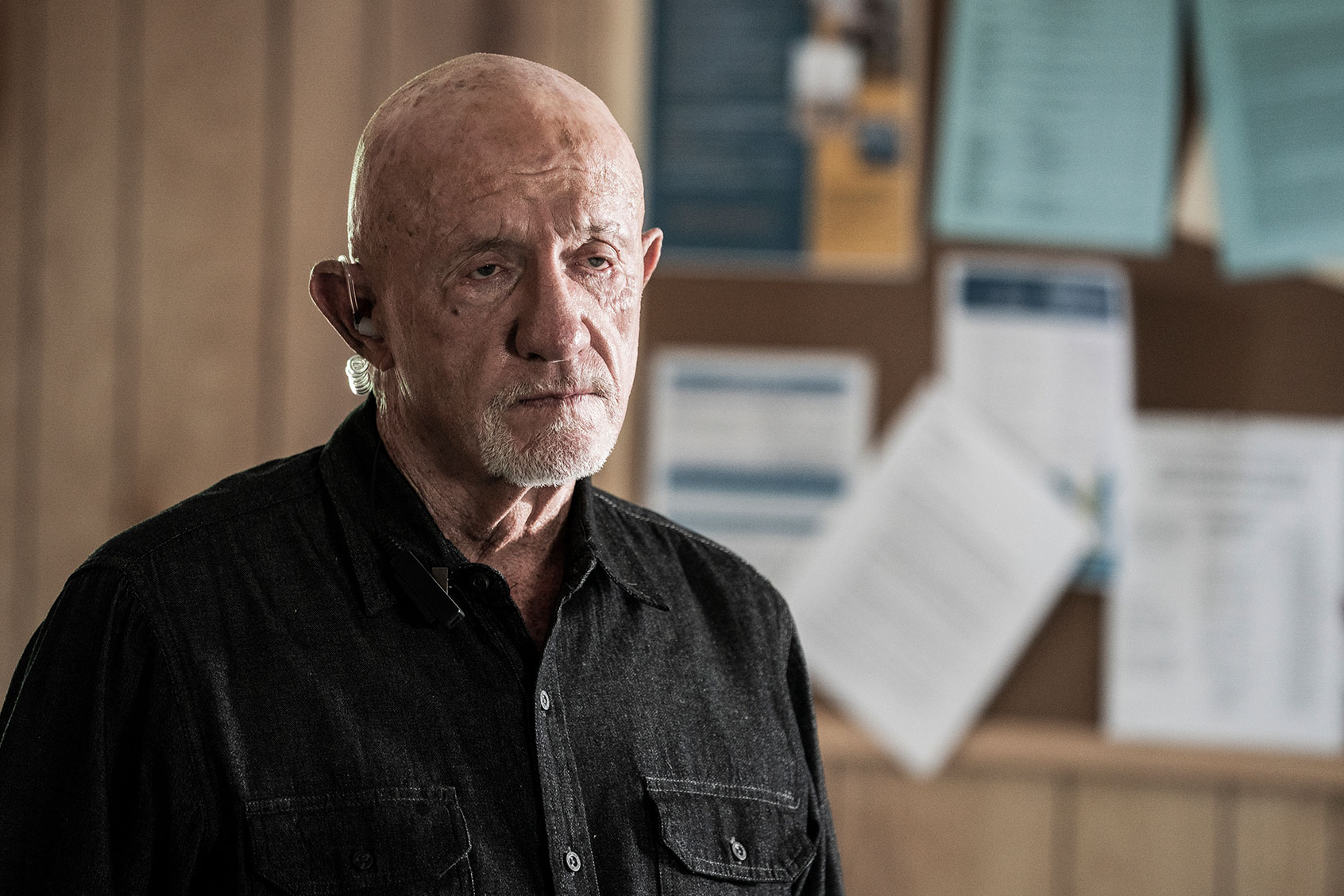
Trump fans fall for satirical “Birds Aren’t Real” conspiracy theory Bernie fan created to mock them

When Arkansas native turned Memphis resident Peter McIndoe invented the Birds Aren’t Real conspiracy theory in January 2017 — the month of former President Donald Trump’s inauguration — he was making fun of far-right conspiracy theorists. It was an exercise in political satire; McIndoe, now 23, was mocking the type of MAGA Republicans who listen to listen to Alex Jones’ “Infowars” and embrace Pizzagate and other ludicrous conspiracy theories. But Birds Aren’t Real caught on, and according to The Guardian’s Zoe Williams, some conspiracy theorists on the far right actually take it seriously.

Birds Aren’t Real claims that the “Deep State” killed off all of the real birds in the United States and replaced them with drones that are made to look like birds — and the drones are being used to spy on Americans. McIndoe never really believed that, but he found that some far-right conspiracy theorists took him seriously and believed that all the birds flying around were drones.

McIndoe, Williams notes, unveiled his Birds Aren’t Real claims at a rally in Memphis in January 2017.

“Someone was filming him and put it on Facebook,” Williams explains. “It went viral, and Memphis is still the center of the Birds Aren’t Real movement. Or is it a movement? You could call it a situationist spectacle, a piece of rolling performance art or a collective satire. MSNBC called it a ‘mass coping mechanism’ for Generation Z, and as it has hundreds of thousands of followers on social media, ‘mass,’ at least, is on the money.”

The audience for far-right conspiracy theories only grew during Trump’s four years in the White House, from QAnon to the false claim that the 2020 election was stolen from Trump. And according to Williams, Birds Aren’t Real is “the most perfect, playful distillation of where we are in relation to the media landscape we’ve built but can’t control, and which only half of us can find our way around.”

“It’s a made-up conspiracy theory that is just realistic enough, as conspiracies go, to convince QAnon supporters that birds aren’t real, but has just enough satirical flags that Generation Z recognizes immediately what is going on,” Williams observes. “It’s a conspiracy-within-a-conspiracy, a little aneurysm of reality and mockery in the bloodstream of the mad Pizzagate-style theories that animate the ‘alt-right.'”

McIndoe recalls that he was shocked by how quickly Birds Aren’t Real caught on.

The Arkansas native/Memphis resident told The Guardian, “I remember seeing videos of people chanting: ‘Birds aren’t real,’ at high-school football games, and seeing graffiti of birds aren’t real. At first, I thought: ‘This is crazy,’ but then I wondered: ‘What is making this resonate with people?’…. Teenagers understand it, they don’t need footnote.”

McIndoe himself isn’t a MAGA Republican or a far-right Christian nationalist; he was a Bernie Sanders supporter in 2016. But he grew up around evangelical Christian fundamentalists in a rural area of Arkansas, and Birds Aren’t Real was his way of mocking the far right — even though some conspiracy theorists took it seriously.

“Real conspiracy theorists will approach me like I’m their brother, like I’m part of their team,” McIndoe told The Guardian. “They will start spouting hateful rhetoric and racist ideas, because they feel as if I’m safe.”

McIndoe doesn’t believe that the demand for far-right conspiracy theorists will be going away anytime soon. In fact, he believes the worst is yet to come.

“I don’t think the madness is going to necessarily end,” McIndoe told The Guardian. “I think the lunacy is going to become more intense.”

Banning math books and attacking libraries: Republicans ramp up their mission to spread ignorance

When Florida’s Republican Gov. Ron DeSantis rolled out a bold new plan to crush public education under the boot of literacy-suspicious authoritarians, Republicans swore up and down that this was not actually the war on public schools it looked like. A pair of deliberately vague bills — one aimed at censoring “critical race theory” and another at banning “instruction” on “sexual orientation and gender identity” — were justified with disingenuous claims that Republicans merely wanted to protect children from “indoctrination” and even “grooming.” Critics, however, noted that the funding and organization behind these efforts linked the DeSantis plan to a larger religious right assault on the very concept of public education

Then Florida banned over two dozen math textbooks, proving critics right. This is, and always has been, an assault on education itself. DeSantis praised the ban, declaring that the books are “indoctrinating concepts like race essentialism, especially, bizarrely, for elementary school students.”

RELATED: The secret plan behind Florida’s “don’t say gay” bill: Bankrupting public education 

The only thing that’s bizarre is the attempt to reframe mathematics education as “critical race theory.” It’s been clear for months that when Republicans talk about “critical race theory,” they are not talking about the college-level academic theory that looks at the legal infrastructure that supports racial inequalities. Instead, it’s a catch-all phrase to demonize any history book or literature that acknowledges that racism is real. Now, the circle of censorship is expanding to basic math. 

Thinking is the enemy of authoritarianism.  

To those who have been carefully watching the GOP as they become more openly fascistic, none of this is surprising. As I wrote in December, authoritarians have long taken a dim view of the very concept of education. Even basic literacy and math skills are viewed as a threat because they open the door to critical thinking. Above all else, Republicans do not want a population armed with critical thinking skills. While it doesn’t get much mainstream press coverage, conservatives have long been nurturing anger over federal education guidelines, often called “Common Core.” These standards aim to give kids a real understanding of math and how it works, instead of simply memorizing multiplication tables and quitting before they get to calculus. Having people understand concepts on a deeper level terrifies the right, however.  They prefer a populace that’s kept ignorant because they are prone to blindly following authority. 


Want more Amanda Marcotte on politics? Subscribe to her newsletter Standing Room Only.


So under such circumstances, it’s not a surprise that Republicans are expanding their war on learning past schools and targeting libraries, as well. On Sunday, the Washington Post published a chilling story looking at this nationwide attack on reading through one Texas community’s battle over the local public library.

The religious right in Llano, Texas has been bullying the local library to pull books deemed “pornographic filth,” mostly because the books admit racism is real, that LGBTQ people exist and that human beings are naked under their clothes. If that sounds like an exaggeration, it’s not: One of the books targeted is “In the Night Kitchen” by Maurice Sendak, a children’s book that has a drawing of a naked child that is only “pornographic” to people who think all nudity, even children’s nudity, is about sex. Another book is “Between the World and Me” by Ta-Nehisi Coates, clearly targeted for the “pornography” of being about how racism is a real problem that affects real people.  

As the Post reports, the GOP book banners, “some of whom did not even have library cards,” have made incredible headway at circumventing the library’s rigorous protocols against censorship. They’ve been working through the head chair of the governing body of Llano County, a Republican named Ron Cunningham, who simply walked right into the library and pulled the books he didn’t want other people to read off the shelf. 

RELATED: Salon investigates: The war on public schools is being fought from Hillsdale College 

“The board also needs to recognize that the county is not mandated by law to provide a public library,” Cunningham wrote in a letter to Bonnie Wallace, a far-right activist who has been granted secretive but wide-ranging censorship powers. After the Post confronted Cunningham with this letter, which was obtained under a FOIA request, he replied with pablum about how the county is “committed to providing excellent public library services.” But, of course, the true attitudes are coming out in that letter and the relentless hostility to educators and librarians in general. 

Conservatives have long been nurturing anger over federal education guidelines, often called “Common Core.”

As Kathryn Joyce has demonstrated through expansive reporting for Salon, once you look past the surface talk about “protecting” children and towards the actual organizers and brain trust for the right, it becomes clear that the long-term goal here is destroying public education. In some cases, the plan is to replace it with private and for-profit “schools” that teach fake right-wing science and history. Realistically, for most people who can’t afford private school tuition, this GOP plan would likely mean no real education for their kids at all. This is absolutely fine by the authoritarian right, of course, which views functional literacy as a gateway drug to that dreaded “critical thinking.” Plus, if poor and middle-class kids don’t finish high school, that means that the children of the wealthy have fewer people to compete with for spots in elite universities. 


Want more Amanda Marcotte on politics? Subscribe to her newsletter Standing Room Only.


As Umberto Eco wrote in his fundamental examination of fascism, “All the Nazi or Fascist schoolbooks made use of an impoverished vocabulary, and an elementary syntax, in order to limit the instruments for complex and critical reasoning.” To be functionally literate, instead of being incapable of reading much more than a street sign or a Donald Trump tweet, is to open the door to thinking. Thinking is the enemy of authoritarianism.  

To be certain, most Americans — even most Republican voters — don’t think literacy, much less math skills or scientific knowledge, are bad things. And they certainly wouldn’t approve, if they found out how expansive the Republican war on education actually is. That’s why these leaders dress up their hatred of education with conspiracy theories about “critical race theory” and “grooming.” It’s about distracting voters from what’s really going on: a full-blown assault on the ability of all kids to receive a basic education. 

RELATED: Betsy DeVos is back — and her family is flooding Florida Gov. Ron DeSantis with cash

That said, the abject terror that has been instilled in the average Republican voter of “wokeism” has opened the door to radicalizing them towards a fascist view that literacy itself is the enemy. As this battle in Llano shows, it doesn’t take much to get conservatives to start taking a dim view of the mere existence of books and libraries. Take this recent propaganda video from Tucker Carlson and Fox News, an unwittingly campy portrayal of “manhood” as being a matter of throwing tires and drinking raw eggs. 

It’s a short step from this sort of imagery to portraying the more cerebral pastimes of reading and studying as emasculating wastes of time. As Eco writes, to the fascist, “Thinking is a form of emasculation.” We’re already most of the way with the right, which has taken to demonizing school teachers as “groomers” and using the word “professor” as a slur term. It’s a movement led by Trump, a man who is proudly illiterate and whose social media writers would deliberately inject grammatical errors and misspellings into his tweets to keep up his image as someone who can barely read. Republicans are swiftly reimagining illiteracy not as an embarrassing flaw, but as an aspiration. A child’s right to education is caught directly in the crosshairs. 

Tax study: Billionaire wealth grew 62% in two years while worker wage gains wiped out by inflation

An analysis released Monday to mark Tax Day in the United States shows that the country’s 735 billionaires have seen their collective wealth soar by 62% over the past two years while worker earnings have grown just 10%, modest gains eaten away by the rising costs of food, housing, and other necessities.

According to new calculations by Oxfam America, U.S. billionaires now own a combined $4.7 trillion in wealth, much of which goes completely untaxed. As “ProPublica” recently found in an examination of data from the Internal Revenue Service—an agency that disproportionately targets the poor — the 25 richest people in the U.S. paid a true tax rate of just 3.4% from 2014 to 2018.

“The billionaire wealth explosion in this country comes at a time of historic inflation hitting working families, compounded by the expiration of critical social safety nets put in place at the start of the pandemic to protect America’s most vulnerable,” said Gina Cummings, vice president of advocacy alliances and policy at Oxfam America.

“The impact on real people is devastating, leading countless families to slip into poverty,” Cummings added. “The ongoing failure of our nation’s leaders to implement a more equitable tax system is a stain on democracy.”

Oxfam’s new analysis estimates that a series of tax proposals that have been introduced in Congress but have yet to pass would bring in $252 billion in additional federal revenue each year. The version of President Joe Biden’s Build Back Better agenda that the House passed in November would cost just $175 billion per year over the next decade.

That legislation, which includes clean energy investments and an extension of the poverty-slashing child tax credit boost, is effectively dead in the Senate due to the opposition of every Republican as well as Sens. Kyrsten Sinema, D-Ariz., and Joe Manchin, D-W.Va. Both Manchin and Sinema have pushed back on Democrats’ efforts to hike taxes on the wealthiest Americans.

Oxfam notes that Sen. Elizabeth Warren’s, D-Mass., wealth tax proposal would yield $113 billion in federal revenue just from billionaires in 2022, enough to fund an extension of the lapsed child tax credit boost, affordable child care, and soon-to-expire free school lunch waivers.

Sen. Ron Wyden’s, D-Ore., plan to tax billionaires’ unrealized capital gains, meanwhile, would raise $56 billion a year on average. That new revenue, according to Oxfam, “would more than cover paid sick leave ($10 billion), family medical leave ($20 billion) as well as affordable child care to allow more mothers and caregivers to return to work by absorbing the crushing cost of care for young families ($24 billion).”

“While the pandemic grinds on, it is shocking to realize, and accept, that three-quarters of low-wage workers do not have access to paid sick leave,” said Cummings. “It needs to be said that a vastly disproportionate share of these workers are women and people of color, making this a civil rights issue. This is not just morally unacceptable, it’s dangerous for everyone. We can fix this with a small tax on those who have billions to spare.”

The aid group noted that another $63 billion could be raised by implementing a global minimum tax on multinational corporations, a proposal that the Biden administration and the leaders of more than 130 other countries have backed. But huge obstacles remain in the way of final approval of the tax, given that the legislatures of individual nations have to approve it.

Oxfam found that “the $63 billion a year in corporate tax revenue could allow the U.S. to invest in climate finance, including tax credits for clean energy ($11.4 billion) and cutting carbon emissions with tax credits for consumers and companies ($32 billion); and fund critical public health needs, including funding global Covid health needs ($5 billion), covering the uninsured for Covid vaccines and testing ($1.5 billion), expanding Medicare for hearing ($8.9 billion), and closing the Medicaid gap ($6 billion).”

“We reject the narrative that this country cannot afford to invest in a better world: protect the planet, feed hungry children, ensure child care costs do not wipe out a family’s earnings, guarantee that hourly workers receive paid leave for illness or the birth of a child,” Cummings said Monday.

“The American people have been told a lie,” Cummings continued. “They are paying their fair share to keep this country running. It’s time for our nation’s billionaires and giant corporations to contribute their fair share of taxes to support the very people who have provided the labor that has allowed them to enjoy record profits and excess wealth.”

Later on Monday, Oxfam America is planning to join activists from Americans for Tax Fairness, MoveOn, and “Daily Kos” in delivering petition signatures from more than 500,000 U.S. taxpayers expressing opposition to the glaring inequities of the country’s tax system.

“As everyday Americans continue to struggle during the ongoing pandemic, taxes on the rich remain shamefully low and billionaires have seen their wealth skyrocket,” Carolyn Fiddler, communications director for “Daily Kos”, said in a statement. “We call on Congress and President Biden to hold billionaires and the wealthy accountable.”

“Political theater”: Abbott’s border stunt could raise food prices after causing $240M in damages

In Texas, Gov. Greg Abbott — who is running for reelection in the 2022 midterms — made it much more difficult for goods and produce to enter the United States from Mexico when he ordered “enhanced safety inspections” of commercial vehicles at the Texas/Mexico border. Former Rep. Beto O’Rourke, the Democratic gubernatorial nominee running against Abbott, has slammed the Republican governor’s political stunt as bad for business. And journalists Alicia Wallace and Vanessa Yurkevich, reporting for CNN in an article published on April 16, describe some of the difficulties that Abbott has inflicted on the supply chain.

“A week-long protest by Texas Gov. Greg Abbott against President Biden’s recent immigration policy reached a resolution on Friday, (April 15), but the gridlock it created has resulted in hundreds of millions of lost dollars and delays in shipments of everything from avocados to automobile parts that will have a longer-term impact,” Wallace and Yurkevich explain. “On Friday, Abbott reversed course on an order he put in place last week that required lengthier ‘enhanced safety inspections’ of commercial vehicles entering Texas. The efforts, he said, were to help stop the flow of illegal contraband and human trafficking.”

The CNN reporters add, “Abbott’s move, which Texas Agriculture Commissioner Sid Miller criticized as ‘political theater,’ ultimately created a logjam of trucks between the U.S. and its largest goods trading partner. Vegetable producers say their produce is spoiling in idling trucks and they are losing hundreds of millions of dollars.”

On Tuesday, April 12, O’Rourke held a news conference at an empty warehouse in Pharr, Texas, blaming Abbott for the fact that it was empty and telling reporters, “This should be full of produce and imports that are going to be picked up by U.S. truckers to be taken deeper into this country. But as you can see, right now, it is empty. It’s going to make it harder to keep people employed, to hire people and to keep this economy going here locally and across the state of Texas.”

O’Rourke and Miller aren’t the only ones who are criticizing Abbott’s political stunt. Dante L. Galeazzi, CEO and president of the Texas International Produce Association, told CNN that Abbott used businesses and goods “as bargaining chips,” resulting in 30-hour waits for some commercial trucks entering Texas from Mexico — and causing a lot of fruits and vegetables to spoil.

Galeazzi told CNN, “It could take a week or longer, up to probably three weeks, before the supply chain realigns.”

According to Lance Jungmeyer, president of the Fresh Produce Association of the Americas, losses for fruit and vegetable producers are estimated to exceed $240 million thanks to Abbott — and Americans can expect to spend more on strawberries, avocados and asparagus.

Jerry Pacheco, president and chief executive officer of the Border Industrial Association in New Mexico, told CNN, “This is not just a localized issue. It’s going to hit you in St. Louis or up in Seattle. We’re connected to a global supply chain…. It’s a bad time to be adding this to consumers’ pockets to pay out their pocketbook.”

The COVID-19 pandemic has been a major headache for the world’s supply chain, aggravating inflation in the U.S. and other countries. And while Abbott’s stunt at the Texas/Mexico border was obviously designed to rally the MAGA base and benefit him politically, it was terrible from a business and economic standpoint.

Matthew Hockenberry, an assistant professor at Fordham University in The Bronx, told CNN, “There’s so much supply instability right now…. The amount of supply uncertainty is so high that to add another straw here to the camel’s back is a dangerous proposition.”

Right-wing protesters attempt Disney World “blockade” in support of “Don’t Say Gay” law

At least one hundred right-wing protesters assembled just outside of Disney World in Orlando, Florida on Saturday in protest of the company’s position on the state’s recently-passed “don’t say gay” bill, holding up banners and flags in support of expanding “parents’ rights” in education. 

Calling themselves the “Patriot Convoy,” dozens of conservative protesters unsuccessfully attempted a car “blockade,” that proved to be more of a minor inconvenience than the major headache organizers were surely hoping to cause. Such protests were outlawed by Florida Republicans in reaction to the anti-police brutality protests of 2020, although a federal judge has since ruled the ban unconstitutional

RELATED: A Trump supporter could be the first Floridian prosecuted under Ron DeSantis’ new anti-protest law

The legislation the protesters support was already signed into law by Florida Gov. Ron DeSantis late last month and severely restricts the extent to which educators are allowed to discuss anything related to sex, gender, or family life. Conservatives have baselessly argued that the bill is necessary to prevent child grooming by predatory teachers, but commentators and lawmakers on the left say the measure is simply designed to eliminate any mention of LGBTQ+ experience from the state’s public school curricula. 

After the bill’s signing — and much internal pressure — Disney, one of Florida’s largest employers, came out against the measure, touching off an unprecedented political schism between the company and its Republican benefactors in the legislature. Many Republicans have called on Floridians to boycott the company’s products altogether.

During Saturday’s protest, demonstrators called Disney employees “groomers,” implying that the company’s objection to the law is tantamount to supporting pedophilia.

RELATED: “What a complete fool”: Disney CEO criticized for refusing to publicly oppose “Don’t Say Gay” bill

One of the demonstrators, Adam Francisco, directly told an ABC affiliate that Disney is preying on school kids. 

“I don’t think kids should be learning about sexuality or gender until they’re a certain age,” Francisco said. “And it should be up to the parents and the parents’ side. And if the teachers are going to do it, it should be parental approval.”

RELATED: Experts fear Florida’s “Don’t Say Gay” bill is already affecting the mental health of LGBTQ youth


Want a daily wrap-up of all the news and commentary Salon has to offer? Subscribe to our morning newsletter, Crash Course.


The protest also saw an appearance from state Rep. Anthony Sabatini, a Republican supporter of the measure, who apparently spoke at the rally. 

“GREAT to speak at the HUGE rally today in front of Woke @WaltDisneyWorldto protest Disney’s stance against parents’ rights & their push for a creepy, perverted agenda which includes the sexualization of children,” the state lawmaker later tweeted. “This woke communism & corporate tyranny will not stand.”

Earlier this month, Sabatini warned of a “living hell” for Disney over the company’s stance on “Don’t Say Gay,” suggesting that the vast suite of legislative perks Disney has benefited from over the decades years might come to an end. 

RELATED: Disney, DeSantis and the “Don’t Say Gay” bill: A Florida showdown over money, power and equality

Last week, Florida Republicans specifically threatened to roll back the 1967 Reedy Creek Improvement District, which enshrines Disney’s right to self-govern as its own county. The bill allows Disney to set its own taxes, ordinances, and use of its own emergency services.

It’s unclear whether that threat is just bluster. Democratic state Rep. Anna Eskamani told The Hollywood Reporter that it’s “highly unlikely” that Florida would amend the Reedy Creek Improvement District, but noted that “crazier things have happened in Florida.

Ohio Republican Rep. Jim Jordan, along with several other House Republicans, is threatening to allow Disney’s copyright on Mickey Mouse to lapse as early as next year. 

Little-known Trump Organization employee takes the fall for alleged tax fraud scheme: report

A high-ranking employee of the Trump Organization has remained loyal to the former president during the Manhattan district attorney’s investigation of the company’s finances.

Jeffrey McConney, the company controller and chief lieutenant to former chief financial officer Allen Weisselberg, testified before a grand jury before he was was indicted in June 2021, but he took the blame for any off-the-books perks in Weisselberg’s salary, according to court documents reviewed by “The Daily Beast“.

“I didn’t think or know they had to be reported,” McConney told the grand jury. “Until recently, I never thought [the apartment and tuition] had to be income — included as income.”

Investigators believe Weisselberg’s corporate perks — an apartment, luxury car and private school tuition for his grandchildren — were kept off the books to avoid paying taxes on them, but McConney insists they were only “a generous gesture to Mr. Trump,” and the company and Weisselberg say this testimony proves there was no criminal conspiracy.

Mr. McConney testified over and over before the grand jury that, at the time of the alleged events in question, he did not think he was doing anything wrong,” wrote Susan R. Necheles, a lawyer for the Trump Organization. “And to the extent that certain alleged fringe benefits did not get reported as taxable income, that was an error on his part. This means that Mr. McConney did not act ‘willfully,’ an essential element of a criminal tax offense.”

The longtime corporate accountant was in prime position to take down the Trump Organization, but he had taken the fall for the company before and appears willing to do it again.

McConney had previously told investigators that he “probably didn’t know” the company should not use its donor-funded charity to pay off a lawsuit settlement or donate $25,000 to then-Florida attorney general Pam Bondi, and a source said he was “less than forthcoming” in his testimony.

It’s not clear exactly what McConney told the grand jury or whether he possibly slipped up and incriminated Trump, Weisselberg or anyone else, but his cooperation allows him to avoid charges for any crimes he might have revealed in his testimony, although he could potentially be charged with perjury if he lied under oath.

Weisselberg, who is set to stand trial this summer, has been trying to get a state judge to dismiss the case, and he so far has been unwilling to cooperate in the investigation of Trump’s role in the alleged tax fraud scheme.

Prosecutors have decided not to charge his son Barry Weisselberg, who ran the all-cash Wollman ice skating rink in Central Park, for receiving untaxed corporate perks, although they haven’t explained that decision.

Alex Jones’ InfoWars files for bankruptcy in “shameful attempt” to halt Sandy Hook lawsuits

Three companies owned by Alex Jones, including Infowars, filed for Chapter 11 bankruptcy on Sunday. The legal maneuver puts a pause on civil litigation against the right-wing conspiracy theorist, including defamation lawsuits by the relatives of the Sandy Hook school massacre victims.

Bloomberg News reported that Jones’ companies, each with estimated liabilities of as much as $10 million, will continue to operate pending a restructuring. Jones and his companies face potentially huge financial exposure after courts in Connecticut and Texas found him liable for statements in which he said that the school shooting, in which 26 people died, was a “hoax.”

The bankruptcy petition was filed in the United States Bankruptcy Court for the Southern District of Texas.

“In a shameful attempt to pause the pending civil litigations, companies owned by deplorable hoaxer Alex Jones – including Infowars – filed for bankruptcy after being hit by a flurry of lawsuits from Sandy Hook families,” Newtown Action Alliance said in response to the news.

Jones’ lawyers claim the defamation lawsuit was filed to silence their free speech on matters of public interest, according to court filings.

In March, lawyers representing relatives of Sandy Hook shooting victims sought an arrest order for Jones after he failed to appear for a court-ordered deposition. Ultimately the talk show host appeared for the deposition after facing hefty fines.

Judges in Connecticut and Texas issued default judgments against Jones after he failed to turn over documents in the case, including financial information.

Just over a week ago, Jones was accused by the Sandy Hook families of hiding a “jaw-dropping” amount of cash, with the Daily Beast reporting Jones allegedly transferred $18 million out of his company starting when the families sued him in 2018, and transferred the funds to a company called PQPR, which they claim is controlled by Jones or his family members.

The Sandy Hook families have previously rejected Jones’ offer to settle their defamation lawsuit. “The so-called offer is a transparent and desperate attempt by Alex Jones to escape a public reckoning under oath with his deceitful, profit-driven campaign against the plaintiffs and the memory of their loved ones lost at Sandy Hook,” the plaintiffs said.

Does Trump still have the juice? His spotty endorsement record suggests decline

When you read about all the ring kissing and boot-licking that’s going on at Trump’s Mar-a-Lago resort these days, it is clear that Republicans of all stripes see him as president-in-exile, our once and future Dear Leader. He is believed to be so powerful that his endorsement will make or break any candidate, from the loftiest seat of power in the U.S. Senate to a lowly election clerk in a small jurisdiction in Real America. The big question facing the GOP now is whether or not that’s actually true. And new reports from around the country suggest that it may not be as clear-cut as many think.

The New York Times’ Shane Goldmacher characterized Trump as a “modern-day party boss” and quotes insiders comparing his “Mar-a-Lago Machine” to the notorious Tammany Hall, which dominated New York politics for centuries. Naturally, Trump is personally making money from it and he’s not the only one:

An entire political economy now surrounds Mr. Trump, with Trump properties reaping huge fees: Federal candidates and committees alone have paid nearly $1.3 million to hold events at Mar-a-Lago, records show. A phalanx of Trump whisperers has emerged with candidates paying them in hopes of lining up meetings, ensuring that he sees damaging research on their rivals or strategically slipping him a survey showing a surge in the polls, even as Trump alumni warn that it is always buyer-beware in the Trump influence game.

Goldmacher points out, however, that while Tammany Hall kept its grip on power by doling out patronage, Trump isn’t spending much of his massive war chest at all. One of his spokesmen, Taylor Budowich, explained that the benefit of Trump’s support lies not in money, but in the fact that voters value his endorsement and it generates a lot of “free media.” We’ll soon find out that that is as valuable as people think it is, but in the meantime, there is apparently a long line of supplicants night after night seeking his favor, and he is reveling in it.

There are reportedly certain protocols for getting Trump’s attention and impressing him. I think we all know how much he loves flattery and how he requires his supporters to love who he loves and hate who he hates. But that’s not enough, according to Goldmacher. “He likes compelling visual material matters, too. Big fonts are crucial. With photos and graphics. In color.”


Want a daily wrap-up of all the news and commentary Salon has to offer? Subscribe to our morning newsletter, Crash Course.


There is no system by which Trump is making his endorsements for the midterms. Mostly, it seems to be based upon a mixture of his gut feeling, his desire to punish anyone who displeases him by supporting their opponents, rewarding those who most eagerly push The Big Lie and a desire to place sycophants and true believers in a position of power to influence the outcome of elections. Goldmacher writes:

As Tammany’s corrupt Boss Tweed was portrayed saying, as he leaned on a ballot box in a famous 1870s cartoon: “As long as I count the votes, what are you going to do about it?” Or, as Mr. Trump told Breitbart News this month, “There’s an expression that the vote counters are more important than the candidate, and you could use that expression here.”

A couple of months ago, Salon’s Igor Derysh reported that there were more than 80 pro-Trump 2020 election deniers running for election posts around the country and there are not doubt even more today. It may be that these lower-level endorsements will end up being much more important than his support for servile candidates for the House and Senate.

The question in all of this is if he still has the juice to get his candidates the nomination much less win in the fall. So far, it does not appear to be a slam dunk, particularly in the primaries.

There is no system by which Trump is making his endorsements for the midterms.

Many eyes are on Georgia as a microcosm of the “Mar-a-Lago Machine” in action, where Trump has waged a particularly ugly crusade against GOP Governor Brian Kemp and Secretary of State Brad Raffensberger, along with anyone associated with them, endorsing their challengers and insisting that all GOP candidates running for any office sign off on the Big Lie. So far, however, it does not appear to be having much of an effect, with the incumbents still leading in the polls. Meanwhile, Trump’s handpicked candidate to oppose Georgia’s Democratic Sen. Rafael Warnock, 1980s NFL star Herschell Walker, is causing plenty of heartburn in the state as well. Walker is ducking debates, showing himself to be extremely weak on policy and dealing with many long-standing personal scandals.

Endorsements based upon Trump’s own personal vendettas against RINO incumbents or his belief that celebrity of any kind is an automatic ticket to success in politics (because it worked for him) are causing Republicans grief in other states as well.

His endorsement of Dr. Oz in Pennsylvania for the Senate seat being vacated by Republican Pat Toomey reportedly has the state in an uproar since they had what they considered to be a strong candidate who thought he had Trump’s support. But Trump capriciously endorsed Oz, a clumsy political novice without any real ties to the state and who has a record of liberal commentary over the years that makes him anathema to the hardcore right in that state. But Oz is a celebrity, which impresses Trump, and he’s one who did Trump a major solid back in 2016 when he had him on his show and validated his quack doctor’s assessment that Trump was in good health. He’s mentioned it several times recently.

RELATED: Trump fans angered by his endorsement of Dr. Oz

Last week he endorsed J.D. Vance, the author of the book “Hillbilly Elegy” which I’m sure Trump has never heard of much less read. What he did read were accounts of Vance’s recent ostentatious Trump worshiping and decided to endorse him against the advice of just about everyone (except Don Jr and Sean Hannity who pushed him relentlessly). In his endorsement statement he said he chose Vance because he can “win,” noting: “This is not an easy endorsement for me to make because I like and respect some of the other candidates in the race — they’ve said great things about ‘Trump’…”

 The “Mar-a-lago Machine” may just turn out to be a wrecking crew.

And yes, he immediately endorsed former Republican vice presidential candidate and reality star Sarah Palin, who is running for the seat opened up by the death of Alaska Congressman Don Young. Of course, he did.


Want a daily wrap-up of all the news and commentary Salon has to offer? Subscribe to our morning newsletter, Crash Course.


Those are just a few of the celebrity gadflies, sycophants, grifters and weirdos he is backing. Will all this activity solidify his self-defined characterization as a kingmaker? Maybe. The electoral terrain for Republicans looks very good for the fall. But Republicans are nervous. No less that Senate Majority Leader Mitch McConnell said last week:

From an atmospheric point of view, it’s a perfect storm of problems for the Democrats. How could you screw this up? It’s actually possible. And we’ve had some experience with that in the past. In the Senate, if you look at where we have to compete in order to get into a majority, there are places that are competitive in the general election. So you can’t nominate somebody who’s just sort of unacceptable to a broader group of people and win. We had that experience in 2010 and 2012

Indeed they did. It seems as if Republican voters care less and less about such things but in states where they need to attract non-Trumpers, the “Mar-a-Lago Machine” may just turn out to be a wrecking crew. Of course, if they can install the right Trump-friendly “vote-counters” it may not matter. 

Kevin McCarthy blames Biden for Ukraine invasion — despite defending Trump’s blackmail scheme

House Minority Leader Kevin McCarthy, R-Calif., criticized President Biden for not arming Ukraine sooner despite repeatedly defending former President Donald Trump’s efforts to freeze military aid to the country in exchange for help with his re-election campaign.

McCarthy argued in an interview with Fox News that Russian President Vladimir Putin “probably” would not have invaded Ukraine if the Biden administration had acted sooner.

“This is going to get stronger and rougher, and what really needs to happen is Ukraine is not asking for American men and women to fight. All they’re asking for is the weapons to defend themselves,” he said. “If we would have taken those actions earlier instead of waiting until after Russia invaded, they probably never would have invaded, had we done that sooner.”

Fox News correspondent Mike Emanuel noted that the Biden administration last week announced $800 million in additional military aid to Ukraine and has provided more than $2.5 billion in weapons and equipment to the country since February.

“Ukraine was craving the ability to defend themselves. Had we moved the weapons to Ukraine earlier, that they could defend themselves, it would have saved thousands of lives and probably the decision of Putin not to enter,” McCarthy said.

What makes this attempt to blame Biden especially noteworthy is the fact that McCarthy vigorously defended Trump during the latter’s first impeachment proceedings, which were sparked by Trump’s attempt to withhold military aid to Ukraine until President Volodymyr Zelenskyy agreed to launch an investigation of the Biden family’s business dealings in that country. 

RELATED: Biden must prepare: Republicans plan to exploit Ukraine for political gain — again

In 2019, Trump delayed hundreds of millions in military aid to Ukraine while pressuring Zelenskyy to open a baseless investigation into Hunter Biden, who sat on the board of the Ukrainian energy firm Burisma. Joe Biden, Hunter’s father, was of course perceived as Trump’s likely opponent in the 2020 election.

McCarthy fiercely opposed Trump’s impeachment and defended his decision to withhold aid as the correct move.

“These are taxpayer dollars going to another country that people believed there was corruption with a new administration,” he said in 2020. “I think it was the rightful thing to do.”

Many other prominent Republicans who defended Trump’s actions in Ukraine have also been critical of Biden’s response to the war. Numerous Russia experts have argued, however, that Trump’s pressure on Ukraine and his repeated appeasement of Putin may have emboldened the Kremlin.

That pattern sent “a message to Putin that Ukraine is a plaything for him … and for the United States. And that nobody’s really serious about protecting Ukraine,” Fiona Hill, a Russia expert and former member of the National Security Council who testified during Trump’s first impeachment, said last month. “And that was ultimately a sign of weakness.”


Want a daily wrap-up of all the news and commentary Salon has to offer? Subscribe to our morning newsletter, Crash Course.


Marie Yovanovitch, the former U.S. ambassador to Ukraine and fellow impeachment witness, came to a similar conclusion.

Trump “came to see Ukraine as a weaker country, not as deserving of much attention,” she told Vanity Fair. “And when he did put his attention on it, he saw Ukraine as a pawn that could be bullied into doing his bidding. I think that made a huge impact on Zelenskyy and I think that Putin and other bad actors around the world saw that our president was acting in his own personal interests. He was using his office for his personal interest rather than to work in the interest of the American people, in our national security interest, because it wasn’t in our interest. It was our policy to help Ukrainians defend themselves. I think the other thing that Putin saw in Donald Trump’s administration was Trump’s negativity toward NATO and his actions toward other NATO countries.”

That anti-NATO sentiment appears to have remained intact among some Trump loyalists in the Republican Party. Earlier this month, 63 House Republicans, more than 30% of the entire GOP caucus, voted against a symbolic resolution reaffirming support for NATO amid Russia’s invasion.

McCarthy on Sunday dodged questions about the members of his party who had opposed that resolution.

“There’s strong support for NATO moving forward. Always has been,” McCarthy claimed. “NATO is in the process of defending themselves but the one thing we need to make sure is NATO countries spend the money [on defense]. This affects everybody and that’s why we should stand up for Ukraine and provide them the weapons to defend themselves where Putin cannot continue to do these atrocities.”

Trump, of course, had a highly antagonistic relationship with NATO while in office, and in 2018 privately discussed withdrawing from the alliance entirely, according to the New York Times. After he won the Republican nomination in 2016, Trump’s campaign stripped language supporting “lethal defensive weapons” for Ukraine from the official Republican Party platform.

Though Trump and Republican lawmakers have argued that Putin would not have invaded Ukraine if he was still in office, former Trump administration foreign policy officials have a different view.

“I’m not sure he would have done much of anything, frankly,” if Putin had invaded Ukraine during his tenure, former national security adviser John Bolton told Vice News last month. “But you never know with Trump. It depends on what time of day it is, it depends on what he thought his political benefit would be at any given moment. I don’t think ultimately he would have stood in Putin’s way.”

Read more:

Think Capitol rioters were “ordinary people”? New research connects many to far-right groups

On the one-year anniversary of Jan. 6, conservatives held more than two dozen “Justice for J6” vigils across the country, arguing that most of those arrested for storming the U.S. Capitol “were political neophytes” who hadn’t realized what they were doing was wrong. In February, the Republican Party described the insurrection as “legitimate political discourse” in censuring the two GOP members of Congress who joined the House select committee investigating the Jan. 6 events. And in early April, Donald Trump told the Washington Post that he had wanted to march to the Capitol himself, saying, “I would have gone there in a minute” if the Secret Service hadn’t prevented it. 

All this is part of a growing effort to normalize the riot at the Capitol, and to cast its perpetrators as overwhelmingly “ordinary people” who got caught up in the momentum of something beyond their control. But last week came decisive evidence that this simply isn’t true: At least a third of those arrested in conjunction with Jan. 6 belong to a far-right network that is not just deeply interconnected but resilient and adaptable. 

RELATED: How Christian nationalism drove the insurrection: A religious history of Jan. 6

Last Thursday, Michael Jensen, a senior researcher at the University of Maryland’s National Consortium for the Study of Terrorism and Responses to Terrorism (START center), released preliminary findings on the ideological motivations and connections of about 30 percent of all Jan. 6 defendants. While his research is ongoing, Jensen has already found that at least 244 of the 816 people arrested to date were either members of “extremist” organizations or self-identified with them. In his widely-shared map of the network (embedded below), Jensen documented at least 700 relationships between the defendants and both well-known far-right groups as well as more diffuse movements, including white nationalists, anti-vaccination activists, militias, militant anti-abortion groups, QAnon adherents and more. 

(Michael Jensen/START center)

While the “ordinary people” narrative around Jan. 6 has become ubiquitous, Jensen says, “These aren’t ordinary relationships — or, at least, they shouldn’t be.” 

Jensen spoke with Salon last Friday. 

How did you come to research the Jan. 6 defendants as a group? 

The START center’s mission has always been to advance the scientific study of the causes of terrorism and how best to respond to it. We’ve primarily done that through developing datasets around terrorist behaviors, terrorists themselves, the types of weapons and tactics they use and so on. 

Within the START center I run the team that looks at extremism in the United States. When we started working on that topic in 2013, one of the key buzzwords was this concept of radicalization: Everybody wanted to know how and why somebody could adopt these beliefs and then mobilize on behalf of them to the point where they’re committing crimes and killing people. 

We had a lot of great theories, but essentially no data to test them. So our proposal was to start collecting data on individuals that had radicalized to the point of committing crimes and figure out everything that might have mattered in their radicalization process: family dynamics, schooling and work experiences, social groups, how they were introduced to extremism and other risk factors like mental health or substance use concerns. We also wanted to make sure it was cross-ideological, because extremism in the U.S. is quite diverse. 

In 2016, we released that dataset, “Profiles of Individual Radicalization in the United States,” for the first time. It has information on over 2,200 individuals radicalized in the U.S. to the point of committing crimes — everybody from white supremacists and anti-government militia members to QAnon followers, eco-terrorists and ISIS-inspired individuals. We map all of them, with the ultimate goal of figuring out what to do about it. 

We certainly noticed an uptick in cases during the Trump presidency, especially associated with the extreme right. We were already tracking these cases for our database. Then Jan. 6 happened and was obviously a watershed moment. In a busy year, we might identify 300 individuals that qualify for inclusion in the database. Here we had one day where potentially hundreds, if not thousands, might qualify — people clearly motivated by political goals, by extremist ideology. 


Want a daily wrap-up of all the news and commentary Salon has to offer? Subscribe to our morning newsletter, Crash Course.


We knew it was going to take time for enough information to be available about the defendants to know who really qualifies for inclusion. But in the early days after Jan. 6, this narrative was forming that, “These are not extremists. These are ordinary people that got caught up in the moment.” I was skeptical because, having done this for almost 10 years, I knew the data just wasn’t available yet to have confidence in those claims. It takes a while to learn about the perpetrators of these crimes when there’s only one of them, let alone a couple thousand. 

What determines who gets included in the database? 

The most important criterion is a clear link between criminal behavior and the ideology the individual espouses. We run across plenty of cases of individuals linked to white supremacy, for example, who commit a drug crime that has nothing to do with their ideology. That’s not somebody we would include. With Jan. 6, there’s a clear link between the criminal act and the beliefs. 

As a team, with Jan. 6, we are still very much discussing whether everybody just qualifies for inclusion because this was clearly an event motivated by a political goal, or do we limit it to just those with an extremist group affiliation? 

What role does the “ordinary people” narrative play? 

It does a couple of things. It downplays the reality of the event itself. There have been Republican members of Congress who claim this was basically a Capitol tour that got out of hand and these are law-abiding people who made a mistake — or, in some representatives’ view, they didn’t make a mistake at all. So politicians latch onto this narrative to dismiss Jan. 6 as a significant event. 

Almost across the board, defense lawyers use this narrative to pass off their defendants’ actions as just getting caught up in the moment: They had no intention of going to the Capitol and doing something harmful, they just lost control. That’s just not true of a lot of the defendants. There’s clear indication that they came prepared to engage in violence and had coordinated it to some extent ahead of time. We’re losing sight of just how coordinated and orchestrated it actually was when we pass it off as ordinary people that got caught up in the moment. 

If we say Jan. 6 is something “ordinary people” do, we’re saying it’s mainstream to get upset about fake election fraud and riot at the Capitol. 

The other thing the narrative does is potentially make the problem of mainstreaming extremism worse. The fact that so many people arrived at the Capitol that day was because extremist views, disinformation and conspiracy theories had made it into the public discourse around everything — not just politics, but also public health, education, immigration, all the things that matter. When we say the Capitol riot is something ordinary people do, it’s like it’s a mainstream thing to get upset about fake election fraud and riot at the Capitol. That’s why the narrative is potentially damaging to our ultimate goal of making sure this never happens again. 

What was the starting premise of your research, and what did you find instead? 

I went in expecting that I’d find the cases everyone knows about — the high-profile Oath Keepers and Proud Boys that have been all over the news, the QAnon Shaman — and I wouldn’t find many others. I started digging through court records, social media posts and everything else I could get my hands on, and found there were a lot of people that had some connection to these movements. There were both card-carrying members of these organizations and even more that had self-identified as part of these movements, so while they may not be dues-paying members of the Proud Boys, they were at demonstrations ahead of Jan. 6 alongside the Proud Boys and putting it on their social media accounts and promoting the views of the group.  

I wanted to know how many of these people were connected prior to Jan. 6. Within groups like the Proud Boys and Oath Keepers, there were a lot of connections established prior to that date: the individuals at rallies together or doing military-style training together. What I thought was going to be a very easy exercise in finding a handful of connections quickly turned into many, many hours of poring through thousands of pages of court documents and social media posts and news articles finding these relationships. 

I’m under no belief that I found them all. If we had perfect access to all the information, that 30 percent number I reported would be higher. 

What were some of the most concerning connections that you found?  

There are the individuals people know about who are fairly influential in modern U.S. extremist movements: [Oath Keepers founder] Stewart Rhodes, [Proud Boys chairman] Enrique Tarrio, the leaders of these big organizations that have a relationship to each other that allows for information, people and tactics to flow easily between them. But there are lesser-known characters who play a really important role as well. 

Alan Hostetter perfectly encapsulates Jan. 6: He’s a Three Percenter, he’s anti-vax, he’s anti-science. He’s spoken at QAnon rallies, and now he’s using sovereign-citizen tactics.

For example, Alan Hostetter, I think, perfectly encapsulates Jan. 6. He’s a Three Percenter. He’s anti-vax, he’s anti-science. He has spoken at QAnon rallies. He has links to the QAnon Shaman. Now, in court, he’s using sovereign-citizen tactics. He developed his own anti-government militia called the American Phoenix Project and mobilized his fellow group members to the Capitol on that day. So he’s sitting at this intersection of just about every ideology that was present at the Capitol. 

Somebody like that is important because they transmit ideas from one movement to another. When he speaks at a QAnon rally, he brings sovereign citizen and anti-government views to a movement that maybe otherwise isn’t hearing those views. He’s able to make connections between those disparate ideologies and bring them closer together. 

That seems to mirror the growing enmeshment of different right-wing movements, to the point that we’re seeing an almost seamless overlap between anti-vaccination sentiments, election lie narratives, QAnon conspiracy theories and so on.  

QAnon played a pivotal role in bringing together groups that weren’t necessarily in opposition but had different goals and ideas. QAnon is a self-interested conspiracy theory. It doesn’t care about coherence or whether the predictions come true. It wants to survive. It wants to grow. So it’s opportunistic and will bring anybody into the fold. 

QAnon folks, at the beginning, had a strong connection to the sovereign citizen movement. But you’ve seen influential people within the movement become more overtly antisemitic, and that brings in the white nationalists. You see them being more overtly anti-government and pushing election conspiracy theories, and that brings in the militias. Then you see them being anti-vax and anti-lockdown, and that appeals to folks that aren’t connected to the broader anti-government movement but are vulnerable to radicalization. So QAnon becomes this connective tissue, drawing these individuals closer together and putting them under this umbrella conspiracy theory. 

Of course, that was all fueled by the online ecosystem they can exploit to make these connections. Now it’s found a home on places like Telegram, where the Oath Keepers, Proud Boys and neo-Nazi groups also found a home. When you go on Telegram now, it’s very common to find channels with lots of members that mix all these things. It’s a QAnon channel, but also a white supremacy channel that has anti-government militia stuff going on too. What you now see is an almost complete overlap between what were once different sub-ideologies within the far right. 

Some groups that track far-right movements take issue with the terminology of “extremism,” arguing that casting far-right ideologies as extremism can obscure their connections to systemic power and how widespread they really are.

I understand that idea: When you label something “extremism,” it’s supposed to mean that you’re labeling it as rare. And what we’ve seen over the last five years or so is that there’s an awful lot of it now. I think you’re absolutely correct that you run the risk, when you label something as extremism, of people passing it off as an exception, not the rule.  

But the problem with not labeling it extremism is that you normalize it. We need to remind people that it is extreme to believe these things. It’s extreme not to trust science, not to believe evidence, to promote the overthrow of democracy. They are unfortunately now common views, but they are extreme as well, and our goal should be to make them uncommon again. 

Will you be mapping other ideologies or groups as you go forward, such as the Christian nationalist movements that were so prevalent on Jan. 6? 

As we learn more about both those broader movements and specific smaller organizations, we’ll keep adding them. My ultimate goal is to map Jan. 6 within the larger extremist context, to show it as one event among many that bridge not only the main groups that were present at the Capitol that day, but others [that weren’t].

The idea is to get a better view of the broader extremist ecosystem over the last several years so we have a more complete picture of what we’re dealing with. There’s a volume challenge — this was a spare-time project — but that is the ultimate goal because Jan. 6 wasn’t an isolated event. It happened within a growing context that remains to this day. 

We would look at fairly extreme religious organizations or organizations that are promoting anti-abortion views or are linked with QAnon, things like that. I don’t have any plans at this point to figure out the religious affiliation of every single defendant, but to the extent that specific evangelical groups present at that Capitol that day have linked themselves to this broader extremist movement, then absolutely I would include them. 

What do these findings tell us about the shape of the right today?

It teaches us what I think we knew, but didn’t have the evidence to completely support, which is that this is a big, well-connected movement and defeating it is going to be difficult. It can’t just be a strategy of targeting one organization or individual. This is like a virus: It will adapt and evolve to stay alive and keep infecting individuals. 

This is a big, well-connected movement and defeating it will be difficult. It’s not about targeting one organization or individual. This is like a virus: It will adapt and evolve to stay alive and keep infecting people.

The leadership of two big organizations, the Oath Keepers and the Proud Boys, are being decimated right now. And it probably won’t matter that much. Those organizations will survive because they already decentralized and made inroads with all these other movements, so they have people in place to keep the ideology moving forward even if Stewart Rhodes ends up in jail for the next 20 years, or we don’t hear from Tarrio again for decades. 

Defeating it also can’t just be a law enforcement strategy. We’re not going to arrest our way out of this problem. This is a public education problem as much as a criminal problem. We need to be better at dispelling disinformation and educating our kids about how to think critically about conspiracy theories and to see the manipulation in them. We often talk about adopting a public health model, where prevention plays as big a role as intervention and interdiction. 

Unfortunately, we just don’t, at a national level, have the mechanisms in place to do anything like that. We see local programs that can have great outcomes. But scaling that up to reach everyone is a massive challenge that requires resources we don’t have. But it’s ultimately what is needed. 

The other point is just how mainstream these beliefs have become and how quickly something on the fringe makes its way into the mainstream. The direct connections now between things like QAnon and politicians allows these ideas to move rapidly from a Telegram channel into mainstream political discourse. We’re seeing it all over the place — with Supreme Court confirmations, and now these ridiculous protests around Disney. That stuff finds its way into the mainstream instantaneously because of the direct connections those ideas have to influential people. The mainstreaming of these beliefs is here, and I don’t know how we reverse course at this point. 

How do you grapple with ideas like this becoming a mass movement? Is it even possible in our current political setup?

You could take the view that the ship has sailed. I don’t know that we’re going to turn it around completely at this point because of the political utility it has. Adopting a hardline view is politically a winning strategy for individuals that have the ear of the masses. Part of it is going to take convincing them that the political gains they achieve from moving far to the right are not worth it because of the ills that it causes to the greater body politic. I don’t know how you make that a convincing argument to those that have adopted that strategy. 

The fact that you’ve got some 100 individuals linked to QAnon running for public office in the midterm elections is just astounding. And what’s going to be even more astounding is that some of them are going to win. So that cohort in Congress is going to grow. 

We could stop voting these people in. That would do a lot to send a signal that it’s not a winning political strategy. But unfortunately, that’s just not what mobilizes people. People are mobilized by polarization, by radicalization. Maybe that’s just basic human nature. Until we solve that problem, I think it remains a winning strategy and we’re going to be dealing with this for some time.

Read more on Jan. 6 and its long-term ripple effects: