Help keep Salon independent

It’s not the economy, stupid: Why Kamala Harris should focus on everything else

When Kamala Harris sat down for her first interview since Joe Biden ended his re-election campaign, the initial subject she chose to discuss was her economic agenda.

When Donald Trump made his semi-triumphant return to Twitter/X, his opening tweet posed a very Reagan-esque question to the online masses: “Are you better off now than when I was president?”

Only one of those decisions made for good political strategy.

Trump’s message was no accident. The rest of the tweet mentioned only two issues, the economy and immigration, but the economy came first, and for good reason. Not only do voters consistently rate it as their most important concern in the 2024 presidential race (and often select inflation as the second-most important when that's offered as a separate category), but Trump holds a significant lead when respondents are asked about the subject.

Trump has maintained his advantage even as Harris has sparked dramatic swings in other areas. The latest ABC/Washington Post/Ipsos poll highlights an enormous turnaround on the question of which candidate has the physical health to serve as president, for example, with Harris enjoying a 56 to 26 percent advantage just one month after the July edition of the same poll had Trump leading Biden by 44 to 13 percent. Harris has erased Trump’s previous 34-point margin with regard to “strong enthusiasm” among supporters, with both sides now sporting a dead-even 60% mark. And the sitting vice president has taken a 15-point lead among independent voters, whereas Trump led Biden by four points in July.

Regardless of whatever statistics Harris or any other Democrat might throw out there, poll numbers imply that no amount of persuasion will convince voters that they feel better about the economy now than they did under Trump.

Yet when it comes to economic matters, all the momentum in the world apparently means nothing. Last month, the ABC/Post/Ipsos poll showed Trump ahead by 10 points among voters who were asked which candidate they trusted more to handle the economy. After the historic surge of energy, fundraising and viral memes that Harris’ nomination has generated, that same gap is down to … nine points. The most recent Bloomberg/Morning Consult results give Trump an eight-point edge on the question, while the New York Times/Siena College swing-state survey puts the figure at 12 points, the same number found by CNBC.

CNBC’s poll is especially interesting because the raw data includes a running question that respondents have been asked periodically since all the way back in 2002: “How would you rate the current state of the economy? Would you say it is excellent, good, only fair, or poor?” Over the entire history of the series, the highest combined “excellent” and “good” numbers, by far, came from the days of the Trump administration. Aside from a single outlier in March of 2005 (nearly the peak of the pre-2008 housing bubble mania), the very first time that “excellent/good” cracked 38% of respondents also happened to be the first time that CNBC asked the question after Trump took office. The figure continued to rise, breaking the previously-untouched 40% mark in September of 2017, topping 50% in December of that same year and never dipping below 47% until the COVID lockdowns began. The highest “excellent/good” number during Biden’s tenure has been 34%, and that was the first time the question was asked after he took office. Since then, that proportion has gone in the opposite direction from its path in the Trump era, staying at or below 20% from October of 2021 to December of 2023, and coming in at 21% as of this month. 

In other words, regardless of whatever economic statistics Harris or Biden or any other Democrat might throw out there, CNBC’s records strongly imply that no amount of attempted persuasion will convince voters that they feel better about the economy now than they did during the Trump administration — because, well, they don’t. It’s not even close. A nugget from yet another survey, the Swing State Project’s Battleground Poll, further illustrates the problem Harris faces: According to the August results, 57% of those asked about inflation felt that it was getting worse, more than double the 25% who felt it was getting better. This is despite the fact that, officially, inflation has been trending downward since July of 2022

Moreover, real-time economic conditions (other than inflation) for the country appear to be deteriorating just as the campaign enters its most intense phase. The unemployment rate is on the rise, the U.S. just added the second-fewest jobs in a month since the middle of the pandemic (the worst month came just three months earlier), and the Bureau of Labor Statistics has announced that it is revising job-growth numbers downward, for the year leading up to March 2024, by nearly one million. The affordability crisis continues unabated. The Federal Reserve is expected to cut interest rates not once, not twice but three times before the end of the year. 


Want a daily wrap-up of all the news and commentary Salon has to offer? Subscribe to our morning newsletter, Crash Course.


When it comes to talking about the economy, less is certainly more for Harris and the Democrats. (Especially since she may not have policy proposals that anybody likes.) Conversely, more is more for Trump, and he has a seemingly infinite supply of “more.” His campaign team will undoubtedly try to get him to bring up economic issues as frequently as possible during the many, many multi-hour speeches he’ll be giving between now and Nov. 5. And while he will, just as undoubtedly, veer wildly off-topic more often than not, the same cannot be said for the massive waves of ads that his campaign and multiple pro-Trump super PACs will unleash in the final months of the race.

Remember, the 2020 election was ultimately decided by roughly 44,000 votes in three states. This year’s election will also, in all likelihood, be decided by a tiny handful of votes in a small number of states. If voters in those states are thinking about the economy when casting their ballots, Trump will win. If Harris can get them to think about virtually anything else (other than immigration), she’ll win.

In 1992, during Bill Clinton’s winning effort against George H.W. Bush, “It’s the economy, stupid” was the best advice a Democratic campaign could follow. In 2024, it’s the best way for the latest Democratic nominee to lose.

How politicians are destigmatizing infertility this election season

Tim Walz, the Democratic Minnesota governor vying for vice president, has become a reproductive rights champion, not only advocating against abortion bans, but he has been outspoken about the right to maintain access to fertility treatments like in vitro fertilization (IVF) and intrauterine insemination (IUI.) For Walz, as he’s discussed before, the issue is personal. In a couple of his speeches on the campaign trail, including at the Democratic National Convention, he’s talked about how he and his spouse, Gwen, struggled to conceive.

“Even if you've never experienced the hell of infertility, I guarantee you know somebody who has,” Walz said. “I remember praying each night for a call with good news, the pit in my stomach when the phone would ring, and the agony when we heard the treatments hadn't worked.”

Walz and Gwen used intrauterine insemination to conceive, which is the insemination of sperm cells directly into the uterus. In an interview with Glamour, Gwen said the family's "infertility journey was an incredibly personal and difficult experience.” For a while, the family kept it "largely” to themselves. 

It’s unusual for a man in politics to talk openly about infertility. Only recently has it become a more discussed topic, in part because it’s difficult to separate from other discussions on reproductive rights, including abortion. As the nation witnessed in February of this year, the Alabama Supreme Court ruled that frozen embryos are “extrauterine children” sending devastating ripple effects across the state halting IVF treatments. But experts and people who have experienced infertility directly tell Salon that one silver lining of IVF being in the limelight is that it continues to normalize and destigmatize infertility treatments.

Danette Kubanda, a mother of three who has undergone IVF, said that hearing Walz talk about his family’s experience with infertility had her “bawling like a baby.”

“Even though my little IVF miracles are now 11, 9 and 9, I am instantly transported back to those overwhelming feelings of despair, desperation and isolation that so many of us experience upon hearing our diagnosis,” Kubanda told Salon via email. “Seeing the emotion on his [Walz] and his son’s faces reminded me how much these children are wanted and loved as we fought so hard to bring them into the world.”

Kubanda added it comforts her to know that she isn’t alone. 

“We have nothing to be ashamed of and we are not broken, even though those feelings often creep up during the journey,” Kubanda said. “Having politicians, celebrities and public figures share their stories encourages me in so many ways, but especially in being more open with my own story.”

One in six people will experience infertility. More than 2 percent of infants in the U.S. are born through assisted reproductive technology. As public figures continue to normalize conversations around fertility treatments and alternative paths to parenthood, it gives people more opportunities to feel less alone. 

"Politicians’ discussions about fertility treatments in the U.S. have helped further eliminate any stigma by putting it center stage."

“It’s important for public figures to continue to normalize conversations around fertility treatments and alternative paths to parenthood,” Dr. Roger Shedlin, CEO and Founder of WIN (formerly WINFertility), a leading specialty benefit management company that is focused on fertility, family building and family well-being, told Salon. “While many don’t see any stigma tied to infertility treatments, but rather as a way to build their families, politicians’ discussions about fertility treatments in the U.S. have helped further eliminate any stigma by putting it center stage.”

Shedlin added infertility is not something to be ashamed of, and that over the last few years, there has been an increase in openness from celebrities and public figures with their own fertility stories — which has made a huge impact on families going through the same experience. Michelle Obama and former Vice President Mike Pence have also shared their family’s experiences with infertility. 


Want more health and science stories in your inbox? Subscribe to Salon's weekly newsletter Lab Notes.


“Tim Walz has also helped normalize the conversation by bringing it to a national stage in a new way,” Shedlin said. “Despite infertility impacting millions, undergoing any fertility treatment – whether it’s IUI, IVF or another route – can be a lonely journey and takes a toll on families.”

Shedlin added it can be a “significant emotional, physical and financial investment and has also recently been a hot political debate topic.” Indeed, many people struggling with infertility experience anxiety and depressive symptoms.

“With Tim Walz sharing his experiences and with Gwen Walz addressing the loneliness she felt, it makes the topic and treatment more relatable as we are seeing public figures share their journeys,” Shedlin added.

Lauren Freeman, who went through IVF in 2020, now has a three-year-old son, told Salon via email she has always “felt a pull” to share her story.

We need your help to stay independent

“It’s a monumental thing I went through and I have found comfort when speaking with other women who share similar experiences,” Freeman said. “Hearing someone like Tim Walz be so open and vulnerable about him and his wife's infertility journey in such a public way is very validating and comforting.” 

Barbara Collura, President and CEO of RESOLVE: The National Infertility Association, said in a media statement that Walz’s story helps “would-be parents across the country feel seen.” But it’s also beneficial to have politicians who have personally experienced infertility to advocate for policies that make treatments easier for parents, which is most needed in this moment. 

“We need our elected representatives at the state and federal level, and government officials to do everything in their power to make it easier, not harder, for people to build their families,” Collura said. “This year has seen an increase in the number of bills and court rulings that threaten to restrict access to medically necessary care for people who struggle to build a family.”

George Clooney praises Biden for dropping out: “Very hard to let go of power”

George Clooney is finally speaking on the pressure campaign he helped mount to urge President Joe Biden not to seek reelection.

 At a Venice Film Festival screening of his action-comedy “Wolfs” on Sunday,  Clooney called Biden’s decision to end his campaign for president “the most selfless thing anybody’s done since George Washington.” 

Clooney urged Biden to drop out of the race in an op-ed in the New York Times following Biden’s disastrous debate performance in July. The A-lister is a long-time Democratic Party booster who had hosted a fundraiser for the president just three weeks prior. Clooney said what he saw at that party shocked him, noting that Biden was losing a “fight against time.”

"The Joe Biden I was with three weeks ago at the fund-raiser was not…the Joe Biden of 2020. He was the same man we all witnessed at the debate," Clooney wrote.

Biden announced his decision to call off his campaign in a televised address from the Oval Office shortly thereafter.

“The defense of democracy is more important than any title,” Biden said at the time. “I draw strength, and find joy, in working for the American people. But this sacred task of perfecting our Union is not about me.”

In spite of his prominent push, Clooney doesn’t want any credit for Biden’s move and Kamala Harris’ subsequent polling surge.

"All the machinations that got us there, none of that's gonna be remembered and it shouldn't be," Clooney said in Venice. "You know, it's very hard to let go of power. We know that. We've seen it all around the world. And for someone to say, 'I think there's a better way forward,' all the credit goes to him, and that's really the truth."


Harris calls out Trump’s “brazen flip-flop” on Florida recreational marijuana

As anyone who has invested in a few neon green accessories this summer will tell you: the ‘00s are back. That Y2K revival also extends into our politics, where an old chestnut has resurfaced from the Kamala Harris campaign: flip-flopper.

In a memo shared by the campaign, Harris’ staff bashed Donald Trump for his “brazen flip-flop” on the issue of recreational marijuana. 

The Iraq War-era insult flew after Trump threw his support behind a ballot amendment in his home state of Florida that would legalize recreational marijuana. After touting his record as “the most respected LAW & ORDER President in U.S. History,” Trump pushed for the state legislature to get out ahead of marijuana legalization.   

“Whether people like it or not, this will happen through the approval of the Voters, so it should be done correctly,” he wrote. “We need the State Legislature to responsibly create laws that prohibit the use of it in public spaces, so we do not smell marijuana everywhere we go, like we do in many of the Democrat run Cities.”  

“Someone should not be a criminal in Florida, when this is legal in so many other States,” he continued. “We do not need to ruin lives & waste Taxpayer Dollars arresting adults with personal amounts of it on them.” (sic)

The Harris campaign accused Trump of  "just making things up" to help his election chances in November. 

"As of this morning, Trump now suggests he is for legalizing marijuana – but as President, his own Justice Department cracked down on marijuana offenses," Harris communications aide Ian Sams said in the memo, per ABC News.

Harris’ campaign accused Trump’s rhetoric of being “wholly at odds” with the way that Trump governed. Though Trump supported a bipartisan bill to shore up protections for state-level marijuana laws, he also rolled back some Obama administration guidelines that restricted the practice of charging people found with marijuana with federal offenses.

From “Scandal” to “Veep,” how likely are TV’s female presidents to aid Harris’ presidential bid?

Shortly before sitting down to dinner with a foreign dignitary, President Grant retreats to a private room and drops all diplomatic pretense. For one moment, even if it’s just a breath, the nation’s leader feels the office’s full weight.

“Madam President. Always Madam President. I am not complaining. I wanted to be first. I fought to be first. And of course, I knew the cure for sexism would come with side effects. But my God . . . it never turns off.”

Were you assuming this was about ole Ulysses S.? You're forgiven. In reality a woman has yet to be elected President of the United States. On TV, the seventh and final season of “Scandal” did what America couldn’t bring itself to do in 2016, electing Bellamy Young’s Melody Grant to the highest office in the land. That vision is courtesy of Shonda Rhimes, who placed the power to make and break politicians in the hands of a Black woman, Kerry Washington’s Olivia Pope.

Mellie and Olivia spent most of the series as enemies, Liv being the other woman in Mellie’s marriage to the country’s previous president, her ex-husband Fitz Grant (Tony Goldwyn). But in Mellie, Olivia finds common cause and a veneer of nobility to all her ambition. By 2017, she gets Mellie elected because she knows she can do the job and because she’ll be the woman behind her. So when Madam President takes a few beats to vent, Olivia responds with a sense of understanding if not much comfort.

“Being a woman doesn't make you original,” she said. “ You sound just like Fitz, who sounded just like every other president.”

Maybe this is an aspect of seven years’ worth of hindsight, but one gets the sense that exchange wasn’t written expressly for Mellie to understand. The audience needed to hear  it too.

Despite the gender split redux, we’ve been told that 2024 is different from 2016 — not quite a rerun, maybe even a do-over. The post-Democratic National Convention afterglow is drawing comparisons to the heady days leading up to Barack Obama’s election in 2008 when hope and change felt possible. Sixteen years ago critics wondered whether seeing much-loved actors like Morgan Freeman and Dennis Haysbert play effective and charismatic presidents helped Obama win the election. Haysbert was happy to take some credit, citing the ongoing popularity of his President David Palmer, a fixture of “24” for five seasons.

If Vice President Kamala Harris wins the presidency in November’s election, we will not consider that question as closely in part because during Obama’s eight years in office, he made regular TV and online appearances. Obama understood the power of meeting the American people on their terms, speaking directly to them as often as possible through official speeches and the softer language of entertainment. Once he left office he founded his own production company Higher Ground.  

Since his tenure, TV’s Hall of Presidents has only expanded its female representation. Cherry Jones played the steely Allison Taylor in the seventh season of “24,” whose co-creator Howard Gordon went on to make “Homeland,” and placed Elizabeth Marvel’s Elizabeth Keane into its White House. Robin Wright’s sinister First Lady on “House of Cards” went on to become president, following in her husband’s footsteps.

By the time “Scandal” elected Mellie, we’d experienced a year of chaos under Donald Trump’s presidency, and it was probably natural for some of those “Scandal” viewers who’d voted for him to have regretted their decision. But we might say the same of those who watched Tea Leoni navigate power over six seasons of “Madam Secretary” — renamed “Madam President” when she took office in its last season — or enjoyed the “what if” fantasy of Geena Davis in the title role of the short-lived “Commander in Chief.

Alfre Woodard gave us a Black woman president in NBC’s one-season Katherine Heigl vehicle “State of Affairs” although, given what the show was, it's probably better if you forgot about it.

But the question isn’t how many of them there have been, but how these women holding and wielding power are depicted. It is telling that several ascended before having to campaign for the job, like Julia Louis-Dreyfus' Selina Meyer on "Veep," which is both a reminder that most TV shows are written by men and a sweeping acknowledgement of the misogyny that's long prevented women in American politics from breaking that glass ceiling between them and the top job.

Among those who make it, their presidential portraits aren't uniformly glowing with joy. Wright’s Claire Hale Underwood is ruthless. Jones’ Taylor is written as a battle axe. Expanding our view to include recent feature films, Meryl Streep’s POTUS in “Don’t Look Up” is politically changeable and more concerned with doing what’s advantageous for winning re-election than saving the planet, which is unpopular with her base.

But there’s also Uma Thurman’s Ellen Claremont, the commander-in-chief of “Red White & Royal Blue” who embodies a more positive picture of ambition. Not only is she the supportive mother to a son who's forced to come out, but she’s also a Texas Democrat giving her party a shot at flipping the red state blue.

Since President Joe Biden dropped out of the race and endorsed Harris to run for president, episode streams of “Veep” have surged on Warner Bros. Discovery's Max. But is that a positive thing? To know “Veep” is to realize it is the opposite of what sound political leadership should look like.

Despite the gender split redux, we’ve been told that 2024 is different than 2016 — not quite a rerun, maybe even a do-over.

Optimists might posit that isn’t why people are suddenly flocking to it more than five years after its finale. It is a comedy about the absurdity of politics instead of aspiring to be “West Wing”-lite or a thriller, an attractive option at a time when joy is widely invoked as a counter to the dread that has defined this political season. Its revitalized popularity also may have something to do with its name – it’s a lot easier to remember who “Veep” is about than to recall “Scandal” had a female president. (“Commander in Chief,” regrettably, isn't streaming for free on any major service.)

But both the show’s creator and its star have taken pains to warn against seeing parallels between "Veep" and real life.

“Let me explain it to you: On ‘Veep,’ I played a narcissistic megalomaniac sociopath, and that is not Kamala Harris,” Louis-Dreyfus recently told Stephen Colbert on a recent episode of “The Late Show,” before adding, with ample shade, “It might be another candidate in the race.”

"Veep” creator Armando Iannucci  was less sanguine about its sudden popularity spike. “What worries me is that politics has become so much like entertainment that the first thing we do to make sense of the moment is to test it against a sitcom,” he wrote in a New York Times opinion piece. “In fact, I fear we’ve now crossed some threshold where the choreographed image or manufactured narrative becomes the only reality we have left.”

We need your help to stay independent

That fear isn’t unwarranted, although Iannucci and others may be discounting an important differentiator in this TV contest from which neither Obama nor Clinton could benefit.

Before Harris became a presidential candidate this year or in 2019, she was a remarkable guest star in Brett Kavanaugh’s 2018 confirmation hearings. While Republicans on the Senate Judicial Committee used their time to grandstand, Harris calmly asked Kavanaugh questions about his record and ethics. Then there was this televised exchange which, since Harris entered the election, has recirculated widely.

“Can you think of any that give the government the power to make decisions about the male body?” she asked. He tried to stammer out a pivot, but she pinned him down by repeating her question. “I am not thinking of any right now,” he concluded.

More than 20.4 million people watched that hearing, according to Nielsen’s average viewership tally across ABC, CBS, NBC, CNN, Fox News Channel and MSNBC – a larger audience than those for individual episodes of those other shows. 

Many also remember Harris trouncing Trump’s former vice president Mike Pence in their 2020 debate. Taken together these clips and others provide more persuasive portrayals of leadership ability than most of the fictional renditions of women presidents over the years.

Their visibility also makes it simpler for Harris’ boosters to quickly refute the old misogynistic assumptions like the one Fox News host Jesse Watters made on Monday's episode of “The Five.” His statement that “she’s going to get paralyzed in the Situation Room while the generals have their way with her” isn’t merely disgusting for its crude innuendo, it shows he’s either ignored what’s playing on other TV networks or is pretending that coverage doesn't exist, which is standard operating procedure on his network.

In 2008 one of the voices refuting the notion that TV and movies smoothed the path for Americans to vote for a Black president was Dr. Todd Boyd, Professor of Critical Studies in the USC School of Cinematic Arts. “I think that’s a bit of a stretch,” he told NPR.

He went on to qualify this by saying, “For people watching a program like ‘24’ perhaps this representation, you know, may have unconsciously made some things in society seem less troubling than they would have been had this representation not been there in the first place.”


Want a daily wrap-up of all the news and commentary Salon has to offer? Subscribe to our morning newsletter, Crash Course.


“Madam Secretary” was informed by Hillary Clinton’s political ascent, and “The Good Wife” conversed with it. But Clinton’s presence in popular culture, be it via homage or direct, may have adversely impacted her image as a politician. Besides the whole disingenuous right-wing railing against Hollywood liberalism, the 2016 campaign also pitted her against a made-by-TV celebrity who knew how to put on a show.

But the lesson of her 2016 loss, along with the many portrayals of women in power positions before that and since, may indeed put more people at ease with seeing a woman behind the Resolute desk.

This is why Washington’s prominence at the recently ended Democratic National Convention, and Louis-Dreyfus making the late-night rounds, is a vital campaign strategy. They’re the most recognizable recent faces associated with presidencies headed by women.

And they're not alone. At a Venice Film Festival press conference, Sigourney Weaver was asked whether she believed her work might help make it possible for Harris to be elected president. Weaver has never played POTUS, although "Political Animals" cast her as Secretary of State. But the journalist was referring to her "Alien" franchise character Ripley, an all-purpose symbol of female empowerment and ferocity. Weaver, who was in Venice to receive a Golden Lion for lifetime achievement choked up while giving her response.

"To think for one moment that my work would have anything to do with her rise makes me very happy, actually, because it’s true,” she said. “You know, I have so many women who come and thank me — sorry. I need my vodka," Weaver joked. Then she added, "It’s been difficult since 2016, and we’re all very grateful about her."

Mellie Grant is right about never having a break from being president, “not for one minute, it's all missiles and treaties and worrying about the safety of the nation every minute of the day.”

But she and other fictional female chief executives aid the public in seeing that women can bear it as well as men.

While speaking to Colbert, he reminded Louis-Dreyfus that in November 2020 she posted on the platform that is now known as X, “’Madam Vice President’ is no longer a fictional character.” 

“That was based on my experience on the show ‘Veep,’” she said, “And I’m hoping that I can post a similar thing in November that says, ’Madam President’ is no longer a fictional character.”  That, along with the hope that the reality will be better than any script might have imagined.

“Lobster on your terms”: Babish’s guide to the perfect Labor Day lobster rolls

This Labor Day weekend, folks nationwide are flocking to their local pools and beaches to savor the final days of summer. In addition to soaking up some sun and partaking in an array of water activities (whether it be swimming, kayaking or paddleboarding), no Labor Day plans are complete without a picnic. And no picnic is complete without the quintessential summertime food: lobster rolls.

Whipping up homemade lobster rolls can be an arduous and daunting task. Lobster, though delicious, can be a tricky choice of seafood to pick out and cook. When it comes to preparing them in rolls, is it best to choose fresh, live lobsters or frozen ones? How does one even “butcher” a fresh, live lobster properly? And what steps should one take if their lobster filling is too mushy/tough/runny?

To help answer those questions is esteemed YouTuber, cook and author Andrew Rea, better known by the pseudonym Babish. Rea shared his recipes for hot and cold lobster rolls — if you’re heart desires Connecticut-style rolls, go for the former, and if you’re craving Maine-style rolls, go for the latter.

“While purists of either ilk will balk, we’re presenting options for both cold/mayo and hot/butter lobster roll solutions, so you can enjoy lobster on your terms,” Rea wrote in his cookbook “Basics with Babish.” 

As for the type of lobster to use in rolls, Rea recommended going “as fresh as possible.” That means buying fresh lobsters from your local market, boiling them and using kitchen shears to slice their shells from head to tail. If the thought of killing a living being makes you queasy, fret not! Rea said frozen lobster also gets the job done, even though it won’t be as tasty as freshly butchered lobster. Just make sure to defrost your lobster in the fridge overnight before coating it in mayo or slathering it in hot, melted butter. Pre-cooked lobster meat is another option for those struggling to find good quality fresh lobster.

Lobster texture also matters a great deal when putting together your lobster rolls. If your cooked lobster is too stringy or tough, that means it’s been overcooked. “[M]ake sure to boil these guys so that their thickest point doesn’t exceed 140°F,” Rea suggested. “Then make sure to cool it immediately to prevent holdover temperature from overcooking the spiny little beast!”

If your lobster filling is on the mushier side (which usually results from steaming), Rea advised boiling it for “slightly firmer, more choppable” meat. Rea added that when making hot lobster rolls, tossing the heated lobster with room temperature butter yields a “creamy” filling rather than an “oily” one that’s easily absorbed into the toasted bread.

Cold Lobster Rolls (courtesy of Andrew Rea's "Basics with Babish")

Ingredients

Kosher salt and freshly ground pepper

4 shell-on lobster tails (about 8 ounces each), or 11/2 pounds picked precooked lobster meat

4 hot dog buns

2 tablespoons plus 1/4 cup mayonnaise, preferably homemade

1/3 cup thinly sliced celery stalks

3 tablespoons chopped fresh chives, plus more for garnish

1 tablespoon chopped fresh dill fronds

1 tablespoon fresh lemon juice

2 teaspoons white wine vinegar

3 tablespoons unsalted butter, melted

1 to 3 dashes of hot sauce of choice

Directions

  1. Fill a large pot two-thirds of the way with water and add 1 tablespoon salt. Bring to a boil over high heat. If using precooked lobster meat, skip Steps 1 to 4. Meanwhile, fill a large bowl with ice water.
  2. Carefully add the lobster tails to the boiling water. Once the water comes back to a simmer, reduce the heat to medium-low. Cook until the shells turn bright red and the meat has reached an internal temperature of 140°F, 5 to 8 minutes.
  3. Using tongs, transfer the lobster tails to the prepared ice bath. Allow to cool until cool to the touch. Remove the lobster tails from the ice bath and pat dry. Using sharp kitchen shears, cut the lobster shell straight down the tail. Peel back the shell to expose and remove the lobster meat. Optionally, make a slice down the center of the lobster tail about 1/8 inch deep.
  4. Cut the tail meat into bite-size pieces, then set aside in a medium bowl.
  5. Brush the inside of each hot dog bun with 1/2 tablespoon of the mayonnaise. Heat a large skillet over medium-low heat. Add the hot dog buns, mayo-side down, and toast until golden brown and crisp, 3 to 4 minutes. Allow to cool slightly while preparing the filling.

  6. In a small bowl, combine the remaining 1/4 cup mayonnaise with the celery, chives, dill, lemon juice, vinegar, melted butter, and hot sauce. Whisk to combine, then season with salt and pepper. Pour over the lobster meat and, with a rubber spatula, fold to combine.

  7. Divide the lobster filling evenly among the hot dog buns and garnish with more chopped chives.

  8. Serve immediately.


Hot Lobster Rolls (courtesy of Andrew Rea's "Basics with Babish")

Ingredients

Kosher salt and freshly ground pepper

4 shell-on lobster tails (about 8 ounces each, or 11/2 pounds picked precooked lobster meat)

4 hot dog buns

2 tablespoons mayonnaise

8 tablespoons (1 stick) unsalted butter, softened

1 lemon, quartered

1/4 cup chopped fresh chives

Directions

  1. Fill a large pot two-thirds of the way with water and add 1 tablespoon salt. Bring to a boil over high heat. If using precooked lobster meat, skip Steps 1 to 4. Meanwhile, fill a large bowl with ice water.
  2. Carefully add the lobster tails to the boiling water. Once the water comes back to a simmer, reduce the heat to medium-low. Cook until the shells turn bright red and the meat has reached an internal temperature of 140°F, 5 to 8 minutes.
  3. Using tongs, transfer the lobster tails to the prepared ice bath. Allow to cool until cool to the touch. Remove the lobster tails from the ice bath and pat dry. Using sharp kitchen shears, cut the lobster shell straight down the tail. Peel back the shell to expose and remove the lobster meat. Optionally, make a slice down the center of the lobster tail about 1/8 inch deep.
  4. Cut the tail meat into bite-size pieces, then set aside in a medium bowl.
  5. Brush the inside of each hot dog bun with 1/2 tablespoon of the mayonnaise. Heat a large skillet over medium-low heat. Add the hot dog buns, mayo-side down, and toast until golden brown and crisp, 3 to 4 minutes. Allow to cool slightly while preparing the filling.
  6. Heat a medium skillet over medium heat. Add 2 tablespoons of the butter and allow it to melt. Add the lobster meat and toss to combine using tongs. Cook just until heated through, 2 to 3 minutes. Transfer to a heatproof bowl and add the remaining 6 tablespoons of butter. Toss, shaking the bowl in a circular motion, until the lobster is thoroughly coated in what looks like a creamy sauce. Season with salt and pepper.

  7. Divide the lobster filling evenly among the hot dog buns and garnish with a squeeze of lemon juice and the chopped chives.

  8. Serve immediately.

Oasis announce plan to fight scalpers on reunion tour

Liam and Noel Gallagher are fighting scalpers with a vigor they usually reserve for fighting each other. 

In August, the brothers behind legendary Britpop band Oasis announced the band’s plans to return to the stage for the first time in 15 years. The hotly anticipated series of shows in the United Kingdom and Ireland surely looked irresistible to scalpers, who could fetch a pretty penny by banking on pent-up demand for the ‘90s superstars. 

Oasis torpedoed that particular business plan with a single tweet. They shared on X that reunion show tickets will only be available from primary vendors and resellers will be limited to selling their tickets for face value. 

“Please note, Oasis Live ‘25 tickets can only be resold at face value via [Ticketmaster] and [Twickets],” the band’s official account shared. “Tickets appearing on other secondary ticketing sites are either counterfeit or will be cancelled by the promoters.”
 
The 17 scheduled shows for 2025 boasted more than 1 million available tickets – with prices ranging from around $100 to $666 for a ticket that came with perks and merchandise. They went on sale Saturday (August 31) and quickly sold out. The rush for tickets caused heartache that’s not unfamiliar to anyone who has been following the business of live music and big-name acts. 

“I’ve given up, my friends have given up,” Scotland-based would-be ticket buyer Josh Jeffery told the Associated Press. “We just decided it’s too much hassle.”

Frustrated ticket buyers, particularly those who missed out on the chance to buy face value tickets for Taylor Swift’s Eras Tour, mounted a pressure campaign to investigate the monopoly Ticketmaster and Live Nation have on US music venues. 

The Department of Justice filed an antitrust lawsuit against the venue company and ticketing platform, with Attorney General Merrick Garland saying in a press conference that the company maintains “exclusive agreements that cover more than 70% of concert ticket sales at major concert venues across the country.”
 

Harris says Trump “disrespected sacred ground” in Arlington campaign ad

Kamala Harris and Donald Trump traded barbs on Saturday over the former president’s choice to film a campaign ad at Arlington National Cemetery.

The vice president said that Trump “disrespected sacred ground” when his campaign chose to film a TikTok in Section 60, the portion of the military cemetery that holds recent American war dead.

“I have had the privilege of visiting Arlington National Cemetery several times. It is a solemn place; a place where we come together to honor American heroes who have made the ultimate sacrifice in service of this nation,” Harris shared on X. “It is not a place for politics.”

In a statement, the Army said they warned Trump staffers about federal laws that prohibit any partisan activity on Army installations. NPR reported that one cemetery staffer was pushed aside when she attempted to stop the Trump campaign from filming during their visit on August 26.

In her response to the incident, Harris said she was not surprised that Trump’s team disregarded the prohibitions on filming to make a promo.

“This is a man who is unable to comprehend anything other than service to himself,” she wrote.

Trump responded to Harris’ statement with a series of testimonials from parents of Marines who were killed in a bombing of Kabul’s airport during the US withdrawal from Afghanistan. (The ceremony on August 26 that Trump was attending was honoring the service members who died in the attack.) At points, the videos shared to Truth Social blame those deaths on the current presidential administration.

“Our kids were murdered because of your administration, and you are partly to blame,” Jaclyn Schmitz, mother of late Lance Cpl. Jared Schmitz, said in one clip.

Staff Sgt. Taylor Hoover’s father Darin Hoover shared that his family “asked the Trump team to take the videos” and that the event was “solemn” and respectful.

Joyful warrior Tim Walz and the last days of patriarchy

In a 2022 op-ed in the Washington Post, former presidential candidate Andrew Yang laid out “one of the biggest problems facing America: Boys and men across all regions and ethnic groups have been failing, both absolutely and relatively, for years. This is catastrophic for our country.”

I’ve been a high school English teacher for almost 30 years, so I’ve been hearing about this crisis for a long time. Some typical headlines: “Boys in crisis: Schools are failing young males," USA Today; “America's Boys Are in Serious Trouble," Education Week; “The Crisis of Men and Boys," New York Times. This is said to be happening all across the developed world. Educators and newspapers in Australia, Britain and across Europe bemoan a “masculinity crisis.”

Yang and most commentators are clear about the problem and suggest worthwhile solutions, such as making schools better suited to today’s boys, increasing vocational opportunities, subsidizing marriage counseling, increasing the child tax credit. All of these ideas would help boys, men and society as a whole. But where Yang and so many other commentators go wrong is in identifying the causes.

Yang mentions “economic transformation” and the loss of manufacturing jobs. But we see the same male crisis across all social classes. Like many other observers, Yang points to our education system, which is primarily staffed by women and which is perceived as favoring girls, who mature, on average, at an earlier age. But the same system has been in place for over a century, during most of which time boys were ruling the roost.

But there’s one possible cause that Yang and most others don’t mention, unless to dismiss it out of hand.

A level playing field, at last

In this context, we often hear about the “level playing field.” This analogy is used to the point of cliché, but rarely with any real consideration of its ramifications. Here’s a crude example.

Suppose you’re an alien anthropologist observing a soccer match played on a steep mountain slope:

  1.  The team from the upper village always defended the goal nearest to them. They played downhill. They always won.
  2.  The team from the lower village always defended the goal nearest to them. They had to play uphill. They always lost.
  3.  The upper villagers assumed that they were superior. The lower villagers had their doubts.
  4.  Then there was a mudslide and the hillside field was washed out. The two teams had to find a new field and the only location was a flat, level space a little ways off. So they started playing there. Suddenly, the lower village team started winning.

So, alien anthropologist, what would be your first guess for the reason for this change of fortunes?

In education, recent decades have seen a drastic leveling of the playing field. If not for the particular anxieties and the depth of the prejudice in this case, we humans might have jumped to the same conclusion when observing girls and boys in school: Girls are smarter.

I’m not saying that this is the definitive, proven answer. There are many more factors to consider. In fact, I personally do not believe that girls are smarter than boys. As far as I can tell from 30 years of teaching, the two sexes are more or less equal, and I have read nothing to convince me otherwise. But the fact that authorities do not first examine the obvious conclusion is suspicious. This explanation should be disproven before moving on to any others.

The way that authorities dismiss this answer without examination has the feeling of a politically correct speaker anxiously avoiding an unpalatable truth. Boys can see the evidence before their eyes, and can’t help wondering about it. The pat dismissal of what appears to be obvious is suspicious in itself, and part of the reason that millions of boys are internalizing the Occam’s razor solution: They’re simply inferior.

A conquered people?

Millions of boys and men have, in fact, come to the conclusion that girls and women are smarter. And not just smarter — now that women are outcompeting men in many professional fields, women appear to be harder working and more competent.

Boys and men tend toward competitiveness and winner/loser thinking, and they see a war that is going poorly, and may already have been lost. That perception is indeed a crisis.

Boys and men are behaving like a conquered people.

To be clear, I don’t believe that men are a conquered people. I do not feel conquered, nor do I think that men as a class are conquered. But what matters is not what is actually true, but what men and boys perceive to be true. And enough of them feel this way to have triggered this crisis.

Millions of boys and men have, in fact, come to the conclusion that girls and women are smarter — and perhaps more competent. They are behaving like a conquered people.

To feel like a conquered people is a terrible thing. The psychic wounds are profound. Among some Indigenous Americans, we see much of the same evidence as in modern American men: underachievement, underemployment, alcoholism, drug addiction, despair, suicide.

M. Scott Momaday, in his essay “The Way to Rainy Mountain,” describes his Kiowa grandmother, who “bore an image of deicide.” That’s an apt description of what it feels like to be a conquered people: Your gods have been killed. Everything you have been taught about the structure of the universe has turned out to be a lie. It’s a psychic wound similar to what some veterans of war describe in talking about their PTSD.

The war mythology that is a part of what theologians calls America’s civil religion had turned out to be a lie. Veterans lost more than their innocence. They lost the god of their childhood. Sometimes they came out of it with a new and more mature faith, climbing from patriotic mythology to genuine religion. And sometimes they bore the image of deicide, and went the way of despair. Their journey runs parallel to that which modern men in crisis must make: a journey to emerge from the male fantasies of their childhood and their culture, and grow into a mature version of masculinity — or else to live in despair, prey to false prophets who preach the familiar idols.

Most men and all boys are not old enough to remember a time when males were still dominant. But that notion lives on in the male subconscious; they have an inherited sense of a birthright that has been denied them. That sense of frustrated birthright has led to more than a few wars. In the past, disputes over monarchic succession between those with rival “claims to the throne” have launched countless wars. In modern times, it takes a mass movement. Hitler promised German men a birthright he claimed had been stolen by the Allied powers and the Jews. Vladimir Putin and Xi Jinping proclaim their countries’ birthrights to Ukraine and Taiwan.

A revolution — or a restoration?

It’s important to note that what seems like a revolution — women’s relative equality in positions of economic, political or spiritual power — might more accurately be termed a restoration. After all, that’s the way it used to be, a very long time ago. If birthrights actually existed, women might well feel that a lot of power is due to them. Especially when it comes to religion.

I believe it can be logically established that the first priests were women. Indeed,  for two reasons, women must have been the first spiritual leaders for hunter-gatherer bands and early agricultural settlements. Consider the two most important criteria for being a holy person or sacred ritual leader:

  • Some sort of supernatural power. (The holy man of the “Star Wars” universe, Obi-Wan Kenobi, can make others do whatever he wants by waving his fingers.)
  • Some sort of supernatural connection. (Obi-Wan felt a “disturbance in the Force” when a far-off planet was destroyed.) 

Women possess both these qualities, and men have neither. This may not seem obvious in the modern world, but in prehistoric times it would have been self-evident.

Women possess humanity’s only superpower. They give birth.They have the most godlike of abilities, that of creating a human life seemingly from nothing. We don’t think about it in those terms, of course, but that was the obvious point for early humans with little knowledge of gestation and a weak understanding of the role of intercourse in procreation. 

What seems like a revolution — women’s relative equality in positions of economic, political or spiritual power — might more accurately be termed a restoration. After all, that’s the way it used to be, a long time ago.

Women also have humanity’s only obvious connection to the mechanics of the universe: They menstruate according to the moon. The average period is not 28 days, as laid out neatly in a pack of birth control pills. In a study of “real-world menstrual characteristics of more than 600,000 women,” University College in London found the average was 29.3 days — almost exactly one moon (29.5 days). Imagine the rhythm of life in a small band of hunter-gatherers. Scholars believe that in such communities, women aligned their menstrual cycles with each other, and with the moon. So when the moon disappeared, very likely the women did too, retreating to a sacred space to menstruate (and perhaps take a little vacation). So they tended to ovulate at the full moon, and since human gestation, on average, is not nine months but nine moons (that is, 38 weeks, or exactly nine times 29.5), most women also gave birth around the full moon.

So as early peoples made their first ventures down the path that eventually led to organized religion, it’s logical to assume that women were the first priests. 

How and why that changed is not entirely clear, but the great overthrow happened all over the world, and happened in what we term “Western civilization” around 3,000 to 5,000 years ago. It was codified in the Old Testament (aka the Torah), when men asserted their new dominance by recasting these female superpowers as punishment and disgrace. Eve was cursed for her transgression when God made childbearing painful, and menstruation became a stigma. This excessive, virulent misogyny suggests that this was an act of revenge, not merely a new philosophy. Some historians believe that the event that launched patriarchy was the insight into paternity. When men understood  that they were the sole father of specific children, their possessiveness became toxic.

But however and whenever things changed, the old regime is so deep in the past that this new change in our own time feels more like a revolution than a restoration. We are at a turning point in human history. An epoch of many millennia is ending. The social order is making a profound shift. It is impossible for humans to navigate such a transition without turmoil. It’s bound to be messy.

The Ghost Dance

The Lakota Sioux of the High Plains put up a heroic resistance to the European immigrants and their descendants who kept coming and coming, prospectors and settlers and soldiers. The battle of Little Bighorn in 1876 was a high point, but not a turning point. By the end of the 1880s, the Lakota were a conquered people and they knew it. The Ghost Dance religion was an imaginative, perhaps delusional response. Its practitioners believed the dance would summon ghosts who would banish the white invaders and restore Lakota power. That movement was crushed in the Wounded Knee Massacre in December of 1890.

The MAGA movement is a kind of latter-day Ghost Dance: a desperate attempt to recover the supposed lost birthright of men and restore a perceived rightful power. But just as for the Lakota, who wished to make their nation great again, it’s too late. Female ascendancy is a force of history too powerful, with too much momentum — built up after centuries of slow progress and a few decades of revolutionary tsunami.

Ghost dancers stormed the U.S. Capitol on Jan. 6, 2021. After Donald Trump lost the 2020 election, his inability to concede might be explained by his psychic wounds and subconscious terrors. That’s his problem. But when millions of Americans latch onto his obvious lie, we have to look for deeper causes. His own pathology rings true to them because they feel deeper anxieties with which Trump connects. They cannot bear to admit defeat.

Terrorist violence is the grisliest Ghost Dance of all, a weapon of the weak, the conquered. Those secure in their own power don’t need terrorism: They have nations, police, armies. American far-right terrorism, both in deed and word, is first and foremost a misogynist phenomenon. We see it online in the sickening, violent, sexualized hate directed at women who have power or who merely speak up for themselves.

Donald Trump's inability to concede in 2020 might be explained by his psychic wounds and subconscious terrors. But when millions of Americans latch onto his obvious lie, we have to look for deeper causes.

When racism is dropped into the cauldron, what emerges is the “great replacement theory,” which in various forms has been part of America’s fantasy life for at least a century. If you drink that witches’ brew, you begin to imagine Democrats and “globalists” recruiting migrants to swarm across the border and produce many children, all destined to become Democratic voters. 

This fear-mongering myth is retailed by politicians for rational purposes, albeit cynical and corrupt ones. But when such a ludicrous theory is embraced by millions, we have to ask: What is the fear that is being mongered? As the Anti-Defamation League notes, "Virulent racism informs this conspiracy theory, but misogyny also plays an important role in motivating and justifying extremist violence in the name of the ‘Great Replacement.’”


Want a daily wrap-up of all the news and commentary Salon has to offer? Subscribe to our morning newsletter, Crash Course.


There is a special fury among the extreme right directed at white women who are not at home having babies. The man who murdered 51 people at two mosques in Christchurch, New Zealand, in 2019 titled his manifesto “The Great Replacement,” and began it by railing about “the birthrates” of white women. He was clearly inspired by Anders Breivik, the Norwegian mass murderer who murdered 77 people in 2011 and also wrote a manifesto alleging that “political correctness” had destroyed masculinity and that “feminism has greatly weakened Scandinavia, and perhaps Western civilization as whole.” Women, he wrote, “should be wives and homemakers, not cops or soldiers.”

What do women want?

All these efforts to prevent or reverse female ascendance are certain to fail, and also completely unnecessary. They are founded on irrational fear and faulty assumptions.

Too many men assume that women want to “replace” men or hold power over them. In other words, they assume that women think the same way that men do, at least according to gender conventions. When reactionary men (and women) portray feminists as angry man-haters, they’re expressing their deeper anxiety that women want to replace and subjugate men, the way that men replaced and subjugated women, way back when. But women, by and large, don’t think like this. As Germaine Greer said: “The opposite of patriarchy is not matriarchy but fraternity.”

Men do not face a binary choice between power, birthright and dignity on one hand, and emasculation and impotence on the other. Of course there are some angry feminists, but they are not nearly as numerous as angry misogynists. Some feminist slogans, such as “The future is female,” seem guaranteed to evoke replacement anxiety. But in any case, very few women seek the absolute power that the male writers and scholars of the Abrahamic religious traditions arrogated for themselves. They want equality.

Welcome to the post-patriarchy

In her classic feminist book “The Mermaid and the Minotaur,” psychologist Dorothy Dinnerstein offers a startling thesis: To save women and men, to save the planet and civilization, we need to fundamentally change our child care arrangements. Caring for infants should be equally shared between fathers and mothers. The argument involves a lot of early childhood psychology. Dinnerstein makes clear that this change shouldn’t come primarily from a sense of justice for women, or for men’s sake, but because it’s best for children, the adults they will become and the society they will inhabit.

It’s a magisterial work that taught me more about myself than any other book I’ve ever read. On a policy level, Americans have been especially slow to take up Dinnerstein’s ideas. Paternity leave is offered at many workplaces these days but there’s no government mandate. But we have clearly been moving in Dinnerstein’s direction. When her book was first published in the 1970s, it was highly unusual for a man to be present in the room when his female partner gave birth. Now, a father who isn’t there had better have a good excuse, or he may be judged harshly by his male friends. In Dinnerstein’s day, men rarely changed diapers, but now that’s not even worth commenting on; public bathrooms for all genders usually have changing tables. Every passing decade sees fathers spending more time with their children. 

Men are not changing diapers because they have been coerced by their wives or goaded by feminist thinkers like Dinnerstein. They’re doing it because they want to. Many of them now realize just how much the old system stunted fathers, cut them off from their own hearts.

When reactionary men (and women) portray feminists as angry man-haters, they’re expressing their deeper anxiety that women want to replace and subjugate men, the way men replaced and subjugated women.

The best example I can think of to illustrate this trend is the Hulu documentary series “Welcome to Wrexham,” about the lower-division Welsh soccer team purchased by Rob McElhenney and Ryan Reynolds in 2020. The show is a massive hit, and I think its profound resonance in the American consciousness is because it’s not just about a far-away soccer club but about community, and most strikingly about fatherhood.

Over and over in “Welcome to Wrexham” we see young male athletes who are devoted fathers. The team’s leading goal scorer, Paul Mullin, has a close bond to his autistic son. Mullin celebrates each goal by making an “A” with his fingers, for autism awareness. Another star, Ollie Palmer, tells of his loving relationship to his own father, who left his family when he realized he was gay. We not only see the close bond between these men, but we see Palmer as a loving and involved father to his own kids. One of Wrexham’s most rabid local fans, Shaun Winter, is a recovering alcoholic and divorced dad. We see his regrets and how he blames himself for his failed marriage, and that his clear priority now is being the best dad he can be. One or two such stories occur in almost every episode.

Fatherhood, especially of young children with all their needs, is in. Dinnerstein was not a critic but a prophet.

The joyful warrior of 2024

Much has been made lately about “joyful warrior” Tim Walz, the governor of Minnesota and the Democratic vice-presidential nominee. While Walz is indeed skillful and cheerful in attack, there’s one battle hes not fighting, and it drives MAGA men nuts: he doesn’t fight the gender war, yet he does not appear the least bit defeated. His presence suggests that the battle between men and women doesn’t really exist at all.

Many commentators have noted Walz’s “dadness,” and there's no doubt that his classic middle-American dad vibe infuriates the church fathers of MAGA. That’s because Walz is a new-school dad, essentially the type that Dinnerstein prophesied.

The end of patriarchy is not a victory for women and a defeat for men, it turns out, but an opening for all of us. It provides an opportunity for deep fulfillment, for an emotional richness unimaginable to our grandfathers. Men who seize this opportunity are not conquered or conquerors. They are simply people who have faced the challenges of life head-on, and who have accepted the burdens and blessings of being a member of the human family.

And men are certainly not the only beneficiaries. The two great threats hanging over our entire species, the climate crisis and the possibility of nuclear apocalypse, are in no small part due to patriarchy and its attitudes: the separation of humans from nature and from each other, the exploitation of other humans and the natural world. The era of post-patriarchy might offer the best hope for the future of our species.

Patriarchy is not dying — it’s already dead, but some of us haven’t figured that out yet. Embracing what comes next is not admitting defeat, or asking men to accept something less. The choice for men is not between conquering or being conquered. The choice is whether to dance with women and children or to dance with ghosts.


Tulsi Gabbard’s journey to Donald Trump is an ominous sign of Putin’s power

On Monday, former Democratic House member Tulsi Gabbard, D-HI, endorsed Donald Trump for the presidency and became one of his surrogates on the campaign trail. This is bad news: it confirms Trump’s tilt towards the dangerous isolationist movement at work in Republican politics for a long time now. 

Gabbard’s opposition to helping Ukraine win its long-suffering defensive war against Vladimir Putin’s slaughter of civilians and annexation of its territory is only the latest installment in her longtime efforts to advance policies that play into Putin’s hands. Immediately after entering Congress in 2013, just months after Syrian tyrant Bashir al-Assad and his Hezbollah allies began murdering hundreds of thousands of Syrians to stop peaceful pro-democracy protests, Gabbard started doing interviews arguing that the U.S. should take no action against Assad's genocidal violence, including his use of chemical weapons

She and others like her were influential at the crucial turning point in August 2013. As I explain in my book, A League of Democracies, French President François Hollande argued that strikes on Assad’s air force were needed in response to his violations of international law. Hollande sought support from British Prime Minister David Cameron and U.S. President Barack Obama. Several American foreign policy leaders at the time, like Hillary Clinton and Susan Rice, wanted a Western coalition to go further and establish a no-fly zone to protect Syria’s cities from Assad’s wanton slaughter. But Gabbard, like Edward Milliband in the UK Parliament, led the effort to stop any Western military response to genocide in Syria. She supported Assad’s lie that Assad’s enemies were mostly “terrorists” (in fact, Assad helped to create ISIS so he could peddle the lie that Gabbard so gullibly believed).

The results of this inaction: Assad leveled large portions of major Syrian cities, killed over 300,000 non-combatants, and drove at least six million Syrians to flee – including millions who entered Turkey and Europe – all with Gabbard’s continued support. The devastation in Syria contributed in turn to the European migrant crisis, right-wing nativist backlashes, Brexit, and Turkey’s alienation from its NATO allies, all of which ultimately helped Putin. ISIS rose in the power vacuum and wreaked havoc all across northern Syria and northern Iraq. This eventually forced Obama to form a US-led coalition with Syrian Kurds, requiring a continuing American presence on the ground in Syria, and long campaigns of bombardment to oust ISIS from Raqqa and Mosul – which both looked like Gaza today when the campaign against ISIS was done.

We need your help to stay independent

Putin was emboldened by the failure of NATO nations to act against Assad in 2013, even after he crossed the “chemical red line.” So when Ukrainians rose up against their own dictator (a Putin puppet), just as the Syrians had done during the Arab Spring, Putin attacked Ukraine in response. The Russian president annexed Crimea and established proxy forces in Ukraine’s eastern Donbas region to gin up civil war and secession there. The next year, sensing Western weakness, Putin also entered the Syrian civil war on Assad’s side. He said that his forces were battling Sunni Muslim militants or terrorists. That was a lie: most of the air strikes launched from Russia’s expanded airbase in Syria targeted schools, hospitals, and civilian housing in Sunni areas – helping to complete the genocide.

Getting away with this scot-free in Syria ultimately taught Putin that he could use the same scorched-earth mass casualty strategy against the rest of Ukraine. The tide turned against the cause of democracy and human rights in late 2013, democracy has been on the retreat against rising autocracies around the world ever since. Gabbard contributed to this series of disasters, frequently cozying up to Assad and to Putin’s regime and, in recent years, spreading Russian propaganda on fringe far-right sites. The costs for Syria, Iraq, Ukraine, and the NATO alliance are beyond calculation.

Gabbard’s reaction to this was, predictably, to defend Putin’s invasion of Ukraine, shocking even Sean Hannity. It did not matter to Gabbard that, in 1991, the US and UK had convinced Ukraine to hand over its old Soviet-era nuclear weapons to the Russian Federation on the promise that Russia would respect Ukraine’s borders. Instead, she supported the discredited conspiracy theory that the US was helping Ukraine create biological weapons to use against Russian forces. Now, she wants us to let Putin succeed in Ukraine by cutting off American support. 

It is difficult to trace the roots of Gabbard’s delusions. After serving in Kuwait, her opposition to any action against Assad – even if it were only from the air – seemed to flow from a belief that the US should never risk any soldiers on democracy-promotion efforts. She did not grasp the obvious, namely that such a policy of cowardice only telegraphs weakness to leaders like Putin and Chinese Premier Xi, virtually inviting them to help destroy pro-democracy movements anywhere – from Venezuela and Sudan to Hong Kong and Myanmar. Notably, the biggest donor to Gabbard’s political action committee in 2021 was Putin apologist Sharon Tennison.

If Gabbard convinces Trump to back this isolationist policy of dictator appeasement in a second term, the consequences could be even worse than in 2013. If Russia succeeds in hanging on to much of Ukraine’s southeast in addition to the Donbas and Crimea, Xi’s regime will surely be emboldened to invade Taiwan, possibly dragging the US into a huge new war. This time, the forces defending the causes of democracy and human rights may suffer decisive defeat, leading to tyranny across much of the world by mid-century.

Kamala Harris’ dodging threatens to damage her campaign

How did water bears get so hardy? Secrets of tardigrade evolution revealed in new fossil analysis

At first glance, the microscopic creatures known as tardigrades don't appear that hardy. Also known as water bears and moss piglets, tardigrades sport blobby physiques, lumbering gaits and perfectly circular mouths stuck in the middle of their otherwise-featureless faces. Sort of like an alien teddy bear.

Yet scientists have long marveled at the resilience of these microscopic animals. They can famously withstand extreme heat, extreme cold, extreme high pressure, extreme low pressure, dehydration, starvation, radiation and air deprivation. They can even survive and reproduce in the vacuum of space.

"If we can learn all the 'secrets' of cryptobiosis… we would be able to preserve human organs… so they can be stored successfully and then later transplanted into another human when needed. "

How is this possible? For clues, scientists behind a recent study in the journal Communications Biology analyzed four tardigrades that have been preserved in amber — the only known fossilized tardigrades in the entire world. In the process, they helped unlock some of the mysteries behind the cuddly critters' legendary toughness.

Using a type of laser microscopy usually employed for studying cell biology, the researchers were able to examine extinct tardigrade species like Beorn leggi (named for a "Lord of the Rings" character) in surprising detail.

"Before our publication, we only know how two of these fossils are related to living tardigrades," the study's corresponding author, Dr. Marc A. Mapalo from Harvard University's Department of Organismic and Evolutionary Biology, told Salon. "In our paper, we redescribed the other two fossils and we are finally able to determine how they are related to other tardigrades. Because of this, we are able to determine what changes could have occurred between the fossils and their close relatives."

Additionally, scientists were able to estimate when specific groups of tardigrades evolved, importantly among them their living descendants that can perform cryptobiosis, or entering a state of extreme physical inactivity where their metabolism is almost at a standstill. Water bears usually enter cryptobiosis in response to facing what other organisms might consider a harsh environment.

"Currently, the science indicates that water bears have several modes of cryptobiosis, including responses to lack of water, high salinity or osmotic pressure, the presence of reactive chemicals, freezing temperatures, among others," Dr. Derrick R. J. Kolling, a chemist at Marshall University who was not involved in the study, told Salon. He added that water bears can retract their limbs and shorten their bodies to enter a state called "tun" when they are particularly stressed out. Scientists have long been fascinated at the diverse ways tardigrades adapt to adverse conditions — yet until the study came out, they scratched their heads at figuring out how they evolved these abilities.

TardigradeSEM Micrograph of a water bear, Tardigrade (Getty Images/Cultura RM Exclusive/Gregory S. Paulson)
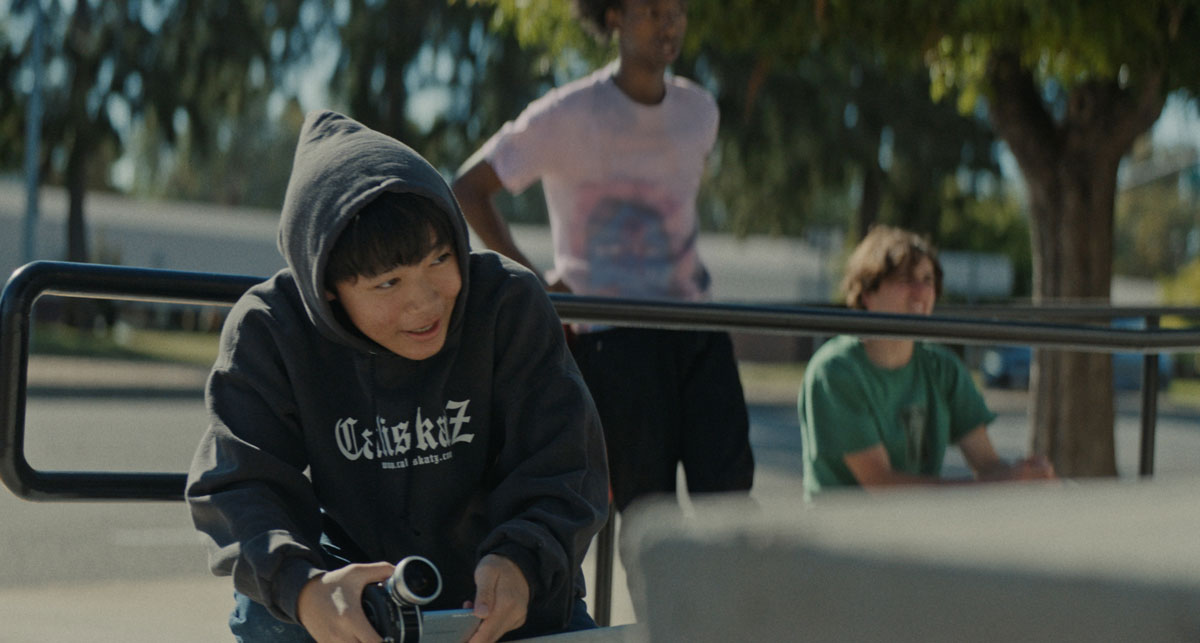
"Our study highlights the importance of resolving the taxonomic relationships of these crown-group fossils," the authors write in the study's conclusion. "Finding more tardigrade fossils will enable the reconstruction of more accurate timelines that will open the clade for comparative analyses. By doing so, we will be able to understand the evolution of tardigrade characters, such as inferring when their cryptobiotic ability evolved and estimating their molecular and morphological rates of change over time."

Dr. Diane R. Nelson, a professor emerita of biology at East Tennessee State University who also was not involved in the study, said this research is "significant" because it provides this useful context in understanding water bear origins despite the intrinsic logistical difficulties involved in acquiring relevant raw data.

"It describes a new genus and species, but places them in the phylogeny of tardigrades," Nelson told Salon. "With only [four] fossil tardigrades identified in amber, because tardigrades do not fossilize well and so far have only been found preserved in amber, our knowledge of tardigrade evolution has been difficult to discern."


Want more health and science stories in your inbox? Subscribe to Salon's weekly newsletter Lab Notes.


"Although this application would be in the distant future, protecting human DNA and proteins from the inhospitable conditions… of space would make travel away from the earth more feasible."

Not everything about tardigrade fortitude is a complete mystery, however.

"We know that tardigrades have multiple intrinsic proteins for cryptobiosis that allow the tardigrades to dehydrate or freeze without damage to the cell membranes and enhance their survival from extreme conditions that kill most living organisms," Nelson said. "They also can repair damage to their DNA caused by radiation and other extreme conditionals or chemicals."

While these skills may seem like superpowers, doctors hope that some day they can be used to develop medical treatments.

"If we can learn all the 'secrets' of cryptobiosis (how to prevent cellular damage), we would be able to preserve human organs (hearts, kidneys, etc.) so they can be stored successfully and then later transplanted into another human when needed," Nelson explained. Learning from water bears could also help humans with "knowledge of preserving/restoring cell membranes" and thereby "help prolong the shelf-life of medications such as antibiotics so they could save human lives."

Tardigrade science may even help us travel beyond Earth, given space is an extremely dangerous place for the human body. Some scientists hope that humans may be able to travel to far off worlds because of the evolutionary strategies of our tiny neighbors.

"Although this application would be in the distant future, protecting human DNA and proteins from the inhospitable conditions — notably, cosmic radiation — of space would make travel away from Earth more feasible," Kolling said. "Findings concerning deleterious (or beneficial) effects of reaction-oxygen species on mitochondria or cellular signaling via reversible cysteine oxidation both provide information relative to the study of myriad human processes and afflictions."

We need your help to stay independent

At the same time, Kolling urges tardigrade fans to remain grounded in their excitement about what humanity can learn from them. After all, the fundamental trick to cryptobiosis is a complete state of inactivity, which jokes about laziness aside is not physically possible for humans.

"Tardigrades are fascinating animals and while they are famous for their robustness, it’s prudent to remember that they are extremotolerant, not extremophilic," Kolling said. "They can survive transient periods of extreme stress, but during these exposures, they enter a suspended state in which metabolism is throttled down or perhaps turned off, so they do not eat, reproduce, etc., which are essential for survival."

While this may not be the most satisfying conclusion when studying tardigrades, the silver lining is that there is still much more for people to discover about these micro animals.

"As mentioned, there are only very few fossil tardigrades known so far," Mapalo said. "I am sure that there are many more out there waiting to be discovered. The highest chance is that we can find them in amber fossils. This is why, when I get the chance, I always tell people who work with amber to also check for tardigrades in their sample."

During Moms for Liberty chat, Trump says daughter Ivanka “hired millions of people”

Donald Trump tried out a few whoppers when talking about daughter and former adviser Ivanka Trump on Friday. 

At a Moms for Liberty-hosted “fireside chat” in Washington, D.C., the former president said that Ivanka “hired millions” of people while serving as a senior adviser in the Trump White House.   

“She would go around — not a glamorous job — to see Walmart, to see Exxon, all these big companies to hire people,” Donald said of his daughter in a talk with MFL’s Tiffany Justice.

Trump claimed that Ivanka stepped away from a successful fashion brand that was “making so much money” because of a desire to help people, but her working woman-focused clothing line was ailing and had been dropped by major retailers like Nordstrom. 

Not satisfied with stretching the truth of things that actually happened, Donald veered into hypotheticals around Ivanka. He told Justice that she “would be a great ambassador to the United Nations, United Nations secretary.” 

“There’d be nobody to compete with her,” he shared. “She may be my daughter, but nobody could have competed with her, with her rat-tat-tat, the whole deal she’s got.”

Ivanka Trump has been notably absent from her father’s campaign events this election season, in stark contrast to her hands-on role in her father’s last campaign and his administration.

Outside of the proud father digressions, Donald bashed immigrants and transgender rights, playing to the crowd.

Moms for Liberty was founded in Florida in 2021 to push against mask and vaccine mandates in schools during the COVID-19 pandemic. It quickly widened its focus to include rallies against curricula that taught about the history of racism in the U.S. or acknowledged the existence of LGBT people

A funny thing happened on the way to the rest of my life

A funny thing happened yesterday. I was at a presentation at my daughter's school when I suddenly realized something: I wasn't taking notes. There I was in a sleek auditorium with blond wood and acoustic panels. At every seat was a thoughtfully created armrest with a wide, flat surface that begged to have a pad balanced upon it. Slide after slide with helpful lists of advisors, department chairs and email addresses skidded by as my hand rested motionless at my side.

I had just dropped my daughter off for her first year of college. Finally, it hit me: This was her gig, not mine.

For years I had gone to every preschool, elementary, middle school and high school meeting. At every symposium on learning through play, every panel on teenage angst, every forum on how to build grit, I was there, all ears and taking copious notes along the way.

In an instant, I witnessed the culmination of all those years. Twenty Amazon boxes deposited in my daughter's dorm room and left scattered on the twin XL bed, my final deliverance. The mattress was wrapped in a strange institutional rubbery plastic sheath, but that wouldn't defeat me. I had carefully researched everything that would turn this environment into collegiate cottagecore: the right pastel teal LED desk lamp (with a bendy arm and three color settings), the fan that claimed to fill a hot shoebox of a room with soothing white noise and cooling breeze, the must-have shower caps for curly-hair that if washed too often wound up resembling something the Vikings wove into sweaters.

These were the details I self-medicated with during the lead-up to freshman move-in day. I moaned and groaned about the ridiculous minutiae with all my mom friends, but secretly I loved every video about 12 ways to decorate with fairy lights. My daughter wasn't into this decor stuff, but I was — and what better way to escape the harsh reality of my one and only child flying the coop and the harsh light it shined on every other aspect of my life?

I told my daughter — who was a bit anxious about her new adventure (where were those notes on grit?) — that college was like an island in a sea of being home. Did I honestly think so? Not really, but maybe it would minimize the hugeness of the moment, plus I liked thinking about it that way. It was better, at least, than thinking about the alternative. Being home would now be an island in the rest of her new and independent existence.

The fact of the matter is I'm a bit jealous. It began with the tours of verdant campuses, huffing and puffing (why is every college built on a hill?) as the sound of young a cappella voices echoed in my brain. I truly loved college. I mean, college was stressful, sometimes depressing and often a bit of a slog, but it was also the only time of my life when I was encouraged, nay mandated, to be a philosopher. And people actually wanted to listen.

I told my daughter that college was like an island in a sea of being home.

Now, I'm an empty nester with an as-yet unpublished novel in a marriage where we can finish each other's sentences. Not in that soulmate-y, romantic kind of way but rather in that we're-repeating-ourselves-a-lot kind of way.

Yet I still have philosophies. I do, and one is called "the rule of threes." You have a first impression, then an opposite second impression, then deeper knowledge just gets you back to your first impression. My husband thinks it's cool, but he's heard it a hundred times (and by the way, he thinks he's the one who invented it).

When my daughter was a newborn, I remember meeting parents with one-year-olds and thinking, "Whoa, a year old. That's big. Getting to that. For a mother. I can't imagine."

Now that my daughter's 18, I think, "Whoa, 18. That's big. Getting to that. For a mother. I'm old."

As a copywriter at an ad agency, I had a creative director who used to declare in his British accent — which gave everything added import and eloquence — that every ad campaign needed an "organizing principle" to connect the many print ads, radio spots and TV commercials. The phrase marked a very bright and shiny time in my early 30s when I was a career girl on the move, living single downtown and dating. It was a time when every presentation sparkled with the possibility of a glamorous TV shoot, and every first dinner with a guy could wind up with me wearing a pouffy white dress.

We need your help to stay independent

Today, I went on a walk with a friend. She turned to me and said, "I get how you're feeling. Even if she just came home and shut the door to her room, your daughter was the organizing principle of your day."

That expression. It had evolved from something that inspired me to try and create work that wowed an industry and won awards to words that represented my life as a perhaps too fully-invested parent.

In that moment, however, I realized it had been good to have these organizing principles in my life. What would be the next set of goals and aspirations around which I would wrap my day? Suddenly, it was all up to me.

Plus, my daughter has discussed grad school. Whoa, grad school. That's big. Getting to that. For a mother. Are grad students too old to decorate with fairy lights?

Man tased after climbing into press area of Trump rally in Pennsylvania

A man was tased by police after attempting to enter the press area of a Donald Trump rally in Johnstown, Pennsylvania on Friday. 

The failed storming of the press corral came after Trump criticized CNN’s interview with Kamala Harris as overly deferential, according to the Associated Press. In a video shared by CBS News’ Taureen Small, the man can be seen climbing the riser before being pulled down by a gaggle of sheriff’s deputies. 

In the clip, Trump supporters can be heard jeering the man, with one attendee shouting, “Cut his head off.” Attendees also cheered when police escorted the man away, leading the former president to remark from the stage “Is there anywhere that’s more fun to be than a Trump rally?” 

Trump’s comments follow his campaign’s line of attack against the interview, which drew 6 million viewers to the cable news outlet. Senior campaign adviser Jason Miller told Newsmax earlier this week that Harris didn’t “look presidential.”

“There's a certain threshold that you have to meet,” he said. “Can you lead this country? Other candidates in the past have had it. I don't see that with Kamala Harris.”

The former president’s speech was full of inflammatory language directed at Harris and her running mate, Minnesota Gov. Tim Walz. He repeatedly referred to the vice president as “Comrade Kamala” and told attendees that she wants to “outlaw your car and truck and force you to buy electric vehicles” as part of a “radical left war on Pennsylvania.”

Trump worked blue at certain points throughout the rally, which was held less than 80 miles from the site of a rally where he was nearly assassinated in July. He told the crowd that “every place [Harris] has touched has turned to s**t.”
 

The desirability of being “half-Asian Chris”

I’m half Asian,” 13-year-old Chris Wang (Izaac Wang) declares to his new skater friends in this summer’s buzzy coming-of-age film "Didi." He’s not; he’s telling an absurd lie that he believes will impress his friends. They start chanting, “Half-Asian Chris! Half-Asian Chris!”

Later, when they meet Chris’ mother and discover both his parents are Taiwanese, they sulk as they leave the room. “This kid is whack,” they mutter to themselves. 

Why would Chris make up such a ridiculous, blatant lie? If you’ve never been an Asian American teen in a majority-Asian American enclave in the San Francisco Bay Area, it’s a nuance that may be hard to understand. 

Set in 2008, the film is based on "Dìdi" writer-director Sean Wang’s childhood in Fremont. I grew up in San Jose, 40 minutes south of his hometown. I’m two years younger than Wang, so instead of AIM and Myspace, I had G-chat and Facebook

Both Wang and I attended wealthier, highly ranked public schools in the heart of Silicon Valley. Most of my friends’ parents were engineers who had immigrated to the country during graduate school. Some of them lived separately like Chris’ parents, with the breadwinner father sending money and visiting yearly from South Korea or Taiwan. In Korean, we called them gireogi bubu, or wild goose couples. 

The high schools that Wang and I attended existed in similar white and Asian upper-income bubbles. At my school, Asians were the majority racial group. White kids were the second largest, making up over a quarter of the student population.

They were considered the most beautiful people in the school. 

The ones we referred to as half-Asian students – specifically, those who were half Asian and half white – sat at the top of the social hierarchy along with the white students. I envied how they seemed to have the best qualities of both worlds — they were smart and in the AP classes with the rest of us Asians, but they were also varsity captains of their sports teams. Their Asian parents, usually more “Westernized” than ours, let them party and stay out late. 

Most importantly, I wanted to look like them. Their nose bridges and eye shapes were sharper and more angled than mine — features that my Korean family urged me to attain through plastic surgery. They were considered the most beautiful people in the school. Even my white friend idolized the captain of her volleyball team, a half-Japanese, half-white girl. “I want half-Asian kids one day,” my friend commented frequently. But she never dated Asian guys. 

Chris, throughout the movie, pines over a half-Asian girl (Mahaela Park) who is considered more white than she is Asian, both by herself and others around her. 

His friends tell him she’ll be into him because she “definitely has yellow fever.” In a particularly cringe-worthy scene during their first park hangout, she tells him he’s “pretty cute . . . for an Asian.” The mostly Asian American theatergoers on opening night all gasped along with me in indignant recognition. 

You see Chris take in her words, momentarily speechless at the insult disguised as a compliment. It’s weeks later that Chris first lies to his skater friends about being half Asian.

One of the love interest’s own parents is Asian. She is Asian. How ironic is it that she doesn’t view Asian boys as deserving of her attention? It’s tragic that she, in that moment, dehumanizes not only her family, but herself. She views half of herself as less worthy, less desirable, and erases it completely. 

DidiDidi (Focus Features)

I spent most of high school wishing I could be half Asian and half white. I could be friends with these half-Asian kids and take classes with them, but I could never look like them or be desired by them. The popular half-Asian students at our school dated other half-Asian or white students. The racial hierarchy meant that the closer you were to whiteness, the more social capital you had.

So when Chris, self conscious around his older, cooler friends, blurts that he’s half Asian, I recognized my teenage self in him. His lie is one that Asian kids growing up in our specific Bay Area enclave might understand. 

My friend group looked a lot like Chris’. I was in speech and debate with my Indian classmates, played field hockey with Sikh kids, and took journalism with East Asian friends. But we didn’t talk much about our identities or differentiate ourselves back then. In recent years, we’ve started to reminisce about our childhoods, comparing and contrasting our cultures and the ethnic lines that divided or united us. We’ve only just started to revisit where our bodies fell on the spectrum of desirability.

The closer you were to whiteness, the more social capital you had.

What happened to our psyches as teenagers and our perceptions of ourselves, when some of us were told that we were less beautiful unless we had whiteness in our blood? Or for others, who were told that they are more worthy because of the whiteness in theirs? 

Raising this question with multiracial Asian friends, from childhood and beyond, yields a common answer: all of us have our own grievances with whiteness and the ways it drove greater distances between us. “Full” Asians like myself were always aspiring for a whiteness we could never attain, but the more I talk to my multiracial Asian friends, I realize that they were always reaching for wholeness and falling short as well. 

DidiDidi (Focus Features)Wang, too, seems to be reflecting on his childhood desire to be closer to whiteness. But it’s not from a place of resentment; instead, there’s a curiosity about the racial politics that made us feel trapped in our own bodies. Through Chris, he channels the shame we felt about feeling both too Asian or not Asian enough. 

After Chris’ mother shows up to debunk his half-Asian lie, after he shoves her out of the room, after he and his crush stop speaking, Chris asks his mother if she’s ashamed of him. 

She tells him that she could never be ashamed of him, because he is her dream. It’s here that you see Chris come to terms with what he will never be: he will never be his mother’s friend’s studious son, never be half Asian and never be the white hero his crush imagines.  

By capturing the ways we racially fail one another in our adolescence, "Dìdi" allows us to examine how those formative declarations of desire shaped us into who we are now. It helps us understand our childhood conceptions of worth and by extension the way we love ourselves as Asian American adults more deeply.

Trump lawyers attempt to slow-walk election interference case until after Inauguration Day

Former President Donald Trump’s lawyers have made their strategy plain in the Jan. 6 case overseen by special counsel Jack Smith. 

In a joint filing between Trump and Smith’s teams on Friday, attorneys for Trump laid out a schedule of filings and pre-trial hearings that would delay the election interference case beyond Inauguration Day in 2025. Should Trump win the election in November, he would be able to instruct the Department of Justice to dismiss the case once he took office. 

With this in mind, Smith urged Judge Tanya Chutkan to rule on the questions around the case quickly through a series of parallel hearings that would avoid stretching out the trial’s start date into next year. While the government did not provide a timeline for these hearings, they wrote they do “not see a reason to delay.”

“The Government is prepared to file its opening immunity brief promptly at any time the Court deems appropriate,” assistant special counsel Molly Gaston wrote in the filing.

In a 6-3 decision in July, the conservative justices on the Supreme Court ruled that Trump had absolute immunity in his actions undertaken as president. Smith re-indicted Trump after the ruling, with a separate grand jury finding enough evidence to proceed with the case that Trump attempted to interfere with the 2020 election. 

That new indictment removed all of Trump’s actions through the Department of Justice, including the allegations that he conspired to install election denier Jeff Clark as acting attorney general. It also removed all references to his communications with White House staff.  

Trump called the new indictment an “act of desperation to resurrect a dead Witch Hunt” in a post to Truth Social.

“This ridiculous political HOAX, which most thought was already won by me, comes right out of the White House and DOJ, and is being pushed by Kamala Harris and Crooked Joe Biden,” he wrote.
 

Unions rally, corporations worry: How Kamala Harris’ campaign has divided the grocery industry

In the whirlwind first few weeks of Kamala Harris' presidential campaign, there's been no shortage of headline-grabbing moments — from coconut memes that have lit up social media to the popular consensus that "Kamala is brat" (and that's a good thing). Yet, beyond the internet fodder, the current vice president has managed to ignite a serious debate that could reshape a key segment of the American economy: the grocery industry. 

Grocery unions, long-standing champions of fair wages and working conditions, are rallying behind her with a fervor not seen since the Obama years. But it's not all applause. The leaders of several large-scale retailers and some corporate grocers are pushing back against Harris’ blunt characterization of their pricing strategies as “greedflation,” claiming her remarks are either unfair or unfounded. 

The result is a unique political divide between supermarket workers and their corporate bosses, all in the shadow of the ongoing national legal debate over whether two of the largest supermarket chains in the country, Kroger and Albertsons, should be able to merge their operations. 

On July 21, President Joe Biden announced his withdrawal from the 2024 United States presidential election and endorsed Harris as his replacement. The next day, the United Food and Commercial Workers International Union (UFCW) — which represents 1.2 million essential workers in the grocery, meatpacking, food processing and retail industries — announced “its unanimous endorsement of Vice President Kamala Harris for president.” 

In an accompanying statement, UFCW International President Marc Perrone said Harris has always shown up for the union’s members, whether during her time representing California in the U.S. Sentate or “as part of the most pro-union administration in modern American history.” 

“For years, Vice President Harris has shown a real willingness to listen to our members and working people everywhere about the issues that matter most to them,” Perrone wrote. “As a U.S. Senator, she was a vocal supporter for essential worker protections during the pandemic. During her tenure as Vice President, she was critical in the fight to lower prescription drugs and cast the tie-breaking vote to pass the Emergency Pension Plan Relief Act of 2021, safeguarding the retirements of over 350,000 union workers.” 

He continued: “Working families deserve a presidential candidate that will put them first and the only candidate in this race who will do that is Vice President Harris. We look forward to working with our members across the country to elect her as our next president.” 

We need your help to stay independent

As Salon has previously reported, one relatively recent and tangible example of Harris’ support of grocery unions is how she advocated for the continuation of “hazard pay” for grocery workers during the pandemic. Along with Perrone, Harris wrote an Aug. 2020 commentary for CNN simply titled: “Why grocery store workers deserve hazard pay.” 

“Our country is hurting. People are losing their jobs, parents are struggling to keep a roof over their kids’ heads and Americans are getting sick and dying in record numbers,” they wrote. “The pain and suffering is often too much to bear. As this crisis continues, we must remember all of the frontline workers who are continuing to put themselves in harm’s way to help others make it through these challenging times. 

“While top grocery chains rake in billions in profits during this pandemic, these frontline workers cannot choose to work from home like the corporate executives of these companies do,” the letter continued. “The responsibility to properly protect and support store workers lies with these executives, who must make the decision to consistently pay workers a wage that justly compensates them for the clear and present dangers of their jobs during the pandemic.” 

Yet while many grocery workers (or at least their union representatives) are for Harris, the owners of the stores where they work have expressed more complex feelings about the current Harris campaign, specifically her promise to pass the first-ever federal ban on price gouging. 

“We all know that prices went up during the pandemic when the supply chains shut down and failed, but our supply chains have now improved and prices are still too high,” Harris said in an Aug. 16 speech. “ Many of the big food companies are seeing their highest profits in two decades, and while many grocery chains pass along these savings, others still aren’t.” 

"Many of the big food companies are seeing their highest profits in two decades, and while many grocery chains pass along these savings, others still aren’t."

Harris said during the speech that, according to the U.S. Department of Agriculture, the cost of groceries have gone up by 25% between 2019 and 2023, faster than other consumer goods and services. In her coverage of the speech, Salon’s Joy Saha noted the vice president is looking to target businesses that are illegally hiking up prices and not “playing by the rules.” 

However, following the speech, the National Grocers Association (NGA) characterized Harris’ “proposal for a ban on grocery price gouging [as] a solution in search of a problem.” 

“Our independent grocers, already operating on extremely thin margins, are hurting from the same inflationary pressure points as their customers,” NGA president and CEO Greg Ferrara said. “Labor, rent, swipe fees, utilities; you name it, the price has increased. But what’s really hurting our local, independent grocers, is the lack of fair competition with big box retailers, who leverage their influence in ways that your independent grocer down the street can’t, leading to increased prices for everyone else.” 

Ferrara wrote that the NGA hopes both the current and next presidential administration will look closely at anticompetitive behaviors, including price discrimination, that are increasing prices for independent grocers and the community members they serve. 

“If Washington is serious about helping lower prices for consumers, it can help in three important ways: lower skyrocketing swipe fees, rein in excessive and burdensome regulations, and enforce antitrust laws like the Robinson-Patman Act that enhance price competition amongst retailers, regardless of size or location,” Ferrara concluded. 

"A proposal for a ban on grocery price gouging is a solution in search of a problem"

Leslie G. Sarasin, the president and CEO of FMI, The Food Industry Association, formerly the Food Marketing Institute, also released a statement in response to Harris’ speech. “It is both inaccurate and irresponsible to conflate an illegal activity like price gouging — a defined legal term in which specific violations of trade practices law occur — with inflation, which is a broad, macroeconomic measure of increases in consumer prices over time,” Sarasin said. 

However, according to a recent report from Politico, while Harris’ grocery gouging proposal has quickly become a flashpoint in her presidential campaign (and has since been labeled as “communist price controls” by critics like Donald Trump) some Democratic lawmakers are allegedly quietly reassuring worried allies: The proposal is more of a political statement than a legislative reality. 

Politico’s Meredith Lee Hill and Adam Cancyrn spoke to six Democratic lawmakers and five Democratic aides who were granted anonymity to discuss the matter candidly. Many told the reporters Harris’ proposal is unlikely to pass Congress, even if Democrats gain control of both the White House and Capitol Hill. 

“Rather, they’ve argued it’s a messaging tactic — a way to show that she understands food prices remain an economic burden for many Americans and to redirect voters’ anger about inflation to corporations, in a way that progressives in particular have cheered,” they wrote. 

As nearly 90% of Americans report feeling “very” or “somewhat” concerned about the cost of food, grocery prices will likely remain a defining issue of the upcoming election. In the coming weeks, how Harris balances her appeal to unionized grocery workers while also quelling the concerns of industry leaders may offer insight into her broader economic approach — and the challenges of maintaining populist momentum in a deeply polarized political landscape.

Winning election wouldn’t save Trump from massive fraud, defamation judgments

A new analysis shows that Donald Trump may still be on the hook for the half a billion dollars in judgments levied against him in his civil fraud and for defamation cases.

The sums — an estimated $475 million from a ruling that Trump illegally inflated his net worth on his taxes for decades, and $88 million from defaming writer E. Jean Caroll, who he was found to have sexually abused by a jury — will be due whether or not he wins the presidential election in November.

The analysis, conducted by The Washington Examiner, claims Trump could stand to lose 15% of his supposed $4.2 billion net worth through the judgments. The truth of Trump's net worth is in doubt, however. Much of the former president’s net worth is tied up in shares of his Trump Media, the parent company of the Truth Social platform. That stock has rapidly shed value in recent months and Trump is prohibited from selling his shares before Sept. 25.

“It would be this kind of crazy thing unfolding with the lawyers collecting and trying to garner his real estate or, you know, take the classic sort of collection action against a president,” Case Western Reserve law professor Kevin McMunigal told the conservative newspaper.

Trump is currently appealing his civil fraud case in New York, having posted a massive bond of $175 million in April.

The appeals process makes a pre-election payment due date is unlikely. The Examiner notes that oral arguments are not expected in his fraud case until late September.

Once the epicenter of the formerly successful businessman’s real estate empire, New York has been one of the only municipalities to successfully hold Trump accountable for his crimes. In May, a Manhattan jury found Trump guilty of falsifying business records in an attempt to conceal hush money payments to porn star Stormy Daniels amid his first presidential campaign.

Prenup panic: J.Lo and Ben Affleck’s split highlights the cost of skipping legal prep

Unless you’ve been living under a rock, you’ve probably seen the news that Jennifer Lopez has filed for divorce from Ben Affleck. Known as Bennifer, the pair famously dated in the early aughts, got engaged, and broke up 20 years ago. When they tied the knot officially in 2022, some saw it as a beautiful full-circle moment.

Unfortunately, J.Lo broke that circle on August 20, 2024, their two-year wedding anniversary. Many experts have speculated that the couple — despite both having already been previously divorced — did not have a prenup in place since the divorce filing did not mention one. 

That’s not the only reason why the topic of prenups has been in the news lately. 

On the premier season of Netflix’s “Love is Blind UK,” one of the couples — Freddie and Cat — found themselves in a disagreement about a prenup. As a homeowner, Freddie wanted Cat to sign a prenup saying that if he dies, his home will go to his sister, not Cat. This situation seemed to become a problem for the pair, who didn’t go through with the wedding.

So what’s the big deal about prenups — and why is everyone talking about them?

What is a prenup?

A prenuptial agreement is a legal document that explains what will happen to a couple’s assets if they get divorced. A prenup can also have rules on other issues, like how to share custody of an animal or if alimony will be expected.

As the average age of couples getting married increases, more and more people are also getting prenups, or at least considering them. A 2023 survey found that 50% of people supported prenups, compared to 42% in 2022.

However, many couples still resist the idea. They don't want to sign a prenup because it seems unromantic or pessimistic, like you're already thinking about the relationship ending. 

But at a time in which about 43% percent of couples get divorced, it doesn't seem far-fetched to consider what happens if your relationship potentially ends. 

“Every married couple already has a prenup — you either write your own or you accept the default prenup of the state where you’re living,” said family law attorney Aaron Thomas, founding attorney at Prenups.com. “But the problem is, no one ever reads the default prenup of their state. They just get married.”

Drafting your own prenup just means that you can personalize the situation to fit your specific needs.

Why do people need prenups?

Thomas said couples should think of a prenup as an insurance policy against a pricey divorce. In his experience, middle-class couples may benefit most from a prenup because they have a harder time affording a lengthy divorce compared with wealthier peers.

“I’ve worked on many divorce cases where the couple spends $100,000 between the two of them,” Thomas said. “The idea that you can resolve all that for a few grand ahead of time and a potentially sticky conversation just makes it a common sense thing.”

Like any kind of legal document, a prenup can be pricey. Family lawyer Rebecca G. Neale of Bedford Family Lawyer said the cost will vary. However, couples should expect the cost to start at $2,000 per person. 

“If you have a high-quality prenup, then your divorce will be a lot simpler because everybody has established their expectations for what happens if they’re divorced,” Neale said.


Want a daily wrap-up of all the news and commentary Salon has to offer? Subscribe to our morning newsletter, Crash Course.


Not only can prenups speed up the divorce timeline and save money in the long term, but the process of creating a prenup can also spark important discussions. For example, one person may want to be a stay-at-home parent before the kids start school. If they get divorced during this time period, they may want alimony so they can continue being a stay-at-home parent.

Also, marriage and family therapist Megan Flinn of Fountain Square Counseling and Wellness said it’s a good way to practice having difficult conversations later on.

“To engage in these difficult conversations while still riding the high of early relationship bliss, couples can use the conversation around a prenuptial agreement to build their roadmap for handling difficult conversations in the future,” Flinn said.

How to create a prenup 

If you already have an attorney you’ve used for other situations, you can ask them for a recommendation. You can also find a family law attorney through your state's bar association. Some attorneys provide a free consultation, while others will charge for the initial visit. 

To create a prenup that is fair for both of you, you should each have your own lawyer. Using the same lawyer means that neither party is getting a fair shake.

Both Neale and Thomas said couples should give themselves around six months to go through a comprehensive prenup process.

“If the process is rushed or unfair to one side, then it's less likely that the agreement will be valid and enforceable,” Neale said.

Drafting a prenup can be a costly and time-intensive process, not unlike wedding planning itself. And if you’re willing to go through that to get married, then a prenup shouldn’t feel so difficult — especially if you’re on your fourth marriage like J.Lo, or finding love on a reality show. 

States with restrictive abortion laws will suffer long-term economic harm from forced childbirth

Imagine a treatable condition poised to sweep through many parts of our country, threatening to sink our healthcare system under trillions of dollars in costs and alter our society as we know it. In a modern, highly sophisticated nation, one might ask what we can do to prevent this disaster. Yet, here we are, and the silence is deafening.

Dr. Catherine Birndorf, a reproductive psychiatrist and founder of The Motherhood Center of New York, states, "Whatever you believe about a woman's right to have an abortion, the irrefutable medical fact is that forced pregnancy — when a woman or girl becomes pregnant without seeking or desiring it, and abortion is denied, hindered, delayed or made difficult — will profoundly increase the number of perinatal mood and anxiety disorders (PMADs) in women and birthing people, also commonly known as postpartum depression."

Before the overturning of Roe v. Wade, the CDC estimated that approximately 800,000 to 950,000 women experienced perinatal depression and anxiety disorders each year, with 80,000 being acute cases, making it one of the leading causes of maternal mortality in the United States. At least one in five pregnant and postpartum women suffer from PMADs, with a notably higher incidence among women of color.

Dr. Birndorf suggests that these numbers were even higher when accounting for the lack of treatment due to shame, stigma, inadequate maternal mental health services, insufficient psychoeducation, and the absence of mandatory screening requirements. She also believes that the number of untreated PMADs will skyrocket over the next few years with restrictive abortion laws taking effect and the lack of available treatment.

A tsunami is coming. Women and children will experience deep trauma, long-term mental and physical ailments, and even death.

When asked about treatments for PMADs, Paige Bellenbaum, a social worker and co-founder of The Motherhood Center of New York, added, “To make matters even worse, untreated PMADs cause not only mental illness but also physical illnesses that affect women, their children, and their families for life.”

Various studies in maternal health have shown that these issues include higher rates of preeclampsia and C-sections, chronic mental health problems, chronic substance abuse, diabetes, heart issues, maternal attachment issues, impaired family and social relationships, suicide, worse overall long-term physical health, and reduced maternal productivity and labor force participation. Children can also suffer from lower birth weights, higher NICU admission rates, higher SIDS rates, behavioral, cognitive, and developmental issues, child/adolescent obesity, reduced educational attainment, higher rates of substance abuse, and worse long-term physical and mental health. Bellenbaum also stated, “many studies show this is an unending generational problem.”

According to our estimates at The Motherhood Center, an untreated PMAD can incur a cost of $1,000,000 to $2,000,000 over the lifetime of the mother and child (and sometimes the entire family), accounting for the medical expenses of potential diseases faced by women and their children. Acute cases can also result in multiple hospital stays, each costing $2,000 to $3,000 per day for a week or more. Without proper treatment, as a nation, we face increased maternal morbidity and mortality, including suicides and homicides, leading to tragedies like the one last summer when a New York City doctor killed herself and her baby during what appeared to be a postpartum psychotic episode.


Want more health and science stories in your inbox? Subscribe to Salon's weekly newsletter Lab Notes.


Even with appropriate treatment, insurance companies often refuse to pay enough to cover the minimum cost of care. As chief financial officer of The Motherhood Center, when negotiating rates, I highlighted the long-term health impacts of untreated PMADs to a manager of a large insurance company, only to be told that it was not their problem, as insured individuals stay on plans for an average of 2 to 3 years. Despite mentioning the potential for acute outcomes like death, there was no adjustment in the reimbursable rate for services. 

Additionally, despite some funds being allocated to PMADs by various local, state, and federal governments, it is far from sufficient to adequately invest in programs and services needed to treat those suffering. This leaves a gap in coverage through Medicaid and other public assistance programs.

We need your help to stay independent

How can states legislate forced pregnancy and motherhood without providing adequate healthcare coverage or policies to treat the likely PMADs and their many medical complications exacerbated by these laws? States with restrictive and banned abortion laws cannot have it both ways. They cannot ignore the economic impact on their budgets and healthcare systems, which could cost an estimated $250 billion annually in the U.S. healthcare system over the lives of mothers and their children (calculated by estimating the number of forced births in states with restrictive abortion laws multiplied by the $1,000,000 to $2,000,000 of healthcare costs for an untreated PMAD for the lifetime of the mother and child).

Without adequate treatment, states also face potential hospital stays costing $30,000 to $150,000 per woman. Many of these women will be low-income and on Medicaid, while others will have private insurance. These increasing costs and the number of cases could cripple hospital, educational and state healthcare systems. Beyond the forced harm to a woman's mental and physical health, the economic losses incurred by states that have banned or restricted abortions could create substantial budget deficits. The federal government will also bear a steep price for its programs, as well as insurance companies.

Even if treatment is available, like at The Motherhood Center of New York, for the surge of PMADs caused by forced pregnancies and motherhood, there are insufficient facilities, and no insurance company or state or federal body is willing to pay for the actual cost of care to fully heal these women. It is a short-sighted healthcare policy when good treatment is much cheaper than the millions of dollars in potential long-term health costs and multiple hospital readmissions per case of undiagnosed or untreated PMADs.

A tsunami is coming. Women and children will experience deep trauma, long-term mental and physical ailments, and even death. If the injury to women, their families, and society as a whole is not enough, perhaps state and federal legislatures and insurance companies will care when they understand that the increased number of untreated PMADs will drive healthcare costs into the trillions of dollars in the coming years. If there is a country-wide ban on abortions, I believe many states will be driven into great fiscal distress. This could be one of the biggest financial healthcare disasters caused by human actions in the 21st century. Is anybody listening now?


Top Maryland court upholds podcast-famous Adnan Syed’s murder conviction

Maryland’s Supreme Court upheld a lower court ruling to overturn a vacancy of Adnan Syed’s murder conviction, dealing a blow to a movement to free the man who supporters say was exonerated by evidence and procedural failures in his first case.

Syed was initially convicted for Hae Min Lee’s murder in 2000, a trial which the podcast “Serial” covered, detailing the case and poking holes in the evidence brought against Syed, then the ex-boyfriend of Lee.

Syed, whose conviction was vacated in 2022 after evidence implicating two other suspects was found to have been improperly withheld, had that vacancy overturned in March of last year by the state’s appellate court.

The decision, due to the court’s failure to give Lee’s brother ample time to reach the court hearings on the conviction, is another disappointment to advocates for Syed.

“Mr. Lee had the right to attend the hearing on the motion to vacate in person . . . he did not receive sufficient notice of the hearing to reasonably permit him to do so,” the court’s opinion read.

That appellate ruling made a splash last year when it sent the recently freed Syed back behind bars over what critics of the court called a minor procedural issue.

“What they did was not only reinstate the conviction and say the hearing's got to be done over, they didn't touch the merits to the hearing,” Rabia Chaudry, an attorney who has appeared on the “Serial” podcast, told Salon’s D. Watkins last year about the appellate ruling. “They didn't say that the judge made a wrong decision by granting the conviction to be vacated or there was anything wrong with the state's attorneys.”

That ruling was a setback for Syed and innocence advocates, as is the Supreme Court’s ruling.

"No other exoneree in this country has gotten this kind of treatment," Chaudry said last year.

The ruling, which three of the seven judges on the top court dissented on, likely paves the way for Syed to fight once again to have his conviction vacated.

How Kamala Harris can fight the renegade Supreme Court — and win

“When we fight, we win!” Kamala Harris has made that the clarion call of her campaign. But if Democrats are to deliver on their promises once elected, they’ll have to fight judicial tyranny head on. It’s a fight they’ve avoided for decades, and we’ve almost lost our democracy as a result. 

The Supreme Court's decision in Trump v. U.S., granting unlimited king-like powers to the president in the process of protecting Trump from prosecution, is a striking signpost, two years after the loss of reproductive freedom with the Dobbs decision made it vividly personal. But those are just two out of a, array of decisions in which unelected judges have overruled the will of the people or restricted the power of their elected representatives. Perhaps the biggest fight of all — to save future generations from the worst effects of the climate crisis — could easily be lost in the same way, as the Loper Bright decision has stripped the EPA of regulatory power and given judges the last word. 

The bottom line is chilling: It’s one thing for Democrats to win power in November, and quite another to wield that power without being blocked by arbitrary, unelected MAGA courts — up to and including Chief Justice John Roberts and his colleagues. Even if Congress can pass the Women's Health Protection Act to undo the damage of Dobbs, there’s nothing to stop the Supreme Court from ruling it unconstitutional, based on whatever made-up theory the right-wing justices like. 

Well, nothing except for the Constitution, that is: to be precise, Article III, Section 2, Clause 2, which explicitly empowers Congress to make “exceptions” to the Supreme Court’s appellate jurisdiction, as the court itself has acknowledged. In fact, the No Kings Act, introduced in early August to counteract the Trump v. U.S. decision, includes just such exception: if the law is challenged, such challenge will be heard in the federal circuit court in Washington, D.C., with no further appeal possible. 

The same provision could and should be included in the Women's Health Protection Act and every other key piece of legislation advanced by a potential Democratic Congress in 2025, if they really want the legislation to go into effect. President Biden has failed to grasp the nature of the fight. We can only hope that a potential President Harris, given her experience fighting in the legal trenches, will have a firmer grasp of what the situation demands. 

Just before the No Kings Act was announced, Biden unveiled his tortuous, doomed proposals for two court reforms — Supreme Court term limits and an actual code of ethics — along with a proposed constitutional amendment to overrule the presidential-immunity decision. That would get the job done, theoretically, but getting it passed is a pipe dream. No constitutional amendment has been adopted since 1992, and that one took more than 200 years to clear the bar. If Democrats are serious about ending presidential immunity, the No Kings Act is the way to go — and that will also require a direct rejection of the Supreme Court’s authority to undo it.

Biden’s long history in the Senate, and the spirit of collegiality he cultivated there, have made him ill-suited for such a fight. But Harris’ background — as a courtroom prosecutor, and then as an elected district attorney, attorney general and senator, in a state where the GOP has not been a serious contender for the last quarter-century — makes her far better prepared. Will she step up and take this on? 

Joe Biden's long history in the Senate made him ill-suited for this fight. But Kamala Harris' background as a prosecutor, D.A. and attorney general makes her far better prepared.

There’s no way to know that right now, but there’s simply no avoiding this fight. The only important questions are about how, where and when it will be fought, and how it will it be understood: as a battle against judicial tyranny, or as a purely partisan political struggle that threatens judicial independence? That latter frame is how the media and political elites have defined it all along, and that supposedly high-minded has only served to enable and empower judicial tyranny.

That false frame was laid bare by Harvard Law professor Nicholas Bowie in his written testimony to Biden’s court-reform commission. Bowie provided both a historical and theoretical argument in support of “jurisdiction-stripping,” and set the stage for a paper by Ryan Doerfler and Samuel Moyn that clarifies how different reform proposals respond to different views of America’s runaway-judiciary problem. 

Bowie makes clear that seeing the Supreme Court as a threat to democracy isn’t some wild new radical perspective. It can be found in Alexis de Tocqueville’s “Democracy in America,” where he declares that the “American aristocracy is at the lawyers’ bar and on the judges’ bench,” as reflected in the legal establishment's attitudes and its tension with American society as a whole. Bowie continues:

“The more you think about what happens in the United States,” Tocqueville continued, “the more you feel persuaded that in this country the body of jurists forms the most powerful and, so to speak, the sole counterweight of democracy.” Even though all literate Americans could read and understand their Constitution, American judges treated the document as inscrutable to all but themselves. Like “the priests of Egypt,” they considered themselves “the sole interpreter of an occult science.”

The pernicious consequences of this attitude took some time to fully emerge, but Bowie notes that since Tocqueville's time, "the Supreme Court has invalidated dozens of federal laws designed to expand political equality,” including a list of more than 20 cases he calls out by name, starting with the infamous Dred Scott decision of 1857 and running up through Shelby County v. Holder in 2013. He adds that the reaction to the Dred Scott decision “was so harsh that it helped precipitate the Civil War,” that Abraham Lincoln rejected the idea of judicial supremacy in his First Inaugural — stating that “If the policy of the Government upon vital questions … is to be irrevocably fixed by decisions of the Supreme Court, the people will have ceased to be their own rulers” — and that Congress passed a passed a law abolishing slavery west of the Mississippi in 1862, which was “precisely what the Court said Congress could not do.” Congress shortly thereafter granted full citizenship to Black people, in further defiance of Dred Scott, and then wrote it into the Constitution in the 14th Amendment. 

Of course the court did not back away from this fight altogether, and Bowie recounts how it continued to attack civil rights protections in a manner strikingly similar to the ways conservatives have undermined civil rights and voting rights protections in the modern era. He also notes how the Supreme Court’s attacks on Black people’s rights facilitated violent, even deadly attacks on Black bodies. The court was, in effect, an enabler of racist terrorism, undermining democracy in the South and elsewhere. A whole train of abusive court rulings paved the way to the “separate but equal” ruling in Plessy v. Ferguson in 1896.

That history might be better known, Bowie argues, if not for the legacy of Brown v. Board of Education, but that was hardly the end of the story. Brown did not overturn the will of Congress, and in fact “enforced the Ku Klux Klan Act of 1871, one of the federal laws the Supreme Court had earlier gutted.” What’s more, it’s simply untrue that Brown ended segregation. That only happened after Congress enacted the Civil Rights Act of 1964 and the Voting Rights Act of 1965, both of which contradicted earlier Supreme Court decisions. Only a few years later, with Richard Nixon’s four Supreme Court nominees in the early 1970s, another judicial rollback of racial equality began, the one that continues to this day.

We need your help to stay independent

The history Bowie recounts dovetails well with Joshua Douglas’ recent book “The Court v. The Voters: The Troubling Story of How the Supreme Court Has Undermined Voting Rights” (Salon interview here). The lesson of history, as opposed to the myth, could hardly be clearer: On balance, the Supreme Court is not a protector of Black people’s rights but an active enemy, and also an opponent of Congress’ efforts to protect them. 

It’s crucial to counter the widely-shared assumption that the Supreme Court is a reliable protector of minority rights in order to get past the idea that any attempt to curb its power would endanger them. The case for disempowering the court is given a crisp analytical framework in the paper mentioned above, which is literally called "Democratizing the Supreme Court." I reached out by email to co-author Ryan Doerfler, a Harvard Law professor, and asked him to clarify its key points in non-technical terms. One way to see the problem, he began, is that the Supreme Court is suffering a serious legitimacy crisis:  

On this telling, the morally and legally outrageous decisions of this set of conservative justices, coupled with the egregious ethical lapses of some of them, have caused the American public mistrust an essential and generally admirable institution. So understood, the solution to the problem posed by this court is to restore it to its former position as a trusted nonpartisan institution outside the realm of ordinary politics.

The lesson of history, as opposed to the myth, could hardly be clearer: On balance, the Supreme Court is not a protector of Black people’s rights but an active enemy.

This is the view favored by establishment voices in politics, the media and academia, who often describe themselves as “institutionalists” and are reluctant to disturb existing institutions to start with. If they are ultimately convinced that something must be done, it should be aimed at getting those institutions to work properly again, rather than addressing the underlying causes that might call for more significant changes.

There’s “another way to look at the current court,” Doerfler continued, “as an especially egregious example of a generally illegitimate institution, one that has over decades if not centuries usurped the decision-making authority of democratically elected officials”:

From reproductive freedom to labor rights to the environment, the Supreme Court has claimed for itself ultimate authority over national policy, a claim inconsistent with even the thinnest notions of democracy. The solution is not to return to an imagined golden age during which the Court made its decisions in a ‘non-partisan’ manner, but rather to reclaim that authority for the people.

At least the “legitimization” frame, the first one mentioned above, is  being discussed, although it’s still not widely embraced among the punditocracy. That second, more progressive frame has gotten less attention, and I asked Doerfler why it deserves to be taken more seriously. The first reason, he said,

is that democracy is valuable in itself, and that we as a people should be offended by the idea of our nation’s most important decisions being effectively removed from the political realm. Whatever one’s views on any of the issues I mention, Supreme Court justices have no legitimate claim, morally, epistemically or legally, to having any say, let alone the final say, on such things.

Second, for progressives specifically, the Supreme Court is not just today but historically a reactionary institution. The Supreme Court’s track record concerning federal legislation especially is abominable, from Dred Scott to Hammer v. Dagenhart to Citizens United. So not only does the Supreme Court have no legitimate claim to the decisions it makes, but the decisions it makes have systematically harmed our society’s most vulnerable, least affluent populations.

 Next I asked Doerfler to elaborate on the different types of reform described in the paper: “personnel” reforms and “disempowering” reforms, and how they relate to our understanding of the fundamental problem. 

Personnel reforms are "intended to change who sits on the court and, in turn, how the court’s power is wielded,” he explained: 

Expanding the court to add progressive justices, for example, would make the court more likely to issue progressive decisions. Similarly, imposing term limits would help to ensure that the ideological makeup of the court more closely tracked the outcomes of presidential elections, avoiding situations like the one we are in now, where one president might about three justices in a single four-year term, and another one or zero justices.

Importantly, though, none of these reforms would alter in any way the power the Supreme Court enjoys as an institution. The court would continue to have the final say on, say, firearm regulation, even if the court were expanded or term limits were imposed on individual justices.

In that scenario, the fundamental question of judicial tyranny is off the table. A more kindly tyrant is the best we can hope for. “Disempowering reforms,” on the other hand, would “reduce or eliminate the power the Supreme Court enjoys, making it more difficult or even impossible, for the court to weigh in on whether to impose some firearm regulation, for example. Technically speaking, one could bring this about by outright stripping the courts of jurisdiction over challenges to such regulations, or by imposing a supermajority requirement, such that the Supreme Court could only invalidate such a law by a vote of 6-3 or 7-2 or 9-0.” 

"Whatever one’s views on any [political] issues … Supreme Court justices have no legitimate claim, morally, epistemically or legally, to having any say, let alone the final say, on such things."

While “personnel reforms” are meant “to restore ‘balance’ to the court and in that sense return it to its place ‘above politics,’” Doerfler said, "disempowering reforms" are meant to address the problem of "being governed by philosopher kings," which cannot entirely be solved by making them less excessively "partisan."

While jurisdiction-stripping might sound radical in today’s political environment, Doerfler argues that it's actually on a firmer legal and constitutional footing than more moderate-sounding proposals such as term limits:

Legally speaking, jurisdiction stripping is contemplated explicitly by Article III of the Constitution, which says that, except for disputes involving ambassadors or between states or things like that, Congress can make “exceptions” to the Supreme Court’s jurisdiction. In that sense, the constitutional authority for stripping the court of jurisdiction over, for instance, constitutional challenges to the Women’s Health Protection Act or the PRO Act is about as clear as it gets. By contrast, term limits specifically are at least vulnerable to constitutional objection insofar as Article III gives federal judges life tenure and salary protection. 

I asked next about other disempowering reforms, such as requiring a supermajority to rule a congressional act unconstitutional, or giving Congress the power to overrule Supreme Court decisions with a supermajority vote of its own. Doerfler focused on the degrees of disempowerment, “from total to partial”:

Stripping courts of jurisdiction over certain cases takes them out of the equation entirely. A supermajority requirement, by contrast, allows courts to intervene, but only in cases in which there is substantial judicial consensus. To the extent you think it is important for courts to limit Congress in extreme cases, that might seem more attractive. Even less interventionist, a legislative override mechanism would allow Congress to negate a Supreme Court decision once it has been made (the proposed No Kings Act, provides an example). 

Legislative override is “a comparatively modest proposal,” Doerfler continued, which is present, for instance, in the Canadian legal system. But such a mechanism is only useful if “both chambers of Congress and the president disagree with the Supreme Court” in a given moment, “which makes it difficult to use with any regularity.”

Parliamentary systems, such as those found in Canada, Britain and most other Western democracies, generally have much clearer democratic accountability, which helps explain why they’re so common around the world while our strange version of democracy is nearly unique, as Maxwell Stearns argues in “Parliamentary America” (Salon interview here). 

Such disempowering reforms, Doerfler suggests, might actually be less destabilizing than personnel reforms. Unlike court expansion or “court packing,” they wouldn't automatically incentivize escalating partisan warfare: 

It is less that jurisdiction stripping would not set off tit-for-tat retaliation (e.g., Democrats stripping jurisdiction over environmental legislation, conservatives doing so over legislation funding religious schools) than that such a “spiral” would be virtuous rather than vicious, in the sense that it would mean less and less national policy would be determined by the judiciary. 

That kind of back and forth, in other words, would strengthen the connection between voting and political outcomes, making the political system more responsive to voters rather than the opposite. Our existing system has an abundance of veto points that make government problem-solving more difficult, an important contributing factor in public distrust of government. Removing the courts as an arbitrary, after-the-fact veto point would improve that situation, meaning that bad decisions can be corrected at the ballot box in a straightforward fashion that any citizen can understand. 


Want a daily wrap-up of all the news and commentary Salon has to offer? Subscribe to our morning newsletter, Crash Course.


Doerfler is not opposed to court expansion, in fact, and views it as a likely “prerequisite to disempowering the court, in that adding progressive justices … would substantially reduce the likelihood of the court spuriously declaring [that] jurisdiction-stripping legislation [is] unconstitutional. In that sense, I see court expansion and disempowering reforms as complements rather than alternatives.” Kamala Harris’ proposal to write the protections of Roe v. Wade into federal law could offer a test case: 

One of the political virtues of jurisdiction-stripping is that it lends itself to piecemeal implementation. While the problem of an anti-democratic Supreme Court might seem abstract, the threat of a court invalidating [a national reproductive rights law] is straightforward. Stripping courts of jurisdiction in cases like that is easier to motivate. In virtually every area that matters to Democrats … the Supreme Court is a significant threat and so using tools like jurisdiction stripping is appropriate and necessary. Anything that would excite progressives the Supreme Court is likely to obstruct in whole or in part, unless Congress and the president are willing to fight back. 

One way to make court expansion work without inviting the above-mentioned escalating partisan warfare would be, as Elie Mystal argues, to make “the Supreme Court operate like the Circuit Courts of Appeal. … A 19-member Supreme Court, hearing most cases in panels and subject to ethical standards, would look, feel, and act more like every other federal court.”

"It is less that jurisdiction stripping would not set off tit-for-tat retaliation [between Democrats and Republicans] than that such a 'spiral' would be virtuous rather than vicious, in the sense that it would mean less and less national policy would be determined by the judiciary."

Such a panel system would have the effect of restraining the tendency to rule too broadly, since the broader the ruling, the more likely it is to struck down by another panel in the future. There would be a strong incentive for narrower, more rigorously reasoned opinions that would be more likely to survive. In effect, Supreme Court justices would be checking each other’s power to tend toward judicial tyranny. 

A combined set of reforms — a court with panels, ethics and term limits that requires a supermajority to declare a law unconstitutional and is specifically limited in its jurisdiction — would give us a dramatically different Supreme Court than the one we have today. It would be much more like other courts found around the country and all over the world, and that would make democracy more robust: Political leaders at all levels and of all parties would be more clearly accountable for fulfilling their promises without the dark shadow of judicial tyranny hanging over them. 

The American public deeply dislikes and distrusts the Supreme Court, and justifiably so. But the challenge is not merely to determine what a better Supreme Court would look like, but to clear a pathway for real change. Fighting for judicial reform and jurisdiction-stripping, right now, can begin to open that path.

Biden EPA rejects plastics industry’s fuzzy math that misleads customers about recycled content

Series: Selling a Mirage:The Deception Behind Plastic Recycling

More in this series

The Environmental Protection Agency has taken the first ever federal action against a system that misleads consumers about the recycled content in plastic products.

A ProPublica investigation in June showed how the plastics industry uses a controversial accounting method called mass balance to advertise plastic products as 20% or 30% recycled even if they physically contain less than 1% recycled content.

It involves a number shuffle, done only on paper, that inflates the advertised recycledness of one product by reducing the advertised recycledness of another, often less lucrative, product. Done purely for marketing, it has been criticized by environmentalists as a greenwashing tactic.

According to an EPA policy released this month, companies that want the federal government’s stamp of approval for their sustainable products can no longer use such convoluted math.

“This is the turning point” that will allow us to start killing the “hoax” of mass balance.

The EPA’s Safer Choice standard is a voluntary program that allows manufacturers to affix a “Safer Choice” label to their dish soap, laundry detergent and other products. The roughly 1,800 products that have earned that distinction include household cleaners sold in grocery stores and more niche products like industrial carpet stain removers. Until now, the program’s criteria have focused on encouraging brands to reduce their use of toxic chemicals. But the updated standard, released on Aug. 8, strengthens requirements for sustainable packaging as well; plastic packaging must contain at least 15% postconsumer recycled content.

A key requirement: The content must be determined “by weight,” effectively forbidding the mathematical sleight of hand.

“This is the turning point” that will allow us to start killing the “hoax” of mass balance, said Jan Dell, a chemical engineer who founded The Last Beach Cleanup, a nonprofit fighting plastic pollution.

It’s the latest of several Biden administration actions to tackle the plastic crisis, which is smothering communities, oceans and even our bodies with toxic material that doesn’t break down in nature. Last month, the White House announced that the federal government — the world’s largest buyer of consumer products — would stop purchasing single-use plastic by 2035. Reuters also reported that U.S. negotiators would support global limits on plastic production in ongoing talks for a United Nations plastics treaty.

This EPA decision shows that President Joe Biden’s team is adopting more aggressive policies to curb plastic, said Anthony Schiavo, senior director at Lux Research. Schiavo’s company analyzes global trends in emerging petrochemical and plastics technologies.

The new requirement effectively shuts out of the program any product made through a much-heralded chemical recycling technology called pyrolysis, which ProPublica’s investigation revealed to be so inefficient that it cannot yield more than 10% recycled content. In practice, it yields far less. Mass balance has been key to marketing those products and the technology.

A prominent plastics industry trade group defended mass balance and cited its use in other products like paper and fair-trade chocolate. “Mass balance is a widely accepted accounting tool used by a variety of industries that would encourage more recycled content in the overall economy,” Adam Peer, the American Chemistry Council’s senior director of plastics sustainability, said in an email.

The EPA gives annual awards to participants that have done particularly well in its program. Those recognized in 2023, for instance, included The Clorox Co., Rust-Oleum, Ecos and Seventh Generation, which grew their inventories of less-toxic cleaning products and educated consumers about the Safer Choice program.

ProPublica asked these four companies whether it would be difficult to transition to plastic packaging that meets the 15% threshold. None responded to requests for comment.

The EPA did not comment directly on the policy’s implications for pyrolysis or mass balance. The agency instead referred ProPublica to comments it made last year to the Federal Trade Commission about mass balance, calling it deceptive and advising against promoting it. “It would be clearer to focus on calculations that involve the actual amount of material used,” the agency told the FTC.

After an earlier version of the EPA policy, posted in November, left the door open for the use of mass balance, activists including Dell warned the agency about the accounting method’s flaws. And a group of state and local officials, including the attorneys general of 11 states, shared similar reservations on how the EPA should define recycled content.

In response to those comments, the EPA wrote that the final policy was written to “respect this consumer expectation” that “products with labels indicating use of recycled content contain post-consumer recycled content.”

“Common sense has prevailed here,” said Peter Blair, who co-wrote the activists’ comments with Dell. Blair, policy and advocacy director at the environmental group Just Zero, said he was thrilled that the EPA’s final decision prioritized “truthful, accurate” labeling of recycled content for a program that’s not explicitly about plastic.

The activists’ campaign reflects the mounting pressure to scrutinize and regulate how plastic — especially plastic recycled via newer technologies — is marketed. European regulators have banned the most extreme version of mass balance. And the FTC is updating the Green Guides, which spell out how companies can advertise recycled content in sustainable products. Those officials, too, are considering whether to allow mass balance.

Blair hopes the EPA decision sets a precedent for where the federal government will stand.