Spring Offer: Get 1 Year, Save 58%

Scholars worry Haley and Ramaswamy’s race-blindness helps GOP advance “white supremacist worldview”

Donald Trump training his racist "birther" conspiracy theory on former United Nations ambassador Nikki Haley, one of his few remaining 2024 GOP primary foes, garnered widespread criticism in the aftermath of Monday's low-turnout Iowa caucuses, which saw the former president beat out the other Republican candidates with 51 percent of the votes.

But political scholars caution against paying too much attention to the racism Haley and ex-candidate Vivek Ramaswamy encountered from within their party as Asian Americans, arguing it obscures the GOP's real end in evoking race.  

"There might come a time when a conservative Republican person of color might be the best defender of white supremacy."

Trump's theory deems Haley ineligible for the presidency because she was born to two Indian immigrant parents, dismissing that she was born and raised in the United States. The irony of his circulation of the baseless claim for Haley, some pundits argue, is that it comes amid the former South Carolina governor's recent gaffes denying racism in the U.S., the most recent being her assertion that America has "never been a racist country," and campaign hinging, in part, on ignoring race in the country altogether. 

Trump's comments reflect a white Republican tendency to discard or attempt to "other" Republicans of color when they no longer find them useful, Democratic political commentator Kaivan Shroff argued. The former president's recent social media post saying Ramaswamy, who repeatedly praised Trump on the trail, "is not MAGA" as well as the pushback Black Republicans received when challenging Florida's new slavery curriculum further demonstrate that dynamic, he said. 

"That's certainly a pattern that we see and [is] nothing new but really does, I think, speak to the predicament these minority figures are in and also maybe how futile their efforts to — whether you want to say whitewash, or deny racism or try to align with the dominant privileged forces in the country — are," Shroff told Salon.

Amid the furor over Trump's birtherism and Haley's latest comments on race, however, other political experts warn that focusing on the racism party members now aim at the ex-South Carolina governor and threw at biotech entrepreneur Ramaswamy distracts from the ways the GOP is using race — and the polarizing figures themselves — to make its preferred, white nationalist worldview the country's reality: by stoking white victimhood. 

In a now-viral moment, MSNBC host Joy Reid argued that Haley's chances of success in the GOP primary were slim given the volume of xenophobia and racism that Trump has stirred up in the party, attributing part of what she suggested is Haley's inevitable electoral failure to that bigotry.

"It’s the elephant in the room. She’s still a brown lady that’s got to try to win in a party that is deeply anti-immigrant, and which accepts the notion you can say immigrants are poisoning the blood of our country," Reid told her co-panelists, according to Mediaite. "She’s getting birthered by Donald Trump, and I don’t care how much the donor class likes her — which will ramp up a lot the better she does in New Hampshire — it’s still a challenge."

MSNBC anchor and co-host Lawrence O'Donnell echoed those thoughts, commenting on a national CBS/YouGov survey taken last week about Trump's claim that undocumented immigrants are "poisoning the blood" of the country, comments many have associated with Hitler's rhetoric. Seventy-one percent of Republican voters agreed with the language if they were presented it without attribution, according to the poll, and 82 percent agreed if it was attributed to Trump. 

"That means that 81% of the Republican primary electorate believe Nikki Haley has poisoned blood and is poisoning the blood of the United States,” O’Donnell concluded, positing that the figure represents an "impossible" roadblock for Haley in winning over the MAGA Republican vote.

But suggesting that Republican voters would shy away from voting for a person of color based on that person's skin tone or ethnic origins is "short-sighted," Dr. Sangay Mishra, an associate professor of political science at Drew University, told Salon.

"What matters is how close [the candidates] take themselves to the idea of racial anxiety that [white conservative voters] are experiencing," Mishra said, referring to fears around the white population declining and white dominance being challenged. 

Those concerns peek out of Ramaswamy's wife, Dr. Apoorva Ramaswamy's, meetings with Iowa voters in the days ahead of the caucuses about the reservations they may have about voting for her husband.

Iowa voters peppered her with questions about her and her husband's country of origin — Vivek Ramaswamy, who is Indian American, was born and raised in the U.S., while Apoorva told voters she migrated to the country from India when she was four — and assumptions that they were Muslim (they are Hindu). Some, according to reports from NBC News and The Bulwark's "Focus Group Podcast," expressed hesitation because of Ramaswamy's "dark skin" and name. 

In that sense, there's truth to Reid's point that GOP leaders and voters view Haley and Ramaswamy differently because of their skin or, in the latter's case, his name and the misconception that he would be Muslim, explained Dr. Claire Jean Kim, a professor of politics and Asian American studies at the University of California, Irvine.

But, she argues, in focusing on the moments of racism against the two, the public misses the bigger picture of "what's going on with race" in the GOP.

"What they are doing is advancing a white supremacist worldview, through their discourse, through their actions, and it's a worldview that's based on a fantasy of white victimhood," Kim told Salon. "They literally take historical political reality and invert it. They turn it on its head and say whites have been the victim all these years of other groups trying to take things from them."

This belief targets immigrants, particularly Mexicans and other Central Americans attempting to cross the border, and Black Americans by way of affirmative action, and works to justify efforts to reproduce and increase white America's power, Kim said.

How Haley and Ramaswamy fit into the equation, she explained, calls back to an almost "century-long" dynamic of political leaders "deploying" Asian Americans as "front men for the establishment" to essentially validate white supremacist ideology through favorable policies, which in turn allows willing Asian Americans to appeal to the base.

"Asian Americans have been invoked to this very purpose since at least the 1940s: how the US government talked about Japanese Americans during the war as model Americans, as super patriotic, as cooperating with the government and assimilating — all of this while the Black Civil Rights Movement is becoming more international becoming more radical, becoming more assertive," Kim said. "In that context, the U.S. government says, 'Oh, we need some people of color to validate U.S. ideals and U.S. practices,' and they turn to Asian Americans." 

We need your help to stay independent

Haley and Ramaswamy, though the latter is no longer in the presidential race, both "want to appear as somebody who is willing to be in defense of white dominance or white supremacy," Mishra added, pointing to their platforms and how they discuss race, immigration and American history. "All of that is to communicate that they are not too far from where Trump is in terms of invoking white racial anxiety and white racial resentment."

When reached by Salon for comment, Ramaswamy's campaign spokesperson, Tricia McLaughlin, questioned if the suggestion that Ramaswamy is a "'pawn' to be 'used' just because he's brown" isn't inherently racist in itself. "'Anti-racists' turn out to be the real racists almost every time," she added.

Haley's campaign did not respond to a request for comment.

The South Carolinian came under fire at the tail-end of 2023 for refusing to mention slavery when questioned by a voter on the cause of the Civil War. The viral exchange prompted sharp rebuke of the Republican, who has been described as a moderate, and she later walked back her answer, insisting that "of course, the Civil War was about slavery." 

Her Tuesday statement proclaiming America is not and has "never been a racist country" also sparked widespread outrage, as she tried to provide a counter to Reid's claim and declare that, though she experienced racism growing up, the country "is a lot better" now. Haley defended her remark Thursday night, explaining she believes the country's “intent was to do the right thing.” 

Both she and Ramaswamy have leveraged race ignorance in their speeches and platforms while espousing charged rhetoric. Ramaswamy has staunchly rejected identity politics and in August made false claims that the threat of white supremacy is manufactured.


Want a daily wrap-up of all the news and commentary Salon has to offer? Subscribe to our morning newsletter, Crash Course.


Haley, according to Mishra, instead "individualizes" her childhood experiences with racism in South Carolina in a way that removes them from a historical context, a move she demonstrated in her Tuesday remarks. In late 2022 she also called for the deportation of U.S.-born Sen. Raphael Warnock, D-Ga., who is Black, over his left-leaning views on border security at a rally for Herschel Walker. 

Candidates of color, regardless of party, have to reconcile their racial identities with whiteness and the expectation that they prove themselves good enough for the role, Mishra said, noting they often navigate that dynamic through "colorblindness."  

"Within the Republican field, if you have these candidates who are people of color, then they really have to start embodying the idea of colorblindness," he explained, pointing to how Haley argues that, despite the racism and xenophobia she and her parents faced, she was able to overcome and obtain the political positions she has. That posture often also gives Republicans the sense that the GOP isn't racist, Mishra added.

But race is "a central organizing principle in American politics in general," noted Dr. Vincent Hutchings, a professor of political science at the University of Michigan.

"I think these really are people who are willing to be human shields — props — for this party."

Hutchings told Salon that the U.S. party system has been racially based for decades in its presidential nominations, seeing Republican candidates sweeping the white vote and Democratic candidates garnering a majority of the non-white vote, particularly the Black vote. Race, then, is "built into the system in a way that's more difficult to interrogate, or at least it's less dramatic," he said. 

"White voters are concerned that non-white candidates might not prioritize their interests, and so when a candidate, whether that person is a Republican or a Democrat, can overtly signal that they will be colorblind — in other words, they will not be color-conscious — that works to their benefit because many, probably most, white voters prefer it that way," Hutchings said, noting Democratic former President Barack Obama's efforts to reassure voters he was "not the president of Black America." 

Last week's CBS/YouGov poll also found that 61 percent of Republican respondents believed President Joe Biden would put the interests of racial minorities over white people, compared to 26 percent who believed he'd treat all groups the same way. Eighty-four percent believed Trump would treat everyone the same way, compared to just 3 percent who believed Trump would put the interests of racial minorities over white people's. 

Haley's apparent flip-flop "acknowledges that these voters that she is trying to win over — call it MAGA, call it the larger Republican Party — are fundamentally ahistorical, first of all, and racist," Shroff told Salon, speculating that Haley knows she must deny the country's racist underpinnings "if she's going to have a fighting chance" despite knowing "it's not true." 

"I think these really are people who are willing to be human shields — props — for this party," he added, referring to Ramaswamy, Haley and Republicans of color more broadly, and noting that "they have nothing to show for it at the end of the day" in terms of electability. 

As far as Haley is concerned, however, Hutchings disagrees. Her growth in the polls can't be accurately compared to Trump's because of how loyal his supporters are, Hutchings argued, noting that while many of the New Hampshire primary polls show Trump's lead among Republican voters, she is bounds ahead of Florida Gov. Ron DeSantis. 

The real story of Haley is "about the fact that she, in spite of her non-white background, is able to do so well," Hutchings said, adding: "She's playing the appropriate racial game, which is basically by not adopting that color-conscious or race-targeted platform. By implication, she's embracing the racial status quo."

Haley's ongoing and Ramaswamy's failed campaign, regardless of their success in the current election cycle, also raise the potential for another Republican of color to pick up where they leave off, pursue the presidency — and even win — in future contests, Mishra suggested.

"There might come a time when a conservative Republican person of color might be the best defender of white supremacy," he said. "And Republicans would not hesitate to elect that person because that would give a cover to some of the racist things that underlie that platform or that way of thinking about what is real America, and how do we need to defend the American way of life, and what does it mean to make America great again."

Want to fix inequality, Democrats? The answer is wages, not education

Just as the Republicans’ default solution to any domestic problem is “lower taxes,” Democrats insist on “more education, especially college education.” But this obsession with education is misplaced, and in some cases actually harmful to the project of building “a more perfect union.” A better tactic for Democrats would be to raise wages through government policies, especially those aimed at workers without college educations. 

We have seen historic increases in educational attainment over the last 42 years. In 1980, approximately 69% of Americans above age 25 had completed high school and 17% had college degrees. By 2022, those figures had reached 91% and 37%, respectively. Conversely, the percentage of adult high-school dropouts decreased by more than two-thirds, from 31% to 9%. Since politicians often claim that the best predictor of adult poverty is the lack of a high school degree, one might imagine that poverty also substantially decreased over these 42 years. It did not. In fact, the poverty rate fluctuated between 11% to 15% over that period, with no clear trend. 

Many people regard income inequality as the biggest domestic problem of our time. If education were the solution, then presumably inequality should have continued to shrink in recent years. Instead it has been soaring. While the top one percent of households increased their proportion of total national income from 9% in 1979 to 16% in 2019, the bottom 20 percent of households decreased their proportion from 5% to 4%. Historic levels of educational attainment appear to correlate, if anything, with higher levels of inequality. Similarly, if education were the primary driver of higher incomes as many politicians allege, we might expect to see substantial gains in incomes. But such gains have been weak, especially compared to overall economic growth. From 1980 to 2022, inflation-adjusted per-capita GDP grew by 108%, but over that same period, inflation-adjusted median household income rose by just 15%, about one-seventh the rate of overall economic growth. 

The belief that higher education leads to higher productivity, which in turn leads to higher wages, is also flawed. While productivity (defined as output per worker) grew by 70% from 1979 to 2018 — along with the growth in educational attainment — median inflation-adjusted wages only grew by 12%, one-sixth the growth of productivity. 

Here’s an important distinction: For any given individual, higher education generally translates into higher wages, but for all workers as a group, that is not the case. The first step in unpacking this apparent contradiction is to understand that job structure matters. Approximately 72% of American jobs do not require a four-year college degree. 

The Bureau of Labor Statistics publishes the top 30 occupations with the largest predicted employment growth to the year 2032. Three of the top four are home health aides (with a 2022 median annual income of $30,180), restaurant cooks ($34,110), and stockers and order fillers such as Amazon warehouse workers ($34,220). Other occupations on the list include laborers ($36,110), nursing assistants ($35,760) and food service supervisors ($37,050). Jobs that typically require a college education, and that clearly pay more, include software engineers ($127,260) and registered nurses ($81,220). The median salary for all occupations is $46,310. 

When we consider this job structure, education likely acts as a screening device to help employers decide who gets the highest-paying jobs. In other words, if all applicants for all these jobs had college educations, employers would likely then select applicants with graduate degrees or those from the most prestigious colleges. For workers as a group, it is the job, not the level of educational attainment, that determines wages. 

When we consider wages differentiated by education, they tell us more about the persistence of inequality. Inflation-adjusted wages for high school graduates with no college education fell by 12% from 1980 to 2019. For college graduates, they increased by 18% — but that is far below the 108% increase in inflation-adjusted per-capita GDP growth. The bottom 90% of workers claimed 70% of total U.S. wage-earnings in 1979 but only 61% in 2019, while the top 1% of workers nearly doubled their share, from 7.3% to 13.2%. 

That 42-year period of stagnating or falling wages is entirely consistent with relatively stable poverty rates, rising inequality and weak growth in median incomes. Moreover, that relative decline in wages have been implicated in increasing rates of “deaths of despair” — largely meaning suicides and drug- and alcohol-related fatalities — as well as unprecedented drops in life expectancy even before the COVID pandemic, and exacerbated death tolls during that traumatic public-health crisis.

There is no question that government policy can directly lift wages. From 1980 to 2023, the inflation-adjusted federal minimum wage fell by 37%, from $11.49 in 1980 to $7.25 today. Two-thirds of Americans support a $15 federal minimum wage. States and cities can also enact minimum wages, and so far 30 states have done so https://www.ncsl.org/labor-and-employment/state-minimum-wages.  Higher minimum wages, by definition, increase wages, and evidence indicates they also reduce poverty and income inequality

For an individual, higher education generally translates into higher wages. But for all workers as a group, that's not the case. Understanding this apparent contradiction is crucial.

From 1983 to 2022, membership in labor unions fell by half, from 20% to 10% of the workforce. That dramatic decline was the result of pro-business policy decisions, exemplified by Ronald Reagan’s mass firing of unionized air traffic controllers in 1981. The Protecting the Right to Organize Act, currently under consideration in Congress, could begin to reverse these trends — but is unlikely to pass unless and until Democrats win back a House majority. Unions lift wages by 10% to 20% for their members, and also tend to raise wages significantly for non-union workers in the same industry. Unions also reduce poverty and income inequality and, like minimum-wage increases, tend to reduce wage disparities across gender, race and ethnicity. 

There are numerous other policies that can directly increase wages: eliminating “non-compete” clauses, increasing the salary thresholds for workers eligible for overtime pay, requiring that government contracts go to firms that pay a living wage, defining “gig workers” such as ride-share and delivery drivers as employees. There are also indirect policies that would help: imposing taxes on firms that move jobs overseas, expanding Medicare to younger age groups to reduce the effects of employer-provided health insurance on wages, and tilting monetary policy to focus more on employment than on inflation.

People without college educations have suffered the most from stagnating and falling wages; their longevity has also declined. Many people in that demographic have migrated from the Democratic to the Republican party since the Reagan years; these days, a college education (or lack thereof), is the best single predictor of party affiliation. That is no coincidence. The Democratic Party moved away from wage workers, labor unions and those without college educations.

A recent poll of likely 2024 battleground states indicated that voters prefer Republicans over Democrats by 18 percentage points when it comes to “keeping wages and salaries up with the cost of living.” Harvard philosopher Michael Sandel, among others, argues that people without college educations have become increasingly resentful, believing that they are being blamed for falling behind: “It’s your own fault you have low wages; you never went to college!” 

We witnessed a rising tide of wage and labor issues in 2023: more strikes, more union votes such as those at Starbucks, Amazon, Trader Joe’s and elsewhere, more statewide referendums for higher minimum wages, and all-time highs in public approval for higher minimum wages and labor unions. Democrats have a rare opportunity to ride this wave of sentiment and reclaim the mantle of the party of the working class. They should embrace it by once again paying obsessive attention to wages.

Haley comments on Trump’s “temper tantrum” about her — questions if he’s “in decline”

A day after Donald Trump mixed up Nikki Haley and Nancy Pelosi during a series of comments made at a campaign event in New Hampshire — in which he credited Haley as being the person in charge of security on Jan 6 — she's questioning if he's perhaps in decline mentally, due to his age.

During a news conference with reporters after her campaign event in Peterborough, N.H., Haley "stopped short of calling Mr. Trump mentally unfit," as described by The New York Times, touching upon the dangers involved in such a person leading the country.

“My parents are up in age, and I love them dearly,” she said. “But when you see them hit a certain age, there is a decline. That’s a fact — ask any doctor, there is a decline.”

Elsewhere on Saturday, Haley relayed Trump's "temper tantrum" about her, pointing out that she couldn't have done anything to secure the Capitol on Jan 6, because she wasn't even there that day. 

"He mentioned it three times," she furthers. "He got confused . . . don't put our country at risk like this."

Watch here:

Bill Maher grills Gavin Newsom on the “knuckleheads” that held up the WGA and SAG-AFTRA strikes

Over the past few weeks, there have been numerous disappointing announcements from the film and television industry, making it known that people will have to wait upwards of a year for the latest seasons of shows they've been looking forward to seeing, and movies they've been keeping an eye out for. 

In a segment of "Real Time with Bill Maher," which kicked off its 22nd season on Friday night, Maher spoke to California Governor Gavin Newsom about the WGA and SAG-AFTRA strikes that caused these delays, asking why he didn't do some "jawboning" to help them come to a resolution sooner.

To this, Newsom assured that he did his part, “not only meeting with both sides, meeting with individuals, phone calls, text messages, emails, working behind the scenes, national groups, state groups," but stressed that, in matters such as these, “sometimes you are more public, sometimes it is behind the scenes,” making it clear that his strategy was "not showing your cards and showing a bias upfront, so you can be constructive behind the scenes when both parties call you when you are needed."

Watch here:


My (unexpectedly) feminist pilgrimage: Walking the Camino de Santiago and the freedom I found

In early 2017, I scuffled through the hallways of the building where I worked. My hands pooled with sweat and my stomach flipped. It was time — after many months of intricate planning — to quit. In addition to giving notice to my manager, I was required to report my departure to the big boss. This felt a bit dramatic for an administrative assistant like me, but at a workplace with we’re-a-big-family energy, I suppose it made sense to confess my sins to the patriarch before I could leave "the job no one quit."

His assistant was a warm Mother Goose figure who had worked there longer than most employees. And while she always had a smile stretched across her face, it looked wider that day. The boss — let’s call him John — called me into his office with an equally effusive welcome, confirming my hunch that there’d been a misunderstanding about my visit.

“I’ve had many female employees come to me with this news,” he said.

I paused for a moment and stared at him, trying to process what was happening. Oh, I realized. He thinks I’m pregnant. He thinks I’m requesting maternity leave. When I’d started working there two years earlier, there were six baby showers during my first four months of employment. As a newly married woman in her late 20s, I often felt eyes on my waistline.

Playing dumb felt like my best defense.

“So, Karen told you I’m leaving?” I muttered, feigning ignorance. Karen was my manager — my super-chill and understanding manager, may I add.

John pushed back in his chair as if I’d passed him a basketball full of bugs. 

“I’ve decided to transition full-time to freelance writing,” I said. “And first, I’ll be walking 500 miles of the Camino de Santiago in Spain. My last day will be on June 30." 

John knew what the Camino de Santiago was because he read my blog, or so he told me. The ancient Catholic pilgrimage stretches across Spain and culminates in the city of Santiago de Compostela. I’d already walked 500 miles of the ancient pilgrimage in 2009 and wrote about it frequently. I’d assumed that my coworkers knew that I was a writer and had ambitions beyond my current position. As his smile continued to fade, I realized my assumption was likely wrong.

“So, I can’t convince you to stay?” John said, now dodging eye contact. In a series of seconds, I’d transformed from the delicate childbearing secretary into, as I read the situation, a trouble-making employee, a headache, a traitor. Not only had I gotten out of there without a baby shower, but I’d gotten out for a job tailored to what I loved to do.

Over the next several months, the news of my radical departure from the “job that no one quit” spread throughout the staff and our particularly gossipy suburb.

Friends approached me delicately, assuming that I was having problems with my marriage. Why else would I “leave my husband alone” for six whole weeks? More than one joke was cracked about him starving and suffering without my assistance. In response, I’d often say that Ben was looking forward to growing a big beard and leaning into his hobbies. Because he was a big boy. It’s important to note that none of this came from my husband himself, nor was he consulted or asked about our marriage.

Friends approached me delicately, assuming that I was having problems with my marriage. Why else would I “leave my husband alone” for six whole weeks?

My hiking buddy, Christina, received a different brand of sexism when she announced her trip. “Perhaps you’ll meet your husband there” was a frequent response. Finding a man, she’d tell them, was not her reason for walking a spiritual pilgrimage. We determined that it was the only way people could justify her pausing the almighty search for a husband at home. She must be finding a mate abroad!

We were no strangers to the public’s discomfort with women traveling alone — or, gasp, with each other (are they forming a coven?!) — but this trip seemed to get under people’s skin in a new way. A fellow guest at a wedding nearly spat out her white zin when I told her I’d be walking for 34 days straight.

“I’m glad I’m not you!” she hollered, before asking Ben why he wasn’t joining me. It wasn’t scary for him to go, just me.

Despite the onslaught of judgmental looks, signs of my coming freedom popped up as the trip got closer. The clothing in my hiking pack consisted of two pairs of cargo hiking pants, one pair of shorts nabbed from the school’s lost-and-found, three baggy shirts, three sports bras, five pairs of high-coverage comfy underwear, and two pairs of thick wooly hiking socks. Nothing about the outfit catered to the male gaze. The fabrics protected me from the sun, wind and rain. My base layers wicked sweat away from my skin to discourage chafing. On a long-distance hike, chafing is the enemy, not looking frumpy. I swapped my makeup for 55 SPF and floral-scented shampoo for all-purpose Castile soap that would also serve as body wash, face wash, hand soap and hand-washing laundry detergent.

Perhaps you’ll meet your husband there” was a frequent response.

When I visited my hairdresser, I requested she cut my hair to right below my shoulders, no layers. It was the ideal length, I explained, to pull my hair up or braid it away from my face. It didn’t matter what it looked like because I was going to chop the sun-fried bits off when I got home anyway. She kindly did as I asked but made a handful of comments about how nice it is to give your parents a grandchild, clearly disapproving that I was hitting the road instead of reproducing.

About a week before we hopped on the plane, I caught a glimpse of myself in the mirror in my hiking gear and with my pragmatic haircut pulled into a loose bun. I looked strong, simple and protected in my new uniform. It was time, I realized, to let my eyebrows, leg hair and that tuft of fuzz above my top lip grow free. And then my mind flipped back to a week earlier when I’d gone outside to get the mail. I was in a bright blue maxi dress that I wore for its notable airflow in the summer.

“Ooooh, you’re gonna get into trouble in that dress,” a gravelly male voice hollered from across the street with a cackle and some kissy sounds. Tucking the mail under my armpit, I shuffled back up to the front door and slammed it behind me. My new unkempt self, I realized, was not just about feeling better in my body, but safer in it as well.

Reality sunk in deeper as the days ticked down, inviting a strange mix of both anxiety and mental weightlessness. Even though my husband and I made an ongoing effort to balance our marriage, heteronormativity and gender roles had snuck into our lives like mold. He worked in the city an hour away and I worked five minutes down the road. Naturally, this meant that I was home earlier to cook dinner, feed the cats and chat with our landlord who always seemed to need something.

And then there were all the errands. Since I wrapped up my day at 4:30, going right to Trader Joe’s, the post office or the hardware store simply made more sense. This “convenience” added at least an hour of sitting in suburban traffic to my day. While we weren’t watching, all the paperwork for our lives ended up in my name. The Chewy order, the Amazon login and even the rent checks all became part of my rounds. The unbalanced house administration didn’t become obvious until I had to hand off a laundry list of logins to even go on a trip.

The hike, it would turn out, acted as a reset, a reminder. Just because I was “better at multitasking” — a since-debunked theory that saddles women with more household tasks — didn’t mean everything should fall to me.

My new unkempt self, I realized, was not just about feeling better in my body, but safer in it as well.

With a week to go, another family member casually said that they were amazed at how good I was at organizing such a large trip. It took digging my fingernails into my palms not to yell, “Of course I’m good at organizing details! If I don’t do it every day, no one else will!” Perhaps it was time to head off into the hills.

This brings me to the final perk that, quite ironically, a modern Catholic pilgrimage provides: space to think freely. I didn’t grow up linking Catholicism and inspired thought. I associated church with social climbing, poverty-shaming and plaid uniform skirts that always seemed to get my sister and I yelled at. (We weren’t rolling them up, we just had long legs!) To say the least, I am no longer Catholic or a part of any organized religion. I am now weary of joining groups of any kind, from churches to overly enthusiastic yoga studios.

But the religion — if you can call it that — as I experienced it on the Camino is different than the religion preached to my desk in the back of a stuffy concrete classroom. The space that this pilgrimage provides goes far beyond a belief in a deity at all. And unlike other long-distance treks, it also goes beyond getting bigger calf muscles, breaking records or planting a flag at the top of a mountain peak. Many pilgrims seem to walk in reverence of movement itself. They worship the metronome of their feet that sends their minds into a state of steady meditation. They worship long conversations, purple sunrises and cups of coffee with foamed milk so plentiful it spills over the edge carrying it to a café table.

The natural structure of a pilgrimage offers the traveler a chance to exist without constant distractions. And when women are not pulled to the grimy sink, the smelly cat box, the grocery list, or the demands of those in crisis, where does their attention go?

In the early days of a pilgrimage, my mind often went where it always goes: toward guilt. Was I ridiculous for spending all this money? Is Ben sitting at home waiting for me to call? Should I be on a religious pilgrimage if I’m not even religious? As the layers of the Pyrenees mountains passed by the clouded windows of my busy brain, I missed the bursts of purple flowers emerging from the grass and the starling watching from a tree branch, all because I was shame-spiraling.

By the time I reached Pamplona, my mind rationalized with capitalist nonsense. This hike will make me a better writer and I’ll make more money. Ben was probably craving some alone time and will get to work on his play without me there. I bet I can put this on my résumé.

When women are not pulled to the grimy sink, the smelly cat box, the grocery list, or the demands of those in crisis, where does their attention go?

Not until I hit the outskirts of Burgos did I run out of things to feel guilty about or rationalize into oblivion. And then, as if they’d been patiently waiting in the wings, the hidden thoughts of weirdness, anger, silliness, confusion, sadness and elation all shuffle-ball-changed to the front of the stage. We were here all along! they sang.

As I walked through the Meseta — the painfully flat part of the trail that lasts approximately 10 days — I made a few discoveries. I can’t remember the last time I smiled and meant it. I can’t remember the last time I’ve truly experienced enthusiasm. At some point, I stopped believing that I could have a beautiful life, even when everything around me was beautiful all the time. Every candy bar I grabbed for a late-morning snack tasted like something out of Willy Wonka’s factory. Every soda was the first soda I’ve ever sipped, the sugar straight from the cane plant, and with just enough bubbles to make me giggle. A one-euro glass of wine might as well have been from the most exclusive winery. The bread in the center of the table tasted like the clouds in the sky and the wheat along the trail had a great conversation.

By the time I reached Santiago, I no longer worried about changing on the trail, but instead, about how much the old world would try to make me change back to who I once was.

When I first walked the Camino in 2009, nearly 60 percent of my fellow walkers were men, according to the Santiago Pilgrim Office’s statistics. Women began to show signs of taking the lead in 2018, and anecdotally, there’s no question of that. I’ve now walked four Caminos and plan to return to walk yet another at the end of 2024. All genders are shifting on the Way. There are more female-identifying people, yes, but there also appear to be more LGBTQ+ individuals. There are more “I’ve never hiked before” people, more “I’m not a religious person” people, and more “I just had to make a change” people. The Camino looks far less white, straight, thin and male than it did in 2009.

A table at a pilgrim dinner includes a Russian man next to a Brazilian woman and a Norwegian 20-something next to a Nigerian in their 70s. The lady from Texas cozies up with the teen from New York. We all meet in the Plaza do Obradoiro in Santiago at the end as equals. We all have the same calluses, bruises, knee braces and bandages. We all have the same lopsided sunburn and desperate need of a shower. We also share the same knowing smile and Camino secret: The road is out there even when you’re not on it — a place to be equal, heard, and silent enough to hear your own ideas.

Perhaps the true irony of a feminist Catholic pilgrimage is my growing disconnect with the idea of being a female hiker. I certainly no longer walk with “I am a woman” in mind, even as friends still worry about my safety on my “solo female traveler” trips. Identity, it turns out, can drift to farther lands than the strict columns we slip into at home.

I think about what I would say to that old boss if I could go back to that office with the knowledge I have now. Perhaps I wouldn’t have played dumb. Perhaps I would have gotten angry. Or perhaps — best of all — I would have drowned out his disappointment with an enthusiasm so boundless he would have packed his own backpack and set off to the road himself. 

Trump credits Nikki Haley as being the person in charge of security on Jan 6 in New Hampshire flub

Donald Trump's campaign event in Concord, New Hampshire — during which he received an official endorsement from South Carolina Senator Tim Scott — left some voters with questions. Nearing the top of the list, judging by Saturday morning's news scroll, is uncertainty as to whether the former president has a firm grasp on who Nikki Haley and Nancy Pelosi are. 

During his event on Friday evening, Trump appeared to credit Haley with being in charge of security at Congress on Jan 6, seemingly confusing her with Pelosi, which the internet was quick to point out would have gotten anyone else — namely Biden — shuffled off to Shady Pines.

"By the way, they never report the crowd on January 6," Trump said. "You know Nikki Haley, Nikki Haley, Nikki Haley, did you know they destroyed all of the information, all of the evidence, everything, deleted and destroyed all of it? All of it. Because of lots of things like Nikki Haley is in charge of security. We offered her 10,000 people, soldiers, National Guards, whatever they want. They turned it down. They don't want to talk about that. These are very dishonest people."

"This is quite a slip. Trump confused Nikki Haley with Nancy Pelosi. If Biden did anything like this, Fox would melt down," wrote David Corn, DC bureau chief of Mother Jones and MSNBC analyst, in a post to X (formerly Twitter).

Watch here:


The violent delights of “Reacher”: Why this Jack is the action hero everyone can agree on

Simplicity rules action movies. Never mind the armies of stunt men and effects specialists making us believe a muscle-bound lead hits with the power of an 18-wheeler, or the controlled explosions that look real but are mostly digitally rendered. Those bells and whistles will always be elaborate. But they're the fancy dress on what boils down to a very basic premise. For example, some entity assumes it can act with impunity and gets away with plenty of crimes . . . until it crosses a sleeping giant. That man, and it is usually a man, mounts a rampage to beat the devil, standing on behalf of not just himself but smallfolk everywhere.

"Reacher" hooks into the widespread anti-establishment anxiety gripping both liberals and conservatives.

"Reacher" follows that formula to the word, distinctly spelling out the terms for viewers when, in the third episode of its recently concluded second season, the story flashes back to the last moments of a homicide victim's life. His body is shattered. He's facing a horrible end, and laughs in his killer's face, prompting the villain (Robert Patrick) to ask what's so funny. "I'm just thinking about what the Big Guy's going to do to you," he says. That thought doesn't save the condemned, but it leads his murderer to ask, "Big Guy? Who the hell was he talking about?"

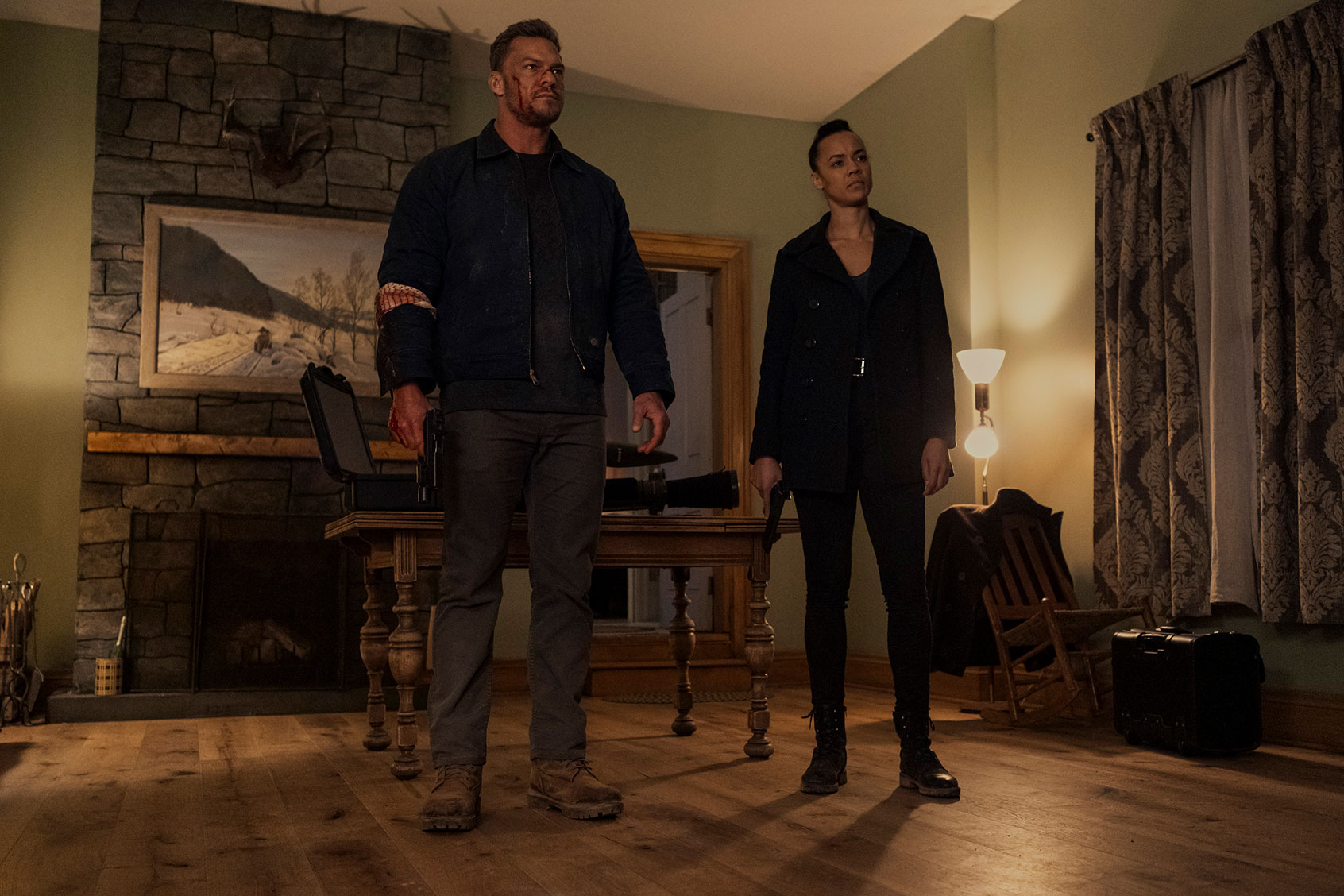
For all the grimness of this scene, that reaction plays like a hilarious punchline. We've already seen what the Big Guy, better known as Jack Reacher (Alan Ritchson), can do. In a prior episode, Reacher busts a man's nose by triggering the air bag of the car he's sitting in. He achieves this by kicking its front end so hard that the vehicle reacts as if it's been in a crash.

Ritchson's muscles-upon-muscles physique sells this moment because he looks and behaves like the man Lee Child describes in his books. Reacher stands 6 feet, 5 inches tall and weighs around 250 pounds. His adversaries don't so much fight him as crash into his mass. He grew up in the military, followed orders to the letter until he was discharged. He respects women, not merely out courtesy or chivalry but because their brains and combat skills have saved him more than once.

He believes in people above all — not institutions, not systems. He never loses his sense of what's right, which is why whenever trouble crosses his path, he does something loud, messy and definitive.

ReacherReacher (Prime Video)Reacher's also unfailingly loyal to those who earn it, including the murdered man — a member of his old Army unit of special investigators, the 110th. Upon learning he was killed, Reacher joins his solid friend and former master sergeant Frances Neagley (Maria Sten) in New York to figure out that their unit is being targeted, placing them on a hit list with a ticking clock. But it's the way his friend was eliminated that seals his torturer's death sentence.
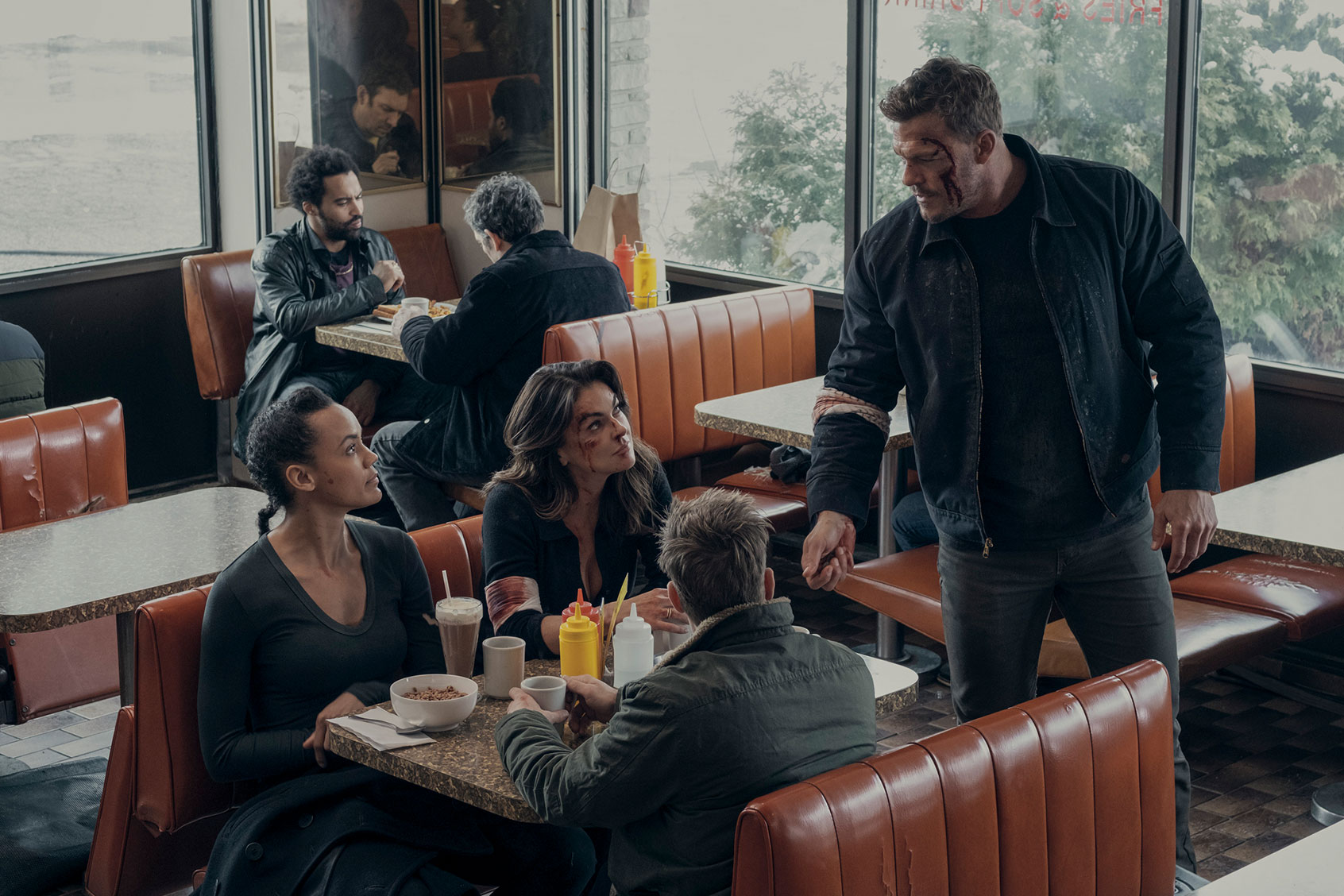
“I have the means to give you anything you can ask for,” Patrick's crook offers once Reacher gets his attention. "What is it that you want?"

Reacher calmly responds, “I want to throw you out of a helicopter.”

See? Simple.

Cultured Agatha Christie-style sleuths may dominate entertainment at present, but “Reacher” hooks into the widespread anti-establishment anxiety gripping both liberals and conservatives. Nobody feels our system of laws, checks and balances is working, least of all for them. The legal system traps the indigent and allows wealthy wrongdoers to buy their way out of accountability.

Reacher, Neagley and their surviving brethren of the 110th, which expands to include David O’Donnell (Shaun Sipos) and Karla Dixon (Serinda Swan), also operate under that assumption. None hold any illusions that the police or other government enforcement agents can protect them more effectively or efficiently than they can or dispense a punishment harsh enough to balance the scales of justice.  Across the eight-episode second season, that has meant outright executing those who murdered their friends and anyone who abetted them. 

Sure, the wheels and cogs of the legal system might work as intended. A sharpshooter's bullet is a lot more certain. 

Of course, this is very dangerous thinking, regardless of how straight Jack Reacher’s aim may be in the moral universe's shooting gallery. But it is also cathartic. The Season 2 finale of "Reacher" is out now, and while I won't spoil what happens to the Big Bad, there's no question that he earned it. Reacher is, if nothing else, a man of his word.

People of every political stripe love action flicks, although I'm guessing progressive fans are more likely to receive lectures about the genre’s celebration of nationalism, militarism and right-wing fears of rampant criminality. “Reacher” lives up to all those accusations — the season opens with him interrupting a carjacking in what is either a suburb or a small town. Later, when he’s short on cash and weapons, he tosses a couple of drug dealers and takes their money and guns. None of those small-time targets are white.

That said, the folks at the top ranks of the criminal conspiracy he and the rest of his crew uncovers are, fulfilling most assumptions about who is running and ruining things regardless of one’s politics. This season's main evildoers are dirty ex-cops helped by a bent congressman. Sounds about right.

ReacherReacher (Prime Video)Every crime solver has their weakness. Reacher’s is his lonely life. The show may be a bone-breaking punching tour of personal revenge that coincides with a rogue mission to keep the country safe, the type of red state red meat that sells. But he’s also an avatar of male isolation, paying for his avowed disconnection from the world by realizing how much of his friends' lives he’s missed. He doesn't compensate for that sorrow by taking a "cry harder, libs" stance toward people he disagrees with, mainly because he meets all types as he travels the country. By bus.
Reacher blends the type of ‘80s and ‘90s action meathead flicks that Gen X and elder Millennials were raised on with a combination of high I.Q. and emotional intelligence. This is why 80.8 percent of the show’s audience falls into these age demographics, according to Parrot Analytics, which also shows that the audience skews more male than its Prime Video cohorts “Jack Ryan” and “Bosch.” 

We need your help to stay independent

Then again, plenty of women love action movies, and “Reacher” delivers one of those per week, employing stunning fight choreography headlined by Ritchson’s gigantic presence. In a genre that remains overwhelmingly sexist, series creator Nick Santora gives us a figure who knows strong women can handle their business. Dixon and Neagley match Reacher’s ferocity and smarts, and he never makes light of their skills.  “Do I ever tell you how smart you are, Neagley?” Reacher frequently stops to ask, to which she replies, “Not nearly enough.” It’s a corny refrain, but you grow to appreciate it. 

These may be dangerous people but, you know, they have their reasons.

“Reacher,” along with “Echo” and “The Brothers Sun,” invites us to empathize with people who murder because they feel they have no other choice. It feels dirty, but also delicious – after all, the guys who buy it really, really have it coming.  

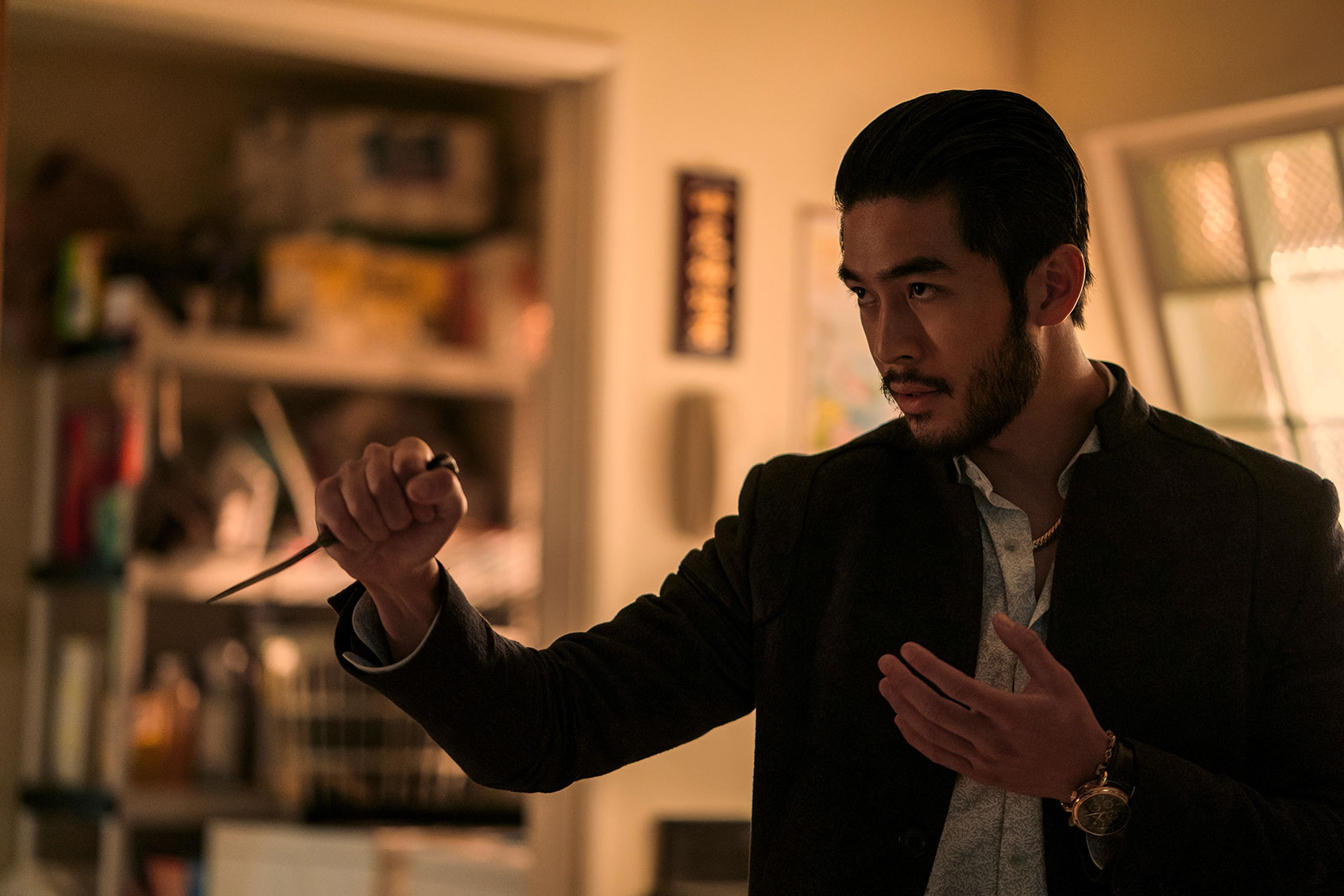
The leads in “The Brothers Sun” and “Echo” are assassins, though – not ex-military figures defending the little guy or upholding the righteousness that the justice system seems to have abandoned. They work for sinister crime lords. But we come around to rooting for Justin Chien’s Charles Sun when he realizes he’d rather bake and watch episodes of “General Hospital” than beat rivals to death with golf clubs and chair legs. He does terrible things, but we soon come to understand that he may not be a terrible man.

The Brothers SunJustin Chien in "The Brothers Sun" (Netflix)The same is true of Alaqua Cox’s Maya Lopez in “Echo,” who turns on the man who corrupted her, beating dozens of his goons silly along the way. She can’t find peace until she reconciles her trauma and moves beyond it. Since “Echo” is a Marvel title, that means Maya taps into supernatural gifts from her family’s bloodline. “The Brothers Sun” lets Charles heal in part by becoming comfortable with his “softer” hobbies, like perfecting a churro recipe.

Neagley is the closest thing Reacher has to family, his most valued attachment despite his pride in having none. Baked into Child's profile of the character is Reacher's insistence on carrying nothing with him except for the clothes on his back and a toothbrush. He’s a vagrant by definition — a man with no job, no paper trail or online presence.

That much he has in common with the “First Blood” version of Sylvester Stallone’s John Rambo circa 1982; he's also infuriated by cruelty to dogs like "John Wick." We recognize these fictional figures as death dealers whose extralegal sentences are justified. Before Hollywood rebranded him as a "pure combat machine," Stallone's Rambo was a PTSD-stricken Vietnam veteran who could have lived out his days hiking the mild forests of the Pacific Northwest, living like an "Alone" contender. Some small-town sheriff decided to harass and abuse Rambo, unchaining his inner rage monster to kill-kill-kill for five movies

What would Keanu Reeves’ hero be if a bunch of gangsters hadn’t killed the puppy gifted to him by his recently deceased wife?  Just some widower with a nice house in a gated community. But someone had to FAFO, and here we are.


Want a daily wrap-up of all the news and commentary Salon has to offer? Subscribe to our morning newsletter, Crash Course.


People connect to these heroes, and “Reacher,” for reasons similar to the those in “Echo” and "The Brothers Sun” held us. These may be dangerous people but, you know, they have their reasons. All of them would prefer to be left in peace. All of them come to realize that they need other people, someone to have their back in any scenario. Eventually that's why none of them stand by and let bullies, whether it's other criminals or indecent men wearing badges, steal their dignity or kill dogs or rob decent people of their calm or their loved ones. Someone has to balance the scales. Why not them?

EchoEcho (Disney/Marvel)And it's satisfying to fantasize about making people who scam the vulnerable or inflict grievous harm on the innocent answer for what they've done. Scores of such faceless criminals lurk out there in the dark, testing our locks every day by hoping we'll pick up the phone for that number we don't recognize, or click on that strange email claiming our accounts have been locked, or hacked, or that we've done something wrong.

Reacher takes care of the worst of those worst while exercising a frightening degree of honesty. Like when he reassures a frightened mother and daughter in his protection by saying, “It won’t be forever. We just need to kill a few more people.”  

Life holds no such correctives for most of us. Reasonable people wouldn't want it to.  But for a few pulse-pounding episodes this show is an offramp for our agitation and anxiety. Reveling in his brutality may rumble our guts on some level. But seeing Reacher and Neagley repay offenses that tend to go unpunished in the real world also feels undeniably good.

All episodes of "Reacher" are currently streaming on Prime Video. "Echo" is streaming on Disney+ and Hulu, while "The Brothers Sun" is streaming on Netflix.

Audiences don’t hate musicals – even if studios assume they do

When "Mean Girls" opened in theaters last week, some people showed up anticipating a regular remake of the 2004 movie that defined early aughts teenhood. But in a video shared online, audible and irritated groans from audience members can be heard the second lead character Cady (Angourie Rice) begins to sing in the new version of Tina Fey's comedy.

It seems that some audience members didn't know that this new version of "Mean Girls" is an adaptation of the critically acclaimed Broadway musical that premiered in 2017. The video amassed millions of views on X and TikTok with people questioning how the audience went into the movie completely oblivious to its large musical component.

Although there are three musicals out in theaters right now, the movie adaptation of Broadway's "The Color Purple" show is the only one that was upfront about the singing and dancing. That means neither "Wonka" nor "Mean Girls" were not particularly marketed as musicals. Both of their trailers only hinted at musical numbers but the songs were intentionally edited out, which confused audiences when they were seated in the theaters.

Here's the thing: "Wonka" and "Mean Girls" have both performed well at the box office, which shows that there's a disconnect between what studios perceive to be popular and what actually hits. As a result, their deceptive marketing gimmicks put the audiences in an uncomfortable and almost tense position as they go in blind into the theaters.

Studios assume people dislike musicals and market them accordingly 

This tactic isn't anything new. Studios have been marketing musicals in ways that are potentially deceptive to their audiences for years, but it's only recently been glaring with "Mean Girls" and "Wonka."

A spokesperson for Paramount Pictures, the studio that produced "Mean Girls," told Variety that musicals are difficult to market, and therefore, “We didn’t want to run out and say it’s a musical because people tend to treat musicals differently.” The assumption is that people wouldn't watch a musical if they knew it was a musical. Hence, the bait and switch trailers, and the audience's outraged reaction.

Paramount's head of marketing Marc Weinstock told Variety that they were subtle with "Mean Girls" marketing because "You can see in [trailers for] 'Wonka' and 'The Color Purple,' they don’t say musical either. We have a musical note on the title, so there are hints to it without being overbearing,” he said. Ultimately, Weinstock said “I want everyone to be equally excited," for movies like 'Means Girls.'"

However, in an interview with The Wrap, a former studio head said that "musicals are a proven genre." Essentially because musicals are genre-specific movies, people have already made up their minds about them before even watching the movies. But mostly, Hollywood executives are worried about all musicals becoming recent box-office flops like "West Side Story" and "In the Heights" which suffered from the COVID-19 pandemic-related low box office numbers and scandals driving viewers away from the theater, according to The Hollywood Reporter.

Surprise! People do show up to musicals

Regardless of the stigma against musicals, "Mean Girls" and "Wonka" are resonating with audiences. Since its holiday release, "Wonka" has made $500 million at the global box office, and "Mean Girls" debuted with $32 million opening weekend and is tracking to turn a profit. Even Paramount reported that 75% of audiences who watched "Mean Girls" knew it was a musical before buying a ticket, while 16% left the theater “disappointed” by the genre. For a genre that used to be incredibly popular during the Golden age of Hollywood – turning out triple threat stars like Judy Garland, Gene Kelly and Julie Andrews – its popularity may have waned but that doesn't mean people have altogether ruled musicals out.

WonkaTimothée Chalamet in “Wonka” (Warner Bros. Entertainment)But for the studios, marketing towards people not interested in musicals is more important. Generally the goal is to win over four-quadrant audiences – people who fall into the four target demographics: men, women and people over and under 25. After all, studios believe that musical audiences tend to skew more heavily female, which would leave out a good chunk of viewers out. But this narrow assumption, of course, severely underestimates all audience members.

Even though a movie like "Mean Girls" is potentially meant for a younger female audience with its predominantly female cast and themes of girl-on-girl bullying, why not market it for the people it’s made for then? If musicals are skewed towards women, and "Mean Girls" is a musical about women, why not just say that? Despite "Wonka" aiming for that four-quadrant win, its audience was also still majority women. Both films are considered successes.

We need your help to stay independent

Studios should stop underestimating audiences

This tactic to solely appeal to a narrow demographic (i.e. cis white men) is also assuming the worst in its male audience. It automatically presumes that they don't have diverse interests or want to experience movies that are outside of the more stereotypically masculine. If these movies were marketed honestly, it would allow men to make an educated and informed decision as moviegoers with all the information. 

It seems like studios are confused about what the general public is interested in. If they do have an idea, it's a very narrow and limited perspective of what people want to see at the theater. Look at movies like "Girls Trip," "Crazy Rich Asians," "Black Panther," and "Get Out." All of these movies were seen as a potential risk for studios because of what was once perceived as being too niche due to its cast and crew of marginalized people. However, those were the main reasons people showed up at the theaters, making them into blockbuster hits. Just as women have been showing up to so-called men's movies for decades, other audience groups are also able to embrace characters and themes outside of their own direct experience. 

At the end of the day, Hollywood decisionmakers don't want to take creative risks. Studios are quick to make false judgments and jump to conclusions, missing the larger context of moviegoers' needs. Assuming they know all our preferences is not how you appeal to a wider audience. Allowing moviegoers the transparency and agency to make their own choices from innovative and inclusive storytelling is how they'll draw people to the theaters.


“Living through a mass disabling event”: Will Congress finally take long COVID patients seriously?

Over the last four years, Angela Meriquez Vázquez has faced a long list of health scares and conditions, any of which could have had a profound impact on her life individually. From mini-strokes to brain swelling to seizures to painful heart palpitations — not to mention severe shortness of breath, extreme confusion and numbness in her face — Vasquez didn’t start to experience these events until after she got infected with COVID-19 in March 2020.

Prior to the infection, Vázquez was a healthy runner for nearly 20 years. Today, she is on 12 different prescription medications, including weekly IV treatments at the hospital. She has a “strict pacing regimen” that allows her to work from home, but not much else. 

“I do not socialize, or enjoy my old hobbies, and I don’t really leave my home, especially now that I am now considered high-risk,” Vázquez said in a hearing with the Senate Committee on Health, Education, Labor and Pensions, emphasizing that Congress needs to treat long-COVID like the crisis it is. “We are living through what is likely to be the largest mass disabling event in modern history.”

Vázquez was one of three long COVID patients who confronted Congress about the issue for the first time on Jan. 18 in Washington D.C.

Long COVID develops when symptoms of COVID don't disappear, lasting anywhere from a few months to years. It is characterized by severe fatigue, brain fog and other neurological issues, palpitations and a range of other symptoms. The U.S. Department of Health and Human Services classifies the condition as a disability because of the physical and mental impairment it can cause.

“We are living through what is likely to be the largest mass disabling event in modern history.”

Despite public attitudes in the United States seemingly moving on from the pandemic, especially since the government ended its public health emergency declaration in May 2023, the threat of long COVID continues to loom. But the recent wave of infections, driven largely by the JN.1 variant, was the second biggest in the last four years of the pandemic, dwarfed only by the Omicron surge in early 2022.

As research has recently shown, people can still get long COVID after a coronavirus reinfection. Some studies have shown that subsequent COVID infections increase a person’s risk of getting long COVID. To date, long COVID has afflicted up to 23 million Americans while the Centers for Disease Control and Prevention (CDC) estimates 1 in 13 adults in the United States currently have long COVID symptoms. And it’s not just people who are considered to be “high-risk” for a severe COVID-19 infection, like those who are already immunocompromised, who are susceptible to long COVID.

“No one is safe from it,” Dr. Ziyad Al-Aly, chief of research and development at the VA St. Louis healthcare system who also testified at the hearing, told Salon. “And there is no treatment for it.”


Want more health and science stories in your inbox? Subscribe to Salon's weekly newsletter Lab Notes.


Recent research has shown that getting vaccinated can reduce the risk of developing long COVID. Specifically, it reduces the risk by 15 to 70 percent in adults, and it reduces the risk moderately in kids. Adolescents saw the greatest protective effect, particularly those who had a higher risk of long COVID, which waned over time.

“No one is safe from it. And there is no treatment for it.”

In Al-Aly’s testimony, he brought up that this isn’t the first time that a pandemic has left millions disabled. Acute infections can turn into chronic disabling disease. He noted that historical accounts of both the Russian flu and 1918 Spanish flu pandemic show that many people suffered from long-term health effects such as cognitive decline, debilitating fatigue and Parkinson’s disease after infections. Doctors now know that Myalgic encephalomyelitis/chronic fatigue syndrome (ME/CFS), which affects 4.2 million Americans, is a debilitating multisystemic illness that is believed to be triggered by a flu-like illness. 

Al-Aly told Salon in an interview he fears history is repeating itself. After a pandemic, there is a rush and eagerness to move on. He compared it to the aftermath of an earthquake.

“It doesn’t stop when the earth stops shaking,” he said. “Arguably, the aftermath of an earthquake is much more profoundly consequential than that.”

Long COVID, he said, is a “very serious health crisis” that the public and legislators have had a hard time acknowledging and supporting in part because it can appear to be an “invisible crisis.” Many people don’t physically appear to be struggling, he said. But functional exams reveal there are a lot of serious health problems going on internally. Al-Aly said many people with long COVID are missing school, social events and work, making the crisis less apparent in the public eye, too. It's not like the housing crisis, which is visible on many street corners throughout the U.S. Even as many people unmask in public, long COVID patients are reluctant to risk re-exposure.

"The federal government can and should be doing more to support long COVID patients."

It's not just people that are taking a hit from long COVID, but also the economy. In January 2022, Brookings Institute estimated that 1.6 million full-time equivalent workers could be out of work due to the condition, leaving 10.6 million unfilled jobs. At the time of the analysis, researchers estimated that 16 million working-age Americans, those between the ages 18 and 65, had long COVID today. Of those, between two to four million were unable to work because of it. The estimated annual cost of those lost wages alone was around $170 billion a year.

Al-Aly said it’s a positive step forward that the hearing occurred in the first place. He told Salon he sensed that the panelists, like Sen. Bernie Sanders (I-VT), were “deeply engaged” and that the Senate hearing was a “historic day” for long COVID. Vázquez agreed that she believes the hearing went very well. 

We need your help to stay independent

“I really appreciated Senator Sanders' summary of the takeaway of the hearing, which was that the federal government can and should be doing more to support long COVID patients with research and social support,” Vázquez said. “Just given that statement from one of the ranking and most influential senators in Congress, that is a huge win for patients.”

But there’s room and a need for more urgent progress and solutions to be made. Vázquez told Salon she is grateful to have the “economic privilege” to pick up the slack where the government has failed other long COVID patients. She has an income that allows her to buy masks and a job that allows her to work from home. 

“Most folks, low-income, working class people don't have the privilege,” Vázquez said. “I would love to see more resources dedicated to social security disability benefits, as well as more investment in Medicaid services to identify and connect low-income long COVID patients to clinical care so that they can at least manage their condition and prevent them from deteriorating.”

Al-Aly said long COVID needs to be an urgent priority for the federal government. “We need a long term commitment,” he said. “And we need a coherent, coordinated approach to really solve the problem.”

“Democrat shenanigans”: Experts alarmed as MAGA fans cry “fraud” in Iowa — despite Trump’s huge win

Despite former President Donald Trump's dominant Iowa caucus victory, some supporters are spreading false claims of voter fraud because he lost a single county by a single vote.

Trump, who has leaned on conspiracy theories and a fabricated narrative alleging that the 2020 election was rigged against him, has supporters perpetuating similar claims. Some of his most fervent supporters are pushing electoral conspiracies on far-right online platforms even though Trump won 51 percent of the vote in Iowa, Wired reported

“Haley by one vote in Johnson County screws my prediction of 99/99 to Trump. Audit!,” election denial influencer Seth Keshel posted on Truth Social.

Keshel’s followers baselessly claimed that individuals who voted for Nikki Haley had been “paid” to vote against Trump.

Users on The Donald, a pro-Trump message board that played a key role in organizing the January 6 riot, expressed dissatisfaction with Haley's assertion on Monday night that Iowa voters transformed the presidential election into a "two-person race," Wired reported.

“They rigged that county by a single vote just so she could say this,” one user wrote.

Others claimed that the one-vote loss was the work of the so-called deep state with a user writing: “To win by ONE vote is just too conspicuous. It looks like a ‘F**k You’ from the Deep State.” 

Similar messaging also spread on X/Twitter, with far-right activist Laura Loomer perpetuating such claims. 

“After it was reported that President Trump won every county in Iowa tonight, Democrat shenanigans ensued and now it’s being reported that Johnson County in Iowa, which is a Biden +40 county, flipped to Nikki Haley by ONE VOTE,” Loomer posted on X.

She went on to falsely claim that the vote was from a Democrat who showed up to switch their registration to Republican at the door to vote for Haley, adding that Iowa allows for same-day registration, “which is why Democrats told their supporters to register Republican to vote for Nikki Haley during the Caucus.”

Another account called Red Eagle Politics wrote “We need a recount in Johnson County RIGHT NOW!” 

The former president’s supporters continue to embrace the false narrative that the 2020 presidential election was stolen from him. 

Nearly 70 percent of his Iowa caucus voters falsely believe that President Joe Biden was illegitimately elected, The Independent reported. When questioned about the legitimacy of Biden's election in 2020, over two-thirds of Iowa caucusgoers said they believed it wasn’t — including 69 percent of Iowa caucusgoers who supported Trump. 

With the presidential election approaching, experts warn that disinformation will present an unparalleled threat to democracy in 2024, especially as a growing number of voters are falling victim to disinformation being pushed out by Trump and his allies. 

There are really “no legal means” of punishing Trump for fueling conspiracies around the GOP primaries unless he attempts to directly interfere in the election outcomes, A.J. Bauer, a journalism professor at the University of Alabama who studies conservative media, told Salon. 

The main impact of conspiracy theories surrounding electoral outcomes in the primaries will be felt following the general election — if Trump continues “priming” Republican voters not to trust electoral processes, it increases the likelihood of further unrest should Biden win reelection, Bauer said. 

It also increases the likelihood that Republicans engage in voter fraud to counteract perceived efforts by their opponents as we saw in 2020, Bauer pointed out, referring to three people in Florida being charged with voter fraud in connection with the last election.

“More than three years after the 2020 election, there are still people who are convinced that there was voter fraud and there is a persistent mistrust of American election institutions because of perceptions that Donald Trump wasn't able to reclaim the White House state,” Andra Gillespie, a political science professor at Emory University, told Salon. “Legislators haven't taken enough affirmative steps to try to address and prevent voter fraud, and a lot of that's going to be viewed through a partisan lens.”

We need your help to stay independent

What makes matters worse is that social media companies have rolled back efforts to rein in misinformation on their platforms, allowing users to propagate unfounded conspiracy theories.

While the rise of social media has democratized the dissemination and the collection of news, it has also created an opportunity for people who are not trained journalists to spread misinformation, Gillespie pointed out.

“We live in a media environment that is so fragmented that people can find anybody to say what they already believe,” she said. "And so people seek out information that actually tends to reinforce what they already believe… People can self-select into watching news that just tickles their fancy and only tells them what they want to hear.”

The challenge of combating misinformation has always suffered from a “flawed premise” — that there is an agreed-upon definition of what constitutes accurate information in the first place, Bauer explained. Facts and information always require interpretation and “meaning-making” in order to be understood and used in political decision-making. 

“Often, misinformation is merely someone contextualizing information in a way that someone else disagrees with, or would contextualize differently,” Bauer said.


Want a daily wrap-up of all the news and commentary Salon has to offer? Subscribe to our morning newsletter, Crash Course.


The challenge is in building a media system and political culture that enables the cultivation of widely shared meanings of politically relevant information and the news of the day, he added.

“Increasing dysfunction in our media system, along with the growth of a distinctly right-wing media sector (with no left counterpart), has inhibited our ability to build shared values for interpreting news and information, while amplifying right-wing narratives and interpretations,” Bauer said. “The problem isn’t the susceptibility of Trump voters, it’s structural. It isn’t a problem of truth, it’s fundamentally a political problem.”

While the false information persists, technological advancements have also allowed people to have access to media manipulation tools, allowing information to be shared more quickly.  A World Economic Forum survey found that AI-generated misinformation and disinformation was the top global risk for the next two years, surpassing climate change and war, NBC News reported.

“So far in this primary there hasn't been a whole lot of rumor – even compared to 2016 or 2020, at least on X,”  Mike Caulfield, a research scientist at the University of Washington’s Center for an Informed Public who studies election rumors, told Salon. “That might change in New Hampshire if there is a serious challenge to the narrative of Trump's dominance.”

But he cautioned against using the primary as an “indicator” of the level of election misinformation we will see in November.

“A close race will dramatically increase the prevalence of election rumor, particularly if Trump is at the top of the ticket, and the focus of these rumors, with their eye toward New Hampshire, the one state that could be close, are an indication of that,” Caulfield said.

Long-term, if right-wing politicians continue to deny election outcomes, we will get closer to a “constitutional crisis,” Bauer predicted. If the Republican Party continues to follow Trump’s “discrediting of elections and legitimation of dictatorship,” we’re at risk of seeing a “fundamental break” with our constitutional traditions. “‘Democracy’ as we’ve experienced it is at risk.”

No steps have been taken to address the challenges posed by misinformation on social media in the near term, he added. 

“We are going into the 2024 election cycle completely unprepared to address the structural issues that are making our politics dysfunctional,” Bauer said. “We have been openly discussing these problems for eight years, to no avail. If anything is to be done, it won’t happen before November. Things will get worse before they get better, if they get better at all.”

The Supreme Court looks set to make Steve Bannon’s dream come true

Not long after Donald Trump was sworn in as president back in 2017, his chief strategist, Steve Bannon, made an incendiary statement vowing that the new administration would fight an unending battle for the “deconstruction of the administrative state,” raising fears that the new president would carry out a blitzkrieg assault on the federal bureaucracy. While the former TV host likely had no inkling of what his more ideological strategist meant by the “administrative state,” it would not be long before Trump himself would embrace similar rhetoric aimed at what he derisively coined the “deep state.” Unlike his advisor (and many libertarian-leaning Republicans), Trump’s hostility towards the federal government stems less from any ideological opposition to “big government” than from his own personal resentment and paranoia. With his agenda stalled early on his term, the president came to blame all of his woes on this supposedly omnipotent deep state, which denoted a quasi-invisible and demonic cabal of entrenched bureaucrats allegedly sabotaging his presidency. 

Fortunately for those who believe in a strong and independent federal bureaucracy, the Trump administration largely failed to follow through on these early threats. Within six months of his inflammatory remark, Bannon was out of a job in the White House, while the embattled president had more pressing concerns than attempting to dismantle the federal bureaucracy. By the time he left office, Trump had done irreparable damage to American democracy and its institutions, but the so-called “administrative state” — an ideological shorthand for the numerous departments and independent agencies inside the federal government, from the Environmental Protection Agency (EPA) to the Securities and Exchange Commission (SEC) to the National Labor Relations Board (NLRB) — remained standing, if not mostly unscathed.

Donald Trump’s rise thus ushered in a more radical and dangerous phase in the conservative movement’s decades-long struggle against the federal government.

Still, more than three years after Trump left the White House, the so-called administrative state is under assault like never before — in large part due to the enduring legacy of the Trump administration. This was evident this week, when the Supreme Court heard oral arguments that challenged a forty-year-old case that had established judicial deference to federal agencies like the EPA in their implementation of “ambiguous statutes.” In other words, the philosophy that it is best for judges who know little about environmental standards or the derivatives market or drug development to defer to the “reasonable interpretation” of statutes by experts in their respective agencies. If this challenge to what is known as the Chevron Doctrine is successful, it would open up a floodgate of potential legal challenges to regulations across the federal government, crippling the ability of agencies like the SEC or the EPA to carry out their missions. Not surprisingly, it currently looks like at least two of the three Supreme Court justices nominated by Trump will help to repeal this doctrine and open up the anti-regulatory floodgates. It’s Steve Bannon’s dream come true.

Trump’s toxic legacy is not only felt in the judiciary. Indeed, it is clear from the Republican primaries that the entire GOP is now fully devoted to the once-fringe cause of dismantling the administrative state. Recall Florida Gov. Ron DeSantis’ vow to "start slitting throats on day one." 

While Trump largely failed to carry out his own threats against the “deep state” as president, his final year in office offered a dress rehearsal for what to expect if he — or any Republican — returns to the White House next year. Over the course of his term, Trump’s obsession with the “deep state” intensified, as did his Nixonian quest to root out his enemies. Shortly after his first impeachment trial, the president tapped loyalists to carry out a purge of any officials who displayed even the slightest hint of dissent. Spearheading the effort was Trump’s former body man, 29-year old Johnny McEntee, who the president appointed to run the Presidential Personnel Office (PPO). Overseeing the hiring and vetting of the roughly 4,000 political appointments in the executive branch, McEntee quickly pushed out officials deemed disloyal and earned the moniker of Trump’s “loyalty cop.” 

This purge was only a preview of what the administration had planned for his second term. Weeks before the 2020 election, the president signed an executive order known as “Schedule F,” which would have stripped civil service protections from tens or even hundreds of thousands of employees had it been implemented. Though promoted as a measure to enforce accountability, Schedule F was an overt attempt to politicize the bureaucracy. It would have empowered the president to easily purge the civil service of any senior or mid-level officials deemed politically suspect or insufficiently loyal. 

Today Schedule F has more or less become doctrine on the right. Donald Trump’s rise thus ushered in a more radical and dangerous phase in the conservative movement’s decades-long struggle against the federal government. All the major Republican presidential candidates have promised to reinstate some version of the executive order, which President Biden rescinded upon entering office. Indeed, most candidates have even tried to outdo Trump in both their policies and rhetoric. The supposed “moderate” in the race, former South Carolina governor and UN ambassador under Trump, Nikki Haley, has put forward an even more radical plan than Schedule F that would not just strip civil service protections but introduce five-year term limits for all positions in the federal workforce — from air traffic controllers and public health inspectors to park rangers and Social Security administrators. As Washington Post columnist Catherine Rampell notes, this would effectively “destroy the basic machinery of government” — which might just be the point.

Across the board, then, Republicans have embraced the Trumpian vow to “destroy the deep state.” They have also adopted the former president's conspiratorial rhetoric about the federal bureaucracy and civil service, which is now depicted as a national fifth column. The traditional Reaganite critiques of big government waste, inefficiency and onerous regulations have been increasingly supplanted by radical fulminations against the “deep state” that sound more like The Turner Diaries than The Road to Serfdom

This is evident throughout Mandate for Leadership, the 920-page manifesto published earlier this year by the Heritage Foundation-led 2025 Presidential Transition Project (or Project 2025), which aims to recruit and vet up to 20,000 potential staffers for a future Republican administration after the anticipated purge. Writing in the book’s introduction, project director Paul Dans, who served in Trump’s Office of Personnel Management during his final year, breathlessly proclaims that the “long march of cultural Marxism through our institutions has come to pass,” giving credence to a notorious conspiracy theory that has long floated around white supremacist circles. With the federal government ostensibly captured by "cultural Marxists” and “globalists,” Dans frantically proclaims that it has been "weaponized against American citizens and conservative values, with freedom and liberty under siege as never before.”

We need your help to stay independent

This kind of siege mentality has become the official posture of the right since the rise of Trump. “Either the deep state destroys America or we destroy the deep state,” proclaimed the Republican frontrunner last March at his first campaign rally, which he symbolically held in the city of Waco, Texas, just seventeen miles from where the FBI got into a deadly standoff with the apocalyptic Branch Davidians cult almost three decades before. Besides inspiring the far-right terrorist Timothy McVeigh in his bombing of a federal building in Oklahoma City in 1995, the “Waco siege” also galvanized various anti-government militia movements that would ultimately contribute to the storming of the capital more than a quarter century later. The symbolism of holding his opening rally in Waco was not lost on Trump’s allies. “We’re the Trump Davidians,” Bannon quipped to ABC News journalist Jonathan Karl when asked why the Trump campaign would choose Waco for its opening act. The rhetoric of both Trump and his “Davidians” leaves little room for doubt about their intentions if he wins in November. 

For the millions of MAGA zealots, Trump’s election is less about achieving specific ideological aims than about satisfying their thirst for revenge. On the other hand, the authors of Project 2025’s manifesto have more concrete ideological goals that happen to align with Trump’s revenge fantasy. In his forward to Mandate for Leadership, Heritage Foundation president Kevin Roberts alludes to the unifying goal when he states that the “top priority” for the next Republican president must be to “dismantle” the “administrative state.” Or as Dans puts it, the goal is to “assemble an army of aligned, vetted, trained, and prepared conservatives to go to work on Day One to deconstruct the Administrative State.” 

Republicans have been harboring fantasies about gutting the federal government since the Reagan era. But what distinguishes today’s right from the past is its greater willingness to employ explicitly authoritarian means to achieve their ends. Indeed, a growing number of conservatives now appear convinced that the next Republican president must be granted something close to dictatorial power if their movement is to stand a chance against the “cultural Marxists” who allegedly control the state. 

To legitimize an autocratic power grab by Trump or any other Republican president, many conservatives will no doubt employ the dubious legal theory of the “unitary executive,” which was first popularized during the George W. Bush administration to justify the president’s illegal policies in the war on terror. The unitary executive theory asserts that the president is effectively above the law and has absolute control over all departments and agencies in the federal government (including independent and quasi-legislative agencies like the EPA or the NLRB). This controversial interpretation of Article II grants the president something close to dictatorial power, giving him or her total control over the hiring and firing of two million federal employees and “complete authority to start or stop a law enforcement proceeding,” as one of the theories leading proponents, Bill Barr, wrote in a memo shortly before Trump appointed him attorney general.

While most conservatives continue to cloak their vision of a strongman executive in contentious legal theories, a growing contingent on the right has more or less abandoned such pretenses. Since Trump’s defeat, the idea of a so-called “Red Caesar” coming to rescue the beleaguered republic has caught on in more reactionary milieus. “Red Caesar” was first coined by conservative author and former national security official in the Trump administration, Michael Anton, who in a 2020 book predicted that a “red America that feels sufficiently imperiled by the leftist coalition might well look to unify behind one man with authority.” For Anton, the coming of Caesarism — defined as “authoritarian one-man rule partially legitimized by necessity” — appears almost historically determined. “Just as tyrannies give way to aristocracies and republics on the upswing, so do democracies collapse into decadence, anarchy, and back to tyranny on the downswing,” he writes. In Anton’s telling, the cyclical historical forces at work in America today are no different than those in ancient Rome, where Caesar and his successors restored order and — for a time — greatness to a decadent republic. “When and where Caesarism comes, it arises only because liberty is already gone,” writes Anton, offering a preemptive justification of a Trumpian assault on the country’s exhausted democratic institutions. 

With the now widespread acceptance among conservatives that the federal government and other major institutions have been captured by "cultural Marxists,” “globalists,” and “wokeists,” Republicans are now pre-programmed to accept more authoritarian leadership. This is especially the case among a younger coterie of Republicans who have come to prominence in the post-Trump era. Unlike some of their older Republican colleagues, these young Trumpians are more open to employing post-Constitutional or “extra-Constitutional” means to achieve their reactionary goals. 


Want a daily wrap-up of all the news and commentary Salon has to offer? Subscribe to our morning newsletter, Crash Course.


Consider Ohio Senator J.D. Vance, a Trump supporter who echoed Anton’s analysis of contemporary America on a far-right podcast in late 2021, noting that “we don’t have a real constitutional republic anymore” but rather an unaccountable “administrative state.” With America currently in its “late republican period,” Vance suggested that resisting woke tyranny will require Republicans to get “pretty wild” and go in “directions that a lot of conservatives right now are uncomfortable with.” While sympathetic to the cause of “deconstructing” the administrative state, Vance offered a more Caesarist alternative: “I tend to think that we should seize the institutions of the left…and turn them against the left. We need like a de-Baathification program, a de-woke-ification program.” If Trump is wins this fall Vance suggested that he immediately fire “every single mid-level bureaucrat” and “civil servant in the administrative state” and replace them with “our people.” 

Ultimately, the point of the planned purge is not to replace every civil servant who is forced out but to derail the federal government before stripping it down and selling it for parts, like private equity vultures fresh after a hostile takeover. In the words of the authors at Project 2025, the “only real solution is for the national government to do less: to decentralize and privatize as much as possible…” The Trumpian innovation comes in the effort to weaponize the agencies and departments that remain after the right-wing assault on regulatory agencies like the EPA and the Consumer Financial Protection Bureau (CFPB). The Republican frontrunner has already promised to weaponize the justice department and is reportedly mulling over deploying troops against domestic protests on day one. Trump would return to Washington with more experience and an entire team of “loyalty cops” working to enforce fealty across the executive branch. And as recent hearings at the Supreme Court have shown, he would also return with increasingly politicized courts that are sympathetic to both his assault on the “administrative state” as well as his quest for more “unitary power” over the executive branch. 

The growing belief in the necessity of “authoritarian one-man rule” on the right stems from the fact that their ideological project is broadly unpopular with the American people. The majority of Americans do not support dismantling environmental protections or criminalizing abortion or eliminating child labor laws or registering teachers and librarians as sex offenders for espousing so-called “transgender ideology.” Neither do they support the modern right’s crusade to “dismantle” or “deconstruct” the “administrative state.” 

While it is true that public trust in the government is currently close to an all-time low, conservative critics tend to greatly exaggerate how much of this stems from disapproval for career civil servants and government agencies. In reality, low ratings for the “federal government” tend to reflect the population’s disdain for Congress and national politicians from both parties. Conversely, most individual departments and federal agencies receive favorable ratings from Americans, whether it's the National Park Service (+74%), the U.S. Postal Service (+57%), NASA (+65%), the Social Security Administration (+33%), the EPA (+24%), or the Department of Health and Human Services (HHS, +25%). The same is generally true for federal employees. A 2022 survey by the Partnership for Public Service found that while only 30 percent of people view members of Congress favorably, more than 6-in-10 have a favorable view of civil servants. 

Dismantling the “administrative state,” then, is not a goal that most Americans or even most Republican voters would knowingly support. For Trump, destroying the nebulous “deep state” is part of a personal crusade. In all likelihood, he would be satisfied if he could simply weaponize the justice and defense departments to go after his enemies. But for the ideologues who have hitched themselves to his star, the mission is far more ambitious. In the event of a Trump victory in 2024, one can expect the worst of both worlds: an assault on essential agencies that would recall the worst neoliberal policies of the Reagan years, and the weaponization of those “deep state” agencies that would recall the worst abuses of the Nixon and Bush years.

Water bottles everywhere — so why are we still not drinking enough water?

Buying things is not the same as doing things. Weights don't work unless you pick them up. Books don't read themselves. And those supersized water bottles people are stampeding to get their hands on are just doorstops unless you're actually drinking water. Water bottle sales are an $8 billion business in the U.S., with Stanley alone clocking in with $750 million in annual sales for 2023. The Reddit r/HydroHomies sub has over a million subscribers, and TikTok and Instagram are drenched in enthusiastic water bottle content. So why, then, does it seem are so many of us are still not adequately hydrated?

There's conflicting data on just how under watered we are, and the often cited figure that 75% of Americans are "chronically dehydrated" doesn't hold much, uh, water. Here's what we do know. The NIH suggests we aim for between 72 and 96 ounces of water a day. The CDC offers no specific recommended amount of daily fluid consumption, noting instead that needs "vary by age, sex, pregnancy status, and breastfeeding status." It estimates we average about 44 ounces of water a day, which isn't very much, especially given that about half of us drink at least one soda daily, and roughly 2/3 of us have at least one coffee a day. A 2023 poll from the consumer analytics company Civic Science revealed that nearly half of all respondents (47%) said they only drank between zero and three glasses of water per day.

We need your help to stay independent

Getting enough water every day is essential not just for good health but survival. You can last about a month without food. You'll last about three days without water. A longitudinal 2023 National Institutes of Health study published in eBioMedicine found that "Adults who stay well-hydrated appear to be healthier, develop fewer chronic conditions, such as heart and lung disease, and live longer compared to those who may not get sufficient fluids." It further noted that "Adults with higher levels of normal serum sodium ranges – which increase as fluid levels go down – were more likely to show signs of advanced biological aging. They also had a greater chance of dying prematurely." 

"Nearly half of all respondents  said they drank between zero and three glasses of water per day."

So how much water should you be putting away? "As with most things when it comes to nutrition and diets, there's not a one size fits all to hydration," says Dr. Sotiria Everett, a Clinical Assistant Professor at Stony Brook Medicine.

"I work with elite athletes here in the college setting, and hydration is something that I do emphasize," she says. "There are certain measures in this population that help me determine if they are hydrated. The athletes get weighed before and after a workout session to determine hydration losses, and those losses have to be made up after the workouts." But, she says, "For the average individual, there are other markers of hydration. One of the most simple ones and anyone could do this is just to check the color of the urine in the morning when you wake up. For the first urine, if it's pretty dark — the comparison is like a dark cider or apple juice — then you're probably not doing a good job about hydrating. If it's looking a little bit clearer, like lemonade, then you're doing a better job." Another indicator, she says, is if you're experiencing weight loss fluctuations from day to day. "That could be a sign of not getting enough water," she says. And then there's the old standby — listening to your thirst.

"If there's a higher concentration in electrolytes in our body because the actual water level is low, our thirst mechanisms should switch on," Dr. Everett notes, though "There are some individuals where that might not be working appropriately, usually due to medication. But an average person who's pretty healthy and works out or exercises in a normal amount, that thirst mechanism, the water the color of the urine and just their weight," she says, are all good guideposts.

But what if — like those people who skip lunch or cut corners on their sleep — you're not always paying attention to your thirst? How do you know when you need water? "If you do start exercising and you feel like your body's working harder than it needs to be, your heart rate is higher, you're probably dehydrated. Day to day, if you're feeling lightheaded or low blood pressure, low pulse, maybe drink some water," she says. That's not a signal to ignore other symptoms that may be going on your body, but Dr. Everett notes, "If you're feeling hotter or more exhausted than usual, and you reflect, 'My water bottle is on my desk, and it's pretty full,' I would say take a take a drink, see if that's something that would help."

If, like me, you sometimes struggle with the water blahs, you can always zhuzh it up. "Make your water exciting by freezing fruit juice or tea into ice cubes. They'll subtly flavor your water as they melt," says registered dietitian Yaa Boayke. "Dedicate different days of the week to unique water themes. For example, Minty Mondays could involve adding fresh mint to your water, and Fruity Fridays could see you infusing water with slices of your favorite fruit." I float cucumber slices in my water and I swear like I feel like I'm getting a little wisp of a spa experience in my otherwise non luxurious life. And water isn't the only game in town; you can get some of your hydration from fruits and vegetables, non caffeinated tea and low sodium broths.

Reusable water bottles really are a good idea — they've certainly got the disposable kind beat in terms of landfill waste and microplastics. And there's nothing wrong with a cute accessory that can be a motivator to stay hydrated, especially if you're not a member of the well watered Gen Z. "One benefit of these bottles is that the volume is provided," says Dr. Sotiria Everett. "If the range for people to drink water is one and a half to 3 liters a day, then they have some quantity to establish their own baseline, see how they do and how they feel if they meet that minimum, and then gauge intake from there." You can also drink your water out of a glass, a paper cup, a Mason jar; then you can get the stuff to fill it with out of your tap for free. In all of our consumerist obsession about vessels, what matters most for our health isn't the bottles, it's that they're meaningless if we forget to consume their contents.

Tim Scott looks to Trump as a president who will “restore law and order” in official endorsement

In a video posted to X (formerly Twitter) earlier in the day on Friday, South Carolina Senator Tim Scott — the only Black Republican in the Senate — teased an announcement that he has now officially made.

In the video, he stands in front of Trump's campaign plane and urges viewers to "tune in, pay attention, listen closely, and let's talk about four more years." And after making the announcement during a campaign event in Concord, New Hampshire hours later that he's officially endorsing Trump as president, we know who he's hoping to see in office for those four years.

Addressing voters with a grinning Trump standing behind him, Scott revved everyone up by yelling, "Is this Trump country?" Said with the same level of enthusiasm one would have when welcoming a group to Flavor Town.

Going on to sing the man's praises, Scott said, "We need a president who will protect your social security and my momma's social security. We need Donald Trump. We need a president today who will stop the crime and recklessness in the streets. We need a president who will restore law and order."

Scott's pick, although anticipated, is a blow to Nikki Haley, who appointed him to the Senate in 2012.

Watch here:


Nikki Haley says she doesn’t want to be anybody’s vice president

As we get further along in what's being called the biggest election year in history, a popular topic is who Donald Trump will pick to be his running mate but, according to Nikki Haley, it certainly won't be her.

With buzz of her being on a short list of candidates for Trump's VP, should she decide to end her own campaign, Haley shrugged that off as being an option for her, telling voters at Mary Ann's Diner in Amherst, New Hampshire on Friday, "I don't want to be anybody's vice president . . . That is off the table. I have always said that."

According to The Boston Globe, Haley fielded questions from a Hollis resident during her stop-in at the diner, who was concerned about her pledge to pardon Trump if he's convicted of any of the 91 felony charges he’s currently facing. Haley assured him that "her goal in pardoning Donald Trump would be to bring the country together, not to help the former president," per the outlet's reporting.

“If there’s an 80-year-old president sitting in jail, you are going to see the country continue to be divided,” she said. “It would be for the good of the country, not for the good of him.”


“I.S.S.” filmmaker on US-Russian space conflict: “I’ve never seen a better argument for a mutiny”

“I.S.S.” is a taut, efficient thriller set on the International Space Station, a U.S.-Russian research facility for medicine, technology and space exploration. 

"You are always one mistake away from total annihilation."

As the film opens, Dr. Kira Foster (Ariana DeBose) and Christian Campbell (John Gallagher, Jr.) arrive at the I.S.S., and are greeted by fellow American, Gordon Barrett (Chris Messina), as well as the three Russian crewmembers, Weronika Vetrov (Masha Mashkova), Nicholasi Pulov (Costa Ronin) and Alexey Pulov (Pilou Asbæk). The team gets along fine until war unexpectedly breaks out on Earth, and Gordon and the Russians are both ordered to seize control of the I.S.S. As such, trust becomes as tenuous as the tether that keeps an astronaut secure on a spacewalk, and betrayals come quickly. Buzz Lightyear’s mantra, “What’s important now is we stay together,” is used to encourage loyalty sometimes from the “enemy.”

Director Gabriela Cowperthwaite (“Blackfish”) ratchets up the tension by using the claustrophobic space inside the I.S.S. to dictate the action in this crucible. In the zero gravity environment, characters float around the station, sometimes hiding from each other and sometimes fighting. It’s all carefully choreographed as the crew find themselves trapped and in danger, hoping to survive.

Cowperthwaite spoke with Salon about making “I.S.S.” and how she might have managed in the tense situation the characters face. 

What is the appeal of space? Do you have any desire to go explore the universe and beyond? 

Zero interest after what I’ve read. I think I would have been that person before — the conceit of being in this place looking down on Earth was inspiring and exciting. The more I read about it — Scott Kelly’s “Endurance,” and talking with Garrett Reisman, the NASA Coordinator, I realized we are not supposed to be there. There is nothing good about a human being in zero gravity in that crazy petri dish of a capsule. It is terrible for your organs, your bones, your eyes. You are always one mistake away from total annihilation. I know that sounds so hyperbolic, but you are relying on everyone working at the top of their game every single second. It is such a precarious place. But it is so cool! I don’t know that I would be of use to anyone up there. They would send me right back. They would say I have zero lifeboat skills. Not helpful. 

Let’s talk about space. “I.S.S.” shifts from intense close-ups of a face in a helmet or seen through an electrical panel to breathtaking wide shots of characters floating in space. Can you talk about your visual approach to the film?  You capture the beauty looking out of the cupola, but also the claustrophobia of an I.S.S. “bedroom.”

It’s the great beyond. You look out and you are seeing this rock. It is Earth and it is so beautiful and overwhelming. It’s not like a Rand McNally map with turquoise and pink and delineations between countries; it’s this strange rock with a river running across it. It’s everybody’s. That is this beautiful thing and can be transformative for people who go up there.

But you are in this space pod and sleeping in these tiny quarters. I liken it to a bathroom in an airplane. You sleep in zero gravity, and you are batting against walls. Playing with those extremes is so much fun. You see all the beauty and possibility of what it is like and how grandiose the universe and the planet is. And you see this version of a pressure cooker and what it is like to be in this tiny petri dish. It’s great when you all care about each other and maybe not so great when you don’t. 

I.S.S.I.S.S. (Bleecker Street)

Everyone, including the mice, are in zero gravity. Since I assume you didn’t shoot on location, how did you create the effect of floating? Because not only do all the characters float, but so, too, does your camera. Can you talk about choreographing the action from the daily life moments to the fight scenes?

"There is no hiding in a space station."

I don’t know if this will be a rad experience for everybody – like an IMAX screen that’s too much. Zero gravity is super intense. The actors required harnesses and tethers attached to a gantry. They were like marionettes for 32 days. When I started looking at the dailies, that contraption was the most realistic and the most uncomfortable. They were in these tight diapers acting. They agreed — if this looks realistic, we’re doing it. In the more intense scenes, that discomfort added to what you are seeing behind their eyes. And then you are VFX forever, painting out every single tether. It’s no wonder why they don’t do zero gravity more in films. We learned the hard way.

There are some nifty images in the film, from vodka bubbles being swallowed, to the dangers on Earth seen at a distance. The film also shifts into black and white footage periodically. What can you say about developing the visuals which can be disorienting?

Watching NASA videos and YouTube videos of the Space Station, there was a combination of things for me. I wanted the film to look as realistic and as close to the real thing as possible. Everyone has these colorful clothes and is doing promotional pieces for kids about how awesome it is to be an astronaut. They are floating and brushing their teeth. There is something about that that feels kind of camp, so there was something disquieting about these people who are there stuck together alone in this incredibly claustrophobic environment. This seems really happy and weird but it’s not; it’s terrifying.

It is really close quarters for really long periods of time where anything can go wrong. You are one moment away from everything being a disaster and relying on everyone on that station to be able to save you. There is that feeling I thought we could get with some of the surveillance cameras. You are in the scene with these people and in the moment and feeling humanity because you are seeing two people in a conversation, and then there is this surveillance footage. I wanted it to feel they are being watched the entire time. This third eye is always watching them, and that is, essentially, what kind of does happen. Directives and missions are coming from below. It is so strange to live in this place where you think these are your people and there is an intimacy you develop and then cut to — no there is not. Everyone is watching your every move. It’s an echo chamber. There is no hiding in a space station.

What research did you do to create authenticity in the I.S.S.?

I knew nothing. I couldn’t believe that it travels at 17,000 miles per hour. That blows my mind. I spoke to Garret Reisman (who is on “For All Mankind”) and he gave me truth about the scene. He understands fiction but can also keep it real. He answered my dumb questions, like “Why the Soyuz and why use that to get there? What is the history behind that? Why launch from Florida?” I asked him every dumb question. And again, “Endurance” by Scott Kelly was like a bible for me. I put the mice and vodka and sleeping with bungee cords in there because of that book. I got the “Winds of Change” song from a podcast about the CIA possibly writing that song. I fused the information and most of it came from former astronauts’ experiences. 

I.S.S.I.S.S. (Bleecker Street)

The film has a timely political message in that two countries find themselves at war. What are your thoughts about the moral dilemmas and sacrifices that arise in the film as the two crews become unable to trust each other?

I’ve never seen a better argument for a mutiny. What if we all just ditch everything they are telling us and form our own ecosystem? That’s why I did the film. As much as I want to play with these big toys, and I am a popcorn-chomping moviegoer who loves space movies and horror, I’m not usually the person who gets these scripts. It was the humanity coming untethered that struck me. It is six people in this lovely universe that becomes a powder keg overnight. How can you evolve into someone who can seek vengeance and believe that destruction is the answer — that the only way to survive is to destroy someone else? That’s exactly what war is. We read headlines every day about casualties. Let’s distill that entire world and what we think a conflict is into six people.

We were in post before the Ukraine and Russia [war] broke out. It was very strange and prescient. At one point I wondered, can we even put this movie out? We get to play act a war when people are dying. There is a part of me that is very grounded in real people and real things, and it did not always feel comfortable. But everything I was trying to say about people and fomenting distrust and taking the abstract notions of war and nationalism and boiling them down so we can see them clearly, all of that still resonated with me. It is spot-on messaging we need to be thinking about in the larger context of war and conflict. 

Your films, both your documentaries and your features, tackle thorny issues from environmental concerns to issues of health and security. You also frequently have strong female leads. What observations do you have about the stories you tell?

There are a few crosscutting themes in my work — thriller aspect with “Blackfish,” but also can I say something remotely important in a new way? That is important to me as a storyteller, to have meaning and be a smart takeaway or way into a topic that we have not heard before. That keeps it exciting. Honestly, I think filmmaking is 90% adrenaline and being scared and doing something you have not done before and are not sure you will be good at or if it will work. That propels me into making my next film. I like being scared. 


Want a daily wrap-up of all the news and commentary Salon has to offer? Subscribe to our morning newsletter, Crash Course.


How do you think you would have fared if you had been in the I.S.S. during this fraught time? 

I would probably try to foment the mutiny. I feel like sometimes you want to be the person to be diplomatic — what do you gain or lose by doing this? If we put all our cards on the table with all these brilliant minds and came together to something that felt like a solution, as important as our research is, do you really want things to blow up and to destroy each other? This is a parallel. These six people saving each other and relying on each other regardless of their nationality is a utopia, and exactly what we should be shooting for. They have been doing it for decades. Russians and Americans get along in space. I would be hammering that home and trying my best to bring people together. I’m not saying I’m good at it. I just think that is all I would do and if that didn’t work, I would be on that Soyuz back to Earth super-fast.

"I.S.S." is currently in theaters.

Pope Francis says sexual pleasure is “a gift from God”

Pope Francis in a Vatican Address has stated that sexual pleasure is "a gift from God" that should be "disciplined with patience" as part of a sermon series, per a new report from the BBC. 

The Pope's Wednesday sermon also cautioned against the dangers of porn, which he said provides "satisfaction without relationship" and can be addicting. He also noted that lust is a "demon" vice that "devastates relationships between people," claiming that "daily news is enough to document this reality." He asked, "How many relationships that started out in the best way have later become toxic relationships?" The BBC reported that conservative Catholics were displeased with the Pope's latest message. 

Last month, Pope Francis made headlines when he formally authorized allowing Roman Catholic priests to bless same-sex couples, in a move that harkened back to his views when he initially assumed the role of pontiff in 2020. “Homosexual people have the right to be in a family. They are children of God,” the Pope said at the time during an interview for a documentary. In December, the Vatican's doctrine office said it is considering “the possibility of blessings for couples in irregular situations and for couples of the same sex” but ultimately leaving that decision to “the prudent and fatherly discernment of ordained ministers.”

Alec Baldwin indicted again in “Rust” shooting

A Santa Fe grand jury on Friday charged Alec Baldwin with involuntary manslaughter in the 2021 fatal shooting of cinematographer Halyna Hutchins on the film set of the Western film "Rust," the AP reported. 

Last January, Baldwin and the movie’s armorer, Hannah Gutierrez-Reed, were both charged with involuntary manslaughter; however, those charges were dismissed in April when special prosecutors said they were told the gun may have been modified ahead of the shooting and malfunctioned. But in August, a forensic report found that Baldwin's Colt .45 revolver would only fire if the trigger was pulled, leading new special prosecutors Kari T. Morrissey and Jason J. Lewis to seek an indictment against the actor. 

As the New York Times noted, an involuntary manslaughter conviction in New Mexico, where the shooting occurred, could result in up to 18 months in prison. Baldwin has stated in interviews that he did not pull the trigger and is not responsible for Hutchins' killing. “We look forward to our day in court,” Mr. Baldwin’s attorneys said in a statement on Friday, per the NYT. 

Uvalde parents say cops are harassing them in the wake of the Robb Elementary School shooting

On Thursday, the Justice Department released its report on the police response to the tragic shooting that took place at Robb Elementary School in May 2022, which claimed the lives of 19 students and two teachers. Key takeaways from the 575-page report are that the victims “experienced unimaginable horror” and “witnessed unspeakable violence” as a result of the lack of courage and “cascading failures of leadership, decision-making, tactics, policy, and training,” per CNN's reporting, and that officers failed to recognize an active shooter situation and react sufficiently.

In an interview with CNN anchor Jim Acosta following the release of the report, Miguel Cerrillo, a parent of a child who survived the shooting and still has trouble sleeping at night because of what she witnessed that day, says that the new confirmation of the ways in which cops failed to protect the students, combined with the fact that he and his family still live across the street from the school in Uvalde, Texas and are made to feel less than welcome there, keeps the nightmare of the event fresh.

According to Cerrillo, his and other families associated with the school have been experiencing daily harassment from local police "because they know that the truth was going to come out, and they didn’t want us here."

"It’s hard for us every day to see these officers still in the street patrolling and still harassing us every day for no reason," he says. "They’re just pulling us over for no reason."

When asked by Acosta what he'd like to tell these cops, Cerrillo stated, "The officers here — I really believe, including the chief of police, that is in charge still — I really believe that you should get the whole police station fired because they left. They left us. They left my kid. And not only my kid, but several kids in the classroom to die."


Jodie Foster was almost Princess Leia in “Star Wars” – here’s why she turned it down

Two-time Oscar winner Jodie Foster's career trajectory could have possibly been altered if she accepted the role of Princess Leia in "Star Wars."

On Thursday's "The Tonight Show starring Jimmy Fallon," the "True Detective" actor was asked by Fallon about her long and varied career. 

“You’ve been in so many iconic roles, and we love what you do,” Fallon said. “But I saw this on the internet — you were offered the role of Princess Leia in 'Star Wars.' Is that true?”

“I was, yeah,” Foster replied. “They were going for a younger Princess Leia but I had a conflict. I was doing a Disney movie and I just didn’t want to pull out of the Disney movie because I was already under contract.”

When George Lucas was looking for a Princess Leia, which eventually was played by 19-year-old Carrie Fisher, Foster – who was about 13 or 14 at the time_ was under contract for a Disney movie and did not want to break it for sci-fi role. The year before the original "Star Wars" was released, Foster was in the Disney body-swap comedy "Freaky Friday," which came out in 1976, and in the slapstick comedy "Candleshoe" in 1977. Foster was only 15 when "Star Wars" became a worldwide classic, NBC News reported. 

“And they did an amazing job,” Foster said of Fisher's iconic portrayal of Princess Leia. “I don’t know how good I would have been. I might have had different hair. I might have gone with a pineapple.”

However, before Fisher and even Foster were offered the role of Princess Leia, numerous young actors were up for the sought-after role.

The most notable name who was a contender for Leia was the three-time Oscar winner Meryl Streep. During the time that Streep auditioned, the then 28-year-old actor had mostly worked in theatre. Even though she did not snag the role of Leia, she made her film debut in the 1977 movie "Julia." After Fisher's passing, there was a petition for Streep to replace her as Leia "Star Wars: The Rise of Skywalker" but filmmaker J.J. Abrams and screenwriter Chris Terrio decided to use deleted footage from "Star Wars: The Force Awakens," Screenrant reported.

Other actors like Jane Seymour, Kim Basinger, Geena Davis, Glenn Close, Jessica Lange, Sigourney Weaver, Anjelica Huston and Sissy Spacek also were in the running to play Leia.

The late Fisher told the Daily Beast in 2015 that she had no idea that Streep almost landed Leia: “I've never heard that one. But Jodie Foster was up for it . . . that one I knew the most. Amy Irving and Jodie and I got it.”

Fox News outrage over Biden’s “smoothiegate” misses the most important point about food inflation

With the election only ten months away, President Joe Biden is getting out of the White House and, just like scores of politicians before him, heading out to campaign along America’s Main Streets and visit the food businesses that line them. Historically, this is both a predictable and risky move. Sure, knocking back whiskey shots in an Indiana bar (a la Hilary Clinton in 2008) may establish you as an everyman in the mind of your constituents, but it may also reveal you to be a bit of a fraud, like when Gerald Ford choked on still-husked tamal while campaigning in San Antonio or when mayoral-hopeful Andrew Yang took and documented an ill-fated New York City “bodega” tour

According to some, however, Biden made a different kind of political faux pas when visiting Nowhere Coffee in Emmaus, Pa., a quaint community of 11,500 nestled on the northern slope of South Mountain, on Friday. After ordering a smoothie, he expressed shock at the $6 price tag. Whether his surprise was real or feigned depends on if you ask press secretary Karine Jean-Pierre — who says it was a joke — or Fox News, as the network has been running consistent “smoothiegate” coverage in the days since in order to demonstrate how apparently out of touch Biden is from his constituents. 

In a press conference on Wednesday, Fox Business reporter Edward Lawrence asked Jean-Pierre: "Last Friday, the president was at a coffee shop in Pennsylvania, and he seemed to be surprised that the smoothie was $6 and how expensive it was. I’m curious. So is the president now realizing the costs that Americans are bearing?"

On the surface, this question could seem like a complete throwaway partisan line of “gotcha” interrogation, but it actually contains multitudes, though perhaps not necessarily in the way Lawrence was envisioning: Inflation is real and Americans, especially those who already straddle the poverty line, are really feeling it. This means that hunger is also incredibly real, and it requires solutions beyond talking heads bemoaning the cost of a coffee shop beverage. 

To adequately address America’s surging food insecurity crisis, advocates say federal programs like the Supplemental Nutrition Assistance Program (SNAP) and Special Supplemental Nutrition Program for Women, Infants, and Children (WIC) should be prioritized and fully funded. However, these are the exact same programs that Republican lawmakers have sought to weaken for decades, culminating in significant changes to SNAP eligibility in 2023 and a potential budgetary cut to WIC in 2024, all while millions of Americans report that they have difficulty feeding everyone in their families. 

The conservative-led “smoothiegate” only highlights this hypocrisy. 

We need your help to stay independent

As Salon Food reported in March 2023, food security advocates anticipated that America was racing towards a “looming hunger cliff” and with the last year officially in the rear-view, it’s becoming increasingly clear just how steep it actually was. New data released the day before Thanksgiving from the Census Bureau’s Household Pulse Survey showed that nearly 28 million people reported experiencing food scarcity in October — both the highest number of 2023 and the highest number recorded by the survey since December 2020. 

Just a couple months prior, in September, new SNAP eligibility requirements went into effect. Under the new guidelines, the age of recipients required to work in order to receive benefits was raised from 50 to 55 and, according to The Center for Public Integrity, makes it harder for states to waive work rules in areas with high unemployment. In an emailed statement at the time, Eric Mitchell, the executive director of the Alliance to End Hunger, said that the work requirements for which Republicans pushed are "punitive and ineffective." 

"They perpetuate the myth that people on economic assistance programs choose not to work when the evidence clearly shows otherwise, and by taking vital support away from SNAP participants, they actually make it harder to secure and maintain employment," he said. 

As we enter the new year, the ongoing food security of a different demographic is in question as  House Republicans continue to push to pare back WIC spending, which benefitted two in five babies born in the United States in 2022. In a November emailed statement, Georgia Machell, the interim president and CEO of the National WIC Association, sounded the alarm. 

“For the nearly seven million women, infants and children who participate in WIC, the peace of mind that comes with knowing that WIC is on solid ground through the holidays is tempered by the growing uncertainty that looms when funding will expire on January 19,” she said. “Congress has for months refused to consider the Administration’s urgent request for additional funds to cover WIC’s growing caseload.”

She continued: “That inaction increases the chances that states may have to start turning eligible participants away in 2024, or that current participants may at some point face benefit cuts. Either outcome would be unnecessary and unacceptable.” 

The immediate fate of WIC and its participants should be made clear in the coming months. After narrowly avoiding yet another potential partial government shutdown on Friday afternoon, Congress now has until March to complete the arduous and likely contentious process of writing the legislation required to fund different government agencies, including the United States Department of Agriculture, which administers WIC. 

So, yes, that $6 smoothie may seem absurd — and the fact that our president seemed momentarily surprised by its cost may be equally so — but it’s a salient reminder of how everyone across the political spectrum is impacted by inflation and, arguably, more concrete action should be taken to dampen its effects.


“If you kick every Latino out”: Kelly Osbourne says resurfaced viral video is “worst thing” she did

In a new interview with Rolling Stone, Kelly Osbourne addressed controversial comments she made as a guest on "The View" in 2015, calling it the "worst thing" she had ever done. During a discussion with hosts Whoopi Goldberg and Rosie Perez over then-presidential candidate Donald Trump's immigration policy, Osbourne said at the time, "If you kick every Latino out of this country, then who is going to be cleaning your toilet, Donald Trump?" The comment immediately elicited gasps, with Perez saying, "Oh that's not –" while Osbourne quickly realized the problematic nature of what she had said. While the TV personality and singer ultimately apologized for her "poor choice of words," she refused to do so "for being racist as I am NOT." She added, "[it] is my hope that this situation will open up a conversation about immigration and the Latin community as a whole."

The clip, which has since gone viral, recently resurfaced on TikTok as a sort of meme trend in which users lean into stereotypes of certain groups. Osbourne told Rolling Stone that she "died" when she saw that the video was once again making rounds on social media. "It hurt a lot of people, and that to me, by far makes it the worst thing I've ever done," Osbourne said. She continued by noting that she feels "very strongly that Latin American culture is the backbone of America," adding that she hates the video "so much because I look at it and I'm like, 'You think you know everything and you know nothing. Nobody wants to hear [your] opinion on this.'"


This is the perfect pomegranate margarita for Dry January

You don't have to fall victim to the same old boring versions of dry January; do yourself a favor and spice it up with my zero-proof pomegranate margarita. 

Last year, I made a promise to eighty-six the booze. Health conditions, my age, the amount of money I was spending and how "older me" is beginning to feel very uncomfortable around the extremely drunk

I'm not the guy to judge, but please don't sweat next to me (unless we are in a cycling class), don't pour out your heart to me (unless you are my wife), don’t try to convince me that the world is against you (unless you are me when I was 22), and don't puke, throw up, regurgitate, hurl or whatever-you-call-it anywhere near me (unless you are my daughter).

I've had an unhealthy relationship with booze since I was a young teen, and managed not to do any of those things — except the unnecessarily pour your heart out part, which I think we've all done that a time or two.

I took a break from alcohol before ultimately deciding to become a social wine drinker. I have to say that the transformation has been unexpected — as I have knocked off a few pounds, abandoned my desire for sugary foods, especially the desserts that come after nice dinners, and the smell of booze now makes me a little bit nauseous.

This is not to say that I will never have a cocktail again . . . but I don't desire them. This change had led to me having more conversations with people that have also decided to cut back or give up alcohol completely. 


Want more great food writing and recipes? Subscribe to Salon Food's newsletter, The Bite.


In these conversations you hear different phrases thrown around, like spirit-free, sober October and yes, dry January. The origins of Dry January begin with Alcohol Change UK, back in 2013. 

Dry January started in 2013 with 4,000 people. Now in its 11th year, it's come a long way since then, with over 175,000 taking part in 2023.” 

What's cool about tackling dry January in 2024 is that it does not have to be totally dry, as there are so many zero proof companies putting out high quality products that are concocted well enough to bless you with that "alcohol" flavor without the pain that it tends to come with. I have been using Ritual Zero Proof tequila for my margaritas. And if I'm mixing them for friends who drink, I can easily whip up mine and use the same recipe with actual tequila, which gives no one the opportunity to ask me if I'm drinking or not. 

We need your help to stay independent

Non-alcoholic Pomegranate Margarita
Yields
1 serving
Prep Time
5 minutes

Ingredients

½ cup pomegranate juice

2 oz zero-proof tequila

1 oz Lyre’s nonalcoholic Triple Sec

1 lime, juiced

¾ cup orange juice

2 cups ice
Flaky salt, optional 


Directions

  1. For all ingredients into your blender and blend until smooth. 
  2. Serve (salt rim optional)

“Totally misleading”: Key Hunter Biden witness accuses James Comer of misrepresenting his testimony

House Oversight Committee Chairman James Comer, R-Ky., distorted testimony by Hunter Biden's friend, Kevin Morris, a wealthy entertainment lawyer who sat for an hours-long deposition, Morris' attorney claimed in a letter to the committee obtained by HuffPost.

Legislators spoke with Morris extensively Thursday as part of the Republican impeachment inquiry into President Joe Biden, according to the outlet. Morris has loaned millions to the younger Biden, and that financial support "raises ethical and campaign finance concerns for President Joe Biden," Comer argued in a statement adjoining the interview summary. 

Comer characterized the loans as part of a plot “to insulate then-presidential candidate Joe Biden from political liability.”

Morris' lawyer rejected that representation. 

“Not two hours after we left Mr. Morris’ transcribed interview, you issued a press statement with cherry‐picked, out of context and totally misleading descriptions of what Mr. Morris said,” Bryan Sullivan wrote. Sullivan further demanded Comer release a complete transcript of the interview and explained Morris sought to protect his friend, whom he met in 2019 as Biden was recovering from an addiction and starting an artistic career. 

A spokesperson for the Oversight Committee told HuffPost that the transcript would support Comer's description of the testimony, announcing the committee's intent "to release the transcript soon.”

Comer, in his Thursday statement, questioned whether Morris expected to have the $5 million loan he reported repaid. But Sullivan said Morris "repeatedly testified" that the loans are legitimate with "proper loan terms such as interest and a term" and have been reviewed by each party's lawyers. Morris expects repayment, Sullivan added. Morris has not been accused of wrongdoing in the investigation. Hunter Biden is scheduled to sit for a deposition in the probe at the end of February.

AOC: GOP would rather sacrifice child labor laws than allow legal immigration

Republicans are aiming to erode legal immigration pathways as part of their latest attacks on immigration, Rep. Alexandria Ocasio-Cortez (D-New York) warned this week as the White House negotiates an immigration deal with the GOP to prevent a government shutdown.

On social media, Ocasio-Cortez highlighted a portion of a House Oversight Committee hearing on immigration from Wednesday, emphasizing that conservatives, amid their fear mongering and racist rhetoric on immigration, often ignore that welcoming immigration policies typically have a stimulating effect on economies.

“Historically, the United States has economically outperformed other countries in part due to our welcoming of immigrants,” Ocasio-Cortez said. “Republicans would like you to believe that they support legal immigration, but today, they launched an attack on legal immigration pathways.”

In the clip of her remarks at the hearing, she asks Cato Institute associate director of Immigration Studies David J. Bier, who is critical of the conservative crackdown on immigration, how countries typically fare when they close their borders as Republicans are trying to do. Bier brought up the example of Japan, which in recent years has been forced to accept more immigrants to address acute labor shortages after many years of being one of the most restrictive wealthy countries on immigration policy.

Ocasio-Cortez went on to highlight similar labor shortages that are currently cropping up in the U.S. — but said that Republicans would rather put children in danger by eroding child labor laws to fill jobs.

“Many of these Republican legislatures would rather roll back child labor laws and put 11 and 13 year olds back in the workplace than allow immigrants into their community and do what they’ve always done,” she said.

Rather, Congress must back policy “that can be documented, that people can get a job, put a shirt on their back, support their kids without being a public charge, and defend the very soul of what it means to be an American,” she concluded.

Indeed, while Republicans are seeking stricter — and deeply cruel — restrictions on illegal immigration at the southern border, they are also seeking to curtail a major policy known as humanitarian parole, which the Biden administration has been using to allow people in countries with unstable and dangerous conditions to fly straight to the U.S., rather than entering from the southern border.

Last year, after announcing that the policy applied to immigrants from Cuba, Haiti, Nicaragua and Venezuela, the administration allowed over 200,000 people into the U.S. under parole status, which does not typically provide pathways to permanent residence. But it has still historically provided relief to people from countries in dire crises, often brought on by U.S. military intervention, with humanitarian parole being used to admit people from Vietnam, Cambodia and Laos in the 1970s, Iraq in the 1990s, and Afghanistan in 2021, for instance.

Indeed, a recent FWD.us report found that roughly 1.1 million immigrants on parole between 2021 and 2023 were a major boon to a wide variety of industries like construction, transportation, manufacturing, health care, and other fields that have been experiencing shortages. The research found that this section of the workforce collectively reduced the number of open job positions in industries with shortages by a third from early 2022 to the end of 2023.

While humanitarian parole has helped solve labor shortage issues and been a lifeline for many immigrants, Republicans in recent government funding deal discussions are seeking to limit the administration’s use of the policy — despite their protestations in public that they welcome legal immigration, as Ocasio-Cortez pointed out.

Republicans also put their cruelty on immigration policy on display during the hearing. At one point, one Republican representative said that “we want family separation” in order to supposedly ensure that children who are separated from their parents are actually with their parents — a baffling admission based on a narrative that is almost entirely removed from the horrific realities of family separation at the border.

Democrats in the hearing said that Republicans’ immigration policy isn’t based on humane and strategic solutions, but rather on creating more issues for immigrants and crises at the southern border in order to score political points.

“It has become obvious that [Donald] Trump’s party doesn’t want immigration solutions at the border, they want immigration problems to run against,” Rep. Jamie Raskin (D-Maryland) said.