Spring Sale: Get 1 Year, Save 58%

My conversations with Henry Kissinger, a man I abhorred

The first time I interviewed Henry Kissinger, he began the conversation by saying, “I, of course, realize that you’ve read everything I’ve ever written.”

The way he said it, with the “of course,” added made me chuckle. Was he serious?

“And, of course, I realize that you’ve read everything that I’ve ever written,” I responded.

He did not chuckle.

Kissinger was an arrogant man, self-righteous and brilliant, but stained by the same disease that inflicts many politicians, celebrities and reporters. He was a victim of his own hubris.

In fact, he was the first person I ever heard described by the famous line, “Washington is like Hollywood for ugly people.” That would explain how Kissinger ended up dating Bond girl Tiffany Case — I mean Jill St. John — and at one time was considered the playboy of the West Wing.

He was the first person I ever heard described by the famous line, “Washington is like Hollywood for ugly people.”

Other reporters I know and many I respect spoke kindly about Kissinger, his quick wit and his sense of humor. Helen Thomas even mentioned one highly comic event  in her book “Thanks for the Memories, Mr. President.”

In a review by Zofia Smardz that ran in the Washington Post June 19, 2002, Smardz relates it this way:

The hands-down funniest quip in this compilation of anecdotes and sketches from the legendary doyenne of the White House press corps is Kissinger's response to an incident on one of his famous shuttle diplomacy flights to the Middle East when a Secret Service agent accidentally dropped an Uzi in the galley and promptly fainted from shock after a (harmless) round went off. "When he came to," Thomas writes, "Kissinger was standing over him and demanded, 'Why didn't you tell me you wanted off the detail?' " I laughed out loud when I read that, and chortled further at Kissinger's follow-up remark about desperate bodyguards seeking reassignment. I can't repeat it here without spoiling a high point of Thomas's book, but trust me, it's really funny.

We need your help to stay independent

Kissinger’s humor ultimately was a weapon he used to grease the wheels for a variety of reasons, many of which were not simply about laughter. As Spencer Ackerman wrote in Rolling Stone, it was about control and access:

Seymour Hersh, the investigative reporter who was the most prominent exception to the fawning coverage of Kissinger, watched journalistic deference take shape as soon as Kissinger entered the White House in 1969. “His social comings and goings could make or break a Washington party,” Hersh wrote in his biography The Price of Power. Reporters like the Times’ James Reston were eager participants in what Hersh called “an implicit shakedown scheme” — that is, access journalism — “in which reporters who got inside information in turn protected Kissinger by not divulging either the full consequences of his acts or his own connection to them.”

Reporters treated him with such deference that I found it personally disgusting.

To say that Kissinger was a controversial figure in American politics without touching on the controversy does the man and America a disservice. He is largely responsible for Nixon’s “secret plan” to end the war in Vietnam. That was a lie and thousands died because of that lie.

But he was also largely responsible for the “secret” bombings in Cambodia that were only secret to U.S. voters, not to the people being bombed and killed.

Anthony Bourdain once called Kissinger a “murderous scumbag” and had even more to say about Kissinger and the press:

Once you’ve been to Cambodia, you’ll never stop wanting to beat Henry Kissinger to death with your bare hands. You will never again be able to open a newspaper and read about that treacherous, prevaricating, murderous scumbag sitting down for a nice chat with Charlie Rose or attending some black-tie affair for a new glossy magazine without choking. Witness what Henry did in Cambodia – the fruits of his genius for statesmanship – and you will never understand why he’s not sitting in the dock at The Hague next to Milošević.

National Security Council spokesman John Kirby offered condolences to Kissinger’s family from the White House briefing room Thursday morning. “This was a man whether you agreed with him or not . . . he served his country bravely in uniform and for decades afterward. We can all be grateful to him. He shaped foreign policy for decades,” Kirby said.  


Want a daily wrap-up of all the news and commentary Salon has to offer? Subscribe to our morning newsletter, Crash Course.


The second time I spoke with Kissinger was a couple of weeks after my first interview. He told me during this second exchange that when he had a weekend he’d catch up on everything I’d ever written. I chuckled again and said when I had a long lunch break I’d read everything he’d ever written. This time he chuckled.

That dismisses nothing that Kissinger did. In fact, I find it curious that a man I found so loathsome on the public scene had a sense of humor behind his arrogance, and that arrogance was legendary. I personally remember his Machiavellian usurping of power during Watergate.  He authorized telephone wiretaps of reporters and his own National Security Council staff to plug news leaks in Nixon’s weakened administration.

It is worth noting that Kissinger found his end in Connecticut, home to many of the people Nixon secretly despised and Kissinger worshipped.

Anyone speaking of Kissinger’s sincerity will forgive me if I do not indulge in such idolatry. It fatigues me. If Kissinger was sincere then so is Donald Trump, or P.T. Barnum.

The word is degraded by such uses. What H.L. Mencken said of William Jennings Bryan applies equally to Kissinger. “He was, in fact, a charlatan, a mountebank . . .” But, unlike Bryan and Trump, Kissinger had a deep sense of purpose. There is no doubt that he thought the actions he took were in his best interest, but also in the country’s best interest. That’s the conundrum. He was the man everyone wanted to see on the social scene in Washington. Liberals, conservatives, reporters all drank with and toasted him. But he was responsible for mass murder and lies, and remains one of the principal architects of the disaster that is modern American politics. He held his puissance to the end. Despite whatever was said about him, whatever the facts showed about him, Kissinger’s aura never waned.

Still, having never been a fan, I am often reminded of Bill Barr when it comes to Kissinger. He was a deft and cunning manipulator who always slipped the noose and was often praised for doing it.

The last time I spoke with Kissinger, he rambled on about Playboy, Hugh Hefner and how enjoyable it all was “back then.” 

He is a man lost to the ages who deserves little fanfare. He’s a human being who served his country, but to what end? It is annoying that minor criminals are vanquished and punished in this country while those who master the criminal arts are revered for their efforts.

Kissinger died with the stain of destruction and mass murder on his hands. We should never forget that.

George Santos gets one thing right about Republicans: Their expulsion vote is “theater”

Rep. George Santos, R-N.Y. is probably not winning that Oscar, but it's not for a lack of trying. With the enthusiasm of a drag queen channeling Joan Crawford, the embattled GOP congressman has given us three over-the-top performances of outrage over the possibility that he could become the sixth person ever to be expelled from Congress. Last week, facing growing pressure from Republicans after his 23 felony indictments for fraud, Santos refused to resign in a 3-hour diatribe on X-Spaces. Insisting that Congress has "felons galore" who get "drunk every night," Santos argued that he is being unfairly singled out and compared himself to Mary Magdalene. Then on Thursday morning, he held a self-pitying press conference, accusing his colleagues of "bullying" him by planning to hold a vote on whether to expel him, likely on Friday. 

"It's all theater," he raved. 

Then during the House's floor debate over his expulsion late Thursday, Santos called out a Republican colleague as "a woman beater," pointing to past allegations of alleged abuse, to complain of GOP hypocrisy. 

Santos is almost certainly faking his umbrage. He's well aware that, in addition to the federal charges against him, the House investigation found "substantial evidence" that he stole campaign donations and spent them on designer clothes, Botox injections, and OnlyFans. Plus, he has a history of using the tactic of wildly exaggerated rage to intimidate people out of asking questions about his alleged fraud. In the case where Santos is accused of using a sick dog to raise money, only to abscond with the cash, the dog's owner claims Santos blew up at him when asked about the promised veterinary care. Basically, Santos screamed at the guy until his alleged victim gave up. Wielding fake anger like a weapon is unlikely to work in this case, though what do I know? Donald Trump uses the same move to keep Republicans in line quite effectively. 


Want more Amanda Marcotte on politics? Subscribe to her newsletter Standing Room Only.


But as silly as this display was, in one small sense, Santos is right: If Republicans do move to expel him, it's nothing more than theater. Republicans don't care if one of their own is a fraud or a criminal. The most obvious example is Trump, whose indictment count sits at 91 charges across four jurisdictions, making Santos look like a piker. And that's not even counting the financial crimes Trump has committed. Trump is currently in a civil trial regarding his decades of fraud. The judge has already ruled that he's guilty in that case, and the only real question left is how serious the penalties will be. 

Not that anyone should feel pity for Santos, but his alleged fraud isn't all that different from how the rest of the GOP treats their donors.

And, as far as I know, no one has shown Santos to be responsible for sexual assault in a court of law. The same cannot be said of the GOP frontrunner

Nor is Trump an outlier. The entire GOP is flush with charlatans all working variations of the same grift as Santos, though most of them are smart enough to structure their schemes in a way that is technically legal. As I've written about before, there's an endless number of Republican politicians, pundits, and influencers who bombard their followers with emails hawking snake oil "cures" and shady "investment opportunities." Republican voters tend to have more money and less sense than other Americans, making them the perfect target for an endless stream of pitches selling them garbage, from multi-level marketing schemes to useless products like "survivalist" kits. 

Zooming out a little, the entire right-wing media infrastructure is a game of three-card monte. For decades, the Republican elite have manipulated their voters through well-funded propaganda feeding their audiences a steady stream of lies: Climate change is a hoax, "weapons of mass destruction" in Iraq, "welfare queens" and "Obamaphones," Barack Obama's "birth certificate," whatever the hell "Benghazi" was supposed to be, the "Clinton body count," "supply-side economics," creationism, and so on. Even though Fox News lost nearly $800 million in a lawsuit because they kept hyping Trump's false accusations that the 2020 election was "stolen" by President Joe Biden, they haven't slowed down the disinformation train. Just last week, the network reported for hours that a car explosion on the Canadian border over the holiday was a terrorist attack. It was just a car accident, likely due to speeding

It's all variations of a scheme that the Securities and Exchange Commission calls "affinity fraud," where the fraudsters "are (or pretend to be) members of the group they are trying to defraud." This shared identity is used to build trust, such as someone who recruits people into a Ponzi scheme from their church. Due to the intense tribalism of Republicans, this kind of bamboozling goes on all day, every day within the conservative community. 

Once you learn about this, you really can see how it's everywhere in the GOP world. For instance, the "hit" right-wing movie "Sound of Freedom" that shocked entertainment reporters with its robust box office? Well, those numbers don't reflect how many people actually went to the theater to see it. The producers artificially drove up their box office numbers by convincing their evangelical and QAnon-loyal audiences to buy multiple tickets at once as "donations" that went straight into the studio's bottom line. It's not illegal, but it uses the same principle as affinity fraud: Pressuring their audiences to prove their conservative bona fides by buying more tickets, often exponentially more tickets, than they are actually going to use. As with Santos, what people were led to believe was a "donation" was actually profit. 

Or this recent report from Politico about Joseph Ladapo, Florida's surgeon general who was appointed by Republican Gov. Ron DeSantis. Ladapo is being accused by his colleagues at the University of Florida of drawing $262,000 from his tenure-track position while doing little to no work as his ostensible job. As many commentators were swift to point out, this was no surprise. It's been evident since he was hired that Ladapo is a quack. He's willing to sell out by falsely declaring COVID-19 vaccines are dangerous and telling high-risk people to avoid the shot. Santos is alleged to have stolen people's money, but hey, at least he never tried to profit off giving fake "advice" to senior citizens that could kill them. 

We need your help to stay independent

Not that anyone should feel pity for Santos, but his alleged fraud isn't all that different from how the rest of the GOP treats their donors. Due to campaign finance deregulation, the Republican Party is rife with "leadership PACs," groups that raise money with promises to spend it on getting people the donors would like elected. In many cases, however, the vast majority of the donated money goes to funding luxury travel and other benefits for the leaders, under the guise of "operating expenses." For instance, former vice presidential nominee Sarah Palin ran a PAC that only spent $25,000 in the first half of 2015 on Republican campaigns — compared to $82,000 on Palin and her entourage's travel expenses. 

Trump, as one can imagine, is especially shameless in this regard. He's long directed the GOP to spend its money on events hosted at his various properties, so he can pocket donor money. Right now, his donors, many of whom donated only small amounts, are footing his legal bills through campaign coffers. To squeeze his followers for even more cash, Trump's campaign tricked people who thought they were donating once into signing up for recurring monthly payments. The only difference between Trump and Santos is that Santos wasn't as smart about using accounting tricks to make his alleged cash siphoning technically legal.

That, and Santos kept his alleged frauds relatively small. The numbers cited in his indictments stick to the thousands and his expenditures were on relatively small-time luxuries like Botox and clothes. Trump, on the other hand, has redirected millions of donor dollars away from legitimate campaign spending into paying bills that he doesn't want to pay out of pocket. Including over $20 million for his lawyers. By Republican standards, the biggest failure of George Santos' is one of imagination. 

The violence is Trump’s goal

Today’s Republican Party is a de facto political crime organization. And although he is now facing hundreds of years in prison and the loss of his business empire, Donald Trump remains the Big Boss. He rules through fear, intimidation, and the threat (and reality) of violence. For a recent example, those Republicans who dared to oppose Trump’s choice for Speaker of the House found out very quickly that such behavior would be met with intimidation and violence.

Trump has also publicly and repeatedly threatened death and other “serious consequences” against his “enemies” such as President Biden, Hillary Clinton, the Democrats, and all people who dare to oppose him and his MAGA movement’s attempts to end multiracial pluralistic democracy. On Wednesday, Trump issued this threat on his Truth Social platform:

I’m 12 Points up on Crooked Joe Biden – But he’s got the Justice Department and others suing me wherever and whenever possible – WEAPONIZATION, it’s called, and maybe that can make a difference," Trump posted on Truth Social. "This has never been done on this scale before, not in our Country, but it opens up a very big and dangerous Pandora’s Box.

Joe Biden should stop his Election Interfering Thugs before it is too late for him and the rest of the Country…

In a speech delivered at the recent Stop Trump Summit, actor Robert De Niro said this about Trump the political crime boss:

I’ve spent a lot of time studying bad men. I’ve examined their characteristics, their mannerisms, the utter banality of their cruelty. Yet there’s something different about Donald Trump. When I look at him, I don’t see a bad man. Truly.

I see an evil one.

Over the years, I’ve met gangsters here and there. This guy tries to be one, but he can’t quite pull it off. There’s such a thing as “honor among thieves.” Yes, even criminals usually have a sense of right and wrong. Whether they do the right thing or not is a different story—but—they have a moral code, however warped.

Donald Trump does not. He’s a wannabe tough guy with no morals or ethics. No sense of right or wrong. No regard for anyone but himself—not the people he was supposed to lead and protect, not the people he does business with, not the people who follow him, blindly and loyally, not even the people who consider themselves his “friends.” He has contempt for all of them.

Trump is a predator with a preternatural capacity for survival. Instead of being cowed and humbled by his trials and the possibility of being put in prison, he is on the attack. He has been threatening and inciting violence against court officials, including the federal judges presiding over his cases, special counsel Jack Smith and Attorney General Merrick Garland. It is a coordinated campaign of intimidation and corruption.

The courts and the larger legal system are, at least to this point, unwilling to do what is necessary to stop Trump’s attempts to escape justice, such as subjecting the ex-president to a wide-ranging gag order or putting him in jail or otherwise limiting his travel and access to communications.

Salon’s Tatyana Tandanpolie summarizes Trump’s recent attacks as follows:

The office of the New York judge overseeing Donald Trump's civil fraud trial has received an onslaught of death threats and antisemitic abuse in the wake of the former president's online attacks.

New York Supreme Court Justice Arthur Engoron and his principal law clerk, Allison Greenfield have been bombarded with hundreds of threatening, harassing and disparaging telephone and social media messages, according to a new court filing reported by The Guardian. New York state court system attorneys in the filing argued for the imposition of gag orders on Trump, citing the “serious and credible” threats against Engoron and Greenfield.

Transcribed voicemails, which were disclosed in the filing, exposed the extent of the vitriol directed at the duo. Several death threats came alongside racist and sexist attacks. “I mean, honestly, you should be assassinated,” one said. “You should be killed. You should be not assassin executed [sic]. You should be executed.”

“Resign now, you dirty, treasonous piece of trash snake. We are going to get you and anyone of you dirty, backstabbing, lying, cheating American. You are nothing but a bunch of communists. We are coming to remove you permanently," said another.

She continues:

Last month, the former president posted an image of Greenfield on his social media platform Truth Social falsely describing her as Senate Majority Leader Chuck Schumer's "girlfriend" and linking to her personal Instagram account. The act prompted Engoron to issue a partial gag order barring Trump — and later his legal team — from commenting on court staff.

A New York appeals court earlier this month, however, paused the gag order, allowing Trump to speak freely about court staff while a longer appeals process takes place.

Greenfield's personal contact information has since been compromised, a court safety official, Charles Hollon, told The Guardian.

“I have been informed by Ms. Greenfield that she has been receiving approximately 20-30 calls per day to her personal cellphone and approximately 30-50 messages per day online,” Hollon said. “Ms Greenfield also informed me that since the interim stay was issued lifting the gag orders on November 16, 2023, approximately half of the harassing and disparaging messages have been antisemitic.”

Trump has even been so bold as to amplify a post made on Truth Social “fantasizing” about a “citizen’s arrest” of Judge Erogan and New York Attorney General Tish James for the “crime” of holding him accountable under the law. For Trump, “citizen’s arrest” means violence and other harm. Trump, now in full mob boss mode, has escalated to harassing Judge Erogan’s wife.

He also possesses a special rage and hostility towards members of law enforcement who happen to be African-American and/or women. In August, the Guardian reported:

Fani Willis, the Fulton county district attorney in Georgia who is prosecuting Donald Trump and 18 other allies over efforts to overturn the 2020 election, is facing a flurry of racist online abuse after the former president attacked his opponents using the word “riggers”, a thinly veiled play on the N-word.

Hours after Willis had released the indictments on Monday night, Trump went on his social media platform Truth Social calling for all charges to be dropped and predicting he would be exonerated. He did not mention Willis by name, but accused prosecutors of pursuing the wrong criminal targets.

“They never went after those that Rigged the Election,” Trump wrote. “They only went after those that fought to find the RIGGERS!”

Willis is African American. So too are the two New York-based prosecutors who have investigated Trump, the Manhattan district attorney Alvin Bragg who indicted him in April over alleged hush-money payments, and Letitia James, the state attorney general who is investigating Trump’s financial records.

Trump’s allusion to the racial slur was immediately picked up by his supporters on far-right platforms including Gab and Patriots.win. The sites hosted hundreds of posts featuring “riggers” in their headlines in a disparaging context….Calls to violence have proliferated across far-right sites since the charges were made public on Monday night. Several Gab posts reproduced images of nooses and gallows and called for Willis and grand jurors who delivered the charges to be hanged. And posts on Patriots.win combined the wordplay with direct calls to violence.

We need your help to stay independent

Fascism and authoritarianism are crime as politics. They are a type of politics that is inherently antidemocratic, corrupt, and violent.

On Twitter, Robert Reich neatly summarized how this dynamic is manifested by the Republican Party and “conservative” movement in the Age of Trump: "The modern Republican Party is devoted to three ideas: 1) That power is only legitimate if Republicans wield it 2) Power must be acquired by any means necessary 3) And the party is accountable to no one once it has it It's a recipe for fascism."

Contrary to what too many members of the news media, commentariat, punditry, political class – and general public – would like to believe (contrary to the abundant evidence), Trump’s threats of violence and acts of intimidation are much more than bad behavior by someone who is “hyperbolic” or perhaps even “unhinged."

In reality, this behavior is part of a much larger strategy and goal by the Republican fascists and larger “conservative” movement and White right of ending American democracy and civil society by undermining the rule of law and replacing it with corrupt power. To that point, a recent essay by the New York Daily News Editorial Board makes the following much-needed intervention about Trump’s contempt for the rule of law and how it is a page torn from the dictator’s playbook:

His contention, distilled down to its most basic elements, is that the judge and his staff are agents of some sinister partisan conspiracy to bring him down and are practically committing treason by daring to try him in accordance with the law. The leap from that to what he wants done about isn’t a big one.

At minimum, Trump believes that he should be above the law. At worst, he’s nudging his followers to take matters into their own hands, and regardless of his plausible deniability, that’s exactly how some of them will take it.

As Masha Gessen has warned, you should always “believe the autocrat” because “the best predictors of autocrats’ and aspiring autocrats’ behavior are their own public statements, because these statements brought them to power in the first place”.

Ultimately, for Trump and the larger neofascist movement, the violence is the whole point. It is both the means as well as the goal for their fascist political project of making Trump a Hitler-like dictator and getting revenge on their shared “enemies."

Electric feel: Scientists confirm bottlenose dolphins can sense electrical fields

Bottlenose dolphins possess impressive senses, not least of which is their bat-like ability to echolocate — or blast soundwaves to detect prey and other objects. Dolphins are also known for their highly developed sense of hearing, which allows them to process sound more rapidly, hear tones at high frequencies and communicate via a language of charming clicks. Their vision is uniquely adapted to see both in water and air. While there’s evidence that they can also taste, and are sensitive to touch (but likely not smell), a new study published in the Journal of Experimental Biology shows that they can feel electricity, too. 

Called electroreception, the biological ability to perceive natural electrical stimuli is widespread in parts of the animal kingdom, especially among amphibians and fish. However, Guido Dehnhardt, a marine mammal zoologist and lead author of the study, said there are very few mammals that have this ability, with the platypus being a standout example. However, his latest discovery posits it could be more common than previously thought. 

“The dolphins are the first true mammal known to have electroreception,” he told Salon. “And this can explain a lot.”

When bottlenose dolphins are born, they emerge with two rows of whiskers along their beak-like snouts which are similar to the whiskers that seals have that make them sensitive to touch. But in bottlenose dolphins, soon after birth, they lose their whiskers, which leaves behind dimples known as vibrissal crypts.

“The dolphins are the first true mammal known to have electroreception. And this can explain a lot.”

Only a decade ago did scientists begin to suspect that these dimples could be more than a relic of what once occupied space. Unlike the relic of a human being’s belly button, which is useless, the dimples of these dolphins could still have a purpose. Dehnhardt and his colleagues noticed the pits on the bottlenose dolphins looked a lot like ampullae on sharks, which are a line of small pores near their mouths that allow them to detect electric fields. Scientists believe sharks use this sense to find prey hidden under the sand by detecting their heartbeats. Could dolphins have this extraordinary sense, too?

In 2011, Dehnhardt studied the Guiana dolphin (Sotalia guianensis), a species native to the coasts of South America and concluded they do indeed have electroreception, which may help them dig for bottom-dwelling meals. "Our results show that electroreceptors can evolve from a mechanosensory organ that nearly all mammals possess and suggest the discovery of this kind of electroreception in more species, especially those with an aquatic or semi-aquatic lifestyle," he and his coauthors concluded. Today, bottlenose dolphins can also be added to the list, Dehnhardt said.


Want more health and science stories in your inbox? Subscribe to Salon's weekly newsletter Lab Notes.


Dehnhardt and his colleagues conducted their experiment with the help of two bottlenose dolphins named Donna and Dolly. First, they trained the dolphins to rest their jaws on a submerged metal bar, then to swim away within 5 seconds of feeling an electric field produced by electrodes above their snouts. The team of scientists gradually decreased the electric field and proceeded to keep track of how many times the dolphins ran away and see if they were sensitive to the electric field’s strength. It turned out that both were equally as sensitive to the strong stimulations.

"This sensory ability can also be used to explain the orientation of toothed whales to the earth’s magnetic field.”

As they became weaker, it became clear that Donna was more sensitive than Dolly. Next, the scientists moved on to see if the dolphins were sensitive to pulsing, like a heartbeat. Sure enough, the dolphins indicated that they could sense the pulsating electric fields. Like sharks, Dehnhardt said this ability in dolphins likely helps them search for food. 

“The sensitivity to weak electric fields helps a dolphin search for fish hidden in sediment over the last few centimeters before snapping them up,” he said. "This sensory ability can also be used to explain the orientation of toothed whales to the earth’s magnetic field.”

Specifically, this could be the cause of mass stranding events, which is when dolphins wash ashore alive under abnormal circumstances, an unexplained behavior that often results in death. It’s long been suspected, Dehnhardt said, that dolphins are able to sense the Earth's magnetic field. Dehnhardt’s research states this is not that case. Dolphins don’t have a “pure magnetic sense,” but instead an electric sense. Still, this allows them to sense the magnetic field lines of the Earth, but also makes them possibly susceptible to getting lost. 

We need your help to stay independent

“This field may change from time to time by changing ocean currents, for example, with an influence on the Earth's magnetic field, or by solar storms,” he said. “And if you are on your magnetic road, you read your map all the time, but someone you don’t know may have changed your map, you make a mistake, and you may end up at the beach.”

This means, he said, that for the first time scientists have the “sensory basis” to explain how electroreception can be used to detect the Earth’s magnetic fields, and what the implications of that are for mammals like bottlenose dolphins and mass stranding events. 

“We have a new view of this phenomenon,” he said, adding that overall the new research shows that despite bottlenose dolphins being referred to as the “white rat” of cetology, there’s still a lot about these marine mammals that scientists don’t know. 

“We still don’t know their entire sensorimotor system,” he said. “It's more complex than we saw before.

Wolverines listed as threatened species as climate change melts their habitat

Scientists have known for years that wolverines are threatened by climate change. They usually reside in Arctic and subarctic latitudes — and, when venturing south, they stick to high altitudes — because they rely on snowfall to survive. Female wolverines will only dig dens for their kits in the snow, and their bodies are acclimated to snowy environments.

However, as humans continue to burn fossil fuels and overheat the planet, climate change continues reducing snow in the regions where wild wolverines reside. Now there seems to be a bit of good news for the so-called "skunk bear": North American wolverines in the contiguous United States are being officially listed as "threatened" under the Endangered Species Act by President Biden's U.S. Fish and Wildlife Service (FWS).

“Current and increasing impacts of climate change and associated habitat degradation and fragmentation are imperiling the North American wolverine,” Pacific Regional Director Hugh Morrison said in a statement. “Based on the best available science, this listing determination will help to stem the long-term impact and enhance the viability of wolverines in the contiguous United States.”

Today there are believed to be roughly 300 North American wolverines left in the contiguous United States, and they were almost entirely wiped out a century ago thanks to "unregulated trapping and poisoning campaigns," according to AP News. Although the FWS proposed listing North American wolverines as "threatened" as far back as 2013, President Trump's administration reversed that decision in 2020 by arguing it was not warranted. North American wolverines were not considered again for protection until the Trump administration ruling was reversed by the District Court of Montana in 2022.

Twitter CEO’s “level of ego and hubris” and why she’s determined to clean up Elon Musk’s messes

Linda Yaccarino is once again making it clear that she has no plans to abandon X  — or its boss Elon Musk — anytime soon. In recent months, the X CEO has seemingly been straying away from her original job duties and instead, doing damage control for Musk after several brands removed their advertising from the social platform in the wake of his endorsement of an antisemitic conspiracy theory.

Musk has since apologized for the post he made on X (formerly Twitter) while speaking at a conference Wednesday night. But, he also had a few choice words for advertisers that have since left the platform. 

“If somebody’s going to try to blackmail me with advertising? Blackmail me with money? Go f**k yourself. Go. F**k. Yourself. Is that clear?,” Musk said while in conversation with CNBC’s Andrew Ross Sorkin at the 2023 DealBook Summit in New York. Musk continued, saying he won’t be the one to blame if X goes bankrupt: “The whole world will know that those advertisers killed the company, and we will document it in great detail.”

Walt Disney, Warner Bros Discovery, Apple, IBM, Lions Gate Entertainment and Comcast suspended their ads on X in early November after Musk agreed with a social media user who falsely claimed Jewish people were pushing hatred against white people. Musk, in his post, said the user who referenced the “Great Replacement” conspiracy theory was speaking “the actual truth.” Musk’s comments spurred backlash from The White House, which said it condemns “this abhorrent promotion of Antisemitic and racist hate in the strongest terms.”

Shortly after Musk’s Wednesday interview, Yaccarino took to X to clean up his mess. She described the interview as “wide ranging” and “candid” and called Musk’s comments an “explicit point of view about our position.”

“X is enabling an information independence that's uncomfortable for some people. We’re a platform that allows people to make their own decisions,” Yaccarino wrote. “And here’s my perspective when it comes to advertising: X is standing at a unique and amazing intersection of Free Speech and Main Street — and the X community is powerful and is here to welcome you. To our partners who believe in our meaningful work — Thank You.”

Many social media users took offense with Yaccarino’s description of the interview and accused her of “gaslighting.”

“Seriously? Your boss told advertisers to ‘go f**k yourselves’ and blamed them for the devastating drop in ad rev,” wrote actor and producer Andy Ostroy. “As someone with an extensive advertising background, I can’t imagine you did anything but cringe when you saw that. Run for the hills . . .”

Another user wrote, “If you’ve ever wanted to see the most pathetic spin in PR history, here’s @lindayaX trying to do a pirouette with a petulant, anti-semitic narcissist on her foot.”

Yaccarino officially joined X in May and has been tasked with making deals with advertisers in an attempt to resuscitate the company following Musk’s major takeover. She was previously the global advertising chief of NBCUniversal.


Want a daily wrap-up of all the news and commentary Salon has to offer? Subscribe to our morning newsletter, Crash Course.


Today, Yaccarino “has become one of the best-known CEOs in America, if not for the most desirable reasons,” The Hollywood Reporter wrote in a new in-depth report that looks into Yaccarino’s job performance. Many people have understandably grown skeptical of Yaccarino’s capability to handle Musk and save a company that’s on the brink of collapse. 

Former associates at NBCU described Yaccarino as “an extremely hardworking and capable ad-sales executive,” despite her also being “a difficult and volatile boss or colleague.” According to one former insider, Yaccarino “was good at ad sales but wrecked the culture. She was not collegial. She was a scorched-earth manager.” Other sources echoed those sentiments, saying there were many hirings, firings and reorganizations under Yaccarino’s leadership.

“Stability is so important for success, but her reign was marked by instability,” said another source. “You could count on a reorganization once or twice a year.”

As for her current role at X, several of Yaccarino’s former associates claimed she doesn’t have the skill set to be CEO: “I really do believe that she felt she could manage him,” said one ex-colleague regarding Yaccarino’s underestimation of Musk's online antics.   

“She let her ego get the best of her. She thought she could control him,” another NBCU veteran added. “It was a level of ego and hubris that you rarely see.”

Biden praises Kissinger’s “fierce intellect” in statement on his passing

In an official statement released on Thursday, President Biden comments on the death of Henry Kissinger, offering condolences to his family and sharing his own personal remembrances, which differ vastly in tone from the majority of the reactions that flooded the internet on Wednesday when the news of the former Secretary of State's passing first circulated. 

“I’ll never forget the first time I met Dr. Kissinger," Biden writes. "I was a young Senator, and he was Secretary of State—giving a briefing on the state of the world. Throughout our careers, we often disagreed. And often strongly. But from that first briefing  — his fierce intellect and profound strategic focus was evident."

Going on to discuss what he recalls of Kissinger's life after he retired from government, Biden furthers, "He continued to offer his views and ideas to the most important policy discussion across multiple generations. Jill and I send our condolences to his wife Nancy, his children Elizabeth and David, his grandchildren, and all those who loved him.” 

According to The Hill, White House national security spokesperson John Kirby told reporters not to read into the delay in Biden’s statement, and he similarly called Kissinger’s death a “huge loss.”

Save the axolotl: Urgent “Adoptaxolotl” campaign begins in Mexico

They're calling it Adoptaxolotl. It's the latest relaunch of a fundraising campaign by ecologists at Mexico’s National Autonomous University to save the endangered (and adorable) type of underwater salamander known as the axolotl. The amphibian critters have become popular household pets in the U.S., but as reported by the Guardian Thursday, almost all 18 species of axolotl remain critically endangered as their main habitat is threatened by increasing water pollution and invasive species. With Mexico's environmental department facing an 11% funding cut, scientists are turning to the public for help. 

“What I know is that we have to work urgently,” ecologist Alejandro Calzada told the Guardian. "We lack big monitoring of all the streams in Mexico City … For this large area it is not enough.” 

That monitoring is the first spending priority for ecologists, who hope to begin gathering an updated headcount on the animals in March. It would be the first since 2014, though a recent international study found less than 1,000 Mexican axolotls left in the wild, whereas Mexican scientists could once find an average of 6,000 per square kilometer in the country. Last year, the scientists managed to raise more than $26,300 for an experimental captive-breeding program. This year, you can virtually "adopt" an axolotl for $35, and you'll be sent live updates about your axolotl's health along with an adoption certificate. Those on a budget who still want to help can also buy an axolotl a virtual dinner or help one fix up its little house — a donation rewarded by a personalized letter of axolotl gratitude. 

Here’s what we’ve learned about the new Trump biopic “The Apprentice”

Former reality television star and president Donald Trump is receiving the Hollywood treatment in a biopic aptly named after his defunct competition show "The Apprentice."

The American public may think they already know everything about Trump since his personal life plays out every day in they media as he attempts to run for president for a third time. But forget the dramatics of his two-time impeachment, the 2020 election denial or even the Jan. 6 insurrection. This biopic will focus on Trump in a very crucial point his life — the beginnings of his allegedly criminal, but lucrative real estate empire.

Trump's ascent to the upper echelons of New York City politics and power becomes the makings of the modern-day disgruntled man facing 91 felony charges in four separate criminal cases. The origin of his early success may be the most crucial American story ever told as he has become formative for our widely divided America.

Here's what we know so far about "The Apprentice":

Who'll play Trump and his close associates in "The Apprentice"

Marvel movie star, Sebastian Stan, known for his longtime portrayal of Bucky Barnes aka the Winter Soldier and also Tommy Lee in "Pam & Tommy," will be taking on the role of the 45th president.

Stan will be joined by Maria Bakalova, who will play the former president's infamous first wife, the late Ivana Trump — the mother to nepo babies Eric, Ivanka and Donald Trump, Jr. Some will know Bakalova from her Oscar-nominated role in "Borat Subsequent Moviefilm," in which she plays Borat's (Sacha Baron Cohen) underage daughter, Tutar. Some may recall that Tutar infamously pretended to be a conservative media host during an interview with Trump's former lawyer Rudy Giuliani, trapping him in a seemingly compromising position in bed.

Jeremy Strong, known for playing sad boy Kendall Roy in the HBO's "Succession," will play Roy Cohn, the infamous attorney who mentored Trump but was later disbarred for unethical conduct.

When "The Apprentice" takes place in Trump's life

The biopic will follow a young Trump's personal relationships and grifter journey through the '70s and '80s New York City real estate scene. It will track Trump's beginnings as a brash, aspiring real estate developer from Queens to his real estate empire mired in scandal and criminal charges.

We need your help to stay independent

Cannes prize-winning Iranian filmmaker Ali Abbasi helms the film which will start production this week. It is billed as "an exploration of power and ambition in a world of corruption and deceit. Also, it is described as “a mentor-protege story that charts the origins of an American dynasty” and “reveals the moral and human cost of a culture defined by winners and losers."

The film's screenwriter is journalist and author Gabriel Sherman, who wrote the Roger Ailes biography "The Loudest Voice in the Room," which was turned into the 2019 Showtime adaptation "The Loudest Room," starring Russell Crowe.

Julianna Marguiles receives backlash for comments on Black and queer people supporting Palestine

Julianna Margulies is the latest celebrity to find themselves in the hot seat after comments made during a recent appearance on "The Back Room with Andy Ostroy" podcast regarding Black and queer people supporting Palestine are being interpreted as hateful and bigoted.

Weaved into her comments — in which she says that Black and gay people are "lower than Jews," and that people who use they/them pronouns would be decapitated in an Islamic country and have their heads used in place of soccer balls — she mistakes her role as a lesbian on "The Morning Show" as a shield of authority in the matter, which the internet is having a big problem with, compounded by many of the other misguided comments made on the episode that aired on November 20.

"It takes skills to pack anti-Blackness, Islamophobia and transphobia so deftly into 90 seconds. Julianna Margulies take a bow," says writer Monisha Rajesh on X (formerly Twitter), sharing a clip of the actress speaking.

"It's more unhinged than anything Amy Schumer or Sarah Silverman have said," writes Samah Fadil, a Black Palestinian writer. "Here Julianna Margulies says the Black community is uneducated (she wants to say ignorant soooo bad). Then she tells them to get the f**k out of America cuz they weren't here first either."

Psilocybin shows promise for treating eating disorders, but more controlled research is needed

Psychedelic research has surged in recent years, sparking enthusiasm among clinicians, investors and the general public. Clinical trials are indicating transformative outcomes for people struggling with mental illnesses like depression, post-traumatic stress disorder and end-of-life anxiety.

Recently, the spotlight is turning to eating disorders (ED), a group of severe and difficult-to-treat conditions. A survey revealed that 70 per cent of people view psychedelic medicine as a promising avenue for EDs and numerous reports depict positive results.

Media platforms abound with compelling personal stories, from online articles to Netflix documentaries, Reddit threads, TikTok videos and YouTube clips. But the critical question remains: does the scientific evidence align with the hype?

As a doctoral student in the field of neuropsychiatry with a personal interest in EDs, I delved into the literature to assess the evidence for psilocybin-assisted therapy in ED treatment.


Long-term management of EDs

EDs have the highest mortality rate among psychiatric disorders and their prevalence is on the rise. Treatment usually involves a combination of medication and therapy, but avoidance, drop-out and resistance are all too frequent. Many patients go untreated or endure symptoms for life. Overall, we lack treatment options that yield long-term improvements.

While the causes of EDs are diverse, patients often exhibit alterations in brain connectivity and serotonin signalling. These changes affect regions involved in body image, mood, appetite and reward, resulting in "cognitive inflexibility."

This manifests as rigid thought patterns like religious calorie counting, restrained emotions and punishing exercise regimens, among other ED behaviours. Cognitive inflexibility may also be the culprit for treatment resistance itself.


Underlying mechanisms

It seems that standard treatments do not address the full range of mechanisms underlying EDs. Unlike conventional talk therapy led by therapists, psilocybin therapy uses the psychedelic experience to alter brain activity and foster cognitive flexibility.

Psilocybin, a naturally occurring plant alkaloid found in the Psilocybe genus of mushrooms, was first introduced to western medicine by Indigenous communities in the 1950s. It increases serotonin signalling while reducing the activity of brain networks linked to rigid thinking patterns. These changes are thought to enhance body image, reward processing and relax beliefs, ultimately catalyzing the therapeutic process. But does clinical evidence support this? Well, somewhat.

A case study described a woman with treatment-resistant anorexia nervosa who, after two doses of psilocybin, experienced immediate mood enhancement, increased insight into the root of her symptoms and long-term weight resolution.

Another study found that a single dose of psilocybin was safe and tolerable in women with anorexia nervosa, reducing their body image concerns.

In another report, an individual with body dysmorphia responded well to both fluoxetine and psilocybin treatment, but was treatment-resistant to other medications.

Theoretical evidence suggests a role for psilocybin in treating binge eating, compulsive overeating and food addiction, while also improving symptoms of depression and trauma. However, despite these exciting prospects, numerous limitations temper the results.


Challenges with conducting research

The gold standard of evidence for any intervention is the randomized controlled trial (RCT), where participants are randomly assigned to an intervention or control group, ideally without knowing which they were assigned. The idea is to reduce the impact of individual differences and expectancy bias to truly see if an intervention is effective or not.

However, for psychedelic RCTs, it can be difficult to properly blind participants — hallucinations are a bit of a dead giveaway.

Many studies feature small sample sizes lacking diversity, which limits real-world applicability. While psilocybin has a good safety profile, participants are highly vulnerable during psychedelic experiences. The experience is often ineffable and different for everyone, making the process of informed consent ethically challenging.

It is also crucial to acknowledge "excessive enthusiasm" in the field, where researchers' and participants' personal use of psychedelics may introduce bias. Among other limitations, we need to be aware of how this impacts the results portrayed in the media.


Patient safety

Over-emphasizing the therapeutic actions of psilocybin or selectively presenting positive results may cause more harm than good. Due to legal restrictions, some patients source psilocybin illegally, without proper safety protocols or medical supervision. While this may reflect a health-care system failure, a proper mindset and environment are vital for a safe and productive session.

The therapeutic actions of psilocybin extend beyond the psychedelic experience; integration with a therapist is key to applying the benefits. Narratives suggesting a single psilocybin experience as a cure-all are dangerous.

Lastly, we need to consider how the financial hype surrounding psilocybin could inflate costs, limiting access to the individuals who need it most.

While excitement about psilocybin-assisted therapy is justified, cautious optimism is essential. We still need to determine the optimal therapeutic framework for EDs and how this can be effectively and ethically provided at large.

Elena Koning, PhD Student, Centre for Neuroscience Studies, Queen's University, Ontario

This article is republished from The Conversation under a Creative Commons license. Read the original article.

Red Lobster lost a whopping $11 million in profits thanks to its popular endless shrimp promotion

It looks like Red Lobster’s all-you-can-eat shrimp deal may have been a bit too generous. Called Ultimate Endless Shrimp, the longstanding promotion invited loyal customers to indulge in all the shrimp their heart desired for just $20. It was launched by the seafood chain’s parent company, Thai Union, as a way to boost sales in restaurants, especially amid the third and fourth quarters when business is particularly slow. For more than 18 years, Ultimate Endless Shrimp remained a guest-favorite deal at Red Lobster — so much so that the chain made it a permanent addition to its menu back in June.

That ultimately led to major problems, the company said in its third quarter earnings. More customers took advantage of the promo, which in turn led to Red Lobster’s $11 million loss in the third quarter of 2023. “On this promotion, we don’t earn a lot of money. At $22 we don’t. The idea was to bring some traffic,” Thai Union CFO Ludovic Garnier said in an earnings call earlier this month, per CNN.

Despite the losses, the company still enjoyed a few major wins thanks to the promotion. Red Lobster saw a traffic increase of 2% compared to last quarter, and 4% compared to the previous year, CNN reported. What it didn’t anticipate, however, was the high volume of customers choosing to partake in the deal. For $20, guests could choose unlimited garlic shrimp scampi, coconut shrimp, shrimp linguini alfredo and plenty more… it's truly too good of a deal to pass on! Red Lobster is gradually increasing its prices on the promo. The original $20 went up to $22, and is currently set at $25. 

“We need to be much more careful regarding, what is the entry point? And what is the price point we’re offering for this promotion,” Garnier said.

The collapse of fishing giant Blue Harvest exposes the weakness of catch share policies

In October 2023, wrecking crews finished scrapping the last of a dozen fishing boats that had once owned by the notorious New England fishing magnate nicknamed “The Codfather.” Carlos Rafael, who started out as a fish gutter in New Bedford, Massachusetts, aggressively worked — and sometimes cheated — his way up the ladder, eventually coming to dominate New England’s groundfish fishery (which includes cod, hake, flounder and other white fish) before a 2017 court decision sent him to prison for nearly four years and forced him to sell off his fleet. The sale, completed during his prison sentence, would earn him another $100 million. It was a profitable end for a fishing empire built on seafood fraud, tax evasion and consolidation.

So when the private equity-backed Blue Harvest Fisheries announced in 2020 that it was buying most of Rafael’s fleet and putting the boats back to work, some welcomed it as good news for the port of New Bedford, the hub of Cape Cod’s fishing industry. But others were alarmed that Blue Harvest’s majority equity holder was the Dutch-owned firm Bregal Partners — and that most of the money would ultimately move through a Swiss holding company and into the hands of a family of European billionaires, with only a tiny fraction going to the local fishing community. Now, only three years after assuming control and becoming the dominant player in the New England groundfish fishery, Blue Harvest has suspended its operations and filed for Chapter 7 bankruptcy, leaving many fishermen unemployed once again.

In filing for Chapter 7, Blue Harvest may be leaving as much as $100 million in outstanding debts — many of them to local vendors who performed maintenance and upgrades on its fleet. An investigation by the New Bedford Light has found that the bankruptcy is likely an avenue for Bregal to avoid paying those debts and maximize the cash it could extract.

Also among the unpaid creditors are fishermen themselves, who were never fairly compensated even when Blue Harvest was still solvent. From the beginning, Blue Harvest’s CEO was transparent that the goal for the company was vertical integration, something it did very well. The company delivered as much money as possible to Bregal and other backers with minimal losses: Fishermen were expected to shoulder most of its operating costs as independent contractors, with Blue Harvest charging them for the fuel, maintenance, gear and even permits. For crew members, this meant earning as little as 7 cents per pound of fish.

Blue Harvest’s rise and fall is the result of a fisheries management structure called catch shares, which had initially attracted endorsements in the 1990s from economists and conservation groups as way to avoid overfishing and other problems in high-value, high-demand fisheries like groundfish, Alaskan king crab or red snapper. Other strategies for avoiding overfishing — for instance, limiting a fishing season to a short window — created unintended consequences, like a dangerous annual “race for fish” that sometimes left fishermen dead, fishing gear at sea and endangered species caught up in loose nets, all in an attempt to catch as much as possible. But if the total allowable catch (as determined by a fishery management council run by the National Oceanic and Atmospheric Administration) could be portioned into sellable “catch shares,” also known as individual transferable quotas, economists reasoned fishermen would treat their share like an investment: taking a personal stake in the health of the fish stock while avoiding some of the desperate frenzy that other management strategies seemed to induce.

Unfortunately, those shares became even more like investments than fisheries managers had hoped, becoming more valuable as assets to be bought and sold than they were as a way to encourage responsible fishing. Because the shares were tradeable, anyone could swoop in and buy them — a problem made worse by the absent (or overly lenient) caps on share ownership in most fisheries where NOAA implemented catch share programs. And because the initial shares (as portioned out by NOAA) were allocated based on historical fish catches, larger operations started out with more of the catch, leaving smaller fishermen with few shares and kicking many out entirely.

As a market around the shares developed, many small fishermen found they couldn’t turn a profit with too few shares, but that it was also impossible to buy more — prompting them to sell off their shares to wealthier fishermen or fishing companies. Some would keep fishing, leasing shares or signing on as poorly compensated contractors for companies like Blue Harvest, but many more sold their boats and left fishing entirely.

It became apparent that share owners could shift most of the costs of fishing onto fishermen without shares, buying up catch shares then essentially charging those who didn’t have the capital to participate in the system themselves for access. Catch shares emerged as a lucrative, low-risk investment with a high capital barrier — the perfect target for private equity firms like Bregal.

So what went wrong? When they entered the market in 2015, Blue Harvest’s goal was dominating the scallop industry: It bought shares equivalent to 5% of the catch, the maximum permitted and lobbied regulators to allow them to lease additional shares from other shareholders. This incited strong pushback from fishermen, who had seen the effects of ongoing consolidation in other fisheries — especially New England groundfish, where the more generous share cap (15.5%) and unrestricted leasing meant that companies like Blue Harvest could dominate even more of the market.

When Blue Harvest’s bid to allow leasing in scallop shares was defeated in 2022, limiting the potential for further growth in the scallop market, the company started to divest, selling off its 15 scallop boats. In early 2023, Blue Harvest suspended operations at its seafood processing plant in New Bedford, laying off more than 60 employees, to go all-in on groundfishing — a lucrative market, and the reason it had purchased Rafael’s fleet three years earlier.

Those changes portended bigger problems: Industry experts say the company was becoming too top-heavy to function, with oversized executive salaries and too much investment in new boats, which it had hoped would make operations more efficient and profitable in the long run. Those new boats also cast doubt on the purported ecological benefits of catch shares, as the larger vessels contributed to overfishing of haddock and other species. In response, the fishery managers lowered the catch limits, hurting anyone else who depended on the fishery too.

The collapse of Blue Harvest illustrates that, while it’s now easier for non-fishermen to take over a fishery, they’re not always well equipped to run a fishing outfit. Of course, private equity firms are more interested in good returns than stable businesses. The Blue Harvest story is a classic example of “asset stripping,” wherein private equity manages to turn a profit on the death of a company by moving its assets beyond legal reach.

In light of the hundreds of jobs lost and millions in unpaid debts that Blue Harvest is leaving behind, advocates for independent, non-corporate fishermen, including the North American Marine Alliance, have demanded a moratorium on new catch share programs. Coupled with stricter regulations on existing programs — like imposing leasing restrictions and strict ownership caps, which would prevent individual companies from gaining so much control in the first place — banning the model from spreading further could help limit future consolidation in fishing communities around the United States.

Changes like these can’t reverse the damage that’s already been done: Much like with farms, once a fishing business is lost, today’s financial barriers make it nearly impossible to restart it, especially when catch shares are required to fish. That means that, for many New Bedford families, fishing has become a family legacy, not a livelihood. But by demonstrating that catch shares — at least as they’ve been implemented so far — are a failure for fishermen, the collapse of Blue Harvest may still prove an actionable lesson for policymakers as they weigh how to best preserve both resources and communities.

Take your Christmas dinner up a notch with this sophisticated, creamy crab bisque

Served as a first course, this heavenly soup sets the tone, so whatever is to follow has a lot to live up to. It is creamy, rich and its modestly seasoned base delivers the flavor of the crabmeat as though presenting it on a silver platter; it is simple but divine. Brimming with fresh crab, it is both elegant and oh-so decadent. 

No matter if your attendees are dressed for an afternoon of badminton, horseback riding or to the 9’s ready to pose for family photos, this first course will have everyone using their manners and sitting up a little straighter. Pull out the cloth napkins and silver — this bisque garners respect.    

As with all crab dishes, the secret is plenty of fresh crabmeat. There are a few other tricks to making it absolutely perfect, but do not skimp on the main attraction. It is of utmost importance.  

Crab Bisque lovers fall into different categories: Those who like a little “red,” and those who do not; those who open lots of cans of store-bought soups, and those who do not; and those who prefer Corn and Crab Bisque, and those who do not. My family falls in the “no-red,” “no corn,” “no cans” group, which means there is no tomato paste, ketchup or the like, no corn, and no cans of consommé or cream-of-anything soups in the making of our Crab Bisque.  

We need your help to stay independent

Similar to having a preference for red or white clam chowder — Manhattan or New England, respectively — Crab Bisque can be just as divisive. It all comes down to what you grew up eating. That usually dictates what you prefer. Because I came to appreciate crab after I met my husband, I am not as passionate as some of my friends and neighbors (and family) are about which is the very best. I am, however, certain that this one is fantastic and our favorite. 

I do think Crab Bisque is a perfect first course for a special dinner, but that special dinner does not have to be for a crowd. I make it most often for only the two of us or for no more than four people, and for no real occasion at all. The recipe is easy to halve, and when you do, you have plenty of crab left over for omelettes in the morning. 

This recipe is very easy to follow, despite some of the extra details included. A few key things to remember when making it are the following: Do not allow it to boil. Ever. That could cause the cream to curdle, so use a double boiler. And second, do not over season. Add small amounts of additional salt and other seasonings and allow time for it all to marry before adding more.


Want more great food writing and recipes? Subscribe to Salon Food's newsletter, The Bite.


Always use a gentle touch with any dish that showcases crab. 

No matter the occasion, this soup will win over everyone invited to the table. Pairing this bisque with a perfectly chilled glass of Champagne might win you host of the year!  

Crab Bisque
Yields
08 servings
Prep Time
25 minutes
Cook Time
45 minutes

Ingredients

1 pound lump or jumbo lump fresh crabmeat

The following proportions can be changed if necessary to use what you have on hand (see Cook’s Notes): 

2 cups whole milk

2 cups cream (at least 20% fat)

1 cup well seasoned shrimp, chicken or vegetable broth


Start with the following amounts, but have a bit more on hand:

1/8 teaspoon tarragon or slightly more if using fresh

1/8 teaspoon dried thyme or slightly more if using fresh 

1/4 teaspoon Creole seasoning

1/4 teaspoon mace

3/4 teaspoon salt (the amount needed will depend on saltiness of broth)


4 tablespoons cold butter

3 tablespoons flour

3 green onions, very thinly sliced, green and white parts divided

1 small shallot, halved and thinly sliced (You can also omit the shallot and double the green onions)


5 oz dry sherry


Directions

  1. Carefully pick through the crabmeat for shell fragments and cartlilage. Try and keep larger chunks together. Set aside.

  2. In a saucepan, gently heat milk, cream and seasonings. Do not boil!

  3. In a double boiler, melt butter along with finely chopped white parts of green onion and shallot, if using. 

  4. When the butter is hot and bubbling, add flour. Stir until bubbling, then continue to cook and stir another minute.

  5. Add warmed milk mixture, stirring well to combine allow time to thicker a little. Do not allow to boil!

  6. Add in the crabmeat and a handful or two of the chopped green parts of the green onions and stir with care so that any lump pieces of crabmeat stay intact. 

  7. Cover and allow to cook for 25-30 minutes, but never allow it to boil.

  8. Lastly, stir in the sherry and adjust seasonings in the last 10 minutes of above cook time.

  9. Ladle into warmed bowls and serve with a loaf of crusty garlic French bread still warm from the oven. I highly recommend pairing this bisque with a glass of Champagne!


Cook's Notes

Dairy Choices: If you are making this for a special occasion, for small-portions, or a first course, do not change the dairy suggested in this original recipe. If you are making it under less special circumstances and want to make substitutions with non-dairy options, use a fatty non-dairy option, like unsweetened non-dairy cream. A good compromise is to substitute for the milk with an unsweetened non-dairy, but keep the cream, as it adds so much goodness.

Roux and gluten-free options: I make this using sorghum flour often and it still turns out thick and delicious, but it is not as perfect as the regular flour version. If you choose to use a GF flour and you feel it does not get as thick as you want, you can always make a slurry with cornstarch (or arrowroot) and a little water. Add that in the last 15 minutes of simmering to thicken the bisque up more.

Broth: I have a favorite bouillon cube that I use in place of liquid broth for this recipe called Not Chicken by Edward & Sons. I adjust the liquid using either milk or water. You can use any broth you like, including seafood broth which is made from basic stock ingredients like onions, garlic, carrots, celery, salt and shrimp peels or other seafood scraps you have on hand. Cover with water, boil and simmer about 30 minutes uncovered. Strain and you have seafood broth.

Experts: Trump risks “sanctions” after deciding to “wage war” against judge’s wife on Truth Social

Former Donald Trump is targeting the wife of the New York judge overseeing his $250 million civil fraud trial on social media, accusing her as well as a law clerk of taking “over control” of the trial against him. 

“Judge Engoron’s Trump Hating wife, together with his very disturbed and angry law clerk, have taken over control of the New York State Witch Hunt Trial aimed at me, my family, and the Republican Party,” Trump wrote on his social media platform Truth Social. “This is such an embarrassment to all within the New York State Judicial System, as murder and violent crime rage like never before!”

The former president shared multiple posts from conservative activist Laura Loomer accusing Justice Arthur Engoron's wife, Dawn Marie Engoron, of attacking him on X/Twitter through sharing images. Dawn Engoron has firmly denied making the posts and told Newsweek that the account does not belong to her, but conservatives have instead argued the posts should result in a mistrial or dismissal of the civil case.

One post Loomer screenshotted showed an account under the screen name Dawn Marie with the username @dm_sminxs sharing an image of someone spray-painting "F—k Trump" on a brick wall. Additional posts from the same account featured depictions of an individual in prison attire and mocked the courtroom performance of Trump's lawyer Alina Habba.

“Today’s decision by a New York appeals court to reinstate the gag order that barred Trump from commenting on court personnel could not be more timely,” Temidayo Aganga-Williams, white-collar partner at Selendy Gay Elsberg and former senior investigative counsel for the House Jan. 6 committee, told Salon. “Trump’s decision to expand his attacks to include Judge Engoron’s wife will also likely result in the newly-reinstated gag order being expanded to include, at a minimum, the family members of court personnel.”

The ruling from a panel of four judges came just two weeks after a single appellate judge had temporarily suspended the order during the ongoing appeals process during which Trump resumed his verbal attacks on the clerk Allison Greenfield.

State court officials argued the gag order was essential as the volume of threats and harassment directed at the clerk “increased exponentially” as a result of Trump's social media attacks.

The filing also contained transcripts of voicemails left on Engoron’s chambers phone with messages including threats and vulgar language. Such messages have created an “ongoing security risk for the judge, his staff and his family,” the filing noted.

Engoron, who issued the gag orders, said Thursday: "I intend to enforce the gag orders rigorously and vigorously and I want to make sure counsel informs their clients of the fact that the stay was vacated.”

The orders only bar Trump and his attorneys from talking about court staff and don’t prevent the former president from criticizing Engoron or state Attorney General Letitia James' office, which brought the case against him, NBC News reported

“A gag order must be narrow enough to permit political speech, but broad enough to protect individuals at risk,” former U.S. Attorney Barb McQuade, a University of Michigan law professor, told Salon. “Perhaps the gag order will need to be amended to include family members.”

The ex-president and his legal team have undertaken a “bizarre approach” to a bench trial, where the judge and not a jury serves as the fact-finder.  They have decided to “wage war” against the judge, his staff, and now his family, Aganga-Williams said.

We need your help to stay independent

“Trump has squarely focused on undermining these legal proceedings by trying to impermissibly influence public opinion and intimidate both witnesses and court personnel,” he added. “These efforts should be seen for what they are – a sign of weakness.”

The former president previously baselessly accused Greenfield of being involved in a romantic relationship with Senate Majority Leader Chuck Schumer, D-N.Y. Such comments have resulted in the law clerk’s cell phone number and email addresses being compromised in addition to being subject to “disparaging comments and antisemitic tropes” on a daily basis.

He and his lawyers claim the clerk acts as a “co-judge” in the case and have criticized her for exchanging notes and advising the judge during testimony. Within the first few weeks of the trial, Engoron fined Trump $15,000 for violating the gag order on two separate occasions. 


Want a daily wrap-up of all the news and commentary Salon has to offer? Subscribe to our morning newsletter, Crash Course.


Former federal prosecutor Neama Rahmani said he expects the judge to “sanction Trump for future attacks against his family.” However, Engoron’s wife’s posts won’t affect the case. 

“Family members’ social media content isn’t legal grounds to disqualify a judge,” Rahmani said. "Look no further than Ginni Thomas. Justice Thomas hasn’t had to recuse himself from Supreme Court cases because of her public comments.”

Aganga-Williams added that Trump has “chosen to attack and provoke” the one person standing between him and a “massive civil judgment. I expect that decision will prove to be a costly one.” 

4 in 5 people around the world support “whatever it takes” to limit climate change

More than 70,000 delegates from around the world are gathering at the U.N. climate talks in Dubai this week to negotiate (ostensibly) how to tackle the climate crisis. Many of the important conversations at COP28 will revolve around “loss and damage,” rules for “carbon markets,” and whether to “phase down” or “phase out” fossil fuels. Not exactly kitchen-table topics.

“There will be a fair amount of gobbledygook coming out of COP28,” said John Marshall, the CEO of Potential Energy, a nonpartisan, nonprofit marketing firm.

A lot of that jargon is bound to go over people’s heads, but a new survey, the largest of its kind, shows that people around the world want their governments to take action. Some 78 percent of those polled agree that it’s essential to do “whatever it takes” to limit the effects of climate change, according to the survey released on Thursday by Potential Energy, the Yale Program on Climate Change Communication, and other organizations. The research also gauged what messages resonated with people the most. The best one? “Later is too late.”

That fits with the reason people wanted action: to protect the planet for the next generation. What the report called “generational messaging” was 12 times more effective than other options, such as increasing job opportunities or reducing social inequality. “The thing that moves people the most is putting right in front of them the things that they care about and showing them that those things are at risk,” Marshall said. “It was the leading message in every segment in every country and every age group and every political persuasion.” 

According to Marshall, who has 35 years of experience in corporate marketing, keeping the message simple, straightforward, and jargon-free is best. The phrase “Later is too late” increased people’s support for immediate action on climate change by an average of 11 percent in randomized controlled trials. It had nearly double the effect of a message about making polluters pay, the runner-up.

While people around the world are united in supporting government action on climate change, some of that support evaporated when it came to specific policies. They were most enthusiastic about clean energy instead of coal and subsidies for renewable energy companies, and least enthusiastic for phasing out fossil fuels and ending subsidies for polluters. Messages that used the words “mandate,” “ban,” or “phaseout” generated 9 percentage points less support, on average, than those that didn’t. For example, only 54 percent were in favor of “banning” gas appliances in buildings, but 74 approved of requiring “better technologies” and “smart upgrades” in all new construction. That could be bad news for popular climate catchphrases like “keep it in the ground.”

“I think the data is saying we need to lean in to the messages that get us the wins, as opposed to the messages that make us feel good about ourselves,” Marshall said. Talking about upgrading appliances and heating and cooling systems and setting clean energy goals increased people’s support for climate policies. The only kind of limitation people liked was reducing pollution. For that reason, Marshall said, it’s important to stress that burning fossil fuels causes pollution that’s overheating the planet.

In every country, people largely blame the government and businesses for climate change, not individuals.

Among the 23 countries surveyed, the United States had the lowest support for climate policies — but still, nearly 60 percent supported action. Germany, Japan, Australia, Norway, and Saudi Arabia also had relatively low levels of support, suggesting that political polarization and fossil fuel production might have something to do with it. The United States had the biggest difference between liberals and conservatives, with almost a 50 percent gap in policy support. Republicans had the lowest support for climate policies in the world, followed by Germany’s far-right Alternative for Deutschland Party, or AfD. (Just as Republicans once claimed that a Green New Deal would eliminate hamburgers, AfD politicians have warned that elites are trying to take away schnitzel.)

On the other end of the spectrum, Chile, Kenya, Argentina, Colombia, and Indonesia all had strong support for action, with more than 70 percent of people in each country approving the climate policies tested.

In every country, people largely blame the government and businesses for climate change, not individuals, the report found. Only 26 percent of people worldwide said that individuals should be most responsible for tackling the problem. 

People often underestimate the popularity of climate action, and Marshall said that it’s a mistake for politicians to shy away from talking about climate change directly. He thinks there’s “too much cleverness going on” when it comes to how to talk about the problem. “It’s the largest crisis that humanity has ever faced, and we feel the need to go in the side door,” he said. “I hope this data helps people not chicken out — like, just go through the front door. It’s not that hard.”

This article originally appeared in Grist at https://grist.org/language/4-in-5-people-around-the-world-support-whatever-it-takes-to-limit-climate-change/.

Grist is a nonprofit, independent media organization dedicated to telling stories of climate solutions and a just future. Learn more at Grist.org

Puzzling new planet is too big for its sun, challenging dominant theories of planet formation

It's difficult to fathom how much bigger the Sun is than our little planet. Even though it's just an average-sized star, you could squeeze 1.3 million Earths inside it. But planets in other solar systems don't always have such a massive size difference, as detailed in an intriguing new report in the journal Science, which describes the discovery of a planet named LHS 3154b.

It orbits an M dwarf star called LHS 3154, from which it gets its name, but the planet itself is theoretically too big to orbit around its native star. Its very existence calls into question some fundamental tenets of how planets form that were taken for granted.

"The planet forming disk around a star is usually only a small fraction of the mass of the star and even less of that mass is tied up in solid materials," Dr. Suvrath Mahadevan, co-author of the paper and a professor of astronomy and astrophysics at Pennsylvania State University, told Salon by email. "For a lower mass star we expect this disk also to be correspondingly less massive. For such a small mass star we don't expect that its disk should even have enough mass in solid particles to form this planet. This is why this discovery is so surprising."

"It's like finding an ostrich egg in a chicken-coop."

Mahadevan added, "It's like finding an ostrich egg in a chicken-coop."

The discovery is particularly sweet for the scientists because of how it was made. The researchers utilized an astronomical spectrograph that was put together by a team of scientists led by Mahadevan. Known as the Habitable Zone Planet Finder (HPF), it is located at the Hobby-Eberly Telescope at the McDonald Observatory in Texas.

The purpose of the HPF is to monitor the coolest stars outside our solar system. In theory this is to discover those that may contain liquid water, which is an essential ingredient for life. Yet because the star LHS 3154 is an "ultracool" star, the HPF was able to detect it — and, consequently, the unusually massive planet that orbits it.

Comparison of LHS 3154 system and our own Earth and sunAn artistic rendering of the mass comparison of LHS 3154 system and our own Earth and sun. (Penn State University, CC BY-NC-ND)
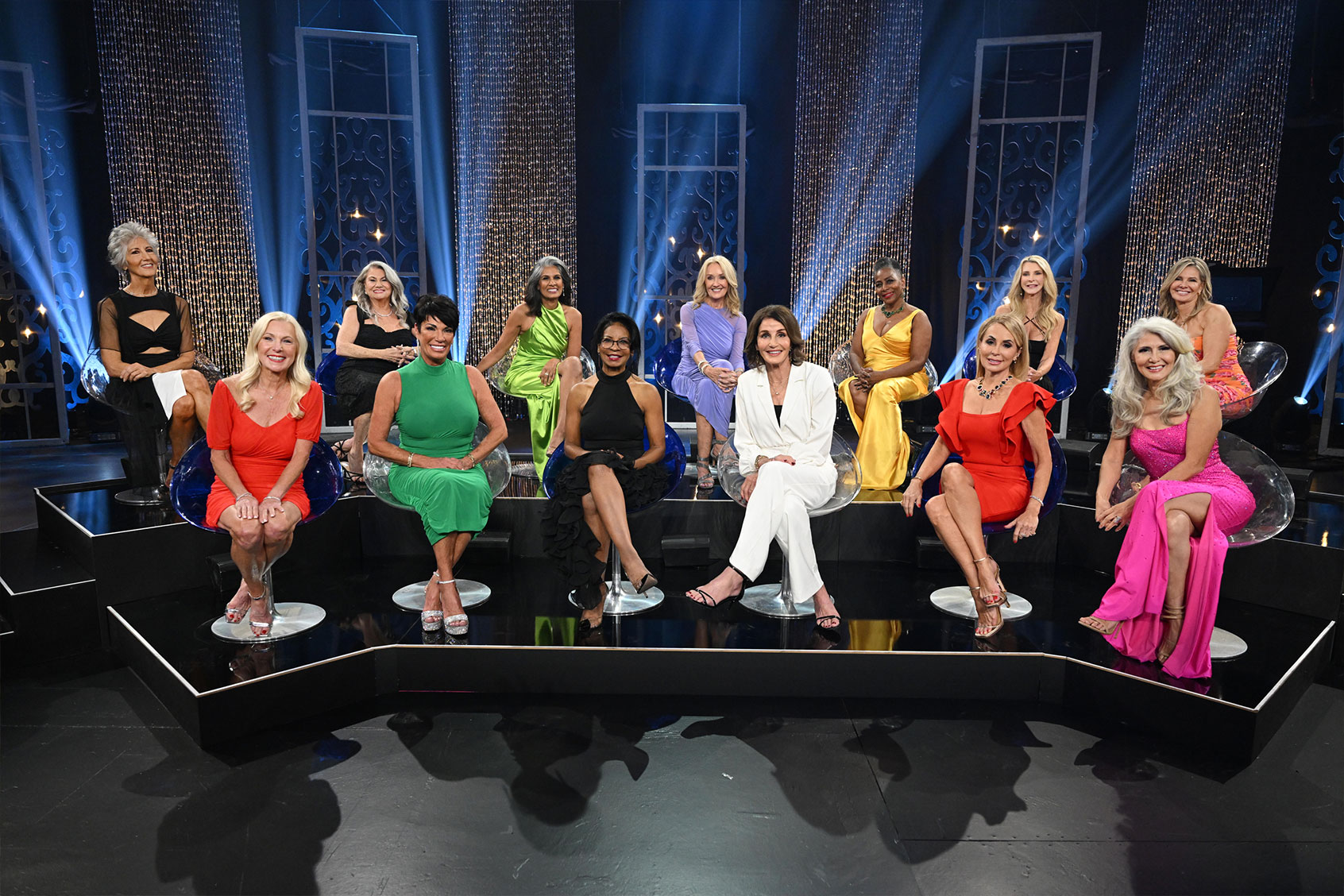
"HPF is the most precise instrument in the US at near-infrared wavelengths (where these stars emit most of their light) to detect the wobble of a star as the planet tugs on it," Mahadevan said. He added that the Hobby-Eberly Telescope is also advantageous for researchers because the data is accumulated by the astronomers at the telescope itself utilizing an observation queue. "This enables surveys that span many years and significant amounts of telescope time, which would be harder with other telescopes."


Want more health and science stories in your inbox? Subscribe to Salon's weekly newsletter Lab Notes.


"An object like the one we discovered is likely extremely rare, so detecting it has been really exciting."

Indeed, the HPF has already carried its weight by discovering and confirming other new planets since it started being used. Yet this discovery is particularly significant and unique because it challenges long-held assumptions about planetary formation.

“Based on current survey work with the HPF and other instruments, an object like the one we discovered is likely extremely rare, so detecting it has been really exciting,” Megan Delamer, astronomy graduate student at Penn State and co-author on the paper, said in a statement. “Our current theories of planet formation have trouble accounting for what we’re seeing."

Reflecting on this astronomical accomplishment, Mahadevan expressed a similar thought to Salon, noting that the only reason scientists have discovered for the first time such a high mass planet orbiting such a low mass star is that scientists have developed better technology for studying the skies.

We need your help to stay independent

"Discoveries in astronomy are often driven by increased measurement precision and new technology enabling us to view the Universe in a different way," Mahadevan wrote to Salon. "While we built the HPF instrument to discover terrestrial planets, it has also led us to discover such rare objects."

In a statement about the discovery, Mahadevan emphasized that this discovery underscores "just how little we know about the universe,” adding that it's unexpected for a planet this heavy around such a low-mass star to exist. He further elaborated on how this is possible by comparing a planet orbiting a star to a campfire.

“The more the fire cools down, the closer you’ll need to get to that fire to stay warm,” Mahadevan said. “The same is true for planets. If the star is colder, then a planet will need to be closer to that star if it is going to be warm enough to contain liquid water. If a planet has a close enough orbit to its ultracool star, we can detect it by seeing a very subtle change in the color of the star’s spectra or light as it is tugged on by an orbiting planet.”

“Bullseye for prosecutors”: Legal expert says lawyer’s testimony may mean it’s “game over” for Trump

An attorney for Donald Trump provided scathing evidence against the former president in his federal classified documents case in Florida, and CNN legal analyst Elie Honig said it may lead to a conviction once the case goes to trial. ABC News reported that Trump attorney Jennifer Little told a grand jury that she "very clearly" cautioned Trump that he must comply with a federal subpoena for classified materials he took from the White House, and that she's "absolutely" sure that he understood failing to turn them over would be a "crime." 

"This is a bullseye for prosecutors and right down the middle of what they have to prove for obstruction of justice," Honig, a former federal prosecutor, said of Little's comments. "Let's remember that it's the federal Mar-a-Lago classified documents case. Part of the indictment relates to the mishandling of classified documents, and part of it relates to obstruction of justice," he added. Honig went on to say that a prosecutor in the case, in order to prove obstruction, would have to show that Trump knew he had a subpoena, had to comply and intentionally did not. "This witness, Trump's former — and, by the way, current lawyer — has told the grand jury straight up, no ambiguity, 'You have to comply, if you don't, it's a crime,' and he said, 'I got it, I understand,'" Honig explained, adding, "If the jury accepts that, game over, he's guilty."

“The View” slams Elon Musk’s unhinged outburst and mocks how he’s “dressed like he’s on ‘Top Gun'”

Elon Musk has met his verbal sparring match with "The View's" hosts who slammed the billionaire for an outburst at a leadership summit Wednesday regarding his antisemitic posts.

Alyssa Farah Griffin opened the segment poking fun at Musk's sartorial choices: a leather jacket with a shearling collar. "Why is he dressed like he's on 'Top Gun'?" she asked. Whoopi Goldberg joked that Musk is a "billionaire who can dress how he wants!"

All kidding aside, the conversation turned to the more serious matters of how at the 2023 DealBook summit, Musk was questioned about advisers pulling out from X over his responses to “antisemitic and racist hate” posts he amplified on the site.

Musk responded: “I don’t want them to advertise. If someone is going to blackmail me with advertising or money, go f**k yourself. Go. F**k. Yourself." He also singled out Disney CEO Bob Iger who was in the crowd. The media conglomerate is said to have also pulled out of the site after the comments.

But Musk did apologize for his tweets calling it “one of the most foolish if not the most foolish thing I’ve ever done on the platform.”

"What fascinates me about Elon Musk is that a human being can simultaneously be brilliant in one sense and so irresponsible and reckless in other," Griffin observed.

Sunny Hostin added about his Twitter buyout, “He’s the one that then, in my view, ruined the company because now it’s not only a hellscape, it’s a hellscape of potential misinformation.”

Henry Kissinger was the definition of elite impunity

For U.S. mass media, Henry Kissinger’s quip that “power is the ultimate aphrodisiac” rang as an obvious truism. Influential reporters and pundits often expressed their love for him. For decades, the media establishment swooned over one of the worst war criminals in modern history.

After news of his death broke on Wednesday night, prominent coverage echoed the kind that had followed him ever since his years with President Richard Nixon, while they teamed up to oversee vast carnage in Southeast Asia.

The headline of a Washington Post news bulletin summed up: “Henry Kissinger Dies at 100. The Noted Statesman and Scholar Had Unparalleled Power Over Foreign Policy.”

But can a war criminal really be a “noted statesman”?

The New York Times’ top story began by describing Kissinger as a “scholar-turned-diplomat who engineered the United States’ opening to China, negotiated its exit from Vietnam, and used cunning, ambition and intellect to remake American power relationships with the Soviet Union at the time of the Cold War, sometimes trampling on democratic values to do so.”

And so, the Times spotlighted Kissinger’s role in the U.S. “exit from Vietnam” in 1973 — but not his role during the previous four years, overseeing merciless slaughter in the escalation of a war that took several million lives. 

Bourdain added that while Kissinger continued to hobnob at A-list parties, 'Cambodia, the neutral nation he secretly and illegally bombed, invaded, undermined, and then threw to the dogs, is still trying to raise itself up on its one remaining leg.'

“Leaving aside those who perished from disease, hunger, or lack of medical care, at least 3.8 million Vietnamese died violent war deaths according to researchers from Harvard Medical School and the University of Washington,” historian and journalist Nick Turse has noted. He added: “The best estimate we have is that 2 million of them were civilians. Using a very conservative extrapolation, this suggests that 5.3 million civilians were wounded during the war, for a total of 7.3 million Vietnamese civilian casualties overall. To such figures might be added an estimated 11.7 million Vietnamese forced from their homes and turned into refugees, up to 4.8 million sprayed with toxic herbicides like Agent Orange, an estimated 800,000 to 1.3 million war orphans, and 1 million war widows.

All told, during his stint in government over the terms of two presidents, Kissinger supervised policies that took the lives of at least 3 million people. 

We need your help to stay independent

Henry Kissinger was the crucial U.S. official who supported the September 11, 1973 coup that brought down the democratically elected government of Salvador Allende in Chile — initiating 17 years of dictatorship, with systematic murder and torture (“trampling on democratic values” in Times-speak).

Kissinger remained as secretary of state during the presidency of Gerald Ford. Lethal machinations continued in many places, including East Timor in the Indonesian archipelago. “Under Kissinger’s direction, the U.S. gave a green light to the 1975 Indonesian invasion of East Timor (now Timor-Leste), which ushered in a 24-year brutal occupation by the Suharto dictatorship,” the human rights organization ETAN reported:

The Indonesian occupation of East Timor and West Papua was enabled by U.S. weapons and training. This illegal flow of weapons contravened congressional intent, yet Kissinger bragged about his ability to continue arms shipments to Suharto.

These weapons were essential to the Indonesian dictator’s consolidation of military control in both East Timor and West Papua, and these occupations cost the lives of hundreds of thousands of Timorese and Papuan civilians. Kissinger’s policy toward West Papua allowed for the U.S.-based multinational corporation Freeport McMoRan to pursue its mining interests in the region, which has resulted in terrible human rights and environmental abuses; Kissinger was rewarded with a seat on the Board of Directors from 1995-2001.

Now that’s the work of a noted statesman.

The professional love affairs between Kissinger and many American journalists endured from the time that he got a grip on the steering wheel of U.S. foreign policy when Nixon became president in early 1969. In Southeast Asia, the agenda went far beyond Vietnam.


Want a daily wrap-up of all the news and commentary Salon has to offer? Subscribe to our morning newsletter, Crash Course.


Nixon and Kissinger routinely massacred civilians in Laos, as Fred Branfman documented in the 1972 book “Voices From the Plain of Jars.” He told me decades later: “I was shocked to the core of my being as I found myself interviewing Laotian peasants, among the most decent, human and kind people on Earth, who described living underground for years on end, while they saw countless fellow villagers and family members burned alive by napalm, suffocated by 500-pound bombs, and shredded by antipersonnel bombs dropped by my country, the United States.”

Branfman’s discoveries caused him to scrutinize U.S. policy:

I soon learned that a tiny handful of American leaders, a U.S. executive branch led by Lyndon Johnson, Richard Nixon, and Henry Kissinger, had taken it upon themselves — without even informing let alone consulting the U.S. Congress or public — to massively bomb Laos and murder tens of thousands of subsistence-level, innocent Laotian civilians who did not even know where America was, let alone commit an offense against it. The targets of U.S. bombing were almost entirely civilian villages inhabited by peasants, mainly old people and children who could not survive in the forest. The other side’s soldiers moved through the heavily forested regions in Laos and were mostly untouched by the bombing.

The U.S. warfare in Southeast Asia was also devastating to Cambodia. Consider some words from the late Anthony Bourdain, who illuminated much about the world’s foods and cultures. As this century got underway, Bourdain wrote:

Once you’ve been to Cambodia, you’ll never stop wanting to beat Henry Kissinger to death with your bare hands. You will never again be able to open a newspaper and read about that treacherous, prevaricating, murderous scumbag sitting down for a nice chat with Charlie Rose or attending some black-tie affair for a new glossy magazine without choking. Witness what Henry did in Cambodia — the fruits of his genius for statesmanship — and you will never understand why he’s not sitting in the dock at The Hague next to [Slobodan] Milošević.

Bourdain added that while Kissinger continued to hobnob at A-list parties, “Cambodia, the neutral nation he secretly and illegally bombed, invaded, undermined, and then threw to the dogs, is still trying to raise itself up on its one remaining leg.”

But back in the corridors of U.S. media power, Henry Kissinger never lost the sheen of brilliance.

Among the swooning journalists was ABC’s Ted Koppel, who informed viewers of the Nightline program in 1992: “If you want a clear foreign-policy vision, someone who will take you beyond the conventional wisdom of the moment, it’s hard to do any better than Henry Kissinger.” As one of the most influential broadcast journalists of the era, Koppel was not content to only declare himself “proud to be a friend of Henry Kissinger.” The renowned newsman lauded his pal as “certainly one of the two or three great secretaries of state of our century.”

For media elites, war criminal Henry Kissinger was a great man.

The shaky promise of “The Golden Bachelor”

For years, I’ve been hoping for a reality show about senior citizens. Inspired by my mother-in-law’s stories about her retirement community, where the cliques and intrigue rival those of a middle school, I’ve been holding my breath that some producer would see this demographic’s possibilities.

So, this Thursday, when Gerry Turner, 72, makes his choice between Leslie Fhima, 64, and Theresa Nist, 70, on the season finale of "The Golden Bachelor," I’ll be watching. I expected "The Golden Bachelor" to be good TV, and I haven’t been disappointed. I expected the show to offer some sociological insights into aging, and it does.   

But there’s a broader lesson in the show. In between the pickleball and the self-deprecating jokes about failing body parts, "The Golden Bachelor" shows us the worst and best aspects of reality TV — and, by extension, ourselves. 

What makes a body desirable, and who gets to be seen, remain largely the same.

At its worst, reality TV teaches us how we gatekeep who gets to be seen as legitimate — and who gets to be seen at all. The world of "The Bachelor," for instance, has been a place where white, conventionally hot people link up with other white, conventionally hot people, the sole acceptable goal being monogamous, heterosexual marriage. The show’s lack of diversity and its narrow parameters for acceptable bodies have become a shared cultural joke. In a 2019 "Saturday Night Live" spoof ("Virgin Hunk"), for instance, one contestant tells the Bachelor, “I’m Black and I have short hair so I just want to say, ‘Goodbye.’”

While the franchise has made efforts to diversify its casts in recent years, the contestants still adhere to conventional gender roles almost religiously, the women sporting bedazzled evening gowns and the men rocking chiseled abs. 

In these senses, "The Golden Bachelor" follows in the footsteps of its predecessors. Yes, there is some sagging skin. One contestant, Renee Halverson-Wright, steps out of the limo in a tracksuit rather than a gown. Some contestants, like Susan Noles (Kris Jenner and Liza Minelli’s lovechild?), have very short hair. Sandra Mason, a 75-year-old Black woman with short(-ish) hair makes it all the way to Episode 5!

The Golden BachelorThirteen rejected "Golden Bachelor" contestants: Patty, Pamela, Marina, Christina, Natasha, Joan, Nancy, Ellen, Susan, Sandra, Kathy, April and Edith (Disney/John Fleenor)Still, Gerry eliminates the tracksuit contestant in the first rose ceremony. There are only a handful of women of color, none of whom make it to the hometown dates. One of these contestants, Marina Perera, simply disappears between episodes, her departure not addressed on the show. All of the silver-haired contestants are gone by the end of the third episode. And while the bodies are more diverse than those on the original-recipe "Bachelor," the three finalists are slim, white-presenting women. One is a fitness instructor. 

It’s telling that, when Jimmy Kimmel’s Aunt Chippy, 84, approaches Gerry in the first episode, she is a source of comedic relief. Surely this woman – older, rounder – could not be a serious contender for Gerry, the show tells us — though some of the other contestants are nearly as far apart in age from Gerry, in the other direction. Though this season brings a new demographic to the "Bachelor" franchise, the messages about what makes a body desirable, and who gets to be seen, remain largely the same.  

During its history, reality TV has often made the invisible visible.

At the same time, "The Golden Bachelor" demonstrates some of the possibilities inherent in reality TV. Yes, we tune in for the train wreck factor, but there’s often an emotional core to these shows. At its best, reality TV draws us into worlds that are not our own, making us care for people who are different from ourselves. In fact, research suggests that we may be more likely to forge intimate, parasocial relationships with reality stars, whom we know as “themselves” rather than as actors portraying fictional characters. 

In its most poignant moments, "The Golden Bachelor" teaches us about the canny ability of near-strangers to bond over loss and grief. It shows us how women can lift each other up, even if they’re competing for the same guy within the stressful artifice of a reality show. It demonstrates the invisibility associated with aging but also pushes back against that invisibility.


Want a daily wrap-up of all the news and commentary Salon has to offer? Subscribe to our morning newsletter, Crash Course.


During its history, reality TV has often made the invisible visible. From drag queens to doomsday preppers, it has shined a light across areas of our social topography that remain less explored by other media. For instance, while there’s never been an explicitly queer season of "The Bachelor," other reality shows have been giving us LGBTQIA+ stories for decades — long before scripted TV got the memo. While this genre shows us the lines we draw in the sand, it also opens the door to endless configurations of human possibility. 

And, when it comes to relatively overlooked groups, why not the senior set? They’re a large portion of our population (one in six Americans, as of the 2020 Census) — and, if my mother-in-law’s experiences are any indication, their stories are . . . well, gold.

“Tragic day”: Trump lawyer complains in court after judge’s stern warning over reinstated gag orders

A New York appellate court on Thursday reinstated the gag orders prohibiting Donald Trump and his lawyers from making public statements about the principal law clerk of the judge overseeing the former president's ongoing civil fraud trial, The Messenger reports. The partial gag orders bar all parties at the trial from commenting on Manhattan Supreme Court Justice Arthur Engoron's staff. The orders, however, do not prohibit comment on the judge himself or New York Attorney General Letitia James, who brought the case, both of whom Trump has repeatedly derided online. 

"I intend to enforce the gag orders rigorously and vigorously, and I want to make sure counsel inform their clients," Engoron said of the ruling in open court Thursday. "We’re aware, your honor," Trump's lead attorney Christopher Kise responded, adding: "It’s a tragic day for the rule of law." In a subsequent statement to the press, Kise further lamented the ruling. "In a country where the First Amendment is sacrosanct, President Trump may not even comment on why he thinks he cannot get a fair trial," Kise said. "Hard to imagine a more unfair process and hard to believe this is happening in America."

The appellate court's ruling comes after attorneys for the New York state court system revealed last week via court filing that Engoron and his principal law clerk have been bombarded with hundreds of threatening, harassing and disparaging telephone and social media messages, including death threats, in the wake of Trump's online attacks. A federal appellate court in Washington, D.C. is also weighing whether to reinstate a separate order imposed on the former president that prevents him from attacking witnesses in his federal election subversion case. 

“Murderous scumbag”: Anthony Bourdain’s brutal takedown of “war criminal” Henry Kissinger goes viral

The late author and TV host Anthony Bourdain's searing takedown of former Secretary of State Henry Kissinger went viral after his death on Wednesday as experts resurfaced the most damning aspects of the longtime diplomat's legacy.

Kissinger's death was announced by his consulting firm Wednesday evening, and no cause of death was immediately provided. 

The former secretary of state and national security advisor "oversaw, overlooked and at times actively perpetrated some of the most grotesque war crimes the United States and its allies have ever committed," HuffPost reporters Travis Waldron and George Zornick wrote in a scathing obituary of Kissinger, calling him "America's most notorious war criminal."

His positions allowed him to direct the Vietnam War and Cold War with the Soviet Union, while carrying out a foreign policy approach that valued U.S. interests and domestic political achievements over any potential for atrocity that could occur as a result. 

"The former led to perhaps the most infamous crime Kissinger committed: a secret four-year bombing campaign in Cambodia that killed an untold number of civilians, despite the fact that it was a neutral nation with which the United States was not at war," they write.

The campaign killed between 150,000 and a half-million Cambodian civilians, per various estimates, and, according to a Pentagon report released late, Kissinger personally "approved each of the 3,875 Cambodia bombing raids” that occurred between 1969 and 1970.

While in charge of U.S. foreign policy, Kissinger also directed illegal arms sales to Pakistan as it executed a brutal suppression of Bengalis, killing at least 500,000 people in present-day Bangladesh in 1971. He also backed a 1973 military coup overthrowing a democratically elected socialist government in Chile, granted Indonesia permission to carry out its 1975 invasion of East Timor, and supported Argentina's military dictatorship as it launched its "dirty war" against dissenters and leftists in 1976. During the Ford administration, Kissinger's policies also inflamed civil wars in Africa, most notably in Angola. 

"Even the most generous calculations suggest that the murderous regimes Kissinger supported and the conflicts they waged were responsible for millions of deaths and millions of other human rights abuses, during and after the eight years he served in the American government," Waldron and Zornick write, noting that Kissinger never expressed any remorse for his actions or was held to any account for carrying them out.

Kissinger approached criticism of his human rights abuses with a mocking tone and remained in good standing in Washington's political elite until the time of his death.  

"The covert justifications for illegally bombing Cambodia became the framework for the justifications of drone strikes and forever war. It's a perfect expression of American militarism's unbroken circle," historian Greg Grandin, author of "Kissinger's Shadow," told The Intercept earlier this year. According to Common Dreams, the historian has estimated that Kissinger was responsible for at least 3 million deaths.

"What is undeniable, on the occasion of his death, is that millions of Argentinians, Bangladeshis, Cambodians, Chileans, East Timorese and others cannot offer their opinion on Henry Kissinger’s legacy or the world he helped create, because they died at the hands of the tyrants Kissinger enabled," Waldron and Zornick wrote. 

Other reporters further lamented Kissinger's approach to policy and the notorious legacy it left throughout the nation — and the world — across social media and in articles about his death. 

In an obituary of Kissinger for Rolling Stone, journalist Spencer Ackerman compared Kissinger to "white supremacist terrorist Timothy McVeigh," who Ackerman described as "the worst mass murderer ever executed by the United States."

"McVeigh, who in his own psychotic way thought he was saving America, never remotely killed on the scale of Kissinger, the most revered American grand strategist of the second half of the 20th century," Ackerman continued. "Every single person who died in Vietnam between autumn 1968 and the Fall of Saigon—and all who died in Laos and Cambodia, where Nixon and Kissinger secretly expanded the war within months of taking office, as well as all who died in the aftermath, like the Cambodian genocide their destabilization set into motion—died because of Henry Kissinger."

"We will never know what might have been, the question Kissinger's apologists, and those in the U.S. foreign policy elite who imagine themselves standing in Kissinger's shoes, insist upon when explaining away his crimes," Ackerman added. "We can only know what actually happened. What actually happened was that Kissinger materially sabotaged the only chance for an end to the war in 1968 as a hedged bet to ensure he would achieve power in Nixon's administration or Humphrey's. A true tally will probably never be known of everyone who died so Kissinger could be national security adviser."

We need your help to stay independent

The Intercept's D.C. Bureau Chief Ryan Grim noted that "Henry Kissinger killed so many people that we uncovered new atrocities he directed JUST THIS YEAR" in a post to X/Twitter, linking to an article the outlet published titled, "Survivors of Kissinger's Secret War in Cambodia Reveal Unreported Mass Killings."

Journalist Conor Powell highlighted former President George W. Bush's opening statement on Kissinger's death — "America has lost one of the most dependable and distinctive voices on foreign affairs with the passing of Henry Kissinger" — as an indication of "just how problematic #Kissinger's legacy is."

"These words are not a ringing endorsement of Kissinger," Powell tweeted. "And yet George W Bush as president did more to put Kissinger’s foreign policy ideas into practice than just about any other US president. Bush can barely say a thing positive about Kissinger in 2023."


Want a daily wrap-up of all the news and commentary Salon has to offer? Subscribe to our morning newsletter, Crash Course.


An excerpt ripping Kissinger from late chef Anthony Bourdain's book, “A Cook’s Tour: In Search of the Perfect Meal,” published after his death in 2018, also circulated online Wednesday, according to HuffPost

"Once you've been to Cambodia, you’ll never stop wanting to beat Henry Kissinger to death with your bare hands," Bourdain wrote. "You will never again be able to open a newspaper and read about that treacherous, prevaricating, murderous scumbag sitting down for a nice chat with Charlie Rose or attending some black-tie affair for a new glossy magazine without choking.

"Witness what Henry did in Cambodia ― the fruits of his genius for statesmanship ― and you will never understand why he’s not sitting in the dock at The Hague next to [Serbian President Slobodan] Milošević,” Bourdain wrote.

The excerpt was far from the hit the chef had taken at Kissinger. In a 2017 profile of Bourdain in the New Yorker, his publisher praised the influence he had with "Parts Unknown," a travel and food show where he traveled the world and discussed cuisines, cultures and political issues in each place, saying Bourdain had "become a stateman" because of the global awareness his show gave viewers.

Bourdain, however, pushed back on the idea. “I’m not going to the White House Correspondents’ dinner. I don’t need to be laughing it up with Henry Kissinger," he said. 

Despite being behind the deaths of hundreds of thousands of people worldwide, Kissinger had been seen in amicable exchanges with notable figures from President George W. Bush, Nixon, Oprah Winfrey and Princess Diana.

“Any journalist who has ever been polite to Henry Kissinger, you know, f—k that person,” Bourdain said. “I’m a big believer in moral gray areas, but, when it comes to that guy, in my view he should not be able to eat at a restaurant in New York.”

Expert on King Charles vs Prince William: “The end of the monarchy as we know it is a possibility”

"This is the one time where I feel like the reporting is written without fear or favor," says author Omid Scobie. As a journalist who's spent over a dozen years covering the royal family, Scobie has had a first-row seat for some of the biggest moments in the modern British monarchy, from the marriage of Prince William and Catherine to the notorious 2020 Megxit of "spare" Prince Harry and Meghan, through the death of Elizabeth II and the reign of the new king, Charles. And now with his new book "Endgame: Inside the Royal Family and the Monarchy's Fight for Survival," he says, that he was determined to "shine a light in the darkest places, even if that meant burning my bridges along the way."

The book has already made headline news in the U.K., where Scobie's backstage insights into the famous family's feuds and power plays has seemingly ruffled royal feathers. But "Endgame" isn't a celebrity gossip tell-all — it's a thoughtful assessment of the tumultuous present state and questionable future of what Scobie reminds us remains, at its heart, "a publicly funded institution" deeply entwined in the lives of millions of individuals around the world. 

In a frank recent "Salon Talks," Scobie told me why he believes the monarchy is at an inflection point, how William has "hardened" into his role of lifelong company man for the Firm and why even behind closed doors, "Hierarchy is more important than anything else." You can watch my full interview with Scobie here, or read the transcript of our conversation below.

The following interview has been lightly edited for length and clarity.

You started writing this in the summer of 2022, an interesting time.

A different time.

It wound up being a cataclysmic one. What was the book you thought you were going to write and how did it change?

The plan was always to write a book about the future and current state of the royal family. Of course, that current state that I put pen to paper in was a queen still on the throne, celebrating 70 years and all that came with it. Once I got into the writing process, of course, was the passing of Queen Elizabeth II. Instead of theorizing about what the Carolean era with King Charles as the head of state would look like, we were suddenly in it and thankfully had a front row seat, not just to the present time, but also way back until since 2011. 

It's really been an interesting journey to chronicle in this book. As I say from the very beginning, this is the one time where I feel like the reporting is written without fear or favor. So much of being a royal correspondent is about maintaining that relationship with the palace because you want to be invited to the media briefings, get the heads-up text messages before something breaks or be included in those private drinks receptions with members of the royal family. I think to write this book, I had to step away and shine a light in the darkest places, even if that meant burning my bridges along the way.

You have been reporting on this family for a dozen years. We don't know what it looks like inside the rota or the informal rota and what it means to then be taken out of it. How does it change? What is the currency that you are operating with with this family, and are there different members who are playing in different streams?

When you look at the royal press pack, and I include the rota in that, but also just the wider extension of it too, the people who dedicate their full-time careers to covering the lives and work of members of the royal family, you could liken it to the White House press pool. I think where the big difference lies is that as a member of the press covering the White House, you are able to report without fear or favor along the way. With the palace, there is a very specific dance that's required, a little give and take. Whilst you may be able to rock the boat here and there with a little bit of criticism or shining a light on something that they may not necessarily want out there, there's an expectation that you'll never take it too far, that the secrets remain with you. 

"There is no equality amongst human beings within the royal family."

I say in the early stages of the book that some of these stories other royal correspondents know about, but they know that to report them may lead to an exclusion from covering royal engagements or being left out of some of those really important briefings. 

This is a publicly funded institution. I think that we should be able to write about them critically and scrutinize them in a way that we do our politicians. But because of the parameters and restrictions that come with being part of the royal press pack, what the public are often getting is this very rose-tinted view of the ins and outs of the working royals. That does the public a disservice, particularly at a time where after the passing of the queen, we are now having real questions and conversations about the purpose, the future and the relevancy of the royal family.

When I covered the queen's funeral and her passing, one of the things that we heard time and time again from palace aides, past and present, friends of the family, that all spoke on the record was this respect they had for the queen for remaining above the fray, for always keeping the focus on the crown and the job at hand and never making it about herself, and also always upholding the values, the morals, the ethics and the principles that come with what supposedly the crown represents, those traditional British family values that the royal family are supposed to be championing. 

But I think with her loss, we're at a point where one should and needs to question, are the current working royals also adhering to those brilliant values and ethics that we celebrated the queen for? Does this cast of characters, which includes Prince Andrew and Camilla and Charles and their history, not only with the sort of games they've played with the press, but also in the tragic life of Princess Diana, and of course the fallout between William and Harry? It's so much more than family gossip or a soap opera. These are people that represent Britain on the world stage and I think we have a right to be able to talk about them in this democratic society, even if when you look at the British press, that's not always the case.

Let's talk about the press because you have been at the mercy of it yourself. We don't necessarily understand in the U.S. that this is a game that the royal family very skillfully plays and they are working with the press and with the tabloid press. It's not, “Oh, I'm going to have an interview with The Telegraph.” This is about what are they feeding to The Mirror and to The Sun.

Yeah, absolutely.

What does that really look like and what does it mean when someone falls out of favor and gets thrown under a particular bus?

We heard Harry talk a little bit about this in “Spare” and the meaning of being the spare, that you are collateral damage in times of need. You are the distraction in times of need because ultimately it is about the monarch and their successor, and everyone else is just like a supporting character. There is no equality amongst human beings within the royal family. It's kind of like the corporate ladder. 

What is interesting is to see just how deeply involved the British tabloids and British press altogether or large sections of are in the fractures between the family relations. Look at William and Harry for example. These were two brothers — William probably hated the press more than Harry at one point — that had promised each other that they would never allow the games that their parents got involved in and the people around them in the institution to get in between the two of them. Ultimately that is what's happened. 

This is a family that wants to control the narrative. This is a family that wants to have a certain grip on their PR and it's very different to the queen's approach. I was always told that the queen couldn’t care less about poll figures because she knew that tides changed, that some years are good, some are not. If you carry on remaining focused on the work and duty, then everything else falls into place. Now we have members of the royal family operating in silos where it's all about one's own personal image, but that often comes at the cost of other family members. 

I talk about in the book how once upon a time the Royal Institution was supported by the love or size of three other institutions. That was the British military, the armed forces, which throughout World War I and II, I would say that the majority of people living in Britain had some connection to, in some way, be it the family or family member, partner or themselves. To have a monarch that was head of the armed forces meant a lot. The head of the Church of England, our monarch, again. Britain was once a country that was predominantly active Christians. Today, the number of actively practicing Christians in Britain is something around 6%.

I was shocked when I read that.

Absolutely. As is the size of our military, which once could rival anyone on the world stage has been called out by other countries for just how much it's shrunk, how little it is compared to the rest of the world. 

"You can't ignore the fact that this empire was built off the backs of slaves."

You're left with one other institution to support and help the monarchy in its fight for relevancy all the time and that's the institution of the British media, which itself is struggling. Print media has changed, the newspapers don't have the bite and the power that they once did. They don't have the readership that they once did. We've entered this era where the British media is keeping the royal family alive with its obsession with the dramas and the soap operas. And the royal family happily feed back into that with the briefings and the leaks and all the rest of it. They're sort of keeping each other alive, keeping each other relevant at this point.

I don't know who's the winner in this situation. For the British press, it's more headlines. They'll do whatever it takes to maintain that position on the world media landscape. For the royal family, I don't know if at this stage it's helping them because I look at some of the royal correspondents in the press pack who'll happily turn a blind eye to some of the goings on within the institution, which may be fine if no one else knew about it. But we're at a point now where nothing is hidden. There's always going to be a journalist such as myself or others who are happy to talk more candidly about some of the goings on or tackle them on issues such as race or the links to slavery that still aren't really ever addressed properly beyond abstract terms. Whilst you may have a media that is happy to enable certain things, for the rest of the country or the predominantly Black and brown Commonwealth who are watching, I don't know if it's enough at this point.

When Elizabeth died, there was a reassessment of her role in the world and this question of, what are we doing still having a monarchy? What are we still doing with this institution that is still in the present day doing racist things, saying racist things, behaving in manners that are absolutely tone-deaf, that feel very out of touch with the world, with the British people, and with the Commonwealth people? What don't they get?

I think when you operate or focus on the echo chamber that you're in, which with the royal family is the sort of right-wing, predominantly white royalist public, and continue to pander to a certain demographic, it may do well in the here and now, but as we're seeing with the younger generation who are growing up, they're either feeling extremely apathetic towards the royal family or they're feeling that it's entered this path of irrelevancy because it has failed to keep up with the times. The issue around slavery and the royal family's involvement in it, whilst many will argue it's unfair to put that on the current modern working royals, you can't break their ancestral links. You can't ignore the fact that this empire was built off the backs of slaves, that much of the wealth has been amassed from that time. 

I look at King Willem-Alexander from the Netherlands as a really good example of how to tackle this situation maturely and impressively, even if it means possibly offending a section of the public that don't want to see you apologize because they feel it's in the past. Just a year ago, he stood in front of the Netherlands and apologized for his family's role, his ancestors' role in that time and also accepted that that time still to this day is having impact even if subconsciously on the way we interact with each other and the way that minority groups still face prejudice and persecution. That's something that not only did he acknowledge, he then announced a 30 million Euro research project to look into this on a deeper level. You can't argue against that. That's how you face these things in these times.

For the royal family to speak in abstract platitudes of whatever it is, I think Charles in Kenya recently said that this was just an atrocity of the past. Well, that's great, of course, go figure, but tell us a bit more about it. I think this unwillingness to face the past continues to affect their future, especially when we see the actions that we witness in the modern age still are rooted in some kind of bias or prejudice or even an ignorance, willingful ignorance, I would argue at times that I can't not notice.

Nowhere is that more evident obviously than Meghan. It seems the family was wildly at best unprepared for  how she would be perceived by the British people. She's an American, but there is a lot about this that is just straight-up racism, and she was not protected. What did the family not do right because of ignorance? And then at what point, because you were watching this, did you see it turn to, “Oh, she's going under the bus”?

Families all over the world experience the feeling of being unprepared when suddenly a family member marries someone of a different background and you are facing new conversations, new experiences, cultural differences. It's how one navigates that that is where you can see the minerals or the makeup of a person. 

I think with the royal family, of course they were going to be unprepared for it and of course it was going to perhaps be slightly bumpy at the beginning. But I think when we reach the point where we have a working member of the royal family married to then the sixth in line to the throne who was saying, “This is making me unwell, these racist stories in the papers, these stereotypes, the treatment of me as a half Black woman . . . ”

The comments on the official Kensington [social media].

Exactly, which remained unchallenged for at least a year before finally they got someone in. To continue to be unheard during those cries for help, that's when I think it has reached a really problematic point. You can be unknowingly ignorant at the start, but I think when someone spells it out to you, that's when it becomes problematic. 

"It's so much more than family gossip or a soap opera."

Harry and Meghan talked about those conversations about Archie's skin color and they refer to them as concerns over the color of Archie's skin. Now, it's not unnormal for a family of mixed race grandchildren or children to wonder what a child might look like, what they might inherit from each side. I think when you introduce concerns over that, then it becomes problematic. They never use the words "racism." They apparently addressed it as unconscious bias, but as he points out, and as I feel as well, once that unconscious bias becomes conscious and you choose to continue to ignore it, then it's a problem.

I talk about in the book, my conversations with a senior Buckingham Palace aide who took issue with an op-ed I'd written after the Oprah interview where I felt that this kind of unwillingness to look at the issues or the experience of Meghan or really own any of it, seemed to uphold this white supremacy, this extreme privilege that was on full display. Rather than wanting to engage in a conversation about it, I was ignored for several weeks until I could finally sit down and ask what was the problem. This kind of unwillingness to ever address these issues or talk about them, lost them this prime opportunity for Meghan, whether you like her or not, to be a working member of the royal family. We're now left with a much leaner lineup of working royals, one that lacks diversity, one that can't connect with the very diverse Commonwealth, one that many young people in Britain don't see themselves in. And for Meghan, the brief time that she was in the royal institution, she did challenge the connotation that to be regal and royal was to be white, and now we've kind of gone back to that.

Which brings us to the younger royals, even though now they're in their 40s, William and Catherine. William, to me, was the revelation of this book. You talk about how you have seen him firsthand change from the person you first met over a decade ago. What's changed about him?

The book goes into the duality of William's character and I think that change should be applauded and welcomed, particularly for someone that is on this path to thronedom since birth. We want to see him grow up. We want to see him become more mature, more serious about the role. Five, six years ago, the press in the UK were calling him “work-shy Will,” so the change was needed. But I think along the way there has been almost this kind of hardening of William too, a man that's sort of given into the company role, the institutional way of doing things. Unfortunately today, the institutional way of doing things includes things that he perhaps would never have got involved in earlier on in his life. 

A man that hated the press, a man that never wanted to play the games that tore his parents apart, we see and hear in the book is now part of his way of life. Private secretaries that will leak private details about his relationship with his brother to make him look better. PR activations. When Harry was caught flying in private jets, William flew on a cheap budget commercial flight just a couple of days later. All of these things have hammered on the fractures between William and his brother and led to what has been this breakdown of this relationship. 

He may be excelling at the role, and I do think he's doing a good job. When you talk to people connected to Buckingham Palace, Kensington Palace within it, past and present, they're all very excited about him. They talk about him as the true successor, that Charles is just sort of the bridge to get there. But I think with William, there has been this change where I've seen just a kind of hardening of him perhaps being number to the things that go on around him. Everyone's different, but I think one day he will become the head of the Church of England, so it's important to talk about and question the actions, the morals, the behaviors of an individual that will take on what is essentially a holy role.

Let's talk about the person who is the current head of the Church of England. When we talk about a transition, it's a transition that could last two decades. Where do you see Charles in all this? Because he is also not always in lockstep with William either. He has his own conflicts with his son, not just Harry. He has his own jealousies and competitiveness with the family. 

You used the term “lockstep.” It's one that the palace would often roll out in press briefings to journalists including myself, that “Father and son were working in lockstep with one another.” This was whilst the queen was alive and leading up to her death and the transition to Charles as monarch. I don't see that lockstep anymore. I see two people with very different agendas, very different outlooks to the role in which they want to do things. A lot of that comes down to the fact that, as you say, King Charles is positioned as the transitional monarch. It's very telling that even aides at Buckingham Palace refer to him even to the likes of The Times of London in their press briefings as the “caretaker king.” People that I spoke to refer to him as the “bridge” to the true successor. That creates a very unusual power dynamic within the institution for someone who is the monarch, who is the head of state, to receive less support than the person chomping at the bit for that role.

"We have members of the royal family operating in silos where it's all about one's own personal image, but that often comes at the cost of other family members."

We've seen it come out, glimpses here and there. Just after the coronation, Kensington Palace briefed a number of journalists that when William becomes king, he'll do it differently, that his coronation will be more mindful of the economic climate, that it will be more cost-effective, that it will be less traditional and more modern-facing. We heard William talk in Singapore just a few weeks ago that when he does work, he hopes that he'll have tangible results and real impact that perhaps in the past things have only been highlighted or supported. That's a bit of a diss to his father, who probably I would argue, has done more in any kind of advocacy when you look at his environmental work than any of the royal family members put together. 

Even when the queen was alive at Buckingham Palace, a lot of the people in the queen's household did not feel that Charles had the minerals or the moxie to take on the role. So far we're a year in, he's actually steered the ship pretty well. I can't say that he's put a foot wrong, but in terms of that much-needed change, that modernization, the acknowledgement and accountability of things of the past, things that need to be faced in the future, I don't see that happening, or at least on the horizon. 

When books like this come out and address these issues or at least line them up so we can look at them and talk about them rather than welcoming the conversation, the palace will activate any kind of agenda or media tactics to ensure that these things are silenced or ignored. Today as I talk to you, the front page of one of the newspapers says that William's friends have branded this entire book a conspiracy theory. Well, firstly, no one's read it yet, but secondly, you only need to see the names and the conversations that are in the book to know that this is based on what's actually happened, not what I think has happened.

When we look at William and his own children, we know George is only 10 and he has two "spares." What happens now that he knows what it feels like to be raised in a family where you are regarded differently because of your place in the family? Do you think that he and Catherine are raising their children differently, that there is an awareness of that kind of competitiveness and the divisiveness that can happen between siblings?

I think it's clear if you speak to anyone that's in the orbit of the Waleses that they are caring and carefully considerate parents when it comes to raising their children. I think of these moves that they've made to send them all to the same school and live slightly outside of the fray of London so they can have a more "normal" environment. Ultimately the end of the day, carefully as William and Kate will try and shield Charlotte and Louis from the realities of being the spares, in the eyes of the institution, you're always going to be lesser than. Hierarchy is more important than anything else. There is no equality in the royal family. Listen, maybe it's a bit like that in any family, but I think the difference is that the privilege and the path that George is on is very different to his siblings. As much as the couple might try and protect them from that, I don't know how the realities of that situation will pan out. We can only hope for the best. 

"You can't ignore the fact that this empire was built off the backs of slaves."

I sat with someone that spent many years working with William, including the early years of the births of his first children. I said, “Do you think that the release of “Spare” and everything that Harry said about growing up feeling like number two, less important, ignored, not as prioritized as someone, has that changed the couple's focus?” And the answer was very dismissive. It was like, “Well, Harry's very different” and he hasn't really read the book. So, are they listening? Who knows? The evidence shows us that they're not. 

I think that as parents, they're doing the best they can, but this is a family that is often doing the best it can just to get along with each other. There are also several dozen other people in the royal households around them that also want to have a say, want to play a role in all of these decisions and movements that happen over the years ahead.

It's a family, but it's also a business, and it is a big, big, big business. Which brings us to the question that you begin and end with. What happens now? Maybe it's time to really reassess why we have this monarchy. The Commonwealth nations are certainly reassessing where they want to be in relation to that institution. Yet you say it's not going anywhere. Why?

I think when you look at the 14 remaining commonwealth realms that all have currently King Charles as their monarch, for them breaking away from the royal family is an essential step for them to find independence that started from the days of colonialism. This is a path towards graduation that I think was always expected. But within Britain it's not as clear-cut as that. The royal family is embedded into every facet of society. Our legal system, our postal service, everything is connected to the royal family. So to untangle that, which would involve a referendum, and I certainly don't think we're at that point, would be a mammoth task. 

People ask why I called it “Endgame.” I'm not saying this is the end. I think it's quite unlikely that we'll see a future without the royal family. But I think that we've reached a really important moment where the end of the monarchy as we know it is a possibility. You only need to look at the European monarchies and how they have gone from great prominence and importance, not just in their own country but on the world stage, to now fading into insignificance or no funding or just becoming tourist attractions.

These are realities that the British royal family do need to face and talk about. To ignore it will only lead to a faster demise of things as they are. I also see a world in which there is great use for a royal family, an apolitical system that is supposedly above the fray, that in times of social, economic woes in our country or whatever crises we're going through, we have a stable system, a head of state that can unify us. The queen did a great job of that, but I don't see much of a chance of that happening with things as the way they are until they're tackled.