Spring Sale: Get 1 Year, Save 58%

A new use for dating apps: Chasing STDs

Heather Meador and Anna Herber-Downey use dating apps on the job — and their boss knows it.

Both are public health nurses employed by Linn County Public Health in eastern Iowa. They’ve learned that dating apps are the most efficient way to inform users that people they previously met on the sites may have exposed them to sexually transmitted infections.

A nationwide surge in STIs, also known as STDs — with reported cases of gonorrhea and syphilis increasing 10% and 7%, respectively, from 2019 to 2020, according to the Centers for Disease Control and Prevention — isn’t sparing Iowa. The duo has found that the telephone call, a traditional method of contact tracing, no longer works well.

“When I started 12 years ago, we called everyone,” said Meador, the county health department’s clinical branch supervisor. “It’s getting harder and harder to just call someone on the phone.”

Even texting is ineffective, they said. And people aren’t necessarily answering messages on Facebook. The dating apps are where they’re at.

Because many people are meeting sex partners online — via sites like Grindr or Snapchat, which are headquartered in West Hollywood and Santa Monica, California, respectively — contact tracers often don’t have much information to go on, just a screen name or a picture.

So, about a year ago, Meador and her colleagues got approval from their bosses at the local level to build profiles on the app, through which they can contact the sex partners of infected people.

Traditionally, contact tracers interview people infected with an STI about their recent encounters and then reach out to those partners to tell them about the potential exposure.

Linn County contact tracers use the apps throughout their workday. Grindr, in particular, relies on geolocation, showing users matches who are close by. So the tracers use the apps when they’re out and about, hoping to wander into the same neighborhoods as the person diagnosed with an STI. Sometimes users “tap” the contract tracers to see whether they’re interested — in dating, that is.

When the public health officials spot someone they’re looking for, they send a message asking for a call. It’s a successful method: Herber-Downey estimated they make an initial contact 75% of the time.

Linn County’s decision to move online comes as STI rates rise nationally, funding to fight them falls, and people adopt new technologies to meet people and seek fun. “STIs are increasing way faster than the funding we have,” said Leo Parker, director of prevention programs for the National Coalition of STD Directors, all while public health departments — many underfunded — are grappling with new behaviors.

“Social media companies have billions; we have tens of thousands,” said Dr. Jeffrey Klausner, a University of Southern California public health professor, who previously served as San Francisco’s director of STD prevention and control services. That funding disparity means few public health departments have staff members who can go online. “It’s only really in major cities that they have anyone who’s tasked for that,” Klausner said.

Even when departments have enough employees to take on the challenge, institutional support can be lacking. Some public health officials question employees who log into the apps. Klausner once testified on behalf of a Ventura County, California, contact tracer who was fired for using sex sites for work.

But with people migrating online to meet partners, following them there makes sense. “We’re now in a digital age,” Parker said. Individuals might not be out, or might be questioning their identity, making online venues comfortable, anonymous spaces for romance — which, in turn, means people are harder to reach face-to-face, at least at first.

What’s more, online spaces like Grindr are effective public health tools beyond contact tracing. They can be useful ways to get the word out about public health concerns.

Parker and the Linn County officials said public service announcements on dating apps — advocating for condom use or sharing the business hours for sexual health clinics — do seem to lead people to services. “We do have individuals coming in, saying, ‘I saw you had free testing. I saw it on Grindr,'” Parker said.

Grindr, which touts itself as the biggest dating app focused on LGBTQ+ people, pushes out messages and information to its members, said Jack Harrison-Quintana, director of Grindr for Equality. That engagement intensified during a 2015 meningitis outbreak among LGBTQ+ communities in Chicago, for example.

During that outbreak, the app sent citywide messages about vaccination. Then Harrison-Quintana took advantage of the service’s design: Using the site’s geolocating capabilities, Grindr workers targeted messages to specific neighborhoods. “We could go in and really go block to block and say, ‘Is this where the cases are showing up?'” he said. If so, they sent more messages to that area.

That campaign encouraged further efforts from the app, which regularly sends public health messages about everything from covid-19 to monkeypox to the platform’s base of roughly 11 million monthly users. Grindr also allows users to display their HIV status and indicate whether they’re vaccinated against covid, monkeypox, and meningitis.

There are a couple of things Grindr won’t do, however. The company won’t allow public health departments to create institutional accounts. And it won’t allow automated notifications about STI exposures to be sent to users.

That’s due to privacy concerns, the company said, despite calls from public health advocates to deploy better messaging features. Grindr believes that a government presence on the app would be too intrusive and that even anonymous notifications would allow users to trace infections back to their source. (When asked about public health officials who join the site on their own, company spokesperson Patrick Lenihan said: “Individuals are free to say something like ‘I’m a public health professional — ask me about my work!’ in their profile and are free to discuss sexual and public health matters however they see fit.”)

Grindr’s position — however disappointing to some in the public health world — reflects a longtime balancing act attempted by the private sector, which aims to square government concerns with users’ privacy interests.

Klausner pointed to a 1999 syphilis outbreak in San Francisco as one of the first times he saw how those interests could be at odds. The outbreak was traced to an AOL chatroom. Based on his research, Klausner said it seemed as though people could go online and “get a sex partner faster than you can get a pizza delivered.”

But persuading New York-based Time Warner, eventually AOL’s corporate parent, to cooperate was time-intensive and tricky — gaining entrée into the chatroom required help from the New York attorney general’s office.

The online industry has advanced since then, Klausner said. He helped one service develop a system to send digital postcards to potentially exposed people. “Congratulations, you got syphilis,” the postcards read. “They were edgy postcards,” he said, although some options were less “snarky.”

Overall, however, the dating app world is still “bifurcated,” he said. For public health efforts, apps that appeal to LGBTQ+ users are generally more helpful than those that predominantly cater to heterosexual clients.

That’s due to the community’s history with sexual health, explained Jen Hecht, a leader of Building Healthy Online Communities, a public health group partnering with dating apps. “Folks in the queer community have — what — 30, 40 years of thinking about HIV?” she said.

Even though STIs affect everyone, “the norm and the expectation is not there” for straight-focused dating apps, she said. Indeed, neither Match Group nor Bumble — the corporations with the biggest apps focused on heterosexual dating, both based in Texas — responded to multiple requests for comment from KHN.

But users, at least so far, seem to appreciate the app-based interventions. Harrison-Quintana said Grindr has landed on a just-the-facts approach to conveying health information. He has never received any backlash, “which has been very nice.”


KHN (Kaiser Health News) is a national newsroom that produces in-depth journalism about health issues. Together with Policy Analysis and Polling, KHN is one of the three major operating programs at KFF (Kaiser Family Foundation). KFF is an endowed nonprofit organization providing information on health issues to the nation.

Subscribe to KHN’s free Morning Briefing.

A winter break cheat code for old dads like me

I love my wife and daughter more than anything. But hard living, along with being the only person in my original friend group to wait until I was AARP-mail-years-old to start a family, has kicked my ass clear across the whole of 2022. So I consider it my responsibility to help my fellow old dads out by sharing what I’ve learned this year. If you’re a geriatric father of a little kid — I have a two-year-old — I’m going to share with you the secret to providing fun and excitement over the holiday break for your little one without destroying your already crumbling knees

Maybe your knees are great. Maybe they aren’t crumbling at all. Maybe it’s your back. Maybe the heels of your feet burn inside your oversized HOKAs from sciatica. Or maybe you are one of the lucky people in perfect health who jogs, only drinks one glass of white wine per week, and has cut out red meat. Honestly, your health condition doesn’t matter, because if you want to maintain the condition you are in, or even get better, then pay close attention to my first recommendation: Avoid major theme parks at all costs, especially during a major holiday season. I made that mistake over summer vacation, and for this geriatric father, it was insufferable. 

It wasn’t my idea. Earlier in the year, as my wife Caron stood over the sink, vigorously scrubbing a pot, she proposed a vacation. “We have to take the baby somewhere fun. We have been working too much. She deserves something special!”

“I mean, she’s only two. What did she accomplish?” I responded while getting ready for work. “Can she walk backwards now?”

“Don’t do her like that,” she said. “I’m serious.” 

“The baby loves the pool so much,” I said. “I think we should take her to the nicest water park we can find.” 

That’s my secret: The answer is always water parks. Theme parks, no; water parks, yes. Always go to the water park. 

I thought we were settled, but then later, Caron called. “Remember that trip I purchased for us right before COVID hit? We are allowed to use any of the condos on the list and they have a location in Orlando!”

Why would I care about going to Orlando? I thought, but she seemed very excited. Maybe that’s a side effect of working too much, I thought. 

She spelled it out for me: “We are going to Disney World!” 

“So no water park?” 

“It’s Disney,” Caron said. ‘The greatest place on Earth!” 

I wouldn’t know. Poor Black kids don’t really get to go to Disney World. Some of my friends got to visit the Magic Kingdom via weirdo church programs that would never take a bad kid like me anywhere, and some got a free ride off a well-off family member, but those were rare occasions. The idea of going to Disney World never really excited me. Who needed Goofy and Mickey when we had Wild World, Hershey Park, and — my favorite — Kings Dominion, all of them only one to three hours away by car? Those parks had roller coasters, funnel cake, swimming pools, and 88-ounce cups of soda for us to slurp on all day. I didn’t need that elitist Mickey with his fancy castle. My parks were good enough. 


Want a daily wrap-up of all the news and commentary Salon has to offer? Subscribe to our morning newsletter, Crash Course.


It’s not like we didn’t have a Mickey, too. Kind of. One of my favorite photos from childhood is of me, two years old, with my mother, and we’re sitting on the lap of Project Mickey. Project Mickey is like Mickey Mouse, except his office was in Old Town Mall, right in the center of a collection of housing projects in east Baltimore. I remember a dude named Hawk once kicked Project Mickey’s ass for scaring the kids by walking through the neighborhood while carrying the Mickey mask. I also remember Project Mickey getting his ass kicked by some other kids for smoking crack with his Mickey suit on. Project Mickey had to be the hardest job in America.

Project Mickey is like Mickey Mouse, except his office was in Old Town Mall, right in the center of a collection of housing projects in east Baltimore.

When friends would flip through the photo album, they’d spot the Project Mickey picture and ask if I had been to Disney World. “I dunno, maybe, but I don’t remember because I was too young,” I’d say. But as I got older, people who had really been to the Magic Kingdom knew Project Mickey wasn’t the real Mickey. They would bust out laughing after examining the fraudulent photo, and I would join in because honestly, I had no other choice. You could tell the difference. Project Mickey had a nonexistent forehead and ears pushed back as if he had tried to tie them up in a bun. A dude in holey shoes posted up with Project Mickey near the alley, flicking Polaroids of him with happy kids like me in the same kind of wicker chair Huey Newton used to sit in.

Young D. Watkins and his motherYoung D. Watkins and his mother (Photo courtesy of the author)

Project Mickey is a highly specific character. Mickey Mouse is part of the mainstream American experience, like the big theme parks in California and Florida that draw international crowds. Just like apple pie and systemic racism, you can’t truly be a part of this country until you’ve experienced those major theme parks. And so we went.

Parks inside of parks, rules on top of rules, crowded trains that take you from park to park, the longest lines, America, the real America, more walking than I’ve ever done in my life — that was my experience in Orlando this past summer. We hit up four theme parks in four days — two Disney parks, SeaWorld, and a water park. And every night as I crawled back to my hotel room, my feet, ankles, back and especially my knees were screaming until I swallowed enough ibuprofen to sedate an elephant. The pain always subsided, for one reason and one reason only­­: the smiles of my wife and two-year-old. Seeing her see the real Mickey Mouse, her face beaming, was like imagining myself at 10 trading jump shots with Michael Jordan. The pain of my crumbling knees felt worth it after that, because I love my family.

But on the plane ride home, I thought about the dolphin show at SeaWorld and wondered what the orcas did at night. I also thought about the way a pair of scientifically cushioned Triple-E ortho New Balances would’ve probably taken some of the pressure off my knees. Why did I become a father at 40? I mean, a healthy 40 — one of those guys who jogs, drinks smoothies, and owns a Bowflex — could for sure have babies at 45, 50, maybe even 60. But I’m new to health. I spent too many years smoking Black & Milds and drinking cheap liquor, not to mention all the other illegal activities in a city. That weighs heavy on the bones. 

While our daughter dozed, Caron asked me which park I liked the best. 

I thought about the dolphin show at SeaWorld and wondered what the orcas did at night.

“Oh, that’s easy,” I said, without even thinking. “The water park.” Water parks are made for us old dads. My wife and I have taken this little baby to packed beaches, pumpkin patches, Sesame Place (a terrible experience), indoor trampoline play centers and all those Orlando theme worlds. And the answer is always water parks.

At the water park, you can be lazy without being judged. You can hang out by the pool for two hours and your kid won’t even know because they’ll be having too much fun seeing how long they can hold their head underwater, splashing your face or playing Marco Polo with someone else’s kids. You can even share a drink and cheesy dad jokes with those other kids’ parents. 

Good news for your old bones: The buoyancy of the water takes the pressure off your knees, so geriatric you can bounce around just like your two-year-old. Some of these places will even serve you food while you are still in the water. My wife will always want us all to stand in the ridiculously long lines for the water rides, but those lines aren’t that bad compared to the lines at theme parks. They move quickly, and unlike with rollercoasters or the teacups, you actually get a reward at the end: falling, slipping, rafting or sliding into a cool pool, which is so much better than pounding concrete and waiting hours to strap yourself to a machine whose only purpose is to make you dizzy. 

So imagine the beads of sweat that formed across my forehead when Caron recently proposed we take the baby to a theme park over our winter break. Earlier in the week, we had been to one of those indoor trampoline escape room kinds of places where I pulled a muscle in my back, and we had gone roller skating, where I fell loud and hard — theatrically so — multiple times. 

“We did a lot this week,” I replied, feeling my knees begin to throb in anticipation. “Maybe we should chill.” 

“I found this indoor water park,” she said. 

We loaded up the car — my wife, daughter, oldest niece and me — and drove to an indoor water park resort about four hours away. It was marvelous, especially if you are lazy with bad knees. Everything is within a reasonable walking distance. All five lodges led to a huge indoor water park with rides, fast lines, a spacious pool and seemingly unlimited places for me to rest my aging bones. It doubled as a kind of kiddy resort with an arcade, a bowling alley for toddlers, laser tag, arts and crafts, and corny kid-oriented dance parties. The only downside was the food sucked. But even that negative turned out to be a positive. Taking a break from eating so well meant my overworked knees actually thanked me for a change.

Her apartment might have put her son’s health at risk. But ‘I have nowhere else to go’

ATLANTA — When Louana Joseph’s son had a seizure because of an upper respiratory infection in July, she abandoned the apartment her family had called home for nearly three years.

She suspected the gray and brown splotches spreading through the apartment were mold and had caused her son’s illness. Mold can trigger and exacerbate lung diseases such as asthma and has been linked to upper respiratory tract conditions.

But leaving the two-bedroom Atlanta apartment meant giving up a home that rented for less than $1,000 a month, a price that is increasingly hard to find even in the nation’s poorest neighborhoods.

“I am looking everywhere,” said Joseph, who is 33. “Right now, I can’t afford it.”

Since then, Joseph, her 3-year-old son, and her infant daughter have teetered on the edge of homelessness. They have shuffled between sleeping in an extended-stay motel and staying with relatives, unsure when they might find a permanent place to live.

A nationwide affordable housing crisis has wreaked havoc on the lives of low-income families, like Joseph’s, who are close to the brink. Their struggle to stay a step ahead of homelessness is often invisible.

Rents soared during the pandemic, exacerbating an already-severe shortage of available housing in most U.S. cities. The result will be growing numbers of people stuck in substandard housing, often with environmental hazards that put them at higher risk for asthma, lead poisoning, and other medical conditions, according to academic researchers and advocates for people with low incomes. These residents’ stress levels are heightened by the difficulties they face paying rent.

“People are living in despair and hopelessness,” said Ma’ta Crawford, a member of the Greenville County Human Relations Commission in Greenville, South Carolina, who works with families living in extended-stay motels.

Housing instability — such as having trouble paying rent, living in crowded conditions, or moving frequently — can have negative consequences on health, according to the federal Office of Disease Prevention and Health Promotion. In addition to potentially facing environmental risks, people who struggle with housing insecurity put off doctor visits, can’t afford food, and have trouble managing chronic conditions.

Losing a home can also trigger a mental health crisis. The suicide rate doubled from 2005 to 2010, when foreclosures, including those on rental properties, were historically high, according to a 2014 analysis, published in the American Journal of Public Health, that looked at 16 states.

Rents jumped 18% nationally from the first three months of 2021 to early 2022. And there is no county in the country where a minimum-wage worker could afford a two-bedroom rental home, according to an August report from the National Low Income Housing Coalition. Nationwide, only 36 affordable housing units are available for every 100 people in need, forcing many families to cobble together temporary shelter.

“It’s a vicious cycle,” Crawford said. “Every motel here has a school bus stop.”

In the Southeast, evictions are more common than anywhere else in the nation, says an analysis published this year in the Proceedings of the National Academy of Sciences.

Georgia has 19 evictions for every 100 renter households, according to data from the Eviction Lab at Princeton University. There are 23 evictions for every 100 renter households in South Carolina, and Virginia has 15 evictions per 100 renter households. The national rate is about eight evictions per 100.

Despite President Joe Biden’s promises to address the affordable housing shortage, researchers and activists say inflation — and Democratic deal-making — is only worsening the health threat.

Last year, the Biden administration included billions of dollars in the “Build Back Better” bill to increase the number of Housing Choice vouchers — a difficult-to-get benefit that helps people with low incomes pay rent. Under the voucher program, also known as Section 8, recipients put 30% of their income toward rent, and the federal government pays the remainder. Currently only 1 in 4 people who qualify receive the vouchers because of limited funding.

But lawmakers stripped out the provision that raised the number of vouchers, a compromise to pass the bill that became known as the Inflation Reduction Act.

About 2.3 million households rely on the program to help pay rent. Joseph applied years ago but has yet to receive any benefits.

The day before her son was born in September 2019, Joseph moved into an apartment complex in southwestern Atlanta, one of the poorest sections of the city. A year later, she upgraded to a two-bedroom unit in the same complex that cost $861 a month, far less than the typical apartment in metro Atlanta.

Recently, Joseph returned to the two-bedroom apartment to show KHN its condition. What appeared to be mold surfaced after a pipe burst and the air conditioning broke, but the complex owners did little to fix the situation, Joseph said.

The gray and brown splotches were on her mattress, sofa, and other plastic-wrapped belongings. They covered boxes of diapers stacked on dressers, an Elmo doll lying facedown, a child’s sneaker, and pink onesies.

A property manager at Seven Courts Apartments, where Joseph lived, declined to comment when reached by phone. The management company did not respond to repeated requests for comment.

A few months after leaving the apartment, Joseph and her two children moved in with her sister near Orlando, Florida, with their remaining possessions — a car and some clothes.

A lack of affordable housing can force families with low incomes, like Joseph’s, to endure health risks such as mold, vermin, and water leaks, said Alex Schwartz, a housing expert at the New School in New York City. And the trauma of evictions, foreclosures, and homelessness can undermine physical and mental well-being, Schwartz said.

For five years, Nancy Painter lived in an apartment in Greenville, South Carolina, that had mold and cracks in the walls, ceiling, and floor. Sometimes, Painter said, she carried a can of bug killer in both hands to fend off roaches.

An autoimmune disease makes her extremely susceptible to colds and other respiratory illnesses, and arthritis causes her crippling pain. But she stayed in the apartment until last year because the rent was $325 a month. Painter moved out only after the landlord made plans to renovate the unit and raise the rent.

Painter, 64, now lives on about $1,100 in Social Security disability benefits. Her poor health left her unable to keep working in a fast-food job. She pays more than 70% of her income for a room in a house she shares with other adults who can’t find affordable housing.

Such renters should put no more than 30% of their income toward housing so they have enough left over for other basic needs, according to federal government formulas. “My options are so slim,” Painter said. “All I want is a small place where I can have a garden.”

The problems are especially acute among Black people and other groups that have been denied good jobs, mortgages, and opportunities long beyond the Jim Crow era, said Dr. Steven Woolf, a professor of population health and health equity at Virginia Commonwealth University. Life expectancy can vary by 15 to 20 years between different neighborhoods in the same city, he said.

Federal lawmakers routinely fail to prioritize the nearly 50-year-old housing voucher program, said Kirk McClure, a professor emeritus of urban planning at the University of Kansas. The U.S. offers less help with housing than do other rich countries, like the United Kingdom and Australia, where voucher programs allow everyone who meets income requirements to get help, McClure said.

“In the wealthiest society in the world, we could give every poor person a voucher,” McClure said. “This doesn’t require anything magical.”

Officials from the U.S. Department of Housing and Urban Development, which oversees the voucher program, did not respond when asked whether the administration planned to push for more housing vouchers.

Joseph’s prospects of finding another home remain dim as rents skyrocket.

The fair-market rent — which is determined annually by the federal government based on a rental home’s size, type, and location — for a two-bedroom home in the U.S. reached $1,194 a month, on average, in 2019, according to a 2020 report from the National Low Income Housing Coalition. A family of four living on poverty-level income could afford $644 a month, the report said. In the city of Atlanta, the median rent for apartments of all sizes is $2,200, up nearly 30% since January 2021, according to the real estate website Zillow.

A lack of child care has kept Joseph from pursuing full-time jobs. But she can’t qualify for one state child care assistance program since she doesn’t have full-time employment, and another state program she sought out won’t have openings until next year.

She sued the Seven Courts Apartments’ owner in small claims court in June for $5,219 to compensate her for the ruined belongings and rent she has already paid. A settlement could allow her to move into a new home.

“I am stuck because I have nowhere else to go,” Joseph said.


KHN (Kaiser Health News) is a national newsroom that produces in-depth journalism about health issues. Together with Policy Analysis and Polling, KHN is one of the three major operating programs at KFF (Kaiser Family Foundation). KFF is an endowed nonprofit organization providing information on health issues to the nation.

This story can be republished for free (details).

Subscribe to KHN’s free Morning Briefing.

Addiction treatment proponents urge rural clinicians to pitch in by prescribing medication

MARSHALLTOWN, Iowa — Andrea Storjohann is glad to see that she’s becoming less of a rarity in rural America.

The nurse practitioner prescribes medication to dozens of patients trying to recover from addiction to heroin or opioid painkillers.

The general-practice clinic where she works, housed in a repurposed supermarket building, has no signs designating it as a place for people to seek treatment for drug addiction, which is how Storjohann wants it.

“You could be coming here for OB-GYN care. You could be coming here for a sore throat. You could be coming here for any number of reasons,” and no one in the waiting room would know the difference, she said.

Privacy is an important part of the treatment. And so is the medication Storjohann prescribes: buprenorphine, which staves off cravings and prevents withdrawal symptoms for people who have stopped misusing opioid drugs. The central Iowa clinic, owned by the nonprofit agency Primary Health Care, has offered buprenorphine since 2016. “We were kind of a unicorn in this part of the state,” Storjohann said, but that’s changing.

Unlike methadone, the traditional medication to wean people off heroin or other opioids, buprenorphine can be prescribed at primary care clinics and dispensed at neighborhood pharmacies. Federal and state authorities have encouraged more front-line health care professionals to prescribe Suboxone and other medications containing buprenorphine for patients trying to overcome opioid addiction. Federal regulators have made it easier for doctors, nurse practitioners, and physician assistants to become certified to offer the service.

The opioid crisis has deepened in the past decade with the illicit distribution of fentanyl, a powerful, extremely addictive opioid. Its prevalence has complicated the use of medication to treat opioid addiction. Patients who have been misusing fentanyl can suffer severe withdrawal symptoms when they begin taking buprenorphine, so health practitioners must be careful when starting the treatment.

In Iowa, officials designated $3.8 million from the state’s initial share of opioid lawsuit settlement money for a University of Iowa program that helps health care providers understand how to use the medications.

Federal agencies are spending millions to expand access to medication to treat addictions, including in rural areas. The Health Resources and Services Administration, which aims to improve health care for underserved people, offers many of these grants.

Carole Johnson, the agency’s top administrator, said she hopes increased training on treating opioid addiction encourages health care providers to learn the latest ways to treat other kinds of addiction, including methamphetamine dependence and alcoholism, which plague many rural states. “We’re sensitizing people to substance use disorder writ large,” she told KHN.

In 2016, just 40% of rural counties nationwide had at least one health care provider certified to prescribe buprenorphine, according to a University of Washington study. That figure climbed to 63% by 2020, the study found.

The study credited the rise to changes in federal rules that allow nurse practitioners, physician assistants, and other midlevel health care providers to prescribe buprenorphine. In the past, only physicians could do so, and many rural counties lacked doctors.

Buprenorphine is an opioid that pharmacies most often sell as a tablet or a film that both dissolve under the tongue. It does not cause the same kind of high as other opioid drugs do, but it can prevent the debilitating withdrawal effects experienced with those drugs. Without that help, many people relapse into risky drug use.

The idea of opioid “maintenance treatment” has been around for more than 50 years, mainly in the form of methadone. That drug is also an opioid that can reduce the chance of relapse into misusing heroin or painkillers. But the use of methadone for addiction treatment is tightly regulated, due to concerns that it can be abused.

Only specialized clinics offer methadone maintenance treatment, and most of them are in cities. Many patients starting methadone treatment are required to travel daily to the clinics, where staffers watch them swallow their medicine.

Federal regulators approved Suboxone in 2002, opening an avenue for addiction treatment in towns without methadone clinics.

Storjohann said buprenorphine offers a practical alternative for Marshalltown, a town of 27,000 people surrounded by rural areas.

The nurse practitioner spends about half her time working with patients who are taking medications to prevent relapse into drug abuse. The other half of her practice is mental health care. A recent appointment with patient Bonnie Purk included a bit of both.

Purk, 43, sat in a small exam room with the nurse practitioner, who asked about her life. Purk described family struggles and other stressors she faces while trying to abstain from abusing painkillers.

Storjohann asked whether Purk felt hopeless. “Or are you just frustrated?”

Purk thought for a moment. “I went through a week where I was just crying,” she said, wiping her eyes with a tissue. But she said she hasn’t been seriously tempted to relapse.

Storjohann praised her persistence. “You’re riding a roller coaster,” she said. “I think you need to give yourself some grace.”

Purk knows Suboxone is not a miracle cure. She has taken the medication for years, and twice relapsed into misusing pain pills. But she has avoided a relapse since spring, and she said the medication helps.

In an interview after her monthly appointment with Storjohann, Purk said the medicine dulls cravings and blocks withdrawal symptoms. She recalled terrible night sweats, insomnia, diarrhea, and jitters she suffered when trying to stop abusing pills without taking Suboxone.

“You focus on nothing but that next fix. ‘Where am I going to get it? How am I going to take it?'” she said. “You just feel like a train wreck — like you’ll die without it.”

Purk said mental health counseling and frequent drug tests have also helped her remain sober.

Patients can stay on buprenorphine for months or even years. Some skeptics contend it’s swapping one drug dependence for another, and that it should not be seen as a substitute for abstinence. But proponents say such skepticism is easing as more families see how the treatment can help people regain control over their lives.

Dr. Alison Lynch, a University of Iowa addiction medicine specialist, warned about the risks of fentanyl and buprenorphine in a recent lecture to health professionals in training.

Lynch explained that fentanyl remains in the body longer than other opioids, such as heroin. When someone with fentanyl in their system takes buprenorphine, it can cause a particularly harsh round of nausea, muscle pain, and other symptoms, she said. “It’s not dangerous. It’s just miserable,” she said, and it can discourage patients from continuing the medication.

Lynch noted drug dealers are lacing fentanyl into other drugs, so people don’t always realize they’ve taken it. “I just make the assumption that if people are using any drugs they bought on the street, it’s probably got fentanyl,” she said. Because of that, she said, she has been using smaller initial doses of buprenorphine and increasing the dosage more gradually than she used to.

Nationwide, the number of health professionals certified to prescribe buprenorphine has more than doubled in the past four years, to more than 134,000, according to the federal Substance Abuse and Mental Health Services Administration. Efforts to expand access to the treatment come as drug overdose deaths have more than doubled in the U.S. since 2015, led by overdoses of fentanyl and other opioids.

Storjohann would like to see more general clinicians seek training and certification to prescribe buprenorphine at least occasionally. For example, she said, emergency room doctors could prescribe a few days’ worth of the medication for a patient who comes to them in crisis, then refer the patient to a specialist like her. Or a patient’s primary doctor could take over the buprenorphine treatment after an addiction treatment specialist stabilizes a patient.

Dr. Neeraj Gandotra, chief medical officer of the Substance Abuse and Mental Health Services Administration, said he sees potential in expanding such arrangements, known as a “hub and spoke” model of care. Family practice providers who agree to participate would be assured that they could always send a patient back to an addiction treatment specialist if problems arose, he said.

Gandotra said he hopes more primary care providers will seek certification to prescribe buprenorphine.

Johnson, the Health Resources and Services Administration administrator, said states can also increase access to medication-assisted treatment by expanding their Medicaid programs, to offer health insurance coverage to more low-income adults. The federal government pays most of the cost of Medicaid expansion, but 11 states have declined to do so. That leaves more people uninsured, which means clinics are less likely to be reimbursed for treating them, she said.

Health care providers no longer are required to take special classes to obtain federal certification — called a “waiver” — to treat up to 30 patients with buprenorphine. But Lynch said even veteran health care providers could benefit from training on how to properly manage the treatment. “It’s a little daunting to start prescribing a medication that we didn’t get a lot of training about in medical school or PA school or in nursing school,” she said.

Federal officials have set up a public database of health care providers certified to offer buprenorphine treatment for addiction, but the registry lists only providers who agree to include their names. Many do not do so. In Iowa, only about a third of providers with the certification have agreed to be listed on the public registry, according to the Iowa Department of Health and Human Services.

Lynch speculated that some health care professionals want to use the medication to help current patients who need addiction treatment, but they aren’t looking to make it a major part of their practice.

Storjohann said some health care professionals believe addiction treatment would lead to frustration, because patients can repeatedly relapse. She doesn’t see it that way. “This is a field where people really want to get better,” she said. “It’s really rewarding.”


KHN (Kaiser Health News) is a national newsroom that produces in-depth journalism about health issues. Together with Policy Analysis and Polling, KHN is one of the three major operating programs at KFF (Kaiser Family Foundation). KFF is an endowed nonprofit organization providing information on health issues to the nation.

Subscribe to KHN’s free Morning Briefing.

Kanye’s tragicomic, antisemitic Alex Jones meltdown: Absurdism in the service of fascism

On Thursday afternoon my editor asked me what thoughts I might have about the vile quarter of American humanity that includes Kanye West, Donald Trump, Nick Fuentes and now apparently the conspiracy theorist and podcaster Alex Jones.

I told him I really had nothing to offer because the whole matter is sad and deeply unpleasant. Ye, as he now styles himself, is mentally unwell, and his behavior is a cry for help. He appears to be mentally decompensating, and serves as a case study in the intersection of racism and health care and how mental illness is often misdiagnosed and untreated in the Black community.

But just because something is sad and tragic and pathetic does not make it less important or dangerous. This is especially true in moments of crisis such as the one America faces in the Age of Trump and beyond. Escaping that dream-nightmare demands a deep familiarity with its horrors if one hopes to exorcise them. We must not and should not look away.

If you have not been following the last few weeks of the Kanye West saga, here are the most recent details.

On Thursday, he appeared on right-wing conspiracist Alex Jones’ online show, in what Jones apparently intended as an interview meant to launder West’s reputation. In the exchange now made famous on social media, Jones began by saying, “You’re not Hitler, you’re not a Nazi, you don’t deserve to be called that and demonized.”

But Jones did not get the response he probably expected. “Well, I see good things about Hitler, also,” West said, while Jones’ program played a clip of the curb-stomp scene from the film “American History X.” 

“I love everyone,” West continued. “The Jewish people are not going to tell me, you know, you can love us and you can love what we’re doing to you with the contracts and you can love what we’re pushing with the pornography.

“But this guy that invented highways and invented the very microphone that I use as a musician” — an apparent reference to Adolf Hitler, who did not invent either of those things — “you can’t say out loud that this person never did anything good and I’m done with that, I’m done with the classifications, and every human being has value that they brought to the table, especially Hitler.”

Rolling Stone adds further details in a blow-by-blow account of the travesty:

When Jones said he didn’t like Nazis as the show moved to a commercial break, Ye interjected.

“I like Hitler,” he said….

“We got to stop dissing the Nazis all the time,” Ye said after the show returned from break. …

“You’ve got a little bit of a Hitler fetish going on,” said Jones, who seemed uncomfortable by the intensity of Ye’s antisemitism. “I’m not on the whole Jew thing,” Jones said later in the stream.

Ye was undeterred by the pushback. “I don’t like the word ‘evil’ next to Nazis,” he said. “I love Jewish people, but I also love Nazis.”…

Ye continued to praise Hitler and Nazis while railing against Jewish people as the interview wore on, even praising Hitler’s “cool outfit” before launching into Holocaust denial: “He didn’t kill six million Jews. That’s just factually incorrect.”

“The Holocaust is not what happened,” Ye said. “Let’s look at the facts of that. Hitler has a lot of redeeming qualities.”

West concluded with specific and direct Holocaust denial, veering from discussing Hitler’s “cool outfit” to saying, “He didn’t kill six million Jews. That’s just factually incorrect. The Holocaust is not what happened. Let’s look at the facts of that. Hitler has a lot of redeeming qualities.” 

West’s behavior, ideas and statements are indefensible and profoundly offensive. But the more important and fundamental question is — beyond the obvious antisemitism, white supremacy, profligate ignorance, stupidity and anti-rationality — what does he represent? Why does Kanye West even matter?


Want a daily wrap-up of all the news and commentary Salon has to offer? Subscribe to our morning newsletter, Crash Course.


There’s no question that West’s role in a fascist spectacle is darkly entertaining for its target audience. The ability of fascism, in its various forms, to deploy and inhabit the absurd — in this case, a Black man who embraces fascism, white supremacy, antisemitism and mass murder — is one of the primary ways it seduces and compels the angry, nihilistic, lost and damaged people who are vulnerable to such destructive sociopathic or psychopathic forces and ideas.

Unbelievable, ridiculous spectacles like Kanye West’s tragicomic Alex Jones interview are tools for fascism and other extremist forces to assault the collective emotional and intellectual life of a society, on the way to conquering it.

In a 2017 profile, Jeffrey McCune Jr., director of the Frederick Douglass Institute for African and African-American Studies and a professor of African-American literature and culture at Rochester University offered these insights on Kanye West, who had already begun to move toward the place where we now find him:

“As an educator, as an intellectual, as a scholar, it will be irresponsible for me to just do away with [West], knowing the kinds of impacts and effects his work and his weight could have.”

“Even though Kanye may not be conscious of how he’s dancing between these two worlds, it is clear in his move to Christianity … that he’s choosing a very ugly strain of white evangelical Christianity that continuously believes that Christ is a policing white man, who does not in fact revere Blackness,” McCune said, citing the evolution of Ye’s music which began in secular hip-hop and later transitioned into gospel music.

McCune said his class pushes back on the anti-Black messaging that Ye has been advancing.

“The course has never, ever been about Kanye,” McCune said. “He is the draw. But I, in this course, draw out the significance of Black celebrity to Black life, and for me, that continues with the person who is driving anti-Blackness into the public. I can’t ignore that.”

Unbelievable or ridiculous spectacles — like Kanye’s Alex Jones interview — are tools for fascism to assault the emotional and intellectual life of a society, on the way to conquering it.

When it comes to the opportunities for dark humor presented by Thursday’s ludicrous spectacle, this weekend’s “Saturday Night Live” will be appointment viewing. But how does one satirize something that is already as absurd as a Black hip-hop artist dining with Donald Trump and an avowed white supremacist, and a week later delivering this antisemitic Black white supremacist performance on the Alex Jones show? What deeper truths are to be revealed from making fun of that? As the folkism holds to satirize Kanye West at this point is something like putting a hat on top of a hat.

In a recent New York Times column, Charles Blow addressed Kanye West’s relationship to white supremacy and racist backlash politics in the Age of Trump, writing that West “is a brooding, narcissistic attention addict and praise junkie”:

He attends his torture. He curates and employs it. Some of it may come naturally, but some is manufactured, to enlarge the legend. … 

West is often described as a “freethinker,” but in the political space, he isn’t. He’s simply a Black artist willing to regurgitate conservative — sometimes bordering on white supremacist — talking points as if they were his own.

Coming from the mouth of an international superstar, a rapping fashion designer, oppression starts to sound like freedom to those who shy away from or openly reject a serious analysis of politics and current affairs.

The controversy West provoked by wearing a “White lives matter” T-shirt at his Paris fashion show, Blow continued, was ultimately “shallow and dull”:

Kanye is just a Black man who discovered Black conservatism and thinks it’s enlightenment. There is nothing complex or mysterious about it. He’s a Black man parroting white supremacy, while far too many brush it off, continue dancing to his music, and wear his clothes.

West is a Black man sampling vintage anti-Black racism, remixing and releasing it under a new label: the tortured Black genius.

There is a theory, seriously discussed by astrophysicist Neil deGrasse Tyson, among others, that what we understand to be “reality” is actually a type of elaborate computer simulation. If that is the case, will the Master User please reboot the system? In the Age of Trump, it has become impossible to tell madness from sanity, the imaginary from the real, fiction from fact. We surrender. The point has been made. Please make it stop.

Uh, Politico? Biden didn’t make Marjorie Taylor Greene “the face of the GOP” — Republicans did

“The widespread assumption that only Democrats have any agency or causal influence over American politics.” This is famously known as “Murc’s Law,” named after a commenter at the blog Lawyers, Guns, and Money who noticed years ago the habitual assumption among the punditry that Republican misbehavior can only be caused by Democrats. Do Republicans reject climate science? Must be because Democrats failed to persuade them! Did Republicans pass unpopular tax cuts for the rich? Must be that Democrats didn’t do enough to guide them to better choices! Do Republicans keep voting for lunatics and fascists? It must be the fault of Democrats for being mean to them! Even Donald Trump’s election was widely blamed on Democrats — who voted against him, to be clear — on the bizarre grounds that Barack Obama should have rolled over and just let Mitt Romney win in 2012. 

We’re about to return to a Beltway narrative in which nothing Republicans do is actually their fault: It is somehow all because Democrats have failed to manage them properly and are way too mean.

Republicans are about to take power in the House of Representatives once again, and so, with exhausting predictability, we return to a Beltway narrative where none of the choices they will make with that power are their fault: It is somehow all because Democrats have failed to manage Republicans properly. Unsurprisingly, the latest example comes from Politico, which pins the blame for the rise of right-wing superstar Rep. Marjorie Taylor Greene not on the voters who sent her to Congress or the GOP leaders who indulge her or the conservative media that celebrates her. Instead, Greene’s popularity with Republicans is laid at the feet of Joe Biden and the Democrats.

“Biden world once ignored Marjorie Taylor Greene. Now it’s making her the face of the GOP,” announces a Thursday headline in Politico. Underneath it, Eugene Daniels and Jonathan Lemire write that the Biden White House has tried to turn Greene “into the poster child of the incoming House GOP majority.”


Want more Amanda Marcotte on politics? Subscribe to her newsletter Standing Room Only.


But of course Biden had nothing to do with that, because Republicans had already done it. Republicans in her district enthusiastically voted her into office. Republicans gave Greene a standing ovation in response to her remarks claiming that school shootings like Parkland and Sandy Hook were “false flags.” Republicans made her one of the top fundraisers in the House. Republican leadership is currently indulging Greene’s demands to treat the Jan. 6 insurrectionists as “political prisoners.” 

As Heather Digby Parton wrote previously at Salon, Minority Leader Kevin McCarthy, who is nominally the top Republican in the House, has basically allowed Greene to become a “shadow speaker” who keeps him “on a short leash.” To Politico reporters, evidently, this makes McCarthy a victim. They write that he has “no choice but to offer the hardcore members prominent posts in exchange for their support.”

More nonsense, of course. There’s always a choice, even if that choice is just to go home and live a life of lobbyist luxury. Kevin McCarthy goes along with the open fascists of his party because he wants to. Remember that he voted to nullify the 2020 election, even after Trump sent a mob to the Capitol to physically threaten members of Congress. He may play-act moderation for the gullible Beltway press corps, but McCarthy has been a cheerleader for the Trumpist agenda all along. 

The D.C. press corps covers Republicans not as actual adults who should be held responsible for their own decisions, but as lost and confused children who are the pawns of other people’s machinations.

All of this is far too familiar: The D.C. press corps covers Republicans as if they were not actual adults who should be held responsible for their own decisions, but as lost and confused children who are the pawns of other people’s machinations. When McCarthy kisses Trump’s ring and elevates the far-right members of his party, he’s portrayed as a hapless stooge. But the Trumpists who manipulate McCarthy and force him to grovel are not held to account either. As with the Politico report, blame for their behavior is often assigned to Democrats for failing to do more to control them. But, as Daniels and Lemire tacitly admit, Biden tried the “ignore them and they’ll go away” tactic for more than a year and it didn’t work. So now he’s being blamed for amplifying Greene’s popularity by belatedly acknowledging her existence. 


Want more Amanda Marcotte on politics? Subscribe to her newsletter Standing Room Only.


This tendency to excuse all Republican misbehavior by treating them like purely reactive animals hit its zenith this week, in response to reports that Trump had loudmouthed antisemite Ye (formerly Kanye West), along with his Holocaust-denying buddy Nick Fuentes, over to dinner at Mar-a-Lago. Obviously, the reason Trump keeps finding himself in the company of white supremacists is that he agrees with their views, something he hasn’t exactly been subtle about. Still, in the face of considerable blowback, Trump used his standard go-to excuse: He simply doesn’t know these white supremacists who keep showing up next to him! Absolutely no idea who they are, darn it all! 

Trump coughs up this obvious lie because it creates a tiny envelope of not-very-plausible deniability while allowing him to avoid denounce people like Ye and Fuentes. He’s used this tactic for years, but the press still falls for it every time. Witness this credulous story from NBC News that paints Trump not as a racist who enjoys the company of other racists, but as a hapless goofball starved for attention who “was essentially tricked by the rapper and his guests” into breaking bread with a big fan whose views on race relations are just louder versions of Trump’s own. 

NBC’s source for the claim was an innocent victim in the dinner-date fiasco was Milo Yiannopoulos, a right-wing troll who works for Ye (and recently worked for Greene) and who has a long and storied history of having zero respect for the truth. This could perhaps be a rare example of Yiannopoulos telling the truth, but it’s far likelier that he knows the mainstream media is always ready to excuse Republican politicians who say or do execrable things as victims of circumstance, not actual autonomous grownups making their own choices. It’s no skin off Yiannopoulos’ back to take the fall for Trump’s dinner with neo-Nazis. If anything, it helps bolster his image as a “dirty trickster” — while also creating at least faint excuses for Trump and his supporters. 

Indeed, the Trump campaign followed up this report by claiming they’ve assigned Trump a 24/7 babysitter, to make sure he has no more “accidental” meetings with white nationalists. (OK, Trump’s people did not literally say “babysitter.”) It really ought to be an embarrassment that a 76-year-old former president and third-time presidential candidate requires a full-time minder. But this also feeds into the larger Beltway narrative which holds that Republicans are never to blame for whatever they do, even when it’s something gobsmackingly awful, such as having dinner with a notorious fascist and a downward-spiraling rapper who has declared “death con 3 On JEWISH PEOPLE.” 

And somehow — this is the deeply obvious but really important part — this perceived inability of Republicans to be responsible for their own choices never counts against them (at least in the mainstream media narrative) when they make the risible argument that they deserve to run the country. 


Want more Amanda Marcotte on politics? Subscribe to her newsletter Standing Room Only.


Trump is running for president again and Republicans take control of the House next month. That can only mean we’re about to see a dramatic escalation in nutty right-wing antics. Trump will continue to associate with scumbags. Republicans will threaten to torpedo the global economy to demand cuts to Social Security. House committees will be hijacked for GOP showboating about stupid conspiracy theories involving Hunter Biden’s laptop and other irrelevant or imaginary pseudo-scandals. Trump will make any number of racist and sexist remarks and Republicans will claim they haven’t heard about it and, gosh, doesn’t he say the darndest things?

There are two ways for the press to deal with these depressing inevitabilities. Option No. 1 is to say straight out that the GOP is run by a bunch of shameless liars who are waging war on truth and democracy. But doing that, of course, means giving up the pretense that “both sides” are the same. The other option is to stubbornly refuse to see the abundant evidence that Republicans are deliberately sinister actors and to go on depicting them as wayward children who honestly can’t be expected to know any better. The former frame fulfills the purported mission of journalism, which is to tell the truth. But alas, we’re probably in for at least two years of elaborate apologies and roundabout justifications and Murc’s Law proving out once again across the media universe. 

Christian nationalism’s white supremacy crisis: Bitter battle on the far right

A funny thing happened on the road to the right wing reclaiming the label “Christian nationalism”: Its chief proponents confirmed the worst accusations made against them, through their own words. 

Over the last week, the Christian right has been embroiled in a mystery-turned-scandal over whether a bestselling new book, “The Case for Christian Nationalism,” is connected to other, seedier corners of the far right making a related case for explicit white nationalism, antisemitism and misogyny as well. (No, not those antisemites, other ones.) The short answer is yes. 

Donald Trump’s presidency and the Jan. 6 insurrection turned a national spotlight on Christian nationalism as one of the chief ideologies that enabled both. Over the last two years, a wealth of books and articles have examined Christian nationalism from the left, center and, very often, from within Christian communities themselves. But the attention soon sparked a backlash, and the gradual-then-sudden drive for right-wing Christians to claim the label as a badge of honor. That was visible at the National Conservatism conference this September, in religious and political leaders from Rep. Marjorie Taylor Greene to Southern Baptist Albert Mohler embracing the term and in people like former Trump staffer William Wolfe declaring that while “Cynical, secular, & anti-God” progressives had tried to use “Christian nationalism” as a “slur” to demonize the right, they had instead transformed the label “into a rallying cry for a movement.” 

This fall, two books by right-wing Christian authors landed just in time to capitalize on that campaign: “Christian Nationalism: A Biblical Guide for Taking Dominion and Discipling Nations,” co-authored by Gab founder Andrew Torba and pastor Andrew Isker, and “The Case for Christian Nationalism,” by Reformed theologian and recent Princeton postdoctoral fellow Stephen Wolfe (no relation to William Wolfe). The first book drew attention, but its reception was likely muted by the fact that Gab’s and Torba’s antisemitism made headlines of their own this year. By contrast, Wolfe’s book emerged as a more serious academic contender.

“The Case for Christian Nationalism” became a nearly instant bestseller, spending weeks among the top 500 books on Amazon. Progressive academics live-tweeted their way through it with disgust, while right-wing institutions like the National Conservatism movement promoted it online. In a review at Religion Dispatches, University of San Francisco professor Bradley Onishi, author of the forthcoming book “Preparing for War: The Extremist History of White Christian Nationalism — And What Comes Next,” noted that it is “the kind of work that ends up in the hands of evangelical celebrities, seminarians, rural pastors, and Christian influencers looking for a highbrow theological justification for their basest political and cultural impulses.”

Almost all of the publicity was likely, as the saying goes, ultimately good. But in the last week, a series of connections — primarily unearthed by other conservative Christians — have drawn Wolfe’s work into a scandal that seems to leave far less daylight than might once have seemed between his Ivy League version of Christian nationalism and the one you can find on Gab.

Most of these connections revolve around a man named Thomas Achord, who is Wolfe’s co-host on their Christian political podcast, “Ars Politica,” the co-author of another 2021 book, “Who Is My Neighbor? An Anthropology in Natural Relations,” and, until last week, the headmaster of Sequitur Classical Academy, a private Christian school in Baton Rouge, Louisiana. 

Last week, after Wolfe promoted Achord’s book online, conservative Christian academic and podcaster Alastair Roberts drew attention to a small, pseudonymous Twitter account that — after much debate and initial denials — Achord would eventually admit was his. The account was obscure and no longer active, but across its nearly 2,000 tweets, Achord had regularly expressed viciously racist and antisemitic ideas. 

One of Achord’s threads called for an “antifragile” and “robust race realist white nationalism” that would repurpose the lessons of “cultural Marxism, critical race theory, wokism, BLM, etc.” in order to advocate for the reinstatement of segregation. “Yes, racism is interwoven into every facet of society,” Achord wrote under the pseudonym, and thus “it is best for society to be demarcated along racial lines” and for Black and white children to be educated separately. 

One of Thomas Achord’s Twitter threads called for “robust race realist white nationalism” and white “antifragility.” Others were less elevated, demanding “No more Jew wars.”

Other posts expressed a far less academic brand of racism: calling a prominent Democratic politician a “Ngress” and Black men “chimp[s]”; writing “No more Jew wars” and praising “Il Duce”: warning that “Everyone is learning why white people of long ago governed with a heavy hand” and that once Black people have exhausted “our good faith … they’re fucked.” In a thread concerning Classical Christian Education — the field of “Western civilization”-focused, generally conservative schooling in which Achord worked — he wrote that the “ONLY organized movement trying to save Western civ is a gang of homeschoolers and private schoolers educating young people,” and that he wanted to provide “resources for white-advocates to take back the West for white peoples by recovering classical education.” 

Additionally, an author using the same pseudonym — and making remarkably similar arguments — had published essays on racist websites: one a neo-Confederate site called Identity Dixie, the other a blog associated with “Kinism,” a racist movement that formed within some Reformed Christian communities in the early 2000s and claims that God has ordained the separation of races in all areas of life. The first article was a 2021 expansion of Achord’s Twitter thread about “White Antifragility.” The second was a 2018 satirical essay calling for tolerance for people who “experience same-race attraction.” (Sample passage: “We need to learn to love our same-race oriented, white nationalist attracted neighbors as ourselves, as Jesus said. After all, white-nationalist attraction is something deep, innate, authentic. We can’t ask them to deny who they are and cohabitate in a nation with those of the opposite race.”)


Want a daily wrap-up of all the news and commentary Salon has to offer? Subscribe to our morning newsletter, Crash Course.


Initially, on Nov. 25, Achord responded to the tweets and blog posts swirling around him with a denial, implausibly claiming that someone had created “a web” of imposter social media and email accounts in order to discredit his friend Stephen Wolfe’s book. He also announced in that post that he’d resigned his position at Sequitur Classical Academy — news that prompted Wolfe to pledge to donate any royalties he makes in the next month to his co-host, and rallied supporters to crowdfund more than $24,000 in donations to date. Then, three days later, Achord published a follow-up, admitting the account was his, but that he hadn’t remembered writing it during a “spiritually dark time” in his life.

Throughout the “Achord affair,” some critics pointed out that one didn’t even need to verify the pseudonymous account to recognize Achord’s racism, because he’d advanced similar arguments under his own name — on social media, in his book and on the podcast he shares with Wolfe. Achord’s “Who Is My Neighbor?” — a compilation of quotations intended to guide Christians in responding to the happily “rising tide of nationalism” — included numerous subsections devoted to topics like “Racial Diversity and Theft,” “Diversity Increases Conflict,” “Segregation Decreases Violence,” “Diversity = IQ Drop,” “Ethnocentrism Is Biological,” and much more. 

In his acknowledged Twitter account, Roberts noted, Achord had already posted things like a poll asking whether the government should ban interracial marriage alongside same-sex marriage, and had “liked” a white nationalist publishing house that puts out Hitler translations. On his podcast with Wolfe, the two had discussed the ideas of the white supremacist political writer Sam Francis and promoted the writing of Jared Taylor, founder of the white nationalist group American Renaissance. Twitter sleuths even dug up Achord’s GoodReads account, where he’d listed books by Hitler, Taylor and David Duke. 

As the “Achord affair” spread, Twitter sleuths dug up his GoodReads account, where he’d listed books by Adolf Hitler, Jared Taylor and David Duke.

“Achord’s white supremacist and antisemitic views” are “disturbing, but not surprising,” said Amanda Tyler, executive director of the Baptist Joint Committee for Religious Liberty and a lead organizer of the “Christians Against Christian Nationalism” campaign — a campaign that notes “Christian nationalism often overlaps with and provides cover for white supremacy and racial subjugation.”

Many of the conservative Christians who condemned Achord’s writing did so on the grounds that his objectionable views imperiled the broader, and to their mind, often commendable, aims of Christian nationalism. In a long essay published before Achord confessed his authorship, Alastair Roberts wrote of his “concern that there is either a stowaway hidden in a specific Christian nationalist project, or perhaps certain projects are functioning as Trojan horses.” Noting that many critics of Christian nationalism charge that the ideology is “nothing more than a fig-leaf for white supremacism,” Roberts continued, “There is nothing that would do more to discredit and weaken any Christian nationalist, postliberal, or other similar project than for one of its advocates to be in fact using it as cover for segregationist or white nationalist views.” 

Right-wing commentator Rod Dreher — who was himself involved in exposing the affair, and whose wife taught at Sequitur Classical Academy until resigning in protest last week — made a similar argument, warning that “the ‘Christian’ in ‘Christian nationalism’ must never be understood as a synonym for ‘white.'” (Although his own writings have sometimes blurred this line.) Dreher was particularly outraged that Achord’s pseudonymous musings about how to use Classical Christian Education “as a Trojan horse to smuggle in white nationalism” might besmirch the reputation of the classical education project more broadly. (As a Salon investigation last May noted, a broad Republican push for instituting “classical education” programs in K-12 and higher education — sometimes expressly characterized as a response to so-called critical race theory — has already alarmed educators across the country.) 

Rod Dreher was particularly outraged that using Classical Christian Education “as a Trojan horse to smuggle in white nationalism” might besmirch the reputation of that entire project.

Stephen Wolfe responded with a swipe at Dreher’s personal life. More broadly, he declared that the entire scandal was an effort to discredit “me and my book from the beginning” — a charge that was echoed by his publisher, the Idaho theologian and slavery apologist Doug Wilson, who this week published a statement shared widely on the right that decried the controversy as a “proxy war and daisy chain extortion” that was attempting to “cancel” Wolfe’s book through “guilt by association.”

But Wolfe had problems of his own making. Shortly before his book’s publication, Wolfe tweeted that interracial marriage was “relatively” sinful and that women shouldn’t be allowed to vote. In an article earlier this year, he wrote that Black people “are reliable sources for criminality.” In “The Case for Christian Nationalism,” he approvingly cited white supremacist sources like Sam Francis and the website VDARE, railed against the “gynocracy” of “feminine vices” that apparently rule America, and suggested that heretics and non-Christians in his imagined Christian nation should face banishment, prison or death. He also focuses, Bradley Onishi observes, extensively on the idea that people “ought to prefer and to love more those who are more similar to him” — an idea Wolfe links to nationalism and “ethnicity,” both vaguely defined, and which alarmed even Christian reviewers sympathetic to the broader aims of Christian nationalism. 

In a review this week, prominent conservative pastor and seminary professor Kevin DeYoung concluded that Wolfe’s message — “that ethnicities shouldn’t mix, that heretics can be killed, that violent revolution is already justified, and that what our nation needs is a charismatic Caesar-like leader to raise our consciousness and galvanize the will of the people” — might indeed resemble “blood-and-soil nationalisms” of the past two centuries, but it didn’t seem very Christian. One needn’t “be a left-wing watchdog,” DeYoung continued, to worry about what Wolfe meant when he talked about how “cultural similarity” was imperative for a good society.  “Wolfe may eschew contemporary racialist categories,” DeYoung wrote, “but he doesn’t make clear how his ideas on kinship are different from racist ideas of the past that have been used to forbid interracial marriage and to enforce the legal injustice of ‘separate but equal.'” 

Another review, from a very different corner of the right, came to the same conclusion. As evangelical professor and writer Warren Throckmorton pointed out, a leading “Kinist” website recently assessed Wolfe’s book as representing its own clever Trojan Horse — using a “breadcrumb methodology” to lead an audience “receptive to Nationalism” but skeptical of “the ethnic side of it” towards its ultimate embrace. 

“Stephen Wolfe’s book is white ethno-nationalist theology. He uses the words of Augustine, Aquinas and Calvin, but his vision is to overthrow American democracy as we know it.”

“Pretend that you as the author understand that the ethno in ethno-Nationalism is never going to fly in this politically correct, multi-cultural context. How would you go about writing a book that advances the ball on ethno-Nationalism while avoiding the issue of the ethno?” argued the review. One way, it answered, would be to leave a trail of breadcrumbs that would “lead your reader, who may be hesitant to come to your conclusion if you said it overtly, to the conclusion that can’t help but be reached concerning ethno-Nationalism.” Perhaps, he suggested, Wolfe was “being this kind of clever.” 

Which is exactly the argument that critics of Christian nationalism — in all its forms — have been making. 

“Stephen Wolfe may express disagreement with Achord’s words, but his book and other writings show that in substance, if not in execution, he is in agreement with Achord on important issues,” Onishi told Salon. “Wolfe’s book is white ethno-nationalist theology. He uses the words of Augustine, Aquinas and Calvin, but his vision is to overthrow American democracy as we know it in order to institute a White Christian social order based on homeland, blood, and volk.”

“Achord’s compatriots do not see, or refuse to acknowledge,” how similar his beliefs are to their own, agreed Jemar Tisby, author of “The Color of Compromise: The Truth about the American Church’s Complicity in Racism.” “That’s a polite way of saying many of their views are just as racist and white supremacist as Achord’s, they just haven’t had a public fall like him.” 

On Twitter, Samuel Perry, co-author with Philip Gorski of the recent book “The Flag and the Cross,” cautioned those watching the Christian right tear itself apart to remember “white supremacy isn’t just part of the ‘bad version'” of Christian nationalism. “White supremacy, misogyny, & authoritarian control are features of the movement, not bugs.” 

“What is scary about this whole affair,” added Onishi, “is that while Achord may be out of the news in a few days, Wolfe’s book is already being used in seminary papers and sermons across the country to justify an anti-American, anti-democratic, ethno-nationalist Christianity that is now mainstream in the United States.” The book remains a top seller, and amid the controversy, Wolfe’s publisher claimed that sales only went up. “This is no longer a fringe theology,” Onishi said. “And that should scare us all.” 

Biden pushed to seal the deal on paid sick leave for rail workers

As the U.S. Senate on Thursday passed legislation brokered by President Joe Biden denying freight rail employees any compensated sick leave, labor advocates implored the president—who called himself the “most pro-labor” president ever—to sign an executive order guaranteeing at least seven days of paid days off for illness to railroad and other workers.

The upper chamber voted 52-43 Thursday—eight votes short of the 60 needed for passage—for a House-approved proposal by Rep. Jamaal Bowman (D-N.Y.) to give rail workers seven paid sick days as part of a tentative contract being forced upon rail workers by Congress and the Biden administration under the terms of the Railway Labor Act of 1926 in order to avoid a crippling strike.

The senators voted 80-15 in favor of a Biden-brokered tentative agreement without a single sick day that forces rail workers to remain on the job or be fired.

Biden said in a statement following the votes that he would sign the bill “as soon as it comes to my desk.”

“I know that many in Congress shared my reluctance to override the union ratification procedures,” he said. “But in this case, the consequences of a shutdown were just too great for working families all across the country. And, the agreement will raise workers’ wages by 24%, increase health care benefits, and preserve two-person crews.”

Anticipating Thursday’s defeat, The Intercept‘s Ryan Grim wrote ahead of the votes that an unnamed “railway union source said that the next phase of the fight would be a demand that Biden include rail workers in a coming executive order that would mandate 56 hours of paid sick leave for federal contractors.”

“The bipartisan support in the House and Senate for the sick days, even though it fell short of 60, could boost the argument for including such workers in the order,” Grim added.

Some observers pointed to then-President Barack Obama’s 2015 executive order mandating at least seven paid sick days for employees of federal contractors—but with an exclusion clause for rail workers.

Progressive activist Jacqueline Anne Thompson urged Biden on Twitter to “sign an executive order guaranteeing seven days paid sick leave for ALL employees nationwide for any company with 50 employees or more.”

Another Twitter user quipped: “If you want to take an 11-dimensional chess view, getting Congress to pin the contract to a 24% raise and an average $16k bonus before Biden takes the paddle to the railroads via executive order would be a pretty sweet move indeed.”

DeSantis tells team to avoid talking about Trump’s Mar-a-Lago dinner

Florida Gov. Ron DeSantis (R) has reportedly advised his close allies to refrain from publicly weighing in on the controversy surrounding former President Donald Trump’s highly publicized dinner meeting with far-right influencer Nick Fuentes.

According to Rolling Stone, three individuals with inside knowledge of what is going on have shared details about DeSantis’ proposed approach to dealing with the debacle, which has led to deep bipartisan criticism of Trump.

In short, DeSantis believes it’s best to do the one thing Trump seems unable to do: remain silent.

“According to three people with knowledge of the directives, DeSantis’ lieutenants have told his allies not to attack Trump over the now-notorious dinner,” the news outlet reports. “Instead, the potential 2024 Republican primary candidate and his advisers have aimed to keep the focus on Trump’s decision to dine with Kanye West, a vocal anti-Semite, and Nick Fuentes, a white supremacist agitator.”

Dan Eberhart, a longtime Republican donor who heavily backed Trump’s presidential campaign, also weighed in with details about his conversations with the Florida governor’s team.

Like many other Republicans, Eberhart has distanced himself from Trump and is now in favor of DeSantis running for president in 2024. Speaking to Rolling Stone, he shed light on the perspective of DeSantis’ team.

“In ongoing discussions following his reelection, including this week, I’ve been asked to keep my powder dry,” said Eberhart. “My understanding is that the DeSantis team doesn’t see upside in kicking off the fight with Trump this early, even if it may be inevitable. Wading into the Fuentes fiasco just isn’t worth it for them. The media will harpoon Trump without Team DeSantis lifting a finger.”

According to Rolling Stone’s Asawin Suebsaeng, it appears DeSantis’ strategy is part of a bigger agenda.

“DeSantis’s calculated silence is in line with the Florida governor’s broader strategy for now in challenging — or, to be more precise, Suebsaeng wrote. “The twice-impeached former president, who announced his 2024 White House bid earlier this month, has taken to enthusiastically trashing DeSantis, going as far as to publicly threaten to air alleged dirt about his likely 2024 GOP primary opponent.”

He further noted that the Florida governor has made it a point to steer clear of the political squabbles Trump has a reputation of inciting. Suebsaeng added, “DeSantis, meanwhile, has generally declined Trump’s attempts to lure him into a very public mud fight.”

Appeals court puts an end to Trump’s special master

On Thursday, CNN reported that a federal appeals court dealt a massive blow to former President Donald Trump, ending the special master review of the documents FBI agents seized from his Mar-a-Lago resort.

“In a ruling on Thursday, the 11th US Circuit Court of Appeals reversed a lower court’s order appointing a so-called special master to sort through thousands of documents found at Trump’s home to determine what should be off limits to investigators,” reported Tierney Sneed. “‘The law is clear,’ the appeals court wrote. ‘We cannot write a rule that allows any subject of a search warrant to block government investigations after the execution of the warrant. Nor can we write a rule that allows only former presidents to do so.'”

The ruling overturns the review that was put in place by District Judge Aileen Cannon, a Trump appointee, who ordered the review after Trump requested it. Many legal experts considered this a stall tactic in a case in which the former president has potential criminal liability.

The three-judge panel on the 11th Circuit, which also included two Trump appointees, found that Cannon “improperly exercised” her authority, and to allow the review to proceed would “defy our nation’s foundational principle that the law applies to all.”

The special master himself, Senior Judge Raymond Dearie of Brooklyn, was himself skeptical of the way Trump and his attorneys were using his review.

Even before this ruling, the 11th Circuit had narrowed the scope of the special master review, holding that the Justice Department and intelligence community were entitled to at least the documents clearly marked classified, to conduct a national security review.

Jeffrey Epstein estate to pay $105 million settlement in Virgin Islands sex trafficking case

Long after the 2019 death of disgraced financier, Jeffrey Epstein, his estate is busy cleaning up the mess he made.

Faced with a series of sex trafficking charges, for which Epstein was held without bail in New York’s Metropolitan Correction Center while awaiting trial, his reported death by suicide put a hitch in the justice about to be served, all of which now lands in the laps of his associates.

On Wednesday, news broke that Epstein’s estate reached a settlement with the Virgin Islands, where Epstein kept a lavish party palace on Little St. James, for the amount of $105 million, according to CNBC. The settlement also agrees to fork over half the proceeds of the sale of Epstein’s Little St. James, where a great portion of his sex crimes were acted out, to the Virgin Islands as part of the restitution, in addition to the turnaround of $80 million in tax benefits that “Epstein and his co-defendants fraudulently obtained to fuel his criminal enterprise,” per a statement from the Virgin Islands Department of Justice.

“This settlement restores the faith of the People of the Virgin Islands that its laws will be enforced, without fear or favor, against those who break them,” Virgin Islands Attorney General Denise George said in a news release first reported on by CNBC. “We are sending a clear message that the Virgin Islands will not serve as a haven for human trafficking.”

Epstein, along with his companion Ghislaine Maxwell, were accused of working together to entrap young women and use them for sexual pleasure for years but Epstein’s attorney, Daniel Weiner, is emphasizing that this recent settlement is not an admission of guilt.

“[The settlement] does not include any admission or concession of liability or fault by the Estate or any other parties, and the Co-Executors deny any allegations of wrongdoing on their part,” Weiner said in a statement. 


Want a daily wrap-up of all the news and commentary Salon has to offer? Subscribe to our morning newsletter, Crash Course.


“The Co-Executors ultimately concluded that the settlement is in the best interests of the Estate, including its creditors and claimants, to avoid the time, expense and inherent uncertainties of protracted litigation,” Weiner furthered. “The settlement is consistent with the Co-Executors’ stated intent and practice since their appointments to those roles — to resolve claims related to any misconduct by Jeffrey Epstein in a manner sensitive to those who suffered harm.” 

Maxwell, who is the subject of a fairly new Netflix documentary called “Ghislaine Maxwell: Filthy Rich,” was sentenced to 20 years in prison in June 2022 for conspiring with Epstein to sexually abuse women, many of whom were minors. 

“Jeffrey Epstein should have been here before all of you,” Maxwell said at her sentencing, according to CNN. “It is not about Epstein, ultimately. It is for me to be sentenced . . . I hope my conviction … brings you closure.”

This Smitten Kitchen-inspired chocolate spread makes everything taste better

My kitchen doesn’t groan with an overabundance of condiments, oils or spices. My enthusiasm for spreads, on the other hand, cannot be contained.

Nutella, obviously. Crunchy and smooth peanut butter, of course. Almond butter and sunflower butter, too. Biscoff. CaramelTahini. If you can put it on bread, it’s likely in my pantry.

When I (droolingly, obsessively) began flipping through Deb Perelman’s eagerly awaited “Smitten Kitchen Keepers,” I knew she’d saved the best for last as soon as I turned to the final recipe in the book: a simple, silky chocolate olive oil spread.

Like Perleman, I have a “devotion to butter, cream and triple cream dairy products.” I, too, can be persuaded by the intoxicating ways in which chocolate and olive oil somehow seem made for each other.

While I’m usually cool to just melt chocolate into heavy cream for all my frosting, filling and chocolate spread purposes, I was intrigued by Perelman’s recipe, which adds confectioners’ sugar and cocoa to dark chocolate and olive oil, then encourages you to throw in a kick of salt at the end.

Five ingredients. Five minutes of work. Voilà — the most delicious stuff in the world. Are you sold yet?

Though Perelman (very generously) suggests that this spread would make “a wonderful hostess gift,” I have a very hard time imagining myself actually giving any away. I’d much rather spend the winter retrieving servings from a cleverly hidden corner of the kitchen. From there, I can sneak it into my oatmeal and spread it across my toast, keeping the rest of my family none the wiser.

You can make this with any cocoa you like, but I’ve used black cocoa in my version for the deepest, most intense and Oreo-like experience imaginable. Combined with mini pretzels, I can attest that the end result is better than anything else you would snack on today.

You could share this chocolate olive oil spread with someone you love, but I won’t judge you if you keep it all to yourself.

* * *

Inspired by Deb Perelman’s “Smitten Kitchen Keepers: New Classics for Your Forever Files”

Darkest Chocolate Olive Oil Spread
Yields
 1 cup
Prep Time
 5 minutes
Cook Time
 5 minutes

Ingredients

  • 4 ounces dark chocolate chips or roughly chopped dark chocolate (See Cook’s Notes)
  • 1/2 cup fruity olive oil
  • 1/2 cup confectioners’ sugar
  • 1/4 black cocoa or regular unsweetened cocoa
  • Flaky salt


Directions

  1. In a medium saucepan over medium heat, melt the chocolate and olive oil, stirring until combined.
  2. Stir in the cocoa and confectioners’ sugar until smooth. Cool to room temperature.
  3. Store at room temperature for up to a week, or keep in the fridge and bring to room temperature before using. Enjoy with a hint of flaky salt on bread, French toast, pretzels and more.

Cook’s Notes

When making this recipe, I reach for Ghirardelli 60%.

Can you mix things up and make this recipe with milk chocolate? Of course!

Salon Food writes about stuff we think you’ll like. While our editorial team independently selected these products, Salon has affiliate partnerships, so making a purchase through our links may earn us a commission.

House rule changes pushed by the far-right would boost radical agenda

With Republicans’ razor-thin majority in the House of Representatives coming into view as states finish certifying their elections, a faction of far-right members is hoping to force changes to legislative rules that would take power from Rep. Kevin McCarthy, R-Calif., the GOP’s leader in the chamber who will need nearly unanimous party support in order to be elected Speaker of the House in January.

McCarthy has been engaging in hourslong private negotiations daily with fellow Republicans since falling 30 votes short in a preliminary contest against Rep. Andy Biggs, R-Ariz.

Trying to disempower their congressional leaders has long been a goal of the House Freedom Caucus (HFC), a coalition of the Republican party’s most extreme members that was established in 2015 in opposition to then-speaker John Boehner, R-Ohio, whom they accused of being too liberal. Biggs is the former chair of the group.

Though the rules changes sought by the HFC and its allies are quite arcane, if implemented, they could be used to promote substantial radical change, including impeaching Biden administration officials and removing federal funding for Department of Justice investigations of disgraced ex-president Donald Trump.

One of the more significant changes sought by right-wing members has been the restoration of legislative rules commonly referred to as “regular order.” The term has no official definition, but often refers to having legislative bills created and released by various committees rather than by the Senate majority leader or the speaker of the House. A return to regular order of any sort would represent a reversal of a multi-decade trend of leaders centralizing power in both chambers of Congress.

“Regular order means different things to different people,” Peter Hanson, an associate professor of political science at Grinnell College, told TYT. “It often comes from majority party back benchers, or members of the minority party.”

Though currently being advocated by the GOP’s most extreme members, regular order has been called for by members of both parties, both currently and in the past.

“I would support a return to regular order,” Rep. Ro Khanna, D-Calif., a progressive, told TYT.

The late Sen. John McCain, R-Ariz., repeatedly expressed his desire for the idea, claiming that regular order would foster bipartisanship.

While Senate leaders from both parties have not made any recent public promises about restoring previous procedural rules, House Republican leaders have done so. Former Speaker Paul Ryan, R-Wis., vowed to restore regular order before he took power in 2016, but eventually abandoned the idea as the GOP struggled to pass major spending bills due to far-right members demanding cuts to popular programs, including health care spending. Under pressure to fund the federal government, Ryan followed his predecessor John Boehner’s practice of lumping all federal spending together in enormous omnibus bills which he then passed with some Democratic support.

After taking power in 2019, Speaker Nancy Pelosi, D-Calif., continued passing omnibus budgets as she sought to corral her own slim majority. She also frequently waived House rules that required legislation to be publicly available for 72 hours before a vote.

As Congress struggled to deal with the Covid-19 pandemic, however, Pelosi did make one concession to members by not requiring them to be present on the House floor to cast votes, enacting a proxy voting system that let members have others cast ballots on their behalf. McCarthy has said that he will accede to HFC’s demand to end the practice if he is elected speaker.

As Republicans began preparations to retake control of the House following the 2022 elections, Rep. Steve Scalise, R-La., returned to past GOP promises as he launched an unopposed campaign to become House majority leader with a vow to create “a legislative process built on regular order and member input.”

McCarthy has not made any public commitments of a similar nature. While the House will have to formally vote in the new rules for the upcoming session, it is also possible that McCarthy could engage in private trade-offs whose details may never become public.

On Monday, Biggs told a far-right podcaster that he believed McCarthy was at least 20 votes shy of the 218 he would need to become speaker.

McCarthy has claimed that only he is the only Republican who could unify the party’s membership. On Monday, he warned his co-partisans that if too many Republicans opposed him that it could allow Democratic members to choose the speaker, even though they are the minority.

“This is very fragile that we are the only stopgap for this Biden Administration,” McCarthy told the right-wing Newsmax cable channel. “And if we don’t do this right, the Democrats can take the majority. If we play games on the floor, the Democrats could end up picking who the speaker is.”

Though some elected officials have said that a return to regular order would yield more cooperation between the parties, HFC members seem to believe that regular order and several other changes would lead to more reactionary legislation if enacted. Several far-right members have also talked about using regular order procedures to introduce bills to impeach Homeland Security Secretary Alejandro Mayorkas or President Biden.

Besides giving committees control over the legislative process, the group is also seeking a “majority of the majority” rule which would prohibit McCarthy and his lieutenants from putting legislation to a final vote unless a majority of Republicans support it. That would reduce the odds that centrist Republicans could pass moderate legislation by making common cause with Democrats.

In addition to making all legislation subject to a five-day viewing period before it can be voted on, the HFC is also as seeking to restore the “Holman Rule,” a rescinded House legislative procedure that far-right Republicans have argued could be used by members to block federal spending for specific federal programs and employee salaries, even though the rule was originally intended to be applicable only to public works projects.

Democrats removed the procedure in 1983 amid concerns about its constitutionality, but it was reinstated in 2017 by Republicans after a campaign by the HFC. Once Democrats took control of the House in 2019, they rescinded it again.

Ahead of next year’s legislative session, Rep. Marjorie Taylor Greene, R-Ga., has argued the Holman Rule could be used to block funding for Jack Smith, the Department of Justice special counsel investigating two cases involving Trump.

During the two years the Holman Rule was in effect, it was never invoked successfully in the House, despite several attempts. Even if it were to be restored and used successfully, however, legislative amendments approved under the procedure in the House would still need to be approved by the Senate and the White House, both of which are controlled by Democrats.

While reinstating the Holman Rule seems unlikely to result in any meaningful legislation, the GOP’s far-right members likely stand a greater chance of winning its implementation than they do of returning to regular order.

Should the Republican leadership decide to utilize a traditional legislative process, it would likely not last long, Hanson said:

“When leaders do bring bills to the floor under open conditions, they often face poison pill amendments or tactics aimed at sabotaging the passage of a bill for messaging purposes, often from the same people calling for regular order. The closed procedures leaders now use are an adaptation designed to allow them to legislate in a really challenging political environment, and the incentive to keep using them is not going anywhere.”

With additional reporting by Washington Correspondent Candice Cole.

Spotify Wrapped and more: What do end of year music wrap-ups say about our listening habits?

Now that we’ve hit December, many people looking on their social media feeds will be seeing end-of-year listening roundups like Instafest, Spotify Wrapped and Apple Music Replay. These roundups analyze your music listening for the year to generate a fancy, shareable social media post, and they sometimes have some fascinating insights about our listening.

We increasingly live in a social media world where now is prioritized – with the constant torrent of new posts and tweets and reels and TikToks, trying to find something from even a couple of weeks ago can be a challenge – especially because our memories are not so accurate.

This means part of the fascination with these listening roundups is that they’re a stocktake of the year. But also, they have insights into the way that we listen to music that might surprise some people.

We don’t get tired of our favorite songs

In the last decade or so, the singles charts in Australia have moved from being based on sales, to being based largely on plays on streaming services like Spotify, Apple Music and Tidal.

The charts have become increasingly static as a result of being based on plays – for example, “Heat Waves” by Glass Animals is currently at No. 13 in its 103rd week in the ARIA charts. Because the charts are based on plays, this fairly clearly shows that a lot of people continue to keep “Heat Waves” on their streaming playlists years later – they’re seemingly not bored of the song yet.

Part of what explains the continued endurance of such songs in people’s playlists is what social psychologist Robert Zajonc dubbed the Mere Exposure Effect. In a research program started in the 1960s, Zajonc has found consistently that our preference for stimuli is influenced by our familiarity with those stimuli – in other words, we are inclined to like what’s familiar. Chances are that, if we know a song fairly well, we like it. And if we like it, we don’t remove it from our playlists.

Of course, this isn’t the whole story. We obviously often get sick of songs, and we’re not purely robots programmed to like things based on familiarity. Mind you, if I look at my listening stats for the year, my top artist – the one I listened to the most – turns out to be the Beatles.

This is a band in some of my earliest musical memories. Surely, decades after I first heard it, I should be very tired indeed of their song “I’m So Tired” – but it appears that I am not. Which means some people looking at their roundups might be surprised just how long some songs and artists actually have lasted in their playlists.

We love to remember our favorite music from the year

We human beings often don’t remember very much, when it comes down to it. In an 1885 book, German psychologist Hermann Ebbinghaus describes experiments he conducted on his memory, trying to remember a list of nonsense syllables (ZUG or KUS, etc.): he discovered the “forgetting curve.” An hour after learning the syllables, he could remember around 40%. Nine hours later, he could remember about 30%. Six days afterwards, his memory for the nonsense words was at about 20%, which is where it stayed afterwards.

And Ebbinghaus was deliberately trying to remember those nonsense syllables. Most of the time when you listen to music, you’re probably not even paying attention to it, let alone trying to remember it. Personally, my memory of what music I was listening to six days ago is definitely less than 20%! This might be one reason that we genuinely don’t realise that we’ve spent so much of the year listening to that Lizzo song.

In contrast, streaming service algorithms record every second you spend listening to music (not least because counting it up is a neat fact for all the social media posts we’re seeing right now).

We love different music for different situations

Research suggests that when the average person listens to music, they’re mostly wanting background music to accompany various tasks – driving, doing the dishes, exercising, studying, hanging out with friends, etc. However, when we think about the music we listen to, I suspect we often think about music we actively listen to – so sometimes the music that we passively listen to in our earbuds when nobody else can hear can be surprising.

Music is also inherently a social activity – it says something about how we relate to the broader society around us if we choose to listen to metal or to indie rock or K-pop; genres of music are usually related to subcultures and movements within society.

The tension between the two – that the music that is good at accompanying drudgery might not always be the music that expresses who we are – can lead to some interesting insights into other people when we look at their end-of-year roundups.

We love hooks

And of course, sometimes a song transcends social setting, where we can’t resist a hook even if we do find it to be a guilty pleasure. Hooks are those musical moments that stand out and are easily remembered – they’re most likely the bits that get stuck in our head, that we anticipate when we listen to the music, and they’re integral to pop music.

These days, producers like Max Martin carefully structure pop songs like “Shake It Off” by Taylor Swift to maximize the sheer amount of attention-grabbing musical moments, and we’re often powerless to resist getting them stuck in our heads after a few listens. Of course, if you’re a guy with long hair wearing an Iron Maiden t-shirt, why would anyone suspect that you’re listening to Taylor Swift’s “Anti-Hero” in your earbuds?

One way to look at it is that “It’s me, hi, I’m the problem, it’s me” – one line in “Anti-Hero” by Taylor Swift, the current No. 1 single in Australia – is clearly a memorable hook for a lot of listeners. That hook meant people noticed the song, and they added it to a playlist or two. Where it stayed, becoming familiar, becoming a part of life.

Finally, because of our typically porous human memories, we often don’t realize how often things end up in our ears. And so, when that Iron Maiden t-shirt guy posts his Spotify Wrapped on social media, he’s as surprised as anyone else that “Anti-Hero” is up amongst his top songs, next to “Run To The Hills.”

This is perhaps what is interesting about such roundups – they give an insight into the everyday listening habits of our friends, about what they listen to when we’re not looking.

Timothy Byron, Lecturer in Psychology, University of Wollongong

This article is republished from The Conversation under a Creative Commons license. Read the original article.

The real inflation story: Climate change is driving up food prices

Food: The Real Inflation Story

So goes the news scroll, rapidly pivoting from the main accomplishment of COP27 — an historic agreement to at least begin the process of creating a fund to address the “loss and damage” being experienced by the most climate-vulnerable countries — to the inflation in food prices associated with Thanksgiving and the coming holiday season. As if they were disconnected.

There is, in fact, a strong link between the two. For loss and damage can translate into a kitchen table story very quickly here in the USA.

One-sixth of all agricultural production, according to the USDA, is traded internationally — which means that what happens in many of those highly climate-vulnerable countries will impact what Americans eat or drink. It’s already happening.

Consider this: If you were to have had a holiday meal based solely on crops native to North America, it would have been scant, and heavy on berries: Blueberries, strawberries, cranberries and raspberries, along with pumpkin and the sunflower, are the only food crops, according to the U.N.’s International Center for Tropical Agriculture (CIAT), that originated here on our continent. Most of the foods we rely on for a diverse and healthy diet have their genetic centers of origin elsewhere — mostly from a band of land around the equator, considered the source for as much as 90% of the Earth’s biodiversity. We’re either importing food from those locales, or relying on them as a source of genetic characteristics to lend our commercial crops resistance to new diseases, pests and extreme weather conditions.

The potato is native to the Peruvian Andes, where glaciers are melting and inundating mountain farmlands. Corn is native to southern Mexico, where rising temperatures and drought are devastating the corn harvests. Global yields of corn could drop by as much as 24% by 2030, according to NASA’s news service, due to rising temperatures, shifts in rainfall patterns and “elevated surface carbon dioxide concentrations from human-caused greenhouse gas emissions.”

A 2018 article in the International Journal of Climatology concluded that between 1981 and 2010, global climate change contributed to decreasing mean yields of maize, wheat, and soybeans by 4.1%, 1.8% and 4.5%, respectively, relative to what yields would have been without greenhouse-gas triggered climatic changes. (Wheat appears to be the most resilient to climate impacts; in some cases, increased CO2 levels have led to increases, at least in the short term, of wheat production). The U.N. International Panel on Climate Change (IPCC) reports evidence from Africa, Asia and Latin America of declining yields either now or predicted soon for many of the most important food crops — the consequences of drought, rising temperatures, extreme climate events and the altered seasons for harvests and plantings that are often the result.

In other words, much of the very same land that is the source of diversity for our food lies in countries that are the most vulnerable to the destructive impacts of climate change. That vulnerability rebounds into how much Americans pay for food. “Food price volatility,” concludes the Food and Agriculture Organization, “is likely to be exacerbated by climate change.” We’re less distant from the “climate vulnerable” nations than we think.

(Food-growing regions in the U.S. food are experiencing similar phenomena. In California’s Central Valley, for example, the ongoing drought has led to drastic drops in the yields of tomatoes and onions, which in turn has led to significant price increases for those and other crops). 

Another way to evoke to American readers the significance of “loss and damage” could be to start with America’s favorite drink. At least 60% of wild coffee species are “threatened with extinction,” due largely to warming temperatures in Ethiopia and other East African countries that are also experiencing the ferocious impacts of climatic disruptions on already fragile economies. Similarly, in Guatemala, also a center of coffee production, higher temperatures and a dearth of rainfall have devastated the coffee crop. By 2050, the number of regions suitable for growing coffee will decline by 50%

Tightening supply equals inflation. In many parts of the U.S., coffee prices have already risen by as much as 40%, due largely to extreme weather conditions — not enough rain, too much heat. Look at your coffee labels: Ethiopia, Indonesia, Colombia, Kenya, Nicaragua, Guatemala, Vietnam could all one day be eligible for loss and damage payments from the new fund, whatever form it takes.

For journalists, there’s enough evidence to suggest that it’s time to identify at least one of the causes behind rising food prices — which are not the function of some mysterious magic of the market but the conditions being wrought by our use of fossil fuels and the fossil fuel industry’s continuing resistance to limits on their pollution. And there can be no better illustration of how climate vulnerability in one place reverberates to us back here in the relatively comfortable United States than the food that lands upon our tables.

*   *   *

Who’s Feeding Whom?

Climate extremes, and those partly responsible for them, are having another impact on food prices: A team of European investigative journalists have done a very good job of revealing the Persian Gulf companies behind a series of land grabs for food. In their online series called The Grainkeepers, they identify a host of companies based in the UAE and Saudi Arabia which, with riches generated by those nations’ fossil fuel exports, are coming to play dominant roles in food production in North Africa, the horn of Africa, southern Europe and the southwestern United States.

Much of their food investments — including fruits, vegetables and animal feed — are destined to be exported to their home countries, which have little agricultural capacity. In many cases, they are growing export crops on vast farms in countries like Sudan, Morocco and Egypt that are already facing food shortages due partly to climate extremes, and would also be eligible for loss and damage payouts.

In the southwest United States, Italy and Spain, they also reveal how the companies are diverting water resources in regions that are already suffering from drought. There may be some interesting local stories yet to come, since control over food by the same interests controlling the flow of oil may ultimately hit Americans’ kitchen tables.

*   *   *

Air Conditioned Future?

Meanwhile, the 2022 World Cup unfolds in Qatar. The Persian Gulf state has been the subject of plenty of excellent reporting on its abysmal treatment of migrant workers and innovative air conditioning, not to mention depriving game-goers of beer. But climate change?

Enriched by the oil and natural gas under its sands, Qatar is the highest emitter of carbon dioxide per capita in the world. The country is the world’s second largest natural gas producer — which also makes it one of the top emitters of methane, which has 84 times the disruptive impacts on the atmosphere of carbon dioxide over a period of 20 years.

That may explain why the country has resisted any international agreement governing methane emissions, as it hosts the world’s soccer fans in an air-conditioned cocoon made necessary partly by the conditions which those emissions have helped to trigger.

St. Louis can banish people from entire neighborhoods. Police can arrest them if they come back

ProPublica is a Pulitzer Prize-winning investigative newsroom. Sign up for The Big Story newsletter to receive stories like this one in your inbox.


Inside the Enterprise Center, the St. Louis Blues hockey team was losing a home game to the Edmonton Oilers. Outside, a man named Alvin Cooper was lying on a venting grate on a 38-degree night.

A St. Louis police sergeant asked him to move, according to an officer’s December 2018 report. Cooper refused. The sergeant and the officer pointed to signs that said “No Trespassing” and “No Panhandling.” Cooper said, “I ain’t going nowhere.” The officers tried to handcuff Cooper, one of them using “nerve pressure points on his jaw and behind his ear,” the other delivering “several knee thrusts” to Cooper’s right leg.

The officers arrested Cooper and booked him on charges of trespassing and resisting arrest. Two weeks later, a city prosecutor dropped the resisting arrest charge, while Cooper pleaded guilty to trespassing and signed an agreement offered to him by the prosecutor saying that as a condition of his probation, he would stay out of downtown St. Louis for a year.

The neighborhood order of protection, as the agreement is called, meant that Cooper could be arrested if he so much as set foot inside a 1.2-square-mile area — more than 100 city blocks — that is home to many of the organizations that provide shelter, meals and care to St. Louis’ homeless people.

Other American cities order people to stay away from specific individuals or places, and some have set up defined areas that are off-limits to people convicted of drug or prostitution charges. But few have taken the practice to St. Louis’ extreme, particularly as a response to petty incidents, according to experts in law enforcement.

Seattle and some of its suburbs, including Everett, have blocked off certain areas of their cities as “exclusion zones” where people who have been convicted of drug or prostitution offenses can be arrested. The practice has long been criticized by civil rights advocates, but city leaders say it has helped reduce crime.

Cincinnati once barred people convicted of drug offenses from its own “exclusion zones.” But a court struck down the practice as a violation of the constitutional freedoms of association and movement, and the U.S. Supreme Court in 2003 let that ruling stand. The Chicago suburb of Elgin adopted rules in 2016 that ban people who have repeatedly caused nuisances from some sections of the city, but it has been enforced sparingly.

In St. Louis, neighborhood orders of protection affect large swaths of the city and are typically in effect for a year or two, although some orders have had expiration dates in 2099, according to records obtained by ProPublica. A person who violates an order may face a fine of up to $500 or be sentenced to as long as 90 days in jail.

Victor St. John, an assistant professor of criminology at Saint Louis University, said even limited bans may have a dire impact “in terms of individuals not being able to engage with family members or friends.”

“It’s a restriction on resources that are publicly available to everyone else,” he said, adding, “I haven’t heard of entire neighborhoods.”

Yet just how rare the practice is across the country is difficult to assess, in large part because it has not been closely tracked. University of Washington professors Katherine Beckett and Steve Herbert, who have studied Seattle’s efforts, said in their 2009 book, “Banished: The New Social Control in Urban America,” that banishment is “rarely debated publicly” and that cities’ tactics are “largely deployed without much fanfare.”

“I think part of the problem is that these legal tools are very much under the radar,” Beckett said.

When neighborhood orders of protection are employed in St. Louis, critics say that they are too often used against people with mental health issues or who may be homeless, and that banishing an individual from a large section of the city may violate their civil rights. They say the orders fail to address the underlying problems contributing to their behavior.

Instead, they simply move problems from one part of the city to another.

The ACLU of Missouri said that it had explored a lawsuit to challenge the practice a decade ago but eventually did not because the organization did not have enough information and did not have consistent contact with a potential plaintiff.

“City courts violate the constitutional rights of Missourians when they issue broad, arbitrary banishment orders untied to any legitimate governmental purpose,” the group said in a statement. “The fact that such orders are used against people who have committed harmless, petty crimes only makes plain that the orders are about inconveniencing the vulnerable, and not about public safety.”

Some people have been barred from multiple neighborhoods. Some have been arrested for violating their bans multiple times within a few days.

“It reeks of redlining,” said Mary Fox, the longtime lead public defender in St. Louis who now heads the state’s public defender system. “It reeks of everything that happened before the Civil Rights Act went through — just allowing them to keep certain people out of their neighborhoods.”

Neighborhood orders of protection are another way policing in St. Louis is employed on behalf of the wealthy and against those most vulnerable. A ProPublica investigation showed how residents of affluent city neighborhoods hire private policing companies to patrol public spaces and protect their homes and busineses, creating dramatic disparities in how local law enforcement is provided.

Private policing and neighborhood orders of protection often go hand in hand, with private police officers doing much of the work to enforce the orders, according to emails obtained by ProPublica.

The city’s Municipal Court paused issuing neighborhood orders of protection at the start of the pandemic — not because of any policy change but because the process requires the defendant to appear in court and city courts are closed to in-person proceedings.

But police have issued citations for violations of the orders as recently as July 2021, records show. Some defendants also face active court cases for alleged violations. Moreover, a city ordinance authorizing the orders remains in effect, and St. Louis police are under orders to collect evidence that can help prosecutors pursue orders of protection.

St. Louis Municipal Administrative Judge Newton McCoy said in an email that defendants may be subject to neighborhood orders of protection “on a case by case basis” as a condition of probation “if they repeatedly commit offenses in certain neighborhoods.” He said court officials are “working to determine next steps for when all in-person municipal court hearings will resume.”

The banishments require the consent of the defendant, but some lawyers question whether defendants really have any choice but to sign. In one instance, a man was arrested for trespassing while gathering on a city sidewalk with friends across the street from a downtown homeless shelter. He agreed to stay out of downtown but was subsequently arrested for a violation and served three months in jail, a case highlighted by the St. Louis Post-Dispatch.

“I don’t think the actual terms of the neighborhood order of protection were clear to my client,” said Maureen Hanlon, an attorney for the public-interest law group ArchCity Defenders. “It states that he consented to it, but he was unrepresented at the time.” She entered the case after his incarceration for violating the order, “which, on paper, he agreed to, but in reality, I really question whether or not someone can agree to an order like that without counsel.”

ProPublica was not able to determine how many neighborhood orders of protection have been issued over the past two decades. Court cases are typically sealed after the successful completion of probation. It was also unclear if any remained in effect.

Megan Green, who on Nov. 8 was elected president of the city’s Board of Aldermen and is the city’s second-highest ranking official, said she has long heard from advocates for the homeless who say the orders make it difficult for the city’s most vulnerable people to receive meals or other services.

Green said she wants to study the use of neighborhood orders of protection to “understand the implications. And if we need to take a look at a revision, I think, potentially do that.”

“If you are banning somebody from downtown from the area where services are, that makes it that much harder to address the needs,” Green added. She said she also found it problematic that “if you’re just banning somebody from a certain area, and never addressing the behavior, chances are that behavior just moves to another block or another neighborhood.

“So I’m not sure how effective something like this is at achieving what folks are going for, either.”

Neighborhood leaders and police officials have defended neighborhood orders of protection as a tool for residents and businesses to make their streets safer by sending a message to criminals that they are not welcome.

St. Louis police Sgt. Charles Wall said the department merely enforces the orders once they’re issued.

Jim Whyte, who manages a private policing initiative in the city’s upscale Central West End, said neighborhood orders of protection are “used all over the city to kind of address these very problematic people.”

Whyte said that the orders were sometimes difficult to enforce. “If the person was involved in panhandling or a crime incident, I’d call the prosecutor and say, ‘Hey, this guy was down here Thursday violating the order.'” Whyte said that the prosecutor would ask if there was an arrest and he would say “like, ‘No, there weren’t any police around.'”

In those cases, Whyte said, prosecutors would not support charging the person with a violation.

Cooper could not be reached for comment. His mother, Karen Johnson, said her son, now 39, has suffered from schizophrenia since graduating from high school. His use of prescription medication, she said, led to reliance on street drugs and a life that spiraled into homelessness. During his ban from downtown, he moved out of the city and stayed with a family member in suburban Cool Valley. The court’s action to ban her son from downtown was “wrong,” his mother said. “That’s where he was getting a lot of help — the downtown area.”

This fall, she said, he was shot and wounded in an assault while he was living in a hotel.


The impetus for neighborhood orders of protection is murky. The St. Louis Board of Aldermen in 2003 unanimously passed the ordinance laying out penalties for violating orders, but it’s not clear if they existed before. Three of the bill’s four living sponsors — Jay Ozier, Dionne Flowers and James Shrewsbury — said they do not remember what prompted the measure. The fourth, Craig Schmid, could not be reached. None remain on the board.

“Particularly if you’re talking about it in terms of panhandling or something like that, I don’t see how I could have been in favor of it,” said Ozier, who served from 2002 to 2003.

The language in the ordinance suggests it was aimed at drug offenders. “Whereas, the illegal distribution, possession, sale and manufacture of controlled substances continues to plague our neighborhoods,” it reads. But in practice, the police in St. Louis have used the orders of protection more broadly.

To obtain an order, a representative for a neighborhood must document that a person who has been arrested has repeatedly caused trouble there. A prosecutor can use this statement as part of the neighborhood’s request for the order of protection. The prosecutor can then offer the agreement to the defendant, typically in exchange for dropping one or more charges against them.

The text of the order — with specific boundaries of the banishment area — is then added to a St. Louis-area criminal justice database, which can be accessed only by police and court officials. When police officers run the name of a person who has been issued an order of protection, the database will alert the officers.

For several years, neighborhood leaders viewed the orders as a tool for taking back their streets — sending criminals a message that they are not welcome. In 2014, for instance, about 50 residents of the city’s Tower Grove South neighborhood successfully petitioned a Circuit Court judge to order a carjacking suspect to stay away as a condition of release. “The show of solidarity from the residents of Tower Grove South played an important part in the positive outcome of today’s hearing,” the neighborhood’s website boasted. “Congratulations TGS!”

As late as 2015, the website for the city’s top prosecutor, Jennifer Joyce, featured a page where residents could view the names and photos of people who had been banished under neighborhood orders of protection.

The circuit courts, which handle misdemeanors and felonies, have not issued a neighborhood order of protection at least since progressive prosecutor Kimberly M. Gardner succeeded Joyce in 2017. But the practice has persisted in Municipal Court, where defendants face infractions, typically do not have lawyers and cases receive little public scrutiny.

Some cases can linger for years, as police repeatedly seek and enforce neighborhood orders of protection against the same people with little evidence that the orders are effective. In a report in 2017, a St. Louis police officer wrote that he was working for the department’s downtown bike unit and trying to combat a “rise in quality of life violations” downtown. He said a motorist complained about homeless people outside the city’s Dome, where the NFL’s Rams used to play.

One of the men the motorist pointed to was Gary Accardi, who the officer said was a “well-known panhandler,” according to his report. Accardi was holding a cardboard sign that said: “Homeless, Please help. God Bless.”

Four years earlier, in 2013, police had cited Accardi five times for violating a neighborhood order of protection, and he had spent 10 days in jail. As the officer approached, he wrote in his report, Accardi ran away yelling, “I don’t want to go to jail!” The officer wrote that he caught up with Accardi and put him on the ground to get him under control.

Accardi was charged with panhandling, resisting arrest and impeding traffic. Weeks later, Accardi agreed in municipal court to stay out of downtown St. Louis for one year.

Over the next few years, the order against Accardi was repeatedly extended and he was cited for violating it 17 times from July 27 to Oct. 17, 2018; on two occasions during that stretch he was cited twice in the same day.

In April 2019, while St. Louis Cardinals fans packed Busch Stadium downtown for opening day, police officers spotted Accardi outside the stadium and issued him a summons for violating the order.

The next day, Accardi was rifling through a trash can outside the stadium and another officer cited him yet again for the violation.

Stephanie Lummus, a lawyer who has represented Accardi in some of his cases, said a judge in 2020 declared him incapacitated and placed him under a guardianship. The guardian, she said, ordered her not to speak on his behalf.

Lummus said she frequently appears in municipal court on behalf of clients with cases on the court’s mental health docket — a special court day designed to match vulnerable people with services that can help them.

“I would sit there and wait for my client,” she said. “And I’d watch these people on the mental health docket sign these neighborhood orders of protection unrepresented, not knowing what the hell was going on. And I was just like, This is not the place for that, you know. These people are on the mental health docket for a reason. Why are you doing this?”


In some St. Louis neighborhoods, private police companies have enforced neighborhood orders of protection. Minutes from a 2018 meeting of a downtown community improvement district indicate that a private policing contractor had pursued neighborhood orders of protection for 25 “persistent offenders.”

Officers working off-duty for The City’s Finest, St. Louis’ biggest private policing company, have enforced neighborhood orders of protection in the Central West End, emails show.

“Neighborhood orders of protection are legal and issued by the courts,” the firm’s owner, Charles “Rob” Betts, said in an email. “If you have an issue with it you should probably discuss such with the court system that issues them. Or better yet, talk to the residents and businesses that are severely affected by aggressive panhandling.”

Whyte’s office, which serves as a substation for The City’s Finest in the Central West End, had a bulletin board where the names of people with neighborhood orders of protection are posted. That way the private officers know whom to look for, emails obtained by ProPublica through a public record request show.

Whyte recalled the case of a woman with chronic drug problems who he said was a persistent panhandler in the Central West End and who had been accused of petty theft. Neighborhood leaders sought to banish her after she created repeated problems.

“We were seeking an order of protection against her because she didn’t live in the neighborhood, didn’t work in the neighborhood,” he said. “She had tallied up a number of incidents and police contacts.”

He said the neighborhood never sought the orders “as an immediate action, it was always used as kind of, ‘Well, we have no other choice.'”

In the fall of 2018, the clock had run out on neighborhood orders of protection against some people who had been banished from the Central West End. Whyte wrote to Richard Sykora, a lawyer for the city who was in charge of pursuing the orders in municipal court.

“Many of our NOP’s have expired and unfortunately many of our problem people have returned to the CWE area,” Whyte wrote, adding, “We would appreciate you looking into obtaining NOP’s on the following subjects.”

Whyte described one person as having “been observed buying narcotics” and another as having stolen a tip jar from a coffee shop. One was “mentally unstable” and “very disruptive at local businesses.” Another had repeatedly violated a previous neighborhood order of protection and, Whyte wrote, “continues to be a persistent panhandler.”

Yet another, Whyte wrote, had been working with an organization that offers behavioral health services but he “has resumed aggressively panhandling.”

Sykora wrote to Whyte a few days later saying he would seek new neighborhood orders of protection against most of the people Whyte had listed. In one case, Sykora told Whyte, the judge had made only half the neighborhood off-limits so the person could get to his job without breaking the law. Whyte told Sykora that he had checked with the employer and the defendant didn’t really work there. “Could we get the order modified?” he asked.

Sykora did not respond to a request for comment.

Whyte’s requests led to some of those people being banished again. They could be arrested on sight for setting foot in the 1.9-square-mile neighborhood. And some of them were.

Whyte said the neighborhood has sought orders for people that were “running amok in the Central West End neighborhood. They wouldn’t heed any other warnings by the police, they wouldn’t conform, their behavior was antisocial.”

“The reality is they don’t go to other neighborhoods” after being ordered to stay out of the Central West End, he said. “They don’t care about the order of protection.”

Whyte said that since in-person court hearings have stopped, the neighborhood had hired a homeless outreach coordinator to try to address vagrancy in the neighborhood.

One person the neighborhood has banished was Lorse Weatherspoon, a homeless man with a history of petty crimes. He was arrested in the Central West End in 2018 on suspicion of trespassing and burglary after a private policing company posted a $250 reward for his arrest. It isn’t clear what happened with those charges, but the city charged him with five violations of his ban from entering the neighborhood.

“Lorse Weatherspoon was responsible for a crime a night,” said Jim Dwyer, chairman of one of the Central West End business districts that hires private police.

Whyte said residents would send him surveillance video of prowlers, “And I’m like, ‘Oh, that’s Lorse Weatherspoon trying to see if he can get a bike out of your garage or steal your lawn mower.'”

Neil Barron, Weatherspoon’s lawyer, said the order was a “blatantly unconstitutional violation of a person’s right to freely travel.”

“Think about all the money used on this,” he added. “Does it solve the problem? Does it make the community safer? Does it help Lorse Weatherspoon rehabilitate himself? No, it doesn’t.”

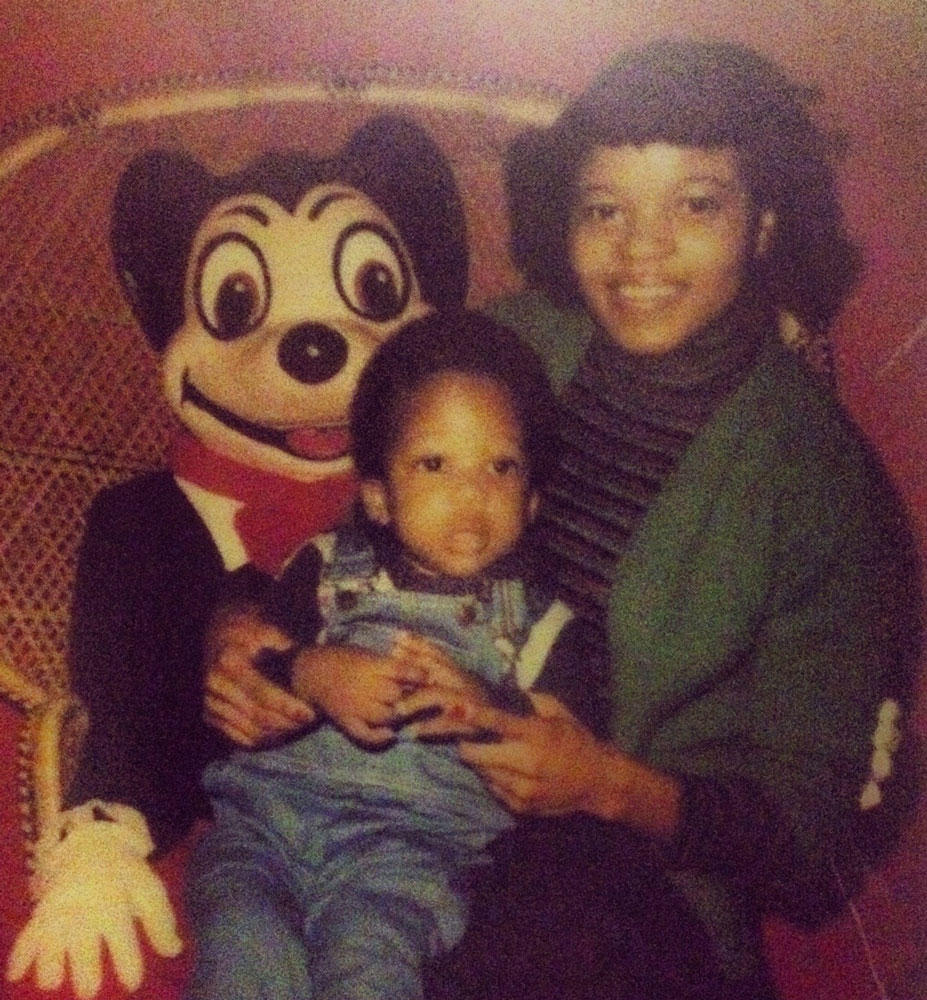
Never-before-seen minerals discovered in Somali meteorite

A space rock that crashed in Somalia decades ago lay partially encased in sand until 2020, when researchers dug it up and sliced into it for samples. Inside the 15 ton meteorite — the ninth largest ever found intact on this planet — were two minerals, and possibly a third, that had never before been seen on Earth. The finding could not only inform theories on how asteroids form, but inspire new forms of synthetic materials for future manufacturing.

El Ali is a small village in Somalia’s Hiiraan region, with a population under 200,000, but a long time ago it received a new visitor from space. Local camel herders have known about the large chunk of (mostly) iron, which they call “Nightfall,” for between five to seven generations. The El Ali meteorite has been “memorialized through Saar folklore, songs, dances and poems,” according to a report in the Meteoritical Bulletin Database. They even used the rock as an anvil to sharpen their knives.

In September 2019, artisanal miners were hunting for opal in El Ali, as the desert region is rich in the popular gemstone. When they learned of the El Ali stone, they immediately recognized it as a meteorite and collected a sample. The prospectors, from the Kureym Mining and Rocks Company, sent a single 70 gram slice to Chris Herd, a professor in the Department of Earth and Atmospheric Sciences and curator of the University of Alberta’s Meteorite Collection.

After the specimen was polished and etched, it revealed an unmistakeable Widmanstätten pattern, which is a key indicator that this rock originated off-world. When he dissolved and analyzed the sample, Herd discovered two minerals that have never previously been found on Earth before. He dubbed them elaliite and elkinstantonite.

The first is named for El Ali, the region where the meteorite was found, while the latter is named for Lindy Elkins-Tanton, a planetary scientist, professor at Arizona State University’s School of Earth and Space Exploration and principal investigator of NASA’s upcoming Psyche mission, which is slated to explore the metallic asteroid 16 Psyche in 2029.

“Lindy has done a lot of work on how the cores of planets form, how these iron nickel cores form, and the closest analogue we have are iron meteorites. So it made sense to name a mineral after her and recognize her contributions to science,” Herd explained in a statement. “Whenever there’s a new material that’s known, material scientists are interested too because of the potential uses in a wide range of things in society.”

There could be more minerals waiting to be discovered in the meteorite, but further analysis is needed. The reason why elaliite and elkinstantonite were relatively easy to detect is because they’ve both been made synthetically in a lab in the 1980s, so chemists had references to go from. But lab-made materials aren’t technically minerals, so they don’t receive special names like grossite, a mineral made from calcium aluminum oxide found on Earth and in meteorites.

“The very first day he [Locock] did some analyses, he said, ‘You’ve got at least two new minerals in there,'” Herd said. “That was phenomenal. Most of the time it takes a lot more work than that to say there’s a new mineral.”

A mineral is a solid inorganic substance that occurs naturally. Under the right conditions, it can form crystals, depending on its chemical makeup. Diamonds are pure carbon minerals. There are many different kinds of minerals that have been first discovered in meteorites, including some with interesting names like brianite and xifenguite.

Herd noticed something strange about El Ali when analyzing it, but then he brought in Andrew Locock, the head of the University of Alberta’s Electron Microprobe Laboratory, whose work has included describing Heamanite-(Ce), a new mineral discovered inside a diamond in 2020.

“The very first day he [Locock] did some analyses, he said, ‘You’ve got at least two new minerals in there,'” Herd said. “That was phenomenal. Most of the time it takes a lot more work than that to say there’s a new mineral.”

Herd first presented his findings at the Space Exploration Symposium on November 21st, describing the unique way in which El Ali likely formed. Most iron meteorites were part of the core of an asteroid, but the El Ali is the exception to the rule.

“It’s thought to be formed by impact-induced melting on an asteroid,” Herd explained at the symposium. Sometimes asteroids will smack into each other so hard, their materials can become molten. “During collisions between the asteroids, that metal dust, those metal particles became molten and were assembled into one large molten body that then was later broken up. And each of these meteorites may be related then to that molten body.”


Want more health and science stories in your inbox? Subscribe to Salon’s weekly newsletter The Vulgar Scientist.


The results will be published soon in a peer-reviewed journal, Herd told Salon in an email, which will cover the occurrences of the new minerals and the interpretation of the conditions under which they formed.

But one question seemingly lost in the coverage of this space rock is, didn’t it technically belong to the residents of El Ali? In other words, was it taken without permission from these people who seemingly have a strong cultural connection to this meteorite?

“What I understand is that the meteorite was taken from its original location by the finders to Mogadishu, where it was reportedly confiscated by the government,” Herd told Salon. “However, eventually it was released, allowing for its export to China. I don’t know much beyond that — except to say that I know that meteorites such as this one can have cultural and historical significance. We (the scientists involved in classifying the meteorite) hope that something can be done to recognize this potential significance.”

Studying meteorites and asteroids (the difference being a meteorite is an asteroid that has crashed to Earth) can tell us a lot about what the early solar system was like and how it formed 4.6 billion years ago. There are potentially other minerals waiting to be discovered in El Ali, with one under consideration by the Commission on New Minerals, Nomeclature and Classification of the International Neurological Association, according to Herd’s presentation.

Unfortunately, while this sample Herd and others were able to obtain was less than 100 grams, as Herd mentioned, the rest of the 15.5 ton meteorite was taken to Mogadishu, Somalia’s capitol, and later moved to China, where it may be awaiting to be sold. El Ali has a long, chaotic history that brought it to Earth, but for now, its future is uncertain.

The 6 most eye-opening Casey Anthony revelations from docuseries “Where the Truth Lies”

It didn’t take long for Casey Anthony to become the most hated individual in America. The nicknamed “Tot Mom” was at the center of an infamous 2011 trial concerning the death of her two-year-old daughter Caylee, who was first reported missing on July 15, 2008 by her grandmother (Anthony’s mother).

Per evidence obtained amid a lengthy investigation and revelations that Anthony had lied to detectives about her daughter’s disappearance and whereabouts, public onlookers — including the media — were quick to point the finger at Anthony for committing the murder. That outrage reached its boiling point on July 5, 2011, when a 12-person jury found Anthony not guilty of first-degree murder, aggravated child abuse and aggravated manslaughter of a child, but guilty of four misdemeanor counts of providing false information to law enforcement.

Following the verdict, Anthony has been living her life in recluse. But now, she’s publicly coming forward with her side of the story in a new Peacock documentary called “Casey Anthony: Where the Truth Lies.” The three-part series spotlights Anthony’s tumultuous childhood and relationships with her daughter and family, and attempts to set the record straight on what exactly happened to Caylee. Alongside Anthony, there are appearances from members of her defense team and friends along with skeptical investigators and former acquaintances-turned-foes.

Here are six shocking revelations from the docuseries:

01
Anthony’s fishy employment history
Casey Anthony: Where the Truth LiesCasey Anthony from “Casey Anthony: Where the Truth Lies” (Peacock)
During the investigation into her daughter’s disappearance, Anthony told missing persons investigator Yuri Melich that she was an employee at Universal Studios. Melich soon learned, however, that Anthony didn’t actually work there. Detective John Allen, who appears in the docuseries, then suggested that they bring Anthony to Universal Studios in an attempt to get her to confess to her lies and possible wrongdoings. 


“But that’s not the reaction we got,” Allen said. Instead, Anthony agreed to travel with both investigators and even asserted that she had her own office in the Universal Studios offices. Once there, Anthony waved to the other employees, who, Allen said, waved back hesitantly. 


“You could tell by their expressions that, you know, she doesn’t work in the building,” Allen continued. “She’s not somebody known to the people in there.”


Finally, after the trio reached a dead-end hallway, Anthony confessed to both Melich and Allen that she didn’t really work at Universal Studios. She was subsequently arrested for lying during the course of that portion of the investigation.


When asked why Anthony felt the need to lie, Allen said that he thinks she killed her own daughter and that she didn’t want to get caught.

02
Anthony’s “boisterous” lifestyle following Caylee’s disappearance
Casey Anthony: Where the Truth LiesAnnie Goderwis from “Casey Anthony: Where the Truth Lies” (Peacock)
Per his interviews with Anthony, detective Eric Edwards determined that Caylee officially disappeared on June 16. A closer look at Anthony’s calendar also revealed that she had an active social life, consisting of extravagant partying and hangouts not too long after that date.


During the 31 days between Caylee’s death and the official police report for her disappearance, Anthony reportedly stole a checkbook from a friend named Amy Huizenga and used funds that did not belong to her to purchase “things that were unfit for a child,” per Edwards.


On July 3, Anthony got a tattoo that says “Bella Vita,” which translates to “the good life.”


“Your child is missing,” Edwards said. “How do you get a tattoo like a billboard, showing the world, ‘I’m living the perfect life?’ Who does that?”


One of Anthony’s former friends, Annie Goderwis, however, claimed in the docuseries that half a dozen photos of Anthony partying that were circulated online were actually taken from “half a dozen different nights over the span of a three-year time period.”


“The media made it like all she wanted to do was to kill her kid and go out and party,” Goderwis said. “It’s not the Anthony that I knew.” Goderwis instisted that Anthony didn’t go out that often and was never the life of the party. Instead, she “was your typical mom” who loved and adored her daughter.


“Until she herself tells me that she did it, there’s no way, no way she killed that baby,” Goderwis said.

03
Anthony’s childhood of alleged abuse
Casey Anthony: Where the Truth LiesCasey Anthony from “Casey Anthony: Where the Truth Lies” (Peacock)
In the docuseries, Anthony said that her father, George Anthony, sexually abused her between the ages of 8 and 12. Then, between the ages of 12 and 15, Anthony was allegedly abused by her brother.


“Wasn’t the same thing that happened with my father,” Anthony said. “My brother never raped me. No, no, absolutely not. But it was close enough. Close enough where there was a pattern.”


Anthony didn’t tell her mother about the abuse she endured until after she became a mother herself at the age of 19. She added that her mother was incredibly controlling and frequently dressed her in a way that Anthony looked much younger than her actual age.

04
George’s possible involvement in Caylee’s death
Casey Anthony: Where the Truth LiesCasey Anthony from “Casey Anthony: Where the Truth Lies” (Peacock)

When asked to recount what happened on June 16, 2008, Anthony said she had fallen asleep with Caylee lying beside her. Anthony’s father was also at home with them.


“I was awoken by him shaking me and asking me where Caylee was, which didn’t make sense because I looked next to me and that’s where she was. TV was still on. She would never even leave my room without telling me, even if she had to go to the bathroom,” Anthony explained. 


She continued, “And I immediately started looking around the house . . . I go outside and I’m looking to see where she could be. By the time I came back around from the left side of the house, I came back around towards the front porch, he’s [Anthony’s father] standing there with her. She’s soaking wet. I can see him standing there with her in his arms. And hand her to me. And telling me that it’s my fault, that I did that. That I caused that. And I just collapsed with her in my arms.”  


Anthony said that Caylee felt heavy and cold. She claims her father then took Caylee from her and said that everything would be OK and Caylee would be too.  


“I wanted to believe him. Because I wanted her to be okay. He took her from me and he walked away.”


In between Caylee’s disappearance and the first police report, Anthony said her father reassured her that Caylee was safe and that both mother and daughter would be reunited soon.


“He would tell me she was fine. ‘Just keep doing what I’m telling you to do. You guys will be reunited soon,'” Anthony said her father had told her over the phone.


“I’m not outright accusing him of murder, but it wasn’t an accident in the pool.”

05
The death threats
Casey Anthony: Where the Truth LiesPat McKenna from “Casey Anthony: Where the Truth Lies” (Peacock)

Following Anthony’s acquittal, she and her defense team received several death threats, one of which included a picture of Anthony with a bullet through her head. Protesters also targeted her team members’ children and families. To keep their client safe, Anthony’s team rented a house in the panhandle for her. Eventually, Anthony was taken in by Pat McKenna, an investigator who was also part of Anthony’s defense team.


“With the approval of my family, I brought her to my house,” McKenna said in the docuseries. “Everybody agreed, and I said I’d, you know, provide a year’s worth of safety for this kid.”


“Pat offered to let me stay at his house for nothing until I figured out what my plan was going to be,” Anthony said. “He’s the guy that would walk me down the aisle if I was ever dumb enough to get married. He’s the closest thing to a real dad that I’ve ever had.”

06
Anthony still doesn’t know how her daughter died
Casey Anthony: Where the Truth LiesCasey Anthony from “Casey Anthony: Where the Truth Lies” (Peacock)

In the documentary, Anthony asserted that she doesn’t know how Caylee died, but she knows that her daughter didn’t drown in the family pool and that her father, George, was involved in some way. 


“There was that little girl inside of me that wanted to believe he wouldn’t hurt her the way he hurt me,” Anthony said.


As for Caylee drowning in the pool, Anthony said, “There was nothing for her to have shimmied up. To me, there’s no way of explaining that . . . unless he [Anthony’s father] put her in the pool to cover up what he did. So if he decided to call the police or if I decided to call the police, they would have looked at it as a drowning and not actually examined her body.”


Anthony continued, “I’m sure there were times where I was incapacitated as a child, was limp and lifeless. That’s what I think about. I wish every day I would have said something to somebody at some point. Maybe things would be different. Probably not.”

“Casey Anthony: Where the Truth Lies” is currently streaming on Peacock. Watch a trailer for it below, via YouTube:


DeSantis-backed education purge begins after right-wing school board takeovers in Florida

Despite outcry from parents, teachers, and students, newly elected right-wing school board members in Sarasota County, Florida on Tuesday became the latest allies of Republican Gov. Ron DeSantis to oust a school superintendent over the district’s adherence to public health guidance during the coronavirus pandemic.

Dozens of community members gathered at a school board meeting in Sarasota County on Tuesday evening to support Brennan Asplen, the superintendent of schools since 2020, whose contract was the subject of the meeting.

The board met the same day new members, including Chair Bridget Ziegler, were sworn in. Ziegler, a co-founder of right-wing group Moms for Liberty, was one of two dozen school board candidates who received an endorsement from DeSantis during the midterm elections. The majority of those candidates, who received $1,000 contributions from the governor, won their elections.

At the meeting, members condemned Asplen “for not pushing back on the mask mandate” that was in place for three weeks in 2021 after the school board voted 3-2 in favor of the mandate, making Sarasota County the first in the state to defy DeSantis’ law blocking Covid-19 mitigation measures.

On Tuesday the board ultimately voted 4-1 in favor of negotiating a separation agreement with Asplen, after another board member, Thomas Edwards, warned the move would be a “carbon copy” of a similar ouster in Berkeley County, South Carolina earlier this month.

In that case, new school board members who had been endorsed by Moms for Liberty voted to fire the district’s superintendent and ban classroom discussions of racism in history and the present day.

Asplen is not the only school leader who has been pushed out of a superintendent position in Florida by DeSantis allies citing objections to public health protocols.

Five members of the Broward County school board this month fired Superintendent Vickie Cartwright over a grand jury report on the 2018 Parkland shooting. Like Asplen, Cartwright presided over the district during the pandemic and “faced frustration from some parents” over Covid-19 mitigation measures, which were implemented in violation of DeSantis’ order.

All of the members who voted to fire Cartwright were DeSantis appointees following the removal of previous members after a school safety investigation stemming from the 2018 Parkland school shooting.

WUSF Public Media reported earlier this year that the county is undergoing “a transformational shift” with the governor’s allies poised to take “a rare opportunity to advance conservative policy priorities in one of the state’s most Democratic-leaning counties.”

The superintendent of schools in Brevard County was also pushed out last week, hours after DeSantis-aligned school board members were sworn in.

Jonathan Friedman, director of free expression and education programs at PEN America, noted that parents from across the political spectrum have spoken out against the dismissals of school leaders in the Florida counties in recent weeks—”but to little avail.”

“The new playbook of total ideological control is in full swing,” said Friedman.

Bill Kimler, a former candidate for state House in South Carolina, noted that a right-wing takeover of school boards like the one in Berkeley County “is happening elsewhere in the country.”

“Every election cycle, we need to view school board positions with the same level of enthusiasm as we do the president of the USA,” said Kimler. “Our kids’ education cannot be left in the hand of extremists.”

Ravi Kapoor on his comedy “Four Samosas”: “I always wanted to make a lo-fi heist movie”

Ravi Kapoor’s “Four Samosas” is an amusing heist comedy set in Artesia, California, (aka Little India) about Vinny (Venk Potula) a would-be rapper still dejected from his girlfriend Rina (Summer Bishil of “The Magicians”), breaking up with him three years ago. When he learns that Rina is now engaged to Sanjay (Karan Soni), Vinny hatches a plan to rob Rina’s father, Mr. Juneja (Tony Mirrcandani), of the possibly dirty diamonds he keeps in a safe in the grocery store he owns.

To achieve his goal, Vinny enlists the assistance of his Bollywood-loving friend Zak (Nirvan Patnaik), Anjali (Sharmita Bhattacharya), the editor and publisher of “The Great Little Indian Times,” and Paru (the scene-stealing Sonal Shah), an undocumented student. Trouble, and comedy, of course, ensue as the four inexperienced thieves try to execute their plan.

“Four Samosas” features plenty of witty sight gags, wordplay, and a few Bollywood numbers, all of which are diverting. But the film also has some pointed comments on cultural assimilation and shame as the characters try to find their place in the world. 

Kapoor chatted with Salon about making “Four Samosas.” 

How did you conceive of the story, characters and personalities in “Four Samosas”? 

I was interested in two things. I always wanted to do a story set in Artesia, the Little India of Los Angeles, a place that fascinated me. It’s a very specific Little India, it’s not like Queens or Jackson Heights in New York, because It’s not as bustling — because of the heat of Southern California. Everything takes place inside the restaurants and sari stores. What fascinates me about Little Indias is that they are like little principalities in some ways, like a motherland or a homeland. I didn’t grow up in India; I have only visited it a handful of times. But going to a Little India in whatever city I’m in, it was a way to tap into that homeland that I never knew. That was one driving force.

The other was I always wanted to make a lo-fi heist movie. No guns, car chases or high-tech gadgets. It’s just about the people. And any heist story is a relationship movie. It’s about people coming together and discovering their commonalities and differences and how this event brings the together or drives them apart. It usually drives them apart after the heist. The usual conceit of the heist movie is how after something is achieved, the real issues can come to the fore. 

The characters have one foot in the old world, and one foot in the new world. There are ideas about cultural shame and identity. What points do you want to make about Indian American culture? 

What’s interesting to me is that it’s not a heavy thing — this idea of living in two cultures. In the past, we have had to examine how English are we or how American, or Indian, or how South Asian are we, and the conflict that brings up in our families and the expectations for second generation immigrants. In some ways, it’s just accepted now, it’s kind of lived in, this idea of living in two worlds. Even though there are characters in the film who want to create a new South Asian state, this idea of identity isn’t such a heavy issue in the film. It’s not as heavy an issue as it used to be. It’s just an acceptance. I’m American and culturally I have some South Asian in me as well. I hope the film shows how easy it is in some ways to be both American and South Asian, be a Desi at the same time. It’s a new world and a new culture. 

I see it as code-switching. You can play whatever identity you want when it suits you. I like that Vinny is a rapper, but is he appropriating another culture? 

It’s all out there in the cultures we’re absorbing and taking in, being here in America. All of it is part of who we are now. Rap and hip-hop is such a massive part of second and third generation South Asian’s sense of being. There are aspects they can tap into and feel it speaks to them, just like a white audience as well as a Black audience. That Vinny is a rapper who works in a sari store – you think that is a dichotomy that can’t exist, but they seamlessly exist. He tests out his rhymes while he’s selling his saris.  

Four SamosasFour Samosas (IFC Films)

There is some interesting discussion about reappropriating wealth. Can you discuss the class aspect of “Four Samosas?”  

That’s a really good point. Often, when we look at South Asian immigration in America, there is a predominant class which is very affluent and educated whereas in the UK, the majority of the immigration was more blue-collar and working-class. But there is a group of South Asian immigration that isn’t part of the affluent, and they do become an outside group to some degree. All these characters in “Four Samosas” are living on the fringe in one way or another. They are not wealthy. Vinny almost lives out of his garage with his mother. His father abandoned wanting any sense of economic gain and instead reaches for a spiritual heaven.

And then we have characters like Paru, who is waiting on a green card and feels stuck and left behind by people in the IT world, or Zak who works in a restaurant. The characters live more in a working-class, blue-collar segment of the South Asian community. What is interesting in the storytelling of the South Asian experience, often there is an emphasis is in middle class, and the working-class experience doesn’t get seen. 

I also loved the various comedic elements, from the sight gags of Vinny’s shirts. Can you talk about developing the humor? 

The concept of the shirt was that these are his middle school basketball jerseys. He has never really grown out of, physically, spiritually, or mentally. He is stuck in the past. The highlight of his life was back in middle school. He hasn’t evolved. He’s a bit of a man-child.

You shot “Four Samosas” in 1:33 aspect ratio. What informed that decision and how did you conceive of the film visually?

We wanted to create something specific visually, and when you don’t have a lot of money you don’t want to pretend you have a lot of money. You don’t want to compete with a studio movie unless you have a studio budget. So, for us it was about leaning into lo-fi and with a low budget. We did that visually by shooting in 4:3 aspect ratio and with the curved corners it gave it a retro feel. Typically, with a heist movie when you have plenty of characters you go with a widescreen format to fit all the characters in and given them space. I was fascinating by the idea of squeezing in these people and what would that do? It gives it a clown quality — how many people can fit in a phone box or a tiny car? We shot everything on one lens except for the two fantasy scenes. We wanted push and define the visual style. I’m also a massive fan of Buster Keaton as well and so there is a callback to silent shorts and the slapstick humor with wide shots. We really wanted to find a way to heighten this film and make it feel like it exists not quite in the real world, but existing in a parallel Little India on a slightly different planet. 

Vinny, who is a slacker, tries to get talked out of the heist by his father, and they discuss the idea of fulfilling a destiny, having clarity and devotion. What are your thoughts on human behavior? 

What I love about the father is that you have an absent father who is not physically absent, he’s around, but he is emotionally absent because he’s exploring his spirituality. He has gone on a deep dive for religion and God. He’s there, but not really there for his son. He is looking at the bigger picture but missing the smaller minutia of raising a kid. It explains Vinny’s lack of motivation. He decides to do the heist more out of the fact that he’s struggling with his sense of self-esteem and lack of belief in himself and lack of self-worth. That is caused by the fact that his father abandoned him and the woman he thinks he’s in love with has rejected him and artistically that he doesn’t know where he is at. He knows he has something to say, he doesn’t know how to say it. Vinny discovers a new way of expressing himself artistically. 

In terms of the bigger idea of destiny, it’s a big question. Do we explore it? We touch on it a little bit. It is that idea of putting effort out there. They talk about that in the film: “You just have to try.” “At least we tried.” The father says, “Are you doing the right thing?” Do you put anything out there and see what happens, or do you focus in on doing the right thing? I think sometimes you just have to put s**t out there and see what happens. You have to make a movie and see what happens. You have to rob an ex-girlfriend’s diamonds and see what happens. As long as you are doing something. That was the feeling for me, making this film. I was struggling to get a second feature made with a bigger budget, so I just have to do something and put it out there and come way. 

There was a concern that Jo Koy‘s “Easter Sunday” underperformed at the box office. Is there a concern about that with “Four Samosas”? 

In terms of whatever happens with the film, we’ve already won. It exceeded our own expectations already to some degrees. I wanted to make the film I want to see, and not worry about what anyone else might like, or dislike, or gravitate towards or not. That we did that, and we are getting a release through IFC and limited theatrical I feel we are the winning side of the equation. In term of the audience, I think is that it’s so quirky and has a strong indie vibe to it, I think it will go beyond the South Asian audience and attract a general audience that love independent films. If they discover it, I don’t think there are barriers to them enjoying it. It will even enhance the viewing experience because it will be a little different and yet familiar.  


Want a daily wrap-up of all the news and commentary Salon has to offer? Subscribe to our morning newsletter, Crash Course.


“Four Samosas” is about finding your voice, and your crew, getting a life and inspiring others. You seem to have a voice and crew. How do you get inspiration? 

It is about finding people who are prepared to come along with you on a journey. It’s a powerful thing. Making a movie is not unlike pulling off a heist. You find people who want to take the journey with you that probably and possibly will end in failure, but you never know? You might succeed and get the diamonds and make a film that people will want to see. I love that idea of how a project can galvanize people.

There is a lot of performance in the film — there is a drama group, Vinny is a rapper, Zak wants to be a Bollywood star. So, the film is also about how performance can save us on a spiritual level. How, if other things in our lives are not coalescing, whether it is financial or romantic, the very act of expression through art can give us a sense of value for just being alive. That is a big thing for me as well. 

“Four Samosas” is playing in select theaters starting Dec. 2.


Loco-Motive: Pact forced on US railroad workers — sick days still in doubt

The House of Representatives voted Nov. 30 to impose a tentative pact reached between the nation’s freight railroads and labor leaders back in September. The deal was subsequently rejected by the rank and file of four of the industry’s larger unions but approved by several others.  The 290 to 137 bipartisan House vote came after President Biden requested Congressional intervention to head off “a potentially crippling national rail shutdown” on Dec. 9.

A second vote to require that the nation’s freight rail workers get seven paid sick days, a major sticking point for the unions that rejected the President’s Emergency Board’s brokered deal passed by a far narrower 221 to 207 votes.  Just three Republicans, crossed over to support the measure that AFL-CIO President Liz Shuler said would be a remedy for a pact that “fell short by not including provisions on paid sick leave or fair scheduling.”

“Paid sick leave days are a right that for too long freight railroads have refused to provide to rail workers—that is the issue,” said Rep. Donald Payne Jr., D-N.J., who led the Democratic floor debate. “This benefit will cost less than one percent of the profits the railroads reported last year. Our bill will guarantee that freight rail workers will have seven sick leave and I am pleased that we have seen bipartisan support for this idea in the Senate.”

DAMAGE CONTROL

Speaking from the floor during the debate, House Speaker Nancy Pelosi pressed for the sick time bill and the imposition of the deal. The outgoing Speaker blasted the rail industry ownership for making “obscene profits on the backs of workers” while it “slashed jobs and cut corners on safety” and demanded “more and more from the workers…Over the last decade they have given $150 billion dollars in handouts to their corporate executives and wealthiest investors.”

This is the first time since the 1990s, that Congress has been asked to exercise its power to intervene in a labor dispute under the National Railway Labor Act was enacted in 1926. In 1992, when President George W. Bush asked Congress to act, just a handful of Senator opposed the intervention including a Senator Joe Biden of Delaware.

Both measures now head to the Senate where the bill that imposes the pact is expected to pass but the fate of the sick time provision, which would require 10 Republican votes, is still unclear.

On the floor of the Senate Sen. Sanders, I-Vt., made the case for the paid sick time measure.

“What the freight industry is saying to its workers is this ‘it doesn’t matter if you have COVID—It doesn’t matter if you are lying in a hospital bed because of a medical emergency—It doesn’t matter if your wife has just given birth—It just doesn’t matter.” Sanders said. “If you do not come into work, no matter what the reason, we have the right to punish you. We have the right to fire you.”

BIDEN’S PATCO?

“If Congress ends up imposing this contract without the seven-day paid sick leave it will be a travesty,” said John Samuelsen, the international president of the Transport Worker Union, in a phone interview.

“It’s the 21st century and essential workers who saved us through the pandemic can’t have sick leave??? You must make the boss do the right thing,” texted Sara Nelson, the international president of the Association of Flight Attendants-CWA. “We stand with Railroad Workers. Their fight is our fight.”

In his appeal to Congress for action, President Biden wrote the “agreement was approved by labor and management negotiators in September. On the day that it was announced, labor leaders, business leaders, and elected officials all hailed it as a fair resolution of the dispute between the hard-working men and women of the rail freight unions and the companies in that industry.”

“The deal provides a historic 24 percent pay raise for rail workers. It provides improved health care benefits. And it provides the ability of operating craft workers to take unscheduled leave for medical needs,” Biden wrote. “Since that time, the majority of the unions in the industry have voted to approve the deal.”

In the September 15 celebratory announcement Biden’s statement described the pact as “tentative” but left out the salient fact that it would be up to the rank and file of 12 unions, representing over 115,000 rail workers to ratify it. “I thank the unions and rail companies for negotiating in good faith and reaching a tentative agreement that will keep our critical rail system working and avoid disruption of our economy,” Biden asserted.

Earlier this week in asking Congress to step in, Biden expressed support for paid sick leave but suggested that Congress should hold off on voting to impose them. “However well-intentioned, any changes would risk delay and a debilitating shutdown,” he wrote.

Biden continued. “As a proud pro-labor President, I am reluctant to override the ratification procedures and the views of those who voted against the agreement. But in this case – where the economic impact of a shutdown would hurt millions of other working people and families – I believe Congress must use its powers to adopt this deal.”
 
Biden’s decision to enlist Congress now to impose the pact was blasted by Railroad Workers United, a national coalition of unionized railroad workers.

OFF BRAND & ANTI-DEMOCRATIC

“Unfortunately, the ‘most labor-friendly president’ has opted to side with Big Business and call for a thwarting of railroad workers’ rights to strike,” said the Railroad Workers United, a national coalition of unionized railroad workers, in a statement. “On Monday, President Biden called upon Congress to adopt legislation that would mandate a contract and end the threat of any legally sanctioned rail strike from happening.”

The RWU continued. “This, although railroad workers have voiced a deep desire to strike in recent months. Rail unions representing more than 55 percent of railroad workers have voted down their respective tentative contracts with the rail carriers in recent weeks.”

The deal was rejected by the Brotherhood of Railroad Signalmen, Brotherhood of Maintenance of Way Employees, the International Brotherhood of Boilermakers, and SMART-TD, one of the largest rail unions.

“The SMART Transportation Division does not support the notion of Congress intervening in our collective bargaining negotiations to prevent a strike,” SMART-TD said in a statement. “We firmly believe in the workers’ right to fight for their own best interests, as well as the best interests of their families. Unfortunately, threats to the economy have caused this Congress to believe that a strike aversion is the best course for this nation.”

SMART-TD’s statement continued. “Our members want and need sick leave, but even more so, they need relief from the damning effects of operational changes made by the railroads over the last five years. If Congress truly wants to take action to improve the industry for our members, then we recommend legislation that will work to reverse the devastation of Precision Scheduled Railroading.”

For years, rail unions have been warning about the implications of a dramatic ownership consolidation driven by Wall Street investors which has seen close to 40 Class I railroads boil down to just a handful with a near monopoly hold on the industry.

“The shackles [of regulation] have been removed and you have a bunch of irresponsible corporate leadership at the railroads who are abusing the monopoly power they have gained through mergers and acquisitions,” said Matt Parker, a Union Pacific engineer, with the Brotherhood of Locomotive Engineers and Trainmen, who is also affiliated with Railway Workers United. [Listen Here]

PROFILES IN COURAGE

Eight House Democrats voted NO on President Biden’s request to impose on 115,000 rail workers a tentative rail pact that did not have a real paid sick leave provision and, while approved by eight of the 12 railroad craft unions, was rejected by 55 percent of the aggregate rank and file. They were Rep. Judy Chu, D-Calif., Rep. Mark DeSaulnier, D-Calif., Rep. Jared Golden, D-Maine, Rep. Donald Norcrosss, D-N,J., Rep. Mary Peltola, D-Alaska, Rep. Mark Pocan, D-Wis., Rep. Rashida Tliab, D-Mich., and Rep. Norma Torres, D-Calif.

Just three House Republicans split with their caucus on the vote to require railroads to provide seven paid sick days for their workforce. They were Rep. Don Bacon, R-Neb., Rep. Brian Fitzpatrick, R-Pa., and Rep. John Katko, R-N.Y.

Kanye West goes on pro-Nazi rant to Alex Jones: “I see good things about Hitler”

Kanye West praised Nazi dictator Adolf Hitler during an appearance on Alex Jones’ InfoWars conspiracy broadcast.

The rapper, who now goes by Ye, appeared on the right-wing conspiracy broadcast alongside white nationalist Nick Fuentes, a week after the pair met with former president Donald Trump at his Mar-a-Lago resort, and Jones attempted to give him a chance to walk back his previous antisemitic statements.

“That’s right, you’re not Hitler, you’re not a Nazi, you don’t deserve to be called that and demonized,” Jones said.

West, who was wearing a black mask covering his entire head and face, declined to accept Jones’ offer.

“Well, I see good things about Hitler, also,” he said, as InfoWars played the infamous curb-stomp scene from the movie “American History X.” “I love everyone. The Jewish people are not going to tell me, you know, you can love us and you can love what we’re doing to you with the contracts and you can love what we’re pushing with the pornography.”

“But this guy that invented highways and invented the very microphone that I use as a musician,” West added. “You can’t say out loud that this person never did anything good and I’m done with that, I’m done with the classifications, and every human being has value that they brought to the table, especially Hitler.”

Arizona Republicans’ refusal to certify election over false claims could cost GOP a real House seat

Republican Juan Ciscomani defeated his Democratic opponent by more than 5,000 votes in Arizona’s competitive sixth Congressional District, but Cochise County’s refusal to certify the results of the November election could cost him his seat. 

Arizona Secretary of State Katie Hobbs, also the governor-elect, sued the county after it failed to meet the Nov. 28 deadline to certify its election. The Republican-led Board of Supervisors delayed the canvass vote to hear concerns about the certification of ballot tabulators despite election officials approving the equipment, Bloomberg reported

The lawsuit, filed in Arizona Superior Court, asks a court to force the Cochise County Board of Supervisors to certify the county’s results by Dec. 8 as they are required to do under state law.

If Arizona officials don’t have Cochise County’s vote totals by the time of their state-level certification next week, the ballots of more than 47,000 county residents can be tossed out, costing Ciscomani his victory and Republicans a seat in the House of Representatives, where they hold a narrow seven-seat majority.

“The Board’s inaction not only violates the plain language of the statute, but also undermines a basic tenet of free and fair elections in this state: ensuring that every Arizonan’s voice is heard,” the lawsuit states.

The county’s officials are heading to court this afternoon and may be present without an attorney to represent them against charges of breaking the law by failing to certify the results of the Nov. 8 election, the Arizona Republic reported

Cochise County supervisors voted to hire attorney Bryan Blehm earlier this week to defend them and the county government against two lawsuits, without discussing the matter with him first. On Wednesday, they were “caught flat-footed” when Blehm as well as another attorney he recommended, declined the offer, the Arizona Republic reported. 

Arizona has been a hotbed for election fraud conspiracy theories with failed candidates casting doubt on election tabulation machines and demanding a return to hand-counting votes.

Failed gubernatorial candidate Kari Lake, who ran against Hobbs, has still not conceded her loss. Instead, the Trump-backed election denier filed a lawsuit against Maricopa County election officials falsely claiming that they broke election laws.

Cochise County was among a handful of districts to move for a hand-recount of its midterm vote, The Daily Beast reported. Even as election audits are routine, election experts have advised against hand recounts due to the increased risk of human error. 


Want a daily wrap-up of all the news and commentary Salon has to offer? Subscribe to our morning newsletter, Crash Course.


The county’s hand-count effort drew a lawsuit from a resident and a retiree group, which called the campaign “unlawful, chaotic, time-consuming and unnecessary”, according to The Daily Beast.  A judge ultimately ruled that local officials could only hand-count small portions of ballots.

In an interview with the Daily Beast, Cochise County Supervisor Peggy Judd said the board intends on certifying the election.

“We’re just trying to get some answers to things about the machines,” Judd said. “We full well intend to certify it. Why would we not? You know? So we’re going to, we’re just holding off as long as we can, doing things that are legal for us to do, no matter what they say. It’s so weird, we’ve been kind of dealing with this the whole time. They keep telling us ‘That’s illegal. You’re gonna go to jail,’ but it hasn’t been so, you know, law is up to interpretation. Only the judge in the end can say.” 

MSNBC’s Joe Scarborough mocked Republicans for being so fixated on upsetting their political enemies that they could fumble away a congressional seat out of spite.

“All the major election deniers all lost their elections, and I know a lot of Republicans thought they were going to own the libs – it’s all about owning the libs…now it’s gotten so extreme they’re not going to certify a county’s votes that’s going to cost them a seat in Congress and a statewide constitutional seat,” Scarborough said. 

Under state law, Arizona is supposed to certify its results by Dec. 8, with or without certification from all of the counties.

Elon Musk’s Twitter is purging left-wing accounts while boosting far-right trolls: report

While claiming to have bought the social media giant in order to make it “an inclusive arena for free speech,” multibillionaire Twitter owner Elon Musk is apparently overseeing what critics claim is a purge of anti-fascist voices, The Intercept reported Tuesday.

“Several prominent anti-fascist organizers and journalists have had their accounts suspended in the past week, after right-wing operatives appealed directly to Musk to ban them and far-right internet trolls flooded Twitter’s complaints system with false reports about terms of service violations,” The Intercept‘s Robert Mackey and Micah Lee wrote.

Among the suspended Twitter accounts are those of journalist Vishal Pratap Singh, who covers far-right protests in California; the Elm Fork John Brown Gun Club, which provides security for LGBTQ+ events in Texas; the anarchist collective CrimethInc; and anti-fascist researcher Chad Loder.

“What I believe happened is that I and other accounts have been mass reported for the last few weeks by a dedicated group of far-right extremists who want to erase archived evidence of their past misdeeds and to neutralize our ability to expose them in the future,” Loder told The Intercept.

“What I suspect happened is that Twitter’s automatic systems flagged my account for some reason and no human being is reviewing these,” Loder added.

A common thread connects the aforementioned suspensions: All were flagged by far-right conspiracy theorist and social media influencer Andy Ngo, who, in a Twitter exchange was invited by Musk to identify accounts for possible suspension.

“Andy Ngo’s bizarre vision of ‘Antifa’ seems to be the metric used to delete the accounts of journalists and publications, most of which engaged in verifiably good journalism and [have] done so completely above board and [terms of service] observant ways,” tweeted Shane Burley, editor of the anthology ¡No Pasarán!: Anti-fascist Dispatches From a World in Crisis. “Paranoid delusions about Antifa are driving it.”

In recent days, a list of thousands of purported “Antifa” Twitter accounts—including those of CNN, actor Danny DeVito, the World Health Organization, and a “professional dog rater”—has been circulating online.

While calling the list “absurd,” listee Nick Martin, publisher of the extremism monitoring site The Informant, warned: “Don’t dismiss it. A mass flagging campaign has begun based on the list and is already claiming victory for a number of bans. It’s a sign far-right extremists see Elon Musk as a ally who will empower them and destroy their enemies.”

The suspensions of left-wing accounts came as Musk restores the accounts of far-right figures, some of whom—like former U.S. President Donald Trump—have called for or incited violence on the platform.

“The irony isn’t lost on us that our suspension coincides with a coordinated effort to reinstate the most vile antisemitic, transphobic hate accounts,” Elm Fork John Brown Gun Club told The Intercept. “Whether this is an indication of the future of leadership of Elon Musk’s running of Twitter, we cannot say but we can say that the timing and reasoning is deliberate and targeted.”

CrimethInc, which before the current suspension had never run afoul of Twitter’s terms of service in its 14-year existence, said that “Musk’s goal in acquiring Twitter had nothing to do with free speech. It was a partisan move to silence opposition, paving the way for fascist violence.”

Jacobin‘s Branko Marcetic wrote Tuesday that “no one should’ve honestly believed Elon Musk would use his ownership of Twitter to champion free speech.”

“Besides the fact that the man is a professional bullshitter,” he added, “it was always dubious that a guy who slaps employees with gag orders and bars them from wearing pro-union messages had a genuine commitment to the proverbial marketplace of ideas.”