Spring Sale: Get 1 Year, Save 58%

How Democrats can build toward a blowout in 2024 — and vote the GOP into extinction

Before the empowering implications of the 2022 midterms could be fully appreciated, Donald Trump declared he was running for president and the Republicans won the House by the slimmest of margins.

Those GOP gyrations, after the red wave failed to materialize, distracted attention from the historic opportunity that has opened for Democrats to build toward a blowout in 2024 — by building on a platform that for branding purposes we should call the Better Deal for American families. 

Looking at the confluence of demographic trends and the statehouse gains in 2022 in key battlegrounds like Pennsylvania and Michigan, it’s possible we can actually take big strides toward voting the GOP into essential extinction by 2024, especially if Donald Trump becomes the Republican presidential nominee.

You won’t hear this from the corporate news media, which for three consecutive federal election cycles has failed to accurately predict the trajectory of the American polity, and has instead promoted narratives that favor what their focus groups determine will generate clickbait and deliver paying customers looking to buy a Mercedes or book a Viking cruise.

The revolution will not be televised — because the producers and programmers want you to remain a passive consumer sitting at home.

The Beltway polling and media pundits, with the notable exception of Michael Moore, wanted us to believe that down the homestretch of the national midterm campaign, outrage over the Supreme Court overturning Roe v. Wade had been eclipsed by concern over the price of gasoline. Again, the media sees us only as consumers. Nothing else matters.

You have to wonder just how many women decision-makers were in those high-level corporate news network meetings.

What this reveals, as it did in 2016 when the same outlets failed to see or comprehend the rise of Donald Trump, is that the Beltway consensus is completely disconnected from the actual circumstances of the American people. In state after state, whether red or blue, thanks to an increasingly youthful and diverse electorate we see an emerging consensus that supports a woman’s right to chose and other more progressive causes like Medicaid expansion and a living wage. 

Shailly Gupta Barnes is policy director at the Kairos Center and the Poor People’s Campaign: A National Call for Moral Revival, which is co-chaired by the Rev. Dr. William Barber and the Rev. Dr. Liz Theoharis and carries on the work of the Rev. Dr. Martin Luther King Jr.

“Reproductive rights measures passed in more liberal states but also in Kentucky and Kansas,” Barnes said. “Medicaid expansion passed in South Dakota, that’s a pretty red state — Arizona voted to cap medical debt. Obviously the political divide is still there, by party lean, yet we are seeing that issues that disproportionately affect poor and low-income people are gaining support, whether it be reproductive rights, health care initiatives, increasing the minimum wage or even proposals for rent control — these all had support in different parts of the country, and that was pretty unexpected.”

This election was about a lot more than the complete electoral repudiation of Donald Trump. Throughout the campaign, the corporate news media failed to grasp the compound impact on the electorate of an ongoing mass death event, a violent right-wing insurrection at the U.S. Capitol and unbridled corporate greed. They insisted on relying on the obsolete metronome of history they have come to rely on entirely to predict the future. 

This election was about a lot more than the repudiation of Donald Trump. The corporate media failed to grasp the compound impact of an ongoing mass death event, a violent right-wing insurrection and unbridled corporate greed.

Just how relevant is that Gallup “right way/wrong way” poll two years into a pandemic that killed more than a million Americans and sidelined millions more from the workforce? Perhaps media executives fell under the hypnotic repetition of the billions of dollars in right-wing anti-Democrat attack ads they ran that linked President Biden to an alleged crime wave that was creating mass chaos in the streets.

In both “reliably blue” New Jersey and New York, establishment Democrats started to believe the right-wing propaganda and ill-informed punditry about an impending red wave and found themselves on the defensive. Ironically, Rep. Sean Patrick Maloney, chair of the Democratic Congressional Campaign Committee, lost his seat in the northern suburbs of New York under a barrage of TV ads that deceitfully attacked him as soft on crime.

This propaganda wave very likely disempowered the Democratic base, which dramatically underperformed in both states. Who wants to be on a losing team? That’s what the media told us the Democrats were certain to be.  


Want a daily wrap-up of all the news and commentary Salon has to offer? Subscribe to our morning newsletter, Crash Course.


“You look at this election, and the issues that folks are most focused on are the economy and crime. And on both fronts, the Democrats own it,” Assemblyman Mike Lawler, Maloney’s victorious Republican opponent, told CNN. “For the first time in our nation’s history, [Democrats] own everything in Washington, Albany and New York City all at once.”

Our regional political atmospherics are made toxic by the calliope of Rupert Murdoch’s New York Post, a right-wing tabloid, and the talk-radio behemoth WABC, both of which proclaim that New York City is immersed in a crime wave of unprecedented proportions. They always fail to note that the city’s murder rate, which was as high as 2,250 a year in the early 1990s, is just a fraction of that today — and recent increases in crime are relatively small in historical terms. If it doesn’t fit the Trump narrative, just omit it.

The reality is the 2022 results are not about Joe Biden but about the American people. It’s clear enough that Americans are ready to embrace a 21st-century version of the New Deal that will uplift tens of millions of America’s low-wage and low-income households who are the backbone of the essential workforce. We see this not just reflected in the success of incumbent congressional Democrats, including some of the most progressive, but in the dramatic increase in the number of successful union organizing drives across the county in places like Amazon and Starbucks. 

Last year, 47 million Americans left their jobs, which is that’s four times the number Americans who belong to all member unions of the AFL-CIO, which has been in decline for more than 20 years and has made concession after concession to corporate America, accordingly diminishing its influence in Washington.

When it comes to engaging more voters and building their base, professional Democrats in California, Texas, Florida, New York and New Jersey blew it. Perhaps corporate Democrats, busy trading stocks in those states, don’t want to wake the “sleeping giant” the Rev. Barber references, comprising tens of millions of registered voters who often stay home because they are not engaged.

This year, more than 46 percent of voters turned out for the midterms. In battleground states like Michigan and Pennsylvania, where governorships were also at stake, turnout was more than 15 percent higher than in New Jersey, where it dropped to just above 40 percent. By contrast, in the 2018 midterms, New Jersey’s turnout topped 55 percent. 

Similar drops happened in Texas where turnout dropped from 45.6 percent in 2018 turnout to 42.4 percent this year. California went from 48.3 percent to 43.9 percent, and Florida saw a similar drop-off.

Turnout was strong in battleground states like Michigan and Pennsylvania — but dropped off noticeably in New Jersey, Texas, California and Florida. That probably handed Republicans the House.

In the 2020 presidential election, New Jersey’s turnout topped 70 percent, one of the highest in the nation. But voter turnout apparently wasn’t much of a priority in this most recent election. The state’s AFL-CIO chose to put incumbency over the fundamental labor right of women’s reproductive choices by endorsing two Republican incumbents, Reps. Jeff Van Drew and Chris Smith. That cynical impulse to follow politics as usual resulted helped hand the House speaker’s gavel to the GOP.

In 2021, with Democratic Gov. Phil Murphy facing an energetic challenge from Republican former Assemblyman Jack Ciatarelli, just 40 percent of voters bothered to vote, the lowest level in a century. Just a year earlier, Joe Biden had beat Trump by 16 points in New Jersey, yet Murphy eked out a startlingly narrow margin of victory from a disengaged electorate that also rejected veteran Democratic state Senate Majority Leader Stephen Sweeney. 

This year in the state’s 2nd congressional district, where Van Drew faced Democratic former prosecutor Tim Alexander, turnout in some wards in Atlantic City, a traditional Democratic stronghold, failed break 10 percent. Van Drew was initially elected as a Democrat in this classic “Obama to Trump” district, one of almost 20 in the nation that went for Barack Obama twice before flipping for Donald Trump in 2016. 

The 2nd district includes all or part of five counties in southern New Jersey, including some of the poorest parts of the state. In Cumberland County, according to the United Way’s ALICE Report, more than half the population either lives below the poverty line or struggles to make ends meet month to month. In Atlantic County that proportion is 46 percent, while in Salem County it’s 44 percent. 

In 2019, Van Drew switched parties, telling CNN that an unnamed Democratic county chair had instructed him to vote to impeach President Trump or lose that chair’s endorsement. Unlike Smith, New Jersey’s other Republican member, Van Drew voted against both certifying President Biden’s election and establishing the House select committee to investigate the Capitol Insurrection.

Van Drew got 128,199 votes this year, to Alexander’s 79,362. Two years ago, with Biden at the top of the ticket, the district ws much closer: Van Drew prevailed with 195,526 votes to Democrat Amy Kennedy’s highly respectable 173,849. 

“We came up short and that’s on me,” said Tim Alexander in a post-election phone interview. “There’s no one else to blame. We didn’t raise enough money to get the message across to enough people, and I think that was evident.”

Rep. Jeff Van Drew, a Democrat-turned-Republican, represents some of the poorest parts of New Jersey. Flipping that district back is a crucial priority.

Alexander said that whether or not he runs for Congress again, he is committed to helping the Democratic Party get “50,000 new registrants district wide, or better, in order to flip this district. That’s a lot of work. If we start to get some fundraising in April and launch people in August and September we can get that number by the end of the year. The state legislative races will benefit and it will make it easier for the next congressional candidate.

“Let’s get Democrats energized, engaged and registered and listen to what people want, especially young people, and work to make those things a reality,” he concluded. 

Chris Estevez is New Jersey legislative and political director for the Communications Workers of America. His union opted to work for Alexander because, Estevez said, it sees the long term potential for building community in places like Cumberland County, which have long been ignored and abused by the state’s power structure, with serious consequences for the people who live there.

“We are working on a long game in building our communities and building our community’s involvement in elections,” he said. “So for us it’s not about immediate elections, it’s about building our voice. I don’t think the Democratic Party [in New Jersey] had confidence in its message towards the end and it didn’t stay the course. If it had put some resources in to push out the vote, we could have had different results.”

Estevez says short-term infusions of campaign cash are beside the point. “People get asked to give money to political campaigns in the months leading up to the election,” he said, “but what really needs to happen is people need to be asked to support community-building all year round.”

According to the county ratings of population health complied by the University of Wisconsin’s Population Health Institute, Cumberland County ranks lowest among New Jersey’s 21 counties, with 25 percent of residents in poor or fair health, compared to 16 percent in the state and 17 percent nationwide. The teen birth rate in Cumberland County is three times higher than the state’s as a whole.

Almost one in five young people between the ages of 16 to 19 in Cumberland County are “disconnected youth” who are neither working nor going to school. That’s more than three times the state’s rate and more than twice the national percentage. Multiple social science and labor studies have documented the linkage between that disconnected status and depressed lifetime earnings. In the 2nd congressional district, 13.4 percent of young people aged 16 to 24 — close to 10,000 people — fall into this at-risk category. The crisis of disconnected youth was greatly exacerbated by the COVID pandemic, which upended hundreds of thousands of families and disrupted basic societal institutions, including public education at all levels.

There are no doubt thousands of single-parent households in the 2nd district who number among the five million nationally who failed to collect their portions of the $14 billion in expanded child tax credits passed as part of the American Rescue Plan in 2021. It was permitted to lapse by Sen. Joe Manchin, D-W.Va., who theorized without evidence that the additional money might go to drugs and alcohol. 

Estevez says his union partners with Citizen Action, the nonprofit consumer and tenant advocacy group, to work in neighborhoods with services that help struggling households with free tax preparation, tenant advocacy, health care and seminars on home ownership.

Democrats need a door-to-door game plan on a much larger scale, to find the millions among America’s struggling households who are entitled to the expanded child tax credit but have not applied. When you help families actualize that way you greatly improve their lives and improve the chances they will want to claim their stake in America’s future by voting, because at that point the connection between social policy and their lives becomes real and tangible.

5 best Costco food deals for Black Friday

Costco, which has 845 stores across the world, is known for its low prices on bulk goods. For example, the warehouse chain sells pecan pies that weigh more than 4 pounds for only $16.99.

Thus, it may come as no surprise that some of the retailer’s best Black Friday deals involve food. From pantry staples to premium chocolates, we scanned the list of sales to look for the best of the best.

Some on-sale items are available for delivery (which may impact the price), while others are offered for a special bulk discount. As always, remember that availability and prices vary by location.

Without further ado, here are Costco’s top food deals for Black Friday 2022:

01
David’s Cookies Butter Pecan Meltaways 
These buttery, crumbly cookies are rife with pecan and dusted with powdered sugar. They would not only be welcome on a holiday cookie platter but also alongside a warm cup of coffee or tea. According to the description on Costco’s website, these “treats are made with pure creamy butter and large pecan chunks and have just the right amount of powdered sugar to satisfy your sweet tooth.”
 
Deal: $5 off for a 2-pack online, otherwise $2.50 off in stores. Limit 10.
02
Godiva Premium Chocolate Variety Assorted Chocolates

What’s the perfect coffee table mainstay for the holidays? A box of chocolates.


This assortment has something for fans of every type of chocolate: dark, milk and white. Per Costco, the 27 pieces inside boast “the finest fillings, including heavenly hazelnut praline, refreshing raspberry, sweet white chocolate ganache, luscious caramel and more.”


Deal: Available online in a discounted, $58.99 4-pack, otherwise $5.20 off in stores. Limit 10.

03
Savanna Orchards Honey Roasted Nut & Pistachios

A salty-sweet can of nuts is a nice thing to have on hand to share with visitors during the holidays. This honey-roasted mix features a blend of almonds, cashews, pecans and pistachios.


You can eat these straight out of the can as you watch a holiday movie, but they could be enjoyed in so many different ways. These types of mixed nuts are terrific alongside charcuterie boards; atop salads and sweet potatoes; or roasted with vegetables.


Deal: Available online in a discounted two-pack for $6 off, otherwise $3 off in stores. Limit 3.

04

Sonoma Creamery Pepper Jack Crisps

You can snack on them solo, but these crackers would also make a great accouterment for cheese platters or rich and festive dips. “Based on our famous Sonoma hot pepper Jack recipe, we bake in 10-month aged Parmesan and a sprinkling of certified gluten-free organic ancient grains for a crunchy, craveable bite,” the description on Costco’s website reads. “Each bite delivers a delightful crunch with a mild kick of heat.” 


These sure sound like a crowd-pleaser!


Deal: $2.50 off in stores. No limit.

*This product is available for delivery, but comes at a higher price.

05
Kirkland Signature Evaporated Milk

Sometimes a contested item due to its seemingly oxymoronic name, evaporated milk is a really convenient pantry staple to have on hand around the holidays. Essentially an unsweetened condensed milk with a bulk of the water content removed, it can be used in baked goods, breakfast items, hot chocolate and so many other foods.


Deal: $3 off in stores. Limit 5.

*This product is available for delivery, but comes at a higher price.

Denver paper calls out Lauren Boebert’s “rhetoric that fuels fear and hate” and laments recent vote

Rep. Lauren Boebert’s critics on both the left and the right were disappointed when the far-right MAGA congresswoman narrowly defeated Democrat Adam Frisch in Colorado’s 3rd Congressional District. It was an incredibly close race; as of Friday morning, Nov. 18, Boebert was ahead by only 551 votes in a very GOP-leaning district.

During the campaign, Frisch and his supporters — including some Never Trump conservatives — vehemently called out Boebert as an extremist. The congresswoman has drawn plenty of criticism for her inflammatory anti-Islam and anti-gay comments, and in a scathing editorial published on Nov. 22, the Denver Post’s editorial board argues that her anti-gay rhetoric has contributed to the type of hate that led to the attack on Club Q, a gay nightclub in Colorado Springs.

On Saturday, Nov. 19, a gunman killed five people and injured at least 18 others when he attacked Club Q. The day after the attack, Boebert tweeted, “The news out of Colorado Springs is absolutely awful. This morning the victims & their families are in my prayers. This lawless violence needs to end and end quickly.”

But the Post’s editorial board argues that Boebert’s statement doesn’t mean much in light of all her comments attacking gays, transgender Americans and drag queens.

“This is the same person who has previously offered up these gems: ‘Take your children to CHURCH, not drag bars’ and ‘We went from Reading Rainbow to Randy Rainbow in a few decades, but don’t dare say the Left is grooming our kids!’,” the Post’s editorial board says of the MAGA congresswoman. “Boebert was rightly excoriated for her role in elevating hateful speech against the LGBTQ community. As an added bonus, her hardline positions on gun control, ruling out even common-sense measures, mean she would not have supported any efforts that might have kept guns out of this shooter’s possession.”

The Post’s editorial board adds, “Boebert’s profile made her an easy target for those pointing out the dangerous environment created when we fail to treat our lesbian, gay, bisexual, transgender and queer neighbors as equals. But she is not the only one in this state, let alone the nation, guilty of perpetuating the rhetoric that fuels fear and hate.”

The editorial is not subtle, telling Boebert that when it comes to calling out hateful rhetoric, “We’re looking at you.”

And the Post’s editorial board laments that hateful anti-gay rhetoric from the far right continues after the assault on Club Q.

“As the dead are buried, and as this case works its way through the courts, we will no doubt be assaulted with the same vile remarks we’ve heard before about the LGBTQ community,” the Post’s editorial board writes. “Those voices should never be elevated, and we are disheartened to see them creeping into mainstream social media channels. We are disappointed voters decided Boebert’s behavior should, as of the latest vote tally, be rewarded with another term in Congress.”


“Give me freedom or give me death,” Trump posts in a disjointed Thanksgiving justice rant

The former leader of the free world lashed out on Thursday at one of the prosecutors investigating alleged misconduct.

“The Manhattan D.A. Case should never have been brought,” Trump posted to his Truth Social website.

He also attacked the Mazars Group, which used to handle the accounting for the Trump Organization.

“This case should be dismissed immediately, and the large, highly paid and ‘prestigious’ accounting firm that we relied on to do their job, but didn’t, should pay us a fortune in damages,” Trump said.

As he often does, he labeled the investigation “a total witch hunt!”

Two minutes later, he returned to Truth Social to post the quote, 

The quote is similar to the famous “give me liberty or give me death” quote founding father Patrick Henry said when speaking at the Second Virginia Convention in 1775.

Less than one hour later, Trump complained about judges and justices, claiming “it is almost impossible to get a fair decision on a case if you are a Republican. Sorry, but that’s just the way it is!”

Disparities in advanced math and science skills begin by kindergarten

Racial and ethnic disparities in advanced math and science skills occur far earlier in the U.S. than previously known. Our new study finds that 13% of white students and 16% of Asian students display advanced math skills by kindergarten. The contrasting percentage for both Black and Hispanic students is 4%.

These disparities then continue to occur throughout elementary school. By fifth grade, 13% of white students and 22% of Asian students display advanced math skills. About 2% of Black students and 3% of Hispanic students do so. Similar disparities occur in advanced science skills.

What explains these disparities? Factors that consistently explain these disparities include the family’s socioeconomic status — such as parental education and household income — and the student’s own understanding of math, science and reading during kindergarten.

We observed these findings in analyses of a nationally representative sample of about 11,000 U.S. elementary school students. The students were followed from the start of kindergarten until the end of fifth grade.

Why it matters

Fewer than 10% of U.S. scientists and engineers are Black or Hispanic.

Racial and ethnic disparities in advanced math and science skills are constraining the country’s scientific innovation and economic competitiveness. Students who display advanced math skills early are more likely to later obtain doctoral degrees in science, technology, engineering and math fields — collectively called STEM — and to become scientists or inventors.

Yet little has been known about how early racial and ethnic disparities in advanced math and science skills emerge. This information could help inform efforts to support students of color at a key time of child development.

Currently, most efforts by researchers and policymakers to address Black and Hispanic underrepresentation in STEM begin in high school or college. Yet minority students’ interest in STEM careers begins to decline by middle school, with many students viewing scientists as stereotypically white.

Recent work suggests that racial and ethnic disparities in advanced math skills are increasing in size in the U.S. by the upper elementary grades.

What still isn’t known

We were able to identify the factors that mostly explained disparities in advanced math or science skills between Hispanic and white students during elementary school. These factors included the family’s socioeconomic status, the student’s emerging bilingualism, and the student’s early knowledge about math, science and reading. However, these same factors explained only some of the disparities between Black and white students.

Other factors we did not study could be involved, including the greater likelihood of Black students to attend lower-quality schools. The emerging bilingualism of many Hispanic students may help facilitate advanced STEM skills through greater mathematical reasoning, procedural learning and problem-solving.

To increase STEM representation in high school, college and the workforce, efforts by educators and policymakers to support talented students of color may need to begin by the elementary grades.


Paul L. Morgan, Harry and Marion Eberly Fellow, Professor of Education and Demography, Department of Education Policy Studies, Penn State

This article is republished from The Conversation under a Creative Commons license. Read the original article.

The social lives of birds: Turkeys are violent, back-stabby, and class-obsessed

American Thanksgiving and turkeys are forever, inextricably linked together. Turkey may very well have been served at the first Thanksgiving in Plymouth more than 400 years ago, and today the delicious bird is so ubiquitous that consumers fret over turkey prices and whether its meat makes you sleepy. Yet in addition to being a food, turkeys are also birds — intelligent birds, at that.

Indeed, turkeys are so intelligent that just like another intelligent animal (humans), turkeys will form complex social hierarchies. There is even a popular colloquial term for those hierarchies: A pecking order, which is used as a metonym for any social hierarchy, particularly workplace ones. The phrase isn’t just used for turkeys, but for most birds (and especially those renowned for pecking, like chickens).

As the phrase suggests, turkeys establish their pecking order by pecking at each other. The show is a lot more colorful than that, however. As a pair of turkeys fight each other to establish dominance, their wings will flap and reveal their massive wingspans. Their heads and necks will bob up and down, more closely resembling lances drawn and thrust in a medieval battle than silly birds comically bumbling around. The absurd “gobble gobble” that warbles from their throats is menacing because, to those turkeys, they have a lot at stake. Humans compete in business or run for political office against each other. Turkeys, by contrast, establish their pecking order.

“The dominance hierarchy is hugely important in whether [toms] can get close to females and display without being interrupted.”

And just as humans try to assert dominance to pursue sex, so too do their Thanksgiving dinners when they are in the wild. Wild turkeys do not always display the same behaviors as their domesticated counterparts.

“The big impact is on breeding, especially for toms,” Dr. Alan Krakauer, a biologist and photographer living in Northern California, told Salon by email. “Here the dominance hierarchy is hugely important in whether they can get close to females and display without being interrupted. Males can sometimes even form teams to help them compete in the hierarchy, but these males still have to fight for position within these teams. These teams are composed of relatives (brothers), but that’s another story.”


Want more health and science stories in your inbox? Subscribe to Salon’s weekly newsletter The Vulgar Scientist.


That dominance hierarchy scheme only applies to the male turkeys, though. What about the females?

Intriguingly, female turkeys (hens) don’t seem to be as violently obsessed with hierarchies. “Hens have more frequent but less violent interactions and we understand a lot less about what’s at stake for them,” Krakauer explained.

Dr. Chris Elphick, a biologist at the University of Connecticut, elaborated on the other possible reasons why turkeys establish pecking orders.

“There can also be advantages in terms of access to food and other resources – for instance, early studies on pecking orders arose from observations of feeding chickens,” Elphick wrote to Salon.

Yet turkeys are uniquely social even compared with many other birds, as Krakauer noted when he wrote that “turkeys have a pretty intricate social life compared with most. A lot of bird species, including most of our typical songbirds, spread out into individual territories in the breeding season.” While other birds will interact with neighbors, ornithologists usually do not regard those as literal pecking orders. And oddly, some species shift between being hierarchical and non-hierarchical; Krakauer noted the “Golden-crowned Sparrow” in California as one example of a bird with a pecking order in winter flocks, but not otherwise.

Elphick elaborated on the extent to which other birds establish pecking orders.

“They occur in other birds, and were first described in chickens a century ago,” Elphick explained. “They’ve also been found in various other types of birds. For example, ravens have been shown to form hierarchies in foraging group both in the wild and in captivity, and there are studies of hierarchies in zoo penguins. Usually, these hierarchies are found in species that live in groups that are stable over time – as these are situations where the formation of clear relationships between individuals can form.”

“Human societies can have rules for who, if anyone, has preferred status in these cases. For the most part, turkeys don’t have these, with the exception that one-year old males are almost always lower ranked than older males.”

Indeed, a somewhat serious argument could be made that humans are not entirely dissimilar from turkeys. After all, how often do people engage in seemingly meaningless arguments to assert dominance over each other? How often are those arguments less than meaningless?

“I’m not a sociologist so I don’t necessarily have the best answer for human applications except to say our hierarchies aren’t typically ‘pecking orders’ meaning determined by aggression and combat,” Krakauer told Salon. “Most of us probably belong to groups that are hierarchies and other ones that are more free-for-all or democratic. We live in societies that are so large that we are often interacting with strangers and there are no existing social ties to guide us. Human societies can have rules for who, if anyone, has preferred status in these cases. For the most part, turkeys don’t have these with the exception that one-year old males are almost always lower ranked than older males.”

Of course, one is more likely to see turkeys fight over pecking order if you encounter them in the wild rather than in a domesticated environment. This means that the chances are you are not going to encounter that experience while purchasing a live bird for your meal. Yet what should a human do if they are lucky enough to stumble across such a battle in the wild?

“If it were me, I would settle in and watch the spectacle!” Elphick told Salon. “I’d certainly discourage people from trying to interfere as it’s a perfectly normal part of the birds’ behavior.  And there’s probably little effect people can have anyway – most likely, the birds will just move elsewhere and return to what they were doing before the interference began.”

The evolution of my Thanksgiving plate

How did I go from not caring about Thanksgiving at all to highly anticipating the holiday? This is the dark, twisted origin story of my plate.

A reckless juvenile on 440 N. Robinson Street

My earliest memories of Thanksgiving date back to the late 1980s and early ’90s: Adolescent me, chalk-ashy with a box fade, in my cramped bedroom at 440 or in a cramped bedroom at my Aunt Trudy’s across the street, or at my Grandma Famma’s house surrounded by too many cousins playing Double Dribble and Arch Rivals and Jordan versus Bird before NBA Live 95 dropped. We’d compare our Jordans and Ewings and AF1’s that matched our Starter Jackets or Triple Fat Gooses that eventually landed on the floor because fighting over the joystick was much — much — more important.

Nobody on our block ever heard of a ventilation system because the smells packed the house and buried themselves inside the fabric of our jeans and shirts. We’d smell like grease all the way up until we washed our clothes.

The spread was turkey, baked and fried; sweet potatoes dripping in King Syrup, which I hate; cheap biscuits that pop out of the can; stuffing with sausage I couldn’t eat because my mom kept me away from pork; a big shiny ham I couldn’t eat because, again, pork; five-cheese macaroni and cheese, which had to be slightly burned on the top; collard greens; canned cranberry sauce that falls onto your plate in the perfect, scientifically-modified cylinder, which everybody loves more than homemade cranberry sauce; seafood salad and about 12 sweet potato pies, because no respectable Black person has ever heard of pumpkin pie.

While playing Nintendo, before TurboGrafx-16 dropped — I was the only brat with a Neo Geo, and then later, a Sony PlayStation — I’d be summoned for a plate. My aunts had to make sure I got my fair share because it wasn’t strange for my older cousins to eat everything, leaving 60-cent rice from the Korean store as my only option for dinner.

“Lil Dwight, put that game down!” they would yell. “Come eat!”

This is where one of my glorious aunts would grab my hand and guide me past the spread, pointing at each dish. I would have the luxury of selecting everything, excluding the pork, or at least everything my inexperienced palate deemed edible. Maybe the food was delicious and maybe it wasn’t. Honestly, I didn’t care about flavors, plate presentation or the quality of what I ate. I was a growing street kid. I would have inhaled whatever you put in front of me as long as it didn’t have mayonnaise in it.

My older cousins always talked about who cooked what: How my dad made the best seafood salad, and how Aunt Trudy made the best macaroni and cheese, the best pies, the best cakes, basically the best everything. My mom mastered sweet potatoes — that was her dish. Famma made everything, even though her kids brought dishes. She loved to present her options. My uncles were worthless; they only brought things to dinner we didn’t need, like chips and ice. Don’t get me wrong, everyone loves a cold drink, but once you’re in your mid-20s and on your way to your early 30s, you have to do better than paper plates, chips and ice. No one has ever said on Thanksgiving, “Where is Uncle Vincent? We need him here! He brings the best ice!”

The plate: In this phase of uninterested culinary discovery, I’d normally end up with some thinly shaved slices of fried turkey breast, a chunk of macaroni with the burned top picked off, collard greens and a slice of sweet potato pie. Under no circumstances should any of my food overlap or touch. All servings must be at least a quarter of an inch apart on my doubled-up paper plate.

* * *

To be 20-something and radical

“Why would I ever celebrate a holiday that brought death and destruction to our native brothers and sisters? Get the f**k up out my face!” That was how I approached Thanksgiving throughout most of my 20s and early 30s.

I read Howard Zinn’s “A People’s History of the United States.” That powerful text, along with a mix of conscious rap, had me ready to whip a Pilgrim’s ass each and every November. Which seems wildly selective as I reflect now — I mean, if I was such an advocate for my Native brothers and sisters, why didn’t I want to kick Pilgrim ass all year long? Why did I save all of my anger for the month of November — and not even the entire month, just Thanksgiving Day, forgetting about my anger as soon as those Black Friday sales kicked off?

“I’ll save my burning anger for you Pilgrims for next year,” my brain would tell itself as it switched over to Black Friday. “Eighty-five-inch flat-screen televisions are 95% off. And even though I could be trampled by other irresponsible shoppers in the process, and even though I don’t need another 85-inch flat-screen television, I just have to buy it, because it is Black Friday and it’s 95% off!” Wait — shouldn’t we all hate capitalism?

My grandma died in 1997, and that was the last year my family held a big dinner with my mom, all of her sisters and brothers, and the endless collection of cousins. We tried to bring the big dinner back a few years after she passed; however, we failed terribly. My grandma was too strong; she was the one who kept us together, leaving no one to carry the torch.

In these years I rarely attended formal Thanksgiving dinners, if I even hooked up with people who knew how to cook at all. My Thanksgivings were spent hanging out on the block, passing around tightly sealed blunts in one direction and a bottle of liquor in the other. Or else I was keeping cozy indoors in the middle of dice games that housed 30 to 40 shooters, all thirsty to grind up some of that Black Friday money. Or I’d try my best to link up with whichever woman I was dating at the time after she left her big family dinner, because I had no interest in being the “holiday date.” The “holiday date” normally ends up being the most questioned, judged and talked-about person in the room.

Once I was a holiday date for a woman I wasn’t even dating. We attended the same middle school, lost touch during our high school years, and then reunited when she moved two doors down from me with her cousin, my homeboy.

Wherever she went between high school and then left her with a serious weed habit that mirrored mine. The two of us puffed constantly, like chimneys on a cold day. She used to always try to chip in, or buy little pieces of bud off me, but I didn’t sell weed; it takes too long to get rid of, and the people who buy it talk too damn much, usually about nothing. So I would gift her a little piece of bud here and there, and tell her she could break me off a piece when she purchased her own, which was never. This woman was really into bartering, though, like, if you give me weed, I’ll braid your hair, and I was not. The only thing I ever wanted trade goods or services for was cash.

“You gotta let me pay you back, bro,” she said during an early-morning Thanksgiving smoke session. “Come with us to Thanksgiving. My grandma makes the best everything!”

I wasn’t into the devilish holiday, but I was also free and hungry, so I rolled right into the Thanksgiving date trap. As her family passed tin containers of sweet potatoes and macaroni around, her mom and grandma and uncles and aunts pressed me like, “he’s such a nice young man” (I wasn’t) and, “How long y’all two cuties been going out?” (we weren’t) and, “lock him down, he’s a child of God.” (If they only knew.)

I made it up out of that family dinner with some sausage-less stuffing, turkey, a hot-ass homemade biscuit and two healthy cups of Hennessey. The three of us laughed uncontrollably at how they all thought I was her boyfriend, and we went back to my place to smoke again.

The plate: These were by far the worst Thanksgiving dining years for me. One year I fasted as a middle finger to the Pilgrims, though I doubt they received my message. Chinese food fed me well for a few of those years. Maybe a turkey sandwich after someone’s family dinner, or a woman I actually was dating would bring me a plate, which often scared me because of my well-documented trust issues. I ate Lunchables, cold pizza, four wings and fries, and Golden Grahams. Sometimes I’d eat these meals without a plate, pouring the cereal into a red plastic cup, or eating off a ripped piece of the greasy pizza box big enough to balance my extra slice.

* * *

Growing into the person you thought you’d never be

Everything leveled up in my 30s. I wore an overcoat. I drank dairy-free lattes with extra foam. I read books about politics, studied at an elite university, purchased glasses, attended spoken word poetry events even though I hate spoken word poetry events. I smoked less weed and then no weed. I discovered craft cocktails that pair beautifully with farm-to-table food. I started identifying as a writer and began my journey into being an amateur snob, saying things like, “I don’t eat McDonald’s — I guffaw at the idea of a person indulging in McDonald’s!” OK, I never used the word guffaw or indulging in a sentence. I did act just like a guy who would use the words guffaw and indulging in sentences. And I wore sweaters.

And with this new attitude and new diet came new ideas. One of the biggest ideas was that I had to redefine Thanksgiving, separating it from the holiday commemorating the colonizers who practiced genocide on our Native American brothers and sisters and reclaiming it as a time for family, friends and love. With that in mind, I started hitting up dinners with my new taste and understanding of aesthetics. If the food you served me was delicious and plated well, I would tell you. And if it wasn’t, I would also tell you, but not in front of everyone — after all, I was sophisticated, so I would pull you to the side and say, “thanks for the invite, but you have some things you need to work on.” These conversations, not surprisingly, never went well.

I began sharing Thanksgiving dinners with all kinds of people: successful artists, executives, and other creators with way more experience than I had. During this time I met a lovely interracial couple, Keisha and Sam, who invited me over for Thanksgiving after I had already had dinner. I loved talking to them about art, music, our government, and sports, all of which we talked about over dessert. Keisha (who I should mention is Black) served me a healthy slice of warm orange pie, placing it perfectly next to a scope of almond ice cream. To the naked eye, it looked like sweet potato pie. I put a little ice cream and a little pie on my fork as I ran my mouth about the things we all loved to run our mouths about, then took a bite. Delicious. It was like sweet potato pie, but not as sweet — a perfect companion for the ice cream.

“What do you think?” Sam (who I should mention is white) asked, watching me enjoy the pie. “What’s the verdict?”

“I love sweet potato pie! What are you talking about?” I laughed. “This may be new to you.”

Sam’s eyes lit up. “That’s pumpkin pie, bro!”

My eyes stretched across my face as my hosts burst out in laughter. I wish I had a story that revolved around me spitting out the bite, finding the nearest stack of sweet potato pies and cleansing myself of pumpkin madness because of my commitment to Blackness, or taking the young couple hostage, taping them up, and then throwing sweet potatoes at them full speed until and they swore on their lives that this moment never happened. But I do not.

As embarrassing as enjoying pumpkin pie was, I was also going through a whole lot of other changes. Don’t get me wrong, I know I should never get on a public platform, especially in front of a bunch of Black people, and talk about how great pumpkin pie is, mainly because part of my commitment to my race is showing my people — actually, all people — that sweet potato is better. But between us, I could go for some pumpkin pie right now.

The plate: In some ways, the plate now feels far from the one from Famma’s table. Yes, I still eat some of the traditional Thanksgiving dishes; however, it’s not strange for me to also serve lobster, prawns and crab cakes; two or three different kinds of fried turkey; mac and cheese made with Manchego; fresh collards and other vegetables from somebody’s organic garden; and aged Cabernet and champagne. But there’s also Stove Top stuffing and that fake cranberry sauce, because I’m still from the block. And F those Pilgrims, because I’m still that radical in his early 20s learning about solidarity with indigenous people. And yes, there may even be pumpkin pie now — intentional pumpkin pie, even. Please don’t tell my cousins.

How to make a Charlotte Russe cake, as seen on “The Great British Bake Off”

This week the signature challenge hit all the sweet spots (pun intended) of great culinary TV: a simple, widely known dish that loans itself to plenty of interpretation and personalization. Done right, a Charlotte almost always looks fantastic, too — one of its hallmarks is the imprint of its decretive mold.

At its core, the Charlotte is a dessert made in a mold by the same name, using a sponge base, often with softened ladyfingers, as in a tiramisu. From there, the dessert splinters into several different versions: baked ones filled with fruit, like the well-known apple charlotte, and unbaked ones, most commonly known as the cream-filled Charlotte Russe.

The Oxford Companion to Food” tracks the origins of the Charlotte to the turn of the 19th century, matching up to the era of King George III and thus Queen Charlotte. But — as with so many dishes — credit for the Charlotte Russe goes to Marie-Antoine Carême. Originally, his version was the Charlotte a la Parisienne (the Parisian charlotte) but at some point shortly thereafter, it evolved into the “Russian Charlotte,” or Charlotte Russe.

Food52’s resident baking BFF Erin Jeanne McDowell describes her Citrus Charlotte as “A fancy-pants cake, but it’s crazy beautiful.” Sure, it’s a fair amount of work, but it makes for a stunning centerpiece for a special occassion, such as a holiday feast. Better yet, it’s a make-ahead dessert that needs to fully chill before serving.

The Citrus Charlotte uses a traditional sponge cake batter for a dual purpose, creating both the layers for the inside of the cake and to make a bunch of ladyfingers, which elegantly line the outside. This recipe is definitely a project: it requires seven egg yolks and, separately, their whites — plus five more eggs and three more whites for the mousse. First, whip the yolks, then the whites, and fold them together ever so carefully, before piping the batter into spiral circles and ladyfinger-shaped outlines and baking them.

Once those finish baking and cooling, prepare the mousse and work fast, ladling the mousse into the pan, lining the outside with the ladyfingers, and then stacking the cake layers, alternating with the mousse. Once assembled, place it in the freezer to set, which is exactly what makes it a great make-ahead dessert for an event. Once you remove it from the freezer, add the final decorations; in this case, McDowell recommends an ombre of citrus.

But what makes the Charlotte both a great signature challenge and project recipe at home is the adaptability, like using pre-made ladyfingers for a quick no-bake mixed berry version, summer fruit for a baked one, or roasted applesauce for a savory riff.

How cancer cells can become immortal

A defining characteristic of cancer cells is their immortality. Usually, normal cells are limited in the number of times they can divide before they stop growing. Cancer cells, however, can overcome this limitation to form tumors and bypass “mortality” by continuing to replicate.

Telomeres play an essential role in determining how many times a cell can divide. These repetitive sequences of DNA are located at the ends of chromosomes, structures that contain genetic information. In normal cells, continued rounds of replication shorten telomeres until they become so short that they eventually trigger the cell to stop replicating. In contrast, tumor cells can maintain the lengths of their telomeres by activating an enzyme called telomerase that rebuilds telomeres during each replication.

Telomerase is encoded by a gene called TERT, one of the most frequently mutated genes in cancer. TERT mutations cause cells to make a little too much telomerase and are thought to help cancer cells keep their telomeres long even though they replicate at high rates. Melanoma, an aggressive form of skin cancer, is highly dependent on telomerase to grow, and three-quarters of all melanomas acquire mutations in telomerase. These same TERT mutations also occur across other cancer types.

Unexpectedly, researchers found that TERT mutations could only partially explain the longevity of telomeres in melanoma. While TERT mutations did indeed extend the life span of cells, they did not make them immortal. That meant there must be something else that helps telomerase allow cells to grow uncontrollably. But what that “second hit” might be has been unclear.

We are researchers who study the role telomeres play in human health and diseases like cancer in the Alder Lab at the University of Pittsburgh. While investigating the ways that tumors maintain their telomeres, we and our colleagues found another piece to the puzzle: another telomere-associated gene in melanoma.

Cancer is a result of uncontrollable cell growth.

Cell immortality gets a boost

Our team focused on melanoma because this type of cancer is linked to people with long telomeres. We examined DNA sequencing data from hundreds of melanomas, looking for mutations in genes related to telomere length.

We identified a cluster of mutations in a gene called TPP1. This gene codes for one of the six proteins that form a molecular complex called shelterin that coats and protects telomeres. Even more interesting is the fact that TPP1 is known to activate telomerase. Identifying the TPP1 gene’s connection to cancer telomeres was, in a way, obvious. After all, it was more than a decade ago that researchers showed that TPP1 would increase telomerase activity.

We tested whether having an excess of TPP1 could make cells immortal. When we introduced just TPP1 proteins into cells, there was no change in cell mortality or telomere length. But when we introduced TERT and TPP1 proteins at the same time, we found that they worked synergistically to cause significant telomere lengthening.

To confirm our hypothesis, we then inserted TPP1 mutations into melanoma cells using CRISPR-Cas9 genome editing. We saw an increase in the amount of TPP1 protein the cells made, and a subsequent increase in telomerase activity. Finally, we returned to the DNA sequencing data and found that 5% of all melanomas have a mutation in both TERT and TPP1. While this is still a significant proportion of melanomas, there are likely other factors that contribute to telomere maintenance in this cancer.

Our findings imply that TPP1 is likely one of the missing puzzle pieces that boost telomerase’s capacity to maintain telomeres and support tumor growth and immortality.

Making cancer mortal

Knowing that cancer use these genes in their replication and growth means that researchers could also block them and potentially stop telomeres from lengthening and make cancer cells mortal. This discovery not only gives scientists another potential avenue for cancer treatment, but also draws attention to an underappreciated class of mutations outside the traditional boundaries of genes that can play a role in cancer diagnostics.


Pattra Chun-On, Ph.D. Candidate in Environmental and Occupational Health, University of Pittsburgh Health Sciences and Jonathan Alder, Assistant Professor of Medicine, University of Pittsburgh Health Sciences

This article is republished from The Conversation under a Creative Commons license. Read the original article.

Making etiquette for everyone again – despite, or because of, its weaponization

Proper etiquette can be a blessing and a boon to our interactions . . . provided it isn't used as a weapon. This is a lesson I learned early in life when, as a participant in a major metropolitan newspaper's summer youth program, a brief interaction with one of its newsroom's managers led to him inviting me out to lunch at a nice restaurant nearby.

During the meal the man said little, leaving me to carry the conversation  – which is rude, but not as much as the reason he asked me to dine with him in the first place. Immediately I was aware that he was watching me like a hawk, specifically how I consumed my soup, whether I knew the proper fork to use for salad and how to hold my utensils during the main meal. All things that my mother required me to master from the moment I could feed myself. 

It also provided my first lesson on how the rules of etiquette can be wielded to be classist and racist.

At the end of lunch he praised my manners and made a derogatory remark about the rest of the kids in the program – most of whom, like me, are Black. A day later I was assigned to that newspaper's research department as an assistant, where I regularly interacted with famous writers, a few of whom eventually connected me with their editors.

In case the context isn't clear, this is not a triumphant tale. My clear memory of that meal is entwined with humiliation associated with it, the shame of thinking that I was somehow gaming the system. In retelling it to my mother as I asked her whether it was wrong to accept the opportunity offered to me, her counsel was to embrace my good fortune and never forget the circumstances that yielded it. 

That meal played a major role in obtaining my first major break into professional journalism. It also provided my first lesson on how the rules of etiquette can be wielded to be classist and racist.

The Dutch philosopher and theologian Erasmus wrote the principle from which this view of etiquette likely originates: "For those lucky enough to be born into privilege, it is disgraceful when their manners do not match their position." Etiquette expert and Netflix's "Mind Your Manners" host Sara Jane Ho understands this, which is probably why she frequently repeats the central tenet of her philosophy: Practicing proper etiquette, she explains, is about making the people around you comfortable.

Mind Your MannersSarah Jane Ho in "Mind Your Manners" (James Gourley/Netflix)

One does not clink tea cups to cheers, she calmly informs one of them, or part the cup from the saucer while being served. Her demeanor is caring and serene. At least once per episode, however, she lures subjects into pop quizzes to see if they know the right way to use napkins and utensils, inviting them to take a bite of food and firmly saying "stop" the moment they take fork in hand incorrectly.

This description probably makes Ho sound like a taskmistress – an approachable one, but a drill coach more than the life coach that she is. There's some accuracy in that view, since perfectionism is central to Ho's brand.

But there's something heartening in Ho's approach, especially as we head into the holiday season often defined by two things: a formal multicourse meal and the expectation of conflict and discomfort. 

If Ho's assurance that her goal is merely to help her clients "be the best versions of themselves" strikes a dissonant chord, that may be due to the culture-wide association of manners and matters of etiquette with snobbery. That is not off-base.

Arbiters of class position and power often discriminate by silently observing certain behaviors, especially while sharing a meal with someone or even holding a drink. Ho, to her eternal credit, understands this even as she subtly employs a similar critical eye to the one that newspaper executive trained on me. Another of her central aims is to help her clients "fit in" which one understands, in the nicest interpretation of that concept, to mean helping them behave as Romans in all "when in Rome" situations.

That saying is a reminder of the reason proper etiquette as we know it to be can feel stifling. Every aspect of the practice is associated with European nobility and the upper class. It is about "making others feel comfortable," yes, and depending on the situation it's also a means of signaling assimilationist behavior.

Mind Your MannersSarah Jane Ho in "Mind Your Manners" (Courtesy of Netflix)
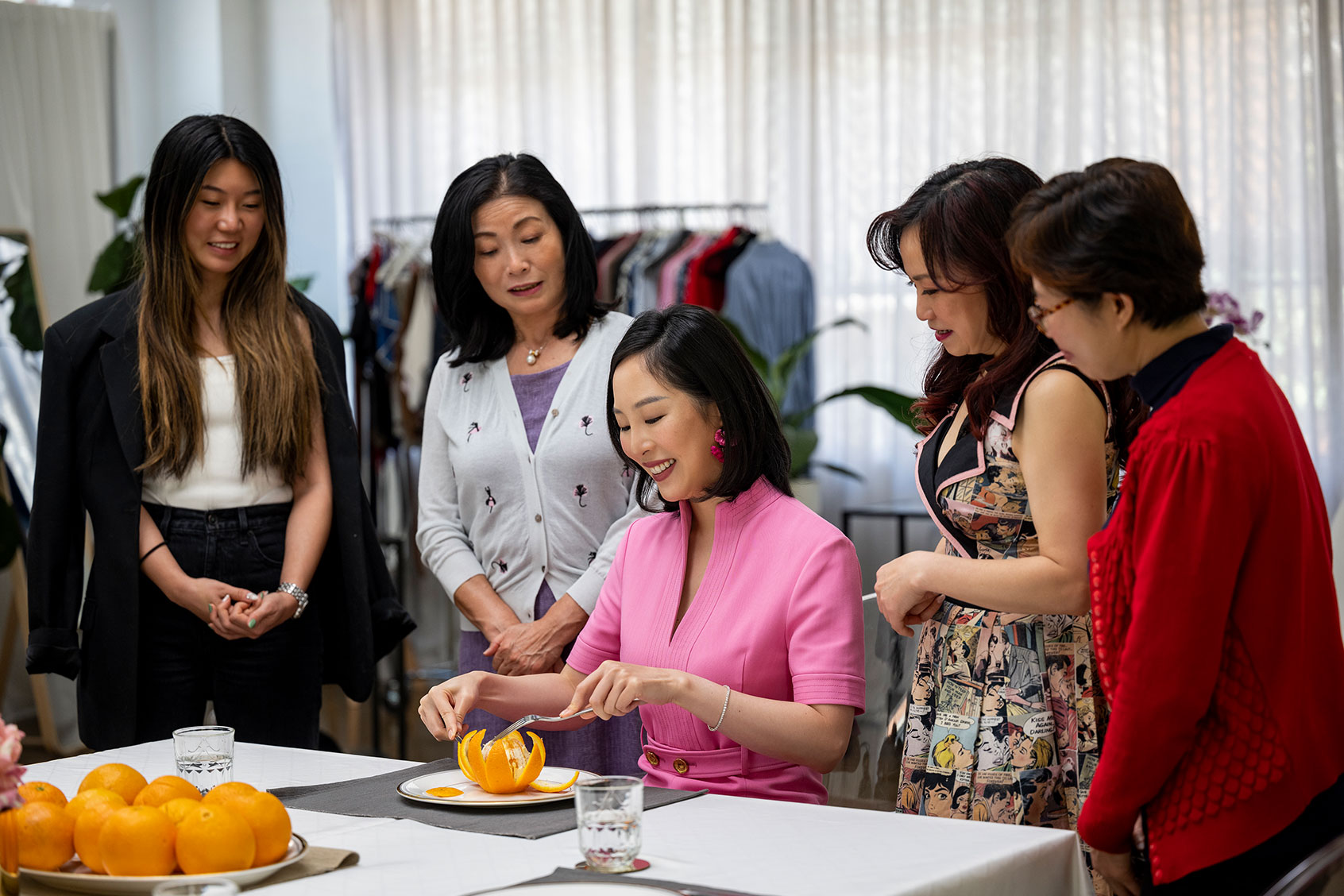
For example, when Ho offers English breakfast to fashionable stay-at-home mom Rashiel Jones, Ho immediately corrects the way Jones holds her fork and knife by showing the "proper" way to do so, which is to keep your fork in your left hand at all times, lifting bites with tines down at all times. This is known as Continental Style. (Thanks, Mom!)

But what makes it more proper than the American style, i.e. eating with tines facing upward, and switching your fork from the left hand to the right once you've cut your food? That depends on the room you're in and who you're dining with. Figuratively speaking, sometimes Rome is in Italy, and sometimes it's in Georgia. Being aware of how to mind your p's and q's in each of those places is essential to getting by or possibly moving up in the world.


Want a daily wrap-up of all the news and commentary Salon has to offer? Subscribe to our morning newsletter, Crash Course.


Indeed, the production itself telegraphs a few thoughts about America's culture-wide affection for casualness (or "slovenliness," if you want to be a prick about it), whether intentionally or not.

Over the six episodes of "Mind Your Manners," Ho gently corrects a few subjects whose interpersonal sense of decorum is nearly up to par and extensively overhauls others. One of her toughest cases, Stephanie Osifo, is introduced in the first episode.

A hard-drinking party girl whose clothing strains public indecency laws, Osifo comes to Ho to learn how to behave more elegantly. To that end, Ho teaches her how to walk, dress more demurely, wear less makeup, and in a scene intended to channel "My Fair Lady," properly enunciate her words as she says, "The rain in Spain falls mainly on the plain."

There are other disconcerting components. There's the episode featuring a white guy with an Asian fetish, whom Ho assists by polishing his dating app profile. 

"Mind Your Manners" provides a friendly cram session to help anyone pass the unspoken trials most don't realize they're undergoing from the moment they enter a room.

I also doubt Ho was considering the long history of Black and Latine people being marginalized based on their elocution when she chose Osifo, a Black Nigerian woman, to play the Eliza Doolittle role to her Professor Henry Higgins. On the other hand, maybe she's highly aware of such circumstances and simply trying to provide Osifo armor to contend with them.

Either way, there's something to appreciate, however conflictedly, in the usefulness of a graceful approach to etiquette, especially as we prepare to share a table set with the family's best china and silverware with others who don't necessarily think like we do. It intimates that yes, there is a system aligned against people who don't know its rules.  

Considering that most people will never attend a finishing school or be taught the "proper" way to use a napkin, Ho's Netflix series also provides a friendly cram session to help anyone pass the unspoken trials most of us don't realize they're undergoing from the moment they enter a room.

To cite a quote of disputed origin often attributed to Ernest Hemingway, "There is nothing noble in being superior to your fellow man. True nobility is being superior to your former self." 

Sometimes I wonder if the man who evaluated my worth by my table manners came to understand that. No matter, because Sara Jane Ho does, and makes that example widely available for anyone learn.

"Mind Your Manners" is currently streaming on Netflix.


I’ve studied conflict resolution. Here’s what it’s taught me about surviving the holidays

I wish I had known then what I know now about conflict resolution, that Thanksgiving of our epic battle over “Les Miserables.”

You probably would prefer to have a peaceful holiday season this year. You are likely not the sort of person who enjoys storming off from the dinner table, or crying in your childhood bedroom, or sullenly texting a friend while you furtively drink in the bathroom. And you may be dreading this time of year, knowing that there’s a very real possibility of any or all of those things happening, with people you may not even have seen in two or three years.


Want more health and science stories in your inbox? Subscribe to Salon’s weekly newsletter The Vulgar Scientist.


The polarization in our country — and by extension, our families — is real, profound and possibly irreversible. A New York Times and Siena College poll last month found that “Nearly one in five voters — 19 percent — said that politics had hurt their friendships or family relationships.” Yet as I learned the year my relations took heated sides over the artistic merits of a certain Broadway musical’s revival, family is a minefield and people will fight about anything. 

Back then, I grudgingly kept my Sondheim-loving opinions to myself and just stalked off. Since then, I’ve completed my studies at my university’s conflict resolution program, on the way to my doctoral dissertation work on crisis negotiation. Over the past two years, I’ve learned about international peace brokering, about labor disputes and noisy neighbors. And while I find it highly unlikely I’ll get out of this time of year without at least one major blowup, I know I’ll be able to manage any family fights — musical theater–related or otherwise — better. You can too.

Establish some ground rules

The first rule of family fight club is that you talk about family fight club. You will not jinx anything or create a self-fulfilling prophecy acknowledging that things might get heated. That is what is known as superstitious nonsense. If you’re fought in the past, let’s assume you will again. 

Disagreement can be healthy. Openness to different points of view can foster creativity. And siloing ourselves in our echo chambers distorts everybody’s reality.

I used to believe the whole reason for the season was avoiding conflict — a skill my daughters will tell you I entirely lack. That I — an individual whose catchphrase is “What did you just say to me?” — now have accredited training in conflict resolution is hilarious to them. You want to go? Let’s go. Let’s just do it without burning everything to the ground. Disagreement can be healthy. Openness to different points of view can foster creativity. And siloing ourselves in our echo chambers distorts everybody’s reality.

This doesn’t mean your Viking-hat-donning cousin is right about Nancy Pelosi, or that it’s your job to quietly endure any rhetoric contrary to your values. What it does mean is that this is a good time to ask yourself, what do you really want from your family gatherings this time around? Admit that this experience isn’t just going to be dinner or tree-trimming; it’s a dialogue. When I spoke earlier this year to Yale professor Zoe Chance about her book, “Influence Is Your Superpower,” she mentioned “coming in prepared” as a key element of any successful negotiation. 

Unfortunately, in the anarchy of family dynamics, we rarely articulate the guidelines. So if you’re anxious and concerned about the alchemy of the gathered personalities, put an early offer on the table for something different. “I think that trying to set some terms for communication is not a bad practice,” says Jonathan Golden, Ph.D., program director of Drew University’s Center on Religion, Culture & Conflict. “If there’s a history of these types of caustic interactions at the table, then it’s actually pretty wise for someone to just say, ‘Okay, why don’t we all try and do this a little differently this year? Why don’t we see if we can have some ground rules for talking? We’ll take turns, everyone will say what they have to say, we won’t shout.’ Really simple stuff. It doesn’t have to be like you’ve put a paper in front of everybody and had them sign some compact. You can just make a very light statement about talking respectfully.” 

And then stick to them

Regardless of whether anybody else actually accepts or abides by your proposed protocols, the very act of offering them is a gesture of peace. It also gives you your own code of behavior to stick to when things feel like they’re going off the rails. I say this to you a self-identified loose cannon — it is actually very empowering to just make a deal with yourself about your limits. It holds you accountable to your own values, and sets an example to your kids if you have them, to promise no name-calling and then not do any name-calling. 

Remember that listening is powerful

Since studying conflict resolution, active empathy has become my biggest secret weapon. It starts by not tuning out the moment that person across the table starts mouthing off. It deepens every time you can say — calmly and without sarcasm or distortion — “So you’re saying…” and then repeating back what that person has said. You can further ask here for clarification — “Where did you hear this? Am I understanding this correctly?” 

Stress makes everybody feels anxious and defensive and (surprise!) less receptive to other views. Going in with gritted teeth sets a shaky groundwork.

Checking in with the other person or parties about what they’re saying or experiencing serves a variety of purposes. It shows that you’re listening, which is a big deal. It nips misinterpretations and assumptions in the bud. It can even neutralize a statement just by letting the other person hear it repeated back to them. If nothing else, it can help you get a better understanding of where they’re coming from, and avoid future land mines. 

And from there, you’re likely going to be in a stronger place to ask, “Now can I say something?”  and make your own case.

Keep calm and take breaks

It’s not a murder trial, it’s just a family get-together. You don’t have to come to a unanimous verdict on anything; you aren’t literally trapped. But stress makes everybody feels anxious and defensive and (surprise!) less receptive to other views. Going in with gritted teeth sets a shaky groundwork. The more emotionally fortified you can be, the lower the odds of a stormy encounter for all parties. 

In a formal mediation, you can call for a caucus. At the holidays, if you need to request a time out, that’s fair. If you want to go off to check in with a friend, have at it. Just don’t use your break to doom scroll through Twitter or stew in your rage. It’s about protecting your own mental and emotional resources, not gathering more ammunition for another round of battle. 

Know that the zero-sum game is an outdated and terrible concept

You are not going to win at Thanksgiving. You are not going to do a victory lap around your sister-in-law at an eggnog brunch. It’s not going to happen. The likelihood of changing anybody’s mind is pretty slim. So don’t approach the holidays like that’s somehow the point. The good news is that it means nobody’s going to change your mind either, right? 

Modern resolution techniques focus on finding common ground and mutually beneficial outcomes. If you have agreed to show up and spend time with people who push your buttons (also known as your family), then the best you can do is get through it with your integrity intact. 

I have relationships I’ve walked away from because I wouldn’t “agree to disagree” on issues that are fundamental to my ethics. And I still fight with my family, often about very stupid stuff. But among the people I care about, I would rather find a way to constructively work through our squabbles. I fell in love with the study of conflict resolution because when you can disagree with respect and empathy, you can actually get a lot done. It’s worth it to try, and it’s more fun than sitting in the driveway, freezing and mad.

This stuff is not easy. “I joke that it’s a lot easier to do this in a professional setting and with strangers or work associates than it is with family,” says Golden. “With those other people, it’s easier to put on your most professional demeanor and have your frontal lobe working at all times. When it’s with family, you usually let your guard down, your triggers are heightened. When you’re sitting with them, it’s just much harder to inhibit all those feelings and emotions.”


“Black Panther: Wakanda Forever” continues the series’ quest to recover and celebrate lost cultures

As someone who teaches and writes about Afrofuturism, I’ve been eagerly awaiting the release of “Black Panther: Wakanda Forever.” I’m particularly excited about the introduction of Namor and the hidden kingdom of Talokan, which he leads.

The first “Black Panther” film adhered to a longstanding practice in Afrofuturist stories and art by engaging in what I call “acts of recovery” – the process of reviving and celebrating elements of Black culture that were destroyed or suppressed by colonization. This practice is often linked to “Sankofa,” an African word from the Akan tribe in Ghana that roughly translates to “it is not taboo to fetch what is at risk of being left behind.”

“Wakanda Forever” pulls from the past in the same way, but with a twist: Talokan is inspired not by African cultures, but by Mesoamerica, a vast area that covers most of Central America and part of Mexico.

A theory of time

The idea that African knowledge and contributions to science and culture have been erased and must be recovered is central to Afrofuturism. The term, which was coined in 1994, describes a cultural movement that pulls from elements of science fiction, magical realism, speculative fiction and African history.

On its home page, the Afrofurist listserv, an email list organized by social scientist Alondra Nelson in 1998, pointed to this process of recovery as a central tenet of the genre:

“Once upon a time, in the not-so-distant past, cultural producers of the African diaspora composed unique visions on the world at hand and the world to come. This speculation has been called AfroFuturism – cultural production that simultaneously references a past of abduction, displacement and alien-nation; celebrates the unique aesthetic perspectives inspired by these fractured histories; and imagines the possible futures of black life and ever-widening definitions of ‘blackness.'”

This fascination with uncovering the ways in which Black contributions have been erased and suppressed means that Afrofuturist works often mine the past as a first step toward creating visions of the future.

Afrofuturist scholars such as Kinitra Brooks even describe Afrofuturism as a theory of time. For her, the “present, past, and future” exist together, creating the opportunity to push against the systemic devaluation of Black people that occurred during slavery and Jim Crow segregation, and persists in contemporary anti-Black violence.

Looking back to see tomorrow

This recovery can take many forms.

Several Black writers published serialized novels of speculative fiction, such as Martin R. Delany’s “Blake: Or the Huts of America,” a slave revolt story written between 1859 and 1861. Pauline Hopkins’ “Of One Blood: Or, the Hidden Self,” published in 1903, tells the story of mixed-race Harvard medical students who discover Telassar, a hidden city in Ethiopia, home to an advanced society possessing technology and mystical powers.

Both narratives refuse to depict Black culture as backwards or impotent, and instead celebrate Black empowerment and the rich cultural legacies of Black people.

Curator Ingrid Lafleur has long talked about how Afrofuturist visual aesthetics relies on recovering ancient African cosmology. You can see this practice in the work of musical artists such as Sun Ra, who used Egyptian symbolism throughout his work, and visual artists such as Kevin Sipp, who remixes and reimagines African cultural symbolism to create sculptures and visual work that fuse past styles and symbols with contemporary practices.

Simply put, a reverence for ancestral knowledge and culture is the beating heart of Afrofuturism, and has become an integral part of Afrofuturism’s mission to forge a better future.

Mesoamerica takes center stage

The first “Black Panther” film celebrated an array of African cultures.

Costume designer Ruth Carter deliberately infused elements from across the continent in every scene. For example, the headdress worn by Queen Ramonda, played by Angela Bassett, was inspired by the isicholo, a South African hat traditionally associated with married women. And Lupita Nyong’o’s Nakia wore clothing inspired by the Suri tribe.

And so the film highlighted African cultures not by depicting them as fragile or foundering, but as paragons of artistry and sophistication.

In “Black Panther: Wakanda Forever,” these themes are explored both in the way the mantle of Black Panther presumably passes to Princess Shuri, and in the depiction of Namor and the kingdom of Talokan.

While Talokan is an underwater society inspired by the myth of Atlantis, Marvel Studios has signaled that the people of Talokan sought refuge underwater in response to colonial invasion.

By invoking the complexities of this history – and seemingly leaning heavily on parallels to Mayan culture – the film celebrates a society that scholarship has long noted for its achievements in architecture, mathematics, astronomy and language.

History books reference these accomplishments. But in popular culture, there’s little attention given to this cultural landscape.

Namor and the kingdom he leads are poised to remind a global audience of the rich world of Mesoamerica that thrived – until European contact beginning in 1502 led to conquest, decline and eradication.

Today, immigration, trade and drug trafficking dominate discussions of Central America and Mexico in the U.S. media. This film, on the other hand, invites the viewer to appreciate the profound cultural legacy of Mexican and Central American civilizations.

Julian C. Chambliss, Professor of English, Michigan State University

This article is republished from The Conversation under a Creative Commons license.

“Mrs. Maisel” and lessons from the kids’ table

I first watched “The Marvelous Mrs. Maisel,” Prime Video’s hit show about a comedian who happens to be a divorcing single mom, at an interesting point. I was going through a divorce myself, and though the story is set about 60 years before our own time, some parallels were so strong as to be alarming. Some men haven’t changed much from previous generations, and neither has the way we often treat adults after divorce, especially women. We infantilize them, as though only in having a present, committed partner are we truly grown-ups.  

In short: I was relegated to the kids’ table after my marriage ended, like divorced Midge returning to her parents’ apartment for refuge . . . only to find herself in the narrow twin of her childhood bedroom, left mostly unchanged. 

Listen, the kids’ table gets a bad rap. It’s punishment, where we put not only the children but the misbehavers, the deviants. Unmarried aunts get placed at the kids’ table, manchildren, sullen teens. The adult table is where the sophicated conversation is, the free-flowing alcohol, the manners and the fancy food. 

But the kids’ table can also be where the decorations are, the coloring on paper tablecloths, the whipped cream swiped from pies, which are, of course, eaten first. The kids table can be less a castigation and more an opportunity: to solve issues on your own, away from the social obligations and droll etiquette of adults. This Thanksgiving, to have a good time, check out the card table with the mismatched chairs, the one pressed against the corner of the room — or maybe even outside it, in its own room. The kids’ table is where it’s at. And maybe you should be there too. 

Thanksgiving is all about the food, and – if you’re the one tasked with making it all or even some of it – all about the stress. How many family recipes must be prepared correctly? How many Thanksgivings start with someone, likely a mother, grandmother, or female relative, up at 4 a.m., and end with someone in the kitchen in tears? 

Kids just know it tastes good or it doesn’t. They want more or they don’t.

Children’s tastes vary, and anyone assuming kids all simply prefer chicken fingers and plain noodles may not have met any kids like my tween, who started ordering off the adult menu as soon as he could read. But most kids aren’t burdened with the family history of food, the often-heavy expectations lacing favorite picnic potatoes, or the corn casserole a deceased relative used to make that you, the living, are trying for the first time. Kids just know it tastes good or it doesn’t. They want more or they don’t.

A holiday meal is supposed to be about coming together, not about perfection. And kids are often able to see through to the simplicity of the holiday easier than adults. Is the pie a secret family recipe requiring a complicated homemade crust, or store-bought? The only questions those at the kids’ table are going to ask is: Is it a pie? (And how quickly can you pass it.)

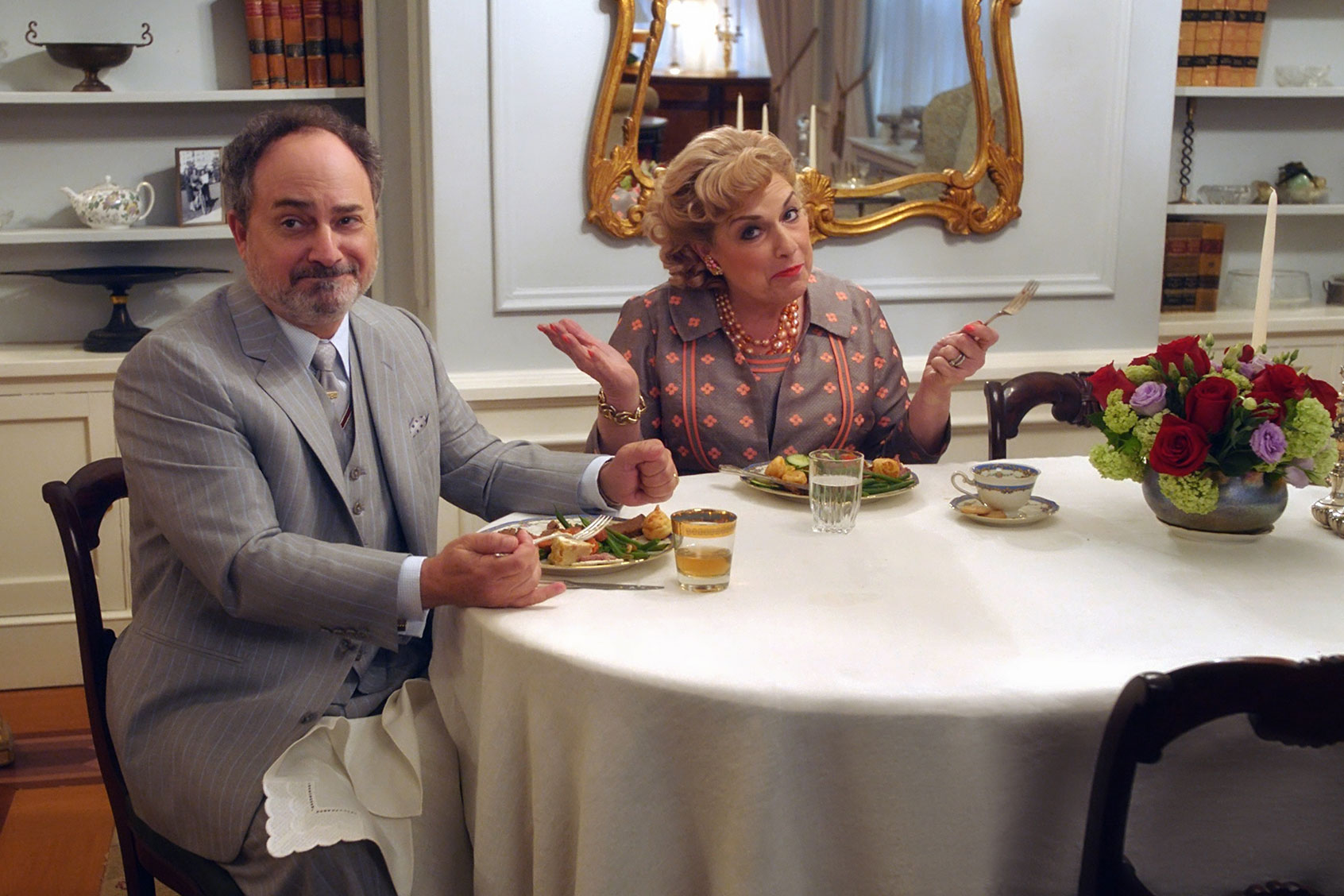
The Marvelous Mrs. MaiselKevin Pollak (Moishe Maisel) and Caroline Aaron (Shirley Maisel) in “The Marvelous Mrs. Maisel” (Amazon Studios)A good palate doesn’t negate a sweet tooth. Kids are looking for candied and candied things only. And a dessert-first mentality could serve all of us well sometimes. Holidays are supposed to be fun, after all. You’re supposed to enjoy them. On Thanksgiving, if you can’t get yourself a serving of sweet potatoes that is mostly marshmallows, when can you?
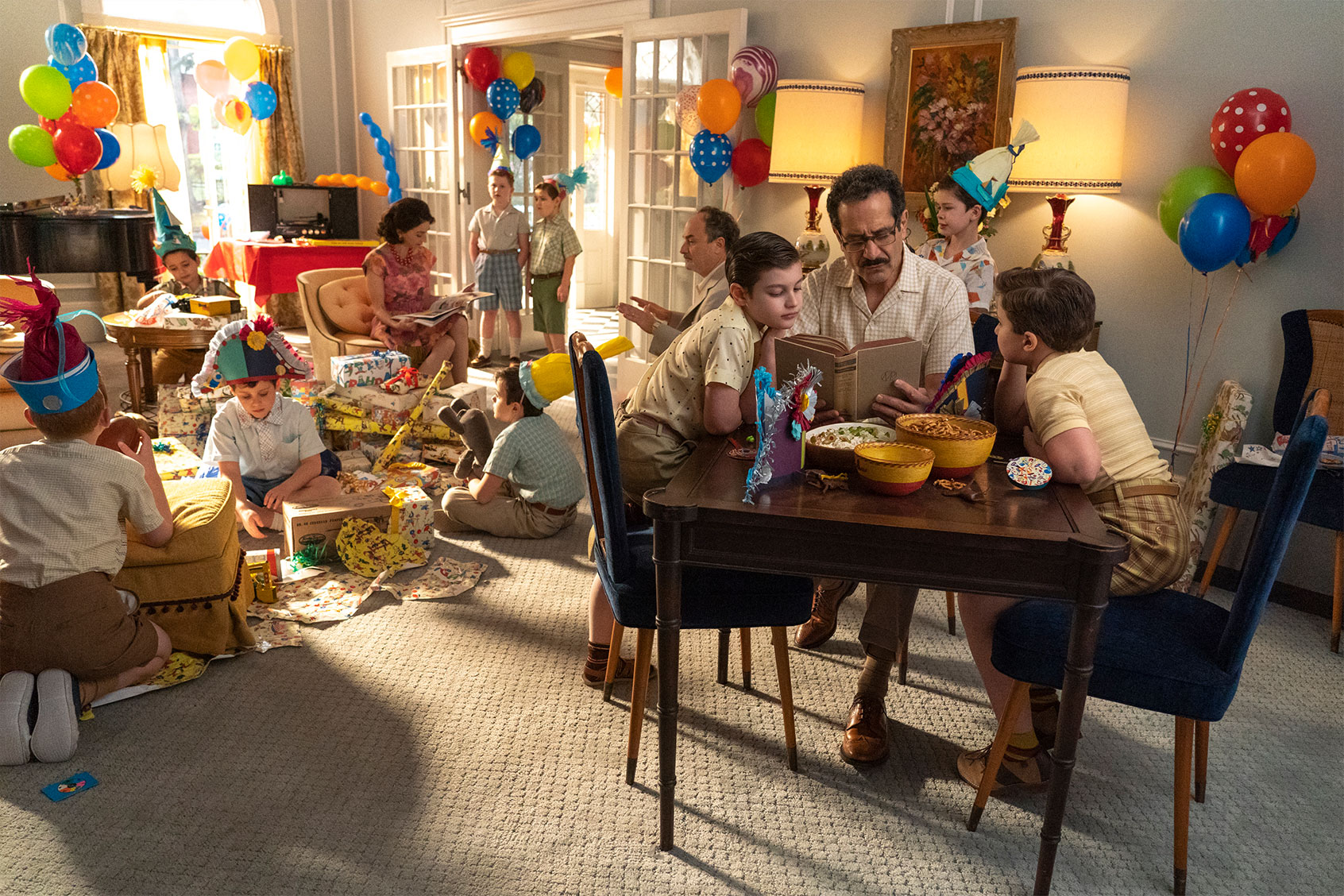
Kids know how to eat. They know to live, and they know how to have a good time. Paper crowns? Kids will wear them. Turkeys drawn from traced fingers? Kids will make them. Ridiculous, often unfunny jokes? They will tell them. And retell them. While the adult table might get bogged down in politics, kids will go down a rabbit hole of YouTubers and knock-knock jokes bordering on the absurd. 

The Marvelous Mrs. MaiselTony Shalhoub (Abe Weissman) in “The Marvelous Mrs. Maisel” (K.C. Bailey/Prime Video)

We continually punish adults for being single, as if only a romantic partner completes or matures a person.

At the kids’ table, children are usually left to their own devices, sometimes even in another room where they can’t be seen or heard, away from parental control. The advantage of this is that not only do kids have to solve problems — fix conflict without adult referees, figure out which fork to use — they have to help each other, older kids cutting younger kids’ meat, making sure there are enough rolls for everyone. Kids learn to help others at their tiny table, especially those too small to help themselves. That’s something many adults still need to remember.  


Want a daily wrap-up of all the news and commentary Salon has to offer? Subscribe to our morning newsletter, Crash Course.


In “The Marvelous Mrs. Maisel,” Midge doesn’t just fall back into her old life, her life before marriage, once that marriage ends. Her parents put her there, refusing to see their grown daughter as grown once she is without the “protection” of a husband. So too we continually punish adults for being single, even by choice, as if only a romantic partner completes or matures a person. As if only those having kids must be separated from them at the fancy dinner table.

Why do we separate people anyway on holidays? Why not make a giant table this Thanksgiving with the kids not at the end but grouped amongst us? We can all learn a lot by sitting together, dessert first, knock-knock jokes and all.  

How to make an English summer pudding bomb, “Great British Bake Off” style

It all comes down to this week’s final bakes for the contestants under the tent competing to win this season of “The Great British Baking Show.” The elaborate showstopper challenge, which calls for the final contestants to create an edible structure of our beautiful planet,” shows off Abdul, Sandro, and Syabira’s creativity. But it’s the technical elements that highlights their skills, and this week, it comes in the form of a summer pudding bomb.

To the American ear, this dessert sounds confusing, but both summer pudding and bombs are specific types of desserts (the latter often referred to with the French term “bombe”). The desserts are related — each a version of molded parfaits, and the use of both terms indicates precisely what the bakers should make — without any precise instructions.

Summer pudding alternates layers of cooked summer fruits such as mixed berries with thin slices of buttered white bread, in a mold lined with the same bread. The fruit and its juices soak into the bread, creating a colorful dessert when flipped and un-molded Usually, it’s served with cream, because of course. “This is a classic go-to British pudding for a reason,” says Food52 co-founder Merrill Stubbs in introducing her own spin on the dish. The term bomb originally referred to the molds the desserts were made in, but now often indicates a dessert made in the mold, usually filled with ice cream or similar frozen custard, or mousse.

“This is a glamorous, gorgeous, slightly old-school centerpiece that is easier to make than it looks,” says Alice Medrich of her (more seasonally appropriate) Christmas Bombe with Berry Preserves and White Chocolate Mousse recipe. It uses a hot milk sponge rolled up with cranberry-raspberry spread and sliced into attractive swirls as the outer layer; the inside is entirely brimming with the white chocolate mousse.

Medrich’s version of summer pudding uses store-bought white sandwich bread, and a plethora of dark fruit such as raspberries, blackberries, and boysenberries, as well as the quite traditional red currants if possible. She recommends making the bombe at least six hours ahead of serving (and up to 36 hours) and the summer pudding needs to rest “at least overnight, but one or two days is even better.” Once it’s ready, she serves it with rosewater tinted whipping cream.

While it takes only a little imagination to figure out how one might combine these two desserts into a single beautiful bake, it takes more creativity for the contestants to do this in limited time under the tent.

I give thanks for freedom of speech: If we still know what it means

In October of 1863, just three months after the battle of Gettysburg, President Abraham Lincoln proclaimed the fourth Thursday in November to be a National Day of Thanksgiving. One hundred and fifty-nine years later, we’re still celebrating it annually.

Abe’s proclamation harkened back to a similar effort from George Washington just a few short years after our nation emerged from the Revolutionary War. The father of our country found the roots of his action in a famous meal shared by Puritans and Native Americans in 1621.

This national holiday has come to express sentiments many wish were seen every day: Giving thanks. There’s no component of race or religion. No one is excluded. Just sit down and give thanks for what you have — no matter how little or how much. 

Today we have much for which we can be thankful, no matter what we face from moronic politicians, the renewed threat of nuclear war, daily occurrences of mass shootings, a global pandemic and countless other trepidations.  

Of the many things for which I give thanks, it is the right to speak my mind I hold most dear. I need it just to clear out the cobwebs. Give me the right to speak freely about what I believe above all other liberties. In turn, though I may disagree with what you say I will defend to the death your right to say it. I am thankful for all who understand and exercise this right.

You may hate me. You may say you hate me. You can defend Donald Trump, tell me how much you love racism and misogyny, and preach about the virtues of a diet heavy with lard and fat, and proclaiming the manifest necessity of burning fossil fuels without filters for all eternity. I will accept your right to say what you believe — though there is no doubt I will disagree with every fiber of my being.

I will not accept speech that calls for violence against others or myself, nor will I accept the speech of someone screaming “fire” in a crowded theater when no fire exists. Otherwise, let it all out, baby.

That’s the spirit behind free speech. 

It is enshrined in our Constitution as the First Amendment and people often forget what that actually means. I have had personal experience on this matter and I am thankful to understand exactly what the First Amendment means. The government, with a few limited exceptions I’ve already outlined, cannot interfere in your right to speak your mind. I went to jail four times to defend that right. 

But today there are many who are convinced that being bounced from privately-owned social media platforms is a violation of your First Amendment rights. Further, they believe that when a private individual or corporation, in effect, tells you to shut up, that is also a violation of your First Amendment rights. That is simply not true. And while some of those same people believe that Elon Musk’s takeover of Twitter is a further erosion of the First Amendment — it is not. Elon is a cretin, a poltroon and has the fragile ego of Donald Trump. He spent far too much money for Twitter and his haircut is atrocious. But he’s not violating anyone’s First Amendment rights and those who are leaving Twitter because he took it over are merely foolish for retreating from the social media platform. Stay. Engage. Be a part of the conversation.


Want a daily wrap-up of all the news and commentary Salon has to offer? Subscribe to our morning newsletter, Crash Course.


Those who don’t engage, to my mind, are showing us why the spirit behind the First Amendment is in deep trouble. We have abandoned the idea that we will listen to the words of others who think differently than us. In the movie “The American President,” Michael Douglas puts it this way: “You want free speech? Let’s see you acknowledge a man whose words make your blood boil, who’s standing center stage and advocating at the top of his lungs that which you would spend a lifetime opposing at the top of yours.”

Many people today seem convinced that if a private individual or corporation tells you to shut up, that’s a violation of your First Amendment rights. That’s simply not true.

The movie is pure fiction and as it turns out today, so is the sentiment. In reality, both sides of the political spectrum want to erase or eradicate those who think differently. Those on the right, through the agents of chaos well known to us all, have taken to violence to suppress those who think differently. Hell, you can’t even get that side of the aisle to admit the legitimate results of an election. 

Those on the other extreme merely want to cancel you. They just want you to cease, desist and disappear — or they’re going to take their ball and go home, or to a safer social media space.

Both sides signal their virtues with hollow words about patriotism, God or love of country. None of them have the slightest idea what they’re talking about. Again, a violation of your First Amendment rights only occurs when the government tries to suppress you. Breaking up peaceful protests, jailing reporters who won’t divulge confidential sources, charging whistleblowers under a variety of statutes — those are violations of the First Amendment. Getting banned, or walking away from Twitter because you don’t like the owner? Not even close.

So I also remain thankful that the Constitution still exists in written form — not just on a computer somewhere or bouncing around in cloud storage on the internet where it can be hacked or otherwise changed.

As frightening as it is to see the right take to the destruction of free speech, it is just as frightening to see those who call themselves “liberal” abandoning the ideals of free speech — especially since it is progressives who have been persecuted the most across the annals of history for daring to speak out against the blatherings of politicians, theocrats, deists, fascists and other narrow-minded trolls. 

Those who threaten violence in the name of liberalism, those who want to wade into the gutter of human interaction and slice throats in the name of enlightenment are no different to me than those who do so in the name of their favorite politician, fictional God or celebrity. None of these people embrace the ability to listen to others who think differently from themselves.

So I am thankful when I find others truly capable of free thought and speech, for nothing will ever change by suppressing the voices of those we deem to be ignorant or unworthy. Nothing is to be gained by slitting throats. The blade cuts both ways. The ignorance lies in us all — particularly when we fail to listen and learn from our fellow human beings.

I want to know what others really think. I am thankful when they tell me. I’d rather know you’re a racist and the reasons behind your thoughts than having to guess.

Our advancement in technology has given all of us the ability to be heard, and while it is truly frightening to hear some of the bilge that parades itself as knowledge, we should make an effort to understand where the sewage began to flow. The only true way out of the quagmire of this technological feudalism into which we’ve plunged ourselves is by following the sewage to the source. It is the only way to make a change

So I want to know what others really think. I am thankful when they tell me. I’d rather know you’re a racist and the reasons behind your thoughts than having to guess. Donald Trump has enabled and emboldened the darkest of human desires. His former attorney Michael Cohen has said that Trump often appeals to the darkness in men’s souls. He’s also given them the freedom to voice those dark desires, and while I oppose all of that, I cannot deny that I am thankful for knowing exactly where I stand with these people. I can’t say I care too much about their opinions, but understanding their thoughts — if any actually exist — gives me information I can use in my own life. 

I cannot hope to change your mind if I don’t know what’s on your mind. If you throw your hands up in the air and say, “Well, you just can’t change some people’s minds,” I want to know if you’re speaking about others or yourself. I venture that in some cases it is both.

And so, I am thankful for the Republican Party and all of the enablers — from the Boeberts who offer thoughts and prayers for the victims of gun violence while cheering the proliferations of weaponry that make those deaths probable, to the mendacity of someone like Lindsey Graham who once said that if the GOP nominated Trump it would be the end of the party and it would be well deserved. He prays at the altar of Trump now, and we also know that no matter how much Republicans speak against him, in the end they’ll fall in line behind him. Far from stifling them, I encourage them to speak. The rest of us need the laugh, and we can truly see them for the morons they are. Keeping them quiet doesn’t work. Without seeing them in full daylight, some have gotten the idea there is some legitimacy to what those in MAGA World have to say. The open market of ideas removes the aura of legitimacy.

Maya Angelou said, “When someone shows you who they are, then believe them the first time.” I’m thankful for her and I am reminded that without free speech, we might not know who some of the worst offenders against humanity are. Violence, chaos and fascism are things that grow in the dark. Stifling speech is never a recipe for a peaceful society.

As ugly and chaotic as it may be, it is always beneficial to hear what someone else thinks, no matter how much we may hate what they have to say. 

When we refuse to hear others, we run the risk of validating the emotions and beliefs that run counter to reality. That may lead to feelings of being bullied and shunned. A person can feel isolated and become angry. We all know the violence that can grow out of such scenarios.

So again I am thankful that at least we have the First Amendment. It is superior to how many of us act socially and one of the deepest roots of not only a solid democracy, but a mature and rational society.

My wish is that more people embrace the genuine ideals of free speech so we can all be more thankful, more peaceful and more mature.

Happy Thanksgiving.

“Oegugin” influencers are rising to stardom in Korea. But there’s a dark side to pop-nationalism

If you’ve been scrolling through YouTube, TikTok or Instagram it would be no surprise to chance upon calming minimalist aesthetics of Korean cafe decor; pilgrimages to the locations of popular K-dramas; and even the polite decorum of Korean public transport commuters.

In South Korea, oegugin (foreign-national) influencers often produce social media content focused on the global interest in K-pop, K-drama and K-film for audiences inside and out of Korea.

These influencers are most prominent on YouTube, where the most popular trends include binge-eating mukbang, lifestyle vlogging of fancy cafe cultures and K-pop fandom homages like visits to pop-up stores by idol groups.

On platforms like TikTok and Instagram, content is shared with hashtags like #외국인 (#oegugin) and #외국인반응 (#oegugin-baneung, or foreigner reaction).

Many oegugin influencers have risen to stardom. The duo Korean Englishman have over five million subscribers, and now regularly appear on Korean television talk shows and variety shows.

In our new research, we found oegugin influencers are predominantly white-presenting non-Koreans who often adopt nationalist tones to endorse the “excellence” of Korean culture.

The discourse is often celebratory, leverages on exoticism and promotes “pop nationalism”: a new form of soft power marketed in the form of pop culture.

Government incubation

The oegugin influencer ecology is on the rise. As K-cultures have become globally popular, Korea is an attractive destination for aspiring influencers.

Our study found most of these expats and migrants were English teachers, students or gig economy workers who work multiple day jobs to sustain their influencer aspirations.

Many South Korean government bodies have launched projects to incubate and groom aspiring oegugin influencers, specifically to promote tourism and enhance cultural knowledge about the country.

A prime example is the K-influencer Academy, sponsored by the Ministry of Culture, Sports and Tourism.

Designed to cultivate “K-influencers” from all around the world, the academy is a YouTube training program for “Korea lovers,” offering free lectures on content creation and mentorship opportunities with established YouTubers.

Once these influencers have been developed, the Korean government can also outsource its nation branding campaign. Capitalising upon the free labour of K-influencers, the government reposts and shares their content on official YouTube channels.

A certain type of ambassador

South Korea is branded as a “new cool” by the international media, as seen in the global popularity of K-pop.

Oegugin influencers take this digital Korean cool and reproduce it on YouTube.

These influencers are important conduits of inter-cultural knowledge. They act as both “nodes” where interested audiences cluster, and “mediators” of the values and norms propagated through digital Korean content.

Projects like the K-influencer Academy can enhance intercultural knowledge between different cultures and countries, emphasising racial and cultural diversity.

However, many campaigns and projects led by small government bodies are also heavily reliant on racial norms and stereotypes.

In our research, we found the videos shared on these platforms are frequently only of white-passing oegugin.

In fact, there is even a subgenre of oegugin reaction videos catering to domestic audiences’ preferences for white beauty.

The dark underbelly

It is not all K-pop and cafe culture. Public interest in oegugin influencers can place them in the vulnerable position of receiving hateful commentary.

People we spoke to reported a strong tendency to self-censor and self-regulate.

Influencers who are overtly celebratory about Korea saw growth in viewership and positive audience feedback, leading to further paid opportunities with government bodies.

However, when oegugin influencers share criticism about Korea they are perceived to be “threatening” the pop nationalist brand of the country. These influencers quickly receive online hate and trolling for sharing their thoughts.

This online hate is exacerbated if the influencers are people of color, as the vitriol expands to racist and xenophobic trolling.

While government partnerships are prestigious and sought-after, the reality of the working conditions leave oegugin influencers with little agency and creative control. Their work is under-compensated by government bodies, or may be used by government-related parties without permission.

A careful balance

Within this ecology, only a select few oegugin influencers successfully navigate away from the pop nationalist script to showcase their own interests.

The most savvy might go on to cultivate their own storytelling niche.

The YouTube duo Dan and Joel are originally from the UK and known for their documentary style mukbang. While they mostly feature other oegugins in their collaborative videos, their popular videos shed light on social minorities in Korea.

Viral videos from the pair have seen the influencers showcasing a feminist tattooist and older homeless people, stimulating conversations on feminism or shedding light on poverty.

In this, they give viewers a glimpse into the less polished aspects of “real” Korea.

In the predominantly white ecology, such a distinctive strategy is not a privilege accorded to all influencers. To maintain viewer traffic (which they aspire to translate into revenue) we found many influencers still abide by the convenient racial stereotypes which play up white exotica and privilege.

Although more oegugins are entering the industry and contributing to its diverse ecology, in reality, the oegugin influencer economy is still dominated by only a select crop who adhere to Korea’s normative racial hierarchy.

Jin Lee, Research Fellow, Curtin University and Crystal Abidin, Associate Professor & ARC DECRA Fellow, Internet Studies, Curtin University

This article is republished from The Conversation under a Creative Commons license.

The sweet potato casserole feud that almost imploded Thanksgiving

It’s 4 a.m. on Thanksgiving morning — a good three hours before the daylong cooking marathon typically begins. I’m awakened by rustling and light banging coming from the kitchen of my mom’s childhood home. After stumbling around in the dark to find my glasses and a robe, I sneak into the hallway, where I run into my mom, who was also heading downstairs to check out the commotion.

Turkey burglar?” she jokes as we softly pad, sock footed, toward the darkened kitchen.

Upon rounding the corner, we catch my grandmother — with a smudge of oatmeal on her lower lip — in an egregious act of holiday culinary sabotage. This was the year that our family’s long-running sweet potato casserole feud finally reached its blatant climax.

To fully understand this breach of trust, you need to know two things about my family. First, both my mom and grandmother are amazing cooks. I know that everyone says this about their moms and grandmothers, but in this case, I truly mean it. They have their respective skill sets, if you will. My mom’s savory cooking can’t be beat, while my grandmother excels at candy and dessert-making.

For years, this always led to a pretty neat divvying up of cooking responsibilities around the holidays. Mom would handle the bulk of the Thanksgiving meal, including the turkey, gravy and stuffing, while her mom would produce a dizzying array of sweets, such as chocolate-peanut butter balls, an apple spice cake with cream cheese frosting and seemingly innumerable cookies.

But then, when I was about 13, the rules surrounding this largely unspoken division of labor were upended. I’m not sure exactly what led to this shift; I’ve asked both my mom and grandmother, and they act like they don’t know what I’m talking about. This plays into the second thing you need to know about my family: If my mom’s stubborn streak is inherited, it absolutely came from her mom.

Upon rounding the corner, we catch my grandmother — with a smudge of oatmeal on her lower lip — in an egregious act of holiday culinary sabotage.

Planning Thanksgiving dinners after this mysterious pseudo-falling out was like negotiating critical policy decisions among global leaders. Or like playing my siblings’ cutthroat “Cheater’s Monopoly,” a popular Stevens holiday weekend game, in which the division of the real estate on the board is dictated by backdoor deals, shifting alliances and hard lines in the sand. 

One year, my grandmother opted to reclaim the preparation of the stuffing. As retaliation, I think, my mom whipped up a batch of expertly spiced pumpkin cookies with cream cheese frosting. The next year, there was a miniature blow-up over whether full dishes of both broccoli cheddar casserole, topped with pulverized buttery Ritz crackers, and cheddar corn casserole, also topped with Ritz, were absolutely necessary to feed a table of eight.

But never has there been a side dish as controversial as sweet potato casserole.

The beauty of that specific dish is that it doesn’t necessarily fit into a tidy category; it’s decadently sweet, but it’s not a dessert. And while we’ve never been marshmallow-on-casserole people (thank God!), my mom and grandmother had radically different ideas about the appropriate topping.

Mom’s topping consisted of roughly-chopped pecans glazed in brown butter with a little citrus zest and brown sugar. It’s phenomenal. I may be partial, but I could eat just a pan of that topping and be content. Yet amid this culinary Cold War, my grandmother developed a new topping, which was decidedly more . . . esoteric.


Want more great food writing and recipes? Subscribe to Salon Food’s newsletter, The Bite.


It was a mix of dried, rolled oats, a splash of cream and warm spices. Before baking, it was pretty creamy, but after sitting under a broiler, it grew a little stodgy. While a formal poll was never drawn, it was apparent from the time my mom and grandmother brought competing sweet potato casseroles to one particularly tense Thanksgiving dinner which was the family favorite.

All I’ll say is that mom’s casserole dish was practically licked clean.

As you can imagine, in light of the ongoing feud, that didn’t exactly bode well for holiday spirits. In fact, it only escalated things. The next year, my grandmother decided to attempt to thwart my mom’s casserole-making by “accidentally” misplacing the pecan chunks. Mom, ever-prepared, had another bag in her suitcase. That was also the year the oven mysteriously shut off mid-bake, as well.

Admittedly, there’s part of me that has analyzed this behavior with the eye of an armchair psychiatrist. Maybe the unspoken tension here can be attributed to a perceived “changing of the guard” in terms of who is credited with creating holiday magic. Maybe it has to do with the fact that for many women belonging to my grandmother’s generation, the only real exaltation of domestic labor took place during the holidays.

Then again, perhaps it could all be chalked up to competitiveness.

Maybe the unspoken tension here can be attributed to a perceived “changing of the guard” in terms of who is credited with creating holiday magic. Maybe it has to do with the fact that for many women belonging to my grandmother’s generation, the only real exaltation of domestic labor took place during the holidays.

Nevertheless, Thanksgiving 2015 rolled around, and it seemed as though my grandmother had a change of heart. “Your grandmother called,” mom told me in mild disbelief at the time. “She asked me to make the sweet potato casserole.” 

I vividly remember packing up a bag of ingredients — sweet potatoes, butter, cream, brown sugar, pecans, spices and a few juicy oranges — and unloading them into my grandmother’s kitchen a few hours later. When we retreated to our respective rooms that night, everything seemed calm. Perhaps a little too calm.

It was only a few hours later when my mom and I were awakened by that rattling in the kitchen. When we turned the corner, it took my eyes a few seconds to adjust to focus in the darkness. When they finally did, this was the scene: My grandmother, surreptitiously working by the light of a single lamp, packing a layer of oatmeal topping onto a casserole dish packed with whipped sweet potatoes. My mom’s ingredients stood close by, completely untouched.

“Well now,” my grandmother said, rubbing the dried oatmeal from her lip. “I just decided to get a head start.”

At that point, something recalibrated yet again in terms of my mom’s relationship with her mom, as well as the holiday itself. I’m not sure if it was the growing absurdity surrounding the preparations, or perhaps a mutual recognition of the other’s talents. Afterward, however, the holidays largely returned to normal. Sweet potato casserole eventually fell off the menu in favor of roasted butternut squash, not to be spoken of again until one year when we opted to eat out for Thanksgiving.

It was a buffet-style setup that featured all the hits: roasted and sliced turkey, chafing dishes of macaroni and cheese and mashed potatoes, slices of whipped cream-topped pumpkin pie. At the end of the line was a dish of sweet potato casserole, topped with neither pecans nor oatmeal.

“Who would put marshmallows on a sweet potato casserole?” my grandmother asked. “What a ridiculous topping!”

On this farm, there’s no Thanksgiving

Oh, the oven is full. My cookstove is hot. Pots and pans crowd the kitchen counters. I may even break out my grandmother’s porcelain plates.

Outside, the ground crackles with frost — but I’m still cultivating, tending my attitude of gratitude like my life depends on the fruits of my labors. And it does. Farming is not gentle work; the body and spirit require as much regard as the land.

On this farm, there’s no Thanksgiving. Here, it’s harvest season. Firewood season. Wrap-your-salad-garden-in-blankets season. This is the week when the browns and grays come, and stay. It’s almost time for Mother Winter to blow down the door and wipe the fields clean.

Over the years, this slice of soil has nourished wild alliums, huckleberry, sassafras — even ancient apple trees planted by those who came to claim these West Virginia acres as their own. But this land did not see itself as acreage, or as part of any country — and knew humans only as itinerant intimates. When I arrived, the meadow burned purple with ironweed. Soon, fields turned to pasture, feeding poultry and sheep alongside the hairy, feral pigs who churned earth into muck into grass without cease. Until they, too, moved on.

Our first hard frost dropped weeks ago, but the radish, nettle, and corn salad are still holding on, tucked against the frigid ground like ears on a mad cat. I may yet find one last flush of shiitakes stair-stepping up the side of an old stump, feeding themselves on the rich red oak.

On Thursday, I’ll dig horseradish. I’ll drag my grandfather’s spade along behind me as I pick through overgrown ferns of asparagus, dodging burdock as I search for the perfect clump of spicy white roots to cleave out of the chilly clay. Just one fat tuber will do, or two.

Out of the freezer, I’ll pull a roast — the last of a Red Devon steer raised on the wild grass of a friend’s farm, nearby in the Allegheny Mountains. As I grip the hunk of frozen meat, frost shears off, crystals prickling my skin as they melt against my hand. I plan to roast the beef low and slow after a long, two-day thaw.

Only after the beef is in the oven, bracketed by the last of those steadfast Summer onions and maybe some sturdy sprigs of rosemary, pinched from the bush up the hill, will I turn to the potatoes.

Onward to the root cellar, basket in hand, to forage for ingredients. I’ll let my eyes trail along the shelves as I catalog the colorful canned goods: red and yellow salsas studded with chunks of sweet onion, whole fuchsia plums shedding their skins as they float in the jars, pickled green beans so thick and straight I feel my tastebuds jump at the piquant thought of dill and garlic. I never tire of admiring the bounty gathered in this small, dark room dug into the hillside. I’ll load a basket with waxy yellow potatoes still matte with soil, dark cherry preserves, that last jar of golden pickled beets.

Once back inside, the canning jars will frost with fog in my warm kitchen as I mound potatoes in the sink before scrubbing their skins to a shine. Each potato opens with a juicy whack of the old arc-blade knife my father gave me, the carbon steel pitted with as many dents as its wooden handle. Soon, rounds of potato nestle against the beef like stones encircling a grave. I will chop the cabbage next, though I always cook it last — a wild nest of shreds dropped onto the hot flat of my cast-iron skillet — the cherry-lacquered beef nearby, at rest.

One hour before dark, as the wind hurls itself against the mossy north side of my house, breaknecking up the long, crooked trail from the river, I’ll be hauling more firewood inside, simmering a pot of chaga and spices into mushroom chai on the small wood stove. The roast will glow, burnished and blazing, as I open the oven door to baste it with preserves and turn the glowing globes of potato in their spitting fat.

Over the Greenbrier River, past Cold Knob and the blinking windmills, I know my mother is doing much the same. So, too, are conscious farmers and cooks from Maine to Arizona. People who celebrate food do this simple work every day: we harvest, we cook, we eat. Daily nourishment can be uncomplicated; reverent eating doesn’t need to mean overabundance.

On this Thursday, I won’t be harvesting and cooking and sitting down for dinner to glorify the barbarity of my pinched-faced European ancestors, but because I believe that the effort to tend soil, cook slow food and savor each plate is worthwhile, that sharing real food with other humans is an act of radical gratitude.

Or because — in the absence of a more perfect solution — the best way to honor land that has never been mine is to steward it with the greatest care I can muster. So that, in the wake of cold and weary fingers, long hours peeling garlic and simmering broth, early mornings and late nights nurturing seedlings and tending trees and carrying water, the land — the Grandmother of us all — may thrive.

Cream cheese makes these crunchy cranberry cookies irresistible

Maybe it was the recent record-breaking heat wave here in New York, but I just hadn’t been feeling very fall. My heart may have been saying “sweater weather,” but the thermometer was tauntingly registering “spring break.” I figured this called for cookies.

I fell in love with “The Pain d’Avignon Baking Book” not because I’m a big bread baker (I’m not), nor because my annual summer vacations on Cape Cod make me any authority on one of its most beloved bakeries (though I think I am). I took to the cookbook as soon as I beelined straight for the back of it, where the enticing yet approachable recipes for non-bread things like honey cornmeal cake and dark chocolate scones could be found. There, I spotted promising-looking slice-and-bake cranberry cookies that offered all the cozy satisfaction of a walk in the woods.

I love a slice-and-bake because it’s such an unfussy, reliable cookie, and it conjures up serious Pillsbury nostalgia. This one, however, is better than any supermarket cookie, thanks to a magical jolt of cream cheese in the dough. The result is a sublime treat that is tender on the inside but toasty on the edges, tart yet sweet. In other words, this one’s truly the platonic ideal of cookie excellence.

The Pain d’Avignon cookie is made with pecans, but pecans cost a fortune and I’m still trying to put a kid through college. If you’re feeling flush, by all means, reach for the pecans. However, I’ve tried to keep the fall vibe with less costly but still flavorful pepitas. I’ve also tweaked the proportions here a little to make measuring more streamlined.


Hungry for more great food writing and recipes? Subscribe to Salon Food’s newsletter, “The Bite.”


I can’t claim this recipe will yield an exact replica of the Pain d’Avignon cookie, but I hope these simplifications will motivate you to give it a try. While they’d go down very well with a cup of hot cider and a crackling fireplace, I can testify that they’re just as good on an unseasonably warm afternoon when you’re hungry for a taste of fall. When you can’t crunch on leaves, you can still crunch on these.

* * *

Inspired by The Pain d’Avignon Baking Book: A War, an Unlikely Bakery, and a Master Class in Bread by Uliks Fehmiu with Kathleen Hackett

Cranberry Pepita Cookies
Yields
 24 cookies
Prep Time
 10 minutes 
Cook Time
 30 minutes

Ingredients

  • 2 sticks butter, room temperature
  • 2 ounces cream cheese
  • 3/4 cup sugar
  • 1 teaspoon vanilla extract
  • 2 cups all-purpose flour
  • 3/4 teaspoon flaky salt
  • 2/3 cup dried cranberries
  • 2 cups shelled, unsalted pepitas (pumpkin seeds)
  • Optional: 2 tablespoons demerara sugar


Directions

  1. Preheat the oven to 300 degrees and line two baking sheets with parchment paper.
  2. In a food processor, or with a knife, roughly chop the pepitas (not too fine).
  3. With a stand or hand mixer on medium, beat the butter, cream cheese, sugar, vanilla and salt together until smooth. (If you don’t have a mixer, just blend everything with a wooden spoon in a big bowl.)
  4. Reduce the mixer speed and slowly add in the flour. Finally, stir in the cranberries.
  5. Plop the dough onto a sheet of parchment and roll it into a log about 2-1/2 inches thick.
  6. Spread the pepitas on another sheet of parchment. If you like, sprinkle them with 2 tablespoons of demerara.
  7. Roll the log of dough in the chopped seeds to coat it. Slice into 1-inch coins. (If the log is too soft, stick it in the freezer for 5 minutes to firm up.)
  8. Evenly space the cookies apart on the sheets and bake for about 30 minutes, rotating once. Remove when they’re golden around the edges.
  9. Transfer to a rack and cool, then enjoy.

Cook’s Notes

If you have it, reach for high-fat, European-style butter for this recipe.

Don’t feel like baking a whole batch of cookies? Slice off what you want and wrap the remainder in plastic. Refrigerate and bake to order.

Salon Food writes about stuff we think you’ll like. While our editorial team independently selected these products, Salon has affiliate partnerships, so making a purchase through our links may earn us a commission.

My Thanksgiving: How testifying for Native Americans made me a witness to history

In my career as a historian, I have learned in a personal way that being a witness to history is a two-way path. In one direction, encountering events and people from the past has enabled me to construct and refine historical narratives, to shine a scholarly searchlight on forgotten — or suppressed — stories. In the other direction, those moments of witness have insisted on their own power to teach and inspire this teacher.

The two-way nature of bearing witness — venturing out to explore but returning enriched — has most pointedly come home in four decades of work as a formal witness, an expert in court for more than a dozen Native communities across North America.  That work has given me a faith in humanity and in our collective future, a faith I otherwise would never have known.

As an expert witness, my role has been to bring the experiences of this continent’s first peoples into legal proceedings where their rights as tribal citizens and as Americans were being challenged. Here’s a confession: I never adjusted to courtroom maneuvering and combat. Still, even in the rancor of litigious lawyering, I have had the privilege of compiling and conveying the special history of indigenous communities, of uncovering human stories that shaped a narrative marked by suffering, resistance and undaunted courage. The totality of that narrative has flowed back into my own life, demonstrating the insistent humanity of a people who were so often ignored or cast aside. These experiences that began in the role of an expert, reshaped me as a participant.

I unknowingly entered those dual roles in 1977 when I was asked to be part of a case arising from a challenge to the boundaries of the Cheyenne River Sioux Reservation in central South Dakota. A group of white political leaders incensed by the rise of assertive Native leaders in the “Red Power” era had embarked on a campaign to limit the reach of tribal governments. At Cheyenne River, they claimed that a 1905 act of Congress, which made a portion of the reservation eligible for public homestead entry, had implicitly “diminished” the reservation. By chance, lawyers in the Department of Justice learned that a part of my recently completed doctoral dissertation in Indian history included a discussion of such “homestead laws.” A white academic with no experience in Indian country, I was suddenly an expert.

I spent the next several months in libraries, the National Archives, local courthouses and on the reservation. I set out to interview every octogenarian who might know and recall something about the law’s passage and implementation. It turned out that the woefully deficient “agreement” with the tribe that Congress had deceptively used to justify its action was signed in the middle of winter, a time when few snowbound tribal members would leave their homes to attend the negotiations. Most had no idea that any changes were about to occur. But my research drew me beyond surface facts.

In my interviews on the Cheyenne River Sioux reservation, elder Raymond Clown told me that his family came out of their cabin one morning to discover Norwegian-speaking homesteaders unloading a wagon in their front yard. His family’s experience was typical: government officials barely mentioned the new law to the tribe. Future decision-makers with authority over education, health care and other services never acknowledged the homestead areas or recognized a change in reservation boundaries. Clown’s testimony invited me to imagine events from his family’s point of view.

On the Cheyenne River Sioux reservation, elder Raymond Clown told me that his family came out of their cabin one morning to discover Norwegian-speaking homesteaders unloading a wagon in their front yard.

It was joyful and humbling when my interviews and research ultimately became part of the record in a unanimous Supreme Court decision that vindicated the tribe’s position, defended ably by both their attorneys and lawyers from Justice. When the ruling issued, I understood that to the extent I had contributed to the tribe’s remarkable victory, it was likely because they had shared with me a quiet truth, one that I had learned from personal interviews that encouraged me to look deeply into the records I located in the archives: The people of Cheyenne River viewed their reservation as the central instrument that oriented them to the world.

Here’s what was most inspiring: The barely comprehensible legal language and daily government bullying the people at Cheyenne River had endured — both in the past and in the present — did not even come close to intimidating them. They swatted away the attempts to divert them from their way of life like so many pesky mosquitoes.


Want a daily wrap-up of all the news and commentary Salon has to offer? Subscribe to our morning newsletter, Crash Course.


In Iron Lighting, a remote farming district the tribe’s opponents argued lay outside the reservation’s boundaries, Thomas Elk Eagle sat across from me at his kitchen table and recounted his life as a rancher, farmer and tribal citizen, a life that stretched back to the beginning of the century. Like Ray Clown, who had had no understanding of why Norwegian immigrants suddenly appeared in his front yard, Elk Eagle never turned for a second from his commitment to living out his life in his Native homeland. His courage and generosity enabled me to understand how the past appeared to him and his family.

John Hump kept me on the edge of my seat—and long beyond the life of my battery-powered tape recorder—as he described the government’s indifference to his family’s complaints of trespass and invasion. Telling his story in his cabin near Cherry Creek, he gradually drew family members into the living room. By the time he ended, dozens of relatives and neighbors had shared in his testimony. And the inadequacy of the opposition’s simple, legalistic case came clear.

I had gone to each of these people — and many more — to assemble my expert report, but the very force of their stories compelled me to grasp, and witness, their indomitable dedication to their land.  By sharing their stories, the elders at Cheyenne River gave me more than historical insight; they helped me understand and admire how Native people view the universe and their lives. They conveyed to me their allegiance to their families and their homeland.

The elders at Cheyenne River gave me more than historical insight; they helped me understand and admire how Native people view the universe and their lives.

The learnings they shared nourished and sustained me through a long and satisfying career in pursuit of proper memory and some measure of justice: as I explored the history of voting rights on a reservation in Montana; investigated the chicanery surrounding 19th-century treaty making in Michigan; studied the persistence of tribal life in a supposedly-abolished reservation in Minnesota; or compiled the story of how a small group of Oneida Indians near Green Bay, Wisconsin, worked to uphold a treaty that local people wrongly argued had no force.

Native Americans face enormous obstacles when they enter U.S. courtrooms. Despite an impressive record of recent victories, they can count on few legal principles to sustain them. To cite but one example, no legislation affecting American Indians has ever been found unconstitutional.

And yet, in the right circumstances, the courts have heard Native testimony, and experts communicating their perspectives, that cannot be ignored. That hardly means that Native people always, or even consistently, prevail. But as one minor actor in the drama to protect their lives and ways of living, I have been honored with the opportunity of helping to bring their voices into the courthouse. Again and again Native people have been ready and willing to reverse the typical direction of research — from scholar to subject — by teaching me the central truths of their past.

In human relations, and particularly in a democracy committed to the rule of law, listening to and appreciating the experiences of others leads inevitably to connections in our common humanity.  Once we recognize and embrace that connection, it is impossible to retreat into caricatures or to dismiss people others have viewed as history’s victims.

The privilege of listening to American Indians’ stories and struggles, and of conveying them in courtrooms and classrooms over many years, has filled my journey with purpose. More than that, it has created a deep faith in the enduring presence of Native people in America and their immeasurable contribution to it.

Georgia Supreme Court reinstates 6-week abortion ban

Reproductive rights advocates responded with outrage Wednesday after the Georgia Supreme Court reinstated the state’s draconian law prohibiting abortions after six weeks of pregnancy.

The Fulton County Superior Court blocked the six-week abortion ban just last week, after which Georgia reverted to the status quo ante of permitting abortion care through 22 weeks of pregnancy. But in a one-page order, the high court granted an emergency stay of the lower court’s injunction, thus allowing the six-week ban—which cuts off abortion access before many people know they are pregnant—to take immediate effect once again while the state’s appeal proceeds.

“It is unconscionable that the Georgia Supreme Court has chosen to deny pregnant people the ability to decide what is best for their own lives and futures,” Amy Kennedy, vice president for external affairs at Planned Parenthood Southeast, said in a statement. “Our state’s abortion providers are again being forced to turn away patients who then must leave the state for safe, time-sensitive, and essential healthcare.”

Kwajelyn Jackson, executive director of Feminist Women’s Health Center, echoed that sentiment.

“It is cruel that our patients’ ability to access the reproductive healthcare they need has been taken away yet again,” said Jackson. “For the second time this year, we are being forced to turn away those in need of abortion care beyond six weeks of pregnancy. This ban has wreaked havoc on Georgians’ lives, and our patients deserve better.”

The state Supreme Court did not provide any explanation for granting the attorney general’s request to put the lower court’s November 15 order striking down the six-week abortion ban on hold.

Fulton County Superior Court Judge Robert McBurney ruled last week that laws that violate the Georgia or U.S. Constitution when they are passed are invalid. Republican Gov. Brian Kemp signed Georgia’s six-week abortion ban into law in the spring of 2019, when Roe v. Wade was still in force. It went into effect in July, after the U.S. Supreme Court overturned the constitutional right to abortion.

In its Wednesday ruling, the Georgia Supreme Court also rejected abortion providers’ request for 24 hours’ notice prior to reviving the ban. As the Center for Reproductive Rights (CRR) explained, this means that abortion patients who were in waiting rooms when the decision was handed down “are being turned away and forced to seek healthcare elsewhere or else carry pregnancies to term against their will.”

Evidence shows that being denied an abortion can have lasting health and financial consequences for people and their families, including elevated health risks during and after pregnancy; and derailed educational, career, and life plans,” CRR pointed out. “For some, the consequences of the ban can be deadly.”

Alice Wang, staff attorney at CRR, said that “it is outrageous that this extreme law is back in effect, just days after being rightfully blocked.”

“This legal ping pong is causing chaos for medical providers trying to do their jobs and for patients who are now left frantically searching for the abortion services they need,” said Wang. “Georgians are again being denied control over their own lives and futures, but we will do everything in our power to strike down this ban for good.”

As CRR noted:

During a trial held in October, healthcare providers and other experts testified that the abortion ban has had devastating consequences for Georgians’ health and lives. The ban forces Georgians seeking abortion after the earliest weeks of pregnancy to travel hundreds or even thousands of miles out of state for care, and that’s only if they can pull together the resources to do so. Georgians and other people seeking care in states where abortion is still legal face long wait times for appointments. Many of those who cannot surmount the tremendous financial and logistical barriers of getting abortion care in other states are forced to carry their pregnancy to term and give birth against their will.

Julia Kaye, staff attorney with the ACLU’s Reproductive Freedom Project, warned Wednesday that the state Supreme Court’s decision will “exacerbate Georgia’s maternal mortality and morbidity crisis.”

“Reinstating this extreme abortion ban will cause immense harm, especially to Black Georgians and people with the fewest resources—who are least likely to be able to travel out of state for care and most likely to suffer severe medical consequences from forced pregnancy and childbirth,” said Kaye.

Andrea Young, executive director of the ACLU of Georgia, said that Wednesday’s ruling makes it “even more important that we protect access in other states by preventing the U.S. Senate from passing a federal ban on abortion.”

Republicans have threatened to pursue a nationwide abortion ban if they retake both chambers of Congress and the White House in 2024. The U.S. already has a substantially higher maternal mortality rate than other wealthy countries, and according to a recent analysis, prohibiting abortion at the federal level would increase maternal deaths by 24%.

“While this ruling is devastating, the case is not over,” Kaye stressed. “We will never stop fighting to ensure that everyone, no matter their geography, race, or income, has the power to control their own bodies and futures.”

Former Trump lawyer says Club Q victims are “burning in Hell”

Jenna Ellis, one of the right-wing lawyers who represented former President Donald Trump in his failed attempts to overturn the 2020 election, proclaimed on Wednesday’s edition of The Jenna Ellis Show that the five victims who were murdered in the massacre at Club Q in Colorado Springs, Colorado early Sunday morning are burning in Hell.

“The five people who were killed in the nightclub that night, there is no evidence at all that they were Christians. So assuming that they were not, that they had not accepted the truth of the gospel of Christ and affirmed Jesus Christ as the lord of their life, they are now reaping the consequences of having eternal damnation,” Ellis said. “And that is far, far greater – we should be having that conversation. Instead of just the tragedy of what happened to the body, we need to be talking about what happened to the soul and the fact that they are now in eternal separation from our lord and savior Jesus Christ.”

Watch below:

“I’m just glad he’s not gay,” says father of alleged Club Q shooter

When Aaron Brink learned that his 22-year-old offspring, Anderson Lee Aldrich, was the main suspect in a shooting that claimed the lives of five people and wounded at least 18 others at a gay bar called Club Q in Colorado Springs, his main concern was whether or not his child was gay.

In an interview with CBS, Brink described the moment he learned of the shooting saying “There was a shooting involving multiple people, and then I find it was a gay bar and I was like oh my god, is he gay? And he’s not gay so . . .”

When asked by the CBS reporter to comment on whether or not he and his offspring had conversations about homosexuality in the past, Brink said “Oh yeah, I was adamant about it. I’m a Mormon, I’m a conservative Republican and we don’t do gay.”

Brink, who lives in Southern California, has a background in the porn industry, according to Daily Beast, and has appeared in such films as “My MILF Boss 8,” “I Wanna Get Titty F***ed,” and “Latina Slut Academy,” which seemingly aligns with his religious and political values whereas being gay does not.

According to Daily Beast’s reporting, shooting suspect Aldrich, who goes by they/them pronouns, changed their name from Nicholas Franklin Brink in 2016 to distance themself from their father’s past history. Although a direct motive for the suspect’s actions on the night of the November 19 shooting has not been expressed at this time, the fact that Aldrich was at the bar the day before Transgender Day of Remembrance is telling.


Want a daily wrap-up of all the news and commentary Salon has to offer? Subscribe to our morning newsletter, Crash Course.


 Speaking to CBS on Aldrich’s upbringing, the suspect’s father said “I praised him for violent behavior really early. I told him it works. It is instant and you’ll get immediate results.”

Aldrich made their first court appearance on Wednesday afternoon and is currently being held without bail facing murder and hate crime charges.

Jim Obergefell has “concerns” about the Respect For Marriage Act

The namesake of the landmark Supreme Court ruling establishing marriage equality says he has “concerns” about the Respect for Marriage Act now making its way through the Senate.

Jim Obergefell’s court case pursuing the right to be listed on his husband John Arthur’s death certificate led to the historic establishment of a national right for same-sex couples to marry. After Justice Clarence Thomas signaled his interest in undoing that, however, Democrats sought to protect same-sex marriage by resting it not solely on a legal foundation but on a legislative one, as well.

But to write same-sex marriage into federal law means overcoming a potential Senate filibuster. Democrats have agreed to a compromise amendment, due for a procedural vote on Monday, to get some Republicans on board.

But the resulting bill has Obergefell worried.

In a phone interview Monday, he wrestled with whether the bill’s advances are worth the damage it may do. But either way, he’s clear that he wants Democrats to address that damage and engage in substantive dialogue about the meaning of “religious freedom,” the amendment’s core issue.

Asked about the bill generally, Obergefell said, “I’m thrilled that we have the likelihood of marriage equality being codified at the federal level,” adding, unprompted, “but I do have some concerns about it.”

Obergefell cited two things. The first was that the bill will let states once again refuse to marry same-sex couples – while still legally bound to honor such marriages performed in other states.

Asked whether that’s worth the tradeoff, Obergefell doesn’t answer at first, but says, “The other thing that they’ve added is protections for religious liberty.”

He’s referring to the amendment, which reaffirms a 1993 law that was passed to protect the free exercise of religion but has since been used by the right, at times successfully, to argue that individual religious beliefs justify corporate and institutional discrimination against LGBTQ people and others.

As TYT has reported, Obergefell is not the first to raise concerns about reaffirming that 1993 law, the Religious Freedom Restoration Act (RFRA).

When pressed a second time whether the bill’s downsides are worth codifying a federal right to marriage, Obergefell says, “I don’t know how to answer that, honestly.”

Ultimately, Obergefell lays out his calculus on the bill, starting with its historical context.

“I look at our nation’s history,” he says, “and a lot of the progress we have made in our nation has been progress in bits and pieces. We start, we go backwards, we start again and right now I will take it.”

Citing the requirement that even states which don’t perform same-sex marriages must still recognize them, Obergefell says, “Given the state of the Supreme Court – and the, in my opinion, extreme right-wing bent of the Supreme Court – I just feel like, okay, we’ve gotta take what we can get.”

He adds, “If the Respect For Marriage Act does protect our rights as married couples and as families in our nation, I’m certainly not going to say no. Could it be better? Yes.”

But he also has an ask for the Democratic Party: To stop eliding the meaning of “religious freedom.”

Media coverage of the bill seldom defines precisely what religious freedom means. But each party interprets the phrase differently. Democrats tend to see it in a benign context: The right to practice one’s religion in ways that don’t conflict with laws that apply equally to everyone.

The Christian right, however, has framed religious freedom to include the right of individuals to run their businesses and institutions in ways that are consistent with their personal interpretations of their religions’ tenets, even if it runs afoul of anti-discrimination laws.

“Religious freedom,” in this framing, means denying service to LGBTQ people. But its elasticity is potentially infinite, capable of justifying defiance of any law that even countenances behavior deemed offensive by a religious person. Under President Donald Trump, the federal government used RFRA to argue that a nonprofit foster-care agency receiving tax dollars could exclude non-Christian families when placing children.

In September, a Texas judge sided with a company arguing that RFRA allowed the company to exclude HIV drugs from its employee healthcare plan. That way, the company’s lawsuit argued, the company’s owners would not violate their religious beliefs by encouraging or facilitating “homosexual behavior.”

Obergefell said, “Oh, my God,” when told about the Texas ruling. But he’s not the only one who was unaware of it, and RFRA’s role in it.

When TYT asked Sen. Bernie Sanders, I-Vt., last week whether he knew about the Texas ruling, he said, “I did not, honestly, I did not see that. Let me find out more about it. You’re telling me something new.”

Senate Maj. Leader Chuck Schumer, D-N.Y., who sponsored RFRA when he was in the House, has not responded to TYT’s questions about RFRA. Nor have Sens. Tammy Baldwin, D-Wis., and Kyrsten Sinema, D-Ariz., the Senate’s only LGBTQ members and the authors of the amendment.

In other words, it’s not clear that Democrats understand the implications of adding an amendment reinforcing RFRA. If they do, they’re not saying.

When asked about the apparent Democratic silence on the dueling meanings of “religious freedom” being advanced in RFMA and its amendment, Obergefell said, “I’m right there with you.”

He said that, “Until we come together as a nation to say, ‘This is what religious freedom means,’ this is going to continue.”

The meaning of religious freedom hasn’t featured in Democratic discussion of RFMA so far. That could change when the amendment itself comes up for a vote on Monday. Asked whether he wants to see Democrats make that happen, Obergefell says, “I think it’s long past time to have the debate about what religious freedom actually means in our nation, so yeah. Because it isn’t what the extreme right wing is pushing.”

Even aside from LGBTQ issues, Obergefell has some experience with right-wing disregard for the law. He just lost his race for an Ohio state House seat after state Republicans refused to comply with a judicial ruling against their gerrymandered maps.

That same disregard has manifested in how marriage equality is respected – or not – regardless of the law. Because, Obergefell says, even after the day he won his case at the Supreme Court, the status of same-sex marriage has not been one of equality.

“It isn’t like our marriages have been fully equal since June 26, 2015, anyway,” he says. He rattles off a list of officials, businesses, and rulings that have stood in the way of true equality. “[Former Kentucky County Clerk] Kim Davis, Masterpiece CakeshopFulton v. Philadelphia, all of these things,” he says. “We’ve enjoyed the ability to get married … but we don’t enjoy marriage equality and we haven’t.”

Nevertheless, he says, the political perils of the moment require him to support RFMA.

“In some ways this keeps the status quo,” Obergefell said. “And I’m not a fan of saying, ‘It’s the status quo, so it’s good,’ but given the political environment in our nation and the power of the extreme religious right wing right now, I’ll take it… It’s not perfect but we could do a lot worse.”

He singled out the concurring opinion by Justice Thomas as a potential harbinger. “Given how Thomas teed up challenges to Obergefell v. Hodges, a whole lot worse could come down the pike,” he said. “It disgusts me and disheartens me that people in our nation seem incapable of being decent people.”

Even with its amendment, and even with Democrats silent on “religious freedom,” Obergefell supports the Respect For Marriage Act. At a perilous moment for civil rights, he says, passing the RFMA is “better than running the risk of having Obergefell v. Hodges being overturned and losing everything.”

With additional reporting by Washington Correspondent Candice Cole.

Jonathan Larsen is TYT’s managing editor. You can find him on Twitter @JTLarsen_.