Spring Sale: Get 1 Year, Save 58%

Trump backs immigration visas for skilled workers in Musk-MAGA feud

President-elect Donald Trump on Saturday said he supports a visa program that is used to bring skilled foreign workers to the U.S., a stance that appears to put him in the corner of Elon Musk in a MAGA debate over immigration.

"I've always liked the visas, I have always been in favor of the visas. That's why we have them," Trump told the New York Post. 

His comments came amid an online feud between Musk, who supports using H-1B visas to fill jobs in the tech industry, and Trump's hard-right supporters who have sought to curb legal and illegal immigration. 

As a businessman, Trump has praised the visa program. "I have many H-1B visas on my properties," Trump told the New York Post. "I've been a believer in H-1B. I have used it many times. It's a great program."

As a politician, he has criticized it. In a 2016 primary debate, Trump called the program “very bad” and “unfair” for U.S. workers, The Associated Press reported. Three months after taking office, he issued an executive order that directed changes to ensure that H-1B visas were awarded to the highest-paid or most-skilled applicants. He has previously said the visas were used by tech companies to hire foreign workers for lower pay.

In 2020, Trump's administration sought to sharply limit the visas, a move officials said was prompted by pandemic-related job losses, per The Associated Press. New rules aimed to restrict those who could obtain a work visa and put additional salary requirements on companies seeking to hire foreign workers.

But Trump appears to have used the H-2B visa program at his properties more often than the H-1B program, The New York Times reported. H-2B visas allow unskilled workers like gardeners and housekeepers to work in the U.S. for 10 months, while the H-1B program lets skilled workers like software engineers remain for up to three years. Trump's team did not clarify which program he was referring to in his interview with the New York Post, the Times reported.

Trump's interview also did not appear to address questions about whether he would pursue changes to the visa program when he takes office Jan. 20, The Associated Press reported.

Musk, who was born in South Africa and is a naturalized U.S. citizen, said the reason he and others who built SpaceX and Tesla are in the U.S. is because of the H-1B program, CNBC reported. 

He has faced accusations of censoring critics as the debate raged on X, his social media platform. More than a dozen conservatives said their blue badge verification had been revoked after they criticized his views on immigration, CNBC reported.

Trump’s imperial dream: A man, a plan, a canal — Panama! (Oh, and Greenland too)

Once again, Donald Trump has stepped in it. As usual, in doing so he has offered us the chance to learn something, even if it’s a lesson most Americans would rather ignore or forget. 

The “it,” in this case, is foreign policy, one of many areas where our president-elect holds a completely unmerited belief in his own expertise. But here’s the thing: Trump’s tirade of Christmas Day social media posts about Greenland, Canada and the Panama Canal was blatantly inflammatory and insulting, not to mention well beyond self-parody with its characteristic Random Capitalization for Effect and ponderous pseudo-statesman-speak ("For purposes of National Security and Freedom throughout the World …"). But it wasn’t quite as stupid as it seemed.

One gets the impression that young Donald had a competent but defiantly old-school teacher back in 10th-grade U.S. history or whenever it was, and that some fragments of that pre-Vietnam patriotic ideology have stuck with him. We could say roughly the same thing about Trump’s protectionist, nationalistic views of macroeconomics, which had largely been abandoned by mainstream economists by the late 1950s. In both cases, he has accidentally horseshoed himself into spectacularly ill-informed opinions that nonetheless capture something of the contemporary zeitgeist. 

Trump’s jibes about Canada becoming the 51st state, and his suggestion that hockey legend Wayne Gretzky should run for prime minister (or “governor” — by Trump’s standards that’s a zinger), may have made headlines north of the border, but were arguably the least interesting aspects of his Yuletide manifesto. Even through MAGA beer-goggles that’s an implausible scenario, and the “51st state” thing is a venerable Yank insult to direct at Canadians (or for rival factions of Canadians, on occasion, to direct at each other). 

From the pre-1776 British colonial days to the present, the notion that Canada is nothing more than an adjunct or dependency of the U.S. (or an off-ramp, as with enslaved people before the Civil War or draft dodgers of the 1960s) has been woven into the frenemy relationship between the two countries. It’s not quite true but also not entirely falsifiable, and other small nations next door to current or former superpowers have similar complexes. (Talk to Ireland, Belgium, Austria and Finland about this; no doubt there are other examples.)

You get the impression that young Donald Trump had a competent but defiantly old-school teacher back in 10th-grade U.S. history, and that some fragments of that pre-Vietnam patriotic ideology have stuck with him.

For the record, if Canada were a U.S. state — which, to be clear, is pure trollery and one million percent not going to happen — it would be larger in geographical terms than the other 50 states put together, but just barely the largest by population (in a dead heat with California). To the extent that Trump’s comments are calculated or strategic, which is always an open question, he’s mostly just taunting Canadian Prime Minister Justin Trudeau, whose imploding approval ratings have opened the way for the MAGA-curious Conservative Party under Pierre Poilevre to win next November’s national elections. (Trudeau has earned a spot alongside Emmanuel Macron and Angela Merkel on the list of “Foreign Leaders American Liberals Swooned Over But Definitely Shouldn’t Have.”)

Trump’s impromptu musings on Greenland and Panama, however, have a different quality, something like a bratty schoolboy tripping over a rock and exposing a nest of scorpions. In terms of contemporary and respectable international relations, of course, his pronouncements are ludicrous and his facts are wrong: There is no evidence that “the wonderful soldiers of China” are “lovingly, but illegally, operating the Panama Canal,” and it’s an instructive but gruesome historical distortion to imply that “we lost 38,000 people” during the canal’s construction. 

(Distracting side note: Where did that “lovingly” come from, and why does Trump think that applies to his imaginary Chinese soldiers? Is it an attempt to deflect from accusations of racism? That’s overthinking things, but there’s a level of malevolent, sophomoric invention to Trump’s social media prose that I find impossible to quantify.)

Trump’s number might not be too far above the canal’s actual body count, but fewer than one percent of the known deaths were Americans. Most of those who died, in fact, were Caribbean laborers imported during the first, failed attempt to build a canal in the 1880s under a French company led by Ferdinand de Lesseps, who had directed construction of the far simpler Suez Canal (all of which is at sea level). 

In other words, as Trump at least partly comprehends, the colorful histories of both Panama and Greenland, although radically different in many ways, are inextricably connected to the 500-year history of conquest, colonialism and imperialism. No easy summary is possible in either case, and the narrative long predates America's global rise: Panama was the site of one of Spain's first colonies in the Americas, and the launching pad for Spanish conquest of the Inca civilization; Greenland was first settled by the Norse more than a thousand years ago, and is technically still part of the kingdom of Denmark.

Trump’s fantasy narratives about the U.S. reclaiming control of the Panama Canal or purchasing Greenland from the Danish government seem grandiose and delusional largely because of who's offering them and how — but they’re not new ideas and he didn’t invent them. They’ve been part of the paleoconservative liturgy since well back into the Cold War years, and were probably poured into his ear by some foreign policy dinosaur who still privately laments that “we lost China” and surrendered in Vietnam. There was considerable right-wing opposition to the 1978 Panama Canal treaty negotiated under Jimmy Carter, and buying Greenland was briefly floated by both the Truman and Eisenhower administrations (as well as nearly a century earlier, bizarrely enough, by Andrew Johnson). 

If this pseudo-neo-imperialism doesn’t seem to fit with Trump’s supposed aversion to overseas military entanglements, it’s because that too involves the suspension of disbelief: Trump is only opposed to foreign wars after the fact, if they turn out to be painful and expensive. He’d be delighted to invade some small and powerless country that can’t fight back, and then hold an expensive victory parade.

Trump’s visions of renewed American empire are a subset of the larger MAGA fantasy, in which undoing recent history will somehow restore full employment, gallons of milk and gasoline for under a dollar and, oh yeah, unquestioned white male hegemony.

Indeed, Trump’s visions of renewed American empire are a subset of the larger turn-back-the-clock MAGA fantasy, in which pretending to undo many decades of recent history will somehow restore full employment at decent wages, gallons of milk and gasoline for under a dollar and, oh yeah, unquestioned white male hegemony. Buying Greenland and grabbing the canal represents an imaginative attempt, from within the Trumpist worldview, to cut through the Gordian knots of 21st-century global politics: Why the hell did “we” — meaning the colonial and imperial powers — give all that stuff away in the first place? Let’s take it back! 

It’s probably missing the point to take these supposed proposals too seriously — even if, checking my notes, I see that the person making them is about to become the most powerful individual in the world. Greenland is finally on its way to full independence, and according to its actual government is not for sale. The canal has been under Panamanian sovereignty for 25 years, under the terms of a fully ratified bilateral treaty. 

But it’s also no good for normie Americans to clutch their collective pearls and protest that such ideas are deeply offensive and morally outrageous and that we would never — or, in the most noxious of all Yank self-soothing phrases, that this is not who we are. Yeah, it pretty much is! The world knows better, and after his own fashion so does Donald Trump.


Want a daily wrap-up of all the news and commentary Salon has to offer? Subscribe to our morning newsletter, Crash Course.


Panama only exists as an independent republic (if that’s even the correct term) because the U.S., in cahoots with the dubious French engineer and entrepreneur Philippe Bunau-Varilla, encouraged a revolutionary junta to declare independence from Colombia in 1903 and then, almost immediately, sign over the rights to build the canal. Since then, Panama has gone through a dizzying array of military coups, populist uprisings, political assassinations, student riots, canceled or overturned elections and flirtations with right-wing or left-wing autocracy, along with at least five U.S. military interventions. Gen. Omar Torrijos, who negotiated the Panama Canal treaty of 1978 with Jimmy Carter, was a military dictator who died three years later in what could be called a conveniently timed plane crash.

Greenland’s forbidding environment, at the outermost boundary of the European and North American world, have long made it one of the strangest places on earth. It may be the only country whose “indigenous” population (the Inuit people, who account for 90 percent of the modern population) arrived after the first European settlers — Norse communities founded by Erik the Red before the year 1000, which themselves disappeared or died out under mysterious circumstances after almost 500 years. Since the 18th century, the enormous icebound island has been a Danish possession or territory under various arrangements, although it gained home rule in 1979 and voted for self-government (but not quite full independence) in 2008. 

Trump’s lust for Greenland has surely been fueled by Mar-a-Lago conversations with climate-capitalist vultures who see the island’s warming temperatures and rapidly melting ice sheet as opening numerous opportunities for pillage, including uranium ore, oil and gas, rare earth minerals, iron and zinc, along with enormous quantities of cold-water fish that can now be harvested year-round. No doubt he’s also been told that the Chinese government is ramping up investment in Greenlandic infrastructure projects, in deals that the island’s government, frustratingly enough, gets to make all by itself.

Somebody needs to tell Trump and Elon Musk — whose clammy fingerprints are all over these pseudo-brilliant schemes — that there’s one big reason why Greenland hasn’t declared independence: Danish taxpayers still fork over an annual block grant of nearly $600 million, which accounts for at least one-fourth of Greenland's GDP. When you consider that 56,000 people live in Greenland, or roughly the same population as Manhattan — as Manhattan, Kansas, that is — I mean, do the math. At those prices, Trump might just decide to let the Chinese have it. 

Can the incoming Trump administration put health above politics?

The COVID-19 pandemic was uniquely colored by the Trump administration, to put it lightly. Almost five years ago, Donald Trump downplayed the public health emergency, spread misinformation and failed to mount a coherent response to the crisis that ultimately killed an estimated 400,000 Americans by the time he left office. COVID is still with us, though it is far less deadly thanks to vaccines, advanced treatments and acquired immunity. But it could surge yet again, as it just did at the tail end of summer. Meanwhile, the bird flu crisis continues to worsen, escalating fears of another pandemic.

All of this and more is weighing heavily on the minds of public health officials as they prepare for another Trump administration. The incoming surgeon general — 48-year-old Janette Nesheiwat, a Fox News contributor, vitamin supplement seller, and medical director of the CityMed network of urgent care clinics — will be tasked with the near impossible: protecting the health of Americans against the odds, which unfortunately includes the administration itself.

That was the situation — though he may not have realized it — that Dr. Jerome Adams faced back in 2016. As another doctor accepts the double-edged honor of the surgeon general appointment, Salon decided to check in with Adams.

Adams, who is currently distinguished professor and director of Health Equity Initiatives at Purdue University, helped lead Americans through the ravages of the initial years of the COVID-19 pandemic. He recently published “Crisis and Chaos: Lessons from the Front Lines of the War Against Covid-19,” an engaging account of those challenging years, the Indiana University-trained anesthesiologist has a lot to say. Despite devoting a significant part of his book to dissecting communications challenges and mistakes he feels he made, his way of communicating is equal parts folksy and conceptually sophisticated. He works scientifically accurate concepts so smoothly into ordinary language that you barely notice it. Adams also seems untroubled discussing the ideological differences that are tearing the country apart, calmly addressing fraught concepts like poor health outcomes among people of color, the drug overdose crisis, or the racism he has experienced throughout an illustrious career.

"I’ve seen these extremes, I’ve spent time with people, and I’ve realized that in most cases, we share the same goals."

He’s had to bridge those differences wherever he goes, not just in Donald Trump’s White House. He told Salon, for example, that publishers, when he started shopping around the idea for his book, tended to exhibit the polarization that increasingly characterizes politics, including the politics of health care, in the United States. In his words, they were either left-leaning people, who wanted “a hostage book: ‘Oh my gosh, it was terrible, It was miserable, here’s all the reasons why’” — or what he calls the other extreme: “a lot of the folks in the administration [are] now being picked this way, of everyone was wrong and Trump was right, and here’s all the reasons why.”

It seemed highly characteristic of Adams’ very genuine attraction to moderation and balance that, in the second of two video interviews, he told Salon, “As usual, the truth lies somewhere in between.” Adams explained that a life spent in very different parts of the country — he was raised in the rural community of Mechanicsville, Maryland — taught him that in reality, most people share similar values. Even in Berkeley, California, where, he said, “I literally had neighbors who proudly call themselves socialists.” He earned a masters in public health with a focus on chronic disease prevention from the University of California at Berkeley. Or now, living in Hamilton County, Indiana, “the most Republican county in the state of Indiana, where people proudly call themselves MAGAs … and proudly were part of the Tea Party.” 


Want more health and science stories in your inbox? Subscribe to Salon's weekly newsletter Lab Notes.


Even across such huge ideological caps, Adams maintains, we actually share common goals — though we may differ in how we think we should meet them.

“I’ve seen these extremes, I’ve spent time with people, and I’ve realized that in most cases, we share the same goals. We want our kids to be healthy. We want to be able to support ourselves. We want to be able to get health care when we need it,” he said.

Even though he ran the Indiana State Department of Health, only the second African American or person of color to do so, and had a warm relationship with new vice president, Mike Pence, the former governor of Indiana, the offer to join the Trump administration as Surgeon General came as a surprise to Adams. His mother, a lifelong Democrat “as most African Americans are,” refused to speak to President Trump or even smile as the family posed for a photo with her son’s new boss. Close friends and family, including his wife, Lacey, were proud but deeply conflicted about his decision to take the position, and worried about how he would be treated as a Black man in the administration of a president who’d said there were “very fine people on both sides” in reference to the tiki-torch wielding white supremacists who terrorized Charlottesville.

“I must admit I am still processing it all to this day,” he writes in the book. The experience was, he stressed, not as glamorous as people might imagine. Adams writes of the first four months of his tenure as surgeon general, when he commuted between Washington, D.C. during the week and his family home in Indiana on the weekends, losing ten pounds in the process.

“The reality of my public service was that, despite being a three-star admiral, I was living out of a suitcase, separated from my family, and surviving off of apples, bananas and microwaved ramen noodles while often using Uber to get from place to place," he recalled.

"I am worried about some of the rhetoric from some of the nominated Trump officials."

Jerome Adams’ term as surgeon general ended in 2021, but he took his time getting to his memoir, which is also a reflection on public health, a blow-by-blow account of steering the Good Ship America through a pandemic, and a practical guide to reducing risk of poor outcomes from COVID-19. He told Salon that he studied the post-Trump book output of his peers — Deborah Birx, the White House Coronavirus Response Coordinator under Trump (“Dishing dirt from behind the scenes … somewhat defensive”)), and Scott Gottlieb, advisor to the former and future president’s 2016 campaign and a member of his transition team in 2016 before being appointed commissioner of the Food and Drug Administration a few months later (“I didn’t think it was very approachable for the average person to pick up and read”). Also, Adams says, he wanted to gain some perspective on the COVID-19 pandemic. So he waited.

“And what’s interesting,” Adams told Salon, “is that the pandemic just wouldn’t go away. We kept having surge after surge after surge. And so we kept going through these ebbs and flows where I’m writing the book from a reflective standpoint.”

He notes — with maybe a touch of defensiveness  — that the change in administration represented a natural experiment of sorts.

“We got to change everyone in charge and what’s interesting is in 2020  —  with no vaccine, with no treatment, with very little testing and no home testing, with lack of PPE  — throughout most of the year, we had about 300,000 people die of COVID. [Under Biden the following year] they had three vaccines, they had Paxlovid, they had ample PPE, they had testing. And twice as many people died under a whole new administration. So regardless of how you feel about Trump or Biden, we actually conducted the experiment, we changed everyone out, and we didn’t get better. We got worse, far worse, and there you can’t argue that.”

We need your help to stay independent

The “variant soup” spawned in the wake of the Omicron surge continues to evolve new strains of the SARS-CoV-2 virus, which is a natural process pathogens undergo to evade our immunity. It has resulted in variants such as XEC, which makes up an estimated 45% of current infections, but something else will inevitably replace it as COVID is now an endemic disease, like seasonal flu or HIV.

“I came to the realization that COVID is not going away, and we can’t just say here’s what we should have done,” Adams explained. “We have to say, here’s what we need to do right now.”

His book conveys both candor and a rigorous attempt to not only scrupulously point out mistakes Adams feels he made, but to “help people understand why you made the mistake.”

Adams feels that while there simply wasn’t adequate or good data to guide many decisions that needed to be made early in 2020 (for example, we simply didn’t know that SARS-CoV-2 was airborne), he and other public health voices failed to make this clear to the public. “We lost a lot of public trust because of some of the flip-flopping advice. But we also need to understand that part of the reason we made those mistakes was because we didn’t have good testing, we didn’t have good flow of data, and we were forced into a situation where we were making policy recommendations without the data to back it up. Not because we were nefarious or because we were idiots, but because we needed to tell the public, we needed to give them the best advice we could — but we were doing it with limited information.”

The environment in which Adams was forced into this delicate balancing act was, he stressed, quite different from that which confronted public health officials in other countries. For one thing, Americans’ baseline health is simply not as good as in many countries, specifically mentioning those in the European Union. Americans also have more obesity and chronic health conditions, drastic differences in health outcomes according to race and socioeconomic level and less preventative health care. For another, Americans also possess less scientific literacy and are less confident in our leaders compared to Europeans. This creates significant challenges.

"We lost a lot of public trust because of some of the flip-flopping advice."

“It creates a challenge because you’re trying to have very nuanced conversations in a rapidly evolving environment with people who don't understand the scientific method, don’t understand basic statistics,” Adams said. “And so it makes it easier for those individuals to be taken in by misinformation when they hear a statistic out of context and they don’t understand, or [when] they don't understand the difference between correlation and causation. And so that basic science and math and reading literacy that we’re failing in in the United States makes it difficult for us to have broader discussions.”

The need to speak in 30 second sound bites designed for Tiktok — and at a fourth grade or even second grade level, at that — was challenging to public health officials trained to communicate via peer-reviewed journals. All of this poses significant risks as the bird flu crisis, caused by the virus H5N1, continues to escalate. Adams says he is “incredibly worried” about H5N1.

“I am worried about some of the rhetoric from some of the nominated Trump officials, particularly if we get to a place where we rely on vaccines to deal with the pandemic, and you have flagging vaccine confidence,” Adams said. “I’m also very worried about some of the rhetoric around tearing down the CDC at a time when you may need all hands on deck to deal with the pandemic. But that said […] if you don’t understand the root issues that cause you to go towards that iceberg.”

Adams warns that if we don’t address the root causes of these issues, we're going to continue to make the same mistakes over and over again.

“We saw that with mpox, we saw that with multiple COVID outbreaks, we’re seeing that with H5N1,” he said. “The exact same issues: lack of data, a lack of testing, poor communication with the public about who’s at risk and how to protect themselves, [the] same mistakes over and over and over again.”

On the surface, the incoming Trump administration is setting its sights on improving public health with the “Make America Healthy Again” movement. The figurehead for this return to focus on baseline health is Robert F. Kennedy Jr., President-Elect Trump’s presumptive nominee for United States secretary of health and human services. But as Salon has previously reported, public health experts are extremely skeptical of Kennedy’s overall ideology and strategy, given his attacks on vaccines and promises to deregulate agencies like the Food and Drug Administration. 

“I think that’s something that I’ve been fighting for my entire career is for us to focus more on nutrition, on exercise, on baseline health. And that’s one of the main points from the book,” Adams said, emphasizing “that our lack of health resilience and the inequities that exist in our society are going to continue to put us at risk whether it’s H5N1 or impacts of COVID or flu, and so I think there’s opportunity.”

“And I remain hopeful, and will work with folks in the new administration to try to help them address nutrition and exercise and overall wellness,” Adams added.

Congress’ youngest woman says her election is a “signal” that future of Democratic Party is changing

The Democratic Party is searching for its soul. Tasked with rebuilding from an electoral loss in November, one of the biggest questions on Democratic voters’ minds is how the party will engage with checked-out young voters.

Voters under 30, who strongly lean Democratic, failed to turn up for Vice President Kamala Harris, with 54% of the age group voting for her compared to the more than 60% who voted for President Joe Biden in 2020. While the loss is no doubt driven by a multitude of factors, some young voters said they simply feel left behind by the party.

Critics took Rep. Alexandria Ocasio-Cortez’s, D-N.Y., unsuccessful bid for House Oversight leadership as a sign that the party was unwilling to change its ways after 84-year-old ex-speaker Nancy Pelosi, D-Calif., reportedly campaigned against her in favor of 74-year-old Gerry Connolly, D-Va. Still, some choose to focus on the progress, not the setbacks. 

In an interview with Salon, 32-year-old Rep.-elect Yassamin Ansari, D-Ariz., counted herself as part of a new generation of Democratic leaders ready to make change.

“There truly is a shift happening with young people getting more involved,” Ansari said, adding that part of the transition to younger leadership is getting young voters more involved.

Ansari connects with constituents through informal, online outreach. On TikTok and Instagram, the congresswoman-elect documents the procedural business for new members, provides legislative updates and organically promotes constituent services.

“One of the major lessons learned from this election and overall the climate that we're living in is that people are really wanting authenticity,” she told Salon. “I don't wanna prescribe for others what they should do because I think the most important thing is that no matter who you are, if you're an elected official or have a platform, that you're doing what feels natural to you and comfortable to you.”

Ansari’s TikTok videos aren’t so much a savvy strategy as they are the authentic output of a power user. In one post on the platform, Ansari admits she can be found scrolling through the app most nights. “Most of my feed is the Eras Tour,” she admits. That connection to the platform makes it easier for her content to break through.

“I think it's incumbent upon elected officials to, again, go out of their way and go above and beyond to be more proactive in the community,” Ansari said. “We do live in a time where we can be less worried about… just being on script all the time… It's important for people to see that politicians are people and have some of the same interests and hobbies as they do.”

We need your help to stay independent

Slated to be the youngest woman in Congress when she’s sworn in on Jan. 3, Ansari was elected the Democratic freshman class president last month. In a statement, she called her election to that post a “small signal to Democratic voters, and especially young people, that the party is ready for new, young voices in Congress to be given opportunities to lead.”

Amid criticism, Ansari points to major signs that the Democratic Party is ready to listen to young people.

“Angie Craig, who is a Democratic congresswoman from Minnesota representing a rural community, beat out someone that is several decades her senior,” Ansari said. “She will be, now, the lead Democrat on the Agriculture Committee, which I think is awesome and really encouraging for younger members.”

Likewise, 35-year-old Rep. Greg Casar, D-Texas, will take a leading role in the lower chamber, chairing the House Progressive Caucus.

“It may not be happening as quickly as some people would like,” Ansari acknowledged, adding that winning leadership posts required building a large and diverse coalition, reflective of the entire Democratic caucus.

Ansari also recognizes how important Democratic leadership will be over the next four years, as President-elect Donald Trump prepares an assault on Arizona's most marginalized residents.

"I'm acutely aware that [Arizona's] District 3 is going to be on the front lines of the immigration battle and particularly Trump's devastating and harmful pledge to carry out mass deportations … I have not stopped working since election day preparing for this," Ansari told Salon. "I am representing a blue district, a racially diverse district in a red or purple state, that's going to be on the front lines of this battle. So I'm not gonna sit out. I intend to do everything I can to protect families in Arizona's 3rd district."


Want a daily wrap-up of all the news and commentary Salon has to offer? Subscribe to our morning newsletter, Crash Course.


Amid fear and discontent, Ansari emphasized that staying involved in the political process was crucial, especially for young people who feel left behind.

“It can be very tempting to wanna completely disengage from politics,” Ansari said. “I would say that just because you're disassociating from politics doesn't mean it is disassociating from you. And at the end of the day, politics do matter.”

Though she holds a relatively uncompetitive seat, replacing Sen.-elect Ruben Gallego, D-Ariz., Ansari is no stranger to the importance of each vote.

The rep.-elect won a heated primary in Arizona's third congressional district by a wire-thin margin in August, besting former Arizona Democratic Party chair Raquel Terán by just 36 votes.

“Stay active when you can because it does matter — and it's exciting!” Ansari said.

Splitting up? Protect your retirement funds

January brings that “new year, new me” energy, particularly for those moving from a “we” to a “me." It's often nicknamed “Divorce Month” due to the high number of splits that occur. After couples get through the obligations of the holidays, they’re ready to stop pretending everything is merry and bright, grieve the end of their marriage and start untangling the assets. 

For couples without prenups and divorcing in one of the nine community property states, assets accrued during the marriage may be split 50/50. The remaining states use equitable distribution, which divides marital property in a way that’s deemed “fair” — which isn’t always equal. That includes retirement funds, and for some types of retirement accounts you need a Qualified Domestic Relations Order to split things. 

“The reason a QDRO is necessary is that retirement accounts are in the name of one spouse. The plan administrator is not permitted to divide the account without a QDRO,” said Laurie Itkin, certified divorce financial analyst at The Options Lady

What is a Qualified Domestic Relations Order?

A QDRO can come in the form of a judgment, decree or order, according to the Internal Revenue Service.  It's "a legal instrument used in divorce proceedings to divide certain retirement plan assets between spouses,” said Melissa Murphy Pavone, certified financial planner, certified divorce financial analyst and founder at Mindful Financial Partners.

The QDRO must include the participant’s and alternate payee’s full name and address. Additionally, it must disclose the specific amount or percentage of the main participant or account holder’s retirement benefits that will be paid out to the alternate payee.

We need your help to stay independent

Which retirement accounts need a QDRO?

Couples may have several different types of retirement accounts among them. But not all retirement accounts require a QDRO to split assets. 

“It specifically pertains to employer-sponsored retirement plans governed by the Employee Retirement Income Security Act, such as 401(k)s and pension plans,” Pavone said.

How those retirement assets get split depends on multiple factors that are unique to your marriage and specific state laws. 

“The marital portion of a retirement account is the portion of the account balance or benefits accrued during the marriage, and it’s critical to determine this amount when dividing retirement assets in a divorce. The dates of the marriage and the respective accounts play a pivotal role in this calculation,” Pavone said.

Good to know: A prenuptial or postnuptial agreement can outline which assets, accounts or debt should be treated as separate property. 

Who needs a QDRO?

If you’re entitled to a portion of retirement funds as the “alternate payee” you need a QDRO to access your share. According to the Department of Labor, federal law says the retirement plan’s administrator is responsible for deciding the validity of a QDRO.

To initiate a QDRO, it’s best to work with a vetted professional. With so much on the line, you don’t want to make a mistake, as it can be challenging to rectify. 

“Most QDRO preparers, some of whom are attorneys, charge between $500 and $1,000 for a QDRO and may offer a discount for two or more QDROs, as each plan requires its own QDRO,”  Itkin said. 

Though you can file a QDRO on your own, it’s not advisable. Given the gravity of the situation — transferring retirement funds from the participant to the alternate payee — the process can be complex and must meet certain guidelines. 

You might want to scrimp and save, but this isn’t the time for that. If you’re the alternate payee in particular, you want your share of retirement assets without any major hassles. Especially if you’re flying solo and need to depend on yourself in the future. 

How a QDRO works 

Not all divorcing parties need to file a QDRO. But if retirement accounts are on the table as part of the divorce agreement, then you typically need to file a QDRO to facilitate that process. 

“During the divorce process, the parties reach agreements on the division of retirement accounts. A QDRO would then be drafted with directions to the custodian of the account, such as Fidelity, pension administrator, etc., on how the account should be divided,” said Kristyn Carmichael, professional mediator, family attorney and certified divorce financial analyst at Couples Solutions Center

Based on the QDRO instructions, a set percentage or amount would be transferred from the participant’s account to the alternate payee. For example, a husband (participant) could have a 401(k) that should be split, with 50% going to the wife (alternate payee), based on the divorce agreement. Through a QDRO, 50% of the husband’s 401(k) would be transferred to the wife through a retirement account in her name. 

"A QDRO helps people avoid taxes and penalties when splitting accounts during a divorce, as well as moving money into each spouse's individual name"

According to the IRS, the alternate payee who receives the funds can roll over the distribution from a qualified retirement plan tax-free with a QDRO. 

“A QDRO helps people avoid taxes and penalties when splitting accounts during a divorce, as well as moving money into each spouse's individual name,” Carmichael said. “If you were to try and divide a retirement account outside of a divorce, you will typically be hit with 10% penalties, if withdrawn prior to 59.5 years of age, as well as taxes, dependent on the type of account. With a QDRO during a divorce, this eliminates taxes or penalties when dividing an account.”

What to consider with a QDRO

When you’re trying to put the puzzle pieces of your life back together, getting a QDRO might be the last thing on your mind. But you don’t want to let the QDRO process drag on longer than it needs to

“If a QDRO is not done properly and the person who owns the pension dies, the alternate payee loses it entirely. I've seen many litigants engaged in protracted litigation in probate over this without good results,” said Christina Previte, founder and managing attorney at WOLF Esquires LLC.

Even if that scenario doesn't happen you could still get embroiled in a lengthy, drawn-out QDRO process. 

One such case includes celebrities Eddie Cibrian and Brandi Glanville, who went through a public split when Eddie cheated with singer LeAnn Rimes. The couple divorced relatively quickly in 2010. But for nearly four years, the former spouses were in QDRO limbo, trying to account for retirement funds and fighting about overpayments in support, according to The Bar Association of San Francisco

Moving swiftly through the QDRO process can help you avoid potentially devastating consequences as an alternate payee. Regardless of the situation, if you’re the alternate payee it’s best to take the money and run. If you’re the participant losing part of your retirement, it can add to the pain.

But maybe that’s the price of being happy and your newfound freedom.

Everything we know about “Squid Game” Season 3

The "Squid Game" rebellion is as good as over . . . right?

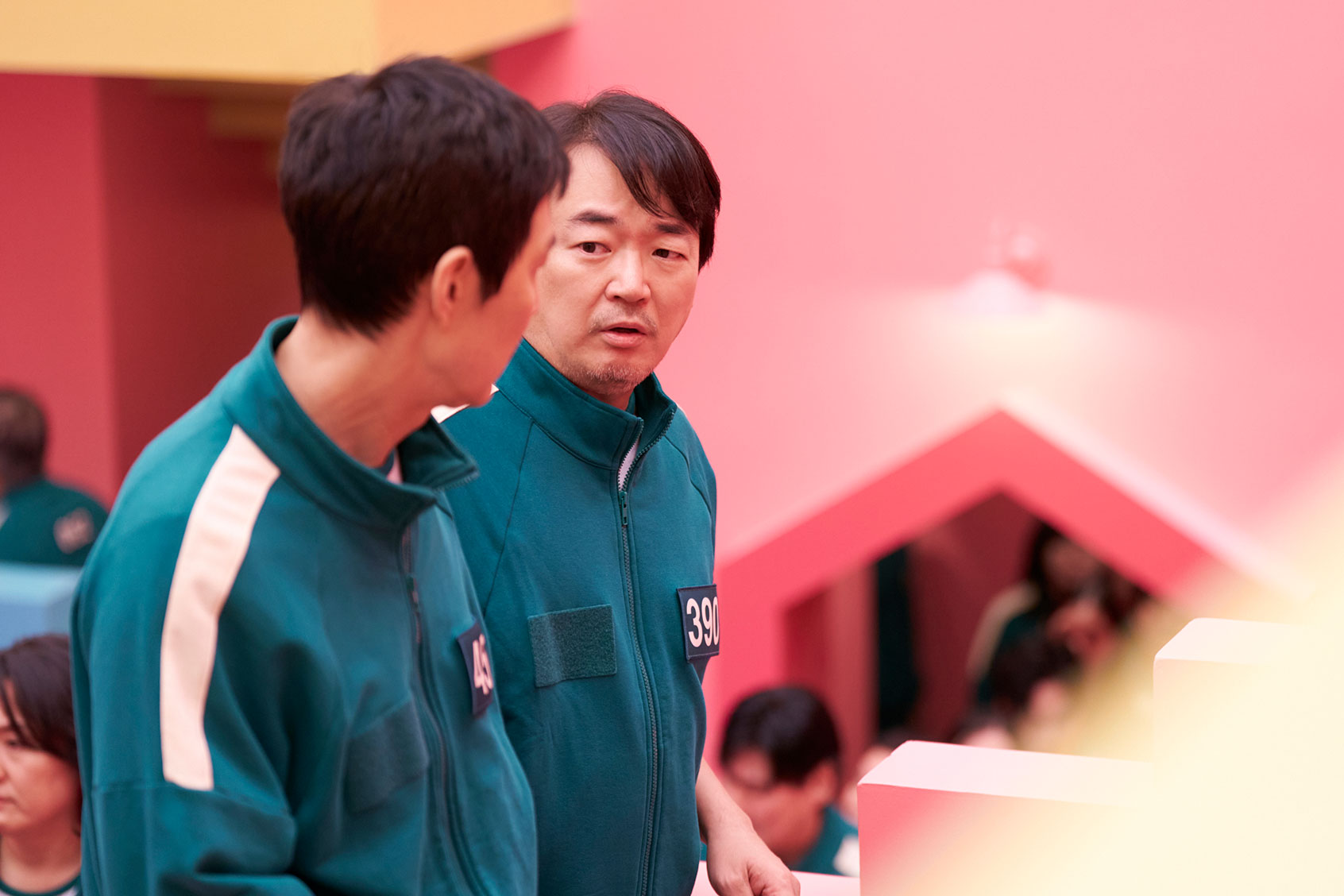
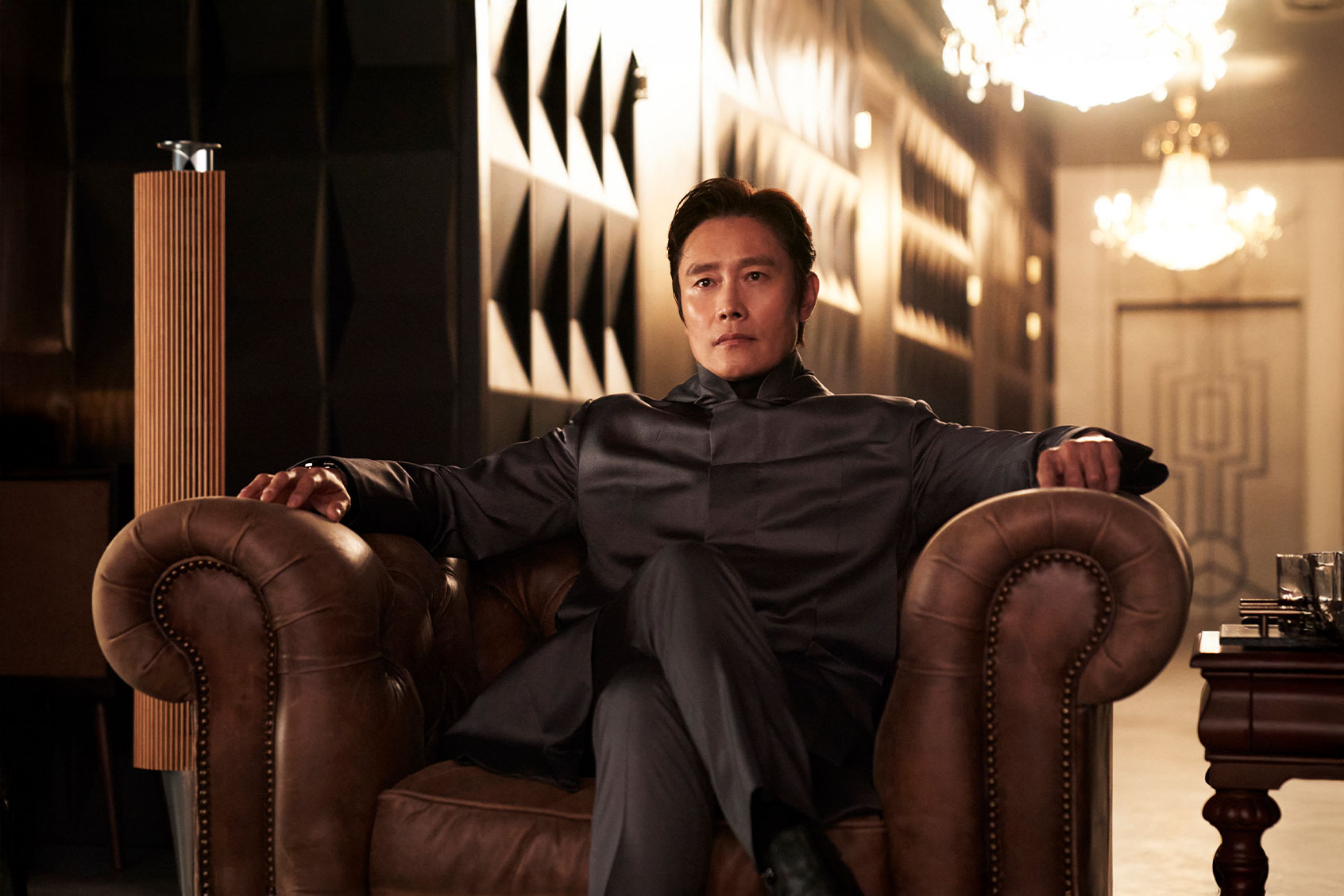
The second season of South Korea's survival drama "Squid Game" ends on a massive cliffhanger in which the insurrection led by Gi-hun (Lee Jae-jung), aka Player 456, ends in failure. His intention wasn't just to save the lives of those in the current game – in which debt-ridden people risk their lives for a million dollar prize – but to put a stop to the games once and for all. This would necessitate taking down those at the top who are running the games to entertain the wealthy. Instead, Gi-hun's armed shootout through the pastel stairways and jewel-toned hallways of the Squid Game facility ends in a bloodbath, with the Front Man himself (Lee Byung-hun) delivering a fatal blow to Gi-hun's friend in front of his eyes.

When Season 1 was released in 2021, neither Netflix nor creator Hwang Dong-hyuk had plans for the show to continue. The show's global popularity changed that, and Hwang had to scramble to figure out how to extend Gi-hun's story. The seven episodes in Season 2 is the result. Netflix has already confirmed that the upcoming third season of "Squid Game" will also be its last. 

Here's what we know so far:

When can we expect Season 3?

Squid GameSquid Game (Netflix)The reason why Season 2 ends so abruptly (and feels like a lot of setup) is because it's precisely that. Hwang had conceived of Gi-hun's return to the Squid Game as one big arc, but ended up splitting it in two after his disastrous failure. 

"When I first wrote the story of Seasons 2 and 3 it was one long story arc," he told Variety. "And I was originally planning to write this story across a span of about eight to nine episodes, but once I finished the story, it came to over 10 episodes, which I thought was too long to contain in a single season . . . 

"All of his failures lead to this heavy, heavy crisis of having to lose his very best friend, Jung-bae [Lee Seo-hwan], at the hands of The Front Man. And when you think about Gi-hun’s journey, I thought that that was an adequate moment to put a stop and give him a little bit of closure along that long story arc."

Fortunately, this means that Season 3 has already been written and in production. Netflix has yet to announce an exact premiere date, but it shouldn't take another three years for the show to return. 

"After Season 2 launches, I believe we will be announcing the launch date for Season 3 soon. I probably expect that to launch around summer or fall next year," added Hwang. 

Will the rebellion continue? Who's left alive?

Squid GameSquid Game (Netflix)When Season 3 begins, Gi-hun could either feel demoralized or even more fired up after his repeated failures and being outmaneuvered.

"As for the storyline of the third season, Gi-hun having lost everything, including his best friend, and all of his attempts going to failure, it’s now, what is he going to be like?" Hwang said. "What state is Gi-hun going to be in? And what will he choose to do? Will he continue on with the mission? Is he going to give up or persist? And so you’re going to meet our character Gi-hun at a very critical crossroads as we begin the third season. Gi-hun will not be the man he was in Season 2."

It's important to note that at this point, Gi-hun does not yet know that his ally Oh Young-il, aka Player 001, is actually Front Man. Once that betrayal is revealed, that may also affect Gi-hun's drive, one way or another. 

In the meantime, it's looking pretty grim for Gi-hun's true allies. Jung-bae is presumably dead after being shot in the chest by Front Man. Those in the barracks-like dorms are alive for now, but last we saw them, they were facing down a bunch of soldiers with guns. Those survivors/friends include: former special forces soldier Hyun-ju (Park Sung-hoon), elderly mother Geum-ja (Kang Ae-shim), her adult failson Yong-sik (Yang Dong-geun), former Marine with daddy issues Dae-ho (Kang Ha-neul), failed cryptocurrency bro Myung-gi (Im Is-wan) and his baby mama Jun-hee (Jo Yu-ri). 

Squid GameSquid Game (Netflix)

It should be noted that even though we see Gyeong-seok (Lee Jin-wook), No. 246, shot, it may be too soon to declare him among the dead. As a reminder, he's the father who entered the games to win money to treat his young daughter's blood cancer. However, when we last see him, he's shot by a soldier bearing a triangle mask — the same mask worn by former soldier and North Korean defector Kang Noe-ul (Park Gyu-young). While she has been seemingly ruthless in her job as a sniper who exterminates the game players who fail, she also has sympathy for Gyeong-seok, having left behind a daughter of her own up North. 

As for those on the outside, police officer Hwang Jun-ho (Wi Ha-joon) and chatty Choi Woo-seok (Jeon Seok-ho) are still intent on finding the island where the games are held by boat. Unfortunately, they have yet to realize that Sea Captain Park (Oh Dal-su), who has been sailing his boat for them, is working for the other side and has even killed one of their colleagues to throw roadblocks in their path.

Who else can we expect to see?

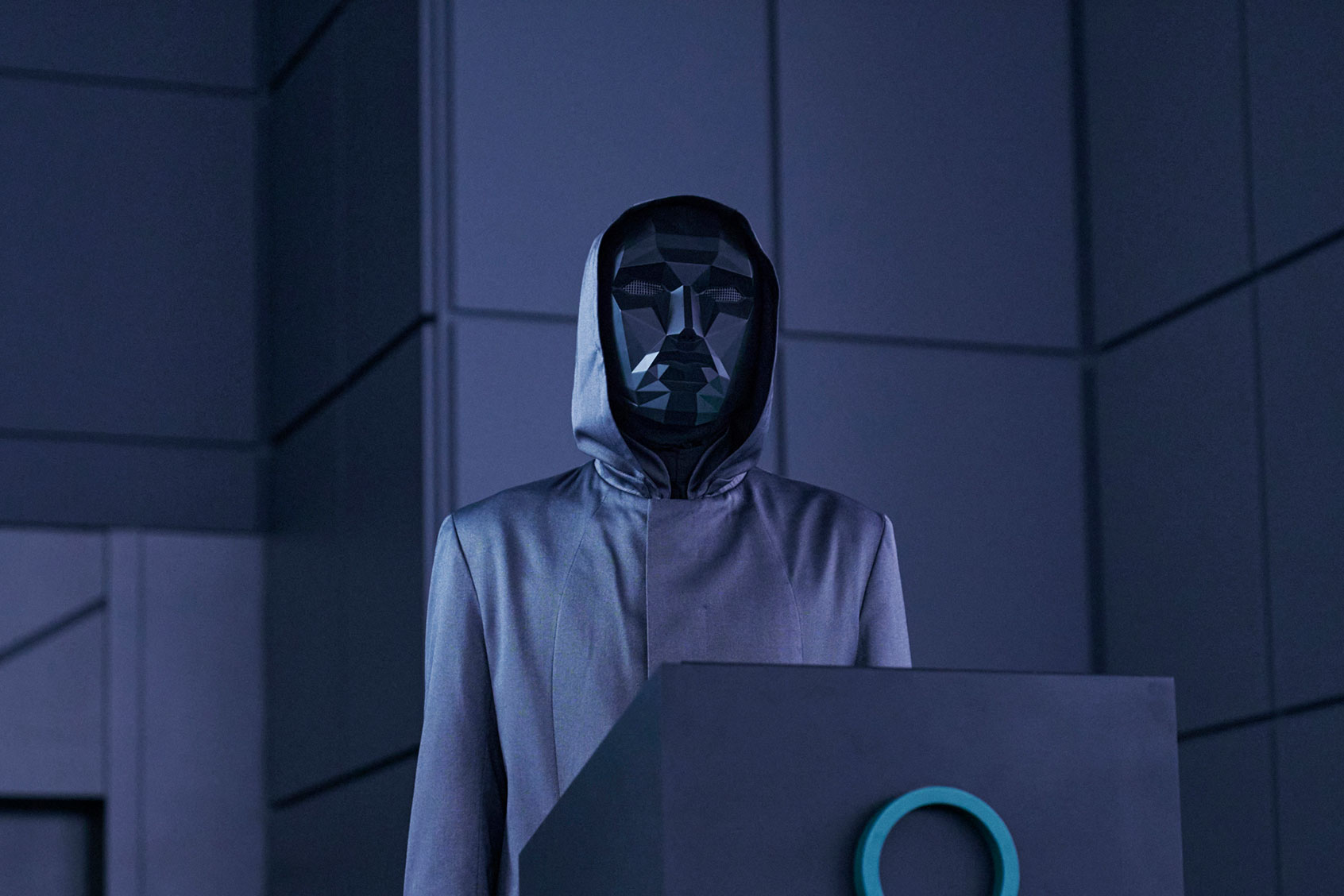
Squid GameSquid Game: The Challenge (Pete Dadds/Netflix)The Season 2 end credits scene reveals our first glimpse of Season 3. We see three players – 096, 100 and 353 — approach the giant killer doll Young-hee with the motion-detector eyes. But then we also see a giant boy version of the doll wearing a green-striped shirt and green cap. The Red Light, Green Light traffic light then switches to green.

"That's actually a [sneak peek] of Cheol-su, who, like Young-hee, is a new giant doll that we're going to be showcasing in Season 3," Hwang told Entertainment Weekly. "And that's also a hint at the most exciting game in Season 3 as well. So, while it hasn't been shared yet, I hope everyone will be excited to meet Cheol-su and the new game."

In June 2022, Hwang first teased the introduction of Cheol-su  when he announced the show was renewed. "Join us once more for a whole new round," he wrote in a message shared on Netflix's X account. "You'll also be introduced to Young-hee's boyfriend, Cheol-su."

Young-hee and Cheol-su are two children's characters seen in South Korean textbooks, sort of the equivalent of Dick and Jane to Western audiences. The "Squid Game" version of Young-hee sports a hairstyle that was inspired Hwang's daughter's hair. 

Young-hee has become a mascot of sorts for "Squid Game," not only for her deadly-cute vibes, but also because she has been a consistent presence in the games across the seasons. Even though new games were introduced in Season 2, the Red Light, Green Light game was still the first one across both season — perhaps because it winnows down the playing field in a horrifyingly efficient manner that sets the tone and stakes for the games.

Not to be outdone by a giant doll, but some other overly dramatic folks will also be returning for the final season. Yep, the VIPs are back, Hwang confirmed. Known for only wearing metallic animal masks and formal attire, the VIPs are the filthy rich who pay to watch and bet on the desperate hoi polloi who compete in the Squid Game.

"You will get to see the VIPs in the third season," Hwang told USA Today. "They're coming. They're on the way. Their chopper is flying over the island now." 

Let's hope that their promised presence means Gi-hun will achieve his dream of taking them down. Regardless, the VIPs are international spectators, which could also mean that we could get a glimpse of the Squid Game being played elsewhere in the world.

Big Lots saves jobs by reaching deal to keep hundreds of stores open

Big Lots! will live to see another day of reduced overstock.

The discount retail chain was all set to close its stores, but on Friday announced that it had reached a deal with Gordon Brothers Retail Partners to keep hundreds of its stores open, reports the AP. This news likely comes as a relief to employees and patrons in the midst of the holiday season.

Big Lots had filed for bankruptcy in October with plans to be sold to Nexus Capital Mangagement, and was in the process of liquidating its stock with the aim to closing in 2025. 

But the Nexus deal never happened as of Dec. 20. Instead, Big Lots will be sold to Gordon Brothers, which specializes in distressed companies, which  will then transfer Big Lots’ stores, distribution centers and other assets to other retailers. Going-out-of-business sales will be conducted at 869 U.S. locations. Part of the plan includes Variety Wholesalers Inc. acquiring between 200 and 400 Big Lots stores to operate under the Big Lots brand, in addition to acquiring up to two distribution centers

“This sale agreement and transfer present the strongest opportunity to preserve jobs, maximize value for the estate and ensure continuity of the Big Lots brand,” Big Lots President and CEO Bruce Thorn said in a statement. “We are grateful to our associates nationwide for their grit and resilience throughout this process.”

Another discount retailer, 99 Cents Only stores, had also filed for bankruptcy earlier this year, finding it difficult to compete with bigger retailers like Walmart and Target. Shortly afterward, Dollar Tree purchased hundreds of 99 Cents Only stores to reopen as Dollar Trees.

The year’s most impactful songs for Gen Z, from Sabrina Carpenter to Kendrick Lamar

It's been a glorious year for music.

Pop divas like Charli XCX and Chappell Roan have dominated the airwaves, and even alternative R&B has broken through to the public because of silly TikTok memes and dances. In a year filled with the urge for art, creativity and distraction as a tool to escape our reality — music has delivered. And man, it has never been better for young people.

Whether you hear a song on the radio in your car, in a bar or through your headphones — this year's music has punctured through to the Gen Z's mainstream creating cultural moments like rapping in a bar full of people — word for word, dissing Drake and Nicki Minaj – or putting is "somebody gonna match my freak" in a Hinge bio to find love online.

But it would be remiss of me not to mention that pop star Taylor Swift also had a killer year with Eras Tour coming to a close after almost two years on the road, her relationship with footballer Travis Kelce dominating headlines (and Christmas movies) and her album "The Torturted Poets Department." While her single "Fortnight" featuring Post Malone landed well with Swifties and on the charts, it flopped with Gen Z. The song was not as concise and impactful as her past works on "Folklore," which is why it did not qualify for this list.

Other artists have been at the top of their game, playing in the soundtracks of our lives since our adolescence. These music industry giants do what they always do — consistently delivering and even outpacing themselves. Seasoned industry musicians like Beyoncé and Kendrick Lamar are decades into their careers yet continue their tight grasp on culture and music regardless across generations. Always reinventing themselves, artists like these show us what true mastery in their craft looks like, and we are all the better for their savviness. 

Salon takes a deep dive into some of the best songs that resonated with Gen Z in 2024:

05
"Bodyguard" by Beyoncé
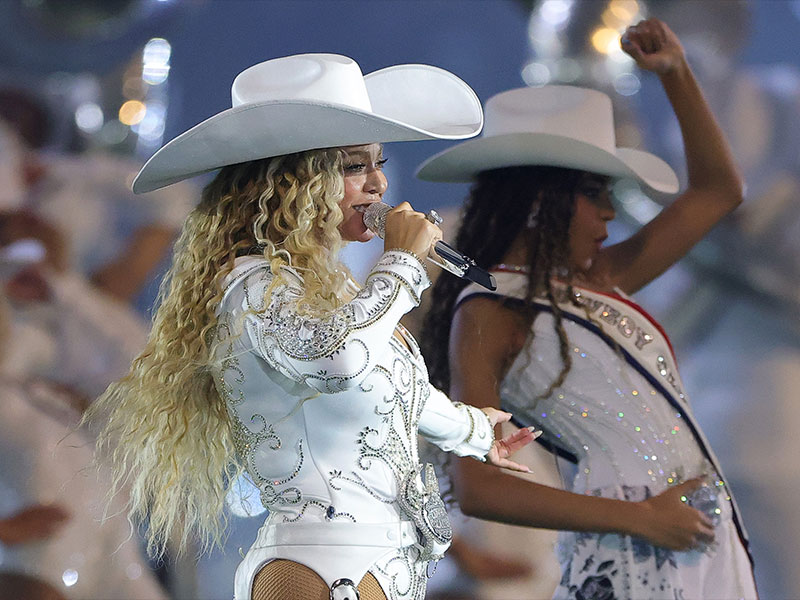
BeyoncéBeyoncé performs with daughter, Blue Ivy, during the halftime show for the game between the Baltimore Ravens and the Houston Texans at NRG Stadium on December 25, 2024 in Houston, Texas. (Alex Slitz/Getty Images)

"Bodyguard" might not be the flashiest song on Beyoncé's sprawling 27-track country debut "Cowboy Carter" but it's definitely one of the grooviest. Imagine listening to "Bodyguard" while riding in a '70s top-down convertible with your arms out, feeling the wind. "Bodyguard's" popularity even prompted fans, critics and Swifties alike to theorize that it was none other than Swift singing background vocals. 


The folky-pop song is reminiscent of Stevie Nicks and Christine McVie's most popular ventures in Fleetwood Mac like "Dreams" or "Rhiannon." Beyoncé was capitalizing on a resurgence online with young people just discovering the complicated, fascinating lore and music of Fleetwood Mac. 


But the song's greatness sneaks up on you like a stealth bodyguard. Maybe that's because of "Cowboy Carter's" perfectly crafted live instrumentation. Or because of some of the notable songwriters like Beyoncé herself, her frequent collaborator Terius Adamu Ya Gesteelde-Diaman also known as The-Dream and indie-pop singer Ryan Beatty (by way of Brockhampton — another band the internet's obsessed with).


Beyoncé kept the song in the cultural conversation when she also released a post-Halloween video to the tune of "Bodyguard" while dressed in some of Pamela Anderson's most iconic looks. Since then, I've increasingly seen similar fuzzy pink hats worn on the streets of New York City.


The video even made its way back to Anderson, who has also had a resurgence in her career lately, especially with her new film "The Last Showgirl." Anderson said, "To have created memorable characters full of heart and vulnerability and love . . . I like to see those, when those things come up . . . because you think in the moment, they weren’t really celebrated. But now looking back, they’re still on people’s minds.” 


Also, "Bodyguard" was a hit with the youth on TikTok. People also used the song endlessly, grooving and saying the song makes them want to have their own country love story, while wearing cowboy boots and a matching hat. Fans may have a chance to put on their Sunday Best like they did for the Renaissance Tour. It is rumored that Beyoncé may go on tour again — so the standout song could have its moment in the sun yet again.


"Bodyguard" was my song of the year in my Spotify Wrapped, and I think it is solely because of the gnarly electric guitar solo matching Beyoncé's killer vocals in the bridge. It's addictive and an excellent showcase of Beyoncé's ever-evolving musicianship. 


04
"Nasty" by Tinashe
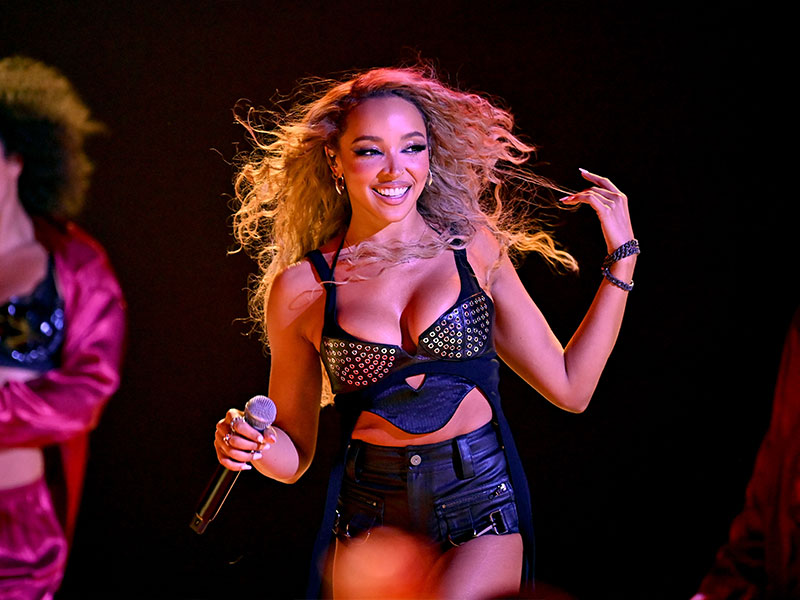
TinasheTinashe performs onstage during the 2024 BET Awards at Peacock Theater on June 30, 2024 in Los Angeles, California. (Paras Griffin/Getty Images for BET)

Tinashe is one of the most slept-on alternative R&B artists of this decade. The singer has always teetered on breaking through the mainstream but she's held onto relevance mainly because of her  2014 hit single "2 On." The former RCA artist left the label after years of underperforming albums and lack of promotion.


However, leaving and then starting her own independent label, Tinashe Music Inc., bolstered the artist to a creatively stimulating height in her career. In 2019, she released the album "Dance For You," with some of the most experimental R&B, pop and dance music on the scene.


Finally this year, Tinashe has received her flowers and she has TikTok to thank. Her single "Nasty" for her seventh album, "Quantum Baby," picked up steam almost immediately on the app because of a sultry dance associated with the song. Not only did the dance go viral, but a lyric in the song, "Is somebody gonna match my freak?" instantly became inducted into the Gen Z-slang dictionary this year. Over the summer, I even saw a coffee shop in Brooklyn with a sign out front saying, "Matcha my freak?" Her lyrics caught on like wildfire illuminating the ever-changing online rhetoric young people are always adopting. 


Outside of Gen Z slang, the song helped reach people who had no idea who the singer was or even forgot she existed outside of "2 On." In some of New York's hottest music spaces, Tinashe could heard blaring through the speakers or even performing live. The fly-your-freak-flag anthem also came at a time of renewed sex-positivity in music from artists like Sabrina Carpenter.


It's important to note though, "Nasty" isn't just a fun, meme-able song and dance with trap beats and silly, horny lyrics. "Nasty" is a culmination of Tinashe's relentless dedication to always trying something new and the public finally recognizing her genius even though she's been light years ahead.


03
"Hiss" by Megan Thee Stallion
Megan Thee StallionMegan Thee Stallion performs onstage during the Hot Girl Summer Tour at Crypto.com Arena on June 21, 2024 in Los Angeles, California. (Kevin Winter/Getty Images for Live Nation)

Years after a traumatic shooting and relentless attacks from people in the hip-hop industry — Megan Thee Stallion bit back and hard in the diss track "Hiss."


The Houston-bred rapper opened the track by setting things straight with a loaded aim at her haters: "I just want to kick this s**t off by saying, 'F**k y'all!' I ain't gotta clear my name on a motherf**kin' thang."


The very traditional rap song takes the listener through a list of people who have wronged and denigrated the rapper's name. Released in January, "Hiss" set the tone and standard for rap beefs and diss tracks to come later in the year. Before Kendrick Lamar, Megan was the first rapper of 2024 to set her sights on knocking Drake down off his pedestal. While it took until "Not Like Us" to really humble Drake, "Hiss" was the gasoline. 


She also subtly made references to rappers like Tory Lanez, Pardison Fontaine and Nicki Minaj and flamed them with lines like "B***h, you a p***y, never finna check me every chance you get/Bet yo weak a** won't address me." While Megan never addressed anyone by name, the lethal diss track sparked a weeks-long tirade from Minaj. The controversy surrounding the vicious track shot Megan to the top of the Billboard charts, earning the singer her third No. 1 single.


A rap beef track rarely resonates with the general public but it did more than that. When was the last time you saw a young female rapper try to take down the whole industry? Just like the beloved anime characters the Gen Z rapper loves — Megan became the protagonist of her story while simultaneously drawing in people unfamiliar with her game.


It's also important to note that Megan knows her cultural impact on young people. After all, the "Hot Girl Summer" phrase and ethos is synonymous with the rapper. That same impact is felt in "Hiss" with lines like "Aye, these h**s don't be mad at Megan/These h**s mad at Megan's Law," which increased awareness around laws protecting abused children.


Furthermore, Megan even sold out Madison Square Garden not long after the release of "Hiss."


"Hiss" is a feat for the independent rapper — reminiscent of some of rap's most complex beefs from the '90s and '00s. The track is a meditation on Megan's righteous anger, and it is invigorating when you glance at the rapper's difficult past. "Hiss" will live in the hall of fame of top-tier hip-hop diss tracks.


We need your help to stay independent

02
"Espresso" by Sabrina Carpenter
Sabrina CarpenterSabrina Carpenter performs during the 2024 Governors Ball at Flushing Meadows Corona Park on June 08, 2024 in New York City. (Marleen Moise/Getty Images)

This summer, Sabrina Carpenter emerged from the Disney Channel's ashes as a fiery, horny pop diva. 


Carpenter shed her child star skin and gave audiences one of the most hypnotizing pop songs of the year in "Espresso." Yeah, "that's that me espresso" may be one of the most ridiculous lyrics of the year but it was undeniable. It also brings back certain lightness in pop music that's much needed for escape and fall into the daydream of Carpenter's blissful, color-filled world.


Penned by Carpenter, Amy Allen and Julian Brunetta, "Espresso" transports us into a disco-infused summertime haze. Drunk off of the caffeine buzz, Carpenter captures self-confidence in an undeniable, shimmering Gen Z anthem. The song has nearly two billion streams on Spotify and it became one of three Billboard No. 1 hits Carpenter garnered this year.


Carpenter's slow-burn success is satisfying and well-earned after years in the child star machine. She's even earned herself a handful of Grammy nominations, including album of the year for her album "Short N' Sweet." I can't forget that the single was so well-loved that the "Saturday Night Live" spoof cover of "Espresso" sung by Ariana Grande and featuring Marcello Hernandez also went viral.


Carpenter's sheer talent in conjuring witty lyrics is what pop music has been missing with a self-awareness we can laugh at and dance to under the warm, beating summer sun. 


We need your help to stay independent

01
"Not Like Us" by Kendrick Lamar
Kendrick LamarKendrick Lamar dances during the music video shoot for "Not Like Us" at Nickerson Gardens on Saturday, June 22, 2024 in Watts, CA. (Michael Blackshire / Los Angeles Times via Getty Images)

"Psst, I see dead people," is how Kendrick Lamar opens the diss track of the decade "Not Like Us." Maybe it's because after "Not Like Us" dropped, Drake's decades-long rap career was effectively considered dead on sight.


In a year full of rap beef from artists like Megan, Minaj and Metro Boomin, Lamar took a grenade to his tiff with Drake and launched it. With lyrics like "Say, Drake, I hear you like 'em young/You better not ever go to cell block one," Lamar used sexual misconduct allegations leveled against Drake and relentlessly whacked the Canadian rapper.


The diss track did so well that it was played at clubs and bars all over the country (not to mention at the Democratic National Convention) with people singing bars like "Certified Lover Boy? Certified pedophiles." "Not Like Us" has also been nominated for five Grammys including record of the year.


The song itself is a celebration of diss tracks from West Coast rappers like the late Tupac Shakur. Lamar has learned through his career how to merge the old with the new, continuing his relevancy past any expiration date. Young people unfamiliar with Lamar's work were certainly introduced to it this year through this song on TikTok or just endless scrolling on X. According to Rolling Stone, "Not Like Us" also became a protest song that helped launch a youth-led Kenyan initiative in dissent against government tax hikes.


In "Not Like Us," Lamar transforms into an omnipresent aura — almost a God-like figure that ultimately becomes judge, jury and executioner. The trap beats intercut with strings can be attributed to legendary producer DJ Mustard whose beats help take listeners on a revenge tirade guided by Lamar's shots at Drake.


Mostly, "Not Like Us" cements what listeners and fans of Lamar have always known — he's the king of rap and no attempt from rappers like Drake can take down Lamar, who is in a league of his own because he continues to raise the bar of excellence.


“Fascism that cloaks itself in patriotism”: “The Boys” boss on dangers of strongmen and superheroes

Eric Kripke is accustomed to the real world aligning with the version he writes, where men and women fly. So of course the first trailer for James Gunn’s “Superman” dropped on the day I spoke with the man behind “The Boys." Why wouldn't it?

Gunn’s vision of America’s greatest comic book hero is wrapped in optimism. Homelander, played by Antony Starr, is the Man of Steel’s gaudy, cruel inverse, an all-American apple with radioactive razor blades baked into the filling. The regular guys standing against him — and for actual truth, justice and the ideal of the American way — are a grubby band held together by Billy Butcher (Karl Urban) and Marvin Milk (Laz Alonso).

"The Boys" began as a best-selling comic by “Preacher" co-creators Darick Robertson and Garth Ennis; Kripke's adaptation uses the comic's Übermensch to show us how omnipotent men would actually behave, inspired by Donald Trump and the far right's oligarchic power structure propping him up. 

Homelander is also a product — an enhanced being created in a lab run by Vought International, a multimillion dollar "global leader in the media, retail, energy and pharmaceutical sectors," according to the show's lore. Over the course of decades the conglomerate seeped into every sector of American life to the degree that it might as well own the populace. Since Homelander installed himself as the company's head, he's functionally the king of the world. He views himself as a god.

Thus, the Season 4 parallels between Homelander’s coup and the inability of the namesake non-powered heroes to stop it turn out to be frighteningly prescient.

Its premiere dropped two weeks after Trump was found guilty of 34 felony counts of falsifying business records by a New York jury in his hush-money trial. That episode shows Homelander being acquitted of murder despite having lasered a man's head off in front of a crowd.  

Its finale, originally titled “Assassination Run,” debuted days after Trump survived an assassination attempt. It was filmed in 2023. 
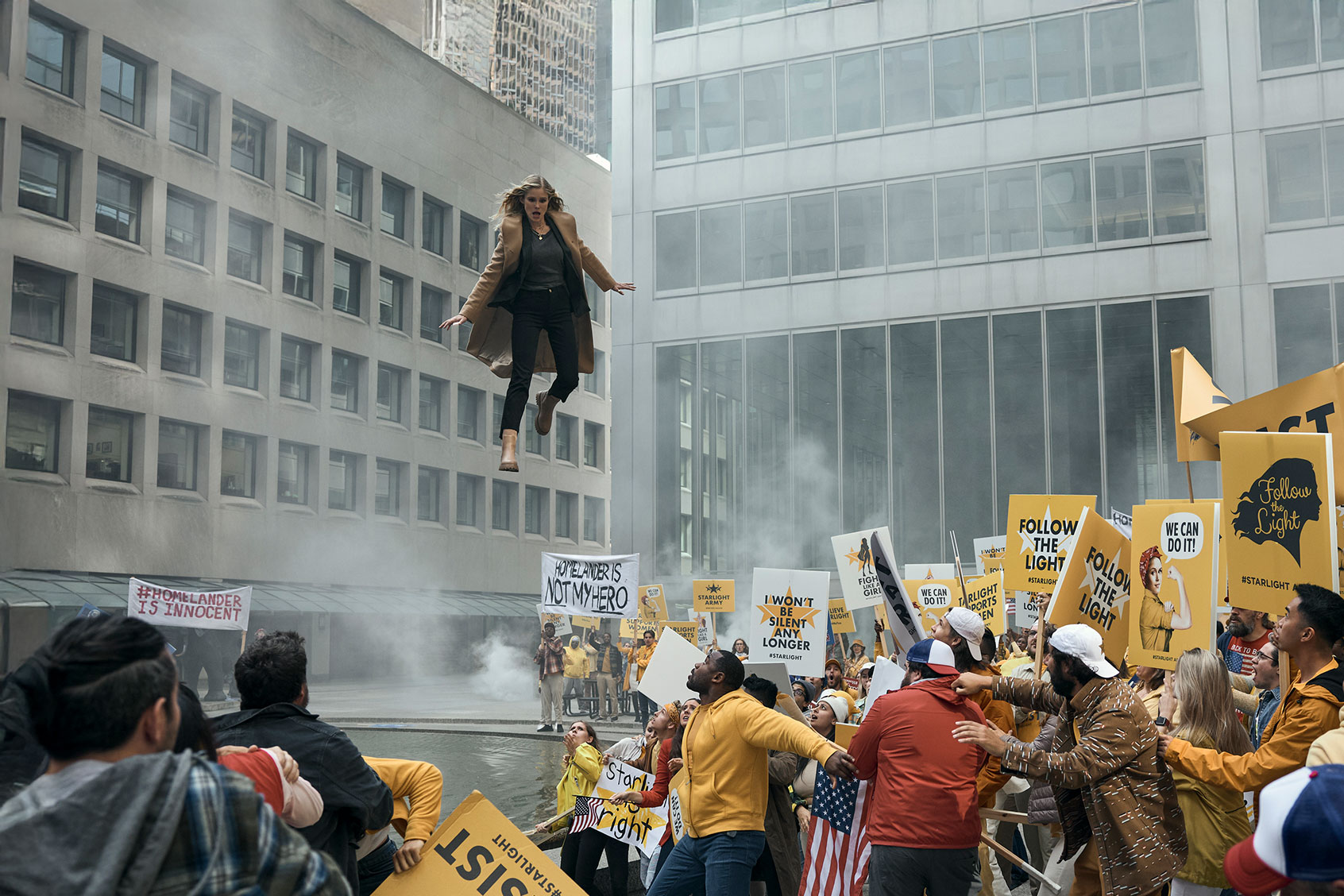
The BoysThe Boys (Prime Video)Prior episodes show this universe's version of Laura Ingraham, Firecracker (Valorie Curry), revealed the medical records of progressive superhero Annie January (Erin Moriarty) showing that she had an abortion, and her fiancé and teammate-Hughie (played by Jack Quaid) stumbling on a plan to build prisons for dissidents. Elsewhere families watch children's programming that teaches kids to report on their parents' supposedly un-American behavior. 

By then Kripke already knew the upcoming fifth season of “The Boys” would be its last. What he and millions of others didn't predict is that a few months after the fourth season finale, America would reelect the man who promised to be a dictator on Day 1 and enact vengeance on his enemies. Just like Homelander does in "Season Four Finale."

A writers’ room rule to which Kripke hews closely is that what’s bad for the world is good for the show. But the similarities between what played out in Season 4 of “The Boys” and our version of current events is beyond unsettling. And the show doesn't intend to let up: Kripke admits the last season is grim.

“It's the natural end of a character like Homelander. If you give him truly unfettered power with all his insecurities and traumas, this is a version of what he would do,” he told Salon in a recent chat conducted over Zoom. “But so goes many fascists who are weak and thin-skinned and ultimately driven by ego, despite how much they front as heroes.”

Soon a new year and a new reality will be upon us. Rewatching “The Boys” may be bitter medicine, but it might also help brace us for what’s coming. Under a leader intent on shaping the media to his will, speculative fiction may be one of the last bastions of political and social critique. And if you're wondering how Season 4 matched current events so accurately, in our wide-ranging conversation Kripke confirms the writers consulted manual for government takeover.

The following interview has been lightly edited for length and clarity.

One of the things that people have been talking about lately is looking ahead, and what the next four years mean for people making art in all kinds of mediums, and certainly in TV. There have been reports of movies and TV shows scrubbing plans for certain characters, for example. As someone who writes in the speculative space, what does that indicate to you about what is possible for stories like “The Boys” moving forward? It’s based on a property, but you've taken it in a direction that doubles as social critique.

The obligation I feel is to double down. I'm certainly not going to back off any of it. You know, we have a final season. We have our own sort of worst-case scenario speculation of a fascism that cloaks itself in patriotism. And there's obviously historical precedent for that. We've been building toward it for a while, and we're going to tell our story.

I mean, we've been occasionally and coincidentally prescient about some events. Season 5 is pretty bad, so I'm really hopeful that we are not prescient about some of these events. I would love to be accused of being an alarmist. That would be great. 

This is something that I wanted to ask while Season 4 was running. If I recall, you first conceptualized the story two years before it came out.

Yeah.

Did you look at any of Project 2025? That also came out in 2022 — were you aware of it? Did that inform anything in the writers' room?

If I remember correctly, about mid-writing, like right in the middle of the process, we found it. Funny enough, we found it because one of the main architects, his last name is Vought. (This refers to Russell Vought, Trump's pick to lead the Office of Management and Budget.) So we found it through someone saying to us, “Have you heard of this guy, Vought? And we're like, ‘What? That's too on the nose. No way.” So we started going down the rabbit hole and got to Project 2025 pretty soon after that.

Yeah, we discussed it in the room, and we said, “You know, this is a pretty accurate depiction of what Homelander would want.” A saying we have in the room is, “Bad for the world, good for the show.” And this was definitely one of those examples where it's like, here we have a really concrete example of what a Homelander world might look like that feels very grounded and terrifyingly real. Because it is.

Again, I'd rather have the alternative. I'd rather it be purely speculative and fictional. But we're using what we see around us.

Speculative fiction is a great way to explore difficult topics. But for people who kind of want to say, “Well, this could never happen . . .”  take “The Handmaid's Tale.” Margaret Atwood has said it's based on real events that have happened in societies around the world. Given that, what do you think about the utility of the speculative space in terms of both conveying hard messages, but also its potential to grant a bit of false security to the audience?

It feels like there are two questions there. One is, look — the thing I love most about genre and why I really only want to be in this space, is because you can say subversive things about the world that you just can't get away with in a straight drama. It would either be too earnest, it would either be too boring, too wonky . . . But there's something about the fantasy and the action and the fight scenes – there are lots of spoonfuls of sugar all around it that we get to have as an advantage when we're telling the story.

You can watch a takedown of late-stage capitalism and the risk of democracies falling into fascism and be entertained and laughing as you're doing it. It's difficult to do that in a straight drama.

Now, in terms of the false sense of security, I can't control how people view that stuff. When I watch it, I see the subtext of it, and I see [that] someone is making a point and warning us that something like that is possible.

"I'd rather have the alternative. I'd rather it be purely speculative and fictional. But we're using what we see around us."

I think there's something actually healthy about a little bit of distance between the viewer and the subject, where they can look a bit of a different world that maybe they'll see things that they're not noticing if they're just watching the news. They'll just have a perspective that gets them a little more clarity. But anyone who is reading or watching any good science fiction and saying, “Oh, this is just fantasy." They're not looking at it closely. Anything good – and I mean any, name it: “Star Trek,” “Buffy, the Vampire Slayer,” “The X Files,” anything — it's all talking about the world that we're currently living in, and at least for me, that is what is so appealing.
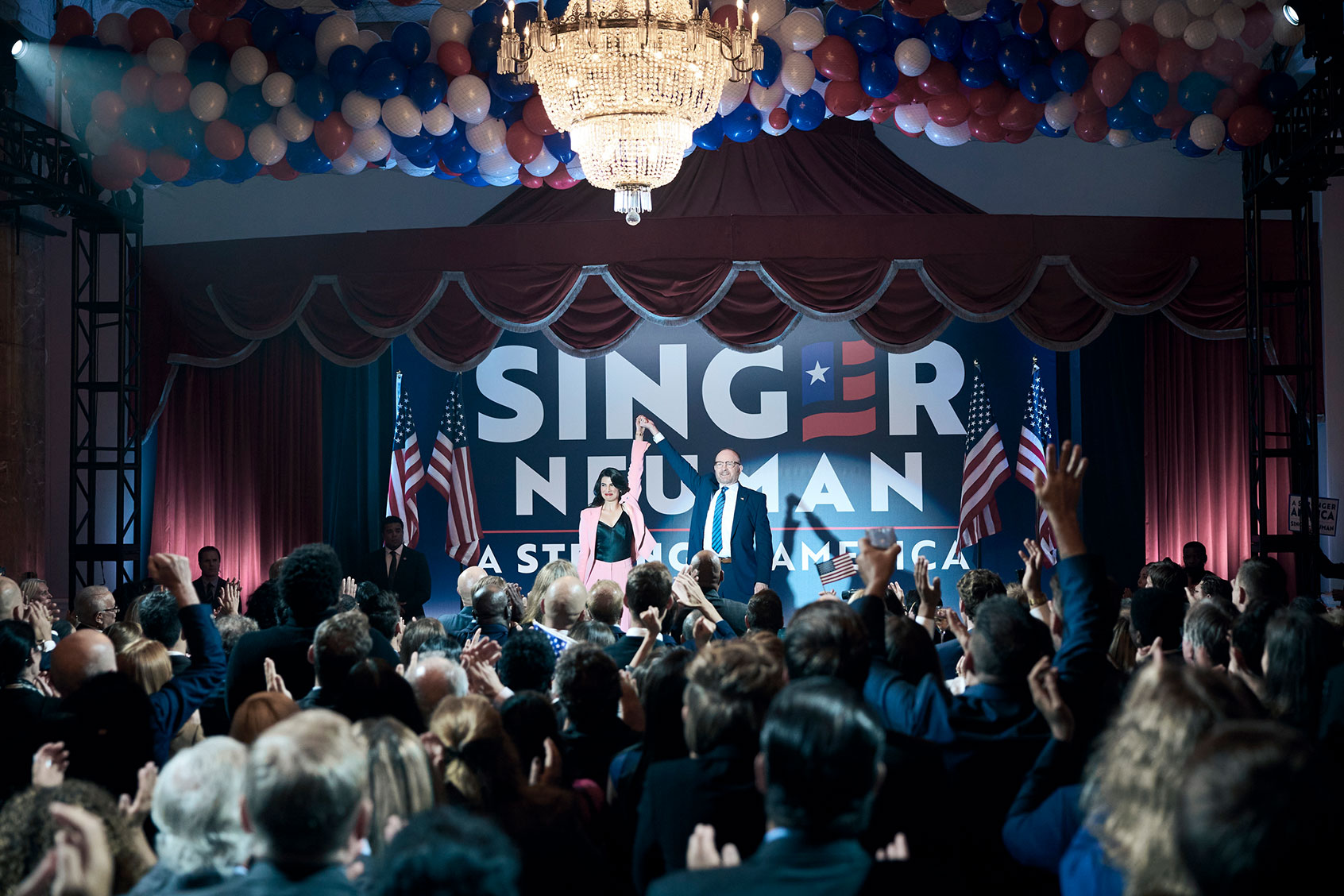
The BoysThe Boys (Prime Video)There’s this idea that somehow grim times produce good art. That's been disproven a few times, but I wonder what you think about the ways the current political climate is going to impact making art like this show.

You know, the realization that the majority of the country — a slim majority — but the majority just sees the nation differently than I thought they did . . . I think there are a lot of people who feel like I feel. And I think that especially when you're in the position of being a decision maker, that can't help but have a cooling effect on shows like ours, where we're sort of proudly wearing our perspective on our sleeve and are blunt, to say the least, in terms of how we go after it.

So if you're a corporation, I would imagine you can't help but say, “Well, if I'm trying to appeal to an audience, we got a pretty loud wake-up call that the audience doesn't necessarily agree with some of the politics in this particular show.” It's probably just riding the currents of commerce.

But on the other hand, anyone who can push this kind of story through and make a lot of people feel a little less alone, it’s worth doing. Again, not to belabor a point, but you can sneak a lot of stuff into genre. There's a reason that some of the best stuff by way smarter writers than me — I'm not beginning to compare myself to them but look at, like, Arthur Miller making “The Crucible” in the McCarthy era. What's great about what we do is there are subversive ways that you can get your message across even in times that aren't necessarily friendly to that message.

We need your help to stay independent

I think there’s a connection between “The Boys” and “Supernatural,” which you had created. I like to consider what different shows say about the American story, and I actually spoke to [“Supernatural” co-star Misha Collins] a little bit about this at a Comic-Con a long time ago. He pointed out that the show’s overall theme isn't necessarily the vision of good and evil that the post-World War II version of the American story is deeply hooked into, that it’s mainly about American masculinity. I would love your perspective on whether there's any kind of continuum there, in terms of what keeps drawing you to these stories and what they might say overall about how America sees itself.

I mean, look, we're all products of our experiences and our upbringing and the media we consumed. I'm a sucker for [Steven] Spielberg, [George] Lucas, you know — “Raiders of the Lost Ark,” “Star Wars,” the million subpar copies that are so deeply in my brain. Those were always the stories I gravitated towards.

But as I got older and a little more experienced as a writer, I learned quickly that character psychology is really everything, at least for me. It's how I make sense of the stories. And when you start breaking down the psychology of the traditional masculine hero, like for real — when you are like, “OK, what makes that person like that?” – you quickly reach the conclusion that they are so f**ked-up, so wounded and so broken. It's just natural. You just wouldn't run into that burning building and be making those quips and . . . diving off a skyscraper like John McClane. You’re just not doing that if you're not, like, a deeply f**ked-up person. And that became really interesting to me.

"What's great about what we do is there are subversive ways that you can get your message across even in times that aren't necessarily friendly to that message."

During “Supernatural” —  probably a little more Dean than Sam, because Sam was always meant to be like a regular guy. But Dean, the notion was like, “OK, but if you were Han Solo for real, like, how f***ed up are you to end up in that position, making those choices?” Then we started playing that, and Jensen [Ackles] was really good at it. And that became really interesting to me.

Then when we got into “The Boys” . . . one, it's baked into the source material. But two, “The Boys,” at least our version of it, is not just subversive about politics or superheroes. I think it's intentionally critical and a little subversive of the structure of the genre itself, in that violence is a . . . psychotic way to go about solving a problem.

A movie we reference as much as we reference any other movie in the writers' room is “Unforgiven."  We talk a lot about how Eastwood so brilliantly took the conventions of a Western to point out how damaged the cowboys and gunfighters in that Western would be — how corrosive revenge and vengeance and all the things that are the bread and butter of superhero movies and westerns and action movies, how corrosive and toxic all that stuff really is. So anyway, you're right. It's been an ongoing interest of mine.


Want a daily wrap-up of all the news and commentary Salon has to offer? Subscribe to our morning newsletter, Crash Course.


One truism that the superhero genre sells is that in the end, everything's going to be OK because goodness and justice prevail. As you were figuring out how “The Boys” is going to end, did any part of that idea come into mind?  And is there even an obligation to think that way?

I've evolved my perspective I think, as I've matured a little bit through this process. Had you asked me that question a few years ago, I'd have said, and have said in interviews, “Look, superheroes can be dangerous because they teach you that there is some strong man who is going to swoop in and save the day. And there's a short line between that and a real-world strong man.”

But I've changed my perspective on that a little bit because having spent years really starting to study the format, the conclusion I've reached is this: In the real world, superheroes are the worst possible idea. There are people, strongmen, who front as having superhero-like abilities to solve complicated problems and to fix everyone's problems and, “Just rely on me, and I'm the one who's going to fix it for you.” And that's very, very dangerous, and has been dangerous since the beginning of civilization, and remains dangerous today.

What I realized, though, is that when somebody watches say, “Superman,” they are not using Jimmy Olsen as their avatar. They're using Superman. They emotionally put their eggs in Superman's basket. That's how they're emotionally experiencing that world. People see themselves as the heroes, and yes, the wish fulfillment of the power. But also, there is something valuable in a kid watching that and having that kid emotionally connect to goodness. Giving someone a little moral direction and something to aspire to I don't think is a bad thing, as long as the people realize that what might be good for them, personally and emotionally, could be really bad for the world if brought into the real world.
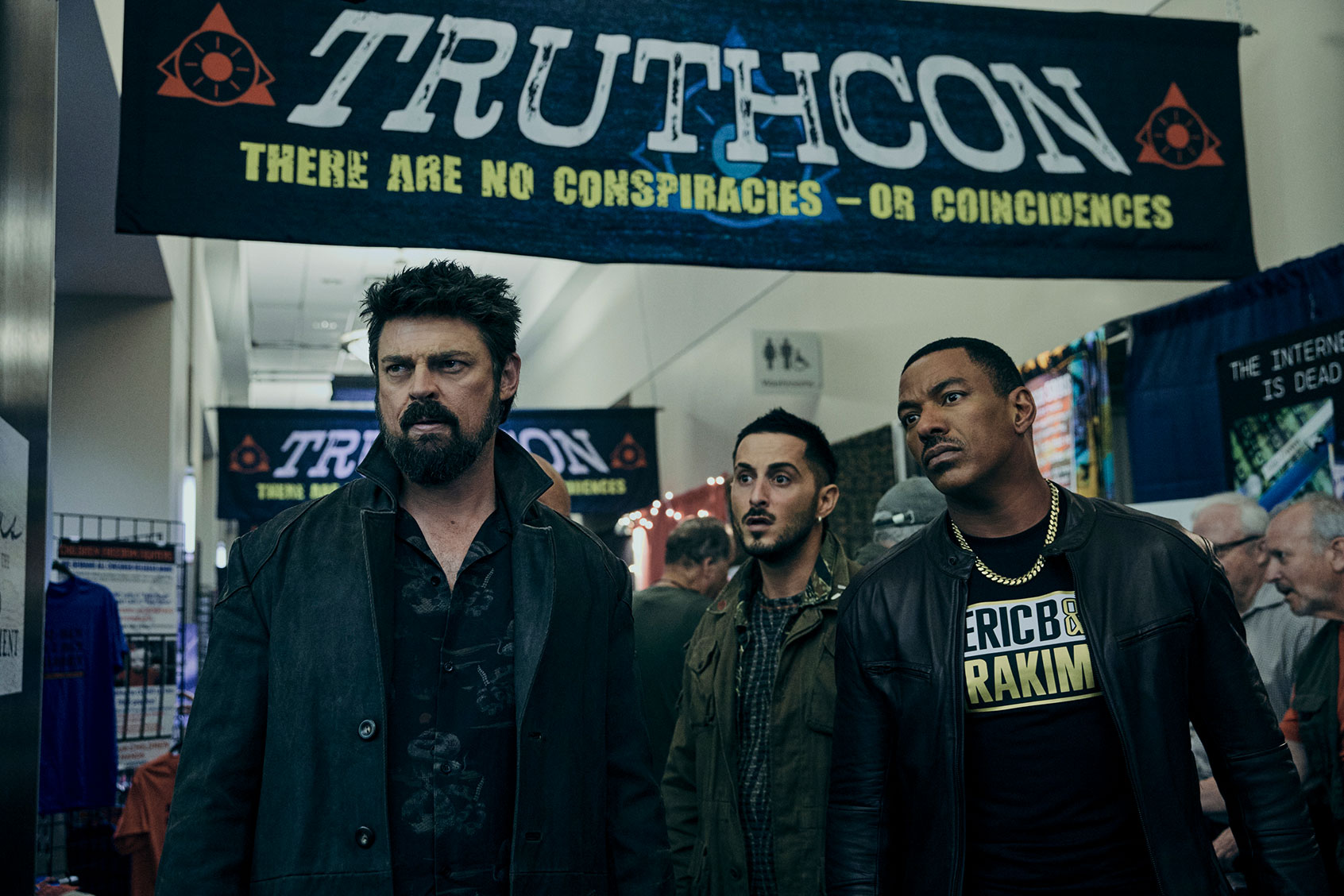
The BoysThe Boys (Prime Video)

That kind of explains, too, why there might be this tendency to connect more to Homelander for some people than Billy Butcher, right?

That is exactly right. I mean, I don't understand the people who really sympathize with or emotionally connect with [him]. Part of it is Antony does such a remarkable job in that role, and he makes you understand where he's coming from. And the other part of it is, I'm just not very good at writing villains. Like, I need to understand why they're doing what they're doing, and let the audience know that there are reasons behind it, as hateful as they may be. And I think that weirdly makes some people sympathetic towards Homelander. But he is not anyone you should aspire to.

I disagree with you saying that you're not good at writing villains. Those exact reasons you gave make him a more interesting character.

Well, thank you. But I'm not good at writing, like, “I'm evil and I'm going to wake up and do evil today.”  l don't understand that psychology. That's just crazy, and crazy is the most boring thing for me to write. What I really get is a character who wakes up, looks themselves in the mirror and says, “I'm going to save the world today. I'm going to do a lot of things that I know are right,” and then they proceed to do the most hateful, horrible, destructive things, but they think they're right. Locking down that psychology is, to me, part of the fun of writing a good bad guy.

Season 1-4 of "The Boys" are available to stream on Prime Video. Season 5 is currently in production.

Jessica B. Harris revisits Kwanzaa: A keepsake cookbook for a new generation

In 1995, Dr. Jessica B. Harris first published “A Kwanzaa Keepsake and Cookbook.” This year, the cherished book was republished with updates, additions and a new foreword by Carla Hall. Harris, the prolific author of numerous works, including the widely celebrated “High on the Hog,” told me, “People needed a new version.”

As Harris writes in the book’s introductory essay, many are “always surprised to hear that the Black American feast of Kwanzaa was established in 1966 [when] Maulana Karenga decided that Black Americans needed a time of cultural reaffirmation.”

Kwanzaa, observed annually from Dec. 26 to Jan. 1, is “a time of feasting and of self-examination,” Harris notes, adding that “the roots of Kwanzaa are in Africa, but the fruits of the tree are truly Black American.”

The holiday is celebrated over seven nights, each dedicated to one of its guiding principles: umoja (unity), kujichagulia (self-determination), ujima (collective work and responsibility), ujamaa (cooperative economics), nia (purpose), kuumba (creativity) and imani (faith). Harris emphasizes that “the mystical number seven is at the core of the celebration.”

Salon recently spoke with Dr. Harris about the republishing of her book, her personal Kwanzaa traditions, the significance of Carla Hall’s involvement and more.

Jessica B. HarrisJessica B. Harris (Photo courtesy of J. Pinderhughes)

The following interview has been lightly edited for clarity and length. 

This is such a lovely book — and it has clearly stood the test of time. I'd love it if you could speak to the "Keepsake" part of the title? I love the project and family pages.

The keepsake part of the book comes from the fact that the book contains several blank pages designed to be filled in by family members and by others so that the family can use the book — or the community can use the book — as a reference and as a way to record its own history. 

 The book was originally published back in 1995 and is being republished now. Why now?

It's being republished now because it's needed now. The original book was published in 1995 and it has — I'm being immodest in saying — but weathered well. I find people have it on their Kwanzaa setups and it is now out of print, long out of print, and people needed a new version.

Carla Hall wrote the foreword for this new edition. Why do you think it's important to have her voice open the book? 

I think it's important to have Carla's voice in this new edition because so many people know and love Carla, and the fact that she actually knew and loved the book makes it important — it makes it important to them.

I think parts of the book that Carla liked is that she's a crafter, so she liked the fact that there are projects in the book. She is a storyteller, so she liked the part that there's stories of varying, different people from the African diaspora in the book so I think it's important to have her voice because her voice validates things for many, many, many people nowadays. 

Kwanzaa is celebrated over seven nights and the book contains a menu and recipes for each night. How are those dishes organized? Could you give an example of a particular dish or ingredient and how it fits the 'theme' of that night? 

The menus are ordered over seven nights. Each menu represents a facet of the African diaspora; some nights, there are themed dinners, as in there is an African meal that celebrates the continent. There is a meal that's designed to be a formal meal that allows people to network and so on and so forth.

How do you personally celebrate Kwanzaa?

For many, many years, I gave a New Years' Day party that I didn't even realize was Kwanzaa, but that I kind of come to understand [was] in fact Kwanzaa. I have had as many as 40 people to my house — there's actually a passage in the book that speaks to that.

Now, I'm kind of a Kwanzaa orphan. Just as I've refreshed the book, I'm looking towards refreshing my own commitment to and relationship with the holiday.

A Kwanzaa Keepsake and CookbookA Kwanzaa Keepsake and Cookbook, a gorgeous reissue of the holiday classic by Jessica B. Harris (Courtesy of Scribner/Simon & Schuster)

I recently spoke about you with Nazli Parvizi of MOFAD. What was it like to work on the exhibit "African/American: Making the Nation's Table?"

It was from the Museum of Food and Drink in New York City. The only problem with it has been, or was, in fact, that it was scheduled to open the Monday after New York City was closed down by COVID, so it languished during the period of COVID and once it came back out from under, while it was highly lauded, never really got the audience or the viewing that it probably deserved.

I'm saddened by that, but working on it was a great joy. 

How validating has the response to "High on the Hog" been for you? 

The response to "High on the Hog" has been extraordinary. I am still amazed by people recognizing me on the street — not often, but occasionally — and thanking me and loving the work and understanding the connections of the food of the African diaspora and the food of this country.

And that's all sorts of people, not just African Americans — people stop me and say "thank you, I didn't know that" or "I learned from that,"  and that's glorious, absolutely glorious. 

What has changed in the near-thirty years since the book was published? What's stayed the same? New traditions or customs?

I think people have had a longer time to celebrate Kwanzaa and so they've developed their own holidays, they've done what African Americans always do, which is to say, they've done a jazz riff, they've morphed on it, things have grown and moved

Traditions: The basis is the basis. How people embroider on it is theirs. The basis is unchanging: seven nights, seven principles, seven symbols. Everything else? People can work with — and do work with and make it theirs. 

I love how simple and direct the book is. What initially inspired you to write it? 

I was inspired to write Kwanzaa as I say in the preface or introduction because I felt that we needed it.

I felt that we needed it because we need a time out, we need to be able to reflect. If we don't look back at where we've been, we're not looking forward to where we're going. So that initially inspired me to write it and in fact and indeed inspired me to refresh it.

There are abridged biographies of certain people throughout the book. What compelled you to include those?

Simply because I think that if we learn about each other across the African diaspora, we're all richer for it.

This time, I've included not only the biographies — and they're biographies of people who are ancestors, no one alive is included in that section — but there is one from Brazil, one from the Caribbean, one from the African continent and one from the US.

In the refreshing of the book, I have included an LGBTQ+ person for each of the seven nights because I think we need to widen the net and let more people into the tent.

You've had such an amazingly storied career. What's next for you? 

I've got a new book coming out in June called "Braided Heritage" that's about the foundational food of the United States. Stick around, have a look at that, it's interesting — I think! — hopefully everyone else will, too.

What's next? I've got two other books in the pike to follow after that. My retirement renaissance keeps being as busy as ever. 

“No human being should be treated that way”: Video footage released of Marcy inmate beating

Bodycam footage of a beating leading up to an inmate's death in a New York correctional facility has been released.

On Friday, New York State Attorney General Letitia James’s office released video footage of the events that led up to the death of 43-year-old Robert Brooks earlier this month at Marcy Correctional Facility, reports the Utica Observer Dispatch

At a press conference Friday, James said, "Today my office is releasing video from the investigation into the death of Mr. Robert Brooks. Mr. Brooks had been incarcerated at Mohawk Correctional Facility and was transferred to Marcy on Dec. 9. During the incident he was handcuffed with his hands behind his back.

"I do not take lightly the release of this video, especially in the middle of the holiday season. But as Attorney General I release these videos as a responsibility and duty to provide the Brooks family, their loved ones and all New Yorkers with transparency and accountability.

". . . I want to reiterate that we are investigating this case thoroughly and using every tool at our disposal to make sure there is transparency and accountability for the events that preceded Mr. Brooks’s death."

Bodycams on four corrections officers were powered on and recording on standby mode without sound. The video is available through the attorney general's office. Footage from the bodycams show multiple officers repeatedly striking Brooks: punching him in the stomach and thighs, pinning him down with a foot to the chest, hauling him up and shoving him against a wall and more.

Brooks was taken to Wynn Hospital in Utica, New York, where he was pronounced dead on Dec. 10.

“No human being should be treated that way by another human being,” the New York State Sheriffs’ Association wrote in a statement. “And it’s made even worse by the fact that the extreme cruelty inflicted was by those entrusted with the power of government against those they were entrusted to guard and protect.”

After reviewing the footage, New York State Gov. Kathy Hochul said, "I was outraged and horrified after seeing footage of the senseless killing of Robert Brooks. I have been clear that it is the responsibility of the New York State Department of Corrections and Community Supervision to provide appropriate care and protection for those in its custody, and I will not tolerate anyone who violates that responsibility."

How the left can get its mojo back: Listen to working-class people of faith

I have provided career and life coaching advice to thousands of working-class students and adults over the years. If there is one truism I have found in all these interactions, here it is: People want, and need, to feel heard more than to be helped.

When things were hectic in my office as an academic counselor at North Shore Community College, I would joke with the students that if they gave me 10 minutes, I could change their lives. At times, it actually worked. The formula was intensive listening for seven minutes, and then three minutes of guided questions that pushed the student toward the path they already wanted, but needed permission to pursue. I saw and heard those students; I listened and showed love and acceptance. Given that, a person can feel capable of doing anything.

At the moment, the political left seems lost. It has lost power at every level of government and lost traction in culture and even the media. Everyone is trying to figure out what happened in the wake of the November election and what needs to be done to getting this country back on track. My advice is simple. Listen to the working-class people who are struggling, especially the folks at the bottom of the economic ladder, and even more specifically working-class people of faith. For all his hypocrisy and all his flaws, Donald Trump knew how to listen. Most liberals don't.

The working-class people of faith I'm talking about are blue-collar folks of all races, colors and backgrounds who tend to believe in something bigger than themselves. They have been drifting further right ever since Trump came into the picture, while the left, as I see it, has lost touch with what the Democratic Party used to stand for in word and deed. Contemporary liberals seem baffled that they're losing working-class people of faith to Trump. I am not confused by it, and neither is anyone else who is struggling at the bottom of the ladder. It is time to listen, and let me help by telling the stories of a few people who have come across my path and who are losing their faith in the liberal perspective and what they perceive as the political, cultural and media elite.

As many parents at my school perceived it, white liberal administrators were not providing the students with proper education or safety, all while ignoring or undermining the families' cultural, spiritual and educational beliefs.

The first comes from my experience teaching in an inner-city middle school. The students were about 90% Latino, mostly first-generation immigrants and nearly all low-income. Many of the parents were undocumented, and some students were as well. Most of the involved parents I met were working at least two jobs, and were desperate for their kids to be safe at school and receive a quality education. Many were also members of conservative evangelical churches that taught a highly traditional understanding of family values that many liberals would view as backward or retrograde. Although most students in the district were reading well below grade level, there was a widespread perception that the system was teaching a progressive philosophy that felt like an attack on many families' personal and religious views. 

Then there was the violence, which was at a level beyond what anyone can understand if you weren't there. There was at least one violent altercation every single week. Violent threats against teachers and students happened every day. One large male student of mine punched a girl in the hallway, knocking her over into two other young girls. He stood over the three girls and said, "That's what you b**ches get for picking on me." I sent the student to the principal's office, expecting not to see him for a few days. Instead, he was back in the classroom within an hour. When I protested, I was told that he had "properly processed" his feelings. In other words, the message seemed to be that as long as your abusive and belligerent male has a good reason to be angry, physical abuse should be tolerated and forgiven.  

Most of the teachers and administrators at this school were white liberals who came from privileged backgrounds, and had little in common with our students. These administrators felt that certain words were deeply offensive acts of violent, but actual violent assaults were less serious and could be tolerated. As I perceived it, and as many parents perceived, they were not providing the students with proper education or safety, all while ignoring or undermining the families' cultural, spiritual and educational beliefs. Given those circumstances, why would we be surprised that these poor or working-class Hispanic voters were drifting away from the liberal perspective? The only Hispanic administrator I knew at the school told me that she felt ignored and overlooked. She eventually left. 

More recently, I worked for a while with a recruiter at a small company in Boston. He was let go last year, although he commuted up to three hours a day and rarely missed a day of work. He arrived at the office early and was often the last person to leave. He believed in hard work, but more than that, as a matter of pride and integrity he wanted to find candidates who would represent the company well. After this small company was bought out by a larger one that only cared about its bottom line, that kind of integrity became problematic. My friend was let go and the company started hiring people with little to no vetting. Retention plummeted, and the company lost its internal culture while reaping large profits for its owners and investors.

My friend was simply in the way of all that. He has been unemployed for the last year and is likely to lose his apartment. Now, he's a person of strong liberal convictions who says he would never vote for Trump — but he told me that when Election Day came, he understood the desire. Many people like him who felt overlooked, ignored and hurt turned dark and cynical. My friend still voted for Kamala Harris but he wasn't surprised that Trump won. He felt no hope that his luck would change or his story would be told. 

A couple of years earlier, at the same company (which shall not be named here), I worked with an operations manager who became one of my favorite people in the world. She was another first-to-arrive, last-to-leave type, always willing to take on work that had nothing to do with her job to make herself more valuable to the company. Everybody that met her loved her; she was honest, hard-working and kind, in that rare way that makes you believe in human possibility. She was a single mother to two boys and the primary caregiver to her mother. She too fell victim to the buyout I mentioned, and one Friday they let her go for no particular reason. Since then, she's been unemployed for more than a year. She feels defeated. Her faith is waning and her spirit is weak. When we spoke about the election, she said, "Who cares? My people are ignored regardless." I don't think she voted for Trump either, but she feels no connection to what she sees as meaningless liberal values.


Want a daily wrap-up of all the news and commentary Salon has to offer? Subscribe to our morning newsletter, Crash Course.


Lastly, I will indulge your patience by talking about myself. I've been laid off four times in my life, and only recently started working again after losing my previous job. One close family member has already warned me, "Don't f**k it up by telling them what you really think." I must admit that's been a problem for me. I have always been a very hard worker and passionate in my efforts for the students I've supported and the workers I have trained. I know it would be easier if I kept my sharpest criticisms to myself, but I've always found that impossible. I would agree that if you have a complaint about how things are done, you should follow that up with an idea about how to fix it and a willingness to take the lead in making that happen. More often than not, organizations, educational systems, companies and other systems just want good solders who do what they're told and say nothing. I have tried to be that good soldier to create a stable life for my family, but my conscience won't let me and my professional struggles have continued.

When I see working-class people of faith who feel ignored or overlooked by the structures of power in our society, I completely understand their desire to stay out off politics altogether — or try to blow it up.

I see myself as someone who believes in the American dream and has tried to work hard and live with integrity. But failure has plagued me, and I have concluded that I would rather die broke and alone than sacrifice my ideals. So when I see working-class people of faith who believe they are being ignored or overlooked by the structures of power in our society, I completely understand their desire either to stay out off politics altogether — or try to blow it up, by voting for the guy who seems intent on disrupting the system.  

I could never bring myself to vote for Trump because of my training and background as a Christian minister. As I have written previously for Salon, I believe Trump to be a major factor in the systematic breakdown of the ministry of Jesus Christ in America. The closer evangelical ministers get to Trump, the further this country is from the genuine teachings of Jesus. But can't claim that I don't get it, because I do. I can feel and understand what’s happening with the shift in the American working class and with so many young men shifting to the right. If the Democratic Party doesn’t begin to address these issues, it will continue to lose power in the coming years.

While I realize that "woke" has become a right-wing cliché, that has happened for a reason. Liberal need to "woke" themselves  and start to recognize that they have lost the support of working-class people of faith because they stopped listening and speaking to them, and only show them contempt rather than respect. There are a lot of us, and we are not deplorable. We are tired, broke, hard-working Americans, and we feel ourselves losing. Listening to us is the only way to reclaim the integrity of liberal values, and the pathway to reclaiming the American dream.


Record-smashing home sales of 2024

For most American homebuyers, 2024 was a tough year. The U.S. is on track to record 4 million home sales in 2024 — the lowest volume in nearly 30 years

But among the country’s wealthiest homebuyers, the market is booming. Luxury home sales — including properties listed for $1 million or more — were up 5.2% in the first half of 2024. That’s compared to overall home sales volume dropping 12.9% over that same period, according to data from The Agency, a global luxury real estate brokerage. 

Mind-boggling records were broken in 2024 in the luxury home sales market. In Colorado, an Aspen megamansion was the state’s most expensive home sale ever. In New York City, a penthouse unit in the tallest residential building in the world found a deep-pocketed buyer. And a Malibu mansion in California sold for a whopping $210 million, breaking a record once held by Beyoncé and Jay-Z as the priciest home sale in the state’s history.

Economic challenges keeping the average homebuyer out of the market — including higher mortgage rates, fewer available homes and flattening wage growth — aren’t deterring those with more resources at their disposal. In August, ultra luxury home sales — properties listed at $100 million or more — were on pace to break a yearly sales record set in 2021, per Bloomberg

Here are some of the priciest deals that closed in the U.S. this year. May they inspire a fair amount of envy, but not too much. Because a home is what you make it, and who says you need an in-house sauna when your apartment comes with in-unit laundry?

Kendrick Lamar's $40M mansion

Before dropping his sixth studio album this year, Kendrick Lamar dropped a cool $40 million on a 16,000-square-foot compound in Brentwood, one of Los Angeles’ most exclusive neighborhoods, according to Mansion Global, a trade magazine covering luxury real estate. A property listing from 2019 describes the Brentwood mansion as an eight-bedroom main house with a gym, wine cellar, pool and separate guest house. Room for a home recording studio, perhaps?

We need your help to stay independent

Ellen's high-end swap

A couple hours down the coast, Ellen DeGeneres and mining tycoon Robert Friedland — more specifically, a shell company linked to Friedland — engaged in a high-end home swap in Santa Barbara. In August, Friedland’s company spent $96 million on Degeneres and her wife Portia de Rossi’s former digs: a 10-acre property with an 8,000-square-foot house and guest cottage, per Mansion Global

In exchange, DeGeneres and de Rossi paid Friedland $32 million to buy back the home they sold him earlier this year, also in Santa Barbara, Mansion Global reports. Kind of like a secondhand clothing swap, but presumably with more chandeliers. 

California dreamin'

A few hours north, Laurene Powell Jobs — the philanthropist and widow of Steve Jobs — bought a mansion in San Francisco at 2840 Broadway for $70 million, representing the priciest home sale to have ever closed in the city. Powell Jobs’ new block boasts at least a couple tech titan neighbors; Larry Ellison, co-founder of Oracle, owns the property next door, and Johnathan Ive, the prolific Apple designer who worked on the iMac and iPhone, also has a property on the block, The Wall Street Journal reports

A Malibu mansion that sold for a whopping $210 million in June is the most expensive home to ever sell in California

But those deals pale in comparison to the Malibu mansion that sold for a whopping $210 million in June — the most expensive home to ever sell in California. James Jannard, who founded the sunglasses brand Oakley, sold the property, which Architectural Digest describes as a sprawling, 15,000-square-foot mansion with eight bedrooms and fourteen bathrooms. 

The buyer wasn’t disclosed, and Jannard’s sale broke a statewide record set by Beyoncé and Jay-Z, who spent $200 million on their Malibu compound in 2023. 

Central Park TowerCentral Park Tower sunset over Central Park (Courtesy of Evan Joseph/M18 PR)

$115M for the nosebleed section

In New York City, an undisclosed buyer shelled out $115 million for the two-story penthouse in Central Park Tower, the tallest residential building in the world. The duplex spans roughly 12,560 square feet and includes seven bedrooms, eight bathrooms, a library, conservatory, home theater, an in-unit elevator and two massive terraces.  (The jury’s still out as to whether the home includes a stock supply of Dramamine — apparently, the tower is so tall that “a high-pitch whistling noise” can be heard near the windows overlooking Central Park, The Daily Mail wrote in 2022.) 

Aman New YorkAman New York Hotel Exterior, Crown Building (Courtesy of Aman)

It wasn’t the city’s priciest deal of the year. That moniker goes to yet another penthouse in the Aman New York Hotel that sold for $135 million. Remarkably, the buyer was none other than the penthouse’s developer, the Russian billionaire and CEO of Aman Resorts Vladislav Doronin, The Wall Street Journal reported in July. (Doronin didn’t respond to a request for comment from the Journal.)

4736 North Bay Road4736 North Bay Road (Courtesy of Luxhunters / Choeff Levy Fischman Architecture + Design)

A "Posh" $80M mansion

Down in south Florida, David and Victoria Beckham bought a Miami Beach mansion that includes nine bedrooms, nine bathrooms (and an additional four half-bathrooms!) for $80 million in October, Page Six reported. It’s a fitting addition to the couple’s ultra-luxe real estate portfolio, which includes a condo in Dubai’s Burj Khalifa, a London townhouse and the five-bedroom penthouse in Miami’s One Thousand Museum tower, according to Mansion Global

Bezos' $90M bunker

Also in Florida, billionaire Jeff Bezos snagged a $90 million mansion in Indian Creek, a 300-acre man-made island in Miami-Dade County known as “Billionaire Bunker” that counts the likes of Jared Kushner and Ivanka Trump, Tom Brady and Carl Icahn as residents. 

Bezos reportedly plans to live in his new $90 million home while he demolishes his other two

Bezos has other property in Indian Creek — specifically, two other mansions for a combined $147 million — and he reportedly plans to live in the $90 million home while he demolishes the other two, Bloomberg reported, citing a person close to the deal. 

And about an hour and a half north of Miami, Australian investment magnate Michael Dorrell shelled out $150 million for a two-acre private island in Palm Beach and the megamansion atop it, according to The Wall Street Journal. The property, Tarpon Island, is accessible by bridge and includes an 11-bedroom mansion spanning nearly 29,000 square feet. 

419 Willoughby Way419 Willoughby Way in Aspen (Courtesy of Staslove & Warwick)

Shelling out for snow

In the mountains of Aspen, Colorado, two billionaire buyers paid $108 million for the sprawling compound at 419 Willoughby Way, setting a record for the most expensive home sale ever in the state of Colorado. 

Casino tycoon Steve Wynn and billionaire stock trading executive Thomas Peterffy bought the property, which spans 22,405 square feet and boasts 11 bedrooms and 17 bathrooms. It sits on 4.5 acres in Red Mountain, one of Aspen’s wealthiest neighborhoods that includes Bezos and Michael Dell.

It wasn’t all bad: Despite election defeat, progressives scored big wins in 2024

For many on the political left, 2024 was disappointing.

Even as inflation ebbed, Americans still struggled with housing costs and necessary expenses. The U.S. role in enabling Israel's war in Gaza sparked protests in the streets and on college campuses. The far-right continued to target marginalized groups, most notably immigrants, transgender people and women. To top it off, the mid-summer excitement at Vice President Kamala Harris’ entry into the presidential race following President Joe Biden’s eleventh-hour exit petered out with the election of President-elect Donald Trump — again. 

But even as the political landscape appeared to grow bleaker, Americans still fended off at least some of the efforts to encroach upon their rights. At times, they even helped pass policies that not only protected core freedoms but could genuinely improve quality of life.

As they reflected on 2024 and looked ahead to 2025, when the Trump administration's ultraconservative agenda is poised to make their work harder, advocates behind wins in LGBTQ+, labor and reproductive rights shared with Salon how they successfully organized against legislative efforts to roll their rights back and planted hope for a better future. 

Abortion rights enshrined in seven states

Ballot measures seeking to establish or protect abortion rights were on 10 states' ballots this year as organizers fought to protect access and reverse bans enacted in the wake of the 2022 overturning of Roe v. Wade. Seven of those states — Arizona, Colorado, Maryland, Missouri, Montana, Nevada and New York — would indeed pass measures to enshrine a right to abortion access in their respective constitutions.

Proposition 139 in Arizona provided a legal means to upend the state's 15-week abortion restriction and established state constitutional rights to abortion access until viability and afterward if a healthcare professional deems it necessary for the pregnant person's physical or mental health. The proposition also barred the state from penalizing any individual or entity "for aiding or assisting a pregnant individual in exercising the individual's right to abortion." 

Arizona for Abortion Access, a seven-group coalition of reproductive health, rights and justice organizations, including Reproductive Freedom for All and Planned Parenthood Advocates of Arizona, led the campaign supporting the proposed amendment, which took effect almost immediately on Nov. 25.

"The passing of Proposition 139 speaks to the broad support — across the entire state, across all political parties, and across voters of all different backgrounds — for reproductive freedom," Erika Mach, Planned Parenthood Arizona's chief external affairs officer, told Salon. "People want the freedom to make medical decisions with their doctor and family, without government involvement."

To place a constitutional amendment on the state's ballot, the coalition had to obtain signatures from 15% of registered voters in the state — just under 384,000 signatures — and file the petition by early July, according to the Arizona Secretary of State's website.

"People want the freedom to make medical decisions with their doctor and family, without government involvement," Planned Parenthood Arizona's Erika Mach told Salon.

The group collected 823,685 signatures overall by the deadline, according to Healthcare Rising Arizona, an advocacy organization included in the coalition working for protections for healthcare workers and patients. Organizers then took to the streets, talking with Arizonans across the state to drive people to the polls on Election Day. Arizona voters approved the ballot measure with 61% of the vote.

Mach told Salon that organizers were "thrilled" when Arizonans "made their voices heard" at the ballot box. 

"With this victory, more patients and their families will have the freedom to make their own healthcare decisions free from government interference," she said. 

Planned Parenthood Arizona has since used the momentum from the ballot measure's success to kickstart its response to its state's new policy amid the uncertainty around how the Trump administration will approach abortion access. 

The organization joined other healthcare providers in filing a lawsuit in early December to strike down the state's 15-week ban on abortion, which after Proposition 139's passage now violates the state constitution. The ban, they argue, can't be justified by any state interest and deprives Arizonans of "agency, bodily autonomy, and the right to control their own futures." 

Minimum wage hikes and sick leave

The state of the economy quickly emerged as a key issue for millions of Americans, as many fed up with high living costs sought reprieve. Many voters believed Trump to be the solution, election night exit polls suggest. But a significant majority of voters in four states also voted to tangibly improve the quality of life for workers by approving state ballot measures that will expand labor rights or raise the minimum wage.

Missouri and Alaska both saw voters overwhelmingly choose to raise the minimum wage up to $15 by 2026 and July 2027, respectively, and adopt laws requiring employers to provide up to 56 hours of paid sick leave for workers. Meanwhile, 54% of Massachusetts voters also secured unionization rights for rideshare drivers, empowering them to collectively bargain for improved wages, benefits and work conditions. 

In Nebraska, a Republican electoral stronghold, the "Nebraska Healthy Families and Workplaces Act" passed with nearly 75% of the vote, creating a system that allows employees to accrue five or seven days of paid sick leave depending on the size of their workplace. Under the new law, which takes effect Oct. 1, employees will earn at least one hour of paid sick leave for every thirty hours worked. The act also prohibits employers from retaliating against workers for taking that sick leave.

We need your help to stay independent

The ballot measure's approval was a culmination of years of coalition building and grassroots organizing, according to Jo Giles, executive director of the Women's Fund of Omaha, a nonprofit advocating for gender equity and part of the Nebraskans for Paid Sick Leave coalition.

"We're grateful that this resonated with so many Nebraska voters who decided that it was important to care not only for themselves but for their neighbors," Giles, who served as a petition sponsor for the initiative, told Salon in a phone interview. "When unexpected things happen, it's wonderful to be able to have the ability to take time off, to care for yourself, to care for a loved one and still be able to get a paycheck — to afford things like rent and groceries and gas in your car — and still be able to live the life that you'd like."

The coalition took up the initiative after their earlier effort to raise the state's minimum wage succeeded in 2022, but the push to install a right to paid sick leave was about 10 years in the making. 

The ballot initiative campaign hit the ground running in the summer of 2023 with signature collection as organizers sought to fulfill Nebraska's statewide and county requirements to file a measure. By the end of June 2024, a month before the filing deadline, the coalition collected roughly 138,000 signatures, including 5% of registered voters in nearly 50 counties, Giles said. It also raised around $3 million in donations, per Open Secrets, to back the campaign and its mobilization efforts. Organizers spoke with Nebraskans about the value of paid sick leave, created educational materials and bought ad space to boost voter awareness.

While Nebraskans for Paid Leave organizers are still meeting to determine the workers' rights issue they'll pursue next, this measure's success "proves that the ballot initiative process is a successful one" and can bring change at the local and state level, Giles said.

Nebraska's labor win — together with the workers' rights successes in other states this year — shows that "ballot initiatives around the issues that directly affect the lives of individuals and the people that they care about" can be a powerful "motivating factor for people," she added.


Want a daily wrap-up of all the news and commentary Salon has to offer? Subscribe to our morning newsletter, Crash Course.


Anti-LGBTQ+ legislation defeated

As ads attacking Democratic candidates for supporting policies that protect transgender Americans flooded the airwaves this year, the American Civil Liberties Union also tracked nearly 600 anti-LGBTQ+ bills making their way through state legislatures. Those bills often sought to limit transgender Americans' participation in sports, restrict access to gender-affirming care and require educators to forcibly out transgender students in schools. 

But the vast majority of those proposals failed. Of the 574 bills the ACLU tracked, nearly 400 have been defeated in state legislatures, including 46 of the 55 bills advanced during the 2024 session in Oklahoma, which had the greatest number of such proposals of any state. 

Nearly 20 of the anti-LGBTQ+ bills were in Georgia, where organizers successfully worked to stall the progress of each proposal advancing in the state legislature. All were defeated by the end of the 2024 legislative session, which was one of the "highlights" of the year for Jeff Graham, the executive director of Georgia Equality, an LGBTQ+ rights advocacy organization that lobbied state lawmakers.  

The success "really speaks, I think, to the collective power of the LGBT community and our allies here in Georgia," he told Salon in a phone interview. It "would not have been possible without the dedication of so many parents and family members, specifically of trans kids, as well as educators and medical providers that really came out in defense" of the community.

"If we recognize that we have been successful when nobody thought we would in the past, I hope that that will give people the courage and the resiliency and the determination to continue to show up for the fight," said Jeff Graham of Georgia Equality

Georgia Equality and other organizers focused their efforts on speaking with lawmakers and ensuring they had a "strong coordinated response" at every hearing, Graham said. Over the course of the session, advocates held a slate of one-on-one meetings with legislators, published a flurry of op-eds in state and local media, had members share personal stories in radio and television interviews, and held rallies with hundreds of protesters at the state capitol — all to drive home the impact that the proposed legislation would have on families and the healthcare system. 

The most memorable part of the advocacy experience for Graham was seeing the dedication from the parents of transgender kids, who took time from their jobs to organize at the Georgia legislature. He said he especially appreciated those who formed the dozen-strong core of the group's 50-person "rapid response team," which showed up almost every time they were called to attend a quickly scheduled floor vote or hearing. 

"We had people that were there at the legislature until after midnight on the last day of session, continuing to have meetings with lawmakers, continuing to talk about these issues," Graham said. "That is what really strikes me the most: the dedication of everyday people who are willing to have these conversations, to be vulnerable by sharing stories about their families and themselves."

Graham said that, under the Trump administration, he expects the fight for equality in Georgia and across the nation to be much harder. Trump has promised to ban trans women and girls from sports on his first day in office while his official campaign platform included policy proposals that would strike Medicare and Medicaid eligibility from healthcare providers that offer gender-affirming care to youth.  

With the onslaught of anti-LGBTQ+ legislation across the country, "it really is, it seems, some days a never-ending wave of hatred that gets thrown at us," Graham said. But people are responding to it, he added, noting that the success this past year shows the resilience of the LGBTQ+ community — not just in Georgia but "from coast to coast." He hopes seeing those wins will keep people engaged in the battle for equality. 

"If we recognize that we have been successful when nobody thought we would in the past, I hope that that will give people the courage and the resiliency and the determination to continue to show up for the fight," Graham said, "Because if we don't show up, we will lose."

Is IQ overrated? Why some psychologists say it’s better to measure intelligence differently

Seemingly no one wants a low IQ. People with self-reported low intelligence quotients describe struggling with self-esteem issues and romantic hardships. The Environmental Protection Agency is reevaluating its support for fluoridation because of reported drops in IQ scores, while the Supreme Court is reconsidering death row cases on the basis that certain inmates’ low IQs might be mitigating factors in their sentences. “Low IQ” is a common insult from online forums to mainstream political debates.

All of these news stories are linked by one assumption: The idea that IQ is synonymous with a person’s intelligence. This is a widespread belief, but is it based on scientific evidence? Like an emperor has no clothes situation, do we fearfully accept IQ tests as the primary means of measuring intelligence so we will not have our own intelligence challenged?

Psychologist Howard Gardner, a research professor at Harvard University, argues that the famous so-called “intelligence quotient” tests pioneered by French psychologist Alfred Binet and French psychiatrist Théodore Simon do not capture the full breadth of humanity’s cognitive abilities. He also says his ideas are more relevant today than ever — especially as Americans develop an anti-science culture that, among other things, drastically overrates the significance of IQ tests.

The original IQ test tried to measure memory, attention and problem solving, while modern versions focus on spatial perception, language abilities and mathematical skills, which sounds pretty thorough. But as demonstrated in two recently published collections of papers — “The Essential Howard Gardner on Education” and “The Essential Howard Gardner on Mind,” both from Teachers College Press — Gardner shows we need more than that to truly understand human intelligence, especially as artificial intelligence enters the classroom.

"If you just tell people they're smart or dumb, you've crippled them."

IQ tests assess human intelligence in much the same way that a Polaroid captures human beauty; it captures objective details, but only from a single snapshot in time and mitigated by the eye of the beholder. In contrast to this simplistic method for measuring the mind, Gardner identifies seven distinct types of intelligence: Linguistic intelligence, which is utility of language; logical-mathematical intelligences; spatial intelligence, which is used to shape the physical world; musical intelligence; bodily-kinesthetic intelligence, such as the physical skills displayed by surgeons, athletes and dancers; interpersonal intelligence, or the ability to understand others; and intrapersonal intelligence, or the ability to honestly and accurately understand one’s self.

Not everyone agrees with Gardner. Conservative commentator and psychologist Dr. Jordan Peterson has dismissed the concept of multiple intelligences as being a “fad” and “rubbish,” and in his own popular videos seems to take for granted that IQ tests accurately measure intelligence. Even though scientific evidence consistently shows IQ tests are not reliable, the notion that IQ equates with high intelligence seems to be embedded in our political and educational culture. If nothing else, Gardner hopes his books can stem that tide. Salon spoke with Gardner about how to make that a reality.

This interview has been edited for length and clarity.

People commonly associate IQ with intelligence. How do you feel about our culture's obsession with this particular test as a metric for measuring intellect?

[Alfred] Binet had no interest in anything genetic. He was interested in predicting who would do well at a certain kind of school. If you and I were parents, and we wanted to know how our kid would do, the IQ test does as well as anything else you can do in 15 minutes or an hour. But at schools, where AI [artificial intelligence] will be much more important every month, the less good an instrument we have [in IQ tests]. We need to develop different ways of assessing people's intelligence or talents.


Want more health and science stories in your inbox? Subscribe to Salon's weekly newsletter Lab Notes.


I gave an important talk to colleagues less than a month ago, and I said, “Look, we all use the word ‘smart’, but if you're trying to decide whether somebody in physics should get tenure, you're going to have entirely different criteria then when it's somebody who's teaching Shakespeare or Homer. “

Even within the university, and even within an Ivy League school like Harvard, we distinguish between different kinds of intelligence. Everybody distinguishes between different kinds of talents.

Some people like Jordan Peterson say that IQ predicts "success" and has described your ideas as rubbish.

I don't use words like that, and the answer is if you want to predict who will do well in a certain setting in a certain time, and you only have a few minutes to do it, an IQ test will do as well as anything.

Here is the important point: I don't think that my theory can ever be tested by a short-answer kind of test, a short-answer kind of instrument. In the late ‘80s, we created a preschool environment which provided food — that is, intellectual food — for the range of intelligences. We watched the kids over the course of a year to see what they were interested in, where they spent time, and importantly what they got better at. A useful analogy for you is if you take a kid to a children's museum, you see his or her interests once, but if you take them there a number of times, you see what really interests them.

I can't count how many letters and emails I've gotten over the last decades from people who say, "I thought I was dumb, or the teachers told me my kids were dumb, or I applied for Mensa and I didn't get it. But then I learned about your theory and I explored things to find out what I was good at, what I was average at, what I was not good at. And that's been liberating for me or for my children or my grandchildren or whatever."

"We need to develop different ways of assessing people's intelligence or talents."

If Jordan Peterson were here, I would say to him, what do you do with the people who aren't smart on your testing day? Do you just throw them away? Do you pitch them away or do you say, and here we get to the important educational stuff, the kid may not do well in a certain kind of test given in a certain way, but how can I reach that child who wants a child to understand science? What are the right experiences? What are the right teachings? What is the right media? What are the right games to play with?

I've written many times, if you just tell people they're smart or dumb, you've crippled them. But if you say, this is what your profile of strengths and weaknesses are, how should we work on them, you get people to work on them. That's where you progress, and that’s the humane thing to do.

Let’s talk about the widespread scientific illiteracy in this country. People in the public seem to not be able to understand concepts like climate change, evolution and vaccines in an educated way. Based on your theory of multiple intelligences, what suggestions do you have to promote scientific literacy within the public?

Number one, we don't actually know whether scientific literacy is worse in this country than in other countries. It may be or may not be, but I'm not sure that it's scientific ignorance that is at the heart of the problem. Just take the current Congress, which is turning quite right wing. There are many people there who have very good education and they could certainly pass tests of scientific literacy. But to be technical about it, they don't give in politically because they would rather make it anti-scientific. 

Let's use Robert F. Kennedy Jr. as an example. They'd rather embrace him because it fulfills their political goals. 

We need your help to stay independent

As a scholar, and especially an interdisciplinary scholar, I want everybody to love and want to increase their knowledge and to respect knowledge. Ever since the 16th and 17th century, scientific knowledge has grown exponentially. If your question implies the fact that we have more knowledge than ever and it can be approached and picked up in many ways, it doesn't mean that people care about it when they want to achieve certain political goals. 

Now let's get to the heart of your question. I think it's important, number one, for everybody to have some experience doing science. And that means finding a problem, guessing how it can be answered or solved, and then mucking around. I went to the schools in Scranton, Pennsylvania and then I went to college, and having some experience in actually doing experiments and seeing how they come out and sometimes changing your mind on the basis of how they come out, I think is very important.

Certainly in any affluent country like America, there's no reason why everybody can't have some experience in puzzling about something. Does this projectile fall more quickly than this one? And if not, why not?

Here is where I think the new technologies have profound effects for teachers and learners. I’m going to use a word, which unfortunately isn't perfect if you can come up with a better one, and it has the double disadvantage that it's also what Facebook is called now, and that is meta. I think teachers and students, all of us will need to have less technical and specific knowledge and more meta knowledge. “Meta” here means it's knowledge about knowledge and it's understanding how something got found out, and whether it's reliable, and how we could test whether it's reliable or not, and what might enable us to change our mind about this.

Trump’s biggest challenge: Will he confront China, or cut a deal?

Gaza, Haiti, Iran, Israel, Lebanon, Russia, Syria, Ukraine and Venezuela: President-elect Donald Trump will face no shortage of foreign policy challenges when he assumes office in January. None, however, comes close to China in scope, scale or complexity. No other country has the capacity to resist his predictable antagonism with the same degree of strength and tenacity, and none arouses more hostility and outrage among MAGA Republicans. In short, China is guaranteed to put Trump in a difficult bind the second time around: He can either choose to cut deals with Beijing and risk being branded an appeaser by the China hawks in his party, or he can punish and further encircle Beijing, risking a potentially violent clash and possibly even nuclear escalation. How he chooses to resolve this quandary will surely prove the most important foreign test of his second term in office.

Make no mistake: China truly is considered the Big One by those in Trump’s entourage responsible for devising foreign policy. While they imagine many international challenges to their “America First” strategy, only China, they believe, poses a true threat to the continued global dominance of this country.

“I feel strongly that the Chinese Communist Party has entered into a Cold War with the United States and is explicit in its aim to replace the liberal, Western-led world order that has been in place since World War II,” Rep. Michael Waltz, Trump’s choice as national security adviser, declared at a 2023 event hosted by the Atlantic Council. “We’re in a global arms race with an adversary that, unlike any in American history, has the economic and the military capability to truly supplant and replace us.”

As Waltz and others around Trump see it, China poses a multi-dimensional threat to this country’s global supremacy. In the military domain, by building up its air force and navy, installing military bases on reclaimed islands in the South China Sea, and challenging Taiwan through increasingly aggressive air and naval maneuvers, it is challenging continued American dominance of the western Pacific. Diplomatically, it’s now bolstering or repairing ties with key U.S. allies, including India, Indonesia, Japan and the members of NATO. Meanwhile, it’s already close to replicating this country’s most advanced technologies, especially its ability to produce advanced microchips. And despite Washington’s efforts to diminish a U.S. reliance on vital Chinese goods, including critical minerals and pharmaceuticals, it remains a primary supplier of just such products to this country.

Fight or strike bargains?

For many in the Trumpian inner circle, the only correct, patriotic response to the China challenge is to fight back hard. Both Waltz, Trump’s pick as national security adviser, and Sen. Marco Rubio, his choice as secretary of state, have sponsored or supported legislation to curb what they view as “malign” Chinese endeavors in the U.S. and abroad.

Waltz, for example, introduced the American Critical Mineral Exploration and Innovation Act of 2020, which was intended, as he explained, “to reduce America’s dependence on foreign sources of critical minerals and bring the U.S. supply chain from China back to America.” Rubio has been equally combative in the legislative arena. In 2021, he authored the Uyghur Forced Labor Prevention Act, which banned goods produced in forced labor encampments in Xinjiang Province from entering the U.S. He also sponsored several pieces of legislation aimed at curbing Chinese access to U.S. technology. Although these, as well as similar measures introduced by Waltz, haven’t always obtained the necessary congressional approval, they have sometimes been successfully bundled into other legislation.

Howard Lutnick, the billionaire investor Trump chose as commerce secretary, claims that the incoming president "wants to make a deal with China," and will use tariffs as a bargaining tool.

In short, Trump will enter office in January with a toolkit of punitive measures for fighting China ready to roll along with strong support among his appointees for making them the law of the land. But of course, we’re talking about Donald Trump, so nothing is a given. Some analysts believe that his penchant for deal-making and his professed admiration for Chinese strongman President Xi Jinping may lead him to pursue a far more transactional approach, increasing economic and military pressure on Beijing to produce concessions on, for example, curbing the export of fentanyl precursors to Mexico, but when he gets what he wants letting them lapse. Howard Lutnick, the billionaire investor from Cantor Fitzgerald whom he chose as commerce secretary, claims that Trump actually "wants to make a deal with China," and will use the imposition of tariffs selectively as a bargaining tool to do so.

What such a deal might look like is anyone’s guess, but it’s hard to see how Trump could win significant concessions from Beijing without abandoning some of the punitive measures advocated by the China hawks in his entourage. Count on one thing: This complicated and confusing dynamic will play out in each of the major problem areas in U.S.-China relations, forcing Trump to make critical choices between his transactional instincts and the harsh ideological bent of his advisers.

Trump, China and Taiwan

Of all the China-related issues in his second term in office, none is likely to prove more challenging or consequential than the future status of the island of Taiwan. At issue are Taiwan’s gradual moves toward full independence and the risk that China will invade the island to prevent such an outcome, possibly triggering U.S. military intervention as well. Of all the potential crises facing Trump, this is the one that could most easily lead to a great-power conflict with nuclear undertones.

When Washington granted diplomatic recognition to China in 1979, it “acknowledged” that Taiwan and the mainland were both part of “one China” and that the two parts could eventually choose to reunite. The U.S. also agreed to cease diplomatic relations with Taiwan and terminate its military presence there. However, under the Taiwan Relations Act of 1979, Washington was also empowered to cooperate with a quasi-governmental Taiwanese diplomatic agency, the Taipei Economic and Cultural Representative Office in the U.S., and provide Taiwan with the weapons needed for its defense. Moreover, in what came to be known as “strategic ambiguity,” U.S. officials insisted that any effort by China to alter Taiwan’s status by force would constitute “a threat to the peace and security of the Western Pacific area” and would be viewed as a matter “of grave concern to the United States,” although not necessarily one requiring a military response.

Will Trump embrace "strategic clarity," guaranteeing Washington’s automatic intervention should China invade Taiwan? That would be certain to provoke fierce, hard-to-predict responses from Beijing.

For decades, one president after another reaffirmed the “one China” policy while also providing Taiwan with increasingly powerful weaponry. For their part, Chinese officials repeatedly declared that Taiwan was a renegade province that should be reunited with the mainland, preferably by peaceful means. The Taiwanese, however, have never expressed a desire for reunification and instead have moved steadily towards a declaration of independence, which Beijing has insisted would justify armed intervention.

As such threats became more frequent and menacing, leaders in Washington continued to debate the validity of “strategic ambiguity,” with some insisting it should be replaced by a policy of “strategic clarity” involving an ironclad commitment to assist Taiwan should it be invaded by China. President Biden seemed to embrace this view, repeatedly affirming that the U.S. was obligated to defend Taiwan under such circumstances. However, each time he said so, his aides walked back his words, insisting the U.S. was under no legal obligation to do so.

We need your help to stay independent

The Biden administration also boosted its military support for the island while increasing American air and naval patrols in the area, which only heightened the possibility of a future U.S. intervention should China invade. Some of these moves, including expedited arms transfers to Taiwan, were adopted in response to prodding from China hawks in Congress. All, however, fit with an overarching administration strategy of encircling China with a constellation of American military installations and U.S.-armed allies and partners.

From Beijing’s perspective, then, Washington is already putting extreme military and geopolitical pressure on China. The question is: Will the Trump administration increase or decrease those pressures, especially when it comes to Taiwan?

That Trump will approve increased arms sales to, and military cooperation with, Taiwan essentially goes without saying (as much, at least, as anything involving him does). The Chinese have experienced upticks in U.S. aid to Taiwan before and can probably live through another round of the same. But that leaves far more volatile issues up for grabs: Will he embrace “strategic clarity,” guaranteeing Washington’s automatic intervention should China invade Taiwan, and will he approve a substantial expansion of the American military presence in the region? Both moves have been advocated by some of the China hawks in Trump’s entourage, and both are certain to provoke fierce, hard-to-predict responses from Beijing.

Many of Trump’s closest advisers have, in fact, insisted on “strategic clarity” and increased military cooperation with Taiwan. Waltz, for example, has asserted that the U.S. must “be clear we’ll defend Taiwan as a deterrent measure.” He has also called for an increased military presence in the Western Pacific. Similarly, last June, Robert C. O’Brien, Trump’s national security adviser from 2019 to 2021, wrote that the U.S. “should make clear” its “commitment” to “help defend” Taiwan, while expanding military cooperation with the island.

Trump himself has made no such commitments, suggesting instead a more ambivalent stance. In his typical fashion, in fact, he’s called on Taiwan to spend more on its own defense and expressed anger at the concentration of advanced chip-making on the island, claiming that the Taiwanese “did take about 100% of our chip business.” But he’s also warned of harsh economic measures were China to impose a blockade of the island, telling the editorial board of the Wall Street Journal, “I would say [to President Xi]: if you go into Taiwan, I’m sorry to do this, I’m going to tax you at 150% to 200%.” He wouldn’t need to threaten the use of force to prevent a blockade, he added, because Xi “respects me and he knows I’m [expletive] crazy.”

Such comments reveal the bind Trump will inevitably find himself in when it comes to Taiwan this time around. He could, of course, try to persuade Beijing to throttle back its military pressure on the island in return for a reduction in U.S. tariffs — a move that would reduce the risk of war in the Pacific but leave China in a stronger economic position and disappoint many of his top advisers. If, however, he chooses to act “crazy” by embracing “strategic clarity” and stepping up military pressure on China, he would likely receive accolades from many of his supporters, while provoking a (potentially nuclear) war with China.

Trade war or economic coexistence?

The question of tariffs represents another way in which Trump will face a crucial choice between punitive action and transactional options in his second term — or, to be more precise, in deciding how severe to make those tariffs and other economic hardships he will try to impose on China.

If Trump follows the advice of the ideologues in his circle and pursues a strategy of maximum pressure on Beijing, he could precipitate nothing short of a global economic meltdown.

In January 2018, the first Trump administration imposed tariffs of 30% on imported solar panels and 20% to 50% on imported washing machines, many sourced from China. Two months later, the administration added tariffs on imported steel (25%) and aluminum (10%), again aimed above all at China. And despite his many criticisms of Trump’s foreign and economic policies, Biden chose to retain those tariffs, even adding new ones, notably on electric cars and other high-tech products. The Biden administration has also banned the export of advanced computer chips and chip-making technology to China in a bid to slow that country’s technological progress.

Accordingly, when Trump reassumes office on Jan. 20, China will already be under stringent economic pressures from Washington. But he and his associates insist that those won’t be faintly enough to constrain China’s rise. The president-elect has said that, on day one of his new term, he will impose a 10% tariff on all Chinese imports and follow that with other harsh measures. Among such moves, the Trump team has announced plans to raise tariffs on Chinese imports to 60%, revoke China’s Permanent Normal Trade Relations (also known as “most favored nation”) status, and ban the transshipment of Chinese imports through third countries.


Want a daily wrap-up of all the news and commentary Salon has to offer? Subscribe to our morning newsletter, Crash Course.


Most of Trump’s advisers have espoused such measures strongly. “Trump Is Right: We Should Raise Tariffs on China,” Marco Rubio wrote last May. “China’s anticompetitive tactics,” he argued, “give Chinese companies an unfair cost advantage over American companies… Tariffs that respond to these tactics prevent or reverse offshoring, preserving America’s economic might and promoting domestic investment.”

But Trump will also face possible pushback from other advisers who are warning of severe economic perturbations if such measures were to be enacted. China, they suggest, has tools of its own to use in any trade war with the U.S., including tariffs on American imports and restrictions on American firms doing business in China, including Elon Musk’s Tesla, which produces half of its cars there. For these and other reasons, the U.S.-China Business Council has warned that additional tariffs and other trade restrictions could prove disastrous, inviting “retaliatory measures from China, causing additional U.S. jobs and output losses.”

As in the case of Taiwan, Trump will face some genuinely daunting decisions when it comes to economic relations with China. If, in fact, he follows the advice of the ideologues in his circle and pursues a strategy of maximum pressure on Beijing, specifically designed to hobble China’s growth and curb its geopolitical ambitions, he could precipitate nothing short of a global economic meltdown that would negatively affect the lives of so many of his supporters, while significantly diminishing America’s own geopolitical clout. He might therefore follow the inclinations of certain of his key economic advisers like transition leader Lutnick, who favor a more pragmatic, businesslike relationship with China. How Trump chooses to address this issue will likely determine whether the future involves increasing economic tumult and uncertainty or relative stability. And it’s always important to remember that a decision to play hardball with China on the economic front could also increase the risk of a military confrontation leading to full-scale war, even to World War III.

And while Taiwan and trade are undoubtedly the most obvious and challenging issues Trump will face in managing (mismanaging?) U.S.-China relations in the years ahead, they are by no means the only ones. He will also have to decide how to deal with increasing Chinese assertiveness in the South China Sea, continued Chinese economic and military-technological support for Russia in its war against Ukraine, and growing Chinese investments in Africa, Latin America and elsewhere.

In these, and other aspects of the U.S.-China rivalry, Trump will be pulled toward both increased militancy and combativeness and a more pragmatic, transactional approach. During the campaign, he backed each approach, sometimes in the very same verbal outburst. Once in power, however, he will have to choose between them — and his decisions will have a profound impact on this country, China and everyone living on this planet.

Republicans quietly cut IRS funding by $20 billion in bill to avert government shutdown

Republicans quietly made massive progress on their goal to defund the IRS in a last-minute package to avoid a government shutdown.

Through the continuing resolution passed last week, funding the government through March and cutting $20 billion in supplemental funding for the taxation agency, Congress automatically extended cuts passed by the GOP in 2023 to a massive IRS investment.

The Inflation Reduction Act provided an $80 billion apportionment for the IRS aimed at reducing the national debt and providing more resources for the agency to audit ultrawealthy taxpayers. Congress has halved the investment to stop tax cheating since its passage in 2022, cuts that could balloon the federal deficit.

A 2021 report from the Congressional Budget Office indicated that the $80 billion in added IRS funding over 10 years would yield approximately $200 billion in added tax revenue without raising taxes. The Biden administration this week said $140 billion would be added to the debt over a decade due to the cuts, per the Washington Post.

The IRS will likely be forced to cut audits for the ultrawealthy and large corporations first, the most expensive forms of reviews. Anti-taxation advocates rejoiced over the decision, though Treasury officials also noted that cuts could impact customer service operations for regular-income taxpayers.

Deputy Treasury Secretary Wally Adeyemo pointed to the progress the department has made – reducing call wait times to 3 minutes and picking up 85% of calls – as easily unraveled by cuts.

Adeyemo told reporters last month that wait times would balloon to 28 minutes and call pick-up rates would fall to 20% if the cuts stayed in the continuing resolution. Democrats hope a future budget package can reverse the cuts, but Republicans will hold complete budget negotiation power come January.

The GOP has continued to take aim at the revenue-raising department despite its purported mission to reduce the deficit, instead hoping to cut spending to the tune of trillions through the Elon Musk and Vivek Ramaswamy-led Department of Government Efficiency. Still, critics say any cuts that could close the deficit at the magnitude of IRS funding would also impact crucial Social Security and Medicare funding.

Should Beyoncé get a fine for finger gun gesture at NFL Christmas Day game?

Beyoncé's catching some heat for her NFL Christmas Day performance.

During the 15-minute performance of her country album "Cowboy Carter," the Texas pop diva ended with a dramatic moment. While singing her hit "Texas Hold 'Em," Beyoncé ascended on a rising platform above the thousands in the crowd, closing the song with a large banner displaying the word "Bang!" accompanied by a finger-gun gesture.

However, the gesture has sparked criticism from football fans, who called out hypocrisy in a rule in the NFL that has banned gun gestures.

One person said, "Why was Beyoncé allowed to point finger guns in her halftime show but players are penalized for doing the same? The refs should have thrown a flag on that play and made her replay the down with loss of yards."

“Where is the flag on Beyoncé for the finger guns?!?!" another person said online. 

According to NBC News, the league has prohibited all its players from any "violent gestures" that mimic "the firing of a pistol or a shotgun or a bazooka." Players can be fined for the gestures but it can also create a disadvantage during a game, resulting in a 15-yard penalty. Players are allowed to appeal the fines.

Beyoncé has longstanding ties to the NFL because of previous Super Bowl performances. Also, her husband and rapper Jay-Z, born Shawn Corey Carter, started a partnership with the NFL in 2019 with Carter's entertainment business Roc Nation. The team-up has made way for entertainment events and forwarding the league's commitment to social activism and awareness.

Why the thrilling, yet frustrating “Squid Game 2” finale puts the series back at square one

It feels a bit like being a human pinball to go from celebrating Christmas, arguably the most commercial global holiday, to binge-watching a show about the insidious evils of capitalism one day later. But, then again, being stuck in a life-size pinball machine is perfectly in step with “Squid Game,” Netflix’s South Korean survival drama where unwitting contestants find themselves playing augmented, lethal versions of their favorite childhood playground games for a chance at a lifetime of riches. The first season of “Squid Game” tore up the rule book for streaming expectations, quickly becoming Netflix’s most watched show of all time — a title it held onto, despite heavyweight contenders like “Wednesday” stepping into the ring in the years since the show’s 2021 debut. The runaway success of “Squid Game” was definitive proof that audiences are looking for the spark of originality in familiar formatting, and that language is no barrier when it comes to streaming entertainment. 

For those craving constant narrative velocity, “Squid Game 2” sometimes feels grating, and other times, downright exhausting.

But for all the hype surrounding the second season of “Squid Game,” there were also two major questions lingering over its release: How do you recreate the thrills of the high-concept first season without simply recycling plot points? And can that be done at all if the show wasn’t originally planned as a multi-season series? Shortly after Season 1 premiered, the show’s creator, writer and director Hwang Dong-hyuk disclosed that he hadn’t originally planned for additional seasons. But it wasn’t long before Netflix co-CEO and Chief Creative Officer Ted Sarandos confirmed a second season, saying, “The ‘Squid Game’ universe has just begun.” (That this confirmation came during an interview about the streamer’s quarterly earnings is a funny bit of irony, considering that “Squid Game” is all about the hyperbolized dangers of corporate greed.)

While Hwang succeeds in defying his creative hesitancy, “Squid Game” Season 2 — stylized as “Squid Game 2” — does occasionally fall prey to the inevitable drawbacks of trying to capture lightning in a bottle for the second time. Much of “Squid Game 2” recycles elements from the first season without much alteration. Several character archetypes, narrative tropes and plot details feel all too familiar. For many viewers who are simply looking for a fresh coat of paint on the tense violence and inequitable gameplay of Season 1, that won’t be a problem. But for those craving constant narrative velocity, “Squid Game 2” sometimes feels grating, and other times, downright exhausting. That is until its showstopping finale, which cranks up the excitement and abandons tedious subplots almost entirely to cap the season on a cliffhanger that, unfortunately, puts Season 2’s handful of blunders under a microscope. 

Squid GameSquid Game (Netflix)

Those who were hoping for a quick return to the death games were surely disappointed by Season 2’s slow start. Instead of jumping right back in, Hwang spends the first couple of episodes far from the mysterious island where the games take place, checking in with Seong Gi-hun (Lee Jung-jae) in the years after he won the first season’s competition. While Season 1 gave viewers the time to steep in the dire straits that led Gi-hun to accept an invitation to the games, Season 2 beginning the same way feels expected, if ultimately necessary. Gi-hun’s fervent desire to end the games once and for all bifurcates “Squid Game 2” into two parallel narratives: Gi-hun’s reentry into the competition to destroy the system from the inside, and the investigation led by detective Hwang Jun-ho (Wi Ha-joon) to locate the games from the outside.

Regrettably, Jun-ho’s investigation is a nothingburger — at least this season. Hwang uses it to fill time and arouse suspicion, but there is little narrative heft from this plotline until the finale. In Season 2’s final episode, we find out that the captain that Jun-ho has been paying to help locate the games island is a turncoat, seemingly working for the rich and powerful forces behind the scenes. While this reveal provides one or two answers (like how Gi-hun’s tooth tracker ended up in a tub of fishing bait), it ultimately feels like wasted time, made all the more glaringly apparent when we actually do get back to the games, and several repeated sequences, like the post-death game voting, are protracted to a wearying degree.

Make no mistake: The deadly survival games are still where Hwang does his best work. They are just as stressful this time around, and made even more uneasy by the introduction of a new Player 001 in Hwang In-ho (Lee Byung-hun). In Season 1, In-ho acted as the Front Man, the top dog controlling the games and calling the shots. When Gi-hun manages to track down his operative and get his attention at the top of Season 2, In-ho inserts himself into the new set of games to compete alongside Gi-hun, unbeknownst to our intrepid protagonist. In-ho plays the part of Gi-hun’s ally while collecting intel about what Gi-hun is planning, deceptively manipulating Gi-hun’s machinations. Hwang allows viewers to wonder whether In-ho is simply trying to put himself in his players’ white slip-on Vans as an act of sickly voyeurism, or if he has a larger plan of his own. This supplies a nice bit of dramatic irony to keep the story moving in its slower stretches, though it’s obvious how the season finale will turn out from the moment we realize In-ho has entered himself into the game.

But before that big, bloody showdown can happen, we must meet and say goodbye to a few new characters. Notably, Gi-hun’s old friend and gambling buddy Jung-bae (Lee Seo-hwan), whom Gi-hun hasn’t seen since he first entered the games three years prior. The two men are bonded by their shared addiction and all of the places it has taken them, and Gi-hun cares deeply for Jung-bae because he sees himself in his buddy’s masochistic desperation. Then there’s Hyun-ju (Park Sung-hoon), a trans woman — played by a cis man, which has already caused its share of controversy — who teams up with the pregnant Jun-hee (Jo Yu-ri), the sweet matriarch Geum-ja (Kang Ae-sim) and her failson Yong-sik (Yang Dong-geun). 

Squid GameSquid Game (Netflix)

One of the biggest new changes to the competition in “Squid Game 2” is that the players vote whether they’d like to stay or leave after each game. The votes divide the players more as episodes drag on, and eventually, those who want to leave (the X's) and those who want to stay (the O's) are engaged in an all-out turf war, realizing that they can diminish the numbers on the opposing side by brute force. Gi-hun, Jung-bae, Hyun-ju, Jun-hee, Geum-ja, Yong-sik and In-ho (who, again, is really the Front Man) are all O's, but they know that their pleas for peace will fall on deaf ears. 

The finale begins with the savage result of this divide: a gang brawl in the restrooms that offs a few of Season 2’s supporting cast members. Afterward, just before mandatory lights out, Gi-hun devises a plan. He believes that the X's will attack them in the dark, and instead of their smaller alliance fighting back, he suggests they hide. When the masked guards enter to stop the chaos, they’ll scan the ID badges to mark the deceased without paying close attention, giving those who are merely playing dead the opportunity to disarm the guards and begin a coup. This plan goes off without a hitch — if you don’t call a lot of extra sacrificial dead bodies a “hitch” — and Gi-hun and the O's capture a guard and force him to lead them through the maze-like structure that houses the entire operation, all the way to their leader.

The coup gives Hwang an exciting chance for a big exercise in style and set design, showing off the pastel M.C. Escher staircases and hallways that adorn the games house. So many converging pathways and open areas cleverly present trouble when more guards arrive to push back on the coup’s forces, and it’s not long until the O's start to dwindle. Hyun-ju, a former military soldier seemingly discharged for being trans, leads their makeshift militia, while Gi-hun, Jung-bae (himself a veteran) and In-ho all lead the charge toward the Front Man. Of course, Gi-hun and Jung-bae don’t know that they’re in the presence of the Front Man already. That obliviousness creates a queasy excitement when In-ho volunteers to split from the group and Gi-hun passes In-ho the last remaining magazines for his machine gun

With the O's running out of ammunition themselves, Dae-ho (Kang Ha-neul) doubles back to the dormitory to collect leftover magazines from the pockets of fallen armed guards, but can’t bring himself to return to the warfare. Yong-sik refuses to take on the responsibility, staying back with his mother and Jun-hee. In a last-ditch effort, Hyun-ju sprints back to the dormitories to check on Dae-ho and retrieve the ammunition, just as another team of masked guards enters and opens fire. We don’t see anyone in the dormitory die before the final moments of the episode, but it’s not looking too good for the defectors, seeing as those who tried to surrender to the guards in the pastel maze were shot on sight.

Though the finale is a top-tier thrill ride, it arrives after a good bit of waiting around.

In the royal purple hallways, closer to the Front Man’s quarters, Gi-hun and Jung-bae have also run out of ammunition. With nowhere to go and nothing left to fight with, they’re held at gunpoint by the guards until the Front Man emerges, walking down the stairs to greet them. “Did you have fun playing the hero?” he asks Gi-hun, before turning his pistol toward Jung-bae. “Look closely at the consequences of your little hero game.” The Front Man shoots Jung-bae in the heart, and “Squid Game 2” ends on the image of Gi-hun being restrained by guards and wailing in anguish as the Front Man walks away.

This is a massive cliffhanger, and though its execution is satisfying, it doesn’t make Hwang’s plot writing any less predictable. From the moment In-ho entered the games at the end of Episode 3, it was clear that, with only four remaining episodes, the inevitable clash between him and Gi-hun would finish out the season. Though the finale is a top-tier thrill ride, it arrives after a good bit of waiting around. To get there, Hwang had to retread his steps from Season 1, taking viewers through enough death games to satisfy macabre hunger while fleshing out the characters that will clearly remain with us through the show’s final season. This process was equal parts exhilarating and arduous, especially since characters like Jung-bae and Geum-ja were secondhand emotional stand-ins for Season 1’s old friend and lovable (if ultimately devious) senior citizen characters. 

Squid GameSquid Game (Netflix)

Because the Front Man does not take off his mask to reveal his identity to Gi-hun, we know that a major plot point for the series will occur at some point next season. Gi-hun will find out that he’s been played, but for now, I’m feeling a little played myself. Hwang spent so much time on Jun-ho’s humdrum investigation storyline, only for it to drop off completely by the end of Season 2. That element feels more like a forgotten loose end than its own cliffhanger, and Gi-hun being reminded that the elite class will try to crush the proletariat until their dying breaths is far too thematically similar to the plot points that closed Season 1’s finale. 

Looking at it from above, a good chunk of “Squid Game 2” feels like wasted time, watching the series spin itself in circles, admiring the way Hwang splatters his pretty pastel hues and conventional characters with new blood. It’s hard to shake the feeling that a show largely about the nefarious nature of capitalism and the hold of wealth’s razor-sharp claws is being milked for all its worth by a streamer that released the show without a second and third season already planned. This knowledge makes “Squid Game 2” feel like table setting for Season 3’s nail-biting main course, and released into the world when many Americans have time off for the holidays to binge it. While it’s still a good bit of fun, finishing the “Squid Game 2” finale feels like Gi-hun in those last moments, looking up at the Front Man to realize that, despite some progress, he’s still stuck under capitalism’s iron boot.

Trump border chief: US-born children of undocumented immigrants “going to be put in a halfway house”

President-elect Donald Trump’s "border czar" Tom Homan delivered alarming new logistical details of a forthcoming mass deportation effort, a day after promising to restart the first Trump administration policy of family separation.

In an interview with NewsNation, Homan, tapped by Trump to lead border security policy, admitted that millions of mixed-status households created a “difficult situation” 

The ​​Center for Migration Studies estimates that at least 4.7 million households in the U.S. are home to both documented and undocumented family members and that 5.5 million U.S.-born children live in homes with at least one undocumented person. 

Homan ruled out the Trump-backed plan to retroactively repeal American-born children’s birthright citizenship but acknowledged that the children of undocumented parents may be put in dire positions.

“As far as U.S. children, that’s going to be a difficult situation because we’re not going to change your U.S. citizenship,” he told NewsNation host Ali Bradley. “Which means they’re going to be put in a halfway house or they can stay at home and wait for the officers to get the travel arrangements and come back and get the family.”

Homan added that the “best thing to do for a family is to self-deport themselves” rather than face separation and detention by authorities.

The "border czar" offered no details into what “halfway houses” for millions of American children would look like, but told Bradley that mass deportation has no “price tag.”

Trump and Homan’s mass removal plan could target nearly 20 million people and cost $315 billion, per an American Immigration Council estimate from October. 

“I don’t put a price on national security. I don’t put a price on American lives… This operation would be expensive,” Homan said. “We need funding. We obviously need to buy more detention beds because everybody we arrest, we have to detain to work on those removal efforts.”

9 unforgettable moments that made TV great in 2024

You already have your own list of best TV shows, and who am I to disagree? Any show that makes your mood a little lighter or moves you in some extraordinary way fits that designation. But traditions must be attended to, including our annual “best of” round-ups. 

Regardless of the TV industry’s contraction, there are still too many outstanding shows for one person to keep up with, let alone capture in a single list. That’s one reason every year-end list of best series has its omissions; nobody can watch everything. 

There are all kinds of "Best TV Series of 2024" lists, though, led by certain award magnets. FX’s “Shogun” is an all-around masterpiece. 

Ripley” and “Baby Reindeer” are among Netflix’s top must-sees. Apple TV+ continues to draw audiences with shows like “Disclaimer” (a favorite of my colleague Coleman Spilde), “Slow Horses” and the delightful “Loot.”  HBO’s “True Detective: Night Country” is the deftest revival of a dead franchise I’ve seen in a long time, and “Dune: Prophecy” is an elegant extension of a cinematic phenomenon. And if you haven’t seen the “Matlock” update on CBS, you really should.

The greatness of any work boils down to moments, scenes and details, and there are too many good ones for any list to be complete. But here are nine that keep bubbling to the surface of my memory that reaffirm what makes their season's must-sees.

01
Fargo”: “Bisquik”(FX)
FargoFargo (FX)

The Moment: A man is healed by a mother’s love.


Supernatural evil is a recurring feature in “Fargo,” the kind whose agenda is separate from the squabbles of petty men and women. In Season 5 Sam Spruell's Ole Munch took on that role, a timeless “sin eater” hired to hunt Dot Lyon (Juno Temple). Dot scars Munch, and gets rid of Munch's "client," but he can’t be done with her: “A debt must be paid,” he growls in front of Dot’s daughter and gentle husband. Where others would respond with fear and violence, Dot invites him to help her make biscuits to go with their chili. Watching a confused Munch pitch in to help instead of murdering them all is strange at first, then heartwarming as he realizes this sweet, lovely family only wants to make him feel welcome. Munch tells the long story of his deathless existence, a sentence he’s living out because he believes forgiveness is impossible. But when Dot tells Munch the cure for all his sorrow and guilt is “to eat something made with love and joy, and be forgiven,” while handing him a warm biscuit sweetened with honey, the slow smile that spreads across Spruell's face as he tastes the first bite becomes a bright beacon of hope.

02
Hacks”: “Join the Club” (Max)
HacksHacks (HBO)

The Moment: The Great TP Robbery


Deborah Vance (Jean Smart) spent her career accepting that it’s a man’s world and plotting her navigation accordingly.  Working with protégé Ava (Hannah Einbinder) helped her achieve new career heights by breaking free of those lowered expectations. But long-held views don’t die easily. When the old (and I mean old) boys’ club that once excluded invites her over for a very exclusive poker party they pair with their colonoscopy prep, she eagerly accepts even though she’s already suffered through her annual blowout. The gross bowel breaks and misogyny, she can stomach. But to her surprise, their retrograde views on queerness are a bridge too far. Instead of simply removing herself from offensive company, she leaves the guys in a messy bind by stealing every roll of TP in the joint – a truly legendary move.

03
“The Penguin”: “Cent’anni”/”Homecoming” (Max)
The PenguinThe Penguin (HBO)

The Moment: The emergence of Sofia Gigante


Every adult holds on to clothes that remind them of past glories. That’s why rifling through an older relative’s clothing is a common ritual – part archaeological dig, part playtime experiment. In “The Penguin” Cristin Milioti’s  Sofia Falcone marks her transition from the dutiful mobster’s demure daughter to a siren afire with vengeance. That’s announced when she arrives at a family dinner with traitorous relatives wearing a flaming yellow gown with a plunging neckline. After she wipes all of them out, she digs through her mother’s closet and lands on a fabulous ‘80s fur with her mother’s maiden name, Isabella Gigante, sewn inside. That’s what she wears to a gathering of the remaining Falcone forces to announce her takeover, punctuated by executing the remaining male relative standing in her way. “Few spoke of her after she died because she was a force greater than the Falcones could handle,” Sofia tells the men. Milioti’s superb performance makes Sofia a force, and “The Penguin” one of the year’s best shows as well. But it’s the way she wears her mother’s armor that shakes up these scenes. It isn’t about Mother’s fashion. It’s about her power.

04
“Diarra From Detroit”: “The One That Got Away” (BET+)
Diarra From DetroitDiarra From Detroit (BET+)

The Moment: Pancakes with Danger.


Teacher-turned-citizen detective Diarra Brickland may be a goner for a guy who ghosts her after a one-night stand. Still, when she’s traumatized by a shooting, the only one who understands what she needs is Danger (Jon Chaffin), her neighbor and the childhood friend who rekindles their old friendship by nearly robbing her. Without saying a word Danger makes Diarra silver dollar pancakes and counsels her on how to find her “safe space” by meditating. Danger robs people, it’s true. He’s also experienced his share of trauma and knows how to validate hers. Diarra Kilpatrick’s whip-smart, heartfelt mystery overflows with great dialogue and unpredictable turns, but that simple gesture lets us know in her love letter to Detroit that nobody should ever be written off. When we do, we risk missing the sweetness underneath someone’s tough crust.

05
“Abbott Elementary”: “Ringworm” (ABC)
Abbott ElementaryAbbott Elementary (ABC)

The Moment: The best parental note of all time


No line is wasted in Quinta Brunson’s comedy, especially in the hands of one of TV’s finest ensemble casts and the child actors they work with. That makes it tough to land on a single scene or moment that stands out – except, maybe, for the writers’ imagined version of how a note from a neighborhood parent might read. Some folks are just natural poets, as we know. One of them is the mother of Brandon, a kid with ringworm, whose mom who doesn’t view that as enough of an excuse to interrupt her day.  The funniest part is that writers tasked Chris Perfetti’s nerdy Jacob Hill with reading it aloud. Even though he’s reading it in his voice, we can hear Brandon’s mother’s: "’Dear Mr. Hill, I know that's wrong. According to the district's website, my child doesn't have to be sent home until the end of the day. I'm not the one, or the two, so please send my child home at three. Try Jesus, don't try me. Patricia.’"


Then Jacob asks, "Is this a riddle?""

We need your help to stay independent

06
“The Traitors”: “Murder in Plain Sight”/ “The Funeral” (Peacock)
The TraitorsThe Traitors (Peacock)

The Moment: “Oh my lord, sweet baby Jesus, not Ekin-Su!”


A strong argument can be made that every new outfit Alan Cumming arrived in each day of the reality competition was a moment. We expect the Scottish diva to come correct, especially as the devious host of a murder mystery game. But former Bravo housewife and “Married to Medicine” star Phaedra Parks’ stellar gameplay and the way she relished being a secret villain was a delicious surprise  — a never-ending moment and a Beyonce-style mood rolled into one flawlessly polished package. Parks would murder then traipse casually into breakfast, inquiring about the availability of eggs or salmon. She’s a reality genre genius. But she also fueled a meme with her reaction to house favorite Ekin-Su Cülcüloğlu (of the U.K. edition of “Love Island”) being poisoned out of convenience by a fellow traitor, “Survivor” villainess Parvati Shallow. Parks rears back in horror, theatrically blinks her miles-long false eyelashes, fans herself and petitions God as if she’s just heard that a relative was struck down by lightning. Then she gets over it in time to kill and kill again. Topping that casting is going to be tough in Season 3, which debuts Jan. 9.

07
“Grotesquerie”: “The Stinging Aroma of Sulfur” (FX)
GrotesquerieGrotesquerie (FX)

The Moment: "No take-backs"


Many of us who watched grisly Ryan Murphy’s head trip from start to finish are still trying to figure out what it’s trying to say. But its clearest exchange is the relationship between Niecy Nash-Betts’ Det. Lois Tryon and Lesley Manville’s Redd, the woman Lois’ husband Marshall (Courtney B. Vance) is cheating with.  After Lois wakes up from a coma (a long story that lasts half a season) she decides to divorce Marshall and start over in Tarpon Springs, a Florida beachside community. But in an entirely relatable twist, Redd doesn’t want him either. “It was fine when he was yours. You know, I got him part-time. I could be my own person! . . . But now, he’s just . . . there.” Incredibly, Manville’s speech was written by either Murphy or his co-creators Jon Robin Baitz and Joe Baken. Yes, a man captured the way independent women prize their freedom more than having to deal with a man that’s always there “molting,” as Lois puts it. Their dialogue captures the essence of why women would choose to remain alone instead of dating. “Why do women think they need men,” Redd sighs, “when all they need is Tarpon Springs?  


Want a daily wrap-up of all the news and commentary Salon has to offer? Subscribe to our morning newsletter, Crash Course.

08
“Pachinko”: “Chapter Thirteen”
PachinkoPachinko (Apple TV+)

The Moment: A countdown to destruction


Season 2 of Apple TV+'s powerful adaptation of Min Jin Lee's masterpiece jumps between Sunja Baek's life in 1945 (Minha Kim) and the one she lives as a grandmother in 1989 (Yuh-jung Youn). During World War II Sunja and her sister-in-law Kyunghee (Eunchae Jung) take refuge in the countryside and solace in knowing Kyunghee’s husband Yoseb (Junwoo Han) has a well-paying job in a Nagasaki munitions factory. The moment we find that out, an ominous weight descends on us. But it’s the methodical march of dates within the first 13 minutes of this installment, rendered in black and white, that steep us in the tension of factory life in the days leading up to the moment the Americans dropped a nuclear bomb onto the city that wiped out tens of thousands. With that horror Sunja and Kyunghee join the countless families displaced by war contending with yet another weight, determined to keep surviving the tragic odds no matter what.

09
“We Are Lady Parts”: “Funny Muslim Song”
We Are Lady PartsWe Are Lady Parts (Parisa Taghizadeh/Peacock)

The Moment: “It’s like death and the maiden, dancing with my corporation/I won’t mention the w—”


The second season of  Nida Manzoor’s comedic masterpiece about an all-female Muslim punk band is a ride of emotional highlights and jaunty fast-n-loud ditties. The namesake band has gained acclaim, a passionate fanbase and a record label’s attention. But mainstream exposure always has a price, and in one particularly angry, desperate scene its frontwoman Saira (Sarah Kameela), furious at being censored, tries to write a song on her own terms. An invisible force silences her, growing more violent as struggles; each she tries to sing out the lyric “I won’t mention the war” the offending word is muffled by feedback until she’s knocked off her feet. Manzoor wrote the episode long before the catastrophe in Gaza began but, as she pointed out in an interview, “Unfortunately, Muslim suffering isn't anything new.”


Election lawyer warns GOP majority plotting new “voter suppression laws” to get “partisan advantage”

An effort to change voting laws nationwide is picking up steam in the incoming Republican Congress, giving President-elect Donald Trump an opportunity to steer election rules in his favor.

The tweaks, driven by Trump’s decade-spanning false claims of voter fraud or widespread noncitizen voting, could make it harder to vote for millions of Americans.

Rep. Bryan Steil,  R-Wis., told The Associated Press that the party would prioritize two bills, the American Confidence in Elections Act and the Safeguard American Voter Eligibility Act. 

They include photo ID mandates and proof-of-citizenship requirements to vote, and would be a rare case of federal legislation on state election procedures. States are largely free to administer their own elections, with about 35 states requiring photo ID to vote.

“As we look to the new year with unified Republican government, we have a real opportunity to move these pieces of legislation not only out of committee, but across the House floor and into law,” Steil told the AP. “We need to improve Americans’ confidence in elections.”

Distrust in elections has plagued officials for years, much of it stemming from right-wing misinformation. Ahead of the November election, local election officials reassured voters that each valid ballot would be counted and that existing measures would stop illegal voting, as Trump waged war on election trust.

But now that he has won, claims of voter fraud have evaporated in favor of calls for consolidation of power, Democrats say. House Dems argue the two bills would do more to stop eligible Americans from voting than prevent fraud.

“[Republicans] have spent most of the time in the last two years and beyond really restricting the rights of people to get to ballots – and that’s at the state level and the federal level,” Rep. Joe Morelle, D-N.Y., told the AP. “The SAVE Act and the ACE Act both do that – make it harder for people to vote.”

We need your help to stay independent

But Republicans say requiring proof of citizenship at the federal level would prevent noncitizen voting. U.S. citizenship is already a requirement to vote in federal elections, but most states allow forms of identification like a Social Security number or an affidavit to fill in for the millions of nationwide voters without easy access to a birth certificate or other proof-of-citizenship documents.

A June analysis from the Brennan Center found that more than 9% of voting-age Americans didn't have readily available documents proving citizenship. Additionally, noncitizen voting remains extremely rare.

Advocates argue that the changes would disproportionately benefit Republicans and disenfranchise eligible voters without stopping any abuse. Marc Elias, a prominent Democratic election lawyer and founder of voting rights organization Democracy Docket, condemned the attempt.

“The GOP wants these ‘changes’ to spread disinformation, justify election denialism and gain partisan advantage,” Elias wrote in a post to Bluesky. “Democrats need to oppose this effort. If the GOP enacts new voter suppression laws, I can promise we will sue and win.”


Want a daily wrap-up of all the news and commentary Salon has to offer? Subscribe to our morning newsletter, Crash Course.


The bills face an uphill battle, despite incoming GOP control over both legislative chambers and the White House.

During the first two years of the Biden administration, Democrats failed to pass their own voting legislation despite a trifecta in government when Republican Senators filibustered the John Lewis Voting Rights Act, which would have restored provisions of the Voting Rights Act of 1965 protecting voters from undue disenfranchisement.

That same filibuster would stand in the way of any GOP-backed effort to change electoral laws, necessitating either the support of more than seven Democratic senators or a change to Senate rules.

Here’s how much debt shoppers racked up this holiday season

For many Americans, ‘tis the season of giving gifts, stuffing stockings and racking up more credit card debt

Roughly 36% of Americans took on new credit card debt during the 2024 holiday season, accruing an average of $1,181, according to a survey conducted by LendingTree. That debt wasn’t on anyone’s wish lists — just 44% of those shoppers intended to take on new debt this season, the survey found. 

Holiday debt wasn’t distributed equally. Shoppers earning six-figure annual salaries took on the most debt, the survey found, at an average of $1,429, while those earning between $30,000 and $49,000 annually accrued an average of $909 in debt this holiday season.

Overall, consumer prices were up during this year’s holiday shopping season compared to 2023. The Consumer Price Index, which measures the average price shoppers pay for a basket of frequently bought items, was up 2.7% year-over-year, according to data from the Bureau of Labor Statistics released in November.

Shoppers this year racked up more debt than they did in 2023. Last year, Americans accrued an average of $1,028 in new credit card debt during the holidays, per the LendingTree survey.  

Americans’ collective credit card debt has ballooned in recent years. At the beginning of the year, U.S. shoppers owed more than $1 trillion in credit card debt, per CNBC. The average American was carrying $6,501 in credit card debt at the time.

That didn’t stop shoppers from shelling out this holiday season. Spending at retail stores was up 3.8% year-over-year from Nov. 1 through Christmas Eve, with 10% of it occurring in the last five days of that period. In-store sales were up 2.9%, while online sales rose 6.7%. 

“My knees are saying I can’t”: Keanu Reeves is unsure if he will return for “John Wick 5”

Keanu Reeves is wavering on his possible return for another "John Wick" film.

In the action-packed film series directed by Chad Stahelski, Reeves plays the titular character, John Wick, a retired assassin drawn back into the underbelly of violent organized crime. The first film was released in 2014 and since then many sequels have followed, leading to a critically lauded "John Wick 4" released in 2023. The action franchise has grossed over a billion dollars at the box office, CNBC reported.

However, despite the decade invested in the "John Wick" series, Reeves said his body needs a break. On the "Sonic The Hedgehog 3" press tour, CBS News asked Reeves, 60, if another "John Wick" film was possible.

The actor said, “You can never say never. My knees right now are saying 'I can’t do another 'John Wick.'' So my heart does but I don’t know if my knees can do it.”

However, the "John Wick" series has a life of its own with multiple spinoffs that have already premiered, set to be released or are in development. In the new year, the Ana de Armas-led "Ballerina" will follow a ballerina assassin trained to seek revenge on her father's killer. The movie is said to be set between "John Wick 3" and "John Wick 4."

Last year, "The Continental," the "John Wick" prequel series, premiered on Peacock. The Mel Gibson and Colin Woodell-led spin-off tells the story of a hotel chain named The Continental that has become neutral ground for assassins and criminals in the "John Wick" world. Additionally, Reeves and Stahelski will produce an upcoming project called "John Wick: Under the High Table," Deadline reported.