Spring Sale: Get 1 Year, Save 58%

Nothing to hawk at: Welch’s new memecoin off “tuah” dismal start

Haliey Welch may have embarked on one odd business venture too many.

Better known as the “Hawk Tuah Girl," Welch has cashed in on every opportunity that's risen from her moment of viral fame. While the jury's still out on her podcast and dating app, her just-released cryptocurrency can be considered a failure by almost any metric.

Welch’s memecoin HAWK launched Wednesday evening on the Solana blockchain platform, briefly surging to a market cap of $500 million before crashing to below $60 million in twenty minutes. 

As of this writing, the coin has a market cap of less than $23.2 million. Although Welch insisted to Fortune that the memecoin was “not just a cash grab,” the influencer and her team are being accused of a "rug pull." This is a move in the crypto space where a coin launches with the team behind it owning a significant portion of the coin. After hyping it up, the owners sell their shares for a massive profit while tanking the value for other coinholders.

Welch claimed on X that her team “hasn’t sold one token.” This was contradicted by another user, who showed massive sales of the coin around the time of the launch.

“Does she know the blockchain is public?” an X user commented under her tweet. Another user less subtly suggested that Welch should “talk tuah lawyer.”

Avian flu virus has been found in raw milk − a reminder of how pasteurization protects health

As the H5N1 avian flu virus continues to spread in poultry flocks and dairy cattle, consumers may worry about whether the U.S. milk supply is safe to drink. According to the U.S. Food and Drug Administration, the answer is yes, as long as the milk is pasteurized.

In late November 2024, however, California regulators recalled two batches of raw, unpasteurized milk from a Fresno dairy farm after bird flu virus was detected in the milk. The dairy subsequently recalled all of its raw milk and cream products from stores due to possible bird flu contamination. State regulators placed the farm under quarantine, suspending any new distribution of its raw milk, cream, kefir, butter and cheese products produced on or after November 27.

No human bird flu cases associated with the milk were detected immediately following the recalls. But officials strongly urged buyers not to drink raw milk from the affected batches and to return it to the store where they bought it.

Despite health experts' warning that raw milk could contain high levels of the avian flu virus, along with many other pathogens, raw milk sales are up in the U.S. Robert F. Kennedy Jr., whom President-elect Donald Trump has said he will nominate to head the Department of Health and Human Services, has asserted that raw milk "advances human health," contrary to warnings from FDA officials and food scientists.

As an extension food scientist in a state where raw milk sales are legal, I provide technical support to help processors produce high-quality, safe dairy foods. I also like to help people understand the confusing world of pasteurization methods on their milk labels, and why experts strongly discourage consuming raw milk and products made from it.

What can make milk unsafe

Dairy products, like many foods, have inherent risks that can cause a variety of illnesses and even death. Dairy milk comes from animals that graze outdoors, live in barns and lie in mud and manure. Milk is picked up from the farm in tanker trucks and delivered to the processing plant. These environments offer numerous opportunities for contamination by pathogens that cause illness and produce organisms that make food spoil.

For example, listeria monocytogenes comes from environmental sources like soil and water. Mild infections with listeriosis cause flu-like symptoms. More serious cases are, unfortunately, too common and can cause miscarriages in pregnant women and even death in extreme cases.

Other pathogens commonly associated with dairy animals and raw milk include E. coli, which can cause severe gastrointestinal infections and may lead to kidney damage; Campylobacter, the most common cause of diarrheal illness in the U.S.; and Salmonella, which cause abdominal pain, diarrhea and other symptoms.

Washington State University students explain the process of milking cows in their school's herd and pasteurizing the milk at the university creamery.

Keeping beverages safe with heat

In the 1860s, French microbiologist Louis Pasteur discovered that heating wine and beer killed the organisms that caused spoilage, which then was a significant problem in France.

This heating process, which became known as pasteurization, was adopted in the U.S. prior to World War II, at a time when milk was responsible for 25% of all U.S. outbreaks of foodborne illnesses. In 1973 the federal government required that all milk sold across state lines in the U.S. had to be pasteurized, and in 1987 it banned interstate sales of raw milk.

Pasteurization heats every particle of a food to a specific temperature for a continuous length of time in order to kill the most heat-resistant pathogen associated with that product. Different organisms have different responses to heat, so controlled scientific studies are required to determine what length of time at a given temperature will kill a specific organism.

Since 1924, pasteurization in the U.S. has been guided by the Grade "A" Pasteurized Milk Ordinance, a federal guidance document that is updated every two years to reflect current science and has been adopted by all 50 states. Pasteurization equipment in the U.S. must meet stringent requirements that include sanitary design, safety controls and material standards.

A man in work clothes stands on a truck bed loaded with stacked multi-gallon cans.

A farmer unloads milk cans for processing at a cooperative creamery in East Berkshire, Vt., on Jan. 1, 1941. Jack Delano, FSA/Library of Congress

Pasteurization methods

Dairy processors can choose among several different types of pasteurization. When executed properly, all of these methods produce the same result: pathogen-free milk. Processors may treat milk beyond minimum times or temperatures to provide an extra margin of safety, or to reduce bacteria that can cause milk to spoil, thus increasing the product's shelf life.

Smaller-scale processors who handle limited volumes use what are known as vat pasteurizers, also known as batch pasteurizers. Milk is pumped into a temperature-controlled tank with a stirrer, heated to a minimum of 145 degrees Fahrenheit (63 Celsius) and held there continuously for 30 minutes. Then it is cooled and pumped out of the vat.

The most common method used for commercial milk is high-temperature short-time pasteurization, which can treat large volumes of milk. Milk is pumped through a series of thin plates at high speed to reach a minimum temperature of 161 F (71 C). Then it travels through a holding tube for 15 seconds, and the temperature is checked automatically for safety and cooled.

The most complex and expensive systems are ultra-pasteurizers and ultra-high-temperature pasteurizers, which pasteurize milk in just a few seconds at temperatures above 285 F (140 C). This approach destroys many spoilage organisms, giving the milk a significantly longer shelf life than with other methods, although sometimes products made this way have more of a "cooked" flavor.

Ultra-high-temperature products are processed in a sterile environment and packaged in sterile packaging, such as lined cartons and pouches. They can be shelf-stable for up to a year before they are opened. Ultra-high-temperature packaging makes taking milk to school for lunch safe for kids every day.

Avian flu in milk

The detection of avian flu virus fragments in milk is a new challenge for the dairy industry. Scientists do not have a full picture of the risks to humans but are learning.

Health experts are warning against consuming raw milk during the H5N1 avian flu outbreak.

Research so far has shown that virus particles end up in the milk of infected cows, but that pasteurization will inactivate the virus. The FDA advises consumers not to drink raw milk because there is limited information about whether it may transmit avian flu.

The agency also is urging producers not to manufacture or sell raw milk or raw milk products, including cheese, made with milk from cows showing symptoms of illness.

Avian flu continues to appear in new species, and as of early December 2024, 57 human cases had been confirmed in the U.S. Of these, all but two were people who worked with livestock.

Two recent cases – a child in California and a teen in Canada – may indicate that young people with immature immune systems are more vulnerable than adults to the virus. With medical researchers still learning how H5N1 is transmitted, I agree with the FDA that raw milk poses risks not worth taking.

This is an updated version of an article originally published on May 17, 2024.

Kerry E. Kaylegian, Associate Research Professor of Food Science, Penn State

This article is republished from The Conversation under a Creative Commons license. Read the original article.

“He brought so much joy”: Village People vocalist backs Trump’s “Y.M.C.A.” use

Donald Trump's love of the Village People is well-documented, as is the group's pushback against tracks like "Y.M.C.A." and "Macho Man" being played at Trump rallies. The disco group's co-founder Victor Willis walked back that opposition on Thursday during a visit to Fox News.

Willis told the hosts of "Fox & Friends First" that he relented on his years-long opposition to Trump's use of their hits after seeing how much "joy to the American people" the song brought during events. 

“I decided to allow the president-elect’s continued use of 'Y.M.C.A.' because he seems to genuinely, genuinely like the song,” he said. “So I decided to contact BMI and told them not to terminate his political use license because he seemed to be bringing so much joy to the American people with his use of 'Y.M.C.A.'"

Trump's usage of the track and jerky, two-fisted dance became a trend among Republican TikTok users celebrating his Election Day victory. While speaking to Fox, Willis noted that the track had seen a significant spike in airplay in recent weeks. The song topped Billboard's Dance/Electronic chart for the week of November 17.

The grateful singer initially balked at the idea of playing Trump's inauguration for fear of an implied endorsement on Thursday, but he refused to rule out the move entirely. 

“The president-elect has done so much for 'Y.M.C.A'. and brought so much joy to so many people, the song has actually gone back to number one," Willis said. "So, if he were to ask the Village People to perform the song live for him, we’d have to seriously consider it.”

Watch Willis' comments below via Fox News:

Pantone announces its 2025 color of the year: Mocha Mousse

In anticipation of the new year, Pantone has announced its annual color trend forecast, better known as the Color of the Year. The famed color specialist officially declared “Mocha Mousse” as the color for 2025.

Pantone described Mocha Mousse as a “mellow brown infused with a sensorial and comforting warmth,” according to a press release, as shared by CNN. “A warming rich brown hue, PANTONE 17-1230 Mocha Mousse nurtures with its suggestion of the delectable quality of cacao, chocolate and coffee, appealing to our desire for comfort,” it added.

The hue is especially revered for its versatility within several applications, including beauty, home interiors, industrial design, multi-media design and fashion.

“Sophisticated and lush, yet at the same time an unpretentious classic, PANTONE 17-1230 Mocha Mousse extends our perceptions of the browns from being humble and grounded to embrace the aspirational and luxe,” Leatrice Eiseman, executive director of the Pantone Color Institute, said in a statement.

“With that in mind, for Pantone Color of the Year 2025, we look to a color that reaches into our desire for comfort and wellness, and the indulgence of simple pleasures that we can gift and share with others,” added Laurie Pressman, vice president of the Pantone Color Institute.

Pantone’s Color of the Year is announced every December. This year marks the 26th announcement.

Mocha Mousse succeeds the color for 2024, Peach Fuzz — “a light, fruity tone that conjures peace and serenity.”

British police say Russians used cryptocurrency to help launder billions in UK drug gang profits

During the 2021 pandemic lockdown, drug gangs in the United Kingdom ran into a problem: They had too much cash.

Without being pumped back into the legitimate economy, according to the BBC, piles of cash were essentially useless to the UK gangs, being too traceable to use in order to buy more drugs to sell. The gangs needed to offload the dirty cash, and do it discreetly.

That’s when Smart and TGR, two Moscow-based cryptocurrency groups, came into play.

Known for being used in untraceable transactions, crypto was the perfect solution for the UK gangs, and the two groups had much of it to spare thanks to ransomware profits — so a deal was struck. By paying a commission, the UK gangs could convert their cash into crypto through Smart and TGR, who would then launder the money through their networks.

The UK’s National Crime Agency described it as a “mutually beneficial service.” The UK gangs would be able to reinvest in their business using the untraceable currency, purchasing weapons and drugs risk-free, while Russian elites and oligarchs could bypass sanctions.

“For the first time, we have been able to map out a link between Russian elites, crypto-rich cyber criminals, and drug gangs on the streets of the UK,” Rob Jones, Director General of Operations at the National Crime Agency, said in a statement.

The thread to unraveling the network was first tugged when police detained a drugs profits courier in 2021, who was carrying £250,000 in cash in his car. After working out that he had ties to Ekaterina Zhdanova, the head of the Smart cryptocurrency exchange service, the NCA traced the crime network all over the world — from the UK to the Middle East, Russia, and South America.

Uncovering the global multi-billion-dollar network marked the biggest success against money laundering in a decade, investigators said.

“The NCA and partners have disrupted this criminal service at every level,” Jones said. “[We are] sending a clear message that this is not a safe haven for money laundering.”

Tsunami warning issued, then retracted, for the West Coast following large earthquake

The National Weather Service has retracted a tsunami warning that it had issued following a large earthquake off the coast of Northern California, saying that the West Coast is no longer in danger.

The original alert, issued at 1:49 p.m. Eastern Time, covered coastal areas from Davenport, California, near Santa Cruz, to just south of Florence, Oregon. A warning means "that a tsunami with significant inundation is possible or is already according," according to NWS, which had urged those in affected areas to "move inland to higher ground."

The warning came after a 7.0 magnitude was detected in the Pacific Ocean near Eureka, California. It was retracted within the hour, NWS's Pacific Tsunami Warning Center stating: "There is no longer a tsunami threat from this earthquake.

No more apps: How saying goodbye to Big Food delivery changed the way I eat

When my partner and I relocated to a new-to-us Chicago apartment — an antique-feeling number on the corner of the sixth floor — we made the mutual decision to forgo movers. “It’s just one studio apartment’s worth of stuff,” we reasoned. This was true, but we had underestimated two variables: December in Chicago and our motivation to schlep boxes after a seven-hour drive in a U-haul. 

The day began agreeably enough. Snow fell in fat, lazy flakes, lending a picturesque quality to the afternoon. By the time we crammed the last moving box into the freight elevator, though, the sun had set, and we were sore and shivering. Upstairs, we surveyed our new home — bare walls, hissing radiator, mattress propped against the floor like a 1920s bohemian. The idea of assembling furniture or venturing out into the tundra for sustenance felt cruel.

“There’s always moving-night pizza?” I offered, albeit a bit unenthusiastically. 

Stephen had a different idea: “I wonder if Pasta Bowl still delivers.”

Pasta Bowl, for the uninitiated, is a local red-sauce institution — a shrine to baked ziti and tiramisu. It had been years since either of us lived in the city, but nostalgia swelled. A half hour later, a teenager in a snow-dusted snowsuit pulled up to our building on a cherry red Honda Metropolitan, paper bag steaming with promise. We ate farfalle in cream sauce and tiramisu, huddled under quilts, watching “The Blues Brothers” on a laptop. It was magical, a tiny Chicago fairy tale delivered for $23.50, plus tip.

But if that first bite of food delivery here was rapture, the last was something closer to regret.

At some point during the pandemic, what began as a convenient indulgence — a way to “support local restaurants,” I told myself — became routine. The apps made it so easy. I’m part of the generation that remembers picking up the phone to order pizza, reciting your address to a distracted teenager who clearly hated their job. Apps eradicated all that. Tap, swipe, dinner.

The problem, of course, is that apps don’t just make delivery possible; increasingly, it feels they make it inevitable. 

We need your help to stay independent

First, there’s the sheer abundance. Food delivery apps curate vast menus, spanning every conceivable cuisine, dietary preference and craving, transforming the act of choosing dinner into a delightful (if occasionally overwhelming) browsing experience. There’s something for everyone — and likely several somethings. Then, there’s the simplicity. With smart search functions and streamlined, intuitive navigation, platforms make ordering seamless. Then the countdown begins: As soon as you place an order, the real-time tracker kicks in, turning waiting into a kind of entertainment.

Plus, the apps are paying attention to you. Algorithms analyze your every click, crafting suggestions based on past orders and delivery patterns. Add to this an array of rewards points, loyalty programs and exclusive deals for frequent users, and suddenly every order becomes a step towards something: a free entree, perhaps, or a slightly reduced delivery fee. The financial integrations are seamless too, as they now span credit cards, digital wallets, even Buy Now, Pay Later options (which is something I noticed, in particular, when I realized over the summer that the  “eating out and delivery” subsection of my budget had been steadily increasing for months). 

I’ve been reflecting on the real cost of convenience and instant gratification when it comes to food. Not just financially, but ethically. Having spent a decade writing about food, I’ve seen the food delivery bubble swell — and now, begin to burst. As I reported in August, on-demand delivery isn’t working for anyone: not customers, not couriers, not restaurants, and not even the companies that created the apps.

As mentioned, the pandemic fueled explosive growth for food delivery apps like Grubhub and DoorDash, Global revenue soared from $90 billion in 2018 to $294 billion by 2021. Yet, despite this boom, the model remains broken. A 2024 Financial Times analysis revealed that leading delivery companies in the U.S. and Europe have racked up over $20 billion in combined losses since going public.

The cracks run deeper. These apps rely on underpaid gig workers while charging restaurants steep fees that erode already-slim margins. Chefs like Michelin-starred Philip Foss have argued the industry is “cannibalizing itself” by participating in these platforms, which increasingly feel like an unsustainable crutch.

“As a consumer, I get it,” Foss wrote for Eater Chicago. “The convenience and the wide selection of restaurants makes takeout in recent years as good as it’s ever been. And as someone who used the apps a lot (pre-pandemic), ordering delicious food from the sofa speaks powerfully to the lazy side of my heart.” 

He continued: “The allure as a restaurant owner is obvious: Our goal is to get our succulent barbecue in front of people. And if the customer’s goal is to get dinner on the table as quickly as possible, the best way to do that is to open an app and have it delivered. So it’s on restaurants to try to make that happen. Well, we tried. But here’s the thing: Delivery apps are destroying restaurants, from mom-and-pop places to chefs with Michelin stars. They’re a terrible deal.” 

Foss laid out how, after accounting for normal restaurant costs plus paying the commission fees third-party apps charge — which can range between 15% and 30% — he makes $1.50 on a $30 check. The delivery app? They would make $4.50 on the same order. 

"I love restaurants. I love the people who work in them, the creativity they represent, the chaos they thrive on. The realization that I was supporting an industry I love in a way that hurt it felt profoundly wrong."

Here’s the thing: I love restaurants. I love the people who work in them, the creativity they represent, the chaos they thrive on. The realization that I was supporting an industry I love in a way that hurt it felt profoundly wrong. 

I wish I could say that was the final straw, but my actual final breaking point actually came after a particularly dismal Chili’s order.

Now, I’ll confess, I’m a Chili’s apologist. I worked at one in high school, and I retain an affection for their queso and quesadilla explosion salad that borders on embarrassing. There’s something comforting about their suburban reliability: the sprawling menu, the faux-Texan aesthetic, the sizzling skillet of fajitas that makes everyone look up when it’s carried across the dining room. But this delivery order was all wrong. The chips were cold, the queso had congealed and the salad arrived limp and sad. The missing Sprite was the final insult.

I stared at the spread, deflated. With fees and tip, it had come to $65—a small fortune for something that looked and tasted like it had traveled through a time warp in a plastic bag. “I could’ve made this myself,” I muttered.

Then do it, my internal voice replied.

The next day — inspired by an early galley of “Please Unsubscribe, Thanks!” by Julio Vincent Gambuto — I deleted my credit card info from every delivery app on my phone. Then I deleted the apps themselves.

In the six months since, my approach to food — and, perhaps, to life in some small way — has shifted. Cooking, for one, has reasserted itself as a cornerstone of my days. That’s not to say I’ve become some domestic goddess. Many nights, dinner is bagged Caesar salad with rotisserie chicken. But there’s joy in piecing together meals from odds and ends in the pantry. There’s satisfaction in flipping through Pinterest (yes, really) and rediscovering the thrill of a good sheet-pan dinner.

Beyond the kitchen, after a month or two of cooking exclusively at home, I loosened the reins a bit and allowed myself to start calling in takeout or to-go directly from local restaurants, a small act of rebellion against faceless apps. There’s something gratifying about hearing a human voice on the other end of the line, about showing up to a restaurant and being greeted like a regular. It’s a reminder that food is not just fuel; it’s connection.

And that connection runs deeper than I realized. Every phone call, every in-person pickup feels like a small but meaningful vote of confidence in the people who make restaurants what they are — the line cooks perfecting a dish under pressure, the servers juggling trays with finesse, the owners who took a leap of faith. These interactions have reminded me that food isn’t just something to consume; it’s something to value.

Of course, none of this is to say food delivery is inherently bad. For plenty of people, especially those with disabilities or mobility issues, it’s a lifeline. 

"Convenience had become a crutch, a way to avoid engaging with food — and, by extension, life — more thoughtfully."

But for me, convenience had become a crutch, a way to avoid engaging with food — and, by extension, life — more thoughtfully. Cutting out the apps was a way to realign my values with my habits. It’s a practice of gratitude as much as it is of restraint: gratitude for the privilege of cooking, for the people behind every meal I don’t make, for the fact that I can choose how I nourish myself.

It also forced me to confront something larger: the cost of instant gratification. We live in a world where almost anything can be summoned with a tap, from payday loans to streaming shows to pasta alfredo. It’s dizzying and, at times, delightful. But it can also be numbing. By stepping back — just a little — I’ve begun to appreciate what I have, to find contentment in the slower rhythms of cooking and the small rituals of eating.

This winter, I might still call Pasta Bowl for a delivery. (They have their own fleet—no middleman required.) But I’ll savor it differently. 


Biden weighs preemptive pardons for those on Trump’s enemies list

President Joe Biden's senior aides are considering the merits of issuing preemptive pardons for a range of current and former officials who President-elect Donald Trump may target, sources familiar with the discussions told Politico. Fears that Trump will seek vengeance on his political foes have been heightened by the nomination of figures like FBI director-designate Kash Patel, who has threatened to "come after" people in government and the media alike, whether "criminally or civilly," citing false claims that the 2020 election was stolen.

People under consideration for a pardon include Sen.-elect Adam Schiff, D-Calif., and former Rep. Liz Cheney, R-Wyo., two leading members of the House of Representatives' now-dissolved Jan. 6 committee. Trump once suggested that Cheney “should go to Jail along with the rest of the Unselect Committee!” Another prominent figure being discussed is Anthony Fauci, the former head of the National Institute of Allergy and Infectious Diseases who became a frequent target of attacks from Trump and MAGA world during the COVID-19 pandemic.

The pardon conversations were spurred by rhetoric from Trump and his allies and by lobbying from congressional Democrats, not from those who might be pardoned. White House officials are concerned that such pardons could suggest impropriety, only fueling Trump’s rhetoric against the so-called "deep state," and because those offered preemptive pardons may reject them.

“I would urge the president not to do that,” Schiff said, referring to the pardons. “I think it would seem defensive and unnecessary.”

Other members of Congress have publicly pleaded for Biden to issue blanket pardons. “This is no hypothetical threat,” Rep. Brendan Boyle, D-Penn., said in a statement. “The time for cautious restraint is over. We must act with urgency to push back against these threats and prevent Trump from abusing his power.”

The concern over a Trump White House's quest for revenge was underscored by the surprise pardon of Hunter Biden, the president's son, earlier this week. Some Democrats have urged President Biden to offer the same clemency not only to political figures towards whom Trump bears a grudge, but also to less privileged individuals jailed for nonviolent offenses.

House Democratic Leader Hakeem Jeffries, D-N.Y., invoked Hunter Biden’s pardon this week in calling for the case-by-case pardon of “working-class Americans in the federal prison system whose lives have been ruined by unjustly aggressive prosecutions for nonviolent offenses.”

Is Nessarose a huge win for “Wicked”? It’s complicated

When the “Wicked” film casting call went out in 2022 for Nessarose – the wheelchair-using younger sister to future Wicked Witch Elphaba – the enthusiastic response from disabled actresses was seen all over social media. In my Facebook feed alone I had several wheelchair-using friends who were excited to audition and, more importantly, were ecstatic that director Jon M. Chu was making a point to cast the character authentically. It was definitely far more than the long-running Broadway show had done, never actually casting a wheelchair-using actress over the last 20 years of its run.

This year, disabled audiences were able to see if their anticipation was finally bearing fruit in actress Marissa Bode’s performance. It wasn’t just that Nessarose was played by a real person in a wheelchair, it was the additional fact that she was a Black wheelchair-using actress playing the character.

When it comes to seeing disability on a screen big or small it’s usually a white man’s game. The statistics bear this out as 71.7% of disabled characters in the most popular movies between 2007 and 2023 are men and 54.6% of them are white, according to the 2024 Annenberg study looking at inequality in cinema. It’s still a rarity to see a disabled woman onscreen, let alone one of color who is actually disabled. So to see a Black actress like Bode in the role is a vital moment for representation, no doubt inspiring an generation of disabled children of color in the same way as Halle Bailey’s casting as Ariel in 2023’s live-action remake of “The Little Mermaid.” 

Adapted from Gregory Maguire's novel "Wicked" – a reimagined prequel of L. Frank Baum’s book that inspired 1939's “The Wizard of Oz” – the musical follows Elphaba (Cynthia Erivo) as she attends the prestigious Shiz University for witches and other magical students. Elphaba is the black sheep of her family, having been born with green skin unlike her parents. In contrast, her younger sister Nessarose is their father's favorite and therefore receives their mother’s silver slippers as a gift so that people can see “how beautiful you are, right down to you feet.”

Beauty is heavily considered when it comes to which disabilities studios deem are worthy of being seen onscreen. Disabled women in film can fall into the “pretty disabilities” trope – when a beautiful actress playing disabled appears able-bodied enough to still be perceived as desirable. Even if the actress herself is truly disabled, studios employ the pretty disabilities stereotype because they believe a predominately able-bodied audience will not empathize with a disabled heroine who is too disabled-looking. That said, it's refreshing when a disabled person is seen as desirable enough to get a storyline that encompasses more than their disability. In the case of "Wicked," that means Nessarose eventually wielding magic and having a love interest. While Elphaba goes on a journey of identity and self-acceptance, Nessa does that as well, trying to forge a romantic relationship with Boq (Ethan Slater), a fellow Shiz student.

WickedEthan Slater as Boq and Marissa Bode as Nessarose in "Wicked" (Universal Studios)
Meanwhile, while Nessa is Elphaba’s closest friend and confidante, Nessa believes Elphaba is at Shiz University to take care of her, as a mother would with her child. Historically, women wheelchair users in films are depicted as sad, confined women or vicious shrews. Fortunately, as far as “Wicked” is concerned, Nessarose is none of those things. It is others around her, like her teachers and her father, who seek to keep her child-like and protected from the world.  

However, Elphaba is the one person who understands Nessa’s desire for independence. Where other characters say Nessa is “tragically beautiful” and “beautifully tragic” with all the finality of a terminal illness, Elphaba turns it into a joke. Later, when someone once again declares that Nessa is “tragically beautiful," Elphaba immediately adds, “and beautifully tragic," no doubt having heard this said thousands of times about her sister. She doesn’t use it as Nessa’s identifier but instead, uses it to poke fun at people’s misplaced assumptions of Nessa. 

“I see a lot of myself in her, especially as somebody who’s disabled, going off to college and finally feeling like you have that freedom for the first time,” said Bode in an interview for the LA Times. “I had that same eagerness she has, of wanting to be independent, make new friends and find your place in the world.”

Audiences are programmed to see abled actors as wheelchair users far more than actual disabled people.

And Nessa, to her credit, is given opportunities to right some of the wrongs lobbed at disabled women. When Nessa first arrives at Shiz, one of the teachers tries to push Nessa’s chair without her consent. Both sister state very strongly that Nessa doesn’t like that and that she can do it herself. When Nessa is traversing the halls of Shiz, or during a trip to the Ozdust ballroom with friends, the viewer sees these locations have stairs and can immediately wonder, “How is Nessa going to get here?” highlighting how accessibiity is not always available. In contrast, we see Bode wheel down a ramp placed alongside the stairs in the Ozdust Ballroom scene. The camera doesn’t make a point of showing these ramps full-on, just Nessa clearly getting from A to B, but the fact that the production design team took the time to add them is a real celebration of inclusive design. 

If one was to read the interviews with Bode, this is a game-changer for disabled representation, and it is, to a point. The stage musical has received its fair share of criticism since its inception 20 years ago for always casting an able-bodied performer as Nessarose. This is mostly due to the musical’s finale which sees Nessarose getting the magical ability to walk, requiring an actress who can stand on her legs. Nearly all of Bode’s interviews have emphasized she is the first wheelchair user to play the role. And, honestly, abled actors playing wheelchair users is far more common in film and television, from the character of Artie (Kevin McHale) in “Glee” to Gary Sinise’s Lieutenant Dan in “Forrest Gump.” 

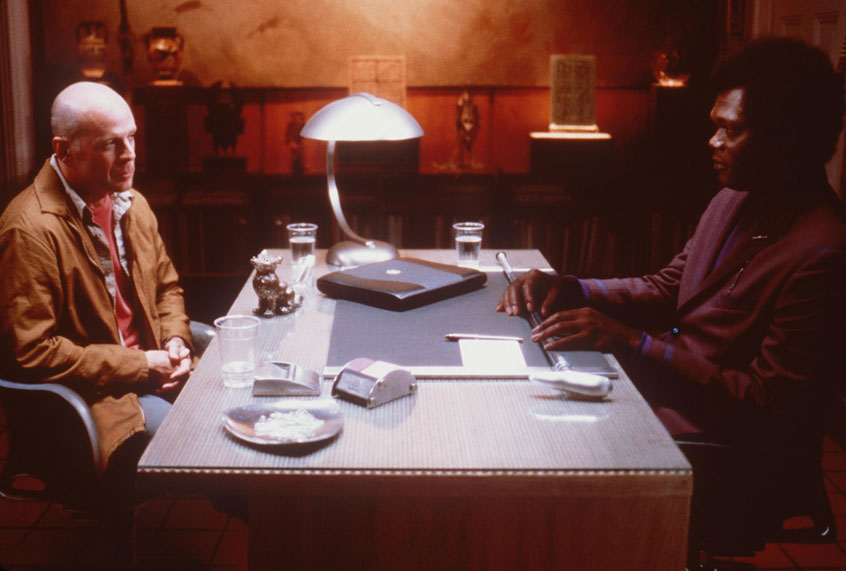
Bruce Willis and Samuel L. Jackson in "Unbreakable"Bruce Willis and Samuel L. Jackson in "Unbreakable" (Getty Images)Audiences are programmed to see abled actors as wheelchair users far more than actual disabled people. “Representation for authentically disabled people is already quite minimal, so to have the opportunity and make a point of it, especially in a huge project that’s beloved by so many people, that’s incredibly important, especially in terms of sending a message to other projects that it’s possible to include disabled people in your casts,” said Bode in that same LA Times interview.
The lack of disabled characters of color is something Hollywood is still grappling with. The most famous Black wheelchair user in movies is Samuel L. Jackson’s Mr. Glass in “Unbreakable,” and there’s even less history regarding disabled women of color. Much like the stats regarding how many disabled characters are white, white women tend to be the only ones cast in disabled female roles, from Susan Peters (one of the few truly disabled women of the Old Hollywood era) in 1948’s “Sign of the Ram,” Fiona Dourif in “Curse of Chucky” or Jane Wyman in “Johnny Belinda.” Most often you see disabled women in romantic films, with the story’s focus on how an abled man will find the ability to love a woman with a disability. You can see that play out in films like “Children of a Lesser God” or “Magnificent Obsession.” 

Because disability is already such a stark identifier for a character, part of why we don’t see disabled women of color focused on is the idea that audiences won’t be able to identify with too much intersectionality at once. A character can be a woman. She can be disabled. She can be a woman of color. But add all that together and the screenwriter might not be able to prioritize how a disabled woman of color navigates the world, let alone if the person writing the script doesn't share any of those identities.

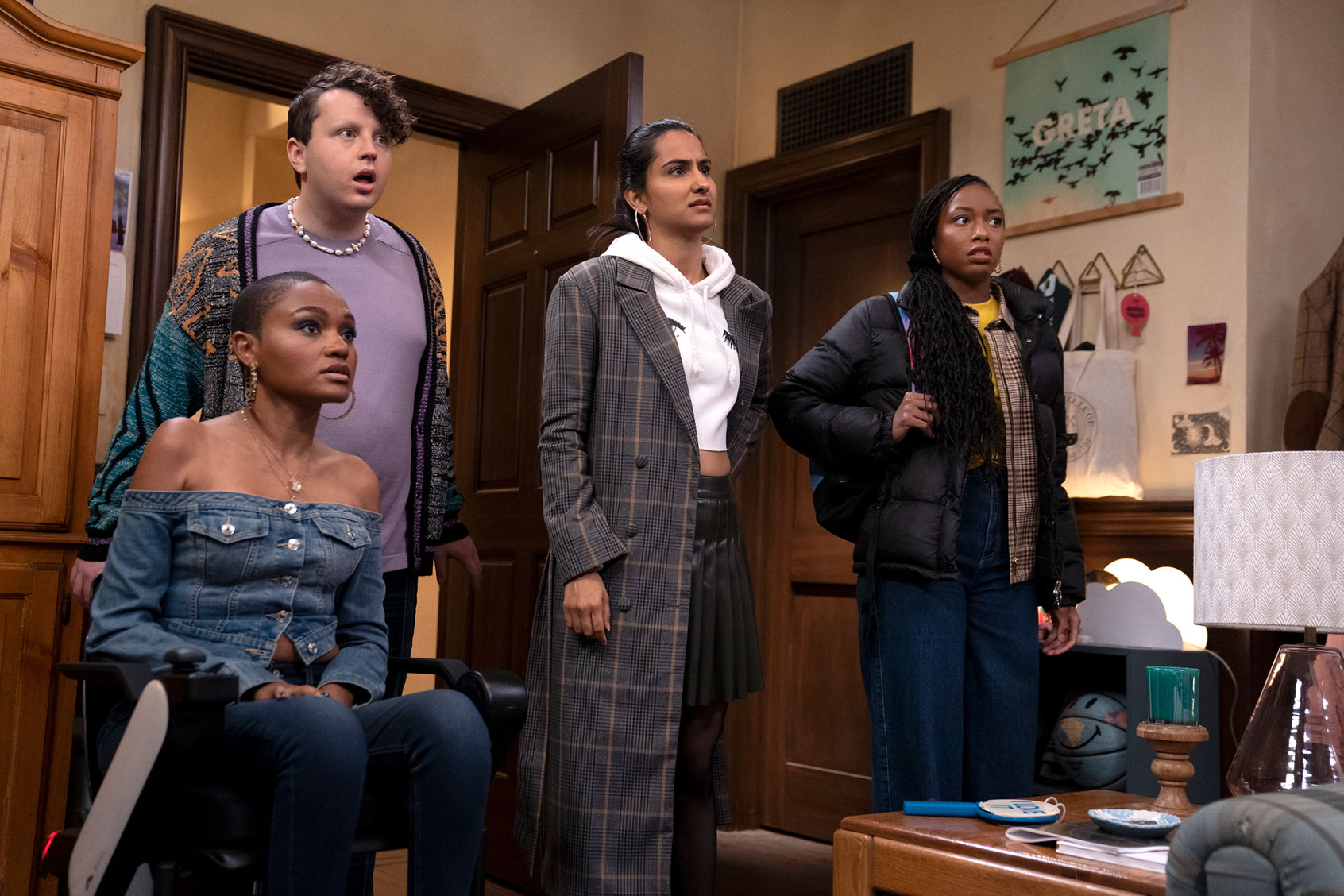
Movies made in the 1930s and 1940s often crafted disabled women to be barren and lonely because the science at the time implied that disability was not a mark of health, certainly not something that needed to be reproduced and passed on to future generations. Concurrently, movies focused on white stories to avoid anti-miscegenation laws, not to mention white performers were seen as more bankable, especially to white audiences. All of this has left disabled women of color far behind their white counterparts onscreen. And today, it's still rare to see a Black woman in a wheelchair in a role. Outside of Bode, one might also think of Lolo Spencer in “The Sex Lives of College Girls.” 

Sex Lives of College GirlsAmrit Kaur, Alyah Chanelle Scott, Lauren "Lolo" Spencer in "Sex Lives of College Girls" (Max)Therefore, watching Bode’s Nessarose have desires for someone, in this case Munchkin resident Boq, is a familiar disabled stereotype, but it freshens things up. Seeing Boq wrestle with his feelings for Nessa, and the belief that she could have that love reciprocated, again is unique considering how that is usually always prioritized for white women in disabled narratives.
Movies made in the 1930s and 1940s often crafted disabled women to be barren and lonely.

However, questions remain about how the movie will combat the ableistic plot twists of the stage musical, from Nessarose becoming a villain to receiving a “magic” cure. Other movies have done similar things, the aforementioned Mr. Glass in “Unbreakable” becomes a wheelchair-using comic book villain, while the magic cure is used in films from “Forrest Gump” to “Nightmare on Elm Street: Dream Warriors.” The reason why this remains an outdated stereotype is the presumption from able-bodied creatives that disabled people all want to be cured. That their only problem in life is their disability, and that to eliminate that is to make them perfect people. The movie to send it up the best was this year’s “A Different Man,” which emphasized that a cure might make disability go away, but it can never change a person’s personality. 

This doesn’t mean creatives shouldn’t work harder to cast disabled actors or that disabled actors should only be seen in movies about disability. Things could completely fall apart with “Wicked: Part 2.” However – and it’s a big however – the story of disability in film is perpetually one of two steps forward, one step back, and Nessarose in “Part 1” is definitely a great leap forward. Bode being authentically cast and placed in a world of acceptance and inclusivity no doubt will inspire generations. It shows that there is a possibility for disabled people to defy gravity in their own way.

“This is genocide”: Amnesty International says Israel is trying to “destroy” the Palestinian people

Amnesty International said in a report published Wednesday that Israel is committing acts of genocide against Palestinians, accusing the government of Prime Minister Benjamin Netanyahu of treating people in Gaza as a "subhuman group unworthy of human rights and dignity" and "demonstrating its intent to physically destroy them."

In the 296-page document, the human rights group details military and political decisions by Israel that have caused mass death, injury and destruction, from the relentless bombardment of civilian populations to the imposition of a siege that has cut off humanitarian access to Gaza. The totality of Israel's actions, Amnesty said, proves that it is "deliberately inflicting on Palestinians in Gaza conditions of life calculated to bring about their physical destruction."

“Our damning findings must serve as a wake-up call to the international community: this is genocide. It must stop now," Amnesty concluded.

Since Oct. 7, 2023, Israeli forces have killed at least 45,000 Palestinians, including entire multi-generational families, children and prisoners held and tortured in Israeli detention. 1.9 million more people — 90% of Gaza's population — have been displaced, often multiple times, while deliberate or indiscriminate Israeli attacks have all but destroyed the civilian infrastructure, including apartments, hospitals, kitchens, schools and water plants. Much of Gaza is now uninhabitable and on the brink of famine.

Israel, which called the Amnesty report "baseless," has claimed that the war is an act of self-defense after Hamas killed 1,200 of its citizens in a surprise attack last year. But Amnesty said that Israel's stated war aims do not preclude nor justify acts of genocide, as "genocidal intent can co-exist alongside military goals and does not need to be Israel’s sole intent." Furthermore, the report found no evidence that Israeli strikes "designed to cause a very high number of fatalities and injuries among the civilian population" are directed at any military objective, nor that there is any military purpose to Israel's "extreme and deliberate" restrictions on humanitarian aid.

In addition to interviewing 212 people on the ground, conducting fieldwork and analyzing visual and digital evidence to compile its report, Amnesty reviewed 102 statements issued by Israeli officials and personnel that they concluded were direct evidence of genocidal intent, including calls to "erase" Gaza and instigate a "second Nakba", invocations from scripture to wreak extermination, celebrations of death and destruction, and holding the "entire nation" of Palestine responsible for the Hamas attacks. 

Against findings like this, Israel has always insisted that it is scrupulously following international law. The International Criminal Court disagreed, issuing arrest warrants for Netanyahu and his former defense minister, Yoav Gallant, earlier this month for committing war crimes and crimes against humanity.

President Joe Biden has called the warrants "outrageous" and continued to provide Israel with billions of dollars' worth of weapons, despite Netanyahu repeatedly ignoring the supposed red lines set by his administration. Amnesty's report accuses the United States, Canada, Germany and other Israeli arms suppliers of being complicit in the genocide, calling on them to "act now to bring Israel’s atrocities against Palestinians in Gaza to an immediate end.”

Assassin wrote “deny” and “depose” on bullets used in killing of UnitedHealthcare CEO, police say

Shell casings found at the site where a masked gunman shot and killed UnitedHealthcare CEO Brian Thompson had the words "deny," "defend" and "depose" scrawled on them, a senior New York City law enforcement official briefed on the investigation told NBC News on Thursday. The presence of the words was first reported by ABC News.

Thompson, 50, was killed after being hit by at least three shots outside the New York Hilton Midtown early on Wednesday while on his way to speak at UnitedHealth Group's investor conference. NYPD Commissioner Jessica Tisch said the "brazen, targeted attack" was "premeditated," but police have said the motive remains unknown. The gunman is still at large.

A security video shows Thompson in a blue suit walking down the street before the suspect approaches from behind, firing from his gun. Thompson stumbled forward as a witness fled behind the gunman. The suspect continued to shoot Thompson as he fell to the ground, appearing to clear a jam in his gun between shots.

Former FBI supervisor Rob D’Amico told NBC News that the shooting has the markings of a personal vendetta tied to United Healthcare, which provides health insurance to millions of Americans. Thompson had been receiving threats, but nevertheless did not use a security detail.

“There had been some threats,” Thompson’s wife, Paulette, told NBC News. "I don’t know details. I just know that he said there were some people that had been threatening him.”

Yes, Joe should pardon them all — Trump included

The storm is rising.

Lost in the anger, frustration, bitterness, hopelessness, rhetoric and potential violence, as well as  the existential angst of the last few weeks, is the reality that the recent election is an accurate reflection of who we are. It may not be who many of us want to be, but for more than 75 million Americans, it definitely is.

Those people support Donald Trump. Donald Trump is on a “revenge tour,” and his supporters are squealing with delight as he conducts it.

They look at Joe Biden pardoning his son Hunter for his convicted crime, for others he may have committed, and perhaps also for those not committed or at least not charged, as a war against them — confirmation that Biden thinks he is above the law and Trump is a victim of a weaponized justice system and the “deep state.”

Incapable of nuanced thought, let alone any understanding of hypocrisy, millions who didn’t blink an eye when Trump pardoned Charles Kushner, or any of the other miscreants he pardoned at the end of his first term, are contorting themselves into fits of rage. Marjorie Taylor Greene seems to be suspiciously focused on nude pictures.

Democrats have gone after Biden as well. Pundits have jumped on board. Jeffrey Toobin, the disgraced CNN contributor who got caught in an act of self-flagellation during a video conference call, penned an opinion piece for the New York Times claiming that Biden had “dishonored” the presidency by pardoning his son. Others have called it an act of nepotism, evidence of the “Biden crime family” running amok, and so on. Soon they might get blamed for genital warts.

Let’s break it down. First, Toobin has no credibility and it is laughable for him to offer an opinion on “dishonor” — and it’s further evidence of the wooden ear and irrelevance of the New York Times that it decided to print such balderdash.

Hunter Biden’s tale is an American tragedy worthy of Hemingway or Elmore Leonard. He has suffered from depression and drug addiction. He bought a gun by lying on a government form, and because of his last name was pursued, caught, charged and convicted.

He never used it in any fashion, but was prosecuted for purchasing it. 

The facts show that his situation — that is, lying on the form — is so common among gun buyers that they are almost never pursued by law enforcement for doing so. “The courts would be backed up by decades” if officials tried to prosecute that offense, a D.C. federal prosecutor told me.

But because of Hunter Biden’s last name, he was pursued, caught, charged, tried and convicted. Republicans wanted much more, of course, and tried to link him to all sorts of other crimes by way of a misplaced laptop that became a meme all by itself. That didn’t work, so they had to settle for the gun violation. That was odd, considering the GOP stance on guns, which amounts to “buy one get one free.” Perhaps even stranger was Marjorie Taylor Greene’s aforementioned obsession with displaying poster-sized photos of Hunter in various stages of undress on the floor of Congress. “She has an unhealthy and possibly sexual obsession with him,” an aide to Sen. Mitch McConnell told me with a straight face.

Earlier this year, President Biden said he wouldn’t pardon his son for the crime. Then the Democrats booted him from the presidential race and installed as a candidate the same vice president who,  months earlier, party leaders had privately said should be removed from the ticket. We know how that turned out. Trump won and began nominating people like Kash Patel and Pete Hegseth to head up his administration and lead his all-expenses-paid revenge tour. You have to hand it to Trump for his diversity in hiring: billionaires, personal attorneys, sycophants and Fox News entertainers are all represented.

The vow to take down the Bidens, the deep state and the “fake news” media, along with all the screams about retribution from Trump’s nominees, sparked a change of heart in the president. So he protected his son by pardoning him.

Well, what father wouldn’t do that? Hell, Trump pardoned Charles Kushner, his son-in-law’s father, who Chris Christie said had committed one of the most disgusting crimes he’d ever prosecuted. At least Biden didn’t nominate Hunter as the ambassador to France. Trump handed that job to the senior Kushner, a move widely believed to be a giant middle finger in the face of French President Emmanuel Macron, who Trump believes insulted him in 2019.

We need your help to stay independent

Biden opened himself up to charges of hypocrisy by pardoning his son after insisting he wouldn’t. Furthermore, he did it almost as an aside over a holiday weekend and did it so quietly it seemed like he had something to hide. Once again, Biden reminded us why he wasn’t the Democratic nominee this year — and why the Democrats lost the election. 

They simply cannot communicate — and when they do, they screw it up royally.

Biden should have kept his mouth shut about his intention not to pardon Hunter. Then he should have said, “Damn right I’m pardoning him — and I’m pardoning everyone else who might be targeted in Trump’s revenge tour.”

According to at least one man, that wouldn’t have been enough. John W. Dean, Richard Nixon’s  onetime White House counsel, who testified against his boss during the Watergate hearings, suggested Biden “should keep going,” posting on Bluesky that the president should pardon Trump himself, along with Jack Smith, Robert Mueller and a bunch of other people, thereby taking “the wind out of retribution/revenge.” 

Biden should keep going with his pardons: Trump, Jack Smith & team, Mueller & team, and a blanket pardon for all on Trump’s enemies list for any and all political statements before December 25, 2024! Merry Christmas:-). Take the wind out of retribution/revenge!

— John W Dean (@johnwdean.bsky.social) December 1, 2024 at 9:37 PM

In a podcast appearance, Dean explained his idea further: By pardoning Trump, he said, “Biden gains the upper hand and takes away the argument that Trump will make — accusing Biden of weaponizing the DOJ against him.”

It’s kind of like doing a hard reboot of your computer: Unplug it, plug it back in and see if it works any better.

Furthermore, if Trump then decides to go after Biden or anyone else he “exposes himself as a real a**hole,” Dean continued. Personally, I think that’s already been proven, but to Dean’s point, nothing sells like repeating the message over and over again — just ask Trump.


Want a daily wrap-up of all the news and commentary Salon has to offer? Subscribe to our morning newsletter, Crash Course.


Former Republican congressman Joe Walsh, who campaigned extensively for Kamala Harris this year, takes a different view: He was among those unhappy with the pardon. 

“Yes, I think it was wrong for Biden to pardon his son,” Walsh said. “But it’s way more wrong that we don’t hold Trump to any standard at all. Biden pardons his son and the world screams. Trump lies as he breathes, abuses the powers of his office, obstructs justice left and right, threatens to go after his political opponents, incites violence, tries to overthrow an election — his supporters cheer, and the rest of the world yawns. We treat Trump like a spoiled child.”

Commentator Charlie Sykes posted that someone texted him that Biden’s pardon was a huge mistake: “Joe Biden has just removed the issue of pardons from the political arena for the next four years and Trump probably once again can’t believe his own dumb f**king luck at this point.” 

“Trump has always believed he’s above the law, and has always acted like he’s above the law,” said Walsh. “By pardoning Hunter, Joe Biden took that ‘no one is above the law’ card that we all pounded Trump with off the table, and handed Trump a big victory.”

As I see it, the Biden pardon is far more nuanced than that. 

Logically, you may ask whether the ends justify the means. When filtered through that lens, and using the Constitution as your guide, then the answer is a resounding “no.” You’ll see the Biden pardon as a political figure putting his family above the law.

Joe Biden should have kept his mouth shut about Hunter, and then said, "Damn right I’m pardoning him — and everyone else who might be targeted in Trump’s revenge tour."

Thinking that way fails to understand the context. Donald Trump already jettisoned the Constitution in his last administration, the Supreme Court has given him unlimited immunity for all “official actions,” and our democracy  no longer exists in practice. Viewed in that light, Biden’s actions simply underscore the fact we must all confront: Democracy is toast and we might be down to “every man for himself.”

Dean disagrees on that point. He believes our democracy has been weakened and is being tested by Trump, and we must move past him. Walsh too still has hope we can save our “fragile” democracy but says, “We have to hold Trump accountable.”

At the end of the day, no matter how much the Republicans lower the bar, Democrats cannot seem to crawl over it. John Adams was right about the dangers of political parties.

As the old curse has it, we are living in interesting times, made more interesting by Biden’s inability to connect with millions of Americans who — if spoken to plainly and directly — would probably empathize with his decision.

Biden’s pardon  is entirely justified from the standpoint of straight-up survival. But very few of us are in position to be pardoned by our dad — a big reason for the anger.  Still, don't think for a minute that Trump will look at the pardon and somehow be goaded into doing the same thing. He’s already done it. Biden didn’t give him free rein. Trump gave that to himself long ago. Biden is following Trump’s lead, not the other way around. 

So while I think Joe Walsh is right, so is John Dean. 

Want to make it more difficult for Trump? OK then: Pardon everybody, including him. Let’s start over. Hit the reset button. Call it a draw. Give democracy a chance. 

As Dean pointed out, the American people have already pardoned Trump when they elected him as president a second time. So let’s make it official and find out what Trump does in response. That will certainly make things interesting — including the midterm elections. 

Still, I doubt Biden will do it. 

Democrats may have poor communication skills, but they’re even worse at playing political chess. They’re so bad at it that a man convicted of multiple felonies is beating them, by playing checkers.

“A chilling effect”: Research finds governments across the globe are cracking down on free speech

New research has found that the most significant violation of civic freedoms in 2024 occurred in occupied Palestinian territories or was perpetrated against those in solidarity with the Palestinian people.

In its annual global report, “People Power Under Attack 2024,” CIVICUS Monitor, a global research partnership that assesses the state of civic space worldwide, identified the most common forms of repression against the right to protest, the right to free speech and the defense of human rights and the environment in 198 different countries. It found a widespread assault on democratic freedoms, with 70% the world’s population living in countries where their civic freedoms are now heavily restricted. 

"It's quite shocking that the majority of the world's population are living in countries where they are denied agency to shape the decisions impacting their lives," Mandeep Tiwana, co-secretary general of CIVICUS, said in an interview with Salon. “Many of these restrictions on the right to peaceful protest or the right to protest in solidarity with Palestinian people have happened in countries with very strong democratic traditions."

“Civic space," he added, "is a bedrock of democratic societies and without [it] people are not able to have the agency to shape the decisions that impact their lives."

Nearly 10% of so-called civic space violations documented worldwide occurred in occupied Palestinian territories or against those protesting Israel’s actions. In the United States, 3,200 students were arrested or detained by police for peacefully protesting Israel’s invasion of Gaza following the Oct. 7, 2023, Hamas terror attack, the report found. In the Netherlands, police deployed batons and tear gas on pro-Palestinian protestors, while in Canada it is now forbidden to wear a keffiyeh in Ontario’s legislative assembly.

In Israel, the government has severely restricted the right to protest its occupation of Palestine “through the disproportionate use of force and arbitrary arrests,” the report found. The country moved from “repressed” to “closed” on CIVICUS’ scale, marking a complete closure of civic space both legally and in practice.

“The civic space in the occupied Palestinian territory is passing through an unprecedented time. It is subjected simultaneously to the Israeli occupation, to apartheid policies, and to continued occupation and genocide,” Amjad Al Shawa, director of the Palestinian NGO Network, said in a statement. “But it's also under constant surveillance by the Israeli legislative, executive, and judiciary branches, and abandoned by the silence of the international community."

The CIVICUS report labels the civic spaces of 198 countries with one of five categories: open, narrowed, obstructed, repressed or closed. That's based on examining policies related to “freedoms of association, expression and peaceful assembly and the state’s duty to protect these fundamental freedoms."

Only 40 out of 198 countries scored an "open" civic space rating, meaning there is little to no restriction on civic participation and freedom. Some 81 countries were ranked in the worst two categories, with over 30% of the population living in nations where civic space is entirely “closed.” These countries include Russia, Palestine, Ethiopia, Venezuela, Afghanistan and China,.

The most prevalent violation of civic freedom was the widespread detention of protestors, the report found. 

When people are denied the ability to speak out against policies that harm them, Tiwana said, it "means that people are unable to seek transformative changes in societies whether it's for gender justice or to advance the rights of excluded minorities, or they are unable to uncover corruption."

In Bangladesh, more than 1,000 people were killed in anti-government demonstrations last July that did eventually result in the resignation of Prime Minister Sheikh Hasina. In Kenya, police abducted, arrested and tortured those who protested the anti-finance bill, which would raise taxes on essential goods and services to meet revenue targets set by the International Monetary Fund (IMF), according to Human Rights Watch. In February alone, over 1,300 Extinction Rebellion protestors were arrested in the Netherlands for blocking roads in Amsterdam and The Hague. 

Attacks on journalists and repression of media was the second most prevalent violation of civic freedom, CIVICUS found. At least 49 countries saw attacks on journalists from both state and non-state actors, many of which were on journalists covering elections.

We need your help to stay independent

“Governments used a range of tactics to silence critical and dissenting voices, including arbitrary detention, threats, and physical assaults. In many instances, these actions created a chilling effect, discouraging free speech and independent journalism,” the report found. 

Journalists were detained in at least 58 countries and killed in Bangladesh, the Democratic Republic of Congo, Honduras, Lesotho, Mexico, Myanmar. Over 137 Palestinian journalists have been killed by Israel in the last year, according to the Committee to Protect Journalists.

The report also found that violence against environmental protestors and land defenders was rampant in 2024 as calls for climate action increased worldwide. Latin America remains the most dangerous region in the world to defend land and the environment, particularly Brazil, Ecuador, Mexico, Colombia, Paraguay and Peru. 

The violent repression of land defenders has become a prominent issue in the last decade. From 2012 to 2023, more than 2,100 environmental defenders were killed, with 196 of those killings occurring in 2023 alone, according to Global Witness. Indigenous peoples and people of African descent are disproportionately targeted and account for nearly half of total murders. 

While it may be on a less extreme scale, climate protestors in Europe and North America also faced state repression this year, the report found. Activists have been targeted in Austria, France and Italy; in the U.K., five Just Stop Oil activists received lengthy prison sentences for planning to block a roadway. In Canada, Indigenous land defenders were convicted for protesting against the Coastal GasLink pipeline. 

Despite the grim tally, Tiwana said some countries did take steps forward in protecting civic freedom and human rights this year. Japan, Slovenia, Jamaica and Trinidad and Tobago all moved from narrowed to open on CIVICUS’ rating scale, while Bangladesh moved from closed to repressed. 

There have been particular advances when it comes to gender-based violence and LGBTQ+ rights, Tiwana explained. In Poland, civil organizing helped reverse a law that required prescription for birth control. Greece became the first Christian orthodox country to legalize same sex marriage and Thailand passed a monumental marriage equality bill.

Such steady progress should be the standard, Tiwana said.

"What we really expect governments to do, especially democratic governments, is to champion democratic values and ensure that civic space is protected," he said.

Trump wanted to build an anti-#MeToo Cabinet — but it’s backfiring badly

While this was never explicitly stated, one of Donald Trump's most obvious campaign promises to his mostly-male fan base was that he could bring American women to heel. From threats to "protect" women "whether the women like it or not" to his tour of "manosphere" podcasts to bemoaning the supposed victimization of convicted rapist Harvey Weinstein, the message of Trump '24 was simple: In his presidency, women will shut up and make you a sandwich. Like most Trump promises, whether spoken out loud or just implied, it was a lie. But as soon as he won the election, Trump tried to create the appearance of a new era of misogynist triumph by nominating Cabinet members credibly accused of rape and other forms of sexual misconduct. 

Rep. Matt Gaetz was nominated as attorney general, despite a federal investigation into allegations of sex trafficking. Robert F. Kennedy Jr. is still up to lead Health and Human Services, despite evidence that he once sexually assaulted a babysitter. Billionaire donor Elon Musk got a presidential advisory committee, despite multiple accusations of sexual harassment. Former World Wrestling Entertainment CEO Linda McMahon was picked for education secretary, despite accusations that she ignored the sexual abuse of minors who worked as "ring boys" at WWE events. 

The case that's currently dominating the news cycle, however, is that of Pete Hegseth. Trump, in maximum-troll mode, selected this Fox News pretty boy to run the Defense Department, the nation's largest employer, with nearly 3.5 million enlisted and civilian personnel. It was swiftly revealed that Hegseth had settled out of court with a woman who accused him of rape in 2017. In recent days, we've learned about repeated adulteries, sexual harassment at his veterans' organization, and a 2018 letter from his mother accusing him of being an "abuser of women."  As I reported on Monday, Hegseth, who is now on his third marriage, belongs to a Christian nationalist church that preaches an extreme form of female submission. 


Want more Amanda Marcotte on politics? Subscribe to her newsletter Standing Room Only.


As Leigh Gilmore, the author of “The #MeToo Effect: What Happens When We Believe Women," told the New York Times, this kind of backstory is "appealing" to Trump, because "it normalizes his own behavior." Trump has been accused of sexual abuse or harassment by more than two dozen women, and was found liable for sexual assault in a civil trial last year. He almost certainly thinks that nominating someone like Hegseth is a winner with much of his base, especially the loud online contingent of men who constantly gripe about feminism. But this pro-creep agenda has already begun to backfire on Trump, weakening him politically weeks before he's even sworn into office. 

Gaetz's nomination barely lasted a week before he was forced to withdraw. Although his swift resignation from Congress gave Republicans an excuse not to release a House ethics report on the sex trafficking allegations, details leaked out, including multiple eyewitness accounts that Gaetz allegedly had sex with a 17-year-old during an orgy. As I write this, Hegseth is still up for the Pentagon job, but reports are swirling that Senate Republicans are putting pressure on Trump not to make them vote on his confirmation. The Washington Post reports that Trump is interviewing potential replacements, including Florida Gov. Ron DeSantis. It's grown so dire for Hegseth that his team trotted his mother out on Fox News for a humiliating display, in which she claimed she didn't mean all those things she said in 2018, even though her accusations appear to be corroborated by numerous other sources. 

The pushback from Senate Republicans is growing louder, though most of them are still giant cowards who funnel their concerns through Democrats. Sen. Richard Blumenthal, D-Conn., told reporters Wednesday that five to 10 Republicans are holding out and said, "I'd be surprised if we’re still talking about Pete Hegseth on Monday." That is definitely not pleasing to Trump, who prefers it when Republicans are loudly slobbering on his boots and swearing eternal devotion. Trump wants to rule by fear but understands that approach has limits, as he demonstrated by dumping Gaetz barely a week after nominating him.

Some Trump opponents have worried that Gaetz was a "sacrificial lamb" and that Senate Republicans wouldn't press their luck by challenging other nominees. But the clamor over Hegseth on Capitol Hill suggests the opposite: Republicans know that Trump is deeply afraid of being seen as a loser, which means he can be manipulated: The best way to save face and avoid public humiliation is to withdraw these patently terrible nominees before they face a confirmation hearing. 

Hegseth certainly seems to believe his nomination is on the rocks, and not in a "10th whiskey at a Louisiana strip club" way. He went on Megyn Kelly's hyper-MAGA show Wednesday to plead his case, insisting that he's being "Kavanaughed," a reference to the contentious 2018 confirmation hearing of Supreme Court Justice Brett Kavanaugh, who was accused of an attempted rape decades earlier

Pete Hegseth tells Megyn Kelly that he's being "Kavanaughed" and says the allegations against him are "made up" (is he talking about the rape allegation he paid a settlement to hush up, or the email his mom wrote calling him out for his abusing behavior, or … )

[image or embed]

— Aaron Rupar (@atrupar.com) December 4, 2024 at 1:07 PM

That's likely smart politics from Hegseth, because Trump clearly believes that pushing Kavanaugh onto the court, despite the fact that most Americans believed the allegation, was one of his greatest political triumphs. But Hegseth also talked out of both sides of his mouth, claiming, on one hand, that the poorly defined allegations against him are "made up" while also admitting to "kernels of truth." That gets at the heart of why the Kavanaugh hearings have become heroic mythology in the MAGA world. The Trumpist anger isn't over "false" accusations — it's anger that women have any right to make accusations, regardless of the truth. To complain about being "Kavanaughed" is to express outrage that women are allowed to speak up at all. 

We need your help to stay independent

That message no doubt resonates with Trump, who has played similar games around his own levels of guilt. For instance, he has denied that he sexually assaulted E. Jean Carroll but then blamed her for the attack, saying, "What kind of a woman meets somebody and brings them up and within minutes you're playing hanky-panky in a dressing room?" During both his deposition for the Carroll trial and a later CNN interview, he said that men have "fortunately" been entitled to assault women for all of history. Of course, he famously bragged about sexual assault on the "Access Hollywood" tape, saying he grabs women by the genitals and being a celebrity means they "let you do it." 

But Trump's affection for men who've been similarly accused directly conflicts with his desire to seem like an all-powerful leader presiding over the adoring, obedient Republican masses. Nominating a cast of unqualified clowns to the Cabinet and other serious positions was no doubt meant as a flex, showing that no matter how much manure he dishes out, Republicans will swallow it. Instead it's backfiring, creating media spectacles of Senate resistance that make him look weak and sowing discord and animosity — yes, even within his subservient party — before he enters office. As the recently failed military coup in South Korea shows, authoritarians want to believe that shock-and-awe tactics work best, but they can be risky endeavors that blow up in the leader's face.  

Trump may have thought that nominating so many people with #MeToo problems would successfully squash a movement that led to him losing a dramatic court case to one of his accusers. Instead, he demonstrated why #MeToo still has power. In the abstract, it's easy to recite mindless clichés about the "woke mob" and feminists who go "too far." But when the actual details come out, they tend to have a sobering effect. It's almost never about some oversensitive brat misreading a man's innocent flirting. Instead, it may be police reports of bruises on a woman's legs, witnesses who report a girl was only 17 or Carroll telling a jury she was so traumatized by Trump's assault that she gave up dating permanently. In trying to dominate women into silence, Trump is reminding everyone that their voices still have power. 

A fisherwoman took on Big Plastic and won. Here’s her advice on defending the environment from Trump

Before Robert F. Kennedy Jr. became a top science adviser to Donald Trump — a once-and-future president who openly denies environmental science — the dynastic New York lawyer was such a prominent environmentalist that he literally became a “waterkeeper,” someone dedicated to conserving natural bodies of water from pollution. For more than 20 years, Kennedy helped lead the “Waterkeeper Alliance” he co-founded until leaving in 2020 to "devote himself” to vaguely defined “other issues.” That story ended, as the world now knows, with Kennedy launching a third-party 2024 presidential bid before dropping out at a critical moment to endorse Trump.

One of Kennedy’s fellow waterkeepers, Diane Wilson, 76, remembers the evolution in Kennedy’s personality as he shifted from environmentalist to conspiracy theorist and Trump supporter. In 2019, she won a $50 million lawsuit against a Taiwanese plastics company called Formosa Plastics Corporation, Waterkeeper v. Formosa, and Kennedy reached out to congratulate her and to offer his future support.

“Bobby called me a number of times when I won that, and he told me how much he liked and admired me,” Wilson told Salon. As Kennedy began to move to the right, however, his personality changed. “Not too long ago, but before he went over to Trump, he called me up in the middle of the night. I was asleep, it was like midnight here, and he asked me if I would be an elector [for the Electoral College] and said he needed someone he could trust. He did that twice in the middle of the night.”

Wilson said yes because she believed in Kennedy’s passion for the environment, and Kennedy later said he would look for a lawyer to help her in a New Jersey case where she and three others had been arrested for blocking Formosa Plastics Corporation entrance gates.

“He said give him two weeks,” Wilson said. “He never called back.” Later he endorsed Trump. (Kennedy did not respond to Salon’s requests for comment.)

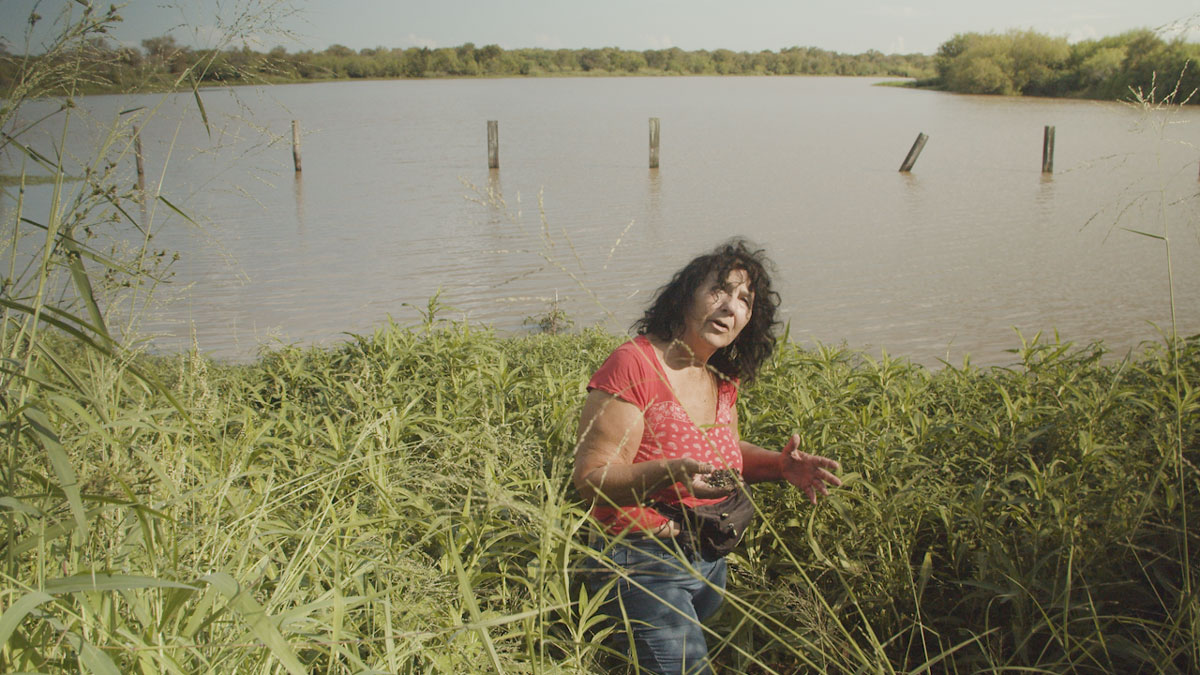
Diane Wilson finding plastic pellets outside FormosaDiane Wilson finding plastic pellets outside Formosa (Uriah Herr)Now the original so-called “waterkeeper” is preparing to work for a president who plans on gutting the Environmental Protection Agency (EPA). As millions of Americans despair for Earth’s future, Wilson has advice for those who still want to protect the planet: If people have the confidence and work ethic to educate themselves with reliable scientific sources, and also possess faith that even the most conservative Trump supporters can change their minds, they will make a meaningful difference.

She speaks from experience. That is how Wilson held Formosa Plastics Corporation accountable for polluting the bay in her multigenerational Texas community, Calhoun County, with a population under 20,000. Unlike Kennedy, Wilson undertook her crusade without the advantages of inherited wealth. She is a fourth-generation fisherwoman, one whose skills as a shrimp boat captain were so undeniable that she became indispensable in an industry filled with casual sexism. Wilson has a track record of taking on powerful polluters and winning. In 1994, she successfully advocated for “zero discharge” agreements from Formosa and the aluminum manufacturer Alcoa to stop liquid effluent pollution. She was also prominently involved in protests for victims of the 2010 Deepwater Horizon oil spill and the 1984 Union Carbide leak.

In 2019 a U.S. district judge found Formosa’s irresponsible practices violated the Clean Water Act.

Even more impressively, she did all of these things with nothing but a high school education while living on $475 a month. Her most prized possessions seem to be her intellect and work ethic.

“I would get information,” Wilson recalled when discussing her work in Waterkeeper v. Formosa. Sometimes employees at Formosa gave her documents so she could figure out what was going on inside the plant. Other times she visited the bay and engaged in her own down-and-dirty research. Even though her obsession caused her to lose her job, her marriage, her house, her boat and many personal relationships, Wilson enthusiastically educated herself on chemistry, ecology and every other necessary branch of science. She was similarly energetic in learning about the law.

She found that plastics contain dangerous chemicals like ethylene chloride and vinyl chloride, which Formosa was leaking into the water. Plastics in general, Wilson discovered, contain toxins like phthalates and bisphenols, which can be dangerous when humans ingest them. They have been linked to diseases from cancer and respiratory diseases to infertility and yet, they are unavoidable, contaminating everything from air to water to food.


Want more health and science stories in your inbox? Subscribe to Salon's weekly newsletter Lab Notes.


Thanks to Wilson’s ground work, in 2019 a U.S. district judge found Formosa’s irresponsible practices violated the Clean Water Act. America’s most powerful bench deemed that Formosa had to improve its wastewater and stormwater discharge facilities, and the State of Texas had to create a Matagorda Bay Mitigation Trust to support environmental projects. The company was additionally required to pay $50 million to the community it had polluted.

Wilson achieved all of this first by learning science from reliable sources. Her approach was best embodied by her work collecting thousands of plastic pellets in the bay that had been dumped there by Formosa. She did it one at a time, patiently, and fact-checking her work every step of the way.

“I got as close to the real events that were happening as possible,” Wilson said. “If you're looking for scientific stuff, you go to the studies. You read the studies. You don’t just take an article and read that. You go to the primary sources.” Once she had all of the evidence she needed, she filed a citizen’s clean water suit. Between the thousands of samples and the airtight legal case, Wilson prevailed.

Formosa Plastics plant in Point Comfort, TX Formosa Plastics plant in Point Comfort, TX (Uriah Herr)Wilson was able to protect her community, but in the larger scheme, the world is overrun with pollution. These problems must be fixed on a global level, not a local one. That is daunting — but director Fax Bahr and producer C.C. Goldwater, who are in post-production on a documentary about Wilson’s life called “Waterkeeper,” believe spreading her message will help. All three have the chops to make it happen: Wilson has already been the subject of a 2005 documentary about her early environmentalist work, “Texas Gold.” Bahr co-directed the acclaimed 1991 documentary “Hearts of Darkness: A Filmmaker’s Apocalypse” about the creation of the 1979 movie “Apocalypse Now.” Finally Goldwater famously produced the 2006 documentary “Mr. Conservative” about her grandfather, Senator Barry Goldwater of Arizona, the Republican presidential nominee in 1964 and the widely acknowledged founding father of modern American conservatism.

Bahr, Goldwater and Wilson have already found people willing to help with their new project.

“We had reluctance from a lot of people when we went out for financing, so we really pulled up our boots strings and did it on our own,” Goldwater said. “Then we had a lot of gracious people that gave us money.”

Bahr added that, because they are “beholden to no one,” they do not fear retaliation. They can share this story without being restrained by backers.

“We're going to take this thing out into the community,” Bahr promised. “We're going to show this film at community screenings. We're going to have Diane speak, if she's got the bandwidth to do it. It's community organizing.”

People who experience hardships due to pollution will ultimately stand by their community, even if they stubbornly stick to their political convictions.

In addition to raising the film’s profile, however, the biggest challenge facing the makers of “Waterkeeper” is that millions of people deny environmental science for political reasons. But Wilson believes, based on her experience winning the Formosa lawsuit, that many of these minds can be changed. Environmental activists just have to make it clear that conservatives don’t have to be “environmentalists” to support their causes. They simply need to share the same moral values.

“The workers that I work with, the fishermen that I work with, the ranchers that I work with, they are all Republicans,” Wilson said. “When I was talking to the workers who were out there helping me get the pellets out of the bay, they would say, ‘I’m no tree-hugger, but I care about the bay,’ or ‘I’m no tree-hugger, but I care about the children.’ I think the people on the bottom, there was a commonality with the bay and the children and their community.”

This does not mean people changed their minds politically; Calhoun County voted overwhelmingly for Trump in all three of his campaigns. Wilson admits to being frustrated by this, but points to the objective reality that many Trump supporters still supported her efforts to protect their natural resources. Some even joke about it.

“I’ve got a guy who's helping me on a boat, and he takes me down the river and is checking out Dow Chemical,” Wilson said. “After a while he just turned around and said, ‘Diane, you're a Democrat. Get off my boat!’ It's a big joke, and then he just laughs. I know there is stuff out there in DC, and I just can't even imagine it. But in the work that I do, we do the work and we have a commonality.”

Extrapolated to the scale of national and international politics, Wilson anticipates the same result: People who experience hardships due to pollution will ultimately stand by their community, even if they stubbornly stick to their political convictions.

“They're living right next to that plant!” Wilson said, recalling the logic of her Trump-supporting friend. “They may be Republicans, but they're the ones who are suffering from all of the pollution that's coming out of there.”

It wasn’t just pollution that challenged Wilson. She overcame other obstacles, such as the multiple ways in which her sex was used against her. With the shrimp fishermen, she encountered sexism and was sometimes told having a woman on a boat was “bad luck,” but she eventually earned her colleagues’ respect by proving her aptitude. The misogyny she experienced when fighting Big Plastic, by contrast, was far more intense. She was called a lesbian, a whore, a bad mother, hysterical, a crazy woman.

“Oh God, they would call her ‘girl,’” Goldwater said, adding that class and education were also held against Wilson by her opponents. Amy Blanchett, a senior communications representative at Formosa Plastics, told Salon that the company "takes allegations of this nature very seriously, as they do not align with our values of professionalism, respect and integrity." They added that "to our knowledge, Formosa Plastics has never referred to Ms. Wilson in a derogatory manner, nor have we made any statements similar to those described in your inquiry." (Regarding the legacy of the 2019 lawsuit, Formosa Plastics referred Salon to a video claiming a commitment to environmental responsibility.)

If Wilson can defend the environment despite the odds stacked against her as an impoverished Texas fisherwoman, Goldwater and Bahr believe anyone can.

We need your help to stay independent

“That's really the whole reason for doing this film,” Bahr said. “I interviewed a bunch of Waterkeepers before choosing to go with Diane's story, and it's because with absolutely nothing, zero resources, a high school education, living on $475 bucks a month, she did it alone. She brought to account one of the largest petrochemical manufacturers on the planet.”

He added, “That's what people can do.”

The filmmakers hope that people who see or hear Wilson’s story will be inspired to be proactive in environmental issues in their own backyards. Producer C.C. Goldwater observed that Kennedy is proof of how people can evolve on these issues, albeit not always for the better. When editing a 2007 reedition of her grandfather’s famous 1960 manifesto, “The Conscience of a Conservative,” she included a Kennedy essay in which the then-Waterkeeper argued Republicans had become too extreme. Goldwater speculated that Kennedy may still recognize the importance of environmentalism, but in order to work with Trump is deliberately setting those values aside.

“I don't think that Bobby has gone away from being an environmentalist, I really don't,” Goldwater said. “But I think he's gotten off track a bit to go to the Republican Party with a president like we have.”

CORRECTION: A previous version of this article misattributed the court where Wilson won her case: It was a U.S. district court, not the Supreme Court. This article has been updated.

Top 5 questions about investing, retirement planning under Trump

As we await President-elect Donald Trump’s second term, speculation about his impact on our finances is rampant. Americans are trying to parse his rhetoric on the campaign trail with the realities of the government as they decide how to plan for their future.

Here are the top five questions I’ve received about how to invest amid another Trump presidency:

Will Congress make changes that affect retirement plans?

While it wasn’t a major topic in this election, Trump has said in the past he doesn’t support changes to the 401(k) retirement account, which is shaped by a tax deduction. The Republican platform for 2024 doesn’t propose any changes, either, so this won’t likely be a priority for the GOP-controlled Congress.

Experts, however, have speculated that tax-advantaged retirement accounts might become a target for countering the costs of extending tax cuts Trump signed in his first term. Congress could attempt to balance the budget by eliminating the 401(k) tax deduction or lowering the limit on the amount you can contribute and deduct for tax purposes.

Republicans have also shown antagonism toward ESG funds, which consider how environmental, social and governance factors impact a company’s profits. The Labor Department during Trump’s first term issued a rule that had a chilling effect on workplace retirement plans that included ESG funds, a limitation that’s proven costly for retirement account administrators. The rule was reversed under President Joe Biden, but Trump could reinstate it and have the support of a Republican-led Congress to enact legislation that limits ESG factors in investing beyond 401(k)s.

How will market performance impact retirement savings?

A surge in stock prices is typical after a presidential election, according to Goldman Sachs Research’s recent forecast. We saw that when the S&P 500 climbed to a record high on Nov. 6.

We need your help to stay independent

But the firm’s two-year forecast is otherwise unchanged by Trump’s election. It noted some sectors could see significant changes because of Trump's proposed tariffs, and you’ll probably see headlines about those moves.

But saving for retirement is a long-term plan, and experts perennially recommend holding steady with your savings plan regardless of what the market is doing in the short term. Don’t panic and make big investment decisions right now, because whatever might change in the next few years will likely recover over time.

If you’re planning to retire in the next few years, work with a financial planner to reduce risk in your portfolio and protect against any short-term market shifts.

What changes can we expect to Social Security?

Trump proposed some cuts to Social Security funding and benefits on the campaign trail, and he’s walked those back after discovering they were unpopular.

But his promises to eliminate taxes on Social Security benefits, tips and overtime to help pay for the program could end up costing more in the long run, according to the Committee for a Responsible Budget.

Is this a good time to invest in real estate?

Real estate brokers are largely looking forward to Trump’s proposed policy agenda. They expect real estate to remain a strong and reliable investment, whether you’re upgrading your home or purchasing investment property.

"With Trump’s focus on deregulation, we might see policies aimed at keeping interest rates competitive"

“With Trump’s focus on deregulation, we might see policies aimed at keeping interest rates competitive, which could benefit homebuyers and investors,” said Levi Rodgers, co-founder at VA Loan Network.

Experts note that potential deregulation in lending could make borrowing easier, but none expect to reach the levels of deregulation that contributed to the housing crash of 2008.

“We don’t seem to have any looming systemic risk like we had in 2008 and [Trump] seems to be set on easing geopolitical tension, which should lead to a healthy and sustainable housing market,” said Robert Washington, a five-year real estate broker and founder at Savvy Buyers Realty. “We also should consider that most of Trump’s wealth is tied to real estate, so it’s highly unlikely that he would implement policies that would work against his own bottom line.”

Trump’s proposed policies to drastically increase tariffs and begin mass deportation of undocumented immigrants, however, could work against those interests. Raul Gastesi of the Miami-based law firm Gastesi, Lopez and Mestre pointed out that tariffs would raise the cost of construction materials, and a reduced labor pool would drive up wages. Both would impact the cost of construction and, therefore, the cost of real estate.

“I would recommend looking into the cost of building materials now if you plan on upgrading your home, before any tariffs are imposed,” Gastesi said. “Lock in prices for either the purchase of a home or as many materials for your remodeling as possible.”

Can I divest from companies owned by Trump and supporters?

Some folks who didn’t support Trump’s reelection want to avoid further enabling the president-elect and those he’ll bring into power by keeping money out of their hands. At the top of the list, alongside Trump himself, are campaign surrogate and soon-to-be White House adviser Elon Musk, and Jeff Bezos, owner of the Washington Post who blocked the newspaper's endorsement of Vice President Kamala Harris.

All three own tech companies that are popular in the stock market right now: Trump’s Truth Social, Musk’s Tesla and Bezos’ Amazon. All three companies are listed on major stock indexes, which means you invest in them if you invest in a corresponding index fund.

You can divest by pulling your investments from those types of funds and developing a portfolio that’s in line with your values. This strategy could come with higher cost and more risk, though. Work with a fiduciary financial planner to ensure your long-term financial security remains a priority.

Volcanoes on Venus reveal the planet probably never had an ocean, dashing hopes for ancient life

Venus, the second planet from our Sun, vividly demonstrates why the greenhouse effect makes life impossible. With an average surface temperature of roughly 1000º F (500º C) under a toxic atmosphere primarily composed of thick carbon dioxide, no lifeform known to inhabit our third planet from the Sun can dwell on its neighbor. Yet scientists hypothesized that although Venus is likely uninhabitable today, it may have been hospitable in its ancient history.

Yet a recent study in the journal Nature Astronomy strongly suggests Venus was always hostile to life. Scientists from the University of Cambridge looked at data from past probes to the second planet to learn about the chemical composition of the Venusian atmosphere. Regular volcanic activity on the planet keeps the Venusian innards churning outward into the atmosphere, allowing astronomers to analyze their chemical composition for gases like carbon dioxide, carbonyl sulphide and — most importantly in terms of finding life — liquid water.

Volcanic eruptions from Earth mainly produce steam because our planet has a water-rich interior. Yet Venus, by contrast, has volcanic gases containing, at most, six percent water, making it unlikely to contain lifeforms like those on Earth.

"Even though it’s the closest planet to us, Venus is important for exoplanet science because it gives us a unique opportunity to explore a planet that evolved very differently to ours, right at the edge of the habitable zone," team leader Tereza Constantinou, a PhD student at Cambridge’s Institute of Astronomy, said in a statement.

The search for life on Venus has turned up other dead ends. In 2020, the astronomy world was roused at the prospect of phosphine, a gas associated with anaerobic bacteria, after it was seemingly detected  in the Venusian atmosphere. However, a pair of subsequent studies determined that it was merely a false positive, which one scientist later explained indicates that the scientific process is working as it is supposed to.

"It's exactly how science should work," Paul Byrne, a planetary scientist at North Carolina State University in Raleigh, told Science News at the time. "It's too early to say one way or the other what this detection means for Venus."

Trump nominates billionaire Loeffler to lead Small Business Administration

Donald Trump has tapped former Sen. Kelly Loeffler to serve in his second term as the head of the Small Business Administration.

The president-elect shared the news in a post to Truth Social, saying that Loeffler would make a great administrator who reduces "red tape, and unleash[es] opportunity for our Small Businesses to grow, innovate, and thrive." 

"She will focus on ensuring that SBA is accountable to Taxpayers by cracking down on waste, fraud, and regulatory overreach," he wrote.

The former CEO of crypto firm Bakkt is married to Jeffrey Sprecher, whose financial services company Intercontinental Exchange operates the New York Stock Exchange. She was appointed to her Senate seat in Georgia by Gov. Brian Kemp. On the one-year anniversary of her appointment, a Trump-supporting mob stormed the U.S. Capitol. She left the Senate weeks later, having lost her seat to Sen. Raphael Warnock

Loeffler had planned to vote against the certification of Georgia's electors on January 6 but relented after the riot. 

"I fully intended to object to the certification of the electoral votes. However, the events that have transpired today have forced me to reconsider, and I cannot now in good conscience object to the certification of these electors,” she said at the time.

In spite of this, Trump called Loeffler a "tremendous fighter in the U.S. Senate during the first Trump Administration" noting her support for a bill that would strip federal funding from schools that allowed transgender women to compete in women's sports.

“They’re gonna make it up”: Hegseth claims Dems are running Kavanaugh playbook on his nomination

Pete Hegseth sees parallels between his embattled nomination for secretary of defense and that of Supreme Court Justice Brett Kavanaugh

Speaking to Megyn Kelly on Wednesday, Hegseth said that the opposition to his Cabinet nomination was pulled straight from the "playbook" that Democrats ran against Kavanaugh, who was accused of sexual assault by professor Christine Blasey Ford during his ultimately successful confirmation in 2018. 

"That's what they're trying to do. That's their playbook," he said. "They're going to make it up. Just like they have so far." 

Hegseth was accused of rape in 2017 and settled out of court with the woman in question in 2020. He has maintained that their encounter was consensual. The police report and news that he had paid off the accuser came to light shortly after his nomination in November. 

Hegseth said that the claims against him were "all innuendo" and not "sourced." The former Fox News host made that claim despite a police report and an email from his mother that called him an "abuser of women." 

Elsewhere in the interview, Hegseth denied a whistleblower report from employees of a veterans charity he ran that claimed he had a drinking problem.

"I never had a drinking problem," he said. "No one’s ever approached me and said, you should really look at getting help for a drink."

Ultimately, Hegseth doesn't see the compounding scandals sinking his chance to join Trump's administration. 

"Guess what happened? Kavanaugh stood up and he fought and he won," he said.

Watch the entire interview below:

“They act so self-righteous”: Charlamagne rips Dems for claiming “high ground” after Biden pardon

Charlamagne Tha God thinks that Democrats can no longer claim any moral authority after President Joe Biden pardoned his son. 

During a visit to "The View" on Wednesday, the radio host fell into a heated debate with host Whoopi Goldberg over the president's decision to clear his son of several tax and gun-related charges. In particular, Charlamagne took offense at Biden's insistence that he w 

"All of the criticism is valid because, you know, Democrats stand on this moral high ground all the time, and, you know, they act so self-righteous," he shared. [President Biden] kept saying things like, 'You know, nobody is above the law, I respect the jury’s decision in regards to my son.' He didn’t believe that, but he didn’t have to volunteer that lie to begin with."

Goldberg countered that Biden was flipping the table of a rigged game.

"He got sick of watching everybody else get over," Goldberg shared, seemingly pointing to the vacated cases against President-elect Donald Trump

"Why can’t you say when Democrats are wrong?" Charlamagne asked in reply. "And why can’t Republicans say when Republicans are wrong?”

The pair then called each other "ridiculous," but made up before the end of the segment. 

The president laid out his reasoning for pardoning Hunter Biden in a statement shared earlier this week. He said that his son was the victim of "raw politics" and that the cases against him were an attack from the GOP. 

"No reasonable person who looks at the facts of Hunter’s cases can reach any other conclusion than Hunter was singled out only because he is my son – and that is wrong," he said. "In trying to break Hunter, they’ve tried to break me – and there’s no reason to believe it will stop here. Enough is enough."

Watch the entire segment below:

Why Spotify users are complaining that Spotify Wrapped is sucky this year

Since 2016, Spotify users have enjoyed what has now become an annual tradition of sharing their brag-worthy — or unabashedly bad — music taste by way of a yearly recap of their most listened-to songs, albums and artists called Spotify Wrapped. But this year, there have been more than a few complaints that the long-awaited year-end data dump was surprisingly "boring," and reeking of AI.

As Forbes detailed in their coverage of the criticisms, unlike previous iterations of Spotify Wrapped, and unlike competitors including Apple Music and YouTube Music, Spotify did not tell users their top genres of 2024, which was a letdown for many. Also missing in this year's roundup was the usual feature telling users their top genres of 2024. And with the added slight of the heavy hand of artificial intelligence, Wrapped may just be a wrap for music nerds from here on out.

"This year, new features for Spotify Wrapped included an AI podcast that breaks down a user’s listening habits, as well as a user’s 'music evolution,' though some social media users say they pale in comparison to previous features like a user’s listening personality and the 'sound town' feature that told users last year which city aligned with their music taste," details Forbes writer Conor Murray.

Whereas, in previous years, Spotify Wrapped day resulted in thousands of users posting screenshots of their stats on social media to contrast and compare with others, this year's posts are more in the tune of "What the hell is this?"

"Spotify Wrapped flopped this year so bad. Like where are the music cities, the playlists, the top genres or the listening auras… all that wait for WHAT?" Wrote one angry user in a post to X.

"Spotify making us wait all that time and Wrapped has the most boring visuals and slideshow in years," writes another.

One person who likely has zero issue with Wrapped this year, however, is Taylor Swift. According to year-end Spotify stats, she is once again the platform’s most-streamed artist, ranking in more than 26.6 billion streams.

Trump weighing DeSantis as Hegseth replacement: report

Pete Hegseth might be the second of Donald Trump's Cabinet nominations to be derailed by controversy. 

The Washington Post reports the president-elect is mulling alternates for Hegseth to serve as secretary of defense. Hegseth's nomination has resurfaced stories about the former Fox News host's tumultuous divorce and an alleged sexual assault. With worry building in Trump's camp that Hegseth might not make it through the nomination process, he's reportedly considering his former rival, Florida Gov. Ron DeSantis

Anonymous sources who spoke with the Post said that DeSantis talked with Trump about the role on Tuesday. Others shared that Trump is considering bumping up Rep. Michael Waltz, R-Fla., to head the Pentagon.  Trump nominated Waltz in November to serve as national security adviser. 

Hegseth's nomination has been troubled from the start. A police report from an alleged rape in 2017 and a scathing letter from his mother that called him an "abuser of women" quickly came to light after Trump tagged him to lead the Department of Defense last month. Hegseth's mother publicly walked back her comments about her son and the Trump team has not given a public indication of wavering faith in Hegseth's nomination. 

However, there's already some precedent in public pressure forcing a Trump nominee to bow out of consideration. Former Rep. Matt Gaetz pulled himself from consideration for attorney general after his nomination renewed interest in a House Ethics Committee probe into allegations of sexual misconduct.

“I love my body as it is”: Valerie Bertinelli slams critics of underwear selfie

Valerie Bertinelli is firing back at critics trying to take her to task for showing off her body. After posting a picture of herself in her underwear to her Instagram account Monday, the actress and cookbook author followed up the post with a message for her detractors.

“To all of you who sit in judgment of my body, the photo, and my reason for posting it, I hope you find a place in your heart to not judge yourself as harshly as you judge others,” she wrote.

Bertinelli included a caption about personal confidence and perseverance in her initial post. “At some point, I will talk about the madness my body has been through this year,” Bertinelli said. “But right now, every lump, bump, wrinkle and saggy part of me just feels acceptance and simple appreciation to be standing in front of a mirror.”

Bertinelli, a one-time spokesperson for the weight loss program Jenny Craig, continued her response to the photo’s backlash by touching on her experience in the public eye since her rise to fame on the sitcom “One Day at a Time.” 

“I have dealt with judgment my entire life, starting from when I was a young girl,” Bertinelli wrote. “It has taken me a long time to realize that my judgment, with patient discernment, is the only judgment that counts. I have no power over someone else’s judgment of me and now I have no interest. Finally.”

“I don’t care what you think of my body,” Bertinelli continued. “I don’t care what you think about my posting it. For the first time in my life, I love my body as it is … even as challenging as it’s been and is, I am grateful for this journey and wouldn’t trade this body for my 20-year-old body any day. Ever."

Disney+ sued by Marian Price over IRA murder portrayal in “Say Nothing”

Marian Price, a veteran of the Irish Republican Army, is suing Disney+ for its depiction of her in the FX/Hulu series “Say Nothing,” claiming that her portrayal alleges she was involved in the murder of Jean McConville. McConville was one of the 17 members of the Disappeared, who were kidnapped, killed, and secretly buried by the IRA during the decades-spanning Northern Ireland Conflict, more commonly known as the Troubles. 

In the series — which Disney+ hosts internationally — Price is depicted as McConville’s murderer, though an episode disclaimer states that Price denies any involvement with the shooting. Now, Price is leveling litigation against Disney+, claiming that the streamer is seeking to entertain audiences at her expense.

“Such allegations published on an international scale are not only unjustified, but they are odious insofar as they seek to cause our client immeasurable harm in exchange for greater streaming success,” Price’s lawyer Peter Corrigan said in a statement. “Our client has now been forced to initiate legal proceedings to hold Disney to account for their actions.”

“Given the context, it is difficult to envisage a more egregious allegation than the one to which has been leveled against our client,” the statement continued. “It is clear that the instant allegation is not based on a single iota of evidence.”

“Say Nothing” opens with McConville’s disappearance before tracking the decades-long story of the Troubles. McConville’s son, Michael, called the series “cruel” in an interview with “The Irish News” in November. “Disney is renowned for entertainment,” he said. “My mother’s death is not ‘entertainment’ for me and my family.”