Spring Sale: Get 1 Year, Save 58%

Sally Yates delivers a body blow to Trump’s “Deep State” conspiracy theories

On Thursday, writing for The Washington Post, conservative columnist Jennifer Rubin outlined why the testimony of former acting Attorney General Sally Yates was a body blow to the “Deep State” conspiracy theories of President Donald Trump and his allies.

“Former deputy attorney general Sally Yates provided as definitive an account as you are going to get regarding former national security adviser Michael Flynn, the Russia investigation and the politicization of the Justice Department during testimony before the Senate Judiciary Committee on Wednesday,” wrote Rubin. “Republicans have been so immersed in a false account of events and in conspiracy-mongering for a failed president that they seemed startled when Yates corrected them again and again.”

Yates, wrote Rubin, argued seven main points: Former National Security Adviser Michael Flynn was not being surveilled; Flynn was only caught up because he was plotting to “neuter” sanctions against Russia with a surveilled Russian official; Flynn lied to Vice President Mike Pence about what he was doing; the FBI was running a counterintelligence investigation, not a criminal one; the FBI continued the investigation because they had evidence of Flynn’s contacts with Russia; Flynn told material lies to FBI officials in the course of the investigation; and Attorney General William Barr’s efforts to block the prosecution of Flynn were completely improper.

“While President Trump raged from afar on Twitter, Yates presented what should be the face of Justice Department,” wrote Rubin. “She calmly and forcefully recounted facts. She steered clear of policy disputes and refused to second-guess her successor, former deputy attorney general Rod J. Rosenstein. She aptly demonstrated that, while Republicans have been sucked into a parallel world of conspiracies and falsehoods, the facts are the facts.”

“It is this deportment, candor and professionalism that Barr has shredded while in office,” concluded Rubin. “If we are looking for the antithesis of Barr, we need look no further than Sally Yates.”

You can read more here.

A “growing sense of doom”: Republicans privately admit the polls look grim

In a worst-case scenario for Republicans — and a best-case scenario for Democrats — the GOP would not only lose the White House in November, but also, would lose the U.S. Senate and watch Democrats expand their majority in the U.S. House of Representatives. Journalists Olivia Beavers and Juliegrace Brufke, in an article for The Hill, discuss the possibility of a major blue wave in November and the fears that Republican activists are expressing behind closed doors.

Some Republicans are privately expressing what Beavers and Brufke describe as a “growing sense of doom.” A GOP source, presumably interviewed on condition of anonymity, told The Hill, “If the election were today, we would lose the House, the Senate and the White House.”

Republicans already lost the U.S. House of Representatives in 2018, when Democrats achieved a House majority. That source probably meant to say that Democrats would keep their House majority if the election were held today, and Beavers and Brufke note that in order to retake the House in November, Republicans would need a “net 17 seats.”

A House Republican, quoted anonymously, told The Hill, “This is the problem: (Trump) continues to allow it to be a referendum on himself. You can’t do that in a competitive race.”

Another Republican in the House told The Hill that the GOP’s 2016 playbook isn’t going to work in 2020, when the U.S. is facing the coronavirus pandemic. According to that lawmaker, “People are looking for reassurance…. Chaos worked great in 2016, (but) they don’t want it in 2020. They want to know that we’re trusting science and doctors on the questions here, and they want to know we’re going to get through it. There needs to be more FDR fireside chats and less Jerry Springer knockdowns.”

Some polling released by Quinnipiac University this week shows why some of the Republicans that spoke to The Hill are so pessimistic.

According to Quinnipiac, Democrats are highly competitive in some high-profile Senate races. In deep red South Carolina, Quinnipiac found that incumbent Republican Sen. Lindsey Graham — who has been a fixture in the Senate since the early 2000s — is tied with Democratic challenger Jaime Harrison at 44%. And in Maine, Quinnipiac found that Sen. Susan Collins, a Republican, is trailing Democratic challenger Sara Gideon by 4%. Collins, in the past, was reelected by double digits; now, according to Quinnipiac, she is in danger of being voted out of office.

Quinnipiac found that in Kentucky, Senate Majority Leader Mitch McConnell is leading Democrat Amy McGrath by 5%. That poll was much better news for McGrath than a Morning Consult poll released earlier this week; Morning Consult found McConnell ahead of McGrath by 17%. But in South Carolina, Morning Consult found Graham leading Harrison by only 1%.

Of course, poll numbers can change. In 1988’s presidential election, there were summer polls that showed Democrat Mike Dukakis defeating then-Vice President George H.W. Bush — whose poll numbers improved considerably in the fall. And Bush 41 enjoyed a decisive victory over Dukakis that year. But the U.S. was not facing a deadly pandemic in 1988.

Interviewed by The Hill, Rep. Liz Cheney expressed confidence that Trump will defeat Biden in November. But what Republicans say publicly and what they say behind closed doors can vary considerably. And another Republican source, quoted anonymously, told The Hill that Trump isn’t going to win over conservative women by expressing “meanness” or attacking a member of his coronavirus task force like Dr. Deborah Birx.

“Conservative women want to see empathy and compassion and don’t like meanness,” that GOP source argued. “We are doing really poorly with married, white women. I do not at all understand the Deborah Birx attack at all — not politically and not morally.”

Susan Rice divests of Netflix stock options as vice presidential speculation swirls

Former National Security Advisor Susan Rice exercised her Netflix stock options on Tuesday.

Rice, who was appointed to the streaming video company’s board of directors in 2018, filed paperwork with the Securities and Exchange Commission showing that she sold about $300,000 in the transactions.

The financial move occurred as former vice president is close to announcing his choice of running mate, Rice is considered a leading contender for the position.

Other VP contenders reportedly include Sen. Kamala Harris (D-CA), Rep. Karen Bass (D-CA), Sen. Elizabeth Warren (D-MA), Sen. Tammy Duckworth (D-IL), Rep. Val Demmings (D-FL), Atlanta Mayor Keisha Lance Bottoms, Gov. Gretchen Whitmer (D-MI) and Gov. Michelle Lujan Grisham (D-MN).


Sen. Susan Collins altered coronavirus relief legislation amid lobbying from longtime former aide

In March, as lawmakers raced to put together a massive stimulus package to cope with the pandemic-related shutdowns sweeping the country, a New York company that invests in hotels deployed a Washington lobbyist for the first time. The lobbyist’s mission was to secure an exception in the emerging relief program for small businesses so that hotel chains would become eligible.

The company, EOS Investors, had more than 500 employees, putting it above the limit in the original proposal by Sens. Susan Collins, R-Maine, and Marco Rubio, R-Fla. But if the cap for hotels were set for each location instead of companywide, then EOS could benefit at several of its properties, like the collection of resorts that EOS had recently acquired in Kennebunkport, Maine.

The lobbyist whom EOS called on for help was Michael Bopp, a former longtime aide to Collins, according to a congressional disclosure form. Bopp was Collins’ legislative director and general counsel from 1999 to 2003 and chief counsel to the Senate homeland security committee from 2003 to 2006, while Collins was chair. He has also served as outside counsel to Collins’ campaign.

As it turned out, by the time Bopp joined the cause, there was already a bandwagon of powerful interest groups advocating for the same change in order to get a slice of the $349 billion in small business aid (later increased to more than $500 billion). A spokesman for Collins identified the International Franchise Association, the American Hotel and Lodging Association, the National Association of Broadcasters, the National Restaurant Association, the U.S. Travel Association and others.

One of the main criticisms of the relief, known as the Paycheck Protection Program, has been that it ended up favoring well-connected businesses over mom-and-pop concerns with scarce access to other resources. Overall, the March stimulus bill was one of the most-lobbied pieces of legislation ever, including many clients like EOS that had never had a registered lobbyist before. It led to record lobbying spending in the first three months of the year.

“Is it really surprising that a Senator who represents ‘Vacationland’ would try to help the hospitality sector and all of the workers it employs?” Collins’ spokesman, Christopher Knight, said in a statement, referring to Maine’s nickname. “During the drafting process, our office was contacted by hundreds of small business owners, small business organizations, and others who were concerned about the impact that mitigation measures to contain the virus would have on their businesses and their employees.”

As a result, the final version of the PPP that became law contained an exception for hotel and restaurant chains. Those companies could apply with up to 500 employees per location, even if they were much bigger overall.

Collins took credit for the change, telling a Maine radio host: “I was able to get an exception included in the bill. And I think it’s made a real difference to some of our restaurants and hotels in Maine that are locally owned and needed that kind of relief.”

While Collins and other advocates say the exception for hotel chains prevented layoffs in a badly battered industry, it became one of the most controversial features of the PPP. Some firms that initially received PPP funds volunteered to return them because of the public backlash, such as Shake Shack and the Ashford hotel group.

Economists have credited the program with blunting the economic impact of social distancing, but the effects were uneven. A July paper from the National Bureau of Economic Research concluded that the program’s reliance on private lenders helped the money get out quickly but ended up favoring companies with established lending connections; meanwhile, the most severely impacted companies were approved at lower rates. In particular, a survey found that small businesses owned by Black and Latino people are facing closure after most struggled to benefit from the PPP.

“Firms with stronger connections to banks were more likely to have their applications approved, while firms more negatively affected by COVID and with less cash-on-hand were less likely to be approved, suggesting that lending to bank customers in better financial positions may have been prioritized, possibly crowding out less connected firms that would have had greater benefits from the loans,” researchers from Harvard and the University of Illinois at Urbana-Champaign wrote in the NBER paper.

Lawmakers are now considering how to better target assistance for small businesses as they negotiate the next round of possibly trillions more in stimulus funding. There are a variety of proposals, but congressional leaders and the administration are stalled over other disagreements such as unemployment benefits and aid for state governments.

Recent disclosures from the U.S. Small Business Administration, dislodged after ProPublica and other news organizations sued, reveal the scope of the change to accommodate hotel chains. At least 59 large hotel companies were approved for more than 600 forgivable government loans totaling up to $1 billion despite having more than 500 employees overall, according to the data.

Bopp’s client EOS was among them. On the second day of the program, EOS’ Maine-based bank approved the company for loans totaling between $6.1 million and $13.35 million, according to the SBA data. The disclosures say that the loans to EOS supported a total of 780 jobs, including 250 at the company’s resort collection in Kennebunkport.

EOS paid Bopp’s firm, Gibson Dunn & Crutcher, $10,000 for his lobbying work, according to the lobbying disclosure form. Bopp said he did not have permission from his firm to discuss the work, and EOS didn’t respond to requests for comment.

Just as chains tended to have an easier time getting PPP loans, they’re also more likely to have other resources that independent small businesses don’t, according to Adam Zuckerman, the director of the Maine Small Business Coalition, a progressive group of 4,000 companies in the state, most with fewer than 20 employees.

“In an ideal world, the program would be based on who has the least amount of access to capital, and many of these companies already have a great amount of access to capital,” Zuckerman said in an interview. “Especially owner-operated small businesses have close connections to employees — they’re like family. It’s different for a large corporation where the CEO is sitting in a boardroom in another state. A lot of small business owners are appreciative of PPP over nothing, but I don’t think it’s really the best fit for a lot of them.”

The biggest beneficiary of the hotel chain exception was Omni Hotels & Resorts, owned by Dallas billionaire Robert Rowling. The upscale chain was approved for $50 million to $116 million at 30 locations, according to SBA data. The company didn’t respond to requests for comment.

The Kentucky-based Columbia Sussex hotel chain, whose hotels operate under the Marriott, Renaissance, Hilton and Hyatt brands in 22 states, was approved for $29 million to $63 million at 17 locations. The company, which has almost 6,500 employees overall, didn’t respond to requests for comment.

The Sydell Group, a New York-based luxury hotel operator known for its NoMad and Line marquees, was approved for $17 million to $40 million at eight properties employing more than 2,000 people, according to the SBA disclosures. The Sydell Group also didn’t respond to requests for comment.

The SBA disclosures show loans above $150,000 that were approved by banks; not everyone necessarily received the money, and specific dollar amounts weren’t released.

“The program was undermined by large restaurant chains, hotels, and other huge publicly traded companies that received PPP loans that were intended to benefit small businesses,” Sen. Elizabeth Warren, D-Mass., and House small business committee chairwoman Nydia Velazquez, D-N.Y., said in an April letter asking government watchdogs to investigate.

Hotel lobbyists countered that even though some chains wouldn’t ordinarily be eligible for SBA loans, their participation in the PPP was still consistent with the program’s goal of saving jobs at risk from the pandemic.

“We were one of several associations that lobbied for the PPP exemption so that these businesses could be eligible for loans, with the goal of protecting as many jobs as possible,” Brian Crawford, executive vice president of government affairs at the American Hotel & Lodging Association, said in a statement to ProPublica. “PPP was designed to provide aid as quickly as possible, to as many small businesses as possible, and it was passed with broad, bipartisan support.”

ProPublica is a nonprofit newsroom that investigates abuses of power. Sign up to receive our biggest stories as soon as they’re published.

New York AG sues to dissolve the NRA: “Top executives funneled millions into their own pockets”

New York Attorney General Letitia James filed a lawsuit Thursday seeking to dissolve the National Rifle Association (NRA). The suit accuses CEO Wayne LaPierre and other current and former NRA executives of diverting funds from the charitable mission of the organization into their own pockets.

James seeks to dissolve the pro-gun organization, remove LaPierre from his leadership position and recover millions of dollars in lost assets. In addition to the NRA and LaPierre, the lawsuit also names the organization’s general counsel John Frazer, former treasurer Woody Phillips and former chief of staff Joshua Powell.

The accusations include contributing to the loss of $64 million over three years for the NRA; awarding contracts for the personal benefit of close associates and family members; and failing to follow numerous laws.

“The NRA’s influence has been so powerful that the organization went unchecked for decades while top executives funneled millions into their own pockets,” James said in a statement. “The NRA is fraught with fraud and abuse, which is why, today, we seek to dissolve the NRA, because no organization is above the law.”

Washington DC Attorney General Karl Racine filed a separate lawsuit on Thursday based on similar allegations.

James said during a news conference that she sought to dissolve the NRA because “enough was enough.”

“The corruption was so broad and because they have basically destroyed all the assets of the NRA,” she said. “Enough was enough . . . No one is above the law — not even the NRA.”

James cited the Trump Foundation, which President Donald Trump agreed to shut down in 2018 following allegations that he had used the charity for his personal benefit, as precedent.

She said the lawsuit against the NRA followed an 18-month investigation into the organization. Salon previously reported on numerous allegations of financial impropriety by LaPierre and others.

The lawsuit contains several new accusations, including that LaPierre failed to report much of his personal income to the Internal Revenue Service (IRS) by funneling personal expenses through a public relations firm. James said she would refer those findings to the IRS, and any other potentially criminal activity uncovered by the investigation would be referred to the Manhattan District Attorney’s Office.

NRA President Carolyn Meadows called the lawsuit “a baseless, premeditated attack.”

“You could have set your watch by it: The investigation was going to reach its crescendo as we move into the 2020 election cycle,” she said in a statement. “It’s a transparent attempt to score political points and attack the leading voice in opposition to the leftist agenda. This has been a power grab by a political opportunist – a desperate move that is part of a rank political vendetta. Our members won’t be intimidated or bullied in their defense of political and constitutional freedom.”

Gun safety groups, meanwhile, hailed the lawsuit filed Thursday by James.

“Thoughts and prayers today to the NRA, which is losing money and political power so quickly that by the end of this case, there might not be anything left to dissolve,” Shannon Watts, the founder of Moms Demand Action, said in a statement. “The NRA is just as out of touch with American voters as they seem to be with N.Y. law, and come November, we’re going to make sure they’re out of power, too.”

“We’ve long known of the NRA’s corruption, which has lined the pockets of executives while advancing deadly policies that have cost countless lives,” Robyn Thomas, the executive director of the Giffords Law Center, said. “Attorney General Letitia James’ announcement today sheds light on that level of fraud and should mark the end of the NRA’s influence on American politics. The NRA is a shell of the juggernaut that once held dangerous sway over Washington. Wayne LaPierre and his allies sit at the center of a tangled web of corruption and self-dealing. They are nothing more than crooks in fancy suits.”

The NRA’s internal turmoil became highly public last year when then-President Oliver North was forced out after pressing for an internal review of the group’s finances, which LaPierre described as an attempted “coup.”

Numerous subsequent media reports revealed that LaPierre had allegedly spent hundreds of thousands of dollars on pricy suits and lavish travel. The Washington Post reported that LaPierre “sought to have the nonprofit organization buy him a luxury mansion” in Texas following the Parkland school shooting.

James’ lawsuit alleges that the NRA reimbursed LaPierre for $1.2 million in expenses for personal trips and items. LaPierre also allegedly spent $3.6 million of the group’s money on private travel and executive car service in only two years, as well as millions for private security for he and his family.

Phillips, the group’s former treasurer, is accused of setting up a $1 million NRA deal benefiting his girlfriend, as well as obtaining another contract which paid him $1.8 million before his retirement. 

The suit alleges that Powell, LaPierre’s former chief of staff, had his salary hiked from $250,000 to $800,000 as a reward for his loyalty.

Frazer, the general counsel, is accused of failing to make sure the group followed applicable state and federal laws, plus certifying false financial documents.

Trump, who received more than $30 million in backing from the NRA in 2016, defended the group, calling the lawsuit a “very terrible thing” during remarks to reporters.

“I think the NRA should move to Texas and lead a very good and beautiful life — and I’ve told them that for a long time,” he said. “Texas would be a great place — or to another state of their choosing. But I would say that Texas would be a great place and an appropriate place for the NRA. This has been going on for a long time.”

However, the NRA cannot simply avoid the lawsuit by moving to a different state.

“Even casual observers of the NRA have seen it turn from a safety-focused non-profit into a front group for gun manufacturers and a personal piggy bank for its leadership,” John Feinblatt, president of Everytown for Gun Safety, said in a statement. “Everytown has been warning regulators and the public about this corruption for years. The NRA has endangered millions of lives and done unspeakable damage to our political system, and we agree with Attorney General James that dissolution and all other remedies must be on the table.”

So much for tech’s anti-Trump bias: A new study reveals a pro-Trump “bug” on Instagram

A new report reveals that Instagram hid hashtags that criticized President Donald Trump while failing to protect those that criticized the presumptive Democratic nominee, former Vice President Joe Biden — an odd double-standard that the company insists was due to a “bug.” The so-called bug resulted in a bias towards the content users would see about each presidential candidate.

According to a report by the Tech Transparency Project (TTP), researchers analyzed the “related hashtags” that came up when they clicked on 10 different popular hashtags about Trump and 10 different popular hashtags about Biden. They found that for the Trump-related hashtags — including #trump2020, #donaldtrump and #trump — the display for related hashtags was blocked, meaning that users would not be directed to unrelated content including material that portrayed the president in a negative light. When the researchers searched for popular pro-Biden hashtags, however, they found that the site showed related hashtags including many that were critical of the former vice president, including #joebidenpedophile, #creepyjoebiden and #joebidenisaracist.

Instagram seemed to block all related hashtags after a BuzzFeed reporter contacted the social media platform about the report.

“Instagram’s ‘bug’ claims do not pass the smell test,” Michelle Kuppersmith, the executive director of Campaign for Accountability (of which TTP is a part), told Salon. “Our review found that 10 out of 10 popular Trump campaign hashtags were protected, while 10 out of 10 equivalent Biden campaign hashtags were not, allowing misinformation. That does not appear to be random bug.”

She added, “Likewise, it’s unclear how a bug could explain the hashtag for #bradparscale, the Trump campaign manager. In late June, related hashtags were blocked for #bradparscale. However, immediately after his demotion, his hashtags were unblocked. Why did the ‘bug’ turn off when his campaign position changed?”

Kuppersmith said she also found it “odd” that the platform reacted to their report by blocking all related hashtags, which “doesn’t make sense, but it does prevent reporters from looking into who else benefited from the hidden feature. We look forward to Instagram’s explanation.”

A spokesperson from Instagram told Salon that they became aware of the hashtag search issue when BuzzFeed reached out to them. The spokesperson claimed that there were tens of thousands of hashtags for which “related hashtags” were not showing up, that a majority of those were not political (citing #menshair and #artofdrinks as examples) and that the “related hashtags” feature has been turned off so the company can get a better sense of what is causing the problem and more effectively find a solution. The spokesperson also claimed that there were Trump hashtags that were not impacted, such as #trumppence2020 and #votetrump, and that the hashtag #democrats was impacted.

When Salon pointed out that it seemed like an unlikely coincidence for 10 out of 10 Trump hashtags to have the “related hashtags” feature turned off, but none of the 10 Biden hashtags, the spokesperson insisted that this was not intention on the company’s part. The spokesperson shared this statement with Salon: “A technical error caused tens of thousands of hashtags to not show related tags. We’ve disabled this feature while we investigate.”

One irony in the Instagram story is that Trump has frequently accused popular social media platforms of being against him. He blasted Twitter in May after the company after it flagged two of his tweets for factual errors and later retaliated against the company by signing an executive order that could remove legal protections which prohibit lawsuits against it based on content posted by their users. The following month, after Twitch temporarily suspended Trump’s account and Reddit removed a popular pro-Trump forum, Raheem Kassam — a right-wing commentator who co-hosts a podcast with former Trump adviser Steve Bannon — told Salon that the companies who act against Trump are taking an “unnecessary risk” with ” people’s jobs and livelihoods by taking partisan positions against someone who – if re-elected – is going to pursue you with the full force of the U.S. government for censoring conservatives.”

As a source at the Tech Transparency Project pointed out to Salon, however, “the TTP has repeatedly shown through its investigations that tech platforms allow misinformation and extremist voices to proliferate.”

Salon reached out to two legal experts for their thoughts on the possible free speech issues involved in Instagram’s actions if they were intentionally partisan.

“I don’t know what the facts are — but I agree entirely that Instagram and similar platforms ought to treat the Democratic and Republican candidates the same way,” UCLA School of Law Professor Eugene Volokh told Salon by email. “If there is indeed such a ‘bug,’ then I assume Instagram will be promptly fixing it (and indeed they say they’ve disabled the related-hashtag feature altogether while they’re investigating). In this respect, it’s like other past incidents where there seem to have been unintended effects… that the platforms change once they’re alerted to them.”

Volokh cited as one example a report that Facebook’s policy on ads may have unintentionally restricted some anti-abortion advocacy groups.

Harvard Law professor Laurence Tribe told Salon by email that TTP’s discovery “raises no free speech issue under First Amendment law because Instagram is a private platform not subject to First Amendment constraints.” He contrasted this with how Trump was barred by an appeals court from discriminating among Twitter users on the basis of their viewpoint, because “although Twitter is private, Trump is obviously a government actor.”

Tribe also noted that it was more “troubling” that Instagram as a private business decided “to confer on the incumbent president a massively valuable benefit – one worth more than mere dollar contributions in the tens of millions – while correspondingly harming his opponent in the forthcoming general election.” He argued that this “unquestionably raises serious issues of impermissible in-kind corporate contributions to a presidential candidate, contributions that could well be found to violate federal campaign finance laws especially given their unreported and deliberately opaque character.”

Tribe also pointed out that “to the degree that Instagram might seek favorable treatment from any federal government agency (like the FCC or the FTC) that could potentially regulate that company,” Instagram’s supposed “bug” raised concerns because “the very fact that Instagram has conferred a major benefit on the president who potentially exerts significant control over all federal agencies, even those that are ostensibly independent, in a world where the U.S. attorney general peddles and pursues a ‘unitary executive’ theory of the most extreme sort” could be viewed as a legal and ethical problem.

“Even without proof of impeachable bribery, the president could well be guilty of creating both the reality and certainly the appearance of corrupt exchanges of financial benefit for regulatory forbearance,” Tribe concluded.

Another wrinkle in the Instagram fiasco is that the platform has been owned by Facebook since 2012. CEO Mark Zuckerberg has been criticized for not taking a stronger stand against the racist, hateful and factually inaccurate content regularly posted by President Donald Trump, a development that has prompted Facebook employees to rebel against their boss and advertisers to pull their support from the company. Zuckerberg also met with Trump in the White House at least twice in the autumn, raising further concerns about his companies’ attitudes toward content posted by the president and his supporters.

Rideshare drivers stage protest while Uber and Lyft fight in court to keep them poor

On Thursday, the state of California urged a state judge to issue a preliminary injunction that would require Uber and Lyft to classify their drivers as employees, which they have failed to do despite California legislators passing a law last year that would require them to do so in order to improve the livelihoods of gig workers.

But as officials and lawyers argued in court over the new law, which would make drivers’ lives better yet reduce ridesharing corporations’ revenues, drivers in support of the injunction gathered in Los Angeles in Oakland for their own hearing, which they dubbed a “people’s hearing.”

In Oakland, a group of drivers from the organizing groups Gig Workers Rising, Rideshare Drivers United and We Drive Progress held a rally titled to demand the employee status they are legally owed under state law.

“We knew it was also important that we have a people’s hearing that involved having an indictment against Lyft and Uber for misclassifying its employees which have denied us basic labor rights, such as unemployment insurance, wages in overtime and protective equipment doing these pandemic times,” Cherri Murphy, social justice minister in the East Bay and leader at Gig Workers Rising and Drivers United, told Salon.

Murphy added that driving for Lyft during the pandemic has been especially trying as an independent contractor.

“We have been faced with a choice, a devil’s choice, of whether or not we continue to work despite a disease that has the ability to kill us, or we work to ensure that we have housing and enough money to pay our bills,” Murphy said.

As Salon has previously reported, many Uber and Lyft drivers haven’t received unemployment benefits for obscure reasons — either the state’s fault, or Uber and Lyft’s fault, depending on one’s interpretation as to whether they’re employees or independent contractors.

Luz Laguna, a driver for both Uber and Lyft, has had to keep driving during the pandemic because she hasn’t received unemployment in California yet.

“You know I’m a single mother of four children, and I’ve been working through the whole pandemic,” Laguna said. “I applied for unemployment, but I still haven’t received no benefits, so I’m still working out in the streets working more, like, seven days, eight hours a day, it gets really tired.”

Laguna said she applied for unemployment in early March and was denied. Since then, she has applied for the Pandemic Unemployment Assistance program in California, but has yet to receive benefits. California’s unemployment benefits have recently been extended for another 20 weeks.

Laguna attended a rally in Los Angeles on Thursday to join fellow drivers and demand justice as employees of Uber and Lyft.

“We are full-time employees, as independent contractors or non-independent contractors — it’s still, you know this schedule of hours, It’s full time with overtime,” Laguna said.

Drivers also protested the Uber and Lyft-funded ballot measure, Proposition 22, which will appear on the November ballot in California. If passed, would exempt these companies from Assembly Bill 5, which currently requires Uber and Lyft to classify their drivers as employees. The astroturf campaign has been said to cost the rideshare giants $110 million, which many drivers have criticized as they struggle to receive even basic support, like personal protective equipment and hand sanitizer, from their employers.

Hector Castellanos, a Bay Area driver for Lyft and Uber and leader with We Drive Progress, told Salon that if Proposition 22 passes in November it will be a major setback for labor rights, and the community at large.

“We’re going to keep pushing and pushing, we need to spread the word to everyone that Prop 22 is going to hurt — not just drivers, but taxpayers — it’s going to hurt everyone,” Castellanos told Salon.

On Wednesday, the California Labor Commissioner announced its plans to sue Uber and Lyft for wage theft and seek to recover unpaid wages for drivers.

“The Uber and Lyft business model rests on the misclassification of drivers as independent contractors,” California Labor Commissioner Lilia García-Brower said in a press release. “This leaves workers without protections such as paid sick leave and reimbursement of drivers’ expenses, as well as overtime and minimum wages.”

Indeed, while workers have support from local legislators and the government labor commission, many of them will keep fighting until justice is served.

“Make no mistake about it, that the stories that were heard today are stories of those who have been denied their basic protections as rideshare drivers,” Murphy told Salon. “There will be no peace, until there’s justice.”

“On the Trail” spotlights CNN’s women reporters and prompts examination of campaign coverage bias

Nothing good has come from Donald Trump’s relentless demonizing of the mainstream media, save for the swelling market for series and documentaries dedicated to reminding the public that mainstream journalists are human beings.

The humans of CNN, you see, are not evildoers on a mission to mislead the public, but people whose job it is to get close to the heart of the story and report what they see and hear, lending context when called upon to do so, and who have conversations with their children over breakfast – just like you!

The latest of these humanizing missions is HBO Max’s “On the Trail: Inside the 2020 Primaries,”  a whirlwind ride-along with CNN’s campaign reporters tasked with covering the primary elections from January 2020 until the novel coronavirus ground the world to a halt.

Worth noting here is that all of the featured players in this 93-minute piece are women and half are non-white staffers. This stands as contrast to Liz Garbus’ 2018 docuseries “The Fourth Estate” which among other things exposed how white the New York Times newsroom is.

CNN has plenty of its own work to do in the realm of promoting more Black, Brown, Asian, and Indigenous talent to anchor roles. However, director and executive producer Toby Oppenheimer’s choice to elevate the voices of CNN senior national correspondent Kyung Lah; her road partner and video producer Jasmine Wright, and producer Daniella Diaz opens the door to conversations about perspective and bias that aren’t adequately aired elsewhere, and certainly not in other projects about the news and newsrooms.

And this is intentional framing on Oppenheimer’s part: anchor Dana Bash also appears in “On the Trail” but leaves less of a footprint in the final edit than Lah, Wright, and Diaz.

Simply reading the logline of the film and knowing that it’s about CNN reporters and made by CNN films may be all it takes for a person, and not necessarily a Trump supporter, to call into question the film’s value as an informational source. To be clear, I’d be wondering that about any nonfiction project about any single specific newsroom produced by or in partnership with that newsroom’s management.

The difference here that in following this team as they hang out with Sen. Amy Klobuchar’s, Sen. Bernie Sanders‘ or Massachusetts Sen. Elizabeth Warren‘s campaigns, or tag along to cover Trump’s rallies, a task that fell to CNN White House correspondent Kaitlan Collins, “On the Trail” opens the door to important conversations regarding objectivity and bias, and the deeply flawed tendency to perpetuate false equivalency in the effort to appear objective and unbiased.

Wright and Diaz also shed light on the field’s tendency to sideline the perspectives of marginalized communities in the name of objectivity or bias as they share their own experiences in the newsroom. Diaz, who is embedded with Warren’s campaign, says that if she offers her viewpoint to a piece as a Latina, she may be accused of bias. So, she asks, does this mean whiteness itself equals objectivity?

In a lengthier sequence, Wright watches “The View” co-host Sunny Hostin grilling Amy Klobuchar about her handling of a Black teenager’s conviction when she was a county prosecutor and in frustration points out that her colleagues should have been asking such questions a long time ago as opposed to allowing a daytime talk show host to scoop them.

What the media does wrong, she says in the film, is not creating space for these conversations earlier and understanding the issues that are really affecting Black people. But when she or her colleagues pitch those stories, she says she’s told that such perspectives aren’t relevant to Iowa primary voters or people in New Hampshire.

“They’re going to be like, ‘Well, it’s not really the time for it; it’s the New Hampshire primary,”‘ she says, before yelling, “It’s always the time for this story! There’s never not a time for this story!”

Keep in mind, this was filmed in February.

“On the Trail” debuts in the same week that Gallup and Knight Foundation released the results of its survey titled “American Views 2020: Trust, Media and Democracy,” which, among its findings, says that 84% of Americans believe the news media is either critical (49%) or very important (35%) to democracy.

At the same time, nearly three-quarters of the people surveyed – around 73% – say they see the amount of bias in supposedly objective news reporting as “a major problem.”

None of this is particularly shocking – distrust of the media has been escalating for years and keeps on hitting new “all-time” highs with each passing year, reliably spiking during election seasons. The current administration’s relentless disinformation campaigns against science and the journalistic profession isn’t helping.

However, the survey also implies that the public can’t quite agree on how to define the basic ailments from which the news industry suffers. Take the bias complaint: the report says that 69% of Americans are more concerned about bias in the news other people are getting than say they are about their outlets of choice being biased.

This is not to say a decline in objectivity isn’t a problem. But as we absorb Wright’s prescient observation, which was made months before the nation found itself in the midst of some version of a reckoning with its historical tolerance of systemic racism, it also leads a person to question how the industry and the public defines bias.

By pondering aloud how campaign trail coverage decisions are made, Wright, Diaz and Lah remind us that the concept of objectivity was forged in a media landscape still dominated and weighted toward favoring the white hegemony that has molded American culture since . . . always.

Granted, this is my take, not anything said by the “On the Trail” subjects. Their own accounts and personal histories make the documentary uniquely important to watch in this moment. Kyung Lah’s family immigrated to the United States from Korea when she was very young. Diaz comes from a working-class Mexican American family and grew up in a Texas border down.

Wright was raised in Chicago by politically active professionals.  And as each points out at various points in the piece, they bring points of view to their work that differ from those of their white peers that enliven the piece in a ways that the expected pieces, like Collins’ stone-faced reaction to being booed during a Trump rally, do not.

All the while, the haunting presence of the pandemic hovers in the background, inserting a tension unique to this piece that slowly and steadily emerges . . . until it inevitably joins the narrative as a featured guest.

The notion of humanizing the people who make the news shouldn’t be, for lack of a more elegant phrase, a thing. We’re talking about a profession requiring the people who do it to make their names and faces public along with their reputations, and that has always come with personal risk. Generations of men and women are called to enter the profession anyway.

Sadly, I doubt the average person would be compelled to sit down to “On the Trail” to gain that understanding, which Lah likely accepts.

“I always now deal in a world where I’m not sure if people believe me,” she says. “We’re supposed to be the first draft of history. If we can’t even agree that what we’re writing is the truth, how do you make a decision in an election?”

“On the Trail: Inside the 2020 Primaries” is currently streaming on HBO Max.

Trump’s vendetta against TikTok is a veil for his anti-China, anti-free speech views

Last week, President Donald Trump announced that he was planning on banning TikTok, a video-sharing social networking service owned by the Chinese company ByteDance. Shortly after he said this, the American multinational technology company Microsoft announced that it would attempt to purchase TikTok’s US operations arm, although Trump has only given the company until Sept. 15 to pull this off.

If you’ve never downloaded the cutely misspelled social media app, which caters largely to Zoomers and Millennials, the news of Trump’s threats against it may have washed right over you. Yet the president’s political vendetta against TikTok is emblematic of his attitude towards both free speech and China — seemingly unrelated topics which are encapsulated in his administration’s behavior.

So what, exactly, is TikTok? And why is Trump trying to ban it? 

1. TikTok allows users to create videos that range in length from three to 60 seconds.

The app now known as TikTok was originally two separate apps, Douyin and Musical.ly. The former was a short-former video app founded in China in 2016 which, within one year, had 1 billion views every day from its 100 million users. When Douyin expanded to international markets in that same year, they decided to go by the name TikTok in some of them. ByteDance, which owned Douyin, also chose that year to purchase Musical.ly, an app founded in China in 2014 which allowed users to create and share 15-second lip sync music videos.

By 2015, Musical.ly was the top app in the App Store charts and helped build the profile of music stars like Jacob Sartorius. Because Musical.ly had become popular in the United States at the time that ByteDance purchased the app in a deal valued at $1 billion, the corporation initially kept the two short-form video apps on separate platforms, staying as Musical.ly in the United States while being referred to as TikTok in specific foreign markets. By 2018, however, ByteDance decided that Musical.ly should be shut down and merged with TikTok.

Today TikTok has more than 80 million monthly users in the United States and has exceeded 2 billion all-time downloads.

2. TikTok users humiliated Trump by causing attendance to fall far below expectations for a hyped political rally; shortly after that, the company wound up on his radar.

There was considerable controversy when Trump announced that he was holding a major political rally in Tulsa on Juneteenth, . The Oklahoma city of Tulsa is widely associated with vicious race riots in 1921, while Juneteenth is a holiday meant to celebrate the abolition of slavery. (It corresponds with June 19, 1865, when Union General Gordon Granger announced the end of slavery in Texas.) In response to this, a 51-year-old TikTok user named Mary Jo Laupp posted a video suggesting that people book phony reservations to the rally and then not show up. Her video quickly spread across the site and to other social media platforms; shortly before the rally, Trump’s then-campaign manager Brad Parscale expected more than 1 million people to show up at the rally, which was held at a stadium with a seating capacity of 19,000. In the end, only 6,200 people actually attended.

A few weeks later, Trump’s Secretary of State Mike Pompeo appeared on a Fox News segment hosted by right-wing commentator Laura Ingraham, saying that “with respect to Chinese apps on people’s cell phones, I can assure you the United States will get this one right too, Laura. I don’t want to get out in front of the president, but it’s something we’re looking at.” Pompeo added that people should only download the app if they want their “private information in the hands of the Chinese Communist Party.”

3. There are reasons to believe that TikTok could spy on American citizens… and also that Trump is motivated by a desire to retaliate against a company he associates with his Tulsa rally humiliation.

As the cyber experts at ProtonMail reported last month, TikTok’s “zealous data collection, use of Chinese infrastructure, and its parent company’s close ties to the Chinese Communist Party make it a perfect tool for massive surveillance and data collection by the Chinese government.” Notably, all major free social media apps rely on selling user data to advertisers to make money; Snapchat, Facebook and Twitter are all similar, as is the president’s own election app, which has been criticized for harvested unprecedented amounts of its users’ data. Yet ProtonMail’s experts believe that “TikTok’s data collection is extreme, even for a social media platform that collects its users’ data to serve them with targeted ads. . . . And TikTok explicitly states in its privacy policy that it shares your browsing data and email address with third parties so that it can serve you with targeted advertising.”

Still, if Trump wanted to crack down on surveillance capitalism, TikTok would hardly be the first target. Hence, it seems probable that Trump’s threats against TikTok may be driven by other motives. Trump vowed vengeance against Twitter in May after the social media platform appended a fact-check label on two of his tweets. He later signed an executive order that could exempt Twitter and other social media platforms from Section 230 of the 1996 Communications Decency Act, which protects online platforms from being liable for the content posted by their users. His actions against TikTok could be perceived in the same way.

4. If Trump is retaliating against TikTok because some of its users politically embarrassed him, that would violate the First Amendment.

Speaking to Salon at the time of Pompeo’s initial comments about TikTok, Leonard M. Niehoff, a professor at the University of Michigan Law School who specializes in the First Amendment, explained that “one of the primary concerns is that this is part of a pattern of retaliation against social media platforms that the president does not like, either because of how the platform has treated his speech or because of how users have deployed the platform against him.”

He added, “a central tenet of the First Amendment is that the government cannot retaliate against speech or speakers based on content or viewpoint. That was, in my view, quite clearly the motive behind the executive order that came out after Trump’s dispute with Twitter. The question is whether the targeting of TikTok is in the same category.”

After the potential TikTok ban was announced, Kurt Opsahl, the deputy executive director and general counsel of the Electronic Frontier Foundation, explained that the ban could violate the First Amendment regardless of Trump’s motives.

“Banning Americans from using the TikTok app would infringe the First Amendment rights of those users as an overly broad restriction on a means of expression (and on reaching the TikTok audience) unnecessary to achieve the government’s national security purpose,” Opsahl told Salon by email. He said that banning the app from stores would also violate the First Amendment, as courts have interpreted software as a form of free speech. He argued that “if the Trump administration’s motives were based on anti-Trump content, this is obviously not a legitimate government purpose. Courts would not balance the ban against that purpose. If censoring political speech was shown to be the true purpose, courts would subject the ban to closer constitutional scrutiny, which the ban would not survive.”

5. Right now, TikTok’s fate in the U.S. is up in the air.

Microsoft is currently in talks to purchase some of TikTok’s Anglophone country operations, which if successful would give them control over the app in the United States, Australia, New Zealand and Canada.

Trump has already made it clear that Microsoft has until the middle of next month to hammer out a deal before he bans TikTok in this country. He has also emphasized that he would expect to exert some control over the final outcome: on Monday he told reporters that “they don’t have any rights unless we give it to them.”

He later added, “It’s a little bit like the landlord/tenant; without a lease the tenant has nothing, so they pay what’s called ‘key money,’ or they pay something. But the United States should be reimbursed or should be paid a substantial amount of money, because without the United States they don’t have anything.”

Hu Xijin, editor-in-chief of the state-backed Global Times, tweeted on Monday that “this is an open robbery. The world is watching and God is watching that [sic] how President Trump is turning the once great America into a rogue country.”

Salon reached out to Lindsay Gorman, the Emerging Technologies Fellow at the German Marshall Fund’s Alliance for Securing Democracy and an expert on US-China relations, for her commentary on China’s response.

“The response is the latest in an uptick over the last half year of China’s ‘wolf warrior diplomacy’ through information campaigns on Twitter that surged during the pandemic to deflect blame about COVID-19’s origins,” Gorman explained in an email. “Unfortunately, statements by the President about the United States ‘taking a cut’ of the sale and downplaying the importance of the national security review process provide fodder for these authoritarian narratives and allow China to weaponize them against the American public.”

Fauci debunks Trump’s spin, declares US coronavirus outbreak worst in the world: “Numbers don’t lie”

Dr. Anthony Fauci has publicly disputed President Donald Trump’s repeated claims that his response to the coronavirus pandemic has been among the best in the world. According to the top infectious disease expert in the country, the opposite is true.

Trump has repeatedly downplayed the impact of COVID-19, which has killed more than 158,000 people in the U.S. so far. Trump has argued that the U.S. simply tests more individuals than other countries do, but positivity rates show the rate of infections is significantly outpacing the rate of testing.

“You take the number of cases — and look, we’re last. Meaning we’re first. We have the best,” the president falsely claimed during an interview with Axios’ Jonathan Swan this week.

CNN Chief Medical Correspondent Sanjay Gupta on Wednesday pressed Fauci, the director of the National Institute of Allergy and Infectious Diseases, on Trump’s claims.

“We’re not quite 5% of the world’s population, yet represent 20-25% of the world’s infections,” he said. “I mean, that has to be the worst. Is it not the worst?”

“Yeah, it is quantitatively. If you look at it, it is,” Fauci responded. “I mean, the numbers don’t lie.”

Fauci said the U.S. had suffered “as much or worse than anyone.”

“I mean, when you look at the number of infections and the number of deaths, it really is quite concerning,” he told Gupta.

Trump, when pressed on the mounting death toll, told Swan: “It is what it is.” But Fauci said the U.S. “can do much better” than its current response.

“We can do much better without locking down, and I think that strange binary approach — either you lock down or you let it all fly — there’s some place in the middle when we can open the economy and still avoid these kind of surges that we’re seeing,” he said.

Fauci’s comments came after Trump tried, but repeatedly failed, to support his claim that the U.S. was actually doing better than the rest of the world during his interview with Swan.

“Well, look at South Korea for example,” Swan said. “Fifty-one million, population. Three hundred deaths. It’s like — it’s crazy.”

“You don’t know that,” Trump repeatedly insisted.

“You think they’re faking their statistics?” Swan asked.

“I won’t get into that, because I have a very good relationship with the country,” Trump replied. “But you don’t know that, and they have spikes.”

Trump later pulled out some colorful charts to claim that the U.S. was “the best” in “cases.”

“I don’t know what we’re first in — as of what?” a confused Swan pressed.

“It’s cases, and we have cases because of the testing,” Trump insisted, later adding that the “U.S. is lowest in numerous categories — we’re lower than the world.”

“Lower than the world? Swan asked. What does that mean?”

“We’re lower than Europe,” Trump insisted. “Take a look. Here’s case death.”

“Oh, you’re doing death as a proportion of cases,” Swan said after examining the president’s chart. “I’m talking about death as a proportion of population. That’s where the U.S. is really bad — much worse than South Korea, Germany, etc.”

“You can’t do that,” Trump shot back.

“Why can’t I do that?” Swan asked. “It’s surely a relevant statistic to say if the U.S. has X population and X percentage of death of that population versus South Korea.”

Despite Trump’s attempt to put a rosy spin on the worst coronavirus outbreak in the world, his approval rating has plummeted as a result of his handling of the pandemic.

A new ABC News poll found that 66% of adults disapprove of his handling of the coronavirus, and he continues to poll well behind presumptive Democratic nominee Joe Biden.

Democrats have expressed dismay that Trump still has not put forward a national strategy to combat the virus as it resurged worse this summer than during the spring.

“Our entire economy is at stake,” Rep. Jim Clyburn, D-S.C., the No. 3 Democrat in the House, told the Associated Press this week. “We’ve got a health care crisis wrapped into an economic crisis, and they are so interwoven. You can’t solve the economic crisis without solving the health care crisis, and the problem we’ve got is that we do not have a national plan to deal with this virus. That’s not the way you run a national government.”

In the zany “American Pickle,” Seth Rogen gives a strong dual performance to explore Jewish identity

Within the first few moments of “American Pickle,” the new Seth Rogen film streaming on HBO Max, it becomes clear that lead character Herschel Greenbaum has desires that are humorously bigger than his tiny, poor Eastern European town of Shlupsk. 

“Before I die, I’d like to try seltzer water, to feel the bubbles tickle my tongue,” he tells his fiancee, Sarah (Sarah Snook), whose big dream is to become “afford her own gravestone” rich. 

After their wedding day is sacked by Cossacks, the two decide to pursue the turn of the century American dream and all that it entails: religious freedom, the opportunity to make something of yourself and five-cent seltzer water. But just as the couple are gaining a foothold in their new life — they had just purchased their grave plots — tragedy strikes. 

Herschel (Rogen) falls into a vat of brine at the pickle factory where he works killing rats. His body remains undiscovered for a century, when suddenly he emerges, alive and completely preserved, in 2020 — like a kosher Rip Van Winkle. Herschel’s story becomes an instant media sensation and the publicity allows the doctors tending to him to find his only living relative, Ben Greenbaum (also Rogen), a freelance app designer living in Brooklyn. 

The two are basically twins (you know, they’re both Seth Rogen), but in place of Herschel’s thick, mussed beard, Ben is clean-shaven. And while Herschel possesses a boistrous personality — augmented by a thick Eastern European accent — and extreme pride in his Jewish identity, Ben is living a pretty isolated life, and while he was raised in a religious household, he has lapsed away from any meaningful personal ties to Judaism. 

From there, predictable time-traveling shenanigans ensue. Once Herschel overcomes his distrust of electric scooters, iPads and taxi cabs (and is finally offered a drink of, you guessed it, seltzer water from Ben’s sodastream), he sets about making his own way — again! — in what is very much a new country to him. 

He begins selling homemade pickles from a cart on the streets of Brooklyn. They’re stored in “reclaimed” jars (read as: found in the trash) and made from cucumbers, rain gutter water, and salt. The hipsters love them for their “artisan simplicity” and Herschel for his “vintage clothes.” 

This establishes some tension with Ben, who has been stuck for five years listlessly plugging away at a new app called Boop Bop, which rates items on how ethical they are based on the carbon footprint and labor practices used to make them. 

“American Pickle” is written by Simon Rich — the creator of FXX’s surrealistic romantic comedy “Man Seeking Woman” — who adapted the screenplay from his four-part 2013 humor series “Sell Out,” which ran in the New Yorker. In that version, Ben is portrayed as incompetent and entitled, whereas the film version of Ben is tinged with more sadness and sympathy; both his parents died in a car accident, a sudden tragedy that has curtailed his creative output. 

The dichotomy of Herschel’s forward momentum and Ben’s stagnation works as a metaphor for the uneven pacing of much of the film. The first 10 minutes — from our introduction to Herschel to his reemergence from the vat of pickle of brine — are action-packed, but then “American Pickle” lulls into a series of stops and starts (both, however, scored exceptionally well by Nami Melumad). 

Often the breaks in the narrative feel like you’ve been rerouted off the interstate only to get stuck in bumper-to-bumper traffic on a surface road, but there are other moments where the pauses are totally magical. One such example is when Ben plays the oldies station for Herschel, landing on Maurice Williams and the Zodiac’s “Stay.” 

Ben begins dancing to the beat, a kind of clunky shuffling back and forth, and finally cajoles Herschel into joining him. Their styles are different — Herschel throws in some arm flourishes— but their body movements are similar. It’s a striking visual cue that demonstrates how these two men are so different, but still so intrinsically connected by blood and culture.

The filming of these dual Rogen scenes is incredibly deft. After an early moment where Herschel hugs Ben where I briefly considered whom Rogen was actually hugging, “American Pickle” is technically seamless enough that I wasn’t distracted by film magic concerns again. 

This also speaks to the ultimate strength of “American Pickle.” Rogen’s acting alongside himself is the film’s most potent ingredient. In Herschel and Ben, he creates two very distinct characters with two sets of unique mannerisms. While Ben is more your expected, amiable Seth Rogen creation (short, raspy stoner laugh and all), he serves as a tremendous modern foil for Herschel’s old world accent and gruff outlook on modern life. 

The interplay between the two isn’t enough to fully explore some of the most ambitious themes raised in “American Pickle.” In the 88-minute run time, the film reaches towards topics of cancel culture, First Amendment rights, internet fame, modern religiosity  and “hipsterdom,” but seems to recoil from deeper interrogation, using their introductions instead as quick punchlines or pat plot devices. (The Holocaust, which would have happened after Herschel’s “death” is notably missing from the pair’s discussions). 

That said, it’s apparent from the beginning of the narrative what this story is about. It’s about all the same things that Herschel’s jars of pickles grow to represent throughout the film — the labor of immigrants, the importance of family and the ways in which we honor our culture and those who came before us. Will it be the most well-balanced thing you’ve ever consumed? No, but it’s a simple, satisfying bite.

“American Pickle” is now available to stream on HBO Max.

Schools aren’t safe, and parents won’t believe President Bleach-Injector when he claims otherwise

Like a landlord trying to get potential renters to sign the lease before they notice the spreading mildew stain in the ceiling, Donald Trump is hoping to bamboozle Americans into reopening the schools, likely hoping that the coronavirus incubation period will delay a drastic explosion in cases until after Election Day. Despite fawning headlines late last month congratulating Trump for his supposedly “somber” tone and an alleged “shift” to taking the pandemic seriously, our president has returned to his standard operating procedure, which is trying to sell the public on flat-out lies about the coronavirus in much the same way he bamboozled investors into backing his craptastic real estate properties. 

The good news, however, is that this probably isn’t working and may even backfire, as the public is simply not interested in the medical opinions of a man who went on live television in April and suggested that since household disinfectants kill coronavirus on countertops, doctors should consider “something like that by injection inside” the lungs of human beings. 

“My view is the schools should open. This thing’s going away. It will go away like things go away,” Trump told the credulous crew at “Fox & Friends” on Wednesday morning

Trump failed to explain the mechanics of how he imagines this working — perhaps by Lysol injections? — nor did any of the so-called “journalists” on Fox News press him on the particulars.

And it’s no wonder, as it’s likely that Trump got this wild bit of misinformation from Fox News host Sean Hannity, who got his M.D. from the University of Wishful Thinking. Hannity speculated on Glenn Beck’s show on Tuesday that “I think we’re over this, you know, sometime in the fall, my guess” and that he feels “pretty certain, very optimistic, about that.” 

Possibly even more disturbing was Trump’s whopper about the role children play in spreading the virus, claiming that kids are “almost immune” to the disease. He trotted out his conspiracy theory claiming the only reason not to open schools is “to hurt the election for the Republicans.”

All of this is false, of course. Children aren’t immune or even “almost” immune. The CDC has documented nearly a quarter million cases of American children developing COVID-19. It’s true that children typically have less serious symptoms than adults, especially older adults, the evidence is quickly piling up that kids can serve as virus vectors who can easily spread the disease to parents, teachers, grandparents and other adults. At one summer camp in Georgia, for instance, one counselor was sent home with COVID-19 and, within a week, about half of the campers and counselors tested positive. 

But the Trump campaign loves this wildly irresponsible lie so much that they cut an ad of Trump spouting it, which was promptly spread on social media through campaign feeds as well as the personal feeds of Trump and his eldest son, Donald Jr. Twitter and Facebook both reacted swiftly to this violation of their rules against misinformation about the coronavirus, with Facebook removing the ad and Twitter penalizing both the Trump campaign and Don Jr. by temporarily blocking their ability to post. 

No one should rush to congratulate the social media giants for their bravery, however. At this point, most Americans view Trump as a highly suspect source on the coronavirus. In fact, Trump is likely only damaging his dwindling re-election chances by continuing to run his mouth, keeping up a steady stream of nonsense that only serves to remind voters what a lying boob he is. 

Polling data backs this up. A poll released this week from NBC News shows that only 31% of Americans trust Trump to give them good information on the coronavirus. This is in line with a Quinnipiac poll from last month showing that only 30% of Americans trust Trump’s information.

Frankly, there’s good reason to be skeptical that the numbers are even that high, and to suspect that 30% is just Trump voters saying they trust him on everything, rather than admitting that, deep down inside, they know he’s lying about the virus. Certainly, the fact that Trump keeps scheduling and then canceling campaign events after the failed event in Tulsa in June suggests that his campaign officials realize his supporters are more wary about the dangers of the virus than polling data is showing. 

Trump keeps yammering on about opening schools because he’s got it lodged into his head that this is a way to relaunch the economy and also to win back some of the suburban women — a group he condescendingly addresses as “Suburban Housewives of America” — who have overwhelmingly rejected him in recent polls. 

Trump’s “strategy,” if you can call it that, is based not on any real data. It’s based on his sexist assumptions that suburban women are a bunch of dumb bunnies who are focused solely on getting those rascally kids out of their hair for a few hours so they can do the vacuuming in peace — in their pearls and heels, of course. 

In reality, the people Trump is trying to win over with this push to reopen schools are incredibly skeptical about what President Bleach-Injector has to say on the subject of medical science and the risks of viral transmission.

According to the Quinnipiac data, which has a thorough breakdown of demographic information about poll respondents, suburban voters are slightly more likely than the average voter to think that Trump’s information on coronavirus is bad, with 69% of these voters saying they don’t find him trustworthy on the pandemic. 

Regardless of where they live, people age 35-49, who are the most likely to be parents of school-age children, are incredibly skeptical of what Trump says about the coronavirus, with 72% of those voters saying he’s untrustworthy. Unsurprisingly, women were even more likely than men to believe our president is full of it. 

When asked about how they feel about Trump’s push to reopen schools, parents of children under the age of 18 disapproved of Trump’s views on the subject by a margin of two to one. 

No doubt Trump, like a lot of rich white men his age, has spent his whole life having women smile at him indulgently and pretend to listen, and has mistaken that for women actually believing his lies, rather than patiently enduring their socially-assigned role of placating clueless males and soothing their fragile egos. But mothers of school-age children aren’t being paid to push their breasts up and giggle at Trump during a golf tournament, and are under no obligation to pretend that the man who suggested injected household cleansers should be treated as a trusted authority when it comes to the health of their families. 

If Trump were smart, he would STFU about the coronavirus and let people who actually know things do the talking. But Trump has never met a problem he didn’t think couldn’t be solved by applying even more Trump, so he’s bound to keep running his mouth and reminding voters that he’s not just an ignorant, pigheaded jerk, but a jerk who will eagerly sacrifice the health of their families if he thinks he could gain some advantage from doing so. You can fool a whole bunch of people a whole bunch of the time — but it turns out that the task gets harder when the subject is the threat from a deadly disease. 

Students say GOP candidate’s foundation “victimized” needy kids to boost his own image

A coalition of Democratic student groups called on Trump-backed New Hampshire Republican Senate candidate Corky Messner to disband his charitable foundation after The Washington Post reported that it provided only one student with a scholarship over 10 years.

Messner, a Colorado lawyer who worked as the general counsel for Chipotle to amass a net worth between $14 million and $53 million before running in New Hampshire, has repeatedly touted the foundation on the campaign trail. While Messner claimed that the foundation gives out scholarships to “inner city” students each year, only one student appears to have gotten financial help between 2009 and 2019, while Messner received ample press attention for his charitable giving. Messner’s claims earned him “Four Pinocchios” from Washington Post fact-checker Glenn Kessler.

This week, a coalition of student groups that includes the College Democrats of America, College Democrats of New Hampshire and High School Democrats of Colorado, signed a letter to Messner calling on him to dissolve the foundation they say was used to “deceive vulnerable, hard-working students and defraud the foundation’s donors.”

“You raised hundreds of thousands of dollars telling donors they were helping provide higher education scholarships to low-income students, soliciting untold numbers of scholarship applications from students in need, and then spending most of the money you raised to boost your own image and to publicize your Colorado law firm,” the letter said. “That’s wrong, unethical, and unforgivable. And it’s even more disturbing to learn you have been using this foundation to advance your campaign for the U.S. Senate in New Hampshire.”

The student groups called on Messner to donate the remaining assets of the foundation to a “real” charity.

Messner has repeatedly touted his foundation in campaign materials and press releases. His campaign pushed the foundation especially hard when Messner announced his candidacy for the seat currently held by Democratic Sen. Jeanne Shaheen, telling reporters the foundation “provides scholarships and other forms of assistance to students from diverse backgrounds.”

“Corky has mentioned the Messner Foundation many times because he is proud of what it has accomplished,” senior campaign adviser Michael Biundo said in a statement to Salon.

“My intent with that foundation is to help young people who are growing up in the inner city or otherwise in difficult circumstances and help them go to college with scholarships,” Messner said during a Merrimack County Republican Committee Happy Hour event in May. “And, you know, we have a process, a committee that looks at applications and makes those selections each year. One of the reasons I did this, quite frankly, was I grew up in a blue-collar family and we didn’t have much.”

Some of Messner’s supporters have touted his charitable giving on his behalf.

“Corky realizes the future of America is vested in the next generation. To that end the Messner Foundation provides scholarships to high school seniors with diverse backgrounds,” said a letter to the editor of a New Hampshire newspaper in January.

Messner has drawn favorable press coverage because of the foundation for years. In 2010, he told the Denver Business Journal that he launched the foundation to “award scholarships to low-income high school seniors,” with the first scholarship going out in 2011.

Earlier this year, Messner told New Hampshire Republicans that the foundation was funded by “mostly my personal money.” 

“You know, we do some things in the law firm around the country to raise money for the foundation,” he said. “But ultimately we don’t raise that much so it’s essentially my money that goes into it to help these kids.”

In fact, there is no evidence that Messner has made any personal contributions to the foundation.

His law firm, however, is closely involved with the foundation, having provided the original $100,000 contribution back in 2009, according to a tax filing. A partner at the law firm has promoted the scholarships in television ads.

But the $100,000 “just sat there” for years, despite Messner’s claim that scholarships would begin in 2011, the Post reported.

Philip Hackney, a law professor at the University of Pittsburgh, told the Post that foundations are required by law to distribute at least 5% of their assets each year.

“I’m troubled by the fact that they did nothing for the first four or five years,” he said. “That doesn’t pass muster.”

The foundation made its first donation in 2014, but that was not for a scholarship grant to an “inner city” student. Rather, it was a $50,000 contribution to the Colorado Academy, an elite private school attended by Messner’s sons. The campaign told the Post the money was for a baseball field, but the Post reports it was among $700,000 in donations the school received that year. In 2014, the school had an endowment of $22 million.

Messner’s campaign said that the scholarship program had not yet started in 2014.

“It was a discretionary donation that predated the creation of the Foundation’s scholarship program,” the campaign told the Post in a statement. “Corky believed the gift [to Colorado Academy] was in keeping with the Foundation’s stated mission to cultivate the next generation of business and community leaders, and appropriate for a college-preparatory school that attracts gifted scholar-athletes.”

But an archived version of the Messner Foundation’s website from that year shows that it claimed to distribute scholarships at that time.

“The Messner Foundation identifies underprivileged high school students,” the site said. “The Messner Foundation not only helps its Scholars financially, but provides life experiences as well.”

In 2015, the foundation began to raise money by raffling off luxury cars. In 2015, the foundation reported selling nearly $210,000 in raffle tickets and paying out $113,000 in expenses, including $84,000 on purchasing a Tesla. The raffles also promoted Messner’s law firm.

The foundation offered no scholarships that year. The campaign told the Post that “it took several years to come up with a sustainable funding source and a process fair to applicants.” A letter published by the Post shows that the foundation sought approval from the IRS for its scholarship program in 2016 and received it in 2017.

The foundation gave out its first scholarship in 2016, providing about $5,500 to high school student Majarlika Diane Villaruel-Mariano. That year it also spent $63,000 to purchase a Jeep to raffle off.

The foundation provided Villaruel-Mariano with about $48,000 over three years, according to filings from those years. She was the only student to receive a scholarship in the first 10 years of the foundation’s existence.

The Denver Scholarship Foundation, which had included the Messner Foundation as a possible source of financial aid, removed the listing from its website.

“We removed it in 2018 because we couldn’t verify that it was still an active scholarship,” Latia Henderson, director of marketing at the Denver Scholarship Foundation, told the Post. “We aim to only include verified scholarships in our directory so it’s been removed for now.”

The foundation does not appear to have raffled off any cars in 2017 or 2018, but restarted the raffles in 2019 just as Messner was considering a Senate campaign. The raffle received drew positive press attention ahead of his announcement.

The Messner campaign told the Post that Villaruel-Mariano received a total of $78,000, including funds not yet reported in public tax filings. The campaign said it provided another student, Arnold Acosta, with $4,886 in 2019 and 2020 and will provide additional funds.

“A third student was selected, but chose not to accept the scholarship,” the campaign said.

The raffles, which heavily promoted the law firm, were expensive. The Messner Foundation has spent more than $45 to raise $100, according to the Post, with just 32% spent on charitable programs.

“The car raffles have not generated the hoped-for revenue, given the expense of car purchases, covering the winners’ tax liability, and raffle promotion,” the campaign told the outlet.

The Messner campaign responded to questions from Salon about the tax filings and his response to the students by attacking Kessler’s report.

“Glenn Kessler’s story falsely claimed the Messner Scholarship Foundation was not actively funding students’ education,” Biundo said in a statement. “Kessler is an activist and has a long history of not letting the facts get in the way of his political agenda. In fact, Kessler’ s own story contradicted itself, mentioning that Messner’s Foundation had awarded $78,000 to one student and now was funding a second student’s studies.”

The Democratic student groups said Messner of took advantage of students facing staggering amounts of debt in order to raise his profile.

“By standing up a fake vanity foundation and claiming it would provide many low-income students, who already have so many extra challenges to overcome, with scholarships, you took advantage of the college-affordability crisis, all to further your own image,” they said in a letter to Messner. “Equally problematic is the way you victimized unsuspecting students, advertising the Messner Foundation scholarship to many high schools as if you and your foundation would actually help their students. … Using a nonprofit foundation purportedly aimed at helping low-income students for your own personal and political gain is unforgivable.”

Federal judge “fast-tracks” census lawsuit against Trump administration

In July, the Trump administration issued a memo calling for the exclusion of undocumented immigrants “from the apportionment base following” the 2020 U.S. Census — and critics of the move have responded with a lawsuit. That lawsuit, journalist Colin Kalmbacher reports in Law & Crime, has been “fast-tracked” by U.S. District Judge Jesse Furman, an appointee of President Barack Obama.

Kalmbacher notes that Furman “conducted a teleconference to hash out several details that will guide the court’s review of President Donald Trump’s controversial late July memo instructing the secretary of commerce to exclude undocumented immigrants from the apportionment base following the 2020 Census.”

Kalmbacher points out that while Trump’s order does not remove undocumented immigrants “from the overall Census count,” it “would, in effect, penalize states with large populations of undocumented immigrants by likely diminishing their number of seats in the U.S. House of Representatives.”

According to Kalmbacher, Matthew Colangelo — chief counsel for federal initiatives in the New York State Attorney General’s Office — said, during the teleconference, that Trump’s order had a chilling effect on immigrant communities.

During the teleconference, Assistant U.S. Attorney Allison Rovner (who works for the Southern District of New York) argued that Trump’s order would likely have a minimal effect on immigrant communities because “the Census is almost over.” But Furman, according to Kalmbacher, was not swayed by her argument.

Rovner also argued that judgement in the lawsuit should be delayed until Trump has announced an official apportionment count and that a fast-paced schedule would make it difficult for the U.S. Department of Justice to put together its responses. But Furman wasn’t swayed by that argument either, telling Rovner, “Given the timing of that decision, it is what it is.”

Trump lawyer Rudy Giuliani submits debate moderator list suggesting 11 Fox hosts and pundits

President Donald Trump’s campaign submitted a list of requests Wednesday to the Commission on Presidential Debates, including a list of suggested moderators which names 11 Fox hosts.

The campaign submitted a letter by Trump’s personal attorney Rudy Giuliani, which was published by Axios. The letter requests a fourth debate and asks for the first debate to be moved up before early voting begins in certain states. It also includes a list of 24 suggested moderators, nearly half of which are hosts at the Trump-friendly Fox News and Fox Business networks.

The letter suggested Fox News hosts Bret Baier, Shannon Bream, Rachel Campos-Duffy, Harris Faulkner and Bill Hemmer, as well as contributor Michael Goodwin.

Though the campaign excluded Trump loyalists such as Sean Hannity and the hosts of “Fox & Friends,” Campos-Duffy’s inclusion drew skepticism. The wife of former Rep. Sean Duffy, R-Wis., a CNN pundit who is an official Trump surrogate, Campos-Duffy has long been a “sycophantic pro-Trump commentator across Fox’s opinion shows,” The Daily Beast reported.

The list also included Fox Business hosts Maria Bartiromo, Gerry Baker, Dagen McDowell and Charles Payne, plus reporter Susan Li.

Bartiromo, a longtime friend of the president, has become one of the biggest Trump boosters at the network.

The list notably excluded Fox News Sunday anchor Chris Wallace, who had a contentious and widely-praised interview with Trump last month.

Along with much of the Fox line-up, the letter also suggested Christian Broadcasting host David Brody, conservative radio host Larry Elder and CNN Trump booster Hugh Hewitt. A few mainstream journalists also made the cut: CBS News’ Major Garrett and Norah O’Donnell, ABC News’ David Muir and NBC News’ Hoda Kotb.

“I really wouldn’t want to be on this list as a journalist,” former White House press secretary Joe Lockhart tweeted.

The letter also asked for a fourth debate in early September or for the final debate, scheduled for Oct. 22, to be moved up to the first week of September, because “as many as eight million Americans in 16 states will have already started voting” by the time of the first debate scheduled for Sept. 29.

“Simply put, the commission’s current approach is an outdated dinosaur and not reflective of voting realities in 2020,” Giuliani wrote. “For a nation already deprived of a traditional campaign schedule because of the COVID-19 global pandemic, it makes no sense to also deprive so many Americans of the opportunity to see and hear the two competing visions of our country’s future before millions of votes have been cast.”

The Trump campaign has tried to push a narrative that presumptive Democratic nominee Joe Biden will “try to weasel out of debates,” even though the former vice president has long agreed to the debate schedule as is without any changes.

“We have said all along, including in a letter to the commission in June, that Joe Biden will appear on the dates that the commission selected and in the locations they chose,” Biden spokesman Andrew Bates told Axios. “Donald Trump has not, continually trying to insert his choice of friendly moderators, now including one who just published an op-ed offering ‘the case’ for Trump’s re-election. Joe Biden will be there.”

Even though polls show audiences felt Trump lost every debate to Hillary Clinton in 2016, his campaign’s dubious narrative about Biden not wanting to debate him comes months after it threatened not to participate in any debates, because they were “not fair.”

“Six months after announcing he did not want to debate, Donald Trump — now trailing in the polls — wants to change the subject from his failed leadership, and launch a ‘campaign’ for many debates,” Biden’s deputy campaign manager Kate Bedingfield told The Washington Post. “But there’s a catch: he’ll only do it if he can pick the moderators.”

Rudy Giuliani calls Black Lives Matter a “terrorist group” on Fox News: “They hate white people”

Former New York Mayor Rudy Giuliani on Thursday claimed that followers of Black Lives Matter “hate white people.”

Giuliani made the remarks after “Fox & Friends” host Brian Kilmeade asked him about President Donald Trump’s obsession over mail-in ballots.

“Whoever wins, this country is going in two dramatically different directions,” Giuliani opined. “We’re either going to remain a free enterprise country or we’re going to become some kind of socialist country that Black Lives Matter wants, antifa, [Sen. Bernie Sanders]. Biden has agreed with it and he’s too weak to oppose it.”

He continued: “So we’re headed for pure socialism, we’re headed for the end of private education, we’re headed for a drastic reduction in churches, the ability to go to church. They are dead opposed to the military. They want to do away with the police. This is no longer America.”

Giuliani claimed that Black Lives Matter and similar groups “are literally trying to overthrow our way of life” with a “phony election.”

According to the former New York mayor, founding documents for Black Lives Matter suggest “Black people get salaries for the rest of their lives, nobody else.”

“They haven’t said a single word about the violence taking place by antifa or Black Lives Matter, both of whom domestic terrorist groups without any doubt,” he opined. “You know who knows that best? African-Americans. I’ve actually had them tell me, why aren’t they classified as a terrorist group? Just because they’re Black and nobody can say it?”

“These are killers, these are people who hate white people,” Giuliani added.

You can watch the clip below via YouTube

Fox News host calls out Kellyanne Conway over Trump’s virus misinformation: “Kids are getting this”

Fox News host Sandra Smith interrupted White House adviser Kellyanne Conway on Thursday while attempting to get answers about President Donald Trump’s “misinformation” about the risk of COVID-19 in children.

Smith spoke to Conway following a decision by Facebook and Twitter to take down Trump’s postings because of misinformation that claimed children are virtually “immune” from COVID-19.

The Fox News host noted that the Centers for Disease Control has determined that 7.4% of coronavirus cases are people under the age of 18.

“Kids are getting this disease,” Smith pointed out.

Conway reacted by insisting that “only one” child had died in New Jersey after becoming infected with COVID-19.

When the White House adviser tried to change the subject, Smith interrupted.

“But I want to stick to children though,” Smith said. “The debate right now is over the spread of misinformation by the president about children being nearly immune. Having under 18 kids get this disease 7.4% of the time is not ‘nearly immune.'”

The Fox News host reminded Conway that there was an outbreak in Mississippi after schools were opened.

“So is it helpful for the president to tell parents that children are nearly immune from this?” Smith asked. “And then have it factually spreading child to child in places like Mississippi where they’ve opened the doors to the schools?”

“The lockdown and the shutdown may work for Joe Biden in Delaware but it doesn’t work for the rest of the country,” Conway complained. “It doesn’t work for many of our school children. We can’t create a pandemic within a pandemic.”

Smith interrupted again: “That’s another conversation. The point is, the president in that interview on Fox & Friends yesterday morning said, ‘It’s going to go away like things go away.’ And that is something many people are taking issue with.”

Conway answered by attacking Twitter for removing the president’s tweet.

“When you have somebody that worked for Kamala Harris come out and announce that you’re banning the president’s tweet, you’re taking it down, that itself shows a political motivation,” Conway claimed. “And I think what many of these tech companies are doing now to the president, to conservatives, the shadow banning, the censoring, the selective engagement is election interference.”

You can watch the clip below via YouTube

Deutsche Bank turned over “detailed records” on Trump after subpoena from NY prosecutor: report

New York prosecutors seeking President Donald Trump’s tax documents last year subpoenaed Deutsche Bank, which turned over “detailed records” on the president’s finances, according to a new report.

Deutsche Bank has been Trump’s primary lender for decades after other mainstream banks refused to do business with his company following a series of bankruptcies and defaults, lending him more than $2 billion over the last 20 years.

The German-based bank complied with the subpoena and provided Manhattan District Attorney Cy Vance “detailed records” over a “period of months,” including financial statements and other documents Trump provided the bank when he sought loans, The New York Times reported.

Vance has also sought Trump’s tax returns as part of a probe, which at least initially, appeared to focus on hush money payments from Trump to adult film actress Stormy Daniels and model Karen McDougal, both of whom alleged they had affairs with the president.

But Vance’s office said in a court filing this week that the investigation is much broader, citing “public reports of possibly extensive and protracted criminal conduct at the Trump Organization.” The prosecutors suggested that they were also investigating crimes related to bank and insurance fraud.

Longtime former Trump fixer Michael Cohen, who pleaded guilty to campaign finance charges stemming from the hush money payments and other federal crimes, testified to Congress last year that had Trump inflated his assets when seeking loans from the bank but deflated his assets when filing documents to tax authorities.

The New York Times reported last year that officials at Deutsche Bank had routinely viewed Trump’s financial statements as “wildly optimistic assumptions” and generally reduced his estimates by up to 70%.

The subpoena to the bank suggests that the investigation has dug beyond the hush money payments for some time, though a source briefed on the matter told The Times that the inquiry was still at an “early stage.”

Vance has tried to get Trump’s personal and corporate tax records since last fall. Trump tried to claim “absolute immunity” from criminal investigations while in office, but the Supreme Court shot down that argument last month.

The Supreme Court decision kicked the case back down to lower courts, where Trump’s attorneys have continued to try to push back on Vance’s subpoena. Trump and his company have denied any wrongdoing.

The separate subpoena to Deutsche Bank sought documents on “various topics” related to Trump and the Trump Organization, including “possible fraud,” according to The Times.

The documents obtained under the subpoena, as well as any tax documents the DA may obtain from Trump, are subject to grand jury secrecy rules and would not be released to the public unless the case goes to trial and prosecutors introduce the documents as evidence.

Bank fraud is difficult to prove in court, the report noted, and some of the insurance and bank issues raised in media reports may be beyond the statue of limitations.

Carey Dunne, a lawyer for the DA’s office, told a federal judge last month that Trump’s continued pushback on the subpoena after the Supreme Court decision was an attempt to drag out the case so that the statue of limitations on other potential crimes would expire.

“What the president’s lawyers are seeking here is delay,” Dunne said. “I think that’s the entire strategy here.”

Dunne told the judge that the extensive investigation had stalled, because prosecutors had still not obtained the tax records.

“It’s been nearly a year since we served our subpoena, and this lawsuit’s been very successful since then in delaying our ability to gather the central evidence,” Dunne said, adding that it made it “ever more likely that the grand jury will be prevented from evaluating the evidence before the statutes of limitation expire.”

Republicans “actively helping” Kanye West get on presidential ballot in several states: reports

In 2018 and 2019, Kanye West was President Donald Trump’s most prominent supporter in the hip-hop community, sometimes inspiring criticism from other rappers who considered the president overtly racist. But on July 4, West tweeted that he planned to run for president — running against Trump and former Vice President Joe Biden in the general election. And according to reporting from the New York Times and CNN, some Republican operatives have been trying to help West get on the presidential ballot in various states.

One of the GOP operatives cited by reporters Maggie Haberman and Danny Hakim in the Times is Mark Jacoby, who they describe as “an executive at a company called Let the Voters Decide.” Jacoby, they note, “has been collecting signatures for the West campaign” in Ohio, West Virginia and Arkansas.

Others Republicans named by Haberman and Hakim include Gregg Keller, former executive director of the American Conservative Union, and Chuck Wilton — who they describe as “a convention delegate for Mr. Trump from Vermont” and “an elector with the West operation who could potentially cast an Electoral College vote for Mr. West.”

Dan Merica and Jeff Zeleny of CNN, meanwhile, report that some GOP operatives tied to Trump “are actively helping Kanye West get on presidential general election ballots in states ranging from Vermont to Arkansas to Wisconsin.” And according to the CNN reporters, some Democrats believe that Republicans see West as a possible spoiler who could take African-American votes away from Biden.

“Democrats in Wisconsin and beyond called it a blatant attempt to appeal to young black voters who may be unenthused about the Biden campaign,” Merica and Zeleny report. “Any downturn in turnout for Biden among young black voters, a group the Trump campaign has tried to target in the race against the former vice president, could impact the outcome in states with traditionally narrow margins, like Wisconsin.”

However, Haberman and Hakim report that “if Mr. West’s goal is to disrupt the general election between Mr. Biden and Mr. Trump, he is going about it in a strange way.”

“Some of the states where he has filed to get on the ballot have been solidly red states, like Arkansas, where his presence would almost certainly do little to change the general election equation,” Haberman and Hakim note. “But other states he is targeting, like Wisconsin, are seen as pivotal.”

In some states, Haberman and Hakim observe, it is too late for West to get on the ballot — as he has missed the filing deadline.

Democratic Rep. David Bowen of Wisconsin described Republican efforts to promote West’s campaign as underhanded, telling CNN: “Thankfully, the Trump team is showing their cards that the real force driving Kanye West to run is not people, but Trump. This is clearly a targeted effort by Republican operatives to cause confusion and problems for typically Democratic voters on Election Day . . . It’s sad to see a popular music artist like Kanye be used as a pawn to trick his own people (and) fans to vote for a fake campaign.”

Mike Pence: “Chief Justice John Roberts has been a disappointment to conservatives”

The Christian right has a long history of railing against Supreme Court justices who were nominated by Republican presidents but weren’t the far-right culture warriors they anticipated — and now, social conservatives have turned their ire on Chief Justice John Roberts, appointed by President George W. Bush in 2005. The Christian right is furious with Roberts for siding with Justice Ruth Bader Ginsburg and other liberals in cases having to do with a Louisiana anti-abortion law, as well as one involving LGBTQ rights in the workplace, and Vice President Mike Pence expressed his “disappointment” with Roberts during an interview with David Brody of the Christian Broadcasting Network.

Pence told Brody, “We have great respect for the institution of the Supreme Court of the United States, but Chief Justice John Roberts has been a disappointment to conservatives whether it be the Obamacare decision or whether it be a spate of recent decisions.”

President Donald Trump has promised the Christian right he would only nominate conservatives along the lines of Justice Clarence Thomas and the late Antonin Scalia — and the two justices he has brought to the High Court so far, Neil Gorsuch and Brett Kavanaugh, are often of that ilk. Yet Gorsuch, much to the chagrin of the Christian right, wrote the majority 6-3 opinion in Bostock v. Clayton County and ruled that LGBTQ residents of the U.S. are protected against discrimination in the workplace. And Roberts agreed with Gorsuch in that case.

The Louisiana law that Roberts and four other justices struck down in June Medical Services v. Russo required doctors performing abortions to have admitting privileges at nearby hospitals. Pence, during his CBN interview, argued, “That’s a very modest restriction on abortion providers, but a narrow majority in the Supreme Court still said it was unacceptable. And I think it’s been, I think it’s been a wake-up call for pro-life voters around the country who understand, in a very real sense, (that) the destiny of the Supreme Court is on the ballot in 2020.”


Man-baby smashes democracy: Daniel Drezner on our “Toddler in Chief”

President Donald Trump is an adult brat, a very young child in the body of an elderly man: He throws temper tantrums and lives in his own alternate reality. He cannot self-regulate, understands very little about the world, and must be the center of attention at all times. He cannot play well with others if he does not get his way, and overall possesses limited cognitive, emotional and intellectual abilities.

But Donald Trump is not a child. He is 74 years old. Donald Trump is also president of the United States of America, the commander in chief of the country’s military, and possesses the sole, exclusive power to destroy the world on a personal whim with nuclear weapons.  

During a recent interview with Jonathan Swan on the series “Axios on HBO,” Donald Trump displayed his toddler-like nature in the extreme. When confronted about his malicious lies, willful negligence and delusions regarding the coronavirus pandemic, Trump became frustrated and enraged and proceeded to accuse Swan of not playing fair. In response to questions about the recent death of Rep. John Lewis, the American freedom fighter and civil rights icon, Trump expressed his anger that Lewis did not attend the 2016 inauguration or the State of the Union Address. Like a child, Trump was mad because Lewis was “mean to him.” 

Because Trump was hurt, he then made up absurd, spiteful fictions about “doing more for African Americans” than almost any other American president in history. 

In perhaps the most important moment of his Axios interview, Donald Trump showed himself to be very different from the vast majority of babies, children and other human beings of any age: When asked about the more than 158,000 Americans who have been killed by the pandemic, Trump responded, “It is what it is.” Trump has no human care or concern for other people. By comparison, normal babies and other children — as well as animals such as rats — have empathy for others of their kind.  

How is Donald Trump impacting the presidency and America’s political and social institutions more generally? What went so wrong with America’s political culture and institutions that a person like Donald Trump, with such serious and obvious emotional and intellectual deficits, could become president and thus exercise so much power over the country’s destiny? If Donald Trump is indeed the toddler in chief and an adult baby, how do his advisers and other Republicans in his orbit go about “parenting” him? Or is he in fact controlling and manipulating the so-called “adults in the room?” Why would any reasonable adult want to serve in the Trump administration and be sucked into the chaos of his world?

In an effort to answer these questions, I spoke with Daniel Drezner. He is a professor of international politics at the Fletcher School of Law and Diplomacy at Tufts University. Drezner is also a nonresident senior fellow at the Brookings Institution. He has written op-eds and articles for the Washington Post, The Wall Street Journal, The New York Times, Foreign Affairs, Foreign Policy and The New Republic, and is also the author of numerous books, including “The Toddler in Chief: What Donald Trump Teaches Us About The Modern Presidency.”

This conversation has been edited for clarity and length.

How are you making sense of the Age of Trump?

If you are a political scientist in the Age of Trump, you now have a sense of what it must be like to be a doctor at most social functions. What political scientists generally try to do is to develop more general models about the way that politics works and then input a particular leader (or leaders) to see how it all fits together. Donald Trump breaks that model. Moreover, in some ways the model is dangerous because it can lead to “analytical normalization,” whereby Trump is treated like a normal president and that is not what he is. And by normalization, I do not mean in a normative sense that Trump is evil. By “normal” I mean in terms of his decision-making capabilities. Trump is radically different in that regard from most presidents in American history.

How do we locate Donald Trump’s presidency relative to the country’s existing political norms, institutions and values?  

As I explain in my new book, Donald Trump has all of the psychological capabilities of a toddler. There is an abundance of evidence in that regard.

Trump having the psychological capabilities of a toddler is a much bigger problem now than it would have been 50 years ago because the country’s political institutions have shifted in such a way as to essentially give the president much greater power and therefore fewer checks on his authority than there used to be.

Donald Trump has taken all of the slowly eroding guardrails on America’s political institutions and political culture and eroded them even further. This is seen in a number of ways such as how Congress has been showing greater amounts of deference to the executive branch. Trump’s psychology is especially important here because he does not care about norms and the other standard rules of behavior that one would expect from the president of the United States. Ultimately, with Donald Trump what we are seeing is not just his dangerous behavior but the way that the institutions have allowed him to act.

Why did so many prominent voices in the news media and American political life more generally keep trying to normalize Donald Trump? They kept sounding off about the country’s social and political institutions and how they would “restrain” Donald Trump’s behavior — and persisted in saying that for years.

I don’t want to be too critical of such voices in the sense that I think partly what was going on was just an aching desire for normalcy. This yearning for normalcy was amplified by an exhausting campaign. If the institutions would somehow check Trump’s worst impulses, then in a sense it would not matter that he was not a terribly well-behaved or mature individual who demonstrated good judgment. The system would work. To be fair, that is what Americans have believed for quite some time. As a people, Americans have great faith in the Constitution and the notion of checks and balances. Trump has helped to reveal the degree to which such beliefs as part of a broader American civil religion were unspoken assumptions that are struggling to survive the weight of this emergency.

As it turns out, partisanship matters much more than America’s civil religion and other assumed beliefs and norms. In the end, Donald Trump gets to do almost anything that he wants if he has a sufficient number of Republicans in Congress that will back his play.

How do toddlers behave? And what does toddler behavior reveal about Donald Trump?

Temper tantrums, poor impulse control, short attention spans, knowledge deficits, oppositional behavior, aversions to new things, too much time looking at TV or tablets or smart phones and related behavior. Each of the chapters in my book opens with a quote from the American Academy of Pediatrics’ “Guide to Raising Children.” A great deal of Trump’s behavior is described by that very book. The analogy of Donald Trump as a toddler is a powerful one.

Interestingly, my description and the evidence of Trump’s toddler-like behavior is echoed by his own staffers as well as the press coverage of him. Trump has almost no control over his temper. He has temper tantrums. He cannot sit still and focus at all. Like a toddler, Donald Trump does not know a great deal about the world. As White House insiders have shared, it is almost impossible to brief Donald Trump on important matters of national security and other concerns because of his attention span and inability to focus.

Donald Trump is different from toddlers in at least two rather important ways.

The first is that toddlers grow up. Toddlers behave the way they do in terms of temper tantrums because they are just trying to navigate the world and have yet to develop the cognitive capacities to engage the world in a more mature fashion. Trump is more than 70 years old and he is not going to change.

The second difference is that toddlers have parents or some other caregivers. Toddlers have authority figures that they will at least acknowledge or respect their authority. Donald Trump is president and commander in chief. He has no parents or other authority figures to tell him what to do. His staffers have various tactics that they use to try to engage with or constrain him. But in the end Donald Trump has the authority to do what he wants. As such, the White House is like a poorly staffed and maintained day care center where the turnover rate among employees is massive.

What happens when the tyrant child controls the parents?

There is no higher authority figure that can be appealed to. Furthermore, the Republican Party is perfectly willing to follow Trump, even if it means abandoning what were previously core beliefs and values.

The history of boy kings is not a great one. A disturbing parallel historically is to the German emperor Kaiser Wilhelm II. Like Trump he also had a serious temper. He also did nothing but read press stories about himself. He would vamp during speeches. Wilhelm II was manipulated by his advisers. And of course, he started World War I.

Trump is a symptom of much bigger cultural problems in the United States. He is an adult baby, but America’s culture is infantilized and has been increasingly so for the last few decades.

Trump is as much a symptom as he is a cause of what we are experiencing right now in the United States — although now he is making things much worse. In all, Donald Trump has tapped into a deep strain of political immaturity in American life. One of the last lines in my new book is, “If we re-elect Donald Trump, the true toddlers in chief would be us. Because in the end, this is on us much more so than it is on the president.”

When I think of Donald Trump the toddler in chief I keep thinking about child TV and film stars where they get all this money at a young age and are manipulated by all of the people around them. And of course, the life of a child star usually does not end well. Who is manipulating Trump, if anyone? What are they getting out of it?

The people who wind up serving Donald Trump or staying the longest are either essentially the quislings, the Philistines or the incompetents. These are people who are willing to do anything to demonstrate loyalty to Trump. All they care about is being in his orbit. These are the people who are willing to make significant sacrifices to their reputation to stay in power in order to advance their own agendas. Attorney General William Barr would be an example of such a person. And then finally there are the incompetents, the people who get hired by the Trump administration because there is no one else that will take the job.

Much has been written about the president’s daily briefing and Trump’s lack of attention to it. What are some strategies for communicating with a man who has Trump’s emotional, cognitive, intellectual and other shortcomings?

This is where, again, officials in the Trump administration have had to adapt to the toddler mindset. They put Trump’s name in the briefings because he likes reading about himself. Visual aids are also important for communicating with Donald Trump. Trump is also given incredibly short briefings, essentially a page or two, if that. In some cases, Donald Trump’s briefing materials consist of half a page.

Why do Donald Trump’s followers love him so much? Why would anyone be so loyal to an adult baby?

What are you, as an adult, more comfortable doing? Are you more comfortable putting on a suit and going outside and having to be well-mannered when you deal with other people? Or are you happier wearing your pajamas and just being able to say or do whatever you want? There was an anecdote about Donald Trump which explains a great deal about him. Apparently, Donald Trump sits down for dinner with Mike Pence and several other people. After dinner Donald Trump gets two scoops of ice cream with chocolate sauce while everyone else at the table is only allowed one. He is president of the United States and can have anything he wants for dinner.

I had two thoughts upon hearing this story. I was like, “Oh my god, this is such a toddler move.” But then there was a part of me, and I will acknowledge this, that, if you’re president, the idea that you can have anything that you want is mildly appealing. Trump’s supporters like this. To them Trump gives them permission to convince themselves that, “Finally, we can act the way we really are, not the way we want our better angels to be.” Acting well-mannered is hard for some people.

Part of Trump’s appeal is also his war on so-called political correctness. That phrase is really just a floating signifier that means whatever the America right and Fox News types want it to be. “Political correctness” for them is the nonexistent “War on Christmas” or “antifa” or “Black Lives Matter”. “Political correctness” is also all those “East Coast liberals and experts” telling “real Americans” what to do.

It is the toddler style of discourse, if you yell loud you win. That is why acknowledging experts and other respectable points of view is to be rejected. For decades, Trump’s supporters have seen themselves as losing cultural capital. Like a toddler there is something appealing about throwing a fit.

Beyond the infant metaphor, how else would you describe Donald Trump and his time in office?

Frankly, the Age of Trump is like an alternate version of the movie “Idiocracy,” except instead of President Camacho we have President Donald Trump.

And Terry Crews’ character, President Dwayne Elizondo Mountain Dew Herbert Camacho was actually trying to do a good job. He actually cares about the United States of America.

I would prefer President Camacho to Donald Trump. Camacho, for all his faults, is actually trying to be an effective leader. He’s actually trying to hire the smartest person in the world to save the country. Trump, on the other hand, constantly wants to be the smartest person in the room, or make it appear as if he’s the smartest person in the room, when he is not.

Some workers sickened by COVID-19 face an extra burden: proving where they got it

Covid-19 sent Sylvia LeRoy, a pregnant nurse working at a Brooklyn hospital in the earliest days of the pandemic, into a tailspin that left her barely responsive in a brain recovery center in Pennsylvania. 

The coronavirus hit the 35-year-old with an array of maladies — from severe muscle spasms to stomach issues and even a dislocated jaw, likely from when she was revived from heart failure — that had to be addressed before the brain center could awaken her from a near-vegetative state. 

There was another hurdle as well. LeRoy’s insurance would only cover 60 days at the brain recovery center, not enough time for her to make real progress, her sister Shirley Licin, who is caring for the healthy baby that LeRoy gave birth to while sick, told FairWarning. Nor would her insurance begin to cover the costs of her recovery once she left the center, from a $70,000 vehicle capable of moving her wheelchair to a highly specialized $4,000 shower chair.

It seemed obvious to her  family that LeRoy got the disease at her workplace, the Brookdale University Hospital Medical Center in Brooklyn, which had been overwhelmed with Covid-19  when the outbreak started.

So they did the logical thing — they filed a workers’ compensation claim. 

It was denied.

Across the United States, workers like LeRoy face wildly varying rules about whether Covid-19 is covered as a workplace injury. More than a dozen states, including Utah, Michigan and Illinois, have changed their laws or rules since the pandemic, often so that a nurse would be presumed to have contracted the virus at work, leaving it up to the employer to prove that the worker got it someplace else.

But even among the states that have created so-called “presumptions,” there are significant differences, with some extending them only to hospital or emergency response workers, while others include all of those whose jobs required them to interact with the public during the pandemic. 

Still others, like New York, have not made a change, forcing workers to try to document that they contracted the disease on the job. New York legislators have introduced a couple of bills, one creating a presumption for emergency responders and another that defines Covid-19 as an occupational disease, but they remain bottled up in committees.

That leaves workers like LeRoy with the formidable task of trying to prove they contracted the virus on the job. The workers’ comp carrier who denied LeRoy’s claim, GCG Risk Management, did not respond to a request for comment.

“Trying to prove where somebody contracted an infection is really difficult,” Bill Smith, president of the nonprofit Workers’ Injury Law & Advocacy Group, said. “You’ve got health care workers working around individuals who are positive and you would think clearly they would be covered. They may or may not, depending on what state you’re in.”

Workers’ comp systems vary considerably from state to state, but in general, employers are required to maintain workers’ comp insurance, which they most often obtain from private carriers that cover worker costs for medical treatment, lost time and permanent disabilities.

These insurers make determinations on claims based on whether they believe the injury occurred on the job, as well as what treatments are warranted. Workers whose claims are denied can appeal to hearing officers and workers’ comp boards, and eventually in court, but in complicated cases this can take years. 

High stakes

The stakes are high for those with serious cases. Even if they have health insurance, they can face ruinous costs if their workers’ comp claims are denied. 

And for survivors of those who die, the workers’ comp system may offer the only way to make up for their loved one’s lost income.

In Greeley, Colorado, the workers’ comp administrator for the JBS USA meatpacking plant denied a claim from the family of Daniel Avila Loma, 65, who died of Covid-19 in late April. JBS did not respond to requests for comment. 

Loma had worked at the plant for 30 years. When he got sick in March, he was working in the knife-sharpening shop, where workers dropped off their knives each day as their shifts ended. Covid-19 ran rampant at the JBS plant, which ultimately had almost 300 cases and six deaths.

Loma, who had five children, 16 grandchildren and a great-grandson, was on a ventilator and had several strokes before he died. His wife and one of his adult sons, both disabled, lived with him.

“My father was the sole provider for the household,” another son, Olivier, wrote in a letter supporting a Colorado bill to create workers’ comp presumptions for front-line workers. 

The bill failed over claims it would dramatically drive up costs for public agencies. Almost 30 businesses, associations and chambers of commerce wrote to the state Legislature that extending the Covid-19 presumption to all workers would cost $3 billion, assuming half were infected.  Mack Babcock, the attorney for Loma’s family, believes those estimates were wildly exaggerated. 

In Ohio, Santina Curry, 45, a correctional officer at the Cuyahoga County Jail, came down with Covid-19 in March after she served breakfast to an inmate who was coughing and later tested positive. A week later, she got an excruciating headache, then a fever. She was sick for about nine weeks, and even now she’s struggling with shortness of breath, which prevents her from being cleared to go back to work.

“I’m not able to do a lot of things, like family activities, grandkids’ birthday parties,” she said. “I’m so tired.” 

Curry, who is getting neither disability nor unemployment benefits, has instead started a GoFundMe page to cover the costs of her illness.  

Her employer, Cuyahoga County, is self-insured for workers’ compensation and fought the claim, and a district hearing officer at the Ohio Industrial Commission, which hears workers’ comp appeals, sided with the county. But Curry continues to fight for coverage and is waiting for the results of an appeal last Wednesday to a higher level hearing officer. 

Burden of proof

Her attorney, David Nager, said the county did not present evidence that Curry got the disease elsewhere, just that she failed to prove she got it at work. Cuyahoga County did not respond to a request for comment.

Ohio is one of the states that has not changed its law to shift the burden of proof to employers. Among the workers Nager is representing are truck drivers, a fast-food worker and employees of grocery stores and hospitals. 

Historically, state workers’ comp systems have not covered most infectious diseases. There have been exceptions, said Emily Spieler, a professor at Northeastern University School of Law in Boston and an expert on workers’ comp. One example would be a nurse who worked in a tuberculosis ward and contracted the disease. But the line is usually drawn at “ordinary diseases of life” that someone could get as easily outside of work as on the job. 

“Nobody was getting compensated for getting the flu, for example,” Spieler said. “The question becomes, in a pandemic, where you’re telling people they have to go to work, and they may or are likely to be exposed, how should the workers’ compensation system respond?”

Since the pandemic started, 15 states have made it easier, either through laws or regulations, for workers who contracted Covid-19 to get their claims accepted, according to one tally. This often takes the form of creating a presumption for certain categories of workers. Fewer than half of the remaining states are considering legislation or other changes. The rest have done nothing. 

The lack of a presumption may not doom a case. In states that have not created new rules for Covid-19, workers may still argue that the coronavirus is a work-related illness like black lung disease or a repetitive stress disorder. They have to show that their risk was higher than the general public because of exposure at work. 

In some states that have not created special treatment for workers who get Covid-19, insurers are nonetheless accepting claims.

The ‘first jerk employer’

In Ohio, for instance, some employers didn’t appeal when the state-run workers’ comp insurer approved claims, Nager said, “whether it was that they didn’t want to be the first jerk employer on the block or liked their employees or what.” 

New York insurers are rejecting most claims, Michael Gruber, the attorney for LeRoy, the Brooklyn nurse, said.

“We’ve had some very, very acute cases, which are very tragic, that are not being accepted,” he said. 

Uncertainty over the long-term effects of Covid-19 may be driving the rejections, Gruber said. 

“Is a person who has a positive test and has Covid-19 going to need medical treatment for the remainder of their life through medications or through occasional checkups, yearly checkups? I don’t know,” he said. “But if they do … then the workers’ compensation insurance company is on the hook.”

Workers’ comp insurers may have to raise rates because of uncertainties such as these, said Steven Weisbart, chief economist of the Insurance Information Institute, an organization with more than 60 insurance company members providing data and studies.

The institute is getting reports of people having long-term health issues affecting multiple organs, from the lungs to the brain.

“The long-term issues are absolutely unclear,” he said. “That’s a potentially big-dollar area.”

Babcock, the Colorado attorney, said he hopes some insurers are rejecting claims simply because they have not had the time  — they have 20 days in Colorado to make a decision — to investigate the validity. The rejection can buy them more time to interview the worker and others to find out if there are any obvious reasons to continue to fight the claim — a spouse got it first, for instance, or it was not prevalent at work. 

In Oregon, most claims have been accepted even in the absence of a law or a regulation for Covid-19 patients, Jennifer Flood, the state ombudsman for injured workers, said.

But she said that many workers with potential claims haven’t filed them. Workers’ comp insurers told her they had not received claims from workplaces where there had been known clusters.

“I believe that workers are thinking, ‘Well, the flu isn’t covered if you get the flu at work,'” she said. She believes from anecdotal evidence that the lack of claims is a combination of workers believing they don’t have a right to file, and employers telling them they don’t.

The families of undocumented workers may also be reluctant to file claims, she said, even though they are entitled to workers’ comp benefits. 

In the case of deaths, unlike illnesses covered in part by medical insurance, the workers’ comp system may be the only source of compensation. These cases can pay upwards of $1 million depending on the state, according to one law firm

In most cases, workers whose claims have been denied have little recourse outside the workers’ comp system, created a century ago to allow workers to get quick help while employers avoided costly lawsuits.

It’s a high bar, but workers can sue in certain circumstances — for instance if the employer was recklessly negligent or put workers at risk on purpose. A few such lawsuits have already been filed alleging that workplaces failed to take steps to protect workers against Covid-19 infection. 

Meanwhile, in New York, Licin hopes the state Senate will move forward with the stalled bills that would help her sister, who is now back home, get her case accepted by the workers’ comp insurer. LeRoy’s case is scheduled for a hearing in September.

“It’s unfair on so many levels,” Licin said. “Obviously, I know insurance companies won’t be happy. But these are people that had to go to work.”

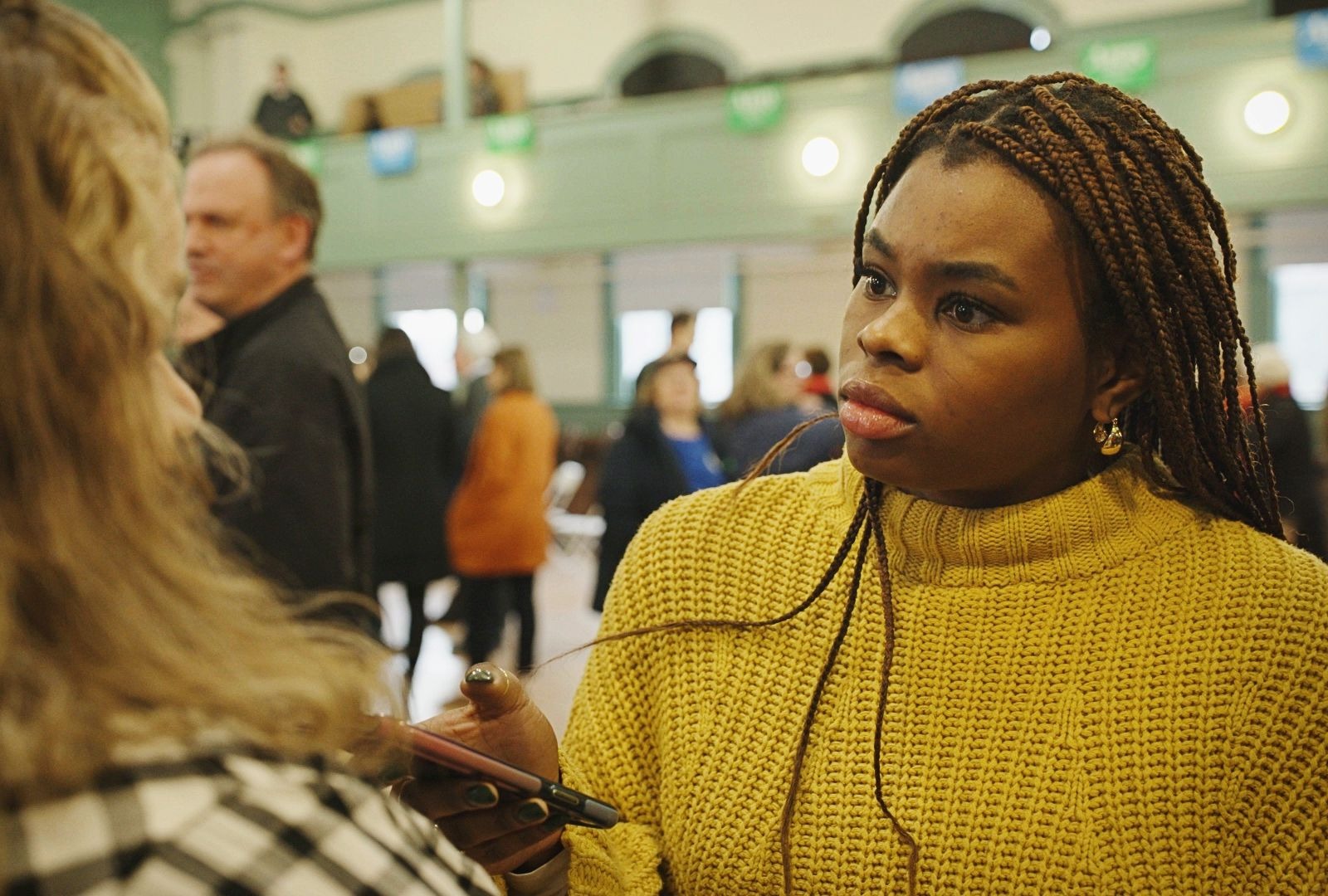
Trump has promised to stop evictions — but the GOP has a powerful incentive not to

Like the seasoned reality TV star that he is, President Trump is again creating a spectacle that distracts the masses from the nearly unbearable triple threats posed by a deadly pandemic, a downward-spiraling economy and emboldened agents of the state terrorizing the nation. Every single day, Trump claims he’s done something he hasn’t and will do something he cannot. Every few weeks he signs a nonsensical or illegal executive order so he can have a ceremony and pretend he’s governing. Meanwhile, 156,000 Americans have died dead while he claims things are getting better every day. Republican recalcitrance — despite what the Trump administration claims — stands to materially harm millions, with the aim of benefiting the party electorally.

By now it is evident to all who are paying attention that Trump’s re-election plan hinges on sabotaging the U.S. Postal Service, appointing a crony who can jam up the system and prevent mail-in ballots from arriving on time, then declaring victory based on the Election Day results, knowing that many swing states don’t count mail-in ballots that arrive late. While that appears to be the main line of attack, as years of concerted GOP efforts across the nation have illustrated, voter suppression is a complex scheme that includes several separate tactics. 

With the expiration of federal protections — and the $600 supplemental unemployment benefit — millions of people across the country are suddenly unable to pay rent and are at imminent risk of eviction. Setting aside the sheer human misery mass eviction will entail, it is also an unexamined new avenue for voter suppression. 

“A lot of people are going to be evicted, but I’m going to stop it because I’ll do it myself if I have to,” Trump told reporters at the White House on Monday. “I have a lot of powers with respect to executive orders, and we’re looking at that very seriously right now.” It’s not clear what authority he has to do so. 

Trump has said that he and the Republicans support reinstating eviction protection for renters who live in buildings with federally backed mortgages, but Senate Republicans’ belated opening bid in negotiations, after the moratorium on evicting renters ended last Friday, included no such protections. Despite Trump’s promises, the Washington Post reported on Tuesday evening: 

Even though [Treasury Secretary Steve] Mnuchin offered an eviction moratorium until the end of the year, the White House offer did not include other homeowner and rental assistance that Democrats have demanded, so the housing portion of the talks remains unresolved, a Democratic aide said, speaking on the condition of anonymity to describe the talks.

At the behest of Democrats, the CARES Act included a 120-day moratorium on evictions for tenants living in rental housing covered under the Violence Against Women Act, which includes Section 8 public housing, the rural housing voucher program, and anyone renting in buildings with federally backed mortgages. Some states and cities also issued their own individual eviction moratoriums, but around 30 of those moratoriums have expired since May, according to The Eviction Lab at Princeton University. Renters now have as little as 30 days after the expiration of the resolution to repay back rent or face eviction. The CARES Act protections for renters specifically ended on July 25 and now renters in areas with no local protections are poised to be booted from their homes in the middle of a pandemic and ahead of the largest vote-by-mail effort in U.S. history. Successful voting by mail, after all, depends on voters with known mailing addresses who are registered well in advance of the election. 

This potential wave of mass voter disenfranchisement comes as new voter registration has already dropped dramatically amid the coronavirus pandemic, largely because most state DMV offices shut their doors and voter contact programs paused. The number of new voters registered across 11 states in April 2020 decreased by 70% compared with April 2016, according to a report from the nonpartisan Center for Election Innovation & Research. Swing states like Florida, Virginia, North Carolina and Arizona have seen at least a 50% voter registration reduction, compared to four years ago. 

By withholding eviction protection from their proposed package, Republicans in Congress appear to be attempting to use the next round of pandemic relief as their latest voter suppression vehicle, adding disenfranchisement to the host of life-altering problems faced by thousands of newly-houseless Americans.

Comparatively, homeowners have received more assistance just as home sales are booming. The CARES Act allows any homeowner with a federally-backed mortgage to get a forbearance, meaning they can skip up to 12 months’ worth of mortgage payments. Meanwhile, mortgage rates are currently the cheapest on record and new mortgage applications just hit a level not seen since 2008. As Trump indicated back in March, he and the Republicans have successfully taken advantage of the pandemic to pick winners and losers in the economy. Next up: the elections. 

Mass evictions help Republicans electorally, even if not politically. Obviously the optics aren’t great — and Trump, with his so-far-empty promises to protect renters, is keenly aware of that — but there is evidence that suggests it is still a good bet for the GOP. 

Data show a disparity in voter participation between renters and homeowners. In 2016, 67% of homeowners voted versus just 49% of renters. Another analysis of 2016 data shows that neighborhoods in Reading, Pennsylvania, with more evictions often had lower rates of voter turnout. Trump won Pennsylvania’s 20 Electoral College votes after edging Hillary Clinton by just 44,000 votes — out of more than 6 million cast. 

“All else being equal, if you live in a neighborhood with high eviction rates, the voting rate is significantly depressed,” Princeton sociologist and eviction scholar Matthew Desmond explained.

Perhaps that’s why the Republican governor of New Hampshire, John Sununu, recently vetoed a bill giving tenants who owe back rent at least six months to pay it back in installments. 

Assuming that we have a COVID-19 resurgence in the fall as predicted, we may also have closures of county clerks’ offices, courthouses, notaries and other departments required in some states to either register to vote or to vote absentee by mail. Meanwhile, some cities, like New Orleans, have already opened their housing courts to begin eviction proceedings.

34 state attorneys general urge Trump to end “outrageous” Gilead monopoly on COVID-19 drug

Warning of “dangerously low and insufficient” supply projections, a bipartisan coalition of nearly three dozen state attorneys general is urging the Trump administration to end pharmaceutical giant Gilead’s monopoly control over Covid-19 treatment remdesivir by authorizing generic production of the drug, which was developed with the support of at least $70 million in taxpayer funding.

“Now more than ever, the American public needs the support of the federal government in helping them afford Covid-19-related treatment,” the coalition led by California’s Democratic AG Xavier Becerra and Louisiana’s Republican AG Jeff Landry wrote in a letter (pdf) Tuesday to Health and Human Services Secretary Alex Azar and National Institutes of Health director Dr. Francis Collins.

“This is not the time for any company to extract large corporate profits from uninsured and underinsured Americans—nor can we allow the individual market priorities and weaknesses of one company to determine the fates of hundreds of thousands of people,” the letter reads. “Gilead should not profit from the pandemic and it should be pushed to do more to help more people.”

The attorneys general are demanding that the Trump administration immediately exercise its authority under the Bayh-Dole Act, a 1980 law giving the federal government the power to license third-party manufacturers to produce a drug if the patent-holder fails to make the treatment available on “reasonable terms.”

“At a minimum,” the attorneys general wrote, “we ask that you support states by assigning to states the ability to use the march-in rights under this law to achieve the same purposes.”

As Common Dreams reported in June, Gilead is charging U.S. hospitals around $3,120 per privately insured patient for a treatment course of remdesivir—a price tag the attorneys general slammed as “outrageous and unconscionable.” Consumer advocacy group Public Citizen estimates that Gilead could have priced remdesivir at $1 per day and still turned a reasonable profit.

“It is unfortunate that Gilead has chosen to place its profit margins over the interests of Americans suffering in this pandemic,” the coalition of attorneys general wrote. “Record unemployment and ongoing financial troubles will prevent many Americans from paying for remdesivir. Even for the insured, Gilead’s excessive pricing makes copayments and out-of-pocket expenses cost-prohibitive.”

Despite the massive infusion of public funding for remdesivir, the attorneys general warned that Gilead remains “unable to guarantee a supply of remdesivir sufficient to alleviate the health and safety needs of the country amid the pandemic.”

“Gilead’s production projection remains dangerously low and insufficient to handle the current domestic demands, let alone future demands for the antiviral drug,” reads the letter, which was signed by attorneys general from Minnesota, Ohio, Utah, Nebraska, and dozens of other states.

Peter Maybarduk, director of the Access to Medicines program at Public Citizen, echoed the demand for an end to Gilead’s monopoly on remdesivir production in a statement Tuesday.

“Gilead’s monopoly control of remdesivir leads to shortages and rationing and keeps prices high,” said Maybarduk. “Taxpayers funded remdesivir’s development from the drug’s early days. Generic competition would help expand supply and ensure reasonable pricing. The federal government—we the people, that is—appears to co-own remdesivir’s core patents. Remdesivir should be in the public domain.”

“While remdesivir is no kind of pandemic panacea,” Maybarduk added, “hospitals should be able to rely on a robust, affordable supply and make choices according to medical need.”