Spring Sale: Get 1 Year, Save 58%

“They better not put my president in prison”: Fox News hosts struggle with possible Trump indictment

Fox News hosts expressed dismay Monday at reports that ex-President Donald Trump could be indicted in connection to hush-money payments made to adult film star Stormy Daniels during the 2016 presidential campaign. 

“They better not put my president in prison,” host Jesse Watters said on Monday’s edition of “The Five.” 

Watters argued that Trump “represents 74 million Americans,” referencing Trump’s popular vote count in the 2020 presidential election. “And if he’s the nominee, you’re putting 74 million votes in prison. And that’s how I see it.”

Watters then took aim at Alvin Bragg, the Manhattan district attorney spearheading the probe, saying that the prosecutor is not doing an adequate job of handling crime in New York.

“He’s emptying the prison — what, to make room for Trump?” Watters said. “No one else is getting charged with anything.”

Watters added that he felt Bragg’s motivations in launching the investigation of Trump were misplaced.

“The guy wants to make a name for himself, obviously, because he wants to be … the first prosecutor to throw cuffs on Trump. That’ll get you elected pretty much governor in the state of New York. That’s what he’s after,” he said.

This isn’t the first time Republicans have accused Bragg of having a weak or politically motivated case. Florida governor Ron DeSantis, while telling reporters that he would not get involved in Trump’s potential extradition, said he had “no interest in getting involved in some type of manufactured circus by some Soros DA. He’s trying to do a political spectacle … I’ve got real issues I’ve got to deal with here in the state of Florida.”

Trump also took aim at Bragg in a series of lengthy posts made to Truth Social this past weekend, calling him a “racist, Soros-backed” D.A. and accusing him of allowing violent criminals to go free.


Want a daily wrap-up of all the news and commentary Salon has to offer? Subscribe to our morning newsletter, Crash Course.


Fox host Greg Gutfeld argued during Monday’s segment that he didn’t want to “live in a world where paying porn actresses hush money is considered a crime.”

“That’s sexist,” he continued. “You pay for the sex and you pay for them not to talk about it.”

Gutfeld alleged that Bragg was purposefully waiting for an opportune time to indict Trump to “guarantee that Trump gets the nomination.”

“Since Morning Joe and CNN aren’t giving Trump the free media … which effectively drowned out all of his competition [in 2016], this will have the same outcome,” he said. “And then this is happening at the same time that they are announcing that they are going to arrest 1,000 more people [for] January 6. What does that sound like to you?” he added. “It sounds like they are going after Donald Trump, Trump supporters, Trump voters — the 77 million people that they hate.”

“And if you are a New Yorker and you’re ambivalent about politics and don’t even care about Trump,” he continued, “you should be pissed because [Bragg] is downgrading crimes that ruined your city while spending all this time upgrading one crime as a full-time vocation.”

For a new take on old traditions, consider this Passover grazing board

Passover is a holiday that celebrates spring, rebirth and redemption. Passover traditions change and evolve — no two Seders are the same, which makes them so special. One delightful tradition I stick to is the frequent instruction to drink wine (I don’t need to be reminded, but it’s a great excuse). Another is having the youngest child ask “The Four Questions,” explaining what Passover is about (the exodus of the Jews from Egypt) and answering, “why is this night different from all other nights?” In my family, I was always the youngest child, so I sang the questions in Hebrew until I was 35. My mother always joked that all she got from my Hebrew school education was the Four Questions. (I actually think that made the tuition worth it.)

With my own kids now shouldering this burden, I can relax! No more anxiety about singing in front of everyone, which means I can drink my wine and chill. And now that I don’t have stage fright, I’ve realized there’s something seriously lacking: snacks. So I have a fifth question to add to the mix — why no snacks at Passover? I don’t see a good reason to exclude appetizers from this meal. We have to sit through a long service while dipping herbs in salt water, reciting prayers in Hebrew and repeatedly washing hands, all without more than a bite or two of matzo until dinner. Isn’t this holiday about freedom? We’re asked to recline at the table and drink wine, all sans nosh? (Honestly, I usually end up sneaking little matzo, charoset and horseradish sandwiches under the table).

This year, I’m changing up my family’s tradition and serving a Passover grazing board to kick off Seder the best way I know how — with plenty of snacks. (To be clear, this board isn’t meant to replace the Seder plate, but rather to add another layer of food tradition and snacking possibilities to the day.)

Classic Elements

To honor tradition, I include the basic elements of a Seder plate on my board. I serve matzo alongside decorative ramekins filled with horseradish and charoset, plus fresh parsley. I like to layer the matzo decoratively across the center of the board because, after all, it’s the star of the show.

Modern Touches

Colorful fruit and vegetables reflect the culinary and historical themes of Passover and they add a modern flare. Asparagus and marinated artichoke hearts provide a splash of color and contrasting texture. My family doesn’t keep Kosher, so I like to add plenty of cheese to my grazing boards — I reach for a creamy goat’s milk cheese like Vermont Creamery Coupole, a hard cheese like Pecorino and a semi-hard cheese like Manchego. Nuts and dried fruit reflect Passover culinary traditions, while chocolate-covered matzo and macaroons are a sweet finishing touch.

Serving Options

To assemble this grazing board, a flat surface works best. I’ve used a stone slate, a wooden board and even a vintage Seder plate — any option works, as long as it’s a sizable serving piece. When it’s time to dig in, I always break out my mother’s, aunt’s and grandmother’s China for Passover — the mix-and-match dishes tell the story of my family history. It feels like a sweet homage to Passover and to my family to remember our past.

Passover is about honoring traditions and rituals, but it’s also a holiday about enlightenment and evolution, about inclusion and progress. I hope this grazing board becomes a new cherished tradition for your family, as it has for mine.

New lawsuit claims Fox tried to frame producer in Dominion case — this one is “potentially criminal”

A Fox News producer filed two lawsuits against the conservative media company on Monday, alleging that Fox lawyers used a “coercive and intimidating manner” to persuade her to provide misleading information in Dominion Voting Systems’ $1.6 billion defamation lawsuit against the network.

Abby Grossberg, a producer who has worked with Tucker Carlson and Maria Bartiromo, claimed in the filings that Fox attorneys tried to turn her and co-host Maria Bartiromo into the network’s scapegoats for repeatedly and knowingly spreading misinformation about election manipulation in 2020, The New York Times reported.

Grossberg also argued that efforts to saddle her and Bartiromo with blame were evidence of a misogynistic workplace culture, widespread throughout Fox.

“That’s what the culture is there,” Grossberg told the Times in an interview on Monday evening. “They don’t respect or value women.”

The lawsuits, filed in New York and Delaware respectively, contain a number of unsettling claims, including that Fox executives referred to Bartiromo as a “crazy bitch” who was “menopausal,” asking Grossberg to remove her from coverage discussions.

When Grossberg began her tenure as a “Tucker Carlson Tonight” producer at the New York office last year, she found that the workspace was plastered with images of Rep. Nancy Pelosi, D-Calif., wearing a revealing bathing suit, the suit says.

The filing also alleged that Carlson’s staff made inappropriate jokes about Jewish people and used derogatory terms to refer to women. Ahead of an appearance on the show by GOP candidate for Michigan governor, Tudor Dixon, the staffers held a mock debate to determine whether they would prefer to have sex with Dixon or Gretchen Whitmer.

Grossberg also said that she was encouraged to scale back the severity of a text conversation between her and David Clark, then the vice president of weekend news, in which Grossberg questioned Clark about a segment with then-Trump lawyer Rudy Giuliani.

“There will be no ‘fact checking’ today,” Clark texted.


Want a daily wrap-up of all the news and commentary Salon has to offer? Subscribe to our morning newsletter, Crash Course.


The latest version of Grossberg’s filing states that she believes Clark’s statement to mean that no one would confirm the veracity of information shared on Carlson’s show. 

A pretrial hearing in the ongoing defamation lawsuit is slated for Tuesday.

“FOX News Media engaged an independent outside counsel to immediately investigate the concerns raised by Ms. Grossberg, which were made following a critical performance review,” a Fox News spokesperson said in a statement. “Her allegations in connection with the Dominion case are baseless and we will vigorously defend Fox against all of her claims.”

Former U.S. Attorney Harry Litman called the allegations in the lawsuit “potentially criminal,” adding that the claims “suggest obstruction of justice and subornation of perjury.”

Starbucks CEO Howard Schultz abruptly steps down early — just days before Senate hearing

Howard Schultz announced on Tuesday that he is stepping down from his post as Starbucks CEO two weeks earlier than his scheduled departure date, resigning just before a hearing led by Sen. Bernie Sanders (I-Vermont) about the company’s union busting next week.

Schultz began his third stint as CEO of the company last year when, as workers said, the company brought him back to lead the fight against Starbucks Workers United’s wildly successful union campaign.

The past year has been marked with aggressive union busting by the company, which the National Labor Relations Board (NLRB) has ruled has broken the law over 1,400 times throughout the campaign — including violations by Schultz himself. Schultz will be replaced by Laxman Narasimhan, a former PepsiCo executive.

Schultz’s resignation was met with staid acceptance by the union.

“Over 7,500 workers have been actively organizing to return to Starbucks’s mission and values. Our movement stands for racial justice, inclusivity, and sustainability. We are hopeful that Laxman Narasimhan will chart a new path with the union and work with us to make Starbucks the company we know it can be,” said Starbucks Workers United organizer and Buffalo barista Michelle Eisen.

“We look forward to Howard Schultz testifying before the Senate HELP committee on March 29th and being forced to answer for his actions,” Eisen continued.

The CEO’s early resignation comes just after he was called, rather forcibly, to testify before the Senate. Originally, Schultz was scheduled to step down from his position on April 1. But that would be after the March 29 hearing before the Senate Health, Education, Labor and Pensions (HELP) Committee — headed by Sanders — that was announced earlier this month.

The fact that the company appeared extremely reluctant to send Schultz to testify before the committee could be evidence that Schultz’s early resignation was strategically timed. In February, the company turned down Sanders’s request that Schultz testify before the HELP Committee and offered to send another executive to testify instead.

Sanders rebuffed the counteroffer and scheduled a committee vote to subpoena Schultz instead — and, just one day before the vote was slated to take place, Schultz agreed to testify.

Now, though Sanders’s director of communications has confirmed that Schultz will still testify, he will no longer be doing so as the CEO of Starbucks. Schultz will still remain a member of the board, but will likely claim more distance from the day-to-day operations as ex-CEO, and headlines about his testimony will no longer reflect that the CEO of the company was called before the Senate.

Labor leaders say that Schultz’s resignation doesn’t change the fact that he must be held accountable for the company’s union busting. “Howard Schultz may not have the title of CEO anymore @Starbucks but that doesn’t change the fact he still needs to be held accountable and answer for his union busting tactics,” wrote Teamsters President Sean O’Brien. “Also piece of advice to his successor: you have the opportunity to change the narrative, don’t mess it up.”

What is a raccoon dog and did it really cause the COVID pandemic? Here’s what scientists say

A cute, dog-like animal has emerged as the chief culprit for the first transmission of the COVID virus to humans, thanks to newly revealed genetic evidence from the Huanan Seafood Wholesale Market in Wuhan, China. Based on these new facts, common raccoon dogs, a species that resembles a fox-raccoon hybrid, may be the “patient zero” that triggered the global public health disaster we’re still suffering through.

An exclusive report from Katherine Wu at The Atlantic presents the strongest evidence to date that SARS-CoV-2, the virus behind the brutal pandemic now entering its fourth year, first appeared in animals before jumping to humans. The genetic evidence pushes back against the narrative that the pathogen was accidentally or intentionally leaked from the Wuhan Institute of Virology.

The debate on COVID’s origins have divided people across the scientific and political spectrum, but direct evidence has been hard to come by. Yet this latest bit of evidence may be the best data we ever get.

A new analysis of swabs taken from market stalls in and around the pandemic’s alleged ground zero in January 2020 found a mix of SARS-CoV-2 genetic material, but also included that of common raccoon dogs (Nyctereutes procyonoides). These are small, wild canids (a family of mammals including foxes, wolves and dogs) found in East Asia, including China and have long been known to harbor coronaviruses.

In fact, a study published last February in the journal Cell, which identified 65 previously undescribed virus species in Chinese game animals, reported that some raccoon dogs harbored coronaviruses with 85 to 94 percent similarity to human coronaviruses detected in Haiti and Malaysia. Coronaviruses are a broad category of viruses that all have similar shape: a ball with spikes resembling a crown.

It wasn’t initially clear that raccoon dogs were even at the market in Wuhan until later evidence emerged in 2020 revealing the animals were illegally kept at the marketplace. 

While most coronaviruses either have no effect or cause simple colds, some like MERS, SARS and SARS-CoV-2 can be deadly. We know that many mammals naturally have these pathogens and they occasionally spill over into humans, especially as we destroy more of their environment, not to mention poach and eat wild animals. If an animal infected with a coronavirus comes in close contact with humans as result, most coronaviruses have no qualms about moving to a new, human host. 

Raccoon dogs were implicated in the first SARS-CoV-1 (known at the time simply as SARS) outbreak approximately two decades ago, as wild raccoon dogs have been found to naturally carry it. Although this is pretty clear evidence, virologists still aren’t 100 percent sure that they caused that pandemic, which peaked in 2003. It’s not easy to definitively prove an animal allowed a virus to jump to people. We still don’t know where Ebola first came from, though bats are generally assumed to be the origin.

It wasn’t initially clear that raccoon dogs were even at the wet market in Wuhan until later evidence emerged in 2020 revealing the animals were illegally kept at the marketplace. Again, this isn’t 100 percent proof that raccoon dogs started the pandemic, but the pairing of these two genetic signatures together is pretty strong evidence, possibly the strongest we’ll ever get.

According to Wu, the new analysis provides “clear-cut evidence that raccoon dogs and the virus were in the exact same spot at the market, close enough that the creatures might have been infected and, possibly, infectious.”


Want more health and science stories in your inbox? Subscribe to Salon’s weekly newsletter The Vulgar Scientist.


To reach this conclusion, Florence Débarre, an evolutionary biologist at the French National Centre for Scientific Research, was trawling an open-access genomic database called GISAID (Global Initiative on Sharing Avian Influenza Data) when she noticed several sequences. They’d been quietly posted by researchers from China’s Center for Disease Control and Prevention several weeks ago.

When Débarre downloaded the data around March 9, forwarded it to colleagues and analyzed it, they found traces of SARS-CoV-2, as expected. That was already known by the same group of Chinese researchers who uploaded it in the first place. Last year, they published a preprint analyzing the data, (but not the data itself) stating this was “convincing evidence” that SARS-CoV-2 was present at the market during the early stages of the COVID outbreak. But they also claimed “no animal host of SARS-CoV-2 can be deduced.”

This new analysis isn’t likely to sway any of the hardcore believers that a lab leak alone explains SARS-CoV-2’s origins. But to date, there is still no hard evidence of that being the source.

By taking a closer look, several prominent researchers who have been tracing SARS-CoV-2’s origins noticed plenty of evidence contradicting that claim. On March 20, they posted a full report online, which they claim underscores the “large body of evidence supporting a natural origin of SARS-CoV-2.” There was plenty of animal DNA, and a lot of it belonged to common raccoon dogs. When they contacted the Chinese researchers, the data was mysteriously deleted from GISAID. At this point, it’s not clear why this data was posted, let alone removed, though Science noted it was at the “request of the submitter.”

George Gao, the former China CDC director-general, also told Science and Reuters this data was “nothing new.” However, this new evidence is clearly making waves. The World Health Organization director-general Tedros Adhanom Ghebreyesus said on Friday, March 17, “These data could have — and should have — been shared three years ago,” but he also noted “these data do not provide a definitive answer to the question of how the pandemic began.”

This new analysis isn’t likely to sway any of the hardcore believers that a lab leak alone explains SARS-CoV-2’s origins. But to date, there is still no hard evidence of that being the source. Even the handful of U.S. intelligence agencies (and not the majority) that claim a lab leak is plausible make their assertions with “low confidence” and zero hard evidence.

Arguments on both sides of this issue have persisted since the outbreak first happened, and scientists will likely be arguing about this for many years to come. What this new analysis could actually help with is encouraging more transparent sharing of data and galvanize researchers to study wild raccoon dogs, bats and other potential animal hosts that could lead to the next pandemic.

“It’s really a red flag”: Democracy scholar alarmed by Trump’s unprecedented call for arrest protest

In a social media post on March 18, 2023, former President Donald Trump announced that he would be arrested on March 21 on charges stemming from an investigation led by Manhattan District Attorney Alvin Bragg. Bragg’s office is probing hush-money payments to Stormy Daniels, an adult film star, which were allegedly made to spare candidate Trump embarrassment on the eve of the 2016 presidential election.

“THE FAR & AWAY LEADING REPUBLICAN CANDIDATE AND FORMER PRESIDENT OF THE UNITED STATES OF AMERICA, WILL BE ARRESTED ON TUESDAY OF NEXT WEEK. PROTEST, TAKE OUR NATION BACK!” wrote Trump.

Scholar Shelley Inglis spent more than 15 years with the United Nations, where she advised governments and democracy advocates on how to strengthen the rule of law, human rights and democratic governance. We asked her about Trump’s post.

What did you think about when you heard his call for protests?

Let me begin by quickly describing populism, because it’s important to my thoughts about Trump’s post. Populist movements portray “the people in a moral battle against elites,” as scholars Jane Mansbridge and Stephen Macedo describe it. Some level of populism is inherent in democracies where candidates appeal to be elected by “the people.”

But what I call autocratic populists use this narrative to claim they are the sole voice of “the people” and those against them are “bad” or even “evil.” They undermine any and all opposition to them and attempts to hold them accountable, including independent institutions like courts, elections and the media. This is how such populists become so dangerous for democracy and the rule of law.

Trump has that autocrat’s populism, in which he says that not only is he anti-elite but that he is “the only one” who can represent the people and calls on the public to question legitimate democratic institutions – which he did even when he was the head of those institutions.

Scholars like me know that protests play an important role in societies, and the freedom to protest is part of a democratic society. The idea of peaceful protests is to hold the government accountable and for people to have an avenue for free speech and be able to participate in demonstrating their demands. But I believe protests are most valuable when they originate from civil society or advocacy groups.

It’s really a red flag if a political party or leader is using people in protest in a democracy like the U.S. That devalues the idea that protests come from the people or what we call civil society. Instead, it’s a manipulation of a democratic society.

Trump wasn’t asking his followers to protest a policy, was he?

He was asking for a protest on his behalf because of what an independent institution is doing. It’s a protest about and for him.

It’s hard for me to think of an example in recent history when political leaders in a democracy like the U.S. demanded that people protest, even on an issue, let alone for them. So Trump’s call is a real populist move that is intended actually to undermine respect for democratic institutions, whereas popular protests and advocacy can be a sign of a vibrant and healthy democracy.

Then-President Donald Trump declaring “I am the chosen one” during a White House session with reporters on Aug. 21, 2019.

But doesn’t Trump couch the moves to hold him accountable as coming from the radical left, not as government holding him accountable?

Demonizing the institution and alleging that the institutions are controlled by an agenda is part of the narrative that Trump has created. It is the populism of “us” versus “them.” Even when he was the head of the government and its institutions, he was fomenting this narrative by effectively saying things like, “This election is going to be unfair … even though I’m president of the United States. I’m already saying that this election, run by my own government, though at multiple levels, is going to be unfair.”

Once populists get in power, they degrade any kind of accountability, any checks and balances, and they debase the opposition through very clever ways of creating a narrative that it’s somehow justified.

Yet Trump is out of power now. How does that still work?

He’s continued with that narrative, which is basically to say he’s the only one who represents the people of the United States as a legitimate voice. And anything that is done against him actually is against the United States. So his phrase in that post, “Take our country back,” means “Give back power to me, or do something against institutions that might be holding me to account.”

For me, it is important for people to appreciate that protest is productive and healthy for democracy when it comes from the bottom up. But when it’s manipulated by political actors, calling on people to protest for them and seek to overturn U.S. institutions, like on Jan. 6, it can actually be highly threatening to democracy.


Shelley Inglis, Executive Director, University of Dayton Human Rights Center, University of Dayton

This article is republished from The Conversation under a Creative Commons license. Read the original article.

Alex Jones is allegedly giving away millions to avoid $1.4B Sandy Hook payout

Far-right conspiracist and Infowars founder Alex Jones made the lives of the families of the child victims of the 2012 Sandy Hook Elementary School shooting a “living hell” for a decade — and now, he is reportedly hiding and giving away his wealth to avoid an over $1 billion legal bill that he has been ordered to pay the families.

According to a new report by The New York Times, as Jones has faced a defamation case from Sandy Hook families over the past year, he has been hemorrhaging money and transferring it to places where it could be untouchable by creditors in order to dodge the payout.

He has transferred millions of dollars of cash and assets to family and friends, reporters found through financial documents and court records, including giving money to a company founded by a former personal trainer and transferring a $3 million home to his wife. At the same time, he has spent money on luxuries for himself, spending $80,000 on a private jet, hiring bodyguards, and renting out a villa while testifying last year in Connecticut, where the defamation trial took place.

“If anybody thinks they’re shutting me down, they’re mistaken,” Jones said on a recent episode of his podcast, The Times noted.

Last fall, a court ordered Jones to pay out over $1.4 billion to families of eight Sandy Hook victims after he spent years gaining an audience online by propagating lies that the shooting — the most deadly shooting at a grade school in modern U.S. history — was faked, and that the families mourning the deaths of their children were actors hired by the government to implement gun control laws that never actually materialized.

His campaign represented one of the most heinous modern conspiracy theories ever conceived by the right. Followers of Jones have spent years directing depraved harassment at the families, hurling rape and death threats online and in person, the families have testified, compounding the trauma of families already forced to constantly relive and prove the deaths of their children.

One plaintiff, whose six-year-old daughter was slain in the shooting, described having people stalk the grave of her husband, who died by suicide in 2019, searching for evidence of his death; others have said that they have had to move repeatedly after being tracked down and doxxed by conspiracy theorists time and time again.

Jones has filed for bankruptcy over the payout after having stonewalled courts on his financial records for years. It’s unclear if he will be able to successfully hide the money, but, as The Times noted, the families are facing the reality that “their ability to get anything remotely close to the jury awards is inextricably tied to Mr. Jones’s capacity to make a living as the purveyor of lies — including that the shooting was a hoax, the parents were actors and the children did not really die — that ignited years of torment and threats against them.”

Despite the fact that evidence and testimony have demonstrated that Jones is quite wealthy, Jones recently offered to pay the families and creditors a total of $43 million over five years, a sum that lawyers for the families dismissed as laughable. Still, Jones — with vast audience and funding, and the ability to exploit Chapter 11 bankruptcy laws — holds the advantage over the families, and was taking moves that appeared to be aimed at hiding his money in preparation for the lawsuits as early as 2018.

“Dumb, stupid move”: Legal experts say Trump witness’ “foolish” testimony may backfire on Trump

Trump ally Robert Costello said on Monday that he had attacked the credibility of former Trump attorney Michael Cohen while appearing before a Manhattan grand jury investigating the 2016 hush-money payment to adult film star Stormy Daniels.

Costello, himself an attorney who formerly represented Cohen and Rudy Giuliani and was accused of dangling a pardon to Cohen during the Mueller investigation, appeared before the grand jury at Trump’s request and said he testified that Cohen is a “serial liar.”

“There can be no doubt in anyone’s mind that Michael Cohen has great difficulty telling the truth. He is, after all a convicted perjurer, and our track record with Mr. Cohen convinced us that he was a serial liar,” Costello told reporters after his testimony.

“As might be expected, Mr. Cohen’s lies were always uttered in a way that was beneficial to himself,” Costello said. “When it was in Mr. Cohen’s personal self-interest, he was capable of telling the truth, but those occasions were few and far between.”

Cohen’s past is well-documented. Cohen, a longtime “fixer” for Trump, pleaded guilty to federal charges including campaign finance violations related to the hush money payment. Cohen testified that he made the payment at the direction of Trump and that the Trump Organization reimbursed him for “legal expenses.”

Costello claimed on Monday that Cohen “decided on his own” that he “could take care” of the Stormy Daniels situation in 2016 and claimed that Trump did not know about the payment.

Costello said he handed over documents related to his communications with Cohen, who he said had waived attorney-client privilege. But Costello also complained that prosecutors had “cherry-picked” six emails out of more than 320 to ask him about, claiming they “took them out of context.” Costello seemed to imply that the emails were related to his communications with Cohen about a potential pardon in 2018 amid the Mueller investigation, recalling that Cohen was “looking for a way out” to avoid prison.

In response, Cohen said there were “so many things” about Costello’s statement that were untrue. He said that Costello never directly represented him and disputed Costello’s claim that Cohen had waived attorney-client privilege.

Cohen was on standby as a rebuttal witness on Monday but was not called, according to his lawyer. He may still be asked to testify on Wednesday, suggesting that a possible Trump indictment could still be several days away.

“I have truth,” Cohen told MSNBC. “I have the documentation. Let me rephrase that. The district attorney has the documentation in order to validate every single statement that I’ve made and to basically dispel anything that Bob Costello has to say which is probably, again, why they didn’t need me for rebuttal.”


Want a daily wrap-up of all the news and commentary Salon has to offer? Subscribe to our morning newsletter, Crash Course.


Legal experts agreed that the fact that Cohen was not called to rebut Costello’s testimony on Monday suggests that prosecutors are not worried about his statements.

“It seems that this stunt Trump pulled today with Costello didn’t ring the bell that they hoped it would ring and prevent an indictment,” former U.S. attorney Joyce White Vance told MSNBC.

The decision “suggests that whatever Costello said was either not credible or perhaps more likely not inconsistent with what Cohen already testified to, so Cohen was not needed to ‘rebut,'” tweeted former federal prosecutor Andrew Weissmann, who worked on special counsel Bob Mueller’s team. He added that it was “foolish” of the Trump team to give prosecutors a preview of what Costello would say at trial. “Poor defense strategy,” he wrote.

Former U.S. attorney Harry Litman added that Costello appeared to be “wantonly betraying attorney-client information and privilege.”

“I am willing to bet that his claims of waiver from Cohen are anywhere from dubious to 100% manufactured. If that’s right, a bar complaint should follow,” he tweeted.

Former Watergate prosecutor Nick Akerman called the decision to let Costello testify before the grand jury a “dumb, stupid move” and warned that it could lead to additional charges against Trump.

Giving prosecutors access to Costello, Akerman told MSNBC, allows the district attorney to bring up “all the conversations Costello had with Michael. All the conversations Costello had with Rudy Giuliani. What Rudy Giuliani said that Donald Trump said and what he conveyed to Donald Trump. And then I would end up indicting Donald Trump for witness tampering and obstruction of justice. I mean, the Mueller report itself is enough basis to do that. But now they put forward a witness who’s right in the middle of this witness tampering plot to supposedly give exculpatory evidence!”

“American Masters: Dr. Tony Fauci” filmmaker talks about following Fauci’s finale in public health

Midway through “American Masters: Dr. Tony Fauci,” filmmaker Mark Mannucci exposes the doctor to a symptom of violent partisanship: his voicemail messages. Fauci’s inbox is swelled with accusations and death threats, but his assistants have shielded him from the worst. Nevertheless, Fauci urges Mannucci to play a few, allowing us to watch as he calmly listens to strangers fantasize about his suffering.  

“Dr. Fauci, you have destroyed America,” a woman declares in one voicemail, “and you know what? I hope that when you die, it is painful and it’s long.”

That’s one of the nicer ones.

By this point in Mannucci’s documentary, the viewer will have seen grandstanding politicians senselessly spar with Fauci expressly to fuel campaign fundraising soundbites. They’ll have witnessed him quietly weep as Garth Brooks sings “Amazing Grace” at President Joseph R. Biden’s inauguration only to pick up the phone minutes later to accept well-wishes from Jared Kushner.

Mannucci’s camera allows us to tag along as Fauci walks the streets with D.C. volunteers in low-income neighborhoods as part of an effort to get more people vaccinated and react with exhausted dismay at one anti-vaxxer’s thin reasons for refusing to get immunized. The lens also insinuates itself into the modest home he shares with his wife Christine Grady, where he genially shares a cheese plate with a group of AIDS activists with whom he is unguarded and at ease.

One should not be surprised at this point, then, to see how unperturbed Fauci is to hear such venom. They’re not as shocking as the disease they signify. And that doesn’t refer to COVID.

“It is interesting, troublesome, and sad, the extraordinary degree of divisiveness that we have in society,” Fauci says when Mannucci finally presses pause. “Somebody who can look at a public health message, to turn that into hate for the person who is communicating it … you have to think about that for a second. I’m just trying to save people from getting sick and dying.”

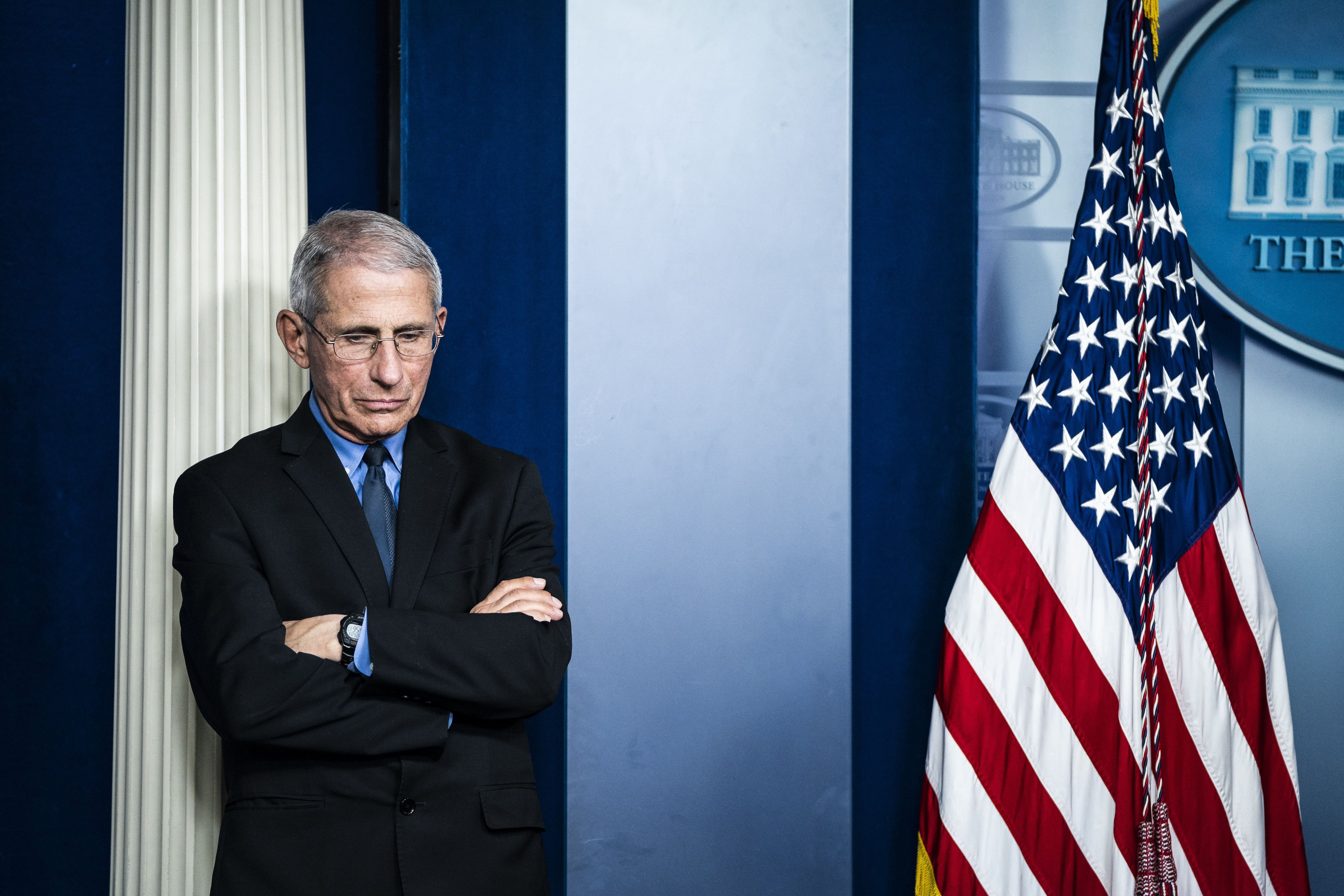
Anthony FauciDr. Anthony Fauci, Director of the National Institute of Allergy and Infectious Diseases, listens during a Senate Health, Education, Labor, and Pensions Committee hearing at the Dirksen Senate Office Building on July 20, 2021 in Washington, DC. The committee will hear testimony about the Biden administration’s ongoing plans to deal with the COVID-19 pandemic and Delta variant. (Stefani Reynolds-Pool/Getty Images)

As Mannucci shows, many people understand that. What they may not fully comprehend is how Fauci’s innate humanity informs his history in public health, which extends years before he back the director of the National Institute of Allergy and Infectious Diseases in 1984.

“Fauci is a master because of the way that he has really handled public health over the course of 54 years: quietly, humbly, coming into the public eye only two major times,” says Mark Mannucci.

Fauci will be only the fourth scientist to be featured as an “American Masters” subject in its 37 years of existence, joining Oliver Sacks, Albert Einstein and  James Watson (in a film Mannucci also directed). But there is a tangible reason this “American Masters” installment uses Tony, not Anthony, in its title. If it does nothing else, Mannucci expressed in a recent interview with Salon, he hopes it will help people connect with the man behind the image, and “his humility, his candor, and the level of pain that he ended up expressing at everything that’s going on.”

“You know, if it weren’t for COVID, he probably wouldn’t have been chosen” as an “American Masters” subject, Mannucci said. “But he managed to stay the course in a very, very, very trying time […] As he says at the beginning of the film, ‘I’m sure we will get over COVID. I’m not sure we’ll get over this divisiveness. I worry more about that than I do about COVID-19.'”

Along with illuminating his history, “American Masters: Dr. Tony Fauci” also contrasts the two points in history when Fauci’s name was invoked publicly as the face of government evil — the first being as the AIDS crisis was escalating unchecked, and the second occurring over the two years the filmmakers spent with him. It’s a potent example of the difference between purpose-driven activism and senseless agitation designed purely to obscure facts and divide the public. We discussed this and other aspects of this warts-and-all look at Fauci’s career debuting in the wake of his recent retirement in this interview, which has been lightly edited for length and clarity.

I think that when people think of “American Masters,” a lot of times they assume the focus would be someone directly related to the arts. Many may wonder why Dr. Anthony Fauci would qualify. What do you say to that?

You know, “American Masters” has been expanding their purview in the last few years. This is my second film about a scientist with outsized reputation. The first one was about James Watson, the co-discoverer of DNA … who turned out to be an awful racist, and that is what brought down his career. So his story was informed by more than just his scientific discoveries, and he was a master. He discovered the code of life.

Same with Fauci. Fauci is a master because of the way that he has really handled public health over the course of 54 years: quietly, humbly, coming into the public eye only two major times, you know. I mean, yes, he was visible during the pandemics or the quasi-pandemics, or the almost-pandemics of the early 2000s: Ebola, Zika, SARS, etc. But he was instrumental in getting AIDS treatment, and AIDS clinical research on the map. He fought hard for that. And he was, you know, the champion for these guys. He really listened to them, as he says in the film, and he made a huge difference in making sure that research got done.

And then, of course, COVID. In spite of what many people believe, he really was instrumental both as a communicator, but also because his institute at the NIH spent 20 years developing a platform for a virus like this, because they always knew what was coming.

So people say they developed the [vaccine] in nine months. Well, they didn’t really. […] That kind of strategy, that kind of strategic thinking, that kind of passion for really taking care of individual people through the rubric of public health, because he is a doctor at his core, makes him a person worthy of being called an American master.

Dr. Anthony FauciDr. Anthony Fauci (Getty Images)

When you approached him for this project, to spend two years with him, was there any hesitation on his part?

No, there, wasn’t. He was wrapping up another film with National Geographic, which was a very different kind of movie. It was a much more conventional, you know, hagiography. So why did he want to do another one? Well, his old medical school buddy said, “You got to. My daughter’s a producer, and really should consider this.” I think he decided to do it after meeting us for the first time and he saw that we wanted to tell different kind of story. To his credit, he said, “Yeah, listen, I want a ‘warts and all.’  I want to be portrayed as I am.”  He really gave us the access.

And last night at a screening, there was a question from the audience of “Why did you allow such an intimate portrait to be made?” He said, “Because I really want to see it get used to inspire another generation of scientists, I really wanted to have the chance to tell the truth about myself. And, you know, when do you get this opportunity?”

There was no hesitation about the idea, but we had to prove ourselves. So in the six months before we started shooting, we actually talked at least once a month to develop that trust. And that’s what made the film different, I think, is that we got to know each other before we sat down.

The only thing it was off limits for us was the Oval Office and a couple of classified meetings, but he really gave us full access.

Fauci is also a figure who within the last few years, went from having a large segment of the population trust him to — let’s call it an “unusually large” — segment grow louder in their efforts to discredit him. What difference do you think that made not only in terms of your approach, but maybe how that might have transformed the type of movie you thought you wanted to make going into it?

I mean, this was truly a rare opportunity. We have the past tense story of [the AIDS epidemic] that we had to bring to life. And we chose to do that by having it be as present tense as possible by bringing the [activists] to him. But we really did not know what the course of the pandemic would be, how he would react, and what would develop in terms of this animus towards him.

…On and on and on, things just kept happening. So it’s very exciting to follow.

“I like to think of it as a rare opportunity to tell a really engaging story in the present tense,” says Mannucci.

There were a lot of not-so-great things, but when you say exciting in the vernacular of a filmmaker, it means you have an opportunity to tell an engaging story. So we really didn’t know … you know, we only we had our list of suspected events that would happen. And one thing we really didn’t know was how the film would end, that, that he would step down. In fact, we finished the film in June of 2021. We thought we’d done it, we told the story. The pandemic had gotten to a lower boil. He took stock of his life. He expressed all sorts of things one would express at the end of the film about having a sense of accomplishment.

…And then in August, you know, I’m on vacation taking a bike ride and, the phone buzzes out of control. “Fauci is retiring,” “Fauci stepping down.” And we knew we had to open up the film and shoot some more, and tell the story and hear why.  We just finished it in January. And it’s a totally different ending now. He makes this decision in the course of the film, from seeing him as a man who’s like, “I can’t stop, I work 20 hours a day” to a man who says, “I can’t be in the battle anymore.” And that’s quite an arc to witness. So yeah, that’s how we were able to follow him.

That’s good fortune for you as a filmmaker. I don’t know if that’s necessarily fortunate for the country.

No, exactly. That’s what I was trying to express. I like to think of it as a rare opportunity to tell a really engaging story in the present tense. You know, and he made it easy. I mean, he’s such an amazing subject, He wasn’t easy at first. You know. It was very difficult to get him to get off the soundbites. It took weeks to have that happen.

That’s probably a product of having been in this environment where everything is so controlled.

Exactly. I mean, he’s afraid of saying something that would get turned against him. And he edits in his head. It took a while to develop the cues with him to say, “I know the facts. I want to know the experience.” What was the experience? And that sort of shifted him away from telling us what we just heard on the news. We knew he couldn’t make a film where he repeated what he had just repeated to Jake Tapper or Rachel Maddow, or anybody. And to his credit, he, he saw the film, and he had no issues with any of that, other than being surprised that he had let himself open up to the degree that he had opened up.

Dr. Anthony FauciDr. Anthony Fauci (Al Drago – Pool/Getty Images)

You brought up his work with AIDS activists who were part of Act Up and their role in the film. I think their involvement in here is very important, but before I get into that, did you always know that you were going to use that part of Fauci’s career as a point of contrast?

You know, it was an early question amongst all the producers of, how do we contrast what’s going on in the country today with what went on with the AIDS activists? And I had no clue how to do it. Then we made the decision to not have any other voices in this film, just he and Chris. For me as a filmmaker, the biggest waste of time is to have fancy people telling you that this is the greatest person that ever lived …Yeah, what are they gonna say? But I knew we needed their voices.

It turns out they regularly go visit him because they all have business with him to some degree on some health issue or another. So they regularly go see him so I said, “Okay, you guys have your business but let’s shift it towards telling the AIDS history. Like, just recap reliving that moment, taking stock of yourselves.” And they all agreed to do it that way.

Interestingly, they didn’t want to have me film dinner with him because they felt that was too intimate. But they let us film them having appetizers with him. … Audiences seem to be moved by it, so that’s good.

Yes, and I think serves an important purpose in that here is an example of a previous protest where Fauci was used as the face of adversary. And he recognized that was theater: “It’s not about me, it’s about this issue.”

It’s amazing.

But the fact is that the protesters and the Act Up activists had a tangible purpose. They wanted data. They wanted access to medicine. These desires weren’t ideological, it was literally a matter of saving lives and being taken seriously. They had a strategy, and they were willing to work together with Fauci and his team.

I think people don’t realize the difference between what they were doing, and the COVID restriction protests today. There’s agitation with purpose, and that has data behind it, and there’s agitation just to be divisive and to put a face on something that people just don’t want or want to demonize. That juxtaposition between the Act Up protests and the necessity of them and what we’re seeing now is incredibly important.

Yeah. And we were very lucky that all that footage had been collected into one place, much of it is from David France’s excellent [2012] documentary “How to Survive a Plague.” Not all of the footage we use was in the film, but it all been organized for the film.

We were able to make this point of distinction because we had very clear footage of the 1980s and early 90s. And then Fauci’s a genius, too. We go from the [anti-vaccination] protesters, and he says, you know, “These guys hate me because I stand for something that’s inconvenient for them: the truth,” and then cut the 1980s, when he says, “These guys wanted me to see what the truth was for them.”  Now, that’s a pretty brilliant turn to do in real time, you know, but that’s who he is.

He was really, really helpful and helped in allowing us to draw this distinction. Most of it came from them being able to express in that footage, what they wanted, both as the older man and, and the younger man. And then the other footage speaks for itself.

“American Masters: Dr. Tony Fauci” premieres at 8 p.m. Tuesday, March 21 on PBS member stations and is available to stream for 28 days after its broadcast premiere on the PBS app and online.

GOP two-step: Republicans’ call for “calmness” betrayed by their not-so-subtle nod to MAGA violence

If there is anyone in the GOP who should understand how dangerous Donald Trump’s yearnings for violence are, it should be former Vice President Mike Pence. Along with Republican members of Congress, Pence was in danger of bodily harm or death on January 6, 2021, after Trump sicced a murderous mob on the Capitol to intimidate them into stealing the 2020 election for him. Pence was in particular danger, as Trump lied to the crowd, telling them the vice president had the power to give him another term but was simply refusing to do so.

Hang Mike Pence!” the insurrectionists chanted. 

Pence and his family cowered in fear while everyone in the building was in danger that day, including now-Speaker of the House Kevin McCarthy. The California Republican called Trump from his hiding spot during the riot, complaining, “They’re trying to f—— kill me!” 

“Well, Kevin, I guess these people are more upset about the election than you are,” Trump reportedly told McCarthy

If Kevin McCarthy was serious about opposing violence, he would criticize Trump’s unsubtle encouragement of terrorism.

So one would think that Republicans would be a little more upset that Trump is doing it again, issuing all-caps posts on Truth Social demanding that his followers “PROTEST, TAKE OUR NATION BACK!” in response to reports of an impending criminal indictment for the former president. “THEY’RE  KILLING OUR NATION AS WE SIT BACK & WATCH. WE MUST SAVE AMERICA! PROTEST, PROTEST, PROTEST!!!” 

While Trump hasn’t explicitly called for violence in his relentless online screaming, there’s no good faith denial that violence is his desire. Even mainstream media sources are pointing out that this language is, if anything, more over-the-top than the rhetoric he used to gin up a mob on January 6. Yet despite knowing how bad things can get, Republican leaders are giving Trump’s incitement a boost of sweet, sweet validation. But hey, this time he’s aiming his cannon of unhinged MAGA types at Manhattan District Attorney Alvin Bragg, not Congress, so I guess their attitude is “YOLO!” 

To be certain, many Republicans who are defending Trump are including ass-covering calls for non-violence. McCarthy told reporters, “We want calmness out there.” Pence said he wanted people to protest in a “peaceful and in a lawful manner. Even the top Republican troll in the House, Rep. Marjorie Taylor Greene of Georgia, tweeted, “We don’t need to protest.” 

None of these calls for peace should be taken at face value, however, because they are embedded in a larger rhetorical strategy of affirmation for Trump’s lies and excuse-making for any violence that results. If McCarthy was serious about opposing violence, he would criticize Trump’s unsubtle encouragement of terrorism. Instead, he’s running cover for Trump with rambling comments claiming Trump was trying “educate people about what’s going on” and that anyone who sees the obvious threat in Trump’s comments is just “misinterpet[ing]” Trump. 

McCarthy also validated Trump’s lie that this is a “WITCH HUNT” by releasing a statement claiming the indictment —which, mind you, hasn’t even happened yet — is “an outrageous abuse of power by a radical DA.” McCarthy’s language echoed the demonizing language that Trump has been unloading on Bragg, all of which serves to paint a target on the district attorney’s back. McCarthy’s empty call for “calmness” is irrelevant here. By echoing Trump’s lies and excusing Trump’s inciting language, McCarthy is signaling tacit approval for MAGA violence — even if he can’t admit as much to himself. 

Whatever Pence thinks he’s doing by pivoting to leftist “violence” that happens mainly in the fantasies of Republicans, the main effect of his words is to justify right-wing violence.

Pence is playing similar word games.

“At a time when there’s a crime wave in New York City, the fact that the Manhattan DA thinks that indicting president Trump is his top priority just tells you everything you need to know about the radical left in this country,” he said in response to the reports of an impending indictment. He also immediately undercut his call for “peaceful” protest by invoking the largely imaginary “violence that occurred in cities throughout this country in the summer of 2020.” 


Want more Amanda Marcotte on politics? Subscribe to her newsletter Standing Room Only.


Whatever Pence thinks he’s doing by pivoting to leftist “violence” that happens mainly in the fantasies of Republicans, the main effect of his words is to justify right-wing violence. We’ve heard this time and again from January 6 insurrectionists and their sympathizers, who argue that any violence they do is okay because of the supposed violence from the left. Of course, the vast majority of said “leftist violence” is simply made-up nonsense on Fox News, but that doesn’t change how it’s interpreted by right-wing audiences as permission for their own, very real, urges toward political violence. 

It’s the same story with Marjorie Taylor Greene.

These Republicans are winking at and excusing violence on behalf of a man who nearly got them killed by sending a violent mob after them on January 6.

Her throat-clearing about not protesting is less important than the fact that she’s working overtime at generating conspiracy theories to rationalize any MAGA violence that does happen. When asked for comment from the Daily Beast, she rambled on about how “federal agents [who] infiltrate political movements and attempt to incite political violence.” The message to any would-be terrorists: If you commit an act of violence, don’t worry because Greene is ready to step in and paint you as a hero and a victim — just as she’s done with the January 6 insurrectionists

On Monday, Rep. Jim Jordan, R-Ohio, upped the ante again by kickstarting congressional harassment of Bragg. 

The gaslight is thick, as usual, with Jordan. Not only did Trump almost certainly break the law, but his co-conspirator and former lawyer, Michael Cohen, was sentenced to three years in prison for this crime. But the larger issue here is that Jordan is doing this in the midst of Trump doing everything he can to instigate violence against Bragg. He called Bragg, who is Black, “A RACIST,  SOROS BACKED D.A., WHO LETS MURDERERS, RAPISTS, AND DRUG DEALERS WALK FREE” and repeatedly, falsely accused Bragg of being corrupt and on the take. The main impact of forcing Bragg to testify in a kangaroo hearing would be to spread his photo even further in the MAGA world, making him an even bigger target. Jordan and other Republicans no doubt know they’re endangering Bragg’s safety, but they simply don’t care. 

It cannot be stated enough: These Republicans are winking at and excusing violence on behalf of a man who nearly got them killed by sending a violent mob after them on January 6. They know he’s chaotic and sociopathic and would sacrifice any one of them if he thought it would get him more power. Hell, he’d probably trade any of their lives for a free burger at McDonald’s. But since they’re all so convinced their own route to power goes through Trump, they will empower him to get away with crimes — even if he tries to use violence to escape accountability. 

Trumpageddon: It’s time to take Trump’s threats of “retribution” seriously

After a seven-year-long political crime spree (which is predated by decades of lawbreaking), it appears that Donald Trump may finally be held accountable for his crimes against society.

How has Trump responded to the possibility that he may be indicted and arrested for his alleged crimes connected to paying his former mistress Stormy Daniels hush money in connection with his 2016 presidential campaign? With predictable rage, fury, fire, and incitements to political violence and mayhem.

For example, over the weekend Trump sent out this proclamation via his Truth Social disinformation platform:

“OUR NATION IS NOW THIRD WORLD & DYING. THE AMERICAN DREAM IS DEAD! THE RADICAL LEFT ANARCHISTS HAVE STOLLEN OUR PRESIDENTIAL ELECTION, AND WITH IT, THE HEART OF OUR COUNTRY. AMERICAN PATRIOTS ARE BEING ARRESTED & HELD IN CAPTIVITY LIKE ANIMALS, WHILE CRIMINALS & LEFTIST THUGS ARE ALLOWED TO ROAM THE STREETS, KILLING & BURNING WITH NO RETRIBUTION. MILLIONS ARE FLOODING THROUGH OUR OPEN BOARDERS, MANY FROM PRISONS & MENTAL INSTITUTIONS. CRIME & INFLATION ARE DESTROYING OUR VERY WAY OF LIFE…”

Trump continued:

“NOW ILLEGAL LEAKS FROM A CORRUPT & HIGHLY POLITICAL MANHATTAN DISTRICT ATTORNEYS OFFICE, WHICH HAS ALLOWED NEW RECORDS TO BE SET IN VIOLENT CRIME & WHOSE LEADER IS FUNDED BY GEORGE SOROS, INDICATE THAT, WITH NO CRIME BEING ABLE TO BE PROVEN, & BASED ON AN OLD & FULLY DEBUNKED (BY NUMEROUS OTHER PROSECUTORS!) FAIRYTALE, THE FAR & AWAY LEADING REPUBLICAN CANDIDATE & FORMER PRESIDENT OF THE UNITED STATES OF AMERICA, WILL BE ARRESTED ON TUESDAY OF NEXT WEEK. PROTEST, TAKE OUR NATION BACK!”

These statements by Trump are a veritable firehouse of antisemitism, white supremacy, conspiracism, paranoia, lies, and other delusional thinking.

Trump’s proclamation – in keeping with a much larger pattern – is also an example of stochastic terrorism. Trump’s threats of violence are not idle or empty: he is the only president in United States history to attempt a lethal coup against American democracy and the will of the people.

Trump has been channeling Hitler and Mussolini with threats of “retribution” and revenge for his followers if they can retake the White House and then punish their common “enemies.”

Like other demagogues and political cult leaders, the former president is a type of political monster and chimera. For his supporters, Trump is a role model and personal God who models the worst of human behavior and gives them permission to behave the same way. For those who oppose Trump because they believe in real democracy, the rule of law, common decency and the truth, Trump is an evil and dangerous force who must be stopped.

His followers online and in other spaces are now rallying their troops to protect him, with force if necessary, from being arrested and taken into custody by law enforcement.

In an act of textbook stochastic terrorism, Trump is now feigning concern about violence and urging his followers to be “peaceful” after the incitements to violence have already been made. But over the last weeks and months, Trump has been channeling Hitler and Mussolini with threats of “retribution” and revenge for his followers if they can retake the White House and then punish their common “enemies.” Following through on the cult leader-follower power dynamic, Trump has also repeatedly told his followers that he and they are “victims” of some type of conspiracy and only he has the power to save them. In this twisted view, if Trump is indicted for his crimes it means that the MAGA movement is under assault and in danger of becoming political prisoners of the “Biden regime.” 

These threats are part of a much larger pattern where Trump is literally claiming that he is the country’s savior, the personal embodiment of the state, and that if he is not reelected or otherwise put back in power, then the United States and the world will be destroyed. To that point, in one of a series of horror movie-like videos that feature Trump in shadows and darkness, he recently threatened that “World War III is looming like never before in the very dark and murky background. Lack of leadership is solely responsible for this unprecedented danger to our beautiful USA, and likewise to the world itself. Hopeless Joe Biden is leading us into oblivion, we cannot let it happen. We have to take back the White House or our country is doomed.”

As mental health experts have repeatedly warned, Donald Trump’s threats are more evidence of his apparent megalomania, emotional decompensation, delusions, and other severe mental pathologies that make him a threat to public safety. Yet, as is their habit, the mainstream news media, for the most part, laughed at, mocked, or outright ignored Trump’s threats of Armageddon and destruction.

To ignore or mock Trump’s threats of destruction are a great error because such apocalyptic allusions are not an outlier or aberration: they are now the template and model for the Republican Party. A new study by the Washington Post highlights this growing GOP trend:

Speaking to conservative activists this month just outside of D.C., former president Donald Trump promised to be “your warrior” and “your justice,” vowing: “And to those who have been wronged and betrayed, I am your retribution.”

The same day, speaking to a group of conservative donors in Florida, former South Carolina governor Nikki Haley (R) warned, “Joe Biden and the Democrats are destroying our people’s patriotism and swapping it out for dangerous self-loathing.”

And speaking at the Ronald Reagan Presidential Library in California on March 5, Florida Gov. Ron DeSantis (R) argued that his state offered a refuge from a Democratic-led “dystopia, where people’s rights were curtailed and their livelihoods were destroyed.”

The trio of comments from 2024 Republican presidential hopefuls — either declared or expected — underscore the dark undertones and apocalyptic rhetoric that have pervaded much of the Republican Party in the era of Trump….

But much of the rhetoric from the declared and potential Republican candidates so far is remarkable for its dystopian tone. In many high-profile moments, these Republicans portray the nation as locked in an existential battle, where the stark combat lines denote not just policy disagreements but warring camps of saviors vs. villains, and where political opponents are regularly demonized.

The Washington Post delves deeper into the dangers this poses:

“At its worst, it divides and excludes,” said Alison McQueen, associate professor of political science at Stanford University and author of “Political Realism in Apocalyptic Times.” “It casts one set of people as heroes and saviors and another set of people as beyond the pale and evil. It’s good and evil rhetoric, and once you see your opponents as evil or the belligerent side in a war, that seems to legitimize treating them in ways we’d otherwise find very objectionable.”…

McQueen noted that other periods in American history — the Puritans arriving in New England, the Civil War and the post-9/11 era — have featured similarly dark and foreboding political language.

It works. It’s that simple. That is why Republicans use this strategy of apocalypse and destruction. 

The Republican Party’s leaders and strategists know that they cannot win free and fair elections where voters decide based on substantive issues of public concern. Instead, fear and terror are deemed to be viable tools for mobilizing Republican and MAGA voters while simultaneously intimidating and therefore demobilizing Democrats and others who don’t support the Republican Party. 

This strategy of apocalypse and destruction is also a function of how Republican and MAGA voters have also been trained and conditioned into apocalyptic thinking and beliefs by their political and religious leaders and other influentials. The strategy is amplified in its effectiveness because of how the political personalities and decision-making of conservative-authoritarians fixate on death anxieties and accompanying fears of victimhood, destruction, pollution, and contamination from some type of Other.

Not to be overlooked or ignored, the white red state rural and working-class communities that constitute the base of Trumpism and today’s Republican-fascist movement have experienced economic devastation from deindustrialization and globalization, are suffering through what social scientists describe as “the deaths of despair”, and in total are mired in deep malaise and despair. For many (white) people in these regions of the country it literally does appear to be the end of days.

In an excellent essay at Religion Dispatches in response to Trump’s recent CPAC speech and its themes of destruction, historian Thomas Lecaque noted:

The former president opened his speech—after a long list of far-right celebrity shout outs—by framing the 2024 election as a battle: “the greatest in our history, most important battle in our lives is taking place right now as we speak. For seven years, you and I have been engaged in an epic struggle to rescue our country from the people who hate it and want to absolutely destroy it.” The stakes aren’t just political control—though political control is part of it—but existential. It’s more than a victory in the election, it’s a victory about the future, about survival, a zero sum game….:

This is the final battle. An epic struggle, the most important battle, against “the people who hate it and want to absolutely destroy it.” This is the framework for Trump’s entire speech, an apocalyptic confrontation, the final battle between good and evil.

It’s apocalyptic, but not out of the Christian Bible. There’s an entire strain of biblical theological apocalypticism, but this veers heavily towards straightforward ideological nihilism. Trump is happy to play with the optics of Christendom, and to hand over whatever he needs to his evangelical allies to keep them on his side. This is certainly not to say that Christian apocalypticism is not part of his repertoire. He surrounds himself with evangelicals that embrace it—the Robert Jeffresses, the John Hagees, the Mike Pompeos and the Michael Pences—but when they ceased being fellow travelers, he waited while crowds chanted “Hang Mike Pence” in the Capitol Building.

Trump’s speech was not the apocalypse of Christendom, it was the apocalypse of QAnon. Trump’s playbook is not about the Kingdom of Heaven, it’s about America First—and the eschatology of QAnon ends in murder.

Ultimately, the Republican-fascists and conservative movement’s Armageddon politics are inherently antidemocratic because it is based on constant fear and terror which in turn makes contemplation, reason, communication, and consensus building to address common problems and shared concerns based on truth and empirical reality all but impossible. America’s democracy crisis can only escalate because the Republicans see destruction and violence and a political (and perhaps even literal) Armageddon and apocalypse as integral to their plan to get and keep power by any means necessary for all time.

“Kangaroo investigation”: Dems push back as Jim Jordan, House GOP go after Manhattan D.A.

As the possible indictment of former President Donald Trump looms, House Republican leaders are circling the wagons and demanding to see investigators’ cards, in an apparent last-ditch effort to forestall Trump’s prosecution. Spurred by House Speaker Kevin McCarthy, three House committee chairs released a joint letter Monday, demanding that Manhattan District Attorney Alvin Bragg testify on his office’s investigation into Trump over hush money payments to adult film star Stormy Daniels

In a Saturday post on Truth Social, Trump said he believed he would be arrested Tuesday by local prosecutors and called on his fans to “PROTEST, TAKE OUR NATION BACK.” 

Hours later, McCarthy took to Twitter, accusing the Manhattan DA of “an outrageous abuse of power” and announcing an investigation. 

“I’m directing relevant committees to immediately investigate if federal funds are being used to subvert our democracy by interfering in elections with politically motivated prosecutions.”

In 2018, Trump’s former lawyer Michael Cohen pled guilty to federal charges and admitted to paying Daniels $130,000, allegedly on Trump’s orders, in the weeks ahead of the 2016 election. Daniels said she’d had sex with Trump occasionally since 2006 (which Trump denies) and that the money was intended to silence her. When Trump paid Cohen back for fronting the $130,000, the payments were labelled “legal fees.” Hence, the Manhattan DA’s investigation into Trump over falsified business records to cover up illegal activity (in this case, an illegal campaign contribution) — a felony fraud charge. 

On Monday morning, a joint letter to Bragg’s office emerged from House Judiciary Chair Jim Jordan, R-Ohio, Oversight Committee Chair James Comer, R-Ky., and Administration Committee Chair Bryan Steil, R-Wis.

“We expect that you will testify about what plainly appears to be a politically motivated prosecutorial decision,” the lawmakers wrote.

“In addition, your apparent decision to pursue criminal charges where federal authorities declined to do so requires oversight to inform potential legislative reforms about the delineation of prosecutorial authority between federal and local officials.” 

The authors went on to claim that the DA’s investigation could also prompt new laws governing how local prosecutors can interact with special counsels, such as former special counsel Robert Mueller, who spent more than two years investigating the 2016 Trump campaign’s ties to Russia.

Beyond demanding that Bragg appear to testify, the GOP committee chairs are also asking for all documents about Trump that have been exchanged with the Justice Department (or those exchanged with former employees Carey Dunne and Mark Pomerantz) and any records of any federal funds spent.


Want a daily wrap-up of all the news and commentary Salon has to offer? Subscribe to our morning newsletter, Crash Course.


Axios’ Andrew Solender tweeted the letter in full on Monday. 

Democrats quickly hit back online, and Rep. Ted Lieu of California came out swinging. 

“Dear Jim Jordan: Local prosecutors, including DA Bragg, owe you nothing. In fact, it is illegal for you and [House Judiciary Republicans] to interfere in an ongoing criminal investigation, or a criminal trial (if there is one),” Lieu said. 

Ritchie Torres, D-N.Y., called the GOP’s probe a “kangaroo investigation.”

“Trump paid money to conceal his decade-old affair with a porn star three weeks before a close election,” Rep. Dan Goldman, D-N.Y., said Monday

“From Day One, I said the so-called ‘Weaponization’ Subcommittee was more aptly named ‘the Committee to Obstruct Justice.’ As if on cue, House Republicans are now using the official power of the Congress to try to obstruct a state prosecution of Donald Trump,” Goldman tweeted. 

Or, as the House Judiciary’s former chair and now ranking member, Rep. Jerry Nadler, D-N.Y., put it: 

“Using a congressional committee to bully a state DA sounds like … the weaponization of the federal government.”

There is still no independent confirmation that an indictment or arrest is actually forthcoming this week. Nonetheless, law enforcement agencies in and around Manhattan are reportedly preparing for possible upheaval on Tuesday — including the NYPD, New York State Court Officers, the Secret Service, the FBI’s Joint Terrorism Task Force and the Manhattan district attorney’s office. According to NBC News, Trump attorney Joe Tacopina has said the former president will surrender to authorities from the DA’s office if required to. 

Secession is here: States, cities and the wealthy are already withdrawing from America

Rep. Marjorie Taylor Greene, a Republican from Georgia, wants a “national divorce.” In her view, another Civil War is inevitable unless red and blue states form separate countries.

She has plenty of company on the right, where a host of others – 52% of Trump voters, Donald Trump himself and prominent Texas Republicans – have endorsed various forms of secession in recent years. Roughly 40% of Biden voters have fantasized about a national divorce as well. Some on the left urge a domestic breakup so that a new egalitarian nation might be, as Lincoln said at Gettysburg, “brought forth on this continent.”

The American Civil War was a national trauma precipitated by the secession of 11 Southern states over slavery. It is, therefore, understandable that many pundits and commentators would weigh in about the legality, feasibility and wisdom of secession when others clamor for divorce.

But all this secession talk misses a key point that every troubled couple knows. Just as there are ways to withdraw from a marriage before any formal divorce, there are also ways to exit a nation before officially seceding.

I have studied secession for 20 years, and I think that it is not just a “what if?” scenario anymore. In “We Are Not One People: Secession and Separatism in American Politics Since 1776,” my co-author and I go beyond narrow discussions of secession and the Civil War to frame secession as an extreme end point on a scale that includes various acts of exit that have already taken place across the U.S.

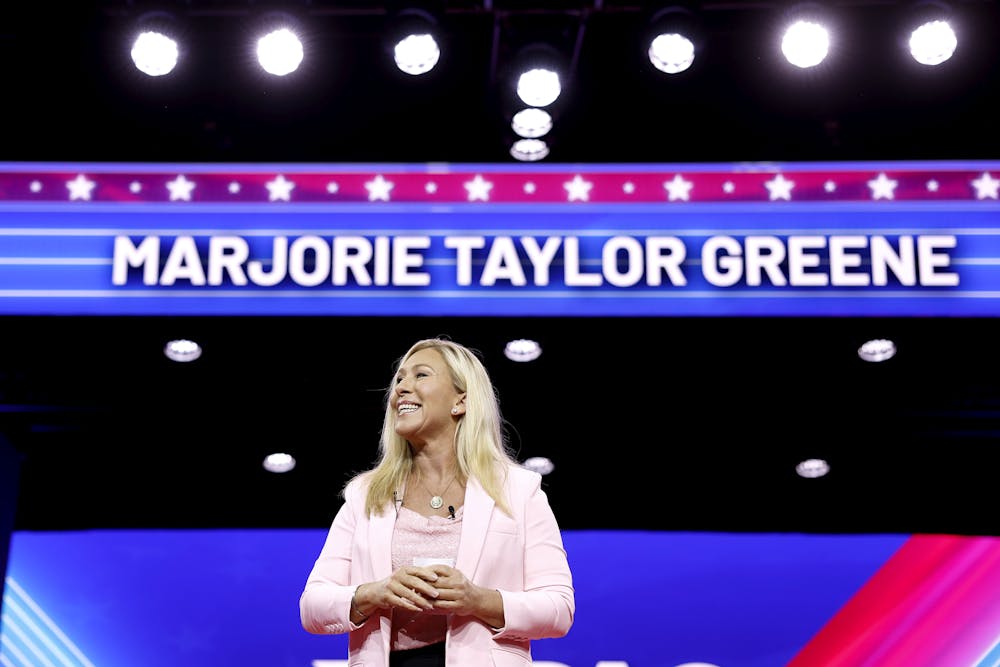
A blond woman in a pink jacket stands in front of many lights and a marquee that says 'Marjorie Taylor Greene'

GOP Rep. Marjorie Taylor Greene wants red and blue states to separate. Anna Moneymaker/Getty Images

Scaled secession

This scale begins with smaller, targeted exits, like a person getting out of jury duty, and progresses to include the larger ways that communities refuse to comply with state and federal authorities.

Such refusals could involve legal maneuvers like interposition, in which a community delays or constrains the enforcement of a law it opposes, or nullification, in which a community explicitly declares a law to be null and void within its borders. At the end of the scale, there’s secession.

From this wider perspective, it is clear that many acts of departure – call them secession lite, de facto secession or soft separatism – are occurring right now. Americans have responded to increasing polarization by exploring the gradations between soft separatism and hard secession.

These escalating exits make sense in a polarized nation whose citizens are sorting themselves into like-minded neighbhorhoods. When compromise is elusive and coexistence is unpleasant, citizens have three options to get their way: Defeat the other side, eliminate the other side or get away from the other side.

Imagine a national law; it could be a mandate that citizens brush their teeth twice a day or a statute criminalizing texting while driving. Then imagine that a special group of people did not have to obey that law.

This quasi-secession can be achieved in several ways. Maybe this special group moves “off the grid” into the boondocks where they could text and drive without fear of oversight. Maybe this special group wields political power and can buy, bribe or lawyer their way out of any legal jam. Maybe this special group has persuaded a powerful authority, say Congress or the Supreme Court, to grant them unique legal exemptions.

These are hypothetical scenarios, but not imaginary ones. When groups exit public life and its civic duties and burdens, when they live under their own sets of rules, when they do not have to live with fellow citizens they have not chosen or listen to authorities they do not like, they have already seceded.

Schools to taxes

Present-day America offers numerous hard examples of soft separatism.

Over the past two decades, scores of wealthy white communities have separated from more diverse school districts. Advocates cite local control to justify these acts of school secession. But the result is the creation of parallel school districts, both relatively homogeneous but vastly different in racial makeup and economic background.

Several prominent district exits have occurred in the South – places like St. George, Louisiana – but instances from northern Maine to Southern California show that school splintering is happening nationwide.

As one reporter wrote, “If you didn’t want to attend school with certain people in your district, you just needed to find a way to put a district line between you and them.”

Many other examples of legalized separatism revolve around taxes. Disney World, for example, was classified as a “special tax district” in Florida in 1967. These special districts are functionally separate local governments and can provide public services and build and maintain their own infrastructure.

The company has saved millions by avoiding typical zoning, permitting and inspection processes for decades, although Florida Gov. Ron DeSantis has recently challenged Disney’s special designation. Disney was only one of 1,800 special tax districts in Florida; there are over 35,000 in the nation.

Jeff Bezos paid no federal income taxes in 2011. Elon Musk paid almost none in 2018. Tales of wealthy individuals avoiding taxes are as common as stories of rich Americans buying their way out of jail. “Wealthier Americans,” Robert Reich lamented as far back as the early 1990s, “have been withdrawing into their own neighborhoods and clubs for generations.” Reich worried that a “new secession” allowed the rich to “inhabit a different economy from other Americans.”

Some of the nation’s wealthiest citizens pay an effective tax rate close to zero. As one investigative reporter put it, the ultrawealthy “sidestep the system in an entirely legal way.”

One nation, divisible

Schools and taxes are just a start.

Eleven states dub themselves “Second Amendment sanctuaries” and refuse to enforce federal gun restrictions. Movements aiming to carve off rural, more politically conservative portions of blue states are growing; 11 counties in Eastern Oregon support seceding and reclassifying themselves as “Greater Idaho,” a move that Idaho’s state government supports.

Hoping to become a separate state independent of Chicago’s political influence, over two dozen rural Illinois counties have passed pro-secession referendums. Some Texas Republicans back “Texit,” where the state becomes an independent nation.

Separatist ideas come from the Left, too.

Cal-exit,” a plan for California to leave the union after 2016, was the most acute recent attempt at secession.

And separatist acts have reshaped life and law in many states. Since 2012, 21 states have legalized marijuana, which is federally illegal. Sanctuary cities and states have emerged since 2016 to combat aggressive federal immigration laws and policies. Some prosecutors and judges refuse to prosecute women and medical providers for newly illegal abortions in some states.

Estimates vary, but some Americans are increasingly opting out of hypermodern, hyperpolarized life entirely. “Intentional communities,” rural, sustainable, cooperative communes like East Wind in the Ozarks, are, as The New York Times reported in 2020, proliferating “across the country.”

In many ways, America is already broken apart. When secession is portrayed in its strictest sense, as a group of people declaring independence and taking a portion of a nation as they depart, the discussion is myopic, and current acts of exit hide in plain sight. When it comes to secession, the question is not just “What if?” but “What now?”


Michael J. Lee, Professor of Communication, College of Charleston

This article is republished from The Conversation under a Creative Commons license. Read the original article.

“Poverty is a policy choice”: Minnesota kids cheer new law guaranteeing free school lunch for all

Surrounded by students, teachers, and advocates, Democratic Minnesota Gov. Tim Walz on Friday afternoon signed into law a bill to provide breakfast and lunch at no cost to all of the state’s roughly 820,000 K-12 pupils regardless of their household income.

The move to make Minnesota the fourth U.S. state to guarantee universal free school meals—joining California, Maine, and Colorado—elicited praise from progressives.

“Beautiful,” tweeted Stephanie Kelton, a professor of economics and public policy at Stony Brook University.

UC-Berkeley professor and former U.S. labor secretary Robert Reich wrote on social media: “Let this serve as a reminder that poverty is a policy choice. In the richest country in the world, it is absolutely inexcusable that millions of our children go to school hungry because they are living in poverty.”

An estimated 1 in 6 children in Minnesota don’t get enough to eat on a regular basis. But 1 in 4 food-insecure kids live in households that don’t qualify for the federal free and reduced meal program, leading to “mounting school lunch debts in the tens of thousands of dollars,” Minnesota Public Radioreported.

Tens of thousands of children are set to benefit from Minnesota’s new law, which could be operational as early as summer school in July. Some of them were there to thank Walz at the signing ceremony, where the sense of elation was palpable.

“As a former teacher, I know that providing free breakfast and lunch for our students is one of the best investments we can make to lower costs, support Minnesota’s working families, and care for our young learners and the future of our state,” Walz said. “This bill puts us one step closer to making Minnesota the best state for kids to grow up, and I am grateful to all of the legislators and advocates for making it happen.”

The Minnesota House—led by the Democratic-Farmer-Labor (DFL) Party, the state’s Democratic affiliate—first passed the bill in February in a 70-58 party-line vote. The state Senate—where the DFL holds just a single-seat advantage—approved it on Tuesday by a 38-26 margin. The state House rubber-stamped an amended version of the bill on Thursday.

In a now-viral clip from the state Senate’s debate over the bill earlier this week. Sen. Steve Drazkowski (R-20) questioned whether hunger is really a problem in Minnesota—even as the state’s food banks reported a record surge in visits last year, months before federal lawmakers slashed pandemic-era Supplemental Nutrition Assistance Program (SNAP) benefits.

“I have yet to meet a person in Minnesota that is hungry,” Drazkowski said before voting against the bill. “I have yet to meet a person in Minnesota that says they don’t have access to enough food to eat.”

During Friday’s signing ceremony, Lt. Gov. Peggy Flanagan (DFL) said, “To our decision-makers who believe they have never met someone who is experiencing or has experienced hunger: Hi, my name is Peggy Flanagan, and I was 1 in 6 of those Minnesota children who experienced hunger.”

“By providing free breakfast and lunch to all of our students, we are removing barriers and removing stigma from the lunch room,” said Flanagan. “We are helping family pocketbooks, especially for those 1 in 4 who don’t qualify for financial assistance with school meals. We are leading with our values that no child should go hungry for any reason, period.”

“This is an investment in the well-being of our children, as well as an investment in their academic success,” Flanagan added, calling the “generation-changing” bill “the most important thing” she’s ever worked on in her life.

As Minnesota Reformer reported: “The majority of Minnesota schools receive federal funding from the National School Lunch Program, which reimburses schools for each meal served, though it doesn’t cover the cost of the entire meal. Under the new law, schools are prohibited from charging students for the remaining cost, and the state will foot the rest of the bill—about $200 million annually.”

MPR noted that “the legislation is similar to a program that was introduced during the pandemic to provide meals for all students, but was discontinued at the end of last year.”

Last month, The Star Tribune editorial board opined that providing free breakfast and lunch to all of Minnesota’s students, including affluent ones, is “excessive.”

Pushing back against this argument for means-testing, Darcy Stueber—director of Nutrition Services for Mankato Area Public Schools and public policy chair of the Minnesota School Nutrition Association—asserted that meals should be guaranteed to all kids at no cost, just like other basic learning necessities.

“We don’t charge for Chromebooks and desks and things like that,” she told MPR. “It’s a part of their day and they’re there for so many hours. It just completes that whole learning experience for the child.”

Minnesota Rep. Sydney Jordan (DFL-60A), the bill’s lead author, made the same point to counter GOP lawmakers’ complaints following the initial passage of the legislation.

“We give every kid in our school a desk,” Jordan said last month. “There are lots of kids out there that can afford to buy a desk, but they get a desk because they go to school.”

Walz, for his part, stressed Friday that his administration is “just getting started” when it comes to boosting education funding.

“The big stuff,” said the governor, “is still coming.”

IPCC report: Climate damage is worsening faster than expected, but there’s still reason for optimism

Reading the latest international climate report can feel overwhelming. It describes how rising temperatures caused by increasing greenhouse gas emissions from human activities are having rapid, widespread effects on the weather, climate and ecosystems in every region of the planet, and it says the risks are escalating faster than scientists expected.

Global temperatures are now 1.1 degree Celsius (2 degrees Fahrenheit) warmer than at the start of the industrial era. Heat waves, storms, fires and floods are harming humans and ecosystems. Hundreds of species have disappeared from regions as temperatures rise, and climate change is causing irreversible changes to sea ice, oceans and glaciers. In some areas, it’s becoming harder to adapt to the changes.

Still, there are reasons for optimism – falling renewable energy costs are starting to transform the power sector, for example, and the use of electric vehicles is expanding. But the change isn’t happening fast enough, and the window for a smooth transition is closing fast, the Intergovernmental Panel on Climate Change report warns. To keep global warming below 1.5 C (2.7 F), it says global greenhouse gas emissions will have to drop 60% by 2035 compared with 2019 levels.

That’s 12 years from now.

Heat map shows how temperatures have changed and what they look like under different scenarios going foward.

The extent to which current and future generations will experience a hotter world depends on choices made now and in the coming years. The scenarios show expected differences in temperature depending on how high emissions are going forward. IPCC sixth assessment report

In the new report, released March 20, 2023, the IPCC summarizes the findings from a series of reports written over the past eight years by hundreds of scientists who reviewed the latest evidence and research.

Here are four essential reads by some of the co-authors of those reports, each providing a different snapshot of the transformational changes underway.

1. More intense storms and flooding

A line of rescue workers in bright vests and hard hats walks in waist-deep water on a flooded street, pulling a raft. Water is up to the mailbox they're passing.

A volunteer fire company assists with evacuation efforts following a flash flood in Helmetta, New Jersey, in August 2021. Tom Brenner / AFP via Getty Images

Many of the most shocking natural disasters of the past few years have involved intense rainfall and flooding.

In Europe, a storm in 2021 set off landslides and sent rivers rushing through villages that had stood for centuries. In 2022, about a third of Pakistan was underwater, and several U.S. communities were hit with extreme flash flooding.

The IPCC warns in the sixth assessment report that the water cycle will continue to intensify as the planet warms. That includes extreme monsoon rainfall, but also increasing drought, greater melting of mountain glaciers, decreasing snow cover and earlier snowmelt, wrote UMass-Lowell climate scientist Mathew Barlow, a co-author of the assessment report examining physical changes.

World maps show precipitation increasing in higher latitudes, but not everywhere.

Annual average precipitation is projected to increase in many areas as the planet warms, particularly in the higher latitudes. IPCC sixth assessment report

“An intensifying water cycle means that both wet and dry extremes and the general variability of the water cycle will increase, although not uniformly around the globe,” Barlow wrote.

“Understanding this and other changes in the water cycle is important for more than preparing for disasters. Water is an essential resource for all ecosystems and human societies.”

2. The longer the delay, the higher the cost

A pedicab driver looks over at an SUV making waves as both drive through knee-high water.

Extreme rainfall filled streets in Dhaka, Bangladesh, in July 2020. Flooding has become common in many South Asia cities. Munir Uz zaman / AFP via Getty Images

The IPCC stressed in its reports that human activities are unequivocally warming the planet and causing rapid changes in the atmosphere, oceans and icy regions of the world.

“Countries can either plan their transformations, or they can face the destructive, often chaotic transformations that will be imposed by the changing climate,” wrote Edward Carr, a Clark University scholar and co-author of the IPCC report focused on adaptation.

The longer countries wait to respond, the greater the damage and cost to contain it. One estimate from Columbia University put the cost of adaptation needed just for urban areas at between US$64 billion and $80 billion a year – and the cost of doing nothing at 10 times that level by mid-century.

“The IPCC assessment offers a stark choice,” Carr wrote. “Does humanity accept this disastrous status quo and the uncertain, unpleasant future it is leading toward, or does it grab the reins and choose a better future?”

3. Transportation is a good place to start

3 EV's parked in a garage and charging.

Electric vehicle sales have been accelerating, and new tax incentives and state zero-emissions requirements are expected to boost sales even more. Michael Fousert/Unsplash, CC BY

One crucial sector for reducing greenhouse gas emissions is transportation.

Cutting greenhouse gas emissions to net-zero by mid-century, a target considered necessary to keep global warming below 1.5 C, will require “a major, rapid rethinking of how people get around globally,” wrote Alan Jenn, a transportation scholar at the University of California Davis and co-author on the IPCC report dealing with mitigation.

There are positive signs. Battery costs for electric vehicles have fallen, making them increasingly affordable. In the U.S., the 2022 Inflation Reduction Act offers tax incentives that lower the costs for EV buyers and encourage companies to ramp up production. And several states are considering following California’s requirement that all new cars and light trucks be zero-emissions by 2035.

Charts showing falling costs and rising adoption

Costs have fallen for key forms of renewable energy and EV batteries, and adoption of these technologies is rising. IPCC sixth assessment report

“Behavioral and other systemic changes will also be needed to cut greenhouse gas emissions dramatically from this sector,” Jenn wrote.

For example, many countries saw their transportation emissions drop during COVID-19 as more people were allowed to work from home. Bike sharing in urban areas, public transit-friendly cities and avoiding urban sprawl can help cut emissions even further. Aviation and shipping are more challenging to decarbonize, but efforts are underway.

He adds, however, that it’s important to remember that the effectiveness of electrifying transportation ultimately depends on cleaning up the electricity grid.

4. Reasons for optimism

A man installs solar panels on a roof.

Solar panels have become increasingly common on homes, businesses and parking lots as prices have fallen. Ben McCanna/Portland Press Herald via Getty Images

The IPCC reports discuss several other important steps to reduce greenhouse gas emissions, including shifting energy from fossil fuels to renewable sources, making buildings more energy efficient and improving food production, as well as ways to adapt to changes that can no longer be avoided.

There are reasons for optimism, wrote Robert Lempert and Elisabeth Gilmore, co-authors on the IPCC’s report focused on mitigation.

“For example, renewable energy is now generally less expensive than fossil fuels, so a shift to clean energy can often save money,” they wrote. Electric vehicle costs are falling. Communities and infrastructure can be redesigned to better manage natural hazards such as wildfires and storms. Corporate climate risk disclosures can help investors better recognize the hazards and push those companies to build resilience and reduce their climate impact.

“The problem is that these solutions aren’t being deployed fast enough,” Lempert and Gilmore wrote. “In addition to pushback from industries, people’s fear of change has helped maintain the status quo.” Meeting the challenge, they said, starts with embracing innovation and change.


Editor’s note: This story is a roundup of articles from The Conversation’s archives.

Stacy Morford, Environment + Climate Editor, The Conversation

This article is republished from The Conversation under a Creative Commons license. Read the original article.

Israeli official condemned for genocidal “no such thing as Palestinians” claim

While condemning the latest anti-Palestinian rights comments from far-right Israeli Finance Minister Bezalel Smotrich, advocates on Monday said his remarks were “genocidal” and noted that Smotrich’s violent rhetoric represents longstanding views by Zionists in Israel and elsewhere.

A day after Palestinian and Israeli leaders met in Egypt to discuss deescalating tensions ahead of Ramadan and Passover, Smotrich spoke at a memorial service in Paris where he claimed the Palestinian people are “an invention” dating back to the mid-20th century to fight Zionism.

“There’s no such thing as Palestinians because there’s no such thing as a Palestinian people,” said Smotrich, standing at a podium that displayed a map of Israel, including the occupied West Bank and parts of Jordan. “There is no such thing as a Palestinian nation. There is no Palestinian history. There is no Palestinian language.”

He also asked the crowd, “Do you know who are the Palestinians?” before claiming he himself is Palestinian because his grandparents were from Jerusalem and the northern Israeli town of Metula, despite the fact that his surname is derived from a Ukrainian town where his ancestors lived.

The Foreign Ministry of Jordan called Smotrich’s comments “extremist, inflammatory, [and] racist” while Palestinian officials described them as “fascist.”

Smotrich’s comments came less than a month after he publicly said the State of Israel should “wipe out” the village of Hawara soon after the town was targeted by Israeli settlers in a deadly rampage. For those comments, Palestinian rights groups called on the United States government to bar Smotrich from the country.

The Biden administration granted Smotrich a visa despite officials’ claims that they found his remarks “repugnant.”

Israeli Prime Minister Benjamin Netanyahu’s government this month granted Smotrich broad power over the occupied West Bank, including control over settlement planning.

Smotrich’s comments also came as Netanyahu’s coalition government signaled it is moving forward with parts of a planned overhaul of the country’s judicial system, which critics say will make Israel’s government even more authoritarian.

Violence in the occupied Palestinian territories has exploded in recent weeks, with 85 people killed by Israeli forces so far this year. Observers have raised alarm that violence could intensify as Jewish and Muslim people are expected to visit Jerusalem’s Old City and holy sites to mark Passover and Ramadan in the coming weeks.

Benzion Sanders of the Israel-based anti-occupation group Breaking the Silence warned that Smotrich’s comments on Sunday indicated not just his personal beliefs, but his “vision” as a government official and chair of the Religious Zionist Party.

“He’s been talking about the vision to ethnically cleanse Palestinians for years,” said Sanders.

While the open violence of Smotrich’s rhetoric in recent weeks has been uncommon, said Ali Abunimah of Electronic Intifada, his comments have been in line with Israel’s long history of “expelling Palestinians from their land and denying their existence.”

The “only difference between Smotrich and ‘liberals’ is that he’s open about Zionism being genocidal,” said Abunimah.

“Hoosiers” and Indiana basketball made me believe

Even now, I can picture the poster in the basement of my childhood home. The red uniforms stood out brightly against the fake wood paneling of the wall, as did the shock of thick white hair on the most imposing man on the poster: coach Bob Knight.

It was a poster of the Indiana University (IU) men’s basketball team. One of my parents is an IU alum, but more than that, we were all born in Indiana, flat land of cornfields and quarries, churches and schoolhouses, often the punchline of other states’ jokes. It was home to legendary basketball programs at both the college and high school levels.

A good thing the town has is basketball. Sometimes, it feels like the only thing.

The IU men’s team just lost to Miami in the NCAA Tournament Round of 32, ending its basketball season this year. But for so many seasons, IU has and continues to dominate. What is it exactly about small towns that give rise to such big dreams, as well as such driven talent?

The 1986 film “Hoosiers” provides a window. A staple of my youth, I watched it instead of cartoons. It was “Ted Lasso” before “Ted Lasso,” a near Bible for rural Indiana living, where for so long, one of the only ways to distinguish yourself in the eyes of the rest of the nation was on a court or a field, and one of the only ways out was to achieve glory there.

James Wright’s 1959 poem “Autumn Begins in Martin’s Ferry, Ohio” is about high school football and the neighboring state Ohio, but some of the lines could easily be about IU basketball, with mothers “dying for love” and “proud fathers” whose sons “gallop terribly against each other’s bodies.” It’s the hope of a small town, placed heavily on very young shoulders.

Sports remind us of youth and the potential we all might have had, a potential relived vicariously in athletes often not even old enough to vote. As Barbara Hershey’s character, teacher Myra Fleener, says in “Hoosiers”: “Every game my bother ever played was the most important thing that ever happened to this family.”

Written by Indiana-raised Angelo Pizzo, who also penned “Rudy,” and directed by Indiana-born David Anspaugh in his directorial debut, “Hoosiers” tells the story of a small-town Indiana boys’ basketball team who makes it to the state championship in a “barn burner” game. The film, starring Gene Hackman and Dennis Hooper, was inspired by the true story of the 1954 Milan High School champions.

“This town doesn’t like change much,” Hackman, as new and controversial coach Norman Dale, learns when he takes over coaching. Like Ted decades after him, though much more explosive than the genial-to-a-fault character, Norman is doubted, challenged and mocked by players and men — mostly men — of the town alike. (The film and its title, referring to the IU mascot and the name for someone from Indiana, get a shout-out this season in “Ted Lasso.”) But while Norman doesn’t tape up a “Believe” sign in the dreary locker room, he gets the town on his side — and rooting for their own.

Because a good thing the town has is basketball. Sometimes, it feels like the only thing, a positive association, especially for places often connected with negativity. Witness the outpouring of love and support for Joe Burrow, who was raised where my son was born, an Appalachian town previously most often in the national news (frequently in broadly-painted, clichéd stories) for poverty.

2023 Indiana University basketball teamTamar Bates #53 of the Indiana Hoosiers recovers the ball against the Miami Hurricanes during the second round of the 2023 NCAA Men’s Basketball Tournament held at MVP Arena on March 19, 2023 in Albany, New York. (C. Morgan Engel/NCAA Photos via Getty Images)

The dream is to leave. The lifelong dream is to come home someday and return the favor of help.

Sports are a positive story, a wholesome story and a universal one. Perhaps the rest of the world can’t understand the particular striving of the boys in “Hoosiers” surrounded by farmland, processing stalks of sorghum in one scene, which my dad’s family also grew. (He said that school in his rural Indiana town would let out for planting and harvest every year.) But anyone can understand wanting more, which is one of the great ironies of small-town sports. Doing well can be mean getting out, leaving that beloved community that raised and supported you. The dream is to leave. The lifelong dream is to come home someday and return the favor of help.

“Way back where I come from we never mean to bother / We don’t like to make our passions other peoples’ concern,” Dar Williams sings in the lonesome tune “Iowa (Travelling III).” And though the song is about a different misunderstood flyover state, she could have been singing about the state of my birth and the oft-mocked ways of any Midwesterners, really. We take forever saying goodbye, and we don’t let our emotions get the better of us — ever. We bottle it inside. Sports are a time to get it out, a socially acceptable venue in which to not only scream, shout and weep, but also aspire.


Want a daily wrap-up of all the news and commentary Salon has to offer? Subscribe to our morning newsletter, Crash Course.


“I thought everybody in Indiana played basketball,” Coach Norman Dale says to his players upon first meeting the then-small team. “Sir, most do,” one of the athletes replies.

I think of my dad, aunts and uncles playing in the dust, on an old netless rim attached to the barn at my grandparents’ farm, how my sister and I tried to join, still too short to make a basket without assistance. So many Indiana houses, no matter how small or humble they look, have hoops. And so many kids spend their twilights there still hoping and shooting and trying again until the night falls.

“He has a battle rifle”: Police feared Uvalde gunman’s AR-15

The video is compiled from audio and video footage from officers who responded to Robb Elementary School in Uvalde on May 24, 2022. The video does not include images of the shooter or victims. Credit: Todd Wiseman and Jinitzail Hernández / The Texas Tribune

Having trouble viewing? Watch this video on texastribune.org.

Sign up for The Brief, The Texas Tribune’s daily newsletter that keeps readers up to speed on the most essential Texas news.


Editor’s note: This story includes graphic descriptions of injuries, and one graphic image taken from inside a classroom. We are not publishing images of injured or deceased victims.

UVALDE — Once they saw a torrent of bullets tear through a classroom wall and metal door, the first police officers in the hallway of Robb Elementary School concluded they were outgunned. And that they could die.

The gunman had an AR-15, a rifle design used by U.S. soldiers in every conflict since Vietnam. Its bullets flew toward the officers at three times the speed of sound and could have pierced their body armor like a hole punch through paper. They grazed two officers in the head, and the group retreated.

Uvalde Police Department Sgt. Daniel Coronado stepped outside, breathing heavily, and got on his radio to warn the others.

“I have a male subject with an AR,” Coronado said.

The dispatch crackled on the radio of another officer on the opposite side of the building.

“Fuck,” that officer said.

“AR,” another exclaimed, alerting others nearby.

Almost a year after Texas’ deadliest school shooting killed 19 children and two teachers, there is still confusion among investigators, law enforcement leaders and politicians over how nearly 400 law enforcement officers could have performed so poorly. People have blamed cowardice or poor leadership or a lack of sufficient training for why police waited more than an hour to breach the classroom and subdue an amateur 18-year-old adversary.

But in their own words, during and after their botched response, the officers pointed to another reason: They were unwilling to confront the rifle on the other side of the door.

A Texas Tribune investigation, based on police body cameras, emergency communications and interviews with investigators that have not been made public, found officers had concluded that immediately confronting the gunman would be too dangerous. Even though some officers were armed with the same rifle, they opted to wait for the arrival of a Border Patrol SWAT team, with more protective body armor, stronger shields and more tactical training — even though the unit was based more than 60 miles away.

“You knew that it was definitely an AR,” Uvalde Police Department Sgt. Donald Page said in an interview with investigators after the school shooting. “There was no way of going in. … We had no choice but to wait and try to get something that had better coverage where we could actually stand up to him.”

“We weren’t equipped to make entry into that room without several casualties,” Uvalde Police Department Detective Louis Landry said in a separate investigative interview. He added, “Once we found out it was a rifle he was using, it was a different game plan we would have had to come up with. It wasn’t just going in guns blazing, the Old West style, and take him out.”

Uvalde school district Police Chief Pete Arredondo, who was fired in August after state officials cast him as the incident commander and blamed him for the delay in confronting the gunman, told investigators the day after the shooting he chose to focus on evacuating the school over breaching the classroom because of the type of firearm the gunman used.

“We’re gonna get scrutinized (for) why we didn’t go in there,” Arredondo said. “I know the firepower he had, based on what shells I saw, the holes in the wall in the room next to his. … The preservation of life, everything around (the gunman), was a priority.”

None of the officers quoted in this story agreed to be interviewed by the Tribune.

The gunman's AR-15 style rifle lays in a supply closet of Room 111 at Robb Elementary School.

The gunman’s AR-15 style rifle lays in a supply closet of Room 111 at Robb Elementary School. Credit: Law enforcement photo

That hesitation to confront the gun allowed the gunman to terrorize students and teachers in two classrooms for more than an hour without interference from police. It delayed medical care for more than two dozen gunshot victims, including three who were still alive when the Border Patrol team finally ended the shooting but who later died.

Mass shooting protocols adopted by law enforcement nationwide call on officers to stop the attacker as soon as possible. But police in other mass shootings — including at Stoneman Douglas High School in Parkland, Florida, and the Pulse nightclub in Orlando, Florida — also hesitated to confront gunmen armed with AR-15-style rifles.

Even if the law enforcement response had been flawless and police had immediately stopped the gunman, the death toll in Uvalde still would have been significant. Investigators concluded most victims were killed in the minutes before police arrived.

But in the aftermath of the shooting, there has been little grappling with the role the gun played. Texas Republicans, who control every lever of state government, have talked about school safety, mental health and police training — but not gun control.

A comprehensive and scathing report of law enforcement’s response to the shooting, released by a Texas House investigative committee chaired by Republican Rep. Dustin Burrows in July, made no mention of the comments by law enforcement officers in interviews that illustrated trepidation about the AR-15.

Other lawmakers have taken the position that the kind of weapon used in the attack made no difference.

“This man had enough time to do it with his hands or a baseball bat, and so it’s not the gun. It’s the person,” Sen. Bob Hall, R-Edgewood, said in a hearing a month after the shooting.

Republican state and legislative leaders, who are in the midst of the first legislative session since the shooting, are resisting calls for gun restrictions, like raising the age to purchase semi-automatic rifles like the AR-15. Republican Gov. Greg Abbott has suggested such a law would be unconstitutional, while House Speaker Dade Phelan said he doubts his chamber would support it.

Abbott, Lt. Gov. Dan Patrick and four Republican members of the Legislature — Phelan, Hall, Burrows and Rep. Ryan Guillen, chair of the House committee that will hear all gun-related proposals, declined to discuss the findings of this story or did not respond. Two gun advocacy groups, Texas Gun Rights and the Texas State Rifle Association, also did not respond.

Limiting access to these kinds of rifles may not decrease the frequency of mass shootings, which plagued the country before the rifle became popular among gun owners. During the decade that the federal assault weapons ban was in place, beginning in 1994, the number of mass shootings was roughly the same as in the decade prior, according to a mass shooting database maintained by Mother Jones. It also would not address the root causes that motivate mass shooters, merely limit the lethality of the tools at their disposal.

Relatives of Uvalde victims, like Jesse Rizo, whose 9-year-old niece Jackie Cazares was killed in the shooting, say the comments by police who responded in Uvalde are undeniable proof that rifles like the AR-15 should be strictly regulated.

“(Police) knew the monster behind the door was not the kid. It’s the rifle the kid is holding,” said Rizo, referring to the 18-year-old gunman. “It’s the freaking AR that they’re afraid of. … Their training doesn’t say sit back and wait.”

A weapon of war

Officers arriving at Robb Elementary on May 24 had similar reactions as they realized that the gunman had an AR-15.

“You know what kind of gun?” state Trooper Richard Bogdanski asked in a conversation captured on his body-camera footage outside of the school.

“AR. He has a battle rifle,” a voice responded.

“Does he really?” another asked.

“What’s the safest way to do this? I’m not trying to get clapped out,” Bogdanski said.

They had good reason to worry: The AR-15 was designed to efficiently kill humans.

ArmaLite, a small gunmaker in California, designed the AR-15 in the late 1950s as a next-generation military rifle. Compared with the U.S. Army’s infantry rifle at the time, the AR-15 was less heavy, had a shorter barrel and used lighter ammunition, allowing soldiers to carry more on the battlefield. It also fired a smaller-caliber bullet but compensated for it by increasing the speed at which it is propelled from the barrel.

A declassified 1962 Department of Defense report from the Vietnam War found the AR-15 would be ideal for use by South Vietnamese soldiers, who were smaller in stature and had less training than their American counterparts, for five reasons: its easy maintenance, accuracy, rapid rate of fire, light weight and “excellent killing or stopping power.”

“The lethality of the AR-15 and its reliability record were particularly impressive,” the authors reported.

Its bullets could also penetrate the body armor worn by the initial responding officers to Robb Elementary, an added level of danger they were aware of. While most departments, including the city of Uvalde’s, have rifle-rated body armor, it is not typically worn by officers on patrol because of its added weight.

“Had anybody gone through that door, he would have killed whoever it was,” Uvalde Police Department Lt. Javier Martinez told investigators the day after the shooting. You “can only carry so many ballistic vests on you. That .223 (caliber) round would have gone right through you.”

Coronado echoed the concern in his own interviews with investigators about the moment he realized the gunman had a battle rifle.

“I knew too it wasn’t a pistol. … I was like, ‘Shit, it’s a rifle,'” he said. He added, “The way he was shooting, he was probably going to take all of us out.”

The AR-15 is less powerful than many rifles, such as those used to hunt deer or other large game. But it has significantly more power than handguns, firing a bullet that has nearly three times the energy of the larger round common in police pistols.

The AR-15 also causes more damage to the human body. Handgun bullets typically travel through the body in a straight line, according to a 2016 study published by The Journal of Trauma and Acute Care Surgery. High-energy bullets become unstable as they decelerate in flesh, twisting and turning as they damage a wider swath of tissue. This creates “not only a permanent cavity the size of the caliber of the bullet, but also a … second cavity often many times larger than the bullet itself.”

The Defense Department report detailed this effect in plainer language, describing the AR-15’s performance in a firefight with Viet Cong at a range of 50 meters: “One man was shot in the head; it looked like it exploded. A second man was hit in the chest; his back was one big hole.”

The Defense Department placed its first mass order for the rifle in 1963, calling its version the M16, and based each of its service rifles until 2022 on this design. The only significant difference between the military and civilian versions of the AR-15 is that the military rifle can fire automatically, meaning the user can depress the trigger to shoot multiple rounds. The civilian AR-15 is semi-automatic, requiring a trigger pull for each round.

In the context of mass shootings, it is a distinction without a meaningful difference: Both rates of fire can kill a roomful of people in seconds.

That’s what happened in Uvalde.

In two and a half minutes, before any police officer set foot inside the school, the gunman fired more than 100 rounds at students and teachers from point-blank range. Several victims lost large portions of their heads, photos taken by investigators show. Bullets tore gashes in flesh as long as a foot. They shattered a child’s shin, nearly severed another’s arm at the elbow, ripped open another’s neck, blasted a hole the size of a baseball in another’s hip. Other rounds penetrated the wall of Room 111, passed through the empty Room 110, punctured another wall and wounded a student and teacher in Room 109, who survived.

When medics finally reached the victims, there was nothing they could do for most, they said in interviews with investigators. Eighteen of the 21 were pronounced dead at the school. Police assigned each a letter of the alphabet and took DNA samples so they could be identified by family.

Rifle popularity surges

Ruben Torres, who saw what the rifle can do in combat while serving as a Marine infantryman in Iraq and Afghanistan, never imagined someone would use it to try and kill his daughter, Khloie, who was wounded by bullet fragments at Robb Elementary.

The Corps spends so much time drilling firearm safety into Marines that Torres can recite the rules from memory. Even now, he has no objection to civilians owning AR-15s, but he thinks they should be required to complete training like soldiers because too many who buy one treat it like a toy.

“You get people that never served in the military or law enforcement, and yet they’re wannabes,” Torres said. “They purchase this weapons system, not having a clue how to use it, the type of power and the level of maturity needed to even operate it.”

It was customers seeking a military experience who helped spur the rifle’s surge in popularity over the past 15 years, gun industry researchers say. Civilians have been able to buy an AR-15 since the mid-1960s, but for decades it was a niche product whose largest customer segment included police SWAT units.

A federal assault weapons ban expired in 2004, creating a new opportunity to market rifles like the AR-15 to the general public, said Timothy Lytton, a professor at the Georgia State University College of Law who researches the gun industry.

“In the 2000s, there was a shift in the industry’s marketing to people who are not just looking for self-defense, but people who are also looking for some sort of tactical experience,” Lytton said. He said this new consumer wanted to “simulate military combat situations.”


Sales of the rifle exploded. The National Shooting Sports Foundation, a prominent trade group, estimates American gunmakers produced 1.4 million semi-automatic rifles like the AR-15 in 2015, excluding exports — a figure 10 times higher than a decade earlier. This group of semi-automatic rifles accounted for 89% of the rifles made by domestic manufacturers in 2020, according to government and industry data.

As it grew more popular with the public, the rifle also became more popular with mass shooters. AR-15-style rifles weren’t used in any mass shootings until 2007, according to the mass shooting database maintained by Mother Jones, which includes indiscriminate killings of at least three people in public places, excluding crimes that stem from robbery, gang activity or other conventionally explained motives.

Gunmen used the rifle in 5% of attacks that decade and 27% in the 2010s. 2022 cemented the AR-15 as the weapon of choice for mass shooters. They wielded the rifle in 67% of the 12 massacres that year, including a parade in Illinois where seven were slain and a supermarket shooting in New York that killed 10.

The death toll in Uvalde exceeded them both.

The gunman’s purchase

Little is known about what motivated the shooter in Uvalde or why he targeted the elementary school he once attended. But signs of planning, and a fixation on guns, stretched back months.

Beginning in late 2021, he began buying accessories: an electronic gun sight, rifle straps, shin guards, a vest with pockets to hold body armor and a hellfire trigger, which can be snapped onto semi-automatic weapons to allow near-automatic fire.

He faced a single significant obstacle to assembling an arsenal: Under Texas law, the minimum age to purchase long guns like rifles is 18. That hindrance vanished on May 16, 2022, his 18th birthday. He ordered an AR-15-style rifle from the website of Daniel Defense, a gunmaker that has pioneered marketing firearms via social media.

Its sleek Instagram videos often feature young men rapidly firing the company’s rifles, wearing outfits that resemble combat uniforms. Other posts feature members of the U.S. military. A lawsuit filed by Uvalde victims’ families against Daniel Defense alleges the gunmaker’s marketing intentionally targets vulnerable young men driven by military fantasies.

The company rejected these claims and cast the lawsuit as an attempt to bankrupt the gun industry.

“To imply that images portraying the heroic work of our soldiers risking their lives in combat inspires young men back home to shoot children is inexcusable,” then-CEO Marty Daniel said last year. The case is ongoing.

Federal law requires weapons purchased online to be picked up at a licensed dealer, which also performs a background check. The Uvalde gunman had no criminal history and had never been arrested, ensuring he would pass. He had the Daniel Defense rifle shipped to Oasis Outback, a gun store in town.

The gunman visited the store alone three times between May 17 and May 20. First, he purchased a Smith & Wesson AR-15-style rifle, then returned to buy 375 rounds of ammunition, then came back again to pick up the Daniel Defense rifle. Surveillance footage from the shop shows an employee placing the case on the counter and opening it. The gunman picked up the rifle, peered down the barrel and placed his finger on the trigger — a breach of a cardinal rule of gun safety, to never do so until you are ready to fire.

This video shows the person who was the shooter at Robb Elementary School in Uvalde. Credit: Surveillance footage from Oasis Outback

Having trouble viewing? Watch this video on texastribune.org.

The gun store’s owner told investigators he was an average customer with no “red flags,” though patrons told FBI agents he was “very nervous looking” and “appeared odd and looked like one of those school shooters.”

An online order he’d placed for 1,740 rifle cartridges arrived at 6:09 p.m. on May 23. In the eight days after he became eligible to purchase firearms, he bought two AR-15-style rifles and 2,115 rounds of ammunition.

He had broken no laws. He had aroused no suspicion with authorities. And, like many mass shooters, he had given no public warning about his plan.

May 24, the day of the Uvalde shooting, was most likely the first time he had ever fired a gun, investigators concluded. To do so with an AR-15 is simple: Insert a loaded magazine, cock the rifle to force a cartridge into the firing chamber, slide the safety switch off and pull the trigger. Still, he initially struggled to attach the magazine correctly in the previous days, a relative recalled to investigators, and it kept falling to the floor.

He figured it out by the time he pointed one of the rifles at his grandmother and shot her in the face, amid a dispute about his cellphone plan. The bullet tore a gash in the right side of her face; she required a lengthy hospitalization but survived. He took only the Daniel Defense rifle to the school, leaving the Smith & Wesson at his grandmother’s truck, which he had stolen, driven three blocks and crashed on the west edge of the elementary campus.

When other officers hesitated

The 77-minute delay in breaching the fourth grade classroom was an “abject failure” that set the law enforcement profession back a decade, the Texas state police director said in June. Police had failed to follow protocol developed after the 1999 Columbine school shooting that states the first priority is to confront shooters and stop the killing. Yet even beyond Uvalde, the performance of police against active shooters with AR-15-style rifles — which were rarely used in mass shootings when the standards were developed — is inconsistent.


When a gunman began firing an AR-15-style rifle in 2016 at the Pulse nightclub in Orlando, an officer providing security waited six minutes for backup before pursuing the suspect into the club; he later said his handgun was “no match” for the shooter’s rifle.

Two years later, a sheriff’s deputy at Stoneman Douglas High School in Florida did not confront the AR-15-wielding shooter there, either. Investigators said he instead retreated for four and a half minutes, during which the gunman shot 10 students and teachers, six fatally.

In some instances, police have confronted the rifle without hesitation. Officers killed a gunman who had fatally shot seven people in a 2019 shooting spree in Midland and Odessa. During the 2021 supermarket shooting in Boulder, Colorado, one of the 10 victims the gunman killed with his AR-15 was one of the first responding officers.

The extreme stress the body experiences in a gunfight slows critical thinking and motor skills, said Massad Ayoob, a police firearms trainer since the 1970s. Officers can overcome this with repeated training that is as realistic as possible, he said. Without it, they are more likely to freeze or retreat.

“Have you ever been in a firefight? Have you ever been in a situation where you were about to die?” said Kevin Lawrence, a law enforcement officer for 40 years and the executive director of the Texas Municipal Police Association. “None of us knows how we’re going to react to that circumstance until we’re in it.”

Improved training that reinforces the expectation that police immediately confront active shooters would improve the likelihood that they do so, said Jimmy Perdue, president of the Texas Police Chiefs Association. But because they attack at random locations and times, he said it is unrealistic to expect that all 800,000 law enforcement officers in the United States would be prepared. That rifles like the AR-15 are especially lethal, he acknowledged, adds an additional mental obstacle for officers.

“All we can do is play the averages … and hope that the training will take place and they’ll be able to understand the gravity of the situation and respond accordingly,” Perdue said. “But there is no guarantee that the one officer that happens to be on duty when this next shooting occurs is going to respond correctly.”

In many cases, whether officers follow active-shooter training is irrelevant. Most mass shootings end in less than five minutes, research from the FBI concluded, often before officers arrive.

This was the case in Newtown, Connecticut, where a gunman killed 26 people at an elementary school in 2012, and in Aurora, Colorado, where another killed 12 people at a movie theater the same year. Both used AR-15-style rifles.

Resistance to gun control

Texas has a long, proud and increasingly less-regulated history of gun ownership. It is rooted in a belief in personal responsibility, that average citizens can sensibly own guns to protect themselves and their families and intervene to stop armed criminals in the absence of police.

“Ultimately, as we all know, what stops armed bad guys is armed good guys,” said U.S. Sen. Ted Cruz at the National Rifle Association convention in Houston three days after the Uvalde shooting.

He cited two examples: the Border Patrol team who finally breached the classroom at Robb Elementary and the firearms instructor who shot the gunman who in 2017 attacked a church in Sutherland Springs with an AR-15-style rifle. Both actions potentially saved lives. But they failed to prevent the murders of 47 people.

This year a group of Uvalde families has been regularly visiting the Capitol to push for stricter gun laws, including to raise the age someone can legally purchase AR-15-style rifles to 21.

The mass shootings since 2016 in Dallas, Sutherland Springs, Santa Fe, El Paso and Midland-Odessa — all but one committed with a semi-automatic rifle — did not persuade the Legislature to restrict access to guns. Instead, lawmakers relaxed regulations, including allowing the open carry of handguns without a license or training. And Democrats who have proposed a number of new restrictions this session admit that their bills face nearly insurmountable odds.

The AR-15s carried by state troopers at the Capitol give Sandra Torres flashbacks. Her daughter, 10-year-old Eliahna, a promising softball player, died at Robb Elementary. Sandra never got to tell her she’d made the all-star team. Mack Segovia, Eliahna’s stepfather, didn’t grow up around guns, but he’s seen enough pictures of 200-pound wild hogs his friends tore up with AR-15s while hunting to understand what the rifle did to his daughter.

The couple has made the six-hour round trip to Austin five times already, squeezing with other families into tiny offices for meetings with lawmakers to ask for what they think are commonsense regulations. Most legislators are cordial, but sometimes the families can tell they are being rebuffed, Torres said. Her partner recalled how the House speaker drove 360 miles from his home in Beaumont to Uvalde to tell families he did not support new gun laws, which struck him as a hell of a long way for a man to travel to say: Sorry, I can’t help you.

The experience is frustrating. Torres and Segovia said they did not have a strong opinion about guns until their daughter was taken from them by a young man who bought one designed for combat, no questions asked. They said they feel compelled, if Eliahna’s death served any purpose, to make it harder for other people to do the same.

“Those were babies,” Segovia said. “I promise you, if it happened to those people in the Senate, or the governor, it would be different.”


This article originally appeared in The Texas Tribune at https://www.texastribune.org/2023/03/20/uvalde-shooting-police-ar-15/.

The Texas Tribune is a member-supported, nonpartisan newsroom informing and engaging Texans on state politics and policy. Learn more at texastribune.org.

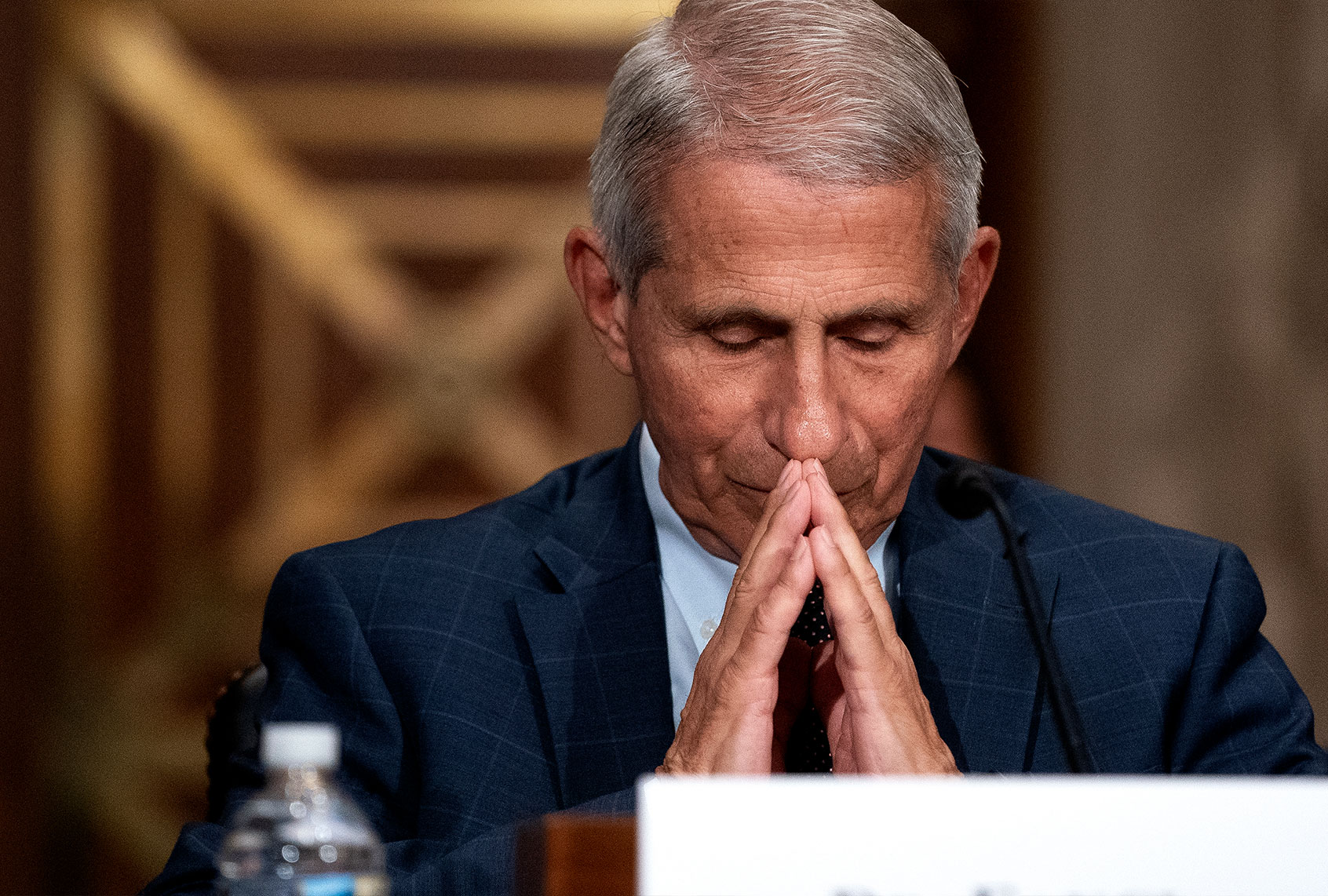
Right-wing host calls for military to execute Obama if Trump is indicted

Far-right broadcaster Pete Santilli called on members of the military to execute former President Barack Obama, former Attorney General Eric Holder, and former National Security Advisor Susan Rice if former President Donald Trump is arrested. 

Trump in a lengthy rant on Truth Social over the weekend claimed he would be arrested in connection to the Manhattan district attorney’s investigation into hush-money payments made to adult film star Stormy Daniels in the final stretch of the 2016 presidential campaign. 

Santilli responded on his show by calling for Trump’s supporters in the military to rise up and round up Obama and his former administration officials and shoot them against a “concrete wall.”

“Get the military, whatever few are left that are gonna side with the people. You military personnel and you people with guns and badges and law enforcement will succumb to the will of the people,” Santilli said in a clip flagged by Right Wing Watch.

“And ultimately, we demand, we absolutely demand that the criminals, the criminals in this country, if you want them held accountable, the criminals are Barack Obama, Eric Holder, Susan Rice,” he continued. “This entire criminal cabal that came about as a result of the murder of John F. Kennedy, the people that perpetrated the murder of John F. Kennedy, rise up to that.”

“Military, join us and put all of them up against a concrete wall…and do what we must do to save not just our country, the entire world,” he pleaded.

From “Perry Mason” to “Severance,” Jen Tullock explores the various shades of “American loneliness”

In her glamorous, scene-stealing role as the love interest for Della Street on the new season of “Perry Mason,” Jen Tullock is playing the part she was born to play.

Growing up in a conservative Christian household, Tullock was raised on classic Hollywood movies.

“My parents were very strict about not watching contemporary media,” the “Severance” star told me on “Salon Talks.”

It shows. As successful but closeted screenwriter Anita St. Pierre, she brings an effortless Barbara Stanwyck elegance to a storyline that is tinged not only with melodrama but also exuberant romance.

“As a gay woman, of course, I’m always craving more queer stories,” Tullock said. “But I think sometimes those stories can tip into a bit of trauma porn.”

This is first and foremost “a love story.” During our conversation, the busy actor, writer and director shared a hint of what lies ahead in the next season of “Severance,” as well as the importance of “aspirational” queer stories. Watch “Salon Talks” with Jen Tullock here, or read our interview below.

This conversation has been lightly edited for clarity and length.

You join the cast of “Perry Mason this season in a really intriguing role. Your character comes in with one of the best entrances I’ve seen on television in a long time — and one of the best outfits I’ve seen on television possibly ever — talk to me about your character.

Her name is Anita St. Pierre. Now, I can finally talk about this because we needed to keep it under wraps. She was loosely inspired by Anita Loos, pun intended, who was one of the only successful female screenwriters in the studio system in the ’30s. She wrote “Gentleman Prefer Blondes.” When [showrunners] Jack [Amiel] and Michael [Begler] came to me with this, they were like, “She’s an amalgamation of the very small handful of women that made it through the studio system at that time, but it’s really based on her.” I got to read her memoir, which is called “A Girl Like I,” and she was amazing.

She was just a fast-talking, chain-smoking, married I think 82 times, roughly, and was a bada*s. We wanted to explore that side of what it was like to be in the industry in 1933, and more importantly, what it was like to be queer in 1933. As anyone who’s seen the show will know, they addressed it beautifully in Season 1, with Juliet [Rylance’s] character Della. Anita comes in this season and shakes things up a little bit for her.

In a Hollywood Reporter interview, you called your character and the arc “aspirational queer stories.” This storyline is so beautiful, it’s so romantic, it’s so cinematic. What is an aspirational queer story to you?

“The team that shot this show is nothing short of a magician level.”

The team that shot this show is nothing short of a magician level. By that I meant, when we’re telling stories of any marginalized voice, or on-the-fringe voice, it’s as important to be responsible in how we frame that trauma as it is to accurately represent what it was to experience that trauma. As a gay woman, for me, of course I’m always craving more queer stories. I want to see myself and my fam represented, but I think sometimes those stories can tip into a bit of trauma porn. With this, it was really important to us that we were showing the danger, threat, humiliation, and the anxiety of being totally closeted in 1933, but without exploiting the queer part of the story.

At the end of the day, the story between Della and Anita is just a love story. We were like, “How do we strike the balance between edifying their love when framing their love, while also not skirting over the fact that they were constantly hiding?” Juliet and I talked a lot about just entering and exiting public spaces together, what that looked like, and the micro behaviors that would inspire, of looking over your shoulder and just having your head on a swivel in a way that I’m so lucky, as a queer woman today, I don’t have to do, at least as often. Sometimes I go down to the American South, where I’m from, and you better believe in a gas station or two, I’ve been down there with people I’ve dated, and I’m like, “This is a little spicy.”

What from your own life did you bring to this character?

So much. I love all of the characters I’ve had the privilege of playing. I love Devon so much on “Severance.” She’s so close to me. In that character, for example, the easiest in was the love between a brother and sister because I’m incredibly close with my brother. For this, obviously, it was a louder connection in that I haven’t played that many queer characters before. It was such a privilege to be able to pull from that part of my life. 

My therapist very smartly said in the beginning of this process, I said, “Oh, it’s going to be great. It’ll be easy.” She said, “You know what it’s like to be gay, but you don’t know what it’s like to be gay in 1933.” It did make me think, maybe I had taken for granted how easily it might be referenced, that part of my life, and it’s not. It’s true, I don’t have to hide as much as Anita has to hide. I think the ethos of that experience was easy to pull from, but the actual practical details of what we were just talking about, looking over your shoulder, and the coded language, the queer coding at that time . . . There’s a great documentary whose name now I can’t remember, but it was made in the ’90s, and it was really ahead of its time. It was all about queer coding in Hollywood.

Do you mean “The Celluloid Closet“?

Thank you. Yes, one of the most famous documentaries on queer cinema of all time. “The Celluloid Closet.” I watched that, and it was emotional. There were times on set, I’ll be honest, Juliet and I would look at each other between takes, and be like, “This is intense.” I did feel a responsibility going into it. I was like, “This is the story of my foreparents, my queer foremothers.” I stand on their shoulders, so any opportunity I think to step into any of those stories, to me, feels like a really big responsibility.

You grew up watching classic movies from the ’30s. I can see hat tips to films from the ’30s all throughout “Perry Mason.” I can see the handprints of John Ford and other films in it. Were you basing that character on certain icons from that era? 

I greatly appreciate that. The math of finding the balance between, as one of our producers rightly said early on, “We want to make sure people don’t sound like they’re coming out of a gramophone.” I grew up on those films. I grew up on Mae West films, and Greta Garbo films, and early Bette Davis, so I came in wanting to be like, “I’ve got a nickel, and a good bed, and I’m ready to love.” I have no idea what that means, but that’s what I wanted to say. We had to find the musicality of era-specific speech and behavior, without it feeling like an affectation. I am proud of where we landed with that.

To answer your question more pointedly, yes, I grew up on, from the ’30s, a lot of Mae West, Laurel and Hardy from the ’20s. Moving into the ’40s, I loved Danny Kaye and Donald O’Connor. Really, that whole 30-year period of the classic studio system. “Singing In the Rain” was a movie I watched, I’m going to say 40 times annually. Even though that was made in the ’50s, it was about an era that was just before this one, so it did feel close to my heart in that way, too. It was meta in that regard because I grew up on films about that time that were made from that time, and now, I’m telling a story that was actually situated in that time retrospectively. 

“I’m a better actor when it’s not something I’ve written because I can disappear more efficiently.”

There was a day where we were shooting in a boxing armory. It was incredible. There were 150 background actors, and we had these incredible stunt people doing the boxing, and you had cigarette girls going around. There was a bit where we enter, and I asked the director, “Can I just improvise a little bit with the guys because I feel like this is a place Anita has gone to?” She said, “I don’t know about improvising in the ’30s, and I said, “Madame, hold my earrings. Please, this is the only skill I have. Please let me do it,” and they did, and they were nice about it.

In a strange way, it felt like I was spending time with my family. My parents were very strict about not watching contemporary media because they were quite conservative, but thought that watching films from the ’30s and ’40s was better, even though it was just all coded. I was like, “OK, we’re talking about misogyny, blatant racism and people that are just guzzling hooch and chain smoking.”

Substance abuse. Maybe a little domestic abuse just thrown in for fun.

Yeah, thrown in. Bing Crosby, just for good measure. 

You’re a creator. You have your Eggshell project, you have all of these things that you do that you are at the helm of, you wrote a film. What’s it like then when you give yourself over to other directors and writers?

It’s great. The thing I’ve learned the last couple of years about myself is, I’m better when I bifurcate them. I’ve become a better writer when I’m not writing for myself because that’s an inherently subjective experience. I have found, when I’m writing for other people, not for something that’s meant to be in my voice, I’m more objective, I’m more critical, and I think I’m more imaginative, and vice versa. I hope I’m a better actor when it’s not something I’ve written because I can disappear more efficiently. Historically, when I’ve acted in things I’ve also written, it’s impossible not to be pivoting between the two, and I think sometimes that can water down both a little bit. Some people can do it seamlessly, and I have mad respect for that. I cannot. I’m at heart an actor, and love it so much that I’m always really happy to just be speaking someone else’s words.

Maybe in more nebulous ways I pull from it. They were very collaborative on “Perry Mason,” which I was really grateful for. The creators and the writers allowed us to play with the language a little bit, which was a surprise to me. Oftentimes in period pieces, they can be rigid about the language being biblical. The scripts were so beautiful from Michael Begler and Jack Amiel. It was just a blast to begin with. I’m not sure I answered your question at all, but I did talk for quite a long time.

That’s good enough. The one word that I’m just going to jump on — you said bifurcated.

I did, oops.

What a beautiful segue for me to go straight into “Severance.” You’ve been working as a professional in Chicago, New York and LA for a long time.

You had your own film at Sundance, but “Severance” is the thing that has been a big game changer for you. Tell me how that came about, especially as someone who doesn’t come from the Hollywood/New York world.

It meant everything. I have to give gratitude where it is due. Sundance really changed my life. My friend Hannah Pearl Utt, with whom I wrote the films you’re talking about, and she directed our feature, we were able to go to the lab through the labs program. As such, were really nurtured by the entire institute for several years, and still to this day. I was at the SAG Awards, and I saw Michelle Satter, who is the mother of those programs. I was like, “Michelle, I have to tell you, thank you. You really changed my life.” She was like, “OK, you’re very close to my face, but you’re welcome.” 

That I think narrowed my idea of what I wanted to do, and “Severance” certainly blasted the door open. I’m forever in debt to Ben Stiller, and to Apple, because I think they could have given this role to someone people had heard of and didn’t and took a chance on me. It was good for my soul, and good for my career, but it has changed everything. It’s given me more access — which is all I’ve ever wanted, just access to make more things — and given me the role of a lifetime. 

“They could have given this role to someone people had heard of and didn’t and took a chance on me.”

I love Devon so much, and the writing on that show is unparalleled. Dan Erickson is, I think, a once in a generation world builder, and Ben and Aoife McArdle, who also directed on our first season, were just virtuosic. Getting to step in as a newbie, not a youngie, but a newbie . . . I had been working, and making stranger things on the fringe that not a lot of people saw, but to step into the ring as it were, with people like Patricia Arquette and John Turturro, Christopher Walken, blew my bangs back. For the first month or so, I was like, “Get it together, Tullock.”

It did change everything. I feel like I’ve been on a crash course about working at this level, and what it means to be on sets of this kind. It’s very different from the indie world that I came from. I’m learning a ton, and having a great time.

Watching “Severance,” and then seeing you on “Perry Mason,” I see this through line of stories about that bifurcation, people who are living with their feet in two different worlds and have to conceal themselves. Is that something you’re seeking when you’re looking at roles, particularly as a queer person? Is it just maybe this is the story that all of us are interested in right now because we’re all struggling with it in one way or another?

Well said. I think finding the entry point for any type of loneliness is what’s interesting to me. For any person who has had to hide, or had to repress, I think the latter is what’s happening more so in the world of “Severance,” and the former is more so in the world of “Perry Mason,” that creates an inevitable loneliness, because you are alone in that experience. When people have asked me what I think “Severance” is about, the sound bite is, “It’s about the work/life balance.” But, I’ve always said I think it’s about American loneliness, and ennui, and what it means to be in so much pain that you have to cut off half of your consciousness.

In Anita’s case, she is also having to do that, because half of her life is completely concealed. We talk a lot in the queer community about queer erasure, and what it means to have a huge part of your life erased. We’re in a moment now, at least in America, where that conversation, thankfully, is starting to change. 

“It’s given me more access — which is all I’ve ever wanted, just access to make more things — and given me the role of a lifetime.”

Even when I came out in the early aughts, it felt so different. I went to a liberal university, and was still told by the school counselor that he could not give me advice as a Christian, because I was gay. I remember hearing that and thinking, “This is not great for me.”I didn’t have the language around why, I just knew that I was other, and because I was other I was less than, and because I was less than, I needed to be quiet. That bit was certainly easy to plug into Anita. 

I do think, coming out of the height of the pandemic, and being in a moment in our country where things are so acrimonious, and we’re having to confront the history of all of our bigotry, it is a time where maybe we should be talking more about where our pain comes from, and how we create it and perpetuate it. I think “Severance” does that beautifully looking into the future, where “Perry” is doing that beautifully looking into the past.

You’ve got the new season of “Severance” coming up at some point. Can you tell me anything about it?

I can tell you that some answers will arrive to some questions. We joke about it now, when we do press together, but we all just look at each other when people say, “Can you tell us anything?” I really can’t, but I’m thrilled about this season. I think the new stories that we’re exploring are really exciting, and the way that we pick up some of the storylines from Season 1, and the way we get to see them dovetail is really exciting.

What else have you got working on? You’re doing a million things.

I am. If I don’t stay busy, my head will pop off and roll across the floor like a bowling ball. As I mentioned, I have a therapist. I am working on a play that I wrote with my friend Frank Winters, that’s loosely based on some things from my life, that I will hopefully be producing here in New York this next year. I’m the only person in it, so there is a bit more pressure. I’m really proud of it, and it’s very personal, and actually touches on a lot of the themes we’ve been talking about.

I’m working on a television show of my own that I’m writing with some colleagues. I am making a couple of films this summer that I’m really excited about. One I can talk about, I’m making a film with my friend Blake Barris and my friend Darren Criss, which is about soap opera fans, and specifically, soap opera fan conventions, and how they are a pretty accurate tableau of American loneliness, and how sometimes disconnected we are from one another. I’m very excited about that. I do that this summer. Other than that, I’m working on a book of essays that I have no idea if they’re any good, probably not yet. I was going to say, I’m learning to make pasta, but that’s not true.

I’m going to stop you. You have proven yourself, Jen.

Thank you.

That’s enough.

I’m learning Swedish. Very slowly.

Just setting a really low bar for yourself. Now you’ve made the rest of us, except maybe Beyonc, feel like real slackers.

I appreciate that. Instead of just, “Girl, you need to take a nap.”

How to unlock the power of food to improve heart health

Your diet — the foods and drinks you eat, not short-term restrictive programs — can impact your heart disease risk. Evidence-based approaches to eating are used by dietitians and physicians to prevent and treat cardiovascular (heart) disease.

National Nutrition Month, with its 2023 theme of Unlock the Potential of Food, is an ideal opportunity to learn more about these approaches and adopt more heart-friendly behaviors.

The Canadian Cardiovascular Society (CCS) Clinical Practice Guidelines recommend three main dietary patterns for lowering heart disease risk: the Mediterranean Diet, Dietary Approaches to Stop Hypertension (DASH) and the Portfolio Diet.

  1. The Mediterranean Diet is rich in colorful vegetables and fruits, whole grains, legumes, nuts, olive oil and seafood. Research studies have shown that this diet reduces risk of having a heart attack or stroke, even if you already have heart disease and provides several other health benefits. Dietitians of Canada has created a resource that summarizes the details of this approach to eating.

  2. The DASH Diet focuses on eating plenty of vegetables, fruit, low-fat dairy, whole grains and nuts, while limiting red and processed meats, foods with added sugar and sodium. Originally developed to treat high blood pressure, this diet can also lower low-density lipoprotein cholesterol (LDL-C — the unhealthy type of cholesterol) and provides several other health benefits. Heart & Stroke has several resources on this approach to eating.

  3. The Portfolio Diet was originally developed in Canada to treat high cholesterol. It emphasizes plant proteins (for example, soy and other legumes); nuts; viscous (or “sticky”) fiber sources such as oats, barley and psyllium; plant sterols; and healthy oils like olive oil, canola oil and avocado. Many research studies have shown that this diet can lower LDL-C and provides several other health benefits. Research shows that even small additions of Portfolio Diet heart-healthy foods can make a difference; the more you consume of these recommended foods, the greater your reductions in LDL-C and heart disease risk. The Canadian Cardiovascular Society has an infographic on how to follow the Portfolio Diet.

A common theme among these three approaches to eating is that they are all considered plant-based and small changes can make a difference in your overall heart disease risk. “Plant based” does not necessarily mean you have to be 100% vegan or vegetarian to get their benefits. Plant-based diets can range from entirely vegan to diets that include small to moderate amounts of animal products.

Knowledge of healthy eating approaches is key, but behaviors unlock the power of food. Below are three strategies to use to apply the potential of food to promote heart health. They show that by combining the power of nutrition and psychology, you can improve your chances of making long-term changes.

You don’t need to do this alone. We recommend requesting a referral from your physician (this helps with getting the appointment covered by your insurance) to work with a registered dietitian and/or psychologist (behaviorist) to co-create your own ways to unlock the potential of food.

3 ways to unlock the power of food

1. Master and conquer the 90% goal

Pick a goal you’re 90% sure you can succeed at, while creating a plan to meet larger and harder goals in the future. This approach will help you build confidence in your skills and give you valuable information about what does and does not work for you.

Research shows starting with 90% goals makes it more likely we meet future goals. A 90% goal could be swapping out animal protein for plant protein — such as tofu or beans — at lunch on Mondays (Meatless Mondays). Another example: Use a meal delivery service that provides measured ingredients with plant-based recipes on Monday, Wednesday and Friday, so you can get some new ideas about how to incorporate more plants into your meals.

2. Why eliminate and restrict, when you can substitute?

Pick a “do instead” goal or work with a registered dietitian to substitute healthier choices for your current foods and drinks. Avoid setting goals that may make you focus MORE on the foods you’re trying to avoid (for example, “stop eating sugar”).

Instead, the substitution approach can include things like choosing lower-sodium soup or purchasing pre-cut vegetables with the aim of reducing your starch portion at meals by half. Canada’s Food Guide, Diabetes Canada and Heart & Stroke recommend that half your plate be vegetables.

3. Set value-based goals

Connect your goal to something that deeply matters to you. While long-term outcomes (such as heart disease) may be the impetus for change, research shows that things that matter to us right now motivate us most. Picking personal and meaningful reasons for change will help with sustained change.

For example, choose to cook one meal that incorporates a vegetable with a close friend or family member, so you can share the experience and spend time together. This example may be rooted in the following values: kindness, relational values, cultural values, empathy, courage.

Unlock the power of food

Research shows a key to changing diet is focusing on changing eating habits and food behaviors, one at a time. The support of a nutrition professional, such as a registered dietitian and/or a psychologist, can help you make informed choices and plans, tailored to your unique needs, situation, preferences, traditions, abilities and capacity.

Shannan M. Grant, Associate Professor, Registered Dietitian, Department of Applied Human Nutrition, Mount Saint Vincent University; Andrea J. Glenn, Postdoctoral research fellow, Department of Nutrition, Harvard T.H. Chan School of Public Health, Harvard University, and Dayna Lee-Baggley, Adjunct professor, Department of Family Medicine & Department of Psychology and Neuroscience, Dalhousie University

This article is republished from The Conversation under a Creative Commons license. Read the original article.

Experts: Trump is trying to “foment civil unrest” — and Republicans are adding “fuel to the fire”

Former President Donald Trump called on his supporters to protest and “TAKE OUR NATION BACK” over the weekend after predicting that he will be arrested on Tuesday as a New York grand jury investigates hush-money payments made to adult film star Stormy Daniels during the 2016 presidential election. 

Trump said in a post on Truth Social Saturday that “illegal leaks” indicate that “the far & away leading Republican candidate & former president of the United States of America, will be arrested.” A Trump spokesperson later clarified that there had been no actual “notification” about an imminent arrest and the former president hadn’t been involved in any communication from prosecutors.

“His strategy here is to attack the legitimacy of all of the prosecutors as well as the legitimacy of their motive,” Catherine Ross, a constitutional law professor at George Washington University, told Salon.

“A lot of evidence” already points to Trump committing crimes in the several ongoing investigations he is facing,” Ross added, including the hush money payments to Daniels, Trump’s handling of sensitive documents at Mar-a-Lago and his efforts to overturn Georgia’s 2020 presidential election.

“He thinks that by calling this political, by getting mobs into the street, he can undermine the legitimacy of the prosecution, he can foment civil unrest,” Ross said. 

In another social media post, the former president repeated the message and wrote: “THEY’RE KILLING OUR NATION AS WE SIT BACK & WATCH. WE MUST SAVE AMERICA! PROTEST, PROTEST, PROTEST!!!”‘ He added that America is “now third world” and “dying,” where “American patriots are being arrested and held in captivity like animals.”

Trump’s extreme rhetoric echoed similar language he used at a Washington rally shortly before the insurrection at the U.S. Capitol on Jan. 6, 2021, when his supporters marched to the Capitol and tried to stop the congressional certification of President Joe Biden’s White House victory. 

“We know enough about the crowd that shows up for this kind of thing,” Ross said. “When he says ‘PROTEST, PROTEST, PROTEST,’ and ‘take our nation back,’ he’s not talking about marching peacefully with signs.”

House Speaker Kevin McCarthy, R-Calif., called Bragg’s investigation into the former president “an outrageous abuse of power by a radical D.A. who lets violent criminals walk as he pursues political vengeance against President Trump.” 

McCarthy also said that he would direct relevant committees to “immediately” investigate if federal funds are being used to “subvert our democracy” by interfering in elections with “politically motivated prosecutions”.

“Rather than condemning [Trump’s] words, speaker McCarthy added fuel to the fire,” Leslie Dach, a senior adviser at the Congressional Integrity Project, said during a Monday press briefing. “McCarthy chose to use his power as speaker in an attempt to stop justice from taking place rather than supporting justice and he threatened and intimidated law enforcement and those investigators. This is all part of a larger attack on the rule of law, law enforcement by Speaker McCarthy and the MAGA majority, and it’s time for that to end.” 


Want a daily wrap-up of all the news and commentary Salon has to offer? Subscribe to our morning newsletter, Crash Course.


Norman Eisen, a senior fellow at the Brookings Institution and CNN legal analyst, compared the language Trump used on Saturday to the tweet he posted prior to the Jan. 6 attack on the Capitol. His “Be there, will be wild!” tweet played a key role in fomenting that day’s violence, according to the congressional select committee investigating the Jan. 6 attack. 

“We have seen this kind of inflamed rhetoric from Trump,” Eisen said. “It’s calibrated to the level of danger and instead of the House majority acting as a responsible break on that conduct, you have them amplifying it.”

District Attorney Alvin Bragg recently offered Trump a chance to testify before the grand jury and reports suggest he could bring charges against the former president this week. Former Trump attorney Michael Cohen testified before the grand jury last week, and Daniels also met with Manhattan prosecutors. Cohen pleaded guilty to federal campaign finance violations in 2018 and was sentenced to three years in prison. He admitted to paying Daniels $130,000 in the leadup to the 2016 election for her to remain silent about an affair she had with Trump.

Cohen later testified that Trump directed him to make the hush money payments and reimbursed him for the payments through the Trump Organization with the company citing it as legal expenses.

Trump has repeatedly denied wrongdoing in connection with the payment and has denied Daniels’ claim. If charges are filed against him, it would be the first time in U.S. history a former president is criminally indicted.

“I find nothing about Trump that he says or does should surprise us at this point,” Ross said. “But this level of stunning attack on our legal and judicial systems from anyone, much less a former president, currently running for office again, is shocking in the extreme. It is so dangerous, and people should neither disregard it nor assume that it will have no impact.”

What’s true in “Boston Strangler,” and what’s the cost of our demand for true crime grisliness?

It’s true crime, but how true is it? As soon as people finish watching Hulu’s new movie “Boston Strangler,” they may be turning to Google — or even before the movie ends: pulling up their phones and searching. Did the crimes really happen this way? Were the journalists who broke the case really two women in the swinging (and dripping with sexism) early 1960s? 

“Boston Strangler” is an investigative drama about the killer of the same name. Known as the most notorious serial killer of Boston, the murderer was responsible for the vicious deaths of at least 11 women (some sources say as many as 15) between 1962 and 1964. Written and directed by Matt Ruskin, the film is a historic noir drama, all shadows and typewriters and trench coats, starring Keira Knightley and Carrie Coon as Loretta McLaughlin and Jean Cole, respectively, the intrepid reporters who covered the story and uncovered connections between the murders the police missed at first.

But did they really? How accurate is the film, and most importantly, why do we keep demanding true details, the more graphic the better, in our tales? Is the cost for our true crime obsession a deadening of our empathy for victims? Salon unpacks what’s real about “Boston Stranger” and why some people want still more. 

The journalists

In Boston, Loretta McLaughlin and Jean Cole both did write for the Record American. After mergers, the publication would eventually become the Boston Herald. When the film starts, Loretta is mired in writing reviews of toasters, stuck in the limited worldview of working women at the time, but she fights for a chance at an investigative story. She follows the news closely and notes when competitors have scooped her paper. According to Newsweek, Loretta, once a science writer at Harvard University, later became a medical reporter and went to become the editorial page editor of the Globe. 

She dedicated a majority of her career to covering the AIDS crisis, at a time when many were turning away from or denying the illness. She criticized U.S. Senator Jesse Helms (R-NC) in the Globe and published an article in 1988 in the New England Journal of Public Policy decrying the federal government’s response to AIDS.

Carrie Coon in “The Boston Strangler” (Hulu/20th Century Studios)Jean started her newspaper career as a “copy boy,” working her way up to reporter. When the film begins for Jean, she’s in a much different place in her career than Loretta: Jean is working undercover for a story. In real life, she did pose as a nurse’s aide in order to write award-winning exposés on elder care. Her hard-hitting investigations also included uncovering organized crime in Boston’s entertainment district, and she won Woman of the Year from the New England Women’s Press Association in 1953.
As in the film, justice was not truly served.

Loretta coined the nickname the Boston Strangler, which happens in the film; earlier, perhaps less catchy, names attached to the killer included “The Mad Strangler of Boston,” “Phantom Strangler” and the “Phantom Fiend.”

As the film presents, Loretta and Jean were largely the first journalists to suggest that a series of unsolved murders of women, which the police at first believed to be unrelated and which the journalists’ editor did dismiss, were connected, committed by the same person (or people).

The killer or killers

Many of the details of the crimes in the film overlap with history, including the sexual assault of numerous women before the killings started in Boston with the murder of 55-year-old Anna Slesers. As in the movie, the grisly signature of the killer was a loopy bow tied around victims’ necks with their own stockings. 

Alessandro Nivola in “The Boston Strangler” (Hulu/20th Century Studios)The women who were killed were between the ages of 19 and 85, leading to later speculation that it was more than one killer, as the perpetrator did not seem to have a clear “type.” As Crime Museum writes, “It was believed that the women, who all lived alone, knew the attacker and let him in, or that he disguised himself as a repairman, or a delivery man to get the women to voluntarily let him into their apartments. 

Has “Dahmer,” Netflix’s splashy series about the serial killer and sex offender, broken our brains? 

Albert DeSalvo confessed to the crimes to his attorney, F. Lee Bailey (yes, that Bailey, played gamely in the film by Luke Kirby, the endearing Lenny Bruce of “The Marvelous Mrs. Maisel”). But the lone survivor of the Strangler picked a different man out of a police lineup: George Nassar, who had befriended DeSalvo when the two men both spent time in a state mental hospital.

As in the film, justice was not truly served. DeSalvo was unable to be tried for the Strangler crimes, due to an absence of physical evidence and witness identification. Sent to prison for other offenses, including rape and sexual assault, he was stabbed by a fellow inmate and died in 1973.

The reactions

It’s not the most satisfying ending for a complicated, intense case, and reviews of the film have bemoaned its lack of closure, among other so-called issues. The New York Times describes it as “colorless.” Many reviews object to the ambitions of the female reporters and their quest to prove themselves at a time when, well, women were writing toaster reviews. 

Mashable calls it a “girlbossed Zodiac.”  Setting aside troubling sentences like Mashable‘s “Is there a place for female empowerment in true crime?” or this line from a WBUR review describing the film as an “anachronistic girl-power parable about a stubborn podcaster — oops, I mean reporter — who beats the old boys’ network,” one of the complaints from critics seems to be that the film is not lurid enough.


Want a daily wrap-up of all the news and commentary Salon has to offer? Subscribe to our morning newsletter, Crash Course.


Collider writes, “With its overly primitive script, ‘Boston Strangler’  might have been considered compelling a few years ago. But now, we’ve seen it all before, so you have to come up with new and fresh ways to approach a real story.” One of the ways “Boston Strangler” does it is by not really showing the crimes onscreen, cutting away before sexual violence.

That blessed absence of visual sexual assault, which comes as a relief to this writer, is not sitting well with many blood-lusty critics. A review which gave the film a D+ wished for instead, a “grimy, no holds barred thriller unafraid of getting some blood on its hands.” Another, which now appears to have been wisely deleted, wished the sexual crimes of the film were more sexual. 

Seriously? Does true crime have to always be grisly? Has “Dahmer,” Netflix’s splashy series about the serial killer and sex offender, broken our brains? “Dahmer” was accused, among other things, of glamorizing the violent killer, turning him into a sex symbol, and the show was decried by families of his actual victims. Viewers and reviewers of true crime appear to be clamoring for a particularly type of truth above everything — including every bloody, grisly detail. But maybe what we should be demanding of true crime is empathy for victims above all else, any empathy at all. 

“Boston Strangler” is now streaming on Hulu and Disney+. Watch a trailer via YouTube below:


“Pure weakness”: MAGA rages at “total fraud” Ron DeSantis for throwing Trump under the bus

Florida Gov. Ron DeSantis made it clear that he won’t get involved in former President Donald Trump’s legal mess as he faces potential charges over alleged hush-money payments made to adult film actress Stormy Daniels in the final stretch of the 2016 presidential campaign. 

DeSantis told reporters in Tallahassee on Monday that he had “no interest in getting involved in some type of manufactured circus by some Soros DA,” referring to Manhattan District Attorney Alvin Bragg.

“He’s trying to do a political spectacle … I’ve got real issues I’ve got to deal with here in the state of Florida,” DeSantis said.

Florida law stipulates that governors have the authority to intervene in extraditions but Trump’s lawyers have said he plans to surrender if he is indicted.

In addition to undermining the legitimacy of Bragg’s investigation, DeSantis called the probe an example of a “political agenda” that Bragg was using to “weaponize” the DA’s office. 

“I don’t know what goes into paying hush money to a porn star to secure silence over some type of alleged affair,” DeSantis said.

Trump’s family and allies lashed out over DeSantis’ response. Donald Trump Jr. called the move “pure weakness” in a Monday tweet

“So DeSantis thinks that Dems weaponizing the law to indict President Trump is a ‘manufactured circus’ & isn’t a ‘real issue,'” he wrote. “Pure weakness. Now we know why he was silent all weekend. He’s totally owned by Karl Rove, Paul Ryan & his billionaire donors. 100% Controlled Opposition.”

Trump spokesperson Liz Harrington called DeSantis a “total fraud” for failing to come to Trump’s aid.

“Are you kidding me? SAY HIS NAME!” Harrington wrote on Twitter. “What a total fraud he is. He takes a dig at President Trump who is being falsely accused and can’t even say his name. It proves DeSantis is totally fine with a third world nation arresting their number one political opposition. Not MAGA!”

She continued in a follow-up tweet, “Actually people do care about this because it is crossing a point of no return, turning the greatest nation on earth into a third world nation,” referring to Trump’s all-caps Truth Social screed over the weekend. “Oh, you’ve got better things to do?” Harrington added. “Like getting back on your Murdoch-funded book tour? You’re not fooling anyone.”

Former White House Chief Strategist Steve Bannon called DeSantis’ response a “weasel approach.”

“And don’t throw in anything about the porn star — don’t need to hear it from you,” Bannon complained. 


Want a daily wrap-up of all the news and commentary Salon has to offer? Subscribe to our morning newsletter, Crash Course.


Bannon also hosted Mike Lindell, founder and CEO of My Pillow and an ardent Trump supporter. Lindell asserted that “DeSantis is the Trojan Horse we thought he was.”

“I just wanna put that out there — how disgusting he is,” he said, accusing DeSantis of working to undermine his conspiracy theories about Trump’s election loss.

“Basically Ron DeSantis is trying to call President Trump a liar over the news that President Trump may be indicted and arrested,” Trump backer Laura Loomer wrote on Twitter. “He also kept repeating the word ‘porn star’ in an effort to mock President Trump.”

“The Biden regime is trying to lock up their number one political opponent, that’s an issue that matters to all sane Americans!” claimed Trump supporter Alex Bruesewitz. “Sadly, Ron wants Trump locked up just as much as the Dems do.”