Spring Sale: Get 1 Year, Save 58%

“Frankly offensive”: UnitedHealth CEO responds to “aggressive” media interest in Thompson murder

UnitedHealth Group CEO Andrew Witty is appalled by the reaction to the murder of his company's head insurance man Brian Thompson

The UnitedHealthcare CEO was gunned down in New York City on Wednesday, in a seemingly targeted assassination that was caught on camera. The extensive media coverage and at times gleeful response to the murder on social media were too much for the exec. He called the tone of coverage "frankly offensive" in a video message to employees that was leaked to journalist Ken Klippenstein.

"I'm sure everybody has been disturbed by the amount of negative and in many cases vitriolic media and commentary that has been produced over the last few days, particularly in the social media environment," he shared in the video, which doubled as a warning to employees to keep mum when journalists come calling. "People are writing things we simply don't recognize [that] are aggressive, inappropriate and disrespectful."

Witty told employees of the multinational corporation to block out the occasionally celebratory tone seen on social media and the posters' plaudits directed at Thompson’s still-at-large assassin.

"I'd encourage you to tune out that critical noise that we're hearing right now. It does not reflect reality," he said. "What we know to be true is the health system needs a company like UnitedHealth Group."

Elsewhere in the leaked message, Witty said that there were "very few people" who had a "bigger positive effect" on the U.S. healthcare system than Thompson and reiterated the necessity of insurance giants like UHG. 

"We guard against the pressures that exist…for unnecessary care," he said.

Watch a clip of Witty's message below:

“He knows his generation”: Melania Trump gives kudos to son Barron for Donald Trump’s election win

Melania Trump said her son Barron Trump was a critical part of President-elect Donald Trump's winning campaign.

During a stop by "Fox & Friends" on Friday, the soon-to-be first lady said her 18-year-old son with Trump was “very vocal” about how his father should reach out to young people. 

"He brought in so many young people," she said. "He knows his generation."

"Nowadays, the young generation doesn't sit in front of TV anymore," she continued. "It was incredible how he brought in success. He knew exactly who his father needed to contact and talk to."

Melania's interview confirmed a report by Time that Barron acted as his father's unofficial new media consultant. The outlet's post-mortem of the election revealed that Donald Trump was approached in July by a GOP operative carrying a list of podcast appearances to consider. 

"Have you talked this over with Barron?" Trump reportedly said. "Call Barron and see what he thinks and let me know."

The morning show also played a viral clip of typically silent Barron speaking, juxtaposing it with a clip of him as an eight-year-old. In the 2010 video, Barron still carries a Slovenian accent to match his mother's.

"I'm very proud of him about his [knowledge of politics] and giving advice to his father," she said.

Watch the full interview below:

A single mutation could make bird flu much worse, study finds

As the number of human bird flu cases continues to rise and more dairy farms across the country report outbreaks, scientists are increasingly concerned that the H5N1 virus will mutate to better infect people. That is, of course, what viruses do all the time, a prime example being the uncountable number of mutations undergone by the SARS-CoV-2 virus, which causes COVID-19. With H5N1, it wouldn't take much genetic shifts to become a more severe illness, according to a study published in Science yesterday.

In the lab, the authors of the study found that a single mutation in the primary protein, hemagglutinin (which is what the H in H5N1 stands for) could give it the ability to cling onto receptors found in the human respiratory tract, potentially increasing the severity of disease or transmissibility. A previous switch in receptor binding preferences was critical for influenza pandemics in 1918, 1957, 1968 and 2009.

As of this writing, 58 cases of bird flu had been reported in humans in the U.S., with all but two stemming from exposure to either cows or poultry. The other two have unknown origins, which is a foreboding indicator that human-to-human transmission could be occurring, a prerequisite for another pandemic. So far, there is no hard evidence of such transmission.

While most human bird flu cases have been mild, a Canadian teen infected with the virus last month was hospitalized in critical condition after developing a severe lung infection. Viral genome sequences indicate the teen was infected with the type of H5N1 typically found in wild birds and that it had mutated to better cleave to the respiratory tract. 

While it is unclear whether this mutation happened within the individual or if the teen was infected with an already mutated strain of the virus, this mutation was the very same one that the authors of this study found could make the virus more infectious, although it was missing some of the protein changes found in the Canadian teen's sequencing. Still, H5N1 may need more than one of these mutations to be able to efficiently infect humans.

“Because each mutation is independent and the probability of achieving additional mutations decreases exponentially, our observation that a single mutation is sufficient to switch receptor specificity … dramatically increases the likelihood of achieving this phenotype required for human transmission,” the authors wrote. On Friday, the Department of Agriculture ordered the national milk supply be tested for bird flu.

Manslaughter charge dropped after jury deadlocks in Penny subway chokehold case

After days of deliberation, jurors were unable to deliver a verdict in the case against Daniel Penny.

Judge Maxwell Wiley dismissed a charge of manslaughter against the 26-year-old on Friday after jurors repeatedly failed to reach a unanimous decision.

Penny's jury announced that they were deadlocked on Penny's manslaughter charge on Friday morning, after 16 hours of consideration. Wiley instructed them to return to deliberations as Penny's lawyers called for a mistrial. Three hours later, they declared that they were no closer to a decision.

Wiley tossed the manslaughter charge so that jurors could move on to considering a lesser charge of negligent homicide next week.

A manslaughter charge would have required the jury to find that Penny acted recklessly in causing Neely's death. The homicide charge they will deliberate over next week requires only that they find Penny engaged in "blameworthy conduct." Second-degree manslaughter carries a maximum sentence of 15 years in prison. The maximum sentence for negligent homicide is four years.

Prosecutors claim Penny choked sometime street performer Jordan Neely to death on the New York City subway in May 2023. Witnesses said Neely was acting erratically in the moments leading up to his death but had not threatened anyone on the train. Prosecutors say Neely's actions crossed the line. Neely's attorneys maintain that he was acting in self-defense.

Penny holding Neely in a fatal chokehold was captured on video by bystanders. Penny told police at the time that he did not intend to hurt Neely.

“I wasn’t trying to injure him,” Penny said in an interview with police shared during the trial. “I’m just trying to keep him from hurting anybody else. He was threatening.”

Editor's note: This story has been updated to include the dismissal of manslaughter charges against Penny.

New study finds ship collisions are top killer for whales

All the mountains of stuff that we ship across the oceans comes at a price: whale blood. A recent study in the journal Science calculates just how much, reporting that — thanks to the near-total disappearance of commercial whaling — accidental ship collisions are now the leading cause of unnatural large whale deaths worldwide. Few measures have been taken to mitigate the risk, according to the report, whose authors found that while global shipping overlaps with 92% of whale ranges, fewer than 7% of the hot spots with the greatest collision risk contain any management strategies to minimize their occurrence.

The scientists mapped and quantified movement for four globally distributed large whale species — the blue, fin, humpback and sperm whales — based on 435,000 locations and then related the data to global shipping activity. Those whales share an increasingly busy ocean with shippers, whose vessels travel the equivalent of more than 4,600 times the distance to the Moon and back each year, the scientists estimated. With the ships and other human activity come risk factors and stressors like noise, pollution and now fatal meetings between the behemoths of steel and nature.

Climate change is likely to exacerbate the problem, the report noted, with melting arctic sea ice expected to draw ships further into previously unpassable areas, putting them on a collision course with whales migrating to cooler waters abundant with food.

Thankfully, this problem is easily handled, such as by adding interventions to slow ship speeds or rerouting shipping lanes out of known migration and feeding areas over as little as 2.6% of the Earth's oceanic surface area, for instance, "would be sufficient to reduce risk in all ship-strike risk hotspots," the report said.

Technological advancements could also help reduce collision risk. The study highlighted automatic identification system data and species distribution modeling in particular as useful tools that can aid ships in predicting the heavy presence of whales and avoiding those areas. And it would benefit us, too, to stop wantonly crushing cetaceans with our boats.

These great oceanic mammals have long been described as "ecosystem engineers" who stabilize marine food webs by consuming massive amounts of food, enhance the growth of phytoplankton that collectively capture 37 billion tons of CO2 per year and cycle nutrients to the deep sea when they die. Moreover, whales embody immense cultural value to many peoples, often as protectors of community and the reincarnated spirits of deceased ancestors.

"Changes in ocean ecosystems caused by the loss of historic whale populations have been hard to reverse," the report concluded. "Ship-strike risk is a ubiquitous yet solvable conservation challenge for large whales, and our results can provide a foundation for expanded management measures to protect these ocean giants."

The connection correction: How to stop loneliness shopping

The first Christmas after my divorce, I handed my toddler daughter to her father without complaint. I wanted her to continue a tradition of fun-filled holidays with grandparents and cousins, which I couldn’t provide because my family lived nowhere nearby.

I had been so focused on keeping her connected that I forgot about myself and ended up completely alone with nothing to do. Everywhere I’d normally go was closed except for a chain drug store, where I purchased a pint of coffee Häagen-Dazs and a bag of stale chocolate chips. It turns out this DIY combo is an unenjoyable substitute for actual coffee-chip ice cream. I washed it down with a couple slugs of bourbon, cried on the couch and fell asleep. The only word I can muster for this feeling: lonely.  

I don’t consider myself a normally lonely person, but in the glare of the holidays, my pain turned me inside out. I wasn’t alone in my loneliness, though — just last year, the surgeon general declared loneliness an epidemic, and experts say it’s only getting worse as we retreat from public spaces and offices.

Dr. Jeremy Nobel, MD, MPH, author of "Project UnLonely: Healing Our Crisis of Disconnection" and founder of a nonprofit dedicated to connection, said the combination of climate change, geopolitical unrest and an election year are all factors in the feelings of isolation. Add in the dark, cold days of winter and the crushing pressure of happiness theater, and well, it all feels like falling into the abyss.

“People have this sense of anxiety and uncertainty about their social engagements, and tend to back away from others, and that's what starts a spiral. Then they start dealing with the distress of that spiral in certain ways, and impulsive shopping is one of those,” Nobel said. When you’re in a weakened state, it’s more difficult to ignore the signals the media and retail is sending, sung to the tune of 'buy this and you’ll have a perfect holiday.'"  

We need your help to stay independent

The holidays can intensify loneliness because of the focus on happy families and joy (so much joy!), triggering a sense of inadequacy for those unable to post an Instagram photo of their brood in matching pajamas in front of a new Jeep (with a big red bow on the grille!).

Cat Moore is a loneliness expert and founder of the Belonging Studio, which helps to foster cultures of connection. While shopping is an illusion of having control of what you’re bringing into your life, Moore said, “you can’t actually buy joy. You can't actually buy peace . . . We are operating in this giant holiday economy matrix that is constantly selling us the lies that we can buy those things.”

What happens when we're lonely

Jing Wang is a pioneering researcher on the loneliness-shopping correlation at the University of Iowa. She writes that those who are deprived of essential relationships become depleted if they focus too much on what they don’t have in their lives. “This depletion then makes them more susceptible to impulsive behavior.”

While nearly everyone on the planet experiences loneliness from time to time, the risk for heart attacks, stroke and death from chronic loneliness is on par with smoking.

Moore added: “When people are super lonely and disconnected from friends and family, we can start to experience something called ‘skin hunger,’ which can really negatively affect our mood, our energy, all the things.”

And when our bodies and brains become dysregulated, that’s when coping behaviors such as impulse or mindless shopping kick in to provide a boost of dopamine.

“The real challenge from a public health perspective is, how do you recognize when your little twinge of loneliness, which everyone has from time to time, starts to spiral out of control?” Nobel said.

Loneliness shopping can manifest online or in stores. Sometimes being out among people can be helpful, but it can also make some feel more isolated when they see others connecting with friends and family. (An Amsterdam grocery has a fix for this: green baskets signaling the holder is open to conversation.) Going into debt and the remorse of buying unnecessary things adds to the shame spiral.

Shifting toward connection

“Impulsivity is the boundary between intention and action,” Nobel said.

Both Moore and Nobel suggest substituting behaviors when you feel the urge to shop out of boredom and loneliness. It starts with mindfulness. Getting into nature and engaging with your environment is one of the best antidotes.

"Sit down and ask yourself, ‘What do I actually want to focus on this holiday?'"

“It's really important for people to notice when that urge comes up, because if we're not noticing that, then we don't have any control about what choices we make,” Moore said, adding that it’s important to have a plan B at the ready, which she calls “surfing the urge.” It could be as simple as texting a friend, journaling, moving your body, stepping into the sun, stretching, getting a cup of tea or taking the dog for a walk.

She adds that being around animals is “a huge loneliness hack that's really deep.”

Moore suggests: “If it's holiday specific, I would say to give yourself an opportunity to sit down and ask yourself, ‘What do I actually want to focus on this holiday?” It’s a way to stop the cycle and feel gratitude for what you do have — even if that doesn’t seem like much.

And if you must shop, try to focus on gifts for others or experiences. “We know that gifting, whether it's to an individual or philanthropy, giving to society, actually does make people feel more connected and part of a bigger human story,” Moore said.

She recalls a lonely Thanksgiving when her son was with his father. Instead of hunting for Black Friday sales, she made turkey sandwiches and headed down to the L.A. River, betting that there were people there who also had nothing going on. She was right.

“It was the best Thanksgiving I've ever had,” she said.

Job growth beats expectations in November, rising by 227,000

Job growth that stalled in October rebounded the following month as the effects of hurricanes and labor disputes subsided, the Bureau of Labor Statistics reported Friday.

Employers added 227,000 jobs in November compared to 36,000 jobs in October — signaling modest improvement in the labor market.

Employment rates started trending upward again in industries including health care, leisure and hospitality, government and social assistance. Retail, however, lost 28,000 positions after adding practically no jobs over the past year, according to The New York Times. It's a sign that holiday hiring may be lower than normal. 

Employment rates showed “little or no change over the month in other major industries,” according to the Bureau of Labor Statistics, including the construction, transportation, information, financial professions and business services sectors.

While the nationwide unemployment rate remained relatively steady, ticking up to 4.2% from 4.1% last month, workers who are employed may be seeing a small increase in their wages. Average hourly earnings for all employees rose by 13 cents, or 0.4%, to $35.61.

Experts are mixed on the latest report, with some showing signs of optimism.

“Job creation may not be as robust as in the past years, but we are not seeing a disaster in the job market,” Bryon Anderson, head of fixed income at Laffer Tengler Investments, told CBS News.

The labor market is "decent, but it’s nothing to get too excited about,” Sarah House, a senior economist at Wells Fargo, told The New York Times. “We’re not seeing it fall apart by any means, but I don’t think we’ve seen the end of the soft patch just yet.”

MAGA milk: Seller of tainted dairy products could serve as food safety adviser under Donald Trump

Mark McAfee, a raw milk producer based in California, has made products that have been deemed unsafe and recalled several times due to bird flu contamination, a problem that that would have been eliminated by pasteurization. The suspect quality of his milk has not stopped an expanding group of raw milk drinkers from continuing to use the product, however, nor prevented Robert F. Kennedy Jr. from reportedly approaching McAfee with an offer to guide the incoming administration's raw milk policy.

According to The Guardian, McAfee said that he had recently been asked by members of Kennedy's transition team to apply for a position advising the department on raw milk policy and standards development. The idea, he told The Guardian, would be to create a "raw milk ordinance" to mirror existing federal standards for pasteurized milk. His appointment would be the latest in a long queue of industry heads being selected by Trump and his allies to run the agencies that regulate their own industries.

Kennedy, President-elect Donald Trump's pick to lead the health department and himself a purveyor of raw milk, including McAfee's products, has said that he would pull regulations on raw milk, which the Food and Drug Administration (FDA) and the Centers for Disease Control and Prevention (CDC) advise against consuming. Those two agencies are now in Kennedy's crosshairs, with the anti-vaccine activist and science skeptic declaring that Trump's return to office will mark an end to their "war on public health," as would their "aggressive suppression" of raw milk.

While states regulate the sale of raw milk, the FDA prohibits the interstate sale of raw milk for health and safety reasons. In 2008, McAfee's company admitted to labeling raw milk products with "pet food" stickers in order to illegally sell it across state lines. Earlier this month, McAfee's company, Raw Farm, had to recall all of its milk and cream products from its stores after state health and agriculture officials found bird flu virus in samples. And last year, Raw Farm was hit with several lawsuits stemming from a salmonella outbreak that affected 171 people across California.

The FDA has said that raw milk is full of viral and bacterial particles from infected udder tissues, cow manure, milking equipment and other sources — and it's not the kind that benefits gut health. Infections have sickened dairy workers and raw milk drinkers alike, but Kennedy and McAfee apparently believe that the solution is less regulation, not more.

Amy Adams thrives in movies like “Nightbitch,” even if they don’t win her an Oscar

Over the Thanksgiving holiday, I felt the strangest urge pulling at me. The temptation wasn’t to skulk to the kitchen at midnight to shovel a warmed-over melange of leftovers into my maw, or to spend Black Friday carelessly charging items I don’t need onto my credit card under the guise of “getting more points!” (Though I fell victim to both of those things, too.) Rather, I felt called to wrap myself up in the comforts of a mid-budget dramedy.

Not just any mid-budget dramedy would suffice, either. I was hungry for the kind of film that you could see if you strolled into a multiplex at 2 p.m. on a Tuesday in 2006, world-weary and uninterested in being further numbed by whatever blockbuster fare crowded the marquee outside. If the film starred a well-known actor pursuing creative fulfillment with a smaller project, even better; think Will Ferrell in “Stranger than Fiction” or Steve Carell in “Dan in Real Life.” And though I have a very soft spot for both of those movies, neither of them would sate my spiritual hunger. What I needed was a new Amy Adams film. What I needed was “Nightbitch.” 

“Nightbitch,” the latest installment in Adams’ respectable collection of mid-budget films, sings with the kind of accessible, everyday realism that moviegoers rarely see anymore. It may sound strange to say that about a movie that, for all intents and purposes, centers on a new mother who fears she’s turning into a dog, but it’s true. Within the first 12 years of her acting career, Adams made a name for herself in this niche subgenre of modest dramedies like “Nightbitch.” She scored her first of six Oscar nominations for the 2005 film “Junebug,” where she played Ashley, a young North Carolina woman receiving her brother’s art dealer wife with wide-eyed, outsider fascination and remarkable warmth. “Junebug” kicked open the door for Adams to explore similarly complex characters in unassuming yet unforgettable films like “Miss Pettigrew Lives for a Day” and the sensational, perennially underrated “Sunshine Cleaning.” These films — ones that use their tact and wit to wrestle with massive, complicated themes on a relatively small scale — are few and far between in theaters these days. They’re typically dumped onto streaming services, where they are left to fend for themselves amidst algorithms, trending features and a deluge of pure, grade-F garbagio. 

“Nightbitch,” the latest installment in Adams’ respectable collection of mid-budget films, sings with the kind of accessible, everyday realism that moviegoers rarely see anymore. 

“Nightbitch,” adapted from Rachel Yoder’s 2021 novel, almost met this same fate. The movie was originally slated to be released on Hulu, where it no doubt would’ve had a humble but unexceptional performance before trickling down watchlists, never to be seen again after it left the platform’s landing page. Lucky for us, Searchlight Pictures ultimately opted for a theatrical release, no doubt to give Adams another shot at Oscar glory. But it’s here where “Nightbitch” and its place within Adams’ career in its broadest sense begin to gnarl. The film is classic Amy Adams material, harkening back to those wonderful mid-budget dramedies that showcased substance over spectacle. It’s a perfectly enjoyable feature that cleverly elucidates the trials of motherhood and the degradation of autonomy and freedom that come with it. And though it may bag Adams her seventh nomination, “Nightbitch” will probably not earn Adams her first Oscar, and that’s a mutually exclusive sacrifice that must be made to truly enjoy the work at all.

NightbitchAmy Adams in "Nightbitch" (Photo Courtesy of Searchlight Pictures)

That’s not to say that Adams’ turn in “Nightbitch” is at all mediocre, only that it’s stacked against fierce competition among her industry peers. As the otherwise unnamed character Mother, Adams turns in a performance that is stripped-back yet undeniably fierce from her very first scene. Viewers are thrust into the dissonance between Mother’s scattered mindset and the repetitive monotony of her everyday life as a stay-at-home mom. Mother loves her son more than anything, but she can only take so many mommy-and-me singalongs at the local library and tepid conversation among the other parents afterward. As she becomes continually harried, Mother sees herself reflected in the animalistic parts of daily life, indulging her id by playing the protector and the caregiver — not supermom — to satisfy the way her brain has changed since giving birth. Mother finds comfort in rebuking matriarchal standards mandated by a judgmental society, relating more to her neighborhood’s friendly stray dogs who defy domestication without abandoning their pack. She’s not reducing herself to something smaller. Rather, Mother is accessing a power that had been untapped until she had a child, and Adams is superb and blisteringly real as she moves into that newfound confidence.

The film itself is less moving than Adams’ performance, but not without its merits. Writer-director Marielle Heller crafts a strong script, especially considering that the movie’s source novel doesn’t exactly lend itself to adaptation so easily. “Nightbitch” is simple and a little unstylish, but it’s entirely unafraid to tackle a thorny subject and does so with grace and confidence. That much was admittedly hard to tell from the film’s trailer, which lit up social media when it dropped in September. The preview was perfectly in line with the movie’s mid-budget charm, but it chafed all of those who have been gunning for Adams to take home Oscar gold for years, wanting to see a more concrete display of her talents in the clip. “What were we thinking?” one user posted. “I can collectively hear everyone dropping this from their Oscar boards as we speak.”

When “Nightbitch” premiered at TIFF in September, reviews were embedded with similar sentiments, wondering if the film could garner Adams another nomination despite Heller pulling some punches by making the film a direct dramedy as opposed to something as strange as the novel. On the TIFF red carpet, Adams was even asked if she thinks the film could earn her another Oscar nomination. Naturally, she replied, “It’s not something I think about when I approach a role or when I walk on a red carpet.”

What a strange thing to ask someone at all, never mind that the question of whether or not a film like “Nightbitch” could get an Oscar is utterly reductive. The movie is certainly straightforward, but there is no shortage of meatier, more curious things embedded in its narrative to ask its star about. It’s disappointing that couch punditry has become so popular that the conversation surrounding “Nightbitch” is centering not on the movie’s moving thematic revelations, but on whether or not it will be an awards contender. How ironic that Adams is now staring down her “Hillbilly Elegy” costar Glenn Close’s amount of Oscar nominations (Close has eight, while Adams sits at six) given that, whenever either actor has a new movie out, the buzz inevitably becomes about its chance at nabbing the big prize. 

It’s disappointing that couch punditry has become so popular that the conversation surrounding “Nightbitch” is centering not on the movie’s moving thematic revelations, but on whether or not it will be an awards contender.

Adams’ career has become the subject of unfair scrutiny as both amateur pundits and legitimate publications analyze her roles based on how much voter attention they might garner, as opposed to her performances themselves. It’s an unjust measurement of success and one that Adams — who has turned in so many remarkable, important performances in films that never stood an Oscar’s chance — doesn’t deserve. If all we’re focused on when frequent nominees release a new movie is their shot at fleeting awards glory, it’s impossible to appreciate the art in and of itself. Watching a film just to make a mental checklist of potential Oscar clips is no way to go about life, and it certainly doesn’t beget a real admiration for the work onscreen. And we wonder why the mid-budget fare like “Nightbitch” is almost always thrown onto streaming!

Conflating the inclination to judge a film based on its Oscar chances with the studios' and financiers’ reluctance to back mid-budget, theatrically released filmmaking may seem extreme, but it’s no big secret that people want to put money toward guaranteed success. On that front, we’re lucky that we can see “Nightbitch” in theaters at all. That alone is one major reason you should spend your money to see it at your local cinema — to remind the suits that stories like this don’t just matter, but that they have an audience too. There’s power in seeing characters who look like us, and who have the same problems as we do, on the silver screen. It’s a good sign that Adams’ breadth of roles has attracted so many fans who want to see her performances honored for their excellence. But it’s important to remember the value that the work has at its core, considering films for their own merit instead of merely brushing them off because they don’t stand a chance at an Oscar. 

When we look for interesting actors, we should seek a diversified portfolio of roles; big swings, clear risks, and even a fair share of complete critical and commercial flops. Adams has them all, and that’s what made her into such a contender in the first place. “Nightbitch” might not be among her absolute finest work, but it’s something that’s almost even better — an affecting, unpretentious performance that doesn’t need any flash to get the job done. Get off social media, away from the awards pools, and into the theater. You may even find that an honest, mid-budget dramedy film that picks up no nominations is your favorite movie of the year.

Trump picks pro-Russia venture capitalist David Sacks to be his AI and crypto “czar”

Donald Trump is tapping venture capitalist and former Paypal COO David Sacks to join his administration as “White House A.I. & Crypto Czar" and to lead the Presidential Council of Advisors for Science and Technology, the president-elect announced Thursday in Truth Social post.

Sacks, one of several 2024 campaign donors Trump has embedded across his incoming government, “will focus on making America the clear global leader” in artificial intelligence and cryptocurrency, "two areas critical to the future of American competitiveness," Trump said.

As part of his role, Sacks will “safeguard Free Speech online” and “work on a legal framework so the Crypto industry has the clarity it has been asking for," Trump claimed.

Sacks leads a venture capital firm, hosts several podcasts and formerly served as COO of Paypal. A close friend of Elon Musk, the billionaire X chief who Trump has chosen to lead a "Department of Government Efficiency," Sacks raised money for Trump in the 2024 campaign and has frequently criticized U.S. efforts to aid Ukraine in its defense against a Russian invasion.

While Sacks is not a billionaire like Musk, his appointment closely follows a pattern of Trump favoring deep-pocked 2024 campaign supporters for key administration posts, including at least 11 billionaires. According to a Guardian report, Trump's prospective cabinet is worth $340 billion as of the start of this week.

TikTok’s U.S. presence in jeopardy as judges back potential ban

In April, legislation passed by Congress and signed into law by President Joe Biden threatened to ban TikTok in the U.S. if the platform's China-based parent company ByteDance refused to sell to an American owner by Jan. 19, 2025, and with the deadline looming and no such sale underway, stateside fans of the popular video share site are getting nervous.

On Friday, a panel of three federal Appeals Court judges ruled unanimously to uphold the legislation, according to NBC News, saying, "We recognize that this decision has significant implications for TikTok and its users," adding that If the platform does not divest, it "will effectively be unavailable in the United States, at least for a time."

President-elect Donald Trump has previously stated that he would "save TikTok" if elected, and can grant a 90-day extension "based upon progress" toward the divestiture order, the opinion said.

As Vox points out in their coverage of the potential ban, "Trump has had a fickle relationship with TikTok," adding that "his Cabinet picks are also divided on how to handle the platform," which leaves TikTok’s future uncertain.

Thus far, ByteDance has refused to sell, although several potential buyers have expressed interest in taking it on. In legal filings, the company has spoken out against the threats made towards TikTok, saying, “For the first time in history, Congress has enacted a law that subjects a single, named speech platform to a permanent, nationwide ban, and bars every American from participating in a unique online community with more than one billion people worldwide."

“We’re fighting all the way”: Hegseth, thanking Jesus Christ, tells GOP senators he’s a changed man

Pete Hegseth, the former Fox News personality whom President-elect Donald Trump nominated to be his defense secretary, has continued his courtship of GOP senators who hold the keys to his future — while seeking to retain the support of the man who appointed him. It's a sign of stubborn resilience from a nominee whose prospects looked shaky after the New Yorker opened up a flood of stories about his apparent drunkenness, sexual misconduct and financial mismanagement, including a scathing letter from his own mother calling him an abuser of women.

“We’re going to earn those votes,” Hegseth told reporters Thursday afternoon. “We’re fighting all the way through the tape.”

With his wife accompanying him, Hegseth has been meeting senators, answering their questions about his personal life and assuring them that he would submit to an FBI background check and mount a strong defense during the confirmation hearings, The Washington Post reported. He and his allies have pushed back aggressively against the drinking and sex allegations, while trying to cast his own personal story of redemption.

"We’ve had great conversations about who I am and what I believe and frankly who I am today because of my faith in my Lord and savior Jesus Christ and my incredible wife, Jenny, right here," he said, gesturing to his wife.

It's as much an effort to build confidence with senators as it is a show of strength to Trump, according to one Republican close to the president-elect who told the Post that continuing to fight is the "only thing that’s going to save him" in Trump's eyes. As a sign that Hegseth may still have the president-elect's confidence, Trump posted a defense of his embattled nominee on Thursday, writing on Truth Social that Hegseth's "support is strong and deep, much more so than the Fake News would have you believe."

"He was a great student – Princeton/Harvard educated – with a Military state of mind," Trump continued. "He will be a fantastic, high energy, Secretary of Defense Defense, one who leads with charisma and skill. Pete is a WINNER, and there is nothing that can be done to change that!!!"

"Fox & Friends" co-host Brian Kilmeade appeared bullish on Hegseth's chances Thursday morning, claiming that, after talking to a Trump official the previous night, "Pete's looking pretty good … yeah, Pete has made huge progress yesterday as Secretary of Defense.” Fox News host Ainsley Earhardt added that she "knew" Hegseth is a "changed man."

We need your help to stay independent

Nonetheless, Hegseth still does not appear to yet have the 50 votes he needs to advance, with several GOP senators still expressing reservations about his appointment. Sen. Joni Ernst, R-Iowa, a member of the Armed Services Committee who had a "frank and thorough" conversation with him on Wednesday, suggested on Fox News' "America's Newsroom" that she's not yet ready to vote yes.

“A number of our senators, they want to make sure that any allegations have been cleared and that's why we have to have a very thorough vetting process,” she said.

Several other GOP senators told the Post they have not yet been lobbied by Hegseth or Trump, and officials close to the president-elect say that Trump will not make personal appeals on his behalf. Another ominous sign for Hegseth: Trump has reportedly weighed replacing Hegseth with someone else, such as his former rival from Florida, Gov. Ron DeSantis. But many allies of Trump are still suspicious of DeSantis after the Florida governor repeatedly criticized the president-elect during the 2024 GOP primary.

Hegseth can afford to lose four votes in the Senate, which the GOP will control 53-47 in the next Congress. As of Friday, aides to Trump were telling The Guardian that, at least by their count, Hegseth was still on track to be confirmed.

Donald Trump is not even bothering to hide the corruption this time

Last February, as Donald Trump was running for the Republican presidential nomination, he appeared at SneakerCon in Philadelphia to debut his latest branded product, gold sneakers emblazoned with the number 45. They retailed for $399 and reportedly sold out immediately, or at least orders for them did. They ended up going for thousands of dollars on eBay.

Any president other than Trump would be embarrassed to flaunt his corruption this blatantly.

Nobody knew exactly where these sneakers were made or who was making them but Newsweek reported that CIC Ventures LLC trademarked the designs out of Palm Beach and its managers were two Trump associates. The website states that the company selling the shoes is located in a small town in Wyoming and declares that the shoes "are not designed, manufactured, distributed or sold by Donald J. Trump, The Trump Organization or any of their respective affiliates or principals." It uses the name, image and likeness under a license agreement. That same company is now selling a new product called "Fight, Fight, Fight" fragrance that sells for $199, also under a license agreement. There's also a $100,000 gold watch and guitars that go for as much as $11,500 for an American Eagle edition autographed by Trump himself all of which come out of the same company in Wyoming.

These licensing deals are the same sort of consumer branding Trump did before he was president when he put his name on everything from steaks to water to ties and more. It was his most lucrative business in the years he was starring on "The Apprentice" and it appears he has no intention of stopping now that he's going to be president again. I'd imagine he'll be signing those guitars right in the Oval Office. Perhaps he feels that because he is just licensing the rights (for which he gets paid handsomely) it's not really a side gig. Certainly, no one would think to buy one of those expensive watches or guitars just to curry favor with the most powerful man in the world, right?

Trump famously refused to divest his businesses in his first term and nobody did anything about it. He made millions as president, whether it was through people currying favor by spending vast sums at Trump hotels and resorts or charging the government top dollar for stays at his own commercial properties. His sons were still running around the world representing the Trump organization despite their pledge to refrain from all foreign business dealings.

According to the New York Times, they aren't even bothering to pretend this time:

In the wake of Donald J. Trump’s election victory, his family business is poised to capitalize on his presidency with a variety of new ventures, according to a New York Times review of financial records and interviews with people knowledgeable about his finances. And unlike in his first term, the people said, the Trump Organization aims to issue a more limited ethics plan that is unlikely to significantly curb its growth.

They say they won't do any deals directly with foreign governments which is awfully big of them. And anyway, why should they? They can just do what Jared Kushner did with Saudi Arabia's Public Investment Fund and wink and nod at foreign governments until Trump's out of office to get their payoff. According to the Times, Trump's company is now "free to profit from an array of business in countries essential to American foreign policy interests:"

In the months leading up to Election Day, Eric Trump struck real estate deals in Vietnam, Saudi Arabia and the United Arab Emirates, and he has shown interest in new hotel projects in Israel and other countries across the Middle East, Latin America and Asia.

All of these projects will have the name of the President of the United States plastered all over them.

We need your help to stay independent

As the Times lays out, they aren't confining their foreign businesses to real estate and hospitality this time. The family helped create a cryptocurrency platform called World Liberty Financial. It's already made millions for Trump through just one transaction from a Chinese entrepreneur that could eventually net Trump as much as $22 million. This investor, Justin Sun, made it clear that he was doing it to suck up to Trump with a post on X saying he's committed to "making America great again."

The fact that he's currently under investigation by the Securities and Exchange Commission and Trump will be appointing new commissioners surely has nothing to do with it. As Judd Legum at Popular Information reported, Sun is suspected of "fraudulently manipulating the secondary market" for a crypto token through "the simultaneous or near-simultaneous purchase and sale of a security to make it appear actively traded without an actual change in beneficial ownership."

Sun is now on the board of World Liberty Financial and is essentially Trump's business partner.


Want a daily wrap-up of all the news and commentary Salon has to offer? Subscribe to our morning newsletter, Crash Course.


And then there is Trump's publicly traded social media company, DJT, which is also open to foreign investors. Trump owns about $4 billion of its stock, making it his most valuable asset. As CBS News reported, the stock has been extremely volatile moving wildly on news about Trump, making it more of a "meme" stock, defined as "companies that trade on social media buzz rather than financial fundamentals such as revenue and profit growth." Since the company has made virtually no money that sounds like a pretty good definition. CBS also noted that Trump was very upset about all that, saying the company had been the target of "probably illegal rumors and/or statements" demanding an investigation by the SEC — which will soon be answering to him. That's not an appearance of a conflict of interest, it's a straight-up conflict and any president other than Trump would be embarrassed to flaunt his corruption this blatantly.

Trump says they plan to offer a "white paper" outlining their new ethical guidelines which appear to be nothing more than a vague promise not to work with foreign governments. According to the Times, they figure that will "help the company contend with lawsuits based on the so-called foreign Emoluments Clause of the Constitution, which prohibits federal officials from accepting gifts or payments from other governments."

The fact that they are already in bed with certain governments in one way or another will have to be litigated which takes a lot of time, particularly since Trump excels at deploying delaying tactics. The emoluments lawsuits that were filed during his first term took so long they ended up being rendered moot since he had already left office by the time they got to the Supreme Court. No doubt that's exactly what they're counting on happening again.

I've never fully understood why so few people seem to care about Trump's flagrant corruption. The Democrats only half-heartedly investigated it and certainly didn't bother to make it a campaign issue. Apparently, not selling the presidency to the highest bidder is just another one of those vaunted norms that was easily discarded, soon to be forgotten. Well, unless the son of a Democratic president traded on his father's name in years past. Then all bets are off.

Buying a presidency: Elon Musk spent over $250 million to elect Donald Trump

South African billionaire Elon Musk dropped more than $250 million on the 2024 election in a successful bid to elect Donald Trump as president, according to filings with the Federal Election Commission that were made public Thursday.

Musk, a Pentagon contractor and CEO of Tesla, spent the majority of his money on contributions to his own America PAC: $239 million, per The New York Times, including $75 million in the final weeks of the race. That is the same PAC that Musk used to give away $1 million to various Trump voters in a scheme that appeared to run afoul of federal election laws, which prohibit cash payments as an incentive to cast a ballot (no enforcement action was taken by the Biden administration).

The deceptively named RBG PAC was another beneficiary of Musk's largesse. NBC News reported that the group — named for former Supreme Court Justice Ruth Bader Ginsburg — received a total of $20.5 million in the 2024 cycle, all from Musk. The PAC, which claimed Ginsburg would have agreed with the decision to overturn Roe v. Wade, was denounced by the justice's family.

Musk also donated $3 million to the MAHA Alliance, a super PAC tied to Robert F. Kennedy Jr., Trump's pick to lead the health department.

In addition to his direct spending on Trump and his allies' behalf, Musk turned his social platform, X, into a vehicle for pro-Trump messaging, using his own account and the site's algorithm to promote various right-wing conspiracy theories and talking points. For that, Musk, a Pentagon contractor, has been rewarded with a position co-chairing a pro-austerity commission, the "Department of Government Efficiency," which has a stated aim of slashing trillions of dollars in federal spending, a goal that would require dramatic cuts to programs such as Medicare and Medicaid.

Why do so many people ignore major threats like climate change?

Earlier last month, the European Union's Copernicus Climate Change Service announced that Earth’s average temperature in 2024 had been on average 1.5 degrees C above pre-industrial levels. This was the major threshold established in the 2015 Paris climate accord as a dangerous milestone for our species, in which temperatures are so hot, that collapse of major ocean and atmospheric systems and mass extinctions follow. Was this headline news? The biggest story of the year? The source of mass protests?

Quite to the contrary, it has already been swept under the rug in the public’s consciousness.

Yet the EU’s announcement did not occur in a vacuum: Scientists have warned of rising temperatures for decades, and 2024 alone saw climate change-fueled natural disasters from unprecedented heat waves in the Southwest to powerful hurricanes in the Southeast. Yet despite these calamities, millions of people voted for a president whose policies experts warn will worsen climate change. It raises a provocative question: Why do people find it so difficult to psychologically grasp the reality of human-caused climate change?

According to Dr. Debra J. Davidson, a professor of environmental sociology at the University of Alberta, it has to do with a feeling of psychological distance from the problem.

“For too long now, scientific and media communications have presented the subject of climate change in ways that have failed to trigger an adequate threat warning among readers and viewers, and have also failed to motivate a sense of personal responsibility to respond,” Davidson explained. Instead climate change is frequently depicted in the abstract, as an extremely complicated scientific process, and this causes many readers to feel remote from the consequences.

Climate change is frequently depicted in the abstract, as an extremely complicated scientific process, and this causes many readers to feel remote from the consequences.

University of South Africa psychologist Dr. Monika dos Santos turns to evolutionary psychology for an explanation on humanity’s difficulty grasping the magnitude of the problem.

Homo sapiens is a unique species in that our vastly superior intelligence does not seem, in the majority of individuals at least, to inhibit irrational destruction of its own species,” dos Santos told Salon. “In fact, the still largely untapped and evolving intelligence of our kind renders this destructiveness more and more horribly dangerous, not only to our own species, but to all other species, and to our entire environment and ability to survive in it.”

The rest of the planet is paying a steep price for humanity’s psychological myopia. Recent studies have shown that humans caused so many extinctions over the last 500 years that it would have taken 18,000 years for that same number of species to have naturally vanished had humans never existed. The average predicted extinction rate for freshwater animals and plants today is three orders of magnitude higher than it was during the Cretaceous–Paleogene extinction event 66 million years ago, when an asteroid likely killed the dinosaurs. Humans are ultimately on track to cause one million extinctions just through climate change.

Even if humans choose to be collectively indifferent to the suffering of other life forms, practically it is unwise for us to destroy our own ecosystem. We will not long survive as a civilization if that happens, which is not in our self-interest.


Want more health and science stories in your inbox? Subscribe to Salon's weekly newsletter Lab Notes.


“Evolution has been compared to a labyrinth of blind alleyways and there is nothing entirely peculiar or implausible in the assumption that the human innate equipment, though superior to that of any other living species, nonetheless contains some built-in error or deficiency that predisposes us toward self-destruction,” dos Santos argued.

Davidson also blamed humanity’s failure to grasp the problem on political tribalism. Because the fossil fuel industry has trillions of dollars and is ideologically aligned with both of America’s two major parties, though clearly more with Republicans, there is an ecosystem of falsehoods in the public sphere that distort general understanding of the issue.

“The ready availability of disinformation, and the tendency for people, facilitated by social media, to find themselves in echo chambers … offers many people a way out of contemplating the very serious existential threat that climate change poses,” Davidson said. “Who wouldn't prefer to believe everything is going to be fine? Furthermore, in our busy lives filled with multi-stressors, there are inevitably more pressing issues, whether it is the invasion of Palestine or paying the rent.”

"Even for those who recognize the threat and are consequently highly concerned, many lack the sense of efficacy required to motivate engagement."

More frustratingly for people who want to address the problem of climate change, scientific evidence shows that individuals who embrace denier myths develop an emotional, political attachment to those opinions. Because denying the science becomes a part of their identity, they develop a personal investment in disagreeing with the facts. This is a phenomenon known as “motivated reasoning” and means that, effectively, people who are motivated to dispute climate change are inclined to be stubborn for the same political reasons that inspired their initial anti-science attitude.

Further complicating matters for humanity, though, is the fact that even people who understand climate science often feel demoralized by a sense of powerlessness.

“Even for those who recognize the threat and are consequently highly concerned, many lack the sense of efficacy required to motivate engagement,” Davidson explained. That can mean either a lack of personal efficacy (i.e. my actions won't make a difference) or a collective efficacy or cynicism (i.e.other people, and our institutions just don't have what it takes to respond, therefore there’s no point in trying.

There are still ways individuals can make a difference — and when they do these things, it helps them feel better. A 2023 study in the journal PLOS Global Public Health of over 500 British young adults (between the ages of 16 and 24) found respondents who harbored negative thoughts about the future had better mental health when they also felt motivated to change the world.

We need your help to stay independent

"Our work suggests that emotions linked to climate change may inspire action-taking, which has implications for how we communicate about climate change," the authors write after pointing out that, despite the COVID-19 pandemic, respondents remained "distressed about climate change." They added, "Our findings also highlight the need for targeted, climate-aware psychosocial support to sustain young people's climate engagement and mental health simultaneously."

NASA climate scientist Dr. Peter Kalmus told Salon in January, emphasizing that he was only speaking for himself, advised concerned citizens to start at the local level, be willing to take risks and not "be afraid of your climate grief.”

He added, “It’s actually a powerful form of connection."

Dos Santos underscored that there is a path forward, that “the only viable solution for humankind is an ecological revolution, which requires a continuous process of switching from technology that contributes to pollution and climate change, to technology that is effective and clean. It comes after previous technical revolutions including the Industrial and Digital Revolutions.”

My shelter cat heist: How “Adopt, Don’t Shop” almost became my villain origin story

"Come back in a couple of weeks, and we'll talk then," the woman at the animal rescue chirped. 

The short version of this story is my husband and I had been trying to adopt kittens from a local rescue. What should have been a straightforward process instead turned into a year-and-a-half-long binge of rejections, capped off by this woman refusing to even have a conversation with us.

Instead, we got placating bromides ("Sure, adoption saves lives, but no"), some teasing ("Well . . . I was going to say, maybe . . . but no"), and finally, the proverbial straw, cooed at my husband as if he were five years old: "I get it: You want a little friend."

The sheer humiliation at being denied wasn't what nearly drove me mad, though. It was the escalating disdain in her voice. Sixteen months of these thwarted attempts left us so thoroughly defeated that we had already done the unthinkable: We shopped.

We did not do it lightly. We wanted two kittens, and thought maybe we could adopt them together. First we signed up for Petfinder and Adopt-a-Pet alerts, only to click on emailed links taking us to pages that read, "Looks like this pet has already been adopted!" We visited shelters and adoption fairs and submitted many applications without receiving responses.

Eventually, I tossed away hope of adopting a pair of cats concurrently and placed a deposit on a Maine Coon kitten with a breeder, meant as a birthday gift for my spouse. In the meantime, we decided to give the feline rescue websites one more look. That is how we found Clyde. According to his online profile, this 4 1/2-month-old ink spot with harvest moon eyes lived for belly rubs. Perfect. We wanted two kittens, and we could still adopt one. Right?

What drew us to this rescue  other than Clyde's adorable picture  was its stated emphasis on engaging in conversations with potential adopters. It also had a policy of only adopting out kittens under six months old in pairs or to homes with another kitten or young cat. Since we had another cat joining us in two and a half weeks, as well as decades of experience as feline caretakers, we thought they would be willing to discuss our situation.

We were wrong.

As soon as I told the woman at the front desk that our other kitten had not arrived yet, nothing else mattered. We never got to discuss our qualifications or present our list of references, including our veterinarian. She wasn't interested to know that Clyde, appraising us from his teeny terrarium, was a near-doppelgänger for the 16 1/2-year-old companion I had lost a few months before.

Later, I vented about my saga to my friend Bonnie (not her real name), and she confirmed what I felt: "This is absurd," she fumed. As it turns out, she knew the place well.

Then, after a pause, came her offer. "Look, do you want this cat?" Bonnie has a reputation for getting things done. She is that friend with a friend who knows a guy. "You know what?" I blurted. "Yes, I do."

Thus, the slight that almost became my Joker origin story instead ignited a kitty heist.

A road to hell paved with cute intentions
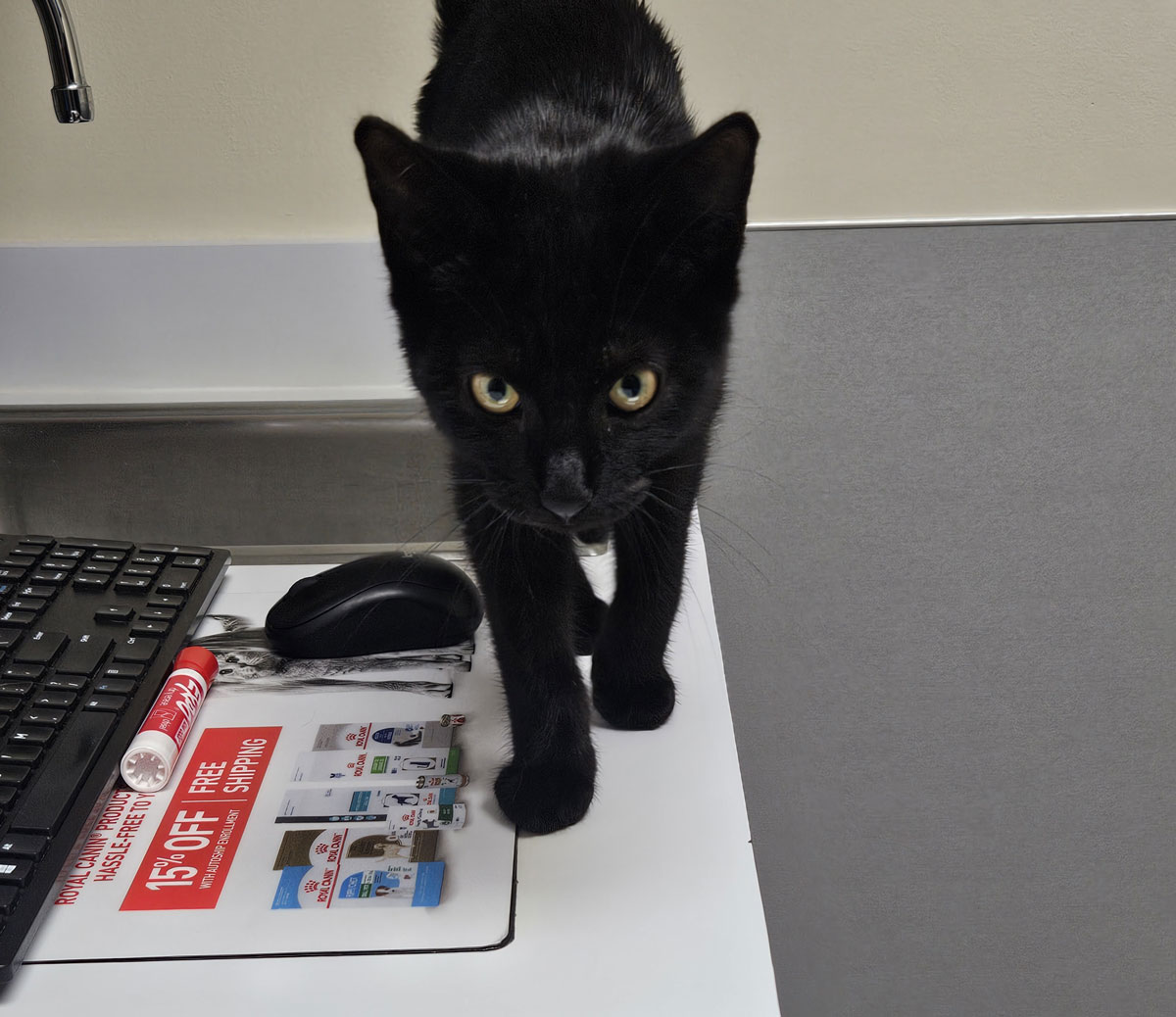
Clyde at the vetClyde at the vet (Melanie McFarland)Look, I did not expect any of this. The last time my husband and I adopted a pair of kittens, which was way back in 2007, the process was simple. We saw a photo of a little mogwai on a neighborhood rescue's webpage, visited the next day and walked out with him and his brother. From that day onward, we loved Ike and RayRay intensely until they died, separately, of old age.

Now, I have a saved document of answers to adoption questionnaires that is so elaborate, one would think I was applying for graduate school. All of this trouble is over my efforts to obtain one of the internet's most adorable mascots.

Has cat adoption changed so dramatically? Apparently so — and not just for me. Finding someone with a discouraging yarn tied to a poor adoption experience doesn't take much effort. Getting them to open up about it, however, is tough. Few of those to whom I spoke wanted to go on the record. None who did want to be identified by their last names, which is remarkable given that this is a story about trying to adopt cats and kittens, not spilling state secrets.

This also reveals a level of nervousness that should not be attached to feline rescue, which is an admirable cause. To suggest otherwise — to be clear, we are not — is to risk the wrath of, well, you name it. Animal lovers, passionate pet owners, fault-finding friends, anyone may come for you bearing digital torches and pitchforks. In the age of internet harassment, everyone feels vulnerable.

But maybe not as much as someone might feel if they were declared an unsuitable adopter for reasons that don't quite add up.

If my husband and I were fine spinning the wheel of chance, our search would have been much briefer. Craigslist or Facebook Marketplace could have supplied us, lickety-split. There are also many more rescues than there were two decades ago, thanks to the trend of animal welfare's decentralizing, expanding beyond brick-and-mortar agencies to include networks of rescues and volunteers fostering adoptable animals in their homes.

I have a saved document of answers to adoption questionnaires that is so elaborate, one would think I was applying for graduate school.

According to Shelter Animals Count, which tracks animal sheltering data in the U.S., the nation's rescues outnumber dedicated shelters, with 9,514 rescues to the 4,915 shelters in its database. Experts might call that a good thing, since most rescues work with fosters, and it's healthier for adoptable felines to be cared for in private home settings than kenneled for long periods.

Bonnie had come by her two quite easily. A friend unexpectedly hosted a vagabond queen who birthed a litter in their place. One of those kittens became hers. The other hails from a Mexico-based rescue Bonnie follows on Instagram. All she did was respond to a tragic video expressing her concern, and the next thing she knew he was on a flight to the Pacific Northwest: "Heeere's Johnny!"

And yet, for some of us, decentralization has made adoption more complicated. Since there are no set of agreed-upon policies or best practices related to the adoption process, we're very much at the mercy of the individuals between us and the cats we want.

Three decades of caring for cats made us adamant about supporting our local animal welfare organizations. Community rescues are on the frontlines of curbing overpopulation and working to improve the health of pet communities. Each animal placed in a loving home frees up resources for others that still need them. Hence that popular plea to obtain pets from a rescue or shelter instead of a breeder or pet store: "Adopt, Don't Shop."

Despite the way I was treated by that cat rescue, I have tremendous empathy for anyone who works in animal welfare, especially after chatting with those who generously agreed to speak with me. That is why I don't identify it or any other rescues in this story, aside from those whose representatives offered their insight.

But despite the push by many organizations and people to simplify animal adoption, there remain those so determined to protect cats and dogs that they unintentionally make their definition of perfection an enemy of the greater good.

What began as an exercise in curiosity and self-examination — Is it me? What are we doing wrong? — became a journey through the myriad barriers imposed by rescues despite the consensus among organizations such as the Humane Society of the United States and Human Animal Support Services (HASS) that these previously acceptable requirements are now considered outdated.

Some are expectations potential adopters have been conditioned to expect as standard, including and not limited to phone calls to their landlords; potential home visits to assess their living spaces; unnecessarily probing questions about their income, work and housing status; and applications loaded with "trick" questions.

Others, like the basic philosophy behind this rescue's reason for denying us Clyde, are rooted in reasoning endorsed by animal behaviorists: Raising two kittens together is healthier for their development and makes life easier on their caretakers because they expend their surfeit of energy on each other instead of their humans' ankles and hands.

For every organization or person working to simplify animal adoption, there are those that unintentionally make perfection an enemy of the greater good.

But said rescue also referenced a clinical-sounding malady known as "single kitten syndrome," a behavioral term that did not exist two decades ago.

I suspected it was a crock, so I began by turning to the feline fanatic's go-to expert in times of bewilderment and crisis: cat behaviorist Jackson Galaxy. Best known for hosting Animal Planet's "My Cat From Hell," Galaxy has a robust library of instructional and advisory YouTube videos and a gift for putting stressed-out cats and people more at ease. He has also been a shelter and rescue advocate for more than 30 years.

Originally, I wanted to ask Galaxy to explain "single kitten syndrome," having noticed that he did not drop the phrase in most of his videos. I could only find one instance, dating back to 2021, and I wanted to find out whether that was intentional. (In short, yes.)

But Galaxy hit pause on that conversation as soon as he heard how long my quest for kittens had dragged out. "You were trying to get a pair of kittens for a year and a half?" he asked, looking genuinely baffled. "Why? What happened? I gotta know this."

Once I filled him in on the tale of being denied my "little friend," Galaxy noted that my "single kitten syndrome" situation was simply another type of adoption barrier, such as the ones mentioned above.

"I can't believe we're still having to do this," he said. "But, I guess, on the other hand, it shouldn't surprise me."

My experience, while not singular, was certainly unusual. In more than a dozen conversations and message exchanges with people who had memorably adverse adoption attempts within the last couple of years, I learned that the time between the start and end of most animal companion searches tends to be much shorter. If one rescue did not have what someone was looking for, they either found what they needed elsewhere or simply gave up.

The "War and Peace" of cat adoption applications
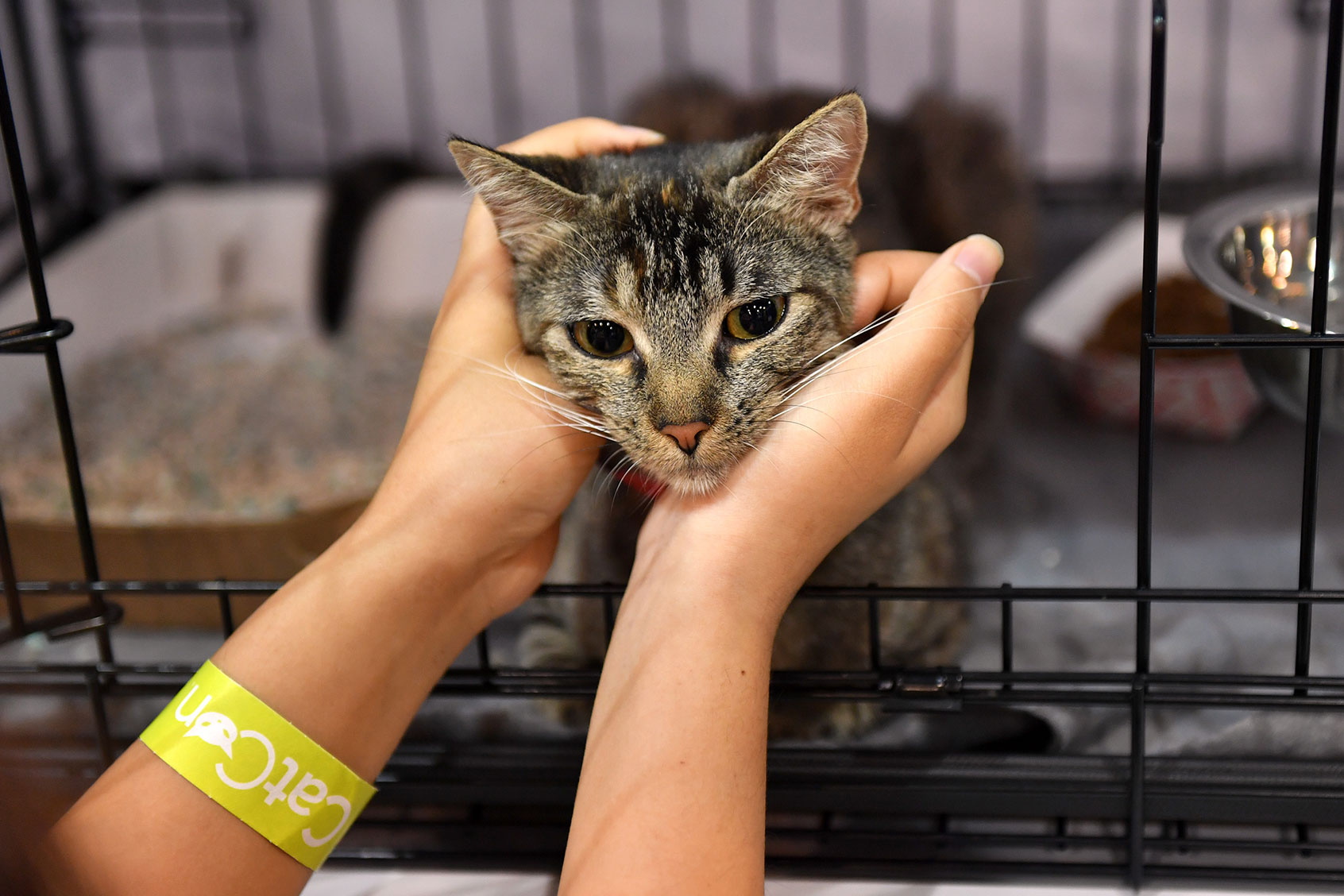
CatCon attendee petting a catA CatCon attendee visits the adoption fair at CatCon LA 2023 at Pasadena Convention Center on Aug. 5, 2023 in Pasadena, Calif. (Sarah Morris/Getty Images)A prevalent tale of adoption difficulty begins with an overly complex application process and concludes with a demoralizing dismissal.

Sam, a 37-year-old D.C. resident, was cut off cold by a rescue when he shared that the cat he and his wife were seeking to adopt would have outdoor roaming privileges. This wasn't the correct answer in the rescue's view, and that was that. No counseling was offered as to why.

This came after filling out an application that asked Sam to describe his daily schedule, living arrangements and "any 'major life changes' that we're expecting over the next 5-10 years (!)," he told me in an email, adding he was also told to expect a post-adoption home visit. They ended up not adopting a cat at all.

"I understand the motivation behind these practices, and I believe they have the animals' best interests at heart," Sam said. "But I do wonder if these agencies, through their overly burdensome processes, are making matters worse by turning off people from adopting who would probably be good, responsible pet owners.

"If there are animals who are staying longer in kill shelters as a result, then I think it's indefensible," he added.

In another part of the country, Erin's rejection stamp came after she and her husband spent a couple of hours filling out an application for a rescue in Connecticut hoping, like me, to adopt a black cat, as they always do.

She was ready to be an open book. But this rescue, like the one Sam dealt with, expected applicants to provide an exhaustive account of their qualifications, something that can feel like trudging through "The Stand" as opposed to a breezy skip through Catster.

"In the past, I've had to talk about our experience with cats that goes back, maybe, five years," Erin told me in a Zoom interview. "And this application wanted a full history, which, in our case, goes back to the 20th century."

"This application wanted a full history, which, in our case, goes back to the 20th century."

It included, among other queries, a college essay-style question asking for an explanation as to why she wanted the specific cat in which she was interested. Erin, a professional writer, fulfilled all those requests, only to receive this terse reply: "We noticed some inconsistencies between your application and the information we confirmed with your veterinarian. For this reason, we unfortunately cannot accept your application."

"And that was it," she said. As for the "inconsistencies," Erin said she and her husband had found out from their veterinarian that the rescue had given them a failing grade for falling off their regular annual vet visit cadence during the pandemic.

"They had indicated to them that they preferred that applicants bring their cats in once a year for a checkup and, even more so, preferred that they bring them in twice a year," Erin said. "I can tell you for sure because I would have remembered it: That wasn't a question on the application. There was no place where I was compelled to address it in any way."

The kicker? "This was an application not even for adoption," Erin said. "It was an application for a visit."

Kittens, kittens everywhere — and not a fluff for me

To hear others tell it, especially after they hear my story, there are places where kittens are falling from the sky.

Erin Keane, Salon's chief content officer, was so gobsmacked by my tale that she offered to send me a box of kittens. In her home state of Kentucky, they pop up like dandelions.

"By the way," my friend Mo texted me unprompted while I was writing this story, "we ended up catching FOUR cats in our yard." She lives in Illinois.

One of social media's many myths holds that the universe has a kitten distribution system that overtakes you when you least expect it, like true love or this year's flu.

Video after video shows angelic fuzzballs bounding up to strangers in cafés and at bus stops, turning up inside wheel wells or underneath appliances and conquering the hearts of guys who swear they used to hate cats.

Contrary to what #CatsofTikTok or #CatTok would have us believe, the cat distribution system doesn't supply every place or person equally.

Hannah Shaw, popularly known as The Kitten Lady, is a San Diego-based neonatal kitten specialist, rescuer and educator whose recent bestseller "Cats of the World" explores the differences in animal welfare philosophies in other countries and cultures around the globe. She also founded the grant-making nonprofit, Orphan Kitten Club, which partners with shelters and rescues and funds research related to pediatric feline health.

When I spoke with Shaw in August, there were "kittens coming out of our eyeballs" in Southern California. The same was probably true in Seattle, where I live. Western Washington sees a swell of newborn felines between April or May and late November.

Maybe not, though. One of Shaw's biggest findings is that "animal welfare is so regional. It's so impacted by climate, and resources available."

"And for that reason, I will never say every organization should have the same adoption policies because that's just not true," Shaw said. "What a small organization in Seattle does and what a large organization in Montgomery, Ala., does, the strategies that would save lives in these two places couldn't be more dissimilar."

"There's no national standard for any of it"
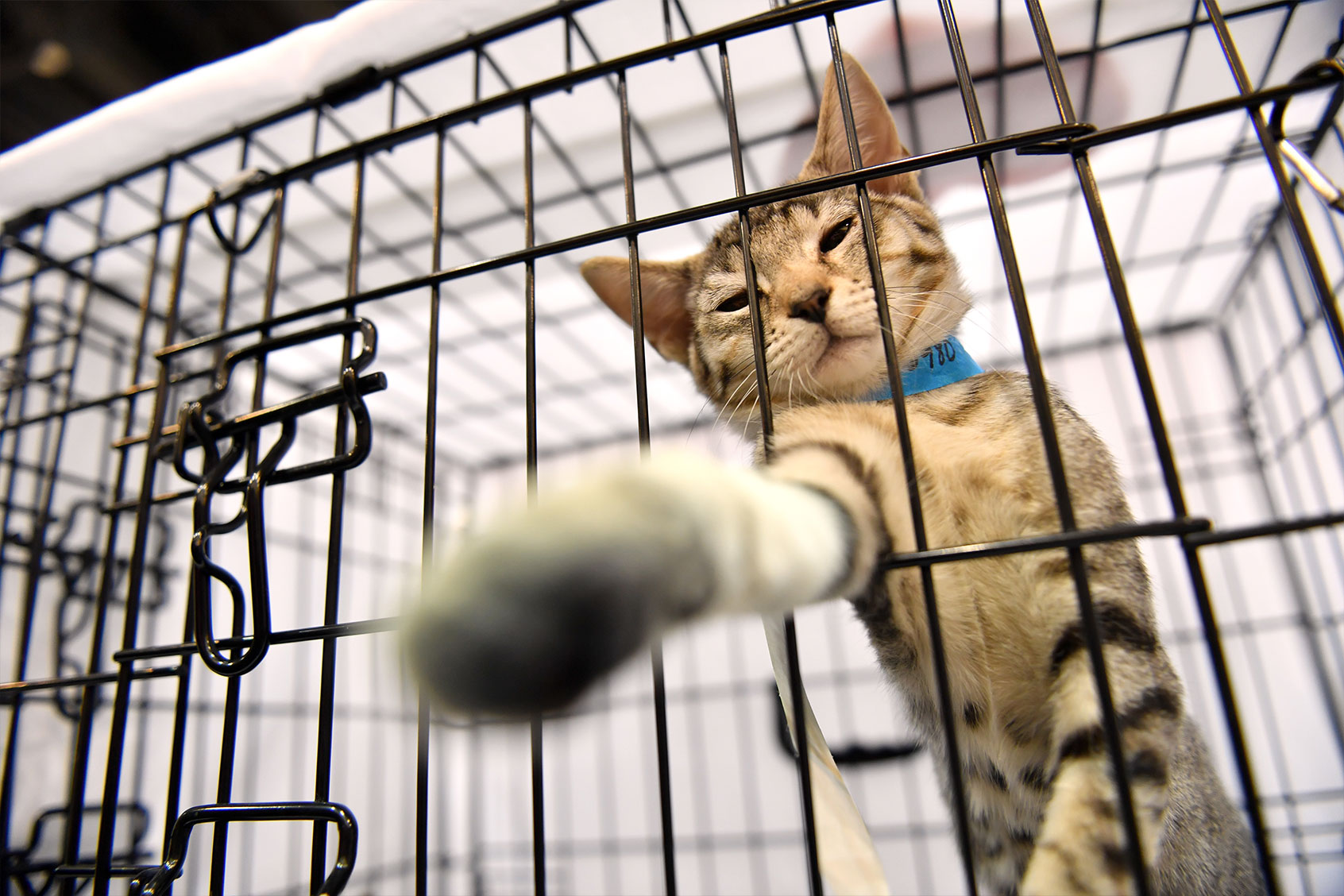
Cat at CatConA cat available for adoption is seen at the adoption fair during CatCon LA 2023 at Pasadena Convention Center on Aug. 5, 2023 in Pasadena, Calif. (Sarah Morris/Getty Images)Overall, Shaw agrees with other experts I consulted, in that the broader push in animal welfare is to cultivate more equity in adoption processes. Instead of a system that favors homeowners over renters and wealthier people over lower-income families, the trend is to be more progressive, said Lindsay Hamrick, director of shelter outreach and engagement for the Humane Society of the United States.

"For us, it's all about meeting people where they are being open and treating people with positivity that they've come for the right reasons," Hamrick said, "and then having a conversation about the best match for their family.

"Our philosophy, which is shared by other national organizations, and a lot of local organizations, is that the idea that we should have really lengthy applications or lots of barriers to adoption is not just not serving the animals that we're trying to move into loving homes," Hamrick added, "but it's also creating a lot of of judgmental experiences for a potential adopter who is doing the right thing."

Then why do some rescues continue to demand that prospective adopters submit to exasperating and potentially demeaning hurdles? "There's no national standard for any of it," Hamrick explained.

This can lead to confusion around expectations, not to mention unnecessary distress, guilt and outright fear among those seeking to adopt.

Pandemic adoptions: A mostly happy tale . . . with a less-than-ideal sequel
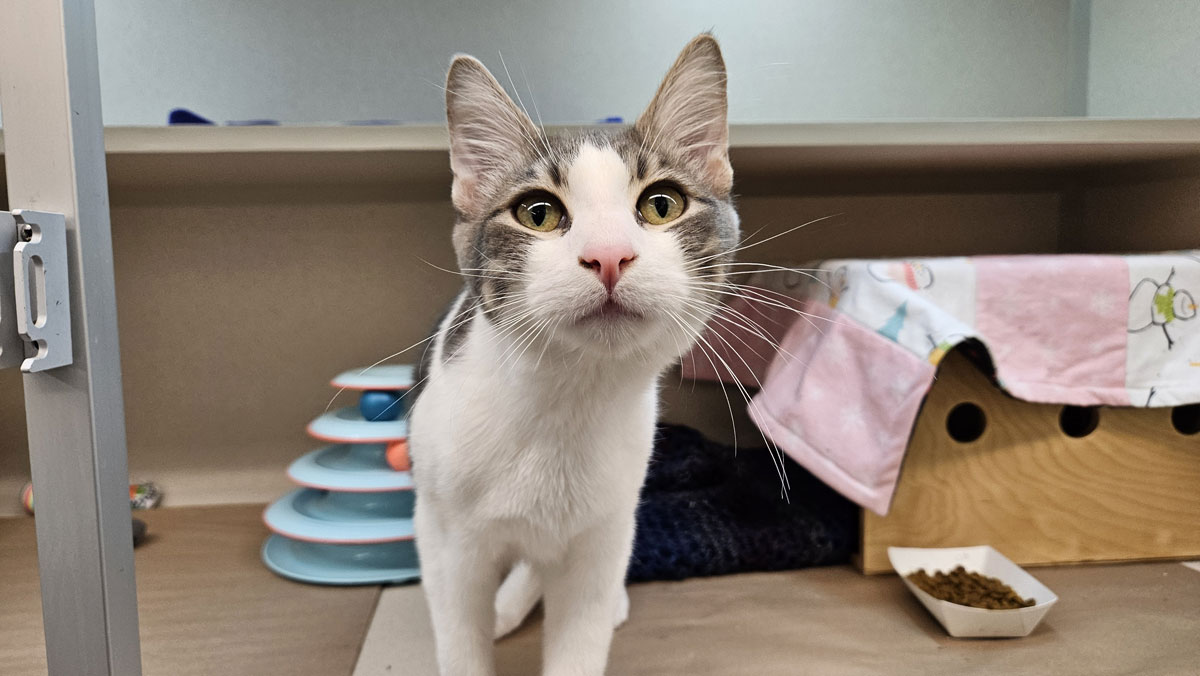
A cute kitten looking for its forever homeA cute kitten looking for its forever home (Seattle Humane Society)My husband and I began looking for two kittens months after Ike died of kidney failure; he was almost 15 years old. This was in 2022, some time after the newsworthy surge of adoptions following the pandemic lockdowns that began in March 2020 had waned.

Stay-at-home orders across the country resulted in a soaring demand for companion animals. Rescue cats were a hot commodity back then, and meet and greets were facilitated over Zoom.

COVID-19 transformed the sheltering and rescue world in many ways, primarily by decentralizing it. The location from which we adopted Ike and RayRay, for example, no longer exists, joining a trend of organizations trading physical locations for virtually connected networks of foster volunteers.

The American Society for the Prevention of Cruelty to Animals (ASPCA) estimated in 2021 that nearly 23 million American households adopted a cat or dog during the pandemic. In 2020, the organization also reported a nearly 70% increase in animals going into foster care through its New York City and Los Angeles foster programs.

But Shelter Animals Count reports that data from the first half of this year indicates animals are spending more time in shelters. Between January and June, 3,118,000 cats and dogs entered shelters and rescues nationwide — a nearly 5% decrease from the same period in 2023. The same report also warns that 322,000 more pets entered the system during this timeframe than left it.

In Seattle, cats won the popularity contest in our local pandemic adoption sweepstakes. A 2021 Seattle Times story revealed that cat ownership among adults in the Seattle metropolitan area had risen by 18%, according to Nielsen data.

In 2023, from what my husband and I could tell, that wave had abated. We naively believed welcoming a new cat or two would not take as long as it had for other friends who had struggled to adopt in 2020 and 2021, when the competition for rescue cats was at its most intense.

Early in our search, after sending out many applications, we received three responses. One was from a rescue that was an hour away and observed bankers' hours on weekdays, making it impossible for us to visit. Another came from a lovely sounding woman located on a nearby island, which required a time-consuming ferry ride. Sadly, that meet and greet was sidelined by unforeseen travel. Then came the rescue that approved our application and passed it along to the person who was fostering the cats we wanted. The fosterer never got back to us.

Nevertheless, we kept at it, sending application after application into a cluster of voids. Only after months of this did I find out that many rescues refuse to adopt younger cats to homes with elderly ones out of concern for the senior cat's well-being. Nobody told me that, however. I had to research it myself.

The last holiday with the cat before Clyde
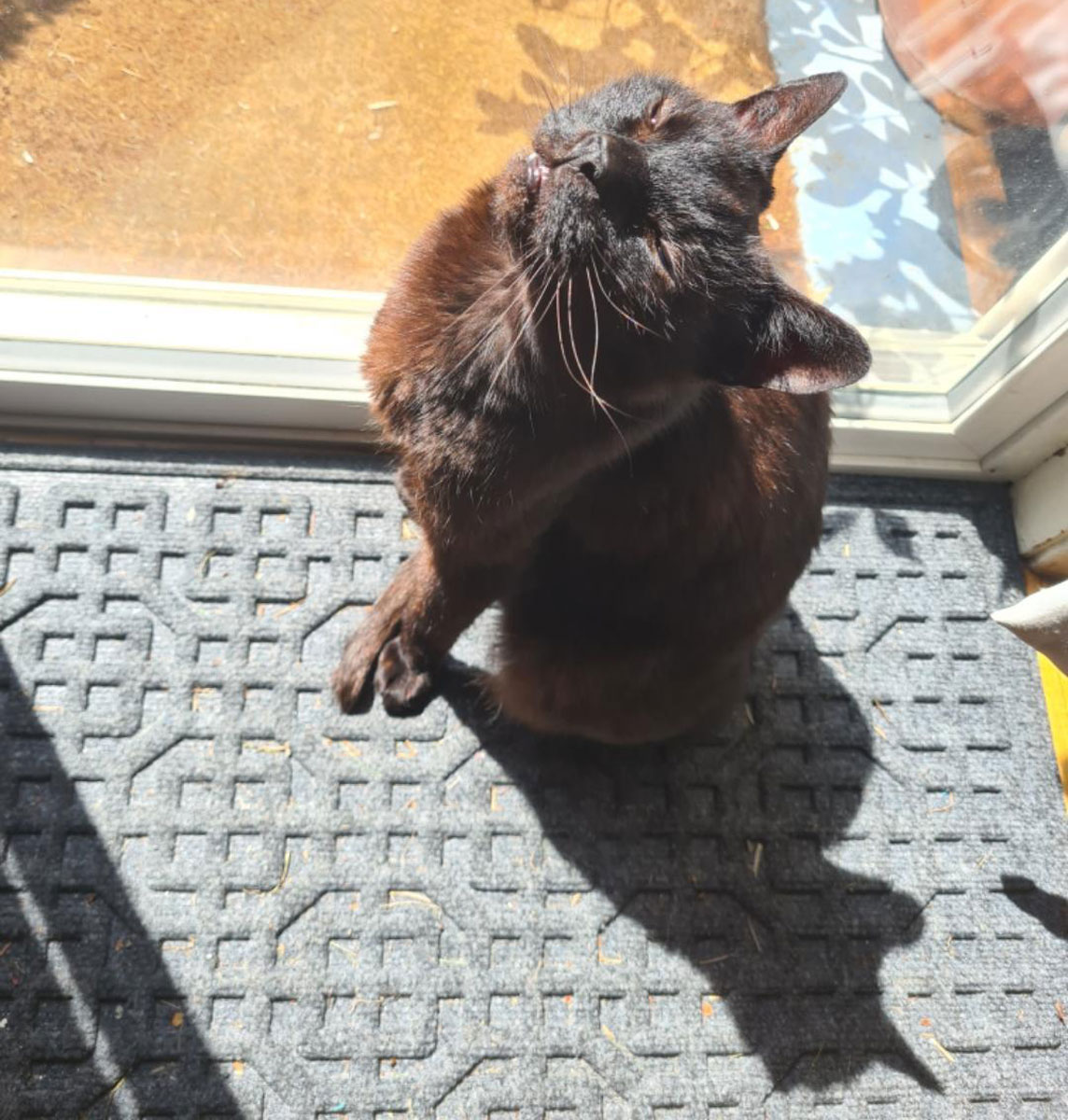
RayRay in the sunRayRay in the sun (Melanie McFarland)In hindsight, I was grateful for the pause. By then, RayRay was wracked by an assortment of infirmities linked to his advanced age. But he was happy to soak up my attention and follow the shifting patches of sunshine from our east-facing windows to our westward ones, dozing his days away either in my lap or on our bed.

We spent last Christmas Eve and the holiday holding him through seizures and incontinence. On Boxing Day, an hour before we put him to sleep, I took him outside to warm his face in the sun one more time.

All this is to underscore how vulnerable an experience adopting can be both for the adopter and the rescuer. Adopters like me may enter this process raw and hurting, seeking the comfort of, yes, a little friend. A steady companion when life and other humans fail us.

Another detail the woman who turned us away never heard is that Clyde's birthday, listed on the name tag taped to his holding tank, is two days after RayRay's death. I'm not a firm believer in reincarnation or any mystical business, but when you notice a detail like that while somebody is treating you poorly, it makes a dreadful situation feel that much worse.

"Everything needs to be a discussion," Galaxy advised. He expressed appreciation for the new generation of people entering the rescue and sheltering world, acknowledging what difficult work it can be. "One of my big things when I go out and I teach to shelters, which I'm doing constantly, is if you're inheriting a policy, the best thing that you could possibly do is due diligence. Don't take anything at face value because where you might be receiving that information might be faulty.

"It might be from a person who wrote policy based on trauma that they experienced. It's your job to make sure that you don't just say something — that it's accompanied by what you feel.

"Don't assume anything," Galaxy concluded, "and do your due diligence."

Granted, some of the organizations that still require potential adopters to fill out extensive paperwork and agree to intimidating terms may believe they adhere to that advice.

The invasiveness of the "forever home" inspection
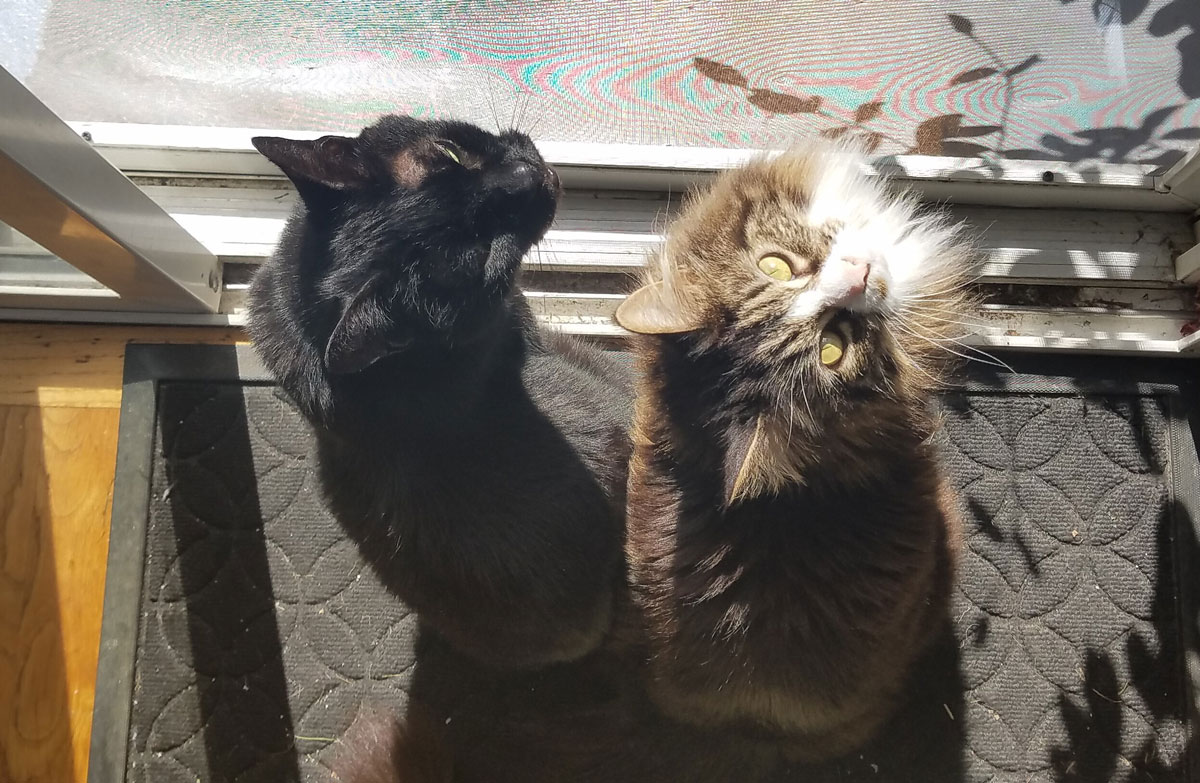
RayRay and IkeRayRay and Ike (Melanie McFarland)In the process of adopting her cats from a local rescue, a New Mexico resident, coincidentally also named Hannah, told me that the organization's required landlord check led to her property management company changing her lease and substantially raising her pet fees in the place which she has rented for 14 years.

She pushed onward, though, eventually showing up at the local pet store hosting the rescue's cats to pick up the ones she had selected.

According to Hannah, the rescue's representative made her wait for two hours until she simply could not wait any longer. Then the person said she could drop the cats off at Hannah's home.

"I said, 'I can come get them as soon as they are in the carriers.' (I live a mile away)," Hannah told me in a direct message on Reddit. "She refused." Hannah added that while the rescue did not require a home inspection, "I realize now that this was a way to do a home inspection anyway."

Once the rescue representative was inside Hannah's home, she pushed on screens and opened doors, cabinets and closets. She also had Hannah sign a contract that threatened legal action if she violated the rescue's policies. "She told me they would never get over their foster mother, that the foster should be coming over regularly," she said, adding that the situation "made me paranoid for months that I would do something to get sued. I've had cats my entire life."

Hamrick and others stress that such situations are not normal, and risk creating judgmental experiences "for a potential adopter who is doing the right thing."

"This idea that the perfect pet owner lives in a three-bedroom suburban house with a fenced-in yard that they own is rooted in privilege," Hamrick said. "There are millions of people who have successful relationships with their pets, who live in apartments, who rent, who maybe even have prohibitions in their lease for having a cat . . . and have been successful."

It's not the job of the animal shelter or rescue to be the one making these judgments, she added. "You can learn so much more about people by having a conversation about what they're looking for."

When two wrongs don't make "the right cat for your situation"
Workers at Seattle HumaneWorkers at Seattle Humane (Seattle Humane Society)Sometimes, there are uglier reasons why those dialogues never begin.

Ani, a culture critic and entertainment editor based in the D.C. area, recently accompanied her septuagenarian mother and 40-something sister to a Virginia shelter to adopt a pair of cats. The family had already sustained major losses and setbacks. After their father died, Ani's sister, who works at a high-level job with the federal government, moved in with her mother to provide her companionship.

"This turned out to be the correct life choice, as when my mom had a stroke, my sister was right there and called 911 immediately, which allowed my mother to make an almost complete recovery," Ani shared in an email. Although she rarely uses a cane when she is at home, Ani's mother uses a rolling walker in public just to be safe.

"This idea that the perfect pet owner lives in a three-bedroom suburban house with a fenced-in yard that they own is rooted in privilege."

Some time after their mother's elderly cats died, the family was ready to adopt again. Her mother filled out the Virginia shelter's online application for a supposedly bonded pair: a 1 1/2-year-old gray tabby and 2 1/2-year-old calico. According to Ani, a representative looked at the application and said, "OK, great. Come meet them and bring a carrier."

That was before the manager laid eyes on Ani and her family. "I should have realized from the moment we arrived that the lady in charge took one look at my mother and the rollator coming across their gravel lot to the door and deemed her unfit," Ani said.

Additionally, Ani's sister has autism spectrum disorder with flat affect. "Suddenly, the cats we were there to see were 'too shy for all this,'" Ani recalled. The manager and another staffer ushered her mother and sister into an anteroom that wasn't large enough for the three of them and peppered Ani with questions about her mother's mental stability.

The manager also declared that her sister "clearly 'wasn't interested,'" in spite of Ani's insistence to the contrary. Eventually, she told Ani and her family the shelter did not have any cats that were right for their situation, and promised to call them if that changed.

"Once we got into the car, my mom asked, 'They're not going to call, are they?' Me: 'No, Ma, I don't think they will,'" Ani recalled. "The whole way home, she was like, 'Well, I'm going to die soon, anyway, so I guess we shouldn't adopt.'"

When we communicated in late September, I asked Ani for links to the rescue's adoption page to verify whether the cats her family wanted had been claimed. At the time of this story's publication, both are still at the shelter waiting to be adopted . . . although the calico is currently advertised as bonded with a different gray tabby.

Melody Stone, the adoption program manager at Seattle Humane, is extremely sympathetic to these stories. "Every single thing that you experienced is a real phenomenon in sheltering. It happens all over the place," she said in response to my story. "You end up having to look at every single process and put it through this lens of, 'Are we getting animals out or are we actually preventing them from leaving?'"

Her organization's model is called "Adopters Welcome," and it starts every interaction from a place of yes.

This includes removing requirements that potential adopters have a fenced-in yard. "There's no reason why we need to define these horrible philosophies of what an appropriate home is," she said. "That's a ridiculous, antiquated notion that is probably rooted in racism and culturalism and probably some sort of financial aspect we need to acknowledge."

Ageism is another common barrier, Stone said. On the day we spoke, she had just finished adopting out a kitten to an elderly woman who had been rejected by multiple rescues that told her she wasn't eligible due to her age.

When potential adopters are thwarted for such disheartening and unnecessary reasons, this can multiply the work for the people in animal welfare. Being turned away by one organization may require the next to repair that individual's view of rescues: to reassure them they're indeed able, sufficiently housed, not too old or counter whatever reason they were denied. That is, provided that person doesn't simply resort to a surer thing. Like shopping.

Sympathy for well-intentioned shelter workers and rescuers
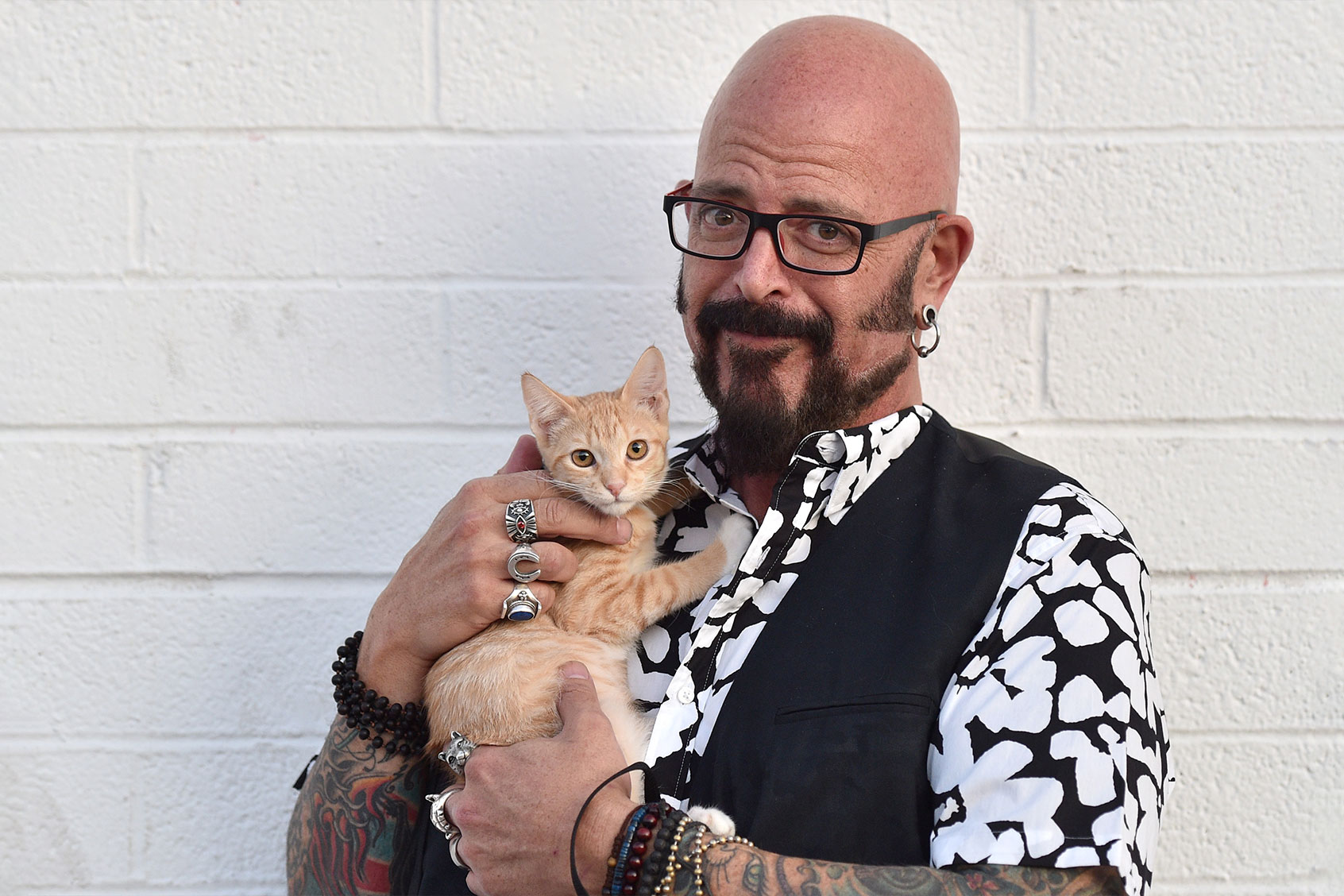
Jackson GalaxyJackson Galaxy from Animal Planet's "My Cat From Hell" poses with Bonni, a four-month-old domestic shorthair orange tabby cat during a ceremony in which the city of Las Vegas proclaimed Thursday "Cat Appreciation Day" on Nov. 7, 2019. (David Becker/Getty Images)Forgive me, Cat Daddy, for I did shop, not adopt.

"One of the things that upsets me is if an organization is going to make you jump through those kinds of hoops, your reaction is understandable," Jackson said when I confessed, Catholic guilt style, that after a year of being denied and ghosted, I had gone to a breeder for one of my guys.

"Unless you've got it baked-in that 'This is all I will do,' then of course you're going to make that choice or do what the vast majority of people do," he added, "which is they get them from friends or family, or they find them on the street or whatever it is."

According to ASPCA data, 31% of pet cats are obtained from a shelter or rescue, while 28% of cat owners get their companion from a friend or family, with 27% adopting strays.

This means that one-third of cat seekers turn to rescues first, where — and this needs to be stressed — most people have a wonderful experience.

Animal welfare staffers and volunteers deserve plenty of grace from the public. They sign up for jobs with a high burnout rate, many of them unpaid, all for the possibility of connecting vulnerable cats, dogs and other animals needing homes to people who want to spoil them. As Galaxy and others told me, it's impossible to work in animal welfare for long periods without being a party to upsetting situations that leave lasting scars.

In the further defense of those noble souls, my absurdly lengthy search process is partly due to how little I knew and my specific desires. For one, we wanted a pair that included a black cat. We were very determined to adopt from a rescue in our area, when I could have had my pick of any number of litters in, say, Southern California or Texas. We insisted on meeting any potential pet in person, nixing that option.

Also, if I had known that each of my applications might have joined a stack of anywhere from a few to tens of others, I would have tempered my expectations.
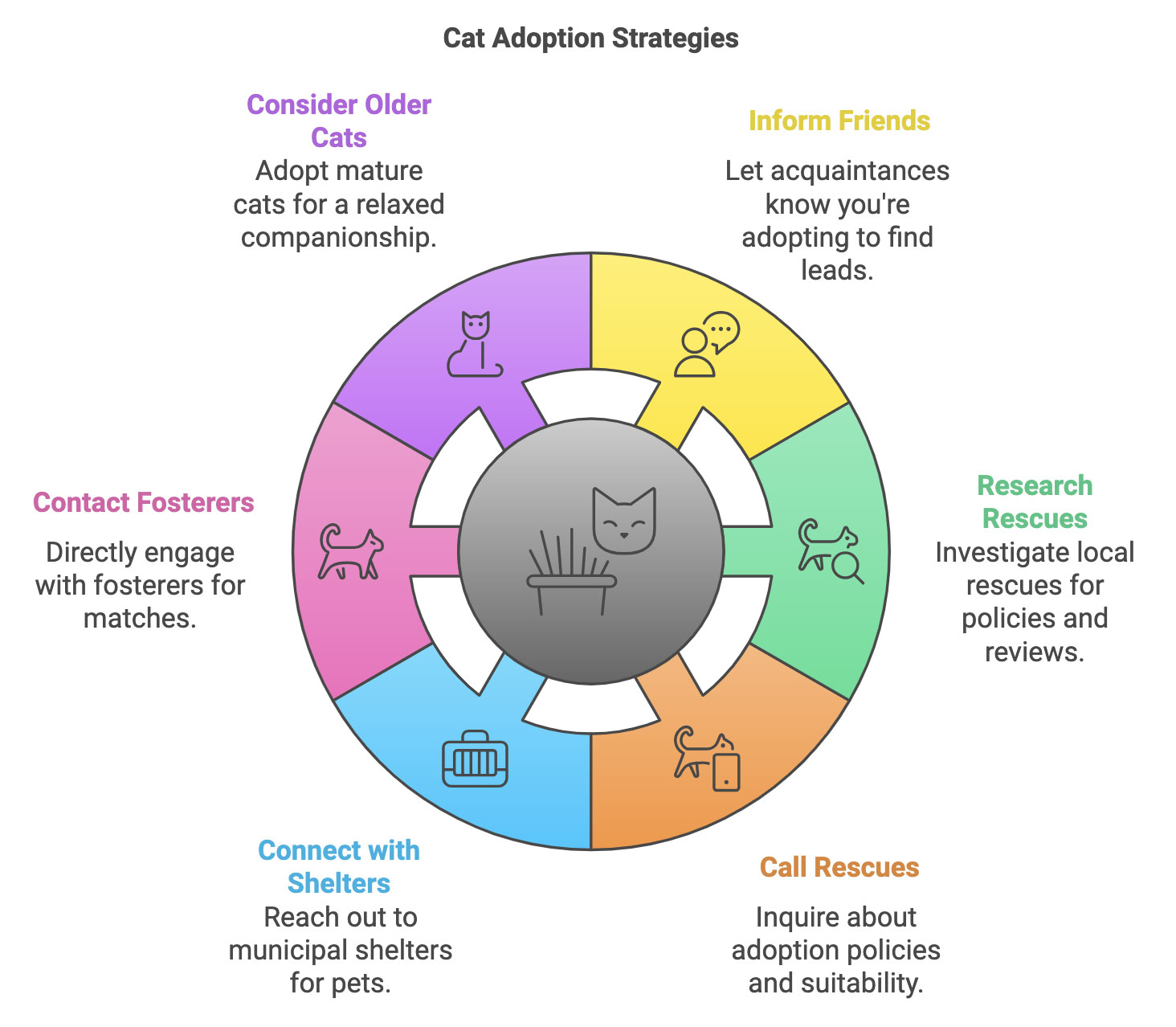
Cat Adoption StrategiesCat Adoption Strategies (Napkin)

Emilie Fairbanks, who has fostered neonatal kittens in the D.C., Maryland and Virginia area since 2020, and works mainly with two shelters that practice an open adoption policy, spoke with me on a video call.

Once photos of her kittens post online, she said, "I almost always get multiple requests about them in hours, and there's only two [to] four kittens in a batch. So, I don't have the number of kittens equal to as many people applying. Most of it is just supply and demand."

Fairbanks offered insights into the latter, as well. Fluffy orange cats, white cats with points or cats that look Siamese will get lots of suitors within an hour or two of her posting a photo — anywhere between five and 50 inquiries.

"The look of the kitten matters a lot, which frustrates me, because I'm like, 'It's a black cat, it's fine,'" she said. "But you definitely get fewer applications for black cats and, like, this guy —" Fairbanks held up the cutest gray kitten "— you know, just a, quote, 'plain tabby.'"

The concept of kitten season is foreign to most people, too. Cats tend to mate and breed when the weather is warmer, a period that, owing to climate change, varies depending on the region. Kitten season can be all year round in some parts of the country, particularly in the South, but it's limited to a set number of months further north. Since some organizations work with animal transfer and transport programs, there's usually a selection of pint-sized felines available somewhere near you year-round.

"I try to use my Instagram to explain to people that in D.C., you're not going to have kittens in winter," Fairbanks said, "because people will come to us at Christmas and ask, 'Where are the kittens?' And I'm like, 'There are no kittens. I can't make kittens appear out of nowhere.' And they just don't understand that."

Rescues and shelters: Pawing through the terms
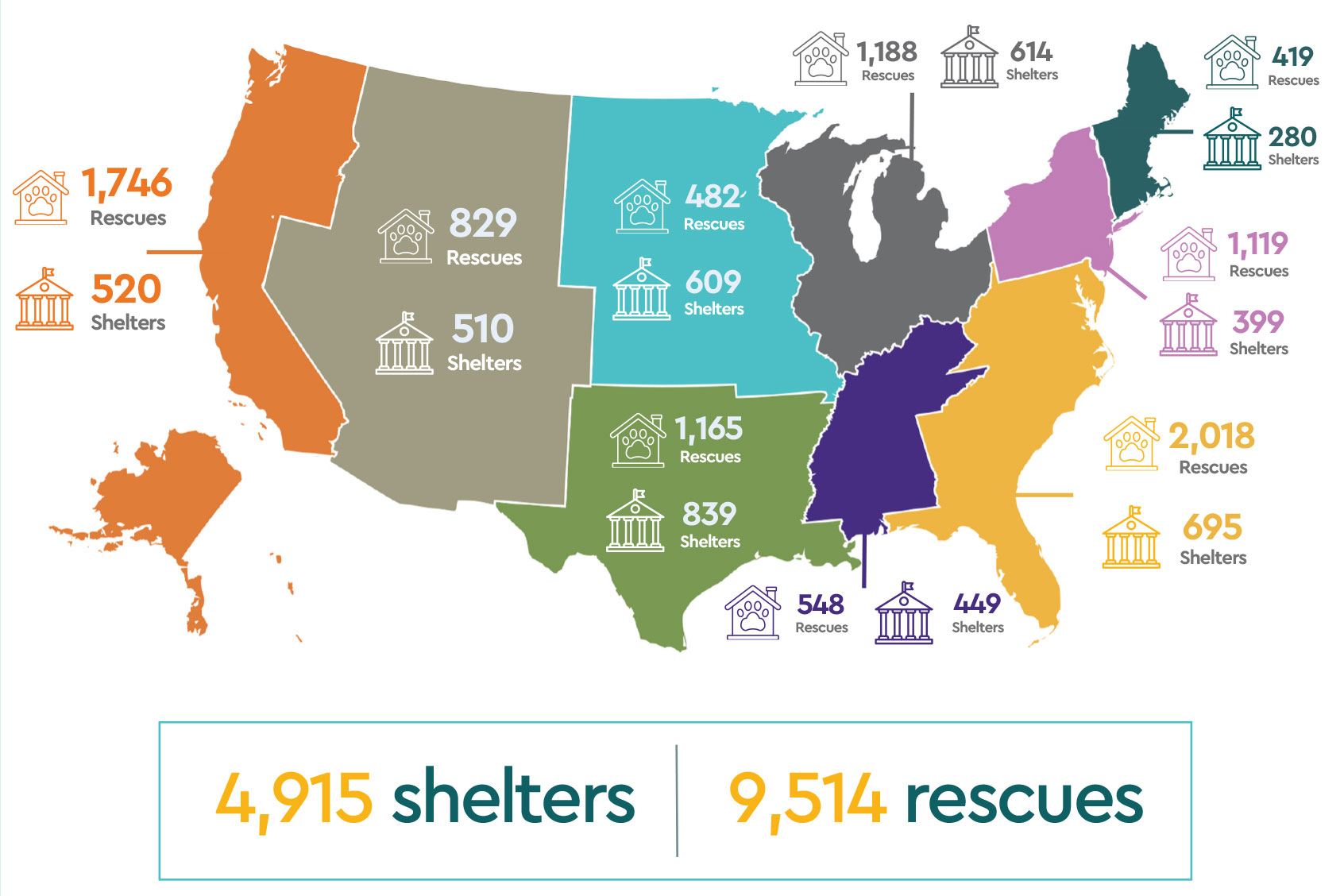
Map the United States showing shelter and rescue numbersMap of the U.S. showing shelter and rescue numbers across regions. (Courtesy of Shelter Animals Count)Knowing the difference between a rescue and a shelter is also helpful. Not all are alike, but the average person conflates the terms.

A shelter, for example, might be any physical location where animals can be housed and cared for while waiting for adoption. Some are run by city or county agencies and funded by tax dollars. Some are purely donor-funded.

Animal welfare staffers and volunteers deserve plenty of grace from the public. They're signing up for jobs with a high burnout rate, many of them unpaid.

Defining a rescue is where the situation gets trickier. It could be an individual coordinating with a group of foster volunteers. It could be a team. A private rescue might have a facility that is open to the public and a paid staff, or it might be one person caring for cats in their home.

Generally speaking, municipal shelters have the fewest pet adoption requirements. These are places that receive a significant influx of animals, either by owner surrender or retrieval, and would rather have people claim them than be forced to euthanize them. 

Privately run shelters and rescue organizations may be more selective, but not necessarily, as Seattle Humane demonstrates. That said, some insist on references or ask you to fill out applications with "trick" sections that ask, for example, if you plan to declaw the cat (which is cruel) or whether you plan keep your cat indoors or let them outside.

In the view of most American rescues, indoor only is the right answer. Indoor cats tend to live longer and are less likely to be injured by other animals, humans or their environment. However, Galaxy counts himself among those who believe that decision should be a parenting choice. "Once given most of the facts that surround that topic right now, my hope would be that you would keep your cats indoors," he said, "but I'm not going to make you do that."

There are 14,429 animal sheltering organizations operating in the U.S. in 2024, according to Shelter Animals Count, and about twice as many rescues as there are shelters. West Coast states, including Alaska, Washington, Oregon and California, have more than three times the number of rescues (1,746) than shelters (520).

And each could have entirely disparate adoption policies. At one place, you might be able to walk in and out the door with a pet, no muss, no fuss. At another, you might tick all the right boxes and be rejected for any reason, including that the person between you and the cat or dog you want simply doesn't like you.

"It's awful. It's traumatizing people, honestly," Fairbanks said when I shared with her a few of the anecdotes included here, along with my "single kitten syndrome" encounter. 

As an ardent supporter of open adoption, she continued, "I will not work with any shelter that does that. The one control we have as fosters is who we work with . . . You have to be willing to say, 'OK, this policy that you have is the reason I'm not willing to foster with you now.' It's the only way we have any influence."

Understanding why two-cat policies exist, for better or worse
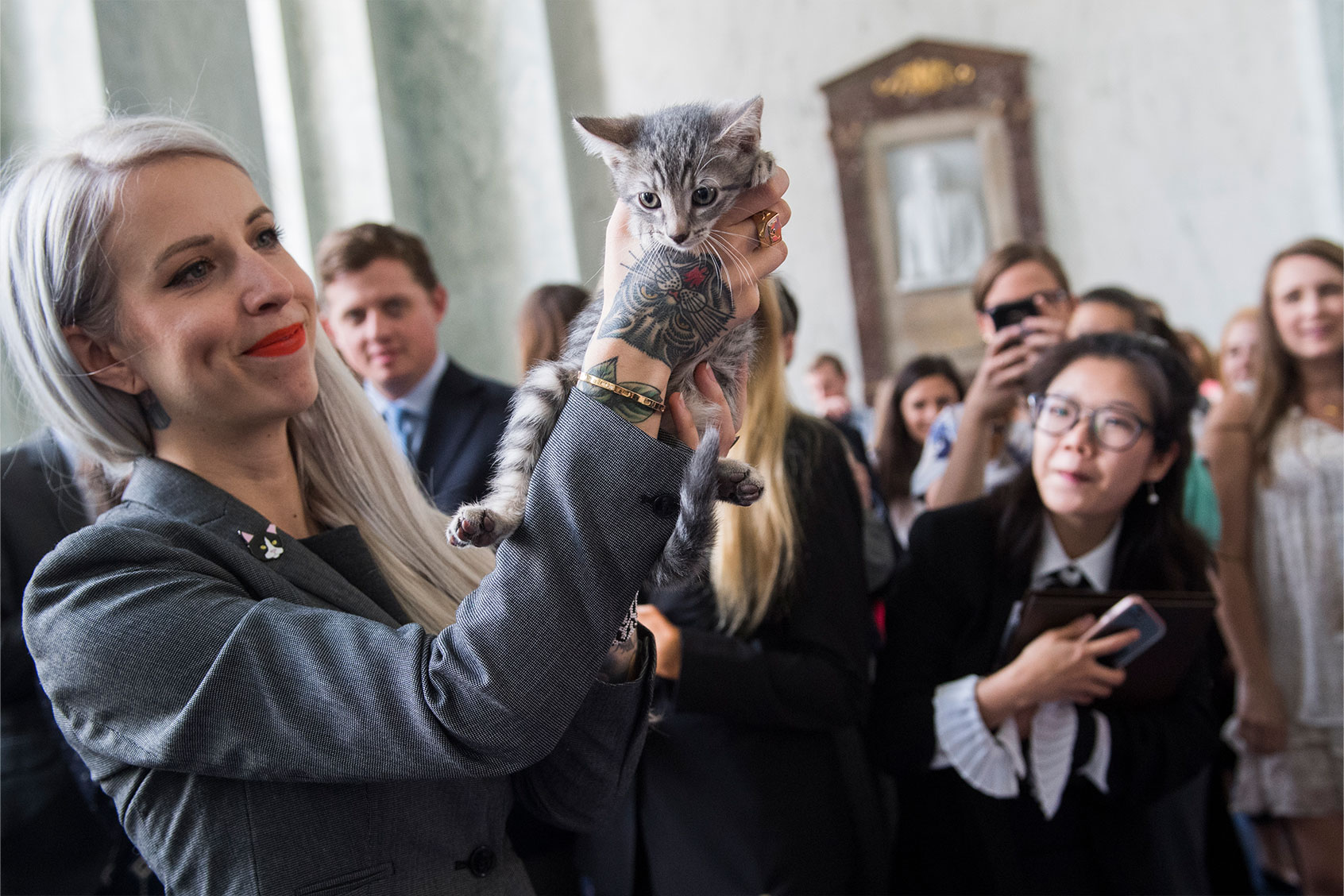
Hannah Shaw Kitten LadyHannah Shaw, an animal advocate known as "Kitten Lady," attends an event in Rayburn Building on bipartisan legislation to end the Department of Agriculture's scientific testing on kittens on June 7, 2018. (Tom Williams/CQ Roll Call/Getty Images)Dr. Mikel Maria Delgado, Ph.D., is a psychologist who specializes in animal behavior and cognition and is the co-founder of Feline Minds, a cat consulting service. She also spent years working in the Cat Behavior Department of the San Francisco SPCA, which is to say she has well-founded insight into feline and human behavior in shelter environments.

"Like anything else, whether you're buying a cat from a breeder or getting a cat from a rescue, you should probably do your research and make sure it's a good fit for you before you get committed to a particular animal," she advised, "because it's a very emotional process. People make a lot of choices based strictly on what the cat looks like or a picture of the cat, but it's not like selling shoes."

Delgado observed that some shelter workers may have a bias toward the bad stuff that happens. "You definitely don't forget when you approve an adoption you didn't feel good about, and that animal comes back and needs to be euthanized because they were not cared for properly," she said. "You just don't forget those animals."

Taking all that into account, the overwhelming trend throughout the U.S., and especially in the wake of the pandemic, is toward rescues and shelters simplifying the process, reducing barriers to adoption and granting the people who come to rescues more compassion, as well as information and support.

That includes having discussions about why raising two kittens together tends to be better than adopting one without assigning an anxiety-provoking, clinical-sounding term to that reason.

Not every rescuer or rescue organization requires that kittens only go home in pairs. But even among those who do, including Shaw, there's agreement that conversation-based evaluation should lead the way.

Shaw's policy of only adopting out kittens in pairs requires that her fosters go home in duos or into homes that "have another young and playful cat," adding that there's plenty of room for interpretation within that designation.

She is also a famous influencer and knows she occupies a privileged position. "If I were running a high-volume municipal animal shelter, I would have very different policies," she said. But since she averages around 16 applications for every kitten she gets, "I have the luxury of choosing between 10 good homes.”

That said, if a potential client is set on only adopting a single kitten, she will counsel them as to why raising kittens in pairs is better for feline and humans alike and direct them to shelters or rescues that don't have a two-kitten policy.

Life's turns are unpredictable, but so are your pet's random bursts of joy.

"This is a big movement. There's room for everyone. There's room for lots of different strategies," Shaw said. "The issue is when that impacts an adopter to the point where, from the adopter experience, if somebody believes, 'Wow, it's so difficult to adopt, I'm just going to go, buy a cat or something,' I think that disadvantages shelter cats, truly shelters on the whole, in places in America where they are begging people to take cats."

Speaking of which, let's claw into "single kitten syndrome."

Clinical cat-aclysm, or an overblown TikTok tag?

While Delgado and other experts confirmed that the major behaviors described by the term are real, "it's an easy moniker, and probably easier than trying to explain in great detail," Delgado said. "And — of course, at this point — it's like a telephone game where people barely even know what they're referring to."

On the other end of that line is a thriving subset of social media where the term is bandied about as a warning to adopt more than one kitten at a time.

@aceengel Replying to @Alaena Welcome to Cat School! Lets talk about Single Kitten Syndome! What is it, how does it develop, and what to do if you think your cat has single kitten syndrome! #singlekittensyndrome #kitten #catrescue #catfacts #kittenfacts #facts #cats #catsoftiktok #petangel #adoptdontshop #greenscreen ♬ original sound – Abby

Galaxy explained that "single kitten syndrome" is an umbrella descriptor used to explain what can happen to kittens who are not properly socialized during the crucial developmental period of two and nine (or 12? or 14?) weeks old.

"It's like a seven-week period, and there's a lot that's packed into that period," he said. During this time, littermates test their boundaries during play, and if they swat or bite too hard, their mothers can put them in check. Through these physical corrections, kittens learn restraint with their teeth and claws. Without them, some cats may never grow out of biting and scratching their humans.

There's just one hitch. No peer-reviewed, published scientific research legitimizes this "syndrome," as one #CatTok user spelled out.

@twistedwhiskertupelo what is single kitten syndrome and do you need to adopt two kittens at once? p.s. ashy is only temporary don't fall in love with her #cats #singlekittensyndrome #kitten #cattok #catscience #medialiteracy ♬ original sound – The Twisted Whisker

Jordana Moerbe, the medical care director at Austin Pets Alive! who works with HASS, said there's a general dearth of behavioral research on cats as opposed to the wealth that has been done on dogs. Moerbe explained that cats are "kind of the forgotten companion pet in terms of data and research."

But she counsels against entirely writing off what the term describes, and understands why some organizations take a hard stance by requiring kittens be adopted in twos. It's based on a set of demonstrated behaviors she has experienced firsthand in her 20 years of fostering cats and dogs. "It's not going to happen in every cat. Some kittens are going to grow up just fine," she said. 

Nevertheless, she said, "If we look at the actual definition of a syndrome, it's just the term that's been developed over the years. And I don't know that anybody's ever been like, 'Is this actually a syndrome by definition?' So I don't know that there has been intentionality behind that."

Galaxy echoed this sentiment. "I think the problem is not, does single kitten syndrome exist or does it not exist," he said. "I think on both sides of the ball, there's a lack of flexibility around whatever ideas we have."

We need your help to stay independent

That doesn't necessarily mean the term's mainstreaming is harmless. Galaxy's concern is that the label could make some kittens and cats less adoptable. "There are plenty of singletons out there that . . . sometimes they just wind up singles," he said. "Does that make them victims of a syndrome? No."

Ergo, by no means was it a given that Clyde, who was 18 weeks old when we tried to claim him, would devolve into an incorrigible face-eating menace during the two and a half weeks he would be without a feline companion.

In response to that being the reason I was denied the possibility of adopting him, Galaxy just shook his head.

"Anything that's just so black and white like that — unless, of course, it's true — you're stigmatizing the animal. You're stigmatizing the potential adopter. You're shaming the potential adopter," he told me. "You are losing someone who might be adopting for the second time, who might be a donor, who might then be a volunteer. You're losing someone who might be a foster parent in the future. We've got to be thinking about these things."

At last, a Bonnie and Clyde story that doesn't end in tears
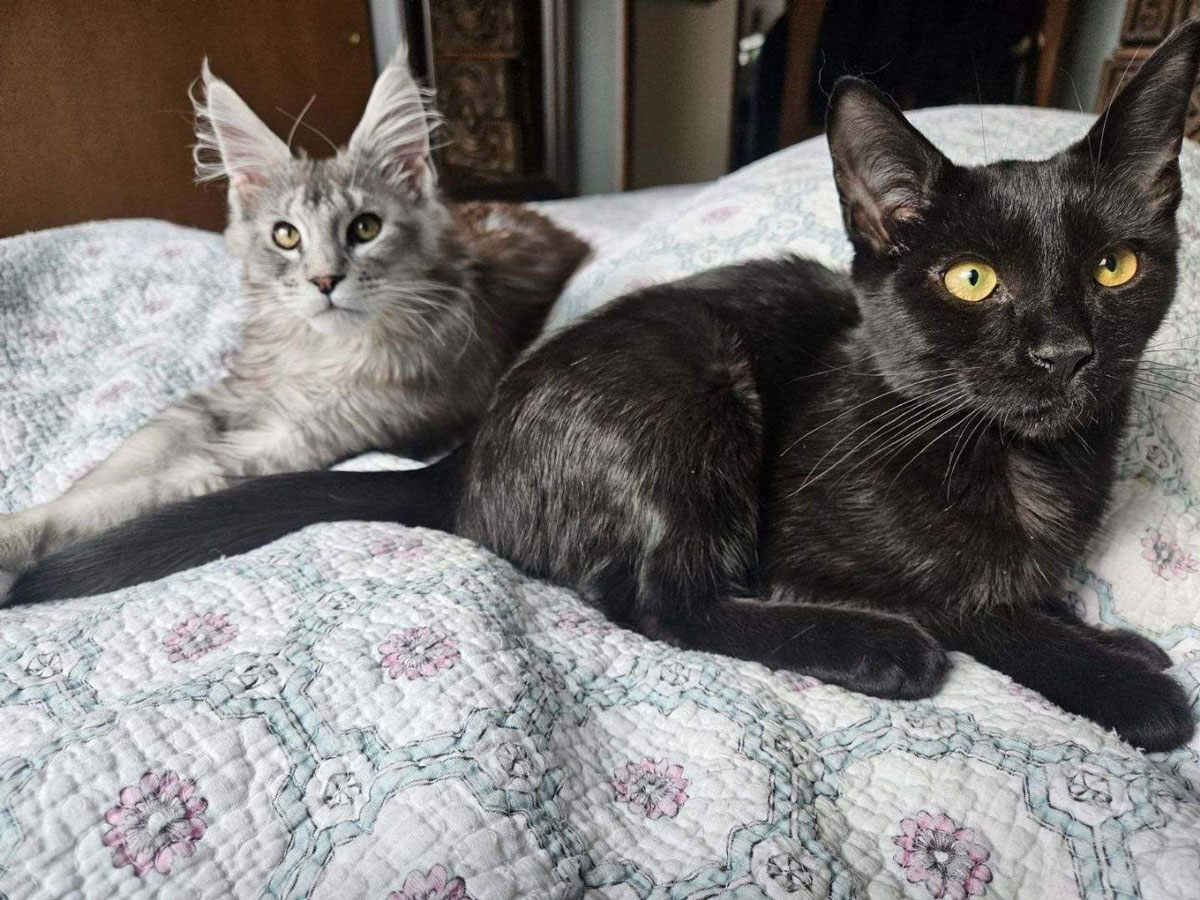
The Monster and Clyde, together at lastThe Monster and Clyde, together at last (Melanie McFarland)After we walked away from the rescue whose warden decided Clyde would not become our "little friend," we sat in our car, dazed and freshly enraged, trying to make sense of this illogical ouroboros. Her organization doesn't believe kittens should be raised solo. Neither do we. But this person was fine with a different kitten being alone until we found another suitable match. Based on our track record, how long that would take was anyone's guess.

Then it hit us. Our mistake at pretty much every juncture in this extended expedition was telling the truth

We turned that over and over during the drive that followed until I burst out laughing — the crazed kind that might result from being sprayed in the face by the Joker's trick boutonniere.

This was all happening because we were trying to do the right thing: to adopt, not shop. Plus, we wanted to rescue a black cat — you know, the type that at least one study found to have poorer adoption outcomes.

Why . . .?

Then it hit us. Our mistake at pretty much every juncture in this extended expedition was telling the truth.

This is where Bonnie came into the picture, and in the way of all great childless cat ladies, cooked up a scheme.

The next day, she called the rescue and told them exactly what they wanted to hear. Nothing she said was a lie. Bonnie really did have a young, playful cat at home slightly older than Clyde. It also helped that she was a longtime donor to this rescue. Bonnie drove to its location, where she was whisked to an interview station after indicating she wanted Clyde. Membership has its privileges, as they say.

A short time later, we met up for the handoff . . . er, rehoming.

Strictly speaking, no policies were violated. The rescue got its fee. I got the cat I had been seeking for 16 months.

Although we created a separate acclimation area for Clyde, he chose to quietly explore our small, kitten-proofed house for an hour before making himself at home on the couch, sleepily kneading the cushions before flopping between my lap and my husband's. He spent his first night in bed with us.

As for the whole "single kitten syndrome" of it all, if it does exist, Clyde never displayed any "symptoms." He was elated to be the center of attention for two and a half weeks, demonstrating impeccable litter box etiquette from day one. As advertised, a belly rub session was all it took for him to melt. He was — is — meant to be my lil' puddin'.

Yet in the days preceding our other cat's arrival, I was gripped by apprehension, afraid I had done or would do something terribly wrong. I created a strict feeding and play regimen to ensure Clyde was stimulated and fretted if, say, he did not consume full servings of his food. I frantically scheduled his introductory appointment with our vet of nearly 20 years who gently counseled me to calm the hell down. "You're an expert at this,” he said. "You know what you're doing."

The mean rescue sentinel did not think so. What if she showed up at our door to reclaim Clyde? This is not some unfounded paranoia; it happened to Ellen DeGeneres in 2007 after she rehomed a rescue pet. And who am I? Nobody, that's who.

Fortunately no such madness occurred. The place did not even call Bonnie to check on Clyde's well-being.

Instead, our Maine Coon kitten arrived and instantly became Clyde's partner in crime. Today those two monsters love each other more than the humans who care for them. My spouse and I might as well be their butlers: grooming them, cleaning up behind them several times a day, serving them the best food available.

In exchange — to be honest — my husband has survived a few midnight nut punches, courtesy of the pee-wee linebacker I gifted to him. Happy birthday, hon! 

There was also the time Clyde woke me up by nipping my chin hard enough to leave a welt because I had not served his breakfast quickly enough.

Aside from that, like the cats that came before, these two remind us to find the slices of sunlight in our lives whenever we can. This is welcome on dark days, when we have received news about friends diagnosed with serious illnesses or phone calls from an aging parent who has been rushed to the hospital again. When we absorb the reality of what the next four years and beyond will look and feel like. Life's turns are unpredictable, but so are your pet's random bursts of joy.

This outcome would not have been possible if we did not have certain advantages. My husband and I both have jobs, don't have kids and are blessed with great friends like Bonnie who share our yen for petty justice.

We also have the means to purchase a purebred pet from a woman who raises her cats in an immaculate home, where they take turns snoozing on a blanket in front of a fireplace. Our beast spent the first few weeks of his life in a happy, well socialized clowder monitored by a veterinarian.

Weeks after he came home with us, she checked in to see how we're doing. Not to surveil, but to see how well he was settling in and to offer helpful tips.

Few rescues can offer that level of personalized follow-up, but all the animal welfare experts consulted for this story stress the importance of supporting clients with education and encouragement instead of discriminatory gatekeeping.

Adopting any cat should not require exploiting a connection, a studious application of loopholes and other chicanery. In the universe's grander design, Clyde's fee would have supported a more universally welcoming place. 

But it was evened out by how snugly he fits beside the gentle mammoth that, yes, I shopped for when I had reached my limit of trying and trying and trying to adopt.

In the end, Galaxy granted me absolution. "I'm going to give you props for, OK, would I have preferred that you didn't go to a breeder, that you would have gone to a rescue? Of course," he said. "But you wouldn't have done that had you not been turned away in the first place."

The kitten distribution system ended up working in my favor after all. The trick was to game it a bit once the litter of disgruntlement buried the last of my patience.

Murdering health insurance CEOs will get us nowhere

The brazen murder of a health insurance company CEO has shocked the public consciousness — but for some, it seems to be a relatively mild, pleasurable shock. Brian Thompson, the 50-year-old CEO of UnitedHealthcare, was shot and killed on the sidewalk outside a hotel in midtown Manhattan hotel early on Wednesday morning. Much of the internet response to this news has been ambivalent, bordering on enthusiastic, rather than horrified. Thompson’s killing was like something out of an Ian Fleming novel: the killer used a silenced 9mm pistol and left messages (the words "deny," "defend" and "depose") written on the shell casings like a version of Ted Kaczynski who avoids the post office. At this writing, the shooter remains at large, although video images showing his uncovered face are now in wide circulation.

Violence is a strategy that never warrants celebration because it is crude, brutal and ineffective, not to mention immoral. There’s always a better way, even if it’s not as easy or as dramatic. Nonetheless, it’s not bizarre or surprising to see that Reddit is being flooded with memes mocking the murder, or that many on social media are seemingly trying (or failing) to suppress their glee. There’s now even a rush to cash in with merch, such as a ballcap using the company’s logo next to crosshairs and the phrase “We aim to please.” A chart from valuepenguin.com displaying the percentage of claim denial rates by insurance companies, with UnitedHealthcare topping the list, has gone super viral, with one user on Threads captioning it, “To paraphrase Chris Rock ‘… but I understand.’”

The overall justification for this celebration — the New York Times described it as a “torrent of hate” — lies in the widely understood the fact that health care companies inflict violence on thousands of people in this country, if not millions, every single day. Take the announcement this week from Anthem Blue Cross Blue Shield, which couldn’t have had better or worse timing, depending on one’s perspective. That company proposed that its health insurance plans in Connecticut, New York and Missouri would no longer cover anesthesia care if a surgery or operation extends beyond an arbitrary time limit. That seems to have outraged the American Society of Anesthesiologists, which has called on Anthem to immediately reverse this proposal.

On Thursday, Anthem did just that, but the shock remains. If that’s not violence, what is? Whether you’re in an alley or on an operating table, if someone has a knife to you and demands your money, it’s violence. Or consider the innumerable examples that aren’t just proposals but routine policy: the tidal wave of denied or delayed claims, the noose of restrictive networks, costly deductibles, prescription refusals and on and on. There is also convincing evidence this walled garden especially excludes and discriminates against people of color, queer people and women, making this systemic violence not just prevalent, but also disproportionate.

Whether you’re in an alley or on an operating table, if someone has a knife to you and demands your money, it’s violence.

For this reason, it seems not everyone is shy about their delight or perceived moral vindication in Thompson’s death. Independent journalist Taylor Lorenz, formerly of the Washington Post and New York Times, citing the Anthem proposal, posted “And people wonder why we want these executives dead.” In a now-deleted post, Lorenz shared the name and headshot of Blue Cross Blue Shield’s CEO, later clarifying that she only intended for people to “learn the names of all of these insurance company CEOs and engage in very peaceful letter writing campaigns so that they stop ruthlessly murdering thousands of innocent Americans by denying coverage.” She added, “Healthcare is a human right. We need universal healthcare now.”

It’s time to take a breath and acknowledge an important complication: At this moment, we have no idea what the motives of the killer are. The presumption that he’s some sort of Robin Hood-esque vigilante out to right the wrongs of the for-profit health care industry isn’t yet borne out by facts. For all we know, this killing was the result of a personal grudge, or Thompson owed millions of dollars to organized crime. Admittedly, those are unlikely possibilities, but until we know more, it’s all speculation. In the meantime, it’s worth exploring why so many people are willing to project their own motives onto this situation.


Want more health and science stories in your inbox? Subscribe to Salon's weekly newsletter Lab Notes.


We also don’t know much about Brian Thompson. The AP reports that he kept a “low profile,” which is perhaps prudent when you’re at the helm of a human-smushing machine that brings in billions in profits while letting untold numbers of people languish, suffer and die. In fact, the day before Thompson was killed, Reuters reported that UnitedHealth Group, the parent company of UnitedHealthcare, projected its revenue for 2025 to be between $450 billion and $455 billion. Earlier this year, Thompson was a defendant in a high-profile lawsuit alleging fraud and insider trading. As CNN reported, he and other executives at UnitedHealthcare were accused of conspiring “to inflate the company’s stock by failing to disclose a US Justice Department antitrust investigation into the company.”

Over at Wikipedia, there is internal debate over whether Thompson is even notable enough to have his own page (he didn’t before this week) or if such an entry page should be strictly focused on his death, as sometimes occurs for victims of violence who don’t merit the site’s “notability” criteria.

There is no other or better word for what happened to her than violence.

We do know that Thompson leaves behind a wife and two sons. However despicable his role in health care, he was still a human being and for those people, his death will be a private tragedy. The rejoinder is, of course, that everyone who has died and will die because of institutions like UnitedHealthcare were people mourned by their loved ones as well.

I’m reminded of my former neighbor in Yucca Valley, California, a bubbly, friendly old woman who lived with her elderly son. Every day she would greet the mailman with a “Hi! How’s it going!” so loud that I could hear it across the street in my home office. They would often talk for quite a while and she was always amicable to me when we caught each other on the street. One hot summer day in 2021, her son invited me in to share some extra produce they’d gotten from a food bank. I enjoyed some fresh strawberries and a loaf of bread.

She wasn’t so bubbly then. She was sitting in a chair, breathing heavily with her eyes closed, with a large tumor on her face that I pretended not to notice. She died a few weeks later. I helped her son move out shortly afterward, which was when I learned that she’d been bounced around from facility to facility without finding doctors willing to treat her, until her entirely treatable cancer destroyed her face and killed her.

There is no other or better word for what happened to her than violence. Rural health care access is especially abysmal, with mortality rates in remote areas far exceeding those in more urban contexts. My mother died in 2023 in very much the same way as my neighbor, both of them statistics of this disparity. My mom’s cancer was diagnosed late and she was bounced from one provider to another, ultimately allowing her disease to metastasize past the point of no return.

What about the indirect victims of the health care death machine? In 2017, my father was diagnosed with Stage IV myelofibrosis, a rare and deadly form of blood cancer. He made a miraculous but uncomfortable recovery, becoming so wrung out from the whole process of being nothing but a number to the health care system, that he said he would rather die than fight if his cancer returned. His experience with the systems run by people like Thompson bred so much distrust in health care that he refused to be vaccinated for COVID-19, and died in late 2021 from a preventable disease.

I can’t say with any certainty that I never had dark fantasies about inflicting violence on the doctors who neglected my mother’s health and let her die. But if I did, I rationalized those thoughts away with the understanding that such violence would accomplish nothing. Killing more CEOs will do nothing but promote new ones — with bigger and better-armed security details. That wouldn’t stop the health care machine from crushing more people because that cruelty and violence is systemic, not individual — and that problem can’t be fixed by a lone avenger with a gun. To say otherwise is the same warped logic of gun-lovers who say spree shooters can be stopped with a “good guy with a gun.”

We need your help to stay independent

If Thompson hasn’t been replaced already, he soon will be. And there is no reason to believe that UnitedHealthcare will change its tactics or practices. Right now, there’s no meaningful incentive to do so. Our entire health care system squeezes profit from people because that’s what it’s designed to do. Those in the executive suites at insurance companies do exactly as they’re supposed to, not because they woke up one day and decided to inflict as much suffering as possible. It’s fair to observe the other side of the coin, however: Brian Thompson and others like him have seemingly no regrets or reservations about the damage they do. It’s like a massive version of the trolley problem: Pull the lever and save some lives or keep the train on track to mangle millions while pocketing billions. Most people would make the exact same decisions if put in such a position, and it’s unrealistic to believe that any individual has the power to dismantle the system. 

I personally believe in the concept called karma, but not in the sense that the universe is a giant calculator that doles out ultimate judgment for good and bad behavior. The word simply means “action,” which I believe follows Newton’s Laws of Motion, specifically the third: “Whenever one object exerts a force on another object, the second object exerts an equal and opposite on the first.” Inflicting massive violence on innocent people has a way of rebounding on its originator, perhaps better summarized by the concept of “blowback” in foreign policy or by Jesus’ famous maxim that those who live by the sword die by the sword.

Violence does accomplish something: It makes people feel pain, perhaps similar to the pain inflicted in the first instance. But if I shoot dead the doctors and health care executives who neglected my mother, that won’t bring her back. Nor will it do anything to change or dismantle the American health care system, which all too closely resembles the apparatus of death from Kafka’s “In the Penal Colony,” which embeds punishment into the flesh of its victims. Remaking our health care policies will take much more than individual acts of lethal violence. That will require a shared collective consciousness of how and why this system is so badly broken, and a collective decision to build something better.

Trump ushers in a Christian “deep state”: MAGA moves to gut the Constitution

Far-right pastor Lance Wallnau is incredibly upset over the burgeoning controversies regarding Donald Trump's nominee for Defense Secretary, Pete Hegseth. No, he's not angry about reports that Hegseth paid off a woman who accused him of rape, or about the repeated adulteries and other marital cruelties detailed in a 2018 letter his mother wrote to him. Nor is Wallnau concerned with the growing pile of stories suggesting Hegseth has a severe drinking problem. Wallnau's just mad that an email detailing some of these issues exists.

"Mom, don't write a letter like that to your son!" he whined straight into the camera. "Don't write it and send it in an email someone could intercept and put in the New York Times." 

Wallnau, a close Trump ally whose robust social media presence helped drive the mob on January 6, isn't just mindlessly defending Trump's nominees. He's especially gung-ho about Hegseth because the two men are deeply entwined with the Christian nationalist movement, which believes the purpose of the U.S. government should be to enforce far-right Christianity on not just Americans, but the whole world. It's not just Hegseth's tattoos that indicate his allegiance to this theocratic ideology. He recently joined a church run by Doug Wilson, a proud Christian nationalist who argues "secularism is a hollow construct" and should be replaced by a government-run according to the dictates of "evangelical Protestantism." Using Trump to grant control of federal powers — especially those that can be enforced with guns — is central to this plan. 


Want more Amanda Marcotte on politics? Subscribe to her newsletter Standing Room Only.


On Thursday, Marianna Sotomayor wrote in the Washington Post that Trump's policy agenda will face the obstacle of "narrow and ideologically fractured majority" Republicans have in the House. The GOP only has two more seats than Democrats. Getting all 220 to take votes on Trump's radical plans will be hard, if not impossible, as many represent purple districts and could easily lose in 2026 if they march in lockstep behind Trump. 

But that doesn't bother the Christian nationalist leaders who back Trump, because the plan was always to reduce Congress to a ceremonial body and concentrate all the power in the hands of the president. During the campaign, much attention was paid to the disparate policy ideas in Project 2025. Less discussed was the overarching theme of the plan, which was to turn the presidency into something very much like a dictatorship. Russell Vought, the architect of Project 2025, is a Christian nationalist who believes the federal government's job is to impose a "biblical worldview" by fiat, which means sidestepping the House, whose members face biennial accountability with voters. 


The plan was always to reduce Congress to a ceremonial body and concentrate all the power in the hands of the president.

Trump has now appointed Vought to run the Office of Management and Budget (OMB). Don't be fooled by the boring name. The office holds unbelievable power because it's about controlling the purse strings for the whole government. As Thomas Zimmer explained at Democracy Americana, Vought argues that the law or separation of powers should not constrain him and the president, because this is a "post-constitutional moment." Vought has an elaborate and nonsensical rationale blaming the left for this development, but what matters most is his conclusion: the right is now entitled to blow past legal constraints and enact their will however possible. 

At the center of this scheme is an effort to replace the existing federal bureaucracy with "an army of people who have a biblical worldview" and a willingness to "lead with reckless abandon." Vivek Ramaswamy and Elon Musk are toothlessly threatening the jobs of federal employees on Twitter. Vought, however, will have real power at the OMB to "put them in trauma," as he threatened in a recent speech at the Center for Renewing America. The goal, he said, was to make their work lives so miserable that they are "traumatically affected" and forced to quit. Unlike Musk and Ramaswamy, however, Vought doesn't pretend this is about saving money. He plans to refill those jobs with Christian nationalists. In sum, the conspiracy theory of the "deep state" was concocted so the right could justify creating a real "deep state," one that is geared towards remaking America in its Christian fundamentalist worldview. 

Trump's first pick for Attorney General, Matt Gaetz, went up in smoke as details from a sex trafficking investigation into the former Florida congressman kept being leaked to the press. His current nominee, former Florida attorney general Pam Bondi, isn't raising as many hackles, despite her threats to arrest prosecutors for enforcing the law against those who attempted to overturn the 2020 election. But new reports show Bondi isn't just an election denier, though that's bad enough. People for the American Way discovered she's extensively tied to Christian nationalist leaders. 

Two of the people Bondi has worked with — Wallnau and Trump's favorite minister, Paula White — are part of the New Apostolic Reformation. Matthew Taylor, a religious studies scholar who follows this movement closely, told Salon in September that these folks believe they're "this vanguard that God had placed on Earth to bring about the Kingdom of God. They want a global revival and to take over whole societies and turn them into Christian nations." When she was Florida's attorney general, Bondi backed a constitutional amendment that would allow the state to fund religious groups with taxpayer money, but Florida voters shot it down. 

As Taylor laid out in painstaking detail in his book "The Violent Take It By Force," while Christian nationalist leaders like Wallnau knew well enough to be physically absent on Jan. 6, their efforts at amassing and enraging the crowd were critical in making sure the Capitol insurrection happened. It's concerning that someone sympathetic to their cause would run the Justice Department. We've already witnessed an uptick in right-wing domestic terrorism and hate crimes, and it's bound to get worse if Christian nationalists believe they have a sympathizer to their cause controlling all federal law enforcement. 

Recently, far-right preacher Eric Metaxas gloated that Donald Trump will "go scorched Earth on the satanic bureaucracy that is the Deep State." This moralizing language conceals, however poorly, a deeply immoral agenda: to replace respectable civil servants with bug-eyed fascist ideologues who oppose the most basic values of our country, such as religious freedom, equal justice, and democracy. The consequences could be dire. Robert F. Kennedy Jr. as head of Health and Human Services is scary enough, but the Project 2025 goal is to replace HHS doctors and scientists with people who believe prayer works better than vaccines. Trump's promise to pardon Jan. 6 offenders is scary, but scarier still is the possibility that the DOJ is staffed with people who don't think it's a crime if it's done in the name of Christian nationalism. And, of course, we should all be terrified that Trump is still pushing to put control of the military in the hands of a man whose church teaches that modern democracy should give way to theocracy. 

North Carolina town sues Duke Energy over climate change

The residents of a small North Carolina town are suing Duke Energy, one of the largest utilities companies in the world, for its role in contributing to climate change. In the process, they are continuing a nationwide trend of communities suing oil companies, and now utilities, for contributing to global heating.

The small town of Carrboro (population: roughly 21,000) is suing Duke Energy, which according to an analysis from the University of Massachusetts Amherst is the third largest source of carbon dioxide in the United States. Carbon dioxide is one of the chief anthropogenic greenhouse gases that contributes to climate change; the others are methane, water vapor, nitrous oxide and fluorinated gases. These gases are mostly emitted through humanity’s use of fossil fuels, as well as other agricultural and industrial activities.

In a complaint filed Wednesday in North Carolina state court, the community led by Mayor Barbara Foushee is asking a jury to award the town money for current and future losses because of climate change.

“North Carolina has just suffered its hottest year on record, and temperatures for the region may increase as much as 6° to 10° F by the end of the century,” the complaint states. “In the next decade alone, temperatures in Carrboro are likely to be over 90° F for more than 10 weeks a year.” The complaint added that climate change causes more frequent and extreme rain and storms, citing Hurricane Helene as having “devastated communities in Western North Carolina.”

Carrboro is following in the example of other communities that are trying to hold companies legally accountable for their greenhouse gas emissions. In May, Vermont became the first state to require oil companies to compensate the public for damages caused by climate change. There are also lawsuits from Bucks County, Penn. to Chicago regarding greenhouse gas emissions, as well as related litigation pertaining to plastic pollution from California to Ford County, Kansas.

“I answer to my Lord and my wife”: Hegseth dodges questions about drinking

Pete Hegseth has heard enough questions about his alleged issues with alcohol.

Donald Trump's pick for secretary of defense rebuffed reporters on Capitol Hill when they attempted to ask him about reports that he struggled with alcohol abuse.

"I will answer all of these senators’ questions. But this will not be a process tried in the media. I don’t answer to anyone in this group," he said. "I answer to President Trump… I answer to the 100 senators who are part of this process and those on the committee. And I answer to my Lord and Savior and my wife and my family."

Hegseth said he would carry on with the nomination "as long as Donald Trump wants me in this fight." Despite his rebuke of the media and commitment to avoiding answers, Hegseth did say that he lives a different life than he did when he was accused of sexual assault.

"I’m a different man than I was years ago. And that’s a redemption story that I think a lot of Americans appreciate," he said. "You fight. You go do tough things in tough places on behalf of your country. And sometimes that changes you a little bit."

Hegseth did speak out about the stories surrounding his nomination on friendlier turf, going long with Megyn Kelly about his various scandals. He told Kelly that he "never had a drinking problem" and accused Democrats of running a "playbook" they honed during the nomination process of Supreme Court Justice Brett Kavanaugh.

While they remain dedicated to Hegseth publicly, reports from inside the Trump team claim they're considering potential replacements. 

Harris wanted former ESPN hoops scoopster Wojnarowski to break Walz nom news

In yet another example of the Kamala Harris campaign being too cute by half, a new interview revealed that they hoped to break the news of Tim Walz's vice presidential nomination through ESPN's former head of hoops scoops. 

Speaking to Sports Illustrated, Adrian Wojnarowski shared that the Harris campaign reached out to him with the news of Walz's nomination first, hoping to break the news in the same venue as blockbuster basketball trades. (Wojnarowski got scooped by another outlet before the plan came all the way together.)

Earlier this year, the insider commonly known as "Woj" stepped away from the style of rapid-fire social media reporting he'd helped create. He announced his plans to leave journalism and become the general manager of his alma mater St. Bonaventure's men's basketball program on X.

The move dropped his annual salary from over $7 million to $75,000, but Woj said that money was never a part of his decision to leave. The 55-year-old, who also revealed he was diagnosed with prostate cancer earlier this year, shared that he was burnt out on the beat he'd basically invented.

"What I was doing, it just wasn’t fulfilling anymore,” he said. “I was just done. This is what gets me excited. To learn something new, to be part of something like this. It’s a whole new challenge."

Seeking a Woj bump is entirely on-brand for Harris' spendy campaign that seemed almost compulsively obsessed with celebrity endorsements. The flashy, failed outing for the vice president managed to spend more than $1 billion on a campaign that was just over 100 days long, losing to Donald Trump in ways that were previously unimagined

Bitcoin spikes to all-time high following Trump SEC chair nomination

The price of a single Bitcoin surged to over $100,000 just hours after Donald Trump nominated a crypto advocate to chair the U.S. Securities and Exchange Commission. 

The oldest and most popular cryptocurrency crossed the six-figure threshold for the first time on Wednesday following the president-elect's announcement that he'd tagged Paul Atkins to lead the SEC in his second term. Trump took credit for the price jump on Truth Social

"CONGRATULATIONS BITCOINERS!!! $100,000!!!" he wrote. "YOU’RE WELCOME!!!"

Atkins is a former SEC commissioner and the CEO of a company that consults for cryptocurrency industries. The pick signals a change of heart for Trump, who once denounced crypto as a "scam." 

Trump launched his own crypto concern in October and said on the campaign trail that he hoped to make the U.S. "the crypto capital of the planet and the Bitcoin superpower of the world."

Trump's crypto company, World Liberty Financial, would benefit if his administration deregulates the crypto industry.

As of Thursday afternoon, the famously volatile Bitcoin has dropped below $100,000. The coin is still trading more than $20,000 higher than it was in June of this year.

“They watched every day!”: Rachael Ray doesn’t care what her haters have to say about her

In light of recent rumors about her health, Rachael Ray couldn't care less about what her internet trolls have to say. The former “Food Network” star said she isn’t fazed by her biggest haters while chatting with Anne Burrell on Ray's podcast, “I'll Sleep When I'm Dead.” However, in one instance, Ray found the scathing rumors to be quite amusing.

“Do you ever think about the way people think about you? I don't,” Ray told Burrell, adding that she “never look[s] at anything” about herself on the internet. “I'm, like, afraid to, quite frankly.”

“There was a site called ‘I Hate Rachael Ray’ for years and I'm like, well, at least they're watching,” Ray continued. Burrell, appalled, then asked, “Who would take the time to do that? F**king loser.” 

Despite the hate, Ray said she didn’t mind the attention: “I loved it. They [her haters] watched every day!”

Back in September, Ray received a tirade of unsolicited comments regarding her speech and appearance after she posted a video of herself making the late Tony Bennett’s favorite meal, Ossobuco.

https://www.instagram.com/reel/C_TNM-pydA3/?utm_source=ig_web_button_share_sheet

In 2008, Ray faced similar rumors targeting her health after she underwent throat surgery. Concerned fans claimed she had throat cancer, but her representative, Charlie Dougiello, clarified that the surgery was to remove a benign cyst.

“Rachael is the picture of health,” Dougiello said, according to The New York Post. “She is having very minor surgery to remove a benign cyst on her vocal cord. It’s a common in-and-out procedure that she will have in early December and it will not adversely affect any of her daytime show or ‘Food Network’ tapings.”

This cranberry condiment (with a kick!) deserves a place within your holiday spread

Looking for an easy, festive and fresh holiday appetizer or hostess gift? This chutney is it! It does not hurt that it is a gorgeous shade of ruby red and so very versatile.

Spooned over cream cheese or chèvre, then top with chopped green scallions for one of my favorite appetizers during this time of year. The chutney practically makes itself once you toss all the ingredients together in a saucepan, but you would think this standout relish of sorts requires much more effort. Tangy and sweet with the pleasing, piquant bite of reduced apple cider vinegar, it is a celebration of the cranberry and a world-class condiment on a turkey sandwich. 

Worry not, this is no replacement for your favorite cranberry sauce. I mean, I suppose it could be, but the very idea of changing out what might be the most esteemed and quintessential side (cornbread dressing excluded) is not even entertained at my house. I am actually part of a two-cranberry sauce family, which amuses me since I lack real passion for any of it, but I assure you this chutney does not act as a substitute for either.

I understand fully the importance of maintaining tradition during holiday meals as well as being open and welcoming to the newbies coming into the group, particularly those entering by way of marriage, who bring with them their own favorite dishes and tastes. You may wind up with three kinds of dressing and more green bean casserole than any group of eight could ever consume, but making room for other people’s family traditions is an act of love. 


Want more great food writing and recipes? Subscribe to Salon Food's newsletter, The Bite.


My experience says you can add all you want to your hallowed family menus . . . just do not take anything away. I learned the hard way about the importance of canned cranberry sauce one Thanksgiving many moons ago, and ever since I remain stocked, three cans deep, from October to New Year’s.

For some folks, the attachment is real. And honestly, why rain on their parade? Those perfectly cut, firm, fork-able rounds are the easiest thing in the world to plop out and place on a platter. Bless Ocean Spray, I say, for creating something so economical that is so important to so many.  

Cranberry Chutney, on the other hand, is strong and complex and in an entirely different category than cranberry sauce. You will not step on anyone’s toes when you bring this to the party.

Use it as an accompaniment to prop up a tired appetizer — like that cheese ball of yours — or add a dollop to the side of your plate for when your taste buds crave a little zing to make the perfect bite. Include it on your charcuterie board and drizzle it over creamy, cheesy dips. You will find endless ways to incorporate it during the holidays when fresh cranberries are abundant at the grocery store.    

We need your help to stay independent

Cranberry Chutney
Yields
cups
Prep Time
20 minutes
Cook Time
60 minutes

Ingredients

1/2 cup apple cider vinegar

1 cup brown or coconut sugar

1/4 teaspoon allspice

1/8 teaspoon ground cloves (a little goes a long way)

2 cinnamon sticks

1/4 cup dried apricots, chopped 

1/4 cup dried figs, chopped

1/4 cup currants (or golden raisins cut in half)

1 apple, peeled, cored and chopped

1 to 2 jalapeños, deseeded and diced

2 stalks celery, diced

2” knob of fresh ginger, grated

Zest of 1 lemon

Zest and juice of 1 orange

1 1/2 cups fresh or frozen whole cranberries


For serving over chèvre or cream cheese:

1 bunch green onions, green parts only, chopped extra thin

Optional: toasted chopped walnuts or toasted sesame seeds

Serve with water crackers or similar plain cracker


Directions

  1. Over medium-high heat, bring vinegar and sugar to a boil.

  2. Once sugar is dissolved, add remaining ingredients —spices through cranberries. 
  3. Stir well and bring back up to a low boil, then reduce heat and simmer low, with lid askew (mostly uncovered), for about 45-60 min, or until thick. 
  4. Remove cinnamon sticks and allow to cool to room temperature before spooning into jars. 
  5.  Chutney will keep for a week or longer in the refrigerator.


Cook's Notes

Dried fruits and vegetables: Although it all cooks down, I find it best to chop everything on the small side. The dried apricots and figs should be quartered, and the apple diced to a similar size. Dice the celery and jalapeño very small. Taste the jalapeño for heat. If it is exceptionally mild, add a few seeds to spice it up. The level of heat is up to you.

Add a few dried cherries to the mix of fruits if you feel so inclined. Use the overall amounts in the recipe but add and subtract to create variety. I do not advise using dates, however.