Spring Sale: Get 1 Year, Save 58%

Bill Barr quits Department of Justice: Trump’s attorney general releases stunning resignation letter

Attorney General Bill Barr is leaving the administration on Dec. 23, President Donald Trump revealed on Twitter Monday evening. Perhaps not coincidentally, the announcement came just as the Electoral College gave Joe Biden enough votes to officially become president-elect, yet another nail in the coffin for Trump’s exceptionally dead efforts to remain in power. Trump likely wanted to distract from that development.

It’s not exactly clear if Barr was pressured to leave or left of his own volition. He has come under fire from Trump for failing to find evidence of significant voter fraud in the 2020 election and also for failing to provide any damning revelations about Biden or his family before Election Day. But the letter Trump shared from Barr seemed to suggest the attorney general was leaving willingly.

Notably, while Barr said that the department is still looking into “voter fraud allegations in the 2020 election,” he didn’t give any hint that he’s changed his mind since he told the AP there was no evidence of widespread irregularities that would change the result. This seems like a way to mollify Trump by referring to his conspiracy fictions without stating anything the department can’t back up with facts.

The letter itself was over-the-top in its obsequiousness, lavishing the president with praise for everything he takes pride in and lashing out at his favorite targets, such as the Russia investigation.

For example, Barr said:

Your record is all the more historic because you accomplished it in the face of relentless, implacable resistance. Your 2016 victory speech in which you reached out to your opponents and called for working together for the benefit of the American people was immediately met by a partisan onslaught against you in which no tactic, no matter how abusive and deceitful, was out of bounds. The nadir of this campaign was the effort to cripple, if not oust, your Administration with frenzied and baseless accusations of collusion with Russia.

Few could have, weathered these attacks, much less forge ahead with a positive program for the country. You built the strongest and most resilient economy in American history — one that has brought unprecedented progress to those previously left out. You have restored American military strength. By brokering historic peace deals in the Mideast you have achieved what most thought impossible. You have curbed illegal immigration and enhanced the security of our nation’s borders. You have advanced the rule of law by appointing a record number of judges committed to constitutional principles. With Operation Warp Speed, you delivered a vaccine for coronavirus on a schedule no one thought conceivable — a feat that will undoubtedly save millions of lives.

This isn’t any better than the kind of drivel you’d expect to hear on Fox News or OANN, let alone from the attorney general who took it upon himself to make the determination about whether former Special Counsel Robert Mueller’s report found conclusive evidence that the president committed a crime. Barr’s claim that the Russia investigation was “baseless” is just false — his department’s own inspector general concluded the probe was properly predicated. But Barr has long since proved himself to be addicted to the right-wing disinformation sphere. And he probably thought buttering Trump up on his way out the door was the best way to avoid a humiliating ouster.

Of course, some might think this is a more humiliating way to leave than with an insult from Trump

Barr also decided to claim some excessive praise for himself:

During your Administration, the Department of Justice has worked tirelessly to protect the public from violent crime; worked closely with leaders in Mexico to fight the drug cartels; cracked down on China’s exploitation of our economy and workers; defended competition in the marketplace, especially the technology sector; and supported the men and women of law enforcement who selflessly—and too often thanklessly—risk their lives to keep our communities safe.

Once Barr is gone, he will be replaced by Deputy Attorney General Jeff Rosen, which follows the ordinary course for the succession of power in the department. It’s not clear if Rosen will be willing to take steps that Barr was thus far unwilling to take, such as making official DOJ claims that support Trump’s bogus allegations of voter fraud or announcing a special counsel to investigate Hunter Biden.

Christopher Nolan: Tom Hardy’s Bane performance “has yet to be fully appreciated”

Christopher Nolan‘s press tour for the December 15 digital release of “Tenet” has been defined by his critical remarks over Warner Bros.’ shift to an HBO Max release model, but he’s also been giving some buzzy takes on his previous directorial efforts. Case in point: Nolan said during a recent interview on MTV’s “Happy Sad Confused” podcast (via NME) that Tom Hardy‘s performance as the villain Bane in “The Dark Knight Rises” has yet to be “fully appreciated” by moviegoers and critics.

Read more from IndieWire: Best Christmas movies to stream with your family

“There’s no safety net for any of these guys and Tom, I mean… what he did with that character has yet to be fully appreciated. It’s an extraordinary performance, and truly amazing,” Nolan said. “The voice, the relationship between just seeing the eyes and the brow. We had all these discussions about the mask and what it would reveal and what it wouldn’t reveal, and one of the things I remember him saying to me, he sort of put his finger up to his temple and his eyebrow and said, ‘Can you give me this to play with? Let people see this.'”

Nolan added, “Sure enough, you see there in the film, this kind of Brando-esque brow, expressing all kinds of just monstrous things. It’s really quite a performance.”

Read more from IndieWire: “House of the Dragon”: Everything you need to know about HBO’s upcoming series

While a majority of critics and moviegoers were impressed with the physicality of Hardy’s Bane, most of the buzz around the Oscar nominee’s performance centered on his muffled dialogue making it impossible to understand anything the character is saying. Nolan has said even fellow filmmakers have called him in the past to complain about his inaudible dialogue.

Later in his “Happy Sad Confused” podcast interview, Nolan also came to the defense of David Fincher’s much maligned feature directorial debut “Alien 3,” saying, “Everyone always complains that sequels get bigger but we’re the people making sequels get bigger, we do want them bigger. You don’t want them smaller. It’s the ‘Alien 3’ lesson that [David] Fincher learned. You can do it but it’s not going to make anybody happy, even though personally I love that film, a lot more than he does in fact.”

Read more from IndieWire: The 2020 Black List presents the year’s best unproduced scripts

Visit the MTV podcast website to listen to Nolan’s podcast appearance in its entirety.

Natalie Portman says “being sexualized” as a child star “made me afraid”

Natalie Portman was just 11 years old when she was cast in “Léon: The Professional” by director Luc Besson, and her child stardom quickly rose thanks to films like “Heat,” “Beautiful Girls,” and “Everyone Says I Love You.” But for Portman, she knew that because of her age she was being portrayed as a “Lolita” figure, as she told Dax Shephard in a recent episode of his Armchair Expert podcast (via People).

Read more from IndieWire: Best Christmas movies to stream with your family

“I was definitely aware of the fact that I was being portrayed … as this ‘Lolita’ figure,” she told Shepard. “Being sexualized as a child, I think took away from my own sexuality because it made me afraid, and it made me [feel] like the way I could be safe was to be like, ‘I’m conservative,’ and ‘I’m serious and you should respect me,’ and ‘I’m smart,’ and ‘don’t look at me that way.'”

The Oscar winner, who turned 39 this year, continued, “Whereas at that age, you do have your own sexuality and you do have your own desire, and you do want to explore things and you do want to be open. But you don’t feel safe, necessarily, when there’s older men that are interested, and you’re like, ‘No, no, no, no.'”

Read more from IndieWire: “House of the Dragon”: Everything you need to know about HBO’s upcoming series

Portman also said that she had to put up “fortresses” to protect herself at such a young age. That meant drawing a line on doing certain kinds of roles and projects. Portman became a sensation in her teens with “Star Wars: Episode I – The Phantom Menace.”

“So many people had this impression of me that I was super serious and conservative … and I realized I consciously cultivated that because it was always to make me feel safe,” she said. “Like, ‘Oh, if someone respects you, they’re not gonna objectify you.'”

Portman said that the defense mechanism ultimately worked, adding, “When I was in my teens I was like, ‘I don’t wanna have any love scenes or make-out scenes,'” Portman recalled. “I would start choosing parts that were less sexy because it made me worried about the way I was perceived and how safe I felt.”

Read more from IndieWire: The 2020 Black List presents the year’s best unproduced scripts

Portman previously opened up about her experiences as a child actress at the 2018 Women’s March, specifically the “sexual terrorism” she experienced while making “The Professional.” “I excitedly opened my first fan mail to read a rape fantasy that a man had written me,” Portman said in the speech. “I understood very quickly, even as a 13-year-old, that if I were to express myself sexually, I would feel unsafe.”

Listen to the podcast with Dax Shepard here.

Henry Cavill injured on “Witcher” set but production continues in the UK

Filming on the second season of the popular Netflix series “The Witcher” is continuing despite its star, Henry Cavill, reportedly sustaining a minor leg muscle injury. Production on the fantasy show was already halted twice this year — first in March, when actor Kristofer Hivju announced that he had tested positive for COVID-19. That hiatus lasted through mid-August during the UK’s spring lockdown. Production resumed, though paused again in November when multiple positive coronavirus cases surfaced. The series is currently shooting at Arborfield Studios, west of London.

Read more from IndieWire: Best Christmas movies to stream with your family

According to The Sun, which first reported the news, a source said, “The filming has been hit because of what happened to Henry. He was on an assault course and injured his leg,” adding, “He just suddenly pulled up and was clearly in a lot of pain. It wasn’t clear if an object had hit his leg or it was some sort of hamstring or muscle injury.”

At the time of the injury, Cavill was reportedly in 20-foot-tall trees using a safety harness. “It wasn’t bad enough to need an ambulance but it’s messed up the filming schedule as he can’t walk properly,” the source said. “He has to wear heavy armor in the scenes and he just wouldn’t be able to do it with his leg injury.”

Read more from IndieWire: “House of the Dragon”: Everything you need to know about HBO’s upcoming series

The series about monster hunter Geralt of Rivia (Cavill) will go on holiday hiatus later this month like other shows in production, but currently it will continue to film without its lead.

The first season of “The Witcher” was reportedly streamed by more than 76 million viewers in its first month when it premiered on Netflix in December last year. Created by Lauren Schmidt Hissrich, the show is based on the book series of the same name by Polish writer Andrzej Sapkowski, as well as the popular video game franchise.

Read more from IndieWire: The 2020 Black List presents the year’s best unproduced scripts

While plot details for the second season remain under wraps, Hissrich did point to some of the changes from Season 1, including that the writers are forgoing multiple timelines this time around. “What we’ll see in Season 2 is that all of our characters are existing on the same timeline,” Hissrich said. “What that allows us to do story-wise, though, is to play with time in slightly different ways. We get to do flashbacks, we get to do flash-forwards, we get to actually integrate time in a completely different way that we weren’t able to do in Season 1.”

That Wall Street Journal op-ed about Dr. Jill Biden isn’t just sexist — it’s classist, too

When the Wall Street Journal ran a recent opinion piece criticizing incoming first lady Jill Biden for daring to use her honorific “Dr.,” the pushback was swift and entirely justified. Of course, Joseph Epstein’s tone deaf pronouncement that it’s “fraudulent, not to say a touch comic” to call her “Dr. Biden” is easily shot-down sexist garbage that should never have been given a platform. But Epstein’s tantrum over her form of address was only the second worst thing about the piece. What’s even more offensive and dangerous is the WSJ’s casual endorsement of the author’s hostility to equitable, affordable higher education.

It’s distracting, I agree, to sift through all the layers of condescension and offhanded misogyny at play in the story to get to the raging classism. But it’s there! Get a load of this horse dung: “Your degree is, I believe, an Ed.D., a doctor of education,” Epstein writes, “earned at the University of Delaware through a dissertation with the unpromising title ‘Student Retention at the Community College Level: Meeting Students’ Needs.’ Epstein thinks he knows what Biden’s degree is, but a man who concurs with the notion that “No one should call himself ‘Dr.’ unless he has delivered a child” can’t be expected to know how to Google. (Wait till Epstein finds out how few Nobel Prize recipients in medicine are even clinicians, let alone obstetricians.)

He pointedly mentions that Biden studied at the University of Delaware, shortly before announcing that he taught at Northwestern, like the mean girl in a high school comedy pointing out the heroine’s sweater is from Old Navy. Then, to twist the knife, he describes the dissertation he obviously didn’t bother to read as having an “unpromising” title, because perhaps words like “retention,” “needs” and — most damning of all — “community college” somehow don’t say “Dr.” to him.

We’re all tired of having to say things that shouldn’t still have to be said because some snowflake nobody ever heard of is offended that women can hold jobs and stuff. Plenty of others — including Michelle Obama and Jill Biden herself — have already weighed in on that point. Yet entrenched in Epstein’s screed is also a snotty, shockingly ignorant example of exactly why we are in the urgent crisis in higher education we now find ourselves.

We are a nation that is as of this year carrying a stunning $1.6 trillion in student debt, on the shoulders of 45 million individuals. This debt affects their parents, their children, their spouses; it kneecaps their career dreams, their ability to own a home, their access to adequate healthcare. Back in February, Forbes reported that the “average student loan debt for members of the Class of 2018 is $29,200.” That’s before interest, which can easily add another fifteen grand to the total.

The economics and the mind games of higher education make for one of the most toxic institutional systems we have in our nation. As a parent, I’ve watched my daughters lured by what Thomas Frank calls “academic capitalism,” the false promise that a name-brand college diploma — whatever the cost — will assure a prosperous future. I’ve attended state university college fairs where financial aid officers reassuringly boasted that their graduates could expect to pay “only” $250 a month on their debts, pointedly oblivious to an unemployment crisis that was battering young adults even before the pandemic. I’ve opened “award” letters enthusiastically alerting my family to how much money we could borrow for tuition at a $67,000-a-year university. I’ve watched otherwise rational friends sign off on loans far beyond their expected incomes. I’ve observed, as we all have, exactly how easily manipulated and corrupt the prestige university admissions process can be. And then someone like Dr. Jill Biden comes along and chooses to focus her academic work on community colleges — our most affordable and flexible educational option — and on helping students stay in school to get their degrees. 

My spouse has been an adjunct instructor at both private and community colleges, and would gladly choose to work with those motivated community students — who are often older and already in the workforce — any day of the week. My elder daughter started taking community college classes in high school, spending her early Saturday mornings with working adults looking for, as Biden wrote in her dissertation, the promise of “equal opportunity and fulfilling the American Dream.” I, meanwhile, recently completed a certification program at Columbia University, which offered courses like “Social Justice: Narratives of Inequality” but no financial aid. It is entirely unsurprising that higher ed in America is often far more comfortable examining injustice in an abstract and cerebral way than in changing it.

I am fed up with self-appointed arbiters of female achievement like Joseph Epstein making sweeping pronouncements about the “few doctoral examinations I sat in on during my teaching days, where candidates and teachers addressed one another by first names and the general atmosphere more resembled a kaffeeklatsch.” Yet I also recognize that while this clownish op-ed pitches its primary fit over the semantics of a woman’s doctoral work, the larger insult is to all those GED holders and immigrants and working parents and recent high school grads staying at home and helping their families. It’s in Epstein’s repugnant dismissiveness about making the path to an associate’s or bachelor’s degree smoother for those students who aren’t studying at a university that costs nearly $80,000 a year.

It’s that word “unpromising” that sticks with me. The contempt in it, the echoes it carries of those cynics, ranging from Betsy DeVos to Lori Loughlin, who believe that education is a luxury good, not a fundamental right. I only wish that attitude was exclusive to out-of-touch men, but it’s everywhere and it is killing us. It is burying us in debt; it is destroying academic innovation and curiosity; it is making us poorer in every possible sense of the word.

Fortunately, Dr. Jill Biden has said she intends to keep her day job teaching English — you know, one of those “worthless” liberal arts that everyone says offer no ROI — after she moves into the White House. Fortunately, she remains a tireless advocate for the power and potential of our community colleges. Fortunately, the incoming administration is already talking seriously about making college affordable and eradicating student debt. And fortunately, you don’t have to read terrible takes by irrelevant dinosaurs. If you’re in quest of an expert opinion on a topical subject, you can always read Jill Biden’s dissertation instead.

Jamie Oliver’s Christmas tree Camembert appetizer is the gooey gift we deserve

Jamie Oliver has an incredibly special way of making his cooking videos always look fun and full of joy, regardless of the dish. One of his best ways of doing so (and our favorite) is by adding his kids in the kitchen to help out. And when the recipe in question is a tear-and-share yummy appetizer — it only makes the process one thousand times more enjoyable. In a new video on Instagram, the British chef walked his followers through how to make his Christmas Tree Camembert recipe. In the clip, viewers can see wide gleaming eyes (mostly from Oliver making googly eyes at the fresh appetizer), and is sure to bring a smile to your face as well. Next time you’re running out of things to keep your little ones entertained, why not follow in Oliver’s footsteps and try out this holiday-themed recipe. Your kids (and their bellies) will thank you.

Read more SheKnows: Costco is Selling Real French Chocolate Croissants — & They’re on Sale Right Now

Sharing the video on Instagram, Oliver captioned his post, “Already a favourite for lots of you my easy tear ‘n’ share bread with oozy Camembert you have to give it a go this Christmas. Fun for you and the kids! And that camembert for dunking is just brilliant !! Share this with your cheese-loving mates!”

The video begins with the chef reassuring his followers that his recipe is so simple to follow “you can even do it with one hand” he says as he holds his baby River with the other.

Read more SheKnows: Peppermint Bark Is the Perfect Holiday Gift That You Can Make Right At Home

To make the appetizer, you’ll need to set aside only 15 minutes to prep and another 30 minutes for the snack to cook. Not only does the Camembert look delicious, but we’re also willing to bet it is just as tasty too.

TBH it’s the perfect fun finger food we need as we celebrate the holidays and the end of this very long year. What better way to ring in the holiday season than letting loose and getting dirty with our food (we all deserve it).

Read more SheKnows: 17 Holiday Main Courses You Can Make Right in Your Slow Cooker

All we have to say is: We want to be as happy as Oliver is eating his Camembert.

Get Jamie Oliver’s Christmas Tree Camembert recipe. 

KFC’s sexy Colonel Sanders Lifetime movie is the perfect distillation for this year’s brand madness

“Recipe for Seduction,” the Lifetime short starring Mario Lopez as a hunky Colonel Sanders, is nothing but an extended KFC commercial. It doesn’t honestly pretend to be anything else. The movie opens with a male announcer’s gravelly voice telling viewers that “this piping-hot love affair of deep-fried romantic goodness is presented by Kentucky Fried Chicken.” 

The next 15 minutes is basically a bucket of Original Recipe with a side order of melodrama. In “Recipe for Seduction,” the sweet Jessica Mancera (Justine Alpert) rejects a proposal from her boyfriend Billy Garibaldi (Chad Doreck), who is the human equivalent of an IZOD sweater. This enrages her mother, Bunny (Tessa Munro). 

“Your father left us nothing but a legacy of debt,” she whisper-shouts. “Marrying Billy is the only thing that can save us.” 

The Mancera family has enough money, however, to hire a new, talented personal chef: Harland Sanders (Lopez). Jessica is immediately smitten. “He’s so compassionate and handsome and ambitious,” she tells her friend, Lee, over the phone. “He told me he has a secret recipe that’s going to change the world.” 

This creates some tension — especially once it’s revealed to viewers that Billy and Bunny are actually having an affair. Cue some hammy scoring, a surprising amount of knifeplay, and a cliffhanger ending that points to the possibility of a sequel (my personal bet is on a Mother’s Day release, both because of the obvious “bad mom” plot of “Recipe for Seduction,” as well as the fact that the holiday is the chain’s biggest sales day of the year). 

There are some narrative threads present in “A Recipe for Seduction,” none particularly subtle: the pairing of Lifetime and a fast food chain is a commentary on the concepts of “guilty pleasures” and want over need, as is Jessica’s climactic rejection of a life of luxury in favor of the cook with a dream. 

But, in the end, KFC’s latest iteration of sexy Colonel Sanders is still just clearly meant to entice viewers to Postmates some fried chicken, just as all the company’s past sexy Colonel Sanders were meant to do. On one hand, this is an innocuous, true-to-form move from KFC that seems to have brought joy to all the people who tuned into the campy spectacle, drumsticks in hand. 

On the other, it’s an exhausting reminder of why the “silence, brand” meme skyrocketed to popularity in 2019. 

Last year, I wrote about Kentucky Fried Chicken’s continued endeavor to turn Harland into an unlikely sex symbol. At the hands of the KFC marketing team, Colonel Sanders has starred in a 90-page romance novella, a Chippendales-esque stage show and a full downloadable dating sim. These campaigns never veer into the profane, though, as I pointed out before, the sex jokes write themselves (ahem, finger lickin’ good) and often end up in the comments section. Regardless, they do tend to garner a ton of attention simply because they are so elaborate. 

“We are always looking for ways to reach new audiences and make the Colonel a part of pop culture, in unexpected — but authentic — ways,”  Jill Stowers, Associate Manager of Digital Marketing, KFC U.S., told me in an email at the time. “We want to create compelling experiences that these communities will seek to be a part of.”

The idea that a brand’s campaign dovetails with or even furthers popular discourse is at the heart of modern advertising. “The internet is now an attention economy,” wrote Nathan Allebach in his exhaustive timeline of Brand Twitter for Vulture. “Advertising is designed to misinform and blend in with culture.” 

But this isn’t an average year.

While in the past, as Allebach writes, a notable brand could go viral almost monthly for “tweeting something provocative, absurd, or entertaining,” the pandemic shifted the ways in which big companies could appropriately interact with customers online. Saucy clapbacks from Wendy’s felt out of place when lines for food banks in some cities stretched for miles. Soon, as PR Week reported, consumers indicated they were tired of hearing phrases like “all in this together,” “the new normal” and “unprecedented.” 

After spending years perfecting an online tone that Allebach identified as being “more self-aware and ironic,” many brands were confronted with having to determine what felt right during a global pandemic. That’s why “A Recipe for Seduction” is such an unexpectedly interesting case study in COVID-era marketing. 

For some consumers, the Lifetime short is exactly what they were craving. 2020 has, by and large, been the year of just letting people enjoy things. Our collective sense of humor has been undeniably altered by pandemic and the sham that was Donald Trump’s presidency. Things just continued getting weirder as the year went on. We had “Tiger King,” murder hornets and the Four Seasons Total Landscaping fiasco — why not a steamy mini-movie about a fried chicken mogul? 

But for other consumers, the campaign’s absurdity understandably only serves to highlight the disparity between mega-chains and independent restaurants; a sort of eye roll in the direction of “Must be nice to have that Mario Lopez money.” 

“KFC having the money for this kind of stunt only further illuminates the discrepancies between small independent businesses that are set up to fail and the major corporations that are propped up to succeed,” wrote Madeleine Davies for Eater. “Of course, KFC is only one small part of this. In a devastating year, McDonald’s ‘U.S. sales [roared] back in the third quarter.’ Wendy’s is luring in customers with free gaming consoles and expensive Fortnite endorsements.” 

These are things that small businesses are not able to do, Davies writes, “especially when fast-food franchises have been given a whopping $1 billion of the limited stimulus loans allotted for small businesses.” 

It’s simply another example of how corporate advertising continues to overtly commandeer everyday spaces like film and social media. This isn’t new — product placement is almost as old as film, for example — but many consumers find that some company’s spendy tactics to appear mainstream register as cringey or disingenuous (hence the rise of the “silence, brand” meme). 

Brand exhaustion is a real thing, and this year especially — when everything feels so unreal — there’s a pervasive sense that companies will do anything for attention. The best example that I can give is how, when those monoliths began appearing around the world, I saw multiple people speculate that it was actually an elaborate marketing campaign. 

“Wouldn’t it be sad if it was just a stunt from a brand that was ‘very online’ like Denny’s or Steak-umms?” I texted a friend. She immediately replied: “It wouldn’t surprise me.” 

Just as I wasn’t really surprised when Lifetime announced “A Recipe for Seduction” — nor was I shocked when I saw that KFC’s corporate Twitter account respond to most tweets about mini-movie with a link to order fried chicken. No word on how many actually did. 

Who gets vaccinated for COVID-19 next (and who won’t)

On Monday Sandra Lindsay, a nurse and the director of patient services in the intensive care unit at Northwell Long Island Jewish Medical Center, received the first shot of the COVID-19 Pfizer/BioNTech vaccine in the U.S. outside of the mandated clinical trials. The hospital Lindsay works at in Queens, New York, has been at the epicenter of New York’s coronavirus crisis; it’s seen over 100,000 COVID patients.

“I’ve been hopeful today,” Lindsay said at the press conference with New York Governor Andrew Cuomo. “I feel like healing is coming. I hope this marks the beginning of the end in a very painful time in our history.”

Photos of healthcare workers getting vaccinated will certainly be something to hold on to during what has been, and will continue to be, a very dark and depressing winter. But naturally, the image has sparked a somewhat selfish question in most of us: Once the high-priority people get their vaccines, where and when can I get one, too? If you’ve felt like your patience has been stretched thin waiting this year, the beginning of 2021 is going to be no different — but knowing there is light at the end of the tunnel might make the final stretch easier. 

Dr. Anthony Fauci, the director of the National Institute of Allergy and Infectious Diseases, told CNN last week that April might be “open season.” “In the sense of anyone, even the non-high priority groups could get vaccinated,” Fauci said, adding that it was a projection.

Health and Human Services Secretary Alex Azar reiterated this, saying, “We have enough vaccines already purchased to ensure we can meet our goal of vaccinating every American who wants it by the end of the second quarter of 2021.”

Bunny Ellerin, the Director of the Healthcare and Pharmaceutical Management Program at Columbia Business School, told Salon she’s optimistic about the vaccine being available to someone like her — a middle-aged person with no major comorbidities— by May 2021, but noted that doesn’t mean it will be available to everyone.

“Not every American is going to be able to get vaccinated because children are not approved for this, this is only for adults,” Ellerin said.

The Pfizer vaccine was only approved for people 16 and over.

As Salon has previously reported, prioritized healthcare workers will be the first cohort to receive the vaccine as it’s distributed across the country this week. According to the Wall Street Journal, 145 U.S. hospitals and other sites are expected to receive vaccine doses on Monday, followed by 425 on Tuesday, and 66 on Wednesday. But these numbers are just a drop in the ocean when compared to all the 328 million Americans there that will hypothetically need a vaccination for COVID-19 to go away and no longer manage our everyday lives.

The Centers for Disease and Control (CDC) is recommending that all healthcare personnel, and the frontline workers at long-term care facilities and their residents, are also vaccinated during this first phase. Healthcare personnel is defined as “all paid and unpaid people who serve in healthcare settings and have potential for direct or indirect exposure to patients or infectious materials.” In other words, anyone who works in a healthcare institution and has contact with an individual or testing materials. Residents of long-term care facilities are defined as “adults who live in facilities that provide a variety of services, including medical and personal care, to people who are unable to live independently.” Residents of long-term care facilities make up 40% of the country’s COVID-19 deaths.

Pfizer is sending out an estimated 2.9 million doses in the first wave of shipments this week, but by the end of December the company expects 25 million doses will be available — just enough to cover the estimated 21 million health care personnel, and 3 million long-term care residents across the country. The Pfizer vaccine will be given in a series of two doses, three weeks apart, but it provides some protection after the first dose.

These initial logistics pose challenges that will call for a highly organized effort to get the most prioritized people vaccinated. For example, Pfizer states on its website that its vaccine has a shorter shelf life of five days after being transferred from ultracold storage to a refrigerator. This leaves a short window to administer the vaccines. People also have to show up for the second dose. 

But after the first phase of vaccine rollouts, many states are expected to subsequently prioritize people 65 and over and anyone with significant comorbidities, based on the CDC’s Advisory Committee on Immunization Practices (ACIP). These recommendations have been made to obtain three goals — to decrease death rates, preserve function of society, and reduce the burden COVID-19 is having on people already facing disparities. But who is prioritized outside of the high-risk categories will largely depend on where you live and your access to a healthcare provider.

“Given how the pandemic decimated many communities of color, I would hope that those communities are prioritized as well, since they were hit the hardest,” Ellerin said.

There are growing concerns around equal access to the vaccine. The hope is that with more vaccines approved, which is expected to happen starting with Moderna’s vaccine this week, there will be more supply to meet the demand, not just in the U.S. but around the world.

If you thought today’s news about healthcare workers meant you can finally ditch your quarantine life and start anew, we hate to disappoint. However, it does mean that you can start vision boarding what summer 2021 will look like, and that will be infinitely better than summer 2020.

Republican lawmaker in Michigan punished after hinting at violent Electoral College disruption

During a Monday morning appearance on Michigan’s WPHM-AM, far-right Republican Gary Eisen — who serves in the Michigan House of Representatives — hinted that he would take actions to disrupt the meeting of the Electoral College. And the Michigan House, according to the Detroit Free Press, has removed Eisen from his committee assignments because of it.

The Free Press’ Dave Boucher reports that when Eisen appeared on WPHM, he “was asked about the Electoral College, set to meet Monday in the state Senate chamber to cast the state’s 16 electoral votes for President-elect Joe Biden.”

“Eisen made the comments in the context of he and others in Lansing having some sort of event, either at the capitol or somewhere else,” Boucher explains. “He said he could not rule out the possibility of violence.”

According to Boucher, “Eisen also made reference to a threat he said was received regarding safety at the capitol. He questioned the veracity of threat, however, calling it ‘convenient’ and implying it would impede efforts for Trump supporters to contest the Electoral College proceedings.”

Eisen has joined President Donald Trump in claiming, without evidence, that he was the victim of widespread voter fraud and that Joe Biden isn’t really president-elect.


What is marzipan? Plus, how to make it from scratch

Marzipan, the almond-based confection with roots in the Middle East, Latin America, and all over Europe, deserves a better reputation. The average home baker in the United States probably doesn’t consider it to be their favorite flavor, let alone worthy of a permanent spot in their pantry.

But Chef Stephen L. Durfee, professor of baking and pastry at the Culinary Institute of America, is happy to make the case for both points—and restore the good name of marzipan overall.

But first, what is marzipan?

Marzipan consists of finely ground almonds mixed with a sweetener—like sugar syrup or honey. The confection that results can be rolled out, like a dough, tinted, and cut out into shapes.

Back to Durfee: “Typically, what you’d buy in a grocery store is not of very high quality,” he says, explaining that store-bought, mass-produced marzipan is usually made with lower quality almonds, which impart a bitter and sometimes off-putting flavor.

Homemade marzipan, on the other hand, is not going to have that problem.

“If you’re going to make your own marzipan, no one’s going to come across bitter almonds,” Durfee says, adding that even widely available almond brands like Blue Diamond will be a major step up in quality. “You’re going to find the flavor is much nicer.” Made in smaller batches at home, marzipan can be made to suit your tastes (and texture preferences, for that matter) to a T.

This means the finished product will be just as delicious on its own as it is when it’s, for instance, mixed into a cake batter. In exchange for a little extra effort, you just might find that there’s room in your heart (and your cabinets) for marzipan. Here’s how you can make it at home.

* * *

How to make marzipan

1. Prep the almonds.

Measure six ounces of whole almonds into a medium pot and fill it with water until the almonds are just covered. Bring to a boil, letting the nuts cook for about a minute before straining them over the sink and running under cold water. Spread the almonds out on a towel and blot with a second towel. Once the almonds are dry, give them a rough chop in the food processor, then transfer them to a lightly greased, heat-safe mixing bowl. (Blanching the almonds isn’t absolutely necessary, but Durfee says it will help rehydrate the almonds, which can be helpful if they’ve been sitting on the shelf for a while.)

2. Make sugar syrup.

In another pot, combine six ounces of sugar and two ounces of water. Place a candy thermometer in the pot and bring the sugar water to boil. Cook until the thermometer reads 244°F. (or the “soft ball” stage).

3. Combine the syrup & almonds.

Pour the sugar mixture over the almonds and stir together with a rubber spatula, until the syrup cools slightly. The mixture will be quite sticky, but should release from the greased bowl easily. Transfer the contents of the bowl to the food processor.

4. Process until smooth.

Grind the sugar and almonds in the food processor, scraping down the sides with the spatula as needed, until it takes on a smooth texture akin to cold cookie dough. Durfee says this may take about five minutes. To enhance the texture and flavor, you can add a couple drops of vanilla extract or a spoonful of liquor (Durfee says brandy, rum, or whiskey will work best) toward the end of the processing.

5. Enjoy — as a candy or an ingredient.

You can eat the marzipan as is, right out of the food processor if you’re feeling eager, or molded into the shape of miniature fruits if you want to follow tradition. You can also bake it into cookies, barscakes, or sweet breads. If you plan to use it at a later date, Durfee recommends closely wrapping it in plastic or foil and storing in a dry place at room temperature, where it will keep for about a month. For longer storage, you can also keep the marzipan in the fridge, where it will stay good for several months.

Kelly Loeffler’s campaign condemns photo with longtime KKK member convicted of beating a Black man

Sen. Kelly Loeffler, the unelected multimillionaire Georgia Republican facing a critical runoff election in January, says she had “no idea” that the supporter she recently posed for a selfie with is a former Ku Klux Klan leader.

“Kelly had no idea who that was, and if she had she would have kicked him out immediately because we condemn in the most vociferous terms everything that he stands for,” Stephen Lawson, a Loeffler campaign spokesperson, told the Atlanta Journal-Constitution on Sunday. At a Friday campaign event, Loeffler posed for a photo with Chester Doles, a violent former Klansman with longstanding ties to neo-Nazi groups. The picture with Loeffler was captioned: “Kelly [Loeffler] and I. Save America, stop Socialism!”

While Loeffler’s campaign now denies it knew about Doles background before the senator smiled for a picture by his side, the photo drew swift backlash amid the heated Senate runoff that pits Loeffler against Democratic Rev. Raphael Warnock, the Black pastor of Ebenezer Baptist, Martin Luther King Jr’s old church in Atlanta. In a debate against Loeffler last week, Warnock hit the appointed senator for her record on race.

“She used her enormous privilege and power as a United States senator to pick a fight with the Black women on her team,” he said. “She says she is against racism, and that racism has no place. But she welcomed the support of a QAnon conspiracy theorist, and she sat down with a white supremacist for an interview,” he added, apparently in reference to Rep.-elect Marjorie Taylor Greene, R-Ga., and One American News Network host Jack Posobiec.

For his part, Doles told the Associated Press that he had “publicly renounced racism on several occasions in the past couple of years.” He added that he had attended a “redemption service,” where he stood “in front of an all-Black congregation and told my story and renounced all racism and asked for God’s forgiveness.”

A former imperial wizard for the Territorial Klans of America, a KKK chapter based out of the Eastern Shore of Maryland and Virginia, Doles told the Washington Post in a 1998 interview that he was a fifth-generation Klansman and that Nazism was “my religion.”

“I definitely follow the Nazis. National Socialism is my religion,” Doles said at the time. “I believe in it and I look for the Fourth Reich.”

His history with white supremacism has been violent. In 1993, Doles was sentenced to prison after pleading guilty to beating a Black man nearly to death in Maryland. Doles attacked the Black man because he had been riding in a pickup truck with a white woman. He had been charged with a hate crime, but prosecutors dropped it because of a recent constitutional challenge to that law in the state.

Doles also has ties to Hammerskin Nation, which the Southern Poverty Law Center describes as the “best organized, most widely dispersed and most dangerous Skinhead group” with a “relatively sophisticated political outlook.”

“Not only are we in a Race struggle, but we’re in a Class struggle as well,” advises one of the group’s publications. “This is something the reactionary right-wingers . . . have failed to acknowledge. This is something we will continue to stress! We will continue to focus on race and economics. . . Avoid the Nationalists, Capitalists, Marxists, Left/Right, and Judeo-christian rhetoric, and labor with a Race First motto.”

In 2017, Doles marched at the Unite the Right rally in Charlottesville with the Hammerskin Nation. That same year he pleaded to assault charges stemming from a barroom brawl where he had smashed a woman’s head into a wall while fighting alongside the group.

Two years later, after supposedly renouncing racism, Doles created a new group in support of President Donald Trump called American Patriots USA, which has known and extensive ties to neo-Nazis and the far-right militia movement. At some point Doles was banned by Facebook, so he promotes the group on VK, a Russian online haven for white nationalists barred from American social media platforms.

Before Loeffler, multiple Republican candidates in Georgia drew fire for appearing with Doles. In the spring, Georgia state Rep. Matt Gurtler was forced to disavow connections to Doles after speaking at an event hosted by American Patriots USA. And congresswoman-elect Marjorie Taylor Greene, an adherent of the fanatical QAnon conspiracy theory, posed for a photo with Doles under an American Patriots USA banner.

The AJC reported in the spring that Greene’s campaign did not respond when asked about that photo, instead calling the questions “silly and the same type of sleazy attacks the Fake News Media levels against President Trump.”

However, Greene later said Doles was “not welcome at any events I attend” after having him removed from a campaign event in September.

“Yes, I asked him to be removed. He is not welcome at any events that I attend. Period,” she told the AJC. “I don’t know him and have no relationship with him. He’s not a donor and has never worked for the campaign.”

That September event also featured Loeffler. Her campaign said at the time that the senator was not aware of Doles, and did not know about the controversy that his attendance at the event would have stirred.

On Sunday, Warnock, Loeffler’s Democratic rival in the upcoming runoff, cited that event when he dismissed her statement about the most recent photo.

“While Kelly Loeffler runs a campaign based on dividing and misleading Georgians, she is once again trying to distance herself from someone who is a known white supremacist and former KKK leader who nearly beat a Black man to death,” Warnock spokesperson Michael Brewer told The Post in a statement. “There’s no acceptable explanation for it happening once, let alone a second time.”

Proud Boys’ party is over: Trump fans throw tantrums because they’ve lost more than an election

In vino veritas, or perhaps more appropriately, in Bud Light veritas: These were the words that came to mind while I watched Saturday’s Proud Boys riot in Washington, D.C.

For years, the Proud Boys have angrily resisted critics who say the group is racist, claiming instead to be for “Western chauvinism.” Before the heat got to him and he quit, Proud Boys founder (and onetime Vice co-founder) Gavin McInnes described the group as being “alt-right without the racism.” The Boys’ insistence that they are absolutely, definitely not a bunch of racists even led to ugly infighting when a splinter group broke off over the refusal of group leaders to commit to overtly white nationalist beliefs

But on one Saturday night in Washington, fueled by alcohol and rage over Donald Trump’s electoral defeat, the pretense that “Western chauvinism” is not a racist ideology collapsed. After hours of drinking and ginning themselves up, the Proud Boys stole Black Lives Matter flags and targeted counter-protesters who were gathered in Black Lives Matter Plaza. A group of Proud Boys dramatically lit a large Black Lives Matter flag on fire, while flashing the “OK” sign, which of late has been appropriated by racists as a “white power” symbol. Vandalism at two historically Black churches, Asbury United Methodist Church and Metropolitan A.M.E. Church, is being investigated as a hate crimeFour people were stabbed in altercations between the Proud Boys and counter-protesters. 

Saturday’s rally was ostensibly about protesting Trump’s loss and claiming that he was the victim of a “rigged” election. But with inhibitions loosened by booze, anger and literal (as well as metaphorical) darkness, the truth was illuminated: The rage about Donald Trump’s electoral fate is about racism. It’s a part of the growing fury taking hold of conservatives as their control over American culture slips further and further out of their grasp. Trump is just the latest vehicle for this anger, but this story is about a lot more than him. It’s bigger even than electoral politics. This is about a more fundamental issue: over Who gets to define America, and the widespread reactionary outrage over being outnumbered by more liberal, more diverse and more cosmopolitan Americans, and feeling unable to stop the tide of progress. 

Trump was able to amass an extraordinary 74.2 million voters with a message of resentment at “political correctness” and “woke” culture, a story about how conservative white people are supposedly being victimized by a changing America. But as much as that campaign whipped up millions of Americans, at the heart of it all was a misdirection. What conservatives really want is control over the culture. That isn’t something that can be won at the ballot box, and they know it. 

If the actual goal of the angry right were control over governance and policy, they should be thrilled by the past year.

Despite Trump’s defeat, the GOP has maintained control over the Senate (pending the results of Georgia’s runoff elections next month) and gained at least 10 seats in the House, nibbling the Democratic majority down to a bare minimum. They have also packed the federal courts so thoroughly that meaningful Democratic legislation may be impossible to enact for at least a generation. Unless Democrats can pull upsets in both of the Georgia races to be decided on Jan. 5, incoming President Joe Biden will be hamstrung by all-too-familiar obstructionist Republicans. 

But instead of being happy or at least begrudgingly accepting what was mostly a win for Republicans, the right has exploded in rage. That’s because Donald Trump’s defeat was a reminder that no matter how much Republicans maintain power through a drastically tilted electoral playing field, conservatives are still, culturally speaking, a minority — and one that’s shrinking rapidly, at that. 

This is why right-wingers always act like angry losers, no matter how many political wins they stack up. There’s a limit to how much cultural change can be reversed at the ballot box or even in the courts. Of course, the policy fights over police reform, reproductive rights, same-sex marriage and immigration matter quite a bit to real people’s lives. But even when the right wins on policy, the cultural changes — racial diversity, women’s increased equality, the mainstreaming of LGBTQ people — march on. That’s why Proud Boys targeted Black Lives Matter iconography instead of, say, the offices of Democratic Party leaders or progressive think tanks. 

The same weekend that Proud Boys were throwing a public tantrum in Washington, Cleveland’s baseball team finally gave in to longstanding pressure and announced it would drop its venerable but racist name, the “Indians.” The move comes after the NFL team in D.C. dropped its former name, which was a far more vicious slur against Native Americans. Trump, unsurprisingly, whined about the Cleveland decision on Twitter, calling it “Cancel culture at work,” even though the team’s private owners made the decision and its players will take the field next season as usual. Even in using that term, Trump tacitly admitted that his power as president, and as massive cultural icon to the right, can do nothing to stop the anti-racist pressure campaign that caused the name change. 

Trump’s ultimately futile war over the military’s move to ban Confederate iconography and rename bases currently named after Confederate figures is similar. That’s a lost cause, and not just because Trump will soon leave office and the military will just proceed with its plans under Biden. Military leaders are making these decisions themselves, reflecting changes that have already occurring within military culture as the services have become more racially diverse and more open to women.

There are any number of other examples. Even as the right keeps on railing against these cultural changes, it can’t help but reflect them. For instance, Saturday’s right-wing rally featured an extremely lame hip-hop act, juxtaposing right-wing cultural appropriation with overt acts of racism. But this seeming contradiction is just SOP for Trumpers. Trump himself would dance badly to songs by the Village People at rallies where he’d promise to appoint more right-wing judges to strip LGBTQ people of their rights.

What else are conservatives supposed to do? Have crap music at their events? Even “Western chauvinists” understand that if they limit themselves to white, straight, conservative-oriented music, they’re doomed to host a lame party. So they borrow very heavily from the same cultures they view as an existential threat to “America.” 

Again, that’s why right-wingers eternally act like victims, no matter how many electoral wins they rack up. “MAGA” was a promise to restore a fantasy version of an American white-bread past. The entire Republican National Convention was a lengthy whine about “cancel culture” and “political correctness,” which are right-wing scare terms to demonize shifting social mores that reject open bigotry. The implicit promise was that, by electing Trump for four more years, he would make it socially acceptable to be shitty again. That promise turned out more than 74 million people. 

Make no mistake, Trump did a lot of damage in four years: He wrecked the economy, unleashed a pandemic, made the lives of immigrants miserable and rolled back environmental protections — the list goes on. But he wasn’t able to do the one thing that his supporters most dearly wanted, which was to remake the culture in their image. He couldn’t do that in four years, and he wasn’t going to do it in eight. It’s not impossible to use political power to do such a thing — the Jim Crow South and Nazi Germany being the most obvious examples — but it generally requires heavy-handed state violence and censorship crackdowns that Trump flirted with but was never remotely able to implement on the scale necessary to fulfill those MAGA desires. 

None of which is to say that everything will be just dandy now that Trump is leaving office. Racism, sexism, homophobia and other bigotries continue to be a major poison. Systematic racism still creates major inequalities in health, wealth and other social markers. To say that the culture is changing isn’t to say that it has changed, and the right-wing assault on human rights is causing real people real pain every day. But none of these realities placate conservatives, who are still enraged that progressives continue to push for and often gain ground, especially in the cultural sphere. 

And now a neofascist movement has been unleashed in the U.S. Trump’s failed coup was, for him, about ego and power. For his supporters, however, it was a symbol of their long-term hopes of managing to wrest back control over the culture despite being both outnumbered and largely incapable of generating attractive cultural touchstones to lure other Americans to their side. The right is losing the culture war, and its anger over that will continue to grow, even as Trump himself is pushed out of the spotlight. 

The royal family’s Christmas pudding recipe is here

Like almost everyone else I know with access to a Netflix password, I just finished the fourth season of “The Crown.” And while there’s much to be said about Princess Diana and Margaret Thatcher and the stag tragically shot at Balmoral, I’m here to talk about the food.

The show itself doesn’t hone too much on the royal palate—the camera pays closer attention to decorum rather than dinner — yet sometimes we’re let into the wood-paneled dining rooms, where the relatives cavort over Scotch eggs and salmon, asparagus and armagnac. The table is often the site where the difference between the royal family and their less royal counterparts becomes apparent.

Of course, while “The Crown” is rooted in history, it is also fictional, and can only take us so far behind the curtains of Buckingham Palace. For a real peek into the royal goings-on, we have Instagram.

The royal family’s account touts 8.4 million followers. On the platform, they share anything from archival portraits (talk about a #tbt!) to lesser known facts, like this post about the 400 clocks in Windsor Castle. For the most part, the feed is a collection of press shots of various family members doing various royal activities, but one post last week caught my eye: The Royal kitchens released their official Christmas pudding recipe along with a video.

Pudding can mean various things in British lexicon. Among upper classes, it refers to dessert. Although, generally in British parlance, a pudding is any sweet or savory dish that is steamed (think: black pudding or sticky toffee pudding). What Americans would call pudding is known in England as custard.

Come Christmastime, this holiday pudding is stuffed to the gills with dried fruits. It’s often called plum pudding, after the pre-Victorian word for raisin, even though it features no plums — or, more casually, pud, which I think is cute.

Early pud recipes can be traced all the way back to 1728. The royal rendition features three dried grapes (raisins, currants and sultanas) and three alcohols (beer, dark rum and brandy). First you mix the dry ingredients, then stir in the wet ones. Toss into a pudding dish and steam. The royal kitchen even recommends making the pudding in advance, then re-steaming it on the day you plan to eat.

Indeed, enjoying Christmas pudding seems to be something of a royal family tradition. Just last year, four generations — Queen Elizabeth, Prince Charles, Prince William and Prince George — gathered to stir ingredients and pose in front of cameras, in formal attire no less.

Have you ever made Christmas pudding before? And, if you have, what’s in your family’s go-to recipe? Share your own traditions in the comments below.

As more red states legalize marijuana, some officials try to nip it in the bud

With his state reeling amid one of the worst COVID-19 outbreaks in the nation, the last thing South Dakota Speaker of the House Steven Haugaard wants to be dealing with during the upcoming legislative session is marijuana. But the state’s voters haven’t left the Republican much choice.

This fall, South Dakota became the first state in the U.S. to legalize both medical marijuana and recreational marijuana in the same election. Haugaard, who long opposed any form of marijuana legalization, now must participate in the creation of a medical marijuana program.

South Dakota voters enshrined legal marijuana in the state’s constitution. So if Haugaard had any thoughts about reversing the initiative once lawmakers reconvene on Jan. 12, they’ve been dashed.

“With a constitutional amendment, there’s really not much we can do about it. It’s written in stone until it’s repealed,” Haugaard said.

South Dakota is one of a handful of states in which voters both approved marijuana ballot questions and elected Republicans to lead state governments. Montana and Arizona, two other states in which Republicans control (or will soon control) the governor’s office and legislature, also backed recreational marijuana at the ballot box. Mississippi passed a measure legalizing medical marijuana.

New Jersey, which has a Democratic governor and Democratic-majority legislature, also passed a recreational marijuana ballot question.

Many conservative lawmakers oppose the legalization of marijuana, an illegal drug under federal law. But they are discovering obstacles to simply passing bills to reverse the initiatives when state legislatures return to work in January. Some marijuana opponents, realizing the limitations to altering a constitutional amendment, are turning to the courts or local officials to undo the measures or at least blunt the effects of legal pot.

Before the November election, 11 states and Washington, D.C., had legalized recreational marijuana, most of them left-leaning states, with exceptions like Alaska. An additional 21 states allow medical marijuana. In the wake of the election, 15 states will have legalized recreational marijuana and 35 will allow medical marijuana.

In conservative states like Montana, where passage of a bill can change or negate a ballot initiative, one thing giving lawmakers pause is that many voters who elected them also approved the legalization of marijuana use for adults 21 and up.

In Montana, 57% of voters approved the recreational marijuana initiative — the same share received by President Donald Trump. In South Dakota, 54% voted for recreational marijuana and a whopping 70% approved medical marijuana. In Arizona, the recreational pot proposition also passed easily.

Those kinds of margins are what caused state Rep. Derek Skees to reconsider a bill he was drafting to repeal the Montana ballot measure in anticipation of its passage.

Skees told the Missoulian the day after the election that after it became clear voters supported it — while also supporting Republican candidates for office up and down the ballot — he decided to shelve it.

“There’s no way I’m going to try to overturn the will of Montana,” Skees told the newspaper.

Haugaard said opposition to the South Dakota measure was derailed by the pandemic and voters never got the message from opponents about the potential negative impacts of legalization.

Proponents of legalization spent nearly $800,000 on their campaign in South Dakota — most of it coming from the New Approach Political Action Committee, a pro-legalization group that works across the country — and five times what opponents of ballot measures raised.

Colorado, the first state to allow recreational use of marijuana in 2014, is often held up as the poster child for what can happen. Proponents say the state has benefited from increased tax income and economic activity. But opponents, including Haugaard, point to studies about increased traffic deaths in Colorado since legalization to explain why they think it’s a bad idea.

“That side of the story wasn’t told and had it been told I think this vote would have gone differently,” Haugaard said.

Marijuana opponents aren’t waiting to see what state lawmakers do, if anything — they’re going to court. The Pennington County, South Dakota, sheriff and the superintendent of the South Dakota Highway Patrol have filed a lawsuit challenging the constitutionality of the marijuana amendment. The Rapid City Journal reported the suit had the backing of Gov. Kristi Noem, and that the state was paying for part of the suit. Noem was a vocal opponent of legalization during the campaign.

Should the legal challenge fail, the amendment is scheduled to take effect July 1 and, according to the governor’s office, it will be up to the state health department to implement it. The legislature will have more control over how the medical marijuana program will work. Haugaard said that will be a big focus of the 37-day session.

Opponents in Montana are also asking the courts to disallow recreational marijuana. Steve Zabawa, a Billings car dealer who has campaigned against legalized marijuana for years, said in his lawsuit that what the voters passed would illegally take power from state lawmakers by designating where tax revenue will go.

Zabawa blamed its passage at the ballot box on pro-marijuana advocacy groups that so outraised and outspent opponents of the measure that he compared it to David and Goliath.

“They candy-coated this deal. They lied to the entire state of Montana by saying that this would benefit veterans and fish and wildlife,” Zabawa said. “They crossed a line and we’re calling them on it.”

Zabawa said that if the courts don’t block recreational marijuana, he’s hopeful that Montana’s Republican-controlled Statehouse will stymie its implementation.

“I just don’t think there’s a lot of love for marijuana in Montana,” Zabawa said.

In Arizona, a recreational marijuana ballot measure was rejected by voters just four years ago. This year it passed by a wide margin. The state’s voters also chose Joe Biden over President Donald Trump, the first time a Democrat won the presidential election in the state since 1996.

It’s unlikely Arizona’s Republican-led legislature can do anything to stop implementation because of a 1998 law that prohibits lawmakers from changing a voter-approved initiative without a three-quarters majority.

State lawmakers’ hands may be tied, but the initiative did give municipalities some power to restrict its use. The day after the initiative passed, Oro Valley Town Council approved an emergency declaration that would limit which type of businesses could sell marijuana and prohibited its use in public places.

The declaration was based on language written by the League of Arizona Cities and Towns and given to members prior to Election Day.

One of the major backers of the state ballot measures is the Marijuana Policy Project, a Washington, D.C.-based organization that supports sweeping marijuana policy changes across the country. Deputy Director Matthew Schweich said this election showed how the public’s opinion on marijuana is rapidly evolving.

Schweich said he believes the results of the 2020 election bode well for future legalization efforts in states and even at the federal level. Because of that growing support, he dismissed any chance Montana or South Dakota could derail recreational legalization but added that his organization will do whatever it can to fight those efforts.

“This is a bipartisan issue [and] I think we’re at a tipping point. We’ve passed it in big states and small states, liberal states and conservative states,” he said. “We’re feeling pretty good. We believe that 2021 is our year.”

Subscribe to KHN’s free Morning Briefing.

Ron DeSantis sued for withholding White House report slamming his “inadequate” response to COVID

Two Florida newspapers sued Gov. Ron DeSantis after the Republican withheld a White House Coronavirus Task Force report urging the state to impose stricter coronavirus restrictions amid a large spike in infections in the Sunshine State. 

The Orlando Sentinel and the South Florida Sun-Sentinel filed a lawsuit last week accusing the governor of violating the Public Records Act by withholding weekly White House Coronavirus Task Force reports that provide information about the spread of the virus and medical guidance to contain the spread. “The state has given us no explanation as to why this crucial health information should be withheld,” Julie Anderson, the editor in chief of both newspapers, told the Associated Press. “We had no choice but to ask a court to intervene to uphold the public records law.”

The lawsuit came after the Center for Public Integrity obtained a December 6 report urging stricter restrictions during the holidays.

“Florida has seen stability in new cases, an increase in test positivity, and increasing hospitalizations and deaths, indicating unrelenting community spread and inadequate mitigation,” said the report from the White House Coronavirus Task Force, which is headed by Vice President Mike Pence and Dr. Deborah Birx.

DeSantis has refused to release the reports since the start of December despite weekly requests from the newspapers. The lawsuit notes that Trump’s White House has urged for the reports to be “widely” distributed.

“No public records law exemption exists that would prevent the inspection or copying of the weekly reports requested,” the lawsuit says, adding that the “delay in providing the requested reports is unreasonable, unjustified and amounts to an unlawful refusal to provide the records. The public is entitled to timely access of these reports going forward.”

Some states, including other Republican-led states, publish the weekly reports online, according to the AP.

“Despite the threat the virus continues to pose to Floridians, [Desantis and his office] have engaged in a pattern of concealment and suppression by steadfastly refusing to comply with the Public Records Act and delaying access to weekly White House Coronavirus Task Force reports,” the lawsuit alleges. “The public cannot continue to wait for the crucial information contained in these reports and timely access is critical going forward.”

DeSantis has adamantly pushed back on implementing restrictions to contain the spread in the state, which has reported nearly 20,000 deaths and more than 1.1 million infections. The governor has issued multiple executive orders limiting cities’ abilities to enforce mask mandates and close businesses.

“No one’s losing their job because of a government dictate,” he declared earlier this month. “Nobody’s losing their livelihood or their business.”

The White House report urged public health officials to discourage all public gatherings and urge mask-wearing.

DeSantis has claimed that the situation will improve once vaccines are available to the public but the White House report noted that there won’t be enough vaccines available until “late spring.” He even suggested against medical guidelines that a single dose of the two-dose vaccines manufactured by Pfizer and Moderna may be enough, even as he acknowledged that “I’m not sure that Pfizer would agree or FDA would agree.”

DeSantis has frequently come under fire for failing to take stronger steps to protect his state’s residents and flouting public health guidelines. The governor, his wife, and their two young children were pictured maskless at a packed high school football game on Friday. The couple is even planning a holiday reception for state legislators at the governor’s mansion on Monday despite medical recommendations, Politico reported.

DeSantis has also been repeatedly accused of concealing or manipulating coronavirus data.

Medical examiners sounded the alarm in the spring after the state stopped publishing real-time data on coronavirus deaths. Rebekah Jones, a data scientist who helped build the state’s public coronavirus data dashboard, was fired after she alleged she was asked to “manipulate” data to back DeSantis’ push to reopen the state in May, which DeSantis denied. Jones’ home was raided by armed police serving a warrant signed by a recent DeSantis-appointee last week after she was accused of improperly accessing the state’s internal emergency alert system, which she denied. The raid prompted another DeSantis appointee to quit in protest, arguing that the raid was politically driven and “unconscionable.”

After the raid, Jones accused DeSantis of trying to “intimidate” scientists into silence and alleged the state was still manipulating data.

“The manipulation is most prevalent in Florida with our statistics and reporting on death and hospitalization,” she told Salon, claiming that death data still has a “very long delay” and ICU bed data is underreported. She added that the percent positivity rate used in Florida is “useless” and is not used by any “other state in the country.”

Jones blamed DeSantis for ordering the raid, which his office has repeatedly denied, and claimed police seized “evidence of corruption” stored on her computers.

“This was DeSantis. He sent the gestapo,” she tweeted. “This is what happens to scientists who do their job honestly. This is what happens to people who speak truth to power.”

Hate crime probe launched in wake of violent pro-Trump rally: Vandals attack historic Black churches

Washington D.C. police have launched a hate crime investigation after videos posted to social media showed historic Black churches attacked during a Proud Boy march in support of President Donald Trump on Saturday.

Footage posted to social media shows Trump supporters identified as members of the Proud Boys, a hate group according to the Southern Poverty Law Center, burning a Black Lives Matter banner torn from the Asbury United Methodist Church, one of the oldest Black churches in D.C. The men set the banner on fire while chanting “f*ck antifa!”

Rev. Dr. Lanther Mills, the senior pastor at Asbury United, said the attack was “reminiscent of cross burnings” that showed “an apparent rise in white supremacy.”

“It pained me especially to see our name, Asbury, in flames,” he said in a statement. “Seeing this act on video made me both indignant and determined to fight the evil that has reared its ugly head.”

Mills noted that the incident has been treated differently than it would have if the men were not white.

“Sadly, we must point out that if this was a marauding group of men of color going through the city, destroying property, they would have been followed and arrested,” he said. “We are especially alarmed that this violence is not being denounced at the highest levels of our nation and instead the leaders of this movement are being invited to the White House.”

Mills appeared to refer to Proud Boys leader Enrique Tarrio’s claim that he had been invited to the White House, where he posed for photos on Saturday. The White House denied the claim.

“He was on a public White House Christmas tour,” White House spokesman Judd Deere said. “He did not have a meeting with the president, nor did the White House invite him.”

The protest, which drew Tarrio and hundreds of Trump supporters, was organized in support of Trump’s false claims of voter fraud that have been knocked down by dozens of courts and his own administration, including Attorney General Bill Barr.

Another video shows the group tearing down a Black Lives Matter sign from the Metropolitan African Methodist Episcopal Church in Downtown DC and burning it while chanting “Whose streets? Our streets!”

“We have not been distracted by signs, sounds, or fury for nearly two centuries,” the church’s pastor, William H. Lamar IV, declared on Twitter. “We worship. We liberate. We serve.”

Another D.C. church, Luther Place Memorial, said in a social media post that their Black Lives Matter sign was also stolen and replaced three times since Friday. The president’s supporters descended on the nation’s capitol all weekend as his effort to disenfranchise millions of voters to overturn an election he lost by sizeable margins nears its end.

“A gang of Proud Boys descended on the church, harassed our leaders and took the sign away,” the church’s pastor, Rev. Karen Brau, said on Instagram. “This group came back a second time to intimidate us. Later Saturday night we learned we were part of an intentional targeting of houses of worship.”

Police declined to say on Sunday if any arrests have been made, according to The Washington Post. “We take these offenses seriously and we are currently investigating them as possible hate crimes,” D.C. police spokeswoman Alaina Gertz told the outlet.

D.C. police said they arrested more than 30 people during the protests. Four people were stabbed during clashes that broke out later in the evening and eight officers were injured, police told WUSA. Ten people were charged with assaulting a police officer, 11 were charged with assault, one was charged with assault with a deadly weapon, and at least two were charged with illegal weapon possession.

D.C. City Councilmember-elect Janeese Lewis George drew a contrast between the lax law enforcement response to the protest and the overwhelming force of National Guardsmen and other federal agents who were dispatched to patrol the city amid Black Lives Matter protests over the summer.

“Tonight, violent white supremacist stole and burned a Black Lives Matter banner from Asbury United Methodist, the oldest Black Methodist church in DC,” she tweeted. “But yet no militarized police force used against them. There are two justice systems in this country, separate and unequal.”

D.C. Mayor Muriel Bowser said that her office has reached out to the churches attacked over the weekend.

“We saw forces of hate seeking to use destruction and intimidation to tear us apart,” she said on Twitter. “We will not let that happen, and continue to stand together strong and United to Love.”

But organizers argued that Bowser did not do enough to prevent the weekend violence.

“Yesterday, D.C. was invaded by white supremacists who were aided and protected by the Metropolitan Police Department,” April Goggans, an organizer with Black Lives Matter D.C., said in a statement. “MPD allowed Proud Boys to physically attack D.C. residents who stood against white supremacy.”

“They had the right to roam D.C. streets and tear down Black Lives Matter signs. That’s a hate crime,” added NeeNee Taylor, a co-organizer of Black Lives Matter D.C. “This is unacceptable, and BLM is demanding that police be held accountable and the city council hold Muriel Bowser accountable for allowing the Proud Boys to come back to our city and do the exact same thing they did November the 14.”

The Proud Boys were previously involved in violent assaults against counterprotesters last month following President-elect Joe Biden’s election victory.

The Lawyers’ Committee for Civil Rights Under Law called on the Trump administration to investigate the attacks. “We call on the U.S. Department of Justice to immediately open a federal civil rights investigation under the Church Arson Prevention Act to hold accountable those responsible for these racist and violent acts,” Kristen Clarke, the group’s president and executive director, said in a statement.

Trump was asked to denounce the Proud Boys, who have been involved in violence around the country and the deadly 2017 “Unite the Right” rally in Charlottesville, during the presidential campaign. Instead, he urged them to “stand back and stand by.”

“President Trump condemns violence in all forms and any group that expounds hate and bigotry,” Deere said in a statement to the Post.

The attacks on the churches came after religious figures including Catholic archbishop Carlo Maria Vigano, and evangelical commentator Eric Metaxas held a rally to back Trump’s false claims seeking to undermine the election.

Mills was undeterred by the weekend’s attacks.

“We are a people of faith. As horrible and disturbing as this is for us now — it doesn’t compare with the challenges and fears the men and women who started Asbury, 184 years ago, faced,” he said. “So, we will move forward, undaunted in our assurance that Black Lives Matter and we are obligated to continue to shout that truth without ceasing. We are assured that our church is surrounded by God’s grace and mercy.”

Will Biden’s top health nominee prescribe a better climate?

Xavier Becerra, the first Latino attorney general of California, has been a thorn in the Trump administration’s side since President Donald Trump moved into the White House nearly four years ago.

Becerra and a battalion of Democratic attorneys general have taken Trump to task over health care, immigration, and much else, but time and again Becerra singled out the environment as his issue of choice, leading challenges against the administration’s assaults on the National Environmental Policy Actregulations limiting methane emissions from oil and gas facilities, and California’s vehicle efficiency standardsamong other things. He filed more than 50 lawsuits against the Trump administration over its handling of the environment.

Becerra is now set to hang up his boxing gloves and assume a much friendlier relationship with the White House. On Sunday, President-elect Joe Biden nominated him to head up his Department of Health and Human Services. If he’s confirmed by the Senate, Becerra’s first task will be to lead Biden’s national strategy to contain COVID-19. It’s a big job: Becerra will have to salvage the limited remains of Trump’s disastrous pandemic response, battle a vicious second wave of infections, and oversee the rollout of multiple coronavirus vaccines.

Once he’s done with that, Becerra could turn to an even trickier crisis: the public health effects of climate change. Last week, a major report in the medical journal The Lancet outlined the myriad ways in which rising temperatures and other consequences of climate change are worsening public health around the globe. The researchers found that heat, wildfires, infectious disease, livestock production, and other climate-related risks are straining healthcare systems already buckling under the weight of the COVID-19 pandemic. In the longer term, the report demonstrated that climate change threatens to undo the past 50 years of gains in global public health.

The Biden campaign hinted that it may be the first White House to address climate change as a public health issue. In the lead up to the general election, the Biden campaign unveiled a reimagined health department, proposing an “Office of Climate Change and Health Equity” modeled after the Office of AIDS Research established in 1988 by President Ronald Reagan. He also said he would establish a “Health Care System Readiness Task Force” that would “assess the current state of the nation’s health care system resilience to natural disasters and recommend strategies and investments to improve it.”

Becerra could go beyond those recommendations. On Monday, Evergreen Action, a climate policy and advocacy group started by former presidential campaign staffers for Governor Jay Inslee of Washington, unveiled five ways the department could help mobilize a national climate change response, some of which build on parts of the Biden campaign’s platform. “Biden’s choice of Attorney General Becerra signals that HHS is prepared to prioritize climate like never before,” the group said.

Evergreen Action suggests Becerra could use the Low Income Home Energy Assistance Program, a federal program aimed at helping low income families with energy costs, to help states pay for renewable energy projects, energy efficiency, home electrification, and weatherization. Such a directive would help low-income Americans through the economic fallout of the pandemic, the group says, by lowering energy bills. Becerra could also tap the National Institutes of Health, the largest public funder of biomedical research in the world, to fund more research into the consequences of rising temperatures on public health. The NIH currently spends less than 2 percent of its budget on climate-related research.

“The climate crisis is a threat multiplier set to exacerbate every existing public health disparity,” Evergreen Action’s report said. “HHS must treat climate like the health crisis that it is.”

There’s reason to believe Becerra will do just that, even without taking his lawsuits against Trump’s assault on environmental regulations into account. Becerra earned a 91 percent lifetime score from the League of Conservation voters for his more than two decades in Congress representing California.

In an interview with Grist earlier this year, Becerra said conservation was a virtue he learned as a byproduct of growing up in a working-class, Mexican-American household. In his home, turning off the lights, saving food, and cutting down on trash became second nature. “At the end of the day, you find that out of necessity you become really good stewards of the land,” Becerra said.

How COVID-19 vaccines will get from the factory to your local pharmacy

Bahar Aliakbarian is an expert in supply chain management in pharmaceuticals and a professor at the School of Packaging at Michigan State University. Below, she describes the vaccine supply chains of Pfizer and Moderna, which are expected to be the two major early suppliers of the COVID-19 vaccines in the U.S. She also talks about challenges in distribution and the work being done to ensure safe and systematic delivery of the vaccines.

What are the main challenges in distributing the newly developed COVID-19 vaccines?

The two major U.S. developers of the early COVID-19 vaccines are Pfizer/BioNTech and Moderna. They both developed mRNA vaccines, a relatively new type of vaccine. A major supply chain issue is the temperature requirement for these vaccines. The Pfizer vaccine needs to be stored at between minus 112 F (minus 80 C) and minus 94 F (minus 70 C), and the Moderna vaccine needs temperatures around minus 4 F (minus 20 C), which is close to the temperature of commercial-grade freezers. A third company developing vaccines, AstraZeneca, says it needs regular refrigeration temperature of 36 F to 46 F, or 2 to 8 C.

Moderna’s vaccine can remain at minus 4 F for up to six months, and then for a month in a refrigerator, according to the company. Pfizer says its vaccine has a shorter shelf life of five days after being transferred from ultracold storage to a refrigerator, leaving a short window to administer the vaccines.

An illustration describing the temperature requirements for the Pfizer/BioNTech, Moderna, and AstraZeneca COVID-19 vaccines.

Temperature requirements for the Pfizer/BioNTech, Moderna, and AstraZeneca COVID-19 vaccines. The Conversation US, CC BY-ND

How will these vaccines be transported and stored?

Moderna plans to use an approach similar to that used in previous outbreaks such as the H1N1 swine flu pandemic in 2009. In this case the vaccines will be shipped from the manufacturing facilities in the Northeast U.S. and Europe to a distribution center in Irving, Texas, which will be equipped with freezers to store the vaccine for longer periods. From there they are distributed to hospitals, pharmacies and other vaccine administration sites.

Pfizer is manufacturing its vaccines in Kalamazoo, Michigan. It will handle the transportation to the administration sites by working with logistics partners. Because ultracold storage is available only at large facilities and hospitals, that’s where they’ll be stored for short periods before being distributed to administration sites.

Some states, like New York, are considering setting up their own distribution hubs.

An illustration describing the supply chains for Moderna and Pfizer/BioNTech.

Moderna and Pfizer/BioNTech use different distribution strategies because of different requirements for their vaccines, and Moderna’s participation in Operation Warp Speed. The Conversation US, CC BY-ND

How will the required temperatures be maintained?

Pharmacies and hospitals are trying to develop or acquire ultralow-temperature freezers, but it is a huge cost for them. We’re now seeing extremely high demand for freezers and dry ice, and there is risk of shortage. So the vaccines need to be supplied and administered efficiently to ensure they reach the public without any waste or bottlenecks in the supply chain. In 2019 alone, around US$34 billion worth of vaccines were wasted because of fluctuations in temperature during transportation.

An illustration describing how dry ice is used in the COVID-19 vaccine supply chain.

Dry ice is used to maintain ultralow temperatures required to store the vaccines. The Conversation US, CC BY-ND

Dry ice is an inexpensive way to maintain low temperatures. Pfizer’s suitcaselike “thermal shippers” need about 50 pounds of dry ice to keep them at temperature for a few days. It is considered to be a hazardous material in planes, but the Federal Aviation Administration has granted permission to use up to five times the normally permitted amount to be transported along with the vaccines.

The staff at administration sites must be trained to check the temperature and make sure that Pfizer’s thermal box is not being opened more than a few times a day, not more than a few minutes at a time, and to fill it with new dry ice at the right times. Some of this training is already underway.

What can be done about monitoring and traceability?

Tracking and monitoring them throughout the process ensures that the vaccines are stable and not tampered with. Making this data accessible to governments and the public can increase trust in the vaccines. This is especially important because these vaccines require two doses to work, and we need people to come back to get the second one, and to follow up with them for feedback about any possible adverse effects.

My team and I are working on developing technologies to improve tracking and monitoring using smart packaging by implementing sensors and other communication technologies.

Monitoring and tracking also involves developing databases that integrate data within an end-to-end supply chain, from the manufacturers to the administration sites. Right now, Pfizer and Moderna will have the information until it reaches the administration sites, and the hospitals and pharmacies will have the data about the patients through electronic health records (EHR). So there are some challenges we are still trying to overcome to have an integrated and interoperable system with improved capability to be upgraded and used nationwide.

Insurance companies and the government are thinking about how to provide coverage for the vaccines while the Centers for Disease Control and Prevention issues guidelines to ensure that most of the population receives the vaccine efficiently.

Bahar Aliakbarian, Research associate professor of supply chain management, Michigan State University

This article is republished from The Conversation under a Creative Commons license. Read the original article.

A new era of what-about-ism: Media already feeling pressure to cover Biden “corruption”

We are approaching the final days of Donald Trump’s absurd post-election fight. 

After the Supreme Court delivered a sound rejection of the ridiculous case brought by Texas Attorney General Ken Paxton seeking to overturn the election results late Friday, the 19 Republican state attorneys general and 126 House Republicans who made ridiculous fools of themselves by signing on to an amicus brief in support of the case kept a somewhat low profile over the weekend. There were a few who expressed their disappointment and pledged to carry on the fight, while a few thousand unhinged bitter-enders showed up for a rally in Washington as Trump whined and blubbered about as usual on Twitter. That was about it. 

The air is finally starting to seep out of the president’s overinflated “Stop the Steal” bubble. On Monday, 538 electors in all 50 state capitals and the District of Columbia will cast their constitutionally mandated votes for president, a key step in formalizing Joe Biden’s win. 

That doesn’t mean that Trump is going to concede and make a graceful exit, of course. It’s laughable to even imagine such a thing. He will carry on with the lie that the election was stolen from him until his dying day, and he will milk the grievance of his cult-followers as long as they still adore him and are willing to give him money.

But what is more pertinent than Trump acting like the spoiled, petulant, self-indulgent man-child he has always been is how badly congressional Republicans are behaving. I didn’t have much hope that they’d rise to the occasion but I certainly didn’t think they’d sink as low as they have. The Georgia runoff races weigh heavily here, of course, and perhaps we’ll see some repudiation of Trump by the Republican establishment once that’s settled. (Monkeys might fly out from beneath the Proud Boys’ kilts, too, but it’s highly unlikely. )

The truth is that nobody really knows or what’s going to happen next. As Andrew O’Hehir writes in his recent Salon op-ed, this torturous surreality makes it very difficult to know whether we are dealing with a major threat to everything we hold dear or some kind of “hilarious troll” along the lines of a WWE wrestling tournament. O’Hehir asks if we will ever be able to tell the difference and I’m not actually sure. I suspect the disorientation is a goal in itself.

I do see the contours of some familiar behaviors starting to reassert themselves, however, which leads me to think that the likely outcome of all this will be a return to the comfortable old ways for a while. What I mean is that “mainstream” Republicans will serve as sanctimonious, unctuous manipulators while the wild and crazy backbenchers keep the base in line. The latter will be led by Donald Trump, the “shadow president,” at least for a while, while the professional saboteurs in the GOP leadership do what they do best: cripple the opposition.

For Trump it’s personal. For Mitch McConnell and the GOP establishment, it’s strictly business. They’ve already wasted no time in putting Hunter Biden back in the hot seat, undoubtedly for the singular purpose of torturing the president-elect, who is tremendously sentimental about his family. If they can destroy his only living son, they know they will have destroyed him as well.

Hunter Biden engaged in a corrupt but unfortunately legal and very common scheme to make money by leveraging his important father’s name. We’ve seen this with families going back to the beginning of the republic, most recently with the likes of Donald Nixon, Hugh and Tony Rodham, Billy Carter, Neil Bush and many others. It’s an ugly little sideline often crudely taken up by the most screwed-up members of the family.

Of course, in the case of the Trumps, the three most prominent adult children, along with son-in-law Jared Kushner and the president himself have behaved in a blatantly corrupt manner from the moment he was elected in 2016. They’ve leveraged their name from Dubai to India to Qatar and beyond while gorging on taxpayer money and tributes from people all over the world attempting to curry favor with the White House.

The press has dutifully reported all that. But the Republican-controlled Congress never really investigated it, certainly not the way the Republicans will go after Hunter Biden if they maintain the Senate majority. They are skillful at weaponizing the congressional investigative power in ways that Democrats never have the guts to do. (Recall that there were 10 investigations into Benghazi, six of those by different Republican-controlled House committees.) By the time they are done, Hunter Biden’s scandal will look like the equivalent of Watergate while Trump’s refusal to divest himself of his companies or show his tax returns will just be part of some vague sense of “norm-busting” that didn’t really add up to anything.

Last week, several career officials at the Department of Justice informed the incoming administration that they want full “independence” from politics, which may be well-intended but in reality may well mean that Attorney General Bill Barr’s recent designation of John Durham as a special counsel charged with “investigating the investigation” will be seen as inviolable by a new AG. The same logic will apply if Trump manages to persuade Barr (or his replacement, if he fires him before Jan. 20) to name special counsels to investigate Hunter Biden or the alleged election irregularities.

Even if the Trump regime doesn’t salt the earth with burrowed-in investigations, a Senate committee sending some sort of criminal referral to the DOJ, after the latter demands insulation from the Biden White House, would likely see its request granted. Even in the House, Democrats may successfully be cowed by GOP pressure to investigate Rep. Eric Swalwell, D-Calif., even though he has not actually been accused of wrongdoing, simply to show how fair they are.

You see, Democrats and the Biden team will be anxious to “restore norms” and show they’re not hypocrites, so they’ll go out of their way to accommodate Republicans’ insincere caterwauling about “corruption.” And if Democrats bring up the GOP’s servile acquiescence to Trump’s criminality, Republicans will shake their fists and accuse them of “what-about-ism.” These folks are shameless, so we need to prepare ourselves for an unbelievably smarmy display of sanctimony. The more hypocritical they are, the more energetically they clutch their pearls.

Since the mainstream media has every incentive to make a show of the fact that their relatively tough reporting of the Trump years was not based upon ideological bias, they’ll be more than willing to listen. That old “working the refs” tactic still works, perhaps even more effectively since the right-wing media no longer even pretends to report the truth. It will all be as difficult to untangle as this meticulous response to a Fox News reporter by David Frum. 

Can you imagine having to spend that kind of time explaining why you chose not to follow some right-winger down the rabbit hole? That’s part of the old playbook as well. Trump exhausted everyone with his relentless and transgressive misconduct. But establishment Republicans know how to wear down the public in their own style, with baseless accusations and innuendo. They’re now revving up their rusty old smear machine one more time, and everything Trump did during these past four years will have had the perverse effect of making all the players in our great political drama feel the need to make the Democrats pay for it.

Once accused of cheating by Trump, Ted Cruz is now a leading voice casting doubt on 2020’s results

The 2016 Iowa Republican presidential caucus results were clear: Donald Trump lost. But instead of congratulating his opponent and moving on, Trump questioned the validity of the results.

“Ted Cruz didn’t win Iowa, he stole it. That is why all of the polls were so wrong and why he got far more votes than anticipated. Bad!” Trump tweeted that February.

In another tweet, Trump wrote, “Based on the fraud committed by Senator Ted Cruz during the Iowa Caucus, either a new election should take place or Cruz results nullified.”

Cruz shrugged the claims off, calling it a “Trumpertantrum.”

More than four years later, the shoe is on the other foot. As Trump falsely insists that he won the 2020 presidential election, he has turned to Cruz to help him make his case.

Cruz — while not specifically repeating Trump’s claim that the election was “stolen” — has cheered on the lawsuits alleging voter fraud in states like Pennsylvania and Michigan that the Trump campaign has pursued since early November. On Tuesday night, Trump asked Cruz — and Cruz, a former Texas solicitor general, agreed — to argue the state of Texas’ long-shot lawsuit seeking to overturn the election results if the case reaches the Supreme Court, a spokesperson for Cruz confirmed to The Texas Tribune.

That request is the latest evolution in what used to be a contentious relationship between Trump and Cruz. Both considered outsider candidates in the 2016 Republican presidential primaries, the two became allies and even made appearances together in the early stages of the race. But they quickly turned bitter enemies, lobbing vicious, personal attacks at each other as primary frontrunners.

After accepting defeat, Cruz, who did not return a request for comment for this story, slowly warmed up to the idea of a Trump presidency after endorsing Trump that fall. And now he has become one of Trump’s most prominent allies in the Senate.

The evolution of Trump and Cruz

In the earliest days of Trump’s political ascendance, Cruz appeared to be one of the future president’s few friends in the Republican Party. While other Republicans running for president — like former Texas Gov. Rick Perry — were calling Trump things like a “cancer on conservatism” in the summer of 2015, Cruz called Trump “terrific” and met with him privately in Trump Tower in New York. The two candidates avoided attacking each other in early debates.

“For most of the campaign, on a personal level, Trump and I had gotten along quite well,” Cruz wrote in the introduction of his new book, “One Vote Away: How a Single Supreme Court Seat Can Change History.” “At my invitation, we participated in a rally together on the steps of the Capitol. We both went out of our way to be nice to each other, and we were appealing to the same core voters: working-class Americans fed up with the Washington swamp.”

Things turned icier in late 2015, but it wasn’t until Cruz defeated Trump in the Iowa caucuses that the relationship truly went south. Trump called Cruz an “unstable individual” and later gave Cruz his infamous nickname “Lyin’ Ted.” The attacks only became more personal after Trump retweeted an unflattering photo of Cruz’s wife, Heidi, and baselessly alleged that Cruz’s father was connected to Lee Harvey Oswald, the man who killed President John F. Kennedy.

Cruz fired back at the time, calling Trump a “pathological liar” and a narcissist. Even after Trump won the nomination, Cruz held off on endorsing him for months, drawing boos at the 2016 Republican National Convention for telling people to “vote your conscience” instead of explicitly saying to vote for Trump. In an interview at The Texas Tribune Festival a day after Cruz finally endorsed Trump in September, Cruz was unwilling to call the Republican nominee fit for the presidency and seemed to agree with an audience member who said Trump was “openly misogynist.”

In his book, however, Cruz said that his reluctance to support Trump was “not personal.”

“Both my wife and my dad, who were the targets of Trump’s ire, are strong, fiercely independent, and love our country,” Cruz wrote. “They had both laughed off his attacks at the time.”

Instead, Cruz wrote that his reluctance to endorse was out of concern about whether Trump was truly conservative. He wrote that he decided to support him because of Trump’s promise to choose a Supreme Court nominee from a specific list of conservatives — and to include Cruz’s friend U.S. Sen. Mike Lee on that list — and because he thought he could have a “meaningful, positive influence” on Trump’s campaign and on the policies Trump would support.

And Trump seemed to forget about his attacks on Cruz during the primaries: Cruz’s name was floated for attorney general in 2016, he met with Trump during his transition, and he steadfastly supported Trump throughout Trump’s four years in office. This year, Cruz was listed as one of Trump’s potential Supreme Court nominees.

“I think Trump respects Ted because he’s tough and a fighter and he felt like that was a hell of a campaign,” said Jeff Roe, a top Republican strategist and campaign manager for Cruz’s 2016 presidential run. “They started out doing rallies together and ending up doing rallies against each other and had a great combative campaign. I think they respect each other, and I think once you respect each other in politics, you can get a lot done together.”

Others see political incentives, too.

“Ultimately Cruz’s non-endorsement of Trump at the 2016 Republican National Convention hurt his extremely high standing among Texas Republicans after that event and seemed to have led to a change of heart in terms of how Cruz decided he was going to orient himself to the president, taking on a much more subservient and supportive role,” said Joshua Blank, research director of the Texas Politics Project at the University of Texas at Austin.

A loyal ally

Either way, Cruz has proven in the past four years that he’ll stand by Trump in the president’s most pressing times. During Trump’s impeachment trial early this year, Cruz joined forces with Senate Majority Leader Mitch McConnell as part of the in-house impeachment advisory team and met with Trump and his lawyers to help “frame their legal strategy,” which ultimately contributed to the president’s acquittal.

And now, Cruz has been a leading voice in sowing doubt in Trump’s 2020 electoral defeat.

In the early morning following this November’s election, Trump declared victory even though most battleground states were too close to call and still counting votes — with Biden on track to win a majority of them.

Trump then began claiming that people were “finding Biden votes all over the place” while mail-in ballots were still being counted in states like Pennsylvania and Michigan. In fact, there was no credible evidence of malfeasance on a level that would have affected the election results. Polls indicated and experts predicted long before the election that Democrats would hold an advantage over Republicans in mail-in voting, considering Trump’s opposition to it and the health and safety protocols due to the pandemic.

Cruz publicly cast doubt on the vote counting process. Much of his focus in the early days of the election was on the issue of poll watchers. On television, Cruz falsely said the monitors were not being allowed to watch vote counting in Pennsylvania, even though a Trump lawyer admitted in court that they were in fact present.

“I am angry, and I think the American people are angry,” Cruz said in a Nov. 5 interview with Sean Hannity on Fox News. “Because, by throwing the observers out, by clouding the vote counting in a shroud of darkness, they are setting the stage to potentially steal an election.”

Lately, Cruz has shifted his focus to urging the U.S. Supreme Court to hear lawsuits aiming to reverse the election results, even though legal experts assert that the cases stand little chance of succeeding.

“He [Cruz] wants to make sure that in a race that is going to be decided by fewer than 100,000 votes, and maybe even 50,000 votes, that it was conducted properly and legally and fair, and when he goes back to work with the likely new administration, they’ll go to battle, agree where they can, but go back to battle,” Roe said.

But Blank said Cruz’s position on voter fraud and the election is not unique among Texas Republicans.

“Claims of voter fraud did not originate with Donald Trump, and Texas Republicans have been working since at least 2011 to restrict the voting system in the state based on allegations, though little to no evidence, of substantive and significant fraud,” Blank said. “Having been successful at convincing their voters of this misinformation, Republican elected officials are largely bound in by it now, and it’s easy to sort of look at Cruz in the context of his Senate colleagues who again are, you know, are in different states with different political cultures and different public opinion landscapes.”

Texas Attorney General Ken Paxton filed his lawsuit Tuesday against four battleground states — Georgia, Michigan, Pennsylvania and Wisconsin — asking the Supreme Court to block the states from voting in the Electoral College. The request from Trump for Cruz to get involved came that night.

“This is an appeal to Trump’s supporters and a way of showing unflinching loyalty to the President,” said Rick Hasen, an election law professor at the University of California, Irvine School of Law, in an email.

Hasen said he sees no credible evidence or arguments that support overturning the results. U.S. Attorney General Bill Barr and most state officials have said that there is no evidence of widespread fraud in the election.

“The claims in the cases are particularly weak, and Senator Cruz is very smart. He must have known the cases were weak.” Hasen said. “I do worry about the corrosive effects of calling the election stolen on American democracy. This is a way to delegitimize the Biden presidency, and it is dangerous when millions of people falsely believe we did not have a fair election.”

Cruz’s plans for 2024

Looming over Cruz’s actions is the possibility that he will run for president in 2024. When asked about his plans in August, he said he did not know but hoped to eventually run again.

Cruz thought 2016 was his time — he was one of the last candidates to drop out of the race and even picked a running mate. But Trump took away many conservative votes Cruz thought he would win, creating a base that Republicans cannot afford to alienate next cycle. By being seen as an ally of Trump during the election fight, Cruz could be well-positioned to win many of his firmest backers’ support in 2024 — if Trump decides not to run again.

“I don’t think we know what the Republican electorate looks like post-Donald, post the Donald Trump presidency,” Blank said. “Ted Cruz came to the fore during the Tea Party wave and really made his bones by being the most conservative conservative in the room where the meaning of conservatism was not terribly up for debate.”

And while some Republicans are separating themselves from Trump, it may still be in Cruz’s favor, in another presidential or Senate run, to continue to support the president.

“As much as the interest as there was in Beto O’Rourke [in Cruz’s 2018 reelection bid], Cruz is still the junior senator from Texas, and he still won that seat despite his embrace of the president,” Blank said.

Emma Platoff contributed reporting.

Disclosure: The University of Texas at Austin has been a financial supporter of The Texas Tribune, a nonprofit, nonpartisan news organization that is funded in part by donations from members, foundations and corporate sponsors. Financial supporters play no role in the Tribune’s journalism. Find a complete list of them here.

The Texas Tribune is a member-supported, nonpartisan newsroom informing and engaging Texans on state politics and policy. Learn more at texastribune.org.

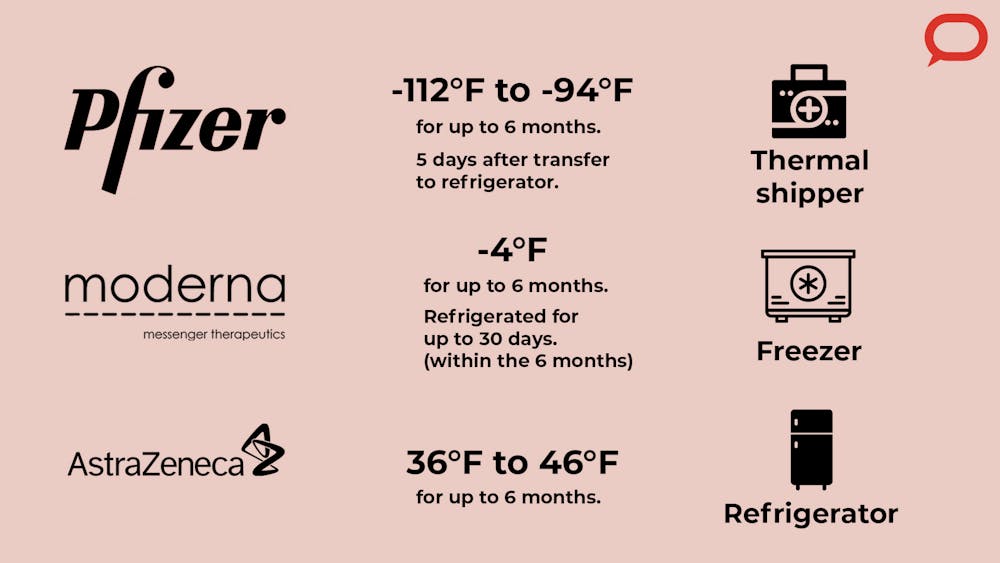
Trump, the Proud Boys and the Kraken: Is the #EndofDemocracy just a meme — or the real thing?

We’re in a period of transition — but transition from what, or to what? Nobody’s quite sure. From one president to another, purportedly, but that’s the least of it. From a barely functional two-party democracy to some other, choose-your-adventure system of pseudo-democratic, zero-sum partisan warfare? From coup attempt to street conflict and civil war? From a set of vaguely shared political ideals and epistemological assumptions — the famous “democratic norms” — to the total collapse of meaning and language?

Yeah, all of those, or maybe none of them. I would suggest that the crisis of democracy — or what I have previously described as World War IV, an overlapping but larger phenomenon — has entered its decadent or rococo phase. (Can history repeat itself as farce if it was never anything else in the first place?) Comical or fantastical figures like Jenna Ellis, with her Christian-gift-shop degree in constitutional law, or Sidney Powell, the once respected attorney gone deep into discarded plotlines from “Alias,” or Michigan voter-fraud testifier Mellissa Carone, who we cannot be sure is not a Kristen Wiig character, or Michael Flynn, the defrocked general turned QAnon-curious wannabe putsch leader, might once have seemed too extreme to be credible. Now they’re pretty much normal, and the old-line conservative normies are the weirdos. 

I mean, consider the president of the United States: His elaborate performance as a right-wing tough guy who is also the whiniest little bitch in all of creation is campier than anything imagined by any contestant on “RuPaul’s Drag Race.” Consider his superfans in the Proud Boys, who spent Saturday evening in Washington assaulting random civilians and vandalizing Black churches, but during the daylight hours literally lifted their skirts to reveal coy messages written on their asses. (Were those done with Sharpies? Was that a knowing reference to Trump’s famous Alabama-hurricane Sharpie-improv moment? I’ve thought about this way too much already.)

In summing up our current state of collective dissociation and disorientation, I can’t do better than Dahlia Lithwick of Slate, who observes that “in the absence of shared narratives and truths, we think we can use precision in language to reverse-engineer our way into knowable facts.” This is of course false, first and foremost because no one agrees on the nature or extent of the realm of knowable facts:

My own sense is that we will not know whether what we are seeing play out — in the state attorney general offices, in efforts to have states designate partisan electors, in calls for mass resistance from Rush Limbaugh and others, in claims that God wants all this — is theatrical or existential until later. … In a sense, just as we cannot seem to figure out which day we can stop announcing that Biden won the election, we are also having a hard time settling on the day we will be able to claim that the coup (or, better, the couplike phenomenon to be named later) was finally thwarted.

Lithwick published that on Thursday evening, an oceanic 24 hours before the Supreme Court declined to hear what was supposed to be Donald Trump’s “Kraken,” his last, best effort to overturn the results of a presidential election he clearly lost. From any more or less reasonable perspective, that summary slapdown marked the end of Trump’s fruitless legal efforts to throw out the votes of states he lost, leaving only a theatrical display of resistance when Congress certifies the electoral votes on Jan. 6. (Short version: Yeah, a handful of obstreperous Republicans could slow that down, but they can’t block it.)

But that ludicrous lawsuit filed by Texas Attorney General Ken Paxton — and supported by 17 other state attorneys general and a majority of House Republicans, including the caucus leadership — wasn’t the end of anything, as Trump and Rudy Giuliani and other spooks and haunts of MAGA Nation rushed to assure the faithful within minutes of its collapse. It wasn’t Trump’s last effort to undo the election, since those efforts will never stop as long as he’s still breathing (and possibly not after that either). And this craptastic concoction, which literally argued the existence of a voter-fraud conspiracy so brilliantly executed as to leave no traces whatever, definitely wasn’t his best shot. That might have been, say, to win the election in the first place, or at least keep it close enough that Amy Coney Barrett and friends could find some baked-in, procedural excuse for stealing it. (Or, hypothetically, to have evidence of actual election-distorting fraud, not that that was ever on the table.)

Many admirable people in the liberal-Twitter caste were up in the discourse over the weekend urging Trump’s minions and enablers to show some shame and humility, take the L and return to the (greatly loosened) narrative of political reality in which Joe Biden will soon be president and for the love of God and country, we all have to find a way to get along. But as Lithwick suggests, we don’t know for sure whether there’s any shared narrative of political reality these days, and the available evidence suggests that we will not and quite possibly cannot find a way to get along. 

If the demise of the Kraken was unquestionably a blow to the MAGA tribe’s assemblage of QAnon aficionados, militia members, white supremacist “groypers” and affiliated far-right subgenius elements, moving their own goalposts as often and as far as necessary has been a key element of their enterprise all along. (With a glance across the street at Rachel Maddow and the Russiagate fanbase, I would observe that this phenomenon is not exclusively found on the right. Both sides!) 

Many such denizens of the internet — um, such as the president of the United States — have already denounced the Supreme Court as a den of swamp-dwelling cowards and traitors, and have at least tentatively announced that the Paxton case was a faux-Kraken, if not a total fake-out designed to distract us all from the Big Thing that’s still ahead. If “the plan” is not going exactly as God Emperor Donald J. Trump intended in every possible respect, it is still the plan, and it must be working because no other outcome is possible.

There is clearly a subset of powerful Republicans, especially in the Senate — not just the “moderates” like Mitt Romney of Utah or Susan Collins of Maine, but fully-credentialed right-wingers like Ben Sasse of Nebraska and John Cornyn of Texas — who are eager to leave moonbat “Plot Against America” scenarios behind and return to regular-order politics, by which they mean sabotaging the incoming Biden administration through conventional methods rather than flat-out sedition. Such people have made a strategic bet that the long-term future of their party lies more along the Reagan-Bush Sr.-Bush Jr. continuum rather than in Trumpazoid mass hallucination. Whether or not it’s a sound bet, however, very much hangs in the balance.

Painful as this is to admit, I think New York Times columnist Ross Douthat had some useful insights to offer this weekend, along with the usual fake humility and a dose of both-sides bullshit. He’s clearly correct that the Republican Party has at least temporarily split into camps of realists and fantasists, and that the Trump enablers have cultivated a “dreampolitik,” or a “politics of partisan fantasy,” that exists in a sort of “Matrix” universe running parallel to normie politics. He may well be correct that many or most of the 126 House members who openly supported the Trump-Paxton effort to subvert democracy did so on the assumption “that their behavior [was] performative, an act of storytelling rather than lawmaking, a posture rather than a political act.”

To be fair, Douthat recognizes that his own underlying assumption that dreampolitik and realpolitik are non-overlapping magisteria, to steal Stephen Jay Gould’s famous phrase — and even that delusional fantasies of various kinds may allow fringe wackos to let off steam, without resorting to actual political violence — is looking a bit shaky these days. I will join hands with Douthat in endorsing the charmingly old-fashioned notion that fantasy and reality are different things, but I’m not sure that he or I or anyone else is fully qualified to tell the difference. 

Here’s where we get back to Lithwick’s observation that we don’t know what to call this fraught moment in the slow unfolding of World War IV, or how to understand its significance, because we can’t even agree on the basic terms of debate. I found this Sunday Twitter thread from writer John Ganz, addressing the “do they really believe this shit?” conundrum, particularly useful:

As Karl Marx observed 175 years ago, sitting on your ass in front of the computer spinning out theories about the world is the easy part; “the point is to change it.” (I’m paraphrasing slightly.) I don’t know Ganz, but it’s a safe bet that he and I — and even, broadly speaking, he and I and Ross Douthat and Dahlia Lithwick — share enough assumptions about the world to have a coherent conversation about what has gone wrong and how to fix it. But what assumptions about reality, or about the terms of legitimate discourse, do we share with groups of men who engage in low-level, fake-Nazi street violence and write sexual invitations to antifa on their own butt cheeks? Is the collapse of America really happening, or is it all just a hilarious troll — and how will we know the difference?

Should the Biden administration prosecute Trump?

There are very strong arguments for a federal criminal prosecution of Donald Trump, based on the facts and the law.

But taking this momentous step would set a terrible precedent, which would further divide the country — and it might boomerang against the Democrats.

The best course of action, and the most painful punishment for Donald J. Trump, would be for the Biden Administration to ignore him.

This does not mean that the president should get a stay-out-of-jail card. New York state prosecutors are investigating Trump’s activities before he became President — and Manhattan District Attorney Cyrus Vance’s staff has indicated that they are looking into possible criminal violations.

Those investigations are less politically fraught — and they should go forward.

Mueller’s roadmap for indictment

The issue of whether or not to launch a Federal prosecution is particularly difficult because Special Counsel Robert Mueller uncovered ample evidence that Trump did attempt to obstruct justice — and on numerous occasions.

Furthermore, in his report, Mueller basically invited the DOJ to indict Trump — noting that “a President does not have immunity [from prosecution] once he leaves office”. An ambitious U.S. Attorney might want to take Mueller up on that invitation.

In his report Mueller described ten incidents in which the president attempted to obstruct justice.

The president tried to tamper with several witnesses — such as Paul Manafort and Roger Stone — as he dangled the possibility of a pardon to keep them from testifying in court.

Trump also demanded that Don McGahn, his White House Counsel, lie about a key event and create a false document — which Trump planned to use to protect himself against Mueller’s inquiry. McGahn refused in each instance.

Trump lambasted McGahn for telling the truth to Mueller’s attorneys. Trump was essentially pressuring McGahn to commit perjury when he dealt with government investigators. The list goes on…

Richard Nixon’s crime: Obstructing justice

Trump’s goal was to impede investigations into his behavior — or actions taken by close personal associates — that could create legal problems for him.

This is the very essence of obstructing justice. We don’t want to allow Presidents to subvert court proceedings or investigations. If judges or government officials can’t get truthful cooperation from witnesses, the machinery of government will break down. The rule of law will disappear.

Some observers have argued that Trump should not be prosecuted because the underlying acts that he was trying to hide were not criminal. But that’s not the point.

It is worth remembering that President Richard Nixon did not know about the Watergate burglary in advance. He did not authorize the break-in. Nixon broke the law because he tried to cover up the burglary — destroying evidence and condoning perjury by his aides. Like Trump, Nixon was trying to obstruct justice.

A prosecution might backfire

So, the Biden Administration could certainly justify a prosecution on legal grounds. But indicting Trump might create massive political problems — both short-term and long-term — which are more important.

Donald Trump has given every indication that he intends to remain a dominant player in U.S. politics. He might accomplish that feat — but he might also fade into obscurity.

Trump will make a lot of noise, of course, but he won’t have the power or the platform that he did as president.

Although Trump’s hard-core base may pay attention to his rants on Twitter or on a cable TV show, most Americans will probably tune him out. They’re exhausted by four years of his nonstop drama and chaos. They’re eager to move on — that’s why they voted him out of the White House.

But if the Biden Administration prosecuted Trump, he would stay in the limelight. Trump would declare himself a “martyr” — and rail against the trial as another “witch hunt.”

Trump would get the publicity he craves, as Fox News and other outlets followed the course of the proceedings.

Even moderate Republicans might be angered by the attempt to put Trump in jail — and the country could become even more divided.

What if the prosecution failed?

The worst of all possibilities would be a Federal prosecution that did not result in a conviction of Trump.

Although Mueller provided several damning examples of the president’s attempts to manipulate witnesses, Trump’s lawyers might somehow mount a successful defense.

Trump was wily in his dealings with McGahn — and in his statements about Manafort and Stone. One critical element would be his intent to obstruct justice — and that can be tricky to prove.

In that case, a triumphant Trump would use his “victory” over the “Deep State” to rile up the base — and raise a lot of money for a re-election campaign. He might even get some sympathy votes from independents or moderate Republicans.

And if he were re-elected in 2024, a vindictive President Trump would seek revenge on his political enemies. This time, Trump would find an Attorney General willing to put Democrats behind bars — or at least try to.

A terrible precedent

More broadly, prosecuting a former president would set a dangerous precedent — even if Donald Trump never returns to power. That’s because today’s Republican Party is becoming increasingly anti-democratic — even authoritarian.

One of the hallmarks of U.S. democracy is the peaceful transfer of power. When one political party wins an election, it does not launch a vendetta against its opponents and throw them in jail. In many countries, sadly, that is not the case.

But this tradition of relinquishing power depends on a fundamental principle: Each political party accepts the legitimacy of its rivals.

If the opposition wins the election, they have the right to exercise power and promote their policies. However, many Republican leaders no longer seem to accept this premise (That is also true, unfortunately, for some Democrats on the left side of the party).

Trump is a symptom, not a cause, of the GOP’s increasingly authoritarian tilt. Many Republican leaders (and their followers) refuse to accept the legitimacy of elections when Democrats win — on the state or the federal level.

Senator Mitch McConnell’s refusal to recognize Joe Biden as the President-elect — one month after he won the election — is the latest example of this deplorable trend. And it is profoundly disturbing that 70% of Republican voters think that the 2020 election was rigged — and Biden was not elected fairly.

“Lock’ em up!”

Trump has certainly accelerated this trend of treating Democrats as illegitimate, which makes the political climate even more dangerous. Many rank-and-file Republicans have warmed to the idea of sending Democratic politicians to prison.

At Trump’s MAGA rallies four years ago, when Trump attacked Hillary Clinton, the Democratic nominee for president, the crowds loved to chant, “Lock her up”!

And in the latest campaign, Trump called repeatedly for the DOJ to prosecute a growing list of his opponents: Hillary Clinton, Joe Biden, Barack Obama, Alexandria Ocasio-Cortez, and others. The crowds roared their approval, shouting “Lock’ em up!”

What is especially troubling about these rallies is that Trump has never provided a credible rationale for sending any of these Democrats to jail. Their “crime” seems to be that they have opposed or criticized him. In other words, they engaged in politics.

Democrats have not resorted to that kind of wild rhetoric. This is a Republican phenomenon, not a Democratic one. Other Republican leaders have not criticized Trump for suggesting that Democrats should be jailed.

We would be naïve to think that these attitudes will change just because Trump will depart the scene. Unfortunately, it’s quite possible that aspiring presidential candidates such as Mike Pompeo and Tom Cotton will follow Trump’s playbook in this regard. They have seen that it works.

Texas AG reveals his “Plan B” to overturn election “state by state” after Supreme Court rejection

Texas Attorney General Ken Paxton (R) on Sunday outlined President Donald Trump’s path to victory after the Supreme Court dismissed a lawsuit that sought to overturn the 2020 election.

During an interview on Fox Business, host Maria Bartiromo asked Paxton if he had a “Plan B” for contesting the election results.

“Going forward, I think the Trump campaign is taking our arguments that we tried to get in front of the U.S. Supreme Court, they are now going to take those, I think, state by state,” Paxton explained. “Because I think they are legitimately good constitutional arguments that don’t depend on actually proving every little instance of fraud.”

Watch the video below from Fox News.

Four people stabbed after pro-Trump DC rally

At least four people were stabbed Saturday as supporters of President Donald Trump, including maskless Proud Boys in helmets and bulletproof vests, descended on the nation’s capital and clashed with counterprotesters—violence that some critics tied to the president’s pre-election directive to the self-described “western chauvinists.”

During a debate ahead of his loss in November, Trump had told the Proud Boys to “stand back and stand by,” which swiftly elicited criticism that he was inciting violence. Designated a hate group by the Southern Poverty Law Center, the Proud Boys are known for their white nationalistanti-Muslim, and misogynistic rhetoric as well as their presence at the infamous 2017 “Unite the Right” rally in Charlottesville.

The Washington Post reported late Saturday that “in smaller numbers than their gathering last month, they roamed from the Capitol to the Mall and back again, seeking inspiration from speakers who railed against the Supreme Court, Fox News, and President-elect Joe Biden. The crowds cheered for recently pardoned former national security adviser Michael Flynn, marched with conspiracy theorist Alex Jones, and stood in awe of a flyover from what appeared to be Marine One.”

Singing “Jingle Bells” and chanting vulgar slogans, “a group of about 50 men in the Proud Boys’ black and yellow circled the perimeter of Black Lives Matter Plaza, where about 200 anti-Trump demonstrators were rallying,” according to the Associated Press. Following the daytime rallying, “downtown Washington quickly devolved into crowds of hundreds of Proud Boys and combined forces of antifa and local Black activists—both sides seeking a confrontation in an area flooded with police officers.”

After nightfall, at least four people were stabbed near Harry’s Bar, a Proud Boys “gathering point,” the Post reported. While the affiliations of those wounded were not clear, D.C. fire spokesperson Doug Buchanan said the victims were hospitalized and suffered possibly life-threatening injuries. The Metropolitan Police Department said 23 people were arrested.

Trump tweeted Saturday: “Wow! Thousands of people forming in Washington (D.C.) for Stop the Steal. Didn’t know about this, but I’ll be seeing them! #MAGA.”

Reporters and critics of the president, meanwhile, cited his comment from the debate. As former Democratic presidential candidate Marianne Williamson put it: “The message seems to have shifted from ‘stand back and stand by’ to ‘the fight is on.'”

“Trump told the Proud Boys to ‘stand back and stand by’ and they listened to their Chosen One,” said New York Times contributing opinion writer Wajahat Ali. “This is all on you, Republicans. You have enabled all of this.”

The violence came just two days before the Electoral College vote and followed the U.S. Supreme Court’s Friday night denial of a lawsuit filed by GOP Texas Attorney General Ken Paxton that aimed to block the battleground states of Georgia, Michigan, Pennsylvania, and Wisconsin from casting their electoral votes for Biden.

After more than 100 Republican lawmakers declared their support for the suit, Rep. Bill Pascrell (D-N.J.) and others accused them of trying to “demolish democracy” and argued they should not be seated for the next congressional session. Citing the 14th Amendment, Pascrell said that “men and women who would act to tear the United States government apart cannot serve as members of the Congress.”