Spring Sale: Get 1 Year, Save 58%

Multi-level marketing is a scam — here’s why people fall for it

Most Americans have been aware for some time that multi-level marketing schemes are bad — either through recent books or documentaries like LuLaRich. But did you know exactly how bad?

Bridget Read, author of "Little Bosses Everywhere: How the Pyramid Scheme Shaped America," wasn’t satisfied with their answers or explanations of what it was, why they’ve become so influential and how they are able to continue exploiting so many of the most vulnerable Americans with little transparency and government oversight. 

Our conversation was timely not only because of the history of multi-level marketing which, it turns out, has ties to right-wing free market ideology and anti-communism of the post-war era — the intellectual roots of the second Trump era.

It’s also pertinent because Trump 2.0 has unleashed a growing number of crypto scams, which Read sees as the continuation and the latest evolution of multi-level marketing ethos and methodology. 

Read discussed her research into the history of the 80-year-old industry, her firsthand experience of the MLM seminar event as an attendee and why Congress is unlikely to do anything about these practices anytime soon. 

This interview has been edited for length and clarity.

We need your help to stay independent

There have been several books like Vitamania that you mention in the book and several other works that explore MLMs, including the recent documentary about LuLaRoe. What was the moment that made you want to dive in more and take another look at this topic?

I wrote a short article about multi-level marketing during the height of the pandemic in 2021 for New York Magazine, because these companies experienced a little bit of a boom with all kinds of people, especially women stuck at home and looking to supplement their income. And I just couldn't really figure it out; so many things didn't make sense. And the work that was out there, including that LuLaRich documentary, really didn't get to the bottom of where it came from. Well, why is it so controversial? Where does it come from? Why is this thing legal? So there really just wasn't something definitive, and that's what I was searching for myself as a journalist. And then when I started digging into the story of MLM, it went so far back — because it was invented in 1945 — that it seemed like only a book enables you to tell such a  big story and to dig as much as you need to dig.

I had no idea that the MLM industry was 80 years old. What surprised you the most in your research for the book? 

The most surprising thing right away was that, once you really look at the primary source material on multi-level marketing, which at the time was called pyramid selling, they really didn't hide how it worked. It was a system where people were rewarded for buying in — that was the innovation at the time. Instead of just buying products and then being rewarded on how much you actually sold, you could get rewarded on just how many people you brought in under you, which they called purchase volume. And of course, now in the United States we consider legally a pyramid scheme to be just that — a system in which you're rewarded based on how much you're paid to bring in other people to also buy into the system. Legally, that's our precedent for a pyramid scheme. So when you look into the company itself, Mytinger & Casselberry, which eventually was neutralized and then was bought by Amway. And the industry wants to distance itself from a pyramid scheme. Again, there's so much evidence that there really isn't any difference. So the story that we've been telling in the U.S. for several decades by this point, that there are pyramid schemes and there's legitimate multi-level marketing—right away that broke down for me.

Do you feel like the MLM concept is reinventing itself with the new technology, with social media, with crypto?

Yes, and it always has done that. That's a historical pattern over the last 20 years, in the 2008 Great Recession. MLM businesses pivoted from traditional marketing to calling themselves internet-based businesses, or work-from-home businesses. Many of them did away with the door-to-door aspect entirely, and it was all about recruiting people on the internet. Maybe they're coaches or they're having access to your proprietary program. Maybe they're learning how to do digital reselling anytime they have to buy something, and they get rewarded based on how many other people they're inducing to buy. That's how multi-marketing operates, and that's a pyramid scheme. In the olden days, you might have to lie about how rich you are and maybe borrow a car. But now you can just pose in front of a car or in front of a fancy house and make it seem like you live that lifestyle really easily.

In January, the Federal Trade Commission proposed a new rule on deceptive earnings claims. Is that a step in the right direction?

So FTC rules themselves are a little tricky, because they're not laws. This is not legislation, and so actually trade regulations can be rejected by Congress. So that's another kind of obstacle. There are two rules that were initiated: One is called a business opportunity rule, and that would bring MLM into a different category of business opportunity where they would be subject to more just financial disclosure. And the other one is an earnings rule that would require MLM recruiters to be very upfront about how much you can really make an MLM. The rulemaking process was stalled by the new FTC administration under Trump, and they have signaled that while the FTC remains active on some issues, the industry has signaled that they aren't as worried. They feel that they'll be able to really mount a robust defense if these rulemakings do get through the process. Even if they even make the rules, they'll lean on their members in Congress to resist the actual rulemaking. So it's a step in the right direction. I think, unfortunately, there's still a huge amount of resistance to actually doing anything this way.

One big part of the problem that your book is helping me understand a little bit more is just the lack of transparency. We have no idea how big this industry really is.

"If those companies were really transparent about how many of those people there are, and then how many people are actually seeing any success in the company, then their numbers would be even worse than when they are forced to disclose it"

If those companies were really transparent about how many of those people there are, and then how many people are actually seeing any success in the company, then their numbers would be even worse than when they are forced to disclose it. I think that it would show a lottery. It would show hundreds of thousands of people paying in and a tiny fraction winning. And so that's why they don't do it.

In the book you discuss deep roots between the MLM industry and the right wing,  free market conservative thought leaders. Was that surprising?

We've always known, especially if you know anything about Amway, that multi-level marketing has tended to have a real right-wing bent politically and its free market, pseudo-populist rhetoric has long been associated with multiple marketing. And of course, you could draw that line to Donald Trump, but I really didn't know how far back that went, and that that predated the Amway founders with Leonard Read, who is a very influential free enterprise ideologue. You know, you could call him a libertarian; he was very influential in the free market, purist movement that rose with Ronald Reagan over the course of the 1970s and 1980s. And he showed up at the 10-year anniversary of the first multi-level marketing company, before the Amway founders were real political figures. So already MLM had this seed of a political movement. And what I've discovered in my research is that it really was an anti-communist project. Ideologically, it was a way to spread person to person on a grassroots level, real anti-communist views, a really anti-collectivist kind of model of thinking, where really the only way one can achieve success and even democracy is through ruthless, sort of capitalist accumulation and having every single individual be a deeply unregulated economic actor in a pure free market that's not impeded at all by the state.

You actually got to attend one of the MLM events in person, the Mary Kay convention in Dallas. What was that experience like?

It felt really important to me to try to be really as close as possible to the actual companies themselves and people involved in them, and not only speak to people who'd already been in and out. The conventions are really the high point for almost all distributors you talk to who do it long term, it really is the thing that makes a whole year of really hustling and hustling worth it. It was a moving experience. It was emotionally stirring. And I think that made me really understand how emotionally manipulative it is to be with all other people who are equally, if not more invested financially and emotionally with you, and to have everybody almost recommit every year together. That's what the convention does, if you were maybe feeling badly about how you were doing, should I really be spending money on this every year? The convention helps you keep going, because you're like, "Oh, I love my sisters, and we're having so much fun." So, yeah, it was a really important thing to do. And journalists don't get to be inside these spaces because they're closed to the public, so it was a priority for me to try to.

Trump has opened the deep sea for business, risking fragile environments we know nothing about

When the submarine plunged to about 1,500 meters below sea level, ecologist Jeff Drazen asked the pilots to cut the strobe lights that had been guiding them through the pitch-black waters. For a moment, they continued falling to the sea floor in complete darkness.

Then, the creatures of the deep sea began dazzling the crew with a striking display of bioluminescent lights, emitting signals to one another as they encountered this new strange object in their habitat.

“It’s like you are falling through the stars,” Drazen told Salon in a phone interview. “There are twinkling lights everywhere.”

Thousands of meters below sea level, the creatures that live in the deep sea survive without direct sunlight, plants or the warmth of the sun. Much of the deep ocean is vacant, with extremely cold, lightless regions making it difficult for life as we know it to survive. Yet spectacular animals reside there, including the vampire squid, which has the largest eyes proportional to its body of any animal (though this cephalopod is neither a vampire or a squid); a pearly white octopus nicknamed “Casper”; and, of course, the toothy Angler fish that became an internet sensation when one rose to the surface earlier this year.

Last month, President Donald Trump issued an executive order promoting deep sea mining, which is currently prohibited under international law. And on Tuesday, the Department of the Interior announced it is initiating the process to evaluate a potential mineral lease sale in the waters offshore American Samoa. As industry eyes nodules found on the ocean floor as a potential way to extract nickel, copper and cobalt for making things like electric car batteries, scientists warn that deep sea mining is likely to be detrimental to life that exists there.

"We’re the first people that have ever seen some of the sites that we dive at."

“We don't know that much about the deep sea because we have explored so little,” said Jim Barry, a seafloor ecologist at the Monterey Bay Aquarium Research Institute, “We should make sure we know what is there before we do much to destroy things.”

The deep sea begins at about 200 meters below sea level, where light starts to diminish in a region called the twilight zone. The deepest part of the ocean lies in the Mariana Trench in the western Pacific Ocean, where the ocean floor lies almost 11,000 meters below sea level — a height that is taller than Mount Everest.

The ocean covers 71% of the Earth’s surface, so classifying the deep sea as a single habitat is like classifying all land as one habitat. Just as on land there are deserts, grasslands, rainforests and the arctic, so too in the deep sea there are numerous different ecosystems that differ by geography, temperature and the animals that live there. Earlier this month, scientists witnessed the first volcanic eruption underwater for the first time.


Want more health and science stories in your inbox? Subscribe to Salon's weekly newsletter Lab Notes.


“Even if you're just looking at forests in the U.S., you wouldn't think that the forest on the East Coast is going to look the same as the forest on the West Coast,” Drazen said. “The same is true on the sea floor, and we actually have data that shows this: The communities that you find in the east on nodules are not the same as the communities you find in the west on nodules.”

One study published in Science earlier this month found that with 44,000 deep-sea dives, just 0.001% of the deep seafloor has been visually observed — which is roughly the size of Yosemite National Park. The rest is a black box. The study authors also note “Ninety-seven percent of all dives we compiled have been conducted by just five countries: the United States, Japan, New Zealand, France, and Germany. This small and biased sample is problematic when attempting to characterize, understand, and manage a global ocean.”

Most of the seafloor explored during Dive 07 of the 2019 Southeastern U.S. Deep-sea Exploration was covered with these manganese nodules, the subject of the Deep Sea Ventures pilot test nearly five decades ago. (Image courtesy of the NOAA Office of Ocean Exploration and Research, 2019 Southeastern U.S. Deep-sea Exploration.)Another 2023 study estimated that scientists had identified fewer than 1,000 of up to 8,000 species in one region of the deep sea called the Clarion–Clipperton zone, which stretches the width of the continental United States and is a potential target for deep sea mining.
Scientists explore these regions in submarines like Drazen’s, or they use remote-operated vehicles to collect samples and map the ocean floor. Depending on the depth of the seafloor being studied, it can take these vehicles hours to reach the bottom, Barry said.

Each time scientists go on a deep sea expedition, they encounter previously unknown species. In 2018, a team at MBARI discovered an “Octopus Garden” of as many as 20,000 octopuses nested on the seafloor off the coast of California in the largest gathering of octopuses on the planet. In total, four of these gardens have been discovered around the world thus far.

Each time scientists go on a deep sea expedition, they encounter previously unknown species.

In other expeditions, scientists have discovered creatures that evolved their enzymes to function better at high pressure, as the ocean pressure increases by about one atmosphere every 10 meters — which is a greater change than the pressure drop experienced in a commercial airplane. Some invertebrates can live for thousands of years, and the oldest known sea sponges have been dated to be 18,000 years old, said Lisa Levin, an oceanographer at the Scripps Institution of Oceanography.

Overall, there are more new species being discovered than there are taxonomists to properly catalog them. The deep sea has been called Earth’s last frontier as the only largely untouched place on the planet. For scientists on these trips, exploring the deep sea seems almost like they are exploring the moon or a distant planet.

“We’re the first people that have ever seen some of the sites that we dive at,” Barry told Salon in a phone interview. “In fact, almost any site you go to offshore, unless you've been there before, none of it's been viewed.”

Many species in the deep sea have developed adaptations like bioluminescence or large eyes that help them navigate the dark waters. Others living in regions called oxygen-minimum zones — also known as “dead zones” or “shadow zones” — have developed elaborate breathing structures that look like lungs outside of their bodies in order to maximize the surface area they use to absorb oxygen, Levin said.

On the seafloor, you can find canyons, volcanoes and vast abyssal planes. In some regions called chemosynthetic ecosystems, creatures produce food using the energy from chemical reactions rather than sunlight.

“Deep water isn't uniform, it's kind of layered, and there are different water masses,” Levin told Salon in a video call. “It's really a whole mosaic of ecosystems and habitats.”

As remote as it may seem, the deep sea is just one degree of separation from anyone who eats seafood, Drazen said. The deep sea provides food to many species in shallower waters, like the swordfish, which dives up to 1,200 meters to feed.

The ocean also produces half of the oxygen we breathe on land and is the largest carbon sink on Earth, absorbing about 30% of all carbon dioxide emissions from humans. With the deep sea covering so much of the ocean’s volume, it plays a major role in reducing the effects of global heating. Unfortunately, as CO2 emissions increase, it acidifies the ocean, which can make it less hospitable for life. Some crustaceans, for example, have a hard time developing hard outer shells made of calcium carbonate if the water is too acidic.

Not only that, but the creatures of the deep sea could provide scientists with molecules or compounds that help them develop better medicines or lead to other breakthrough discoveries. In the early 1980s, for example, scientists synthesized ziconotide, a natural pain-killer 1,000 times stronger than morphine without the addictive side effects. The molecule came from the Conus magus, a sea snail found in the deep sea. Overall, more than 60% of our drugs come from analogs in nature.

“If you think about pharmaceuticals, there's a repository of genetic material down there with all these weird animals,” Barry said. “People want to collect deep sea animals to see if they have important, novel chemicals that could have some use for us, whether it might be antibiotics or cancer treatments or something else.”

Scientists are also still uncovering exactly how sensitive the deep sea is to environmental changes and human impacts. However, compared to shallower waters, which are more easily subjected to changes in things like temperature, acidity or oxygen levels, these environmental changes take longer to reach the deep sea. As a result, creatures of the deep sea are likely to be more sensitive and vulnerable to changes that do occur in their environment.

“Animals that inhabit shallow waters have evolved to cope with variability in environmental conditions, but in the deep sea, there's very little change in oxygen or temperature or pH across the year,” Barry said. “A similar change in pH or oxygen [that occurs at shallower levels], might be far less tolerable for animals in the deep sea.”

Additionally, deep sea creatures are impacted by changes that occur in regions closer to the surface because many rely on food that falls from those heights. About 90% of food sources are lost every 1,000 meters deeper you go in the ocean, so any disruptions to the food supply could be detrimental to sealife at these depths, Barry said.

“When the productivity of the surface water changes, that affects the amount of detritus, or dead material, that sinks to the deep sea floor that is the food supply for those organisms,” Drazen said. “That is reducing the food supply to the deep sea.”

We need your help to stay independent

Many of the minerals involved in proposed deep sea mining operations are located on black, potato-shaped nodules that lie on the seafloor. Yet a community of animals lives on the nodules themselves, and they would be eradicated if they are mined, said Lauren Mullineaux, a senior scientist at the Woods Hole Oceanographic Institution.

Additionally, mining operations scrape up the seafloor, producing sediment plumes that can disrupt an area more than a kilometer away from the operating site, Mullineaux said. Even a fine dusting of this sediment might change the habitat enough to kill some of those species, she explained.

“It can take many decades for the habitat to look like it did before it was mined,” Mullineaux told Salon in a phone interview.

The ocean is a globally shared resource, and stewarding the deep sea may be society’s last chance to protect the remaining virgin Earth. The majority of creatures living in the abysmal sea remain unknown to us, but in order to protect them, we must first know they exist. After all, these creatures surely have a lot to teach us about how to survive and evolve in an increasingly harsh environment.

“If we want to be sustainable stewards of the resources that we depend on, it would be nice to know what is there first,” Barry said.

Tofu is best when you let it stop pretending

The first time I tried tofu was back in middle school, when I first went vegetarian for animal rights reasons. 

On a particularly scalding summer day, my friend wanted Chinese food, so I opted to get fried tofu with mixed vegetables and white rice delivered. As we sat in her apartment, I was perplexed by the airy bites, which seemed like little nuggets of fried nothingness. They had a bouncy, waxy quality to them, almost marshmallow-like, but without any sort of discernible flavor. They were hollow and airy, and while the brown sauce on the side helped provide some moisture and flavor, the meal was still pretty lackluster. 

While I ate them a few times after that experience, I certainly wasn’t clamoring for them.

Years later, though, I tried lightly-grilled tofu that was soft and supple, with a lingering flavor. The tofu was cooked beautifully and sopped up the sauce incredibly well, with savory and herbaceous flavor notes of soy, sesame and cilantro permeating the protein. Soon after, I then discovered silken tofu, and I’d like to now consider myself a tofu fan.

It may have taken a minute for me to get there, but as I’ve since learned, tofu can be wonderful. 

Tofu has some real bulk, too — it's not a flimsy, dainty thing. It has the structural integrity to hold up to braises, hard-sears and even stews. Tofu is a truly versatile protein, making it equally capable of being a crispy, saucy centerpiece or a subtle side. 

Bonus — tofu is cheap! So while “bean curd” isn’t necessarily the most appetizing name, the food itself is something to take notice of.

How a professional chef uses tofu 

Chef Katianna Hong, a standout on this season of “Top Chef” and a chef based in Los Angeles, used tofu in numerous ways throughout the competition. I was struck by the dexterity with which she used tofu in manners that aren’t obvious or the usual. She didn’t just swap tofu in as a meat replacement, she thoughtfully incorporated tofu with fascinating, creative techniques.

In one challenge, she made a cured salmon tartare with whipped, silken tofu. In another, Hong made a cucumber seed porridge that she thickened with tofu. Interestingly, she used it almost as you would feta or goat cheese. 

I was able to connect with Hong, who told me "I don’t have a preference in terms of type but I do tend to use specific types for certain applications. I like to use medium or firm tofu in crumbled form. I squeeze the tofu dry to remove excess liquid and then crumble and add to dumpling fillings, salads [and] roasted vegetable dishes.”

She noted that one favorite of hers is crumbled tofu and roasted broccoli with garlic, lemon zest and roasted sesame oil. She also likes to whip or use a food processor to "smooth out silken tofu” to use as a sauce, sometimes adding shiro dashi or mustard to help flavor.

Hong even makes tofu the same way I enjoyed it all those years ago: fried! She advises breading and frying before dipping into a tartar sauce or marinara. Lastly, she also enjoys tofu in soups, which is customary in miso, of course.

We need your help to stay independent

 How vegans and vegetarians — and everyone else — can use more tofu in their cooking 

For many who eat plant-based cuisine, tofu is a staple, and for good reason — both in desserts and savory food. 

Bailey Ruskus, who wrote “Breaking Up With Dairy”, incorporates silken tofu near-constantly in her dishes, in everything from a plant-based cream cheese to rich, whipped dips. Often, vegans rely on the thick, rich mouthfeel of tofu to add body to baked goods, desserts, dips and more. 

Clearly, tofu can be so much more than just a middling protein replacement. Let Ruskus, Hong or perhaps some Chinese takeout fried tofu influence your usage of the protein. You never know what you might end up making. 

Tofu is multifaceted — let it take you to places unknown

No matter if whipped into an icing, deep-fried and served with a sticky dipping sauce or simply steamed, tofu is a shapeshifter. It’s not pretending to be anything it isn’t; it’s just doing its own thing — and brilliantly at that.

“She saw something I did not”: Tapper apologized to Lara Trump over Biden decline dust-up

Jake Tapper offered a mea culpa to Lara Trump on Tuesday, sharing that he was wrong to berate the Fox News host in a tense 2020 exchange about President Joe Biden‘s alleged mental decline.

The CNN host extended the olive branch during an interview with Megyn Kelly. Tapper, whose new book “Original Sin” dives into an alleged cover-up of Biden’s declining health inside the White House, said that Trump was keyed into something he wasn’t.

“She saw something that I did not see at the time — 100% — and I own that,” Tapper said, admitting that he didn’t dive as deep into the president’s health as he could have. “Knowing then what I know now, I look back at my coverage during the Biden years—and I did cover some of these issues, but not enough—I look back on it with humility.”

During Trump’s visit to “State of the Union,” she mocked the former president’s struggle to “get the words out.” Tapper became irate and rushed her off the air after she mentioned Biden’s “cognitive decline.”

“I think you have no standing to judge somebody’s cognitive decline,” Tapper said. “I’d think the Trump family would be more sensitive to people who don’t have medical licenses and diagnosing politicians from afar.”

Trump resurfaced the confrontation after Tapper announced his book on the Biden White House.

“Seems like a good time to remind everyone that in 2020 Jake Tapper, first, accused me of making fun of people with a stutter (an atrocious accusation) and then attempted to shut me down and ended our interview when I tried to warn people of Joe Biden’s very obvious cognitive issues,” she wrote on X.

Tapper shared on Tuesday that he had already apologized to Trump personally.

“After we did the research for this book and I realized how bad his acuity issues were, I called Lara Trump and I said, ‘You were right,’” he said.

“It’s the right to remove people”: Noem whiffs when Congress asks her to define habeas corpus

Weary defendants have been told time and time again that ignorance of the law is no excuse, but that old adage has never stopped Kristi Noem

The Department of Homeland Security head was asked to define habeas corpus during a congressional hearing on Tuesday and offered something like the procedure's exact opposite. (For the unaware, habeas corpus is a right granted to prisoners that allows them to question the legality of their imprisonment via petitions to the court.) Noem was grilled on the idea by Sen. Maggie Hassan, D-N.H., offering up that the centuries-old principle was a right given to the president to deport people of his choosing. 

"Habeas corpus is a constitutional right that the president has to be able to remove people from this country and suspend their right to…" Noem began, before being cut off by senators.

"Excuse me, that's incorrect. Habeas corpus is the legal principle that requires that the government provide a public reason for detaining and imprisoning people," Hassan said. "If not for that protection, the government could simply arrest people, including American citizens, and hold them indefinitely for no reason."

Noem incorrectly interjected that President Abraham Lincoln "used it," referring to the suspension of habeas corpus during the Civil War. The Constitution allows for the suspension "when in cases of rebellion or invasion the public safety may require it." Congress retroactively approved Lincoln's recess suspension of the privilege in 1863. 

"The president of the United States has the authority under the Constitution to decide if it should be suspended or not," Noem said, trotting out an "invasion" argument that the Trump administration has used to justify recent deportations. 

If that's the tack Trump hopes to take, he's unlikely to find support in Congress or the courts. The same Supreme Court that granted the president wide-ranging immunity for acts carried out in office bristled at his use of the Alien Enemies Act to expedite deportations of Venezuelan migrants. The high court ordered a stop to ongoing deportations and demanded due process for any migrants facing removal. 

Still, that hasn't stopped Trump advisers from using the language of invasion to lay the groundwork for the eventual suspension of habeas corpus. White House Deputy Chief of Staff Stephen Miller has repeatedly hinted at stripping all would-be deportees of due process and the ability to challenge their detentions.

15 years later, “Scary Island” still sets the standard for “Housewives” chaos

If you Googled the words “‘Housewives’ trip” 15 years ago, the search results were probably more likely to return a sketchy link to some fetish site depicting clumsy homemakers, rather than a wealth of Reddit threads where users fight about reality television. (Now all that obscure fetish content has moved to TikTok, anyway.) These days, “‘Housewives’ trip” is synonymous with the most outlandish, uncouth, highly compelling television that the reality genre has to offer. In a “Real Housewives” franchise, cast trips are something that loyal viewers anticipate all season long. Bravo producers ship a handful of women off to some exotic locale — and, sometimes, Montana is a Housewife’s definition of exotic — where cameras film them morning, noon and night. When all of the Housewives are in one place, no one can get away with anything. Tensions run high, and if all goes according to plan for Bravo, ratings run even higher.

Across three explosive, landmark episodes, the St. John excursion turned into a franchise-altering nightmare for the women insulated on their little archipelago, hauntingly dubbed “Scary Island.”

Now a staple of the long-running franchise, a “Housewives” trip wasn’t always a given. In its early years, Bravo’s relatively modest success meant that the network likely didn’t have the cash to foot such a lavish getaway. Maybe “Real Housewives of Orange County” would take a day trip to Lake Havasu, where Vicki Gunvalson would be hit in the head with a football so hard that it would make her fall for a cancer-faking Casanova years later, but that was the extent of their travels. And leaving the mainland United States was unheard of, that is, until the cast of “Real Housewives of New York” Season 3 took a once-in-a-lifetime, unforgettable trip to St. John, one of the U.S. Virgin Islands. Across three explosive, landmark episodes, the St. John excursion turned into a franchise-altering nightmare for the women insulated on their little archipelago, hauntingly dubbed “Scary Island” by cast member Kelly Bensimon. The three-episode arc has become the subject of study for superfans and Bravo historians alike. It didn’t just change the “Real Housewives” format; it altered expectations for viewers around the world, raising the bar so high that “Real Housewives of New York” would inevitably come crashing down.

Now, 15 long years after the “Scary Island” trip aired, “RHONY” has gone dark. When a spate of new and returning Bravo shows were announced in early May, “RHONY” — which was rebooted from its original state in 2023 — was nowhere to be found. Over the following days, Bravo factotum Andy Cohen assured fans that the show wasn’t going anywhere. But after the reboot crashed and burned so epically, it seems as though Bravo execs may be looking to retool the franchise once more to try to capture its glory days, something Matías Franco, a “Housewives” archivist responsible for some of the most beloved “RHONY” fancams, isn’t sure will be possible.

“Social media has changed the franchise as a whole, and unfortunately, it’s difficult to see ‘Housewives’ ever being the way it was,” Franco says. “Knowing your every action will be scrutinized and people will be giving you immediate feedback in your comments has to alter the way you behave in front of the cameras.”

Kelly Killoren Bensimon and Sonja Morgan (Courtesy of Bravo)Nowadays, there are countless blogs monitoring and ripping apart “Real Housewives” behavior on the daily, and cast members face relentless scrutiny and hate every time they post on social media. However, when the Season 3 cast trip aired in May 2010, Twitter was still an archaic SMS service. Instagram hadn’t even hit the app store. Websites needed to be coded by a professional. It was a completely different time to be a reality TV star, one where a Real Housewife’s bad behavior would earn a slap on the wrist from Bravo producers, and not persistent death threats.
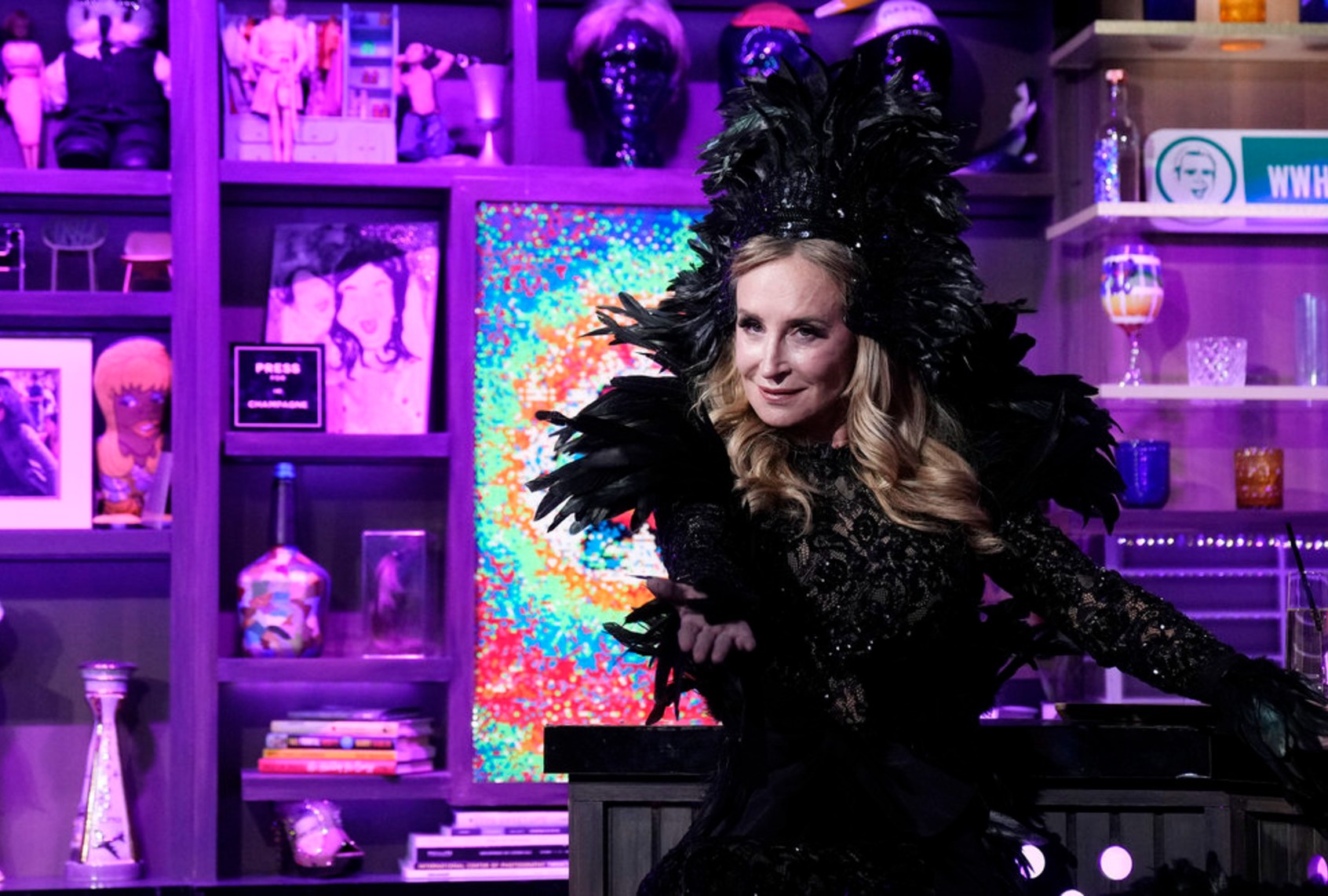
“[Housewives] felt safe from seeing what people were saying,” says Carey O’Donnell, a writer and podcaster who has been covering the reality television sphere on Sexy Unique Podcast with his co-host Lara Marie Schoenhals for over half a decade. “They were insulated. We got to see people being so candid and ridiculous because they weren’t self-editing. I almost feel a little bad for the news girls because it’s a tall order. These are big shoes to fill. They’re coming in a time when TV is dictated by what people are saying on Twitter.”


Want a daily wrap-up of all the news and commentary Salon has to offer? Subscribe to our morning newsletter, Crash Course.


Had social media been as prevalent when the “Scary Island” trip first aired, there wouldn’t be one Housewife on the trip who could’ve escaped the lethal criticisms of Bravo fanatics. As soon as they landed in St. John, it was as if each cast member got sunstroke and proceeded to spend the next few days going in and out of paranoia, fear and delusion. Ramona Singer was frenzied and drinking like a fish. Sonja Morgan was reeling from a divorce and trying to hold herself and everyone else together. A pregnant Bethenny Frankel was grieving her estranged, recently deceased father and swatting away insults left and right. The sight of Jill Zarin appearing out of the blue on the final day of the trip caused Alex McCord to physically shake in fear. And, most notably, Kelly Bensimon rounded out three days of tension between her and Frankel with a full-fledged, rambling breakdown, where subjects skittered between everything from Gwyneth Paltrow and gummy bears to Al Sharpton’s hairstyle.

Had social media been as prevalent when the “Scary Island” trip first aired, there wouldn’t be one Housewife on the trip who could’ve escaped the lethal criticisms of Bravo fanatics.

Bensimon’s incoherent chatter remains one of the series’ darkest moments, punctuated by Frankel throwing her hands into the air, screaming at Bensimon to go to sleep. But O’Donnell likens the dynamics of the cast at that time to a dysfunctional sisterhood, adding that Morgan defusing the situation with Bensimon felt like someone trying to comfort a sibling. “That’s why ‘RHONY’ was different,” O’Donnell says. “Bethenny and Kelly were such yin and yang. They were astral opposites. But at the end of the day, there was a strange love and respect for each other despite Kelly being Bethenny’s main foil. At that time, Kelly had the upper hand in her placement in society. And when she came into Bethenny’s orbit, Bethenny was still the underdog. And I think Kelly did shake Bethenny, because Kelly was in that upper echelon [of New York society] at that time.”

Sonja Morgan (Courtesy of Bravo). Bensimon had also spent the better part of the trip taking shots at Frankel, saying that Frankel was a “cook, not a chef” and that Frankel being on the trip so soon after her father’s passing was “creepy.” But Frankel has always been a quick wit, her silver tongue making her a formidable match for any of her opponents during her time on “RHONY.” The tension between the two women had been mounting since the previous season, when they met at a New York bar to hash out their differences. During that fight, Frankel learned that letting Bensimon talk herself in circles was her greatest stealth weapon when going toe-to-toe with her enemy. Bensimon ended  Season 2 looking self-centered and detached, while Frankel was calm and collected.

Undoubtedly, Bensimon noted the way she came off in the final edit. When she returned for Season 3, she was slightly more magnanimous and less flighty, trying her best to achieve harmony with the rest of the cast. But Frankel was always ready to give Bensimon her unfiltered thoughts. The two managed to avoid each other for most of Season 3, until the cast trip put them under one roof with nowhere else to go.

“Kelly’s behavior is one of the most interesting topics to discuss because it’s still a mystery to this day.”

Because Frankel was so ready to check her opponent — whether it be about the difference between chefs and cooks, or Bensimon’s peculiar idea that a one-night-stand was the equivalent of having risky unprotected sex — it’s no surprise Bensimon quickly felt defeated. And when the group migrated from a yacht to a lavish house on St. John, where Frankel placed monogrammed gift bags outside of all of their doors, it was the last straw for Bensimon, who tossed herself onto a bed crying before placing a phone call that would change “Real Housewives” forever. “I’m alone on Scary Island with no friends,” Bensimon told her castmate Luann de Lesseps over the phone. (De Lesseps could not make it on the trip because she was busy recording her debut dance single.)

“Kelly’s behavior is one of the most interesting topics to discuss because it’s still a mystery to this day,” Franco says, recalling Bensimon’s assertion that Frankel was trying to kill her. “Did she actually have a psychotic break? Were there outside stressors we weren’t privy to? So many questions are unanswered, which makes it such a juicy topic to speculate about … Looking back, there’s a clear lack of empathy for Kelly’s mental state. How her pent-up frustrations toward Bethenny evolved into nightmares of being stabbed in her sleep, we may never know, but that’s why it’s so fascinating to think about.” (For her part, Bensimon posted a meandering, 24-minute long “explanation” about the episodes a few years back that offers very little insight into what really happened.)

Bethenny Frankel, Kelly Killoren Bensimon, Ramona Singer, Jill Zarin, Alex McCord, and Countess Luann de Lesseps (Brian Killian/WireImage/Getty)
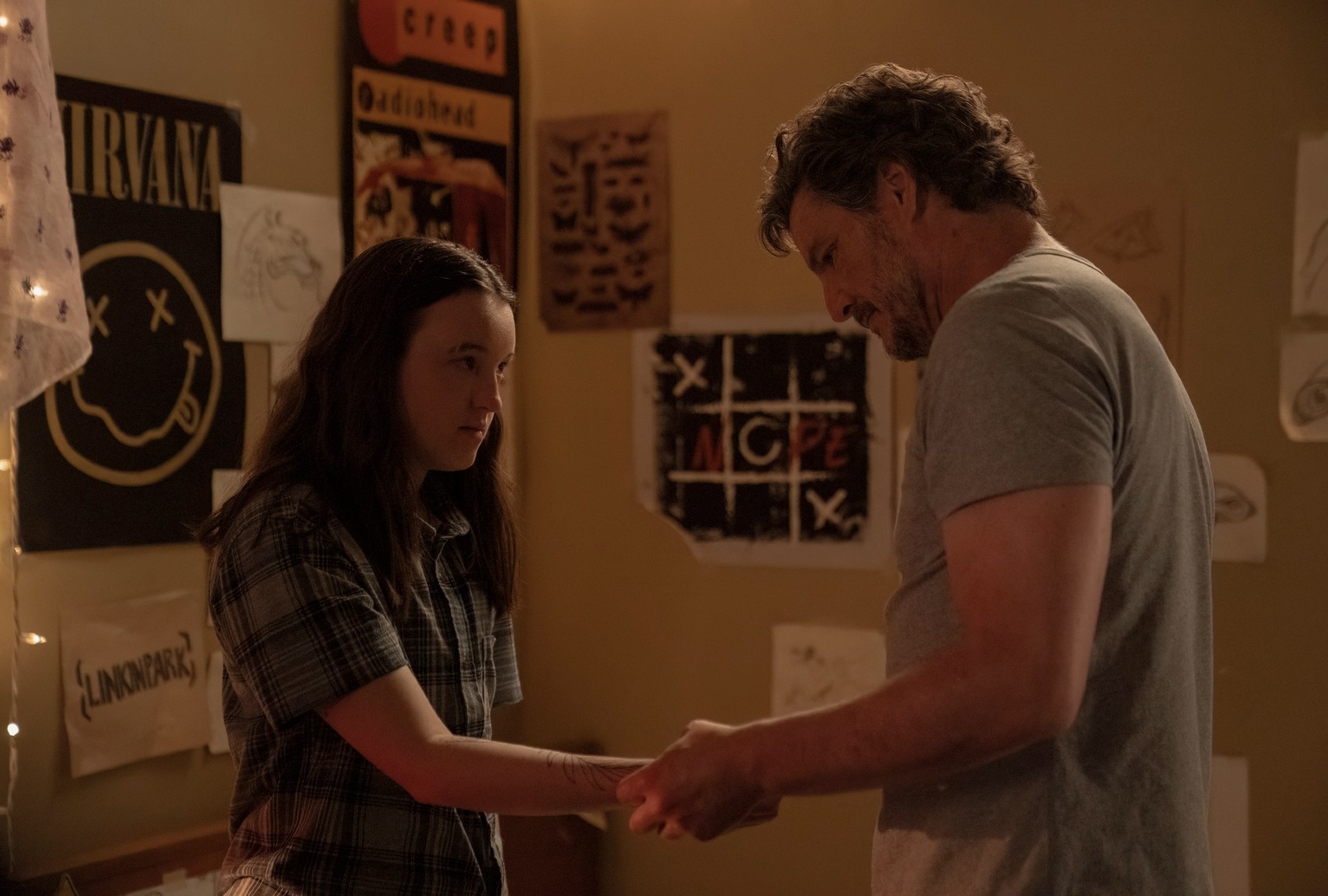
With all the hand-wringing from Cohen, Bravo and fans about the future of “RHONY,” it seems unlikely that the show will ever find stable enough footing to create a trip as infamous as “Scary Island.”

Fans lapped the chaos up. The episodes broke “RHONY” ratings records, achieving an all-time high for the show up to that point. Forum commenters chimed in too, saying it was “both the funniest and scariest episode to date” and that the long-teased episode “did not disappoint.” The Scary Island cast trip quickly became the benchmark for all future “Housewives” vacations. If a certain city’s cast couldn’t match the drama that the women of New York turned out over a few days of sunny psychosis, watching the trip was considered a waste of time. Even “RHONY” couldn’t live up to its one-two punch of Scary Island and the following season’s trip to Morocco. There were meme-able moments aplenty, sure. But none had the kind of gripping, real-life ramifications of St. John. And in the contemporary era of “Real Housewives,” creating an atmosphere where the cast isn’t hyper-aware of how they’re coming across to the viewer prevents most recent cast trips from being memorable after they’re over.

With all the hand-wringing from Cohen, Bravo and fans about the future of “RHONY,” it seems unlikely that the show will ever find stable enough footing to create a trip as infamous as Scary Island. The show is too far removed from its glory days, and Housewives are too tempted to soften their behavior, lest they face the ire of Bravo fans sitting at the edge of their seats, waiting for any reason to publicly call for someone’s removal from the show. The idea of anyone taking to YouTube to post a PSA calling out systematic bullying, as Bensimon did after the Scary Island episodes aired, is unfathomable. Today, the cast would be tight-lipped until word about their fate came down from Cohen and the Bravo gods.

“The ‘RHONY’ heyday might be gone forever,” O’Donnell says. “We should be happy with what we have. I’m rewatching right now, and I just don’t think it’s possible to recreate that, even if we have some of the [original cast members] mixed in.”

“I hate to sound so depressing,” he adds. “But we have to just love what we had, when we had it, and accept that things will never be the same. For us viewers, it was Camelot.”

The next stage of our democracy crisis: competitive authoritarianism

The mainstream American news media have failed as an institution to properly confront the country’s worsening democracy crisis in the Age of Trump. He is America’s first elected autocrat. His appetite for unlimited power is growing. It will likely never be satisfied.

In one of the most recent examples, Trump recently told NBC News' Kristen Welker that he does not know if he is obligated to uphold and obey the United States Constitution. In response to a question about the constitutionally guaranteed right of due process and the migrants and others deported to the infamous foreign prison in El Salvador, Trump said, “I don’t know. I have to respond by saying, again, I have brilliant lawyers that work for me, and they are going to obviously follow what the Supreme Court said. What you said is not what I heard the Supreme Court say. They have a different interpretation."

Trump’s statement that he does not know if he is obligated to obey and uphold the Constitution should have dominated the news coverage for the foreseeable future. Moreover, Trump’s repeated hostility and disregard towards America’s democratic norms should be the master narrative frame that structures the news media’s coverage of him and his administration. Instead, Trump’s unprecedented statement — what should be treated as a national emergency — was lost in the churn of the 24/7 news media and the bottomless maw of the attention economy and distraction experience machine.

Conservative legal scholar and former judge Michael Luttig told MSNBC's Nicole Wallace that Trump's answer is "perhaps the most important words ever spoken by a president of the United States." Luttig warned that this is "one of the most important stories of our times.” He continued: "I'm quite confident that the president was saying what is on his mind, and that is that he, the president of the United States, doesn't necessarily believe that he is obligated to uphold the Constitution of the United States, as it is interpreted by the Supreme Court."

In another escalation in their campaign against American democracy and the rule of law, Trump and his agents are now signaling that the constitutionally guaranteed right of habeas corpus may be suspended to facilitate Trump’s mass deportation campaign against “illegal aliens” and other “undesirables.” Such an extreme action must be approved by Congress. The right of habeas corpus has only been suspended four times in American history.

These threats to take away a foundational civil right were mostly treated as a curiosity by the mainstream news media.

As with Trump’s recent statement about disregarding the Constitution, these threats to take away a foundational civil right were mostly treated as a curiosity by the mainstream news media. For example, a basic search of The New York Times and The Washington Post show that the Trump administration’s threat to end habeas corpus did not receive sustained featured coverage.

Donald Trump and his agents have made many such threats against American democracy and its institutions and norms during the 2024 campaign and his second term in office — many of these threats have been fulfilled.

The Democrats and the so-called Resistance are celebrating how the courts and civil society organizations appear to be blunting Trump’s ‘shock and awe” and shock therapy campaign against American democracy and the American people. However, these celebrations are premature and ignore how the Trump administration is disregarding many of these rulings by the courts. There has been grave damage already done by Trump during these first 100 days of his return to power that cannot be easily remedied. In all, too many observers are confusing some selective momentary pauses by Trump and his MAGA forces to consolidate their gains, regroup, resupply, and reassess how to best continue their campaign against democracy and civil society. 

Donald Trump’s power and willingness to punish and train the news media to serve his agenda through various means, both legal and extra-legal, has created a state of anticipatory obedience, aka surrender, collaboration, and a collective chilling effect across the news media.

The American mainstream media has also been rolled over by Donald Trump and his forces' deft use of the propaganda technique known as “flooding the zone,” where so much happens so quickly that the target does not know where and how to focus.

Kenneth Lowande, a professor of political science and public policy at the University of Michigan, explained how this many years-long pattern of failures by the American news media is collectively enabling Donald Trump and his MAGA movement’s authoritarian agenda:

The Trump administration is extremely effective at playing to the weaknesses of news organizations like the New York Times, Wall Street Journal, and Washington Post. They are being taken advantage of. From Day 1 of the Trump administration, they have written relentless, daily headlines that announce President Trump’s executive actions as if they are new laws. When readers see these, they give the President credit. They see it as an accomplishment.

This has been a problem for decades. I show in my book that news coverage of executive action is shallow, brief, and very positive for the President. The media might as well be allowing the White House to write its own coverage.

What can be done? The press needs to treat each new executive action for what it is: an order to bureaucrats. Nothing more, nothing less. These orders are remarkably contingent. Most of them don’t produce the success they promise.

In short: if people do not want the public to get used to having a dictator, then the media need to stop covering his actions as if he already is one.

We need your help to stay independent

As an institution, the American news media believed that the rule of law was sacrosanct in the United States, democracy was a settled matter, the Constitution was respected by Americans and the American people would never put an authoritarian or other demagogue in the White House.

On the other hand, Black Americans, as a voting bloc, have been described as the miners’ canary in American society. In that role, Black Americans were consistently sounding the alarm about how Donald Trump’s return to power would imperil American democracy and society. In keeping with a common theme in American history, white Americans as a whole ignored those warnings and wisdom to their own (and the country’s) extreme detriment.

So what happens when a people vote for an autocratic authoritarian and against their own democracy? This is a tension and problem that the American mainstream news media and the country’s other elites have been mostly afraid to confront. Why? Because it is an indictment of their legitimacy. It is also an indictment of the character and values of the American people. To boldly confront the latter is almost verboten among the American mainstream news media and others who maintain the limits of the approved public discourse and “the consensus.

I asked historian Timothy Ryback, one of the world’s leading experts on the fall of Germany’s democracy and the rise of the Nazi Party, for some historical context:

I am not one to draw straight lines from a historical figure or event in the past to present-day political figures or events. History doesn't repeat itself. We are all unique individuals in unique settings and situations. With that said, I think we can speak about resonances and modalities.

Adolf Hitler and his closest lieutenants understood democratic structures and processes as well as anyone in the era, and set about disabling then dismantling the Weimar Republic. The Hitler acolyte Joseph Goebbels once said that the big joke on democracy was that it provided its mortal enemies with the means of its own destruction. This meant gridlocking legislative processes with obstructionist voting, using free speech guarantees to sow hatred and mistrust, and exploiting and abusing the judicial system in every way possible. Hitler’s chief legal strategist, Hans Frank, boasted that every time Hitler appeared in court, his polling numbers surged.

To that point, polling and other research from PRRI shows that a large percentage of Americans have an authoritarian personality. A 2024 report from PRRI details how:

[W]hile most Americans do not hold highly authoritarian views, a substantial minority does: 43% of Americans score high on the Right-Wing Authoritarianism Scale (RWAS), while 41% score high on the Child-Rearing Authoritarianism Scale (CRAS).

Two-thirds of Republicans score high on the RWAS (67%) compared with 35% of independents, and 28% of Democrats. Republicans who hold favorable views of Trump are 36 percentage points more likely than those with unfavorable views of Trump to score high on the RWAS (75% vs. 39%).

This political personality type and its social dominance orientation is overrepresented among right-wing Christians. PRRI continues: “White evangelical Protestants (64%) are the religious group most likely to score high on the RWAS, followed by smaller majorities of Hispanic Protestants (54%) and white Catholics (54%). A majority of weekly churchgoers (55%) score high on the RWAS, compared with 44% of Americans who attend church a few times a year and 38% of those who never attend church services.”

A series of polls and other research has found that Republicans, and Trump followers specifically, are more likely than Democrats to want a leader who is willing to break the rules and disobey the law to get things done for “people like them.” Research also shows that Republicans and MAGA followers embrace authoritarianism, including ending American democracy if white people like them are not the most powerful group.

A 2021 poll from the Pew Research Center found that a strong majority of Democrats (78%) believe that voting is a foundational and inalienable right. By comparison, two-thirds of Republicans believe that voting is a privilege that can be restricted. Those who support voting restrictions are more likely to be older, white, and less well-educated. This is the profile of the average Republican voter.

America’s democracy is rapidly collapsing. But what is its present state? The American news media, the Democratic Party, civil society, the country’s other elites and everyday pro-democracy Americans will not be able to effectively respond to the worsening crisis if they do not have the correct concepts and language to properly understand it.

Via email, Jake Grumbach, who is the faculty director of the Democracy Policy Lab and associate professor at the UC Berkeley Goldman School of Public Policy, offered this clarification:

The US is now in a new regime: competitive authoritarianism. There is political competition between parties, but the distinctions from liberal democracy is that 1) the ruling government routinely violates the Constitution and statutory law, and 2) uses the state apparatus as a tool to tilt the political playing field, especially by punishing political enemies.

Under competitive authoritarianism, the ruling party typically comes to power through electoral victory. Under competitive authoritarianism, and even under fully autocratic totalitarianism, ruling leaders often carry a lot of support from the mass public.

Democracy involves both majoritarianism — governance that is responsive to the people — and the rule of law — that everyone is accountable to the rules. Trump won the popular vote (though not an electoral majority), which gives him more democratic legitimacy than he otherwise would have. However, Trump’s electoral margin of victory was very small, and his public support has dropped dramatically since taking office.

Susan Stokes, who is a professor in the Department of Political Science at the University of Chicago and the Faculty Chair of the Chicago Center on Democracy, echoes Grumbach’s warning about how America is succumbing to authoritarianism. In this email, Stokes offers some explanations for why people in democratic societies embrace authoritarianism:

Majorities of people in most democracies consistently say they prefer democracy to other forms of government. There are some people who actually favor authoritarian rulers. They view democracy as messy and slow, and like the idea of a single person or small group imposing decisions on others. Many people don't have a strong sense of the importance of due process or the rule of law — these are abstract concepts, of course, until people themselves face arbitrary rule or have friends and family members who do.

Most support for authoritarians — most votes for leaders who have shown themselves to be anti-democratic — has other motives, in particular economic factors. Many voters practice what political scientists call "retrospective economic voting" — if economic conditions have been good in the year or so leading up to an election, they will vote for the incumbent, if not they will vote for a challenger. That's a lot of what the 2024 election in the U.S. was about. One could argue about how good or bad economic conditions were, but inflation was a new phenomenon for many people and very frightening. The cost of living was a real challenge for many Americans, given high food and housing costs.

This type of political reasoning often backfires. As Stokes explains, “The problem is if electing autocratic leaders means that voters gradually lose the ability to vote incumbents out when times are bad, then this strategy becomes self-defeating for voters. In my research, I find that income inequality is a big predictor of democratic erosion. The more unequal the distribution of income in a democracy, the more likely it is to experience erosion. Under vast inequality, it's easier to persuade people that elite institutions are against them. Inequality also contributes to partisan polarization. And the more polarized a polity, the better for autocratic leaders. Even voters who would prefer to preserve democracy say to themselves, 'This guy's not perfect, but if the other side wins . . .'"

A series of recent polls have shown growing levels of anger and discontent among wide swaths of the American public towards Donald Trump and his administration’s policies and the harm they have caused the economy, the government, and the American people’s overall sense of normalcy, safety, and security. These polls have also shown that a large percentage of Democrats and a not insignificant percentage of Republicans and independents are also deeply concerned about Trump’s abuses of power and obvious contempt for democracy and the rule of law.

Donald Trump has repeatedly referenced President Franklin Delano Roosevelt as being his model for expansive authority and power — and why such power is legitimate, necessary, and good. Stephen Skowronek, who is a professor of political science at Yale University, explained that such claims and comparison(s) are ahistorical and serve authoritarian goals:

Progressives have long lamented that Roosevelt was stopped by a bi-partisan coalition of southern reactionaries and Republican conservatives. But now that progressivism has been sequestered in one of the major parties, and Trumpism reigns supreme in the other, the costs of eroding all back stops are on full display. Trump has opened his second term with a drive toward presidentialism that apes Roosevelt's, and the fate of multi-part power-sharing arrangements again hangs in the balance. In this case, however, the courts are already packed, the party has already been purged of internal opposition, and the case for the president's exclusive control over the executive branch is well advanced. Roosevelt's New Deal transformed America, but it was nothing compared to transformation now in view.


Want a daily wrap-up of all the news and commentary Salon has to offer? Subscribe to our morning newsletter, Crash Course.


The polls given some hope to those who believe that Donald Trump and has autocratic plans and MAGA movement will exhaust itself by overreaching and that the American people — assuming there are in fact “free and fair” elections in 2026 and 2028 — will course correct by voting the MAGAfied Republicans out of office.

I would suggest that such hopes are very premature. The compulsion and attraction towards Trump, MAGA, and authoritarianism are very deep, if not inexorable, for many tens of millions of Americans.

Joe Walsh is a former Republican congressman and conservative talk radio host who led a GOP primary challenge against Donald Trump in 2020. He is currently the director of The Social Contract and host of the “White Flag with Joe Walsh” podcast. Walsh maintains his connections to TrumpWorld and the MAGAverse. IHe explained that there is almost nothing too extreme and authoritarian to make Trump’s MAGA supporters abandon him:

Trump’s base wants him to be an authoritarian. That’s always been his appeal to the base. That he will be a strongman and do what he has to do to get them back the America they believe we once were. So, nothing he does as an authoritarian will bother them, no unconstitutional move will bother them, that’s what they want him to do.

The only thing that will move part of Trump’s base from him is economic pain. Losing their job, disappearing their 401ks, paying way too much for that next truck or pair of shoes. Real economic pain that personally hits them is the only way they turn on Trump in any meaningful numbers. That’s why his tariff madness is so politically dangerous for him. It’s bad policy, and it will lead to bad economic results.

Trump will have a much tougher time trying to lie about the economy because his base lives the economy. So, when Trump lies and says that Haitian migrants are eating cats and dogs, Trump’s base eats it up. But when Trump says your 401k is doing just great and your 401k has actually lost 50% of its value, his base won’t believe that lie because they know it’s not true.

The Age of Trump will last decades, not a few election cycles. The benchmarks and landmarks of normal politics in America have been radically shifted and changed, if not demolished. Ultimately, authoritarianism (e.g. herrenvolk democracy and white racial authoritarianism) is a feature and not a bug in America’s history and present. Denial and avoidance will not change our reality.

Harvard draws the legal blueprint for how to fight back Trump’s revenge campaign

The legal system in this country has long prided itself on supplying justice in a measured way. Government officials are required to abide by an elaborate set of procedures before they can impose penalties on anyone. But all that seems to have fallen by the wayside in the second Trump administration. Nowhere has that been more evident than in its dealings with Harvard University.

On May 15, the New York Times published an article under the headline “Trump Administration Escalates Harvard Feud With New Justice Dept. Investigation.” It reported that “the Trump administration is investigating whether Harvard’s admissions policies comply with a Supreme Court ruling that ended affirmative action, opening a new front in its widening effort to bring the institution to heel.” The Justice Department is trying to determine whether Harvard’s admissions process has been used “to defraud the government” in violation of the False Claims Act. That act was never intended for such a purpose. 

The administration is using it as a tool of vengeance because Harvard has had the temerity to resist the administration’s various edicts. In return, Trump and his subordinates are using every lever at their disposal to make the university pay the steep price for doing so.

That is revenge pure and simple. Revenge, law professor William Miller contends, is “crazed, uncontrolled, subjective, individual, admitting… no rule of limitation.” And it proceeds in an escalating cycle of tit-for-tat moves until one of the parties involved surrenders.

The cycle with Harvard started on Jan. 29 when the president signed an executive order calling for tougher enforcement of government efforts against antisemitism. On Feb. 3, President Trump appointed Fox News personality Leo Terrell to head a federal government Task Force to Combat Anti-Semitism. The day his appointment was announced, Terrell, who has been called “HARVARD’S WORST NIGHTMARE,” took to X to taunt the school. “Harvard, I start work next week!”

In early March, Terrell went on Fox News to lay out his plan to “bankrupt universities by withholding “every single federal dollar.” He added that “If…universities do not play ball, lawyer up, because the federal government is coming after you.” A month later, the administration took steps to make good on Terrell’s threat. It sent Harvard a letter laying out “the pre-conditions your institution must comply with in order to be in good standing and continue to be the recipient of federal taxpayer dollars.” It then laid out those conditions. “They include Harvard reform its international student program “to prevent admitting students hostile to the American values” and “report to the federal government any foreign student who commits conduct violations.”

Investigating Harvard is less about the money it may have obtained from the federal government and more a fishing expedition about the university’s admissions process and its use of diversity, equity and inclusion programs.

It also wanted to require Harvard to pay for outside review through 2028 of the school’s “viewpoint diversity” and hire a “critical mass of new faculty” if it is not found to be sufficiently diverse. That is where the university drew the line.

Harvard publicly denounced the proposal. “The University will not surrender its independence or relinquish its constitutional rights.” In short order, the president threatened to withdraw Harvard’s Tax Exempt Status, The Department of Homeland Security said it might revoke Harvard’s certification to participate in the Student and Exchange Visa Program, jeopardizing the enrollment of thousands of international students, and The Department of Education sends a records request to Harvard demanding information on all overseas gifts, plus information relating to “expelled foreign students.” 

Harvard again poked the bear on April 21 when it filed suit against the administration.  

As one would expect in any administration seeking vengeance, it responded by upping the ante, launching new investigations, cutting off all new federal research grants to Harvard, freezing an additional  $450 million in federal funding pledged to the university, and on Thursday “multiple federal agencies sent termination notices all at once — affecting researchers across the university, from the Harvard Faculty of Arts and Sciences to the medical school.”

As the New York Times explains, “In the four and a half weeks since Harvard criticized the government’s demands as overly intrusive and said it would not comply, the administration has aimed at least eight investigations and other actions against the university.”

That brings us to the False Claims investigation. It beggars the imagination to see the law used as the administration seeks to use it. The False Claims Act dates back to 1863, when Congress, fearful that people who were supplying the Union Army were enriching themselves by defrauding the government, enacted it. It has been amended many times since and prohibits anyone from “knowingly” submitting “a false claim to the government or…knowingly making a false record or statement to get a false claim paid by the government.”

As the Times reports, the False Claims Act is “typically used to go after government contractors for swindling.” And “targeting a university under the False Claims Act is highly unusual.” 

We need your help to stay independent

Moreover, the Justice Department letter about Harvard’s alleged false claim didn’t even specify what was falsely claimed. 

It seems clear that this law is being used to harass Harvard and to continue Trump’s vendetta. Investigating Harvard is less about the money it may have obtained from the federal government and more a fishing expedition about the university’s admissions process and its use of diversity, equity, and inclusion programs. 

The administration is alleging that Harvard did not change its admissions policies after the Supreme Court ruled affirmative action unconstitutional. Trump’s Justice Department doesn’t seem to care that the university announced that had done so or that, as Reuters noted last fall, “The percentage of Black students in Harvard University's freshman class dropped by more than a fifth following a landmark U.S. Supreme Court ruling that barred colleges from using race as a factor in admissions….”

The “primary focus” of this latest federal government attack on Harvard is to require it to “produce a trove of documents and provide written answers to a list of detailed questions in the next three weeks.” It is also “seeking any text messages, emails or other communications from Harvard officials discussing President Trump’s executive orders earlier this year aimed at rooting out diversity, equity and inclusion programs.”

And, if all that did not reveal the administration’s real purpose, “The Justice Department also gave Harvard 30 days to identify a school official to testify under oath about its admissions policies — and how those polices may have changed after the Supreme Court ruling in 2023.”

For a long time, legal scholars have warned that laws designed for one purpose can be used for others. But few of them could have imagined the way the Trump administration is now using and abusing our Nation’s rules and regulations.

Harvard spokesman Jonathan Swain got it right when he called the False Claims investigation “yet another abusive and retaliatory action…that the administration has initiated against Harvard.” It is as if Trump is channeling God’s Old Testament announcement, "Vengeance is mine, I will repay," with Harvard being one of the president’s most prominent targets.

Don’t fight uncertainty — embrace it

It's hard to know what's real, it turns out.

Sometimes things are obvious. When it’s raining, there’s no doubt about whether it’s raining or not. A flat tire, in all likelihood, really is a flat tire. But much of the world is not directly verifiable in this way. Are there really millions of dead people collecting Social Security? Does China secretly control the Panama Canal? Was that video on TikTok actually Tom Cruise? How do you know for sure?

The rapid ascent of generative AI is only making things worse. Within the past few years, it’s been used to create political deepfakes from Moldova to South Africa to the United States. An AI-generated Imran Khan, Pakistan’s ex-prime minister, gave a speech while the real Khan was in jail. AI-generated evidence is now being introduced in divorce court, and last year AI was used to impersonate a company’s CFO and steal $25 million. According to one survey, deepfake incidents rose in 2024 by 300% in the United States, 1,625% in South Korea, 2,800% in China, and 3,000% in Bulgaria. Even the suggestion of an AI deepfake is now enough to cast doubt on anything, from the size of political rallies to legal culpability in criminal court. 

Last year, in an attempt to curtail the spread of misinformation, Meta launched a campaign called “Know What’s Real,” encouraging users to verify things before sharing them. A few weeks later The Atlantic launched a podcast called, similarly, “How to Know What’s Real.” Focusing on technology, the series would examine “how to determine what is authentic and true.” It’s an exceedingly important idea, of course, especially now that conspiracies are mainstream, deepfake content is exploding, and nobody can agree on what to believe. But is it even possible to know anymore? 

Before he became prime minister of the U.K., a recording allegedly of British politician Keir Starmer swearing at staff went viral on X. Aides to Starmer suggested the clip was a deepfake, as did several members of the opposition party. But analysis by an expert was inconclusive. “Unfortunately there is no definitive yes/no,” Tony Thompson wrote for the British non-profit Full Fact. “It remains very difficult to confirm deepfakes with total certainty.” 

The problem isn’t necessarily that we lack certainty. In some ways, it’s that we have too much of it. Many people are certain that COVID-19 originated in a lab, or not. Or that vaccines are safe and effective, or not. Or that climate change is real, or not. Verification or fact-checking may seem like antidotes to such polarization. But, in deepfakes and everything else, there is often not a definitive yes or no answer. As Oliver Wendell Holmes, Jr. wrote in 1897, “certainty generally is illusion.” 

The problem isn’t necessarily that we lack certainty. In some ways, it’s that we have too much of it.

A better approach, instead, is to abandon our attachment to certainty. In its place, we should learn to embrace uncertainty, and think in terms of probability. It isn’t necessarily a new idea. Noted theoretical physicist Richard Feynman, for one, was an apostle for it. “It is absolutely necessary, for progress in science, to have uncertainty as a fundamental part of your inner nature,” he said in 1956. Feynman was echoing Albert Einstein, who said in 1921 that "as far as the propositions of mathematics refer to reality, they are not certain; and as far as they are certain, they do not refer to reality." And Einstein was echoing French mathematician Blaise Pascal, who wrote in the 17th century that “we sail within a vast sphere, ever drifting in uncertainty.”

As a physician, I’m used to uncertainty. Most medical problems transpire inside the body, hidden from view. I can’t touch the clot in a patient’s coronary, or see their stroke in the same way I can see a flat tire. At work, I can rarely be totally certain about anything. That’s just the nature of medicine. As Canadian physician William Osler said, medicine is “a science of uncertainty, and an art of probability.” But it’s also the nature of the world. I can’t personally verify the weather in Tucson, or general relativity, or the reality of climate change, either.

Instead, I weigh and consider a constellation of indirect information, and make a judgment about what I think is likely true. To do this, I’ve been taught to think in probabilities, as Osler suggested, because probability is a yardstick for uncertainty. Physicians and scientists everywhere are trained to think this way. But this kind of thinking, called Bayesian inference (after the English mathematician and clergyman Thomas Bayes), is something that can benefit everyone. Especially in a time when the basic facts of what’s real, and what’s not, have come into question.


Want more health and science stories in your inbox? Subscribe to Salon's weekly newsletter Lab Notes.


Here’s an example from my world in the ER. A man in his 60s comes in with crushing chest pain and trouble breathing. I’m worried about a heart attack, so I order an EKG. The EKG is normal. Should I send the patient home? I know that EKGs can be falsely normal — given a hundred heart attacks, they might miss a few dozen. By thinking like a Bayesian, I recognize that a normal EKG lowers the probability of heart attack, but not to zero. It’s more like evolving degrees of maybe, rather than a definitive yes or no. I’m still calling the cardiologist.

Chances are, you already do this sometimes. When you speed past a police car, you probably look for brake lights in your mirror. Why do you do that? Answer: if the officer isn’t preparing to turn around, then the likelihood that they noticed you is less. You feel reassured. New information, new probability. That’s Bayesian inference.

Recently, I was sitting with my grandfather on his porch in Texas. He had just turned 90, and it was hot. The topic of climate change came up. My uncle, sitting nearby, shook his head. He didn’t think God had given man the power to change the world like that. They’re both churchgoing, but my grandfather didn’t seem so sure anymore about the degree of human influence. There’s how many billions of people now? Eight, I said. He nodded. Maybe that is enough to change it, he said. That’s Bayesian inference, too.

Using this kind of thinking more deliberately can help us navigate the world in a more careful, measured way. After the alleged clip of Kier Starmer appeared, fact checkers took a closer look at the X account behind it. It had made other unsubstantiated claims about Starmer, supported by what looked like digitally manipulated images. Whatever our initial suspicions, this information should probably swing us toward skepticism. Rather than reaching for certainty, we can instead smartly manage our uncertainty.

Last year, I saw an oncologist for recurrent fevers. I was concerned about lymphoma, because my father had it. My white blood cell count was low too, which can also be a sign of cancer. With unexplained fevers, neutropenia and a family history, my suspicion that I might have cancer was fairly high. I was worried about the possibility. But then the tests all came back normal, and I was relieved. Not because cancer had been ruled out — it’s possible that the tests might have missed a subtle malignancy, still brewing. My relief came instead from recognition that the probability of cancer was now much lower. Whatever uncertainty remained, I could live with it.

We need your help to stay independent

A central challenge of our time is that many have come to conflate what’s possible with what’s probable. Is it possible that Starmer lost his temper, vaccines are deadly, and climate change is a hoax? Yes, all of these things are possible, insofar as they are conceivable. But that shouldn’t be enough to command belief. How likely is it that the government is suppressing evidence that vaccines kill, or that the entire field of climate science is brainwashed, part of a vast conspiracy, or just plain wrong? What incredible cascade of unlikely things would have to happen for these things to be true?

Instead of reflexively defaulting to one position or another, we can cultivate a sense of likelihood by weighing all available evidence, incorporating new information as it arrives. And information can arrive at any moment, demanding a degree of perpetual open mindedness. “I have approximate answers and possible beliefs in different degrees of certainty about different things,” Feynman said in 1981, “but I'm not absolutely sure of anything.”

It isn’t easy to think this way; simple, emotionally compelling narratives are far more seductive than probabilities. Certainty is way more palatable than doubt. “We burn with desire to find solid ground,” Pascal wrote more than three hundred years ago, “but our whole groundwork cracks, and the earth opens to abysses.” We don’t like it. We want to know for sure. The Internet, hailed as a great democratizer of knowledge, has only made things trickier. By fielding an infinite churn of data, clues can be found to support any notion, no matter how outlandish. AI, with its ability to conjure deepfakes on command, will make things trickier still.

But uncertainty is of the fabric of the world. Quantum mechanics runs on it. Some neuroscientists believe our brains, on a deeply subconscious level, already do too. All the more reason to embrace it — our “true state,” in Pascal’s words — and arm yourselves with probability, as we move deeper into this strange new future.  

“The Last of Us” helps us grieve by leaving nothing unsaid

We can never fully prepare for the death of someone we care about. Nobody tells you, or if they do, they can’t fully convey what that means. Even if your loved one has time to get their affairs in order, even if you think you’ve told them everything you wanted to say while they could hear it, there will always be details we missed. Questions left unanswered.

More haunting, perhaps, are the questions we didn’t think to ask, because we didn’t know better. Are these thoughts too heavy a load for a TV show based on a video game? That’s for you to decide.

But “The Last of Us” is not a standard console shooter pitting clear-cut white hats against bad guys. Joel, the main antagonist, survived an apocalypse for as long as he did by marauding before he turned to smuggling. Before civilization fell, he was a contractor struggling to support his little girl. She was killed the night the Cordyceps outbreak transformed nearly all of humanity into mindless, violent cannibals. It was also his birthday.

The dangling, tear-soaked thread of resentment made Joel’s death uniquely painful, and the sixth episode a welcome consolation.

Casting Pedro Pascal to play Joel in HBO’s adaptation guaranteed a baked-in sympathy for the character, even when he treated Ellie (Bella Ramsey), the 14-year-old he was hired to protect, with a heartless chill. We knew why, but she didn’t, making his affectionate turn at the end of the first season immensely moving, and his shocking death at the start of Season 2 pointedly cruel.

Now he’s a memory that Neil Druckmann, Craig Mazin and fellow writer Halley Gross revisit one more time, and at a point in Ellie’s journey when a vendetta threatens to obliterate her moral compass. When the season begins, Ellie is visibly upset with Joel, who can’t seem to do anything right. We’re left wondering whether she ever found out that Joel lied to her about what happened inside the Salt Lake City hospital, where a doctor was supposed to make a cure from her body.

Joel told Ellie that she was one of many immune people, rather than admitting that he had gunned down a hospital full of people because he valued her one life more than the prospect of her death aiding in saving humanity as a whole.

Bella Ramsey and Pedro Pascal in “The Last of Us” (Liane Hentscher/HBO)At the end of the fifth episode, before Ellie tortures a doomed former Firefly named Nora (Tati Gabrielle) to find her quarry, Abby (Kaitlyn Dever), Nora thinks she’s shattering Ellie’s saintly image of her father figure by spitting that truth in her face.

Then Ellie delivers the real shock: She knows. Joel told her. But what else was left unsaid? That’s left hanging in the air like the mist of spores slowly consuming Nora alive. Then, just as suddenly, the scene cuts to black before transitioning into a glimpse of a younger Ellie waking up in her bed, smiling as Joel steps through her bedroom door to say good morning.

Beloved characters’ deaths disrupt our fragile sense of ease, even in shows where violence lurks around every corner. People who played “The Last of Us” knew what was coming in the same way anyone who read George R.R. Martin’s “A Song of Ice and Fire” novels was aware that Pascal’s Oberyn Martell’s story was destined to end horribly on “Game of Thrones.” In both cases, we may have hoped the TV adaptations would find a workaround for these terrible inevitabilities while knowing that was impossible.

What this episode does better than other TV shows that portray death and grief is explore the moments shared with someone who has died, especially a parent, and propose that we see ourselves through their eyes.

But the dangling, tear-soaked thread of resentment made Joel’s death uniquely painful, and the sixth episode a welcome consolation. The gist of it, expressed through a narrative montage of Ellie’s 15th through 19th birthdays, is that Joel always tried. He tried to do the right thing, tried to make Ellie happy, tried to be the kind of father the end of the world didn’t allow him to be to his own kid.

And he tried to follow his father’s advice, as seen relayed to him in a flashback to when Joel was a teenager in 1983. “I’m doing a little better than my father did,” says Joel’s dad (played by Tony Dalton). “And you know, when it’s your turn, I hope you do a little better than me.”

Pedro Pascal in “The Last of Us” (Liane Hentscher/HBO). Joel’s death in the second episode broke viewers’ hearts. Some professed that it caused them to break faith with the show. (The same-day ratings didn’t bear that out; the third episode’s viewership was slightly higher.) But what this episode does better than other TV shows that portray death and grief is explore the moments shared with someone who has died, especially a parent, and propose that we see ourselves through their eyes.
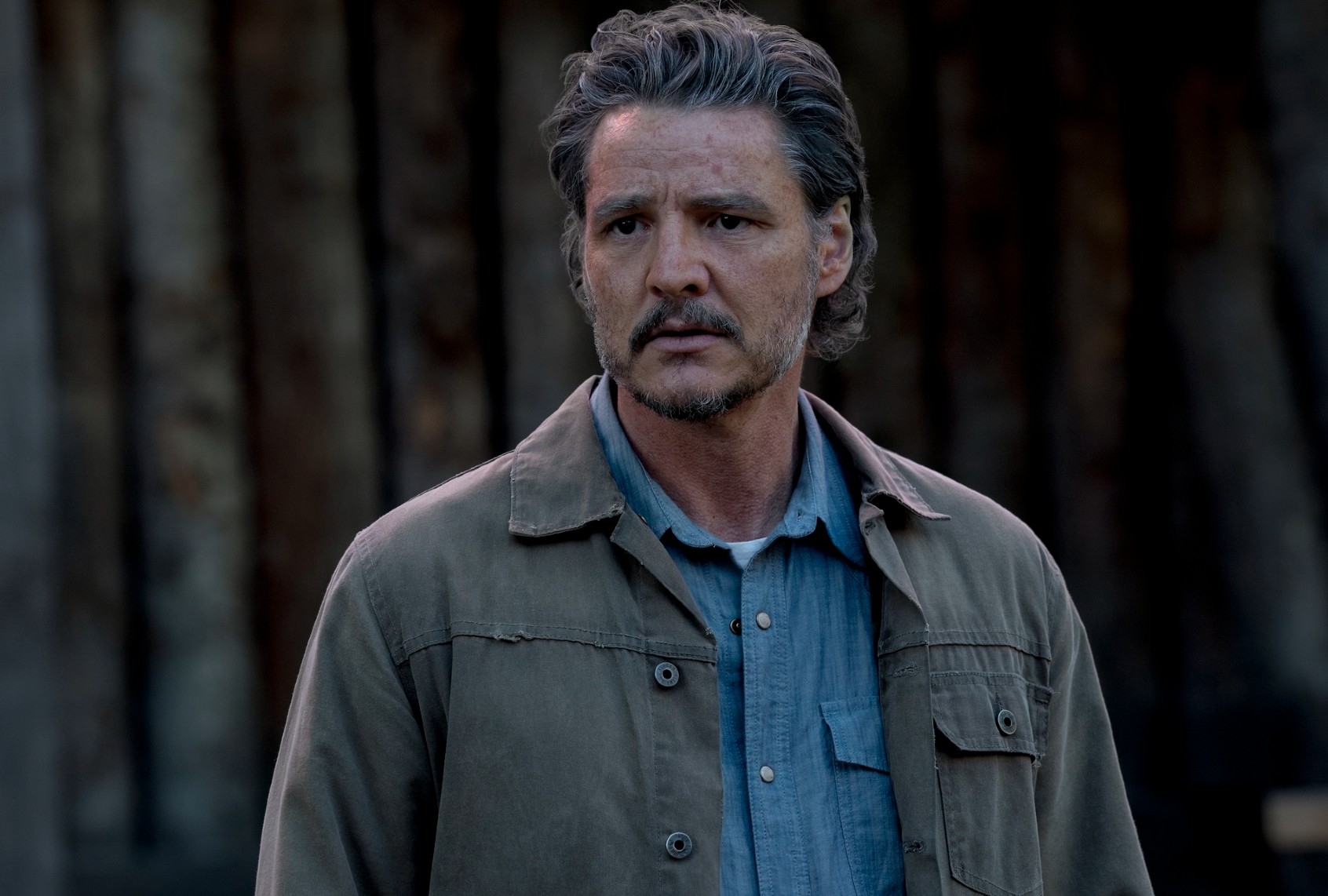
Each of Ellie’s birthdays depicts how much harder it is to parent a teenager as they pull away. Her 15th is easy – the first time that she gets to act like a normal teenager. Joel gets her a cake, refurbishes a guitar, and serenades her with a halting, heartbreaking cover of Pearl Jam’s “Future Days” and its somewhat portentious lyrics: “If I ever were to lose you/ I’d surely lose myself/ Everything I have found dear/ I’ve not found by myself…”

For her 16th, Joel takes her to a science museum, where she lives out her dream of going to space by climbing inside the Apollo 15 command module. “I do OK?” he asks her, and she laughs. “Are you kidding me?”

But he doesn’t always, even when he means to. No parent can. On Ellie’s 17th birthday, he catches her smoking weed and making out with a girl, and freaks out. She responds by moving into the garage and reminding Joel that she’s not his daughter.

When Ellie turns 19 – the show skips her 18th birthday – she begins to question Joel’s version of the events related to Salt Lake City. But she puts her doubts aside to enjoy that year’s present: her first security patrol with Joel.

We need your help to stay independent

It’s supposed to be an easy, safe run. Instead, it turns out to be the most consequential to their relationship, as the two of them are called to help another patrol beset and find Eugene (Joe Pantoliano), Gail’s husband, after he’s been bitten.

Eugene begs Joel to see Gail one more time, and Ellie persuades Joel to make an exception since he’s not displaying symptoms. Joel appears to relent, sending Ellie ahead to get the horses, promising that he and Eugene will catch up with her.

Then Ellie balks, making Joel turn to her to say again, “I promise,” with the same expression he wore when he lied about Salt Lake.

Once Ellie is away, Joel leads Eugene to a postcard-perfect lake and kills him. Ellie returns to see Eugene’s body and understands what has happened. On their way home, Joel tells Ellie that he’ll tell Gail (Catherine O’Hara) “what she needs to know, and nothing more. It’s the right thing to do,” he finishes.

But Ellie doesn’t view Joel lying about this tragedy or any others as right. She stands by as Joel tells Gail his version of the event, saying that Eugene wanted to say goodbye to her in person, but he didn’t want to put her in danger; that he was brave; that he took his own life.

Ellie breaks in and tells Gail that’s not what happened. Eugene begged to see you, Ellie says. He had time, and Joel promised both Eugene and Ellie that he would bring Eugene home to Gail. But Joel shot Eugene in the head. This is why Gail hates Joel.

Nine months later, after the New Year’s Eve party where Joel messes up again by trying to defend Ellie, he excuses himself to sulk with Ellie’s guitar on his porch.


Want a daily wrap-up of all the news and commentary Salon has to offer? Subscribe to our morning newsletter, Crash Course.


In the premiere episode’s version of the scene, Ellie comes home later, glares at him in silence, and walks to her garage retreat. But now we see her double back to confront Joel about his lies and demand that he answer her questions about Salt Lake City honestly. “Were there other immune people?” He quietly shakes his head. “Were there raiders?” Again, he shakes his head no.

“Could they have made a cure?” At this, Joel begins crying and nods yes, also confirming that he killed everyone.

“Making a cure would have killed you,” he explains, but that isn’t enough of an excuse for Ellie, who accuses him of robbing her of her life’s purpose.

Yes, Joel says, adding that he’ll pay the price, which in that moment he thinks only means she’ll turn away from him. Then he admits that if he had a second chance in that moment, he’d do it all over again.

“Because you’re selfish,” Ellie hisses.

“Because I love you,” he counters, “in a way you can’t understand. Maybe you never will.” Then he passes down his father’s message. “But if that day should come, if you should ever have one of your own, well then…I hope you do a little better than me.”

If you’ve ever denied a loving parent or cursed their efforts, those regrets may haunt you the most after they’re gone, and once you’ve matured into an adult who realizes how flawed we all are despite our best intentions.

Pedro Pascal in “The Last of Us” (Liane Hentscher/HBO)Traveling through that rusty truth isn’t something most TV treatments of grieving venture to do or pull off as well as Mazin, Druckmann and Gross do in this episode, the second to last in a season colored by vengeance. Had “The Last of Us” followed the linear progression of action and reaction, with Joel’s death fueling Ellie’s yearning for retaliation, we’d need no further explanation. Survival horror stories get by on much less.

But this story reproduces the haunting we all carry, or will at some point if we’ve managed to connect with anyone else.

One of the last things Ellie says to Joel is, “I don’t think I can forgive you for this. But I would like to try.” Then the action returns to Seattle and the moments after Ellie has killed Nora, as she’s walking at nightfall back to the abandoned theater she and Dina (Isabela Merced) have made into their hideout.

This time, we’re the ones reading her face and left to guess how much of what we’ve seen is memory, or if it’s wishful thinking. Either way, it makes a person wonder whether any of us can completely make peace with what we can never know but only trust to be true. And, perhaps, we might resolve to say everything that needs to be said to those we care about before it’s too late.

New episodes of “The Last of Us” air 9 p.m. Sundays on HBO and stream on Max. 

“Hurry Up Tomorrow” is The Weeknd’s egomaniacal cinematic disaster

Depending on who you ask, Abel Tesfaye — better known by his stage name, The Weeknd — is either a poetic musical genius or a drug-addled lothario. To his credit, this duality is Tesfaye’s doing. He’s spent the better part of the last decade intentionally blurring the lines between his musical persona and his real-life nature. Once a smooth-talking R&B singer with a baby-soft voice to match, his increasing popularity saw his art become outsized, more grandiose. The emotions were buried under witch house trip-hop and then stuffed behind the impenetrable cool of glittering ’80s synths. A musician became a pop star, and suddenly, it was difficult for people to see where Tesfaye ended and the Weeknd began.

If Tesfaye’s new film, “Hurry Up Tomorrow,” is to be believed, the singer has been struggling just as much with reconciling that dissonance as his adoring public has. The movie, directed by Trey Edward Shults, is a fictionalized odyssey through a version of The Weeknd suffering from a bout of insomnia during a world tour, causing his sanity to come undone. Along the way, a young girl named Anima (Jenna Ortega) is pulled into Tesfaye’s orbit, and her creeping, obsessive adoration threatens the singer’s chronic detachment.

While some sequences are visually arresting, they offer the casual viewer, one who isn’t a diehard Weeknd fan, little to no insight into this world. Even an enthusiast of Tesfaye’s music is unlikely to get anything more from this than they would just spinning one of his albums top to bottom.

With an assist from Oscar nominee Barry Keoghan as Tesfaye’s manager Lee, “Hurry Up Tomorrow” feels intended to be an event movie, a spectacular study of pop stardom with the big names to back it up. But even with its admirable ambition, the film quickly gets lost in its own myth-making — if you can even call “Hurry Up Tomorrow” a film at all. What’s seemingly designed to be a feature-length glimpse into a world-famous musician’s psyche functions like little more than an extended music video, too sparse on dialogue and plot to be a properly engrossing cinematic experience. And just when it feels like things are getting somewhere, when it appears as though there might be a kernel of introspection to take away from the movie, “Hurry Up Tomorrow” bungles its grand finale with all of the subtlety of a badly written pop song.

It’s not as though The Weeknd’s vast discography isn’t ripe for the movie treatment. The sprawling, cinematic character of his songs is what makes “Hurry Up Tomorrow” such an intriguing venture. Something like “Blinding Lights” would feel right at home on the silver screen, used to score a scintillating car chase through the Miami streets on a scorching summer night. And when Shults, who, along with directing the film, co-wrote and edited it, uses the superstar’s irresistible instrumentals in the movie, he marries his beautifully constructed images with sound to create some undeniably gripping sequences.

But all that flash is of little substance when there’s not much narrative heft to back it up. “Hurry Up Tomorrow” is, after all, a whopping 106 minutes long. This isn’t just a concert movie (although Shults captured footage at Tesfaye’s shows) or a one-night-only theatrical event like Miley Cyrus’ visual film for her upcoming album, or Fergie’s less-memorable-but-still-plugged-by-me “Double Dutchess: Seeing Double,” it’s a full-length feature film. While I firmly believe moviegoing audiences should be less averse to slow pacing, there’s an almost prideful lack of explanation for the context of images flickering across the screen. We watch as Anima pours gasoline all over a snowy ramshackle house in the mountains and lights it on fire before driving away. The semi-fictional Weeknd pouts and yells into his phone, looking at pictures in his camera roll and listening to voicemails from his ex (a random Riley Keough voice-only cameo). He plays a concert high off four bumps of cocaine, dead behind the eyes. While some of these sequences are visually arresting, they offer the casual viewer, one who isn’t a diehard Weeknd fan, little to no insight into this world. Even an enthusiast of Tesfaye’s music is unlikely to get anything more from this than they would just spinning one of his albums top to bottom.

Jenna Ortega as Anima in “Hurry Up Tomorrow” (Andrew Cooper). Things become even murkier when the film contends with its desire to keep viewers at an arm’s length. “Hurry Up Tomorrow” is, by all accounts, an extension of the persona Tesfaye has built through his music. The Weeknd is technically Tesfaye’s alter ego. As his career has grown, he’s leaned further into the character work, giving The Weeknd absurd facial prosthetics and bundles of bloody bandages. This shadow self is the boozer, loser and user, the womanizing maniac to Tesfaye’s not-so-hidden steely work ethic. Shults’ film tries to blow this persona up to new heights, but only fills it with hot air. There’s little more to say here that hasn’t been said in The Weeknd’s music already. And, unfortunately, when Tesfaye is acting outside the confines of a music video, his chops are unrefined and fairly laughable.
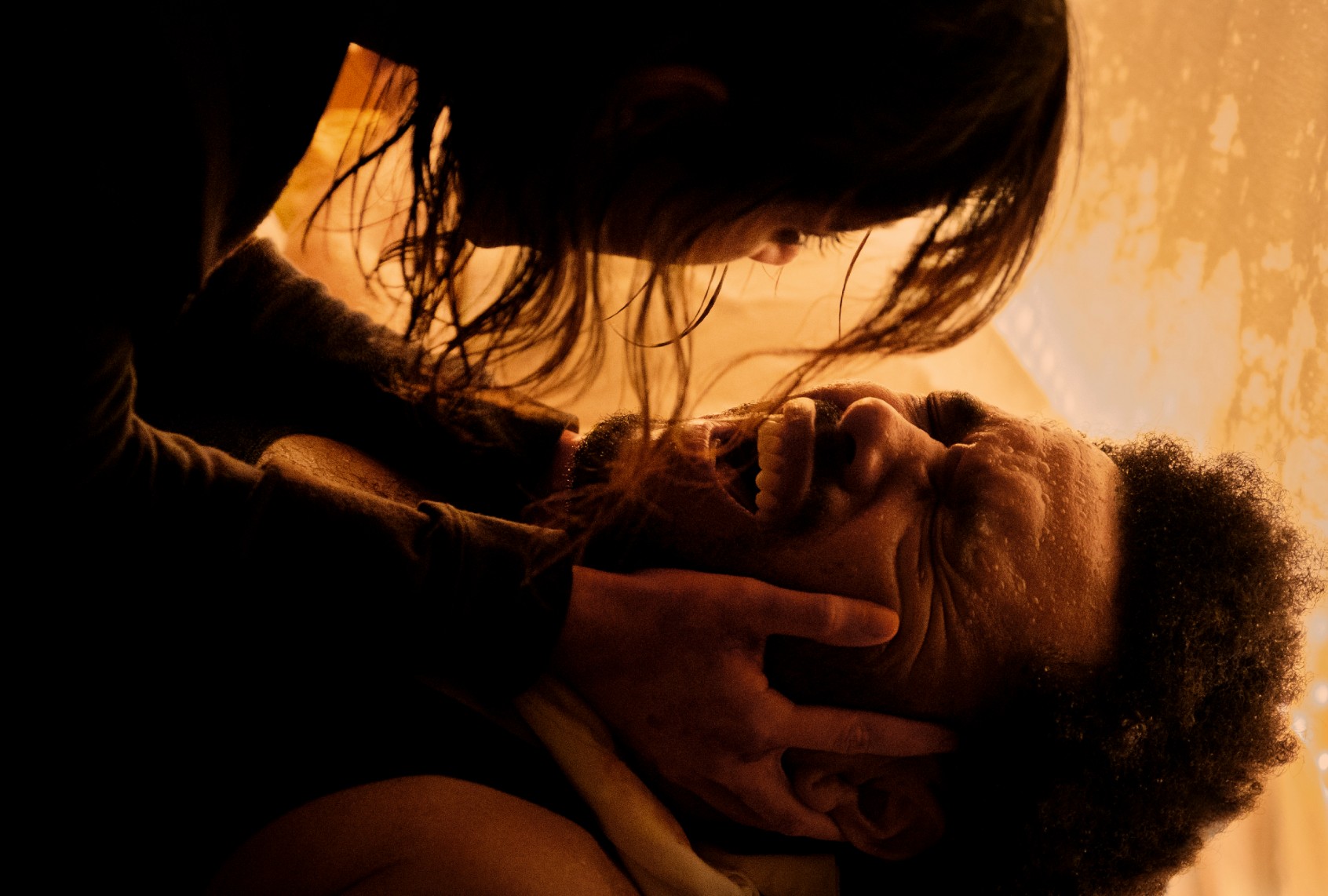

Want a daily wrap-up of all the news and commentary Salon has to offer? Subscribe to our morning newsletter, Crash Course.


In his first proper acting role, the critically panned Sam Levinson HBO show “The Idol,” Tesfaye stepped into an even more malicious version of the character he plays in his music. He played Tedros, a wannabe music industry impresario who also happened to be a pseudo-cult-leading viper attracted to the shiny fame of Lily-Rose Depp’s pop star, Jocelyn. Somehow, it was ultimately a more effective portrayal of industry poison than “Hurry Up Tomorrow.” The smarm dial was cranked up to an 11, and though his dramatic abilities weren’t much better on HBO, they at least had the cover of other moving parts to soften the blow to Tesfaye’s ego. Here, it reads as though Tesfaye is still scorned from that experience, hoping that playing a variant of himself that he’s used to acting out in his songwriting will communicate his intentions with more honesty.

Jenna Ortega as Anima and Abel Tesfaye as a fictionalized version of himself in “Hurry Up Tomorrow” (Andrew Cooper), But there’s an intrinsic level of narcissism to that desire that separates the movie’s audience from its star. We’re not watching a film so much as we are someone working through their own insecurities. And while that could be a compelling study of pop stardom, “Hurry Up Tomorrow” lacks the desire to study any perspective outside of Tesfaye’s. To make a successful cinematic analysis of pop stardom, a subject must be considered as a cog in a machine, even if they are based on a real person who ultimately has more autonomy in real life. That’s what made Brady Corbet’s “Vox Lux” — which should be considered the preeminent examination of the contemporary pop star — so beguiling: It saw fame as a Faustian pact with the devil. Without any insight into why Tesfaye has created The Weeknd, the film is rendered toothless and inert. If anything, it’s more of a rock opera akin to Ken Russell’s “Tommy” than a narrative film, but “Tommy” has far more memorable visual construction than Shults’ film pulls off, though there’s no shortage of strobe lights and frenetic editing to lull the easily impressed viewer into a state of numbness.
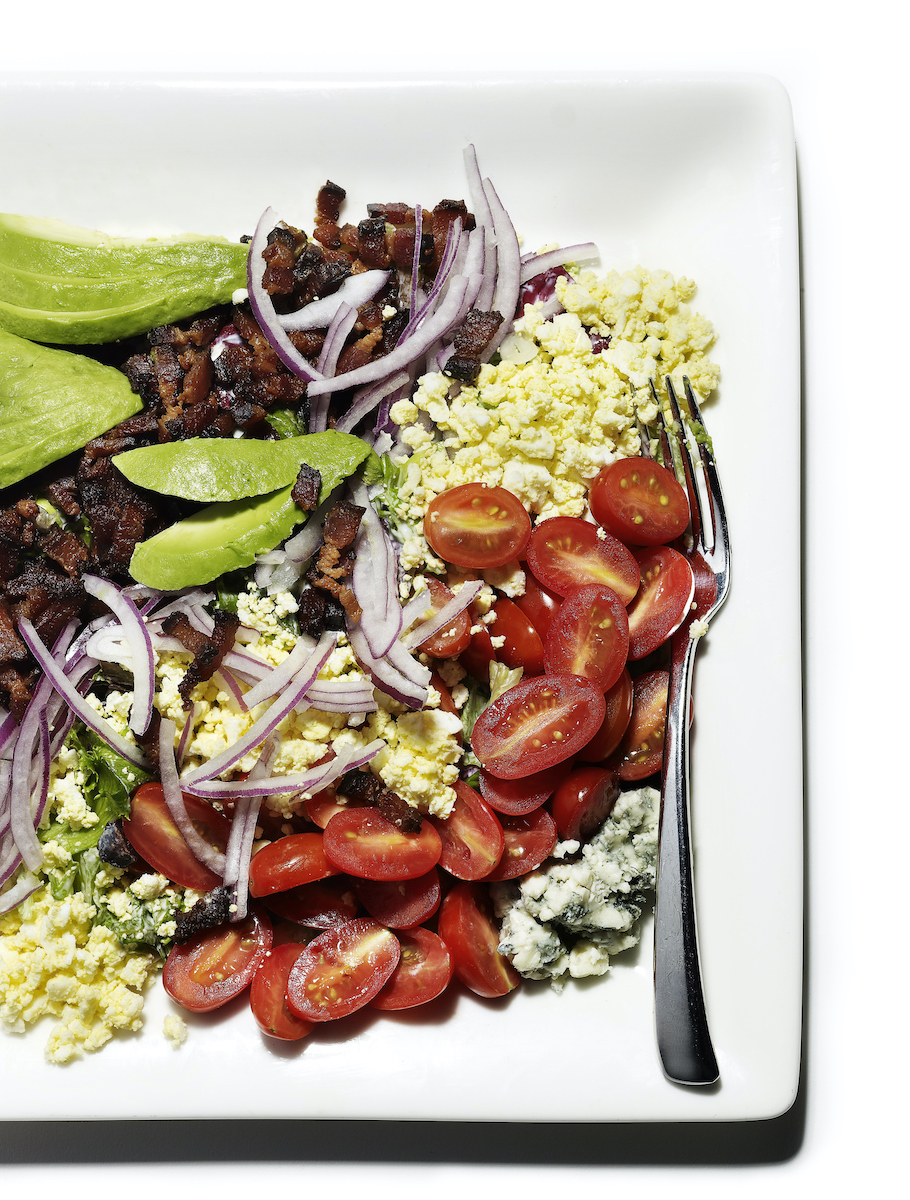
“Hurry Up Tomorrow” reads as though Tesfaye is still scorned from “The Idol,” hoping that playing a variant of himself that he’s used to acting out in his songwriting will communicate his intentions with more honesty.

When Anima and The Weeknd finally meet, things take a brief turn for the surreal. It’s the closest the film ever gets to saying anything, but the extended dream sequence merely gestures at meaning. The two connect during one romantic night, only for Anima’s dreams to be shattered the next morning. When she tries to get The Weeknd to talk to her like a person, she ties him to a bed and forces him to listen to his songs — an objectively funny thing to do to a musician that takes all of the tension out of the scene. Anima extols all of the hidden depth and pain beneath the pop, but it’s impossible to tell what Tesfaye and Shults are trying to get at here. Is Anima’s game supposed to imply that most mainstream audiences don’t understand the profundity tucked beneath those sparkling synths? Or is she supposed to appear deranged for reading so far into a song made by an alter ego? “How much did you take from [these women] just to write another pop song?” she asks.

That’s a question left unanswered. Viewers don’t get a genuine glimpse into that place where The Weeknd ends and Tesfaye begins, and yet, we’re expected to care what happens to him in the film. If you take Tesfaye at his word, “Hurry Up Tomorrow” — both the film and the accompanying album released in January — will be his last work as The Weeknd. “I’ve said everything I can say,” he told W Magazine in 2023. When Anima begins to pour gasoline all over the superstar, it seems as though the film might end on a major climactic punch, one that could make it easier to overlook its many, many flaws. But instead, The Weeknd sings to Anima, and convinces her to put down her lighter, as if to say that Abel Tesfaye has been there alongside The Weeknd the entire time. That message might have some resonance to it if it weren’t something that the average, discerning listener hadn’t been able to figure out for themselves already, especially given Tesfaye’s recent flair for the dramatic. For someone whose late-period career has been built on theatrics, this ending is a decidedly cowardly move. If this is it for The Weeknd as we know him, good riddance.

In praise of the maximalist salad

When chef Roy Choi set out to make the perfect salad for people who hate salad, he knew exactly the feeling he was chasing: that moment when you’re 13 or 14 — when everything about you feels scrutinized: your body, your choices, your appetite — and suddenly, you’re set loose at a TGI Friday’s or Sizzler, or even the fake-plant-covered solarium of a Wendy’s. No rules. No adults hovering. Just you and the salad bar, with its chilled metal bins and endless possibilities. It felt like freedom.

“This salad is for people who never really liked to eat salads,” he told me in a recent Zoom conversation. “But the one salad we did like to eat? The salad bar salad.”

At the salad bar, no one could tell you what to do or what not to eat. You weren’t being lectured about your choices. You were choosing. Choi — known best as the creator of the gourmet Korean-Mexican taco truck Kogi and for his turn on “The Chef Show” with Jon Favreau — calls it a kind of force field. A portal. Like putting headphones on in a loud room and turning up the volume.

“Even if someone was always on your ass, like, ‘You can’t eat this, you’re eating too much of that,’ they couldn’t say anything,” Choi said. “Because it said ‘salad,’ that word protected you. You were in control.”

So yeah, maybe you only took three leaves of chopped lettuce. Maybe you piled on corn, macaroni salad, tortilla strips and three scoops of ranch. It didn’t matter. You made your own rules. That’s what Roy’s calling back to with his Big F**king Salad, a recipe that’s a maximalist monument to flavor and autonomy, packed with greens, corn, button mushrooms, apple slices, orange segments, cheese and options for crunch. It’s not just a cheeky name — it’s a thesis. One that echoes the larger philosophy of “The Choi of Cooking,” his new book built on balance, compassion and a rejection of the all-or-nothing thinking so many of us carry about food.

“If a salad could eat like a cheeseburger,” he said, “this is it.”

After our conversation, I couldn’t stop thinking about maximalist salads.The ones that thumb their nose at restraint. That lean into crunch and salt and creaminess, into things piled on top of other things. They’re playful. Indulgent. Built more like a love song to autonomy than a side dish. A salad that makes you feel — truly feel — something.

Maybe they’re healthy. Maybe they’re not. Maybe that’s not even the point.

So when the craving finally tipped into obsession, I did the only logical thing: I went to the Cheesecake Factory, a palace to maximalism in both execution and design.

The Cheesecake Factory doesn’t do subtle. It does grandeur, with a wink. Faux-Greek columns rise like they’re holding up the heavens; murals swirl across the ceiling in the color palette of a piña colada; the lighting is the same warm gold as melted butter. The menu is less a document than an ordeal — a spiral-bound tome with the heft of a toddler and the narrative arc of a theme park ride. Even the bathrooms are opulent in that uncanny, chain-restaurant way: part suburban shopping plaza, part Ancient Egyptian bathhouse, all backlit marble and echoing tile.

We need your help to stay independent

And then there’s their selection of salads.

There are a few minimalist options, the kind you’d find in any chain’s salad chapter. For instance, there’s a tossed green salad with crisp iceberg wedges that snap under your fork, with ribbons of curled carrot, cucumber slices, tomato hunks and a little metal cup of dressing waiting quietly on the side. Then there’s the “Almost Traditional” Caesar, with croutons toasted just shy of bitter and parmesan dusted like snowfall.

But most of the menu is unapologetically maximalist — a salute to abundance and texture piled high. Take the Mexicali Salad: fire-roasted corn kernels that pop with a whisper of smoke, buttery avocado slices, crisp and nearly translucent ribbons of jicama, sharp onion, tender white beans and mixed greens tangled with salty crumbles of cotija cheese and toasted pepitas. It’s crowned with a scatter of crisp tortillas that snap under your teeth.

The Fried Chicken Club salad doesn’t mess around either — crispy fried chicken crackling with every bite, tangled in mixed greens, smoky shards of bacon and bold blue cheese crumbles. There are jewel-toned tomato chunks, cool cucumber slices, and punchy rings of onion, all drizzled with a honey-Dijon vinaigrette.

Even the vegan Cobb leans toward abundance rather than austerity: crisp lettuce leaves, spears of grilled asparagus, earthy roasted beets, snappy green beans, nutty quinoa and chewy farro, all tossed with crunchy almonds and pepitas to seal the deal.

But as I settled into my booth, the kind of faux-leather banquette that makes a gentle whoosh under your thighs and smells faintly of buttered toast and upholstery cleaner, a thought nudged its way to the front of the line: If I’m going to eat 800 calories, shouldn’t I just order pasta instead of a Barbeque Ranch Chicken Salad, a riot of creamy avocado, tomato, grilled corn and black beans finished with a tangled bird’s nest of crispy fried onion strings?

It was a quiet little reflex, leftover from decades of diet messaging. Somewhere deep in the wiring, there was still this belief that a salad, no matter how decadent, was supposed to be a kind of penance. Something virtuous. Something small. (The aforementioned tossed green salad, it should be noted, also champions the “Skinnylicious” menu, where nothing tops 590 calories.) But that’s missing the point.

Cobb salad (Getty Images/ Glasshouse Images)The Big F**king Salad isn’t just Roy Choi’s rebellion; it’s part of a proud, sometimes absurd and completely joyful tradition of maximalist entrée salads. Salads that aren’t here to keep you small, but to satisfy. To delight. To hand you back your appetite without apology. They straddle the line between indulgence and wellness, pleasure and penance. And they do it with flair.

Take the Quesadilla Explosion Salad at Chili’s. A truly decadent mix of grilled chicken, cheese, tomatoes, corn salsa, and tortilla strips, tossed in citrus-balsamic and topped — because why not — with actual cheese quesadilla wedges. I worked there as a student and at least once a week, usually Friday nights when the end of a shift felt slightly celebratory, I’d order one to eat hunched over the pass. Red polo shirt, black pants from Kohl’s, Dashboard Confessional and Weezer echoing from the kitchen while the prep crew scrubbed down the line. It was indulgent. It was comforting. It was mine.

Taco salad (Getty Images / fdastudillo)Then there’s the taco salad from any solid local Mexican joint, the kind served in a fried tortilla bowl with waves like a sunburst. It’s essentially a crunchy American-style taco turned inside out: spicy ground beef, shredded queso blanco, scoops of guacamole, sour cream, salsa and crisp shreds of iceberg lettuce barely holding it all together.

And the Chinese Chicken Salad — citrusy, sweet, gingery — may be one of the original queens of the form. Said to have originated at Madame Wu’s in mid-century California, it’s since shapeshifted into mall cafés, suburban potlucks and prepackaged grab-and-go containers. But the bones are the same: tender chicken, shredded cabbage, crunchy noodles and a sesame-forward dressing. Even Wolfgang Puck couldn’t resist its charms. His Chinois Chicken Salad, named for his Santa Monica restaurant Chinois on Main, has been on the menu since 1983 and remains one of his most popular recipes; proof that even haute cuisine can’t help but bow to the crunchy-sweet majesty of a really good salad.

But here’s the thing: maximalism doesn’t mean chaos. And it doesn’t necessarily mean unhealthy, either. It means unafraid of pleasure.

Chinese chicken salad (Getty Images / whitewish)You can build a maximalist salad out of roasted carrots and tahini. Add spiced chickpeas, peppery arugula, a drizzle of pomegranate molasses — and suddenly, you’re not eating for fuel. You’re eating for joy. The spirit is abundance. The point is satisfaction.

There are no hard rules, but here’s a loose blueprint:

  • Start with a base that holds its own — little gem, farro, ramen noodles, shaved cabbage. Something with backbone.
  • Layer in texture — think blistered corn, pickled shallots, creamy avocado, cold slices of juicy stone fruit.
  • Pick an anchor — a protein with presence. Seared steak, crisp tofu, hot-smoked trout. (Or chicken finger croutons, if you’re taking Matty Matheson’s lead.)
  • Dress with intention. Green goddess punched up with anchovy. Buttermilk ranch spiked with chili crisp. A tahini-lime number thinned with ice water until it shimmers.
  • Finish with flourish — candied pistachios, jammy eggs, fried capers, potato chip dust. Yes, potato chip dust.

Look around for inspiration: the deli, the dim sum cart, the snack aisle. What would an everything bagel salad look like? Maybe torn bagel croutons, smoked salmon ribbons, pickled red onion, caper vinaigrette, goat cheese crumbles and juicy summer tomatoes. It doesn’t have to follow logic. It just has to make you want another bite.

Or, as Roy Choi put it: “I wanted to create a salad that you would crave. That feels like a meal. Like satisfaction. This salad is a mixture of that feeling and then balancing it with the ‘healthy part.’”

Trump is trying to COVID hack the economy

During the COVID pandemic, Donald Trump said many unforgettable things. Perhaps his most memorable line came during his daily press “briefing,” during which he quizzed one of the scientists who had told him that household disinfectant could kill the virus on surfaces, saying he could “see the disinfectant, where it knocks it out in a minute. One minute. And is there a way we can do something like that, by injection inside or almost a cleaning?”

It shouldn’t surprise us that the man who thought that not testing people in a global pandemic would make the virus disappear would also manipulate numbers to make his daft policies look more successful.

It was absurd, needless to say, and caused a nationwide frenzy, including many hilarious comedic takes. He abandoned the briefings after that, finally taking his advisers’ advice that they were hurting his re-election campaign. (They were also hurting the country, which was terrified that such a ridiculous figure was in charge during a global health emergency.)

But perhaps the most disturbing Trump line, which he repeated endlessly, was “if you don’t test, you don’t have any cases. If we stopped testing right now, we’d have very few cases, if any.” He apparently issued directives to that end as well:

He told the press that he was dead serious about this numerous times, as his staff scrambled to try to clean it up for him.

Whether he actually thought there was logic to what he was saying is unknown, but we do know that he had a political motive for saying this. As the Wall St. Journal reported at the time:

Mr. Trump said testing for Covid-19 was overrated and allowed for the possibility that some Americans wore facial coverings not as a preventive measure but as a way to signal disapproval of him

We are now having to face the fact that this very feeble-minded person is back in charge. Just as he did when he was in his first term, when the news is good, he takes credit, and when it’s bad, he either blames Joe Biden or says it’s fake news or fake numbers. As NPR reminds us, his first press secretary, Sean Spicer, “celebrated a rosy jobs report” saying:

“I talked to the president prior to this, and he said to quote him very clearly,” Spicer said at the time. “They may have been phony in the past, but it’s very real now.”

He commonly said that any numbers he didn’t like were “fake” or “fudged.” During last year’s campaign, he told Time Magazine that the FBI had faked the crime statistics that said crime had gone down the previous year:

Trump: I don’t believe it. No, it’s a lie. It’s fake news.

Cortellessa: Sir, these numbers are collected by state and local police departments across the country. Most of them support you. Are they wrong?

Trump: Yeah. Last night. Well, maybe, maybe not. The FBI fudged the numbers and other people fudged numbers. There is no way that crime went down over the last year. There’s no way because you have migrant crime. Are they adding migrant crime? Or do they consider that a different form of crime?

That was an obvious denial in order to support his campaign strategy that America is under siege from immigrants. How long before his FBI toadies report statistics that back up his lies?

The difference in this term is that there are people around him who want to institutionalize that kind of innumeracy and irrationality as part of the administration’s larger plot to dismantle the government and fulfill Trump’s agenda. They are preparing to falsify data and cook the books in order to sell their schemes to the American people.

Take what our crack director of national intelligence, Tulsi Gabbard, did when the intelligence community failed to back Stephen Miller’s claim that the Tren de Aragua gang was a Venezuelan government group that had invaded the United States and therefore justified the invocation of the Alien Enemies Act. She fired the two top career officials who led the National Intelligence Council, the highest intelligence community analysis group that had released the information. Using the Trump administration’s usual Orwellian inversion of reality, she claimed she was rooting out the politicization of the community (of people who are disloyal to Donald Trump).

We need your help to stay independent

I don’t think anyone in the world is going to be able to trust anything coming out of U.S intelligence as long as Donald Trump and his accomplices are in office. Even Trump himself should be leery of Gabbard’s information now that she has iced out the CIA and personally taken over the preparation of the president’s daily brief (not that he pays much attention to it anyway).

That’s certainly dangerous. But just as dangerous is the plan to start manipulating the economic numbers in order to make the results of his policies look better. We know that he’s lying egregiously about them in public comments, as he usually does. But they have bigger plans.

Just last week, the administration eliminated the Federal Economic Statistics Advisory Committee and the Bureau of Economic Analysis, just days after Commerce Secretary Howard Lutnick announced that he was changing the way GDP is calculated, which would provide more upbeat figures. He told Fox News:

“Governments historically have messed with GDP. They count government spending as part of GDP. So I’m going to separate those two and make it transparent.”

The consequences of doing something like this are quite grave. NPR reported that it would be a “major break from both long-standing practice and international standards. It could also serve to mask any negative effects of the Trump administration’s spending cuts.”

This is on top of attempts by DOGE to infiltrate the Government Accountability Office which is a legislative branch agency that has opened more than three dozen probes into reports that the Trump administration illegally withheld congressionally authorized funds, known as impoundment which Trump henchman Russell Vought seeks to use to usurp the congressional power of the purse.

And there is ongoing fear that the threat of Schedule F, the administration’s order to reclassify thousands of civil service protected employees into political positions, will affect the statisticians who collect and analyse the data that serves not only the U.S. economy but the world’s. As the Guardian reports:

Statistics released by agencies such as the Bureau of Labor Statistics (BLS) and the Bureau of Economic Analysis (BEA) are used by the Federal Reserve Bank to set inflation policy and interest rates. They also form the basis on which businesses and investors take decisions.

The US’s global reputation as a stable economic power and a reliable partner goes hand-in-hand with its long history of producing accurate data, dating back to the establishment of the BLS in 1884. Interfere with the latter and you risk sacrificing the former, experts warn.

Tara Sinclair, a professor at George Washington University’s Center for Economic Research, told NPR:

If the data were manipulated, even in a small way, that will affect the credibility of our entire statistical system,” she says. “And that’s going to have global financial implications, because people around the world rely on the quality of U.S. economic data to make decisions.”

It shouldn’t surprise us that the man who thought that not testing people in a global pandemic would make the virus disappear would also manipulate numbers to make his daft policies look more successful. But the changes his henchmen are contemplating will cause much more lasting damage even than the tariff madness. This could be the most disastrous policy of all and the list of them grows longer by the day.

How the Supreme Court enabled Donald Trump’s mile high bribe

Reports of Donald Trump’s new flying palace — a luxury jet gifted by Qatar — are all over the news. A foreign government gifting a plane to the president (for him to keep after he leaves office, no less) struck many as, well, a little bit off. It’s part of a pattern of Donald Trump and his cohort gleefully trying to squeeze every profit and every penny they can get from the office of the presidency — whether it be hawking crypto while relaxing regulations on crypto, holding meetings and conducting business at Trump resorts, and so on. Some of this unseemly grift, including the possible new Qatar Force One, was made easier by the highest court in the land, which has allowed our government to operate according to the lowest standards.

Gifts from a foreign government raise obvious questions under the foreign emoluments clause. Article I, section 9 of the Constitution reads “no Person holding any Office of Profit or Trust under them, shall, without the Consent of the Congress, accept of any present, Emolument, Office, or Title, of any kind whatever, from any King, Prince, or foreign State.” A luxury jet seems like a present. It also came from a foreign state. Donald Trump holds an office (of the United States). And he didn’t get Congress’ consent to accept the jet. Pretty straightforward, no?

Alas, the United States Supreme Court wiped off the books what little judicial precedent there was on the topic of the foreign emoluments clause — precedent specifically involving Donald Trump. During the first Trump administration, and still to this day, Trump operates a bunch of Trump hotels in which he retains a financial stake. Numerous foreign state officials stay at those hotels and eat at Trump restaurants, funneling money into Trump’s hands. Several different groups sued to challenge these practices on the ground that they violated the foreign emoluments clause. Some of the plaintiffs obtained favorable judicial rulings that rejected Donald Trump’s arguments for why the emoluments clause posed no obstacle to his grift. Among other things, Trump argued the emoluments clause was a nonjusticiable political question such that courts couldn’t stop any of the grift. The cases eventually reached the United States Supreme Court toward the end of the Trump presidency. But after Joe Biden was elected in the 2020 presidential election, the Court opted to dismiss the cases as moot, saying they no longer mattered because Trump was no longer president. Equally importantly, the Court vacated the underlying decisions—it wiped the precedents off the books such that there’s no longer any established case law holding that people can, indeed, sue the president for violating the foreign emoluments clause.

But the court’s role in Trump’s latest grift goes much deeper than the emoluments clause. The Court has repeatedly insisted that it’s not really corrupt to bestow large amounts of money or gifts on political officials, and that influence and access schemes are not corrupt—they’re just how government works. The only real kind of corruption, the Court maintains, is quid pro quo corruption where political officials receive money or gifts and, in exchange, promise to do discrete political acts such as voting for a law or rescinding an executive order.

Based on some of the discourse surrounding the Qatari flying palace, the Supreme Court cases that have normalized and laundered influence and access schemes seem to have crept in to social and political understandings of what corruption is. Along these lines, the Trump administration, as well as a New York Times reporter, insist the g(r)ift the flying palace isn’t bribery or corruption because it wasn’t part of a quid pro quo exchange. That hardly makes it, uh, ok!

Some of the relevant Supreme Court cases blessing access to power holders through money and gifts are well-known campaign finance decisions. Take Citizens United v. Federal Election Commission. There, the Court infamously invalidated a federal law that restricted corporate independent expenditures where entities spend money on their own advocacy for or against particular candidates. The Court reasoned that Congress has a compelling interest that would justify restricting speech (money spent in elections) when Congress is attempting to prohibit quid pro quo bribery, again basically a 1:1 exchange of gifts or money for political favors. But, the Court continued, Congress does not have a compelling interest in preventing a deluge of corporate money in politics because massive expenditures “do not give rise or corruption or the appearance of corruption” since “[t]he appearance of influence or access … will not cause the electorate to lose faith in our democracy.” Money for influence or access is just how government works, according to the Court—it’s as American as apple pie and you’re the weirdo for thinking otherwise.

But the cases laying the groundwork for influence-and-access schemes also include lesser-known decisions that “interpret” anti-corruption statutes by insisting that the Supreme Court’s own definition of corruption (quid pro quo bribery) is the only acceptable definition of bribery. Take McDonnell v. United States, where the Court (mis)interpreted a federal law that made it a crime to “directly or indirectly, corruptly give … offer … or promise anything of value to any public official” to “influence any official act.” The case involved former Virginia Governor Bob McDonnell and his wife, who accepted nearly $200,000 in loans, gifts and other benefits from the CEO of a company that offered a nutritional supplement. While accepting this largesse, Governor McDonnell arranged meetings for the CEO to discuss the company’s product with officials, contacted officials about the company, hosted events for the company, and even said he personally used the supplement. None of that was corruption, the Supreme Court insisted — it just reflected “[t]he basic compact underlying representative government,” namely “that public officials will hear from their constituents and act appropriately by their concerns.” Gifts for influence and access, the court is saying, are very normal! Very legitimate!

We need your help to stay independent

More recently, United States v. Snyder made it A-OK for state and local officials to accept tips and gratuities from private individuals for the officials’ political acts, so long as there isn’t an explicit quid pro quo agreement that had promised the tip or gratuity for the official act. There, a local mayor had awarded a lucrative contract to a trucking company, which then hired the mayor for more than $10,000 in consulting services. What’s so wrong with a ‘thank you,’ the Justices seemed to imply.

Under the Supreme Court’s logic in that case, even if the flying palace is a thank you tip or gratuity for the administration disbanding the anti-corruption task force at DOJ and cutting back on the enforcement of federal laws increasing transparency for foreign lobbying and restricting bribery of foreign officials, it would still be just fine! Attorney General Pam Bondi, of course, did all of those things. She, along with several other Trumpers, also previously worked as lobbyists for Qatar, including Attorney General Pam Bondi, who disbanded the unit.

Several Republican justices have individually demonstrated that access to power holders is never corrupt, even when purchased. Justice Clarence Thomas has received some private jet trips, luxury vacations, and more from billionaires who then get access to the justice. Justice Samuel Alito took a private jet trip and luxury Alaskan vacation with hedge fund billionaire Paul Singer. Justices Neil Gorsuch and Brett Kavanaugh have accepted luxurious boondoggles from law schools that send them to European countries to teach — along with plenty of time for vacationing. That’s all fine and good, they say, because they didn’t accept the largesse in exchange for ruling in a particular case in a particular way.

So if you’re wondering, where did Donald Trump and his apologists get the crazy idea that Trump could accept luxurious gifts from someone who probably wanted to gain the president’s ear, look no further than the Supreme Court. As they say, a fish rots from the head (of the judicial branch). Many people, myself included, have come to think of the Supreme Court as, in part, a MAGA court. It just so happens that that includes the Make America a Grift Again part of the MAGA agenda.

RFK Jr. is laundering Christian right views as MAHA

At first blush, Casey Means seems like the last person Christian conservatives would want as the Surgeon General. Donald Trump’s new pick for the nation’s top doctor, though she does not have a medical license, favors the occult-speak popular in the “wellness” influencer world where she makes her money. As Kiera Butler and Anna Merlan at Mother Jones documented, Means veers “in a more New Age direction” in her “medical” writing. “Perhaps the body is simply the material ‘radio receiver’ through which we can ‘tune in’ to the divine,” she mused in her October newsletter, where she also speculated about “the vibration of humanity” and how the “future of medicine will be about light.” In another, she wrote about how she found love after she built a “small meditation shrine in my house,” performed “full moon ceremonies,” and spoke with trees, “letting them know I was ready for partnership, and asking them if they could help.”

Kennedy has a long history of embracing fake science while ignoring real science, but this is his first foray into doing it to cape for a cause that’s primarily, if not exclusively, associated with the religious right.

One MAGA influencer, Laura Loomer, did try to make hay over this, but she’s Jewish and so is largely ignored by the Christian right on matters like this. But Loomer isn’t wrong that, in the past, this behavior would get the evangelical world all worked up over the evils of paganism and witchcraft. So far, however, they’re mostly silent on the matter. That’s likely because Means is aligned with them against an enemy they hate far more than Satan: feminists. Along with her shrines-and-moons talk, Means also wrote that she had shed “my identity as a ‘feminist,'” giving up on wanting “‘equality’ in a relationship” to instead embrace “a completely different and greater power: the divine feminine.” It’s woo-woo, but ultimately no different than the message promoted by conservative Christians: that a woman’s role is as a man’s helpmeet, not his equal.

Christian conservatives know they have a branding problem. Increasing numbers of Americans in recent years are rejecting organized religion, seeing it as cruel, restrictive and close-minded. At the same time, interest in a more vague spirituality is on the rise, fueled by “wellness” influencers framing spirituality as a shortcut to worldly gains like money, fitness, and romance. The Christian right was always more interested in social control than in Jesus. Increasingly, they seem comfortable with reskinning their retrograde ideas with the aesthetics of woo-woo instead of Christianity, so long as it serves the goal of crushing social progress.


Want more Amanda Marcotte on politics? Subscribe to her newsletter Standing Room Only.


Tucker Carlson is a good barometer of this. The internet show he started after he was fired from Fox News has an overtly Christian nationalist lean. He had Means on in September to spread lies meant to scare women out of using hormonal birth control. After Carlson falsely presented it as forbidden information with “you were not allowed to criticize the pill,” Means fired off a rapid series of lies. She compared the birth control pill to “spraying of these pesticides” and said it was “literally shutting down the hormones in the female body that create this cyclical lifegiving nature.” She said it’s a “disrespect of life” to prevent pregnancy. Unsurprisingly, while recommending other women stay perpetually pregnant for their “health,” Means appears to have no children.

The fantasy that there was some “natural” past era when people were healthier has a lot of appeal in some corners, and the Christian right is only too happy to exploit it to push a deeply anti-feminist message.

Part of the Christian right’s comfort with a pagan-esque spin on their retrograde politics is that conservative Christianity has been getting witchier in recent years. That’s due to the rise of charismatic Christianity, which has received a big boost by associating itself with Trump, who many charismatics regard as a holy figure fulfilling a prophecy. “It is a style of supernaturalist spirituality and miracle- and prophecy-based preaching that was fairly niche within American evangelicalism circa 2015,” explained Dr. Matthew Taylor, a religious scholar at the Institute for Islamic-Christian-Jewish Studies. Charismatics emphasize practices that used to be fringe in American Christianity, such as “ideas of faith healing or miracles, prophecy, and the occult/demonic forces of opposition,” are normalizing as charismatic Christianity surges, he added. Carlson, again, is a good barometer of this. He used to present as a staid mainline Episcopalian, but now he denounces that church and speaks of being “mauled by demons.”

Casey and her brother, Calley Means, are tight with Health and Human Services (HHS) Secretary Robert Kennedy, which is why she got the surgeon general nod and her brother got a position as a “special government employee” assisting Kennedy. Kennedy has exploited the false perception that he’s a liberal Democrat to bamboozle some people into thinking far-right health policies, such as slashing Medicaid, are “moderate” positions. Like the Means siblings, he’s also using his appeal to people outside the religious right as a way to launder Christian right views.

Last week, Kennedy ordered the Food and Drug Administration (FDA) to “review” the legality of mifepristone, a drug used to abort pregnancies. He said this was necessary due to “new data,” which is actually a non-reviewed “study” by a Christian right organization falsely claiming abortion pills are dangerous — a “study” that was immediately debunked by experts. Kennedy has a long history of embracing fake science while ignoring real science, but this is his first foray into doing it to cape for a cause that’s primarily, if not exclusively, associated with the religious right.

But it works for him because his “MAHA” slogan — short for “Make America Healthy Again” is based on the lie that Americans were healthier in the era before public health interventions like vaccines. That notion fits nicely with the long-standing, false Christian right claim that American women were better off before the pill was invented or abortion was legalized. It’s all lies. In 1950, life expectancy for women was 71 years, and it’s nearly 80 years now. Similarly, maternal and infant mortality declined throughout the 20th century, in large part because of contraception and legal abortion. But the fantasy that there was some “natural” past era when people were healthier has a lot of appeal in some corners, and the Christian right is only too happy to exploit it to push a deeply anti-feminist message. Certainly, the “tradwife” trend on social media, which ties a naturalistic aesthetic to patriarchal gender roles, is part of this larger MAHA rebranding of the Christian right.

Nor are Christian conservatives merely riding the coattails of charlatans like Kennedy or the Means siblings. In January, Politico reported that Christian right groups are using “MAHA” packaging to claim that abortion pills are a water contaminant and must be banned under anti-pollution laws. “This is not because the environment was my first weapon of choice — it’s because it’s the one we have now,” Kristi Hamrick, the vice president of Students for Life of America, admitted. “And, frankly, I’m for using the devil’s own tools against them.”

By “devil’s tools,” she means laws keeping air and water clean for living, breathing human beings, including the babies Christian conservatives falsely claim to care about. But lying is also a “devil’s tool,” and lying is very much what is going on here. There is not a shred of scientific evidence that women who miscarry at home from abortion pills and flush their very early pregnancies are contaminating the water supply. That thinking is more magical than scientific, as if the perceived “sin” of abortion could somehow transmit itself through water. But it’s not surprising that anti-abortion activists think they can sell this nonsense in the RFK era, where “vibes” and conspiracy theories are replacing science-based medicine.

Biden diagnosed with “aggressive” prostate cancer

Former President Joe Biden was diagnosed with an “aggressive form” of prostate cancer on Friday.

The 82-year-old Biden went in for an evaluation earlier this week, which led doctors to find a “small nodule” on his prostate. In a statement shared by his office, Biden’s representatives said the cancer had metastasized to the bone but was likely to be susceptible to treatment.

“While this represents a more aggressive form of the disease, the cancer appears to be hormone-sensitive, which allows for effective management,” they shared. “The president and his family are reviewing treatment options with his physicians.”

Concerns about Biden’s age and health loomed over his term in office, and he left the White House as the oldest serving president in U.S. history. While Biden himself maintained that he was in great health and brushed aside questions about his mental faculties, a listless debate performance and pressure from Democratic Party officials ultimately pushed the incumbent president to end his bid for a second term.

Earlier this month, Biden again denied any decline during a visit to “The View.”

“They are wrong,” Biden said of people who questioned his sharpness. “There is nothing to sustain that.”

“I’m in the KKK now”: Mike Myers meets “Kanye West” 20 years after Katrina benefit on “SNL”

Mike Myers has been a regular guest star on “Saturday Night Live” throughout the sketch show’s 50th season, taking on the role of Donald Trump adviser Elon Musk.

For his final appearance in the season finale, however, “SNL” writers had Myers play himself and relive one of the most awkward moments of his career: the time the rapper formerly known as Kanye West went off-script during a live Hurricane Katrina benefit to say that “George Bush doesn’t care about Black people.” (For the record, Myers has shared that Ye was mostly correct in that assessment.)

The sketch centered around Myers getting stuck in an elevator with Ye, played by long-serving cast member Kenan Thompson. The typical awkward small talk of former coworkers quickly ramped up to absurd levels thanks to the Ye’s increasingly erratic behavior in the last decade.

“I guess it’s been a while,” Myers offers. “What have you been up to?”

“Oh, me? I’m in the KKK now,” Thompson’s Ye replies.

Ye, who recently had a song about believing in Nazi ideology removed from streaming services, went on to question Myers’ heritage.

“Myers…is that Jewish?” he asks, after several people see Ye in the elevator and decline to save Myers from the conversation.

“Protestant,” a visibly sweaty Myers shoots back.

The ordeal stretches on when the elevator grinds to a halt. An upset Myers reveals that he’s claustrophobic.

“Trust me, I understand,” Thompson’s Ye responds. “I’m a few phobics myself.”

Watch the sketch below:

The MAGA war on PBS was never about money

For nearly 30 years, “Arthur” has taught young children about problem-solving and appreciating their peers’ differences. The show’s bespectacled title character is a gentle 8-year-old aardvark who spreads the joy of getting along with others. So if you haven’t been keeping up with current events, his militant stance in a recent social media post might have surprised you.

Shortly after President Donald Trump released his executive order calling on Congress to rescind $1.1 billion in federal funding for the Corporation for Public Broadcasting, an image of Arthur’s curled fist appeared on the show’s Instagram account under the heading, “When they come for PBS.”

An animated clip of Arthur’s sister D.W. on her bike followed a week later, exclaiming, “We ride at dawn for PBS . . . Who’s riding with us?”

To paraphrase one of the account’s followers, you know the situation is bad when Arthur is resorting to violence.

That commenter posted that in jest, but the underlying sentiment is accurate. This is as severe an existential crisis for the Public Broadcasting Service and National Public Radio as anyone raised on a children’s programming diet of “Arthur,” “Sesame Street” and other public TV shows has seen in our lifetimes.

You know the situation is bad when Arthur is resorting to violence.

Among the certainties of American life beyond death and taxes is the guarantee that any Republican administration will reopen hunting season on gentle PBS Kids characters. When former Utah senator Mitt Romney led the charge in 2012, he placed Big Bird in his sights. In 2005, Congress threatened to cut $100 million out of the CPB budget after an episode of “Postcards from Buster,” Arthur’s forebear, featured the child of a same-sex couple in Vermont.

Conservatives have been gunning for PBS since it began broadcasting in 1970, but they haven’t had the political means to succeed until now.

Trump’s executive order titled “Ending Taxpayer Subsidization of Biased Media” on May 1 followed March’s House Subcommittee on Delivering Government Efficiency hearing, chaired by Rep. Marjorie Taylor Greene, R-Ga. In that televised sideshow, Greene accused PBS of “sexualizing and grooming children.” As alleged proof, she held up a large glamour shot of a drag performer, Lil Miss Hot Mess, who was featured in an April 2021 segment for “Let’s Learn,” an educational show produced by the WNET group and the New York City Department of Education.

That segment only aired locally, but the photo made for an effective prop in this anti-inclusion political environment targeting the queer community, especially transgender people. Most of the hearing involved Greene and her GOP allies on the subcommittee denouncing PBS president and CEO Paula Kerger and NPR’s president and CEO Katherine Maher for allegedly peddling political bias.

The subcommittee’s Democrats countered with jokes about Elmo and other “Sesame Street” characters. Only Rep. Ro Khanna, D-Calif., referenced the popular PBS Kids series “Daniel Tiger’s Neighborhood,” with a purpose that laid bare the hypocrisy of his colleagues’ allegations.

In questioning Mike Gonzalez, a Heritage Foundation senior fellow supporting the far-right’s defunding calls, it became obvious that he has no idea what type of programming airs on PBS Kids or, for that matter, PBS in general.

Gonzalez couldn’t tell Khanna, for example, that “Daniel Tiger’s Neighborhood” is a spinoff of “Mister Rogers’ Neighborhood.” This is an odd detail to forget from the man who made the case for defunding public media in “Project 2025’s Mandate for Leadership: The Conservative Promise.” After calling defunding public media “good policy and good politics” in that document, Gonzalez declares that the content that runs on NPR and PBS is “noneducational.”

Anyone watching this travesty play out on Capitol Hill knows that these actions have nothing to do with protecting or nurturing kids. It’s about punishing the poor to score political points with the wealthy. A ProPublica report titled “The Trump Administration’s War on Children” lists the many ways this administration is failing children. Among them: Federal employees working for Child Protective Services have been dismissed. Proposed Medicaid cuts would cut access to health care in schools and foster care for lower and middle-income families.

In April, the administration withheld nearly $1 billion in federal grants to Head Start centers nationwide, a year-over-year decline of 37%, resulting in layoffs and regional office closures.

The MAGA attacks on public media are part of this assault. Public radio and TV level the informational playing field, and to an administration devoted to controlling what Americans learn and think, that is a problem.

“Daniel Tiger’s Neighborhood” (PBS/The Fred Rogers Company)
As Kerger has said many times, including in an interview the New York Times published Friday, half of the content PBS provides is for kids under the age of 5. That includes early learning material available for parents and educators on the PBS Kids website,  which has been shown in studies to help children between 2 and 8 years of age make measurable progress in literacy and math. (Salon has also reached out to PBS to request an interview with Kerger.)

Conservatives have accused PBS and NPR of liberal bias in their news and documentary coverage since Richard Nixon was in office.

Since PBS reaches an estimated 99% of the country’s broadcast viewers, that gives every child free access to high-quality educational content. That accessibility may be one of the reasons that 43% of respondents to a recent Pew Research survey said NPR and PBS should continue to receive federal funding. This includes Democrats and Republicans. (33% say they are not sure.)

The conservative argument for cutting taxpayer funds to the Corporation for Public Broadcasting hasn’t changed much over the years, even down to the scapegoats. There is always the question of what public media is doing that isn’t being accomplished on cable and, now, streaming services and podcasts. Usually, the Heritage Foundation has led the chorus asking some version of this query.

So when Gonzalez wrote in his Project 2025 entry, “Unlike in 1967, when the CPB was established, today the media landscape is filled with abundant, diverse, and innovative news options,” he wasn’t saying anything many others haven’t said before.

We need your help to stay independent

Conservatives have accused PBS and NPR of liberal bias in their news and documentary coverage since Richard Nixon was in office. But they seem to take a special pleasure in using PBS’ children’s programming as a political wedge.

If PBS were denied taxpayer money, wouldn’t cable programming on Nick Jr., Disney, and content streaming services like Netflix, Paramount+ and HBO Max fill their absence? Aren’t toddlers turning to influencers like Ms. Rachel on YouTube more than, say, “Alma’s Way” on PBS?

Besides, isn’t HBO producing “Sesame Street” these days? (In short, no.)

Sesame Street’s Zoe, Oscar the Grouch and Cookie Monster under a “123 Sesame Street” sign at the “Sesame Street” 40th Anniversary temporary street renaming in Dante Park on November 9, 2009 in New York City (Astrid Stawiarz/Getty Images)

These presumptions are continuations of the decades-old insistence that public media should be privatized. They also reveal a general lack of knowledge about how public media works, to say nothing of the examples playing out in the news that illustrate why billionaire media owners cannot be trusted to refrain from interfering with their outlets’ editorial decisions.

The CPB is independent of the government, established by Congress in the Public Broadcasting Act of 1967 as a private, nonprofit corporation. It does not produce programming or own, operate, or control any public broadcasting stations, its mission states. This is to ensure the editorial independence of member stations and shield PBS, NPR, and local producing stations like WGBH and WNET from political pressure.

Federal dollars flowing to PBS through the CPB amount to around 15% of the broadcast service’s overall funding, most of which goes to its more than 330 member stations, which pay licensing fees for programming and dues to PBS. This, along with corporate sponsorships, comprises the bulk of its funding.

And while $1.1 billion is an eye-popping number, breaking down to $535 million per year through 2027, since the CPB is forward-funded, the cost per taxpayer breaks down to around $1.60 per year.

Streaming service subscriptions cost several times that amount per month, and they do not support your local market’s news and cultural programming. Nor do they contribute to local stations to help offset infrastructure costs. The CPB designates 6% of its funding for that purpose, most of which benefits rural stations.

The Trump administration and the Republican-dominated Congress aren’t the only entities threatening public media. Trump’s appointed Federal Communications Commission Chairman Brendan Carr is investigating whether PBS and NPR violated government rules by identifying their programming underwriters on the air.

One day after Trump called for the CPB’s defunding, the U.S. Department of Education terminated its $23 million Ready To Learn grant. Historically, this grant has helped fund “Reading Rainbow,” “Clifford the Big Red Dog” and “Sesame Street.” The current grant contributed to producing shows like “Molly of Denali,” credited in two studies involving children from low-income households for improving their ability to solve problems using informational text.

“Molly of Denali” (PBS/WGBH)

“Informational text is a fundamental part of literacy,” the Education Development Center (EDC) explains in a statement about the study’s findings. “Comprehending informational text paves the way for future learning, particularly in social studies and the sciences, and success in life.”

In a recent statement to the New York Times, a Department of Education spokesperson claimed the Ready To Learn grants were funding “racial justice educational programming.”

“The Trump Department of Education will prioritize funding that supports meaningful learning and improving student outcomes, not divisive ideologies and woke propaganda,” it said.

“Molly of Denali” is the first nationally distributed children’s TV show to feature Indigenous main characters. Earlier this month, its team announced that PBS Kids is not commissioning another season of the WGBH-produced show, making the next season its last for the time being, according to Alaska public TV station KTOO.

As for the myth that HBO owns “Sesame Street,” that was never the case. HBO struck a deal with Sesame Workshop in 2015 to bring first-run “Sesame Street” episodes to the channel and its streaming service, now retitled HBO Max, as of 2020. PBS then re-airs those episodes nine months later.

The current 55th season of “Sesame Street” is the final run of its HBO first-run partnership, which Warner Bros. Discovery decided not to renew last year. The streamer will continue to host its episodic catalogue through 2027.

Although production on the 56th season is underway, “Sesame Street” is still searching for a distributor. Quite a different reality than the one Gonzalez assures his readers of in Project 2025, where he quotes what fellow conservative George Will wrote in 2017. “If ‘Sesame Street’ programming were put up for auction,” Will opined in The Washington Post, “the danger would be of getting trampled by the stampede of potential bidders.”

UPDATE: On Monday, May 19 Netflix announced that it would be the streaming home of the new 56th season of “Sesame Street,” along with 90 hours of previous episodes. Additionally, the new episodes will be available day-and-date on PBS stations and PBS Kids digital platforms, “continuing its 50+ year legacy of using the power of public television to bring critical early learning to children across the country for free.”


Want a daily wrap-up of all the news and commentary Salon has to offer? Subscribe to our morning newsletter, Crash Course.


There’s plenty of reason to trust what Sesame Workshop Vice President Sal Perez recently assured the Associated Press, that the home of Elmo, Oscar the Grouch and Big Bird will never go away. Conservatives have long reassured wavering politicians by saying the same of PBS and NPR if the CPB were to be hollowed out. And that is true, to a point. Stations in wealthier markets will continue to exist, but member stations in less populated areas – many of them in red states – will significantly diminish or close.

NPR reported that last week, around 190 officials from local stations nationwide headed to Washington, D.C. to strategize and meet with lawmakers. Meanwhile, the CPB sued the Trump administration in late April in response to his attempt to fire three of its five board members. (The corporation usually operates with a nine-member board; four of its seats currently sit vacant.)

U.S. District Judge Randolph Moss slowed down Trump’s effort to assert his control over the CPB on Wednesday, informing its board to proceed with business as usual until he renders a decision.

Trump, meanwhile, has yet to submit his formal request to Congress to cancel the federal funds meant for public broadcasting. That means there’s still an opportunity for the public to lobby their representatives and contribute to their local stations.

At least one Republican Senator from the home state of “Molly of Denali” intends to continue supporting public media. Sen. Lisa Murkowski, R-Alaska, shared a letter supporting the Corporation for Public Broadcasting on her website and in a regional newspaper. Alaska’s local stations received $12 million from CPB last year, Murkowski said, accounting for anywhere from 30-70 percent of their overall budgets, and equating to roughly 0.00018 percent of all federal spending.

“Not only would a large portion of Alaska communities lose their local programming, but warning systems for natural disasters, power outages, boil water advisories, and other alerts would be severely hampered,” she wrote. “What may seem like a frivolous expense to some has proven to be an invaluable resource that saves lives in Alaska.”

Let’s hope she and Arthur aren’t alone in that view.

In “Nonnas,” recipes are love letters

Everyone has a nostalgia-soaked dish from childhood they wish they could recreate. But for one reason or another — a discontinued ingredient, a lack of skill, no written recipe, or a recipe riddled with “grandmother measurements” (a pinch of this, an eyeball of that) — it remains just out of reach. You might land on something intoxicatingly close, but still frustratingly lacking. Grandmothers, after all, are notorious for secret ingredients, something to make their cannelloni stand out from all the other nonnas on the block.

Trying to erase the space between the version we remember and the version we make often becomes one way to honor their love after they’re gone.

That tension, that ache, underpins the opening of “Nonnas,” the new Netflix film from director Stephen Chbosky and writer Liz Maccie. Inspired by the real-life story of Joe Scaravella — who opened Staten Island’s Enoteca Maria in honor of his late mother, with a rotating cast of real grandmothers as chefs — the film reframes food not as metaphor, but memory.

We begin in Brooklyn, 40 years ago. A young boy, Joe, rushes to grab a number at an Italian bakery as the camera glides through a “Chef’s Table”-style symphony of sweets: a cannoli being filled, a tiramisu being dusted, cases of pignoli, red-and-green Neapolitan cookies, steaming zeppole.

At home, Sunday dinner is underway. Joe’s mother and grandmother are hand-cutting fresh fettuccine, simmering Sunday gravy with torn basil. (When Joe asks how much to use, she shrugs and says, “You feel in your heart. You put in your heart.”) The table is soon heaving with plates of meatballs, crystal bowls of grated Parm, trays of lasagna with crisped edges. There’s wine, children, arguments over whether it’s called sauce or gravy and a yellow-and-white gingham Mr. Coffee percolator — just like the one that sat in my grandmother’s kitchen. It’s all sunlit, noisy, and full of life. A moment that feels like it could stretch on forever.

As Joe’s grandmother says, “No one grows old at the table.”

But of course, it doesn’t last. We shift forward 40 years. Joe (played by Vince Vaughn), now older, sits at his mother’s wake. The table is full again — spinach-and-ricotta stuffed shells, scungilli with 18 cloves of garlic, cassatas — but this time, it’s sympathy food. His mother is gone, and her sauce is, too.

In his grief, Joe tries to make it himself, alone in his dark kitchen. The attempt falls short.

It’s beautiful. It’s sad. And that’s just the first nine minutes of the film.

We need your help to stay independent

Because here’s the thing, in “Nonnas,” food isn’t a revelation. It’s a reality. From the very first scene — hands deep in dough, conversation unfolding not in words but in glances and gestures — the film operates on the quiet assumption that food has always been a bridge between people. A vessel for memory. A balm for grief.

This isn’t one of those stories where, three-quarters of the way through, someone realizes that Mom’s blackberry pie was the key to healing all along. There’s no culinary epiphany waiting in the wings. The women in “Nonnas” already know what food can do. They live it. They’ve lived it.

The drama isn’t in discovering food’s power—it’s in reckoning with its limits. What happens when cooking together doesn’t solve the hurt? When feeding someone can’t undo what’s been lost? The film doesn’t pretend that food can heal everything. But it suggests, with remarkable tenderness, that it might be enough to soften the sharpest parts.

It’s a love letter to food as a love letter.

And like all the best love letters, it’s rooted in attention. Not in grand declarations, but in presence. In watching closely and letting the details speak.

“If you saw Liz’s script, the first three pages were like a phone book,” Chbosky told me via a Zoom call following the film’s premiere. “It was thick, full of detail about food. She was so specific in the way she described it. We had a wonderful DP, Florian Ballhaus, who did a great job and we even got a little extra resources to shoot some extra food, which made a big difference.”

But honestly, Chbosky said, it was all about showing that kid’s face in the first scene: Young Joe watching his mom and nonna in the kitchen.

Lorraine Bracco and Talia Shire in “Nonnas” (Jeong Park/ Netflix )“But honestly, it’s all about showing that kid’s face — just looking,” he continued.  “We all have that sense memory of the mystery of the kitchen, how something’s happening that we don’t understand. So we focus on Theo’s (actor Theodore Helm’s) face, looking at the pasta being rolled and cut, the mysteries being answered. You just have to show that face and the food, and the audience does the rest. Food is such a primal experience; if I asked anyone what they remember most from childhood, I guarantee food is part of those memories. You don’t have to do much more, just show it because it’s something we all share.”
For Chbosky, whose past films include “The Perks of Being a Wallflower” and “Wonder,” the heart of the film is less about spectacle and more about specificity. “The more specific you can be, oddly, the more universal the story becomes,” he said. And in “Nonnas,” that specificity came straight from screenwriter Liz Maccie — who also happens to be his wife.

Maccie describes herself as coming from a “very loud, crazy Italian-American family” where food was central to everything, from Sunday dinners to funerals.

“For me, it’s my aunt,” Maccie told me. “She was really like my nonna. She was twenty years older than my mom and basically helped raise me. Her lasagna took three days to make. Literally. You’d hear these specific Tupperware containers coming out of the closet and think, ‘Oh my God, it’s lasagna.’ The sauce, the noodles—it was a whole process. She put so much love and attention into it. And then it would take ten minutes to eat. It’s a whole thing. Now, I make it once a year for my family on Christmas Eve. It’s my kids’ favorite.”

That kind of memory — stamped with sound and scent, containers and care—carries with it a quiet truth: love was part of the recipe, yes, but so was labor. Nonnas doesn’t shy away from that. The film reveres these women not for their perfection or their myth, but for their work. It lingers on their hands, their rituals, their fatigue. And in doing so, it offers something rare in mainstream movies: a cinematic thank-you to the women who fed us, who nurtured us, who gave so much of themselves to everyone else. It’s nostalgia, yes, but it’s also recognition. A celebration of love that was cooked, stirred  and served warm. Over and over and over again.

“Liz wrote the movie as a love letter to her mom, her aunt and her family. And I directed it as my love letter to her.”

“And it’ll be their forever memory,” Chbosky added of the couple’s children. “Mom’s Christmas Eve lasagna.”

Maccie’s obsession with detail didn’t stop at the food. The dialogue about food is just as textured — funny, familiar and deeply specific. There’s one line, for instance, where Vince Vaughn’s Joe asks Lorraine Bracco’s character, Roberta, about his grandmother’s Sunday sauce. “That’s like asking to see a woman’s mundate!” she snaps. The line feels lived-in because it is. “That’s how my family talked,” Maccie said, laughing.

She gestured at Chbosky’s Zoom square. “He married into it. So he can attest to this. These people talk. With their hands. Loudly. If you didn’t grow up in it, it probably seems totally cuckoo. And it is a little cuckoo. But when you’re inside it, they just say the craziest, funniest things—especially in serious moments.”

She paused, then added, “We just laughed so much with each other. That’s really what I drew from.”

That sense of inherited joy — of language and legacy passed down through kitchens and car rides and Sunday sauce — brought “Nonnas” to life. And working on the film deepened the bond between its married creators in ways neither of them expected. Maccie said collaborating on such a personal story reminded them what matters most: “family,” she said. “Not just the people you’re related to, but also your friends, your neighbors, your community. Working on this movie together really strengthened those bonds. It’s just beautiful.”

Chbosky nodded. “I can relate to that. And for me, I knew Liz wrote the movie as a love letter to her mom, her aunt and her family. And I directed it as my love letter to her. I don’t know how many husbands get the chance to film their wife’s family diary, but I did. And it made me appreciate Liz even more. There’s just no way around it. It was really special.”

“Nonnas” is now streaming on Netflix.

Is Donald Trump’s movement really a “cult”? Well, I ought to know

In July of 2016, then-candidate Donald Trump announced that the fate of the country was in peril. In a televised speech, Trump announced that only one person was equipped to turn the sinking ship of America around. This wasn’t the first “fire and brimstone” political speech in our history, and certainly wouldn’t be the last. And this man once seen as a performative figure — a political sideshow — has metamorphosed into a towering and singular figure in America whose significance goes far beyond politics.

Some would argue his influence has taken on an almost religious character.

That speech at the Republican convention in Cleveland marked the moment when I started to internalize how much the political and ideological winds were shifting in the nation. At the time, Trump’s words shook me, and not only for the obvious reasons. It wasn’t his now-ubiquitous polemical flourish, or even what that implied about his approach to governing. It was actually his exact phrase that I couldn’t let go of: “I alone can fix this.”

To say that I alone can do virtually anything suggests a degree of permanency, perhaps even supernatural power. In a world that is entirely interdependent down to the molecules that make up our bodies, to suggest that any one person can singularly do anything without the support of others is quite a stretch. And hearing the phrase “I alone” invoked for me a memory of another time. I’d heard that phrase before, as a kid in Northern California, sometimes living on a commune and surrounded by hundreds of people who had all come together to do the same thing — worship a man named Franklin Jones. If you wanted happiness or salvation, you needed to follow him.

The overall message of one of Jones’ most prominent books could be summarized as “I alone am the way,” meaning the true path to enlightenment. He was a controversial guru and spiritual leader who also went  by the names Ruchira Avatar Adi Da Samraj, The Divine World Teacher and True Heart Master Sri Sri Bagavan Adi Da, among others. He called his group Adidam. By the time I was a teenager, he had declared himself to be a unique incarnation of God, a  physical manifestation of divinity here on earth sent to liberate us from what he called the “dark times” or “Kali Yuga.”  His seminal essay was entitled “I Alone Am the Adidam Revelation.”

It will come as no surprise that Jones has often been described as a cult leader, although that was certainly not how I viewed him growing up. He was the wise and compassionate guru, as well as the person who captured virtually every moment of my parents’ interest and attention. I was along for the ride. As a teenager, my parents became Jones’ personal acupuncturists, which brought them very close to his inner circle of followers, at least until a falling out severed them from the group completely.

I lived quietly with the inner turmoil and trauma of my adolescent years in Jones’ group until 2017, when I released the documentary podcast series “Dear Franklin Jones,” which detailed my life in the group and featured interviews with other former members, including my parents. The success of that series forced me to confront difficult aspects of my childhood, including the fraught relationship I had tenuously built with my dad. By the time word got around about the series, my father and I were very much estranged. But after he was diagnosed with dementia and became unable to care for himself, I was forced to confront our toxic relationship while also becoming responsible for his care. It’s the subject of my new audio memoir, “The Mind Is Burning: Losing my Father to a Cult and Dementia.”

In my creative work and especially in writing my memoir, I have become attuned to making connections between my past and present. When I first heard Trump’s speech in 2016, those words — “I alone” — took me to a very specific, very raw place. It reminded me of the years I spent as a child under the specter of an authoritarian spiritual figure. As a child, I was led to believe that one man — in our case, an ordinary-looking guy from Jamaica, Queens, New York, exactly the same neighborhood where Donald Trump was born and raised — was in fact … God. The startling parallel  between these two men, and that phrase in particular, remains intensely resonant for me. They both seem to be reaching towards a kind of ubiquity. An authority that transcends their own personhood. A godlike persona.

When I heard Trump’s speech in 2016, those words — “I alone” — took me to a very specific, very raw place. It reminded me of the years I spent as a child under the specter of an authoritarian spiritual figure.

My journey to finding peace with everything that I saw and struggled with in Jones’ group was neither straightforward nor easy. In the years since then, I have continued to write and report on various fringe religious groups, including several that have been labeled as cults. What I continue to struggle with, however, is the word itself. Is it an extension of fandom, with public figures amassing cults of their own? Are the worldwide legions of “Swifties,” Taylor Swift’s most devoted fans, actually members of a cult? What exactly is a cult, and under the new Trump administration, are we living in one now?

Somewhere along the line, “cult” has come to mean so many things that I’m no longer sure it means anything at all. And no modern public figure is more often described as a cult leader than our duly elected president. A few months into his chaotic second term, the question of whether or not the movement that he has started is effectively a cult has become a live one once again. To appreciate how we got here, we need to understand the word itself, and how it caught fire in popular culture.

The meaning of the word “cult” has changed quite a bit. It was originally used simply to describe small, fringe religious movements — groups that were offbeat and outside the mainstream, but not necessarily sinister. In fact, many groups that were once considered cults, such as the Church of Jesus Christ of Latter-day Saints (better known as the Mormons) or the Seventh-day Adventist Church, are now widely regarded as mainstream religions.

Then came Charles Manson. The Tate-La Bianca murders of 1969 struck fear into mainstream America, and this frightening hippie who had supposedly compelled his acolytes to commit murder became the bogeyman of the counterculture era. Suddenly, a ”cult” meant something worse and more dangerous than a small group of ideologues or a charismatic leader. It could be a threat to public safety. Meanwhile, alternative religious movements were flourishing. There was the rebirth of evangelical Christianity known as the “Jesus movement,” the Hindu sect that became the Hare Krishnas and dozens more gurus and spiritual guides, churches and communes. Many were harmless, but others wielded deep and troubling control over their members.

We need your help to stay independent

Then, of course, came Jonestown.

More than 900 people died in a 1978 mass murder-suicide at a remote encampment in Guyana ruled by the Rev. Jim Jones. Cults were no longer just fringe oddities — they were existential threats. The images from Jonestown were horrifying: rows of bodies, cyanide-laced Flavor Aid, and chilling recordings of Jones commanding his followers to die for their cause. Suddenly, “cult” became synonymous with totalitarian mind control. The idea that someone could be brainwashed to the point of self-destruction shook the public to its core.

A wave of anti-cult activism followed. Families claimed their loved ones had been “brainwashed,” and groups like the Cult Awareness Network emerged to fight back. Suddenly, any religious movement that deviated from the mainstream risked being labeled a cult. Once that happened, society saw these groups as dangerous. “Deprogramming” became a huge (and controversial) practice during this time. Families, terrified that their children had been sucked into cults, hired deprogrammers who sometimes literally kidnapped adults and forcibly tried to re-educate them to break free of their existing beliefs.

A vigorous debate on terminology ensued, rife with controversy. Some scholars began to use the term “new religious movement” to differentiate small religious groups from the stigmatized word “cult.” By the 1980s, the term “destructive cults” begain to appear. It seemed to offer  a clearer definition of the kinds of cults that scare us, while also insulating anti-cult advocates from the threat of litigation, which became a tool of suppressing dissent for certain well-funded religious groups. The “cult wars” broke out — an intense series of disputes over what a cult actually was and what rights or recourse dissenters had against these groups, playing out both in the courts and in public discourse. More recently, documentaries like “Wild Wild Country,” “The Vow” and a million rehashes of the stories of Jonestown and the Branch Davidians of Waco have cemented an image of dangerous leaders with spellbound devotees who commit heinous acts.

But while these stories are frightening, the way that the concept of “cults” has migrated into pop culture has, in my view, effectively disarmed the term. We’ve made “cult” into a kind of aesthetic. It’s no longer only, or even primarily, about control and coercion. Now we use “cult” as a kind of metaphor to describe anything with an intense following. Just search the word on Etsy and you’ll find dozens of pithy phrases on cute stickers and T-shirts that minimize or contradict the word’s original import. And of course there’s also a mountain of product equating Trump and the MAGA movement with cultism: “If you’re not outraged, you’re in a cult.”

The way that the concept of “cults” has migrated into pop culture has, in my view, effectively disarmed the term. We’ve made “cult” into a kind of aesthetic.

Seeing these ideas permeate the culture over the years has left me confused and frustrated. As someone raised in a group that went from a polite hippie-ish spiritual community to an isolated entity with its own cosmology, I think we’ve lost the thread.  We joke about “cult favorite” beauty products and “cult status” movies, it’s a shorthand for devotion, loyalty and obsession. And when people talk about MAGA as a cult, it seems to exist in that hazy liminal space between a negative attribution of a fan group and something more sinister.

As American politics have become increasingly divisive and supercharged by misinformation, the term seeks to apply our understanding of dangerous and fanatical religious groups to extreme political beliefs. Is that a fair application? Is MAGA really a cult?  The definition that makes the most sense to me is the one that tells us what a cult does, rather than what it is.

Robert Jay Lifton, one of the first scholars to explore on what cults are and are not, says that a cult exhibits three main characteristics:

  1. A charismatic leader. A compelling thinker and speaker who can make people believe anything. Trump absolutely fits this bill. In fact, it appears to me to be one of his superpowers: the ability to read how a large population is feeling and to compel them to act in his interest. Which brings us to Lifton’s second defining characteristic.
  2. A process. To be a cult, a group must have a philosophy unto itself, and a process of re-educating its followers in the philosophy of the group. For me growing up, that included communal acts of worship, rituals and an impossibly long reading list of doctrinal considerations from the leader. It’s a bit of a stretch, but MAGA, in a way, does appear to deploy a re-education process. If you are  unhappy with the way your life is going and believe America is on the wrong track, the promise is offered that Trump is here to give your life meaning and make America great again.
  3. Abuse. Once followers of a cult are under the sway of their leader and have been re-educated in the belief systems of the group, Lifton stipulates that they can be compelled to act against their personal interests. This can mean anything from giving away their personal wealth and belongings to the leader, all the way up to acts of terrorism or mass suicide.

When we reach the third point, I believe the purest definition of a cult starts to fall apart, and it becomes another culturally expedient term used to describe our complex political moment. Two-party politics contains a built-in dialectic about the interests of the people, in which each side will always accuse the other of acting against those interests. While one party or leader might possess qualities that appear cult-like, the U.S., at least for now, is still a democracy. There are nominally equal branches of government that provide important checks to the balance of power. Recent efforts to minimize the reach of the courts over executive privilege notwithstanding, the judiciary is still empowered to halt executive decisions.


Want a daily wrap-up of all the news and commentary Salon has to offer? Subscribe to our morning newsletter, Crash Course.


This is by no means to suggest that the mass destruction of the federal bureaucracy we are currently witnessing isn’t alarming. As a parent of two young boys, I am concerned about the character of the men in our highest office and how they present themselves to the public. I believe in the government institutions that make us a union of states rather than a pastiche of fiefdoms.

For the time being, however, I do not believe we are in a cult. One of the strangest things I witnessed during my years living in and around my parents’ guru came after we had left the group. My father began to hold his own weekly meditation groups and became more outspoken about his spiritual beliefs and abilities. He started to believe that he had the ability to heal people by touching them, and that he could divine their futures with the help of his psychic abilities and tarot cards. He began to have visions of angelic souls from other dimensions visiting him with important messages for humanity.

He wanted the power and reach of the guru who had left him behind. He wanted to be a guru himself. Until, of course, he got sick, and then it all fell apart.

Few people would deny that Donald Trump has a powerful desire for authority and control. Many find that cumbersome, obnoxious or  dangerous. But his desire for control does not make him a cult leader. We may have elected a president who seeks more than his fair share of authority over the three branches of government, but until or unless we disassemble those powers, there are still boundaries to his behavior. Whatever your feelings might be about Trump’s sociopathic behavior, the term “cult” doesn’t feel effective. Should his administration succeeds in dismantling the branches of government and giving full authority to one individual, that would be a different situation.

Trump’s worldview may be informed by an outsized ideology, and he is clearly energized by the vigor and purity of his believers. He hungers for the allegiance of the crowds at his rallies, and runs his staff through a byzantine maze of loyalty tests. A cult, however, is a group singularly directed by a sociopathic narcissist who seeks to control their followers to do their bidding and move in whatever direction they, alone, choose. For now, we still have a choice.

Is London burning? Britain’s sudden political meltdown — and ours

As warm spring weather and effusions of greenery spread across our disordered continent, Americans are understandably mesmerized by the widening chaos, unresolved conflict and bottomless corruption of Donald Trump’s second presidency. The world is watching too, and in broad strokes the news from abroad reads like a rejection of Trumpism: As I and others have observed, the MAGA-sphere’s clumsy efforts to boost overseas far-right parties seem to have backfired, fueling victories for “centrist” mainstream forces in Canada, Australia, Germany and elsewhere.

Yeah, not so fast: The new dawn of global democracy may be less glorious than advertised, not to mention a lot more confusing. While we were preoccupied with Trump’s paramilitary forces of masked kidnappers, his will-he-or-won’t-he dance with the federal courts (eventually you know he will) and Qatar’s so-called gift of a $400 million jumbo jet — is it a Trojan horse or a white elephant? — the storied and deeply weird democracy of the United Kingdom has been quietly sliding into the abyss.

Or maybe it has: Whether the shocking results of Britain’s local elections on May 2 — and the subsequent Democrat-style dithering of the governing center-left Labour Party — amount to the first stage of political Armageddon or just a disconcerting blip on the global radar screen remains to be seen.

Let’s back up a few steps, because there’s a lot to unpack here: As you may recall (although it seems like a thousand years ago), Labour won a massive parliamentary majority in last July’s British general election. That ended 14 years of increasingly shambolic rule by the Conservative Party, which had itself won a whopping victory in 2019 under the since-disgraced Boris Johnson. But here’s the thing: That big win was a largely illusory artifact of the increasing fragmentation of British politics. Yes, Labour captured 411 of the 650 seats in Parliament — on just 33.7 percent of the national vote.

In last July’s election, Labour got one-third of the vote but won two-thirds of the seats, an anti-democratic outcome with no clear precedent in the U.K. or anywhere else.

Seriously, that’s extraordinary: One-third of the vote and nearly two-thirds of the seats. That distorted outcome has no clear precedent, not just in the U.K. but in any other parliamentary democracy, and underscores the baked-in anti-democratic character of Britain’s “first past the post” electoral system. Things get even weirder when you consider that Labour candidates actually got 500,000 fewer votes than they did in 2019 — an election the party lost badly. They won all those seats last year thanks to historically low voter turnout, and because support for the widely-despised Tories (i.e., Conservatives) collapsed by more than half, falling from almost 14 million votes to fewer than 7 million.

So that election was less a Labour win than a collective “nope” on the existing government, which didn’t coalesce into support for anyone in particular. But the writing on the wall was visible, for those willing to read it: Right-wing firebrand Nigel Farage’s Trump-inflected Reform UK party got 14.3 percent of the national vote (the third-highest total) but won just five seats in Parliament. In other words, Reform candidates placed a close second or a respectable third in a whole bunch of races won by Labour or the Tories. That came as a huge relief to both major parties and the mainstream media, who essentially all agreed to pretend it hadn’t happened and didn’t matter.

They can quit pretending now. Reform may indeed be a clown show in many respects, an incoherent and distasteful grouping of youngish hard-right ideologues and old-school “Little England” racists, but it pretty much swept the board in this month’s local elections and has a plausible claim to be Britain’s most popular party (if only by default). But hang on; that’s skipping too far ahead. In order for that to happen, the incoming Labour government had to fail, rapidly and spectacularly, which is precisely what it did.

After that bizarre election outcome last July, incoming Prime Minister Keir Starmer, a bluff, lawyerly person with no evident ideological convictions, arrived at 10 Downing Street with an unassailable majority but essentially no popular mandate. Starmer was the neither-fish-nor-fowl compromise candidate chosen to lead Labour after left-wing former leader Jeremy Corbyn was purged in 2020, and he turned out to be singularly unprepared to face either the dire economic crisis left behind by the Tories or the wave of far-right anti-immigration violence exacerbated, if not actually encouraged, by Farage’s Reform party.

Those circumstances would have tested any political leader, but I don’t think Starmer’s most avid supporters — if he still has any — would argue that he aced the test. Labour’s government has fumbled through 10 months of increasingly harsh immigration policies and awkward fiscal belt-tightening that have managed to alienate the left without placating the right, symbolized by the disastrous decision to end winter fuel payments to most “pensioners” (or retirees), a policy maintained under governments of both parties since 1997.

Nigel Farage’s MAGA-flavored Reform UK picked up an astonishing 677 seats in this month’s local elections — a literally infinite increase from its previous number, which was zero.

Given all that, nobody expected this month’s local elections for about 1,600 seats on 23 local councils across rural and suburban England — Scotland, Wales and Northern Ireland have different systems — to go well for Labour. In general terms, the pendulum effect familiar from American politics, where the party in power tends to lose ground in off-year elections, also applies across the pond. It’s worth noting that English local councils have little political power — they’re more like county supervisors in the U.S. than state legislatures — and until recently most have been Tory strongholds. Furthermore, these elections are typically low-turnout affairs contested between grassroots party loyalists — but their symbolism, as with special elections for U.S. House seats, is often seen as important.

Well, the symbolism this time around absolutely sucked, at least for the Labour Party. If anything, it was even worse for the Tories, which sounds contradictory but actually isn’t. Labour lost 187 of its previous 285 seats to finish in a distant fourth place, while the Conservatives, who held nearly 1,000 council seats going in, lost a staggering 674 of them. Meanwhile, Reform UK (formerly known as the Brexit Party and the successor, more or less, to Farage’s UK Independence Party of the early 2010s) gained 677 seats — a literally infinite increase from its previous total, which was zero. Those numbers make clear that Reform’s biggest gains came at the Tories’ expense, but Reform also swept seats in working-class areas like Durham in northeastern England, formerly Labour’s heartland.

As noted earlier, there are various ways to interpret those results, but no conceivable spin can make them look non-dreadful for the two mainstream parties that have dominated British politics for the past 100-plus years. Indeed, this election delivered another, somewhat less dramatic surprise: The centrist Liberal Democrats, a polite also-ran third party over the last four decades, gained 163 council seats to finish second to Reform.

One plausible reading holds that Britain’s two-party system is now in terminal collapse, with a chaotic reconfiguration to follow and a long, grinding war between three vaguely normal parties and the neofascist new right. (The Labour-Tory duopoly dates back to the World War I-era collapse of the old Liberal Party, which I discussed here.) Versions of that have already happened, allowing for national differences, in France, Italy and Germany, along with a bunch of smaller countries. British political scientist Robert Ford expressed this view to the New York Times: “The two main parties have been served notice of a potential eviction from their 100-year tenures of Downing Street.”


Want a daily wrap-up of all the news and commentary Salon has to offer? Subscribe to our morning newsletter, Crash Course.


A more optimistic view, to which Starmer and most of the Labour Party cling for the moment, is that they’re still in charge and have several years to recharge, recalibrate and convince the voters that they’re not incompetent losers with no principles. Farage’s insurgents, in this narrative, will either merge with the Tories or replace them entirely, and the next general election (in 2028 or 2029) will be a straight-up showdown between Labour Reloaded and Reform UK.

That may be the plan, or at least a plan, but it hasn’t gotten off to a rousing start. American liberals and progressives will, unfortunately, recognize Labour’s trajectory over the last couple of traumatic weeks: Faced with an existential dilemma and the urgent need to redefine itself, the center-left party abruptly lurches rightward and adopts the rhetoric of its opponents. (Starmer lacks Gavin Newsom’s unctuous Hollywood looks, but he has a similar shape-shifting quality.)

Starmer and the Labour Party have a plan, sort of: They have several years to recharge, recalibrate and convince the voters that they’re not incompetent losers with no principles.

Last week the Labour government coughed up a new proposal for tighter controls on legal immigration, which was of course denounced by Reform as not nearly enough. Starmer gave a brief accompanying speech that was almost universally hated. Gareth Watkins of the socialist magazine Tribune described it as a combination of J.R.R. Tolkien-style nostalgia and the Great Replacement-style language of 1960s Tory racist Enoch Powell. New Statesman political editor George Eaton defended it through almost audibly gritted teeth, writing that Starmer aides “believe that border control isn’t an optional extra for a social-democratic party but fundamental to it.” (Eaton did not, however, suggest that Starmer’s proposals were any good or would work.)

However Britain’s drama unfolds from here, a larger, darker pattern is at work for which Starmer and the Labour Party, inept and underpowered as they may be, are not responsible. Redeeming democracy is not about whatever milquetoast “mainstream” coalition can just barely win the next election against Donald Trump or Nigel Farage or Germany’s AfD or whomever else. We tried that, remember? It didn’t work.

At some point, the massive power imbalance baked into the entire Western liberal-democratic polity, which drives so many people who feel voiceless and disenfranchised into consumerist apathy, fascist fantasy or both, will require radical readjustment. How long that will take, and how painful and difficult that may be, is unknowable. But Britain can’t vote its way out of its deepening crisis — especially when fewer and fewer people bother to vote at all — and neither can we.

“I feel like I’ve lost my country”: Americans who oppose Trump are now looking for the exits

As President Donald Trump ushers in his so-called "Golden Age" for the nation, some Americans are jumping ship. Yale University history professor Marci Shore is relieved to be one of them. 

She and her husband, historian Timothy Snyder, had long been on the fence about leaving the United States, Shore told Salon, with professorships at the University of Toronto available to them for at least two years should they have wished to take them. Trump's reelection in November and the proverbial smoke before the fire in the immediate aftermath made it clear to her that now was the time to pull the trigger. 

"I felt like this country had everything right in front of them, and people chose this — a lot of people chose this, and that was heartbreaking," she said. "And I also felt like, 'I don't want to come back to this.' I don't want to, and maybe I'm not devoted enough. Maybe I'm not enough of a patriot. But I felt like, 'I don't want this. I don't want this for my kids. I don't want this environment.'"

Shore is a part of a small but burgeoning group of Americans who have lost faith in their country since Trump's reclaimed the presidency — who have lost hope that a good future is still possible there — and decided to seek refuge abroad. In the months since the election, and even more so after Trump's inauguration, consultants who help Americans plan their moves abroad say they've seen an uptick in interest in expatriation that goes beyond typical post-election panic. Immigration lawyers in particularly desirable destinations also say they've seen a marked rise in serious inquiries and requests for assistance with immigration paperwork from U.S. citizens.

Some soon-to-be expats say that, while they intended to leave, they haven't given up all hope for their home country. But others are more resolute in their belief that the nation is irreparable. 

"I hope this will end sooner rather than later. I hope that it's not going to get as bad as I fear it is," Shore said. "But I haven't seen anything comforting yet."

Jen Barnett, the CEO and co-founder of Expatsi, a firm aimed at helping Americans plan and execute their moves abroad, told Salon that the post-election and post-inauguration spikes in the company's web traffic have translated to a greater number of clients moving from the initial ideation stage to active planning, exploring the desired location and filling out paperwork.

Clients' reasons for wanting to move have also changed during the second Trump presidency, Barnett said. Before, they flagged the lack of abortion access and gun violence in the U.S. Now, however, they raise concerns about the threats to defund the Department of Education and even the possibility of Trump imposing martial law

"I just try to remind them that whatever does happen, they can handle it, but they're afraid," Barnett said in a phone interview. "They're afraid that the borders will close. They're afraid they won't be able to leave. They're afraid that other countries will close their borders to Americans because too many immigrants are leaving."

The news that Shore and Snyder would be leaving the country came at the end of March alongside that of their colleague Jason Stanley, a Yale professor of philosophy whose longtime study of fascism — and more recent witnessing of universities cowering under the president's pressure — set off alarm bells that made accepting a position at the University of Toronto seem like his safest option. Shore, who researches totalitarianism in Eastern Europe, said that she had felt similarly but had made her decision in December or January.

Shore said she's long been concerned about gun violence and school shootings in the U.S. because she and Snyder have two now-adolescent children. She had considered accepting a respected job in Geneva before, not long after Trump was first elected in 2016, but ultimately turned it down because she felt a moral obligation to students who looked to her to make sense of what could happen to the country under Trump. 

It was an accumulation of events that did it this time around, Shore said, followed by her coming to terms with the fact that a plurality of Americans had elected Trump despite knowing who he is. The "Nazi-style" rally at Madison Square Garden was chilling, former First Lady Michelle Obama's speech on the price women pay because of restrictions on reproductive rights left her awestruck, and the secret vote ads targeting women whose husbands wanted them to vote for Trump terrified her. The most ominous sign came in mid-January, she said, when Vice President JD Vance posted on X that Snyder being a professor at Yale is "actually an embarrassment," and the university did not publicly respond.  

"What scared me was, I thought, 'They're scared. The university is scared. The administration is scared. People are going to start to put their heads down and get in line because historically, that's what happens,'" Shore said. 

When Shore spoke to Salon in April, she said that her family had been residing in a friend's home in Toronto since her sabbatical began for the 2024-2025 academic year as a trial run of what life would look like if they moved. Her tenure with the Munk School of Global Affairs and Public Policy will start in the fall. 

We need your help to stay independent

The Trump administration has pulled no punches since his inauguration in January. A flurry of executive orders cut federal funding for foreign aid, declared irregular immigration at the border an "invasion," targeted transgender Americans, rescinded diversity, equity and inclusion policies, and threatened universities and humanities institutions with funding cuts lest they comply. The government has laid off tens of thousands of federal workers, Cabinet members have shared sensitive military plans on an encrypted messaging app and Congress is weighing how much funding to cut from Medicaid and other public assistance. All the while, the president has unleashed U.S. Immigration and Customs Enforcement officials onto the public, resulting in detentions and arrests of tourists, student protesters and green-card holders, U.S. citizens, and removals of immigrants to Central America without allowing them a day in court. Law scholars have called the administration's apparent defiance of court orders a "constitutional crisis," and the nation is just over 100 days in. 

Since January, Trump's approval rating has tanked, with The New York Times' average of polls, including Emerson College and AP-NORC, recording a 45% approval and 51% disapproval as of May 16.

While it's unclear just how many Americans are seriously working to leave the country, expat consultants told Salon they're seeing greater interest than usual after a divisive election.

At the same time, European countries have also seen a rise in immigration interest from Americans. Data from Ireland's Department of Foreign Affairs shows that the monthly average of 4,300 U.S. applications for Irish passports in January and February was up some 60% from last year, per Reuters

In the first three months of 2025, France likewise received 2,383 long-stay visa requests from Americans compared to just 1,980 over the same period in 2024, according to government data, the news wire reported. Meanwhile, the UK received 1,708 applications for passports in the last three months of 2024, the last period for which data is available, marking a record of any quarter in the last 20 years. 

Wealthy Americans are among those showing an increased interest in obtaining visas abroad, according to Stuart Nash, the CEO and founder of Nash Kelly Global in New Zealand. The former New Zealand minister of economic development, who launched the previous version of the country's Active Investor Plus visa in 2022, told Salon that the political climate and uncertainty in the U.S. are the top reasons his clients cite for wanting to obtain a New Zealand visa, but they're more often looking for a Plan B than to permanently relocate.

Immigration lawyers with Lexidy Portugal, a law firm with branches in several European countries, have also seen a marked increase in American clients interested in relocating both since the November election and January inauguration, according to senior lawyer Marta Pinto. She told Salon that, in recent months, that spike has translated into her going from having just 10 client calls per week to, at times, eight calls in a single day. If half of 20 client meetings were with Americans, some 80% of them would commit to working with the firm and beginning the process of moving to Portugal.

A portion of those clients are distant descendants seeking a second citizenship, while another crop of those clients are seeking passive income visas for retirees and digital nomad visas for remote workers, Pinto said. But many are reporting that they're "afraid that something is going to happen" or that "they don't feel secure in the U.S."

Luciano Oliveira, managing partner at Oliveira Lawyers, which serves overseas clients with interests in Portugal and Brazil, told Salon that, in general, military personnel and retirees have increasingly sought visas in those countries. But his firm has recorded a boom in Americans seeking information about and assistance with digital nomad visas and descent-citizenship applications since the second half of 2024. Since February, he added, the firm has received an influx of inquiries from LGBTQ+ Americans and same-sex couples who report feeling unsafe and uncertain about their futures in the U.S.

More than half of his new clients are still in the planning stages, while a quarter are applying for visas; the rest are purchasing real estate abroad, Oliveira said. 

"Many people are coming to us saying, 'Listen, I would like to have a type of Plan B. So far things are kind of under control, but I don't know what's going to be in the future. … We don't know if we want to move abroad, for sure, but just the option of being able to do so if we need is comforting,'" he said. 

But leaving the country is the plan B for some Americans, like Margaret and her husband, Dale, who asked that they be referred to solely by their first names out of concern for their careers.

The Indianapolis couple first mulled moving out of the country in 2022 as the 2024 presidential election cycle picked up momentum. It was something of a "back pocket kind of plan" at the time, Margaret said, but they committed to immigrating to somewhere like Canada if Trump went on to win the presidency. They never actually thought that he would win — "surely," they believed, "everybody remembers what it was like the first time and will not do this again," the 53-year-old recalled thinking.

On Nov. 6, their last resort became their fast-tracked plan of action. By Thanksgiving, they had dived into research and active planning for their move, learning through an immigration expert that they wouldn't have much success relocating to Canada due to its tightened immigration pathways. By December, the couple hatched a plan to instead move to Portugal — known for its political stability, left-of-center government, universal healthcare and relative ease in granting visas — and connected with expatriation consulting firm Expatsi for guidance on the process. Margaret joined 20 other prospective expats for the company's 12-day tour of the country in February, an experience she said reminded her both of how difficult an international move would be and why they needed to make it.

"We would realize, 'Okay, if we move to another country, we will have many days like this where everything seems hard and we're just fighting uphill to do things that feel like they should be simple,'" she said, recalling some of the difficulties navigating hand laundry and chargers she and her tourmates had. "And then we would check the news on our phone and say, 'I can do hard things.'"

Now some six months removed from the election — and three into the rightwing president's second term — Margaret feels more vindicated in her decision to part with her home country than ever. 

"I figured it would be bad, but I had no idea," Margaret told Salon in a phone interview,. "Honestly, even at my most paranoid, I would never believe that it would be 90 days or less from when Trump took office the second time to when we were kidnapping people off the street and sending them to foreign countries with no plan for bringing them back."

Since then, Margaret, who works as a contracts manager, said she's applied for a digital nomad visa, which will allow her to work remotely from Portugal, and her employer has been accommodating. When Margaret spoke with Salon in April, she was in the middle of a monthlong trial run working remotely to get a feel for her workflow for when she and Dale eventually move. With their visa interview with the consulate scheduled for July 16 and approval expected by mid-August, they plan to leave by the end of September. 

Margaret said she recognizes that moving out of the country requires a huge amount of privilege and flexibility that most other Americans don't have, and that those "on the pointiest end of the stick" have no choice but to live through it. While she's far from being in the eye of the storm — she's white, married to a man and middle class — she said she feels that the actions the Trump administration is unleashing now are only the beginning. 

"It never starts with people like me," she said. "It's just once you've decided that the rules don't apply equally to everybody, there's no particular reason to start thinking that they protect you."

As Trump's presidency continues, she said that she and Dale can no longer ignore the parallels to fascist governments of the past, especially since he's a social studies teacher. Leaving the country is the only way she sees them getting through it. 

"I've described that as putting the oxygen mask on my own face first," Margaret said. "It gets more and more uncomfortable, more and more counter to what I value and believe as a person, what I thought America stood for. It's just, to have any capacity to deal with this, I need to be out of it and not taking it in the teeth." 


Want a daily wrap-up of all the news and commentary Salon has to offer? Subscribe to our morning newsletter, Crash Course.


For freelance writer Amy DeCew, leaving the U.S. permanently has always been a dream. After years of struggling under the country's healthcare system, which brushed off the symptoms of her congenital cardiac defects as a sort of female hysteria until her late diagnosis at the age of 30, she knew she had to make her exit. President Donald Trump's second wind has just been the straw that broke the camel's back, the catalyst that told her she needed to leave as soon as possible. According to her, that means by the end of this year.

"I just feel like there isn't hope here, that this country has too long shown me that they do not want me anyway," DeCew told Salon in a phone interview.

"I feel like I've lost my country," she added. 

DeCew said that she's never thought of the U.S. the way she was told to, in large part, because of the early dismissals she faced both within the nation's "dysfunctional, cruel and expensive" medical system and from others who didn't believe she could have such difficulty here. As soon as she was old enough to travel internationally by herself, she sought overseas work or research opportunities for limited stints. But she eventually always came back.

Almost a decade ago, when Trump first became the Republican nominee, she said she realized she needed to make a serious change. His reelection, capping off a decade of hardship since, became the signal that she needed to do it now. She likened it to the "boiled frog analogy" — the "impossibility" of liveable wages and affordable housing here; difficulty maintaining long-term employment due to a lack of accommodations and benefits for her chronic disability; the Jan. 6, 2021 attack on the Capitol; Trump's handling of COVID-19 and the pandemic, which left her "permanently damaged" as a result of being denied care in Florida during the first wave; the rise of the anti-vaccine movement and overturn of Roe v. Wade. It's all become too much, she said.

"Now there's no due process. Now we're deporting — disappearing people. To me, that recalls a lot of regimes in history that are very frightening," she said. "I feel haunted by the ghosts of my grandfathers who served in World War Two. How, how, how did we used to fight fascism, and now we're homegrowing it?"

Primarily based in Florida, DeCew has been bouncing back and forth between the southern state, Panama and Mexico. She has a permanent residency in Panama and is working on paperwork for a temporary residency in Mexico, with hopes of living exclusively in those two countries in the near future. She said she doesn't expect her difficulties with employment to ease much when she makes the move, but she's hopeful she'll have access to new health and medical solutions and a less polarized social fabric. 

Despite how she feels, DeCew said she rejects the notion that people who want to leave the country are "traitors or haters of the United States."

"I think for a lot of people, it's not about that," she said. "They wouldn't leave if they didn't feel like their life was on the line."

"I've got a vision [of America] in my head that I feel will never come to pass, that is a better version that I wish we could be but I don't have hope for and may never live to see because God knows if I'm even going to live to see tomorrow," she added. "It's not so much about hating the United States. It's just trying to survive another day for some of us."

Does your body need a parasite purge? Probably not

In 2008, Kurt started to experience things that hadn't bothered him before: dry skin, fatigue, irregular bowel movements and a white coating that formed over his tongue. For years, he saw both traditional doctors and holistic medicine providers, who recommended or prescribed certain treatments to help him feel better. But he didn’t see much progress.

To try and find a solution, he started researching his symptoms online, where he came across a forum of people reporting their experiences with parasite cleanses. Soon after, he bought a 30-day protocol, marketed to rid the body of parasites.

“Nothing was working,” Kurt, who is using his first name only for privacy reasons, told Salon in a phone interview. “I was kind of just willing to try anything.”

Parasite cleanses have been around for decades, but they have recently surged in popularity on social media, with influencers and companies endorsing products or homemade solutions that promise to rid the body of harmful intestinal worms. Many doctors say the likelihood of having an intestinal parasite in the U.S. is relatively low and recommend people see a health care provider to get tested for a parasite if they think they have one rather than turning to online therapies.

While many people report positive impacts when taking herbal supplements, these substances can come with side effects and contraindications just like pharmaceutical medications. Some of the ingredients included in these cleanses can be harmful when taken too frequently or at too large of a dose, and these formulations could also impact the natural balance of bacteria in the gut keeping us healthy. In any case, self-medicating with supplements online inherently carries its own risks, said Dr. Thomas Moore, an infectious disease doctor at the University of Kansas School of Medicine at Wichita.

“If someone does have a parasite, there is actual medicine to address those parasites,” Moore told Salon in a phone interview. “There is no need to go on the internet for it.”

The prevalence of intestinal parasites in the U.S.

Hundreds of parasites have the ability to infect humans, including lice, mites and ticks. However, parasite cleanses typically promise to purge the body of intestinal parasites such as tapeworms. 

"If someone does have a parasite, there is actual medicine to address those parasites. There is no need to go on the internet for it."

The majority of intestinal parasites that have historically infected humans have been declining in prevalence and are currently rare in the United States, according to a 2023 review in Modern Pathology. Hookworms, for example, used to devastate communities in the South, but they were by and large eradicated with the introduction of indoor plumbing and urbanization.

Still, intestinal parasite infections do still occur in the U.S., and many disproportionately affect people with reduced access to health care like those living in poverty or immigrant communities. Some of these parasites like the microscopic cryptosporidium — usually transmitted through water or food that has been contaminated with feces, including raw milk — have become more common over the past decade, according to the review.

You may have heard of some of the more common intestinal parasite infections. Pinworms, for example, cause itchiness in the anus and primarily spread between young children and their families, affecting up to 15% of the population at any given time. Giardia, which causes diarrhea and can be acquired from drinking water from streams that has been contaminated, is estimated to affect 3.7% of the U.S. population.

Other intestinal parasites can have more severe side effects. Ascaris lumbricoides, a type of roundworm from pigs that has been reported in a few cases in humans, can cause issues with the lungs or growth problems in children in severe cases. However, there are medicines available to eradicate it.


Want more health and science stories in your inbox? Subscribe to Salon's weekly newsletter Lab Notes.


In general, intestinal parasite infections are far more common in developing countries, where deworming practices are sometimes performed on populations that are exposed to high levels of contamination that put them at risk. But that is not the case in the states, where exposure to raw sewage or other things that can transmit intestinal parasites are comparably low, said Dr. Carlos Chaccour, a tropical disease researcher at the Barcelona Institute for Global Health in Spain.

“In the U.S., which is highly urbanized and there are laws for sanitation, waste management, etc., the prevalence is substantially low,” Chaccour told Salon in a phone interview. “It’s definitely not a public health problem.”

Finding out if you actually have a parasite

In the case that someone is infected with a parasite, it’s important to get tested to identify which one it is, as each one has its own treatment protocol. 

Many people online say the tests used to diagnose parasites are inaccurate and prone to false negatives. While it is true that some infections could be missed in a single sample, the CDC recommends testing stool three times. In one study of refugees in the U.S., for example, the first stool sample detected 80% of cases, the second increased the sensitivity to 92% and the third detected the remaining cases. 

Additionally, other techniques are available to detect parasitic infections like blood tests, which vary based on the test but are generally even more accurate. One 2014 study found many different versions of these tests accurately detected the parasites causing pinworm close to 100% of the time.

"These cleansers often just encourage that. They irritate the stomach lining and encourage mucosal shedding, and to the untrained eye, it looks like a parasite."

Self-diagnosing parasites in your own stool can be tricky. For one, there are many different kinds that all look different, and evidence of parasitic infection can be excreted as parasitic larvae, which are microscopic. Some of the body’s natural processes can also mimic something that looks like an intestinal worm. 

Furthermore, some of these supplements can change stool in a way that makes it look like a parasite is being shed when it isn't, said Chris Brianik, a biologist who moderates a Reddit group about parasites where people commonly discuss cleanses. The intestines shed their lining periodically, which produces a mucus that can be visible in stool and may be misidentified as a parasite, he explained.

In two published case reports, two patients took the herbal supplement Mimosa pudica, which they had read online could “cleanse” gut parasites. However, the report concluded that “this substance clumps together in stool, causing long, stringy structures to form,” which made the patients think they were passing worms when they were not.

“These cleansers often just encourage that,” Brianik said. “They irritate the stomach lining and encourage mucosal shedding, and to the untrained eye, it looks like a parasite.”

Savina Bertollini, an herbalist in Marche, Italy, said she has worked with health care providers to treat people who were infected with a parasite while traveling. While some herbs have been effective in her experience, these supplements can cause side effects when taken long-term and are not “miracle pills,” she said.

Bertollini said she is skeptical of cleanses marketed for large numbers of people that are used in a “preventative” way without confirming that they have a parasite in the first place.

“Someone might indeed need a parasite treatment,” Bertollini told Salon in an email. But for someone who does not know whether they have parasites and has not consulted with a health care professional, using a cleanse they bought because of an ad on social media or something similar "could create negative health consequences,” she added.

Supplements are not without risks

Some of the ingredients in things marketed as a parasite cleanse online may contain things like dietary fiber, which are unlikely to do harm, said Sebastian Lourido, a biology professor at the Massachusetts Institute of Technology. 

“But if you are suffering from a real parasite infection, that is not going to help, and delaying treatment is probably going to be detrimental,” he told Salon in a phone interview.

Parasite cleanses contain a wide range of ingredients depending on the product, and much of the information about how these supplements impact the body is anecdotal. One small study found dried papaya seeds were associated with reduced intestinal parasites in Nigerian children. But the majority of studies looking at the effects of herbal supplements like these on parasites have been conducted in test tubes or culture dishes — not in humans. 

In addition to herbal supplements, however, some cleanses include ivermectin, an antiparasitic drug used to treat river blindness and elephantitis, which leads to the painful enlargement of body parts. While ivermectin has saved millions of lives around the world from conditions like these, taking these drugs without having parasites or without a doctor to help guide dosing can be dangerous, Chaccour said. 

In recent years, ivermectin has been caught up in misinformation circulating online: During the height of the COVID-19 pandemic, inaccurate claims that it cured the virus spread on social media, and many began using animal formulations in an attempt to treat COVID and even cancer. Despite concerns of misuse, legislation allowing ivermectin to be sold over-the-counter instead of requiring a prescription has recently passed in Idaho, Tennessee and Arkansas.

Moore said ivermectin was not the panacea some are making it out to be and that it is not a benign drug in large quantities.

“All drugs have risks and benefits,” he said. “If you're taking any drug, regardless of what it is to treat something that you don't actually have, then you're taking all of the risk and you get none of the benefit.”

Some substances in parasite cleanses may disrupt the microbiome: the balance of natural bacteria in the gut that helps digest food and keep the body healthy, Lourido said. Although scientists are still uncovering how the balance of bacteria in the microbiome impacts the body, upsetting this balance in the gut has been associated with changes to the immune and metabolic systems — and even mental health.

Many cleanses also recommend eating certain foods or restricting one’s diet, which could also disrupt this system. Alternatively, those dietary changes could also be behind some of the positive changes reported after a cleanse.

“When you cause significant changes in the intestine, you are at times obliterating many of the beneficial organisms that are helping us digest food, but in some cases, producing vitamins that are actually occupying that niche and preventing bad organisms from taking over,” Lourido said. “All of those different functions … cease to occur correctly when we have diarrhea and we all of sudden make a dramatic change to eating only one kind of food.”

Kurt’s cleanse contained black walnut, cloves and wormwood, along with a handful of other herbs. Most of the cleanse went by without him noticing any changes, but he started to have what he described as “a lot coming out of him in the bathroom” in the last week of it. Then, things took a dark turn.

Extreme anxiety woke him up sweating in the middle of the night. His mental health changed for the worse, and he started to feel numb and anhedonic — things that used to make him happy no longer did. This went on for years. 

“At least a year or two after, I was in really bad shape,” Kurt said. “I was wondering if I was ever going to be the same person that I was prior to doing this cleanse.”

Kurt is not entirely sure whether he had a parasite or not, or how the supplements interacted with his system. But he does think they caused a major shift. He was excreting things he had never seen in his stool before and feeling things he had never felt before. Looking back, he thinks he overdid it and that his body was not ready for the supplements he was taking. To him, it seemed like his reaction was not typical compared to what he had seen others report online.

“At the end of the day, there are a lot of herbs out there and they are very powerful," he said. “I suppose that I will never really get answers as to what really happened because unfortunately, I never really knew what I was dealing with prior to this.”

Supplements are regulated for safety but not efficacy by the 1994 Dietary Supplement Health and Education Act, which is enforced by the U.S. Food and Drug Administration. This agency, along with the Federal Trade Commission, is in charge of monitoring companies to make sure what they're selling on the shelves matches what is being advertised.

Years after Kurt did his cleanse, the FDA sent a warning letter to the company that he bought it from, alleging the company mislabeled its supplements as medical treatments and did not contain enough information about the ingredients.

“The problem with these parasitic cleansers is you don’t really know what is actually going on,” said Dr. Michael Schmidt, a microbiologist and immunologist at the MUSC Medical University of South Carolina. “In general, they come with ‘buyer beware’ attached.”

The rise of the parasite cleanse

Bertollini, the herbalist, said she has seen a “dramatic upswing” in the popularity of these sorts of products in recent years, but that much of it seems to be based on people’s “fear of having parasites.” This fear makes evolutionary sense: Parasites aren't technically predators, but they can cause serious harm as they leech off of their hosts. (On the other hand, some parasites can actually be beneficial — it depends on the species and the relationship with its host.) In one study, raccoons and squirrels would sacrifice food to avoid tick-infested areas, suggesting that they valued the threat of parasites more than the promise of food.

This ancient, justified fear could be the root of delusional parasitosis, a mental health condition in which people have psychological delusions that they have a parasite when they don't really. These folks may be particularly at risk of overconsuming cleansing products, Moore said.

Nevertheless, many people are turning to online treatments for various conditions because of a growing mistrust in the medical system and a lack of access to health care. Although it has a far lower rate of parasitic disease than other countries, the U.S. is the biggest buyer of detox products, including parasite cleanses. At the same time, one Gallup poll estimated that 11% of the population cannot afford or access health care as more people turn to online supplements in an attempt to treat their health problems. 

Take people with conditions that notoriously lack treatments like Crohn’s disease or other inflammatory bowel disorders, which share some common symptoms with intestinal parasite infections. Of the estimated 1 million people in the U.S. with Crohn’s, two-thirds will end up needing surgery because available medications are not enough to keep the progression of the disease at bay. Many may be trying these cleanses in an attempt to feel relief, Moore explained. 

“They’ll try a parasite cleanse not because they are convinced they have a parasite, but because they are reaching for something out of desperation,” he said.

Furthermore, more people might be thinking they are infected with parasites as mistrust also grows surrounding the environmental systems designed to protect our food and ecosystems from dangerous waste. 

Some individuals have gone so far as to stop using the water grid altogether, instead collecting water from natural streams. However, that might ironically increase the risk of drinking water that is contaminated with parasites, if those streams are downriver from waste exposures.

“There is a bit of truth in the sense that the U.S. has been somehow lax in terms of how much processing you allow for food and how much additional ingredients you have,” Chaccour said. “But that is not the same as going out to nature to collect your own water.”

Over time, the symptoms Kurt was experiencing after the cleanse faded away. In 2016, he started going to the gym, and his energy levels returned. His gut stopped bothering him, and he had what he describes as some of the best years of his life. Despite the reaction he had to the cleanse, he does feel that it helped him get there.

We need your help to stay independent

“It's hard to say if it was the cleanse that helped me or was it ultimately going to the gym and being a lot more active, or a combination of both.” Kurt said. “Looking back, I could probably say that it was a positive decision.”

However, Kurt has recently entered into another challenging part of his life. He is experiencing a range of new symptoms he thinks stem from an exposure to toxic mold. He has considered doing a parasite cleanse again, even though he doesn't think he has a parasite. On one hand, he feels it helped him 10 years ago and could have a similar effect again.

“But I feel like, if that's not the case, I'm not really in a position to be able to deal with negative effects that might come from it,” he said.

He is burnt out from visiting doctors. In his search for more information on what could be causing his malaise, he finds it difficult to sort through what information online is real and what is bogus, he said. But the anecdotal experiences can only go so far, and what works for one person may not work for another.

“There's a lot of misinformation, but I do think there is a lot of good information out there, and it's just that it comes to a point when it's very difficult to separate which is which,” he said. “It’s certainly a gamble and I think it has its place. You just have to tread with caution.”

On “Andor,” good was always a four-letter word

“There will be times when the struggle seems impossible. I know this already. Alone, unsure, dwarfed by the scale of the enemy,” says the disembodied voice. “Remember this: Freedom is a pure idea. It occurs spontaneously and without instruction.”

Star Wars” and the resulting faith that binds its fandom are built on quotes about the light and dark side of the Force. Since “Andor” is agnostic, its guiding verse is a manifesto recorded by a revolutionary, Karis Nemik (Alex Lawther), whose name and face have likely been forgotten by most viewers. Nemik was a minor character in three episodes of the show’s first season before dying in an accident, crushed by a heavy object falling on him during a small-scale heist.

If the Empire requires blood or material resources, it will concoct a reason to murder anyone and sell that slaughter to the public as reasonable.

Cassian Andor (Diego Luna) barely gets to know this revolutionary philosopher, but somehow, Nemik decides to entrust the mercenary with his recorded thoughts. Five years later, Nemik’s proclamation broadcasts throughout the galaxy. His words are among the last things Imperial Security Bureau (ISB) head Major Partagaz (Anton Lesser) hears as his career sorrily concludes.

“Random acts of insurrection are occurring constantly throughout the galaxy. There are whole armies, battalions that have no idea that they’ve already enlisted in the cause,” Nemik’s recorded voice says as Partagaz dispiritedly listens. “Remember that the frontier of the Rebellion is everywhere. And even the smallest act of insurrection pushes our lines forward.”

“Andor” (Lucasfilm/Disney+)“It just keeps spreading, doesn’t it?” Partagaz asks his colleague standing by his desk. ” . . . Who do you think it is?” The man has no answer, except to gently tell Partagaz that “they” are waiting for him, which isn’t good news. Then he allows Partagaz a private moment to “collect his thoughts,” understanding that as code for committing suicide.
“Jedha, Kyber, Erso,” the last ever episode of “Andor,” forgoes conventional finality to bridge the series with the movie that inspired it, 2016’s “Rogue One: A Star Wars Story.” The Jedi Order is largely absent from the movie and show, as is the belief in the Force. In its place, as “Rogue One” hero Jyn Erso says, is the hope that rebellions are built on.

“Andor” doesn’t even aim that high, spiritually speaking, since humans have an irritating habit of clinging to hope and faith instead of dealing with the very real problems in front of our faces. Instead, Gilroy explains the seeds of rebellion in structural terms. Authoritarian rule is on top, upheld by bureaucratic enablers and everyday citizens who go along to get along, never believing stormtroopers will ever have a reason to kick down their doors.

But if the Empire requires blood or material resources, it will concoct a reason to murder anyone and sell that slaughter to the public as reasonable. This asymmetrical dynamic defines the “Star Wars” universe, but since the movies are designed to sell toys, we’re rarely asked to see them as anything more than fables pitting good against evil.

Being constantly assured of one’s goodness grows tiresome. That may be why the majority of Disney’s modern “Star Wars” expansions have amounted to little more than flaccid fan service. George Lucas’ space operas raised generations of fans to identify with the good guys, believing they would always triumph over evil. This basic dictum also aligns with the post-World War II American story.

“Andor” comes to us decades after that myth soured, and that may be why it resonates so sharply with modern audiences. We welcomed Tony Gilroy’s decision to bring Lucas’ starstruck mythology back down to the dirt. Viewers meet Cassian as a mud-caked child in its first episodes, and wave goodbye to the adult spy and his loyal, snarky droid companion K-2SO (voiced by Alan Tudyk) from the surface of Yavin, the rainy outpost where the rebellion soon scores its first blow.

Being constantly assured of one’s goodness grows tiresome. That may be why the majority of Disney’s modern “Star Wars” expansions have amounted to little more than flaccid fan service.

The finale of “Andor,” however, waves off any nostalgic impulses. It is meant to bridge its small-screen stories with “Rogue One” and other “Star Wars” tales, which it ably accomplishes. The series as a whole, meanwhile, has been hyperbolically praised as “radical,” which places far too much value on a piece of entertainment, even an excellent one, and its negligible potential to affect real-world social movements.

A more accurate summary of “Andor” and its impact is to call it hauntingly evocative of this American era, particularly in the way it develops its antagonists. That means Partagaz, his top ISB officer Dedra Meero (Denise Gough), her lover and patsy, Syril Karn (Kyle Soller) and Luthen Rael (Stellan Skarsgård).

“Andor” features plenty of standard “Star Wars” Imperial officers enthusiastically serving evil, too. Until this show, they weren’t individualized in a way that explains what they get out of helping a despot destroy planets. But neither do we see the amount of sacrificial blood people like Luthen and his assistant Kleya (Elizabeth Dulau) pour into building pop culture’s most famous rebellion.

“Andor” (Lucasfilm/Disney+). Throughout the series, Luthen steers many unsuspecting people to their deaths in the service of a righteous revolution.
The final three episodes culminate in this understanding that, since there are no clean definitions of goodness, people like Luthen pay a final price similar to that of Partagaz and Dedra.

Skarsgård’s spymaster drives a knife into his torso to prevent Imperial interrogators from agonizingly extracting compromising information, but survives and is hospitalized under guard. Kleya must sneak into the ward where he’s held to finish him off, and is nearly killed for delivering that mercy.

We need your help to stay independent

Kleya’s aims are selfless, like most of the other rebels on “Andor.” In contrast, ambition defines and destroys Imperials like Dedra, who pokes her nose where it doesn’t belong and stumbles into the Death Star plans. She doesn’t know her assistant spies for the rebellion; evil empires are never airtight. But when Luthen’s mole delivers this tip of existential importance, his reward is to be murdered before he can tell anyone else. By then, Syril is long dead, dying anonymously during his employer’s hostile takeover of a peaceful planet.

If “Andor” maintains its durability, that will be due to its way of reminding us that an unquestioning belief in our goodness can twist us into villains. Perhaps we’re raised to value order and follow authority, conditioning us to believe the people in charge when they identify some part of the population, even our neighbors, as enemies to our neatly arranged existence.

If “Andor” maintains its durability, that will be due to its way of reminding us that an unquestioning belief in our goodness can twist us into villains.

On May the 4th, “Star Wars” Day, the White House circulated a meme depicting Donald Trump as a Jedi with bulging arms, designating “Radical Left Lunatics” as “the Empire” in its X post. It wasn’t lost on people that Trump’s lightsaber is red, the Sith lord’s favored color. When a frightening number of Americans equate goodness with power and dominance, what it means to be good becomes malleable.

Oddly, the chilly realism ruling “Andor” is somehow comforting in this age of rampant political corruption. It’s foolish to hope that the billionaire class presently fleecing American taxpayers will ever face consequences. But we might trust in knowing that while authoritarianism demands loyalty, it also breeds disloyalty.


Want a daily wrap-up of all the news and commentary Salon has to offer? Subscribe to our morning newsletter, Crash Course.


These closing “Andor” episodes include flashbacks to Luthen’s earlier life as an Imperial soldier who turned against the Empire and raised Kleya. She should have been one of his victims. Instead, he raises her to be a resistance fighter.

At the same time, true believers like Dedra are warned that their willingness to follow morally reprehensible orders to the letter won’t save them when the Empire falls apart. Our last glimpse of Dedra shows her shoeless and cowering in a prison cell, destined to be as forgotten as her boss and every other underling who fails the Emperor.

“Andor” (Lucasfilm/Disney+). But then, our final look at Kleya also shows her cold and traumatized, but on Yavin. Mon Mothma (Genevieve O’Reilly), Bail Organa (Benjamin Bratt) and others struggle to believe her warning about the Death Star because that information came from Luthen, who is a villain in their eyes.

“Andor” lands in a place of optimism, nevertheless, placing its bet on the little guys dismantling fascism piece by piece. The movies may define the struggle’s terms in black and white, but this show raised that motif to maturity. Good doesn’t always prevail, its final frames remind us; the story ends with Cassian and K-2SO launching toward their most important mission, the one that will end them.

Yet this ending dares us to have hope anyway. “Tyranny requires constant effort,” Nemik’s manifesto says. “It breaks, it leaks. Authority is brittle . . . And know this: the day will come when all these skirmishes and battles, these moments of defiance, will have flooded the banks of the Empire’s authority. And then there will be one too many. One single thing will break the siege.”

“Remember this,” concludes the revolutionary. “Try.”

All episodes of “Andor” are streaming on Disney+.