Spring Sale: Get 1 Year, Save 58%

Aspartame might be classified as a possible carcinogen by WHO — but there’s no cause for panic

According to reports, the International Agency for Research on Cancer (IARC), part of the World Health Organization (WHO), is set to declare the artificial sweetener aspartame as “possibly carcinogenic to humans”.

Aspartame is about 200 times sweeter than sugar and is one of the most commonly used artificial sweeteners. It’s used particularly in “low calorie” or “diet” foods and beverages, but is contained in a wide variety of products including drinks, ice creams, chewing gums, confectionery, sauces and snacks.

We don’t have further information yet on what evidence the IARC will base this new classification on, but the WHO will publish the full data on July 14.

While reports like these can understandably be worrying, there’s no reason to panic at this stage.

Aspartame was first approved for use by the US Food and Drug Administration (FDA) in 1974 and ever since then there have been claims made about its potential effects on health.

Over time, aspartame has not only been linked to cancer, but also to other conditions such as multiple sclerosis, blindness, seizures, memory loss, depression, anxiety, birth defects and death.

However, frequent evaluations by regulatory agencies such as the WHO, the FDA and the European Food Safety Authority (EFSA) have found no evidence to support these assertions.

So far, the regulators have all agreed that it’s safe for a person to consume 40mg of aspartame per kilogram of their body weight per day. That’s about 2.8g for a 70kg adult — and is much more than most people consume.


What does ‘possibly carcinogenic’ actually mean?

The safety of food additives is regularly reevaluated. This is important as new evidence can emerge, especially with the development of different methods to assess the health effects of additives.

This year, aspartame has been reevaluated by two WHO agencies: the International Agency for Research on Cancer (IARC) and the Joint FAO/WHO Expert Committee on Food Additives (JECFA).

The two agencies have very different remits. The IARC looks at hazard and JECFA at risk. This distinction is important. For example, sunshine is a hazard as it can cause skin cancer, but the risk depends on the time spent in the sun and whether one uses sunscreen.

The IARC’s job is to investigate possible causes of cancer and identify hazards. In its reports (called monographs), it reviews all available evidence and classifies hazards into one of four categories:

  • Group 1: carcinogenic to humans (sufficient evidence for cancer in humans)
  • Group 2a: probably carcinogenic to humans (limited evidence in humans, sufficient evidence in animals)
  • Group 2b: possibly carcinogenic to humans (limited evidence in humans, insufficient evidence in animals)
  • Group 3: not classifiable (inadequate evidence in humans or animals).

Aspartame will reportedly be classified into group 2b. It shares this category with aloe vera leaves, electromagnetic radiation, the heart drug digoxin and engine exhaust fumes, among many other things. For all of these hazards, there is some limited data that suggests they might cause cancer — but nothing convincing.

These categories can be confusing, because they refer only to the strength of the evidence that something can cause cancer, not the degree of risk. Group 1 for example includes smoking, alcohol, processed meat, plutonium and sunlight. There’s convincing evidence each one can cause cancer.

But the actual risks are very different and depend on amount and exposure. For instance, plutonium and smoking are best avoided, but there’s no reason to avoid processed meat or alcohol completely.

While the IARC assesses the hazard, it’s JECFA’s job to assess the risk and make a recommendation about the acceptable daily intake.

Their assessment will also be published on July 14, but there hasn’t been an indication in the media reports what it will say. It’s possible the acceptable daily intake will remain at 40mg per kilogram of body weight or it may be reduced. Without having access to the data, is impossible to predict.


The evidence so far

The last review of aspartame’s safety was conducted by EFSA in 2013. This review didn’t find any new evidence that aspartame causes cancer and confirmed previous reviews by other regulators.

One compound that was of particular interest was methanol, which is formed in the gut when aspartame is broken down and converted into formaldehyde by the human body. Formaldehyde is a known carcinogen (group 1). However, the amount that can form after the consumption of aspartame is much lower than what the body produces naturally.

In the interim there has been some data from a French study, which asked participants to provide information about their diet and followed them up for several years afterwards. This research suggested high consumption of aspartame increases cancer risk.

However, the results are difficult to interpret as obesity is an independent risk factor for cancer and people who are obese often use sweeteners. It’s also difficult to estimate aspartame intake accurately from diet data alone.

It’s likely that the upcoming assessments will include this data and therefore provide a better estimate of aspartame’s risk. Until then, there is no reason for concern. Aspartame has been scrutinized for a long time and the classification of “possibly carcinogenic” suggests it’s unlikely there will be any major change in assessment or implications for consumers.

Gunter Kuhnle, Professor of Nutrition and Food Science, University of Reading

This article is republished from The Conversation under a Creative Commons license. Read the original article.

Subway will sell freshly sliced deli meats, marking its biggest on-site change ever in two years

On Wednesday, Subway announced that it will begin freshly slicing its deli meat. That means consumers can expect their ham, pepperoni, salami, turkey and roast beef to be sliced on-site at the sandwich chain’s roughly 20,000 U.S. locations. Per Subway, the latest change took over two years to prepare for and was primarily aided by feedback from Subway customers. In the wake of Tunagate — when there were allegations that the tuna salad served at the chain didn’t actually contain tuna — Subway spent more than $80 million in automatic deli meat slicers for all of its U.S. franchisees, according to a recent report from Today. The chain previously sliced meat at its factories and then delivered it to stores. Now, it will have the slicers on display near the deli counters in approximately 80% of stores.

In addition to the slicers, Subway is revamping its Subway Series menu with “a collection of the ultimate deli subs” that can be ordered by name and number. The special subs include The Titan Turkey (#15), The Grand Slam Ham (#99), The Garlic Roast Beef (#17) and The Beast (#30). “This year’s changes are even bigger and more transformational,” said Trevor Haynes, Subway’s North American president, in a press release obtained by Today. “The addition of freshly sliced meats is the most impactful yet as it gives our guests a better sandwich — raising the bar even higher for the brand that defined fresh. We can’t wait for America to taste the difference and see how far we have come on our journey.”

Subway’s recent updates succeed its 2021 “Eat Fresh Refresh” campaign, in which the chain introduced new sandwiches and refreshed its restaurant appearances to hike up sales. It also updated its ingredients list with improved bread, including new artisan Italian and hearty multigrain options, and improved ingredients, like fresh mozzarella and smashed avocado, Black Forest ham, steak and rotisserie-style chicken.

DoorDash begins offering SNAP/EBT online payment options

DoorDash — one of the leading restaurant and grocery delivery apps — has announced that it will begin to accept SNAP/EBT payment on its platforms “as part of [its] ongoing work to broaden food access.” According to a press release from the company, it will begin accepting SNAP/EBT payments on the platform alongside multiple grocery partners, including ALDI, Albertsons, Safeway, Meijer and participating 7-Eleven stores. Additionally, DoorDash is going to offer SNAP recipients a two-month membership to the service, which offers “$0 delivery fees on eligible orders that meet minimum subtotals from thousands of restaurants, grocery and convenience stores nationwide.”

According to the press release, DoorDash has more than 100,000 non-restaurant stores, which means that over 98% of the app’s customers have access to a non-restaurant store for ordering items; 2,200 ALDI locations, 900 Safeway locations, 380 Albertsons locations, 260 Meijer locations and 130 7-Eleven locations nationwide are participating in the program. “Through the power of local delivery, enabling SNAP/EBT payments can make a profound impact on reducing food insecurity and connecting people to groceries and the essential items they need,” said Faud Hannon, the vice president of new verticals at DoorDash. “This is especially true for vulnerable populations, including seniors, people living in food deserts and those facing disability or transportation barriers.”

According to the press release, “consumers can add a SNAP/EBT card directly to the payment method section of the DoorDash app, under ‘Program Cards.’ Once their card is added, they’ll receive an email with a unique link to redeem their free DashPass membership for two months with a few clicks.”

“Not a record to celebrate”: Humanity just experienced the hottest day in recorded history

For Americans, the Fourth of July is associated with fireworks, flag-waving, festivities and family time. Yet July 4, 2023, is going to enter the history books for a different reason: The United States National Centers for Environmental Prediction discovered that it was the hottest day in recorded human history, maxing out at 17.01 degrees Celsius (62.62 degrees Fahrenheit). The previous record of 16.92 degrees Celsius (62.46 degrees Fahrenheit) had been set in August 2016 — but experts predict it probably won’t take seven years for this new record to be broken. It may not even take until the end of this summer.

“It’s not a record to celebrate, and it won’t be a record for long, with northern hemisphere summer still mostly ahead and El Niño developing,” Friederike Otto, senior lecturer in climate science at the Grantham Institute for Climate Change and the Environment in the U.K., told CNN.

A recent study published in the scientific journal PNAS revealed that so-called compound drought and heatwaves, or CDHW events, will happen roughly twice a year all over the world. The study’s co-author Dr. Michael E. Mann, a professor of earth and environmental science at the University of Pennsylvania, told Salon that he urges people not to accept the current series of brutal heatwaves as a “new normal.” Instead, Mann described it as “a ‘new abnormal,'” one that “will only get worse and worse as long as we continue to burn fossil fuels and generate carbon pollution.”

“Clear and brazen attack”: Federal judge torches “Florida’s latest assault on the right to vote”

A federal judge on Monday blocked a provision of a recently enacted Florida law targeting migrants to the United States that the ACLU dubbed a “clear and brazen attack on civic participation in our democracy.”

S.B. 7050, signed by Republican Gov. Ron DeSantis in May, would have allowed the government to fine community organizations $50,000 for every noncitizen person who collected or submitted voter registration forms for the group, even if the individuals were legally authorized to work in the United States. 

Chief U.S. District Judge Mark Walker, who presides over the Northern District of Florida, blocked the provision in a 58-page order, calling it “Florida’s latest assault on the right to vote” and asserting that the provision would have “substantially interrupted” organizations’ community outreach efforts.

“Tomorrow, Floridians across the state will commemorate our nation’s birthday,” Walker wrote. “They will endure the heat of the Florida summer to celebrate the Fourth of July with family and friends at barbecues and picnics. They will gather with their communities at public parks for music and fireworks. They will cheer and sweat at parades and block parties. And amid these patriotic festivities, some may feel moved, for the first time, to embrace their solemn privilege as citizens by registering to vote.”

“That’s where plaintiffs come in,” the judge continued, highlighting the testimony of Veronica Herrera-Lucha, a permanent resident who is the Florida state field director for nonprofit voter registration group, Mi Vecino.

“Absent the challenged provisions at issue in these cases, individuals like Ms. Herrera-Lucha and [third-party voter registration organizations] like the Florida NAACP and Hispanic Federation would be engaging with their communities and registering new voters,” Walker wrote. “Ms. Herrera-Lucha, a noncitizen who, herself, lacks the right to vote, has spent years registering and encouraging citizens to exercise that solemn right. She may, at least for now, continue to do so and add more voices to the millions of others singing a more perfect union into existence.”

The president and CEO of the Hispanic Federation, Frankie Miranda, heralded Walker’s decision for confirming “what we knew from the very beginning: Florida’s latest voter registration law was unconstitutional and served no other purpose than to silence our communities.”

“This ruling is a win for all Floridians—especially for underrepresented communities who rely on nonpartisan organizations like us to help make their voices heard,” Miranda said. “We applaud this ruling, and will not rest until everyone’s right to participate in our democracy is protected.”


Want a daily wrap-up of all the news and commentary Salon has to offer? Subscribe to our morning newsletter, Crash Course.


The Hispanic Federation was one of several community groups that sued the state over the provision, which was part of the governor and the Republican-led legislature’s broader voting restrictions. The law also includes provisions that place restrictions on mail-in voting and allow DeSantis to run for president without having to resign as Florida’s governor.

In his Monday order, Walker admonished the state’s political leaders for their alleged difficulty governing “within the bounds set by the United States Constitution.”

“When state government power threatens to spread beyond constitutional bounds and reduce individual rights to ashes, the federal judiciary stands as a firewall,” Walker added. “The Free State of Florida is simply not free to exceed the bounds of the United States Constitution.”

Daniel Tilley, the ACLU of Florida’s legal director, praised Walker’s ruling in a statement, saying that it “fortifies the idea that all Floridians have a right to participate in building a stronger democracy through civic engagement.”

“While this is a step in the right direction, our work is not finished,” Tilley said. “People in our communities, including noncitizens, work tirelessly to assist in voter registration efforts to empower Floridians to vote on issues that impact their daily lives. We applaud the court’s decision, but we must ensure this harmful law is struck down altogether.”

RNC accidentally celebrated July 4 with the wrong flag

The Republican National Committee took a hit on social media Tuesday after its first attempt to champion Independence Day tanked on Twitter. Critics called out the organization after they noticed the party had posted an image of the wrong flag. Instead of the American flag, the photo the RNC shared included two flags with a lone star stretching across the center of each’s blue field, which more closely — though not completely — resembles the flag of Liberia, a country in West Africa. Aside from the difference in the number of stars between the United States’ and Liberia’s flags, the former boasts 13 stripes while the latter includes 11. The banners in the image the GOP shared have 13 stripes, appearing to be an altogether-incorrect amalgamation of the flags.

The RNC deleted the tweet after critics slammed the botched execution of what should have been a simple celebratory post, but screenshots of the blunder remain on the platform despite the organization’s best efforts: “When the #GOP uses NON AMERICAN flags on Independence Day, you need to be wondering WTH is going on [thinking face emoji]? Honest question…” one user tweeted over a screengrab of the post. According to HuffPost, the image was also shared by other official accounts on the platform, including that of the San Francisco district attorney’s office and the Austin Police Department, in posts commemorating the Fourth of July. Several users also called out the accounts’ flubs, some of them noting specifically how their posts fell in the footsteps of the GOP.

“You will be unsurprised to hear that Patrick Henry never said this”: Hawley mocked for fake quote

Sen. Josh Hawley, R-Mo., came under fire online Tuesday evening after he posted an Independence Day tweet that included a false claim and a false quote. The self-proclaimed expert in manliness tweeted a quote he claimed to be from Patrick Henry, one of the nation’s Founding Fathers and an enslaver best known for his “give me liberty or give me death” quote, that stated the country was founded on Christianity: “Patrick Henry: ‘It cannot be emphasized too strongly or too often that this great nation was founded, not by religionists, but by Christians; not on religions, but on the Gospel of Jesus Christ. For this very reason, peoples of other faiths have been afforded asylum, prosperity, and freedom of worship here,'” the tweet read.

But Henry never said the quote — nor did any of the other Founding Fathers — and the United States, as established in the First Amendment, was not founded as a Christian nation, HuffPost notes. Twitter users, instead, traced the quote back to a 1956 article in The Virginian about Henry’s faith, which had been clarified on debunking site Fake History in 2009, and called out the conservative senator, who saluted the mob that stormed the Capitol on Jan.6 with a fist pump, across the platform: “You will be unsurprised to hear that Patrick Henry never said this. It comes from a 1956 article in a magazine called The Virginian. But what’s a fake quote between friends?” James Surowiecki, a contributing writer for The Atlantic and editor at Yale Review, tweeted in response. 

“No choice but to protest”: Trump warns of “potential doom of America” in July 4 Truth Social rant

Former President Donald Trump fired off a series of attacks on Truth Social on Independence Day, circulating familiar Trump-isms regarding his allegations of election fraud and corrupt Democrats, and bemoaning his indictments.

“As my Poll numbers go higher & higher, the Communists, Marxists, & Fascists get more & more CRAZY with their ridiculous Indictments & Election Interference plans & plots, all controlled by an out of control, & very corrupt, DOJ/FBI,” Trump wrote from his Bedminster, New Jersey residence on the Fourth of July. “They have WEAPONIZED Law Enforcement in America at a level not seen before. Deranged Jack Smith, who is a sick puppet for A.G. Garland & Crooked Joe Biden, should be DEFUNDED & put out to rest. Republicans must get tough or the Dems will steal another Election. MAGA!”

On Wednesday morning, the former president continued his invective, alleging that “MASSIVE PROSECUTORIAL MISCONDUCT IS CURRENTLY TAKING PLACE IN AMERICA.”

“THE WEAPONIZATION OF LAW ENFORCEMENT CANNOT BE ALLOWED TO HAPPEN. CRIME & INFLATION ARE RAMPANT, OUR BORDERS ARE OPEN, OUR ELECTIONS ARE RIGGED, OUR ECONOMY IS IN SHAMBLES, OUR ENERGY INDEPENDENCE IS GONE, OUR ‘LEADER’ IS MERCILESSLY MOCKED, & OUR COUNTRY IS BEING DESTROYED BOTH INSIDE & OUT. DO THE PEOPLE OF THIS ONCE GREAT NATION EVEN HAVE A CHOICE BUT TO PROTEST THE POTENTIAL DOOM OF THE UNITED STATES OF AMERICA??? 2024!!!” he wrote. 

The ex-president also shared a meme posted by a Truth Social user displaying a flag saying, “F*ck Biden and f*ck you for voting for him.”

“81 million votes and I’ve never seen a pro Biden hat, shirt or flag in my life,” the meme read.


Want a daily wrap-up of all the news and commentary Salon has to offer? Subscribe to our morning newsletter, Crash Course.


“True: No Biden hats anywhere. Never seen one!” Trump captioned the meme when he shared it. 

Trump did not campaign during the holiday, a decision that former Sen. Claire McCaskill, D-Mo., attributed to Trump’s “commanding position” as the current top GOP presidential candidate for 2024. 

“Donald Trump is in a commanding position,” McCaskill said. “Think about that, Republican Party. You have a guy who says ‘F Biden’ on the Fourth of July and he’s your man. It is unbelievable.”

“He is much more comfortable at his very luxurious golf club with his thumbs on a device tweeting obscenities about the sitting president,” she added. 

Convicted Oathkeeper leader warns Trump: “You’re going to be found guilty if you try to go to trial”

Stewart Rhodes, leader of the far-right, anti-government militia group the Oathkeepers, shared a message of warning for twice-indicted former President Donald Trump. Rhodes, who was handed an 18-year prison sentence for seditious conspiracy in the Jan. 6 Capitol insurrection, alleged that the federal government was attempting to turn Trump’s closest allies and advisors against him.

“They’re going to do the same thing to President Trump that they did to me,” Rhodes told The Washington Times from the D.C. Department of Corrections Central Detention Facility. He added a message directed towards Trump himself: “You’re going to get railroaded. You’re going to be found guilty if you try to go to trial.”

“So everyone’s been demoralized and more likely to take a plea deal and agree to ‘test-a-lie’ against President Trump,” Rhodes continued. “I didn’t enter the Capitol, but I was still found guilty by a D.C. jury of obstructing an official proceeding even though I didn’t even go inside. And I was found guilty of seditious conspiracy, although they had zero evidence of an actual plan. They just used my speech. It will be the same thing with President Trump.” “They threatened [witnesses] with life in prison,” Rhodes added. “That’s what’s going to happen to President Trump.” The Washington Times reported that Rhodes predicted the ex-president would be sentenced by a progressive judge, similar to other individuals who were convicted in connection to the Jan. 6 attacks. The Justice Department succeeded in convicting Rhodes and Oathkeeper Florida chapter leader Kelly Meggs in November, following a two-month federal trial. Federal prosecutors have charged 11 people with seditious conspiracy related to the insurrection.

Moms for Liberty are in for a rude awakening

Last week in Philadelphia Moms for Liberty held a cattle call for presidential candidates at their “Joyful Warriors” conference and they got all the big names to show up. This was quite a get for a group that only started in 2021 by Sarasota Florida school board members Tiffany Justice, Tina Descovich and Bridget Ziegler to protest masking and vaccine mandates in public schools during COVID-19. They are big players now in Republican politics with big donors and major politicians competing for their favor.

And like so many others in the GOP they also have ties with the Proud Boys, a far-right hate group and have been designated antigovernment extremists by the Southern Poverty Law Center, a designation that they are wearing with pride, as right-wing groups tend to do:

Florida GOP Chairman Christian Ziegler, quoted above, also happens to be married to Bridget Ziegler, one of the founders of Mom’s for Liberty so for all its claims to being a grassroots organization, let’s just say they had friends in high places from the very beginning. (Their very first conference was sponsored by the Heritage Foundation and Turning Point USA.) It’s not at all surprising that it very quickly grew into a national “parents rights” movement protesting the teaching of America’s racial history and LGBTQ issues, banning books, abridging free speech, ending tenure for teachers, militant anti-transgender activism and fervent opposition to teachers’ unions among other things. They are soldiers in the culture war, fighting what Florida Gov. Ron DeSantis would call the “woke” agenda, the most animating issue among the hardcore GOP base. So of course, the presidential candidates showed up for their little confab.

With the group’s origins being in Florida, they have a special affinity for DeSantis. He was the star of their first gathering last year where they presented him the “Sword of Liberty,” which is kind of like a wingnut Oscar for him apparently. This year he assured them he would keep fighting the woke wherever it appears:

Sadly for him, he was upstaged by the big man, Donald Trump, who gave the keynote and was received with the usual MAGA ecstasy. The moms really loved him. (And why not? He’s been married to three different women and had kids with each one.) He called Moms for Liberty “the best thing that ever happened to America” and they swooned. He then made them some explicit, if completely unworkable, promises like this one:

Gadfly candidate Vivek Ramaswamy told the gathered throng that he was “privileged to join my favorite hate group and extremist group today” and Nikki Haley called herself a terrorist in solidarity with the group:

“When they mentioned that this was a terrorist organization, I said ‘Well then, count me as a mom for liberty because that’s what I am.”

People seem to be very impressed by these “joyful warriors” even those who are appalled by the extremism. They seem to believe that they have done something unprecedented by inspiring all these women to become involved in politics and form grassroots chapters all around the country. They claim to have over 100,000 members who are involved at the local level. But are they really that extraordinary?


Want a daily wrap-up of all the news and commentary Salon has to offer? Subscribe to our morning newsletter, Crash Course.


One of the largest global protest marches in history took place on January 21st, 2017, the day after Donald Trump was sworn in as president. The Women’s March that day spawned what was soon to become known as “the Resistance” which started out as a sort of worldwide support group made up of mostly women who felt, rightly, that the election over the unfit, sexually abusing, reality show host over the first woman nominee was a portent of very bad things to come. They bought t-shirts and books by the thousands, they created activist aps and online groups and came together wherever possible to commiserate and share their angst and anger over what had happened. But it wasn’t long before they began to organize.

Within a year, the Resistance had created dozens of grassroots electoral organizations like IndivisibleRun for Something and Swing Left mostly led and staffed by women, dedicated to electing Democrats to Congress to put a check on Trump. It worked. The Democrats took back the House of Representatives in the 2018 midterms and the Resistance groups got much of the credit.

If they are fooling themselves into believing that they do, they are in for a rude awakening.

Now as time went on some of these groups got funding from big donors. But they weren’t married to state chairmen of the Democratic Party or throwing conferences sponsored by major Democratic think tanks in the first year. It was an authentic reaction to a cataclysmic event. These Moms for Liberty are a GOP front group fanning the flames of the culture war as a cynical political strategy.

And they have miscalculated.

Like Twitter CEO Elon Musk, who recently agreed that childless people probably shouldn’t have a right to vote because they “have little stake in the future,” Moms for Liberty’s fetishization of “parents rights” as some kind of right-wing monolith is just wrong. Philip Bump of the Washington Post looked at the numbers:

[I]t is not the case that parents are inherently politically conservative. When Sen. J.D. Vance (R-Ohio) suggested letting parents cast votes for their kids — a different flavor of this same discussion — The Washington Post looked at the effect that might have. But we can summarize the divides here more succinctly, using data from the biennial General Social Survey.

More than half of those without any kids identify as Democrats or Democratic-leaning independents. (From here on, I’ll just lump independents who lean toward a party in with the party itself.) More than a third of that group identify as liberal Democrats. Among those with children who are all under the age of 18, just under half identify as Democrats, nearly double the percentage that identifies as Republicans.

And that’s because people with young children are young themselves and young people are not flocking to the GOP these days. Republicans are older and while they may have kids they’re long out of school. There just isn’t a huge constituency for this crusade.

As Bump points out, while parents have always had lots of advice about how children should be raised, “schools and other institutions, meanwhile, hired professional educators and administrators who focused on understanding how to educate a diverse range of children generally with an eye toward creating well-rounded citizens.” Today everyone is an expert on everything because they “do their own research” on Facebook and it’s easily exploitable by savvy operators. Tell those people what they want to hear and they’ll believe it.

Moms for Liberty doesn’t speak for parents of school kids who aren’t on board with book banning and bullying trans kids and second guessing every word that comes out of a teacher’s mouth and that’s most of them. If they are fooling themselves into believing that they do, they are in for a rude awakening. But I doubt their leaders really care one way or another about any of this. It’s just about getting the elderly Fox News voters riled up about the latest brouhaha. It’s infuriating that as with all these culture war battles, hard-working people and innocent kids are sacrificed so they can keep their base terrified and angry.

“Abuse of power”: Experts rip Trump judge’s “deranged and dangerous” limits on anti-disinfo efforts

A federal judge in Louisiana on Tuesday ruled that the Biden administration likely violated the First Amendment by targeting COVID disinformation on social media and blocked the administration from having any contact with social media firms about discouraging or removing Frist Amendment-protected speech.

District Court Judge Terry Doughty, a Trump appointee, issued a wide-reaching 155-page opinion in a lawsuit brought by Republican-led states on the July 4 holiday when most federal courts were closed.

“During the COVID-19 pandemic, a period perhaps best characterized by widespread doubt and uncertainty, the United States Government seems to have assumed a role similar to an Orwellian ‘Ministry of Truth,'” the judge wrote, citing a range of topics that he said “all were suppressed” on social media at the behest of administration officials, including posts expressing opposition to COVID vaccines, masking, lockdowns and the lab-leak theory as well as posts disputing the legitimacy of the 2020 election and posts pushing content related to Hunter Biden’s laptop.

“This targeted suppression of conservative ideas is a perfect example of viewpoint discrimination of political speech,” Doughty wrote. “American citizens have the right to engage in free debate about the significant issues affecting the country … the evidence produced thus far depicts an almost dystopian scenario.”

Justice Department lawyers argued that officials had simply urged the social media companies to police their own platforms and that their communications were protected by the First Amendment.

Biden in July 2021 warned that social media companies were “killing people” by not policing anti-vaccine content.

“The only pandemic we have is among the unvaccinated, and they’re killing people,” he said at the time.

Doughty’s order bars numerous administration officials, including all employees of the FBI and Justice Department, from contacting social media companies for the purpose of removing constitutionally protected posts.

The ruling can still be appealed to the 5th Circuit Court of Appeals but the administration has not said whether it will do so.


Want a daily wrap-up of all the news and commentary Salon has to offer? Subscribe to our morning newsletter, Crash Course.


New York University Law Prof. Ryan Goodman marveled at the judge’s “extraordinary” and “far-reaching” order, noting that it carves out an exception for the administration to continue to contact companies about “national security threats.”

“A federal judge telling willing parties they can’t chat as a constitutional problem is mind-boggling stupid and an abuse of power,” tweeted Georgia State Law Prof. Anthony Michael Kreis.

Sherrilyn Ifill, a civil rights attorney and former head of the NAACP Legal Defense Fund, said it was “deranged & dangerous” to label efforts to ask tech executives to act responsibly and publicly urging the need to end tech immunity as “censorship.”

“The evidence cited by the judge doesn’t add up to govt censorship. Unless the govt is muzzled from calling out disinformation or reaching out to corporate leaders during a global emergency to ask for care & caution. But it’s a nice set up for 2024 for Republicans,” she tweeted.

“This is a truly astonishing ruling that will compromise the health, safety, and yes, liberty of some so others can spread false, harmful information in the name of free speech,” wrote MSNBC legal analyst Lisa Rubin.

“Remember,” she added, “No district court judge issues a 155-page opinion on a federal holiday (much less July 4th) unless he intends to make a career-altering statement and craves major media attention.”

Memo to Chris Christie: You can’t troll Donald Trump in a GOP primary

Over the holiday weekend, with little else to talk about, centrist pundits and never-Trumpers decided it was time to throw former Gov. Chris Christie, R-N.J., an old-fashioned media hype party. Sure, they caveat themselves with an acknowledgment that this former Donald Trump ally has no chance of actually winning the 2024 Republican primary. He’s behind former Vice President Mike Pence in polls, for heaven’s sake. Still, the chattering class convinced themselves Christie could be the metaphorical Trump-killer they’ve been dreaming of. Unlike every other candidate in the race, Christie calls Trump out, directly and by name, and doesn’t mince words. 

“Loser. Loser. Loser,” Christie said during his CNN town hall when asked about Trump. He also said Trump is “completely self-centered, completely self-consumed, and doesn’t give a damn about the American people.”


Want more Amanda Marcotte on politics? Subscribe to her newsletter Standing Room Only.


Christie has also attacked Trump for relentlessly grifting his followers, called out Trump’s obvious guilt in the classified documents case, and, in a personal favorite, retorted “like he’s some Adonis?” when Trump called Christie fat. At Republican events, Christie gets booed for his emperor-is-naked routine, but clearly the pleasure of trolling Trump outweighs paying mind to the opinions of Trump fans. 

For this, the hosannas for Christie have been raining down from the perches of the most comfortable members of the political punditry. They’re fixated on fantasy where Christie calls Trump out during a debate, breaking the reverie of the Trump faithful and deprogramming them on the spot. Over the weekend, Maureen Dowd (natch) of the New York Times evoked this dream in her glowing profile of Christie. She quotes Christie praising himself: “For people like me, who’ve grown up here and lived my whole life in this atmosphere, he’s just one of a lot of people I know who have that personality. He knows I know what his game is.”

Matt Lewis of the Daily Beast is fawning, writing that Christie is “hitting it out of the park” and that he’s “not only tough, but also funny and entertaining.” Christie, these commentators, may not win. But he may be the key to setting the GOP back on the path to “normal.”

As Rich Logis wrote for Salon last month, the press is “preoccupied with saving the Republican Party,” even though “no Republican primary voters anywhere in the country are reading or writing editorials that wonder about who will save their party.” The longing for a GOP they could pretend is rational will not die, nor will the media belief that getting rid of Trump means curing the MAGA contagion. 

 MAGA may stand for “make America great again,” but in reality, it’s a movement focused solely on inflicting pain.

GOP voters, when asked why they love Trump, usually spout some pablum about how he’s “tough” and “he fights for us.” If you take these claims at face value, it does feel like Christie could have some firepower against Trump. He’s witty and genuinely hard to rattle. If he does make it on a debate stage with Trump, he could very well land some verbal punches. He may even draw a bratty tantrum out of Trump. Christie’s points about how Trump is a self-centered prick who would sell his followers out in a heartbeat should, in theory, be especially unnerving for people who want to believe Trump is their champion. 

But all that assumes that GOP voters are sincere people sharing good faith opinions with reporters who ask them why they love Trump. This is not just a shaky assumption, but a laughable one. What MAGA voters love about Trump is not that he’s “tough,” which would be laughable since he’s actually a big old crybaby. And even if they did at once think he would fight for them, that time passed when he abandoned the over 1,000 people who were arrested for rioting on his behalf on January 6.  


Want more Amanda Marcotte on politics? Subscribe to her newsletter Standing Room Only.


MAGA doesn’t really care about Trump as a “fighter” or as “tough.” Trump appeals to the increasingly nihilistic bent of the GOP voting base for one reason only: They view him as a punishment to inflict on the rest of the country. MAGA may stand for “make America great again,” but in reality, it’s a movement focused solely on inflicting pain. At this point, most of them realize they’re never going to get the rest of the country to agree with their racism, their hostility to reproductive rights, and their unhinged loathing of LGBTQ people. They definitely know they aren’t going to win any political debates on the merits, as facts and evidence have disproved their views on everything from social spending to climate change. All they can do is lash out angrily at everyone else for being so very right when they are so very wrong.

Remember, MAGA is a movement so nihilistic that encouraged its adherents to reject vaccination. Deliberately risking their lives just to prolong the pandemic is next-level hatefulness toward their fellow Americans. That’s what the MAGA movement is about. 

Trump gets this, which is why he frequently calls himself “your retribution” during his speeches. That’s why his indictments and other reminders of his criminality only increase GOP support. The worse he gets, the more they love him. He’s the post-pandemic disease they are using to destroy a country they’ve come to hate. That’s why MAGA voters are unmoved when reminded Trump will struggle in a general election. It’s really not about winning elections for them, either. It’s about making the process of having an election as miserable as possible. 

Christie’s words about how Trump “doesn’t give a damn about the American people” don’t matter to the MAGA base. They know he’s speaking the truth about Trump’s views. It just happens that GOP voters also do not give a damn about the American people. Most Americans, after all, aren’t MAGA. Most Americans support abortion rights, racial diversity, LGBTQ equality, and oppose book banning. Most Americans are repulsed by fascism and want to preserve democracy. Trump’s followers see other Americans as an enemy to be vanquished. Christie is right that Trump is a cancer on our body politic. What he misses is that is exactly what Trump voters love about their leader. 

The Supreme Court is on a mission to ensure the US assumes the form that the Republican Party wants

Last week, the United States Supreme Court issued a series of decisions that ended race-based affirmative action programs at colleges and universities, voided President Biden’s student loan forgiveness program, and made it legal for people to cite sincere “religious objections” as a reason for discriminating against the LGBTQ community (and presumably other marginalized individuals and groups as well) in ways that violate civil rights laws.

The Washington Post bizarrely described the Supreme Court’s last term as “restrained.” The reality is very much the opposite: it was a political and judicial bloodletting, a collective act of radical right-wing judicial activism that will have serious negative implications for the American people and the country as a whole for decades to come. These decisions by the “conservative” majority on the Supreme Court are part of a decades-long project to return American society to a time period before the civil rights movement(s) of the 1960s and 1970s and back to the Gilded Age (if not before) when white men and moneyed interests – a true tyranny of the minority —were able to exercise dominion over American society, largely uncontested.

In an attempt to make better sense of the Supreme Court’s recent decisions about race-based affirmative action and its broad implications for American democracy, the law, and society, I recently spoke with Khiara M. Bridges. She is a Professor of Law at UC Berkeley School of Law whose scholarship examines race, class, reproductive rights, and the intersection of the three. Professor Bridges is the author of three books, the most recent of which is Critical Race Theory: A Primer.

This conversation has been lightly edited for length and clarity.

How are you feeling given the Supreme Court’s decisions this week, in particular the decision to ban the consideration of race in university and college admissions? 

I’m tired – even though none of this is surprising. All of this was perfectly predictable. We knew that decisions such as the one gutting affirmative action were almost inevitable after Kavanaugh and Barrett joined the court. The decisions this week are the realization of a long-term project by the Republican Party to use the federal judiciary to shape the nation into its vision of what the country ought to be.

It has been an exhausting week.

How do we connect the dots between the affirmative action decision and the decision to allow “religious objections” to be used as a justification for discriminating against gays and lesbians — and presumably other groups as well?

“I think that what we are seeing is just how hellbent the Supreme Court is on ensuring that the U.S. assumes the form that the Republican Party wants it to assume.”

Those two decisions represent a backlash against people of color and LGBTQ people. Both groups have realized substantial gains in terms of being conceptualized as equal and valuable members of the body politic. Many people want to reverse those gains. They want to return LGBTQ people and Black and brown people to second-class citizenship. The court is doing the bidding for those folks.

The Republicans, “conservatives” and other members of the larger white right are joyous and celebrating the end of affirmative action. Black and brown folks, white folks and others who believe in multiracial democracy and equality are hurting and lamenting this decision and what it symbolizes and means for our society and the harm it does to real people. How are you reconciling those divergent responses? 

I understand these celebrations as consistent with a right-wing effort to erase America’s brutal history of racial subjugation and to deny the consequences that history has on society today. Conservatives are celebrating the myth that America is “post-racial” and the lie that events like chattel slavery, Jim Crow, redlining, “urban renewal,” etc. really have no effect on contemporary society. And most of all, they are celebrating the fact that there is a Supreme Court that is willing to affirm those fictions. 

In the most basic sense, what are the competing visions of the law and its role in society that we are seeing play out with the Supreme Court this week, and of course the Age of Trump these last few years?

I think that what we are seeing is just how hellbent the Supreme Court is on ensuring that the U.S. assumes the form that the Republican Party wants it to assume. It is important to keep in mind that the Court creates its own docket; it selects the cases that it wants to hear. And it is no coincidence that the Court is deciding to hear cases that touch on all of these hot button issues: affirmative action, abortion, guns, religious freedom, LGBTQ rights. And of course, it is no coincidence that the Court is deciding these cases in ways that are consistent with the Republican Party’s platform.

It is also important to keep in mind that it is really hard to reconcile these decisions with one another in terms of an overarching theory of law. So, the government can force people to carry pregnancies to term, but the government cannot forbid people from carrying firearms outside of the home. Institutions cannot consider race when making college admissions decisions, but they can consider their customers’ sexual orientation and gender identity when deciding whether to sell products and services to them. Those decisions cannot be reconciled with one another very easily in terms of law. It’s all politics.  

In simple terms, how do we explain what “affirmative action” is or isn’t and how it’s been distorted by the right wing and its propaganda machine for the general (white) public?

In order to understand what affirmative action is in the context of university admissions, one has to understand how decisions traditionally have been made about who is admitted to a school.  This generally has consisted of evaluating a student’s GPA and performance on standardized tests. Affirmative action moves beyond just grades and standardized testing. It insists that those measures are not the totality of an individual. We actually know empirically that grades and standardized testing only imperfectly predict success in college. For example, a student that has had to raise their younger siblings while they’re in high school probably has the determination and grit to succeed in a four-year university. We might guess that a student who has managed to learn and succeed in an underfunded school lacking in resources will likely learn and succeed at a university or college that has lots of resources.

Race-based affirmative action specifically says that we ought to be conscious of a student’s race when making admissions decisions, because a student’s race might help us understand their grades and standardized test scores. Race contextualizes those numbers. Despite what conservatives say about it, affirmative action is not some type of “handout” like “welfare” for lazy and unqualified Black and brown people.

Of course, the right-wing members of the court did not mention legacy admissions or how the children of big money donors get preferential treatment — what is a de facto type of white privilege and white unearned advantage, an “affirmative action” program for unqualified white people. Likewise, the majority did not object to how at most universities a decision is made to admit more “unqualified” male students as a way of achieving gender parity in a given cohort.

There is a conservative argument about so-called “mismatch,” where students of color are imagined to be admitted through affirmative action into institutions where they supposedly do not have the skills and preparation to succeed. Clarence Thomas mentions this theory repeatedly. But the science is not there to justify mismatch theory. It has been debunked time and time again, which Justice Sotomayor mentions in her dissent. Interestingly, the right-wing justices who claim to be concerned about mismatch in terms of students of color going to competitive colleges and universities do not have the same level of concern about mismatch in terms of legacy admits.

“It is really hard to reconcile these decisions with one another in terms of an overarching theory of law.”

Your dad and granddad having graduated from college does not prove that you have the academic chops, or discipline, or determination to succeed in the school. Similarly, your family having donated millions of dollars to the university does not translate into academic ability and intelligence. Students who lack the highest SAT scores and GPAs, but who are admitted because they are athletes, would fall into that category as well. The court was not concerned about those students either.


Want a daily wrap-up of all the news and commentary Salon has to offer? Subscribe to our morning newsletter, Crash Course.


For me, this reveals that the justices who signed on to these opinions are not really worried about whether Black and brown students are going to do well in elite institutions; it is just that they do not want Black and brown students to “take the seats” of white and Asian students who they believe actually deserve to be at these elite institutions.

In their decision to end affirmative action at the nation’s colleges and universities, the right-wing justices summoned up Brown v. Board of Education. This is part of a larger project by the “conservative” movement and white right to weaponize, distort, abuse, and misrepresent the victories of the long Black Freedom Struggle and civil rights movement as a way of undermining and ultimately reversing them. Please help me process their twisted readings of Brown v. Board and the Equal Protection Clause.

Brown v. Board looms over these debates about affirmative action. Those who oppose race-based affirmative action and those who support it both say that their position is faithful to Brown v. Board. In 1954, the court decided in Brown that racially separate schools were inherently unequal and that they were a violation of the Equal Protection Clause of the 14th Amendment. Brown is subject to many interpretations. One interpretation is that Brown mandated colorblindness; it forbade school districts from taking into consideration students’ races when assigning them to schools.

Another equally plausible interpretation of Brown is that the court was concerned with anti-subordination. In this view, segregated Black and white schools were unconstitutional because they functioned to subordinate Black people; they functioned to subjugate Black people vis-à-vis their white counterparts. So, which is the better understanding of Brown? Was Brown about colorblindness, or was it about antisubordination?

In my opinion, Brown was about antisubordination. And I get there because I think that we have to pay attention to the motivations behind the Equal Protection Clause, which was added to the Constitution after the Civil War. The 14th Amendment, which contains the Equal Protection Clause, was proposed and ratified in order to make formerly enslaved Black people equal citizens.

“The conservative majority on the court does not care; they are very comfortable with subjugating non-white people in America.”

The Equal Protection Clause was designed to undo slavery. And the problem of chattel slavery was not that white people weren’t being colorblind. The problem of chattel slavery was that white people thought that Black people were an inferior race of humans and treated them accordingly. The Equal Protection Clause was ratified not to make white people colorblind, but rather to ensure that Black people were no longer treated as subhuman. Race-based affirmative action programs are consistent with what the 14th Amendment requires because it is interested in real racial equality, not just colorblindness.

A Supreme Court justice made the intervention not too long ago that to get past racism one must take account of race.

That guy’s gone, right? It’s really just a numbers game with the Supreme Court today. Before Justice Kennedy retired, conservatives on the court just didn’t have the votes to instantiate this view that the Constitution mandates colorblindness. Now they do. It’s not that those arguments make more sense today than they did 10 years ago. It’s not that there is more evidence to support that right-wing view. It is most certainly not true that we as a country are closer to a multiracial democracy than we were ten years ago. Ultimately, the only thing that has changed is the composition of the court.

As a factual and historical matter, the United States Constitution is not “colorblind.” In reality, it is a document that represented the interests of the white slave-owning class and was one of the bedrock documents of a herrenvolk racial state. Serious historians and other scholars have repeatedly documented how as a group the framers and other white elites saw little if any contradiction between white on Black chattel slavery, white supremacy, and their vision of (white) democracy. Yet, the right-wing justices insist on the Constitution somehow being “colorblind” and then reasoning from that incorrect premise to whatever conclusion they want to reach. Taking them seriously, how is such a view of the Constitution structured?

I think they believe that if you keep saying it, somehow it becomes true. But reality does not work that way. The Constitution is very much aware of race. The document literally contemplates race. The 3/5th clause is an obvious example. The majority opinion in the court’s recent affirmative action decision repeats “colorblind” so many times that an uninformed person may actually think that if you read the Constitution, you would see the words “colorblind” or “colorblindness.” But it doesn’t say that. What it does say is that no person shall be denied “equal protection of the laws.” Conservatives insist that those words mean “colorblindness.”

What the conservative majority will say is that during those lamentable and tragic moments in our nation’s racial history, the court was not interpreting the Constitution to be colorblind. They would say that the problem was that the court was allowing people to think about race. However, in my view, the problem of separate but equal, for example, wasn’t that people were thinking about race. The problem was how people were thinking about race. And they were thinking about race in order to conserve the existing racial hierarchy and to protect white supremacy. The conservative majority pretends that it cannot see the difference between those divergent uses of race. These conservative justices—all of whom got the finest educations from competitive universities—supposedly cannot see the difference between thinking about race in order to subjugate somebody and thinking about race in order to attempt to undo that subordination. Of course, they can see the difference. They know better.

The distinction here is important. Do the right-wing justices, like Clarence Thomas for example, actually believe in the factually wrong version of history and the Constitution (and reality) that they are articulating in the decision to end affirmative action, and more generally in terms of their legal theories? Or are they just ideologues and operatives, zealots, who don’t really care about the substance of the law and the Constitution and are just using it to advance a larger political and societal project?

I don’t know. And I don’t think it matters. What I do know for sure is that they are very comfortable signing on to decisions and handing down interpretations of the Constitution that will hurt people of color. In the end that is all I need to know. They won’t lose any sleep at night thinking about how students of color are going to be even more underrepresented in the nation’s colleges and universities. They don’t care about the real world implications of striking down affirmative action; they don’t care that, quite literally, lives will be lost, as Justice Jackson so compellingly and brilliantly demonstrated in her dissent when she talked about the effect that doctor-patient racial concordance has on reducing Black infant mortality. The conservative majority on the court does not care; they are very comfortable with subjugating non-white people in America. 

Experts predicted America was racing towards a “looming hunger cliff.” They were right, data shows

Back in March, as expanded pandemic-era Supplemental Nutrition Assistance Program benefits expired, food insecurity experts were concerned that the United States was racing towards a looming “hunger cliff.” Now, it seems that their predictions were correct, according to new data from the Census Bureau

As the Alliance to End Hunger wrote in a June 30 email, “26.5 million Americans reported food insecurity as of June 19, according to the Census Bureau’s Household Pulse Survey — the most thus far in 2023 and the highest number since December 2020.” 

During the pandemic, SNAP benefits were essentially supercharged as Americans faced furloughs, unemployment and widespread supply chain disruptions which had already thrown the grocery-buying experience into disarray. In a surge that was categorized as an “unprecedented expansion” by the New York Times’ Jason DeParle, more than six million people enrolled for food stamps during the first three months of the pandemic. 

While SNAP benefits typically vary based on a recipient’s income, during the temporary congressional expansion, recipients were offered the maximum aid available for their household size. However, those benefits were cut months early as part of a bipartisan compromise surrounding a program to provide grocery benefits to replace school meals for low-income children. At the time, the Center on Budget and Policy Priorities, a nonpartisan research and policy institute, reported that the average SNAP recipient would receive at least $90 less per month. 

“Some households, who under regular SNAP rules receive low benefits because they have somewhat higher, but still modest incomes, will see reductions of $250 a month or more,” the Center reported. “The average person will receive about $90 a month less in SNAP benefits.” 

In a March statement to Salon Food, Eric Mitchell, the executive director of the Alliance to End Hunger, wrote that there is never a good time to make it harder for people to buy food, but ending benefits now comes at a particularly bad time. 

“With inflation and food prices still near record levels, it is still far too expensive for many Americans across the country to put food on the table,” Mitchell said. “Without these extra dollars, millions of people will be at risk of hunger.”

He continued, writing that the expanded benefits were a “lifesaver for many individuals and families as jobs disappeared and the economy grinded to a halt.” 


Want more great food writing and recipes? Subscribe to Salon Food’s newsletter, The Bite.


In the ensuing months, the SNAP program has undergone some permanent changes, the most notable being that the age bracket for people who must meet work requirements in order to participate in the program was expanded. As Salon Food reported in June, this was one of several concessions made by Democrats as part of a deal to raise the debt ceiling — which the country needed to do later this year to avoid a default crisis. 

Prior to the pandemic, people younger than 50 who met certain requirements had to volunteer, work or receive job training for 80 hours a month in order to receive regular assistance. Now, as part of the new budget cuts package, recipients are required to work until the age of 55. According to The Center for Public Integrity, the new stipulations also make it harder for states to waive those work rules in states 

Yet after weeks of debate, the new budget cuts package now raises the age of recipients required to work to 55 and, according to The Center for Public Integrity, makes it harder for states to waive work rules in areas with high unemployment. Notable exceptions include if someone is experiencing homelessness, is a military veteran or if they are a youth aged 18 to 24 who has aged out of the foster care system. 

Currently, there are also two bills under review that would prevent current SNAP recipients from buying “junk food” — classified as “soft drinks, candy, ice cream, [and] prepared desserts such as cakes, pies, cookies or similar products” — with their benefits. 

Several hunger experts have raised concern at both developments, especially in light of the newest food insecurity numbers.. According to the Center on Budget Policies and Priorities, the expansion of working age would “take food assistance away from large numbers of people, including many who have serious barriers to employment as well as others who are working or should be exempt but are caught up in red tape.” 

Meanwhile, a spokesperson from the Agriculture Department told Spectrum News that further monitoring of what SNAP recipients purchase with their benefits “would increase program costs and complexity and undermine the dignity of millions of Americans by assuming that low-income Americans are unable to make decisions that are best for themselves and their families.” 

The new “abnormal”: Experts agree climate change will intensify droughts and heatwaves in the future

Imagine a future in which one-fifth of the planet is regularly subjected to boiling heatwaves and blistering droughts. In addition to the unbearable discomfort of the constant heat, people in those regions will struggle to breathe. The air is going to be filled with smoke, even if the massive fires that cause the smoke are destroying civilizations and wilderness thousands of miles away.

By the late 21st Century, it’s predicted these so-called compound drought and heatwaves (or CDHW events) will happen roughly twice a year, each one lasting approximately 25 days, from eastern North America and eastern Africa to Central Asia, Central Europe and the American southwest.

“It’s a ‘new abnormal’ and it is now playing out in real time—the impacts of climate change are upon us in the form of unprecedented, dangerous extreme weather events.”

That is the “high-end scenario” yielded by a new study in the scientific journal PNAS. Even if that worst case situation does not come to pass, the scientists from five prominent American universities behind the study concluded that the recent series of heatwaves, wildfires and other extreme weather events are just the beginning. Unless humanity recognizes that these disasters aren’t entirely “natural” — and indeed are caused by human influence on the climate — and act accordingly, humanity faces a future of horrid heatwaves and the consequent “increased risk on water, energy, and food sectors in critical geographical regions.”

This conclusion was reached in a study of breathtaking comprehensiveness. The scientists drew from a wealth of state-of-the-art simulations including both historical and future-projected climate change. The sources of their data included the Global Precipitation Climatology Centre, where the researchers studied the observed daily precipitation between 1982 and 2019; the Climate Prediction Center, where they studied the observed daily maximum and minimum air temperature datasets (within certain parameters) for every day; and the Coupled Model Intercomparison Project 6, which they drew from to quantify projected CDHW event characteristics based on three potential emission forecasts. The scientists even used information from the most recent report by the United Nations’ Intergovernmental Panel on Climate Change.

From there, the team “used a novel approach to characterize weather patterns in those models” explained study co-author Dr. Michael E. Mann, a professor of Earth and Environmental Science at the University of Pennsylvania, in an email to Salon. The researchers identified “those weather regimes that are simultaneously associated with both extreme heat and extreme drought — that very dangerous and damaging combination of weather conditions.” According to fellow co-author Dr. Ashok Mishra, a professor at Clemson University’s Department of Environmental Engineering and Earth’s Science, any of these outcomes will bring about dire conditions for billions of people.

“Compound drought and heatwaves severely threaten socio-ecological systems, leading to greater impacts — e.g., wildfires, crop failure, and heat-related mortalities — than individual extremes,” Mishra wrote to Salon. That said, the impacts will not be universal: much will depend on where a person lives while these CDHW events occur.

“The disparities in CDHW occurrence and severity between the Southern and Northern Hemispheres emphasize the need for tailored adaptation and mitigation strategies in different parts of the world,” Mishra pointed out. “These findings underscore the importance of developing comprehensive policies and practices to minimize the impacts of CDHW events, safeguard critical sectors like water, energy, and food, and enhance resilience in the face of increasing risks associated with climate change.”


Want more health and science stories in your inbox? Subscribe to Salon’s weekly newsletter The Vulgar Scientist.


“Compound drought and heatwaves (CDHWs) severely threaten socio-ecological systems, leading to greater impacts — e.g., wildfires, crop failure, and heat-related mortalities — than individual extremes.”

Elaborating on these dangers, Mishra pointed out that as heatwaves and droughts compound on each other, society will break down on multiple levels. For example, important livestock animals like cows, pigs, chickens and sheep will start dying in large numbers. Yields for staple crops like wheat, corn, soy and rice will decline, and in order to adequately feed the planet, the agriculture industry will need to “adopt resilient farming practices, such as water-efficient irrigation methods and heat-tolerant crop varieties.”

Energy will likewise be negatively impacted, as CDHW events can strain electricity grids (as mass cooling demands overtax facilities’ capabilities) and reduce the water available for effective hydropower generation. Indeed, water overall will be more scarce, as “both droughts and heatwaves increase evaporation rates and diminish water availability.”

As a result, Mishra observed that “energy planners and policymakers need to consider the resilience and adaptability of energy infrastructure to cope with the increased energy demand caused by CDHW events.”

Additionally, Mishra pointed out that civic leaders need to “implement sustainable water management strategies, including water conservation measures and investments in water infrastructure, to ensure a reliable water supply during CDHW events.”

Public health overall is at risk by the increased number of future CDHW events. “Heatwaves can lead to heat-related illnesses, while drought conditions can impact water quality and availability, potentially affecting sanitation and hygiene,” Mishra explained. “It is crucial for public health agencies to proactively implement comprehensive drought and heatwave preparedness plans.”

Although the researchers urge societies to begin preparing for the worst when it comes to these compounds heatwaves and droughts, that does not mean they support conceding to a world where climate change has run amok. Quite to the contrary, they hope people will reject these conditions as a “new normal.”

“As I recently wrote with my colleague Susan Joy Hassol, we must stop calling this a ‘new normal,'” Mann wrote to Salon. “It’s a ‘new abnormal’ and it is now playing out in real time — the impacts of climate change are upon us in the form of unprecedented, dangerous extreme weather events. And it will only get worse and worse as long as we continue to burn fossil fuels and generate carbon pollution.”

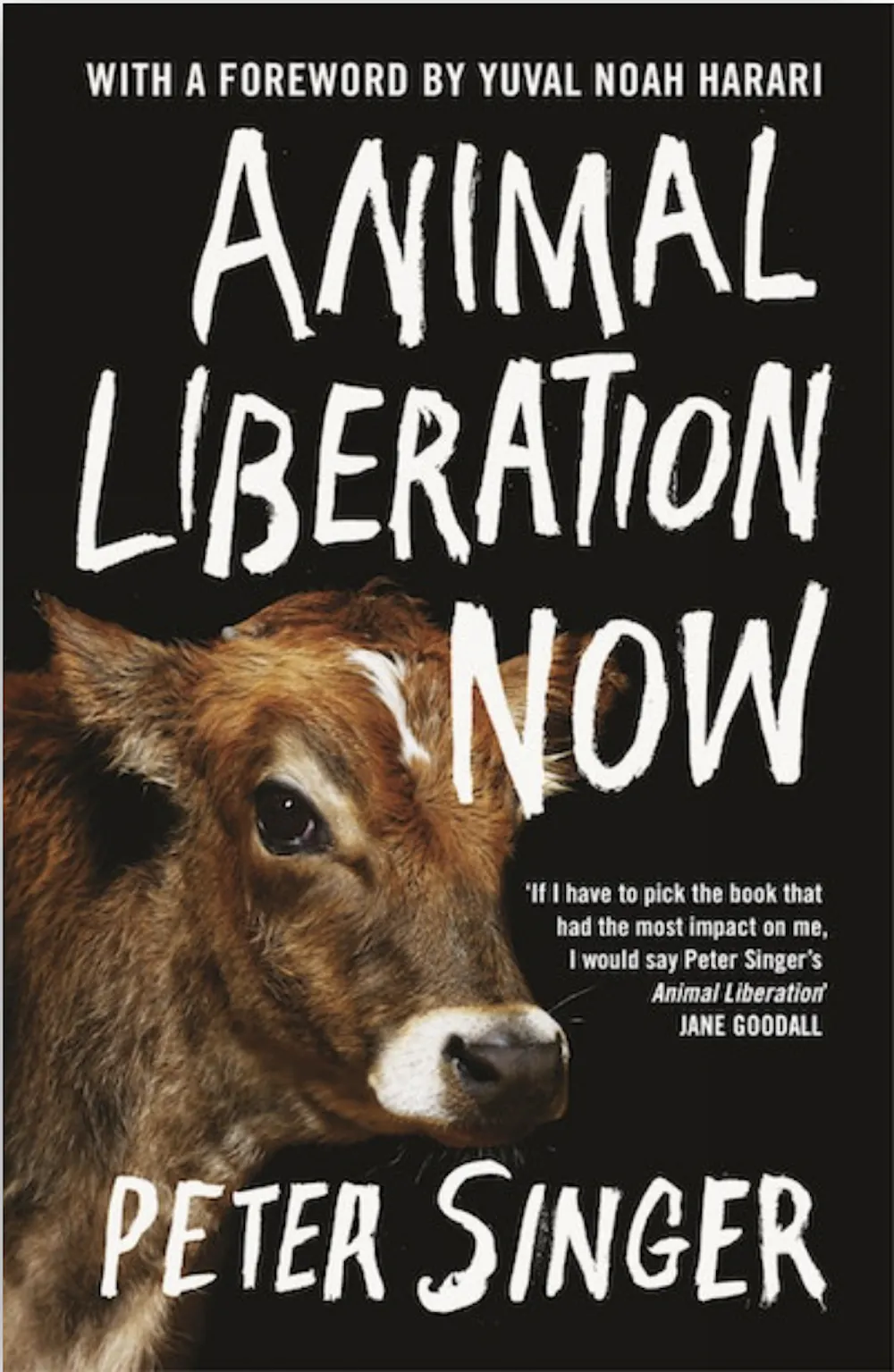
Peter Singer states “we are gambling with the future of our planet for the sake of hamburgers”

I wasn’t aware of climate change until the 1980s — hardly anyone was — and even when we recognized the dire threat that burning fossil fuels posed, it took time for the role of animal production in warming the planet to be understood.

Today, though, the fact that eating plants will reduce your greenhouse gas emissions is one of the most important and influential reasons for cutting down on animal products and, for those willing to go all the way, becoming vegan.

A few years ago, eating locally — eating only food produced within a defined radius of your home — became the thing for environmentally conscious people to do, to such an extent that “locavore” became the Oxford English Dictionary’s “word of the year” for 2007.


If you enjoy getting to know and support your local farmers, of course, eating locally makes sense. But if your aim is, as many local eaters said, to reduce greenhouse gas emissions, you would do much better by thinking about what you are eating, rather than where it comes from. That’s because transport makes up only a tiny share of the greenhouse gas emissions from the production and distribution of food.

With beef, for example, transport is only 0.5% of total emissions. So if you eat local beef you will still be responsible for 99.5% of the greenhouse gas emissions your food would have caused if you had eaten beef transported a long distance. On the other hand, if you choose peas you will be responsible for only about 2% of the greenhouse gas emissions from producing a similar quantity of local beef.

And although beef is the worst food for emitting greenhouse gases, a broader study of the carbon footprints of food across the European Union showed that meat, dairy and eggs accounted for 83% of emissions, and transport for only 6%.

More generally, plant foods typically have far lower greenhouse gas emissions than any animal foods, whether we are comparing equivalent quantities of calories or of protein. Beef, for example, emits 192 times as much carbon dioxide equivalent per gram of protein as nuts, and while these are at the extremes of the protein foods, eggs, the animal food with the lowest emissions per gram of protein, still has, per gram of protein, more than twice the emissions of tofu.

Animal foods do even more poorly when compared with plant foods in terms of calories produced. Beef emits 520 times as much per calorie as nuts, and eggs, again the best-performing animal product, emit five times as much per calorie as potatoes.

Favorable as these figures are to plant foods, they leave out something that tilts the balance even more strongly against animal foods in the effort to avoid catastrophic climate change: the “carbon opportunity cost” of the vast area of land used for grazing animals and the smaller, but still very large, area used to grow crops that are then fed — wastefully, as we have seen — to confined animals.

Because we use this land for animals we eat, it cannot be used to restore native ecosystems, including forests, which would safely remove huge amounts of carbon from the atmosphere. One study has found that a shift to plant-based eating would free up so much land for this purpose that seizing the opportunity would give us a 66% probability of achieving something that most observers believe we have missed our chance of achieving: limiting warming to 1.5℃.

Another study has suggested that a rapid phaseout of animal agriculture would enable us to stabilize greenhouse gases for the next 30 years and offset more than two-thirds of all carbon dioxide emissions this century. According to the authors of this study:


The magnitude and rapidity of these potential effects should place the reduction or elimination of animal agriculture at the forefront of strategies for averting disastrous climate change.


Climate change is undoubtedly the biggest environmental issue facing us today, but it is not the only one. If we look at environmental issues more broadly, we find further reasons for preferring a plant-based diet.

The clearing and burning of the Amazon rainforest means not only the release of carbon from the trees and other vegetation into the atmosphere, but also the likely extinction of many plant and animal species that are still unrecorded.

This destruction is driven largely by the prodigious appetite of the affluent nations for meat, which makes it more profitable to clear the forest than to preserve it for the indigenous people living there, establish an ecotourism industry, protect the area’s biodiversity, or keep the carbon locked up in the forest. We are, quite literally, gambling with the future of our planet for the sake of hamburgers.

Joseph Poore, of the University of Oxford, led a study that consolidated a huge amount of environmental data on 38,700 farms and 1,600 food processors in 119 countries and covered 40 different food products. Poore summarized the upshot of all this research thus:


A vegan diet is probably the single biggest way to reduce your impact on planet Earth, not just greenhouse gases, but global acidification, eutrophication, land use and water use. It is far bigger than cutting down on your flights or buying an electric car, as these only cut greenhouse gas emissions.


Poore doesn’t see “sustainable” animal agriculture as the solution:


Really it is animal products that are responsible for so much of this. Avoiding consumption of animal products delivers far better environmental benefits than trying to purchase sustainable meat and dairy.


Those who claim to care about the wellbeing of human beings and the preservation of our climate and our environment should become vegans for those reasons alone.

Doing so would reduce greenhouse gas emissions and other forms of pollution, save water and energy, free vast tracts of land for reforestation, and eliminate the most significant incentive for clearing the Amazon and other forests.


This is an edited extract from Animal Liberation Now by Peter Singer (Penguin Random House).

Peter Singer, Professor of Bioethics in the Center for Human Values, Princeton University

This article is republished from The Conversation under a Creative Commons license. Read the original article.

Early strings of cosmic web identified by James Webb Space Telescope

The location of galaxies across our universe don’t randomly exist. Instead, they are connected by a threadlike arrangement with massive barren “oceans” of dark matter in between them. Known as the “cosmic web,” a term that was coined in 1996 by the University of Toronto’s Richard Bond, it provides the building blocks for infrastructure of the universe. Think of it like a blueprint for all of existence.

While astronomers know that the cosmic web exists, how it evolved into what it is today largely remains a mystery. However, using NASA’s James Webb Space Telescope (JWST), a team of astronomers have now discovered a peculiar string of 10 threaded galaxies in the early universe that existed 830 million years after the Big Bang.

“This is one of the earliest filamentary structures that people have ever found associated with a distant quasar,” said Feige Wang, an assistant research professor at the University of Arizona Steward Observatory and lead author of one of the two papers published in The Astrophysical Journal Letters detailing the discovery.

JWST has given astronomers the opportunity to peer back in time and observe the very faint, dim objects that existed shortly after the Big Bang. As Fang noted, this early string of galaxies is anchored by a luminous quasar. A quasar is an active galactic nucleus that is believed to be energized by a supermassive black hole. Astronomers have observed thousands of quasars at far away distances from our galaxy. But this is the first time astronomers have observed the early formation of the cosmic web in a formation that’s fastened by a quasar. 

“I was surprised by how long and how narrow this filament is,” said one of the authors, Xiaohui Fan, in a statement. “I expected to find something, but I didn’t expect such a long, distinctly thin structure.”


Want more health and science stories in your inbox? Subscribe to Salon’s weekly newsletter The Vulgar Scientist.


This observation adds on to piling research around the cosmic web. Earlier this year, scientists found the first evidence of shockwaves rippling through the cosmic web. The team of astronomers believe that the invisible string of galaxies recently observed by JWST will evolve into a massive cluster of galaxies, like the well-known Coma Cluster.

The astronomers believe these “unprecedented observations” will not only provide important insights into the early universe by better understanding a young string of the cosmic web, but also how black holes “assembled.”

“The last two decades of cosmology research have given us a robust understanding of how the cosmic web forms and evolves,” said team member Joseph Hennawi of the University of California, Santa Barbara. “ASPIRE (A SPectroscopic survey of biased halos In the Reionization Era) aims to understand how to incorporate the emergence of the earliest massive black holes into our current story of the formation of cosmic structure.”

The findings are part of a bigger mission for JWST to study the early universe— which includes understanding the underpinnings of the earliest galaxies, and the birth of black holes. There are at least eight quasars at the center of JWST’s ASPIRE project that formed less than one billion years after the Big Bang. Since quasars are powered by supermassive black holes, questions remain about what fuels their rapid growth. 

James Webb Space TelescopeArtist’s depiction of the James Webb Space Telescope. (NASA GSFC/CIL/Adriana Manrique Gutierrez)“To form these supermassive black holes in such a short time, two criteria must be satisfied,” Wang explained in a statement. “First, you need to start growing from a massive ‘seed’ black hole. Second, even if this seed starts with a mass equivalent to a thousand Suns, it still needs to accrete a million times more matter at the maximum possible rate for its entire lifetime.”
The astronomers believe these “unprecedented observations” will not only provide important insights into the early universe by better understanding a young string of the cosmic web, but also how black holes “assembled.”

“We have learned that these black holes are situated in massive young galaxies that provide the reservoir of fuel for their growth,” said Jinyi Yang of the University of Arizona, who is leading the study of black holes with ASPIRE. Yang elaborated that strong winds produced by black holes can “suppress the formation of stars in the host galaxy.”

“Such winds have been observed in the nearby universe but have never been directly observed in the Epoch of Reionization,” Yang said, referring to the time period of one billion years that existed after the Big Bang. “The scale of the wind is related to the structure of the quasar. In the Webb observations, we are seeing that such winds existed in the early universe.”

Why the Outfield’s “Your Love” is the perfect summer song

There’s a scene in one of the greatest summer movies of all time, 2009’s “Adventureland,” where the nerdy character Joel (Martin Starr) — a Russian Literature and Slavic Languages major whose cynicism outweighs his pretentiousness — gives a book to his crush, Sue (Paige Howard). 

The pair had recently made out after a night out at the hip club Razzmatazz, and Joel was feeling bold enough to share a favorite novel by Nikolai Gogol. “He lost his mind, burned the only copy of his final book [and] died a week later of self-starvation,” Joel helpfully tells her. 

Unfortunately, the romance isn’t meant to be, as Sue’s Catholicism and strict parents mean dating Joel — who’s Jewish but says he identifies as either “more of a pragmatic nihilist, I guess, or an existential pagan” — is a nonstarter.

As with many hit songs, “Your Love” came together quickly in about 20 minutes.

As this deflating encounter unfolds, “Your Love” by London-formed band the Outfield plays in the background over the amusement park sound system. The tune makes the rejection cut that much deeper, as the song’s most urgent line (“I can’t hide the way I’m feelin'”) syncs up to the moment when Sue breaks the bad news to Joel. You can feel his heartache intensify in tandem with the song’s lyrical longing. 

“Adventureland” isn’t the only movie to feature “Your Love”: The tune also plays a crucial part at the start of the Melissa McCarthy-starring “Tammy” and during a party scene in the Timothee Chalamet movie “Hot Summer Nights.” It’s also appeared in an episode of retro-loving TV show “The Goldbergs.”

However, unlike other popular ’80s songs that received a popularity bump only after appearing on TV or in movies — like the way “Stranger Things” jumpstarted Kate Bush’s “Running Up That Hill” and Metallica’s “Master of Puppets” — “Your Love” has instead built a fanbase via many different channels. 

YouTube is brimming with covers of the song by aspiring (and talented) musicians, while established acts have also embraced the song: Bruno Mars covered the song live in Las Vegas with Anderson .Paak; country act Morgan Wade mashed up the song with Rick Springfield’s “Jessie’s Girl”; and DJ Morgan Page incorporated newly recorded Outfield vocals for a 2013 take on the song. For good measure, “Your Love” has also been a viral sensation in the hands of young drummers and talented guitarists and served as walk-up music for baseball players. 

Stats-wise, “Your Love” has also been a consistent presence on streaming platforms and radio. According to Mediabase airplay data for classic rock pulled in late June, “Your Love” was just outside of the Top 200 songs for the format, as measured by radio spins. The song is also closing in on 600 million spins on Spotify and another 600 million views on YouTube. 

Of course, “Your Love” is, well, easy to love. The main guitar riff splits the difference between melodic pop and hard rock, while sounding fluid and urgent. Frontman Tony Lewis’s voice is dynamic and empathetic, and he frequently harmonizes with guitarist-keyboardist John Spinks, creating lovely vocal flourishes. And the song’s sections each have their distinct personality — highlighted by an extended outro brimming with melodic guitar and an aching vibe. 

As with many hit songs, “Your Love” came together quickly in about 20 minutes in Spinks’ apartment. “We both said, ‘That’s a great little pop song! Can’t wait to record it!'” Lewis told Forbes in 2018. “Because we had a little local recording studio where we recorded demos until two in the morning.” 

“It’s that big, high vocal and chunky guitars. It just grabs the listener.”

Upon release, “Your Love” was a resounding success; in fact, it was the Outfield’s first Billboard Hot 100 chart hit, reaching No. 6 in 1986. Believe it or not, however, “Your Love” was a slow-grower. In fact, it was the second single from the band’s 1985 debut album “Play Deep,” following the modest rock radio favorite “Say It Isn’t So,” and started off on rock radio in late 1985. 

In a 2018 interview, Lewis expressed wonder that “Your Love” had become such an enduring staple. However, he understood exactly why radio initially loved the song. “To be successful on radio, you have to grab the listener right from the beginning. It’s got to pop in the first sort of 10 seconds,” he explained. “Me and John always understood that. That’s why ‘Your Love’ was such a big song. It’s that big, high vocal and chunky guitars. It just grabs the listener.”

The OutfieldPortrait of band The Outfield; Tony Lewis, Alan Shadrake and John Spinks, May 28th 1986. (Dave Hogan/Getty Images)

Lewis’s assessment points to one reason why the song remains so popular: Studies have found that streaming is shaping the arrangements of contemporary songs, including by making intros much shorter. “Your Love” was a trailblazer in that area, as the shorter single version of the song has virtually no intro before the vocals kick in.

Musically, the Outfield also fits in well with contemporary pop signifiers. The timbre of Lewis’s voice is reminiscent of that of several prominent modern vocalists, such as The Killers’ Brandon Flowers or Panic! At the Disco’s Brendon Urie, while its copious harmonies make it a natural for covers. Aesthetically, “Your Love” doesn’t scan like an ’80s song, but instead sounds like something more timeless and era-defying.

It helps that “Your Love” also very gracefully captures the emotional tug-of-war of a secret romantic dalliance. Although not everything has aged well — the line “You know I like my girls a little bit older, ” is particularly cringe-worthy — the underlying, lust-filled sentiments remain universal and relatable. The second verse notes, “You know I’d do anything for you/Stay the night but keep it undercover,” while the chorus very neatly summarizes the dichotomy of a one-night stand: “I just wanna use your love tonight/And I don’t wanna lose your love tonight.” 

Summer is prime time for a romantic fling, of course — and for grappling with conflicting feelings around fleeting romances. In that sense, “Your Love” is the perfect soundtrack to ephemeral love. However, it’s clear from the lyrics that the narrator wants this romantic encounter to become more permanent — that when they’re in the presence of this mysterious crush, they’re overcome with passion: “Try to stop my hands from shakin’/Somethin’ in my mind’s not makin’ sense/It’s been awhile since we’ve been all alone/I can’t hide the way I’m feelin’.” During this section, the vocals are hushed and concerned, mirroring the narrator’s uncertainty and overwhelmed feelings. By this last line, Lewis’s voice grows stronger, as if he can’t contain his excitement. 


Want a daily wrap-up of all the news and commentary Salon has to offer? Subscribe to our morning newsletter, Crash Course.


Post-“Your Love,” the Outfield amassed four more Top 40 hits, and stayed together until 2014, the year John Spinks died of cancer. Lewis, meanwhile, continued touring well into the 2010s, but also sadly passed away in 2020. That neither musician is here to experience “Your Love” continuing to grow in popularity deepens the song’s bittersweet vibe. 

Yet the secret genius of “Your Love” is that the song never directly spells out whether the narrator consummates his crush in real life; we only get one side of the story. Does the protagonist go back to Josie when she comes back from vacation? Does the crush reciprocate the narrator’s feelings — or put them in the friend zone? In the end, “Your Love” brims with deep, all-consuming yearning that never quite gets resolved.

“Suspicious powder” discovered in White House common room found to be cocaine

A “suspicious powder” that was discovered in a White House common room on Sunday night was found to be cocaine, according to a new report from the Associated Press. Per the publication, the White House executive mansion was briefly evacuated and a security alert was declared after the discovery, which was made while President Joe Biden was away at Camp David. The president and his family left on Friday and returned to Washington, D.C., for Independence Day

According to two law enforcement officials who agreed to speak with the AP on the condition of anonymity, the white powder was not in any particular West Wing office. It was, however, in an area that is accessible to tour groups. Fire and emergency crews were brought to the Capitol to do a rapid preliminary field test, which reportedly identified the substance as cocaine. As The Washington Post reported, in a brief dispatch with a timestamp of 8:49 p.m. on Sunday — which was logged on a website called openmhz.com — a firefighter with the D.C. department’s hazardous materials is recorded as saying, “”We have a yellow bar saying cocaine hydrochloride.”

In a statement to the Washington Post, the Secret Service said that briefly closing the White House was out of an abundance of caution as emergency crews investigated, and that the fire department was called to determine whether or not the substance was hazardous. “The item was sent for further evaluation and an investigation into the cause and manner of how it entered the White House is pending,” the Secret Service said.

9 of the best movies about American immigrants

Beginning in the 17th century, folks have immigrated to America for the promise of a better life, or for what they hope is a better quality of life. For many immigrants, jobs and economic opportunity are the greatest motivating factor, but full human rights, including education, health car, and providing for their children are also concerns. A number of refugees are escaping wars or ethnic cleansing or seek asylum because of dangerous situations in their homeland. Even global warming and climate change have driven individuals to emigrate to America.

But while the United States was founded on this Melting Pot philosophy, starting over for immigrants in America can be challenging. Getting to — or even into — America can be difficult, and once here, assimilation, with one foot in the old land and one foot in the new land, can also be stressful. 

There have been many films about émigrés, in genres ranging from comedies to dramas to documentaries ever since Charlie Chaplin’s 1917 short, “The Immigrant.” Elia Kazan’s semiautobiographical 1963 feature, “America America,” recounts “the legend of how [his] family first came to this country.” In “Golden Door” (2006), a magical realism sequence has Sicilian peasant Salvatore (Vincenzo Amato) imagining large carrots and olives, and is later showered with coins, signs of the bounty abroad. In contrast, “El Norte” (1983) depicts the dangers of crossing the border as a Guatemalan brother and sister crawl through a rat-infested sewer tunnel to arrive in the United States, where they are confronted with perhaps more than they can handle. 

What all of these films present are moving, human stories that showcase resilience and determination of immigrants who risk everything to come to America to realize their dreams. Here, in alphabetical order, are nine immigrant films you should watch to honor  Independence Day

01
“Brooklyn” (2015)
BrooklynBrooklyn (Fox Searchlight)
“Brooklyn” is director John Crowley’s Oscar-nominated 2015 screen adaptation of Colm Tóibín‘s bestselling 2009 novel. Eilis Lacy (Saoirse Ronan) emigrates from Ireland to America in 1952. She is anxious and has a difficult journey, but as she arrives in Brooklyn, there is a sense of magic and wonder, which Ronan conveys with her marvelous expressions. (Eilis is a character who feels deeply.)
 
As she begins her new life, she is torn about the life she knew and left behind and the one she establishes in Brooklyn. Scenes contrasting the two countries illustrate this well. Things improve for Eilis when she meets and falls in love with an Italian, Tony (Emory Cohen), but life gets in the way when she is called back home to Ireland. “Brooklyn” chronicles Eilis’ experiences trying to determine where she belongs with remarkable sensitivity. This is a superb, heartbreaking drama about both the meaning of home and the pull home has on a young woman finding her way in a new world. (Rent it on iTunes or Amazon).
02
“Dim Sum: A Little Bit of Heart” (1985)
Dim SumDim Sum (Criterion Collection)
“Dim Sum: A Little Bit of Heart” is Wayne Wang‘s modest 1985 drama about a widowed immigrant mother Mrs. Tam (Kim Chew) and her adult daughter, Geraldine (Laureen Chew, Kim’s real-life daughter), navigating their relationship. As one character insists about Mrs. Tam, “You can take the girl out of Chinatown, but you can’t take Chinatown out of the girl.” And so begins a touching mother-daughter story where Mrs. Tam wants Geraldine to get married, but Geraldine worries about leaving her mother to live alone. Mrs. Tam is a traditionalist who only speaks in Chinese, but she understands English — except when Geraldine quizzes her for her citizenship exam. (After 40 years, Mrs. Tam wants to become an American.) Mrs. Tam is also preparing to return to her homeland as she is expecting to die soon.
 
Wang’s film shows how the two worlds collide or overlap, especially when he features a Chinese rendition of the national anthem on the soundtrack. Mrs. Tam’s neighbor May (Ida F.O. Chung), proclaims during a game of mahjongg, “In America, anything is possible,” and wants her to watch “Dynasty,” which is “just like a Chinese soap opera — full of sex, love and money.” Likewise, when Geraldine and her uncle Tam (Victor Wong) can’t cook a meal right, they go out and eat at McDonald’s. Wang shows that reality can, indeed, be both bigger and smaller than the American Dream. (Stream on the Criterion Channel)


Michelle Yeoh in “Everything Everywhere All at Once” (Allyson Riggs/A24)

“Everything Everywhere All at Once” The Daniels‘ Oscar-winning juggernaut considers the “what if” idea as immigrant Evelyn Wang (Michelle Yeoh) ‘verse jumps into alternate lives as she deals with the multiple stresses of a possible divorce from her husband, Waymond (Ke Huy Quan); an audit by IRS agent Deirdre Beaubeirdre (Jamie Lee Curtis); and her increasing estrangement from her lesbian daughter, Joy (Stephanie Hsu).
 
Evelyn sees the American Dream as being able to “do whatever we want,” but she must first get over her feelings that “with every passing moment [she] could have made something of her life.” Was leaving China, and disappointing her parents by marrying Waymond the right decision? “Everything Everywhere All at Once” shows not only the roads Evelyn did not take, but also the dreams she never followed, and how good her life could have been — especially when Waymond tells her, “In another life, I would have really liked just doing laundry and taxes with you.”  The Daniels’ film stresses the importance of failure and letting go, because living up to the American Dream may not be all it is cracked up to be. (Stream it on Showtime).
04
“Hester Street” (1975)
Hester StreetHester Street (Cohen Media Group)
“Hester Street” is cowriter/director Joan Micklin Silver‘s classic immigrant film — a poignant examination of the Jewish community in New York’s Lower East Side in 1896. Silver shows the differences between the old land and the new land as Yankl (Steven Keats), renamed Jake in America, tries to manage life with his “greenhorn” wife, Gitl (Carol Kane in an Oscar nominated performance), who has just arrived with their son Yossele (Paul Freedman) renamed Joey. Gitl wants to wear wigs or a kerchief on her head, but Jake insists women display their natural hair in America. Nevertheless, she sticks with her traditions, such as putting salt in Joey’s pockets to ward off evil. When Mrs. Kavarsky (Doris Roberts) tightens a corset, she is fitting for Gitl, she advises, “You wanna be an American, you gotta hurt.” It is a telling line because Gitl’s marriage to Jake has gone stale since she has arrived; he has his sights on the wealthy and fashionable Mamie (Dorrie Kavanaugh).
 
“Hester Street” captures immigrant tensions as a peddler in the old country becomes Jake’s boss in the new land, and one character complains about having to take a train to see a tree. Shot in black and white and largely in Yiddish, this is a feel-good feminist film that showcases immigrant lives with authenticity and features a highly satisfying denouement. (Stream it on MUBI, Kanopy, and the Cohen Media Channel).
In the HeightsAnthony Ramos and Melissa Barrera in “In the Heights” (Warner Bros.)
Jon M. Chu’s big screen version of Lin-Manuel Miranda’s infectious high-energy musical is all about dreams for Dominicans, Puerto Ricans and Cubans — undocumented or assimilated — and other characters that populate the film’s Washington Heights barrio in “far away Nueva York.” Some characters have lottery dreams, others dream of getting away (even if that just means downtown), many are “scraping by,” and still others dream of their homeland. They are powerless and powerful. As a character expresses, “We assert our dignity in small ways,” emphasizing the little details that “tell the world we are not invisible.”
 
Arguably the best musical number in “In the Heights” isn’t the show-stopping “96,000,” set in a community pool, but “Paciencia Y Fe” (“Patience and Faith”) performed by Abuela Claudia (Olga Merediz) about emigrating from Cuba to “the Washington Heights of Havana.” She came because there was work but being fresh off the boat, and having to learn English, she hoped to become “better off than you were with the bird of La Vibora [Havana].” It’s an emotional memory piece that features the lyrics, “I’ve spent my life/inheriting dreams from you,” that emphasizes the film’s core message: “There’s no place like home.” Alabanza! (Praise) Abulea Claudia! (Stream it on Max)
06
“Moscow on the Hudson” (1984)
Moscow on the HudsonActor Robin Williams as Vladimir Ivanoff and Cleavant Derricks as Lionel Witherspoon on the set of the Columbia Pictures movie ” Moscow on the Hudson” in 1984. (Michael Ochs Archives/Getty Images)

There is a scene late in director/cowriter Paul Mazursky’s bittersweet, patriotic comedy-drama, set in a diner on Independence Day where characters from different countries repeat the Bill of Rights and the right to pursue happiness. The moment galvanizes Vladimir Ivanoff (Robin Williams), a self-pitying Russian circus musician who has defected in Bloomingdale’s during a trip to New York. Everyone Vlad meets is from somewhere else, and like them, he has had to make adjustments to life in America. Williams taps into Vlad’s melancholy as he befriends Lionel (Cleavant Derricks) – a Black man whose family illustrates the racism in the country and begins a romance with Lucia (Maria Conchita Alonso) – herself an Italian immigrant who becomes a citizen over the course of their relationship. “Moscow on the Hudson” illustrates the false sense of liberty Vlad has having the freedom to do whatever he wants. For him it is oddly paralyzing, and Mazursky’s film, and Williams’ soulful performance conveys that Catch-22 with aplomb. (Rent it on iTunes or Amazon).
07
“Nanny” (2022)
NannyAnna Diop in “Nanny” (Amazon Prime Video)

The American Dream literally becomes a nightmare for the undocumented Senegalese immigrant, Aisha (Anna Diop) in writer/director Nikyatu Jusu’s flinty psychological horror film. Aisha gets a job caring for Rose (Rose Decker), the daughter of a wealthy white couple, Amy (Michelle Monaghan) and Adam (Morgan Spector). She is saving the money she earns to bring her own son, Lamine (Jahleel Kamara), to New York to live, promising him snow like white cotton candy. However, Aisha has strange visions of Lamine and is haunted by episodes such as one where it is raining in her bedroom, or when she imagines spiders, snakes and other dangers. At a hair salon, her friend observes that the American Dream is, “You work until you die. But I’d rather be a slave in America than in Africa, because at least you see the money.” But Aisha doesn’t see the money; Amy does not pay Aisha the overtime she is owed. In addition, Amy’s microaggressions and Adam’s inappropriate behavior — he kisses her — are as unsettling as her experiences around water. This is a powerful allegory about oppression, and it features a remarkable performance by Diop. (Stream it on Prime Video).

Want a daily wrap-up of all the news and commentary Salon has to offer? Subscribe to our morning newsletter, Crash Course.


08
“Potato Dreams of America” (2021)
Potato Dreams of AmericaPotato Dreams of America (Dark Star Pictures)

Writer/director Wes Hurley’s feature is based on the true events of his coming to America with this mother. (His story is also the subject of his documentary short “Little Potato” as well as a VR project.) In 1985 Vladivostok, young Potato (Hersh Powers) and his mother Lena (Sera Barbieri) — both have American accents — are miserable because there is no future and no independent thinking. Anywhere, they believe, is better than their “beloved motherland.” Their only joy is watching American movies on a renegade TV channel. They want the “happy ending” that films like “Pretty Woman” offer, and that possibility comes when Lena responds to a mail order bride advertisement, and John (Dan Lauria), agrees to marry her.
 
Emigrating to Seattle, Potato (now played by Tyler Bocock, sporting a Russian accent) attends high school where his teacher is concerned that he is going to lose his beautiful culture. “Why do we want a melting pot when we can toss a salad?” she asks. But Potato bemoans that “No one lets me forget my past,” wanting to immerse himself in American life and culture. (He is gay and repeatedly rents “The Living End” from his local video store.) “Potato Dreams of America” soon reveals that America provides a safe space for LGBTQ people whereas Potato’s class in Russia believes the United States is full of “drugs, perverts and AIDS.” The new country is one Potato and his mother wholeheartedly embrace, despite encountering different issues than the ones they faced at home. (Rent it on iTunes)
09
ScarfaceActor Al Pacino stars in ‘Scarface’. (Michael Ochs Archives/Getty Images)

Brian DePalma’s 1983 grandiose gangster epic, a remake of the 1932 classic, opens with documentary footage of the 1980 Mariel boatlift, which had 125,000 refugees leave Cuba for the U.S. Approximately 20% of them had criminal records. One of them is the fictional Tony Montana (a feral Al Pacino in arguably his most beloved performance). When he arrives in Miami, he claims to be a political prisoner, and he delivers an early speech railing against Communism which told him what to do, think and feel. After months of being detained, he buys his freedom by killing someone and ends up working in a restaurant. “I didn’t come to the U.S. to break my back [washing dishes],” Tony insists, and he soon goes to work for Frank Lopez (Robert Loggia), a drug kingpin, before taking over the business.
 
For Tony, America is the land of opportunity. “In this country, you gotta make the money first. Then when you get the money, you get the power. Then when you get the power, then you get the women.” And while Tony rises to power — it is no coincidence that Tony sees the phrase, “The World Is Yours,” on a blimp as he reaches the top — he cannot buy his mother’s (Miriam Colon), respect. She tells him, “It’s the Cubans like you who are giving a bad name to our people. People who come here to work hard.” “Scarface” emphasizes the corruption of purity, most baldly in a subplot featuring Tony’s sister, Gina (Mary Elizabeth Mastrantonio). But ultimately, DePalma’s film is an orgiastic bloodbath about excess. Tony, who came from the gutter (and is called “an immigrant sp** millionaire”), becomes disillusioned, especially in a fancy restaurant, when he asks, “Is this it?” with a weariness that belies his ambition to achieve the American Dream. (Stream it on Peacock Premium or AMC)


This grilling expert answers all of your burning BBQ questions

No matter how you’re spending summer holiday weekends, there’s a good chance you may be in close proximity to a grill of some capacity: Whether that be a full-fledged, top-notch, high-tech situation or maybe an equally iconic George Foreman Grill.

If you are looking for tips on how to properly approach your grill, reduce flare-ups and produce some truly scrumptious food — especially if you’re a beginner and looking to serve a hungry, patriotic crowd — look no further. Salon Food spoke with Chef Mat Urban, executive chef of CBD Provisions at The Joule in Dallas, Texas, who also happens to be a grilling aficionado. 

So, happy grilling! And if you happen to get rained out today, be sure to utilize these tips all year long.

The following interview has been lightly edited for clarity and length.

For a grilling neophyte looking to try out some grilling this 4th of July or this summer overall, how would you recommend they begin? With what type of grill?

I would recommend a new griller to start with a propane (gas) grill, rather than charcoal grill, until they get a lot more comfortable. You don’t have to spend a fortune to get quality products at home. I personally have a Nexgrill from Home Depot that costs around $300 bucks.

What are some non-negotiable tools or utensils?

Absolutely, you must have a grill brush. Dirty grill grates are the worst and will most definitely affect your cook. Other must haves for me would be a nice set of long metal tongs, a metal spatula and a digital thermometer.

Can you tell me why the thermometer is a non-negotiable tool for grillers? 

Most chefs who work a grill or have worked a grill at a busy restaurant in their career have probably cooked more meat on a grill in a month than [most people] will in a lifetime. The chances of their cooking a perfectly tempered steak are far higher than [others] doing it. What [some] may lack in experience can dramatically increase simply by knowing what temperature your food is at.

What is the difference between grilling and barbecuing?

Grilling is what most people do when they have the “back yard BBQ”. Grilling is typically thinner cuts of meat like your steaks, chicken, pork chops, burgers, vegetables, etc. Grilling is done mostly over direct heat and is a much quicker timeline. Barbecuing is more of a low and slow, indirect cooking method. Think your briskets, ribs, pulled porks. Although you can smoke veggies and “smaller” items like chicken thighs or tomatoes, typically BBQ is bigger more tough cuts.

What are some tips on how to not over-grill or inadvertently burn everything?

I like to keep one side of my grill lower than the other so I can move the food around should there be any flare ups. With a propane grill having the metal diffusers so close to the grill grate, you have to keep a closer eye on your flare ups.


Want more great food writing and recipes? Subscribe to Salon Food’s newsletter, The Bite.


What should you always be aware of or try to shy away from when grilling?

Oily or wet foods are not usually good for grilling. Wet foods can stick to your grates and oil makes flare ups and carbon smoke which can really affect the flavors.

What should be cooked on high, direct heat versus what should be cooked with indirect, slow cooking?

I tend to cook things like burgers and steak on high heat. [For] these items, you want that sear to keep the meat nice and juicy inside. Slow, indirect cooking would be more for smoking meats or larger cuts that would typically get burned before being able to finish internally. Trade secret: Chicken actually benefits very well from indirect cooking since its so lean and will help it to not dry out.

Any ideas for top menu items or grilling options for this summer?

Grilled corn! I keep it in the husk and everything. If you haven’t had corn this way, trust me . . . it’s the best.

What have you been grilling mainly lately?

The last thing I grilled was teriyaki chicken. I like to meal prep and I hate doing dishes. Grilling is a great way to maximize both.

What are some of the most popular grilled items on the CBD Provisions menu?

CBD doesn’t have a grill, but we do have a steakhouse style broiler. Our most popular item from the broiler is the butcher’s cut steak.

What are some of the main differences between cooking on a stove or in an oven vs. cooking on a grill?

One big difference between the two is the smoke aspect. Smoke does add flavor and you’re able to get a much better char on your foods.

Any other tips or advice for grillers, no matter if beginner or seasoned?

A tip I like to use that I feel not everyone does is that I season most of my proteins up to an hour ahead of grilling time. This allows the seasoning to penetrate deep into the meat to achieve a better overall seasoning.

Chef Mat Urban’s Grilled Zucchini Salad
Prep Time
5 minutes
Cook Time
10 minutes

Ingredients

3 medium zucchini (any summer squash works here)

3 tablespoons olive oil, divided

Salt and pepper, to taste

BBQ spice (whatever your favorite is: I love the Kinder’s Woodfired Garlic), to taste

8 baby sweet peppers

1 cup cherry tomatoes

1/4 cup goat cheese crumbles

3 tablespoons olive oil

2 tablespoons balsamic glaze or reduction

3 sprigs fresh mint

Directions

  1. Cut the squash in half lengthwise. Season with olive oil, salt and BBQ spice.
  2. Heat the grill on high heat and wait until it reaches 400-500 degrees Fahrenheit.
  3. Place the zucchini cut side down on the grates and immediately turn the grill down to medium heat. Cook for 3 to 5 minutes until charred, but not totally soft.
  4. Toss the peppers in a little bit of oil and seasoning and grill whole.
  5. Once the veggies are grilled, cut them in bite size pieces and add to a large bowl.
  6. Next, add in the cherry tomatoes, torn mint leaves and olive oil and mix gently to coat.
  7. Taste for seasoning, then garnish with the goat cheese crumbles and balsamic glaze.
  8. Serve as a side to grilled steaks, pork chops or even fish.

Some Ozempic users say it silences ‘food noise’. But there are also drug-free ways to do that

Food noise” or thinking about food constantly is not helpful to anyone’s mental health and wellbeing.

When we become obsessed with any one line of thought (in this case, food), we can become consumed by it and it’s very hard to think about anything else. This can be very distressing.

Some people taking the diabetes drug Ozempic for weight loss have reported a sudden silencing of food noise and cravings. But there are other ways to maintain a healthy balance when it comes to our internal food monologue.


One track thinking

Thinking about food constantly is a common feature of an eating disorder. Indeed one of the main criteria for diagnosis of eating disorders is a preoccupation with the weight, shape and size of one’s body. A person may use control or lack of control, of food to bring their body in line with how they perceive it should look.

A person with anorexia nervosa severely restricts their food intake to the point where their body is starving. As a result of this deprivation, their brain constantly thinks  about food.

People with binge eating disorder and bulimia nervosa are also consumed by thoughts of food including when they’ll eat, what they’ll eat, obtaining food and where they’ll eat it.

But it’s not just those with eating disorders who can be obsessed with food. If we are dieting, under-eating, restricting our intake of food or overeating, we can be consumed by thoughts about food.


An easy fix?

As a clinical psychologist, I have treated many clients and helped people with eating disorders who can not stop thinking about food. They have often tried medications and drugs to try and stop ruminating over food, usually to no avail.

Or they are prescribed medications to reduce appetite, in the case of binge eating and obesity. These might work and help the person lose large amounts of weight, only for them to put it all back on again when they stop taking the drug.

Weight loss drugs should only be used under medical supervision and some diet pills can affect the heart, breathing, blood pressure and brain.

Ozempic (and similar drug Wegovy) use the ingredient semaglutide drug to induce feelings of being full or satisfied. Side effects of semaglutide can include nausea, bloating, constipation and diarrhea.

So, it’s important to work on developing a healthy relationship with food and your body. Often a combination of psychological therapy and seeing an accredited dietitian is needed.


Working out what’s driving it

With clients, I start by working on what’s driving the food obsession. Is it due to eating too little? Not eating regularly enough? Having strict rules and what you can and can’t eat?

It’s important to establish regular and adequate eating so your body and brain are well-fuelled and you can make sensible decisions around the food you consume.

Our biology ensures that when we are hungry we will think about obtaining food for survival. It can make us anxious or “hangry” and it can be hard to concentrate or focus on anything else but food. Then when we eat, our brain stops sending messages to eat and we can focus again.

The RAVES model of eating is used for people with eating disorders to help them be in tune with their body, respond to its needs and establish healthy behaviors. It’s about helping a person understand where their food rules have come from, debunk myths around eating and dieting and challenge unhelpful ways of thinking about food.

Many people with and without eating disorders have food rules around what they can and can’t eat, when and how much and this just sets us up to be obsessed with food. Once you allow yourself to eat when you’re hungry, stop when you’re full and have the foods you enjoy, you free your brain to think about things other than food and eating.


A healthy food mindset

A person who has a healthy relationship with food listens to their body’s needs. They don’t have food rules around what they can and can’t eat and they feel comfortable in their body.

They can reject media and advertising around dieting and idealized bodies and they are respectful of their body. When I work with clients we work on listening to your body, respecting its needs and treating it well. This is called having a positive body image and is an important part of treatment for people with body image and eating issues.

It is often a person’s perception of their body that influences their eating. Learning to accept your physical self as well as treating the body well, with good nutrition, builds a positive body image.

If you are concerned about your relationship with food or your body, seeing your GP for a referral to a psychologist or dietitian is advised. The Butterfly Foundation is also a great source of support for information on eating disorders.

Vivienne Lewis, Assistant professor – Psychology, University of Canberra

This article is republished from The Conversation under a Creative Commons license. Read the original article.

“Our last great chance”: Trump says he will “take back our country” in an Independence Day post

In a July 4th post on Truth Social — just hours after using the platform to call Special Counsel Jack Smith a “major sleazebag” — Donald Trump indicated that he is feeling optimistic about his chances in the next presidential election. He wrote: “Happy FOURTH OF JULY to everyone. We are working hard, we will take back our Country, and MAKE AMERICA GREAT AGAIN. The 2024 Election is our LAST GREAT CHANCE!” 

The former president is also using the holiday to fundraise for his campaign. Mixed between “Sponsored Truth” ads for red “Trump 2024” dog collars and purported treatments for tinnitus are links out to a donation page, which states that Trump is the victim of a relentless witch-hunt and that “even Trump’s sham indictment and arraignment by the corrupt Deep State thugs at Biden’s DOJ has only made our campaign to SAVE AMERICA grow stronger.” He continues, asking that visitors “please make a contribution to help our grassroots campaign surge even higher — and let’s win back the White House and SAVE AMERICA in 2024!” 

Using his legal woes as a fundraising line is not a new tactic for Trump. As Politico reported a few weeks ago, the former president raised about $2 million at the first major fundraiser of his campaign, only hours after his arraignment in Miami; the Trump campaign also raked in $4.5 million in digital fundraising since news of Trump’s indictment. Meanwhile, over on Twitter, President Biden kept things a little more streamlined for the holiday, writing simply, “Happy Fourth, America.”

The makings of an American inquisition

“There must be some kind of way out of here…”

As night fell over the South River Forest, the music festival was in full swing. Young and old swayed to the sounds of Suede Cassidy. Families gathered around the grill. Little ones frolicked in an inflatable bouncy house bedecked with a banner that read: “Stop Cop City.”

While the band played on, a strike force of Georgia state troopers assembled in the shadows. They were there to clear the way for the creation of the Atlanta Public Safety Training Center, better known as “Cop City,” a $90-million training ground for the future of urban warfare. It would destroy more than half of that urban forest. For years, the project had faced mounting local opposition and this festival was, in essence, a coming-out party for the movement to defend a priceless bit of urban green space from the bulldozer’s blade.

Now, accompanied by the dull hum of drones and the buzz of helicopters overhead, officers of the “peace” descended from all directions, their fingers on the triggers of their semi-automatics. The orders came down with the force of live rounds: “Get on the ground! Now!”

“I was playing ‘All Along the Watchtower,’ funnily enough,” remembers Suede Cassidy frontman Jeremiah Percival. “Around halfway through our set, they started arresting people… pointing AR-15s… traumatizing kids for nothing. It was very stormtrooper-esque. It’s a good reminder to know how fascism is in this country and how it’s very much alive.”

“It was after dark,” recalls Stop Cop City activist Priscilla Grim. “I was walking to see the concert. And I noticed that there was a drone tracking me. And the next thing I knew, men started chasing me, and I fell. They had me turn over on my stomach. And there was the red light of the gunsight to the right of my head. It was… frightening!”

Priscilla and 22 other protesters nabbed that night would go on to be charged with “domestic terrorism” — conduct allegedly “intended to intimidate the civilian population” or to “alter, change, or coerce the policy of the government of this state” — under a Georgia statute originally meant to deter would-be killers in the wake of the Charleston A.M.E. massacre. “I was completely shocked when I heard that I was being charged with domestic terrorism,” Priscilla told me. “For wearing black! In a forest! It’s absurd. It’s illegitimate. It’s an abuse… And as a survivor of 9/11, I am insulted that the state of Georgia thinks that they can do this.”

The Makings of an American Inquisition

Today, no fewer than 42 such cases are being prosecuted by Georgia’s attorney general. All 42 defendants stand accused of damaging property, not people. The only injuries that occurred were by police and correctional officers on the bodies of the accused. Some were then held for a month or more before being formally charged with a crime.

Georgia is hardly alone. The New York City Police Department recently attempted to charge multiple protesters with “terrorism” after they peacefully occupied a subway station to protest the choking to death of Jordan Neely, an unhoused New Yorker, by an ex-Marine. In an absurd turn of events, the charges were ultimately downgraded from “terrorism” to “criminal trespassing” before being dropped altogether last week.

And across the country, such police work continues under the guise of counterterrorism. Since the George Floyd movement, it’s been possible to see the makings of a future American inquisition in which the machinery of state is increasingly weaponized against the body politic itself — especially against its most leftwing, most marginalized parts.

Though the fanatics of the far right have been responsible for the preponderance of deadly political violence in recent years, it’s the heretics of the left — antiracists and antifascists, environmentalists and anticapitalists, pro-choice feminists and LGBTQ+ liberationists — who have attracted the most attention from police, prosecutors, and inquisitorial politicians.

It is they who have been profiled as “domestic terrorists,” branded as “violent extremists,” and subjected to terrorism-based sentencing enhancements, often yielding harsher prison terms and crueler punishments than those for their right-wing counterparts. As a result of such disparities, hundreds of participants in the George Floyd protests remain caged in federal facilities to this day.

The Long, Hot Summer of 2020

On May 31, 2020, just days after George Floyd’s murder, President Trump’s Department of Justice (DOJ) all but declared war on the burgeoning racial-justice movement. Attorney General William P. Barr went before the press and promised to deploy federal forces to apprehend “radical agitators,” identify “criminal organizers and instigators,” and “coordinate” with “our state and local partners.”

“The rioting is domestic terrorism,” Barr went on to state, “and will be treated accordingly.”

Acting Deputy Secretary of Homeland Security (DHS) Ken Cuccinelli had a nearly identical message for the media: “Cities across America burn at the hands of antifa and anarchists while many political leaders are refusing to call it what it is: domestic terrorism.” A DHS whistleblower later affirmed that Cuccinelli and others had specifically instructed him to play up “the prominence of violent ‘left-wing’ groups” in his intelligence assessments — and downplay threats of terror from the far right.

And so began a long, hot summer of inquisition into, and counterinsurgency against, the Black Lives Matter movement. By the second week of June, more than 13,643 protest participants had been arrested by state and local authorities. Some, like a group of three teens in Oklahoma City, even faced charges of felony “terrorism” for alleged acts of property destruction.

By the time the protests were over, some 326 people had been apprehended by federal agents, including members of the Federal Bureau of Investigation, the Bureau of Alcohol, Tobacco, and Firearms, and the Department of Homeland Security’s Border Patrol Tactical Unit (BORTAC). At least 54 U.S. Attorneys’ offices were involved, as were all 56 of the FBI’s Joint Terrorism Task Forces.

In May 2023, new reporting on FBI activities would reveal that the agency had improperly run “batch queries” of foreign intelligence sources for information on 133 individuals, all of whom were arrested “in connection with civil unrest and protests” in 2020. They were looking for “counter-terrorism derogatory information on the arrestees.” According to recently declassified documents from the Foreign Intelligence Surveillance Court, they were also spying on American citizens without “any specific potential connections to terrorist-related activity.”

In 20 of the cases prosecuted at the federal level, there is evidence of direct involvement by FBI agents in the arrests themselves. And in two particularly egregious cases, U.S. Marshals and their deputies functionally acted as judges, juries, and executioners, with “Violent Offender Task Forces” fatally shooting two suspects — antifascist activist Michael Reinoehl in Washington and Black Lives Matter advocate Winston Smith in Minnesota — on sight.


Want a daily wrap-up of all the news and commentary Salon has to offer? Subscribe to our morning newsletter, Crash Course.


Up until January 6, 2021, the supposed danger posed by left-wing “extremism” continued to be deemed greater than, or at least equal to, the threat of right-wing terrorism. No matter that the right had been responsible for the lion’s share of lethal incidents linked to extremism of any kind.

There were, of course, no terrorism bulletins released ahead of the events of January 6th. Nor would there be terrorism enhancements after the fact awaiting those who participated in the Capitol siege. Such charges were reserved for Americans of a different description.

A Bipartisan Inquisition

The inquisition did not end with Trump’s first term. For all the rhetoric about criminal justice reform — and for all the conspiracy theories claiming that the president had “quietly” pardoned thousands of Black Lives Matter protesters in 2021 — Joe Biden’s Department of Justice has doubled down in a determined fashion on an inquisitorial strategy of counterinsurgency in the name of counterterrorism.

In the White House’s “National Strategy for Countering Domestic Terrorism,” released in June 2021, the administration pledged to “disrupt and deter those who launch… attacks in a misguided effort to force change in government policies that they view as unjust.” Subsequent documents, like last fall’s “Strategic Intelligence Assessment,” a joint product of the FBI and the DHS, confirmed what many in the Black Lives Matter movement already knew: that federal intelligence agencies had set their sights on “threat actors” motivated by “real or perceived racism or injustice in American society.”

Over the course of the Biden presidency, the DOJ has prosecuted Trump-era protest crimes with vigor and enthusiasm, while federal prosecutors have expanded the use of terrorism sentencing enhancements, delivering dozens of political prisoners to the doorstep of the Federal Bureau of Prisons. A grossly disproportionate share of them have been people of African descent.

The vast majority of federal cases involve offenses against property or “commerce.” At least 17 have faced felony charges for unlawful use of the Internet (for instance, “using an instrument of interstate commerce to incite riots”). One of every three defendants was charged with obstructing “interstate commerce,” one in five with crimes of “civil disorder,” and another one in five for “conspiring,” “attempting,” or “aiding and abetting” some underlying crime they did not themselves commit.

Take the case of a young Black woman named Tia Pugh, of Mobile, Alabama, who was initially charged with two simple misdemeanors for breaking a window on the night of May 31, 2020.

“We were attacked first,” she would recall. “I was getting my people out of there… We get killed for less.” After being tracked down on Facebook, then interrogated by the FBI, she was brought up on felony charges for interfering with the police “during the commission of a civil disorder” which “adversely affected commerce.” Facing more than five years in prison, her sentence was reduced to time served after she spent more than a year in pretrial detention in an Alabama jail.

Though many have seen their charges dropped, others have seen their cases pursued to the bitter end by local prosecutors. Black activist Brittany Martin was, for instance, convicted in 2022 of “breaching the peace” for shouting in officers’ faces during a peaceable assembly in Sumter, South Carolina, in 2020. Although the alleged offense typically carries a maximum penalty of 30 days, prosecutors charged her with a crime of a “high and aggravated nature.” Last spring, she was sentenced, while pregnant, to no fewer than four years behind bars.

Future Enemies of the State

By any measure, the white supremacist movement is now officially acknowledged to pose the deadliest terrorist threat in America. The White House, the DOJ, and the DHS have made much of their commitment to confronting such far-right forms of terror, but the numbers coming from the federal government tell a different story.

On June 6th, the DOJ’s Office of the Inspector General released its annual internal audit, assessing the Department’s strategy to “address the domestic violent extremism threat.” The audit revealed that investigations into white supremacist, “racially motivated,” and “anti-government/anti-authority” activity fell dramatically from 2021 to 2022. At the same time, the number (and share) of investigations involving “abortion-related” (including “pro-choice”) extremism skyrocketed, increasing by more than 800% and surpassing that recorded in any other year on record.

There is little mystery as to who is being targeted by such investigations since the Dobbs v. Jackson Women’s Health decision, which revoked a pregnant parent’s right to choose. Last year, FBI Director Christopher Wray clarified which side was the most suspect and which side considered the most victimized: “You might be interested to know that, since the Dobbs decision, probably in the neighborhood of 70 percent of our abortion-related violence cases, are cases of violence or threats against pro-life… where the victims are pro-life organizations. And we’re going after that.”

The case of Pilsen Community Books (PCB), a worker-owned bookstore on Chicago’s Lower West Side, is illuminating in this regard. PCB was recently revealed to be the subject of an FBI “assessment,” based on three factors: its status as a “not police friendly place”; its role as a “meeting, planning, and networking venue”; and its recent use by “pro-abortion extremists…to prepare for a pro-abortion direct action.” In other words, it’s a dangerous hotbed of constitutionally protected activity.

“Everything is very much out there in terms of what we believe and what we do,” says worker-owner Mandy Medley. “I was shocked that the FBI would be interested in us this way… Community organizing is not illegal and should not be treated as such.”

Elsewhere, the Department of Homeland Security and its national network of 80 “fusion centers” have been hard at work collecting and aggregating data on “anarchist” or “environmental violent extremists.” And they’ve cast a wide net, even ensnaring writers and artists in their web of surveillance.

State Terror in the Age of Counterterrorism

Meanwhile, back in Washington, D.C., inquisitorially-minded Republican politicians have been pressuring the FBI and DHS to crack down ever harder on their ideological adversaries. Last month, Marjorie Taylor Greene (R-GA) introduced legislation that would designate “Antifa,” and “any other affiliated group or subsidiary of Antifa” to be a domestic terrorist organization based on its “unlawful conduct” and its belief in “communism, anarchism, socialism… and lawlessness.” That same month, the House Committee on Homeland Security held a hearing on “Countering Left-Wing Organized Violence,” at which Greene called for a clampdown on the newest enemy of the state: “The movement that wants to use trans terrorism against Americans.” No mention was made of the very real movement that approves of the use of terror against trans Americans.

One such trans American was Manuel Terán, an indigenous forest defender known as Tortuguita, who was killed by a barrage of 57 bullets one cold January day in that Atlanta forest. While it was a state trooper who fired the fatal bullet, it was DHS, the FBI, and the Georgia Bureau of Investigation that provided the intelligence for the operation. In the months since Tortuguita’s killing, those very agencies have continued to beat the drums of war, warning of the threat of “violent extremists in Georgia” and singling out those motivated by “anti-law enforcement sentiment.”

In a real sense, it may be that this latest American inquisition has simply come full circle, returning us to our historical roots: to a society where the caging of Black people, the spilling of indigenous blood, and the violent policing of the body politic are the stuff of business as usual — a society where state terror, in the name of counterterrorism, is accepted as a way of life.

On the other hand, if Black Lives Matter and the movement for bodily autonomy are any indication, it may be that we, as a society, have a lower tolerance for state terror than we once did.