Spring Sale: Get 1 Year, Save 58%

Howard Schultz claims Starbucks has never broken labor laws despite dozens of violations

Ex-Starbucks CEO Howard Schultz testified during a much-anticipated hearing led by Sen. Bernie Sanders, I-Vt., on Wednesday, parroting what appeared to be blatant lies about the company’s fierce anti-union campaign and hundreds of labor law violations over the past year and a half.

For the roughly two hours that Schultz was in the hot seat before Sander’s Health, Education, Labor and Pensions (HELP) Committee, he stubbornly defended several points about the company’s handling of its workers and their union campaign: First, that Starbucks offers a comprehensive benefits package to employees. (Workers have said that their lack of benefits leaves them struggling to survive.) And second, that the company has been relatively friendly to the union. (The company has repeatedly tampered with union elections and refused to bargain with unionized stores.)

Third, and perhaps most egregiously, the three-time CEO insisted that the company has never once broken labor laws during its anti-union campaign — a claim that all evidence indicates is an unabashed lie.

On the last point, Schultz declared his stance early on. Directly after Sanders delivered his opening statement, the senator fired off a series of questions on the company’s anti-union campaign, which he labeled the “the most aggressive and illegal union-busting campaign in the modern history of our country.”

“Are you aware that [National Labor Relations Board] judges have ruled that Starbucks violated federal labor law over 100 times during the past 18 months, far more than any other corporation in America?” he asked.

“Sir, Starbucks Coffee Company, unequivocally — let me set the tone for this very early on — has not broken the law,” Schultz said, in an assertion he would echo numerous times throughout the hearing.

But Starbucks has broken the law repeatedly, according to the union, labor board officials, several NLRB administrative law judges who decide and settle unfair labor practice charges, and two federal judges thus far. Some of these decisions are pending appeal by Starbucks. Meanwhile, as of this week, there are over 70 cases before NLRB judges still waiting to be heard, according to the labor board. By Starbucks Workers United’s count, the labor board has found over 1,400 violations from the company thus far.

These decisions are far from trivial. Most recently, an NLRB judge found that the company had violated federal labor laws hundreds of times just in Buffalo, where the union movement began, implementing a “reign of coercion” that resulted in “egregious and widespread misconduct” against workers, the judge wrote.

During the hearing, Schultz dismissed this decision as “allegations,” prompting Sanders to remind him that it is illegal to lie while testifying under oath. “Mr. Schultz, before answering the following questions, let me remind you that federal law, 18 U.S. Code Section 1001, prohibits knowingly and willfully making any fraudulent statement,” he said.

“I understand that,” Schultz responded, before claiming that he has never been involved in a decision to fire any of the hundreds of pro-union workers that have been terminated by the company.

Labor advocates immediately disputed Schultz’s claim that Starbucks’s legal record is clean. Starbucks Workers United noted on Twitter that the statement elicited laughter from the many Starbucks workers who attended the hearing, and several workers and organizers said that his testimony was full of lies or mistruths. One Democratic senator said that Schultz saying that Starbucks had never broken the law was akin to someone with 100 speeding tickets saying they had never violated traffic laws.

“That would not be a believable contention,” said Sen. Chris Murphy, Conn. “So I find it hard to believe your insistence that, not withstanding this extraordinary set of decisions — reinstating workers, forcing stores to be reopened — that you are, in fact, consistently abiding by the law.”

Perhaps anticipating that the ex-CEO would insist that Starbucks has never broken the law, Democrats on the HELP Committee released a report on Monday debunking “myths” perpetuated by the company. In the 13-page document with dozens of citations, the lawmakers laid out a litany of actions from the company debunking its claims.

“MYTH: Starbucks has not been found in violation of any law because they have not exhausted all of their appeals in federal courts, up to and including the Supreme Court,” the report reads. “FACT: This is a deliberate attempt by Starbucks to delay a first contract for union workers.”

Later in the hearing, Schultz accused Starbucks workers and the union of lying about their experiences with the company. For instance, Schultz bristled after Sen. Patty Murray, D-Wash., said that her Starbucks worker constituents have raised issues with the company denying benefits to unionized workers, as the NLRB has determined the company has illegally done.

“I do take offense, I have to admit because it’s quite personal, when you bring up things that you heard that are not true,” Schultz responded. “We have never, ever taken any benefit away, and we never would, of anyone who was interested in joining a union. We simply have said that, under the law, our understanding is that we did not have the right to provide incremental benefits during the bargaining process.” (This argument, which is favored by anti-union lawyers, has been debunked by labor experts and officials.)

Schultz also appeared indignant when Sanders brought up the fact that the NLRB has accused Schultz of personally breaking labor laws when he reportedly told a pro-union worker in a meeting last year, “If you hate Starbucks so much, why don’t you work somewhere else?”

“I’ve read in the press that quote, and that’s not exactly what I said,” Schultz said.

He later attempted to clarify: “In a meeting in Long Beach, a Starbucks partner was trying to interrupt the meeting and start talking about the union…. I just turned to her, and I said, ‘if you don’t like the company, if you hate the company, you could work somewhere else,'” he said. “I didn’t know I was being filmed. I just simply said, ‘if you hate the company, you can go work somewhere else.'”

Toward the end of his testimony, Schultz seemed to take issue even with the company’s own written policies. When Sen. Ben Ray Luján, D-N.M., raised the company’s policy that part-time workers must work roughly 20 hours a week to be eligible for certain benefits, as part of a larger concern about Starbucks cutting hours, Schultz said, “I’m not sure that’s correct, sir. I’d have to get back to you, I’m not sure that’s correct.”

“I don’t want to ask one of your lawyers,” Luján responded. “I believe that to be true. I see a lot of head nodding from employees behind you.” From then until the end of Schultz’s time before the committee, the ex-CEO denied that workers’ hours have been cut across the board — though the union found last year that workers were reporting cuts and the NLRB has reinforced some of those findings.

Shortly after Luján’s questioning, Schultz’s time in the spotlight was over. Several Starbucks workers were set up to testify, and the corporate representatives Starbucks brought to the hearing stood up and left.

“Looks like retaliation”: Alarm after Russia detains American journalist on “espionage” charges

This is a developing news story… Check back for possible updates…

Russia’s security service said Thursday that it has detained Wall Street Journal reporter Evan Gershkovich, a U.S. citizen, on charges of “espionage in the interests of the American government.”

The Russian Federal Security Service (FSB) alleged that Gershkovich “collected information constituting a state secret about the activities of one of the enterprises of the Russian military-industrial complex.”

Gershkovich has recently reported on the war in Ukraine and the role played by the Russian paramilitary group Wagner, whose founder told The Daily Beast that he had not heard of the journalist’s arrest.

“If you want, I can check the torture cellar in my house to see if he’s there,” said Yevgeny Prigozhin. “At first glance, I didn’t see him among the American journalists I keep there by the dozens. I can, if you want, also look at the fresh graves of foreign journalists on my house plot. But if I’m not mistaken, we didn’t bury him there either.”

The Journal said in a statement that it “vehemently denies” the accusations against Gershkovich and is pursuing his immediate release. Gershkovich was accredited to work as a journalist in Russia by the nation’s foreign ministry.

In response to news of Gershkovich’s arrest, the global press freedom group Reporters Without Borders said it is “alarmed by what looks like retaliation: journalists must not be targeted!”

Can Biden move the GOP on guns? It’s the ultimate test of his deal-making powers

On Monday I saw something in the White House briefing room I’d never seen before.

As some 50 reporters sat quietly, musing on when the scheduled briefing would actually begin, one of the reporters burst into tears and left the room. 

Turns out, she had just been informed that a friend of hers had a child attending the Covenant Elementary School in Nashville. Five minutes before she burst into tears we all found out that three adults and three nine-year-old children died there in the country’s latest mass shooting. With 131 mass shootings since the beginning of the year, we are averaging more than 1.5 every day.

President Biden said Monday he has done “everything he can” to stop the mass shootings. But has he? He has issued executive orders and while press secretary Karine Jean-Pierre told us Wednesday those were the most extensive any president has issued — well, they haven’t done much. 

On Monday, Tuesday and Wednesday this week, either Biden or someone in his administration urged Congress again to vote for an assault weapons ban. Tuesday morning, as he left the White House, he stopped and talked to reporters. We asked him what he could do. “It’s in Congress’ hands. They must do something,” he told us. And the earth is round.

An hour later I was nearly brought to tears when Rep. Tim Burchett, the Republican who represents Knoxville, Tennessee, in the House of Representatives, told a reporter, “We’re not going to fix it.” Well, at least he was honest. Spineless, but honest.

Facts show that the Republican Party is not only immune to calls for fixing the problem, but that in turning a blind eye to the problem they have become a part of it.

Donald Trump, meanwhile, is taking advantage of the divisiveness. Go figure. He showed up in Waco, Texas, last weekend to preach during the 30th anniversary of the Branch Davidian siege at Mount Carmel, just outside Waco. That siege in 1993 and the one at Ruby Ridge, Idaho, the year before are responsible for the modern-day militia movement, with its stockpiles of weapons and delusional belief in the “deep state” — in other words, Trump’s core supporters. No wonder he wanted to speak at Waco. 

The first mass shooting I can recall paying any attention to was the 1989 mass shooting at Standard Gravure, a printing facility in Louisville, Kentucky. A troubled 47-year old man went into his former place of employment, killed eight people and injured 12 more with an AK-47 before he stuck a gun under his chin and ended his rampage. It remains the worst mass shooting in Kentucky’s history. 

The first mass shooting I covered was at a Luby’s restaurant in Killeen, Texas, near Fort Hood, in 1991. Twenty-three people died there. A 35-year-old man named George Hennard crashed his pickup truck through the wall of the restaurant, exited the truck and opened fire before committing suicide.

Mass shootings and Texas seem to go hand in hand, or more like a bullet in the chamber. One of the most infamous occurred there in 1966 when  Charles Joseph Whitman, a former U.S. Marine, killed 16 and wounded at least 30 while shooting from a tower on the University of Texas campus in Austin. Police officers Ramiro Martinez and Houston McCoy shot and killed Whitman in the tower. Whitman had also killed his mother and wife earlier in the day.

The stupidity is almost too much to fathom. It seems beyond Republican comprehension that you can actually keep people away from guns — or, as Karine Jean-Pierre put it, “weapons of war.”

In June 2017, then-House Majority Whip Steve Scalise was injured in a mass shooting in Alexandria, Virginia, just outside the nation’s capital. We saw him a few months later at the Trump White House, on the mend, smiling and unbending in his will to keep handguns, not to mention assault rifles, cheap and plentiful.

The stupidity is almost too much to fathom. The rationale from folks like Scalise and Burchett can be summed up by something Burchett told a reporter at the Capitol this week. He said that his philosophy was influenced by his father, who told him, “Buddy, if somebody wants to take you out and doesn’t mind losing their life, there’s not a whole heck of a lot you can do about it.”

Perhaps that’s true when they’re standing over you with a gun, but it appears to be beyond Burchett’s comprehension — or his dad’s — that the one thing you can actually do is keep people away from guns — or as Jean-Pierre said in the briefing room on Wednesday, “weapons of war.”

“Criminals who want guns will always find them,” is often the response to that. OK. Fine. But could we make it just a little harder for them? The fact is, many of the people involved in mass shootings get their guns legally, and many have no previous criminal record that would prohibit them from owning as many guns as they want. Mentally disturbed individuals and mass shootings are joined at the hip. Mental health, anyone?

I covered a shooting in San Antonio once where an angry young husband walked across the street from his apartment to a Walmart, bought a gun and ammunition, walked home and blew away his wife, his infant son and the dog, before turning the gun on himself. 


Want a daily wrap-up of all the news and commentary Salon has to offer? Subscribe to our morning newsletter, Crash Course.


The House, where Republicans are in control, has rejected Biden’s calls for an assault weapons ban. Speaker Kevin McCarthy simply would not answer questions Tuesday on whether any congressional action should be taken on guns after the latest mass shooting. Mind you, House Republicans have plenty to say about naked statues, and what we should be teaching kids in school. It’s a strange world where we want teachers armed, but won’t trust what books they read to their students.

Meanwhile, Democrats in Congress are slamming Republicans for their refusal to act. “All we’re going to get are thoughts and prayers out of their Twitter accounts, and that’s not enough,” said Democratic Caucus Chairman Pete Aguilar of California. 

The truth is, Republicans love gun owners — and more importantly gun manufacturers. We all know this. Burchett’s honesty underscores the fact that there is a convergence between the gun owners,  the manufacturers and the Republican Party.

Donald Trump invoked the reason why during his speech at Waco: “This is the final battle.” To him it’s a doomsday apocalyptic scenario and those who venerate the cultists at Waco are being called to arms. Some say it is because Trump fancies himself a messiah like David Koresh, who died in the ashes of Waco. Some say it’s because he wants people to see him as a victim of the “deep state,” as Koresh also claimed. All that may be so, but the fact is that many of Trump’s supporters are gun-loving “patriots” who fantasize that they are the Minutemen of the Revolutionary War and the government of, by and for the people is actually the 21st-century version of the English monarchy circa 1776. Of course these people are delusional — they worship the Branch Davidian cultists. And they are dangerously delusional with guns in their hands — one of their all-consuming passions.

Owning not one, but many guns, is their mantra, to protect themselves — in some hypothetical universe — from what happened to the Branch Davidians at Waco. Trump’s core supporters would be more than comfortable at Mount Carmel in 1993.

The Biden administration doesn’t yet seem to understand the depths of depravity involved here. It isn’t just that we need an assault weapons ban. We need better gun policies across the board. We need more inspectors and more education, and we need a deal-maker who can make that happen.

Donald Trump is preaching apocalypse. Families are suffering. America resembles a war zone. But Joe Biden told me this week: “I can’t do anything but plead Congress to act.”

Donald Trump is preaching an apocalypse. Families are suffering. People are worn out from being shot at all the time. Modern-day America, in our schools, places of worship, shopping venues and practically any other public setting, resembles a war zone. And I will say, having been in several war zones, you feel a lot safer when you know where the enemy with a gun is. We have no such luck in America today. 

Biden got an infrastructure bill passed that no one thought could be done. So where are his deal-making skills now? I asked him that as he left the White House Tuesday and his answer was brief: “I can’t do anything but plead Congress to act.”

Really? How about being a little more proactive? Invite the Republican leadership over to the White House. Nosh a bit. Imbibe. Solve the problem. Wait: Who am I kidding? You can’t even get Kevin McCarthy to introduce a budget and work on the debt ceiling. He’s not coming by for a visit to solve the problems that lead to random Americans getting shot for no reason.

Today the Republican Party is divided between those like Marjorie Taylor Greene, who want to tear the country apart, and the rare statesmen like Mitt Romney, who recognize how stupid that would be. 

Remember that Abraham Lincoln, the first Republican president, fought to keep our country whole. 

He obviously couldn’t get nominated in that party today — for anything. The Republicans are filled with those who love their guns, not for the sake of loving them but for the explicit purpose of using them — or threatening to use them — to intimidate and subjugate the majority of Americans who view them as creepy, controlling autocrats.

The fight for better gun policy is a fight for the heart of America. One side has nothing going for them but lead; in their thoughts, actions, implements of destruction and callousness toward those who think differently.

Biden keeps saying we are at an “inflection point” in our democracy. He sat in a virtual meeting with other democratic leaders around the world on Wednesday, saying he’s optimistic about democracy on the global stage as we go forward.

I’d show a little more belief in that statement if he’d approach the gun problem with the energy and enthusiasm he showed Wednesday. The one tool Biden has that no one else has is his ability to make a deal. He’s got the experience. He’s got the contacts and the friends on both sides of the aisle to do it.

Make it so.

Allen Weisselberg dumps Trump-funded lawyer — legal experts think that could mean “he flipped”

Allen Weisselberg, the Trump Organization’s longtime former chief financial officer, is no longer being represented by his Trump Organization-funded attorneys.

Weisselberg, who is serving a five-month sentence in Rikers Island after pleading guilty to 15 felony counts related to a tax evasion scheme, is no longer being represented by attorneys Nick Gravante and Mary Mulligan, according to WNBC. Despite his earlier guilty plea, prosecutors have considered a new round of insurance fraud charges to try to pressure him to cooperate with the Manhattan district attorney probe into the 2016 hush-money payment to adult film star Stormy Daniels, The New York Times reported last year. Weisselberg, who reportedly has direct knowledge of the hush-money payment, refused to testify against Trump at his earlier trial despite providing testimony that helped the D.A.’s office convict the Trump Organization in a tax fraud scheme.

Karen Agnifilo, former chief assistant district attorney of the Manhattan D.A.’s office, told MSNBC that the attorney change could mean “one of two things.”

“Number one, the case is over and doesn’t need lawyers anymore, they were just representing them on that one case,” Agnifilo said. “Or, more likely, is there was this pressure campaign put on him saying while he’s in Rikers, ‘do you like being there? Because we’re about to bring other charges.”

The former prosecutor added that reporters would not know if Weisselberg had already testified before the grand jury because he’s “incarcerated” and would be brought into the backdoor rather than the front of the building where reporters are stationed.

“So it’s possible he’s already testified, we just don’t know,” she said.

Some legal experts suggested that Weisselberg may have flipped in the case but cautioned that there may be other explanations.

“It could mean he’s cooperating but don’t jump to conclusions-it’s not the only possibility,” tweeted former U.S. Attorney Joyce White Vance.

“This could mean he flipped. Or it could mean that he faces additional charges. It might also signal new developments from the Manhattan DA but it is too soon to tell,” explained former federal prosecutor Renato Mariotti.

Former federal prosecutor Andrew Weissmann, who served on special counsel Bob Mueller’s team, wrote that the “specter of new insurance charges against Weisselberg makes complete sense” as the D.A.’s office nears a potential indictment of Trump.

Former U.S. Attorney Harry Litman added that there is no “better explanation” than Weisselberg cutting a deal with prosecutors.

“One way to gauge this will be how exactly Trump loses top in his next posting,” he tweeted. “Does he go nuts and begin to distance himself from Weisselberg? In any event it’s not just an intriguing and encouraging possibility; it also seems the best explanation for the last couple weeks.”


Want a daily wrap-up of all the news and commentary Salon has to offer? Subscribe to our morning newsletter, Crash Course.


But three sources familiar with the situation told The Daily Beast that Weisselberg hasn’t flipped at all — and that his attorney Nick Gravante was cut loose because he was not “Trumpy” enough.

Gravante, a top criminal defense lawyer, “aggressively advocated” for Weisselberg last year and was key in securing the plea deal that helped him avoid a long sentence by testifying at the Trump Organization trial, according to the report. Trump associates were “bitter” about Weisselberg’s cooperation with prosecutors and convinced Eric Trump, the Trump Organization’s executive vice president, to dump Gravante.

“Essentially, Gravante was so protective of Weisselberg that he was willing to have sit-downs with prosecutors to ensure the executive wouldn’t be in further legal jeopardy—even if that made the Trump Organization uncomfortable,” wrote The Daily Beast’s Jose Pagliery.

Susan Necheles, an attorney that represented the Trump Org. at trial, told The Daily Beast that the report was “completely wrong.”

“Nick made sure that Weisselberg cooperated with both the defense and the prosecution and Weisselberg’s testimony at trial was extremely helpful to the defense and hurt the prosecution,” Necheles said. “Mr. Weisselberg’s decision to change lawyers was entirely his own, a decision which I understand Mr. Weisselberg made in consultation with his family after the conclusion of the trial.”

But even if Weisselberg is not looking to cooperate with prosecutors, he could still face pressure and additional charges from prosecutors after a separate investigation by New York Attorney General Letitia James found that he lied to an underwriter from an insurance company by submitting an independent property appraisal that was actually done by the Trump Organization itself.

“Manhattan DA investigators are now dangling that over Weisselberg’s head,” Pagliery reported, “adding additional stress to his final weeks at Rikers.”

Trump’s rally cry to MAGA hasn’t gone ignored — they’ve just redirected their rage

It’s been over a week since Donald Trump started unsubtly begging his supporters to lash out against government officials like Manhattan District Attorney Alvin Bragg. The former president kicked things off with an all-caps Truth Social post demanding people “PROTEST, TAKE OUR NATION BACK!” When the violence didn’t materialize, Trump escalated. He threatened “death & destruction” if prosecutors didn’t back down, posted a photo implying he wanted to beat Bragg with a baseball bat, and sneered at people calling for his supporters to remain “peaceful.” The escalating rhetoric culminated in a rally Saturday in Waco, Texas, which was an unsubtle call-out to the far-right militia movement’s veneration of cult leader David Koresh, who has become an inspirational figure for those who want to wage war with the federal government. 

There have been some death threats to Bragg, some of them quite scary. The possibility of a lone unhinged actor lashing out still looms large. But it’s becoming pretty clear that another January 6-style riot is unlikely.  Trump fans are even circulating conspiracy theories that the FBI is trying to trick them into rioting. Trump supporters probably don’t believe this story, since it requires assuming that Trump is letting the FBI use his social media account to bamboozle them into getting arrested. It’s likely more that they’re afraid of ending up like all the January 6 rioters who are still sitting in a D.C. jail. 

Hyperbolic, misleading claims function as a permission structure for those who want to commit violence against LGBTQ people.

Much credit does go to the FBI and Justice Department for arresting and charging at least 1,000 people for their actions on January 6. Credit is also due to the legions of online sleuths who have spent months studying photos of the insurrectionists, piecing together identifying details that have led to hundreds of arrests. Because of these high-profile efforts, there’s a real fear of consequences in the MAGA movement if they take more action against government officials on Trump’s behalf. It’s likely a major reason there’s so much reluctance to take violent action now, no matter how much Trump unsubtly calls for it. 

Still, while the threat of reactionary violence against the government is relatively low right now, that doesn’t mean that the problem of right-wing political violence has subsided. There’s good reason to believe that instead, all the anger and vitriol that is fueling the MAGA movement has been redirected, away from the mythical “deep state” that Trump rails against and towards softer targets like members of minority communities that have become demonized by so many far-right conspiracy theories. 

The latest FBI hate crimes report was released earlier this month, showing that hate crimes after Trump lost the 2020 election reached the highest levels since the government started tracking them in the 90s. In 2021, there were almost 11,000 reported hate crimes, up from 8,000 the year before, a 12% rise. This is after years of hate crime numbers rising, making it pretty much indisputable that this is a direct response to the uptick in violent rhetoric from Trump and his acolytes. Studies have shown that counties that host Trump rallies, for instance, see exponential surges in hate crimes

The groups who saw the biggest rise in being targets for hate crimes in 2021 were, unsurprisingly, the people who are most vilified by Trump and right-wing media. There’s been a dramatic escalation in anti-LGBTQ rhetoric on the right since Trump left office, with prominent figures in conservative media flinging around terms like “groomer” that insinuate LGBTQ people are a threat to children. The result in 2021 was a 70% rise in hate crimes against LGBTQ people. There’s good reason to worry it got even worse in 2022, due to a mass shooting at a gay club in Colorado Springs in November 2022, as well as protests of drag shows that have sometimes become violent. 

Despite the measurable effects of anti-queer hate speech, however, some of the most prominent figures in the Republican media machine have doubled down in recent months. The response to the mass shooting in Nashville, Tennessee on Monday is a troubling example.


Want more Amanda Marcotte on politics? Subscribe to her newsletter Standing Room Only.


Responding to conflicting reports about the shooter’s gender identity, Fox News host Tucker Carlson unleashed a segment on Tuesday falsely claiming, “the trans movement is targeting Christians, including with violence.” 

Rep. Marjorie Taylor Greene, R-Ga., made similarly false claims on Twitter, claiming “antifa” is organizing a “Trans Day of Vengeance.” She previously blamed the mass shooting on trans acceptance, saying it causes “mental illness” and that guns are not the issue. 

It’s unlikely that Carlson or Greene, or their audiences, sincerely buy this rhetoric. Mass shootings are sadly common in the U.S. and nearly everyone is familiar with the fact that the vast majority of these murderers are cis men. The Violence Project doesn’t even catalog non-conforming shooters because it’s vanishingly rare.

But these kinds of hyperbolic, misleading claims function as a permission structure to those who want to commit violence against LGBTQ people. It creates a justification for those who commit hate crimes to claim it’s somehow about defending themselves or others against supposed predators. 

Trump was able to harness years of escalating right-wing paranoia and bellicose rhetoric, much of it coming from him, to gin up thousands of his followers to storm the Capitol on January 6. The insurrection failed, and it seems so far that the MAGA movement has largely given up on the idea that they can take over the American government in one targeted act of violence. But that doesn’t mean the violent rage that fueled the Capitol attack has dissipated. It’s being directed at election workers across the country, who have been subjected to an unprecedented number of threats and disruptions. It’s manifested in a dramatic rise in assaults against abortion clinics. And it’s resulted in this surge in hate crimes against racial minorities, Jews, and LGBTQ people. 

Punching down tends to be the preference of authoritarians, whose big talk about their courage often falters in the face of real challenges. That’s certainly true of Trump, who likes to make his threats from behind a phone and in the safe cocoon of Mar-a-Lago. The willingness of so many of the January 6 insurrectionists to live stream the riot or post pictures of themselves breaking the law to social media suggested that they did not take seriously the possibility of consequences for their actions. Now that they’ve been disabused of that assumption, due to the over 1,000 arrests, the target has shifted from the powerful federal government to some of the most vulnerable people in our society. 

The “God-given right” to guns is a cash-fueled sham

The Bible is a lynchpin of the pro-gun movement. In every corner of our country, purportedly Christian leaders lean into the narrative that bearing arms is a God-given right – one that should not be restricted in any way. So, as our nation reels from yet another mass shooting — this time, a gunman killed three children and three adults at an elementary school in Nashville — far-right Christian leaders continue to loudly and proudly lead the charge to funnel more guns into our communities. 

More thoughts and prayers.

For conservative Christian politicians like these, God is a zealous gun advocate.

As the bodies pile up nationwide, so-called Christians are leading the cause to stop any meaningful restrictions on deadly weapons.

Just days ago, the Republican-led Florida House of Representatives passed a bill that would nix background checks and training to carry a concealed gun. A major champion of the legislation, Rep. Adam Botana, said this bill upholds “a constitutional God-given right endowed by our creator.”

A few weeks prior, Sen. Bill Cassidy of Louisiana helped introduce legislation that would reduce regulations on pistol braces – which can make guns easier to conceal. He stated, “Law-abiding gun owners should not be turned into criminals overnight for exercising their God-given right.” Meanwhile, Sen. Ted Budd of North Carolina, while slamming background checks for gun owners, once proclaimed, “Our right to life and liberty are absolutely God-given and that’s what the Second Amendment protects.”

Sen. Ron Johnson of Wisconsin had the audacity to blame the Uvalde shootings on the “secularization of society” and the “loss of faith.” And rather than any calls for restricted guns, his solution was “renewed faith.”

“As a Christian, we talk about the church,” Rep. Tim Burchett, R-Tenn., said after this week’s shooting. “I’ve said this many times, I think we really need a revival in this country.” He went on to admit: “We’re not gonna fix it.” 

For conservative Christian politicians like these, God is a zealous gun advocate. That message is echoed by local leaders, pastors, community groups, and more across our nation. 

But as a theologian with deep biblical expertise, I must say, I’m struggling to find the part in the Bible about unlimited access to guns. I hate to break it to these “devoted” religious followers: The Bible says absolutely nothing about allowing people to run amuck with guns. It’s a completely ludicrous reading of the text. 

Generally, conservative politicians justify this vague connection by claiming the Bible gives people the right to self-defense. But that’s a preposterous jump from the text. The Bible barely touches on a right to self-defense. There are a few sentences that could allude to one – but in no way is there a concrete message on the subject. Plus, the deadliest weapon the Bible ever mentions is a sword – hardly an AR-15 that can kill dozens of people in seconds.

All in all, it seems to me that the Bible would perhaps support a hefty supply of pepper spray. But weapons of war? That’s absurd. 

But as a theologian with deep biblical expertise, I must say, I’m struggling to find the part in the Bible about unlimited access to guns.

Curiously though, there seems to be another all-powerful force fueling these religious pleas for deadly weapons: cold-hard cash. 

I suspect these politicians are not in fact hearing the whispers of God, but rather the “Cha-ching!” of cash. The National Rifle Association has been funneling huge chunks of cash to pro-gun politicians for decades. Sen. Cassidy, for example, has been supported with $2.9 million from the NRA, according to data from OpenSecrets. Sen. Johnson and Sen. Budd have received a respective $2.6 million and $1.8 million in support. And that’s not even to mention the hundreds of thousands of dollars these politicians have taken in from gun rights PACS or individuals.


Want a daily wrap-up of all the news and commentary Salon has to offer? Subscribe to our morning newsletter, Crash Course.


Now for some real Biblical analysis: On virtually every page, the Bible tells us to value and protect human life. Life is sacred. In the Book of 1 Corinthians, for example, the apostle Paul explains, “God’s temple is holy, and you are that temple.” In the Book of Job, Job explains that in God’s hand “is the life of every living thing.” And many times, the Bible notes that humans were made in God’s image. 

The fact is, time and time again, guns are used not for self-defense, but to claim innocent lives. It’s far too easy for them to fall into the wrong hands and shatter families and communities.

Claiming a “God-given right” to guns would be laughable if it wasn’t so deadly. If these conservative politicians insist on spouting pro-gun policies, they should at least leave our all-loving God out of it.

Why “born alive” bills like Kansas’ are a ruse designed to spread abortion misinformation

On Wednesday, the Kansas state Senate advanced a bill based on the misleading notion that fetuses are sometimes born “alive” after an abortion. The bill now sits on the governor’s desk awaiting approval, months after Kansans voted to uphold abortion care protections in the state.

Meanwhile, critics say that the very name of the bill is a ruse designed to trick the public into believing that viable fetuses are often literally killed after emerging alive from a pregnant person’s body.

Colloquially known as the “born alive” bill, legislation HB 2313 would add new criminal penalties in Kansas. In the Kansas legislation, Kansas lawmakers propose that healthcare providers or employees who are present for an abortion have to “exercise the same degree of professional skill, care and diligence to preserve the life and health” of a fetus, if born alive.

“Born alive” is defined as breathing or having a beating heart, the pulsation of an umbilical cord, and voluntary movement of the muscles — regardless of if the umbilical cord has been cut or not. Expulsion of the fetus in the bill is defined as “a result of natural or induced labor, cesarean section or induced abortion.”

The bill also states that anyone who performs “an overt act that kills a child who is born alive during an abortion or attempted abortion” will be guilty of a felony.

In as statement to Salon, Anamarie Rebori-Simmons, the communications director for Planned Parenthood Great Plains Votes, a Kansas-based branch of the advocacy group, said the legislation is “ill-informed,” “unnecessary,” and drives “a false narrative that further shames and stigmatizes essential reproductive health care.”

“Trusted medical providers already follow existing laws while offering the highest standards of care,” Rebori-Simmons said. “This is just another instance where politicians are putting themselves directly between the patient and provider.”


Want more health and science stories in your inbox? Subscribe to Salon’s weekly newsletter The Vulgar Scientist.


Indeed, it is not the first time a bill with such language has been proposed or passed in the United States. In 2002, former president George W. Bush signed H.R. 2175, which granted infants “born alive” protections, but it did not mandate care or include penalties for physicians. Yet over the last few years, bills at the state level — like the one in Kansas — have been surfacing, and which require enforcement of criminal penalties.

In November 2022, Montana voters rejected a similar bill to the Kansas one, where physicians could have faced penalties of up to 20 years in prison. In 2022, Missouri state House members proposed a bill with the same title and similar language. Recently, Republican Congresswoman Ann Wagner of Missouri reintroduced the Born-Alive Abortion Survivors Protection Act at the federal level.

“Essentially what this type of legislation describes to voters is that there are abortions that are being performed across the country where a neonate is born alive, and not provided resuscitative care and kind of left to die.” 

As Rebori-Simmons noted, the Kansas legislation is yet another example of “political theater at the expense of Kansans and their health and well-being,” in part because a viable fetus surviving an abortion never happens. In other words, the very name of the bill is a sort of rhetorical sleight-of-hand. 

“Essentially what this type of legislation describes to voters is that there are abortions that are being performed across the country where a neonate is born alive, and not provided resuscitative care and kind of left to die,” Dr. Timothy Mitchell, maternal fetal medicine physician in Montana, told Salon. Yet such a thing simply “does not occur in modern abortion procedures and in reproductive health care practices,” he continued. 

Indeed, abortions at or after 21 weeks are very uncommon; they represent an estimated 1 percent of all abortions in the United States, where fetus viability happens at 24 weeks gestation. These late-term abortions usually occur due to a lethal fetal anomaly — perhaps one found in a routine anatomy scan, which happens at around 20 weeks of pregnancy — or when a woman’s life is in danger from her pregnancy. Many firsthand accounts of these situations have been publicly shared in various media outlets, and show what a difficult and heartbreaking experience a late-term abortion can be for a family. 

Mitchell told Salon that if a law like this passes, it could yield yet more harmful to people with high-risk pregnancies.

“If you have a pregnancy that is complicated by lethal fetal anomalies, where despite all of the resources that we have, and everything we do for that little one, it’s not going to change the outcome,” Mitchell said. “Born alive bills prevent families from being able to say goodbye in a way that they would like to, because it forces a family or forces the physician to intervene with the inevitable process, and attempts to provide resuscitative efforts at risk of going to jail.”

Dr. Kristyn Brandi, Darney Landy Fellow at the American College of Obstetricians and Gynecologists (ACOG), told Salon that born alive bills are “misleading” because they equate abortion with infanticide — something that “couldn’t be farther from the truth.”

Such laws prevent providers from giving “end-of-life or palliative care to fetuses with conditions that are not compatible with life.”

“This is also harmful to pregnant people because these laws inadvertently prevent other types of labor care from happening,” Brandi said. She said that such laws prevent providers from giving “end-of-life or palliative care to fetuses with conditions that are not compatible with life.”

Brandi called the bill “cruel” and “heartbreaking,” adding that such bills are able to gain support because the heavy stigma around abortion creates an environment of misinformation.

“The vast majority of abortion care works with a set of pills that you take at home or a five minute outpatient procedure – nothing like what these bills describe,” Brandi said. “They also disregard that doctors that provide abortions often also provide prenatal and labor care — [but] we know the difference and are able to help patients navigate the care they need safely and with compassion.”

A highly anticipated Venus probe sees its funding slashed — and some scientists are very upset

NASA’s 2024 budget request includes a near-total reduction in funding for a highly anticipated Venus mission — and now, a number of prominent scientists are saying that the decision amounts to an effective cancellation of a highly anticapated mission to the second planet.

Yet not all space scientists and engineers agree with that assessment, saying that NASA budget critics are misusing the word “cancel.” The budget reduction has sparked a debate among the community of astronomers, scientists and engineers who advocate for space exploration.

The mission in question is known as VERITAS, short for Venus Emissivity, Radio Science, InSAR, Topography, and Spectroscopy (VERITAS). Originally slated to launch in 2027 before being pushed forward to 2031 and then back to 2029, the spacecraft is a probe that would orbit the planet, capturing the surface details via radar and creating 3D maps of the planet. The process could help scientists confirm which, if any, volcanoes are still active on Venus, while learning more about its geology. The last Venusian NASA orbiter was Magellan, which launched in 1989 and operated until 1994. 

The Planetary Society’s chief of space policy Casey Dreier is one such VERITAS advocate who believes the proposed budget cut amounts to an effective shuttering of the mission. Speaking to Gizmodo, Dreier said that the budget change doesn’t amount to “full-out cancellation, it’s kind of a soft cancellation.” Dreier argued that — because NASA has only requested $1.5 million in the 2024 budget proposal, instead of the expected $124 million — engineers and scientists working on the project will merely be able to keep their team functional for the year. Dreier said with such a paltry sum, they will be left “in a holding pattern [. . .] the mission isn’t cancelled, so it’s kind of a zombie mission at the moment.” Planetary volcanologist Tracy Gregg of the University of Buffalo also used the “c” word, warning Axios that NASA’s decision “suggests to everybody, not just in the Venus community, but to everybody in the planetary science community that NASA can arbitrarily cancel or delay missions that have already been selected.”

Darby Dyar, VERITAS’ deputy principal investigator, seemed to sum up the consensus view when he told Space.com that “the idea of standing the team down to help other missions just doesn’t make sense in detail, and is really going to introduce a great deal of risk.”

Based on the statements he received from NASA at a town hall held by the Lunar and Planetary Science Conference, “NASA does not intend to cancel VERITAS but only delay it, with a restart as soon as the budget allows. I take them at the word on that.”

Yet not all experts are denouncing NASA’s actions in such heated terms. Dr. Robert Herrick, a research professor at the University of Alaska Fairbanks’ Geophysical Institute who recently co-authored a study on Venusian volcanoes, told Salon by email that based on the statements he received from NASA at a town hall held by the Lunar and Planetary Science Conference, “NASA does not intend to cancel VERITAS but only delay it, with a restart as soon as the budget allows. I take them at the word on that.” While emphasizing that he is not authorized to speak on behalf of the VERITAS mission regarding NASA’s budget issues, Herrick added that it seemed reasonable to allow the European Space Agency’s EnVision to begin observing the planet and then have VERITAS later work with EnVision. “There are excellent scientific reasons to try to launch VERITAS late in this decade so that it precedes the EnVision launch.”


Noam Izenberg, a planetary scientist at Johns Hopkins University Applied Physics Laboratory and Chair of NASA’s Venus Exploration Analysis Group (VEXAG), told Salon that he finds the decision to delay to be “extremely disappointing.” Yet Izenberg argued that given NASA’s repeatedly stated commitment to Venus exploration, “budget and workforce concerns make it, I believe, a question of ‘when,’ but not ‘if.'”

Indeed, NASA is arguing that its decision was not due solely to traditional budgetary concerns, but also because an investigation last year scathingly criticized NASA’s Jet Propulsion Laboratory for delays and serious logistical problems with other missions due to workforce shortages and poor planning. Consequently, the agency has decided that other missions such as Europa Clipper, Psyche and NISAR need to be completed before VERITAS can have its turn at bat.

“As for when, a delay to a 2031 launch is far from optimum, and there are compelling reasons (for science, workforce, and budget) to move it back up to a late 2029 launch,” Izenberg wrote to Salon. “This would require additional short-term money NASA does not have in its current, already strained budget, but which may be within Congress’ power to grant.” The solution may have to come from ordinary citizens: “Ongoing, positive support from the community now and moving forward is one of the best ways to convince this should be done. The VERITAS team has put out great information to inform those interested in supporting the mission.”


Want more health and science stories in your inbox? Subscribe to Salon’s weekly newsletter The Vulgar Scientist.


Herrick told Salon that there are other possibilities for getting VERITAS to launch within this decade, from private companies to efforts by other nations’ space agencies. 

Izenberg also mentioned the plethora of existing and upcoming Venus-based missions — including Japan’s Akatsuki mission (in orbit around Venus since 2015), a private small Venus mission by Rocket Lab currently set to launch in January 2025; and NASA’s DAVINCI+ mission, which is scheduled to send a probe deep into Venus’ atmosphere in the summer of 2029.

“Finally, as Robbie Herrick’s paper showed us a couple weeks ago, even at 30 years old, the venerable data sets from Venus like Magellan’s global radar maps still have new things to tell us today,” Izenberg told Salon. Izenberg was referring to a recent study that used Magellan data, and which suggested there was active volcanic activity on Venus. If confirmed, this would mean that Venus is the only planet in our solar system (along with Earth) that still has active volcanoes. “There is still research that can be done now that will help us prepare for and maximize the return from all the upcoming missions,” Izenberg continued.

The volcano study is one of several recent papers that have led to a surge of renewed interest in studying Venus. Venus was the subject of intense study when, in 2020, astronomers believe they had detected phosphine gas, which is associated with anaerobic bacteria, in small concentrations in Venus’ atmosphere. However, subsequent studies did not detect phosphine.

“They’re all cowards!”: Rep. Jamaal Bowman confronts GOP colleague on guns

“They’re cowards! They’re all cowards!”

New York Democratic Rep. Jamaal Bowman took to the cameras on Wednesday and ripped Republicans in front of a gaggle of reporters. The impassioned outburst came after lawmakers left votes on the House floor and days after a gunman killed three students and three adults at a Nashville elementary this week. 

“They won’t do anything to save the lives of our children at all. Cowards!” Bowman said. “Question them. Force them to respond to the question, ‘Why the hell don’t you do anything to save America’s children?’ And let them explain that all the way up until 2024.”

Then Rep. Thomas Massie, a Republican from Kentucky, walked in front of Bowman and interrupted him. 

“What are you talking about,” Massie asked. “You know, there’s never been a school shooting in a school that allows teachers to carry,” he said.

“Carry guns? More guns lead to more dead!”

Bowman continued to press Massie, a co-sponsor of a bill to repeal the federal Gun-Free Schools Act, even as other lawmakers walked past the two.

“I was in cafeterias protecting kids every day of my career,” Bowman, a former middle school principal, said.

“You’re just screaming at me,” Massie said in retreat.

Other House Republicans have raised eyebrows this week with their reactions to Monday’s school shooting.

“Criminals are gonna be criminals,” said Rep. Tim Burchett, R-TN. “We’re not going to fix it.”


Teachers union head: Critical race theory bans are a front for school privatization

Randi Weingarten heads the American Federation of Teachers, the second-largest teachers union in the United States with 1.7 million members. She says the “culture wars” rocking school boards and legislatures are a way to build support for laws to expand private school voucher programs that use education funds to pay students’ tuition at private, online or even religious schools. This year, 29 state legislatures are considering bills to either create or expand voucher programs, according to Weingarten, in addition to the 72 voucher and tax credit programs already passed in 33 states. She asserts that efforts by right-wing lawmakers like Florida Gov. Ron DeSantis to ban critical race theory and books containing “woke” messaging are only part of this larger effort to redirect public school dollars. 

In a March 28 address to the National Press Club, Weingarten declared that the culture wars and voucher programs are an existential threat to public education. She called for reinvesting in teachers, building out experiential learning and expanding community schools to transform campuses into social centers that offer programs and services like English classes for parents, gardens and even legal and medical clinics.

After her National Press Club address, Weingarten spoke with Capital & Main about her view that educational innovations can strengthen communities and civic culture to beat back the conservative campaign against public education. 

This interview has been edited for clarity and brevity.

Capital & Main: You have warned of a culture war driven by the far right. How does invoking culture advance their cause, or advance a school privatization agenda?

Randi Weingarten: They have a very intentional strategy. [Anti-critical race theory campaign architect Christopher] Rufo actually said this last year — he said, to get to universal school choice, you really need to operate from a premise of universal public school distrust. So what they’re trying to do is create a wedge, then deepen it and deepen it, so that parents will not trust teachers or their unions, and that they will leave public schools at the same exact time as they’re trying to create these universal voucher programs.

[Universal voucher programs] both defund schools and give people who already go to private schools money to stay in those private schools. So this is to starve public schools of the funds they need to succeed, criticize them for their shortcomings, erode trust in public schools by stoking fear and division, including attempts to pit parents against teachers, and replace them with private, religious, online or home schools.

This is all towards the end of destroying public education as we know it.

In terms of culture wars, just yesterday I saw that they’re banning Harry Potter in Mobile, Alabama. PEN America has shown that between 1,000 and 2,000 books have been banned. You can be charged or threatened with felony prosecution if a state later decides a book is inappropriate.

Public support for unions is at a nearly 60 year high. How can teachers more effectively take advantage of this pro-union sentiment to strengthen public backing for pro-public education candidates and policies? 

Gallup has found support for public school teachers and for public schools the highest that it’s ever found them. We are seeing huge support for unions.

But actions speak louder than words: We need to deepen the relationships with communities. Just like in L.A., with what Reclaim Our Schools L.A. is doing, just like what we just saw in terms of the SEIU strike in L.A. and honoring of that strike that [Los Angeles teachers’ union] UTLA did and that parents did. We have to expand community schools so that the community sees schools and utilizes schools as the center of communities.

Voting will follow all of these things. But we need to work in communities now, not later. We need to build relationships between parents and educators.

That’s why one of the things I suggest is expanding community schools, wrapping services around communities, around schools so that the services that families need are there, at public school. Part of that is extended learning opportunities. Part of that is community events. People have to see each other as part of a community to break through the loneliness and the isolation of the vision of America that the Republican right is proposing. [It is not enough to say that] the union supports this person, so please vote for this person. We must help our kids together to have the skills and knowledge they need for their lives, for [their] career, for college, for citizenship.

So you see the community school as almost an antidote to the culture wars?  

I see the community school as an antidote to overcome learning loss. To overcome the mental health crisis among students. But it is not a political measure, what I’m proposing. It’s an educational measure. That’s why I focused on building community and really addressing emotional, social and economic needs. And I focused on something that is addressing academic needs.

How can teachers’ unions counter the political threats to public education?

The question is this: Why did Democrats not vote in the last election in Florida? Why did they basically stay home? They didn’t feel engaged, they didn’t feel that somebody was talking to them. They didn’t feel like the Democratic candidates actually had an agenda to help them to help their families. [What I’ve proposed] is an agenda that helps people help their families.

It can’t simply be political. It has to be, what are we bringing to make people’s lives better? We have to be in the business of making people’s lives better. Parents and educators together, communities together, we need to elect politicians who believe in public schooling, who believe in democracy, who believe in opportunity, who believe in equality, who believe in freedom. But people have to see change in action, and that’s why unions have such high approval ratings — because they deliver results.

Melissa Joan Hart tearfully recalls helping students get to safety amid Nashville school shooting

Melissa Joan Hart took to Instagram on Tuesday to share that she and her husband helped several young students and teachers get to safety amid the Nashville school shooting on March 27.

“My kids go to school right next to a school where there was a shooting today,” Hart said in an emotional Instagram video. “My husband and I were on our way to [their] school for conferences. Luckily our kids weren’t in today.”

She continued, holding back tears, “We helped a class of kindergartners across a busy highway that were climbing out of the woods, that were trying to escape the shooter situation at their school. We helped all these tiny little kids cross the road and get their teachers over there, and we helped a mom reunite with her children.”

https://www.instagram.com/reel/CqVwpKXj_RE/?utm_source=ig_embed&ig_rid=5fe9eab0-dddc-4837-b130-d8e654e71dc9

Hart, who is best known for her roles on Nickelodeon’s “Clarissa Explains It All” and ABC’s “Sabrina the Teenage Witch,” not to mention her Hallmark rom-com career, shared that this hasn’t been the first time she was near a mass shooting.

“We moved here [to Nashville] from Connecticut, where we were in a school a little ways down from Sandy Hook,” she said, referring to the December 2021 elementary school shooting that left 20 children and six adults dead.  

“So this is our second experience with a school shooting with our kids being in close proximity,” Hart added. “I just don’t know what to say anymore. It is just, enough is enough . . . Pray for the families.”

The recent school shooting in Nashville occurred at The Covenant School, a private elementary school on the grounds of Covenant Presbyterian Church in Nashville’s Green Hills neighborhood. Six people — three children and three staff members — were killed by 28-year-old Audrey Hale, who was a former student at the school. Per NPR, Hale was killed by police within minutes of the first call of an active shooter.

Alongside Hart, several members of Hollywood have spoken out on gun control and against Tennessee’s gun laws. Specifically, many criticized Gov. Bill Lee’s decision to pass a permitless handgun carry bill, which states that “most adults 21 and older are allowed to carry handguns without first obtaining a permit that requires clearing a state background check and training,” per the Associated Press.


Want a daily wrap-up of all the news and commentary Salon has to offer? Subscribe to our morning newsletter, Crash Course.


“Can I ask you, @GovBillLee why you passed permit less carry in 2021?” tweeted singer-songwriter Margo Price. “Our children are dying and being shot in school but you’re more worried about drag queens than smart gun laws? You have blood on your hands.”

Similarly, “Claws” star Niecy Nash took to TikTok to emphasize that children’s safety matters more than Tennessee’s recent legislation restricting drag shows and critical race theory. 

Nash also shared that the recent shooting hits close to home because her own brother, Michael Ensley, died at age 17 in a 1993 school shooting at Reseda High School in Reseda, California. Nash is a spokesperson for Mothers Against Violence in Schools (MAVIS), which was founded by her mother Margaret Ensley.

“I am so sorry. And my prayers go out to those families, ’cause it’s a pain that I don’t wish on nobody,” she said. “School is the one place where children should be safe. Now, they’ll be safe getting on an airplane. But school? That’s another thing. And it shouldn’t be.”

Exclusive: Declassified report suggests “Havana syndrome” could result from energy weapon

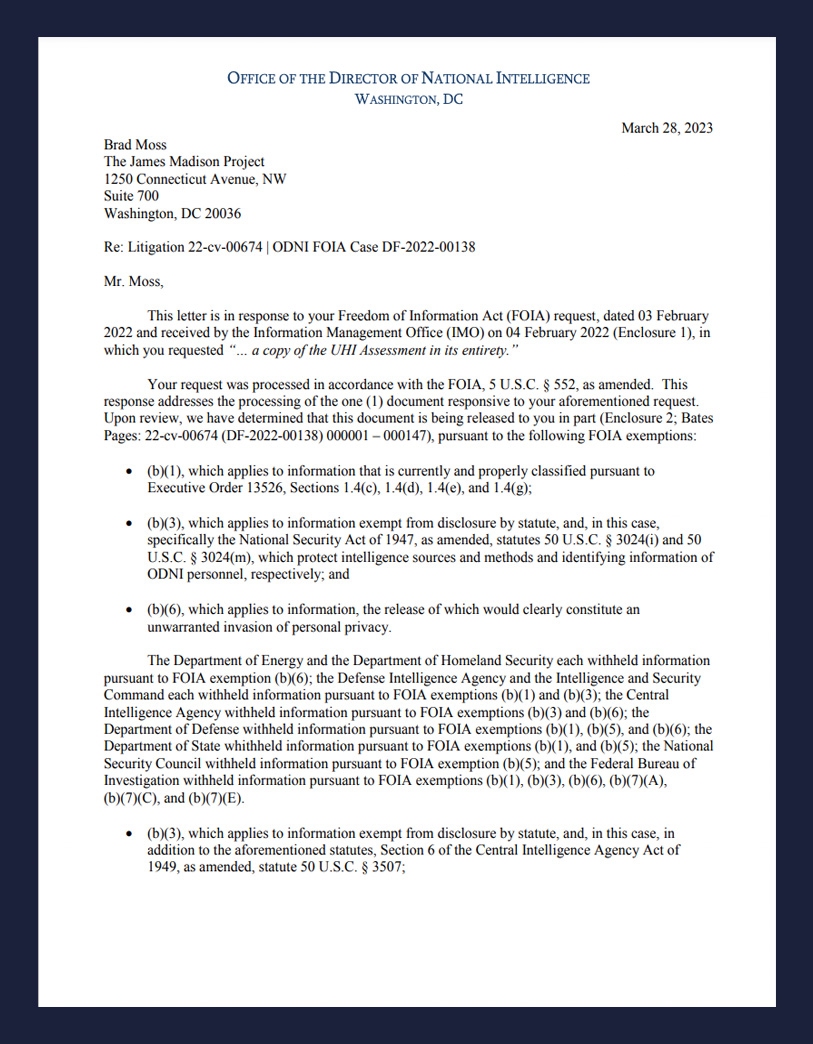
A newly obtained declassified report prepared for the director of national intelligence by a panel of experts appears to show conclusively that “Havana syndrome” — a cluster of unexplained symptoms experienced by diplomats and government personnel abroad — is not a naturally occurring health problem. It does not reach any conclusions about who or what may be responsible, but suggests that an unknown device or weapon using “pulsed electromagnetic energy” remains a plausible explanation.

The document was declassified after the James Madison Project, a nonprofit dedicated to reducing government secrecy, sued to obtain further information on “Anomalous Health Incidents” or AHIs, the official term used to designate the syndrome.

“The U.S. government is covering up evidence as to what AHIs are,” said James Madison Project attorney Mark Zaid, who also represents a number of Havana syndrome patients. “This report differs from the summary released earlier this month and previous statements from the intelligence community. It is becoming apparent that these events were perpetrated either by foreign actors, or it is an experiment gone horribly wrong.”

Although heavily redacted, the 153-page report clearly outlines that the “signs and symptoms” of Havana syndrome are “genuine and compelling,” and finds that some of the cases “cannot be easily explained by known environmental or medical conditions and could be due to external stimuli.” Four core characteristics of the AHIs are “distinctly unusual and unreported elsewhere in the medical literature,” the report goes on to say.

The declassified report, officially titled “Anomalous Health Incidents: Analysis of Potential Causal Mechanisms,” also says that “pulsed electromagnetic energy, particularly in the radio frequency range, plausibly explains the core characteristics” of at least some reported medical conditions, and finds that “sources exist that could generate the required stimulus, are concealable, and have moderate power requirements.”

Such electromagnetic signals, the report continues, “could be propagated with low loss through air for tens to hundreds of meters, and with some loss, through most building materials.”

Declassified U.S. intelligence reportDeclassified U.S. intelligence report on “Anomalous Health Incidents,” better known as Havana syndrome. Click image to read full PDF. (Obtained by Salon)For the most part, the federal government has strongly implied that there was no reason to believe AHIs were caused by human activity. The issue first came to light in 2016 after diplomats from Canada and the U.S. stationed in Cuba reported a variety of symptoms, ranging in severity from and pain and ringing in the ears to cognitive dysfunction. One national security source, speaking on background, said, “This most definitely occurred before 2016. We just don’t know for how long, who was involved or why.”

The CIA had not responded to a request for comment at the time this article was published. Zaid said the agency needs to explain “why and how this happened. Was it inadvertently done, as some in the government are now trying to sell us, or was it done on purpose? How was it done and how are we responding to the threat?”

Zaid also said that the declassified document appears to contradict an interim intelligence report released earlier this year that found “no evidence of a comprehensive, global campaign targeting U.S. personnel.”

“Now it is obvious that the CIA probably already has the answers we need,” Zaid said, suggesting those answers are likely “buried in the information they’ve classified.”


Want a daily wrap-up of all the news and commentary Salon has to offer? Subscribe to our morning newsletter, Crash Course.


The national security source quoted above said that the State Department had been caught “in the crossfire of this mess” and likely knew very little about the depth and breadth of any hypothetical operation against U.S. personnel, or its possible source. “The question is, was this a concerted effort?” the source said.

In January, Secretary of State Antony Blinken defended U.S. diplomats who had come forward to report suspected incidents. “Their pain is real,” he said then. “I have no higher priority than the health and safety of each of you.”

“We are going to continue to bring all of our resources to bear in learning more about these incidents,” Blinken wrote in January, saying that additional reports would follow.

The report even outlines a possible method of causing Havana syndrome ailments, using small, portable battery-powered devices that employ “commercial off-the-shelf technology.”

Earlier in March, U.S. intelligence sources were quoted as saying they had determined that Havana syndrome was not caused by an energy weapon or foreign adversary. The idea of a directed energy weapon was discounted because there was no “direct line of sight” to affected personnel “working at U.S. facilities, further casting doubt on the possibility that a hypothetical energy weapon could have been the culprit,” as the Washington Post reported at the time.

“If it is a foreign actor, it is essentially an act of war,” Zaid said. “I can understand the concern from our government. But there’s just no way to conclude, after seeing this declassified report, that the AHIs are anything but manmade.”

In January, Director of National Intelligence Avril Haines said it was “very unlikely” that a foreign adversary was responsible for the AHIs reported. Some published reports have suggested that the symptoms were characteristic of “mass psychogenic illness,” but the declassified report rejects that, finding that the AHIs “do not fit criteria for mass psychogenic illness.”

The declassified report even outlines one possible method of causing AHIs, using small devices that consist of “commercial off-the-shelf technology, use mature technology, are easily portable and concealable, and can be powered by standard electricity or batteries. Parametric acoustic arrays — also referred to as directional loudspeakers or acoustic lasers — are the most plausible technology, although other ultrasound technology may be at play.”

No line of sight would be necessary, according to the report:

For radio frequency, no direct air pathway or line of sight is required. The strongest factors affecting the power received at a given location are the power transmitted, the antenna gain, the distance between the transmitter and the location, and what kinds of materials are in between. A number of different biological effects may occur, as a function of the frequencies and power densities on target. Any one specific transmitter type may have controllable power and variable pulsing.

The declassified report urges further sustained efforts to find the root cause of Havana syndrome, more and better collaboration among intelligence agencies and greater respect for those who have suffered from related disorders. The expert panel “was moved by the experiences of individuals affected by AHIs,” the report concluded. “They deserve the best possible care, as well as appreciation for their sacrifices.”

“Moderate” Democrats back GOP bill to reverse their own party’s signature climate initiatives

Sign up for The Brief, The Texas Tribune’s daily newsletter that keeps readers up to speed on the most essential Texas news.

WASHINGTON — Congressional Republicans are pushing an energy bill that would overturn much of President Joe Biden’s climate agenda, and two South Texas Democrats are helping them.

U.S. Reps. Vicente Gonzalez of McAllen and Henry Cuellar of Laredo plan to vote for Republicans’ sweeping energy and permitting bill, the two lawmakers confirmed to The Texas Tribune. The bill could get a vote in the House as soon as this week before Congress breaks for its Easter recess.

The bill, dubbed the Lower Energy Costs Act, would loosen restrictions on and expand access to fossil fuel production, rolling back several provisions included in Democrats’ signature climate and social spending package passed last year. Democrats fiercely oppose the legislation as essentially sabotaging their years of negotiating that led to the nation’s biggest ever investment in combating climate change. Biden has said he will veto the Republican bill.

In 2022, Gonzalez and Cuellar ultimately voted along with their party to support the Democratic climate bill known as the Inflation Reduction Act. However, they expressed concern that any added burden on the oil and gas industry would negatively impact their constituents. The two withheld public support for the bill until just before they cast their votes and raised concerns within their caucus with provisions as it was being negotiated.

Both members represent districts heavily populated by blue-collar oil and gas workers, and Republicans relentlessly used high fuel costs to bludgeon Democrats in last year’s midterm elections.

“In order to fully realize the benefits of the Bipartisan Infrastructure Law, remain competitive on the world stage, and ensure the American people have access to safer roads and bridges and reliable and affordable energy, we must improve federal environmental review and permitting processes,” Gonzalez said in a statement to the Tribune. While this package is far from perfect, it is a step forward. I am hopeful that we can work in a bipartisan and bicameral way to make progress on this issue and deliver for our constituents.”

Politico first reported their intention to defect.

Texas Democrats have a long history of defending the state’s oil and gas industry, but all Democrats eventually voted for their party’s bill. It contained a host of priorities Biden touted from his campaign, including boosting clean energy investments and helping lower health care costs. Democrats had extremely slim majorities in both chambers, and voting against the bill would have been a colossal affront to party leaders.

Other Texas Democrats recoiled at the Republican package, saying it rolled back essential environmental protections at the expense of the health of vulnerable communities. Rep. Lloyd Doggett, D-Austin, took to the House floor to denounce the package as the “Polluters over people act.”

“This dirty bill will not bring our energy costs down. But it will drive our hospital bills and our doctor bills way up,” Doggett said.

Cuellar and Gonzalez’s vote on the Republican package is a sign of support for undoing provisions they voted for only months ago. The new bill includes a rollback of a fee on methane emissions — an extremely potent greenhouse gas — that was a key feature of the Inflation Reduction Act, and would open up more public land for oil and gas drilling. The Republican package also lowers standards for environmental reviews for new infrastructure projects and promotes domestic mineral mining — a key component for renewable energy.

The two Democrats have considerably greater cover voting for the Republican bill. With the Senate still in Democratic control and the House Republican majority too small to overcome a presidential veto, the bill is all but dead on arrival. Votes by Cuellar and Gonzalez will be largely symbolic.

But that symbolism distancing themselves from the more progressive wing of their party and standing by local industry could be key as Republicans continue to eye South Texas as potential winnable territory. Both Congress members faced competitive challenges last year, and Gonzalez continues to be a Republican target into 2024.


We can’t wait to welcome you Sept. 21-23 to the 2023 Texas Tribune Festival, our multiday celebration of big, bold ideas about politics, public policy and the day’s news — all taking place just steps away from the Texas Capitol. When tickets go on sale in May, Tribune members will save big. Donate to join or renew today.

This article originally appeared in The Texas Tribune at https://www.texastribune.org/2023/03/28/texas-democrats-vicente-gonzalez-henry-cuellar-climate/.

The Texas Tribune is a member-supported, nonpartisan newsroom informing and engaging Texans on state politics and policy. Learn more at texastribune.org.

“Abortion trafficking”: Idaho GOP poised to pass first bill banning interstate travel for abortion

The Idaho state legislature has forwarded an anti-abortion proposal that would criminalize the transportation of minors to other states for abortion services.

House Bill 242 creates a brand new crime — abortion trafficking — that is defined as the transportation of an Idaho-based minor to another state for an abortion without their parents’ or guardians’ consent. The bill would make so-called abortion trafficking a felony offense that is punishable by two to five years in prison.

The bill was passed earlier this month in the state House of Representatives, and was forwarded this week to the Republican-controlled Senate, where it is expected to pass. Pending any amendments, the bill would then advance to Gov. Brad Little (R), who has consistently backed anti-abortion measures in the state and is likely to sign the bill into law.

If the bill becomes law, Idaho would become the first state in the country to criminalize people who help a minor cross state lines to get an abortion.

“This is the first of what will probably be many states that pass provisions like this because it does seem to be something that the [anti-abortion rights] movement wants, at least for minors,” Drexel University law professor David Cohen told HuffPost. “Whether they expand it to adults, too, we will see. But at least for minors, this seems to be part of the blueprint. And Idaho is now the first state that’s putting it into reality.”

Idaho has a near-total abortion ban, making exceptions only when a person’s life is endangered due to their pregnancy or in cases of rape or incest. The law requires sexual assault victims seeking an abortion to provide documentation that they were raped to their physicians, a process that can be traumatizing or prevent them from qualifying for the procedure altogether.

Rep. Barbara Erhardt (R), the sponsor of the “abortion trafficking” ban, has claimed that the proposal is about “parental rights” — a right-wing talking point that has been used to justify, among other things, banning books about civil rights in classrooms, allowing teachers to hit disabled students, and attempts to force teachers to out trans children to their parents.

Abortion advocates have noted that the bill will likely force minors, especially those living in abusive homes, to remain pregnant and give birth against their will.

“For young children living in abusive households, disclosing sexual activity or pregnancy can trigger physical or emotional abuse, including direct physical or sexual violence, or being thrown out of the home,” said Mistie DelliCarpini-Tolman, the Idaho State Director for Planned Parenthood Alliance Advocates.

“Imagine this: Your daughter’s friend is raped by her own father,” Slate senior writer Mark Joseph Stern wrote on Twitter. “She gets pregnant. You drive her to Oregon to get a medication abortion. Under this act, you are now subject to prosecution for ‘abortion trafficking’ and face up to five years in prison.”

Idaho state Rep. Lauren Necochea (D) discussed similar scenarios in a debate on the House floor last month.

“There are cases where a minor might not feel safe telling their parents they need abortion care. It could be an abusive family situation,” she said. “It could be any number of circumstances that make it feel unsafe for a 17-year-old to go to her parents, but maybe she has a big sister who can help her out.”

Under the proposal, any family member or trusted friend who helps a minor obtain abortion care in another state would be subject to prosecution, Necochea noted.

“His testimony could be explosive”: Experts say Pence subpoena ruling shows prosecutors “closing in”

A federal judge on Tuesday ordered former Vice President Mike Pence to testify before a grand jury investigating former President Donald Trump’s attempts to overturn the 2020 election.

Special counsel Jack Smith, who is heading the Justice Department investigation into Trump’s efforts to subvert the election, issued a subpoena for Pence to testify in February. Pence contested the subpoena under the Constitution’s Speech or Debate Clause, which protects lawmakers from particular law enforcement actions related to their legislative roles. 

“Mike Pence has [an] insider’s knowledge of Donald Trump’s mindset on January 6, so his testimony could be explosive,” Brandon Rottinghaus, a political science professor at the University of Houston, told Salon.

Pence’s lawyers asked to limit his testimony, arguing that his role as the president of the Senate meant he was protected from legal scrutiny by the executive branch, The New York Times reported

Trump also sought to block Pence’s testimony, asserting executive privilege in an effort to protect his conversations with the former vice president. His lawyers asked U.S. District Court Judge Beryl Howell — who handed the chief’s gavel to Boasberg earlier this month — to limit Pence’s testimony by claiming that certain issues were off limits because of executive privilege.

In the weeks leading up to the attack on the Capitol, Trump repeatedly pressured Pence to use his role overseeing the congressional count of Electoral College votes to block or delay certification of his loss. 

Judge Boasberg affirmed that the speech or debate clause offers some protections for Pence from providing testimony, but also said that he would have to testify to the grand jury about any potentially illegal acts committed by Trump, according to The Times. 

“It is unknown whether Pence’s testimony will reveal anything new, but prosecutors need to know everything Pence witnessed so that they can understand all of the facts,” said former U.S. Attorney Barb McQuade, a law professor at the University of Michigan. “If nothing else, they may want to lock Pence into his story now to avoid a fabrication later when the case goes to trial.”


Want a daily wrap-up of all the news and commentary Salon has to offer? Subscribe to our morning newsletter, Crash Course.


It’s unclear whether Pence or Trump will appeal. Pence told Newsmax in an interview on Tuesday that he and his lawyers are “evaluating the court’s decision.”

“I can tell you that I’m pleased the court accepted our argument and recognized that the constitution’s provision about speech and debate does apply to the vice president, but the way they sorted that out and the requirements of my testimony going forward are a subject of our review right now and I’ll have more to say about that in the days ahead,” Pence said. 

While it is unclear how broad the judge’s order is, McQuade said, the former vice president maybe be protected from answering questions about events occurring in the House chamber on Jan 6. “However, a broader application could cover Pence’s preparation for that session, including meetings with Trump,” she added.

The former vice president’s role in the vote-counting process made him a target of Trump’s campaign to reverse the election results, according to the House select committee investigating the Jan. 6 attack.

Trump also publicly pressured Pence in a rally at the Ellipse near the White House, before urging his followers to march “peacefully” and “patriotically” to the Capitol

“It seems less likely that Pence will lead prosecutors to other witnesses and more likely that Pence and Meadows are the end of the line,” McQuade said. “Prosecutors tend to work in ever-smaller concentric circles. It seems like they are closing in, and need to question Pence to complete their investigation.”

Nate is a “troubled soul”: “Ted Lasso” star Nick Mohammed on his character’s dark turn

Nick Mohammed exploded onto the global stage as Nathan “Nate the Great” Shelley in the Apple TV+ comedy “Ted Lasso.” He picked up an Emmy Award nomination and celebrated multiple Emmy Award wins with his cast mates. Now in its third season, Nate’s “Ted Lasso” storyline brilliantly encompasses reasons to both celebrate him and wish for his demise — with the poisonous side of social media being one of the reasons.

“I try and stay off Twitter when the show is out because otherwise there’s too much of an element of art imitating life because people are really hating on Nate at the moment and rightly so,” Mohammed explained to me on “Salon Talks” about his real-life social media habits. “If I start to scroll on Twitter, I’m like, I know that’s what Nate does in Season 2, so I should stop.” 

Nate’s own insecurities, his inability to convey his feelings to his once-hero Ted and his toxic relationship with his father all led him to feeling abandoned and eventually blowing his life up. Social media is where Nate receives positive feedback and praise. We see the ramifications begin to play out right now in the show’s third season.

Watch my “Salon Talks” episode with Nick Mohammed here or read a Q&A of our conversation below to hear more about how “Ted Lasso” completely changed Mohammed’s acting career and insights about the cast, like who is the most athletic and the most American thing about Jason Sudeikis.

The following conversation has been lightly edited for clarity and length.

Where are you at right now? 

“I’m a genuine fan of the show as much as anyone else.”

At home in London. We just had a little baby daughter a couple of weeks ago, so I can’t be with the cast in the states at the moment.

Congratulations. Is this your first kid?

No, actually our third.

I can get some lessons from you. I have one daughter, she’s three years old. She runs my house.

Yes. We got two boys as well. We’re very lucky.

Congratulations and congrats on the new season. Are you ever surprised by the show’s success?

Constantly, yes. I find it just quite overwhelming really. I still am trying to get used to the fact that people recognize me in the street and want to talk about it, in particular Nate’s storyline. It’s quite mad. 

“Ted Lasso” is known for being wholesome and inspiring us to see the greater good. We see that in Nate’s arc, especially when he got his promotion. But Nate kind of went dark in Season 2. What can we look forward to in Season 3?

We know that Nate has defected from AFC Richmond and he has joined West Ham, the rival team, and Rupert is his boss. We all know that Rupert is not a leader of people. He’s a very toxic force in everyone’s lives, and so I think we can anticipate that it’s not going to be plain sailing for Nate being under Rupert’s commands. And obviously there’s unfinished business between Nate and Ted, Nate and AFC Richmond, even Nate and his dad.

Not that I condone Nate’s actions in Season 2, but I feel like you can see where they’re coming from. You can see that they ultimately stem from a toxic relationship he has with his dad and these deep-seated insecurities that he’s had his whole life. He’s not a different person. He’s the same person. He’s just been given a little bit more power and he’s chosen sadly, to use that power in quite sort of bullish ways. There’s quite a lot of reckoning to be had in Season 3

What was it like when you first got that script?

I remember really just distinctly getting the first episode and thinking, “Ooh, I wonder if they’re going to redeem Nate.” And then I read it and I was like, “Nah, they’re doubling down on how nasty he is. That’s good.” But it’s thrilling and it’s really exciting reading those scripts and following everyone else’s storylines too because I’m a genuine fan of the show as much as anyone else.

The relationship between Ted and Nate was beautiful, and some fans were even angry that Nate left Ted, but Ted also wasn’t being the person that Nate needed him to be. Do you feel like Ted’s getting what he deserves?

Well, it’s interesting, isn’t it? I think Nate says at the end of Season 2 that he feels abandoned. He feels abandoned by Ted, but Ted is actually sort of blissfully unaware of Nate’s downfall until end of Dpisode 11 when he finds out that he’s said to the press about Ted having panic attacks. 

“To be able to play a supporting role in an ensemble show that gets to go through proper character development is quite rare.”

Nate’s behavior is completely out of order, but because Nate has never had a father figure in his life, he doesn’t really have a support network. He doesn’t really have friends, he doesn’t have a girlfriend, boyfriend. When Ted did come into his life in Season 1, we saw how it empowered him and made him feel worthwhile. Obviously that resulted in him being promoted and that was the best thing that had ever happened to him. 

I guess from Ted’s point of view, he feels like, oh, Nate is not fixed, but his work is done as it were. But actually Nate is a lot needier sadly than that and is a troubled soul. He’s not getting the praise that he once had. He has more responsibilities. He doesn’t really know how to use that power ’cause he’s never had any before. It’s a real recipe for disaster for Nate because he just doesn’t really have the emotional intelligence to deal with any of it.

That’s the problem with these big personalities like Ted, right? If you make everybody feel so good and you make everybody feel seen and cared for, and then the minute you start to have these human moments where you can’t be the biggest cheerleader or the person who lights up every room, people can easily feel slighted.

Completely. And Ted, bless him, has got his own demons. He’s got his own personal things to deal with and his family life is obviously fractured. He’s dealing with panic attacks and anxiety. He’s got to concentrate on it himself and that’s why, so it is such a shame that Nate sees that as abandonment where actually it’s just he should be looking out for Ted, really, but he’s not.

And then Twitter isn’t helping Nate at all.

No. That’s why I try and stay off Twitter when the show is out because otherwise there’s too much of an element of art imitating life because people are really hating on Nate at the moment and rightly so. If I start to scroll on Twitter, I’m like, I know that’s what Nate does in Season 2, so I should stop.

“Ted Lasso” is a feel-good show, but your character is polarizing to fans. Is it a challenge to play a guy who so many fans take issue with?

If anything, honestly, it’s been really thrilling. It was challenging in a sense that I felt like Season 1 Nate, I knew what I was doing, The scripts are brilliant and I’m just indebted to the scripts because they’ve written such a really nuanced arc and really sort of slowly drip fed throughout the three seasons. I felt like I had some kind of comfort area in the way I was portraying Nate in Season 1, but a lot of the comedy to be fair was replaced by more emotional and dramatic storytelling in Season 2 and in Season 3 now that he’s taken a slightly darker turn. That was more challenging just because I had less experience in that.

Well, I think the character who has the ability to do that is always going to be the one that’s remembered.

That’s very kind. Well, yeah, we’ll see. See what you think at the end of Season 3.

“Ted Lasso” has mastered the balance between humor and drama. What’s the secret?

Theo Park [the casting director] has done a phenomenal job. It’s also just the loveliest bunch of people. We feel so lucky to go into work and get to work with these just brilliant people, but also just wonderful humans. 

“Not that I condone Nate’s actions in season two, but I feel like you can see where they’re coming from.”

I feel like the scripts, we just owe it all to the scripts. The writing and the writing team, they’re just phenomenal. To be able to play a supporting role in an ensemble show that gets to go through proper character development is quite rare or certainly rare in UK shows. In terms of my previous experience, often if you’re playing a supporting role, you are the constant in the show and your major players are the ones who bounce off you and they get to develop and grow. 

It’s not just Nate in “Ted Lasso.” It’s every character gets their own story. I just think the writing somehow still manages to balance that tightrope of delivering on, well, comedy — first and foremost, it’s a comedy — but like you say, emotional storytelling and dramatic storytelling as well. It really is a triple threat and I don’t think that’s an easy thing to do. Often one of those things would feel sacrificed, but they somehow managed to walk that tightrope. 

It’s not easy, but it’s real life because we don’t laugh all the time. And if we’re lucky, we’re not crying all of the time. You have that balance, so it pulls at those emotional strings and gives you an opportunity to have a real experience.

Definitely. That’s the other thing is that the characters feel, as a result of it not sort of shying away from an emotional moment when it needs to, and it never feels gratuitous, but it ultimately just makes it all feel realistic and it makes the characters feel real and that they’ve got depth. They’re not just superficial characters that you might find in a poor sitcom. There’s some sitcoms which do character development brilliantly. It feels like they’ve really got a hold of these characters and they feel like proper fleshed-out human beings.

It’s been said that this may be the last season. Is that true?

I genuinely don’t know. I’ve read all manner of things now. All I know is that nothing official has been said either way. I know that there was a bit of a frenzy online when Jason said, “Yeah, maybe,” but he didn’t say that it was ending. That there are so many different ways that it could go. I think they’ve been really open from the start in saying we always had a three-season arc for this particular story. This isn’t a spoiler, but no one dies in it.

We want at least two more seasons, so we want to make sure you’re down for two more seasons, just in case you get that phone call.

OK, OK. Well, I’ll put that to them.

I’ll read somewhere that you haven’t spent that much time in America. Would you be willing to move to America to work on a television show?

My wife is in the background and she’s nodding her head, so I guess, yeah. I mean we’d have to take the kids out of school, so it would be a big upheaval. But if it was the right kind of show, I don’t think we’d say no. I like where we live, and it’s nice to pop over to the States. I’ve not been many times to the States, but I’ve always loved it when I’ve gone over. 

I watch Mr. Swallow. I know “Ted Lasso” was developed by Americans, but a lot of your comedy career has been in the UK. Do you think there’s a difference between American and British humor?

“I still am trying to get used to the fact that people recognize me in the street.”

It’s a really good question. I don’t know is the answer. I mean, I feel like there are so many shows, I think you could look at it in a quite a black and white way and say, “Oh yeah, Americans don’t get sarcasm,” or something like that. But I mean, it’s just nonsense because then you look at so many of the great American comedies which is sort of cynical and snide. All that British comedy is, I don’t know, uptight and clipped or something, and socially awkward.

I feel like there’s so much crossover now, not just in terms of lots of transatlantic productions, “Ted Lasso” being one of those obviously, “Intelligence,” which is a show I write being another. There are shows, I guess quite quintessentially British, which do brilliantly over in the States and also shows that are quintessentially American that do brilliantly over here so I don’t think it’s black and white. I think actually if something’s funny, I mean everyone can have different tastes within what they find particularly funny. But I think humor, comedy, it’s just so universal. I think if something’s funny, it’s funny, yeah. And whether it’s to your taste or not, that’s a different matter. But I don’t necessarily see it being defined by where you live.

I’ve worked on a television show and it was always two or three cast members that I like to hang out with after we finished those long filming days. Did you make any connections with anybody on the crew?

Oh, well, I mean, we’re all a big unit. I mean, probably because “Ted Lasso” now we’ve been filming for the last three, four years. Particularly, we all went through the lockdown together. When we were filming Season 2, that was proper lockdown. We felt very lucky to be working, and they became our social bubble because you weren’t allowed to be socializing outside of anything else like work. And so we are very, very close unit — cast and crew. Pretty much all the crew stayed from season one right through to the end.

When it came to those final few days, it was properly emotional because these people that you are sometimes seeing more than your own family when you’re filming long hours and filming week on week and season on season. So yeah, it’s a great bunch, but we’re all still in touch. There’s also WhatsApp groups, we all hang out for a drink, and obviously there’s a lot of them who are in the States, but it’s fun when we get together. It’s always a laugh. I feel very lucky.

We know that Ted’s the best dancer from the pilot, but who’s the most athletic? 

“When it came to those final few days, it was properly emotional.”

Oh, interesting. It’s probably someone like Phil Dunster or Christo, those footballers. I mean Billy, Toheeb, Kola, they’re so great because also, and one thing I never really appreciated is that when you’re filming those football sequences, they’re doing take after take after take. And it’s, I think, even more exhausting than actually playing a football match because you’re kind of going at it full pelt for the camera and then they’ll call cut and you have to stop, relax or retake or reset. It’s almost like interval training, it’s sort of stop, start, stop, start nature to it. The stamina that they have to build up for some of those long football shoots is something. 

Who’s most like their character?

Oh, that’s a good question. Jeremy [Swift], Higgins, Jerry and Higgins are very similar, I think really nice, nice people, both of them. Very nice people.

What’s the most American thing that Jason does?

The most American thing he does is he’s really into pinball machines.

I was scared you were going to say something like, he eats a donut sandwich. The show’s amazing. Season 3 comes out [March 15]. What’s next for you?

So I’ve just finished a show called “Renegade Now,” which is on Disney+, not I think, not till October, to be fair. It’s quite later on. And I shot a film last year called “Maggie Moore(s)” with John Hamm and Tina Fey, which I think is out in July, which John Slattery directed, who’s brilliant and wonderful, so that was a real joy. I’m about to do some more live stuff as Mr. Swallow, which is like my alter ego on stage and might possibly bring that over to the States at some point.

“No one’s spitting in your dish; that’s an old wives’ tale” — actor Dan Adhoot on “Undercooked”

Dan Adhoot had a problem. He was smack in the middle of a meal at  Massimo Bottura’s famed  Osteria Francescana, which means he should have been smack in the middle of one of the greatest meals ever created. And he was, kind of. There was a Caesar salad he recalls as “the most beautiful thing I’ve ever eaten anywhere.” There was balsamic vinegar he describes as a religious experience. But then the Risotto Levante happened. 

In “Undercooked: How I Let Food Become My Life Navigator and How Maybe That’s a Dumb Way to Live,” the actor (“Cobra Kai,” “Shameless,” “Kickin’ It”),  restauranteur and comedian serves up a witty, thoughtful view of   family, friendship and heartbreak through the lens of a lifelong obsession with food. And in the book’s memorable title essay, he explains why sending a dish back to the kitchen ultimately revealed the cracks in a love affair. 

Salon talked to Adhoot recently about how hunting helped him process the grief of his brother’s death, the complicated legacy of his Disney Channel character Falafel Phil, and the subtle art of complaining diplomatically to your server. This conversation has been lightly edited and condensed for clarity.


Want more great food writing and recipes? Subscribe to Salon Food’s newsletter, The Bite.


I loved your chapter on Falafel Phil. You still can’t really eat falafel? 

It’s a little bit of an exaggeration, but I definitely opt for shawarma now.

I want to ask you about the story that forms the title of this book. I can’t imagine ever being in a position where I would have the chutzpah to send something back. I don’t want to send something back at Chili’s. 

My fiancee at the time and I went to Osteria Francescana. It was the number one restaurant in the world. The meal that we had was the first meal that they served as the number one restaurant in the world. Just by fluke we happened to have the reservation. It was this wild experience of this 12-course tasting menu. Course number six was this risotto. Everything was so great, and then there was a risotto that was clearly severely undercooked. We were both looking at each other like, what do we do here? Because there were only like 15 people in the dining room. The staff was elated that they were the number one restaurant.

“We absolutely should have eaten the grainy risotto.”

Suddenly, we were faced with this dilemma of, do we return a dish at the number one restaurant in the world, the day that it becomes the number one restaurant in the world? We went back and forth for a bit, and we decided to actually send it back. And it just created this cascade of events. We should not have sent it back, was my conclusion. We absolutely should have eaten the grainy risotto. The chapter as a whole was more about our relationship, it not working out and why it didn’t work out. That thematically became the way that I started to write the book — let me use food as a jumping off point about a bigger story. So the risotto itself was undercooked, and I also felt like it tied into the story of my growth being stunted by my older brother dying when I was 16. And so, undercooked in that as well.

You’re a comedian, you’re an actor, you’re a podcaster, you’re a business person. Why did you want to write this book? You didn’t have to. 

Listen, voice in my head, you’re right. I am a huge fan of this guy, Steve Rinella. He has the number one hunting podcasts and hunting show on Netflix. He’s sort of like the hunting Anthony Bourdain — thoughtful journalist, conservationist who has a big hunting following. I reached out to him and said, “I’d love to be on your podcast.” I told him some of these stories about me going hunting.

I’m not the typical hunter. I am a Jew from Long Island. I have no business being around a rifle. I did pick up hunting, because of my addiction to food adventurism. I told him stories about going hunting with my buddy Mo, who’s an Iraqi Muslim, and I’m an Iranian Jew, and, you know, we came together to kill ducks. He said, “Fly out to Montana, and you can be on the podcast.” So I flew out to Montana, and I did the podcast. It did really well, because again, I wasn’t a typical guest. My manager heard it and she was like, “Why don’t you just start free writing about why you like food so much?” I was like, “What do you mean, why do I like food? Because it’s delicious.” She said, “No, you like food a little more. You just got on a plane to go to Montana to talk to this guy about hunting. Something’s up with you.”

Those of us who feel a certain way politically and socially have a lot of misconceptions about hunting and hunters. You talk in the book about the way that you have been able to have conversations in the space of hunting that are more enlightened and progressive.

It is very unfortunate to me that hunting does have a kind of politics too. I really wish it didn’t, because there’s a lot of things to look at with hunting that are actually progressive. The money that hunters spend on their hunting license and on ammo, the taxes on that goes to conservation. Hunters actually give more money to nature conservation than every other environmental group in America. That’s a crazy thing to think about. 

“I’ve rarely met a hunter who is not a thoughtful, kind person when it comes to killing animals.”

Also, as a progressive from New York City, there’s no one who I know cares more about fancy food than coastal elites. We love our tasting menus, we love knowing all about our food being locally sourced. We want to go to Erewhon and spend the five extra bucks so that we know that the chicken was doing Pilates before it died. And there’s nothing more locally sourced and free range and organic than game meat. That to me is an easy way in. I’ve rarely met a hunter who is not a thoughtful, kind person when it comes to killing animals. Everyone thinks that they go out and kill and just dance on the carcass of a dead elk. Every each one of them really sees it as a responsibility to care for the animal, to make sure every part of it is used. I feel like growing up without hunting, I never even thought about anything like that.

There’s also a weird guilt and shame that comes with hunting, which makes you want to honor the animal even more than way more than you would if you bought at a supermarket. So there are a lot of similarities between hunters and non-hunters. I feel like both sides get such a bad rap for the worst instincts of each other. My interaction with hunters is, I’ve rarely met one that I can’t stand. And I can’t stand a lot of people.

What drew you to first say yes to hunting?

First was the food aspect of it. It all started with my brother dying and me having a bond with my dad. My older brother passed away when I was 16 years old. I was the middle child, and like most middle children was just kind of ignored. But my dad and I bonded on food. We loved going to good restaurants together. I loved food and I loved it because it was a way to bond with my father. We’d go to restaurants alone without the other siblings, without my mom. When my brother died, my dad became super duper kosher. The food relationship that we had was completely gone.

I tried to fill that hole in other ways. I started to eat non-kosher foods, which I had never eaten before. I was a rebellious foodie. I started to go to the restaurants that my dad couldn’t go to. I started to cook in restaurants to try to learn how to cook these foods. And then the last form of rebellion was killing an animal, which was so anathema to anything that I’ve grown up with. Then I was trying to find a replacement for my older brother. My friend Mo has that older brother energy, and he’s a big hunter. Part of it was to impress him. So, mostly the wrong reasons to get into hunting. 

Later on in the book you say something about how you spent most of your life judging people by the way that they eat, and judging people by their relationship to eating, and how that’s changed for you. I think it is easy for those of us who have that passion, that obsession that you write about, to feel a certain sense of moral superiority about it.

I’m not going to lie, I definitely still have a little bit of it. But the main thing that changed for me was doing Meals on Wheels with a buddy of mine. Just going around from home to home and feeding people the most anemic food. Because it had nothing to do with the food. It had to do with sustenance. It was so profoundly eye-opening. Like I say in the book, I was so obsessed with the one dish at Osteria Francescana that was bad, but what about the other dishes around it that were exceptional? It helped me have more of a bird’s eye view around it and not use that as the main litmus test for judging humans because you’re going to be pretty lonely if that’s if that’s what you end up doing. 

I feel like the community aspect of food needs to eclipse the actual food part of it. That’s a big deal that people are forgetting now. Everyone just wants to take Instagram photos of their coolest food rather than care about who they’re hanging out with or where they’re hanging out or what the restaurant is. These famous food bloggers don’t care about the restaurant, they just want the lighting to be good so that they can take good pictures of the food. That’s such a gross way to look at restaurants. I used to have to go to a new restaurant for breakfast, lunch and dinner. Now l have two places I go to where I’m treated like family when I go there. The food’s great. But to me what’s way more important is the community aspect of it. That stuff is more important than the actual minutiae of the food.

I’m really intrigued by the anxieties that we have around food and the fears that we have. Let’s say I’m at the number one restaurant in the world. Or, I’m at The Cheesecake Factory. I’m spending money. I’m spending time. I want this to be a great experience. And you know what? This isn’t good. I’m not enjoying this. How would you encourage someone to have the courage to respectfully, politely say “I need to send this back”?

It should be a lot less anxiety than it is. The reason I say that is because most restaurants, including The Cheesecake Factory, are going to be completely fine with you returning a dish. No one’s spitting in your dish; that’s an old wives’ tale. My new method of doing this is I say, “Listen, this dish, I’m just not feeling it. I will pay for it. But is there any way that I’d like to get something else if that’s okay?” Ten times out of ten They’re not going to charge you for it.

That’s for something that’s for a dish that is prepared correctly, but you just don’t like it. If a dish is not prepared incorrectly you have every right to say, “I’m sorry. I ordered it well done and it’s rare,” or, “It feels like this soup just tastes completely underseasoned.” That’s totally fine. Just be nice about it. That’s been my go-to. 

We work so hard for our money, we should get what we want. I feel like the restaurant wants you to have wants you to feel like you’re having a good time so that you keep coming back. And if you do try to return it, and they give you   some guff, they give you some attitude, then you wield that Yelp  sword. Like like a Knight of the Templar, you pull that Yelp out. 

Salon Food writes about stuff we think you’ll like. While our editorial team independently selected these products, Salon has affiliate partnerships, so making a purchase through our links may earn us a commission.

“I got rid of NATO”: Donald Trump confuses NATO and NAFTA during Fox News interview

Former President Donald Trump on Fox News bragged that he withdrew from NATO, confusing the security alliance with the NAFTA trade agreement. 

In an interview on Tuesday with Fox News’ Sean Hannity, Trump boasted that other countries learned “not to mess around” with him when it came to trade.

“Did they fear me? I suspect they did,” he said, citing Russian President Vladimir Putin’s pushback on the Nord Stream pipeline.

“Putin said, ‘Man, you are killing me, especially about Nord Stream.’ And I stopped it. It was stopped cold,” the former president said. 

“And I told other countries, ‘If you go into the Nord Stream, you are not going to do any business with the United States of America,’ meaning rip us off on trade because a lot of them have ripped us off,” he said. 

“I changed a lot of those deals where it was a bad deal for us and now it’s good, like USMCA with NATO,” he added. 

The former president tried to reference the North American Free Trade Agreement but instead highlighted the North Atlantic Treaty Organization, a security coalition made up of 28 European states, plus the US and Canada, formed to counter Russian aggression.

“I got rid of NATO and built USMCA,” he repeated. “I made a great trade deal with China. Our farmers, to this day they made tremendous money because of the deal.” 

Hannity did not correct him throughout the entire exchange. 


Want a daily wrap-up of all the news and commentary Salon has to offer? Subscribe to our morning newsletter, Crash Course.


Trump did withdraw the US from NAFTA in 2017 as a part of his promise to withdraw US trade policy. He then brokered the US-Mexico-Canada Agreement in 2020 as a replacement. 

While Trump has been outspoken against NATO — threatening to pull out of the treaty and accusing other members of not spending enough on defense — the U.S. is still a member. Trump has also praised Putin as he invaded Ukraine and threatened NATO members. 

Trump and Hannity later discussed President Joe Biden and what they described as his “cognitive struggling.” The Fox host asked Trump if he would take a cognitive test again.

“I would like to see it for anybody running for president, taking a cognitive test,” Trump said. “You know they do it in China, but it’s done in a different way. They have a caste system. And the smartest person gets to the top,” he claimed.

The last cognitive test Trump took, one he said was very difficult, was when he famously repeated the words: “Person, woman, man, camera, TV.”

“That’s nuts”: Legal experts stunned Trump grand jury is going on month break without indictment

The Manhattan grand jury that has been examining former President Donald Trump’s alleged hush-money payment to porn star Stormy Daniels is not expected to hear evidence in the case for the next month, mainly due to a previously scheduled hiatus, a person familiar with the proceedings told Politico

Due to the break, any indictment of the former president will likely not come until late April at the earliest. However, the grand jury’s schedule could change, as it frequently has in the past few weeks. It is ultimately District Attorney Alvin Bragg’s choice of when the grand jury will reconvene if prosecutors want them to meet during the planned breaks. 

The grand jury heard testimony in the case on Monday, but is not meeting on Wednesday and will examine evidence in a separate matter on Thursday, the source told Politico. They are also scheduled to consider another case next Monday and Wednesday, and are not expected to meet on Thursday due to the Passover holiday, according to the source. 

The hiatus in the following two weeks was first scheduled when the grand jury convened in January, the person said. 

While there is no official deadline for bringing an indictment against the former president, there were signs in recent weeks that the grand jury was gearing up toward a vote, especially after prosecutors offered Trump the chance to testify before the panel (which he declined). That is usually regarded as one of the last steps of a criminal investigation. 

Trump has denied the affair with Daniels, and any wrongdoing associated with the $130,000 payment that was made to her through his former lawyer Michael Cohen.

Some legal observers were taken aback by the grand jury going on a break.

“They are what now?” exclaimed former U.S. Attorney Barb McQuade.


Want a daily wrap-up of all the news and commentary Salon has to offer? Subscribe to our morning newsletter, Crash Course.


“Huh?!” wrote former U.S. Attorney Harry Litman. “That’s nuts, and it’s not just [because] of a previous schedule. Must be a tactical decision perhaps having to do [with] Fulton County and not going 1st.”

“Have to imagine Bragg feels the need to shore up an important part of the case,” Litman continued. “Fine, but how was it not done from the inception of the renewed investigation. And again, ‘previously scheduled hiatus’?? Please.”

However, former federal prosecutor Renato Mariotti cautioned that there was nothing implicit about the hiatus.

“It’s a good thing that the Manhattan DA is proceeding carefully and getting his ducks in a row. Rushing into an ill-considered prosecution is a bad idea,” he wrote on Twitter. “This is not a ‘delay.’ There is no deadline to indict,” he explained. “Trump’s claims about his arrest date are speculation, nothing more.”

Food cuts for the poor and tax favors for the rich: Dems call out Kevin McCarthy’s budget “scam”

Congressional Democrats reiterated their opposition to steep federal spending cuts on Tuesday after Republican House Speaker Kevin McCarthy issued a vague outline of his caucus’ demands, which include more punitive work requirements for aid recipients and steep cuts to non-military spending.

The GOP leader laid out the broad demands in a Tuesday letter to President Joe Biden as progress toward an agreement to raise the debt ceiling and prevent a default remains nonexistent.

McCarthy, R-Calif., called for another meeting with the president to discuss the debt ceiling standoff, which is a result of the House GOP majority’s insistence on painful budget cuts as a necessary condition for any borrowing limit increase. The Congressional Budget Office has projected that the U.S. will default on its debt this summer unless Congress acts.

McCarthy wrote that House Republicans’ demands include “but are not limited to” cuts to “excessive non-defense government spending” and stronger “work requirements for those without dependents who can work.”

On the latter point, the California Republican favorably cited former President Bill Clinton’s 1996 welfare reform law that doubled extreme poverty. Biden supported the law as a senator.

As president, Biden has demanded a debt ceiling increase without any accompanying spending cuts. In response to McCarthy’s letter, Biden pushed House Republicans to release a detailed budget plan but stressed that spending talks “must be separate from prompt action on Congress’ basic obligation to pay the nation’s bills and avoid economic catastrophe.”

Bloomberg reported last week that House Republicans are in the process of “finalizing” a budget offer that’s expected to propose capping spending “at 1% growth annually for a decade” and imposing more strict work requirements on food aid recipients. One recent analysis estimated that more than 10 million people could lose federal nutrition assistance if the GOP gets what it wants on work requirements.

Republicans are also pushing for legislation that would ease the permitting process for oil and gas projects.

In a Tuesday appearance on CNBC, McCarthy said he is prepared to recommend $4 trillion in total spending cuts—but he didn’t provide specifics on which programs would be cut and by how much, drawing mockery from Democratic lawmakers.

“If he comes to the president’s office with no specific plan, no specific details about what the Republicans want to cut, what are they going to talk about? The weather?” asked Senate Majority Leader Chuck Schumer, D-N.Y.

Sen. Ron Wyden, D-Ore., the chair of the Senate Finance Committee, tweeted in response to McCarthy’s letter that “this scam is a non-starter in the Senate.”

“Unsurprisingly, House Republicans want to make it harder for poor Americans to get food and medical care while making it easier for rich people to cheat on their taxes,” Wyden wrote.

Last week, Rep. Rosa DeLauro, D-Conn., released warnings from federal agencies that would likely be targeted by the GOP’s austerity spree in an effort to highlight the far-reaching impacts of spending cuts the party has floated thus far.

“The draconian cuts would take away the opportunity for 80,000 people to attend college and impact all 6.6 million students who rely on Pell Grants,” DeLauro said, citing agency estimates. “If implemented, 200,000 children will lose access to Head Start, and 100,000 children will lose access to childcare, undermining early education and parents’ ability to go to work.”

DeLauro wrote Tuesday that “Republican calls to cut government funding put everything from child care to opioid treatment and mental health services to nutrition assistance at risk for millions.”

Sharon Parrott, president of the Center on Budget and Policy, echoed concerns about the potentially devastating effects of the House GOP’s plans.

“The recent turmoil in the banking system pales in comparison to the chaos and harm that could ensue if House Rs force a debt-limit impasse and default: recession, lost jobs, and critical payments to seniors, veterans, businesses, families, and states unpaid,” Parrott wrote Tuesday following the release of McCarthy’s letter.

“A letter isn’t a budget,” Parrott continued, “so it conveniently allows House Rs to hide that these cuts—in basic food assistance, healthcare, and programs that fund child care, schools, and more—would go to cover some of the cost of more tax cuts for the wealthy rather than to reduce the deficit.”

Ted Cruz slammed for “revolting” hearing claim: “You’re willing to let children be raped”

Sign up for The Brief, The Texas Tribune’s daily newsletter that keeps readers up to speed on the most essential Texas news.


Republican U.S. Sen. Ted Cruz and U.S. Department of Homeland Security Secretary Alejandro Mayorkas exchanged heated barbs during Tuesday’s Senate Judiciary hearing over border issues, with each official referring to one another as “revolting.”

At the hearing, Mayorkas was grilled by Republicans — as he has been for the past year — over border issues including the increasing number of migrants crossing, fentanyl deaths and sex trafficking. Cruz, who has been an ardent critic of the Biden administration official, was particularly fiery in his line of questioning — blaming the secretary directly for crimes against children.

“The children raped, they are at your feet,” Cruz told Mayorkas. “And if you had integrity, you would resign.”

“You’re willing to let children be raped to follow political orders,” Cruz continued. “This is a crisis. It’s a disgrace.”

Mayorkas responded saying “what the senator said was revolting” and refused to address his comments.

“Your refusal to do your job is revolting,” Cruz said.

Cruz also asked Mayorkas if he knew how many of the migrant “get-aways” were rapists or terrorists, and said those who illegally crossed the border have led to drug overdoses.

“Look what has happened under your policy when you open up the border to the worst illegal immigration our nation’s history — people die,” Cruz said.

“Senator, you are so profoundly disrespecting my 22 years of government service,” Mayorkas responded as Cruz continued to speak over him.

This is not the first time that Cruz and Mayorkas have sparred. In February, Cruz told Fox Business that he believed Mayorkas was the “largest human trafficker on Earth.” And in October of last year, Cruz along with U.S. Sen. Lindsey Graham, R-South Carolina, sent a letter to Mayorkas saying his leadership of the southern border was a “gross dereliction of duty” and “grounds for impeachment.”

U.S. Sen. John Cornyn, the other Texas senator who serves on the Judiciary committee, also pressed Mayorkas about fentanyl crossing the border.

When asked if he knew how many people were carrying fentanyl or other drugs across the border, Mayorkas said about 90% of fentanyl is brought in through ports of entry. Cornyn shot back, saying “that’s a totally made up number.”

Cornyn went on to wrap up the exchange by saying Mayorkas has “simply lost all credibility.”

According to U.S. Customs and Border Protection data, fentanyl brought through U.S. ports of entry accounted for more than 96% of fentanyl seizures at the border since the 2023 fiscal year began on Oct. 1.


We can’t wait to welcome you Sept. 21-23 to the 2023 Texas Tribune Festival, our multiday celebration of big, bold ideas about politics, public policy and the day’s news — all taking place just steps away from the Texas Capitol. When tickets go on sale in May, Tribune members will save big. Donate to join or renew today.

This article originally appeared in The Texas Tribune at https://www.texastribune.org/2023/03/28/ted-cruz-mayorkas-border-revolting/.

The Texas Tribune is a member-supported, nonpartisan newsroom informing and engaging Texans on state politics and policy. Learn more at texastribune.org.

The world is hooked on junk food: How big companies pull it off

It is almost impossible nowadays to listen to the radio, watch TV or scroll through social media without being exposed to an advertisement telling us that all we need for a little happiness and love is a sugary drink or a fast-food snack. There’s nothing that a tasty, affordable, ready-made meal cannot fix, we are asked to believe.

Over many decades our food environments have relentlessly been encouraging us to make choices that are harmful to our health, through pricing, marketing and availability. This rise in advertising has contributed to a growing global obesity crisis as well as nutrition deficiencies as more and more people opt to eat unhealthy food.

We each have the right to buy whatever we can afford. But commercial forces limit our freedom of choice more than we think. New evidence published in The Lancet shows that key causes of ill health — such as obesity and related noncommunicable diseases — are linked to commercial entities with deep pockets and the power to shape the choices people make. They do this by influencing the political and economic system and its underlying regulatory approaches and policies.


Industry tactics

The ways that commercial entities shape our food environments to maximize their profits are known as the “commercial determinants of health”. They create an environment that drives us towards unhealthy choices.

There are three main ways they do this:

  1. We are socialized to believe that, as adults, our food choices are a direct result of free will and of freedom of choice. Yet for people with a limited amount of money, that “freedom” is exercised in a context largely shaped — and limited — by what food and drink manufacturers and retailers choose to produce, market and sell.

  2. Marketing creates demand. Supermarkets are filled with ultra-processed foods with lots of added sugars, unhealthy fats and harmful additives. These food products are designed to activate your taste “bliss point” and make you crave more. Food and beverage manufacturers use unethical tactics to market them. They target children with manipulative imagery and stressed-out parents with “easy” solutions for feeding and satisfying their family.

  3. Food and beverage companies’ profits strengthen their political influence. This is especially true in under-regulated markets in low- and middle-income countries. They use their economic power (employment, tax revenues) to support corporate lobbying that weakens government policy.


What can be done

The Lancet series maps out four ways through which governments, businesses and citizens can reduce the harms caused by big corporations and curb the power of commercial entities.

1. Rethink the political and economic systems.

Developing countries, including Bhutan, Ecuador and Brazil, as well as developed countries such as New Zealand and Norway, are beginning to pave the way for new frameworks that put people’s well-being first. In the UK, Scotland and Wales have also taken significant steps.

These frameworks measure commercial effects on health and the environment and encourage commercial practices that promote health. Ways to do this include enforcing policies — such as the tax on sugar-sweetened beverages — that ensure commercial entities pay their fair share of taxes and are obliged to account for the full costs of the health, social and environmental harms caused by the production, consumption and disposal of their products.

2. Develop an “international convention” on commercial determinants of health.

In practice, this would mean replicating and expanding global regulatory frameworks that work. The World Health Organization’s (WHO) Framework Convention on Tobacco Control has shown that public health policies can be protected from commercial interests. Since its adoption in 2003, the convention has had significant impact on public policy changes related to tobacco control around the world. It’s provided a framework for countries to develop and implement evidence-based measures to reduce tobacco use and the harms associated with it. Some examples include smoke-free laws; graphic health warnings on tobacco products; prohibition of tobacco advertising, promotion and sponsorship; and tobacco tax increases.

The Lancet suggests that, with support from the WHO and its member states, an “international convention” on commercial determinants of health should be developed. It is proposed that public health policy leaders and politicians replicate the tobacco control convention by making it legally binding for countries to comply with a set of principles or rules. The framework would have to be broad enough to cover the full range of commercial influences on health. These include mining, fossil fuels, gambling, automobile industries, pharmaceuticals, technology and social media (beyond the better-known alcohol and food industries).

3. Comprehensive food-environment policies.

One type of government policy proven to help protect and improve health is public procurement — how governments purchase goods and services. Governments can use their purchasing power to influence the food industry by encouraging the production and distribution of healthy food and limiting the availability of unhealthy food products.

In 2008, the mayor of New York City ordered city agencies to meet public food procurement standards for over 260 million annual meals and snacks. The standards apply to food from over 3,000 programs at 12 agencies, including schools, hospitals and shelters. Nutritional requirements cover dairy, cereals, meat, fruit and vegetables and set meal nutrient thresholds.

The Brazilian School Food Program is another example of a national public-procurement policy with direct health benefits. The program provides healthy meals to millions of students in public schools across Brazil.

It’s required to purchase 30% of its supply from family farmers. The programs has improved the health and well-being of students and promoted sustainable and ethical food production practices. It has also successfully regulated the sale and marketing of food within and outside school premises.

Countries across the globe could benefit from adopting this model, including South Africa, where despite industry pledges not to sell to schools, unhealthy foods and beverages remain easily accessible and available in schools.

4. Social mobilization.

Citizens, civil society groups, activists, public health practitioners and  academics can demand their right to health by calling for government action on commercial determinants of health. This can be done using a variety of strategies. They can raise their collective voice in support of evidence-based health measures; expose and oppose the harmful effects of commercial determinants on health and equity; and insist that commercial actors and governments are held accountable.

This article is part of a media partnership between The Conversation Africa and PRICELESS SA, a research-to-policy unit based in the School of Public Health at the University of the Witwatersrand. Researchers from the SAMRC/Wits Centre for Health Policy and Decision Science also contributed to the Lancet Series on the commercial determinants of health.

Agnes Erzse, Researcher, SAMRC/Centre for Health Economics and Decision Science- PRICELESS SA, University of the Witwatersrand

This article is republished from The Conversation under a Creative Commons license. Read the original article.

“You jumped ship”: Chris Christie grilled at town hall after positioning himself as anti-Trump

Former New Jersey Gov. Chris Christie (R) recently suggested that he is considering a 2024 presidential run.

During a town hall on Monday night in Goffstown, New Hampshire, Christie denounced recent comments from former President Donald Trump and called for the Republican Party to nominate an alternative candidate in the next election, hinting that he might run himself.

“The only person [Trump] cares about is him,” Christie said. “And if we haven’t learned that since Election Day of 2020 to today, then we are not paying attention.”

Some members of the crowd pointed out that Christie’s stance on Trump has been inconsistent.

“I’m glad to hear you standing up against Trump, [but] when the results came in [in 2016], you jumped ship on us,” said one New Hampshire resident, addressing Christie directly.

“We all made a strategic error … I stayed with him in 2016 because I didn’t want Hillary Clinton to be president,” Christie said.

Christie then claimed that he and other Republicans who bad-mouthed Trump but ultimately backed him against Clinton didn’t know “what kind of president he really would be or not.”

“I did,” the person who asked the question responded, adding that he might consider voting for Christie in the GOP primary if he decides to run.

Like many Republicans, Christie has changed his tune on Trump numerous times, denouncing him only when it is politically expedient. Despite initially opposing Trump in 2016, Christie agreed to lead Trump’s transition team — albeit for only two days — after he won the presidency, and praised Trump in a memoir he wrote while Trump was president.

Christie’s recent criticism of Trump appears to be strategic, as the GOP’s base is perhaps less likely to back Trump than in previous years. Still, most Republicans aren’t opposed to Trump running for president again — a recently published Reuters/Ipsos poll shows that Trump is the preferred nominee among a plurality of GOP-leaning voters, with 44 percent saying he should be selected. While 62 percent of respondents overall say they don’t want Trump to run again, 55 percent of Republican-leaning voters say they do want him to run.

The Republican closest behind Trump is Florida Gov. Ron DeSantis, with 30 percent of Republican voters saying he should be the nominee, the poll shows.

Christie, who hasn’t yet announced a presidential run, has only 1 percent support from Republicans.

Trump’s attacks on prosecutors are ominous — but they won’t work

Donald Trump turned his March 26 rally in Waco, Texas, into an occasion to denounce the multiple criminal investigations that are now closing in on him and the prosecutors who are leading them. He called the “weaponization of our justice system” the “central issue of our time.”

He singled out by name Mathew Colangelo, who last December transferred from the Justice Department in Washington to join Manhattan District Attorney Alvin Bragg’s investigation of the former president. Trump claimed that Colangelo’s presence was evidence that the investigation is being orchestrated by his political enemies and the national Democratic Party.

After boldly pronouncing himself the “most innocent man in America,” he tried to stoke the grievances of his audience by saying “They’re not coming after me, they’re coming after you.”

Saturday’s effort to discredit and intimidate prosecutors was the culmination of a week of escalating, violent threats against them. Trump’s threats are an effort to undermine public confidence in the legal system.

But as dangerous as they are, they may not be working as he hoped.  

Recall that on March 24, Trump took his extremist social media rants to new heights. In social media posts after 1 a.m., he attacked Bragg as an “animal” and a “degenerate psychopath.” Bragg’s grand jury is reportedly considering an indictment of Trump.

While many have underestimated the seriousness of the charges apparently being considered against Trump, the ex-president is likely not among them. A financial cover-up to keep a scandal away from the voters may have helped elect him president. Plenty of others have been indicted for the crimes with which he is expected to be charged, and there are inmates serving time at Rikers Island who have done far less.

Trump’s desperation is clear. On Friday, he called on his supporters to “take our nation back,” echoing his speech moments before the violence of Jan. 6, 2021. In case anyone missed the call to violence this time, he said in an earlier post, “Our country is being destroyed as they tell us to be peaceful.”

Translation: “Don’t be peaceful.” On Friday, the first death threat letter against Bragg was reported.


Want a daily wrap-up of all the news and commentary Salon has to offer? Subscribe to our morning newsletter, Crash Course.


These events, along with his congressional enablers’ attacks on Bragg, capture the core of Trumpism: Use media and government power to avoid accountability, attack enemies with lies, incite violence to serve self-interest. There is no time for policy or legislation to serve the people’s needs, including protecting Social Security or lowering drug costs.

Fortunately, in the midterms, voters in battleground state elections rejected candidates standing on this platform. And now, as a poll conducted last week tells us, 88% of Americans say that Trump is not above the law. Even so, Trump and his allies have only escalated their extremism.

Trump’s outrageous social media posts are attempts to distract us from hard news about the grand juries in New York, Atlanta and Washington, D.C., closing in on him.

To be sure, Trump’s social media postings are attempts to distract us from hard news about grand juries in New York, Atlanta and Washington, D.C., closing in on him. Just Friday, for example, Trump’s own lawyer, Evan Corcoran, testified in a grand jury about his communications with Trump last June, apparently involving Trump’s attempts to obstruct justice after a grand jury subpoenaed classified documents he had held improperly at Mar-a-Lago. On Tuesday, a federal court ordered former Vice President Mike Pence to testify before Jack Smith’s grand jury.

There’s a locomotive coming down the tracks toward Trump, and he’d rather we didn’t think about it.

Still, we cannot afford to divert our eyes from the danger he poses. Rolling Stone reported recently that Trump and his inner circle are already devising plans to have the Justice Department prosecute Bragg if Trump returns to power.

Trump has plenty of MAGA Republicans’ support. Sen. Rand Paul, R-Ky., and Rep. Marjorie Taylor Greene, R-Ga., have tweeted that Bragg should be “put in jail.” Republican House Committee chairs Jim Jordan, James Comer and Bryan Steil have called on Bragg to appear before Congress.

This ironic Republican intrusion on states’ rights earned a prompt rejoinder from Bragg, who reminded the MAGA chairs that they have no jurisdiction over a local prosecutor. On Sunday, 175 former prosecutors released a letter challenging “efforts to intimidate or improperly influence” current prosecutors like Bragg. “[I]n a democracy, it is critical to maintain prosecutorial independence and the rule of law,” the group wrote. 

Make no mistake about what is going on here. To marshal state power over foes, totalitarians move quickly to ensure that all legal traditions, including prosecution, exclusively serve the aims of the ruler.

Recall former Attorney General Bill Barr naming John Durham as a special counsel. Durham’s only two prosecutions were of men perceived as Trump enemies. Fortunately, both trials were spectacular failures for Durham.

In Durham’s efforts, in Trump’s planning for revenge and in the actions of his MAGA enablers in Congress, we see what is promised if Trump is ever re-elected president. The essence of authoritarianism, according to Steven Levitsky, co-author of “How Democracies Die,” is the willingness “to use … the machinery of government, legal institutions, as a weapon against your rivals and your opponents.”

Among the especially ominous signals are Trump’s reported enjoyment of the Jan. 6 violence and a March 23 post depicting him with a baseball bat positioned next to Alvin Bragg’s head. The term “fascism” is not lightly invoked, but author Jay Griffiths has observed that it “not only promotes violence but relishes it, viscerally so. It cherishes audacity, bravado and superbia, promotes charismatic leaders, demagogues and ‘strong men’, and seeks to flood or control the media.”

Likewise, political theorist Hannah Arendt, the 20th century’s foremost expert on the subject, has written that “the fascists of the 1930s elevated cruelty to a major virtue because it contradicted society’s humanitarian and liberal hypocrisy.” These seem near-perfect descriptors for Trump.

The good news is that accountability is coming. The legal process closing in on Trump will continue to educate voters about what he has done to destroy the rule of law. Its supporters will amplify the evidence that emerges so that the overwhelming majority of Americans remain constant in their belief that no one is above the law.

Prosecutors will continue doing their jobs. Donald Trump may pose with a bat on his shoulder, but that doesn’t mean he won’t swing and miss when law enforcement’s high, hard fastballs start whizzing past his head.