Spring Sale: Get 1 Year, Save 58%

Elon Musk debuts humanoid robot, Optimus

During Tesla‘s AI 2022 event held in Silicon Valley on Friday, Elon Musk demonstrated the prototype for a humanoid robot called Optimus.

The robot — which Musk plans to make available commercially for under $20,000 — is still a work in progress, but could be ready for the public in “a few years.”

After giving a little wave to the audience to kick off the demonstration, a video was shown of Optimus watering plants, carrying boxes and lifting metal bars to showcase some of the robot’s capabilities.

When finalized, Musk plans to test the robots further by having them work jobs in Tesla car factories, according to company engineers.

“It’ll be a fundamental transformation for civilization as we know it,” Musk says. 

As Forbes points out in their coverage of Tesla’s AI 2022 event, work on the Optimus prototype has made considerable advancements since last year’s event. In 2021, Optimus had not yet been given a formal name and was referred to only as “Tesla Bot.” Whereas now there’s an actual robot to present, attendees at last year’s function were shown an actual person in a robot suit during the presentation.


Want a daily wrap-up of all the news and commentary Salon has to offer? Subscribe to our morning newsletter, Crash Course.


Compared to a human worker who uses “100W at rest and 500W when walking briskly,” Optimus will be able to perform a full day run by a “2.3kWh Tesla battery pack and 52V subsystem,” according to Tesla.

“Naturally, there will be a Catgirl version of our Optimus robot,” Musk said on Twitter Friday.

“The Great British Bake-Off” adds an attention-grabbing ingredient in the mix this season

For a moment it seemed like “The Great British Baking Show” might go stale, having lost the feeling of essentiality bestowed on it by the pandemic. Don’t get us wrong; good old “GBBO” (an acronym of its U.K. title “Great British Bake Off”) was a fine distraction before COVID was ever a thought, and will remain dear to us no matter what.  

Now that more of us are hungry to leave the house as opposed to hunker down with a sourdough starter, it stands to reason that one of the panny’s most popular comforts might be saved for later consumption instead of devoured each week. That was the theory until Nelsandro “Sandro” Farmhouse entered the tent.

Sandro, as he’s known, is one of 10 bakers to survive the first three episodes of “The Great British Baking Show” – including the fearsome Bread Week, the annual challenge that separates the Star Bakers and Star Bakers-In-Waiting from the less consistent performers. Although it’s still early in the season, Sandro has risen to the top tier or near it in every episode, although he has yet to clinch the sought-after SB designation.

But what am I doing, evaluating this contestant for his above-average-to-excellent baking ability? I could say the same about other contestants in this Season 13 pool, a couple of whom I’m rooting for a bit harder than Mr. Farmhouse, if we’re being honest. Still, I hope Sandro sticks around for many more weeks for the shallowest reason ever.

The man is a snack.

“The Great British Baking Show” was never designed to be a beauty pageant, although it’s never been lacking for attractive people, either. That always felt like a matter of happenstance on an inclusively cast show that rewards skill and does not leave room to fake one’s way through challenges or coast on charm.

The self-taught talent, artistry, and creativity of the home bakers are always going to be the top factors, one assumes, that determine who makes it into the tent.

Look, I’m not proud. But I’m far from alone here.

Nevertheless, “GBBO” is a veteran show in a constantly shifting world and TV environment, and no TV series is immune to some amount of producer manipulation, even one as pure in heart and intention as this.

There’s a real sense that in stumbling upon Sandro, whether as an organic part of the casting process or by following a “sourcing” tip, the “GBBO” producers must have suspected they’d found the undiscovered motherlode of telegenic talent. Here is a muscular Adonis with a winning smile and naturally casual sense of humor, who never, ever, skips Leg Day and seems to be fine with carbs. At least for other people.

Then came the frosting on the profile.  “When Sandro, a fitness fanatic from East London, isn’t hitting the gym,” co-host Matt Lucas gently shares in the first episode’s introductory narration, “he works as a full-time nanny.”

At this, dear reader, I am ashamed to say I blurted something unseemly and unfit for publication at my television, and in the presence of my incredibly handsome and very understanding spouse, who had never witnessed his wife transform into a leering Tex Avery cartoon.

The pandemic has changed us in unpredictable ways, hasn’t it?

Look, I’m not proud. But I’m far from alone here. It seems Sandro’s presence has created a stir in the “GBBO” fandom and related media coverage. “Girls, gays, and theys, meet Sandro,” declares the opening sentence in a brief about him in Out Magazine.

Meanwhile, another site did its part to make . . . something? . . . happen by reading a whole lot into an Instagram photo of Sandro sharing the same square as fellow contestant Rebecca “Rebs” Lightbody: “Bake Off stars Sandro and Rebs start speculation they’re dating.” This is entirely possible, yet discounts Sandro’s prominent placement in the previously cited Out Magazine article, as well as another headlined, “This Season of ‘Great British Bake Off’ Is Gay AF.”

None of this takes away from Sandro’s talent, backed up by the compliments he’s earned from Paul Hollywood and Prue Leith based on his Signature, Technical and Showstopper bakes.

Sure, he works out twice a day, but instead of making him seem intimidating, that hobby goes hand-in-hand with his baking.

For this Bread Week Showstopper, the contestants were tasked with creating a Smörgåstårta, a Swedish dish resembling cake, only using bread and savory filling. Sandro’s was “coated in maple bacon and cream cheese and filled with beef brisket, sloppy joe sauce, and spicy sirloin steak” and, according to Noel Fielding’s narration, “has been designed to meet a particular need.”

That need? Soaking up booze after too much music festival frivolity.

“The Great British Bake Off” will forever be defined by its camaraderie and the unusual level of support contestants lend to others when they’re in a bind. There’s still an air of competition in the tent that’s certainly more palpable in recent seasons than when the show began. Everybody understands that cake plates and a bouquet aren’t the only prizes a person can get from winning.

In this genre known for people questioning whether other contenders are there “for the right reasons,” Sandro’s motives to excel seem unimpeachable.

Those stakes already caused some controversy due to a Twitter user digging up photos of rap stars enjoying his cakes, implying that Sandro was a ringer masquerading as a home baker. Sandro refuted those claims, according to Metro U.K.: “Never have I been paid for any celebrity cake I made. They were gifts to those I were fans of. That’s it.”

It shouldn’t be surprising that one of TV’s most innocent shows would court gossip about its contenders. A milder instance manifested in Season 12 when the audience ‘shipped runners-up Chigs Parmar and Crystelle Pereira, which is an uncomfortable thing to indulge in with two regular people.


Want a daily wrap-up of all the news and commentary Salon has to offer? Subscribe to our morning newsletter, Crash Course.


The same is true of this nascent Sandro obsession developing in the public, whether the man is seeking it or truly only wants to be recognized for his skills with transforming dough and batter into edible miracles. In a genre known for people questioning whether other contenders are there “for the right reasons,” Sandro’s motives to excel seem unimpeachable.

According to his official show biography, he turned to baking at the age of 21 as a way of recovering from his father’s death. Now it’s his main passion, in addition to running virtual baking classes for children with autism. He is dreamy, but for many of the same reasons that make every “GBBO” baker worth spending time with: he’s great at baking and seems like a genuinely good person.

Drool if you must, but consider redirecting that lust toward appreciating his burger-shaped macarons, that delectable cookie mask, or the chocolate orange sponge miniature cakes topped with a white candy rose. It’s natural for our favorite show and the people in its cast, to make us feel things. In some cases, however, the best way to deal with those feelings is to eat them.

New episodes of “The Great British Baking Show” debut on Fridays on Netflix.


Shawn Colvin on paying dues “like the Beatles in Hamburg” and writing revenge in “Sunny Came Home”

Grammy award-winner Shawn Colvin joined host Kenneth Womack to talk about falling in love with the Beatles and breaking into the music business on the latest episode of “Everything Fab Four,” a podcast co-produced by me and Womack (a music scholar who also writes about pop music for Salon) and distributed by Salon.

Colvin, the singer-songwriter most widely known for her number-one ’90s hit “Sunny Came Home,” says she grew up on “church music” and the artists her father listened to, such as the Kingston Trio and Pete Seeger. But the first record she bought with her own money was “Meet the Beatles” when she was just eight years old, after having seen the band on “The Ed Sullivan Show” (“I’m sure no one’s ever mentioned that before,” she jokes to Womack), and she was hooked.

“Of course they were adorable, but I’d seen adorable bands before and since,” Colvin says, but the Beatles were “so tight, so special, so soulful, so full of joie de vivre. The energy and confidence and playfulness and musicianship they had – it was just beyond anything I’d ever seen.”

Colvin channeled that energy into her own music, learning to play everything she could on guitar as a teen, and spending years “paying her dues” in clubs and dive bars to make it (“like the Beatles did in Hamburg”), never wanting to do anything else for a career. She says if there’s any advice she can give to aspiring musicians, it’s this: “Get out there and play. And just keep playing until you get good.”

LISTEN:

Subscribe today through Spotify, Apple Podcasts, GooglePodcasts, Stitcher, RadioPublic, Breaker, Player.FMPocket Casts or wherever you’re listening.

In addition to the Beatles, Colvin is also heavily influenced by the late ’60s folk music scene and artists. As for her biggest hit, the “revenge” song “Sunny Came Home,” she says it was a departure from her usual songwriting in that it was a fictional story inspired by a piece of art — a process the Beatles also sometimes employed in their writing.

Having memorably covered “I’ll Be Back” — which she wrote about for the “Great Writers on Great Beatles Songs” collection — and, with Steve Earle, “Baby’s in Black,” and having made the “Magical Mystery Tour” trek to Liverpool, Colvin continues to be amazed by the Beatles. “The four of them coming together is religion to me. It’s just a miracle. What they produced is once in a lifetime … and maybe even rarer than that.”

Listen to the entire conversation with Shawn Colvin on “Everything Fab Four” and subscribe via SpotifyApple PodcastsGoogle, or wherever you’re listening.


Want a daily wrap-up of all the news and commentary Salon has to offer? Subscribe to our morning newsletter, Crash Course.


Host Kenneth Womack is the author of a two-volume biography on Beatles producer George Martin and the bestselling books “Solid State: The Story of Abbey Road and the End of the Beatles” and “John Lennon, 1980: The Last Days in the Life.” His newest project is the authorized biography and archives of Beatles road manager Mal Evans, due out in 2023.

How a Chinese fossil discovery rewrites the history of life on Earth

Paleontologists are having a field day over a recently discovered trove of fish fossils that could reset our understanding of human evolution. The finds not only include the world’s oldest teeth, but also strengthen the evidence for the emergence of jaws and limbs. Essentially, these discoveries could push back our understanding of humans’ early animal ancestors by about 10 million years.

The international team responsible for these remarkable finds was led by Zhu Min of the Institute of Vertebrate Palaeontology and Palaeoanthropology (IVPP) in Beijing, China and was detailed in a quartet of papers published Wednesday in Nature.

The fossils date between 436 and 439 million years ago, during an epoch known as the Silurian Period, in which Earth experienced some dramatic events (such as developing an ozone layer) that had big impacts on the evolution of life. By the end of the Silurian, jawed fishes began to appear; the advantage of jaws is that it makes for better hunters, which allowed such fish to better pass down their genes. Indeed, having a jaw is quite an evolutionary advantage.

Many of the creatures in the oceans were quite squishy, meaning that they are less apt to survive in the fossil record. In general, scientists have relied on scraps and stray fossils of such animals to formulate theories on how life arose on Earth during this era, but these new discoveries reveal in greater detail what critters were like almost half a billion years ago.

Discovered near Lianghe village in Hunan Province, T. vividus resembled an ice cream cone with a massive bony shield around its head.

“The new fossils change everything. Now we know how big they are, what they look like, how they evolved over time,” Zhu told Reuters. In terms of size, most of these fossils were quite small — but they have big implications.

One paper analyzed more than 1000 specimens of an extinct spiny shark-like fish called Fanjingshania renovata, so named because it was found near Mount Fanjingshan. It may be the oldest jawed ancestor of humans, pushing back the previous record by about 20 million years.

Another paper describes Tujiaaspis vividus, an extinct jawless fish whose name refers to the Tujia people, a minority ethnic group in China. Discovered near Lianghe village in Hunan Province, T. vividus resembled an ice cream cone with a massive bony shield around its head, making it what’s called a galeaspid. What’s amazing about this find is how intact the specimen is compared to previous finds.

“The anatomy of galeaspids has been something of a mystery since they were first discovered more than half a century ago,” Gai Zhikun, the study’s lead author and a professor at IVPP, said in a statement. “Tens of thousands of fossils are known from China and Vietnam, but almost all of them are just heads — nothing has been known about the rest of their bodies — until now.”

These fossils lend weight to the “fin-fold theory,” which describes how fish developed fins that separated and eventually evolved into legs. In other words, this is some of the earliest and strongest evidence for a leading theory on how humans eventually got our limbs.

Then there’s a paper describing two new species. The first is Xiushanosteus mirabilis, a tiny placoderm, a type of jawed fish that was covered in armor. The other is Shenacanthus vermiformis, an early shark relative. However, unlike sharks (which have tiny scales) S. vermiformis is armored with plates that cover its body.

“Only 20 years ago it was still believed that sharks [were] primitive and other jawed fish evolved from a shark-like archetype. Now with the discovery of Shenacanthus, we can finally make certain that the opposite is true,” the study’s lead author Zhu You’an, associate research professor at IVPP, said in a statement. Both discoveries may change the timeline for when jawed vertebrates first emerged.


Want more health and science stories in your inbox? Subscribe to Salon’s weekly newsletter The Vulgar Scientist.


The last paper describes the least complete fossil specimen out of the four, with just 23 teeth — still, enough information to identify the earliest direct evidence for jawed vertebrates like ourselves. The fish is called Qianodus duplicis, which was found in Guizhou province and had the oldest teeth of any animal previously known. Its mouth was filled with paired rows of tooth whorls, and like many first drafts, the teeth don’t really resemble the pearly whites we typically think of. They’re more of spiky blobs, like the back of a blue shell from “Mario Kart.”

Nonetheless, this toothy discovery pushes back the date for the evolution of teeth by about 14 million years. It means a lot more activity was happening in the Silurian period (around 439 million years ago) than we thought.

It may seem weird to think about, but there really was a point in the evolutionary timeline when teeth didn’t exist. Same for eyes, brains and even anuses. Each of these anatomical features arose through natural selection over millions of years. While there are many gaps in the fossil record, they are being filled in all the time and this recent dump of published results gives fascinating insight into where we acquired our teeth, our jaws, our limbs and essentially our human bodies.

Don’t pitch those masks! New COVID surge in U.K. shows what’s waiting for us this fall

I don’t know what it’s like in your neck of the woods, but here in our small town on the edge of the Poconos, fall is finally here. It’s nippy in the mornings and doesn’t get above 60 on some days, and only rarely brushes against 70. The sun is a little lower in the sky every day; people are wearing their quilted Carhartts and fleece Patagonias, and lined boots can’t be far away.

Everyone is still going maskless inside and out. It’s been this way all summer. You go into the Turkey Hill quick-stop, or the Key Food, or even to one of the small shops on Main Street, and nobody is wearing a mask. I did see one at an art opening last week for “Andy in Nature,” an exhibit of photographs of Andy Warhol by Christopher Makos and ethereal flowers by Paul Solberg. There were probably 200 people packed into the soaring space atop Forest Hall, built in 1904 to house the Yale University Forestry School summer program. (The American conservation movement was born in this town, incidentally.) The mask at the opening wasn’t worn by yours truly; I’ve been as accepting as everyone else of the fiction that the COVID pandemic is over. 

It only seems that way. The average weekly case count here in Pennsylvania is about 2,500; that number has hovered between 2,500 and 3,500 daily since early in the summer. On Thursday, the number of new cases nationally was 100,524, with a weekly average of 50,000, down from a high of about 126,000 at midsummer. While the case count has gone down since spring, the national death count has stayed more or less steady, at about 400 a day.

You have to Google to find those numbers, because deaths from COVID have gone the same way news about Hurricane Ian will go when all the hoopla is over and shots of splintered homes and flipped-over cars and pleasure boats perched on people’s front porches have left our TV screens.

COVID numbers are as hard to find as people wearing masks in the supermarket, even though health care experts say the current statistics are likely a “massive underestimate,” according to U.S. News, “as many relied on at-home tests that aren’t reported to health departments.”

Even if the death count stays around 400 a day — and it’s likely to get much higher, given a likely new surge — more than 145,000 Americans will die from COVID this year.

The White House and the Centers for Disease Control are on the case, however. They predicted in the spring that as many as 100 million American citizens could become infected with COVID over the fall and winter. That is nearly one-third of our population, folks, a whole lot of people by anyone’s count. David Dowdy, an epidemiologist at the Johns Hopkins Bloomberg School of Public Health, was interviewed for that U.S. News report and said the 100 million new infections predicted by the CDC are possible because hundreds of thousands of cases are never reported to local health departments, meaning the CDC never gets the full picture.

“I don’t think it’s unreasonable to think that we’ve had about 100 million infections the past three months, so why couldn’t that happen again in winter?” Dowdy said. If the death count stays at 400 a day — and it’s likely to get much higher given the predictions of a new surge in infections — more than 145,000 of our fellow citizens will die from COVID this year. That’s well below the 2021 total of 415,000, but it’s still a lot higher than the number of deaths from influenza every year. 

So is COVID turning into just another form of the flu? You get a booster shot every fall and go about your life as usual? Not really, especially when you consider the effects of what has become known, for want of a better term, as “long COVID.” The stats on this mysterious chronic form of the disease are eye-popping. According to information gathered by the Census Bureau gleaned by adding new questions about COVID to its Household Pulse Survey, about 16 million Americans suffer from long COVID today, with as many as 4 million out of the workforce due to the long-term disease. 


Want a daily wrap-up of all the news and commentary Salon has to offer? Subscribe to our morning newsletter, Crash Course.


A study by the Minneapolis Federal Reserve Bank backed up the findings of the Census Bureau. It found that 21 percent of people who have contracted COVID still suffer from symptoms three months later, which the Minneapolis Fed defined as long COVID. About 70 percent of Americans have come down with the disease. Taking 21 percent of that figure yields a total of 34 million people of working-age who have or have had long COVID. The Fed survey found that 50 percent of people with long COVID eventually beat the disease, yielding a figure of 17 million, unnervingly close to the Census Bureau estimate of 16 million.

What does all this mean? Well, the Census Bureau survey estimated that lost wages from long COVID could be as high as $230 million. If you look at that very dry statistic more closely, you find that hundreds of thousands of mothers and fathers are out of work, suffering from what the New York Times recently described as “a constellation of debilitating fatigue, shortness of breath, neurologic symptoms and more that can occur even after mild infection … [and] racing hearts and brain fog so devastating that they were unable to work.” Those mothers and fathers are probably passing the disease along to their kids, and at the least aren’t there for them in the same way they were when they were healthy. The effects of the disease creep through the population in all kinds of ways and end up affecting us all, young and old.

Many long COVID patients seeking help at a recovery clinic in Boston, according to the Times, “were white and just over 70 percent were female.” But the disproportionate number of white female patients in the Boston clinic may be an anomaly caused by the economic status of those who got it together to present themselves for follow-up care. A study done in Los Angeles found that many of the patients who were infected with COVID and hospitalized “in the first pandemic wave, were disproportionately Black and Hispanic men…[and] Black and Hispanic patients had lingering symptoms such as fatigue and shortness of breath at similar rates as their white peers.”

Although long COVID doesn’t appear to discriminate, the Times reported that “at every turn, Covid-19 has revealed the fault lines in our health care system and society. It should come as little surprise that the care delivered in the wake of this virus threatens to further entrench pre-existing disparities.” That means people who can’t afford medical care, or those who can’t access it because they live in rural communities distant from clinics and hospitals, are not receiving adequate care to treat the symptoms of long COVID. They fall between the cracks in the health care system and end up as one of the 4 million people out of work due to the long-term effects of the disease.

Data suggests that the U.K. is heading into “the beginning of the next wave,” and the CDC expects a steep increase in the U.S. during the fall and winter.

It gets worse: CNN reported this week that British data confirms the CDC estimates of a steep increase in COVID over the fall and winter. The study found that the U.K. could be heading toward a fall wave of new infections, “and experts say the United States may not be far behind.” The Zoe Health Study, by following COVID since the earliest days of the pandemic in 2020, “has accurately captured the start of each wave, and its numbers run about one to two weeks ahead of official government statistics,” according to CNN. About 500,000 people in Britain use an app on their phones to report their daily symptoms and the results of home COVID tests. “After seeing a downward trend for the past few weeks, the Zoe study saw a 30% increase in reported Covid-19 cases within the past week,” CNN reported. “Our current data is definitely showing this is the beginning of the next wave,” Dr. Tim Spector told the network. He is a professor of genetic epidemiology at Kings College London.

On the home front, “We are seeing the increase in many respiratory viruses right now in the U.S., so it’s not a stretch to think that a new COVID wave (or ripple) will be coming soon,” Nathan Grubaugh, who studies the epidemiology of microbial diseases at the Yale School of Public Health, said in an email to CNN.

We got our boosters earlier in the week, and researching this piece has made me think again about following the crowd and going about life as usual when it comes to COVID. Starting this weekend, when we grab our jackets and scarves to walk up the street to our local deli or stop by Lowe’s to pick up some mums and potting soil, I think we’ll be grabbing our KN-95 face masks too. 

Who wants to be a silent statistic,  either in the hospital or the grave?  

In Pakistan, 33 million people have been displaced in floods

Since mid-June, the worst floods in living memory have impacted more than 33 million people in Pakistan — now one-third underwater. As the country deals with the aftermath of the devastation and links with global warming become clearer, a demand for climate reparations from the world’s top emitting countries is gaining momentum ahead of the annual global climate talks, COP27.

For weeks now, thousands of families from the southern province of Sindh have taken refuge alongside the national highway in Pakistan, one of the main arteries connecting the country’s four provinces. Unrelenting rains that began in June have claimed more than 1,500 lives, at least a third of whom are children, as the death toll has continued to rise every day since the beginning of the monsoon season.

The southwestern province of Balochistan and the southern province of Sindh have been the worst hit, with more than 500,000 people currently living in shelters. Across the country more than 750,000 livestock have died and over 3 million acres of agricultural land have been completely washed away. Agriculture accounts for more than a quarter of Pakistan’s economy. Of the country’s 154 districts, 116 are severely affected and 80 have been declared “calamity hit.”

Ahsan Iqbal, Pakistan’s minister for planning, development and reform, placed initial flood damages at $10 billion. Two weeks later damages in the country have risen to $30 billion. “I call on the international community that Pakistan needs massive financial support, as according to initial estimates the losses are around $30 billion,” said Antonio Guterres, secretary general of the United Nations, during a news conference in Islamabad. He called on the international community for “massive financial support,” noting all of the country’s losses.

Experts say that, while gaps in Pakistan’s own disaster management increased the nation’s vulnerability, climate change, and consequently the world’s top-emitting countries, are directly responsible for the scale of the unimaginable devastation across Pakistan.

A colonial legacy of extracting resources from the Global South to enrich the Global North and emitting vast amounts of greenhouse gasses into the atmosphere in the process has brought some of the world’s most vulnerable populations to the frontlines of climate change impacts.

“That’s the effect of colonialism, it’s tied to greenhouse gas emissions, and the responsibility the global north has to us in South Asia suffering the impacts of the climate crisis,” said environmental lawyer Ahmad Rafay Alam.

An erratic monsoon followed by some flooding is not a new phenomenon in Pakistan, but the scale of devastation caused by the 2022 floods is unprecedented. “This did not happen overnight,” said Mohsin Hafeez, country representative for Pakistan at the International Water Management Institute. In March parts of South Asia, including central and southern Pakistan, experienced a record-breaking heatwave made 30 times more likely by climate change, scientists said. Temperatures across the country remained high, with parts of Pakistan reaching more than 120 degrees Fahrenheit for extended periods of time. The unprecedented heat wave also triggered glacial melt in the northern region of the country. Pakistan, which has over 7,000 glaciers, the most in any country outside the polar region, experienced more than 16 glacial lake outburst floods this year.

And a warmer than usual summer led to a much wetter monsoon in the region. According to research by the National Oceanic and Atmospheric Administration, as temperatures rise and the air becomes warmer, it begins to hold more moisture.

“With every tenth of a degree of global temperature rise, the potential for more extreme and also longer-lasting heavy rainfall events increases in areas that are already struggling with frequently recurring climate risks,” said Peter Hoffman, meteorologist and climate scientist at the Potsdam Institute of Climate Impact Research. In May the Pakistan Meteorological Department had predicted above-normal rainfall would follow the intense heat wave. But even with those early warnings, “the monsoon was completely out of proportion for the south of the country,” said Dawar Butt, an independent environmental policy consultant.

Data from the meteorological department shows in July alone the country received 200 percent more rainfall than usual. The province of Balochistan received 400 percent more rain, while it rained 500 percent more than usual in the province of Sindh.

As the skies clear up across Pakistan, the damage from the floods is becoming more evident. More than a million homes across the country have been damaged, forcing families to live in makeshift tents and government shelters or move to urban centers towards the south of the country. Local administration estimates Karachi, the most populous city in Pakistan, has already received more than 50,000 people from flood-affected areas with more expected to make their way to the city. And among the people stuck in their towns and villages cut off from aid networks, concerns of disease outbreak, gender violence and maternal mortality remain high.

The World Health Organization has classified the floods in Pakistan as a grade 3 emergency, the highest within the agency’s internal grading system. People who have been displaced are now living in camps and tents, surrounded by stagnant water that is turning into a breeding ground for disease-carrying mosquitoes.

Even though the rains have slowed, the floodwaters haven’t receded and major health risks are emerging out of every disaster-hit corner in the country. “There is now a high risk of water-borne, deadly diseases spreading rapidly — diarrhea, cholera, dengue, malaria. Without adequate sanitation, communities are increasingly having to resort to open defecation, putting them at high risk of contracting diseases,” Abdullah Fadil, UNICEF Pakistan representative, said during a press briefing in Geneva. More than 40 percent of the children in flood-hit areas were already suffering from stunting and are now at a heightened risk of contracting diseases. “There is therefore a risk of many more child deaths,” said Fadil.

When disaster strikes, women and children are 14 times more likely than men to die.

According to the Sindh Health Department, more than 50,000 people from flood affected areas have contracted diarrhea over the last two weeks.

The United Nations Population Fund estimates more than 650,000 pregnant women in flood-hit areas across Pakistan require immediate medical assistance. More than 73,000 women are expected to give birth this month. But the floods have damaged Pakistan’s already weak healthcare infrastructure. More than 1,000 medical facilities have been partially or completely destroyed across the country. “No government, no matter how powerful or wealthy, would be able to handle the effects of this catastrophe on their own,” said Michael Kugleman, director of the South Asia institute at the Wilson Center.

The flooding has brought the already economically weak country to its knees, international development officials say. For months now, Pakistan has been experiencing inflation, the shrinking of foreign exchange reserves and prices of basic goods soaring to record levels. And crop losses due to the floods are only expected to make matters worse. Nearly all of Pakistan’s rice and cotton crops have been damaged, both of which are the country’s largest exports and a prominent source of employment in the agriculture sector. And as flood waters take months to dry up completely, farmers are likely to miss the wheat planting season, too. Despite political tensions with India, Pakistan is considering importing food from India to deal with shortages caused by the floods.

On Sunday, Gutteres, the U.N. secretary general, called for increased financial support for Pakistan after finishing a two-day trip to the country’s flood-ravaged areas. “I have seen many humanitarian disasters in the world, but I have never seen climate carnage on this scale,” he said during a press conference with Pakistan’s foreign minister, Bilawal Bhutto Zardari.

In response to the crisis, the United Nations issued a global appeal for $160 million, and countries around the world have sent planeloads of aid. Cargo planes from Turkey and the United Arab Emirates carrying tents and food were the first to arrive. On Friday, the U.S. Agency for International Development announced $20 million in additional aid to support the people affected by floods in Pakistan. Previously the United States had announced $30 million in humanitarian assistance for those affected by flooding in the country.

But climate, environmental and legal experts say this aid does not begin to meet the need in dealing with the damage that has been done. Pakistan accounts for less than 1 percent of global greenhouse gas emissions but it consistently ranks high among nations most impacted by climate change. It also ranked 8th among nations most affected by extreme weather events between 2000 and 2019, according to Germanwatch, a nonprofit environmental, trade, and policy organization based in Bonn. In comparison, the U.S., which accounts for 28.8 percent of historical greenhouse gas emissions, ranks 109 out of 191 countries on a risk index published earlier this year by Inform, a consortium of humanitarian and development organizations affiliated with the EU’s Joint Research Center.

As the linkages between Pakistan’s devastating floods and global warming becomes clearer, there is resounding agreement among experts that high-emitting countries owe climate reparations to the global south. Scientists at World Weather Attribution, a global collaborative, looked at Pakistan’s rainfall through the monsoon season and found that the extreme rainfall that caused unimaginable devastation across the country was intensified by global warming.

“Undoubtedly, countries in the Global North bear responsibility and should pay their historical debt to more vulnerable countries,” Friederike Otto, senior lecturer in climate science at the Grantham Institute for Climate Change and the Environment and co-founder of World Weather Attribution, said in a written statement about the attribution study. Within Pakistan experts are holding the rich countries accountable for the devastation in Pakistan. “This is carnage, there are millions of people who are going to die on account of global warming,” said Alam.

But even as an argument for high-emitting countries to take responsibility for climate change gains momentum, Pakistan’s road to recovery is long and hard. “Tough times ahead for us as a nation,” said Maaz Tanveer, communications director at HANDS Pakistan, a leading organization involved in aid work in flood affected areas.

“Statewide book bans” are coming to Florida’s classrooms, enforced by the far right

In early August, a video posted on TikTok by a Tennessee elementary school teacher went viral. The teacher was sitting on the floor of her classroom, before a bookshelf containing hundreds of slim books — a collection normally available to students if they finish their classwork early. But according to a new Tennessee law, the “Age Appropriate Materials Act,” she was required to catalog every book in her classroom, then send it for several rounds of review and post a final list of approved books online for parents to scrutinize, before she could allow her students to read any of them. In the close to 14,000 comments the video received, a common theme emerges: “And people wonder why teachers are leaving in droves.”  

As of this week, it seems likely that teachers in Florida will be placed in a similar situation. This March, Florida Gov. Ron DeSantis signed into law a policy, HB1467, that bans schools from using any books that are “pornographic” or age “inappropriate,” and allows parents broad access to review and challenge all books and materials used for instruction or in school libraries.

In combination with other recent laws restricting public schools from discussing LGBTQ issues or racism — including Florida’s 2022 “Don’t Say Gay” law (HB 1557) and “Stop WOKE Act” (HB7) and its 2021 ban on teaching “Critical Race Theory” — this has led some school districts to advise teachers to box up their classroom libraries until each book is vetted. Others have instructed teachers to stop buying or accepting donated books for their classrooms until at least January, to give the district time to hire mandatory new staff to serve as “media specialists” who review each title.

As Book Riot reported in July, the new requirements are so confusing that “each district is interpreting them differently.” In Palm Beach County, the district provided teachers with a checklist to assess their collections: did they have books (usually about LGBTQ characters or issues) that had already been flagged for review? Does a book “explicitly instruct” about sexual orientation or gender identity? Does a book promote the ideas that “People are racist, sexist or oppressive, whether consciously or unconsciously,” that people should feel guilty about things members of their race or sex did in the past, or that systemic racism exists in the U.S.?  

On Monday, the Florida Department of Education posted a new proposed rule for meeting the requirements online, clarifying that the restrictions apply only to traditional public schools (not taxpayer-funded charters) and that they do include classroom libraries. 

Over the last month, Florida teachers have been sharing examples of the culling process on social media, with multiple examples of books featuring Black characters being cut, while books about Thanksgiving, the Pilgrims, Dick Cheney and Pope John Paul II are allowed. On Facebook, a mother in the Indian River County school district posted a photograph from her daughter’s classroom of a wall of bookshelves roped off with pink tape, with all the books reversed so the spines didn’t show. The mother told a local reporter that the teacher was close to tears as she explained she was worried she’d get in trouble if parents complained about her classroom library. 

As the statewide anti-censorship organization Florida Freedom to Read Project has documented, there was good reason for that teacher to be afraid: in Indian River, teachers had been given the option either to close their classroom libraries or sign an electronic form confirming their collections complied with all new laws, potentially transferring all legal liability to them.

This week, Florida Freedom to Read co-founder Stephana Ferrell spoke with Salon about developments around book banning in the state. 

There’s a lot going on right now with book bans in Florida. Could you give me an overview? 

It started in 2017 with the Florida Citizens Alliance. They drafted a change to an existing law, which limited challenges against books to parents. Their change allowed any citizen to do so, and in 2018, they started making challenges against what they considered “woke curriculum,” which at that time was climate change curriculum in science books. Then it morphed into pornography in schools. Their earliest list had 14 to 18 books on it; now they’ve put out a list that has well over 100. We filed a public records request and found 27 counties that said Florida Citizens Alliance had reached out with their list of books, asked for an inventory of which schools had them, then asked for them to be removed. 

In 2021, Florida Citizens Alliance announced a partnership with Moms for Liberty and County Citizens Defending Freedom. Then those groups began submitting the same challenges throughout the state. In some more conservative counties, the superintendents or the district legal counsel said, “Just pull the books.” In one county, they put advisory labels on 115 books. So there’s a parental advisory label now on books like “And Tango Makes Three” and “Everywhere Babies” — picture books that merely mention same-sex animal couples or same-sex parents.

The national narrative that all this started because of COVID and parents waking up to what was available in schools is just not true. This effort started in 2017. In 2018, two leaders from the Florida Citizens Alliance served on [Gov. Ron DeSantis’] education transition team, along with a superintendent who had pulled all the books from their list, and a school board member from Miami who had protested sex education books. 

The ultimate goal is parents moving their kids — using taxpayer dollars — over to private, for-profit education where they’re not subjected to teaching about sex ed or evolution.

And this whole narrative of not trusting the curriculum or what’s available in our libraries serves the purpose of creating distrust in our public education system. Florida Citizens Alliance’s ultimate goal is parents moving their kids — using taxpayer dollars — over to private, for-profit education where they’re not subjected to teaching about sex ed or evolution. On their website, they critique the public education system as being too “woke” and going too far from American values and morals. In their reviews, they protest LGBTQ+ subject matter as being entirely inappropriate in K-12 schools. There’s no level of inclusion of LGBTQ people in the conversation or in library books that will ever be OK for them. 

What else is being targeted under that label of obscenity?

Moms for Liberty’s list of “Pornography and Critical Race Theory Books” includes books with Black characters as examples of CRT, especially if there is a narrative about police violence. In Escambia County, a teacher has just challenged 117 books, and her list has more than a few books she describes as prejudiced and racist, such as a children’s book about a Black female basketball player. They say that HB 7, the “Stop Woke Act,” allows them to protest books that feature strong Black characters. They say HB 1557 is the reason they can protest picture books about LGBTQ+ people. And that’s just not the case, because those two laws do not have anything to do with library books. They’re about the appropriateness of classroom curriculum or discussion. They don’t talk about what’s appropriate for an individual student to choose for themselves to read on their own time. Those are two very different definitions: What’s considered appropriate for a captured audience in the classroom and what’s considered appropriate for an individual looking to find characters that reflect who they are. 

Depending how an individual district interprets the law, media specialists are also being assigned responsibility to approve books in classroom libraries as well as school libraries. What the Florida DOE just proposed is that all classroom libraries fall under the guidelines, which would mean the media specialist is then responsible for approving every single book in every single classroom that’s available to a student at any time, in addition to what’s available in the library. If that goes through, we’ll see classroom libraries shut down across the state, because there aren’t enough media specialists. 

You’re talking about withholding books from students for a very long time while this gets worked out. It’s all at the expense of our kids, and under the notion that parents want this much restriction of their kids. 


Want a daily wrap-up of all the news and commentary Salon has to offer? Subscribe to our morning newsletter, Crash Course.


But that’s not true. In Pinellas County, our colleague had a teacher send home a letter to parents saying, “I have 200 books in my classroom library. I don’t have a list of all 200, but I have books that are inclusive, covering these topics. Here’s a permission slip. Would you like your child to have full access to this library, or would you prefer they only take books out of the school library every other week?” Those were the options that teacher presented, for the sake of appeasing parental rights. And every single kid was opted into the full classroom library. 

We see teachers across the state handling it in different ways and we see districts handling it in different ways. In Indian River County, they sent out a checklist regarding what restrictions had to be on classroom library books. They said if there’s a child in a book that’s questioning their gender or sexual orientation and you’re in a K-3 classroom, you should remove that book. If there is a book that would possibly make a child feel guilt based on their race or gender, that book should be removed and reviewed. Then they asked all the teachers to certify and take full liability for what’s in their classroom library, or not offer one.

The union in Indian River particularly wants to protect their teachers, because the Moms for Liberty chapter there basically led a course on how to teach your kids to find CRT or violations of HB 1557 in their classrooms. These parents are actively looking to file complaints in regards to these laws, and they’re enlisting their children to help. 

Does it seem like a foregone conclusion that the DOE’s proposed new rule on classroom libraries will be passed? 

Yes. It’s hard not to be doomsday about it. I sat through hours and hours of House and Senate debate over all three bills where amendments were proposed to make the laws clearer, and they were shot down time and time again. There was one amendment proposed for 1467 that was just a promise that books would not be burned. Republicans voted that down. There was another amendment proposed on 1557, to change the language from sexual orientation and gender identity to human sexuality, saying that human sexuality would not be taught in K-3 classrooms. They voted that down because, as the bill’s sponsor said on the floor of the Senate, that would negate what the bill was trying to do.  

This new training may create an algorithm that no longer takes into account the value of the literary work as a whole, but rates books based on excerpts of sexual situations: maybe 60 words out of hundreds of thousands.

The worst thing about 1467 is what happens at the end of the year. Any book that a school received an objection about needs to be reported to the Florida DOE by every single district. Then the DOE compiles a list and sends it back to the districts for curation and collection decision making in the upcoming year. When the bill’s Senate sponsor was asked about that in committee, he said that after the Florida DOE reviewed the list, they would send out a list to ensure statewide consistency. So we are talking about statewide book bans. We are talking about the most conservative voices, who have raised an obscene number of objections to a wide variety of books, having more say than those who would prefer their children have access to a broad range of ideas and information. 

You’ve also warned about a new program for training the media specialists who will be tasked with doing these reviews. 

The DOE has created a working group to develop the new training that will be required for our media specialists. Two of the people selected for this committee are Moms for Liberty chapter chairs. Another is a self-proclaimed “Mama for DeSantis.” They met this week with a media specialist team that was put together from very red counties. Meanwhile, one of our colleagues at Florida Freedom to Read Project was actually nominated by her superintendent to be on this committee, and she didn’t even get a call-back. So we know they handpicked at least three of the members representing the “parent voice,” two of whom are advocating in their districts for a rating system to be used when evaluating books. 

Our fear is that this new training will basically create an algorithm that no longer takes into account the value of the literary work as a whole but instead would rate books specifically based upon excerpts of sexual situations. So it would eliminate books based upon minor references — maybe 60 words out of the hundreds of thousands of words in a book. 

When we look at our English literature standards for the state, that list is 300 books. The only religious textbook referenced on it is the Bible. The list is 70% by white authors, and a majority of the books were written prior to the 21st century, before we started to see widespread representation increase for LGBTQ+ and BIPOC authors. So you can imagine how much we’re cutting out and how, almost systematically, that list protects the classic white voices that everybody has grown up with and leaves out a lot of modern literature and more diverse voices. 

Are people in Florida paying attention to all this? 

I would like to say yes, but there’s a majority of parents who aren’t. It’s evident in the new opt-out systems that some districts came up with. In several districts, when parents were given the opportunity to either opt out or restrict their child’s reading, 97% of the parents did not turn in the form, which defaulted in those cases to their child having full access to the library. Currently less than half of one percent of students in Osceola County are restricted in library access by their parents. In Flagler and Polk counties, only 0.15% of students were restricted. 

A child’s right to see a book on the shelves that represents them or their family is getting taken away. That’s not a culture war. That’s hurting real people.

But in Indian River County, where Moms for Liberty is probably most active, the default option was no checkout access to the library until you turn in the form. A month went by and they still had 13,000 out of 17,000 students whose parents hadn’t turned in the form. But even in very red, highly-active Moms for Liberty territory, only 5 to 10% of parents opted to restrict their students in various ways. The other 90% either didn’t turn in forms or had full access to the library. 

I think when parents opt their kids into public school, they’re mostly making the decision to opt them into all of the school’s offerings. Most parents naturally think, why do I have to opt my child into access in the library? So that 13,000, for us, represents the parents that are just not tuned in to this issue. 

Is the question of reading access at a tipping point in Florida? 

Yes. The leader of Florida Citizens Alliance was recently quoted saying they’re not happy with how the districts are responding; they’re not taking enough action to remove these books, and the group wants to put more teeth in the laws in the next legislative session. They’re not a huge group. They don’t bring in a ton of money. But they have the governor’s ear. It feels very overwhelming. We see how weighted it is against the general consensus of parents, which is more access to information, not less; restrict your own kids, stay away from mine. 

With November looming, every time I read a national article that chalks this up as “culture war,” it tears the parents and educators in our group apart. Because it’s not a culture war. These are rights; this is authoritarian. A culture war is something that can be dismissed when people don’t get hurt. But we’ve had an increase in bullying. In Gainesville, there was vandalism of both the LGBTQ+ support center as well as another inclusive building. There’s so much happening where people are getting hurt and rights are getting restricted. The right for a child to see a book on the library shelves that represents them or their family is getting taken away. That’s not a culture war. That’s hurting real people. It feels more like an existential crisis every single day. 

Departing Trump officials allegedly hid photos of Hunter Biden in White House HVAC as a prank

On Friday, POLITICO reported that outgoing Trump officials broke the White House air conditioning system by stuffing it full of photos of President Joe Biden’s son Hunter Biden, to get a rise out of the incoming administration.

The revelation comes out of the upcoming book “Confidence Man,” by New York Times reporter Maggie Haberman.

“Excerpts of the new book shared with West Wing Playbook show how in the final days of his presidency, Trump’s team took steps to sabotage their successors,” reported Max Tani and Alex Thompson. “Haberman reported that an employee of John McEntee, who served as Trump’s director of the Presidential Personnel Office, stuffed copies of photos of Hunter Biden into an air conditioning unit at the White House, breaking it.”

“The moment was a particularly petty representation of the disregard even rank-and-file staff had for the people who would soon be taking their jobs,” said the report. “The direct interactions between Trump and Biden’s senior staff weren’t much better.”

Hunter Biden has been a years-long focus of Republican efforts to create scandal within the Biden administration, much of it centering on a laptop that reportedly contained evidence he tried to profit off of his family name, though there is still no evidence the president was aware of or supported this.

Simultaneously, Hunter Biden is reportedly under criminal investigation by federal officials, who are investigating whether he committed tax fraud and improperly obtained a gun while ineligible due to admitted substance abuse issues.

Trump says Mitch McConnell has “a death wish”

Former President Donald Trump lashed out at Senate GOP Leader Mitch McConnell on Friday evening after President Joe Biden signed a bill to keep the United States government from shutting down at midnight.

The bill passed the Senate 72 to 25 on Thursday and it passed the House 230 to 201 before being signed by President Joe Biden.

“The continuing resolution extends current funding levels until Dec. 16, while also approving $12.4 billion in military and diplomatic spending to help Ukraine in its war against Russia. It also contains $18.8 billion for domestic disaster recovery efforts, including Western wildfires, floods in Kentucky and hurricanes in the Southeast,” The Washington Post reported.

Trump, still permanently suspended from Twitter, complained about the deal on his Truth Social website.

“Is McConnell approving all of these trillions of dollars worth of Democrat-sponsored bills, without even the slightest bit of negotiation, because he hates Donald J. Trump, and he knows I am strongly opposed to them, or is he doing it because he believes in the fake and highly destructive green new deal, and is willing to take the country down with him?” Trump asked.

“In any event, either reason is unacceptable,” Trump wrote.

“He has a DEATH WISH,” Trump continued. “Must immediately seek help and advise from his China loving wife, Coco Chow!”

McConnell is married to Elaine Chao, who is Asian American. She served in Trump’s cabinet as Secretary of Transportation from his first month in office until she resigned in protest on Jan. 7, 2021, citing the “traumatic and entirely avoidable” attack on the U.S. Capitol.

Ryan Murphy’s “Monster: The Jeffrey Dahmer Story” is an example of the brand undermining the mission

It doesn’t take a dedicated Ryan Murphy aficionado to understand why Jeffrey Dahmer appeals to him as a drama subject. The nature of Dahmer’s singularly horrific crimes, several of which are studiously dramatized in Netflix’s “Dahmer – Monster: The Jeffrey Dahmer Story,” made him an international sideshow after he was finally caught in 1991.

By then the media and public already digested the bizarre horror of John Wayne Gacy and gorged themselves on Ted Bundy’s gruesome story from every angle, primarily the ones that made cameras love his face.

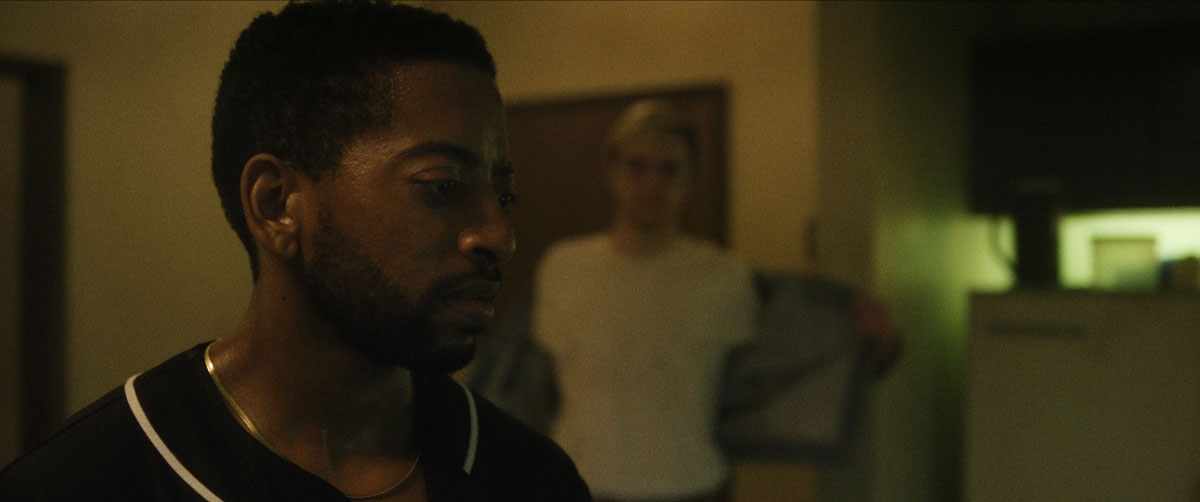
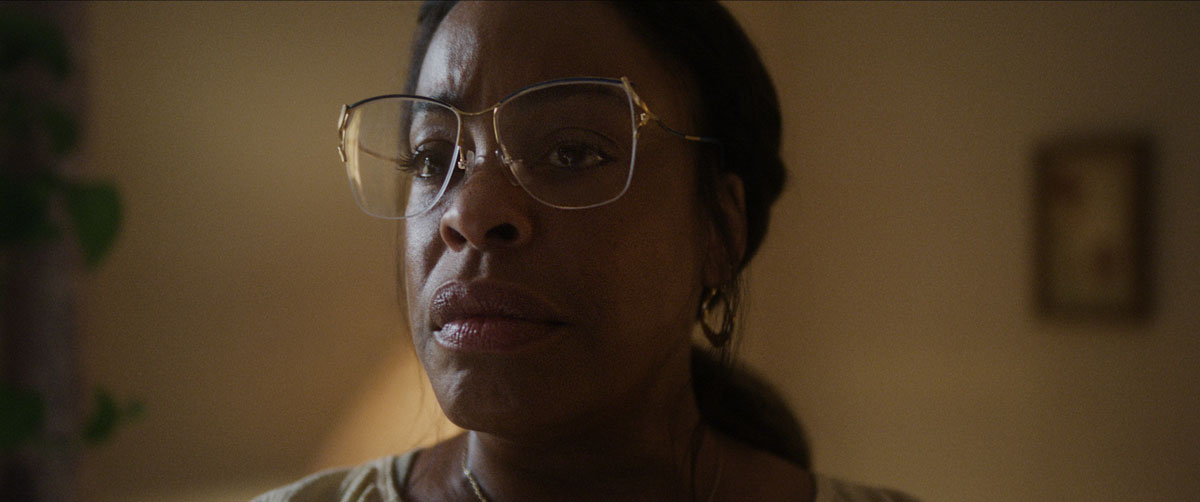
Dahmer, however, was something else – a serial killing cannibal whose average appearance enabled him to ingratiate himself to Milwaukee’s policemen. The most infamous incident re-enacted in “Monster” revolves around the two patrolmen called by Dahmer’s concerned neighbor Glenda Cleveland (Niecy Nash), who encounters a dazed 14-year-old Konerak Sinthasomphone outside their apartment building after the boy escaped Dahmer.

Dahmer arrives and explains to the officers that Sinthasomphone, who he picked up nearby, is 19 and his live-in lover. Glenda objects, urging the cops to confirm that by looking at the kid’s identification. They ignore her and help escort the boy back to the killer’s apartment, where Dahmer finishes murdering him after they leave.

Glenda, you see, is a Black woman living in a low-income community populated by other Black folks, along with Latinos and Asians. Dahmer may have stood out, but to the cops in “Monster,” whose actions are based on what happened, he’s the one who needed protecting. Not the 17 non-white gay men and underage boys who accepted an invitation into his apartment and never re-emerged.

If one were to draw a Venn diagram with “American Horror Story” in one circle and “American Crime Story” in the other, “Monster” would snugly fit in the overlap.

Using the Dahmer case to illustrate the deadliness of prejudicial policing and the government’s unequal applications of justice would seem to be the central undertaking of “Monster.” In case people missed that – which is easy enough to do, given the story’s fixation on Evan Peters’ Dahmer – series co-creator Ian Brennan, Janet Mock, and David McMillan have civil rights leader Jesse Jackson (Nigel Gibbs) verbalize it in the episode titled “Cassandra.”

The Dahmer murders aren’t just a horror show, Jackson explains. “It’s a metaphor for all the social ills that plague our nation. Bad policing. Underserved communities. The low value we assign our young Black and brown men, especially if they happen to be gay. The fact that Black and brown folks still don’t have a voice and when we do speak up, we’re too often ignored.”

If one were to draw a Venn diagram with “American Horror Story” in one circle and “American Crime Story” in the other, “Monster” would snugly fit in the overlap. It is gruesome, disturbing, and – save for the standard creative license taken in its scripts – unnervingly precise in re-creating Dahmer’s history and the legend that has arisen around him.

It is also an example of how the Ryan Murphy brand can be at odds with a story’s mission.

DAHMER Monster: The Jeffrey Dahmer StoryShaun J. Brown as Tracy Edwards and Evan Peters as Jeffrey Dahmer in “DAHMER Monster: The Jeffrey Dahmer Story” (Courtesy Of Netflix)

Murphy used famous murder cases to explore systemic injustice before, as we all know. I’m not talking about the “The People v. O.J. Simpson” chapter of his “American Crime Story” anthology, although that series was the most consistent and adroit in its execution. A better corollary to “Monster” might be “The Assassination of Gianni Versace,” a series that used fame as a lure in its title and its casting, featuring Oscar Ramirez as Versace and Penelope Cruz as Donatella.

In the main, Murphy used their collective notoriety to draw us into a show that turned out to be more about Versace’s murderer, Andrew Cunanan, and the ordinary people he murdered during a cross-country spree that ended with Versace’s death on the doorstep of his Miami home.

Through “The Assassination of Gianni Versace,” Murphy attempted to critique the homophobia that drove the narrative surrounding the case in the same way he and his team used the O.J. Simpson trial to illustrate the ways that race, class, and fame skew the justice system in this country.

In the Dahmer case, he, Brennan, and the writers have the opportunity to pull analytical threads from both of those previous works into a story that is bone-chilling due to the ordinariness of the players involved, and whose circumstances are infuriating for the same reasons.

According to the official press materials, “Monster” strives to center the people forever marked by Dahmer’s grisly acts. The sixth episode, “Silenced,” manages to hit that mark by taking us inside the life of Anthony Hughes, one of Dahmer’s victims who was also deaf. By inviting us into the life of Hughes and his family, the audience is made to feel the grievous wound Dahmer’s murder left on his relatives and his community instead of reducing Hughes to just another plot in this Milwaukee Grand Guignol.

DAHMER Monster: The Jeffrey Dahmer StoryNiecy Nash as Glenda Cleveland in “DAHMER Monster: The Jeffrey Dahmer Story” (Courtesy Of Netflix)

“Cassandra” similarly places Nash’s Glenda at the heart of its plot, and through her, we experience the sustained horror of what it must be like to live next to a maniac who dismembers, cooks and consumes other humans, along with the frustration of not being believed by those who are able but unwilling to stop him.

Nash’s riveting performance is a secondary tentpole in the 10-episode series, although it could have been the main one. Glenda’s agony over not being heard, and hearing lurid sounds, along with smelling unspeakable scents she can never forget, echoes the society-wide primal scream of women fed up with being designated as lesser citizens by an uncaring government.

In theory “Monster” is supposed to return our focus to the victims, but in Glenda’s story, along with that of Dahmer’s mother Joyce (Penelope Ann Miller), we have flesh-and-blood cautionary tales of the terrible price communities pay for disregarding women and their warnings.

But the disconnect between the show’s stated purpose and its actuality is telegraphed in a title that blares Dahmer’s name twice. The “monster” call-out is the part that Peters makes a mighty effort to bring to life through his dead eyes and the flat affect in the emphatic Midwestern accent he assigns to the killer. The Dahmer of “Monster” is designed to promote Peters’ talent which, again, is part and parcel of Ryan Murphy’s brand. Most recognize Peters as a core member of Murphy’s repertory stable, having appeared in multiple seasons of “American Horror Story.”

Whether a part is fictional or based on true events, the emphasis is on giving the producer’s favorite actors roles they can slay – and sometimes that overpowers the intent of a project.

The actor also co-starred in the opening season of “Pose” in a part that made little sense, save for its design to attract white viewers to a show about Black and Latino trans women and gay men.

Glenda’s agony over not being heard … echoes the society-wide primal scream of women fed-up with being designated as lesser citizens by an uncaring government.

The writers could have employed Peters similarly in “Monster,” for the nobler reason of ceding more space to people Dahmer’s shadow obscured. But it doesn’t. Instead, we’re made to sort through scenes from his childhood and young adulthood, checking off the list of standard stops on the “What makes him tick?” American murderer’s TV tour.

The effort to humanize Dahmer is both obscene and, sadly, textbook. True crime thrives on deriving explanations for unspeakable acts people do from the crime they commit and the ones committed against them. More often than not, however, fictional takes on these crimes end up humanizing the criminal. Ted Bundy’s mythos persists in large part because of this, popping up in the guises of handsome leading men hungry to play him, including but not limited to Mark Harmon, Cary Elwes, Chad Michael Murray, Zac Efron and Luke Kirby.

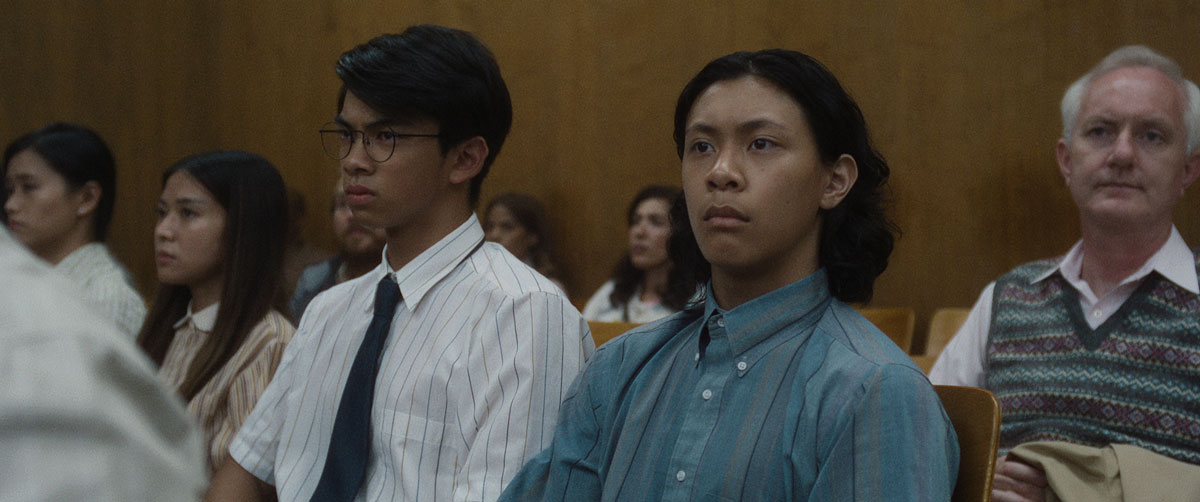
DAHMER Monster: The Jeffrey Dahmer StoryBrayden Maniago as Somsack Sinthasomphone and Kieran Tamondong for Konerak Sinthasomphone in “DAHMER Monster: The Jeffrey Dahmer Story” (Courtesy Of Netflix)

 “Monster” attempts to circumvent this trap near the end of the season through several subplots featuring victims’ families. One depicts the lingering suffering to which the murdered men’s loved ones are subjected by having Dahmer transformed into an ironic comic book hero.

Another scene shows Glenda raging at one of the live interviews conducted with Dahmer as a neighbor, a fellow Black woman, watches. The woman agrees with her anger before starting to say, “Maybe if we can understand what motivated him . . .” Glenda isn’t having it, which insinuates neither should we. And yet, by the end of “Monster,” we know Jeffrey Dahmer’s story down to his parts. That’s no joke – a scene at the end shows us what happened to this demon’s brain.


Want a daily wrap-up of all the news and commentary Salon has to offer? Subscribe to our morning newsletter, Crash Course.


To say Dahmer still haunts is to call attention to a material fact. His legacy has inspired murder tours and an array of movies, all of which forget that many of the people left psychologically scarred or shaken by Dahmer’s crimes are still alive. Some victims’ relatives are livid at the way “Monster” portrays Dahmer or, in the case of Errol Lindsey’s sister Rita Isbell, how it portrays them. The actual footage of Isbell’s victim impact statement, set side by side with an actor’s recreation in “Monster,” is circulating on social media. 

Admiring fans of the show marvel at how closely the actor mimics the details of Isbell’s physicality as she screams and swings at Dahmer, requiring court officers to restrain her. But that awe forgets that Isbell is a human being who wasn’t performing for cameras and wasn’t given any warning that one of the most painful moments of her life would be recreated for entertainment.

It serves as a reminder of the discomforting way the true crime genre has trained us to consume tragedy and turn murderers, victims, and loved ones left behind into characters. “Monster” could have interrogated that more thoughtfully.

Instead it forces Glenda to speak for it, and in contradiction to the message nearly every scene before establishes, by slapping down her neighbor’s feeble excuse for watching a newsmagazine give airtime to the man-eating beast with whom she shared a wall.

“This is not some Halloween story,” Glenda says. “This is my life.”  

“Dahmer – Monster: The Jeffrey Dahmer Story” is currently streaming on Netflix.

Gavin Newsom pushes for California to become sanctuary state for transgender youth

Gov. Gavin Newsom has put new legislature into effect that will make California the first sanctuary state for transgender youth. 

Senate Bill 107, which was signed by Newsom on Thursday, “aims to block states with anti-LGBTQ policies from initiating civil or criminal actions against parents helping their transgender kids access health care in California,” according to The Sacramento Bee

Authored by Sen. Scott Wiener, D-San Francisco, Bill 107 was given the green light in late August and is a direct response against Republican leaning states seeking to criminalize gender affirming surgeries and drugs for minors.

“In California we believe in equality and acceptance,” Newsom said in a message that coincided with his signing of Bill 107. “We believe that no one should be prosecuted or persecuted for getting the care they need — including gender-affirming care. Parents know what’s best for their kids, and they should be able to make decisions around the health of their children without fear. We must take a stand for parental choice. That is precisely why I am signing Senate Bill 107.”

In a statement of his own made via Twitter on Friday morning, Sen. Wiener said “BIG NEWS: @GavinNewsom signed into law our bill (SB 107) to offer refuge to trans kids & their families if they’re being criminalized in their home states. States like Texas & Alabama are seeking to tear these families apart. California won’t be party to it. We have your backs.”


Want a daily wrap-up of all the news and commentary Salon has to offer? Subscribe to our morning newsletter, Crash Course.


“While small, hateful men like (Texas Gov.) Greg Abbott and (Florida Gov.) Ron DeSantis attack trans children and their families, Governor Newsom today made clear that California will welcome them with open arms. SB 107 officially makes California a state of refuge for trans kids and their families,” said Equality California Executive Director Tony Hoang in a statement. “SB 107 will continue California’s legacy of leadership in protecting and advancing the health and well-being of LGBTQ+ communities in a time when we cannot take our rights and protections for granted.”

As detailed in the Sacramento Bee’s coverage of Bill 107, “the new law gives California courts the ability to assert custody hearing jurisdiction when a transgender child is in the state to receive health care.” 

In Brazil’s presidential election, the fate of the Amazon is at stake

Brazilian voters head to the polls this weekend to pick their next head of state, with a choice between right-wing incumbent President Jair Bolsonaro and Luiz Inácio Lula da Silva, or Lula, a former union leader from the country’s left-wing Workers’ Party and past president of Brazil. 

After a tumultuous first term, Bolsonaro, commonly referred to in the media as the “Trump of the tropics,” faces an uphill battle for reelection — with major implications for the Amazon rainforest and climate policy worldwide. 

According to recent polling from the group IPEC, Lula has been picking up steam in the final days of the campaign, solidifying a significant lead. Some 48 percent of polled voters said they currently support Lula; just 31 percent back Bolsonaro. If no candidate receives more than 50 percent of the vote on October 2, the election goes to a runoff on October 30. IPEC’s polling indicates that if the election were to take place today, Lula would likely receive 52 percent of the valid vote — after deducting null ballots — which points to a possible first-round victory.

Elected in 2018, Bolsonaro ran on a platform of pro-extraction, anti-Indigenous initiatives. Since taking office, he has stopped all Indigenous land titling, promoted land grabbing, and encouraged the opening of lands to mining, drilling, and agribusiness. He also appointed anti-environmentalist staff to regulatory agencies across the federal government and prevented enforcement of environmental policy. 

“What Bolsonaro did was completely dismantle Brazilian environmental protections and rendered the environmental ministry all but useless,” said Claudio Angelo, head of climate policy and communications at Observatório do Clima, a group of 77 organizations that do research and advocacy around climate change in Brazil. 

Deforestation rates in the Brazilian Amazon have gone up during Bolsonaro’s time in office, jumping 73 percent above 2018 levels by 2021 — a trend expected to continue, if not escalate, again this year. Between 2010 and 2021, illegal mining increased on Indigenous lands by 632 percent, with the most drastic increases occurring under Bolsonaro’s watch.

This environmental legacy, combined with high inflation rates and unemployment, soaring fuel prices, and the country’s widely criticized response to the COVID-19 pandemic, left Bolsonaro vulnerable to losing his reelection.

Lula was the president of Brazil for two terms between 2003 and 2010, and is generally viewed as having a better track record on environmental issues, though not without some flaws.

During his tenure, government agencies coordinated to reduce deforestation in Brazil by over 70 percent. Under Lula, the country also advocated for climate mitigation and adaptation funding from wealthy members of the United Nations, and secured international funding for Amazon conservation efforts. He was imprisoned for corruption charges in 2018, but in March of last year, the country’s Supreme Court annulled the convictions against him, ruling that the court that convicted him did not have jurisdiction to try him, thus restoring his political right to run for office.

In his current campaign, the former president has spoken out against the destruction of the Amazon, promising to put an end to illegal mining and fight organized networks driving deforestation. But he will face challenges — many ranchers, farming companies, loggers, miners, and land speculators have been emboldened by Bolsonaro’s rhetoric and policies. Plus, Angelo adds, in contrast to his first tenure, they are now heavily armed as Bolsonaro has relaxed gun control laws. 

“I think that Lula is very cautious to understand that this is a huge challenge and is completely different than it was in the past,” Izabella Teixeira, Lula’s campaign adviser on environmental issues and Brazil’s former environment minister, told New Scientist.

While Lula has voiced support for the transition to clean energy, he has also said he would expand oil production, particularly of the “pre-salt,” a reserve of petroleum off the coast of Brazil. While Brazil gets most of its electricity from hydropower, it is also Latin America’s top producer of oil. 

During his presidency, environmentalists criticized Lula and his successor, Dilma Roussef, also of the Workers’ Party, for building the Belo Monte hydroelectric dam, which displaced and impacted water flows for the Juruna tribe and several other Indigenous communities that had lived in the region for generations. More recently, activists decried Lula’s support for reconstructing the BR-319 highway through the Amazon. Two weeks ago, the former president’s environment minister, Marina Silva, who resigned in 2008 over objections to hydroelectric dam permitting, endorsed his candidacy after he agreed to implement a list of environmental policies that she proposed. 

“Lula in 2022 is a different animal,” said Angelo. “He understands that Brazil’s international credibility relies on being a leader in the climate arena. And with Marina Silva’s proposals, we can now say that he is the candidate with the most advanced environmental package.”

As the country heads into election weekend, and threats against female, Indigenous, and Afro-Brazilian candidates intensify, many residents and policy experts have expressed concerns that Bolsonaro and his supporters might refuse to accept electoral defeat.

“Bolsonaro represents the continuation of authoritarianism and of people who think like him, that share a love of the military dictatorship and were not happy with democratization,”  Lilia Schwarcz, a senior lecturer of anthropology at the University of São Paulo, told the Washington Post. “Now they are emboldened to express these views.”

Does cannabis really make people apathetic? New research suggests the “lazy stoner” myth isn’t true

Picture a person who enjoys smoking weed — a “stoner” or “pothead.” For many people, Cheech & Chong jumps immediately to mind. The ’70s bong-toking duo redefined drug use in comedy, cementing in the public consciousness tropes about cannabis users being dim-witted, incoherent and lazy (and also quite hilarious).

These stereotypes persist today. A 2019 analysis in the journal Visual Communication examined more than 450 depictions of marijuana users across 10 different media outlets before and after Colorado legalized adult-use cannabis.

“Users were often shown as rebellious protesters: lazy, aloof and unkempt ‘drains’ on societal resources, and radicals who embrace counter-cultural lifestyles,” the authors reported. “Users were depicted as youthful party goers and pleasure-seekers, and overly-enthused about marijuana. Most of all, these images of smoke-covered music festivals and 20-somethings rolling oversized joints demarcated ‘potheads’ from ordinary, everyday people.”

But new research challenges this popular perspective, finding that cannabis users probably aren’t lazier than the general population. A study published last month in the International Journal of Neuropsychopharmacology disputes the idea that using cannabis decreases motivation or increases feelings of apathy and anhedonia, or the inability to feel pleasure from activities that were once enjoyable.

Researchers at the University of Cambridge and other institutes in the U.K. recruited participants from the Greater London area, finding 135 adults and adolescents who reported using cannabis an average of four times per week. For controls, they recruited 139 adults and adolescents who had tried cannabis at least once (but fewer than 10 times in their lifetime) and hadn’t touched the drug in the past month. All participants were required to be sober for at least 12 hours prior to the experiment.

The authors predicted that individuals who use cannabis would have higher rates of anhedonia and apathy compared to controls and less willingness to expend effort for rewards. They also predicted that adolescents would do worse on these scales than adults. However, their hypotheses weren’t supported.

“We were surprised to see that there was really very little difference between cannabis users and non-users when it came to lack of motivation or lack of enjoyment . . .”

“We were surprised to see that there was really very little difference between cannabis users and non-users when it came to lack of motivation or lack of enjoyment, even among those who used cannabis every day,” the study’s lead author, Martine Skumlien, a PhD candidate in the department of psychiatry at the University of Cambridge, said in a statement. “This is contrary to the stereotypical portrayal we see on TV and in movies . . . Our work implies that this is in itself a lazy stereotype, and that people who use cannabis are no more likely to lack motivation or be lazier than people who don’t.”

The participants were subjected to a battery of tests and surveys to measure their motivation and temperament. Apathy was measured with the Apathy Evaluation Scale, while anhedonia was scaled using the Snaith-Hamilton Pleasure Scale, which asked prompts like “I would enjoy being with family or close friends.” One task involved the subjects pressing buttons to score points that were later exchanged for candy, which can measure “effort-based decision-making.”

“Our results suggested that adolescents had higher anhedonia and apathy compared with adults, but that cannabis use did not augment this difference,” the authors reported. “Our findings should help to reduce stigma experienced by people who use cannabis by further dispelling claims of the ‘amotivational syndrome,’ which increasingly appears lacking in scientific support.”

These results, however, should be taken with a grain of salt, the authors caution. Because there are so many variables, it’s very difficult to tease out these causal relationships from drug use. For example, this study only focused on individuals from the U.K., and there could be other ways cannabis impacts motivation that weren’t screened.

This study is in line with other research that suggests laziness and marijuana use may be inaccurately conflated.

Nonetheless, this study is in line with other research that suggests laziness and marijuana use may be inaccurately conflated. The largest study to date on this topic, a 2020 report in the journal Substance Use & Misuse, surveyed 874 people who had reported using cannabis at least once in their life, which was weakly linked to decreased motivation.

“However, the size of these correlations was small, indicating that cannabis accounts for less than 8% of the variance in motivation,” the authors reported. Instead, the decrease was most likely attributed to other factors, such as mental health, personality or using other drugs. In the Cambridge study, the authors tried to better control for these variables.


Want more health and science stories in your inbox? Subscribe to Salon’s weekly newsletter The Vulgar Scientist.


More research is needed to really tease out this relationship, but this is some of the strongest evidence available showing that cannabis use and laziness probably aren’t connected (though nothing has been completely ruled out). No research has been able to show a mechanism of action for this alleged relationship, either. In other words, if cannabis does make you lazy, we don’t know how.

Thanks to Cheech & Chong, the idea that cannabis users are lazy and stupid, but generally harmless, became a mainstream perception. It may have been a step in the right direction, considering that the 1936 propaganda film “Reefer Madness” depicted cannabis users as violent psychopaths. Such ludicrous depictions of marijuana use have been largely debunked, with any such link largely associated with individuals who already have a history of violence or mental illness.

What will it take for the myth of the lazy stoner to be weeded out, or be replaced with something closer to the truth?

Why is corn syrup in so many American infant formulas?

All mammals, including humans, make milk with carbohydrates in the same unique form: lactose, a sugar that is a fusion of two other sugars called galactose and glucose. While scientists don’t know why all mammary glands arrange sugars this way, many believe that it’s important for babies. And growing evidence suggests that lactose substitutes in infant formula, such as corn syrup solids, may have health consequences, though the research comes with caveats and experts caution against swapping formulas amid a lingering shortage.

Research indicates that corn-syrup-based formulas are metabolized differently by infants compared to lactose-based formulas and human milk. Small studies have shown that the former alters the infant microbiome, as well as eating habits of toddlers. And a new study, published this August in The American Journal of Clinical Nutrition, followed 15,000 infants and suggested a higher risk of obesity at age four for those who were fed corn-syrup-based formula compared to those who were fed lactose-based formula. The study tracked children who received free formula through the Special Supplemental Nutrition Program for Women, Infants, and Children, or WIC.

Nearly half the babies in the U.S. receive benefits from the program, and most are fed formula. In every state, WIC formula options are limited, and in most states there is only one that contains lactose carbohydrates. (Due to the formula shortage, many states have temporarily allowed WIC participants more options, though that is set to expire at the end of the year.)

Historically, most infant formulas contained lactose, but according to recent purchasing data, about half of all infant formula sales are now for lactose-reduced or lactose-free formula, compared to just a small fraction of sales a few decades ago. These formulas replace some or all of the lactose with corn sugars; most often corn syrup solids, sometimes maltodextrin, both of which are just glucose.

Companies that sell lactose-free or lactose-reduced formulas often claim that the products help fussy, gassy, crying babies. Robert Boyle, a children’s allergy specialist and researcher at Imperial College London, told Undark that he hasn’t seen “good evidence” that lactose-free or low-lactose formulas “have any positive benefits in that sort of context” noting that few healthy babies need lactose-free formula. But formula marketing focuses on fashionable concerns and mother’s insecurities, not health issues, he explained. “It’s all smoke and mirrors,” he said about the health claims.

Although the U.S. Food and Drug Administration regulations cover 30 required nutrients in infant formula including protein, fats, and vitamins, they don’t cover carbohydrates. Meanwhile, the European Union limits the amount and types of sugars allowed in standard formulas, and bans corn syrup.

Whether corn syrup is the right substitute for lactose in formula is something that Michael Goran, a pediatrics professor at Children’s Hospital Los Angeles and author of the recent WIC study, questions. Someone who is lactose intolerant, “wouldn’t put corn syrup on cereal instead of milk,” he pointed out, “they buy milk with lactase added,” referring to the enzyme that digests lactose.


While older children may lose the ability to digest lactose and become lactose intolerant, very few babies are lactose intolerant, said Anthony Porto, a pediatric gastroenterologist at Yale. Only babies born with a rare hereditary disease called galactosemia are completely unable to digest lactose. Some experts, including Carolyn Slupsky, a nutrition professor at University of California, Davis, argue that if a child doesn’t have that condition, they shouldn’t have lactose-free formula. “All formulas, unless they are specifically for a child with galactosemia, should be lactose-based,” she said.

For parents who don’t rely on WIC, there are many lactose-based formula options if their baby is otherwise healthy. Still, even many formulas advertised as made from milk may not contain lactose. These may say “milk-based” on the front label because the protein component of the formula comes from cow’s milk. But these formulas — which are often labeled as sensitive, gentle, comfort, or soothe — still use corn sugar, rather than lactose, as a carbohydrate.

When a baby has trouble digesting a formula, lactose isn’t usually the problem, Porto said, the protein is, and research supports this. For babies having certain digestive issues, Porto recommends a formula with proteins that have been broken down, or hydrolyzed, to make them easier to digest. However, there are no fully hydrolyzed formulas, and only a few partially hydrolyzed formulas, made with lactose. Because most babies with digestive issues are still able to digest lactose, Porto believes there should be lactose-based formulas with broken-down proteins available.

According to Boyle, the only time that an otherwise healthy baby might benefit from lactose-reduced formula is for a short period after a gastrointestinal disease, like a bout of diarrhea, which “can damage the lining of the gut,” and may make them temporarily lactose-intolerant. Usually this intolerance only lasts a couple of weeks, he added. But there isn’t solid evidence to suggest that lactose-reduced formulas help with colic, gas, or fussiness — the research that suggests that it might are small studies run by formula companies. (For babies with more serious issues, like cow’s milk protein allergy, studies suggest that formulas with hydrolyzed proteins that are lactose-free can help, but formulas containing lactose along with fully broken-down proteins have not been studied.)

A spokesperson for the Infant Nutrition Council of America, which represents the four largest infant formula manufacturers, wrote in an email to Undark: “Infant formulas are rigorously regulated by the U.S. Food and Drug Administration (FDA), and all ingredients used must be deemed safe and suitable by the FDA for the intended use in infant formulas. Infant formulas are nutritionally complete and need a source of carbohydrate to provide energy. Corn syrup solids and maltodextrin have been clinically shown to be well-tolerated carbohydrate sources for infants with food allergies or gastrointestinal disorders who are unable to consume breastmilk or standard formula.”


There’s an ongoing debate about potential health consequences linked to formula, regardless of whether it contains lactose. Formula has been linked to higher infant mortality, more infections in infancy, lower wages in adulthood, higher cancer rates in adulthood, increased risk of obesity, and more. However, no studies have proven that formula is a direct cause, and many of the links may be because lower income people, who are already at risk for these issues, are more likely to feed formula. Plus, there are knowledge gaps about whether certain components of human milk could give babies an extra benefit when added to formula, or whether substituting ingredients could put them at risk.

While the balance of nutrients can differ among mammals’ milks, for many, including humans and cows, lactose is the most abundant component. Lactose takes time for the body to digest into the form of sugar our body readily uses — glucose — Slupsky explained. With corn sugars, glucose enters the body all at once, leading to big spikes in insulin. For glucose, the glycemic index, which is a numerical indication of blood sugar rise, is more than double that of lactose.

The long-term effects of these larger insulin spikes in babies hasn’t been well studied. The new WIC study by Goran and colleagues is the first to track babies who were fed corn-syrup-based formula well beyond infancy. They found a 10% increase in obesity at age two, and a 7% increase at age four compared to babies who were fed lactose-based formula.

“When we look on the absolute scale, it’s roughly two out of 100 additional children who received this formula with corn syrup solids were obese compared to those who received the other formulas. And that was consistent at ages two, three, and four years,” Goran explained. “Of WIC participants nationally, roughly 15 out of 100 will be obese by the time they age out of eligibility” at age four, said Christopher Anderson, an author of the study and an epidemiologist at Public Health Foundation Enterprises (PHFE) WIC, a program of Heluna Health, which serves women, children, and families in Southern California.

“Obesity already is a public health crisis,” noted Shannon Whaley, a director of research at PHFE WIC. “What else can we be doing to attenuate that risk? Well, to me, it’s clear from this research that formulas that have corn syrup solids confer additional risk.”

In an email to Undark, Bridget Young, an infant nutrition researcher at University of Rochester, wrote: “This paper provides excellent public health data that is useful for informing regulations and future research.” Young, who was not involved in the research, also noted: “This study is not enough to suggest that any parents go out and change their formula due to these results, especially since we parents are still facing limited options due to the formula shortage.”

It’s unclear why corn syrup is so common in infant formula to begin with. Goran said he believes that the only explanation “is that it’s an economic thing — that is cheaper to make, and more money can be made from it.” But Porto suggested a less nefarious reason, at least for formulas that contain broken-down proteins — these proteins taste bitter, and corn syrup solids can make them more palatable. However, he said these formulas could instead be made with mostly lactose and just a little bit of some kind of sugar to disguise the bitter flavor.

For now, some experts, including Porto and Slupsky, said that the U.S. should do more to ensure that all babies have access to lactose-containing formula. After all, Slupsky added: “There’s a reason that all mammals have lactose as their primary carbohydrate source.”


Christina Szalinski is a freelance science writer with a Ph.D. in cell biology based near Philadelphia.

This article was originally published on Undark. Read the original article.

The untold story behind “Strawberry Fields Forever”

As I began researching for my book, “Understanding John Lennon,” I discovered that the story for the Beatles‘ “Strawberry Fields Forever” was not as most people originally thought. The popular story told is about a girls’ orphanage with that name, but the true inspiration was to be found elsewhere – within a breakout at a juvenile hall during a dark time in the artist’s childhood.

In David Sheff’s “The Playboy Interviews with John Lennon & Yoko Ono,” John Lennon himself revealed that there were two famous houses where he lived: 

One was owned by Gladstone: a reformatory for boys, which I could see out my window, and Strawberry Field, just around the corner from that, [which was] an old Victorian house converted for Salvation Army orphans.

Strawberry Field (pictured above) was a mansion built in 1870 and was owned by a wealthy shipping magnate. It was sold on, and in 1936 the Salvation Army opened a home for young girls. While that orphanage may have inspired the title, the song “Strawberry Fields Forever,” however, was set in John’s childhood, during his time at the Mendips, the house he shared with his Aunt Mimi for 15 years. This has been misunderstood and covered up, and the full background and meaning of the song have never been questioned. On many occasions, John, and especially John’s Aunt Mimi, have painted a picture of an idyllic past, while at other times the degree of John’s unhappiness as a child has surfaced.

Near Strawberry Field was the Gladstone merchant’s mansion, named Woolton Vale, later to become Woolton Vale Remand Home, about which John’s cousin Stanley declared that “the bad boys’ borstal intrigued us.” This reformatory housed youngsters who had been convicted of theft, truancy or ill-disciplined – the types of children whose parents didn’t want to know, outcasts. It’s not too hard to imagine young John gazing out from behind his bedroom curtains and catching sight of one of these unhappy, unloved and rejected children staring back from a barred window frame. In his 15 years at Mendips, John would have likely caught sight of boys leaving or entering the building, in their regulation coarse brown uniforms accompanied by a member of staff, youth officer or even a policeman.

On December 29, 1965, a breakout by a group of boys occurred at the Woolton Vale Remand Home that made headlines in all of the local papers, such as the Liverpool Echo. Given the close proximity of Gladstone Hall to Mendips the novelty of this news would, no doubt, be passed to John from friends in Liverpool. Months after this news filtered down to him and while John began filming “How I Won the War,” he began work on “Strawberry Fields Forever.” When the body of the work was completed, all that was missing was . . . the title. The lyrics themselves mentioned no setting, imaginary or otherwise.

Mendips; WooltonA blue plaque is displayed at Mendips, the childhood home of John Lennon of The Beatles in Woolton on February 11, 2016 in Liverpool, England. (Christopher Furlong/Getty Images)

There was no mention of “Strawberry Field,” spoken or otherwise on the demo – and this is after just two months since the idea for the song was conceived.

Later in his home music demos of the song, John used  “It’s Not too Bad” as the working title for the song. Almost half the songs that came to the Abbey Road recording studio had working titles, and the vast majority of these songs found their finished title within the body of the lyrics. For example, the song with the working title “Seventeen” became “I Saw Her Standing There,” and “Hello, Hello” became “Hello Goodbye.” Some songs had working titles that were “alien” to the lyrics. For example, “That’s a Nice Hat” was the working title for “It’s Only Love,” and “Bad Finger Boogie” was the working title for what would later be “With a Little Help From my Friends.”

John’s demos put the emphasis on the line, “It’s not too bad,” as if this were to be the title of the song. However, unlike the other Beatles songs that eventually found their official titles in the lyrics, there was no mention of “Strawberry Field,” spoken or otherwise on the demo – and this is after just two months since the idea for the song was conceived. So, it is fair to assume that the lyrics John came up with when he was in Almería, Spain shooting “How I Won the War,” were not connected to Strawberry Fields at all, but instead were influenced by somewhere else  . . .  Gladstone Hall.

Meanwhile, The Beatles were slipping away from John. The release of “A Hard Day’s Night” saw John taking the lead vocal solo six times. Taking into account John and Paul McCartney’s joint efforts, a rough estimate of John’s music on the album was 19 minutes out of an album time of 30 minutes. With “Revolver” John had five lead vocals with 13 minutes of his music on an album of 33 minutes, and with “Sgt. Pepper” John would provide lead vocal on four songs and clock up a measly 10 minutes of his time on an album that ran for 40 minutes. John’s crown was slipping and he knew it; the period of “It’s Not too Bad”/ “Strawberry Fields” was one of full-tilt deep introspection.

Paul’s studio technical efficiency was there for all to see, grounding itself in “Revolver” and given full bloom in “Sgt. Pepper.” And although “It’s Not Too Bad” was a precursor to this notion of childhood, it could well have given John an insight into using the location of Strawberry Field as a cover for the meaning to the lyrics’ real origin. The initial and brief concept for “Sgt Pepper” about children growing up, discussed by John and Paul, gave John a way out of explaining the lyrics to “It’s Not too Bad.” Now he cast his mind around towards “selling” the deeply personal yet ambiguous lyrics of “It’s Not too Bad” and did so by tagging on a chorus surrounding a vague notion of the girls’ home. When listening to the lyrics we see the chorus is fairly straightforward. “Nothing is real” is again a nod by John to confusion, which is fairly easy to understand, as to the line, “Nothing to get hung about,” let’s not get upset?
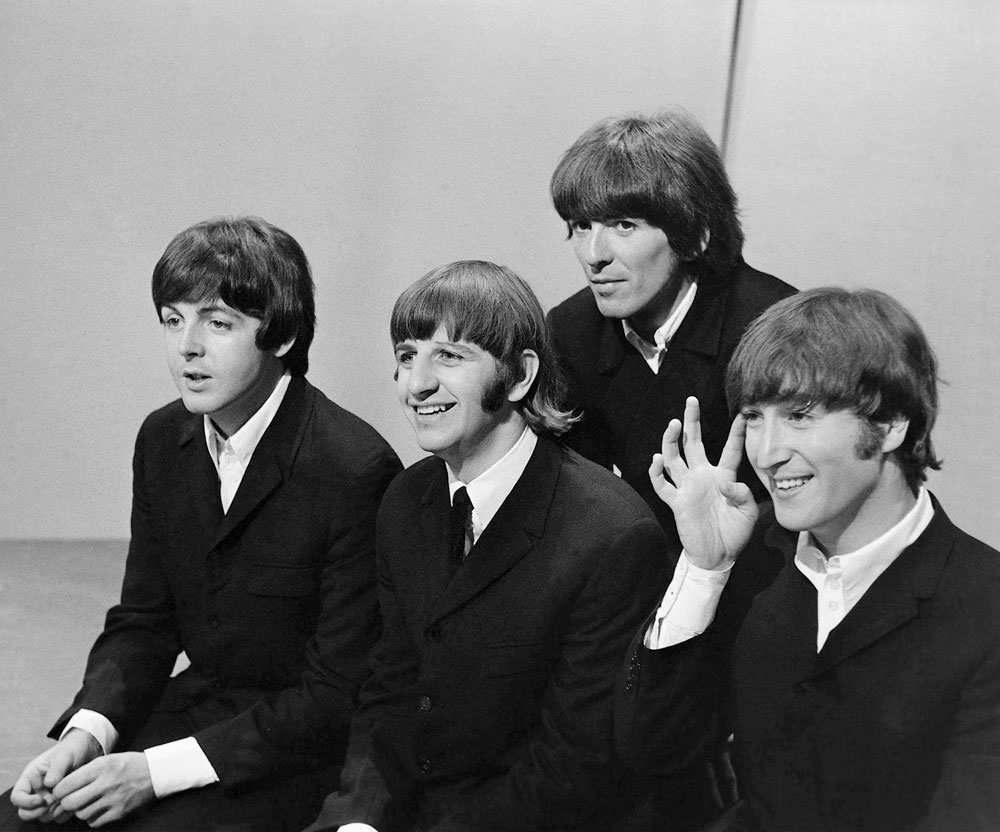
The BeatlesThe Beatles on the set of ‘Top Of the Pops’, plugging their new single ‘Paperback Writer’/ ‘Rain’, 16 June 1966 (Daily Mirror/Mirrorpix/Getty Images)

If we omit the choruses of “Strawberry Fields Forever” and examine the original body of 12 lines and factor into account the corrosive effect of Mimi, reflected by her lack of love and constant criticism of John, this proved to have a painful and lasting effect on his childhood and adult life, the interpretation of the line, “Living is easy with eyes closed,” is revealed in John’s explanation of the lyric in “Ray Connolly Beatles Archive”: “It was pretty straightforward. It’s about me and I was having a hard time.” John tells us that, contrary to the previously portrayed idyllic childhood. After all the years since his childhood and the fame, fortune and fan worship, now, years later, John is telling us that he still remembers that part of his life and that it is important that he can instantly recall this childhood memory, such is the impact and remaining pain he feels and is recalled now into public view.

At times, the party line of the cherished childhood is broken as John said in Jan Wenner’s famous “Rolling Stone” interview: “When you’re a child you can only take so much pain.” Some of the lyrics have a meaning known only to John. With other lyrics, we can give an educated guess, such as “Misunderstanding all you see,” could well be a reference  and an allusion to one of John’s early literary influences, Lewis Carroll’s “Alice in Wonderland” and “Imagination is the only weapon in the war with reality.”

The main body of lyrics is a challenge to the listener without an understanding of the painful and deeply damaging time in Mendips.

It is unclear why John would tag on a Salvation Army Orphanage, in the shape of Strawberry Field, while the physical, concrete aspects – the orphanage and the orphans – are ignored in the song. Whereas the double A side of “Strawberry Fields Forever,”  Paul’s “Penny Lane” is full of movement and images. In “Penny Lane,” Paul gives us a barber’s shop that shows photographs, a banker driving a car, little children who laugh at the banker, a fireman, a portrait of the Queen, heavy petting, a clean fire engine, a pretty nurse, the selling of poppies, a bus shelter, a barber shaving a customer, a fireman rushing about, the rain pouring and all this beneath the blue suburban sky. This is the evocative imagery of childhood. John gives us a care home, but no orphans or children, no hustle and bustle of children at the orphanage’s  annual fair, the brass band, playing games, children running around having fun in the summer sunshine – nothing, just a building that we are invited down to visit.
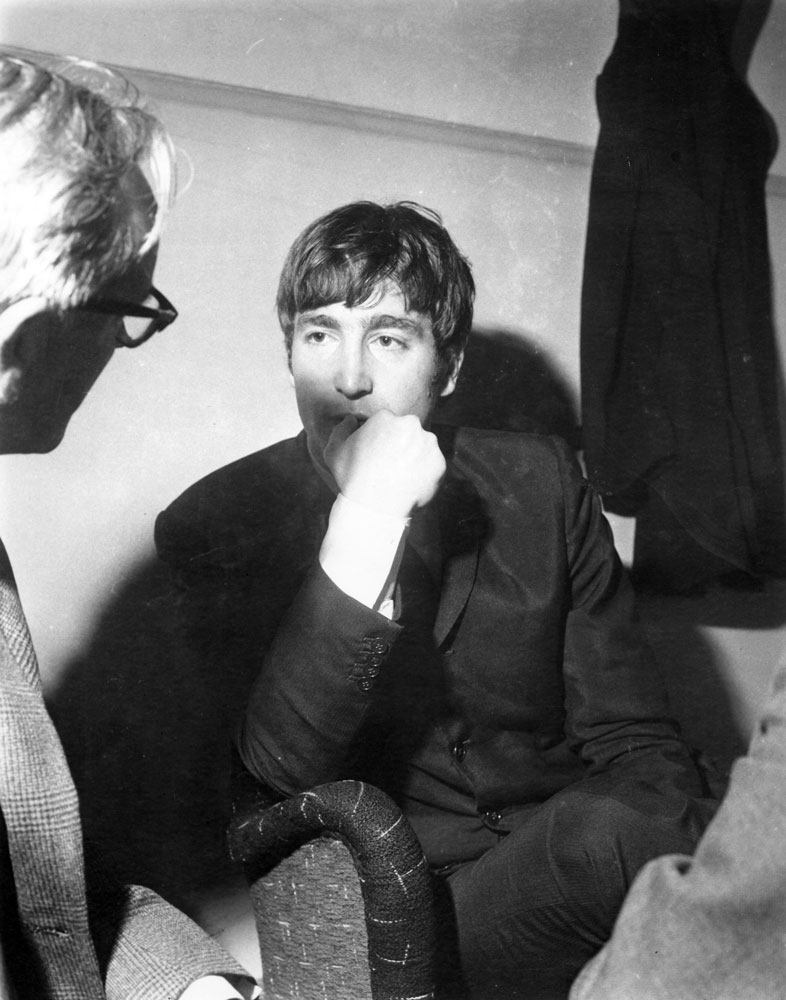
John LennonJohn Lennon of the rock and roll band “The Beatles” poses for a portrait in circa 1966. (Michael Ochs Archives/Getty Images)

John explained to Sheff, “No one I think is in my tree,” is a pointer towards “Nobody seems to be as hip as me,” followed up with, “I must be crazy or a genius. It’s that same problem I had when I was five.” Two things seem to be taking place here. Firstly, since the breakup of The Beatles 10 years before that quote, John was reinventing himself and still in major competition with Paul, and is therefore trying, in a subtle way, to say, “Look you can see I’m not crazy, so I must be a genius.” Secondly, at the time of this quote, the concealment of the true inspiration for “Strawberry Fields Forever” had lasted over a decade, and John was happy for this to continue.  The sleight of hand, vagueness of leaving out the physical side of the orphanage or those contained within its walls were kept deliberately “out of reach” for the simple reason that the lyrics were not focused on orphanages or those in their care.

The main body of lyrics is a challenge to the listener without an understanding of the painful and deeply damaging time in Mendips, along with the sudden and tragic loss of his mother, with whom as a teenager John had rekindled a strong relationship through his visits and staying over. So why didn’t John reveal the true inspiration for “Strawberry Fields Forever”? To make a declaration that the song was about a reform home for boys would have brought up questions that John didn’t want to answer, questions regarding the regime at Mendips.

The main belief has been that John’s unhappiness stems from his being “deserted” by his father and abandoned by his mother, but this unhappiness goes much further. Few had an insight into John’s life at Mendips with Mimi, but John’s wife Cynthia, did and in “Lennon” said:

[Mimi] loved to fuel the image of the stern but a loving aunt who provided the secure backdrop to John’s success. . . .  She battered away at John’s self-confidence and left him angry and hurt . . . and humiliated .

In David Bedford’s “Liddypool: The Birthplace of The Beatles,” John’s half-sister Julia Baird commented that Mimi was a “hypocrite to the core.” While Paul McCartney said in Barry Miles’ “Many Years from Now,” “She was the kind of woman who would put you down with the glint of an eye.”
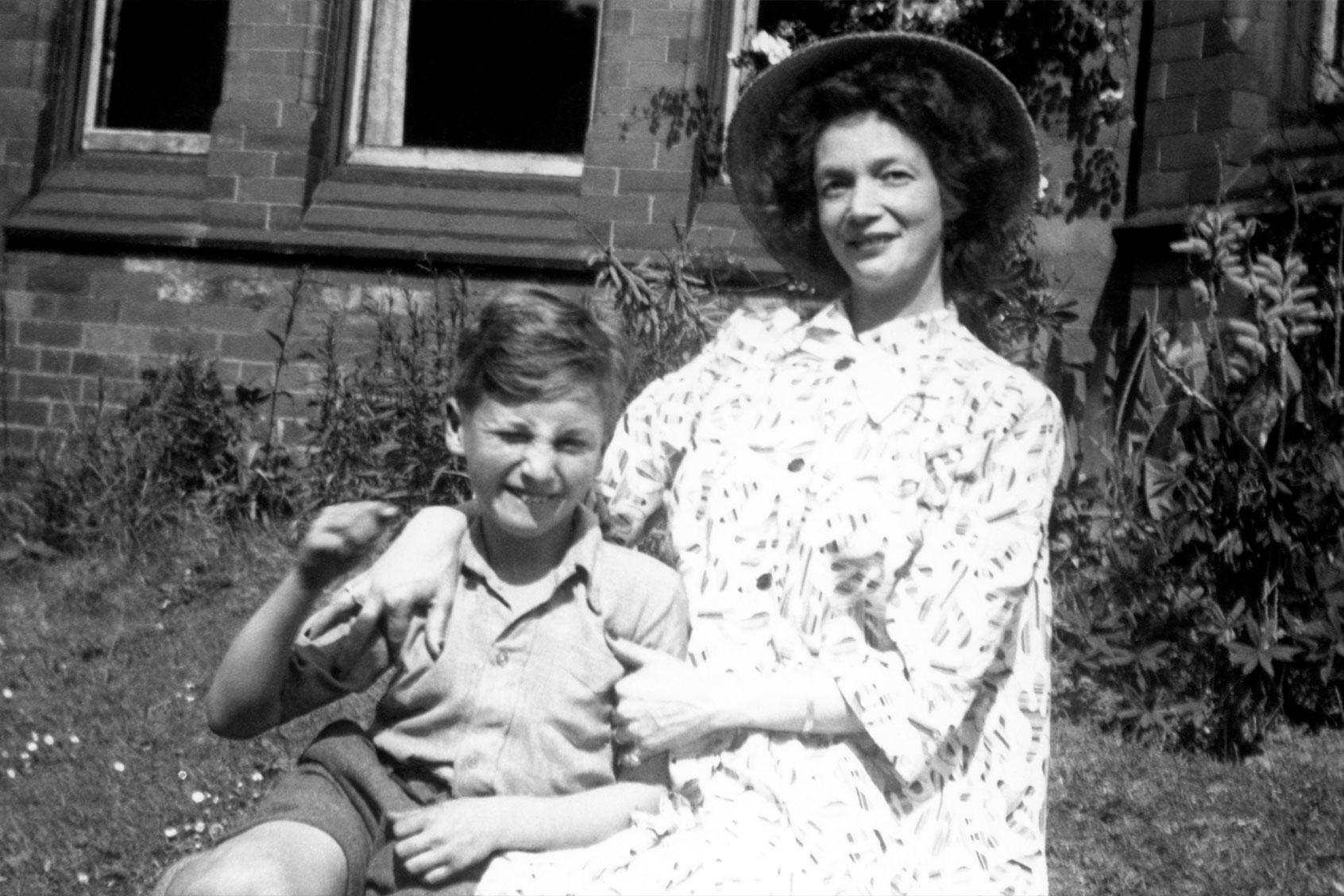
Nine-year-old John Lennon poses for a portrait with his mother JuliaNine-year-old John Lennon (1940-1980) poses for a portrait with his mother Julia (1914-1958) in the front garden of “Ardmore” in Rock Ferry, Cheshire, England. (Jeff Hochberg/Getty Images)

In public, John’s mother Julia, and especially his father Freddie, became the fall guys, the cover-up of the destructiveness of living with Mimi. Why? Because if John was to give a full insight into the distress and hurt that fueled “Strawberry Fields Forever,” this, in turn, could well lead to a possible disclosure as to his dependency on Mimi, who had put a roof over his head, put food on the table, paid for his fees in art college and, up until he turned 21, gave him pocket money. How could he make it known that the opinionated, wise-cracking, witty rock ‘n’ roll rebel he portrayed had developed out of the passive acceptance of the regime at Mendips? His single-mindedness, determination and resulting mental anguish to finding fame and fortune in return for an escape from Mendips turned out to be a poisoned chalice. It was the callousness and mental torment that John had been schooled into accepting.


Want a daily wrap-up of all the news and commentary Salon has to offer? Subscribe to our morning newsletter, Crash Course.


The non-stop rain of soul-destroying remarks had their effect and John would later give an insight into his poor mental health, recalling his depression and thoughts of suicide. John opened up to Jan Wenner, saying, “Some people cannot see that their parents are still torturing them even when they are in their 40s and 50s.” He gives further insight into the song’s real meaning saying it was “psychoanalysis set to music really” in “Anthology.” Considering how psychoanalysis is seen as a therapy to release repressed emotions and experiences, where do summer fairs and the Salvation Army fit in? John further revealed in “Rolling Stone,” “You don’t want to do with people you can’t stand, the people you hated when you were 10.” The question that immediately jumps to mind is: whom did John hate at the age of 10?

“Strawberry Fields Forever” reflects a dream of a young boy’s escape. It was an iceberg. On top a whimsical salve of idealistic times, of an image of contented and cared-for orphaned girls and summer fairs. But below the waterline, as in Gladstone Hall lies a collection of casualties, of dysfunctional families, unwanted, unloved and neglected children contained within barred windows and locked doors, with no escape. They survived in their dreams in their imagination. And along the road, a stone’s throw away another child living in a loveless environment, also using his imagination to escape, supported with his poetry, writing and storybooks. Woolton Vale Remand Home and “It’s Not too Bad” was the pearl in the oyster, and “Strawberry Field Forever” was its shell. This cannot be in any doubt. Fifteen years after the song’s conception he reveals to Sheff: “My influences are tremendous, from Lewis Carroll to Oscar Wilde to tough little kids that used to live near me who ended up in prison and things like that  . . .”

Like genes, your gut microbes pass from one generation to the next

When the first humans moved out of Africa, they carried their gut microbes with them. Turns out, these microbes also evolved along with them.

The human gut microbiome is made up of hundreds to thousands of species of bacteria and archaea. Within a given species of microbe, different strains carry different genes that can affect your health and the diseases you’re susceptible to.

There is pronounced variation in the microbial composition and diversity of the gut microbiome between people living in different countries around the world. Although researchers are starting to understand what factors affect microbiome composition, such as diet, there is still limited understanding on why different groups have different strains of the same species of microbes in their guts.

We are researchers who study microbial evolution and microbiomes. Our recently published study found that not only did microbes diversify with their early modern human hosts as they traveled across the globe, they followed human evolution by restricting themselves to life in the gut.


The gut microbiome plays a key role in many areas of your health.

Microbes share evolutionary history with humans

We hypothesized that as humans fanned out across the globe and diversified genetically, so did the microbial species in their guts. In other words, gut microbes and their human hosts “codiversified” and evolved together – just as human beings diversified so that people in Asia look different from people in Europe, so too did their microbiomes.

To assess this, we needed to pair human genome and microbiome data from people around the world. However, data sets that provided both the microbiome data and genome information for individuals were limited when we started this study. Most publicly available data was from North America and Western Europe, and we needed data that was more representative of populations around the world.

So our research team used existing data from Cameroon, South Korea and the United Kingdom, and additionally recruited mothers and their young children in Gabon, Vietnam and Germany. We collected saliva samples from the adults to ascertain their genotype, or genetic characteristics, and fecal samples to sequence the genomes of their gut microbes.

For our analysis, we used data from 839 adults and 386 children. To assess the evolutionary histories of humans and gut microbes, we created phylogenetic trees for each person and as well as for 59 strains of the most commonly shared microbial species.

When we compared the human trees to the microbial trees, we discovered a gradient of how well they matched. Some bacterial trees didn’t match the human trees at all, while some matched very well, indicating that these species codiversified with humans. Some microbial species, in fact, have been along for the evolutionary ride for over hundreds of thousands of years.

Two phylogenetic trees comparing human genetic diversity across geographic regions to the genetic diversity of _Collinsella aerofaciens_These two phylogenetic trees of human participants (left) and one bacterial species (right) closely match, indicating that they likely diversified together over the course of evolution. Reprinted with permission from Suzuki et al., Science Volume 377, abm7759 (2022), CC BY-NC-ND

We also found that microbes that evolved in tandem with people have a unique set of genes and traits compared with microbes that had not codiversified with people. Microbes that partnered up with humans have smaller genomes and greater oxygen and temperature sensitivity, mostly unable to tolerate conditions below human body temperature.

In contrast, gut microbes with weaker ties to human evolution have traits and genes characteristic of free-living bacteria in the external environment. This finding suggests that codiversified microbes are very much dependent on the environmental conditions of the human body and must be transmitted quickly from one person to the next, either passed down generationally or between people living in the same communities.

Confirming this mode of transmission, we found that mothers and their children had the same strains of microbes in their guts. Microbes that were not codiversified, in contrast, were more likely to survive well outside of the body and may be transmitted more widely through water and soil.

Gut microbes and personalized medicine

Our discovery that gut microbes evolved right along with their human hosts offers another way to view the human gut microbiome. Gut microbes have passed between people over hundreds to thousands of generations, such that as humans changed, so did their gut microbes. As a result, some gut microbes behave as though they are part of the human genome: They are packages of genes that are passed between generations and shared by related individuals.

Personalized medicine and genetic testing are starting to make treatments more specific and effective for the individual. Knowing which microbes have had long-term partnerships with people may help researchers develop microbiome-based treatments specific to each population. Clinicians are already using locally sourced probiotics derived from the gut microbes of community members to treat malnutrition.

Our findings also help scientists better understand how microbes transition ecologically and evolutionarily from “free-living” in the environment to dependent on the conditions of the human gut. Codiversified microbes have traits and genes reminiscent of bacterial symbionts that live inside insect hosts. These shared features suggest that other animal hosts may also have gut microbes that codiversified with them over evolution.

Paying special attention to the microbes that share human evolutionary history can help improve understanding of the role they play in human well-being.

Taichi A. Suzuki, Postdoctoral Research Associate in Microbiome Science, Max Planck Institute for Biology and Ruth Ley, Director, Department of Microbiome Science, Max Planck Institute for Biology

This article is republished from The Conversation under a Creative Commons license. Read the original article.

Can plants think? The burgeoning field of plant neurobiology has a lot to say on the matter

Americans like to mow their lawns, but blades of grass aren’t supposed to all have the same length. Left un-sheared, an all-natural lawn contains grasses of wildly varying heights, more akin to an unruly, uncombed head of hair right after a long night’s sleep. A lawn is not a single organism, but a large community of plants that have individual heights; being mowed is not the natural state for a blade of grass.

This raises a disturbing question: When a human mows a lawn, is that the equivalent of mass torture to the grass — assuming the grass can “feel” or “think” the way we can? The proposition is not as outlandish as it might seem. Recent research suggests that plants are far from the stationary automatons that most of us think of them as. And though they don’t have brains in the same way most animals do, plants seem to possess a different set of evolutionary tools that suggest they may experience consciousness, albeit in a radically different way from us. 

“There are numerous definitions but the most simple and relevant is this: Consciousness is a feature of living systems allowing them awareness of their external and internal conditions.”

One such theory of how this might work is known as the “Cellular Basis of Consciousness” theory. This posits that all life, from the smallest single-celled organism and on upwards to the largest animals on Earth, possesses something akin to consciousness.

“In our Cellular Basis of Consciousness (CBC) Theory, consciousness evolved with the very first cells and all cellular life is endowed with consciousness which is essential for their agency, survival and evolution,” explained Dr. Frantisek Baluska, a scientist at the University of Bonn’s Department of Plant Cell Biology, in an email interview with Salon. Baluska has published articles in scholarly journals from BioEssays to Philosophical Transactions B on the subject of plant consciousness. According to CBC Theory, every cell that exists possesses the innate qualities necessary to possess a level of self-awareness. It points out that individual cells are able to interact with their surroundings in a manner that clearly displays a sense of agency. Baluska and other scholars like psychologist Dr. Arthur S. Reber and neurobiologist Dr. Stefano Mancuso have argued that there are structures in all cells that endow each organism with a certain amount of consciousness.

“There are numerous definitions but the most simple and relevant is this: Consciousness is a feature of living systems allowing them awareness of their external and internal conditions,” Baluska wrote to Salon when asked to define consciousness in the sense used to understand the inner lives of plants.


Want more health and science stories in your inbox? Subscribe to Salon’s weekly newsletter The Vulgar Scientist.


Dr. Paco Calvo has an upcoming book, co-authored with Natalie Lawrence, called “Planta Sapiens: Unmasking Plant Intelligence.” Calvo works at the MINT Lab (Minimal Intelligence Lab) at the University of Murcia in Spain, and provided Salon with his own definition of consciousness.

“There is no one single, agreed-upon definition of what ‘consciousness’ is,” Calvo told Salon by email. To the extent that a coherent definition can be deduced based on what scientists know for sure about biology, however, Calvo speculated that “consciousness relates to the presence of ‘feelings, subjective states, a primitive awareness of events, including awareness of internal states.'” Within that context, Calvo pointed out that scientists have already demonstrated that a number of non-human animals possess sentience, from cephalopods (like octopuses) to insects (like ants). As the list continues to grow, it is reasonable to at least wonder if plants as well as neurologically-wired organisms will be found to have self-awareness.

“Sentience, we may say, makes sense for life, as an essential underpinning to the business of living,” Calvo explained. “And it is very unlikely that plants are not far more aware than we intuitively assume.” To the “skeptics” who insist that consciousness must be tied to a central nervous system, and that plants would not need to evolve consciousness in the first place, “even if ‘consciousness’, as understood in vertebrates, is generated by complex neuronal systems, there is no objective way of knowing that subjective experience has not evolved with entirely different kinds of hardware in other organisms,” Calvo argued. “We have no evidence to conclude that no brain means no awareness. It is certainly true that we cannot yet know if plants are conscious. But we also cannot assume that they are not.”

Calvo added, “Plants, not unlike, say, locked-in patients, might well have significant conscious experience, although there is no way for us to intuit it nor for them to communicate it to us.”

“Sentience, we may say, makes sense for life, as an essential underpinning to the business of living,” Calvo explained. “And it is very unlikely that plants are not far more aware than we intuitively assume.”

Not everyone is convinced by the various theories that exist for plant consciousness. Dr. David G. Robinson of the University of Heidelberg’s Centre for Organismal Studies co-authored a 2021 article from the scholarly journal Biochemical and Biophysical Research Communications which addressed another theory that pro-plant consciousness proponents claims backs up their belief. On that occasion, Robinson discussed Integrated Information Theory, which attempts to identify the fundamental properties of consciousness and then ascertain the physical bodies that correspond with them. More broadly, Robinson was dismissive of those scholars who say that plants can be conscious beings.

“I can only refer you to the article of Mallatt et al. (2020), where the ‘debunking of myths’ was painstakingly carried out,” Robinson wrote to Salon. “Since plants don’t have a brain, Mancuso in his 2015 book talks about ‘distributed intelligence’ to explain the fact that many animal-like properties (hearing, seeing, chemical signaling, etc) are shown by epidermal cells. He equates this with consciousness, but in all these cases these are genetically programmed responses which are not centrally coordinated and there is no indication of feedback. This is not consciousness.”

Robinson added, “There is a huge popular following for books (e.g. from [Dr. Monica] Gagliano) humanizing plants, telling us that plants can communicate with us. This is shamanism, pure humbug — it’s fool’s gold. We learn nothing about plants by reading this literature.”

While it is likely an exaggeration to dismiss the ideas about plant consciousness as “pure humbug,” it is fair to say that they remain unproved. Indeed, if they were validated, they would have remarkable implications in terms of the ethics of how humans interact with plants.

“We should acknowledge that plants are complex living systems which deserve dignity, as it is stated in the Swiss Constitution through amendment from 2008,” Baluska argued. “As animals, humans and plants are in close co-evolution and have the same biological origins, we should treat them as living organisms deserving dignity.”

Calvo noted that, even if humans only acknowledge that plants have a very primitive form of consciousness, that should still make us feel “uneasy” at the realization that “plants are agents, and not mere objects or resources to be exploited more or less wisely.”

“Most people would dismiss the very possibility that plants are sentient at the outset, negating the need for an ethical standpoint, and arguing that it would lead to absurd implications,” Calvo pointed out. “And I must confess that for many years, the ethical implications of the proposition that sentience might extend well beyond the animal world hadn’t troubled me. But the parallels that are emerging between the ways that plants sense, understand and respond to their environments and the ways that animals do, are making it increasingly difficult to avoid these questions. In fact, our success at tackling the ecological crisis may depend upon facing these issues head-on.”

DeSantis, who opposed Hurricane Sandy relief, now desperate for Biden’s aid as Ian ravages Florida

On his second day in Congress, Ron DeSantis voted against a federal relief package for New York and New Jersey in the aftermath of Hurricane Sandy, but almost a decade later, the Florida governor’s response to Hurricane Ian hitting his home state is much different. 

DeSantis asked President Biden on Wednesday to approve a major disaster declaration for 67 counties impacted by Hurricane Ian and to cover 100% of the costs of debris removal and emergency protective measures for the first 60 days after the hurricane. 

Sandy, which hit the Northeast and Mid-Atlantic states in late 2012, killed over 100 Americans, destroyed about 300 homes, and left thousands of people without access to food, drinking water and power. 

The House passed a bill providing $9.7 billion in flood insurance aid for Hurricane Sandy victims. DeSantis joined the 67 Republicans who voted against the measure.

“I sympathize with the victims of Hurricane Sandy and believe that those who purchased flood insurance should have their claims paid. At the same time, allowing the program to increase its debt by another $9.7 billion with no plan to offset the spending with cuts elsewhere is not fiscally responsible,” DeSantis said in a statement.

But now, the governor of Florida, where Ian has been categorized as one of the most powerful storms in U.S. history, has a much different response.

“When people are fighting for their lives, when their whole livelihood is at stake, when they’ve lost everything — if you can’t put politics aside for that, then you’re just not going to be able to,” DeSantis told Tucker Carlson on Wednesday. “So, I’ll work with anybody who wants to help the people of Southwest Florida and throughout our state.”

Hurricane Ian made landfall near Cayo Costa as a Category 4 storm on Wednesday with winds of 155 miles per hour – only seven miles per hour slower than a Category 5. More than 2.5 million people across Florida were left without power and experienced widespread flooding. Many remained trapped in their homes as the hurricane’s storm surge remained as high as 18 feet in some areas.

President Joe Biden said Ian could be the “deadliest hurricane in Florida’s history,” on Thursday. 

He also approved a Florida Disaster Declaration, which would free up federal resources for the state, providing federal funds and offering assistance for temporary housing and home repair.


Want a daily wrap-up of all the news and commentary Salon has to offer? Subscribe to our morning newsletter, Crash Course.


DeSantis, who voted against more than one Sandy-related bill — voting against a 2013 bill to “improve and streamline disaster assistance for Hurricane Sandy — said he was “thankful” for the Biden administration’s efforts so far.

But his actions haven’t been forgotten by others.

“Just a reminder to New York…Marco Rubio and Ron DeSantis (who was in Congress at the time) voted against aid for Hurricane Sandy,” New York State Assembly member Yuh-Line Niou tweeted on Wednesday. “But because we are New York, we care about everyone. Even when they don’t care about us.”

Pam Keith, a former Democratic candidate for Congress, also tweeted “Dear America:  DO NOT send money to a Ron DeSantis controlled hurricane ‘relief’ fund,” suggesting the money be sent to family, the Red Cross, or World Central Kitchen since DeSantis “play[s] favorites” and “uses every component of government resources to harm anyone he perceives as a foe.”

DeSantis, who has been a harsh critic of Biden’s immigration and COVID-19 policies, appears to have temporarily put politics aside to help Floridians. After his most recent stunt of flying 48 migrants from San Antonio in Texas’ Bexar County to Martha’s Vineyard, DeSantis promised that the next plane of immigrants may land near Biden’s summer vacation home in Delaware. But since then, the two have spoken “four or five” times about Hurricane Ian, with Biden dismissing their political differences.

“My message to the people of Florida and to the country is, it’s at times like this America comes together,” the president said. “We’re gonna pull together as one team, as one America.”

Uvalde families sue school district, gun makers, city officials and others

Sign up for The Brief, our daily newsletter that keeps readers up to speed on the most essential Texas news.


The families of three children who survived the Uvalde mass shooting in May have filed the first lawsuit in a federal court against the Uvalde school district, law enforcement officials, gun makers and others, alleging that their negligence and failures contributed to the massacre.

The suit was filed Wednesday in Texas’ Western District Court and is seeking unspecified damages. One of the children in the lawsuit was wounded in the shooting and was best friends with one of the students killed, according to the lawyers.

“We are after accountability and damages, and because my plaintiffs are young, they will have to deal with the trauma of what they went through,” said Stephanie Sherman, the families’ lawyer. “It’s just a perfect soup of lack of care, and I can’t help but think this poor community was not protected in any way.”

In all, the suit names 10 defendants: the Uvalde Consolidated Independent School District; since-fired school district police chief Pete Arredondo; the City of Uvalde; Mariano Pargas, a lieutenant who was the acting Uvalde police chief during the shooting; Mandy Gutierrez, the school’s principal who the suit alleges failed to notify teachers of the gunman’s presence through the school’s intercom; Daniel Defense LLC, a gun manufacturer; Firequest International Inc., which designed an accessory trigger system the gunman used; Oasis Outback LLC, the gun store in Uvalde where the shooter bought and picked up his firearms; Motorola Solutions Inc., which designed or sold radio communication devices used by first responders that allegedly failed; and Schneider Electric USA Inc., which is alleged to have made or installed the doors at the school.

The defendants could not be immediately reached for comment.

About a month ago, another law firm served the Uvalde school district with a $27 billion claim over the May 24 shooting at Robb Elementary School that left 19 children and two teachers dead.

The lawsuit says each defendant played a part in the shooting’s tragic outcome, from producing faulty technology that hindered first responders to pushing dark marketing that pitches lethal weapons to young minds.

The suit alleges Daniel Defense, the company that manufactured a weapon used by the gunman, targets young people not of age to buy a gun with heavy social media marketing. Further, the suit accuses the Georgia gunmaker of trying to sell military-grade weapons — depicting men clad in combat gear on battlefields in ads— to civilians with no military training.

Pointing to four other mass shootings that have occurred in the last decade, the suit alleges the company knows its weapons are being used in massacres but remains “ignorant of the human harms and losses resulting from its reckless marketing practices.”

“Daniel Defense intentionally misleads consumers in a fantasy scheme engineered for maximum profit at the expense of American lives,” the suit says.

The shooter had bought a variety of guns in the days after he turned 18 years old, including a Daniel Defense AR-15-style semi-automatic rifle he picked up at the gun shop Oasis Outback in Uvalde.

The suit alleges the gun store “knew, or should have known, the gunman was suspicious and dangerous.” According to the suit, the owner of Oasis had allegedly spoken with the gunman and asked how he could afford $3,000 worth of guns and ammunition.

Witnesses who were in the store later told the FBI the gunman was “very nervous looking,” according to the suit. With a clean background check, however, the store sold the teen the weapons.

“The store owner and his staff did not act on their suspicions and block the purchases or notify law enforcement,” the suit states. “The shooter was able to assemble a lethal military-grade assault weapon with a 30-round capacity magazine capable of pulverizing many people within minutes with no oversight, licensure, experience, or training.”

As early as February, according to the suit, the shooter began buying firearm accessories including a Hell-Fire trigger system, a device similar to a bump stock that can enable a rifle to fire like a fully automatic gun. He was still underage then.

Regarding the school system, its leaders and law enforcement, the suit describes a culture of “noncompliance with safety protocols, state-mandated school shooter training, disregard for school alerts, and deliberate indifference to the threat of criminal trespassers and school shooters leaving the children and teachers vulnerable to attack.”

The suit describes lapses of judgment similar to the ones documented in a Texas House committee’s investigative report about the shooting. The 77-page report illustrated a school system that had strayed from adherence to its safety plan and a tremendous police response that disregarded active shooter training.

Leaning on testimony and reports issued by the investigating agencies, the suit documents a timeline of the response to the shooting and the failures that day, some of which preceded the shooting such as previously documented problems with a classroom door that would not lock but was never fixed. The gunman entered the classroom through that door.

“It was the perfect storm,” Sherman, the lawyer, said. “You have several gatekeeping entities that failed.”

The Department of Public Safety, whose 91 troopers outnumbered local law enforcement the day of the massacre, is not named as a defendant in the lawsuit, but as attention has turned to the failures and shortcomings surrounding the tragedy, questions have also emerged about the state police’s role in the shooting response. While the agency’s leaders have deflected blame and scrutiny, Director Steve McCraw has said he’ll resign if troopers of the state’s top law enforcement agency had “any culpability” in the delayed response.


Correction, Sept. 29, 2022: A previous cutline on this story misidentified the school pictured. The school is Flores Elementary School, not Flores Middle School.

This article originally appeared in The Texas Tribune at https://www.texastribune.org/2022/09/29/uvalde-school-shooting-lawsuit/.

The Texas Tribune is a member-supported, nonpartisan newsroom informing and engaging Texans on state politics and policy. Learn more at texastribune.org.

“Scary time for democracy”: Right-wingers challenging people’s voting eligibility under new GOP law

Conservative activists are challenging the eligibility of tens of thousands of voters under a law passed last year by the Republican-controlled state legislature.

In-person voting starts Oct. 17 in Georgia, where Democrat Stacey Abrams is challenging Gov. Brian Kemp in a rematch and Republican Herschel Walker is battling Sen. Raphael Warnock in a race that could determine which party controls the U.S. Senate, and voting rights activists say conservatives are trying to purge the voter rolls, reported CNN.

“It’s a scary time for our democracy,” said Aklima Khondoker, New Georgia Project’s chief legal officer. “Anybody in your neighborhood, for whatever their reasons are, can challenge your voter eligibility.”

New Georgia Project says 64,000 voters have been challenged across the state — which is far greater than the 21,000-vote margin President Joe Biden won over Donald Trump in 2020 — and at least 1,800 voters have been removed from the rolls.

“There’s a growing segment of the country that seems to believe lies that they have been told about the 2020 election and that has them distrusting election officials,” said Sean Morales-Doyle, director of the voting rights program at the Brennan Center for Justice.

Khondoker’s group fears the challengers are most likely to affect minority voters, who played a key role in making Biden the first Democrat to win the state in decades, and elections officials fear the challenges will overwhelm their staffers weeks before the votes are even cast.

“My biggest concern probably is burning out the staff sooner in the cycle,” said Zach Manifold, head of the elections office in Gwinnett County. “Then, it makes it harder and harder to run a quality election as we get closer to Election Day.”

“I had this nightmare, but I didn’t know it was mine:” Dahlia Lithwick on Trump’s crisis of law

From the moment he first stepped into the White House, Donald Trump’s goal was to use the presidency’s enormous powers to wage war on all that’s good in the U.S., from a commitment to human rights to a belief in the importance of truth over lies. But perhaps nothing was battered so heavily as rule of law. Trump spent four years stacking the courts with corrupt cronies, testing the boundaries of presidential powers and committing crimes with the assurance that the Republican Party would rally to shield him from consequences. It all culminated in an attempted coup, for which he has still paid no legal consequences. As his battle with the Department of Justice over stolen classified documents shows, his all-too-successful efforts to end rule of law in the U.S. are ongoing. 

“As long as voting matters, as long as organizing matters, as long as some of these markers of the rule of law and democracy count, women are enormously powerful.”

Trump created a true crisis in the legal profession, which many lawyers are still struggling to deal with — when they can even admit how bad things have gotten. In her new book, “Lady Justice: Women, the Law, and the Battle to Save America,” Slate’s legal expert Dahlia Lithwick covers this crisis from the angle of how female lawyers, in particular, used often creative legal strategies to resist both Trump and the neo-fascist movement that’s risen up to support him. It’s a book that is at times troubling and optimistic but never loses sight of why rule of law is important to democracy, and why we need these women who are doing everything in their power to save it. This interview has been edited for clarity and length. 

In this book, you focus on the successes that a number of female lawyers have had in the past few years, using the law to resist Donald Trump and his MAGA movement. Obviously, there’s been some male lawyers who did the same, but you posit that women have shown exceptional courage and creativity in the past few years when it comes to the strategy. Why do you think that is? What is it about women?

I want to be super clear that I, in no way, wanted to suggest that men were not also holding up the sky. I could have certainly written a book about all the amazing lawyers that I have met generally. I just found some themes that I thought were really interesting commonalities for the women. Every one of the people that I profile had men on their teams who are exemplary.

You’ve written about this, too, but I just felt that there was a sense of urgency after 2016 that was almost felt in the bones for a lot of women. It was the urgency that led to the Women’s March happening. It was an almost spontaneous feeling that this couldn’t be borne. I had an immense number of women writing to me about the Emoluments Clause, arcane constitutional doctrines.

I think you and I are of this generation where we just thought the law was this cast-iron thing that protected us. We moved around in a suit of armor of equality and dignity. We had parity in school. We were closing the pay gap. We could vote and have credit cards in our own names.  Women quickly realized that the suit of armor was one of those kitchen sieves. It was full of holes and that it might in fact be repurposed to be used against women. It’s one of the reasons the book starts with the “lock her up, lock her up” crowds chanting about Hillary Clinton. It was just too close to the skin for a lot of women to do a lot of sitting around to see how this would play out.

For sure. Men can be terrible to you. Men can talk down to you, boyfriends can be abusive, your dad can make sexist jokes. But a lot of women felt well, we also have Roe v. Wade. Whatever people in the world may think, legally, you are equal. Having it taken away has just been so gut-wrenching for women.

And not just taken away. I think taken away was the first piece. The thing that we didn’t understand until Dobbs wasn’t just that it was going to be taken away. It’s that our miscarriages could be criminalized. If the state wants spy on you and determines that you’re taking drugs during pregnancy, therefore you can be incarcerated. It’s not just that we assumed that this thing was immutable and irrevocable, but the idea that it’s now being used to set us back for years. Even among women who don’t remember before Roe, don’t remember before Griswold. We know that’s what happened to our mothers and our grandmothers. I just think it’s familiar and familiar in the worst possible way. Familiar like, oh, I had this nightmare, but I didn’t know it was mine.

So much of your book highlights the success stories of people who successfully leveraged rule of law. I was particularly struck by the Charlottesville story where the people who organized this riot ended up having to pay the consequences in the civil lawsuit. Yet with Dobbs, with this Trump judge giving him a special master, with decisions like that, I think a lot of our faith that the rule of law has been deeply shaken. What’s it been like for you trying to square those two truths?

I’m glad you asked. You’re the first person who’s asked, and for me, it all this started when Republicans held open Merrick Garland’s Supreme Court seat. I was just like, “wait, but how can they do this?” It felt existential to me because this is the court that I covered with often criticism, but never a sense that the whole institution could be corrupted on a dime. 

The theme that you’re pulling on is a theme that comes out so often in the book, where you have different people essentially saying, “I’m in love with my captor. I’m in thrall to this legal system.” Several of them say “this is the only thing I know how to do.” There is this deep reckoning that a lot of them are going through, and that I too am going through. You’ve dedicated your life, you went to law school and you ordered your life around certain legal principles. Now the whole thing is a joke to people. 

If one single unelected judge in Florida decides that selling classified nuclear secrets is cool, then we’re all just stymied by that. But where I come back to: Law is all we have. It’s not like there’s a second-best system. The second best system, I often say, it’s the army. That’s just what Steve Bannon wants: A world of power and violence. I don’t want to get into a world where the number of guns I have is determinative of how much power I have, because I’m really screwed. The ambivalence you’re detecting and that you’re feeling is something that most of the women in this book have grappled with. If there were a plan B where we could affect massive world change through break dancing or being a mime, I would be for those things. But I don’t see another locus of massive organizing power and justice other than law. I certainly don’t find one that would be to the benefit of women. 


Want more Amanda Marcotte on politics? Subscribe to her newsletter Standing Room Only.


What we’re up against is, to use Joe Biden’s term, “semi-fascism.” Or I would just say outright fascist movement that believes that their will to power matters more than Enlightenment values like rationality, evidence, debate and discourse. The rule of law is premised on this idea that you can debate and discuss, and eventually come to a conclusion. On one hand Trump is right that power is, well, power. There’s so much evidence against him, but he’s corrupted the judges. He gets whatever decision he wants. It doesn’t matter how irrational it is. On the other hand, we didn’t get human rights or science or modernity because rationality has no power in the world. 

I don’t have illusions that this can’t all get lost. I think it can. Empires rise and empires fall and this could end. But I think one of the reasons I wanted to write this book is that I just don’t think women know how powerful they can be in forestalling that. As long as voting matters, as long as organizing matters, as long as some of these markers of the rule of law and democracy count for stuff, women are enormously powerful.

That’s the story of Kansas. That’s the story of Michigan. That’s the story of Alaska. That’s the story of that New York special election. The thing that can make a difference in the margins is for women to realize how freaking powerful they are. This is why the book ends on gerrymandering and malapportionment and all of the system stuff. You can win a million lawsuits and lose democracy. 

I know there were certainly women among the January 6th rioters and I know that women judges like Aileen Cannon in Florida who are not for the rule of law. But I just have a deep sense, especially after Dobbs and the real attack on women’s bodies that women, again, have a real reliance interest in protecting the rule of law. So much of this comes down to the systems and structures of democracy that were originally designed to hurt us, but we can refashion to protect us. 

I think Dobbs really helped millions and millions of people, particularly women, who were very sanguine about their safety. I was at a dinner party before the Dobbs leak, the night before and all these people were telling me, Roe’s never going to fall. You knew, I knew. We knew. It made a lot of people look around and say, how can an unelected juristocracy wreck my life if most of the population doesn’t want this? Maybe just connecting those two things was useful.

You end the book with Stacy Abrams. It’s an interesting choice because a lot of her success has been from convincing people to connect these dots. How do you feel about that? Do you think that that’s become easier since she first ran for governor?

Oh, for sure. I remember writing about vote suppression going into her race with Brian Kemp. Nobody really understood the problem. Nobody understood the fix, nobody knew how it mattered. That wasn’t that long ago. I think that it took us a really long time to look around and say, oh, they can’t win if everyone votes. That’s why they have to disenfranchise all the felons. Got it. That’s why they’re purging the voter rolls in Ohio. It happened years ago and Stacey Abrams for sure was clarion clear that that was happening, but I’m not sure the zeitgeist was with her or understood.

I open the book with Sally Yates, who’s white, she’s at the apex of the Justice Department, third generation lawyer in her family. The most establishment, definitely a badass and somebody I wanted to write about. But very much the lone hero that I’m trying to undermine a little bit with this book. I end with Stacy Abrams and this huge army of women of color and the people who rise up with her and say, “oh hell no, we’re not losing the special election for the Georgia Senate.”

I want to shift from talking about solitary heroes of the law to huge communities of the law. Organizing is not a thing that anyone is going to make, necessarily, into a Netflix series, but it’s really, really important. This is a book ostensibly about women lawyers, but it’s also about all of us. The law is treated like it’s this thing high up in the sky, handed down from the Supreme Court in its marble temple. But in fact, it is the thing that we generate every day on the ground and force it through. I wanted to end up, as you said, in a place of slight optimism and power, because otherwise I’d be drunk in a bar.

Trump-appointed judge declares boycott on Yale law clerks to protest “cancel culture”

During his four years in the White House, Donald Trump — with the help of then-Senate Majority Leader Mitch McConnell — appointed not only three U.S. Supreme Court Justices (Amy Coney Barrett, Brett Kavanaugh and Neil Gorsuch), but also, a long list lower federal court judges. One of them was U.S. Circuit Judge James C. Ho, who, according to Reuters, is now boycotting Yale Law School clerks because of “cancel culture.”

During a Federalist Society speech in Kentucky on Thursday, September 29, Ho claimed that Yale “not only tolerates the cancellation of views — it actively practices it.” And Ho, stressing that he is no longer hiring law clerks from Yale, encouraged other right-wing judges to boycott Yale as well.

Ho said of Yale, “Cancellations and disruptions seem to occur with special frequency.”

One of the incidents Ho cited involved Kristen Waggoner, who now heads the far-right Christian fundamentalist legal group Alliance Defending Freedom (ADF). The Southern Poverty Law Center considers ADF, based in Scottsdale, Arizona, an anti-gay hate group.

During a March 2022 appearance at Yale, Waggoner was disrupted by pro-gay law students.

Ho told Reuters, “I don’t want to cancel Yale. I want Yale to stop cancelling people like me.”

Ho, born in Taiwan in 1973, has lived in the United States since childhood and is well-known in right-wing legal circles. The judge has had his critics on the libertarian right, but he is popular among social conservatives and Christian fundamentalists and was once a law clerk for Justice Clarence Thomas. Known for being a major culture-warrior, Ho has been active in the Federalist Society since the 1990s and has also worked with the First Liberty Institute (a right-wing Christian fundamentalist legal group). After Justice Ruth Bader Ginsburg’s death in 2020, Trump considered nominating Ho for the Supreme Court but ending up picking Barrett instead.

Trump throws a fit on Truth Social over revelations in Maggie Haberman’s new book

It took a few days of excerpts from Maggie Haberman’s “Confidence Man” book to rouse Donald Trump to write a post on his Truth Social account on Friday morning.

According to the former president, the New York Times reporter to whom he gave a considerable amount of access during his four years in office is a “self appointed head case” whose reporting on the inner workings of the Trump White House are not to be trusted.

On Truth Social, the president railed at her reporting on his daughter Ivanka Trump and his son-in-law Jared Kushner and fumed, “WRONG, pure fiction.”

“Here we go again! Another Fake book is out, this one, supposedly very boring and stale, by self appointed head case, Failing (unfunded liability!) New York Times writer, Maggie Hagerman,” he wrote, getting Haberman’s name wrong.

He then added, “In it she tells many made up stories, with zero fact checking or confirmation by anyone who would know, like me. In one case she lies about me wanting to fire my daughter, Ivanka, and Jared. WRONG, pure fiction. Never even crossed my mind.”

“Just have to fight trouble making creeps like Maggie, and all the rest!” he concluded.

6 fall bakery items to try from Trader Joe’s right now

In addition to introducing a roster of autumnal-themed snacks and goodies, Trader Joe’s is updating its bakery section with a mix of returning and new seasonal items. In celebration of fall’s warm spices, many of the baked goods flaunt traditional flavors of pumpkin spice, apple cider and maple. Whether you’re anticipating the return of your favorite fall sweets or looking to try something new, here are six TJ’s fall bakery items to add to your cart right now!

This list adds to Salon Food’s growing library of supermarket guides. If you’re craving quick and easy weeknight meals, check out the 6 best frozen meals at Trader Joe’s right now.

01
Pumpkin Bagels
Trader Joe's Pumpkin BagelsTrader Joe’s Pumpkin Bagels (Photo by Joseph Neese)
Made with pumpkin flour milled from fresh pumpkins, this seasonal breakfast goodie also touts the delicious flavors of cinnamon, nutmeg and ginger. They taste like pumpkin pie — just in breakfast form!
 
Per TJ’s official website, its Pumpkin Bagels are best enjoyed toasted and with a generous schmear of your favorite cream cheese. For a more savory option, try making an autumnal BLT with TJ’s Applewood Smoked Bacon. Or try a more sweet option by spreading TJ’s Cookie Butter or its Cocoa Almond Spread on top of the bagels. Be sure to pair the rolls with a piping hot cup of Trader Joe’s Pumpkin Spice Coffee!
02
Pumpkin Pie Spice Bagels
Trader Joe's Pumpkin Pie Spice BagelsTrader Joe’s Pumpkin Pie Spice Bagels (Photo by Joseph Neese)
Not to be confused with the Pumpkin Bagels, TJ’s Pumpkin Pie Spice Bagels capture spicier and warmer flavors. In the same vein as its not-spiced cousin, the bagels also taste like pumpkin pie — just in breakfast form!
 
Enjoy the bagels warm or slightly toasted with cream cheese, your choice of nut butter, jams and jellies or marshmallow fluff. TJ’s Pumpkin Pie Spice Bagels can also be eaten for breakfast — especially on a crisp autumn morning — or as a quick bedtime snack.
03
Apple Cider Donuts
Trader Joe's Apple Cider DonutsTrader Joe’s Apple Cider Donuts (Photo by Joseph Neese)
Unlike most store bought apple cider donuts, TJ’s own version are specially made by a family-owned bakery based in Western Massachusetts. The donuts are made with ample amounts of love and, most importantly, apple cider, which makes them airy and slightly tangy in taste! To add to the goodness, each donut is hand-rolled and generously coated in cinnamon and sugar once they come out of the fryer.


Enjoy TJ’s Apple Cider Donuts straight out of the box or warm. They pair exceptionally well with a hot cup of joe, tea, TJ’s Spiced Cider or a scoop (or two) of vanilla ice cream and a drizzle of caramel sauce.

04
Pumpkin Blondie Brownies
Trader Joe's Pumpkin Blondie BrowniesTrader Joe’s Pumpkin Blondie Brownies (Photo by Joseph Neese)
This autumnal treat substitutes pumpkin, cinnamon, cloves and ginger in place of cocoa. Like classic cake brownies, TJ’s Pumpkin Blondie Brownies are moist and slightly spongy. They also include pieces of pecans and white chocolate chips and are finished off with a generous drizzle of royal icing.
 
“Ease a bite-sized square of Trader Joe’s Pumpkin Blondie Brownies into your mouth and you’ll immediately experience Pumpkin Blondie heaven, as tangible as a bakery treat can be!” TJ’s wrote on their website.
05
Spiced Pumpkin Madeleine Cookies
Trader Joe's Spiced Pumpkin Madeleine CookiesTrader Joe’s Spiced Pumpkin Madeleine Cookies (Photo by Joseph Neese)
TJ’s Spiced Pumpkin Madeleine Cookies are exactly what they claim to be — pumpkin spice-flavored madeleines! Each cookie is soft and deliciously chewy, making them perfect snacks to enjoy during tea time.
 
For a fun and easy-to-make fall dessert, try TJ’s recipe for Pumpkin Madeleine Cookie Sandwiches. Simply fill two madeleine cookie shells with homemade cinnamon and cream cheese frosting. The sandwiches can be eaten immediately or after refrigerating them for approximately four hours.
06
Gluten Free Pumpkin Bread
Trader Joe's Gluten Free Pumpkin BreadTrader Joe’s Gluten Free Pumpkin Bread (Photo by Joseph Neese)
This gluten-free and kosher loaf of bread is made with pumpkin and seasoned with extra pumpkin spice. The final treat is “moist, slightly dense, and full of warm, homey spice to conjure the feelings of fall.”
 
Per TJ’s, the bread “makes for a great sweet snack any time of day.” The pumpkin bread tastes great on its own or topped with butter, sweetened cream cheese or a fall-inspired spread, like Trader Joe’s Pumpkin Butter.

Salon Food writes about stuff we think you’ll like. While our editorial team independently selected these products, Salon has affiliate partnerships, so making a purchase through our links may earn us a commission.