Spring Sale: Get 1 Year, Save 58%

“Trump never pays his bills”: Truth Social reportedly stiffs contractor amid financial “disarray”

Former President Donald Trump’s Twitter knockoff Truth Social stiffed a contractor in the latest sign of financial “disarray” at the troubled social network, according to Fox Business.

Truth Social, which is headed by former Rep. Devin Nunes, R-Calif., is in a “bitter battle” with RightForge, the network’s web host and one of its largest vendors, over $1.6 million in unpaid bills, according to the report.

The company entered into an agreement with Truth Social in October. Sources told Fox Business that Truth Social made just three payments and hasn’t paid anything since March. The company is now threatening legal action unless it is paid, according to the report.

RightForge CEO Martin Avila did not deny the report but told the outlet he would not comment on “any private matters.”

“RightForge believes in the mission of President Trump’s free speech platform and wish to continue supporting the president in his media endeavors,” he said in a statement.

A spokesperson for Truth Social likewise did not deny the allegations.

Trump and his companies have a long record of stiffing contractors. “Trump never pays his bills,” tweeted Jeff Jarvis, a media professor and blogger.

RightForge, which aims to provide right-wingers with alternatives to Silicon Valley products, previously announced big plans for Truth Social. Avila told Axios last year that the company was “laying the groundwork” for Truth Social to compete with Twitter and have more than 75 million users.

“If you believe that the president should be de-platformed, we believe that you’re not really interested in living in a free country,” he told the outlet. “And that’s really what we’re all about is making sure that America stays true to its core ideas, and that the marketplace of ideas stays open.”

But less than a year later, the company is accusing Truth Social of breach of contract.

The network got off to a disastrous launch as users were plagued by technical glitches, outages and an extensive waitlist. Truth Social’s planned merger with Digital World Acquisition Corp., a special purpose acquisition company (SPAC), has been indefinitely delayed amid questions about its financial health. The blank check company is facing a Securities and Exchange Commission investigation into whether it illegally negotiated the Truth Social deal before going public. The company was also subpoenaed by a federal grand jury in New York last month amid a Justice Department investigation into the merger.

The probes have upended the two sides’ business plans. Digital World said that the investigations “could materially delay, materially impede, or prevent the consummation of the business combination.”

The company in an SEC filing this week set a September 6 shareholder meeting to determine whether to delay the deadline to finalize the merger and warned that it could go under if the merger is not completed, according to CNBC. The company warned in the filing that Trump’s mounting scandals threaten to harm the deal.

“If President Trump becomes less popular or there are further controversies that damage his credibility or the desire of people to use a platform associated with him, and from which he will derive financial benefit, [Trump Media’s] results of operations, as well as the outcome of the proposed Business combination, could be adversely affected,” the filing said.


Want a daily wrap-up of all the news and commentary Salon has to offer? Subscribe to our morning newsletter, Crash Course.


Shares of Digital World have fallen by more than 42% since the start of the year.

Despite Trump’s big plans for the company, Digital World said in May that it is far from certain that the venture would succeed.

“There is no operating history upon which to base any assumption as to the likelihood that [Trump Media] will prove successful and [Trump Media] may never generate any operating revenues or ever achieve profitable operations. If TMTG is unsuccessful in addressing these risks, its business will most likely fail,” Digital World said in a regulatory filing, adding that Truth Social does not yet generate revenue and may not until at least next year.

Trump has also complained about his app’s absence from the Android app store, with the app only available for download on iOS devices.

“Is Google trying to f**k me?” he questioned over the spring, according to Rolling Stone, even though a source told the outlet at the time that Truth Social had not even submitted an app for Google to review because it was still in development.

The former president suffered another setback after the U.S. Patent and Trademark Office denied his application to trademark “Truth Social.” The office determined that the company’s name is “confusingly similar” to the social media platform Vero – True Social and the Truth Network, a Christian radio network.

“Ideally,” trademark attorney Josh Gerben, who surfaced the filing, told Axios, “you would pick a name where this wasn’t going to happen.”

It’s time to cancel Batman — for good

The news about “Batgirl” shocked fans of the DC Extended Universe: The $90 million feature had been scrapped by Warner Bros. — permanently shelved, written off, reportedly never to be seen by the public, neither in theaters nor on HBO Max — even though the film was nearly complete. 

“Querida familia! On the heels of the recent news about our movie Batgirl, I am proud of the love, hard work and intention all of our incredible cast and tireless crew put into this film over 7 months in Scotland,” actress Leslie Grace, who played the title role, wrote in an Instagram post. “I feel blessed to have worked among absolute greats and forged relationships for a lifetime in the process! To every Batgirl fan – THANK YOU for the love and belief, allowing me to take on the cape and become, as Babs said best, ‘my own damn hero!’ #Batgirl for life!”

A film starring an Afro-Latina Batgirl sounds amazing, and I truly feel bad for the actors and crew, who I imagine worked extremely hard and may never see the finished product. Fast on the heels of this news came the headlines about J.J. Abrams’ new animated “Batman” series being dropped from HBO Max, though that series will reportedly be released elsewhere. The ultimate fate of “Batgirl” — secret screenings are said to be happening on the Warner Bros. lot, according to a scoop from The Hollywood Reporter — remains to be seen. Batman franchise fans are understandably confused and upset. But maybe it’s time to rethink the whole Batman thing all together.

OK, I’ll say it. I hate Batman. I don’t even like him a little bit. Batman is not a hero. 

Bring on the hate mail and death threats and 10 million-word thinkpieces to each and every one of my public email accounts. And please, cue the violin as you share the stories of those dark, cold, lonely nights when you thought about giving up, letting it all go, if not for the story of Bruce Wayne and his commitment to Gotham City that gave you the little spark you needed to last another day. I don’t care. I don’t like Batman.

I don’t like his uniform, I don’t like Alfred’s retirement plan, I don’t like the way he speaks in disjointed, inaudible phrases, and I especially don’t like the fact that he thinks covering 40 percent of his face adequately shields the identity of a wildly popular public figure who also happens to be a billionaire. You telling me that if Jeff Bezos or Warren Buffet covered their eyes, we wouldn’t be able to pick them out of a lineup?

I hate Batman. 

Batman is not a hero. 

It wasn’t always like this. As a tyke, I thought Batman was amazing. Young me spent countless hours sketching images of the Batman breaking his enemies into pieces on the front of my notebook in ink. I even created my own Black Batman, who whipped ass in Air Jordans instead of those knee-high Aldo-looking boots. I saw the mysterious caped crusader, who always had a cool car and never hesitated to stick his foot clean up the business side of the kinds of bad guys who were probably itching to hurt little people like me, as a hero. I saw the action, the fighting, the BOOMs and BAMs and how, when his city flashed that bat symbol in the sky, he was always there. It didn’t matter what Bruce had going on — date night, fundraiser, dinner party at his favorite chow spot — he would stop everything to protect his city. The Batman I knew could have been in the middle of lovemaking, and if he saw that bat symbol, he would throw the woman off and head out, because Gotham needed him. I thought we needed a guy like that in my neighborhood. Like many inner city kids, I wanted to be like Batman. I didn’t dress up and play vigilante, but I watched all his shows and films with extreme excitement. 

A Brief Batman Origin Story

In case you have been in a cave for the last 80 years, I would like to present you with a Batman origin story, constructed solely from my memory. 

A young Bruce Wayne was walking through the alley with his rich parents Thomas and Martha Wayne after enjoying a night at the movies. Now I have no idea why super rich people would walk down a dark alley in a violent city, but that’s where the trio was confronted by an armed robber who gunned down Thomas and Martha Wayne right in front of young Bruce. This extremely violent and traumatic scene is also why I connected with Batman so strongly. I have lost people to gun violence and fully understand the trauma that accompanies that kind of pain. 

There are multiple versions of the story floating around. One deals with Bruce instantly beginning to hone his skills as a detective and training his body in an effort to avenge his parents’ murder and end crime in Gotham. Another version is similar, except young Bruce spends 12 years abroad after the murder, comes back with that same advanced skill set, sees a bat fly through a window and decides to take to the streets as the Batman. 

The Batman would go on to form a secret partnership with Gotham City police commissioner Jim Gordon, as they are both sick and tired of crime and willing to do anything to solve the city’s problems. During the Batman’s crime fighting journey, he discovers that the person who murdered his parents is a small-time crime boss named Joe Chill. The Batman uses his advanced detective skills to locate the culprit, and while he could have easily murdered Chill with any of his gadgets or exotic killing toys, instead he chooses to take the high road, telling Chill that he will be watching him closely, and that if Chill makes one mistake, he will be sent to prison, which is another oppressive system that doesn’t work, but that’s a different article.


Want a daily wrap-up of all the news and commentary Salon has to offer? Subscribe to our morning newsletter, Crash Course.


Chill has a meeting with a group of other gangsters in Gotham City, making them aware of the Batman’s threat. The gangsters are so upset that Chill’s crime had created the Batman they decide to gun Chill down. Chill’s death did not stop the Batman from being the world’s top vigilante­­, though; he’s dedicated his life to fighting crime ever since. 

From the outside looking in, this all seemed pretty honorable. I thought it was great that a person so rich, with access to so many resources, dedicated his precious time to making the lives of the people of Gotham better. Yes, Batman is a billionaire, just in case you didn’t catch that. Here’s a list of companies that are housed under Wayne Enterprises: Wayne Aerospace, Wayne Airlines, Wayne Automotive, Wayne Aviation, Wayne Biotech, Wayne Botanical, Wayne Chemicals, Wayne Construction, Wayne Electric, Wayne Electronics, Wayne Energy, Wayne Entertainment (parent company of The Daily Planet newspaper), Wayne Foods, Wayne Healthcare, Wayne Industries, Wayne Manufacturing, Wayne Medical, Wayne Mining, Wayne Oil, Wayne Pharmaceuticals, Wayne Records, Wayne Research Institute, Wayne Retail, Wayne Securities, Wayne Shipping, Wayne Stage, Wayne Steel, Wayne Studios, Wayne Technologies, Wayne Television, Wayne Weapons, Wayne Yards. (Is there anything in Gotham Bruce Wayne doesn’t own?) 

We don’t do snitches where I’m from. 

My big disconnect from Batman initially came from his relationship with Police Commissioner Gordon. I didn’t mind police when I was a little kid, but by the time I got to sixth grade, police officers had become the most oppressive people in our neighborhoods. By 11, I had already heard or witnessed countless stories of people being beaten, harassed and sometimes even shot by our local police. And yet the Batman, who was hated by many police officers, maintained a relationship with Commissioner Gordon. It seemed like he was siding with the people who historically had taken a stance against me. Why did Batman have to work with the commissioner? He was a master detective with access to unlimited resources, including the best gym membership, and with a workout schedule that allowed him to grow the biggest muscles in Gotham, plus all kinds of crazy weapons. He wouldn’t even be needed if police officers actually did their jobs. Yet he still chose to work with cops, which essentially makes him a snitch. We don’t do snitches where I’m from. Pretty soon, aside from my fondness for Marvel hero, sometimes anti-hero and super asshole Wolverine, a character who actually has superpowers — unlike the Batman — my love for any type of comic hero began to dwindle. 

No more Batman sketches, memorabilia or need to see the TV shows and movies. I became more addicted to my girlfriends, Nikes, and playing basketball all day. I left Batman, but Batman refused to leave me. The old Adam West “Batman” series from the ’60s stayed on reruns. There was a Batman cartoon. Stores stocked the shelves with all kinds of Batman merch and five Batman feature films were released during my school years, between 1989 and 1997. The endless supply of Batman content available meant other kids brought him up all the time. 

“Yo, Batman is everything,” my friend Jake said during a break at our 12 and Under basketball summer camp. “He really do whatever he wanna do!” 

I guzzled some Gatorade and spat. “He doesn’t have any power, he just rich!” 

“That’s all you need, boy,” Jake laughed. “To be rich.” 

I could not fully articulate it at the time, as I didn’t have the language or understanding that would develop as I grew older, but if I could travel back to that moment, I would tell Jake that Batman’s only power is white privilege, and that is why he began to seem so unimpressive to me by then. Batman could not fly, make himself disappear, or shoot lasers out of his eyes. He was just another white guy with too much money surrounded by people who were too poor to get by. 

Nobody has as much white privilege as Batman. Batman has so much privilege he can afford to hire people to run all of his companies while he works out 12 times a day and spends his nights fighting people he could instead send to therapy and eventually hire. 

Gotham doesn’t need vigilantes; it needs wealth distribution.

Over the years, DC Comics expanded the Batman narrative, creating multiple philanthropic wings of Wayne Enterprises, as they probably expected people like me to take issue with Bruce Wayne the man. In one issue from November 2015, Batman is conflicted because the development wing of Wayne Enterprises is gentrifying a neighborhood, which causes a small, Black-owned store to become a target for investors, crime lords and gang members. The son of the store owner appeals to Bruce Wayne for help, because banks like the ones Bruce Wayne owns don’t really listen to poor Black people. The kid is ignored, so he relies on gangs for protection, and is eventually murdered by a police officer with a shaky record. This incident forces the Batman to question his role in the events, see the error of his own ways and attempt to develop a relationship with Gotham’s Black residents. The comic doesn’t end with Bruce sharing his wealth, though, just an image of the Batman listening to gang members. Cue the small violin again. 

That’s not enough, Bruce. Fictional Gotham is still an extremely dangerous city, and yet we keep getting films and comics and TV shows based on this wealthy grown man’s obsession. Gotham doesn’t need vigilantes; it needs wealth distribution.

Vigilante culture creates idiots who think they can solve economic and social issues with their pistols, and it empowers armed civilians to make split decisions about strangers that can get people killed. Like Trayvon Martin. Like Ahmaud Arbery. The glorification of this mindset continues to fuel a generation of empty-headed armed clowns posing as protectors. 

This flawed culture even made its way to the White House. During the 2016 Republican National Convention, then-presidential nominee Donald Trump referenced poverty, violence, corruption and destruction, offering himself, in true narcissistic fashion, as the solution, saying, “I am your voice, I alone can fix it. I will restore law and order.”

Every time rich people go out to solve a problem, it seems they think of everything except spreading their money around.

The Batman came on the scene in 1939, which means Gotham City has been a messed up place for more than 80 years now, essentially making the caped crusader the biggest failure in crime-fighting history. I know, I know, we are supposed to reimagine the Batman in all of these different eras. But why, in each different reality and timeline, can we only imagine a f**ked up city? Can there never be progress?

Bruce Wayne would be more effective if he sold off all his toys, allowed Alfred to retire, for God’s sake — lord knows how many years he has been on the job — and divided his wealth amongst the people of Gotham. If Bruce Wayne did that, then and only then will he be a true hero. Every time rich people go out to solve a problem, it seems they think of everything except spreading their money around. That makes no sense. Most people who commit crimes do so because they are poor. They are not bad people, they do not love to hurt innocent people, they are just poor. Batman has the power to save them from being poor, but instead he dresses up in costumes and beats their heads in. How can this guy be a world class detective and not understand how poverty works? 

We need something different. There is no time like the present with Warner Bros. rethinking Batman properties. Can I suggest reintroducing Bruce Wayne as Reparations Man?

Unlike Batman, Reparations Man would be a real hero. Like Batman, Reparations Man’s real identity would still be Bruce Wayne, except he doesn’t have to wear a mask over his 40 percent of his face. His identity could be public or private, his choice. Reparations Man’s mission can be extremely simple: Bruce Wayne doesn’t have a wife or children, so there’s literally nobody to leave his money to but the people of Gotham, and he has so much of it he doesn’t have to wait until he dies to give it away.

Bruce Wayne could create a fund that would allow the Joker and Two Face to get the mental health treatment and plastic surgery they need, mend his relationship with the Penguin, and even let the Riddler start an adult children’s book imprint at Random House. Bruce could make it so that everyone in the city has a livable wage. He could create social programs for the people who suffered under many of his own oppressive businesses for years and use his political influence to clean up, reform or, really, delete the ineffective Gotham police department. Bruce Wayne could do all of that and more. 

But he won’t. He’s too busy dressing up, kicking ass and feeding his own ego to really be effective, and he’s celebrated by legions of fans for it. And that is why I hate Batman. 

Rural Americans have difficulty accessing a promising cancer treatment

Suzanne BeHanna initially turned down an experimental but potentially lifesaving cancer treatment.

Three years ago, the newlywed, then 62, was sick with stage 4 lymphoma, sick from two failed rounds of chemotherapy, and sick of living in a trailer park near the University of Texas MD Anderson Cancer Center in Houston. It was fall 2019, and treatment had forced her to migrate 750 miles east from rural New Mexico, where she’d settled only months before her diagnosis.

Chimeric antigen receptor T-cell therapy might have been appealing to BeHanna if it were available closer to her home. But it is offered only at major transplant hospitals.

BeHanna had been living in Houston for six months, suffering through chemotherapy that made her feel awful and didn’t stop her cancer. She wanted to go home to die, but her husband wanted her to give CAR T-cell therapy a chance if her doctor would approve it.

The therapy uses a patient’s T cells, a key part of the immune system, to fight cancer. Dr. Michel Sadelain, an immunologist at the Memorial Sloan Kettering Cancer Center in New York and a pioneer of the therapy, describes it as “a living drug — a T cell which has been weaponized against cancer.”

The treatment uses a process called apheresis to extract T cells from the patient and then genetically modifies the cells to add a receptor, the chimeric antigen, which binds with the cancer cells.

Making CAR T cells takes about 10 days, but because only three companies — Bristol Myers Squibb, Gilead Sciences, and Novartis — have FDA approval to produce them commercially, receiving the cells back for infusion can take up to a month. Once in the patient’s bloodstream, the CAR T cells multiply, recognize cancer cells, and kill them. If the therapy works, the patient’s cancer is usually in remission within a month.

For about 10 years, oncologists have used CAR T-cell therapy in clinical trials for patients with blood cancers — including BeHanna, who has diffuse large B-cell lymphoma, and others with lymphoblastic leukemia and multiple myeloma. But until recently, it was FDA-approved only for those who had already had two unsuccessful rounds of more conventional treatment, like chemotherapy. For some types of blood cancer, the therapy leads to remission in more than half of patients. In April, for the first time, the FDA approved CAR T-cell therapy for lymphoma patients whose cancer recurred within 12 months after only one round of more conventional treatment.

That more people will be eligible for CAR T-cell therapy seems like good news, but Dr. Jason Westin, an oncologist at MD Anderson, isn’t immediately optimistic. Westin, chair of the American Society of Clinical Oncology’s government relations committee, is concerned that as more patients become eligible, the cost — $375,000 to $475,000 — will strain the ability of insurers to support it.

Patients who meet the FDA’s threshold for treatment are a relatively small group. “If it’s a tiny, tiny fraction of patients that are getting an expensive treatment, it’s hard on the system but may not be a break point,” Westin said. “But if you increase that slice of pie for patients that get this, it begins to place more stress on limited resources.”

Insurance carriers, including Medicare, pay for CAR T-cell therapy, although according to the Leukemia & Lymphoma Society, they don’t typically cover living expenses for patients who must live away from home, often for months. Blue Cross Blue Shield covered BeHanna’s medical costs but for living expenses reimbursed her only $5,000, a small fraction of what she and her husband spent to live in Houston.

And new research into using the technology to treat other cancers, autoimmune disorders, and even infections could put pressure on the already constrained supply chain.

There are other, less expensive, ways to make CAR T cells besides going to a major pharmaceutical company. Many researchers who work on clinical trials, including Dr. Michael Chu at the Cross Cancer Institute in Edmonton, Alberta, use a bread maker-sized bioreactor made by Miltenyi Biotec to modify T cells in labs. Some medical centers have established in-house T-cell manufacturing platforms that use other bioreactors and protocols.

But the FDA hasn’t granted medical centers and academic institutions approval to manufacture the cells for commercial use, and neither Sadelain nor Westin expect that to happen anytime soon, if at all.

Cost isn’t the only drawback to CAR T-cell therapy. The side effects can be life-threatening — about 2% of patients die as a result of the treatment, according to Chu.

The most common side effect is a cytokine storm. Cytokines are small proteins that help direct the immune system, and their presence means the immune system is working. But sometimes the treatments send the immune system into overdrive, with results ranging from nausea and fever to organ failure.

The potentially toxic response to the treatment has dictated where it can be administered. “If somebody gets bad side effects, they need to be at a place that is able and set up to manage those,” Westin said. “A place that’s used to giving a breast-cancer or lung-cancer treatment — they’re not experiencing how to manage what can potentially be a life-threatening side effect.”

For that reason, the treatment is available at only about 150 transplant centers, where specialists are available to oversee care, Westin said.

That creates an accessibility issue for the roughly half of American adults who live at least a half-hour from the nearest transplant center. “These patients have been through so much,” Chu said. “To ask them to go just a little farther, it’s a step too far in some cases, either on a psychological front, financial front, or on a social front.”

That was the case for BeHanna. She didn’t want to participate in another clinical trial. But her husband, Chris, had done so much work, first to learn about the treatment and then to lobby her doctor. “He promised me if it didn’t work, I could go home, and that was all I cared about,” she said. “I didn’t expect it to work.”

To ensure her T cells were healthy enough to be genetically modified, BeHanna had to have more chemo, which meant more time in Houston. About a month passed between the apheresis and when the CAR T cells were ready to be infused. “By the time I received my cells back, I was really, really sick, and I didn’t care if it worked or not,” she said.

For the first few days after the infusion, BeHanna felt fine. But on the third or fourth day, when asked a routine series of questions that tested her neurological function, she was clearly experiencing neurotoxicity — a side effect that reverses itself in most patients. Her temperature shot up. The cytokine storm had begun. She was moved from the CAR T-cell ward to the intensive care unit.

When she woke up a few days later, lucid but weak, all she could remember was that she’d said “a lot of mean, terrible things” to Chris.

BeHanna began to cry as she described the first moments in the ICU as she got her bearings and reached down to touch her stomach. “It was clear to me for the first time in as long as I could remember that I could touch my stomach and it was not hard,” she said. “I could feel the tumor was going away.”

Before the treatment, which she had in October 2019, a scan showed tumors throughout her body: in her armpits, chest, abdomen, and groin. In late November, around Thanksgiving, BeHanna had another scan.

“I had no tumors,” she said. “It was surreal.”

BeHanna is grateful to be alive but said she is frustrated that patients are required to undergo multiple rounds of harsh chemotherapy before being allowed to proceed with a treatment that could so effectively eliminate their cancer.

“CAR-T is a little rough,” she said, but “it wasn’t hard on me because I don’t remember any of it. It was something I was willing to risk because either you do CAR-T or you go home and die.”


KHN (Kaiser Health News) is a national newsroom that produces in-depth journalism about health issues. Together with Policy Analysis and Polling, KHN is one of the three major operating programs at KFF (Kaiser Family Foundation). KFF is an endowed nonprofit organization providing information on health issues to the nation.

Subscribe to KHN’s free Morning Briefing.

Now CNN wants to be less “partisan”: Will the media never learn its lesson?

If you want to understand Donald Trump’s malevolence and the immense harm he has caused the American people and the world, you need to follow one basic rule: Take the worst thing you can imagine about Trump’s character, behavior and motivations. Then take that several steps further, into the realm of apparent absurdity. Then, quite likely, you will have arrived at some approximation of the truth.  

Accept that Donald Trump is a bottomless maw of perfidy, enabling and perpetrating the worst excesses of human behavior, and the reality of the Age of Trump comes into sharp focus. That is not “doom porn” or “hysteria” or “Trump derangement syndrome.” It is simply the truth, which offers us some possibility of understanding, and ultimately of victory. Refusing to believe the truth, however, leads to inevitable defeat in the struggle to save America and the world from the rising fascist tide.

The axiom that we should expect the worst — or worse than the worst — from Trump and his movement applies to almost every issue before, during and since his presidency: the coronavirus pandemic, Russia’s interference in the 2016 election, chronic fraud and corruption and self-dealing, and of course the Big Lie, Trump’s coup attempt and the Jan. 6 attack on the U.S. Capitol.

That same rule certainly applies to the Department of Justice investigation of Donald Trump for having taken hundreds of highly classified and top-secret documents (reportedly including information about the nuclear weapons) from the White House and storing them at Mar-a-Lago for his own purposes.

Two weeks ago, the FBI obtained a warrant and searched Trump’s residence at his private resort in Palm Beach, where they seized many boxes of documents. The mainstream media was compelled to act shocked and amazed at the potentially serious crimes the former president may have committed.

The axiom that we should expect the worst — or worse than the worst — from Trump and his movement applies to everything associated with his rise to power and his term in office.

Such a reaction was not wholly unreasonable. This is the first time in American history that the Department of Justice and the FBI have investigated a former president for serious criminal charges. Moreover, the implication that a former commander in chief could actually be engaged in some form of espionage or extortion involving national secrets — potentially endangering the safety and security of the American people — may sound like something torn from the pages of a subpar spy thriller rather than an actual possibility. 

Two weeks later, the scale and implications of Trump’s possible violations of the Espionage Act and other laws regarding presidential records and government secrets now appear much worse.

In response to this investigation, Donald Trump is now claiming that he is a “victim” of a political “witch hunt.” That is predictable and entirely untrue. Like other fascists and political strongmen, Trump believes he is above the law. To that end, Trump is effectively encouraging his followers to engage in acts of violence to defend him and the MAGA movement from President Biden, Attorney General Merrick Garland, the Department of Justice, the Democrats and other perceived enemies.

If the media and the larger political class had observed my basic rule about the limitless possibilities of Trump’s perfidy, nothing about his continuing political crime spree would come as a surprise.

Too many people in media and political class have chosen to remain on the endless treadmill of shock and surprise, largely because that narrative is both profitable and comforting. Controversy drives viewers, readers and advertising revenue; spectacle keeps the public watching, reading and clicking. To borrow from the world of professional wrestling, too often the mainstream news media is selling “the sizzle and not the steak.”

This creates an endless cycle of the spectacular that numbs public sensibilities; the next event in the cycle must be even more shocking and amazing than the last one. Perspective is lost, and the public’s capacity for discernment and good decision-making is further diminished.

To keep repeating the narrative that Donald Trump’s behavior is somehow “shocking” or “surprising” is also comforting for the news media and larger political class because it presupposes that Trump and the neofascist movement are limited or somehow governed by the “norms” and “rules” of democracy. In other words, it relies on the assumption that there is some bottom to their perfidy and willingness to harm democracy, society and the American people.

Repeating the narrative that Trump’s behavior is “shocking” or “surprising” is comforting — it presupposes that he is somehow limited by the famous “norms” of democracy.

To state the truth, that there are no such limits, is simply not acceptable in this context. So the mainstream media continues with its obsolete habits in attempting to explain the behavior of Trump and his movement and the threat they represent. In practice, this desperate normalcy bias results in the persistence of “both sides” coverage and an obsession with “objectivity,” “fairness” and “balance,” rather than a willingness to act as bold and unapologetic defenders of democracy.

There are many recent examples.

Last week, journalist Brian Stelter’s CNN show “Reliable Sources” was abruptly canceled by Chris Licht, the network’s new CEO. Licht reportedly did not approve of Stelter’s “opinionated style,”  has issued directives to writers and on-air personnel to stop referring to Trump’s false claims about the 2020 election as the “Big Lie” because that language is too “partisan.” Licht also reportedly wants more conservative guests and more “straight news reporting” on CNN. These changes are not about presenting a more robust truth to viewers, but about maximizing profits by appealing to Republicans, Trump supporters and “centrists.”

Licht also took the unusual step of meeting with Democratic and Republican leaders, apparently to discuss CNN’s future direction. The right-wing echo chamber is celebrating this decision as a de facto apology tour for the network’s purported “liberal bias.”


Want a daily wrap-up of all the news and commentary Salon has to offer? Subscribe to our morning newsletter, Crash Course.


What do “balance” and “fairness” look like when one political party is engaged in a systematic assault on democracy, freedom and the rule of law, not to mention truth and reality itself? And what about the fourth estate’s obligation in a democracy to tell the truth, stand up to the powerful and hold elected officials and other leaders accountable?

Writing at Medium, Wajahat Ali recently observed that “fascism will be welcomed and normalized in America as long as it delivers good ratings, money, and access to power”:

Most American institutions, especially corporate media, have refused to learn anything from the past five years in which the GOP and the entire right-wing ecosystem have become a radicalized and weaponized authoritarian movement that views them as oppressive instruments of “the deep state.”…

The message that sends to America is that it pays to be a bad-faith actor. You get to fail up, as long as you provide the ratings. Just look at Donald Trump. In 2016, former CBS CEO Leo Moonves infamously admitted that Trump “may not be good for America, but it’s damn good for CBS.” Former CNN CEO Jeff Zucker still has no regrets about helping elevate and mainstream Donald Trump through “The Apprentice” and CNN’s initial coverage of his 2015 rallies. Nobody’s perfect, right?

It’s not just CNN, but media companies across the board, that have learned all the wrong lessons. In May 2022, CBS News hired Mick Mulvaney, Trump’s former chief of staff, who was utterly complicit in enabling all of his destructive incompetence. A CBS executive justified the hire by saying they needed more Republicans for “access,” assuming Democrats would lose the majority in the upcoming 2022 midterm elections. ABC News gave a lucrative contract to Chris Christie to become a political commentator. The View just added Alyssa Farah, Trump’s former White House Director of Strategic Communications, as a permanent host. The big lie and the violent insurrection were a bridge too far for Farah, and that gives her and other conservatives a lifetime pass to fail up in life even though they were fine with Trump’s racism, misogyny, anti-semitism, lies and cruelty. There is affirmative action in media, but it only exists for Republicans. …

I look forward to news panels in 2023 in which guests will debate whether slavery was actually a force of benevolence, and whether or not Jews have space lasers and are using them to replace white people. After all, you can’t be a good “centrist” journalist who plays it down the middle if you don’t make space for these conversations where everyone can come and be heard.

A recent Washington Post article offered another example of how the mainstream media continues to normalize Trumpism and American neofascism. The headline reads: “Six drastic plans Trump is already promising for a second term.” The subheading follows: “In recent speeches, the former president has begun specifying new policies he’d pursue if he returns to the White House, with an emphasis on crime, voting and shrinking the government.”

This linguistic frame presents Trump and the Republicans’ assaults on democracy and other authoritarian behavior through the broken lens of “normal politics” and “business as usual.” In reality, Trump’s plans for a second term would involve establishing himself as an American king or emperor with the power to fire government employees for “disloyalty”, to use the National Guard as his personal stormtroopers in Black and brown communities and to expand the war on multiracial democracy by creating a new Jim Crow-style system of white minority rule.

American politics has been broken by asymmetrical polarization and negative partisanship: On one side, the Republican fascists want to end multiracial, pluralistic democracy and replace it with a Christo-fascist apartheid plutocracy. On the other side, the Democrats and other pro-democracy forces want to stop them. There is no moral equivalency: The two parties are not equally responsible for the country’s democracy crisis.

Yet institutional norms and rules within mainstream media continue to encourage false equivalency. Last June, media scholar Jay Rosen interviewed Mark Jacob, a former editor at the Chicago Tribune and Chicago Sun-Times, about the media’s failures in the Age of Trump. Jacob reflected on how he tried to ensure an equal number of quotes from Republicans and Democrats in news articles, and how that supposed commitment to “balance” actually empowered Trump and his forces:

There were a number of errors in my process. One was in thinking of a news story as a stage that allowed Republicans and Democrats to perform their talking points, rather than as a way to inform readers about the issues and the facts as much as possible. It was also a mistake to prioritize who was speaking rather than what they were saying. There are times when a party’s leadership has coalesced around a lie. The Republican disinformation about the Jan. 6 committee, for example. If you’re obligated to run a quote by Republican leaders on that, you’re going to run a lie. And if you don’t debunk it at the same time, you’re enabling the liars.

When did I come to grips with this problem? As the Republican Party became more corrupt and at the same time more adept at laundering its message through legitimate media. You see, my equal-time approach made more sense when the two major parties were equally corrupt and dishonest. They were both pretty bad in the ’80s and ’90s, and there are still bad actors in the Democratic Party today. But as the Republican Party en masse has become an increasingly dangerous, anti-democratic force, equal time for the parties has become equal time for truth and for lies.

This “old-fashioned mainstream journalism approach,” in which both Republicans and Democrats get to “have their say,” Jacob said, was “failing our democracy” and “was increasingly being exploited by propagandists”: 

The idea that we had to be fair to Republicans-vs.-Democrats instead of being fair to the public and the facts was a great gift to professional political liars. They were able to insert fake issues into the mainstream news agenda. And they saw their falsehoods repeated by “objective” journalists, conferring a sense of legitimacy. Old-fashioned journalism has been no match for right-wing propaganda. It’s been a slaughter.

Saving American democracy from the Republican fascists requires the news media and other public voices to defend, without apology or qualification, multiracial democracy, the Constitution, human rights, civil rights and the rule of law. To be “biased” against fascists and other authoritarians is a virtue; it’s the minimum that should be demanded of the fourth estate in a liberal democracy.

If the American media were truly objective, it would consistently report on the Republican fascists’ existential threats to democracy, freedom and society. What the Trumpists and neofascists thrive on is cowardly neutrality in which evil and good, right and wrong, lies and truths are presented as effectively the same thing. As a practical matter, that framework empowers the Republican fascists and larger white right and other anti-democracy forces.

American politics has been broken by asymmetrical polarization: There is no moral equivalency between the two parties. They are not equally responsible for the crisis of democracy.

Embracing pro-democracy journalism would also mean acknowledging that reporters, editors, producers and other journalists, are real human beings, not automatons or abstractions who exist outside society, untouched by the consequences of politics and larger questions of power and society. The pursuit of “objectivity” is both pointless and false. Alex Sujong Laughlin explores this in an article for Poynter following the Supreme Court’s Dobbs decision, when managers at some newsrooms sent emails “reminding workers to avoid tweeting anything that may give a perception of bias”:

The emails were sent in service of newsrooms’ desire to uphold the journalistic value of objectivity — or at least the appearance of it. When, according to Gallup, only 36% of the country has a “great deal” or “fair” amount of trust in the mass media, I understand why the need for legacy newsrooms to be perceived as “unbiased” seems critical.

But the pursuit of the appearance of objectivity (as opposed to focusing on truthful and contextual reporting of the news) has always been a cynical public relations tactic, one that came to prominence at a time when the industry — and who works in it — looked very different than it does today. Performing objectivity is outdated, and if we want to preserve public trust in media institutions, the best thing we can do is to tell the truth. …

Rather than adapting to the rhetorical needs of an unprecedented period of democratic destabilization, legacy newsrooms are clinging to outdated values while conceding only when public opinion demands it, or when the Overton Window shifts so an issue becomes mainstream….

We can do the important work of witnessing the world, verifying truth, and contextualizing it for our readers while acknowledging our humanity and telling the truth about how these decisions will affect us personally.

We are running out of time in the struggle to save American democracy and society from the Republican fascists and their forces. The American news media and other public voices must escape the comforts of normalcy bias and the empty hope that the Republican fascists and other “conservatives” are fundamentally good people who will snap back to their senses and renew their supposed commitment to shared democratic norms and values.

In the final episode of “Reliable Sources,” Brian Stelter said: “It is not partisan to stand up for decency and democracy and dialogue. It is not partisan to stand up to demagogues — it’s required, it’s patriotic. We must make sure we do not give a platform to those who are lying to our faces.”

The American media should treat Stelter’s words as a guiding principle and embrace the responsibility of defending democracy. This is an existential battle. We have no need of neutral referees.

Trump will keep fighting to the end — and Mar-a-Lago won’t change that

As the machinery of justice slowly grinds closer to Donald Trump, the Trump Organization and the former president’s criminal enterprise for a smorgasbord of possible charges — criminal fraud, defrauding the United States, espionage, falsification of business records, interfering with an official proceeding, insurrection, obstruction of justice, racketeering, seditious conspiracy, solicitation to commit election fraud, tax evasion, wire fraud and more — nobody has ever been as well prepared as the weaponizer-in-chief to do battle with the state and its agents of crime control, especially in the court of public opinion.

Trump filed a largely incoherent lawsuit on Monday seeking the appointment of a “special master” to “review and return evidence collected during last week’s FBI search of his Mar-a-Lago estate.” Trump had presaged this on his Truth Social platform last Friday: “A major motion pending to the Fourth Amendment will soon be filed concerning the illegal break-in of my home … right before the ever-important Mid-Term Elections.” 

The legal arguments in that lawsuit were so poorly developed, however, that District Court Judge Aileen Cannon of the Southern District of Florida “ordered Trump’s lawyers to elaborate on their arguments for why the court has the ability to step in at this time, explain what exactly Trump is asking for and whether the Justice Department has been served with Trump’s special master motion.” Their responses are due back to Judge Cannon, a Trump appointee, by the end of this week.

Throughout Trump’s professional career he has always been at war with legal standards and normative rules, which he regards as made to be broken or avoided at all costs. His lifetime of adjudication is found in a lengthy background of litigation accompanied by a pathological pattern of lying. 

As someone who has been involved in more than 4,000 legal battles going back to 1973, Trump loves litigation as much as his cans of Diet Coke and boxes of fast food. As a real estate developer, entrepreneur, entertainer and politician, Trump boasted in 2015 — when he was merely the frontrunner for the GOP nomination — “I’ve taken advantage of the laws. And frankly, so has everybody else in my position.” 

As a defendant, Trump has been sued for race and sex discrimination, sexual harassment and fraud. He has also been sued for breaches of trust, money laundering, defamation, stiffing his creditors and defaulting on loans. 

What Trump has successfully learned over five decades of lawlessness and impunity is that the best defense against any opponent is a strong offense. Ergo, Trump has sued others for fraud, for breach of trust, for breach of contract, for violation of the Racketeer Influenced and Corrupt Organization Act, for government favoritism, for libel and for misappropriation or adulteration of the brand name “Trump.”


Want a daily wrap-up of all the news and commentary Salon has to offer? Subscribe to our morning newsletter, Crash Course.


Since the FBI carried out its now-legendary search of Trump’s home at Mar-a-Lago earlier this month, the ex-president and his allies have stepped up their attacks on both the FBI and the Department of Justice, seeking to demonize them as arms of a “‘woke’ Democratic deep state mob.” Some of Trump’s more shameless allies have gone so far as to call for “defunding” the FBI, something no Republican of an earlier era could even have imagined.

Federal Magistrate Judge Bruce Reinhart arguably bent a little to the intense pushback by Trump and company, and instructed the Justice Department to redact the affidavit for the search warrant “in a way that would not undermine its investigation if made public.” Now that the DOJ has complied, Reinhart has ordered that the redacted affidavit be released and shared with the public by 12 noon Eastern time on Friday.

I can state with a high degree of certainty that the redacted affidavit we may see on Friday will reveal nothing of legal substance: To do otherwise would jeopardize the investigation.

I can state with a high degree of certainty that the redacted affidavit delivered to Judge Reinhart on Thursday revealed nothing of legal substance: To do otherwise would jeopardize the investigation and the future cooperation of witnesses. I suspect we will learn little if anything that we didn’t know before, except perhaps a bit more about the timeline and the degree of stalling engaged in by the former president and his cronies. 

This outcome will not ameliorate the problem. Indeed, it will only exacerbate the situation. It’s a genuine “damned if you do, damned if you don’t” conundrum, because to Trump and his allies it will appear that the DOJ got its way and that Judge Reinhard sided with the FBI.

Regardless of the merits of the DOJ’s position and Reinhart’s decision, Trump and his conspirators as well as the Trumpian propagandists at Fox News, et al., will, as Greg Sargent of the Washington Post puts it, “seize on the redactions as ‘evidence’ that the ‘real rationale’ for the search is being covered up — and that the entire process is irredeemably illegitimate.” 

Whether or not the issue of redaction that will surely not be resolved here and now is further appealed by Trump, the weaponizer-in-chief and his gang of conspirators will not only have their talking points about the Democratic regime’s totalitarian oppression and persecution of Trump, but will also claim to find “conclusive proof” that the search of Mar-a-Lago could not have been justified by any reasonable suspicions of wrongdoing.  

Worse yet for the rule of law and justice, all these bogus excuses and cover-ups — the ones concocted by Boss Trump and his compadres — will be crafted into a narrative in which all the law enforcement agencies pursuing Trump are at least as corrupt and illegitimate as he is.

Judge orders DOJ to release redacted Mar-a-Lago affidavit

A federal judge in Florida on Thursday ordered the U.S. Department of Justice to release a redacted version of the affidavit used to justify the Federal Bureau of Investigation’s August 8 search of former President Donald Trump’s Mar-a-Lago residence.

U.S. Magistrate Judge Bruce Reinhart instructed the Justice Department to publish the document by noon ET on Friday. The judge’s order came just hours after federal prosecutors gave him a sealed copy of the affidavit with proposed redactions.

The DOJ’s warrant to search Trump’s Palm Beach mansion was approved by Reinhart earlier this month, and a redacted version was made public in the aftermath of the FBI’s search. It revealed that Trump is under investigation for potential violations of the Espionage Act, obstruction of justice, and unlawful removal of government records.

An inventory of seized materials shows that the DOJ, which was seeking to recover classified documents related to nuclear weapons, retrieved 27 boxes of White House records from Mar-a-Lago, including some labeled “top secret.”

The affidavit, as Reuters explained, “is a sworn statement outlining the evidence that gave the Justice Department probable cause to seek a search warrant.”

After Trump and his GOP allies disparaged the FBI’s search as a politically motivated “witch hunt”—setting off a firestorm of violent threats and actions from far-right extremists—Attorney General Merrick Garland took the rare step of asking the court to unseal parts of the warrant along with the accompanying property receipt.

The DOJ declined to publish the affidavit, however, arguing that doing so would jeopardize its ongoing investigation, discourage witness cooperation, and risk the disclosure of classified information.

In response, a coalition of media organizations filed a legal challenge in a bid to get portions of the document released.

Reinhart previously indicated that he doesn’t believe the entire affidavit needs to remain sealed. At a hearing last week, he asked the DOJ to give him a copy with proposed redactions, adding that he would allow prosecutors to appeal if they disagree with the version he puts forth.

Man arrested for jumping fence of FBI headquarters in Chicago

ABC7 in Chicago reported Thursday that a man was arrested after jumping the fence at the FBI headquarters there. Once he breached security, the man began throwing rocks at the building.

Robert Sperling, spokesman for the Federal Protective Service said that the incident happened around 11 a.m. and comes two weeks after an attack on the FBI headquarters in

Cincinnati, Ohio where a man came to the FBI headquarters with an automatic rifle and a nail gun he thought could break through bulletproof glass. The man in that case tracked his efforts on Truth Social before it was scrubbed. Former President Donald Trump floated the idea that it was a false flag attack.

“The FBI Chicago facility remains secure, and there are no reported injuries or known threats to the public at this time,” FBI spokesperson Siobhan Johnson told WGN News.


Megyn Kelly drops F-bombs on Dr. Fauci during episode of podcast

Former Fox News host Megyn Kelly had a lot to say about soon to be retired Dr. Anthony Fauci during Wednesday’s broadcast of her podcast, “The Megyn Kelly Show.” 

Speaking on the topic of Fauci’s statement that he “certainly would consider” stepping forward if issued a subpoena from Republican lawmakers regarding his role in the COVID pandemic, Kelly got a bit heated.

“He sounds like he’s been invited to afternoon tea at one of our houses,” Kelly said on Wednesday. “. . .F**k you, Dr. Fauci. You don’t get to say whether you’ll go. You get a Congressional subpoena you show up or you get the Steve Bannon treatment.”

Kelly’s mention of Bannon is in reference to the former White House aide being found guilty of contempt for ignoring a subpoena to testify in the January 6 committee investigations. Sentencing for Bannon is scheduled for October 21 and he’s up against a possible two-year jail sentence.

“Megyn Kelly has joined MAGA in attacking Dr. Fauci,” Dash Dobrofsky, host of the podcast “Uncovering the Truth” weighs in on Twitter. “Megyn is more outraged at an 81-year-old patriot who saved millions of lives than she was at predator Roger Ailes who sexually abused her. Stockholm Syndrome doesn’t give her the right to defame Fauci. Shame on Megyn Kelly.”


Want a daily wrap-up of all the news and commentary Salon has to offer? Subscribe to our morning newsletter, Crash Course.


“Why does Megyn Kelly think Dr. Fauci won’t cooperate with any inquiry that Congress sends him — without needing a subpoena — when the only time he hasn’t is when the TRUMP WHITE HOUSE blocked him from testifying about coronavirus,” says Grant Stern, Executive Editor of Occupy Democrats

“Good riddance Anthony Fauci,” Kelly says.

Watch video of Wednesday’s episode below.

Two plead guilty to conspiracy in theft of Ashley Biden’s diary, sold to Project Veritas

Two people entered guilty pleas on Thursday to charges relating to the theft and sale of a diary belonging to presidential daughter Ashley Biden, along with other personal items of hers. 

According to the U.S. attorney’s office in the Southern District of New York, Aimee Harris and Robert Kurlander pled guilty to conspiracy to commit interstate transportation of stolen property, “involving the theft of personal belongings of an immediate family member of a then former government official who was a candidate for national political office.” That long-winded construction evidently refers to Ashley Biden, the 41-year-old daughter of Joe and Jill Biden.

According to prosecutors and media reports, Harris and Kurlander sold Biden’s stolen items to the controversial conservative activist group Project Veritas for $40,000, although Project Veritas later returned them and has denied wrongdoing.

According to federal prosecutors, the diary, along with personal tax records, a digital device containing family photos and a cellphone were being kept at a residence in Delray Beach, Florida, where Ashley Biden had briefly lived and was later occupied by Aimee Harris. The Guardian reports that “prosecutors said Harris stole the items and got in touch with the other defendant, a man who contacted Project Veritas, which asked for photos of the material and then paid for the two to bring it to New York.”

A New York Times report published in March recounted a similar story: Ashley Biden stored some personal belongings at the house in Delray Beach when she moved out, with the owner’s permission. At some later point, Harris found the diary there and showed it to various people at a 2020 fundraiser for the Trump campaign, which was attended by Donald Trump Jr. (It remains unclear whether Trump Jr. or anyone else associated with the campaign saw the diary.) As Salon’s Igor Derysh summarized at the time:

Shortly after that, Project Veritas obtained the diary and asked the couple who had originally acquired it to retrieve more items from the home where Ashley Biden had stayed to verify that it was hers, according to the report. A caller from Project Veritas’ headquarters in New York later tried to “trick” Ashley Biden into confirming its authenticity, using a fake identity in a phone call offering to return it, according to the Times. That apparent effort could complicate the group’s claims that its activities were protected under the First Amendment.

Harris and Kurlander sold the items to Project Veritas for $40,000 “and even returned to take more of the victim’s property when asked to do so,” said a representative from the office of Manhattan U.S. attorney Damian Williams. “Harris and Kurlander sought to profit from their theft of another person’s personal property, and they now stand convicted of a federal felony as a result.” 


Want a daily wrap-up of all the news and commentary Salon has to offer? Subscribe to our morning newsletter, Crash Course.


Project Veritas founder James O’Keefe told Intelligencer that the group was “not involved in any theft of property and that all of Project Veritas’s information on how the confidential sources found the property came from the sources themselves.” It is unclear whether Project Veritas faces potential legal consequences for this episode. O’Keefe has consistently denied that the group does anything illegal. Ultimately Project Veritas did not publish any portion of the diary, and a lawyer for the group flew to Florida and returned Ashley Biden’s possessions to police, reporting them as “possibly stolen.”

Harris and Kurlander face a maximum sentence of five years in prison.

When does “Thursday Night Football” start on Prime Video?

“Thursday Night Football” is coming to Amazon Prime subscribers this year as the broadcast staple makes the leap to streaming. Thursday, Aug. 25 will be a dress rehearsal of sorts for the program as the preseason game between the Houston Texans and the San Francisco 49ers will be available to stream exclusively on the platform.

Attached to “TNF” are Al Michaels and Kirk Herbstreit with Deadline reporting that “Amazon has hired other established talent both in front of and behind the camera.”

Viewers will also be able to indulge in a range of features like unlimited DVR recording, alternate broadcasts, and the X-Ray technology longtime Prime Video users are accustomed to when watching movies or television shows. The latter feature will enable viewers to check out statistics and game information right on the screen including who scored a touchdown and how fast they did so.

Live video from the game will also be hosted at the top of Amazon.com which is certain to grab the attention of Amazon users contemplating tuning into “Thursday Night Football” on the platform.

When does the show’s first official episode kick off? Here’s what we know!

“Thursday Night Football” premiere date on Prime Video

“TNF” begins broadcasting on Thursday, Sept. 15. The Los Angeles Chargers and the Kansas City Chiefs will be the first match up of 15 available a year. Amazon has locked up this deal for 11 years.

If you prefer watching in more of community setting like a sports bar, hotel, restaurant, etc. don’t worry too much about losing Thursday night viewing.

Amazon and DirecTV have struck a multi-year deal to broadcast Thursday Night Football in over “300,000 sports bars, restaurants, hotel lounges, casinos and sports books, retail shops and services, and other out-of-home venues across the U.S.,” Deadline reports.

This includes more than 1,000 national chains. It’ll also be carried in local mom-and-pop locations, so there will be plenty of opportunities to watch Prime Video’s 15 games a year in an establishment surrounded by fellow fans.

Biden White House pulls a “this you” tweet on Marjorie Taylor Greene’s past PPP loan

Republicans who have spent the past 24 hours freaking out over President Joe Biden’s announcement of a limited college debt jubilee for some Americans are now being met with receipts of their own hypocrisy. The official White House Twitter account is calling out specific Republican congressmen who saw Paycheck Protection Program (PPP) loans during the height of the COVID pandemic completely forgiven. 

On Wednesday, the president outlined an executive action that forgives up to $20,000 in student loan debt to people who make under $125,000 a year, and other reforms meant to lower the debt burden for millions of people. The announcement was immediately met with criticism from Republicans who complained the move would have a negative inflationary impact and claimed it was unfair to other taxpayers. 

Ohio Republican Rep. Jim Jordan, the ranking minority member of the House Judiciary Committee, took to Twitter to complain.

As did the Republican minority on his committee, which set-off a series of mocking reactions that utilized the “this you” meme.

PPP loans were given out during the COVID-19 pandemic lockdowns, with the intent of preventing businesses from shedding employees or going under, and were explicitly designed to be forgiven. 


Want a daily wrap-up of all the news and commentary Salon has to offer? Subscribe to our morning newsletter, Crash Course.


The White House then joined the fray on Thursday, calling out specific Republicans like Reps. Marjorie Taylor Greene and Matt Gaetz.

Greene, the White House noted, had over $180,000 in PPP loans forgiven for her family’s construction business. Still, the far-right congresswoman went to right-wing media to complain about the $10,000 standard forgiveness for undergraduate students. 

“For for our government just to say, you know, ‘okay, well your debt is completely forgiven.’ Obviously they have an agenda for that they need votes in November,” Greene told Newsmax. “So the timing is a pure coincidence there as well, but it’s completely unfair and taxpayers all over the country, taxpayers that never took out a student loan, taxpayers that pay their bills and and you know, maybe even never went to college or just hard-working people. They shouldn’t have to pay off the great big student loan debt for some college student that piled up massive debt going to some Ivy League school. That’s not fair.”

Earlier this month, President Biden signed a pair of bills that gives the Justice Department more time to investigate and prosecute people accused of fraudulently collecting PPP loans.

Missed the Milk Bar-Taco Bell collab? You can still make your own strawberry taco truffles at home

Among the numerous items I didn’t get to cross off my summer bucket list this year, the Milk Bar and Taco Bell collaboration stings to the core.

Most people never even had a chance to get near the majestically named Strawberry Bell Truffle. For the briefest moment in August, it was available at only a handful of locations in California and New York. As a Manhattanite, this unique dessert was within my grasp, but it eluded me nonetheless.

And the mere thought of “vanilla cake studded with strawberry pieces and soaked in strawberry milk . . . filled with a sweet corn fudge center . . . coated with strawberry and sweet corn cake coating, studded with tiny pieces of Taco Bell’s Crunchy Taco Shell” is enough to haunt the dreams of even those whose lips have never touched the treat.

While I’m always up for trying to recreate a lost dessert, I knew from the description that I’d never make anything quite that elaborate. Instead, I thought, maybe I could just run a mental highlighter through a few keywords — fudge, strawberry, taco shell — and arrive at something pretty damn good. Sacrificing the corn and cake would make for a more streamlined process yet still hit the flavor high points.


Want more great food writing and recipes? Subscribe to Salon Food’s newsletter, The Bite. 


Here, a favorite, no-brainer fudge recipe gets a few tweaks, then rolls around in crushed taco shells mixed with fruity cereal for a strawberry-adjacent tang. And voilà — you’ve got a creamy, crunchy, salty-sweet confection that disappears the second you make it. If you want to lower the bar even further, just use the coating as a crust instead and slice your would-be truffles into fudge squares. Any way you serve ’em, they’re truly mouthwatering.

***

Inspired by Milk Bar and Salon’s Quick & Dirty

Strawberry Taco Truffles
Yields
 24 servings
Prep Time
 10 minutes
Cook Time
 10 minutes, plus chilling

Ingredients

  • 14 ounces sweetened condensed milk
  • 12 ounces white chocolate chips
  • 2 tablespoons strawberry jam
  • 1/2 cup Froot Loops, Fruity Pebbles, Trix or other fruity cereal
  • 3 crunchy corn taco shells


Directions

  1. Break up the taco shells, along with the cereal, in a food processor and blend into crumbs. (You can also put both ingredients in a Ziploc bag and break them up with a rolling pin.)

  2. Line an 8×8 or 9×9 square pan with parchment paper and lightly grease it.

  3. Over low-medium heat, warm the condensed milk. Add the white chocolate and stir until it’s completely melted.
  4. Now, choose your own adventure. For a more low-effort, fudge squares experience, pour the crumbs evenly into the bottom of the pan. For truffles, reserve the crumbs and move on to step 5.
  5. Pour the warm fudge into the prepared pan and spoon in the jam. With a knife or skewer, swirl the jam into the fudge.
  6. Chill in the refrigerator for at least an hour. For fudge squares, simply slice and serve.
  7. For truffles, put the crumb mix in a shallow bowl. Spoon out evenly sized balls of the fudge and roll them in the crumbs, pressing gently to coat. Keep uneaten portions refrigerated.

Cook’s Notes

If you don’t have a bag of white chocolate chips on hand, you can also reach for 12 ounces of your favorite white chocolate, chopped.

The same goes for the crunchy corn taco shells. An easy substitution is corn chips, and you only need 2 ounces. 

Salon Food writes about stuff we think you’ll like. Salon has affiliate partnerships, so we may get a share of the revenue from your purchase.

Why “A League of Their Own” goes over the rainbow

If you didn’t grow up in the rural Midwest, perhaps you don’t know precisely what it’s like to dream your way out.

Growing up in Ohio, we would sit in the window of my best friend’s attic bedroom and gaze upon the cornfields. The few windows at the high school looked out over cornfields. To leave town, a not easy feat, required miles and miles of driving past cornfields. I can measure time by the height of the corn; “Oklahoma” was right. 

But perhaps no film encapsulates that longing to escape quite like “The Wizard of Oz.” Metro-Goldwyn-Mayer’s 1939 adaptation of the L. Frank Baum children’s classic “The Wonderful Wizard of Oz” was an instant critical success, though the high production costs of the lavish musical fantasy (in Technicolor!) meant the film initially lost money.

In “A League of Their Own,” Prime Video’s own adaptation of the 1990s film, the women’s baseball team attends a theater rerelease of “The Wizard of Oz,” as do the characters Max and Clance. They all have their own interpretations. The film has different meanings in their lives. For most of the Peaches, it’s the ultimate fantasy and escape, until a horrifying incident that makes the Technicolor brightness feel false in comparison. One character sees it as an elaborate indictment on society and its exploitation of the working classes.

But along with those takes and the film’s strong place in queer history and culture, there may be no better story to represent wanting more.

In case you’ve been under the rainbow: “The Wizard of Oz” tells the story of Dorothy, a young girl in Kansas, who runs away from her farm home after her dog bites a neighbor who plans to take the dog. Dorothy gets stuck in a tornado that lifts her, the house she’s in and her dog Toto, and lands them (apparently) squarely on a witch in a magical land called Oz. Dorothy meets a delightful cast of characters to aid her quest to get back to Kansas, and a few, like the Wicked Witch of the West, who interfere. 

Why does “A League of Their Own” devote so much of the episode titled “Stealing Home” to the film? The star of the team, Carson (Abbi Jacobson) is from Idaho, has a penchant for gingham, and a running joke on the show is that she’s not actually from a farm. She does show up to tryouts in coveralls that read “Jensen’s Seed” on the back. But the story of the show is a story of Middle America; the teams of the real-life All-American Girls Professional Baseball League were all located in the Midwest.

So often the Midwest functions as shorthand in fiction, a quick way to represent backwardness or innocence, ignorance or rurality. Carson gets her unfashionable hair cut right away, a sure sign that we’re not in Kansas anymore.  

But this is a queer “A League of Their Own” (thank Glinda!) and the movie’s place in queer history is long and detailed. We have a rainbow. We have incredible costumes like the glittering pink of Glinda the Good Witch, who arrives in a bubble like a giant soap sud. As Carmen Phillips writes on Autostraddle: “The Stonewall Riots happened on the same day as Judy Garland’s funeral, a fact seen as a chance of coincidence by some and a grand myth-making origin story by others.” And there then is the “friend of Dorothy” phrase, which Carson is asked upon attempting to follow pitcher Lupe into what Carson doesn’t realize is an underground gay bar. It’s the password. The expression can be traced back to WWII, the time of “A League of Their Own,” and while its origins are not definitive, “The Wizard of Oz” seems like the likeliest contender.

The notion that we contain multitudes is not new, but the idea that there’s a secret world waiting for you is especially meaningful for queer characters.

Dorothy herself, Judy Garland, quickly went on to be, not simply a gay icon, but a supporter of the gay community, defending her gay fans publicly early and passionately, saying in a 1967 interview: “I’ll be damned if my audience is mistreated.” She had the camp aesthetic, gave larger-than-life performances, and some in the queer community saw her struggles as parallels to their own.

“The Wizard of Oz” is as much Garland’s story as it is Dorothy’s. It was Garland’s big break. She was teenager in the film (some producers believed her to look too mature for the role and her chest was bound), and like Dorothy, she would soon emerge into a world with magic both pure (adoring crowds, beloved roles) as well as dark (drugs, alcohol and abuse).

Wizard of OzIn this 1939 file photo originally released by Warner Bros., from left, Bert Lahr as the Cowardly Lion, Ray Bolger as the Scarecrow, Judy Garland as Dorothy, and Jack Haley as the Tin Woodman, are shown in a scene from “The Wizard of Oz.” A Cowardly Lion costume from the classic film “The Wizard of Oz” is up for sale. Lahr’s costume will be auctioned with other Hollywood items Monday, Nov. 24, 2014, in New York by Bonhams, said a spokesman for the owner, James Comisar. (AP Photo/Warner Bros., file) (AP

One of the most wonderful aspects of “A League of Their Own” is that the story is not simply one woman’s journey but an ensemble piece, much like the crew of Oz skipping down the road. Of course, we have a lead: the awkwardly lovable Carson, but the supporting cast radiates with power, want and heart including Clance (Gbemisola Ikumelo), Lupe (Roberta Colindrez) and Jess (Kelly McCormack). Carson is our Dorothy certainly, the rural farm girl (not from a farm) suddenly finding herself in a magic place. 

Or is she? Max (Chanté Adams) is a strong contender for Dorothy. She’s the one who doesn’t get to go to Oz after all, denied a chance even to try out for the All-American Girls League because she’s Black. There is no longing like the look in Max’s eyes, stung with the knowledge that she’s better than the other women but it will not matter due to the segregated teams. 

A League of Their OwnA League of Their Own (Anne Marie Fox/Prime Video)But Esti (Priscilla Delgado) has longing too. She’s got the long dark pigtails of Dorothy. The Cuban player, the youngest on the team, struggles, not knowing the language of this strange new world. And Esti’s tears and hard-won English sentence when the team comes back from seeing “The Wizard of Oz,” having attended the movie without her even though she really wanted to go, left me in tears as well. It’s a small, totally devastating moment of feeling like an outsider.
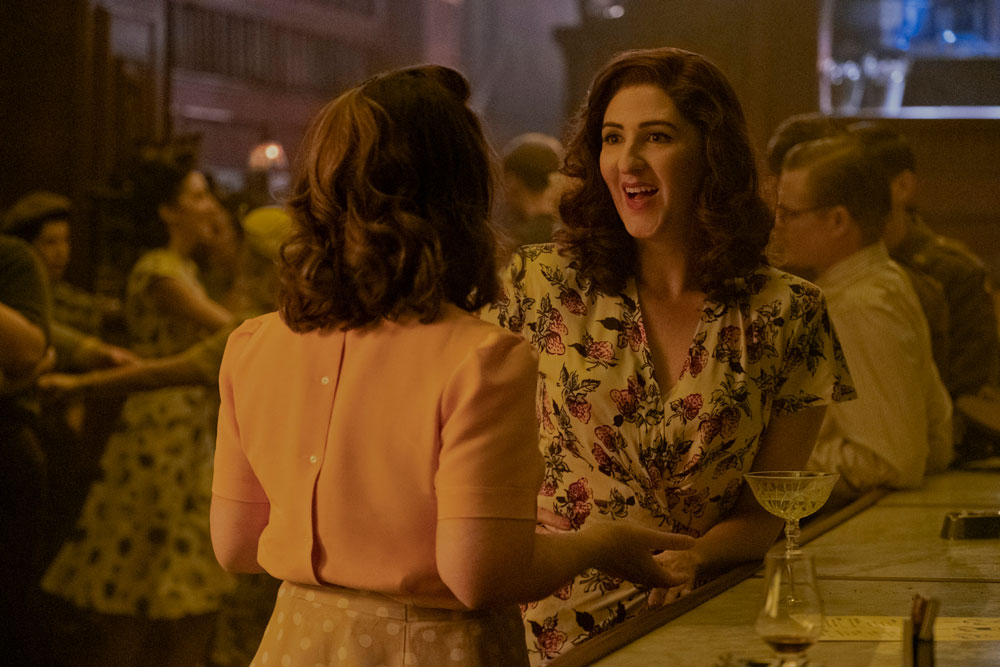
If we’re talking braids, though, Shirley (Kate Berlant) could be Dorothy too. Her anxieties certainly hold her back, experiencing life in black and white for a long time, not in color like the other women who take more chances. I’m going to nominate Greta (D’Arcy Carden) for the Scarecrow. She’s Carson’s guide to quite a lot, including navigating identity and life as a queer woman. She’s loyal (mostly to Jo) but like the Scarecrow, she can be burned. She doesn’t know which way to go, torn in pieces by her heart and her experience which has jaded and traumatized her, keeping her from fully experiencing love. 

A League of Their OwnA League of Their Own (Nicola Goode/Prime Video)On the heart subject, perhaps Jess is our Tin Man. As played by the superb McCormack, she’s competitive, cool and collected. She’s also steadfast, quietly loyal and cares, cares enough to learn Spanish for Esti — the only member of the team to actually do so. Maybe Lupe is the Cowardly Lion, or maybe Jo is: both tough on the outside, but nurturing sweethearts once you’ve broken through their defensive roars. And perhaps Clance, one of my favorite characters in a field of outstanding performances, is Glinda. Or Bert (Lea Robinson) is. Both want only good things for their Dorothy.  

A League of Their OwnA League of Their Own (Anne Marie Fox/Prime Video)I think we have a clear Wizard in this Oz though, and that’s Vi. The owner of the gay bar Carson stumbles into, Vi, as played by Rosie O’Donnell (after her heartbreaking turn as Carrie in “The L Word: Gen Q”) is classy, cool and kind. Pay all attention to this “man behind the curtain” who makes the magic happen for her customers. While she is part of what makes life Technicolor for Carson/Dorothy, like the great and powerful Oz, she brings them home.
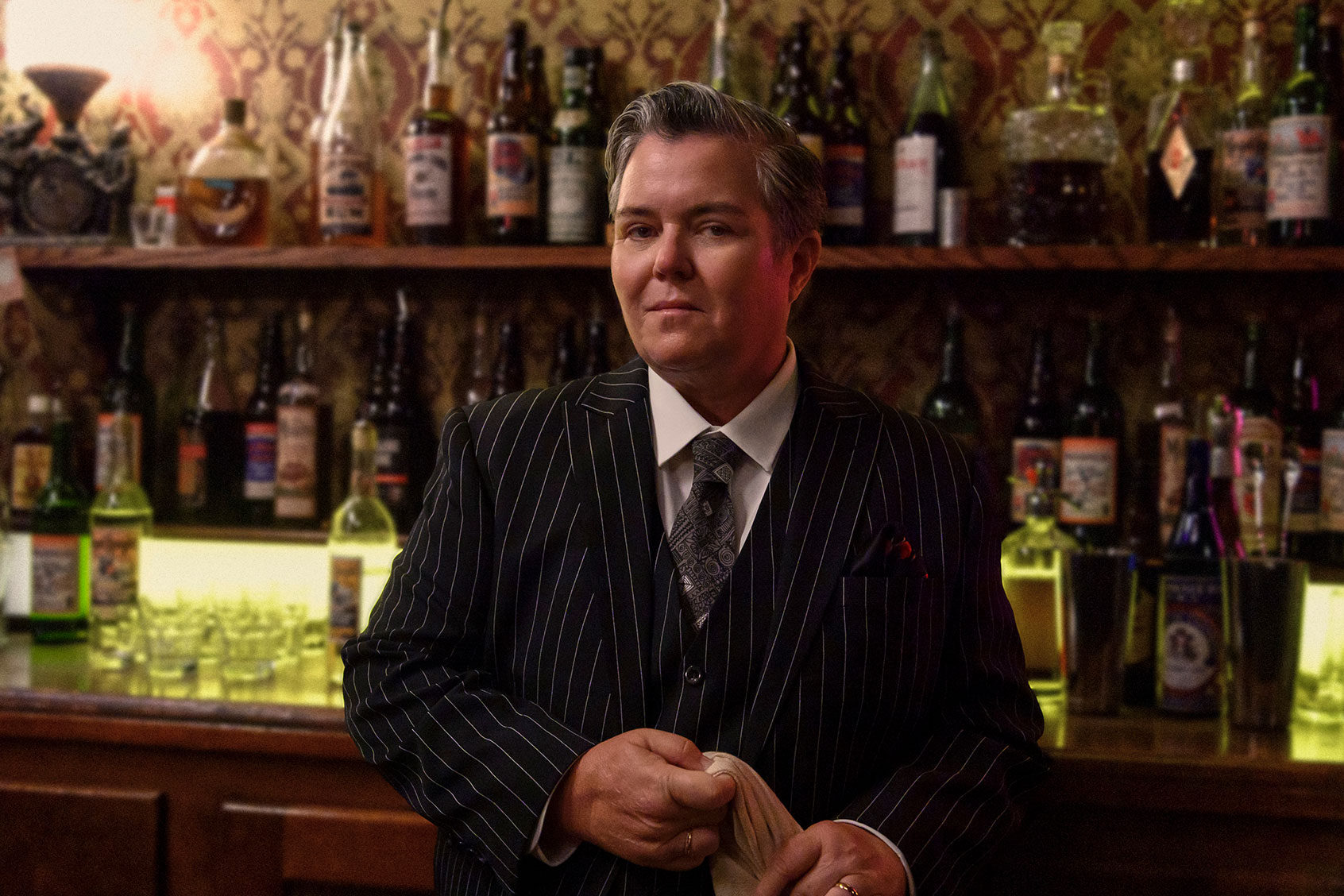
A League of Their OwnA League of Their Own (Anne Marie Fox/Prime Video)The point is: everyone is someone else. And doubly so, as in “The Wizard of Oz,” Dorothy wakes up not knowing if her time in Oz was real or a dream, but people from her actual life, like farmhands, show up as other characters in Oz. “But you were there. And you.”

 I always wanted her to run, not home, but on to adventure. 

Perhaps it’s unsurprising that “The Wizard of Oz” has turned up in other pop culture places recently too, like the Hulu mystery series “Only Murders in the Building” where Oliver’s son stages a production of the story with a lot of help from his famous dad. And in the beautiful “Somebody Somewhere,” where a Kansas-born woman goes home and tries to reclaim her life, to remember what she once wanted to be.

The notion that we contain multitudes is not new, but the idea that there’s a secret world waiting for you is especially meaningful for queer characters at the time of “A League of Their Own”: having a private identity, being forced to hide. Like Dorothy emerging into Technicolor, the world is in black and white until you open the curtains, until you can be you.


Want a daily wrap-up of all the news and commentary Salon has to offer? Subscribe to our morning newsletter, Crash Course.


There is so much longing in “A League of Their Own.” Longing for the women athletes to be taken seriously. Longing to join a team. Or have a comic published. Or find real love. Or even to wear pants without punishment. Longing to make your own money (Carson can’t open a bank account without her husband), to have your own career, to have a life. No one sings that better than Dorothy: “And the dreams that you dare to dream/Really do come true.”

Maybe Max, torn between family, friends and her ambition, exits the theater after seeing the film crying because Dorothy goes back. She returns to Kansas, which I always thought was a disappointment. I always wanted her to run, not home, but on to adventure. Run, Dorothy. Run, Carson. Run, Max. Run. 


Counties with more slaves in 1860 have higher gun ownership rates today, study finds

Though the Civil War was over 150 years ago, the social fabric of the United States still suffers from the country’s former divisions. Cultural and political values are split between the so-called free counties and the former slave counties, which existed in 15 states (only 11 of which seceded during the Civil War). Now, a new study has shown one of the most peculiar, yet perhaps unsurprising, divisions between former slaveholding and free parts of the U.S.: the prevalence of slavery in a given county correlates closely to the prevalence of firearms owned by its residents.

The researchers, led by psychology professor Dr. Nicholas Buttrick of the University of Wisconsin-Madison, hypothesize that this correlation exists because of the Reconstruction period in American history, which occurred immediately after the Civil War — “a moment when a massive upsurge in the availability of firearms co-occurred with a worldview threat from the emancipation and the political empowerment of Black Southerners.”

Certainly that would explain why the correlation between slave ownership in 1860 and firearm ownership exists today, even when weighed against variables like “contemporary crime rates, police spending, degree of racial segregation and inequality, socioeconomic conditions, and voting patterns in the 2016 Presidential election,” as well as why the data is “partially mediated by the frequency of people in the county reporting that they generally do not feel safe.”


Want more health and science stories in your inbox? Subscribe to Salon’s weekly newsletter The Vulgar Scientist.


Speaking to Salon at first by email, and then later over the phone, Buttrick explained why there are only some occasions where worrying about safety wound up corresponding to gun ownership.

“We think that protective gun ownership — the belief that guns are the sort of thing that keeps a person safe — may have some of its roots in attitudes formed by the institution of chattel slavery and its dissolution after the Civil War.”

“We think it’s especially interesting that it’s only in areas with historically-high rates of enslavement or areas that are socially-connected to the same where we find that higher rates of feeling unsafe predict higher rates of gun ownership,” Buttrick said. “For the rest of the country, we find almost no relationship between safety and gun ownership. In other words, we think that protective gun ownership — the belief that guns are the sort of thing that keeps a person safe (and the dominant gun culture in America) — may have some of its roots in attitudes formed by the institution of chattel slavery and its dissolution after the Civil War.”

Buttrick emphasized that the study only establishes correlation. In addition, while connections to historic slave culture influence modern gun culture, these connections are hardly the only influence — or even the primary one.

“Modern American gun culture is a cocktail of a bunch of different ingredients, and even in our best models, the amount of variance explained by the impact of patterns of slavery isn’t very big,” Buttrick pointed out. “It’s about as big as the impact of people voting for Trump in that county. So it’s not nothing, but there’s a lot of variance that slavery doesn’t have anything to do with.”

“We’re not saying that [gun culture] is racist,” Buttrick later added. “We’re saying it’s racist in origin, but also it’s pretty clear from a lot of work that gun culture in America, if nothing else, is racialized.”

This is not the first recent study to highlight the connection between Americans’ thoughts on race and their likelihood of owning guns. A study released last week by the American Psychological Association, and published online in the Journal of Experimental Psychology: General, found that white Americans who had expressed racial resentment were less likely to support gun rights if they were led to believe that African Americans were more likely to have guns. Specifically, white Americans who had expressed anti-Black sentiments tended to see white faces and link them with phrases like “National Rifle Association” and “self-protection” — but saw black faces and thought of weapons bans and waiting periods. A 2013 study published in the journal PLOS One, found that white Americans who held racist views about African Americans were more likely to own a gun and support concealed carry permits.

Indeed, as American history progressed, so has the intersection between gun politics and racial politics. In the late 1960s, when the Black Panthers began openly brandishing weapons to put a check on police violence, conservatives pushed for bills like California’s Mulford Act of 1967, which imposed harsh new gun control measures and was signed into law by Gov. Ronald Reagan. By the late 1970s, however, right-wing radicals had hijacked control of the National Rifle Association (NRA) — which had traditionally been more of a sportsmen’s club — and turned it into a vehicle for spreading anti-government conspiracy theories tinged (or more than merely tinged) with racism. When Reagan was elected president in 1980, he did so as an opponent rather than a supporter of gun control.


How to get creative with dehydrating food – and reduce food waste, too

What’s the first kitchen tool that comes to mind when you think of home food preservation? For many people, it’s probably a freezer or a canning jar,  but if you want to put up a lot of food, especially if you don’t have a lot of storage space, a dehydrator can be your new best friend.

Dehydrators work by removing moisture from foods at a low temperature and with sufficient airflow to dry foods evenly. The process works best at lower temperatures which don’t cook or scorch the food. In fact, many dehydrated foods are considered “raw” because they are dehydrated at under 118 degrees Fahrenheit.

Today, many electric dehydrators are available, but people also build outdoor solar dehydrators or just dry their food in the oven on the lowest setting.

Here, we learn the ins and outs of dehydrating from Jeanette Hurt, the author of 15 books on food and drink, including Dehydrating: Simple Techniques and Over 170 Recipes for Creating and Using Dehydrated Foods (The Self-Sufficient Kitchen), and Christina Ward, author of Preservation-The Art and Science of Canning, Fermentation, and Dehydration, and the Master Food Preserver for Wisconsin.

Why dehydrate?

Part of the beauty of preserving with a dehydrator is its simplicity. Hurt says, that while canning takes several steps, dehydrating is “perhaps one of the easiest ways to preserve food – just prepare it, put it in the dehydrator and go about your life.” Another bonus to dehydrating is that the final product isn’t bulky. As Hurt notes, “freezing is easier, but it takes up a lot of space.”

Ward agrees that dehydrated foods are easy to store and transport, and looks to the past for inspiration: pemmican, a traditional U.S. and Canadian Indigenous food made from tallow, meat and sometimes berries, is a good example, as is jerky and hardtack, a dehydrated, cracker-like bread that was common fare on ships centuries ago. She notes that some dehydrated foods are dried for storage but intended to be reconstituted before eating: dried mushrooms and peas, for example, are best when added to a soup rather than eaten out of hand.

And she adds a food safety note: “If using reconstituted, partially dried foods, be sure to cook thoroughly. Though safe from pathogens due to the removal of the moisture, there is always a possibility that re-adding moisture can cause bacterial growth.”

What to look for in an electric dehydrator

Ward says that dehydration works through the combination of time, airflow and heat. Because airflow is the key to success, she recommends models with reliable rear-mounted heating elements, temperature controls, evenly spaces trays, and an efficient fan to circulate air.

Both Ward and Hurt advise against cheap, stacked models for a variety of reasons, noting that these units do not typically allow for enough airflow or space between trays. Some don’t have fans to circulate air, or heating elements, and can result in uneven dehydration or worse, bacterial growth due to insufficient dehydrating. In some cases, moisture will drip down into the heating element, which can smell up your house or even short the wiring and destroy the dehydrator. If at all possible, investing in a dehydrator that evenly circulates air will give you better quality, safer results and years of use.

So what do they recommend? Hurt says, “most modern dehydrators, from the low end to the very high end, have the two things you need: an adjustable temperature gauge and a timer. On the low end, they’re stackable, and on the high end, they have built-in shelves,” adding that you should look for a larger model if you plan to put up a lot of food.

Ward recommends The Excalibur, which has excellent airflow, adjustable temperature settings, and trays that slide in and out, allowing for sufficient airflow. Excalibur makes multiple sizes and models depending on your needs, though they are somewhat more expensive than other choices. She adds that “other brands have tweaked the Excalibur design; most are generally pretty OK,” but adds that choosing a model that allows you to customize the critical components of time, airflow, and heat, is key.

While she doesn’t recommend cheaper models, she says if you have to get a stackable unit to choose one with the heating element on top — like the Nesco Gardenmasters —to prevent drips and shorts. She cautions against used dehydrators too: Many end up in thrift stores because they aren’t working well, but if you want a second-hand Excalibur or other high-quality machine, you may have luck with local buy/sell groups.

Space is a consideration, too: You want a dehydrator that has a large enough capacity to preserve your food, but not so large that it takes up precious storage space. Hurt recommends a collapsible dehydrator, noting they cost a bit more, but for a city apartment or a tiny house, these are the best answer: “They expand to hold larger shelves, but when you’re done dehydrating, they fold back down, and you can tuck them away in your storage.”

Non-electric options

If you live off-grid, or want to try dehydrating without spending money on a new appliance up front, there are a few options for you. People have been drying food in the sun for thousands of years, and you can too. Just as with an electric model, the key to success is heat, airflow and time.

There are many plans online for building a solar dehydrator, but there are a few key components to look for. First, make sure it is able to provide airflow while keeping pests away from your food. Second, make sure it has sufficient surface area to dry things in a single layer, and that it can dry your food without scorching it or drying so slowly that you risk contamination. While this plan is for a dehydrator that holds a good amount of food, it is a good example of an off-grid solar dehydrator that you can build at home.

You can also give dehydrating a shot simply by using your oven to dry your food. The trick with an oven is to get it the right temperature: You want it to be under 200 degrees Fahrenheit to avoid scorching your food. Ideally, you want it closer to 140 degrees (if your oven has a ‘keep warm’ function, it may work well for this). For ovens without good airflow, cracking the door can prevent moisture build up. Place your produce on racks and, after a few hours, check your food to see if it’s drying evenly. It’s helpful to flip it at least once during drying to prevent sticking, too. Oven drying can take upwards of eight hours to finish.

What to make with a dehydrator

If you’re new to dehydrating food, the best place to start is with sliced fruits and vegetables or fresh herbs. These are some of the easiest things to dry, and offer an introduction to the process without sinking a bunch of money on ingredients. Make sure to evenly slice your produce so it dries at the same rate.

When asked “what can you make with a dehydrator?” both Ward and Hurt provided long lists, suggesting that the possibilities with dehydrators are limited more by your imagination than by the technology itself. Hurt says, “You can dry basically everything except for milk.” Some of their suggestions include fruit leathers, grains, nuts, jerkies, dried herbs, spice blends, dried fruit chips, fruit and veggie mixes (dried berries, mirepoix, etc.). You can also use whole vegetables, like green beans, shucked peas and corn, and sliced or cubed potatoes, which can be dried and reconstituted later. Ward adds that reconstituted vegetables won’t have the same mouthfeel as fresh ones, so are best as an ingredient for a recipe that will be cooked or baked, like stews, soups and casseroles.

For some dehydration projects, you may need to get some accessories beyond the dehydrator itself. Hurt says you’ll need silicone sheets to make fruit leather in an electric dehydrator, for example, to keep it from sticking to trays or tearing apart. If you aren’t sure, dig around online for inspiration and to see what other home cooks are using to preserve their food.

Reducing food waste with a dehydrator

Tossing food scraps in the dehydrator is a wonderful way to get creative in the kitchen and cut down on waste. Here are a few suggestions:

Powders and seasonings

Ward says that dehydrating a fruit or vegetable completely, then grinding it into a powder makes a great add-in: think powdered tomato added to red sauce, or apple powder to pies, to intensify the flavor. “My favorite work around for canning pumpkin butter: dehydrate pumpkin, grind to powder, add spices as wished, then add to apple sauce and cook . . . the only safe way to can “pumpkin butter!”

Hurt encourages creativity beyond fresh fruits and veggies, noting you can even dry leftover tomato paste and turn it into tomato powder.

Dried veggies and fruit

Hurt says, “you know that celery that’s going bad in your refrigerator? Chop it up, and toss it on a dehydrator – then throw it into soups or sauces when you need it.” The same is true for your fruit that’s going soft or even for those bananas that are turning brown: They can become tomorrow’s dried snacks to eat alone or used as a topping for ice cream or a yogurt parfait.

Fruit leather

Ward encourages turning your overripe berries into fruit leather: Just clean, puree, mix with applesauce, then dehydrate. If you have a prolific rhubarb plant, consider putting the stems to work in your dehydrator: Hurt notes that it’s a great fruit leather base (she also recommends chopping and drying some rhubarb too, for summer-y pies in the middle of winter).

Dog treats

Hurt dries fish skins and sweet potato skins as dog treats, which are essentially the same as the expensive treats from the store, and urges you to chop and dry the gizzards from your roasted birds, too: “I call those bits magic fairy dust for dogs – they go wild for them.”

Cocktails and mocktails

Hurt recommends dried citrus for garnishing cocktails, as well as citrus scraps to flavor your drinks: For example, that leftover orange from zesting can be cut up and dehydrated, then floated on a cocktail: she says “they taste like sweet and sour candies.” And, before you juice a lemon, zest it first, then dry that zest as an add-in for baking and cocktails. Ward stirs her mystery mix fruit powders into sugar to rim cocktail glasses. Trash Collective has other creative ideas to explore, too.

Mystery mixes

If you have a big cooking day ahead of you, Ward suggests saving your edible leftover vegetable bits (peels, ends, etc.), chopping them into uniformly sized pieces, and dehydrating them to make Mystery Soup mix. She keeps a storage container of these mystery veggie pieces that she keeps adding to, noting: “when you reach about 4 cups worth, make a slow-cooked vegetable stock.”

For fruits, she separates them by family (stone fruits in one batch, berries in another, etc.), and makes another mystery mix that can be ground into powder or used in chunks for winter fruit cakes and steamed puddings.

Crackers

If you use a juicer, you likely have a lot of leftover pulp. Ward dehydrates vegetable pulp along with seasonings and soaked chia seeds and even nuts, using the same method as fruit leather, to make raw vegan crackers. You can do the same with fruit pulp, chia seeds, and maple syrup or sugar for sweet crackers.

Flex your creative muscles

A dehydrator can be a powerful tool in your arsenal of waste-reducing equipment, and can help you get creative in the kitchen. These ideas are just the tip of the iceberg when it comes to reducing waste and putting up all your garden (or farmers’ market) bounty: You can makes dried super greens powder for your smoothies, for example, or even dry out your fermented food scraps.

Just make sure you store your dehydrated goodies properly for the longest shelf life: Both Ward and Hurt recommend storing in an airtight container in a cool, dark place, and note that not all dried foods will keep the same length of time (Jerky, for example, is not 100% dried). According to Ward, the more moisture a given food has, the shorter its shelf life.

Hurt says that your dehydrated foods will keep for about a year if stored in a cool, dark, place, but that meat and fish should be used more quickly. You can keep your new culinary experiments in canning jars with screw-on lids, tight, double-rowed “ziploc”-style bags (or reusable silicone zipper bags), or other plastic and glass containers with tight-fitting lids.

Javier Bardem on “The Good Boss” humor: Humans love “seeing people suffer when we see they are safe”

Javier Bardem gives another remarkable performance as the titular character in “The Good Boss.” It is on par with his criminally underseen turn as a beleaguered detective in “The Dancer Upstairs” and his masterful work in “The Sea Inside,” “Biutiful,” and as Reinaldo Arenas in “Before Night Falls.” Whether he is playing a Bond villain — as he did in “Skyfall” — the drug lord Pablo Escobar, or in his Oscar-winning role as the menacing Anton Chigurh in “No Country for Old Men,” Bardem always makes viewers anxious to see what his characters are going to say or do next.

This new film is no exception as his character, Blanco, encounter a series of difficult characters and situations. Bardem’s performance is incredibly sly. Just watch as his expression changes subtly and then dramatically at every reversal of fortune. The actor exudes patience against adversity, but at times drops his brave face and shows how conniving he really is. 

“The Good Boss,” which was Spain’s 2022 Oscar entry, reunites Bardem with director Fernando León de Aranoa, whom he first worked with 20 years ago on “Mondays in the Sun.” (They also made “Loving Pablo” together five years ago.) In “Mondays,” Bardem played an unemployed dock worker. In this new film, Bardem plays the title character, the owner of Básculas Blanco, a company that makes scales. The local government has shortlisted the business for its excellence award, and Blanco is determined to win it. The trouble is, he has to first resolve an issue with Jose (Óscar de la Fuente), a worker who was just laid off, as well as deal with Miralles (Manolo Solo), his head of production, whose work has been compromised because of a domestic situation. Blanco also gets a little too intimate with Liliana (Almudena Amor), an attractive new intern. As he tries to tip things in his favor, Blanco may have to “trick the scale” to get things the way he wants them.  

The actor spoke with Salon about “The Good Boss,” and collaborations, and his work/life balance.

In “Mondays in the Sun,” your character tried to survive hard circumstances with irony. In contrast, “The Good Boss,” is a satire on capitalism. What observations do you have about how these two films portray workers’ rights and the dignity of work in Spain?

“The Good Boss” is the other side of the coin from “Monday in the Sun.” That film was a story of a group of people trying to fight unemployment. It speaks about the union, solidarity, and workers’ rights. Now 20 years later, we are telling the other side of the story, which is that people are employed, but their rights are violated sometimes in various ways and there is a lack of solidarity, there are no unions, and now people are out for themselves, and not paying attention to anyone else because they know they are being [viewed] by the boss. It’s the opposite of “Mondays in the Sun.” The difference here is that it is more of a black comedy, but of course there is a social statement. The characters [I played] couldn’t be more different. Fernando, the director and I often thought, “What would the character from ‘Mondays in the Sun’ say to ‘The Good Boss’ and vice versa?” They would have a very nice and sometimes very heated discussion about work, unemployment, and people’s rights. 

Can you talk about your work ethic and your passion for work? You throw yourself into your roles, and that’s why your performances are so strong. 

I don’t know. It depends on so many things. There was a time when I was 20 and I thought the world was revolving around myself. Well, thank God, it’s not. There are way more important things than yourself, my friend. You try to put a little bit of what you think you can add to the ingredients that others are cooking — screenwriters, directors, lighting, wardrobe, sound. You bring your thing and hope it will end up in the salad. I’ve done movies more than theater, and it depends so much on so many elements. Theater you play the part, and no one can stop you. In moviemaking, so many elements fall into place. So I would never dare take credit when things go right. I’ll take credit when things go wrong. In my experience, that means not even a good editor can fix it.

Blanco emphasizes that Blanco Scales is a family business and talks about legacy. You come from a family of actors. What can you say about the pressure to “perform well,” which is one of Blanco’s main concerns?

I try to do my best, and I prepare myself. I do homework. I go to the set, and I am on time. I am a good colleague and a good partner. I learn my lines and bring ideas when I feel the director is open to those. If not, I will follow his direction alone. I try to be an element in service of the director and story as much as my ego allows it. Because as an actor I have an ego that is necessary to play in front of camera, but most of the time, it goes against your freedom and your perception and your collaboration, and your way of creating something with somebody else. When your ego interferes and says you, you, you — you have to do this right. You forget about what is surrounding you, which is a group of people doing their best. You miss the opportunity of learning from others. The older I get, I try to feel the bottom of my feet, breathe, and feel present and really allow myself to receive the gift of being in that place.

Today, I shot with Denis Villeneuve; I’m making “Dune 2” in Budapest. He has this vision and gives you direction and it’s such a joy and dream of his to make this movie. If you are on your own, you lose that, and it’s a pity. Fernando [León de Aranoa] is a good friend of mine. He is so smart. When you have the connection and are open to that, things happen. Otherwise, you are incarcerated within yourself. So that takes the pressure off. Me, I don’t have any value by myself. Me with you, we have value together. 

The Good BossThe Good Boss (Cohen Media)

Blanco tries to help his employees, which is the collaboration you were just talking about. But he also micromanages situations he cannot or should not control — like his coworker’s personal lives. He tries to construct his life the way he would like it to be,” Are you a control freak, or do you have a more easygoing nature? Does Blanco have to win at all costs? 

He was born into that. As his wife says, it was a heritage. The factory was given to him by his family; he didn’t earn it. Fernando and I talked about it. He is used to being a winner and have everything he wants. This is the story of a man who happens to have a very stressful week because things don’t go the way he desires, and he’s not capable of dealing with that because he’s not used to it — not getting what he wants. That’s a curse, and that’s where the fun comes from. We see him suffering, and that’s what we humans love the most — seeing people suffer when we see they are safe. It’s a story meant to make people laugh; it’s not a real situation.

What is so incredible about your performance are your expressions. I like that Blanco appears to be confident and relaxed, but he is absolutely terrified inside — and his face does not always hide his thoughts. Sometimes it can be very funny, but there are scenes that are very uncomfortable. Can you talk about how you conveyed his internal conflict? 

The story has great dialogue, situations, and characters. But it has to be maintained by reactions. Blanco reacts to many of the issues he faces and confronts. With Fernando, I trust him so much, and shooting in digital, you can roll and try many things. We tried so many different options on how to react to something. Most of the time, I’m scared of what the director will choose — as I said earlier, the performance depends on so many people — but with Fernando, I know he is going to pick the very best shot that works for the story. We worked on different expressions and attitudes. Some of them were funny, and some were scarier. When I saw it, I was laughing at what he did; that was a great option. It was fun to work like that and not imprisoned by the idea of how he should react. Let’s just react and see what happened. 

Do you like to improvise? Do you feel you need to find five ways to express one thing? 

I try not to make [each take] similar because it’s boring. I try to, in some way, surprise myself —not to surprise others for the effect, but to put myself in a place or a situation that’s new for me. Most of the time, it is a little detail or way of seeing someone from a different perspective it changes the whole thing and how you react. [Bardem shifts his position and changes his expressions to illustrate.] I don’t think that’s improvising, but that at least brings something new to every take. Some editors are keener to it, other don’t like it. You have to go with it. If you are not into it, that’s fine. You are the director.

Blanco is also a bit amoral, manipulating things and even people to get what he wants. Viewers will root for him until he goes too far. What are your thoughts about his character? 

He abuses. He is abusing the intimacy with his coworkers that he has built, based on some lies that some workers believe because they want to keep their job. It’s a relationship between the needy and the one that gives them their needs, and, at the same time, abuses their needs.

How do you balance your life and work? Where do you find your harmony? 

I don’t know! If you know, let me know. In very brief, sporadic, fast, quick moments in my life. OK, this feels right — then it goes!

“The Good Boss” opens in theaters Aug. 26. Watch a trailer via YouTube.

Olivia Wilde says Shia LaBeouf fired from “Don’t Worry Darling” to make set “safe” for Florence Pugh

Olive Wilde’s upcoming psychological thriller “Don’t Worry Darling” has created plenty of buzz well before its September debut, and not necessarily about the film itself. This time, the focus is on a controversial casting decision for one of the main roles.

Back in September 2020, news broke that Harry Styles was set to take over the lead role of Jack, which was initially given to “Transformers” star Shia LaBeouf. In the movie, set in the 1950s, Jack and his wife Alice (Florence Pugh) move to company town Victory, California – a picture-perfect place full of Jack’s peers and their wives. When Alice becomes curious about Jack’s project and begins to snoop around, tensions rise as she realizes that their idyllic life is not what it seems.

The intimacy and evolving dynamic between the married partners, not to mention the physical and psychological dangers that Alice must endure required that Pugh become vulnerable in order to deliver an authentic performace. That ultimately was what led to LaBeouf’s exit.

The reason given for his sudden departure from the film was, at that time, said to be due to a “scheduling conflict” – Hollywood speak for almost anything but a scheduling conflict. But now Wilde is setting the record straight about the real reason behind the recasting.

“I say this as someone who is such an admirer of his work. His process was not conducive to the ethos that I demand in my productions,” Wilde said about LaBeouf in a recent interview with Variety. “He has a process that, in some ways, seems to require a combative energy, and I don’t personally believe that is conducive to the best performances. I believe that creating a safe, trusting environment is the best way to get people to do their best work. Ultimately, my responsibility is to the production and to the cast to protect them. That was my job.”

Shortly after LaBeouf was fired from “Don’t Worry Darling,” FKA Twigs filed a lawsuit against LaBeouf, accusing him of sexual battery, assault and infliction of emotional distress throughout their nine-month relationship. The trial date is set for April 17, 2023.

Wilde addressed the allegations in her interview, saying, “A lot came to light after this happened that really troubled me, in terms of his behavior. 


Want a daily wrap-up of all the news and commentary Salon has to offer? Subscribe to our morning newsletter, Crash Course.


“I find myself just really wishing him health and evolution because I believe in restorative justice. But for our film, what we really needed was an energy that was incredibly supportive. Particularly with a movie like this, I knew that I was going to be asking Florence to be in very vulnerable situations, and my priority was making her feel safe and making her feel supported.”

Alongside Styles and Pugh, the film also co-stars Chris Pine, Gemma Chan and Wilde herself.

Per Variety, Styles’ own schedule opened up for the role after his tour was canceled amid the peak of the ongoing COVID-19 pandemic.

“We found the perfect Jack, and luckily, it’s kind of magical that it ended up being our first choice,” Wilde concluded.

“Don’t Worry Darling” is in theaters Sept. 23.

20 German-ish recipes to celebrate Oktoberfest

In just a few weeks, Oktoberfest, the spirited German folk festival, will be in full swing. The celebration of epicurean proportions runs from the middle of September to the beginning of October. Each year, an estimated six million people pack into the city of Munich for nonstop noshing and drinking.

Though beer is Oktoberfest’s obvious appeal, there’s no need to forget about the corresponding snacks. Think hearty German pub fare that keeps you cozy as the fall season commences. What better accompaniment to a cold, heady beer than a juicy bratwurst, a salty pretzel, or a flaky apple pastry? We’ve compiled our most Oktoberfest-approved recipes for those who want to carouse from home. Prost!

1. Braised Red Cabbage with Kielbasa, Apple, and Mustard Cream

You don’t need to book a one-way ticket to Germany to celebrate Oktoberfest; it can be as low-maintenance as this one-pan dinner that comes together in just 30 minutes. A platter of kielbasa, silky cabbage, and roasted apples make the perfect dinner for four.

2. Jägerschnitzel (Pork Schnitzel with Red Wine-Mushroom Sauce)

Good schnitzel — whether it’s veal, pork, or chicken — really comes down to the breading: the flavor of the breadcrumbs, how crispy they get, and how well it adheres to the meat. For the crispiest breading, recipe developer Lexie Barker recommends letting the breaded pork rest for at least 5 minutes before frying to let the crumbs dry out.

3. Jacques Pépin’s Criques (Crispy Potato Pancakes)

Potato pancakes with applesauce are a must for Oktoberfest, plain and simple.

4. Judy Rodgers’ Roasted Applesauce (and Savory Apple Charlottes)

There’s smooth sauce, chunky sauce, and then this chunky mash made from roasted apple wedges. Serve as is, or tuck it into bread crumbs for the easiest mini apple pies.

5. Spätzle with Sage Butter, Parmesan, and Toasted Hazelnuts

Is it really fall if you’re not serving spätzle with sage?

6. Grandma Netta’s Red Cabbage

No matter how many times I refused my grandmother’s red cabbage, a giant jar of it always found its way into our refrigerator. It’s a stick-to-your-ribs side that’s a must in German households, and this recipe is as easy as they get.

7. Cheater’s Chicken Schnitzel

We’ll eat razor-thin cuts of crispy breaded chicken any day, but it’s especially apt for serving during Oktoberfest. There’s one problem (and only one!) with thinly pounded chicken — it tends to try out pretty easily. And by that I mean, when was the last time you ate an actually moist piece of chicken schnitzel? To combat that — without fail — always-prevalent problem, recipe developer Emma Laperruque created a mayo-based marinade for the meat.

8. The Ultimate Bratwurst

There’s one meaty way to show your German pride, and that’s by making homemade Bratwurst. “Poaching fresh sausages like bratwurst in beer (a crisp lager, pilsner, or aromatic Belgian-style ale) before grilling infuses them with added flavor, helps keeps them moist and juicy, and shortens their finish over the fire,” writes recipe developer Paula Disbrowe.

9. Caramelized Sauerkraut with Prunes, Herbs, and Honey

Hate sauerkraut? For years, so did recipe developer Queensashy, so they set out to create a version of sauerkraut that was a little sweeter, a little richer, and all-around more palatable. This prune- and honey-based recipe is the result.

10. Käsespätzle (Cheesy Spaetzle wth Caramelized Onions and Crispy Shallots)

Buttered spaetzle noodles are often pushed to the side of the dinner plate in favor of more sauerkraut, more bratwurst, more potato pancakes, more applesauce. This Austrian preparation will force itself to the center of your plate with its savory, assertive flavors.

11. Honey Mustard

If you’re up for a project, make honey mustard from scratch. This easy recipe from Molly Yeh promises a DIY version of the must-have condiment in mere minutes.

12. Soft Pretzels with Beer Cheese

These aren’t your typical ballpark pretzels — they’re maltier and the side of beer cheese is an absolute must.

13. German Roasted Potato Salad

What makes this potato salad different from the usual mayo-heavy ones you’d find at a picnic? Bacon, a fair amount of vinegar, and whole-grain German mustard. The sharp, tangy edge will cut through the richness of just about everything else on your plate.

14. Garlic, Parmesan, and Herb Beer Bread

If you don’t intend to serve bread at your party — Oktoberfest or not — then I don’t intend to attend your party. But this savory quick bread is so delicious, you won’t have a choice (and apparently, neither will I. See you at 8).

15. German Chocolate Cake Donuts

In 2nd grade, I had a crush on a boy named Jason, who had moved to America from Germany. For his birthday, I baked him a German chocolate cake to share with the class — the cake was a hit, but our love story was not. Inspired by my heartbreak comes this recipe for fudgy, nutty chocolate donuts topped with pecans and shredded coconut — perfect for your Oktoberfest celebration or Jason’s birthday.

16. Apple Strudel with Candied Pecans and Apricots

Oktoberfest and peak apple season coincide, which means this strudel is just the dessert to serve for the German festival. The filling has a combination of both fresh apples and dried apricots, plus candied pecans, for a bite that’s more texturally interesting than the usual (let’s be honest) slightly mushy apples that you might be used to.

17. Extra Chocolatey German Chocolate Cake

No Oktoberfest celebration is complete without a slice of German chocolate cake (I’m an eighth German, so I would know). This five-layer cake features the signature ooey-gooey filling of toasted coconut and pecans, plus plenty of chocolate frosting in every bite.

18. Chocolate Stout Pudding

Sure, making homemade chocolate pudding is harder than ripping the foil lid off of a Jell-O container, but it’s so worth it. To get just the right silky texture, use a combination of heavy cream, egg yolks, melted chocolate, and a little bit of butter. Guinness stout is added to the cream and cocoa mixture and magically brings out the rich chocolatey notes for the best-ever pudding.

19. German Apple Streusel Cake with Brown Sugar Mascarpone Cream

Not only did our readers vote this as their favorite apple recipe, but it’s also fit for an Oktoberfest party. This cozy cake is made with warm spices and a crumbly streusel topping that you’ll want to eat with your fingers (go ahead — I won’t judge!).

20. Fudgy Chocolate Stout Cake

You’d never believe that this chocolate cake is totally dairy- and egg-free. The deep chocolate flavor is enhanced by a combination of stout beer and freshly brewed espresso because after all, it’s not an Oktoberfest without beer.

Mental health expert warns that new restrictions on abortion care will cause “psychological harms”

“I’m struggling a bit this morning,” a client of mine stated at the start of our session the morning of June 24, 2022. “I just heard on the news about the decision to overturn Roe v. Wade. There was so much for me to process I had to turn it off.”

While this client did not have personal experience with elective abortion, she had a complicated reproductive history that included a recent pregnancy in which she was unsure if the baby would survive. In our session that day, she recognized how privileged she was to have had a medical team that communicated with her about all available options and potential outcomes for her and the baby. Most importantly, she acknowledged the significance of having a say in the decisions about her reproductive care.

Our session came hours after the fall of Roe, which overturned 50 years of abortion rights. I spent time in that session, and many others that week, with clients talking through the “what-ifs.”

As a therapist and scholar specializing in the mental health of people during the perinatal period, the time frame during pregnancy and postpartum, I’ve witnessed firsthand the psychological impacts of reproductive traumas across pregnancy and after childbirth. This gives me insights into how new restrictions on reproductive health care from overturning Roe are inextricably linked to psychological well-being.

Research supports the need for abortion access

Before Roe was overturned, research already demonstrated the importance of access to safe abortions. The landmark Turnaway Study, conducted from 2008 to 2013, examined the effects of receiving versus being denied a wanted abortion by studying health outcomes of nearly 1,000 women seeking abortions at 30 facilities across the U.S.

Results from that study demonstrated that people were more likely to experience elevated psychological issues, such as anxiety and depression, when denied an abortion compared with people who received one. The study also demonstrated individuals who were denied an abortion were more likely to experience long-term economic hardship and intimate partner violence.

Other research has also shown an increased risk of suicide for individuals not able to legally terminate an unwanted pregnancy.

Additionally, research shows most women who have an abortion feel they made the right decision. Over 95% of women in a 2020 study reported that abortion was the right decision when looking back over five years, with previous research also supporting these findings. Yet some states continue to put mandatory waiting periods and counseling into place based on unfounded assumptions that people will regret their decision and have negative psychological consequences.

The impact of the Supreme Court’s abortion ruling has been swift and widespread.

How abortion bans affect mental health

The perinatal period places people at an increased risk for the onset and relapse of mental health disorders. The increased restrictions on receiving abortion care coupled with proven risk factors for perinatal mood and anxiety disorders could increase people’s risks for psychological suffering.

With the overturning of Roe, experts expect that half of U.S. states will ban abortion health care in the coming months. While this is an ever-evolving landscape, as of late August 2022, 10 states have full abortion bans and five states have banned abortion after six weeks of pregnancy.

A 2019 study projected there would be an approximately 13% reduction in U.S. abortions in the immediate aftermath of a Roe reversal because of new state restrictions and increased travel distances to get to facilities in states permitting abortions. This equates to between 93,546 and 143,561 women being prevented from having a wanted abortion in the first year post-Roe.

Current statistics suggest that perinatal mental health disorders affect 1 in 5 women throughout pregnancy and postpartum and upwards of 34% report a traumatic birth. Risk factors such as negative emotions surrounding childbirth and a perceived lack of control increase the likelihood for experiencing birth trauma. These risk factors are consistent with what a person would face when seeking a wanted abortion and being denied access to reproductive health care.

More risk for those who are already vulnerable

Some sectors of the U.S. population are disproportionately more vulnerable to developing perinatal mood and anxiety disorders than others. Roughly 1 in 3 women of color and up to 60% of low-income women experience mental health concerns during pregnancy or in the year after childbirth. Historically, Black and Hispanic women also have disproportionately higher abortion rates than white women, as do low-income women.

In a survey of more than 1,000 abortion patients who were asked about their reasons for having abortions, 48% of women indicated they did not want to be a single parent or that they were having relationship problems. These are two more proven factors associated with risk for perinatal mood and anxiety disorders.

Ultimately, about half of U.S. states are expected to ban at least some access to abortions.

Not only are there increased mental health risks for parents of color and those who are economically disadvantaged, single or experiencing relationship distress, but there are also concerning disparities among these groups in rates for starting and staying in treatment during the perinatal period.

As abortion services become increasingly restricted across the U.S., there are lesser anticipated impacts on reproductive health care that will also have immense psychological effects. For example, parents who would have otherwise terminated the pregnancy because of severe birth defects or fatal medical issues detected in the fetus will no longer have this option in some states.

There is already a dearth of resources and support for families of children with disabilities and complex developmental and medical needs, despite the known higher risk for parental stress and relational difficulties between partners. At this point it is not clear whether necessary expansion for supports will occur as the needs increase.

Accessing supports post-Roe

In states with abortion bans, there will be dramatic disparities in people’s ability to access abortions. For accurate and up-to-date information on safe and legal abortion care, the U.S. Department of Health and Human Services provides information about Americans’ rights to reproductive health care and resources.

With time, the short- and long-term psychological impacts of the post-Roe era will unfold. What is certain now is that mental health providers should be preparing themselves to respond to the mental health needs of individuals denied abortion care as a result of the Supreme Court’s decision to overturn Roe v. Wade.


Rachel Diamond, Clinical Training Director and Assistant Professor of Couple and Family Therapy, Adler University

This article is republished from The Conversation under a Creative Commons license. Read the original article.

Florida GOP primary loser Laura Loomer declares herself a winner: “I actually am the congresswoman”

Failed Trump-loving congressional candidate Laura Loomer isn’t just refusing to concede despite her clear loss to incumbent Rep. Daniel Webster, R-Fla. — she’s declaring herself the true elected representative of Florida’s 11th Congressional District.

In a new Telegram post flagged by Right Wing Watch, the defeated Loomer declares that “the congressional seat in Florida’s 11th District is mine for the taking” before then declaring, “I actually am the Congresswoman in Florida’s 11th District, and everyone knows it.”

In fact, everyone does not know it, as Loomer lost to Webster by six percentage points and will thus not be sworn into office.

Loomer went on to imply that she would not stop trying to defeat Webster in the GOP primary he lost, even if she ended up killing him.

“Daniel Webster is illegitimate and my team and I will work to drive him into the ground every step of the way until he collapses in disgrace (or poor health) and resigns like he should have years ago,” she wrote. “Dan Webster’s health is worse than Joe Biden’s. Everyone who has seen him recently knows it’s true. His health is drastically failing, he is demented, looks ill, he can barely speak, he wears a life alert, I am willing to bet he doesn’t survive before his current term is over.”

Loomer has baselessly claimed that she only lost to Webster due to “voter fraud,” even though this is now her second failed congressional campaign after she went down in flames against Rep. Lois Frankel, D-Fla., in 2020 in a race she lost by twenty points.

Texas abortion providers now face up to life in prison, $100,000 fine after “trigger” law kicks in

Sign up for The Brief, our daily newsletter that keeps readers up to speed on the most essential Texas news.


Performing an abortion is now a felony punishable by up to life in prison in Texas after the state’s trigger law, which has only narrow exceptions to save the life of a pregnant patient, went into effect Thursday.

The law was “triggered” when the U.S. Supreme Court issued its judgment in Dobbs v. Jackson, the case that overturned Roe v. Wade and allowed states to set their own laws about abortion.

Abortion clinics across Texas had already stopped performing the procedure, fearing prosecution under state laws that were on the books before Roe v. Wade.

Texas now has three significant abortion bans in place and several administrative regulations governing the procedure, setting up a potential conflict as the largest state to ban abortion navigates this new legal landscape.

[New Texas law increasing penalties for abortion providers goes into effect Aug. 25]

The trigger law criminalizes performing an abortion from the moment of fertilization unless the pregnant patient is facing “a life-threatening physical condition aggravated by, caused by, or arising from a pregnancy.” The statute specifically prohibits prosecuting a pregnant patient who undergoes an abortion.

Violations of the law are punishable by up to life in prison. The statute also says that the Attorney General “shall” seek a civil penalty of not less than $100,000, plus attorney’s fees.

The Texas District and County Attorneys Association has raised concerns about this language.

“If this sends up a double jeopardy red flag for you, congratulations,” a memo on the group’s website reads, citing a 1994 case where the Supreme Court ruled that a defendant who is convicted and punished for a criminal offense cannot also have a non-remedial civil penalty imposed against them. Similarly, if a defendant pays a civil fine, they cannot be criminally prosecuted for the same offense.

“By requiring [the office of the Attorney General] to pursue a minimum six-figure civil penalty for the same conduct that potentially incurs a felony sentence of imprisonment and a criminal fine,” the memo reads, “the legislature has created a legal framework that could prevent a criminal conviction for certain violations of the new anti-abortion ‘trigger law’ crime if any of those civil fines are collected by OAG.”

Charles “Rocky” Rhodes, a law professor at the South Texas College of Law, said it’s not yet clear whether the $100,000 penalty would foreclose criminal prosecution.

“I might try [that defense] if I was representing somebody, but … I don’t think there’s a clear slam dunk there,” he said.

The civil fine, though, may prove to be an important piece of enforcement as more prosecutors come out publicly in opposition to the criminal laws. Several major cities are considering or have passed measures that prohibit the use of local funds to investigate or prosecute abortion-related crimes, and district attorneys in five large counties — Bexar, Dallas, Fort Bend, Nueces and Travis — have said they won’t bring criminal charges in these cases.

Already, conservative lawmakers have said they intend to propose legislation to allow prosecutors to bring abortion cases outside their own jurisdiction if the local district attorney won’t.

“That’s never been done in Texas, but the Legislature probably can at least start that ball rolling,” said Dallas attorney David Coale. “Then, you’ve got prosecutors with conflicting opinions about the same set of facts, and then you’ve really got a zoo.”

Other abortion laws

There are also looming legal questions about how these laws align with the state’s other abortion statutes. The pre-Roe statutes, which date back to Texas’ first criminal code in 1857, come with two to five years in prison, compared with the five years to life in the trigger ban.

“Each of the laws have a little bit different scope, different punishments and potential arguments about how far they extend,” Rhodes said. “The position of the Texas Legislature is going to be that these laws are complementary, rather than in conflict.”

The pre-Roe statutes are currently in effect, but the state Supreme Court has not issued a final ruling on whether they can be criminally enforced going forward. Coale said this legal limbo may push prosecutors to bring charges under the trigger law.

“If you’re a prosecutor, why on earth would you go anywhere near that?” he said. “You’re going to charge something under the new statute in the most limited way you can that clearly doesn’t conflict with anything in the old statutes.”

If a prosecutor brings a case under the trigger law, Coale said defendants will likely try to argue that the statutes conflict. But much of this will remain theoretical until a test case is identified and charged, which may not happen immediately.

“My expectation is what’s going to happen is exactly what happened in SB 8,” he said, referring to the civilly enforced ban on abortions after about six weeks of pregnancy. “People are going to err on the side of caution and … the deterrent effect is going to be huge.”

One significant distinction between the two laws is that, while both statutes criminalize the person who performs the illegal abortion, the pre-Roe statutes also allow charges to be brought against anyone who “furnishes the means” for an abortion.

“The trigger law really is targeted at the abortion provider, while the old law … also has this additional basis of accomplice liability for the person who procures the means to be able to have an abortion,” said Rhodes. “The law is vague as to what that really means though.”

In the age of medication abortion, where people can get abortion-inducing pills mailed to their homes from overseas pharmacies or advocacy networks, identifying who performed or furnished the means for an illegal abortion will likely become more difficult.

Already, nonprofit abortion funds that help people travel out of state have stopped their work, fearing potential criminal prosecution under the pre-Roe statutes. Lawmakers in Texas and in other conservative states have discussed finding ways to prohibit interstate travel for abortion.

“People are saying some things in their zeal about abortion that are just not very democratic, and there’s no other polite way to say it,” Coale said.

Even in jurisdictions where police and prosecutors aren’t actively working to identify and charge these cases, the threat of civil action still looms. Texas remains under Senate Bill 8, which allows any private citizen to sue anyone who “aids or abets” in an abortion after about six weeks of pregnancy.

With $10,000 per abortion on the line, Coale said, there’s significant motivation for private citizens to try to identify people who have had an abortion — and, in the process, bring them into the criminal justice system.

“As long as we have SB 8, people are going to be out there … trying to get that $10,000 penalty,” he said. “Who else will have their hand in it will depend on who is in charge.”


The full program is now LIVE for the 2022 Texas Tribune Festival, happening Sept. 22-24 in Austin. Explore the schedule of 100+ mind-expanding conversations coming to TribFest, including the inside track on the 2022 elections and the 2023 legislative session, the state of public and higher ed at this stage in the pandemic, why Texas suburbs are booming, why broadband access matters, the legacy of slavery, what really happened in Uvalde and so much more. See the program.

This article originally appeared in The Texas Tribune at https://www.texastribune.org/2022/08/25/texas-trigger-law-abortion/.

The Texas Tribune is a member-supported, nonpartisan newsroom informing and engaging Texans on state politics and policy. Learn more at texastribune.org.

Trump’s return is distracting the GOP — and allowing Democrats to get things done

Republicans are acting uncharacteristically flat-footed in response to President Joe Biden’s announcement that he’ll be forgiving up to $20,000 in student loan debt to people who make under $125,000 a year. Sure, Fox News pundits are all crying about it, but they can’t quite seem to get their story straight on why viewers are supposed to be outraged.

Sean Hannity complained, “The people that likely will benefit the most are middle class” and whined that the “young people that work on my TV show” will get relief. He tried to make it sound bad, but he inadvertently pointed out that the program benefits his audience. Jeanine Pirro called it “disgusting” and suggested that the only legitimate way to fund a college education is to have your family pay for it all. Not an appealing argument to an audience who would rather be spending their retirement funds on cruises instead of grandkids’ escalating tuitions. Tucker Carlson got a little closer to stroking the Republican voter erogenous zones with a word salad about “postcolonial liberation studies from Wesleyan” and “reparations” and claiming kids today are “Xanax-addicted robots with no job prospects.” But honestly, even his heart doesn’t seem in it. You get the feeling he can’t wait to get back to screeching about how trans kids and the Obamas are conspiring to keep your daughter from giving you white grandbabies. 

As Media Matters rapid response deputy director Andrew Lawrence said on Twitter, “no one complaining about student debt relief today will ever even think about it again after Monday.”  


Want more Amanda Marcotte on politics? Subscribe to her newsletter Standing Room Only.


It’s not just the student loan thing. Democrats have been shockingly productive in the past few months, despite a slim 50-vote majority in the Senate (with Vice President Kamala Harris as a tiebreaker) and a filibuster in the way. The student loan forgiveness is just the latest in a string of wins over what is usually a sleepy summer. The biggest, of course, is the sudden passage of the Inflation Reduction Act, which will inject billions of investment money into green energy technologies to fight climate change here and around the world. They even managed to pass a gun control bill through the Senate! 

There was a time not too long ago when there was no chance in hell that Democrats would get any of this done. Not with only 50 senators, a filibuster, and a centrist Democrat in the White House who used to be so bank-friendly that his nickname in his earlier years was “the senator from MBNA.” The Republican Party of the old days would have been able to leverage this situation to keep Democrats from getting anything done. 

Trump’s antics have already been a political gift to Biden and the Democrats.

But that’s not happening right now, and there’s one primary reason why: Donald J. Trump.

He’s a black hole that absorbs all attention with his relentless criminality and narcissistic antics. It’s alarming in most ways, especially the cult-like hold he has over his followers. But it has one silver lining: While Trump and his followers obsess about an imaginary “deep state,” they’re not paying attention to what Democrats are actually doing. From the drunk uncle posting on Facebook to the Fox News punditry to Republican leadership in Congress, GOP energies are all sucked up by making excuses for Trump’s crimes. They don’t have a lot left in the tank after that to raise much of a fuss about student loan forgiveness, green energy, or gun control. 

It didn’t use to be this way. Republicans used to be extremely good at whipping their base into a frenzy of opposition against Democratic policies, even ones most of these voters would benefit from. They knew how to create enough noise to keep Republican politicians in line and peel off enough cowardly Democratic support, killing all manner of progressive legislation. 

For instance, Republicans very nearly killed Obamacare, despite Democrats having a theoretically filibuster-proof 60-vote majority in the Senate. They did so with non-stop and misleading propaganda (“death panels,” anyone?), which compelled throngs of irate conservative voters to flood town halls during Congress’ August recess and scare the pants off Democrats in swing districts. The sustained noise was successful in peeling off enough Democrats that the bill would have died, but for some deft political maneuvering at the hands of Speaker of the House Nancy Pelosi. 

In 2013, the nation was outraged after the Christmas season massacre of 26 people — including 20 first graders — in Newtown, Connecticut. Yet Republicans and the NRA were still able to destroy all proposed gun safety bills, despite Democrats holding a majority in the Senate. By whipping the Fox News audience into a frenzy of paranoia about this, Republicans were not only able to hold the line against any bill passing, but they even chipped off some Democratic support in swing states. Contrast that with the recent gun bill that not only passed with total Democratic support but also garnered 14 Republican votes in the Senate.


Want more Amanda Marcotte on politics? Subscribe to her newsletter Standing Room Only.


A big difference between now and then is that Republicans are struggling to tap into that once bottomless resource of cranky Fox News viewers willing to shriek at their elected representatives — and it is because those people are all way too worried about what Trump’s up to.

The gun bill was passed during the same time period that the January 6 committee was holding hearings. The GOP base was too preoccupied with nuh-uhing the committee findings to think much about gun control. Nor did we need to worry about Republicans reacting to Biden signing the massive climate bill as they did to Obamacare, complete with massive protests and the formation of a new version of the “Tea Party.” They’ve been way too busy freaking out about the FBI raid at Mar-a-Lago for all of that. 

Given a few more FBI raids and January 6 committee hearings, heaven only knows what other progressive priorities will suddenly be able to pass. 

Indeed, you can sense Republican leadership’s desperation in the way they are trying to tie the Inflation Reduction Act to the FBI searching Trump’s residence for stolen classified materials. The conspiracy theory claiming the bill will lead to “87,000 IRS agents” supposedly kicking down doors and murdering MAGA-Americans only has legs because the right-wing press keeps tying this lie to Trump’s false claims he’s somehow the victim of an FBI conspiracy. But because they’ve hitched this conspiracy so tightly to the Trump story, it may be hard for it to get traction outside of the world of people who are already obsessed with Trump. A huge part of why the GOP freak-outs of old about Obamacare and gun control were so effective is that they were able to appeal to swing voters and independents who were susceptible to disinformation. When a conspiracy theory is tied to Trump, however, it means those folks tend to tune it out as more Trumpian nonsense. 

That doesn’t mean that Republicans have had no luck sowing lies, especially on the state and local levels. Conspiracy theories about “critical race theory” and LGBTQ people “grooming” kids in schools have gained traction, especially in the suburban swing districts. These lies do better, I suspect, because they are disassociated from Trump. It’s about appealing to the fears and prejudices of all sorts of people, not just Trump partisans whose entire world is making sure he doesn’t face punishment for his crimes. 

Indeed, the Republican noise machine was quite successful at obstructing Biden earlier in his term. Both the anti-vaccine push and the attacks on the Build Back Better bill successfully sabotaged Biden’s agenda in his first year and a half. It was really only once Trump started to seep back into the news this past summer that Democrats were able to seize the chance to start getting things done. 

Overall, Trump looks like a net negative for the GOP going into the midterms. His Supreme Court appointments allowed Roe v. Wade to be overturned, which looks like it’s driving up turnout for pro-choice voters. Trump’s endorsed candidates do well in the primaries but are falling behind in the general election polls, due to radicalism and/or idiocy. The January 6 hearings and the Mar-a-Lago search are reminding voters of how much Republicans have hitched their wagon to Trump and his crimes. Democrats are outperforming expectations in pre-midterm special elections as a result. 

But whatever happens in the midterms, Trump’s antics have already been a political gift to Biden and the Democrats. While everyone was staring at Trump — and while his supporters were preoccupied with defending him — Democrats were able to push through a bunch of priorities that might not have ever otherwise passed. Given a few more FBI raids and January 6 committee hearings, heaven only knows what other progressive priorities will suddenly be able to pass. 

“Intent to mislead”: Ex-Trump Secretary Ryan Zinke caught lying “several times” in federal probe

Scandal-plagued former Interior Department Secretary Ryan Zinke was found to have lied to the federal investigators “several times” while looking into a petition of an Indian tribe seeking to operate a casino in New England, the Washington Post reported.

According to the Inspector General’s report released Wednesday, Zinke and his former chief of staff didn’t comply with their “duty of candor” as public officials to tell the truth.

“We found that both Secretary Zinke and the [chief of staff] made statements that presented an inaccurate version of the circumstances in which [the Interior Department] made key decisions,” the report said. “As a result, we concluded that Secretary Zinke and the [chief of staff] did not comply with their duty of candor when questioned.”

The IG report explained they “made statements to OIG investigators with the overall intent to mislead them.”

Zinke’s attorney is attacking the report saying that it’s twisting what happened and implying that the timing was politically motivated to impact his 2022 congressional election. His primary election already took place in July and the general election isn’t until November.

The scandal surrounded a meeting he had with Nevada Republicans and MGM Resorts International, while they tried to fight a planned casino by the Mashantucket Pequot and Mohegan tribes in Connecticut. Zinke didn’t grant the tribe their petition nor did he deny it. He sent it back to the tribes to discuss.

The probe began as an investigation into Zinke’s influence but quickly evolved into the lies told to investigators and the reason for them.

Zinke swore that he just met “socially” with former Nevada Sen. Dean Heller, R-Nevada, about the casino project and he couldn’t remember anything that was discussed. Zinke was interviewed about it twice in 2018, before he was ultimately forced to resign after several ethics investigations and probes around his real estate holdings. He was found to have lied in that case as well.

One of the revelations was that Zinke was using taxpayer-funded air travel for his own private use. Using private jets and military aircraft, Zinke flew back and forth between Whitefish, Montana, and Washington, D.C. as well as a trip to two Caribbean islands. He was one of four Trump Cabinet secretaries found to have used government jets and military aircraft for their personal travel.

That same year, Zinke was the source of mockery by HBO host John Oliver, who revealed that the so-called “geologist” wasn’t actually a “geologist” after all. He’s called himself a geologist at least 40 times before someone finally questioned the qualifications.

At the end of last year, Zinke was accused of not living in Montana, where he’s running for Congress, using a hotel as his address while actually living in Santa Barbara, California.

Zinke has also become part of a scandal around energy giant Halliburton.

Uvalde Chief Pete Arredondo claims his firing is “illegal and unconstitutional public lynching”

Sign up for The Brief, our daily newsletter that keeps readers up to speed on the most essential Texas news.


UVALDE — The Uvalde school board agreed Wednesday to fire Pete Arredondo, the school district police chief broadly criticized for his response to the deadliest school shooting in Texas history, in a vote that came shortly after he asked to be taken off of suspension and receive backpay.

Arredondo, widely blamed for law enforcement’s delayed response in confronting the gunman who killed 21 people at Robb Elementary, made the request for reinstatement through his attorney, George E. Hyde. The meeting came exactly three months after a gunman killed 19 students and two teachers at the school.

“Chief Arredondo will not participate in his own illegal and unconstitutional public lynching and respectfully requests the Board immediately reinstate him, with all backpay and benefits and close the complaint as unfounded,” Hyde said in a statement.

Arredondo didn’t attend the meeting, citing death threats made against him.

But about 100 people, including relatives of the shooting victims, showed up for the vote. Many chanted “coward” and “no justice, no peace.” Four people spoke during a public comment period before the seven-member board went into closed session to deliberate Arredondo’s employment, criticizing the decision to not discuss the matter in front of the public.

[“Systemic failures” in Uvalde shooting went far beyond local police, Texas House report details]

“I hope they do right by us,” Brett Cross, whose son Uziyah Garcia was killed in the massacre, told other attendees as trustees met behind closed doors.

For months, school officials faced intense public pressure to fire Arredondo, who was one of the first law enforcement officers to respond to the shooting at Robb Elementary on May 24. Nearly 400 local, state and federal law enforcement officers waited more than an hour to confront the 18-year-old gunman after he entered the school.

Uvalde Consolidated Independent School District Superintendent Hal Harrell recommended that Arredondo be fired “for good cause.” Hyde asked school officials to read a statement on Arredondo’s behalf at the meeting. They did not comply with the request.

As board members began discussing Arredondo, Felicha Lopez, whose son Xavier James Lopez was killed in the massacre, told people attending the meeting that the school board needed to “protect our kids” as she wiped tears from her face.

[21 lives lost: Uvalde victims were a cross-section of a small, mostly Latino town in South Texas]

A Texas House committee report released in July said the responding officers lacked clear leadership, basic communications and sufficient urgency to more quickly confront the gunman, who was shot and killed after a U.S. Border Patrol tactical team entered the classroom where most of the victims were shot.

In his statement Wednesday, Arredondo’s lawyer said that the school district violated his constitutional due process rights by failing to provide him notice of the complaints against him and conduct an investigation of his response to the mass shooting ahead of the termination hearing.

Arredondo’s lawyer said that he received an email from the district on July 19, recommending his termination based on his failure to establish himself as the incident commander during the shooting, but argued the letter should have been sent earlier and in a physical format.

Arredondo was listed in the district’s active-shooter plan as the commanding officer, but the consensus of those interviewed by the House committee was that Arredondo did not assume that role and no one else took over for him, which resulted in a chaotic law enforcement response.

Reference

Press statement from Pete Arredondo’s attorney on Aug. 24, 2022.


In a June 9 interview with The Texas Tribune, Arredondo said he did not think he was the incident commander on the scene. He said he never gave any order, instead only called for assistance. Arredondo did not have his police radio while he was inside Robb Elementary because he wanted both of his arms free to engage the shooter, he said.

Arredondo testified to the House committee that he believed the shooter was a “barricaded subject” instead of an “active shooter” after seeing an empty classroom next to the one where the shooter was hiding.

“With the benefit of hindsight, we now know this was a terrible, tragic mistake,” the House report stated.

Training for active-shooter scenarios directs law enforcement responders to prioritize the lives of innocent victims over those of officers. For a barricaded suspect, officers are not advised to rush in.

The report criticized Arredondo’s focus on trying to find a key to open the door to the room the shooter was in, which “consumed his attention and wasted precious time, delaying the breach of the classrooms.” The report said the classroom door didn’t lock properly and likely wasn’t locked as police waited to confront the shooter.

Hyde, Arredondo’s lawyer, asserted that his client should not have been assigned as the incident commander. He argued the Uvalde County sheriff should have been in charge of the incident given that this office was the only law enforcement agency that knew the gunman had shot his grandmother prior to traveling to Robb Elementary.

Vicente Salazar, whose granddaughter Layla Salazar was killed in the attack, told other meeting attendees Wednesday that, in addition to Arredondo, the Uvalde County sheriff should also be fired. He encouraged residents to be more civically engaged.

“We need to take Uvalde back for our people,” he said.

[Uvalde school district and a litany of law enforcement agencies could face $27 billion class-action lawsuit over shooting]

State Sen. Roland Gutierrez, a San Antonio Democrat whose district includes Uvalde, also attended the meeting.

“It’s 90 days too long to do the right thing,” he said before the school board’s vote.

Gutierrez said other law enforcement agencies also failed in their response and urged residents to keep pushing for accountability.

“I encourage you to keep fighting,” Gutierrez said.

In the Wednesday letter to trustees, Arredondo’s legal team also directed blame back at the school district for allegedly not taking the police chief’s security advice.

“If the school district would have prioritized Chief Arredondo’s request over a year prior to the incident, for key-card locks, better fencing, better training, and more equipment, [it] could have been different,” the letter said.

The Texas House committee’s report investigating the shooting also cited the school’s lack of preparedness for an armed intruder. Some Uvalde residents have also pushed for the termination or resignation of Harrell, the superintendent who recommended Arredondo’s termination. Trustees met behind closed doors on Monday to discuss complaints about Harrell but took no action on the matter. On Wednesday, school board members did not speak about their decision to fire Arredondo and quickly adjourned the meeting after their vote.

Arredondo was elected to the Uvalde City Council a few weeks before the shooting but wasn’t sworn in until after the massacre. After missing several meetings, Arredondo stepped down from his District 3 seat to “minimize further distractions,” he said.

Jesse Rizo, whose niece Jackie Cazares was killed in the shooting, said Arredondo’s termination would help people begin healing. But he also said that other law enforcement officers and agencies should be held accountable.

Rizo also expressed shock that Arredondo asked to be reinstated from suspension with backpay.

“The audacity,” he said. “Who would come up with that? You didn’t have a car wreck into a stop sign. You had a loss of life. Twenty-one of them.”

Zach Despart contributed to this story.


The full program is now LIVE for the 2022 Texas Tribune Festival, happening Sept. 22-24 in Austin. Explore the schedule of 100+ mind-expanding conversations coming to TribFest, including the inside track on the 2022 elections and the 2023 legislative session, the state of public and higher ed at this stage in the pandemic, why Texas suburbs are booming, why broadband access matters, the legacy of slavery, what really happened in Uvalde and so much more. See the program.

This article originally appeared in The Texas Tribune at https://www.texastribune.org/2022/08/24/uvalde-school-police-chief-pete-arredondo-termination-board-vote/.

The Texas Tribune is a member-supported, nonpartisan newsroom informing and engaging Texans on state politics and policy. Learn more at texastribune.org.