Spring Sale: Get 1 Year, Save 58%

What really drives anti-abortion beliefs? Research suggests it’s a matter of sexual strategies

Many people have strong opinions about abortion – especially in the wake of the U.S. Supreme Court decision that overturned Roe v. Wade, revoking a constitutional right previously held by more than 165 million Americans.

But what really drives people’s abortion attitudes?

It’s common to hear religious, political and other ideologically driven explanations – for example, about the sanctity of life. If such beliefs were really driving anti-abortion attitudes, though, then people who oppose abortion might not support the death penalty (many do), and they would support social safety net measures that could save newborns’ lives (many don’t).

Here, we suggest a different explanation for anti-abortion attitudes – one you probably haven’t considered before – from our field of evolutionary social science.

Why do people care what strangers do?

The evolutionary coin of the realm is fitness – getting more copies of your genes into the next generation. What faraway strangers do presumably has limited impact on your own fitness. So from this perspective, it is a mystery why people in Pensacola care so strongly about what goes on in the bedrooms of Philadelphia or the Planned Parenthoods of Los Angeles.

The solution to this puzzle – and one answer to what is driving anti-abortion attitudes – lies in a conflict of sexual strategies: People vary in how opposed they are to casual sex. More “sexually restricted” people tend to shun casual sex and instead invest heavily in long-term relationships and parenting children. In contrast, more “sexually unrestricted” people tend to pursue a series of different sexual partners and are often slower to settle down.

These sexual strategies conflict in ways that affect evolutionary fitness.

The crux of this argument is that, for sexually restricted people, other people’s sexual freedoms represent threats. Consider that sexually restricted women often get married young and have children early in life. These choices are just as valid as a decision to wait, but they can also be detrimental to women’s occupational attainment and tend to leave women more economically dependent on husbands.

Other women’s sexual openness can destroy these women’s lives and livelihoods by breaking up the relationships they depend on. So sexually restricted women benefit from impeding other people’s sexual freedoms. Likewise, sexually restricted men tend to invest a lot in their children, so they benefit from prohibiting people’s sexual freedoms to preclude the high fitness costs of being cuckolded.

Benefiting from making sex more costly

According to evolutionary social science, restricted sexual strategists benefit by imposing their strategic preferences on society – by curtailing other people’s sexual freedoms.

How can restricted sexual strategists achieve this? By making casual sex more costly.

For example, banning women’s access to safe and legal abortion essentially forces them to endure the costs of bearing a child. Such hikes in the price of casual sex can deter people from having it.

This attitude is perhaps best illustrated by a statement from Mariano Azuela, a justice who opposed abortion when it came before Mexico’s Supreme Court in 2008: “I feel that a woman in some way has to live with the phenomenon of becoming pregnant. When she does not want to keep the product of the pregnancy, she still has to suffer the effects during the whole period.”

Force people to “suffer the effects” of casual sex, and fewer people will pursue it.

Also note that abortion restrictions do not increase the costs of sex equally. Women bear the costs of gestation, face the life-threatening dangers of childbirth and disproportionately bear responsibility for child care. When women are denied abortions, they are also more likely to end up in poverty and experience intimate partner violence.

No one would argue this is a conscious phenomenon. Rather, people’s strategic interests shape their attitudes in nonconscious but self-benefiting ways – a common finding in political science and evolutionary social science alike.

Resolving awkward contradictions in attitudes

An evolutionary perspective suggests that common explanations are not the genuine drivers of people’s attitudes – on either side of the abortion debate.

In fact, people’s stated religious, political and ideological explanations are often rife with awkward contradictions. For example, many who oppose abortion also oppose preventing unwanted pregnancy through access to contraception.

From an evolutionary perspective, such contradictions are easily resolved. Sexually restricted people benefit from increasing the costs of sex. That cost increases when people cannot access legal abortions or prevent unwanted pregnancy.

An evolutionary perspective also makes unique – often counterintuitive – predictions about which attitudes travel together. This view predicts that if sexually restricted people associate something with sexual freedoms, they should oppose it.

Indeed, researchers have found that sexually restricted people oppose not only abortion and birth control, but also marriage equality, because they perceive homosexuality as associated with sexual promiscuity, and recreational drugs, presumably because they associate drugs like marijuana and MDMA with casual sex. We suspect this list likely also includes transgender rights, public breastfeeding, premarital sex, what books children read (and if drag queens can read to them), equal pay for women, and many other concerns that have yet to be tested.

No other theories we are aware of predict these strange attitudinal bedfellows.

Behind the link to religion and conservatism

This evolutionary perspective can also explain why anti-abortion attitudes are so often associated with religion and social conservatism.

Rather than thinking that religiosity causes people to be sexually restricted, this perspective suggests that a restricted sexual strategy can motivate people to become religious. Why? Several scholars have suggested that people adhere to religion in part because its teachings promote sexually restricted norms. Supporting this idea, participants in one study reported being more religious after researchers showed them photos of attractive people of their own sex – that is, potential mating rivals.

Sexually restricted people also tend to invest highly in parenting, so they stand to benefit when other people adhere to norms that benefit parents. Like religion, social conservatism prescribes parent-benefiting norms like constricting sexual freedoms and ostensibly promoting family stability. In line with this, some research suggests that people don’t simply become more conservative with age. Rather, people become more socially conservative during parenthood.

Restricting everyone to benefit yourself

There are multiple answers to any “why” question in scientific research. Ideological beliefs, personal histories and other factors certainly play a role in people’s abortion attitudes.

But so, too, do people’s sexual strategies.

This evolutionary social science research suggests that restricted sexual strategists benefit by making everyone else play by their rules. And just as Justice Thomas suggested when overturning Roe v. Wade, this group may be taking aim at birth control and marriage equality next. Counter:


Jaimie Arona Krems, Assistant Professor of Psychology, Oklahoma State University and Martie Haselton, Professor of Psychology, University of California, Los Angeles

This article is republished from The Conversation under a Creative Commons license. Read the original article.
Trump 2024 is almost here: King of the long con looks to play his final trick

Will he or won’t he? Whether Donald Trump will run for president again in 2024 is the question now hovering over America. Trump loves it that way, of course. The Washington Post reports that Trump is “now eyeing a September announcement,” according to two of his advisers, with one Trump confidant putting the odds at “70-30 he announces before the midterms” and others saying he may announce sooner than September:

Trump has begun talking with advisers about who should run a campaign, and his team has instructed others to have an online apparatus ready for a campaign should he announce soon, two people familiar with the matter said. He also has begun meeting with top donors to talk about the 2024 race, one of these people said, while on trips to various places across the country.

At New York magazine, Olivia Nuzzi reported on her recent conversations with Trump about his supposedly imminent decision: 

“Well, in my own mind, I’ve already made that decision, so nothing factors in anymore. In my own mind, I’ve already made that decision,” he said.

He wouldn’t disclose what he’d decided. Not at first. But then he couldn’t help himself. “I would say my big decision will be whether I go before or after,” he said. “You understand what that means?” His tone was conspiratorial. Was he referring to the midterm elections? He repeated after me: “Midterms.” Suddenly, he relaxed, as though my speaking the word had somehow set it free for discussion. “Do I go before or after? That will be my big decision,” he said.

He was thinking aloud now. “I just think that there are certain assets to before,” he said. “Let people know. I think a lot of people would not even run if I did that because, if you look at the polls, they don’t even register. Most of these people. And I think that you would actually have a backlash against them if they ran. People want me to run.”

Love him or hate him — or, just as likely, love to hate him — Trump’s announcement will again change America’s political landscape. No one should have that much power; he still does.

Donald Trump is a master showman, a carnie, a professional wrestling heel. He is a gifted storyteller who understands the power of a surprise and the cliffhanger. He is also a con artist and grifter who has defrauded his followers of at least $250 million with his Big Lie that the 2020 presidential election was “stolen.” In reality, Donald Trump has utter contempt for his followers. As the saying goes, he wouldn’t piss on them if they were on fire.

Trump has shown himself to be a malignant narcissist and a sociopath who sees other people only as a means to an end. Nonetheless, he needs his political cultists — to fuel his greed and narcissism with money and attention. 

Donald Trump is also a criminal mastermind. As president, he attempted to overthrow American democracy on Jan. 6 and incited a terrorist attack on the Capitol with the goal of establishing himself as a tyrant. Despite all that, he has a good chance of being president of the United States for a second time.

Too many liberals, progressives and others outside TrumpWorld are eager to mock Donald Trump and his followers. When and if Trump formally announces another presidential campaign such voices will predictably respond with disdain and disbelief. They will demand: How can anyone still support Trump after Jan. 6? He is a criminal! 

Republicans and Trump followers, of course, have no problem with Donald Trump’s coup attempt and the Big Lie. They also believe that Trump, his confederates and the followers who attacked the Capitol are “patriots” who were “defending democracy.” While liberals protest that they cannot imagine what kind of person would ever vote for him again, Republicans believe that President Trump did great things and that the Democrats are evil, “woke” “socialists.” Public opinion polls and other research show that Republican voters may not approve of Trump’s style and manner, but they see him as a “fighter” for “people like them.”


Want a daily wrap-up of all the news and commentary Salon has to offer? Subscribe to our morning newsletter, Crash Course.


Liberals, of course, will tediously insist that Trump and his followers are stupid, especially those who will vote for him again. Here’s a reality check: Donald Trump’s followers don’t care about the approval of those outside their tribe. The more that Democrats and liberals and others mock and belittle them, the more spirited and empowered they become.

This dynamic causes a type of narcissistic injury to many members of the mainstream American news media, the commentariat and the professional smart people, with their obsessive commitment to “balance” and “bipartisanship” and supposedly shared “American values.” Defensive contempt, schadenfreude and name-calling is all they have left. That will not be enough to stop Trumpism and the rising fascist tide.

Trump knows how to work the marks. He makes them feel like part of a community, something larger than themselves. He makes them feel special and seen and acknowledged.

Donald Trump, the king of the con, knows how to work the marks. He makes them feel like part of a community, something larger than themselves. He makes them feel special and seen and acknowledged. Trumpism feeds on their loneliness, social atomization and despair caused by a toxic combination of future shock, death anxiety, radicalized religion, anti-intellectualism, bigotry and hatred.

In a series of recent “fundraising” emails Donald Trump and his confederates have been offering the faithful “exclusive” new T-shirts, super MAGA hats, signed pictures and promises of secret messages for his “special,” “favorite” and “most trusted” supporters. Some of the T-shirts depict Trump as a superhero:

Did you hear what Joe Biden called us?

He said we were an EXTREME POLITICAL ORGANIZATION. He said we were ULTRA MAGA.

Well… If loving your Country and wanting to put AMERICA FIRST makes you ULTRA MAGA, then yes. WE ARE ULTRA MAGA.

We just released our BRAND NEW TRUMP ULTRA MAGA shirts, and we want to give you PRIORITY ACCESS so you can get YOURS before ANYONE ELSE.

These shirts are the PERFECT way to show your unwavering support for President Trump AND prove to the Left that our movement is STRONGER than ever before.

Continuing with his pattern of stochastic terrorism, Trump signals that he wants to build his own paramilitary force. Here is one recent recruitment email:

The Radical Democrats are out of control. 

Our nation is SUFFERING. Our economy is in the gutter. Inflation is rampant. Gas prices have reached an all-time high. Ships are unable to unload cargo. Families cannot get needed baby formula. 

We are an embarrassment around the world. 

It’s time to send a message: this is OUR Country, NOT THEIRS. We need to fight back, Friend.

I have just launched a new elite group, the America First Freedom Defenders, and I need YOU to join us as we get on the frontlines and take our country back. 

In another email, the group is called the “2022 American Defense Task Force.” Trump warns that “Democrats won’t stop until AMERICA IS UNRECOGNIZABLE” and urges: “It’s time we fight back like never before, Friend.”

In this email, Trump’s language gets darker still: 

At this very moment, Joe Biden and the socialist Left are wreaking havoc on our nation at record speed. Inflation is through the roof, gas prices are at their highest in history, our border has been demolished, cold-blooded criminals are taking over our Democrat-run cities, our heroes and our heritage are under assault, and the world has descended into chaos and mayhem and Biden isn’t even halfway through his term.

As the Jan. 6 hearings have further confirmed with ever more damning details, Trump has evidently committed a number of serious crimes. Donald Trump, as a master criminal and king of the con, understands that running for president again may give him protection from prosecution. Rolling Stone reports:

When Donald Trump formally declares his 2024 candidacy, he won’t just be running for another term in the White House. He’ll be running away from legal troubles, possible criminal charges, and even the specter of prison time.

In recent months, Trump has made clear to associates that the legal protections of occupying the Oval Office are front-of-mind for him, four people with knowledge of the situation tell Rolling Stone.

Trump has “spoken about how when you are the president of the United States, it is tough for politically motivated prosecutors to get to you,” says one of the sources, who has discussed the issue with Trump this summer. “He says when [not if] he is president again, a new Republican administration will put a stop to the [Justice Department] investigation that he views as the Biden administration working to hit him with criminal charges — or even put him and his people in prison.”

Trump has reason to believe this ploy will work. Reportedly, Attorney General Merrick Garland is following the dictate of his predecessor, Bill Barr, that any investigation of a presidential candidate requires his personal approval, which suggests that in practice there will be no such investigations during an election year.

On Twitter, legal scholar and Just Security editor Asha Rangappa summarizes the dangers of Garland’s apparent reasoning:

Garland is trying to be as “neutral” as possible. My analogy is this: If you take the wheel of a misaligned minivan and just hold the wheel steady where it is, you might still be headed towards a cliff. You need to *get the vehicle back on the freaking road* first. THEN steady

Donald Trump’s mental pathologies are likely becoming worse as the threat of prosecution and other negative consequences for his crimes loom over him. His niece Mary Trump, a clinical psychologist, has warned that these pressures have created an especially dangerous moment. Donald Trump is likely engaging in witness tampering and other acts of intimidation to protect himself from the Jan. 6 House committee and the law.

In a recent interview with journalist Molly Jong-Fast on “The New Abnormal” podcast, Mary Trump said, that for her uncle “to reach out directly to the witness . . . suggests to me two things: he’s terrified and desperate and he’s completely overestimating his power to manipulate people. I think that that ship has sailed.”

Republican elites are worried that Trump is a disruptive influence who will blunt their momentum in the culture war. But in the end they will rally around him and stifle all dissent.

In a conversation with author and radio host Thom Hartmann last week, Mary Trump amplified that warning. “I think he’s going to turn on everybody,” she said. “As we’ve seen, his circle is getting smaller and smaller by the controversy. So I think there will be very few people left standing…. He’s done terrible things for his entire life and not once has he been held accountable, so there is no precedent for this.”

What of the professional political class? How are they responding to Donald Trump’s likely announcement?

Republican elites are concerned that Trump is a disruptive presence who will blunt their momentum in the war they are currently winning to return American society almost all the way to the 19th century by taking away the rights of women, nonwhite people, LGBTQ people and other marginalized groups. They may be trying to stop Trump for the moment, but in the end today’s Republican Party is a political religion. If Trump runs again in 2024, they will ultimately rally around him and silence any dissenting voices.

Politico reports that Democratic leaders and their consultants are eager for a rematch with Trump:

Democrats aren’t just eager for Donald Trump to cannonball into the 2024 presidential race before the fall midterms. Across the country, they are actively plotting ways to immediately capitalize on a pre-November announcement.

Campaigns and officials at major Democratic outfits are planning to capture the anticipated cash windfall that would come their way should Trump announce he’s making another run at the White House. Candidates also are exploring ways to exploit Trump’s premature entry to energize despondent base voters and coalesce independents and suburb-dwellers who have soured on the party over stubbornly high inflation….

Democratic campaigns are pre-drafting fundraising pitches that center on the danger Trump’s return represents and using him to target suburban voters who are considering lashing out at Biden over the economy but weary of emboldening GOP election lies and conspiracies.

“It’s bad for them because he takes so much oxygen out of the room,” said John Anzalone, a longtime Biden pollster. Already, the dynamic for fall campaigns has been reshaped by the Supreme Court’s overturning of Roe v. Wade and the Jan. 6 committee hearings into the insurrection…. “So come on in,” Anzalone prodded. “Jump in the pool.”

Given that a core element of Hillary Clinton’s 2016 campaign was to elevate Trump as the preferred opponent because he was seen as “unelectable,” repeating such a strategy seems unwise. Donald Trump is the greatest political show in recent American history. The question now is whether the American people, the news media and other gatekeepers want to see that show again. 

If the answer is yes, this show will be one where the villain reclaims his throne and then enacts savage acts of vengeance on his enemies. Sick societies produce sick leaders. Sick people are attracted to those movements. America has yet to confront the cultural sicknesses that vomited out Trumpism. There are far too many Americans who are desperately eager for a second Trump regime.

When and if Donald Trump publicly announces that he is running for president in 2024, the reaction will be a national character test — and an important indicator of how imperiled America’s future really is.

How did the Secret Service lose its Jan. 6 texts? So far, the explanations won’t wash

The U.S. Secret Service motto is “Worthy of Trust and Confidence.” Recent events, including the apparent deletion of Jan. 6 evidence, have put a large question mark after that phrase, and the House select committee investigating the Jan. 6 insurrection is moving to answer the question. Producing a complete inventory of the agency’s texts around Jan. 5 and 6, 2021, is vital to the committee’s search for truth.

The Secret Service was already embroiled in controversy about whether former agents may have been involved in witness intimidation targeting star committee witness Cassidy Hutchinson for her testimony about Trump’s violent intent on Jan. 6. Then, on July 13, it emerged that the agency had deleted text messages relating to what happened on Jan. 5 and 6, and apparently did so after Inspector General Joseph Cuffaris requested them. Next, Secret Service spokesman Anthony Guglielmi wrote that some of the agency’s phone data had been lost due to a “pre-planned, three-month system migration” requiring agents to reset their mobile phones. His statement “confirmed to [the Inspector General] that none of the texts it was seeking had been lost in the migration.”  

The committee subpoenaed the texts. According to committee member Rep. Zoe Lofgren, a California Democrat, the Secret Service said “they, in fact, had “pertinent texts.” But on July 19, the Service announced it had nothing further to produce, apparently contradicting the statement that “none of the texts . . . had been lost.” The Service has vigorously denied the IG’s charges that it obfuscated or “maliciously” deleted texts. But when an agency cannot seem to keep its story straight, it is Congress’ oversight responsibility to penetrate the fog of facts.

That the agency has offered shifting explanations about the disappearing texts is alarming — their relevance would have been obvious to any law enforcement agency. Without question, any scheduled data deletion or device-replacement program should have been immediately suspended due to the paramount importance of preserving evidence regarding the historically unprecedented events of Jan. 6.

Even more concerning, it appears that taking action to preserve texts was left to individual Secret Service agents like those who may have been involved in the alleged witness intimidation against Cassidy Hutchinson. Reportedly, they were instructed to back up their texts, but that instruction was ignored.

One of us (Eisen) worked regularly with the Secret Service, including on records-handling issues, as a former White House special counsel. The other two (Baron and Aftergut) are former federal prosecutors and experienced civil lawyers. We can say without hesitation that multiple Secret Service leaders and their attorneys would have known on Jan. 6 that an investigation of the Capitol insurrection was inevitable and that the Service would be asked for all pertinent communications, including its texts.

We can say without hesitation that Secret Service leaders and their attorneys would have known immediately that an investigation of the Capitol insurrection was inevitable.

Any litigator, including those at Secret Service, would also know that once the agency received a specific document preservation request, they were obligated to issue instructions throughout the agency assuring actions to preserve data with potential evidentiary value. Lawyers who fail in that duty are subject to professional disciplinary action.

Companies changing information systems and migrating data routinely back up the data with multiple safeguards to ensure it is saved. Tools for such backups are widely available. 

Even without backup, in the modern world deleted text messages are rarely irretrievable. Computer forensic recovery capabilities are so robust that data seldom truly disappears. Data security experts can usually show whether someone tried to scrub information — and those experts can often reconstruct the deleted data.

Because deletions of Jan. 5 and 6, 2021, texts apparently occurred after requests by Inspector General Cuffari, the Secret Service has some uncomfortable explaining to do for its failure to create adequate backup. Should the missing texts be forensically retrieved, they may help call Donald Trump to account, along with his tight circle of advisers who assisted in fomenting the Jan. 6 violence.


Want a daily wrap-up of all the news and commentary Salon has to offer? Subscribe to our morning newsletter, Crash Course.


If the committee finds intentional deletion at the Secret Service after an IG information request, then another piece in an emerging obstruction of justice mosaic may fall into place. Destroying evidence with the intent to influence or obstruct a federal investigation is a federal offense. Multiple other potential offenses are cited by Citizens for Responsibility and Ethics in a July 18 complaint letter to the attorney general and FBI regarding the text deletions. 

Recovered text messages could shed bright light on multiple central issues:

  • Advance information, if any, the Secret Service possessed about firearms, bear spray and other weapons in the hands of pro-Trump demonstrators marching on the Capitol – or any coordinated planning to interfere with the electoral vote count. 
  • The extent to which Trump had been briefed on intelligence about potential violence and electoral disruption.
  • Further corroboration of Cassidy Hutchinson’s testimony that after Trump’s Jan. 6 Ellipse speech, he directed his Secret Service detail to take him to Capitol Hill to lead marchers whom he knew were armed and attempting to interfere with the constitution’s electoral certification process. 
  • Whether Trump or the Secret Service had planned to remove Vice President Mike Pence from the Capitol to prevent him from presiding over the electoral vote count. Pence reportedly told the Secret Service detail on Jan. 6, when agents asked to evacuate him: “I’m not getting in the car. If I get in that vehicle, you guys are taking off.” Had Pence entered the vice presidential limo, he might have never certified the presidential election results, plunging the nation into uncharted waters.

In fairness, the Secret Service says it has already turned over phone data from 20 agents, 790,000 unredacted emails and other documents, as well as providing hours of formal testimony from its agents. Perhaps more is coming.

In any case, one question committee investigators cannot avoid is whether the Secret Service deviated from standard procedures at the behest of people the Trump administration placed in command there.  

During Trump’s administration, unprecedented coziness appears to have existed between the Secret Service and the White House. For example, Anthony Ornato was the Service’s deputy assistant director who headed Trump’s security detail until Trump made him White House deputy chief of staff for operations in December 2019.

While on Trump’s staff, Ornato helped coordinate the infamous June 2020 Trump photo-op across from Lafayette Park, when police and military forcefully attacked peaceable political demonstrators. Following Hutchinson’s June 2022 testimony, other former Trump administration aides have said that Ornato has a history of changing his story to protect Trump. Ornato is now back at Secret Service as an assistant director, and should be available to return to testify before the committee.

Given the reasonable probability of the House select committee recovering missing texts, Secret Service witnesses must bear in mind the danger of getting caught in a lie under oath. The committee has shown time and again that there is no substitute for the truth that is emerging from many of those closest to the events of Jan. 6.

The Secret Service deserves an opportunity to fully explain the process by which the texts came to be deleted. But it is clear that this most important chapter in the history of our republic can only be fully and accurately written with access to those missing texts or truthful testimony about what they would have revealed.

Steve Bannon’s unlikely criminal trial: First of its kind in almost 40 years

It is no understatement to say that the United States is experiencing its greatest political and constitutional crisis since the Civil War, “with a reasonable chance over the next three to four years of incidents of mass violence, a breakdown of federal authority, and the division of the country into warring red and blue enclaves,” as Robert Kagan wrote last year in the Washington Post. Or, to paraphrase Donald Trump’s 2016 tactician Steve Bannon, the U.S. is undergoing a “deconstruction of the state.” 

Bannon is in federal court this week charged with contempt of Congress after he failed to comply with a subpoena from the House select committee. He declined to sit for a deposition and to provide documents related to the events of Jan. 6, 2021. His defense has shifted from a claim of executive privilege (nonexistent in his case) to the allegation that he misunderstood the deadline set by the committee. 

Bannon has been charged by a grand jury with two counts of contempt of Congress, both misdemeanors. If convicted of both counts, his sentence could be as short as 60 days or as long as 24 months.

The last time the Justice Department prosecuted someone for contempt of Congress was in 1983. This trial, which began Tuesday, is expected to last no more than three days before it goes to the jury.  Bannon is likely to be convicted on both charges, and is almost certain to appeal, no doubt dragging out the whole process many more months.

The organized 2020 “Stop the Steal” efforts were often amateurish, chaotic and comical. Nevertheless, the campaign to overturn the election and the failed coup were highly effective on their own terms, and have since been surpassed by Republican organizing nationwide meant to ensure that either Trump himself or a Trump surrogate is victorious in 2024. 

The principal means for returning Trumpism to the White House, beyond extensive voter restriction legislation aimed largely at Black and Latino voters in urban areas, has been the establishment of a political infrastructure capable of legally nullifying vote counts and overturning election results. The endlessly repeated false accusations of a rigged and stolen 2020 election were dress rehearsals to undermine the democratic election process. These pre- and post-election campaign efforts were very successful in delegitimizing the voting system. 


Want a daily wrap-up of all the news and commentary Salon has to offer? Subscribe to our morning newsletter, Crash Course.


Two of the most influential figures behind Trumpism were Bannon and White House adviser Stephen Miller. In tandem, among other things, the two assisted Trump to stoke white voters’ resentments toward immigrants, Muslims, Black Lives Matter protesters, political correctness, cancel culture, the teaching of critical race theory (which really doesn’t occur below the university level) and the undefinable phenomenon known as “wokeness.”

Before Bannon became Trump’s third campaign manager in August 2016, he and Trump had been having a running conversation whenever their paths crossed at various conservative political events over the preceding several years. These interactions were usually at the prompting of Trump, who was always eager to know what Bannon was thinking.

For example, at the Conservative Political Action Conference both in 2013 and 2014, the self-described ethnonationalist organized panels that included former House Speaker Newt Gingrich and former Attorney General Michael Mukasey, the father of Marc Mukasey, who is one of Trump’s trusted lawyers and a friend of Rudy Giuliani.

While these panels were busy discussing the usual Republican preoccupations like military spending and preparedness, or the attacks on the U.S. mission in Benghazi, Bannon was “speaking about sovereignty, economic nationalism, opposition to globalization, and finding common ground with Brexit supporters and other groups hostile to the transnational European Union,” as Christopher Caldwell wrote in a 2017 column for the New York Times.

After taking office as president in January 2017, Trump announced that Bannon would be his chief strategist. This newly created position was to be equal in power to Reince Priebus, the first White House chief of staff (who didn’t last long in Trump World). Priebus’ replacement, retired general and former DHS Secretary John Kelly, excommunicated Bannon from the West Wing, partly for his frank conversations with journalist Michael Wolff. But in retrospect, it appears that Bannon’s influence over Trump never waned. 

Court rejects Ohio GOP’s revised gerrymander: “The plan unduly favored the Republican Party”

Ohio Republicans suffered a setback with the recent court ruling striking down their newly-proposed congressional maps.

According to Business Insider, on Tuesday, July 19, the Ohio Supreme Court delivered a 4-3 ruling to reject the map used in the state’s primary election back in May. The court has ruled that the map violates anti-gerrymandering policies prohibited in the state’s Constitution. The court also explained why the map was unconstitutional.

“We held that the plan unduly favored the Republican Party and disfavored the Democratic Party in violation of Article XIX, Section 1(C)(3)(a) of the Ohio Constitution,” the ruling says.

Speaking to The Columbus Dispatch, Jen Miller, the executive director of Ohio’s League of Women Voters, shared her reaction to the court’s ruling.

“Clearly, we agree with the Ohio Supreme Court that this second congressional map is gerrymandered beyond a reasonable doubt,” said Miller. “It’s our hope that the Ohio mapmakers will heed court orders and deliver congressional districts that truly serve voters.”

However, Republicans are not as pleased with the ruling. “The majority clearly has a number of Democrat congressional seats in mind, and any plan that does not result in that number will be deemed unconstitutional and therefore invalid,” wrote Republican Justices Sharon Kennedy and Pat DeWine.

Although the latest ruling is a move in the right direction for Democratic lawmakers, The Columbus Dispatch notes that “the now-unconstitutional map will be used to select members of Congress in the November elections.”

The latest court ruling in Ohio follows criticism of flawed Republican-drawn Congressional maps in other states. Since the 2020 presidential election, Republican lawmakers in red states across the country have proposed hundreds of pieces of legislation, launching political attacks on Americans’ voting rights.

Most of the proposed bills have been criticized because they would subsequently disenfranchise minority voters.

Controlling bodies and subverting democracy: How Dobbs is an attack on us all

When I was the age that my daughter is now, my favorite sweatshirt had the words “Choice, Choice, Choice, Choice” in rainbow letters across its front. My mom got me that sweatshirt at a 1989 rally in response to Webster v. Reproductive Health Services. In that case, the Supreme Court upheld a Missouri law restricting the use of state funds and facilities for abortion, an early attempt to eat away at Roe v. Wade. And though many adults in the Wisconsin neighborhood where I grew up thought that message inappropriate for a 13-year-old, I wore it proudly. Even then, I understood that it spoke not just to a person’s right to an abortion, but also to the respect and dignity that should be afforded every human being.

Since then, it has become increasingly clear that our society does not confer rights and dignity on we the people — as seen in the slashing of school food programs, the denial of Medicaid expansion in states that need it most, attacks on Black, Brown, and Native bodies by the police and border patrol, as well as the Supreme Court’s recent decisions to put fossil-fuel companies ahead of the rest of us, guns above kids, and deny sovereignty to indigenous people and tribes, while failing to protect our voting rights and ending the constitutional right to abortion.

For millions of us, the Dobbs v. Jackson decision on abortion means that life in America has just grown distinctly more dangerous. The seismic aftershocks of that ruling are already being felt across the country: 22 states have laws or constitutional amendments on the books now poised to severely limit access to abortion or ban it outright. Even before the Supremes issued their decision, states with more restrictive abortion laws had higher maternal-mortality and infant-mortality rates. Now, experts are predicting at least a 21% increase in pregnancy-related deaths across the country.

As is always the case with public-health crises in America — the only industrialized country without some form of universal healthcare — it’s the poor who will suffer the most. Survey data shows that nearly 50% of women who seek abortions live under the federal poverty line, while many more hover precariously above it. In states that limit or ban abortion, poor women and others will now face an immediate threat of heightened health complications, as well as the long-term damage associated with abortion restrictions.

Indeed, data collected by economists in the decades after Roe v. Wade indicates that the greater the limits on abortion, the more poverty for parents and the less education for their children. Worse yet, the 13 states that had trigger laws designed to outlaw abortion in the event of a Roe reversal were already among the poorest in the country. Now, poor people in poor states will be on the punishing spear tip of our post-Roe world.

While the Supreme Court’s grim decision means more pain and hardship for women, transgender, and gender non-confirming people, it signals even more: the validation of a half-century-old strategy by Christian nationalists to remake the very fabric of this nation. For the businessmen, pastors, and politicians who laid the foundations for the Dobbs ruling, this was never just about abortion.

The multi-decade campaign to reverse Roe v. Wade has always been about building a political movement to seize and wield political power. For decades, it’s championed a vision of “family values” grounded in the nuclear family and a version of community life meant to tightly control sex and sexuality, while sanctioning attacks on women and LGBTQIA people. Thanks to its militant and disciplined fight to bring down Roe, this Christian nationalist movement has positioned itself to advance a full-spectrum extremist agenda that is not only patriarchal and sexist, but racist, anti-poor, and anti-democratic. Consider the Dobbs decision the crown jewel in a power-building strategy years in the making. Consider it as well the coronation of a movement ready to flex its power in ever larger, more violent, and more audacious ways.

In that context, bear in mind that, in his concurring opinion, Justice Clarence Thomas suggested that the Dobbs decision gives the Supreme Court legal precedent to strike down other previously settled landmark civil rights jurisprudence, including Griswold v. Connecticut (access to contraception), Lawrence v. Texas (protection of same-sex relationships), and Obergefell v. Hodges (protection of same-sex marriage). Whether or not these fundamental protections ultimately fall, the Supreme Court majority’s justification for Dobbs certainly raises the possibility that any due-process rights not guaranteed by and included in the Constitution before the passage of the 14th Amendment in 1868 could be called into question.

The Christian nationalist movement long ago identified control of the Supreme Court as decisive for its agenda of rolling back all the twentieth-century progressive reforms from the New Deal of the 1930s through the Great Society of the 1960s. Less than a week after the Dobbs decision, in fact, that court overturned Massachusetts v. EPA, the 2007 ruling that set a precedent when it came to the government’s ability to regulate greenhouse gas emissions by polluting industries. May Boeve, head of the environmental group 350.org, put it this way:

“Overturning Roe v. Wade means the Supreme Court isn’t just coming for abortion — they’re coming for the right to privacy and other legal precedents that Roe rests on, even the United States government’s ability to tackle the climate crisis.”

To fully grasp the meaning of this moment, it’s important to recognize just how inextricably the assault on abortion is connected to a larger urge: to assault democracy itself, including the rights of citizens to vote and to have decent healthcare and housing, a public-school education, living wages, and a clean environment. And it’s no less important to grasp just how a movement of Christian nationalists used the issue of abortion to begin rolling back the hard-won gains of the Second Reconstruction era of the 1950s and 1960s and achieve political power that found its clearest and most extreme expression in the Trump years and has no interest in turning back now.

Abortion and the Architecture of a Movement

Throughout American history, a current of anti-abortion sentiment, especially on religious grounds, has been apparent. Some traditional Roman Catholics, for instance, long resisted the advance of abortion rights, including a church-led dissent during the Great Depression, when economic disaster doubled the number of abortions (then still illegal in every state). Some rank-and-file evangelicals were also against it in the pre-Roe years, their opposition baked into a theological and moral understanding of life and death that ran deeper than politics.

Before all this, however, abortion was legal in this country. As a scholar of the subject has explained, in the 1800s, “Protestant clergy were notably resistant to denouncing abortion — they feared losing congregants if they came out against the common practice.” In fact, the Victorian-era campaign to make abortion illegal was driven as much by physicians and the American Medical Association, then intent on exerting its professional power over midwives (mainly women who regularly and safely carried out abortions), as by the Catholic Church.

Moreover, even in the middle decades of the twentieth century, anti-abortionism was not a consensus position in evangelical Protestantism. For example, the Southern Baptist Convention, evangelicalism’s most significant denomination, took moderate positions on abortion in the 1950s and 1960s, while leading Baptist pastors and theologians rarely preached or wrote on the issue. In fact, a 1970 poll by the Baptist Sunday School Board found that “70% of Southern Baptist pastors supported abortion to protect the mental or physical health of the mother, 64% supported abortion in cases of fetal deformity, and 71% in cases of rape.”

So what changed for those who became the power-brokers of a more extremist America? For one thing, the fight for the right to abortion in the years leading up to Roe was deeply intertwined with an upsurge of progressive gender, racial, and class politics. At the time, the Black freedom struggle was breaking the iron grip of Jim Crow in the South, as well as segregation and discrimination across the country; new movements of women and LGBTQ people were fighting for expanded legal protection, while challenging the bounds of repressive gender and sexual norms; the increasingly unpopular war in Vietnam had catalyzed a robust antiwar movement; organized labor retained a tenuous but important seat at the economic bargaining table; and new movements of the poor were forcing Washington to turn once again to the issues of poverty and economic inequality.

For a group of reactionary clergy and well-funded right-wing political activists, the essence of what it was to be American seemed under attack. Well-known figures like Phyllis Schlafly and Paul Weyrich, who would found the Moral Majority (alongside Jerry Falwell, Sr.), began decrying the supposed rising threat of communism and the dissolution of American capitalism, as well as what they saw as the rupture of the nuclear family and of white Christian community life through forced desegregation. (Note that Jerry Falwell didn’t preach his first anti-abortion sermon until six years after the Roe decision.)

Such leaders would form the core of what came to be called the “New Right.” They began working closely with influential Christian pastors and the apostles of neoliberal economics to build a new political movement that could “take back the country.” Katherine Stewart, author of The Power Worshippers: Inside the Dangerous Rise of Religious Nationalismoften cites this Paul Weyrich quote about the movement’s goals:

“We are radicals who want to change the existing power structure. We are not conservatives in the sense that conservative means accepting the status quo. We want change — we are the forces of change.”

Indeed, what united these reactionaries above all else was their opposition to desegregation. Later, they would conveniently change their origin story from overt racism to a more palatable anti-abortion, anti-choice struggle. As historian Randall Balmer put it: “Opposition to abortion, therefore, was a godsend for leaders of the Religious Right because it allowed them to distract attention from the real genesis of their movement: defense of racial segregation in evangelical institutions.”

Many of the movement’s leaders first converged around their fear that segregated Christian schools would be stripped of public vouchers. As Balmer points out, however, they soon recognized that championing racial segregation was not a winning strategy when it came to building a movement with a mass base. So they looked elsewhere. What they discovered was that, in the wake of the Roe decision, a dislike of legalized abortion had unsettled some Protestant and Catholic evangelicals. In other words, these operatives didn’t actually manufacture a growing evangelical hostility to abortion, but they did harness and encourage it as a political vehicle for radical change.

Looking back in the wake of the recent Dobbs decision obliterating Roe v. Wade, Katherine Stewart put it this way:

“Abortion turned out to be the critical unifying issue for two fundamentally political reasons. First, it brought together conservative Catholics who supplied much of the intellectual leadership of the movement with conservative Protestants and evangelicals. Second, by tying abortion to the perceived social ills of the age — the sexual revolution, the civil rights movement, and women’s liberation — the issue became a focal point for the anxieties about social change welling up from the base.”

What this movement and its allies also discovered was that they could build and exert tremendous power through a long-term political strategy that initially focused on Southern elections and then their ability to take over the courts, including most recently the Supreme Court. Abortion became just one potent weapon in an arsenal whose impact we’re feeling in a devastating fashion today.

A Fusion Movement from Below?

As Reverend William Barber, co-chair of the Poor People’s Campaign, has pointed out, check out a map of the states in this country that have banned abortion and you’ll find that you’re dealing with the same legislators and courts denying voting rights, refusing to raise municipal minimum wages, and failing to protect immigrants, LGBTQIA people, and the planet itself. As the Economic Policy Institute described the situation after Supreme Court justice Samuel Alito’s leaked draft opinion on abortion hit the news in May:

“It is no coincidence that the states that will ban abortion first are also largely the states with the lowest minimum wages, states less likely to have expanded Medicaid, states more likely to be anti-union ‘Right-to-Work’ states, and states with higher-than-average incarceration rates… Environments in which abortion is legal and accessible have lower rates of teen first births and marriages. Abortion legalization has also been associated with reduced maternal mortality for Black women. The ability to delay having a child has been found to translate to significantly increased wages and labor earnings, especially among Black women, as well as increased likelihood of educational attainment.”

Indeed, the right to abortion should be considered a bellwether issue when judging the health of American democracy, one that guarantees equal protection under the law for everyone. Fortunately, the most recent Supreme Court rulings, including Dobbs, are being met with growing resistance and organizing. Just weeks ago, thousands upon thousands of us came together on Pennsylvania Avenue for a Mass Poor People and Low Wage Worker’s Assembly and Moral March on Washington and to the Polls. On the very day of the Dobbs decision and ever since, protests against that ruling, including acts of nonviolent civil disobedience, have been growing.

In a similar fashion, striking numbers of us have begun mobilizing against gun violence and the climate crisis. At this moment as well, we seem to be witnessing the rise of a new labor movement with workers already organizing at Starbucks, Dollar General stores, and Walmart, among other places. The Christian nationalist movement relies on a divide-and-conquer strategy and single-issue organizing. A pro-democracy and justice movement must resist that approach.

As a Christian theologian and pastor myself, I’ve been deeply disturbed by the growth of the Christian nationalist movement. We would do well, however, to heed their focus and fury. Its leaders were very clear about how necessary it was, if they were ever to gain real power in this country, to build a national political movement. In response, the 140 million poor and low-wealth Americans, pro-choice and pro-earth activists, and those of us concerned about the future of our democracy must do the same, building a moral movement from below. And such a movement must not be afraid of power, but ready to fight for it. Only then can we truly begin to reconstruct this country from the bottom up.

Indiana AG threatened doctor that gave 10-year-old rape victim abortion — faces misconduct complaint

Republican Indiana Attorney General Todd Rokita has been hit with a formal misconduct complaint over his threats to prosecute a doctor who performed an abortion for a 10-year-old rape victim.

The Washington Post reports that Lauren Robel, the former dean of Indiana University’s Maurer School of Law, filed a complaint against Rokita in which she alleged that he intended to “harass and intimidate” Dr. Caitlin Bernard when he falsely insinuated that she did not properly file a terminated pregnancy report with the Indiana Department of Health and the Department of Child Services.

In an interview with the Post, Robel singled out Rokita’s decision to publicly disparage Bernard and threaten to prosecute her during an interview on Fox News as a major red line that no attorney general should cross.

“The attorney general is tasked with protecting citizens, not going after them without evidence on television,” she explained. “I just fear that without those of us in the bar calling [out] that kind of behavior when we see it, we lower the standards.”

During his Fox News interview, Rokita attacked Bernard’s credentials as a doctor and said he and his office were looking into potentially having her license to practice medicine pulled.

“We have this abortion activist acting as a doctor with a history of failing to report,” Rokita said. “So we’re gathering the information. We’re gathering the evidence as we speak and we’re going to fight this to the end, including looking at her license, if she failed to report.”

“Aftershock” directors on how the anti-midwife campaign wrought the Black maternal mortality crisis

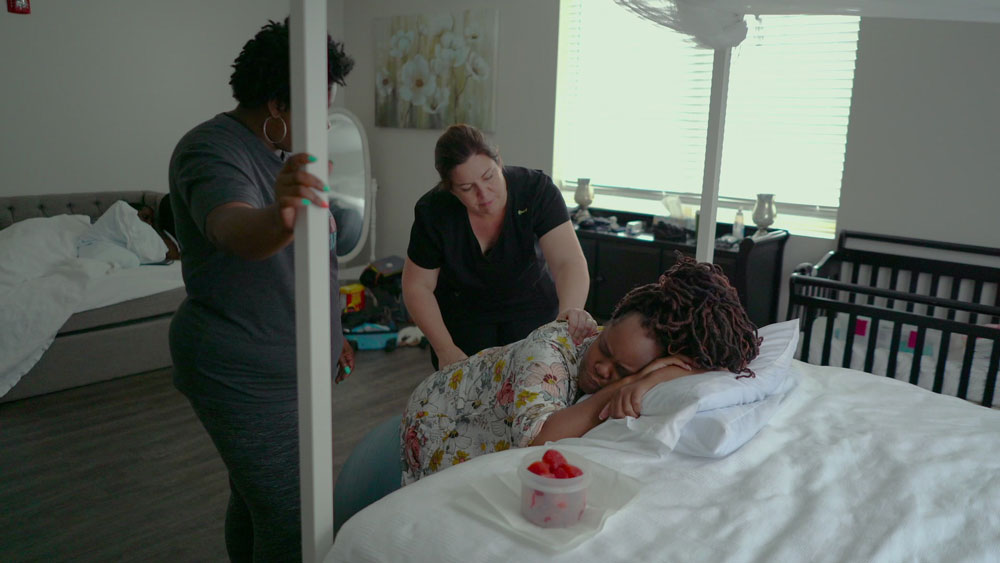
Hulu’s new documentary “Aftershock” is devoted to examining the obscene disparity in maternal mortality rates that Black women face, but its climax centers on a smooth, problem-free delivery at a birthing center. Part of what makes it so extraordinary is the gentle attentiveness that directors Paula Eiselt and Tonya Lewis Lee capture in the hours leading up to the birth: the mother-to-be eats strawberries, receives a massage from a midwife to relieve her pain, and breathes deeply. When the moment arrives there is no screaming, just an exhaled sigh and joyful relief.

To Eiselt and Lee, showing how calm birth can be when Black women are respected and empowered to control their experience is an essential part of revealing why America’s medical system fails so many of them.

According to the Centers for Disease Control and Prevention, in 2020 (the most recent year for which this data exists) the maternal mortality rate per 100,000 births was 55.3 for Black women, 19.1 for white women, and 18.2 for Hispanic women. Eiselt and Lee recognize how distressing those statistics are. In fact, those numbers are part of the reason she chose to take on this subject.

“Maternal health is something that is very close to me,  as a mother and an artist,” Eiselt explained to Salon in a recent interview. The mother of four recalled her own traumatic, adverse pregnancy and birth experiences while also recognizing the difference between the level of care she received versus that of women like 30-year-old Shamony Gibson, who died in 2019 after the birth of her son, and 26-year-old Amber Rose Isaac, who died in 2020 after an emergency Cesarean section, which her family insists was a result of medical negligence.

The United States is the most dangerous country in the industrialized world to give birth, Eiselt said. In partnering with Lee, who served as the spokesperson for the Office of Minority Health’s infant mortality awareness-raising campaign in 2007, Eiselt’s goal was to create moving portraits from these stories.

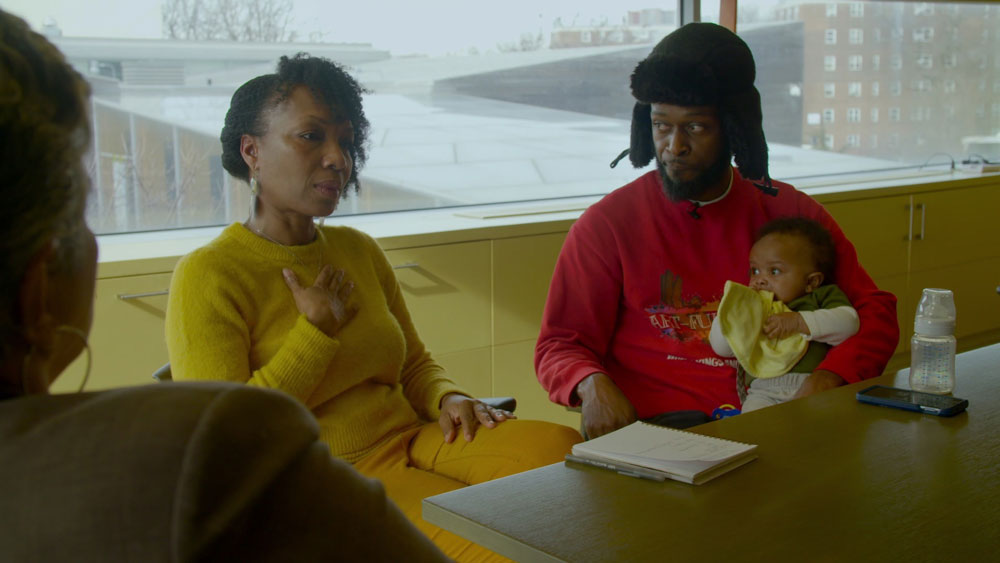
Through “Aftershock,” we follow Shamony’s mother, Shawnee Benton Gibson, her grieving partner, Omari Maynard, and Amber’s surviving partner Bruce McIntyre as they transform the pain of their loss into activism. The documentary shows how much work still lies ahead to bring down the Black maternal mortality rate and prevent other families from sustaining such a terrible loss while also contextualizing the failures in the medical profession with a look at history, but as Eiselt and Lee explain, there is reason to hope as long as women can exercise their right to choose how and when they give birth.

This interview has been edited for length and clarity.

Before making the documentary, just in terms of just approaching subjects, what where the things that you knew specifically that you wanted to do, or issues that you had to cover?

Paula Eiselt: First and foremost, the people are what make stories. There are amazing articles, but articles are not films. And it was really important to find those protagonists who . . . viewers will relate to. So when Tonya and I sat down, we decided first and foremost, this needs to be a human story. This isn’t going to be a statistically driven story, although we pack in a lot of that. But all of that comes underneath the stories of the people. So we were very clear that we wanted minimal experts. Dr. Neel Shah, and Helena Grant, they became the tentpole experts. But they’re also characters in the film.

And of course, from day one, the foundation of this film was always going to be in the work of Black women. That was very clear. There’s no way to tell the story of the U.S. maternal mortality crisis, which does affect all women, without having the foundation center Black women. There’s really no other way to do it. So we were both very clear on that.

Tonya Lewis Lee: I think that Paula and I also had very early conversations about who was going to be behind the camera, who was going to be around when we went into film. For example, for the men’s circle, we knew we wanted a Black male DP in that room. We were very sensitive to that even as we were thinking about, you know, who is on our crew? What do they look like? What’s their level of sensitivity? Who is going to be working with these families?

The fathers are the ones left behind to have to pick up the pieces.

And Paula and I had a lot of real conversations. This is an issue about race, Paula is not a Black woman. And it was really important that we be able to be open in those conversations. They’re not always easy. But the best work is when you’re able to have open and honest conversations about race, because it is sensitive.

How do we – when we’re talking to Shawnee, and Bruce, and Omari – show understanding? And by the way, I’ll tell you, Shawnee herself is very direct. She will tell you how she feels, how she thinks, and she was also very critical in terms of just talking about issues of race very openly with all of us. And so I think that also made for us to be able to make the film in . . .  the tenor and the tone that we did.

AftershockShawnee Benton Gibson and Omari Maynard in “Aftershock” (Hulu/Onyx Collective)
A few things about “Aftershock” struck me as unique. One of them is that when we think about maternal health, regardless of race, we think about it in a way that’s usually centered on just those giving birth. What this film does that’s really important is showing the partners, the men and the partners, who are left behind when the birth parent dies. Tonya, you addressed this a little bit when you were talking about going into those rooms and speaking to men who have lost their wives and partners. Was that a direction that you predicted the documentary would take?

Lee: As we talked about that first event that we filmed, Aftershock, the call to action that Shawnee put out, it was really a celebration of the life of Shamony. At that event, they also held the men circle that Omari ran. That was the pivotal moment for us to understand as filmmakers, the impact that the death of these women have on men. So we followed Omari.

And by the way, they’re the ones that are left behind. I think people often think about maternal health as a woman’s issue, but it’s really a family issue. It’s a community issue. And so we embarked on following Omari as he’s trying to pick up the pieces of his life, continuing to work, raise his children without Shamony there, and then Omari, just being who he is, and reaching out to other fathers who have experienced that loss, helped to direct us to Bruce. It was really, truly organic. But you know, when you look back, of course it makes sense. The fathers are the ones left behind to have to pick up the pieces.

There’s so much conversation in the film about the medical industry practices surrounding gynecology and obstetrics – and how it has been removed from traditional midwifery, and how Black women have been decoupled from that process. I’m thinking about the wonderful but also very noticeable distinction between birthing center versus going into the hospital in Tulsa and seeing this sign declaring, “We’re Team Birth” . . .  and it’s all white women. Was this an aspect of maternal health cases that you look at differently now after this production versus when each of you were going through your own birthing experiences?

Eiselt: To just briefly touch on the history that we show, of what happened to enslaved Black women in terms of experimentation, and then what happened in the 19th century, with the stigmatization of midwives, and, really, white men taking over that profession, that has set in motion this entire crisis. This is just part of that same story of women, especially Black women losing their autonomy in every way and being robbed of this profession.

This isn’t something novel. This isn’t some anti-medical, anti-technology view. The countries with the best [maternal health] rates have midwives, because they provide the best outcomes. That’s science. That’s evidence.

So, I think going in knowing that history, we always wanted it to be there. And knowing the system of the U.S., the maternal health system, and what it lacks, was something really important to show.

My experiences in the hospital, I’ve experienced every type of birth. I’ve had a C-section, I’ve had a drug-free birth, I’ve had an epidural birth. I’ve seen the way that the system operates. And then choosing to have a midwife with my fourth child, it wasn’t perfect, but it’s a vastly different experience. So taking all that knowledge of how I know this system works from the inside, knowing what wasn’t there was something we did want to show.

The countries with the best [maternal health] rates have midwives, because they provide the best outcomes. That’s science. That’s evidence.

Felicia, the woman who does have that amazing birth center birth, that’s something that was not planned. When we started following Felicia, she was going to have a birth in one of those hospitals that you see in Tulsa. She even had a great rapport with her providers. But ultimately, she chose a birthing center. And actually, her doctor that she was going to use was a Black man, a lovely doctor.

But she chose the woman’s space. She felt that for her, and for the birth that she wanted, and the empowerment that she wanted, that was the place to go. We were able to pivot the story right away.

Lee: For me, when I had my children 27, 25 years ago, I had hospital births. I hadn’t even thought about a midwife, really. The campaign that was waged against midwives did a great job, and it did a great job on me.

But I will say, as we began doing the research and learning and discovering, I remember an early article that I read about how George Washington paid his enslaved midwife because she was so valuable to the plantation.  That was such an a-ha moment for me personally, because it was like, Oh. So the midwife on the plantation, who is bringing forth the labor force, is so valuable to George Washington that he pays her, even though she remains enslaved. Because not only is she administering to the labor force, she’s administering to his family, his overseers and people outside of the community.

So that sort of began my awareness of the power of midwives; I was woefully ignorant. And I’m just grateful for Helena Grant, who is the midwife that we feature in the film, who really opened my eyes to a lot of the history of what you see in the film.

AftershockAftershock (Hulu/Onyx Collective)

Since Roe v. Wade was overturned, there have been stories coming out of Oklahoma about the immediate impact on that community. Choosing to film in Oklahoma for this documentary seems very prescient. What was behind that choice? And more specifically, what went into your choice to venture into Tulsa?

Lee: Well, the making of this entire film is divinely ordered. So let’s start with that. I remember talking to some folks in Tulsa early on, when we weren’t even thinking about going there. And they told us about this doctor who was in Boston, who they were doing some work with, and we sort of heard that, but we didn’t make the connection: It was Neel Shah.

Eiselt: We met him before.

Lee: Yeah, we had met Neel before that. But we didn’t make the connection. . . . Then we got back to Neel Shah, who was working, as you say, with Team Birth there in Tulsa, and so we decided that we were going to follow Neel. We heard about what he was doing with Team Birth, and we wanted to see if Team Birth is something that really could work. So we went down to Tulsa.

And I say that it’s divine because it makes so much sense that we would be in Tulsa. We all know they just had the centennial of the race massacre down there. It is no wonder that the birth outcomes in a place like Tulsa are so bad, because the racial equity down there in general is bad and people don’t want to deal with the issues.

And there are some good things happening there at the same time.


Want a daily wrap-up of all the news and commentary Salon has to offer? Subscribe to our morning newsletter, Crash Course.


I’m wondering if there was an outcome that you thought might happen when you were going there that surprised you the most.

Eiselt: When I went into that community, we wanted a birth. That’s really why we went to Tulsa. I mean, part of it is we wanted to see if Team Birth itself was something that could really be effective. So we followed several [women] who were going to give birth, and we wanted to capture that birth. There was a hospital births that we filmed that did not make the film. There was another woman who was contemplating a hospital birth, but then was going to have another kind of birth, but she ended up back in the hospital.

And then there was Felicia, and by luck of the draw, and chance of chances, we were able to capture Felicia have a beautiful, beautiful birth.

That birth was amazing to witness in a documentary that is talking about maternal mortality. There is a lot of sorrow, there’s a lot of shock, but then you have this vision of this is how birthing can be.

Eiselt: I mean, Felicia is the promise of what it could be when women choose – because choice is everything – choose where they birth, with whom they birth, who’s in the room, this is the result of what an integrated system could look like. So it was so important to show that hope.

We did not want to tell a doom and gloom story. And you know, of course, with Shawnee and Omari and Bruce, they are not doom and gloom, people. They turn their pain into power. So it was never going to be that. But with Felicia’s birth, it takes it to another level of really showing what empowered birth looks like and showing what real birth looks like.

We don’t see representation of the process of birth, of labor. We see some women screaming their heads off in a hospital and completely out of control. We don’t see, you know, the sereneness of her birth.

And again, not everyone needs to have a birth like this, but we need representation so people could make that choice.

Lee: One thing I’ll add to that is, the last thing that I want is for Black women to be afraid to give birth. And so it was essential that we be able to show what a positive birth looks like, and what a dignified, safe, beautiful birthing process can be.

We don’t want people to be afraid. We want people going into birthing excited about the journey.

I love in the film is when Felicia says, “This is the hardest thing I’ve ever done in my life.” Because it is hard. And I have a spiritual belief that, well, as a midwife, as Helena Grant, said to us, when a woman is birthing, she’s not only birthing a child, she’s birthing a mother. And to go through that process of birthing, as hard as it is, I believe it makes us the best mothers that we can possibly be.

“Aftershock” is currently streaming on Hulu. Watch a trailer, via YouTube.

https://www.youtube.com/watch?v=k63RC0rJEd8
 

Read more

about maternal health and motherhood in America

“Unfit for human consumption”: 5 things to know about the Skittles lawsuit over titanium dioxide

When Americans eat Skittles, are they tasting more than just the rainbow

A new lawsuit alleges that U.S. consumers may be eating a potentially carcinogenic additive that makes them “unfit for human consumption.”

A California man named Jenile Thames  as well as additional plaintiffs  claims that Skittles are “unfit” to eat because they contain an inorganic substance called titanium dioxide, which was banned in Europe after a scientific opinion said it “can no longer be considered as safe when used as a food additive.”

“As a result, plaintiff and the class were injured by the full purchase price of the products because the products are worthless, as they are marketed as safe for human consumption when they are not . . . safe for human consumption,” the lawsuit says. 

Here are answers to five burning questions about the lawsuit, including how titanium dioxide is used in the context of candy making:

1

What does the Skittles lawsuit allege?

The bulk of the Skittles lawsuit centers on Thames’ claims that the current packaging of the candy makes it difficult for consumers to know what they’re actually consuming. 


“Defendant relies on the ingredient list which is provided in minuscule print on the back of the products, the reading of which is made even more challenging by the lack of contrast in color between the font and packaging,” the lawsuit claims. 


It continues, “[N]either before nor at the time of purchase does defendant notify consumers like plaintiff that the products are unsafe to consumers, contain heightened levels of titanium dioxide and should otherwise be approached with caution.”


Because of this, Thames wants to sue Mars, the parent company of Skittles, for fraud of omission. Furthermore, according to the plaintiffs, Skittles are anomalous because many other brightly colored candies in the U.S. market — like Nerds, Sour Patch Kids and Swedish Fish — don’t contain titanium dioxide.

2

What is titanium dioxide?

Titanium dioxide is an inorganic substance that is commonly associated with being an active ingredient in some of the strongest sunscreens, where it works as a UV-blocking component. There are two subcategories of titanium dioxide: pigment-grade titanium dioxide and nanoscale (or ultrafine grade) titanium dioxide. 


Pigment-grade titanium dioxide, which is also called TiO2, is prized for its bright, matte-white color, and is frequently used in cosmetics, as a paper coating, and in the case of Skittles, as a blank canvas on which candy makers can add bright pops of color.

3

Is titanium dioxide “unfit” for human consumption?

It depends on whom you ask. In 2016, Mars announced in a press release — which has since been removed or made unavailable from its website — that it was committed to removing potentially poisonous nanoparticles of titanium dioxide from its food products over the next five years. 


In response at the time, Jaydee Hanson, a senior policy analyst at the Center for Food Safety, wrote, “We are pleased to see that Mars has taken a positive step toward eliminating toxic, unnecessary nanomaterials from its line of food products. We urge the company to speed up the removal of these additives, especially given the grave health concerns associated with titanium dioxide and other nanoparticles.” 


Hanson continued, “Studies have shown that the human health risks associated with ingesting nanoparticles of many common food additives far outweigh any utility for producers. There are plenty of non-toxic alternatives available and we urge MARS and others to commit to not using any engineered nanomaterials in human and animal food products.”


In 2019, France banned titanium dioxide in food products, prompting the formula for Skittles sold in that market to be changed. Earlier this year, the European Union barred the use of titanium dioxide as a food additive. 


“Taking into account all available scientific studies and data, the panel concluded that titanium dioxide can no longer be considered safe as a food additive,” Magged Younes, the chair of the European Union Food Safety Authority’s expert Panel on Food Additives and Flavourings, said in a May 2021 news release. “A critical element in reaching this conclusion is that we could not exclude genotoxicity concerns after consumption of titanium dioxide particles. After oral ingestion, the absorption of titanium dioxide particles is low, however they can accumulate in the body”. 


The U.S., however, has yet to follow suit. As the Los Angeles Times reported, the U.S. Food and Drug Administration (FDA) has approved of the use of titanium dioxide since 1966 as long as it doesn’t exceed 1% by weight in foods. Its use as a food colorant was upheld by the FDA as recently as March 29.

4

Has Mars responded to the allegations?

As of publication, Mars had not responded to a request for comment from Salon Food. In a statement to Today, a spokesperson for the company said, “While we do not comment on pending litigation, our use of titanium dioxide complies with FDA regulations.”

5

What’s next for the case?

The lawsuit, which was filed late last week in the same court that is currently weighing a lawsuit over Subway’s “100% tuna” claims, is still in its earliest stages. The suit could meet the same end as other “food fraud” cases that are dismissed almost immediately, such as when another California man tried to sue Krispy Kreme for not including real blueberries in its blueberry doughnuts.


The lawsuit may result in Mars actually changing the formula of Skittles to exclude the use of titanium dioxide, which has already done in parts of Europe. However, it’s still too early to know how the company will ultimately respond.


Regardless, the plaintiffs currently seek compensatory, statutory and punitive damages, “including monetary compensation for all U.S. Skittles customers included in the class, along with injunctive relief, including the requirement that Mars add full disclosures of their use of TiO2 moving forward.”

How to clean dryer vents without calling a pro

Clean Like You Mean It shows you how to tackle the trickiest spots in your home — whether they’re just plain gross or need some elbow grease. You’ll get the cleaning secrets we’ve learned from grandma, a guide to our handiest tools and helpers, and so much more. Pull on those rubber gloves and queue up the tunes: It’s scour hour!


Cleaning your dryer vent seems like a form of punishment, right? Unfortunately, never doing so is actually a bit of a fire hazard (OK, it’s a huge fire hazard). Dryer vents can easily get clogged up with lint from your dryer; when the dryer is running, it releases a ton of hot air that, if you’re not careful, can potentially cause a fire. “Cleaning regularly helps prevent lint fire hazards and will also keep your dryer running most efficiently,” says Laura Johnson, a consumer analyst at LG Electronics. The good news is that every homeowner is more than capable of cleaning the vents (take this from a not-so-handy non-homeowner). So how exactly do you clean your dryer vent? Read on.

Step one

First things first: clean the lint trap (you should be doing this after every load of laundry, but if it’s been a few cycles, now’s as good a time as any to take care of this). “Cleaning the lint filter after every load is an important first step in keeping your dryer functioning properly, and preventing lint build-up in ducts,” says Johnson. Remove the dryer lint trap altogether, and use a vacuum cleaner with a hose attachment to clean in and around the dryer lint trap. Next, pull the dryer out from the wall, unplug it, and disconnect the duct (the long, windy aluminum tube that’s also connected to the wall).

Step two

So how do you know if your dryer vent needs cleaning? “Your dryer ducting may need cleaning if you start to notice your clothes taking a longer time to dry or clothes are hotter than usual when a load is done drying,” says Johnson. Take a peek in the vent: if it’s clogged with lint on the sides, that’s a sign it needs to be cleaned.

Step three

Slip on a pair of rubber gloves (things are about to get messy) and vacuum the dryer vent with a hose attachment to remove as much lint as possible. Once you’ve gotten rid of most of the lint, go in with a long-handled duster or this top-rated dryer vent cleaning brush from Amazon to reach all the nooks and crannies that your dryer couldn’t. Shine a flashlight in the vent to see if there are any spots that you missed. If it looks clear, reattach the ductwork and vent cover. Push the dryer back into place and plug it in — you did it!

Step four

Before washing and drying a load of whites or colors, run an empty dryer for 15 to 20 minutes. This will ensure that everything is running properly and help to clear out any dust or lint that may be hanging out. Now, you not only have a safer dryer, but a more efficient one, too.

“Climate change kills”: Experts agree with Spanish prime minister’s comments on wildfires in Europe

As the weather in the United Kingdom exceeds 40 degrees Celsius for the first time in history (that’s more than 104 degree Fahrenheit to Americans), heat-related deaths have topped 1,100 in Spain and Portugal as wildfires blaze through the Iberian peninsula. The blazes have even reached France, where 14,000 people were evacuated from the city of Bordeaux as two pine forests have been burning up for almost a week. Sporadic wildfires been burning in Greece as well, buoyed by strong winds. 

The catastrophic heats and fires prompted Spanish Prime Minister Pedro Sánchez to comment that “climate change kills.” His sentiment is not hyperbolic; climate scientists tend to agree with the prime minister’s sentiment, that the heat wave and wildfires battering Europe are connected to the climate crisis. 

“Indeed, climate change kills, and in many ways,” Wehner told Salon. “I personally know six families who have lost their homes in California fires since 2018. And one family lost their elderly mother who could not escape fast enough.”

Michael Wehner is a senior scientist in the Computational Research Division at the Lawrence Berkeley National Laboratory, who specializes in climate change data. Speaking with Salon by email, not only did Wehner agree that climate change has exacerbated the ongoing European wildfires, but also said that the issue of wildfires strikes very close to home for him.

“Indeed, climate change kills, and in many ways,” Wehner told Salon. “I personally know six families who have lost their homes in California fires since 2018. And one family lost their elderly mother who could not escape fast enough.”

RELATED: Wildfire smoke is here to stay. Here’s how to clean the air inside your home

The historic nature of the wildfires in the southern part of Europe perhaps explains the concomitant historic heat wave in the United Kingdom. There is one variable that undeniably links the two events: Man-made climate change.

“Undoubtedly climate change has played a substantial role in the wildfires in Portugal, Spain and France, as well as elsewhere,” Kevin Trenberth, a distinguished senior scientist in the Climate Analysis Section at the National Center for Atmospheric Research, told Salon by email. “With increased carbon dioxide in the atmosphere there is increased heating, which first goes to drying and then to temperature increases. The warmer air also sucks moisture out of the plants.”


Want more health and science stories in your inbox? Subscribe to Salon’s weekly newsletter The Vulgar Scientist.


Michael E. Mann, an American climatologist and geophysicist and currently director of the Earth System Science Center at Pennsylvania State University, echoed Trenberth’s perspective.

“Climate change has made the planet hotter and drier,” Mann told Salon by email. “A combination the leads to more widespread, destructive and deadly wildfires. Our own research suggests that human-caused warming has also altered by jet stream in a way that leads to more frequent persistent summer weather extremes like the ones we’re seeing play out in Europe at this very moment.”

“It is incorrect to say ‘climate change caused this fire.’ However, it is correct to say ‘climate changed made this fire more likely,’ or equivalently, ‘climate change made this fire worse.'”

While Mann did not comment specifically on how any of the European governments are reacting to climate change, he noted that “a lot of heads of state have given little more than lip service to climate action. It’s time they recognize climate change as the defining crisis of our time and step up so that their actions match their rhetoric.”

Wehner, who like Trenberth and Mann agreed that climate change has at least played a role in the European wildfires and heat wave, noted that it can be difficult to tease out the precise causality in these situations. He explained that it is “a complicated and deeply philosophical subject, especially for complicated events like wildfire where there are many factors to consider. So it is incorrect to say ‘climate change caused this fire.’ However, it is correct to say ‘climate changed made this fire more likely,’ or equivalently, ‘climate change made this fire worse.'”

Without question, however, Wehner concurred with other experts that climate change is making wildfires more likely.

RELATED: Why fighting fire with fire might actually save Yosemite’s giant sequoias

“As climate change leads to hotter summers, vegetation dries out earlier in fire prone areas like Southern Europe and the Western US,” Wehner explained. “Additionally, the hot weather conditions favorable for large wildfires last longer and are more severe. Climate change also makes drought in the Mediterranean more frequent further exacerbating flammability.”

As climate change has worsened, wildfires have increasingly set dismal records. In 2019 and 2020, Australian wildfires were so massive that they punched a hole in the ozone layer. The following year, an Oregon wildfire was so intense that it literally created its own weather system. Experts agree that, as climate change worsens, wildfires are going to become more frequent and more destructive.

For more Salon articles about wildfires:

There isn’t a more comforting dinner than deep-dish chicken pot pie

I made this pie last winter for the first time, and there is nothing more warm, comforting, or rustically impressive to bring to the dinner table in the coldest months of the year. If you want to use your favorite pie crust recipe, prepare three times a single crust recipe to replace this dough — you’ll need 2/3 of the dough for the bottom crust, and 1/3 for the top. — Erin Jeanne McDowell

Watch this recipe

Deep-Dish Chicken Pot Pie
Yields
1 9-inch deep-dish pie
Prep Time
2 hours
Cook Time
1 hours 40 minutes

Ingredients

For the crust

  • 3 3/4 cups all-purpose flour (450 g)
  • 3/4 teaspoon salt (3 g)
  • 3 sticks cold unsalted butter, cubed (340 g)
  • 3/4 cup ice water, plus more as needed (173 g)

For the filling and assembly

  • 6 tablespoons unsalted butter, divided (85 g)
  • 1 large sweet onion, diced (about 325 g)
  • 3 stalks celery, diced (about 300 g)
  • 3 carrots, diced (about 225 g)
  • 3 cloves garlic, minced (15 g)
  • 1 pinch salt and freshly ground black pepper, to taste
  • 1/2 cup all-purpose flour (60 g)
  • 4 cups (1 liter) chicken stock (907 g)
  • 1 bay leaf
  • 4 sprigs rosemary
  • 4 sprigs thyme
  • 1/4 cup heavy cream (60 mL)
  • 4 cups chopped, cooked chicken (575 g)
  • 1 1/3 cups frozen peas (200 g)
  • 1 brush of egg wash, as needed for finishing


Directions

  1. Preheat the oven to 400°F/205°C. Place a 9-in/23 cm springform pan on a baking sheet lined with parchment paper.
  2. Make the pie crust: In a large bowl (working with a pastry cutter or your hands) or in the bowl of a food processor, combine the flour and salt. Add the butter and toss well to coat the cubes in flour. Cut the butter into the flour with your hands or a pastry cutter (or pulse it in the food processor), until the butter resembles the size of peas, and the mixture resembles a coarse meal. 
  3. If mixing in the food processor, transfer the mixture to a large bowl. Make a well in the center of the bowl, add the water and mix until the dough comes together. It should be rough in texture, but hold completely together — it should not be sticky. If it’s too dry/appears powdery, add more water 1 tablespoon (15 g) at a time until the dough comes together.
  4. Divide the dough — you’ll need about 2/3 of the dough for the bottom crust and about 1/3 for the top crust. Form each piece into a disk, wrap each piece of dough, and chill for at least 1 hour in the refrigerator (and up to 2 days).
  5. While the crust is chilling, make the filling: in a large pot, heat 2 tablespoons (28 g) of butter over medium heat. Add the onions, celery, and carrot and sweat until the onions are translucent, 5 to 6 minutes. Add the garlic and sauté until fragrant, 1 minute more. 
  6. Add the remaining 4 tablespoons (56 g) butter over medium heat. Once melted, whisk in the flour. Cook, stirring constantly, until the mixture is just starting to turn golden brown, 2 to 3 minutes. Gradually whisk in the chicken broth. Bring the mixture to a simmer. Add the vegetables back to the pot, along with the bay leaf, rosemary, and thyme. Simmer, stirring occasionally to prevent scorching, for 15 minutes.
  7. Stir in the cream, chicken, and peas and return to a simmer. Simmer for 4 to 5 minutes more. Remove the mixture from the heat. Cool completely (this mixture can be made up to 2 days ahead and stored in the refrigerator until ready to assemble and bake). 
  8. Par-bake the bottom crust: on a lightly floured surface, roll out the larger quantity of dough to 1/4 in/6 mm thick. Transfer it to the springform and trim the edge so there is 1/2 in/1 cm overhang all around the edge of the pan. Chill the dough inside the pan for at least 30 minutes in the refrigerator.
  9. Dock the chilled dough with a fork on the base and sides. Line the crust with parchment paper and pie weights, and bake until the crust is beginning to brown at the edges, 15 to 17 minutes. Remove the parchment and pie weights, and return the pie to the oven for 2-3 minutes more, until the base appears dry. While the crust is still warm, use scissors to cut away any excess crust that’s still hanging over the edge of the pan. Cool the crust to room temperature. 
  10. Mound the cooled filling into the cooled crust, pressing firmly to ensure minimal air pockets. Make a nice, rounded mound at the top. On a lightly floured surface, roll out the smaller amount of dough to 1/4 in/6 mm thick. Use a rolling pin to transfer the dough to the top of the pie.
  11. Trim away any excess dough, leaving about 1/2 in/1 cm excess all the way around the edge. Nudge the edge down into the side of the springform pan so that it meets the top edge of the bottom crust. Push the crust down a bit so the excess puckers outward and creates a little lip, just like the edge of a typical pie. Press that outer lip together to seal the edges a bit, then crimp with a fork to seal.
  12. Egg-wash the top crust evenly and cut vents into the top crust. Transfer the pie to the prepared baking sheet and bake until the crust is very golden and the filling is bubbling through the vents, 50-60 minutes. If the pie is browning too much or too quickly, reduce the oven temperature to 375°F/190°C and/or tent the top of the pie with foil for the remainder of bake time.
  13. Cool the pie for 20-30 minutes before slicing and serving. Un-mold the outer edge of the springform pan. Slide an offset spatula around the edge of the base of the pan; if the pie is really cool and it feels solid in the middle, you’ll likely be able to pick up the pie with your hands (or a large spatula) and transfer to a platter or stand. If it feels soft in the middle, you may rather keep it on the springform base for slicing.


Ivana and me? It’s complicated: A Manhattan feminist’s connection to the first Mrs. Trump

Ivana Trump’s funeral is Wednesday on Manhattan’s Upper East Side.  Reading that the 73-year-old businesswoman died from tumbling down the stairs of her nearby Manhattan townhouse, I flashed to the famous 1986 photo of her in a red dress and lipstick, sitting at the bottom of the spiral stairs of a different East Side apartment, with Donald and their young kids Ivanka, Eric and Donald Jr. She was 36, at the height of her happiness and power.  It was hard to miss her very public rise and fall.

At 22, Ivana Marie Zelničková married an Austrian ski instructor friend to escape Soviet-era Czechoslovakia. As a 26-year-old divorced part-time model, she met Trump at the New York hangout Maxwell’s Plum. He was three years older. Of 600 people at their 1977 church wedding, she said she’d only invited six. 

As a liberal, broke downtown journalist, I never liked her husband, politics or opulence. I initially dismissed her as a lady who lunched, a gaudy symbol of 1980s excess. But when I met her at uptown openings and galas that I covered for local newspapers, I saw she wasn’t your typical snobby socialite. A warm, chatty only child, she wasn’t born with a silver spoon — she’d worked since she was three, she proudly proclaimed. She introduced her parents: engineer Miloš and Marie, a telephone operator. She supported cerebral palsy and AIDS/HIV charities. She was devoted to her three kids, but in interviews she was very open about needing household help. When she boasted of speaking five languages, being an avid skier, having a master’s degree and studying for her interior design license, I rolled my eyes, labelling her an overachieving show-off like her husband. I became more interested when she told Oprah he was “a male chauvinist, the worst,” and when she stopped cooking for him to design hotel interiors, become the CEO and president of the Trump Castle Hotel and Casino in Atlantic City, and later, manage the Plaza. 

As a single workaholic with a master’s degree, I wondered how Ivana juggled it all. Turned out, she couldn’t. I felt sorry for her when Donald’s explosive affair with Marla Maples destroyed her 14-year marriage. Ivana was granted a divorce for his “cruel and inhumane treatment.” While freelancing for tabloids, I followed the headlines as Trump married Maples, mother of Tiffany. In what I viewed as a just karmic twist, he and Marla divorced after six years and he remarried a younger model in 2005, the mother of his son, Barron. Long before he was the worst president in American history, his personal life proved he was a disloyal cheater and superficial opportunist, swapping the mother of his three kids and astute business partner for younger, less interesting incarnations of Ivana. 

Having been left by several boyfriends over the years for the quieter, less threatening version of myself, I over-identified.

Having been left by several boyfriends over the years for the quieter, less threatening version of myself, I over-identified. Ivana seemed the victim of a career woman’s worst nightmare, illuminated by paparazzi bulbs. Like Oprah’s audience, I applauded when she told the show in 1992, “I have changed. I will not let men dominate me anymore.” I wouldn’t either! 

Ivana was credited for helping build Trump’s hotel empire and predicting his political rise. Yet in a 1994 ABC interview, Donald said he’d made a mistake giving her a management role in his casino, noting that he noticed a change in her demeanor while she was working for him that turned him off. “Ivana would get angry at somebody over the telephone … and she’d start shouting. And I’d say ‘I don’t want my wife shouting at somebody like that … A softness disappeared … She became an executive, not a wife,” he lamented, elucidating a sexist paradox that made my blood boil.   

At 35, after I wed an older, brilliant screenwriter, I wanted to collaborate on a project I thought would be wildly successful.  He feared it would ruin our relationship. Though I’d called myself “a raging feminist who loved men and marriage,” I backed off. I had zero in common with the fancy blond fashionista who’d played hardball for a $14 million divorce settlement (and was worth a reported $100 million at her death), but recalling her story as a cautionary tale, I kept my business and bank account separate

As someone who chronicled being unceremoniously dumped in the past, I always admired Ivana’s survival instincts.  

I admit I rooted for Ivana as she remarried twice, travelled the globe, launched other careers and published four autobiographical books. She poked fun at herself on TV and in a 1996 movie cameo in “The First Wives Club,” saying “Don’t get mad; get everything.” During the 2015 presidential election, when the press resurfaced an accusation she’d made during her acrimonious divorce that Donald had raped her decades earlier, I hoped she’d become a political icon. But she didn’t step forward to make history by toppling the patriarchy, instead standing by an earlier statement that she’d felt violated by the encounter but didn’t mean the term in a criminal or literal sense.

She remained friendly with her ex, protecting him and their three kids and 10 grandkids. I imagined in some ways she just wanted her family and status back. In 2017, she told Good Morning America she was an unofficial advisor to the 45th president with a direct number to the White House, insisting, “I’m basically first Trump wife. OK? I’m first lady?” 

Progressive friends who hate conservatives blame Ivana for abetting Trump’s lawlessness that severely damaged our country. But I have relatives I love in the red states of Michigan and Florida, and a new appreciation for Republican Rep. Liz Cheney, watching her rally against Trump in the January 6 hearings. On my shelf is Mary L. Trump’s astute bestseller, “Too Much and Never Enough: How My Family Created the World’s Most Dangerous Man.” It’s too easy to paint all Republicans — or Trumps — as villains. As someone who chronicled being unceremoniously dumped in the past, I always admired Ivana’s survival instincts.  

By lying to and betraying his hardworking wife 32 years ago, Trump showed us exactly who he is. Although I’d never vote for either of them, I can’t help but think he wound up cheating the whole country out of a first lady who deserved the role.  Although she insisted she preferred her freedom to life in the White House, I bet Ivana would have actually enjoyed fulfilling the duties of the high profile job, using it to promote philanthropic causes and help someone other than herself. Life isn’t fair — especially for ambitious women — but Ivana Trump made the most of hers, with and without him.

“They’re waiting for the Eiffel Tower to melt”: “The View” blasts Joe Manchin on climate inaction

As President Biden considers an emergency climate declaration, “The View” took on climate change. Many parts of the world have been enduring record high temperatures, including a heat wave in Europe that has turned deadly, scorching temperatures in Texas causing power outages and worse, and dangerous waves in Hawaii. 

“It’s kind of amazing,” co-host Whoopi Goldberg says on Tuesday’s show.

After expressing disbelief that more hasn’t be done to stem the disastrous impacts of climate change, the hosts turn quickly to some of the reasons for the delay in action. Co-host Sara Haines blames “dirty money,” energy companies and especially Senator Joe Manchin (D) from the “coal-producing state” of West Virginia. 

She cites the millions of dollars of political contributions by the nation’s largest oil and gas companies while fellow co-host Sunny Hostin points out specifically that “80% of oil and gas donations went to Republication candidates over the past 30 years,” adding, “I don’t think the Republican party is in a position to tout their clean energy platform” because they don’t have one. 

Hostin describes Manchin as being “in the pocket” of the oil and gas industry and brings up the disparity of Manchin, who chairs the Senate Committee on Energy and Natural Resources, being one of the richest senators in the country while the state he represents, West Virginia, is one of the poorest. “He’s been co-opted.”

Co-host Joy Behar adds, “We’re in trouble because of Manchin and because of people like him in the Republican party,” bringing up how Manchin has consistently voted for overblown military budgets while ignoring the climate crisis. Behar says other countries are to blame as well, including the president of Brazil’s quick razing of rainforests, China’s polluting and the bizarre climate change denial of Putin.  


Want a daily wrap-up of all the news and commentary Salon has to offer? Subscribe to our morning newsletter, Crash Course.


The majority of the hosts express concern and urgency over the rapidly worsening climate crisis while guest host Lindsey Granger seems to downplay the issue and politicians like Manchin’s part, saying “there has been growth” in talking about climate issues. The “entire [Republican] party is not a monolith,” Granger says, while asserting: “People need to continue working.”

But other hosts like Behar insist it’s past time for change. “I feel as though the world is on a suicide mission with climate change. And between the guns and the climate, we are in trouble . . . They’re waiting for the Eiffel Tower to melt.”

Watch the clip below, via YouTube.

https://www.youtube.com/watch?v=YM3yJwxGCuc


Why fighting fire with fire might actually save Yosemite’s giant sequoias

Yosemite National Park’s iconic giant sequoia trees — a symbol of conservation and a major tourist attraction in the Golden State — went up in flames on Thursday, July 7. First responders are fighting fire with fire to protect Mariposa Grove, a grove of giant sequoia trees by the south entrance of the national park. All 500 or so mature giant sequoias in Mariposa Grove, including the park’s second tallest and most photographed tree, the Grizzly Giant, still stand — but the Washburn Fire is spreading.

Giant Sequoias thrive in Southern California, where wildfires, too, are a natural part of the forest ecosystem. Yet droughts over the last two decades turned forests in the Sierra Nevada into one giant tinderbox. High temperatures, degraded ecosystem health, and bark beetle infestations have killed millions of trees in Yosemite alone. Now, experts say the dry debris could provide fuel for Washburn Fire to climb from the forest floor into the canopy, creating a “crown” fire hot enough to kill the giant sequoia trees, which can live to be as old as 3,500 years.

Yosemite Fire dispatched a full initial attack team when reports of smoke came in on the afternoon of July 7, but one helicopter dropping fire retardant and a fire engine dousing the flames were not enough to quell the Washburn Fire as it grew from half an acre to over 100 acres. Yosemite Fire put in the call for reinforcements a few hours later. Arriving early Saturday morning, California Interagency Incident Management Team 13 assumed command. Yet with no shortage of dry fuel in Yosemite, spot fires spread Washburn Fire to just over 4,900 acres as of Monday, July 18 — but a prescription for fire kept a larger crown fire at bay. A total of 1,534 firefighting personnel have arrived on the scene in Southern Yosemite over the last two weeks, achieving 50% containment.

RELATED: An unsent text gives insight into final moments of a California family’s annihilation

Fire crews tackled the fire by turning the ground black with char before the wildfire ever could. By pouring a mix of gasoline and diesel from metal canisters, called drip torches, firefighters lit small blazes called back burns — offensive fires intended to burn up the brush and other flammable debris before the wildfire can.

Indeed, fighting fire isn’t just about “attacking” the flames directly. Rather than fighting the fire itself, back burning — also known as backfiring or burnout — attacks potential fuel to extend an existing barrier, whether natural or man-made, or create an entirely new one. The strategy is just one tool in an arsenal that firefighters have developed to combat large wildfires, and fire management teams have thrown every tool at their disposal at the Washburn Fire.

Yosemite firefighters shared a video on Instagram of the devastation. 

“We’re attacking it in every possible way: a lot of aircraft, a lot of hand lines, a lot of back burning,” Yosemite National Park Superintendent Cicely Muldoonas told residents at a meeting on July 11. “The only benefit of having this fire so early in the season is there aren’t a lot of other fires going, so there’s a lot of resources available.”

As Washburn Fire moved towards the community of Wawona last week, a specialized group of firefighters, referred to as hotshots, worked to clear hazardous downed trees and other debris. Other firefighting personnel dug trenches with bulldozers and dropped fire retardants from helicopters. Extending existing fire lines from the Merced River and Wawona Road to the north and the southeast, they worked to redirect Washburn Fire away from human infrastructure. 

Because Washburn Fire was already burning in Mariposa Grove, firefighters had to work quickly with a smaller arsenal to stop the fire from advancing. Even at the edge of Mariposa Grove, trenches or fire retardants would have been damaging to the giant sequoias. Firefighters instead engaged in a risky maneuver, burning a controlled fire up to the edge of the wildfire, consuming readily available fuel before the fire could. 

Officials have yet to determine the exact cause of the Washburn Fire. Muldoonas indicated that human ignition caused the blaze. Last month, high temperatures led to astonishingly dry conditions in Yosemite — but lightning, the only natural cause of wildfires, was absent from the park when the Washburn Fire ignited.

Conditions can change rapidly, and back burns sometimes backfire and result in new fires that spread out of control. Weather reports currently indicate that high heat will persist for the foreseeable future, making fires burn hotter and spread faster. If the fire were to crown, reaching the tops of trees, it would become uncontainable. Though sequoias are fire-adapted trees, a hot enough blaze could still decimate them.

Wildfire is not only a part of life for giant sequoias but essential to their reproduction. Their cones, through which they sprout new trees, only open with intense heat. It’s not an accident; it’s evolution. 

Prescription burns are not a new means of fighting wildfires. Indigenous peoples used them long before European settlers ever arrived. According to Diane M. Smith, a historian of American wildfires, protectionist values did not become cemented until the foundation of the United States Forest Service in 1915.


Want more health and science stories in your inbox? Subscribe to Salon’s weekly newsletter The Vulgar Scientist.


“From its earliest days, the Forest Service pursued a single-minded goal regarding fire: minimize the size and number of wildland fires, if not eliminate them all together,” Smith wrote. “This mission often came into direct conflict with the very nature of forests themselves.”

Wildfire is not only a part of life for giant sequoias but essential to their reproduction. Their cones, through which they sprout new trees, only open with intense heat. It’s not an accident; it’s evolution. Fires restore nutrients to the soil and remove competition, creating the perfect opportunity to sow seeds.

Giant sequoias have a built-in fire-resistant shield: some two feet of bark, which protects them from low-intensity burns. For millennia, these giant sequoia trees have survived wildfires on the western slopes of the Sierra Nevada. Yet since 2015, intense wildfires have leveled a heavy blow to many populations that bark beetles have already weakened. Full suppression was the only option, according to Incident Commander Josh Boehm. Only around 40 such clusters of giant sequoias, the largest tree species in the world, remain in the world.  

The “managed fire” tactic of fighting wildfires with fire only returned to the National Park system in 1970. While a common practice, the somewhat controversial approach to fire management comes with risks. Prescription burns typically take years to plan. Fighting fire with fire is unpredictable, but few other tactics reliably stop a fire in its tracks so readily, reported Fire Insider. When heat subsides in the evening the risk of the fire getting out of control is less severe, and controlled burns can be managed relatively well.

Fighting wildfires with fire is a relatively new tactic; historically, in the United States, parks systems and forestry managers tried to aim for wildfire suppression at all costs, an attitude that persisted well into the 20th century. The goal for complete wildfire suppression was originally to preserve timber as a natural resource. The logic was not exactly sound. Smith notes that healthy forests with ancient tree stands were the result of intentionally burned woodlands. Some trees, like the world-renowned Grizzly Giant in Mariposa Grove, are well over 2,000 years old. 

“We’re trying to give it some preventative first aid, really,” said Garrett Dickman, Yosemite botanist, from the base of Grizzly Giant, the most famous giant sequoia in Yosemite, where a sprinkler system is rigged to douse the bark to keep it from igniting. “That is to cool flames and to increase the relative humidity and decrease the fire behavior around this tree.”

Thus far the 209-foot-tall behemoth has not succumbed to the flames. Nor have any other giant sequoias in Mariposa Grove, which Muldoonas called “the root of the whole national park system.” The fame of Mariposa Grove predates that of Yosemite itself and the National Park Service writ large. Indeed, President Abraham Lincoln ceded control of Mariposa Grove to California in 1864, making it one of the first state parks and the poster child of preservation.

The latest COVID conspiracy claims multiple booster shots wreck your immune system

Like a sinister game of Whac-A-Mole, every time a COVID-19 conspiracy theory is debunked, another one emerges anew. The latest conspiracy theory making the rounds in anti-vaccine social media circles is the idea that multiple COVID-19 boosters somehow destroy one’s immune system.

The claim resurfaced again last week, likely due to recent news about the possibility of omicron-targeted booster shots arriving this fall. As Salon previously reported, the U.S. Food and Drug Administration (FDA) advised manufacturers to reformulate booster shots to specifically protect against the BA.4 and BA.5 omicron variants earlier this month. One video making the rounds featured a news anchor stating that European Union regulators were warning that frequent COVID-19 booster shots could negatively affect the immune system.

So, is there any truth here — or is this just another bout of anti-vaccine disinformation?

While the context in which the video was shared made it appear to be recent news, the claim dates back to January 2022, when experts from the European Medicines Agency (EMA) argued at a press conference that COVID-19 booster shots should not be given too close together. The video is a clip from when Bloomberg Quicktake Now reported on the conference.


Want more health and science stories in your inbox? Subscribe to Salon’s weekly newsletter The Vulgar Scientist.


“We are rather concerned about a strategy that entangles repeated vaccination within a short term; we cannot really continuously give a booster dose every 3 or 4 months,” said Marco Cavaleri, the head of Biological Health Threats and Vaccines Strategy at the EMA press briefing in January 2022. “If we have a strategy in which we give boosters, let’s say every 4 months approximately, we will end up potentially having a problem with the immune response, and the immune response may end up not being as good as we would like it to be.”

As Cavaleri noted at the press conference, there were hypothetical concerns about multiple boosters for a couple of reasons. One concern took into account that booster shot-makers are apt to be playing a constant game of catch-up with the next variant, which might not make them as effective as they could be. Then, there’s the risk of the general public growing tired of the need for new shots.

“There is the risk of fatiguing the population with the continued administration of boosters,” Cavaleri said.

RELATED: More proof vaccines don’t cause autism

Notably, Cavaleri never advocated against giving boosters, nor did he question the safety and effectiveness of the COVID-19 vaccines. Rather, he was supporting the idea of issuing boosters, but in a more spread-out timeframe.

“It would be much better to start thinking about an administration of boosters that are more spaced in time,” Cavaleri said. “Ideally, if you want to move towards a scenario of endemicity, then such boosters should be synchronized with the arrival of cold season in each of the hemispheres, similarly to what we are doing with the influenza vaccine.”

“There is no evidence that repeated boosters weaken the immune system,” Dr. Monica Gandhi told Salon. “In fact, this important paper shows that any exposure or any booster actually broadens and diversifies the T cell memory repertoire (e.g. expands your immune response).”

Yet Cavaleri’s remarks from January have been repeatedly decontextualized to fit an anti-vaccine agenda and scare the public into not getting boosters. Currently, about half of vaccinated Americans have received a single booster. Only a quarter of boosted people over the age of 50 who are eligible have received a second one. This newest piece of misinformation, that, boosters will “destroy” or ”ruin” a person’s immune system, has been perpetuated by anti-vaccine talking heads like Robert Malone and Alex Jones.

Experts affirm that the notion that “too many” boosters will ruin peoples’ immune systems isn’t true. In fact, boosters do just the opposite.

“There is no evidence that repeated boosters weaken the immune system,” Dr. Monica Gandhi, infectious disease doctor and professor of medicine at the University of California–San Francisco, told Salon via email. “In fact, this important paper shows that any exposure (breakthrough infection) or any booster actually broadens and diversifies the T cell memory repertoire (e.g. expands your immune response).”

Gandhi pointed to a second paper published in Nature that suggests either exposure to the virus or a booster shot can help a person’s immune system be better prepared to respond to newer subvariants.

“Repeated boosters seem to provide enhanced protection, and they seem to actually broaden the immune response,” William Schaffner, a professor of infectious diseases at the Vanderbilt University Medical Center, told Salon. “And that broadening is important, because you get better coverage against the variants.”

Schaffner added that a booster, in general, “does what its name suggests.” In other words, it boosts the immune system — it does not weaken it.

“It reminds the immune system to get active again, and the immune system makes the protection — the antibodies — and does so in an enhanced way,” Schaffner said. “It does it better than previously — that’s what the booster is designed to do — so you get more antibodies, and you get a broader representation of antibodies.”

In the case of the COVID-19 vaccines, boosters have been necessary for two reasons, Schaffner said. The first being that the virus has been mutating, which may reduce efficacy of the initial vaccine. The second reason is that immunity wanes after several months, according to multiple studies.

“This is a virus that is very different from, for example, the measles virus. The measles virus is very stable, it doesn’t mutate, and once you get vaccinated securely against measles, you’re protected for life,” Schaffner said. “The whole group of coronaviruses are a different family, and their immune response is not as long-lasting as it is against measles.”

Finally, Schaffner added that the COVID-19 vaccines being presented as a two-dose series, plus a booster, was a “misnomer.”

“We first said, ‘oh, COVID vaccines are a two-dose vaccine’ and then we’ll get a booster,'” Schaffner said. “The vaccines really were a three-dose vaccine, so don’t get all hung up on the name.”

Read the latest news on COVID-19:

Sesame Place responds to accusations of racism against Black children

Parents, celebrities and activists are outraged after a video surfaced of a Sesame Street character ignoring two young Black girls at the Sesame Place theme park in Philadelphia over the weekend.

Sesame Place has since apologized to the family after the video of the girls being ignored by Sesame character Rosita went viral. The nine second video, originally posted by Jodi Brown, the girl’s mother and aunt, shows the bilingual Sesame character Rosita waving and high-fiving both children and adults at the parade before getting to the two Black children and seemingly telling them “No” before waving them off. The girls respond to the presumed rejection with visible confusion and disappointment. Their family said they had traveled all the way from Brooklyn to attend the parade at Sesame Place.

After the parade on Saturday, Brown posted the video on Instagram. “I’m going to keep posting this, because this had me hot…THIS DISGUSTING person blatantly told our kids NO then proceeded to hug the little white girl next to us!” 

https://www.instagram.com/p/CgGAHtyFoHg/

The post has over 580,000 views. Since the video was posted, other celebrities and activists have taken on the family’s cause.

Ben Crump, the attorney who represented Trayvon Martin’s family and got George Floyd’s family the record $27 million civil settlement during the trial of police officer Derek Chauvin, posted the video on Twitter calling the incident “absolutely HEARTBREAKING!”

In response, Sesame Place took to Instagram to issue an explanation.

“Regarding the incident yesterday, the costumes our performers wear sometimes make it difficult to see at lower levels,” the statement read. “The Rosita performer did not intentionally ignore the girls and is devastated about the misunderstanding.”

https://www.instagram.com/p/CgInXl6uy4T/?utm_source=ig_embed&ig_rid=25311490-72f1-4cd7-88ea-20a2a06164f1

Destiny’s Child singer Kelly Rowland commented on the statement before reposting the original video on Instagram to her 13.4 million followers. “You should be ASHAMED of yourselves for this pathetic statement,” she wrote.

Brown responded to Sesame Place’s statement with further dissatisfaction. Don’t try to tell me he can’t see lower levels. He looked at them and said no!! So embarrassing and hurtful,” Brown wrote.

Sesame Place then issued a follow-up statement saying that they are going to be implementing diversity training in response to the incident.

The family’s attorney B’Ivory LaMarr said that now the family is considering a potential lawsuit after other videos of the Sesame character ignoring children of color at the park have surfaced.

“We don’t want to just jump to race all the time, but unfortunately, only one logical deduction can be made off this set of facts,” LaMarr said.

Just 27 billionaires spent $90 million to buy GOP Congress: report

A few dozen billionaires are spending tens of millions of dollars on the 2022 midterm elections — mostly to support Republican candidates, including many who have parroted the dangerous lie that the 2020 presidential election was stolen — in a bid to ensure that Congress is full of lawmakers willing “to make their wealthy benefactors even richer,” according to a fresh analysis.

Titled “Billionaires Buying Elections,” the report from Americans for Tax Fairness (ATF) details how “billionaires are increasingly using their personal fortunes and the profits of connected corporations to drown out regular voters’ voices and elect hand-picked candidates who further rig the nation’s economy — especially the tax system.”

A pair of super PACs tasked with securing Republican majorities in the House and Senate — the Congressional Leadership Fund (CLF) and the Senate Leadership Fund (SLF) — raised a combined $188.3 million through the first 16 months of the 2022 campaign cycle, according to ATF. Nearly half — $89.4 million, or 48% — came from just 27 billionaires. A whopping 86% of the GOP’s billionaire money came from “Wall Street tycoons” who are arguably the biggest beneficiaries of glaring loopholes in the tax code.

The Democratic counterparts of those two super PACs — the House Majority PAC and the Senate Majority PAC — raised a combined $154 million over the same time period. A smaller share — $25.8 million, or 17% — came from 19 billionaires. A majority of billionaire contributions to Democratic candidates also came from the finance and investment sector (35%), but other industries were also well-represented, including cryptocurrency (26%), and tech (18%).

“Unlike candidates and party committees, super PACs can raise unlimited donations from individuals and corporations,” ATF explained. “In return they are not supposed to coordinate activities with the campaigns they support but instead act independently, though that rule is often flouted.”

Top billionaire donors to congressional super PACs include hedge fund magnate Ken Griffin, who has given more than $28.5 million to CLF and SLF, and private equity mogul Stephen Schwarzman, who has pumped $20 million into the GOP’s two super PACs.

“Anti-democratic vote-buying,” ATF wrote, “has been facilitated by — and is facilitating — the accelerating wealth growth of the billionaire class and the record profits of the corporations they own.”

The combined net worth of the nation’s roughly 750 billionaires surged by $2 trillion, or 70%, during the first two years of the Covid-19 pandemic. The collective wealth of the 27 billionaires bankrolling the GOP’s super PACs alone soared by $82.4 billion over that time period, meaning that the $89.4 million they have donated to CLF and SLF constitutes just over 0.1% of their overall pandemic-era gains.

Meanwhile, the return on that modest investment could amount to billions of dollars if Republicans take back Congress in November and preserve their 2017 tax cuts or further slash taxes on superrich people and the corporations they own.

Over a recent nine-year period, the 400 wealthiest people in the U.S. paid an average effective federal income tax rate of just 8.2% when the increased value of their stock holdings is included in their income. That is a lower rate than the nationwide average of 13.3% in 2019.

As ATF explained, focusing on contributions to congressional super PACs fails “to capture the full political influence of billionaires, who in addition to personal donations also steer money to favored candidates from related corporations and organizations.”

Billionaires are among the ultrawealthy Americans who control corporations through their extensive stock holdings. Many corporate giants have been distorting the upcoming midterms, ATF pointed out, by spending tens of millions to help GOP candidates who have vowed to defend special tax breaks for the top 1% get elected, including 144 far-right members of Congress who voted to overturn President Biden’s electoral victory.

According to the report, seven powerful corporations — AT&T, Chevron, ExxonMobil, FedEx, GM, Merck and UPS — have collectively given nearly $1.5 million to dozens of election deniers and various Republican PACs and election committees this campaign cycle. The companies’ demonstrated lack of concern for democracy, ATF noted, likely stems from their desire to keep dodging taxes. In 2021, these firms paid an average federal income tax rate of just 2.7% on a combined $78.4 billion in profits.

Notably, Peter Thiel, the co-founder of PayPal who is worth about $5 billion and openly opposed to democracy, has been spending big on his preferred Republican candidates but not through the GOP’s congressional super PACs.

Thiel “has so far spent almost $30 million through super PACs supporting the 2022 senatorial bids of two former employees who share his anti-democratic and anti-tax beliefs,” ATF found. “J.D. Vance won the Ohio Republican U.S. Senate primary thanks in part to Thiel’s $15 million in spending. Blake Masters has a fighting chance in Arizona’s GOP U.S. Senate primary in August due to Thiel’s $13.5 million in contributions.”

Another source of “billionaire dominance of campaign financing, especially on the Republican side,” wrote ATF, are so-called “dark money” groups, which are not required to disclose the identity of their donors. Some dark money groups—including Club for Growth, which has received $32 million from billionaire Wall Street trader Jeffrey Yass over the years — are “notorious for having bankrolled insurrectionist members of Congress” like Sen. Josh Hawley, R-Mo., and Lauren Boebert, R-Colo., ATF noted.

According to the report:

Politically active billionaire Charles Koch has not personally donated to either GOP super PAC this cycle, but his corporation — Koch Industries — has so far given them a total of $1.75 million.

Two of the biggest “dark money” groups, which do not disclose their donors, are essentially sister groups to the two congressional GOP super PACs. American Action Network gave at least $26 million to CLF in the 2020 cycle and $18.7 million so far this cycle. One Nation donated $77.5 million to SLF last cycle and has given $16.5 million so far this cycle.

The ability of the nation’s wealthiest individuals to translate their disproportionate economic power into political clout has increased exponentially since the U.S. Supreme Court’s 2010 Citizens United decision eliminated effective limits on campaign contributions.

According to the report:

  • Billionaires pumped $1.2 billion into the 2020 elections, almost 40 times more than the $31 million they donated in 2010, when the Citizens United rules were first in effect. In the 2020 election cycle, billionaires contributed nearly $1 out of every $10, while making up just 0.01% of all donors contributing more than $200.
  • Billionaires donated almost $240 million to the combined campaign efforts of Donald Trump’s two runs for president. Over half came from just one billionaire household, that of casino magnate Sheldon Adelson (who has since died).

“Billionaires, who are used to buying whatever they want, have increasingly dedicated their almost unlimited resources to buying American elections,” Frank Clemente, executive director of ATF, said in a statement.

“The problem is what’s good for billionaires — including cutting taxes on the rich and corporations — is bad for working families,” said Clemente. “We need to rein in billionaire political and economic power through campaign finance reforms and tax reforms such as a billionaires income tax.”

Several legislative proposals have emerged to tax the increased value of assets owned by the nation’s wealthiest households each year regardless of whether they sell or keep them, which would ensure that income derived from wealth is taxed more like income earned from work.

Biden’s plan would raise an estimated $360 billion over 10 years, while Sen. Ron Wyden’s, D-Ore., plan would raise an estimated $550 billion over a decade, and Rep. Jamaal Bowman’s, D-N.Y., proposal possibly even more.

Billionaire-backed Democratic Sen. Joe Manchin of West Virginia, however, has joined Senate Republicans in opposing such a measure.

Biden finally likely to declare climate emergency in response to “Manchin’s gaslighting”

With large swaths of the planet currently in the grips of hellish, record-shattering heatwaves and devastating wildfires, U.S. President Joe Biden is reportedly considering declaring a national climate emergency this week as a senator with deep ties to the fossil fuel industry continues to obstruct much-needed renewable energy spending.

Biden’s plans for a possible emergency declaration, first reported late Monday by the Washington Post, come as the White House is facing mounting pressure to take unilateral climate action as its agenda remains stalled in the upper chamber of Congress, hampering U.S. efforts to rein in planet-warming carbon emissions as temperatures soar worldwide.

Sen. Joe Manchin, D-W.Va., a coal profiteer who has received more money from the oil and gas industry than any other member of Congress this election cycle, reportedly told Democratic leaders in a closed-door meeting last week that he would not support any new green energy spending. Manchin’s decision threw into serious doubt the majority party’s chances of approving key climate investments ahead of the November midterms.

Proponents argue that a formal climate emergency declaration would allow Biden to take a number of sweeping actions—without needing congressional approval—to curb fossil fuel production and accelerate the nation’s transition to renewable energy sources as the U.S. continues to fall behind on its emissions targets.

In a report published earlier this year, the Center for Biological Diversity (CBD) noted that an emergency declaration would empower the president to “halt crude oil exports,” “stop oil and gas drilling in the outer continental shelf,” “restrict international trade and private investment in fossil fuels,” and “grow domestic manufacturing for clean energy and transportation,” among other potential actions.

“Biden needs to deploy every executive power, starting with banning crude oil exports,” Jean Su, director of CBD’s Energy Justice Program, wrote on Twitter late Monday. A Greenpeace analysis published in 2020 estimated that reviving the ban on U.S. crude oil exports could slash global greenhouse gas emissions by up to 181 million tons of carbon dioxide-equivalent per year.

“He can put Manchin’s gaslighting behind us and show the world we have a climate president we can believe in,” Su added. “Critically, a climate emergency declaration would put wind under the sails of all agencies to use their maximum powers possible” to combat runaway warming.

But Saul Levin, a staffer for Rep. Cori Bush, D-Mo., emphasized that it’s not enough for Biden to simply declare a climate emergency; he must “publicly commit to using its powers immediately.”

“Otherwise, we climate policy staff may have no choice but to put our bodies between Joe Manchin’s greed and the people we serve,” added Levin. “Stand with us—we must win.”

The heatwaves that’ve engulfed much of Europe, parts of the U.S., Asia, the Middle East, and North Africa in recent weeks have come as no surprise to climate scientists, who have been sounding the alarm for years about the dangers of allowing planetary warming to accelerate unabated.

Steven Pawson, chief of the Global Modeling and Assimilation Office at the NASA Goddard Space Flight Center, said last week that the record-high temperatures scalding Europe, Asia, and Africa are “another clear indicator that emissions of greenhouse gases by human activity are causing weather extremes that impact our living conditions.”

“Such extreme heat has direct impacts on human health, as well as having other consequences, including these fires that are occurring now in Europe and Africa, and which have been rampant over the past few years in North America,” Pawson added.

Since early July, Spain and Portugal alone have reported more than 1,100 heat-related deaths. France, which is facing what experts have dubbed a “heat apocalypse,” is expected to release casualty figures later this month. The U.K., meanwhile, is set to witness its hottest day on record on Tuesday.

“The extreme heat we are experiencing… is one of the many frightening faces of climate change,” Mary Church, head of campaigns at Friends of the Earth Scotland, said Monday. “Climate breakdown is here, it is deadly serious, and it will get much worse unless we act urgently to end our reliance on oil and gas.”

Parts of the U.S. are also enduring scorching temperatures. As the New York Times notes, “Dangerous levels of heat are forecast in the South, West, and Midwest on Tuesday,” and nearly 69 million people reside in areas “expected to have dangerous levels of heat.”

Republicans are playing word games with “abortion”

In the world of medical care, the word “abortion” has a simple and straightforward meaning. According to the American College of Obstetricians and Gynecologists, induced abortion “ends a pregnancy with medication or a medical procedure.” When states ban abortion, that is what they are banning: Medication or medical procedures that end pregnancies that don’t result in a live birth. Now that the horror stories are quickly piling up that illustrate the high human cost of abortion bans, Republicans are getting rather, um, playful about what they do or don’t consider an abortion.

In the text of the bans that are being passed or reinstated now that the Supreme Court has overturned Roe v. Wade, “abortion” is generally understood as a medical intervention to terminate pregnancy. But when trying to bamboozle the public, Republicans suddenly start pretending all sorts of abortions aren’t actually abortions. 

When trying to bamboozle the public, Republicans suddenly start pretending all sorts of abortions aren’t actually abortions.

During a House hearing on abortion rights last week, Catherine Glenn Foster of Americans United for Life, a woman who previously falsely claimed D.C. powers it street lamps by burning fetuses, once again illustrated the total shamelessness anti-choicers apply to the art of lying. Rep. Eric Swalwell, D-Calif., brought up the recent case of a 10-year-old rape victim who was forced to get an abortion in Indiana because her home state of Ohio had banned the procedure. Boxed out of the previous move by Republicans to gaslight their way out of this one — falsely claiming this didn’t happen — Foster pivoted to denying that abortion is abortion. Acknowledging that forcing childbirth on a child rape victim would “probably impact her life,” (probably?!) Foster, with a glibness that you really need to watch the video to absorb, lied and said it “would not be an abortion.”

Needless to say, there is no “impact her life” exception to Ohio’s abortion ban, since abortion bans impact the lives of everyone forced to give birth. And this abortion was absolutely an abortion, which Foster definitely knows. Make no mistake: Foster and her allies would not hesitate to prosecute the doctor for performing it if they could. Indeed, anti-choice activists have legally persecuted doctors for aborting pregnancies in 10-year-olds before. Abortion is only not-abortion before the cameras, to maximize the cruelty they can inflict while evading political consequences for doing so. 


Want more Amanda Marcotte on politics? Subscribe to her newsletter Standing Room Only.


This game-playing has been going on since the Roe overturn started flooding the public consciousness with these resultant horror stories. Women have been denied termination of ectopic pregnancies since the laws disallow aborting if there’s any detectable cardiac development, even though these pregnancies are all non-viable. Women having miscarriages are denied treatment because while there is no way the pregnancy can be saved, they are still technically pregnant and any intervention to relieve their suffering is abortion.

The real reason that Republicans keep calling pregnancy prevention “abortion” is to create a pretext to ban contraception.

Causing this suffering is absolutely the point of these abortion bans, as demonstrated by the fact that GOP-controlled legislatures are rejecting opportunities to exempt miscarriage care, life-saving treatments or ectopic pregnancy terminations from their abortion bans. But when confronted with their own sadism in public, they pretend that somehow these abortions are magically not-abortion and therefore not an issue.

RELATED: Post-Roe gaslighting: The party of QAnon denies the very real rape of a 10-year-old

John Seago of Texas Right to Life blamed “a breakdown in communication of the law, not the law itself” for doctors who are afraid to terminate miscarrying pregnancies. But the doctors understand the legal risks perfectly well. The Texas abortion ban only makes an exception if “the mother’s life is in danger.” The patient described in the New York Times piece was told she could get her miscarrying pregnancy terminated “only if she was bleeding so excessively that her blood filled a diaper more than once an hour.” The doctors seemed quite aware they need patients on the verge of death to justify abortions. As journalist Irin Carmon pointed out on Twitter, in the very same article, Seago admits that the Texas abortion law does require doctors to refuse treatment to miscarrying patients. His other claims otherwise are just noise he spews to distract from the horrific realities he’s deliberately creating.


Want more Amanda Marcotte on politics? Subscribe to her newsletter Standing Room Only.


The word games around “abortion” long predate the current moment. Right now, abortions that anti-choicers have banned in practice become not-abortion when gaslighting politicians and reporters. When strategizing about how to take away access to contraception, anti-choice activists and Republican politicians take a more expansive view of what they consider “abortion,” one which includes popular forms of birth control. Even during his confirmation hearing, Justice Brett Kavanaugh equated birth control with abortion. Republicans justify this lie by pretending birth control pills and IUDs prevent fertilized eggs from implanting, which is false. The former works by preventing ovulation and the latter by preventing sperm from meeting eggs. Republicans get around this by claiming that both “might” prevent a fertilized egg from implanting.

Of course, all sorts of things women do “might” impact implantation, including behaviors that Republicans approve of, such as having sex with Trump-voting husbands, cleaning toilets, or dieting. Impossible to know, as half of fertilized eggs don’t implant for whatever reason. But of course, this entire gambit is bad faith on the level of the “ivermectin cures COVID-19” nonsense.

RELATED: The end of Roe v. Wade: American democracy is collapsing

The real reason that Republicans keep calling pregnancy prevention “abortion” is to create a pretext to ban contraception, a goal that Justice Clarence Thomas openly hinted was in the works in his concurrence on Dobbs v. Jackson Women’s Health. 

“Abortion” is quite the flexible term in Republican circles! The same abortion can be both an abortion and a not-abortion, depending on the moment. When it comes to terminating pregnancies in child rape victims, it’s somehow an abortion when you’re arresting the doctor who did it and a not-abortion when talking into a microphone in front of cameras. When trying to convince voters that you’re not coming for their birth control, it’s fine to call the birth control pill “contraception.” But when drafting the policies that govern whether people can actually get that birth control, it’s suddenly rendered an “abortifacient” and therefore bannable.

The meaning of words is ever-changing, depending on political necessity. What remains fixed, however, is the ultimate goal: Ending female autonomy by any means necessary. 

GOP plotting so many Biden investigations they’re fretting “we have only 50 weeks a year”

House Republicans are planning a series of investigations into President Joe Biden, his family, and his administration if they retake the majority.

The GOP seems poised to retake the House in November’s midterm elections, and they intend to spike the Jan. 6 Select Committee and turn their attention instead to Hunter Biden, the withdrawal from Afghanistan, the origins of COVID-19, inflation and the Mexican border, reported Politico.

“We’re going to spend a lot of time in the first three, four months having investigation hearings and then we’re going to be very active in the subcommittee process, focused on substantive waste, fraud and abuse type issues,” said Rep. Jamie Comer, R-Ky., who’s expected to chair the Oversight Committee if the GOP regains the majority. “I’m going to bring the Oversight Committee back to what its original intent was.”

Republicans have already made document preservation requests to the Jan. 6 Committee, Biden officials involved in the Afghanistan withdrawal and Twitter officials involved in the attempted sale to Elon Musk, and they say the biggest challenge is limiting the scope of the topics they plan to investigate.

“It’s not something where we’re having to drum up, ‘Okay, what are we going to do?'” said Rep. Michael Cloud, R-Texas. “It’s more of a limiting factor of, we only have 50 weeks a year.”

Republicans understand they won’t be able to pass much legislation given Biden’s veto power, even if they retake the Senate, so they intend to put the president and Democrats on defense by flooding the zone with investigations into topics conservative voters care about, including border security and related topics such as fentanyl.

“If you can’t get to 60 in the Senate, you can make it a real issue … going into the next election,” said Rep. Kelly Armstrong, R-N.D.

GOP lawmakers are already in talks with House minority leader Kevin McCarthy, R-Calif., and other conference leaders to determine which committees would tackle various topics.

“I’ve been really impressed with leadership — both from [Rep.] Jim [Jordan], from [Rep.] Jamie Comer, from Kevin’s office — in already starting to talk about that,” Armstrong said.

Jan. 6 committee may hold more hearings beyond midterms after receiving a “fire hose of evidence”

new report from Politico claims that the House Select Committee investigating the January 6th Capitol riots isn’t close to being finished and could even hold hearings after November’s midterm elections.

The reason for the added hearings, the publication writes, is that the committee has received a “fire hose of evidence” in recent weeks that it believes is too compelling to not share publicly.

Additionally, writes Politico, committee members “are emboldened by the public reaction to the information they’re unearthing about the former president’s actions” and that new hearings will continue “even past November.”

J6 Committee member Rep. Pete Aguilar, D-Calif., tells Politico that “we’re going to spring through the finish” and says that the committee is still conducting interviews with new people who have not yet testified.

Former Overstock CEO Patrick Byrne appeared before the committee last week to discuss former President Donald Trump potentially declaring martial law in a bid to seize voting machines, and the so-far-unidentified driver of Trump’s SUV on January 6th, 2021 is reportedly “engaging with the committee about testimony.”

The committee is still likely to release a final report in the fall about its work, even though it will continue gathering more evidence right up until January, when a new Congress takes over.

“Nothing on his schedule”: Greg Abbott hasn’t attended a single funeral for slain Uvalde children

Former Rep. Beto O’Rourke, Gov. Greg Abbott’s Democratic opponent in Texas’ 2022 gubernatorial race, has been vehemently critical of Abbott’s response to the mass shooting at Robb Elementary School in Uvalde, Texas on May 24 — which claimed the lives of 19 children and two teachers. And 25 News KXXV-TV, an ABC affiliate in Waco, may have given O’Rourke some more material to work with. According to an open-records request from 25 News, Abbott did not attend the funerals of any of the Uvalde victims.

25 News’ Nick Bradshaw reports that the station “obtained the governor’s schedule from May 25 to June 14 through an open records request,” and that schedule shows that Abbott’s “last visit” to Uvalde was on June 5. According to Bradshaw, “The governor’s schedule does show while in Uvalde, he did attend multiple public vigils, but no mentions of attending funerals.”

Interviewed by MSNBC on Monday, July 18, Democratic Texas State Sen. Roland Gutierrez said of Abbott, “I don’t want this to sound like some political assault on him, but at the end of the day, he hasn’t been there since Day 5, when the president came…. We had a failed response on giving resources to families. He did not go to one single funeral — and quite honestly, many of the families didn’t want him there.”

During a press conference on July 13, Angel Garza — the father of one of the Uvalde victims — was also critical of Abbott, saying, “Since this happened, Gov. Abbott has yet to reach out…. We’ve had Sen. Gutierrez in our living room, willing to come and talk to us. We’ve had Beto O’Rourke coming to our private meeting to fight with us. He marched with us. That means something to us. The fact that you’re reaching out just to see how we’re doing means something to us.”

Polls are showing Abbott ahead of O’Rourke in Texas’ gubernatorial race, although not by double digits. According to a University of Houston poll conducted from June 27 to July 7, Abbott is Ieading O’Rourke by 5 percent — which is similar to President Joe Biden’s performance in Texas in 2020’s presidential race, when former President Donald Trump carried the Lone Star State by about 6 percent. Although Texas is still a red state, Democrats have been making progress there; Republicans typically won statewide races by double digits in Texas during the 2000s.

University of Texas poll conducted in June showed Abbott ahead of O’Rourke by 6 percent.

Bradshaw, on July 13, tweeted, “Family members from Uvalde say they are not hearing from some Texas Lawmakers. I was able to obtain @GovAbbott schedule, the last visit to Uvalde was when @POTUS came on May 29. He did attend public vigil, nothing on his schedule about funerals.”

“He did them a huge favor”: Paul blows up Biden and McConnell’s “secret deal” over personal snub

Sen. Rand Paul, R-Ky., said Monday that he blocked an anti-abortion federal judicial nominee he supports over a personal snub from Senate Minority Leader Mitch McConnell, R-Ky.

President Joe Biden intended to nominate anti-abortion attorney Chad Meredith, a Federalist Society member who helped lead former Kentucky Gov. Matt Bevin’s assault on reproductive rights, to a federal judgeship in Kentucky, according to emails released by Gov. Andy Beshear. Beshear and other Democrats blasted the pick, suggesting it was part of a deal between Biden and McConnell. The White House ultimately dropped the plan last week, though the reversal came after Paul refused to return a “blue slip” consenting to Meredith’s nomination — not due to growing opposition from the president’s own party.

Paul told reporters on Monday that he supports Meredith but blocked the nomination because he was snubbed by McConnell.

“McConnell did whatever secret deal he did with the White House without talking to me,” Paul told CNN. “And so we simply said that we’re not against Meredith, but McConnell is going to at least discuss it with his other state senator.”

Paul said he learned about the Meredith pick from the FBI during a background check and placed the blame on McConnell for sinking the nomination.

“We never heard about it from McConnell’s office,” he told Politico. “And his people simply said, ‘you can’t do this but we can.’ You know, ‘we’re so powerful, we can do whatever we want.'”

A source with knowledge of the process disputed Paul’s claim, telling the outlet that the two senators’ aides had discussed the nomination “repeatedly.”

“Senators are together a lot, there’s no lack of access between any senators, certainly senators of the same party,” the source told Politico. “The conservative base does not care about an inside the Beltway process argument. They would like a Federalist Society rock star in a lifetime judicial seat.”

It’s unclear that Meredith could have been confirmed by a Democratic-led Senate, where Judiciary Chairman Dick Durbin, D-Ill., was reluctant to even hold a hearing for Meredith, according to the report.

“I said, what’s in it for us?” Durbin told The New York Times last week. “They haven’t given me a specific answer.”

Beshear repeatedly criticized the pick, calling it “indefensible.” Beshear argued that Meredith should be “disqualified” from consideration over his role in granting controversial pardons to violent offenders at the end of Bevin’s administration.

“I mean, these are individuals who were pardoned who are walking free today, despite committing terrible violent crimes,” Beshear told reporters last month. “Seeing this, I don’t know how the president could say he’s for public safety.”


Want a daily wrap-up of all the news and commentary Salon has to offer? Subscribe to our morning newsletter, Crash Course.


Other Democrats lit into Meredith for his role in representing Bevin’s administration in court as it sought to drastically restrict abortion in the state.

“The last thing we need is another extremist on the bench,” Rep. John Yarmuth, D-Ky., told the Louisville Courier-Journal, suggesting that the pick was part of “some larger deal on judicial nominations” between Biden and McConnell.

McConnell denied that he cut a deal with Biden, calling it a “personal friendship gesture.” White House chief of staff Ron Klain conceded that Meredith was “certainly not the kind of person we would normally nominate,” McConnell told the Times, but the pick would effectively trade a sitting Republican-backed judge for another. “It is not giving away a seat, he’s got bigger stuff on his plate than this,” McConnell said.

He squarely placed the blame on Paul for killing the nomination.

“I suspect the White House is relieved; I suspect Dick Durbin is relieved; and I suspect that the political people in the Biden team are relieved that Rand Paul blew this up,” he told USA Today. “He did them a huge favor.”

McConnell called Paul’s opposition “utterly pointless.”

“The net result of this is it has prevented me from getting my kind of judge out of a liberal Democratic president,” he told the Times.

Paul has repeatedly feuded with McConnell ever since he defeated the GOP leader’s preferred candidate, former Kentucky Secretary of State Trey Grayson, in 2010. Paul, one of the more libertarian-leaning members of the party, has clashed with leadership on foreign policy, defense issues, and government spending.

Paul said he would have liked to see Meredith on the bench but pushed back over McConnell’s handling of the process.

“We have no reason to be opposed to Chad Meredith, other than we want at least the courtesy of … the minority leader, thinking that he’s not so important that he doesn’t have to talk to his fellow state senator,” he told Politico. “The left ended up hating it, but also even his colleagues — myself — weren’t too happy about him doing it without having any discussion.”

McConnell raised the possibility that Paul might have felt that it was his turn to put forward a judicial candidate but the two senators did not have an agreement on such matters.

“The president would not have been taking a recommendation from Rand Paul,” McConnell told the Times, “I can assure you.”