Spring Sale: Get 1 Year, Save 58%

Republican governor welcomes Afghan refugees disparaged as a “scourge” by right-wing media

Amid the fallout from the Taliban taking control of Kabul, conservatives have quickly moved to demonize the Afghan refugees fleeing their country in fear. But at least one Republican governor says his state is willing and ready to help them. 

“We are eager to continue that practice and assist with the resettlement of individuals and families fleeing Afghanistan, especially those who valiantly helped U.S. troops, diplomats, journalists, and other civilians over the past 20 years,” Utah Gov. Spencer Cox, a Republican, said in a Tuesday letter to President Biden. Cox’s support comes amid an avalanche of right-wing pushback against the notion that refugees from the country be resettled in the U.S. 

On Sunday afternoon, those seeking the last-ditch opportunity to escape Afghanistan swamped the tarmac at the airport in the capital city of Kabul, even going as far as to toss their bodies onto the side of a C-17 U.S. military plane to escape, only to be flung off the side during takeoff. While the likes of President Joe Biden and Senator Bernie Sanders, I-Vt., both reaffirmed their commitment to supporting Afghan refugees, to the tune of $500 million in the case of the Biden administration, right-wingers immediately attacked the refugees. 

Fox News host Tucker Carlson declared on Monday night, in a bad faith attempt to scare his audience, that the United States will accept “millions” of Afghan refugees who would start living “in your neighborhood.”

The fearmongering Fox News host added: “It caused revolts, but officials kept doing it, they kept pushing radical gender politics anyway, because they could, because they were in charge of these Stone Age people they were going to educate”

Fellow Fox News host Laura Ingraham echoed Carlson’s remarks. “Is it really our responsibility to welcome thousands of potentially un-vetted refugees from Afghanistan?” she rhetorically asked. “All day we heard phrases like ‘we promised them.’ Well, who did? Did you?”

Pro-Trump pundit Charlie Kirk took a similar approach, proudly stating that President Joe Biden “wants a couple hundred thousand more Ilhan Omars to come into America to change the body politic permanently” stemming from the Taliban takeover. “Were playing checkers and their playing chess,” the Carlson-like clone riffed. 

Steve Cortes, a Newsmax host and former Trump 2020 adviser, incorrectly identified Afghans as “hordes of Afghanis” before indiscriminately blasting people as “a scourge.”

Former Trump advisor Steve Bannon insisted that Afghan migrants “go there,” referring to other countries and not the United States.  

Other blue-check mark conservative voices sounded off, including Pizzagate conspiracy theorist turned Human Events editor Jack Posobiec, who tweeted, “The US has allies and bases throughout the Middle East. There is no need to airlift tens of thousands of unvetted refugees all the way to the homeland. It would be a national security disaster waiting to happen.”

“Wait until they start demanding that we now open our borders to Afghan refugees,” right-wing firebrand Candace Owens stated

One America News host Natalie Harp joined the chorus, asking on her Monday program: “What’s the vetting process? How do we know who these people are? How do we have any guarantee that we’re not simply paying for a first-class ticket to resettle certain radical Islamic terrorists right next door? No, seriously, how do we know?”

Additionally, in a Monday statement, Trump, who remains the ringleader of TrumpWorld and those who regurgitate to his every last word, appeared to signal support for the idea that the United States should be accepting Afghan refugees. 

“Can anyone even imagine taking out our Military before evacuating civilians and others who have been good to our Country and who should be allowed to seek refuge? In addition, these people left topflight and highly sophisticated equipment. Who can believe such incompetence?” Trump stated. “Under my Administration, all civilians and equipment would have been removed.”

As for the Biden administration, they have not only pledged an additional $500 million in finical backing to aid in the relocation of Afghan refugees, but further, the Department of Defense announced Tuesday that they would seek to relocate 30,000 Afghan migrants through the use of the Special Immigrant Visa program. 

“Hot girl food” or not — tinned fish is the best fish

Chef Chris McDade remembers the tinned fish of his youth. Growing up in Georgia, the go-to snack on family fishing trips was the simple, sublime trifecta of canned oysters, saltines, and hot sauce — the rich, briny oysters balanced by the sturdy, salty crunch of the crackers and a vinegary zing of heat. Lest this memory sound too precious, these were not top-shelf shooters.

“The ones we used were like 79 cents for a tin. But they were easy to pack in and easy to pack out. And delicious,” says McDade.

A slightly gussied-up version of this combination in the form of a two-sentence recipe, alongside a moody photo of Ekone Oyster Co. Smoked Oysters ($10 a can) and a bottle of Frank’s RedHot, is included in the Brooklyn-based chef’s new cookbook, “The Magic of Tinned Fish.” It’s a deep dive, if you will, into elevating home cooking with canned seafood — as snack, star ingredient, and secret umami weapon. The book also includes helpful guidance on the chef’s preferred bands and what to look for when buying (like sustainable fisheries and fish caught using the hook-and-line method).

McDade began work on the cookbook in 2019, well before tinned fish were dubbed 2021’s “hot girl food.” His book is not the first to include tinned fish recipes — my 1975 edition of “The Joy of Cooking” shares several, like Crab Meat Custard and a tantalizing Seafood & Cheese Loaf, made with canned salmon or tuna — but McDade’s recipes are decidedly more imaginative, and will have you eyeing any dusty tins in your pantry with renewed inspiration. His recipe for cast-iron rib-eye with anchovy butter is mouthwatering and unfussy. Another for canned octopus with skillet-fried potatoes and aioli, a play on the Spanish classic pulpo a la gallega, promises an elegant dish — without having to massage, boil, or bludgeon an octopus.

To McDade, the hot-girl-food crown matters less than converting home cooks into tinned seafood lovers.

“It could be chubby-guy food or middle-aged-dad food — whatever it takes to get people to eat more tinned fish.”

On a recent Thursday afternoon, I spoke to McDade from the kitchen of Popina, his Italy-meets-the-South restaurant in Brooklyn, about “The Magic of Tinned Fish.”

This interview has been edited and condensed for clarity.

Caitlin Raux Gunther: So, your first cookbook! Tell me about the experience of writing. It struck me as straightforward, rather than a personal history narrative, which often finds its way into cookbooks.

Chris McDade: I thought it was going to be easier than it was . . . I will say that the writing part turned out to be my favorite. That was such a new experience for me, using my mind and creativity in a different way. In a sense, it was more straightforward than cooking.

I wanted the focus to be on tinned fish. I think it’s important that people understand that it’s not just StarKist tuna fish or shredded salmon. [Editors’ note: The author chose to exclude tuna from the book altogether, citing overfishing and a shrinking population.] There’s a whole world out there. I didn’t want to cloud the water too much with my personal story. I wanted it to be a book that gets right to the point; people understand what I’m trying to say; and then we get into the recipes.

CRG: I like that it’s informative, even for people like me, who think they’re pretty knowledgeable about tinned fish.

CM: That’s good, right? If someone reads the book and becomes more interested, or doesn’t even follow the recipes but just gets inspiration and takes like two or three nuggets from the book . . . It’s all about trying to get people to appreciate it. It’s not a textbook. It’s, I don’t know, “journey” is a weird word, but if you have no idea about tinned fish, maybe it is a journey to discover what they can be. You can mix them in pasta, put them on a sandwich, or stew them with beans. There’s so much you can do with them.

CRG: You also included some new takes on old favorites, like — crab cakes, was it?

CM: Mackerel cakes. I grew up eating my grandma’s salmon patties. I loved them, but it was the world’s shittiest salmon in a can. For the book, I used mackerel instead. They’re easy to make and they last a couple of days, which is another good thing about tinned fish — because they’re already preserved, a lot of the recipes in the book can be made ahead.

CRG: In the intro, you wrote about wanting to make recipes that were accessible, as in, not too many hard-to-find ingredients.

CM: I want to get people to understand and appreciate tinned fish, and add it to their weekly cooking, so I made sure that some of the ingredients weren’t so inaccessible that that goal fell short. In the book, there are also a lot of fresh ingredients and herbs. But one thing I tried to avoid is recipes that call for something like a teaspoon of Worcestershire sauce and then you have a whole bottle of sauce that sits in your fridge until you throw it out. We tried to use ingredients more than once in the book.

CRG: Tinned fish is definitely having a moment. Do you think it’s more than a trend?

CM: I hope so. It’s a sustainable option. It lasts a long time and there’s minimal waste, because anything in the tin, you can eat. And it’s healthy, packed with omega-3s, and you get a ton of protein for something the size of a playing card. It’s definitely stuck around in other cultures — Spain, France, Portugal, Britain, Italy. Americans need to embrace it the same way everywhere else has, and I think they will. We’re in a world where sustainability is such a big thing. Convenience is such a big thing. It’s hard to get more convenient and sustainable than fish you can throw in your pocket and eat anytime.

* * *

11 Tinned fish recipes we’re diving into

Cast-Iron Rib-Eye Steak with Anchovy Butter

For newcomers to cooking with tinned fish, consider this your gateway: a steak dish that’s decadent and doable. McDade notes: “While this recipe suggests using rib eye, there’s really no cut of steak that won’t work well with anchovy butter.” We tend to agree.

Beer-Battered Sardines with Harissa

The classic fish-and-chips gets a clever update with beer-battered tinned sardines and ​​harissa, a fiery pepper sauce with roots in Morocco. Crack open a pale ale and enjoy.

Mackerel and Poached Egg On Toast

This simple and flavorful recipe can be assembled in the time it takes to cook an egg — which you’ll learn how to do perfectly with McDade’s poaching tips. Maybe you’re used to smoked salmon with poached eggs, but it’s high time you tried swapping it another fish, like mackerel.

Calamarata with Squid in Its Own Ink

Here, McDade demystifies cooking with squid ink — just open the tin and pour into the simmering garlic and wine sauce. The squid ink adds a briny flavor and a moody color to the calamarata pasta, a specialty from Naples.

Smoked Trout Chowder

This chowder recipe elevates the summer staple to an elegant, year-round dish, with a light, creamy broth and tinned smoked trout. McDade instructs us to add the trout just before plating so that the bold flavor doesn’t overwhelm. Garnish with dill fronds for an herby finish.

Shrimp With Coconut Milk Grits and XO Sauce

Canned anchovies and sardines are just two of the umami-packed ingredients in Alicia Lu’s XO sauce, which acts as an unexpected foil to that Southern staple, shrimp and grits. The author explains, “You can put XO sauce on just about anything, from noodles to scrambled eggs, but I decided to try it on traditional shrimp and grits and was astounded by how well it all works together.” We’re here for it.

Mary’s Bagna Cauda Pasta

With just a handful of ingredients, this pasta is an effortless crowd-pleaser. The anchovies dissolve into the buttery sauce, adding depth and deliciousness. Second helpings are guaranteed.

Lamb Biftekia with Anchovy, Sun-Dried Tomato and Mint

In this recipe, biftekia — a Greek dish that’s essentially a cross between a burger and a kebab — is served with an herby sauce rich with anchovies. Upon tasting this recipe, our editors had this to say: “These skewers are a great way to switch up your grilling game — lamb! spices! skewers! — and we’d eat that sauce on pretty much anything.”

Roasted Seaweed Caesar Salad with Anchovy Croutons

The Caesar salad was never broken, but Eric Kim decided to fix it anyway — with extra anchovies and the addition of roasted seaweed snack, or gim. Says the author, “this ingredient, along with a couple teaspoons of sesame oil, adds an umami-rich back note that complements the anchovies in a new, beautiful way.”

Lemony Sardine Pâté

Inspired by David Lebovitz’s fresh sardine pâté, this dish leans on canned sardines and gets an added citrusy brightness from fresh lemon juice and zest, plus a touch of heat from Aleppo pepper. It makes for an easy and impressive pantry hors d’oeuvre.

White Bean and Tuna Salad with Hard-Boiled Eggs and Dukkah

A Spanish play on a Niçoise salad, this protein- and umami-packed recipe features tuna, white beans, and hard-boiled eggs, plus a handful of herbs and a few dashes of dukkah. For a perfect dinner, recipe tester Christa Chialtas Gault recommends pairing this salad with olive-oil-drizzled grilled country bread.

This post contains products independently chosen (and loved) by Food52 editors and writers. As an Amazon Associate and Skimlinks affiliate, Food52 earns an affiliate commission on qualifying purchases of the products we link to.

How to make a roux perfectly — and what to do with it

There are certain things that become a part of a home cook’s arsenal: a good roast chickensome killer scrambled eggsa perfect apple pie. Knowing how to make a roux should be at the top of this list. A roux is a simple two-ingredient mixture that can thicken sauces and stews. From a smooth, creamy béchamel for pot pies and macaroni and cheese — not to mention your Thanksgiving gravy — a roux is a technique to master and to love. It can be intimidating due to the ease with which it can be burned — and ruined — but it’s nothing that a little practice can’t resolve.   

So let’s start with the basics steps to make a roux.

What is a roux?  

A roux is paste that is used as a thickener. It is simply flour cooked in fat, such as butter. As the proteins in the flour are heated, they expand and disperse evenly throughout the liquid that they are mixed with. Raw flour can be used as a thickening agent; however, cooking the flour first takes away the floury taste, gives the roux a nutty flavor, and creates a more even and smooth texture. 

To make a roux, first, a fat — butter, olive or vegetable oil, or rendered animal fat — is melted in a heavy-bottomed pan over medium heat. When it has been heated, an equal amount of flour is added. A 1:1 ratio generally works best for making a roux. The mixture must be whisked constantly, as it will burn very easily, until it has been cooked to the desired color. Then turn the heat down and let it continue to cook to soften the flavor of the flour. From here, you can add it as is to a stew or add whole milk to make a bechamel sauce. Take it to the next level by adding cheddar or Gruyère cheese for the ultimate silky cheese sauce. 

Types of roux

There are three major categories of roux that are dependent on the length of cooking. A white blonde roux, used commonly in light, creamy sauces like béchamel, has the shortest cooking time. The flour has been lightly browned but it is still very pale in color. Just beyond the white roux is the blonde roux. It is darker in color and can be recognized by the almost nutty smell that develops as the flours and fat continue to brown. The darkest roux is a brown roux which, having cooked the longest, has the deepest smell, flavor, and color. One thing to note is that the lighter a roux is, the more thickening power it has. That means you’ll need more of a darker roux to thicken to the same degree as the same quantity of a lighter roux. A dark roux is a crucial component to many beloved Creole and Cajun dishes like gumbo, jambalaya, and etoufee.  

As a rule of thumb, a watched pot never boils but an unwatched roux will always burn.

The thing that’s so tricky about making a roux is how many variables there are in the process. For a two-ingredient recipe, there are a shocking amount of outcomes. Heat, type of fat, timing, stirring utensil, even the movement of the cook’s arm all contribute to the end result. That being said, there is really only one thing that matters when making a roux: patience. 

This really is one of those slow-and-steady-wins-the-race moments.

How to make a roux

Step 1:

Start with your fat. Usually, a recipe calling for a roux will tell you what sort of fat to use, as it will affect the flavor so greatly. If it doesn’t, a good starting place is unsalted butter.

Step 2:

Heat the butter in a heavy pan over low heat. When the butter has melted and the foaming subsides, add the flour. The quantities should be the same. For example, if you use two tablespoons of butter, you’ll want to use two tablespoons of flour, too. 

Step 3:

The moment the flour meets the butter, you’ll need to start stirring, either with a whisk or a flat-edged wooden spoon. You will want a utensil that will allow you to keep the mixture moving, to prevent the roux from burning. 

At first, the mixture will be fairly liquid but keep stirring. As it continues to cook, it will thicken into a more paste-like substance. Soon, the color will begin to deepen. 

Step 4:

Keep stirring. You will be able to smell the flour cooking — a warm, pleasant, nutty scent. Keep stirring. The only thing you need to worry about is stirring. 

The amount of time it will take to cook is dependent on many things — your stove, the fat you use, the type of roux your recipe calls for. For instance, a white roux might only take a couple of minutes, whereas a dark roux will take much longer. My mother once took a cooking class down in New Orleans — the chef swore that the amount of time it takes to make a proper dark roux for a gumbo is equal to the amount of time it takes to drink an entire six-pack of beer. The important thing is to take your time. And did I mention, stir?

Step 5:

Once your roux is browned to your liking, add warm or room temperature stock or milk, continuing to whisk vigorously. It’s important that the liquid and roux are similar temperatures. Otherwise, adding a very cold liquid to the very hot roux will cause it to get lumpy. And then voila, your sauce is ready!

Recipes that call for a roux 

Easy Béchamel Sauce (White Sauce) 

The only ingredients you need to make a classic white sauce, or béchamel sauce, are unsalted butter, flour, and milk. In order to achieve a super silky, homogeneous sauce, heat the milk before whisking it into the roux. Once it’s fully incorporated and has thickened, you can use the bechamel as the base for macaroni and cheese, lasagna, a sauce for croque monsieur, and vegetable gratins.

White Sauce

Alton Brown’s Shrimp Gumbo

To thicken this cajun and creole staple, add a roux! It’s pure magic. This recipe calls for a dark roux, which means that it’s cooked fully until the flour and butter have deepened to a dark brown hue.

Alton Brown's Shrimp Gumbo

Stovetop Mac and Cheese with Garlic Powder and White Pepper

This easy, peasy mac and cheese recipe uses a roux to thicken the sauce. A combination of provolone, asiago, and fontina cheeses are used because they’re a little sweet, a little nutty, and super buttery.

Stovetop Mac and Cheese

Achiote Roux Brick

This roux spiced with coriander, cumin, allspice, cloves, annato seeds, garlic, and peppercorns was voted “Your Best Recipe Starring Butter!” You can add it to a vegetable curry, roasted vegetables, chicken or veggie tacos, or vegetable soup. Or try something else entirely . . . You may just be on to the next best thing!

Achiote Roux Brick

Lasagna Bolognese

Both marinara sauce and bechamel sauce star in this classic Italian-American lasagna that will feed a hearty crowd. Instead of ricotta cheese, recipe developer Anna Francese Gass recommends mascarpone cheese, which is even richer and creamier for the ultimate decadent pasta dish.

Lasagna Bolognese

Croque Madame Hot Dish 

The difference between a croque monsieur (aka a fancy ham and cheese sandwich) and a croque madame is the inclusion of a creamy bechamel sauce. This casserole recipe has a layer of the sauce on the bottom of the baking dish and another layer in the middle of the ham and cheese sandwiches.

Croque Madame Hot Dish

No, George W. Bush doesn’t deserve a pass on Afghanistan

It seems like only yesterday that the President of the United States was standing on the pile of rubble of the World Trade Center with a bullhorn telling the world, “I can hear you! The rest of the world hears you. And the people who knocked these buildings down will hear all of us soon.” That iconic image of President George W. Bush promising vengeance 20 years ago was America’s primal scream in the wake of the horrific terrorist attacks of 9/11 and the echoes of that scream still reverberate today.

But to watch the febrile pundits on TV and read the agitated screeds of hundreds of observers and experts over the past few days, you would never know that the Afghanistan “mission” came out of such a primitive war cry. The sad truth is the war was an act of revenge. The attacks of 9/11 were truly terrifying and wanting to hit back was a natural human response. But leaders are supposed to rise above such emotions and make rational decisions in the national interest. Clearly, that doesn’t always happen. For a variety of reasons, they instead start wars, which are the most irrational human activity of all. America has been acting irrationally about Afghanistan ever since.

Of course, they always have a reason and the Afghanistan war had a bunch of them. It was said that we needed to invade to find the villainous mastermind Osama bin Laden who had been sheltered there. President Bush famously said, in another of his primitive statements that everyone seemed to relish, “Every nation, in every region, now has a decision to make. Either you are with us, or you are with the terrorists.” But he rejected an offer by the Taliban to hand over bin Laden in exchange for the U.S. to stop bombing their country. He wanted that war.

Sensing that it was important to provide some reasoning that wasn’t quite as crude, it didn’t take long for other rationales to quickly become part of the marketing for the war. There was also the long-held dream of such neoconservative think tanks as the Project for a New American Century of a Pax Americana, a grandiose plan to bring Jeffersonian democracy to the world at the hands of the mighty U.S. military. Where Bush had once promised a “humble” foreign policy, he now backed the idea that wreaking revenge by invading Afghanistan would be very good for Afghanistan.

But perhaps the most cynical of all the rationales they offered in those early days before they pivoted to Iraq and pretty much put Afghanistan on cruise control was the unctuous, insincere, marketing campaign they launched to convince the American people that they were fighting the war on behalf of Afghan women. On November 17, 2001, just a few weeks after the attacks, they sent out First Lady Laura Bush to make a speech about the repressive Taliban regime’s treatment of women, all of which was true but was clearly designed to make the war into something nobler than the crude act of vengeance it really was. After all, feminists and others had been speaking out about Taliban oppression of women for years. A year and a half before the attacks, the New York Times had featured a hair-raising interview with two sisters by Katha Pollitt, chronicling the truly brave work by RAWA, the Revolutionary Association of the Women of Afghanistan, called “Tearing the Veil.” American feminists had been agitating for Afghan women’s rights for some time. There was zero interest in the issue on the right until the Bush administration decided to make it a central rationale for the war in Afghanistan.

This was reportedly the bright idea of Karen Hughes, the Bush senior adviser and supposed communications expert who, as the undersecretary of state for public diplomacy a few years later, went on a “listening tour” of the women of the middle east and made quite a fool of herself. By that time, the Bush administration had made women’s rights in the region one of their main cover stories for the wars they were waging in the region.

But let’s not kid ourselves. It was propaganda, not unlike the infamous “babies killed in incubators” stories that Bush senior’s administration had put out before the first Gulf War. Only this time the stories were true. The Taliban really were monstrous toward women, it’s just that nobody in authority cared until it became convenient to use it to justify their actions. 

To be sure, there is plenty of blame to go around on this one.

President Obama foolishly escalated Bush’s war, buying the myth that America could nation-build its way out of the problem. Trump then invited the Taliban to come to Camp David for what was essentially a U.S. surrender ceremony but was talked out of it at the last moment. His blathering on the subject was incoherent as always. And now Biden appears to have stubbornly clung to Trump’s negotiated timetable when he probably should have shown more flexibility in order to execute the withdrawal efficiently. They are all responsible for what’s happening there now and what will happen there in the months to come.

But it’s George W. Bush who bears the most responsibility for the mess in Afghanistan. He was the man who started that war to fulfill America’s hunger to hit back and set the U.S. and Afghanistan on the road to two long decades of losses in blood and treasure that accomplished almost nothing in the end.

Beyond reportedly saying “that was weird” at Trump’s inauguration, Bush was very, very quiet when the Trump administration negotiated with the Taliban the timeline for withdrawal last year. He had to know that meant that the U.S. had ceded power to them and was assuming they would be back in power sooner or later. Yet he is now very concerned once again with the plight of women in Afghanistan.

“Laura and I have been watching the tragic events unfolding in Afghanistan with deep sadness,” the former president said this week. “Our hearts are heavy for both the Afghan people who have suffered so much and for the Americans and NATO allies who have sacrificed so much.”

Forgive me for being cynical but this song has gotten very stale coming from him. At what point will he ever take his share of responsibility for what happened there for the last 20 years? These lugubrious paeans to the Afghan people don’t make up for the fact that he and his crew used them as pawns in his administration’s global ambitions.

And, by the way, the American people know it.

According to a Business Insider poll this week, more Americans blame Bush for U.S. failure in Afghanistan than all the presidents that succeeded him. Whether the media keeps showing him as the nice old guy who cares about the Afghan women or not, he will always be that guy with the bullhorn — and that isn’t such a feel-good moment 20 years later. 

Reading, ‘rithmetic and resisting COVID: The new 3 R’s as kids head back to school

When kids head back to school this fall, for some it will be the first time they’ve been in a real classroom with other students since the pandemic began. Even if they attended classes in person last year, the spread of the highly transmissible delta variant of covid-19 will require a new safety calculation, particularly for parents of kids younger than 12, who can’t yet get a vaccine.

“You have a confluence of three unfortunate events,” said Dr. Paul Offit, director of the Vaccine Education Center at Children’s Hospital of Philadelphia. “You have a group of children who are unlikely to have a vaccine available to them when they go back to school; you have the delta variant, which is far more contagious; and you have the winter months, with a cold, dry climate where the virus can spread more easily.”

Nearly all schools offered at least some in-person learning by the end of the last school year, and many schools plan to bring kids back full time this fall. And in more than a dozen states, schools are required to offer in-person classes either full or part time, according to an analysis in June by EducationWeek.

Parents have questions about how to navigate this new landscape. Here are answers to some common concerns.

Q: What should parents do if their child gets what seems like a bad cold, but they’re worried it could be covid?

It’s likely your school has protocols in place for handling these situations. But in general, if a child is sick, especially with symptoms of an upper respiratory infection like coughing or fever, keep them home until symptoms subside, doctors said. You should be doing that anyway.

“With the amount of covid that’s around, parents should definitely keep the child out of school and see their primary care doctor to make sure they don’t have covid,” said Dr. Tina Tan, a pediatric infectious disease physician at Lurie Children’s Hospital of Chicago.

You may want to keep a few rapid covid tests at home as well. Keep in mind that the results are not completely reliable.

According to an analysis of 48 studies that evaluated rapid antigen tests’ accuracy, among people who had covid, the tests correctly identified the infection in 72% of those with symptoms but in only 58% of those without symptoms. Among uninfected people, the tests accurately ruled out covid in at least 99% of people, whether or not they had symptoms.

“It’s important to have the ability to do rapid testing,” said Dr. Sara Bode, a pediatrician who directs school health services at Nationwide Children’s Hospital in Columbus, Ohio, and helped write the American Academy of Pediatrics’ covid guidance for schools. “If positive, it allows the school to quickly identify, quarantine and contact-trace. If negative, it allows the child quickly back in school without losing … instructional time.”

Once you determine your child doesn’t have covid, keep them home until they have not had a fever for 24 hours and feel well enough to go back to school, similar to the way you would handle any other viral illness. Children infected with covid will need to stay home for at least 10 days after their symptoms started or, if they’re asymptomatic, 10 days after their first positive covid test.

Q: Should parents test unvaccinated kids regularly for covid?

“The simple answer is no,” Tan said. However, if the child is sick or has been exposed to someone known to have covid, they need to be tested.

In some school districts, if a child feels sick, nurses can do a rapid test to identify illness. Even if they can’t be tested, students falling ill will likely be sent to a nurse or administrator and separated from classmates.

“School nurses would assess the student, and if they had symptoms of covid they’d be isolated in a room” until a parent could be called and the student sent home, said Linda Mendonça, president of the National Association of School Nurses.

Q: Should parents follow the Centers for Disease Control and Prevention’s updated recommendation for all kids to wear masks at school this fall, regardless of vaccination status, even in areas that prohibit mask mandates and where mask-wearing isn’t routine?

Yes. “If other people aren’t concerned about the public health risk, that’s on them,” Tan said. “But you should do the best for you and your child.”

Mask-wearing should not be presented as a big deal, Bode said. Parents can calmly explain that masking is important to keep kids safe at school, and that it’s something the whole family does when they go somewhere indoors.

In areas where masks are optional, ask the school how it plans to handle the issue.

“As a parent, you can advocate for a mask mandate even if [politicians say] you shouldn’t,” Offit said.

Q: Should kids wear N95 masks to be safe?

That’s not necessary. Disposable surgical masks or cloth masks with at least two layers are fine, experts say.

“The best mask is one the child will keep on,” Bode said.

Q: What about playground time? Do kids need masks outside?

According to the CDC and the pediatrics academy, kids don’t generally need masks outdoors, unless they’re in a crowd or near others a long time.

Q: What about indoor activities like choir and band? Should parents discourage kids from participating in activities that involve close contact and where the risk of inhaling respiratory droplets is high?

No. Schools figured out safe ways to offer these activities last year and can do so again this year, Bode said. In these situations, it’s important that schools create layers of risk protection, she said. Practice outdoors if possible, and make sure students remain at least 3 feet apart.

Special masks for singers fit tightly around the face but bow out to leave more room for children to project their voices, she said. Likewise, there are masks with openings for band members’ mouths and also covers to catch droplets that might escape from the open ends of instruments.

Q: Do parents need to sanitize bookbags and other items when kids come home from school?

No. “At first, it looked like a virus that would spread on surfaces,” Offit said. “But now we know that it is primarily transmitted through respiratory droplets.”

Q: What else can parents do to make sure kids are as safe as possible at school?

Even if kids can’t get the covid vaccine, make sure they’re current on the rest of their shots, Tan said.

“We’ve seen a significant decline in the number of kids who aren’t up to date on routine immunizations,” Tan said. Avoiding outbreaks of vaccine-preventable illnesses is key to a healthy school year.

Wildfire smoke in Minnesota brings dystopian skies to the Midwest

Last Thursday, my family took turns standing in our backyard, staring upward in horror. Smoke so thick that it dimmed the sun obscured the Minneapolis sky, and the smell of a campfire hung in the air. Hundreds of miles north of us, across the Canadian border, over 150 fires were raging in Northwest Ontario, sending massive smoke plumes to settle over Minnesota and Wisconsin.

While the sight and smell of thick smoke might be familiar in other parts of the country, officials from the Minnesota Pollution Control Agency called the event ‘unprecedented’ for the state. Last Thursday, the state recorded its worst-ever air quality index reading, clocking in at 422 micrograms per cubic meter in St. Cloud, and issued an air quality warning that remained in place through 3pm on Tuesday.

The smoke that blanketed the state through the weekend was notable particularly for how low it was to the ground, Ryan Stauffer, an air pollution researcher at NASA, told the Washington Post. “It is much more typical for smoke to remain well above the surface in the Midwest to Eastern United States,” said Stauffer, “it is extremely unusual and the amount of smoke at the surface may be unprecedented in recent decades.”

More smoke may be yet to come across the country, as wildfire season in the U.S. and Canada alike is far from over. All month, smoke from wildfires in Canada and the American West has been spreading as far as the midwest and East coast. Climate change is producing a vicious cycle of heat, drought, and fire in the American West. In Canada, 2021 has been particularly bad for wildfires in Ontario, due also in part to drought conditions; in Ontario alone, over half a million acres have burned, leading to thousands of evacuations from First Nations communities. 

As anyone who lives with fire knows, wildfire isn’t just a public health threat to those who live directly in its path: smoke from wildfires is one of the ways that climate change is making air quality worseWhere there’s smoke, there’s pollution; and when air quality is bad, you shouldn’t go outside if you can help it. Wildfire smoke contains a stew of super fine particles from all that is burned in its path: including trees, homes, and other debris. These tiny particles, especially those smaller than 2.5 microns — also known as fine particulate matter, or PM 2.5, is the primary culprit of bad air quality following fires and can pose a serious threat to human health. 

When you breathe in PM 2.5, these fine particles can penetrate deep into your lungs, triggering inflammation. From your lungs, PM 2.5 can cross into your bloodstream, circulating through your body. “These particles can then have toxic effects throughout your body, not only in your lungs, but also in your cardiovascular system, your respiratory system, and recent work has shown that they can also affect your neurological system,” said Jesse Berman, assistant professor of environmental epidemiology at the University of Minnesota. “It can really have a whole systemic effect on your body.”

Breathing in PM 2.5 from wildfire smoke can therefore lead to a whole range of symptoms, including a sore throat, coughing, and itching eyes. It can also exacerbate asthma and lung disease, has even been linked to low birth weight for women exposed to wildfire smoke during pregnancy, and increased risk of heart attack.

As climate change accelerates, producing drier and hotter conditions, wildfires are getting bigger and stronger. This means we can expect more smoke — and more air pollution, says Berman. A 2021 report from the American Lung Association showed that the number of Americans exposed to short term PM 2.5 pollution increased by 1 million compared to the previous report, driven in large part by increasing exposure to wildfire smoke.

“Unfortunately, these types of events are exactly what has been predicted to take place under climate change,” said Berman, “we’re really seeing it play out in real life.”

“There is no pandemic”: How a LA megachurch became a bastion of evangelical coronavirus denial

Coronavirus denial is by no means universal in Christianity. A wide range of practicing Christians, from Catholics to Mainline Protestants such as Lutherans, Methodists and Episcopalians, have encouraged social distancing, mask wearing and vaccination. But countless far-right white evangelicals have recklessly, irresponsibly promoted the spread of COVID-19, and an article published by the Los Angeles Review of Books on Aug. 15 describes an L.A. megachurch’s battle against public health measures.

Writer Jim Hinch explains, “Since the start of the COVID-19 pandemic, evangelical Christians have been among the most polarizing voices in a divided nation struggling to respond to a grave public health emergency. From the moment authorities began addressing the crisis last year, evangelicals have protested government-ordered lockdowns, resisted measures such as mask-wearing, defied restrictions on indoor worship services, and fought public health officials all the way to the Supreme Court.”

Hinch adds, “More recently, White evangelicals have emerged as the demographic group most resistant to getting vaccinated against COVID-19. Their embrace of conspiracy theories and overall pandemic denialism contributed to their avid participation in the January 6 insurrection at the U.S. Capitol. A religious group that prides itself on its patriotism has become a major impediment to advancing the U.S.’ goals.”

The Los Angeles megachurch that Hinch discusses in his article is Grace Community Church, located in the San Fernando Valley. Hinch describes Grace’s 82-year-old pastor, John F. MacArthur, as “theologically conservative” but notes that according to the church’s website, “John doesn’t involve himself in politics.”

Nonetheless, Grace has resisted public health measures during a deadly pandemic that has, according to Johns Hopkins University in Baltimore, killed more than 4.3 million people worldwide. But at first, Hinch notes, MacArthur accepted social distancing measures.

Hinch observes, “Though Grace initially closed its doors in compliance with a statewide lockdown order, MacArthur changed course four months later, reopening his church’s 3,500-seat sanctuary to indoor worship, defying mask mandates. It was a remarkable change in posture . . . Something happened during those first four months of the pandemic that not only changed MacArthur’s mind, but galvanized him into outright public anti-government opposition. He ignored a cease-and-desist letter from Los Angeles County, then countersued when the County sought to block the in-person services in court.”

When former President Donald Trump heard about MacArthur’s battle with Los Angeles officials, he saw it as an opportunity to rally his Christian Rrght supporters — and MacArthur appeared on Fox News, where coronavirus deniers like Laura Ingraham were more than happy to portray him as a victim. MacArthur, during an August 2020 sermon, claimed, “There is no pandemic.”

You can watch more below via YouTube

Ron DeSantis and Regeneron: GOP governor stops vaccine promotion in favor of treatment used by Trump

Florida Gov. Ron DeSantis is downplaying the effectiveness of COVID vaccines while he aggressively pitches antibody treatments around the state.

DeSantis, who has banned schools from imposing mask requirements and issued a ban on vaccine passports, has responded to a massive spike in hospitalizations by rolling out clinics that treat COVID patients with monoclonal antibody treatments from Regeneron.

Although the treatments hold the same “Emergency FDA Authorization” as the vaccines, DeSantis unveiled a new Regeneron clinic in Orlando on Monday where he downplayed the effectiveness of vaccines as the state reported nearly 16,000 hospitalizations. “Our entire vulnerable population has basically been vaccinated,” DeSantis claimed. But only about 50% of the state’s population is fully vaccinated.

“Even though we’ve done all the nursing homes, for example, we still see people that are testing positive in the nursing homes,” DeSantis said. “So yeah, they’re vaccinated. That’s great. That was the right thing to do. I do think it reduced for at least a few months the number of infections in nursing homes. But it’s not just Florida, you’re seeing now more people are testing positive. So then what do you do?”

DeSantis says the answer is Regeneron treatment. As the Associated Press reported on Tuesday, one of DeSantis’ top donors has a large financial stake in the success of Regeneron:

Citadel, a Chicago-based hedge fund, has $15.9 million in shares of Regeneron Pharmaceuticals, according to filings with the U.S. Securities and Exchange Commission. Citadel CEO Ken Griffin has donated $10.75 million to a political committee that supports DeSantis — $5.75 million in 2018 and $5 million last April.

DeSantis has held four events promoting Regeneron in one week. He has not held an event specifically promoting vaccines, however, since May, when he announced his vaccine passport ban.


Want a daily wrap-up of all the news and commentary Salon has to offer? Subscribe to our morning newsletter, Crash Course.


Regeneron’s antibody treatment was granted emergency use authorization in November after it was used to treat former President Donald Trump when he was hospitalized with Covid last year. Former Trump lawyer Rudy Giuliani and former Housing and Urban Development Secretary Ben Carson both said they were treated with the drug after testing positive for Covid. 

DeSantis said the Trump administration already paid for the treatments being used in the clinics, which can cost up to $6,500. The company said earlier this year that it has already been paid for delivering 1.25 million doses of the treatment, many of which have not been used, but its profits on the year “will be dependent upon acceleration of COVID-19 cases and related drug utilization.”

A DeSantis spokeswoman downplayed Citadel’s investments in Regeneron by noting its larger investments in vaccine manufacturers like Pfizer and Moderna. 

Still, DeSantis has come under criticism for the curious move. 

Rep. Anna Eskamani, a Democrat, criticized DeSantis for moving away from vaccines, saying he is “not a full-blown anti-vaxxer” but “it’s like he doesn’t want to upset those who don’t support the vaccine.”

DeSantis “was almost waving a ‘mission accomplished’ banner a few months ago, and he’s now finding himself in a situation where he’s trying to normalize the current hospitalization rates by promoting a treatment versus promoting prevention,” she told the Orlando Sentinel. “It’s more ‘when you get sick’ versus preventing you from getting sick.”

The Biden administration has also increasingly urged the use of antibody treatments, particularly in states where vaccinations have stalled, after the drugs bought up by the Trump administration largely sat on refrigerator shelves. But the White House has stressed that vaccines are the most effective way to prevent serious illness.

“The best strategy to remain protected from the worst of COVID-19 is to get fully vaccinated,” Dr. Marcella Nunez-Smith, who heads the White House Covid Equity Task Force, told reporters last week. “But if you get COVID-19 and you’re at high risk, I want to assure you about these therapies. The monoclonal antibodies work. They are safe. They’re free. They keep people out of the hospital and help keep them alive.”

But independent medical experts say the treatment is only a temporary solution.

“This particular monoclonal treatment has been shown to reduce hospitalizations in 70% of the people who have been infected. These antibodies are for short-term success,” Dr. Sunil Joshi, the president of the Duval County, Florida Medical Society Foundation, told WJXT. “They will get you through an episode of infection, but they do not provide long-term immunity. That’s what the vaccine does.”

Kami Kim, an infectious disease specialist at the South Florida Health Morsani College of Medicine, said there are simpler ways to counter a rise in Covid rates that DeSantis has dismissed.

“The number one strategy is probably going back to social distancing again and wearing masks,” Kim told the Orlando Sentinel. “And obviously, Governor DeSantis has his view on that, which most public health people would not entirely agree with.”

Christina Pushaw, a spokesperson for DeSantis, said in a statement to Salon that “monoclonal antibody treatment is proven effective in clinical trials, like the vaccines. They are for 2 different purposes, and are not mutually exclusive. Vaccines prevent serious illness from COVID-19. But if someone who is unvaccinated gets COVID, or a vaccinated person gets a breakthrough infection, those in risk categories with comorbidities should consider getting early treatment with Regeneron. It is safe, effective, and free of charge to all patients in Florida. This should not be a political issue – it’s about saving lives.”

Florida residents can find a vaccine location near them using the Department of Health’s Vaccine Locator or an antibody clinic using the Patient Portal.

When will we stop letting our presidents lie America into wars?

Let’s never forget that what we are watching happen right now in Afghanistan is the final act of George W. Bush’s 2004 reelection strategy. 

After 9/11 the Taliban offered to arrest Bin Laden, but Bush turned them down because he wanted to be a “wartime president” to have a “successful presidency.” 

The Washington Post headline weeks after 9/11 put it succinctly: “Bush Rejects Taliban Offer On Bin Laden.” With that decision not to arrest and try Bin Laden for his crime but instead to go to war George W. Bush set the US and Afghanistan on a direct path to today.

More recently, Trump and Pompeo gave the Taliban everything they wanted — power, legitimacy and the release of 5000 of their worst war criminals — over the strong objections of the Afghan government in 2019 so Trump could falsely claim, heading into the 2020 election, that he’d “negotiated peace” in Afghanistan when in fact he’d set up this week’s debacle.

“The relationship I have with the Mullah is very good,” Trump proclaimed after ordering the mullah who yesterday named himself President freed from prison over the furious objection of Afghan’s government, who Trump had cut out of the negotiations.

Now Trump and the GOP are scrubbing the record of that betrayal of both America and Afghanistan and embrace of the Taliban from their websites, as noted here and here

And the UK is coming right out and saying that Trump’s “rushed” deal with the Taliban — without involvement of the Afghan government or the international community — set up this disaster. “The die was cast,” Defense Minister Ben Wallace told the BBC, “when the deal was done by Donald Trump, if you want my observation.”

Trump’s sabotage notwithstanding, President Biden, the State Department and the Pentagon should have anticipated this week’s debacle in Afghanistan. The fact that they didn’t speaks volumes about how four administrations, the Pentagon and our defense contractors covered up how poorly the Ashraf Ghani government was doing there. Just like they did with Vietnam. It’s on all of them.

And this isn’t the first time a president has lied us into a war.  

  • Vietnam wasn’t the first time an American president and his buddies in the media lied us into a war when Defense Secretary Robert McNamara falsely claimed that an American warship had come under attack in the Gulf of Tonkin and LBJ went along with the lie.  
  • Neither was President William McKinley lying us into the Spanish-American war in 1898 by falsely claiming that the USS Maine had been blown up in Havana harbor (it caught fire all by itself). 
  • The first time we were lied into a major war by a president was probably the Mexican-American war of 1846 when President James Polk lied that we’d been invaded by Mexico. Even Abraham Lincoln, then a congressman from Illinois, called him out on that lie
  • You could also argue that when President Andrew Jackson signed the Indian Removal Act in 1830 leading to the Trail of Tears slaughter and forced relocation of the Cherokee under President Buchanan (among other atrocities) it was all based on a series of lies.

Bush’s lies that took us into Afghanistan and, a bit over a year later into Iraq, are particularly egregious, however, given his and Cheney’s apparent reasons for those lies. 

In 1999, when George W. Bush decided he was going to run for president in the 2000 election, his family hired Mickey Herskowitz to write the first draft of Bush’s autobiography, A Charge To Keep.  

Although Bush had gone AWOL for about a year during the Vietnam war and was thus apparently no fan of combat, he’d concluded (from watching his father’s “little 3- day war” with Iraq) that being a “wartime president” was the most consistently surefire way to get reelected and have a two-term presidency.  

“I’ll tell you, he was thinking about invading Iraq in 1999,” Herskowitz told reporter Russ Baker in 2004. 

“One of the things [Bush] said to me,” Herskowitz said, “is: ‘One of the keys to being seen as a great leader is to be seen as a commander-in-chief. My father had all this political capital built up when he drove the Iraqis out of (Kuwait) and he wasted it.

“[Bush] said, ‘If I have a chance to invade Iraq, if I had that much capital, I’m not going to waste it. I’m going to get everything passed I want to get passed and I’m going to have a successful presidency.'”

The attack on 9/11 gave Bush his first chance to “be seen as a commander-in-chief” when our guy Osama Bin Laden, who the Reagan/Bush administration had spent $3 billion building up in Afghanistan, engineered an attack on New York and DC.  

The crime was planned in Germany and Florida and on 9/11 Bin Laden was, according to CBS News, not even in Afghanistan:  “CBS Evening News has been told that the night before the Sept. 11 terrorists attack, Osama bin Laden was in Pakistan. He was getting medical treatment with the support of the very military that days later pledged its backing for the U.S. war on terror in Afghanistan.”  When the Obama administration finally caught and killed Bin Laden, he was again in Pakistan, the home base for the Taliban.

But attacking our ally Pakistan in 2001 would have been impossible for Bush, and, besides, nearby Afghanistan was an easier target, being at that time the second-poorest country in the world with an average annual per-capita income of $700 a year. Bin Laden had run terrorist training camps there, unrelated to 9/11, but they made a fine excuse for Bush’s first chance to “be seen as a commander-in-chief” and get some leadership cred.

Cheney, meanwhile, was in a world of trouble because of a huge bet he’d made as CEO of Halliburton in 1998. Dresser Industries was big into asbestos and about to fall into bankruptcy because of asbestos lawsuits that the company was fighting up through the court system. Cheney bet Dresser would ultimately win the suits and had Halliburton buy the company on the cheap, but a year later, in 1999, Dresser got turned down by the courts and Haliburton’s stock went into freefall, crashing 68 percent in a matter of months. 

Bush had asked Cheney — who’d worked in his father’s White House as Secretary of Defense — to help him find a suitable candidate for VP.  

Cheney, as his company was collapsing, recommended himself for the job.  In July of 2000, Cheney walked away with $30 million from the troubled company and the year after that, as VP, Halliburton subsidiary KBR received one of the first no-bid no-ceiling (no limit on how much they could receive) multi-billion-dollar military contracts.

Bush and Cheney both had good reason to want to invade Afghanistan in October 2001:

Bush was largely seen as an illegitimate president at the time because his father’s appointee on the Supreme Court, Clarence Thomas, had cast the deciding vote that made him president; a war gave him legitimacy and the aura of leadership.  

Cheney’s company was in a crisis, and Afghanistan War no-bid contracts helped turn around Halliburton from the edge of bankruptcy into one of the world’s largest defense contractors.

Even Trump had to get into the “let’s lie about Afghanistan” game, in his case to have bragging rights that he’d “ended the war in Afghanistan.” 

In 2019, Trump went around the Afghan government (to their outrage: he even invited the Taliban to Camp David in a move that disgusted the world) to cut a so-called “peace deal” that sent thousands of newly-empowered Taliban fighters back into the field and drew down our troops to the point where today’s chaos was absolutely predictable. 

Trump’s deal was the signal to the 300,000+ Afghan army recruits that America no longer had their back and if the Taliban showed up they should just run away. Which, of course, is what has happened over the past few weeks.

As The New York Times noted: “The Taliban capitalized on the uncertainty caused by the [Trump] February 2020 agreement reached in Doha, Qatar, between the militant group and the United States calling for a full American withdrawal from Afghanistan. Some Afghan forces realized they would soon no longer be able to count on American air power and other crucial battlefield support and grew receptive to the Taliban’s approaches.”

Jon Perr’s article at Daily Kos does a great summary, with the title: “Trump put 5,000 Taliban fighters back in battle and tied Biden’s hands in Afghanistan.” Trump schemed and lied to help his reelection efforts, and the people who worked with our military and the US-backed Afghan government are and will pay a terrible price for it.

As President Biden said Friday

“When I came to office, I inherited a deal cut by my predecessor—which he invited the Taliban to discuss at Camp David on the eve of 9/11 of 2019—that left the Taliban in the strongest position militarily since 2001 and imposed a May 1, 2021 deadline on U.S. Forces. Shortly before he left office, he also drew U.S. Forces down to a bare minimum of 2,500. Therefore, when I became President, I faced a choice—follow through on the deal, with a brief extension to get our Forces and our allies’ Forces out safely, or ramp up our presence and send more American troops to fight once again in another country’s civil conflict. I was the fourth President to preside over an American troop presence in Afghanistan—two Republicans, two Democrats. I would not, and will not, pass this war onto a fifth.”

America has been lied into too many wars.  It’s cost us too much in money, credibility and blood.  We must remember the lies.

When President Ford withdrew US forces from Vietnam (I remember it well), there was barely a mention of McNamara’s and LBJ’s lies that got us into that war.  Similarly, today’s reporting on the chaos in Afghanistan almost never mentions Bush’s and Cheney’s lies and ulterior motives in getting us into that war in the first place.

We can’t afford to let this one go down the memory hole, too.  We must learn from our mistakes. 

This article was produced by Economy for All, a project of the Independent Media Institute.

Is Ron DeSantis’ obsession with Fox News backfiring?

As the Delta variant of COVID-19 continues to ravage Florida and the southern region of the U.S., Gov. Ron DeSantis (R) appears dead-set on ignoring advice from experts to mitigate the spread of the virus.

In Vanity Fair, Charlotte Klein explains how the governor’s obsession with Fox News may be backfiring on him. Klein notes that a new report has revealed the governor “has yet to meet one-on-one with his state’s top public health official this year” despite making time for numerous Fox News appearances.

Some of those same off-base claims come straight from the conservative news depot: Fox News. Vanity Fair’s Klein offers highlights from an exposé written by Tampa Bay Times political editor Steve Contorno. After reviewing hundreds of pages of emails between DeSantis’ office and Fox News, Contorno broke down the connection between the Republican governor and the news outlet.

Following Trump’s presidential election loss, DeSantis’ Fox News airtime requests soared, with the Florida governor being asked to appear on the network “nearly once a day.”

Per Klein:

“In a detailed exposé about the symbiotic relationship between DeSantis and Fox News, Tampa Bay Times political editor Steve Contorno reviewed emails between DeSantis’s office and the network that totaled more than 1,000 pages. Contorno found that the governor is a mainstay on the network; he was asked to appear 113 times, “or nearly once a day,” in the period between November 2020 and February 2021, after Donald Trump’s loss.”

Veteran Republican media strategist Adam Goodman weighed in on DeSantis’ TV appearances.

“This heightened exposure has boosted DeSantis’ name recognition and made him a familiar face to important Fox viewers, potentially furthering his presidential ambitions,” Goodman said.

“He’s been given the first Fox audition for 2024, which also means he gets to set the bar,” Goodman told The Tampa Bay Times. “That means all the other competitors when they have their chance to have their day on Fox, there’s a measuring stick that they’re going to be up against, and that’s the governor of Florida.”

DeSantis’ right-wing media profile may be on the rise, but so are COVID cases, positivity rates and hospitalizations in his state. It’s clear Floridians are the ones suffering the consequences.

The lambda variant is ominous for what it says about the future trajectory of the pandemic

Just when vaccinated Americans began to see a flicker of hope for the resumption of their pre-pandemic lives, the novel coronavirus started to mutate. Now the dominant strain in many countries, the ultra-contagious delta variant has torn through unvaccinated communities — and even infected some vaccinated folks — around the United States. Far from a surprise, this scenario was predicted back in March by CDC Director Dr. Rochelle Walensky, who said then that her colleagues had a sense of “impending doom” for the possibility that mutant variants could sweep America.

Experts also know that the delta variant is unlikely to be the last mutation. Viruses cease mutating for no one; and now, another variant appears to be spreading around the world, one that may be even more resistant to vaccines than delta. It is known as lambda.

People are noticing. Forbes Magazine recently ran a story with the title, “It Is Time To Pay Close Attention To The Lambda Variant Now Devastating South America.” On the other side of the equator, a Tulsa, Oklahoma ABC affiliate warned its audience that “New Lambda variant could make Oklahoma’s COVID situation worse.” Headlines regularly tout studies indicating that the variant could be able to evade vaccines, although the articles themselves always note that vaccinated individuals are much less likely to develop serious illnesses that the unvaccinated.

But while the lambda variant may not be more infectious than delta, it prophesies what the future of the pandemic may look like — and reveals why it is important to educate the public about how mutant strains work. For biological reasons, virus mutations have a tendency to crop up as vaccination rates rise. As vaccination rates increase and SARS-CoV-2 has fewer people to infect, it inevitably evolves in a way that lets it thrive in new, less auspicious environments. 

“The virus needs to develop ways to increase its transmissibility as there are less targets to infect,” Dr. Jonathan Zenilman, an infectious disease specialist and professor at Johns Hopkins University School of Medicine, wrote to Salon. He noted the regularity with which mutations arise: “We have been seeing a progression of increasingly transmissible variants about every two to three months.”

In the case of the lambda variant, health experts’ concern is that it appears to resist some of our body’s immune responses better than other mutant variants which have emerged. According to Dr. Georges Benjamin, executive director of the American Public Health Association, that, plus its higher infectivity, “puts it on the list of viruses to watch.” “Should it mutate in a more favorable form for infectiousness or lethality it could be a real problem,” he added. If that happened, scientists would at the very least need to update our vaccines.

At this point, Benjamin emphasized, the delta variant is the priority for now, in part because no one can predict the future of the lambda variant with any accuracy and it has not presently proved itself to be more infectious than delta. In the event that lambda outbreaks happen, we may need to again close schools, businesses and other facilities to protect people.

“We know a lot more about how to use selected closures and I hope we use that knowledge,” Benjamin added.


Want more health and science stories in your inbox? Subscribe to Salon’s weekly newsletter The Vulgar Scientist.


The key to succeeding against lambda and all other variants, each of the experts who spoke with Salon agreed, is to stay on top of them. This means monitoring them through regular and rigorous research — and, particularly, not overreacting, since doing so might send the public the wrong impression about the importance of getting vaccinated.

“Initial studies in the laboratory that have yet to be peer-reviewed suggest that the vaccines in current use will remain protective against the lambda variant,” Dr. Russell Medford, Chairman of the Center for Global Health Innovation and Global Health Crisis Coordination Center, told Salon by email. “The same studies also demonstrated that current monoclonal antibody therapy will also remain effective.”

Dr. Nadia Roan, an associate professor of urology at the University of California–San Francisco, whose work helps identify signatures of infectious and reproductive diseases in humans, said there are promising signs in the existing data.

“No actual efficacy data available yet, but what’s clear thus far from studies in the lab suggest that T cell responses elicited by vaccination remain robust against the viral variants to date,” Roan told Salon, referring to the part of the immune system that attacks specific foreign disease-causing particles (also known as pathogens). “I don’t expect things to be different for the lambda variant.”

The takeaway here is not that vaccines are somehow ineffective — indeed, if you get COVID-19, you are almost certainly likely to become less sick if you are vaccinated — but rather that lambda’s very existence is a red flag.

“These laboratory studies do not preclude that as the virus circulates in the population that new variants will arise that are more resistant” to our current vaccines, Medford explained. For that reason, lambda’s existence augurs the pandemic’s future path.

“We will have to use mitigation measures – vaccines, masks, testing in combination for a while, and this is likely to become a large part of the ‘new normal,'” Zenilman predicted. “As Yogi Berra said, ‘It aint over till its over.'”

Trump falsely claims it’s “illegal for me to say” whether he’s running for president in 2024

In the final minutes of an interview with Fox News host Sean Hannity, Donald Trump claimed that he couldn’t reveal whether or not he’s running for president in 2024 because it’s “illegal.”

It’s not true, far from it.

Trump’s problem is that he wants to continue to raise money into his super PAC. Using that as his repository of cash, he can ask whoever he wants for money. If he declares that he’s running for president, he can no longer do that and the super PAC staff must separate from the Trump office into its own entity. Trump would then only be allowed to fundraise into his presidential account.

It isn’t illegal for him to say whether or not he’s running in 2024; it’s just inconvenient for the money he’d like to raise.

Another political problem for Trump is that if he decides not to run for president, his fundraising will disappear. People continue to support him because they believe he will regain his power, but if he drops out of the presidential race, the focus will turn to other Republicans who may run.


Why do we even care which celebrities bathe? An investigation

From juice cleanses to keto diets, and more recently, anti-vaccine conspiracy theories, it seems wealthy celebrities always have something to say about how we, the humble poors and normies, should be living our best, healthiest lives. This sort of out-of-touch prescriptivism is, after all, the stuff of multi-million dollar celebrity lifestyle brands, from Gwyneth Paltrow’s Goop to Kourtney Kardashian’s Poosh. If we try this life hack or that, our lives will supposedly become like those of the celebrities we’re taught to worship. 

Enter: the celebrity bath debate, that’s split up an entire roster of A-listers into Team Shower vs. Team Anti-Shower. Somewhere in the shuffle between noting the shower statuses of Chris Evans and Cardi B, one has to take a step back and ask themselves, what does any of this really mean? Why do we, as a culture, even care? And is anyone really all that shocked that Jake Gyllenhal doesn’t bathe? To answer these and other questions requires us to go back to the start, when the controversy first emerged earlier this summer.

Ashton Kutcher and Mila Kunis got us started in July when they opened up about only bathing their children when they start to smell, and fellow celeb parents Kristen Bell and Dax Shepard co-signed. What followed was a symphony of celebrity confessions and rebuffs. 

Gyllenhal admitted to Vanity Fair that “more and more [he finds] bathing to be less necessary, at times.” Meanwhile, “Brooklyn Nine-Nine” star Terry Crews brought some nuance to the conversation in an interview with Access Hollywood, proclaiming for all the world to know that he “[loves] to shower, because [he] spends so much time sweating,” but conceding, “If you ain’t been sweating, you don’t need to shower, but I spend all day sweating.” 

For other celebrities, it’s simple. Jason Momoa, Evans, Dwayne “the Rock” Johnson, Jodie Turner-Smith, and Cardi B, the Queen of Twitter herself, are all decidedly Team Shower, and they want you to know it. “Before you lot even ask: in this house, we bathe,” Turner-Smith tweeted, shortly after the celebrity shower debate first launched. As for Momoa, he says his status as Aquaman speaks for itself: “I shower. Trust me. I’m Aquaman,” he told Access Hollywood.

One could do a deep dive into the science of all of this (in fact, Salon has), and pore over the many opinions of doctors and health experts about how often children and adults should be showering. To Ashton and Mila’s credit, there are pediatricians who don’t recommend bathing children too often to preserve the natural skin oils that are meant to protect them. But on the other hand, adults who very much sweat like adults should consider showering like adults, too.

Health and hygiene aside for a moment, none of this answers the question of why celebrity bathing has become such a spectacle to begin with. Beyond our usual, morbid fascination with the inner lives of the wealthy, beautiful, otherworldly being that is the celebrity, why do we care? Maybe the better question is, why do celebrities want us to? After all, none of us would be having this conversation in the first place if it weren’t for information they willingly volunteered.

The politics of bathing

The personal is the political, and there’s almost nothing more personal than how often we shower. However silly and overblown the celebrity bathing debate might seem, on the surface, there are layers to this — yes, including a political layer. 

Let’s be clear: Being beautiful, wealthy, and powerful icons of culture, and declaring to the world that you do not bathe, is an act of dominance, a flex of one’s power, period. Just as the dystopian government of George Orwell’s “1984” was able to declare that 2+2=5, when you reach a certain level of clout and celebrity, when you are the ones who dictate what is and isn’t a la mode, and what is and isn’t trendy, you can declare that not bathing is the new bathing, and probably get away with it. 

This entire conversation is arguably rooted in power — specifically, who has the power to be above society’s rules and standards for presentability, respectability, cleanliness, attractiveness. This conversation is also about who makes these rules, and who gets to decide these things, in the first place. Spoiler alert: It isn’t us, the ordinary people, no matter how much we may outrage-tweet our reactions. It’s the Ashtons and Milas.

It’s nothing if not ironic that wealthy white elites can gloat about not showering, and even present this behavior as the next, trendy Health Thing, while across the country and around the world, people of color, immigrants, and the working poor, including service and agricultural workers, are stereotyped and treated as dirty, lazy and gross. From the reaction to children of immigrants who brought their cultural foods to school for lunch, to the white supremacist myth of Black hair as dirty and unprofessional, race, class and even immigration status have always shaped who is seen as clean and presentable in society.

Even prior to the ongoing, cringe-inducing celebrity bathing dialogues, the internet has been ablaze over hygiene controversies before. These controversies have primarily been started by white people who shared on social media that they saw swimming in local pools as a sufficient bath, and of course, the ongoing Twitter joke that white people don’t wash their legs, inspired by real-life anecdotes. Long before Ashton and Mila, middle-class white people have often been at the center of bathing-related social media debates. 

Of course, this is ironic, considering the class and varying identity-based barriers to hygiene products. Many essential hygiene products can be expensive, perhaps even out of reach for a low-income family forced to choose between deodorant and body wash, or groceries. For low-income women, there’s the added dimension of the pink tax, which makes products that are needlessly gendered female more expensive than their male counterparts. For years, stores like Walmart and CVS literally locked up Black beauty and hygiene products.

It’s a privilege to be able to afford a thorough wash, to be able to adequately groom oneself and be deemed an acceptable member of society. And, as of this summer, more and more celebrities are merely shrugging in the face of this privilege. 

The trap of the “relatable” celebrity

Why are celebrities who come forward about their bathing facing so much backlash and ridicule this summer? If we were in 2014, at the height of the internet’s lovefest with the “relatable” celebrity, and in particular, Jennifer Lawrence, Tumblr and Twitter might have swooned in response to a plucky, just-like-you, it-girl like Lawrence confessing to infrequent showering. You can almost picture the “So relatable! <3" retweets. 

But alas, it is no longer 2014, and the age of the relatable celebrity is decisively over. In the last decade, we’ve experienced Donald Trump, a pandemic, mass death, near economic collapse, the deepening of the crisis of late-stage capitalism, and irreversible climate catastrophe disproportionately devastating poor communities of color. Today, the same teens who once celebrated anything an unreasonably wealthy and attractive famous person did that was mildly human are probably drowning in student loan debt, struggling to pay rent, and being chastised for ordering avocado toast or using plastic straws, while Jeff Bezos has a yacht for his yacht.

All of this is to say, while society has more recently caught on to the reality that there’s no such thing as a relatable celebrity, there are some celebrities who still remain desperate to play the part, or do what historians looking back at this particular cultural era will call, “pulling a Chrissy Teigen.” If you think about it, every celebrity who’s confessed to not bathing in recent weeks could have instead simply gone on some luxury vacation, rather than rush to publicly humiliate themselves.

At the end of the day, one can only guess why Ashton and Mila, Kristen and Dax, Jake Gyllenhal, or any of the others would volunteer their lack of glowing hygiene to a public that’s understandably champing at the bit to find the next out-of-touch celeb to tear apart. It seems entirely possible an ill-informed PR consultant might have advised that doing so would make them seem more relatable, more humble, human, down-to-earth. Only, too bad for celebrities that exist on their own orbit of wealth and privilege, but down here on Earth, we normal people bathe.

Laura Prepon reveals she left Scientology: “We’re all evolving”

Scientology has lost its grip on another one of its celebrity followers. “Orange Is the New Black” star Laura Prepon revealed she left Scientology years ago in an interview with People on Tuesday.

“I’m no longer practicing Scientology,” Prepon, who has been one of the leading celebrity faces of the Church, confirmed to the magazine. “I’ve always been very open-minded, even since I was a child. I was raised Catholic and Jewish. I’ve prayed in churches, meditated in temples. I’ve studied Chinese meridian theory.” 

According to Prepon, she hasn’t “practiced Scientology in close to five years and it’s no longer part of my life.”

Prepon’s departure from the Church lines up roughly with when she had her first child, who’s now four, and more recently, her second child who’s just over a year old. The actor explained to People that motherhood has significantly affected her “growth” and decision-making.

“If motherhood has taught me anything so far, it’s that something can work out for a period of time and then you move on and evolve from that,” Prepon said. “As a new mom, I was riddled with anxiety that I had never experienced before. My friends who were mothers with older kids said, ‘Laura, this is a phase, you’ll move on and then it will be something different.’ And that has transcended into other parts of my life. We’re all evolving. I always see that with my kids.”

Since leaving Scientology behind, Prepon says she and her husband actor Ben Foster, with whom she shares her two kids, “meditate daily” together. “It’s something that helps me to hear my own voice and it’s something we can do together,” she explained.

Despite Prepon’s departure from Scientology, prominent faces like Tom Cruise, Elisabeth Moss and John Travolta remain leading celebrity figures in the Church. A former Scientology member and now a vocal celebrity critic, Leah Remini, has previously put Moss on blast for her role in “The Handmaid’s Tale” and publicly feminist beliefs, despite the Church of Scientology’s history of alleged violence against women and children, misogyny, and enabling of male abusers. Danny Masterson, an actor and member of the Church of Scientology, has very publicly been accused of rape by women who say the Church tried to stop them from coming forward.

“The hypocrisy is asinine,” Remini told The Daily Beast of Moss in 2019. “[Moss] is getting away with it because with most press, people are pussies. They want the celebrity to get to talk with them, and like them. You know, I don’t respect it, I don’t admire it, and I don’t think there’s anything remotely cute about it.”

In any case, as Prepon joins the ranks of Remini and other celebrities who have decided to leave Scientology behind, Prepon has certainly taken a quieter route.

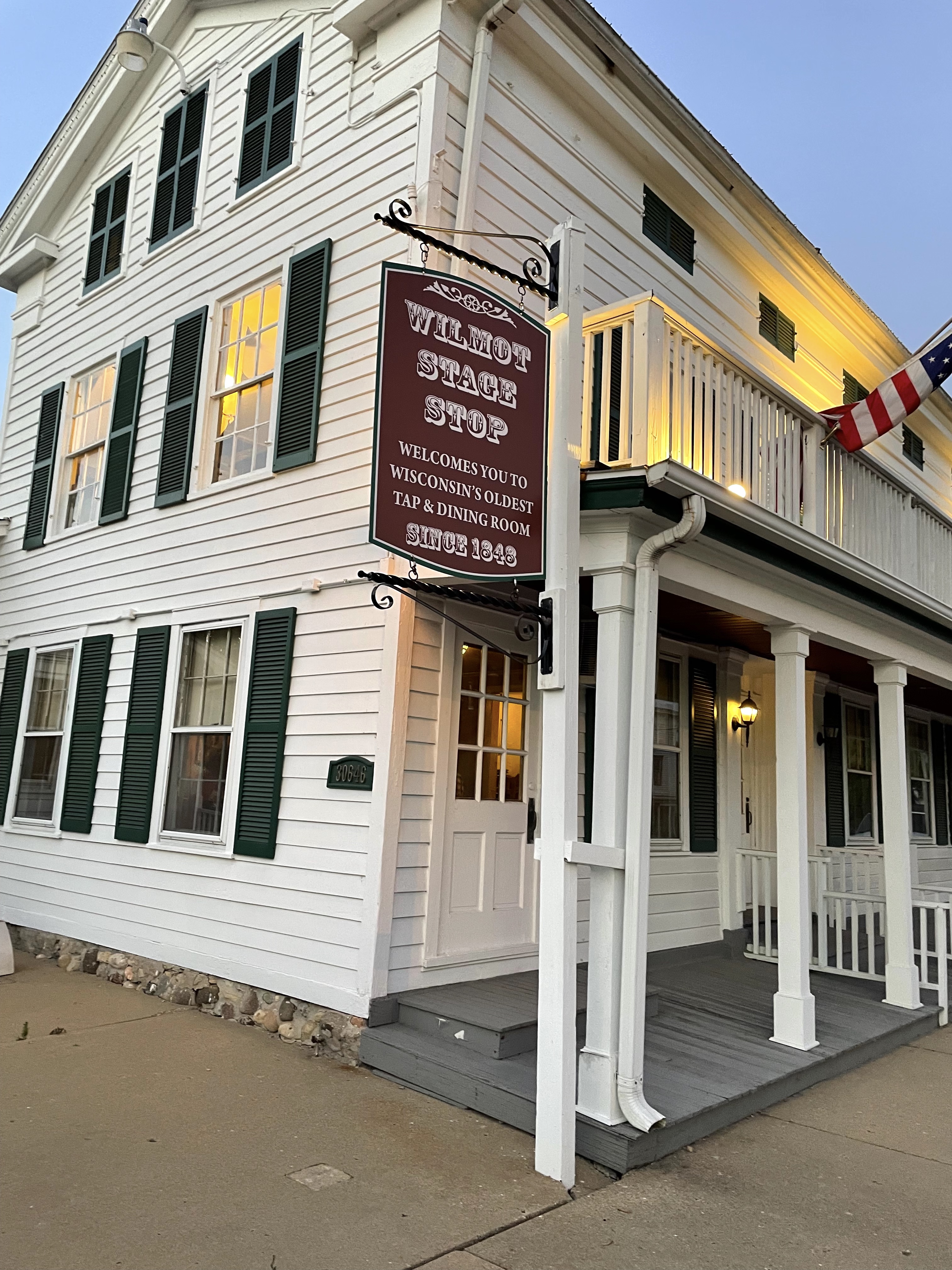
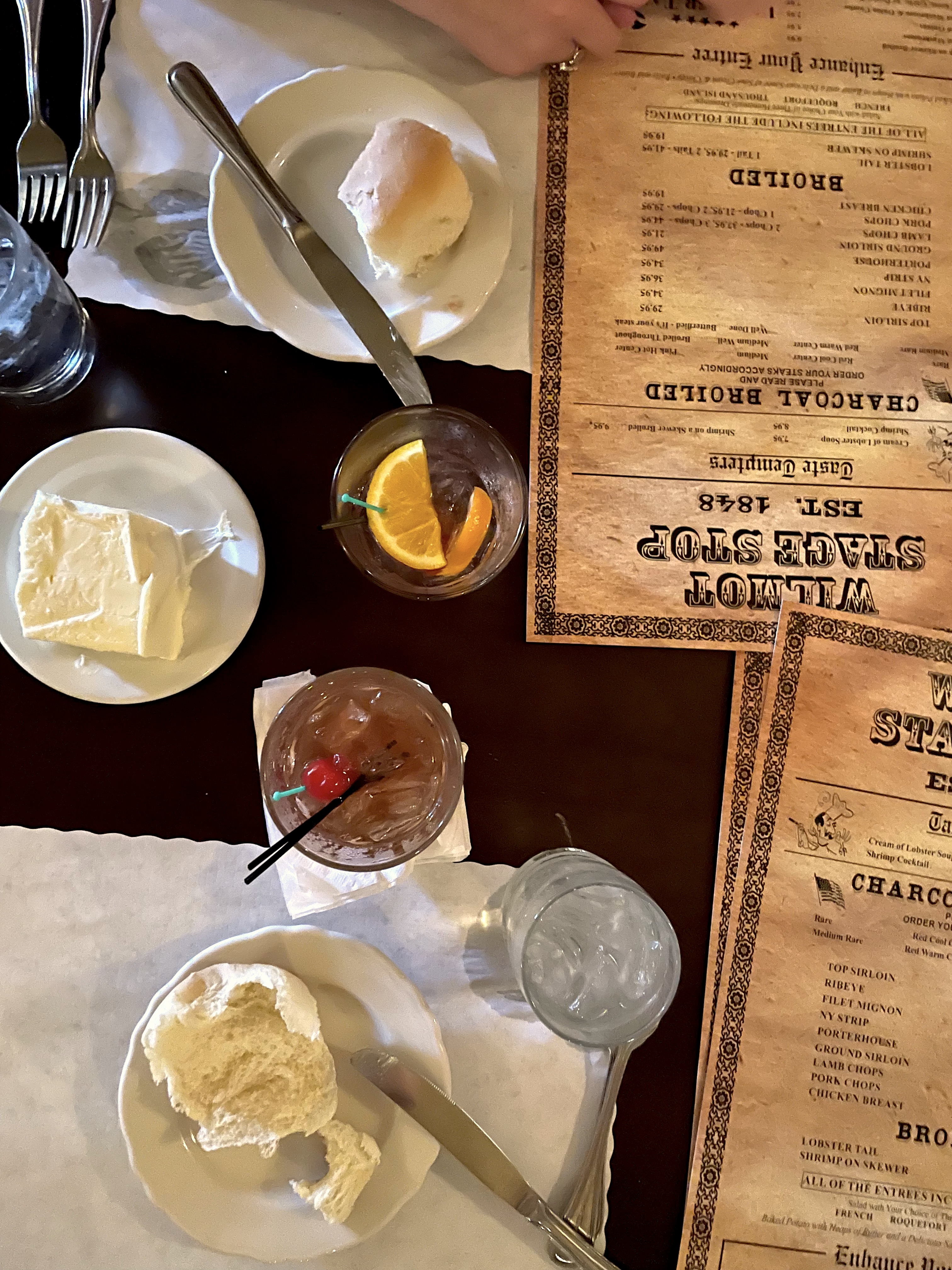
A post-vax dinner at a Wisconsin supper club reminded me why I love restaurants

Back in the more hopeful month of June when I was newly vaccinated, a few friends and I drove up to a lakehouse on the Illinois-Wisconsin border for the weekend. The real reason for the trip, though, was a meal. Specifically, we’d booked dinner at the Wilmot Stage Stop, a 173-year-old supper club — or steakhouse, depending on whom you ask — inside a historic inn in western Kenosha County. Incidentally, it would become my first indoor meal at a restaurant in more than 15 months. 

In case you were wondering, the Stage Stop did technically pass supper-club muster, meeting many of the key requirements put forth by my Milwaukee-native friends and their nearest and dearest via text.

“Carpet, lots of meat, cheap and strong old fashioneds.” 

“Basically, a casual steakhouse.”

“Living room/den vibe. Bar first, bread second, meat third.” 

“Steaks, drinks, relish tray [absent].”

“Ice cream cocktails. Full stop.” 

But this isn’t really a story about supper clubs. Instead, I want to talk about the feeling that eating inside that old whatever-you-call-it elicited, which reminded me of what restaurants are really for. 

RELATED: The perfect pasta for hot summer nights stars fresh tomatoes and buttery brie

As we passed through the double doors into the lively, carpeted (check!) bar, I hesitated momentarily, my mask dangling off one ear like some fabric hoop earrings you buy at an art fair and instantly regret. Half our party was already there, beckoning us toward their corner post at the square-shaped wood bar. Undoubtedly, one of my favorite features of supper clubs is that they’re implicitly progressive. Even if you show up right on time and your table is ready, you always start at the bar — with a round of sweet brandy old fashioneds if you’re serious. 

Stage Stop exterior
Stage Stop exterior (Photo provided by Maggie Hennessy)

I ordered a dissentient Manhattan on the rocks, and we talked about the sort of nothing you only talk about at bars, such as what it would be like to be a singer with just one hit song. Hazy evening light poured in through the windows and tinted everything golden. 

Eventually, a host led us through a narrow hallway to our table, situated across from the live-fire hearth where chefs churned out hulking steaks topped with rounded scoops of butter. Throughout the dining room, all kinds of occasions were taking place — from the special to the mundane. At the table next to ours, a large party of twenty-somethings clinked condensation-beaded Miller Lite bottles in celebration of something I couldn’t hear. Beneath a framed flyer for the old Wilmot Hotel, a dressed-up older couple sipped Cokes with their filet mignons. A preteen wearing basketball shorts looked annoyed when his parents asked him to put his phone down as the salads arrived.

Our waitress deposited six huge laminated menus along with baskets of warm milk-bread rolls and a brick-shaped pound of butter for each end of the table. 

“Ooh, you can add a lobster tail to your steak for $9.99!” my best friend Maggie cried. 

I excused myself to appease the new-since-2020 demon who insists that hand sanitizer will never be as good as a thorough hand-washing. As I furiously scrubbed between my fingers, a woman smiled at me in the mirror.

Stage stop menus
Stage Stop menus (Photo provided by Maggie Hennessy)

“I drove here from Racine with my teenage boys,” she said. “I used to come here every week when I was little. It’s so nice being back.”

“What a nice tradition you’re restarting!” I replied, smiling back. 

Some 20 minutes later, I was happily sawing through my gristly ribeye and slathering my baked potato with sour cream and chives and (more) butter. Our words tumbled out over one another, and we laughed so much that at one point I wondered whether the restaurant even had music on. When the waitress came to clear our plates, she asked if we wanted to-go boxes for the butter. “People do it all the time, hon,” she assured me.  

Going out to eat is a luxury. You pay two or three times for the same wine you’d buy at a shop and drink at home. Sometimes you over-order and waste food (especially when you haven’t dined out in over a year). The people who cook for and serve you are too often underpaid and overworked for mostly thankless labor. And ever since the pandemic, this luxury now involves a much more tangible calculated risk for all involved. 

The nuances became clearer to me about a month before our Stage Stop sojourn. Two weeks to the day after my second Pfizer shot, I dressed up and walked to Webster’s Wine Bar, one of Chicago’s oldest wine bars and my favorite in the city, for al fresco dinner by myself. The Centers for Disease Control had just declared that fully vaccinated individuals no longer had to wear a mask inside.


White Wine and Oysters (Photo provided by Maggie Hennessy)

“I’m vaccinated,” the GM Charles said, gesturing at his unmasked face as I entered, masked, to request a table on the patio. “This is a thing I’m trying. Let me know if you’re uncomfortable, and I’ll put it on, but I figure we all have to get back there some time or another.” 

It was the kind of upfront honesty we so rarely got in life’s surface-level exchanges pre-COVID. I wondered where he was mentally after spending months in a dark, empty bar packing up bottles of wine to go, then queasily inching back into reopening as the city’s hospitality workers slowly got vaccinated. Meanwhile, I’d been holed up working from home, ordering groceries and washing my hands ’til they cracked. 

I sat at a corner table overlooking Logan Square plaza and fell a little in love with everyone walking by in their summery outfits. I cried when I hugged Catie, the server, artist and DJ I’ve known for years, who waited on me. I ordered oysters and crunchy fried Japanese eggplant that burned my mouth, and I drank probably four glasses of wine — each of which was described to me with luscious verbiage like “savory and juicy” and “crisp and salty.” 

The experience couldn’t have differed more from that of the Stage Stop, where, sure, we were apologetically shuffled back to the bar for dessert because they’d overbooked our table. But as we passed around silky Brandy Alexanders while the bartender regaled us with his (numerous) ghost sightings at the old inn, the joy, connection and collective shoulder drop were the same — and just what the six of us needed.  

In one of my favorite email exchanges of recent memory, I asked friend and longtime Chicago chef and restaurant owner Scott Worsham (of coastal Spanish eatery mfk) what he thinks a restaurant is for. 

“I’m so happy someone finally asked me this question,” Worsham wrote. “The function of a restaurant is, for me, a gathering place for friends new and just met, loved ones, family, weddings, wakes, parties and more parties — it’s supposed to be a part of the fabric of the neighborhood it’s in. For me, a great restaurant is a miracle. It takes so much to make it work every day — it’s almost impossible.”

A restaurant is just a place you come and pay to eat and drink — a tiny vacation from your day-to-day. Maybe your luxury is eating surf and turf in jean shorts, slurping oysters and sipping muscadet from delicate stemware, introducing your kids to your favorite childhood restaurant or sharing ghost stories over ice cream cocktails. Technically, all of it is non-essential, and it takes so much effort to go off without a hitch. It always involves some risk, too — that something won’t be cooked right, that the restaurant will be understaffed and overbooked, that someone will contract or pass along a virus. So why take such a gamble? 

To relax, laugh, celebrate and eat something delicious; to connect, to care for someone and feel cared for — to feel the joy of being human. 

More by this author:

Texas’ COVID surge: GOP Gov. Greg Abbott tests positive as nursing home deaths spike

Texas Gov. Abbott, a Republican who banned local mask mandates, revealed that he tested positive for COVID on Tuesday. 

The announcement of Abbott’s illness comes just days after the governor called for 2,500 out-of-state medical personnel to combat the coronavirus against a rapid decline available in hospital, specifically ICU, units. On Tuesday, NBC News reported that the Lone Star State had requested five mortuary trailers from the Federal Emergency Management Agency, expecting a significant influx of deaths. Long-term care facilities, in particular, have seen a significant spike in COVID-19 infections this past month, with less than half of all nursing home workers in the state reporting that they’re vaccinated. 

Since the pandemic began last year, Texas has seen 9,095 nursing homes deaths – about 17% of the state’s total death toll, according to the Texas Health and Human Services Commission, with most of these deaths occurring in June 2020 and January 2021. During that time, Texas Gov. Greg Abbott imposed public health restrictions on nursing homes and health officials coordinated a statewide push to get nursing home patients vaccinated, KXAN reported, until the two infection waves began winding down. In recent months, the coronavirus has been virtually nonexistent throughout nursing homes in Texas. 

However, this past month has been markedly different, with an approximate 800% increase in cases from 56 in mid-July to 489 in early August. Deaths have also shot up from seven on July 21 to 84 by mid-August. 

A number of public health experts have noted that the new wave stems largely from unvaccinated staff in long-term care facilities, who have spread it to more vulnerable residents. 

“The real challenge is on the staffing side and making sure that staff are getting vaccinated,” Amanda Fredriksen, Director of Advocacy with AARP Texas, told KXAN.

According to the Centers for Medicare & Medicaid Services, less than 60% of all nursing home workers are vaccinated. Less than 20% of all nursing homes have workforces with a 75% vaccination rate or higher, Fredriksen added. 

“[Staff] are bathing [residents]. They are bringing them their food trays. They are providing care that is very close to the member. Right in their face,” Tarrant County Medical Society President Angela Self told WFAA. “They are the ones really who have access to these patients who are working closely with them.”

Kevin Warren, the president and CEO of the Texas Health Care Association, told KWTX that many nursing homes are hesitant to enforce vaccine mandates for fear of losing staff as a result. 

“Right now, we have a severely stretched workforce,” Warren explained. “And when we see this surge occurring again, the stress and the emotional toll it places on staff and others that are in the building, the concern is: ‘If I put this vaccine mandate on, am I potentially going to lose staff?'”

The development comes amid the state’s vehement Republican-led pushback against reinstating COVID restrictions, despite the state’s latest surge in coronavirus cases. Gov. Abbott has undoubtedly been at the helm of this partisan brigade, blocking mask mandates in schools and businesses in a July executive order, which was upheld by state’s Supreme Court.

Biden administration expected to recommend booster shots 8 months after first vaccination

It appears imminent that COVID-19 vaccine booster shots will be available in the coming months, and not just for the immunocompromised.

According to a New York Times report, the Biden Administration is expected to formally announce that all Americans who have been vaccinated, regardless of age, should get a coronavirus booster vaccination eight months after they received their second shot of either of of the two-shot mRNA vaccines.

Those who received the one-dose Johnson & Johnson vaccine may also be approved to receive booster shots, pending the results of a two-dose clinical trial that are expected to be published in the coming weeks.

These additional shots could be offered as soon as mid-September, or once the Food and Drug Administration (FDA) formally approves the vaccines. The FDA is expected to formally approve Pfizer’s booster shot in the coming weeks.

Yet not all of the previously-vaccinated will be eligible immediately for booster shots. Rather, the distribution of boosters will be staggered, similar to the staggering of the initial vaccine roll-out; nursing home residents, health care workers and emergency workers are expected to be the first groups to get their boosters.

The Associated Press and the Washington Post corroborated this news, stating that the official booster recommendation might be made as soon as this week.

The news arrives at a moment when COVID-19 cases are on the rise across the country thanks to the highly contagious delta variant. While studies have shown that the vaccines are highly effective in preventing hospitalization and death from the variant, mild breakthrough infections are occurring in many vaccinated individuals. At the end of July, NBC News reported there were 125,000 known breakthrough cases since January, though the reported number relies on data from states whose public health departments report breakthrough cases; since nine states don’t report breakthrough cases, the number is likely higher. If accurate, this implies that only 0.08 percent of the vaccinated population has been infected with COVID-19. 

What remains unclear is the exact data motivating the Biden administration to make the booster recommendation. The World Health Organization (WHO) recently called for a moratorium on booster shots in affluent countries throughout September. Israel, Germany, and the UK have already approved COVID-19 booster shots for the elderly and those with underlying conditions. San Francisco is permitting those with a Johnson & Johnson vaccine to get a single dose of a two-shot mRNA vaccine as a booster.

“Even while hundreds of millions of people are still waiting for their first dose, some rich countries are moving towards booster doses,” said WHO Director-General Tedros Adhanom Ghebreyesus. “So far more than 4 billion vaccine doses have been administered globally. More than 80% have gone to high and upper middle income countries, even though they account for less than half of the world’s population.”

According to the Washington Post report, data from Israel could be the driving force behind the decision. On Tuesday, National Institutes of Health Director Francis Collins confirmed on The Hugh Hewitt Show that the data on vaccine effectiveness waning over time is concerning and thus builds the case for boosters.

“And so in the Israeli data the people who got immunized in January are the ones that are now having more breakthrough cases,” Collins said. “Mostly of course these are symptomatic but not serious, but you’re starting to see a little bit of a trend towards some of those requiring hospitalization.”

Yet not all infectious disease experts agree that vaccinated Americans need boosters, signaling that the impending announcement will likely stoke controversy. Dr. Monica Gandhi, infectious disease doctor and professor of medicine at the University of California–San Francisco, told Salon via email that she believes the Biden administration should be focused on getting eligible unvaccinated people vaccinated.

“I do not think immunocompetent Americans need an extra booster shot now and I think the US should donate some of its large surplus vaccine supply for global vaccine equity, which will decrease worldwide transmission and the emergence of future variants,” Gandhi said. Gandhi said that counts of T cells, a type of antibody that serves as a metric for a vaccines’ efficacy, have remained high in patients who were vaccinated months ago. 

T cells protect us from severe disease, and the T cells generated by the vaccines are holding up amazingly well, with over 99% of the hospitalizations being among unvaccinated adults in the US,” Gandhi added.

Dr. Charles Chiu, a professor of infectious diseases at the University of California–San Francisco, agreed.

“All of the data available to date show that the vaccine remains extremely effective in preventing hospitalizations and deaths due to COVID-19 – which is the main purpose of getting vaccinated; it would seem as if at present the main purpose of the booster vaccinations would be to decrease transmission of the virus (viral loads in breakthrough infections by delta are comparable to those in unvaccinated cases, suggesting that vaccine breakthrough cases are as infectious as unvaccinated cases),” Chiu said via email. “Nevertheless, I believe that our main focus should still be in reaching out to those who are unvaccinated.”

Chiu added there was a preprint released a few days ago that suggested that the Pfizer vaccine may be less effective than Moderna due to higher incidence of breakthrough infections, but emphasized this study hasn’t been peer reviewed.

“We always thought that the need for booster vaccinations was a possibility,” Chiu said. “However, whether or not there is currently a firm scientific basis for these new recommendations, if they indeed are released by the Biden administration, is unclear to me.”


Want more health and science stories in your inbox? Subscribe to Salon’s weekly newsletter The Vulgar Scientist.


“No one with the last name Cheney should even be speaking”: Rand Paul slams fellow Republicans

Following the Taliban’s swift takeover of Afghanistan this past weekend, Sen. Rand Paul, R-Ky., took a swing at Rep. Liz Cheney, R-Wyo., on Monday, saying that “no one with the last name Cheney should even be speaking publicly right now.” 

Paul’s comments come largely in response to Cheney’s recent criticism of the Trump and Biden administrations’ failure to prevent the Taliban’s rise to power. 

“The Trump/Biden calamity unfolding in Afghanistan began with the Trump administration negotiating with terrorists and pretending they were partners for peace, and is ending with American surrender as Biden abandons the country to our terrorist enemies,” Cheney tweeted on Sunday, laying the blame at both presidents. 

On Monday, the estranged Republican doubled down on her rhetoric, tearing into Trump’s secretary of state Mike Pompeo on “The Brian Kilmeade Show.”

“The fact that Mike Pompeo was the first Secretary of State to meet with the Taliban, the fact that they were considering inviting the Taliban to Camp David on 9/11 — that set this all in motion,” she argued. “Any deal that the United States would contemplate entering into with the Taliban should be made public in its entirety. I’ve expressed my serious concerns about the lack of verification mechanism, about the commitment and the agreement that we would go to zero and primarily about the fact that what we have here are a number of promises by the Taliban.”

Cheney was qucikly castigated online for omitting the fact that her very own father Dick Cheney, President George Bush’s vice president, played a leading role in starting the war.

Chief among Cheney’s critics was Sen. Paul, a years-long critic of the American military force in Afghanistan. Paul joined the chorus of condemnation by echoing the words of his own father, setting up something of a Cheney-Paul family feud. 

Back in 2011, Paul’s father, former Rep. Ron Paul, R-Tx., openly supported legislation that would have mandated a military withdrawal. 

“The question we’re facing today is should we leave Afghanistan? I think the answer is very clear and it’s not complicated, that of course we should. As soon as we can,” the elder Paul said at the time. “This suggests that we can leave by the end of the year. If we don’t, we’ll be there for another decade would be my prediction.”

On Tuesday, the younger Paul emphasized the lasting wisdom of his father’s objections to the war. 

“It was my father, often alone in his party, who said for decades that the neocons’ endless wars would always come back to haunt us,” Paul wrote on his website Liberty Tree. “If the neoconservatives and others at the time had listened to Ron Paul back then, the tragedy in Afghanistan would not have been prolonged. Most importantly, it would have saved thousands of American lives and also money that we don’t actually have.”

Paul also critiqued the rhetoric employed by the war’s most ardent supporters after the Taliban takeover. “Now the same people who still defend the Iraq War and who also wanted to stay in Afghanistan forever are some of the loudest voices criticizing the Taliban retaking control of that country.” 

“What’s clear today is that no one with the last name Cheney should even be speaking publicly right now. This [sic] origin of this debacle lies at their feet,” he added.

Paul’s op-ed comes amid an unprecedented political upheaval in Afghanistan, with thousands fleeing the country ahead of the Taliban’s rule. President Biden has so far offered $500 million aid to support refugees and those “at risk as a result of the situation in Afghanistan,” according to The Washington Post. Maj. Gen. Hank Taylor recently told reporters that the U.S. will begin coordinating air evacuations of 5,000 to 9,000 Afghans per day.

Majorie Taylor Greene threatens Joe Biden with articles of impeachment — again

Rep. Majorie Taylor Greene, R-Ga., is calling for President Biden’s impeachment — again.

Greene said she asked her team to begin drafting articles of impeachment on Monday, blaming Biden for America “losing” the war in Afghanistan. She made the announcement on “War Room Pandemic,” a show hosted by Steve Bannon on Real America’s Voice, a far-right internet news network.

“I have my team right now working on Articles of Impeachment because I’m so disgusted with Joe Biden,” Greene said. “I’ve already filled out one set of articles of impeachment, but his failure as a president is unspeakable.”

Her comments came after Bannon asked if she agreed with Donald Trump’s statement demanding Biden resign. Bannon, who worked as the White House Chief Strategist during the first seven months of the Trump Administration, even admitted that “it’s a pretty big ask for a president to resign about something like this.”

She then accused the Biden Administration of paying the Taliban “a vast sum of cash” not to shoot refugees at the airport in Kabul — a baseless claim that has yet to be verified by any government source. 

“I wouldn’t be surprised at all if they were paying the Taliban,” Greene said. “After all, they’re already paying them with weapons, vehicles, Blackhawk helicopters, because the Afghan Army is handing them over as fast as possible.”

Greene compared the military’s decision to leave armored vehicles behind to Democratic legislative attempts to ban assault weapons.

“I mean if you want to think about it — any time any Democrat ever speaks to America about gun control again, and they want to talk to you about your AR-15s, you tell them right now; how many weapons and how many semi-automatic weapons did you hand over to terrorists in Afghanistan, to the Taliban?, ISIS?, and possibly al-Qaida?” she said. 

Greene is currently banned from Twitter for “spreading the truth” about vaccines, a move by Twitter that she equated to communism. She remains active on Telegram and Gettr, a pro-Trump social media platform launched by former Trump spokesperson Jason Miller.

The U.S. military resumed military flights to and from Hamid Karzai International Airport in Kabul today. The Pentagon said it plans to accept 20,000 to 22,000 Special Immigrant Visa applicants in the coming days. 
 

Biden asks Americans to act like grown-ups — but Republicans are too addicted to being brats

The most striking thing about President Joe Biden’s Tuesday speech about the sudden fall of Afghanistan to the Taliban was the underlying message to his Republican critics and their handmaidens in the Beltway press corp: Jesus Christ, start acting your age already. 

“I want to remind everyone how we got here, and what America’s interests are in Afghanistan,” Biden said before he went on to level with viewers about how he “came to understand firsthand what was and was not possible in Afghanistan.”

“Staying and fighting indefinitely in a conflict that is not in the national interest of the United States” is no longer acceptable, Biden made clear. 

It was sober-minded, realistic and frank. It’s time now for the so-called adults to put away their G.I. Joes. Action movies are fun, but this is real life, and in real life, there are some problems that can’t be fixed by rallying around the flag and punching the bad guys. It is time, in other words, to grow up. 

Now contrast that with the infamous moment 16 months ago, when Donald Trump, faced with the early stages of the COVID-19 pandemic, declared that he had a “good you-know-what” while pointing at his head, and wondered out loud why doctors hadn’t considered curing the disease by “cleaning” the lungs with an “injection” of bleach or other household disinfectants. (Reason: Those are poisons that would kill you.) 


Want more Amanda Marcotte on politics? Subscribe to her newsletter Standing Room Only.


The gulf between the two men is tremendous in many ways, but this may be the biggest: Biden, when faced with an ugly but unavoidable situation, not only has the steel to make the hard decision but expects Americans to be mature adults about why things are the way they are. Trump, on the other hand, when faced with a similarly tough set of circumstances, spins off into a puerile fantasy where one quick fix makes it all go away. 

And now the press is having a tantrum of their own in the face of Biden’s tough words about how Afghanistan was always going to fail. But Biden’s speech was a cold reminder that now, more than ever, is the time for Americans to set aside childish things and act like adults. It’s not just about finally putting those cartoon fantasies about benevolent American imperialism in the past. It’s about having a clear-eyed view of what a mess our country has become — from the pandemic to our crumbling infrastructure to our threatened democracy — and being able to roll up our sleeves, take responsibility, and get done what needs to be done. 

Unfortunately, we have a serious obstacle to acting like a grown ass country: A loud-mouthed Republican minority who, like toddlers who refuse to put their pants on, insist on having a full-blown whiny baby tantrum. 

This is seen most clearly in the fight over vaccinations. For months, the Biden administration relied on the hope that Americans would have the baseline sense of responsibility, to themselves and others, necessary to suck it up and get their shots so that this pandemic could be brought to an end. Most Americans — 62% of adults are now fully vaccinated — rose to the challenge. Unfortunately, the exception, as has been well-documented, is right-wing America. Instead of just getting vaccinated, about half of them are acting like 4-year-olds being asked to eat their broccoli, throwing food around and screaming “I won’t do what you tell me, Mommy!”

And they’re being indulged by GOP leaders who gleefully conflate vaccine refusal with “freedom.” But it’s a child’s view of freedom, one that rejects the sophisticated discourse around the balance between rights and responsibilities that constitutes citizenship in a free, democratic system. Instead, it is a 5-year-old’s idea of “freedom,” where one gets to write on the walls and pull little Susie’s hair, and the teacher is just being a meanie when she says you have to sit in the corner until you learn how to treat other people with respect. 

Because of this unwillingness to get a vaccine, which is truly the bare minimum for maintaining personal hygiene in the midst of a pandemic, the unvaccinated have allowed another surge of COVID-19 to wash over the country. Unfortunately, that also means a return to mask mandates and, increasingly, vaccine mandates to enter public places.

But, of course, right-wing America can’t accept the consequences of their own actions. No, such a thing is reserved for grown-ups! Instead, we’re facing another round of whining and crying from conservatives about the mask and vaccine mandates even though it is, quite literally, their fault that any of us have to keep dealing with this. They’re like idiot kids who set off a stink bomb at the school dance and then wonder why they aren’t allowed to come to the next one. 

Similarly, polls continue to show that strong majorities of GOP voters flat-out refuse to accept that Biden beat Trump in the 2020 election. Instead, Republicans wallow in increasingly baroque and silly fantasies about hacked voting machines and Italian satellites — anything but just admit the obvious, which is that they lost the election fair and square.

Salon’s reporter Zachary Petrizzo has been covering the latest wrinkle in Trump’s Big Lie shenanigans, MyPillow CEO Mike Lindell’s “cyber symposium” in South Dakota. Every day, it’s another bewildering story of supposedly legal adults are engaged in an elaborate role-playing game where they cosplay as detectives supposedly uncovering some sinister conspiracy. But even making that comparison is an insult to actual role-players and cosplayers, who enjoy dressing up and playing games but are adults who know the difference between fantasy and reality. 


Want more Amanda Marcotte on politics? Subscribe to her newsletter Standing Room Only.


It’s no wonder, really, that Trump is so beloved by the increasingly infantile Republican base. He is a 7th grade boy’s fantasy of a tough guy: Belligerent, boastful, and surrounded by beautiful women who are actually just paid to be there. But he is also lazy, incurious, and a bully. And, as the “inject bleach” moment showed, Trump never grew out of that phase where kids refuse to do the reading, hoping they can just B.S. their way through the book report when called on by the teacher. 

Unfortunately, these folks don’t just act like children. They have also been coddled like extremely spoiled children for far too long. It goes back to the early days of the Trump administration when reporters from coastal big cities fanned out over the “heartland” to ask Trump voters why they voted the way they did, like they were asking Little Timmy to explain his favorite action figure. And it continues to this day, with exhortations to be “patient” and “understanding” with vaccine refusers, even though they have already been told for the umpteenth time that vaccines are safe and don’t turn you into human magnets. Over and over, liberals are asked to be gracious and accommodating, because conservatives are assumed to be children who can’t be expected to sit still and mind their manners.

Biden’s speech on Monday, hopefully, is part of a larger sea change away from that dynamic.

An American president is asking adults to act like adults — and yes, that includes Republicans. Certainly, the growing clamor for more vaccine mandates — which the majority of Americans support — shows that most of the rest of us are fed up with their babyish antics. If Republicans can’t suck it up and act like adults of their own free will, well, they’ll need to be put on a time-out until they can learn to behave. 

Conservatives are blaming gender studies and a “woke” military for the Taliban’s return

Conservatives are criticizing President Biden and White House Press Secretary Jenn Psaki for going on vacation amid political unrest in Afghanistan following the Taliban’s military seizure of the Afghani government.  

On Sunday, the Taliban swept the nation’s government building in Kabul, formally ousting the Afghanistan President Ashraf Ghani, who some viewed as a progressive visionary that would transform the country into a more modernized, technocratic state. The development – which marked an end to the two-decade-long U.S. military campaign ostensibly aimed at preventing the Taliban’s rise to power – unleashed a tidal wave of criticism aimed at Biden from the right. 

On the right, U.S. politicians have been quick to pounce on the fact that Biden was not spending his weekend at the White House to field questions about the situation. The president had has instead taken a jaunt to Camp David, a woodsy presidential retreat in rural Maryland.  

“Why is Joe Biden in hiding?” asked Sen. Tom Cotton, R-Ark, who falsely claimed he’d served as an Army Ranger in Afghanistan from 2011 to 2014. “He should immediately address the nation and answer for the catastrophic situation in Afghanistan. Conference calls between cabinet secretaries and senators don’t cut it in a crisis.”

Rep. Lauren Boebert, R-Colo., echoed: “No person who calls themselves the President of the United States should be on vacation while the world crumbles down around them. The dereliction of duty continues.”

Others took aim at Paski, who according to a Fox News report, responded to media inquiries with auto-replies indicating that she is on vacation until August 22.

“World watches a collapse of 20 yrs of US involvement in Afghanistan and WH takes vacation,” tweeted former Arkansas Gov. Mike Huckabee. “I guess [Psaki] will ‘circle back.’ Jen Psaki ‘out of the office’ as Biden remains silent on Taliban takeover of Afghanistan.”

Kyle Kashuv, a conservative gun-rights activist, sarcastically chimed that Psaki’s absence was “kinda a power move.” 

“Psaki being on vacation with an out of office email response during a historic foreign policy failure,” he added. 

Others on the right pulled from a more familiar playbook, blasting the military’s apparent “wokeness” in light of its strategic failure in Afghanistan.

“How did our woke generals fail so badly?” Donald Trump Jr. tweeted last week. “They wasted billions and billions of dollars. The American people and especially those who risked life and limb in Afghanistan deserve answers from them.”

“It turns out that the people of Afghanistan don’t actually want gender studies symposium,” Fox News host Tucker Carlson gloated on his Monday show. 

https://twitter.com/NikkiMcR/status/1427424841662074880

Rod Dreher, a senior editor at The American Conservative, claimed, in reference to the chaos in Afghanistan, that “the US government is so busy centering wokeness that it is ignoring the real world.”

“Gen. Mark Milley must resign,” wrote conservative political commentator Mercedes Schlapp. “He is the wrong man for this critical job. “He was so focused on creating a ‘woke’ military instead of stopping the Taliban and terrorists in Afghanistan. He lacks judgement and common sense.” 

https://twitter.com/ewerickson/status/1427276703823433734

Her comments stem from a hearing held in June in which the chairman of the Joint Chiefs of Staff Mark Milley expressed openness to teaching critical race theory to the troops, citing the importance of the military being well-versed in different political philosophies.

Molly Baz’s tuna sandwich ruined us for all other tuna sandwiches

If you love cross-back aprons and salt, and you know what a Cae Sal is, odds are you’re a fan of Molly Baz, recipe developer and the author of “Cook This Book.” Baz is also a sandwich aficionado, and she’s getting ready to share her wisdom with all of us, via The Sandwich Universe, her new podcast with Declan Bond, on the Food52 Podcast Network. We were able to score a little preview of the first few episodes of the pod and find out some of Baz’s thoughts on sandwiches — plus, we’re sharing a killer tuna sandwich recipe from “Cook This Book!” Who’s ready for lunch?

Tuna Sandwich

Fans of Baz know she loves tuna (so much so that she named her dog after it!). Naturally, there’s a tuna sandwich in “Cook This Book,” but it’s not the tuna salad sandwich you’d find in a lunchbox. Though there is a time and a place for those as well, Baz’s dream tuna sandwich is a bit more exciting. “This was originally destined to be a niçoise salad, my attempt at taking a fresh look at the beloved French classic of tuna, olive, potato, and egg,” writes Baz in the recipe headnote. She swiftly realized she couldn’t improve on something that’s already perfect, so she switched gears: “However, if you take all of those same flavors and rearrange them in the form of a sandwich (sorta à la pan bagnat), then I do have reason to get involved.” And thus, her Niçoise Sando With Smashed Eggs & Black Olive Mayo was born. Spoiler alert: there are potato chips inside.

https://www.instagram.com/p/B-NHgPCj9_k/

BLT

“For me, the reason the BLT is so special is because you really only eat them during one period of time a year. And that is of course the summertime,” says Baz of the iconic sandwich in the BLT episode of The Sandwich Universe. “Because actually, if you ask me, a BLT is a tomato sandwich with some bacon on it.” Baz also notes that she thinks the BLT is a sandwich best made at home. So why not start with our Bacon Fat BLT, and then expand on the concept of the sandwich — Soup? Salad? We can BLT that.

https://www.instagram.com/p/CKFKmkpBY_R/

Grilled Cheese

“This is the sandwich that you make when you don’t have a lot of time on your hands,” says Baz. “And you’re just kind of like, I have cheese. I have bread. There’s some kind of fat lying around, like, let’s make a frickin’ sandwich.” We’re not talking a 30-second sandwich though: as Baz adds, “a great grilled cheese can be achieved in no less than 10 to 12 minutes.” We love a classic diner version, with American cheese and white bread, but why not get a little creative, too — add soft scrambled eggs, several types of hard and soft cheeses, or veggies. Heck, why not split a full slab of focaccia in half, fill it with cheese and grill the whole thing? Yes, please!

https://www.instagram.com/p/COdPPnKjXHE/

PB&J

“I like a PB&J, I don’t love a PB&J. It’s not the first that I reach for when I want to make a sandwich, but I can totally appreciate it. And there’s a time and a place for it,” says Baz. “The last time that I had a PB&J was on a hike with my brother during COVID. It was one of the things that we could actually do safely together . . . He made us PB&Js, and it was smushy and it was sloppy, but it was also kind of perfect.” You probably don’t need a recipe for a PB&J, but maybe you want to channel PB&J vibes in other treats, like cake, cookies, and pie. We’ve got you.

CNN calls out Ted Cruz for “running off to Cancun” after GOP senator mocks reporter in Afghanistan

CNN fired back at Sen. Ted Cruz, R-Texas, on Monday after he mocked a journalist reporting on the ground in Afghanistan on the Taliban takeover over Kabul.

CNN Chief International Correspondent Clarissa Ward has been reporting on the fears Afghans, particularly women and girls, face amid the Taliban’s resurgence. On Sunday, Ward interviewed hostile Taliban fighters on the streets of the Afghan capital while wearing a head covering — a minimum standard under the new regime’s strict requirements for women.

“People come up to them to pose for photographs,” Ward said as she stood outside the U.S. embassy compound in Kabul where Taliban fighters had seized control. “They’re just chanting death to America, but they seem friendly at the same time. It’s utterly bizarre.”

Cruz shared a seven-second clip from the seven-minute report. It appears the Texas senator got his edit from far-right Pizzagate truther Jack Posobiec who chopped off Ward’s comment about how “utterly bizarre” the situation was to make it appear that CNN was touting how “friendly” the insurgents were.

“Is there an enemy of America for whom @CNN WON’T cheerlead? (In mandatory burkas, no less.),” Cruz tweeted, inaccurately describing Ward’s head covering as a burka, which is a head-to-toe covering.

CNN’s public relations arm was quick to hit back at Cruz, citing his trip to Cancun during a February storm in Texas that left millions without power and killed more than 200 people.

“Rather than running off to Cancun in tough times, @clarissaward is risking her life to tell the world what’s happening,” CNN PR tweeted in response to Cruz. “That’s called bravery. Instead of RTing a conspiracy theorist’s misleading soundbite, perhaps your time would be better spent helping Americans in harm’s way.”

CNN White House correspondent Phil Mattingly also defended his colleague.

“Such courage here, firing off an out of context and remarkably out of touch tweet from the safety of one’s summer recess,” he tweeted, calling the senator’s comment “embarrassing.”

“She’s risking her life to practice the First Amendment in a place where such a thing does not exist,” wrote fellow CNN reporter Bill Weir. “Go try it sometime, Senator. It’s not Cancun.”

Cruz, it should be noted, did not take any issue with a tweet from fellow Republican Lauren Boebert, who tried to mock President Joe Biden’s campaign slogan on Twitter by writing that “the Taliban are the only people building back better.”

Ward during her report noted how hostile the Taliban fighters have been to her as they crack down on women’s rights in the country.

“They’ve just told me to stand to the side because I’m a woman,” she said during one point, noting that her presence “created tension” among the insurgents. “Obviously, I am dressed in a very different way to how I would normally dress to walk down the streets of Kabul,” she said.

Ward has focused her reporting on the “profound sense of anxiety” she has seen among many in Kabul.

“I think you may not see it on the streets, but it’s the people who aren’t on the streets today that, in some ways, are the real story — the people that are hiding in their homes, who are petrified to go out, who are worried about being targeted, who fear for their lives, who are too scared to tell their stories,” she said. “But their stories must be told because in this moment their fear and their desperation is so real as we saw with those extraordinary images coming from the airport that I don’t think any of us will be able to forget any time soon.”

Biden on Monday said he stands “squarely” behind the decision to withdraw from the 20-year war but admitted that the Taliban takeover “did unfold more quickly than we had anticipated.” Despite intelligence assessments that it may take up to three months for the Taliban to recapture Kabul last week, it took just days as the Afghan military collapsed and the country’s president fled. That has caused the military to scramble to evacuate the U.S. embassy in Kabul as well as tens of thousands of Afghan allies who helped the U.S. military and now fear they will be killed by the Taliban.

Ward has been unsparing in her criticism of the Biden administration’s handling of the withdrawal, calling Biden’s comments “hollow words.”

“There will be a lot of frustration with the speech,” she said Monday, noting that the “core issue” is not whether the U.S. should have withdrawn but the “catastrophic manner of this withdrawal.”

On Tuesday, Ward pressed Pentagon spokesman John Kirby to promise that the administration would “step up and take responsibility” for evacuating the thousands of Afghans who have helped American forces. Kirby said that the Pentagon has an “obligation” to those that helped the war effort and would not be abandoned but, when pressed on Afghans who have had their paperwork turned down, deflected to the State Department.

“To most Afghan people that I’m talking to, John, that’s going to sound like hollow promises,” Ward told Kirby, adding that “I’m the one who’s here on the ground talking to Afghans every day… I’m the one who has to look them in the eye.”

The enduring magnificence of the Publix sub

We all have a food that speaks to our comfort and makes us feel all warm and fuzzy inside. For me, this is most commonly wrapped in nostalgia. I constantly crave the tastes and smells (well, some of them) of my childhood, those that brought me simple joy during times of celebration, jubilation, or even heartbreak. And as a Floridian, that joy comes in the form of a sandwich from a popular grocery chain. That’s right, I’m talking about the wonders of the Publix submarine sandwich — affectionately known as a “Pub Sub.”

I know what you’re probably thinking: Get a life, dude. It’s a sandwich. But one look at the internet will prove that I’m absolutely not alone in sharing this sentiment. There are love lettersTwitter fan accounts, and even Reddit forums dedicated to the meat, cheese, bread, and condiment combo. There was even outrage when free samples of these ingredients were seemingly discontinued at certain store locations, only to be reinstated immediately and woven back into Publix’s culture of generosity and appeasing demanding customers. But beyond that, what exactly makes a Pub Sub far superior than the norm? I had to find out, for you and for science.

Naturally, I wanted to hear it straight from the horse’s — er, sandwich’s? — mouth, and first approached Publix for their take. As a bummer to us all, a brand rep couldn’t really sum it up in an exciting way. I mean, she was lovely and provided me with a handful of corporate-approved quotes and factoids to support various menu items’ success (like, did you know the chicken-tender sub is their best-seller? I certainly did not!). But she couldn’t speak to its cult status in a way that a sandwich-obsessive like me (who literally drools on his chest in anticipation and anxiety as he waits in line) could totally grasp. So as a self-declared sub expert (so much for that Bachelor’s degree), I took on the task myself. Here, I’ve broken down why the Publix sandwich ranks supreme for three main reasons, none more important than the other: freshness, anatomy, and versatility.

1. Freshness

I don’t know about you, but rows of pre-chopped and sliced foods sitting out at room temperature doesn’t exactly spell “F-R-E-S-H” to me. And while there are certain foods that I’d practically eat from a toilet (cough, peanut butter), veggies, meats, and cheeses are not that. Publix is an exception to the typical sandwich shop vibe of sketchy ingredients displayed unceremoniously behind a fingerprint-smudged sneeze guard.

Because it is a grocery store, Publix has direct access to fresh produce, 24/7, and nothing is pre-frozen or sold in bulk for the sole purpose of making a sub. They are literally utilizing the groceries I’m selecting and buying to put in my own refrigerator and pantry, and their bread (perhaps the most scrumptious part of the sandwich) is baked daily in their bakery. Since certain famous sandwich purveyors can’t even prove that their protein is actually, um, protein, Publix’s approach to ingredients is quite reassuring. Per aforementioned brand rep, they’ll never use anything they can’t sell individually, and I can get on board with that.

2. Anatomy

Oh, how frequently we lament the wasted hours spent on high school algebra and geometry, but one component that is applicable to everyday life (and, more importantly, proper sandwich construction) is ratios. A sandwich artist should never skimp on an ingredient or add too much of another. One must strive for balance, which is something Publix has somehow accomplished perfectly. For example, if one orders jalapeños for some added heat (as they should), there should only be one slice per bite, so as to not overwhelm the palate.

On the opposite side of this spectrum, less special ingredients like shredded lettuce (which are just texture plays) should not overpower the star. Pub Subs, much like Destiny’s Child, are harmonious because they come together effortlessly, but allow their lead (the meat and bread, a.k.a. the Beyoncé) to shine on her own. This is just simple math, folks, much like the aforementioned algebra and geometry you learned and mostly likely forgot about.

https://www.instagram.com/p/BCRDod6iAzr/

3. Versatility

Versatility isn’t just an admirable characteristic in life, it’s a mandatory sandwich trait. We all have individual tastes and preferences, and Publix excels at concocting any masterpiece your heart desires. If you just want slices of tomatoes with mayonnaise on wheat bread, they will accommodate your particular needs. And if you want your sandwich as a salad (although, my thought on this is: Why bother?), that can happen for you, too.

Frankly, there is no wrong way to build and customize a Publix sub, which is why it has become a celebrated emblem of Florida culture, much like alligators, palm trees, and residents doing bizarre things like assaulting people with corn on the cob to make national news.

Of course, you can’t have this versatility without freshness and balance. Being able to tailor around your preferences is just icing on the cake — or mustard on the pepper Jack, in this case, which is always a solid choice. Because, in the end, the biggest part of a Pub Sub’s charm is that it is a reflection of the person who eats it.