Help keep Salon independent

“Democrats reinvent history”: McCain threatens to “spill tea” on father’s feelings about Harris

Meghan McCain is warning Vice President Kamala Harris not to invoke her father’s memory.

The former cohost of “The View” threatened to “start spilling tea” about late Republican Senator John McCain’s view of Harris in a post to X.

Harris praised the late senator during a Thursday night rally in McCain’s home state of Arizona. She told the crowd about a moment she shared in the U.S. Capitol with the elder McCain prior to his passing in 2018.

“He says, ‘Kid, come over here. You’re going to make a great senator,'" she said. "You know, we didn’t agree on everything, but, man, I mean, what about an incredible American hero?"

Megan objected to the anecdote on social media, accusing Harris of trying to "reinvent history" and "bastardize his memory."

“I know democrats want to reinvent history and turn my Dad into any illusion you guys need him to be depending on the political moment you need to bastardize his memory for,” McCain wrote. “Please don’t make me start sharing what I remember him ACTUALLY saying about Kamala Harris.”

John McCain voted with Harris at least once during their year in the Senate, breaking ranks with Republicans to save the Affordable Care Act from then-President Donald Trump’s attempt to repeal it. That act earned him some veneration with the center-left, serving as a symbol of anti-Trump bipartisanship.

Trump famously maligned John McCain for being taken as a prisoner of war in the Vietnam War. Since then, several members of McCain's family have endorsed candidates running against Trump.  Megan refers to herself as “the last Republican in the family,” but has no plans to endorse either candidate.

McCain warned Harris to stay away from her father's legacy. Shortly after spreading a viral and debunked conspiracy theory accusing Harris of relying on a teleprompter, she threatened to "spill tea" about how her father actually felt about Harris.

CBS anchor’s grilling of Coates creates rift among Paramount execs

Top executives at media giant Paramount clashed over editorial policies broken by CBS anchor Tony Dokoupil in a discussion over the Israel-Gaza war, a new report alleges.

Controversy began after author Ta-Nehesi Coates appeared on CBS “This Morning” on September 30 to promote his latest book, “The Message.” In that interview, Dokoupil scrutinized the New York Times bestselling author’s depiction of the conflict in Gaza, arguing that the content in Coates’ book “would not be out of place in the backpack of an extremist” and accusing Coates of framing the conflict in a way that is unfair to Israel. 

https://twitter.com/CBSMornings/status/1840749848703770679

As Puck reported, the immediate fallout from that line of questioning came from the network’s Standards and Practices division, which found that Dokoupil’s tone of questioning did not meet CBS standards.

Following the findings, CBS CEO Wendy McMahon reportedly told Dokoupil that the network would look into the issue, ultimately announcing Dokoupil had run afoul of their guidelines at an all-hands team meeting on October 7, just over a week after the segment.

Puck reports that journalists from across CBS weighed in during another meeting on October 8. Dokoupil was reportedly told  that his questioning was “xenophobic” and “Islamophobic” by some reporters, while others chimed in to defend him. That meeting caught the attention of Paramount CEO and chairwoman Shari Redstone, who called Dokoupil to extend her support. 

Redstone went on to publicly deride McMahon’s handling of the situation, telling a crowd at New York’s Advertising Week that she would’ve done things differently.

“I think we all agree that this was not handled correctly,” Redstone said. “Tony did a great job with that interview.”

But Paramount co-CEO George Cheeks did not agree with Redstone’s assessment, publicly backing McMahon’s editorial leadership in a statement just hours after Redstone’s.

“She and her leadership team are passionate advocates and stewards for CBS News standards; that won’t change,” Cheeks said in defense of McMahon. “Reasonable minds in a newsroom will appropriately pressure test and debate internally to ensure balanced and objective coverage externally.”

The rift in the newsroom and C-suite is representative of the greater trend in legacy media outlets and coverage of the war in Gaza and questions arising around editorial independence in corporate-owned media. At papers like the New York Times and CNN, editors and reporters have clashed with execs over standards and coverage, the former paper limiting the use of terms like "occupied territory" earlier this year.

“Threatening to cancel votes”: Florida officials allege fraud to kneecap abortion rights amendment

In a last-minute effort to kill a proposed ballot amendment that would restore abortion rights in Florida, state officials are accusing a group that gathered signatures to get the amendment on this year's ballot fraud.

Florida Deputy Secretary of State Brad McVay claimed in a 348-page report released on Friday night that Floridians Protecting Freedom paid out-of-state petition circulators to harvest fraudulent signatures. That group that gathered nearly 1 million signatures for the abortion rights effort. The report alleges the Department of State has been flooded with complaints about potential fraud, and that it had opened over 100 criminal investigations.

“The allegations included reports of paid FPF petition circulators signing petitions on behalf of deceased individuals, forging or misrepresenting elector signatures of petitions, using electors’ personal identifying information without consent, and perjury/false swearing,” the report claims, noting that “more than 20” of the 911,000 signatures were from now-deceased Floridians.

Florida law allows voters to add amendments to the state constitution directly, if 60% of voters agree with a given proposal. Though the election is just three weeks away and ballots have been printed, challenges to the amendment could invalidate votes cast for the initiative. 

Governor Ron DeSantis’ administration has worked hard to kneecap the rights-restoring proposal, reportedly sending state troopers to interrogate petition signers and threatening to prosecute television stations that run ads supporting the measure. On Thursday, state's Supreme Court ruled DeSantis was not abusing his powers in his attacks on the amendment. 

Florida Democrats warn that the report is just another tactic aimed at killing the effort to repeal the state's DeSantis-enacted six-week abortion ban.

“DeSantis is so obsessed w/ending reproductive freedom in FL that he has weaponized every state agency against us, is spending PUBLIC $ to campaign against [the ballot initiative] & now — while we’re recovering from a hurricane  — releasing late night reports, threatening to cancel our votes,” Democratic state Representative Anna V. Eskamani wrote in a post to X.

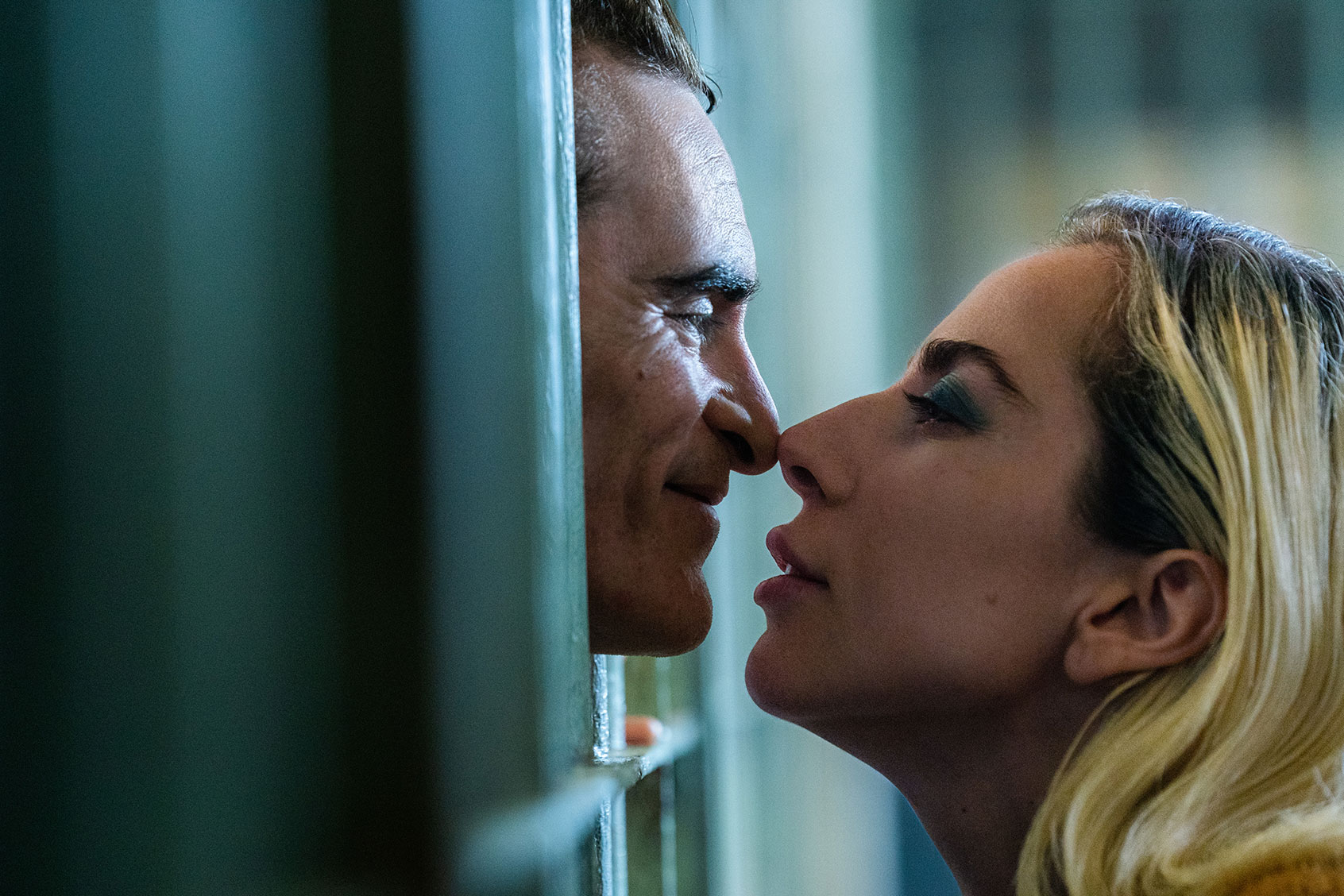
“Joker: Folie à Deux” makes a mockery of Harley Quinn and Lady Gaga

Harley Quinn is an eternal comic book character. Since her debut in 1992, she's had a million lives through the countless iterations in the DC universe.

But a new one has entered the realm of Harley-lore alongside the only other live-action portrayal from Margot Robbie in "Suicide Squad" and "Birds of Prey." In Todd Phillips' "Joker: Folie à Deux," musician Lady Gaga ditches her pop star digs to morph into an unrecognizable version of the character. Simply, "Joker: Folie à Deux" has a flagrant Harley Quinn problem and not even Gaga's performance can mend it.

The sequel to Phillips' polarizing "Joker" has been marketed as the deluded, toxic love story between Arthur Fleck, who doubles as the Joker (Joaquin Phoenix), and a troubled psych patient, Harleen "Lee" Quinzel, who confusingly doesn't go by Harley (Lady Gaga). The wounded individuals meet each other at Arkham Asylum in Gotham at a choir class. Their psych ward meet-cute isn't as romantic as it sounds — I promise. Oh yeah, the sequel also attempts to be a musical too. 

In Phillips' Gotham, Lee is a mental hospital patient who is admitted involuntarily because she set fire to her parents' apartment. But mostly, what we see from her characterization is that Lee is a Joker fangirl. She is deeply fascinated by the media frenzy that surrounds Arthur. While he did kill five people (six including his mom) and one of them on live television, Lee watched the story of Arthur's life unfold and fell for his violent persona in much the same way as a certain facet of habitually online man in the real world did. 

While Phillips said the film was "never about addressing toxic fandom," its involuntary commentary on fandom and the idolization of cult-like figures inadvertently took Harley's characterization and flushed it down the toilet. Phillips molds Harley into an adoring member of the Joker fan club and nothing else.

In an interview with IGN, Phillips told reporter Jim Vejvoda that the film is about the idea of cult personality being thrust on an unassuming person when "it's not actually what you are."

He continued, "And then, what happens in the worst-case scenario if you finally find love in your life or you think you do, but that person is in love with the character that you represent, not the person that you are?"

It's clear that the Harley most fans know — the one who is a psychiatrist at Arkham who is eventually manipulated by the Joker and slowly descends into madness — isn't the Harley we see in this sequel. Instead, Lee becomes the manipulator.

Joker: Folie A DeuxJoaquin Phoenix as Arthur Fleck and Lady Gaga as Lee Quinzel in "Joker: Folie A Deux" (Warner Bros. Pictures/Niko Tavernise/DC Comics)During their first meeting, Lee lies to Arthur about every facet of her life to become closer to the Joker. She lies about being a patient who was checked into Arkham involuntarily, she lies about her privilege and the death of her parents. Throughout their relationship, she sustains these lies and even lies about being pregnant with the couple's child. She concocts a fantasy, one that Arthur deludes himself into believing. It's why their love story is so grandiose in his head. It's why they break out into song and dance. 

This version of Harley is a shell of a master manipulator who only exists to make us feel bad for poor Arthur.

In this deluded fantasy, Arthur daydreams about a life full of grandeur and performance with Lee. That is, until she shoots him in his fantasy and he's ripped from his dreams and thrown into a nightmare. Eventually, he confronts Lee about her lies while he is on trial and he asks her if she actually grew up poor and in his neighborhood. Lee lies, again. Her manipulations are supposed to make the audience sympathize with Arthur's pain and humanize him. At his lowest, he is being taken advantage of by another woman in his life.

This constructed narrative has stripped Harley of what made her a fair match to the Joker's manipulations in other iterations of the character. Her education is gone, her bisexuality erased, and her unhinged, pyrotechnic personality and actions have disappeared. Phillips said in an interview with Variety, “The high voice, that accent, the gum-chewing and all that sort of sassy stuff that’s in the comics, we stripped that away. We wanted her to fit into this world of Gotham that we created from the first movie.”

What's left of this version of Harley is a shell of a master manipulator who only exists to make us feel bad for poor Arthur. If "Joker: Folie à Deux" had a point in its dreary two hours — it would be to serve as a manifesto for the disgruntled, single male trope that plays to men being the misunderstood victims. It sounds eerily similar to the misogynistic tropes that incels spew, blaming women as a whole for their manipulative, Jezebel ways; women who'd rather be with powerful men instead of the "good guys" like themselves.

We need your help to stay independent

Phillips' decision to transform Harley from the canon survivor of the Joker's abusive tendencies to a perpetrator and partial architect of Arthur's pain just feeds into dangerous, prickly narratives about women. The film's ending cements Phillips' tired male fantasy. Arthur admits that the Joker is a persona that is not real — Arthur is the only real part of him.

This entirely disenchants Lee. So when Arthur's fans bomb the courtroom during his trial and aid in his escape, he makes his way back to his love, Lee. However, Lee rejects him because he publically rejected the Joker. It is implied that Lee was only attracted to what was powerful and violent about Arthur but wanted nothing to do with the real him. When he asks her what about the baby, it is again implied that there is no child and she lied about their future. It is shattering for Arthur. But it means absolutely nothing to Lee. Ultimately, the pair were in love with parts of each other that were purely a fantasy. 

As for Lee, there's nothing inherently bad with this version of her being more subdued with her "mania and chaos" swirling inside, as Gaga explained in an interview with Vogue. But what is disconcerting about Gaga's version of Harley is that she has no soul — no driving motivation other than a misguided power trip written in the projection of the male fantasy that a woman's love can only exist if she's out to get something.

Harley is characteristically a longstanding villain in the DC universe and a part of her appeal is that her actions are morally questionable. Despite her anti-hero lore in "Joker: Folie à Deux," it's exhausting watching the same narrative be written of women. We are either the victims or the perpetrators with no room to be more than just power-hungry manipulators. 

“We’re not giving up”: Arizona Democratic office shuts down after being targeted in three shootings

A Tempe, Arizona Democratic field office is closing after being targeted by three shootings in just three weeks.

Tempe police shared that the the campaign office was shot at once with a BB gun and twice with a firearm in recent days. No suspects have been identified, but police released a photo of a silver Toyota Highlander with unknown plates as the suspected vehicle in all three shootings. No injuries were reported in the shootings, as they all occurred after-hours.

Local party official Lauren Kuby said they've made the decision to shutter the office in the suburbs of Phoenix following the the latest shooting on October 6. 

The office, located a handful of miles from Arizona State University, was a voter outreach and volunteer operation hub, Kuby told the New York Times. But while workers and volunteers at the site had to be moved to other offices, Kuby says they aren’t discouraged by the violence.

“We’re not giving up,” Kuby told the Times. “People are determined not to be stopped.”

The Tempe field office is in the heart of Maricopa County, the fourth-largest county in the U.S., whose purple voters helped deliver the state to Democrats in 2020. Officials in the county and the state have been the target of numerous violent threats related to election conspiracy theories spread by former President Donald Trump and Senate candidate Kari Lake.

In November of 2022, the county’s Supervisor Bill Gates, a Republican, had to be moved to an “undisclosed location” amid false election fraud conspiracies.

More families are taking on debt to pay for groceries

You've likely been tempted to use Buy Now, Pay Later (BNPL) on a pair of designer sneakers or during a spending flurry during the holidays. But what about to put food on the table? It turns out that tapping into payment plans and other forms of debt to pay for groceries is more common than you think. 

According to a report released by the Urban Institute, many US households are tapping into payday loans, BNPL, credit card debt, and their savings to cover living essentials. Breaking it down, 60.5% of adults resorted to credit card spending, 19% had to pull from their savings and 3.5% covered their groceries with Buy Now, Pay Later. 

The spike in the cost of essential goals, particularly groceries, can cause low-income folks who are experiencing food insecurity to get into a debt cycle. 

"While we see the inflation rate slowing, in 2023, when we collected this data, families were paying over 25% more for food than they did before," says  Kassandra Martinchek, a senior research associate with the Center of Labor, Human Services, and Population at the Urban Institute. 

With food being the third largest household expense–behind housing and transportation — more families are feeling the financial strain. 

Adults struggling with very low food security — the most severe form of food hardship — were likelier to report tapping into their savings and expensive forms of debt than those reporting less severe food hardship.

Additionally, those who deal with very low levels of food security were also more prone to experience hurdles in paying off that debt compared to those who said they had less severe levels of food insecurity. Being saddled with debt and scrambling to meet one's basic needs can feel like being attacked on multiple sides. 

Experiencing a hunger cliff 

There's been a lot of pressure on food prices and what folks can afford, explains Martinchek. At the same time, there was less public support and consumer protection after 2021. 

Besides an increase in food prices due to inflation, the SNAP public health emergency allotments, which were rolled out during the pandemic, were removed. So, in March of 2023, the 35 states that still had emergency allotments at the time saw a dramatic loss in coverage. 

We need your help to stay independent

With steep increases in food prices and other living expenses, the Food Research and Action Center (FRAC) describes more and more Americans facing a hunger cliff. With the halt of the federal public health emergency (PHE) in the spring of 2023, per FRAC, average snap benefits have dropped to $6 a person a day, or $180 a month. At the minimum benefit level, older adults experienced the steepest drop — from $281 to $23 a month. 

"When you couple inadequate SNAP benefits with the rollback of the federal programs like the emergency allotments and expanded child tax credit," says Salaam Bhatti, Esq., who is the SNAP Director at FRAC. "This leads to ultimately less income that people have to work with when trying to make sure there's food on the table, paying rent, utilities and all other necessities." 

Offering long-term solutions 

As there are no signs of this trend slowing down, ideally, measures need to be implemented to help those dealing with the most severe levels of food insecurity. Here are some potential ways to tackle the problem: 

Increase the SNAP benefit amount. Bhatti points out that Congress has an opportunity to deliver a strong farm bill with increased benefit amounts so they're adequate to the family's needs. "The numbers [in the report] were shocking," he says. "Now is the time to deliver a SNAP program to respond to that crisis." 

Some ideas include expanding eligibility to students without forcing them to work when they should be focused on their studies. There is a hot food restriction with SNAP benefits, so folks aren't able to get prepared, ready-to-eat hot food–like rotisserie chicken

"When you buy a hot rotisserie chicken, think about how much time that frees up, how many leftovers you get, and how many meals you can make for days just from that one chicken," says Bhatti. 

Expand the child tax credit. When the expansion of the child tax credit expired at the end of 2021, Bhatti points out that poverty and food insecurity numbers went up. An expanded child tax credit can help lower child poverty. Currently, the child poverty rate in the US  is at 16% — or 11.4 million kids total. 

Not only do we need an expanded child tax credit like the one offered during the pandemic, which increased to $3,000 per qualifying child between 6 and 17 and up to $3,600 per qualifying child, we could fare with a better one. "Considering that we can create a policy that will eliminate or cut child poverty in half, why not invest a little more and cut child poverty entirely?" he says. 

Implement accessible small-dollar credit programs. According to the Urban Institute report, another way to help those struggling with food insecurity is to provide affordable credit options to those with poor credit and low incomes. This can be achieved through small-dollar credit programs, no-cost extended payment plans for BNPL loans, or special-purpose credit programs. 

Some financial institutions and platforms offer payday advances, which are small amounts deducted from their paycheck before their payday hits. The amount is due at the next paycheck. While there are usually no fees or interest, it's important for folks looking for options to see what might trigger fees. 

Take advantage of existing programs. "People need to know that they're not alone in their struggles against hunger," says Bhatti. "Tens of millions across the country are in the same situation." 

For those facing hunger, Bhatti recommends hopping on programs like SNAP, WIC, and free or reduced price school meals for their children. When you take advantage of all these programs, you can free up your income for other necessities and ensure you have food on the table for your family. You can check your eligibility for SNAP benefits through SnapScreener.com. 

"Being in poverty is not one dimensional," says Bhatti. "There are so many pressures coming in from all different sides. Whether it's not being able to put food on the table, skipping a meal so your kids can eat, trying to juggle multiple part-time jobs that aren't giving you enough hours to get the benefits you need." 

"If we want to address the dynamics contributing to a family's ability to meet their basic needs, we're going to need investments in different types of programs that address the cost of living," says Martinchek. "And that's getting at the root causes of what's driving family financial instability and what support can set folks up on a path for long-term success."  

“Excellent health”: Harris shares medical history to highlight Trump’s age

The White House shared a letter from Kamala Harris' physician on Saturday, detailing the vice president's full medical history and declaring she's in "excellent health." 

“She possesses the physical and mental resiliency required to successfully execute the duties of the Presidency,”  US Army physician Joshua R. Simmons wrote in the letter. 

The rundown, which revealed that Harris is near-sighted and suffers from seasonal allergies, among other minor ailments, is a clear shot at Donald Trump. While her election opponent has released doctor's notes in the past, the glowing language has raised questions about whether or not his physicians were being entirely truthful. 

Trump is nearly two decades older than Harris and would be the oldest president ever elected were he to win in November, knocking off a record set by current President Joe Biden. Harris' one-time running mate dropped out of the presidential race earlier this year after a terrible debate performance raised questions about Biden's age and mental acuity. 

While Trump has had no such public mishap, questions remain about the former president's fitness. Fellow Republican and former booster Chris Christie told the New York Times earlier this week that Trump has clearly lost a step. 

“He wasn’t as good in 2020 as he was in 2016,” the former governor of New Jersey said. “I saw decline in his skills in ’20 from ’16, and you see significant declines still. What masks it is that he is still physically pretty vibrant and energetic, unlike the president. But if you listen to him and his ability to make a point, it’s not nearly as good now as it was in 2016, not nearly.” 

Abortion laws are straining the OB-GYN workforce in Texas: report

In yet another indicator that the rollback of reproductive rights has ripple effects across health care, a new survey found that one in five OB-GYNs in the state of Texas are considering leaving in due to strict and confusing abortion laws.

The study, conducted by Manatt Health, surveyed 3,700 members of the Texas division of the American College of Obstetrics and Gynecologists and collected responses between mid-June and mid-September of 2024. The survey received 447 responses. 

“A significant majority of practicing OB-GYN physicians surveyed believe that the Texas abortion laws have inhibited their ability to provide highest-quality and medically necessary care to their patients,” the study states. “As a result of Texas abortion laws, many Texas OB-GYN physicians and resident physicians are considering or have already made changes to their practices that reduce the availability of OB-GYN care in the state.”

Of the doctors surveyed, 76% reported that they believe they cannot practice evidence-based medicine in the state, with 60% reporting that a fear of legal repercussions is part of the reason why. Twenty-nine percent of respondents also said they don’t feel like they have a clear understanding of the abortion laws in Texas, and only 28% feel like they have support in navigating patients’ questions and concerns. As a result, 13% of those surveyed said they are planning on retiring early; 21% said they've thought about leaving or are planning to leave the state to practice in another. Fourteen percent said they would like to go to practice in another state but can’t due to personal reasons.

“I’m leaving because nothing is getting better — it’s only getting worse and I’m tired of dealing with all of it,” one doctor said in the survey. “I’m going where I never have to worry about being able to care for my patients again.”

Another said they are considering leaving because they want to grow their own family themselves, but are scared to be pregnant in Texas. 

"I’m going where I never have to worry about being able to care for my patients again."

“I do not want to raise my daughter in a state that clearly does not care about women’s health,” the doctor said in the survey. “I want to stay and fight for change, but also have to protect myself and my family.”

Some said they feel the need to stay for personal reasons, or because they want to provide the best care possible for their patients. 

“I do not feel I can practice the full scope of care to my patients which leads to increasing anger and frustration,” another doctor said. “I think of leaving Texas every day, yet I feel the need to stay to take care of my patients and fight for their reproductive rights.”


Want more health and science stories in your inbox? Subscribe to Salon's weekly newsletter Lab Notes.


In 2022, Texas enacted laws that prohibit all abortions except when the life or health of the pregnant patient is at risk. Still, there have been reports of Texas women being denied care for conditions like ectopic pregnancies — a life-threatening condition — and women being denied care in other health and life-threatening situations. If physicians violate the law in Texas, they face up to 99 years in prison, loss of their medical license, and at least $100,000 in fines, creating a culture of immense fear. 

Texas isn’t alone in facing an exodus of OB-GYNs due to strict abortion laws. As Salon previously reported, Idaho is becomign an OB-GYN desert, having lost 22 percent of its practicing OGBYNs in the 15 months following Dobbs, according to a report published earlier this year. The report also found that 55% of the state’s high-risk OB-GYNs have left the state, leaving less than five in the entire state to treat patients. 

We need your help to stay independent

“In a time when we should be building our physician workforce to meet the needs of a growing Idaho population and address increasing risks of pregnancy and childbirth, Idaho laws that criminalize the private decisions between doctor and patient have plunged our state into a care crisis that unchecked will affect generations of Idaho families to come,” Dr. Caitlin Gustafson, an OB-GYN and the board president of the Idaho Coalition for Safe Healthcare Foundation, said in a news release about the report at the time. 

According to the Texas study, there are many consequences of a shrinking workforce for the state. From worsening outcomes for pregnant people and infants to an added burden on an already strained healthcare system, significant ripple effects are anticipated. 

“If the workforce shrinks or otherwise shifts in a material and negative manner, it is not just pregnant patients seeking abortion services that will be affected — all patients that require any of the full scope of care that this OB-GYN workforce provides will be impacted,” the study stated. 

How the Republicans turned disaster relief into political warfare

The one-two punch of hurricanes Helene and Milton to Florida’s Gulf Coast — along with the flooding and devastation in western North Carolina — have ignited partisan disagreement and outright misinformation about the scope and role of the federal government in disaster relief. Not long ago, appropriations for aid funding were among the least contentious bills in Congress, typically carried with unanimous bipartisan support. That helping citizens in their time of need has somehow become a contentious political issue reflects a more fundamental backsliding in the Republican Party to a premodern conception of government itself.

Social scientists often speak in terms of state-society relations: What is the role of the government and the society that it governs? The entire American political tradition is premised upon the uncontroversial notion that: “The Government is the servant of the people. It is organized to serve the people. The people are not the servants or slaves of the Government.” The Enlightenment notion of promoting “the common good” predates even the United States itself.

This is not simply a matter of the Republicans’ rightward drift into MAGA authoritarianism. More fundamentally, the Republican Party has uncoupled itself completely from the notion that the purpose of government is to promote the security, liberties and prosperity of the people it represents. Instead, it now views the state as a mechanism to exact retribution, discipline and punish members of that society.

This is a truly alarming development.

Consider the parties’ competing policy platforms ahead of the 2024 election. The Democratic platform includes pretty standard fare: well-paying jobs, infrastructure, lowering costs for health care and housing, investing in public health and public education, a clean environment for all, and expanding civil liberties and opportunities for political participation. All of this is in accordance with the state serving the common good.

By contrast, in the 2024 Republican platform, government for the common good gives way to the politics of resentment, punishment and retribution. The officially stated goals of today’s Republican Party include “the largest deportation operation in American history,” which specifically targets “Christian-hating Communists, Marxists and Socialists”; “cut[ting] federal Funding to sanctuary jurisdictions” that don’t discriminate against migrants; “revok[ing] China’s Most Favored Nation status” within the World Trade Organization and “defund[ing] schools that engage in inappropriate political indoctrination” as the GOP defines it, meaning “leftwing propaganda”; and deporting “radicals” — defined in terms of their political position on the war in Gaza—in order to make college campuses “PATRIOTIC AGAIN” (all sic).

This is all a far cry from Republican platforms of the recent past. As recently as 2008, the GOP dedicated entire sections of its platform to  “Reforming Government to Serve the People.” 

In the 2024 Republican platform, government for the common good gives way to the politics of resentment, punishment and retribution.

Since at least 2016, scholars and journalists have consistently sounded the alarm on the Republican drift into right-wing authoritarianism. But even tinpot dictators and autocrats at least pay lip-service to working for the common good. Modern Republicanism’s belief that the core role of government is instead to wield the power of the state to punish one’s enemies goes beyond myopic allusions to authoritarianism, fascism or caesarism to a premodern, pre-capitalist rival conception of government known as patrimonialism, in which the state is not meant to serve society but society is meant to serve the state — and the autocrat who runs it.

In 1921, German sociologist Max Weber wrote: “The patrimonial office lacks above all the bureaucratic separation of the ‘private’ and the ‘official’ sphere. For the political administration, too, is treated as a purely personal affair of the ruler, and political power is considered part of his personal property.” Updated for the modern age, frameworks of neopatrimonialism have been employed to explain clientelism, corruption and the allure of authoritarianism in Africa, Central Asia, Vladimir Putin’s Russia and beyond.

American political dynamics are in no way exceptional. Neopatrimonialism well explains modern MAGA Republicanism, in everything from the merger of Trump’s business interests with state interests, his allusions to “my generals” — who are meant to carry out his personal whims — and placing sycophants and unqualified family members in positions of political power, both within his administration and then in the leadership of the Republican Party apparatus.

Still, given their roots in premodern, personalist, “l’état c’est moi” government, it makes sense that these patrimonial dynamics not only predate modern capitalism but also our bedrock Enlightenment notion that sovereignty is derived from the people, and that the state is meant to serve their common good. Given this context, “making America great again” means turning back the civilizational clock to the principles of medieval government, quite literally.

The most obvious indicator of this premodern turn is the longstanding Republican hostility to any policy meant to promote the public good. Public schools? Defund and privatize them. Department of Education? Abolish it. Medicare, Medicaid and public health care? Slash and repeal them. Public transit? Kill it. Public libraries? Defund them, ban certain books and doxx librarians with the threat of criminal penalties. Community and public health? Attack and undermine it. Community centers? Shut them down. Public lands? Sell them off. Public and national parks? Slash them. Public servants? Attack and fire them. Public restrooms? Monitor them, and make it a crime for people to use what are deemed the “wrong” ones. Aside from the military, modern Republicanism is fundamentally allergic to any governmental or public-sector actions that promotes the public interest, safety and well-being — in other words, to the core Enlightenment understanding of government itself. 

So, since when has the Republican Party’s understanding about the core role of government shifted from serving the American people to punishing them? This is where the role of disaster relief comes in, offering a shifting standard that allows us to chart the Republican Party’s gradual descent into neopatrimonialism.

Since hurricanes, floods, wildfires and earthquakes don’t discriminate between red states and blue, much less between red or blue households, it used to be that federal disaster-relief bills would sail through Congress with unanimous support. Helping fellow citizens in their hour of need was not a thorny partisan issue, and nobody expected to score political points by refusing to help tragedy-stricken individuals. The bonds of nationality, community and common decency were understood to supersede partisanship.

When Hurricane Katrina smashed the Gulf Coast in 2005, a $52 billion relief package sailed through the House of Representatives 410-11, and a companion bill allowing the National Flood Insurance Program to borrow more money passed unanimously, 416-0. Yet when Hurricane Sandy tore apart the East Coast in 2012, a nearly identical $51 billion relief package was opposed by 179 Republicans and one Democrat, while the same companion flood-insurance bill was suddenly opposed by 67 Republicans, based on unfounded claims that the bills were “full of pork" unrelated to the disaster. This should have been a clear signal that Republican dedication to the bedrock principle that the state should serve the people was wavering.

It used to be that federal disaster-relief bills would sail through Congress with unanimous support.Yet when Hurricane Sandy tore apart the East Coast in 2012, a $51 billion relief package was opposed by 179 Republicans and one Democrat.

The emergent Tea Party movement of the Obama years was fertile ground for the growth of modern Republicanism’s premodern turn under Donald Trump. During the subsequent Trump administration, disaster declarations and relief bills became politicized, hinging on whether those hit by, say, the Iowa derecho, California wildfires and, especially, hurricanes Irma and Maria, which devastated Puerto Rico, were somehow worthy of the most basic obligations of government.

A recent Politico article underscored the fact that, in 2019, Trump refused to authorize wildfire aid to California because of the state’s Democratic leanings. He changed his mind only after aides “pulled voting results to show him that heavily damaged Orange County, California, had more Trump supporters than the entire state of Iowa.”

Pulling back from this single data point about disaster relief reveals a broad pattern of the first Trump administration, in which everything from education funding and health care resources to public transportation and immigration policies largely benefited red states, while tending “to punish states that voted Democratic.”

There is every reason to believe that neopatrimonialism would be the bedrock of a second Trump administration, too — particularly because Trump himself tells us so.

Just last month, he threatened that, if again elected president, he would withhold federal wildfire aid to California unless Democratic Gov. Gavin Newsom (a frequent target of Trump’s ire), diverted more of the state’s water to rural farmers.

Newsom replied that Trump had “just admitted he will block emergency disaster funds to settle political vendettas. Today it’s California’s wildfires. Tomorrow it could be hurricane funding for North Carolina of flooding assistance for homeowners in Pennsylvania. Donald Trump doesn’t care about America — he only cares about himself,” about as succinct a description of neopatrimonialism as I can imagine.

But the consequences go far beyond disaster relief. The much-discussed Project 2025 Presidential Transition Project sets out a 900-page blueprint for Trump’s executive takeover of the state, described by critics as “four years of personal vengeance at any cost.” The plan is far more audacious than can be summarized here, but largely consists of neopatrimonial policies intended to punish the American people, rather than serve them.

Project 2025 envisions firing up to 50,000 civil service employees and replacing them with what has been described as “an army of suck-ups” — that is, those personally loyal to Trump — while assuming direct Republican control over the major administrative institutions of the federal government, all of which can only be described as neopatrimonialism 101.

Beyond a complete reorganization of the American administrative state itself, Project 2025 also calls for an entire slate of policy decisions that will unquestionably harm individuals and American society rather than promote the common wealth as traditionally understood for centuries. Project 2025 aligns with Trump’s long-stated goal of repealing the Affordable Care Act that provides health care for millions of Americans. It goes further by slashing Medicare and Medicaid, upon which millions of elderly and disabled Americans rely, allowing pharmaceutical companies to jack up their prices by repealing Medicare drug-price negotiations, allowing health care providers to deny gender-affirming care, restricting access to Medicaid by adding work requirements and other bureaucratic hurdles, and denying access to contraceptives.


Want a daily wrap-up of all the news and commentary Salon has to offer? Subscribe to our morning newsletter, Crash Course.


By reviving the Comstock Act, the proposal would allow the government to back up proposed bans on contraceptives and morning-after pills with criminal prosecutions against both those who receive them and the doctors who prescribe them. Trump’s running mate, Sen. JD Vance, has championed this measure since 2023. Here too, an issue that once centered on promoting health and well-being has turned to disciplining and punishing the citizenry.

Likewise, instead of protecting and expanding civil rights, Project 2025 seeks to curtail individual rights by removing legal protections based on race, sexual orientation and gender identity, effectively legalizing discriminatory practices, while reworking civil rights-era legislation to focus instead on prosecuting “anti-white racism.”

The GOP’s aforementioned platform of mass deportation of migrants will reportedly be accompanied by sweeping raids, giant detention camps and mass expulsions, tearing apart migrant families and entire communities. Here too, the common good gives way to collective punishment. 

Project 2025 calls for an entire slate of policy decisions that will unquestionably harm individuals and American society rather than promote the common wealth as traditionally understood for centuries.

Ultimately, what unites all these data points — from opposition to hurricane relief and attacks on civil service, public education and health care to targeting individual political opponents and minority groups for harassment and discrimination — is the Republican Party’s slide into neopatrimonialism, in which the interests of the state become fused with the whims of the leader, and the purpose of government is no longer to serve the American people, but to punish them.

Many have understandably pointed to the ways such proposals in Project 2025 and the Republican platform would erode the rule of law, separation of powers, the separation of church and state, and the protection of civil liberties, decrying Project 2025 and the official Republican platform as “post-liberal,” “unhinged and un-American.”

More accurately: They’re not un-American, they’re pre-American.

The personification of the state and its utilization as a means of selective punishment is precisely what America’s founding fathers fought against. Everything from the separation of powers and equality before the law to the protection of individual rights and liberties against the incursions of state power are Enlightenment concepts, which became the cornerstones in building the forever-unfinished project of American democracy.

And all these dynamics can be viewed with maximum clarity through the prism of partisan disagreements over federal disaster relief.

Not so fast: Experts are “skeptical” about polls showing Black, Latino voters moving to Trump

The 2024 election has seen no shortage of headlines flagging an apparent slip in support for Democrats among Black and Latino voters. While poll after poll to suggests that former President Donald Trump stands to make some gains among these groups, experts are skeptical of the narrative, at least until Election Day.

In recent years, the Democratic Party has seen its support slip among Black and Hispanic voters, and Republicans, including Trump, have tried to capture these votes. This year, it also looks like Vice President Kamala Harris is set to overperform among older voters, leading to an image of an older and whiter Democratic Party. While there’s been much ink spilled on these trends, the scale of this shift and the potential dangers of reading into it too much has gone under the radar.

There has been no shortage of attention paid to Trump’s reported increase in support among Black Americans this year. In 2020, President Joe Biden won 87% support among Black voters compared to Trump's 12%. Recent NAACP polling found that some 63% of Black voters say they plan to support Harris compared to just 13% who say they plan to support Trump, showing some potential slippage for Harris but little gain for Trump.

The increase in support for Trump, however, appears to be mostly isolated to younger Black men. Looking at the crosstabs of the NAACP poll, 26% of Black men under 50 say they support Trump compared to 49% who say they plan to support Harris. For comparison, 77% of Black men over 50 say they support Harris and 67% of Black women say they support Harris while just 8% say they support Trump.

Other polls have found similar results. A recent Associated Press/NORC survey found that 21% of all Black men and 22% of all Black voters aged 18 to 44 say Trump would make a good president. The same survey found that just 11% of Black women and 8% of Black voters over 45 said the same thing.

If these polling results are accurate, it suggests that Trump has gained some support among Black men. It’s crucial, however, to keep the size of this shift in perspective. 

In 2020, exit polling shows that Trump enjoyed 19% support among all Black men. This means that it’s still a fairly modest increase in support even among the group of Black voters that has swung the most towards Trump, likely somewhere between three to six points, based on the aforementioned polling.

Howard University’s Initiative on Public Opinion conducts polls with a focus on Black Americans, with their most recent survey reaching 1,000 Black registered voters in Arizona, Georgia, Michigan, Nevada, North Carolina, Pennsylvania and Wisconsin. Their survey found an even smaller shift than other national surveys: among Black likely voters, Harris leads Trump 82% to 12%. The same sample supported Biden 81% to Trump’s 9% in 2020.

Clarence Lusane, a professor of political science at Howard University, told Salon that whatever shift there was towards Trump when Biden was the nominee has largely dissipated at this point, with Harris’ rise being a decisive turning point.

“I would put some history on this. Both in 2016 and 2020, the Trump campaign looked at polls that showed not quite 20% but mid-teens support and they celebrated and argued that the Black community and Black men were moving away from the Democrats,” Lusane said. “I’m a little suspect about how much Trump is actually going to get in the final vote because if history is an indicator, then these last-minute Black voters tend to go with Democrats.”

Lusane also pointed to a variety of things he said Trump has done since 2020 that could alienate Black voters, like his claim that Haitian immigrants were eating cats and dogs in Springfield, Ohio, or his attempt to have the votes of people in swing state cities with large Black populations thrown out in 2020.

Lusane did, however, note that the level of turnout Democrats can drive in swing states among Black Americans could be decisive in both the election and in terms of what percentage of the Black vote Trump wins in the end. Lower turnout among Black Americans is likely more advantageous for Trump. He added that he thinks the Harris campaign needs to be more specific in what is in their agenda to help Black Americans as well as the threat to democracy that Trump poses.

“I think Trump as a threat to Democracy still needs to be underscored,” Lusane said. “This is someone that represents an extremist view with an extremist movement behind it.”

We need your help to stay independent

Apparent gains among Latino and Hispanic voters have also drawn significant attention this year. According to exit polls, Biden carried 65% of the Hispanic vote while Trump carried 32% in 2020.  This year it looks like Trump is poised to do better.

A recent Pew Research survey found that, 57% of Latino registered voters plan to support Harris while 39% say that they plan to support Trump. Another survey from the Hispanic Federation found that 59% of Latino and Hispanic voters plan on supporting Harris compared to 35% who back Trump.

Similar to the shift among younger Black men, any shift among Hispanic and Latino voters appears to be relatively small. Frankie Mirana, the president and CEO of the nonpartisan civic engagement group Hispanic Federation, is skeptical about drawing sweeping conclusions from much of polling that has been done on the subject.

“I don’t think that the 36 million eligible Latinos in this country has been properly polled or that there’s been proper outreach to this voting block,” Miranda told Salon. “When we look at the samples of some of these polls, we’re not confident about those numbers or the sample size is too small. I am confident that our poll is the largest sample and the most representative.”

Miranda, whose organization has another survey coming out Tuesday, said that the shift among Latinos being tracked by most polls is “overplayed.” He added that he’s less concerned about any political shifts in the community than he is about Spanish language content with inaccurate information about candidates.

“We know that some of this misinformation was been curbed in some form in the English language but that it runs rampant in the Spanish language,” Miranda said. 

When asked how some geographically specific shifts in Latino voting patterns might be interpreted, like shifts in south Texas or Florida, he said that they were attributable to “culturally competent and linguistically competent messaging.” 


Want a daily wrap-up of all the news and commentary Salon has to offer? Subscribe to our morning newsletter, Crash Course.


“If you do campaigning in South Florida and talk about ‘noun, verb socialism’ and ‘noun, verb communism’ that is socially competent. Is it real? That’s another question,” Miranda said.

In Miranda’s assessment, there are some recorded geographically specific shifts among Latino voters but those shifts often correlate to the community in a specific region. And, larger narratives about trends among Latino voters are often projected onto the group as are perceived issue priorities for Latino and Hispanic voters.

“For one side they say Latinos are stealing and voting illegally in an election and the other side says Latinos are why one state is swinging one way or another,” said. “There’s a lot of assumptions about what we supposedly want to hear about and what we need to mobilize the vote. I think in the last few weeks I’ve seen an intensification of messaging toward our community — good, bad and ugly. I wish that this messaging had started earlier.”

The next polling trend drawing headlines this election is Harris’ potential strength with America’s seniors. In 2020, exit polls found that Biden won 47% of voters over 65 while Trump won 52%. This year, Harris appears to be on track to win this group, according to some polls. Recent New York Times/Siena College polling found Harris leading among seniors 49% to 47% and the most recent CNN/SSRS polling found Harris leading Trump 50% to 46% among seniors. Other polling has suggested a similar breakdown in support among older voters to 2020.

While older voters are historically easier to poll than many voting demographics, there is still reason to treat this analysis of the crosstabs with some skepticism. This isn’t because it’s implausible that Harris could improve with older voters, who make up a fairly large chunk of the electorate, rather it’s an issue with crosstab analysis in general and one that applies to the conclusions people are drawing about Black and Latino voters as well.

John Culverius, professor of political science at the University of Massachusetts Lowell and director at the university’s Center for Public Opinion, told Salon that “crosstab analysis is always fraught” especially among harder-to-poll groups like younger voters and voters of color. Moreover, crosstabs generally have “a much wider margin of error” that makes it hard to draw conclusions from shifts in the polls, especially smaller shifts like what’s being tracked in all of these groups.

“We will know more once we see final exit polls that are weighted to the final result,” Culverius said. “That’s a disappointing answer, but I remain skeptical of potential large shifts in subgroups in the electorate, especially when the election, up until two months ago, was a rerun of 2020.”

Still, even a small shift — with any group, not necessarily the ones that have drawn the attention —  could have a significant impact on election results, particularly if that shift manifests in Pennsylvania, said Liberty Vittert, the lead data scientist at Decision Desk HQ.

“This election will be decided on the margin and any trend downward isn’t good,” Vittert said. “Whoever wins PA has an 80% chance of winning the election and her numbers have been trending downward (albeit by small numbers) and there are similar trends in the blue wall states.”

“Deep state” and “uniparty”: To defeat Trump’s American caste system, Democrats need a realignment

Since at least 2017, a series of high-quality polls show that a majority of Americans believe that a so-called deep state of unelected elites wields dominant power in the U.S. The term “deep state” is covered by the media as a phrase invented by Donald Trump, who uses it frequently to denounce unelected liberals and “Marxists” in government. But the idea of a deep state has a long history on the left as well as the right — with two very different meanings. The outcome of this year’s presidential election may depend on whether the public comes to see the real deep state as the one Trump is attacking, or the one that the left has long challenged. 

Since Bill Clinton, Democratic identity politics has challenged racial and gender caste power while focusing far less on class power. Harris needs to recapture the spirit of the New Deal, when Democrats had landslide victories among working-class voters who have been migrating in droves to the GOP since.

Trump’s deep state includes the civil servants in the federal regulatory and social welfare bureaucracy as well as in the national security apparatus of the CIA, FBI and Pentagon. He denounces them as the real threat to democracy, aligning with Project 2025’s proposal to purge more than 50,000 civil servants and replace them with his political appointees. He has promised to prosecute the leaders of this deep state elite and their coastal allies in the Democratic Party, the media and universities who work in concert to promote open borders and the ideology of DEI (diversity, equity and equality) that is stealing the jobs of hard-working “true” Americans who are white Christian patriots. 

But there is a more authentic and real deep state, identified by scholars and the Left. In “The Power Elite,” one of the most important sociological books of the 20th century, C. Wright Mills wrote that America was ruled by a triangle of unelected elites: wealthy corporate elites allied with top civilian government leaders and the military. This is a true deep state largely organized around corporate class interests both at home and abroad, sacrificing the jobs of ordinary working Americans of all races for the profits of “the 1%.”

Interestingly, there is an overlap between Trump’s and Mills’ notions. Both agree that unelected groups exercise great power and that the national security apparatus is part of the real deep state. But the power elite, as understood by Mills and the left, also includes and highlights the corporate rich. They constitute a ruling class, people whose power stems from controlling the vast majority of America’s wealth. To win support, they have been appealing to white Christian nationalism, a caste-based identity.    

Sociologists distinguish between class and caste. Class is a status stemming from wealth, where you theoretically can rise or fall, although few people do. Trump was born in the upper tier of the ruling class, with whom he continues to schmooze in Mar-A-Lago to make mutually profitable deals for his second term. A caste is a biological state you are born in and can’t change; race and gender are typically considered castes. 

The power elite identified by Mills and that Trump would restore to unfettered control melds class and caste—and has an important history. In our work, we show that the U.S. was founded as an uneasy marriage between two deep states, a Northern proto-capitalist one and a Southern slave-based one that was proto-fascist. One was based on class power of early merchant capitalists and the other based on the caste power of the Southern white gentry. While they came together to secure independence from the British over taxes, trade and continental expansion, they would later divorce in the Civil War. They had very different visions, one of an agrarian caste nation and the other an industrial power based on class, theoretically open to all races or castes.

In 1980, Reagan proved the modern electoral power of a right-wing politics relying on corporate class power allied with caste-based white Christian nationalism. But Trump’s approach has far earlier roots, as he marries his corporate deep state with elements of a caste-based white proto-fascist deep state., It’s what happened in the original founding. This storied historical legacy helps explain the attraction of so many Americans to Trump, who claims to be bringing back the greatness of an early American system governed by wealthy white men in the name of all the true American patriots. It purges the “criminal” immigrants and inner-city Black Americans who he blames for the problems of ordinary white Americans today. 

We need your help to stay independent

Trump could win a second term, unless the Harris-Walz campaign makes clear that Trump’s resurrected power elite uniting caste and class power will worsen the problems of ordinary working voters, especially blue-collar workers in the Blue Wall states of Michigan, Pennsylvania and Wisconsin. It was the unification of Democrats and Republicans under George H.W. Bush and Bill Clinton that ushered in a new era of bipartisanship, or a "uniparty" of sorts, in support of nearly unfettered free trade which saw the devastating loss of well-paying blue collar jobs that allowed Trump to become the first Republican in three decades to win the Rust Belt. This uniparty built on Reagan's neoliberal revolution embraced by both Republicans and Democrats. The Democrats need to show that Trump is actually resurrecting the real deep state that is endangering their jobs and democratic voice.

Democrats appear to be attacking caste-based race and gender power and, in their embrace of labor and unions, they are also starting to attack corporate class power. But in the way they are recruiting conservative Republicans like Dick and Liz Cheney, Democrats are highlighting, as Harris explicitly says, that she is proudly “a capitalist” and are hesitant to challenge forcefully the corporations and the military-industrial complex that continue to endanger the wages and jobs of workers while supporting American militarism.

Harris needs to show that she will deliver for working people the good wages, affordable necessities and democratic voice they need to ensure their future. Since Bill Clinton, Democratic identity politics has challenged racial and gender caste power while focusing far less on class power. Harris needs to recapture the spirit of the New Deal, when Democrats had landslide victories among working-class voters who have been migrating in droves to the GOP since the end of the New Deal era. Her future—and the nation’s—will depend on her making clear that she takes class as seriously as she does caste and will fight for all working people against the corporate deep state.

Age limit: Have we hit a ceiling for longevity? Not so fast, some experts say

For as long as humans have been aware of their mortality, the question of whether a limit exists to the maximum age we can reach has followed. Attempts to reach this ceiling have attracted a wave of pseudoscience, from injecting the blood of younger people to tests that can tell one's "true age." It seems many people want to reach or exceed the age of Jeanne Calment, the oldest verified living person who died at 122 years, 164 days or Maria Branyas, recently the world’s oldest living person, who died in August in a Spanish nursing home aged 117.

Longevity researchers have been arguing about this question for decades, and a new study published this week reignites this fiery debate among researchers about whether humans will continue to live longer forever or some day reach a lifespan ceiling.

In the past century, average life expectancy has doubled from 32 years in 1900 to 71 years in 2021, according to Our World in Data. Advancements in medicine and technology allowed us to live longer and longer, and the global lifespan among high-income countries has continued to steadily increase until the present day by about three years per decade throughout much of the 20th Century.

However, a new study published this week in Nature Aging says that this upward trend is curbing and boldly states that “humanity’s battle for a long life has largely been accomplished.” Using data from eight wealthy countries with the highest life-expectancies plus the U.S. and Hong Kong, researchers reported that increases in life expectancy slowed between 1990 to 2019. (The authors did not include more recent years to avoid conflating the data with deaths caused by the COVID-19 pandemic, which reduced life expectancies.)

"People are getting older and dying of things they didn’t die from 30 years ago or 40 years ago."

"Our analysis suggests that survival to age 100 years is unlikely to exceed 15% for females and 5% for males, altogether suggesting that, unless the processes of biological aging can be markedly slowed, radical human life extension is implausible in this century," the authors report.

The only places in the study to undergo a “radical life extension” like what occurred in the 20th Century, defined in the study as a 0.3-year annual improvement in life expectancy across this time span, were South Korea and Hong Kong.

Study co-author Dr. S. Jay Olshansky, a public health professor at the University of Illinois at Chicago, attributes the increased longevity observed throughout most of the 20th Century to major medical advances like antibiotics and vaccines that saved young people, in particular. Saving younger children earlier in life, Olshansky explained, equated to more years of life saved compared to advancements in technology and their coinciding years of life saved among older people today. 

“In epidemiology, this is called competing risk, which is just another way of saying we have a large number of diseases that compete for our lives,” Olshansky told Salon in a phone interview. “The older you get, the more of them there are. It's like a game of Whac-a-Mole.”

"If you leave out the U.S., then the rest of these countries are steadily seeing improvements in life expectancy."

The globale $62 billion anti-aging market suggests plenty of people want to extend their lifespan, and changes in longevity impact the way we work, retire, and care for our aging populations. Increases in longevity have slowed in many high-income countries in the past couple of decades, but other researchers asked to comment on the study said life spans are expected to continue to grow, even if it’s at a slower rate. Since 1960, life expectancy in these countries has improved by an average of one year every six years, said John Bongaarts of the Population Council in New York City, who was not involved in the study.

One exception is the U.S., which has experienced decreases in life expectancy in recent years, an outlier among other wealthy nations. This could be in part due to co-occurring obesity, drug overdose, and maternal mortality crises that don’t happen in other countries at the same rate.

“If you leave out the U.S., then the rest of these countries are steadily seeing improvements in life expectancy, and that pace of improvement is likely to continue,” Bongaarts told Salon in a phone interview. 

Medical advancements are steadily improving at saving older people, and while longevity gains might not be as drastic as they were when advancements in technology were saving younger people, it still has a net positive effect, said Shripad Tuljapukar, a professor of biology and population studies at Stanford University in Palo Alto, California. People at older ages, for example, are dying later and later with “old-age survival [following] an advancing front, like a traveling wave,” according to a 2018 study Tuljapukar published in PNAS.

“People are getting older and dying of things they didn’t die from 30 years ago or 40 years ago,” Tuljapukar told Salon in a phone interview. Olshansky’s study revisits a prior 1990 study published in Science titled "In search of Methuselah: Estimating the upper limits to human longevity," which reported it was "highly unlikely that life expectancy at birth will exceed the age of 85."


Want more health and science stories in your inbox? Subscribe to Salon's weekly newsletter Lab Notes.


“I don't think there's really much that we can do to reaccelerate things forward like they did in the past,” Olshansky said. “You have to come up with something that is going to add three, four, or five decades of life to a 90-year-old — and that is not going to be so easy.”

However, the life expectancy for women in Japan, which is the world's longest-lived country and is often looked to as a preview of what to expect regarding changes in life expectancy in other high-income countries, has already exceeded 85.

Moreover, others think there could indeed be technological advancements that allow us to change the biological process of aging itself, and there is an entire field of research dedicated to reversing the effects of cellular aging. There’s some debate across disciplines about what causes aging, with some believing it’s a natural cellular “rusting” phenomenon that occurs independently of disease and gradually wears down the body until death, said Michael Rose, an ecology and evolutionary biology professor at the University of California, Irvine. 

We need your help to stay independent

Rose disagrees with this hypothesis and points to the existence of multicellular animals, which have the same basic cell biology as humans, that don’t age at all. 

“People in my field, we've now been saying for some time that … you can in fact radically transform the prospects for aging and dying,” Rose told Salon in a phone interview.

No one can know whether or when technological advancements could occur on a grand enough scale that they could meaningfully alter life expectancy trajectories in the years to come without a crystal ball, and this study stirs up the decades-old question of whether there is a limit to life expectancy itself.

“I don’t think we know the answer to the question,” Tuljapukar said. “But even if we don’t know that … We will definitely see a lot more people living to higher ages. There is no question about that.”

Whether or not there is a true limit to how old people can reach, perhaps we can expect more Jeanne Calments and Maria Branyas to exist.

CORRECTION: An earlier version of this story incorrectly reported the rate of life expectancy increase. It is by an average of one year every six years. The story has been updated.

Helene, Milton put insurance industry to the test

With untold numbers of properties wrecked by Hurricanes Helene and Milton in recent weeks, homeowners across the Southeast will be in close contact with insurance agents until their claims are resolved. 

Experts say it's not the end of it: Climate change is only going to intensify the frequency and expense of claims going forward. And disaster losses along the coast are likely to escalate in the coming years, partly because of huge increases in development, said Loretta Worters, a spokesperson for the Insurance Information Institute.

"Losses related to natural disasters have increased tenfold," Worters said.

Early estimates put the total damage and economic losses in Florida from Milton between $160 billion and $180 billion, according to AccuWeather. Helene, which made landfall in Florida before taking aim at North Carolina and several other states, is estimated to have caused at least $11 billion in private market insured losses. Only two years ago, Hurricane Ian resulted in more than $50 billion in losses in south Florida. Compare that to Hurricane Katrina in 2005, racking up $65 billion in damage (adjusted to more than $101 billion in 2023 dollars).

While the exact numbers from the latest storms are still shaking out, FEMA has already granted $344 million to victims of Helene, which killed more than 200 people across six states. On Friday, the death count from Milton was at least 16.

Even before the pandemic, property and casualty insurers struggled to maintain profitability, but premium rates have not kept up with rising costs, Worters said. The Institute's three-year economic analysis of the pandemic shows inflation related to homeowners' replacement costs rose 55% and continues rising, she said, adding to the price of insurance coverage.

If insurers are unable to meet their financial obligations, it leaves policyholders without coverage when they need it most.

Get it going

As people begin the recovery process, one of their first calls is to their insurance company, which can be "a very emotional time for people, some of whom have lost everything,” Worters said.

Some companies visit communities in disaster-affected areas and hold events to connect policyholders with agents. Whether residents attend those, or make a call, fill out an online form or download their insurance company’s app, the most important thing to do is to get the ball rolling and open a claim as soon as possible. It can take a while to get through the process and nail down a contractor — who may have trouble getting supplies, causing further delays.

The right kind of coverage is also needed. There’s a distinction between flood loss from surging water and rain and damage from hurricane winds. While most of Helene’s destruction was from flooding, Milton caused more windstorm losses, Worters said. And if a home is in the crosshairs of two hurricanes, two separate claims will need to be filed, Worters said.

We need your help to stay independent

Understand the coverage

Residents of western North Carolina certainly didn't anticipate being inundated by a hurricane. But even in areas that typically don't face powerful storms, wildfires or floods, climate change is throwing intense monkey wrenches into what is expected.

Experts recommend that in addition to covering damage, residents should ask about additional living expenses, such as food, baby supplies and lodging as they figure out next steps. FEMA gives a $750 cash grant that doesn't have to be repaid and can offer immediate help.

Not only is it important to understand the extent of loss, but it’s crucial to know what is covered, experts said. “The policyholder must read the policy. All of it. Every. Single. Page. If they don't understand something, talk with their agent or the company,” said Chantal M. Roberts, author, professor and an expert witness for insurance companies and the insured.  

"The policyholder must read the policy. All of it."

But assistance doesn’t stop at private insurance payments. Further FEMA grants are available, and residents and businesses are also eligible for low-interest loans with the Small Business Administration to repair and replace property. 

Landlords may not be required to compensate renters for alternate lodging, and it's recommended that tenants check their leases to learn whether they have credit for the number of days their homes are uninhabitable. Rental insurance may provide coverage — an inexpensive option that can be valuable after disasters.

Injuries and deaths aren’t covered under property insurance in most cases; these are under health and life insurance. Insurance agents can advise about liability coverage if a guest or tenant is injured on a property during a hurricane, however.  

Financials can get tricky

Some folks may want to pick up and leave before repairs have been made and even before their insurance payout has been completed. That’s possible, but not always favorable. There are some complex tax calculations to make, but residents may also be eligible to write off losses. The IRS has granted a tax-filing extension to residents in Alabama, Georgia, North Carolina and South Carolina, as well as parts of Florida, Tennessee and Virginia. May 1, 2025, is the new filing deadline and date to make tax payments in those areas.

The IRS has granted a tax-filing extension to residents

Homeowners may also qualify for a mortgage forbearance for 12 months after natural disasters and are advised to connect with their lender to notify them of the status of their home and ability to pay. For an FHA-insured mortgage or one for Native Americans under the Section 184 Indian Home Loan Guarantee program, there is a 90-day moratorium on foreclosures.

More resources

If there are issues with insurance companies, a state insurance office can offer guidance on how to file a complaint. Not sure what to believe in the online rumor mill of misinformation? Check for facts at the FEMA Hurricane Rumor page.

Sometimes a checklist is helpful to know the order of things. The National Association of Insurance Commissioners has a comprehensive website that includes information on what to do before and after a storm.

Boeing to lay off 10% of workforce amid massive strike, financial woes

Aircraft giant Boeing will cut 10% of its workforce and slash production in upcoming months amid major financial troubles and an ongoing strike, the company said Friday.

Boeing, which faced a string of major aircraft failures including a door blowout on an Alaskan Airlines flight in January, posted major losses in the third quarter of 2024.

“Our business is in a difficult position, and it is hard to overstate the challenges we face together,” Boeing CEO Kelly Ortberg said in a Friday memo to staff obtained by CNN. “Restoring our company requires tough decisions and we will have to make structural changes to ensure we can stay competitive."

Ortberg, who took his post in August after CEO Dave Calhoun left amid intense regulatory pressure, did not identify the exact number of layoffs that would occur but noted that workers at all levels of the business could expect details next week.

More than 33,000 Boeing workers overwhelmingly voted to authorize a strike last month. Nearly 20% of Boeing’s workforce was suddenly on the picket line. Their union, the International Association of Machinists and Aerospace Workers,  cited stagnant wages, safety issues and unfair labor practices as the reason for the work stoppage.

Talks between Boeing and the IAM reportedly broke down earlier this week, and Boeing withdrew its most recent offer to the union. The work stoppage was cited in a news release as a factor in layoffs, delaying and ending the production of several Boeing aircraft.

Reps from other Boeing employee unions were disappointed with the layoff news, and the company’s pinning of the blame on striking workers, not managerial missteps.

“Rather than resolve the IAM strike and focus the company’s resources on rebuilding the trust of regulators and customers, Boeing leadership has decided to harm every aspect of the company,” Society of Professional Engineering Employees in Aerospace director Ray Goforth said in a statement to the Seattle Times.

“Fascist to the core”: Former Trump official Milley warns against “dangerous” second term

Former Joint Chiefs of Staff Chair Mark Milley warned that Donald Trump is a “fascist to the core” and a danger to the country in an excerpt from journalist Bob Woodward’s new book.

In a snippet from the forthcoming book "War" that was obtained by The Guardian, the Trump appointee expressed concern that the former president would do serious harm to the country during a second term.

“He is the most dangerous person ever. I had suspicions when I talked to you about his mental decline and so forth, but now I realize he’s a total fascist. He is now the most dangerous person to this country,” Milley told Woodward, adding that he fears Trump would have him court-martialed in a second term.

Milley is one of dozens of former Trump administration officials to come out against the former president, He shared with Woodward that he spent the last weeks of the Trump administration warning against a potential coup, saying that he could pull  “a Reichstag moment.”

“They may try, but they're not going to f——— succeed,” Milley reportedly told deputies. “You can't do this without the military. You can't do this without the CIA and the FBI. We're the guys with the guns.”

Milley's tenure lasted well into the Biden administration. He took time to criticize Trump upon his retirement, telling a crowd that he took an oath to the U.S. Constitution and not “a wannabe dictator.” Milley shared that he’s been plagued with “a non-stop barrage of death threats” since disparaging Trump.

“They infect our country”: Trump shares racist anti-immigrant rhetoric in Aurora

Former President Donald Trump ramped up his anti-immigrant rhetoric during a campaign stop in Aurora, Colorado on Friday, suggesting that migrants were spreading disease and that they "infect our country."

Trump shared his plans for mass deportation with the crowd, saying he’d re-enact Title 42: a policy which allowed Trump's administration to reject immigrants from entering the U.S. during the COVID-19 pandemic for health reasons.

“People come in, they're very sick. Very sick, They're coming into our country, they're very, very sick with highly contagious disease. And they're let into our country to infect our country,” Trump said.

Trump's entire speech in Aurora centered around racist rhetoric around immigrants.  He vowed to use 18th century laws to kick off a wave of deportations and claimed that his widely circulated 2015 claims about immigrants being "rapists" were "right.” The former president called immigrants to the U.S. “the most violent people on Earth.”

Claims of disease crossing the border are not new in the Trump's explicitly nationalist campaign. JD Vance previously suggested without evidence that Haitian immigrants in the U.S. were the cause of “skyrocketing” HIV and tuberculosis diagnoses. At the rally on Friday, Trump repeated his calls to remove Haitian immigrants from the country regardless of their  legal status.

Trump's eugenicist bent has been more apparent on this campaign. In April the ex-president called immigrants “not human.”  and last month he called countries originally targeted by his Muslim ban “infested.” Earlier this week,  Trump argued that immigrants had “bad genes,” making them predisposed to crime.

“They’re animals”: Trump vows mass deportation under law used to justify Japanese internment camps

During a rally in Aurora, Colorado on Friday, Donald Trump vowed to invoke a 1798 law that grants the president the ability to enact a mass deportation scheme.

“We will have an Operation Aurora at the federal level to expedite the removal of these savage gangs. And I will invoke the Aliens Enemies Act of 1798, think of that,” Trump told the crowd, during a night centered around the specter of "migrant crime."

The Alien and Sedition Acts grant widespread powers to the president during wartime and were famously used to justify the internment of Japanese-Americans in World War 2.

The theme of migrants and mass deportation ran throughout Trump's speech. He said that immigrants to the United States are "the worst criminals in the world" and "the most violent people on Earth." Later in his speech, he said that Haitian-American immigrants in Springfield would have to be deported to Haiti in spite of their legal status.

"They have to go back to where they came from," he said.

Trump added that he’d send in ICE and Border Patrol squads, and promise local police officers blanket immunity to enact the plan to remove 20 million people which he previously warned would be a “bloody story.”

“They’ve [local cops] been restricted from operating,” Trump said. “We’re going to indemnify them against any prosecutions.”

Trump previously claimed that the city of Aurora was home to dangerous gangs who had taken over an apartment complex.Local officials spoke out against Trump’s rhetoric that Aurora was a “war zone.”

“Aurora is a considerably safe city — not a city overrun by Venezuelan gangs,” Republican mayor Mike Coffman told the New York Times

Trump was not swayed.

“We have to live with these animals, but we’re not gonna live with them for long, you watch,” Trump said at the rally, adding that he was confident he could win the historically blue state. “I am going to make Colorado safe again.”

“This dude will even outsource God”: Walz blasts Trump for making Bibles in China

Tim Walz is the latest politician to tear into Donald Trump over his "God Bless The USA" Bibles.

During a rally in Michigan on Friday focused on American labor and manufacturing, the Minnesota governor and vice presidential candidate pointed out that Trump outsourced the production of his patriotic scripture to China. 

"Trump had his branded Bibles printed in China. This dude will even outsource God," Walz joked. "I don’t blame Trump for not noticing the ‘Made in China’ sticker. They put them on the inside, a part of the Bible that he’s never looked at."

Earlier this week, the Associated Press reported that 120,000f Trump Bibles were shipped from a printing company in Hangzhou in February and March. The revelation that Trump's holy books had been made in China is at odds with his own rhetoric on trade with the country.

Walz's crack comes just a day after former President Barack Obama railed against Trump's decision to sell his own Bibles alongside singer Lee Greenwood. Obama noted Trump's penchant for using his presidency and campaign to sell merch like gold sneakers and NFTs before laughing at the candidate's gall.

"Who does that?"  Obama said. "He wants you to buy the word of God, Donald Trump edition. Got his name right there next to Matthew and Luke."

It's not the first time that Obama has roasted Trump. The then-president's decision to tease Trump at a 2011 White House correspondents’ dinner has been widely cited as the inciting incident for Trump's eventual presidential campaigns (though Trump himself denies it). In that speech, Obama painted Trump — who was pushing the lie that Obama was not a natural born citizen of the United States — as a rabid conspiracist.


R. Kelly’s daughter alleges the singer sexually abused her as a child

In a new two-episode documentary, "Karma: A Daughter’s Journey," artist Buku Abi claims that her father, R. Kelly, sexually abused her when she was a child, which she says she hid from friends and family for years.

In her testimony in the documentary, which marks the first occasion Abi has spoken publicly about the alleged abuse, she says, “He was my everything. For a long time, I didn’t even want to believe that it happened. I didn’t know that even if he was a bad person that he would do something to me. I was too scared to tell anybody. I was too scared to tell my mom.”

As People highlights in their coverage of the artist's shocking revelation, Abi, who was born Joann Kelly, "does not go into detail about the alleged abuse in the first episode, she says that she believes jail is a 'well-suited place' for Kelly, 57, to be, as she knows from her 'personal experience.'

“I really feel like that one millisecond completely just changed my whole life and changed who I was as a person and changed the sparkle I had and the light I used to carry,” she says. “After I told my mom, I didn’t go over there anymore; my brother [Robert] and sister [Jaah], we didn’t go over there anymore. And even up until now I struggle with it a lot.”

In a statement to People, Kelly's attorney Jennifer Bonjean said, "Mr. Kelly vehemently denies these allegations. His ex-wife made the same allegation years ago, and it was investigated by the Illinois Department of Children & Family Services and was unfounded…. And the 'filmmakers,' whoever they are, did not reach out to Mr. Kelly or his team to even allow him to deny these hurtful claims."

Kelly, who was sentenced in 2023 to 20 years in prison on charges of child pornography and enticement of minors for sex, is currently serving 19 years of his two sentences concurrently and he will be eligible for release in 2045.

Trump still owes $750,000 to cities for campaign rallies: Report

Donald Trump’s campaign still owes three-quarters of a million dollar to five municipalities that have hosted rallies for the former president.

News of Trump's $750,000 tab since 2016 comes from a new analysis from NBC News. The outlet looked into Trump's outstanding bills after Erie, Pennsylvania’s attempted to recoup $40,000 in law enforcement costs from 2018 and 2023 rallies. They found that multiple cities and counties across the U.S. are still fighting to recover cash spent to secure Trump rallies.

El Paso, Texas makes up the bulk of Trump's outstanding municipal debt. That border city is seeking $569,200 from Trump. El Paso says the figure is made up of a $470,000 fee from 2019 and a late payment penalty. In 2020, the city went as far as to hire a law firm to help in collecting the outstanding invoice.

In Spokane, Washington, city officials are nearing a decade of chasing down the Trump campaign to make good on costs they say were incurred during a 2016 rally. Trump owes over $65,000, per an invoice shared with NBC by city spokesperson Erin Hut.

It's not always obvious who foots the bill for campaign rallies. Several of the municipalities seeking restitution said they had no formal agreement about costs prior to the event. A Trump campaign spokesperson and a representative of the Secret Service both noted that coordination with local law enforcement is typically handled by that branch of the Treasury Department. 

Secret Service spokesperson Anthony Guglielmi told NBC that their agency "lacks a mechanism to reimburse local governments for their support during protective events." 

I attended Fishwife’s viral tinned fish pop-up store in New York City. Here’s everything I ate

In the summer of 2021, an unlikely snack became all the rage on the internet: tinned fish.

The so-called “hot girl food” is exactly what its name suggests: processed seafood — namely sardines, anchovies, salmon, mollusks and shellfish — that’s neatly packaged and presented in a peel-back, often decorative tin. Tinned fish was the epitome of "girl dinner" before girl dinner became a whole thing. It's very mindful and very demure, one might say using TikTok verbiage. And, it pays homage to writer and chef Alison Roman, whose famed shallot pasta calls for a tin of anchovy fillets.

At the height of the pandemic, Fishwife, a now-viral tinned fish company, was conceived in Los Angeles. The woman-owned brand was founded by Caroline Goldfarb and Becca Millstein, two (former) friends who sought to sell high-quality, sustainably sourced seafood directly from the States. What makes Fishwife so unique is its tins. Each one is a piece of art in itself, featuring colorful and funky illustrations with beautiful calligraphy.

“Tinned fish is the ultimate hot girl food,” Goldfarb told Nylon in a 2021 interview. “There is no food that will make you hotter than tinned fish. Straight up. Do you know a hot girl who doesn’t exist on protein? I don’t.”

Fishwife is currently manned solely by Millstein, who took over as the brand’s CEO in 2022. The self-proclaimed “first chic tinned fish company” in America has enjoyed several notable collaborations, including with Lisa Bühler’s eponymous fashion label Lisa Says Gah, contemporary ceramic dinnerware brand East Fork Pottery and the woman-owned craft beer brand Talea.

Last month, Fishwife opened a pop-up store in Manhattan, located at 247 Elizabeth Street in Nolita. The first weekend began on Friday, Sept. 27 from 2 to 8 p.m., along with Saturday and Sunday, from 11 a.m. to 8 p.m. The store remained open for a second weekend from Oct. 4 to Oct. 6 at the same times. Attendees enjoyed no shortage of good eats, free samples and exciting partnerships. Fishwife’s most popular products, including its Smoked Rainbow Trout and Slow Smoked Mackerel with Chili Flakes, were available for purchase. The brand’s merchandise, like its Tinned Fish Tongs, Tinned Fish Board and Tinned Fish Hats, were also on display.

I was lucky enough to visit the pop-up store during its second weekend. On Friday, I made my way from Brooklyn to Manhattan, eagerly keeping an eye out for the store’s bright blue exterior and pop-art decor. It was hard to miss, along with the long line of Fishwife enthusiasts and curious passersby eagerly waiting for their turn to step inside. Thankfully, I didn’t have to wait too long for my turn to enter the pop-up. But while waiting in line, I overheard several conversations between folks who said they encountered lines spanning several blocks earlier in the day.


Want more great food writing and recipes? Subscribe to Salon Food's newsletter, The Bite.


To say I ate well last weekend is an understatement — I feasted to my heart’s content. I indulged in everything bagels, courtesy of Apollo Bagels, paired with smoked salmon cream cheese. I drank a Fishwife Tiny ‘Tini, which contained Bombay Sapphire gin, martini dry vermouth and olive brine topped with an orange peel (artfully branded with Fishwife’s iconic logo) and a Gilda made with the brand’s anchovies. I also nibbled on a medley of small bites: deviled eggs with smoked rainbow trout, butter & anchovy toast and salmon seaweed snacks (which featured Fishwife’s Smoked Salmon with Fly By Jing Chili Crisp).

However, what really stood out to me was Fishwife’s soon-to-be-released California White Sturgeon Caviar. On Friday, I tried it on a potato chip adorned with a dollop of crème fraîche and humble sprinkles of egg whites and egg yolks. I tried it again the following day, this time on top of crème fraîche ice cream with crumbled potato chips. The caviar itself was deliciously salty and oh-so buttery. This was my first time trying caviar and I couldn’t help but reminisce about the first time I tried raw oysters, another luxurious delicacy. When I raised the shell to my lips and slurped the oyster into my mouth, I remembered tasting ocean water. I was expecting that same unpleasant, fishy taste when I tried my first bite of caviar, but to my surprise, it was absolutely delicious.

I’m proud to say that the pop-up store has made me a newfound Fishwife fan. So much so, that I picked up a tin of Cantabrian Anchovies in Extra Virgin Olive Oil along with a tin of Lemon Zest Salt, made in partnership with Jacobsen Salt Co. Perhaps I’ll try my hand at making homemade kimchi jjigae while embracing the Fishwife mantra: “Hot girls eat tinned fish.”

McDonald’s is giving its Happy Meal Boo Buckets a “refresh,” much to the disappointment of fans

In celebration of spooky season, McDonald’s is reviving its iconic Happy Meal Boo Buckets — an annual tradition that the fast food chain first introduced nearly 40 years ago. This year’s trick-or-treat-ready buckets are “getting a refresh,” much to the dismay of longtime Boo Bucket collectors.

The revamped buckets will feature “new Monster designs in white, orange, green and a brand-new color, blue,” McDonald’s said in a recent announcement. Customers can customize their festive pails with themed stickers for “a truly monstrous makeover.” The Boo Buckets will be available at participating McDonald’s restaurants nationwide starting Oct. 15, while supplies last.

McDonald’s spooky buckets were first introduced in 1986 and have since garnered a cult following. The first-ever buckets resembled classic jack-o'-lanterns and came in three varieties: McBoo, McPunk'n and McGoblin. An ad posted at the time claimed diners could pick up “three different Halloween pumpkins,” and “get one with each Happy Meal” while supplies lasted.

The buckets have since changed in design and colors, including a witch-shaped bucket, a ghost-shaped bucket and buckets in shades of green, white and purple. Last year’s buckets featured a new addition to the mix — a purple vampire character. The complete lineup also included a green pail with a monster design, an orange one with a skeleton design and a white one with a mummy design.  

“They’ll be gone faster than you can say ‘boo,’” McDonald’s said in a press release.

That may not be true for this year’s new buckets, which have already received negative reactions before its release date. One person on Instagram commented, “Strong pass on these. Worst boo bucket designs released yet.”

https://www.instagram.com/p/DAlsLXiJZ2T/c/17999047082676800/

“At least I don’t have to run around trying to collect these this year. Maybe next year McDonald’s will get it right,” wrote another user. A separate user expressed similar sentiments, saying, “They really made us put the boooooo in boo bucket this year.”

On Reddit, people complained about the buckets’ lack of lids and them being “low-effort.”

“The new [boo] buckets are terrible. Much smaller and no lids. I got a jack o lantern one the year they came back and use it to hold candy and put it on my porch for the neighborhood kids all throughout October,” wrote user u/pwrof3. Another user, u/OldClunkyRobot, simply commented, “Boo! But not in a good way.”

“Nope. I've gotten them the last 2 years & they were disappointing. The handles didn't match up to the faces, the faces were both on one bucket, the lids were just cardboard with stickers, just disappointing all around,” said user u/RogerClyneIsAGod2.

“Why did they look like dust bunnies or Meatwad from Aqua Teen Hunger Force,” Sarah Kim (@skvintage) said in a TikTok video made last month. “Remember last year when they were so good when we got this little purple vampire deal?”

Despite the hate, a few fans said they liked this year’s bucket designs.

“These are so cute for the kiddos!!” said on user on Instagram.

“I think they’re cute. Not nostalgic like the traditional characters, but still cute,” wrote user u/goofus_andgallant on Reddit.


Want more great food writing and recipes? Subscribe to Salon Food's newsletter, The Bite.


“Any Boo Buckets are better than no Boo Buckets. If this makes kids somewhere happy around Halloween time, then that's awesome!” said Reddit user u/tomarra0.

It looks like McDonald’s isn’t the only major chain releasing Halloween-themed goodies. In addition to the ongoing value meal wars, there’s also a Halloween menu wars.

On Sept. 30, Tim Hortons announced its Halloween menu, which includes several baked goods and beverages along with two new glow-in-the-dark Timbits® Trick-or-Treat Buckets. The buckets can be filled with your choice of 31 Timbits (the chain’s bite-sized traditional donuts) or without. Following suit, Dunkin’ announced its Halloween menu on Oct. 1. It includes a new limited-time Halloween bucket, called the Halloween Munchkins Bucket. The buckets can be filled with a 50-count assortment of Munchkins Donut Hole Treats. It will be available at Dunkin’ locations nationwide starting Oct. 16.

“We have to fight it out”: Stone says Trump should use “armed guards” to dispute 2024 election

Donald Trump ally and political strategist Roger Stone thinks Republicans should use their own "armed guards" to settle election disputes in 2024.

In a clip provided to Rolling Stone by journalist Lauren Windsor, Stone lamented Trump's inability to throw a wrench in the ballot-counting process in 2020. While speaking at an August event in his home state of Florida, Stone said that the Trump campaign’s legal fights to steal the 2020 election weren’t enough.

“We did nothing in 2020,” Stone said. “We have to fight it out on a state-by-state basis, but you have to be ready. When they throw us out of Detroit, you go get a court order, you come in with your own armed guards, and you, and you dispute it. Instead, our guys just left.”

Stone has become notorious in political circles for his ability to go lower than just about anyone in his pursuit of GOP wins. He participated in the Brooks Brothers riot to halt ballot-counting in Miami in the 2000 presidential election and was once a member of President Richard Nixon's infamous re-election committee.

As Rolling Stone notes, Stone’s comments from August are seemingly in reference to an attack on a ballot-counting operation at a Detroit convention center, which Trump supporters attempted to interrupt.

Stone addwed that he was unimpressed with the RNC's current plan to deploy over 100,000 poll watchers.

“I’m not running this campaign. If I was I’d be doing things differently,” Stone said.

In the video, Stone also alleged that Trump and allies “never really had control” of the federal government, noting that Trump-appointed Attorney General Bill Barr’s office indicted Stone in 2019 for lying to Congress, obstructing an official proceeding, and witness tampering. Stone was later found guilty by a jury on all counts.

“Not true”: Univision debunks Trump’s Harris town hall teleprompter conspiracy theory

Univision producers debunked the Trumpworld conspiracy theory that Vice President Kamala Harris used a teleprompter in a recent town hall. 

Donald Trump’s campaign posted a clip on Thursday of the town hall's Univision broadcast. The low-res snippet of the broadcast shows a teleprompter displaying text during Harris' answer to an audience member before quickly blinking out. 

That video was quickly amplified by conservative commentators like Greg Price, Benny Johnson and Vivek Ramaswamy. Those accounts accused Harris of making use of the prompter to answer questions from the audience, asked in English and Spanish, causing Univision producers to set the record straight late Thursday night. 

“That’s not true. The teleprompter that displays a text written in Spanish was a support element for the town hall moderator,” Univison News President Daniel Coronell wrote on X. “I can tell you this with first-hand knowledge because I was in charge of the television program.”

Town hall moderator Enrique Acevado chimed in to issue a correction, noting that “the prompter displayed my introduction (in Spanish) and then it switched to a timer. Any claim to the contrary is simply untrue.”

The clip that traveled around X is a lower resolution than the broadcast video available on YouTube. In the original clip, the text on the teleprompter screen is clearly in Spanish.

It's not the first time that misinformation from X, formerly Twitter, has made it into this year's presidential election. The platform was the birthplace of JD Vance and Donald Trump’s now-infamous lies about Haitian immigrants eating pets in Springfield, Ohio.

A September analysis showed that rampant misinformation on the site was frequently boosted by Musk, who advanced at least 17 false narratives and amplified five of the most prolific lie-spreaders on the platform.