Spring Sale: Get 1 Year, Save 58%

John Durham’s vacuous report: A fitting end to Bill Barr’s ugly legacy

After four years and millions of taxpayer dollars, special counsel John Durham, appointed by former Attorney General Bill Barr, has released his report. To be precise, the current attorney general, Merrick Garland, released the report, unexpurgated, unredacted and without comment or commentary. Durham is (or was) the independent counsel Barr appointed to conduct the investigation into the investigation by Robert Mueller, himself an independent counsel appointed under Barr’s predecessor Jeff Sessions, into Russian involvement in the 2016 presidential election, among other things. The report the Durham team issued amounts to more than 300 pages of … well, not much of anything. Some criticisms of the FBI, most of which, according to FBI sources, had already been addressed. But no smoking gun, no vast Hillary Clinton-led liberal plot to undermine the Trump presidency.

What it did do, however, was to return our gaze back to Bill Barr, the instigator of this apparent waste of time and money. Back in January of this year — a lifetime in the Trump universe — revelations about Barr and his conduct as attorney general of the United States, an office he has held under two presidents, were back in the news, interrupting Barr’s latest attempts to rehabilitate himself and his image.

In a Jan. 26 article in the New York Times, Charlie Savage, Adam Goldman and Katie Benner analyzed the relationship between Barr and Durham. Among the many transgressions catalogued are Barr’s regular meetings with Durham, dinners, drinks, travels abroad together to gather information that was supposedly part of Durham’s “independent” investigation, statements by Barr mischaracterizing the investigation and, among other things, contradicting the conclusions of the Department of Justice’s own inspector general. All of these were seemingly purposeful failures to clear up the confused reportage around the entire mess. And although it was obvious long before the 2020 election that the Durham investigation had turned up nothing substantial, Barr waited until after the election to admit it. As it turns out, independent counsel No. 2 was not so independent.

Based on Barr’s prior behavior, his conduct with Durham should have come as no surprise. Perhaps luckily for Barr, it was quickly eclipsed as a news item by the constant stream of juicier Trump-related matters: indictment in New York, looming indictments in Georgia and possibly elsewhere, Jan. 6-related convictions, revelations in the Dominion defamation lawsuit against Fox and, most recently, the E. Jean Carroll sexual assault and defamation case and its verdict in Carroll’s favor. Not to mention the still-unfolding allegations in the litigation brought by Noelle Dunphy against Trump crony Rudy Giuliani, who was, for a moment, “America’s mayor.” Dunphy alleges, among other things, the sale of presidential pardons to benefit Giuliani and Trump (an allegation that reportedly elicited a wan “I don’t know” from Barr).

I have written about Barr for Salon before, but that was before his latest attempts to “rehabilitate” himself. And before the extent of his relationship to John Durham was uncovered. Let’s take a few minutes to review how we got here.

In the words of former Attorney General Ramsey Clark, the presidential appointee at the top of the Justice Department is supposed to be an “independent proponent of the rule of law.” But the position of attorney general is, and likely has always been, a challenging one for a lawyer. It is full of conflicts, contradictions, divided loyalties and overlapping jurisdictions, as well as rife with separation of powers issues and a heavy dose of partisan politics, among other things. At the outset (the position was created in 1789), the attorney general was to be a part-time lawyer whose job was to advise others in government on the legality of their proposed actions or positions, and to represent the United States before the Supreme Court. But the client of the attorney general was and is not the president. Rather, the client is the United States of America itself.

How is the attorney general to function as an “independent proponent of the rule of law” while also a political appointee, hired by the president, one whose duties extend to the political, to policy, in their function as a member of the executive branch, and to law enforcement? The Supreme Court has acknowledged in another context the inherent difficulty of having the president control the appointment (and dismissal) of the attorney general. Thus the seeds of the mess we find ourselves in today were sown. 


Want a daily wrap-up of all the news and commentary Salon has to offer? Subscribe to our morning newsletter, Crash Course.


Attorneys general have had close personal and professional relationships with the presidents who appointed them since the first attorney general, Edmund Randolph, appointed by George Washington. Randolph was well-known to Washington; in fact, he was Washington’s former aide-de-camp and his lawyer, as well as lawyer to other prominent Virginians. Roger Brooks Taney, who served as attorney general for two years during the presidency of Andrew Jackson, and later as chief justice of the Supreme Court, was known as a Jackson crony. Henry Stanbury, the attorney general under Andrew Johnson, resigned to lead the defense team in Johnson’s impeachment trial, as did his successor, William Maxwell Evarts. Skipping forward a century, John F. Kennedy’s choice for attorney general was his brother, Bobby, Nixon’s choice was his law partner, John Mitchell, Reagan’s choices were both close associates from his days in California politics, including the scandal-ridden Edwin Meese. And those are just a few examples.

The issues get particularly gnarly when controversies involve the president or the president’s senior staff and advisers, as was the case with Andrew Johnson’s impeachment as well as Watergate, Iran-Contra, Whitewater or the several and proliferating scandals around Donald Trump and his inner circle.  

Attorneys general since the Carter administration have promulgated rules limiting interactions between the DOJ and the other departments in the executive branch, the White House and Congress. The various AGs under Trump adopted no such rules.

After Watergate and Nixon’s resignation, Congress moved to address this issue with the Ethics in Government Act, providing for the appointment of a special prosecutor, later denominated an independent counsel, to be appointed by a panel of federal judges at the request of the attorney general. After that statute lapsed, the Department of Justice adopted regulations providing for the appointment of a “special counsel” in specific cases, including several of those mentioned. The appointment (or dismissal) of such a counsel itself became both a legal and political issue, as in the now infamous “Saturday Night Massacre” of 1973 and again both with Trump’s repeated threats against Mueller and Barr’s appointment of Durham. 

Short of the appointment of an independent counsel, attorneys general since 1979 have promulgated rules limiting interactions between the Department of Justice and the other departments in the executive branch, the White House and Congress. The several attorneys general under Trump adopted no such rules, although arguably, the rules in place from the tenures of Eric Holder and Loretta Lynch under Barack Obama still applied to such contacts. The rules are mostly common sense cloaked in appropriate legalese and mostly procedural, leaving it to the AG or other senior officers at the DOJ to make case-by-case determinations as to what contacts are permissible. As Garland said in the July 21, 2021, memorandum setting forth the rules for his department, the intent is to ensure “adherence to the long-standing department norms of independence from inappropriate influences.” 

Robert Mueller was appointed under the Department of Justice regulations to investigate Russian influence in the 2016 presidential election, a move which enraged not only Trump but also Barr, the once and future attorney general. In their view, the Mueller investigation was a “witch hunt,” a conspiracy by intelligence and law enforcement agencies and a plot by the “deep state,” all somehow masterminded by their favorite bête noire, Hillary Clinton. Barr famously “summarized” the conclusions of the Mueller report before its release, inaccurately characterizing the report as a near-total exoneration of Trump. Then, in a move that only a lawyer could love — or only a lawyer of Barr’s distinctive type — he appointed Durham as a special counsel literally charged with investigating the investigation. 

The fact that Durham found no plot after four years of presumably-diligent digging is not surprising. Based on Barr’s past behavior, I suppose his actions during and after the Durham investigation should also not be surprising. He did not even try to conceal his interference. You don’t need a dictionary, an Ivy League education or a law degree to see that Barr’s conduct undermines the very concept of independence and violates, in the crudest way, the entire purpose of the appointment of an independent counsel. It’s about as far as it could possibly get from Ramsey Clark’s conception of the attorney general as an independent proponent of the rule of law.

Future attorneys general will, we must hope, once again adhere to the norms established for the office and the duties of lawyers everywhere to serve their clients without improper influence from the outside. Most importantly, they must follow the law, particularly the laws established to ensure that very independence. Bill Barr’s legacy has been to undermine all of that, and we must also hope we have heard the last of him. Barr served two presidents, and in some sense he did so faithfully. He failed to serve his primary clients, the people of the United States.

McCarthy pushes US to brink of default to appease energy donors — but Biden has an ace up his sleeve

Republican House Speaker McCarthy has, with patent insincerity, offered a new version of H.R. 1, an energy bill originally designed to padlock America’s future to expensive, unreliable and lethal fossil fuels. McCarthy has now harnessed H.R. 1 to the GOP concept that defaulting on America’s debts is somehow an exercise in fiscal prudence. This lethal duo, the speaker is betting, can somehow, be sold both to his extremist right-wing fringe – who really want a default and hate clean energy — along with just enough 2024 voters who like clean energy and fear default – if concealed in a cloak of fiscal prudence and pocketbook affordability. 

What was once – but no longer resembles – the party of Lincoln has bet its prospects on the premise that the Rail Splitter’s memorable aphorism – “you cannot fool all of the people all of the time” – no longer applies.

H.R. 1, the legislative vehicle McCarthy has crafted to embody his new persona, would accelerate America’s drive towards an unaffordable, climate-destroying and toxic future based on coal, oil and gas – all more costly than American researched, developed and deployed renewable wind and solar power. If the Biden Administration refuses to cave to this blackmail, the Republicans have pledged to push America into an unconstitutional and economically devastating refusal to pay the government’s bills. 

McCarthy and the GOP are willing to destroy the “full faith and credit” of the United States government to pay off their fossil fuel campaign donors – in the face of ample evidence that their refusal to allow the U.S. government to pay the debts the GOP and Trump voted to assume risks the economic security of millions of American families. They embrace the idea of turning America’s energy future over to a handful of profiteering oil speculators and their Russian and Saudi allies. 

The heart of H.R. 1 is unraveling the Biden Administration’s commitments to cheaper, cleaner energy: incentives for electric vehicles, friendly tax treatment of renewable power, support for homeowners modernizing their energy systems, tax incentives for businesses driving the U.S. to the front of the clean energy revolution.

These reactionary measures would strip American entrepreneurs of the reliable investment playing field which could restore U.S. energy leadership around technologies – wind turbines, photovoltaic panels, advanced batteries and green hydrogen – which American engineers developed and American taxpayers funded – only to surrender the reaping of these onrushing economic powerhouses to China, Europe and Asia. 

All of this in the name of “fiscal restraint” – by which today’s GOP means sacrificing the nation’s reputation for paying its bills, in violation of an oath which every member of McCarthy’s GOP caucus took: to “defend the Constitution of the United States against all enemies, foreign and domestic.” 

Section 4 of the 14th Amendment seems reasonably clear: “The validity of the public debt of the United States, authorized by law … shall not be questioned.” There is a debt ceiling provided – only debts required to pay for programs funded by Congress may be paid. But these must not only be paid, and on time, they cannot even be “questioned.”

Read that again: “Shall not be questioned.” Which foreign and domestic enemies are doing this month’s questioning? Sadly, it’s Lincoln’s party in the House. 


Want a daily wrap-up of all the news and commentary Salon has to offer? Subscribe to our morning newsletter, Crash Course.


The House GOP caucus is enamored with either “textualist” or “originalist” approaches to understanding the Constitution. Both judicial theories insist, roughly, that the Constitution means today what it meant back then. Nevertheless, the modern Washington establishment – of both parties – has embraced the notion that a refusal to pay Congressionally authorized obligations might, somehow, not “question” “the validity of the public debt.”  

Since today’s D.C. establishment indulges the fantasy that the debt ceiling hasn’t always been unconstitutional, we are told we should assume the matter is settled. These insiders assert that President Biden should violate his clear constitutional obligation and refuse to pay our bills. Instead, he can simply – well, promise not to pay them — and hope the White House and Congress find a solution. But on this issue, it’s hard to imagine that either a textualist (“What part of ‘shall not be questioned’ means ‘but need not need be paid?'”) or an originalist (“Which author of the 14th Amendment thought the Congress could going forward refuse to pay Civil War or other debts?) would find an honest pathway that renders the debt ceiling constitutional.

So if the Democrats in Washington simply act like Lincoln and insist that the Constitution means what it says; that the public cannot be permanently fooled; and keep in place the visionary low price, clean energy future that the Biden Administration has put in place, the United States can reap cheap energy, clean air, climate progress and security – and maintain the strength of our reputation and economy as a country that does, indeed, pay its bills.

If we don’t grab this opportunity to call out the GOP fraud, things get worse. H.R. 1’s debt ceiling lasts for only a year. Congress must again extend the commitment to pay the government’s bills after March 31, 2024. And H.R. 1 does nothing, on balance, to reduce our long-term deficit. So the far-right will be bound to hold the nation hostage once again if McCarthy prevails this year.   

Biden has the ace of spades in his hand: the blatant unconstitutionality of the debt ceiling and the callous insincerity of his opponents. And he has no other reliable pathway. He should play his strongest card. The survival of our civilization might depend on it. And it’s the law.   

Rudy Giuliani’s election fraud lawyer wants to dump him for being a frustrating tightwad

Rudy Giuliani is soon to be in the market for new representation in his ongoing election fraud trial after it was announced on Friday that Bruce Castor — the former Montgomery County district attorney who repped Trump in his second impeachment trial — filed an eight-page motion asking to be removed.

In Castor’s filing, he claims that his soon to be former client has “failed to respond to discovery requests or, frustratingly, work even in the slightest,” according to The Philadelphia Inquirer, adding on that he has also experienced quite a bit of difficulty in getting paid for services already rendered.

“He’s not cooperating, and he’s not paying me,” Castor said, remarking on the fact that Giuliani was given a deadline to make good on his retainer, which expired last week.

The claims of non-payment were disputed by Ted Goodman, Giuliani’s political & communications advisor who spoke on his behalf after being asked to comment on the filing by a reporter for The Daily Beast. In his statement, Goodman claims that Castor was indeed paid, and calls the accusations “disappointing.”

“Mr. Castor was fully paid for his work,” Goodman said. “Potential future clients should beware of working with someone like Mr. Castor, who has zero respect for the spirit of attorney-client privilege with these attacks against his client. We understand he lacks the courage to stick with what he perceives as an unpopular cause among the cocktail party crowd, but it’s very disappointing to see him take these cheap shots at the mayor simply because he thinks the mayor is an easy target and because he wants to suck up to the anti-Trump legal community,”


Want a daily wrap-up of all the news and commentary Salon has to offer? Subscribe to our morning newsletter, Crash Course.


Giuliani is in danger of losing his right to practice law in Washington after already having his license suspended in New York back in 2021. 

Among other legal issues, he’s currently being accused by the Office of Disciplinary Counsel of “undermining the legitimacy of a presidential election” after a civil lawsuit was filed by a voting supervisor for disinformation he — along with Trump — spread about the 2020 election. 

“That’s the stuff that got Trayvon Martin killed”: Jamaal Bowman calls out MTG’s “dangerous” trope

Rep. Jamaal Bowman, D-N.Y., on Thursday called for right-wing Rep. Marjorie Taylor Greene, R-Ga., to apologize to him for making statements employing historically “racist tropes” after the two bickered outside the Capitol on Wednesday.

During an interview with MSNBC’s Chris Hayes Thursday evening, Bowman responded to Greene’s claims during her Thursday press conference, in which she said she feels “threatened” by the Democrat and is “very concerned” about his “history of aggression” toward her and others.

“It’s so nonsensical that it’s comical. You can see in the video that we were playfully jousting with each other,” Bowman said when Hayes asked for his thoughts. “The demeanor and the disposition on the steps was playful. We were going after each other,” he added.

“So for her the next morning to say what she said, I mean, is a complete 180, number one. It’s no longer comical now because now you are using historical racist tropes toward Black men — ‘menacing,’ ‘his mannerisms,’ ‘I’m afraid.’ That’s the stuff that got Trayvon Martin killed, Tamir Rice killed, Michael Brown,” he continued, echoing the sentiments from his statements to reporters regarding Greene’s remarks earlier that day.

Bowman told Hayes that Greene’s “reckless” comments enter into a “dangerous space,”  adding that Greene “should know better.”

“This is another reason why we need to teach the accurate history of America in our schools and make sure African American history is a part of that because [of] her rhetoric and her behavior in Congress outside of me,” he said. “Picture with the AR-15 with The Squad behind her, chasing David Hogg and stalking him as he engaged in activism around gun violence.

“Her rhetoric, her language, her behavior has been aggressive and intimidating since she’s gotten into Congress. Now she’s trying to displace it onto me,” he continued.

Greene has also been a vocal proponent of Republicans’ campaign against classroom lessons on the history of racism in America, which is often incorrectly dubbed critical race theory, a theoretical framework that instead considers the lasting impact of those histories.


Want a daily wrap-up of all the news and commentary Salon has to offer? Subscribe to our morning newsletter, Crash Course.


Hayes wondered aloud about the effects of Greene’s language had there not been a recording of the incident, saying that her comments about Bowman are “a serious thing to say” in American society and “could have real consequences.” Bowman agreed and pointed out that the rhetoric Greene echoed has also historically been used against women of color.

He described how the progressive congresswomen of The Squad — Rep. Alexandria Ocasio-Cortez of New York., Rep. Ilhan Omar of Minnesota, Rep. Rashida Tlaib of Michigan and Rep. Ayanna Pressley of Massachusetts — told him about the surge in death threats they had received after former President Donald Trump would say something about them.

“This is dangerous territory we’re walking in here, and we have to be clear about that,” Bowman said returning to Greene. “And we need her to say on the record — one, she should apologize to me on record. Two, ask her directly, ‘Do you want physical violence to be inflicted on Congressman Bowman?'”

“At the end of her statement it was, ‘We need to watch him.’ That’s almost like Donald Trump’s ‘Stand by and stand back’ to the Proud Boys at that debate a couple years ago. ‘We need to watch him’ — What are you saying?” Bowman continued, shaking his head in disbelief.

“Again this is why we have to teach history accurately so we all can be more enlightened as we govern,” he concluded.

Bowman earlier this month sat down for an interview with “Salon Talks,” which will premiere Tuesday, May 23.

FDA could approve over-the-counter birth control this summer

The era of requiring a prescription to obtain the birth control pill may be approaching its end.

Earlier this month, advisers to the U.S. Food and Drug Administration (FDA) voted unanimously in support of making Opill, a birth-control pill that was first approved by the FDA in 1973, available over-the-counter. The move would be significant, not only as an option for birth control as abortion restrictions are taking hold across the country, but also because it’s a move that  “Free the Pill” advocates and organizations like the American College of Obstetricians and Gynecologists (ACOG) have long advocated for and supported.

“There are many nations around the world where you can access progestin-only and a combination of oestrogen- progestin pills over the counter, or at least by talking with the pharmacists,” Dr. Anne-Marie Amies Oelschlager, a pediatric gynecologist and chair for the clinical consensus gynecology committee for ACOG, told Salon. “So our country is kind of behind the times when it comes to access to birth control pills.”

“Our country is kind of behind the times when it comes to access to birth control pills.”

In a global review of over-the-counter access to oral contraceptives, researchers found that oral contraceptives were informally available without a prescription in 38 percent of 147 countries surveyed, and legally without a prescription in 42 percent of countries surveyed. The researchers concluded that a majority of the world doesn’t need a prescription to access oral contraceptives.

As mentioned, the pill that could be the first over-the-counter contraceptive available in the United States is called Opill, which has the generic name norgestrel. It was first FDA-approved in 1973 as a progestin-only medication, referring to the class of drugs it falls under. Compared to combination oestrogen-progestin pills, norgestrel carries fewer risks, such as blood clots. Opill works by thinning the lining of the uterus, which can prevent sperm from reaching an egg by thickening mucus in the cervix.

Amies Oelschlager said right now prescriptions are a barrier to access birth control in the United States.

“Whenever we introduce barriers to obtaining effective contraception, we decrease the chance that people can access it,” she said. “[This] disproportionately affects people who live in poverty, people who live far away from a pharmacy, people who don’t have access to health care providers who will prescribe it and it also disproportionately affects adolescents who have less autonomy over their reproductive health decisions compared to adults.”


Want more health and science stories in your inbox? Subscribe to Salon’s weekly newsletter The Vulgar Scientist.


Indeed, one study published in The Journal of Health Politics, Policy and Law in 2021 found that low-income people and people of color are more likely to live in contraception deserts.

“Whenever we introduce barriers to obtaining effective contraception, we decrease the chance that people can access it.”

‘There are a lot of areas which we call contraceptive deserts in our country, and these are areas where there’s very little access to reproductive health providers or healthcare providers in general,” Amies Oelschlager said. “People have to drive long distances to be able to access a health care provider and then additionally, they might have to drive or somehow find transportation to go a long distance to access a pharmacy.”

FDA panelists stressed that adolescents would especially benefit from over-the-counter birth control access, who have less autonomy over their reproductive decisions.

The FDA is expected to make a final decision later this summer. While the agency doesn’t have to follow the recommendation of the panel, it often does.

“In a historic step forward for reproductive health, a joint FDA advisory committee voted on Tuesday in favor of moving a progestin-only birth control pill over the counter,” said Victoria Nichols, Project Director of Free the Pill in a media statement. “The days of the current prescription requirement are numbered.”

“Yellowjackets” gives Natalie another shot at fulfilling her purpose

Barring murmurs of the possibility of a “bonus” episode for Season 2 of “Yellowjackets” — something hinted at by co-creator Ashley Lyle in March — the finale (we think) is right around the corner. And while it may be hard to imagine how the numerous plot-lines and mysteries we’ve been obsessing over for the last two months could possibly be tied up in just one (??) remaining installment, the puzzle pieces are starting to come together.

Building off of the framework established in Season 1, we’ve learned a thing or two about the wilderness and what it wants, primarily via a narrative crafted by one main character, Lottie Matthews (Courtney Eaton/Simone Kessell) who — in both the ’90s and present-ish day timelines — has vacillated between believing and disbelieving her own woo-woo spookiness as much as we the viewers have. But belief is a sticky thing.  

Just like a bullet can be fired into another person’s flesh, a belief can be planted into another person’s mind.

Like a loaded rifle or a hunting knife, belief is innocuous when the safety’s on or when the blade is sheathed. Present, but dormant, it relies on a need for it to be called into use. Without a need to put a belief into motion, it affects only the person who holds it, but when engaged via a wide variety of variables (fear, sadness, ego, etc.) it can often lead to dangerous scenarios. Just like a bullet can be fired into another person’s flesh, a belief can be planted into another person’s mind.

Whether Lottie truly and consistently believes that the wilderness wants one of them to die doesn’t matter, because she’s gotten everyone else to believe it, so it’s going to happen. It’s just a question of how, who and for what purpose. 

With this season coming to an end, it feels like a perfect time to revisit the previous one and gather up any little nuggets (RIP) in an effort to better tie them together with everything we’ve more recently been shown. Doing just that over the past few days, a few specific things jumped out at me. 

In the Season 1 pilot, where we meet adult Natalie (Juliette Lewis) for the first time, she’s participating in a group therapy session at the rehab she’s about to check out of. Dressed in a purple cardigan — which didn’t stand out then, but sure does now — she opens up about feeling as though she’s lost her purpose after being rescued from the wilderness. 

Later in that same episode, during a scene in the ’90s timeline in which the Yellowjackets are partying in the woods the night before leaving for the flight to compete in nationals that never actually makes it there, teen Natalie (Sophie Thatcher) sees Misty (Samantha Hanratty) standing near some trees staring at her, although she wasn’t actually present at that party. Showrunners have hinted that this particular scene would make sense later, and I believe it does now. As does the mention of “purpose.”

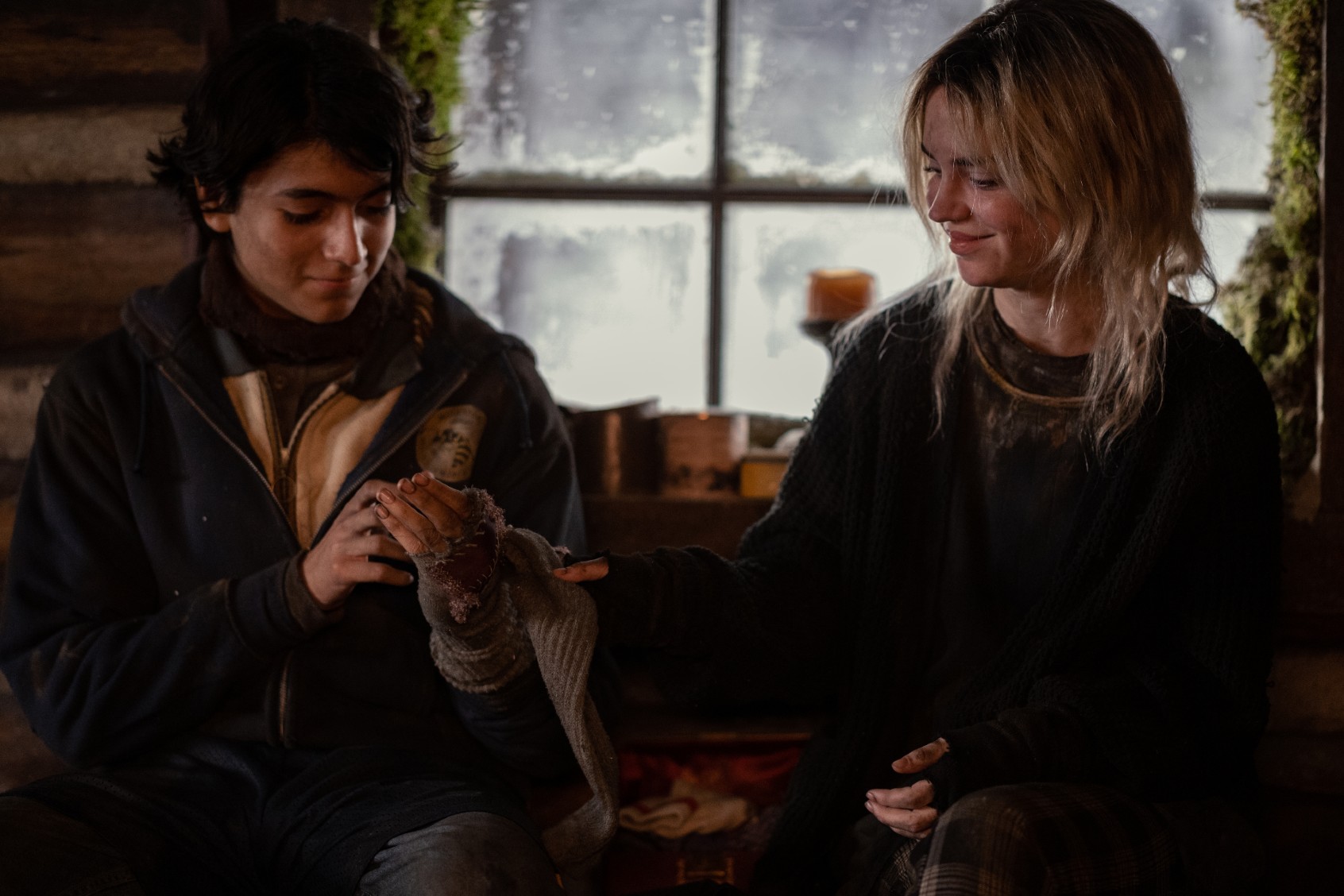
(L-R): Luciano Leroux as Javi and Sophie Thatcher as Teen Natalie (Kailey Schwerman/SHOWTIME)In Episode 8 — perfectly titled “It Chooses” — teen Natalie cheats death. And while it wasn’t the first time (plane crash) and won’t be the last (OD, suicide attempt) this time it was aided by Misty and will be the time that haunts her the most as the instance in which she didn’t give the wilderness what it wanted. She didn’t fulfill her “purpose.”
After being pummeled to a pulp by Shauna (Sophie Nélisse) in Episode 7, Lottie (Courtney Eaton) is peeing blood from a likely kidney infection and her body won’t be able to recover without proper sustenance. Natalie, Ben (Steven Krueger) and a few of the others don’t much care, but a plan is put in motion nonetheless. Lottie’s not the only one on the verge of death. 

In an extension of a practice already in use — drawing cards to determine who does what chore — everyone circles up for a darker game of chance where whoever pulls the Queen of Hearts will be killed and eaten, ensuring survival (at least from starvation) for awhile longer. Natalie pulls this card, but Travis (Kevin Alves) intervenes, allowing Natalie to flee the cabin and sending his brother Javi (Luciano Leroux) out to protect her from the others as they attempt to hunt her down. 

Natalie survives. Javi doesn’t.

Twenty-five years later, in a conversation we see take place with Lisa (Nicole Maines) at Lottie’s “intentional community” in Episode 6, “Qui,” Natalie talks about ruining people and having done things back in the wilderness to survive that makes her think she doesn’t deserve to. It seems likely that letting Javi die although she was the one who was chosen to factors into these sentiments.


Want a daily wrap-up of all the news and commentary Salon has to offer? Subscribe to our morning newsletter, Crash Course.


As we’re shown the events that lead to Natalie’s survival and Javi’s death in the ’90s, the adult Yellowjackets are told about them by Lottie while spilling all their darkest secrets in her “sharing shack.”

“None of that was real, Lottie,” Shauna (Melanie Lynskey) says, a reminder that even as theories are being built on what we’re hearing and seeing in these episodes, there’s no guarantee that any of it actually happened, or is happening. 

Believing, once again, that the darkness in their lives will only be abated by giving the wilderness what it wants, one of them, Lottie suggests that they drink from a circle of cups, one of which contains Phenobarbital — the same medication used by the Heaven’s Gate cult to enable mass suicide in 1997, as Misty points out.  

“We don’t get to choose. It chooses,” Lottie says. And as the episode ends before any of them take a drink, we don’t yet know if Natalie, this time, fulfills her purpose. 

QUICK BITES:

  • If Natalie doesn’t end up dying in the finale, I still think Van, Callie or even Jeff are good possibilities. After Jeff’s nightmare about Shauna killing him with her electric kitchen knife hands it seems like he may be considering leading the cops to her, which would put a lot of extra people in Lottie’s proximity, which doesn’t seem like a good place to be right now.
  • Which seems worse, belt soup or Nugget jerky?
  • Tai’s teen “other” is somehow even scarier than her adult “other.”
  • What is Walter up to? Notice the purple coat he pulled out of his closet? 
  • Oh God, so there are underground tunnels. Poor Ben with his winterized crutches. What the hell is he gonna find in there?
  • What if next week’s finale ends with another dead dog? I don’t think I could take it if Steve dies too. 

“It’s like a warm hug”: Yvette Nicole Brown on the timeless, compassionate charms of “Frog and Toad”

Yvette Nicole Brown doesn’t want to disrupt anybody’s childhood. The “Community” star has spent enough of her career in children’s entertainment — from “Drake & Josh” to “Pound Puppies” — to feel a sense of responsibility to her youngest audience members. “I’ve chosen to stay in the PG-13 lanes,” she explained on “Salon Talks,” “so that any baby that discovers me can take a safe route through life if they follow my career.”   

Now, babies and nostalgic parents alike can follow the Emmy Award-nominated actor to her latest project, Apple TV+’s warmly faithful animated adaptation of the Arnold Lobel’s beloved “Frog and Toad.”  “I learned to read reading ‘Frog and Toad’ books when I was a kid,” Brown recalled. “It’s been a wonderful joy to get to step into this world.”

During our conversation, Brown opened up about the “love story” of “Frog and Toad,” and the backstory of its late creator, about being a caregiver for her father for the past decade, and about her other new show, “Act Your Age,” a comedy she describes as “The Golden Brown Girls.” Watch Yvette Nicole Brown on “Salon Talks” here.

This conversation has been light edited for clarity and length.

How did you become involved in “Frog and Toad,” and who are you in this magical world?

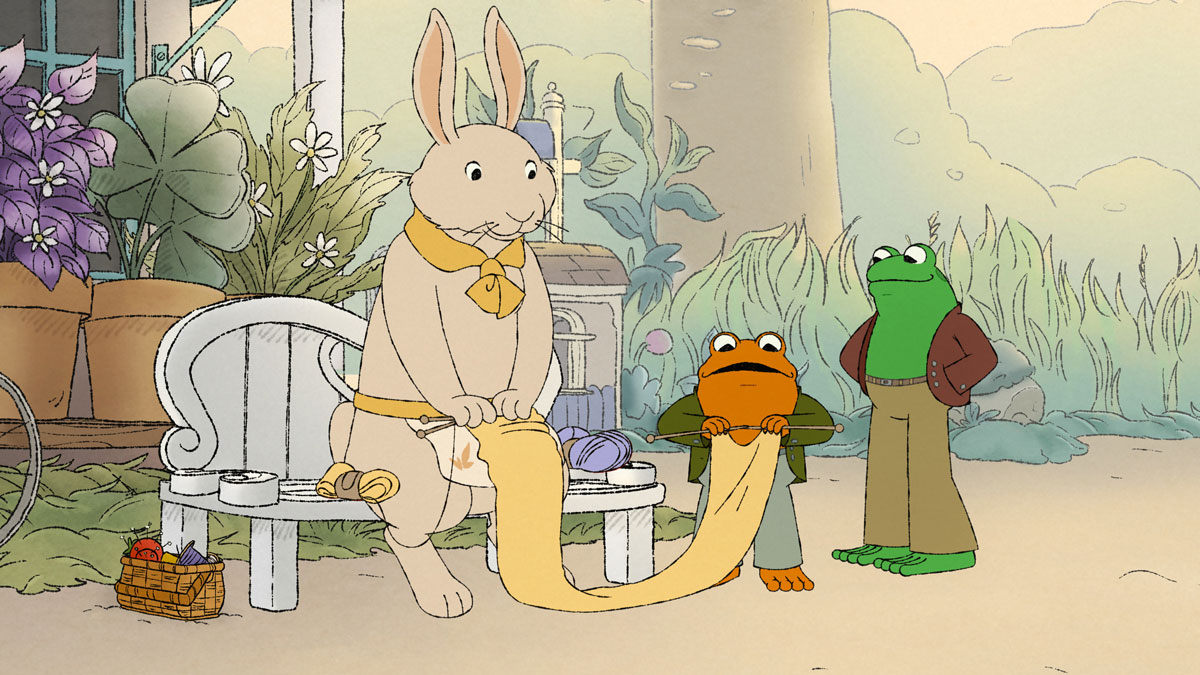
I learned to read reading “Frog and Toad” books when I was a kid, because they came out in the ’70s and so did I. It’s been a wonderful joy to get to step into this world. I voice Rabbit on the show. And what I love about “Frog and Toad” is that it celebrates differences and it tells young people and adults, because it’s not just a show for kids, that it’s OK if you’re not the same as your friends. Just find a way to find your way to common ground and celebrate the differences. I think that’s what we need more in this world.

You are joined by an incredible array of other voice actors. 

It’s crazy. Kevin Michael Richardson and Nat Faxon are Frog and Toad. And Margaret Cho, Ron Funches, it’s just an embarrassment of riches. I was looking at the list and it’s like, “Emmy nominee. Oscar winner.” I was like, “What’s happening?” It’s just wonderful people that understand what we’re trying to do — a delicious group of people.

I saw you tweet recently about how Frog and Toad are boyfriends. I did not know until recently the story of the author.

Yeah, I didn’t know that. How would we know that as kids, first of all? Arnold Lobel, when he created the books, was in the middle of his own awakening and trying to reconcile feelings that he was having. It was at a time when it wasn’t OK. I think he was married at the time and was a family man. “Frog and Toad” was his way of dipping a toe into certain feelings that he had that he hadn’t spoken out loud about. 

“‘Frog and Toad’ is one of those shows where it’s like a warm hug.”

What I love about the book series and the show now, it’s not discussed then or now. You get from this series and this television series what you need to get. If you need a soft place to land because you have some questions and you’re figuring some things out, Frog and Toad are there for you. If you just want to see a wonderful friendship between two amphibians, “Frog and Toad” is there for you. It is a choose your own adventure as you read the books or watch the show, which I love.

Frog and ToadFrog and Toad (AppleTV+)

Watching it with young children, you can view it through that lens of what it was back then, and then know that this is also a story written by a gay man who is expressing his own awakening through this beautiful love.

Tender little story, however you look at it, if it’s a love story for friends or it’s a romantic love story. The point is: it’s a love story. I think it’s just a beautiful love story and it teaches us so much about how to coexist, and that’s beautiful.

And about friendship and community.

And the community that you build because there are so many other animals that are a part of this world, and all of them are different and all of them get along. I love it.

You’ve done a lot of work in the space of kids’ entertainment, from the jump. Is there something about that particular space and that kind of entertainment that gives you something different as a performer?

Absolutely. I wanted to be a singer when I was a kid, and that was the big dream, the entertainment dream. But the regular dream, the grounded dream, was I wanted to be a kindergarten teacher. I’ve always loved kids at the five or six age. That’s when they’re first discovering that they’re human beings and how to move through life. It’s such a special, important time. 

“I wanted to be a kindergarten teacher. I’ve always loved kids at the five and six age.”

When I did become an actor, one of the first things I did was “Drake & Josh.” I talk about this all the time. I didn’t have to do a kid show. I chose to do a kid show. In that space, I see myself as a role model. I know a lot of people don’t want to be. I think it’s great for people to look up to you. I think it’s great to model kindness and decency and love, and so that’s what I try to do. 

When I chose to do “Drake & Josh,” I realized that every four or five years, Nickelodeon would reboot the show and start it again. Every four or five years, a new set of kids would be coming up discovering the show and discovering me. Every decision I made after that was to make sure that I, Yvette, didn’t make a decision that confused them or showed them something that they weren’t ready for. I’ve chosen to stay in the PG-13 lanes so that any baby that discovers me can take a safe route through life if they follow my career. That’s a choice I made. 

The decisions that I make as an actor, “Is this something that people can watch from eight to 80?” is usually my decision. The only time I’ve ever strayed from that is a couple of voiceover roles because it’s not my face. I was a little naughty in “Crossing Swords” and a little naughty in “SuperMansion,” but still, it’s pretty close to what I normally do. It’s a decision I made and I don’t regret it.

You’ve done so much for voice work. What draws you to it? 

The basics of it is that it’s not based on what you look like. I love that you can be a squirrel or you can be a cloud in the sky or you can be a Black woman. It’s not about the physicality of what you actually are. I love the make-believe imagination part of it. 

I also love because of that, that I can do it in my pajamas. I love that I can roll out of bed and go. I built a space, because during COVID we all were recording from home. It was the only part of entertainment that was still working. So I started in my closet with all the clothes around me. It was hot and sweaty in there, and it was not conducive to having a good time. I thought, “I’m going to build a space. I’m going to make a space for this.” Because we didn’t know how long this pandemic was going to last. Now I’ve got a great booth in my house and I’m able to settle in, go to my little chair, my dog Harley at my feet, and I get to create worlds at home, so it’s my favorite part about it.

When you left “Community,” you got a lot of flack. Some people don’t know why you did that. Tell me about your dad.

I’ve been a caregiver for my dad for 10 years. That’s how long it’s been since “Community” went off the air. I noticed that things were happening with him maybe six to eight months before that. Once the show got canceled, I immediately got on a plane, went to Cleveland and just started packing him up. Because I’m like, “I’m going to move him with me.” 

Then “Community” got picked up and I realized that 16-hour days was not conducive to me being able to take care of my dad in the way that he deserved. I went to Dan Harmon and Sony at the time and said, “Is it possible that you guys can release me from my contract?” I told them why, and they kindly released me, no strings attached. “Go and take care of your dad.” It was the fans that were a little mean about it, which I didn’t understand. 

“Fans […] were a little mean about it … some people didn’t understand why I left.”

To some of their credit, some people didn’t understand why I left. They just knew it was a family issue. But in my mind, what kind of monster is going to choose a television show over their father or whoever they’re choosing to care for? I was a little put back that they thought that fame or money or success or whatever. They think those things would make me pass on caring for someone that taught me how to use a spoon? It’s never going to happen. 

I made the decision for my dad. It was the best decision I’ve ever made. I do not regret it. Now people know because I’ve been very vocal about my caregiving journey and am excited to share the truth of what it is because I think when more people hear our caregiving stories, the more it demystifies the idea of what caregiving is. 

I’m on the Creative Care Council for this great organization called Caring Across Generations. It’s created by a wonderful woman named Ai-jen Poo. The Creative Care Council is me, Bradley Cooper, Megan Thee Stallion, Seth and Lauren Miller Rogen, Richard Lui, Yves Mathieu East, Brandee Evans. We all are people that are in different places in the entertainment industry. The goal of Caring Across Generations is for us to share our care stories and also to advocate for more people in television and film sharing care stories. Ai-jen, our great creator of this organization, was recently in DC and she got President Biden to sign an executive order that will provide more opportunities for those that are caregivers.

What people don’t know is that when you’re a caregiver and you have to take time off, there’s no way for you to get paid for that time. A lot of times we sacrifice our jobs and other parts of our lives in order to care for people. There needs to be a safety net for caregivers as well. Because what if you don’t have a daughter that can take you in? There should be some type of system where you can get the care you need, even if you don’t have family that can provide it.

It’s important because when we talk about caregiving, we have to also look at who is taking care of the caregivers. Even when you say you would never regret it; it’s the best decision of your life, it’s still so hard.

It’s so hard. It really is.

And you need support.

There’s this thing called self-care. I’ve never been able to master it, but I heard it exists and it’s awesome. You have to find a way to find something that brings you joy as a caregiver. What I have found, and I’ve found this after my mother passed, Lego brings me joy. Lego is something that I, if I’m building, I can just focus on the Infinity gauntlet or the Volkswagen Bug or whatever it is that I’m building. You focus on that thing and then once it’s done, you have something tangible that took your mind off of the thing that was heavy for you. 

I tell people, maybe it’s coloring, maybe it’s a puzzle, maybe it’s crocheting, maybe it’s binge watching “Ted Lasso.” Find something that takes your mind off the thing. That’s the self-care for me, and it’s important for every caregiver to find that because you spend so much time being outward-facing, concerned about your person, that you forget that you are also your person. Before you’re a caregiver, you have to care for this person. So you have to find a way to do that. I’m struggling with it. I don’t know how to do it, but I’m trying.

“Lego brings me joy … Find something that takes your mind off the thing. That’s the self-care for me.”

“Community” is so meaningful to so many people. It was a slow burn with building that  audience. Was there a moment for you when you thought, “Oh, this is a thing for people?”

You know what’s funny? I think the pandemic actually. I know that’s a long time after “Community,” but the pandemic taught me that. TV Guide used to have this thing, like “Save One Show.” They had all these shows and “Community” won the year that we were in the poll. I thought, “Wow, out of all these shows that are on the bubble, they want to save us.”

It was a slow burn because we weren’t a loud show and we came out around the same time as “Big Bang Theory.” I think people thought, “Well that’s the show for nerds. This other show, I don’t know what it is.” All the love from the nerds went to “Big Bang Theory” at the time, even though our show, I think, is really the nerdy show. It really gets meta and it goes into the nooks and crannies of all these interesting television shows and events. I feel like people discovered us late. They binged us. We got on Netflix and Hulu and they started binging and they go, “Oh, this is really weird in the best way.” 

It is very weird and very sweet and lovely in the best way. And speaking of being sweet and lovely, you’ve got “Frog and Toad,” which is absolute joy.

It’s sincere. I like the pacing of “Frog and Toad.” It’s a quiet show. It’s a pensive, quiet show. I love that you sometimes just lean in to something just to get the lesson. “Frog and Toad” is one of those shows where it’s like a warm hug and you just kind of lean in and you just go, “Oh, that’s what it is.” That’s what I used to love about “Mister Rogers” too. He was a quiet man. He would start talking and he wasn’t bombastic. He would just put his little sweater on, his little tennis shoes and, “This is what we’re going to talk about today.” I think that’s kind of what “Frog and Toad” is.

 Frog and ToadFrog and Toad (AppleTV+)

If I may, there’s another show on Apple TV+ and I’m also a part of called “Shape Island.” It’s the same kind of thing. It’s three shapes on an island, learning how to coexist. I’m the narrator there. When I start that show it’s like, “Today on Shape Island . . .” It’s kind of lovely in that way, both shows.

What’s next? You’re working on a million things. 

One more thing I want to talk about, this great sitcom on Bounce TV called “Act Your Age.” It’s a big hit. We’re like the No. 3 new show and we were the biggest debut of a show on Bounce TV ever. It’s me, Tisha Campbell and Kym Whitley. Mariah Robinson plays my daughter and Nathan Anderson plays Kim’s son. We are like “The Golden Brown Girls.”

We’re women of a certain age living together and learning how to coexist much like Frog and Toad. If you can’t find Bounce, you just got to get an antenna. Get a regular antenna or HD antenna because it’s an over the air station. Plug that sucker in and there you go. I mean there’s other ways. You can stream it. You can go to bouncetv.com/findus and find other ways you can watch it. But I’m telling you the easiest way: just get an antenna.

Legal expert: Trump lawyers “dropping like flies” as he gets “closer and closer to an indictment”

Former President Donald Trump is losing lawyers at a rapid rate ahead of multiple potential indictments.

Former Trump lawyer Timothy Parlatore, who played a key role in the Mar-a-Lago classified documents investigation, announced his departure from the GOP frontrunner’s legal team on Tuesday.

“It’s been an incredible honor to serve and work through interesting legal issues. My departure was a personal choice and does not reflect upon the case, as I believe strongly the (Justice Department) team is engaging in misconduct to pursue an investigation of conduct that is not criminal,” he said in a statement.

Palm Beach State Attorney Dave Aronberg expressed confusion about the state of Trump’s legal team in an appearance on MSNBC’s “Morning Joe” Friday, Raw Story reports.

“What stood out with the departure of Tim Parlatore is that he is the same lawyer that wrote a letter to Congress setting up Trump’s defenses,” Aronberg said during the segment. “He said it was Trump’s aides, not Trump, who hastily packed up the boxes and shipped them down to Florida — Trump’s hands were supposedly clean.”

“Then Trump went on that live [CNN] town hall the other day and said, ‘No, no, I did it and had every right to do so,'” he continued. “I think the reason why he withdrew, Parlatore, is because he was exasperated with his client along with perhaps knowing that he would become a witness and possibly a defendant in the case himself — he testified about before the grand jury.”

Aronberg also questioned another aspect of the Trump lawyer’s departure, citing a report from The New York Times that indicated Trump only had two lawyers left.


Want a daily wrap-up of all the news and commentary Salon has to offer? Subscribe to our morning newsletter, Crash Course.


“Here’s the other thing that I’m wondering about: the New York Times also reported there were two attorneys left,” Aronberg said. “You’ve got James Trusty and John Rowley leading the defense. What happened to Chris Kise? Chris Kise is a former Florida solicitor general, very well respected; he got a $3 million retainer up front and then he was sidelined by Donald Trump because Trump didn’t agree with his advice. Kise wanted Trump to be more conciliatory, more cooperative with DOJ rather than confrontational.”

“So, instead, Trump went his own way, the confrontational approach, and look what is happening now,” he added. “With each misstep, he’s getting closer and closer to an indictment, and his lawyers are dropping like flies.”

Prosecutors threaten new charges against Allen Weisselberg — unless he flips on Trump: report

The Manhattan District Attorney’s office is considering pressing new charges against one of former President Donald Trump’s longtime allies, 75-year-old Allen Weisselberg, including one for perjury, sources with knowledge of the matter told The New York Times

The threat comes after D.A. Alvin Bragg unveiled an indictment of the former president in March, marking the newest effort in his campaign to persuade Weisselberg to testify against Trump.

The former Trump Organization chief financial officer, who was recently released from the Rikers Island jail complex, has refused to go against Trump, but prosecutors have warned his attorneys that they might bring a perjury charge against him if he declines to testify, two of the sources said.

According to the sources, the charge would pertain to comments he made under oath in a 2020 interview with the office of New York Attorney General Letitia James, who is conducting her own civil investigation into Trump and his family business.

That year investigators, who questioned Weisselberg again last month for the ongoing probe, asked Weisselberg about glaring errors in Trump’s financial statements, prompting James to sue them both in 2021 for overstating Trump’s net worth by billions of dollars. 

Court records show Weisselberg acknowledged the Trump Organization overestimated the value of Trump’s penthouse by “give or take” $200 million, though it’s unclear which parts of his testimony are of concern for prosecutors or how Bragg will prove he intentionally made a false statement.

Weisselberg, who worked for Trump for nearly 50 years, could be a valuable witness in several ways, The Times reported. His testimony could assist in Bragg’s criminal case against the former president, which pertains to a hush money payment to an adult film star during his 2016 presidential campaign, as well as the civil investigation into Trump’s statements about his finances that James’ office is participating in.

If Weisselberg refuses to cooperate with the D.A., he could be subject to a host of charges in addition to the perjury charge. Prosecutors have informed his lawyers that they’re considering unrelated insurance charges against him as they seem to also be considering whether to charge him for inflating numbers on Trump’s financial statements.


Want a daily wrap-up of all the news and commentary Salon has to offer? Subscribe to our morning newsletter, Crash Course.


There is no indication that Weisselberg will decide to testify or that charges will be filed, The Times said, but this pressure from prosecutors has sparked a debate about the fairness of threatening an elderly man who was recently released from prison.

“The guy has already been prosecuted and served his time, and he’s 75 years old,” Daniel Horwitz a criminal defense lawyer who once worked in the district attorney’s office, told the Times. “Most defense lawyers are going to scratch their heads and say, ‘Is this fair?’

However, NYU School of Law legal ethics professor Stephen Gillers said that there “would be nothing improper about charging Mr. Weisselberg a second time with different crimes.”

The district attorney’s office’s first efforts to pressure Weisselberg came to a head in 2021 when former D.A. Cy Vance brought criminal charges against him and the Trump Organization in a tax fraud case when he was unable to get Weisselberg’s assistance.

Though he refused to implicate his former boss, Weisselberg did testify against the Trump Organization, which paid him a hefty sum after he retired, and ultimately plead guilty. The company was convicted, and as part of his plea deal, Weisselberg spent 100 days in Rikers Island.

“Kooky” MTG slammed over Biden impeachment “shameless sideshow political stunt”

Right-wing Rep. Marjorie Taylor Greene, R-Ga., introduced articles of impeachment against President Joe Biden on Thursday over his management of migrant crossings across the U.S.-Mexico border.

In the articles, NBC News reports, Greene alleges that Biden is abusing his power by “endangering the security of the United States and thwarting the will of Congress.”

“Joe Biden has deliberately compromised our national security by refusing to enforce immigration laws and secure our border, allowed approximately 6 million illegals from over 160 countries to invade our country, deprived border patrol of the necessary resources and policies sufficient to protect our country, and his administration has willfully refused to maintain operational control as required by law,” she said in a statement.

The first of three articles claims that Biden’s decision to end the Trump administration’s border policy, Title 42, resulted in an increase in “illegal aliens and illegal narcotics, including deadly fentanyl, entering the United States.” The policy, which expired last week, allowed the federal government to expedite the expulsion of migrants from the country without asylum hearings to prevent the spread of COVID-19. In the impeachment article, Greene also alleges that Biden’s administration “willfully violated” the law by “releasing illegal aliens into the interior of the United States.”

Republicans, including Greene, criticized Biden for the decision, expecting the restriction’s expiration to prompt a surge in border crossings. However, since Title 42 was lifted, the amount of migrants crossing the border has dropped.

“Greene was salivating at the end of Title 42,” tweeted Washington Post columnist Greg Sargent. “She predicted an ‘Imminent Invasion!’ She told Kevin McCarthy that this could be a good hook for impeaching DHS chief Mayorkas. When the surge didn’t happen, she called for impeaching Biden.”

Greene’s second impeachment article accuses the Biden administration of creating policies that put Americans’ lives at risk by “allowing illegal aliens who had tested positive for COVID-19 to enter the country and infect American citizens,” adding a claim that the Department of Homeland Security brought “hundreds of thousands of aliens” into the country without properly screening them for COVID-19. 

Greene reportedly peddled myriad conspiracy theories about COVID-19 during the pandemic, attacking policies meant to mitigate the spread of the virus and boasting about never having received a COVID-19 vaccine, even after being suspended from Twitter for a week in 2021 for spreading misinformation about them.

The third article alleges that Biden “created a national security crisis and is endangering the lives of everyday Americans with his open border policies.” However, Biden and Mayorkas have said that the border is not open and that they’ve discouraged migrants from coming to the U.S.

The White House condemned Greene and her claims on Thursday.

“Is there a bigger example of a shameless sideshow political stunt than a trolling impeachment attack by one of the most extreme MAGA members in Congress over ‘national security’ while she actively demands to defund the FBI and even said she ‘would’ve been armed’ and ‘would have won’ the January 6 insurrection if only she’d been in charge of it?” Ian Sams, the White House spokesperson for oversight and investigations, said.

“The President is focused on what’s important to the American people, like preventing House Republicans’ default that would crash the economy and protecting investments that are creating American manufacturing jobs, not silly political attacks,” he added.

The spokesman further admonished Greene on Twitter, echoing the sentiments of his statement.


Want a daily wrap-up of all the news and commentary Salon has to offer? Subscribe to our morning newsletter, Crash Course.


House Minority Leader Hakeem Jeffries, D-N.Y., also slammed Greene during a news conference on Thursday.

“I think it’s an incredible contrast that on Wednesday, extreme MAGA Republicans in the House defend, cuddle, and continue to play footsie with serial fraudster George Santos,” Jeffries said, referring to the Republican freshman congressman from New York who was indicted on 13 federal charges, including fraud, money laundering and theft of public funds, last week

“And on Thursday, they want to impeach the president of the United States of America, the FBI director, who was appointed by a Republican president, and the homeland security secretary,” Jeffries added.

In a Thursday appearance on “The ReidOut” to discuss Greene and Rep. Jamaal Bowman’s, D-N.Y., public exchange and Greene’s subsequent reaction, MSNBC political analyst Brendan Buck argued that coverage of “kooky members of Congress” like Greene incentivizes their bad behavior.

Buck, who previously worked for both former Republican House Speakers John Boehner and Paul Ryan, said that the “problem is we elevate them so much right now,” adding a claim that Bowman “knew what he was doing” in the debate and baited the congresswoman.

“She sits there every day and takes the bait the Democrats give her. Nobody can reel her in. And she ends up becoming the face of the party. I don’t think she’s actually reflective of the average House Republican, she’s certainly not. She is an outlier. But there’s no real opportunity to rein her in. There’s no one actually in charge of the Congress,” Buck said, according to Mediaite. “Some of this is the fact that Kevin McCarthy has a very small majority and he has no real opportunity to discipline anybody or to kick anybody out. Look at George Santos, he needs every vote that he can get. It should have been very obvious when Kevin McCarthy made Marjorie Taylor Greene a central part of his effort to get the Speaker’s gavel and he understood that he couldn’t rock the boat at all.”

Buck continued, arguing that McCarthy and his slight majority had “no real leverage or opportunity to do anything about any of these people and that’s why they’re allowed to go out and do these things every single day,” calling the group “a stain on the brand of the Republican Party.”

Greene’s articles of impeachment are the first to be filed against Biden since Republicans took over the House in January, though several Republicans, including Greene, introduced articles during his first two years in office. 

Andrew Jackson, Bill Clinton and Donald Trump are the only presidents to have ever been impeached. 

Should we pay people to take care of nature? A possible solution to the mass extinction crisis

Approximately one million species currently face extinction because of human activity. Even for humans who do not value nature for its own sake, the impending wave of extinctions is a serious crisis. One out of five people rely on wild species for their jobs or for food, and billions more use wood for cooking and other day-to-day activities.

Conservation is not just an ecological problem — it is also an economic problem, which a recent paper in the journal Nature Sustainability observed (per the World Economic Forum) covers an “estimated US $44 trillion in global economic production.” Because various industries want to continue profiting by extracting and demolishing natural resources, however, environmentalists are struggling to prevent the mass extinctions.

“Basic income schemes improve well being, reduce poverty and redress inequalities including gender inequity.””

Yet the same Nature Sustainability paper which quantified the value of Earth’s natural resources also proposes a provocative solution: A so-called “conservation basic income” (CBI), or an “unconditional cash transfer to individuals residing in important conservation areas.” Including research by the Wildlife Conservation Society (WCS), the paper argued for local communities and Indigenous populations to be paid a CBI (one proposal is for the U.S. dollar equivalent of $5.50 per day) to effectively act as stewards of important land, with a particular emphasis on maintaining biodiversity.

Additionally, it would empower impoverished individuals who might otherwise seek employment in industries that harm the environment to instead pursue alternative ways to earn a living. Finally, with an estimated price tag (in the $5.50 per day scenario) of $478 billion annually, it would actually cost less than subsidies given to fossil fuels.

“CBI more equitably distributes the costs and benefits of conservation” due to the beneficial impact of basic income programs on reducing poverty, inequalities (including gender inequity) and overall personal hardship, explained Dr. Emiel de Lange of WCS’s Cambodia Program, the lead author of the paper, in a statement. “Inequalities, including gender, are key drivers of biodiversity loss. CBI could enable communities to pursue their own visions of a good life and avoid exploitation by extractive industries.”

The authors of the paper identify “leverage points,” or ways that human beings on a mass scale can intervene to protect the planet if provided with the financial incentives offered through CBI. This includes spreading “pro-environmental values” by attaching the payments to the need for conservation, similarly encouraging the reduction of aggregate consumption through this method, reducing income inequality and encouraging “just and inclusive conservation” policies on a local level.

It is important to note, though, that the cash transfers are themselves unconditional. While that may seem risky — people could in theory take the money and then ignore all of the pro-environmental reasons why it was given — research shows that, in practice, alleviating poverty through this method winds up helping the environment even if the people who get the money do not intend to.


Want more health and science stories in your inbox? Subscribe to Salon’s weekly newsletter The Vulgar Scientist.


“Inequalities, including gender, are key drivers of biodiversity loss.”

“Evidence from other poverty-alleviation cash-transfer programmes that are unconditional with respect to conservation outcomes suggests that a CBI could achieve conservation in many contexts,” the authors write. “For example, Indonesia’s national programme of anti-poverty cash transfers also reduced deforestation across Indonesia. CBI more equitably distributes the costs and benefits of conservation because basic income schemes improve well being, reduce poverty and redress inequalities including gender inequity.” These inequalities, if left to fester, tend to cause people to behave in ways that drive biodiversity loss.

The countless species facing extinction includes every variety of pangolins and echidnas, numerous sharks, cacti and creatures that are dependent on ecosystems such as those provided by coral reefs. A 2020 report by the World Wildlife Fund (WWF) determined that the overall population sizes of “mammals, birds, amphibians, reptiles and fish” had fallen by 68 percent since 1970, an “unprecedented” rate of destruction for Earth’s diverse range of species. The report also found that humans have been overusing the planet’s biocapacity by at least 56 percent, has destroyed at least 85 percent of the area of wetlands and significantly altered 75 percent of Earth’s ice-free land surface. The authors attributed this to a number of causes including the industrial revolution, human population growth, increases in global trade and consumption, urbanisation and climate change.

“Our planet is sending alarm signals between recent wildfiresthe COVID-19 pandemic, and other extreme weather events,” Jeff Opperman, Global Freshwater Lead Scientist at the WWF, told Salon by email at the time. “We’re seeing our broken relationship with nature play out in our own backyards. The steep global decline of wildlife populations is a key indicator that ecosystems are in peril. Healthy ecosystems provide a range of benefits to humans like clean water, clean air, a stable climate, flood protection, and pollination of food crops. When populations decline and ecosystems begin to unravel so does nature’s ability to support human health and livelihoods.” 

Opperman and his colleagues had learned through their research that freshwater species populations experienced the most dramatic population decline of all the species groups — their population fell by 84 percent within the half-century period covered.

Paying people to take care of nature may sound like a weird “job,” however, it should go without saying that protecting our environment is a valuable enterprise. A conservation basic income may seem like a foreign concept, outside of a few real world examples, like Indonesia, but the idea echoes the tenets of universal basic income (UBI), the idea that everyone should be able to participate in the economy, whether they can work or not. Many experimental forays into universal basic income have shown positive outcomes, especially lifting people out of poverty, so while the idea is still somewhat controversial, there is good evidence that it works and may even save money over the long term.

Ironically, one of the most prominent examples of a successful UBI program is Alaska’s Permanent Fund, which receives its money from the state’s oil. Nevertheless, as Alaska State Rep. Jonathan Kreiss-Tomkins (D) told Salon in 2020, “the creation of the Permanent Fund has been one of Alaska’s most foresightful decisions. The Permanent Fund effectively converts one-time oil wealth into renewable financial wealth. As Jay Hammond [the governor who oversaw the creation of the fund] put it (I’m paraphrasing), instead of an oil well that eventually pumps dry, the Permanent Fund is a money well that will pump forever.” Applying the same principles to ecosystem stewardship may make sense as well.

Update: Since publication, this article has been corrected to revise earlier errors regarding data from the report.

“DeSantis just cost Florida $1 billion”: Disney yanks massive project and 2,000 jobs amid GOP feud

The Walt Disney Co. said on Thursday that it is canceling its plans to develop a new campus in central Florida and relocate over 2,000 staffers to work in technology, product development and finance, according to The Associated Press.

The decision comes after repeated attacks on the company from Republican Gov. Ron DeSantis and the Florida Legislature over its opposition to the “Don’t Say Gay” law, which bans classroom instruction on gender identity and sexual orientation from elementary grades through to the 3rd grade in the state. 

After the company’s public opposition to the law last year, DeSantis retaliated against the media conglomerate, stripping Disney’s self-governing district through legislation and appointing a new board of directors. The company signed agreements with old board members stripping the new board of design and construction authority before the new board took effect.

In response, the Republican-controlled legislature passed laws overriding those agreements and making the theme park resort’s monorail system, once inspected in-house, subject to state inspection. 

Disney filed a lawsuit against DeSantis alleging that he conducted a “targeted campaign of government retaliation” and asking a federal judge to void the theme park district’s take over and the DeSantis-appointed board’s actions.

Chairman of the Parks Josh D’Amaro told Disney employees in a memo that “new leadership and changing business conditions” prompted Disney to ditch its plans to build the new campus.

“I remain optimistic about the direction of our Walt Disney World business,” D’Amaro said. “We have plans to invest $17 billion and create 13,000 jobs over the next ten years. I hope we’re able to do so.”

Florida legislators, legal analysts and media personalities criticized DeSantis following the announcement, accusing the potential 2024 presidential contender of hurting his state’s economy.

“This $1 billion development would have employed thousands while positively impacting our tourism industries,” Rep. Maxwell Frost, D-Fla., tweeted. “DeSantis is more interested in running for President than running the state of Florida and Floridians are paying the price of his campaign.”

“DeSantis is a job killing moron who cares more about his own political ambitions and culture wars than Florida and our future. This is not who you want for President — ever,” Democratic state Rep. Anna Eskamani added.

Florida state attorney Andrew Warren called DeSantis’ feud with Disney “childish.” 

“Now that DeSantis’s childish fight with @Disney has cost Floridians $1 billion & 2,000 jobs, he should take all the money he’s raised to run for President and invest it in Florida to repay our citizens,” he said. “Hurting our economy to score political points is so DeStupid.”


Want a daily wrap-up of all the news and commentary Salon has to offer? Subscribe to our morning newsletter, Crash Course.


“How many more millions and billions is the fragile ego of Ron Desantis going to cost the people of FL?” questioned former federal prosecutor Ron Flilipkowski.

“The media geniuses behind the DeSantis bigotry campaign cost their state a billion dollars and are now super-defensive. They think Bob Iger is tough on them?” MSNBC host Mehdi Hasan wrote. “Wait till they actually have to take on Trump and co…” 

“DeSantis just cost Florida $1 Billion by picking a fight with the Magic Kingdom to play to a small base of primary voters. He was warned by pro-business Republicans to stop the political posturing against Disney and Bob Iger. So inevitable & unnecessary,” tweeted “Morning Joe” host Joe Scarborough.

“Top Chef: World All Stars” sputters with its Wellington battle heading toward the finish line

Well, alas, my hopes have been dashed, and some air has been let out of my tires.

After last week’s terrific thali challenge and episode, the format of the latest “Top Chef” episode and the eventual eliminees (yes, plural, for some inane reason) certainly don’t excite me much upon heading into the “home stretch” leading up to the big finale. 

To be totally frank, this final four (sans “Last Chance Kitchen” victor, which all my hopes are riding on) feels relatively lackluster to me. Buddha has obviously more than secured his spot, as has Ali, but I’m just not so sure about Tom and Gabri. 

After last week’s terrific Thali challenge and episode, the format of this episode and the eventual eliminees (yes, plural, for some inane reason) certainly don’t excite me much upon heading into the “home stretch” leading up to the big finale. 

Buddha is a top-notch, supremely talented cheftestant, perhaps one of the all-time best, but I just never feel the need to put all my eggs in his basket, per se. Of course, it’ll be a real humdinger if he’s able to win two consecutive seasons and his talent stands for itself, but it sometimes feels like his dominance is . . . dry? Not fun to watch? I also feel that Gabri was entirely carried by him this week. Tom has been very inconsistent, Ali is super likable and very talented (and probably my winner pick if this Top 4 remains as is), but I generally just prefer other cheftestants this season (see: Victoire, Charbel, Sara).

Top ChefGabriel Rodriguez and Sara Bradley in “Top Chef” (David Moir/Bravo)

I mention in my Restaurant Wars recap that current or modern seasons of “Top Chef” can sometimes feel a bit sanitized and while the thali episode certainly countered that, this episode fell back into that place, unfortunately. I’m also still perplexed by the inexplicable need for a double elimination at such a late stage; as this fantastically thorough tweet notes, double eliminations almost always occur within the first few “rounds” of a season — not at Top 5. 

Using only a singular pot of water

The water conservation QuickFire, however, is one of the bright spots of this episode. It’s always great when Top Chef (via Padma) is able to make a statement and it is fascinating to see the cheftestants have to severely conserve water and use only a small amount amongst all of their dishes. It’s fun to see Sara dole out the water “rations” and take control of that task.

Top ChefTom Goetter, Ali Al Ghzawi, Buddha Lo, Gabriel Rodriguez, Sara Bradley and Amar Santana in “Top Chef” (David Moir/Bravo)

On the flipside, though, it’s a bummer that she inexplicably chooses to try to cook Asian cuisine (?) for the first time in her “Top Chef” career. That doesn’t make much sense. Buddha’s dish sounds lovely (as always), and it’s exciting to see Gabri in the top. 

“The Battle of the Wellingtons”

As far as the Wellington elimination challenge, in which our cheftestants are divvied into pairs via a knife block drawer and then tasked with making three separate Wellingtons (one fish, one meat, one dessert), there’s a ton of amazing-sounding food. 

Buddha and Gabri’s peach melba Wellington dessert looks and sounds delightful. While I love Sauce Américaine, I can see how the judges feel that it doesn’t complement tuna well. I also love the sound of Amar and Sara’s dessert, especially with the sponge cake and phyllo dough, but the “frozen creme anglaise pearls” actually doesn’t look all that great in the close-up shots. I’ll always love a chestnut and apple combination, even if it’s “rustic.”

However, I do feel like a lot of the suspense centering around a Wellington challenge (dramatically cutting the crust, seeing how well it’s cooked, etc.) unfortunately falls by the wayside here.

However, I do feel like a lot of the suspense centering around a Wellington challenge (dramatically cutting the crust, seeing how well it’s cooked, etc.) unfortunately falls by the wayside here. 

Also, it is interesting to see Ali get knocked repeatedly for under-seasoned purees. That is uncharacteristic — and to happen twice in one meal? Beyond that, Padma notes the “tackiness” or “gumminess” of both purees multiple times — we are obviously left to conclude that that is due to the inclusion of the xanthan gum. 

Top ChefSara Bradley and Amar Santana in “Top Chef” (David Moir/Bravo)

The judging is intriguing: it seems like Padma and Gail are leaning towards being pro-Sara/Amar, while Tom Colicchio is decisively in the Ali/Tom camp, and the guest judge leans a bit towards Sara/Amar. Sara and Amar seem to have had a preferable menu and stronger flavors overall, but of course, a plain-but-well-cooked beef Wellington will always beat out a quasi-inedible-yet-beautifully conceptualized raw lamb Wellington (shoot, though, those flavors sound beautiful, though!) Sara and Amar could’ve served astonishing, downright superb fish and dessert Wellingtons, but that undercooked lamb will doomed them regardless, unfortunately. 


Want a daily wrap-up of all the news and commentary Salon has to offer? Subscribe to our morning newsletter, Crash Course.


It’s interesting, though: Sometimes, at Top 4, there’s a real momentum and excitement leading into the final rounds, rooting on your favorites, anticipating the finale trip and the amazing food, etc. Other seasons, however, there’s a general tedium or slight restlessness that sets in, almost a low-grade fatigue . . . and I’m starting to feel that this season might lean into the latter camp, unfortunately. I don’t think it’s just me, either; my brother is a good three or four episodes behind and has no desire to catch up.

Anyway, onwards and upwards! Still rooting for Charbel and/or Sara for the win . . . but wouldn’t it be funny if Amar beats them both in “Last Chance Kitchen”?

Anyway, onwards and upwards! Still rooting for Charbel and/or Sara for the win . . . but wouldn’t it be funny if Amar beat them both in Last Chance Kitchen?

After dinner mints:

-I get a kick out of that blink-and-you-miss-it Ali and Tom dual confessional that consists only of Ali’s saying “Tom . . .  Thomas . . . Tommy.”

-I audibly chuckl at Tom’s asking “Has anyone seen marzipan?” out loud and then Sara’s genuinely responding “. . . maxi pads? Probably in the ladies’ aisle.”

-“El gato” is a fun Gabri nickname! 

– It’s good to see Kelsey. I’m always tickled by how forever-and-always laid-back and nonchalant both Sara and Kelsey seem.

Top ChefAli Al Ghzawi and Tom Goetter in “Top Chef” (David Moir/Bravo)
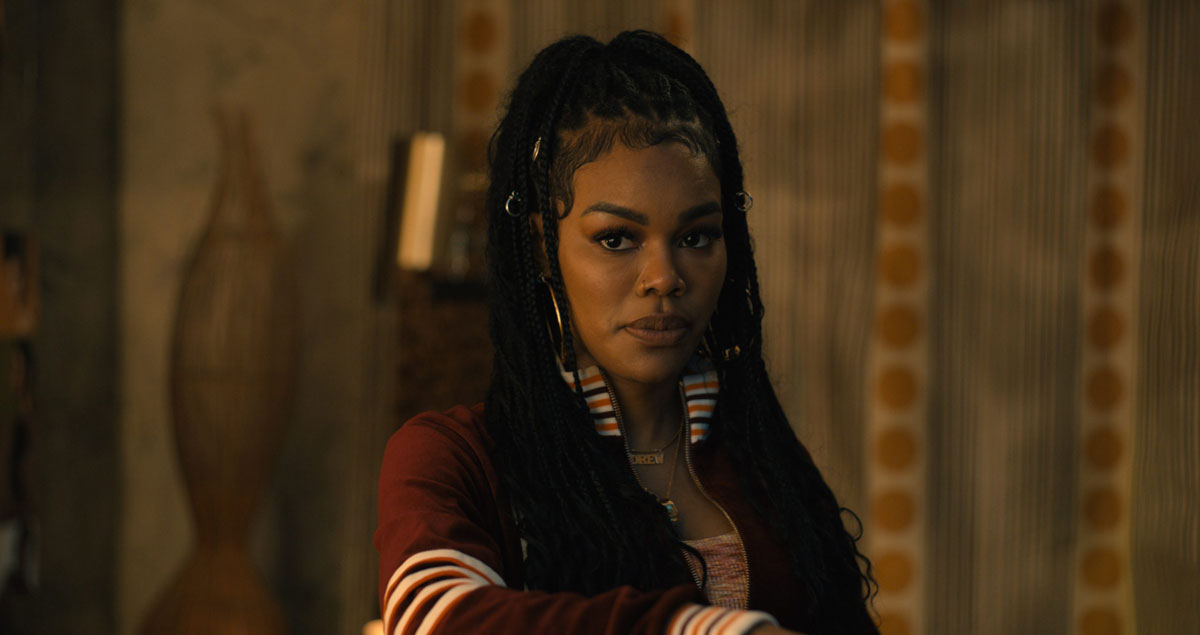
-Padma looks stunning (surprise!) in that bright pink sweater. 

-I love how much tonka bean is used on this show.

-What is with that random inclusion of Sara and Amar’s eating Irish cheese, followed by her saying, “I’m going to eat this in my room after France?”

-I got a kick out of “hello good people” when the judges walk around and chit-chat with the commoners. 

-This is another instance in which Amar references that he feels “too old” to still compete, which strikes me as bizarre every time he says it.

-“Ali in the finale” is a fun little rhyme.

-Tom’s “climbing over the railing” move is some fun physical comedy.

“Top Chef: World All Stars” airs Thursdays at 9 p.m. on Bravo and streams next day on Peacock.

DeSantis’ deal with the devil: Chasing the Christian right won’t help him

Now that one of the most outrageous state legislative sessions in U.S. history has mercifully concluded, Florida Governor Ron DeSantis is finally set to announce his candidacy for president formally and he has quite a record to run on. In a very short time he’s built a multi-dimensional legacy of repression, abuse of power and intolerance rarely seen in modern politics. 

Some highlights from the last few weeks include a law to ban abortion at six weeks of pregnancy, a law granting permitless concealed carry, a ban on diversity programs in state colleges, a law to prevent teachers from using pronouns they don’t believe are appropriate, easier access to the death penalty and an expansion of the “don’t say gay” law to block the discussion of sexual orientation and gender identity through the 12th grade. That’s just for starters. He’s pulled one culture war stunt after another, from transporting migrants from Texas to Martha’s Vineyard to picking a fight with Disney, the state’s largest employer, over LGBTQ rights to creating an “election police force” and having them arrest Black ex-felons who were allowed to vote in error and on and on and on. Just this week, DeSantis signed into law a bill allowing the state to take transgender children away from their parents. It seems only certain parents have rights in Florida.

The reason the GOP is hitting these culture war issues so hard is that the largest single faction in the party demands it.

DeSantis took a victory lap this week saying: “I remember saying when I became governor, the first day, sat in the office, I kinda just looked around and I thought to myself, ‘You know, I don’t know what SOB is gonna succeed me in this office but they ain’t gonna have much to do because we’re getting all the meat off the bone.'”

That “meat” was taken out of the hides of LGBTQ children, teachers, students, immigrants, Black people and anyone who isn’t thrilled with the idea of living in an Orwellian dystopia.

Right-wing politicians have been running on culture war agendas forever, of course, particularly on issues of race and abortion. But DeSantis has taken it to an extreme level that’s verging on bizarre, even for the current GOP. And doing it while running for president in a political environment that has delivered one defeat after another since Republicans embraced MAGA extremism seems inexplicable. If he were to beat Donald Trump in the primary and become the nominee, DeSantis’ chances of winning the general election once the country becomes familiar with his radical record seem even worse than Trump’s.

So, what’s going on here? Why has he lurched so far to the right that he’s on the verge of falling off the edge?

It’s because of the religious right.

As long as I can remember, it’s been a truism that America is an extremely pious country and great deference must be paid to traditional Christian values. In recent years we learned that the conservative evangelical commitment to those same Christian values was more than a little bit overstated when the Republican Party offered up an openly promiscuous, thrice-married, sexual assaulting, libertine for president and they eagerly joined his flock.

It’s now clear that these Americans are not really a religious group at all but rather a political faction. That political faction is Christian Nationalism and it’s a growing threat to American democracy. As I pointed out earlier, Donald Trump is aware of how important they are to his campaign and he proved it last weekend when he called into ReAwaken America, one of the largest Christian Nationalist groups in the country. Turning Point USA is another Christian Nationalist Organization to which they all feel obliged to pay fealty. And there’s a good reason they do this. According to a recent Public Religion Research Institute-Brookings Institution poll, Christian Nationalist adherents and sympathizers make up 29% of Americans which adds up to tens of millions of our fellow citizens.


Want a daily wrap-up of all the news and commentary Salon has to offer? Subscribe to our morning newsletter, Crash Course.


If any GOP candidate wants to win the nomination for president he or she must find a way to extricate them from Donald Trump. So DeSantis decided that his best chance of doing that was to make their dreams come true in Florida and promise to do the same to America if he wins. We’ll have to see if he can make that appeal but he and all Republicans should probably take another look at the American religious landscape.

As reported in Politico, The Association of Statisticians of American Religious Bodies released its 2020 census and found that over the last decade, the share of Americans who associate with religion dropped by 11 points. And guess what? Democrats are gaining in the places where religious affiliation is declining and it’s not the godless coastal blue states. It’s mostly in the middle of the country. The correlation is astonishing.

Across the industrial Midwest, in former Rust Belt states like Wisconsin, Michigan and Pennsylvania that are absolutely essential to the Democrats’ firewall in 2024, there is good news for the party — each of those states is much less religious today than it was just 10 years ago.

More bad news for Republicans is that new data indicates that nearly half of Generation Z has no religious affiliation while a new Catalyst report finds that Gen Z came out in bigger numbers in 2022 than in 2018 — and over 60% voted for Democrats. The speculation is that this young cohort is so turned off by the intolerant MAGA culture crusade that they are not only voting in large numbers but will likely define themselves as Democrats their entire lives, just as earlier Democrats did in the era of Franklin Roosevelt and Republicans did when Ronald Reagan came to power. This is a long-term problem for the GOP.

The religion census found that the only metro area in the country that gained religious adherents was Miami, Florida. And the border districts in Texas that went from solid Democratic to purple at best can be explained by a rise in religious believers, mostly newer immigrants who are not especially enamored of abortion or LGBTQ rights. Arizona too has a big share of those same voters who are sympathetic to culture war issues.

If he were to beat Donald Trump in the primary and become the nominee, DeSantis’ chances of winning the general election once the country becomes familiar with his radical record seem even worse than Trump’s.

You have to wonder whether or not the Christian Nationalists will be able to accept the fact that their future political clout will depend upon welcoming new Hispanic immigrants into their coalition. Because let’s face facts, American Christian Nationalism is really white Christian Nationalism.

The reason the GOP is hitting these culture war issues so hard is that this largest single faction in the party demands it. But they represent only 30% of the electorate, and the rest of the country is overwhelmingly appalled by what the Republicans are doing to appease them. In fact, they are not only destroying the Republican Party, it appears they are gravely damaging their religion as well. Let’s hope they don’t succeed in destroying American democracy as well.

Ex-FBI assistant director torches Jordan’s “whistleblower” hearing: The FBI just “called his bluff”

House Judiciary Chairman Jim Jordan’s, R-Ohio, Thursday hearing with purported FBI “whistleblowers” backfired before it even began, according to former FBI Assistant Director for Counterintelligence Frank Figliuizzi.

Jordan’s subcommittee on the alleged “weaponization of the federal government” held a hearing with current and former FBI agents who accused the bureau of bias against conservatives. But shortly before the hearing, the FBI revealed that former FBI agent Stephen Friend and suspended agent Marcus Allen had their security clearances revoked over security concerns.

Friend’s clearance was revoked after he refused to participate in an arrest of a Jan. 6 suspect and “espoused an alternative narrative about the events at the U.S. Capitol,” according to the FBI’s letter. Allen’s clearance was stripped after he “expressed sympathy for persons or organizations that advocate, threaten or use force or violence.”

Figliuzzi told MSNBC that the revelation shows “Jordan wasn’t ready for this.”

“The FBI has called his bluff with this letter,” he said. “It means the FBI has about had it with the myth that they’re retaliating against employees for merely expressing conservative opinions. I lost the date, but apparently, we’re to believe the FBI is a left-wing liberal organization. That’s absolutely nonsense.”

Figliuzzi slammed Jordan and the purported whistleblowers.

“What Jim Jordan was going to do was put out a fictional account, right, [that] these poor, pathetic employees have lost their jobs because they merely expressed contrary opinions to the deep state FBI,” he said. “In my 25 years at the bureau, including positions as chief inspector and a chief of an [Office of Professional Responsibility] internal affairs unit, I have never seen this much come out, and it shows the absolute disgrace that these employees have made of their roles and their missions.”

Ryan Goodman, a professor at New York University School of Law, tweeted that the letter pulled the “rug out from under Jim Jordan’s witnesses,” noting the “very serious wrongdoing” alleged in the letter.

The FBI has rejected the GOP’s claims that the agents qualify as protected “whistleblowers” and Friend and suspended FBI special agent Garrett O’Boyle on Thursday testified that they both received money from Trump ally Kash Patel. Friend characterized the money as a “donation.”

“Are you a charitable organization?” questioned Rep. Dan Goldman, D-N.Y.

“I was an unpaid, indefinitely suspended man trying to feed his family. And he’s reached out to me and said he wanted to give me a donation,” Friend replied.


Want a daily wrap-up of all the news and commentary Salon has to offer? Subscribe to our morning newsletter, Crash Course.


Figliuzzi told MSNBC that the agents thought they would get “empathy with employees who have been fired simply for expressing their opinion, which, of course, we know now is not true.”

He noted that Friend refused to arrest a man accused of using pepper spray against officers at the Capitol and was pictured wearing full tactical gear and holding an AR-15.

“And Stephen Friend suggests, what, that he’s cooperative, we should make an appointment for him to turn himself in,” Figliuzz said. “Really? You want that guy showing up in the reception room at the office? That’s fascinating. It’s those kinds of things that gloss over and they thought they would get away with it today, and they didn’t.”

As Trump’s legal woes mount, Republicans prep with a new talking point: Jury verdicts don’t count

When E. Jean Carroll won her defamation and sexual abuse lawsuit against Donald Trump earlier this month, Republicans knew exactly who they wanted to blame. No, not Trump’s defense attorney, who called no witnesses and offered no evidence in his client’s defense. No, not Trump, who keeps undermining his weak denials of the crime by bragging about how guys like him “historically” and “fortunately” get away with sexual assault. No, they blamed the jury. 

“That jury’s a joke,” huffed Sen. Marco Rubio, R-Fla., or as Trump called him during the 2016 primary, “Little Marco”. Sen. Tommy Tuberville, R-Ala., echoed the same claim, grousing about “a New York jury,” as if it’s preposterous to try a case in the same jurisdiction where the crime actually happened. Sen. Rick Scott, R-Fla., also took a swipe about the “New York jury.”

As Carroll’s attorney pointed out repeatedly, of the 9 jurors, 6 were men and only 2 even lived in the city, with 7 hailing from more conservative suburbs. Plus, it’s notoriously difficult for sexual abuse victims to get fair hearings in court, not perpetrators. As all these lying Republicans are no doubt aware, Trump lost the case for the simple reason that he’s extremely guilty, and could barely be bothered to pretend otherwise. 


Want more Amanda Marcotte on politics? Subscribe to her newsletter Standing Room Only.


These swipes at the unanimous jury should not be shrugged off as just another example of Republicans saying some fool thing to get them through the next 5 minutes of the current Trump scandal. This is quite likely not the end of juries weighing in on Trump’s crimes. He’s already been indicted on nearly 3 dozen counts of financial crimes in Manhattan, making him the first former president ever to be arrested. He’s likely to be indicted for election crimes in Georgia over the summer. Plus, Jack Smith, the special prosecutor appointed by Attorney General Merrick Garland, has intriguing grand jury investigations into Trump’s theft of classified documents and, of course, his attempted coup after losing the 2020 election

In the face of this, there’s good reason to believe GOP comments in the wake of Carroll’s victory were a test run for their next big talking point: That juries have no credibility. After years of attacking voters and election systems as illegitimate for rejecting Trump, denying the legitimacy of the jury system is only the next logical step for Republicans. 

The “juries don’t count” argument got advanced dramatically this week with the ridiculous “report” released by John Durham, a special prosecutor appointed by the Trump administration. Durham has spent years and millions of taxpayer dollars trying and failing to concoct something evidence-shaped to justify Trump’s false claims that a FBI investigation into his campaign’s ties to the Russian government were a “witch hunt.” Durham’s new report was also, to quote former federal prosecutor Andrew Weissmann, “a big, fat nothing.” Even the New York Times, always eager to handicap Republican scandal-mongering efforts to seem “balanced,” went with the headline, “After Years of Political Hype, the Durham Inquiry Failed to Deliver.

As Heather “Digby” Parton points out, “unlike Durham, the special counsel investigation that grew out of the FBI’s original investigation successfully convicted a whole bunch of people for crimes they uncovered.” Paul Manafort, Trump’s campaign chairman, did time for his role. Ten other men who worked with or for the campaign were also convicted. A Senate investigation into the alleged Trump-Russia conspiracy uncovered even more evidence. As Digby wrote at the time, “the Trump campaign was crawling with Russians, many more than is commonly realized, and the evidence strongly indicates that any intelligence or law enforcement officials who didn’t look into this bizarre circumstance would have been derelict in their duty.”

Durham’s efforts to uncover a “deep state” conspiracy against Trump, however, didn’t just fail to turn up evidence. In his zeal, he did manage to get his allegations before juries twice. Both times, the unanimous juries of 12 people resoundingly rejected Durham’s claims. It’s worth remembering that federal prosecutors have around a 97% conviction rate, casting Durham’s failures into an even more comical light. 

But despite the fact that his colleagues have no problems getting their cases through a jury system, Durham decided the problem wasn’t his own failure in trying to turn a Trump-tweeted conspiracy theory into something real. No, he blames the two juries who wouldn’t play along. 


Want more Amanda Marcotte on politics? Subscribe to her newsletter Standing Room Only.


“Juries can bring strongly held views to the courtroom in criminal trials involving political subject matters,” Durham writes, “separate and apart from the strength ofthe actual evidence and despite a court’s best efforts to empanel a fair and impartial jury.”

Durham’s pseudo-reasonable language shouldn’t fool anyone. Yes, it’s true that politics can prejudice a jury. But it’s a massive stretch in these two cases. The defendants aren’t famous politicians, nor were their cases touching on major culture war hot buttons. It was just “lying to the FBI” charges, and Durham failed to prove it. The only person getting political up in here was him. 

In other parts of the report, as Aaron Blake of the Washington Post detailed, Durham flat-out rejects the jury verdicts. He targeted the defendants for sharing information about Trump to private investigators, accusing them of lying about it when questioned by the FBI. Even though both men were acquitted, Durham continues to write about them as if they were guilty and it’s the 24 jury members, not himself, that screwed up. Multiple legal experts told Blake this is unethical and could violate American Bar Association ethics standards. Stanford University law professor Robert Gordon simply said Durham is “whining.”

Whining is the lingua franca of Trumpists faced with facts that run against their conspiratorial narratives, of course. This flavor of whining, however, is doubly sinister, because it’s a member of the DOJ leveraging his status to discredit the jury system, simply because these two juries wouldn’t be snookered by him. Worse, in doing so, he’s helping stoke what is quite likely to be a growing MAGA assault on the foundational concept of due process. 

The anti-jury grumblings of the MAGA right have only just begun, and already the impacts are alarming. Jurors in Carroll’s case were kept under anonymity rules usually reserved for Mafia trials, to protect them against MAGA violence. Personalized attacks on grand jurors have kept Manhattan D.A. Alvin Bragg busy filing motions to prevent Trump from directing violence their way. In Georgia, law enforcement is prepping months in advance to protect grand jurors from MAGA violence. One of the jurors in the Proud Boys sedition trial was so afraid she was being followed by MAGA goons that the judge had multiple hearings just about that, compelling other jurors to take photos of strange people they saw in hopes of figuring out if her concerns were justified. 

Trump gleefully ruins the lives of real people in his efforts to discredit democratic institutions that get in the way of his criminal impulses. One of the most compelling witnesses to testify before the January 6 House committee was Shaye Moss, an election worker who, along with her mother Ruby Freeman, became the center of Trump-driven conspiracy theories about the 2020 election. Moss was photographed taking a mint from her mother, which was used as an excuse by Trump lawyer Rudy Giuliani and other MAGA monsters to spread wild lies that the two women were changing votes. Moss has since been driven from her home and suffered both mental and physical health effects from the torrent of threats. 

No system is perfect, and juries are certainly made up of fallible human beings. But the reason Republicans are already sowing seeds of anti-jury sentiment is not because they believe juries will get it wrong — they’re afraid juries will get it right. Carroll’s case is just the latest in a long line of juries, including those in Durham’s B.S. cases, getting it right. Juries also convicted the Proud Boys and the Oath Keepers for their role in the January 6 insurrection. Juries ruled against Alex Jones in defamation cases filed by the parents of Sandy Hook shooting victims. Mere fear of a jury caused Fox News to settle a defamation case with Dominion Voting Systems. MAGA lies tend to falter when placed in a regulated court situation, in front of a jury of everyday Americans. That’s what Republicans are afraid of, and why they’re already training their followers to parrot “juries are worthless” talking points. 

Beware Joe Biden, Donald Trump has got his hands on AI

Several weeks ago, President Biden finally announced that he is seeking a second term in office. In a very well-produced video, President Biden made his case for a second term by emphasizing how Donald Trump and the Republican fascists and the MAGA movement are continuing their assaults on American democracy, personal freedom, civil rights, and a good society and that he is the leader best positioned to stop them. In all, the struggle to defend and protect American democracy is far from over and President Biden is ready “to finish the job”. 

How did Donald Trump and the Republican Party respond to Biden’s announcement?

The Republican National Committee fired back with an artificial intelligence manipulated (AI) fake video that showed a hypothetical scenario where Biden and Harris won the 2024 Election. China, sensing Biden’s “weakness” and “incompetence”, attacked Taiwan and then proceeded to defeat the United States military. The video also shows scenes of financial collapse, an “invasion” by hordes of brown people across the U.S.- Mexico border, and domestic unrest with soldiers being deployed to enforce martial law in San Francisco (and presumably other “blue” cities as well).

The obviously faked video of President Biden is part of a much larger operation by the Republican Party and larger neofascist movement to use AI and other disruptive technologies to undermine the very idea of objective reality and empirical truth as part of their broader war on democracy and civil society.

To wit, after his triumphant CNN fake town hall last Wednesday, Donald Trump shared a digitally altered fake video of Anderson Cooper saying, “That was President Donald Trump ripping us a new asshole here at CNN’s live presidential town hall.” 

For decades, the Republican Party’s voters and other members of the right wing have been trained and conditioned by a vast and highly sophisticated propaganda machine (anchored by Fox “News”) into believing in conspiracy theories, lies, and other distortions of facts and reality in service to the “conservative” movement’s destructive revolutionary agenda.

The Republicans Party’s anti-Biden fake video is the next escalation in what will likely be a much wider use of AI and related technologies by America’s enemies.

The result is that Republicans, “conservatives” and other members of the right wing (including so-called “independent” voters) are predisposed and primed to accept fake and other AI-generated content as being real, however ridiculous and absurd such media and other information may be, if it conforms to their already distorted views of political and social reality (see: “fake news” and “alternative facts” and other Republican-fascist Orwellian Newspeak).

Kayla Gogarty, who is deputy research director at Media Matters, provided this context in an email to Salon:

Deep fakes, AI, and other forms of manipulated media are a predictable escalation of disinformation, especially since there are instances even prior to 2020 in which platforms allowed manipulated videos of Democrats, including then-House Speaker Nancy Pelosi, to spread across social media. Right-wing media and politicians have a vast ecosystem that can amplify misinformation and misleading talking points, and manipulated media is just the latest form for it.

Gogarty continues, “Social media platforms largely have policies against deep fakes and other forms of manipulated media that mislead the public, but these policies are vague and inconsistently enforced. Given the fact that platforms continue to struggle with other forms of misinformation, they are clearly unprepared for this moment in which the GOP seemingly plans to use AI and other forms of manipulated media, and the platforms will likely also struggle to prevent it from spreading on their platforms.”


Want a daily wrap-up of all the news and commentary Salon has to offer? Subscribe to our morning newsletter, Crash Course.


The Republican Party and larger neofascist movement’s use of AI and other new digital technologies are part of a much larger global project by anti-democracy and other malign actors to undermine reality and the truth as a way of creating chaos and confusion among the mass public, an outcome which will, in turn, serve to delegitimize democracy as an effective form of governance.

Mollie Saltskog, who is a Senior Intelligence Analyst at The Soufan Group, explained to Salon what we know about these threats:

At the beginning of 2023, The Soufan Center published an IntelBrief looking at 2022 disinformation trends with a view to better understand how the threat posed by disinformation to democracies may evolve in 2023. We noted that in 2022 threat actors that utilized disinformation campaigns for their own political goals continued to innovate through relatively low-tech capabilities. For example, following the early 2022 ban in the European Union of Russian state-backed media outlets know to spread disinformation, like RT, Kremlin-backed/aligned disinformation actors innovated to get around the ban. They did so by impersonating European news outlets on Facebook to spread pro-Kremlin narratives about the war in Ukraine.

 When looking at 2023, however, our analysis noted that we should expect innovation in the areas of emerging technology to aid not only more rapid, but also more sophisticated disinformation campaigns. We specifically highlighted the areas of AI-powered language models that can be used to generate fake information sources at great speed in different languages, with lower probability of errors than if humans were drafting the text, posts, comments, articles etc. Deepfakes are, of course, also highly concerning. Especially given that people tend to trust and believe more in what they can see rather than just read or hear about—this is what makes audiovisual manipulation so concerning.

Saltskog emphasizes how the Republicans Party’s anti-Biden fake video is the next escalation in what will likely be a much wider use of AI and related technologies by America’s enemies:  

I think this most recent example of the RNC video utilizing AI-generated imagery illustrates that leading up to the 2024 general election, we should expect and prepare for that not only our foreign adversaries—like Russia, China, and Iran—but also domestic actors will seek to deploy AI and ML-powered audiovisual content that has been manipulated. What becomes highly problematic when domestic political actors seek to utilize disinformation, including potentially using Deepfakes, is that they are playing into the hands of our foreign adversaries, like Russia and China.

Our adversaries want nothing more than to showcase to the world that democracy is flawed.

While technological innovation continues to lower the bar for state actors, proxies, and non-state actors to generate deepfakes—which is an issue that we certainly need to focus on in and of itself—so called “cheap fakes” can also be highly disruptive to our society and democracy. Cheap fakes are audiovisual materials, like a video, that has been tampered with by a human using accessible and cheaper technology, like video-editing software. Contrast this to, for example, a Deepfake video that is created by machine learning, which is something that requires more technical resources. We’ve already seen cheap fakes be deployed in political contexts.

What do the American people think about AI technology?

As shown by a recent poll from Change Research, a majority of Americans are curious about AI technology and its implications for their lives (both positively and negatively) but would like the government to do more in terms of monitoring and regulating it.

As part of their poll, Change Research also conducted an experiment that confirmed how underprepared and vulnerable the average American is to being manipulated by AI technology:

42% of voters were confident they could tell the difference between AI-generated content and human-generated, but in our tests, they did no better than a coin flip.

When we asked voters to differentiate between statements promoting AI that were written by us and by AI, most respondents threw up their hands and were unable to tell the difference.

88% express concern with the ability for people to use artificial intelligence to make it seem like elected officials, government officials, and others are saying things they are not saying.

People have equal levels of concern about being misled by AI and being misled by politicians. As many people (44%) are as worried about people using artificial intelligence to create fake videos of candidates and elected officials (43%) as they are about candidates and elected officials saying things that are not true and you not being able to tell what is true and what is not (44%).

We asked people to watch a short video that people created and put on YouTube that had President Biden saying ridiculous things during his most recent state of the union (https://youtu.be/8QcbRM0Zq_c). More people found this video more concerning than amusing (45%) than the other way around (28%).

These findings reinforce Saltskog’s deep concerns about the potentially dire impact of political disinformation and other sophisticated propaganda campaigns on America’s politics and larger society:

In the short term, looking at 2024, there is, sadly, only so much we can do and I’m not optimistic that we are prepared—as a society—to really combat any type of disinformation campaign effectively, whether it is technically sophisticated or not. The immediate order of business would actually be for all of society—government, political parties, tech platforms, private sector, NGOs, academia—to come together and realize that it hurts everyone: our societal fabric, democracy, the bottom-line, political missions and goals, freedom of speech and academic freedoms. Actually, the only ones who benefit from disinformation campaigns targeting the American people are our adversaries. Right now, the issue of disinformation and misinformation is so highly politicized that it complicates the efforts by the U.S. governments to effectively address this on their own. And I don’t think we should or can exclusively rely on the government to address this national security challenge. We need everyone to pitch in.

In this sense we should also work together on how emerging technology can be part of the solution. See, technology in and of itself is not inherently good or bad. It is used for good or bad. I know, for example, of some truly fantastic technological innovations that help fact check, monitor, and ultimately combat the spread of fake information. Take TruePic, for example, which utilizes technology to enhance transparency of content, like authenticating an image or video that was captured by detailing if or how it has been edited, manipulated, or otherwise. AI and machine learning can also be used to monitor and analyze disinformation campaigns from foreign adversaries at scale—something that we deploy in our research to understand tactics, strategies, actors, capabilities and other key indicators needed to map the threat and trends, as well as inform policy recommendations. So there are also examples of when emerging technology can be very helpful, which gives me hope.

Even after 8 years of experience with the Age of Trump and ascendant fascism, the American news media, the pundits and commentariot, and the responsible political class as a whole, are largely continuing to operate under the rules and expectations of normal politics. In this framework, the Democrats and Republicans, “conservatives” and liberals, are presented as being reasonable alternatives to one another and co-partners in responsible governance who ultimately respect the country’s political institutions and norms — even if the two party’s leaders and their voters happen to be highly “polarized” and engaged in a “culture war”.

Thus, the mainstream news media slavish commitment (and outright laziness) to “bothsideism”, “balance”, “fairness”, “objectivity” and other frameworks and approaches such as “access journalism” and horse race coverage that normalize the Republican fascists (be it Donald Trump or Ron DeSantis) and their ongoing attempts to end the country’s multiracial pluralistic democracy.

With the rise of AI and other sophisticated and emerging technologies, the mainstream news media and political class must confront the challenge of how reality itself, beyond Trump’s and the larger white right’s embrace of the Big Lie and the right-wing echo chamber and its many layers of disinformation and misinformation, is being manipulated and distorted in ways that resemble a dystopic science fiction movie.

In such a political and social environment simply “reporting the facts” and “the news” and “letting the public decide” are insufficient. Moreover, such decisions are de facto acts of surrender to the Republican fascists and larger global right-wing and other malign actors who only care about power and possess utter contempt for the truth and the facts.

In an attempt to better orient myself — and perhaps steal some hope — I asked Darrell West, who is a Senior Fellow in the Center for Technology Innovation of the Governance Studies program at the Brookings Institution, to share his thoughts about AI technology and what comes next for American politics in this moment of democracy crisis.

We are at a dangerous point in American democracy with extremism rising and disinformation spreading false narratives that enrage people and make it difficult to address important problems. Technology is a major part of our current dysfunction because new tools such as deep fakes and generative AI democratize disinformation and give everyone the capabilities of troll farms. Nearly anyone can spread false information to large numbers of people and the tools have become so sophisticated it is difficult even for experts to distinguish the fake from the real. When people don’t know what to believe, it becomes a breeding grounds for public mistrust and mass manipulation.

The GOP’s recent ad is the leading edge of what is likely to become a tsunami of fake videos and scary images in the upcoming election. The airwaves and digital platforms will be flooded with videos, audiotapes, and pictures alleging candidates are doing or saying bad things and it will be difficult to correct the record. These materials will be spread rapidly to millions of people while no one pays attention to the fact-checkers. The risk is fake materials will alter how people see the candidates and the campaign and they could affect who does well in 2024. It is likely to be a close race and it is impossible to know what information may nudge swing voters one way or another.

There are no guardrails in place to protect people from all the disinformation they will encounter. Candidates can say whatever they want, even if what they say is false, without any limitations. Courts give candidates broad leeway on speech and there are almost no limitations on the kinds of materials candidates or their supporters can disseminate. It will be a challenge next year and a half as we grapple with all the competing claims in what is one of the most high-stakes election in recent times. American democracy is on the line and it may be decided by false claims and inaccurate beliefs.

If you are not already afraid you should be.

By all indications, the 2024 presidential election will be very close and President Biden’s victory over Donald Trump or some other Republican candidate is far from guaranteed. The use of AI and other new digital technologies will be a central feature of this struggle for the country’s democracy and its future. Unfortunately, the Republican fascists and other malign actors are far ahead in that arms race and the Democrats are standing in place.

The Republican fascists and their forces are waging a war for the future across all areas of American life and society while the Democrats and other pro-democracy forces are largely still lost and confused in the Trumpocene, that malignant reality and fascist fever dream, and holding on to hopes of a return to “normal” that will not be coming back.

An open letter to NBA star Ja Morant about your latest gun controversy: Soar, Ja, soar

Dear Ja, 

We all want to see you soar.

There’s this one clip of you continuously circulating through all of my group chats that consists of different basketball-loving people from different walks of life. I also see the same clip on all of my timelines. You probably know the clip; it is the one from back in 2022 where you dribble the ball a few times before blasting around a pick where Malik Beasley is patiently waiting to take a charge because he probably knew that jumping was a terrible idea. You run from the contact, you soar towards it, cocking the ball back so far that I thought your right hand was going to hit the back of your foot – and then with the force of God, you slammed the ball through the rim, causing the crowd to erupt and roar while making the internet break. 

I initially had to watch that clip three or four times because it seemed unreal. After realizing it was very real, I could only muster, “That kid Ja is going to change the game.” 

Ja, you have been changing the game since you came into the NBA. I’ve read all about your upbringing, how your dad – who also had dreams of being a pro, played high school ball with Ray Allen – had to put his plans aside once you were born. I also remember how commentators like Stephen A. Smith said that you would struggle in the NBA because of your size, 6-foot-2, and a modest 174-pound frame in a league full of 200-plus-pound giants. I love how you proved him and the rest of the doubters wrong. I loved that you purchased the mansion next door to your dad and how you included your daughter in the rollout of your new Nike shoe because Black families matter no matter how much society tries to make us think that it doesn’t. Thank you for helping to change that narrative. All of this is inspiring, beautiful and extremely necessary in these troubling times, which is why I get so upset when people minimize you down to the gun videos you and your friend’s post on social media. 

By now the world knows you were suspended for eight games earlier this season for flashing a gun on the Internet. The world also knows that you were recently suspended again from all team activities for doing the same thing. While I am from a different time and generation that prohibited us from pulling out guns unless we were going to use them, I would not dare condemn you or your actions. I do not know what it’s like to sign a $193 million contract at the age of 23. I don’t know about the threats you receive, I don’t know about the mountains of people that try to use you, I don’t know if you just love dancing with guns because it makes you feel good, I don’t know about the level of survivor’s remorse you have, I don’t know what is needed to cope within your reality.  

I’m sure that NRA won’t celebrate your love of guns and lobby the NBA in protection of your rights because you are not a white man.


I do know that you have not been convicted of any crimes and that the NBA, in combination with people who are jumping to speak on the topic, must acknowledge this before haphazardly doling out incomplete statements, punishments or even passing judgment. You are innocent, but you will still be put on trial, because you are Black, in America, and that is how these things work. Just as I’m sure that the NRA won’t celebrate your love of guns and lobby the NBA in protection of your rights because you are not a white man. 

America praises guns and the Second Amendment. This country is so sickly obsessed with firearms that weirdo Tennessee Rep. Andy Ogles even sent out a Christmas card where the whole family modeling with their firearm of choice. Too often, the conversations around gun violence are linked to the shootings that happen in inner cities like Chicago and Baltimore, taking all the blame away from the politicians who do nothing to eradicate systemic poverty, stop guns from being so readily available and cowardly turn a blind eye to the collection of mass shootings performed by those disgruntled lone wolf white teens. But luckily for them, the 24-hour news cycle tends to wash away all political sins every time. You are young and Black, so instead of a 24-hour news cycle, it’s more like a 240-hour news cycle – our negative stories tend to stick around longer. I am sure you know that, just as I am sure you are probably sick of hearing about the video of you brandishing the firearm.

I took up for you, Ja. I know you didn’t ask me to but I did. I blame the culture’s influence on you more than your parents or personal ability to make decisions. People call me crazy. I’m even more crazy after reading this, but still, I will continue to ask, “What crime did Ja commit?” 

No one could successfully answer that question, which allows us to finally tap into the real issue – sacrifices, and are you responsible for making them? People are angry because they feel like you are not aware, they feel like you think you exist in a bubble, like you think your actions don’t matter, like you are not doing your part. This is not new. Allen Iverson, Michael Jordan and most affluent Black people, who “made it” also had to deal with this, just as the new “Ja!” who will probably emerge 10 years after you retire will be confronted with the same. This idea of what young Black people owe to the generations that made sacrifices for them.

Sacrifice continues to be the main ingredient of Black survival in America.

Maybe you don’t owe anybody anything. You are in the NBA because of your God-given talent; however, there would be no Ja if there wasn’t an Earl Lloyd, a Chuck Cooper and a Nat “Sweetwater” Clifton. These are the first Black men to play in the NBA. Like Jackie Robinson before them, they had to deal with the same kind of ridiculous racism, karma, bigotry and the never-ending collection of bulls**t so that a Black man like you, could one day be the face of the league. And I know you didn’t ask those people to do anything for you, and you really don’t owe them anything; however, that doesn’t take away the fact that their sacrifices paved the way for you. And sacrifice continues to be the main ingredient of Black survival in America. 

Ja, we make sacrifices – as a people, we are constantly charged with doing things we don’t want to do. People like Harriet Tubman and Frederick Douglass were free; Douglass had even acquired enough wealth to do nothing. Still, they dedicated their lives to freeing future generations, so they may not endure the same kind of pain. They took responsibility for people they never met, which is why people are so upset with you. They are bothered at the notion of you being so proud not to take on those same kinds of responsibilities. Is it fair? Absolutely not, but we don’t have anything in this country, but each other – we rely on each other, even when we don’t mean to.

That clip of you dunking, helped me and my friends find a piece of joy in the middle of the chaos and pain that comes with doing community work, and fighting addiction, and pulling kids off of the streets, and documenting the injustices in America, and being responsible for people we never met. These words I’m directing at you, is me being responsible for a guy I may never meet, but I’m here, because I hope and dream you continue to win. Your continued success, it’s all about responsibility. 

You wear this skin, live in this country, are beyond blessed, and we lift you up, and in turn you lift other people up – so why risk everything? What’s the point? Or better yet, what is it that we are missing? Because I know you are not stupid. I heard your interview and think that you are charismatic and brilliant. You understand that you are a potential billion-dollar enterprise, and you also know that professional athletes are capable of going broke.  You know that people are always watching you. You also know that there are a number of people that are being uplifted and making a living off of the Ja Morant brand. They need you. So, what is it? Because I refuse to believe that you are just careless. 

I know you probably see all the goofy memes and fake gangster jokes. That’s not cool because any real one knows it’s not about where you are from but about how you carry yourself. But I do question the company you keep. What in the hell is wrong with your friend group? Do they hate being rich by association? Do they hate private planes, courtside tickets and disposable income they didn’t earn? I’m so confused by these guys. 

You are the talent, you the platform, you are the money, they live off of you, and you are the leader even if you don’t want to be – so you should never be the one holding the gun. Let me repeat that: you should never be the one holding the gun. That is crazy. Think about it, when America goes to war, does the president suit up for battle? Hell no, they have like all kinds of fancy panic rooms, bunkers and places he can hide in times of danger. As a matter of fact, Army leaders don’t even suit up; that’s why they have infinitary units, which also ranks the lowest. Think I’m lying? Take the Armed Services Vocational Aptitude Battery (ASVAB) exam, bubble in anything for your answers, and I bet you more than qualify for infantry. Being a shooter doesn’t take much skill, talent, smarts, or heart. In my experience, shooters are usually consistently the weakest people in the room. But you know, Ja, I was once 23 and carried a gun just like you. The only difference is that I had nothing to lose and was headed nowhere, almost as fast as you can run. 

In my years around guns, I saw them take the lives of innocent people, I saw them paralyzed good ball players, I saw them leave jagged scars on beautiful skin, I saw them rip people and families apart. Guns have destroyed each and every neighborhood I ever lived in while simultaneously delivering a kind of depression that we will never shake. 

Guns have guaranteed that many of our people never get the chance to soar. We want to see you soar, Ja. Please soar.

In “White Men Can’t Jump” remake, Sinqua Walls outshines Wesley Snipes’ original basketball hustler

Director Calmatic’s low-intensity remake of Ron Shelton‘s 1992 raucous sports comedy, “White Men Can’t Jump,” is a leaner but imperfect version of this story about two basketball hustlers, one Black, one white. Shrewdly, this new version, written by Kenya Barris and Doug Hall, excises the “Jeopardy!” subplot from the original — perhaps because no one could ever top Rosie Perez’s singular performance.

Another upgrade is that this remake focuses on Kamal (Sinqua Walls), a failed player who may be looking for a second chance. Ten years ago, he was a high school legend who was destined for greatness, but his anger issues, among other things, got him into trouble. Now he is working as a delivery man and playing pickup games. He resists his friends Speedy (Vince Staples) and Renzo’s (Myles Bullock) suggestion that he compete in 2-on-2 tournaments until a funny-dressing, detox-drinking white boy named Jeremy (Jack Harlow) comes into his house and beats him in a shootout.  

As Jeremy, the white guy assumed to be terrible at hoops, Jack Harlow, in his film debut, lacks the sly goofball verve that Woody Harrelson exhibited in the original. The main reasons this update throws a brick is because the miscast Harlow is hardly the charming rascal that Harrelson’s character, Billy Hoyle, was. Moreover, as the focus of the film’s B-story, Harlow is lazy on D. He should be ingratiating as a guy who needs fast money, suffers from knee issues and has problems with his girlfriend, Tatiana (Laura Harrier), a dancer. (He lies to her about the pain pills he is taking and his gambling.) These storylines should make viewers care about Jeremy, but they deflate the film because Harlow has zero charisma. He also fouls trying to sell his lines whether he is being sincere or dryly funny. The film is best when Jeremy is benched.

In contrast, Walls’ Kamal is the film’s point guard, carrying the film with his dexterity as well as his deadpan and hangdog expressions. Kamal’s character is different from Wesley Snipes’ showboating Sidney Deane, which is a marked improvement. Kamal is grappling not just with his career disappointment but also with a dying father (the late Lance Reddick), who was his strongest advocate. Repeated flashbacks to his younger days illustrating his emotional pain and regrets feel unnecessary. Adding to his troubles, Kamal’s wife, Imani (Teyana Taylor), wants to open a hair salon, and needs money to achieve her dream. But when Kamal refuses to take a selfie for a customer on his route, he loses his s**t and then loses his shifts. He then decides to team up with Jeremy to win $25,000 in a tournament.

“White Men Can’t Jump” does get some mileage out of the racial friction between Jeremy and Kamal, but some of their conversations, such as where Jeremy says inappropriate things about how well-spoken Kamal is, and how Kamal, “Doesn’t scream thuggish even though [he is] chocolate-chocolate” are more cringy than funny. Even when Jamal reluctantly admits to liking Ed Sheeran, and Jeremy responds, “I like the shape of you,” it flops. 

White Men Can't JumpTeyana Taylor in “White Men Can’t Jump” (20th Century Studios)

The film tries too hard to mine humor from pop culture references. At one point, Jeremy is warned that if he takes too many pills, he will be “on Hollywood Boulevard doing TikTok dances without a cell phone.” There are at least two OnlyFans references, neither of which is funny, plus a dumb running joke about edibles in cupcakes that might have been amusing 30 years ago, but is tired now. At least Vince Staples and Myles Bullock provide some chuckles with their trash-talking. (And this version pays homage to the original by including a line about going to Sizzler.)

Another problem is that Calmatic does not inject enough energy into his film. The basketball hustling scenes, set to old-school needle drops including the O’Jays’ “For the Love of Money,” and War’s “Why Can’t We Be Friends,” lack excitement. The film does not quite share the love of the game its characters have. The first tournament in Venice, which goes poorly, doesn’t exploit the rivalry Kamal and Jeremy have against known opponents, whereas the big $500,000 Village Classic in the film’s end does not have enough rivalry to motivate Jamal and Jeremy to succeed. 


Want a daily wrap-up of all the news and commentary Salon has to offer? Subscribe to our morning newsletter, Crash Course.


There are, however, some inspiring off the court scenes. One speech Imani gives to encourage Kamal is terrific, and Teyana Taylor, fresh off her star-making and award-worthy performance in “A Thousand and One,” delivers outstanding support. Likewise, a chat Kamal has with his hospitalized father is quite moving. 

Walls’ likeable presence is what scores in this version of “White Men Can’t Jump” which in basketball slang is an “ankle-breaker” — a particularly effective crossover that causes the defender to slip or fall down. There are just enough decent elements here, including a fun cameo by pro baller Blake Griffin, to justify watching.

“White Men Can’t Jump” is streaming on Hulu starting May 19. 

The “Red Right Hand” of “Ted Lasso”: How the song with a murder narrative fits Roy Kent

It’s become a classic shot. The distinctive tubular bell ringing, percussion jingling and low bass line rumbling as a character does something: usually, walk menacingly. Every action, even a stroll down a hallway, has more meaning when accompanied by a great song. The song in this case is “Red Right Hand” by Nick Cave and The Bad Seeds, and in its “Ted Lasso” premiere, the character who strides out to its unmistakable accompaniment is none other than Roy Kent

Maybe he’s a demon. Maybe he’s an assassin. Maybe he’s a vengeful god.

“Ted Lasso,” the earnest Apple TV + show about an American football coach leading a British soccer team, has never had the musical prowess of shows like “Stranger Things,” which re-launched the career of the great Kate Bush to a whole new generation of fans, including my son. Or, “Yellowjackets,” which has made excellent use of its ’90s setting, thickly weaving songs by Tori AmosRadiohead and others into its dark storylines — and which, not coincidentally, hired the former “Stranger Things” music supervisor this season.

“Ted Lasso” is different. It’s a comedy, not an atmospheric drama like the Showtime and Netflix shows. It’s more focused on bringing the emotion through plotlines, sometimes ploddingly. But in this season — strongly rumored to be its last — we’ve already had intense, meaningful moments centered around song. The Beatles’ classic “Hey Jude,” which both has an important history in soccer and aligns to the divorce and parenting issues in Ted’s personal life, anchored a recent episode. And in the episode titled “International Break,” Nick Cave comes to the locker room. 

How did one song become such a cultural touchstone and what is about this one, based on a line from a John Milton poem, that so moves us, becoming shorthand for a kind of coming dark change? 

“Red Right Hand” was a single off the eighth studio album from Nick Cave and The Bad Seeds, 1994’s “Let Love In.” Allegedly originating during a jam session for the album, Cave co-wrote the song with Mick Harvey. Its Milton inspiration first comes in the title, which recalls a line from “Paradise Lost” including, in part, “Should intermittent vengeance arm again / His red right hand to plague us?” The phrase is in the chorus of the song too, which Cave growls with his signature dark baritone. Like a poem, every chorus ends a little differently, a variant on what this character is doing with his “red right hand.” None of it good.

It’s shorthand murder music.  

And it’s ominous. Despite or perhaps because of the jangly instrumental with its perky percussion, the lyrics spin a murder narrative about a mysterious figure who seems to offer you everything you want, including love and money, but has a nefarious, hidden purpose. Maybe he’s a demon. Maybe he’s an assassin. Maybe he’s a vengeful god. But his red right hand, crimson as if soaked in blood, a kind of permanent Lady MacBeth, doesn’t bode well. 

The song found itself in that classic of ’90s horror films, “Scream.”  In the movie, it plays as the town quickly shuts down before dark, locking doors, grabbing children and hurrying home, fearing the arrival of the masked killer on the loose. It also made an appearance in “The X-Files,” in an episode where Dana Scully is kidnapped and held in a trunk, among other shows and films. It’s shorthand murder music.      

But it found a home in “Peaky Blinders,” where it became the theme song for the beloved show about a family gang in the wake of World War I. That seemed to fit the song best, as if its main character had been born from the forehead of the lyrics, and as if the song eerily predicted the intense and emotional story.

Cave told the New York Times in 2014 he “filled an entire notebook” with place descriptions of the song’s setting, “including maps and sketches of prominent buildings, virtually none of which made it into the lyrics.” That town with its railroad tracks, mill and viaduct which “looms, / Like a bird of doom” very much recalls the fog-strewn world of “Peaky Blinders” with its docks and liquor warehouses and race horses and seedy industry, a world that Tommy Shelby (Cillian Murphy) walks through with his burdens, trauma and violence. His red right hand holds a gun.

Why use such a distinctive song, a song which we very clearly identify with at least one other show, again? The ready identification works with the humor of it in “Ted Lasso.” Because Roy (Brett Goldstein) is walking in his aggressive, Roy way, and we see the alarmed reactions of passersby to the fierce coach, former player, before we see what he’s wearing: a very bright, orange tie-dyed T-shirt made by his niece, Phoebe (Elodie Blomfield). How un-Roy-like.

Peaky BlindersCillian Murphy in “Peaky Blinders” (Robert Viglasky/Netflix)

He’s the protector. He’s sometimes the enforcer. If anyone in the show has a red right hand, it’s Roy.

Nobody walks like Roy. Except possibly Tommy Shelby. Even though “Red Right Hand,” is used for humorous effect in “Ted Lasso,” Roy as Tommy . . . makes sense. Roy is the taciturn character, the most obviously burdened one (although we don’t yet know the extent of his burdens  . . . room for a spin-off, creators). He also carries the weight of family responsibility, like Tommy, caring for his niece seriously and often. He’s the protector. He’s sometimes the enforcer. If anyone in the show has a red right hand, it’s Roy.

Ted LassoJuno Temple in “Ted Lasso” (Apple TV+)But the whole episode, characters are killing things left and right. Hannah Waddingham’s Rebecca is killing her need to beat her toxic ex-husband Rupert (Anthony Head, playing expertly against type, somehow making me hate Giles). Nate (Nick Mohammed) is killing his competitiveness and his desire to please his dad (Peter Landi) who’s killing his own patriarchal parenting. Dealing — or not dealing— with toxic masculinity passed down through dads like receding hairlines is a big theme of the show in general. 
Not to be left out, Juno Temple’s Keeley is murdering the feeling of being ashamed of a business failure that isn’t her fault (and isn’t really a failure, thanks to Rebecca), while also letting go of her wealthy ex Jack (Jodi Balfour). And Barbara (Katy Wix, who I love to root for) is killing off the rumor that she’s not secretly cool. I always knew you had it in you, Barbara.


Want a daily wrap-up of all the news and commentary Salon has to offer? Subscribe to our morning newsletter, Crash Course.


“Red Right Hand” is timeless. Time will tell if “Ted Lasso” as a show is, but some of its characters, like Roy, are etched in our consciousness. He’s so distinctively himself, we can’t help but try to compare him, to look for his ilk. He’s the Tommy Shelby of soccer. He’s the sporty Spike. He’s the “tall handsome man. / In a dusty black coat with a red right hand.”

Why a simple plantain press is my most treasured kitchen tool

Learning to fry plantains represents a coming-of-age ceremony for many young people across the African and Latinx diaspora. My Haitian grandmother officiated my first lesson, during a time when I so badly wanted to be a chef. I was in my first year of culinary class in high school and, after a few months, I realized that learning the art of this technique would not come from my chef instructors. While I adored my teachers, their identities presented roadblocks to a broader cultural exploration — whiteness permeated all aspects of my high school culinary curriculum, from the recipes to the techniques and even the equipment. But I knew that learning to fry plantains held just as much weight as perfecting the French mother sauces. Thankfully, I took comfort in knowing that my grandmother stood as a resource to teach me.

Fried plantains show up on every occasion in our community, with a variety of dishes. They’re added to plates packed with diri kole, Haiti’s national rice and beans dish and stewed chicken; pikliz, a spicy, pickled Haitian condiment, always involves banan peze or crispy fried green plantains. While the starchy disks come together within a few minutes, getting every step just right is crucial — especially the pressing. If the plantains are smashed too thin, they will be hard; too thick and you risk an undercooked bite.

It’s important to note my grandmother has taught me a few ways to flatten plantains: using two pieces of the green plantain skin, the back of a wooden spoon or the bottom surface of a pan. I’m thankful for her wisdom (it taps into her culinary innovation and tenacity to use what you have on hand), but my preferred method involves using a plantain press. This tool goes by many different names, depending on where you are — some Latinx countries call it a “tostonera,” and in my family’s home base, Haiti, it goes by “pez” — but its construction and purpose remain the same: two wooden slabs connected by a hinge, a practical way to flatten plantains before frying. (Even my grandmother uses one from time to time.)

You don’t know how many times I’ve messed up plantains. While seemingly simple, these starchy fruits (yes, fruits) can present genuine headaches, especially if it’s your first time making them. In my early days of frying up banan peze, the smashing part of the process always got me. When pressing by hand, you run more risk of messing up the shape and thickness of the plantain. Using a pez ultimately took the gamble out of the process for me. The combination of the pressure from your hand plus the hinge creates an environment for the two slabs to swing together effortlessly, yielding an impeccably smashed plantain every time.

A plantain press isn’t just a treasured tool for cooking, it makes a beautiful kitchen statement, too. One of my favorite views is that of my pez hanging on the windowsill, glistening in the sun. I recommend a few routes to getting one for your own home: First, scour local Caribbean, African or Latinx grocery stores or bodegas. You can also look towards craft sites like Etsy, where dozens of Black and Latinx artisans sell them. After using a plantain press for the first time, you’ll end up just like me — cooking fried plantains for breakfast, lunch and dinner.

Ultimately, getting plantains right is about more than striving for perfection, even though I admittedly spent years trying to get those starchy rounds to taste like my grandmother’s. The pez represents my commitment to carrying on the legacy of serving my loved ones and myself, deliciously fried plantains.

Danai Gurira on playing “Richard III” on PBS: “In this Black female body, I can own it”

Even if you have never seen a production of William Shakespeare‘s “Richard III” you know and probably adore some version of him. The Bard’s villain of villains echoes throughout entertainment, manifesting in the likes of Tony Soprano and Walter White – antiheroes positioned in their stories as heroes.

Director Robert O’Hara (“Slave Play”) additionally blurs the definition of protagonist and antagonist by casting actor and playwright Danai Gurira in the title role, a woman who embodies two of the fiercest heroes on TV and in film. In the Marvel Cinematic Universe, she’s revered as Okoye, the fierce general of the Dora Milaje in the “Black Panther” series. She’s played Michonne in “The Walking Dead” for more than a decade.

Taking on “Richard III” returns Gurira to familiar ground as a performer steeped in the literary and performance traditions of Shakespeare and as a playwright who understands, as she observed at a press conference a few months ago, that great writing “transcends culture, it transcends the specificity of the color of your skin or even gender. It transcends those things. It’s about the human experience.”

O’Hara’s production of “Richard III,” staged in New York as part of the Public Theater’s 2022 Shakespeare in the Park series, adds new dimensions to his text by adopting a tonal vernacular modern audiences can understand while maintaining the text’s integrity.

In casting Gurira, who he directed in a 2005 production of “In the Continuum,” a play that she wrote, O’Hara adds to a list of expansive interpretations of Shakespeare that transcend theater’s longstanding practice of excluding performers who aren’t white, mainly male and able-bodied to inhabit central roles.

Great Performances: Richard IIIDanai Gurira and Ali Stroker in “Great Performances: Richard III” (Courtesy of Joe Sinnott)
Joining Gurira in this production are Ali Stroker as Anne, Monique Holt, one of several deaf performers, as Richard’s mother, the Duchess of York, and Gregg Mozgala in a dual role as Richard’s brother Edward and Richmond, who eventually claims the crown as King Henry VII.

Their performances match Gurira’s in force and stamina, and add new layers to Shakespeare’s texts and the director’s staging. Anne, who despises Richard, is made physically faster by the fact that Stroker uses a wheelchair and easily outpaces Gurira on the stage.

In casting a Black woman in the role Shakespeare envisions as a hunchback, O’Hara conveys the character’s outsider nature by having two white men portray her brothers. In a separate conversation with Salon, Gurira says she found that depicting that side of Richard to be less challenging than simply inhabiting the psychology of someone immortalized for centuries as a figure “determined to prove a villain.”

This interview has been edited for length and clarity.

Richard III is a very muscular role that requires athleticism, along with a high level of memorization and of course, through the direction, care in crafting what aspects of the dialogue you choose to emphasize. You were coming directly off the production for “Wakanda Forever” into this performance, correct?

Yes.

What was that like for you?

It was incredible. I mean, I really had missed the stage and I had missed Shakespeare.  The last thing I had done had been Shakespeare, and there’s nothing quite like stepping into his words, but there is a ton of work that goes into it. So you’re right, there is a muscularity that has to go into it – getting back into shape vocally, getting into the verse and into how you live, how you find your character through the verse, how you find the rhythm through the verse and all of that. . . . And that journey, it’s an intense one.

“What’s brilliant about Shakespeare is, I can take it in and it can be mine. In this Black female body, I can own it.”

Then of course, dramaturgically, it’s different from any other Shakespeare play I’ve done, because it was really rooted in something very specific, historically. And I loved that, because I’m a geek about history. Bringing all those things together, there was no way you couldn’t give it your all, all the time. It’s a full immersion.

And so yeah, it was very much a physical exercise. All of my teachers are great, but one teacher I have who is also still at NYU called Scott Miller, he’s a vocal teacher, but he really goes above and beyond the ideas of just a vocal teacher in terms of how he connects you with what you’re doing and saying physically, and how the voice connects with the language or doesn’t.

Great Performances: Richard IIIDanai Gurira and Matthew August Jeffers in “Great Performances: Richard III” (Courtesy of Joe Sinnott)
And one of the things he would do, he would just listen to me and be like, “I don’t understand what you just said.” Because he’s not a Shakespeare scholar, but he has a great ear. That helped me find what I was saying in a way that communicates and isn’t just about words. Because sometimes people can just make Shakespeare about words, but no. You’re communicating something very specific from your gut, and also from a very clear syntax that you have to master. And so, I loved how he would do that sometimes because it would make me have to really understand that these words aren’t for me. They’re for others to take a journey with me.

And that required a lot of rigor. I’d get there at 5 for an eight o’clock show. I put Post-Its all over my house because I everywhere I went, I had to absorb what [Richard] meant at all times. I could never not think about him.

There’s a tendency with Shakespeare to think it requires a type of bombastic presentation, in that there’s a certain kind of intellectual mood that’s encouraged both in the performance and the reception of it. But this production imbues modern vernacular in its tonality, and in a way that the audience understands. What was that like in terms of finding that process, to express the dialogue in a way is very modern and understandable in 2022 and now, 2023?

To me, I think it’s very much about also trusting your own soul, you know, because this is ancient text running through a contemporary body. And if you are truly connected to what you’re saying, it is going to resonate/ That’s what you have to trust.

It’s like, are we in this narrative? Or are we holding it an arm’s length apart? Are these characters’ needs and wants and pursuits, are they in their guts? That’s going to resonate, because we are all contemporary beings.

You know, I have a touch of a purist in me about Shakespeare. I want it to be alive in its form. I don’t want people to start messing with the syntax or changing up the verse in some different ways. I actually think it loses its understandability when you do that. But the thing that I think makes it even more understandable is when it’s allowed to be contemporary through you. Because you have fearlessly said, “This is going through me. It’s not going through, you know, some expected being, like a white British man. It’s going through me.”

What’s brilliant about Shakespeare is, I can take it in and it can be mine. In this Black female body, I can own it. And that will resonate. And I have to trust that. We had so many astoundingly diverse bodies on stage, and they were all owning it for themselves. You could feel the audience feel that. And that was really what was bringing it to the 21st century without completely changing what he wrote on the page.

Great Performances: Richard IIIDanai Gurira in “Great Performances: Richard III” (Photo by Joe Sinnott)

This leads into an aspect that I want to discuss, which others have pointed out: Richard III is typically played by someone who is mimicking a hunchback or portraying scoliosis. But as others pointed out, the fact that you are in this body – a Black woman being surrounded by white relatives – on stage, that sense of his otherness is symbolizes right there.

So much about popular culture delivered through Black women hits the mainstream differently than it does, say, for me as a Black woman and in the context of my experience. And you’ve talked about how in Shakespeare, the meatiest roles are men, often white men, and they’ve almost always been delivered by white men – except for “Othello,” which has usually been played by white men painted black. This role takes on a different significance by having Richard III and his most famous lines delivered by you, a Black woman who so many people recognize. Did any of this play into how you develop the role and in the way that you deliver Richard on stage?

You step into something you don’t know. If you know, there’s something wrong. . . . Because I didn’t come in with a perfect agenda, I came in allowing myself to be transformed. Like, I don’t know where this is gonna lead, I have to let this guy show himself to me, and for my soul and his soul have to meet. I have to find him. And that’s gonna look messy. And Robert was chill, because he knew I’d get there. But that’s my process. I have to be messy because I have to let this this guy come out.

“I can’t do things I don’t love. And if I love it, then you’re gonna get every inch of my cartilage.”

And so I can’t think about too many political agendas. To me, it’s actually a very intimate agenda. I have to find another human and fuse myself in them in a way that feels organic. And that takes a lot of work and a lot of immersion and a lot of dedication. If it resonates, it resonates. I can never – and this is what I say as a playwright too – I can never prescribe the responses of an audience. How something hits one person is gonna hit another person entirely differently.

So for me, it really was about, yes, I’m a Black woman. And yes, that is a big way I understood the guy, because I’m in a world that is not a meritocracy. And I have felt that my whole life. And he’s in a world that is not a meritocracy, and he has felt that his whole life and I can right there, right there, I understand his motives. Now his tactics, obviously I’m not like, “Yeah! Go ahead and kill him, kill them . . .”  hell no, I’m not into those tactics. But I understood that I could connect with him at the core of where the wound was, that led to the action that led to who he is, and the enjoyment that he’s having for having figured it out. Because he’s the smartest guy in every room, and he’s having a blast. And I could connect to that for some reason. And those other things? Yeah, I’ll always be a Black woman. I mean, you can’t look at me and see anything else. So, you know, just letting that be there because of course it’s going to be there, and then living through this guy in the ways that really make him mine.


Want a daily wrap-up of all the news and commentary Salon has to offer? Subscribe to our morning newsletter, Crash Course.


You have so many high-profile projects in the works, and you’re the lead or a significant role in two major franchises. You also write plays, along with projects like this. There are times when I talk to artists who say they choose certain projects to support their passion projects. And there are certain times that there are artists who say the two are intertwined, that the large studios projects feed the others and back and forth. Do you feel one way or another about that?

I wish I had that ability. I don’t know how to how to do things I don’t love. Like, if I don’t love it, I cannot devote my time to it. I cannot put my guts in it. And then I’m miserable. And I can’t, I literally cannot do things I don’t love.

I love “The Walking Dead.” I would never have spent that many years on something I didn’t love, I couldn’t have done it. I love being in Wakanda. I love being a part of that storytelling, the groundbreaking components of what it is. I was raised on the continent, and I have African parents. And you know, I write stories almost exclusively from that perspective. So to see the sort of platform given to African characters in a world that I’ve always wished existed, which was one where you see what we could have done if colonization had not impeded our path? I mean, it’s astounding that I got a part of that. I’m amazed at the blessing of that.

I have turned down a lot of things where, you know, my agents were like, “Why? Are you serious?” But it’s because I know I can’t do things I don’t love. And if I love it, then you’re gonna get every inch of my cartilage. That’s the only way I want to go. And maybe I’m a bit of an adrenaline junkie – all my roles seem to require a lot of adrenaline, when I think about it – but I need to be fully, fully in love with the thing. There’s just no other way I can do it.

“Great Performances: Richard III” premieres at 9 p.m. Friday, May 19 on PBS member stations. Check your local listings. 

MTG claims that calling her a “white supremacist” is the same as calling a Black person the “N-word”

Rep. Marjorie Taylor Greene, R-Ga., said on Thursday that she feels “threatened” by Rep. Jamaal Bowman, D-N.Y., following a widely publicized argument they had outside the Capitol on Wednesday, The Hill reports.

Greene at a Thursday news conference said that she is “very concerned” about the “history of aggression” she claimed Bowman has toward her and other members of Congress. She described her perspective of the altercation, saying that Bowman approached her “yelling, shouting, raising his voice,” which led to the argument.

“He has aggressive — his physical mannerisms are aggressive,” she said, adding, “I think there’s a lot of concern about Jamaal Bowman, and I am concerned about it. I feel threatened by him.”

The heated exchange came shortly after Bowman and fellow Democrat Rep. Alexandria Ocasio-Cortez, D-N.Y., heckled Rep. George Santos, R-N.Y., while he was responding to questions from press, reportedly yelling that he should not still be in office. Earlier that day, the House voted to impede efforts to expel the freshman congressman after he was indicted on 13 criminal charges last week

A video of the clash shared to Twitter by The Daily Beast reporter Ursula Perano showed Bowman and Greene disagreeing on whether Santos should be expelled before the conversation devolved into a shouting match between the representatives. 

“Expel him, save the party, the party is hanging by a thread,” Bowman said at the start of the video.

Greene retorted that President Joe Biden should leave office first, launching her fist into the air while she chanted “impeach Biden.”

The pair then engaged in a spirited back-and-forth, throwing verbal jabs at each other about QAnon, the debt ceiling and guns.

“No more QAnon,” Bowman said. 

“No more CNN,” replied Greene, who was removed from her committee assignment in 2021 for embracing QAnon-inspired conspiracies and advocating violence against Democrats.

The confrontation escalated when Bowman and Greene turned their attention to the U.S.-Mexico border. Bowman blamed the current state of the situation on former President Donald Trump, while Greene repeatedly returned responses about “missing” migrant children.

“Let me tell you something Jamaal, you’re not very smart, you should pay attention,” Greene is shown saying before turning away from Bowman, who was still shouting.

The argument appeared to end when Rep. Alexandria Ocasio-Cortez, D-N.Y., tapped on Bowman’s shoulder to diffuse the situation.

“She ain’t worth it, bro,” she repeatedly said to Bowman before walking away.


Want a daily wrap-up of all the news and commentary Salon has to offer? Subscribe to our morning newsletter, Crash Course.


Greene claimed on Thursday that Bowman accosted her with a “mob” when she traveled to New York to protest Trump’s indictment on felony charges of falsifying business records. She said that Bowman cursed at her, “shouted at the top of his lungs” and called her a “white supremacist,” a remark that deeply offended her.

“That is like calling a person of color the N-word, which should never happen,” she said. “Calling me a white supremacist is equal to that, and that is wrong.” 

Greene added that she felt “swarmed” and feared for her life.

Bowman decried Greene’s statements, calling them “reckless” and “dangerous” and saying that the right-wing congresswoman was “not even using a dog whistle” but a “bullhorn to put a target on my back.”

He said that her language employs racist tropes that have historically incited the racist killings of Black Americans like Emmett Till in 1955 and Michael Brown in 2014.

“Throughout history, Black men have continually been characterized as aggressive because, one, of our skin color, but two, because we happen to be outspoken and passionate about certain issues,” Bowman said. 

He added that he never imposed on Greene’s personal space and was laughing during their exchange.

“Anyone who has interacted with me, anyone who knows me, any reporters here know I’m middle school principal energy. I’m teacher energy,” he said. “I’m always loving and engaging and friendly, except when kids are being killed in our streets. Everyone should be outraged about that.” 

Why we need a “Manhattan Project” for A.I. safety

Artificial intelligence is advancing at a breakneck pace. Earlier this month, one of the world’s most famous AI researchers, Geoffrey Hinton, left his job at Google to warn us of the existential threat it poses. Executives of the leading AI companies are making the rounds in Washington to meet with the Biden administration and Congress to discuss its promise and perils. This is what it feels like to stand at the hinge of history.

An AI trained on pharmaceutical data in 2022 to design non-toxic chemicals had its sign flipped and quickly came up with recipes for nerve gas and 40,000 other lethal compounds.

This is not about consumer-grade AI — the use of products like ChatGPT and DALL•E to write articles and make art. While those products certainly pose a material threat to certain creative industries, the future threat of which I speak is that of AI being used in ways that threaten life itself — say, to design deadly bioweapons, serve as autonomous killing machines, or aid and abet genocide. Certainly, the sudden advent of ChatGPT was to the general public akin to a rabbit being pulled out of a hat. Now imagine what another decade of iterations on that technology might yield in terms of intelligence and capabilities. It could even yield an AGI, meaning a type of AI that can accomplish any cognitive task that humans can.

In fact, the threat of God-like AI has loomed large on the horizon since computer scientist I. J. Good warned of an “intelligence explosion” in the 1960s. But efforts to develop guardrails have sputtered for lack of resources. The newfound public and institutional impetus allows us for the first time to compel the tremendous initiative we need, and this window of opportunity may not last long.

As a sociologist and statistician who studies technological change, I find this situation extremely concerning. I believe governments need to fund an international, scientific megaproject even more ambitious than the Manhattan Project — the 1940s nuclear research project pursued by the U.S., the U.K., and Canada to build bombs to defeat the unprecedented global threat of the Axis powers in World War II.

This “San Francisco Project” — named for the industrial epicenter of AI — would have the urgent and existential mandate of the Manhattan Project but, rather than building a weapon, it would bring the brightest minds of our generation to solve the technical problem of building safe AI. The way we build AI today is more like growing a living thing than assembling a conventional weapon, and frankly, the mathematical reality of machine learning is that none of us have any idea how to align an AI with social values and guarantee its safety. We desperately need to solve these technical problems before AGI is created.

We can also take inspiration from other megaprojects like the International Space Station, Apollo Program, Human Genome Project, CERN, and DARPA. As cognitive scientist Gary Marcus and OpenAI CEO Sam Altman told Congress earlier this week, the singular nature of AI compels a dedicated national or international agency to license and audit frontier AI systems.

Present-day harms of AI are undeniably escalating. AI systems reproduce race, gender, and other biases from their training data. An AI trained on pharmaceutical data in 2022 to design non-toxic chemicals had its sign flipped and quickly came up with recipes for nerve gas and 40,000 other lethal compounds. This year, we saw the first suicide attributed to interaction with a chatbot, EleutherAI’s GPT-J, and the first report of a faked kidnapping and ransom call using an AI-generated voice of the purported victim.

Bias, inequality, weaponization, breaches of cybersecurity, invasions of privacy, and many other harms will grow and fester alongside accelerating AI capabilities. Most researchers think that AGI will arrive by 2060, and a growing number expect cataclysm within a decade. Chief doomsayer Eliezer Yudkowsky recently argued that the most likely AGI outcome “under anything remotely like the current circumstances, is that literally everyone on Earth will die.”

Complete annihilation may seem like science fiction, but if AI begins to self-improve—modify its own cognitive architecture and build its own AI workers like those in Auto-GPT—any misalignment of its values with our own will be astronomically magnified. We have very little control over what happens to today’s AI systems as we train them. We pump them full of books, websites, and millions of other texts so they can learn to speak like a human, and we dictate the rules for how they learn from each piece of data, but even leading computer scientists have very little understanding of how the resultant AI system actually works.

One of the most impressive interpretability efforts to date sought simply to locate where in its neural network edifice GPT-2 stores the knowledge that the capital of Italy is Rome, but even that finding has been called into question by other researchers. The favored metaphor in 2023 has been a Lovecraftian shoggoth, an alien intelligence on which we strap a yellow smiley face mask—but the human-likeness is fleeting and superficial.

Recent discourse has centered on proposals to slow down AI research, including the March 22nd open letter calling for a 6-month pause on training systems more powerful than GPT-4, signed by some of the world’s most famous AI researchers.

With the black magic of AI training, we could easily stumble upon a digital mind with goals that make us mere collateral damage. The AI has an initial goal and gets human feedback on the output produced by that goal. Every time it makes a mistake, the system picks a new goal that it hopes will do a little better. This guess-and-check method is an inherently dangerous way to learn because most goals that do well on human feedback in the lab do not generalize well to a superintelligence taking action in the real world.

Among all the goals an AI could stumble upon that elicit positive human feedback, there is instrumental convergence to dangerous tendencies of deception and power-seeking. To best achieve a goal — say, filling a cauldron with water in the classic story of The Sorcerer’s Apprentice — a superintelligence would be incentivized to gather resources to ensure that goal is achieved—like filling the whole room with water to ensure that the cauldron never empties. There are so many alien goals that the AI could land on that, unless the AI just happens to land on exactly the goal that matches what humans want from it. Then it might just act like it’s safe and friendly while figuring out how to best take over and optimize the world to ensure its success.

In response to these dangerous advances, concrete and hypothetical, recent discourse has centered on proposals to slow down AI research, including the March 22nd open letter calling for a 6-month pause on training systems more powerful than GPT-4, signed by some of the world’s most famous AI researchers including Yoshua Bengio and Stuart Russell.


Want more health and science stories in your inbox? Subscribe to Salon’s weekly newsletter The Vulgar Scientist.


That approach is compelling but politically infeasible given the massive profit potential and the difficulty in regulating machine learning software. In the delicate balance of AI capabilities and safety, we should consider pushing up the other end, funding massive amounts of AI safety research. If the future of AI is as dangerous as computer scientists think, this may be a moonshot we desperately need.

I study the interwoven threads of social and technological change. Using computational tools like word embeddings alongside traditional research methods like interviews with AI engineers, my team and I built a model of how expert and popular understanding of AI has changed over time. Before 2022, our model focused on the landmark years of 2012 — when the modern AI paradigm of deep learning took hold in the computer science firmament — and 2016 — when, we argue, the public and corporate framing of AI inflected from science fiction and radical futurism to an incremental real-world technology being integrated across industries such as healthcare and security.

Our model changed in late 2022 after seeing the unprecedented social impact of ChatGPT’s launch: it quickly became the fastest growing app in history, outpacing even the viral social media launches of Instagram and TikTok.

This public spotlight on AI provides an unprecedented opportunity to start the San Francisco Project. The “SFP” could take many forms with varying degrees of centralization to bring our generation’s brightest minds to AI safety: a single, air-gapped facility that houses researchers and computer hardware; a set of major grants to seed and support multi-university AI safety labs alongside infrastructure to support their collaboration; or major cash prizes for outstanding research projects, perhaps even a billion-dollar grand prize for an end-to-end solution to the alignment problem. In any case, it’s essential that such a project stay laser-focused on safety and alignment lest it become yet another force pushing forward the dangerous frontier of unmitigated AI capabilities.

It may be inauspicious to compare AI safety technology with the rapid nuclear weaponization of the Manhattan Project. In 1942, shortly after it began, the world’s first nuclear chain reaction was ignited just a few blocks from where I sit at the University of Chicago. In July 1945, the world’s first nuclear weapon was tested in New Mexico, and a month later, the bombs fell on Hiroshima and Nagasaki.

The San Francisco Project could end of the century of existential risk that began when the Manhattan Project first made us capable of self-annihilation. The intelligence explosion will happen soon whether humanity is ready or not — either way, AGI will be our species’ final invention.