Spring Sale: Get 1 Year, Save 58%

5 ways to pair hard cider and cheese, according to an expert

Wine might be the first drink to come to mind when thinking about the perfect cheese pairing. The two have been enjoyed together for hundreds of years — the fruity, tannins from wine cut through the fatty, salty elements of cheese. But that’s not always the case. If you were to pair a big, bold red with a delicate fresh goat cheese, the flavors of the cheese will be overpowered by the intensity of the wine. This is when we turn to fall’s signature beverage — hard apple cider. It comes in a wide variety of styles and flavors, which are made using different varieties of apples and fermentation techniques. When pairing hard cider and cheese, we have to consider a few key factors. What style is the cider — is it dry or sweet? What kind of apples are used to make it? What kind of cheese are we snacking on? All of these contribute to the nuances in flavor, which impact how you pair the two together. For the perfect autumn happy hour, I paired five of my favorite cheeses with different varieties of hard cider.

Bloomy rind cheese and dry cider

The bloomy rind cheese family consists of some of the greats — brie, camembert, soft-ripened goat cheese, and triple crème cheeses. Many of these cheeses have a buttery, rich texture and a milky, delicate taste. A cheese like Camembert will boast earthier notes of mushrooms and crème fraîche, while a soft-ripened goat cheese has a citrusy bite amongst the creamy paste. These fatty cheeses work wonderfully with a crisp, dry cider. Dry cider is typically made using a blend of tart and ripe apples, creating a beverage that is bittersweet and bubbly like champagne. The bubbles in this cider act as a palate cleanser for the buttery elements from the cheese, and it’s not sweet enough to overpower the cheese’s aroma and flavor.

Cheddar and semi-dry cider

Cheddar, on the other hand, is full of sharp, piquant, and creamy tasting notes that might overpower the elements of a crisp dry cider. Depending on the cheese’s age, cheddar can range from being buttery, creamy, and mellow to sharp, powerful, and complex. The zingy notes can be a bit intense on their own, which is why a semi-dry cider is a perfect match. Semi-dry ciders contain more than 2% residual sugar and have a more pronounced apple flavor than dry cider. When discovering new drink pairings, I like to think of food items that pair well together. A sharp cheddar with a sweet gala apple is always a favorite, and this combination plays into that same idea.

Gouda and hopped cider

Gouda is a cow’s milk cheese hailing from the Netherlands with creamy notes of tang, caramel, and butterscotch. Sometimes you can taste a bit of a crunch in aged gouda, due to the delicious cheese crystals that develop during the aging process. Younger gouda tends to be a bit milder and sweeter, while aged gouda develops a stronger, nuttier flavor over time. This style of cider entertains the palate of both a cider and a beer, with notes of apples, floral, citrus, and pine. Together, the flavor is reminiscent of biting into a caramel apple.

Blue and rosé cider

One of my favorite ways pair cheese with drinks is with something pungent and something sweet. Blue cheese is definitely one of the strongest types of cheese, with its peppery bite and creamy texture. Its intensity needs to be balanced with something on the other end of the flavor spectrum. Rose cider is a great match, thanks to the red-fleshed apples that give it its light pink color. The flavor is sweet and fruity, with additional notes of rose and strawberries.

Taleggio and farmhouse cider

Last but not least, time to pair funky with funky! Taleggio is an Italian cow’s milk cheese known for its washed rind — aka the orange sticky outer layer that tends to have a pretty intense aroma. The flavor is actually mild and buttery, but with the combination of the stinky rind, you’ll find an interesting tang. Farmhouse cider is similarly intense, which makes it the perfect match. Farmhouse cider essentially refers to cider that is made with apples on or near the cider mill. A true farmhouse cider is unfiltered, unpasteurized, and historically fermented with native wild yeast that comes with the apples. The funky notes that develop during the aging process are complex, making for a uniquely flavorful dry cider.

Next time you reach for your favorite bottle of wine with your cheese plate, consider trying cider instead! After all, apples are one of the best cheese pairings around.

“The Good Fight” differentiates between who has the luxury of tuning out our political troubles

The signature image of the sixth and final season of “The Good Fight” features Christine Baranski’s Diane Lockhart holding a sunflower, beaming serenely with her sunglasses on. 

This comes from a scene where she’s just received a dose of a therapeutic psychedelic called PT-108, administered by the handsome Dr. Lyle Bettencourt, played by the handsome actor John Slattery.

Diane’s view of the world takes on a golden hue as she exits his office softly singing a few bars to “Something’s Coming” from the musical “West Side Story.” She carries her feather-light mood down the street with her, past lines of police in riot gear and the incessant din of protests outside of her that never seems to let up. 

Then she runs into her firm’s new name partner Ri’Chard Lane (Andre Braugher), petting his expensive suit and claiming one of the beverages he’s carrying for herself; although he didn’t get it expressly for her, he lets her have it. The world around them is enveloped in tear gas, screaming and regular sounds of explosions. 

Despite all that Diane can’t help but see the beauty in the world, expressed in a gently acoustic version of the theme to “The Mary Tyler Moore” show playing underneath her spaced-out dialogue: “You’re going to make it after all!”

Throughout its six seasons, “The Good Fight’s” Diane has dabbled in various ways of coping with the world’s madness and her inability to keep it at bay. Early in the series she turns to Aikido and microdosing, but eventually her rage makes her too dangerous to practice the former while her psilocybin experimentation made the people around her ask questions. 

She traded in martial arts for ax throwing and magic mushrooms for intravenous drips of a psychoactive chemical that somehow makes her very affectionate to the people around her while seeming to care a lot less. This is healthier than the doom-scrolling fueling the “crazy carnival ride” she tells Dr. Bettencourt that society has become.

It also must be said that her decision to take this path is completely understandable. Chaotic civil unrest in the streets outside of the firm’s office building is a regular feature this season, ensuring there’s never a moment of absolute peace within the office. Nobody knows what the protests are for; we’re made to understand that they’re for and against anything and everything, where everyone is an aggressor.

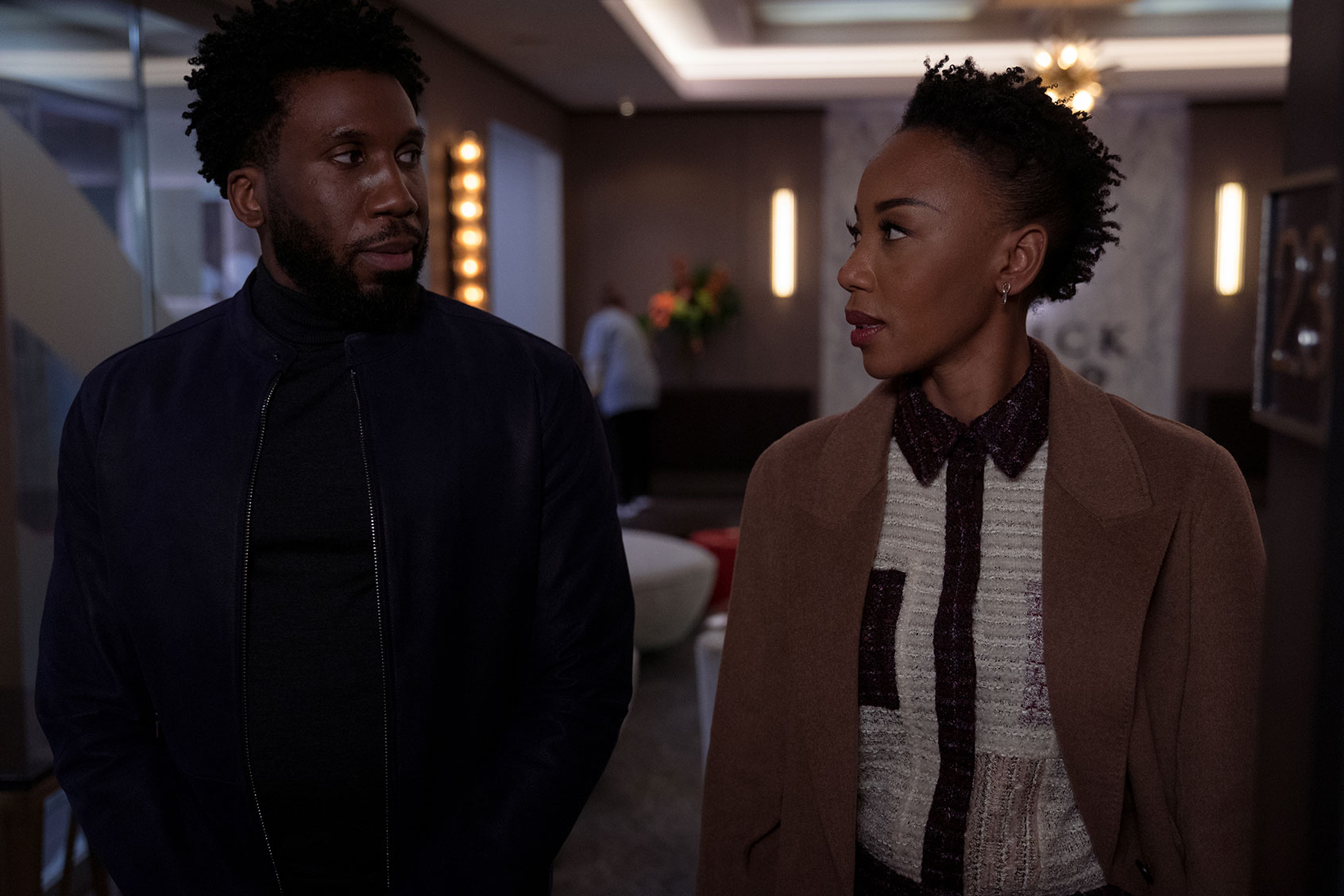
But the act that sends Diane fleeing into wonderland involves someone lobbing a fake grenade into the midst of Diane, Liz, the firm’s investigator Jay Dipersia (Nyambi Nyambi), new associates Marissa Gold (Sarah Steele) and Carmen Moyo (Charmaine Bingwa), as they’re riding an elevator at the end of the workday. 

The decoy contains a message assuring them the next one would be real, alongside an ominous date: 11/10.

Afterward, a shaken Diane seeks a chemical way to “step outside herself.” But Marissa, Carmen, Liz and Jay somehow keep trudging on.

The Good FightNyambi Nyambi as Jay Dipersia and Charmain Bingwa as Carmen Moyo in “The Good Fight” (Elizabeth Fisher/Paramount+)

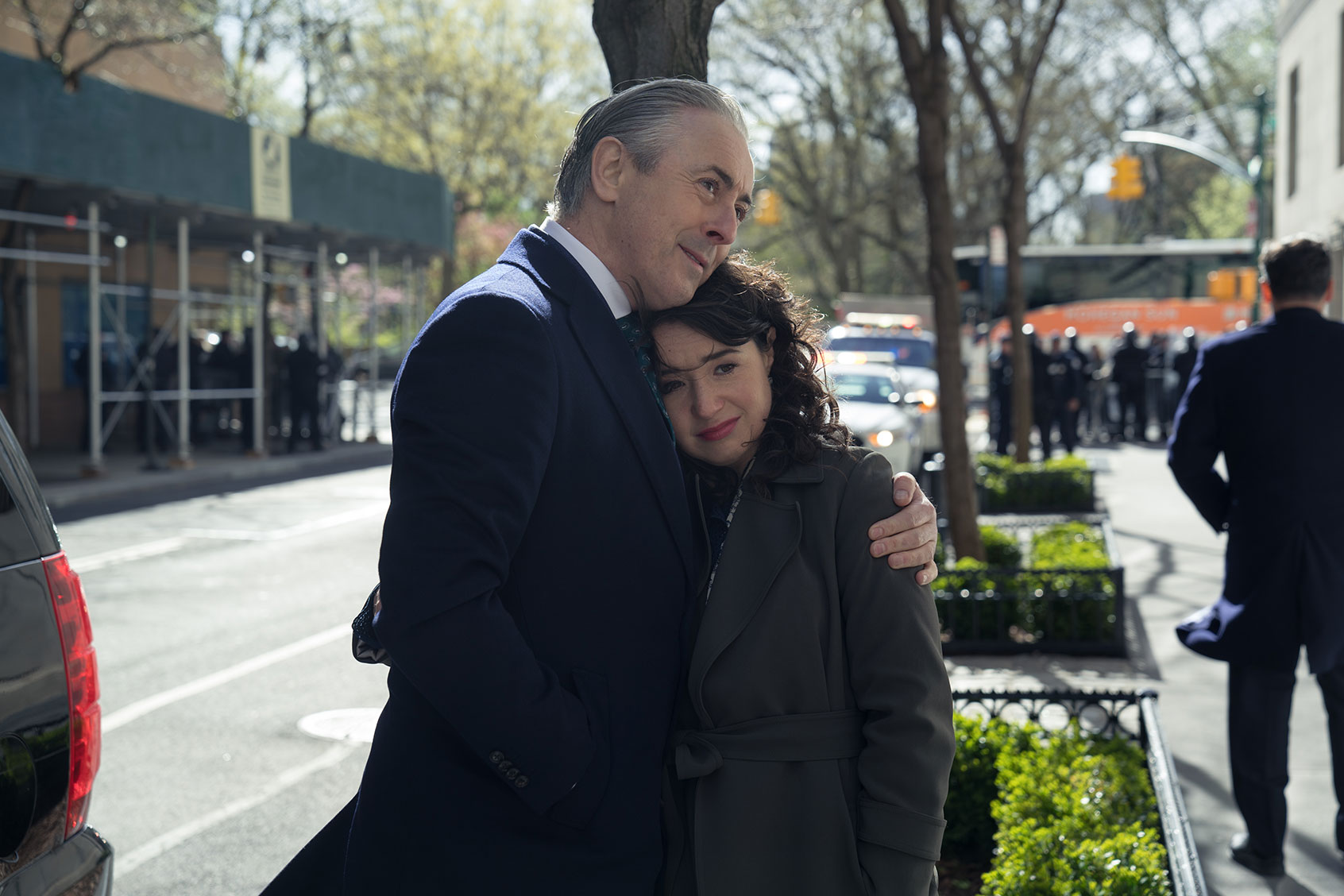
Subsequent episodes reveal that the threat is from extremists targeting Black institutions and influential Jewish people, as Marissa finds out when her father Eli Gold (Alan Cumming) nearly has his head blown off.

It’s impossible to miss how extensively Diane’s internal perspective on an ever-maddening world is explored and featured compared to those of Liz and her Black and Jewish colleagues.

After that, Marissa enrolls in Krav Maga classes while Jay becomes involved in an underground resistance effort run and funded by a Black leader played by Phylicia Rashad. The inference is obvious – regardless of how wealthy and connected these folks are, they’re also members of marginalized, persecuted communities. They don’t have the luxury of checking out from their trauma or letting down their guard. That might get them killed.

Baranski has played Diane Lockhart for 13 years and across two legal dramas starting with “The Good Wife” which, like “The Good Fight,” is also a Robert and Michelle King creation. The Kings didn’t initially use Diane as a trojan horse character – as in, a white character played by a famous actor leading us into a story featuring Black people and Black perspectives. 

In fairness, that concept isn’t a simple fit for her character in “The Good Fight” since Christine’s peers and former name partners Adrian Boseman (former co-star Delroy Lindo, who left after Season 4) and Liz Reddick-Lawrence (Audra McDonald) have a substantial level of influence at the highest levels of local and national politics. 

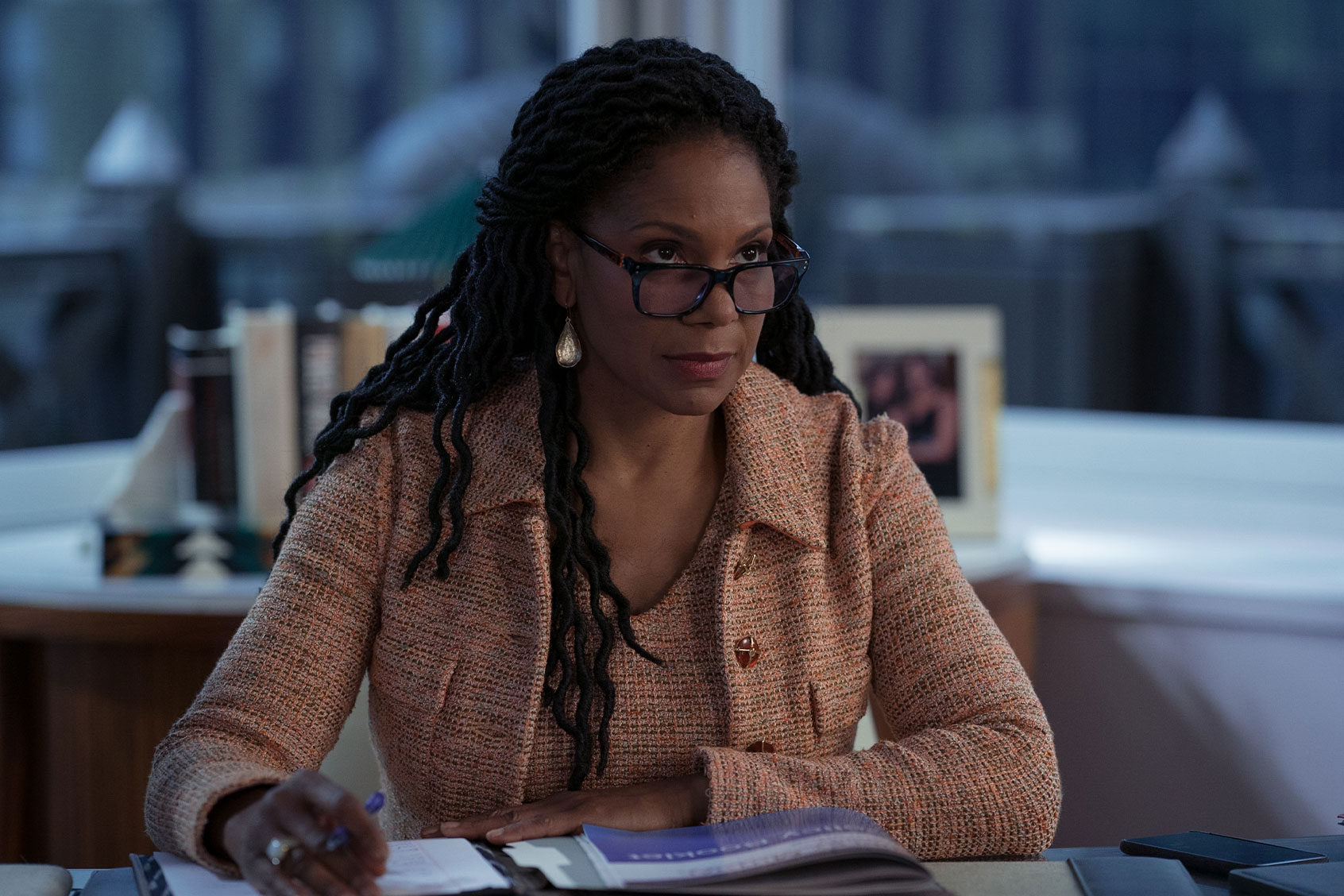
The Good FightAudra McDonald in “The Good Fight” (Elizabeth Fisher/Paramount+.)

But it’s impossible to miss how extensively Diane’s internal perspective on an ever-maddening world is explored and featured compared to those of Liz and her Black and Jewish colleagues. This is not a critique, but an appreciation of how the show employs Diane’s paradigm as a strategic tool.

Diane was a prickly heroine in “The Good Wife” humbled by losing her retirement and wealth, forcing her back into the workplace at Adrian’s invitation, without much of a stake to offer the majority Black institution she joins other than her experience, her name and yes, her white privilege.

Throughout “The Good Fight” Diane, a firebrand liberal, sought to use that aspect of her power for good, pulling strings her colleagues could not to protect the people in her orbit who aren’t as wealthy or connected – or in the case of fellow equity partner Julius Cain (Michael Boatman), a loyal Republican, happen to have all the correct credentials to access power except for the right skin color.

Nevertheless, “The Good Fight” has consistently placed Diane in situations that force her to contend with the fact that she will always be part of the problem, regardless of what she does or the righteousness of her battles, by virtue of her identity.

She has rebelled against her circumstances, as she did in Season 5 when Black associates at the firm demanded that she step down as the firm’s name partner because of the clients with whom she worked, several of whom are demonstrably prejudiced. She eventually concedes and steps down to equity partner status valuing the health of the firm and her partnership with Liz over her ego.

(Besides, the larger problem has been, and continues to be, the patriarchal overlords running STR Laurie, the multi-national legal firm of which Reddick & Associates is a subsidiary.)

The Good FightAlan Cumming as Eli Gold and Sarah Steele as Marissa Gold in “The Good Fight” (Elizabeth Fisher/Paramount+)

But this sixth-season subplot featuring Diane’s latest and, it must be said, highly bespoke means of turning off her trauma is a unique way of making a viewer contemplate her place in the show’s dialogue with real-world inequity and injustice. Politically speaking, Diane is fighting on the side of liberal feminism, mourning the overturning of Roe v. Wade, the destruction of voting rights protections, the resurgence of the Cold War, and the creeping assault on American democracy by the extreme right.

“I just realized I may have the most power because I don’t have any power!” Diane says.

She’s also married to a conservative operative, Gary Cole’s Kurt McVeigh, who works with the NRA and, without Diane knowing it, undermined Liz’s power with STR Laurie’s leadership. Kurt chatted them up during a hunting trip. Of course.

At the end of the day – Nov. 8, to be precise – it will be white women who determine whether our democracy holds or fails. Black women and other women of color receive attention and credit for getting out the vote in their communities and are hailed as saviors when their work pays off, but white women have the numbers.

They also have the privilege of voting based on their personal needs and feelings instead of considering the overall health of the body politic. They can comfortably vote against their best interests in the long term purely in reaction to short-term irritations, like how a candidate seems instead of the substance of their platform.

Presenting Exhibit A:

Anyway. Diane acknowledges this, doing what she can with her influence to balance the scales in her corner of the universe.

She has, in her way, earned her mental vacations and using her temporary flirtations with enlightenment to aid the cause of securing justice for those to whom it doesn’t come as easily. And frankly, in this slightly off-kilter version of our world and its precarious legal, political, and cultural state of affairs, her mind trips are the main source of comedy. Through a sky-high snorting giggle she tells Ri’Chard, “I just realized I may have the most power because I don’t have any power!”


Want a daily wrap-up of all the news and commentary Salon has to offer? Subscribe to our morning newsletter, Crash Course.


I should clarify, they provide the smiles in the episodes that don’t replace the loud protests with the delightful chaos of a children’s party at a judge’s home, which happened in the sixth episode. 

Attorneys argue their case amid screaming children, a cascade of bubbles, and a clown running circles around them. Highlighting small absurdities like this make “The Good Fight” one of the best shows on TV.

The Kings and the drama’s writers employ these bits sparingly, enough to provide some release from the anxiousness choking the air like tear gas. This aligns with what Robert King told Salon at the end of Season 5: “[T]he more pessimistic the show is, the more it has a smile on its face.”

It’s impossible to predict whether “The Good Fight” will lay down its gloves with a grin in its finale episode, which is currently scheduled to debut on the date printed on that fake explosive: Nov. 10. Something tells me, though, that Diane will be just fine regardless. What happens to everyone else, though, may color how we’ll feel about that.

“The Good Fight” streams new episodes Thursdays on Paramount+.

HBO’s “House of the Dragon” was inspired by a real medieval dynastic struggle over a female ruler

In three decades of teaching medieval European history, I’ve noticed my students are especially curious about the intersection of the stories told in class and the depictions of the Middle Ages they see in movies and television.

Judged by their historical accuracy, cinematic portrayals are a mixed bag.

However, popular fantasy, unencumbered by the competing priority of “getting it right,” can, in broad strokes, reflect the values of the medieval society that inspires it.

House of the Dragon” is one of those TV shows. A king, lacking a male heir to his throne, elevates his teenage daughter to be his named successor, and a complex dynastic drama ensues.

This storyline reflects the real obstacles facing women who aspired to exercise royal authority in medieval society.

The queen as a conduit to power

George R. R. Martin, whose novels were the foundation for the HBO series “Game of Thrones,” has made no secret of his inspiration for “House of the Dragon”: the Anarchy, a two-decade period, from 1135 to 1154, when a man and a woman vied with each other for the English throne.

The story went like this: Henry I sired two dozen or more children out of wedlock. But with his queen, Matilda, he had only a daughter, the future “Empress” Matilda, and a son, William. With William’s birth, the foremost responsibility of medieval queenship was fulfilled: There would be a male heir.

Then tragedy struck. In 1120, a drunken 17-year-old William attempted a nighttime channel crossing. When his also-inebriated helmsmen hit a rock, the prince drowned.

The queen had died two years earlier, so Henry I remarried – Adeliza of Louvain – but they had no children together. The cradle sat empty and the sands in Henry I’s hourglass ran low, so he resolved that his lone legitimate child, Matilda, would have the throne as a ruling queen.

The move was unprecedented in medieval England. A queen could exert influence in her husband’s physical absence or when, after a king’s death, their son was a minor. Her role, moreover, as an intimate confidant and counselor could be consequential.

But a queen was not expected to swing a sword or lead troops into battle and forge the personal loyalties on which kingship rested, to say nothing of the misogyny inherent to medieval English society. The queen was the conduit through which power was transferred by marriage and childbirth, not its exclusive wielder.

Viserys and Henry I share the same plight

A similar scenario drives the plot of “House of the Dragon.” The absolute preference in the fictional kingdom Westeros for a male ruler is expressed in the series’ opening scene.

The old king, having outlived his sons, empowers a council of nobles to choose his successor between two of his grandchildren, the cousins Rhaenys and Viserys. Rhaenys, a female, is the older of the two.

Yet the male Viserys becomes king and Rhaenys, “the queen who never was,” later ruefully concedes that this represented “the order of things.”

Once installed, however, Westeros’ new king would have understood the plight of England’s Henry I.

Aemma, Viserys’ queen, suffers stillbirths and miscarriages and produces only a daughter, Rhaenyra. A fading hope for a son is dashed when a breached birth and a brutal Caesarian section, intended to save the child, ends up killing Aemma. The boy – the desperately desired heir – doesn’t live out the day.

Sonless, Visery’s named heir is his younger brother, the debauched, sinister Daemon. When Daemon’s conduct becomes intolerable, Viserys disinherits and banishes him. Left with his young daughter Rhaenyra, he decides to make her a ruling queen, a role the girl relishes as she seeks to change “the order of things.”

Building support for a ruling queen

The challenge for a medieval king, whether Henry I or the fictional Viserys, was to persuade the nobles to overcome their prejudices and not just accept but actively support a woman’s ascension to power.

Henry I pursued measures to make his daughter palatable to them. Matilda, who had married the Holy Roman Emperor Henry V in 1114, returned to England a widow in 1125. Henry I, determined to forge a sacramental bond between his daughter and England’s magnates, compelled his barons in 1127 to swear their support for her as his successor. Henry I then turned to arranging a marriage for Matilda so she could give birth to a grandson and buttress her position.

After Matilda’s nuptials with Geoffrey, count of Anjou, the barons were summoned to renew their oath to her in 1131. A son, Henry, was born two years later, and a third pledge followed. Henry I died two years later of food poisoning after eating eels, a favorite dish of his.

The durability of his arrangements for Matilda’s rise to authority was immediately tested.

Viserys in “House of the Dragon” works from a similar playbook. The worthies of Westeros vow their loyalty to Rhaenyra as royal successor. Once Rhaenyra becomes marriageable, Viserys fields a plethora of suitors for her hand. A reluctant bride, Rhaenyra finally accedes to a union in which she would “dutifully” produce a male heir but then let her heart have what it wanted.

The unfortunate result is her inability to conceive with her husband while having three sons by a lover. Her situation is further complicated by Viserys’ remarriage to the lady Alicent, who gives him sons. Dangers stalk Rhaenyra’s path to power. In Westeros, as in England, a princess is expected to guard her chastity closely until marriage and, once wed, to be monogamous and not to “sully” herself in order to ensure the legitimacy of her children – a blatant double standard when noblemen frequently had children out of wedlock.

Yet even rumors of female infidelity could threaten succession. Lineage matters. Blood binds, as evident in the streams of it running from family crest to family crest in the series’ opening credits.

War ensues

Did these strategies work?

Not for Matilda. Stephen of Blois, a son from the marriage of Henry I’s sister Adela to a French count, aggressively registered a claim to the crown after Henry I’s death. Many English magnates conveniently forgot their oaths to Matilda, and Stephen became king.

Matilda was not without supporters – her half-brother Robert, earl of Gloucester; her husband, the count of Anjou; nobles disaffected by Stephen’s rule; and opportunists seeking personal gain from the conflict. Matilda resisted and the Anarchy ensued.

Forces supporting Matilda invaded England in 1139 but, save for a moment in 1141, she never ruled. She then focused instead on elevating her son to the crown.

Prosecution of the war ultimately passed to the young Henry. His mounting military successes jogged the barons’ memory of their past commitments, and the contending parties reached a settlement. Henry would succeed Stephen. With Stephen’s death, Henry became Henry II. England wouldn’t have another ruling queen until the ascension of Queen Mary I in 1553, nearly four centuries later.

But what of Rhaenyra?

Westeros is not 12th century England. For Martin, the author, the Anarchy does not serve to establish historical fact but is a wellspring for his creative vision. The fire-breathing dragon – that denizen of the medieval imagination – exists in Westeros. Rhaenyra’s pursuit of the throne may be fraught with difficulties, but she is a dragon-rider, and dragons were the most fearsome military asset in the kingdom.

This makes her dangerous in a way Matilda of England could hardly have conceived. Nonetheless, “House of the Dragon,” through the lens of fantasy, reflects a slice of the English medieval experience.

David Routt, Adjunct Professor of History, University of Richmond

This article is republished from The Conversation under a Creative Commons license. Read the original article.

The ReAwaken America Tour is The Warped Tour for right-wing cuckoo birds

This weekend, a cabal of right-wing figures — some who are looking to win votes, and some who are looking to save souls, have rallied together at the perfectly named Spooky Nook Sports in Manheim, Pennsylvania for an anti-vax, anti-trans, pro-QAnon rally called The ReAwaken America Tour.

Eric Trump, one of the speakers of the event along with a long list that includes Roger Stone, pillow man Mike Lindell and Doug Mastriano, gave the audience a thrill during Friday’s kick-off when he called his dad from the stage and played the audio into a mic for all to hear.

“We’re gonna call him quickly,” Eric said to a cheering audience elated to hear the former president’s voice add itself to the frothed up atmosphere. 

“So dad, you have an amazing crowd here in Pennsylvania,” the junior Trump said to his father, holding up the phone for everyone to scream into it and cheer. 

“Wonderful son who’s treated everyone fantastically,” Trump is heard saying from the small speaker of Eric’s phone. “He works so hard. He’s such a great guy. We love you all and we’ll be back doing things . . . we’re gonna bring this country back. Our country’s never been in such bad shape as it is now. I just wanna thank everybody and please treat my boy good because’s he’s a great one.” 

See video of the moment below from Huffington Post Senior Reporter Christopher Mathias, who’s reporting live from the event all weekend.


Want a daily wrap-up of all the news and commentary Salon has to offer? Subscribe to our morning newsletter, Crash Course.


On Friday afternoon, Julie Green, a self-proclaimed modern day prophet, spoke to the crowd on what she sees in Trump’s future, according to Patriot-News, relaying a message from God himself.

“Says God, you can’t stop my son, who is the rightful president,” Green said. “He is on his way back and how he takes his position back on center stage, you will never see that coming because you won’t see me coming. And I am with him.” 

While Green spoke these words, it’s reported that people in the audience leapt to their feet and beat on cow-bells.

ReAwaken America is described by Patriot-News as “part Christian crusade” and by Lancaster Online as a “dangerous mix of misinformation, Christian nationalism and divisive political rhetoric.” In other words, it’s intentionally divisive.

Produced by Oklahoma entrepreneur Clay Clark, the event will close on Saturday with a speech by Trump-backed Pennsylvania gubernatorial candidate Doug Mastriano, who has been vocal about his anti-abortion and anti-LGBTQ beliefs during his campaign.

Why more people are seeking out “ego death” via psychedelic drugs

As a last resort, Graham placed four tabs of LSD on the tip of his tongue. Then he waited. It didn’t take long before he was watching his body from the ceiling of his bedroom. He flew through the sky, up into the space and stars, where he was simply a bundle of thoughts and a scared, ecstatic mind. During the trip, time was immaterial. He continued on his journey through space, exploring the meaning of existence and dichotomy of life’s constants: light and dark, pain and pleasure, happiness and sadness, life and death.

“A theme that often arises in report[s] is that of feeling as if one were “dying” (hence the term ‘ego death’), and having to let go of one’s self and identity in that process.”

“I felt like the last of the species, or the first… I wept and asked God why,” Graham, a 29-year-old law student who prefers his last name not used for privacy reasons, told me. He said goodbye to his old thoughts, mind and motivations, and he killed his ego.

Ego death, alternately referred to as ego dissolution, is a loss of one’s sense of self, usually due to psychedelic use; drugs that cause ego death include psilocybin (found in magic mushrooms), LSD use in high quantities, or ketamine. We are normally conscious of our selfhood, our role on Earth and general facts about how we are, which in turn make up who we are. However, ego dissolution challenges these absolutes.

“Experiences of ego dissolution can be scary, but they can also be reported as blissful or cathartic,” Raphael Millière, philosophy lecturer at Columbia University and author of numerous papers on ego dissolution and self-consciousness, says. “A theme that often arises in report[s] is that of feeling as if one were “dying” (hence the term ‘ego death’), and having to let go of one’s self and identity in that process.”

And some people actually seek out such experiences, including Graham — who had previously struggled for years with alcoholism, jumping between rehab and medicine in rapid succession. He found refuge in psychedelics, which he experimented with every two weeks when he had a pass to leave his sober living home. He saw others having trips that entirely changed them — so he kept increasing his dosage until it could change him too. 

“It wasn’t scary,” he says, “probably because I was so ready to die already.”

Tabula rasa

The morning after Graham’s trip, he woke up disoriented, but changed. The adjustment was difficult: life didn’t seem real and he didn’t feel real. Even his thoughts and his own mind were alien inside his body. Most shocking of all, he believes it cured his alcoholism — he left the experience a new man.

Graham’s case, and his motivations, are not unusual. There are communities devoted to those who are chasing their own ego death experience. Some congregate on Reddit, a network of thousands of online interest group forums. On any given day, Reddit’s Psychonaut forum, which has over 415,000 subscribers, features numerous posts on the topic — speculations on how to best achieve ego death via drugs, and the implications of doing so. Experienced psychedelic users often answer, recommending philosophy deep dives and careful deliberation before one attempts to undergo ego dissolution.

“[Ego death] is, by all accounts, a powerful experience that may have a lasting psychological impact — but not necessarily a negative one.” 

Millière, and many in the Reddit community believe there is value in seeking out ego death. Many use psychedelics to pull themselves out of mental stagnation by breaking down rigid expectations they have for themselves and the world. Ego death allows them to come to terms with both their past and approach the future differently. This application of psychedelics — for therapeutic use — is gaining more acceptance in clinical settings. 

“[Ego death] is, by all accounts, a powerful experience that may have a lasting psychological impact — but not necessarily a negative one,” Millière says. “People report feeling more at peace with themselves, and with their own mortality, after undergoing this kind of experience. This is partly why these experiences may be valuable for psychedelic therapy.”

However, it can be a double-edged sword.

Tales from the trip

It is a brisk Tuesday in Brooklyn in September, and thirty people sit facing Bill Winter, host of the Brooklyn Psychedelic Society’s weekly “Trip Tales” event. He opens the meeting with his mantra: “People are discovering the life affirming, growth promoting, soul restoring, potentials of psychedelic medicine.”

Winter talks like a preacher, doling out sound bites about the therapeutic qualities of psychedelics. He speaks carefully, calmly; Winter is lord of his dominion, and his gospel demands attention. Some in the crowd stir their coffees in the cafe’s warm glow, others sit eyes forward, soaking in every word.

One by one, society members go up to the middle of the cafe to recite personal psychedelic accounts and triumphs. An elderly man in a fisherman’s vest stands up and rests his cane on the table. He explains he doesn’t smoke marijuana because he’s worried about his lung health. However, he triumphantly exclaims to the crowd that despite his age, he can score some acid tabs or weed gummies (which he prefers!) whenever he likes. 


Want more health and science stories in your inbox? Subscribe to Salon’s weekly newsletter The Vulgar Scientist.


Some at “Trip Tales” say they use psychedelics to deal with past trauma. Others use psychedelics to accept death. One such attendee describes her experience with cancer. She uses psychedelics to reconcile herself with the trauma of her previous diagnosis — that she would die in six months. She sticks out her tongue, which has a significant chunk missing. “The missing part is named Stella,” she explains.

Just what the doctor prescribed: kill your ego

Rorick, a physics student from Baltimore who prefers to not use his last name due to privacy reasons, considers himself an expert on psychedelics and an avid acid user. He is nearly 20, and has tripped more times than the number of years he has lived. He’s also experienced ego death, which he describes as a frightening ordeal that didn’t just end when the trip did. 

“Ego death can be really humbling and really important for some people,” Rorick says, “there’s some people that need to have their egos killed,” adding, “but at the same time, it’s a scary thing to go through.” He’s had friends who have experienced ego death and never returned to drug use.

However, “I can see people seeking out ego death,” Rorick says, “it can be a powerful tool for change, you go through it and there’s absolutely things you take away from it…”

But Graham sees ego death only as a last resort. “I would only recommend ego death to people who have tried everything else,” he says. “It really feels like the old me died that day.”

Ego death may just be the beginning

While some of those who seek out ego death find themselves happier after the experience, the scientific jury is still out on the topic. 

“In the case of psilocybin, we must remember that the initial data reviewed above on psilocybin’s effects generally — and on personality in particular — is still preliminary,” write William R. Smith and Dominic Sisti in a Journal of Medical Ethics research paper on ego death and psilocybin. The co-authors “emphasize that more research is required and that ethical conclusions must be tentative.” 

But their research did turn them into believers, at least: “Nevertheless, we believe [in] enhanced consent  for psilocybin — at least precautionarily until further evidence suggests otherwise.”

“Science is us discovering the properties of this thing, this universe, and the more we learn, the more we experience, the happier God is,” Graham, who is not religious, says. “[The experience was] scary but beautiful… If it hadn’t happened to me I wouldn’t believe it.”

A 1-2-3 guide to building the perfect charcuterie board

Building a beautiful charcuterie board is truly an art form. Thick wedges of cheese mingle with salami shaped like a rose. They’re intertwined with sweet and savory pairings such as cornichons, apple butter, and fresh fruit, and are garnished with fresh herbs and edible flowers. I started making charcuterie boards (or as I call them, cheese plates, because charcuterie only really refers to a board with cured meat) in 2014. The internet was much different back then, and you could really only find inspiration for cheese and charcuterie boards by searching Pinterest for hours. Each plate I found was so beautifully crafted — just by glancing at the detail made me wonder if I could ever replicate that myself at home. With a lot of practice and some handy tips, I was able to create my own distinct style of charcuterie boards with a method to break down each step in the process. I call this, Cheese By Numbers. 

Cheese By Numbers is a similar idea to the fun paint-by-numbers maps you might have seen as a kid. Here, each section of the charcuterie board is associated with a number. Organizing these sections into steps makes it much easier to see the creation come to life. But let’s start with a solid foundation to build upon! 

Base and bowls

I always like using a flat surface to build my charcuterie board. Whether that’s a wooden board, a porcelain plate, or even an entire kitchen island, you can work with any surface you want. Personally, I like using plates with a small lip around the edge such as these, so items don’t roll off in transit. You also want to select a few ramekins or bowls for any dips, jams, or items in brine, such as pickled vegetables.

To determine the board size, consider the type of gathering taking place. Are you hosting or attending a wine and cheese soiree where the charcuterie board is the only food provided? Or is this just a small appetizer before a big dinner? In my first cookbook, That Cheese Plate Will Change Your Life, I created a handy guide to determining the best board size based on the number of people being served. Keep in mind that these numbers are based on the idea that the cheese board is the main attraction, so scale down as needed:

  • 8″ in diameter – 2 to 4 people
  • 10″ in diameter – 4 to 6 people
  • 12″ in diameter – 6 to 8 people
  • 15″ in diameter – 8 to 12 people

I also like to select a shallow bowl or plate for crackers or bread. We’ll put a few crunchy items on the plate to get the guests started, but the rest can be served on the side for easy access.

The “cheese by numbers” method

The Cheese By Numbers method consists of six steps and sections. Cheese, meat, produce, crunch, dip and garnish. This covers all of the items that should belong on a charcuterie board. Build your board in this order and your plate will come together beautifully!

Step 1: Cheese

Pick 3 to 5 types of cheese. You want a variety of milks (cow’s, sheep, goat) and textures (hard, soft, bloomy, blue) on the board. You can also get creative with it, and add a cheesy dip like my Warm Blue Cheese Dip or start decadent with Baked Camembert with Balsamic Roasted Grapes. Make sure each cheese you pick has thoughtful accompaniments on the board as we move into the next steps.

That Cheese Tip: I always like to pre-cut my hard cheese while leaving soft cheeses such as Brie whole. This way, it’s easy for the guests to graze versus having to break apart a giant wedge of cheddar. Pull the cheese from the refrigerator 45 minutes before serving so it can get to room temperature — this brings out the maximum flavor and texture of each.

Step 2: Meat

“Charcuterie” is a French term for cured or aged pork products. In recent years, this term has become synonymous with all types of salumi and deli meats alike. I like to pick 1 to 2 meats for my board. For something on the mild side, I like genoa salami, sweet soppressata and prosciutto. For a bit of a kick, I love using salami calabrese or chorizo. Consider the type of cheese on the plate and pair similar intensities. For example, prosciutto has a delicate texture and slightly sweet taste, which would pair nicely with fresh mozzarella cheese. However, it’s not all about opposite attraction. Prosciutto is considerably salty, just like an aged Parmigiano Reggiano — a great match! Salami can be salty, herbaceous, mild, strong, and spicy. I like pairing a spicy salami such as chorizo or calabrese with something that can hold up to the heat, like a sharp cheddar or a smoky aged gouda. You can also include sautéed chicken sausage, roasted turkey, or smoked salmon.

That Cheese Tip: Fold your meat! I coined the term “salami river,” which refers to a food styling method I love to use. Take each slice of salami and fold it into quarters. Stack them to create a line that spans the entire cheese board. Add a bit of a curve to make it into a “river”. Not only is this a fun detail on the plate, it also serves a purpose. Many packaged meats come stuck together, so by folding each individual slice, it’s easier for the guests to serve themselves.

Step 3: Produce

This is where we add color and flavor pairings to the board! Produce covers everything from fresh fruits and vegetables to dried fruits to pickled and grilled vegetables. The colors of fruits and vegetables really make the plate pop, so “paint with your produce”. Just like pairing meat and cheese, consider what types of cheese are on your board before selecting your produce. Juicy fruits like berries pair great with fresh goat cheese, while cornichons and olives stand up to sharper and more pungent cheeses such as French blues. Add fresh cucumber slices to your cheese board to provide a refreshing palate cleanser between bites.

That Cheese Tip: Create “produce ponds” while building your charcuterie board by making small mounds of fruits and vegetables around the plate and fill up about 75% of the blank spaces. I always like to arrange the produce pairing next to the cheese it will taste the best with.

Step 4: Crunch

Crunch covers everything from crackers and bread to candied nuts and dark chocolate. Fill in the rest of the gaps on the cheese board with crunchy snacks to make the board appear full and abundant.

That Cheese Tip: Stick with mild crackers, like sourdough, water crackers or flatbread. Intense garlic or rosemary crackers can overpower the nuances in the cheese and meats.

Step 5: Dips and jams

This is an important step to highlight different cheese pairings — the flavor profiles of jams, chutneys, and mustards can create an entirely new flavor depending on the cheese it’s enjoyed with. I like to use a sweet fig jam with a pungent blue, or a light honey with a buttery camembert. In this case opposites do attract, so pair sweet and salty side-by-side.

That Cheese Tip: Try making our own jam, like a rosemary and caramelized onion fig jam!

Step 6: Garnish

Turn your simple appetizer into a work of art! I love to add fresh herbs to the plate, like big sprigs of fresh rosemary and thyme; these aromas remind me of a warm holiday dinner and add a pop of greenery.

That Cheese Tip: I also love to add edible flowers. Some of my favorites include violas, zinnias, rose petals, cornflowers and flowering herbs. You can find these at farmers’ markets or even online, like Gourmet Sweet Botanicals.

Now that you’ve built your charcuterie board, it’s time to serve it! Grab a good set of cheese knives for cutting and spreading:

  • The Spreader: This looks like a small butter knife. It’s perfect for spreading brie or soft goat cheese.
  • The Fork-Tipped Spear: I like to use this knife to cut semi-hard cheese like gruyere or fontina. You can use the fork tip to easily pick up the slices, too!
  • The Spade: This is a small, sharp knife perfect for cutting hard cheese like Parmigiano Reggiano.

Include a pair of tongs, spoons for the dips, small plates, and napkins for serving, too.. In my new book, “That Cheese Plate Wants To Party” (out April 11, 2023), I dive deep into tablescape settings. My number one tip? Match the plate to the table to tie the scene together. Does your plate have colors of red, green, and yellow? Buy a bouquet of flowers with those same colors, or even match your linens to create a cohesive theme.

Last but not least, queue up a fun playlist to set the mood. I love matching my playlist vibe to the cheese plate itself. Having a gathering in a dimly lit room with candles? Put on some soothing jazz or a song that makes you feel warm inside.

Now, it’s time to enjoy your beautiful creation with your loved ones! Charcuterie boards are the perfect way to bring everyone together through delicious food and artistic touches.

With the movie ‘Till,’ Mamie Till-Mobley’s quest to educate about her son’s lynching marches on

After 14-year-old Emmett Till was kidnapped, severely beaten and killed in the Mississippi Delta on Aug. 28, 1955, his mother, Mamie Till-Mobley, made the courageous decision to reveal her son’s corpse for all to see.

Till-Mobley’s choice allowed audiences to bear witness to an act of racial violence, and the new film “Till” promises to unveil the complete story of how she responded to her son’s brutal death.

However, when a theatrical poster for “Till” was released in the summer of 2022, some people immediately denounced the film on Facebook and Twitter. Critics accused the project of profiting off Black pain and argued that there were other accounts of the Black experience worthy of cinematic representation.

“I’m tired of seeing award winning movies about our people being torn apart,” one commenter wrote.

Others questioned the purpose of television shows and movies about Emmett Till when people were still trying – and failing – to secure justice for his death.

Yet these reactions insinuate that Till’s story is significant only because of the horror and trauma attached to it: the gruesome death of a Black teenager, the public grief of a Black mother and the unsettling images of a lynched Black body.

I understand why there is some skepticism about the intent of “Till,” which comes on the heels of ABC’s miniseries “Women of the Movement,” the docuseries “Let the World See” and the podcast series “Reclaimed,” all of which were released in 2022 and explore the legacies of Emmett Till and his mother.

But those who presume that projects like these are pointless or redundant have likely never contemplated the wishes – nor followed the career – of Mamie Till-Mobley.

A keeper of history

As a scholar of writing, rhetoric and digital studies who teaches courses about the Emmett Till case and writes about Mamie Till-Mobley’s activism and legacy, I believe that she wanted as many people as possible to know her son’s tragic story and learn from his death.

When Till-Mobley famously decided to exhibit Till’s corpse by holding an open-casket funeral, she did so not only to expose racial hatred in the U.S. but also to persuade and empower Americans to do something about it.

Although her response to Till’s death should not solely define her role as a civil rights icon, it did play a major part in motivating her to become a teacher.

A critical component of Till-Mobley’s legacy is how she produced and circulated information about her son’s life and death, inside and outside the classroom.

As the poet and literary scholar Elizabeth Alexander notes, Mamie Till-Mobley was both “a history maker and history keeper.” She welcomed occasions to speak about how she raised her son, correct misconceptions about his character and preserve his memory to advance her educational goals.

Bringing Till to the classroom

Till-Mobley’s activism didn’t end with her son’s funeral.

In the fall of 1955, Till-Mobley partnered with the NAACP, becoming the headline speaker for several political rallies across the U.S.

She spread the word about her son’s appalling murder and explained her rationale to inspect and display his body. She also detailed her encounters in Jim Crow Mississippi during the murder trial and situated her son’s story within a larger struggle for racial equality.

Till-Mobley wanted “to let the world see what is happening in the United States of America.”

She ultimately determined that she could have an even greater impact in the classroom, where she could teach generations of young people.

Till-Mobley entered Chicago Teachers College in 1956 and graduated with honors in 1960. As a student, she devised ways to commemorate her son in various assignments in an era when Black educators in Mississippi were being fired for discussing the Till case in their classrooms. For instance, when she had to compose and narrate a eulogy for an assignment in a speech course, she chose to eulogize her son.

Once Till-Mobley became a public school teacher on the South Side of Chicago, she encouraged her students to achieve their goals by becoming astute historians and critical thinkers. She sought to use Black history in creative ways.

For example, when Till-Mobley founded a youth drama troupe in 1973, she named it the “Emmett Till Players.” The players were tasked with memorizing and reciting speeches by Martin Luther King Jr., and they performed in churches and other community venues across the nation.

For nearly five decades, Till-Mobley fashioned opportunities for her students and others to learn about her son and understand his importance to U.S. history and culture.

As former student Cynthia Dagnal-Myron recalled:

“Mamie Till Mobley lost a son to hatred, but inspired hundreds of children to strive for excellence. In fact, she demanded that we do so. … She taught us we could do anything. … I went on to become all the things I’d dreamt, largely because of that remarkable woman. She invited me to dream as big as I wanted. To do all the things she’d hoped her son might do someday.”

“The thing that has come out of Emmett’s death,” Till-Mobley once declared, “is to push education to the limit. I mean learn all you can learn.”

Taking the baton from Till-Mobley

Recent calls to prohibit the study of race and racism in public schools under the guise of “critical race theory” bans probably would have dismayed Till-Mobley, who died in 2003.

It’s more reason to remember her bravery and her insistence that Till’s story be used to educate, even when some consider it controversial to do so.

“She was a teacher, and she thought methodically and scientifically,” the Rev. Jesse Jackson proclaimed after Till-Mobley’s death. “She had a sharp mind and a compassionate heart. And she really sensed the place of her son in American history and her responsibility to keep that legacy alive.”

“Till” is the latest example of Mamie Till-Mobley’s call to action being realized – and the film fulfills her mandate that Americans never forget what happened to her boy.

Brandon M. Erby, Assistant Professor of Writing, Rhetoric, and Digital Studies, University of Kentucky

This article is republished from The Conversation under a Creative Commons license. Read the original article.

Soup on the van Gogh: The painting’s fine, and the kids are all right

“Let’s stop giving these attention seeking adult-toddlers the coverage they clearly crave,” British Foreign Secretary James Cleverly tweeted last Saturday (not long before his own government collapsed). That came in response to a shocking viral video of two young people slinging canned tomato soup onto a glass-covered painting by Vincent van Gogh in London’s National Gallery, and then gluing themselves to the wall behind it. Gasps can be heard in the background. Someone says in astonishment, “Oh my gosh.” Another calls for security.

Meanwhile, the two activists — both in their early 20s — have been called just about every name in the book, including “philistines, barbarians, idiots, [and] terrorists.” Others have baselessly suggested that since the organization these young people represent, Just Stop Oil, is funded by Aileen Getty, this act was just “performative. Oil companies pay them to make actual real activists look ‘crazy.'” 

That’s clearly untrue. Aileen Getty is the granddaughter of Jean Paul Getty, who became a billionaire — and possibly the richest private citizen in the world in the 1960s — because of his success in the oil business. Aileen Getty inherited some of this fortune, and in 2019 co-founded the Climate Emergency Fund, which states on its website that it has funded 39 organizations with a total of $4 million. Just Stop Oil has received $1.1 million from Getty’s fund.

There is nothing conspiratorial here. The economies of the Global North have put the entire future of humanity — indeed, of the whole biosphere — in jeopardy, and since the more diplomatic strategies of presenting the facts, educating the public, confronting politicians and even blocking traffic have thus far failed, it might be time to pursue more radical (yet still nonviolent) measures.

When the Kyoto Treaty went into effect in 1995, there were 360 ppm of CO2 in the atmosphere. By the time of the Paris accords of 2015, that number was 401 ppm. In the room where I’m writing this article, a CO2 monitor reads 456 ppm.

Climate scientists have been speaking truth to power for decades: James Hansen told Congress in 1988 not merely that Earth’s thermostat was rising, but that “global warming [had] reached a level such that we can ascribe with a high degree of confidence a cause and effect relationship between the greenhouse effect and the observed warming.” Nothing happened. The catastrophic consequences of climate change were explored in Al Gore’s “An Inconvenient Truth,” one of the most successful documentaries in history, and which resulted in Gore receiving the Nobel Peace Prize in 2007. Nothing happened. And Sir Nicholas Stern sounded the alarm in his 700-page Stern Report, commissioned by the British government, which concluded that climate change “is the greatest and widest-ranging market failure ever seen.” Nothing happened.

When the first IPCC Assessment Report was released in 1990, there were an estimated 354 parts per million (ppm) of carbon dioxide, or CO2, in the atmosphere. Five years later, when the first UN Climate Change Conference was held, that had risen to 360 ppm. By 2005, when the Kyoto Treaty entered into force, the concentration of CO2 had risen to about 380 ppm. By the time the 2015 Paris Accord was signed, the global average concentration of CO2 had reached 401 ppm. This year the number reached 421 at the Mauna Loa Atmospheric Baseline Observatory in Hawaii, and the room where I’m writing this article, on a university campus in Germany, has a CO2 monitor that reads 456 ppm.

What is it going to take to convince the major nations of the Global North to take the climate crisis seriously? Civil disobedience is part of the answer, but so might tactics that draw global attention to activist organizations like Just Stop Oil, which is precisely what’s happened. “This was the tomato toss heard around the world,” as Dana Fisher, a University of Maryland sociologist, noted. And the message is clear: Do something now, because time is running out. As one of the activists declared after gluing herself to the wall:

What is worth more: art or life? Is it worth more than food? Worth more than justice? Are you more concerned about the protection of a painting or the protection of our planet and people? … Crops are failing. Millions of people are dying in Monsoon wildfires and severe drought. We cannot afford new oil and gas. It is going to take everything we know and love.

Just this year, Pakistan suffered unprecedented flooding due to climate change. Nearly 32 million people have been displaced, and more than 500 children have died. “Roads and bridges have been washed away,” and the World Health Organization now warns of a “second disaster” caused by water-borne diseases. According to Babar Boloch, spokesperson for the UN Refugee agency UNHCR, it could take “up to six months for flood waters to recede” in some parts of the country.

Or consider the 2022 Living Planet Report, which found that since 1970 wildlife “populations of mammals, birds, fish, reptiles, and amphibians” have declined by a staggering 69 percent. Freshwater populations have been especially hard hit, with declines of an even more mind-boggling 83 percent. Other studies affirm that we are in the early stages of only the sixth major mass extinction event in life’s 3.8 billion-year history on Earth, and that humanity has already crossed five of nine planetary boundaries, which are defined as the “biophysical preconditions for human development.” Yet another study warns that humanity now faces a

risk that self-reinforcing feedbacks could push the Earth System toward a planetary threshold that, if crossed, could prevent stabilization of the climate at intermediate temperature rises and cause continued warming on a “Hothouse Earth” pathway even as human emissions are reduced. Crossing the threshold would lead to a much higher global average temperature than any interglacial in the past 1.2 million years and to sea levels significantly higher than at any time in the Holocene.

As a paper in Nature published the following year declares, “if damaging tipping cascades can occur and a global tipping point cannot be ruled out, then this is an existential threat to civilization.” Or to quote Aileen Getty — the woman supposedly part of some conspiracy to make climate activists look bad — “Let’s not forget that we’re talking about extinction,” to which she added, “Don’t we have a responsibility to take every means of trying to protect life on Earth?”


Want a daily wrap-up of all the news and commentary Salon has to offer? Subscribe to our morning newsletter, Crash Course.


This brings us back to the Just Stop Oil activists. Were their actions “attention seeking,” as Cleverly wrote? Yes, and in fact by tweeting this out, Cleverly himself — rather uncleverly — gave them even more publicity. Young people are desperate, and their desperation is wholly justified by the best available science. The situation is dire: The livability of our planet, along with the survival of entire peoples and nations, are in the crosshairs — especially those peoples and nations, mostly in the Global South, that have contributed the least to the climate crisis. As one of the young activists who participated in the van Gogh incident later said in an interview, which is worth quoting at length:

I recognize that it looks like a slightly ridiculous action. I agree, it is ridiculous. But we’re not asking the question, “Should everybody be throwing soup on paintings?” What we’re doing is getting the conversation going so we can ask the questions that matter. Questions like … “Is it okay that fossil fuels are subsidized thirty times more than renewables, when offshore wind is currently nine times cheaper than fossil fuels?” … This is the conversation we need to be having now. Because we don’t have time to waste. Last year Sir David King said what we do in the next three to four years will determine the future of humanity. So we’re using these actions to get media attention because we need to get people talking about this now.

I, for one, applaud her actions, which were taken in the knowledge that the van Gogh painting was protected by glass, and hence would not be seriously damaged. The kids are all right about the urgency of the moment, about the importance of starting a conversation and galvanizing political action. If people want to blame anyone for such actions, blame the politicians in power who have done nothing to stop the climate crisis and have pushed desperate young people to see such actions as the only way forward. If our political leaders had listened to James Hansen, Al Gore, Sir Nicholas Stern, the IPCC, Sir David King and every other climate scientist or activist who’s been screaming for decades that our “house is on fire,” none of this would seem necessary.

We should expect more stunts like this in the future — until meaningful action to curb the climate crisis has been taken. Indeed, Getty’s Climate Emergency Fund has “vowed [that] similar attention-grabbing stunts will take place in various countries in the weeks ahead.” Am I upset by what happened at the National Gallery? Absolutely, but not because of what those two courageous young people did to an artistic masterpiece that will be worthless if the climate crisis destroys our civilization.

Fiona Apple: “Rings of Power” warrior woman

In the Season 1 finale of “The Rings of Power,” we get a shot of those legendary rings, an image that dissolves creepily into the iris of the man who maybe/probably is Sauron, looking over his new volcano kingdom. And we get a song. Above the crashes of thunder and magna rumblings of Mordor, a known but unexpected voice cuts through.

The words may sound familiar. So does the voice. But it’s their pairing that is the most extrordinary and surprisingly, fitting. It’s a poem about the rings written by J.R.R. Tolkien himself and set to music by the series’ composer Bear McCreary. And it’s Fiona Apple who sings the closing song for the Prime Video show, a match that makes even more sense than an elf lord and dwarf prince being best friends forever. Because Apple? She wanted this all along.

Apple, the creator of five albums, all of which have reached the top 20 in the U.S. Billboard 200 chart, has publicly credited poet Maya Angelou as her biggest inspiration. The singer songwriter, a three-time Grammy Award winner, was brought to musical composition through poetry. As Apple told Pitchfork in 2020, “My singing self was born out of singing Maya Angelou poems to myself at night going to sleep.” 

While it’s not known if Apple, who says in the same interview she owns 15 copies of “The Cambridge Encyclopedia of Language,” is specifically a Tolkien fan, it wouldn’t be out of the (magical) realm of possibility. Apple is bookish, relating in the Pitchfork interview, “When I come across poetry that gets me, it gets me, and I love the idea of a poem, of all of the power that can go into a space between two words or a repetition of one word, these tiny things that can mean so much and feel so huge.” Her songs are intellectual; as American Songwriter puts it, “Apple writes in her own elevated vocabulary . . . throw[ing] around multisyllabic words like she just finished studying for the SATs. She’s a rock and roll thesaurus, whose love of language transfers to her album titles.” Who can forget Apple’s 1999 album “When the Pawn . . .” Well, you might forget the title in its entirety as its full name was once placed in the “Guinness Book of World Records” in 2001 for longest title (but has since been dethroned). 

You learn things listening to Apple, new words, words like “undulate” (that was new to me as a teen with her first album, anyway), “rigadoon” and how to mold that weighty language, to work the words like precious metals around her sound.

So much of this positing was based on Apple’s appearance and small stature, and not about her actual work.

But Apple’s connection to “The Rings of Power” is more than wordsmithery. When Apple burst onto the scene with “Tidal,” she was 17, with some of the album’s songs written when she was 15. The daughter of musicians and performers, she was also a survivor of childhood rape, an experience that resulted in disordered eating. She said to Rolling Stone, “For me, it wasn’t about getting thin, it was about getting rid of the bait that was attached to my body. A lot of it came from the self-loathing that came from being raped at the point of developing my voluptuousness . . . I just thought that if you had a body and if you had anything on you that could be grabbed, it would be grabbed. So I did purposely get rid of it.”

From the beginning, Apple was marketed a certain way: as a waif, young and weak. The New York Times described her in 1997 as “like a cross between Christy Turlington and Kate Moss,” the later of whom had helped popularize, intentionally or not, the so-called “heroin chic” look of pale skin, stringy hair, thinness and dark eye circles. As The Washington Post wrote in 1999, magazines at the time presented Apple as “a flaky and/or neurotic new-waif rocker — ‘Kate Moss with songs,’ Q suggested.” So much of this positing was based on Apple’s appearance and small stature, and not about her actual work, which was and is powerful, soaring and fiercely brave. She has a throaty voice, a deep and dark one, and her songs sing of wars waged. 

The Lord of the Rings: The Rings of PowerMorfydd Clark as Galadriel in “The Lord of the Rings: The Rings of Power” (Matt Grace/Prime Video)But in 1997 Joe McNally photographed Apple the way she specifically asked to be: as “a warrior woman in a suit of armor”— the opposite of her waifish beginning. Apple, the photographer and crew rode the New York subway for a while to get the shot, unaffected onlookers, clanging armor, gauntlets and all.

The show has reclaimed Galadriel, reinventing her from the mystic, yes waifish goddess of “Lord of the Rings.” 

It’s not only that “The Rings of Power” is set in a high fantasy world of knights, sea worms and singing dwarves, it’s that the prequel consistently highlights the achievement and strength of women. The show has reclaimed Galadriel, reinventing her from the mystic, yes waifish goddess of “Lord of the Rings” to the army commander we see in this series who consistently saves the day, does the noble feat, makes the hard call. Galadriel often pays the price for being a warrior and rational leader who happens to be female, including dealing with distrust and outright violence from men, and believing too much in the goodness of another, admittedly mediocre, character. 

The Lord of the Rings: The Rings of PowerCynthia Addai-Robinson as Queen Regent Míriel in “The Lord of the Rings: The Rings of Power” (Courtesy of Prime Video)But Galadriel is far from the show’s only female warrior. The queen regent rides out in her armor (and pays a physical price for battle). Bronwyn is a human with no special suit or training, armed only with her knowledge of herbs and healing. Disa is a dwarf princess with a powerful voice to rival that of her husband’s, and Nori is the youngest, poorest and smallest of them all, powered by love of her people and hope for the world, still the strongest force.


Want a daily wrap-up of all the news and commentary Salon has to offer? Subscribe to our morning newsletter, Crash Course.


In an interview with Radio Times, “The Rings of Power” showrunner Patrick McKay describes the closing song with Apple’s involvement as “like a crazy dream come true.” But the song does more than sound lovely and be fitting. According to McKay, it also points the way forward, with a second season of the show slated to focus more on the rings themselves, and how and why they keep growing. It can’t be easy wearing heavy armor — on the subway, on stage, in Middle-earth — and the weighty mantle of being strong in the face of flames is not a light burden. But both Galadriel and Apple keep standing.

Who invented music? The search for stone flutes, clay whistles and the dawn of song

Curious Kids is a series for children of all ages. If you have a question you’d like an expert to answer, send it to curiouskidsus@theconversation.com.


Who invented music? – Rom, age 7, Las Vegas, Nevada


The short answer is: No one knows who invented music.

No historical evidence exists to tell us exactly who sang the first song, or whistled the first tune, or made the first rhythmic sounds that resembled what we know today as music.

But researchers do know it happened thousands of years ago. The earliest civilizations throughout Africa, Europe and Asia had music. Back then, many believed it was a divine creation, a gift from the gods.

Indeed, gods and goddesses from many religions and mythologies are associated with music. Stories and works of art tell us that the African god Àyàn was a drummer; the Greek god Apollo played the lyre, a string instrument. In the Book of Genesis, Jubal – a descendant of Adam – is identified as the father of the harp and flute.

Scientists will probably never be able to credit one person, or even a group of people, with music’s invention. But as a musicologist – that’s someone who studies the history of music – I’ve seen many artifacts and much evidence that can help us understand how and why the ancients played music.

Singing

Some scholars say singing was the first kind of musical sound. Not that people back then were crooning full-length songs. Instead, they made simpler vocal sounds – perhaps just a few notes put together. If that’s true, perhaps early humans began to speak and sing at about the same time.

Why did they sing? Maybe they had an impulse to imitate something beautiful, like bird sounds. Vocal imitations of other animal sounds, however, may have been used for hunting, like a modern-day duck call.

It’s also possible singing was a way to communicate with infants and toddlers, like early versions of lullabies. But again, people were not singing complete melodies or songs; our modern lullabies – like “Rock-a-bye Baby” – took centuries to develop.

Singing in Catholic churches throughout Europe during the Middle Ages is well documented. At first there was only a single vocal melody, sung either by a soloist or a small group of male clergy. Nuns also learned to sing in convents. Later, polyphony became increasingly common – when two, three or four voices would each sing different melodies, adding to the complexity of the sound.

Instruments

Archaeologists have helped musicologists learn about ancient musical instruments from the artifacts they’ve uncovered. For example, they have found flutes and whistles made of bone, pottery and stone.

The archaeologists used a process known as carbon-14 dating to find out how old the bone instruments were. All living organisms – animals, plants and people – have some carbon-14 in them; when they die, the amount of carbon-14 decreases, little by little, over years, decades and centuries.

When the scientists measured how much carbon-14 was left in the flutes – which were made from the bones of large birds – they discovered some of the instruments were more than 30,000 years old!

In Japan, some ancient whistles and rattles, made of stone or clay, are about 6,000 years old. Through their small blowholes, these instruments created high, shrill tones. Those using them may have thought the sounds were somehow magical, and it’s possible they played them during religious rituals. Some of those stone whistles can still make sounds.

In China, pottery bells, which may be the ancestors to bronze bells, appeared at least 4,000 years ago. In Greece, instruments like the krotola, a set of hollow blocks bound with leather, were played 2,500 years ago. The Greeks also used finger cymbals and frame drums – similar to the kind you might use at school.

Musical instruments could also be associated with different types of people. Shepherds played the syrinx, a whistlelike instrument, known today as the pan flute. It was a simple instrument that was easy to take into the fields. The aulos was a more sophisticated woodwind instrument consisting of two pipes. Because it took more skill to play the aulos, you would need training from a teacher – or perhaps, if you were wealthy, you could just hire experienced musicians to play for you.

Manuscripts and artwork

In Africa, 4,000-year-old rock paintings and engravings found in Egyptian tombs show musicians playing what appear to be harps.

Greek pottery often depicts musical scenes; these images often appeared on vases and urns. The settings, though, are often unclear. Whether the musicians were part of a festival or celebration, or simply playing for their own entertainment, is not always known.

Handmade medieval manuscripts also provide clues. Illustrations with ink, and sometimes gold leaf, often show musicians playing an instrument.

A world without music

Can you imagine living today without music? I can’t. Not only does it entertain and enthrall, it allows us to communicate emotions. Music helps us celebrate joyful events and consoles us when we’re sad or in pain. Certainly, ancient music made its listeners feel powerful emotions, just as music throughout this century and beyond will do the same. Think for a moment what music in the 22nd century might sound like. And who knows? Maybe – in about 78 years – you’ll find out.

An oldie but goodie, first played more than 3,400 years ago.


Hello, curious kids! Do you have a question you’d like an expert to answer? Ask an adult to send your question to CuriousKidsUS@theconversation.com. Please tell us your name, age and the city where you live.

And since curiosity has no age limit – adults, let us know what you’re wondering, too. We won’t be able to answer every question, but we will do our best.

Laura Dallman, Lecturer in Music History, University of Florida

This article is republished from The Conversation under a Creative Commons license. Read the original article.

How I found myself befriending a wild fox

For 12 consecutive days, the fox had appeared at my cottage. At no more than one minute after the sun capped the western hill, he lay down in a spot of dirt among the powdery blue bunchgrasses. Tucking the tip of his tail under his chin and squinting his eyes, he pretended to sleep. I sat on a camp chair with stiff spikes of bunchgrass poking into the canvas. Opening a book, I pretended to read. Nothing but 2 meters and one spindly forget-me-not lay between us. Someone may have been watching us — a dusky shrew, a field mouse, a rubber boa — but it felt like we were alone with the world to ourselves.

On the 13th day, at around 3:30 and no later than 4 p.m., I bundled up in more clothing than necessary to stay comfortably warm and went outside. Pressing my hands together as if praying, I pushed them between my knees while I sat with my feet tapping the ground. I was waiting for the fox and hoping he wouldn’t show.

Two miles up a gravel road in an isolated mountain valley and 60 miles from the nearest city, the cottage was not an appropriate arrangement for a girl on her own. My street was unnamed, so I didn’t have an address. Living in this remote spot left me without access to reasonable employment. I was many miles beyond reach of cell phone towers, and if a rattlesnake bit me, or if I slipped climbing the rocky cliff behind the cottage, no one would hear me cry for help. Of course, this saved me the trouble of crying in the first place.

Against all odds, and over several months, Fox and I had created a relationship by carefully navigating a series of sundry and haphazard events. We had achieved something worth celebrating. But how to celebrate?

I had purchased this land three years earlier. Until then I had been living up valley, renting a cabin that the owner had “winterized,” in the sense that if I wore a down parka and mukluks to bed, I wouldn’t succumb to frostbite overnight. That was what I could afford with the money I’d earned guiding backcountry hikers and teaching field classes part-time. When a university offered me a one-year research position, you might think I would have jumped at the chance to leave. Not just because I was dodging icicles when entering the shower, but because riding the postdoc train was the next logical step for a biologist. But I didn’t jump. I made the university wait until after I had bought this land. Then I accepted and rented a speck of a dormitory room at the university, 130 miles away. Every weekend, through snowstorms and over icy roads, I drove back here to camp. Perching on a small boulder, listening to my propane stove hissing and the pinging sound of grasshoppers flying headfirst into my tent’s taut surface, I felt like I was part of my land. I had never felt part of anything before. When the university position ended, I camped full-time while arranging for contractors to develop the land and build the cottage.

Outside the cottage, from where I sat waiting for the fox, the view was beautiful. Few structures marred my valley; full rainbows were common. The ends of the rainbows touched down in the rolling fields below me, no place green enough to hide a leprechaun but a fair swap for living with rattlers. Still, I was torn. Even a full double rainbow couldn’t give me what a city could: a chance to interact with people, immerse myself in culture, and find a real job to keep me so busy doing responsible work that I wouldn’t have time for chasing a fox down a hole. I had sacrificed plenty to earn my PhD in biology: I had slept in abandoned buildings and mopped floors at the university. In exchange for which I had learned that the scientific method is the foundation for knowledge and that wild foxes do not have personalities.

When Fox padded toward me, a flute was playing a faint, hypnotic melody like the Pied Piper’s song in my favorite fairy tale. You remember: a colorfully dressed stranger appears in town, enticing children with his music to a land of alpine lakes and snowy peaks. When the fox curled up beside me and squinted, I opened my book. The music was still playing. No, it wasn’t the Pied Piper at all. It was just a bird—a faraway thrush.

The next day, while waiting for Fox’s 4:15 appearance, I thought about our upcoming milestone: 15 consecutive days spent reading together—six months in fox time. Many foxes had visited before him; some had been born a minute’s walk from my back door. All of them remained furtive. Against all odds, and over several months, Fox and I had created a relationship by carefully navigating a series of sundry and haphazard events. We had achieved something worth celebrating. But how to celebrate?

I decided to ditch him.

I poured coffee grounds from a red can into a pot of boiling water, waited to decant cowboy coffee, and thought about how to lose the fox. Maybe he wouldn’t come by anymore. I opened the door of the fridge. “Have I mistaken a coincidence for a commitment?”

The refrigerator had no answer and very little food. But it gave me an idea. I drew up a list of grocery items and enough chores to keep me busy until long after 4:15 p.m. and headed out. The supermarket was in a small town thirty miles down valley, and I had to drive with my blue southern sky behind me. Ahead, black-bottomed clouds with white faces chased each other into the eastern mountains. Below, in the revolving shade, Angus cattle, lambing ewes, and rough horses conspired to render each passing mile indistinguishable from the one before. Usually, I tracked my location counting bends in the snaky river, my time watching the clouds shift, and my fortune spotting golden eagles. (Seven was my record; four earned a journal entry.) Not today.

You don’t need much imagination to see that society has bulldozed a gorge between humans and wild, unboxed animals.

Now that I was free to be anywhere I wanted at 4:15 p.m., I returned to my mercurial habits and drove too fast to tally eagles. Imagine a straight open road with no potholes and not another rig in sight. Shifting into fifth gear, I straddled the centerline to correct the bevel toward the borrow pit and accelerated into triple digits. Never mind the adjective, I was mercury: quicksilver, Hg, hydrargyrum, ore of cinnabar, resistant to herding, incapable of assuming a fixed form. The steering wheel vibrated in agreement.

The privilege of consorting with a fox cost more than I had already paid. The previous week, while I was in town collecting my groceries, I got a wild hair to stop at the gym. The only person lifting weights was Bill, a scientist whom I had worked with in the park service. I mentioned that a fox “might” be visiting me. “As long as you’re not anthropomorphizing,” he responded. Six words and a wink left me mortified, and I slunk away. Anthropomorphism describes the unacceptable act of humanizing animals, imagining that they have qualities only people should have, and admitting foxes into your social circle. Anyone could get away with humanizing animals they owned—horses, hawks, or even leashed skunks. But for someone like me, teaching natural history, anthropomorphizing wild animals was corny and very uncool.

You don’t need much imagination to see that society has bulldozed a gorge between humans and wild, unboxed animals, and it’s far too wide and deep for anyone who isn’t foolhardy to risk the crossing. As for making yourself unpopular, you might as well show up to a university lecture wearing Christopher Robin shorts and white bobby socks as be accused of anthropomorphism. Only Winnie-the-Pooh would associate with you.

Why suffer such humiliation? Better to stay on your own side of the gorge. As for me, I was bushed from climbing in, crossing over, and climbing out so many times. Sometimes, I wasn’t climbing in and out so much as falling. Was I imagining Fox’s personality? My notion of anthropomorphism kept changing as I spent time with him. At this point, at the beginning of our relationship, I was mostly overcome with curiosity.

Appeals court blocks Biden’s student debt relief program temporarily

In an unsigned order Friday night, the conservative-dominated Eighth Circuit Court of Appeals temporarily barred the Biden administration from moving ahead with student debt cancellation as judges weigh an effort by Republican attorneys general to block the program.

The court’s one-page order said it decided to grant the GOP officials’ emergency request for an “administrative stay” preventing the Biden administration from “discharging any student loan debt under the cancellation program,” pending further review of the Republican legal challenge early next week.

The order came a day after a district court judge appointed by former President George W. Bush dismissed the GOP states’ lawsuit for lack of standing.

Legal observers questioned the appeals court’s characterization of its Friday order as a “stay,” noting that it doesn’t block the district court judge’s ruling on standing but pauses the Biden administration’s debt cancellation program.

“An actual administrative stay would have halted the district court decision that found no standing,” Slate court reporter Mark Joseph Stern pointed out. “But this order imposes a nationwide injunction against student debt relief. The Eighth Circuit is lying about what it’s doing here to cover up the procedural improprieties.”

While Stern stressed that the Friday order doesn’t mean the court will permanently tank the debt relief program, “it’s not a good sign at all.”

“There’s only one Democratic appointee on the entire court,” he wrote. “It’s easy to see the Republican judges accepting the states’ ridiculous theory of standing.”

The appeals court’s move came after President Joe Biden said that around 22 million people have already signed up for debt cancellation through the newly launched government portal. Earlier this week, the Education Department started reaching out to borrowers who are eligible for automatic debt cancellation under the relief program, which offers up to $20,000 in forgiveness.

Astra Taylor, a co-founder of the Debt Collective, urged people to continue applying for student debt relief despite Friday’s court order.

“Cancellation is legal and it is gonna happen,” Taylor wrote on Twitter. “Don’t panic. Student debt relief isn’t dead. And let this be a reminder. The folks who want to keep us in debt are organized. We need to be too.”

Big money from corporate America could mean wins for “Big Lie” candidates

With just over two weeks until Election Day, warnings about the significance of state-level races are stacking up, especially given a pending Supreme Court case and corporate leaders pouring cash into campaigns backed by Donald Trump.

Despite facing various legal challenges, Trump is widely expected to seek election once again in 2024 — and having allies serving as secretaries of state and state legislators could help him do successfully next time what he only attempted in 2020, particularly if the nation’s highest court embraces a fringe legal theory empowering legislatures to overturn election results.

Amid fears of how the right-wing court — featuring three Trump-appointed justices — will rule in the case Moore v. Harper, the group Indivisible has launched a “Crush the Coup” initiative to “stop MAGA state legislatures from stealing the 2024 election.”

As part of that effort, Indivisible has identified “the 29 most critical races” for legislative seats in six states: Arizona, Georgia, Michigan, North Carolina, Pennsylvania and Wisconsin.

Secretary of state contests in three presidential battleground states — Arizona, Michigan and Nevada — have also garnered national attention due to their potential importance for 2024.

In Nevada, Democrat Cisco Aguilar is facing Trump-endorsed Republican Jim Marchant, organizer of the America First Secretary of State Coalition, which advocates for voter identification policies, paper ballots, ending mail-in voting, “unfettered” access for poll watchers and “aggressive” purges of voter rolls.

As the New York Times noted Friday, during a recent rally where he was joined by Trump, Marchant again backed the ex-president’s “Big Lie” that the 2020 election was “rigged.”

“I’ve been working since Nov. 4, 2020 to expose what happened, and what I found out is horrifying. And when I’m secretary of state of Nevada, we’re gonna fix it,” Marchant said. “And when my coalition of secretary of state candidates around the country get elected, we’re gonna fix the whole country and President Trump is going to be president again in 2024.”

According to the Times:

In Nevada, the secretary of state could decide to invalidate all election machines, a plan Mr. Marchant has spoken favorably about, forcing a hand-counted vote that would be riddled with errors and would most likely take days to tabulate.

The secretary also is required to be present for the canvassing of the votes by the justices of the state Supreme Court. And in Nevada, as in many states, the office is in charge of audits, as well as assisting in investigations into potential claims of voter fraud.

Aside from these powers, secretaries of state have also served as an influential counter to false claims of fraud, misinformation and disinformation about American elections.

“One of my biggest concerns with someone like Jim Marchant in that role is that they can use that platform to do exactly the opposite, and exacerbate or spread disinformation,” Ben Berwick, a counsel at the nonpartisan group Protect Democracy, told the newspaper.


Want a daily wrap-up of all the news and commentary Salon has to offer? Subscribe to our morning newsletter, Crash Course.


“The idea of putting these people in charge of our elections is nuts,” he added. “Many of these candidates have said that they would not have certified the 2020 election, and there is good reason to believe they will use their power to try to manipulate the results if their preferred candidate doesn’t win in 2024.”

The Republicans running for secretary of state in Arizona and Michigan, Mark Finchem and Kristina Karamo — who are facing Democrats Adrian Fontes and Jocelyn Benson, respectively — are both members of Marchant’s coalition and endorsed by Trump.

Those three Republicans — along with Wyoming’s GOP candidate for the role, Chuck Gray — were the focus of a recent CNBC report about corporate leaders and businesses pouring money into the campaigns of candidates who support Trump’s Big Lie.

As CNBC detailed:

The wealthiest donors to Marchant, Finchem, Karamo, and Gray include Richard Uihlein, a shipping magnate and conservative megadonor; Patrick Byrne, the former Overstock CEO and current election denier; Jim Henry, the founder of oil and gas drilling company Henry Resources; Kyle Stallings, the CEO of oil and gas investment company Desert Royalty; Lewis Topper, a fast food executive who runs Integrated Food Systems Inc.; Matthew McKean, the CEO of energy company Frontier Applied Sciences; Ben Friedman, the CEO of restaurant food producer Riviera Produce, and Susan Gore, an heiress to the Gore-Tex fortune.

All eight have combined to give over $30,000, with donations since the start of last year split among Marchant, Karamo, Gray and Finchem, records show.

Citing Michael Beckel, a research director at Issue One, CNBC reported that all 12 secretary of state candidates who have challenged the 2020 results have raised at least $5.8 million during the current election cycle.

In addition to the previously mentioned candidates, Big Lie backers are running for secretary of state in Alabama, Connecticut, Indiana, Massachusetts, Minnesota, New Mexico, South Dakota and Vermont.

Sarah Bryner, director of research and strategy for OpenSecrets, which tracks money in politics, told Marketplace this week that secretary of state candidates could set a new record for the amount of money raised this cycle.

“In the states that really are likely to make the difference, election deniers are raising a lot of money,” Bryner said, referring to states like Arizona, where OpenSecrets estimates the candidates for the role could raise $6 million.

Rainbow fentanyl — the newest Halloween scare

Every year around the middle of October, reporters start contacting me wanting to talk about rumors of contaminated Halloween treats.

That’s because I track media coverage of reported incidents of trick-or-treaters receiving razor blades in apples or pins and poison in candy bars. My data goes back to 1958, and my principal finding is simple: I can’t find any evidence that any child has ever been killed or seriously injured by a contaminated treat picked up in the course of trick-or-treating.

This often surprises people who assume that Halloween sadism is both very real and very common.

Stories about contaminated treats are best understood as contemporary legends. They’re tales we’ve all heard, that we’ve been assured are true. They warn that we live in a dangerous world filled with villainous strangers who could harm us if we aren’t careful.

This year, reporters began reaching out earlier than usual, in late September, and they wanted to talk about a new alleged threat: “rainbow fentanyl.”

Kids are next

Fentanyl is a very powerful synthetic opioid that has caused thousands of overdoses and deaths over the past two decades. In August 2022, drug enforcement authorities noted that pills containing fentanyl were being manufactured in various colors. DEA Administrator Anne Milgram said, “Rainbow fentanyl — fentanyl pills and powder that come in a variety of bright colors, shapes and sizes – is a deliberate effort by drug traffickers to drive addiction amongst kids and young adults.”

Many news outlets covered this story, including the notion that the colors might be some sort of marketing ploy to attract younger drug users. But then some people started connecting rainbow fentanyl to Halloween.

Interviewed on Fox News on Sept. 20, 2022, Republican National Committee Chairwoman Ronna McDaniel declared, “Every mom in the country is worried, what if this gets into my kid’s Halloween basket?” Other Fox commentators suggested that parents might want to protect their children by not letting them go trick-or-treating this year. And, to prove the bipartisan appeal of protecting children, Senate Majority Leader Chuck Schumer, a Democrat, repeated the warnings.

September crime lays the groundwork

It’s worth considering what’s familiar and what’s new about these warnings.

One fairly standard element is commentators’ readiness to link September crime news to the possibility that it might presage what could happen on Halloween.

In 1982 there was a spate of Tylenol poisonings — seven people died after purchasing and consuming tampered packages of pills. Many commentators then warned that parents needed to be extra vigilant when examining Halloween treats. Those deaths also led to a dramatic increase in protective packaging for all sorts of products to discourage tampering.

Similarly, the 9/11 terrorist attacks led to rumors about Halloween 2001 threats — that there were plans to attack a mall where some parents let their children go trick-or-treating, or that terrorists had purchased massive amounts of candy, presumably so they could poison the treats before distributing them.

Trends in recreational or illicit drug use often make the jump to Halloween warnings. In 2014, the year that Colorado first allowed state-licensed retail sales of recreational marijuana, the Denver Police posted online warnings that parents ought to keep an eye out for THC-laced edible candies in Halloween treats. Yet after Halloween had passed, a department spokesperson admitted, “We are not aware of any cases of children ingesting marijuana candy during Halloween season.”

Similarly, in 2019, September reports of deaths caused by vaping black-market THC-infused cartridges were coupled with news that Pennsylvania authorities had confiscated commercial THC candies — supposedly smuggled from a state where they could be purchased legally — to generate another round of Halloween warnings.

The irrationality of it all

One obvious hole in these concerns is that drugs tend to cost more than candy — marijuana edibles, for example, run somewhere in the neighborhood of a dollar or two per dose or more.

Fentanyl is considerably more expensive. It is not unreasonable to wonder just what a fentanyl dealer’s overarching goal might be if in passing the drug off as candy. The suggestion that a school-age kid would go from accidental user of fentanyl to a paying addict is far-fetched.

Of course, the villains in contemporary legends aren’t expected to behave rationally. Ask why gang members would attempt to kill motorists who blink their headlights at them — an urban legend from the 1980s — and the response is likely to be, “That’s just the sort of thing those sadistic people do.” It might not make any sense for someone to give a brightly colored opioid pill or THC-infused candy to a small child, but it isn’t impossible, is it? Such reasoning is thought to justify ringing the alarm bells.

Often there is a kernel of truth to these fears. Certainly fentanyl is a dangerous drug. But American history can be read as a long line of fears about witches, immigrants, drugs, conspirators and so on. These fears emerge as reflections of current social changes. Yes, things are always changing, and this can always frighten some people. But it is also true that, in retrospect, these fears are usually exaggerated.

What seems new about describing rainbow fentanyl as a Halloween danger is the willingness of important political figures and news media outlets to spread the warnings. Most past claims about Halloween sadism lack such prominent spokespeople.

But in a time when many news outlets seem intent on maintaining their audiences by frightening them, and increased political polarization seems to stall efforts to devise workable social policies, calls for protecting our children from the threats of boogeyman drug dealers return us to the spirit of Halloween: offering up fresh ways to keep people scared.


Joel Best, Professor of Sociology and Criminal Justice, University of Delaware

This article is republished from The Conversation under a Creative Commons license. Read the original article.

Ron DeSantis launches a trend: Local prosecutors are now central players in the culture war

Gov. Ron DeSantis of Florida is consistently up for a fight, apparently in hopes of seizing the mantle of Donald Trump’s divisive politics. His newest opponent is Andrew Warren, the two-time elected local prosecutor of Hillsborough County, Florida, which includes Tampa and has a population of 1.5 million, greater than that of 12 U.S. states. Warren recently joined 90 of his colleagues from across the country who asserted, in the aftermath of the Supreme Court’s decision in Dobbs v. Jackson, that they would decline to prosecute people who “seek, provide, or support” abortions. 

DeSantis branded Warren’s statement a “blatant abuse of power,” and immediately suspended and replaced him. Warren has sued the governor, alleging that his First Amendment rights have been violated. The closely watched case will be tried in November, and predicting the results is perilous.  Florida law gives the governor broad removal power “for any . . . good and sufficient reason,” where “the ends of justice would be best served.” But with no actual case having been rejected by Warren, a court might conclude that the prosecutor was simply exercising his right of free speech. 

The Supreme Court’s effort to consign Roe v. Wade to the dustbin of history has opened yet another front in the culture wars, but this fissure engages new participants: locally elected prosecutors, some of whom argue that their decisions to decline abortion prosecutions are consistent with a long-established legal principle of “prosecutorial discretion.” 

Since the 1830s, when direct election of local prosecutors gained ascendancy, our legal system has embraced the notion that these lawyers are best positioned to exercise sound judgment in handling their cases. They frequently determine who to charge, how cases should be tried and prosecuted, and what sentences a defendant will serve if convicted. The ultimate backstop to this system rests with local citizens, who, in 45 of the 50 states, can vote out chief prosecutors whose decisions run counter to the views of the community they serve. Only three states — Alaska, Delaware and Rhode Island — do not provide for local prosecutorial discretion; in those, the state controls prosecutions.

New prosecutors, new policies 

The Dobbs case has merely accelerated the rifts between so-called progressive prosecutors and conservative lawmakers. While much of the prosecutorial resistance to Dobbs has emerged in states where abortion rights are already protected, it also includes local prosecutors in what might be described as blue communities within red states, such as New Orleans, Charlotte, Nashville, San Antonio, Jackson, Mississippi (home to the clinic that was the focus in Dobbs), and De Kalb County, Georgia. Increasing prosecutorial independence is not merely about abortion issues but includes new responses to everything from drug offenses to the death penalty.


Want a daily wrap-up of all the news and commentary Salon has to offer? Subscribe to our morning newsletter, Crash Course.


When prosecutors eager to appear “tough on crime” were pushing incarceration of more and more people for ever longer periods, they were rarely second-guessed. But as public attitudes have changed and prosecutors have been elected on platforms promising criminal justice reform and an end to mass incarceration, a backlash has developed in conservative statehouses. Lawmakers in many such states are now trying to undermine prosecutorial decisions through executive orders and legislation, much like they are trying to preempt the actions of local governments with which they disagree. 

When prosecutors were pushing incarceration of more and more people for ever longer sentences, they were rarely second-guessed. But as more have been elected promising criminal justice reform, a backlash has developed.

Attorneys call this “supersession,” but that’s just a fancy word for efforts by state legislators to nullify or constrain the independent decisions of local chief prosecutors. Virtually every state has such statutes, but their provisions differ dramatically. In Alabama and Michigan, for example, the state attorney general may intervene if they deem it “proper” to do so. In Kansas, Oklahoma, South Dakota and Wisconsin, legislatures may direct the supersession of a local prosecutor. Tennessee’s legislature recently passed a bill that allows the state attorney general to seek a court order removing any local prosecutor who “peremptorily and categorically” refuses to prosecute certain criminal offenses regardless of the facts. Florida law, as mentioned above, permits direct action by the governor.

Other state laws impose greater hurdles to removing a prosecutor. Virginia allows its Office of Attorney to intervene in local criminal cases, but usually at the request of the local commonwealth’s attorney.  When Indiana’s Republican attorney general, Todd Rokita, was asked to intervene against an Indianapolis prosecutor who opposed state abortion law, he grudgingly admitted that the General Assembly “has given prosecutors 100 percent discretion in filing criminal charges, including those regarding violations of Indiana abortion laws.”

In Texas, Attorney General Ken Paxton seemingly has no legal way to prevent the Dallas County DA from refusing to prosecute those who violate some of the strongest anti-abortion legislation in the nation; a 2021 decision by the state’s highest criminal court found that the state AG cannot prosecute criminal offenses without consent of the local district attorney. Instead, Republicans will have to wait for the 2023 legislative session, when they hope to pass a bill that would allow district attorneys to prosecute abortion violations that occur outside their own jurisdictions. 

Battles ahead in 2023

Most state legislatures had adjourned before the Dobbs decision and the public declarations by local prosecutors, so it was too late for anti-abortion lawmakers to take action against the recalcitrant attorneys. We can expect considerable activity along those lines when the legislators reconvene in January 2023, but crafting such legislation will not be easy. The legal issues surrounding state preemption of prosecutorial discretion are challenging and complex, which means it’s exceedingly likely that these conflicts will end up in court.

For whatever this is worth, the Supreme Court has consistently supported the concept of prosecutorial discretion. Where state courts have held that state attorneys general and elected prosecutors each come from different branches of government — the former from the executive branch, the latter from the judicial — issues related to the constitutional separation of powers come into play. Although a certain amount of impenetrable legal wonkery is at work here, the stakes could hardly be higher in this conflict between right-wing state lawmakers and local prosecutors charged with enforcing the laws and protecting the public. It is yet another crucial battleground in the fight for the heart and soul of America.

Michael Cohen says going after Trump on tax charges would be the easiest route

On Friday’s edition of MSNBC’s “Deadline: White House,” Donald Trump’s former personal attorney and fixer Michael Cohen argued that the clearest way to indict and convict the former president is on tax charges — similar to the charges for which he himself went to prison as part of Trump’s Stormy Daniels payoff scheme.

This came during a discussion about the bombshell report that the classified documents Trump hoarded at his Mar-a-Lago resort included secret intelligence about Iran and China.

“You know, [Iran and China] are two of the specific areas of foreign policies that he needles President Joe Biden about most frequently,” said anchor Nicolle Wallace.

“Everything Donald does is on purpose,” said Cohen. “The way that he took the documents, the way that he had them brought to Mar-a-Lago, the way he hid them, the way he sued, he had to turn them over, he didn’t turn them over, they find more documents whether it’s financial or these documents. The scary part is we don’t know what additional documents this man is hiding.” He cited how Rep. Carolyn Maloney (D-NY), chair of the House Oversight Committee, sent a letter to Trump demanding that he sign attesting there are no other documents he has hidden somewhere, only for Trump to blow it off.

“Do you think she’ll ever get her answer?” asked Wallace.

“No,” said Cohen. “He doesn’t respect the process. This is the whole problem. This is a petulant child that you tell them, don’t stick your finger into the electric socket. No, I can do it. I can do whatever I want. And he’ll stick his finger and he’ll get shocked like what’s going on now. Subpoenas, lawsuits, etcetera. But at the end of the day it’s not killing him. That’s why I keep going back to the same thing. Let’s stop the nonsense. Let’s go after the low-hanging fruit. We already know he tax evaded. Enough. Why are we worried about this? Don’t worry about murder, extortion — as they did with Capone, get him on tax evasion. Let’s put this Mandarin Mussolini Menace behind bars, which is where he belongs.”

Watch below:

If Trump runs in 2024, it’s likely he’ll choose Marjorie Taylor Greene as running mate

A New York Times reporter confirmed rumors that Donald Trump is considering Rep. Marjorie Taylor Greene (R-GA) as his running mate, should he launch a 2024 presidential campaign.

Robert Draper, who writes for The New York Times Magazine, told The Daily Beast’s “New Abnormal” podcast that Greene had risen quickly in her first term in Congress by using the same tactics she honed as a right-wing social media influencer harassing Democratic staffers, and she could shoot to the second-highest office in government.

“Republicans kind of wanted to kick her to the curb immediately,” said Draper, author of the new book Weapons of Mass Delusion: When the Republican Party Lost Its Mind. “But instead she became a fundraising dynamo, came to have this huge social media influence, and ultimately came to be very influential within the party itself.”

Draper confirmed that Trump has been actively discussing Greene as his No. 2 since February, and while the former president has probably discussed other candidates, as well, the Georgia Republican brings something to the table that could push her over the top.

“She has been unflaggingly loyal to Trump throughout,” Draper said. “What is Trump concerned about most of all in a VP after the Mike Pence experience? Loyalty. He knows that if he needs someone to fight for him to overturn a presidential election. He has every reason to expect that Greene would be by his side and would be his proximate warrior.”


Day care workers face felony charges for wearing Halloween masks and screaming at toddlers

Four former employees of Lil’ Blessings Day Care Center in Hamilton, Mississippi face felony child abuse charges after videos circulated showing them terrifying toddlers. 

In the videos, which were captured on a cell phone by one of the day care attendants, the women are shown stalking the day care room wearing a mask similar to the one in “Scream” while shrieking in various children’s faces. 

“It appears to us they were using the mask for behavior modification. They can’t use corporal punishment, so we think they were using the mask to try to scare the kids into doing what they were supposed to be doing,” said Monroe County Sheriff Kevin Crook.

“We opened an investigation to look into it to see if it was a crime and fit one of our state statutes,” Crook said to Monroe Journal on Wednesday. “Earlier this week, we met with all of the families that wanted to meet with us considering possible charges and what those charges might be . . . After that meeting, we had three sets of parents who decided to go to justice court and file charges on some of the daycare workers. There were some who were certain they wanted to file felony charges, and the only felony charge that this could possibly fit in was felony child abuse under subsection 1-D, and that dealt with improper supervising of the kids and their neglect and possible substantial mental trauma from what they were going through.”

Sierra McCandless, Oci-Anna Kilburn, Jennifer Newman and Misty Shyenne Mills were each charged with three counts of felony child abuse, according to the Monroe County Sheriff’s. Former employee Traci Hutson was charged with failure to report abuse by a mandatory reporter and simple assault, all misdemeanors.


Want a daily wrap-up of all the news and commentary Salon has to offer? Subscribe to our morning newsletter, Crash Course.


 “I know 100% that Ms. Sheila, the owner and director, was not aware of this situation that was going on and as soon as she found out, all parties were terminated immediately,” said Kimberly Smith, parent to one of the children seen in the video in a quote obtained from AP News

“As a dad and as someone who has great compassion for those who can’t defend themselves, I admit it was very hard to watch these videos,” said Sheriff Crook in a message posted to the Sheriff’s Department Facebook page.

From “Los Espookys” to “Paper Girls,” here are 8 spooky streaming shows you may have missed

Halloween is fast approaching, and now is the perfect time to start binge-watching some spooky shows or at least spooky-adjacent fare to get in the mood.

Naturally you may have already noticed that vampires have had a resurgence (a resurrection!) with the adaptations of Anne Rice’s gothic-tinged “Interview with the Vampire” on AMC and Showtime’s version of “Let the Right One In,” based on the 2004 vampire novel and the 2008 Swedish-language film of the same name. Of course, we wouldn’t fault you for returning to favorite series like “Stranger Things,”  “True Blood” or “Buffy the Vampire Slayer” (if you can get over the Joss Whedon of it all).

But what if you want something different from those more obvious offerings or the latest Netflix haunted house on a hill series? With the multitude of networks, streaming services and other random channels you can’t figure out is one or the other, there are more shows than you can keep up with. It’s very likely you’ve missed some gems along the way.

Salon is here to sift through the most recent shows in the last few years to highlight those shows that may have slipped through the cracks. Here are eight of those underrated shows to check out now:

01
“All of Us Are Dead” (Netflix)

Based on a Naver webtoon of the same name, Netflix’s k-drama follows a group of high school students in South Korea as they fight to survive a zombie apocalypse caused by a botched science experiment. In addition to the extreme bloodshed and brilliant cinematography, the Korean-language series has been praised for its poignant mix of characters. As Aaron Jones of Grimdark Magazine wrote in their review, “‘All of Us Are Dead’ focuses on these relationships so that when the inevitable virus spreads, the loss is felt that much more.”


The 12-episode season is easily bingeable, and the series has already been renewed for a second season.


Keep in mind, “All of Us Are Dead” does not shy away from zombie action or gore, making it not an ideal watch for the faint of heart. Be prepared to laugh, cry and shudder in disbelief.


02
“Bite Size Halloween” (Hulu)

As one might expect from the title, this anthology series features stand-alone horror shorts that run from 2-1/2 to 8 minutes long (take that Quibi!). With 68 episodes over three seasons, the stories range from the grotesque to bizarre and campy – basically anything to suit your mood, and if you’re not interested, you can easily skip to the next one.


A few of the wackiest episodes concern a devilish robot vacuum cleaner, a wicked optometrist, a demon child named Kageboshi and an extraterrestrial bestie. This most recent season – which highlights BIPOC creators and storylines – includes LGBTQ themes, a story about a Chinese demon, another from a half-Nigerian filmmaker and even one featuring “She-Hulk” star Tatiana Maslany and her real-life husband.


03
“Hotel del Luna” (Netflix)

This Korean-language series stars Lee Ji-eun as Jang Man-wol, the owner of Hotel del Luna, a supernatural establishment located in Myeong-dong, Seoul, that accommodates and houses ghosts. Her soul is bound to the hotel due to a major sin she committed more than a millennium ago. But then she meets with Gu Chan-sung (Yeo Jin-goo) a Harvard MBA graduate who is forced to become the hotel’s new general manager after a deal his father made with Man-wol 21 years prior. Most of the staff and guests at Hotel del Luna are ghosts — except for Chan-sung — who have not left for decades, even centuries, due to unfinished business from the past that they must accept before going off to the afterlife.


04
“Los Espookys” (HBO Max)

This Spanish-language, queer-centric comedy series follows “a group of friends who turn their love for horror into a peculiar business, providing horror to those who need it, in a dreamy Latin American country where the strange and eerie are just part of daily life.” The business, called Los Espookys, includes Renaldo (Bernardo Velasco), a horror and gore enthusiast who is the ringleader of the group, along with his friends Andrés Valdez (Julio Torres), Úrsula (Cassandra Ciangherotti) and Tati (Ana Fabrega). The series also stars Fred Armisen as Tico, Renaldo’s supportive uncle who happily works for a valet parking company.


“Los Espookys” is created by Torres, Fabrega, and Armisen and executive produced by Lorne Michaels and Armisen, along with Broadway Video’s Andrew Singer and Alice Mathias.


05
“Paper Girls” (Amazon Prime Video)

Although it has been compared to Netflix’s “Stranger Things,” many fans of “Paper Girls” say it’s “even better” than the Duffer Brothers’ series. The Prime Video sci-fi drama is based on a comic written by Brian K. Vaughan and follows four 12-year-old girls who are catapulted into the future while they are out delivering papers after Halloween in 1988. The girls – Tiffany Quilkin, Erin Tieng, Mac Coyle and KJ Brandman – are unintentionally involved in a time war between warring factions of time-travelers. As they travel between time periods, the group also encounters and interacts with their older selves.


Camryn Jones, Riley Lai Nelet, Sofia Rosinsky and Fina Strazza all star as members of the young quartet. Stand-up comedian Ali Wong also stars as adult Erin while Sekai Abenì plays an adult Tiff.


Although the show was canceled after just one season, critical outcry and dedicated fans are hoping the show will be shopped elsewhere.


06
“The Baby” (HBO Max)

This British horror-comedy limited series centers on Natasha Willams (Michelle de Swarte), a childless millennial chef who unexpectedly finds herself with a baby — well, more like a demon child. As a result, Natasha’s life is transformed into a living hell as this newfound, creepy infant torments her with his violent and unsettling powers.


Alongside de Swarte, Amira Ghazalla stars as the mysterious Mrs. Eaves and Amber Grappy stars as Bobbi Willams, Natasha’s younger sister who is keen on becoming a mother soon. Albie Hills and Arthur Hills also star as the titular creepy baby.


07
“The Owl House” (Disney+)

The first season of Dana Terrace’s cheerful animated series follows Luz Noceda, a Dominican-American teen girl who accidentally discovers a portal to the Demon Realm that is an alternate dimension filled with spooky creatures and monsters. There, she pursues her dream of becoming a witch with help from her new friends Eda Clawthorne, a witch known as “The Owl Lady,” and Eda’s sidekick King, an adorable canine-like creature.


In the show’s second season, Luz and her squad work together to help the former leave the Boiling Isles and return to the Human Realm. They also help Eda get rid of her curse, which was placed by her older sister, Lilith, and help King uncover the truth about his lineage. All the while, tension slowly rises as the evil Emperor Belos attempts to crossover into the Human Realm. In the third and final season, Luz and her friends band together to save the Boiling Isles from Emperor Belos and The Collector, the emperor’s former ally.


“The Owl House” has received positive ratings from critics and fans alike. It also made history as the first Disney production to showcase a same-sex couple in leading roles, a same-sex kiss between two lead characters, a bisexual lead character and additional non-binary characters.


08
“Wolf Like Me” (Peacock)

The streaming comedy-drama series stars Josh Gad as Gary, a single father of one, and Isla Fisher as Mary, a reclusive advice columnist. Gary and his 11-year-old daughter Emma are still mourning the death of Emma’s mother, Lisa, when Mary suddenly enters their lives. Fate brought them all together but unbeknownst to Gary and Lisa, Mary is more dangerous than she seems.


We’re all pretty smart here, and with a title like “Wolf Like Me,” it doesn’t take a full moon to shine a light on the hairy secret that Mary is hiding . . .


With only six episodes, the first season is a breeze to binge, with a second season on the way.


The role of secretaries of state in administering fair elections is changing – and not in a good way

The state officials who administer fair, accessible and secure elections have historically operated quietly without garnering much public attention. Elections happen, votes are counted, the winners are declared and democracy moves on.

But since 2020, secretaries of state and other state officials who oversee elections have come under increasing scrutiny and been exposed to increasing abuse.

Studies have shown both state Democratic and Republican chief election officials oversee elections with similar partisan outcomes, turnout rates and administrative policies. And despite the fact that most of these officers are selected through explicitly partisan processes, the majority of them behaved in a nonpartisan manner to ensure fair and secure elections.

But given the increasingly polarized and hostile political environment in the U.S., is the country about to experience an Election Day filled with conflict, contested election results and chief election officials who are no longer trusted?

What they do

The decentralized U.S. election system is run by state and local officials. State chief election officials, the title most often given to the top official in the system, have ultimate authority over elections in the state and oversee voting processes before, during and after an election.

There is a good deal of variation on how chief election officers are selected in each of the states. Most are selected through explicitly partisan processes, such as partisan elections or political appointment by a legislature or governor.

The responsibilities of these election officials include ensuring state and federal election laws are followed by local officials, implementing state plans to register eligible people to vote and maintaining the state voter registration database.

Additionally, they are responsible for training local officials to run elections and providing a process for testing and certifying voting equipment in the state.

Most of these chief election officers also have other important roles in state government. They may be responsible for administering business filings and licensing in a state and enforcing campaign finance regulations. They may also occupy a highly political role, as a successor to the governor.

How the system works

Election certification, the official tallied results of in-person and absentee votes, has many steps and includes a number of post-election activities.

The first steps of election certification take place on the local level, and then the state level. The U.S. has over 10,000 local election administration jurisdictions. It is the officials in these local jurisdictions who handle the day-to-day operations of elections where votes are initially counted.

After the polls close, local election officials are responsible for counting ballots. This includes mail-in and absentee ballots, which in some states can be accepted days after Election Day if postmarked beforehand.

Officials then process provisional ballots. Provisional ballots are those cast by voters who arrive at the polls on Election Day and whose eligibility to vote is uncertain.

Next, officials conduct what’s called a canvass. That’s the tabulating, double-checking and transmitting of the results from the local jurisdiction to the state.

The certification finalizes the results based on the canvass.

While the exact procedures vary by state, a state canvassing board, chief election official or a small group that might include the governor and other state officials signs a certificate of election for all the candidates and ballot measures.

Undermining a trusted process

I’m a scholar of public-sector governance and a former local government official. I believe there are some disturbing signs emerging related to our highly partisan election administration system that could erode the public’s confidence in the neutrality of elections.

In our new book, “The Independent Voter,” my co-authors Jacqueline Salit and Omar Ali and I identify a series of vulnerabilities in this partisan system.

Overall mistrust in the neutrality of the election process is high, and voters are losing trust in U.S. elections. Claims that the 2020 election was fraudulent have been repeatedly disproved through exhaustive audits, recounts, reports and reviews. Yet despite this fact, consistently about 70% of Republican voters suspect election fraud.

This has led some states to alter the role of the chief election official. Some states have passed legislation that has shifted aspects of election administration to partisan bodies such as state legislatures or partisan-dominated election boards. When responsibility for an aspect of an election is changed in this way, it can intensify partisan gamesmanship, which in turn further erodes public trust.

Further affecting their reputation for neutrality, from 2000 to 2020 almost 30% of state chief election officers publicly endorsed a candidate running in a race under their supervision.

Additionally, in the upcoming 2022 midterms, chief election officer candidates in three swing states — Arizona, Michigan and Nevada — are running as election deniers.

Their platforms include eliminating mail voting, ballot drop boxes and even the use of electronic voting machines while giving power to partisan election observers and expanding their roles. Voting by mail makes voting more accessible to large groups of individuals and reduces the cost of elections. Eliminating the practice can make it harder for certain groups of people to vote. Expanding the role of partisan election observers can lead to voting intimidation.

Secretaries of state or chief election officers can’t single-handedly change an election’s results, but they can certainly undermine this system on a number of fronts.

They can refuse to certify the results of an election, triggering involvement of the governor or courts. They can also allow multiple audits by internal and external entities of election results and foster overall distrust in the election process and its outcomes by making public comments about the election’s results that signal the public shouldn’t trust the outcome of the election.

Disruption from the outside

Chief election officers are also being confronted with extreme partisan groups seeking to disrupt and exploit the system of election administration before, during and after election. This includes endless post-election challenges to the veracity of election results.

During elections, problems can be expected as extreme partisan groups have moved to assign supporters, poll workers and observers to disrupt voting centers, tamper with equipment or call voting procedures into question, as Trump loyalist Steve Bannon has encouraged. And even before Election Day, chief election officials are seeing a coordinated campaign of requests for 2020 voting records, in some cases paralyzing preparations for the midterm election season.

The changing nature, role and perception of state chief election officials is damaging their ability to administer fair elections. The end result: Democracy is weakened in the U.S.


Thom Reilly, Professor & Co-Director, Center for an Independent and Sustainable Democracy, School of Public Affairs, Arizona State University

This article is republished from The Conversation under a Creative Commons license. Read the original article.

Why the Final Girl and horror have always felt queer: “We’ve got to find our way to survive”

From “Nosferatu” to Alfred Hitchcock’s “The Birds,” queerness has been linked with horror, and horror films and TV shows have provided a refuge for queer creators, a place to explore often dark or daring stories. The “Creature from the Black Lagoon” who just wants love. The teen girls of “Ginger Snaps” who have to deny their cravings and pretend to be like everyone else, despite the raging inside them.

“Queer for Fear,” a new four-part documentary series on Shudder, attempts to pay more than a little attention to the people behind the curtain, and to the stories that blazed across our screens. Touching upon horror and thriller from black and white classics to the contemporary, and with a slew of big-name interviewees from filmmakers like Kimberly Peirce to drag icons to cast members on “Yellowjackets,” the Bryan Fuller-executive produced docuseries is prime curling up by the fireside material. 

With its packed episodes, “Queer for Fear” is like a college class, but the best college class you could never get into because it would be full every semester. As fellow executive producer Steak House says, “Everyone learned stuff. Even the biggest horror fans on the show learned.”

Salon talked to Steak House about the series, why queerness has been associated with horror stories for so long and what’s really scary.

This interview has been lightly edited for clarity and condensed. 

Were you a horror fan before this series?

As a teen I loved horror. And when the “Scream” series came out and the “Chucky” series came out, I recognized something’s different here. Why are these queer, but they’re not queer – but they are queer? I don’t know what’s going on. It was fun to explore it. Bryan [Fuller] is obviously a huge horror horror fan. For me, it was more exploration.

I never made this connection, but horror does remind me of being a teen. Because there is so much teen horror. So much horror happens at adolescence! I think it brings me back when I see it.

I think as a teen, your body is betraying you. And if you’re queer, you have an extra betrayal. We’re like, wait a second, I’m not like the others. How do I fit in? And I think, horror, for as much as it’s scary, it also has a lot of survival narratives and ways that we can see ourselves, if society’s calling us a monster. We’re able to see ourselves in horror movies, too.

I like the idea of survival narratives. It’s almost like a blueprint for a way to be or tactics to use, if it comes to it. This is kind of a big question but why does horror resonate so much with the queer community? With aspects of queer identities?

We’re told that we are outside. We’re told that we’re not okay as we’re growing up and we’ve got to find our way to survive.”

For me, I think it’s because we’re told that we don’t belong. We’re told that we are outside. We’re told that we’re not OK as we’re growing up and we’ve got to find our way to survive, just as the characters in a horror movie do, especially a Final Girl, someone like Sydney. No matter what, she’s got to find a way to survive. And I think that’s the same for us as we’re growing up. Hopefully, it gets better over time and you find people that appreciate you and realize that we’re not total freaks and weirdos, even though we are total freaks and weirdos.
“Bride Of Frankenstein” lobbycard with (left to right) Colin Clive, Elsa Lanchester, Boris Karloff, Ernest Thesiger, 1935 (LMPC via Getty Images)I’m a horror fan, but I learned a lot from the series. For some reason, I had never seen “The Howling.” The documentary made me realize I have to watch it, and I have to go back to “Body Snatchers” films. Were there films that you realize you have to go back to? Or, you have to watch now because of this series?

The classics. I went back and watched “Frankenstein” and “Bride of Frankenstein” and all the earlier classics. Bryan’s been talking a lot about robots and A.I., how they can also be queer. I have a friend, Harry Dodge, who wrote a book called “My Meteorite,” and he was talking a lot about it. So I thought, Oh, I’m gonna check into this.

The spaceman parts of the series. The part about aliens – that surprised me.

Yeah, there’s aliens. The robots, we didn’t really get into in this series, but I think it would be a fun rabbit hole to go down once the series is over.

Maybe that’s the next series, queer A.I.. One of the other things I love about this is the different interviewees that you have here: writers and directors, cultural critics, drag queens and actors. Was there an interviewee that you were especially excited to hear from?

For me, Sid Krofft was really exciting and fun to get because I grew up watching all those shows, “H.R. Pufnstuf,” “Sigmund and the Sea Monsters.” We actually went to his house and filmed him differently than all the other interviewees, which we did on stage. And so it was kind of one of those, oh, we’re getting to talk to someone that I looked up to my whole childhood.

That gets into something I wanted to talk about which is the aesthetics of the series, the feel of it. Most of the interviewees are in a red chair with a black background. And when there’s archival footage or news reports, it’s in a little antique TV. 

Bryan was like, I’ve got this great red chair that my partner designed. Let’s use it on the stage because I think this will be a really clean way to go from the interviewees to the movies. We wanted to make sure that our background was simple enough, but still representative of horror, so that you weren’t taken out of the movies by it. We didn’t want the interviews to be something that overshadowed the stories. At some point, we decided to rent a bunch of vintage TVs and do a shoot. Then in Episode 3, we ended up using a projector screen because it kind of felt like the 1950s, especially with the McCarthy stuff, like men in back rooms smoking, a projector. We felt that represented that era the best and we just wanted a way to distinguish the archival footage.

It has an old Hollywood glamorous feel, the way it’s designed. And also the music lends to the cohesiveness as well.

ShyBoy and Mark Nubar are amazing. They composed the entire score, as well as used some songs on their albums for additional songs. 

I never watch the whole end credits, but I kept watching the credits of this series because of the music.

For the credits, we’ve been picking a different song of theirs for each episode that fits with the episode best. 

This series spends a lot of time not just with queer movies, but with queer creators. I’m embarrassed to say I didn’t know that Mary Shelley was bisexual but also the story of Anthony Perkins, who played Norman Bates and his life as a closested gay man and his career suffered because of it – that was incredibly compelling and moving. Were there any stories here that surprised you?

I knew theoretically about Mary Shelley and Bram Stoker – but I didn’t. I had never read the letters. That was something fun to read and explore and find interesting ways to talk about them. We did an animation with the Bram Stoker letters, and had Alaska reading Mary Shelley’s letters. Just trying to put a few pieces of narrative into documentary too. 

“Something really important to us is to have a piece that speaks to people who have no community, speaks to people who are alone with their queerness and need support.”

And I learned so much, I don’t even know if I can cover it all. It feels like it just keeps coming. Every interviewee that you talk to opens another little door. The thing with documentary is that you could go 1,000 ways, so the struggle for us has been to keep it within four episodes, telling as much of the story as we can. We found that we went into topics, and the topics exploded, and then the episode would get bigger and bigger and bigger. We would shave it down to be manageable. I think that there is so much more to cover, and I hope we get another chance to cover the rest of it. 

I think the desire is to make something that educates without feeling educational. And something that can resonate with everybody, whether you’re queer or not, and you walk away learning something while still being entertained. Something really important to us too is to have a piece that speaks to people who have no community, speaks to people who are alone with their queerness and need support and need community, but are in an area where they’re unable to find it. Hopefully, this touches them and gives them hope that there are other people out here and that they can be OK. And they are normal. You think if you’d had the show when you were a kid, that would have been amazing.

It shows a sort of historical overview of: this is how people have gotten by, have been creative and found themselves in art, and the show provides a roadmap through history in that way.

I think it was also important for us to mention the history stuff without going on a deep dive just to say: hey, you haven’t treated us that great. This has been a historical problem. And let’s move forward and try to change that. Hopefully that’s the other thing that the series can do: activate the rebel, make people want to push back and fight against all the homophobia that persists.

HannibalMads Mikkelsen in “Hannibal” (NBC/Brooke Palmer)

As the producer of a horror series, what scares you? Do you get scared by horror films?

When I first joined the project, I was watching “Hannibal,” Bryan’s series, and I was actually too scared to walk my dog on the street after watching. In the daytime!

For me, I like a little camp and fun with my horror. I don’t like horror that’s too real. Because it just gives me nightmares. I don’t like if it feels like this could actually happen to you. I would classify John Waters as horror – he started terrorizing straight people years ago. What really shaped me was watching all those films in my 20s, watching “Rocky Horror Picture Show,” that kind of stuff. 


Want a daily wrap-up of all the news and commentary Salon has to offer? Subscribe to our morning newsletter, Crash Course.


Do you know what’s next for you? Are there any new projects you can talk about?

I’m attached to a couple projects, but they’re not off the ground yet. So I’ve got to wait. To be honest, I need to go take a two-month break. It’s been two years. There’s just been so much material to cover, so many movies, so many different angles. We have been on quite an adventure.


Select Committee issues subpoena to Trump regarding Jan. 6

The House Select Committee investigating the events surrounding the January 6th attack on the United States Capitol have voted unanimously to issue a subpoena to Trump on Friday.

In a statement posted to Twitter from the January 6th Committee account, they state that the purpose of the subpoena is to obtain “testimony and records relevant to the Select Committee’s investigation into the January 6th attack on the United States Capitol and its causes.”

The subpoena, drafted and signed by Bennie G. Thompson and Liz Cheney, addresses Trump saying “As demonstrated in our hearings. we have assembled overwhelming evidence, including from dozens of your former appointees and staff, that you personally orchestrated and oversaw a multi-part effort to overturn the 2020 presidential election and to obstruct the peaceful transition of power.”

On page two of the subpoena, the Committee tells Trump “because of your central role in each element of these actions [listed on page one], the Select Committee unanimously directed the issuance of a subpoena seeking your testimony and relevant documents in your possession on these and related topics. This subpoena calls for testimony regarding your dealings with multiple individuals who have now themselves invoked their Fifth Amendment.”

Among the individuals mentioned above are listed Roger Stone, John Eastman and Jeffrey Clark.


Want a daily wrap-up of all the news and commentary Salon has to offer? Subscribe to our morning newsletter, Crash Course.


“Accountability is a b***h,” says Former RNC Chairman Michael Steele. “And can we not start with the ‘this is unprecedented’ c**p. It is unprecedented that a president incited an insurrection. That’s what HE did. Holding him accountable is NOT unprecedented, it’s what the rule of law requires.”

“Worst possible scenario”: Legal experts sound alarm over Iran and China docs found at Mar-a-Lago

The trove of documents seized from former President Donald Trump’s Mar-a-Lago residence contained sensitive intelligence about Iran and China, according to The Washington Post.

Some of the information recovered included intelligence-gathering methods that the United States would want to keep hidden from the world, and at least one of the documents describes the Iran missile program, according to the report.

Sensitive intelligence regarding China was also found among Trump’s stolen documents, and experts say the unauthorized disclosure of such documents could harm U.S. intelligence efforts, or may even spark retaliation from other countries. The recently recovered secret documents regarding Iran and China are some of the most sensitive pieces of information the FBI has found thus far, sources told the Post.

A spokesman for Trump did not comment on the recent news, but the former president has repeatedly denied any wrongdoing for storing over 13,000 documents at his private estate, including up to 184 classified materials and 25 top secret documents, according to the National Archives and Records Administration.

The Post previously reported that one of the documents reportedly found in the FBI search contained information about a foreign country’s nuclear capabilities, but it was never confirmed whether the material was related to Iran or China. 

The recent discovery is another example of why current and former intelligence officials were concerned about these materials being easily accessible in Trump’s private club instead of in heavily guarded government buildings.

“The exceptional sensitivity of these documents, and the reckless exposure of invaluable sources and methods of U.S. intelligence capabilities concerning these foreign adversaries, will certainly influence the Justice Department’s determination of whether to charge Mr. Trump or others with willful retention of national defense information under the Espionage Act,” David Laufman, a former senior Justice Department official, told the Post.

NYU Law Professor Ryan Goodman, a former special counsel for the Department of Defense, said Trump’s actions risked “severe national security damage.”

“Toying around with [the] idea that these documents were ‘declassified’ is its own national security risk,” Goodman wrote on Twitter Friday, adding that the DOJ is “closing in on [a] rock solid criminal indictment.”


Want a daily wrap-up of all the news and commentary Salon has to offer? Subscribe to our morning newsletter, Crash Course.


Citizens for Responsibility and Ethics in Washington, a D.C.-based government watchdog group, called the report “the worst possible scenario.” 

“Who did Trump show them to and what did he get out of it?” the group said on Twitter.

Norm Eisen, who served as a special House counsel during Trump’s first impeachment, said that sensitive documents with information about China and Iran “have NO business being in an ex-president’s hands.”

“This is further proof of the grave risk posed by Trump’s misconduct,” Eisen tweeted, adding that “it also points to the likelihood of prosecution.”

“Seems like a poor strategy”: Experts knock Trump’s “incoherent” claim that docs are his property

Former President Donald Trump claimed that nine documents, including clemency requests and packages on immigration policies, seized from Mar-a-Lago are his personal property, according to new court filings addressing the special master reviewing the materials.

The Justice Department filed a letter on Thursday, describing disputes over ownership and executive privilege claims involving a batch of 15 records that have undergone early review, according to The New York Times

The seized materials, including classified information, were discovered at Trump’s Mar-a-Lago residence in August as part of the FBI’s search. Six of the documents the DOJ described are clemency requests Trump received while president and two documents are related to immigration and border control laws, presidential powers and initiatives, prosecutors said, according to CNN.

The DOJ cited the Presidential Records Act, which states that all documentary materials created or received by a president, his staff or his office in official activities are government property and should be deposited with the National Archives.

“Those requests were received by plaintiff in his capacity as the official with authority to grant reprieves and pardons, not in his personal capacity,” the DOJ said in a filing.

Trump also claimed that four of the 15 documents should be withheld from investigators because of executive privilege. They include the two immigration policy documents, which Trump’s team said were “predecisional materials,” and two documents about meetings, the Times reported. 

But Trump “cannot logically assert” executive privilege over the two immigration policy documents while claiming they are personal property, the Justice Department argued, adding that “only official records are subject to assertions of executive privilege.”

“Personal records that are not government property are seized every day for use in criminal investigations,” the government said in a footnote of the filing. “And the fact that more than 100 documents bearing classification markings were commingled with unclassified and even personal records is important evidence in the government’s investigation in this case.”


Want a daily wrap-up of all the news and commentary Salon has to offer? Subscribe to our morning newsletter, Crash Course.


The dispute provides an insight into the review of about 11,000 documents Judge Raymond Dearie is undertaking. The special master was appointed last month by U.S. District Judge Aileen Cannon at Trump’s request. Dearie’s review will determine if any documents are to be shielded by attorney-client or executive privilege.

Ryan Goodman, a New York University law professor, criticized the Trump team’s attempt to claim communications about clemency petitions as personal records for Trump to keep.

“That seems like a poor strategy for convincing Judge Dearie,” Goodman tweeted, adding that Trump’s claim that personal property is also covered by executive privilege is a “metaphysical impossibility.”

Former federal prosecutor Andrew Weissman, who served on Bob Mueller’s team, lit into Trump for claiming that clemency petitions are not government records.

“That is just so telling as to how Trump viewed clemency power,” Weissman wrote on Twitter. “Wielded with no regard to the public good and for his own personal gain and purposes. But legally he’s all wet that such petitions are not [government] records.” 

Former U.S. Attorney Harry Litman described Trump’s argument as “incoherent” for claiming executive privilege over four documents, two of which he agreed are personal records.

“DOJ’s response – and this is the whole ballgame – is that first, the only suggestion from the Supreme Court that a former president can invoke Executive privilege involves the communications part of the privilege, not the deliberative-process part. That’s a new argument based on the nature of Trump’s exec privilege claim,” Litman tweeted

Former federal prosecutor Renato Mariotti said the government filing makes it clear the DOJ is not “ready to pack its bags and go home.”

“The clear message to Trump’s team is DOJ is pushing forward full steam ahead on the Mar-a-Lago documents team and is considering charges,” Mariotti tweeted.