Spring Sale: Get 1 Year, Save 58%

The absolute best way to make cheeseburgers

In Absolute Best Tests, Ella Quittner destroys the sanctity of her home kitchen in the name of the truth. She’s boiled dozens of eggs, mashed a concerning number of potatoes, and seared more Porterhouse steaks than she cares to recall. Today, she tackles cheeseburgers.


At 1500 West Colorado Boulevard in Pasadena, Calif. — an otherwise unassuming corner — if you look down at your feet, you might be surprised to find a plaque that reads as follows:

“On this site in 1924, sixteen year-old Lionel Sternberger first put cheese on a hamburger and served it to a customer, thereby inventing the cheeseburger.”

The corner is known as the “Rite Spot” after a now-defunct business where Sternberger flipped patties and constructed towers of bread and sliced deli meat. As the story goes, the teen was working at the sandwich joint when, one day, he decided to get experimental with a hamburger by way of a cheese slice. Other accounts purport that Sternberger was using the cheese to cover an incorrectly cooked patty.

Whatever the truth, it’s been nearly 100 years since that fateful first cheeseburger. And in the ensuing century, countless renditions have emerged.

There are thick burgers, thin burgers, smash burgers, double-deckers, and hulking diner-style ones. They can be made of lamb, lentils, and anything in between. They come on potato rolls, sesame buns, English muffins, and swaddled in lettuce. Once, at an airport, I was served a cheeseburger on a single half-slice of toast!

However you cheeseburger, a few qualities are paramount: flavorful meat, melty-bubbly cheese, a bun that sops, and toppings that complement without stealing the show. So what’s the best way to achieve that? Let’s find out.

Equipment:

Controls:

For each burger trial, I used 4 ounces of ground beef (20% fat), mixed with 3/4 teaspoon Diamond Crystal kosher salt and a hefty pinch of freshly ground black pepper. Each burger — except for the cheese-in-patty — was topped with American, and I used two slices per patty because I’m crazy, cool, and fun. Every burger was served nestled between a Martin’s potato bun because even though I’m crazy, cool, and fun, I can also be classic.

Round One: Patties

The tests

Control: The method for all was the stovetop.

In these trials, I let meat in three different permutations battle it out head-to-head. I made a classic diner-style cheeseburger patty: thick and juicy. I tested a smash burger with thin double-decker patties. And I tested a patty that already had the cheese mixed into it.

The results only proved that patty style really is a choose-your-own-adventure. Personally, I preferred the smash burger, because the crispness makes up for the lack of juicy center, and there’s no ambiguity around the cook time, or fussing with a meat thermometer to avoid freezing centers.

But the diner burger had solid merits, like textural contrast between the browned outside and the juicy inside. It was satisfying to bite into and made me feel like someone in a commercial for burgers, with the juices dripping down my chin.

So, too, did the cheese-in-patty (the brainchild of my editor, Emma, who one day decided to riff on a Juicy Lucy). It got frizzly edges as well as melty spots throughout the meat, not unlike the way chocolate chips distribute themselves throughout a thick cookie. The only downside was that there was no single area of concentrated cheese. If I were to make it again, there’d be nothing stopping me from adding cheese on top as well.

The recipes

Diner-Style

Adapted from Food52.

Ingredients

  • 4 ounces ground beef chuck 
  • Heaping 1/2 teaspoon Diamond Crystal kosher salt 
  • 1 pinch freshly ground black pepper 
  • 1 tablespoon unsalted butter 
  • 2 slices melty cheese, such as American
  • 1 potato bun


Directions

  1. Add the beef, salt, and pepper to a bowl and gently combine by hand until incorporated. Form a single patty about the width of your bun.

  2. Place a large cast-iron skillet over high heat for 2 minutes. Add the butter, then add the patty. Sear until caramelized on the bottom, about 4 minutes. Flip, top with the cheese, and keep cooking until an instant-read thermometer inserted into the thickest part shows 145°F for medium-rare.

  3. Immediately remove from the pan and transfer to the bun.

Smashed Double-Decker

Adapted from Food52.

Ingredients

  • 4 ounces ground beef chuck 
  • 1 tablespoon unsalted butter 
  • Heaping 1/2 teaspoon Diamond Crystal kosher salt 
  • 1 pinch freshly ground black pepper 
  • 2 slices melty cheese, such as American 
  • 1 potato bun 


Directions

  1. Divide the beef into two 2-ounce balls.

  2. Heat a large stainless-steel sauté pan or skillet over high heat for 2 minutes. Add the butter. Place the beef balls in the pan, then smash down with a stiff metal spatula, using a second spatula if needed to add pressure. (The smashed patties should be slightly wider than the bun.) Season with salt and pepper and allow to cook until well browned and the top is beginning to turn pale pink and gray in spots, about 45 seconds.

  3. Using a bench scraper or the back side of a stiff metal spatula, scrape the patties from the pan, making sure to get all of the browned bits, then flip. Immediately place a slice of cheese over each patty. Cook for about 1 minute, then stack one over the other.

  4. Remove from the pan and transfer to the bun.

Cheese-In-Patty

Adapted from Food52.

Ingredients

  • 4 ounces ground beef chuck 
  • 1 1/2 ounces sharp cheddar, grated (about 1/2 cup) 
  • Heaping 1/2 teaspoon Diamond Crystal kosher salt 
  • 1 pinch freshly ground black pepper 
  • 1 tablespoon unsalted butter 
  • 1 potato bun 


Directions

  1. Divide the beef into two 2-ounce balls.

  2. Add the beef, cheddar, salt, and pepper to a bowl and gently combine by hand until they’re incorporated. Form a single patty about the width of your bun.

  3. Place a large cast-iron skillet over high heat for 2 minutes. Add the butter, then add the patty. Sear until good and caramelized on the bottom. Flip and cook on the second side until an instant-read thermometer inserted into the thickest part shows 145°F for medium-rare.

  4. Remove from the pan and transfer to the bun.

Round Two: Methods

The tests

For this next series of tests, I cooked diner-style patties five different ways. The results:

The baked burger bummed me out. In theory, I was intrigued by a method that could produce burgers en masse without charcoal or greasing up my stovetop. But the baked specimen didn’t brown in the oven, and the cook method lent the meat no extra flavor. The patty was also the least juicy of the bunch.

The air-fried burger was interesting, which is an adjective I’m using to put a positive spin on the fact that it seized up and spit out its fatty juices. But it did also gain a delicious cheese layer that puffed up and browned more than any other method, almost like an extremely thin burnt Basque cheesecake.

The broiled burger was, as my grease-mottled notes say, “wildcard delicious!” I can’t pretend it had the most even cook of the bunch, but what it lacked in uniformity, it made up for in a beautifully browned exterior. And the cheese melted almost immediately, so extra points for efficiency.

The main offering of the grilled burger was of course its flavor. When it comes to a cheeseburger, it’s tough to beat those nostalgic charcoal notes. The slight indents that occur when you grill a patty directly on the grates also offers a certain something, a textural intrigue. It was just a bit drier than the stovetop burger, though, and of course required more setup and cleanup.

The stovetop burger won. It was no-nonsense and quick, produced a browned yet juicy boy, and allowed me to live out my wildest dreams of adding butter into the mix. I could see myself doing double duty next time, while the meat cooks, by tossing in some onions and mushrooms to brown in the fat.

The recipes

Stovetop-Seared

Ingredients

  • 4 ounces ground beef chuck 
  • Heaping 1/2 teaspoon Diamond Crystal kosher salt 
  • 1 pinch freshly ground black pepper 
  • 1 tablespoon unsalted butter 
  • 2 slices melty cheese, such as American 
  • 1 potato bun 


Directions

  1. Add the beef, salt, and pepper to a bowl and gently combine by hand until they’re incorporated. Form a single patty about the width of your bun.

  2. Place a large cast-iron skillet over high heat for 2 minutes. Add the butter, then add the patty. Sear until good and caramelized on the bottom, about 4 minutes. Flip, cover the top with cheese, and keep cooking until an instant-read thermometer inserted into the thickest part shows 145°F for medium-rare.

  3. Remove from the pan and transfer to the bun.

Grilled

Adapted from Food52 and Olive and Mango.

Ingredients

  • 4 ounces ground beef chuck 
  • Heaping 1/2 teaspoon Diamond Crystal kosher salt 
  • 1 pinch freshly ground black pepper 
  • 2 slices melty cheese, such as American 
  • 1 potato bun 


Directions

  1. Heat the grill to medium-high.

  2. Add the beef, salt, and pepper to a bowl and gently combine by hand until they’re totally incorporated. Form a single patty about the width of your bun.

  3. Grill for about 4 minutes, until the bottom is charred and browned, then flip and immediately top with cheese. Grill for another 2 to 4 minutes, until an instant-read thermometer inserted into the thickest part shows 145°F for medium-rare.

  4. Transfer to the bun.

Baked

Adapted from Food52 and Simply Whisked.

Ingredients

  • 4 ounces ground beef chuck 
  • Heaping 1/2 teaspoon Diamond Crystal kosher salt 
  • 1 pinch freshly ground black pepper 
  • 2 slices melty cheese, such as American 
  • 1 potato bun 


Directions

  1. Heat the oven to 425°F.

  2. Add the beef, salt, and pepper to a bowl and gently combine by hand until they’re incorporated. Form a single patty about the width of your bun.

  3. Place the patty on a wire rimmed tray that fits into a sheet pan and bake for about 15 minutes, until an instant-read thermometer inserted into the thickest part shows 145°F for medium-rare. About 3 to 4 minutes before it’s ready, top with cheese to melt.

  4. Transfer to the bun.

Broiled

Adapted from The Cookie Rookie.

Ingredients

  • 4 ounces ground beef chuck 
  • Heaping 1/2 teaspoon Diamond Crystal kosher salt 
  • 1 pinch freshly ground black pepper 
  • 2 slices melty cheese, such as American 
  • 1 potato bun 


Directions

  1. Turn on the broiler and set an oven rack roughly 6 inches below it.

  2. Add the beef, salt, and pepper to a bowl and gently combine by hand until they’re incorporated. Form a single patty about the width of your bun.

  3. Place patty in a skillet or on a sheet pan and cook beneath the broiler for 4 to 5 minutes, until browned on top. Flip, then top with cheese. Cook for another 2 minutes or so, until an instant-read thermometer inserted into the thickest part shows 145°F for medium-rare. (Note: If you need to cook longer but don’t want the cheese to burn, move to a lower rack in the oven to finish.)

  4. Transfer to the bun.

Air-Fried

Adapted from Delish and Spend With Pennies.

Ingredients

  • 4 ounces ground beef chuck 
  • Heaping 1/2 teaspoon Diamond Crystal kosher salt 
  • 1 pinch freshly ground black pepper 
  • 2 slices melty cheese, such as American 
  • 1 potato bun 


Directions

  1. Heat an air fryer to 370°F.

  2. Add the beef, salt, and pepper to a bowl and gently combine by hand until they’re incorporated. Form a single patty about the width of your bun.

  3. Cook in the air fryer for 5 to 6 minutes, until browned on top. Flip, top with cheese, and cook another 2 minutes or so, until an instant-read thermometer inserted into the thickest part shows 145°F for medium-rare.

  4. Transfer to the bun.

Conclusions (AKA TL;DR)

If you’re after crisp, make a double-decker smashed burger. If you’re a sucker for frizzled cheesy bits, the cheese-in-patty is for you. A classic diner burger will never disappoint, assuming you don’t bake it — opt instead for the grill, stovetop, or, in a pinch, the broiler.
Despite “bullsh*t” reports that Greg Abbott canceled NRA speech, he’s still giving a video address

Texas Gov. Greg Abbott garnered headlines late Thursday indicating that he plans to “skip” the National Rifle Association’s annual meeting in Houston on Friday and instead travel to Uvalde, where a gunman killed 19 children and two teachers at an elementary school earlier this week.

But a look beyond the headlines reveals that Abbott is not actually skipping the event. In an apparent attempt to have it both ways, the governor recorded video remarks that will be played at the gun lobby’s convention as he holds a press conference with local officials and grieving residents in Uvalde.

“We’re in the stage when Republican politicians hide and hope this blows over. Don’t let it,” Leah Greenberg, co-executive director of the progressive advocacy group Indivisible, tweeted in response to Abbott’s adjusted plans.

Musician Curtis Stigers was among those voicing outrage that Abbott—a fervent opponent of basic gun-safety regulations and recipient of NRA campaign cash—still intends to deliver remarks to the convention, just not in person.

“This is bullshit,” Stigers fumed, reacting to a social media post suggesting that he canceled his appearance. “He is still appearing, he’s just doing it on a pre-recorded video… He still has the blood of all of those little children on his hands. Greg Abbott is a murderer.”

Other prominent Republicans, including former President Donald Trump and Sen. Ted Cruz, R-Texas, are still expected to address the NRA gathering in person as gun control advocates prepare to hold protests outside the George R. Brown Convention Center in Houston.

“I’m going to be there because what Democrats and the press try to do in the wake of every mass shooting is they try to demonize law-abiding gun owners, try to demonize the NRA,” Cruz, who has received nearly $750,000 in donations from gun lobbying groups including the NRA over the course of his political career, told a local CBS reporter on Thursday.

Brenda Victoria Castillo, president and CEO of the National Hispanic Media Coalition (NHMC), said in a statement Friday that “it’s no wonder that Governor Abbott (who has received over $20,000 in gun-lobby dollars) and Senator Ted Cruz (who has received $749,000 in gun-lobby dollars) are poised to take no action at all; they are at the helm of whatever the NRA wants.”

“NHMC is beyond appalled at these Texas politicians’ deplorable actions and denounces their blatant disrespect for the victims of Tuesday’s horrific massacre,” said Castillo. “The NRA has and continues to oppose reasonable reforms such as background checks on gun sales, red flag laws to keep militarized weapons off the hands of unfit individuals, closing the gun-show loophole, and bans on assault weapons and high-capacity magazines. All solutions the majority of Americans support.”

The NRA celebrates in Texas before Uvalde victims are buried

In the wake of the horrific mass shooting at Robb Elementary School in Uvalde, Texas this week some people expected the National Rifle Association (NRA) to cancel its annual meeting and extravagant gun show which starts today in Houston. The city, however, has a binding contract that prohibits it from canceling the show unilaterally. But the mayor, Democrat Sylvester Turner, asked the gun group to voluntarily postpone. They declined.

That’s to be expected, of course. The NRA has never let a mass shooting get in the way of gathering for fun and profit. The Washington Post’s Gillian Brockell reminded us this week that they did exactly the same thing after Columbine, the first of the modern school shootings that have plagued America for more than two decades. That mass killing took place in Littleton, Colorado, a suburb of Denver where the NRA convention was scheduled to take place just days later. In that case, the Denver mayor told them the city didn’t want them there and even offered to pay them for their trouble if they would cancel. They still refused.

Last year, NPR correspondent Tim Mak came into possession of some recorded calls between NRA officials right after Columbine which showed that their primary concern at the time was that they would look weak if they canceled the meeting. In the end, after contemplating creating a “victims fund” and deciding it would look like an admission of guilt, their only compromise was to cancel the gun show portion of their convention and shorten their gathering to just one day. According to Brockell, NRA president Charlton Heston went on to give a memorable speech that year “blaming the media for scapegoating NRA members as somehow responsible for the tragedy, while ‘racing’ to ‘drench their microphones with the tears of victims.'” The next year he returned to give one of the most famous culture war speeches in history:

Those are the famous final words of the speech but he said a lot more than that. Heston declared war:

I believe that we are again engaged in a great civil war, a cultural war that’s about to hijack your birthright to think and say what lives in your heart. I’m sure you no longer trust the pulsing lifeblood of liberty inside you, the stuff that made this country rise from wilderness into the miracle that it is…

As I’ve stood in the crosshairs of those who target Second Amendment freedoms, I’ve realized that firearms are — are not the only issue. No, it’s much, much bigger than that. I’ve come to understand that a cultural war is raging across our land, in which, with Orwellian fervor, certain accepted thoughts and speech are mandated.

That was almost a quarter century ago so all this recent wailing about “cancel culture” is just a new term for the same culture war that’s been raging for years. And guns have been at the heart of it because the NRA put them there.

I’ve written a lot over the years about Wayne LaPierre and his fantastically successful gun rights movement, for which he can pretty much take total credit. He saw the potential to turn the sporting and hunting organization into a political powerhouse and through his public relations and propaganda skills met his goals in the matter of a few short years. In doing so he made gun ownership a social identity for the American right wing.

In 2008, as Barack Obama was about to take office LaPierre made explicit what Heston had alluded to in his speech eight years before. He embraced the emergent populist right and made it his own, railing against the establishment elite. By 2012, in the wake of the tragic Sandy Hook Elementary School massacre, he had a full-fledged agenda just waiting to be appropriated by Donald Trump:

Four years later, LaPierre expanded on the threats the elite posed to encompass free speech, religious liberty, even the ability of people to start small businesses or choose for themselves what kind of health care they want. Drug dealing illegal immigrants were being allowed to pour over the Southern border, he railed. Criminals in big cities were free to prey on innocents because judges were so lenient. “Not our issues, some might say.” He paused, and then countered: “Oh, but they are.”

The NRA has been battered by scandal in recent years, with LaPierre at the center of it. While he remains as the head of the organization, the state of New York has filed suit against him and others for what the judge in the case recently said if proven “tell a grim story of greed, self-dealing, and lax financial oversight at the highest levels of the National Rifle Association.” That same judge also ruled that the NY Attorney General did not have the authority as she claimed to dissolve the organization altogether. So the NRA will live on one way or the other.

Most commentators seem to believe the organization has lost its clout, having gone through bankruptcy and then spending far less in the last election cycle than it had in the past. And perhaps it’s past its prime. Politicians are no longer afraid of Wayne LaPierre or the money the NRA might spend against them. But they are afraid of their own voters who have absorbed the NRA’s propaganda so thoroughly that they no longer need prompting from the organization. They believe those words from Charlton Heston in their bones.

The New York Times’ Carl Hulse reported on the GOP’s obstinacy on this issue quoting Republican Sen. Kevin Cramer of North Dakota, who often says the quiet part out loud:

Asked Wednesday what the reaction would be from voters back home if he were to support any significant form of gun control, the first-term Republican had a straightforward answer: “Most would probably throw me out of office,” he said.

It’s hard to say what will happen to the NRA. If they do go down, there are other groups out there waiting to fill the void. But the truth is that it’s no longer a matter of money or Washington lobbying. While according to polling there are many GOP voters who would be in favor of common sense gun regulation, the hardcore gun rights absolutists are not. And there are enough of them that Republican leaders don’t believe they can defy them. In fact, they obviously believe it is a big electoral winner for them, according the Times reports:

More than 100 television ads from Republican candidates and supportive groups have used guns as talking points or visual motifs this year. Guns are shown being fired or brandished, or are discussed but not displayed as candidates praise the Second Amendment, vow to block gun-control legislation or simply identify themselves as “pro-gun.”

And it’s not just macho dudes slinging around AR-15s either. Every Republican, no matter how inane it might appear, must show their gun bonafides.

Not one of these people will change their minds on gun reform no matter how many little kids are gunned down in their classrooms. Unfettered gun rights are fundamental to their social and political identity.

I’m sure LaPierre is ready to party with Donald Trump and enjoy the fruits of his labor and the adulation of the faithful at the NRA meeting tonight. His job is done. 

Texas cops’ claims unravel: Police didn’t “engage” Uvalde shooter — but they cuffed scared parents

Texas state police on Thursday walked back key claims they repeatedly made about the Uvalde school shooting after coming under scrutiny for failing to stop the gunman until 90 minutes after he arrived outside of the school.

Texas Gov. Greg Abbott and spokespeople at the state’s Department of Public Safety said since the attack that school police officers “engaged” the shooter before he entered the school, praising law enforcement’s “quick response.” But DPS regional director Victor Escalon acknowledged during a hectic news conference on Thursday that police did not engage the shooter and, in fact, there was no school police officer there at all before the gunman entered the school.

“He walked in unobstructed initially,” Escalon said. The official said the gunman, 18-year-old Salvador Ramos, shot his grandmother and crashed her pickup truck before going to the school.

“He was not confronted by anybody,” Escalon said.

In fact, Ramos crashed his car at around 11:28 am but did not enter the school for about 12 minutes. The gunman got out of his truck and shot at two people across the street, Escalon said, before shooting multiple times at the school building. Ramos entered the school through an unlocked side door at around 11:40 am, according to Escalon.

The gunman walked into a classroom and fired more than 25 times, the official said. Officers arrived at the school at around 11:44 am and tried to engage the gunman but came under fire and backed off.

The suspect was in the classroom for about an hour as police gathered outside while worried parents begged officers to enter the building and stop the gunman. Escalon claimed police during this time were evacuating other parts of the school and at some point tried to negotiate with the suspect. Eventually, a Border Patrol tactical team arrived and breached the classroom, killing the suspect in a shootout, according to Escalon.

RELATED: “Go in there!”: People begged police to enter Uvalde school as gunman rampaged for up to an hour

It’s unclear why it took so long for law enforcement to stop the gunman. Most “active shooter” attacks in the U.S. end within five minutes, according to FBI data, but the Uvalde attack lasted 12 times as long. CNN reported that there were about 100 federal agents and local police officers on the scene.

“They [didn’t] make entry immediately because of the gunfire they were receiving,” Escalon said while dodging questions from reporters.

Parents who lost their children in the attack slammed the police response and the cops’ narrative following the shooting.

“They said they rushed in and all that, we didn’t see that,” Javier Cazares, whose 9-year-old daughter Jacklyn was killed while he begged police outside to let him go into the school, told the New York Times. “There were plenty of men out there armed to the teeth that could have gone in faster. This could have been over in a couple minutes.”

The response came under criticism from law enforcement experts.

“If you’ve got somebody you think is actively engaged in harming people or attempting to harm people, your obligation as a police officer is to immediately stop that person and neutralize that threat,” Don Alwes, a former instructor for the National Tactical Officers Association, told NBC News. “We don’t expect police officers to commit suicide in doing it. But the expectation is that if someone is about to harm someone, especially children, you’ve got to take immediate action to make that stop.”

The stalled response may have cost lives.

“You can’t wait until patients go to a trauma center,” Dr. Ronald Stewart, the senior trauma surgeon at University Hospital in San Antonio, who coordinated treatment for multiple victims, told NBC. “You have to act quickly.”


Want a daily wrap-up of all the news and commentary Salon has to offer? Subscribe to our morning newsletter, Crash Course.


Instead of entering the school, law enforcement officers were seen doing crowd control as terrified parents gathered outside. Some officers apparently went inside the school to retrieve their own children, according to a DPS official. A video recorded outside the school shows law enforcement officers with long guns preventing parents from entering the school to do the same as they beg the cops do something.

“Shoot him or something!” a woman pleads in the video.

“They’re all just fucking parked outside, dude. They need to go in there,” a man is heard saying.

“The police were doing nothing,” Angeli Rose Gomez, whose children attend second and third grade at Robb Elementary, told The Wall Street Journal. “They were just standing outside the fence. They weren’t going in there or running anywhere.”

The response took so long that Gomez had time to drive 40 miles to the school after hearing about the shooting to plead with police to enter. Gomez and other parents urged law enforcement to go into the school before U.S. Marshals put her in handcuffs and told her she was being arrested for intervening in an active investigation, she said. Another father was tackled and thrown to the ground by police, she said, and another parent was pepper-sprayed.

Gomez said she convinced local police officers that she knew to persuade the marshals to free her. Once she was free, Gomez jumped the school fence and evacuated her children to safety.

A spokesman for the Marshals Service denied that anyone was handcuffed.

“Our deputy marshals maintained order and peace in the midst of the grief-stricken community that was gathering around the school,” he told the Journal.

Desirae Garza, whose niece Amerie Jo Garza was killed in the shooting, told The Times that her brother Angel was handcuffed by a local police officer as well while trying to run into the school.

“Nobody was telling him anything. He was trying to find out. He wanted to know where his daughter was,” Garza said.

After the shooting, Gomez said she saw police use a Taser on a father who approached a bus evacuating students to get his child.

“They didn’t do that to the shooter, but they did that to us. That’s how it felt,” she told the Journal.

Rep. Joaquin Castro, D-Texas, called out state officials for providing the public with “conflicting accounts of how the tragedy in Uvalde unfolded.”

Castro sent a letter to FBI Director Christopher Wray on Thursday calling for a federal investigation into the police response.

“I’m calling on the @FBI to use their maximum authority,” he tweeted, “to investigate and provide a full report on the timeline, the law enforcement response and how 21 Texans were killed.”

Read more:

After Buffalo and Uvalde, America feels broken: Where do we go from here?

America is in big trouble. I think we all feel that way.

The country will not somehow “be fine” or find healing any time soon. Do not listen to anyone who tells you otherwise. They are lying to you. Although the clinical language may not apply perfectly, it feels as though we are experiencing a national nervous breakdown, a collective mental health crisis on a grand scale. It feels both societal and personal.

Less than two weeks ago in Buffalo, an apparent white supremacist terrorist killed 10 Black people at a supermarket. Ten days later in Uvalde, Texas, a deranged gunman attacked an elementary School, killing 19 children and two teachers. In both cases, the shooters used the AR-15 assault-style rifle, for all intents and purposes the same weapon used by the U.S. military. It fires standard 5.56mm bullets, which would typically strike the human body at a speed of 3,251 feet per second with 1,300 foot-pounds of kinetic energy. Some of the parents in Uvalde had to provide DNA samples so their children could be identified.

RELATED: I haven’t gotten jaded or cynical about mass shootings — but it’s getting harder

Both alleged killers were 18 years old. What personal, social or psychological emptiness leads such a young person to commit such a horrific act? We look for answers and do not find them. 

We know that too many Americans love guns more than they love children, or life itself. They are possessed by the totemic power of the gun and what it represents in American history and society. Guns provide a temporary cure for death anxiety by conferring the ability to deliver death to others. These pathological attachments are camouflaged by all sorts of nonsensical rhetoric about “freedom.” It is almost too perverse to be credible: The “freedom” to own as many guns as one wants trumps the freedom to live without reasonable fear of dying by gunfire.

Too many Americans love guns more than they love children. The mass murder of children at their schools is now a feature of American society, which hardly happens anywhere else.

The mass murder of children and young people at their schools is now a feature of American society. No other country experiences such gun violence anywhere near so frequently. It has become something we “must learn to live with” as the price of “freedom.”

After the Sandy Hook massacre in 2012 — the only school shooting with more dead than in Uvalde — Garry Wills wrote a memorable essay for the New York Review of Books, describing the dead children in Connecticut as “the sacrifice we as a culture made, and continually make, to our demonic god”:

We guarantee that crazed man after crazed man will have a flood of killing power readily supplied him. We have to make that offering, out of devotion to our Moloch, our god. The gun is our Moloch. We sacrifice children to him daily — sometimes, as at Sandy Hook, by directly throwing them into the fire-hose of bullets from our protected private killing machines, sometimes by blighting our children’s lives by the death of a parent, a schoolmate, a teacher, a protector. Sometimes this is done by mass killings (eight this year), sometimes by private offerings to the god (thousands this year)….

Adoration of Moloch permeates the country, imposing a hushed silence as he works his will. One cannot question his rites, even as the blood is gushing through the idol’s teeth. The White House spokesman invokes the silence of traditional religious ceremony. “It is not the time” to question Moloch. No time is right for showing disrespect for Moloch.

As others have observed, perhaps the only way for America to achieve effective gun control measures, or for gun violence to be treated as a public health emergency is for Black and brown people and Muslims to buy AR-15s and other guns in large numbers, and then carry them openly everywhere it is legal to do so. 


Want a daily wrap-up of all the news and commentary Salon has to offer? Subscribe to our morning newsletter, Crash Course.


For many of us who think and write publicly about politics and other social concerns, there is considerable pressure to have “something to say.” That punishes contemplation, deep thinking and true expertise, and rewards 30-second soundbites and “hot takes.” Sometimes it’s better to say simply that we feel lost and broken, that we feel doom and despair, that we feel America’s myths, fantasies and falsehoods coming unglued.

For me, that answer is to ask more questions and to be admit that I don’t know. I am hurting just like everyone else and I am likely no less confused than most people in America, We are all navigating toward a destination that has not yet been determined. In an effort to orient myself after Buffalo and Texas, amid this moment of apparent implosion in America, I reached out to several people from a range of backgrounds whose voices I greatly respect.

Nate Powell is an American graphic novelist and musician. He illustrated the award-winning “March” trilogy, which was written by the late Rep. John Lewis and Andrew Aydin. Powell received the 2016 National Book Award for his work on “March,” becoming the first cartoonist to win that award.

It’s now considered cliché to state that Americans have been forced to become numb to this atrocity — but that notion is also false. The overwhelming majority of us are absolutely not numb to regular mass shootings in our schools and public spaces. Lawmakers, lobbyists and capital tied to the gun industry want us to be numb to it so badly that they reinforce how we already are — when in fact it’s their inaction, their exploitation of fear and violence which reveals the depths of their own numbness, their own cynicism, their own inhumanity.

This is an everyday dread for every parent as their kids go to school. That fear isn’t abstract: America has been forced to accept that regularly occurring mass death is unpreventable.

This is an everyday dread for every parent as their kids go to school. That fear isn’t abstract. We can go about our daily lives, but we’re just waiting for each day to bring the worst news because America has been forced to accept this bleak reality of regularly occurring mass death as unpreventable, making it easier to normalize death and lethal militarized force in every facet of life. If the humans controlling legislation cannot or will not implement measures to prevent this everyday nightmare, they should be expunged from power.

My opinion and experiences here are not unique at all, and that’s the point. There’s truly nothing left to say. It is fundamentally unacceptable for the young people of America and their loved ones to live in a merciless grinder of death and power.

Jared Yates Sexton is a political commentator and analyst. He is the author of “The People Are Going to Rise Like the Waters Upon Your Shore: A Story of American Rage.” His most recent book is “American Rule: How a Nation Conquered the World But Failed Its People.”

Yet again, Americans see the consequences of valuing their guns and their conspiracy theories over safety and peace and generally open society. Each of these tragedies takes on a new and awful dimension. Children. Mothers. Friends. Neighbors. And each of them come and go, erasing what little hope there is that something, anything, could be done by those in power.

I’m heartbroken. Because we deserve better. Because these children, these families, deserved so, so much better.

Thomas Lecaque is an associate professor of history at Grand View University where he specializes in apocalyptic religion and political violence. His essays and other writing have been featured in the Washington Post, Religion Dispatches, the Bulwark and Foreign Policy.

We live in a country where half of the 500 or so people who make all the laws that govern this nation are begging the other half to help them save lives, and yet, no matter how many children die in a classroom, no matter how many people are murdered in a grocery store, no matter how many bodies pile up, the other half will say “thoughts and prayers,” wash their hands of the whole affair and collect their 30 pieces of silver from the NRA. And we accept that this is a society. That this is a nation worth saving. That the Golden Calf that the Second Amendment has become to the right is worthy of the sacrifice of innocents, day after day, week after week, my entire life.

And when anyone yells at them to do something, they look down over the coffins and tell us not to politicize it, not yet, not now. But there is never a time, because in America in the 21st century, the next mass shooting is already happening before we’ve had a chance to process and grieve for the last. And so it remains, over and over and over again.

A nation that accepts the murder of children as the reasonable price for people owning a gun is not a nation that gets to claim morality or righteousness. It’s not a city on a hill, it’s a beacon of horror.

The Rev. Dr. William J. Barber II is president and senior lecturer at Repairers of the Breach. He is also the architect of the Forward Together Moral Movement, co-chair of the Poor People’s Campaign and author of several books, including his most recent, “We Are Called to Be a Movement.” He is a frequent guest on CNN, ABC and MSNBC as well as Democracy Now! His essays and other writing have been featured in leading publications, including the Washington Post and the New York Times.

As a nation, we must connect our tears and pain to a mass movement that creates a flood of transformation. In the Bible, the prophet Jeremiah says, “A voice is heard in Ramah, mourning and great weeping, Rachel weeping for her children and refusing to be comforted, because they are no more.” We have to mourn, but like Emmett Till’s mother, we have to turn our mourning into organizing and refuse to be consoled until change comes.

The tears of our pain from all this death must be united into a lament that invokes the assistance of God and makes possible the kind of change where justice rolls down like water and righteousness like a mighty stream.

The same extremism that refuses to protect voting rights also refuses to pass common-sense gun laws. It’s the same people who refuse health care, a living wage and protection of a woman’s right to choose.

The same political extremism that refuses to expand and protect voting rights also refuses to pass common sense gun laws. It’s the same politicians who refuse health care, living wages and protection of a woman’s right to choose. The same forces that refuse to address poverty also pretend we can ignore the climate crisis. The policies and politicians that create the very context for so many of our tears are the same.

If we know this, we need to come together, unite our tears and refuse to be comforted until change comes. As hard as these moments are, we know that throughout history, great weeping and great mourning often bring about movements that force monumental change — which isn’t possible until the heartbroken become the heart of the movement of transformation.

The greatest danger right now is for people to cry for a moment and then put their tears away, or to cry about this and not connect it to the other tears cried by those who have been victims of all the regressive and extreme policies existing today. If we ever needed moral fusion, we sure do need it now. We need the Mass Poor People’s and Low-Wage Workers’ Assembly and Moral March on Washington. We need a mass nonviolent movement that collectively challenges all this violence with one mighty, long-term chorus of repentance.

Read more on gun violence and mass shootings in America:

To keep winning, progressives must do more than grassroots organizing: We need money

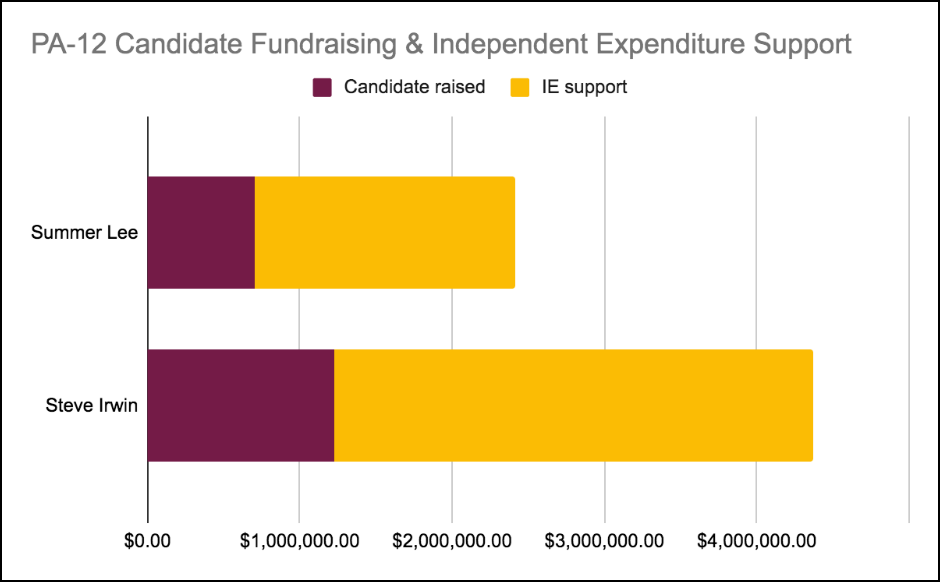
This month, progressives eked out a narrow yet significant victory. In Pennsylvania’s 12th congressional district, in the Pittsburgh area, state Rep. Summer Lee overcame almost $4 million in spending from conservative and moderate super PACs to defeat her opponent, Steve Irwin, by just a few hundred votes.

Lee and her allies were quick to credit grassroots organizing for her victory.

Rep. Alexandria Ocasio-Cortez tweeted: “People over money. You absolutely love to see it.” 

My former boss, Sen. Elizabeth Warren, chimed in: “When you fight from the heart and build a grassroots movement, you can win.” 

RELATED: Possible Sinema challenger surges, as she promises big donors she’ll protect their tax breaks

It’s an inspiring narrative, especially for progressive candidates across the country who are facing historically unprecedented levels of super PAC spending on behalf of their moderate or centrist opponents. But it’s easy to overlook an important fact: Lee received almost $2 million of independent expenditure support herself. 

To be clear, Lee was still outspent significantly by pro-Israel super PACs and Irwin’s campaign. But between her own campaign operation and outside support from Justice Democrats, the Working Families Party and others, voters likely saw almost $3 million worth of ads and mailers supporting Lee’s candidacy. 

Lee’s progressive platform is broadly popular, and she ran a robust field program. But in the end she won by an exceedingly narrow margin, so it seems clear that every penny of that nearly $3 million was necessary to deliver a victory.

The progressive movement needs more people like Summer Lee in Congress. And it’s clearer than ever that if we want to achieve this goal, we must organize money as much as we prioritize organizing people.


Want a daily wrap-up of all the news and commentary Salon has to offer? Subscribe to our morning newsletter, Crash Course.


I worked for Mondaire Jones in New York, who was outspent two to one by a Big Pharma billionaire and still won — and I just managed the campaign of Nida Allam in North Carolina, who was outspent close to four to one by Super PACs, and lost. I believe in the power of organizing, and that’s the most important long-term work we must do to grow our movement. But even the best organizing can overcome only so much spending. 

I took a look at key House winners endorsed by Sen. Bernie Sanders and Justice Democrats over the past six years. With very few exceptions, notably Ocasio-Cortez’s ground-shaking upset victory in 2018, progressives can overcome about a two-to-one ratio of opposition spending, but not much more. In many cases, progressives have actually outspent their opponents to win.

In 2018, Rashida Tlaib significantly outspent her opponent, Ilhan Omar raised about the same amount as her opponent and Ayanna Pressley, running against an entrenched Democratic incumbent, was outspent by just over two to one. In three victories by progressive challengers over Democratic incumbents in 2020, Marie Newman outspent Dan Lipinski in Illinois, Cori Bush outspent Lacy Clay in Missouri, and Jamaal Bowman was outspent less than two to one by a powerful New York incumbent after receiving almost $2 million of supportive outside spending. Mondaire Jones’ campaign for an open House seat north of New York City, for which I led the organizing program, was outspent by slightly more than two to one, but still spent over $2 million overall, including outside support. This year in Texas, victorious progressive Greg Casar vastly outspent his opponent. 

Then there is the other side of the ledger: When progressives lose. On Nida Allam’s campaign in North Carolina this year, we vastly out-organized our opponents, knocking on more doors and making more calls than any other campaign, by far. We were also supported by a $200,000 canvassing independent expenditure, and were endorsed by Sanders, Warren, the Working Families Party and the Sunrise Movement. But we got outspent almost 10 to one on mail, TV and digital advertising by super PACs. It was a similar story for progressive Erica Smith in North Carolina’s 1st district, who was outspent almost six to one and lost, as well as for many other defeated progressives this year and previously.

As the pro-Israel lobbying group AIPAC and other billionaire-backed super PACs gear up to spend millions in individual Democratic primaries, progressive organizations like Justice Democrats, which recently said it was being “outgunned” by big-money interests, and leaders like Sanders, who recently declared “war” on AIPAC, must confront an uncomfortable truth: We must organize money, not just people, in order to win. 

Progressives can replicate Summer Lee’s victory, in many more places across the country. In fact, we can expand our margins of victory. But we must approach campaign finance with the same determined and innovative approach we have toward grassroots field organizing. 

Read more on the progressive movement and the Democrats:

A salute to public school teachers: Heroes who show up with courage every day

Can we raise a glass for the teachers? Public school educators who rarely get the credit they deserve are changing the game every day. And as the tragic mass shooting at Robb Elementary in Uvalde, Texas, reminds us, their bravery and resiliency need to be recognized every day. On Tuesday, an 18-year-old entered the school and shot and killed 19 students and two teachers. As we collectively mourn the loss of each victim — the latest in the ongoing health care crisis of gun violence in America — we still expect teachers across the country to show up to school the next day. Like the brave people they are, most do. 

I have been visiting schools for eight years to give speeches, teach writing workshops, donate copies of my books and other goods. And I am more and more impressed, every single year, with the teachers in the classrooms I visit. Even in a relatively normal week, when a horrific school shooting is not at the forefront of our conversation, teachers are still expected to work under incredible challenges. And yet still they are pulling up every day. 

RELATED: Students protest ousting of teacher disciplined for showing support to bullied teen

The first time I was approached to talk to high school kids, it came straight from a teacher, not the school. She sent me a direct message via a student named Leek-Leek’s Instagram account, telling me how my essays on pop culture and social media (all two of them at that point) were some of the best writing she had ever read, extremely enjoyable and so easy to teach. I thought Leek-Leek was joking or his teacher was gassing me. I knew Leek-Leek very well, as I used to ball with his pops. I saw them daily in the neighborhood and they never mentioned my writing. But then Leek-Leek set up a FaceTime conversation with me and his teacher. She told me that he had been bragging to the class about me hanging with his family by the corner store, where we smoked Black and Milds and shared a bottle. This was true. 

Even in a relatively normal week, teachers are still expected to work under incredible challenges.

“The 400 block Robinson Street is the most official,” he told the class. “Watkins from the block and we gotta study him!” 

The kids from the 400 block quickly agreed. (The rest denied.) 

Initially, I wanted to decline the visit. I didn’t have a career at the time; there were no books, no pending deals, no column. My bank account was thinner than a runway model, and I often didn’t know where my next paycheck was coming from. But the teacher told me she had never seen her students so inspired by a local writer. I didn’t know what that would have felt like to me as a student, so I had to come in.

RELATED: Florida school district cancels real history as anti-CRT censorship spreads

The fact that as a kid I had never met a local writer was a part of the problem. There were some respected artists and writers in Baltimore, but either the schools never invited them in or they just never came. Was our school not good enough? Were we not good enough? Were we just bad kids? Those are the kinds of questions that bounced around my mind when I got older and found out that artists, politicians, and celebrities visited other schools. NFL football superstar turned R&B rapper turned most inspirational coach in college football history Deion Sanders visited my ninth grade class and gave me enough hope to make through four years of chaos in high school. But no writers. 

So I arrived at Leek-Leek’s school, where another student was waiting to escort me to their classroom, a neatly organized room with pictures of Black leaders and luminaries like Malcolm X and Maya Angelou hanging above the clean square desks arranged in a circle, and about 15 students dancing to Tate Kobang on the spit-shined polished industrial tile floors. I caught eyes with the teacher and she clipped the music and held up her right hand. The dancing instantly stopped, kids rushed to their seats and fell silent — so silent you could hear a mouse peeing on cotton.

“Our guest Mr. Watkins is here,” she said. “There will be more music during your first break after he leaves. Now, who wants granola?” 

Who wants granola? It’s super dry, I thought, as most of the students raised their hands as the teacher circled the room, giving each child a healthy scoop. I watched the students enjoy delicious chunks of oats, dates, chocolate chips and seeds as they waited for their guest, a local author — well, a local writer, who had only published two essays about street stuff and social media jokes — to speak to them. Wow. 

RELATED: Fox News host suggests U.S. “should not have the government involved in education at all”

I went to school in the ’90s, and it was hell. There were no rap music dance parties, no guest speakers from the neighborhood, no clean desks arranged in circles, and no granola. There was an abundance of chaos, non-relatable books, and teachers who hated us because we looked like our older brothers and sisters, whom they also hated. Don’t get me wrong — we had some good teachers who wanted to make sure we were getting an education. But they also made it clear that they did not want to be our friends or eat with us, and they definitely did not want to listen to our music. 


Want a daily wrap-up of all the news and commentary Salon has to offer? Subscribe to our morning newsletter, Crash Course.


“Dwight Watkins!” my ninth grade English teacher yelled at me, her skin redder than a ripe strawberry, as I was in mid-joke with the girl next to me. “Why are you talking again? That’s exactly why you’ll be murdered in those projects across the street!” 

“What?” I laughed with a confused smirk. “Really?”

Other students in the class joined in, laughing even louder. The teacher shook her head, slammed her chalk onto her desk and stormed out of the room, dramatic like a sitcom character. The saddest part is that we were laughing more at her tone and the way she stormed out rather than the fact she told me I would die just because I was talking a little in class. That is the public school environment I came up in, where there was little room for positive reinforcement and no interest in the things I cared about, only test scores, let downs and verbal assault. 

I thought the teacher needed me, but I ended up feeling like I needed the students just as much.

So in Leek-Leek’s class, I found a seat in the middle of the circle, gripped a handful of the most delicious granola I ever tasted and started talking to the kids about dreaming. No, I was not the writer I wanted to be — yet — but I had a clear path I felt I deserved to take, and that was all they needed to hear. The students chimed in, not only telling me what they wanted to be but how much they believed in me. In the beginning, I thought the teacher needed me, but I ended up feeling like I needed the students just as much. I’ve made these visits a priority ever since. 

RELATED: Republicans want kids to be bullies like Trump: The hidden agenda of the right’s attack on SEL

And over the last eight years I’ve learned a lot about the challenges educators work under. For starters, just how terribly underfunded our public schools are — by nearly $150 billion annually, according to The Century Foundation.

“Never before have we had rigorous, evidenced-based and concrete data showing exactly where and how much money we need to invest in order to give students a chance to succeed,” said Mark Zuckerman, TCF president, “Our study’s estimates provide policymakers at all levels a detailed roadmap to once and for all remedy our vast inequities in public education funding.” 

While some of the threats to safety and to curriculum independence are the same across class lines, affluent schools do tend to have smaller classrooms, plenty of staff and teacher’s aides to offer struggling children a little extra help, plus special visitors who work in career paths that are creative and cool and abundant technology including iPads and digitals boards that wrap the rooms — all the goodies young people need to compete. Those lucky students have every opportunity to make it, and that’s why they normally do. Meanwhile, I’ve walked into an underfunded public school’s bathroom and seen lumpy water splashing around in a hole in the floor below a wall where a broken-up urinal used to hang, the rancid smell of piss and expired creatures chasing me back into the hallway. And yet the students in that building were still learning. Their teachers were still showing up.

I’ve done events in public schools that had no heat in the winter — some of those days it was so cold I couldn’t take off my wool hat and coat and neither could the students or teachers. They stayed bundled up, fighting the chill in the room to listen to me talk about writing. I’ve given the same speech in  rooms with no air conditioning in hot months, drenched in sweat, looking like I just played ten games of basketball.

The students in these schools almost never have books — I reach out to foundations or buy them myself before I come — but as a community we make it happen.

But when I talk to the teachers about all of this — the lack of books and technology, the basic things their students need to function that are always missing­­ — they never complain. They have every reason to — on top of the national stories that remind them their classrooms are a target both physically and existentially — but they don’t. Many of them accept the horrible conditions that are the results of systemic underfunding and continue to do their job. They show up. And not just in the classroom. I bump into these teachers taking their students to restaurants, showing up for court dates, mingling at concerts and community block parties, at baby showers and on the basketball court. They are more present and effective in the neighborhoods they serve than politicians and police, while still being underpaid and under attack. I think we all know who has earned the budget increases — and the right to be called heroes. 

Read Salon’s recent investigation into the right’s war on public schools: 

Trump family to testify in fraud case

A New York appeals court ruled Thursday that former President Donald Trump and two of his adult children must sit for depositions as part of the state’s ongoing civil probe into the Trump Organization’s allegedly fraudulent business practices.

“A court has once again ruled in our favor and ordered Donald Trump, Donald Trump Jr., and Ivanka Trump to appear before my office to testify under oath,” New York Attorney General Letitia James tweeted. “Our investigation will continue undeterred because no one is above the law.”

A four-member appellate panel upheld a late-February decision by New York Supreme Court Justice Arthur Engoron, writing that he had “properly rejected appellants’ arguments that the subpoenas issued by the [Office of the Attorney General] should be quashed.”

James, a Democrat, subpoenaed Trump, Donald Jr., and Ivanka in December for documents and testimony. Just last month, Engoron held Trump in contempt for refusing to comply with his March 31 deadline to turn over documents to the attorney general’s office.

According to Thursday’s ruling by the appeals court, a parallel criminal probe conducted by the Manhattan district attorney’s office doesn’t inhibit James from seeking testimony in her civil investigation.

“The existence of a criminal investigation does not preclude civil discovery of related fact, at which a party may exercise the privilege against self-incrimination,” the court wrote in a four-page order.

The judges also dismissed the Trumps’ complaint that they have been “selectively prosecuted” due to the ex-president’s right-wing political beliefs, CNN reported.

As the news outlet explained:

The decision is a setback for the Trumps who have sought to avoid testimony in the attorney general’s investigation. James’ office in January said it found “significant” evidence indicating the Trump Organization used false or misleading asset valuations in its financial statements to obtain loans, insurance, and tax benefits and she needed to interview the Trumps about their involvement. Attorneys for James’ office [have] previously said the investigation is nearly finished and a civil enforcement action may follow. They are scheduled to interview Trump’s longtime assistant Rhona Graff next week. She served as a gatekeeper for Trump for decades until April 2021.

The ruling comes just two weeks after the appellate panel expressed skepticism during oral arguments on the deposition dispute. During the hearing, Judge Rolando Acosta asked Trumps’ attorney about their Fifth Amendment right to not answer questions: “What prevents you from just invoking it? Why do we need to intervene in this case or constrain the authority given to the attorney general?”

The Trumps have argued that James is trying to end-run the grand jury process, where witnesses receive transactional immunity for their testimony in New York. The lower court judge rejected that argument saying they could invoke the Fifth, a ruling the appeals court agreed with.

Eric Trump, who alongside his brother Donald Jr. took over the day-to-day operations of the Trump Organization in 2017 when their father assumed office, invoked his Fifth Amendment right against self-incrimination more than 500 times to avoid answering questions when he was deposed by James in October 2020.

The New York AG opened her civil investigation of the Trump Organization in 2019 after Trump’s former lawyer Michael Cohen testified under oath that the family business empire inflated the values of certain properties to secure favorable loan terms and deflated others to reduce real estate taxes.

James’ office has also assisted with a pending criminal probe launched in 2018 by then-Manhattan District Attorney Cyrus Vance Jr.

After obtaining years of Trump’s personal and business tax records following a protracted legal battle with the former president that went all the way to the U.S. Supreme Court, Vance indicted the Trump Organization and its chief financial officer Allen Weisselberg last July on charges of “carrying out a 15-year scheme to dole out off-the-books luxury perks to certain executives,” as the New York Times described it.

A criminal trial has been scheduled for later this year. However, prosecutors Carey Dunne and Mark Pomerantz resigned in February after Manhattan’s new district attorney, Alvin Bragg, took over the case in January and expressed concerns about moving forward with it.

Earlier this week, progressive advocacy organizations Free Speech For People and Daily Kos launched a petition urging New York Gov. Kathy Hochul to use her authority to reassign the criminal investigation of the Trump Organization to James’ office or to another district attorney’s office in the state.

Other inquiries, including into Trump’s effort to overturn election results in Georgia and into the deadly insurrection at the U.S. Capitol on January 6, 2021, could still result in criminal charges.

Marjorie Taylor Greene has spent more on security than any other congressional candidate

On Thursday, The New York Times reported that far-right Rep. Marjorie Taylor Greene (R-GA) spent $183,000 on security since January — the largest such expenditure by any candidate for Congress.

“From January to May, Ms. Greene spent nearly $183,000 of campaign funds to retain the KaJor Group, a private security company that has also been used by Kyle Rittenhouse, the teenager who shot three men, two fatally, at a 2020 protest against police violence in Kenosha, Wis,” reported Alyce McFadden. “Since January, Ms. Greene, who won the Republican nomination to retain her seat on Tuesday, has made monthly payments of $41,420 to $49,551 to the company, which highlights its ability to ‘invoke righteousness in the most uncertain and inconceivable of times.'”

“Federal candidates’ expenditures on security details have skyrocketed in recent years, mirroring increases in reported threats against lawmakers. Campaigns have spent a record-breaking $4.3 million on personal security since December 2020, according to new data from OpenSecrets, a nonpartisan research group that tracks money in politics,” said the report. “From 2017 to 2021, the number of threats made to federal lawmakers doubled, according to data provided to The New York Times by the Capitol Police. Since the end of March, the Capitol Police’s threat assessment division has opened roughly 1,820 cases, putting it on pace to surpass the 9,625 cases it opened last year.”

Greene has been subject to threats before. A man in Endicott, New York was arrested in March after leaving voicemail threats of “physical harm” to the congresswoman.

The explosion in spending on security was turbocharged last year by a Federal Election Commission ruling that such expenditures are a lawful use of campaign money.

Greene, who won re-nomination for her seat earlier this week, is a constant target of controversy. She has espoused belief in the QAnon conspiracy theory, suggested extreme weather events are being caused by Jewish space lasers, and was stripped of her House committee assignments after it was revealed she endorsed the killing of prominent Democrats on social media.

Ellen can say “gay” now: “The Ellen DeGeneres Show” ends by taking a stand … for celebrity

"Hacks" acknowledges Ellen DeGeneres' broad influence by having its star comic Deborah Vance (Jean Smart) open her show on a lesbian cruise by dancing awkwardly to Pharrell's "Happy." This is uncharacteristic of Deborah, and her writing partner and protégé Ava (Hannah Einbinder) knows it. Seeing the first shimmy makes Ava blurt, "Ohhh no . . ." as she recognizes the mimicry.

"She's doing Ellen."

But what Deborah does is worse than simple imitation. Ava understands that her boss thinks she's communicating with the audience in some magical language, letting them know she's on their side.

The audience cheers and claps along because they don't know Deborah – not in the way Ava does. Ava's aware that Deborah has spent her career catering to men, gay and straight, clawing her way to success in a field dominated by straight white guys. That means she interprets her fellow passengers' individual gestures of validation and acceptance the wrong way. Like many of her straight male comedian counterparts, she misinterprets their attention as flirting. She thinks they think she's hot.

RELATED: "Hacks" is a generational sucker punch

"Honestly, when I first found out I was booked on a lesbian cruise I was angry," Deborah declares at the top of her act. "But you have welcomed me with open arms, and I am so flattered! And if you know me at all, you know that flattery is my biggest turn-on." The audience applauds.

A beat later Deborah sings out, "I should have known – women know how to treat women!" This nets more thunderous applause . . . the last her set gets. From there she demonstrates that she doesn't know how to treat women, starting with a stereotypical flub about lesbians and golfing before tumbling face-first into some crowd work that incorrectly assumes her audience is horny for her.

To people like Deborah … Ellen DeGeneres and her talk show represent the solved problem of straight America's tolerant view of gayness.

"This lesbian must be broken!" she brays after her first angry rejection, at which the crowd turns on her. When a lame joke about parallel parking is booed down, she swings back with, "Oh please – it's not a lesbian joke, it's a woman joke! Everyone hates women!" Hours later Deborah and Ava are downgraded from V.I.P. status to dinghy-riding cast-offs forced to exit the voyage mid-sea.

Jean Smart in "Hacks" (Karen Ballard/HBO Max)All great art translates some version of reality – and in this scene, Deborah exemplifies the frustrating relationship comedians purport to have with people pushing back against aspects of their act that they find objectionable. Point of fact, the content to which the cruise ship's audience takes the highest offense wasn't jokes, it was Deborah's defensive, self-indulgent badgering.

However, the fact that Deborah slides into this disaster by channeling DeGeneres' gawky two-step as if it were a universal handshake reveals the writers' understanding of how mainstream, cisgender heterosexual Americans view the exiting talk show host these days, too.

To people like Deborah, an entertainer who built her fortune on playing to the middle, Ellen DeGeneres and her talk show represent the solved problem of straight America's tolerant view of gayness. Think of all the times you may have heard someone expressing they had nothing against "the gays," so long as they don't "rub our faces in it."

Then picture DeGeneres, all grins and sneakers, dancing with her fellow executive producer (as of 2020) Stephen "tWitch" Boss at the top of every show. A Black man and a white gay woman, ebony and ivory in perfect harmony, just like Sir Paul McCartney and Stevie Wonder promised way back when, leading into interviews with Jennifer Aniston (marking a reunion with DeGeneres' first-ever guest), Billie Eilish and Pink.

In Thursday's monologue for "The Ellen DeGeneres Show," the last one she'll ever do for this series, DeGeneres validated that view by pointing out how far she, and therefore we, have come in the 19 years that the show has been on the air.

"When we started this show I couldn't say, 'gay' on the show," she tells the audience. "I said it at home, a lot. 'What are we having for our gay breakfast?' Or, 'Pass the gay salt.' 'Has anyone seen the gay remote?' Things like that, but we couldn't say, 'gay.'"

She continues, "I couldn't say, 'we' because that implied that I was with someone. Sure couldn't say, 'wife,' and that's because it wasn't legal for gay people to get married, and now I say 'wife' all the time."

This episode was recorded on April 28, a full month after Florida's governor Ron DeSantis signed the "Parental Rights in Education" bill, better known as "Don't Say Gay," into law. But DeGeneres' monologue doesn't specifically mention this or any other anti-gay, anti-transgender legislation slithering its way through state legislatures.

There's the very real possibility that the conservative-skewing Supreme Court may overturn the legalization of same-sex marriage too, but there was no mention of that either. When DeGeneres points out that she says "wife" all the time, the camera simply panned over to show her glamorous spouse Portia de Rossi warmly smiling and nodding as the people around her applaud this accomplishment.

A few lines later DeGeneres observes, "What a beautiful, beautiful journey that we have been on together. And if this show has made you smile, if it has lifted you up, when you're in a period of some type of pain, some type of sadness, anything that you're going through, then I have done my job."

RELATED: The problem with Ellen DeGeneres is that she made "be kind" the unattainable goal of her brand

Well, sure. Succeeding in daytime talk means appealing to the broadest audience possible, which DeGeneres commodified by making "be kind" her motto and the show's unstated compass. But in 2020, after Buzzfeed News revealed multiple claims of a toxic workplace environment behind the scenes that included sexual misconduct and harassment, and alleged that the host turned a blind eye to their complaints, that front crumbled.

DeGeneres ends her show in another moment of drastically higher stakes for LGBTQ+ people.

Along with that, people began looking more closely at the way DeGeneres used her influence to gloss over other public figures' mistakes. One of the most famous was the position she took on her show in 2019 after Kevin Hart pulled out of that year's Oscars hosting gig rather than apologize again for a string of homophobic tweets that resurfaced.

DeGeneres invited Hart on her show and informed the world that "as a gay person" she had forgiven him, before demanding the Academy reinstate him as host.

Matt Brennan published a tremendous analysis of DeGeneres' rise and fall in the Los Angeles Times in which he explains why this moment, in his words, "might be more striking for what it says about DeGeneres than what it says about Hart":

Slipping with breathtaking, almost comic alacrity between performance and personality, the talk-show host's defense of her guest hinged not on his decency, his regret, even their friendship, but on . . . his performance in the movie 'The Upside.'

. . . To mistake a fellow celebrity's role in a $100-million tearjerker for moral rectitude is a peculiarly Hollywood brand of category error; it's as if DeGeneres' muscle memory for the promotional interview could not adjust to the demands of the moment.

Three years later DeGeneres ends her show in another moment of drastically higher stakes for LGBTQ+ people. Unfortunately, by talking her way around taking a stand against the heightening wave of anti-gay bigotry, she leaves us with the impression of siding with the famous and powerful over people who might benefit from an influential demonstration of kindness.

DeGeneres says she wants to lay low for a little while before doing something again, saying she doesn't know what that is. Aniston encourages her to return to live stand-up – a broad and varied field that includes in some corners where transphobic jokes are all the rage. Ricky Gervais agrees with her position on Hart in his new Netflix special "Super Nature," which he opens with an explanation that nobody should take him seriously before unleashing a river of jokes about "the new women . . . the ones with beards and cocks. They're as good as gold; I love them!"

Netflix 2018 comedy special "Ricky Gervais: Humanity" (Ray Burmiston/Netflix)
To him, anyone condemning punchlines about transgender people is virtue signaling, "trying to bring people down to raise their own status."

Gervais, who has hosted the Golden Globes many times, has a large constituency of fans, as does Dave Chappelle, whose streaming special "The Closer" made headlines for its transphobic humor and inspired a Netflix employee walk-out. Chappelle only doubled down after that, responding to being assaulted on stage by riffing that his attacker was "a trans man." (The suspect is not.)

Gervais lists the things he jokes about in his new set, including "AIDS, famine, cancer, the Holocaust, rape, pedophilia . . . but the one thing you mustn't joke about is identity. The one thing you should never joke about is the trans issue. They just want to be treated equally. I agree! That's why I include them."

How charitable. Except for the fact that the transgender community is violently under siege. Perhaps Gervais wasn't aware of recently passed laws in Idaho and Alabama criminalizing gender-affirming health care for transgender children, or a Texas law requiring medical professionals and teachers to report parents helping their children to receive such care to the Texas Department of Family and Protective Services (DFPS). But Bill Maher is.

Less than a week ago Maher went off on a nine-minute, 21-second anti-trans tirade titled "Along for the Pride" on an episode of his HBO series "Real Time," scoffing at the notion of gender-affirming medical care for children who identify as transgender, positing that some kids are claiming to be trans because it's "trendy."

Comics love the equal opportunity offender argument, except when people point out that not everyone they're joking about has equal power. There are entire corporate apparatuses dedicated to eradicating AIDS, eliminating famine, and cancer research; there are able comedians who have demonstrated that is it possible to joke about these issues, and rape, and worse, without dehumanizing people in the process.

If a performer can't find a way to do that, at the very least they can use their reach to lend a voice to people who are suffering instead of repackaging the terminologies used against them as just jokes.


Want a daily wrap-up of all the news and commentary Salon has to offer? Subscribe to our morning newsletter, Crash Course.


Meanwhile in the latest episode of "Hacks" a wiser woman, albeit one who doesn't exist, has a revelation that probably would have served DeGeneres well, along with all the other comics mentioned here.

"I need to make more fun of myself.  . . . I was never the butt of the joke. It was the caricature of myself that was," Deborah tells Ava after she destroys at a show where she ditches her woe-is-me flavor of confessional humor. "I have to admit what I did wrong, too. . . . I have to hold myself accountable! I am a bully who's been thinking of myself as the victim. I mean, people like me because I take everyone down, right? Well, I need to take myself down too. In a real way."

From there a montage plays showing Deborah killing again onstage with jokes calling out her selfishness, destructive drive, and an embarrassing episode where she sleeps with her therapist.

"How many women do you have to care about to be a feminist?" she quips. "I mean, what if I only care about one woman – me!" You've gotta give the woman her some credit. At least she's direct about what she stands for.

Likewise, DeGeneres could have thrown her influence behind specific causes in her finale statements, the very nature of which is a nothing-to-lose opportunity. And she almost did, in the end, when she said, "If I've done anything in the past 19 years, I hope I've inspired you to be yourself, your true authentic self. And if someone is brave enough to tell you who they are, be brave enough to support them, even if you don't understand," DeGeneres said. "By opening your heart and your mind you're going to be that much more compassionate, and compassion is what makes the world a better place."

Twenty-five years ago ABC canceled her sitcom "Ellen," after she came out in a groundbreaking episode. People didn't want to watch a lesbian once a week in primetime, she said. "And I said, 'OK, then I'll be on daytime every day. How about that?'" And this is enough for her audience, current and future, to cite as progress.

More stories like this:

From chicken parmesan to chocolate cake, here’s what to cook and eat when you’re in need of comfort

We gather around the dining table for many different reasons, often out of pure necessity. In the same way that food can serve as an emblem of joy and celebration, it can also nourish us in times of grief and stress. It’s in those moments that we turn to comfort food.

That said, the idea of cooking for comfort may feel empty or selfish when there are so many problems in the world. It’s hard to feel comforted when disorder is seemingly omnipresent on our TV screens and Twitter feedsEarlier this week, I was talking to my coworkers about these feelings of futility, when Salon senior writer Mary Elizabeth Williams gently interjected.

Related: Baking our way through survival

Cooking for others, she reminded me, is one of the simplest ways to gather with the people you love. Once you’re seated for a meal, the kitchen table serves as both a respite and a powerful place to strategize for meaningful change in the world outside of our kitchens. 

Data shows that during the pandemic, more Americans began to cling to the ritual of sitting down for dinner as a household. In a recent survey conducted by the direct-to-consumer brand ButcherBox, 76% of responders wished they could do so more often. What, exactly, prevents them from doing so? Busy work schedules and extracurricular activities.


Want more great food writing and recipes? Subscribe to “The Bite,” Salon Food’s newsletter.


I know that it’s easier said than done, but maybe there’s one meal over the next few days in which you can push those commitments to the backburner — even if only for an hour — to cook and to gather. Here are some dishes from the Salon Food archives to help you get there: 

Comfort food

When I think of comfort food, I personally think of pasta. That could mean this springy play on pasta e ceci, which is packed with bright lemon and dill, or a simple pot of Maggie Hennessey’s summery tomato and buttery brie pasta. If you’re hungry for something more, whip up a sheet pan of Michael La Corte’s impossibly crispy chicken parmesan with a side of noodles.

Food that connects us to a place can be a powerful balm, as well. Try Antoinette Deitcher’s Jamaican Callaloo or Beverly Kim’s kimchi jjigae

Cooking for a crowd? Consider a gigantic sheet pan of Williams’ “stroganachos.” 

Comfort desserts 

Continue the comfort with dessert. Take advantage of seasonal produce with columnist Bibi Hutching’s riff on panna cotta or her mom’s strawberry delight squares. If it’s peach season in your part of the country, grill some up. Top them with a generous — very generous — spoonful of whipped cream and some fresh mint leaves. 

Beat the heat with Mary Elizabeth William’s ingenious ice cream sandwiches, which are made from King’s Hawaiian sweet slider buns stuffed with Kona coffee ice cream. They’re easy and decadent, much like Valerie Bertinelli’s Sicilian Chocolate Love Cake

More comfort food we love: 

“Winnie the Pooh: Blood and Honey” takes Pooh and Piglet to the bad place

Ah, yes. More bad things. 

In a perfect example of the wrong that could come from a creative work slipping into public domain, A.A. Milne’s beloved characters Winnie the Pooh and Piglet are going full horror in a Jagged Edge Productions slasher called “Winnie the Pooh: Blood and Honey.”

In a Variety interview, the film’s writer, director and co-producer, Rhys Waterfield, said they are feeling the need to expedite post-production of the slasher, which just wrapped filming in early May, due to the massive amount of attention it’s been getting since images from the film began to circulate in teasers. The look of the film, which is pure hell, is a perfect match to the premise, which revolves around Winnie the Pooh and his pal Piglet being abandoned by Christopher Robin prior to him leaving for college. Stop right there and this would be the saddest movie ever written, and it still very well may be, but add in a whole lot of blood and guts and you’ve got the makings of a dark and twisted cult classic. 

And yet … why? Aren’t we already doing our best to keep chins up while treading water in the Swamp of Sadness? Do we really need a beast-mode Pooh and Piglet? Actually, yeah. It fits kinda perfectly into all of (gestures broadly) this.

“Winnie the Pooh: Blood and Honey” (Jagged Edge Productions)

“Christopher Robin is pulled away from them, and he’s not [given] them food, it’s made Pooh and Piglet’s life quite difficult,” Waterfield says of the film’s plot. “Because they’ve had to fend for themselves so much, they’ve essentially become feral … So they’ve gone back to their animal roots. They’re no longer tame: they’re like a vicious bear and pig who want to go around and try and find prey.”

RELATED: Ti West on anyone walking out of his slasher film “X”: “What did you think you were signing up for?”

According to Variety, “Winnie the Pooh: Blood and Honey” was shot over a ten day period near England’s Ashdown Forest, the real-life inspiration for Milne’s Hundred Acre Wood in the original classic Pooh tales. Milne’s “Winnie the Pooh” only just entered into public domain on January 1, 2022, leaving his characters ripe for the picking in terms of being used for any creative endeavor, free from the confines of copyright. It was only a matter of time before they landed in something like this. Porn will surely be right around the corner, but let’s just collectively agree to push that out of our minds forever.


Want a daily wrap-up of all the news and commentary Salon has to offer? Subscribe to our morning newsletter, Crash Course.


During his interview with Variety, Waterfield hints at the film having some comedic relief, hard as that is to imagine in a movie about our childhood animal friends being nearly starved to death by their person, a sin second only to actual murder.

“When you try and do a film like this, and it’s a really wacky concept, it’s very easy to go down a route where nothing is scary and it’s just really ridiculous and really, like, stupid. And we wanted to go between the two,” Waterfield says.

Milne created “Winnie the Pooh” while laid up in England, recovering from injuries sustained during World War I. According to Smithsonian Magazine, Milne’s family moved from London to Crotchford Farm to be with him while he healed, and it was during many lazy-day flights of fancy with his son, Christopher Robin, that the characters we’ve all grown to love came to shape in Milne’s mind. Well before Milne’s creations were brought to life by Disney; Pooh, Eeyore, Piglet, Kanga and Tigger were the stuffed companions of Milne’s son, and they’re currently housed in a permanent New York Public Library exhibit where they will, hopefully, be shielded from the uglier parts of life, and cinema, forever.

Read more:

“What can be scarier than death?”: Ukraine filmmaker on making a war film during wartime

“Butterfly Vision” is the stunning feature debut film by Ukrainian director Maksym Nakonechnyi, who cowrote the film with Iryna Tsilyk. It is screening as part of the Un Certain Regard program at this year’s Cannes Film Festival. This intimate drama is certainly timely as it depicts Lilia (Rita Burkovska), a soldier who works with drones, returning home after being held captive in Donbass for two months by separatists. 

Lilia is scarred physically — there are marks on her body — and emotionally. She has episodes of PTSD and is skittish when her husband Tokha (Liubomyr Valivots) first tries to touch her. What is more, she is pregnant, having been raped while imprisoned. Tokha is furious and vows revenge, and Lilia opts against having an abortion. Their relationship suffers as a result, but Lilia finds resilience and a will to live in the face of the trauma she has endured. 

Nakonechnyi captures Lilia’s fragmented psyche, from sitting with her in silence as she absorbs information or cutting between her past and present in ways that magnify her situation. This is a tough but necessary and compassionate film that speaks to the crisis unfolding in the Ukraine right now. 

RELATED: Director on “Huda’s Salon” recruiting Palestinian women for Secret Service: This is still happening

The filmmaker spoke with Salon in the days before his film’s premiere at Cannes about making “Butterfly Vision.”

What inspired you to tell this story and how did it depict or foreshadow what is currently happening in the Ukraine?

“I started thinking: What can be scarier than death?”

I had the idea for the film when I was editing another film, “Invisible Battalion,” a documentary about women fighting in the Russian-Ukrainian war. It was six short portraits of female soldiers, so I was listening during the edit and seeing scenes again and again. The stories and words of the protagonists impressed me deeply, especially when one woman said the scariest thing for her was the captivity. I started thinking: What can be scarier than death? That’s how I made up the fictional story about Lilia. I started writing a script and worked with Iryna Tsilyk, my cowriter, who is also the codirector of “Invisible Battalion.” I was grateful because she is carrying a lot of experiences that I have not had — she’s a mother, and her husband is a veteran. She could bring a lot of insight and perspectives to the story.  

One of the protagonists of that documentary film, Julia “Tayra” Paevska, is unfortunately in captivity now. She was captured in Mariupol almost 50 days ago, and we are now claiming for her immediate exchange. She was a volunteer paramedic; she cannot be considered a prisoner of war and has to be released immediately. 


Want a daily wrap-up of all the news and commentary Salon has to offer? Subscribe to our morning newsletter, Crash Course.


Can you talk about how you were able to make this film both during the pandemic and at wartime. 

“The war affected the shooting … We were told by authorities that the location we secured was too dangerous and we had to move.

It was made during wartime from the very first moment of the idea. During the research, we were travelling to the frontline with the main actress, production designer and cinematographer, and seeing the soldier’s routines and their daily life and researching and understanding what war is like. When we started shooting, the pandemic happened. It was really kind of tough, to be honest. We were supposed to start shooting late spring, but we had to postpone because of the pandemic and replan and reorganize everything following all the restrictions. We started shooting in the summer, and after the first day, I tested positive for COVID, so we had to replan and postpone, and reschedule. After the first shooting day of the second block, the director of photography had a positive COVID test. Again, postpone and reschedule. We had a solid pre-production and that made us confident that despite all these obstacles we will finish it. 

The war affected the shooting — beside that it was a war-related story — we were doing research with different people who are either participants or witnesses or victims of war. In the last shooting block, there was a situation where we had chosen the location and permission to shoot, but it was close to the frontlines. When Russia started gathering their troops near the borders for the first time — April 2021 — we were told by authorities that the location we secured was too dangerous and we had to move. We had to choose another location without actually seeing it. 

We were lucky to have the film sent to the mastering studio one or two days prior to the full-scale invasion on Feb. 24. Once the first shelling arrived in Kyiv, and we were hiding in the metro station, I contacted our post-production partner and asked if we had sent everything to the Swedes who were in charge of mastering, and the post-production coordinator said we were all covered. I felt a big relief that no matter what happens, the film will be finished.

What does it mean to be part of the Un Certain Regard program at Cannes, which is rare for a Ukrainian film? And can you discuss attending the festival, given the situation in the Ukraine? 

“We tried to get a collective image of women at war.”

I managed to get permission from a request from the Ukrainian State Agency for the border service because it’s not easy for men to leave the country now because of martial law. To be present at Un Certain Regard is a big honor and a sign of great recognition to my crew and me as filmmakers and to Ukrainian cinema. At the same time, I feel that it is really essential to be clear with our position and our narrative and our point of view on the cultural process even despite disagreements with the festival’s position. The film should speak for itself and being presented at Un Certain Regard gives that possibility of speaking out and making our voices heard. We should use opportunity to gain more recognition.

What decisions did you make about Lilia’s resilient character — her work as a soldier, her relationship with her husband and family as well as her decisions about her baby? She is described as “an unbreakable woman,” but she is also naïve, reserved, and vulnerable as a result of her PTSD.

Lilia’s character doesn’t have a certain prototype. My cowriter and Rita, who portrayed the main protagonist, and I collected different stories of women who were victims of war violence, or fighting the war, or held as captives. We tried to get a collective image of women at war. Rita has a strong personality and a strong individuality, so I knew she would bring her vision into the character. It includes unbreakable-ness and vulnerability and naiveness and bravery and stubbornness and maturity. After I wrote the story, that’s why I chose such a perspective — a female and ex-captive and sexual violence victim perspective. This is an inclusive perspective that is allows you to make the story universal.

The style of the film is very intimate, yet there are flourishes such as the drone shots, or “glitches” that suggest Lilia’s past trauma. Can you talk about your approach to telling this story and getting inside Lilia’s headspace? 

It was a multilayered process at every stage. Even writing the script we wanted to express what someone with PTSD experiences and just observing a life of such a person and seeing small details that tell big stories — not “talking it out.” When we started researching and did pre-production with RIta and director of photography, we discussed the shooting style and that we wanted to include drone shots because it was part of Lilia’s vision; it was part of her work at war. We understood it was something that would remind her, or something she would see or recall. Every filmmaker likes drone shots, but we were lucky to have a story that fit it and makes it an artistic decision.

We started elaborating more on set and in post-production on this combination with the inclusion of different images, such as media shots that allowed us to start exploring the fringes of digital, social, personal, and metaphysical images and combining it. It makes the film eclectic, but it is a good expression of our reality now, as it relates to current affairs and life as a society and as a nation. The glitches came at the last stage of post-production.  

One of the most striking scenes has Lilia boarding a bus and being both honored for her service by some passengers, criticized by others, and thrown off by the driver. Another woman gets off with her in solidarity, showing respect. I appreciate how you show the various responses. Can you discuss this scene? 

It was our intention to include this layer — to show what the film is about, that the war isn’t over once you leave the battlefield. It just becomes more complicated, and it can follow and chase you anywhere, and the enemy can be someone unexpected, like your fellow citizen boarding a bus with you. Suddenly, your allies may not be fully your allies, civilian life is more complicated than life at war, and why it can be scary for people with war experience. 

Tokha’s character is also interesting. He is a hothead. He externalizes everything that Lilia internalizes. What observations do you have about his character and male soldiers who are unable to contain their justifiable rage? 

Tokha is not an antagonist; he is the same victim-participant as Lilia, but he is dealing with his trauma and his experience in his own way, which is accessible, and understandable, and organic to him. He is not able to cope with that due to his nature, or other reasons. Despite him being a hothead and doing controversial things which immediately have consequences, it was important for us to show that this is a part of his war, and what is happening to him and how he reacts, is a result of the enemy attacking him personally as well as part of the larger society.

What do you want viewers to come to understand from seeing your film? 

What I realized making the film is that you never can get someone’s traumatic experience without experiencing it personally. It is impossible.

More stories to read: 

Bethenny Frankel on success built on authenticity: “Not everybody likes me, but people trust me”

Over eight seasons as one of “The Real Housewives of New York City,” Bethenny Frankel built an empire out of being herself. Whether as the founder and CEO of the lifestyle brand Skinnygirl or the host of the podcast, “Just B with Bethenny Frankel,” she’s always thrown herself wholeheartedly into everything she does.

In partnership with Global Empowerment Mission, she established the BStrong initiative, which has raised $125 million in aid and counting for relief in Ukraine. Now, she’s sharing the secrets of her success and offering advice in her new book, “Business is Personal: The Truth About What It Takes To Be Successful While Staying True To Yourself.” Frankel sat down with me on “Salon Talks,” which you can watch here or read a Q&A of below, to talk about why authenticity is good for business, about the “47-layer dip of insanity” of the Amber Heard and Johnny Depp trial, and how failure can be a win.

The following conversation has been lightly edited for clarity and length.

That book title is a mouthful, but it’s all in there.

I’m excited about this book because it comes at a pivotal time when I have succeeded at so many different things — not without failures and obstacles. We’ve also come through a time where non-traditional entrepreneurs are really rising. I just think it’s good wisdom for anyone who is a mogul, anyone who’s a mom, anyone who just has aspirations to do more, do better and just improve in business. 


Want a daily wrap-up of all the news and commentary Salon has to offer? Subscribe to our morning newsletter, Crash Course.


This is not just a book for an aspiring entrepreneur, or someone who wants to be a one-person brand like you. It’s for anyone trying to figure out, “What do I want to do in my professional life, what do I want to do in my personal life, too? It’s really about relationships.

Yes. I talk about relationships and staffing and teamwork and crazy things that have happened on this journey, and that my personal life is very intertwined with my business life. They’re one. And how you are in your personal life is how you should be in business. You shouldn’t see someone acting in a way outside of the business space in a way that they wouldn’t feel proud to portray themselves in the business space, and vice versa.

There is still so much misconception about what it means to be successful, and this idea that you have to be a toxic person to get respect and to be the alpha. Your book is about how you’ve got to be authentic. You’ve got to own your mistakes. You’ve got to take accountability. Why is that step one in getting ahead in a world where that is not always the go-to philosophy?

I just think that it’s much more liberating and easy to be authentic, and then you’re taken seriously. Once you establish that you’re trusted, it’s something that just stays with you. Not everybody likes me, but people trust me, people believe me. I can be scary to people and aggressive in business, but they do not think I’m screwing around or playing games. They just know it’s what it is and it’s what it’s not. 

“Not everybody likes me, but people trust me.”

There’s a deal that I’m working on right now. I was back and forth and I said, “Now we are here. This is how I will walk away if we don’t get this done now.” I’m very serious, and I’m serious in my personal life, too. Not that I’m not humorous and I’m not an ultimate joker, because humor is actually the most important thing to me besides sleep, but you want to be taken seriously, and by being straight and honest and authentic, you get there.

RELATED: Annabelle Gurwitch reflects on cancer, divorce and all things wellness: “Resilience has its limits”

Let’s talk about that walking away part, because that is a big part of this book. You walked away from “Housewives,” you walked back, you walked away again. Your story that is about knowing when to make that next leap, and that can be so scary. What do you say when someone’s saying, “I don’t know if it’s time for me to leave the table?”

If you have in your gut that you might want to leave the table, you might have to go with it because when you jump, you fly. It’s not that it’s so scary. It’s that it’s also so exhilarating and it feels really good.

It’s not something that should be emotional. People bluff. It’s not to bluff and to tell someone else you’re leaving and then actually not, because then you’ll never have credibility again. Even in disciplining your kids. You can’t say, “If that happens, this is going to be the consequence,” and then not follow through. Sometimes that sucks because you have to follow through and you just don’t want to do the punishment. You didn’t think your kid was going to push it.

It’s the same thing in business. If you say, “I’m walking,” you’ve got to walk. Ultimatums aren’t a great idea, unless you’re really going to exercise the option. But saying no means saying yes in so many ways. Having the courage to leave something that’s not working for you opens up other opportunities.

“I’m very in tune with what women are thinking, feeling and want. “

There is a story in the book about me not going on live television to sell swimwear with five minutes’ notice for HSN. It wasn’t that popular. It’s tens of thousands of dollars of merchandise. But I have a relationship with this audience. The swimwear was ill-fitting. I wasn’t selling them a garbage product. I took the financial hit. I took the risk of being sued. I wasn’t selling crap, and I have that reputation. Literally two days ago, the actual swimwear now came, by a new manufacturer, and it’s perfection. I’m proud and I feel good about it.

So that’s not a failure. That’s a success. That’s me having the courage to get on the phone with the head of HSN and say, “I can’t sell something that’s not good,” and them saying, “We agree with you. You’re right. Your partners aren’t correct. Your business managers aren’t correct. You should not be selling something that’s not good because it’ll give us a whole problem 10 ways from Sunday.” Those are the times that the failures are successes. You walk away from something and you leave millions of dollars on the table, then you see the door open in so many different ways and you say, “Oh, that’s why that happened.”

As someone who is launching two daughters now out into the world, I’m thinking a lot about those first steps of, what do you want? You start with saying how it’s not enough to have a good idea, it’s not enough to just say, “I want to make money.” You have to have a why.

In that moment, yes. But when you’re young, you don’t. What do you want to do right now? Go do it well. That could be working as a barista, it could be cleaning someone’s house. Do whatever you’re doing well or don’t do it. Just get on the damn board. Get a job, do something, learn something, whatever that thing is you think it’s not going to matter. A lot of things you use later. I was a bartender. I created a liquor brand. I had an event production company and I learned all about food. I became a natural food chef.

Success comes in many different shapes and forms, and experience comes in many different shapes and forms. You don’t have to be at the right place at any time. I didn’t become what most people would consider successful till my late 30s, which is late bloomer. But I had a lot of different jobs and I learned a lot. Then once you are up to the plate, you have so many experiences and such a skill set. You’re such a toolbox that’s more full than other people, because young kids think they have to know the answer to everything and be at the right place and be on the right trajectory. A, that’s boring. B, it’s pressure. C, you’re likely not going to end up in the industry. You’re not going to marry the first person you date, odds are, and you’re not going to end up at the first job you have, odds are. There are many exceptions. I would say if you don’t know what to do, just get somewhere and do it well.

Bethenny, when I look at your career, I see the story of someone who sees a need, whether that need is women wants a drink that caters to them, or whether it is bringing relief to people who’ve just been hit with a disaster. There’s something there that is in your why. What is your why?

I think I’m very in tune with what women are thinking, feeling and want. Kevin Huvane, the head of CAA, once told me, “You could be the greatest communicator I’ve ever met.” He said something more. I’m embarrassed to say what he said. He says, “I mean, you could end up being the greatest communicator of our time,” which I think is overshooting the mark. But I think I’m a good communicator. Being transparent and communicating and being organized and good with efficiency in your words and style is very helpful in raising money for philanthropy. 

“Most businesses are run like s**t and most charities are run like s**t.”

Being very communicative about beauty products and the BS right now in the beauty industry, it’s just resonating with people. Not because of the beauty products, but because of the message about, “You don’t need to spend all this money,” and I’m cutting through. The cocktail was a solution. I think women just want to drink a margarita. Let’s not drink other things because we really want that. How do we get that? It’s just very two points and a straight line. I’m not a swervy kind of gal. I’m just direct, “How do we get people what they want now?”

And applying the same principles across the board. In the past few months with the challenges in Ukraine, have you found anything unique that you’ve had to think about or problem-solve?

My partner Michael at Global Empowerment Mission is doing most of the operation and logistics. In the past, I’ve been more physically there. It’s funny because my fiance says, “I don’t think that the CEO of Coca-Cola is putting the liquid in the bottles.” Sometimes I spread myself too thin. I want to be there and I want to be here and I want to be on the computer and raising the money and doing the message and doing the press. It’s too much. That’s difficult because I don’t do philanthropy 100% of my time.

But in business or in learning to snowboard or starting something new, in the beginning, you get sore and it’s harder and you get more tired and stressed out. Once you understand how to do something, you have that skill set. This is the same thing. You make the mistakes when things are smaller. Then now you’re at the big Super Bowl of philanthropy efforts and your game is tight. My partner Michael has learned a tremendous amount also on his end. It’s like you’re working out smarter. You’re not getting out of breath. You’ve got this. We’re lean, we’re efficient. We do more on less than any other initiative.

People need to only trust charity initiatives that they understand. If we know that not everyone’s a good business person and not every business is a good business, why do we just assume that anyone posting a link that’s doing charity knows what the hell they’re doing? Most people don’t, because most businesses are run like s**t and most charities are run like s**t. Sorry, I know you’re trying to do something good, but if people can’t see exactly where the dollars and cents are going and they don’t know who you are as a business person, why would they trust you with their money? People are donating because they know that I’m not playing any games. We could make mistakes and there’s always brushing with mistakes and corruption, and it’s insane doing disaster relief, but we’re tight and right. People are doing that because I think they know I’m involved and I’ve got a decent track record in business.

It comes down to accountability.

Yeah. If I screw up, I’ll say I screwed up. If there was an error — which there hasn’t been — but if there was ever an error, I’d have to cover it.

Talking about those learning curves and mistakes, you talk in the book about the power of restraint. We live in such a reactive culture. When things are going sideways, you say, “Don’t react until you gather your power,” which is an incredible thing to remember and a very hard thing to do, Bethenny. Why is that so important?

Because you make your best decisions when you’re calm and when you’re going from sleep to wake and when it’s not a disaster. While I have the skill set of scrambling and hustling and figuring it out, cooler minds do prevail. You have to collect yourself and then figure out how to tackle something. You can crowdsource. I like crowdsourcing, talking to different people. You’re getting a bunch of different recipes for one thing you want to make — and then you have to ultimately figure out what you’re going to put into that recipe.

You ask people, you think about it, you play with it, you go upside down. If it doesn’t click, you wait, because it will click. Most problems can be resolved. I’ve been in some serious, serious s**t and figured it out, but it’s certainly not immediate. One step at a time.

You’ve talked very openly about going through a breakup that lasted for years and was playing out in real time, hearing things that were just not true, and having to take that moment of being in your power and not reacting.

Now you’ve been talking about another famous case. You have more insight into that kind of a situation than almost anyone right now with Amber Heard and Johnny Depp, and you get what it must be like for someone who has been on the inside of an ugly, ugly breakup.

Everybody in that situation seems like they contributed in some way. But Johnny Depp having to sit back and watch his career deteriorate because in the eye of the #MeToo storm was a woman saying that he was abusive, it’s not that popular to be a white male in Hollywood. He’s in Hollywood, he’s a white male and he is being accused of being an abuser. He’s sitting back and he’s waiting till his day in court because I’m thinking, how are they going to court? What they’re doing, I thought it was probably a couple of million dollars, what this is costing minimum and scrutiny and the time. And anything can happen in a courtroom. It’s risky for everybody. Literally, someone could say they ate a tuna fish sandwich and if they really ate turkey, you could get the whole case thrown out. It’s risky.

I now understand that he really needed to have his day in court, and/or he probably felt he was never going to be able to get out of this. Like it was a tiny ant buzzing in his ear that was never going away. He could have a life and go on with his day and have his kids. But there was something chronic, not acute, and now they’re in court and the truth does usually come out. I felt badly that Drew Barrymore got in trouble for saying it was a seven-layer dip of insanity. I said on my podcast it was a 47-layer dip of insanity.

It’s crazy. Both of them stayed with each other under what seemed like beyond adverse, insane and toxic circumstances during the relationship, not just when they broke up. I had a situation once where there was a breakup and not so positive experiences during the relationship, but not like that. People cannot stay in situations. If at any point, one person has ever put their hand on another or put feces in your bed, it’s time to go. There’s a line, so this is another level.

Yeah, I think that’s a red flag.

It’s a red flag. I have experience with a lot of things that I hear now. That’s why I’m never really talking about the people. This isn’t about Amber Heard because she’s famous or about Kanye West because he’s married to Kim Kardashian. It’s about things that they’re publicly doing that I have seen because I’ve seen it all. I’ve seen every shade of divorce and custody and all that stuff, so I consider myself an expert on that topic, oddly.

Bethenny, you are all business, but you’re not all business all the time. You’ve also been a pioneer in the world of spirits and cocktails. As a woman who also likes to, at the end of the day, kick back, I want to know — what do you drink now?

I drink a lot of different things. I drink vodka with olive sometimes. I drink wine. I’ll make a tequila drink. I will drink a fruity sweet drink. I’m an equal opportunity employer of the cocktail. I do not discriminate. Long Island iced tea, I would drink if it was in front of me.

More Salon Talks we love: 

Scientists are studying whether Cold War-era photos of the night sky contain clues of alien life

On a single photographic plate from April 12, 1950, nine dots of light appear in a row in the night sky. To an uninformed eye, they appear unremarkable, perhaps nothing more than technical errors. Yet this particular photographic plate was produced as part of a larger project to photograph the night sky from California’s Palomar Observatory Sky Survey. When lights appear and then disappear without explanation, they are known as transients, and astronomers seek explanations.

This is especially true as UFO sightings have become both more frequent and more effectively documented. Indeed, a group of scientists is arguing that the nine lights of these plates — which were taken seven years before the Soviet Union launched the first man-made satellite into space — could be evidence of extraterrestrial life. (Emphasis on could: there is nothing definitive that says these are alien craft.) 

RELATED: Why Tucker Carlson loves UFOs: Jason Colavito on the hidden links between conspiracy theories

“Their presence supports searches for other, clearer signatures of potential debris and satellites in orbits around Earth,” a research team led by Stockholm University’s Beatriz Villarroel wrote in a recent paper for the scientific journal Acta Astronautica. “The best way to search them, is obviously by looking at images taken before human-made objects were sent to orbit the GEOs.” (GEOs is a shorthand term for geosynchronous Earth orbit, meaning satellites that orbit in the ring around Earth above the equator and move at the same rate that Earth rotates such that they appear at fixed points in the sky to an Earth-bound observer.)

The number of transients in these photographic plates, the authors write, is “far higher than expected” from known natural phenomena that exhibit similar behavior.

This is not the only paper on the subject written by Villarroel and her team. They note that the objects in the old photos could not be asteroids or meteors, as they would either be too dark to show up or appear like streaks. After some research, they confirmed that the lights could not have been caused by airplanes or other astrophysical explanations. Since man-made satellites didn’t exist at that point, another explanation could have been nuclear testing. But, to the best of our knowledge, that was not happening at the time and place where the plates were taken.


Want more health and science stories in your inbox? Subscribe to Salon’s weekly newsletter The Vulgar Scientist.


This is why, in a paper published in the journal Scientific Reports last year, Villarroel and her team explain precisely why the lights in this particular plate are so intriguing to them.

The number of transients in these photographic plates, the authors write, is “far higher than expected” from known natural phenomena that exhibit similar behavior in photographs, such as “flaring dwarf stars, Fast Radio Bursts, Gamma Ray Bursts or microlensing events.”

They concede that the lights could have been caused by contamination in the plates themselves, and would therefore be technical artifacts rather than anything otherworldly. Yet “if contamination as an explanation can be fully excluded, another possibility is fast solar reflections from objects near geosynchronous orbits,” the authors add. They also suggest comparing images from another sky survey done in the 1950s to see if that one also shows multiple transient objects appearing all in a line.

In a paper published last month to the pre-print server arXiv.org, Villarroel and her team explained that the transients are scientifically significant even if they do not have an extraterrestrial origin. As the scientists explained in the conclusion of that paper, “there are still uncertainties that preclude a definite answer even if the authenticity of the transients eventually is confirmed, and one of these is to fully understand the phenomenology behind simultaneously appearing and disappearing point sources, that may originate in a entirely different process.” In other words, these old images of flickering objects are definitely still weird by today’s standards, and could yield new astronomy discoveries regardless.

These papers follow a recent trend in which serious politicians and scientists have become more openly curious about the question as to whether extraterrestrial intelligence may have ever visited Earth. Earlier this month, a congressional hearing on UFOs revealed that UFO sightings have become increasingly common among military personnel. As Deputy Director of Naval Intelligence Scott Bray explained, “Since the early 2000s, we have seen an increasing number of unauthorized and or identified aircraft or objects in military-controlled training areas and training ranges, and other designated airspace reports of sightings are frequent and continuing.” There are a number of possible mundane explanations for these UFO sightings, from natural atmospheric phenomena and atmospheric clutter to secret government technology programs.

Meanwhile, declassified Pentagon documents that were revealed to the public in April showed that the U.S. Department of Defense had conducted a program monitoring reports of human encounters from 2007 to 2012. These documents revealed, among other things, that people who alleged UFO encounters frequently displayed similar symptoms: Heart ailments, sleep disturbances, and symptoms consistent with exposure to electromagnetic radiation (such as burns). Former Senate Majority Leader Harry Reid has also been outspoken about the fact that companies which comprise the military-industrial complex have UFO fragments.

“I was told for decades that Lockheed had some of these retrieved materials,” Reid told The New Yorker last year. “And I tried to get, as I recall, a classified approval by the Pentagon to have me go look at the stuff. They would not approve that. I don’t know what all the numbers were, what kind of classification it was, but they would not give that to me.”

For more Salon articles on UFOs:

Kevin Spacey charged with four counts of sexual assault against three men

Following a string of allegations and legal battles, former “House of Cards” star Kevin Spacey has officially been charged with four counts of sexual assault against three men, Britain’s Crown Prosecution Service (CPS) said on Thursday.

British prosecutors added that Spacey had also been charged with causing a person to engage in penetrative sexual activity without consent, according to CNN.

RELATED: Why are celebrities accused of sexual harassment so bad at apologies?

The charges concern four alleged incidents in London, which took place in 2005 and 2008, and another incident in Gloucestershire, western England, which took place in 2013. The victim of the 2005 incidents is reportedly now in his 40s, while the victims of both the 2008 and 2013 incidents are now in their 30s, said London’s Metropolitan Police.

Although the charges have been approved on Thursday, they cannot be applied on Spacey until he enters England or Wales, a CPS spokesperson also told CNN. At this time, Spacey is in neither of those countries.

“The charges follow a review of the evidence gathered by the Metropolitan police in its investigation,”  said Rosemary Ainslie, the head of the CPS special crime division. “The Crown Prosecution Service reminds all concerned that criminal proceedings against Mr. Spacey are active and that he has the right to a fair trial.”


Want a daily wrap-up of all the news and commentary Salon has to offer? Subscribe to our morning newsletter, Crash Course.


Spacey is a two-time Oscar winner who took home a best supporting actor award for the 1995 film “The Usual Suspects” and a lead actor award for the 1999 movie “American Beauty.” His acting career, however, came under fire in 2017, when fellow actor Anthony Rapp accused Spacey of sexually assaulting him at a party in the 1980s, when Rapp was 14 and Spacey was 26. Following the allegations, 15 other individuals came forward with similar accounts of abuse.

More stories you might like:

Court rejects Trump’s attempt to “evade the law” and orders him and his kids to testify under oath

A federal appeals court in New York on Thursday ruled that former President Donald Trump, Donald Trump Jr., and Ivanka Trump must testify in New York Attorney General Letitia James’ civil ongoing investigation into the Trump Organization, upholding an order issued by Manhattan Supreme Court Judge Arthur Engoron on February 28th.

Engoron said in his February ruling that “in the final analysis, a State Attorney General commences investigating a business entity, uncovers copious evidence of possible financial fraud, and wants to question, under oath, several of the entities’ principals, including its namesake. She has the clear right to do so.”

The Trumps have accused James of conducting a “politically-motivated witch hunt” into the family business, which James alleges has engaged in a decades-long scheme of manipulating property values to evade taxes and fraudulently obtain loans. Manhattan District Attorney Alvin Bragg’s office is running a concurrent criminal probe into the matter.

They also argued that testifying under oath for James would violate their constitutional rights because whatever they say can be used in Bragg’s criminal investigation.

Not so, the appellate judges said.

The four-judge panel in New York’s Appellate Division, First Judicial Department, agreed with Engoron, writing in its Thursday decision that “the existence of a criminal investigation does not preclude civil discovery of related facts, at which a party may exercise the privilege against self-incrimination.”

James’ team “began its investigation after public testimony of a senior corporate insider and reviewed significant volumes of evidence before issuing the subpoenas,” they wrote, referencing accounting firm Mazars USA dumping Trump as a client in February.

“Appellants have not identified any similarly implicated corporation that was not investigated or any executives of such a corporation who were not deposed,” they continued. “Therefore, appellants have failed to demonstrate that they were treated differently from any similarly situated persons.”

James, meanwhile, said in a statement that “once again, the courts have ruled that Donald Trump must comply with our lawful investigation into his financial dealings. We will continue to follow the facts of this case and ensure that no one can evade the law.”

Trump himself was also held in contempt by Engoron and forced to pay $110,000 in fines as well as comply with subpoenas issued by James for testimony and additional documents including personal mobile devices that Trump used.

Trump and his lawyers have maintained that James’ investigation, which began in 2019 and led to fraud and tax evasion charges against the Trump Organization and its ex-Chief Financial Officer Allen Weisselberg, is a “hoax.”

“Goodfellas” star Ray Liotta dies at 67

Ray Liotta, star of the 1990 Martin Scorsese film “Goodfellas” has died, NBC News and others have reported. According to his publicist, Liotta died in his sleep in the Dominican Republic, where he was in the process of filming a movie called “Dangerous Waters.”

Liotta was 67. No cause of death has yet been reported.

Liotta played Henry Hill, a real-life mobster, in “Goodfellas,” which was his best-known role and the one that shot him to fame. He “lobbied hard for the role,” as TMZ wrote. Though Tom Cruise was apparently considered for the part, Liotta said it was his “vulnerability” that won Scorsese over. He turned down a role in 1989’s “Batman” (he was allegedly a top choice of Tim Burton’s) to play Henry Hill. He also later turned down a role in “The Sopranos,” not wanting to be typecast.

Liotta’s vulnerability is on display in other roles, like the soulful Shoeless Joe Jackson in “Field of Dreams.” With his distinctive scarred face and searing, light eyes, Liotta radiated intensity and played psychopathic characters multiple times, as in “Blow,” “Something Wild,” “Cop Land” and “The Place Beyond the Pines.” Liotta was frequently cast as cops. 

But beyond his maniac, often chilling roles, Liotta’s performances have a depth to them: of emotion, of hurt.

“GoodFellas” publicity still with stars Ray Liotta, Robert De Niro, Paul Sorvino, & Joe Pesci (Dirck Halstead/Getty Images)He won a Screen Actors Guild award nomination for his portrayal of Frank Sinatra in the 1988 TV movie “The Rat Pack.” He also appeared as Tommy Vercetti in the video game “Grand Theft Auto: Vice City,” which he said in interviews he had never played.

Born in Newark, New Jersey, Liotta was adopted when he was 6 months old. He also has an adopted younger sister. He moved to New York City after college where he had studied theater (he appeared on Broadway in 2004). He worked as a bartender and landed his first major role on the soap opera “Another World,” appearing on the show from 1978-1981, when he quit to move to Los Angeles and try his luck in the film industry.

For his first major film, which he appeared in when he was 30, 1986’s “Something Wild,” he received a Golden Globe nomination. He won a Primetime Emmy for a guest role on “ER,” and was nominated for dozens of other awards.

In 2021, Liotta said in an interview with “People”: “It’s weird how this business works, because I’ve definitely had a career that’s up and down . . . And I still feel I’m not there yet. I just think there’s a lot more.”

Liotta leaves behind a daughter. At the time of his death, he was engaged to Jacy Nittolo.

More stories like this

Republicans’ “solutions” to mass shootings are meant to make you feel helpless

After the shooting in Uvalde, TX on Tuesday, the Republican response has been so glib and cold-hearted that one has to wonder if they want people to hate them.

Despite perfunctory rhetoric denouncing the shooting, Gov. Greg Abbott of Texas’s overall message could be summed up as the shrug emoji. “More people shot every weekend in Chicago than there are in schools in Texas,” he argued. He added some boilerplate Republican language about “mental health,” even though everyone knows he is actively fighting to take away mental health care. Sen. Ted Cruz was equally facile, sneering that it was “crass” of Democrats to be angry and victim-blaming the school for having more than one door (yes, he said this). He also insisted that “armed law enforcement on the campus” is the answer, even though there were already multiple armed police officers on the scene who stayed outside the school while parents begged them to charge in and rescue the kids. Tucker Carlson of Fox News, of course, only speaks in Smarmy Jerk so he really leaned into the “there’s nothing to be done” message Wednesday night. “A person who is intent on committing violence is very hard to stop,” he claimed, adding that neither “act of Congress” nor “gun control” will do a thing to stop it. In reality, of course, international data shows the opposite, gun control is very effective at stopping gun violence. 

RELATED: Republicans don’t care about kids — just imaginary children

Abbott didn’t even bother to cancel a fundraiser in the hours after the shooting. The National Rifle Association, meanwhile, is having a convention in Houston this weekend, with Donald TrumpAbbott, and Cruz still scheduled to speak. Naturally, guns are banned at the convention, because Republicans are beyond pretending to believe their own “good guy with a gun” nonsense. 

The message from Republicans, loud and clear, is the one made famous by Melania Trump’s jacket: “I Really Don’t Care, Do U?”

Demoralizing ordinary people is the best voter suppression — and nothing induces helplessness like our gun debate.

The GOP has a death grip on the federal courts and their near-absolute obstruction power in Congress, thanks to Democratic filibuster enthusiasts Sens. Joe Manchin of West Virginia and Kyrsten Sinema of Arizona. So it’s hard not to feel total despair at this moment. As Brian Karem notes at Salon, while he may “refuse to grow numb,” there “are many who’ve abandoned hope” altogether. The satirical site The Onion reflected this weariness, turning their front page the day after the shooting into nothing but headlines reading, “‘No Way to Prevent This,’ Says Only Nation Where This Regularly Happens.” It is the same story they run after every mass shooting. 


Want more Amanda Marcotte on politics? Subscribe to her newsletter Standing Room Only.


That numb feeling you’re experiencing? That exhaustion? That tugging urge to just give up, abandon politics entirely, and just concentrate on your own life? That’s what Republicans want you to feel. That’s why they act this way, to exhaust you. The more that ordinary Americans feel that nothing we say or do can make a difference, the better the political landscape for Republicans.

And it’s not just about the gun fight, where Republicans have browbeaten most of us into thinking that change is impossible. The goal of this demoralization project is much bigger than guns. Completing the authoritarian takeover of America isn’t just about turning regular Republican voters into QAnon-addled fascists. It’s also about sapping everyone else of the will to fight back, leaving the pathway to power cleared of anyone who might get in their way. 

RELATED: Training children to attack school shooters is cowardly victim-blaming

That’s why so many of the pro-gun arguments — like Cruz’s “one door” nonsense — are both so glib and so very stupid. These aren’t people trying to make reasonable arguments that can be debated and dissected. These are people saying stuff so obviously false, so obviously dumb, and so obviously in bad faith that it’s a total waste of breath to argue back. This is why the term “gaslighting” became so popular in the Trump era because that’s the basic rhetorical strategy here. This is not just garden variety lying, but being so adamant about an obviously untrue thing that your interlocutor gives up fighting for the truth out of sheer exhaustion. 

The more that ordinary Americans feel that nothing we say or do can make a difference, the better the political landscape for Republicans.

Republicans aren’t trying to persuade anyone who isn’t on their team already. They’re just trying to make you feel numb and demoralized. Dispirited people give up voting, protesting, and donating. Political engagement is hard work — and Republicans have made sure of that by passing voter suppression laws — and it feels hard to justify the effort when nothing gets better. You may support abortion rights and gun safety laws, but why give over a beautiful Saturday morning to a protest when you believe it will not move the needle? It’s not “selfish” to want to use your free time enjoying your life instead, not when you are starting to believe that political action is a flat-out waste of time. 

So the more that ordinary, decent people check out of politics entirely, the easier it is for Republicans to win not just elections, but political fights. The best opponent is, after all, the one who has no strength left in her to fight. 


Want more Amanda Marcotte on politics? Subscribe to her newsletter Standing Room Only.


In April, Sarah Jones of New York magazine had an intriguing interview with Greg Yudin, a sociologist in Moscow, about how Russian politics got so degraded that the wholly evil and ill-advised invasion of Ukraine was even possible. It is not that there’s widespread genocidal intent towards Ukrainians in Russia, Yudin argued, it’s that most Russians of good will have checked out of politics entirely, removing all resistance to the ever more authoritarian and unhinged urges of President Vladimir Putin. 

“Russia is a completely depoliticized country,” Yudin explained to Jones. “Russians are completely certain that there is no possible way to change anything through politics, that no change is possible in general.” So instead of engaging in politics, “people prefer to lead their private lives,” to the point where “political activity is all just complete nonsense to a vast majority of Russians.”

RELATED: I haven’t gotten jaded or cynical about mass shootings — but it’s getting harder

One can see how that’s starting to happen in our country, as decent people pull away from politics and think about how to spend the rest of their precious time on Earth doing anything else but butting their heads against brick walls. It doesn’t help that Democrats are widely perceived as totally impotent. A recent CBS poll shows that, while most Americans describe Republicans as “extreme” or “hateful,” the favorite word for Democrats was “weak.” Given a choice between the two, it’s not nuts to choose instead to check out altogether. 

The irony of this is, of course, is that change is possible, but only if the majority of Americans who aren’t right-wing nuts show solidarity and work together, both to toss out Republicans and to reshape the Democratic party into a more effective one. That’s the conundrum though: Before people put in that work, they want assurance that it will be worth it. But until the majority of people put in the work, fighting is not going to be worth it. It ultimately creates a feedback loop that leads to greater and greater inaction. 

Nothing fuels this sense of helplessness and despair more than the aftermath of a mass shooting. It’s exhausting, this predictable path of Republicans talking nonsense until the storm blows over, and then nothing happening to prevent the next one. That pathway feels the same whether people fight hard — as happened after the Parkland shooting — or whether they just sit on their hands and do nothing. And things aren’t looking so hot right now, as Democrats in Congress have already acceded to the impossibility of passing any gun safety bills and are headed to vacation instead.

Of course, Republicans are fine with the status quo of routine mass shootings. Of course, they do everything in their power to make such crimes more common, like passing laws making it easier for killers to get guns. Almost nothing saps the hope out of politics more than a mass shooting. Demoralized is right where Republicans want Americans to be. 

Ted Cruz thinks he has a better solution to Uvalde school shooting than gun control: Door control

Sen. Ted Cruz, R-Texas, and other Republicans resisting calls to toughen gun laws after the Uvalde school massacre think they have identified the real issue behind the rise of school shootings: too many doors.

Cruz in interviews this week repeatedly called for schools to install armed officers, even though the 18-year-old Uvalde shooter reportedly “outgunned” three armed officers before killing 19 children and two teachers. Cruz then argued that law enforcement could have stopped the gunman if there was just “one door.”

The shooter “entered through an unlocked backdoor,” Cruz told reporters on Wednesday, adding that the best way to “harden” schools is to have “one door that goes in and out of the school [and] having armed police officers at that one door.”

The gunman, 18-year-old Salvador Ramos, reportedly entered through a side door after being confronted by a school police officer. It’s unclear if the door was unlocked or if Ramos forced his way in. The school officer and two armed Uvalde police officers exchanged gunfire with the shooter, who was armed with an AR-15-style rifle, but were unable to prevent him from killing 21 people. People later begged police to enter the school while they gathered around outside as the shooter continued his rampage for almost an hour.

RELATED: “Go in there!”: People begged police to enter Uvalde school as gunman rampaged for up to an hour

Cruz repeated his call in a Fox News interview later in the day.

“One of the things that everyone agrees is don’t have all of these unlocked backdoors,” Cruz said. “Have one door into and out of the school and have that one door, armed police officers at that door. If that had happened… when that psychopath arrived, the armed police officers could have taken him out.”

RELATED: Democrat rips “useless f**king baby killer” Ted Cruz for offering prayers while fighting gun safety

Texas Lt. Gov. Dan Patrick, a fellow Republican, also echoed that line in an interview with “Fox & Friends” on Thursday while discussing the supposed need to “harden” schools.

“There should be one entrance in and one entrance out in all of our elementary and all of our middle schools,” he said. “They’re small enough to do that. There should be only one way in, and that should be a well-protected entrance.”

The calls were limited to officials in Texas, where lawmakers have repeatedly responded to mass shootings by inexplicably loosening gun laws, even though research shows that the U.S. is an outlier on gun access rather than mental health and school security.

Ohio Republican U.S. Senate candidate J.D. Vance issued a similar statement condemning those grasping for “easy solutions” before similarly calling to “create single points of entry for schools along with armed guards.”

There are some obvious issues with the proposal, not least of which is that multiple armed officers failed to stop the Uvalde shooter from entering the school. Having only a single exit would be a serious fire hazard, especially in larger schools. Schools also have other access points, such as windows. And, as MSNBC’s Steve Benen noted, some schools are “made up of several bungalow-style buildings, with students walking outdoors between them,” making the one-door solution impossible.

There are even bigger problems with their proposal: Some experts say it could get more children killed.

“The ‘one door’ theory of schools is not how we think about education or design, but it’s also not how we think about security,” tweeted Juliette Kayyem, who served in the Department of Homeland Security under Obama and now teaches security issues at Harvard. “It actually is bad safety planning. A ‘psychopath’ would then just target the kids backed up in line and waiting for this ‘one door’ to let them through.”

Blake Herzinger, a Navy veteran and security adviser, wrote that the proposal would effectively create a “fatal tunnel.”

“Sure, a shooter can only enter through one door,” he tweeted. “Where do evacuating students and teachers egress in the event that someone pulls a fire alarm inside? Yeah, same door. Not that I think the GOP is serious about keeping school kids safe, that’s clearly not their priority, but this is an idea that will probably kill more kids than it ever protects.”

The 2007 shooting at Virginia Tech, the deadliest such event at a school or university in American history, led to so much carnage because “the shooter chained the doors shut,” noted Eli Savit, a Michigan prosecutor and lecturer at the University of Michigan.

“It’s not a hypothetical. Creating a single point of entrance and exit makes it more likely that more people will die in a mass shooting. If you cut off chances to escape, that makes it deadlier,” he wrote. “And it ups the ability to inflict mass casualties at, say, dismissal.”

Having armed officers at the door is unlikely to help, he argued.

“There were armed guards at Oxford, Uvalde, Buffalo. Didn’t stop it,” he tweeted. “This fantasy that anyone with a gun can stop mass shooters is definitively disproved.”

Cruz was challenged on his opposition to tougher gun laws by a British journalist after the shooting. Cruz called the reporter, Mark Stone of Sky News, a “propagandist” for calling mass shootings an example of “American exceptionalism” and argued that the United States is the “freest, most prosperous, safest country on Earth.”

Stone continued to press, asking Cruz why mass shootings are so uniquely an “American problem.”

“You can’t answer that, can you?” Stone asked as Cruz fled the interview.

Read more:

New York Times’ Maggie Haberman: “Not surprising” that Trump cheered calls to “hang Mike Pence”

The House Select Committee investigating the January 6th Capitol riots has heard testimony that former Trump chief of staff Mark Meadows told aides that former President Donald Trump approved of his supporters calling for the hanging of then-Vice President Mike Pence.

Appearing on CNN Thursday, Haberman said that the testimony lines up well with what Trump was saying publicly about Pence even as rioters stormed the Capitol and chanted for him to be hung.

“We know at the time that Trump was venting to aides that Pence was not doing what he wanted, which was, you know, exerting a power that Pence had told Trump he didn’t have to interfere in the certification of the Electoral College vote in Congress that day,” she said. “And Trump tweeted at 2:24 p.m. that day that he was angry at Pence… he was denouncing Pence for not doing this. It’s not hugely surprising… that Trump said that and yet it is still pretty stunning.”

As the rioters were storming the Capitol on January 6th, 2021, Trump initially resisted calls to tell the rioters to stand down, and he sent out a tweet criticizing Pence for not rejecting certified election results just minutes after the then-vice president was shown on live television being rushed off the floor of the United States Senate.

“Mike Pence didn’t have the courage to do what should have been done to protect our Country and our Constitution, giving States a chance to certify a corrected set of facts, not the fraudulent or inaccurate ones which they were asked to previously certify,” Trump wrote at 2:24 p.m. on January 6th, 2021. “USA demands the truth!”

Watch the video of Haberman below or at this link.

CNN host presses Texas Republican: “Use that same blueprint that you used for your abortion law”

CNN anchor Alisyn Camerota on Wednesday went to bat against a Texas state Republican over the legislature’s unwillingness to protect children from gun violence when it has eagerly protected the lives of the “unborn” with sweeping abortion restrictions. 

“What we want to know is what your solution is,” Camerota told state Rep. James White in an interview  “We’ve all seen how quickly and creatively Texas – your local legislature – can act when it wants to, say, protect the unborn embryo. Why not act with that alacrity to protect living, breathing 10-year-olds in this school behind me?”

RELATED: I haven’t gotten jaded or cynical about mass shootings – but it’s getting harder

Camerota was referencing Tuesday’s school shooting in Uvalde, Texas, where nineteen children and two adults were murdered by an 18-year-old Salvador Ramos with two semi-automatic assault rifles, which he acquired in the state legally. 

“Use that same blueprint that you used for your abortion law. Make there be waiting periods, make them have to come back to the scene more than once. Make them have to answer questions. Why can’t you protect living 10-year-olds?”

Responding to Camerota’s question, White said, “We have this thing called the Constitution.”

“What we really need to be looking at is – whether it’s in Buffalo, whether it’s in Uvalde – is these young men, for some reason, that have some very disturbed emotional state,” White added. “We need to look at our mental health system.”


Want a daily wrap-up of all the news and commentary Salon has to offer? Subscribe to our morning newsletter, Crash Course.


White’s comments fall in line with the Republican talking point that gun violence can be curbed with stronger mental health programs, which incidentally, the GOP have historically gutted. Texas Gov. Greg Abbott, for instance, recently refused to expand Medicaid, limiting mental healthcare options for seniors and low-income Americans. 

“There’s no evidence there’s a mental health issue here sir,” CNN co-host Victor Blackwell pushed back. “The governor has said there is no known connection to mental health illness.”

Being “deranged is a state of mental health,” White argued. 

“We always look at the firearms. But at the end of the day, we’re gonna look at the people who do these acts, we’re gonna convict them, and we’re gonna punish them,” White said.

Later in the interview, White offered the apparent solution that Texas lawmakers would “convict” and “punish” perpetrators of mass violence like Ramos, suggesting that the threat of jail time would adequately preclude more shootings. 

But Camerota interrupted the legislator, pointing out that Ramos can’t be convicted because “he was killed.”

“He was killed, along with nineteen children in the school behind me,” she added. 

RELATED: Ted Cruz quits interview after foreign journalist asks “Why does this only happen in your country?”

While Texas has been loath to pass any meaningful gun reform, it has been incredibly productive in demolishing reproductive rights. Last September,  the state instituted a near-total abortion ban that prohibits abortion after six weeks into pregnancy, well before many people know they are even pregnant.

Tucker Carlson tries to link Uvalde massacre to COVID “lockdowns” while rejecting gun restrictions

Fox News’ Tucker Carlson has a new, disturbing conspiracy theory he’s circulating in an attempt to explain the so-called real reason for the mass shooting that took place in Uvalde, Texas.

On Wednesday, May 25, the conservative news host attempted to create some form of connection between the Texas school massacre, the Buffalo, N.Y. supermarket shooting, and the measures that were previously in place to mitigate the spread of COVID-19.

“Oh, so the lockdowns dramatically increase the incidence of mental illness among young people and in 10 days, we’ve seen two mass shootings by mentally ill young people. Could there be a connection?” he asked. “Now, that’s not finger-pointing. It’s not to blame [Dr. Anthony] Fauci for yesterday’s shooting. We’re not that low. We’re not Joe Biden. But if people are becoming mentally ill because they’re disconnected from others, what can we do to connect them to others and thereby reduce the incidence of mental illness? That’s a real conversation.”

The two deadly shootings have led to renewed calls for stricter gun laws as the shooters, both 18, used assault rifles they’d had the freedom to purchase legally. Collectively, they killed a total of 31 victims.

Despite Carlson’s arguments, HuffPost points out: “Many countries implemented lengthy and isolating lockdowns during the ongoing coronavirus pandemic. Australia and New Zealand, which have stricter gun control measures than the U.S., experienced some of the world’s longest lockdowns, yet saw no comparable shootings.”

However, Republicans like Carlson insist stricter gun laws could make things worse and possibly lead to a “civil war.”

“We will never get rid of all of those guns. The Constitution prohibits that and you would set off a civil war if you tried to do it,” he said. “‘So gun control, whether you find the slogans appealing or not, will not stop’ the next mass shooters.”

Jim Jordan demands Jan. 6 panel turn over all evidence against him before complying with subpoena

On Wednesday, The Guardian reported that Rep. Jim Jordan, R-Ohio, is demanding that the House Select Committee investigating the January 6 attack on the U.S. Capitol turn over the material that put him under scrutiny before he complies with the subpoena issued to him.

“The response by Jordan — the top Republican on the House judiciary committee who spoke to Donald Trump on January 6 — stopped short of a refusal to comply with his subpoena, though it was not clear how he would proceed if the panel refused his request,” reported Hugo Lowell. “In the six-page letter sent to the select committee and obtained by the Guardian, Jordan demanded House investigators share with him all materials they intended to rely upon in questioning, materials in which he is referenced, and legal analyses about subpoenaing members of Congress.”

“Because your subpoena is an unprecedented use of a committee’s compulsory authority against another member, I respectfully ask for the following material so that I may adequately further respond to your subpoena,” wrote Jordan.

Jordan has offered inconsistent details on his conversation with Trump on the day of the insurrection, not even being able to keep straight when the calls happened.

Originally, Jordan was put forward by House Minority Leader Kevin McCarthy, R-Calif., as a proposed member of the committee itself. House Speaker Nancy Pelosi, D-Calif., rejected his appointment, citing his comments critical of the committee’s existence and his ties to people under investigation in the attack, after which McCarthy withdrew all his nominations and boycotted the committee.

Jordan is one of several House Republicans facing a subpoena from the committee. Others include Reps. Mo Brooks, R-Ala., Andy Biggs, R-Ariz., and Scott Perry, R-Pa.