Spring Sale: Get 1 Year, Save 58%

“That would be disqualifying”: Legal experts alarmed at Trump AG pick’s plans for “revenge”

President-elect Donald Trump nominated former Florida Attorney General Pam Bondi to lead the Justice Department last Thursday as he wound down his whirlwind of Cabinet announcements ahead of his second term. 

While former federal prosecutors noted that Bondi, who was Trump's former defense lawyer, is a seasoned litigator and thus more qualified to be attorney general than former Florida Rep. Matt Gaetz, who withdrew from consideration for the role last week, some told Salon that that upside also makes Bondi's nomination as a fierce Trump loyalist all the more cause for concern.

"My first instinct is,' Well here's someone who is at least qualified,'" Neama Rahmani, president of West Coast Trial Lawyers and a former federal prosecutor, told Salon in a phone interview. "She's had a few problems of her own, but she has decades of criminal law experience. She was a Florida A.G., so she can certainly, certainly be the Attorney General of the United States, whereas Matt Gaetz should not be anywhere even near the Department of Justice."

Bondi's nomination came just hours after Gaetz's withdrawal amid a firestorm that spawned from resurfaced claims he paid to have sex with a 17-year-old girl. Gaetz has denied the allegations, and the release of a report on the House Ethics Committee's investigation into the matter was blocked last week. 

Bondi previously served as Florida attorney general from 2011 to 2019 and is currently a partner at the lobbying firm Ballard Partners, chairing its corporate regulatory compliance practice. Still, legal experts had mixed reactions to the Trump pick, citing her allegiance to the president-elect and her comparatively minor controversies.

"Although Bondi has a much stronger record as a lawyer than Gaetz, including her experience as a prosecutor, that likely means she may be more effective in implementing Trump’s promised goal of turning the DOJ on his political enemies," argued Temidayo Aganga-Williams, a partner at Selendy Gay PLLC in New York and former assistant U.S. attorney.

Trump’s selection of Bondi confirms "that the next Trump DOJ will be bound to the president instead of being bound to the rule of law," he added in an email.

"If indeed she simply wants to use the Justice Department as a tool of revenge for Donald Trump, I think that would be disqualifying."

Bondi has spent the last decade vehemently defending Trump, lambasting the officials who have investigated him and repeating his stolen election claims. As she awaits confirmation from the Senate, whether she will follow through on promises she made in media appearances to probe federal prosecutors and FBI agents she deemed out-of-line has come into focus, NBC News reports

“The Department of Justice, the prosecutors will be prosecuted — the bad ones,” Bondi said last year in an interview on Fox News following Trump's indictment in Georgia for allegedly plotting to overturn the state's 2020 election outcome. “The investigators will be investigated.”

She went on to dub the prosecutors who filed charges against the president-elect in his criminal cases members of the "deep state" — a reference to a false theory that DOJ prosecutors and FBI agents schemed to undermine Trump. Without citing evidence, the former Florida prosecutor declared that since they now had a "spotlight on them they can all be investigated."

Barbara McQuade, a University of Michigan law professor and former federal prosecutor, told Salon that, while Bondi's political ideology and support of Trump aren't disqualifiers, her comments are "very troubling" and "reckless" given that there is no evidence of any misconduct in the Trump prosecution.

"Calling out for criminal prosecution of people who have simply been doing their job, I think, is a distortion of the facts and a violation of law, and it has given me great pause," she said in a phone interview, noting that she hopes to see rigorous questioning from the Senate on what Bondi meant in those statements.

"If indeed she simply wants to use the Justice Department as a tool of revenge for Donald Trump, I think that would be disqualifying," McQuade added.

Aganga-Williams voiced a similar concern, calling the comments "incredibly dangerous" and arguing that they turn public servants into the "unfair target of the very government they've served."

But Rahmani indicated he was skeptical of Bondi's ability to follow through on her comments or execute Trump's push to investigate those who have investigated him. What Bondi could feasibly charge the prosecutors who indicted Trump with is unclear, he said. 

"Whether it's Gaetz or Bondi or whomever, what can Jack Smith and others really be prosecuted for? There's not an easy answer," he said, noting prosecutors' immunity from civil lawsuits and the lack of any evidence of a civil rights violation they could be charged with.

"There's no clear charge that she could use to go after folks," Rahmani said, adding: "I don't think judges, even Trump-appointed judges, would put up with that. I think those cases would be dismissed pretty quickly."

We need your help to stay independent

On Friday, the Washington Post reported that Trump intends to fire special counsel Jack Smith and the team of prosecutors that helped him indict Trump on charges of illegally retaining national security documents and attempting to subvert the 2020 election results. Smith moved to dismiss the case and appeal against Trump on Monday.

While Rahmani speculated that Smith and his team are likely worried, he also questioned whether Trump will actually stay true to his word.

"Trump has made all sorts of promises. He's delivered on some. He hasn't on others," Rahmani said. "You never know with him. He's a little bit of an enigma when it comes to these types of things, but if he's gonna go through on that promise, Pam Bondi is going to be the one that's executing it."

Also of concern for McQuade and Aganga-Williams was Bondi's boosting of Trump's election fraud claims. The former district attorney traveled to Philadelphia and held news conferences where she amplified false allegations of widespread ballot fraud and insisted the election had been stolen, according to NBC News.

“We know that ballots have been dumped,” Bondi said. “We’ve heard that people were receiving ballots that were dead, the thing that is happening all over the country.”

The former state attorney general later acted as a defense lawyer for Trump during his first impeachment proceedings, claiming the 2019 probe was a "sham" and that he was unfairly investigated. She also made an appearance at Trump's criminal trial in Manhattan last spring over charges of falsifying business records to conceal a hush money payment made to an adult film actress ahead of the 2016 presidential contest. 

"I think the Senate needs to satisfy themselves [as to] what her view of that was because simply pushing an agenda designed to undermine public confidence in the electoral system is a danger to democracy and not something we would expect by an attorney general whose job it is to uphold the rule of law," McQuade said.

Former Trump Attorney General Bill Barr dismissed Trump's claims of election fraud and declined to launch DOJ investigations into them over a lack of evidence. The then-president then attempted to appoint Jeffrey Clark, a DOJ official who backed his 2020 claims, as acting attorney general, but the effort was thwarted when a half dozen senior Justice Department officials threatened to resign. 


Want a daily wrap-up of all the news and commentary Salon has to offer? Subscribe to our morning newsletter, Crash Course.


McQuade also raised ethics concerns around Bondi's potential confirmation, encouraging the Senate to "carefully" probe her handling of a $25,000 political donation she received from Trump in 2013.  

Bondi and then-California Attorney General Kamala Harris, who had also received a donation from Trump, had both declined to join a lawsuit in 2016 accusing Trump University, a company that wasn't an accredited college or university but offered real estate training courses, of tax fraud.

Bondi's office had received 22 complaints of fraud against the company — only one of which she said later her office considered credible — and she opted not to pursue a case. A spokesperson for Bondi later confirmed she had solicited Trump's donation.

Later that year, the Internal Revenue Service found Trump's gift to Bondi violated tax laws in response to a complaint from Citizens for Responsibility and Ethics in Washington. Trump paid a $2,500 fine, while a Florida ethics panel later cleared Bondi of wrongdoing. 

“I will not let any money from anyone affect what I do,” Bondi said, per the Washington Post, at a 2016 news conference in defense of her handling of the situation.

Though the donation was a violation, it shouldn't necessarily be disqualifying for Bondi, argued Rahmani, who previously served as the director of enforcement for the Los Angeles City Ethics Commission.

McQuade added, however, that the Florida ethics panel's decision, while valuable, also may not rise to the same rigor and standard of probing as seen at the federal level. She also said she hopes Trump follows through in having his nominees, including Bondi, undergo FBI background checks to ensure they're all fit to serve.

Still, Trump's spate of nominees makes clear that the president-elect is demanding loyalty from them — Bondi included, Aganga-Williams and Rahmani both argued. Rahmani added that he hopes her "experience carries the day," though he said he doesn't expect Bondi will stand up to Trump as Barr did. 

While McQuade said she worries that, if confirmed, Bondi would be interested in carrying out Trump's calls for "revenge against his political rivals," she's also hopeful that Bondi's past comments amount to "political rhetoric and not an actual plan."

"I'm also hopeful that there are enough guardrails in the system to prevent that" like career prosecutors balking at efforts to charge anyone who hasn't committed a crime, the grand jury and trial systems, and judges, she added.

Aganga-Williams, however, said he expects Bondi's execution of the attorney general role, should she be confirmed, to be "exactly what Trump wants it to be and not what the rule of law demands it to be."

"She has shown her willingness to support Trump’s lies, including by supporting his false claims about fraud in the 2020 election," he added. "Someone who is willing to lie on behalf of a candidate will only be more dangerous when doing so on behalf of a president."

Bondi did not respond to an emailed request for comment. 

“I can’t pay my bills”: Rudy Giuliani has freakout during court hearing on property handover

Former New York mayor and personal lawyer for Donald Trump, Rudy Giuliani, lost his cool with a federal judge on Tuesday, during a court hearing in Manhattan in which he was questioned on the holdup in forking over the remaining assets needed to make good on his legal debts. 

Accused of destroying the reputations of two Georgia election workers by manufacturing the narrative that they interfered with the 2020 presidential election in an effort to "steal" it from Trump, Giuliani now owes them $148 million, which he's been chipping away at in fits and spurts — but not fast enough, according to the judge.

In early November, Giuliani was ordered to turn over a prized Mercedes and a watch given to him by his grandfather but claims he's been struggling to secure the paperwork needed to do so. When prodded by the judge on this during his most recent hearing, Giuliani reportedly raised his voice, according to Reuters, saying, "Your implication that I have been not diligent about this is totally incorrect. I don't have a car, I don't have a credit card, I don't have cash. I can't pay my bills."

Following his outburst, the judge reminded Giuliani that it would probably be best if he let his lawyer do the talking and reserve his own commentary for when he's under oath.

"There should be no higher priority for your client right now than complying with the court's orders. Period," The judge said, snuffing out the back and forth with a statement made directly to Giuliani's lawyer.

Lauren Boebert’s Cameo page vanishes as ethics questions swirl

Rep. Lauren Boebert (R-Co) popped up on Cameo last weekend, charging $250 for personalized videos of herself imparting advice and "pep talks" to curious users of the popular website finding themselves with money to burn before the holidays. But her time on the site was brief.

Following in the footsteps of Matt Gaetz (R-Fla.), who became active on the site last week, and George Santos (R-N.Y.), who created a profile after being booted from Congress, Boebert's presence was especially notable as it marked the first time a sitting member of Congress utilized the platform to make a little extra cash. It turns out that's likely what also led to her profile being yanked just days later.

On Tuesday morning, it appears as though Boebert quietly deleted her Cameo profile following murmurings that it possibly violated House rules, The Hill reports, since Boebert, unlike Gaetz and Santos, is still in Congress.

As the outlet highlights:

"While Ethics Committee rules say that members may earn up to $31,815 per year outside of their congressional salary, there are limitations on how they may do so. One of the rules in the code of conduct dictates House members 'may not accept an honorarium for a speech, a writing for publication, or other similar activity,' with a speech being defined as an 'address, oration, talk, lecture, or other form of oral presentation, whether delivered in person, transmitted electronically, recorded, or broadcast over the media.'"

Neither Boebert’s office nor Cameo have commented on the ethics questions surrounding Boebert's profile, as of yet. 

Three mysterious bird flu cases worry experts that another pandemic is looming

This month, two independent cases of bird flu were detected in North American children without any known exposure to infected animals, raising concerns that the H5N1 virus that causes it is inching closer to evolving in a way that allows it to spread between humans. 

Since April, 55 H5N1 cases have been reported in humans, and all but three have occurred in farmworkers in close contact with dairy cows or poultry, which the virus is infecting in droves. But health officials have not been able to determine the source of three cases in humans, raising questions about whether there is low-level community spread happening.

On Nov. 9, government officials in British Columbia reported that a teenager tested positive for H5N1 with no known exposure to an infected animal. Last week, a child in the Bay Area also tested positive for bird flu without any known exposures. These two cases follow a third infection in Missouri reported in September, for which health officials were unable to determine the origins of the infection after an extensive investigation. 

“The big takeaway is that there is more community spread than is being detected,” said Dr. Abraar Karan, an infectious disease physician at Stanford University. “When you can’t figure out where the infection came from, that raises a lot of red flags.”

Avian influenza H5N1 virus microscopicColorized transmission electron micrograph of Avian influenza A H5N1 viruses (seen in gold) grown in MDCK cells (seen in green). (Smith Collection/Gado/Getty Images)Without exposure to farm animals, it’s possible these children could have become infected after coming into contact with a wild bird infected with the virus. Another possibility is that they could have come into contact with a domesticated animal that had the virus. However, in the Canadian teen's case, all of the pets they came into contact with tested negative, said Bonnie Henry, a public health officer for the province of British Columbia in Victoria, Canada, during a press conference.

“There is a very real possibility that we may not ever determine the source,” Henry said.

In another press conference hosted today, Henry said the case in the teen was a “rare” event and that all of the healthcare workers or close contacts of the teenager have tested negative after a 10-day incubation period.

“Even if there was a mutation in the young person in the virus here, right now, that would have died off because we have not seen any other transmission,” Henry said. “That is reassuring, but it just reminds us that the influenza virus can change quite rapidly, so we need to be on our guard.”

"This virus seems to be increasing in the numbers and types of humans it is infecting."

While the H5N1 virus has not shown the ability to spread between humans, each time it infects someone or mammals like cows and pigs, it raises the chances that it could evolve to adapt in a way that makes it more transmissible between humans, possibly triggering a pandemic like COVID-19. This is of particular concern amid the standard influenza season because genes could swap and mutate in an organism infected with both the seasonal flu and bird flu in a process called viral reassortment.

“It is always difficult to know exactly what set of mutations are actually required to make [human-to-human transmission] happen,” Karan told Salon in a phone interview. “There are mutations that make the virus more effective at finding and entering cells; mutations that allow certain enzymes within the virus to more effectively replicate the virus and help it spread more; mutations that can help the virus be more stable in aerosols … Generally, you need multiple mutations to occur for you to have something that efficiently transmits between humans.”


Want more health and science stories in your inbox? Subscribe to Salon's weekly newsletter Lab Notes.


Again, if the H5N1 virus develops the ability to efficiently spread between humans, the world will be faced with another pandemic, said Jennifer Nuzzo, an epidemiologist and director of the Pandemic Center at Brown University School of Public Health.

“The overall trend is that this virus is really increasing its geographic distribution, the virus is really increasing the number of animal species it's infecting, and this virus seems to be increasing in the numbers and types of humans it is infecting,” Nuzzo told Salon in a phone interview. 

The rate at which H5N1 is spreading in cows is unprecedented. As of this writing, roughly 600 dairy herds had been infected in 15 states, and more than 100 million poultry were impacted in 49 states, according to the Centers for Disease Control and Prevention (CDC). This week in California, bird flu was also detected in raw milk that was being sold in stores, another first. Though the risk level of contracting bird flu from drinking milk is unknown, it has been shown to transmit the virus to cats and other animals. The virus was also detected in pigs for the first time, which is particularly concerning because pigs are known as “mixing vessels,” as they can contract both human and avian pathogens, increasing the chances of viral reassortment.

In the 2009 swine flu pandemic, multiple reassortment events in pigs and birds led to the novel H1N1 virus strain, which led to 60 million cases and 12,000 deaths in the U.S. in its first year of circulating, per the CDC

We need your help to stay independent

Although the majority of cases in humans have been mild, bird flu historically has a far higher case-fatality rate than the current outbreak. This is partly because most cases circulating before this outbreak were caused by a type of the virus that primarily affects birds, while most of the cases in the U.S. in the current outbreak have been caused by the type that primarily affects cows. 

However, the Canadian teen was hospitalized in critical condition with a severe reaction to the virus. Viral genome sequences indicate the teen was infected with the type of bird flu typically found in birds, and that this type of the virus might have mutated in a way that increased its ability to attach to the human respiratory tract. However, the teen developed an eye infection first, followed by a lung infection, which could suggest that the virus adapted after it infected the young person.

"It’s consistent with the idea that the virus might have evolved within that individual,” Scott Hensley at the University of Pennsylvania in Philadelphia, told Nature.

Cases like the one in Canada will likely be caught in surveillance systems due to their severity. While milder disease is obviously better for human health, it also makes it more challenging to detect community spread, said Dr. Erin Sorrell, a virologist at the Johns Hopkins Center for Health Security. In one CDC study, 7% of farmworkers had antibodies that suggested they had previously been infected with bird flu, which is far higher than the proportion of cases actually reported.

“Because it is presenting in a mild fashion and initially came out in a very vulnerable population that did not have access to care, the virus has been able to essentially sustain itself undetected,” Sorrell told Salon in a phone interview.

Meanwhile, the world is watching anxiously as the U.S. reacts to bird flu, and some have criticized the nation for not stamping out the virus in birds or cattle before it infects more humans. As of this writing, bird flu has been detected in more than 10,000 wild birds, which is concerning as many of these species continue to migrate to other parts of the world. Last week, bird flu was reported in Hawaii and continued to spread in other countries in Europe like the Netherlands.

“I am really concerned that the investigation by the USDA and the methods put in place to limit transmission are clearly not successful at this point,” said Dr. Michael Osterholm, an epidemiologist and director of the Center for Infectious Disease Research and Policy at the University of Minnesota. “This is a real challenge.”

Time will tell if the cases in Canada and California were “one-offs” like the case in Missouri. But with each additional human case that is not tied to farm animals, that seems to be becoming less likely.

“This virus continues to spread, popcorning up around the country and over the border in Canada, and I think this means this is going to be a protracted threat to U.S. agriculture and public health,” Nuzzo said. “The virus is not going away, we are not taking steps to make it go away, and therefore it is going to keep on going.” 

Despite dismissal, legal scholar says “scathing” Trump evidence could still come out

With the election interference charges against President-elect Donald Trump dropped and special counsel Jack Smith moving to have the classified documents case against him dismissed as well, the prosecutions of the former president are coming to an anticlimactic end. They have, however, left a lasting impact on the American legal landscape.

Smith on Monday moved to have both federal cases against Trump dismissed without prejudice — a signal that Smith still believes in the arguments put forth in the case. Judge Tanya Chtuckan, overseeing the election interference case in Washington D.C. quickly agreed to Smith’s request. Smith previously appealed Judge Aileen Cannon's dismissal of the classified documents case but has since asked the court to drop the matter.

Smith’s decision was based on the Justice Department policy dating back to the Nixon administration, which states that the department cannot charge a sitting president with a crime, meaning that the federal cases against Trump have been expected to end since he won the 2024 election. Smith’s choice to file for dismissal without prejudice means prosecutors working for a future administration could theoretically reopen the case against Trump.

"That prohibition is categorical and does not turn on the gravity of the crimes charged, the strength of the Government’s proof, or the merits of the prosecution, which the Government stands fully behind," Smith’s office wrote in the filing in Washington D.C. “The Government’s position on the merits of the defendant’s prosecution has not changed. But the circumstances have.”

Saikrishna Prakash, a professor at the University of Virginia School of Law, told Salon that the filings were “entirely expected” and reaffirmed the Justice Department policy, saying that “the precedent that’s set is that the DOJ has now acted on its view that a sitting president can’t be prosecuted.”

“Different people will draw different conclusions about the whole prosecution. Trump and his allies will draw the conclusion that this should never have been brought. Other people might draw the conclusion that Merrick Garland should’ve appointed a prosecutor earlier,” Prakash said. “I don’t know what to make of the two critiques, they aren’t both obviously wrong. I’m not sure they can both be right.”

Bennett Gershman, a law professor at Pace University, disagreed, saying that because the decision is based on Justice Department policy and not law, the move to dismiss “sets absolutely no precedent for future prosecutions by special counsels.”

“Additionally, given the irregular, unusual, and unprecedented conduct of Trump and his team in spurning traditional rules for presidential transitions, there is nothing about dismissing the charges that can even remotely be seen as setting any precedent for the future,” Gershman said.

We need your help to stay independent

Gershman went on to note that, despite Trump not being tried for his alleged crimes, his co-defendants still could be and that “proof of Trump’s criminal conduct would likely be described in detail in that prosecution.” Smith will also be filing a report on his investigation to the Department of Justice before Trump takes office, which Gershman expects to be “scathing” even though it may never be released to the public.

“Finally, it is amusing to me to note how Trump has viciously attacked the Justice Department and every prosecutor who has investigated and charged him for 'weaponizing' the criminal justice system against him and his cronies,” Gershman said. “Now, with the shoe on the other foot, so to speak, it is Trump and his cronies who are making plans to weaponize the Justice Department against Trump’s enemies.”

Ty Cobb, a former member of the Trump White House’s legal team, told Salon the biggest legacy of the cases against Trump will likely be the Supreme Court’s ruling on presidential immunity.

“The January 6 case in DC has validated the precedent that a former president is subject to indictment and prosecution,” Cobb said. 

He said that while the immunity decision has drawn significant criticism, the Supreme Court’s opinion, that a president can be prosecuted for everything besides “official acts” and that these acts are determined to be official or not based on a “case by case fact-based assessment” will be significant long after Trump leaves the stage. In Cobb’s opinion, the Supreme Court drew the line “aggressively” but still largely in line with how the issue is viewed at the Department of Justice.

“There is no individual in history who has stressed the Constitution in regards to the rule of law more than Trump has,” Cobb said. “We actually know a lot more about the Constitution because of Trump. Not everything we know is glorious. On the other hand, he has forced the courts to define the outer limits in terms of the three branches of government.

“It is a weapon”: Ronan Farrow discusses the spyware in our pockets in “Surveilled”

The cogent documentary, “Surveilled,” now available on HBO, tracks journalist Ronan Farrow as he investigates the proliferation and implementation of spyware, specifically, Pegasus, which was created by the Israeli company NSO Group. The company sells its product to clients who use it to fight crime and terrorism. It is claimed that Pegasus was instrumental in helping capture Mexican drug lord, Joaquín “El Chapo” Guzman. However, there are also reports that NSO’s products are being used to target journalists, human rights activists and political dissidents. 

"We’re selling weapons to the world."

Directors Matthew O’Neill and Perri Peltz follow Farrow as he meets with individuals including a former NSO employee, who spoke on condition of anonymity; Ron Deibert, of Toronto’s Citizen Lab, which uncovered spyware abuse; and Elies Campo, in Catalonia, Spain, who is able to check phones for spyware. Campo discovers that members of the European parliament have been hacked in part because Catalonia has angered Madrid by wanting to become independent. He also found out his own parents and sister were targeted, which emphasizes the concerns and implications of this nefarious spyware.

Farrow explores how the United States is testing and evaluating Pegasus and other spyware as well as whether to ban or regulate it. 

Salon spoke with Farrow, along with filmmakers Matthew O’Neill and Perri Peltz about “Surveilled” and spyware. 

How did you learn about Pegasus and what made you spend two-plus years investigating spyware in general and Pegasus and NSO in particular? 

Ronan Farrow: It flowed from reporting I’d done in the Israel private intelligent space around the story “Harvey Weinstein’s Army of Spies.” I and other people were being followed around and intimated by a firm called Black Cube. Through that body of reporting and the book “Catch and Kill,” about that espionage plot, I became fascinated by the way in which surveillance issues are not incidental to any of the other issues I report upon, whether that is abuse of power in the corporate sector or national security issues. Surveillance underpins all of it. The questions of fairness and accountability is so often shaped by whether people in power are surveilling their opponents. I wanted to unmask that industry. It is not that I don’t think there is a place for it to exist, but people need to understand how much watching people who are less powerful in a democracy can shrink the space for democratic expression. 

Through those relationships, I understood that what I have been exposed to — old-fashioned gumshoes and some light tech surveillance. I also came to understand that as much as that shrank that space of my reporting, it wasn’t the outer edge. The consequential part of it was this incredibly advanced technology you see documented in the film. Pegasus can turn on your phone freely, it can capture all your calls, photos and videos, and disgorge every text and email you sent. I was fascinated by the capacity of tech accelerating and how available and how prevalent it was becoming. 

Matthew and Perri, how did you get involved in making this film, and what decisions did you make in how to tell or approach the story? 

Matthew O’Neill: This topic chose us. The executives at HBO, Lisa Heller and Nancy Abraham, connected Perri and me to Ronan to have a conversation broadly about what he was working on, and what we were working on. Together, we created the “Axios” on HBO series, which used the intersection of documentary techniques fused with television journalism.

Perri Peltz: We really looked at this as an opportunity to go behind the scenes in the journalism. So much of it was based originally on Ronan’s reporting for The New Yorker. Having the opportunity to follow Ronan as he investigated this story is incredibly compelling. This is not a talking heads film, it’s watching Ronan do what he does so well, and we thought capturing that on film would translate well for the audience. 

O’Neill: The idea was that the audience would feel like they are going on journey of discovery with Ronan, like riding shotgun in his investigation. We were lucky to have Ronan’s voice, but also seeing the detritus of Ronan’s all-nighter eating at his desk at The New Yorker, when he’s rushing for the deadline, gives a behind-the-scenes look at what print journalists do. The work is really time consuming, and difficult, and challenging. You get a taste of that. 

In the film, you uncover that NSO has been selling Pegasus to Europe for one price and the Middle East for 25 times that price as well as to African countries. Is this simply a “follow the money” story? Does this all come down to a question of supply and demand? 

Farrow: That’s certainly part of it. It calls into question the dog-and-pony show you get from some of these leading spyware companies who say our business is about empowering benign democracies. Employees [in these companies] quit over ethical concerns saying no, the bread and butter is in the cases where the company knows or should know that there are going to be abuses. That is an intractable problem for this industry. It is a weapon of sorts. Lawyers at NSO make this point on camera in the film — this is a form of arms dealing. We’re selling weapons to the world, and it is not our fault that there is no Geneva Convention equivalent to put guardrails or consequences that are sufficient. Yes, it is a "follow the money" story about who is using and making this technology. To be clear, the NSO group is just one example in this multibillion-dollar industry. It’s everywhere now.

"The United States, under administrations from both parties, has flirted with this technology in ways that is alarming."

O’Neill: We hope that the balance between the supply and the demand is clear. In terms of law enforcement, and you also hear it from [Congressman] Jim Himes, the top Democrat on the intelligence committee saying, “If this is software that can help rescue my theoretically kidnapped child, I want that.” It’s part of the real challenge in terms of abuse and potential use of this software. What is a crime and what is being investigated as a crime? What you see unfold in Catalonia is people who are representatives of civil society advocating for certain political situations. They are seen by representatives of the state as legitimate targets of investigation. It is easy when it is a clear terrorist or someone who kidnapped a child to say their phone should be hacked, but when these tools are all powerful because it’s geolocation, pictures and medical records, that’s a whole new territory. 

Farrow: It is such an under-regulated space. The stories captured in the film include Elies and his family finding out in real time that they have been hacked and all of the consequences of that. They are innocent, apolitical bystanders. I hope that people see those stories and understand it is not just information gathering; it really can intimidate and be so painful personally. But also, it shrinks the space for free expression and efforts to holding people accountable. It can come for any one of us. 

Peltz: We know that people are using Pegasus to target dissidents, activists and politicians, but there is residual and collateral damage as well. There is something about this ability to say, “It’s not going to happen to me. I’m an open book. I’m not doing anything wrong, so therefore there is nothing to be afraid of.” And that’s wrong. We both learned you don’t have to be a politician, or an activist, or a dissident. You see this in Elies’ mother, a physician, and all the images of her patients that get exposed as a result of Pegasus. If you think, I haven’t done anything wrong, why does it matter? It does matter, and all of us need to worry about what the potential impact is. You never know [spyware] was there. It copies everything on your phone and it leaves. That’s really bad. It’s your bank and health records, your photos, your family. 

SurveilledSurveilled (HBO)

It is exponentially terrifying. Do you worry that your phones, or your family member’s phones, would be hacked because you were investigating this topic? Did you have Elies test your phone? 

Farrow: Yeah, I am really in a situation now where no one is going to want to hang out with me, dammit! [Laughs] Of course, I worry about this all the time, and try to exercise good digital hygiene, and use devices as secure as possible and test those devices regularly.  But to do the work I do is to acknowledge it is all porous and you have to work as hard as you can to protect yourself and your sources. But these days, ultimately, if someone wants to put the effort and money into hacking you, they can. It can happen. 

Peltz:  Absolutely. Elies did test our phones. We were aware that it was a possibility, So far, so good, but we absolutely had our phones checked and it would be foolhardy if we didn’t. 

We need your help to stay independent

Likewise, I fear we should be very concerned that with this incoming administration spyware is going to be unregulated in the United States, and there will be consequences. What observations do you have about spyware’s immediate future?

Farrow:  I put up a piece in The New Yorker this week. It was fascinating to talk to experts in the privacy law space who are really in a high state of alarm right now. The United States, under administrations from both parties, has flirted with this technology in ways that is alarming. Under the first Trump administration, they bought Pegasus. They claimed they were buying it to test it and see what our enemies were doing, and The New York Times later sued them for more information and found really persuasive evidence that the FBI wanted to operationalize that in American law enforcement investigations. 

"I criticize the Biden administration heavily on this."

In this latest piece I talk about ICE and the Department of Homeland Security purchasing spyware tech from a company called Paragon, and that contract is currently under review, and we don’t know if that will be unraveled, or what restraints will be put on that. The thing I hear from these privacy law experts is the DHS is where you see the purchasing of legally dubious technology because they have a built-in excuse, “Hey, it’s all in the course of law enforcement operations.” There is very little reason to think that we are going to see more aggressive self-policing under this incoming Trump administration than we did under the Biden administration. And under Biden it was insufficient. They promised to pass an executive order, and they did, ostensibly limiting how much of this spyware the government can purchase. But we are already seeing how many loopholes there are to that. You can imagine how you couple the Trump administration’s various promises that are so much about targeting the opposition, enemies and vulnerable groups – and statements that show a flagrant disregard for law – you can image how experts fighting in this space to safeguard privacy rights are really worried right now.

O’Neill: It’s Sinclair Lewis — “It can’t happen here.” We look around the world and think this is going to happen in China and in Russia, and other places. If there is something that changed for us over the course of film, it was understanding this can happen in democracies, and with U.S. allies. It can certainly happen here. It is just a matter of decision-making of the people in charge. 

Peltz: This is not going away. We are not putting this genie back in the bottle. It’s just a question of understanding how best to regulate its use. 

Is there an appropriate use for spyware?

Farrow: This is not a new part of the story of government excess or breeches of privacy. There is always this debate that there are legitimate law enforcement reasons, certainly theoretically, where we can reach for cases where that’s how it played out, or instrumental in exposing criminal plots and tracking down criminals. There is a reason why law enforcement officials love the idea of being about to do that without any guardrails on it. They want to be able to open up any phone at any time. In democracies with checks and balances in them, we tend to restrain that because it is a fundamental truth that is going to be abused. If companies only promise to sell it to governments who police the use of this, we only see abuses in conventionally repressive settings, like Saudi Arabi, and Jamal Khashoggi getting killed. Technology allegedly was on phones around him. 

Now this history we are reporting on in this film is much more about realizing it is happening everywhere. Having a constitution that protects privacy rights, and having a set of rules and regulations that should be followed isn’t enough. That’s how you see these scandals playing out in Greece and Spain, as you see in the film, and Poland. It’s the same pattern. The government says they are using it for law enforcement purposes, and then there is this overreach, and suddenly it is on the phones of political opposition members, activists and journalists.

Any problems we have in this country, where we want people to be able to expose facts related to the problem, or we want people to freely express dissent to the government is affected by the proliferation of this relatively cheap, increasingly easy to use, increasingly intrusive spyware. The less space there is for privacy for those kinds of conversations, the more the powerful can keep things under their thumbs. That is something we should all be worried and thinking about. It is not specific to United States or any one political party, it is just a fundamental truth. 

O’Neill: Ultimately, it’s about the rule of law and the system of checks and balances that exist for the use of any surveillance technology including this incredibly powerful one. That is our best hope for responsible use by governments and by our own government. As consumers, we can keep the pressure on providers of all the apps we use, the browsers, the operating systems saying, “We want privacy. Privacy is driving our decisions on what we use.” If we keep pressure on the technology companies, that privacy matters to us and they will keep up in the cat-and-mouse game of hackers and commercial spyware providers.

Peltz: This is a Gordian knot of a problem. This doesn’t go away entirely unless our cell phones go away entirely.  What are the chances of that? Pretty close to zero. This is a problem that will be with us as long as we are in a connected world. We just have to figure it out and grapple with it.


Want a daily wrap-up of all the news and commentary Salon has to offer? Subscribe to our morning newsletter, Crash Course.


What are our options here? 

Farrow: I do think people can and should vote according to these kinds of civil liberties concerns and look for political candidates, on whatever side of the aisle, who are going to protect our privacy rights and our basic freedoms. If you care about this, you should call and write to representatives in Congress that this is a concern, and we need legislation that puts guardrails on this. We need people on the Hill to hold whoever is in the White House to account on this and make sure there is greater transparency about what government offices are purchasing commercial spyware, what the vetting process is, what the red lines are when it can be used. 

"Unless you give up that connected life, you are going to be dealing with these issues at some level."

I criticize the Biden administration heavily on this and I sat down with a Biden administration official and asked, “Why are you not being transparent about the loopholes here?” The executive branch of the government is never automatically going to self-police. They are going to want the loopholes. Maybe sometimes for an understandable law enforcement reason, but it should be our job as a body politic to press people in Congress to force rule-making and accountability. Otherwise, you see in one democracy after another where innocent peaceful protesters and political opposition members are being targeted, and journalism and the flow of information is threatened. 

Peltz: Unless you give up that connected life, you are going to be dealing with these issues at some level. What is second best, is figuring out how to regulate it. It is here to stay to some extent.

O’Neill: The only simple concrete advice we received was reboot your phone every day. Pegasus software is designed to erase itself, so if you reboot your phone, you are not vulnerable if it infected you yesterday. 

Peltz: I don’t want to be a downer, but I’m going to add to that: Sometimes. 

“Surveilled” is now available on HBO. 

The elusive history of the gladiatrix and why you don’t see her in “Gladiator II”

Save for a few wisps of time-worn text and a bit of sharp-edged stone, little is left on this earth that tells the gladiatrix’s story. Thought to have battled during the first and second centuries C.E., she is much more elusive than her male counterpart, the gladiator, who has been venerated thousands of times — through art, historical text, and pop culture.

Close your eyes. You’ll see what I mean. It’s not hard to conjure the image of the Roman gladiator. 

He probably looks like Russell Crowe, clad in leather, dust, and blood. Or perhaps he resembles Paul Mescal, brooding, slicked in oil, and strapped into Crowe’s old breastplate. 

One of “Gladiator’s” iconic lines — “we mortals are but shadows and dust” — rings especially true for the gladiatrix.

The Roman gladiatrix, though, is a well-kept secret. She has appeared in few pieces of media, among them a blink-and-you’ll-miss-it appearance in Ridley Scott’s “Gladiator — the famous vehicle of Crowe’s Maximus. In “Gladiator,” the only named woman character beyond Maximus’ wife is Connie Nielsen’s Lucilla, the embattled daughter of Marcus Aurelius. The lone, unnamed gladiatrix in the 2000 film is played by stuntwoman Jane Omorogbe, denoted under “stunts” in the closing credits. 

The singular gladiatrix is a legionnaire archer who wears a gold breastplate with overstated gilded nipples. Having fired a few arrows, she meets a bloody but unceremonious end, in which she is shorn in half by a barbed chariot wheel after less than 60 seconds of screen time. 

In the opening credits of “Gladiator II,an oil painting of Omorogbe’s unnamed fighter wafts across the screen, promising, perhaps, a new generation of gladiatrices. Once the story begins to unfold, though, the promise quickly fades. After Mescal’s Lucius is introduced, a handful of women archers — one of them Lucius’ wife Arishat (Yuval Gonen)— appear in a battle between the Numidian and Roman armies. Ten minutes into the film, Arishat and her peers are dead, serving only as the breath behind Lucius’ hunger for revenge. One of “Gladiator’s” iconic lines — “we mortals are but shadows and dust” — rings especially true for the gladiatrix. 

Nearly the whole of her history is held in a 25 by 30-inch marble relief at the British Museum. Housed among millions of relics, item number 1847,0424.19 was recovered in the 1850s in the dust of the Mausoleum of Halicarnassus, located in modern-day Bodrum, Turkey.    

Imagine running your fingers over the jagged grey marble from which two gladiatrices were hewn thousands of years ago. Their names, Amazon and Achillia, are etched into a blocky platform, where they stand in stark lunges. 

Both women draw their left arms back, creating negative space that bristles with potential. They each grasp a short dagger, the pugio, in their fists. Despite being softened by time, the light lift of the breast, flare of the rib cage, and divot of the collarbone are unmistakable — their lines are pulled into focus by tensed muscles. The reptilian heaviness of their armor must feel rich on the textured stone.

In the relief, the familiar domes of two combat helmets lay forgotten on the ground, revealing hair shorn to the scalp. With her chin lifted to an exquisite 45-degree angle, Amazon looks upon her opponent. Achillia’s face has been erased by time, a shadow of what once was. 

The first-known grave of a gladiatrix — uncovered in London in 1996 — suggests the Roman social elite held women fighters like Amazon and Achillia in low esteem, whether they were enslaved women, common folk or disruptive noblewomen. The young London gladiatrix was buried alone, among gladiatorial symbols, ostracized from the roughly 30 other Roman graves in the area. But she was adorned with pine incense and intricate lamps usually reserved for the wealthy, leaving room for speculation about the popularity of gladiatrices among Rome and her subjects. 

From Suetonius’ early-first-century writing to Cassius Dio’s in the second century, the few snippets of historical texts illuminating the gladiatrix share a unifying theme: social disgrace. Suetonius detailed Emperor Domitan’s nighttime events, highlighting the grotesqueness of gladiatrices fighting in the shadows. Dio, meanwhile, balked at the participation of both noble and enslaved gladiatrices in Emperor Nero’s deviant games.    

Sixteen years after the discovery of the London gladiatrix and roughly 580 miles away, a statue of a fighting noblewoman was discovered in Germany. The bronze piece is housed in the Museum für Kunst und Gewerbe in Hamburg, where it has stirred questions about the nature of the gladiatrix. 

Roughly 2,000 years old, the bronze woman is damaged: the absence of her shorn-off right hand and foot is glaring. Still, the woman towers over the empty space. Her long tresses are twisted in an easy crown, flowing from the crest of her forehead to the nape of her neck and signaling her noble status. Looking down, the woman’s jaw is set in resolve. Who or what lies at her ghostly feet?

In that void, Alfonso Manas, a researcher from the University of Granada, sees a fallen fighter, struck down by the leaden women above her. In the bronze statuette, he sees a victorious gladiatrix standing over her mark. 

In her left hand, she holds a sica, a hooked sword, which she lifts skyward to celebrate her conquest. Yet, for years, historians failed to see a gladiatrix in the tarnished bronze statuette. Instead, they saw a Roman housewife preparing for a bath.

The gladiatrix’s toplessness has been a hot topic for nearly two millennia.

In her hand, they have almost unanimously perceived a strigil, an ancient bathing tool for scraping filth from the body. Why did onlookers fail to see the posture of a champion gladiator? What about the telltale strips of leather around her left leg and the familiar loincloth that hangs from her hips?

All of the clues to her life as a warrior were eclipsed by her nobly styled hair and a lack of imagination. Most gladiatrices sported cropped hair, as Amazon and Achillia do in their marble relief, but a high-born fighter might have elected to keep her tresses.

There is also the matter of her breasts. 

The victorious gladiatrix’s torso is starkly naked. She is a contradiction: an aristocratic woman who has abandoned feminine expectations to battle in the dirt. Yet she triumphs — two breasts and all.

We need your help to stay independent

To understand why the heroic gladiatrix is hardly a whisper in historical texts while the gladiator fills pages, you might consider the controversy these breasts evoked. In her semi-nude state, the gladiatrix rarely fought in the sweaty, sun-soaked Colosseum depicted in Scott’s “Gladiator.” Instead, she was likely relegated to fighting by torchlight. Beyond the melting shadows of the arena, gladiatrices would have heard thousands of faceless spectators howl obscenities, felt the heat of their breath, and smelled the mass of bodies raging in the night. 

Some argue the gladiatrix performed an erotic homage to gladiatorship rather than engaged in actual battle. It is far more likely that the gladiatrix fought uncovered to match the gladiator’s customs — upping the ante by leaving more skin vulnerable to her opponent’s sword. 

“In the literary texts that we have, female gladiators are not described in any kind of an erotic context,” Anna McCollough, an Ohio State researcher, told LiveScience in 2012. Instead, they are described as fighting “very fiercely.” 

“To depict a female gladiator or a slave nude was really no big deal,” McCollough noted at the time. Yet, the gladiatrix’s toplessness has been a hot topic for nearly two millennia. 

In his satires, Roman poet Juvenal wrote at length about the gladiatrix that had “fle[d] from her sex.” Juvenal cast his ire toward a gladiatrix named Mevia. She occasionally appears in Juvenal's work, “fight[ing] a Tuscan boar, with bare breasts, gripping the spear.” While Mevia has found positive attention as the fictional “first gladiatrix” in The History Channel’s “Colosseum” series and as the clever name of a gladiator-style Teva sandal, she is a source of deep disgust in Juvenal’s writing. 

“Hear her grunt and groan as she works at it, parrying, thrusting,” Juvenal wrote. “Her legs look like tree trunks.”

Juvenal’s disdain is a patriarchal shudder that has been repeated throughout history, aimed even at clothed woman warriors — Boudicca in the first century, Hua Mulan in the fourth, Tomoe Gozen in the 12th, Joan of Arc in the 15th and Ronda Rousey in the 21st. 

Nearly 600 years after Joan of Arc was burned at the stake for heresy and wearing men’s military attire, Judo Olympic medalist Ronda Rousey was nearly barred from entering the UFC, America's behemoth mixed martial arts league. Just 13 years ago, Dana White, president of the UFC, said that women would never grace his bloody octagon. Less than a year later, Rousey forced the issue with her undeniable talent, breaking open women’s combat sports on a national stage. Even still, talking heads grumble.

“When I think about pugilistic sports [like the UFC], I don’t like seeing women involved in that at all,” ESPN’s Stephen A. Smith said in 2021. “I just don’t like it.” 

So, what compelled the gladiatrix to liberate herself from the expectations of womanhood — like contemporary fighters — and take the oath of the gladiator: “I will endure to be burned, to be bound, to be beaten and to be killed by the sword”? 

The answer might lie on the dusty surface of the Halicarnassus relief.  

In first and second-century Rome, Amazon would have been recognizable as a representation of the Amazonian Queen Penthesilea. Achillia, her opponent, was a feminized version of Achilles. Reenacting a Greek myth would have been expected in the arena: gladiators often did so. 

In the mythical bout, Penthesilea — a gifted Amazonian fighter — strikes the great warrior Achilles dead. Zeus intervenes, reviving Achilles. Gifted with a second life, Achilles kills Penthesilea, silencing her victory among men.

It’s not hard to imagine that the gladiatrix fought for a chance to echo in eternity, just like Maximus Decimus Meridius, Lucius Veras Aeuralias and the historical gladiators who bled in the arena. What other reason does she need?   


Want a daily wrap-up of all the news and commentary Salon has to offer? Subscribe to our morning newsletter, Crash Course.


With the gladiatrix banned by Septimius Severus in 200 C.E., blotted from Roman history, and overlooked in both “Gladiator II” and its predecessor, it seems we’re still not ready for a woman to carry the sword. Even so, Amazon and Achillia remain — both whole in the historical torchlight. In the relief, neither woman was bested by the other. With her golden helmet behind her, each woman — facing the other — steps back into the night, ready for her next fight.

In spite of doubts about her, the gladiatrix lived. She triumphed, and there’s enough shadow, dust and stone to tell her story.

“Full-blown panic”: MAGA meltdown over Trump’s “anti-conservative RINO” labor secretary pick

President-elect Donald Trump's pick to lead the Department of Labor is worrying some Republicans and causing a backlash in right-wing media due to her relatively pro-union record as a member of Congress.

Rep. Lori Chavez-DeRemer, R-Ore., the daughter of a Teamsters member, recently lost her bid to return to Congress but was named last week as Trump's labor secretary, a move that was welcomed by organized labor.

“Lori Chavez-DeRemer has built a pro-labor record in Congress, including as one of only three Republicans to cosponsor the Protecting The Right To Organize (PRO) Act," AFL-CIO President Liz Shuler said in a statement, referring to legislation that would have made it easier for workers to form a union and harder for states to prevent them with so-called right-to-work laws. Although the lawmaker has just a 10% lifetime score from the AFL-CIO for her votes on organized labor and the working class, support for the PRO Act alone makes her stand out in the GOP.

The knives, accordingly, are coming out for her.

"Trump’s labor pick is ‘toxic’ anti-conservative RINO who is too close to unions, critics allege," the New York Post said in a headline published over the weekend. The Post, a part of Rupert Murdoch's media empire, cited Chavez-DeRemer's support for "the radical, union-backed PRO Act."

“In this woman’s America, every worker would have to have a boss and pay the union for the privilege of working,” conservative activist Grover Norquist told the right-wing tabloid. "This is an outrage. This is not mildly bad. This a huge thing that she voted for."

The New York Times' Farah Stockman noted that criticism of the nomination is also being voiced by elected Republicans, some of whom "are in a full-blown panic about her nomination."

Sen. Bill Cassidy, R-La., for example, says he wants to know how a Trump labor secretary could justify voting for "Democrat legislation" and whether she still believes state right-to-work laws — which undercut unions by allowing workers to reap the benefits of organized labor without paying any dues — should be preempted by federal legislation.

On the left, meanwhile, cautious optimism is paired with the memory of what happened before, when Trump first entered the White House. As the Economic Policy Institute notes, the president-elect has a proven record of coupling "populist pro-worker rhetoric" with "an anti-worker agenda."

Are seed oils really as harmful as Robert F. Kennedy Jr. claims?

RFK Jr., Donald Trump's pick to head the us Health and Human Services Department, wrote on X that Americans are being "unknowingly poisoned" by seed oils. He joins the growing list of people claiming that these oils are toxic. But are they?

Seed oils include sunflower, rapeseed, corn and grapeseed oils. High heat, chemical solvents and extreme pressure are used to extract the oil from plant seeds. They are then further refined to stabilize it.

These refining processes can affect the chemical compounds of the oil, reducing the amount of healthy antioxidants, polyphenols and phospholipids. However, this process gives the oil a longer shelf life and stabilizes the oil so that it doesn't burn at high temperatures

Many social media influencers claim that seed oils contain toxins. But most of these compounds, such as pollutants and heavy metals, are removed during refining. The amount that is left is too small to cause humans any harm.

The main issue with these oils is that some fast-food outlets reuse them to cut costs. Once reused and reheated, trans fats, which increase "bad cholesterol" and decrease "good cholesterol", can form in the oil. However, most health and safety regulations ban the reuse of oils in food establishments.

Most seed oils are rich sources of omega-6 fatty acids. According to decades of rigorous research, these unsaturated fatty acids have many health benefits. They are linked to reduced risk of heart disease and improvements in cholesterol levels.

These benefits were highlighted in epidemiological studies when people replaced animal fat and saturated fatty acids with omega-6 fatty acids and vegetable oils. Replacing saturated fatty acids with polyunsaturated and mono-unsaturated fatty acids from plant sources significantly reduced the risk of heart disease in different populations.

However, they do have some drawbacks. Omega-6 can increase the risk of inflammation throughout the body. Inflammation is linked to many chronic diseases, including heart disease and diabetes.

Studies show that omega-6 intake should be limited and tempered by consuming omega-3 fatty acids, which are anti-inflammatory.

It's all about the ratios

A healthy diet should ideally have an omega-6 to omega-3 ratio of four to one (4:1). A diet with omega-3 can help control the harms of overconsumption of omega-6 from seed oils. However, different ratios of omega-6 to omega-3 fatty acids can help reduce the risk of certain chronic diseases. For example, a ratio of 5:1 may be beneficial for people with asthma. And ratios of 2:1 to 3:1 have been shown to reduce inflammation in people with rheumatoid arthritis.

In recent years, the ratio between the amount of omega-3 and omega-6 consumed has been trending in an unhealthy direction: people are consuming much more omega-6 than omega-3, with a ratio of 15:1 in some cases.

So if you're looking for a healthier ratio, eat more foods rich in omega-3, such as seafood, avocado and nuts. Some oils, such as olive oil, are also rich in omega-3. However, olive oil may not be the best oil to cook with as some people believe it is unstable at high heat.

As long as people consume enough omega-3, the consumption of omega-6 would not cause inflammation. In fact, their combined intake would reduce the risk of several chronic diseases, such as heart disease and diabetes.

While seed oils are not toxic, fat intake should be moderated in any diet to maintain good health. Fat intake is essential as it helps with the absorption of fat-soluble vitamins (vitamins A, D, E and K), the deficiency of which can have dire consequences for your health.

A diet with some seed oil will not cause ill health. Seed oils also do not cause obesity, as some people are claiming. Obesity is linked to multiple factors beyond the type of oil being consumed. There is a stronger association between obesity and the amount rather than the type of oil consumed.

The main issue with seed oils is that they are mostly found in highly processed food and fast food. Reducing the intake of ultra-processed food, whether made with seed oils or not, would have more health benefits than simply cutting down on seed oil. A lot of these foods are high in refined sugar, trans fats and salt, which do more damage to health than seed oils.

Evidence shows that seed oils are a healthier alternative to animal fats. Decades of evidence show a clear link between the replacement of animal fat with plant-based oils with a reduced risk of heart disease.

For people cooking at home, a bit of oil, whether seed or fruit oil, will not damage your health. Used in moderation and as part of a varied, whole-foods-based diet, seed oils can be a valuable addition to a healthy lifestyle. As with all foods, moderation is key.

Raysa El Zein, Lecturer, Life Sciences, University of Westminster

This article is republished from The Conversation under a Creative Commons license. Read the original article.

When Thanksgiving goes wrong, “Bob’s Burgers” gets it right

As someone who covers food professionally, Thanksgiving is both a wonderland and a minefield. Every year, the stories could practically write themselves: The best turkey brine you'll ever try. This pie will impress even your persnickety aunt. How to carve like a pro. The holiday machine churns with relentless aspiration, suggesting that with just the right tools or tips, your dinner can transcend the chaos and become a picture-perfect feast. And yet, there have certainly been years when I’ve found myself in front of my own table — a hodgepodge of mismatched plates, gravy splatters and the faint whiff of latent family tension — thinking, “Martha Stewart lied to us all.” 

This disconnect between Thanksgiving as imagined in glossy spreads and the Thanksgiving most of us experience is perhaps why I find myself so utterly charmed by “Bob’s Burgers’” semi-annual Thanksgiving specials. For 15 seasons, the Belcher family has regularly turned what could easily become a tired sitcom trope into a reliable highlight of the beloved series. 

Despite being a family whose lives often center around food by virtue of running a restaurant, they tackle the holiday not with the polished reverence of a cooking magazine, but with the messy, absurd energy of a family who somewhere along the way realized that perfection is not only unattainable, but also entirely beside the point. 

Take, for instance, the episode “Turkey in a Can.” This is where it’s firmly established that Bob (H. Jon Benjamin) views Thanksgiving as a little more sacred than the rest of his family does — which makes sense. It’s the one day of the year where he can truly shine, both as a professional cook and as the family patriarch. It’s also a day tied to individual rituals with each of the kids: He breaks the wishbone with Tina (Dan Mintz); He practices football with Gene (Eugene Merman); He plays “turkey ‘CSI: Miami’” with Louise (Kristin Schall). 

That’s why the stakes feel so inflated when the central mystery revolves around how his meticulously brined turkey, a culinary achievement he treats with the solemnity of a religious artifact, repeatedly ends up neck-down in the toilet. 

This is not your typical Thanksgiving fare, even by sitcom standards, but it’s quintessential “Bob’s Burgers”: ridiculous, deeply specific, yet somehow more honest about the way the holiday often goes, when even our best efforts go awry thanks to a mix of bad luck, family quirks and the universe’s general refusal to cooperate. 

That “us against the universe” streak in “Bob’s Burgers” helps set the stage for what series creator Loren Bouchard characterizes as its distinct “foxhole humor.” 

We need your help to stay independent

“The kind of humor that I imagine doctors in emergency rooms have,” Bouchard told me in a 2020 conversation ahead of the series’ 200th episode. “"If Bob and Linda express exasperation, it's only funny because you never question their commitment to each other or to the family. And by expressing it now and then, it's like a little wink, as if to say, 'We're in this together — it's good, but it's hard, right?'" 

But, as Bouchard said at the time, the Belcher family remains hopeful even when all odds are against them, which, if not written well, "could feel trite and small when the whole world is going through tough times." 

"We have to present their optimism as a choice that's hard fought and well-earned and would hopefully make sense both in their narrative and in ours," Bouchard said.  This direction is really embodied in “Dawn of the Peck,” where the Belchers’ Thanksgiving involves wild, vengeful turkeys (as in, actual live turkeys) chasing the family through the streets, trapping some of them on an out-of-control carnival ride. 

As such, there’s a certain catharsis in watching the Belchers fumble through their Thanksgiving misadventures, especially for someone like me, whose professional lens so often hinges on making the holiday seem better. Instead of trying to fix Thanksgiving, “Bob’s Burgers” leans into its inherent imperfections. It doesn’t promise that everything will turn out fine in the end, but it does suggest that the bumps in the road are where the real memories are made.

The Belchers don’t need a Pinterest-perfect tablescape to celebrate. They don’t even need a functioning oven, as evidenced in "Now We're Not Cooking with Gas,” where the family ends up attempting to cook their turkey over open flames in the alleyway behind the restaurant. What they need — and what Thanksgiving ultimately boils down to — is each other, however messy and chaotic that togetherness may be.

So every November, as I contemplate what my Turkey Day will look like, I make time to rewatch the Belchers’ Thanksgiving episodes. They’re a reminder that holidays don't have to be perfect to be meaningful, and that sometimes, it’s the turkeys in the toilet — or the ones chasing you through the streets — that make it unforgettable.

Trump aide Boris Epshteyn accused of seeking monthly bribes to recommend Cabinet picks

A top aide to President-elect Donald Trump has been accused of soliciting bribes from potential Cabinet picks and others seeking senior posts in the next administration, The Washington Post reported Monday evening.

Boris Epshteyn served as a special assistant to Trump in his first term and has been a close adviser ever since. A lawyer by trade, he has also served as Trump's in-house counsel, at times clashing with the president-elect's other attorneys about the best line of defense in the several legal cases Trump faced before the 2024 election, Rolling Stone reported last year. In a 2022 interview, he also admitted to being "part of the process" to name fake electors following Trump's loss in 2020.

Now it appears Epshteyn is selling his access to the president-elect, to the apparent annoyance of others in Trump's inner circle. According to the Post, a review conducted by Trump's legal team concluded that Epshteyn has been soliciting monthly "consulting fees" in exchange for recommending people to serve in the next Cabinet.

In particular, Epshteyn sought a $30,000 stipend from Scott Bessent, who Trump recently named as his treasury secretary. Epshteyn requested a lunch with Bessent a day after he had met with the president-elect to discuss the position, the Post reported.

The review of Epsteyn's role on the transition team was commissioned by Trump himself, sources told the Post, "after he heard allegations that Epshteyn had been asking potential Cabinet nominees and others for money."

Some have gone on the record to complain about Epshteyn.

"Mr. Epshteyn's overall tone and behavior gave me the impression of an implicit expectation to engage in business dealings with him before he would advocate for or suggest my appointment to the President," former Missouri Gov. Eric Greitens wrote in a sworn declaration submitted to Trump's transition team, CBS News reported.

In an interview with the news channel, Greitens said that he raised the alarm to "protect the president."

"Very specifically, I was concerned that there was an offer to advance a nomination in return for financial payments," Greitens said.

Trump’s Truth Social rant suggests he’ll “intentionally raise prices for the American people”

Donald Trump, who won in part due to inflation that peaked two years ago, campaigned on a policy of making everything from vegetables to televisions more expensive, suggesting a plurality of voters either did not understand tariffs — and the rippling economic impact of raising taxes on imported goods — or simply did not believe the Republican candidate would follow through.

In a Monday evening post on Truth Social, the president-elect reaffirmed that yeah, he’s serious.

“On January 20th, as one of my many first Executive Orders, I will sign all necessary documents to charge Mexico and Canada a 25% Tariff on ALL products coming into the United States, and its ridiculous Open Borders,” the 78-year-old wrote, falsely implying the taxes will be paid by exporting countries and not American consumers. In a separate post, he added that “we will be charging China an additional 10% Tariff, above any additional Tariffs, on all their many products coming into the United States of America.”

Ostensibly, these taxes are part of the war on drugs and the war on migrants: Trump blames China and America’s closest neighbors for allowing fentanyl and asylum-seekers to come across the border, claiming his tariffs will end only when “Drugs, in particular Fentanyl, and all Illegal Aliens stop this invasion of our Country!”

If Trump’s boast is true, American consumers will immediately see an impact — if not at the border, at least at Best Buy and their local grocer.

“Enjoy your cheap avocados and electronics while you can,” commented Masha Krupenkin, a political scientist at Boston College.

“Donald Trump’s first act as president will be to intentionally *raise* prices for the American people,” added Rep. Don Beyer, D-Va.

That’s not speculation or simple partisanship in action. Even if Trump purports not to grasp how tariffs work — ask yourself: if he was charged a tax, would he pass the cost along to consumers or accept lower profits for himself, personally? — the question of import levies and their impact has certainly been considered by those they would impact.

A study recently commissioned by the National Retail Federation, a trade group, found that Trump unilaterally imposing new taxes on imported goods would dramatically inflate costs and potentially devastate the economy. Indeed, Walmart is already saying it'll have to raise prices.

“Consumers would pay $13.9 billion to $24 billion more for apparel; $8.8 billion to $14.2 billion more for toys; $8.5 billion to $13.1 billion more for furniture; $6.4 billion to $10.9 billion more for household appliances; $6.4 billion to $10.7 billion more for footwear, and $2.2 billion to $3.9 billion more for travel goods,” the study found. Overall, Americans could see their spending power diminished by $46 billion to $78 billion.

In March, the Center for American Progress Action Fund also released an analysis that found Trump’s tariffs would amount to a $1,500 tax increase for the average U.S. household — and that was assuming a 10% tariff, less than half of what the president-elect has now proposed on goods from America’s leading trade partners.

Neither study accounts for the potentially cascading effects of tariffs. Housing will become even more expensive as the costs of imported materials skyrocket, for example. Consumers may have no choice but to pay higher prices for necessities, but they may also decide to buy less overall; manufacturers who rely on cheap parts from China may find their customers are unwilling to pay twice the price. In such a scenario, the U.S. is not only facing inflation but a contracting national economy and rising unemployment.

We need your help to stay independent

As the nonpartisan Tax Foundation notes, Trump’s proposed tariffs have been subjected to no fewer than a dozen macroeconomic analyses, all of which “consistently find” that they “would have a negative impact on the United States economy. They would also invite corruption, the foundation observed: an analysis of tariffs during Trump’s first term found that companies “that made political donations to Republican candidates were more likely to be granted tariff exemptions than firms that gave to Democrats.”

It’s hard to say Trump will abandon tariffs due to their obvious and negative economic cost when they enable him, personally, to pick winners and losers in the U.S. economy. But the president-elect is also a self-styled master negotiator who perhaps does not want to actually tank the stock market but instead use the threat of tariffs to exact pledges he can claim as victories.

Dean Baker, an economist at the Center for Economic Research, speculates that Trump, “or at least someone with his ear,” presumably knows that Americans are not clamoring for higher prices. “That means that Trump does not actually want his import taxes on goods from Canada and Mexico to take effect,” he wrote on Bluesky. “Instead, he is looking to make a deal (you know Trump, the expert dealmaker), where [Canada's] Trudeau and [Mexico's] Sheinbaum pledge to crack down on fentanyl and migrants, kind of like they are already doing.”

But if Trump imposes tariffs on day one, that leaves exactly no time to negotiate before Americans begin seeing prices rise. Before diplomacy, there could well be a trade war, as Canada, Mexico and China impose their own taxes in retaliation and thus reduce the demand for U.S. exports.

Eswar Prasad, an economist at Cornell University, told The New York Times that we should not assume Trump is bluffing. Tariffs, like mass deportations, were a central selling point of his campaign, however economically destructive, and he has shown no sign of pivoting thus far.

“The increasing specificity of Trump’s tariff threats,” he said, “both in terms of the amounts and the countries to be targeted, indicates the strong possibility that these are looming actions rather than just blustery threats.”

Bird flu found in raw milk sold in California

Over the weekend, California state health officials warned the public to avoid drinking raw milk from a Fresno-based dairy farm that was being sold in stores. H5N1, the virus driving the current bird flu outbreak, was detected in a retail milk sample. 

“No illnesses associated with this lot of raw milk have been reported,” the state department of public health said in a statement. “Out of an abundance of caution, and due to the ongoing spread of bird flu in dairy cows, poultry and sporadic human cases, consumers should not consume any of the affected raw milk.”

As part of the state’s bird flu response, public health officials have been testing retail raw milk to help prevent consumers from getting the virus. Drinking raw milk, or having it splash in a person’s eyes, nose or mouth, can be one way that a person can get infected. Stores are being encouraged to toss Raw Farm products with lot ID #20241109. The company issued a voluntary recall. Though it is currently unknown if someone can contract bird flu from drinking raw milk, the Centers for Disease Control and Prevention reports that 4.4% of U.S. adults consume unpasteurized milk at least once a year.

Since April, public health departments have found bird flu infections in 55 people, with all but two linked to poultry or cattle exposure. More than half of those have been in California and many of those in recent weeks. This month, the state of California also detected a bird flu infection in a child in the Bay Area whom did not have contact with farm animals, leaving unanswered questions regarding sources of exposure. The more cases in humans, the greater the risk of the H5N1 virus mutating to spread more efficiently between people, risking another pandemic like COVID-19.

“The child is recovering from their illness,” the CDC wrote in a release. “An investigation by the California Department of Public Health (CDPH) into the child's possible H5N1 exposure source is ongoing.”

The end of the special counsel forever? Jack Smith is in survival mode

If you have an abiding interest in American history, as I do, I suggest that you pay close attention to what is happening in Washington D.C. as we speak. What you’re witnessing is probably the last special counsel or special prosecutor that will ever be appointed to investigate a president or prosecute a former president. What began in 1973 with the appointment of former Solicitor General Archibald Cox as a special prosecutor to investigate the “Watergate affair,” as it was popularly known, came to a screeching halt Monday when special counsel Jack Smith filed a motion to drop all January 6 charges against Donald Trump.  Hours later, Judge Tanya Chutkin granted Smith’s motion and dismissed the four felony counts against Trump. 

Not one, but two federal grand juries had indicted Trump for violating federal laws by attempting to get the results of the 2020 election overturned. The second grand jury was empaneled after the Supreme Court last summer issued its infamous decision in Trump v. United States essentially giving him immunity from prosecution for anything he did while serving his first term in the White House. Oh, they dressed up the decision as best they could to make it seem like they hadn’t given Trump a get-out-of-jail-free card by creating two categories of presidential acts – official and unofficial – and saying the immunity applied absolutely to the first and presumptively to the last. But that was a joke all along, as Trump’s lawyers immediately filed for charges to be dropped against him, calling all of his actions as president official. With a Supreme Court containing six arch-conservative members, three of whom were appointed by Trump himself, there was little doubt which way the court would rule whenever Trump’s appeals reached them. 

Special counsel Jack Smith and his team of prosecutors are getting out while the getting is good.

The whole idea of special counsels has occupied a gray area of the law and politics all along. Richard Nixon got rid of Archibald Cox as special prosecutor in the infamous “Saturday night massacre,” which also resulted in the resignation of Elliot Richardson, Nixon’s attorney general, as well as his deputy, William Ruckelshaus, after they refused to carry out Nixon’s order to fire Cox. Nixon had to appoint the odious Robert Bork, then solicitor general, to replace Cox as acting attorney general in order to get someone in office at the Department of Justice who was willing to carry out his order to fire Cox.

It is what happened in addition to the firings that night in October of 1973 that probably added to the motivation of special counsel Smith to drop the charges today. Immediately after Cox was fired and Richardson and Ruckelshaus had resigned, Nixon’s chief of staff, Alexander M. Haig, ordered the cordoning off of all three of their offices. The FBI moved in to seal the offices of the special prosecutor, the attorney general, and the deputy attorney general. All their papers and the so-called “work product” of Cox’s investigation of Watergate were seized, including materials that not yet been presented to a grand jury that was hearing evidence against Nixon. Evidence the grand jury had seen was also among the papers seized in the middle of the night. Grand jury testimony and evidence was secret and considered sacrosanct within the DOJ. Special prosecutor Cox issued a statement late that night after his firing and the seizure of all evidence from his office: “Whether we shall continue to be a Government of laws and not of men is now for Congress and ultimately the American people to decide.”

The outcry after the Saturday Night Massacre resulted less than two weeks later in Leon Jaworski's appointment to replace Cox.  Jaworski would go on to sue Nixon over the White House tapes. The suit would land at the Supreme Court, which ruled that Jaworski had the right to sue Nixon and that Nixon had to hand over the tapes, not the summaries he had attempted to yield previously, to the special prosecutor. That decision came on July 24, 1974.  On August 9, after the House judiciary committee voted on articles of impeachment, Nixon resigned the presidency.

Well, the long and the short of it is that we’re in a different age, with a different Supreme Court, and certainly a different former president who was being investigated by Smith, and who will return to office on January 20 of next year, having won the 2024 election earlier this month. During the campaign, Donald Trump repeatedly said he would fire special prosecutor Smith on “day one,” and his surrogates have been all over television since the election claiming that not only will anyone in the Department of Justice associated with the prosecution of Trump be fired, but that charges would be brought against Jack Smith and all the prosecutors in his office.

We need your help to stay independent

It's obvious that Smith is trying to get ahead of Trump firing him and his assistant prosecutors. The Florida charges against Trump for theft and mishandling of government secrets were already dismissed by Judge Aileen Cannon. Smith had filed a motion with the 11th Circuit Court of Appeals to reinstate the charges. He will doubtlessly drop that motion, and the Florida charges against Trump will disappear in the same way the Washington charges have.

Smith’s motion to drop the January 6 charges against Trump was filed “without prejudice,” which means that the charges can be refiled at some point in the future. Because Trump has not yet taken office, the Department of Justice and the office of the special counsel are still under the control of Merrick Garland, who appointed Smith, and President Joe Biden, who appointed Garland. 

Smith and his assistant prosecutors will probably now resign their commissions as special counsels, and the office will be closed. The work product of both investigations, into Trump’s actions surrounding January 6 and his theft and mishandling of secret documents, belongs to the United States government. I don’t know what will become of all that evidence. I do know that there are copying machines throughout the Department of Justice. I know that flash drives are available cheap on Amazon and from places like Best Buy, so I would expect that the evidence will be preserved in some manner by what we might call parties interested in the preservation of democracy. Perhaps Smith could prevail upon Judge Chutkan to issue some sort of court order for the preservation of evidence. It is beyond unlikely that Judge Cannon would issue such an order, so that’s not going to happen in the classified documents case.

I can’t predict the future, but from what I know about the Department of Justice, I think Trump would find it difficult to get Jack Smith and any of his assistant prosecutors indicted for doing jobs they had been assigned to as employees of the Department of Justice. For an example of what happened the last time Trump sought punitive investigations of prosecutors, we need look no further than Attorney General William Barr’s appointment of John Durham to investigate the investigators associated with the Mueller investigation of the Trump campaign’s Russia associations. 

Durham spent three years trying to get something on the Mueller investigators. He managed to convict one FBI officer of altering an email associated with renewing a FISA wiretap of former Trump campaign official Carter Page. The FBI official, Kevin Clinesmith, pleaded guilty to a single charge of adding the phrase, “and not a source” to a CIA statement about the agency’s prior association with Page. Clinesmith got 12 months probation and 400 hours of community service. Durham’s other big prosecution was of Michael Sussmann for lying to the FBI about who he was representing concerning an investigation of a bank allegedly associated with the Trump campaign. Sussmann was acquitted by a jury after only six hours of deliberation. Two prosecutors resigned from Durham’s team in protest of the prosecution.

Special counsel Jack Smith and his team of prosecutors are getting out while the getting is good, as the saying goes.  Trump failed with the appointment of his chief lackey, Matt Gaetz, to be attorney general. So he appointed former Florida attorney general Pam Bondi instead. 

The next four years will tell us how successful Donald Trump will be in politicizing the United States system of justice from top to bottom. He’s already got the Supreme Court on his team. Will Pam Bondi be able to bring the DOJ along with her? Stay tuned.

How to get through the holidays without breaking the bank

The holiday season is here, which means quality time with family, cozy winter nights and Mariah Carey Christmas classics on repeat. But as adults, the holidays could also mean spending hundreds — and even thousands — of dollars on gifts for your loved ones. 

The National Retail Federation (NRF) expects average consumer spending to reach a record high this year of $902 per person across gifts, food, decorations, and other seasonal items. This number is based on a consumer survey of 8,191 consumers conducted by Prosper Insights & Analytics. The holiday retail forecast from Deloitte anticipates an even higher number of $1,778  (+8% from 2023) based on its survey of more than 4,000 U.S. consumers.

Your budget might be well above or below these two numbers based on your financial situation. Still, it’s helpful to know what the average American plans to spend so you have an idea of what’s “normal” this holiday season. 

If the thought of holiday spending makes your heart race and your palms sweaty, you’re not alone. Here’s how to welcome the new year without putting a dent in your wallet:

Make a list and check it twice

“It's so easy to get ahead of yourself when you're shopping for Christmas,” Aaliyah Kissick, a Gen Z financial expert and CEO of a financial education company, the Financial Literacy Diaries, said. “You don't need an expensive program or fancy app to keep track of your spending. You can get a notecard with each person you're buying for, write the amount you want to spend on the front, and then tally up everything on the back. Make sure to include interest and shipping in your cost as well.”

Start shopping and saving early

Black Friday and Cyber Monday aren’t the only opportunities for big bargains. If you want to avoid the seasonal rush and hectic crowds, strategize your purchases by planning your holiday shopping around other major sales events, like Memorial Day, Amazon Prime Day, Fourth of July, Mother’s Day and St. Patrick’s Day. Spreading out your holiday purchases not only helps you avoid last-minute holiday stress but also the holiday shipping costs that can sometimes be more than the gift itself. 

We need your help to stay independent

And if you haven’t already, start saving for the holidays by setting up a sinking fund. A sinking fund is essentially a savings account you put aside for specific future expenses — holiday spending, in this case. To grow your money before the holiday rush, consider parking your sinking fund in high-yield savings accounts that often let you earn up to 5% APY. Just know that some savings accounts may limit you to six monthly withdrawals before you’re hit with fees. 

Leverage cash back and rewards programs 

Many credit cards offer reward programs like cashback, points and miles. These rewards accrue based on your spending patterns and can help you save big during the holidays. According to recent Bank of America data, 40% of consumers say they plan to cover all or part of their holiday shopping by redeeming points or rewards. Here are a few ways you can use your credit card rewards to keep your holiday spending under control: 

  • Book your holiday vacation flights, hotels or rental cars with points.
  • Apply your cash back as a statement credit to offset your holiday purchases.
  • Convert your points into gift cards, which you can use for gift-giving or buying things you need for the holidays. 
  • Some credit cards offer experiential rewards, like tickets to events or sports games, which make for unique holiday gifts. 

Know where to shop 

If you're looking for new items with the tags still on, Kissick suggests checking out platforms like ThredUp and Poshmark. These sites are treasure troves for never-worn clothing, accessories and even home goods.

“You never know what you're going to find on the apps. Plus, you could potentially save hundreds if you’re buying holiday gifts for multiple people,” she said. 

Reuse last year’s decorations

As those Santa figurines and mini Christmas trees start appearing in stores, it’s easy to feel tempted to revamp your holiday decor. But before you splurge, take last year’s decorations out of storage and see if you could reuse or repurpose them. There are do-it-yourself tutorials on Pinterest and YouTube that teach you how to redecorate your wreath with other materials or craft new ornaments from what you already have. 

The average person in the U.S. spends approximately $269 on decorations each year

According to Rocket Home’s findings, the average person in the U.S. spends approximately $269 on decorations each year. By reusing what you already own, you can save that amount and put it toward next year’s holiday budget. 

Be honest about your financial situation 

If your budget is extra tight this season, don’t feel pressured to rack up crippling credit card debt just to buy gifts. Instead, be upfront about your situation.

“Let your loved ones know you're focusing on financial wellness,” said Casey Brueske, community education development specialist and certified financial counselor at PenAir Credit Union. “And don’t be afraid to suggest alternative ways to celebrate, such as spending quality time together or creating lasting memories through experiences.”

Georgians with disabilities are still being institutionalized, despite federal oversight

ATLANTA — Lloyd Mills was tired of being stuck in a small, drab hospital room. On a rainy mid-September morning, a small TV attached to a mostly blank white wall played silently. There was nothing in the space to cheer it up — no cards, no flowers.

In February, the 32-year-old with autism, cerebral palsy, and kidney disease was brought to Grady Memorial Hospital from the group home where he had been living because he was having auditory hallucinations and suicidal thoughts, he said.

“Being here is not helping me, mentally, physically, emotionally,” Mills said.

He wanted to return to a group home or some other community setting where he could receive the care he needs without being confined. It’s his legal right. But it took the state agency overseeing his care more than eight months to get that done — and that placement would be short-lived.

Nearly 15 years ago, the U.S. Department of Justice sued Georgia for unnecessarily segregating people with developmental disabilities and mental illness. The state settled the case and agreed to a massive overhaul of the services it offers to that population. Despite hundreds of millions of dollars in investments and some notable improvements, the state’s system of caring for people with developmental disabilities and mental illness still has holes. The gaps often leave people like Mills sequestered in institutional settings and without the proper community supports.

Advocates said those failures continue to violate the rights of Georgians who have been historically marginalized and put their health at risk. “It’s an emergency,” said Susan Walker Goico, director of Atlanta Legal Aid Society’s Disability Integration Project. “Anytime somebody has to live in a segregated setting when they don’t want to, it’s terrible.”

The Americans with Disabilities Act, as clarified in a 1999 U.S. Supreme Court decision, says Mills and other people with disabilities have been legally entitled to receive care at home and in other community settings instead of being unnecessarily confined to places like hospitals and nursing homes.

That decision in Olmstead v. L.C. became the foundation for the lawsuit the Department of Justice levied against Georgia in 2010 that sought to force the state to fix its system.

"The longer it continues, the more you sort of say, ‘Are we serious about solving this problem?’"

Later that year, state officials agreed to stop putting people in state hospitals solely because they have developmental disabilities. They also agreed to use Medicaid to pay for people to receive care in the community, and to establish crisis response and housing services for those with mental illness.

The state agreed to make the fixes within five years. Nearly a decade and a half later, it’s still not finished.

Even critics acknowledge Georgia has made considerable improvements in the services it provides for people with developmental disabilities and mental illness. Since the start of the settlement, the state has invested nearly $521 million in community services. And, in late September, a federal judge released the state from many parts of its Olmstead settlement.

However, the DOJ, patient advocates, and even state officials acknowledge more work remains. They say there are many reasons it’s taking so long: the scale of the undertaking, loss of momentum over time, a workforce shortage that has limited appropriate community placements, and a lack of political will.

“The longer it continues, the more you sort of say, ‘Are we serious about solving this problem?’” said Geron Gadd, a senior attorney with the National Health Law Program.

The main challenges won’t be easy to solve without appropriate attention, investments, and commitment from lawmakers, advocates said. In a recent court filing, the state admitted it needs to remove more people with developmental disabilities from psychiatric hospitals, improve case management for people with mental illness, and provide more housing with mental health supports.

That final goal is the “bedrock” of Georgia’s mental health and developmental disability system, Goico said. “You have to have a place to live in order to get your services and to stay out of institutions.”

But people with developmental disabilities and mental illness regularly can’t find appropriate community placements, so they cycle in and out of hospitals and nursing homes, Goico and other observers noted.

In 2010, Georgia launched a housing voucher program for people with mental illness who are chronically homeless, incarcerated, or continually in and out of emergency rooms.

The state agreed to create the capacity to offer vouchers to 9,000 people by July 2015. Currently, only about 2,300 are in the program. Even so, state lawmakers declined to fund additional waivers in next year’s budget, saying they were waiting for an update on Georgia’s compliance with the DOJ settlement.

A legal settlement may dictate that states do certain things, but “the state legislature has to still vote to allocate funds,” said David Goldfarb, former director of long-term supports and services policy at the Arc of the United States, a disability rights organization.

The settlement has resulted in a huge transformation of Georgia’s service system, even though “it’s taking them quite a time to get there,” said Jennifer Mathis, a deputy assistant attorney general with the DOJ’s civil rights division.

For people with developmental disabilities, like Mills, that prolonged arrival means more time confined to hospitals and nursing homes.

Mills said he has had dozens of hospital stays, though none as long as his eight-month stint. “Sometimes it would go from two weeks to a month,” he said in September. “It’s stressful.”

Kevin Tanner, head of Georgia’s Department of Behavioral Health and Developmental Disabilities, noted that the number of people stuck in hospitals had been as high as 30 a day. It’s “down to the teens now,” he said, due in part to the recent opening of two homes for people with developmental disabilities in crisis, with eight beds to serve people statewide.

“No system’s perfect,” Tanner said.

Other states have struggled to achieve compliance. Virginia and North Carolina have been under similar federal oversight since 2012.

But some states have shown it’s possible to make fixes. Delaware entered an Olmstead settlement with the DOJ in 2011 and exited federal oversight five years later. Oregon settled a case in 2015 and achieved compliance in 2022.

In Georgia, a shortage of housing for people with developmental disabilities and mental illness has been exacerbated by the shuttering of home and community service providers in recent years, said Lisa Reisman, owner of Complete Care at Home, which offers home medical care to older adults and people with disabilities.

Many service providers blamed the shortage of home and community services on Georgia’s low Medicaid reimbursement rates, which have made it hard for providers to keep workers. Years of low rates “decimated the infrastructure,” said Ryan Whitmire, president of Developmental Disabilities Ministries of Georgia.

Reisman said she has had to turn down placement requests from the state because she couldn’t accommodate them. In those situations, she said, a state official said service providers would sometimes drop off clients at ERs because they “were out of money and they didn’t know where to put them.”

Service providers, including Whitmire, said nurses and other caregivers often leave for higher-paying jobs in fast food or retail.

This year, state lawmakers appropriated more than $106 million to increase Medicaid rates for mental health and developmental disability service providers. Some of those rates hadn’t been raised since 2008.

State lawmakers also recently passed a bill that would require a study every four years of rates it pays providers — though it would still be up to lawmakers to increase payments.

Not only was Lloyd Mills’ extended time in the hospital hard mentally and physically, it also made him lose his Medicaid coverage, said his representatives from the Georgia Advocacy Office, a nonprofit that represents people with disabilities.

Because he was in a hospital, he was unable to spend his monthly Supplemental Security Income payments, which accumulated until he had too much money to keep his health coverage.

In late October, eight months after his hospital stay began, the state moved him to a group home in Macon, about 85 miles southeast of Atlanta. In the days before his move, Mills said he was ready to start his next chapter.

“I’m just ready to live my life, and I don’t plan on ever coming back here again,” he said.

But his stay was short. In mid-November, after just a few weeks of living at the group home, Mills ended up back in a hospital. His advocates worry he won’t be heading to a community placement anytime soon.

KFF Health News is a national newsroom that produces in-depth journalism about health issues and is one of the core operating programs at KFF—an independent source of health policy research, polling, and journalism. Learn more about KFF.

Subscribe to KFF Health News' free Morning Briefing.

This article first appeared on KFF Health News and is republished here under a Creative Commons license.

Trump opens up a new war on public schools

It's not a coincidence that Donald Trump's nominee for Education Secretary, Linda McMahon, is the defendant in a lawsuit alleging that she ignored widespread sexual abuse of minors at World Wrestling Entertainment when she was CEO. Abandoning children to predatory forces who wish to dominate and exploit them seems to be a requisite of the job under the incoming Trump administration. In his first term, Trump picked Amway heiress Betsy DeVos to run the Education Department because of her long history of anti-public school activism. This time, he simply needs someone who will stand aside as an army of far-right Christians, emboldened by the rise of groups like Moms for Liberty, take the lead in attacking the very foundations of free, secular education. 

Christian nationalists aren't even waiting for Trump to be sworn in for a second time before they make their move. Pete Hegseth, the Fox News host who Trump tapped to be Defense Secretary, was on a Christian nationalist podcast last week that described the vision. "I think we need to be thinking in terms of these classical Christian schools are boot camps for winning back America," explained the host, who is closely linked with Douglas Wilson, a far-right pastor who advocates for theocracy. Hegseth, who is facing scrutiny after it was revealed he settled out of court with a woman who accused him of rape in 2017, concurred. He called for an "educational insurgency" where "you build your army underground" of children, so they can grow up to be the next generation of fundamentalist culture warriors. 

Authoritarians are notoriously hostile to teaching kids intellectual autonomy, preferring children to exhibit mindless obedience.

Oklahoma's state superintendent, Ryan Walters, wasted no time in harnessing the taxpayer-funded school system to push the Christian nationalist agenda. Mere days after Trump's election, Walters announced a new public department with an Orwellian name: "Office of Religious Liberty and Patriotism." Unsurprisingly, the goal is to attack religious liberty, by forcing his brand of Christianity on students. Walters then mandated all schools show kids a video where he lambasted the "radical left" and the "woke teachers unions." He also attempted to lead a prayer, saying, "I pray in particular for Donald Trump." Trump probably cares less about the prayers and more that Walters lines his pockets. The superintendent has used the public education budget to purchase Trump-branded Bibles for Oklahoma classrooms.  


Want more Amanda Marcotte on politics? Subscribe to her newsletter Standing Room Only.


So far, this flagrant violation of the Constitution hasn't worked. The state attorney general stepped in and declared that Walters cannot mandate the viewing of his propaganda. Some school districts refused, though it's quite possible others gave in out of an unwillingness to fight with Walters to defend their students. More importantly, this is just an escalation of an all-out effort by Walters to turn Oklahoma's public schools into exactly the "boot camps" building up the "army" of Christian nationalists that Hegseth and his cronies imagine. 

Walters is the biggest showboat, but there are already signs that Christian nationalists are ramping up this "educational insurgency" across the country. Last week, the Texas state school board voted to replace traditional reading materials for elementary kids with Bible study. This is not hyperbole. The Dallas Morning News ran excerpts from the curriculum, which includes lessons on the Sermon on the Mount, the "prodigal son" Bible story, and explicitly teaches that "Jesus rose from the dead," treating the myth of the resurrection as historical fact. Lest there be any doubt this is about anything but using schools to proselytize, the school board meeting was crushed with evangelicals praying for this opportunity to push their faith on the captive audience of school children.

The school board justified this decision by making the curriculum "optional," but that's misleading. For one thing, it's only "optional" for school districts. If those are the books a district chooses, then that's what students and teachers must live with. Worse, the state is bribing districts who pick it up by paying them $40 a student if they adopt the curriculum. For poorer, often rural districts, that money can be hard to pass up. "The board’s vote represents a troubling attempt to turn public schools into Sunday schools," Carisa Lopez, Texas Freedom Network Deputy Director, said in a statement. And even though the GOP talks a big game about "parents' rights," she pointed out this undermines "the freedom of families to direct the religious education of their own children."

In Arizona, the Christian nationalist war on education has grown so aggressive that it's threatening to tank the state's budget. As Politico reported Sunday, a government program that was originally "created for students with disabilities who needed services they could not get at their neighborhood public schools" has become "a budget-busting free-for-all used by more than 50,000 students." That's because anti-public education Christian organizers have been encouraging people to abuse the program to lavishly fund religious schools or even homeschooling. "Families, mostly from high-income zip codes, have applied the taxpayer funds for everything from ski lift passes to visits to trampoline parks, a $4,000 grand piano, more than a million dollars in Legos, online ballet lessons, horse therapy and cookie-baking kits."

The goal appears to be to suck so much money out of public school systems that they collapse. As Kathryn Joyce revealed in an investigative report at Salon, the masterminds behind this scheme envision religious schools and Christian homeschooling as a replacement — which implies, though they will rarely admit it, no school at all for people who don't want or can't afford those options. It's a different strategy than those in Oklahoma and Texas pushing Bible study directly into public classrooms. They're all working towards the same goal, however: Making sure that most, if not all American students are taught that the only "real" Americans are fundamentalist Christians. 

It's also an assault on one of the most crucial aspects of a real education: critical thinking skills.

Authoritarians are notoriously hostile to teaching kids intellectual autonomy, preferring children to exhibit mindless obedience. Southern Methodist University religious studies professor Mark Chancey, who has been speaking out against the Texas curriculum, worries that "when the lesson has a teacher read that Jesus was resurrected from the dead," students "are going to hear their teacher promoting that as a factual claim." That is, of course, very much the point. Trump's election showed that the MAGA right's power depends largely on supporters who can't separate fact from fiction, mythology from science, or conspiracy theory from truth. That's why Hegseth wants to reimagine schools as "boot camps": not places where children learn to think for themselves, but where they are unquestioning right-wing soldiers, following MAGA orders.

A “roadmap” for “hope, resistance and reconstruction” in a second Trump presidency

Donald Trump’s rise to power as an elected authoritarian was not preordained or an act of destiny. Since at least 2016, there have been multiple moments when the American people and their institutions and leaders could have made different choices that would have prevented Trump’s rise and return to power. Perhaps the most obvious such moment was Trump’s failed coup attempt on Jan. 6, 2021, and the larger plot against American democracy.

“The walls” never did close in; Trump was in fact above the law (and the Jan. 6 funders and other high-level organizers and agents as well); the right-wing extremists on the Supreme Court made him a de facto king and he will likely never face serious consequences for his coup attempt or other wrongdoing. The far more likely scenario is that Trump will fulfill his threat and promise to use all means available to him to punish those members of law enforcement, the government, the news media, civil society and the public who dared to try to hold him accountable under the law.

Instead of being his downfall, Trump and his propagandists and other MAGA people would create a fiction and alternate reality around the events of Jan. 6 and the Big Lie that reimagined one of the greatest betrayals in American history as being an act of democracy, civic virtue and “love.” To that end, the Jan. 6 convicts have been elevated into political martyrs, heroes and saints by Trump, the MAGA movement and the right-wing disinformation propaganda machine. Trump has promised to pardon the Jan. 6 convicts; in all probability, the Jan. 6 convicts will repay Trump with their absolute loyalty as they take on the role of being his personal enforcers.

On the centrality of Jan. 6 to Trump’s fascist power and MAGA personality cult, historian Ruth Ben-Ghiat explains in her newsletter how:

Jan. 6 radicalized the GOP, accelerating its transformation into an entity dependent on lying, corruption, and the threat and reality of violence against internal enemies. But it is fear, as well as fanaticism, that has kept the GOP disciplined in the years since the insurrection, no one wanting to be a target.

Because Donald Trump won the 2024 U.S. election, we did not see the expected waves of political violence “from below” in November. Nor was it necessary to stage some form of replay of the Jan. 6 coup attempt. Instead, we are bracing for the start of institutionalized violence from above. On “Day One,” mass deportations of undocumented people will supposedly start, assisted by the U.S. military –or so the incoming administration hopes.

Authoritarianism is the conversion of the rule of law into rule by the lawless. It makes perfect sense that a convicted felon and the man who sent the violent mob into the Capitol on his behalf would initiate an American autocracy.

Fascists believe you have to destroy to create, and Jan. 6 has already been canonized because of its violence as a foundational moment of the New Era of Trumpism. If authoritarian history is any guideline, Jan. 6 could become a holiday one day.

In an attempt to make better sense of Trump’s surreal second election, how the events of Jan. 6 led to Trump’s return to power and what the American people can do to protect their democracy and society, I recently spoke with Alan Jenkins and Gan Golan. They are the co-writers of “1/6: The Graphic Novel.” (Issue number 3 is available now.)

Alan Jenkins is a Professor of Practice at Harvard Law School where he teaches courses on Race and the Law, Communication, Law, and Social Justice, and Supreme Court Jurisprudence. Before joining the Harvard faculty, he co-founded and led The Opportunity Agenda, a social justice communication lab that harnesses the power of media and popular culture to move hearts, minds and policy.

We need your help to stay independent

Gan Golan is an artist, bestselling author, grassroots activist, organizer and one of the lead designers of The People’s Climate March, which was one of the largest climate mobilizations in history. Golan’s works include the bestselling “Goodnight Bush,” “Goodnight Trump: A Parody,” and the critically acclaimed “The Adventures of Unemployed Man.”

Golan’s work has been featured in The New York Times, The Washington Post, Forbes Magazine, BBC, CNN, MSNBC, The Guardian, and Wired Magazine.

This is the second of a two-part conversation.

Donald Trump’s Jan. 6 coup attempt was one of the most successful such efforts in modern history because there were no real consequences and it was all just a trial run for the future. Trump didn’t need to repeat Jan. 6. He took power at the ballot box.

AJ: It’s important to remember that the insurrection was not just the attack on the Capitol, but also the fake elector scheme in swing states where Joe Biden won, as well as intimidation of election officials and strong-arming Vice President Pence. It was unsuccessful in that it failed to fraudulently re-install Trump in 2021, but it deeply injured our democracy in ways that we’ll be grappling with for decades. And the “Big Lie” that he spread helped to sow the seeds for his victory in 2024.

GG: I think the DNA of the next Trump administration was clearly visible in the January 6 insurrection. The use of violence by his supporters to try and intimidate people, the gross manipulation of the system behind the scenes to take power at any cost, but also the incredible chaos and incompetence. As Hannah Arendt said, “Totalitarianism in power invariably replaces all first-rate talents, regardless of their sympathies, with those crackpots and fools whose lack of intelligence and creativity is still the best guarantee of their loyalty.” This administration will likely be unable to deliver on the fundamentals and buyer’s remorse will set in, despite the daily attempt to distract people. It will be bread and circuses, only with no bread.

Trump has promised to free the Jan. 6 MAGA convicts, a group he has elevated as heroes and political prisoners.

AJ: It’s stunning that Trump would consider pardoning Jan. 6 rioters who injured over 100 law enforcement officers, contributed to the deaths of others, called for the murder of Mike Pence and tried to overturn the results of a free and fair election. It’s fully consistent, however, with the Big Lie (that he won the 2020 election), which he continues to perpetuate and with a perspective rooted in loyalty rather than decency or the rule of law.

GG: It sort of feels as if the Joker were releasing all the inmates at Arkham Asylum. In our own comic, we actually have this absurd moment where January 6 is being officially celebrated in DC, all the facts of what happened are covered up, and the violence we all saw MAGA commit is explained away by conspiracy theories. A version of that is now very likely to happen in reality. But the message these pardons will send is clear: If you have wealth and power you are entitled to be above the law and any followers who do your dirty work can act outside the law. It’s basically a green light to engage in criminal behavior at all levels, now sanctioned by the state.

What if Jan. 6 and the obvious crimes of that day had been responded to properly by the Department of Justice and Attorney General Merrick Garland? With the urgency and great importance they merited? The foot soldiers were punished, to varying degrees, but the leadership was not. Moreover, what if the Supreme Court had correctly judged that Trump did in fact engage in an act of insurrection and was disqualified from public office per the Constitution? The law matters — but only to the degree it is enforced properly. Where would we, as a nation, be now?

AJ: We will, of course, never know what would have happened if the FBI and Justice Department had immediately investigated and pursued the political leaders who played crucial roles in the insurrection in the way that they rather quickly pursued the rioters. It certainly seemed prudent to us at the time, which is one of the reasons that we created “1/6: The Graphic Novel.”

GG: There is a real-life counterexample in Brazil. Their very Trump-like far-right president Bolsonaro lost an election and his followers attacked their Capitol building, imitating what they saw in the US. In contrast to the US, those involved were arrested on the same day. Bolsonaro was then banned from ever running for President again. The penalty for explicitly trying to use violence to undermine democracy was that you don’t get to run for office again to give you another chance.

You could not make up the things that have happened in the Age of Trump and have any reputable publisher or studio buy it. Yet, we are living it. How are you making sense of this surreality?

AJ: When we began writing “1/6: The Graphic Novel,” it felt like science fiction. Now, it feels like a prediction. So much of what we depicted in our fictional story is now being planned or threatened by the incoming President of the United States.

Fortunately, our story is also one of hope, resistance and reconstruction. We are gratified that readers are finding our graphic novel poignant and entertaining, but it is also a roadmap on how everyday people can work to restore and improve our democracy. For those who want to get more deeply involved, we created a free Education and Action Guide with Western States Center that includes tips on addressing authoritarianism, disinformation and bigotry at the community level.

GG: It certainly seems surreal, but moments like this have happened before. Not only is our fictional story full of heroes — everyday people who find solidarity and hope in dark times — but real history is full of them, too. Our ancestors and predecessors saw and endured incredible hardships and yet ushered in new eras of progress amidst the worst conditions. As Rep. Keith Ellison said during a webinar we hosted: “Do you think it wasn’t harder during MLK’s time?” Right now, we should find hope in the fact that there are millions of people who feel exactly like we do. Many of us will step up to protect the communities most in harm’s way and be ready to mobilize to make forward progress as the opportunities arise, which they will.

What do you want to prepare the American people for in these upcoming weeks and then years of Trump’s rule and his MAGA successors? How do you explain the denial from the mainstream news media and political class about how Jan. 6 never ended and Trump and the other enemies of democracy were serious and a great danger? As a group, the mainstream news media, especially the centrists, mostly normalized this disaster.

AJ: Our series is a historical marker, a cautionary tale and a call to action. In writing it, we’ve spoken with individuals across the country and globe who’ve been part of successful people’s movements for democracy and justice. They managed to prevail through creative strategy and collective action rooted in shared values. We can do the same.

GG: There’s been a stunning amount of denial by the mainstream news and establishment, a kind of “it can’t happen here” American Exceptionalism that has left us unprepared every step of the way. But this is deeper than one election. The pillars of American democracy have not just been under attack for the last four years, but for at least the last four decades and the present moment is a culmination of those strategies.

Politically, the “Southern strategy” mobilized racism to lock in white support for undemocratic policies. Economically, we saw Reaganomics and neoliberalism concentrate extreme wealth into corporate hands. Legally, Citizens United translated that money into political power. The last line of defense was the media, but corporate media and social media found tools to bypass fact-checking and truth-telling, a bedrock of democracy. Next, we are likely to see targeting of the education system and civil society institutions like non-profits. It’s dire.

So, where’s the opportunity?

We need to be making the argument that democracy isn’t just valuable for its own sake. Democracy is what can best ensure greater rights and dignity for everyone, create a more prosperous and equitable society that gives everyone greater opportunities and keep our institutions from only serving the interests of a wealthy few at the expense of the many. Finally, it gives the space for everyday people to have a voice in pushing for a better future, like a safe climate to protect our children. The reality is that our democracy had become so compromised it was unable to function properly. We now have a chance to re-affirm what democracy should be and fight for it.

Dr. King’s remembrance day is the same day as Trump’s second inauguration. Why is the nation’s trajectory and the timing of these events so cruel? Dr. King must be rolling over in his grave.

AJ: Dr. King predicted that if America did not address the cancer of bigotry, it would metastasize and bring down the nation. “If America does not respond creatively to the challenge to banish racism,” he said, “some future historian will have to say that a great civilization died because it lacked the soul and commitment to make justice a reality for all men.” With the caveat that we would today say “all people,” I think Dr. King was, once again, spot on. But it’s also important to remember that “America” is all of us, not just a politician or a party or regime. We have the power to build a just nation, despite the man who leads it. And we must start now.

“Start a big wave”: Whole Foods employees want their union drive to inspire workplace “resistance”

PHILADELPHIA — You don’t have to search long and far to see what workers are complaining about: The first level of Whole Foods' flagship location in the city — a sprawling 62,000 square feet situated about halfway between City Hall and the statue of Rocky Balboa, complete with fast-casual dining options and a bar — contains no food nor anything else available for purchase. Instead, customers are hit with visuals more akin to an Amazon warehouse: a bustling floor of harried employees scrambling to fulfill orders that were placed online, surrounded on both sides by refrigerators filled with bags of groceries waiting to be picked up or delivered.

And if you bought a sweater off Amazon.com and it didn’t fit quite right? You can return that here, too. The actual grocery store requires climbing another flight of stairs.

Ed Dupree’s been working in the produce section since 2016, when the store first opened and a press release emphasized the in-person shopping experience, including a “roving cocktail cart” and a “curated selection” of drinks to imbibe while picking out fruit. Since then the company has been acquired by Amazon — a $13.7 billion acquisition was completed in 2017 — and there was a pandemic that accelerated a shift toward consumers paying other people to pick up and deliver their food.

“I’ve been here for a while,” Dupree said in an interview, “and I’ve seen a lot of changes.”

The sum of those changes has led to this: Dupree and his coworkers trying to join a union. On Nov. 22, the National Labor Relations Board confirmed receipt of a petition seeking to organize some 300 employees at the Whole Foods by Center City, Philadelphia, with NLRB spokesperson Kayla Blado telling Salon that it is currently being processed by the regional office.

An election could happen soon: A rule issued by the Democratic-led NLRB last year slashed the bureaucratic delays between filing such a petition — which requires signatures from at least 30% of a store’s employees — and holding a store-wide vote on whether to form a union, meaning ballots could be cast in the next few months, if not weeks.

If the drive is successful, it would be the first time any workers at a Whole Foods enjoy collective bargaining rights. The demands, per Dupree, are typical: Better pay, benefits and security from a company whose parent reported more than $30 billion in profits last year, as well as accommodations for those who may struggle with the physical demands of the job. (“We have some older coworkers with us who can’t stand all day, they have disabilities and stuff like that, and they give people s**t for just trying to get a chair at the register,” he explained.)

While each employee may have their own reasons for seeking union representation, the ones with the most obvious workplace issues are those who, prior to 2017, would never have worked at Whole Foods: those on the first level, fulfilling online orders for Amazon.

“They work those people like they’re in a warehouse, like it’s a completely different ball game, Dupree said. “They got those people just running, sprinting throughout the store. And if they stop and talk for a second, it’s a problem.”

"I just want our little project that we’re doing to start a big wave.”

It’s a problem because of the metrics by which they are judged. As Business Insider reported in 2022, Whole Foods’ parent company is subjecting workers there to the same warehouse-style metrics it employs elsewhere, judging those who fulfill online orders based on how many items they pick up each hour.

“This is one example where we’re starting to see the learnings that were developed in warehouses spill over into other industries,” Beth Gutelius, research director at the Center for Urban Economic Development at the University of Illinois Chicago, told the publication. “Amazon’s main competitive advantage has been its ability to monitor its workforce and prod it to work faster.”

Amazon’s advantage exacts a personal toll, workers say.

“The worst of it goes to the Amazon shoppers,” Frankie Ziegler, who works in customer service at Whole Foods, told Salon. “They’re really held down to this numerical value that they’re assigned. It seems like they’re just constantly worrying about and it’s not good — I don’t think for anybody, for their mental health or anything.”

But they’re not the only ones at Whole Foods now subject to Amazon’s metrics-based assessments. As a cashier, Ziegler said they are judged on the number of items scanned per minute, which eliminates any incentive to go above and beyond for the customer — or even just to talk to them.

“Everybody knows that it’s basically total bulls**t,” Ziegler said. “It doesn’t really give a good idea of cashier performance at all because there’s so many things that can’t be tracked by a number,” they said. “If we’re not busy and I’d like to have a nice conversation with a customer and make a genuine human connection, we’re discouraged from doing that by our [metrics]. That just seems antithetical to the mission of Whole Foods.”

In a statement, a Whole Foods spokesperson said the company, which employs around 100,000 people at more than 500 stores, is willing to hear out its employees.

“[W]e remain committed to listening to our Team Members, making changes based on their feedback, and treating all of our Team Members fairly in a safe, inclusive working environment,” the company said. Whole Foods also “recognizes the right of our Team Members to make an informed decision on whether union representation is right for them.”

We need your help to stay independent

In person, however, Whole Foods is discouraging its employees from unionizing. At a recent team huddle, at the start of a shift following news of the NLRB petition, a representative from corporate addressed staff.

“They came in and basically were like, ‘Hey guys, we’ve heard about this, but we just want to you all to be quote-unquote ‘informed,’” Spider Basso-Davis, who works as a cashier assistant at Whole Foods, said in an interview. “And then they gave a lot of discouraging facts, and no encouraging facts, while claiming to be neutral. It was very obviously disingenuous and I think a lot of people who were in that meeting felt that way because it got kind of heated.”

Attendance for the anti-union part of the meeting was not mandatory, according to Basso-Davis, which is notable because the NLRB only just this month issued a decision banning employers from holding such “captive audience” events. The reaction he described also suggests, mandatory or not, the talking points are not finding a receptive audience.

From his perspective, working at Whole Foods is not the worst thing in the world: it is a job, which at $16.50 an hour pays more than twice Pennsylvania’s minimum wage of $7.25 (the state’s Democratic-led House voted to raise it to $15 an hour by 2026 but the legislation was blocked by the GOP-controlled Senate). But, like a lot of jobs, it could also be better — for all parties — if workers had more input on their workplace environment and if addressing their concerns was a contractual obligation.

“There’s an insane amount of turnover at this store,” Basso-Davis said. “Lots of people come in and then immediately leave. There’s just not a big enough group of people who are consistently here to make sure the store runs as smoothly as possible and minimize the stress that all the employees are under.”

Enter the United Food and Commerce Workers International Union, Local 1776. Wendell Young IV, the local’s president, told Salon that his union began conversations earlier this year with Whole Foods employees looking to organize, offering them advice along the way. He credits Whole Foods’ parent company with getting the union drive this far.

“I got to give the credit to Amazon and to the workers who have decided they’ve had enough and that it’s not the way people should be treated,” Young said. “Everyone’s pretty much had enough.”

Young, whose union represents workers at several other local grocers, specifically credited Amazon’s warehouse mentality being brought over to its public-facing operations. Workers are being “pushed to accomplish more than is reasonable, realistic or what our bodies are meant to take,” he argued. “There’s a reason their turnover is so high. It’s not the image the company wants to project about being warm and fuzzy and caring and considering and sharing in the huge profits. None of that’s actually true.”


Want a daily wrap-up of all the news and commentary Salon has to offer? Subscribe to our morning newsletter, Crash Course.


Several workers said their effort to organize was about more than just their own material conditions, but demonstrating that action can still be taken to improve people’s lives, no matter what may or may not be happening at the national level. A union is also a legacy, as they see it; a way to leave a workplace a little bit better than one found it.

“I think about unions as an institution,” Dupree, who works in the produce section at Whole Foods, told Salon. “They’re for working class people and I think for a long time we’ve neglected them. They fall apart. They fall into disarray,” he said. By forming a union, or improving one that already exists, “what you’re doing, in the long run, is leaving a structure for other works so that they aren’t put in bad situations … there can be something for the future so that they don’t have to suffer the way you did.”

For Ziegler, who works in the customer service department, the intent is also to inspire.

“I think a lot of us are doing this, or at least I am, because I want to see more people in more workplaces doing what we’re doing,” they said. “I’ve been working grocery for my entire adult life and it’s never been good — none of the places I’ve worked have been good in the ways that we’re trying to improve Whole Foods. And I just want our little project that we’re doing to start a big wave.”

“I want more workplaces and more grocery stores to be organizing,” Ziegler added. “I think that is the best resistance we can have to people who are trying to exploit us.”

170 arrested as climate activists in Australia block one of the world’s largest coal ports

Australian police arrested 170 climate change activists in the state of New South Wales during a protest from Friday through Sunday. Representing the group Rising Tide Australia, the protesters shut down maritime traffic in the Port of Newcastle, which is one of the world’s biggest exporters of coal and coal products. It is also the largest bulk shipping port on Australia’s highly populated east coast.

“It’s in a unique place, being the largest coal port in the world, exporting vast amounts of coal,” Dr. Peter Schofield, a doctor and activist at Rising Tide Australia, said in a statement. “If we can make a difference here and if we can demonstrate our commitment as a community and as a government to influencing things such that, you know, we minimize that, that can have worldwide implications.”

Thousands of Australians showed up on the coast to express their support for the peaceful protesters. Local law enforcement officials, on the other hand, threw the book at the newly-arrested activists while depicting them in disparaging terms. New South Wales police minister Yasmin Catley called the protest “irresponsible theatrics,” adding that the police had “done an outstanding job managing this dangerous and volatile situation.”

Although the police may issue more arrests, so far they have arrested 156 adults and 14 youths from the three days of protest. Thirty-two were only charged with not complying with a direction from an authorized officer related to safety, while another 138 were charged with disruption of a major facility. Two were refused bail to appear at Newcastle local court on Monday. The casualties from the event include one police officer suffering a fractured ankle.

Though the world keeps heating at an unprecedented rate thanks to burning fossil fuels, the global community is doing little to nothing to stop the release of greenhouse gases. This year is on track to be the hottest in recorded history, passing a critical 1.5º C warming threshold established by the Paris climate agreement. Yet we are releasing more greenhouse gases than ever before, according to recent research. Meanwhile, protestors who bring attention to this issue are increasingly surveilled, arrested and branded as terrorists.

Putting RFK Jr. in charge of HHS will erode children’s health, pediatricians warn

When Joseph Ladapo was appointed the surgeon general in Florida in September 2021, the vaccination rate for routine injections for kindergartners was 93.3 percent. Now, it’s at 90.6 percent — the lowest it's been in over a decade. Some point to Lapado’s actions as a contributor to the decline.

For example, amid a measles outbreak in Florida, Lapado contradicted widespread medical guidance, failing to direct parents of unvaccinated children to get them their shots or keep them home. He advised not to vaccinate children against COVID-19 in 2022 and called for a halt to using mRNA vaccines for both adults and children.

Pediatricians now fear that national vaccination rates, which are already on the decline, will follow a similar trend as Florida if Robert F. Kennedy Jr. is confirmed as the head of the Department of Health and Human Services. But it’s not just how a reduction in vaccination rates could affect kids, but an overall decline in trust in science and medicine that could be devastating to children’s health. 

“Positions on vaccines represent a discounting of medicine and science, and that discounting of medicine and science goes beyond vaccines, to include, as an example, his support for hydroxychloroquine as a treatment for COVID,” Jeffrey Goldhagen, a professor of pediatrics at the University of Florida College of Medicine in Jacksonville, Florida, told Salon in a phone interview. “The issue with RFK goes far beyond vaccines, vaccines are the tip of the iceberg — an iceberg that represents a nihilism or denial of medicine and public health.” 

In other words, Kennedy represents a “dismantling” of the public health system. In a way, this is what Trump has instructed Kennedy to do. As Trump recently said, Kennedy will “restore” public health “agencies” to the “traditions of Gold Standard Scientific Research” to “Make America Great and Healthy Again.” But such a restoration could lead to the loss of key programs that are vital to children’s health.

Kennedy is infamous for pushing health-related conspiracy theories. He opposes drinking water fluoridation and has been a vocal skeptic of vaccines for decades. If confirmed, he would steer the massive public health agency that includes the Centers for Disease Control and Prevention and the National Institute of Health. Goldhagen said he fears for the future of the Vaccines for Children program that provides vaccines to kids whose parents might not be able to afford routine vaccinations.

"Vaccines are the tip of the iceberg — an iceberg that represents a nihilism or denial of medicine and public health."

“His vaccine stance represents a denial of medicine and science and public health,” Goldhagen said. “And we saw the impact of that with the situation in Samoa.” 

Many point to what happened in Samoa in 2018 and Kennedy’s involvement in the crisis. Two infants died when nurses accidentally prepared the MMR (measles, mumps and rubella) vaccine with an expired muscle relaxant. This caused the local government to suspend its vaccine program briefly. At the same time, Kennedy and his anti-vaccine nonprofit Children’s Health Defense spread falsehoods about vaccinations across the island, which led to a decline in vaccination rates. One year later, a measles outbreak infected 57,000 Samoans and killed 83 of them, including children.

In a way, it's a return to the first two decades of the 20th century when  measles deaths occurred by the thousands in the United States. But by 2000, measles was declared eliminated from the United States, and no deaths were reported until 2015 when a woman in Washington was the first to die in 12 years due to complications from the disease. Measles cases rise rapidly because the virus is so contagious. It can be easily spread by coughing, talking or simply being in the same room. It is estimated to infect 90 percent of unvaccinated people who are exposed.


Want more health and science stories in your inbox? Subscribe to Salon's weekly newsletter Lab Notes.


But it doesn't have to be this way. The MMR vaccine is extremely effective and safe. After two doses, nearly 99 percent of people will be shielded against infection. While the vaccine was first developed in 1963, it wasn’t until 1980 that all 50 states had laws that required measles immunization for school enrollment.

But since then, the so-called “Wakefield effect” has unraveled this progress. This effect refers to a thoroughly discredited British doctor, who claimed to document changes in behavior in children given the MMR vaccine, suggesting it could cause autism. This has seemingly contributed to the decline in vaccination rates. Kennedy has said he believes “autism comes from vaccines.” Salon reached out to Kennedy and did not receive a response. The problem with a decline in MMR vaccines is that for a population to have herd immunity, in which when a sufficient number of the population are immunized, about 94 percent people needs to have the shot.

“Even a small drop in immunization rates for MMR vaccine can increase the risk of community transmission of measles, which is very risky for those who are not immunized, but also increases risk of infection for those who are immunized,” Dr. Dean Blumberg, chief of pediatric infectious diseases and associate professor in the Department of Pediatrics at the University of California, Davis, told Salon. “Vaccines decrease the risk of infection, but are not 100 percent effective.”

Notably, childhood vaccination rates nationwide are declining — not only for measles. 

“I and a number of colleagues are very concerned that there could be the potential spread of polio to the U.S.,” Goldhagen said. “If in fact, we don't maintain our levels of vaccine coverage that provide herd immunity.”

A national investment in vaccines “is absolutely essential to support healthy communities."

In response to the possibility of Kennedy’s nomination, Benjamin Hoffman, president of the American Academy of Pediatrics, emphasized in a statement that “vaccines are the safest and most cost-effective way to protect children, families and communities from disease, disability and death.”

“Vaccinations prepare children’s immune systems to recognize and respond to serious diseases, helping them stay healthy so they can learn, grow and thrive,” Hoffman said. “Immunization prepares children for long-term health, well-being and development into adulthood.”

Hoffman also said that a national investment in vaccines “is absolutely essential to support healthy communities.”

But as Goldhagen said, the concern about vaccines is just the beginning. Blumberg elaborated that he fears that vaccine misinformation can snowball into a distrust for other routine care in early childhood, too. 

“The more vaccine misinformation is spread, parents then question other routine care, such as the newborn vitamin K [shot], which is not an immunization,” Blumberg said. “And this can lead to a more contentious relationship with their child’s health care provider as they question mainstream care; this risks physician burnout, and then less access to care for children.”

We need your help to stay independent

Blumberg added a distrust in public health and science will ultimately lead to more children being hospitalized, and dying and add pressure to an already-strained healthcare system.

“And then more public health resources trying to contain outbreaks, less safe environments for everyone in the community. It’s sad, everyone loses,” Blumberg said. “It’s frustrating to see a decline in the health of children because people with fringe beliefs are promoted to high-profile platforms where they can spread their conspiracy theories.”

When asked if there were reasons why many people resonated with Kennedy, Goldhagen said it’s important to remember that a majority of parents are pro-vaccine.

“The problem is that the science behind vaccines requires a vaccine rate to ensure herd immunity,” Goldhagen said. “If 10 percent of parents choose not to vaccinate their children, it places 100 percent of children and people to whom children are exposed, at risk.”

Kirk Cameron wants to protect children from being taught morality by “gay dinosaurs and trans ducks”

Former teen heartthrob turned evangelist, Kirk Cameron, is furthering his "anti-woke" agenda with a new Christian children's show called "Adventures of Iggy and Mr. Kirk," which is being described as a "modern-day Mister Rogers' Neighborhood" for parents who want their kids to learn biblical wisdom and values from a pious Iguana and not — in his own words — "gay dinosaurs and trans ducks."

The live-action show, produced by Brave Books, features Cameron, Leigh-Allyn Baker ("Charmed," "Will & Grace"), and John Kennedy as the voice of Iggy the Iguana. To support its launch, the project is partially relying on a crowdfunding campaign aiming to raise $1,250,000, according to Fox News. The creators plan to share the first season for free on YouTube.

"If you watch many of Hollywood's kids shows, you would think that parents want woke instructions for their kids," Cameron told Fox News Digital at last week's Green Carpet Premiere of the program. "But the reality is they don't. They're not looking for gay dinosaurs and trans ducks to teach their children morality. They want wholesome values and morals to be taught to their kids by people that they trust. And that's why I'm so excited about our show. Because it gets to the heart of the kinds of values parents are trying to teach their kids at home and this show is going to reinforce those values while keeping the ‘wow’ factor of the entertainment."

Baker, known for her roles on popular shows centering on witches and gay men, spoke of her involvement in the project, saying, "First of all, children's entertainment has gotten really visually overstimulating, and they've done studies to show that that's actually the brain on heroin for children. It becomes very addicting. So, we wanted something that was slower-paced. That parents could actually take a break and let their kids watch. And it would be educational, and it would encourage great behavior, positive attributes to society, ways that we should all be living a better life."

Watch the trailer for "Adventures With Iggy and Mr. Kirk" here:

Doctors reaching for riskier miscarriage treatment as a third woman dies under Texas’ abortion ban

Series: Life of the Mother:How Abortion Bans Lead to Preventable Deaths

More in this series

Wrapping his wife in a blanket as she mourned the loss of her pregnancy at 11 weeks, Hope Ngumezi wondered why no obstetrician was coming to see her.

Over the course of six hours on June 11, 2023, Porsha Ngumezi had bled so much in the emergency department at Houston Methodist Sugar Land that she’d needed two transfusions. She was anxious to get home to her young sons, but, according to a nurse’s notes, she was still “passing large clots the size of grapefruit.”

Hope dialed his mother, a former physician, who was unequivocal. “You need a D&C,” she told them, referring to dilation and curettage, a common procedure for first-trimester miscarriages and abortions. If a doctor could remove the remaining tissue from her uterus, the bleeding would end.

But when Dr. Andrew Ryan Davis, the obstetrician on duty, finally arrived, he said it was the hospital’s “routine” to give a drug called misoprostol to help the body pass the tissue, Hope recalled. Hope trusted the doctor. Porsha took the pills, according to records, and the bleeding continued.

Three hours later, her heart stopped.

The 35-year-old’s death was preventable, according to more than a dozen doctors who reviewed a detailed summary of her case for ProPublica. Some said it raises serious questions about how abortion bans are pressuring doctors to diverge from the standard of care and reach for less-effective options that could expose their patients to more risks. Doctors and patients described similar decisions they’ve witnessed across the state.

It was clear Porsha needed an emergency D&C, the medical experts said. She was hemorrhaging and the doctors knew she had a blood-clotting disorder, which put her at greater danger of excessive and prolonged bleeding. “Misoprostol at 11 weeks is not going to work fast enough,” said Dr. Amber Truehart, an OB-GYN at the University of New Mexico Center for Reproductive Health. “The patient will continue to bleed and have a higher risk of going into hemorrhagic shock.” The medical examiner found the cause of death to be hemorrhage.

D&Cs — a staple of maternal health care — can be lifesaving. Doctors insert a straw-like tube into the uterus and gently suction out any remaining pregnancy tissue. Once the uterus is emptied, it can close, usually stopping the bleeding.

But because D&Cs are also used to end pregnancies, the procedure has become tangled up in state legislation that restricts abortions. In Texas, any doctor who violates the strict law risks up to 99 years in prison. Porsha’s is the fifth case ProPublica has reported in which women died after they did not receive a D&C or its second-trimester equivalent, a dilation and evacuation; three of those deaths were in Texas.

Texas doctors told ProPublica the law has changed the way their colleagues see the procedure; some no longer consider it a first-line treatment, fearing legal repercussions or dissuaded by the extra legwork required to document the miscarriage and get hospital approval to carry out a D&C. This has occurred, ProPublica found, even in cases like Porsha’s where there isn’t a fetal heartbeat or the circumstances should fall under an exception in the law. Some doctors are transferring those patients to other hospitals, which delays their care, or they’re defaulting to treatments that aren’t the medical standard.

Misoprostol, the medicine given to Porsha, is an effective method to complete low-risk miscarriages but is not recommended when a patient is unstable. The drug is also part of a two-pill regimen for abortions, yet administering it may draw less scrutiny than a D&C because it requires a smaller medical team and because the drug is commonly used to induce labor and treat postpartum hemorrhage. Since 2022, some Texas women who were bleeding heavily while miscarrying have gone public about only receiving medication when they asked for D&Cs. One later passed out in a pool of her own blood.

“Stigma and fear are there for D&Cs in a way that they are not for misoprostol,” said Dr. Alison Goulding, an OB-GYN in Houston. “Doctors assume that a D&C is not standard in Texas anymore, even in cases where it should be recommended. People are afraid: They see D&C as abortion and abortion as illegal.”

Hope visits his wife's gravesite in Pearland, Texas.Hope visits his wife’s gravesite in Pearland, Texas. (Photo by Danielle Villasana/ProPublica)Doctors and nurses involved in Porsha’s care did not respond to multiple requests for comment.

Several physicians who reviewed the summary of her case pointed out that Davis’ post-mortem notes did not reflect nurses’ documented concerns about Porsha’s “heavy bleeding.” After Porsha died, Davis wrote instead that the nurses and other providers described the bleeding as “minimal,” though no nurses wrote this in the records. ProPublica tried to ask Davis about this discrepancy. He did not respond to emails, texts or calls.

Houston Methodist officials declined to answer a detailed list of questions about Porsha’s treatment. They did not comment when asked whether Davis’ approach was the hospital’s “routine.” A spokesperson said that “each patient’s care is unique to that individual.”

“All Houston Methodist hospitals follow all state laws,” the spokesperson added, “including the abortion law in place in Texas.”

“We Need to See the Doctor”

Hope and his two sons outside their home in HoustonHope and his two sons outside their home in Houston (Photo by Danielle Villasana/ProPublica)Hope marveled at the energy Porsha had for their two sons, ages 5 and 3. Whenever she wasn’t working, she was chasing them through the house or dancing with them in the living room. As a finance manager at a charter school system, she was in charge of the household budget. As an engineer for an airline, Hope took them on flights around the world — to Chile, Bali, Guam, Singapore, Argentina.

The two had met at Lamar University in Beaumont, Texas. “When Porsha and I began dating,” Hope said, “I already knew I was going to love her.” She was magnetic and driven, going on to earn an MBA, but she was also gentle with him, always protecting his feelings. Both were raised in big families and they wanted to build one of their own.

When he learned Porsha was pregnant again in the spring of 2023, Hope wished for a girl. Porsha found a new OB-GYN who said she could see her after 11 weeks. Ten weeks in, though, Porsha noticed she was spotting. Over the phone, the obstetrician told her to go to the emergency room if it got worse.

To celebrate the end of the school year, Porsha and Hope took their boys to a water park in Austin, and as they headed back, on June 11, Porsha told Hope that the bleeding was heavier. They decided Hope would stay with the boys at home until a relative could take over; Porsha would drive to the emergency room at Houston Methodist Sugar Land, one of seven community hospitals that are part of the Houston Methodist system.

At 6:30 p.m, three hours after Porsha arrived at the hospital, she saw huge clots in the toilet. “Significant bleeding,” the emergency physician wrote. “I’m starting to feel a lot of pain,” Porsha texted Hope. Around 7:30 p.m., she wrote: “She said I might need surgery if I don’t stop bleeding,” referring to the nurse. At 7:50 p.m., after a nurse changed her second diaper in an hour: “Come now.”

Still, the doctor didn’t mention a D&C at this point, records show. Medical experts told ProPublica that this wait-and-see approach has become more common under abortion bans. Unless there is “overt information indicating that the patient is at significant risk,” hospital administrators have told physicians to simply monitor them, said Dr. Robert Carpenter, a maternal-fetal medicine specialist who works in several hospital systems in Houston. Methodist declined to share its miscarriage protocols with ProPublica or explain how it is guiding doctors under the abortion ban.

As Porsha waited for Hope, a radiologist completed an ultrasound and noted that she had “a pregnancy of unknown location.” The scan detected a “sac-like structure” but no fetus or cardiac activity. This report, combined with her symptoms, indicated she was miscarrying.

But the ultrasound record alone was less definitive from a legal perspective, several doctors explained to ProPublica. Since Porsha had not had a prenatal visit, there was no documentation to prove she was 11 weeks along. On paper, this “pregnancy of unknown location” diagnosis could also suggest that she was only a few weeks into a normally developing pregnancy, when cardiac activity wouldn’t be detected. Texas outlaws abortion from the moment of fertilization; a record showing there is no cardiac activity isn’t enough to give physicians cover to intervene, experts said.

Dr. Gabrielle Taper, who recently worked as an OB-GYN resident in Austin, said that she regularly witnessed delays after ultrasound reports like these. “If it’s a pregnancy of unknown location, if we do something to manage it, is that considered an abortion or not?” she said, adding that this was one of the key problems she encountered. After the abortion ban went into effect, she said, “there was much more hesitation about: When can we intervene, do we have enough evidence to say this is a miscarriage, how long are we going to wait, what will we use to feel definitive?”

At Methodist, the emergency room doctor reached Davis, the on-call OB-GYN, to discuss the ultrasound, according to records. They agreed on a plan of “observation in the hospital to monitor bleeding.”

sonogram of Porsha's firstborn on the fridgeA sonogram of Porsha’s firstborn on the fridge in the family home. She was excited to have a third child. (Photo by Danielle Villasana/ProPublica)

Around 8:30 p.m., just after Hope arrived, Porsha passed out. Terrified, he took her head in his hands and tried to bring her back to consciousness. “Babe, look at me,” he told her. “Focus.” Her blood pressure was dipping dangerously low. She had held off on accepting a blood transfusion until he got there. Now, as she came to, she agreed to receive one and then another.

By this point, it was clear that she needed a D&C, more than a dozen OB-GYNs who reviewed her case told ProPublica. She was hemorrhaging, and the standard of care is to vacuum out the residual tissue so the uterus can clamp down, physicians told ProPublica.

“Complete the miscarriage and the bleeding will stop,” said Dr. Lauren Thaxton, an OB-GYN who recently left Texas.

“At every point, it’s kind of shocking,” said Dr. Daniel Grossman, a professor of obstetrics and gynecology at the University of California, San Francisco who reviewed Porsha’s case. “She is having significant blood loss and the physician didn’t move toward aspiration.”

All Porsha talked about was her devastation of losing the pregnancy. She was cold, crying and in extreme pain. She wanted to be at home with her boys. Unsure what to say, Hope leaned his chest over the cot, passing his body heat to her.

At 9:45 p.m., Esmeralda Acosta, a nurse, wrote that Porsha was “continuing to pass large clots the size of grapefruit.” Fifteen minutes later, when the nurse learned Davis planned to send Porsha to a floor with fewer nurses, she “voiced concern” that he wanted to take her out of the emergency room, given her condition, according to medical records.

At 10:20 p.m., seven hours after Porsha arrived, Davis came to see her. Hope remembered what his mother had told him on the phone earlier that night: “She needs a D&C.” The doctor seemed confident about a different approach: misoprostol. If that didn’t work, Hope remembers him saying, they would move on to the procedure.

A pill sounded good to Porsha because the idea of surgery scared her. Davis did not explain that a D&C involved no incisions, just suction, according to Hope, or tell them that it would stop the bleeding faster. The Ngumezis followed his recommendation without question. “I’m thinking, ‘He’s the OB, he’s probably seen this a thousand times, he probably knows what’s right,’” Hope said.

But more than a dozen doctors who reviewed Porsha’s case were concerned by this recommendation. Many said it was dangerous to give misoprostol to a woman who’s bleeding heavily, especially one with a blood clotting disorder. “That’s not what you do,” said Dr. Elliott Main, the former medical director for the California Maternal Quality Care Collaborative and an expert in hemorrhage, after reviewing the case. “She needed to go to the operating room.” Main and others said doctors are obliged to counsel patients on the risks and benefits of all their options, including a D&C.

Performing a D&C, though, attracts more attention from colleagues, creating a higher barrier in a state where abortion is illegal, explained Goulding, the OB-GYN in Houston. Staff are familiar with misoprostol because it’s used for labor, and it only requires a doctor and a nurse to administer it. To do a procedure, on the other hand, a doctor would need to find an operating room, an anesthesiologist and a nursing team. “You have to convince everyone that it is legal and won’t put them at risk,” said Goulding. “Many people may be afraid and misinformed and refuse to participate — even if it’s for a miscarriage.”

Davis moved Porsha to a less-intensive unit, according to records. Hope wondered why they were leaving the emergency room if the nurse seemed so worried. But instead of pushing back, he rubbed Porsha’s arms, trying to comfort her. The hospital was reputable. “Since we were at Methodist, I felt I could trust the doctors.”

On their way to the other ward, Porsha complained of chest pain. She kept remarking on it when they got to the new room. From this point forward, there are no nurse’s notes recording how much she continued to bleed. “My wife says she doesn’t feel right, and last time she said that, she passed out,” Hope told a nurse. Furious, he tried to hold it together so as not to alarm Porsha. “We need to see the doctor,” he insisted.

Her vital signs looked fine. But many physicians told ProPublica that when healthy pregnant patients are hemorrhaging, their bodies can compensate for a long time, until they crash. Any sign of distress, such as chest pain, could be a red flag; the symptom warranted investigation with tests, like an electrocardiogram or X-ray, experts said. To them, Porsha’s case underscored how important it is that doctors be able to intervene before there are signs of a life-threatening emergency.

But Davis didn’t order any tests, according to records.

Around 1:30 a.m., Hope was sitting by Porsha’s bed, his hands on her chest, telling her, “We are going to figure this out.” They were talking about what she might like for breakfast when she began gasping for air.

“Help, I need help!” he shouted to the nurses through the intercom. “She can’t breathe.”

“All She Needed”

Hours later, Hope returned home in a daze. “Is mommy still at the hospital?” one of his sons asked. Hope nodded; he couldn’t find the words to tell the boys they’d lost their mother. He dressed them and drove them to school, like the previous day had been a bad dream. He reached for his phone to call Porsha, as he did every morning that he dropped the kids off. But then he remembered that he couldn’t.

Friends kept reaching out. Most of his family’s network worked in medicine, and after they said how sorry they were, one after another repeated the same message. All she needed was a D&C, said one. They shouldn’t have given her that medication, said another. It’s a simple procedure, the callers continued. We do this all the time in Nigeria.

Since Porsha died, several families in Texas have spoken publicly about similar circumstances. This May, when Ryan Hamilton’s wife was bleeding while miscarrying at 13 weeks, the first doctor they saw at Surepoint Emergency Center Stephenville noted no fetal cardiac activity and ordered misoprostol, according to medical records. When they returned because the bleeding got worse, an emergency doctor on call, Kyle Demler, said he couldn’t do anything considering “the current stance” in Texas, according to Hamilton, who recorded his recollection of the conversation shortly after speaking with Demler. (Neither Surepoint Emergency Center Stephenville nor Demler responded to several requests for comment.)

They drove an hour to another hospital asking for a D&C to stop the bleeding, but there, too, the physician would only prescribe misoprostol, medical records indicate. Back home, Hamilton’s wife continued bleeding until he found her passed out on the bathroom floor. “You don’t think it can really happen like that,” said Hamilton. “It feels like you’re living in some sort of movie, it’s so unbelievable.”

Across Texas, physicians say they blame the law for interfering with medical care. After ProPublica reported last month on two women who diedafter delays in miscarriage care, 111 OB-GYNs sent a letter to Texas policymakers, saying that “the law does not allow Texas women to get the lifesaving care they need.”

Dr. Austin Dennard, an OB-GYN in Dallas, told ProPublica that if one person on a medical team doubts the doctor’s choice to proceed with a D&C, the physician might back down. “You constantly feel like you have someone looking over your shoulder in a punitive, vigilante type of way.”

The criminal penalties are so chilling that even women with diagnoses included in the law’s exceptions are facing delays and denials. Last year, for example, legislators added an update to the ban for patients diagnosed with previable premature rupture of membranes, in which a patient’s water breaks before a fetus can survive. Doctors can still face prosecution for providing abortions in those cases, but they are offered the chance to justify themselves with what’s called an “affirmative defense,” not unlike a murder suspect arguing self defense. This modest change has not stopped some doctors from transferring those patients instead of treating them; Dr. Allison Gilbert, an OB-GYN in Dallas, said doctors send them to her from other hospitals. “They didn’t feel like other staff members would be comfortable proceeding with the abortion,” she said. “It’s frustrating that places still feel like they can’t act on some of these cases that are clearly emergencies.” Women denied treatment for ectopic pregnancies, another exception in the law, have filed federal complaints.

In response to ProPublica’s questions about Houston Methodist’s guidance on miscarriage management, a spokesperson, Gale Smith, said that the hospital has an ethics committee, which can usually respond within hours to help physicians and patients make “appropriate decisions” in compliance with state laws.

After Porsha died, Davis described in the medical record a patient who looked stable: He was tracking her vital signs, her bleeding was “mild” and she was “said not to be in distress.” He ordered bloodwork “to ensure patient wasn’t having concerning bleeding.” Medical experts who reviewed Porsha’s case couldn’t understand why Davis noted that a nurse and other providers reported “decreasing bleeding” in the emergency department when the record indicated otherwise. “He doesn’t document the heavy bleeding that the nurse clearly documented, including the significant bleeding that prompted the blood transfusion, which is surprising,” Grossman, the UCSF professor, said.

Patients who are miscarrying still don’t know what to expect from Houston Methodist.

This past May, Marlena Stell, a patient with symptoms nearly identical to Porsha’s, arrived at another hospital in the system, Houston Methodist The Woodlands. According to medical records, she, too, was 11 weeks along and bleeding heavily. An ultrasound confirmed there was no fetal heartbeat and indicated the miscarriage wasn’t complete. “I assumed they would do whatever to get the bleeding to stop,” Stell said.

Instead, she bled for hours at the hospital. She wanted a D&C to clear out the rest of the tissue, but the doctor gave her methergine, a medication that’s typically used after childbirth to stop bleeding but that isn’t standard care in the middle of a miscarriage, doctors told ProPublica. "She had heavy bleeding, and she had an ultrasound that's consistent with retained products of conception." said Dr. Jodi Abbott, an associate professor of obstetrics and gynecology at Boston University School of Medicine, who reviewed the records. "The standard of care would be a D&C."

Stell says that instead, she was sent home and told to “let the miscarriage take its course.” She completed her miscarriage later that night, but doctors who reviewed her case, so similar to Porsha’s, said it showed how much of a gamble physicians take when they don’t follow the standard of care. “She got lucky — she could have died,” Abbott said. (Houston Methodist did not respond to a request for comment on Stell’s care.)

It hadn’t occurred to Hope that the laws governing abortion could have any effect on his wife’s miscarriage. Now it’s the only explanation that makes sense to him. “We all know pregnancies can come out beautifully or horribly,” Hope told ProPublica. “Instead of putting laws in place to make pregnancies safer, we created laws that put them back in danger.”

For months, Hope’s youngest son didn’t understand that his mom was gone. Porsha’s long hair had been braided, and anytime the toddler saw a woman with braids from afar, he would take off after her, shouting, “That’s mommy!”

A couple weeks ago, Hope flew to Amsterdam to quiet his mind. It was his first trip without Porsha, but as he walked the city, he didn’t know how to experience it without her. He kept thinking about how she would love the Christmas lights and want to try all the pastries. How she would have teased him when he fell asleep on a boat tour of the canals. “I thought getting away would help,” he wrote in his journal. “But all I’ve done is imagine her beside me.”

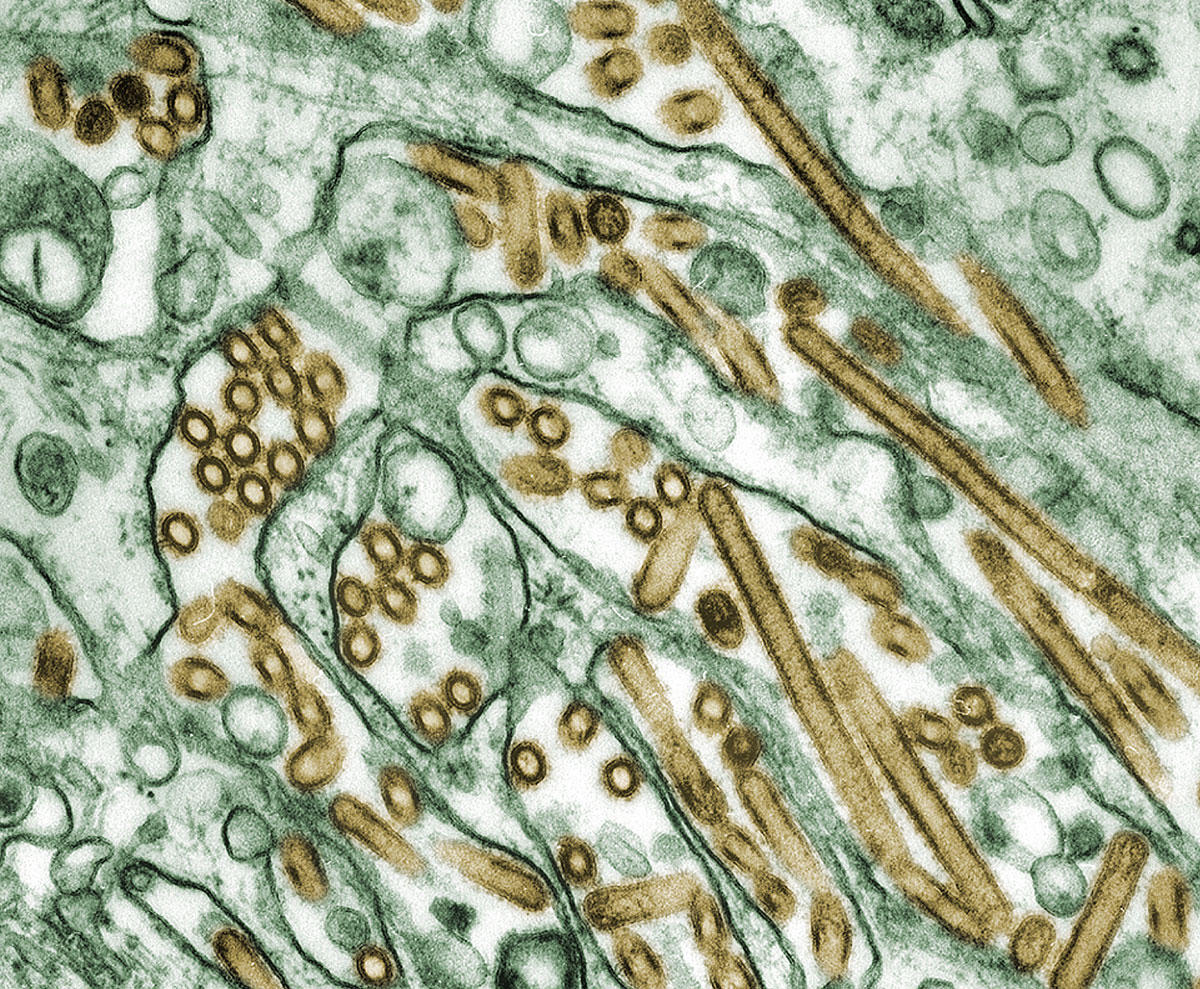
From Timothée Chalamet to Glen Powell, we’re experiencing celebrity lookalike contest overload

Celebrity lookalike contests are taking over.

The creators of the Timothée Chalamet lookalike contest in Manhattan several months ago had no idea what they unleashed onto the public. Since the Chalamet lookalike competition in New York City, similar contests have popped up across the country and have even made it overseas to Ireland too.

These aren't official contests, however. Grassroots organizers have post old-fashioned fliers across cities in the U.S. or online, which then spread like wildfire, especially on X and TikTok. The original Chalamet competition was organized by several YouTube and internet personalities that only promised the winner a $200 trophy and $50 oversized check. It's a big reward for just simply looking like a male celebrity but it's also a nod for servicing audiences with a fun, lighthearted distraction from the suck of the world right now. (And it's a lot more than some of the other follow-up contests have offered as prizes.)

Most of the contests so far have targeted doppelgängers for Hollywood's buzziest male celebrities (think current internet boyfriends like Paul Mescal, Dev Patel and Jeremy Allen White) with a couple of exceptions. A big draw of the experience as an audience member is potentially bagging a date with a lookalike of your choice. I was at the Chalamet competition when several women begged to get a shot with the Chalamet dupes. 

While the public has embraced the whimsy attached to each lookalike competition, celebrities have also capitalized on the buzz around them. Last month, Chalamet showed up to the competition briefly held in Washington Square Park. He took some photos with other lookalikes before mayhem ensued and several people were arrested. Similarly, Texas-born heartthrob Glen Powell also showed a little love to his lookalikes by offering them a cameo in one of his movies. His mom was even one of the judges.

As these lookalike competitions continue to make their way across the country and engage their local communities, female celebrities deserve their shine too. While we've seen a couple female-focused contests pop up, there ought to be far more. People like Chappell Roan, Ayo Edebiri and Taylor Swift might be exciting to emulate. Anyone up for dressing up in Roan's multiple drag looks, Edebiri's Chef Sydney from "The Bear" or even the countless Swift Eras Tour looks?

Here are all the lookalike contests so far . . . 

1
Timothée Chalamet
Timothée ChalametTimothée Chalamet attends the "Wonka" Photocall at Potter's Field Park on November 27, 2023 in London, England. (Jeff Spicer/Getty Images for Warner Bros.)

Held on Oct. 27, the Timothée Chalemet lookalike competition took the New York City by storm. Thousands of people showed up to the Washington Square Park archway to gawk at the numerous dark-haired, square-jawed lookalikes. 


Men from the ages 18-24 were dressed like Chalamet's most iconic roles, ranging from the savior Paul Atreides from the "Dune" movies or the flamboyant confectioner from "Wonka." And even if their features didn't really resemble Chalamet's, they still had the look thanks to their various ensembles. Miles Mitchel, a 21-year-old native New Yorker, who looks similar to Chalamet's Wonka, took home the big prize: a cool $50 and trophy. 

 
2
Paul Mescal
Paul MescalPaul Mescal at Academy Museum of Motion Pictures on October 19, 2024 in Los Angeles, California. (Emma McIntyre/Getty Images for Academy Museum of Motion Pictures)
"Gladiator II" star Paul Mescal also received the lookalike competition treatment. On Nov. 8 in Dublin, Ireland, Jack Wall O’Reilly, dubbed “Earbuds Paul” was the overall winner. He even recited a line from Mescal's breakout role in the cult-favorite television series "Normal People."


The Guardian reported that he was awarded a large check for €20 or "three pints."


During Mescal's press tour for "Gladiator II," he was able to meet Wall O’Reilly on BBC Radio 2.


“This is bananas. Jack, I saw the photo. You captured the spirit of me very well,” Mescal said to the winner.

3
Dev Patel
Dev PatelDev Patel at the "Monkey Man" premiere as part of SXSW 2024 Conference and Festivals held at the Paramount Theatre on March 11, 2024 in Austin, Texas. (Michael Buckner/SXSW Conference & Festivals via Getty Images)
In San Francisco, hundreds turned up to Dolores Park at the Dev Patel lookalike competition on Nov. 10. Dozens of South Asian men showed up to prove they were the best matchup against the Oscar-nominated star of films such as "Slumdog Millionaire" and "The Green Knight."


The San Francisco Chronicle reported that 25-year-old Jaipreet Hundal clinched the title of best Dev Patel lookalike. He won $50, flowers and a small monkey statute – an ode to Patel's directorial debut feature “Monkey Man,” in which he also starred. 


Hundal said after his win, “My girlfriend hypes me up all the time … she always says I look like Dev Patel or Ranveer Singh."


4
Jeremy Allen White
Jeremy Allen WhiteJeremy Allen White at the portrait booth at the 81st Golden Globe Awards held at the Beverly Hilton Hotel on January 7, 2024 in Beverly Hills, California. (Dan Doperalski/Golden Globes 2024 via Getty Images)

Jeremy Allen White, known for "Shameless," has been the inspiration for costumes for Halloween parties over the last fews years thanks to his performance as the depressed culinary genius, Chef Carmy in "The Bear."


But on Nov. 16, in Chicago, people took the Carmy costumes a bit further at the White lookalike competition, which drew about 50 contestants to Humboldt Park and hundreds of onlookers. In the end, 37-year-old Ben Shabad took home the big prize: a crown, a trophy, $50 in cash and a pack of Marlboro Red cigarettes. 

5
Zayn Malik
Zayn MalikZayn Malik at Kenzo Men's Fall 2024 as part of Paris Men's Fashion Week held at Bibliothèque Nationale on January 19, 2024 in Paris, France. (Swan Gallet/WWD via Getty Images)

In Brooklyn, former One Direction member Zayn Malik was at the center of another lookalike competition. On Nov. 18 dozens flocked to Maria Hernandez Park to celebrate the Malik lookalikes' sharp jawlines and mysterious gazes. 


But there was only one winner: 29-year-old Shiv Patel. Patel, who won a medal for his similarities to the British singer, told Brooklyn Magazine, “It’s so cool to see the energy of our city for things like this. Everyone coming together and just having a good time.”

6
Zendaya
ZendayaZendaya is photographed during the 'Challengers' photocall at the Rolex Monte-Carlo Masters on April 13, 2024 in Monaco, Monaco. (Arnold Jerocki/Getty Images for Warner Bros Pictures)

A smaller yet still mighty crowd of 50 people showed up to the Zendaya lookalike competition in Oakland, Calif., on Nov. 20, reports NBC Bay Area. On that cold rainy day, Zendaya doppelgänger Zainab Bansfield took home the coveted $40 prize, hair care products and bragging rights.


Zendaya has starred in two blockbuster films this year, "Challengers" and "Dune Part Two." 

7
Shohei Ohtani
Shohei OhtaniShohei Ohtani #17 of the Los Angeles Dodgers at Gocheok Sky Dome on March 20, 2024 in Seoul, South Korea. (Chung Sung-Jun/Getty Images)

In Los Angeles, Hollywood celebrities were passed over for a baseball superstar. On Nov. 23, the honor of a lookalike contest was given to none other than three-time MVP winner Shohei Ohtani of the Dodgers.


As a nod to Ohtani's heritage, the contest was held by the Japanese American National Museum in Little Tokyo. Joseph Ma, an Orange County native and a Dodgers superfan, was crowned the winner. He received a $17 – which may sound a bit random – but it's a nod to Ohtani's jersey number: 17. He also won a prize from the museum's gift shop, according to ABC7 Los Angeles.

 
8
Jungkook from BTS
JungkookJungkook of BTS performs on NBC's "Today" at Rockefeller Plaza on November 08, 2023 in New York City. (Debra L Rothenberg/WireImage/Getty Images)

Even Jungkook, an international K-pop star from BTS, recently had a lookalike competition held in his honor.
 
On Nov. 24, dozens of K-pop fans showed up to the Ping Tom Memorial Park in Chicago to participate and watch the Jungkook doubles. A popular YouTube and Instagram personality, Andrew Alexander won the Jungkook title. He was given a $20 cash prize and a bottle of soju.
 
9
Rachel Sennott
Rachel SennottRachel Sennott attends the Balenciaga Paris Womenswear Spring-Summer 2025 show as part of Paris Fashion Week on September 30, 2024 in Paris, France. (Vanni Bassetti/Getty Images for Balenciaga)

Rachel Sennott – the "Bottoms" and "Bodies Bodies Bodies" star – is one of the only other women to be included in the lookalike competition trend . . . so far.


On Nov. 24, a small competition took place in Tompkins Square Park in Manhattan. Some girls dressed as Sennott's character in "Bottoms," PJ, who starts a self-defense club as a ruse to hit on other girls. Ultimately, someone named Cameron, who sported a jean jacket and scarf, received a cash prize of $50.


10
Glen Powell
Glen PowellGlen Powell attends Charlize Theron's Africa Outreach Project (CTAOP) Block Party at Universal Studios Backlot on July 13, 2024 in Universal City, California. (Presley Ann/Getty Images for CTAOP)

The "Twisters" and "Top Gun: Maverick" star was the talk of his hometown Austin, Texas on Sunday, Nov. 24, according to People. Drawing in hundreds to Auditorium Shores, Powell's lookalike competition upped the stakes with the actor's own mother, Cyndy Powell, acting as one of the guest judges. Yep, someone who knows Powell personally was deciding the outcome of the battle. 


Many of the Powell lookalikes impersonated the actor's recent roles in "Twisters" – as a cocky tornado chaser – and "Top Gun: Maverick" – as a cocky pilot. The latter was Maxwell Braunstein's strategy. Dressed in a pilot's ensemble and a black cowboy hat, he took home the $5 cash prize, a cowboy hat and free queso from Torchy's Tacos for a year. But more importantly, he received the seal of approval from Powell's mom.

 
The actor also got in on the fun. He sent a video from set, telling the winner, “I know there is some cash and a hat at stake here, but I just wanted to say that the winner of today’s contest gets a personal prize from me."
 
He continued, “Now, you may know that my parents make a cameo in every movie I make, but today, the winner of the Glen Powell lookalike contest wins their parents or any family member of their choice a cameo in my next movie.”