Spring Offer: Get 1 Year, Save 58%

6 major Lil Nas X revelations from HBO’s documentary “Lil Nas X: Long Live Montero”

Lil Nas X is a jack of all trades. The acclaimed rapper continues to deliver hit song after hit song following the release of his debut single “Old Town Road,” which went viral. He’s also quite the celebrity on social media, where he invites fans and haters alike to indulge in his brash yet comical online shenanigans. And, he's a queer icon who became the first openly LGBTQ+ Black artist to win a Country Music Association award — and the first openly LGBTQ person to win an MTV Video Music Award for song of the year.

Lil Nas X has enjoyed many successes since he made it big back in 2018. But he’s making it clear that he’s only just getting started. 

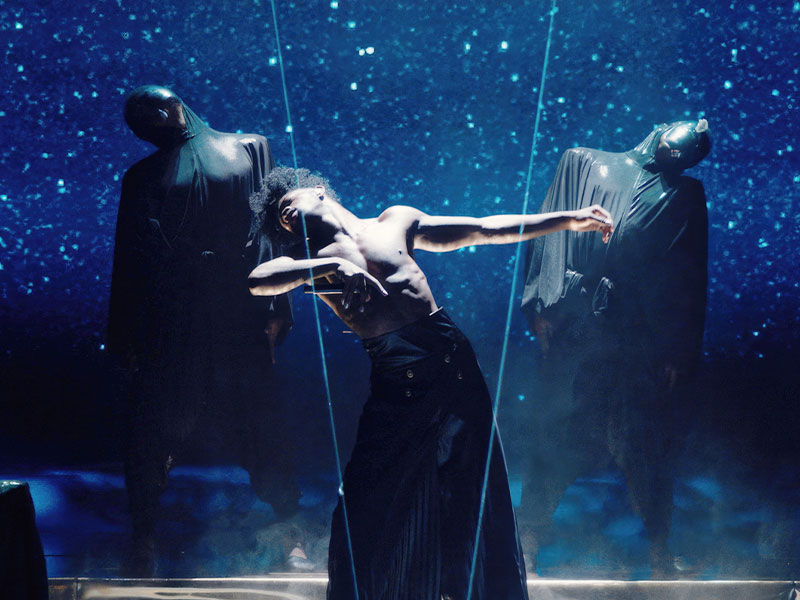
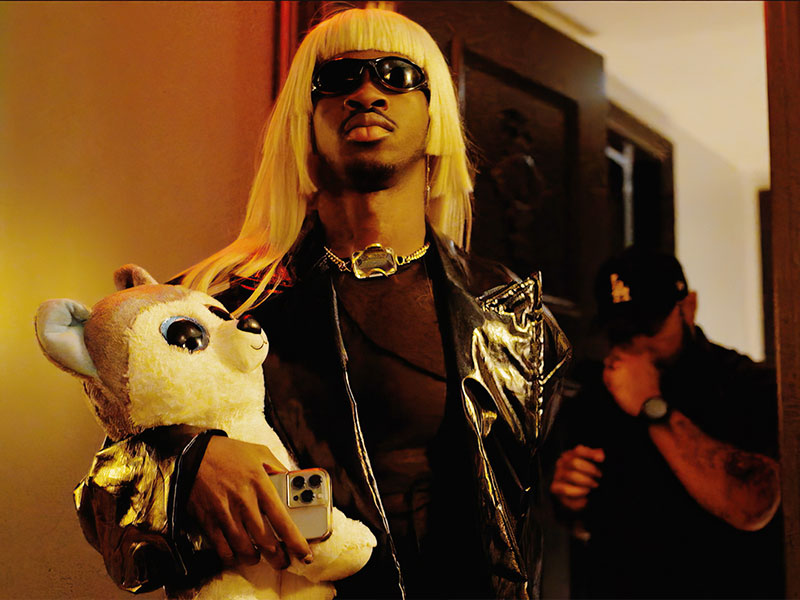
The 24-year-old rapper’s world, both on and off the big stage, is showcased in the verité-style HBO documentary “Lil Nas X: Long Live Montero.” The film spans 60 days of Lil Nas X’s debut concert tour “Long Live Montero,” which began in Detroit, Michigan, on Sept. 6, 2022 and concluded with an exclusive show at the Hordern Pavilion in Sydney, on Jan. 4, 2023. The film is also divided into three acts — Rebirth, Transformation, and Becoming — which highlights key moments in Lil Nas X’s own tale of identity and liberation.

Co-directed by Carlos López Estrada and Zac Manuel, the documentary features Lil Nas X along with his closest acquaintances — choreographers, dancers, stage directors and more — family members and Madonna.

Here are six major revelations from the documentary:

01
Lil Nas X “found music” after his grandmother had passed
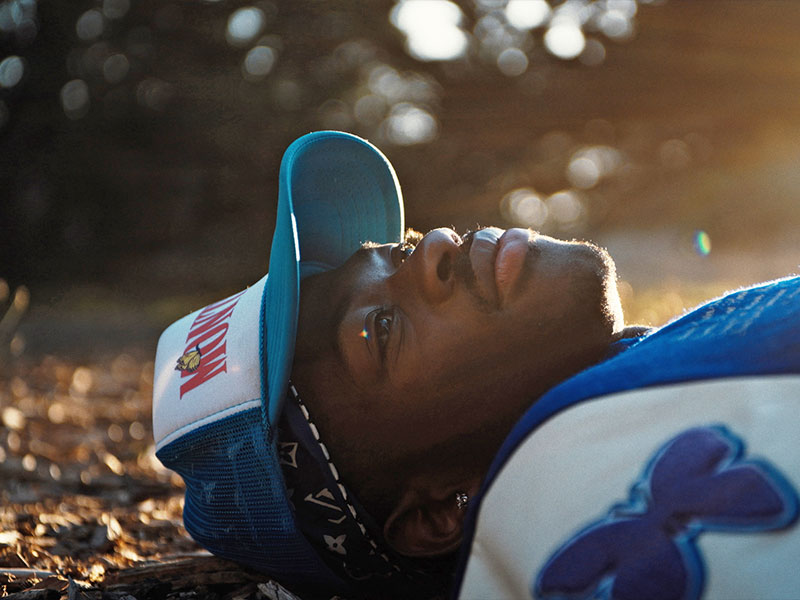
Lil Nas X: Long Live MonteroLil Nas X from “Lil Nas X: Long Live Montero” (Photo courtesy of HBO)

In the documentary, Lil Nas X said he initially wanted to be a cardiovascular surgeon because many of his family members — including his grandmother — suffered from heart problems. 


Once he began college, however, his career aspirations changed. “I got, like, so immediately bored," he said. "I made a song for fun and immediately posted it onto Twitter. I told my parents, ‘Oh yeah, I’m just gonna take a semester off.’” He ultimately decided to pursue a career in music after his great-grandmother passed away that same year.


“I’d never had somebody close to me pass, and my grandmother had passed. That’s when I started getting bad anxiety attacks and s**t like that, and then I found music,” Lil Nas X said. “I feel like music was also great for escaping that. I felt a f**king spiritual presence over me, that [said], ‘OK, this was not a mistake. This is what I’m supposed to be doing in life.”

02
Coming out was "very important" in Lil Nas X's spiritual journey
Lil Nas X: Long Live MonteroLil Nas X from “Lil Nas X: Long Live Montero” (Photo courtesy of HBO)
“Around 2019, I became way more spiritual, and I started to trust what I would see as spiritual signs and guides and whatnot, and I feel like coming out was very important if I wanted to continue to progress,” Lil Nas X revealed. “Burying parts of yourself will keep you further away from finding the truest version of you as you go.”
03
Lil Nas X knew “Old Town Road” would make him “blow up”
Lil Nas X: Long Live MonteroLil Nas X from “Lil Nas X: Long Live Montero” (Photo courtesy of HBO)

Lil Nas X confessed that he knew in his heart that his debut mainstream single “Old Town Road” would help him “blow up” to stardom. But prior to its release, the rapper said he felt “doomed” when he realized that the song’s guitar-heavy instrumental —  which he purchased online for $30 — is a sample of Nine Inch Nails’ 2008 track “34 Ghosts IV.”


“I didn’t even know it was a sample at first, so when I did figure out it was a sample, I was like, ‘Oh my f**king God, I am doomed,’” Lil Nas X said. 


Trent Reznor, the principal songwriter of Nine Inch Nails, later told Rolling Stone that he was fine with the sample and was completely blown away when he first heard the song a few weeks after its release. Reznor was also asked to make a cameo in Lil Nas X’s music video but turned down the opportunity. “I don’t feel like it’s my place to shine a light on me for that," he said.


Reznor and fellow Nine Inch Nails member Atticus Ross are both listed as producers and songwriters for the track.


Lil Nas X got emotional after listening to the “Old Town Road” instrumental. “I think the moment that I heard the loop, the original instrumental of that song, that feeling I always talk about, it was on an astronomical level," he said. "That’s why I guess I’m so spiritual now — you can’t mistake a feeling that . . . When I heard that, I got emotional, and it’s just a loop and drums. I’m just like, ‘Oh my God, this is going to be something great.’”

04
Lil Nas X once bought pizza for his haters
Lil Nas X: Long Live MonteroLil Nas X from “Lil Nas X: Long Live Montero” (Photo courtesy of HBO)

Following his breakout moment, Lil Nas X became the target of several far-fetched allegations. Many conservative critics claimed he made kid-friendly music to brainwash the youth into a “gay agenda.” Others claimed he was at the forefront of an evil, gay Satanic agenda.


Even when he’s met with hate, Lil Nas X has always responded with love. In one instance, he even bought pizza for homophobic protesters who gathered outside the Boston concert of his inaugural tour. 


“I think it’s really great when people have a sense of belonging to something or feel like they’re part of something bigger, and I feel like that’s what those people feel like they are doing,” Lil Nas X said of his haters in the documentary. “So, part of me is like, ‘Oh, I wish they weren’t hateful toward this,’ but another part is like, ‘Oh, that’s kind of dope. These people have their own group where they feel like they’re doing something to change the world. That’s really nice for them,’ you know?


“I guess I actually paid attention to one of the videos. I was like, ‘Oh, it’s kind of f**ked up, what they were saying,’” he continued. “It was like, ‘You see what he did? He comes out with a kid-friendly song, and then he goes and becomes super sexual and tries to convert.’ I don’t know, and I was like, ‘That’s not exactly what happened.’”

05
Lil Nas X still isn't “100%” around his family members
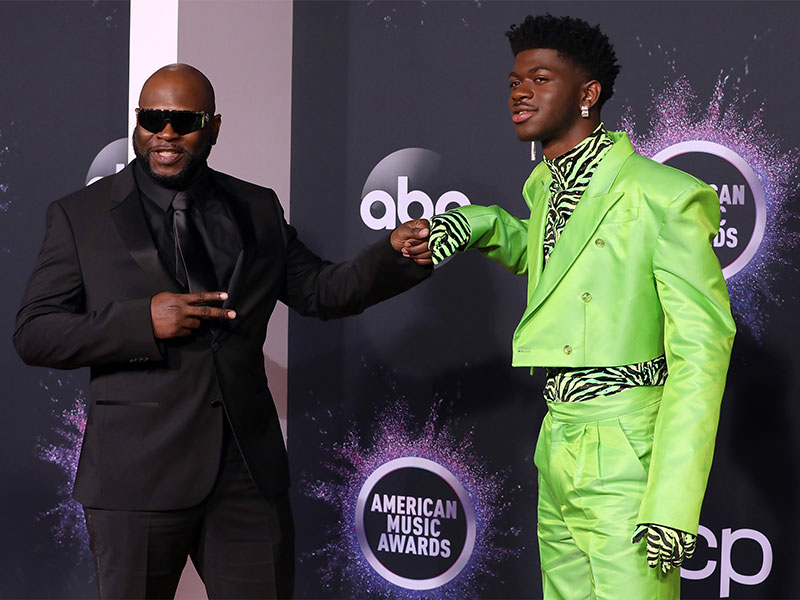
Lil Nas X and father Robert StaffordLil Nas X and father Robert Stafford attend the 2019 American Music Awards at Microsoft Theater on November 24, 2019 in Los Angeles, California. (Taylor Hill/FilmMagic/Getty Images)

In early June 2019, Lil Nas X came out to his father Robert Stafford, who he said was initially skeptical of his son's sexuality. 


“It was just kind of awkward, and you know, he was kind of like, ‘It could be the devil tempting you’ and whatnot, which I understood to a degree,” he explained. “I mean, you gotta think about it; your son gets rich and famous, and suddenly he’s gay. It just sounds like everything the YouTube things warn you about.”


Lil Nas X has since grown closer to his father and his family. Speaking about his relationship with his stepmother Mia Stafford, Lil Nas X said they are close but he still finds it difficult to truly be himself with her. “It still feels really weird being flamboyant or closer to myself that I show most people around her.”


He also claimed that he felt like a “stepchild” in his family. His sexuality still remains “the elephant in the room.”


“I feel like even now though, I guess, it’s still kind of hard to be open when I’m dating someone,” Lil Nas X said. “My dad actually talked to me about it. He was like, ‘You know you can let me know what’s happening on that side’ and stuff like that, so that was really great, but it’s still a fight to get that out there. But we’re getting closer.”


Lil Nas X’s own unapologetic pride in his sexuality ultimately encouraged his older brother Tramon Hill to come out as bisexual.

06
Lil Nas X is desperate to find the next phase of himself that feels “new”
Lil Nas X: Long Live MonteroLil Nas X from “Lil Nas X: Long Live Montero” (Photo courtesy of HBO)

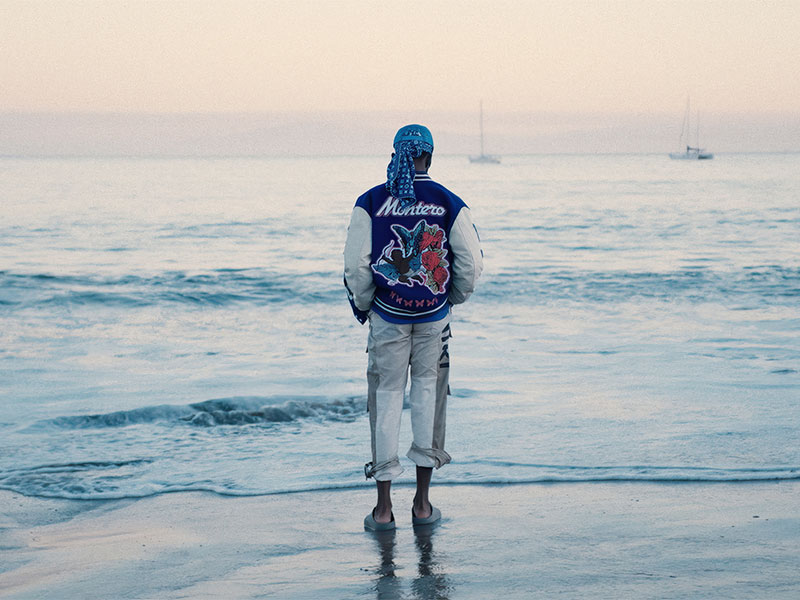
Lil Nas X said his 2021 single “Montero (Call Me By Your Name)” was his most liberating track yet, even though it elicited negative reactions from countless conservative commentators.  


“I feel like I’ve been the same me for like two years,” Lil Nas X said. “Through, like, the Montero era, you know? And I wanna be a new me now.” He added, saying that in order to find this new version of himself (that’s both new to him and his countless fans), he has to “get lost.”


“I feel like there’s something brewing that’s gonna be so amazing for me. And I trust that feeling. I can’t explain it,” Lil Nas X continued. “It’s, like, this anxious excitement . . . Right now, it’s glowing all over me. I can’t explain that. I cannot explain that.


“Maybe it’s not, like, escapism as in ‘I don’t wanna be alive,’ but ‘I wanna be more alive.’”

"Lil Nas X: Long Live Montero" is currently available for streaming on Max. Watch the trailer, via YouTube:


Where Nat Geo’s “Genius” meets America’s remix of Martin Luther King and Malcolm X

Genius is a designation tossed around too lightly in the modern age. And yet some understand it to describe the type of revolutionary thought that can lead to societal and cultural transformation. Not always — and not usually. History is awash in unsung geniuses whose fame was built in whole or part on others’ intellectual discoveries and strategies, men and women left out of history books or barely mentioned. 

The first installment of National Geographic's “Genius” anthology, the one devoted to Albert Einstein, addresses this by gazing at Mileva Marić, the theoretical physicist’s first wife and intellectual muse.

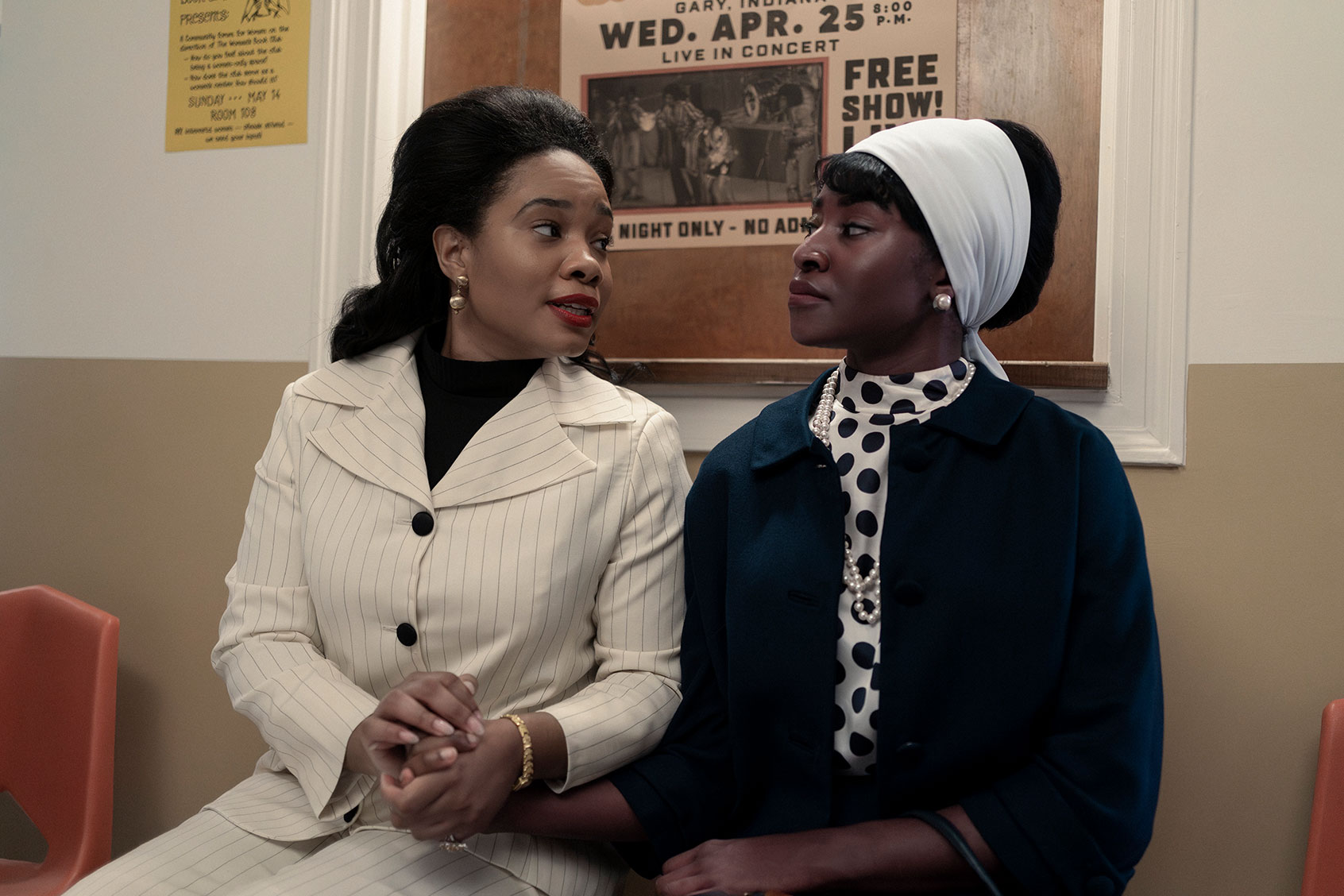
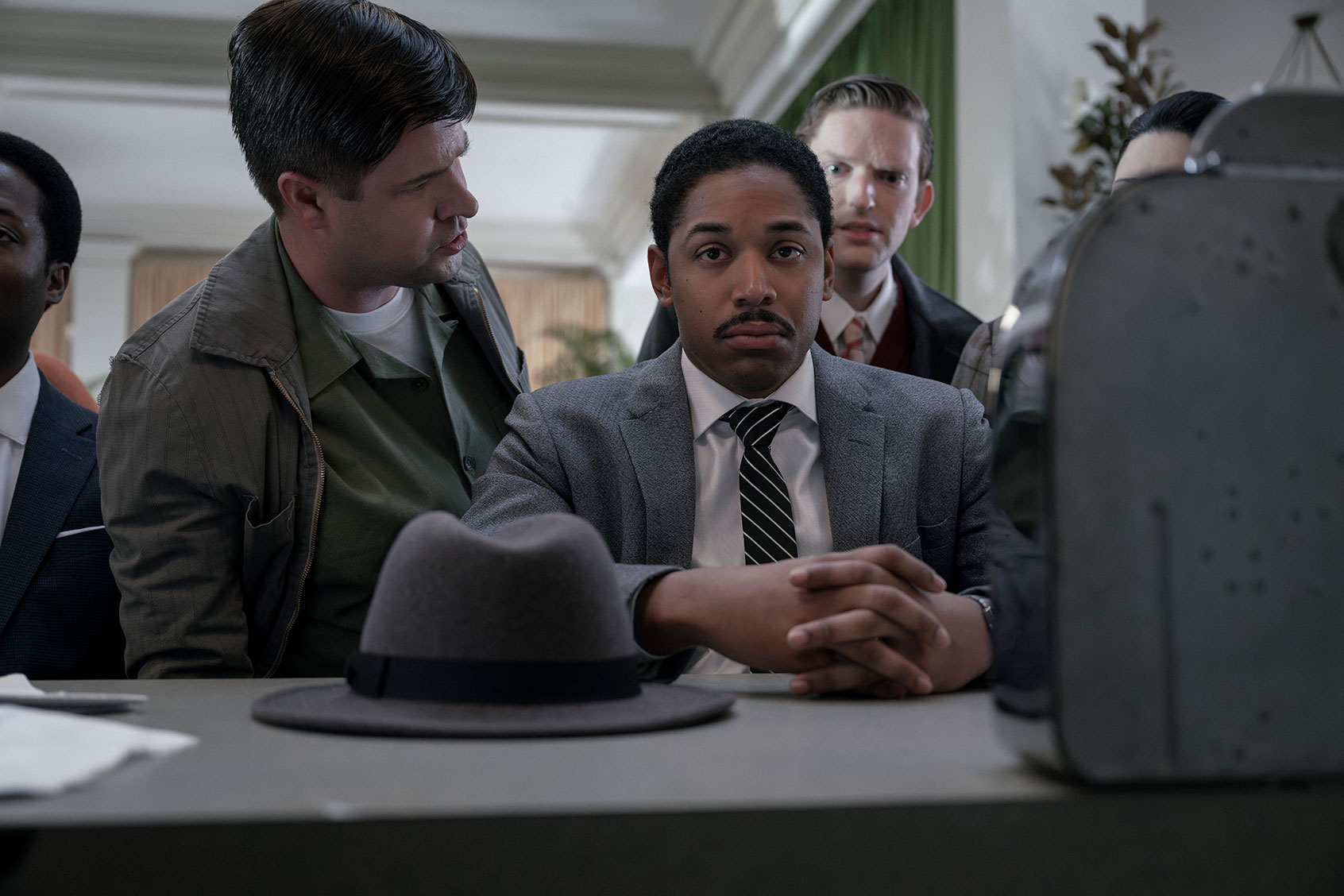
“Genius: MLK/X” follows suit by glancing at Coretta Scott King’s (Weruche Opia) influence on her husband Martin (Kelvin Harrison Jr.) reminding us at regular intervals of the aspirations she put aside to support him. Betty Shabazz’s (Jayme Lawson) path is similarly paved, shown as the dutiful partner to the great Malcolm X (Aaron Pierre) who at a crucial point, tires of being subservient to the whims of the great Elijah Muhammad (Ron Cephas Jones, in his final role before his death).

By then Malcolm X is also questioning his place within the Nation of Islam and the larger Civil Rights movement. He understands that the Nation of Islam’s leader may envy and fear his influence, in the same way that white politicians like Strom Thurmond (Donal Logue) were desperate to discredit King's efforts. They are, in their own ways, bigger than the organizations they represent.

The limited series' main producer is Jeff Stetson, who envisioned what could have been if the two had a more sustained encounter in his play “The Meeting.” That piece, along with Peniel E. Joseph’s book “The Sword and the Shield: The Revolutionary Lives of Malcolm X and Martin Luther King Jr.” are this season's main sources. But its episodes tell us little about each man's wellsprings of inspiration and the very least about the people integral to forging their legacies. 

In the main this "Genius" aims to present each icon’s “complex lives as husbands, fathers, brothers and sons,” according to the press notes, making its sustained focus on Coretta and Betty a matter of purpose. Stetson and the series’ guiding producers Reggie Rock Bythewood and Gina Prince-Bythewood also ensure Bayard Rustin (Griffin Matthews) is nominally afforded his due as the larger movement's driving organizational force. Compared to Colman Domingo's potent presence in Netflix's "Rustin" movie it's a wink, but it counts. 

Genius: MLK/XGenius: MLK/X (Nat Geo)As for illuminating the philosophical roots bolstering King's appeal to the broader nation’s conscience, or the expertly reasoned methods by which Malcolm indicted its absence, that is a task for other projects. Ironic, no?

“How do you go from Nobel Peace Prize winner to the most hated man in America?” Attempting to answer that question could have made for a stunning story.

Some insist that critics should evaluate a work of art as it is instead of lamenting what it could or should have been. But with “Genius” a little complaining can’t be helped, since the narrative execution so rarely lives up to the title's promise — not even at its best. Such questioning is especially in bounds when the namesake subjects are two social justice giants whose legacies are perpetually diluted and twisted for purposes they never would have supported.

Conservatives love to quote lines from King’s “I Have a Dream” speech from the 1963 March on Washington when making their cases against diversity and inclusion. “Genius” shows Harrison’s King delivering that speech, strategically forgoing the dream-weaving to feature the line voicing his “conviction that there will be a better future ahead when negroes are finally free.”

We see him anguishing over what he’ll say in hours leading up to the famous speech, and considering the warning from John Lewis (Ja'Quan Monroe-Henderson), then the president of the Student Nonviolent Coordinating Committee (SNCC), that the March on Washington was in danger of simply becoming the March in Washington – words he paraphrased from Malcolm. Lewis also spoke that day, and more forcefully than the headliner, but we don’t see his contribution. The headliner is the genius, not Lewis.

Fewer right-wingers can or would cite Malcolm X verbatim. But any of them might point to Don Hogan Charles’ photo of him peering out of his window while holding an M1 carbine. Pierre recreates that frame in a late episode of “Genius” along with the circumstances leading to it: Malcolm and Betty’s home had been firebombed. Malcolm frequently insisted on Black people’s right to defend themselves, as depicted in “Genius” in response to Los Angeles police gunning down a group of men in a Los Angeles mosque.

These touchstones, along with most of the tandem arcs in King’s life, are well-documented.  But these landmarks are evidence not of their genius, but their fame, which an alien might deduce from their presence in millions of memes, monuments, and T-shirts. 

“Genius: MLK/X” opens with another image telling its subjects’ story, of their brief meeting on Capitol Hill on March 26, 1964, to attend the Senate debate on the Civil Rights Act of 1964. It was the first and last time they’d encounter each other in person. From there the series does the standard rewind to their childhoods, establishing their parallel life paths. King was a minister’s son who earned advanced degrees at East Coast institutions before entering the ministry.

Meanwhile the man once known as Malcolm Little grew up in poverty before moving to New York where he became a con artist. He’d eventually be arrested in Boston and convicted on charges related to burglary. His education was self-administered in prison after converting to Islam.

Near the end of each man’s life, their views were closer than ever – a product of experience and transformative genius. One wonders what type of story might have come out of tracing their ideologies not through their most famous moments, but what came afterward.

Not long after Malcolm X met King, he made his pilgrimage to Mecca, followed closely by visits to other African countries and stops in Paris and the U.K. There, Malcolm decried European and American imperialist oppression in the Congo.  The series doesn't take us on these influential voyages or connect them to Malcolm’s intellectual or spiritual evolution. His Hajj is barely mentioned. But I suppose that would require a bigger budget and, more to the point, a dedication to mapping genius.

Genius: MLK/XGenius: MLK/X (Nat Geo)

With “Genius” a little complaining can’t helped, since the narrative execution so rarely lives up to the title's promise.

During the same timeframe King would appeal directly to President Lyndon Johnson to ease the passage of the Voting Rights Act in 1965, only to alienate Johnson not long afterward by publicly opposing America’s war in Vietnam.

When an assistant triumphantly relays the news from a Gallup poll reporting that 66 percent of Americans viewed King unfavorably after he came out against the war, Lyndon Johnson (John C. McGinley) wonders aloud, “How do you go from Nobel Peace Prize winner to the most hated man in America?”

Attempting to answer that question could have made for a stunning story, along with posing some version of the inverse about Malcolm X – how was one of the most feared activists in the 20th century remade into one of the most prophetic and respected?

That answer rests in Malcolm X’s way of interpreting the steering tenets of Western civilization and turning them on his oppressors to ask why truths held to be self-evident don’t apply to Black Americans or other colonized peoples. But that would be uncomfortable and take a full eight episodes by itself. “Genius” doesn’t afford him that grace, which would have been slightly radical by mainstream media standards. If they had done that task well, the audience may have been pleased to understand Malcolm's political brain, and King as a strategist, without denying them their humanity or pandering to those who would rather be reassured about what they symbolized.


Want a daily wrap-up of all the news and commentary Salon has to offer? Subscribe to our morning newsletter, Crash Course.


“I think the only way one can really determine whether extremism in the defense of liberty is justified, is not to approach it as an American or a European or an African or an Asian, but as a human being,” Malcolm X told an Oxford audience in 1964.

“If we look upon it as different types immediately we begin to think in terms of extremism being good for one and bad for another, or bad for one and good for another,” he said. “But if we look upon it, if we look upon ourselves as human beings, I doubt that anyone will deny that extremism, in defense of liberty, the liberty of any human being, is a value.”

Modern activists have expressed their versions of this opinion when speaking out about the crisis in Gaza or other places in the world where a strong power oppresses a weaker one. A better series might have made it simpler to connect those dots, since Malcolm X’s views are echoed in the work of social justice advocates worldwide.

Those same people would likely argue that while King sought equality, he also believed attaining it required advocating for labor rights and fair housing. He also voiced disdain for white moderates more “devoted to ‘order’ than to justice,” as he observed in his famous letter from Birmingham jail, and his anti-war stance in “Beyond Vietnam.”

In one “Genius” scene Pierre’s Malcolm looks at a news report promoting the March on Washington and quietly describes it as a political coup for John F. Kennedy, not the Civil Rights movement. “If he has that many negroes parading, and the bill passes, the fight will be over,” he says. “Even if nothing changes, it’ll look like a win.”

One wonders what insights the real Malcolm X would offer in response to hearing this while watching “Genius” purport to explore his genius. That would be eye-opening.

New episodes of "Genius" premiere at 9 p.m. on Thursdays on National Geographic and stream the next day on Disney+ and Hulu.

An ode to Elmo: Why we turn to our furry friend when the world is a dumpster fire

When Elmo decided to check the emotional pulse of the internet on Monday and ask, “How is everybody doing?” the fiery-colored Muppet couldn’t have anticipated the seismic response he’d receive. Elmo’s tweet garnered more than 200 million views and thousands of bleak replies. “Elmo we are tired,” one X user wrote. “Elmo I’m suffering from existential dread over here,” tweeted another. Still others vented to the monster about the impending presidential election, wars, personal grief, a rickety economy and dogs rolling around in goose poop. Why? Well, because even though it’s “Elmo’s World,” as his theme song goes, we’re all the ones living in it. And sometimes it takes talking to a furry figure from the days of yore for us to admit that the kids, now adults, are not alright. 

The burned-out, cog-in-a-machine lifestyle that many of Elmo’s responders described feels pretty on par with the Elmo on fire meme. While there’s no denying that our world has, in many ways, become somewhat of a dumpster fire, there’s something to be said for the sheer volume of feedback Elmo’s question received. As one expert told the New York Times, Elmo is a “beloved childhood character that we associate with a simpler time in our lives,” so it makes sense that we would want to tell him just how much our lives have evolved over the years. 
 

Elmo, in a very real sense, is a Muppet microcosm of our shared hope that the world has the capacity to bloom into something like it was back then.

As much as the generations tend to operate like warring factions, we can all agree on the immense nostalgia of Elmo. We all know and love “Sesame Street's" canonical names: Big Bird, Bert and Ernie, Oscar the Grouch, Rosita, Grover, Cookie Monster. But there is something decidedly special about Elmo’s cherry-colored charm. His power is not merely confined to his toddling whimsy or our longstanding friendship with him. Elmo’s influence extends beyond happy aesthetics; it lies is in his ability to make us feel. Elmo is able to elicit the massive response that he did because he represents the unadulterated part of our younger selves that we still cling to, despite all the bad. Elmo, in a very real sense, is a Muppet microcosm of our shared hope that the world has the capacity to bloom into something like it was back then. 

He is blowing dandelions puffs and the stillness of summertime. He is my siblings’ laughter, running laps around the tide pools we’d wade in as children along the Jersey shore. He is the minty smell of my mother’s clothes and the bounce of woodchips underfoot at the playground. He is broken crayons and petting zoos and plastic jack-o'-lanterns stuffed with candy. 

Today, this version of life often is distant and quivering, like a beautiful mirage that never disappears from our minds but refuses to manifest in our collective reality. 

Though “Sesame Street” has been known for its initiatives that raise awareness about childhood mental health and emotional well-being, something about Elmo feels even more accessible. He pushed Sesame Street’s shimmering cityscape mysticism a few steps further, serving as a rudimentary cognitive framework for lighthearted innocence, kindness and love. At only three and a half years old, Elmo is exceptionally emotionally intelligent. He often asks his friends and guests questions about themselves, offering hugs and advice when he senses they are dealing with something difficult and always greeting viewers with a resounding, “Elmo is so happy to see you!” As Sesame Workshop’s biography of Elmo observes, he “always maintains an optimistic view of himself and life. Elmo tries to do the right thing in every situation, and encourages his friends to do the same.”

Unlike Santa — though they bear some pigment parallels — we’ve always been able to talk to, hug and hear Elmo whenever we want. His signature laugh, shrill falsetto and self-referential style of speaking have cemented him as an enduring confidant we can continue to relate to, despite the fact that our sandbox days are long behind us. It’s no surprise that his most iconic stint in consumerism, the “Tickle Me Elmo” doll, capitalized on his pealing giggle. 

In 2022, an early aughts clip of Elmo embroiled in a feud with Rocco, the pet rock of fellow Sesame Street character Zoe, went viral. Zoe is known for anthropomorphizing Rocco, who is simply an inanimate geological object. When Zoe tells Elmo he can’t eat Rocco’s oatmeal raisin cookie because the rock wants it, the typically buoyant puppet erupts. “Rocco?!” Elmo says. “Rocco’s a rock, Zoe! Rocco won’t know the difference!

“How is Rocco going to eat that cookie, Zoe?” Elmo presses, in a tone the New York Times dubbed “unhinged.” “Tell Elmo. Rocco doesn’t even have a mouth. Rocco’s just a rock! Rocco’s not alive!”

We see some guileless part of ourselves within him — a half-formed reflection in his goldfish Dorothy’s fishbowl.

But aren’t we all a little unhinged in these trying times? And though the droll exchange between Zoe and Elmo may at the surface seem like nothing more than a funny viral video, isn’t watching the “Sesame Street” star blow off some of that steam kind of cathartic? Maybe we can think of him not only as a Muppet to confide in, but as a conduit for conveying our anxieties and frustrations in a way that feels palatable and secure. Though we might assume Elmo is unencumbered by society’s scourges in the same way we are, it’s worth reminding ourselves that he’s partly assuming some of that baggage for us. As his tweet shows, he’s always been there, not only as an example of how we can carry his jaunty spirit in our hearts, but as a friend who will listen.  

Maybe this connection and indentification is why we are also so quick to defend Elmo. We see some guileless part of ourselves within him — a half-formed reflection in his goldfish Dorothy’s fishbowl that’s been crusted over by the steady gnawing of time. 

Take a recent interaction between Elmo and comedian Larry David, for example. During a sit-down interview between Elmo and the hosts of NBC’s “Today” morning show, the “Curb Your Enthusiasm” creator abruptly grabbed hold of the little monster’s face, gratuitously attacking him. “Oh my god!” yelled host Savannah Guthrie, adding, “Larry, you’ve gone too far this time!”

“Let’s get back on the couch and talk about how you’re feeling,” the ever-caring Elmo told David, seemingly alluding to his social media check-in a few days prior. David later offered an apology to Elmo during his own interview, which was readily accepted. Social media was less forgiving, calling for swift “Justice for Elmo.” 

“Not Elmo, we won’t stand for this,” one X user wrote. “So he’s out here pushing @elmo around?” asked another. “Naaaaa…..”

If there’s one thing to take away from David’s interaction with America’s most beloved monster it’s this: No one puts Elmo in a corner. 


Want a daily wrap-up of all the news and commentary Salon has to offer? Subscribe to our morning newsletter, Crash Course.


His resilience goes further than bouncing back from being manhandled by comedians. In 2012, Elmo faced serious trouble after his puppeteer of 28 years, Kevin Clash, parted from the PBS series after a 23-year-old man claimed that starting when he was underage, he had a sexual relationship with Clash. When Clash took a leave of absence from the show, "Sesame Street" responded by saying, “Elmo is bigger than any one person.”

And it’s true. He is all of us. 

The situation could have been a PR nightmare for a character who is supposed to project the pure, unadulterated essence of a preschooler. But somehow, unlike the rest of Hollywood, Elmo is a pop culture icon who can’t be canceled. "Sesame Street" knew his worth and chose to stick by him amid the controversy, eventually casting then-high school senior Ryan Dillon as Elmo’s new performer in 2013.

Come hell or high water (and come it has) Elmo is there for us. And we are for him, if only to indulge our own fears that he, along with all that is good and adorable in the world might someday depart from our lives altogether. 

The reality is that we all need Elmo right now. We’ve never stopped needing him. How can we get to “Sesame Street” — the idyllic, kind world of our past and hopefully our future? We can be like Elmo.

Why are vegan men perceived as “less masculine”?

Just as surely as cats are girls and dogs are boys, everybody knows that salad is girls and meat is boys. A recent study out of Europe, published in the journal Sex Roles, affirms that "Of all foods, meat has the strongest association with masculinity and identity" and that among both male and female respondents, "Men on a vegan diet were not perceived as masculine, which is related to the stereotypical association of eating meat with power, prestige, and manhood." Similar research published in 2023 in Frontiers in Communication explored the "feminine connotations associated with veganism" and found that describing vegan food with "masculine attributes" helped participants "weaken  the [food's] link to femininity." This fear of not being perceived as manly may explain why fewer than a quarter of all vegans are men. So, is it possible to butch up vegetables? 

Leaning in a more plant-based direction is better for everybody's health, but can be uniquely beneficial for men. Heart disease is the leading cause of death in men — responsible for a stunning 1 in 4 male deaths. One of the leading contributions to heart disease is diet, and lowering cholesterol can help. Men also have higher rates of obesity, a contributing factor not just in heart disease but certain kinds of cancers and type 2 diabetes.

"Avoidance of red and processed meats, was found to be associated with a lower risk of developing erectile dysfunction."

Meat consumption has also been tied to heightened Alzheimer's risk, and processed meat has been linked to colorectal cancer. And if none of that is persuasive, how about some of the promising research out of China that suggests that "More plant-based diet intake was associated with a reduced presence of ED [erectile dysfucntion] and less severe ED"? Similar research published in JAMA in 2020 suggested that "Avoidance of red and processed meats, was found to be associated with a lower risk of developing erectile dysfunction." Think nothing's more manly than meat? Your penis would like a rebuttal.

Nobody's suggesting that we all have to eat nothing but kale, all the time. I'm a firm believer in moderation in all things, and I still eat meat — although I eat a lot less than my spouse. But breaking out of the mindset that fruits and vegetables are somehow girly (ergo inferior) and a ribeye is a firm handshake from your dad can make all of us feel freer to explore a wider variety of culinary options without fear of judgment.

Why do we think meat is so macho? "It could be a longstanding cultural association that connects meat-eating with hunting or hunters, or with the image of ranchers or cowboys," says Dr. Daniel Boscaljon, director of research and co-founder of the Institute for Trauma Informed Relationships, "all categories that connect to fantasies of normal or virile masculinity." It's a deeply rooted notion. Over thirty years ago, The Beef Industry Council tapped into that association with a campaign featuring the deep voice of hardboiled cinematic legend Robert Mitchum asserting that beef is "what's for dinner," no further comment needed. Conversely, Iowa City psychotherapist Tyler J. Jensen notes that "Plant-based diets, often perceived as more compassionate, may be seen as less aligned with traditional masculine ideals."

There may be other factors going on too. "It could also be amplified by more recent efforts in gender-based marketing" suggests Boscaljon. "In a world where gender has become an increasingly precarious concept, simple behavioral clues — like eating meat — allow a way for people to perform masculinity for others in society." He adds that, "There’s nothing inherently masculine or virile about eating meat, nor anything inherently feminine about eating vegetables or salads. These kinds of behaviors are simply cultural associations that provide baseline of recognizably gendered actions." 

Regardless of our gender, our stereotypes about them are deeply embedded in our psyches. If we want to make the case that meat isn't the only way of asserting manhood, we need to consider new ideals. "Contrary to the stereotypes, adopting a plant-based diet does not compromise masculinity or physical strength," says Zoe Pulido, a nurse and the director of operations at Transcend Recovery Community. "Many professional athletes, including tennis champion Novak Djokovic and American football player Trent Williams, have successfully embraced plant-based diets and excelled in their respective sports." And Rod Mitchell, a family violence psychologist with Therapy Calgary Emotions Clinic in Calgary, recommends looking toward "role models who defy traditional stereotypes, such as vegan athletes, chefs, and public figures," and watching documentaries like Netflix's "The Game Changers," which he says "showcases elite athletes thriving on plant-based diets."

Tenny Minassian, a vegan lifestyle coach, adds a similar insight. "There are also many professional athletes and body-builders who are vegan or eating plant-based," she says, "so we know that strength is not correlated with consuming animal products." She adds, "While it is great to highlight this aspect, I want to emphasize that compassion is for everyone, regardless of your gender or gym goals." 

And if nothing else makes the case, let's bring it back to love and sex. Kayden Roberts, CMO and dating coach at the dating app CamGo, says that "As a relationship expert, I often encounter diverse perspectives on masculinity and have observed that dietary choices can indeed influence these perceptions." He also interrogates the notion that this is inevitably desirable to potential partners. "The notion of masculinity traditionally aligns with strength, dominance, and a provider role, often symbolized by the consumption of meat," he says. "Vegan and vegetarian men, by deviating from this norm, might challenge these conventional ideas of masculinity. However, this does not make them any less masculine. In fact, choosing a plant-based diet often reflects qualities like empathy, health-consciousness, and a willingness to challenge societal norms, which are commendable masculine traits in their own right."

"Men who choose a vegan or vegetarian lifestyle often do so out of a sense of responsibility towards the environment, animal welfare, or their own health. These men might not fit the traditional macho archetype," Roberts says, "but they embody a modern, more holistic understanding of masculinity that values personal conviction and societal impact." 

Rod Mitchell echoes the sentiment, suggesting that we all take a moment to "Reflect on what strength and masculinity mean to you. Recognize that true strength lies in making informed, healthy choices for yourself and the environment," he says. "And understand that adopting a plant-based diet is a form of self-care and resilience, not a compromise of masculinity."

The hidden racial bias in U.S. lung cancer screening policy

About five years ago, Vanderbilt University epidemiologist Melinda Aldrich discovered something about the U.S. cancer care system that has eaten at her ever since.

Aldrich had been studying the public health benefits of preventive lung cancer screening, widely seen as a critical first line of defense against a disease that kills more than 120,000 Americans a year — more than the combined total for breast, colon, and prostate cancers. Lung cancer is extraordinarily difficult to treat in its advanced stages, and the earlier it is detected, the better a person’s odds for survival, many experts say.

But hospitals and insurers impose strict criteria for deciding who can receive preventive lung cancer screening, and when. At the time of Aldrich’s discovery, a person had to be between 55 and 80 years old and have smoked the equivalent of 30 pack-years — a pack a day for 30 years, say, or two packs a day for 15 — to be screened with the standard method for early detection, called low-dose spiral computed tomography. Aldrich’s analysis of more than 84,000 adult smokers revealed that under those criteria, Black patients at relatively high risk of lung cancer were being disproportionately excluded from the screening eligibility pool. More than two-thirds of Black smokers who were diagnosed with lung cancer did not meet the age and smoking history criteria at the time of their diagnosis.

“These people are getting diagnosed with lung cancer, and yet they can't even get in the door to be screened,” Aldrich later recalled.

Aldrich knew that Black Americans tended to develop lung cancer at higher rates and at younger ages than their White counterparts, despite on average smoking fewer cigarettes. And by her calculations, high-risk Black smokers were being excluded from screening at more than one and a half times the rate of White smokers.

As Aldrich saw it, the screening inequity had the potential to worsen the already staggering toll that lung cancer exacts in Black communities. According to the American Lung Association, the disease claimed the lives of more than 14,000 Black Americans in 2021, the most recent year for which there was data. Black lung cancer patients were 15 percent less likely than White patients to be diagnosed early, and had the lowest five-year survival rate of any racial group.

Based on their findings, Aldrich and her collaborators recommended lowering the age threshold to 50 and the smoking history requirement to 20 pack-years for Black smokers, to make rates of screening eligibility more equitable. Putting race at the center of cancer screening was in some ways a radical proposal, and Aldrich was prepared for pushback from her peers. But at the 2018 World Conference on Lung Cancer, where she first presented the findings, the response from the audience was very positive. Aldrich and her colleagues realized the work was going to be taken seriously.

“These people are getting diagnosed with lung cancer, and yet they can’t even get in the door to be screened.” 

Two years after the Vanderbilt study was published, the nation’s standard bearer for preventive health policy — an independent panel of experts known as the U.S. Preventive Services Task Force — revised its lung cancer screening guidelines, citing their work as a factor alongside other studies, including a large study called the Nelson trial. But rather than lower the age and pack-year requirements specifically for Black smokers, as Aldrich and her colleagues had advised, the task force loosened those criteria for all smokers, regardless of race. The new guidelines caught a larger share of Black smokers but also larger shares of White smokers and smokers of other backgrounds. As a result, it narrowed, but did not close, the racial screening gap that Aldrich and company had identified.

The task force’s decision has thrust it into the center of a simmering debate about the best way to address the factors underlying racial health disparities in lung cancer and other diseases. And it has led some experts to call for a more complete overhaul of screening policy that accounts not just for race but for genetics, environment, occupation, and other risk factors in screening decisions.

“Lung cancer [screening] is not going to be a one size fits all solution,” said Aldrich, who advocates for more personalized approaches to assessing risk. That those approaches have yet to gain traction in health policy circles, however, underscores a seemingly inescapable truth of the American health care system: With public health interventions like preventative screening, it’s nearly impossible to disentangle scientific findings from the politics and social forces that drive them.


Aldrich’s interest in racial disparities in lung cancer goes back two decades, to her days as a Ph.D. student at the University of California, Berkeley. There, she studied the genetic factors that influence lung cancer risk, and how those factors vary between Black American and Hispanic populations. When she arrived at Vanderbilt in 2010, she began deepening her understanding of the fraught topic, probing genetics, social determinants of health, and environmental risk factors.

For the better part of Aldrich’s career, there were no official national standards for screening asymptomatic patients for lung cancer — not even for heavy smokers, who are known to be at elevated risk. In part, that was because the most common tool for examining a patient’s lungs, the chest X-ray, wasn’t very good at identifying small tumors.

In 2011, however, a study known as the National Lung Screening Trial, which followed more than 53,000 people aged 55 to 74 with a history of heavy smoking, showed that low-dose spiral computed tomography, or low-dose CT, could identify early-stage tumors while they were still treatable. Study participants screened with low-dose CT had a 20 percent lower risk of lung cancer death than those screened with standard chest X-rays.

Two years later, citing that study, the U.S. Preventive Services Task Force issued its first-ever lung cancer screening guidelines: Anyone 55 or older with at least a 30 pack-year smoking history should be screened annually with low-dose CT. The recommendation, like all of the task force’s guidelines, was the product of a complex calculus that weighed the benefits of early detection against potential harms like overdiagnosis, unnecessary tests, and invasive follow-up procedures. And coming from the U.S. Preventive Services Task Force, perhaps the most authoritative voice in preventive care and evidence-based medicine, the recommendation carried substantial weight.

The task force’s 16 volunteer members, appointed by the secretary of the U.S. Department of Health and Human Services, draw on peer-reviewed evidence, as well as expert and public opinions to arrive at health care policy recommendations. When the task force sets screening guidelines, leading medical associations, insurance companies, and primary care physicians often adopt those guidelines as their own. After the task force released its lung cancer screening criteria, professional organizations such as the American Academy of Family Physicians and the American College of Chest Physicians soon issued guidelines that were essentially identical.

But there were reasons, even then, to believe that lung cancer screening guidelines based strictly on age and smoking history might disproportionately exclude Black patients from receiving potentially life-saving care. It would not take long for that policy pitfall to come to light.


It is well documented that Black smokers tend to develop lung cancer younger and more often than White smokers, despite generally smoking less: A 2006 study published in the New England Journal of Medicine found that Black smokers with a habit of up to 20 cigarettes a day were around twice as likely as White smokers to develop lung cancer; a 2015 analysis found that Black Americans were diagnosed at younger ages for nearly every cancer type, including lung, prostate, breast, and brain cancer; and an analysis of data from the National Lung Screening Trial showed that African Americans were twice as likely as White Americans to die of lung cancer, and were generally younger at the time of diagnosis.

Although the reasons for these disparities are unclear, the 2006 New England Journal of Medicine study suggested that they can’t be explained by racial differences in socioeconomic status alone. Whatever the cause of the lung cancer disparity, Black smokers’ heightened risks likely weren’t reflected in the U.S. Preventive Services Task Force’s 2013 screening recommendations. That’s because Black patients were vastly underrepresented in the National Lung Screening Trial, the study that formed the basis of the guidelines. Only 4 percent of the trial’s participants were Black, though Black people made up roughly 14 percent of the U.S. population around the time the study was conducted.

If lung cancer screening guidelines were failing Black smokers, it may have been because the clinical trial system had failed them first.

With public health interventions like preventative screening, it’s nearly impossible to disentangle scientific findings from the politics and social forces that drive them.

Experts say this is a problem that extends beyond lung cancer. Breast cancer mortality rates, in particular, are high among Black women, who are twice as likely as White women to die of the disease before age 50. Yet for a decade, the task force recommended that women at average risk should start mammograms, the main screening tool for breast cancer, at 50, regardless of race, based largely on findings from clinical trials that lacked proportionate representation of Black women. (The task force recently updated its guidelines to recommend screening starting at 40 for women of all racial and ethnic backgrounds.) Similarly, Black men die of prostate cancer at twice the rate of White men, yet until recently, the task force advised against prostate cancer screening altogether.

Overall, White people account for 60 percent of the U.S. population but more than 70 percent of clinical trial participants, according to a study published in the journal Therapeutic Innovation & Regulatory Science. This lopsidedness has dire consequences for public health, said Laurie Fenton Ambrose, president and CEO of the patient advocacy group GO2 for Lung Cancer. “We evolve clinical trials in a way that never captures real world implication.”

The reasons for Black Americans’ underrepresentation in clinical trials are myriad and complicated. Experts point out that socioeconomic factors can render the basic logistics of trial participation — such as securing transportation and free time — difficult if not impossible for some people to manage. And Fenton Ambrose notes that around 80 percent of the general population is treated for diseases like cancer in hospitals in their local communities, not the major academic centers where most clinical trials for cancer are conducted. Those local facilities may not have the resources to offer clinical trial participation to patients, she says, and those patients might not even be able to access them if they knew they existed.

The racial imbalances in clinical trials may be partially attributable to study design. Many trials exclude patients with high body-mass indices or chronic illnesses like high blood pressure, kidney disease, and asthma — all of which are more common among Black Americans. “There’s just so many of these barriers,” Fenton Ambrose said. "I don't think there's an intention to set parameters that exclude [people of color], it’s that the end result isn’t a sufficiently represented population.” But there’s also evidence that Black patients’ poor representation in clinical trials stems partly from racism and implicit bias. A 2020 study published in the journal Cancer found that some clinical trial recruiters withheld opportunities from racial and ethnic minorities because they viewed them as “less promising.” One asserted that African Americans have less knowledge than patients of other backgrounds, and required more time to understand the study instructions. Another said they felt African Americans were less likely to comply with the protocols and rules required by a trial.

“Sometimes you'll hear researchers use the excuse that those are hard-to-reach populations,” said Carol Mangione, a primary care doctor and former chair of the U.S. Preventive Services Task Force in a 2021 interview. “I think those are hardly reached.”

The gap in clinical trial participation has led to a chicken-egg problem: While there is statistical data that shows Black people get diagnosed with and tend to die at higher rates of certain cancers, there often is not sufficient clinical trial evidence to support race-specific screening recommendations.

“We have to be much more purposeful about how we design studies so that it's easy for people to participate,” Mangione said. “We need the federal government to put out requests for clinical trials where you're only allowed to compete to do that research if you can guarantee that you're going to bring in a certain percentage of people of different groups.”


Five years after Melinda Aldrich arrived at Vanderbilt, she gained a collaborator who would be instrumental in helping her unearth the racial disparities stemming from the U.S. Preventive Services Task Force’s lung cancer screening guidelines. Kim Sandler joined the Vanderbilt faculty in 2016, fresh off a residency in radiology and fellowship in cardiothoracic imaging. She and Aldrich began working together, and among their first projects was to examine the relative impacts of the 2013 screening guidelines on patients of different racial backgrounds.

That study called for a dataset that was much more representative of the Black population than the National Lung Screening Trial that had informed the 2013 guidelines. Aldrich and Sandler decided to use the Southern Community Cohort Study, funded by the National Cancer Institute, which follows approximately 85,000 people — mostly patients at community health centers throughout the southeast — recruited between 2002 and 2009. Of the roughly 48,000 participants in the study who reported a history of smoking, more than 32,000 were Black.

Using statistical models, Aldrich and Sandler analyzed the data to see whether those patients were being screened at appropriate rates. The results were jaw-dropping. Their models suggested that only 17 percent of Black smokers met the task force’s age criteria and 30-pack-year smoking history requirement, compared with 31 percent of White smokers. Worse, during the 12-year period that they followed the cohort for the study, just 32 percent of Black smokers who were diagnosed with lung cancer met the screening eligibility at the time of their diagnosis, compared with 56 percent of White smokers.

The data was compelling, but the remedy was hardly clear cut. “I actually remember having that discussion in the library of the Oxford House," Sandler recalls. "There was a group of us sitting around a table with all the data from tens of thousands of patients, but it was like, ‘how do we package this?’” she said. “It was that balance between what's best for the patients, what’s best for the population moving forward in the screening space, and what is most easily implementable.’”

Ultimately, the researchers recommended lowering the smoking history criterion for African Americans to 20 pack-years, and the age requirement to 50 — steps their modeling indicated would result in more equitable screening outcomes.

Aldrich and Sandler are not the only researchers to have proposed a race-conscious approach to cancer screening. A recent study published in JAMA Network Open considered racial differences in breast cancer rates and recommended that mammography screening start at age 42 for Black women, 51 for White women, 57 for American Indian or Alaska Native and Hispanic women, and 61 for Asian or Pacific Islanders. Last October in JAMA Oncology, a team led by Stanford researchers proposed that decisions to screen for lung cancer should be made using a risk-based model that takes race and ethnicity, among other factors, into account.

But efforts to incorporate race into the cancer screening equation have faced pushback, in part on political and sociological grounds. Some critics worry that such medical prescriptions will only perpetuate the notion of race as biological instead of a social construct.

Among them is Otis Brawley, a professor of oncology and epidemiology at Johns Hopkins University and former chief medical and scientific officer for the American Cancer Society. For more than three decades, Brawley’s stated mission has been “to close racial, economic, and social disparities in cancer prevention, detection, and treatment of cancer in the United States and worldwide.” Yet, he adamantly opposes making race a part of screening guidelines.

For decades, Brawley says, medicine has attributed racial disparities in cancer outcomes to a myth that Black and White people — and the diseases that affect them — differ biologically. Quoting the Nobel Prize-winning scientist Harold Varmus, Brawley said that “if you want to divide the American population into more races than one, that’ fine, but in terms of biology, that’s like trying to slice soup.”

Brawley also believes that focusing on race obscures the true driver of cancer disparities: quality of care. He notes that most Black cancer patients don’t have access to the MD Andersons and Memorial Sloan Ketterings of the world — hospitals where he says cancer outcomes are equal regardless of race. As he sees it, the examples set by those hospitals point to a very obvious solution to health disparities: “Equal treatment yields equal outcomes.” But what looks like disparity driven by biological differences is actually just a proxy for socioeconomic issues, he says, and Black patients often don’t have access to equitable treatment.


When the U.S. Preventive Services Task Force was reassessing its previous guidelines, it commissioned a modeling study that concluded that the suggested updates would confer more health benefits to more people compared to the existing guidelines. But that study’s modeling did not consider racial or ethnic disparities in lung cancer risk. In a statement emailed to Undark, Michael Barry, current chair of the task force, wrote that while the group always looks for evidence that would facilitate “specific recommendations for different racial and ethnic populations, especially those disproportionately burdened by a given disease or condition, that data often does not exist."

Barry added that "when the Task Force considered whether it was possible to include race as a variable in the model it used for its lung cancer screening recommendation, it found that there was not sufficient underlying data. The evidence was simply not available to show how race — together with the other variables in the model — affects the way people’s health progresses over time due to both lung cancer and other medical conditions a person could develop.”

For decades, Brawley says, medicine has attributed racial disparities in cancer outcomes to a myth that Black and White people — and the diseases that affect them — differ biologically.

This does not mean it won’t be included in future models, as Barry acknowledged that research is constantly progressing and that new studies will be incorporated into future revisions of the screening guidelines. Barry added that, in terms of screening eligibility, dropping the pack-year threshold from 30 to 20 benefitted the Black high-risk population more than the corresponding non-Hispanic White population. Indeed, a 2022 study in JNCI Cancer Spectrum found that while the new recommendations did not eliminate the racial gap in screening eligibility, they narrowed it. According to that analysis, the new guidelines reduced a 16-percentage-point gap between the proportions of Black and White smokers with lung cancer who were eligible for screening at the time of their diagnosis to around 11 percentage points. (Under the new recommendations, Latino smokers, who had also been disproportionately excluded from lung cancer screening under the old guidelines, became the group most likely to be excluded from screening.)

At the same time, some experts, like the authors of a 2023 JAMA Oncology study that found a persistent screening eligibility gap under the new guidelines, argued that new recommendations didn’t make screening access equitable. “Based on racially and ethnically diverse population-based cohort data, the 2021 USPSTF guidelines for lung cancer screening still induce racial and ethnic disparities,” the study authors wrote.

In a Stanford Medicine press release, Summer Han, the study’s lead author, noted: “Our study shows that these changes to the guidelines are not sufficient to address race-based differences in lung cancer incidence and age at diagnosis.”


As some public health experts see it, stringent screening eligibility guidelines aren’t the biggest obstacle to closing lung cancer disparities. Kathy Levy, a former project manager for GO2 for Lung Cancer’s Alabama Lung Cancer Awareness, Screening, and Education project, known as ALCASE, said it matters little whether screening guidelines incorporate race because even eligible people face significant barriers to getting screened.

Levy spent three years working to get more underserved people of color screened, diagnosed, and treated for lung cancer throughout Alabama’s Black Belt, a rural region home to large African American populations, and she remembers it as a slow process to get started.. There, she says, practically any cancer diagnosis comes with a social stigma. “We're rural and a cancer diagnosis is so secret,” said Levy. “They’ve just gotten to where they would start saying the word ‘cancer.’ They would call it ‘the Big C’.”

Some Black people also feared getting a diagnosis because they viewed lung cancer as an automatic death sentence, she said, and didn’t want to know if they had it. “We had to do a lot of education, and a lot of hand holding, just showing the love and concern to these people that were out there in the neighborhood. You might have to talk with them six or seven times.”

Nationally, just 5.8 percent of people who are eligible for lung cancer screening are actually screened; in some states, the number is only around 1 percent. According to the 2022 Lung Health Barometer from the American Lung Association, nearly 70 percent of people don’t even know that lung cancer screening exists. Black adults who are eligible for lung cancer screening are even less likely than people from other backgrounds to undergo the procedure, Levy said, due to distrust of the health care system and lack of access to care.

According to Levy, the challenges don’t stop with the patients; many health care providers remain uninformed about proper lung cancer screening. She recalls sending patients for screening only to have their doctors pronounce them clear after listening to their lungs and ordering a chest X-ray, procedures that are known to be ill-equipped to detect early tumors. She later created a “Dear Doctor” letter that her patients could give to their physicians — a missive that explained the screening process and included a list of facilities that offered low-dose CT scans.

The persistent frustrations notwithstanding, Levy believes her work has made a difference, particularly in her home county of Choctaw, where she is known as “the Cancer Lady” who pesters everybody about getting regular check-ups and screenings. Now, they call her asking if it’s time to get screened again, she said with a soft chuckle.

Although Levy is doubtful that any screening policy change would fix the lung cancer woes that plague the Black Belt, she takes issue with the use of age restrictions on screening, a barrier that could disproportionately affect Black smokers. “I wish it was that we didn't have to worry about age on the screening because we have people that are actually younger now, [that are] getting cancer at such an early age,” she said. “Why do we have to put stipulations about an age on screening for our health?”


The debate over race-conscious screening guidelines is taking place against a backdrop of rapid changes in the treatment and scientific understanding of lung cancer.

Experts acknowledge that cancer screening is imperfect , although many emphasize that they think it is worth any associated risks. For instance, early detection can skew screening statistics for topics such as five-year survival rate, even if it does nothing to extend a person’s life. One educational resource by the National Cancer Institute showed how a common metric, the five-year survival rate, can sometimes mislead: If a group of patients are diagnosed with cancer at 67 and then die of the disease at 70, they would effectively have a zero percent five-year survival rate. But if they are diagnosed early, at 60, and also die at 70, the group would have a 100 percent five-year survival rate — even though the early detection may not have helped them live any longer. The National Cancer Institute references this so-called “lead-time bias” as one of the causes of confusion and misunderstanding about screening efficacy.

“Doctors frequently talk about survival rates,” says Brawley, the Johns Hopkins epidemiologist. He says he frequently tells his graduate students that if doctors are just talking about survival without talking about it in a randomized trial, "you have someone who doesn't know what the hell they're talking about.”

Brawley points out that the interventions and follow-up tests that come after a positive screening result can themselves be risky. He calculated that the follow-up procedures for the group in the National Lung Screening Trial that got a low-dose CT scan killed one person for every 5.4 people the new screening method saved. Modeling work used by the U.S. Preventive Services Task Force in determining the new guidelines predicted less dire — but nonetheless significant — screening harms, including roughly one radiation-related death occurring due to annual screening for every 13 cancer deaths averted. The same model predicted around two false positives per person over a lifetime of screening, with some of those false positives resulting in follow-up biopsies. One study found that the mortality rate for patients who elect to have a surgical lung biopsy in hospitals is just under 2 percent, and almost 10 times higher than that for people who have it as a nonelective procedure.

These sobering statistics reinforce the need to target screening at people at highest risk in order to reduce the number of false positives and risky follow-up procedures. The stigma of smoking leads many people to lie about or legitimately underestimate the extent of their smoking history, making it too crude an indicator of risk for some. Jennifer King, GO2’s former chief scientific officer and now the chief science officer at the International Association for the Study of Lung Cancer, would like to see clinical trials and screening recommendations consider additional risk factors, including genetic mutations known to be associated with heightened cancer risk, family history, and prior history of cancer. As she puts it, “Smoking history is not going to find everybody.”

When King says “everybody,” she may be referring to people like Diane Juitt, a 59-year-old resident of Columbia, South Carolina who is among the 10 to 20 percent of American lung cancer patients who have never smoked or smoked fewer than 100 cigarettes in their lifetime. When Juitt developed an unshakeable, bone-rattling cough in the summer of 2021, she never imagined she might have lung cancer. She attributed her symptoms to the residual effects of a Covid-19 infection she’d battled earlier in the year. “It kept getting worse,” she recalls. The first time she saw a doctor, he gave her something for the cough and “it went away, but then it just came back.”

Juitt, who was preparing for retirement from her job with the Army National Guard, decided to undergo a complete physical, which included a chest X-ray that revealed a spot on her lung. A follow-up low-dose CT scan led to a biopsy. By the time doctors at the Hollings Cancer Center at the Medical University of South Carolina in Charleston performed surgery, her cancer was at stage 3: The tumor had not invaded adjacent organs, but cancerous cells had spread to nearby lymph nodes in the chest. Doctors removed part of her lung and about 30 lymph nodes.

Juitt is Black, but genetics may have been a more critical risk factor for her lung cancer. Subsequent tests revealed that she had a genetic mutation that increased her risk for the disease. Her two daughters were screened for the same mutation based on her experience.


The U.S. Preventive Services Task Force does not recommend lung cancer screening for people who have never smoked. It says that current evidence does not support adding other risk factors than smoking to the screening guidelines. But cases like Juitt’s exert pressure for the screening guidelines to evolve.

The American Cancer Society recently updated its guidelines to eliminate the number of years since quitting smoking as an eligibility factor. Many researchers favor expanding the eligibility pool for lung cancer screening and considering a broader array of risk factors in screening decisions.

Aldrich would like to see the guidelines take into account not only smoking history and race, but also other demographic factors and genetic sequencing. “Race is complicated,” she said. It’s difficult to disentangle it from social factors, diets, culture, genetic variants across populations.

Fenton Ambrose, of GO2 for Lung Cancer, suggested that certain classes of workers, such as first responders and military servicemembers, should also be prioritized for screening. Lung cancer incidence and mortality rates are much higher for military personnel than the general population, due to occupational exposures to an assortment of toxins.

Many researchers favor expanding the eligibility pool for lung cancer screening and considering a broader array of risk factors in screening decisions.

While Barry, the U.S. Preventive Services Task Force chair, agrees that it's a good thing to look for additional risk factors and focus screening on people who would most benefit, he also warns that more complicated implementation procedures might push people away. "Our recommendation currently using just age and pack years is pretty straightforward," he said. In trying to fine tune those criteria, he added, "we want to be careful not to create an implementation barrier when we already know even with the simple criteria, that lung cancer screening is underutilized."

Meanwhile, Aldrich’s collaborator, Sandler, believes that many screening eligibility guidelines are likely to change in the not-too-distant future. She points to ongoing studies that are evaluating the benefits of screening other high-risk populations. And she’s hopeful that new diagnostic tests will emerge to augment low-dose CT in the screening process. Researchers in the U.S. and Taiwan, for example, have developed a new AI tool that can detect predict future lung cancer risk within the next six years based off of a single low-dose CT scan; other tests can identify minute genetic markers circulating in the blood that signal residual or recurrent cancer.

In terms of the future evolution of the task force screening guidelines, “my hope is that they will continue to address disparities in race and gender,” Sandler said, “and that we also continue to look at access.”


Melba Newsome is a freelance science, health, and environmental journalist in Charlotte, North Carolina.

This reporting was supported in part by a grant from the National Institute for Health Care Management Foundation.

This article was originally published on Undark. Read the original article.

Remember the rules, liberals: Only the right gets to mock America

One can always expect a coward to utter clichés and reinforce conventional banalities. So was the case when Jamie Dimon, the CEO of JPMorgan Chase, took a knee to kiss the ring on Donald Trump’s miniature digit.

“Take a step back, be honest,” Dimon implored Americans without a hint of self-consciousness, during a Jan. 17 interview with CNBC from the World Economic Forum in Davos, Switzerland. “Trump was kind of right about NATO," he continued, "kind of right about immigration. Tax reform worked.”

With no follow-up questions from his sycophantic hosts, Dimon failed to explain how Trump was "kind of right" about NATO, given that in previous remarks Dimon had described NATO as one of the world’s most important alliances, and urged the U.S. to take a “stronger stance” against Russia. He also did not clarify his views on immigration: Was Trump correct to separate children from their families at the border, threaten mass deportation, call nations with predominantly Black or Latino populations “shithole countries” or suggest that Border Patrol officers shoot migrants on sight? Does Dimon think that employees and customers of Chase who are immigrants, or the children of immigrants themselves, are, to use Trump’s words, "poisoning the blood of our country"?

Admittedly, statistical evidence suggests that Trump’s tax reform did indeed “work” — at least for people like Dimon. The Republican tax bill of 2017, which was more the work of then-Speaker Paul Ryan than Trump, benefited households in the top 1 percent more than twice as much as the bottom 60 percent.

What is most interesting about Dimon’s complicity with the authoritarian right, at a moment when some recent polls have moved in Trump’s favor, is his enforcement of the rules of U.S. political discourse. Since the 1980s, with few exceptions, political leaders, mainstream media commentators and influential private-sector figures like Dimon have dictated these laws, whose fundamental premise is simple: The right can attack, ridicule and even question the humanity of the majority of the American population whenever it wants. Leftists and liberals are not allowed to respond.

Dimon warned Democrats that “criticizing MAGA people” will “hurt your campaign.” When one of the CNBC hosts suggested that any aspersion cast against Trump’s autocratic cult “demonizes half the country," Dimon replied with the greatest hits of right-wing whining and victimhood: “The Democrats have done a good job with the 'deplorables,' hugging their Bibles and their beer and their guns. I mean, really? Can we stop that stuff and actually grow up and treat other people respectfully and listen to them a little bit?”

The principle is simple: The right can attack, ridicule and question the humanity of the American majority whenever it wants. Leftists and liberals are not allowed to respond.

Judging by the abundant of references to Hillary Clinton’s notorious but largely correct 2016 assessment that roughly half of Trump supporters represented the “basket of deplorables,” thanks to their "racist, sexist, homophobic, xenophobic, Islamophobic" views, that was the worst trauma visited on the American public since Pearl Harbor. Not far behind comes Barack Obama’s 2008 comment, which Dimon also mentioned, that some voters in economically barren regions “get bitter” and “cling to guns or religion or antipathy to people who aren't like them or anti-immigrant sentiment or anti-trade sentiment as a way to explain their frustrations.”

The tears and panic over these two impolitic remarks never seem to end. Although there's no evidence to support this, some pundits claim to this day that Clinton lost the 2016 election thanks to the “deplorables” gaffe. The word itself has even been transformed into political code, with figures such as Dimon using it to represent “liberal elitism” — an everlasting and fearsome threat that is maddeningly difficult to identify. Trump supporters have adopted "deplorables' as a badge of honor, and with no hint of shame or self-reflection on why Clinton deployed the term in the first place, display it on T-shirts, baseball caps and bumper stickers,. 

Media Matters recently conducted a study comparing press coverage of Clinton’s “basket of deplorables” statement to Donald Trump’s Nazi-like lambasting of political critics and opponents as “vermin.” It found that “The Big Three broadcast TV networks provided 18 times more coverage of Clinton’s 2016 'deplorables' comment than Trump’s 'vermin' remark on their combined nationally syndicated morning news, evening news, and Sunday morning political talk shows.”

On cable news the situation was slightly better, but still irresponsibly lopsided: “CNN, Fox News, and MSNBC mentioned Clinton’s remarks nine times more than Trump’s." 

Print media was actually the worst culprit in this trivialization of a leading presidential candidate's use of "eliminationist" rhetoric recalling the worst excesses of 20th-century fascism: “Print reports that mentioned Clinton's statement outnumbered those that mentioned Trump’s 29-to-1 across the five highest-circulating U.S. newspapers.”

We need your help to stay independent

Mere days after Dimon broke out the world’s smallest violin on behalf of those who openly plot to end American democracy, Trump referred to Biden supporters, before a cheering and laughing crowd, as “liars, cheaters, thugs, perverts, frauds, crooks, freaks, creeps and other quite nice people.”

The world breathlessly awaits the outrage that will occupy the media’s attention for years over Trump’s slander of 81 million American voters. Obama made his infamous “cling to guns” comment 16 years ago. Will Republicans be forced to answer for Trump’s hatred of the American majority in 2040?

It is worth noting that Clinton and Obama have both apologized, on multiple occasions, for their controversial remarks. No one imagines that Trump will do anything but ramp up the derogatory rhetoric

Mike Johnson, a right-wing religious fanatic and duly elected speaker of the House, has said that American culture is so “dark and depraved” that it is “almost irredeemable.” It is tempting to recall the popular bumper sticker of the 1960s: “Love it or Leave It.” If Johnson is sincere, why would he wish to stay in the United States, much less occupy one of its most powerful positions of government?

Of course, the evangelical Christian hatred of America is neither new nor terribly surprising. It was only days after the 9/11 attack in 2001 that Jerry Falwell and Pat Robertson asserted that the terrorist murder of nearly 3,000 Americans was God’s vengeance — wrought on a sinful nation of legal abortion, LGBTQ rights, feminism and secular education.

Ronald Reagan was largely responsible for ushering the likes of Falwell and Robertson into national discourse. As president, he routinely derided poor Black people as "welfare queens," and likened left-of-center Americans to perverts when he suggested that they concealed their ideology with “trenchcoats and sunglasses” only to occasionally flash the public.

Barack Obama made his infamous “cling to guns” comment 16 years ago. Will Republicans be reminded in 2040 that Trump called the American majority "liars, cheaters, thugs [and] perverts"?

Throughout the 1990s, it was not only acceptable but politically and financially profitable to insult, mock and openly despise even the most moderate Democrats. Newt Gingrich, as speaker of the House, instructed Republican members of Congress to refer to their political opponents as “crooks, traitors and thugs.” Simultaneous with Gingrich’s flatulent rise to power came Rush Limbaugh's ascension as the right's first true media superstar. He built a talk radio empire by calling women who used birth control "sluts," telling a Black caller to "take the bone out of his nose" and reading the names of men who had died of AIDS with songs like “Kiss Him Goodbye” and “Back in the Saddle Again” playing in the background.

In 2020, shortly before Limbaugh’s death, Donald Trump awarded him the Presidential Medal of Freedom.

Overt contempt for hundreds of millions of Americans — especially feminist women, LGBTQ people, religious minorities and immigrants of color — continues at Trump rallies, on Fox News and all over the right-wing internet. Even Republicans who are more bashful about proclaiming their loathing for other Americans signal their hostility in code, often referring, with an evident sneer, to "San Francisco values" or even "California values," as if an immensely diverse state of roughly 40 million people could be summarized with an insult.


Want a daily wrap-up of all the news and commentary Salon has to offer? Subscribe to our morning newsletter, Crash Course.


The long and ugly history of right-wing cruelty directed at the American public provokes almost no mainstream admonishment, even as Republican officials boast of their patriotism or, as in Trump’s case, fondle the flag with quasi-sexual longing while questioning the patriotism of anyone who denounces their reactionary agenda.

It is taken as an immutable and almost neutral law of nature that Republicans will speak of the American people with disgust, while Democrats must react only with civility, polite rebuttal and promises to “work across the aisle.” If a prominent Democrat goes off the script, such as Clinton did in 2016 or Obama did in 2008, and responds in kind to right-wing hatred, an enormous moral panic ensues, followed by mawkish bromides about “division” and “coming together as Americans.”

The late Sen. Daniel Patrick Moynihan famously warned against “defining deviancy down.” Tolerance for deviant behavior, under this argument, will inevitably lead to more harmful vices, and even crimes. Granting Republicans blanket permission to utter contemptuous slanders against anyone and everyone who doesn’t fit Sarah Palin’s definition of “real American” — essentially, white Christian heterosexuals who live outside major metropolitan areas — has created an increasingly dangerous public culture where Donald Trump faces no real consequences for using Hitler-style language to call for the elimination of his enemies.

Jamie Dimon, like the generation of mainstream journalists who obsessed over “basket of deplorables,” is an enabler in the classic sense. While shedding mock tears over Joe Biden’s scathing references to “MAGA Republicans,” he ignores or tolerates widespread hate speech against everyone from Latino immigrants to registered Democrats.

Daniel Jonah Goldhagen, a leading Holocaust scholar, coined the above-mentioned term “eliminationist” to describe the Nazi rhetoric that preceded the death camps, expressing the belief that political opponents are “a cancer on the body politic that must be excised.” In other words, “vermin” that should be “rooted out.”

Asserting that some right-wing voters are “deplorable,” or that their choices are the consequence of bitterness, is not eliminationist. But describing Democrats as subhuman creatures who are intent on destroying all that is good in the world absolutely is. With hate crimes on the rise and hundreds of elected officials, school board members, election workers and even library trustees receiving constant death threats from Trump's MAGA followers, it is no exaggeration to say that those who fail to see the difference between sardonic mockery and overt hatred, or between calls to vote and calls for violence, already have blood on their hands and will surely have more.

“Despicable”: Alarm after Oklahoma Republican appoints “Libs of TikTok” creator to library committee

Chaya Raichik, who has faced accusations of instigating bomb threats against schools for spreading anti-LGBTQ+ grooming conspiracies, has been appointed to a state library committee in Tulsa, Oklahoma. 

The creator of "Libs of TikTok" is known for spreading anti-LGBTQ+ rhetoric and propagating baseless accusations that educational institutions are "indoctrinating" children into LGBTQ+ identities and exposing them to sexually explicit content. 

Despite her rhetoric being associated with inciting violence, the head of the state Education Department appointed her to the agency's Library Media Advisory Committee.

“Chaya is on the front lines showing the world exactly what the radical left is all about — lowering standards, porn in schools, and pushing woke indoctrination on our kids,” state Superintendent Ryan Walters said in a press release Tuesday. “Because of her work, families across the country know just what is going on in schools around the country.”

Raichik’s “unique perspective is invaluable” and will play an effective role as part of his plan to make Oklahoma schools “safer” for kids, he continued, adding that she has a “much-needed and powerful voice as well as a tremendous platform that will benefit Oklahoma students and their families.”

But Raichik doesn’t have a background in education and her social media account often targets public school teachers, labeling LGBTQ+ educators as “groomers” or “indoctrinators.” Her account on X/Twitter has risen to 2.8 million followers where right-wing influencers consistently boost posts from Libs of TikTok.

Given her “track record,” including Raichik’s links to bomb threats and her “threatening behavior” towards the LGBTQ+ community, her presence must feel “scary” for students and educators, Heidi Beirich, co-founder of the Global Project Against Hate and Extremism, told Salon. 

“It’s probably going to have a chilling effect on what teachers teach, given they won’t want to be targeted online by Raichik,” Beirich said. “It’s also just a despicable thing to appoint someone so hateful towards a community.”

State Rep. Mickey Dollens, the Democratic Whip for the Oklahoma House of Representatives, has described this move as an “egregious example” of elected officials trying to divert the public’s attention away from real issues to “stoke division and gain national notoriety.”

“The appointment is a calculated move that epitomizes conservative officials choosing sensationalism over the needs of their constituents,” Dollens wrote for MSNBC.

In recent years, the movement to ban books has become a major component of the right’s battle against public schools, aiming to prevent libraries from offering students access to literature that includes LGBTQ+ themes and progressive ideas. In their efforts to eliminate these books from schools, conservatives have equated them with pornography and deemed them inappropriate for children.

Walters has been actively integrating extremist right-wing ideologies into Oklahoma's education system announcing a “partnership” last year with PragerU Kids, which produces videos intended to counter what it calls “the dominant left-wing ideology in culture, media, and education.” 

He has also taken steps to eliminate what he refers to as "woke" ideology from the state's school libraries, Rolling Stone reported. He has accused the American Library Association of supporting the exposure of young children to pornography.

We need your help to stay independent

The 2022-23 school year witnessed a surge in book bans and censorship in classrooms and school libraries across the country, according to PEN America, which noted a higher number of book bans in the fall of 2022 compared to the previous two semesters. 

New state laws, an extension of the 2021 book-banning movement, also played a key role in censoring ideas and materials in public schools. Broad efforts to label certain books “harmful” and “explicit” are expanding the type of content suppressed in schools, PEN America found. 

Both Raichik and Walters are deeply entrenched in the conservative culture wars. Raichik has often used her platform to single out accounts or institutions that she perceives as advocates for "woke" or inclusive ideologies. Her content often attacks educators while Walters, from his time as Republican Gov. Kevin Stitt’s secretary of education, has a history of tarnishing the reputation of Oklahoma teachers and making unfounded allegations about sexually explicit materials in schools.

Given her past as someone who has incited bomb threats and now being appointed an advisor for a state library is “very problematic,” Victor Asal, a professor at SUNY Albany and extremism researcher, told Salon. While her role may not pose a direct danger to students or educators, it can potentially have a “big impact” on educational policies and how the library deals with DEI efforts, impacting the material they purchase or keep.

“I think it sends a very negative message to communities that she has targeted in the past that someone like this would be appointed,” Asal said. “Bigotry can be very upsetting – especially when someone who is using it is appointed to a position that can have an impact on what the government does. I think endorsements by anyone of someone like this for this kind of position is highly problematic.”

Last year, the American Library’s Association Office for Intellectual Freedom recorded 695 attempts to censor library materials and services, documenting challenges to 1,915 unique titles reflecting a 20% rise compared to the same reporting period in 2022. This marked the highest number of book challenges since the ALA began collecting data over 20 years ago.

Among these titles, the overwhelming majority were works authored by or related to the LGBTQ+ community or by and about Black people, Indigenous people and people of color, the ALA found.


Want a daily wrap-up of all the news and commentary Salon has to offer? Subscribe to our morning newsletter, Crash Course.


“Whether through simply scaring people to avoid DEI issues and topics, or chilling people’s willingness to discuss these issues, Raichik’s activism online will likely have an effect,” Beirich said. “Given what has happened to others in her crosshairs, educators and school officials will probably try to stay out of her limelight.”

Raichik’s targeting of the LGBTQ+ community has led to real-world violence in the past. After Libs of TikTok pushed content using right-wing "groomer" propaganda to target 42 school districts and their staff members, at least 11 schools or school districts reported receiving bomb threats.

Her accusations centered on false allegations of institutions "indoctrinating" children into LGBTQ+ identities and exposing them to sexually explicit content. Walters in turn posted a photo with Raichik, lauding her for promoting transparency and accountability in schools.

Raichik's appointment serves as another example of how “political extremists” are being mainstreamed into politics and government, Donald Haider-Markel, a University of Kansas political science professor who studies domestic extremism, told Salon.

“This mainstreaming elevates fringe ideas and emboldens followers to potentially engage in acts of discrimination and violence against those they find threatening, including students and educators,” Haider-Markel said.

It will likely lead to policy changes that “downplay or eliminate” diversity efforts and the removal of books, he added.

“Certainly, it sends a chilling message to librarians, teachers, and students about advocating for diversity and inclusion and makes students from underrepresented groups feel less welcome,”  Haider-Markel said. “Since these students are already an at-risk population it can contribute to ideas of self-harm.”

GutTok check: Behind the wellness trend exploiting the mysterious nature of IBS

For better or worse, TikTok and Instagram have become spaces where health information is not only exchanged, but also a place to sell and promote specific health regimens. Lately, the conversations in digital health spaces have been predominantly about “gut health.” Just search #GutTok on TikTok and you’ll uncover a range of people sharing tips on how to “heal your gut.”

Taking a deeper look, it’s not only videos of unsolicited health advice, but also tangible solutions,which unsurprisingly incorporates a wide range of supplements. From bovine colostrum to probiotics to prebiotics, many of these supplements are being sold under the guise of improving a person’s microbiome, the colonies of beneficial germs that live inside us, which will relieve people of physical symptoms like bloating (in other words, a flat stomach). 

As Derek Beres, co-host of the Conspirituality Podcast, previously told Salon, he fears the digital world of gut health is intersecting with diet culture in a toxic way. 

“It is the new frontier of grifting, selling not only probiotics, but this whole range of supplements, along with further promoting eating disorders,” Beres said. He added that when supplements come to market claiming to promote the “good bacteria” in a person’s intestines, he’s concerned it pushes rhetoric promoting orthorexia, or the obsession with eating healthy food, usually featuring dangerous overfixation on the quality of food and not the quantity.

But like many of the nuances in the supplement and wellness space, the rise in interest in gut health didn’t come out of nowhere. Instead, it’s possible that there’s another reason behind the increased focus on gut health: a gut disorder that remains somewhat difficult to diagnose and treat —  irritable bowel syndrome (IBS).  

“There are a lot of marketing tools to get you to use these products. But what we need is the evidence.”

As IBS has become increasingly more prevalent, doctors are still catching up on the science of it all. According to the American College of Gastroenterology, an estimated 10 to 15 percent of adults in the U.S. are affected by IBS. However, only 5 to 7 percent of people have been diagnosed. Worldwide, more developed countries appear to be more affected by IBS than developing ones. But recent research has shown that the more developed countries become, the more prevalent IBS is in society.

Notably, IBS is more common in women than men which may explain why it’s mostly women discussing it online — and why supplements focused on “gut health” are mostly targeting women. Indeed, while there isn’t a straightforward diagnosis or treatment for IBS, it’s left room for a cottage industry focused on gut health to take hold.

“There are a lot of marketing tools to get you to use these products,” Gastroenterologist Dr. Mark Pimentel told Salon in an interview. “But what we need is the evidence.”


Want more health and science stories in your inbox? Subscribe to Salon's weekly newsletter Lab Notes.


But what’s the truth about IBS, and why is it still somewhat difficult to treat and manage? First, it might be best to start with the symptoms of IBS. Pimentel told Salon IBS, by definition, is abdominal discomfort, bloating — usually after meals — and a spectrum of bowel patterns. On the extreme end, it can be constipation. For others, diarrhea. He estimates that one-third of people are somewhere in between swaying back and forth between the extremes throughout their life.

“But what people who don't have IBS should know is that the symptoms are unpredictable, which makes them extremely miserable,” Pimentel said. “So you could be getting ready to get on an airplane and all of a sudden you have to go to the bathroom, you're doubled over in pain, and when you go to the bathroom, it's not like two minutes, you spend time there — and that creates a lot of distress.”

"The symptoms are unpredictable, which makes them extremely miserable."

The diagnosis process for IBS isn’t straightforward either. Traditionally, it’s been a “diagnosis of exclusion,” he said, which means doctors perform a series of tests to rule out other conditions. Once this happens, a person can be diagnosed with IBS. At Cedars-Sinai, Pimentel and his colleagues created a diagnostic blood test to diagnose IBS. While he said it’s not a definitive diagnosis, it can provide one with more than 90% certainty.

This is in part because of a rise in research showing a clear link between food poisoning and IBS — a less talked about cause of IBS and “gut health” on #guttok. Pimentel said it’s estimated that food poisoning triggers at least 60 percent of all IBS on the “diarrhea-mixed side.” In this kind of situation, a person may have gone on a trip and got food poisoning. If their bowel movements never return to normal, that’s IBS. Researchers have identified a toxin that’s responsible for that type of IBS, and antibodies that are created from the toxin. 

“What we believe is happening is there's a change in the microbiome, because of the damage that these antibodies do to the gut flow, and that's the bacterial overgrowth connection to IBS,” he said, adding that 60 percent of IBS is “bacterial buildup in the small bowel.”

For the other people who don’t get IBS from food poisoning, Pimentel said it could be that food sensitivities are the driver behind it. Mast cells, which are special cells that are part of the allergic system of the gut, tend to be higher in some IBS patients. 

“And then some patients just have naturally sensitive guts,” he said. “That's called visceral hyperalgesia.” 

Since doctors don’t know exactly what is causing each person’s case of IBS, the best course of action is symptom management: to make the diarrhea or constipation go away, he said. Most of the drugs for IBS that are approved by the FDA are meant to manage the symptoms. When asked if supplements work, Pimentel said some have the properties that you’d expect to work, but the science just isn’t there. He added many supplements have “antibacterial properties,” like garlic, peppermint, berberine and probiotics, which could treat bacterial overgrowth, but don't have the scientific evidence to support them. 

We need your help to stay independent

“The challenge we have is separating those things that work from those things that we don't know. And you need good studies for these things, and they're not they're not there,” he said. “With probiotics, there was just another probiotic study that came out that was positive, but there's also, you know, many probiotic studies that are negative in treating IBS.”

Online, there is a lot of chatter about the “gut-brain” connection, which is why many people promote mindfulness and even hypnotherapy as a treatment for IBS. Pimentel said it’s true that bacteria in the gut can influence nerves in the gut and even track that to the brain. However, he emphasized while stress affects a lot of functions, it’s not necessarily the cause. For example, he said he has patients with IBS who still have IBS when they are on vacation.

Part of the mystery around IBS and why science is a bit behind, he said, is because it’s difficult to study every area of the gut. 

“The problem with the microbiome is there are parts of the gut that we’ve never been able to properly characterize until now," he said. “So science is continuing to emerge.”

Sexual harassment suit against Lizzo moves forward after judge rejects dismissal

Last year, allegations of sexual harassment were made against Lizzo by a trio of her former dancers, who state in a suit that she created a hostile work environment where they were often put in unwanted sexual situations and berated for certain aspects of their personal lives, including their weight — a shocking contrast to the inclusive and fat-positive message that the artist has made a name for herself promoting.

Responding to this suit, Lizzo and her legal team filed for its dismissal, citing California’s anti-SLAPP statute — a special law that makes it easier to quickly end meritless lawsuits that threaten free speech, according to Billboard, but this was officially denied by a Los Angeles judge on Friday, paving the way for an upcoming trial.

“It is dangerous for the court to weigh in, ham-fisted, into constitutionally protected activity,” the judge wrote. “But it is equally dangerous to turn a blind eye to allegations of discrimination or other forms of misconduct merely because they take place in a speech-related environment.” 

Although the suit is moving forward, the judge did toss out certain claims made by the dancers as being including in the looming trial, namely the fat-shaming.

"We’re very pleased with the judge’s ruling, and we absolutely consider it a victory on balance,” said the dancers’ lawyer, Ron Zambrano, in a statement. “He did dismiss a few allegations, including the meeting where Arianna was fat shamed, the nude photo shoot, and dancers being forced to be on ‘hold’ while not on tour. However, all the other claims remain, including sexual, religious and racial discrimination, sexual harassment, the demeaning visits to the Bananenbar in Amsterdam and Crazy Horse in Paris, false imprisonment, and assault. The ruling also rightfully signals that Lizzo – or any celebrity – is not insulated from this sort of reprehensible conduct merely because she is famous. We now look forward to conducting discovery and preparing the case for trial.” 


Trump’s election case on hold to see how his immunity claim plays out

On Friday, U.S. District Judge Tanya Chutkan officially tossed the March 4 trial date for Donald Trump's federal election subversion case, allowing time for the higher courts to mull over his immunity claim, at which point a new schedule will be set depending on the outcome of the court's decision. 

Per reporting from CBS News, "[Chutkan's] decision to push back the date of the trial was expected, since the federal district court in Washington had removed the trial from its public calendar earlier this week. Trump faces four counts brought by special counsel Jack Smith related to an alleged effort to overturn the results of the 2020 presidential election. He has pleaded not guilty."

In a furthering from Politico, the outlet's reporter states that Chutkan is keeping her schedule flexible in the event she is able to reschedule Trump, touching upon the matter at a brief conference. While working to schedule the sentence of Jan. 6 defendant Antony Vo, landing on April 10, she was overheard telling Vo’s attorney, “I will probably be in trial, one way or the other.”


Beyond Punxsutawney: How Groundhog Day is celebrated in other cities (with other animals)

Every Feb. 2, the legendary Punxsutawney Phil is put to the test. The furry creature either emerges from its burrow and sees its shadow – indicating winter will drag on for another six weeks – or he doesn't see his shadow, indicating spring will arrive early.

This Groundhog Day, the Phil did not see his shadow, signifying that in 2024 spring will supposedly be on its way to release us from the shackles of a dreary winter.

Since 1887, this highly unusual and quirky holiday tradition has been a staple in North American superstitions, predicting the seasons . . . even though the groundhog may be off sometimes. Let's be honest, the data says that Punxsutawney Phil has only ever been accurate 30% of the time over the last 10 years. Legend has it that he's also 137 years old, so we take all of his prognostications with a large silo of salt.

But accuracy doesn't stop people from reveling in the kitschy Pennsylvania Dutch holiday. Even the town where the holiday is held, Punxsutawney, Penn., throws a large festival annually. The holiday's origins date as far back as 16th-century Europe but it became a North American tradition when German immigrants came to the Americas in the 19th century. In modern times, we love Groundhog Day so much that it's observed in countless other cities across the continent including cities in Canada. Also, Phil isn't the only fuzzy Nostradamus with an alliterative name that claims predictive powers. 

Here are many of the unexpected places all over North America that celebrate Groundhog Day:

01
Mid-Atlantic
Quarryville, Pennsylvania: Said to be a rival to Punxsutawney's Groundhog Day celebration, Quarryville's Octoraro Orphie used to be a contender against Punxsutawney Phil. Formed in 1907, Slumbering Groundhog Lodge hosts the other major Pennsylvania weather-predicting groundhog during this holiday, but get this. . . the groundhog doing the predicting is a stuffed – as in taxidermied – mascot named Orphie. The central Pennsylvania town also throws a parade to ring in the holiday that bridges the winter and spring.
 
Milltown, New Jersey: New Jersey's beloved and long-time groundhog-in-charge was named Milltown Mel but unfortunately, Milltown's furry friend died in 2022. It has been difficult to replace the seasoned rodent meteorologist since his passing. The town which hosts thousands for the holiday has had to cancel its celebration because organizers of the event have had challenges with New Jersey's state regulations regarding wild animals.
 
Staten Island, New York: New Jersey's beloved and long-time groundhog-in-charge was named Milltown Mel but unfortunately, Milltown's furry friend died in 2022. It has been difficult to replace the seasoned rodent meteorologist since his passing. The town which hosts thousands for the holiday has had to cancel its celebration because organizers of the event have had challenges with New Jersey's state regulations regarding wild animals.
 
Numerous other cities in the Northeast celebrate the tradition too. In Wantage, New Jersey their groundhog is Stonewall Jackson. West Orange, New Jersey has Essex Ed. In Great Neck, New York they have Great Neck Greta, and in the Hamptons, their groundhog is named Quigley. Others include Dunkirk Dave in western New York and French Creek Freddie in West Virginia.
 
02
Midwest and The South
Marion, Ohio: Marion's Buckeye Chuck has been around since the late 1970s, one of the more recent meteorologist groundhogs, and he's got the buggy eyes to match his quirky name. He was declared the official State Groundhog by the Ohio General Assembly in 1979. Last year, the state used a stuffed groundhog due to PETA's complaints about the holiday but this year the state has got a brand new year-old furry Buckeye Chuck.
 
Washington D.C.: The nation's capital is in on the weather-predicting groundhog fun too. One of the more well-known groundhogs, our national groundhog is Potomac Phil. The stuffed groundhog predicted the same early spring as Punxsutawney Phil. But Potomac Phil also has another trick up his sleeve – he can predict the nation's political climate too. Sadly, Potomac Phil predicted another six months of political turmoil as the 2024 election heats up. (Did we need a groundhog to tell us that?)
 
In the midwest, celebrations also take place in Sun Prairie, Wisconsin, whose groundhog is named Jimmy the Groundhog. Woodstock Willie is in Woodstock, Illinois which is the same shooting location in the film Groundhog Day. Concord Casimir resides in Concord, Ohio.
 
In the south, Birmingham Bill resides at the Birmingham Zoo in Alabama. In Raleigh, North Carolina, Sir Walter Wally used to predict the seasons, leaving Snerd of Garner as the only weather-predicting rodent. General Beauregard Lee is in Lilburn, Georgia.
03
The West
Boulder, Colorado: Boulder is a little different from every other city in the country. Why have a groundhog when you can have a stuffed marmot? As one of the newer celebrations, the holiday has only been observed for 11 years in Boulder. This year, the marmot, aka Flatiron Freddy, made his annual debut and predicted spring. But he also bet on the Chiefs to win the Super Bowl, name-dropping Taylor Swift and Travis Kelce. 
 
“In 24′, the bowl’s great fight, Chiefs and Niners in the Vegas light. While the world bets and Kelce and Swift to falter, Kansas City rises, their win no one can alter,” Freddy, who is also apparently a poet, wrote in a letter. When he's not rhyming, Freddy also makes a strong sartorial statement (see photo).
 
In another departure from the groundhog majority, California, the largest state in the region, puts its trust in Mojave Maxine, a desert tortoise at The Living Desert Zoo and Gardens in Palm Desert.
04
Canada
Nova Scotia: Groundhog Day is not just confined to the United States — Canada also gets in on the frenzy too. Nova Scotia's most famous groundhog Shubenacadie Sam also predicted an early spring this year even though Sam was sleeping cozily in her little home. Sam is the first groundhog in North America to predict the seasons due to the province’s Atlantic time zone.
 
Quebec: In French Canada, Fred la Marmotte rules the season with an iron fist. Fred has also called for an early spring just like his other Canadian counterparts. But controversy surrounded the groundhog last year as he was found dead shortly before Groundhog Day festivities. He was quickly replaced with a child picked right from the audience gathered there for the holiday. The child held up a stuffed toy groundhog in place of Fred to make the prediction. A new Fred made his debut in 2024, predicting an early springl


“But it's all relative, like they said in the time of kings: 'The king is dead, long live the king,' so we're starting again with a new groundhog,” said Roberto Blondin, an organizer of the event.


Ontario: Ontario's resident groundhog meteorologist Wiarton Willie is a big deal in his hometown of Wiarton. The holiday is a major celebration, marked by the Wiarton Willie Festival for the town. There are dances, parades, ice hockey tournaments, games, and a fish fry. Typically 10,000 people attend making it one of Ontario's most popular events.


Other Groundhog Day celebrations across Canada are in Manitoba, Winnipeg, Alberta, and Vancouver Island.


Celebrities react to the death of “Rocky” and “Mandalorian” actor, Carl Weathers

Carl Weathers — best known for his roles in "Rocky," "Happy Gilmore," and "The Mandalorian" — died on Thursday at the age of 76. In a statement from his family on Friday, they make no mention of the cause, saying, "He died peacefully in his sleep . . . Carl was an exceptional human being who lived an extraordinary life. Through his contributions to film, television, the arts and sports, he has left an indelible mark and is recognized worldwide and across generations. He was a beloved brother, father, grandfather, partner, and friend."

In February 2023, Weathers showed love to fellow actor Bruce Willis after news spread of his declining health, writing in a post to X (formerly Twitter), "Yours truly sends love and positivity to Bruce and his family. His talent has been enjoyed ‘round the world’! DIE HARD; SIXTH SENSE; PULP FICTION! Love his work." And that same level of love was directed back at him and his family in an outpouring of remembrances, grieving his passing immediately after it was announced.

"A true great man. Great dad. Great actor. Great athlete.  So much fun to be around always," Adam Sandler posted to X, sharing photos from the set of "Happy Gilmore," which they starred in together. "Smart as hell. Loyal as hell.  Funny as hell. Loved his sons more than anything. What a guy!! Everyone loved him. My wife and I had the best times with him every time we saw him. Love to his entire family and Carl will always be known as a true legend."

"Will miss the great Carl Weathers who I was very fortunate to work with on several occasions," writes filmmaker Robert Rodriguez. "A very kind and generous person. His performances were always electrifying and he was also a terrific director of both stage and screen." 

"RIP to the legend Carl Weathers," writes Dane Cook. "This moment, your delivery of it in Rocky inspired me the moment I heard it. I live my life by it. Your voice and performance gave me belief. I love you for that. Rest in peace & power man."

Later in the day on Friday, Sylvester Stallone memorialized his "Rocky" co-star in a video posted to Instagram, saying, “Today is an incredibly sad day for me. I’m so torn up, I can’t even tell you. I’m just trying to hold it in because Carl Weathers was such an integral part of my life, my success — everything about it, I give him incredible credit and kudos. Because when he walked into that room and I saw him for the first time, I saw greatness. But I didn’t realize how great. I never could’ve accomplished what we did with ‘Rocky’ without him.”

https://www.instagram.com/reel/C23T4jHu0B9/?utm_source=ig_web_copy_link

Fani Willis admits “personal relationship” with colleague but denies “salacious” TrumpWorld claims

Fulton County, Ga. District Attorney Fani Willis on Friday admitted to engaging in a "personal relationship" with an attorney she hired to manage the Georgia election interference case against former President Donald Trump, The New York Times reports.

The state prosecutor, however, argued that the relationship should not disqualify her or her office from managing the case against the former president and 18 co-defendants. The acknowledgment follows a month of scrutiny sparked by a co-defendant's motion alleging Willis and special prosecutor Nathan Wade engaged in an "improper clandestine personal relationship." The motion seeks to have the pair barred from handling the case. 

“While the allegations raised in the various motions are salacious and garnered the media attention they were designed to obtain, none provide this Court with any basis upon which to order the relief they seek,” Willis wrote in the filing, adding that “the personal relationship between” her and Wade “has never involved direct or indirect financial benefit” to her.

Willis' filing also features an affidavit from Wade insisting the relationship only began after he had been hired. Willis made clear in the filing that they shared financial responsibility for personal travel "roughly evenly," and Wade asserted Willis “received no funds or personal financial gain from my position as Special Prosecutor.”

"I don’t believe she broke any rules or laws," national security lawyer Bradley Moss, wrote on X, formerly Twitter. "I do think it was very poor personal judgment on her part given the obvious high stakes nature of the inquiry. But the case is solid."

Georgia State Law professor Anthony Michael Kreis reached a similar conclusion, arguing that the thin amount of evidence the co-defendant offered of Willis' alleged impropriety looks "entirely immaterial" following Willis' filing. "The issue was never the relationship *per se* but the timing of it and the sharing of expenses," he added. "Those two issues have been put to rest by sworn statements."

“Zombie” COVID-19 fragments linger for some, causing severe disease outcomes, new research reveals

Though the COVID-19 pandemic has largely faded from the public mind, infections are still very common and not always benign like the flu. There is a link between inflammation, the immune system and COVID-19 that is not yet quite understood — and it could still be causing thousands of deaths and disabilities. 

As Salon has previously reported, severe cases of COVID can trigger a hyperinflammatory response called a "cytokine storm" so intense that it seems to exhaust the T cells critical to immune function and decrease their number. There has been evidence to suggest this can impact the immune system's ability to fight future infections from both COVID-19 and other diseases as well. More recently, researchers found that the inflammation caused by COVID-19 in pregnant women led to an inflammatory response in their infants causing respiratory distress after birth.

There is something specific about a SARS-CoV-2 infection, the virus that causes COVID, and how it can sometimes lead to an overactive immune response. Yet the way in which this occurs remains a mystery.

But now, researchers at the University of California-Los Angeles say they are one step closer to understanding how COVID-19 can result sometimes in severe outcomes or death while other coronaviruses like the common colds don’t. The answer, they believe, lies in so-called “zombie” virus fragments that linger and cause inflammation long after the virus has been destroyed. 

"After you destroy this virus that should be dead, it's not."

“There's a kind of biomimicry going on here, that once the virus is broken down these pieces are actually active and they can assemble with double-stranded RNA that's commonly found in viral infections,” Gerard Wong, corresponding author and a professor in microbiology, immunology and molecular genetics at the University of California-Los Angeles, told Salon in an interview. “And, that’s the zombie part — after you destroy this virus that should be dead, it's not. It actually can reassemble into these complexes that can have very strong immune activation ability.”

As Wong alluded to, once a virus interacts with the human immune system, the virus is usually broken down to a point where the host and its immune system wins. As a result, the immune system learns from that interaction and builds immunity to that virus by knowing exactly how to defeat it next time. But it doesn’t exactly work that way with SARS-CoV-2.


Want more health and science stories in your inbox? Subscribe to Salon's weekly newsletter Lab Notes.


As shown in their study that will be published in the journal Proceedings of the National Academy of Sciences this week, it’s possible that a COVID-19 infection can turn the immune system against the body leading to catastrophic and sometimes fatal results — pattern that deviates from the standard trajectory of a viral infection and what scientists expect to see in immunology. 

This suggested that more serious COVID-19 outcomes are a result of these leftover fragments that are essentially overstimulating the immune system.

To find this peculiar pattern with a COVID-19 infection, Wong and his colleagues developed an artificial intelligence system to scan a collection of proteins produced by a SARS-CoV-2 infection. After the scan, they performed a series of validation experiments, some of which used mice. Through the combination of the two methods, the researchers found that specific viral fragments lingered from a SARS-CoV-2 infection, broke down into pieces and mimicked immune peptides that are responsible for worsening immune responses. This suggested that more serious COVID-19 outcomes are a result of these leftover fragments that are essentially overstimulating the immune system. As a result, this is causing rampant inflammation in some people. 

Wong compared it to eating five croissants from a bakery. Once the croissants are digested, the impact of them is not — it’s possible that they could negatively affect cardiovascular health, for example. Of course, it doesn’t happen all the time for every COVID-19 infection. For some people, an infection is mild and symptoms don’t last long. But for others, it can lead to long COVID, in which symptoms last for months or never resolve. Wong said the reason the fragments linger and cause hyper-inflammation in some people and not others could be due to variation in enzymatic activity, which is the way in which proteins are broken down in the human body, which are varies from person to person. 

We need your help to stay independent

“I think the fact that we have such heterogeneous enzymatic activity amongst different hosts is one of the reasons that sometimes a person is unlucky enough to have the wrong fragment at the wrong place at the wrong time,” he said. “And that can mediate a lot of these types of effects.” 

Wong said this is the first of several papers that will look in-depth at this specific interaction and its potential outcomes. Long-term he hopes it can help possibly build a surveillance system that can help differentiate between harmful strains of SARS-CoV-2 and ones that are less severe based on how “molecular motifs” can amplify an immune response. He also hopes it can lead to better treatment opportunities for COVID-19. Currently, severe cases can be treated with antiviral medicine like Paxlovid.  

“Maybe the thing to do is to find ways of soaking up the viral fragments, assemble them into a form that is not pro-inflammatory and be able to enforce this detour in the immune system,” he said. “So that we don't have all of these outcomes.”

Ex-judge on what it’s like to preside over high-profile trials like Donald Trump’s criminal cases

Former President Donald Trump is expected to make many court appearances in the coming months, most in connection with the 91 criminal charges against him in four cases in both federal and state courts. The judges in these cases are under intense public and legal scrutiny, and several have been subjected to violent threats even before the trials begin.

To learn about what judges think and experience in these situations, The Conversation U.S. spoke with John E. Jones III, the president of Dickinson College, who is a retired federal judge appointed by President George W. Bush and confirmed unanimously by the U.S. Senate in 2002.

During his time on the bench, Jones issued landmark decisions in high-profile cases, including a 2005 ruling that teaching intelligent design in science classes is unconstitutional and a 2014 ruling legalizing same-sex marriage in Pennsylvania, which anticipated by a year the U.S. Supreme Court decision reaching the same conclusion for the nation as a whole.

What are judges thinking about while they’re listening to the testimony and the lawyers’ arguments in court?

Judges are human. Judges read the news, watch the news. They’re aware of what’s happening around them. They’re engaged citizens.

But when you pass from being an advocate, a trial lawyer, to being a judge, you have this transformation. You’re in charge of keeping order in a courtroom.

You have to be on your game all the time, vigilant for anything that would make the proceedings less than fair for any of the litigants. That’s an intensive assignment. When you have a jury in the box, you have to be super careful.

For example, if you see an attorney running afoul of procedural rules or admonitions that you’ve given them, you need to resist calling out that attorney in front of the client or the jury. You want to make sure that you check the attorney either quietly at a sidebar conversation where the jury can’t hear, or in chambers. But there comes a point where, if that’s not efficacious, you’re going to have to do something more publicly in the courtroom.

What are the rules that constrain judges, both on the bench and away from the courtroom?

There are rules of court and evidentiary rules, and all judges underneath the Supreme Court have the code of conduct for federal judges.

For example, if a member of the media contacts a judge’s chambers and wants to talk to him about the merits of a case, that’s absolutely forbidden. That’s something no judge would do under any circumstances.

Outside the courtroom, you must be very careful in what you do and what you say – and that’s even about matters that may not be pending in front of you but could show a bias with respect to a future case.

You stay out of politics, despite whatever your past may have been. Many federal judges have political paths to their position – I did. You have to be completely clear of all political activity when you’re on the bench. That also includes potentially recusing yourself from cases in certain circumstances.

There are rules of court that govern the proceedings, and some judges have their own unwritten rules about courtroom decorum. I didn’t have those, but it depends on the judge. For example, some judges have a protocol that you must stand when you address the court. Other judges are not so clinical or doctrinaire about it.

How do you handle lawyers or defendants who don’t know or don’t follow the rules?

Generally, the most difficult defendants that I had over my 20 or so years on the bench were criminal defendants. A lot of times they had public defenders, and they would clash with their attorneys.

Generally in a civil case, the client adheres to the instructions that the court gives and that the attorney gives. One of the worst things that any litigant can do when there’s a jury in the box is speaking out loudly – not just even a stage whisper but actually speaking out and talking directly to the judge. Most judges find that pretty intolerable. When somebody’s represented by counsel, they’re not supposed to be addressing the judge directly – and certainly not making statements that are not under oath that the jury can hear.

I had been a defense attorney. I’d been a trial lawyer. So I could see when there was what we used to call a “client management problem.” What you do in that situation as a judge is you give them a timeout and say something like, “I’m going to take a recess and, Ms. Smith, it might be a good idea for you to talk to your client.”

The other problem is the lawyer who just isn’t listening and is not responding to the signals that the judge is sending. Generally in federal court, but not always, the lawyers are practitioners who’ve been around. It’s a tougher place to practice than in state court. It’s a special kind of litigator and they’re very professional and they understand the rules of court.

A view of a courtroom from the rear, showing seating and, down the aisle, the bench where a judge sits.

Federal courtrooms are places of formal process and architectural dignity. Carol M. Highsmith via Library of Congress

But if you’re on the bench long enough, you get cases where you either have lawyers who are intentionally not listening or they just are not experienced enough, or a combination of both. Then you try to inform the lawyer, give them some rules of the road, explain to them why what they’re doing is not productive or may violate the rules, and hope that the lawyer picks up on those cues in court.

I also used to leaven the proceedings with humor. I think humor can break a lot of stress in a courtroom. These are very serious proceedings, but when a case was really dragging, I’d bring lawyers to sidebar and say something to the effect of, “Counsel, there are glaciers moving more quickly than this case.”

How do you decide a case?

You follow the law. Typically at the trial judge level, there’s precedent. There are very few cases you get as a trial judge that are without precedent. The same-sex marriage case was one where I didn’t have precedent, and I had to make a judgment call out of whole cloth.

The logic and legal reasoning I used was really a precursor to what was in the Supreme Court’s decision legalizing same-sex marriage nationwide in Obergefell the following year: due process and equal protection.

When there’s no jury, you’re finding the facts. You listen to testimony, you judge the credibility of the witnesses.

There are some people – both judges and nonjudges – who are fond of saying about the judicial system, “We do justice.” This is really a misnomer, it’s sad to say. Many times I had cases that had extremely sympathetic plaintiffs, like with disastrous injuries, terrible things happened to them. But the law didn’t favor them. It may be that there was just simply no cause of action, or they were outside the statute of limitations. There was just no relief that could be afforded. Is that justice? Probably not. But did I follow the law? Yes.

There are times that your heart breaks as a judge, and you think, “I would really like to help this person. But I’m guided by the law and the facts in this case, and I can’t afford relief.” So it’s a little bit of a misnomer to say that you’re there to do justice. Justice is indeed blind. And you’re not always pleased with where you end up in cases, but you do what you have to do.


John E. Jones III, President, Dickinson College

This article is republished from The Conversation under a Creative Commons license. Read the original article.

Paul McCartney and Wings’ “Band on the Run” underdubbed mix is stupendous in its unvarnished power

The “underdubbed” mixes for Paul McCartney and Wings’ landmark "Band on the Run" album are, in a word, stupendous. Released to mark the LP’s 50th anniversary, the mixes make for some of the more intriguing, even revelatory commemorative recordings across McCartney’s legendary career.

The story of "Band on the Run" is interesting in and of itself. With Wings’ drummer and lead guitarist quitting the band on the eve of their trip to Nigeria to record the LP, McCartney, wife Linda, and Denny Laine forged ahead, producing arguably the finest of the former Beatles’ solo albums in the process. And there would be harrowing moments along the way as the bandmates battled the elements, while also triumphing over a knife-wielding robber and, at one point, the ire of local Nigerian musicians, who feared that McCartney and company were out to steal their indigenous sounds.

When it was originally released in December 1973, "Band on the Run" emerged as one of the 1970s’ genuine blockbusters. With our unquenchable fascination for experiencing demos and outtakes associated with classic albums, the "Band on the Run" underdubbed mixes offer a welcome variation for music aficionados. As McCartney explains, “This is 'Band on the Run' in a way you’ve never heard before. When you are making a song and putting on additional parts, like an extra guitar, that’s an overdub. Well, this version of the album is the opposite, underdubbed.”

True to its creator’s words, the "Band on the Run"underdubbed mixes capture the tracks as they were originally created by engineer Geoff Emerick in October 1973. Without benefit of additional vocal and instrumental overdubs — including Tony Visconti’s orchestration — the tracks take on the live feel of the recording studio. Quite suddenly, the vocals and the basic instrumentation seem more up front, more pronounced in their underdubbed manifestations.

Take the hit single “Jet,” for example. With nary an overdub in earshot, the song takes on the raw sheen of its rock ‘n’ roll origins. Reduced to the sound of a trio — with McCartney on lead vocals and bass, Laine on guitar and Linda on keyboards — the new "Band on the Run" mixes seem simultaneously more alive and less polished, teetering in their various states of unfinishedness.


Love the Beatles? Listen to Ken's podcast "Everything Fab Four."


With “Nineteen Hundred and Eighty-Five,” the album’s thrilling closer, the track is reduced to an infectious rock ‘n’ roll jam. Given that McCartney added his lead vocals at a later date, the underdubbed mix is rendered here as a searing instrumental. Meanwhile, songs like “Mamunia” and “Picasso’s Last Words (Drink to Me)” benefit from their pared-down arrangements, which afford each track with a much welcome simplicity. This is especially true of “Picasso’s Last Words,” which, to my ears, has never sounded better. Stripped of its overdubs, the song revels in its inherent humor, showcasing McCartney and Laine’s splendid vocals and acoustic guitars.

But the real gem among the mixes may be “Let Me Roll It,” the album’s original bone-crunching, hard-rocking centerpiece. In its underdubbed state, the song feels even more lacerating, even more desperate and unflinching than the original. As with the other tracks on this new edition of "Band on the Run," “Let Me Roll It” proves that even in their unvarnished states, McCartney’s timeless tunes can still take on new shades of meaning. Indeed, lo these many years later, there is always something new to discover among McCartney’s unparalleled musical legacy.

The "Band on the Run" 50th anniversary underdubbed mix is now on sale.

Martha Stewart “smuggled food” from prison cafeteria to bake for fellow inmates

The new CNN miniseries, “The Many Lives of Martha Stewart,” explores how the homemaking mogul came to be, chronicling the highs and lows of her far-reaching career — including the five months she spent in federal prison after being found guilty of conspiracy, obstruction and two counts of lying to federal investigators regarding the sale of a stock in 2004. 

The final episode of the series airs on Sunday and, according to an exclusive clip published by PEOPLE Magazine, it will feature accounts from Stewart’s fellow inmates at the Alderson Federal Prison Camp in West Virginia. The most interesting, perhaps, being that Stewart would smuggle food from the cafeteria and transform it into sweet treats. One of the women who was incarcerated along Stewart, Mag Phipps, described receiving a note from Stewart accompanied with a baked apple, “which meant she had already tackled the idea of cooking in your dorm or cottage by using the microwave and what resources that you could find,” Phipps said. “Because the baked apple had caramel on it and probably some cinnamon.” 

She continued: “I suspect some of this may have come from the cafeteria, which we’re not supposed to do,” Phipps added.” Susan Spry, another former inmate, told the series creators that was the only way to cook. “Everyone smuggles food out of kitchens. I mean what else are you going to make? Unless it’s smuggled food,” she said.

The final two episodes of “The Many Lives of Martha Stewart” will air Sunday, Feb. 4 at 9 p.m. ET.
 

“Good luck with that”: Ex-U.S. attorney pours cold water on Jim Jordan’s Fani Wllis subpoena

House Judiciary Committee Chair Jim Jordan, R-Ohio, subpoenaed Fulton County, Ga. District Attorney Fani Willis, demanding the prosecutor turn over documents from her office in response to allegations that she fired an ex-employee who advised a campaign aide against improperly using federal funds. 

“These allegations raise serious concerns about whether you were appropriately supervising the expenditure of federal grant funding allocated to your office and whether you took actions to conceal your office’s unlawful use of federal funds,” Jordan said in a Friday letter obtained by NBC News.

The Ohio Republican also accused Willis of failing to comply with his two 2023 requests for documents pertaining to her office's use of federal grants. He called on the state prosecutor to supply documents and communications “referring or relating to the Fulton County District Attorney’s Office’s receipt and use of federal funds” and “referring or relating to any allegations of the misuse of federal funds.”

Willis said in a statement that the allegations of the former employee's improper firing were "false" and included in "baseless litigation filed by a holdover employee from the prior administration who was terminated for cause." The Georgia D.A. has previously rebuked Jordan's requests, telling him in a response last year that the committee has “no justification in the Constitution for Congress to interfere with a state criminal matter.”

"Good luck with that," ex-U.S. Attorney Joyce Vance quipped in response to Jordan's demand.

The subpoena marks the latest development in Jordan and House Republican's broader inquiry into Willis over whether she used federal funds to carry out her yearslong investigation into former President Donald Trump's efforts to interfere with Georgia's presidential election results. Trump and 18 others were charged in the resulting racketeering indictment, and the former president pleaded not guilty. 

Ina Garten quietly announces 2024 memoir release date

On Thursday, which happened to be the eve of Ina Garten’s 76th birthday, the “Barefoot Contessa” announced the release date of her upcoming memoir. Eagle-eyed fans — including the food magazine “Cherry Bombe” — noticed that the “Food Network” host and author had quietly changed her Instagram bio section to read: “Memoir coming out October 1st 2024.” 

While Garten has released 11 prior cookbooks, including “The Barefoot Contessa Cookbook,” “Barefoot Contessa Parties!” and “Barefoot in Paris,” this will be the New York Times Bestselling author’s first memoir. In 2019, Celadon Books, a division of MacMillion publishers, announced they had acquired the memoir. At the time, Celadon Senior Vice President and Co-Publisher, Deb Futter, said: “Ina Garten is beloved by all, a national treasure who has become iconic beyond the food world. Her memoir will cement her legacy in the cultural landscape.” 

Ina Garten said that she hoped her book will inspire readers to find “their own unique story.” 

 “By finding a way to do what I love for a living – cooking – I’ve been fortunate to build a career that has not only been incredibly rewarding but has brought people together through the power of home cooking,” she continued.


“It will not end here”: Disney appeals judge’s dismissal of Ron DeSantis lawsuit

The Walt Disney Company has filed an appeal after a Florida federal judge dismissed the company's lawsuit against the state's GOP governor, Ron DeSantis. The suit, which was filed last April, stems from a decision made by a DeSantis-appointed board of voters to punish Disney for its vocal support of LGBTQ+ rights by revoking a years-long agreement stipulating that the company is permitted to self-govern its operations, effectively ceding power to the governor. It claims DeSantis violated the company's free speech right and accused him of initiating a “relentless campaign to weaponize government power against Disney in retaliation for expressing a political viewpoint," per the New York Times. For some time ahead of the decision, DeSantis and Disney had been bickering over the governor's support of a "Don't Say Gay" bill that barred the teaching of gender identity and sexual orientation in some Florida schools. 

Judge Allen Winsor, who the NYT noted was appointed by former president Donald Trump in 2019, in his ruling claimed that Disney "lacked standing to sue DeSantis and that the company’s claims against the governor’s oversight board failed on merit," according to CNN.  

“This is an important case with serious implications for the rule of law, and it will not end here,” a Disney spokesperson said on Wednesday, per CNN. “If left unchallenged, this would set a dangerous precedent and give license to states to weaponize their official powers to punish the expression of political viewpoints they disagree with. We are determined to press forward with our case.”

Sherry Cola is unapologetically herself: “Comedy should have intention … and boob jokes”

Sherry Cola is an actor, a stand-up comic and a Scorpio – all of which may explain her air of intrigue and intensity. For her latest project, however, she's tapping into her mischievous side.

The charming, raspy-voiced performer has had a stellar past year. From starring in the delightful and raunchy road trip escapade "Joy Ride" and Randall Park's comedy-drama "Shortcomings" to wrapping up the final season of the GLAAD-nominated Freeform series "Good Trouble" — Cola is in high demand and shows no sign of slowing down.

She told me in an interview that her humble come-up working on a radio station's street team helped form her work ethic. "It taught me a lot about the hustle, something that's always in my blood. Nothing's overnight, and you really just have to go for it . . . Something I've always had is the lack of fear of rejection, which may be a toxic trait, but just go for it." 

Cola has definitely has gone for it. The multi-talented star is ushering in the Lunar New Year with Henry Golding, Sandra Oh and Michelle Yeoh in the Paramount+ animated film "The Tiger's Apprentice," based on the book series by Laurence Yep.

Cola spoke to Salon about her extensive work, her comedy career and what monkey business she gets up to in "The Tiger's Apprentice." 

The following transcript has been lightly edited for length and clarity.

Congrats on the GLAAD nominations! What does it mean to you to be a part of film and TV that centers on queer stories and really does it successfully? 

I've been so lucky to portray characters with multi-dimensional identities, me being an immigrant, queer Chinese American woman – qualities that society never rooted for – the fact that I get to embrace them now, which was not overnight. I get to do it on the screen and represent that way and hopefully create a ripple effect for people who are inspired to do what I do. "Good Trouble" getting nominated by GLAAD is always such an honor. And I don't take it lightly because they show love every year, and it means the world because we are such an LGBTQ+ show that I'm just happy it gets recognized.

They also nominated "Shortcomings." We got the double nom! There was actually a queer character in that film as well directed by the one and only Randall Park based on the graphic novel of the same name. GLAAD nominated "Shortcomings" and "Good Trouble." In both projects, I play a character named Alice and they are both queer. And yet they have such different personalities like Alice in "Shortcomings," she got kicked out of grad school, she's in your face, unapologetic kind of a troublemaker and very liberated in her queerness. Whereas Alice in the five seasons, in the 88 glorious episodes [of "Good Trouble"], you've seen her evolution from being timid and uncomfortable in her own skin and finding her voice through that journey. And now, she's someone who stands up for herself and really just takes on being queer and is proud of it. So I'm just really lucky to portray all these characters that people can look up to.

ShortcomingsJustin H. Min and Sherry Cola in "Shortcomings" (Sony Pictures Classics)Talking about one of your new projects, "The Tiger's Apprentice" is a new animated film. It's based on the books by Lawrence Yep. Can you tell us what the film is about and your role in it?

So in "The Tiger's Apprentice" premiering exclusively on Paramount+ on Feb. 2. . .

Nice plug!

I play Naomi the Monkey, who's such a prankster. She doesn't really take too much seriously. There are so many personalities with these 12 Chinese zodiac animals going on this mystic adventure with this young warrior. It's about embracing your individuality, and Monkey is definitely a good time and we have a star-studded cast. We have Henry Golding, Lucy Liu, Michelle Yeoh, Bowen Yang, Leah Lewis and Brandon Soo Hoo, who literally went to the same high school as me. So Temple City represent! Temple City is out here.

"Monkey is definitely the most magical of all the zodiac signs."

It's just so fun, and animation is the dreamiest thing to do because we grew up watching cartoons. We grew up watching things that allowed us to open up our imagination and in a voice-over booth, anything's possible. I'm throwing my body around; I'm playing a monkey, just really taking on that character.

I can't wait to celebrate at the premiere because it's just in time for Lunar New Year, and that's such a big holiday, I think I celebrate that the most out of all holidays. Growing up, it's funny, being an immigrant, and obviously being American as well, it's interesting because there's some things we never fully embrace. I never had a Christmas tree growing up. But Lunar New Year, at midnight, my mom and I go to the Buddhist temple and we pray, we do the red envelope. We do all that. So this is definitely a tradition that we get to live on screen because it's part of the film.

The Tiger's ApprenticeThe Tiger's Apprentice (Paramount+)What is your relationship to the Chinese zodiac and did you grow up talking about it, can you share a bit more about your heritage?

So in real life, I was born in 1989. So I'm the year of the snake. Shout out to Taylor's [Swift] work. But there are so many funny superstitions that my mom has forced me to embrace. For example, when it's your year, it's a very transformative year. So good things can happen. Bad things can happen. You have to be better ready for anything and protect yourself. So when it was the year, the same 12 years ago, because this year is the year of the dragon. So next year will be the year the same. So 12 years ago was a year the snake. And my mom made me wear red underwear [for] 365 days. So laundry was a common occurrence. 

How many pairs of red underwear did you have? 

Not even that many! I guess I was just doing laundry. But that's something because red is such a lucky color. It fights off the bad spirits. Whatever my mom says I do. I think it's just like vision boards, charging your crystals, manifesting, I think it is very much believing in something that is bigger than you. It's special, and I think it's necessary. It's very much a major part of my life to trust in a higher power and let that guide you. I go to the Buddhist temple, I pray and I wear Buddha beads. You can hear it from the temple. I don't feel complete if I leave these at home. I would have to go back and put them on. So there is that kind of energy that I really embraced. Yeah, something about it. But I mean, maybe it's all in our heads or maybe it's real?

So for this film, did you get to pick your zodiac animal to play? Was that a casting decision that was made for you?

For "The Tiger's Apprentice," it was definitely a casting decision for me to be Monkey. I actually auditioned for a couple of other animals before this one. I can't even remember which ones to be honest with you. This was in 2020. So I booked this in 2020. Because animation definitely takes forever to make all the visuals come alive. So I got the audition for Monkey. But Monkey really is a perfect fit because she's goofy. There are some exclusive clips that have aired now of me shrinking Rooster [Jo Koy] and Rat [Bowen Yang]. So it's just like this comedic cast, and it's so fun. Monkey is definitely the most magical of all the zodiac signs. I believe in the actual powers that monkey has. She has the shrinking abilities. She has really whimsical, mystical skills. I feel like Monkey's always up to no good. Monkey is just swinging all over the place.

The Tiger's ApprenticeThe Tiger's Apprentice (Paramount+)

This isn't your first animated feature film. What about the stories draw you in as an actor? And are there any challenges to voice acting versus doing it in person?

I gotta say something about the voice acting work was not necessarily challenging, but in voice acting a lot of the time you're by yourself in the booth. I think Henry and Brandon were together because obviously the Tiger and the Apprentice have such a special bond. I think they recorded a bunch together. But most of us other Chinese zodiacs, we did it individually. Which also is a good time because you're in there just doing whatever you want and finding the moment. You're really discovering the character and creatively collaborating with the directors and producers as you go which can be really fun. But of course, on set in a live-action project, you're bouncing energies off your scene partner, and I do stand-up as well. So that's a solo sport through and through and the audience is your scene partner. I'm really fortunate to explore all these different mediums and play around in that regard. But yeah, it's all collaborative at the end of the day so that's kind of cool. It's cool to see come alive because you really don't know what to expect like what they're gonna use. And it's always a fun surprise. 

You have a multi-skilled background, you were once an on-air radio host. What lessons did you learn about performance and trying to establish rapport with a subject? Does any of it apply to your stand-up?

Oh, absolutely. I think a lot of the just wonderful wizardry of wit. I love alliteration, comes from the in-the-moment interactions I have with people. And I remember being so proud of whether I was interviewing Khalid or Fifth Harmony or Noah Cyrus. Back in the radio days, there was something about making them feel comfortable to open up and not feel nervous or not feel threatened. I feel like I have this intriguing yet disarming quality. Like I said, zero to matching tattoos real quick. I learned a lot in the radio world.

I was there for over two years and I went from street teamer to on-air. With the street team experience, it was so humbling. Because on a Friday, you'd be escorting Ariana Grande to a meet and greet. And on a Tuesday, you'd be passing out stickers at Metro PCS. It was such a roller coaster of emotions; you're close to your dream, and then you're pulled back. It's so humbling. I mean, I'd be doing lunch runs, I've been doing social media stuff, I'd be doing trips to Palm Springs where we set up activations at a little pool party Coachella-adjacent. We did it all. And I truly did everything I could in that building, in order to be on air. That was my goal when I stepped my foot in that building.

"Comedy should have intention to some degree . . . and also boob jokes.

Eventually, in 2016, I started doing stand-up, and I had some funny videos online, and Carson Daly, he got wind of me, and threw me on the morning show. Then eventually, I've got my own show on Sunday nights. It has really taught me a lot about the hustle, something that's always in my blood. Nothing's overnight, and you really just have to go for it. I think that something I've always had is the lack of fear of rejection, which may be a toxic trait, but just go for it. Find a way to do it, and here I am.

It's paid off.

It's bananas. 

Speaking about comedy, you've probably seen a lot of conversation about stand-up since the Katt Williams podcast episode. How challenging is it to keep comedy sets fresh in your opinion?

I've always been a big believer of not two people can write the same book – although we can all relate to dating in LA or having helicopter moms or things like that. I think we all have different perspectives on it and could still have a unique way of putting that into jokes. I also do believe that there's such a thing as creative coincidence. Sometimes we all absorb the same things growing up. How many of us quote "Mean Girls"? Sometimes it does get blurry and accidental. But I think it's truly case by case.

Depending on the situation, with comedy personally I just talk about things I know firsthand, and it can also be so random. Like I have a joke, making fun of EDM names. I have a joke talking about iPhones versus Androids, being a bridesmaid, personal experiences, just little things that are observational and also deep. I think comedy is so powerful because you're kind of tricking the audience into learning something. People can leave a show that they see me and they're laughing, but really, they just learned something about the queer Asian experience. I think that's something that is not lost on me that comedy should have intention to some degree . . . and also boob jokes.

Taylor Tomlinson just debuted as the only female late-night host. So what are your thoughts? Would you like to host a talk show at some point? And what would it be like?

First of all, I love Taylor Tomlinson. We met in 2017 on an unscripted show called "Safe Word" on MTV. So we've been rooting for each other for a long time. And to see her just thrive and thrive and thrive makes me so happy. I tuned in live to "After midnight." Literally, what was it 12:37 a.m. or something like that? I tune in live because I also love Stephen Colbert, and the people at "Funny or Die" who are producing it, and I'm just a big fan of Taylor. I know her. And I recently saw her and she showed me love for "Joy Ride." It's just supporting comics who are so funny and deserve to get the spotlight. I'm so stoked that she's the only female late-night host right now. She deserves it. She's so good at what she does.

Would you ever consider doing it yourself?

Absolutely. I love hosting and just being a stand-up. That's like, the natural thing to do — is to host a talk show one day. Absolutely. Hit me up.

Good TroubleSherry Cola in "Good Trouble" (Freeform)
The message of identity and found family seems to be heavily present in especially "The Tiger's Apprentice" and across all your work like "Joy Ride" and "Shortcomings" to "Good Trouble." Why do you think this is?

Community is everything, whether it be the queer community, whether it be the Asian community, whether it just be womanhood, whether it be just people trying to find their true passions in life, whether it's just people coming together because of trauma. I think having a support system and having real conversations and human connection, is the priority for the audience to feel seen and heard is everything to me. I've been spoiled, honestly being on a show, like "Good Trouble" for five seasons because no one is left out when you watch that show.

"It wasn't until 'Good Trouble' that I learned to be a dramatic actress and to learn to amplify my voice and other voices. I'm a better person because of 'Good Trouble.'"

Moving forward as I embark on finding my next television show, it has to have the same intentional messages and the same importance and impact. I think I'm just really grateful to be in the industry right now, where we are having these conversations more and more and more. The themes are so prominently cohesive in every project that I've done because we are finally seeing it. Of course, something like "Crazy Rich Asians" changed the game for us. There's still extreme, dark and ugly things happening in the world, with the politics and a lot of states are not on the same page here, right? There's still so much to fight for. So the fact that I get to express that through my craft is not lost on me. I don't take it for granted that I get to touch people through storytelling. and just do what I can, because I'm not even doing the most, you know what I'm saying they're like people who are doing incredible work to try to make real change.

And to just be a part of that is a responsibility that I don't take lightly. Yeah, it's deep. It's really deep. Because I'm from comedy, and it wasn't until "Good Trouble" that I learned to be a dramatic actress and to learn to amplify my voice and other voices, to understand that everyone's experience is different but worthy of being heard and seen. I'm a better person because of "Good Trouble." I will always give "Good Trouble" its flowers. The fact that we're talking about trans rights, BLM, equal pay, etc. all these real-life topics in a natural way, in a human way. We were having these private conversations in public before it was trending. I'm so proud of that. I'm truly a better person from this television show, which is why it really is hard to let go. I know, we're all ready to spread our wings in whichever direction. I can't wait to see the next chapters of all my cast members and just continue to work together without working together.

That's what I told Zuri [Adele] when we weren't getting a sixth season. First of all, we were crying on the phone, just bawling, tears. That's my sister. We're gonna work together forever. Even if it's not on screen, we are in this together. That's the family that "Good Trouble" has given me. But yeah, I think we're only now seeing these stories come to life on the screen. And I'm lucky to be a part of it right now. In real-time, we're shifting the narrative as we speak.

In "The Tiger's Apprentice," the main character, Tom (Brandon Soo Hoo) has a complicated relationship with his identity, especially having been descended from immigrants, but also wanting to assimilate to American culture. He says his grandmother is embarrassing and cool. In what ways were you able to relate to him or not?

I was born in Shanghai. And we came to the United States, and I was four, and I went back to Shanghai a bunch as a kid, and there were a lot of American things I guess you could say that we had to get used to. I remember this experience, the first apartment we lived in Alhambra [California]. I remember at recess the older kids. I was like maybe five, six. And these kids were maybe teenagers and they were in the parking lot. I was lingering. I don't know if they thought I was creepy and annoying or something or they just thought I wasn't cool. They flipped me off. They gave me the middle finger. And I remember thinking, what is that? I did not know what that meant. I didn't know what that meant. I was like, well, that's not the peace sign. That's not quite a thumbs up. What is that? I quickly found out what it meant when I did it to my mom's co-worker. I remember everyone was outraged. My mom just pulls me to this walk-in refrigerator and spanks me.

I quickly learned that lesson, but there were a lot of moments like that where whether it was like kids on the playground calling me Chino you know what I'm saying or me even being ashamed of the fact that my parents had an accent. I'm ashamed that I ever felt that way. Because back then you were brainwashed into thinking that the other was less than, you felt like a foreigner – because society made you believe that.  Embracing all of my identities as I said, queer immigrant, Chinese-American woman — that was not overnight. It's because of representation and these opportunities to play these characters. It's allowed me to feel liberated in my own life as well. So Tom's story, I think is so specific yet universal because we're constantly trying to figure out where we belong and embrace our individuality and feel comfortable in our own skin and it's hard especially because high school is tough. 

Joy RideSabrina Wu, Ashley Park, Sherry Cola and Stephanie Hsu in "Joy Ride" (Ed Araquel/Lionsgate)"Joy Ride" was one of the funniest movies of 2023 and it deserves a sequel. And I know that sequel conversation probably keeps coming up for y'all. Ideally, where would be the best place for you to film in the world if you had the chance of doing it again?
Well, I gotta say, I'd love to do a sequel. If the opportunity presents itself. I think the film really set itself up for a sequel. No spoilers. Since we went to Asia, maybe we'll go somewhere where we are a fish out of water. I mean, we kind of were in Asia as well, but maybe we go into Europe. Obviously, we're we ended up in Paris, which was hilarious. I don't know . . . Space! Honestly, the possibilities are endless. I really would love to do a sequel. I'm down to go anywhere because people are amazing.

Can you share your parting words for your character Alice in "Good Trouble" as you are wrapping up your final season?

Alice has been my rock. Alice has been my reflection. Alice has been my best friend. I evolved with her because I booked the show and I thought this character might be a potential role model. I came out to my mom in real life and since then I've had so many open conversations about queerness. This show has taught me how to fight for something real. To have important conversations, even though it can be uncomfortable, even though it can be tough. 2020 was the first time my mom ever voted. She has been an American citizen since I was in seventh grade because I started to speak up and speak out about so many things.

Alice has taught me to prioritize myself, I guess all the characters have, to just not be a people pleaser, to just be unapologetic, and own up to you know your actions and be proud of who you are. Alice has just taught me so much, and I learned so much from this girl, sweet Alice Kwan. I think about her evolution of being comfortable in our own skin and being deviant. Being that same girl deep down though, that fire, that awkwardness will never go away, but now just being proud of it. There's so much to say in this love letter to Alice. It's infinite, and I'm always gonna remember her. I'm always gonna carry what I learned on "Good Trouble."

"The Tiger's Apprentice" begins streaming Friday, Feb. 2 on Paramount+. "Good Trouble" airs weekly on Freeform and is streaming on Hulu.

Oregon Supreme Court bans GOP state lawmakers who staged walkout from ballot

Oregon's Supreme Court on Thursday disqualified 10 state senators from reelection for participating in last year's Republican-led walkout that paralyzed the Legislature for six weeks, delaying key Democratic bills on abortion, healthcare, and gun control.

The ruling upholds last year's decision by Oregon Secretary of State LaVonne Griffin-Valade, a Democrat, barring the 10 lawmakers—nine Republicans and 1 Independent—from the 2024 ballot because they had accumulated more than 10 unexcused absences in violation of Measure 113, a state constitutional amendment approved by 68% of voters in 2022 following a series of Republican walkouts.

"I've said from the beginning my intention was to support the will of the voters," Griffin-Valade said in a statement Thursday. "It was clear to me that voters intended for legislators with a certain number of absences in a legislative session to be immediately disqualified from seeking reelection."

Five of the sanctioned lawmakers challenged Griffin-Valade's interpretation of Measure 113's language stating a lawmaker who misses 10 or more sessions is banned from running in "the term following the election after the member's current term is completed."

As The Associated Press explained:

The debate was over when that ineligibility kicks in: If a senator's term ends in January 2025, they would typically seek reelection in November 2024. The "election after the member's current term is completed" would not be until November 2028, the Republican senators argued, so they could run for reelection this year and then hold office for another term before becoming ineligible.

The court disagreed, saying that while the language of the amendment was ambiguous, the information provided to voters in the ballot title and explanatory statement made clear that the intent was to bar truant lawmakers from holding office in the next term.

"If we were required to choose between petitioners' and the secretary's interpretations based on the text alone, petitioners would have a strong argument that their reading is the better one," the court's opinion states.

"But we do not review the text in a void," the ruling adds. "We instead seek to understand how voters would have understood the text in the light of the other materials that accompanied it. And those other materials expressly and uniformly informed voters that the amendment would apply to a legislator's immediate next terms of office, indicating that the voters so understood and intended that meaning."

The 2023 walkout—which, at six weeks set a record in Oregon—paralyzed the Legislature and held up Democratic-led bills expanding abortion access, protecting gender-affirming healthcare, and banning so-called ghost guns. Oregon is one of only four U.S. states requiring the presence of two-thirds of its state lawmakers for a quorum.

"It is critical to our democracy that elected officials uphold the will of voters, not disrupt our constitutional rights or halt the democratic process when it does not align with their personal beliefs," the ACLU of Oregon said in response to Thursday's ruling.

The Oregon League of Conservation Voters said on social media that "Oregonians deserve legislators who will show up and do their jobs—and when they don't, there must be consequences."

"Voters were clear when they overwhelmingly passed Measure 113, and we're glad the Oregon Supreme Court agrees," the green group added.

“Mr. & Mrs. Smith” lands its mission to be an intimacy study. As an action comedy, it may be a miss

How easy it is to forget that the first “Mr. and Mrs. Smith” drew us with the unspoken invitation to do a chemistry read. Otherwise, Doug Liman’s 2005 action comedy is a slight distraction – fun, but indistinct. Its main salvation was the casting of a meteoric, versatile screen talent from which stunning achievements were expected, and partnering her with Brad Pitt.

Its second grace was that Pitt and his wife Jennifer Aniston announced their separation months before the movie came out, confirming the tabloid rumors that he’d strayed with his co-star Angelina Jolie. Audiences flocked to this movie, making it a modest hit, less for the premise than out of a curiosity to see whether anything onscreen tipped off that these two were smashing.

Pitt and Jolie do spark onscreen. Upon closer examination, however, you may notice how much Liman relies on the audience to fill in the blanks. Maybe the issue is when we meet them they're trapped in a five- or six-year stale marriage that's a long way off from the day they stumbled into a hotel bar in Colombia, just one gorgeous person drawn to another. In the space of a handshake that lasts too long and some slo-mo dancefloor grinding, they’re in love. Neither realizes the other is an assassin for hire.

Or maybe it's because the script doesn't make much of an effort to build a sense that there was any closeness for these two to lose, whether through racy dialogue or sultry silence. 

Prime Video’s eight-episode “Mr. and Mrs. Smith” doesn’t allow John (Donald Glover) and Jane Smith (Maya Erskine) to meet so cutely. They know they’re both spies when they lay eyes on each other for the first time at the New York apartment doubling as their HQ. What they don’t know is they’re also married.

John and Jane put that together when they dig into their welcome packet from the mysterious employer they call Hihi and discover rings and marriage certificates. Jane immediately decides that their union should be strictly for appearances, taking sex off the table. But success in the spy game is a matter of finding a balance between trust and distrust. We learned that through so many movies, making it a foregone conclusion that somehow these crazy kids must find a way to live and work together and eventually to care whether the other lives or dies.

The better John and Jane operate as a couple, the more effective they are as operatives.

Mr. & Mrs. SmithMr. & Mrs. Smith (Prime Video)But Glover and Erskine aren’t interested in contorting themselves to fit common expectations of what sexual heat should look like. Their approach is more ingenious, sending up tried and true movie methods of telegraphing burgeoning attraction and making us trust them without entirely believing.
Before a mission, for instance, John reaches out to brush a lock of Jane’s hair off her face – a standard rom-com move, along with her stammered reply that she’s not interested in anything sensual. He flatly responds that he’s merely trying to position her earpiece. Neither her sentiment nor his motivation is true. Not all of it is a lie, either. That uneasy energy steers “Mr. and Mrs. Smith” into slightly unconventional territory without successfully nailing enough notes to qualify it as a comedy.

A similar vibe permeates Glover’s recently ended “Atlanta,” on which he worked with this show’s co-creator and showrunner Francesca Sloane, but Glover’s FX series earned the audience’s faith in the artistic excursions undertaken in its second and third seasons by prioritizing laughter in its introductory run.

We need your help to stay independent

“Mr. and Mrs. Smith” feels more studied and aggressive in its effort to subvert expectations. That doesn’t mean it fails its mission but, rather, keeps making us ask what it is, exactly. It serves all the typical fare expected of action-forward movies and series, with at least one shoot-out, explosion or chase per episode.

John and Jane are a test case in exploring intimacy onscreen without the typical accelerants. They hit Italy twice in a short period and venture into the jungle once, getting bloody and battered each time. But there's nothing romantic about any of these trips. Even a grand gesture John makes at one point frustrates Jane. The story is gentler in floating an extended joke meant to normalize farting in the marriage bed. Efforts to bring the characters’ cultural differences into the story are more clumsily handled, to put it politely.

Glover and Erskine aren’t interested in contorting themselves to fit common expectations of what sexual heat should look like.

It’s an odd feeling to appreciate the show’s focus on the lighthearted banality of cohabitation over its gun fights and stranger still to notice the ways these choices shortchange the milestones that make us believe in cinematic relationships. Jane decides she cares about John only when she realizes death is on the table. Shortly after that, she leaps to the “L” word almost without giving us a reason to wonder why.

He kind of reciprocates. Maybe. But is this John holding his cards close to the vest or is Glover  merely low-keying his way through this performance, as he's done in other shows?

Mr. & Mrs. SmithMr. & Mrs. Smith (Prime Video)There’s no denying that he and Erskine are a treat to watch – especially Erskine, who takes the gravelly voiced energy she channels through her voice work in “Blue Eye Samurai” and packs it into physically grueling, fight-for-your-life sequences between her slightly awkward interactions.


Want a daily wrap-up of all the news and commentary Salon has to offer? Subscribe to our morning newsletter, Crash Course.


Neither her Jane nor Glover’s John are operatives par excellence, which is where the farce creeps in. They dress well, but their moves are sloppy and unpolished, making gruesome choices in one moment and doing their best to keep from vomiting midway through that decision in the next. Most of their jobs end with us wondering whether they’ve succeeded or failed – but not for long, since Hihi lets them know. Stumbles are inevitable, but only a few times before measures must be taken.

The targets they meet along the way occasion cameos by famous actors, including Sharon Horgan, Ron Perlman, Michaela Coel and John Turturro, all of which serve to augment the pedigree of what Sloane and Glover are attempting.

One can’t help but think about the name that isn’t present: Phoebe Waller-Bridge, the series' original Jane Smith. In recent press appearances, Glover explained Waller-Bridge’s departure from the series as a matter of incompatible processes as opposed to hard feelings. Erskine’s eccentric style matches Glovers well enough – the underappreciated, brilliant “PEN15” wasn’t afraid to be more dramatic than comedic either.  

Still, one wonders how much better this would be if its makers were more insistent on seducing the audience with humor instead of searching for ways to dance around it. This approach makes the TV version of “Mr. and Mrs. Smith” smarter than the movie, without question. But we didn’t flock to the original story for a brain teaser. Our assignment was to figure out if the thrill was worth all the trouble it caused. The same question is at the heart of this new marriage, and I’m not sure the answer at the end of “Mr. and Mrs. Smith” is worth sticking around to obtain.  

All eight episodes of "Mr. and Mrs. Smith" are streaming on Prime Video.

“F**king a**hole”: Report reveals Biden privately unloads on “sick f**k” Trump behind closed doors

President Joe Biden has railed against former President Donald Trump in private, calling the GOP frontrunner a “sick f**k” to longtime friends and close aides, according to Politico.

The president appeared to nearly slip during a speech on the anniversary of the Jan. 6 attack last month.

“At his rally, he jokes about an intruder, whipped up by the Big Trump Lie, taking a hammer to Paul Pelosi’s skull. And he thinks that’s funny. He laughed about it. What a sick …” Biden said as his voice trailed off.

But Biden has privately described Trump as a “sick f**k” who delights in others’ misfortunes, three sources told Politico.

“What a f**king a**hole the guy is,” Biden said recently about Trump, according to one of the sources.

Chris LaCivita, a spokesperson for Trump’s campaign, unironically criticized the president for his language despite Trump’s repeated attacks and smears of his opponent.

“It’s a shame that Crooked Joe Biden disrespects the presidency both publicly and privately,” he told Politico. “But then again, it’s no surprise he disrespects the 45th president the same way he disrespects the American people with his failed policies.”