Spring Sale: Get 1 Year, Save 58%

Why Meghan McCain continues to flail

Give Meghan McCain a little bit of credit. During New York Congressman George Santos' visit to “Meghan McCain Has Entered the Chat,” she successfully got him to talk about the baby. You know, the “mystery baby” Santos was filmed holding on Oct. 13 as he dashed away from reporters, answering the question of whether the infant was his with a terse, “Not yet.” What was that about? Where did that baby go? Where did they come from? Whose baby was it, and why on Earth did the parents think it was safe for a con artist to run off with such precious cargo?

When the former heel of “The View” broached the topic near the top of her new podcast’s third episode the na​ïf in me wondered if he’d answer those questions. Honestly, if Santos produced a response – any response – that would be worth the precious life force spent listening to an hour of back-and-forth nonsense between the equivalent of a box of hair and an overflowing colostomy bag.

To do that, McCain would have had to have asked any of those questions. Since my time was wasted listening to two of the most hated people in America blather at each other, allow me to help you preserve yours. In the baby discussion, Santos never identified the baby’s parents, and McCain never pressed him about it. To know anything about Meghan McCain is to expect as much – she’s incapable of holding anyone accountable because doing that would draw attention to that person and away from her.

What the host and producers of “Meghan McCain Has Entered the Chat” thought the public would gain from spending an hour with a serial liar remains as much of a puzzle as the purpose of Santos' spontaneous 100-yard scamp trot. The ways that the New York congressman’s appearance on her show stands to benefit her are plainer to comprehend. 

McCain is incapable of holding anyone accountable because doing that would draw attention to that person and away from her.

He thrives on seizing the attention of unlucky bystanders, and she needs some of it. He wants people to keep talking about him, and she’s aching to re-establish her political relevance ahead of the 2024 presidential elections.

But her admission of being surprised that Santos agreed to come on her podcast is akin to a virgin praying to God that the hooker he’s hired will find him attractive enough to sleep with him.

“You're such a fascinating person,” she gushes as she launches into their 61-minute time suck. “One of the things though, is. . . . I feel like there's a lot of misconceptions about you and people don't really know you.”

Could that be due to, I don't know, all the aliases, alleged identity theft and lying – so much lying? Who knows? McCain takes his statements at face value because why wouldn’t she? The two are simpatico. When he claims the press made up some of the crazier findings about him, like the circumstances of his drag appearance when he was a younger and more natural-faced grifter, she doesn’t question it.

“Nobody cares about being factually accurate," Santos says of news channels that have covered the many ways he's demonstrated an allergy to facts or accuracy.

Oh, but it gets better. When McCain asked what he would say to those who claim Donald Trump turned his back on the Republican party after the Jan. 6 insurrection, Santos answers, “Look, it's so personal for me because I know so many people involved in Jan. 6 that were unjustly involved.”

He goes on to talk about watching footage from his hotel room and explains that while he didn’t condone the violence, “There are people who I've seen that are going to jail and getting sentences, heavy sentences that were standing on the lawn or went past the barricade and were taking videos, and like, might have said something stupid, but never even entered The Capitol building.”

“And you know those people personally?” McCain asks, to which Santos blurts, “I don't know them personally, I just know their stories. I've met their stories.”

This episode has slenderizing, surface-smoothing effects on the brain.

Oh. He’s met their stories.

For more than two largely glorious years the world has been free of regular updates about who or what was making Meghan McCain stay mad. When she was on “The View” the answer was usually Joy Behar, sometimes Whoopi Goldberg, and on more than a few occasions, Joy and Whoopi, with Sunny Hostin tossing in a finishing move.

McCain’s anger kept Twitter fed and fueled hundreds of snarky news briefs. Then one day she left, and the skies opened as a heavenly host sang hallelujah. Shortly afterward we forgot what it was like to have her in our collective grill all the time.

Since then, she released a memoir bursting with dish about the behind-the-scenes toxicity at “The View." It sold a whopping 244 copies in its first week. She started writing a rarely quoted weekly column for The Daily Mail.

Now it seems her podcast is sorely in need of an audience, which is why she invited Santos to be one of her first guests.

We need your help to stay independent

But that misinterprets why people bothered to read about McCain when she topped the discourse mountain — she's a terrific adversary. Not a brilliant one, but a solid block. 

Flaccid posturing doesn't wear well on her, but without sparring partners to make her irresistibly despicable, squishiness is all she has. 

McCain explained at the top of the hourlong episode that she and her producer made a list of people they wanted to have on, “just because we thought they were really fascinating people in politics and culture.” Santos was one of them. That part, I get. 

This is a guy facing 23 felony counts for what the New York Times describes as “a variety of financial schemes, many of which involve his campaign,” to which he has pleaded not guilty. Santos is also staring down House Ethics Committee investigations into his finances and sexual misconduct allegations.

But Santos is a wellspring of other more comparatively benign yet utterly stupid deceptions as well, like walking back the claim that he is Jewish to explain he meant to say he was “Jew-ish,” or attributing bounced checks written in his name to Amish dog breeders to thieves who stole one of his checkbooks. Legitimately fascinating to be sure.

Santos has produced so much ludicrous theater for news cameras that, in the hands of a probative interviewer with minimal fact-checking ability, some quality wild weirdness could have been mined from the situation. 

That would take skepticism, a sense of humor and the ability to recognize what New York Times reporter Grace Ashford describes as “the peculiar experience of being confided in and lied to at the same time.” McCain possesses none of those qualities or talents.

McCain apparently knows herself at least that well, offering this disclaimer before subjecting us to what may be the most intellectually bereft podcast conversations I’ve experienced in recent memory.

“As I mentioned in the announcement of my podcast, my goal here is to offer a safe environment for people of all backgrounds. While I may not agree with everything they say here or have done, I believe that they should have the opportunity to share their side of the story,” she says.

McCain goes on to add, “Plenty of reputable reporters and publications have interviewed controversial elected officials, and even those who have charges against them. I plan to do the same so we as listeners have the chance to make our own choices on how we view them.”

How often do plans and actions turn out to be one and the same?


Want a daily wrap-up of all the news and commentary Salon has to offer? Subscribe to our morning newsletter, Crash Course.


Being that our collective disdain for Santos is a bipartisan issue, it doesn’t matter that most people have made up their minds about him. Still, you have questions, right? Questions that probably don’t include the man’s skin care regimen.

Predictably this was McCain’s first area of interest, along with delving into his sweater vest collection. “You have beautiful skin,” she coos, prompting him to share that he uses La Mer moisturizer, has been getting Botox treatments since he was 25 and uses Ozempic, which he believes should be more widely available to everyone. What’s funny about that is realizing that like those injectable treatments Santos boasts about, this episode has slenderizing, surface-smoothing effects on the brain.

On Tuesday, the day Santos’ episode of McCain’s podcast dropped, nary a peep about it registered on X, the platform formerly known as Twitter where her name used to trend regularly. Maybe everyone who used to look for her missed the memo about this perspective-altering discourse. It’s more likely that the larger audience removed itself from that group chat for a reason and has no intention of opening that door again.


“Serious ethics issue”: Wealthy friend forgave up to $267K of luxury RV loan for Clarence Thomas

The U.S. Senate Finance Committee on Wednesday released a report detailing how embattled Supreme Court Justice Clarence Thomas may have had a substantial amount of a loan for a luxury RV forgiven by a wealthy friend—which one watchdog called "a serious ethics issue."

The panel's probe was sparked by New York Times reporting from August about Anthony Welters loaning Thomas money to buy a used Prevost Le Mirage XL Marathon, or "the Rolls-Royce of motor coaches," which cost $267,230 in 1999. Welters told the newspaper that "the loan was satisfied" and provided a photograph of the title with his signature and a handwritten "lien release" date of November 22, 2008.

The Senate memorandum states that "while additional documents pertaining to the loan agreement may exist, documents reviewed by Democratic staff suggest that Justice Thomas did not repay a significant portion of the loan principal. In fact, none of the documents reviewed by committee staff indicated that Thomas ever made payments to Welters in excess of the annual interest on the loan."

Senate Finance Committee Chair Ron Wyden (D-Ore.) said in a statement that "the committee has the answer to one of the pressing questions raised by reporting about his arrangement with Justice Thomas—was the loan ever repaid? Now we know that Justice Thomas had up to $267,230 in debt forgiven and never reported it on his ethics forms."

Wyden noted some of the "damning" details his staff uncovered in social media posts:

"Regular Americans don't get wealthy friends to forgive huge amounts of debt so they can buy a second home," the senator stressed. "Justice Thomas should inform the committee exactly how much debt was forgiven and whether he properly reported the loan forgiveness on his tax returns and paid all taxes owed."

As the Times reported Wednesday:

A lawyer for Justice Thomas, Elliot S. Berke, disputed the committee's findings, saying, "The loan was never forgiven." He added, "The Thomases made all payments to Mr. Welters on a regular basis until the terms of the agreement were satisfied in full."

But he did not to respond when the Times asked him to reconcile that statement with documents obtained by the committee and cited in its report, including a 2008 letter from Mr. Welters to Justice Thomas stating that he would not seek further payments on the loan despite being entitled to them. Nor would Mr. Berke say whether "satisfied" meant that the justice had fully repaid the $267,230 he borrowed plus interest.

Wyden also said Wednesday that he "directed the committee to share our findings with the Judiciary Committee to evaluate the ethics implications of this disclosure."

In response to the findings, More Perfect Union's Jordan Zakarin asked Senate Judiciary Committee Chair Dick Durbin (D-Ill.) on social media: "Do you have any interest in investigating? Or are you just going to let these maniac right-wing billionaires buy the Supreme Court and trash what remains of democracy?"

Durbin said that "with each new report, the American people realize how many lavish, undisclosed gifts Justice Thomas has received from his gaggle of fawning billionaires."

Thomas has also come under fire recently for his relationships with the Koch network, fellow members of the Horatio Alger Association of Distinguished Americans, and billionaire real estate developer Harlan Crow, who treated Thomas to luxury vacations, bought his mother's house, and contributed to the private school tuition for a great-nephew the right-wing justice raised.

"This latest example—an undisclosed, forgiven $250,000+ loan—further proves the need for a binding code of conduct for all Supreme Court justices," Durbin added, pledging to take the report into account as his panel presses forward with ethics reform. He also has a message for Chief John Roberts: "Just How many more bombshell reports need to drop before you act on ethics reform? Until you act, we will."

Senate Judiciary Committee Democrats advanced Sen. Sheldon Whitehouse's (D-R.I.) Supreme Court Ethics, Recusal, and Transparency (SCERT) Act in July, but the bill is unlikely to be passed by the full chamber or the GOP-controlled House.

Ethics concerns related to Thomas and other justices have fueled demands this year for reform legislation—including to expand the court—as well as recusals from specific cases and even Thomas' resignation.

Congressman Bill Pascrell (D-N.J.) said in response to the Senate's RV report that "Thomas takes cash while crushing your freedoms. He's corrupt as hell and should resign today."

Others highlighted that Thomas in June voted to strike down President Joe Biden's student debt relief plan, which would have canceled up to $20,000 per federal borrower.

"Clarence Thomas got a rich buddy to #cancelcamperdebt," Mike Pierce of the Student Borrower Protection Center wrote on social media. "That sound you hear is the collective primal scream coming from 40 million people who just want the Corrupt Clarence deal."

Ex-Mueller prosecutor mocks Trump’s plan to use classified docs to relitigate election claims

Former President Donald Trump intends to introduce classified intelligence assessments on foreign interference in the 2016 and 2020 elections into his Washington, D.C. federal election subversion case, asserting that the documents will justify his actions in the aftermath of his 2020 electoral defeat. In the Thursday night filing, Trump's legal team objected to the special counsel's redactions of the submitted classified discovery and characterizations of their relevance as "limited" and "tangential," arguing that his notice demonstrates that "'the government appears to have looked with tunnel vision at limited issues it believed were relevant.'" In doing so, Trump's lawyers wrote in the filing, "The Office was wrong."

"The Indictment in this case adopts classified assessments by the Intelligence Community and others that minimized, and at times ignored, efforts by foreign actors to influence and interfere with the 2020 election," they continued. "President Trump will offer classified information at trial relating to foreign influence activities that impacted the 2016 and 2020 elections, as well as efforts by his administration to combat those activities." The former president will also put forward classified information pertaining to "the biased and politicized nature of the intelligence assessments," aiming to discredit the prosecution's allegations against him and prove that he "acted at all times in good faith and on the belief that he was doing what he had been elected to do."

Legal experts appeared to express skepticism online about how Trump intends to use the proposed classified evidence. "Trump declares his intention to introduce classified information in the DC case. Mostly appears to be IC assessments of foreign interference. This should be interesting," national security attorney Bradley Moss wrote on X. Former federal prosecutor Brandon Van Grack, who served on special counsel Bob Mueller's team, added: "I look forward to Former President Trump admitting the Mueller Report into evidence."

Watching Netflix’s “Old Dads” reminded me why I should’ve had kids in high school

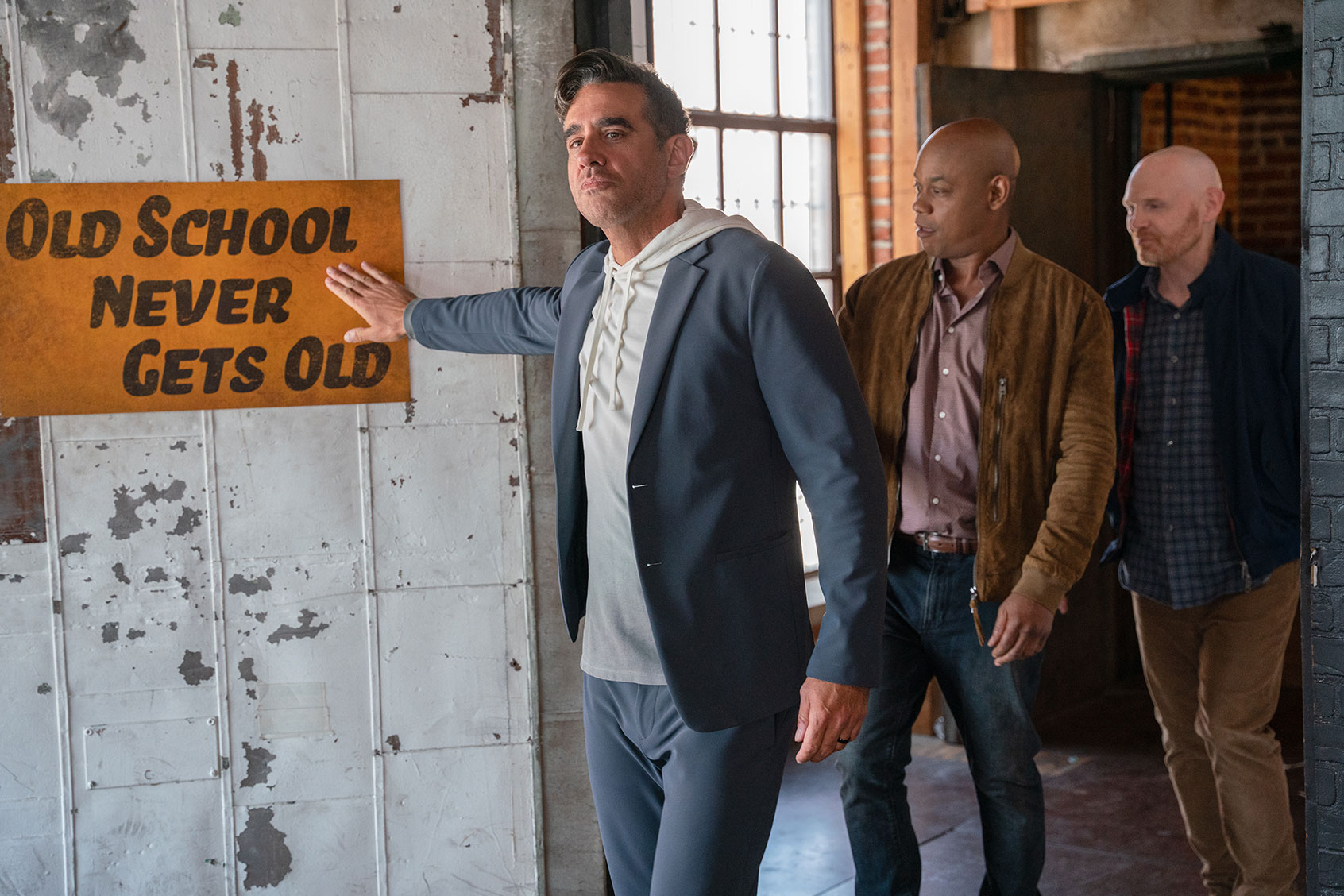
Comedian Bill Burr recently made his directorial debut in the Netflix film "Old Dads," which he also co-wrote and in which he plays one of the main leads.

"Old Dads" tells the story of Jack Kelly (Burr), Connor Brody (Bobby Cannavale) and Mike Richard (Bokeem Woodbine), three friends who sell their company to a millennial, only to realize that they are out touch with current societal norms like gender identity, appropriate work place behavior and rentable electric scooters. 

Lucky for me, I understand those simple rules like making sure I use a person's pronouns, but it's the other stuff they went through in the film, that makes me critique my parenting decision to have a child only when I was fully maature. And I know it sounds wild and kind of dysfunctional, even for me, but maybe, just maybe I waited too long. 

My parents were really young when they had me and even younger when they gave birth to my older sister. As a result, we had to deal with the pain and traumas that come with growing up at the same time as your child – like eating the same snacks, fussing over who's going to get to pick the movie – usually, mom because she was paying for it – and knowledge. As hip and cool as my young mother was, certain things only come with age and experience, like the ability to control emotions, recognize red flags in personal and romantic relationships, and patience. Knowing this, or actually experiencing this­­ – I told myself I would not be a teenage dad. And I was successful, even after having a couple of scares in high school. I am proud to say I made a plan and stuck to it. But did I get it right?

Now, don't get me wrong, I love my baby girl more than anything in the world, but if time machines existed, then I would've skipped the dramatic love story full of ups and downs that my wife and I share, our seven-year dance that led to matrimony, shift the universe so that we could be locked in in our early 20s, and will that beautiful baby girl into the world back in 2008. Because in 2008 I had a healthy hairline, I could run down a basketball court like I was shot out of a cannon, and if I twisted it to the side and held my breath, you could even see half of an ab muscle forming. Yes, I felt like a professional athlete in 2008 compared to how I feel now. Also, if my daughter was born 2008, then she would be 15 right now, which means I could take her to nightclubs, let her sit at the bar with me and maybe have a round or two. That’s a joke, but I’m sure a 15-year-old has to be less demanding than a toddler. 

I’m so 40 that I remember when Joe Biden was young and spry, and I even kept my iPod until Apple forced me to retire it. 

My daughter was born one month before I turned 40 years old. And everything felt like it made sense. My marriage was stable and beautiful, and I found my passion as a writer; my wife and I purchased an affordable home in a gated community, had a few dollars in the savings account, scheduled some bills to be automatically debited via auto-pay, and even ate salad sometimes as a main course. We were the perfect parents until I realized that I did not know how old I was. I am an ancient 40.

Old DadsBobby Cannavale, Bokeem Woodbine and Bill Burr in "Old Dads" (Netflix)I’m not a young 40 – the kind of 40 that does hot yoga, trains for marathons, takes salsa dancing classes and eats sprouts. The kind of 40-year-old we hate. I’m an ancient 40 because I watch baseball, don't know how to send emails on brand-new devices, my knees crack when I move, and I refer to FaceTime on iPhones as "that face video thing." I don’t even know how to work TikTok. I’m so 40 that I remember when Joe Biden was young and spry, and I even kept my iPod until Apple forced me to retire it. The most significant indicator of me being ancient is that I recently told my nephew, "They made the best music back in my day, I don’t understand this new stuff." So, essentially, I am a geezer

A geezer with a baby who acts more like an employer. My beautiful toddler has an extremely long list of demands that she cannot wait to put on me daily. They kind of go like, "Daddy go upstairs and get me something to drink," and "Daddy sing this Disney song, but only your part," and "Daddy ordered me a pizza," and "Daddy carry me," even when she hears my knees snapping and popping like microwave popcorn. The only thing saving me, is that my daughter is a “Mommy’s girl,” meaning that mom is always the first choice and I’m only called into action when mom is at work or needs a break. Sometimes I feel bad watching my daughter run my wife around, as I ice my knees and wait for my turn, but here we are.  

Maybe 40-year-olds are not supposed to be playing games with three-year-old kids daily–– it's like entering the NBA as a rookie at age 45. You will get dusted and crossed over and slammed on the bench.

I love playing with my daughter, but she is so low to the ground. I love to carry her and don't think she's heavy but tell that to my shoulders and back, and I wish I had her stamina – the girl can run all day long and doesn't run out of energy. Back in 2008, I could run all day long as well. I would have been beside her, chugging ice cream at 4 a.m., but now I'm slacking in the rear, screaming, "Please baby, wait for daddy." I'm in bed by 10 p.m. now, even though my daughter is fighting for me to stay up past the magic hour, and she still has the same energy she had around 2 p.m. the same day. 

"You think she has too much energy because we give her too many organic vegetables, organic yogurts, and other organic snacks that we didn't have growing up?" I asked my wife, "Because we had bedtimes." 

"I would appreciate a bedtime now," she laughs. 

These are the things that no one explains to us, so-called responsible, evolved parents. Even if we work out multiple days a week, our bodies aren't equipped to deal with toddlers. Maybe 40-year-olds are not supposed to be playing games with three-year-old kids daily – it's like entering the NBA as a rookie at age 45. You will get dusted and crossed over and slammed on the bench. This is happening to me every day. 

I am going to make it, just like the crew in "Old Dads." I am a survivor and will be okay, but I have one message to those waiting to have kids: Don't wait – act like it’s 1950 and have those kids while you are still young enough to chase them. 


Hurricanes are disasters on land. Are they just as destructive to marine life under the sea?

This year's hurricane season has been weird for several reasons, from the historic Hurricane Hilary that hit California to the historic Hurricane Otis that hit Acapulco, Mexico this week. There have been a lot of "historic" storms lately thanks to how climate change is altering weather patterns across the planet.

The National Oceanic and Atmospheric Administration (NOAA) forecasts this hurricane season, spanning June 1 to Nov. 30, will be more intense than normal, with up to 21 storms severe enough to warrant a name throughout the season. 

Hurricanes form when warm ocean temperatures cause hot air to rise. These temperature changes cause a lot of ocean mixing, dredging up cooler water from the bottom of the ocean as deep as 300 feet and creating waves as tall as 60 feet. As the atmosphere becomes warmer due to trapped greenhouse gases from burning fossil fuels, it has a greater capacity for holding water vapor, which means hurricanes are bringing more rainfall, while also being slower-moving, wider-ranging and more volatile. This means their strength can increase more rapidly, said Sally Warner, Ph.D., an associate professor of climate science at Brandeis University.

These storms, which are called hurricanes if they form in the Atlantic and tropical storms if they form in the Pacific, which can be some of the most damaging and expensive. But for every hurricane that we prepare for on land, many fizzle out in the ocean without ever becoming a cause for concern. Regardless of whether a storm reaches the level of a hurricane or stays confined to the ocean in what's sometimes called a "fish storm," there are some creatures that are impacted either way: ocean-dwellers.

"The wave action from hurricanes can extend pretty deep within the water column," Warner told Salon in a video interview. "In the open ocean environment, if a species has the ability to go deeper, they'll go deeper or swim out of the way — sharks, dolphins, large fish, things like that."

Regardless of whether a storm reaches the level of a hurricane, there are some creatures that are impacted either way: ocean-dwellers.

In one study that tracked a group of blacktip sharks during Hurricane Gabrielle in 2001, young sharks migrated to deeper waters along with changes in barometric pressure associated with the approaching hurricane, returning to their nursery within two weeks after the storm.

But fast swimmers don't always evacuate in time. After Hurricane Ida in 2021, a dolphin got stuck in a drainage pond for two years before being rescued. When Hurricane Rita struck Louisiana in 2005, seven dolphins were stranded as far as 11 kilometers inland, according to a report from the National Marine Fisheries Service. Earlier this month, Hurricane Idalia similarly stranded a group of manatees inland in Florida, a repeat of what happened after Hurricane Hermine trapped sea cows on flooded golf course ponds in 2016. 

Most of the ponds these animals were found in weren't adequately salty for these sea creatures to survive long-term, and some were found with skin lesions caused by swimming in polluted waters. But runoff from flooding caused by hurricanes can also pollute the ocean with debris and dramatically reduce the salinity of coastal environments. Runoff polluted with waste or fertilizers — like the millions of gallons of hog feces that drained into North Carolina's coastal waters after Hurricane Florence in 2018 — disturbs the chemical composition of the ocean and can cause algae blooms that lower the oxygen supply in deep water, Warner said.

"Maybe some species are able to move out of the way but then they come back to where they want it to live and their habitat has been destroyed," Warner said. "That also can have a detrimental impact."

Low oxygen levels were thought to be what killed 280 million fish in Louisiana after Hurricane Ida in 2021. While many fish species are able to evacuate like larger sea animals, the aftermath of hurricanes can be associated with the loss of millions of dollars — and sea creatures — in fishing communities. In one study analyzing the marine environment off the coast of Florida after two hurricanes struck in 2004, researchers found the salinity in coastal areas dropped so much that freshwater fish temporarily took over the ecosystem, although it returned to what it was pre-hurricane within about three months.

The aftermath of hurricanes can be associated with the loss of millions of dollars — and sea creatures — in fishing communities.

The extreme ocean mixing that occurs with a hurricane can also produce giant underwater waves that break deep within the ocean, said Noel Gutiérrez Brizuela, a Ph.D. candidate in physical oceanography at the University of California, San Diego. The ocean responds to these strong forces by reverberating waves that pump various ocean layers up and down, he added. While these waves aren't moving particularly fast, slower-moving or stationary creatures like turtles or shellfish can be tossed around like the spin cycle of a washing machine in this turmoil.

"If you were a fish or a whale or whatever under a hurricane, you would be thrown around and up and down by these waves, which act over scales of hundreds up to 1,000 kilometers," Brizuela told Salon in a phone interview. "A cycle of these waves will take about 30 to 40 hours."

All of this mixing can also churn up huge amounts of sand that cover structures like corals that are important to sea life. A 2017 study in Florida and Puerto Rico found that 12% of reefs in the region were destabilized or broken off when struck by Hurricanes Irma and Maria. Many coral species are already under threat of extinction due to coral bleaching caused by rising temperatures, and these are especially vulnerable to stronger storms breaking them apart, said Shay Viehman, Ph.D., a research ecologist at NOAA who studies coral reefs.

"Coral reefs are commonly called the 'rainforest of the sea' because they have so many organisms that live in them and there's so much diversity," Viehman told Salon in a phone interview. "If the reef itself is destroyed through hurricanes or any other mechanism, that means the home for fish and urchins and crabs and so many different species that live down in the reef is gone."

Although hurricanes are called disasters on land and have been responsible for thousands of deaths, they can actually provide some benefits to sea creatures. 

For example, cooler water dredged up from deep in the ocean can cool off coral that is in danger of being bleached from warm ocean temperatures. It can also deliver much-needed oxygen to places like the "Dead Zone" in the Gulf of Mexico, where algae blooms effectively suffocate bottom-dwellers like crabs and sea stars, Warner said. Certain species like phytoplankton might also benefit from all of this mixing because they feed on nutrients dredged up from the ocean floor.

We need your help to stay independent

At the end of the day, these storms are natural phenomena that have been occurring in the ocean long before humans were around to feel their impacts on land. After all, many of the negative impacts on sea creatures, like flooding polluting coastal waterways or animals being trapped inland, are caused by human activity — just like our greenhouse gas emissions have heated the atmosphere to make the conditions in which these storms are more powerful.

"Hurricanes have existed for millions of years and marine life has evolved with it," ​​Brizuela said. "We haven't necessarily adopted or adapted our lifestyle to make sure that it's resilient to these events."

The Big Lie is expanding: Majority of Republicans now insist Trump never tried to overturn election

It may seem obvious that everyone in the country knows that Donald Trump tried to overturn the election results in 2020 because we all watched him do it live as it was happening. His campaign filed more than 60 lawsuits in various states — as was his right — none of which were found to be meritorious. His minions and accomplices in the Republican Party, both in Washington and around the country, actively tried to help him pressure election officials and persuade local officials to sign on as "alternate electors." I think you'd have to have been in a coma not to know that he aggressively tried to bully Mike Pence, his vice president, into refusing to count the electoral votes on January 6. 

Trump's famous Jan. 2 phone call to Georgia Secretary of State Brad Raffensberger was all over the news the very next day. Recall he very pointedly said:

 "What I want to do is this. I just want to find, uh, 11,780 votes, which is one more than [the 11,779-vote margin of defeat] we have, because we won the state."

The state had already certified its results showing that Joe Biden won after several recounts, both by machine and by hand. There is simply no doubt that Donald Trump was attempting to overturn the election. They didn't try to hide it. 

Moreover, 139 Republican House members explicitly voted to overturn the results of the electoral college on January 6 at the behest and direction of Donald Trump, even after the violent mob stormed the capitol in an attempt to stop the counting of the certified electoral votes. New Speaker of the House Mike Johnson has been called “the most important architect of the Electoral College objections” that day aimed at keeping Trump in office even after he lost. In fact, his status as an influential election denier for filing a widely derided amicus brief seeking to invalidate the 2020 election results in four swing states Biden won was key to gaining the unanimous vote for Speaker just this week. 

And long after Trump was comfortably ensconced at his Mar-a-Lago beach club he was pushing his supporters to pursue "audits" of the vote, even telling people that he would be reinstated in a matter of months. As recently as the fall of 2022 he was demanding that he be returned to the White House or hold a new election!

Whether you believe he was justified in doing it, or even think it was his patriotic duty to try, there is simply no doubt that Trump tried to overturn the election results. Denying that fact is simply delusional. And yet, as Aaron Blake at the Washington Post reports, it appears that tens of millions of Americans are in deep denial:

The Economist and YouGov this week became the latest to publish a head-scratching poll showing Republicans rejecting basic facts about Trump and his legal jeopardy.

The poll asked people whether Trump was “involved in an attempt to overturn the results of the 2020 election in Georgia.” He, of course, was…But to most Republicans, this apparently never happened. Just 18 percent in the YouGov poll said Trump was involved in trying to overturn Georgia’s results, compared to 59 percent who say he wasn’t.

It’s now the second poll to show the vast majority of Republicans saying Trump wasn’t even involved in trying to overturn the election. YouGov asked similar, non-Georgia-specific questions in August. Republicans said just 38-30 percent that there was an attempt to overturn the election. That’s shocking in and of itself. But then it showed only half of that 38 percent said Trump was personally involved.

So in both polls, only about 1 in 5 Republicans said Trump tried to overturn the election — the very basic threshold fact that undergirds two of his four indictments.

Now maybe they see this as a matter of semantics and judge that he wasn't really attempting to "overturn" the election because it wasn't really legitimate in the first place. But that would be an awfully convoluted explanation. More likely this is related to the fact that he's been indicted in federal court in Washington D.C and Fulton County for doing just that and they are simply unwilling to believe he's guilty of it. 

We need your help to stay independent

What this means is that The Big Lie, which was originally simply Donald Trump's insistence that the election was stolen from him, now includes an equally absurd lie that Trump never tried to overturn it. 

The Big Lie gets bigger and bigger as time goes on and Republicans seem powerless to resist it.

It's easy to blame the voters for this and ultimately it is their responsibility as citizens to be smart enough to resist such a ridiculous falsehood. But perhaps they just don't know the truth because their media diet is so reliant on right-wing propaganda that the facts aren't easily available to them. According to a new Pew Research Poll, while Americans generally are turning out the news more than they used to, Republican attention to current events has dropped precipitously:

In 2016, 57% of Republicans and independents who lean Rep­­ublican said they followed the news all or most of the time. In the 2022 survey, 37% said the same, a decrease of 20 points. By comparison, the share saying this among Democrats and Democratic leaners dropped by only 7 points, from 49% to 42%. 

It's likely that many of them are sticking their heads in the sand because on some level they either know the truth and don't want to admit it or they believe that any news they don't like is fake. They have been conditioned by Trump and the right-wing press to only hear what they want to hear. After all, he told them outright, "what you’re seeing and what you’re reading is not what’s happening" and they believed him.

It will be interesting to see what happens as Trump's legal saga unfolds over the next few months. At this point it looks as though Trump's hand-picked judge in Florida will drag the classified documents case out until after the election. And who knows when any trials in the Georgia case will take place? As things stand now, the federal case in Washington is the one most likely to go first and that's where the evidence of Donald Trump's attempt to overturn the election will be laid out in great detail. Unfortunately, it doesn't appear that it will affect most Republican voters even if he's found guilty and sentenced to jail because they are impervious to the truth when it comes to their Dear Leader. The Big Lie gets bigger and bigger as time goes on and Republicans seem powerless to resist it. 

“It’s actually the f**king weapons”: GOP speaker called out for blaming shootings on “human heart”

New House Speaker Mike Johnson, R-La., drew backlash on Thursday after arguing that guns are not the problem in response to another mass shooting.

Fox News host Sean Hannity on Thursday questioned Johnson about Democratic calls for stricter federal gun laws after 18 people were killed and 13 others wounded at a bowling alley and restaurant in Lewiston, Maine.

“The end of the day, the problem is the human heart,” Johnson said. “It’s not guns, it’s not the weapons. At the end of the day, we have to protect the right of the citizens to protect themselves and that’s the Second Amendment. And that’s why our party stands so strongly for that.”

House Democrats fired back at Johnson for blaming the “human heart” for mass shootings.

“It’s actually the f**king weapons,” Rep. Robert Garcia, D-Calif., wrote on X.

“No, it’s the guns,” wrote Rep. Chellie Pingree, D-Maine.

“Humans have hearts in every nation on Earth. This is the only country that has a mass shooting almost every day. It’s the guns,” agreed Rep. Don Beyer, D-Va.

Johnson, who played a key role in the Republican effort to overturn the 2020 election, blamed abortion for school shootings shortly after he was elected to the House in 2015, according to New York Magazine’s Irin Carmon.

“Many women use abortion as a form of birth control, you know, in certain segments of society, and it’s just shocking and sad, but this is where we are. When you break up the nuclear family, when you tell a generation of people that life has no value, no meaning, that it’s expendable, then you do wind up with school shooters,” Johnson told Carmon at the time.

We need your help to stay independent

Johnson during a sermon in 2016 also blamed mass shootings on the teaching of evolution.

“People say, ‘How can a young person go into their schoolhouse and open fire on their classmates?’ Because we’ve taught a whole generation, a couple generations now of Americans, that there’s no right or wrong, that it’s about survival of the fittest, and you evolve from the primordial slime,” he said while speaking at Christian Center Shreveport in a clip flagged by MeidasTouch. “Why is that life of any sacred value? Because there’s nobody sacred to whom it’s owed. None of this should surprise us.”

Johnson spent years working as an attorney for conservative groups, defending restrictions on abortion and homosexuality. Hannity on Thursday questioned Johnson about criticism over his arguments against gay marriage and sex.


Want a daily wrap-up of all the news and commentary Salon has to offer? Subscribe to our morning newsletter, Crash Course.


“I don’t even remember some of them,” Johnson replied. “I was a litigator that was called upon to defend the state marriage amendments. If you remember back in the early 2000s, I think there [were] over 35 states, somewhere in that number, that the people went to the ballot in their respective states and they amended their state constitutions to say marriage is one man and one woman. Well, I was a religious liberty defense and was called to defend those cases in the courts.”

Johnson added that he “genuinely” loves all people regardless of their “lifestyle choices” because he is a “Bible-believing Christian.”

“Someone asked me today in the media, they said, ‘it’s curious, people are curious. “What does Mike Johnson think about any issue under the sun?”’ I said, ‘Well, go pick up a Bible off your shelf and read it – that’s my worldview. That’s what I believe and so I make no apologies for it.’”

Wild pig-like animals are tearing up an Arizona golf course. The internet is delighted

She’s an eco-vengeance iconoclast who loves coyote pee and running at manic speeds. She’s an unstoppable chaos queen with a stink-nipple on her butt, who turns luxury Arizona golf courses into free range charcuterie boards for her grub-worm girl dinner. She’s a guerilla class-warfare legend whose mating call sounds like the hissing warb-garble of a cappuccino machine milk-steamer. She’s the internet’s most beloved trash-eating ungulate — the uncompromising, the indefatigable, the lovely javelina.

And if you haven’t seen her species’ latest tour of havoc through a high-end Sedona golf course, you’re missing out. A massive herd of “between 100 – 150” wild javelina — a.k.a. skunk pigs — have been terrorizing the water-guzzling Seven Canyons Golf Club in the state’s Coconino National Forest, leaving club owners searching for solutions in the wake of the javelina’s destruction for the past six weeks.

Also known as collared peccaries, 30 to 50 hellcatting javelina squadrons have been razing the course turf annually during their fall rush. But assistant superintendent Em Casey says the hunger-driven javelina insurgents are wrecking shop so hard this year that the course has to spend 45 to 50 hours a week repairing the damage. So far, the javelinas have hit eight spots on the course, from all sides.

“Come along with me on my carnage (I mean course) check this morning. What should be one of the most beautiful golf courses in the country is being destroyed by herds of javelina,” Casey said in a video posted to social media.

She’s the internet’s most beloved trash-eating ungulate — the uncompromising, the indefatigable, the lovely javelina.

The video has since racked up more than 25 million views as many online throngs flock to #TeamJavelina, cheering on the wild hogs’ berserker-mode reclamation of their natural habitat. Though the Arizona Alliance of Golf touted a $6-billion impact on the state made by golf courses — and “only 2% of Arizona’s daily water use” — an investigation by the Arizona Republic found courses in the state were over way over their daily water limits. 

“What should be one of the most beautiful golf courses in the country is being destroyed by herds of javelina,” Casey wrote online.

Seven Canyons general manager David Bisbee has been on the case, though. With state wildlife officials providing the club a tally of the squadrons and the help of the club’s restaurant suppliers, Bisbee has tried a few different tactics on the javelina and says the club wants to “figure out a way to co-exist with them.”


Want more health and science stories in your inbox? Subscribe to Salon's weekly newsletter Lab Notes.


In 2021, the Arizona Republic found that across the state’s 219 golf courses, the average water use per course came out to about 450,000 gallons per day. That water is drawn from not only the Colorado River basin (which has seen better days, to say the least) but from groundwater sources — a sticking point in the state’s regulatory debate, and a much needed water source for the natural habitats of endangered local fauna.

The javelina are spurred on by a hunger-causing drought, seeking grazing greens and grub-worms on the course because it was carved out of the animals’ home turf. With less than 2 inches of rain this year in the Sedona area, the javelina are on a survival mission for food, compared to their relative quiet last year when the area saw up to 18 inches of rain.

“We had zero damage,” Bisbee told the Associated Press Tuesday.

But five years ago, during a particularly tough summer, the skunk pigs were running amok like they are now — sporting territory-marking scent glands on their rumps, which produce pungent odors from a nipple-like protrusion that humans can smell downwind. Seeking to drive them off, the club sprinkled granules of coyote urine around the course.

But did that stop the javelinas? Hell no. These little freaks absolutely loved it. The skunk pigs went berserk after doing bumps of coyote piss at the club, and then ran roughshod through a top-25 course that venerable sports publication Golf Digest ranks among the best in the country. Iconic.

“It was like putting bacon bits in their salad,” Bisbee said.

We need your help to stay independent

Now Bisbee says the club is working with its restaurant suppliers, trying to scorch the javelinas with a one-million Scoville-unit chili oil that the club can spray over the turf without killing it. 

“We’re still trying to figure out the right formulation in the chili oil we put out. It’s a delicate thing for the grass,” Bisbee said. “It’s a continuing dance we do.”

But as Bisbee and the club keep dancing, the javelina are running circles around them — shredding whatever they want, whenever they want. If Seven Canyons really wants to prevent the javelina from snatching up their turf, the best thing it can do is stop chugging massive amounts of water in the middle of a desert preserve. Otherwise, these untameable trash-baddies are here to stay. Slay on, queens. Slay on. 

More mass shootings like the one in Maine? Supreme Court will soon consider unleashing the violence

Wednesday night's mass shooting in Lewiston, Maine was many things: horrific, terrifying, unfathomable, all the adjectives that get trotted out after these now-routine massacres. What no one can pretend it was, however, was surprising. Maine is especially hostile to even the most reasonable gun laws. The state has been scored an F by the Giffords Law Center to Prevent Gun Violence.

Sure enough, intial reports on the suspected shooter, 40-year-old Robert Card, show he is a bundle of red flags that, in any functioning legal system, would have prevented him from being armed in the first place. He was recently released from a mental health facility that he had been committed to for two weeks. Maine has no "red flag" law to allow law enforcement to take guns from people in a mental health crisis, nor do they require convicted domestic abusers to relinquish guns. In a little more than one week, arguments in favor of and against expanding such relaxation of gun regulations nationwide begin in the country's highest court. 

On November 7, the Supreme Court will hear a case that could force every state to let men like Maine's suspected mass shooter run wild with all the guns they wish. Unfortunately, there's a very real chance that the court — led by the gun radicalism of justices like Clarence Thomas, Amy Coney Barrett and Samuel Alito — will pull the trigger, unleashing even more would-be mass shooters to prey on us all. 

We need your help to stay independent

The upcoming case is United States v. Rahimi. On its surface, this should be a slam-dunk win for the U.S. lawyers, because Zackey Rahimi is exactly the kind of person no one should want in possession of a gun. As Francis Wilkinson of the Washington Post explains:

In 2019, Rahimi, of Arlington, Texas, threw his girlfriend to the ground before dragging her to his car, where he slammed her head against the dashboard. He later threatened to shoot her if she told anyone about the attack. The threat was credible; Rahimi had already fired his gun at a witness to the assault and later engaged in five shootings in and around Arlington over the course of a month. Yet Rahimi challenged his loss of firearms as a consequence of domestic violence.

Not exactly the "good guy with a gun" that gun rights advocates love to wax poetic about. But, because Republicans keep showing us their true faces these days, Rahimi has become the latest cause célèbre of the right. Judge Cory Wilson, a Donald Trump appointee to the Fifth Circuit Court, ruled that the right to own a gun cannot be limited to "law-abiding, responsible citizens." To back this argument up, he approvingly cites a dissent that Barrett wrote in Kanter v. Barr, where she argued that, "Founding-era legislatures did not strip felons of the right to bear arms simply because of their status as felons."

On November 7, the Supreme Court will hear a case that could force every state to let men like Maine's suspected mass shooter run wild with all the guns they wish.

To make things even more disturbing, Judge James Ho, another Trump appointee, wrote a concurring opinion arguing that domestic violence restraining orders shouldn't count, because, according to him, women lie about being beaten all the time in order to screw men during divorce disputes. As Vox legal analyst Ian Millhiser points out, Ho's "evidence" for this claim is "decades-old cases in faraway jurisdictions," namely a 30-year-old case in New Jersey and one odd situation involving a mentally ill woman who fixated on David Letterman in 2005. But Ho is the same judge who argued women should be forced to give birth to provide doctors and family members cute sonogram photos to look at, showing that he believes there is no such thing as a bad argument when it comes to ruling that women have no human rights. 

All this is so off-the-charts radical, that it may be hard to believe that even very conservative judges would go there. Unfortunately, as Millhiser explains in another Vox analysis, not only are these Trump judges dead serious, but they are well within the bounds of what Thomas laid out as the only legitimate test of a gun regulation in a 2022 Supreme Court decision: Would this regulation have existed in 1791?

If that sounds hyperbolic, it's not, as Millhiser explains:

Bruen held that, in order to justify nearly any law regulating firearms, “the government must demonstrate that the regulation is consistent with this Nation’s historical tradition of firearm regulation.” This means that lawyers defending even the most widely accepted gun laws, such as the federal ban on gun possession by domestic abusers, must show that “analogous regulations” also existed and were accepted when the Constitution was framed — particularly if the law addresses “a general societal problem that has persisted since the 18th century.” If they cannot, the challenged gun law must be struck down.

Needless to say, restraining orders were not a thing in 1791. Indeed, the concept of "domestic violence" didn't really exist. Women were functionally the property of their husbands, and so if you wanted to beat your wife up, there wasn't much the law could say about it. It wasn't until 1871 that spousal abuse laws were ruled legal in the U.S. By the logic of Thomas's opinion in New York State Rifle & Pistol Association v. Bruen, you cannot bar wife-beaters from being gun owners.


Want more Amanda Marcotte on politics? Subscribe to her newsletter Standing Room Only.


The pro-gun people pushing Rahimi's case are smart to make the first big test of how absolutist the Supreme Court is on gun rights. This case isn't just about guns, but about whether women deserve state protection. As Ho's response shows, judges who are already sour about women having rights are going to be open to "lying bitches" arguments. Alito, who literally ruled that the opinions of a 13th-century witch-burner should determine a woman's access to abortion, is an obvious contender for the "who cares about domestic violence" angle. Brett Kavanaugh, who is still outraged at being accused, credibly, of attempted rape, is likely in the mix, as well. Barrett's been appealed to on her "let felons have guns" view, but she's also a fan of the ideology of wifely submission. Thomas's misogyny is well-documented — ask Anita Hill — plus he's probably not keen on abridging his 2022 decision because some poor woman got her head bashed in by her violent boyfriend. 

What does this have to do with mass shootings, you may be asking. Well, first of all, laws that keep guns out of the hands of wife-beaters also prevent mass shootings. Most mass shooters have a history of violence against women before they escalate to shooting up large groups of people. Disarming violent men before they turn up the dial doesn't just save the lives of abuse victims, but can save the lives of strangers. 

But also, if the Supreme Court uses the Rahimi case to double down on Bruen's claims that gun laws cannot be updated to reflect changing laws and social norms since 1791, then it's not just domestic violence-related restrictions that will fall. Background checks and red flag laws that screen for people, like Card, who are having mental health episodes will likely also be rendered illegal. After all, the discipline of psychology wasn't even really invented until the mid-19th century, decades after the cut-off date that Thomas laid out for when gun laws can be adapted to reflect legal and social changes. 

Maine's radical laws on guns are rejected by most Americans for a reason. Most of us have some experience with mental illness and understand that it's not stigmatizing or cruel to suggest that the last thing people having a mental health crisis need is access to guns. Even if they aren't hearing voices, as Card reportedly was, they are often a danger to themselves, which is why the suicide rate in states with lax gun laws is so high. Nor is there any legitimate reason to let wife beaters have guns, especially when the reason most of them want one is to increase the amount of control they have over their victims. 

But the radicalized, deeply misogynist Supreme Court is poised to hear a case that we already know appeals to the ugliest impulses of the far-right — because Trump appointees on the Fifth Circuit already signed off on these claims. If the court gives into its culture warrior side, then it will be unleashing even more mayhem on a country already shell-shocked by a relentless drumbeat of mass shootings. Wednesday in Maine is what you get when MAGA attitudes on guns set the laws the rest of us have to live — and increasingly die — with. There's a very real chance that the Supreme Court will make the dystopian vision our reality. 

The battle for Virginia: Can the last state in the South to not restrict abortion post-Roe survive?

Since the Supreme Court overturned Roe v. Wade last year, nearly half the states in the U.S. have banned abortion. As a result, 25 million women of reproductive age live in states where it’s now harder to access this essential health care. For anyone doing the math at home, that’s 2 in 5 women between the ages of 15 and 44.

The situation is especially dire in the South, where Virginia is the only state that hasn’t restricted abortion rights post-Roe. Clinicians in the Commonwealth are working around the clock to meet the demand from patients who have driven all night from Florida, Georgia, and Mississippi – even as far as Texas – to get necessary health care that’s no longer available in their home state. 

Now, the future of abortion access for an enormous swath of the country rests on Virginia’s upcoming elections. For the first time since Roe was overturned, all 140 seats in the state legislature are on the ballot. Democrats are fighting to protect their majority in the state Senate and need just three seats to take the House of Delegates. 

We don’t have to guess what will happen if Republicans win; we’ve seen this movie before. Earlier this year, Republicans in Virginia came within one vote of banning abortion. If their bill had passed, it would have gone to Republican Governor Glenn Youngkin, who promised to “happily and gleefully” sign any anti-abortion legislation that came across his desk, no matter how extreme. The resulting change to Virginia law would have been catastrophic for patients across the South. In case there was any doubt about their priorities for the next legislative session, Youngkin’s PAC recently launched their first TV ad of the season: a $1.4 million attempt to argue that their abortion ban isn’t really a ban. 

We need your help to stay independent

Despite their best Orwellian efforts, the truth is clear: Since 1973, the people of Virginia have had the right to an abortion. If these extremist Republicans take total control of the government, they’ll outlaw abortion and criminalize doctors. A ban is a ban, no matter what you call it. (Just ask Republican candidates in Virginia, who are saying the quiet part out loud.)

The Youngkin-backed ad, complete with pink text on screen, is proof of the unenviable position Republicans have found themselves in this election cycle. When Roe was the law of the land, they could talk about abortion in the abstract. They made promises to anti-abortion activist groups without having to acknowledge the cruel impact of abortion bans on people’s lives or be held accountable to the vast majority of voters who believe abortion should be safe and legal. 

So far, Republican efforts to hide dangerous laws behind softer language have come up short.

For the last 14 months, however, Americans have been confronted with the reality of these bans: teenage rape victims forced to give birth, miscarrying patients turned away from emergency rooms and told to return when they’re in sepsis, and countless others taking time off work and scraping together child care and money to travel out of state. All of these restrictions disproportionately affect people of color, people with low incomes, young people, and immigrants – many of the same groups that already have the hardest time accessing health care.   

To make matters worse, abortion bans don’t just interfere with reproductive health – they decrease the quality of care across our entire medical system. In a country with the highest maternal mortality rate in the developed world, pregnancy care has suffered as abortion restrictions drive obstetricians out of hostile states. According to one study, women in states that banned abortion after the Court overturned Roe were up to three times as likely to die during pregnancy, childbirth, or in the postpartum period. Fewer medical students are applying to OB/GYN residencies and family medicine programs, threatening to exacerbate existing physician shortages, especially in rural areas. It’s not just abortion patients who are worse off; it’s anyone who needs a doctor. 

So far, Republican efforts to hide dangerous laws behind softer language have come up short. Polling shows Virginia voters don’t trust Republican candidates or Youngkin on abortion. Maybe they’ve been following the story of House of Delegates candidate John Stirrup, who scrubbed any mention of his anti-abortion positions from his campaign website after being secretly recorded promising to “support a 100% ban.” Maybe they remember the last time Republicans held power in Virginia and imposed medically unnecessary barriers to abortion care, including mandatory ultrasounds and regulations designed to close health centers and shame patients. 


Want a daily wrap-up of all the news and commentary Salon has to offer? Subscribe to our morning newsletter, Crash Course.


It’s not surprising that Virginia Republicans are working hard to conceal their agenda. As it turns out, no one wants their kids and grandkids to have fewer rights than they had. A whopping 70 percent of Virginians believe abortion should be legal. In all seven states where the issue has been on the ballot post-Roe, abortion rights supporters have won. In Ohio, a constitutional amendment to protect abortion rights received nearly double the number of signatures needed to put it on the ballot this month. In less than two weeks, Virginia will either provide a glimmer of hope for extremists – or send an unmistakable message that abortion bans are wildly out of step with what voters want.

As unpopular as abortion bans are, the truth is, these wins don’t happen on their own. They take resources, organizing, and massive get-out-the-vote efforts. Youngkin’s PAC has raised a staggering $15.5 million to try to take control of the government. Virginia Republicans and their donors see an opportunity to buy an abortion ban and launch Youngkin into the national spotlight. We can’t let that happen.  

Right now, volunteers in Virginia are knocking on doors and sharing deeply personal abortion stories in hopes of mobilizing their neighbors. Democratic candidates are running in hard-fought races and standing proudly on records of supporting reproductive freedom. As voters across the country consider the positions of presidential candidates and head to the polls in Ohio, where abortion is quite literally on the ballot, another election is underway that will have sweeping consequences for abortion access in America. This may just be the most crucial test case yet for 2024. No matter where you live, if you care about reproductive rights, now is the time to sit up and pay attention to Virginia.   

Is it ethical to experiment on octopuses? Why some scientists question how we test these animals

The 2021 film "My Octopus Teacher" swept the world with its touching story of a South African man who befriends a wild octopus while free diving in a kelp forest. Millions of filmgoers were charmed and moved by the wild octopus' adventures and antics — yet that wild octopus was a lucky one. According to Dr. Barbara J. King, professor emerita of anthropology at the College of William & Mary and author of "How Animals Grieve" (and other books on animals), nearly two dozen blue-lined octopuses living off Australia's Stradbroke Island suffered a much grimmer fate.

"It makes me feel both physically ill and swamped with empathy to think of what these octopuses endured — and to know that they are by far not alone in suffering in this way in laboratories."

She described "this more recent experiment in which 21 wild octopuses going about their daily lives were collected from their homes in coastal waters and in the laboratory killed so their brains could be studied," King told Salon by email. "These octopuses pay the ultimate price – they are killed— because researchers are curious to know about comparative brain anatomy vis-à-vis habitat."

Although the researchers wrote that they had obtained an animal ethics permit, King scoffed at the notion that such a permit could be justified in this situation.

 
"Justifying this cost (death of 21 animals) by saying that an 'animal ethics permit' was obtained in no way alters my opinion that this is unethical and immoral research: what right do we have to end the life of 21 octopuses for this experiment?" King argued. "Would we do this to 21 chimpanzees?"

"Saying that an 'animal ethics permit' was obtained in no way alters my opinion that this is unethical and immoral research."

King is not the only scientist comparing octopuses to chimpanzees. Both animals have displayed extreme intelligence, so much so that last month the U.S. National Institutes of Health (NIH) rocked the science world with an arguably overdue announcement: Cephalopods like octopuses and squids could receive the same protections in laboratory settings currently given to mice and monkeys. The agency has put out a request for information, seeking more information from the scientific community on how to proceed, while noting that "Many nations have also adopted regulatory requirements for cephalopod welfare in research, including the members of the European Union, the United Kingdom, Switzerland, Norway, Canada, Australia, and New Zealand."

As the NIH Office of Extramural Research explained to Salon, "The Request for Information seeks input at this time on proposed guidance for use of laboratory cephalopods in research, research training, experimentation or biological testing, or for related purposes," with a deadline of Dec. 23, 2023.

These proposed regulations won't make experiments with octopuses impossible. Dr. Robyn Crook, an associate professor of biology at San Francisco State University, argues that this can be ethically done — but certain strict criteria have to be met.

"These are, of course, the sorts of regulations that apply to every single vertebrate animal study conducted in the USA."

In addition to having a experiment that is "well designed, appropriately powered and conducted by properly trained personnel," Crook insisted that these experiments must allow their animals to engage in normal behaviors, even though these can be highly species-specific for cephalopods. "Any possible pain, distress or lasting harm is minimized or eliminated by provision of validated analgesic drugs or anesthesia, restraint that is absolutely minimized to the degree strictly necessary for the experiment, and that animals are proactively monitored and euthanized, if necessary, to prevent further suffering," Crook added, concluding that the experiments must have an intrinsic scientific value that is evaluated by an impartial third party.

"These are, of course, the sorts of regulations that apply to every single vertebrate animal study conducted in the USA," Crook pointed out. "I am strongly in favor of requiring equivalent, properly tested and validated, regulations for cephalopods."


Want more health and science stories in your inbox? Subscribe to Salon's weekly newsletter Lab Notes.


"The field has advanced significantly in the past 15 years or so and most researchers using cephalopods are well educated on the validated refinement techniques to limit or eliminate possible sources of suffering."

Not everyone shares Crook's position that it is possible to engage in ethical cephalopod experiments. As far as King is concerned, "I don’t think it’s ethical or moral to perform experiments on octopuses that are, one, physically invasive or, two, that require collection of 'subjects' from the wild or breeding of 'subjects' in captive colonies." Since nearly all experiments on octopuses fall into one or both of those categories, by extension, King feels they should all be banned.

"We might think up an exception to my desired ban on experimentation: perhaps non-invasive observational experiments on cognitive problem-solving or emotional expression by octopuses already held in captivity — animals not good candidates for release back into a wild habitat — could yield knowledge that helps octopuses themselves," King added as a caveat. "But in general, consistent with my stance that experimentation on vertebrate animals is ethically wrong and scientifically unhelpful, it is my stance that experimentation on invertebrate octopuses is ethically wrong and scientifically unhelpful."

Crook, who told Salon that she has never personally witnessed experiments she would consider immoral or unethical on octopuses and would intervene if she had, added that she does not believe inhumane studies of octopuses are currently common.

"The field has advanced significantly in the past 15 years or so and most researchers using cephalopods are well educated on the validated refinement techniques to limit or eliminate possible sources of suffering," Crook explained. Even so, she said that an experiment in theory would be inhumane if it involved practices like making incisions or amputations without anesthesia and maintaining analgesics for at least one day afterward "with a caveat here that analgesic for cephalopods are very, very, poorly studied and more work is needed urgently here."

Crook also said she would have concerns about any experiment "that involves prolonged fixation or restraint in one position," since those experiments force "the animal to be deprived of the ability to perform natural behavior for extended periods without a valid scientific reason."

King recalled one particularly cruel experiment that she chronicled in her book Personalities on the Plate: The Lives and Minds of Animals We Eat. It perhaps perfectly captures the inherent brutality of many octopus experiments.

We need your help to stay independent

"I describe research conducted by biologist Jean Alupay and her team that involved crush injuries administered to the arms of five octopuses in an experiment," King wrote to Salon, noting that the octopuses were first put under anesthesia as an implicit concession to the pain they would otherwise experience. "Later researchers applied electrodes to the arm stumps. The octopuses cradled the wounded areas or curled other arms around them."

King quoted from the 2014 study, that noted "all animals inked and jetted at the onset of stimulation and showed immediate wound-grooming behavior, where the arm stump or crushed site was held in the beak.”

"It makes me feel both physically ill and swamped with empathy to think of what these octopuses endured," King said. "And to know that they are by far not alone in suffering in this way in laboratories."

Al Jazeera journalist learns that Israeli airstrike killed his family live on air

The chief of Al Jazeera's Gaza bureau, Wael Al-Dahdouh, learned while reporting on-air Wednesday that his wife, son, daughter, and grandson had been killed in an Israeli airstrike like the ones the veteran journalist has been covering for nearly three weeks.

Al-Dahdouh was reporting live near Wafa Hospital in Gaza City when someone spoke to him about his family.

"What, what happened? They don't know where they are?" he asked, before being told that his daughter had been hospitalized.

His colleagues later broke the news to viewers that Al-Dahdouh's family members had been killed.

The channel aired footage of the bureau chief weeping over his son, who appeared to be laying on the floor of the nearby hospital. Medical providers have been warning for days that hospitals are overrun with victims of airstrikes and medical supplies and fuel and running dangerously low, putting the healthcare system in Gaza at risk of collapse.

Another son of Al-Dahdouh's, Yehia, was seriously injured and had to be operated on in a corridor, with doctors resorting to nonsurgical thread to stitch his wound.

While kneeling over his son, Al-Dahdouh reportedly said, "They're taking revenge by killing our children."

"What happened is clear, this is a series of targeted attacks on children, women and civilians," Al-Dahdouh said. "I was just reporting from Yarmouk about such an attack, and the Israeli raids have targeted many areas, including Nuseirat."

After being led out of the hospital by colleagues, the journalist said his family had been sheltering in what was "supposed to be the safe area."

Israel has issued evacuation orders for people in northern Gaza, but has then bombed areas in the south where civilians have been directed to go.

"We had some doubts that the Israeli army would leave this area unpunished," Al-Dahdouh said.

Al-Dahdouh's family was killed hours after Axios reported that U.S. Secretary of State Antony Blinken had told a group of Jewish American community leaders that he's asked the Qatari government, which provides funding to Al Jazeera, to "tone down" its reporting on Israel's attacks on Gaza. The network has provided in-depth coverage of civilian casualties, the plight of medical providers trying to keep the healthcare system running, and calls for a cease-fire from human rights advocates since the onslaught began nearly three weeks ago.

Israel, which the U.S. government has pledged support for and provided with military funding, has complained that Al Jazeera is a "propaganda mouthpiece" for Hamas.

A source told Axios that Blinken said he asked Qatar to "turn down the volume on Al Jazeera's coverage because it is full of anti-Israel incitement."

The reports of Blinken's comments suggest "the aim of American diplomacy is not to end the war but to end the COVERAGE of the war," said Trita Parsi, co-founder of the Quincy Institute for Responsible Statecraft.

Al Jazeera strongly condemned the killing of Al-Dahdouhs family, releasing a statement saying that "the indiscriminate assault by the Israeli occupation forces resulted in the tragic loss of his wife, son, and daughter, while the rest of his family is buried under the rubble."

"We urge the international community to intervene and put an end to these attacks on civilians," the network said, "thereby safeguarding innocent lives."

Russian ISS cosmonauts dodge coolant leak during spacewalk

A coolant leak in a Russian module of the International Space Station — the third in less than a year — left two cosmonauts dodging the liquid contaminant during a spacewalk Wednesday as they tracked its source. It turned out to be a radiator originally launched with the Russian Rassvet module in 2010 and now attached to the country's Nauka laboratory module. Cosmonaut Oleg Kononenko and crewmate Nikolai Chub isolated the radiator, according to Russian space agency Roscosmos, adding that the primary coolant loop was not affected and "the crew and the station are not in any danger." 

Per CBS News, Kononenko initially reported "the radiator is clean. I don't see anything … I do not see any traces of coolant," though he went on to report numerous "black spots" on a radiator panel after coolant lines were adjusted and droplets could be seen leaking. 

The third leak incident follows on the heels of the large rupture in December that disabled a Soyuz crew ferry ship, which was thought to be caused by micrometeoroid impact, which is what it sounds like — an extremely small meteoroid. A second leak coolant occurred in February when the Progress supply ship attempted an unsuccessful docking at the ISS. Russian officials have not offered a possible cause for the Progress of Nauka leaks. 

Gen Z doesn’t want explicit shows. So who are all these sexy teen dramas for then?

Horny teens are a staple in TV and movies, but it's a genre of media that Gen Z is supposedly over. A new study from UCLA's Teens and Screens stated young people from ages 13-24 think that sex and romance are too centered in media, with 51.5% of the youths in the study preferring to see more authentic portrayals of platonic relationships.

Why do we keep getting shows like "Euphoria" and "The Idol"?

This decreased interest in onscreen sex sort of makes sense. In an age where young people are increasingly battling loneliness because of the pandemic or constant stimulation through the internet — in general, they are having less sex than their parents' generations and aren't interested in monogamous relationships and marriage in the same way

The co-author of the study and professor at UCLA, Dr. Yalda T. Uhl added, “While it’s true that adolescents want less sex on TV and in movies, what the survey is really saying is that they want more and different kinds of relationships reflected in the media they watch.” 

However, our media seems to be overcompensating for the fact that Gen Z is sexless and lonely. Why do we keep getting shows like "Euphoria" and "The Idol" that seem to aim their sexed-up and coked-up scenes and explicit content for that demographic of 18-24-year-olds? 

How it all started

If we take a look back about 30 years, we have the original "Beverly Hills 90210" and "Dawson's Creek" to thank for the evolution into media that isn't written by young people but is about sexually maturing, young people navigating the angst attached to adolescent dating. As we ventured into the aughts, The CW brought us the lust-filled mega-hits like "One Tree Hill," "Gossip Girl" and "The Vampire Diaries."

When shows like "Gossip Girl" were on the air they caused a stir with parental groups that claimed the show was glamorizing sex to young children because of their sex-forward and incredibly horny portrayal of youth. The teens on these shows just wanted to get laid, do drugs and well, revel in hedonism.

Regardless of the outrage, our culture became increasingly sexually liberated in the '00s, and our media began to reflect that — even teen media did too. And so did the general attitude about these sexy shows; some were all for the hedonistic mess and others were terrified that they were sexualizing children who were being played by adults.

Despite the gradual CW-ification of teen media there is a certain level of censorship with broadcast TV that even the CW has to follow with a TV-14 rating. Here is where streamers like Netflix and HBO and cable networks enter the picture to push beyond those broadcast standards. Explicit shows like "13 Reasons Why," "Euphoria" and "The Idol" ushered us into the modern-day era of mature and graphic depictions of sex scenes of fictional minors in high school or young adulthood.

The horny youth disconnect

This is not to say that "Euphoria" isn't popular with younger viewers. However, "Euphoria's" success heavily hinges on the former Disney Channel star Zendaya's performance as the teen drug addict, Rue (modeled by creator Sam Levinson's journey with addiction and sobriety). The stylistic, less grimy rip-off of the British teen show "Skins," was one of HBO's most-watched shows ever.

But the audience has simultaneously been turned off by the show. Its explicit content sometimes borders on disturbing and controversial as we watch young actress after young actress go nude for some mature-level sex scenes.

Actress Sydney Sweeney reportedly said she told Levinson she did not think some topless moments for her character were necessary. This sparked discourse surrounding the prevalence of female nudity in sex scenes. Also, people online dragged Levinson for his hand in creating a space that didn't reflect a safe environment for ethical sex scenes. Even though Sweeney said she was empowered by her scenes — the audience didn't necessarily feel the same. 

Audiences, specifically younger audiences are no longer ignorant of the process of filmmaking.

But nothing will ever top the monstrous Levinson creation "The Idol," which even pushed far past the behind-the-scenes scandals of "Euphoria." The show was so abhorrently grotesque that its sex scenes were criticized by hate-watchers and critics as sick and twisted torture porn. A scene in the show even depicted the main character and popstar Jocelyn's (Lilly-Rose Depp) manager locking an intimacy coordinator in a closet so she could partake in a fully nude photoshoot. Depp's character also was into violent sexual activity alongside being in an abusive relationship with a cult leader named Tedros (Abel Tesfaye aka The Weeknd).

We need your help to stay independent

Nevertheless, the show was canceled because it did so poorly with audiences and critics. But most of all, it brought to light — again — that audiences, specifically younger audiences are no longer ignorant of the process of filmmaking. The strong backlash to "The Idol" showed that young people are championing the culture of responsible filmmaking in sex scenes. But also, they are shying away from engaging in such explicit content that despicts negative sexual experiences, aka the torture porn.

Instead of the rampant hedonistic sex-fest of "Euphoria" and "The Idol," which still has an audience for the other half of Gen Zers who enjoy this content — the other half of Gen Z wants to see shows like "Heartstopper," "X.O. Kitty" and "Love, Victor." These shows and plenty of others focus on the loneliness of the individual experience of adolescence and sexuality. It centers on the authentic aspects of adolescence like the importance of platonic love and sometimes aromantic and asexual perspectives. 

“We know that young people are suffering an epidemic of loneliness and they’re seeking modeling in the art they consume," Uhls said. "While some storytellers use sex and romance as a shortcut to character connection, it’s important for Hollywood to recognize that adolescents want stories that reflect the full spectrum of relationships.”

So why are there so many sexy youth shows? The success of "Euphoria" delivered a message to network execs that youth sex sells. But the caveat is that these shows are inevitably made by producers well past the age of the target demo. Plus, these shows are also created to lure in a more mature audience that is more used to explicit fare. However, that doesn't stop a younger audience from watching whether they want it or not.


New House Speaker Mike Johnson used to be top counsel for anti-LGBTQ hate group

On Wednesday, Republicans unanimously elected Rep. Mike Johnson of Louisiana for House speaker — a man with a history of vehement anti-LGBTQ advocacy, including as a former leader of an organization that has been declared a hate group by the Southern Poverty Law Center (SPLC).

The vote was split down party lines, with all 220 Republicans present voting for Johnson and 209 Democrats voting for Rep. Hakeem Jeffries (D-New York). Johnson won after over three weeks of pure chaos in the House after Rep. Kevin McCarthy (R-California) was ousted from the position and a parade of racist and antisemitic Republicans — notably, Representatives Steve Scalise (Louisiana) and Jim Jordan (Ohio) — tried and failed to take his place.

Johnson, who has been relatively unknown to the public up until this point, only won the nomination within the caucus on Tuesday evening, less than 24 hours before he was elected and just hours after Rep. Tom Emmer (R-Minnesota) dropped out the same day he was nominated. But advocates are already warning that Johnson’s hateful opinions — and the dangers he poses to U.S. democracy — rival those of the speaker hopefuls before him.

Johnson was the former senior spokesperson for the hate group Alliance Defending Freedom (ADF), an influential group among the Christian right that has been pushing its extremist right-wing agenda across the U.S. through the courts.

ADF has been involved in a number of landmark court decisions aimed at taking away peoples’ rights and is well-connected among the right. The group wrote the abortion ban in Mississippi that was ultimately responsible for the downfall of Roe v. Wade. It represented a client in a case parallel to Burwell v. Hobby Lobby, which set a precedent allowing corporations to reject employees’ insurance coverage for contraception. And it handpicked the plaintiff in this year’s 303 Creative LLC v. Elenis, in which the Supreme Court held that it is a constitutionally protected right to discriminate against LGBTQ people in private businesses.

In his time at ADF, Johnson wrote a letter trying to force health officials to shutter a reproductive care clinic in Baton Rouge, Louisiana.

Government watchdog groups have also raised alarm about Johnson’s election. “Alliance Defending Freedom will stop at nothing to strip Americans of their critical rights and freedoms. Now, one of their own is poised to lead the House,” said Accountable.US President Caroline Ciccone. “A Speaker Johnson would only mean more extreme attempts to force a far right agenda on everyday Americans.”

ADF’s anti-LGBTQ and anti-abortion sentiments have pervaded Johnson’s work in the House, where he has served since 2017. He was a lead sponsor of a federal “Don’t Say Gay” bill, introduced in the House last year, aimed at suppressing discussion of gender or sexuality during events for children, and was one of the 169 Republicans who voted against the Respect for Marriage Act, which contains federal protections for gay and interracial couples. His voting record on abortion has been ranked an “A+” by dark money anti-abortion group Susan B. Anthony Pro-Life America, with a “perfect” voting record, according to the group.

Johnson is also a leading election denier. He led the Texas amicus brief, signed by 126 Republicans, to have the results of the 2020 presidential election overturned in key swing states, and was a key architect of Republicans’ strategy to object to the certification of Joe Biden’s victory, presenting a plan to fellow Republicans to claim that state changes to voting procedures during the pandemic invalidated results.

Advocates have raised other red flags concerning Johnson, including his proposal to cut trillions of dollars from Social Security, Medicare and Medicaid, as well as his history of climate denial and his acceptance of hundreds of thousands of dollars of oil and gas campaign contributions.

Democrats have pushed back against Johnson, with House Minority Leader Jeffries labeling him as an “extreme right-wing ideologue.” “Mike Johnson wants to criminalize abortion care and impose a nationwide ban. Mike Johnson was one of the chief architects of trying to overturn the results of the 2020 presidential election. Mike Johnson also wants to end Social Security and Medicare as we know it. Those are extreme views,” said Jeffries. “And House Democrats will push back aggressively against that.”

Growing your own food and foraging can help tackle your ballooning grocery bill. Here’s how

Up to 3.7 million Australian households have been hit by food insecurity this year — many for the first time.

Of these households, four in five say the reason is the rising cost of living, as interest rate rises and many other cost increases force them to make unwelcome trade-offs — such as food.

These figures come from a new hunger survey from Foodbank, which found almost half of us (48%) now feel anxious about putting food on the table or struggle to access food consistently. About 70% of those polled said rising food prices were a reason for their food insecurity and 48% reported cutting back on buying fresh food.

Cutting back on food waste helps control costs. But what about growing your own food — is that financially sensible? Yes, to a degree. It's generally not feasible to grow enough food to support yourself. But done cleverly and cheaply, you can cut your food bills with fresh greens, vegetables, herbs and even by foraging.


Growing food on the cheap

If you don't already have an established veggie patch or balcony garden, the set-up cost can be enough to put you off.

It's worth looking first to see if there are community gardens near you. These let you grow your own food without having to shell out for garden beds, compost and gardening tools.

Some gardens have been running for decades. They're usually run by local like-minded gardeners who can share their knowledge of what grows well where you are.

For those hoping to grow closer to home, you could consider "guerrilla gardening", where you convert your neighbourhood nature strips to food gardens. Before starting, it's important to check if your local planning laws allow it. Some councils do, but some do not. To get started, consult the guidelines by Farmers of the Urban Footpath.

If you have the space, you could set up your own veggie patch. Many raised garden beds operate as closed systems, saving water and nutrients for later use by the plants. Good quality growing compost will improve harvest yields and save you money longer term.

What about apartment residents? If you have sunlight, you can grow food cheaply. Old food-safe containers, plastic pots or even repurposed household items can be an easy way to start growing. Make sure to consider potential contaminants if you take this approach, to make sure your soil and the food growing in it is clean.

If you get more serious, you could even dispense with soil entirely and look at retail hydroponic units. These allow you to produce a vast quantity of leafy greens from seed in just two or three weeks. While more expensive up front, hydroponics offer a more controlled growing environment to ensure higher yields and protect your plants against extreme or unpredictable weather as the climate changes.


Does it make financial sense?

If you plant onions, cabbage and broccoli, you'll find they take up space in the garden, grow reasonably slowly and only yield a harvest once. Similarly, it's not usually worth planting carrots and potatoes as they're among the cheapest to buy.

Instead, go for plants that offer you several harvests over many weeks. These include herbs, lettuces, cucumbers, zucchinis, silverbeets, peas, beans and tomatoes. Consult sites such as Gardenate for month-by-month guides on what to grow in your growing zone, as well as tips on companion planting and how long until you can eat your produce.

When you're starting out, it can be easy to get carried away by the thought of exotic vegetables. Artichokes? Rhubarb? Asparagus? But to cut your food bill, focus on what your household actually eats.

It's common for beginner vegetable gardeners to plant once and then wait. But this can result in a glut and then nothing. Instead, explore succession planting, where you plant new plants every few weeks to extend your harvest.

When it's time to harvest, pick only what you need for each meal. Lettuce and herbs are great because they can be picked by the leaf. That means there's little to no waste and the plant can regrow. Savings add up particularly fast for herbs. Coriander, oregano and so on are often the most expensive produce per kilogram. Worse, they're sold in bunches too big for one meal and can then quietly rot in your fridge.


Grow and swap

Sharing your excess veggies, lemons and eggs is a great way to share the abundance of your crops with like-minded people. You can also do produce swaps. Sharing harvests is as old as agriculture, but what's new now is the variety of ways we can share it, whether by app, website or regular meeting.


For advanced cost-cutting, consider foraging

Perhaps the ultimate way to avoid any cost associated with growing your own is not to do it at all. Instead, you could make the most of foraging and edible weeds — going out and actively looking for food.

It's not new — during the Great Depression, many Australians supplemented food from the markets with rabbits, dandelions and foraged fruit. It's important to be respectful in where and how you harvest — and be mindful of the safety of the produce. Avoid foraging near busy roads, for instance, as the soil may have lead or other heavy metals in it.

The largest edible weeds and foraging Facebook group in Australia has almost 90,000 people. Communities like this are an excellent source of knowledge, suggestions and recipes, such as swapping mallow for expensive kale when you make kale chips. Of course, it's vitally important to eat only what is safe. When starting out, use foraging guides to confirm identification.

Whatever you choose, the most important benefit of growing or foraging your own produce are the social connections you can make. After all, times are tough and one of the best things we can do is stay connected to our local communities and feel comforted by knowing we're not alone — help is at hand.

Horticulturist and green infrastructure expert Michael Casey contributed to this article

Kate Neale, Researcher, Southern Cross University

This article is republished from The Conversation under a Creative Commons license. Read the original article.

“The Persian Version” director on creating a film that is “playful in terms of sexuality”

Based on a true story . . . sort of, “The Persian Version” is writer/director Maryam Keshavarz’s lively comedy-drama about Leila (Layla Mohammadi), a filmmaker, struggling with personal and professional issues. The film is narrated by Leila, who describes growing up in Iran and America, “two countries that used to be in love with each other.” Leila also used to be in love with her wife, Elena (Mia Foo), but they have divorced. Leila’s romantic situation gets complicated when she has a one-night stand with Maximillian (Tom Byrne) and later finds herself pregnant. Leila is also dealing with family issues as her father, Ali Reza (Bijan Daneshmand) needs a heart transplant. Leila wants to provide support but she and her mother, Shireen (Niousha Noor) have a rocky relationship. Leila is closer with her eight brothers, who tease her lovingly, as well as her grandmother, Mamanjoon (Bella Warda), who offers her guidance.

"As women, if we are not difficult, we are crushed."

“The Persian Version” chronicles all of these experiences and more — there is a critical subplot involving a scandal in the family history — in ways that illuminate the tensions between cultures, genders, sexuality and families. Keshavarz also loves to play with style, employing magical realism and animation as well as including some dance sequences and musical numbers (there is even an appearance by the popular Iranian singer, Googoosh). 

Leila’s story is both funny and heartwarming as she tries to reconcile her relationship with her mother. Keshavarz spoke with Salon about making “The Persian Version.” 

There is a line in the film, “If you want to understand your mother, write about her.” What did you come to understand about your mother writing “The Persian Version”?

It’s mostly autobiographical. I had to think about her life from her shoes. When Leila’s grandmother says that, it is imploring Leila to be empathetic, and not to think of her mother in the present tense, but to think of her as a 14-year-old and what that meant. That really shifted my brain to think of her at that moment. I realized that my mother came to America to rewrite her life. I knew my mother had to be one of the narrators. The process of writing my mother has been very healing in terms of understanding our family’s trauma, and naming it, and being able to move on from it.

What are her thoughts on how you present her? Shireen says about Leila mining their relationship for her art, “You do this to hurt me?”  

Which is actually what she said at Sundance! [Laughs]

My Jewish mother could say that! There is a terrific sequence where you show Shireen as a master multitasker, getting her GED and real estate license and selling homes to immigrant families. It illustrates her ambition and determination as well as her stubbornness, qualities both she and Leila share. I often think, “I’ve become my mother!” What observations do you have about presenting her?

Regardless of gender, we do become our parents. We inherit so much of not only who they are, but the fears they have. Leila inadvertently becomes her mother, and she has to understand her that from her point of view. It was important for me — and I got into a big fight with someone on our team — that the mother is quite unlikable in the beginning. She wholeheartedly rejects her daughter and is cruel to her the first time we see her in a scene with her daughter. That’s kind of the point. We start with a character we don’t like, and we judge her, and then the film slowly peels back all the layers, and not only do we understand her, but we embrace her by the end.

One thing I wanted to do with this film, is that we are in a very divisive time right now, and we judge people very readily by a thought they have or something they have said. This is a challenge we have, to understand the people we find unknowable or that we reject for whatever reason — be it their sexuality or their politics. I challenge the audience to go beyond the surface. It’s complicated.

Can you talk about depicting the cultural issues in the film and the old world/new world issues? There is a very important sequence in Iran that informs the family’s life in America.

This is the story of so many immigrants. I identify as Iranian. I grew up speaking Persian and went to Iran. I made a film about Iran. I got banned by Iran! I am someone who is very connected to my culture, but it is quite a battle between the new world and the old world. My parents came in 1967 from Iran and they wanted to preserve our culture. Everyone I interacted with as a kid was Persian. I have the cultural mores of 1967. To preserve the old world, they freeze it, and don’t allow it to develop. It becomes one of the tensions of immigrants — we have to preserve our culture. And here I am trying to learn to be American by watching sitcoms and films, and here I am pushing my family to adapt to this country and for culture to evolve and not be stolid. Can we embrace this culture where we have new mores? There has to be a way to connect those two, and it is an age-old struggle. We all face this. Culture changes depending on the political and social situation.

The Persian VersionThe Persian Version (Sony Pictures Classics)What about the representations of gender and sexuality in the film? You show how women are oppressed in both countries.

Do you like how confusing my family always is with my sexuality? We thought you were gay! Who’s this gay guy? I’m a very confusing human being. Sexuality is very much on a continuum. Not everything falls into straight identity issues. You can identify as queer and sleep with someone as a lesbian and become pregnant and navigate a whole new life. The film is playful in terms of sexuality. Who does she have the one-night stand with? Hedwig, a man who looks really hot as a woman. I am playing with sexuality, attraction and identity politics. We can’t always be put in a box.

The ideas about gender were also interesting. Leila has to clean the house or cook for her eight older brothers. And Leila is the basketball player whose brother who is a cheerleader. 

That’s actually true! My twin was a cheerleader. My parents were so damned confused. "We just don’t get America!" That is very realistic. But also, some of the gender stuff of what the mother went through in Iran, and here in America, that her daughter has all these opportunities that she never had. But she also has some of that oppression, too, because she is a girl. Is it because she’s a girl or because the mother really relies on her? My mother says because I was the only daughter, I was the only one she could trust. Because of our family history, there was so much meaning in her having a girl. It was a healing process. It was complicated. My mom felt much closer to me.

Even though she treated you more harshly than your brothers.

Yeah. [Laughs]. All of my films, “Circumstance,” Susan Sarandon in “Viper Club,” are about women who don’t fit the status quo and fight against society. The mother in this film fights against society. She doesn’t want to get married. Even when she gets married, she fights to change her life and become the narrator of her own story and becomes successful and leads the family. She essentially says, “I’m not going to be who you think I’m going to be. I am going to be the person I want to be.” That stubbornness, much to her dismay, is instilled in her own daughter. I often say to my mother, “Oh, you have problems with me? Well, you taught me to be this way!” And my daughter says this to me! I tell her, “Oh, my God, you are so difficult!”  She says, “You raised me to be difficult!” “Well, you got me!” [laughs] As women, if we are not difficult, we are crushed. Being in America or Iran, it is not easy to be a woman.
The Persian VersionThe Persian Version (Sony Pictures Classics)There are several plotlines that deal with issues of shame in the film. Leila says that she and her mom are too proud to fail. Can you talk about this model minority concept in the film, and pulling oneself up from their bootstraps?

That is something I’ve learned — that resilience. I try to instill that in my daughter, but her generation does not accept this concept of pulling up from my bootstraps. She wholeheartedly rejects that system because it is oppressive. Our generation is fighting the status quo and the patriarchy and show how exceptional we are. I am the exceptional immigrant or exceptional woman. My daughter doesn’t engage in that and questions the whole concept of system.

I liked the articulation of silence being a position of strength in Leila’s relationship with Shireen, as well as a form of sadness. Can you talk about “pain not touching you if you do not talk about it”? I thought that was really moving. 

"Breaking the fourth wall is the power of the narrator."

It’s so interesting, right? We live in a culture of confessions — going to therapy. There is this concept if we talk about it, you are better and healed from it. I thought this idea with my mother of silence was so interesting. Some people might say silence is repression and putting your trauma in a box and not allowing it to infect your life. It’s a question of philosophy. I do this myself. You put things in a box, and you acknowledge these things exist, but you refuse to let them infect every element of how you see the world. To do that means you are left hopeless. 

It is an individual thing, maybe, or maybe something you do with family traumas. But it is something I do to feel comfortable. 

What decisions did you make about using metatextual qualities and visual style and using direct address and other gimmicks to hold the viewer’s hand through the film? The film is also very busy with characters, dances scenes, and background action.

I knew it was a comedy, and I wanted to be playful. You have to contextualize things for the audience, and I wanted to do it in a funny way. I knew I had to break the fourth wall. I had written it that way. Everyone tried to convince me that it was risky. The danger is you alienate audience, and they can’t get into the story. But then I saw “Fleabag” Season 1 and I felt she did it in such a clever way; it brought us closer — that she had a little secret to tell you. When I saw that I knew it could work. The story is important on its own, but it did need some level of contextualization for the audience.

When I realized my mother is my cowriter, and this is the structure, I knew the mother had to also take part. In the first part of the film, only the daughter breaks the fourth wall. Then we give that gift, that ability, to the mother and she does it as a young woman and one other time as an adult. It is a technique that gives you sense of power. Breaking the fourth wall is the power of the narrator. It is held in Leila’s hands very squarely until the mother demands that she also be a narrator. I wanted to use that technique as a way for us to understand the three generations of women who each narrate their own version. All three versions of the story — the daughter, the mother and the grandmother are told stylistically differently. The daughter is pop '80s/'90s, the grandmother, who tells tall tales as many grandmothers do, is a spaghetti western, and the mother, who is still traumatized by Iran, is a neorealist Kiarostami film. The style reflects different narrators.

This is your most personal film. What do you think makes your story universal?

I think it is universal in its specificity. I based it on my Iranian Muslim New York-based family. 

No matter who your family is, a lot of times, you feel like an outsider, and you have to navigate what that feels like. You still love your family, but you don’t know how to deal with them. This feeling of being the outsider and still connected to them is something you feel when you come from two cultures, if you are an artist, or if you are gay. For so many different reasons, we all feel that. In the end, we all have parents, and difficult mothers, and crazy siblings. We might not have children, but we certainly have parents, so those elements make it universal.


Want a daily wrap-up of all the news and commentary Salon has to offer? Subscribe to our morning newsletter, Crash Course.


Also, I never saw these images growing up. I longed so deeply to see that. The only thing vaguely like my family was “The Joy Luck Club” or “Mississippi Masala” or Ang Lee’s “Eat, Drink, Man, Woman” or “The Wedding Banquet.” We were always so vilified like we were terrorists. These images were not reflective of the experience I had as an immigrant. I selfishly made the film I always wanted to see. The things I always wanted to see of our communities. After Trump took office, and we had all that xenophobia, I felt I had a duty to show some fun and humanity and make you feel connected. The same people you see in the Muslim ban are the same people you might have fun with and think they are a cool, crazy family. 

“The Persian Version” opens in select theatres Oct. 20, expanding to additional cities on Oct. 27 and nationwide Nov. 3.


This comforting family soup recipe will satisfy everyone at the table (don’t forget the cornbread!)

I think in today’s world, or even by the time I was a young adult, my mom’s Vegetable Soup would be renamed to make two things clear: It is NOT a vegetarian soup and also not a soupy-soup. It is rather more substantial — thicker and heartier, like a stew — cooked low and slow, with chunks of seared stew meat that fall apart in the best way while it simmers.

Once you try it, I think you will agree that it is absolutely the best of its kind.  

You may be surprised by the minimal seasonings and overall simplicity of the recipe, but trust me, all you need is what is listed . . . nothing more. At the risk of being pushy, however, you really must serve it with cornbread. I have honestly never eaten it, or served it, without a skillet of piping hot cornbread alongside. I believe it is the perfect complement.   

Mom’s original recipe is foolproof and requires very little hands-on time, especially if you purchase beef already cut for stew. Over many, many years of trying (and failing), I have finally created a vegetarian version that I am proud of and am including it as well. It has more seasonings (to make up for the loss of flavor when you take away the meat and broth), but it, too, is quick to pull together. 

The tomato base of this soup is not tangy or acidic; instead, it is mellow with a wonderful depth thanks to all the flavors coming together as it simmers. Until recently, I had been unsuccessful at creating this most important element in my vegetarian version, but I figured it out! I think you will be surprised at the two ingredients that finally made it work if you decide to go sans meat when you make this most gratifying soup.


Want more great food writing and recipes? Subscribe to Salon Food's newsletter, The Bite.


Regardless of which version you make, you and your family (young and old) will be so happy! Despite having no cheese, pasta, cream or butter, this soup is a full-on comfort meal. Plus, it is packed with nutrition. From the vitamin and lycopene-rich tomatoes to all the protein and minerals from the butter beans alone, you will get a lot of what you need from just one bowl.

Best of all, it will be appreciated by all. I am sure of it.   

Mom’s Vegetable Soup (original recipe)
Yields
8 to 10 servings
Prep Time
10 minutes
Cook Time
2 hours

Ingredients

Pre-cut stew beef cubes or a small roast cut into pieces

Salt

Black pepper

Garlic powder

Enough flour to coat meat

4 to 6 carrots, peeled and cut large

2 medium onions, chopped

1 bag frozen butter beans

1 bag frozen corn

3 to 4 russet potatoes, peeled and cut large

1 carton beef broth or stock or beef bouillon of choice

2 cans tomato paste

1 can tomatoes

1 tablespoon sugar


Directions

  1. Season beef pieces with salt, pepper and garlic powder and coat lightly with flour.

  2. Coat heavy bottom skillet/iron skillet with a little oil and brown meat. Set aside and let rest.

  3. Put all of remaining ingredients in soup pot, along with skillet drippings. Add a bit of water or more, if necessary, to just cover vegetables.

  4. Bring to a boil. Add meat. Reduce heat to medium and cook about 30 minutes, stirring occasionally.

  5. Reduce to a low-simmer and cook an additional couple of hours.

  6. Serve with cornbread.

We need your help to stay independent

Vegetable soup (Vegetarian version)
Yields
8 to 10 servings
Prep Time
15 minutes
Cook Time
hours

Ingredients

In place of beef and beef broth, you will use:

1 container portobello mushrooms 

2 to 3 tablespoons nutritional yeast

2 teaspoons onion powder

2 teaspoons garlic powder

1 teaspoons paprika, plus more to taste, if desired

1 teaspoon thyme

Hefty shake of celery salt

Pinch of sugar

Dried parsley


Flour of choice (I like sorghum)

Olive, avocado or oil of choice

1/8 to 1/4 cup strong black coffee

A dash of Bragg’s Aminos, coconut aminos or soy sauce

4 to 6 carrots, peeled and cut into large dice

2 medium onions, chopped

1 bag frozen butter beans

1 bag frozen corn

3 to 4 russet potatoes, peeled and cut into large dice

2 cans tomato paste (I use “double concentrate” Pomi brand in a tube, about 2/3 of the tube)

1 can tomatoes (I use Pomi in a carton)

2 to 3 bay leaves

Salt

Black pepper


Directions

  1. Clean mushrooms and slice in half or quarters if large.

  2. Place mushrooms in a shallow bowl and add seasonings: nutritional yeast, onion power, garlic powder, paprika, thyme, celery salt, dried parsley and a pinch of sugar. Stir gently to coat well. 

  3. Add 2 to 3 tablespoons of flour and continue to stir and coat mushrooms. 

  4. In a skillet over medium heat, add about 3 to 4 tablespoons of oil. Once hot but not smoking, add mushroom/flour mixture. Stir constantly and lower the heat.  

  5. Add coffee and and a dash of aminos or soy sauce and cook until pasty and the mushrooms have softened. Taste for salt and other seasonings and adjust. Set aside.

  6. Put onions, carrots, potatoes, butter beans, corn and bay leaves in a soup pot. Add water to just cover vegetables and a little salt.

  7. Bring to a boil. Then add mushrooms and scrape everything from the skillet, making sure all of the browned, seasoned flour goes into the pot. Reduce heat to medium and cook about 30 minutes. Stirring occasionally.

  8. Reduce to low-simmer and cook an additional couple of hours. Because you are not using bouillon or packaged broth, you will most likely have to add additional salt. 

  9. Serve with cornbread.


Cook's Notes

-The vegetarian version of this recipe has taken me years and years to figure out. You can use it as written, but if you have a faux-beef broth or bouillon you like, feel free to use it in place of the water and reduce the other salt/salty ingredients called for.

However, you will still need to add the following to create the depth of flavor that will still be missing:

  • Mushrooms, mushroom powder or the liquid from reconstituted dried mushrooms
  • Brewed coffee
  • You will also need to add the seasoned “roux” (the browned flour and oil) to give the soup the right thickness.

-What is nutritional yeast? Also known as nooch, nutritional yeast is a deactivated type of yeast that is sold as a food product. It has been popular in the vegetarian/vegan community for as long as I can remember because it is a “complete protein,” it can be a source of vitamin B12 (in most instances) and it naturally tastes like cheese (if you add a little salt to it.)

Legal experts: Trump’s defense may be doomed as 5 more co-defendants seek Fulton plea deals

Fulton County prosecutors have been in talks about potential plea deals with at least six more co-defendants in the Fulton County, Georgia, indictment related to former President Donald Trump's efforts to overturn the 2020 election, CNN reported.

District Attorney Fani Willis' office has a clearly defined strategy: to persuade as many co-defendants as they can to cooperate against Trump “to convict” the most serious offenders, legal experts say.

“This has been Willis’ strategy the whole time,” former federal prosecutor Neama Rahmani told Salon. “She never wanted to try 19 defendants. She wanted 18 guilty pleas and one trial against Donald Trump.”

Robert Cheeley, a pro-Trump lawyer, declined a plea agreement, his attorney told the news outlet. But at least five other co-defendants, including former Coffee County elections supervisor Misty Hampton and former Trump campaign official Mike Roman, have engaged in discussions regarding potential plea deals with the D.A.’s office, according to CNN. Three other defendants have also been in talks about a potential plea deal with prosecutors.

Among the 19 defendants in the Fulton County case, four individuals, including three attorneys who played direct roles in Trump's efforts to overturn the election results in Georgia, have already agreed to plea deals. In some instances, they have pleaded guilty to felony charges in return for a more lenient sentencing recommendation.

"Taking a no-time misdemeanor or felony deal is a no-brainer for co-defendants,” Rahmani said. “The offer is too good to pass up. These aren’t career criminals who have done or are used to prison time.”

This is a “significant win” for a prosecutor in a large conspiracy case, who can get lower-level co-defendants to plead guilty and cooperate by offering up information and testimony against higher-level defendants, like Trump, Rudy Giuliani, John Eastman and several others, Bennett Gershman, a former New York prosecutor and law professor at Pace University, told Salon. 

“She is continuing to build momentum,” Gershman said. “Several other co-defendants, seeing the others plead guilty and the far riskier consequences of not pleading and facing trial will also take pleas and cooperate. The D.A.’s strategy is working almost to perfection.”

Trump and 18 co-defendants were indicted in August under the state's Racketeer Influenced and Corrupt Organizations Act by a grand jury in Fulton County after more than a two-year investigation by Willis into potential 2020 election interference in Georgia.

With the help of RICO, which was passed to address organized crime, prosecutors charged multiple individuals with various crimes under one case by arguing that these individuals worked together in a criminal enterprise. 

“In a criminal conspiracy case like this one, the most difficult task for the prosecutors is proving the agreement – the meeting of the minds required by conspiracy charges,” Paul Saputo, a Texas-based defense attorney, told Salon. 

The prosecutors need people who can testify about coordination and planning to get “at the heart of the conspiracy,” he added. 

“Getting insiders to cooperate can make or break the case because the insiders know just that,” Saputo said. “The plea deals here will require cooperation with the state and allow jurors to peek behind the curtain as to just what the actors involved were planning.”

With each person who accepts a plea deal in exchange for cooperation with the state, the strength of the state's case grows, he explained, adding that the cooperating witnesses can “paint a compelling picture of the depth of the conspiracy.” 

We need your help to stay independent

So far, four people have accepted plea deals, including Georgia attorney Kenneth Chesebro, ex-Trump attorneys Jenna Ellis and Sidney Powell and the bail bondsman Scott Hall. The current case charges the ex-president alongside 14 remaining co-defendants of engaging in a "vast racketeering enterprise,” The Messenger reported.

As part of her strategy, Willis may be trying to get as many co-defendants to cooperate against Trump in an attempt to isolate him and others at the top of the criminal enterprise. 

In a conspiracy case, guilty pleas “tend to snowball,” and that is exactly what we’re seeing here, Saputo explained. The state's evidence will get stronger with each passing plea as more and more insiders share information with the state and admit wrongdoing. 

“You might be able to attack the credibility of a single person or maybe two people, but once enough insiders come out willing to testify about the existence of a conspiracy, it begins to strain credibility that all of your former colleagues were acting on their own or in a vacuum,” Saputo said.


Want a daily wrap-up of all the news and commentary Salon has to offer? Subscribe to our morning newsletter, Crash Course.


The conspiracy is being “narrowed and tailored” to convict after a trial of the most serious offenders, Gershman said. It gives the prosecution the chance to hone the evidence, use resources much more efficiently and focus entirely on the major offenders —  Trump and his closest advisors.

But this isn’t where the case ends, Saputo added. Trump and the others can still attack each person as an admitted wrongdoer. 

“And they can argue that while perhaps the others were conspiring to help Trump, Trump had no knowledge of that,” Saputo said. “But eventually, even a Trump card can't pull a joker out of the hat.”

“I’m not a psycho”: Hasan Minhaj refutes “factual errors” in New Yorker profile

Hasan Minhaj is trying to rewrite the narrative about his comedy and public persona after a bombshell profile from the New Yorker alleged the comedian fabricated parts of his backstory in his stand-up comedy.

The comedian clapped back at the profile in a 20-minute-long video in "Patriot Act"-style, diving into his "own scandal with graphics because there was so much evidence that I gave the New Yorker that they ignored."

Minhaj told The Hollywood Reporter, “There were omissions and factual errors in The New Yorker article that misrepresented my life story, so I wanted to give people the context and materials I provided The New Yorker with full transparency.” 

In the video, Minhaj addresses the stories that were criticized: being rejected at prom because of racism, undercover law enforcement surveilling the Muslim community in his hometown, and his daughter's anthrax scare.

Minhaj apologized to anyone who felt like they couldn't trust him. “I thought I had two different expectations built into my work: my work as a storytelling comedian and my work as a political comedian, where facts always come first. . . But in my work as a storytelling comedian, I assumed the lines between truth and fiction were allowed to be a bit more blurry . .  . The reason I feel horrible is because I'm not a psycho, but this New Yorker article definitely made me look like one. "

The New Yorker stood by their story: "Hasan Minhaj confirms in this video that he selectively presents information and embellishes to make a point: exactly what we reported. Our piece, which includes Minhaj’s perspective at length, was carefully reported and fact-checked. It is based on interviews with more than twenty people, including former “Patriot Act” and “Daily Show” staffers; members of Minhaj’s security team; and people who have been the subject of his standup work, including the former F.B.I. informant “Brother Eric” and the woman at the center of his prom-rejection story. We stand by our story."

Sean Hannity mocked for touting MMA training as “personal security plan” after Maine mass shooting

In the aftermath of a gunman carrying out a mass shooting at a bowling alley and restaurant in Lewiston, Maine Wednesday night, killing at least 18 people and injuring at least 13, Sean Hannity discussed his "personal security plan" in the event he ever found himself in such a situation. “I always ask the question when something like this happens. ‘What is your plan? What do you do?’” Hannity said during Wednesday's edition of his Fox News show, per The Wrap. “I have a personal security plan. I train in mixed martial arts. I’ve been a big believer in the Second Amendment for a long time with the prayer I never would have to use it.”

The "Hannity" host also explained that others politicizing mass shootings after they happen "bothers" him, saying that he can "count the seconds" before it happens. “That part of it I never like because that’s not going to brings back lives,” he added. Critics mocked Hannity's purported security plan online. "Republicans’ new plan to stop mass shootings: Karate chop the AR-15s," MSNBC contributor Brian Tyler Cohen wrote on X, formerly Twitter. "Hannity says a good guy with a karate chop can beat a bad guy with a gun," David Corn, Mother Jones' Washington, D.C. bureau chief and a MSNBC analyst, added. "There is something so dysfunctional about saying 'We could live in communities where you don’t have to worry about getting shot, but I’d prefer to keep the guns and fight my way out,'" Rep. Sean Casten, D-Ill., tweeted. "You’re not Josey Wales. You’re just a rich dude with a Fox News gig. To thine own self be true."

Meet the breakout stars of “Dicks: The Musical” (all four of them)

It’s long been one of the biggest challenges when making a comedy and might be more difficult now than it’s ever been: How do you know when you have too many jokes?

The minds behind “Dicks: The Musical” had a very simple answer. 

“I think it's other people telling you to stop,” said co-star/co-writer Aaron Jackson, barely able to finish the sentence without laughing. 

They had even more opportunities than usual with “Dicks,” an unapologetically irreverent musical about two corporate man-children (played by Jackson and co-writer Josh Sharp) who find out they’re long-separated twin brothers. Before long, they hatch a plan to reunite their parents, all while climbing up the ladder at the new company where they happen to both work.

"I guess the Sewer Boys are characters, and they're gonna somehow become integral to the plot."

Jackson and Sharp are experiencing the culmination of a decade-long-year journey that’s had that same push-pull of joke saturation at every step. It’s taken them from supermarket basements to a long run across both coasts’ Upright Citizens Brigade theaters in a half-hour, two-person version of the story they performed themselves. It continued when they enlisted the help of TV and film veteran Larry Charles to direct the film adaptation, which is expanding its release this week via A24. It carried over into the handoff of these characters to a more-than-capable cast, including Megan Mullally, Nathan Lane and Megan Thee Stallion (making her major film role debut).

It even carries over to their press tour. At the start of our conversation, when I ask if we can start “broad” before getting into specifics, without missing a beat, Sharp says, “Alright, we’re gay, Steve. You can put it in print!” There’s always room for an extra laugh. 

It helps when you have a team of game collaborators helping to make space for all of it. Throughout our conversation, Jackson and Sharp acknowledge that this unlikely adaptation would not exist without a hefty roster of comedic surrogates. In addition to those mentioned below, they salute co-composer Marius De Vries, the entire art and costume departments, co-star/narrator Bowen Yang, and dancer Casey Bronwyn Howes, who has a memorable solo in the park. 

It’s hard to really spoil “Dicks: The Musicals” (except for maybe the movie’s last, biggest swing — there’s a reason we didn’t mention the UCB show’s original title). But from the first question, we’ll get into details that those who want to go into the film cold might want to wait until after watching. Either way, get ready to embrace chaos. 

You’re essentially tripling the original length of the show for this film version. What was the one addition that felt like the biggest leap of faith?

Josh Sharp: I would say maybe the Sewer Boys because they were a throwaway joke in the stage show. They just get mentioned once and then so much of it was compressing "The Parent Trap" into a half hour.

We keep joking that we're using "The Parent Trap" like it's a fully accepted story structure. There's "The Odyssey," there's "Romeo and Juliet," there's "The Parent Trap" and now there's "Groundhog Day."

So when we were doing the movie, we couldn't just make it 90 minutes because that's just "The Parent Trap." So it was, "I guess the Sewer Boys are characters, and they're gonna somehow become integral to the plot." None of that had happened on stage.

Aaron Jackson: And I would say the credits. We didn't have that in the stage show. That was a big leap.

Sharp: And in the stage show, Nathan called out every night.

Jackson: You were actually his understudy.

You were permanent swings. 

Sharp: It's swings that make this business work. You know this. Patti said it, “We give it all to the swings! It’s how we got through COVID.” 

Jackson: Which is over.

Those end credits do give a tiny glimpse into how the Sewer Boys were operated. How many people were involved in that process?

Sharp: There were two designers on set and one in Atlanta. Larry dealt with them a ton on the design of them.

Jackson: Each puppet had four puppeteers. So in the Nathan Lane scenes, there were eight puppeteers working them, which is so funny. The cage had a false back and they were all behind that. The puppeteers had monitors so they could see us, but we only acted with Backpack and Whisper, not the puppeteers.

Sharp: The puppeteers were from the Bob Baker Marionette Theater and they were awesome. A day I'll never forget was when Larry was getting B-roll of the Sewer Boys and he was just barking all of these very specific emotional beats. "You’re scared! OK, now one of you is less scared! You see hope!" And they were nailing everything.

Dicks: The MusicalJosh Sharp, Bowen Yang and Aaron Jackson in "Dicks: The Musical" (A24)

Were there punchlines or jokes that, in the film version, you had to deliver in a fundamentally different way because there wasn’t an audience directly in front of you? 

Jackson: There were certain bits that we just knew, "This won't work, so this bit has to go." I’m thinking of a moment in the show when I just fell over in the wheelchair. It was just like full nonsense. But like a lot of the jokes are "setup, punch line, setup, punch line." So those will work.

Sharp: There used to be bits in the stage show when we were switching to play the twins. You would just kill time while you waited for the other person to change into their costumes. They'd be in back, and you’d be riffing on all the things they were doing. "I’m coming! It's taking me a while. Oh my gosh, this hallway is so long!" That would never fly in a movie. 

"Some of these jokes are so crazy and dumb that they only work when the music feels real."

We used to love at the end of the show when we would do "God Is a F****t," we'd say, "God is a . . . " and shove the microphone in their faces only for "f****t" and then see what they did. In this, it’s a bouncing ball because it weirdly felt like the joke still works. It just can be a cinematic version now.

There was a lot of that, thinking, "Does this joke play cinematically or is it just so one-dimensional or punk basement theater that it just doesn't really translate?"

Jackson: The tone of it being a musical and being an absurdist comedy helped. Acting for film is very different than acting for stage, but this kind of acting for film is also very large. It wasn’t, "We have to say these lines more grounded."

When Craig goes to meet Evelyn for the first time, I think I laughed hardest at the size of the puzzle pieces on the table. Were you adding things to that set up until cameras rolled or was that something you had to set longer ahead of time?

Sharp: I have to tell you a hilarious story. There was gonna be a full 1,000-piece puzzle and for some reason, through a production snafu, it had not been communicated that it needed to be built. So they kept pushing that scene all day and they were like, "Oh f**k, we gotta build this." As you know, you can't rush a puzzle. So these poor people spent hours trying to put the puzzle together as we kept bumping that shot to last. And it finally got to the point where we said, "Maybe it's just funnier if we buy a 10-piece kids puzzle."

Jackson: And it really was. That's the serendipity of showbiz. Josh and I are maximalists. We were always like, "More, more, more!" Even behind her set, there’s tables of s**t.

Sharp: You should have seen behind these stages. There were hundreds and hundreds of tchotchkes because it was just cramming stuff everywhere, and you needed options.

Continuing on the Evelyn front, did you and Larry work with Megan on her voice or was that something she showed up with?

Sharp: That was all Mullally, baby. One of the first calls we had with her, she was like, "I'm thinking of doing a voice." We were like, "Trust ya."

Jackson: We did rehearsals, but she came in with this very fully realized character and we just loved it. 

Sharp: People sometimes think she's just gonna do Karen Walker every time, and she's like, "No, no, no. That's the reason why I did Karen Walker, because I always like to take a big swing and go to extremes."

She was really important with figuring out the look too. She got all the references as far as being Edie Beale meets Iris Apfel. But she also had this Instagram that was called Advanced Style. It’s all 100-year-old socialite women who are wearing like 1,000 pieces. So she came in with, "I think I should be this type of woman."

Dicks: The MusicalMegan Thee Stallion in "Dicks: The Musical" (A24)The choreography is another place where you have the tone and the feel of the movie being communicated through these dancers. 

Sharp: The Kupermans [Jeff and Rick] are brothers. It was very fun on this to have two brothers, and their associate Mia Dilena. They very much got it. I remember Larry being drawn to them because they'd done a lot of dance stuff, but also had done "Sleep No More" and acrobatic stuff, and everything was very physical and almost aggressive and crazy. They're not coming in just being like, "I work in this style."

They also choreographed our sex scene because they were the people who could go, "Hold each other upside down like a 69, and you can run through the frame!"

Is there a whiteboard somewhere of all the potential X24 titles that you cycled through for that marquee?

Sharp: Oh my God. There’s definitely an email somewhere.

Jackson: We wrote that one first and then we thought maybe there should be posters of other ones.

Sharp: But it just became too visually confusing. I probably could remember some. "Uncut C**ks" was one. 

Jackson: There were a lot. "Midcummar" I think was one.

Sharp: It’s not right, but there was something like "Lady Bang." There was a "Lady Bird" one. There was one day where we did a bunch, and none of them could fit. That was the story of this movie, a lot of times people saying, "There’s too many jokes."

I think that carries over into what you’ve done with Karl Saint Lucy, who wrote the songs with you. These are clear song types but they’re not necessarily parodies of those songs. 

Jackson: Karl and we very much have the same sensibility. Again, this is a wacko movie. I'm not trying to say it's "Schindler's List" or whatever. But that song where you meet Trevor and Craig, we wanted a walking bass, we wanted horns. Evelyn's is a patter song and it’s very ga-ga-ga-ga-ga, because her brain is sort of everywhere.

I think a lot of modern musicals are just like trying to write hit pop songs, and any character could sing this song. In our movie, only Trevor and Craig could sing that first song. No one else could. It doesn't make sense. Evelyn’s song is like that, and Harris' is a slinky, lounge-y gay guy song. Karl really understood the music is about the characters, and that's very important to musical theater. 

Sharp: Some of these jokes are so crazy and dumb that they only work when the music feels real. If you sell it out and make it like comedy music, it doesn't work. We keep saying a lot of these songs are better than they should be, and that's why it works. Some of the lyrics are so absurdist and dumb that you need to ground them in like a real song for it to fly.

Dicks: The MusicalNathan Lane and Megan Mullally in "Dicks: The Musical" (A24)

And then you have talented people singing them. There’s the part at the end of the song that’s crosscutting between Harris and Evelyn, and Nathan Lane just floats this lovely falsetto at the end. 

Sharp: That wasn't in the demo version. It was just like a thing he wanted to do.

Jackson: That's one of the originals for the movie. Both of them would come to us with ideas. We’d change a bridge of a song because Nathan or Megan had an idea. That's one of the very, very fun parts of collaboration. And it turns out multiple award-winning actor Nathan Lane is, like, good at acting.

Sharp: When he's saying goodbye to the Sewer Boys, it's incredible that he can wrench emotion out of this because it works on you. That also is the joke: Can you believe he's really f**king doing it, and he's not selling it out, not one bit? It's so fun to have people like that in this who fully get the joke but also are capable of this level of commitment and performance that adds an extra layer to it.

Speaking of commitment: Aaron, when Trevor keeps shouting "NO!" at the reveal of the Sewer Boys, how in the world did you do that without shredding your vocal chords? I assume you couldn’t do too many takes of that. 

Sharp: This is an Aaron Jackson signature, and I'm so happy it’s finally immortalized on film.

Jackson: It actually was a lot of takes. If I had to do eight shows a week of that, I think maybe I'd have to modify it. But it actually is weirdly vocally healthy.

Sharp: It's about breath support.

Jackson: It's a placement in my throat. It's hard to explain, but I'm taking care of these little babies.


Want a daily wrap-up of all the news and commentary Salon has to offer? Subscribe to our morning newsletter, Crash Course.


Having seen this a few times now with audiences, are there things that people have really responded to that even surpass what you had hoped or expected?

Jackson: Some of the moments that really shocked me are jokes that were successful in the stage show but they're still in it. And now Nathan Lane and Megan Mullally are saying them and the crowd is going wild. Sometimes we'll turn to each other and be like, "Oh my God. That's our old-a** joke and these people are saying it and it's killing."

Sharp: There was a discussion in post where we were like, "When the song ends, should we put a little thing or someone in the corner that says 'Applaud'?’’ Because it's fun when the audience knows you're allowed to clap. And they've been doing it every time of their own accord. I was always hoping it would be that kind of vibe, where you're allowed to be present together, enjoying this movie.

Trump melts down on Truth Social after judge says his denial “rings hollow and untrue”

Manhattan Supreme Court Justice Arthur Engoron on Thursday released a written order detailing why he determined Donald Trump's Wednesday sworn testimony denying that he attacked a court clerk "rings hollow and untrue" after he fined the former president $10,000 for his second violation of a partial gag order meant to protect courtroom staff.

The former president had claimed on the witness stand that he had been referring to his former lawyer and fixer Michael Cohen as the "partisan" sitting "alongside" Engoron when he spoke to reporters outside the courtroom on Wednesday. But the judge was unconvinced, deeming that excuse "not credible."

"Witnesses do not sit 'alongside' the judge, they sit in the witness box, separated from the judge by a low wooden barrier," Engoron wrote in the order, obtained by The Messenger. "Further, Donald Trump's past public statements demonstrate him referring to Michael Cohen directly by his name, or by a derogatory name, but in all circumstances, he is unambiguous in making it known he is referring to Michael Cohen."

He added: "Using imprecise language as an excuse to create plausible ambiguity about whether defendant violated this Court's unequivocal gag order is not a defense; the subject of Donald Trump's public statement to the press was unmistakably clear."

Chris Kise, an attorney for the former president, began Thursday's proceeding by challenging Engoron's order, insisting that Trump was deeming Cohen the "partisan" and not the clerk, The Messenger's Adam Klasfeld reported.  

Kise further argued that, even if Trump were referring to the clerk Wednesday, he is "entitled to comment" on her as barring him from doing so "violates the First Amendment." He also mentioned that Trump observed the clerk taking notes on the defense's arguments.

"Everyone can observe the law secretary on the bench," Kise said, adding, "There's no attempt to shield that public fact."

The attorney general's counsel also came to the order's defense, noting that the First Amendment has limits and that the Washington, D.C. judge presiding over Trump's federal election subversion case also instated a gag order, which was paused after Trump appealed it. 

"It's not naming anyone. It's not a post on the website. It's not a disparaging comment," Kise said, arguing that Trump does have a legitimate reason to comment on the clerk because of her role in the trial.

"Anybody can run for president. I have a right to protect my staff," Engoron responded. "I don't think that's impinging on anybody's First Amendment rights to protect my staff."

The judge defended his seeking the clerk's active input in the proceedings as "certainly within my purview and discretion" before asserting that he does not "consider this trial political at all."

Later in the proceeding, Engoron affirmed his sanction order after reviewing Trump's remarks to the press, responding to Kise's argument that Trump spoke about Cohen right after referring to the "partisan" by saying, "there was a brief but clear transition" before that comment.

We need your help to stay independent

The former president had his own choice words for Engoron, dubbing him a "Radical Left judge" and the case a "Complete and Total Miscarriage of Justice" in posts to Truth Social Thursday morning ahead of the hearing. 

"The Radical Left Judge who should not be handling the FAKE & FULLY DISCREDITED CASE brought against me by the New York State A.G. (It should be handled by the Commercial Division, but should never have been brought!), fined me $10,000 yesterday under his so-called gag order," Trump began in the first post. "He is a judge that found me GUILTY before the trial even started, and long before he had the real facts, like Michael Cohen collapsing and choking yesterday under cross examination, and completely admitting that I did nothing wrong. He committed MASSIVE PERJURY, at a level seldom seen on the stand before. It was like watching the end of the best Petty Mason [sic] episode, where the defendant breaks down and cries, 'Yes, I did it, I did it, I did it.'

"This case should be ended, NOW, but this Judge and his 'boss,' Letitia Peekaboo James, will never let that happen," he continued. "He even refuses to accept our big win in the Appeals Court. It is a disgrace to the legal system in the State of New York. This is a RIGGED CASE!"


Want a daily wrap-up of all the news and commentary Salon has to offer? Subscribe to our morning newsletter, Crash Course.


The former president continued to attack the judge and, later, the attorney general in his second post, accusing Engoron of going "CRAZY IN HIS HATRED OF 'TRUMP.'"

"The Judge in the New York State A.G. case refuses to accept the overturning of his decisions by the Appeals Court. This is a first in the history of the State! HE HAS GONE CRAZY IN HIS HATRED OF 'TRUMP.' Also, their 'STAR' witness just admitted his statements were all a big lie. He broke down in court. The Radical Left Judge said he doesn’t care," Trump wrote.

"He is trying to protect RACIST A.G. Letitia James, who has no case, lost the appeal, but has a tyrannical and unhinged Trump Hating Judge. She campaigned for A.G. on, “I Will Get Trump,” long before she knew anything about me," he concluded. "This is Judicial Misconduct, coupled with Prosecutorial Misconduct, and somebody from the State of New York must step in and stop this Complete & Total Miscarriage of Justice!"

Pumpkin waste: Three ways to stop your leftover lantern becoming a Halloween horror story

This Halloween, around 18,000 tons of pumpkins will go to waste in the UK alone. That's because, of the 30 million purchased each year, about half go entirely uneaten. That's £27 million worth of edible food. The global costs will be far higher, once we add in the waste in the US and other countries where pumpkin carving is also a Halloween tradition.

The money spent on buying pumpkins is only a fraction of the true cost. When a pumpkin is wasted, the water, energy and labour used to grow and distribute it is also wasted.

For every kilo produced, around 260 grams of carbon dioxide equivalent greenhouse gases are emitted. Then when a pumpkin decomposes in a landfill it emits methane, which is a more potent greenhouse gas than carbon dioxide.

Growing pumpkins also requires plenty of water. When pumpkin leftovers are discarded, the freshwater used in their production is also wasted. The importance of freshwater reserves was well recognized in summer 2022 when much of the UK had hosepipe bans.

In a world where 2 billion people are malnourished, despite the fact that food systems could sustainably feed the total world population and where families turn to food banks even in wealthy countries, wasting perfectly edible pumpkin is immoral.

Despite all this, we can still make a difference this Halloween. As an academic expert in circular food supply chains, I know how important it is to avoid wasted food and I have studied how to ensure leftover food is put to use. So I know that people can eliminate these negative impacts of pumpkin waste by simply using leftover pumpkins. Here are the three practical methods.


Cakes, bread, soups and coffee

According to a survey of 3,000 Britons, only 42% knew that the inside of a pumpkin is edible. Repurposing leftovers in cooking and beverages can be one of the simplest ways to use up leftovers.

There are numerous recipes on the internet for cupcakes, bread, puree or soup. There are tasty coffee and mocktail recipes or you can use your creativity to build your pumpkin cocktails with your favorite ingredients. However, it is crucial to remember that leftover pumpkin should be stored in the fridge and will last for a few days.


Masks, scrubs and soap

Not everyone feels comfortable using leftovers in food, and luckily, leftover pumpkins can be used for other purposes, such as do-it-yourself projects at home. Pumpkin is high in iron, potassium and copper, as well as vitamins A, B2, C and E, making it an excellent beauty ingredient.

You can use the leftover pumpkins for face masks, body scrubs and soap as do-it-yourself projects. You can even use it to make candles as well.


Feed some plants or animals

If you don't want to hassle with the leftover and carved pumpkins, you can always donate them — zoos, farms and community gardens often welcome pumpkin donations. They can use it as compost material or animal snacks.

A recent study showed that if a person is aware that their actions will have a negative impact on the environment, they will try to adopt pro-environmental behavior. Similarly, sharing the pro-environmental behavior on social media sets examples and influences others to be more sustainable.

In this case, the pro-environmental behavior will be using the leftover and carved pumpkins. You can adopt one of the above-mentioned practical ways and post the result on social media.

As I found in my own research, creating and using hashtags, as well as publicising your efforts on social media, will motivate your family and friends to join you. The more the better. Because, in the end, every attempt to eliminate waste is worthwhile.


Imagine weekly climate newsletter

Don't have time to read about climate change as much as you'd like?

Get a weekly roundup in your inbox instead. Every Wednesday, The Conversation's environment editor writes Imagine, a short email that goes a little deeper into just one climate issue. Join the 20,000+ readers who've subscribed so far.


Ebru Surucu-Balci, Assistant Professor in Circular Supply Chains, University of Bradford

This article is republished from The Conversation under a Creative Commons license. Read the original article.