Spring Sale: Get 1 Year, Save 58%

Tesla sales tumble across Europe

Tesla sales in Germany tumbled 59% in January to their lowest level in years as CEO Elon Musk's controversial political moves made headlines. 

The U.S. carmaker registered 1,277 new cars in January, its lowest monthly total since July 2021, Bloomberg reported, citing the German Federal Motor Transport Authority.

According to Bloomberg, Tesla sales also plunged in France and the United Kingdom, by 63% and 12% respectively. The three countries are the largest markets for electric vehicles in Europe. 

The slump comes amid Musk's political interventions that were viewed unfavorably. In December, he endorsed a far-right political party in Germany called the Alternative for Germany, also known as the AfD, a move that German President Frank-Walter Steinmeier described as election interference, NPR reported.

In January, at a rally for Donald Trump, Musk twice threw a gesture that fascism experts identified as a “Nazi salute.”

European leaders have been warning about Musk’s recent attempts to influence elections on the continent. While Musk has focused mostly on far-right movements, leaders suspect his goal is to create a less regulated environment that would benefit him financially.

UK Prime Minister Keir Starmer criticized Musk last month for “spreading lies and misinformation,” though Starmer refrained from naming him directly, according to The New York Times.

In response, Musk posted “Prison for Starmer” on X, and in a separate post polled his followers on the following statement: “America should liberate the people of Britain from their tyrannical government.”

Tesla sales in the U.S. also have dropped. In California, the largest electric vehicle market in the nation, Tesla sales have been decreasing for months, with registration of new vehicles falling by 11.6% in 2024.

End of the penny? Trump tells Treasury to stop minting the coin

Due to inflation, it now costs a nickel for your thoughts instead of a penny.

Over the weekend, President Trump ordered the U.S. Treasury to stop minting pennies, citing wastefulness. The price of producing a single penny continues to rise, and it now costs almost 3.7 cents to produce a penny, up from 3.1 cents the year before, according to The Associated Press.

“For far too long the United States has minted pennies which literally cost us more than 2 cents. This is so wasteful!” Trump wrote in a Truth Social post on Sunday. “I have instructed my Secretary of the US Treasury to stop producing new pennies.”

Elon Musk’s Department of Government Efficiency set its sights on the penny in January, according to CNN. But economists and other experts in the monetary industry don’t quite understand why it’s such a big deal to Musk and Trump.

According to NBC News, penny production costs $192 million a year, which is about 4% of the Mint’s budget — but only 0.00003% of the federal budget, which is why economists think pennies are expendable.

On top of that, businesses will have to round to the nearest nickel without the penny, which may lead to a slight inflationary effect, depending on whether they round up or down.

The biggest impact would be felt by cash-paying consumers, but experts say it won’t be too dramatic. Gates Little, CEO of Alabama-based Southern Bank, told NBC he thinks the penny won’t be missed.

“Eliminating the U.S. penny wouldn’t make any difference in the economy,” Little said. “I can’t think of how it could hurt.” 

What a potential “Buffy the Vampire Slayer” sequel can learn from the failed “Veronica Mars” revival

Into each generation, a Slayer is born. Sometimes, she looks a little familiar.

The news that Hulu is developing a sequel to “Buffy the Vampire Slayer,” the iconic WB series starring Sarah Michelle Gellar as a pint-sized blonde battler of the forces of darkness and one of the best TV shows of all time, was met with surprise earlier this month. Previous attempts to revisit or reboot the iconic series, based on a much less iconic 1992 movie of the same name, never got much traction. But with Gellar willing to return in a new project that would see Buffy Summers appear but likely take a backseat to a new Slayer, it feels like we’re closer than ever before to revisiting Sunnydale (metaphorically speaking, anyway, since the closing of the Hellmouth destroyed the town in the series finale).

It’s still early days; the project, which comes from writers Nora and Lilla Zuckerman and Oscar-winning director Chloé Zhao (embattled series creator Joss Whedon is not involved), hasn’t even been given a pilot order. Gellar herself has noted the development process is far from over and the series will only be made if “we know we can do it right.” None of this has stopped fans from breaking out their yummy sushi pajamas, of course. The pull of “Buffy the Vampire Slayer,” a significant feminist work, at a time when women’s rights and freedoms are being stripped and when the darkness of our current political climate feels suffocating, is strong. This would arguably be the best possible time to do it. And yet I can’t help but think about the last time Hulu revived a beloved UPN series (“Buffy’s” final two seasons aired on UPN after five years on The WB) about a petite blonde fighting the forces of evil in a seemingly idyllic Southern California town. 

“Veronica Mars” was the little show that could, the cult property that beat the odds and kickstarted the now familiar Hollywood trend of TV revivals when passionate fans donated to fund a 2014 feature film that was followed five years later by an eight-episode fourth season. Much can be learned from that experiment; Marshmallows thought it would be epic, an adventure spanning years (though probably not continents), and in a sad way, they were right, as lives were ruined by bloodshed. Season 4 was a betrayal of trust so deep it killed any fan desire for another outing. So, as we anticipate a possible new chapter in “Buffy the Vampire Slayer” history — the first canonical non-comic continuation since the series’ spin-off “Angel” ended in 2004 — it’s important to consider not only how to avoid making the same mistakes, but how to make a worthwhile follow-up to one of pop culture’s best and most beloved titles.

First up: Know your audience

 Rob Thomas revealed he fundamentally misunderstood what kept Marshmallows coming back.

Initial reactions to “Veronica Mars” Season 4 were positive; stars Kristen Bell, Enrico Colantoni, and Jason Dohring stepped back into their fan-favorite roles with ease, while a parade of Neptune’s finest were viewed as welcome additions rather than unnecessary distractions (they could never make me hate you, Dick Casablancas). The season’s overarching mystery ultimately fizzled out as the narrative approached its climax, but this was forgiven in light of the growth Veronica was making in her life and relationships, specifically her romance with the well-adjusted and reformed bad boy Logan Echolls (Dohring). And then it all came crashing down when series creator Rob Thomas killed Logan in a stunning act of violence, a misguided attempt to shock the audience, harden his eponymous sleuth, and force her out of her hometown and on the road.

Veronica MarsKristen Bell and Jason Dohring in "Veronica Mars" (Hulu)A bitter PI is a hallmark of noir, but by taking his heroine down this path Thomas revealed he fundamentally misunderstood what kept Marshmallows coming back. As a result, he lost his audience and thus his opportunity to tell the additional stories he had envisioned. For a series like “Buffy,” which remains one of the most influential shows ever made (“Veronica Mars” is a clear successor), knowing the values held dear by its core audience of late Gen X and elder millennials is the key to any new version’s success. While “Veronica Mars” fans valued Logan and what he came to represent for Veronica — the ability to overcome trauma and trust issues, to let go of anger and begin to grow — what matters to “Buffy” fans is less about the character’s romantic partners and what they mean to her journey (sorry to Angel and Spike), and more about what Buffy Summers represents.
On a micro level, the physical monsters Buffy and the Scooby Gang faced during the show’s seven-season run were clever metaphors for universally understood coming-of-age horrors. On a macro level, they represented the challenges of being a woman in a traditional patriarchal society. Buffy’s defiance of the Watchers’ Council in Season 3 and her later defeat of the incorporeal being known as the First Evil in the final season are perhaps the most obvious examples of rejection of the status quo, and there are countless examples of how an adult Buffy might continue this particular fight in the hellscape of 2025. But this new series isn’t meant to be just the next chapter of Buffy’s life, which brings us to our next point.

Understand the story you’re telling

Too many revivals attempt to merely recreate the beats of the original series, believing they can get by on goodwill and fan nostalgia, forgetting that growth and change are key to survival. Veronica herself had stagnated emotionally and was still struggling with long-standing trust issues. She remained jaded by the way the town of Neptune had turned on her and her father in the wake of her best friend’s murder when she was in high school. Thomas understood that he needed to move Veronica forward in Season 4, he just didn’t understand he didn’t need to tear down the series and his heroine to do it.

What matters to “Buffy” fans is less about the character’s romantic partners and what they mean to her journey (sorry to Angel and Spike).

The good news for the “Buffy” sequel is that it’s not a traditional revival. Based on what little information is available, the new series is seemingly meant to follow a new Slayer, with Gellar taking on a recurring role. The most obvious path forward would be for Buffy to step into a mentorship position à la Giles (Anthony Stewart Head). We saw glimmers of this in Season 7 when potential Slayers arrived in Sunnydale and bunked at the Summers house in the lead-up to the battle with the First. But although she had already died twice and had taken on the role of counselor at Sunnydale High, Buffy was still a young woman feeling her way through the world in Season 7. In her own words, she was “not done baking.” And while she reluctantly became a leader of an army of young Slayers, it wasn’t easy — hell, they staged a coup and put Faith (Eliza Dushku) in charge at one point — but they did eventually follow when they saw her persevere and lead the only way she knew how: by being herself and refusing to back down from a fight.

The new series could and probably should build on this idea. But it needs to remember it is also meant to be a new story – for while the core audience would include the same fans who came of age alongside Buffy, Willow (Alyson Hannigan), Xander (Nicholas Brendon), Cordelia (Charisma Carpenter) and Anya (Emma Caulfield Ford) – any new series also needs to appeal to younger generations to survive in a competitive, non-linear viewing environment. There is likely no need to reinvent the wheel — the horrors of young adulthood are much the same as they always were — but the digital/social media age has certainly unlocked a new set of fears and insecurities (the Willow of “I, Robot . . . You, Jane” would be shocked by the torment today’s teens experience).

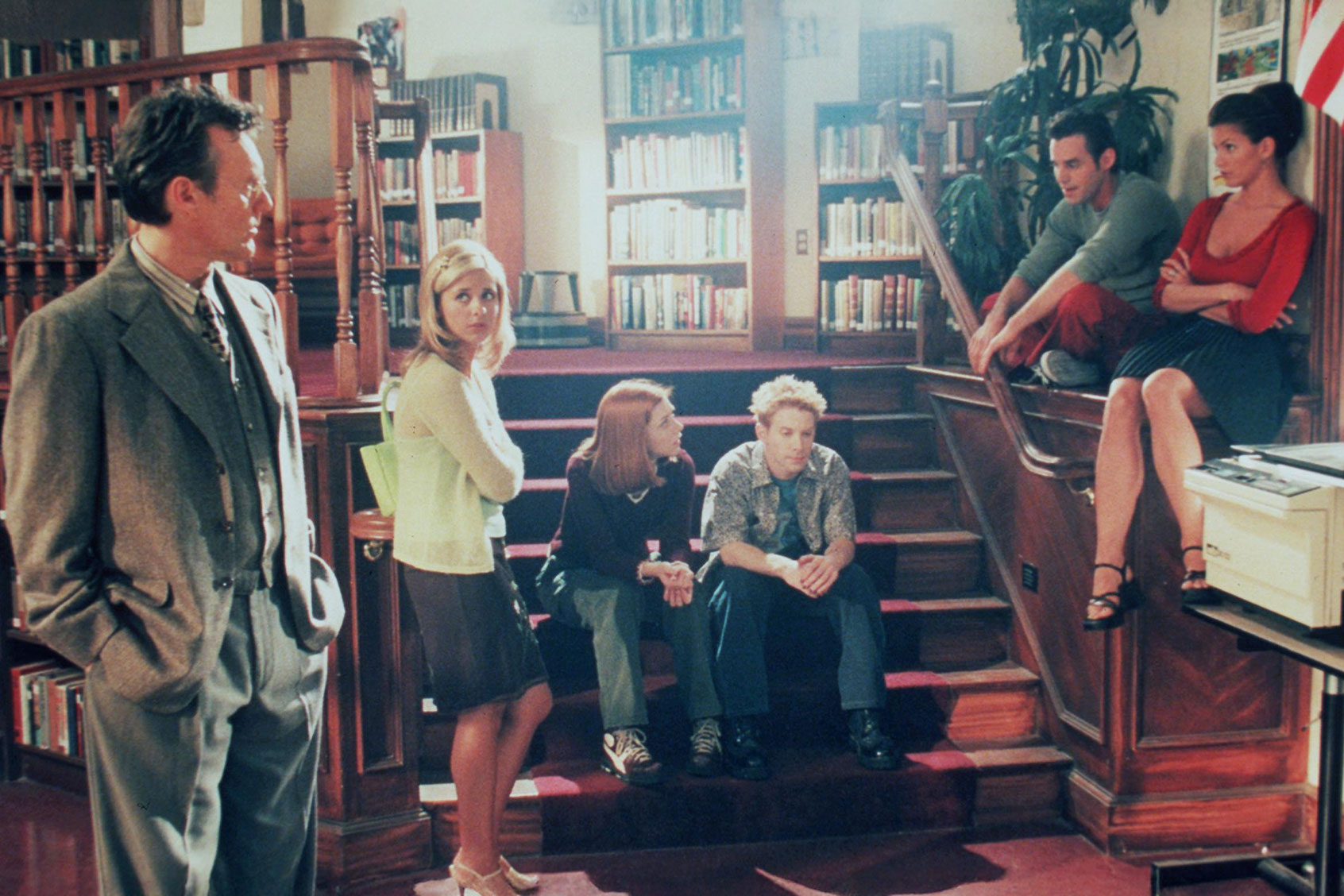
cast of Buffy The Vampire SlayerThe cast of "Buffy The Vampire Slayer": Anthony Stewart Head, Sarah Michelle Gellar, Alyson Hannigan, Seth Green, Nicholas Brendon and Charisma Carpenter (Getty Images/ Warner Bros.)Of course, there is one major difference that would need to be addressed in any new “Buffy the Vampire Slayer” series, as the chosen one became many by the series’ end. By unlocking the latent power of all Slayers, Buffy and Willow changed the series’ mythology as well as the fabric of the world, one whose rules had been determined by men thousands of years prior without consent. This development also further underscored the show’s central tenet that anyone can be a hero. What made Buffy unique as a Slayer was always the found family of the Scoobies who proved time and again that one didn’t need super strength or magical powers to save the world (a theme that every supernatural teen drama that came after would also put to use), but this is an opportunity to see exactly how Buffy’s and Willow’s actions in the finale altered the landscape of humanity’s fight against darkness. This would give the show another reason to exist beyond simple nostalgia, but it’s hardly the only piece of the complicated “Buffy” puzzle the sequel ought to remember.
Don’t forget what came before

This seems obvious, but one of the more egregious flaws of “Veronica Mars” was the revival’s erasure of progress for supporting characters like Eli “Weevil” Navarro (Francis Capra), a gang member who, like Veronica, was an outcast in a town split along class lines. In high school, their common enemy made them not exactly friends, but friendly enough that Weevil helped Veronica when she asked and was around enough to become a fan favorite. While wealthy (and white) characters like Logan were allowed to evolve and atone for their mistakes, Weevil was not afforded such freedom. Though he had gotten his life on track by the events of the film, he had reverted to a life of crime by the time we caught up with him in the revival, resulting in hostility and disappointment from Veronica.

As Buffy once said, this is about power — who has it, and who doesn’t.

The novels released in the intervening years between the film and revival touch on Weevil’s story, but it made for a jarring watch for the fans who did not follow along on the page. Regardless, the animosity that underscored his relationship with Veronica in Season 4 was a disservice to the character (and thus the fans) even if one can also read Weevil returning to gang life as a commentary on the never-ending class and power struggles that defined life in Neptune, as well as the unequal expectations of people of color. While it seems unlikely many supporting and/or tertiary characters from “Buffy the Vampire Slayer” will appear in a new series (or appear all that often), remembering what came before — and honoring it — is imperative with a show as beloved as this one.

Of course, the one hiccup in this is that there have been multiple seasons of canonical comics since the show went off the air in 2003. It remains to be seen whether these adventures, which feature everything from Dawn (Michelle Trachtenberg) becoming a giant, then a centaur and then a living doll, to a spirit with Anya’s memories haunting Xander, will still be considered canon in the sequel. However, with a story focused on a new Slayer, it should not be as much of an issue as it would be if this were a straight revival, which finally brings us to our last point.

We need your help to stay independent

Embrace the freedom afforded by a new creative team

The road to new episodes is long and winding, and it might eventually disappear into the proverbial darkness the way previous attempts to revisit “Buffy” did. But if the powers that be, including Gellar, the Zuckermans, Zhao and executive producer Gail Berman, are able to avoid the pitfalls of those that came before, everything should be five by five. That the main creative team is largely new to the Buffyverse and does not include Whedon is a powerful asset, not just because of the past abuse allegations but because it eliminates the possibility of a creator’s limited viewpoint. 

It was ultimately Thomas’ inability to see beyond his own interpretation of the characters he created, to accept that what he envisioned and what the viewing public wanted did not align, that led to the collapse of “Veronica Mars.” As Buffy once said, this is about power — who has it, and who doesn’t. It’s a relatively harsh lesson to learn, but the success of “Buffy the Vampire Slayer” paved the way for shows like “Veronica Mars” the first time around. It’s only right that the latter now return the favor.

The perfect egg exists. It just takes 32 minutes

Somewhere in Italy, a group of researchers has cracked the code to the perfect egg. It just takes 32 minutes.

A study published last week in “Communications Engineering” details a breakthrough in egg science that, if widely adopted, could alter the course of human breakfasting forever. The problem, researchers explain, is fundamental: an egg is not a uniform entity, but a delicate, two-part structure. The yolk and the white set at different temperatures, which means cooking them to their individual best states — jammy but not runny, set but not rubbery — is often an exercise in compromise. The solution? 

A process called “periodic cooking,” in which the egg is cycled between 212-degree Fahrenheit water and 86-degree water every two minutes, for a total of 32 minutes. The result, according to the study, is an egg cooked with an almost supernatural level of precision. The yolk is silky, the white tender. Even better, the method preserves higher levels of polyphenols, an antioxidant compound found in the yolk that helps fight inflammation. This egg is, in every measurable way, superior.

It is also, obviously, absurd.

In the landscape of perfecting eggs, this is not the first — and will certainly not be the last — grand declaration of an optimized technique. The quest for the ideal egg is as old as time, or at least as old as the first human who cracked one into a hot pan and thought, “Could this be better?” There are thousands of ways to cook an egg, and we have spent thousands of years trying to make each of them perfect.

There are egg cookers that look like tiny science-fiction domes, sleek with LED lights and alarmingly specific water-measuring systems. There are novelty egg cookers shaped like six penguins holding hands (flippers?), where each egg slots into a cartoonish belly before being lowered into boiling water like a precious cargo. There are countertop devices that promise to scramble your egg inside the shell, so you never have to sully a whisk again. If a person desires a method of egg cooking that is more elaborate than simply using a pot and some heat, capitalism has an answer.

And then there’s the question of method. Some people fry eggs in butter, some in oil, some in a precise ratio of both. Some baste their eggs in hot fat, some insist on a lid to trap steam and ensure even cooking. Scrambled eggs alone are a universe of opinions: Anthony Bourdain swore by a dollop of sour cream and some chives. Alton Brown suggested a teaspoon of mayo whisked in to enhance the creaminess (he’s right). Ina Garten, patron saint of home cooks, uses half-and-half. Martha Stewart’s secret? Farm-fresh eggs and patience, apparently

We need your help to stay independent

None of these methods, it should be noted, require 32 minutes.

There is something both admirable and ridiculous about our need to optimize what is already good. The desire to perfect the egg comes from the same impulse that drives us to find a way to peel garlic more efficiently (smash it with a knife! Shake it in a jar! Blow on it with a hairdryer!) or to make the softest, most impossibly juicy chicken breast (brine it, sous-vide it, poach it in milk or just accept that chicken breast is fundamentally kind of dry when compared to thighs). The recent era of food-hack videos, which turned basic cooking skills into viral challenges of absurdity, was exhausting in its insistence that everything must be easier while simultaneously demanding a specialized gadget or unexpected chemical reaction to make it happen.

And yet, there is something a little bit endearing about all of this. Cooking is one of the most basic things we do and it makes sense that we want to make it better. That we want a small, incremental improvement in the way we start our mornings. That we, as people, are willing to tinker with a pan of eggs, adjusting the heat, whisking in dairy, flipping at the exact right moment — just to get the tiniest bit closer to perfection.

Is that enough to get me to make a 32-minute egg? Probably not. But I do love that someone, somewhere, cared enough to try.

Pope Francis rebukes Trump and Vance, saying immigrants deserve “dignified treatment”

Pope Francis sharply rebuked the Trump administration's mass deportation policy in an open letter sent to U.S. Catholic bishops Monday, warning that the forceful removal of immigrants affronted the "infinite and transcendent dignity" accorded to all human beings and would "end badly."

"I exhort all the faithful of the Catholic Church … not to give in to narratives that discriminate against and cause unnecessary suffering to our migrant and refugee brothers and sisters," he wrote, invoking the exodus of the Jews from Egypt and the exile of Jesus, Mary and Joseph as "the example and the consolation of emigrants and pilgrims of every age and country, of all refugees of every condition."

"This is not a minor issue: an authentic rule of law is verified precisely in the dignified treatment that all people deserve, especially the poorest and most marginalized," he continued. "The true common good is promoted when society and government, with creativity and strict respect for the rights of all — as I have affirmed on numerous occasions — welcomes, protects, promotes and integrates the most fragile, unprotected and vulnerable."

White House press secretary Karoline Leavitt said last week that more than 8,000 people have been arrested by immigration authorities since Trump took office. Some have been deported, while others are being held in both federal and private prisons or Guantanamo Naval Base in Cuba.

Though the letter represents an escalation in his criticism of Donald Trump, the Pope has a long history of speaking his mind about the president and his politics. As early as 2016, he said that the then-presidential candidate was "not Christian" in his views on immigration, and just last month called Trump's deportation plan "a disgrace."

The U.S. Conference of Catholic Bishops has also criticized the mass deportation, calling it "deeply troubling" in a statement last month. Recently, the pope appointed several like-minded prelates to U.S. dioceses, including Cardinal Robert McElroy in Washington D.C. and Archbishop Edward Weisenburger in Detroit, the latter suggesting in 2018 that Catholic border agents who assisted in its family separation policy could be denied Communion.

Meanwhile, Republican states and the Trump administration have gone on the offensive against Catholic groups they portray as enabling illegal immigration. Early in 2024, Ken Paxton, Texas attorney general and megachurch founder, demanded the surrender of documents from Annunciation House, a Catholic charity that provides shelter and meals to refugees on the U.S.-Mexico border. Annunciation House responded by seeking a restraining order on Paxton, who then filed his own unsuccessful lawsuit to shut down the organization completely.

Vice President JD Vance, a Catholic convert, attempted to defend the immigration crackdown in a January interview by citing the Augustinian concept of "ordo amoris," or "order of love," which he claimed delineated a hierarchy of care — with family first, followed by neighbor, community, fellow citizens and then everyone else. The Pope corrected Vance in his letter, explaining that “Christian love is not a concentric expansion of interests that little by little extend to other persons and groups."

“The true ordo amoris that must be promoted is that which we discover by meditating constantly on the parable of the ‘Good Samaritan,’ that is, by meditating on the love that builds a fraternity open to all, without exception," he wrote. 

Elon Musk built his wealth from taxpayer-funded research — now he’s trying to destroy future science

Donald Trump, his shadow president Elon Musk, and the so-called Department of Government Efficiency are waging a highly illegal rampage through the federal budget. Among the first wave of intended victims are thousands of scientists across the country who depend on federal grants and loans to fuel their research. The administration is trying to unilaterally slash billions of dollars from the National Institutes of Health (NIH) and the National Science Foundation (NSF). To defend this, Musk claims it's a "ripoff" when grant funding goes to pay for salaries, lab space and equipment, even though no one can conduct scientific research without these baseline necessities. 

"Trump and King Musk framed this as a shot at baddies like Harvard and Yale, but this absolutely destroys public schools and every state has those and they all are doing scientific research," historian Erik Loomis explained at Lawyers, Guns and Money. Even Republican senators are having trouble concealing their panic, as public universities are economic centers in many red states. 

Musk's ingratitude is breathtaking. It also fits the larger pattern of tech billionaires spitting venom at the middle-class workers who did the real labor in creating the products these capitalists profit so handsomely from.

Noting that neither Trump nor Musk has the legal authority to make these cuts, Rep. Rosa DeLauro, D-Conn., the ranking member of the House Appropriations Committee, said, "They are causing irreparable damage to ongoing research to develop cures and treatments for cancer, Alzheimer’s disease and related dementias, ALS, Diabetes, Mental Health disorders, opioid abuse, genetic diseases, rare diseases, and other diseases and conditions affecting American families." And she's just talking about the NIH money. The larger assault on universities and the NSF will likely undermine research in every field, from biology to astrophysics. 

It's no surprise that Trump hates science. He is, after all, the same man who confidently declared he had a cure for COVID-19 that those silly medical researchers had overlooked: injecting household cleaners directly into your lungs. He's no doubt still nursing the narcissistic injury when people laughed at him for being so thuddingly stupid. But, despite his own painfully obvious blindspots, Musk should know better than this. After all, if it weren't for government-funded research, Musk would be an anonymous failson living off his daddy's money, instead of a billionaire competing with Kanye West for the title of the world's most cringeworthy celebrity. 


Want more Amanda Marcotte on politics? Subscribe to her newsletter Standing Room Only.


Despite the media hype painting Musk as a genius and inventor, he largely built his financial empire on other people's research. At every turn, he's relied heavily on technologies developed because of the very federal largess he now deems a "ripoff." He'll never admit it, but Musk owes former Vice President Al Gore a giant thank you. Gore did not claim, as conservatives pretend he did, to "invent" the internet. But Gore was telling the truth when he said, "During my service in the United States Congress I took the initiative in creating the Internet." He spent the better part of two decades promoting the internet, backing legislation to fund its development, and organizing research agencies to make it happen. As early pioneers in the internet's development, Vint Cerf and Bob Kahn, explained in 2000, "Al Gore was the first political leader to recognize the importance of the Internet and to promote and support its development" and "no other elected official, to our knowledge, has made a greater contribution over a longer period of time." 

Musk got rich because of all this work. In the 90s, he built a website called Zip2 that functioned as an online Yellow Pages. He sold it to Compaq in 1999, netting $22 million. He made another huge chunk of money as the CEO of PayPal, which would also not exist but for the decades of government-funded development of the internet. Musk deserves credit for developing coding skills at a time when the internet was still new, of course. But he also just got really lucky in being a young man right when decades of taxpayer-funded research into the internet was finally paying off. 

That's been the story of Musk's career ever since. Without investment from the Department of Energy into developing batteries and other electric car technology, there would be no Tesla. Car companies were often reluctant to fund that research because it would take decades to pay off. Only the government, which works for the people and not for profits, has a motive to put money into scientific inquiry on that time scale. SpaceX scientists have done impressive work, even if they probably won't get us to Mars, despite Musk's ignorant bleatings. Still, as admirable as the people who work for Musk may be, they wouldn't be able to do any of this without NASA and the federal government's astronomical 20th-century investment in the space race. It is the same story with Starlink, which exists because of satellite technology initially developed by both the American and Soviet governments. At every turn, Musk makes money only because he grabs onto technologies that were invented at taxpayer expense. 

And that's just the science side of it. In every way, Musk's fortune has depended on federal largess. Tesla was injected with a generous loan from the Department of Energy at a critical time. Without federal tax credits for electric vehicles, Tesla would likely not have enough customers to survive. Economists also point out that Tesla was kept afloat by regulatory credits made possible by the government. Now, of course, Musk rakes in large amounts of cash as a government contractor, all with businesses he built on a foundation of government-funded research. 

Musk's ingratitude is breathtaking. It also fits the larger pattern of tech billionaires spitting venom at the middle-class workers who did the real labor in creating the products these capitalists profit so handsomely from. The psychology at play is not especially mysterious. Knowing that other people actually did the work and you're just taking the credit has got to be unsettling. Musk in particular has a long, documented obsession with pretending to be smarter and more accomplished than he actually is, even in areas as inconsequential as video gaming. (He hires people to play online games for him, and passes off their scores as his own.) Musk isn't a scientist, he just plays one for TV. I have little doubt that he resents real scientists, as poseurs always do when confronted with the real thing. He's probably taking his insecurities out on people whose only crime is being what he only pretends to be. Unfortunately, his petty psychodrama will have real impacts on the whole human race, which may be denied the often life-saving benefits of what real researchers do. 

Correction: A previous version of this story incorrectly stated that Tesla was founded by Elon Musk. He joined the company as chairman in 2004.

“It’s excruciating”: Mo Amer explains that his tearful acting scenes in “Mo” were real

There’s always pressure to deliver on the person who creates and stars in a TV show. But in the case of Mo Amer — the co-creator, star and showrunner of the Peabody Award-winning Netflix series, “Mo” — there is an added burden most will never bear.

And that is, as Amer explained in our Salon Talks, “Mo,” co-created by Golden Globe winner Ramy Youssef, is “the only Palestinian show on American television that is run, produced and created by a Palestinian.” He added, “the intensity of that” is part of the fuel that drove him to “put every fiber of my being into” the second season, available now on Netflix.

The great news for Amer’s blood, sweat and many tears (as you will see in the show) is that it has paid off beautifully. The second season has a 100% rating on Rotten Tomatoes at the time of publication. 

“Mo” shares with audiences a side of Palestinians and Palestinian Americans that we never see in American entertainment media. And being of Palestinian heritage myself, I can attest to that fact. One very powerful scene that jumps out is between Mo’s sister — played by Cherien Dabis and mother Farah Bsieso — where they debate how much they should follow the suffering of Palestinians in the West Bank and Gaza on social media because of the emotional toll that it takes. As Amer noted, this push and pull has been “a part of our lives since I was born” and he wanted audiences to see it. 

The season ends with “Mo” and his family traveling back to his family’s home in Palestine, Burin in the West Bank. However, given the Israeli occupation of the West Bank, it was “impossible” to shoot there, as Amer explained. “My aunts live in the West Bank. They can't even go to the doctor. They've been needing to go get medical checkups for over 14 months,” he noted. Filming a TV series there was out of the question and as a result, much of the last emotional episode was shot in Malta.

Regardless of the location, the payoff in the last episode is unlike anything I’ve seen before on American television. We see a Palestinian family in the West Bank, not far from where my own relatives live, depicted as fully developed human beings. That fact alone is enough to move many Palestinians to tears.

Watch my "Salon Talks" episode with Mo Amer here on YouTube, to hear more about writing and directing comedy around a hard subject, why "Mo" is also about the broader immigrant experience in America and if he would be open to making a third season. 

The following conversation has been lightly edited for clarity and length.

We spoke after the first season of “Mo” came out and you talked about how as an immigrant, your mentality is you have to outwork everybody. Did your mindset change in Season 2? Was it more work?

It is a lot of work. It's not really about the quantity of the work, it certainly is about the quality. But it's not really about [the amount of work], especially with what was going on in the backdrop of making Season 2. 

It's the only Palestinian show on American television, show-run, produced, and created by a Palestinian. It was really the intensity of that and then what everyone's opinion was on what we should talk about and not talk about, and how you put it together. In the end I was like, "I know what this show is. I know what it is. I know what it needs to be and nobody knows my story better than me, so please do me a favor and let's all work together." Specifically talking about the writing room and having a great relationship with my guys and creating such a beautiful final piece of art. 

I feel like I literally bled for it; metaphorically, spiritually, mentally. I feel that I put every fiber of my being into it, quite literally. I'm still aching from it. It was extremely painful to make.

You did everything. Writing, starring, directing some episodes. Is it because you need the control, or is it because of this immigrant work ethic and wanting to be proud of yourself, your family and your community, because you understand that people are looking at you for something?

It's a combination of different things. I've always wanted to direct. Slick [Solvan Naim] directed the series with me and he directed the first season. He understood that I had a particular vision, especially for the flashbacks. He and I would work together and he would ask me, "How do you see this and how did you see that?" Essentially co-directing with him in certain aspects of the first season.

I've always enjoyed telling the story visually as well, even how I write and come up with different scenes is associated with music and it's all visual. It's very much in my wheelhouse, I want to do it. It wasn't about being necessarily a control freak, I'm an artist and I really enjoy telling stories and I think I'm really good at it. Even Jaume [Collet-Serra], who directed Black Adam, when I was describing certain scenes to him, he was like, "You're a director."

"Everybody was like, 'That was such great acting.' I was like, 'I was really breaking down. That was a real breakdown.'"

Aside from that, I just really enjoy working with actors. Scenes that I'm not in, I probably enjoyed more, specifically the scene with my sister and my mom in the show, played by Cherien [Dabis] and Farah Bsieso. That was a really, really unique moment. I got to show-run so I'm working on the script, rewriting stuff, and then essentially you can direct them and see what's working and what's not working, then get them to a place emotionally, and reword certain things in the script so you end with a comedic punch when it's such a heavy subject matter. What a beautiful moment. I noticed a lot of the crew was crying and most of it was in Arabic. I was like, "Oh, we did something right if the whole crew who doesn't speak Arabic was in tears." That was really rewarding and just very special.

There was a scene with Cherien and Farah sitting on the dock talking about how much you do engage or do not engage with what we see on our phones about Palestine. It's something we Palestinian Americans have all had to think about. How do you find this common ground so you can function but you're still not detached completely from what's going on?

I specifically was advocating for this. I'm letting Harris [Danow], my right arm in writing with the show, know, "We have to plant these seeds." This season all takes place in a pre-Oct. 7 era. I just wanted to highlight this is a natural part of our day-to-day. This is something that we're used to. It's not something that just happened after Oct. 7, where we check our phones all the time. No, we're obsessed constantly. This [has been] a part of our lives since I was born. It was just something that I wanted to have in the show and a constant emotion to track with my mother there, and having it come to a head in the seventh episode in a wonderful mother-daughter moment.

You're known as a comedian, you’re hilarious as a comic, but this series is heartfelt. You were so vulnerable in this, you cried in numerous episodes. Is it difficult or challenging to allow yourself to be that vulnerable?

It's excruciating, man. It was so hard. It's really, really hard. I feel like great art you have to suffer for. It's not something that I did intentionally, to be honest with you. I wanted to be vulnerable and I think the first season was my first taste of that. It was really hard to do. The confessional scene in Season 1 was the first time everybody was like, "That was such great acting." I was like, "I was really breaking down. That was a real breakdown."

Taking it to Season 2, there was so much to track and in some cases, you're recreating real moments you have with loved ones that are no longer with you anymore. That just kind of f**ks with your head a little bit. It can, if you're not grounded and have great people around you. There were several times where I had to just walk away and get it out after we filmed a scene and I would come back and be like, "All right guys, all right, we're going to film this," just start giving direction again. Adi [Khalefa] was in episode eight, he plays my cousin, he saw me do this multiple times and he goes, "I don't know how the f**k you do that." 

It's one of those things that you just have to trust the process. You have to take note of how much you do break down, how much of it is controlled and how much of it is just complete release. It is very painful. It's very hard, but also very cathartic. I feel better about it today than I did before filming the show. There are so many things that you keep inside that you don't ever realize are there.

You’ve put video of your late father in the show. Seeing that must be challenging. 

I lost it. I gave that doc footage to my editor because they'll do their cut and then I'll come in and do my cut. Lauren [Connelly] edited the last episode of Season 2. When I saw it, I lost it, because I had forgotten I had given it to her. I didn't think she’d already edited it in, I thought she was going to maybe wait for me. She did such a perfect job. She's such a tremendous editor to work with. When I saw it, I just lost it because I couldn't believe how that all came together [at the] last minute.

What's so wild is that the doc footage of me seeing my dad is actually in real-time. When I found that, I didn't have any footage of my father. Adi, who plays my cousin, was filming me see that footage for the first time and then five years later he plays my cousin in the show. We didn't even put it together until right after we filmed the scene, Adi was like, "I was with you when you did this, when this actually happened." It was one of those really special moments that you can't recreate, you can't write that. Only the divine can create such a mystical moment.

In that moment on the show, your mom says to you, "Keep smiling even when the world tries to tear you down." Is that for you? Is that for Palestinians? As someone of Palestinian heritage, it resonated on a whole different level.

Sure. I think as a whole, anybody can relate to that. The idea is that no one can take who you are inside. People can try to break you down. People can try to hold you small. The idea behind it is that no matter what, you can hold on to [who] you are and you don't let them break you, no matter what the scenario is.

"My aunts live in the West Bank, they can't even go to the doctor. They've been needing to go get medical checkups for over 14 months."

This is something I mapped out before the strike, in April to May, our first four and a half weeks of writing. This is how I wanted to end [the season]. It was based off of me going to the West Bank. I had a few moments where I had a gun to my face. I was smiling and the Israeli soldier was almost offended that I was smiling. I was just trying to show that I was not a threat. I was at a checkpoint. He raised the gun at me and I just maintained my smile. 

I mentioned that in the [writer’s] room, this is the way I wanted it. I was like, "Oh, what a powerful way to end, under such stress maintaining his integrity no matter what happens." That's how that came about.

The last episode is set in Palestine. You filmed partly in Palestine and partly in Malta. What challenges were you facing that forced you to shoot in Malta, as opposed to filming the whole thing in the West Bank?

Well, we couldn't. I mean, it was impossible to. My aunts live in the West Bank, they can't even go to the doctor. They've been needing to go get medical checkups for over 14 months. Something that takes a 10-minute car ride is six to seven hours, and essentially they’re confined to their own house. 

Of course, we couldn't shoot in the West Bank. Initially, I wanted to shoot there. I wanted to shoot in the actual village I came from, but because of everything that was going on, it was absolutely impossible. You're responsible for a whole crew and you’ve got to do the right thing.

Jordan was hard to shoot in. It was very, very difficult. Then when they proposed Malta to me, I was a little bit hesitant. I was like, "Oh no, is this going to look right?" It was incredible. Malta looks like Burin, like our village in certain aspects. It was perfect, aside from certain structural and architectural things that we just had to avoid in shooting.

Then the way we married the two together was that we had all this footage that I was very adamant about getting in '22 when we were editing Season 1. It was literally for a four-second shot of my grandparents' house in the dream sequence in episode three of the first season. I was like, "It has to be there. I don't want to get some Getty Images video. I don't want to do that. I want to get that spot." It really saved us because we ended up having all this footage from our village that we were able to cut into the actual [second season] episode. Then Mustafa [Abuelhija], my manager, was able to get a camera crew independently to capture driving footage, the first initial thing. I think they did three different tries at it and nailed it on a third one.

At a time when undocumented immigrants are being demonized and, if Trump gets his way, put in camps in Guantanamo. What do you hope people take from seeing the experience of Palestinian Americans, Palestinians and undocumented immigrants on your show?

This is a love letter to Palestine. This is a love letter to my family. This is a love letter to Houston. It has all those components, but also it's for everyone. My Latino brothers and sisters who are dealing with the same type of situations. I wanted to show the absurdity of the detention centers in Season 2 and talk about how difficult it is to actually cross the border, and show how privileged even my character is in relation to other refugees and asylees in the country. It's for everybody. It's for everybody who's struggling to feel like they belong and to constantly fight just to be themselves and have an opportunity to grow with their families.

"I just feel like I'm a beast at this and I can do it all day."

The most valuable commodity is time. You are robbed. I felt like a big chunk of my life was taken away from me with the inability to travel and move. Thank God I was hard-headed and I still persevered with a refugee travel document and was able to push and travel to 20-plus countries without a passport. It was extremely difficult. I slept on airport floors, I slept in immigration rooms to get to a gig. It's one of those things like, you either fight for it or not.

That's why I love doing [a “Shawshank Redemption” homage] in episode two because nothing is truer. “Get busy living or get busy dying.” It absolutely rings true to me and I've always been attached to that line and the movie as a whole. I felt like my whole life I've been in this jail, this metaphorical jail. Anybody who feels that way, you don't have to just roll up and die, man. You can fight, you can push, you can just continue to get over these hurdles and not allow the system to hold you back even though it's going to feel like it, even when you feel like you're making strides and you're pushing forward. It's a difficult thing to grind through.

There’s a scene towards the end of the series where you're at the airport. Israeli soldiers are going through your things and you sort of smile at him. What were you conveying there?

Well, it was about just maintaining your own, not allowing anyone to rob your spirit from you. It's about no matter what, as difficult as it is, just hold on. Just hold on.

This is so hard to talk about. I’m so over it, man. I just want to do a real comedy after this.

Do you want to do a Season 3? Is that not what you want to do?

I'd be open to it. I could easily do 10 seasons on this.

Would you rather do touring as a stand-up?

Look, there's no stopping on stand-up. Stand-up is the number one love. I know I love telling stories and I know I'm really great at it. I'm great at directing, I'm great at writing. I'm great at telling, not only my story — I'm able to tell other people's stories as well. Let's see what happens. I think that we could have done a lot more. 

[Dave] Chappelle is the one who taught me this, he was like, "Man, the first season you're just riding a bike and occasionally you land a few tricks, and the second season, you're able to just do a bunch of tricks." That's what I felt in the second season. I felt really free and knew exactly what I was doing. I knew what I could do and not do, what my capabilities were. I just feel like I'm a beast at this and I can do it all day.

Coupons: Still around, but not as friendly

About 15 years ago, as the Great Recession was still tightening our wallets, a new type of reality show appeared.

It didn't pit contestants against each other, force them to eat bugs or challenge them to make clothes out of trash; this show highlighted how determined consumers could hack their grocery bills with one mighty weapon: coupons.

Extreme Couponing” ran on TLC for four seasons, from 2010 to 2012, showing other consumers how to get items for almost nothing. But as we again find ourselves in uncertain economic times, some consumers are starting to wonder: What happened to coupons?

As it turns out, coupons are still around. But the way shoppers find them, and are allowed to use them, has evolved quite a bit.  

How couponing has changed 

One of the biggest changes seen by influencer, mom and couponer Brittany Kline of Savvy Mama is the actual value of the coupon. It has decreased substantially. 

“I’ve noticed that instead of getting a coupon for 50 cents or $1 off one item, now it may be a coupon for 75 cents off three items,” Kline said. “That might not sound like a big deal, but it really adds up — especially if you’re trying to stick to a tight budget. Having to buy more just to save a little with a coupon feels like I’m defeating the purpose.”

Back in the old days, shoppers would find coupons in their Sunday newspaper, and hard core couponers would buy several papers to maximize value. But coupon inserts have decreased as more retailers have switched to digital coupons.

We need your help to stay independent

“It’s disappointing, because those inserts used to be one of the best ways to get coupons,” Kline said. 

Sites like Coupons.com allow shoppers to print or clip digital coupons. But "some stores have stopped accepting them because of fraud issues, which is frustrating if you’ve gone through the trouble of finding and printing them,” Kline said.

Another major change: In the past, if a coupon decreased the cost of an item to below zero, you could receive money back. That means you could actually earn money by couponing.

The most you can get now is a free item, but you won’t receive cash back from the store.

“Don’t get me wrong — free is still a win, but those overages used to add up and make a big difference in lowering my grocery bill,” Kline said. 

Many retailers still allow shoppers to stack coupons, specifically a store’s coupon or deal and a manufacturer’s coupon.

However, the policy of multiplying coupons — counting one coupon as two or three — has mostly gone away. This was one of the main ways that consumers could save money with coupons, especially if the item was already on sale. Some stores also had special extra discount days for seniors, but those are also largely gone.

Many stores have limited how many identical coupons you can use at one time. For example, you can no longer use more than four identical coupons at Walmart — even if the manufacturer coupon allows for more.

"Free is still a win, but those overages used to add up and make a big difference in lowering my grocery bill"

“In the past, if you had a friendly cashier and a lot of coupons you could really build a stockpile,” said Krazy Coupon Lady senior editor Kristin McGrath. “There are some loopholes that got plugged with digital coupons.”

Another major change: Retailers like Walmart and Kroger no longer let employees override the system if the register rejects the coupon. If the coupon doesn't scan, there's nothing anyone can or will do.

How you can save with coupons now

These days, if you want to score a good deal on an item you need to look for digital coupons. Just like the newspapers that used to contain them, many paper coupons have faded away.

“Digital coupons are more convenient, more accessible — it takes a lot of the guesswork out of it,” McGrath said. 

You usually need to have an account with each store to maximize your coupons. Most stores have a rewards program you can join for free. Once you’ve created an account, you can visit the store’s app or website to find their online coupons. You can then digitally “clip” those coupons on your account, and they’ll be there when you check out. This can be handy in case you forget your coupons at home.

"Digital coupons are more convenient, more accessible — it takes a lot of the guesswork out of it"

You can easily sort through digital coupons, seeing which ones are more valuable or are about to expire. If you’re looking for a specific brand or item, you can search for it instead of wading through dozens of printed circulars. 

Since couponing became a verb, one of the newest innovations has been stores sending coupons based on previous purchases. This is one of couponing’s greatest technological advances. Unfortunately, these targeted coupons can be harder to come by.

“It’s hard to kind of trigger those offers in a deliberate way, but they are definitely a thing,” McGrath said.

Apps like Ibotta and Fetch have also joined the market. These have their own coupons but may also award you points if you scan your receipt. McGrath recommends scanning your receipts with those apps to maximize your savings. 

“What those apps do is that they really embody coupon stacking,” McGrath said. “You can still coupon stack within a retailer, but a lot of the digital coupons will have limits that make stacking difficult.”

How to resist Elon Musk’s hostile takeover and avoid Donald Trump’s “broken status quo” trap

President Donald Trump’s shock and awe campaign and blitzkrieg against American democracy, the rule of law, the country’s governing institutions — and yes, the American people — have been devastatingly effective.

Many of these actions appear to be unconstitutional and illegal. Donald Trump and his agents are already signaling that they will not respect or abide by the decisions of any judges and courts who decide against these actions. On Sunday, Vice President JD Vance made the following threat against the rule of law and the Constitution in a post on X: “Judges aren’t allowed to control the executive’s legitimate power." Elizabeth Goitein, co-director of the Liberty and National Security Program at the Brennan Center for Justice, pushed back, warning on X that:

The battle lines for our democracy have been drawn…. Ultimately, SCOTUS will decide whether the administration’s actions reflect “legitimate executive power.” If the Trump team ignores the courts, any remaining doubt will be gone: they are trying to reverse the revolution that overthrew King George and gave birth to democracy.

To describe the Democrats, the mainstream news media and the so-called Resistance as “ineffective” would be a compliment. They do not appear to know how to act as an effective opposition party and movement in a moment that can reasonably be described as an existential threat to American democracy and freedom. The mainstream media and the feckless Democrats are in their worst moments already acting like collaborators with elected autocrat and aspiring dictator Donald Trump.

In a new essay, Thom Hartmann describes this rapidly escalating national emergency:

Trump is nakedly breaking the law right in front of the entire country, just as progressive Democrats have been predicting. Not a single elected Republican has had the courage to try to stop him or even speak out against his lawlessness, and only a handful of Democrats have found that fearlessness. That has to change….

Ever since Reagan’s Revolution on behalf of the billionaire class, many of us have been shouting from the rooftops about the inevitability of this day. I’ve published multiple books and hundreds of articles, as have many of my colleagues, warning of this exact scenario.

This is the tail-end of the battle, not the beginning…

The greatest danger America is facing today — because Democratic messaging and outrage have been so weak for so long — is that average people won’t realize what’s happening until it’s too late.

America’s democracy has been severely ailing for decades. Donald Trump and his agents and allies, specifically the architects of Project 2025, Agenda 47, the Federalist Society, the White Christian Nationalists and theocrats, the kleptocrats, plutocrats, the techno-feudalists and the larger antidemocracy right-wing have now torn the mask (and hood) off of their revolutionary project to return the country to the Gilded Age if not some time before when rich white “Christian” men had (mostly) uncontested power and control over society.

These forces are now acting in plain sight to advance their decades-long plan of ending multiracial pluralistic democracy and any Constitutional or other legal, institutional and cultural restraints on their project. With Trump and MAGA’s ascendance, the weak resistance to them, and the populist authoritarian base who see these forces as saviors and not destroyers and despoilers, there is no reason to act in secret.

At its core, the Trumpocene is a moral crisis. The American news media, the Democrats, the responsible political class and other mainstream political elites, have been mostly ineffective in countering Trumpism. One of their main failings is a fear of framing America’s democracy crisis and ascendant authoritarianism in moral terms.

Ultimately, a healthy democratic government serves all citizens by protecting and expanding their rights and not just those of the very rich and powerful or other dominant group. Real democracy is multiracial and pluralistic. Donald Trump, the MAGA Republicans and their allies and followers reject those basic values and norms.  

In an attempt to gain some clarity on Trump’s return to power, these historic and tumultuous first weeks of his reign and the connections between the country’s democracy crisis and moral crisis, I recently spoke with Rev. Adam Russell Taylor. He is president of Sojourners and author of “A More Perfect Union: A New Vision for Building the Beloved Community.” Taylor previously led the Faith Initiative at the World Bank Group and served as the vice president in charge of Advocacy at World Vision U.S. and the senior political director at Sojourners. He has also served as the executive director of Global Justice, an organization that educates and mobilizes students around global human rights and economic justice. Taylor is ordained in the American Baptist Church and the Progressive National Baptist Convention and serves in ministry at the Alfred Street Baptist Church in Alexandria, Va.

Given everything that has happened, and so quickly, how are you navigating this crisis on the day-to-day? What advice do you have for people who are already feeling burnt out, exhausted and disengaging? Many Americans, as well as people around the world, are terrified.

I’ve felt a sense of moral indignation and a nagging sense that I’m not doing enough in response to the barrage of often cruel and in some cases illegal executive orders and policy proclamations from President Trump. The Trump administration’s flood-the-zone strategy is designed to make us feel overwhelmed, powerless, and even a sense of despair. This is a core tactic of authoritarian governments both past and present. I recommend that people engage in more sustainable ways but not tune out. We must also remember that we have much more agency and power than we may realize. This is also a time for people of faith to tap into the strength and resilience of our faith traditions, which are built for times of struggle and offer deep wells of hope, courage and resilience.

Trump’s shock and awe campaign has been very effective. How have you been enduring?

In some ways what we have seen is worse than I had feared or expected. I knew that President Trump would reverse the Executive Orders from the Biden Administration and would seek to push the limits of his power and authority. However, the unaccountable power of Elon Musk is a new and increasingly dangerous element, as is the degree of carelessness and callousness of many of the policies they have pushed forward, including trying to end birthright citizenship, pardoning practically all of the January 6 insurrectionists (including those who committed violent offenses), seeking to freeze federal grants that directly impact people’s daily lives (before it was blocked by the courts and rescinded) and giving inordinate power to Elon Musk and “DOGE” to run freelance and roughshod across our Federal government to illegally cripple and shut down agencies such as USAID are alarming and represent a real abuse of power. These actions are stretching the limits of executive power and in many cases are unconstitutional.  

Why do you think that so many Americans outright ignored or minimized the warnings about the obvious and imminent disaster that Trump’s return to the presidency would cause the country and its democracy? As I have repeatedly warned here at Salon and elsewhere, Donald Trump and his agents have been remarkably direct about what they were going to do upon taking power. Those Americans who voted for this or chose to stay home and not vote are responsible for this disaster.

This is a really hard question to answer and one that I’ve been grappling with a lot since one of my mantras over the past few years is that our democracy is under assault and is increasingly at stake (which I still believe is true). I think we need to better understand how many Americans simply weren’t paying much attention to Trump’s alarming rhetoric and campaign promises and how many were completely disillusioned and distrustful with our politics overall and either stayed home or cast a protest vote against the status quo. Clearly, many voters were inspired by Trump’s rhetoric and promises, though I think that there’s a substantial percentage that is far from diehard MAGA people.

We need your help to stay independent

Where possible, now is a time to engage in deeper relationship building and listening to many disaffected voters, particularly the “working class," to better understand their pain, anger and aspirations. We need to be better and clearer in how we connect the attacks on our democratic norms and system to things that people actually feel and care about. We have to make the case that protecting our democracy is not about protecting a broken status quo. Instead, we must protect it because if we lose our ability to protest, to exercise free speech, to have real checks and balances with a Congress that takes its job as the holder of the purse and serving as an independent branch seriously every issue that we care about will be impacted and jeopardized and we will lose a great deal of agency to be able to change things for the better in the future.

America’s democracy crisis is also a moral crisis of the first order. Why are the mainstream news media and the Democrats and other establishment voices (especially the professional centrists in the news media and punditry) afraid to use clear and direct moral language to describe authoritarianism and the Age of Trump?

Unfortunately, there has often been a secular bias in the media and a real reticence among Democrats to frame issues through a faith lens, often then ceding faith to the other side. The civil rights movement was arguably our most successful pro-democratic movement. Its success stemmed in part from tapping into the moral power and infrastructure of the Black church and casting a bold moral message that appealed to our often shared and best faith-inspired and civic values. It is ludicrous to believe that any party can or should own faith. We also need faith leaders and communities to be bolder in speaking the truth in resisting authoritarianism and to refuse to be coopted or silenced.   

The Democrats are floundering. The so-called Resistance is not doing much of anything.

While Democrats have been engaged in some needed soul-searching, I think many are finding their footing and voice right now. I think there was an understandable reluctance among many to avoid responding to every outrageous statement or action by the Trump Administration and many people are still processing feelings of betrayal, despair and lament from the election outcome. That being said, I think we are now at an inflection point when the resistance needs to be much louder, bolder and more strategic, particularly given the overreach of the Trump Administration on issues such as freezing Federal grants, birthright citizenship and empowering an unelected billionaire to cause havoc and meddle with security information at the Treasury Department or seek to shut down USAID, an agency that does such incredible good to build a safer and healthier world.

The Republicans, MAGA and the larger White Right and White Christian Nationalists are experts at using moral appeals and framing their taking power and defeating “the Left” and the Democrats and “political correctness” and “the enemies within” as a war against evil for the heart and soul of the nation. For them, this is literally an existential battle. What would it look like for liberals, progressives, Democrats and other pro-democracy Americans to counter this with their own moral framework and appeals?

I believe that the faith community needs to be careful about mirroring some of the “us versus them” framing and hyper-partisan and fear and grievance-driven tactics of the Religious Right/Christian nationalist movement. At the same time, we also need to be bolder about casting an alternative vision, which in my mind can be tied to recasting the moral vision that animated the civil rights movement, the vision of the Beloved Community. My most succinct definition of the Beloved Community is building a nation in which neither punishment nor privilege is tied to race, gender, religion and sexual orientation and where our growing diversity is embraced as a strength and not something to be feared. It’s creating a nation in which everyone is valued and respected and everyone can thrive. We also need to weaken and counteract the rising appeal of the heretical ideology that is Christian nationalism.

Historically, the civil rights movement, the long Black freedom struggle and other people's movements leveraged moral appeals to great effect. What is a healthy role for religion in a democracy and public life vs an unhealthy one?

I often refer to a quote by Dr. King that “The church at its best is not called to be the master or the servant of the state, but to be the conscience of the state”. We want and need faith leaders and organizations to show up and serve as the conscience of the state right now, including by making a faith-rooted and moral argument around defending our democracy and protecting the most vulnerable, so ultimately, we can transform our democracy into becoming a truly just, inclusive multi-racial one. 

Trump Media’s financial firm might need approval from Trump administration

President Trump's social media company may need approval from his administration as it moves forward with a financial services firm for "American patriots."

Trump Media & Technology said it applied for six trademarks on Thursday for the firm, named Truth.Fi. The trademarks cover the energy, manufacturing and bitcoin sectors, with two investment options — separately managed accounts and exchange-traded funds —for each. According to Axios, the bitcoin ETF is likely to draw attention due to Trump promoting cryptocurrency on the campaign trail and investing in it. 

Some of the financial products, such as bitcoin ETFs, need approval from the Securities and Exchange Commission before they can be created, listed and traded. 

While the company hasn’t yet filed these trademarks with the SEC, according to Reuters, it doesn’t seem likely they would run into trouble. Trump’s SEC chair nominee, Paul Atkins, is a known crypto advocate, to the point where his nomination caused the price of Bitcoin to surge.

ETFs, similar to mutual funds, are a type of investment fund that pools money from investors. 

Trump Media said it plans to launch its financial products sometime this year as an alternative to traditional financial institutions, which Trump views as being unfair to conservatives.

“We aim to give investors a means to invest in American energy, manufacturing, and other firms that provide a competitive alternative to the woke funds and debanking problems that you find throughout the market,” Trump Media CEO Devin Nunes said in a statement. “We’re exploring a range of ways to differentiate our products, including strategies related to bitcoin. We will continue to finetune our intended product suite to develop the optimal mix of offerings for investors who believe in America First principles.”

Trump Media operates Truth Social, a social media platform created in 2021 after Trump was banned from Twitter. It had 6.3 million active users at the end of January. Trump Media also has a web streaming service, Truth+, that launched last October.

But the company has struggled to generate revenues from advertising on those platforms, The New York Times reports.

Trump is the company's largest shareholder. Before his second term began, he transferred all of his shares to a trust controlled by his eldest son, Donald Trump Jr., who is also a company board member. 

Trump Media's move into the financial industry led critics to raise conflict of interest concerns, since he appoints the head of the agency that regulates cryptocurrencies and Wall Street. His selected leaders are expected to take a less aggressive approach than the Biden administration.

A few days before his inauguration, he and Melania Trump launched their own meme coins. The highly volatile digital currencies generated billions of dollars for the president, at least on paper.

Trump and his sons are promoters of World Liberty Financial, a crypto trading business they started last fall with Steve Witkoff, a co-chair of Trump's inaugural committee and Middle East envoy. The Trumps are not owners or employees of the platform but can receive revenues from it.

“Banned for life”: NFL punishes man who unfurled Sudan-Gaza flag at Super Bowl halftime show

The protester who unfurled a flag displaying the words "Sudan" and "Gaza" during Kendrick Lamar's Super Bowl halftime performance has been barred from ever stepping foot in an NFL stadium again, the league announced Monday.

The protester, who was part of a 400-person cast involved in the halftime show, was seeking to draw attention to two of the worst ongoing conflicts: In Gaza, more than 46,000 people have been killed since Israel launched a war on the Palestinian territory following the Hamas-led terror attacks on Oct. 7, 2023; in Sudan, some 150,000 people are estimated to have died since April 2023 as a result of a civil war between the country's armed forces and a Russia-backed paramilitary.

In a statement, the NFL said that it would be the last time the protester ever stepped foot on one of its fields.

"No one involved with the production was aware of the individual’s intent," a league spokesperson said in a statement, per the Associated Press. "The individual will [be] banned for life from all NFL stadiums and events."

After holding up the flag, the protester was questioned by New Orleans police, who initially said that "law enforcement is working to determine applicable charges in this incident."

New Orleans police said Monday that the man was neither arrested nor charged with a crime.

“The wilderness has chosen”: A survival guide to “Yellowjackets” after a long wait for Season 3

Over its first two seasons — that’s around 19 hours of television — Yellowjackets” has been finding its way back to the beginning. Because it’s been almost three and a half years, a refresher: The pilot opens with a scene of a teenage girl with long, dark hair — since dubbed “Pit Girl” by fans — running barefoot through the snowy woods, pursued by unseen attackers. She falls into (what else?) a pit lined with sharp wooden stakes and dies, only to be slaughtered and ritually consumed by masked figures in deer skulls and animal skins (and a pair of pink Converse) at the end of the episode. We still don’t know who Pit Girl is, one of several mysteries Yellowjacketsis keeping close to its emaciated chest. 

Figuring out how and why things got so grotesque has been the dramatic thrust of the series ever since. And as Yellowjackets heads into its third season, we’re closer to discovering the mechanics of the girls’ wilderness cult than ever before. The series toggles between 1996, when the members of the Wiskayok High School girls’ varsity soccer team — a.k.a. the Yellowjackets — crashed in a remote Canadian mountain range on their way to nationals in Seattle, and the present, where the surviving members of the team are all super f**ked up from the ordeal that followed. The girls were out in the woods for 19 months before they got rescued, and clearly things got spooky and intense out there. 

Things started to get really bad — like, cannibalism bad — during the team’s first winter in the woods, which coincides with the beginning of Season 2. Popular girl Jackie (Ella Purnell) was the first to get eaten, her body conveniently flash-frozen when she went outside to sit in the snow after an argument with her best friend Shauna (Sophie Nélisse) in the hunter’s cabin where the girls sheltered during the summer and fall of 1996. 

Their first act of anthropophagy was basically an accident: They attempted to give Jackie a proper funeral, but her body smelled so good roasting on the funeral pyre, and they were so close to starvation, that they started grabbing chunks of her flesh and cramming it into their mouths. Radiohead’s “Climbing Up the Walls” was playing as they did it. It was horrifying, but also kind of awesome. 

Their first act of anthropophagy was basically an accident.

Their second act was also sort of an accident, in the sense that they originally meant to hunt and kill team bad girl Natalie (Sophie Thatcher), but ended up consuming Javi (Luciano Leroux), the monosyllabic younger son of the team’s now-deceased head coach, instead. (RIP Javi. Your life was as brief and enigmatic as your arc on this show.) Here’s where the spooky occult stuff starts to seep in: In Season 2, the Yellowjackets fell deeper under the influence of Lottie (Courtney Eaton), a member of the team whose lack of access to her psychiatric medication eased her into her role as the team’s unofficial guru/prophet/witch. 

Lottie’s woo-woo started infecting everyone as their situation grew more desperate — especially soccer lesbian Van (Liv Hewson), who has not been the same since she was almost mauled to death by wolves in Season 1. (Cool scars, though.) Van was the one who declared that “the wilderness has chosen!” when Javi fell through the ice on a frozen lake and drowned mid-hunt. And her teammates got caught up in the moment and agreed that, yes, this “it” that demanded blood sacrifices and didn’t want them to ever leave the mountains clearly also wanted them to eat Javi to survive. 


Want a daily wrap-up of all the news and commentary Salon has to offer? Subscribe to our morning newsletter, Crash Course.


In the buildup to Javi’s unwitting sacrifice, we also learned a few key details about how these “hunts” work, both in the past and in the present. In the present, Season 2 brought our core group of survivors — returning characters Shauna (Melanie Lynskey), Natalie (Juliette Lewis), Taissa (Tawny Cypress) and Misty (Christina Ricci), along with Lottie (Simone Kessell) and Van (Lauren Ambrose), appearing for the first time as adults — together, one by one, on Lottie’s totally-not-a-cult compound, towards a destiny they all vaguely felt but most of them wanted to deny. 

We learned in Season 1 that Lottie spent some time at a mental hospital in Switzerland after the surviving Yellowjackets returned to civilization in the late ‘90s. What was revealed in Season 2 is that Lottie was very much back on her guru bulls**t, running an “intentional community” of people who all wore purple (scratch that . . . heliotrope) and could leave whenever they wanted to, although Lottie didn’t think that was a very good idea. There’s a lot to catch up on there, but suffice to say her whole deal didn’t seem that bad — Natalie in particular seemed to have found some peace during her time at Lottie’s — until Lottie’s eyes got all glittery and she started talking about “giving it what it wants.” 

What “it wants” was one of the Yellowjackets dead. And while her friends vetoed Lottie’s original idea of poisoned oolong tea, they did indulge her idea of gathering for one last “hunt.” This was supposed to be a way to stall for time until an emergency psychiatric response team could arrive and 5150 Lottie, a plan that the rest of the gang agreed to at first. But it didn’t end up going down that way: Taissa, who is going through a mental health crisis of her own, secretly called off the team before the “hunt” was set to begin. 

In the meantime, "Yellowjackets” cut between two rituals, one past and one present, where the Yellowjackets stand in a circle and pass around a deck of cards with the single queen Javi found when they first arrived at the cabin. One by one, they peeled off cards until someone got the queen; that person then had the option of willingly sacrificing themselves for the good of the group, or of taking off running with their friends in pursuit, wearing animal-skull masks and carrying knives. When they got caught? Well, then it was dinner time. 

Let’s check in with our core sextet and see how everyone is feeling going into a third season. Bad, mostly, and understandably so.

But even though the wild hunt has commenced, there’s still a lot more occult savagery to come. The show’s dramatization of the slow breakdown of norms that can lead ordinary people to do terrible things is in line with a major influence — namely, the crash of Uruguayan Air Force Flight 571, referenced in Salon’s Season-2 catch-up guide. The Uruguayan rugby players stranded atop a barren Argentinian mountain range didn’t stop being themselves when they started eating each other; they were worn down, bit by bit, until the unthinkable became normal. The same is true for “Yellowjackets," including what co-creator Ashley Lyle says is ahead in Season 3.

In an interview with Vanity Fair about the new season, Lyle references a “merging, or an overlapping” of past and present for her characters: “In certain cases, that overlap is actually quite literal in a way; in other ones, it is a demonstration … how that young adult became the person they are,” she says. “How do you change while you are in your core, in your essence, the same person you always were? How much are you hiding that, and how long are you able to do that, is a question that we’re playing with this season.”

The “literal” merging takes us back to the show’s supernatural elements — if they even exist, and aren’t just projections of our unmedicated and malnourished characters’ fraying mental states. We’ve already seen characters returning as ghosts: Poor dead Laura Lee appeared in several characters’ hallucinations and dreams in Season 2. And now that Natalie is dead in the present (more on that in a minute, too), the odds of her making an appearance elsewhere in the show’s timeline, perhaps to give guidance or a warning to her younger self, have increased. Discussing Nat’s fate, Lyle also teases a third timeline set somewhere between 1996 and the present, saying that “she has a huge part to play in the 25 years that we haven’t seen.”

There are also new characters to contend with heading into Season 3. In its ‘90s timeline, Season 2 expanded the roles of younger Yellowjackets Akilah (Keeya King in S1 and Nia Sondaya in S2+) and Gen (Mya Lowe), as well as the snarky Mari (Alexa Barajas). Mari and Gen both have the right hairstyles and skin tones to be Pit Girl, and their names come up as such in fan theories. Akilah is the wrong ethnicity, so it can’t be her. She could still be on the menu, however, especially given her sweet and trusting nature.

Van makes it sound like there are no more Yellowjackets left to appear in the present in the season-three first look teaser trailer, where she says, “The only people who know about this are either us or dead.” The natural assumption here is that “this” refers to some unspeakable act of cannibalistic savagery in the past. But these characters have all kinds of nasty secrets in the present, too. (You know, like Taissa killing her dog and putting her wife in the hospital?) So juxtaposing that line with footage of the adult Yellowjackets being threatened with evidence of their shared past — again — could be a misdirect. And if that’s the case, who the heck is Hilary Swank playing, anyway? 

Previously a background character, Yellowjacket Melissa (Jenna Burgess) and her backwards baseball cap appear in quite a few shots in both the teaser and the official Season-3 trailer. So my money’s on her. Melissa is a member of a new faction we see forming in the past in these sneak previews, as Shauna challenges Natalie’s leadership of the group. 

We also see them hunting each other and dining on their flesh well into the springtime — meaning, not purely for survival. “We are going to learn more about what happened in the wilderness that they are so afraid of coming out. We hope it will be both satisfying and at times unexpected,” Lyle says, adding, “There are at least two very big questions with very clear answers.”

In the short term, they’ve all got a bigger problem, as Coach Ben (Steven Krueger), somewhat hypocritically shaken to his core by the sight of Shauna field dressing Javi like a deer, is believed to have burned down the cabin at the end of the Season-2 finale with the girls inside. Coach Ben also found a cave near the cabin in the previous episode, however, and shots from both trailers suggest the team will find him there early in Season 3. 

Meanwhile, the detritus from Season 1 has been cleared in the present — it’s all out in the open, including the inconvenient fact that it was Shauna’s husband Jeff (Warren Kole) who was behind the blackmail plot, making all of that murder unnecessary. Oops! I thought that the story Walter (Elijah Wood) concocted to explain away the deaths of both Shauna’s side piece Adam and "journalist" Jessica Roberts at the end of Season 2 was flimsy as hell. Joel McHale and Ashley Sutton have also been cast as guest stars on Season 3, and I could see them both as cops — cops sniffing around the pile of dead bodies that tends to accumulate around the adult Yellowjackets, perhaps? 

Let’s check in with our core sextet and see how everyone is feeling going into a third season. Bad, mostly, and understandably so:

YellowjacketsTawny Cypress as Taissa, Lauren Ambrose as Van, Warren Kole as Jeff Sadecki and Melanie Lynskey as Shauna in "Yellowjackets" (Kailey Schwerman/Paramount+/SHOWTIME)Natalie
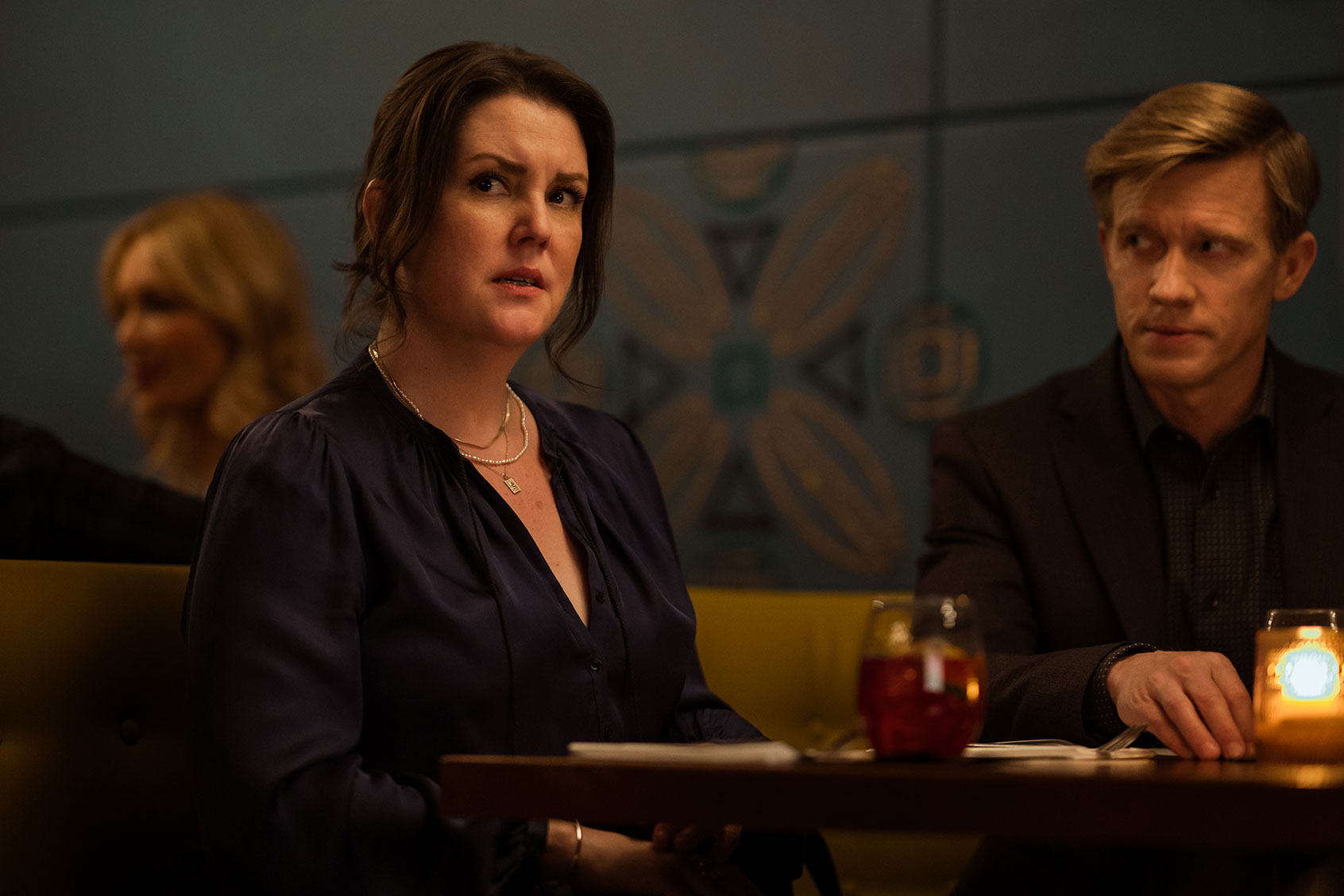
Past: She did not ask for this, and does not want this, but whether she likes it or not Natalie is now the acting Antler Queen, now that Lottie has decided to step down and appoint Natalie as leader of the Yellowjackets in her place. Given that she thinks most of these girls have completely lost it, she is probably secretly happy to be in charge. But being a smoking-behind-the-school type, she cannot let on that she feels this way, setting the stage for conflict with some of her more resentful teammates (ahem, Shauna) as their ordeal wears on. 

Present: Dead. Dead-dead. Officially declared dead of a “drug overdose,” which is convenient for Misty as she accidentally stabbed Natalie with a syringe full of poison while Natalie tried to protect her new friend Lisa (Nicole Maines) at the height of their kinda-real, kinda-not “hunt” on Lottie’s compound. She had a moving sendoff, putting her back in the plane with her younger self and with the younger versions of Javi and Lottie, all encouraging her to go towards the light. And a first-look image of Season 3 shows the remaining cast members at what we can only assume is her funeral, making her return — at least in corporeal form — extremely unlikely. 

YellowjacketsMelanie Lynskey as Shauna and Warren Kole as Jeff Sadecki in "Yellowjackets" (Kailey Schwerman/Paramount+/SHOWTIME)Shauna
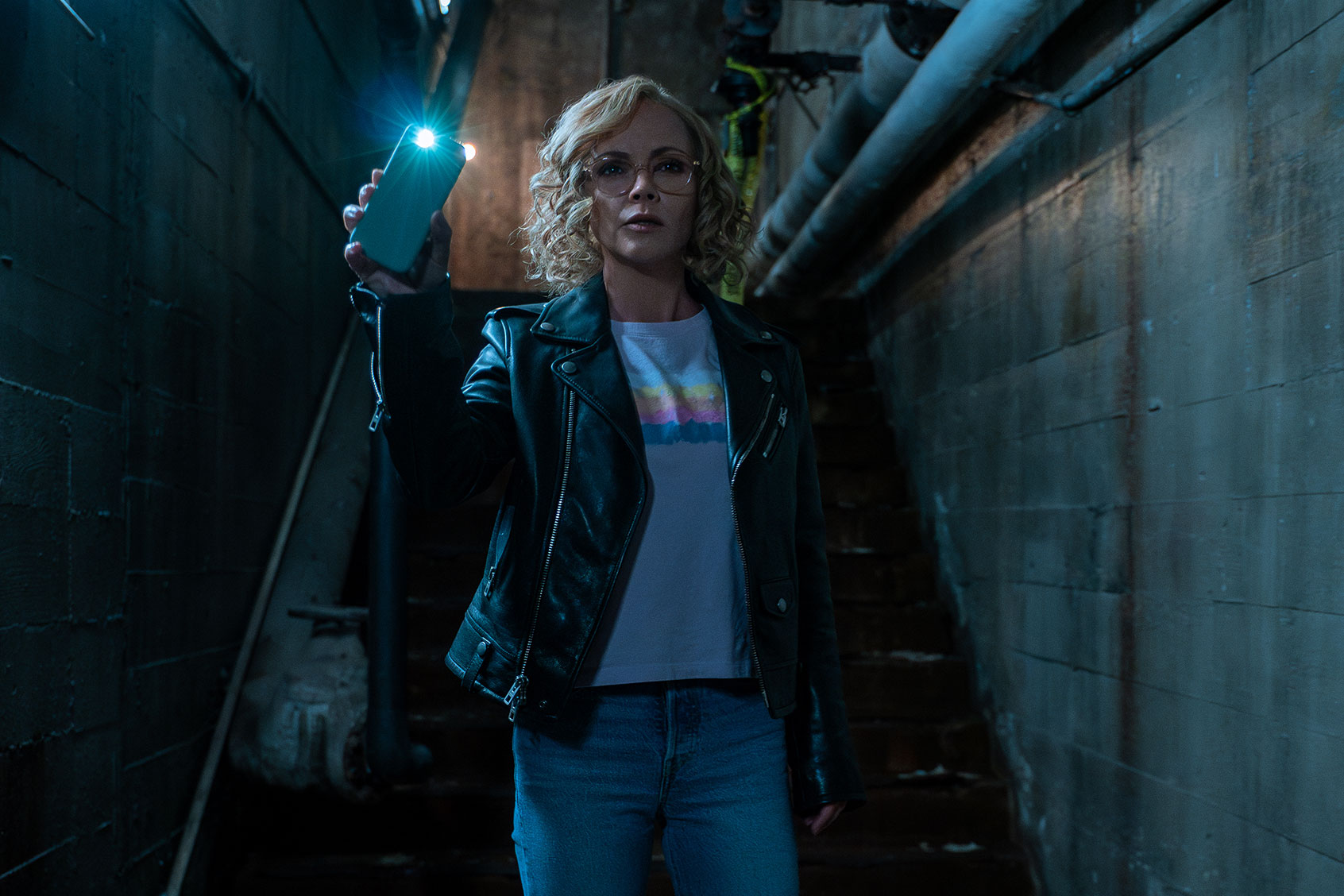
Past: It’s close in terms of who’s the most traumatized Yellowjacket, but at this point, Shauna has to be up there. Her baby died! Her teammates might have eaten him, she’s not sure! And she’s the group’s butcher, charged with dismembering the corpses of her dead friends and breaking them down until they are no longer recognizably human. Just the aftermath of her work drove Coach Ben to arson, so imagine how Shauna feels?! And based on what we can see in Season-3 previews, she’s going to respond to all this like someone whose prefrontal cortex is not fully developed would: By turning her pain and grief back onto others, namely by mounting a campaign against Natalie that blends "Mean Girls" and "Lord of the Flies." 

Present: Jeff turned out to be a real ride-or-die in Season 2, going so far as to help frame someone else for a murder he knows his wife committed. All of which is to say that, for the moment, Shauna is all clear in the present, legally if not psychologically. Crime has brought her family closer than ever before and has opened a new chapter in Shauna’s relationship with her daughter Callie (Sarah Desjardins), who we see pressing her mom for details about “what happened out there” in the official trailer. The psychopathic apple may not fall too far from the traumatized tree, is all I’m saying. 

YellowjacketsChristina Ricci as Misty in "Yellowjackets" (Colin Bentley/Paramount+/SHOWTIME)Misty
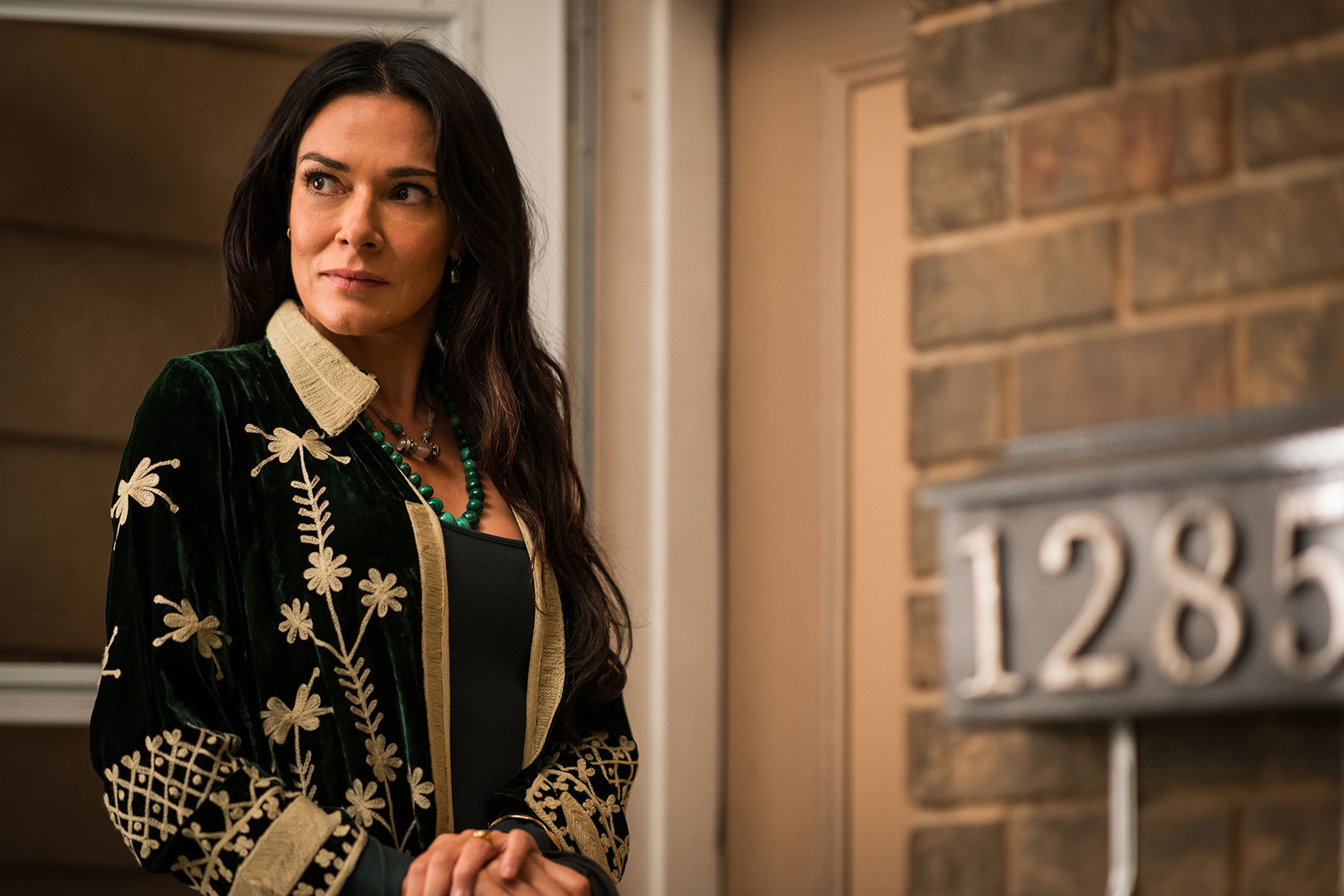
Past: Speaking of psychopaths — it’s Misty! At this point, Misty isn’t a hardened killer…yet. She is a killer, to be clear, but she feels bad about pushing Kristen/Crystal (Nuha Jes Izman) off of that cliff, okay? Teenage Misty just wants to be liked, which is sympathetic but really doesn’t justify all the murder and subterfuge. If the rest of the team ever finds out that she destroyed the plane’s flight recorder after the crash, well — I’d say she’d be dead, but we know she makes it to the present, so… 

Present: Grief from murdering her “best friend” aside — quotations used because Natalie barely tolerated her most of the time — Misty’s good! Her murder was also pinned on someone else at the end of Season 2 by Misty’s new boo, Walter (Elijah Wood), who’s as insane as she is. She’s off the hook legally, has a shoulder to cry on and someone to sing show tunes with, and Walter will absolutely help her pull off additional crimes if asked. Everything’s coming up Misty, although her attachment issues will almost certainly get in the way going forward. 

YellowjacketsSimone Kessell as Lottie in "Yellowjackets" (Kailey Schwerman/Paramount+/SHOWTIME)Lottie
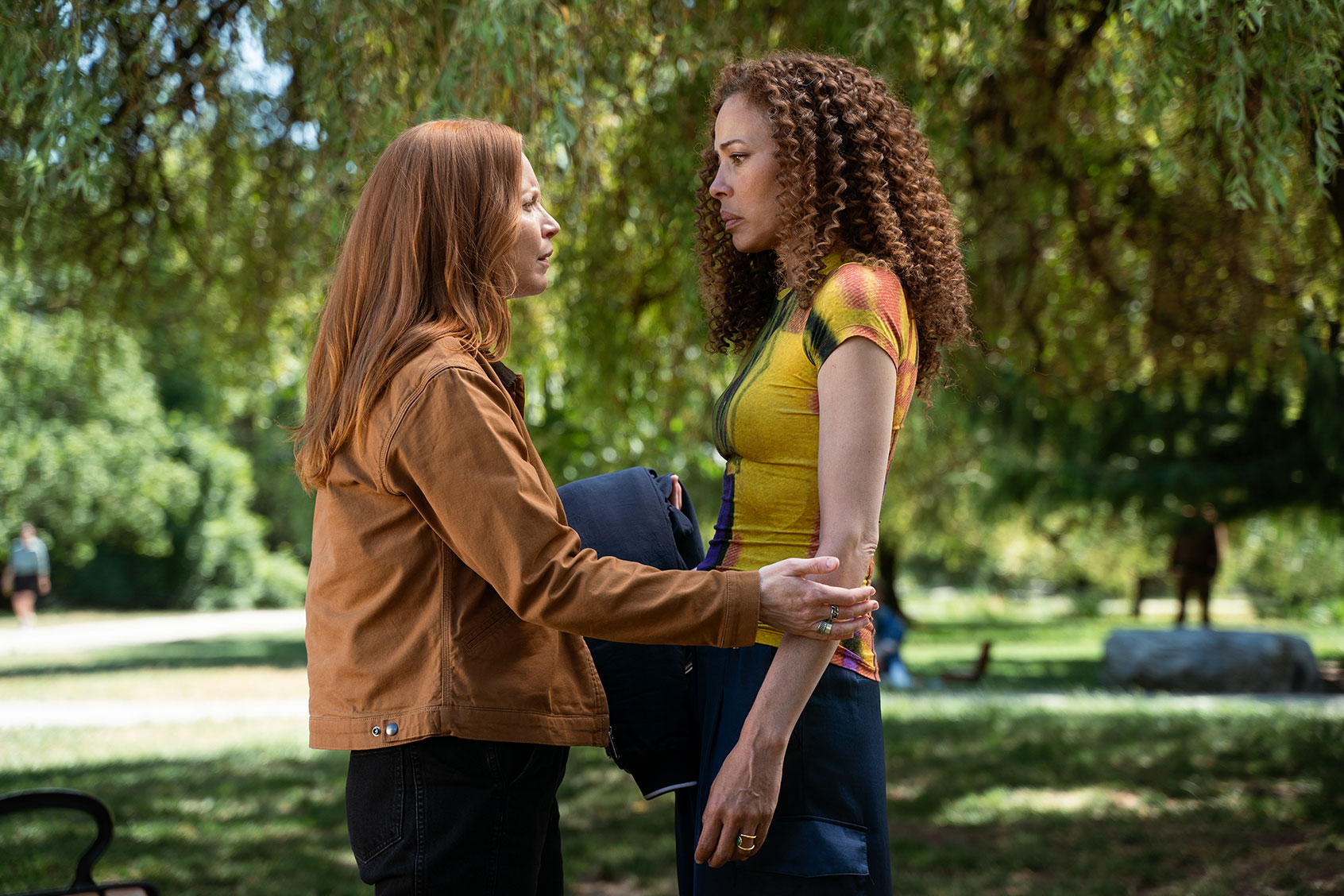
Past: Perhaps sensing that the dynamic between the survivors is about to get even uglier and more fraught, Lottie takes a step back from her prophetic role at the end of Season 2. In her place, she appoints Natalie as the group’s leader/target/scapegoat, using the logic that the wilderness must have a purpose for Natalie if it sacrificed Javi in her stead. Season 3 previews show Lottie conducting rituals for a group of followers the spring after the finale, however, so Lottie won’t be out of the cult-leader game for very long. 

Present: It’s back to the psychiatric ward for Lottie, who seems disappointed but not terribly surprised as she’s packed into the back of an ambulance at the end of the Season 2 finale. They won’t let her wear all her fabulous flowy dresses and kimonos in the hospital, which is a loss. But Taissa and Van will probably come visit her! 

YellowjacketsLauren Ambrose as Van and Tawny Cypress as Taissa in "Yellowjackets" (Colin Bentley/Paramount+/SHOWTIME)Taissa and Van
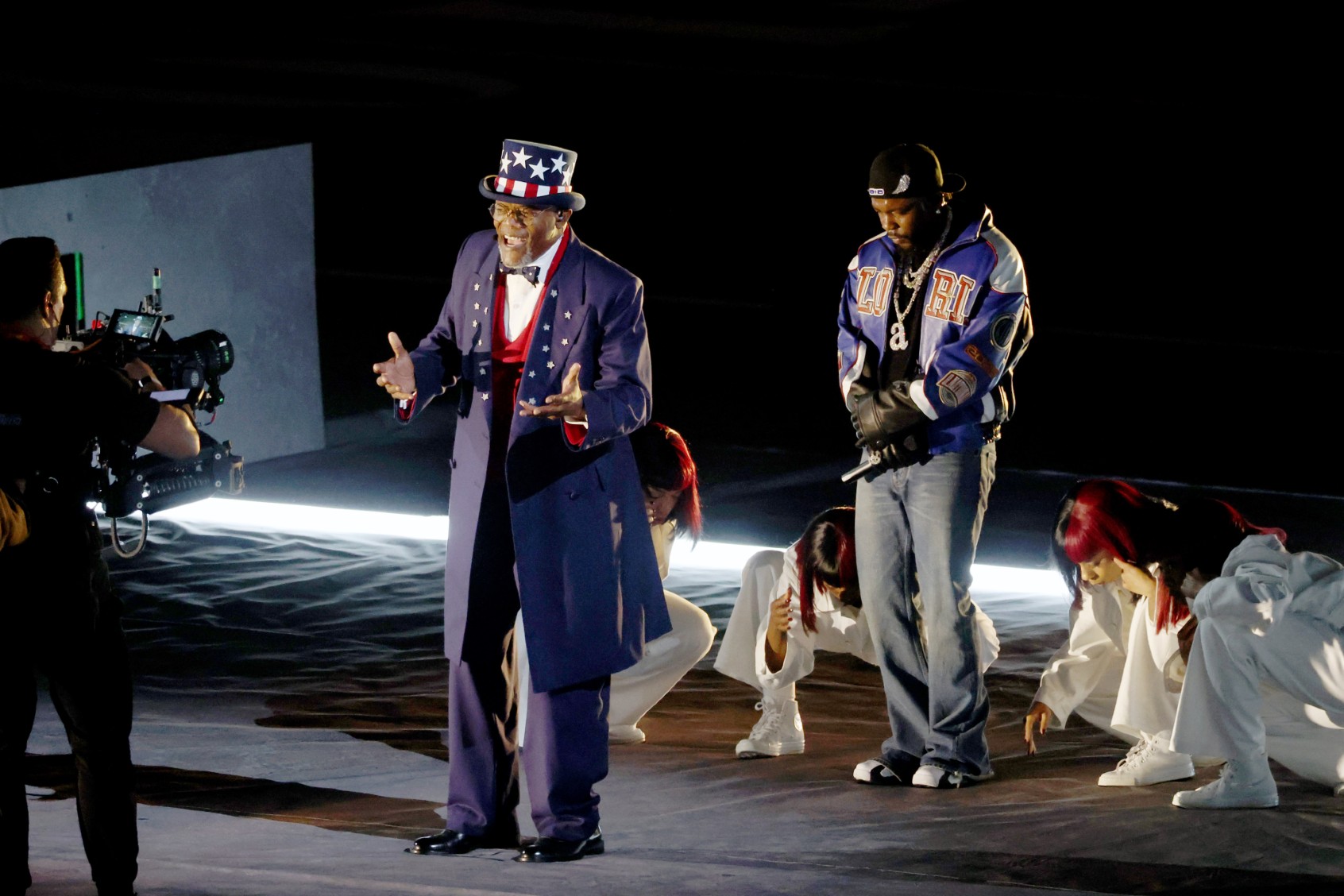
Past: Pretty okay, all things considered. Trauma bonding has been an aphrodisiac for these two and given that they’re out in the snow along with the rest of the team, these teenage lovers are about to bond harder than ever before. Body heat is a great way to stay warm…

Present: Uhhhhhh, not so great? But also great? Van only has a few months left (that’s one way to avoid debt collectors), and seems determined to cram as much life as she can into the short time before she dies of terminal cancer. In practical terms, this means getting back with her ex Taissa, who is in a vulnerable place all around. (Van is definitely taking advantage of a mentally unstable person, which makes it hard to root for them.) First-look photos from Season 2 show the couple together, and the official trailer includes a shot of Taissa being distracted by a shadowy figure while kissing a red-haired woman who has to be Van. 

Her imminent death has brought Van back to her old ways: She talked Taissa into calling off the emergency response team Misty requested for Lottie at the end of Season 2, reflecting Van’s loyalty to Lottie in the past and rekindling that affiliation in the present. It’s an illogical and destructive decision, given that — had Walter and Lisa not intervened — one of the Yellowjackets would have ended up dead at the end of the “hunt.” But again, Van has very little left to lose at this point. 

It’s not clear right now how much Taissa has to lose. She’s still a New Jersey state senator — for now — and she still has a son to worry about, even if her wife did presumably die in that car crash her “other self” orchestrated earlier in Season 2. That “other self” is violent, and delusional, and very dangerous; she’s also likely to come closer to the surface of Taissa’s personality the deeper she goes into her old relationships with Van and Lottie. 

Schumer suggests Senate Democrats will collaborate with Republicans to avoid government shutdown

Senate Minority Leader Chuck Schumer said Monday "Democrats stand ready" to help avoid a government shutdown next month, writing in a letter to colleagues that his caucus "will use our votes to help steady the ship."

Congress has until March 14 to pass another continuing resolution that would extend federal spending. But despite controlling the House and Senate, Republicans appear unable to pass such a measure without significant Democratic support. Last week House Speaker Mike Johnson said he was "trying to get a top-line number" for such a resolution but complained that Democrats had to date been "unresponsive."

The fight comes after President Donald Trump and his allies have claimed the right to ignore laws passed by Congress and unilaterally cancel funding it has authorized. A federal judge said Monday that the Trump administration is defying a court order and continuing to withhold congressionally-approved funding, a decision that follows the illegal dismantling of a federal agency, USAID.

In his Feb. 10 letter, obtained by Politico, Schumer said he was determined to "hold the Trump Administration accountable for its lawless actions." But, he said, that would not extend to risking a government closure.

"Congressional Republicans, despite their bluster, know full well that governing requires bipartisan negotiation and cooperation," Schumer wrote. "Of course, legislation in the Senate requires 60 votes and Senate Democrats will use our votes to help steady the ship for the American people in these turbulent times. It is incumbent on responsible Republicans to get serious and work in a bipartisan fashion to avoid a Trump Shutdown."

Schumer's stance is at odds with demands from progressive activists, who have been urging Democrats to block all business in the Senate and refuse to collaborate with Republicans so long as the Trump administration continues to disregard federal law and Congress' constitutional authority over spending.

Rep. Alexandria Ocasio-Cortez, D-N.Y., is one of several Democrats urging the party to abandon bipartisanship and embrace obstruction.

"We shouldn't give them a single damn vote until we have demands met," she told Business Insider last week. "If they want to pass massive cuts at these agencies, they're going to have to do it on their own."

Ray tails have long been mysterious. Scientists may have finally discovered their function

Tails aren’t just animal accessories. They usually carry specific functions. But when it comes to rays, their function has been somewhat mysterious until now. Cownose rays (Rhinoptera bonasus) — like manta rays (Mobula birostris), eagle rays (Myliobatis aquila) and other rays in the Myliobatid order — are distinct because of their diamond-shaped bodies and long, whip-like tails. Even though the tails lash back and forth while the rays swim, they are not used for propulsion; similarly, they are not used to kill prey or thwart predators. For centuries scientists have puzzled over the purpose of ray tails, but that mystery was seemingly solved in a recent study in the journal Proceedings of the Royal Society B: Biological Sciences.

It turns out that, like the antennas on an insect or crustacean, a ray uses its tail to sense its environment. The inside of a myliobatid stingray tail is remarkably complex, the scientists learned. It has a caudal synarcual, or a specialized adaptation of the ray’s skeletal near the back, which keeps the tail stiff and thereby minimizes the sound of water as it goes about sensing its surroundings. 

“Cownose rays are active swimmers living in a diversity of environments where background noise can be high; for example, noise produced by waves near the surface or during swimming (signals associated with high frequencies),” the authors write. “The filtering capacities of the lateral line system of the tail could improve the signal-to-noise ratio, avoiding overstimulation of the canal neuromasts.”

Yet despite this stiff core, the tail’s tissue is also pockmarked with tiny holes that link to the fish’s lateral line canal, a system of sensory organs that fish and amphibians often use analogous to a human’s central nervous system. In the cownose ray, the lateral line runs the length of the tail and branches off to pores in the fish’s skin, which they likely use to process information about their environment.

By contrast, most aquatic vertebrates have a lateral line that is streamlined near the animal’s tail and only becomes complex near their head. This would help them both bury themselves to avoid predators and sense the location of the bivalves upon which they prey.

“The complex lateral line mechanosensory system in the tail of R. bonasus supports the hypothesis that the tail functions like a hydrodynamic sensory antenna and may play an important role in their behavioural and functional ecology,” the authors conclude.

“This is code red”: Trump’s Project 2025 agenda comes for the Consumer Financial Protection Bureau

The Trump administration is trying to kill off another independent federal agency in apparent disregard of the law.

In an email sent Monday, Russell Vought, the architect of Project 2025 who was recently confirmed as head of the Office of Management and Budget, instructed employees of the Consumer Financial Protection Bureau to stay home and refrain "from performing any work task," according to a copy of the missive obtained by independent journalist Marisa Kabas. The news was subsequently confirmed by Bloomberg and Law360.

Vought's efforts to shutter the agency without congressional approval, which includes ordering its Washington office closed this week, has already provoked lawsuits from the union that represents CFBP employees, NBC News reported. The union is also suing to prevent operatives associated with Elon Musk and his so-called Department of Government Efficiency from accessing CFPB data.

The CFPB was created in the wake of the 2008 financial crisis to address fraud and abuse perpetrated by lending institutions. Since its founding in 2011, the agency has obtained more than $21 billion in relief for consumers impacted by banks and other creditors engaging in fraudulent or abusive practices, according to CFBP's website. The agency has also imposed more than $5 billion in civil penalties on those who have violated consumers' rights.

But the CFPB has long been in the crosshairs of Republicans and their financial backers, who have decried efforts to rein in Wall Street as big government meddling and lamented the agency's ability to act independent of political interferene. In a chapter dedicated to CFPB, Project 2025 contributor Robert Bowes wrote that "the next conservative president should order the immediate dissolution of the agency — pull down its prior rules, regulations and guidance, return its staff to their prior agencies and its building to to the General Services Administration."

President Donald Trump appears determined to do just that, despite the fact that CFPB was created by a 2010 law passed by Congress, deepening what even some conservative scholars say is now a constitutional crisis.

"If you have a bank account, or credit card or mortgage or student loan, this is code red. I am ringing the alarm bell," Sen. Elizabeth Warren, D-Mass., said in a video posted Monday on social media. Warren, who first proposed creating the agency, said the effort will be opposed in Congress and the courts, but the senator has also embraced street protests, planning to speaking Monday afternoon at a rally outside CFBP's shuttered headquarters in Washington, DC.

Leah Greenberg, co-executive director of the progressive advocacy group Indivisible, which organized the protest, said the effort to dissolve CFPB was an "illegal" and "blatant" attempt to seize power and shield moneyed interests from oversight.

"This is a five-alarm fire for anyone who gives a damn about holding corporate thieves accountable," she said in a statement." The CFPB is a lifeline for working people, and we will not stand by while right-wing extremists and billionaire robber barons try to burn it to the ground."

Super Bowl LIX was a mere shadow of what the Big Game once was

The spirit of resilience was in the air at Super Bowl LIX, and I don’t just mean from the Kansas City Chiefs, who put up a decent fight against the Philadelphia Eagles, despite being met with deafening boos from Eagles fans from the moment they stepped onto the field at New Orleans’ Caesars Superdome. Rather, strength, unity and resilience were some of the night’s biggest buzzwords, appearing in pre-game programming and those famous multi-million dollar ad spots during the big event. The pre-game show opened with a tribute to New Orleans, which is still reeling from the New Year's Day terrorist attack that killed 14 people and injured 57 others in the city’s French Quarter. 

With Donald Trump returning to office and the Big Game turning into a vacuum of trivial balderdash, there’s no better recent example of America’s massive cultural stalemate than Super Bowl LIX.

In a segment recorded a few days before the game, former Super Bowl champs Tom Brady and Michael Strahan strode along Bourbon Street, telling viewers that the city’s spirit would not be shattered. “The resilience of New Orleans is matched by the resolve of our country,” Brady said. “When tragedy strikes, we don't break — we come together, rise above and never let evil win.” Then, Lady Gaga appeared like an angel in white, seated at a piano to sing her “Top Gun: Maverick” hit “Hold My Hand” as a tribute to both New Orleans and Los Angeles, as both cities navigate their own harrowing catastrophes. Soon after, Brad Pitt introduced the game with a more word salad-y monologue that featured a compilation of historical moments of American perseverance. “Union is at the heart of this glorious, chaotic, exasperating experiment that is us,” Pitt said over clips of civil rights marches and NASA launches. Yeah, whatever that means.

Pitt’s introduction was the kind of messaging that looks good and sounds nice — especially after a few beers, when the chatter of a Super Bowl party and too much buffalo dip are lulling you to sleep before the game has even started. But when you examine it closely, it falls apart under the weight of scrutiny. The NFL-sponsored spot touted togetherness using the metaphor of the football huddle, when individuals come together to plan their best path to a win, and ostensibly, a better future. It was all suggestion and no specificity, letting the viewer infer whatever they wanted from the clip.

In retrospect, the spot was so safe that it was the perfect omen for how overwhelmingly bland this year’s Super Bowl turned out. Until the very end of the third quarter, the Chiefs didn’t have a single point on the board. But beyond the game itself, there was none of the flash or flair that we’re used to seeing from one of the biggest nights in American sports and international television. The ads were dull, Taylor Swift didn’t get the chance to blow any kisses to her losing lover and even Kendrick Lamar’s highly anticipated halftime show left some spectacle to be desired. (Though, it’s hard to argue that Lamar’s performance wasn’t the highlight of a tedious night.) The monotony of the entertainment onscreen was at odds with the events happening outside the stadium, felt throughout the country as political and social chaos continues to loom large. With Donald Trump returning to office and the Big Game turning into a vacuum of trivial balderdash, there’s no better recent example of America’s massive cultural stalemate than Super Bowl LIX.

Just a few days before the game’s Feb. 9 kickoff, the White House confirmed to CNN that President Trump would be the first sitting president to attend a Super Bowl, because if there’s one thing Trump loves more than sowing discord among Americans, it’s attention. Cuts to the president, tucked away in his secure box, provided a few jump scares throughout the night, sometimes even livening up the moment. But his attendance felt more like goading than a desire to celebrate American athletes. He is pervasive and inescapable, and despite some viewers arguing that sports and politics should remain separate, the two are inherently connected, something that Trump’s presence only further confirmed. 


Want a daily wrap-up of all the news and commentary Salon has to offer? Subscribe to our morning newsletter, Crash Course.


For a city that was already expanding its security in the wake of a terror attack, Trump’s attendance meant that intense measures would need to be beefed up even further. The increased safety resulted in small New Orleans businesses not seeing the boost in business they hoped for as ticketholders and celebrities flocked to the city ahead of Sunday’s game. In a time when local economies could desperately use a shot in the arm, it was tough to see such a lukewarm approach to tourism for a city that has endured so much suffering. 

Given that Trump’s decision to attend the game meant that further safeguards had to be installed, thus impacting tourism even more, perhaps it’s just ultimate cosmic irony that the Chiefs lagged for the entire game. In an interview with Fox News before kickoff, Trump predicted that the Chiefs would take home the Lombardi trophy given quarterback Patrick Mahomes’ Super Bowl track record. But it was Mahomes’ wife Brittany with whom Trump seemed most fascinated. “She’s a Trump fan, she’s a MAGA fan, so I happen to love her,” he said. After weeks of having to endure Trump’s attempts to roll back civil rights and DEI programs, knowing that he was present as his preferred team was losing made a relatively boring game with little competition that much more gratifying. 

Kendrick Lamar’s halftime performance helped on that front, too. Lamar already had a banner month, having just won multiple Grammys for his Drake diss track “Not Like Us.” Taking the biggest stage in music a week later was merely a victory lap, one that brought Super Bowl LIX out of the doldrums — at least for 12 minutes. Lamar’s show didn’t have quite the same spectacle of Rihanna’s floating platforms (and pregnancy reveal) or the nostalgia of Usher rollerskating to his biggest hits. But what Lamar’s performance lacked in all-out pageantry, it made up for in precision. 

(L-R) Samuel Jackson and Kendrick Lamar are seen onstage during Apple Music Super Bowl LIX Halftime Show at Caesars Superdome on February 09, 2025 in New Orleans, Louisiana. (Chris Graythen/Getty Images)The performance began with Samuel L. Jackson making a cameo dressed as Uncle Sam, a subtle way to irritate both Trump and any other racist viewers watching who have been newly emboldened by the president’s rhetoric. It was also a chance for Lamar to make incisive commentary within his performance without ruffling the feathers of advertisers or the NFL. Between songs, the camera cut to Jackson, who took on the voice of white America and parroted things that close-minded critics might say about the first solo rap artist to perform at the Super Bowl. “No, no, no, no!” Jackson began at one interlude. “Too loud, too reckless, too ghetto! Mr. Lamar, do you really know how to play the game?” 

It was a shrewd way for Lamar to comment on the dissonance of being a Black artist performing directly in the gaze of someone like Trump. Other elements seemed to nod to this as well, like one section of the show where Lamar’s dancers were dressed in red, white and blue and standing close enough to recall the image of the American flag, without ever coming together to complete the picture. These moments cleverly implied the disparity between the white figures who retain power in America — even after being voted out of office — and Black artists whose work is denigrated and judged by those powerful figures and the people who share their values. 

Super Bowl Sunday used to be a day where culture was made. Now, it’s where culture is flattened into the most flavorless, insignificant iteration of itself possible.

But Lamar’s show made plenty of time for fun, shocking moments as well. At a certain point, I began to wonder if the lawsuit leveraged by Drake against Universal Music Group would impact Lamar’s ability to perform “Not Like Us” during the set. Lamar knew exactly how to build anticipation during the show, winking at the legal battle halfway through. “I want to perform their favorite song, but you know they love to sue,” Lamar joked in a call and response section with his dancers. After bringing out frequent collaborator SZA to perform “Luther” and “All the Stars,” Lamar launched into his now infamous diss, staring down the barrel of the camera lens and smiling before calling Drake out by name. Just like when Lamar scooped up an award for “Not Like Us” at the Grammys, he had the whole Super Bowl crowd singing along to his particularly pernicious barbs. 

It was one of the most satisfying moments of the entire night, but that’s not a high bar, considering that there weren’t many other memorable moments to choose from. While Eagles fans are no doubt still tearing it up in the streets of Philadelphia this morning, the wide margin of points between the two competing teams made the game uninteresting to keep up with for those of us who are just casual watchers. Pair the game’s lackluster outcome with a spate of ads that touted AI technology or turned celebrities into terrifying CGI abominations of themselves, and the whole evening felt like a distant echo of what the Super Bowl once was. 

With no competition in the game itself and no ads that would suggest our culture has anything more exciting to offer than sequels and regurgitated, live-action adaptations of hit animated movies, watching the Super Bowl felt like turning on the TV in the waiting room of purgatory. Super Bowl Sunday used to be a day where culture was made. Now, it’s where culture is flattened into the most flavorless, insignificant iteration of itself possible. That much was clear from the first year that ads — once as anticipated as the game itself — were uploaded online before they aired on television, but that doesn’t make the regression any less bleak. There are, of course, more pressing things happening in our country than sports pageantry and bite-size, 30-second doses of capitalism. But when one of the biggest television events of the year can’t even be a mind-numbing, five-hour distraction, perhaps it’s time to admit that one of the biggest symbols of American culture peaked a long time ago, and that there’s no way to properly enjoy it until we tend to all of that chaos happening outside of the arena first.

“To the victor belongs the spoils”: Trump’s imperial ambition is fueled by the myth of his mandate

Canadian Prime Minister Justin Trudeau was caught on a hot mic the other day giving his assessment of Donald Trump’s threat to turn Canada into the 51st state. I don't think Trudeau is given to wild conspiracy theories. This is what he said:

I suggest that not only does the Trump administration know how many critical minerals we have but that may be even why they keep talking about absorbing us and making us the 51st state.

[…]

They’re very aware of our resources, of what we have, and they very much want to be able to benefit from those. But Mr. Trump has it in mind that one of the easiest ways of doing that is absorbing our country. And it is a real thing

Trump was asked about it by Fox News' Bret Baier in his Super Bowl interview and he confirmed that he is serious about the 51st state thing because of Canada's trade deficit, which he's inanely convinced himself is a "subsidy" (once more demonstrating that he has no idea how trade actually works.) That's just his excuse — which he may believe as well — but there's more to it.

Everyone always says that Trump is just trolling Canada, but it's not true. Trudeau's assessment is correct. It is a real thing. We know this because Trump has always said that he believes "to the victor belongs the spoils" and by that, he apparently also means that his victory to become U.S. president last November makes him a victor over the whole world.

Now, it's important to distinguish his belief that "to the victor belongs the spoils" in the imperialist context from a "spoils system" in the domestic context, which he also believes in. The Encyclopedia Britannica explains the meaning of a "spoils system," which springs from the same source:

[I]twas made famous in a speech made in 1832 by Senator William Marcy of New York. In defending one of President Andrew Jackson’s appointments, Marcy said, “To the victor belong the spoils of the enemy.” In Marcy’s time, the term spoils referred to the political appointments, such as cabinet offices or ambassadorships, controlled by an elected official.

Trump is taking that concept even further by appointing uniquely unqualified, slavish devotees, forcing out civil servants (something that didn't exist in Jackson's time) and demanding personal loyalty oaths. But essentially he's emulating Jackson, the president Steve Bannon taught him was supposed to be his inspiration. Not that he is likely aware of that. But he has certainly created a spoils system in the U.S. federal government for the first time in many moons.

Let's not pretend that any of this is about the national interest. It's all about money for Trump and his cronies.

Trump claims that he won a landslide victory (a lie: his popular vote win was narrow at 1.4% and his electoral victory was modest by historical standards) which seems to have led him to believe that as the undisputed leader of the world's most powerful nation, he also has the power to buy or take whatever he wants. To the victor goes the spoils, and, traditionally, those spoils are natural resources.

We need your help to stay independent

Consider the fact that Trump has been waxing on about William McKinley who he's been convinced was a great president because of his tariffs. Trump is no scholar and knows nothing about that historical period but the fact is that that era, known as The Gilded Age, was also called the the New Imperialism era, when the British Empire, Germany, Italy, Japan Russia, the United States and Japan all raced to colonize everything that was left uncolonized on the planet. The period lasted from roughly 1873 to 1914, with the outbreak of WWI. There were a lot of reasons for this but one of the main ones was competition for the natural resources required to fuel the Second Industrial Revolution.

The belief that "to the victor belongs the spoils" is built into imperialism and so it is with Trump. Right after he took office in 2017, he went to CIA headquarters and said:

The old expression, “to the victor belong the spoils” — you remember. I always used to say, keep the oil. I wasn’t a fan of Iraq. I didn’t want to go into Iraq. But I will tell you, when we were in, we got out wrong. And I always said, in addition to that, keep the oil.

Two years later he said "to the victor belongs the spoils" again about Syria after his advisers tricked him into keeping some troops there to "protect the oil."

As we know he's been inexplicably demanding that Denmark sell Greenland to him and threatening to just take it if they refuse and that too turns out to be about resources: minerals. Lately Ukraine's been on the menu for, once again, rare earth minerals:

And then there's his Gaza "imperialist acid flashback," as Salon's Andrew O'Hehir calls it, which, as far as I know, doesn't have any oil or minerals to offer but does feature some very nice beachfront property he apparently wants to develop into an international resort.

Let's not pretend that any of this is about the national interest. It's all about money for Trump and his cronies.

This talk of minerals is coming from somewhere and I would guess it has something to do with the fact that rare earth minerals are necessary for all modern electronics (among other things). Trump has a very rich BFF who has a great interest in such things and it's easy to guess that he's whispering in Trump's ear about all the "spoils" to be had by acquiring/seizing the land where they exist.


Want a daily wrap-up of all the news and commentary Salon has to offer? Subscribe to our morning newsletter, Crash Course.


Trump's imperial ambitions go beyond just taking natural resources. He is also finally articulating what he has always meant by "America First." It isn't about isolationism, it's about dominance. America First means "We're number one!"

Back in 2017 when he made that speech at the CIA headquarters and said that the U.S. should have kept the oil after invading Iraq, this was how he prefaced that comment:

When I was young — and I think we’re all sort of young. When I was young, we were always winning things in this country. We’d win with trade. We’d win with wars. At a certain age, I remember hearing from one of my instructors, “The United States has never lost a war.” And then, after that, it’s like we haven’t won anything. We don’t win anymore.

Having eluded all accountability for anything he did in his first term and beyond, Trump sees himself as omnipotent now. He was restored to the White House with a bigger margin than in 2016 and is being aided in his revenge by the richest man on the planet. He stands to make massive amounts of money during what is already shaping up to be the most corrupt presidency in U.S. history. His win means that the U.S. is winning again. Il est l'État. To the victor belongs the spoils.

Donald Trump’s retribution campaign tests the limits of the First Amendment

After repeatedly claiming that he has “nothing to do with Project 2025,” Trump has signed warp-speed executive orders to effectuate Project 2025. A fever dream of the Heritage Foundation and other right-wing extremists, Project 2025 seeks to advance Trump’s authoritarian vision for America. At full tilt, it would enact tenets of Christianity into law (controlling and punitive tenets of the Old Testament, not the woke stuff about loving your neighbor), accelerate climate change, further marginalize immigrants and the poor, and replace the federal workforce with Trump loyalists. 

Project 2025’s unifying theme is the expansion of executive authority, a GOP goal nearly 40 years in the pipes. Through fiat of executive order, Trump is reaching for an unprecedented expansion of his own power, and the Republican majority on the Supreme Court may very well assist.

Revenge terminations and impoundment

One of Trump’s first acts was to summarily fire Justice Department prosecutors who helped investigate Trump’s criminal attempts to overthrow the 2020 election. These prosecutors were not political hires from the Biden administration; they were career DOJ prosecutors who worked under presidents of both political parties. Their loyalty oath was to the Constitution, not the President. 

Trump’s acting attorney general, James McHenry, made clear that the terminations were political.  He wrote in his firing memo, “Given your significant role in prosecuting the president, I do not believe that the leadership of the department can trust you to assist in implementing the president’s agenda faithfully.” 

In Trump’s trademark Orwellian spin, his executive order weaponizing the DOJ was titled, “Ending the Weaponization of the Federal Government.” The order reads like a campaign ad, and accuses the Biden administration of “unprecedented, third-world weaponization of prosecutorial power,” calling investigations into Trump’s J6-related criminality—not Trump’s criminality itself—“misconduct.”

In addition to illegally firing career DOJ prosecutors, Trump is also trying to strong-arm all 2.3 million federal employees into quitting, offering an alleged ‘buy out’ that would pay them to resign now and collect partial salaries through September. (Any federal employee reading this, beware, there’s a statutory limitation of $25,000 in effect for such federal employee ‘buy outs,’ far below the eight months of salary promised, suggesting Trump/Musk won’t honor the terms of their “offer.”)

Trump’s attempted purge comes on the heels of a gag order barring external communications from federal health employees at the National Institute of Health, and, in violation of the Impoundment Control Act of 1974, an order unilaterally grabbing the power of the purse from federal legislators by impounding funds they allocated for programs Trump doesn’t like.

Political firings of most federal employees are blatantly unconstitutional

The Trump administration has made clear that they terminated DOJ prosecutors and are trying to replace “deep state” employees due to their politics. Under current case law, however, public officials cannot condition their subordinates’ employment on their politics. The First Amendment prohibits an elected official from hiring those who support or affiliate with him and terminating employees who do not. 

In 1976, in Elrod v. Burns, the Supreme Court held that a public employer inhibits an employee’s constitutionally protected belief and association where it terminates him for lack of political support.  In 1980, the Supreme Court reaffirmed this rule in Branti v. Finkel, holding that public employers cannot condition employment on political affiliation because, “[i]f the First Amendment protects a public employee from discharge based on what he has said, it must also protect him from discharge based on what he believes.”

We need your help to stay independent

In light of these cases, courts evaluate First Amendment political retaliation claims under the “Elrod/Branti test,” which holds that the First Amendment protects public employees from termination based upon their political beliefs, affiliation, or non-affiliation unless their work “requires” political allegiance. To show that loyalty is substantively “required,” Trump would have to show that the government has a vital interest in employing only MAGA prosecutors. Trump’s personal desire to stay in office for life, an idea he has repeatedly floated, and his desire to use the presidency for profit and revenge are distinct from—and contrary to—the government’s vital interest. 

Trump’s non-existent mandate

The legal necessity of showing that political firings somehow advance the government’s “vital interest” may be why Trump, Republicans and Fox News keep repeating that Trump won by a landslide, which has given him a “mandate.” Although the 1st Amendment doesn’t care how popular or hated Trump is, winning by one percent is laughably distinct from winning a mandate that suggests Trump’s political interests are synonymous with the government’s.

Anyone still reliant on facts should repeat the math with a bullhorn: Trump won 77 million votes compared to Harris’ 75 million votes; 49% of the vote compared to Harris’ 48%, a difference of 1%.  More importantly, in terms of “mandate,” 90 million eligible voters didn’t vote at all, a number that exceeds the number of voters for either Trump or Harris. 

In short, out of 245 million eligible US voters, nearly 70% did not vote for Trump. Only the math illiterate would continue to present this as a mandate.

Trump’s unconstitutional orders are meant to trigger judicial review  

In addition to First Amendment protection afforded to all public employees, many federal statutes have specific built-in protections for agency workers, to stabilize the federal government and guard against the whims of politicization. The law creating the labor board, for example, requires defined cause to fire its members: “Any member of the board may be removed by the president, upon notice and hearing, for neglect of duty or malfeasance in office, but for no other cause.” 

Acts creating the Federal Reserve System, Postal Service, Federal Trade Commission, National Transportation Safety Board, Federal Energy Regulatory Commission, Consumer Financial Protection Bureau and other agencies allow termination onlyfor cause” identified as inefficiency, neglect of duty, and malfeasance in office. Trump’s purge, in light of these statutory protections, is headed to the Supreme Court, where a Republican-appointed majority may strike down the protective statutes, based on its push in recent years to expand presidential authority. Whether it will also pervert nearly unanimous First Amendment jurisprudence on political terminations remains to be seen, but as Dobbs illustrated, conservative justices who support Project 2025 are unconstrained by precedent. 

Current conservative justices take an expansive view of executive power and may be anxious to invalidate congressional restrictions on the White House. Chief Justice Robert’s immunity decision, granting Trump broad immunity from criminal claims, held that Trump’s threat to fire the acting attorney general in 2020 could not even be discussed in court or admitted into evidence in a criminal case. After allowing Trump to commit crimes with impunity, influencing voters and thus serving as Trump’s literal get-out-of-jail card, these Machiavellian jurists don’t seem inclined to stop him from building an empire that imposes their own conservative and religious values on the rest of us.

“‘Women’ is a banned word”: Trump uses trans panic to strip rights from all women

In a country where 1 out of 6 women have experienced rape or attempted rape, Republicans believe they've found the real threat to female safety: The slim possibility that a cis college athlete might tie for 5th place in a swim meet with a trans woman. It happened once, and according to Donald Trump and his followers, it's the worst thing that has possibly happened to a woman in all of human history. "We will not allow men to beat up, injure, and cheat girls," Trump declared last week as he rolled out an executive order banning trans women from sports.

In terms of Trump's lies, this one was especially obnoxious, as Trump himself was found by a civil jury liable for sexually assaulting journalist E. Jean Carroll. His Cabinet nominations have been a murder's row of men accused of rape, sex trafficking, and other abuses of women. The lies are layered upon each other because his speech was about trans women in sports. That has nothing to do with injuring women, as trans women are women and there's no evidence that any of them are hurting cis women. 

 "Gender ideology" is a nonsense term, meant to obscure meaning and frighten people.

His lies also depend on people not reading his various anti-trans executive orders. It's not just that these orders have nothing to do with "protecting" women. Then text of the orders is an all-out attack on all women, both cis and trans. Trump is exploiting an anti-trans panic, which far too many centrists and liberals have enabled over the years, as cover for the long-standing conservative goal of trying to reverse decades of women's progress in education, the military, and science. 


Want more Amanda Marcotte on politics? Subscribe to her newsletter Standing Room Only.


In response to an executive order titled "Defending Women From Gender Ideology Radicalism," the U.S. military has halted sexual assault prevention programs. Part of the problem is the order uses vague language such as, "Federal funds shall not be used to promote gender ideology." "Gender ideology" is a nonsense term, meant to obscure meaning and frighten people. It's invoked by the right any time the concepts of gender and equality come together. Some conservatives use it primarily to mean "respecting trans people." But others take a more expansive view, using the term to demonize anyone who acknowledges that oppression and violence are sometimes about gender. Simply put, it's impossible to talk about the causes and impacts of sexual assault and harassment without acknowledging gender, which could get someone accused of "gender ideology." No wonder military leaders are "pausing" these programs. 

This is being reported as a side effect, but it's likely the goal. Despite a handful of feminists falling down the anti-trans rabbit hole because they once saw the phrase "pregnant people," the vast majority of transphobia is coming from people who hold cis women in contempt, as well. The reason conservatives are obsessed with, to quote Trump's order, defining sex as an "immutable biological classification as either male or female" is so they know which group of people to deem inferior. Trans people are uncomfortable reminder that men and women's bodies are not so different, and that the assumption that men are biologically superior is not grounded in fact. 

That much was made evident by Trump's anti-trans speech, in which he falsely declared "a male boxer stole the female gold" in the Paris Olympics. He's referring to Imane Khelif, a cis woman from Algeria who has become the subject of a vicious international smear campaign by the right. Khelif is not a man, nor is she trans. But she's relatively tall at 5'10", muscular, and dark-skinned. Because she doesn't fit what the right believes women "should" look like — small, light-skinned, frail — she's being called a "man." Despite claiming to believe gender is "immutable," conservatives are eager to strip gender identity away from even cis women who don't fit their narrow view of what "women" should be. This attitude also reveals that, far from "protecting" women's sports, most conservatives hold female athletes in contempt.  If what makes you a "woman" is to cultivate physical fragility so men feel stronger in comparison, no female athlete is safe from being called a "man." 

Unsurprisingly, then, the Trump administration is using the trans panic to take a hammer to the very program that allowed women's athletics to flourish in the first place: Title IX, a 1972 law that bans sex discrimination in education. President Joe Biden's administration updated the program to make it stronger and more inclusive, strengthening rules to prevent sexual assault and harassment on campus, and expanding protections for pregnant students. The updated rules also expanded protections for LGBTQ students, with some allowance for trans athletes, though it fell far short of what many advocates asked for. Using this trans clause as a pretext, Trump and an allied federal judge have rescinded all of these new regulations. As Kylie Cheung of Jezebel explained, the main impact of this order will be to "make it even easier for students to get away with sexual misconduct." To "protect" cis women from imaginary threats from trans women, Trump has raised the already-high threat of sexual violence, most at the hands of cis men, on campus. Schools are already being forced to respond by taking away resources from victims of sexual violence and ending programs meant to help keep pregnant students in school 

That the anti-trans panic is a stalking horse to strip rights and protections away from all women is most bluntly seen in the world of medical research. Trump's executive orders banning "gender ideology" may be sold to the public as an anti-trans initiative, but, as the Washington Post reported, the White House enforcement appears to be taking a broader view that any reference to gender is a threat. The National Science Foundation was told to comb through thousands of active research projects and defund any deemed too "woke." That's a big project, so they've been given a list of keywords deemed red flags for "wokeness." Among those words: "female," "women," and even "trauma." One poster on Bluesky noted that we'll soon have "a Ministry of Double Speak" and "Also – 'women' is a banned word."

It's easy to dismiss this as stupidity, but I'd argue it was deliberate. This was never meant to be limited to trans women but to expand the right-wing's assault on all women. If conservatives were solely motivated by the view that there are two genders who are vastly different from each other biologically, they couldn't possibly object to research that focuses on women's bodies. If the goal is reinstating a social order where men are the only people who matter, this order makes more sense. This is the same party that keeps passing draconian abortion bans that kill women. Of course, they don't care if they end medical research that could save women's lives. 

All this certainly exposes the lie that Trump or the MAGA movement cares about "protecting women." What they actually care about is protecting gender hierarchy. But it's politically unpopular for Republicans to simply state that they long for a world where rape is unprosecutable and women are pushed out of school, sports and occupations like science and military service. Unlike cis women, who are about half the population, trans people are a small and vulnerable minority, making it far easier to demonize them, especially to credulous centrists. But MAGA was never going to stop at harassing trans people. Creating the scare term "gender ideology" was inevitably going to create space to attack anyone who doesn't conform to a rigid, misogynist worldview, including cis women who want to go to college or join the military. 

The FDA just approved a new painkiller. Is it too good to be true?

Stop me if you’ve heard this one before: A miracle new painkiller promises to save us all from the scourge of addiction while effectively treating acute and perhaps even chronic pain. The media goes wild.

This time around, the media is making a fuss about Vertex Pharmaceuticals Incorporated’s suzetrigine, a newly FDA-approved painkiller that also goes by the equally unpronounceable brand name Journavx. Suzetrigine has a highly specific mechanism totally different from the way opioids dull pain.

Opioids bind to receptors in the brain and spinal cord, providing system-wide pain relief and system-wide side effects. By contrast, suzetrigine inhibits pain by taking advantage of voltage-gated sodium channels found on the membranes of neurons, muscle cells and glial cells, particularly at the junction between neurons and muscle cells. These sodium channels open and close as needed to allow sodium ions to cross the cell membranes, activating neurons to do their job 

As a result, they play a downstream role in several different aspects of pain. This means that the effect of gaining control of them is likely to be short acting, disassociating and reassociating with each painful signal, limited to the peripheral system, not working on the brain at all — and so highly unlikely to cause addiction or some of the other body-wide effects of opioids.

Researchers have been trying out different drugs for years to find one that could inhibit, or turn off, different sodium channels. Finally, they’ve encountered one that works, and last month the Food and Drug Administration approved its use in the treatment of acute pain, which affects some 80.2 million U.S. patients every year. A new painkiller could be great news — if the drug is as effective as what already exists. Dr. Stefan Kertesz, a clinician-scientist at the University of Alabama who provides primary and addiction care to veterans in the Birmingham, Alabama VA Health Care System, said we still don’t know enough about this medication to be sure.

“There are some obvious gaps in the data,” Kertesz said in a phone interview with Salon. While suzetrigine seems to be a relatively low-risk intervention, it’s not clear that it is good enough for the purposes for which it’s been approved, or for likely future or off-label uses. “To my view this is not convincing that this is better than opioids.”

"There are some obvious gaps in the data."

Kertesz is not the only one skeptical based on the evidence presented to date. The authors of a report released last week from the Institute for Clinical and Economic Review (ICER) noted several caveats: we don’t know how many patients in the phase 3 trial resorted to rescue medications (probably opioids); we don’t yet have data on how suzetrigine stacks up against non-steroidal inflammatory drugs (NSAIDs), the other main alternative to opioids but one that often comes with serious side effects or intolerability; and we don’t have data comparing suzetrigine with real-world opioid doses, which are often much higher than those used in the trial.

It’s also important to note that suzetrigine is approved only for short-term or acute pain following surgery. However, trials are underway for its potential use in certain kinds of chronic pain, although phase 2 results to date are not impressive. This shouldn’t be surprising, given its highly specific, peripheral mechanism.

“It shouldn’t work for centralized pain. It really shouldn’t,” Kertesz told Salon, referring to the centralization that can occur in some types of chronic pain where pain persists despite there being no evidence of inflammation or tissue damage: processes in the brain are causing the feeling of pain nevertheless. Poorly treated acute pain can sometimes turn into centralized, chronic pain, and a peripherally-functioning medication like suzetrigine should have no relevance to that. But what if your chronic pain involves both a centralized component and some ongoing tissue damage? Some questions are still unanswered.


Want more health and science stories in your inbox? Subscribe to Salon's weekly newsletter Lab Notes.


Kertesz noted that in a 12-week, phase 2 trial of suzetrigine for the treatment of a type of pain in the lower back and sacrum, Vertex found no difference between suzetrigine and placebo, though the study wasn’t “designed nor powered for statistical comparison” between the two.

“I still think we don’t have all the data we were supposed to have, but it looks like it’s low risk,” Kertesz said. Side effects that have been noted for suzetrigine are relatively mild, although as the authors of the ICER report noted, “We have concerns about as-yet-unknown harms of suzetrigine as we would for any drug with a new mechanism of action; we are particularly concerned about whether there could be an increased risk for cardiac arrhythmias given inhibition of NaV1.8 [the sodium ion channel the drug targets] and possible acute renal injury given a study in people with diabetes.”

"I expect [suzetrigine] to be an order of magnitude more expensive."

Vertex says its plan is to keep suzetrigine affordable, or at least competitive with opioid costs, although Peter Friedmann, a physician specializing in addiction, and professor of Population & Quantitative Health Sciences at UMass Chan Medical School, noted that generic opioids and NSAIDs are already incredibly cheap.

“Opioids are effective, inexpensive and safe when properly prescribed. Surgery and post-op care are usually bundled … so the price will really have to be competitive to convince hospitals/surgicenters,” Friedmann told Salon by email. “I expect it [suzetrigine] to be an order of magnitude more expensive.”

ICER, using using a placeholder price for suzetrigine of $420 for a one-week course, suggests that, taking into account the wide range of estimates that exist of opioid use disorder risk of a one-week course of a typical hydrocodone/acetaminophen combination, there may be a slight long-term cost saving in using suzetrigine due to avoidance of that risk.

Do we really need a new type of painkiller?

Many painkiller options already exist, with opioids remaining the most effective drugs in most cases where severe acute, nociceptive pain is concerned — that aching, throbbing pain encompassing everything from bruises to arthritis to broken bones. For neuropathic pain, which concerns the nerves, medications like gabapentin are more appropriate. Opioids prescribed at the lowest effective dose also make sense for some other patients who do not tolerate or benefit adequately from alternatives.

“The early trials show superiority of the high dose regimen to placebo for acute pain with a reasonable side effect profile, which is necessary for FDA approval,” Friedmann said “Noninferiority would be if it were compared to a known efficacious med like hydrocodone/acetaminophen.”

Indeed, this has been done, as part of the phase 3 trials. Suzetrigine was found to be about equally effective to the opioid/acetaminophen combo for abdominoplasty (tummy tuck) pain but provided a slower onset of pain relief, which might or might not be a problem, in the case of pain from removing bunions. Notably, these are both relatively minor surgeries. Suzetrigine is nowhere near being able to replace prescription fentanyl, a vital medication for severe pain during and after surgery.

Friedmann believes we do need opioid alternatives, particularly for chronic pain (for which suzetrigine has not shown efficacy to date.) But like Kertesz, he sees suzetrigine as modestly useful for certain very specific indications, such as after minor surgery in patients, but is doubtful as to whether it represents that magic alternative to opioids.

“Analgesic efficacy is only one part of the equation — we also need randomized trials in chronic pain that look at function and long-term tolerability in comparison to NSAIDs,” Friedmann said.

Beyond wanting to create more effective drugs, the motivations for constant attempts to produce new, non-opioid painkillers are largely either commercial — because opioid availability is limited by prior authorization and DEA production limits — or legal or at least administrative, because the requirements for prescribing opioids have become increasingly mummified in red tape and legal jeopardy for prescribers. But culture plays a role as well.

You wouldn’t know it, given the casual media conflation of prescription fentanyl with the unregulated, often contaminated, unknown-dose illicit version, but opioid prescription rates in the U.S. have plummeted to levels not seen since Kurt Cobain was alive. It has been about a decade since prescription of opioids showed a causal link with the overdose crisis. Both prescribing rates and associated overdose deaths have been in decline since 2011.

We need your help to stay independent

Nevertheless, the idea that prescription opioids are deeply harmful to society seems to have a deathgrip on the cultural conversation  —  as Friedmann puts it, a non-addictive analgesic is “a holy grail in medicine.” It’s one we seem unable to let go, which results in non-opioids being prescribed to patients even when they are not indicated for the condition or when an opioid medication would be more appropriate for the particular patient. As Drs. Christopher Goodman and Allan Brett wrote in American Family Physician in 2019, for example:

“Gabapentinoid drugs [like Neurontin or Lyrica] … are increasingly being prescribed for pain because physicians and patients seek alternatives to opioids in the midst of the opioid crisis. However, such widespread and often indiscriminate prescribing of gabapentinoids is not supported by robust evidence, and it carries known and unknown risks.”

Risks of such indiscriminate anything-but-opioid prescribing might include undertreated pain and the patient resorting to illicit opioids, addiction to the alternatives, and death from side effects, dose escalation or polypharmacy due to unresolved pain, or overdose. For this reason, it’s important not to oversell the potential role suzetrigine may play in future pain care.

“What bothers me in the coverage,” Kertesz said, “is that even though the medication is interesting and probably good … there really is this idea that this is the gigantic solution to addiction, and somehow this is the beginning of the end of opioid addiction. And I think that’s a nutty idea.”

“Click to Cancel” will help us manage money, if it doesn’t get canceled

Have you ever forgotten about the streaming subscription you no longer need or use? You're not alone. 

A survey from C & R Research reveals that 74% of respondents feel it's easy to forget about recurring monthly subscriptions, and 42% have forgotten about a recurring monthly subscription they no longer use but still pay for. Interestingly, 55% of Gen Zers have let their monthly subscriptions fall by the wayside but still pay for them, versus 24% of baby boomers. 

So, how much are consumers spending on subscriptions? They estimated $86 per month, but when they calculated it, the total came to $219 per month, according to C&R Research. 

Companies also make it difficult for consumers to cancel their recurring subscriptions and memberships. Have you ever tried to cancel a subscription, only to find yourself lost in a confusing maze of steps? Or thought you had canceled, only for the charge to pop up on your credit card statement

The Federal Trade Commission's "Click-to-Cancel" rule aims to make it as easy to cancel a subscription as it was to sign up. Plus, the new rule prohibits companies from misrepresenting any facts and ensures that important information is truthful and easy to find. 

That said, the rule faces some uncertainty. Passed during the Biden administration, it went into effect as of Jan. 14, and companies have until May 14 to comply. But it faces legal and political hurdles under the Trump administration that could deter the FTC from enforcing it.

Why is it so hard to cancel?

In personal finance, there's the saying, "Make it easy to do the right thing, and hard to do the wrong thing." In other words, create systems and rules that encourage positive money-building habits. 

But companies have devised ways to make it easy to sign up for a monthly box subscription but have put barriers in place to cancel. These barriers are known in behavioral economics as "friction," said Dan Ariely, a psychology and behavioral economics professor at Duke University and a founding member of the Center for Advanced Hindsight

"Companies will create websites that reduce friction when you sign up but increase friction when you want to cancel"

"Companies will create websites that reduce friction when you sign up but increase friction when you want to cancel," he said. In trying to unsubscribe, many websites add friction, which creates difficulty canceling," said Ariely. "It might be an additional key press, field or demand of time." 

According to Ariely, examples of friction to make it challenging — and a bit deceptive — to cancel include: 

  • Even if you went through the steps to cancel your subscription, you didn't really cancel.
  • When you click on a button, it takes you to a website where you need to indicate your reason for canceling. 
  • You need to input a password before you can cancel. 
  • You need to type "delete" in a field before properly unsubscribing. 
  • You can subscribe online, but to cancel you'll need to call. 

Every website has a different unsubscribe mechanism, which means that we have to learn that mechanism, Ariely said.

Another tactic? Companies may auto-renew you without reminding you of your renewal date, said Scott Rick, an associate professor of marketing at the University of Michigan's Ross School of Business and author of "Tightwads and Spendthrifts."

Plus, if you subscribe to an annual plan — usually offered at a discount — you might be stuck with a subscription that you end up not using or needing down the line. "One quiet annual payment is easier to overlook than 12 monthly payments," said Rick. 

Making a habit out of canceling subscriptions 

While the effectiveness — and the enforcement — of the "Click-to-Cancel" rule remains to be seen, it's good practice to get into the habit of taking inventory of your subscriptions and canceling the ones you no longer need or want. 

Track your spending on subscriptions. To keep tabs on what subscriptions you have and are spending on, create a category designated solely for subscriptions, says Brett Croft, a CFP®, CFA®, CTFA and owner of Croft Financial Planning. "The simple act of tracking changes your spending habits," he said. 

"The simple act of tracking changes your spending habits"

From there, decide which ones to cut based on usage or substitution, he said. You can see what subscriptions you no longer use or need or go about finding a less-expensive or free alternative. 

Take stock of your existing subscriptions. Said Israilov, a certified financial planner and founder of Israilov Financial, suggests breaking down your recurring subscriptions into a few sub-categories. 

These can include trial subscriptions switched to paid plans (e.g., annual app subscriptions, streaming apps), redundant music and video streaming services, annual subscriptions on auto-renewal and premium features that can be downgraded to free versions. 

Add reminders to your calendar. Rick recommends making this a quarterly event, where you take stock of your subscriptions and jot down "Cancel Hulu" on your to-do list. 

Sign up for fewer subscriptions. Rick suggests making a point to sign up for fewer subscriptions in the first place. "Given inertia and the typical invisibility of subscription payments, you're probably committing to a much longer subscription period than anticipated," Rick said. 

Use the Marie Kondo decluttering approach. If it's not giving you joy, or you no longer or hardly use a subscription, cut it, recommends Alvin Carlos, a CFA, CFP® and financial planner and managing partner of District Capital Management

Use money saved from canceled subscriptions to improve your financial situation. As Croft explains, use the cash saved to "make your ship bigger." 

For example, create a long-term net worth building subscription, he said. You can open a brokerage account at Vanguard and then divert the funds saved from a canceled subscription into an equity mutual fund or ETF. 

A significant move for consumers 

Subscriptions can easily creep into our budgets, and those small, recurring charges add up over time, said Daniel E. Milks, a CFP® with the financial planning firm Fiduciary Organization. "A $10 or $15 charge may not feel significant, but when you look at the bigger picture, it can amount to hundreds — or even thousands — of dollars annually," he said.

"With so many subscription services these days, it's easy to lose track of what you're paying for. This rule helps simplify the cancellation process, empowering people to better manage their finances," he said. 

Taylor Swift gets booed at Super Bowl, with Trump in attendance

As expected, Taylor Swift made her way to New Orleans this weekend to attend the Super Bowl, seated in a prime spot in the stands of the Caesars Superdome amidst a small entourage consisting of rapper Ice Spice and longtime friend Ashley Avignone — but she didn't look too happy about it.

With plenty to cheer about, just off a record-breaking tour and amidst proposal rumblings, Swift's big night at the game in support of Kansas City Chiefs tight end Travis Kelce got off to a rocky start when — after being announced to the crowd via jumbotron — she received a sustained chorus of audible boos.

With Donald Trump seated not too far away, along with his own posse: House Speaker Mike Johnson; Sen. Lindsey Graham, R-S.C.; Sen. Katie Britt, R-Ala., and Sen. Tommy Tuberville, R-Ala., his supporters took to social media to celebrate Swift getting the cold shoulder in red state Louisiana, while the singer herself sat with a sour expression, having clearly heard the anti-welcome.

"Trump gets massive cheers at the Super Bowl while Taylor Swift gets booed," @libsoftiktok wrote in a post to X. "The world is healing!"

"I love you! Don't listen to those boos!" Serena Williams wrote in a post of her own, sticking up for Swift.

“I think the Canadian people would love to join the US”: Trump adviser Waltz weighs annexation

Mike Waltz thinks our neighbors to the north would love to become roommates. 

During a stop on NBC's "Meet the Press" on Sunday, President Donald Trump's U.S. national security adviser admitted he hasn't seen any "invasion" plans drawn up for Canada. Still, he feels that Canucks could easily become residents of the 51st state of their own free will.

"I think the Canadian people would—many of them would—love to join the United States with no tariffs, with lower taxes,” he said. “I have all kinds of neighbors down in Florida that are Canadians that are escaping, many of the liberal policies and have moved in.”

Waltz was responding to a question about Prime Minister Justin Trudeau. The Canadian leader was caught on a hot mic worrying about Trump's designs on Canada, saying that the president's expansionist goals were a "real thing."

To that end, Waltz pitched joining the U.S. as an escape from progressivism.

"I don’t think there’s any plans to invade Canada, if that’s what you’re talking about," he said. "But there are a lot of people that like what we have in the United States, and do not like the last 10 years of liberal, progressive governance under Trudeau."

Waltz went on to mention the Panama Canal and Greenland, two more targets of Trump's nakedly expansionist administration. Like their Canadian counterparts, Greenland's leaders have repeatedly shared that they have no interest in joining the United States.

"Really, what you’re seeing is a reassertion of American leadership in the Western Hemisphere, from the Arctic all the way down to the Panama Canal,” Waltz said. "That’s what we’re talking about, from Greenland, to Arctic security to the Panama Canal coming back under the United States. America has avoided our own hemisphere — where we have the energy, the food and the critical minerals — for way too long, and you’re seeing a reassertion of President Trump’s leadership."

In an interview with Bret Baier that aired on Sunday, Trump said he is serious about adding Canada to the union. 

"I think Canada would be much better off being a 51st state because we lose $200 billion a year with Canada, and I'm not gonna let that happen," he said.

“Puppy Bowl XXI”: Dan Schachner was never a real NFL referee, but he plays one when it matters

Dan Schachner meant it to be a joke—not his job—as the referee for "Puppy Bowl XXI" or any other faceoffs between Team Ruff and Team Fluff that he’s overseen since 2011. But make no mistake: Schachner takes his role as seriously as anyone responsible for wrangling scores of baby canines in the biggest televised fake football event of the year. 

But a man can’t be blamed for taking a few liberties with a story he’s been asked to tell over and over for 14 years, so along the way his story morphed to that of a former pro football referee. “I was always getting the question of, ‘How did you get this job?,’” he told Salon. The real answer is simple. He auditioned.

Five years into the gig, he decided to have some fun with it. Enter the tall tale pitching Schachner as a former NFL ref who was, as he put it, “fired for giving players belly rubs after they scored touchdowns."

Schachner has to break up squabbles between players who are real animals. He monitors touchdowns and calls penalties that require clean-up.

Somewhere the detail changed to him being “soft on the players” and a news outlet reported his faux past as a pro football referee as fact. It still pops up frequently enough for him to be obligated to correct the confusion. “I love the joke because some people hear it and it just kind of washes over them,” he said. “We don't think twice. But I'm not trying to pull the wool over anyone’s eyes. I've never been a real referee.”

That depends on who’s doing the qualifying. Schachner has to break up squabbles between players who are real animals. He monitors touchdowns and calls penalties that require clean-up. Being the human face of the longest-running call-to-adoption TV event that keeps expanding is never dull. 

This year, “Puppy Bowl XXI” features 142 rescue dogs from 80 shelters across 40 states and two countries, all of which should be adopted by the time it’s finished airing. The event will also boost Warner Bros. Discovery's Los Angeles wildfire relief fundraising efforts and feature a public service announcement benefiting Best Friends Animal Society

And the adoptable canines aren’t just players. They serve as cheerleaders, coaches and pup-parazzi in the “barking" lot.

As for the game itself, the rules differ from those of human football – how could they not? But the touchdowns are real and unpredictable. So is the outcome: the producers film multiple endings and choose which team wins in the final edit, Schachner told Ad Age, which means that not even he knows the outcome before game day. And the audience invests – emotionally, I can’t speak to the betting part of it – in individual dogs more than rooting for one team more than another in pursuit of the coveted Lombarky Trophy.

Since the “Puppy Bowl” may have more fans at Salon than that other Big Game, we spoke to Schachner about how it all works, its impact and importantly, how he feels about the kitten-centric competition.

“Puppy Bowl” is constantly escalating the number of puppies that are available each year. So what does that do to production in terms of making sure that all the pups get their moment?

Great question, because our numbers have grown and continue to grow year after year, with the goal being to adopt as many of them as possible. I believe it was two years ago or three years ago, for the first time, we had to expand from a two-hour show to a three-hour show, and thank goodness because without that extra hour, we would not have been able to continue to grow. We were really bursting at the seams.

But it is a challenge. . . In past years, when I started, we maybe had 50 on the roster, and we thought that was a lot at the time, but clearly, no, because we've tripled that. But what's allowed us to include so many means that maybe dogs aren't getting as much total screen time as before . . . but hey, we're showcasing that dog and tagging their rescue and giving you an opportunity to connect with that rescue and adopt it. And so it just continues to serve our mission.

Let’s back up, because my understanding was in the past, by the time “Puppy Bowl” aired, most of those dogs were already adopted — which is wonderful. Did that change this year ?

Yeah, there are always dogs up for adoption. When you watch “Puppy Bowl,” it's not the entire 142 because we do record this ahead of time . . . It takes a few days to shoot this three-hour event, and we compress it because, you know, otherwise, you're going to watch puppies literally napping on the sidelines for five minutes during game time. So we cut out all those extra times and compress it into a three-hour special.

But during that time, we can't stop a dog from being adopted. In fact, we want them to be adopted. So what happens is these shelters say, “Hey, we got some dogs, and they're going to be on 'Puppy Bowl.’ Well, that immediately puts them at the top of the pack, because there's a little bit of cred that goes with that. People want to adopt a “Puppy Bowl” dog. Again, we can't stop that, and we don't want to stop that.

By the time it's done airing, yes, a lot of them have been adopted, however, a lot have not. These dogs typically are part of a litter. So what happens is, say you fall in love with Enrique — who is one of our dogs from The Sato Project, one of our favorite rescues in “Puppy Bowl” — Enrique was recently adopted, however, Enrique has siblings who are still in need of a home. So when you connect with that shelter, which is what's so important, they'll say, “Hey, listen, Enrique is gone, but he's got a sister with the same coloring and is just as cute. Let's send you photos.” Or, 'The mom is available,' or “There's a dog that's similar to Enrique.” So what starts is a conversation between potential adopters and the home.

We need your help to stay independent

A few years ago, “Puppy Bowl” started integrating dogs with disabilities. How has that changed the production?

I think this all got kicked off because . . . in “Puppy Bowl XV” something really remarkable happened. We had a dog named Bumble who is sight and hearing impaired win the MVP, the Most Valuable Pup, and rightfully so, because he deserved it. This was not scripted. This nearly blind and deaf dog, during “Puppy Bowl,” scored an inordinate amount of touchdowns. People were tweeting about it. People were excited about it.  

. . . We have 11 special needs dogs participating this year. Trio is a three-legged dog; Jolene, I believe, is in a wheelchair. Sprinkle is sight and hearing-impaired. Incredible to watch, because from my vantage point, looking down at all these dogs on the field, except for the wheel of the wheelchair, you would not know that that dog only has three legs, because they just run around. Now, for their own safety, they have extra handlers available. We have the vets and the vet techs paying very close attention. We have put people from animal welfare watching carefully to make sure that everything is done correctly and that they're safe.

It's been great to watch, and I think it's sent the message that yes, special needs dogs can be a little bit more of a challenge but, man, at the end of the day, they're puppies and want to play just like anybody else, and can bring you that happiness.

Puppy Bowl XXIBelle, Callen and Maya competing in the 2025 Puppy Bowl (Animal Planet / Warner Bros. Discovery)

Do you feel like “Puppy Bowl” has impacted the public’s perception of what dogs are “more” or “less” adoptable?

I think primarily what it's done is that when I started all of this, it wasn't as cool to have a rescue dog — and I'm using the word cool in a glib way. Now to say, “I have a rescue dog,” is a badge of honor. They're excited to tell the dog’s backstory. It humanizes the dog a little bit or makes them feel closer to their community, but it's a beautiful story to tell.

. . .Now, granted, I'm in this world, so I see it more than others, but I don't nearly need to ask anymore. If you adopted, it's almost more of a given.

My own sister-in-law and brother, when it was time for them to adopt, I can say “Puppy Bowl” had a tiny influence here. They adopted three or four years ago, and they said, “We want a black rescue dog because we've seen that they are the hardest to adopt out." And that's what they got, a little black rescue mutt. So I've seen it firsthand in my own family, among people on social media, and within our own dog community here in New York City.


Want a daily wrap-up of all the news and commentary Salon has to offer? Subscribe to our morning newsletter, Crash Course.


I'm a cat owner, and one of the things that I love about “Puppy Bowl” is the increasing intricacy of the Halftime Show featuring kittens. That, and the success of “Puppy Bowl” in general, have inspired many different competitors with the same goals of getting animals adopted. Do you have any thoughts on, say, “Kitten Bowl” in the whole imaginary cats versus dogs conflict?

No. I love it. I think there should be a “Kitten Bowl.” There was a “Kitten Bowl.” I don't think it exists anymore, but I loved it when it was on. [Editor’s note: What was once “Kitten Bowl” ran on Hallmark. It is now called “The Great American Rescue Bowl” and also airs Sunday, Feb. 9 on Great America Family, and includes adoptable kittens, puppies, cats and dogs.]

. . .Our mission is the same: Get them adopted. There's no need for two TV shows that have the same mission to compete. We just want them to be adopted. There should be a Bowl for every animal. There should be a “Fish Bowl.” There should be a “Hamster Bowl.” There should be a “Bird Bowl,” you name it. If there's an animal in need, then by all means. Or let’s do puppy soccer, Puppy Olympics, keep it going. The more the merrier.

You know, there was a “Fish Bowl.”

I know. Nat Geo did it. Super cheap programming, genius idea. Keep it going. It couldn't have cost much to produce. Why would you cancel that? It probably cost three cents.

As someone who watched it, I know exactly. It was boring. You were basically watching an aquarium.

So in that case, you treat it more like the Yule log, right, at Christmas time.

What do you think “Puppy Bowl” offers for people on Super Bowl Sunday?

Well, we started as the Yule log. Somewhere on YouTube, you can watch “Puppy Bowl I.” It is a little like the “Fish Bowl" — dogs just hanging out, walking around, not much editing, very little commentary. It's got that sort of like, “Relax, kick back, and just keep it on in the background” appeal. . . . So what are we now? We're a nice compliment, I think, to the human game. We go hand in hand. A lot of people used to think you have to choose between us. You don't. Also, as people have Super Bowl parties, more and more I'm finding not just in my own circles, but in others, they’re also watching the “Puppy Bowl” for the kids or for grandma or whoever, because it's something that everyone can get behind.

"Puppy Bowl XXI" airs at 2 p.m. ET/11 a.m. PT on Sunday, Feb. 9 on Animal Planet, Discovery, TBS and truTV, and streams on Max and Discovery+.