Spring Sale: Get 1 Year, Save 58%

Trump campaign ignores election warning signs in favor of alternative facts

A couple of weeks ago the gang down in Mar-a-Lago was popping the champagne and gleefully drawing up plans to further destroy the White House gardens once the Trumps are in residence again. They were looking at the early voting in the swing states and they figured they had it in the bag, according to Puck's Tara Palmieri:

It hit Trump "in the last couple of weeks that early voting is a good way to win,” a person with knowledge of his thinking said. The campaign has been papering Pennsylvania with signs like, “Swamp them with votes,” “Make it too big to rig,” and “Vote early today!” 

They've actually been strutting around for a while, but that's to be expected. Republicans always go with the bandwagon effect, and no one is more natural at it than Trump. He just told an audience in Arizona Thursday night that "if Ronald Reagan came back from the dead at the height of Ronald Reagan, if he went to California to have a rally, he'd have 250–300 people in a ballroom. We have fifty, sixty, seventy, eighty, a hundred thousand people." (At the same event with Tucker Carlson he fantasized about putting Liz Cheney in front of a firing squad in lurid detail, so he was really on a roll.)

It's done to reinforce the new Republican doctrine that Donald Trump cannot lose unless the other side cheats because he is so obviously superior to his opposition.

However, Palmieri wrote an update to her piece late Thursday reporting that the mood down in Florida has dampened a bit in recent days. She writes that the campaign is now starting to believe that the surge they were all celebrating was premature. Apparently. the campaign still feels confident that they can win the sunbelt states (North Carolina, Georgia, Arizona and Nevada) but since Michigan is looking less and less doable, Pennsylvania is the must-win state. And suddenly things have started to look very dicey there "where women have outpaced men by 13 points in the early vote which has sent the campaign into a tailspin during the past two days."

This has led to the most predictable reaction in American politics today:

Not unlike 2020, Trump and his allies are preemptively making outlandish and extreme assertions to lay the groundwork for a claim, if they don’t prevail, that the election was stolen. They’re also engaging in the early stages of election lawfare.

“They’re going so crazy here,” said a campaign source. “Anyone who hears how rabid they are about this issue can’t walk away from this and think they feel comfortable about where they’re at in PA. They’re talking about criminal referrals. They want to find poll watchers who they feel are engaged in voter suppression so that they can refer criminal prosecutions.

They've already started with the lawsuits. They complained that in Bucks County people standing in line to apply for a mail-in ballot past the deadline should have been allowed to get them anyway. A judge agreed and actually extended the deadline there and in another county until Friday. If you are rolling your eyes at the irony of Republicans demanding that deadlines be extended in the voting process, you aren't alone.

But of course, the point of the whole thing is to help spread the idea that the election system is rigged against him, even when he is being accommodated.

Here's the Trumps' reactions:

We need your help to stay independent

He's claiming that they've "found votes," which is blubbering nonsense:

We've already been through two presidential elections with Donald Trump, and in both cases, he said that he would only accept the results of the election if he wins. And even when he won he insisted that he actually won the popular vote and established a commission to investigate it (which went nowhere.) Contesting the elections is now par for the course in presidential elections. We have no idea what will come after if he loses but nobody in this country thinks for a minute that he will concede gracefully. This is how we do it now.

A big part of the strategy (and at this point, I don't think we can see it as anything else) is the touting of phony polling numbers that will convince his followers that he was leading so much before the election that it makes no sense that he possibly could have lost. In fact, one of his staunchest supporters and top surrogates, Tucker Carlson, laid it out with his patented snotty delivery at the Madison Square Garden hate rally last weekend:

It’s gonna be pretty tough for them, ten days from now, to look in the eye to America with a straight face —- it’s gonna be pretty hard to look at us and say, “You know what? Kamala Harris, she’s just, she got 85 million votes because she’s just so impressive. As the first Samoan, Malaysian, Low-IQ former California prosecutor ever to be elected president. It was just a groundswell of popular support. 

This week the campaign "leaked" an internal polling document to Axios that showed Trump leading everywhere based upon the Real Clear Politics averages (which includes all the right-wing polls that have been flood the zone without being weighted.) Author Mike Allen writes, "the memo reflects the exuberance that Trump staffers and allies exude in interviews and behind-the-scenes conversations."


Want a daily wrap-up of all the news and commentary Salon has to offer? Subscribe to our morning newsletter, Crash Course.


It's not uncommon for campaigns to slip reporters positive internal memos during the campaign for any number of reasons. In this case, it's just the usual Trump spin that he's winning more than anyone's ever won and nobody's ever seen anything like it. But it's done to reinforce the new Republican doctrine that Donald Trump cannot lose unless the other side cheats because he is so obviously superior to his opposition whether it's Hillary Clinton, Joe Biden or Kamala Harris. In fact, Trump said the same against fellow Republicans who ran against him and his followers believed him when he said that too.

There are many plans to contest the vote, file lawsuits, intimidate voters, whatever it takes to make sure that Donald Trump will never, ever be seen as a loser among his cult followers. Nothing is more important than the belief that any loss is the result of a corrupt conspiracy to deny them their rightful victory and the leader they truly believe is the preference of the vast majority of the American people. As their Dear Leader told them just today:

His campaign knows he's lying. They're still trying to win legitimately. But they go to sleep at night secure in the knowledge that even if they lose they can just claim they really won but the other side stole it. And it's not just campaign operatives. Tens of millions of people in this country will believe for the rest of their lives that our elections are all rigged unless their candidate wins. How long will it take before we have a majority of Americans who believe in democracy again? 

The key to improving global health? Radical listening

In 1505, Poland’s parliament adopted a transformational piece of legislation. Translated as “Nothing new without the common consent,” the new law redistributed political power by forbidding the king from issuing decrees without first getting parliamentary approval.

This same principle, streamlined to “Nothing about us without us,” has underpinned popular social movements of our time. It’s the defining position of the global disability rights movement. It’s a rallying cry for people living with HIV/AIDS. And it’s become a guiding ideal in global health. In May, the World Health Assembly passed a resolution urging governments to ensure social participation in every area of health, with a focus on promoting voices of the vulnerable and marginalized.

Although the global health field has certainly taken steps toward more community inclusion, the power to drive agendas and shape interventions remains with the institutions. To choose an obvious example, the global response to Covid-19 has been largely top-down. A 2021 analysis of the World Health Organization’s Covid-19 interventions dataset showed that “bottom-up” approaches constituted just 7 percent of public health and social measures implemented. Even then, they mainly constituted “one-way information dissemination efforts via mass media and web-based channels; they were rarely reflective of bottom-up, participatory approaches to engage communities on the protective behaviours,” the authors wrote.

This centralizing of power impedes global health everywhere. To be sure, global health institutions possess an immense trove of critical knowledge and capabilities. But they don’t typically have intimate knowledge of how environmental, social, and cultural factors impact people’s health at the community level, where all implementation happens.

Further complicating the matter, research points to mismatched priorities between health professionals and community residents, while residents perceive few options for communicating with health officials. This creates harmful information silos and knowledge hierarchies on a macro level, too; it’s nearly impossible for local communities to share their needs or propose solutions via scientific journals and conferences, the traditional avenues for global health communications.

To make global health truly participatory, the world’s health institutions must adopt a radical approach to listening to everyday people. Listening must become global health’s lynchpin.

It’s nearly impossible for local communities to share their needs or propose solutions via scientific journals and conferences, the traditional avenues for global health communications.

With emerging practices like narrative medicine and participatory action research, clinical health care spacestherapeutic environments, and nonprofit workplaces have begun to embrace radical listening as a discipline. The driving idea is that people closest to a problem are best positioned to find solutions, which health professionals can help implement by providing resources and critical technical capabilities.

A commitment to radical listening would transform global health for the better. Consider the experience of communities in Borneo — an island that’s home to poor, rural villages scattered throughout one of the world’s major rainforests, threatened by deforestation. Before attempting to implement any interventions, a team led by the nongovernmental organization Alam Sehat Lestari worked as a local partner with the international nonprofit Health In Harmony, which one of us founded. The team conducted more than 400 hours of listening sessions with nearly 500 community representatives, including farmers, religious leaders, teachers, women’s groups, and other community members.

Those listening sessions revealed a problem common across the region: Despite depending on their precious forests, residents often resorted to illegal logging to pay for access to basic health care. This insight led communities to design a holistic solution for themselves. They invited health professionals to help establish nearby health facilities, with a brilliant incentive: The cost of care would be discounted for communities that halted or reduced illegal logging. People could also barter for health services with seedlings or manure, to be used for forest restoration and farming.

A peer-reviewed evaluation of the approach found that it helped to improve health care access for local communities. At the same time, they found a 90 percent reduction in households relying on illegal logging as a primary income source — with greater access to health services corresponding to greater decreases in logging activity. Communities gave up logging to such an extent that it reduced forest loss by about 70 percent and saved $65 million worth of carbon compared with other protected areas in the country.

Holistic strategies like these are waiting to be unleashed in local communities all around the world. Even when communities have solutions, it’s hard for them to bring them to the attention of the professional global health community. As a result, we have enforced knowledge hierarchies that perpetuate information silos.

The good news is that in today’s digital age, it’s never been easier to gather and broadcast local perspectives. Instead of primarily broadcasting their own views, global health institutions can nurture communications networks that solicit local input and create opportunities for mutual learning. As one of us recently argued in the journal Nature Medicine, podcasting, as a medium, is especially well suited for bringing local leaders into public dialogue with institutions. Coincidentally, the pandemic saw audiences for global health podcasts, such as Public Health On CallPublic Health Insight, and Pandemic Planet, grow dramatically.

Even when communities have solutions, it’s hard for them to bring them to the attention of the professional global health community.

Seeing the opportunity, the Special Program for Research and Training in Tropical Diseases, or TDR, created the Global Health Matters podcast, which one of us hosts, as an intentional way to dismantle silos that have stifled global health dialogue. (TDR is co-sponsored by the WHO, UNICEF, the U.N. Development Program, and the World Bank.) The podcast has attracted listeners from more than 180 countries by featuring not just renowned experts but also emerging voices, with a focus on elevating perspectives from low- and middle-income countries.

At the time Poland’s Parliament wrested power from the king with its cry of “Nothing about us without us,” it was made up solely by men from the noble class. We’ve come a long way since then, but in most countries health authorities still occupy rarefied ground. While global health institutions, officials, and professionals are indispensable, we must broaden our perspective on who counts as an expert. Local communities have essential insights for addressing their health challenges. It’s time we listen.


 Dr. Kinari Webb is the founder of the nonprofit Health In Harmony and completed her training in family medicine. She regularly speaks on health care, community involvement, and the link between human and environmental health. 

Dr. Garry Aslanyan is Manager of Partnerships and Global Engagement at the Special Program for Research and Training in Tropical Diseases (TDR), and hosts the Global Health Matters podcast.

Paul Martin Jensen, a science communications consultant, assisted Aslanyan and Webb with editing, research, and sourcing for this piece.

This article was originally published on Undark. Read the original article.

Donald Trump’s plan to “protect” women in action: Two dead, another arrested for miscarriage

Donald Trump's favorite word when talking about abortion bans is "beautiful." When asked in June on Fox News about the states passing abortion bans after his Supreme Court nominees overturned Roe v. Wade, Trump declared "it’s a beautiful thing to watch." He claims to be women's "protector," and recently told women that they "will no longer be thinking about abortion" if he gets elected because women's "lives will be happy, beautiful." 

We were reminded again this week of what Trump's "protection" of women looks like in the aftermath of Dobbs v. Jackson Women's Health, the 2022 Supreme Court decision that ended nearly half a century of abortion rights, which was only possible because Trump made good on his 2016 promise to appoint justices who opposed Roe v. Wade. On Wednesday, ProPublica reported on the deaths of two Texas women who were denied miscarriage care at the hospital because that standard of care for failing pregnancies is banned under Texas's draconian abortion law. The Washington Post also reported this week about a Nevada woman who was charged with manslaughter after mourning a miscarriage on Facebook. 

Despite being the person most responsible for the deaths of Barnica, Miller, and Thurman, Trump continues to call himself a "protector" of women, telling a Wisconsin crowd Wednesday he will "protect" women "whether the women like it or not."

While one of the two deceased women in Texas is still unknown, the family of Josseli Barnica spoke to ProPublica. The 28-year-old mother was pregnant with her second child when she miscarried at 17 weeks. Unable to remove the dying fetus, due to Texas law, doctors stood by helplessly while Barnica got sicker from infection over days and finally died. The case sounds much like two from Georgia, where 28-year-old Amber Thurman and 41-year-old Candi Miller passed away, unable to get post-abortion care because of that state's ban. In Nevada, 26-year-old Patience Frazier was arrested after miscarrying a fetus she named "Abel." Authorities claimed she had deliberately aborted her pregnancy, but medical experts say her method — eating a bunch of cinnamon — cannot induce a miscarriage. 


Want more Amanda Marcotte on politics? Subscribe to her newsletter Standing Room Only.


Despite being the person most responsible for the deaths of Barnica, Miller, and Thurman, Trump continues to call himself a "protector" of women, telling a Wisconsin crowd Wednesday he will "protect" women "whether the women like it or not." To normal people, using the posture and language of a violent threat when claiming to "protect" women is confusing. But with Trump, it makes a sick sort of sense, beyond even his history as a serial sexual assailant. In the MAGA parlance, "protect" is a dog whistle for their true intentions for women: domination.

The word reflects a larger tendency of Trump and his followers to see women not as people, but as property of men, especially powerful white men. As journalist Kelly Weill recently argued, in the MAGA worldview, the family is regarded as "a sexualized project of male domination." In this view, women are to be "protected" from outsiders who would rape them, but only because it's a property crime against their male owner. But a father or husband has free rein to dispose of his female property as he will. Former Fox News host Tucker Carlson articulated this repeatedly by arguing that sexual abuse of minors isn't really serious if the father has married them off to the rapist first. 

“I'm just telling you that arranging a marriage between a 16-year-old and a 27-year-old is not the same as pulling a stranger off the street and raping her. That's b—t,” Carlson said…. The criminal charges that Carlson called “b—t” stemmed from the case of a 14-year-old girl, whom [Warren] Jeffs had forced into marriage with an adult cousin. The girl testified that her husband frequently raped her, and that she survived multiple miscarriages. 

MAGA doesn't care about women and girls who die because of abortion bans. Those who die from illegal abortions are viewed as rejecting patriarchal authority and deserving of that death. But even in the cases of those who miscarry and are denied medical care, there's not much concern. That makes sense if you view women less as people and more as property. A woman who miscarries and needs medical care is, in this worldview, much like a malfunctioning appliance. It's just as well to toss it out and get another that won't need as much maintenance. 

In these four cases, the women also fall out of the narrow zone of "protection" Trump imagines because of their racial identities or class status. Miller and Thurman were Black and Barnica was an immigrant from Honduras. Frazier, as the Washington Post documented, was impoverished and frequently homeless. The deputy who arrested her had known her from around town, and compared Frazier to "her own mother, who she said often left her five children to fend for themselves in a drug-ridden neighborhood."

But even middle-class white women should know they aren't safe. A number of such women — such as Amanda Zurawski and Kate Cox of Texas — have spoken about their own horrifying experiences being denied care for failing pregnancies, which left Zurawski so badly injured she will likely never give birth. Better-off white women are certainly valued more in the MAGA worldview, but they are still objects judged by how well they serve the patriarchal system. By failing to be "good" at pregnancy, they are seen as malfunctioning and undeserving of care. By speaking out, they have turned into rebellious women who are condemned for their boldness. Anti-abortion leaders relentlessly demonize these women, calling them liars or worse. 

Trump continues to deny he wants a national abortion ban, but the safe bet is that, if he wins in November, there will be a national abortion ban. First of all, Trump lies constantly about everything, so his denials on this front are worth nothing — more important is his unwillingness to commit to vetoing any abortion ban a Republican Congress would pass. But even if Republicans don't control Congress, Project 2025 outlines a plan to ban abortion pills through the back door, by revoking their FDA approval. Even if Trump wins, he will lose the majority of female voters, probably by a wide margin. He's a spiteful misogynist, and banning abortion nationwide will simply feel like his "revenge" on women who rejected his "protection." 

Don’t laugh off Donald Trump’s blue state strategy

When Donald Trump announced that he would hold late-stage rallies in the blue states such as New York and California the reactions by the mainstream news media and political class were very predictable. Many mocked and laughed at the strategy, describing it as a function of his ego and narcissism. The seemingly random detours, they argued, would prove of little, if any, political value in an election that will likely be decided by a few thousand votes in the key battleground states. Others predicted that Trump’s rallies in blue states would be failures that reflect the nature of Trump's impulsive and amateurish campaign. The hope peddlers and hopium sellers took Trump’s blue state rallies as another sign that Kamala Harris’ victory was probable because she's spending her resources, time and energy mobilizing persuadable voters in the battleground states. They also point out that Harris is holding much bigger rallies with celebrities such as Beyoncé and claim the crowds are much more energized than Trump’s.

As it has been throughout the Age of Trump and the country’s years-long democracy crisis, the so-called conventional wisdom will likely be proven incorrect. After all, the polls remain tied in less than a week until Election Day.

The ultimate verdict will be issued on Election Day and beyond, but at this point, Trump’s blue state rallies — and his climactic Madison Square Garden rally in New York — may turn out to be an act of tactical and strategic genius. In military terms, Trump’s Madison Square Garden and other blue state rallies are an example of a raid. In a raid, the goal is not to hold ground for a long period of time but instead to do such things as disrupt the enemy’s logistics and communications, destroy a fixed target or area, gather information, rescue friendly personnel, and perhaps even more importantly, to win a psychological victory by showing the enemy that they cannot control their own territory but rather are vulnerable to attack and surprise. A well-executed raid may also pull enemy forces away from other positions, which in turn creates other opportunities for attack and disruption. Trump’s closest advisors include (ret.) Lt. Gen. Michael Flynn, who is an expert in special operations, conventional warfare, national security and intelligence.

Trump’s Madison Square Garden rally was attended by 20,000 thousand people and the many thousands outside the event who could not get inside the venue. Trump is an aspiring dictator and now unmasked, naked and increasingly bold fascist. The word “neofascist” no longer applies to Trump and his MAGA movement. His Madison Square Garden rally was an exclamation mark for this fact.

At the Philadelphia Inquirer, Will Bunch writes: “One week to go. The one positive thing — in a very weird way — about the final days of the 2024 campaign is that Donald Trump and his goons are not shying away from telling the American people who they really are. That was in full bloom Sunday at Madison Square Garden, at what one pro-Trump speaker — perhaps joking, perhaps not — called “a Nazi rally.” Whatever you think you would have done to stop the spread of fascism in 1939, it’s what you are doing right now.”

The New Republic’s Ellie Quinlan Houghtaling describes Trump’s rally in the following terms: “Choosing Madison Square Garden as the New York City venue to showcase Donald Trump’s vengeful and divisive rhetoric had already evoked connections to the pro-Nazi rally held in the same location in 1939. But who Trump chose to platform at the event Sunday, and what they said, suggested that the comparisons weren’t far off.

Speaking before thousands at “The World’s Most Famous Arena,” Trump’s guests leaned into the white nationalist “great replacement theory,” donned Nazi-adjacent iconography and aggressively defined the idea of who is — and who is not — an American.""

The New York Times summarizes Trump’s Madison Square Garden rally as “a closing carnival of grievances, misogyny and racism.”  Also at the Times, Michelle Goldberg pithily described the event as “MAGA Lollapalooza.”

Historian Timothy Ryback, one of the world’s leading experts on the rise of the Nazis and the Holocaust, wrote that he saw troubling signs at Trump’s Madison Square Garden rally:

My head is still spinning from Trump’s Madison Square Garden spectacle. It reminded me of the Hitler rallies in the Berlin Sport Palace in all their spectacle and belligerent nationalism.  Trump’s call for the “death penalty for any migrant that kills an American citizen or a law enforcement officer” reminds me of Hitler’s similar vow, in August 1932, that if appointed chancellor, he would always place the life of a blood German over a foreigner.

The rallies that Donald Trump is currently holding in blue states, including Sunday’s MSG appearance, echo Hitler’s political stagecraft during the 1932 national elections, both presidential and legislative, which saw the staging of Nazi rallies in communist and social democratic strongholds with a two-old purpose. First, they generated headlines and frequently resulted in violent confrontations, which in turn produced martyrs for the movement.  One particularly bloody encounter, in a Hamburg suburb in July 1932, even made headlines in The New York Times.

Beyond their overtly provocative intent, Trump’s blue state visits recall Hitler’s Deutschlandflüge, or Germany Flights, a first in German politics. Hitler leased a Lufthansa passenger plane and canvased the country, from the North Sea to the Bavarian alps, visiting towns and villages deep in the German heartland, regardless of political stripe, signaling his support to his constituents wherever they were. The rallies also generated revenue for the Nazi party coffers. Like Trump, Hitler knew his game.

“What is most striking to my mind are Trump’s polling numbers," Ryback noted. "Hitler’s high watermark in Germany’s last free and open elections was 37%. Trump is currently polling around 50%. These are percentages that Adolf Hitler could only have dreamed of, which brings me to a point I tried to make in my new book “Takeover.” The Weimar Republic died twice. It was murdered and it committed suicide. There is no mystery to the murder. Hitler vowed to destroy democracy, and he did. What is less comprehensible is state suicide by a democratic republic, replete with the constitutional protections of free speech, due process and public referendum. For Weimar the explanations are complicated. For the United States, it is beyond comprehension that half the American electorate is willing to embrace a political leader who has already promised to be a dictator on his first day in office.”

We need your help to stay independent

Some of the specific lows of Trump’s Madison Square Garden rally included threats to slaughter Democratic Party voters, suggestions that Kamala Harris is a prostitute who is controlled by a pimp, white supremacist and racist “jokes” about Black people, mocking Harris’ personhood and racial identity, suggestions that she is the Antichrist and antisemitic and white supremacist conspiracy theories about nonwhite “invaders” who are poisoning the country and references to some “enemy within” that needs to be destroyed for the sake of the country’s present and future.  

Eliminationist and genocidal language was also used to describe Puerto Rico (and by implication its people) as “garbage.” Trump recently made similar comments when he described how “illegal aliens” and other “undesirables” turned the United States into the world’s “garbage can.” In this context, garbage is human trash that should be destroyed.

Historian Jennifer Mercieca explained to me how the rally may impact next week’s election:

We like to look at a candidate's campaign plan in the final stretch before an election and try to deduce how they're thinking about their chances of winning. But campaign events can also be symbolic. I think the Madison Square Garden event is largely symbolic. Trump started his campaign in Waco, TX—not a swing state or a swing county in a safe state, but a symbolic location for the extreme right in America. While there he gave a dark speech where he claimed that he would be his supporters' "retribution"—"In 2016, I declared 'I am your voice.' Today I add: 'I am your warrior. I am your justice, and for those who have been wronged and betrayed, I am your retribution." Trump has promised vengeance throughout his campaign, most recently declaring that he would punish anyone who donated money to Kamala Harris' campaign. He has threatened and intimidated business leaders, lawyers, and media organizations.

It's hard to know how Trump sees the symbolism of an MSG campaign event — it could just be that it's the ultimate New Yorker venue, it could be that he sees it as an act of threat and intimidation by showing strength in a traditional Democratic city, or it could be more menacing.

It could be that Trump has learned about the German-American Bund meeting held in Madison Square Garden in 1939 in which 20,000 American Nazis attended a rally wearing Nazi uniforms and giving the Hitler salute to the Nazi flag. It could be that his event in Madison Square Garden is a fascist bookend to his speech in Waco, TX. Or perhaps Trump likes media attention and has chosen a location that is sure to get a lot of coverage by the press? It's hard to know exactly what Trump is thinking, but I don't know of any election experts who think that Trump has a chance of winning New York City.

I'd also like to note that Kamala Harris is holding a symbolic campaign event too: she's giving what her campaign calls her "final argument" at a rally in Washington, DC at the Ellipse—the site of Donald Trump's January 6th address—in which he incited an insurrection against the United States. I suspect that Harris will argue that Trump is a threat to America, there in the heart of America's symbolic center of power between the White House and the National Mall. The symbolism is quite strong on both sides of this election, and it highlights the contrast between the two candidates and two very different views of America's future: Trump's America is fascist; Harris' America is democratic. It's time for voters to decide our fate.

In an email to me last Monday, Mercieca added: “Trump's Madison Square Garden event was full of the kind of fascist rhetoric that is now commonplace from his campaign. He has effectively terrorized his supporters into believing that their lives are at risk and that he is the only one who can save them. From the outside of Trump's personality cult, those claims do not resonate. I don't think Trump persuaded any undecided voters with his appeals to fear and hate.”

Trump’s Madison Square Garden event accomplished some key goals in his quest to take back the White House and then become the country’s first dictator. Trump is continuing to dominate the media environment, literally sucking the oxygen and life away from the Harris campaign. The Democrats and Harris are on the defense, as public opinion and other data show that Trump’s campaign has the momentum in the closing week of the election

By comparison, Harris and the Democrats are experiencing a softening in support from key parts of their base such as Black, Hispanic and Latino voters. Specifically, the loss in support among Latino and Black men is being acutely felt in the key battleground states.

Some observers have concluded that Trump's hate rally and the racist and white supremacist attacks on Puerto Ricans and the greater Hispanic and Latino community could backfire, mobilizing those voters (and others) against Trump and the MAGAfied Republicans.

At the Daily Beast, David Rothkopf writes:

On Sunday at MSG, Donald Trump engineered what will be seen by political analysts and later by historians as the coup de grâce that killed forever his prospects of being president and may well have set him on a post-election course on which he finally may be held accountable for his actions.The interminable rally concluded by an interminable, disjointed, incoherent and yet clearly vile speech by the former president, might have been touted by Trump’s son Don Jr., one of his warm-up acts, as the “King of New York returning to reclaim his crown.” But Trump was never the King of New York. (Sorry, Lara, your father-in-law did not “build” New York. Immigrants did. But we’ll get to that in a minute.) Trump has always been loathed in New York City, especially in his former home borough of Manhattan where the vote against him was and will be dependably over 80 percent. But if he was hated before, rest assured he will be more despised after tonight….

In other words the entire event, despite its marathon length and hodgepodge of z-list speakers, delivered over and over again a very focused message. The Trump campaign is about retribution and revenge. It is about the white supremacist desire to purge America of all their neighbors of different colors and beliefs. It is about Trump’s desire to seek out his enemies and punish them. And over the course of its Wagnerian length (and resonances) it singled out group after group that would be deported or punished.

From a political perspective the strategy is pure suicide. The rally will almost certainly alienate more voters who might have voted for Trump and it is hard to imagine it has earned him one single new vote.

I hope that Rothkopf is correct, but I remain unconvinced. Trump is a hate entrepreneur who has identified his target market and is extremely adept at giving them the product (and resulting feelings and emotions) they deeply crave.  

Trump’s Madison Square Garden rally again exposed the larger weaknesses of the Democratic Party and Harris campaign and their unwillingness to fully commit to the type of aggressive high-dominance leadership style that is required to confront and defeat Trump and the other American fascists and enemies of democracy.


Want a daily wrap-up of all the news and commentary Salon has to offer? Subscribe to our morning newsletter, Crash Course.


For example, instead of holding a huge rally across the street or nearby the Democratic Party’s response was to project the words “Trump praised Hitler” on the exterior of Madison Square Garden. 

Ultimately, Trump is a symbol more than a man. His Madison Square Garden rally was another example of his mastery of propaganda, the spectacle and politics as entertainment. After eight years of experience, the Democrats and the responsible political class still have no answer for the showman, carnie, professional wrestling heel and cult leader Trump.

Media scholar David Altheide explained to me via email how:

The media injected Donald Trump’s fear and hate into the body politic Sunday in Madison Square Garden. Emphasizing racism and the politics of fear, Trump has already won a victory by normalizing fascist fear and hate as one of “two sides”. 

As a maestro of media logic, Trump continues to play the media and win.  Trump is not just a presidential candidate; he is a persona and a meme after many years of celebrity, reality TV, and a President of the United States. Each performance is a mirror image. He knows that the outrageous quip is entertaining and that the visually dominant media will race to it to enhance ratings. Take the MSG extravaganza. Whether it is staging a political revival meeting at the iconic Madison Square Garden (MSG) or calling Vice President Kamala Harris a “s**t Vice President” in Pennsylvania, Trump massages media formats. There has not been so much vitriol in MSG since the German American Bund rally in 1939. 

Trump got a lot of coverage about MSG several days before it even happened. With MSG, he played off several story lines: 1. The MSG rehash of his nomination was triumphant return to New York after being politically vanquished, tried and convicted. Trump even had the fallen Rudy Giuliani on hand to warn us that Hamas trains terrorists as toddlers to kill Americans; 2. MSG is a secular temple of spectacle, a place of symbolic largess that sticks to all who play there; 3. New Yorkers flocking there validated his trans-party identity as famous; 4. It was extensively covered and discussed.

Closes with this warning: Trump’s popularity and support will probably grow, the MAGA crowd will be thrilled, and a disgraced man will be pushed closer to the White House. 

Beyond the obsolete metrics of normal politics such as polling and the presidential “horserace” in a country that is suffering an existential democracy crisis, Trump’s Madison Square Garden rally was a great psychological victory for MAGA and the larger antidemocracy and fascist movement. Trump showed his followers that even in blue states and other Democratic Party centers of power they are many if not legion; Trump made them feel seen and acknowledged. MAGA and American fascism are a national movement and contrary to what many liberals, progressives and centrists would like to believe is not confined to stereotypical poor white working-class people in rural red state America who are experiencing the deaths of despair from opioids and living a “Hillbilly Elegy” life as they steal coal out of the sides of mountains, pull their own teeth out with plyers and drink homemade moonshine. Moreover, and perhaps most importantly, as demonstrated at Madison Square Garden last Sunday, Trump’s MAGA followers are joyful in their hatred and rage and desire for destruction and revenge against “the Left” and their other “enemies.”

Donald Trump is a native New Yorker — who has long been despised by his fellow New Yorkers. But on Sunday he was a conquering hero and champion for his MAGA people and the main event at “The World's Most Famous Arena” Madison Square Garden. Roy Cohn would be very proud of his protégé.

Trump’s botched COVID response has been largely forgotten, but it’s crucial we remember

At a campaign event in Allentown, Pennsylvania on Wednesday, former President Donald Trump asked the crowd a question Ronald Reagan also asked voters in the 1980 election against Jimmy Carter, and one many presidents before have asked. “Are you better off now then you were four years ago?” Trump said

Despite a mixed bag of Reagan's escalation of the War on Drugs, Reaganomics, and his response to the AIDS crisis, the majority of Americans apparently did think they were better off after Reagan’s first term in office, and he won in a landslide victory. When Trump asks the question, however, he is zeroing in on the height of the COVID-19 pandemic — before stay-at-home orders were initiated and vaccines were rolled out — when the Trump Administration was discouraging mask wearing and toying with the idea of trying to reach herd immunity while public anxiety went through the roof.

Trump’s question reflects a widespread public amnesia that has clouded over our collective memory of COVID. In a poll from the New York Times/Siena College, just 4% of voters said COVID was the thing they remembered most about Trump's presidency. Instead, most respondents remembered his “behavior,” followed by fond memories of his economic policy and stance on immigration. Yet despite the fact that life as we knew it was shut down and morgues were running out of capacity to handle the sheer volume of dead bodies from COVID four years ago, more than half of voters in a recent Gallup poll said they did indeed feel like they were worse off today than they were four years ago.

It’s common for a misremembering to occur after a pandemic or collective traumatic event occurs.

“Politicians began to use that old question, ‘Are you better off than you were four years ago?’ during this campaign, where four years ago we were in the middle of one of the greatest public health catastrophes in the last century,” said Dr. George Makari, a psychiatry professor at Weill Cornell Medicine. “People are still framing questions like that as if where we were four years ago was not in the early stages of a pandemic … when deaths were piling up in hospitals and in nursing homes all around the country.”

It’s common for a misremembering to occur after a pandemic or collective traumatic event occurs, said Guy Beiner, a Boston College professor who studies the history of remembering and forgetting. There’s even a term for this phenomenon: “post-pandemic amnesia.”

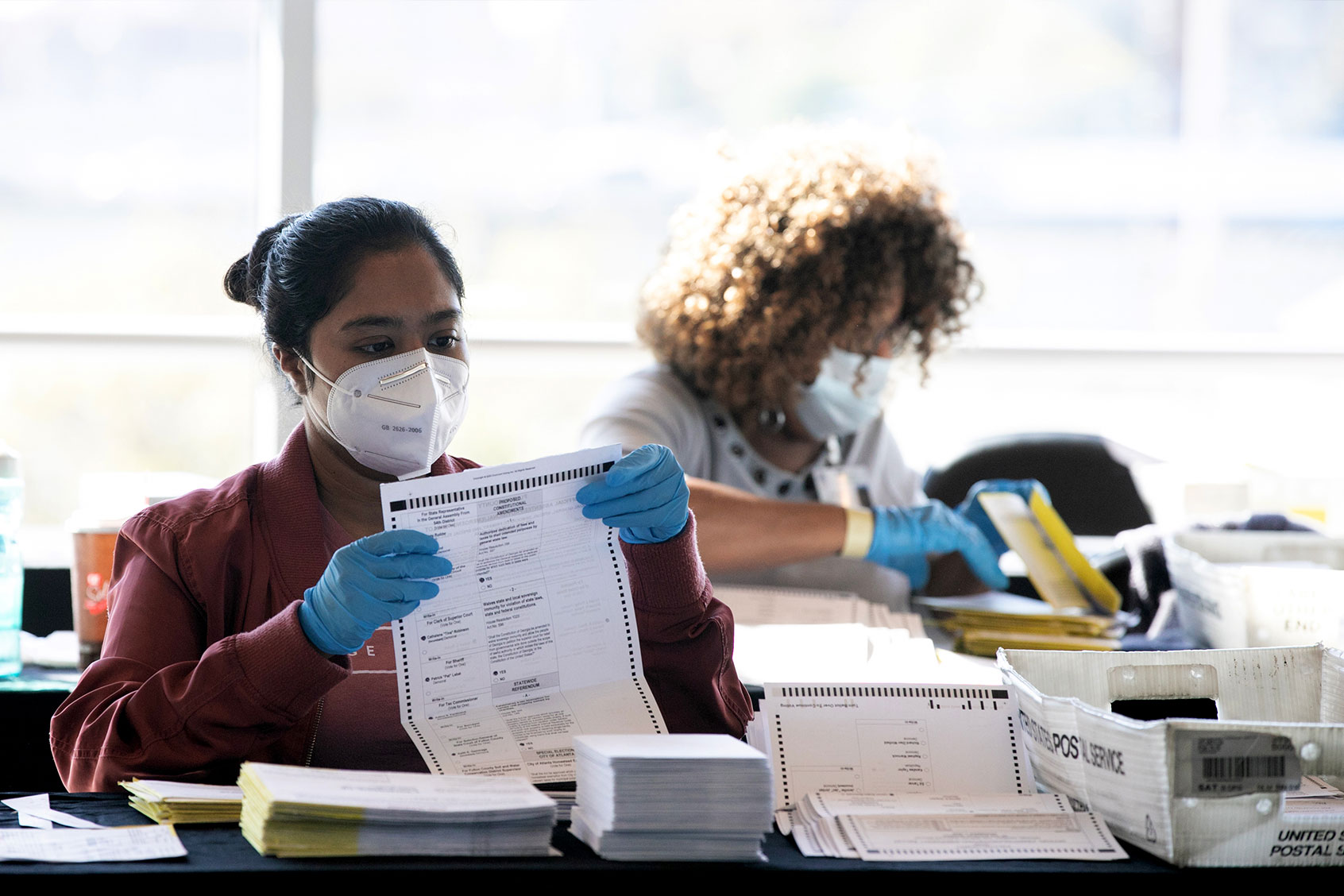
Georgia Election Officials Counting Ballots 2020Election workers count Fulton County ballots at State Farm Arena on November 4, 2020 in Atlanta, Georgia. (Jessica McGowan/Getty Images)“There is a lot of preoccupation during the pandemic and we are completely engaged with a pandemic, and when it ends, it kind of ends quietly with a diminuendo," Beiner told Salon in a phone interview. “Think of the end of COVID: We can’t quite pinpoint when it happened, and it kind of ended when we no longer had the patience to deal with it.”
After the Influenza Pandemic of 1918 killed 675,000 people in the U.S., it became known as the “Forgotten Pandemic,” because governmental and scientific institutions, along with the public, largely stopped talking about it, said George Dehner, a historian at Wichita State University who studies public health.


Want more health and science stories in your inbox? Subscribe to Salon's weekly newsletter Lab Notes.


“Even though, at the time, we tend to say, ‘This is so bad and is going to have so much impact and is going to be instructive going forward,’ the reality is that oftentimes it is shoved into the back corners of our minds and doesn’t command much attention,” Dehner told Salon in a phone interview.

While cases are low right now, COVID has still not gone away, and for many who lost family members or are still suffering from long-term consequences of the virus, the pandemic is a traumatic event that is still very much present. But for the general public, COVID seems to be a distant memory, in part due to how it was handled by government leadership. 

Anti-science movements have always challenged public health, but they are increasingly moving their way toward the heart of U.S. politics. What sets COVID apart from prior pandemics was how rapidly and deeply public health became politicized. Add on confusing and conflicting messaging coming from leaders in public health and government, and it becomes easier to forget what happened in early 2020 than to try to find an anchor of truth in a soupy mess of misinformation. 

“The whole point of fake news is not only to circulate different narratives but to undermine our ability to distinguish between these narratives and to trust authoritative sources of information,” Beiner said. 

During a tour of the Centers for Disease Control and Prevention (CDC) facilities in Atlanta in March 2020, Trump, whose grandfather died in the 1918 influenza, said something that quintessentially defines his presidency during the Covid-19 pandemic and its ensuing amnesia. 

“Does anybody die from the flu?” he said. “I didn’t know people died from the flu.”

Trump’s time in the White House during the pandemic was fraught with stream-of-consciousness sound bites that often contradicted national or global health advisories. He suggested injecting bleach to fight COVID, recommended people take the anti-malaria drug hydroxychloroquine, which had not shown to be safe, and encouraged people to protest social distancing restrictions. In the early months, he denied the threat of the pandemic, saying some iteration of the fact that the COVID pandemic was “going to disappear,” over 40 times.

“The Trump Administration was engaged in trying to disremember and trying to engage in kind of obfuscating the record of COVID-19 throughout,” Beiner said.

"It’s going to take a long time for the damage that’s been done by this to be repaired."

Prior to the pandemic, Trump dismantled a pandemic preparedness initiative that Barack Obama had started in his presidency. During the pandemic, he fired top public health officials and withdrew funding to the World Health Organization (WHO). Overall, he responded in a political manner rather than one based on science, which created an opposition to public health among many of his supporters, said Dr. Angela Rasmussen, a virologist at the Vaccine and Infectious Disease Organization (VIDO) at the University of Saskatchewan.

“I think that political framing has really done everybody a disservice,” Rasmussen told Salon in a phone interview. “It’s going to take a long time for the damage that’s been done by this to be repaired.”

The Trump Administration did authorize Operation WarpSpeed, which brought life-saving vaccines to the U.S. public in record time. However, these vaccines wouldn’t reach many of his supporters. During the pandemic, counties that voted majority Republican had significantly more deaths than counties that voted Democratic, in part due to reduced vaccine uptake.

Overall, U.S. life expectancy dropped 2.7 years between 2020 and 2021— the largest two-year decline in life expectancy since the 1920s. This nosedive was largely due to the Covid-19 pandemic, of which 450,000 Americans died during Trump’s last year in the Oval Office. 

According to a study published in The Lancet, the Covid-19 death rate in the U.S. was 40% higher than it was in similar high-income countries, and the Trump Administration’s undermining of science and public health agencies directly “impeded the response to the COVID-19 pandemic, causing tens of thousands of unnecessary deaths.”

The denial, confusion and misinformation that was so characteristic of the pandemic response also made it more challenging for the public to remember what happened. In many instances, it was left to the individual to determine which political party was telling the truth, rather than being able to rely on objective scientific truths. 

“The fact that we had almost no common ground in our narratives between different kinds of political parties in this country about what happened is, ultimately, very disruptive,” Makari said. “Having some common understanding of what we went through is a way of also putting things to bed.”

The Biden Administration made huge strides in making vaccines more accessible, reopening schools, and reducing racial disparities in COVID deaths. However, Biden's response remained political and he for the most part has been criticized for not being able to build back much of the trust in public health that has been lost.

We need your help to stay independent

“This lack of action allowed the Republicans and the far-right interests that have been active to promote their anti-vax stuff without much of a challenge from the other political party,” Rasmussen said. “There are anti-vaxxers in Congress and in the Senate who are really mainstreaming this now, and this is going to have an effect on the budget that can be allocated toward pandemic preparedness and scientific research in the future.”

Public health experts have repeatedly said it is a matter of “when” and not “if” the next pandemic occurs, and their concern is that the politicization of public health will again undermine the government’s response when that time comes. Already, threats of infectious diseases like bird flu are demonstrating what happens when public health falls to the wayside, Rasmussen said.

“We’re not doing enough testing and we’re just kind of hoping and praying that this burns out in cows, which it is clearly not doing because it has been going on for almost a year now,” Rasmussen said. “The lack of urgency we see in this is a direct consequence of a political decision to not prioritize the response to infectious threats and pandemic preparedness.” 

To some degree, the collective amnesia that seems to have occurred was a protective mechanism from the trauma of the great loss and uncertainty that sprang from COVID. Like with any traumatic experience, our collective fight or flight mechanisms were triggered to help us escape the threat, and this may have pushed the memories of early 2020 to the recesses of our minds. Plus, there were plenty of other crises — the Russia-Ukraine war, the Israel-Hamas war, climate change and the battle for reproductive rights — to dominate our immediate attention.

Yet unless these memories are processed and commemorated, they will remain dormant in our collective memory, where they run the risk of being triggered, Makari said.

“All of the fear and the anxiety and the threat lingers unattached to anything,” Makari said. “You can make the argument that some of the intensity of the division in our country is hypercharged … and is made to some extent worse by all of this emotional remainder from COVID that hasn’t really been fully processed.”

Bird flu detected in pigs for first time as confirmed human cases double in two weeks

A pig was infected with bird flu in Oregon, the U.S. Department of Agriculture reported Wednesday. It’s the first time bird flu, also known as the H5N1 virus, infected a pig in the United States — a troubling development, as this gives the pathogen another mammalian reservoir that could raise the risk of a pandemic.

Meanwhile, six bird flu cases were confirmed in humans in Washington and three more human cases were reported in California this week, bringing the national total of human infections to 36 cases since April 2024, the Centers for Disease Control and Prevention (CDC) reported Tuesday. The rate at which humans are being infected with the virus is accelerating, with more than half of the confirmed cases in humans thus far reported in the past two weeks.

All human cases since the outbreak began, apart from two people in Missouri, occurred when workers came into direct contact with farm animals. An investigation in Missouri could not determine how the two individuals, who shared a home, infected there came into contact with the virus. However, it did confirm that no healthcare workers who cared for the patients were infected, calming concerns that the virus had developed the ability to spread between humans. 

The CDC maintains the risk of contracting bird flu for the general public to be “low,” but many public health experts are concerned that as the virus continues to spread, it has more chances to evolve into a form that can better infect humans. 

Pigs, in particular, are sometimes called a “mixing vessel,” for flu viruses because they can pool together human and bird flu viruses at the same time, STAT reported. The fear is that various viruses could coexist in the body, swap genes, and produce a new strain that can more efficiently spread between people.

“If it doesn’t spread from pigs to pigs and it just happened on that one farm, it’s not a big deal," Florian Krammer, a flu virologist at Mount Sinai’s Icahn School of Medicine in New York, told STAT.

"If it starts to spread from pigs to pigs, then it’s much more of a problem,” he said. “If it ends up in large pig populations in the U.S. similar to cows, I think this would be a disaster.”

Tax breaks on auto loan interest may not help many Americans

When candidates make policy proposals on the campaign trail, they often sound beneficial but don't always hold up to closer scrutiny.

Vice President Kamala Harris and former President Donald Trump have both suggested eliminating taxes on tips, which might sound appealing to service workers but could have unintended consequences and end up helping fewer individuals. As The Brooking Institution points out, 37% of tipped workers do not earn enough to pay federal income tax anyway, so this policy wouldn't benefit them.

Another recent example is Trump's suggestion during a speech at the Detroit Economic Club that his administration would make car loan interest fully tax deductible. 

On the surface, this type of move sounds like it would help people's finances on a widespread basis, even more than a niche issue like tips. In all, Americans have $1.63 trillion in auto loan debt across over 100 million loans, according to the New York Fed.

However, depending on how the deduction is structured, it could be irrelevant for most and even end up hurting some.

"The devil is in the details," said Francine Lipman, a CPA and professor at UNLV’s William S. Boyd School of Law, specializing in tax law.

Standard deduction vs. itemized deductions

Although specialized tax deductions like this sound good, it's hard to take advantage of them in practicality. That's because many of these deductions can only be taken if you're itemizing, meaning you're adding up all of your tax-deductible spending like state and local taxes, mortgage interest and charitable contributions.

We need your help to stay independent

However, the standard deduction that anyone can take for tax year 2024 — regardless of spending or income — is $29,200 for married couples ($14,600 for single filers). Unless your itemized deductions are more than the standard deduction, it makes no financial sense to itemize. You can't take both — it's one or the other — so roughly 90% of Americans take the standard deduction.

Meanwhile, for the approximately 10% of Americans who do itemize, they tend to be very high-net-worth individuals who buy cars with cash, rather than having to borrow money, said Lipman.

Making car loan interest tax deductible might sound appealing, but likely would not change most people's tax situations

Thus, while making car loan interest tax deductible might sound appealing, it likely would not change most people's tax situations.

"This is yet another proposal that on its face appears to be beneficial, but for anyone who understands the tax system, it's actually misleading, because it then makes someone think they're getting a benefit that they're not," said Lipman.

Many taxpayers are "going to think they get a tax deduction, and so maybe they will be more inclined to finance a car…and so they'll be making bad economic decisions because they don't really understand the way this benefit or lack thereof works," she added.

Even if you were close to reaching the threshold where itemizing makes more sense than taking the standard deduction, and now deducting car loan interest could put you over the edge, you won't necessarily get the full benefit.

Suppose you normally had $28,000 in itemized deductions, so you would instead take the standard deduction for married couples at $29,200. If you also had $2,000 in car loan interest to add to your itemized amount, you'd be at $30,000 in deductions and thus would itemize.

Yet you're only netting $800 more in deductions, not the full $2,000 in car loan interest, based on the difference between itemized vs. standard deductions. Of that $800, you're only saving a fraction because it's a tax deduction, not a credit — at a 20% tax rate, you'd save $160.

"It's just such a marginal difference that pushing people to an automobile loan" is often not in their best interest, said Lipman.

An exception could be if a law ends up being written in a way that allows for the tax deduction to be taken as a so-called above-the-line adjustment, which essentially allows the deduction to be taken in addition to the standard deduction. However, the Trump campaign has provided no details in this regard, and historical precedence shows this is unlikely to happen.

For one, personal interest — including car loan interest — used to be tax deductible only for those who itemized, but the Tax Reform Act of 1986 under former President Ronald Reagan got rid of this deduction, in part because most people take the standard deduction anyway.

During Trump's presidency, the Tax Cuts and Jobs Act of 2017 raised the standard deduction and cut many deductions that used to be eligible for itemizing, so it would be a departure from his and other Republicans' tax policies to create an above-the-line adjustment for car loan interest.

Even if the law allows for an above-the-line deduction, that might not be worth it for many Americans either, as that could create a risk of someone taking out a car loan to the detriment of their finances.

The risk of chasing a tax break

Trump, looking to court union members and working-class voters, has suggested that fully deductible interest on auto loans would stimulate the industry. However, that would likely rely on more people buying new cars or increasing the frequency of buying new cars, which isn't necessarily something that most people can afford.

"Even if the interest is deductible, you're still paying the interest, it's just deductible at your tax rate," so you're effectively only getting some of that money back, said Jason Runung, CFP, senior financial advisor, VP at Summit Wealth Group.

For example, if you paid $10,000 in interest and your effective tax rate is 20%, that means you're only getting $2,000 worth of tax savings, while you're still paying an additional $8,000 more than if you didn't have that extra interest, he said.

Although some may say that buying a new car would have happened anyway, so you might as well get the tax break, the reality is that people frequently convince themselves that financial "wants" are financial "needs." Odds are, you could make do with a much less expensive car that you can buy outright, rather than going into debt for it.

In general, car payments "should represent a maximum of 10% of your monthly budget," said Runung. You should also dig into the numbers regardless of the budget percentage to make sure you're not overextending yourself with debt, he added.

Plus, with cars, taking out a loan typically means you're losing money. For one, interest rates are usually higher than they are for assets like homes. Keeping low-rate mortgage debt might enable you to earn more on your cash than if you paid that debt down quickly, but it's harder to do the same with car loan debt. Worse, cars typically lose value quickly, so after you've paid off the loan, you might not have much to show for it, compared to a home that you can often sell for more than what you paid.

A car "is a depreciating asset," said Runung. "They tend to drop in price rather aggressively."

So, even with a tax break, you could be costing yourself more in the long run than if you were more conservative with your car spending and instead focused on growing your savings and investments.

“The choice is clear”: LeBron endorses Harris, shares compilation of Trump’s most vile moments

LeBron James endorsed Kamala Harris on Thursday in an impassioned social media post highlighting some of Donald Trump and his supporters' bigoted rhetoric.

The four-time NBA champion and probable GOAT shared the "greatest" hits compilation to his 159 million followers on Instagram and 53 million on X, joining Steph Curry, Steve Kerr, Magic Johnson and NBA stars in his support for the vice president.

“What are we even talking about here?? When I think about my kids and my family and how they will grow up, the choice is clear to me,” James wrote. “VOTE KAMALA HARRIS!!!”

The video compiled many of Trump and his allies’ most criticized remarks of the campaign, starting with the racist stand-up routine that kicked off his Madison Square Garden rally and ending with Trump's remarks on the Central Park Five to Larry King in 1989.

The video shows Trump claiming he’s not a racist, as endorsements from the KKK and David Duke appear on screen. Then, a cut to Trump saying “a lot of it is about the about the genes.”

“They’re poisoning the blood of our country,” Trump says in a clip, before a suggestion that America needs “one really violent day” plays.

James' video ends with an on-screen message condemning Trump’s rhetoric: “Hate takes us back.”

James isn’t Harris’s first celebrity backer, and the endorsement wasn’t his first step into the ring of politics. James has been a longtime critic of police brutality, advocating for reforms and change to protect Black men. The four-time MVP’s outspoken activism earned scorn from conservative commentator Laura Ingraham in 2018. Ingraham’s suggestion that James “shut up and dribble” pushed the player to produce a docuseries on Black athletes advocating for change. 

Trump sues CBS for $10 billion over Harris “60 Minutes” interview

Former President Donald Trump is suing CBS for $10 billion over an interview with Kamala Harris that aired on "60 Minutes" earlier this month.

The 19-page lawsuit filed Thursday alleges that the network committed “partisan and unlawful acts of election and voter interference” by editing down a handful of Harris’s responses to interview questions. In addition to the massive sum, Trump's team is requesting an order that the network release the unedited interview in full. 

Trump has fumed over the "60 Minutes" interview for most of this month, alleging foul play after the network aired two different portions of an answer to a question about the war in Gaza on "Face The Nation" and their flagship newsmagazine program. In the lawsuit, his attorneys claimed that CBS deceptively edited the vice president's "word salad" to harm Trump's election chances.

“CBS’s distortion of the '60 Minutes' interview damaged President Trump’s fundraising and support values by several billions of dollars, particularly in Texas,” Trump’s attorneys argued in the lawsuit filed in the Northern District of Texas.

"The lawsuit Trump has brought today against CBS is completely without merit and we will vigorously defend against it," a spokesperson for CBS told Reuters

The lawsuit, which calls Harris’s ascent to the top of the presidential ticket an “unprecedented and anti-democratic political coup,” is littered with Trump campaign gripes against the “Democratic Party establishment” and “legacy media organizations.”

The lawsuit comes days after he told rallygoers he would go after CBS’s right to broadcast in the United States, adding that the network “should be taken off the air.”

CBS had argued Trump's gripes had no merit well before he filed the lawsuit, arguing in a sternly worded letter last week that Trump has no basis to sue or to ask for a transcript of their interview with Harris. The network's VP of legal affairs told Trump's representation that “the interview was not doctored” and that the network  “did not hide any part of the Vice President’s answer to the question at issue.” 

“Did everyone hear what he said?”: Harris slams Trump promise to protect women against their wishes

Vice President Kamala Harris laid into Donald Trump’s promise to be a “protector” of women “whether they like it or not” on Thursday.

“You gotta listen to people when they tell you who they are,” the vice president said during a rally in Arizona, a state where abortion rights are on the ballot. “This is not the first time he has told us who he is. He does not believe that women should have the agency and the authority to make decisions over their own body.”

Harris' comments were in response to a recent speech from Trump, where he discussed his own advisors trying to move him away from calling himself a "protector" of women. In the story Trump shared, the unnamed aides tried to move Trump away from invoking protection of women, saying that people might find it "inappropriate" given his personal history and his hand in rolling back reproductive rights.

"I'm going to protect the women whether they like it or not," he responded.

In Arizona, Harris invoked Trump’s anti-choice comments, including a suggestion that women needed to face face punishment for getting an abortion.

“This is the same man who said women should be punished for their choices. He simply does not respect the freedom of women or the intelligence of women to know what’s in their own best interests,” Harris said. “But we trust women.”

Harris’s running mate Tim Walz connected Trump's protector talk to his open bragging about sexual assault and penchant for degrading comments about women.

“He said, I'm gonna do it whether the women are gonna like it or not…That's why he was on the 'Access Hollywood' tape, and that's why he ended up in court,” Walz said at a rally in Pennsylvania.

Unpaid bills haunt Trump’s Halloween rally in Albuquerque, leave campaign scrambling for venue

Former President Donald Trump had a hard time finding a spot for his Halloween rally in Albuquerque, New Mexico rally, as unpaid bills came back to haunt his campaign.

The Santa Fe New Mexican reported that the campaign’s original plans to use the Albuquerque Convention Center were dashed, due in part to an unpaid bill of nearly $445,000 from a 2019 rally.

“If you’re not going to pay your bills, we’re just not going to entertain you using city facilities, and that’s the way it should be,” Albuquerque mayor Tim Keller told the outlet.

Albuquerque is just one of many cities seeking to recoup unpaid fees from Trump's campaign stops over the last decade. Municipalities in Texas and Pennsylvania are still after more than $750,000, per an NBC News analysis shared earlier this month.

In Albuquerque, the convention center Trump hoped to use was undergoing planned maintenance. When the former president came calling, city officials weren't going out of their way to help Trump secure a second location.

“With anyone who wants to use any [city-owned] facility … you can’t have money owed to the city,” the city's mayor said. “For us to consider the fact that we’re half a million dollars short is something we would do for any candidate or anyone who wants to rent the convention center in general.”

The Thursday rally, just five days ahead of an election widely expected to come down to 7 swing states, confused many. Trump lost New Mexico by nearly 11 points in 2020..

“I loaded all my guns”: Vance tells Rogan he fled mini-golf to grab guns following Trump shooting

Vice Presidential nominee JD Vance told podcaster Joe Rogan on Thursday that he bugged out from a game of mini-golf after he heard of Donald Trump's assassination attempt.

Vance had not yet been revealed as Trump's running mate, but he had been in talks with the former president about an official announcement. When he heard the news of the failed assassination attempt on Trump at a rally in Butler, Pennsylvania, he said he ran home to grab his guns. 

"At first I was so pissed, but then I go into like fight or flight mode with my kids," he shared on Rogan's popular podcast. "We were at a mini golf place in Cincinnati, Ohio. I grab my kids up, throw them in the car, go home and load all my guns. And basically stand like a sentry in our front door, and that was my reaction to it." 

Vance said Trump had weighed announcing Vance as his VP pick at the Butler rally but ultimately decided to hold off.

Elsewhere in the interview with Rogan, which comes a week after a similar sit-down with Trump, Vance smeared transgender people and worried that Muslim immigrants to the U.S. would  “outbreed” non-Muslims and install Sharia law.

Vance said Muslims were having children at a “very scary” pace, echoing Rogan’s concern that Muslims would “outbreed everyone who is not Muslim.”

In another segment, Vance shared in Rogan’s concern that “a state [could] adopt Sharia law,” and affirmed the host’s suggestion that Sharia law “has kind of already worked its way into some societies.”

“I know there's, there's a place in Minnesota, I believe, where they have prayer calls as a matter of local government. I do think that's happening,” Vance said, referring to a tweak to Minneapolis noise ordinances last year that allowed mosques mosques to play an adhan, or prayer call, during the month of Ramadan.

Vance also drew a distinction between the Christian far-right and what he called “real religious tyranny” of Muslim immigrants who “don’t necessarily assimilate into Western values.”

“That's what, to me, is so crazy about some of the hyper left-wing reaction to the idea that, like, somehow I want to force every man and woman child to go to my church is ridiculous. I just don't want to do that,” Vance said. “Where you see actual, real religious tyranny is increasingly in Western societies, where you've had a large influx of immigrants who don't necessarily assimilate into Western values.”

The senator, whose running mate has promised to reinstate a controversial Muslim ban, also repeated a xenophobic joke that the UK would become “the first Islamist country with nuclear weapons.” In July, Vance earned earned condemnation from UK Labour Party leaders over similar comments.

Trump loses more than $1 billion in net worth in two-day Truth Social parent company stock tumble

Former President Donald Trump's net worth has plunged by more than $1 billion this week, triggered by a stock crash at Truth Social parent company Trump Media & Technology Group.

Shares plunged by 22% on Wednesday and another 14% on Thursday, with trading being halted multiple times due to volatility in the stock.

The shares, representing a company that boasted an annual revenue of just $4.1 million last year, have acted as a speculative vehicle for Trump's prospects, with the presidential nominee holding a majority stake. The company's market cap plummeted this September, bottoming out at around $12 a share before rising to $51 a share earlier this month. The drop to around $35 a share on Wednesday took nearly $3 billion off the overall value of the company so far this week.

Share prices had surged by nearly 50% in the week leading up to Tuesday ahead of the crash, fueled in part by a string of polls showing Trump closer to Harris than previous forecasts in battleground states. On Tuesday, the company hit a peak valuation of roughly $10.3 billion, making it momentarily more valuable than Elon Musk's X, The Guardian reported.

Neither the surges nor the crashes appear tied to any actions taken by the business, financial filings or optimism in Truth Social's future profitability. The platform has less than 1 million monthly active users and reports sluggish growth.

Trading of the wildly volatile shares was halted at least three times this week, including a suspension on Tuesday during a massive surge and two on Thursday during drastic selloffs.

The shares aren't the only way Wall Street is gambling on a potential second Trump win. Betting markets like Polymarket favor Trump at rates far beyond election models, though his prospects on that site have seen a seven-point tumble since midday Wednesday.

“Puerto Rico deserves respect”: Puerto Rican celebrities eviscerate racist comments at Trump rally

Puerto Rican celebrities are responding to Donald Trump and Tony Hinchcliffe after a rally at Madison Square Garden last weekend became a breeding ground for xenophobic and racist rhetoric against the territory.

Home to 3.2 million Americans, Puerto Rico was the target of inflammatory remarks by comedian and podcaster Tony Hinchcliffe, who spoke at a rally ahead of former President Donald Trump. Hinchcliffe began Sunday evening with sexual jokes about Latinos, including saying, "They love making babies." He went on to say, "There’s a lot going on. I don’t know if you know this, but there’s literally a floating island of garbage in the middle of the ocean right now. I think it’s called Puerto Rico."

The joke was met with immediate backlash from politicians like Vice President Kamala Harris's campaign. They said Hinchcliffe's speech was a “vile racist tirade against Latinos.”

Even Trump attempted to distance himself from the comments. Trump campaign senior advisor Daniella Alvarez said in a statement that the “joke does not reflect the views of President Trump or the campaign." 

Nonetheless, Trump feigned ignorance about Hinchcliffe's involvement at his rally. He told ABC News “I don’t know him, someone put him up there."

But outside the world of politics, high-profile Puerto Rican celebrities like Aubrey Plaza, Bad Bunny, Nicky Jam, Ariana DeBose, Jennifer Lopez and Ricky Martin blasted the racist comments from Hinchcliffe.

Plaza came out swinging in a speech at the WSJ Magazine Innovator Awards on Tuesday night.

“I just wanted to very quickly respond to the racist joke that was made at that Trump rally about Puerto Rico, where most of my family is from," she said. “Thankfully, my sweet abuelita wasn’t here to hear that disgusting remark, but if she was alive today, I think she would say, ‘Tony Hinchcliffe, go f**k yourself.’ And yes, the Wall Street Journal can quote me on that.”

Plaza wasn't the only one who had choice words for Hinchcliffe and Trump. The politically-engaged international reggaeton star Bad Bunny posted a video to his 45 million followers on Instagram captioned "garbage." The eight-minute-long video celebrated Puerto Rican culture, people and its vast history. “We are kings, champions, queens. We are legends,” the narrator said as the video showed a montage of figures like Roberto Clemente, Supreme Court Justice Sonia Sotomayor and "Hamilton" star Lin-Manuel Miranda. In the video's closing statements, the singer wrote, “We are the definition of heart and resistance. For those who forget who we are, don't worry, we will proudly remind them.”

https://www.instagram.com/p/DBtmbHquuhb/

Not only Bad Bunny did make a statement denouncing Hinchcliffe's comments, but the star also officially endorsed Harris for president. Alongside Puerto Rican pop stars Lopez and Martin, the musicians all separately reposted a video of Harris' plans for the island, signaling their endorsement of her.

“I will never forget what Donald Trump did and what he did not do when Puerto Rico needed a caring and a competent leader,” Harris said. “He abandoned the island, tried to block aid after back-to-back devastating hurricanes and offered nothing more than paper towels and insults.”

We need your help to stay independent

Even artists who have previously endorsed Trump are walking back their support of the former president after Hinchcliffe's comments. Reggaeton artist and vocal Trump proponent Nicky Jam said in an Instagram video that he believed Trump was the right candidate because “I believed it was what’s best for the economy in the United States, where a lot of Latinos live . . . a lot of immigrants that are suffering over the state of the economy,” he explained in Spanish.

However, after the Oct. 27 rally, things took an immediate turn for Jam. “I’m renouncing my support for Donald Trump and stepping away from any political conversation," he said. "Puerto Rico deserves respect."

Reportedly, Puerto Rican support for Trump in swing states like Pennsylvania is cooling after Hinchcliffe's comments. Politico reported the large, nearly half-a-million voting bloc in Pennsylvania is outraged about the racist and xenophobic rhetoric at Trump's rally. Nonpartisan Puerto Rican groups have drafted letters urging members of their community to strongly oppose Trump on Tuesday, Nov. 5.

Starbucks to remove the surcharge for dairy alternatives following years of customer complaints

Starbucks announced Wednesday that it will no longer charge customers extra for dairy substitutes. The surcharge removal goes into effect on Nov. 7 — the same day as the launch of Starbucks’ holiday menu.

“Core to the Starbucks Experience is the ability to customize your beverage to make it yours. By removing the extra charge for non-dairy milks we’re embracing all the ways our customers enjoy their Starbucks,” Starbucks CEO Brian Niccol said in a statement.

The recent decision comes after years of customer complaints urging the coffeehouse chain to remove the extra fee to cater to a growing number of non-milk drinkers. According to Starbucks, asking for a dairy substitute is the second-most requested customization from customers (Adding a shot of expresso is the first.)

“When this change goes into effect on November 7, almost half of Starbucks’ current customers in the U.S. who pay to modify their beverage at company-operated stores will see a price reduction of more than 10%,” the chain said in its announcement. 

Per Starbucks policy, customers can add up to 4 ounces of any non-dairy milk of their choice at no extra cost to hot or iced brewed coffee or tea, cold brew and Americano drinks. However, drinks made with milk (like lattes) come with surcharges when substituting a non-dairy alternative, which is sure to be an important distinction for many shoppers. 

“I made a commitment that we’d get back to Starbucks, focusing on what has always set Starbucks apart — a welcoming coffeehouse where people gather and we serve the finest coffee handcrafted by our skilled baristas,” Niccol added. “This is just one of many changes we’ll make to ensure a visit to Starbucks is worth it every time.”

“There’s a real groundswell”: GOP strategist says internal polls are “concerning” for Trump campaign

Long-time GOP strategist Margaret Hoover claimed former President Donald Trump's campaign could be scrambling due to concerning internal polling and early voting data, which she says may suggest missed turnout targets.

In a Wednesday evening panel on "The Source" hosted by CNN’s Kaitlan Collins, the GOP campaign strategist wondered whether the campaign’s own detailed internals were spelling doom.

“I think if you’re the Trump campaign, you’re not looking at CNN’s numbers, you’re looking at your own internals,” Hoover said. “And I honestly think their internals are actually giving them pause.”

Hoover noted that campaigns have the resources for more sophisticated polling operations than media outlets, but trends like turnout and enthusiasm were already easy to glimpse.

“They’re probably seeing the same things that you guys are talking about, which is that there is a real groundswell in the early vote, there is real enthusiasm, which is hard to measure,” Hoover noted.

Since early voting began, women have cast ballots at a much higher rate than men, a signal Kamala Harris's campaign is optimistic about, per Politico. Harris polled roughly 14 points better than Trump among women in a recent ABC/Ipsos poll.

“I have heard from Republicans that there is concern at the Trump campaign, amongst the operatives that actually do know the political wherewithal that the turnout and enthusiasm numbers are not where they need to be,” the Bush-era operative said.

The Trump campaign, seemingly optimistic about its chances in the crucial swing states, is spending the final stretch of the race rallying in New Mexico and Virginia, states the ex-president lost by at least 10-point margins in 2020.

Watch the full segment here:

https://www.youtube.com/watch?v=0YWPeleTp8c

Kim Kardashian takes down son’s YouTube channel after he reposts anti-Kamala Harris videos

Kim Kardashian has taken down her eight-year-old son Saint West's YouTube channel after he allegedly posted disparaging videos about Vice President Kamala Harris

Saint's YouTube page, @TheGoatSaint, was scrubbed on Wednesday. When searching for the account, online users received the message: “This page isn’t available. Sorry about that.”

Just a month ago, Kardashian encouraged her followers to subscribe to his page. However, Kardashian permitted Saint, whom she shares with ex-husband Kanye West, to start the account only if he signed a contract, The Daily Beast reported. She shared online that Saint could only have the YouTube page if he showed "mom or guardian all videos before I post them. I give permission to any grown up if mom says to delete my video for any reason."

The contract said, "If I don’t listen to all of the rules, mom could make my page private or delete my account."

On Tuesday, the account had seemingly posted two negative videos aimed at Harris. One of the videos was screenshotted and reposted to X. The YouTube Short featured a meme of a cartoon figure examining the bottom of his shoe, saying he "stepped in s**t." The next slide showed a photo of Harris. Now all reposted videos are gone from Saint's account.

It's worth noting that Saint's parents are split down the political aisle. Kardashian is an ardent Democrat who endorsed Hillary Clinton in 2016 and President Joe Biden in 2020. While Kardashian hasn't endorsed Harris for her bid for the presidency this election cycle, she met with the vice president earlier this year to discuss criminal justice reform. On the other hand, West has been a vocal proponent of Donald Trump since 2016. This summer, West was seen outside a Trump rally in California, Billboard reported.

DeWanda Wise’s messy polyamorous marriage on “Three Women” has lessons for all couples

"The first person I'd ever met who was poly, I met in 2005, so it's not conceptually passing strange to me and not really foreign territory," actress DeWanda Wise shared with me on "Salon Talks" while discussing playing a polyamorous character on the Starz series "Three Women."

The show, based on the Lisa Taddeo book of the same name, tells the stories of four different women — those alluded to in the title plus one narrator — through the lens of their complicated experiences with love and desire. They are misunderstood, mainly by the men in their lives and the inability to understand their many complexities.

Wise plays Sloane, a successful businesswoman who is in control of everything — her persona, her family, her nontraditional sex life. Sloane and her husband Richard, played by Blair Underwood, participate in an open marriage. From the surface, the couple appears to be very happy. However, the many rules and unchecked emotions that linger around multiple sex partners begin to poke holes in their happily ever after. 

Wise, who played Nola Darling in the Spike Lee Netflix reboot of "She's Gotta Have It," was a fan of Taddeo's book prior to being considered for the role. She didn't personally identify with Sloane when reading, but was drawn in by how the book commands deep reflection about relationships.

In my conversation with Wise, she credits the emotional presence in her own marriage to fellow actor Alano Miller (whom she fell in love with and married after three months of dating). The couple has shared 15 years of marriage and Wise was ready to talk about the work it takes to be successful. Not the pretty pictures for social media, the red carpets, or fluffy profile pieces, but the beautiful struggle of learning how to love through the conflict — the kind of love and patience that Sloane may not possess.

“I still feel like he's a really f**king good husband. I'm a decent wife. He hates it when I say that, but I'm like, "I'm okay." I do my absolute best. And that's what it is, right?” Wise explained, “All it is is grappling with these terms. What is the role? What is the role of husband? What is the role of wife? And how can you, or do you subvert whatever those expectations are? You got to talk about the expectations. You got to talk about the invisible expectations.”

Watch my "Salon Talks" episode with Wise here or read a Q&A of our conversation below to hear more about "Three Women," her secrets for maintaining a healthy marriage, and why she wants her next role to be on stage.

The following conversation has been lightly edited for clarity and length.

Can you walk us into the world of “Three Women”?

Lisa Taddeo, the author, took this enormous ten-year road trip into the heart of America and really got into the lives of all these women to get to the core of the multifaceted nature of female desire. That's what this book is, it’s a non-fictional exploration of what makes us tick, what turns us on, what turns us off, what gets us on, what gets us off. And our series is the TV adaptation of that exploration.

Your involvement with “Three Women” began around you connecting with the book?

Yes. My TV agent at the time asked if I'd read the book, and I was like, "Who had not read the book?" And so I reread it in preparation of meeting Lisa. I was really moved by the book for sure.

The first time you read the book, did you feel a connection with your character, Sloane?

No. Not at all, no. Sloane's entire story, her mystique, and the idea that she's so self-constructed, it's something that I think people have more in common with than they think they do—this notion of what your brand is. To read about a woman who had been thinking that way before social media, if I tracked back, she would've been born in the early '70s. The way that she was thinking is very contemporary and I found that really fascinating.


Want a daily wrap-up of all the news and commentary Salon has to offer? Subscribe to our morning newsletter, Crash Course.


Stepping from the book and going into the screenplay, when you first got a chance to read it — what did you think of her?

Every character I play, I love with the ferocity of a real person. Sloane superficially has everything, but she's still so hungry in every way. She's physically hungry because she's battling an eating disorder. She is materially hungry because she has that kind of ambition. She is sexually hungry because she's sexually hungry. This is who she is. And so she has a level of hunger and ambition that I don't really identify with. It's not who I am.

It's the beauty of the art though you get to play around with that.

It's the beauty of the art. You get to explore and understand and build even greater compassion and capacity for people with experiences outside of your own.

Sloane is a businesswoman. She has the perfect husband, they have the family, they have the house. She has it all, and I think people who dream of that see her and they say, "What can go wrong?"

Yeah, absolutely. It makes you go, "Well, what does that mean to me? What is having it all to me? And do I want that? Do I want what it costs?" And that's a big thing. I also think it's that simple notion, when you really get to know anybody you're like, "Oh, they poop like anybody." Everybody on social, you're like, "Oh, if I use the bathroom after them, it might smell." You know what I mean? That's what you get to underneath the facade and the veneer, you're like, "Oh, she has some things going on."

You’ve talked about how she has hunger and ambition, but you're personally more content and relaxed. Where do you draw from to create her on-screen character?

My friends, especially my New York friends. My very ambitious New York friends who I admire a lot. They're juggling everything, juggling careers and families, and still climbing. Our mutual friend [author Wayétu Moore], she's a Sloane in the best way, her fashion sense. My closest friends, shout out to them.

We had Blair Underwood on "Salon Talks," who plays your husband in the show. He noted being blown away, not just by your performance, but the idea of a poly lifestyle. What did you think of that?

This isn't my first [role that touches polyamory]. “She’s Gotta Have It” is very much an exploration into polyamory at the dating level. I think the first person I'd ever met who was poly, I met in 2005, so it's not conceptually passing strange to me and not really foreign territory. Now, especially with Gen Z, in the same way that sexuality and our language has evolved, I think our understanding of all the options available to us when it comes to relationships are all far more known and out there.

We were able to make some connections between Nola, your character in “She’s Gotta Have It”, and Sloane.

Absolutely. I call her her rich auntie cousin, or who she can grow to be.

Spike Lee has helped lay the groundwork for a whole lot of free-thinking, especially with our community. What was it like working with him on “She’s Gotta Have It”?

Crazy. We were by and large, very shared brain, in lockstep. He will never not be an indie filmmaker. Speaking of people who maintain that hunger and ambition and drive, he still operates like it's his first film. That is his energy level. That's how fast you move. 

"Every character I play, I love with the ferocity of a real person."

At moments he would be like, "Okay, we're going to go up and shoot here now," and it would not be on the schedule. I'd be like, "So we're just going to do it?" If anyone's ever come up in the indie film space, you'd be like, "All right, let's go steal the shot," which is code for we don't have permits to go and shoot here. Spike still operates like that. You got to be on for the ride.

I think “Three Women” is going to do a good job at teaching the world, especially men, on how we view and talk about and explore sexuality, especially regarding women. There's so much misinformation.

It's true. It's very true. I feel like it's only a disconnect. I read way too many news articles about relationships, but this conversation that's been growing just about the divide between men and women, especially in Millennials and Gen Z, it's only widening and only deepening. And I do hope that people keep talking about what they want, about what they don't want, about what they value, what they don't value, about how they envision their lives in a way that's separate from what other people have or what other people want.

Social [media]'s great. It's a really great tool, but I think part of the cost is this comparison that has unfortunately made a lot of people far more boring because there's no sense of a personal identity. You'll be in pursuit of something that you think you want because you've seen it, and then when you get it, it's not actually for you. That person's not for you. That job is not for you. That vacation spot is not for you. 

The only way to bridge that is to continue to actually talk to the person in front of you and connect and allow the things that come up to be like, "Oh, something came up. I had an adverse reaction when that person was like, 'I want five kids.'" Whenever I'm telling a story that is the ultimate goal, to get people talking.

My Salon colleague Melanie McFarland called the show “the sexiest show on TV that isn't expressly about sex.” What kinds of conversations have you been hearing around the show?

A lot of gratitude, a lot of representing for complicated women, and all women are complicated. So just a ton of that. What I love about how we've been releasing the show, it's the first time I've been a part of a show since “Shots Fired” and “Underground” where it releases weekly instead of all at once. It's been really fun watching people take the ride with all of the women and have the time to process each story.

You've spoken openly about the work it takes to have a healthy marriage, but you get to show the dark side on camera of some of the things that don't always make it into the conversations when we talk about marriage and relationships. How difficult was that?

I think part of the reason why Blair and I connected so quickly and easily is because prior to his present marriage, he had been married for 27 years. Alano and I are on year 15, and he's the best, which is helpful. I still feel like he's a really f**king good husband. I'm a decent wife. He hates it when I say that, but I do my absolute best. And that's what it is, right? All it is is grappling with these terms. What is the role? What is the role of husband? What is the role of wife? Do you subvert whatever those expectations are? You got to talk about the expectations. You got to talk about the invisible expectations. The ones where you're like, "Oh, I thought that was going to go this way." 

Alano and I just had this conversation. He moves very fast. He's very efficient. He's such an extrovert. If you saw his house checklist, it's insane. He'll start something and then he'll be like, "Oh, I wish you had been a part of it." And I was like, "We got to do better at talking about the invisible expectations or how you thought it was going to go in your head." So that I don't feel like a jerk because I'm not being helpful, and you don't feel alone.

How do you guys respond to conversations when people prop you up on that pedestal of relationship goals?

I think anyone who is on my Instagram [knows], we’ll post each other every once in a while, but we were together before Instagram existed. All we had was Facebook, and I think BlackPlanet was on its way out. We were a couple before hashtags, so I still have that boundary. Of all the things in my life, my marriage is the most precious thing and I am ferociously protective of it.

"Hollywood is on time out. I'm just going to put that right to the camera. Hollywood is wilding right now."

“Three Women” depicts different kinds of relationships. Has reading the book and playing in a television show evolved your idea of marriage and what love is?

When I think about Lena's story, played by the extraordinary Betty Gilpin, and this idea of being married to a man who doesn't love you – that storyline, both in the book and then in execution in our show, is utterly heartbreaking to me. 

From the outside, for me, I go, "Leave. Don't put up with that shit. Go.” But then in the course of watching the show, you're like, “She has two young kids. She's in small town, Midwest, wherever she is, and she doesn't feel like she can. She doesn't feel like she has a way out. Everyone in that community knows her. It's a very Judeo-Christian community.” You get all of that when you're watching the series and you're like, "Oh, I understand why you feel trapped."

What's next for you?

Oh, what's next? My goodness. Probably a play because Hollywood is on time out. I'm just going to put that right to the camera. Hollywood is wilding right now. I don't know what these stories are, everything that's being developed. 

Alano and I, we are always in the process of producing our own thing, so that's what I'm actually working on. When it comes to Hollywood proper and the opportunities coming out in the traditional studio system right now, it's tricky.

“Agatha All Along” gives its witch a reason to die

“Ding dong, the witch is dead!”

In “The Wizard of Oz,” the residents of Munchkinland rejoice in song to herald the death of the Wicked Witch of the East. Wayward farm girl Dorothy Gale has dropped into Oz by unintentionally but rather precisely dropping a house on the witch, freeing the colorful clan of Munchkins from the tyrannical scourge of a witch who took pleasure in bending them to her will. Dorothy then watches as the Munchkins all but make her arrival to Oz a national holiday in real time, complete with a Lollipop Guild salute.

It is clear in just these few moments that, for the first time in many years, this is a world free from the threat of a volatile and selfish witch hellbent on taking from it what she wants. One has to imagine that among the covens of the Marvel Cinematic Universe, similar celebrations of glee are spontaneously erupting today after the two-part finale of “Agatha All Along.”

In the penultimate episode of the Disney+ series, Agatha Harkness (played with vicious zeal by Kathryn Hahn) finally meets her end after centuries of draining the life and powers from witches with whom she pretends to build a coven. During a fiery tango with her ex-girlfriend Rio, aka Death (Aubrey Plaza), Agatha takes the literal kiss of death to save Billy Maximoff (Joe Locke) from being carted off to the afterlife –– a decision she later halfheartedly assures Billy totally wasn’t about him.

She dresses up this sacrificial act, perhaps the first one we have ever seen her make, as something else because even in death, Agatha has a reputation to uphold. “Agatha All Along,” a sequel series to 2019’s “Wandavision,” has essentially been an indictment of Agatha’s 350-year mean streak that begs the question: can a witch who kills witches ever be redeemed? Given that she has repeatedly shown that her disregard for her sisters in magic has not been eroded by time, the answer should probably be a resounding “Hell no!” and we would understand if her demise elicited the same musical euphoria as the Munchkins dancing on the Yellow Brick Road. But by the time Agatha Harkness’ body instantaneously rots and decomposes into a bed of flowers in shades of her signature purple, her death inspires something closer to sadness rather than cheer.

Agatha All AlongAgatha Harkness (Kathryn Hahn) and Billy Maximoff (Joe Locke) in "Agatha All Along" (Photo courtesy of Marvel Television/Disney+)Perhaps that is because Agatha dies without ceding the audience a vital missing piece of her story, the one chapter she has buried deeper than Sharon Davis on the Witches Road. But in death, that chapter is unleashed in the final episode when the show travels back to 1750, nearly 60 years after Agatha killed her coven in Salem, to show the birth of her son Nicholas Scratch. While she’s in labor with Nicky, her lover Death arrives to claim the child. Agatha pleads with her not to take him, and Death seems genuinely pained about it, so she offers Agatha one option –– time. She can raise Nicky, but Death will come for him. It is the “special treatment” that Rio mentions to Agatha at the top of the penultimate episode, a characterization of events with which Agatha vehemently disagrees.

With this time granted by Death, Agatha melds her two primal instincts –– motherhood and survival. It’s an immediately familiar side of Agatha because we’ve watched her oscillate, even begrudgingly, between these two poles of her existence on the Witches Road as she became more protective over and envious of Billy and his growing power. She has an undeniable maternal instinct, even if she is suppressing it because of what happened the last time she let it be her guide.


Want a daily wrap-up of all the news and commentary Salon has to offer? Subscribe to our morning newsletter, Crash Course.


As she and Nicky traverse 18th Century America, she feeds on witches and he gives her an unconditional place to put the love that her own mother and coven so traumatically discarded to their own peril. Along their way, they make up a song about traveling a fictional Witches Road together, a lullaby of sorts that Nicky performs in taverns to earn money and lure witches out of hiding for Agatha to feast on. But ultimately, the song serves as Agatha’s gospel when Nicky is claimed by Death in the night. Suddenly alone again, Agatha clings to the song and the legend that has inadvertently sprung from it among the witch community, using the idea of the mythical Witches Road as a means of gathering covens to seek the so-called prize at the end, only to then drain them of their powers. This cyclical siphoning becomes a ritual for Agatha, as illustrated by a truly incredible sequence that lets Hahn don through-the-decades drag as she proves that her savagery is timeless.

The Witches Road was never real though. If anything, it was a repository for the tragedy of Agatha’s life, a metaphor for the trials everyone faces along the path of living that can grant those who make it to the end some semblance of understanding and maybe even peace. The Witches Road wasn’t real until Billy’s immense power made it real, giving Agatha a chance to see her and her son’s creation in all its glory. Was Billy’s role in creating the road among the show’s best kept secrets? Not for those watching closely. But the sentimental meaning behind its realization was a surprise, and is among the reasons why Agatha’s story is more than just a witch’s tale. It’s a mother’s lament.

So with new context and understanding, we ask the question again: can Agatha be redeemed?

Agatha’s story is more than just a witch’s tale. It’s a mother’s lament.

In the series’ final moments, Agatha appears to Billy as a wise-cracking ghost, sporting a silvery hairdo in her afterlife and pondering if this new shade of immortality looks good on her. She walks him through his own realization that, like his mother Wanda (Elisabeth Olsen), his magic spontaneously created the Witches Road as a means of reckoning with the lost boy inside him still looking for his family. She is there when it hits him that his creation led to the deaths of three witches –– Alice (Ali Ahn) by Agatha’s hand; Lillia (Patti LuPone) by her own hand; and poor Sharon Davis (Debra Jo Rupp) as collateral damage. She tries to soften the blow by reminding him that Jen (Sasheer Zamata) did survive and got her powers back, even if it was Agatha who unknowingly bound her magic in the first place.

She also tries to comfort him by saying that he still holds onto some sense of moral superiority because she was going to kill them all in her basement on day one, as she had done countless times to countless witches before. Her frank admission reminds Billy that Agatha is not a nice person, even if her callousness is entertaining. He immediately goes to her house in Westview and plans to banish her for crimes, something she initially laughs off but ultimately begins to fear. It’s not because she’s afraid of the hell or nothingness that awaits her. It’s because, as she puts it, she can’t face Nicky if he’s on the other side. Billy sees the anguish in her eyes and instead decides to show her something that is not in Agatha’s vocabulary –– mercy.

She admits they could make a good team in the search for Billy’s brother, Tommy. A coven of two, when one of them is already dead, is much safer for everyone considering these two have a track record of killing members of their coven (though to be fair, his short history of that was more tragically out of his control).

In the lead-up to the finale, there was some concern among fans that Billy’s increasingly expansive powers might steal Agatha’s spotlight in a show with her name in the title.

With a new purpose, everything we know about Agatha shifts because with no real need to search for power (unless there’s value for that on the other side), she will now live her afterlife in service of someone other than herself for the first time since Nicky. Rio previously told Agatha that Billy wasn’t hers, but that doesn’t mean he doesn’t muster that maternal instinct she suppressed. If anything, it might do her and the world some good if she channeled her energy into that relationship rather than her own hunger for power.

In the lead-up to the finale, there was some concern among fans that Billy’s increasingly expansive powers might steal Agatha’s spotlight in a show with her name in the title. After all, audiences first met Agatha as a supporting player in Wanda’s own grief-stricken trek through TV history. Now, she is acting as Billy’s spiritual guide as he seeks to piece his family back together. That ending might not curb those fears from fans. But this Agatha isn’t the same one murking things up in Westview, and that’s not just because she is translucent now.

Agatha has evolved. Sure, she has also fallen into old habits, clawed her way back from them and continues to flirt with the selfishness that got her a reputation in the first place. But walking and surviving the physical manifestation of the Witches Road that she and Nicky created as a means of connection and spirituality has changed her. She helped Billy find Tommy’s soul in his memory and seemingly guide it to a host body like Billy did with William Kaplan. She has faced the deep wound that is her perilous love with Rio by accepting Death, regardless of what may have been her motivations for it.

But the biggest indication that something has changed in Agatha Harkness is that she is no longer inaccessible to Billy’s telepathic connection. Earlier in the series, Billy told his boyfriend Eddie (Miles Gutierrez-Riley), that he can hear the thoughts of people he cares deeply about when they are in moments of great pain or emotion. Right before Agatha lays one on Death and is turned into compost, it seems as though she is going to let Rio take him. But he speaks to her telepathically and asks if this is how Nicky died, by his mother giving him up to serve her own agenda. Rio had previously asked Agatha why she lets people think all the horrible things about Nicky’s death, and she simply says, “The truth is too awful.”

Yet, in this moment, she can’t seem to bear Billy thinking she gave her son up so she could live because we now know, she would never have done that. So she proves it by doing it for Billy.

Magic can be toyed with, magic can be warped for darker pursuits. But we think Lillia and her tarot cards would agree with us in saying that magic doesn’t lie. Agatha’s mental wall dropping and letting Billy in proves she has made great strides to being more than just the nosy neighbor with a rune-laden cave in her basement. The ghost Agatha that walks into the light with Billy is someone who is willing to face her past and her scars, even if it takes time. With Nicky, there was never going to be enough time. But with Billy, she might get just enough of it to be ready to see her son again.

Agatha Harkness can be redeemed. Forgiveness is another story to be taken up with the witch community she struck fear in for a few centuries. We can ask them once they are done with their joyful renditions of “Ding Dong, The Witch Is Dead.” But redemption is possible because what made Agatha bad (however you define that word) was a desperate clinging to life and power. By relinquishing that quest and settling into her new ghostly state –– which, we agree with Billy, suits her –– Agatha can impart the wisdom she’s learned walking the proverbial Witches Road. With Wanda under a mountain of rubble at Mount Wundagore, she can’t help guide her son to harness his power. But Agatha can.

As “The Ballad of the Witches Road” says, “Primal night, giveth sight familiar by thy side. If onе be gone, we carry on, spirit as our guidе.”

If nothing else, that royal “we” is proof that Agatha, the so-called covenless witch, has come a long way. Now she’s got someone by her side. But we won’t be the ones to tell that in this case, we think she might be the new familiar.

Mike Johnson pledges to scrap Obamacare if Trump wins, saying it will be “a big part of the agenda”

If former President Donald Trump returns to the White House, Speaker of the House Mike Johnson, R-La., says he will take another swing at repealing the Affordable Care Act (ACA), legislation that was enacted by former President Barack Obama in 2010 to expand health care coverage to poorer and middle-class Americans. In its place, he proposed "massive reform," but did not offer details on what they would entail.

“Health care reform’s going to be a big part of the agenda. When I say we’re going to have a very aggressive first 100 days agenda, we got a lot of things still on the table,” Johnson said at a campaign event for GOP House candidate Ryan Mackenzie in Pennsylvania.

“No Obamacare?” an attendee asked Johnson, using the shorthand name for the ACA.

“No Obamacare,” Johnson responded, rolling his eyes. “The ACA is so deeply ingrained, we need massive reform to make this work, and we got a lot of ideas on how to do that.”

Republicans have long been fixated on repealing Obamacare since the moment it was passed, even as it remains popular among Americans. Trump and the GOP congress nearly succeeded in 2017 but were thwarted by three Republican defections during the Senate vote. Recently, Trump proclaimed his desire to reopen the fight.

“I don’t want to terminate Obamacare, I want to REPLACE IT with MUCH BETTER HEALTHCARE. Obamacare Sucks!!!” Trump said on Truth Social.

He has not specified what he would replace Obamacare with, and when asked about it during the presidential debate against Vice President Kamala Harris, he responded only that he had "concepts of a plan." Harris has argued that Trump's only idea is to eliminate a health care law that has expanded coverage to nearly 50 million people, according to government data.

On Thursday, Trump, referring to his rival as "Lyin' Kamala," claimed in a Truth Social post to have "never mentioned" and "never even thought about" ending Obamacare, even though he spearheaded the attempt to repeal it in 2017 and issued executive orders trying to weaken key provisions.

Johnson, for his part, offered few details besides a promise to “take government bureaucrats out of the health care equation" and "take a blowtorch to the regulatory state."

"These agencies have been weaponized against the people. It’s crushing the free market; it’s like a boot on the neck of job creators and entrepreneurs and risk takers. And so health care is one of the sectors, and we need this across the board,” Johnson said.

The UN warns famine is likely in Gaza. What do malnutrition and hunger do to the body?

The risk of famine looms in Gaza. International monitors warn more than 90% of the population face acute food insecurity, meaning their inability to eat enough food puts them in immediate danger of starvation. The number experiencing "catastrophic" hunger is set to double in the coming months.

Israel has been accused of deliberately blocking humanitarian aid, including food. In September, deliveries of food and aid to Gaza fell to their lowest in seven months after Israel introduced new customs rules.

The World Health Organization has repeatedly warned about the consequences of hunger and food insecurity in the region, including the impact on rising infection rates and increased child mortality.

The scale of this humanitarian crisis could be overwhelming, as extreme hunger threatens to engulf an entire population – nearly half of which are children.

What does hunger mean for people's health – especially children – at the individual level? And will survivors be able to recover from the damage?

Who is most at risk?

Food shortages mean people not only eat less overall but can miss out on essential nutrients.

This can lead to severe acute malnutrition. In children, this means measurable negative effects on bodily functions and growth, including weight and muscle loss.

Some people will experience the effects of starvation more rapidly. Those most at risk have low stores of energy and protein, and/or higher nutritional needs for growth and development. They include the elderly, infants, children, and women who are pregnant or breastfeeding.

Childhood nutrition is critical

From a nutritional viewpoint, the first 1,000 days of life are a critical window for growth and development.

During this time, the microbiome (the bacteria that live in our digestive system) develops and is influenced by external factors such as diet, and exposure to microbes and pollutants, which shape how the body and immune system function.

Severe acute malnutrition has several short-term impacts. Malnourished children have reduced immunity, meaning they are less able to fight infections – such as E.coli – partly due to changes to their microbiome. This makes them more vulnerable to contaminated food and water.

Bacterial infection is a leading cause of death for children with severe acute malnutrition.

Israel has destroyed around two-thirds of Gaza's water systems, according to UNICEF, forcing children to drink unsafe water and increasing their exposure to sewage and waterborne diseases.

Long-term impacts of malnutrition

The effects of malnutrition and starvation during childhood continue into adulthood. Those who survive have a higher risk of developing chronic diseases, including diabetes, high blood pressure and metabolic syndrome (a cluster of conditions that can increase your risk for heart disease and stroke).

Damage to the gut lining can also cause long-term inflammation. This may make it harder to absorb nutrients, increase the risk of bacterial imbalances, and stop the pancreas and liver working properly.

Muscle loss and changes in electrolytes can also impact the heart, increasing the risk of arrhythmia (irregular heartbeat).

What about the brain?

Malnutrition can harm brain development in children. It can reduce brain size and slow growth, potentially impairing function and memory.

Impacts on how the brain develops could affect cognition, behaviour and reduce academic achievement.

More research is needed to understand how malnutrition during childhood affects mental health. But studies suggest it may be linked to personality disorders, attention deficits, lower self-esteem and reduced quality of life.

For children in Gaza, these harms will likely be compounded by trauma and displacement.

Impact during pregnancy

Malnutrition can also affect the health of unborn babies. Famine and food shortages in Gaza mean pregnant women are not getting enough folate, iron, vitamin B12 and iodine. These nutrients are crucial to ensure their baby's healthy delivery and reduce long-term health impacts.

Nutritional deficiencies for the mother during pregnancy can increase the baby's risk of clinical obesity, type 2 diabetes and metabolic syndrome.

Although less well-studied, there is also evidence a father's diet, health, sperm quantity and quality can have similar health impacts on their offspring.

How is severe acute malnutrition treated?

Severely malnourished people need nutritional rehabilitation. This involves slowly increasing nutrient intake – by around 25% above normal requirements – and eating high-quality, protein-rich foods, essential fatty acids, vitamins and minerals.

During the initial treatment phase children may need to be hospitalised. One concern is refeeding syndrome, a condition where sudden availability of glucose can cause rapid changes in electrolytes. In extreme cases, this can cause heart failure. Researchers are also investigating how to restore the microbiome of malnourished children.

But access to adequate treatment is not assured, given the widespread damage to Gaza's hospital system.

Unfortunately successful treatment doesn't guarantee survival. Lasting impacts of severe acute malnutrition are linked to high rates of disease and early death, even after treatment. Studies suggest up to 10.4% of children successfully treated in hospitals do not survive 12 months after they're discharged.

The devastating social and food conditions in Gaza are unimaginable to those of us living in other parts of the world. With no end in sight, the impact of food insecurity and lack of humanitarian aid can only lead to an escalation of the rates of malnutrition and diseases in those most vulnerable.

The long-term consequences for Palestinians will be felt for generations to come.


Clare Dix, Lecturer In Nutrition & Dietetics, University of the Sunshine Coast and Helen Truby, Professorial Research Fellow, School of Human Movement and Nutrition Sciences, The University of Queensland


This article is republished from The Conversation under a Creative Commons license. Read the original article.

Co-chair of Trump’s transition team embraces RFK Jr. and pushes anti-vaccination nonsense on CNN

Howard Lutnick, the co-chair of former President Donald Trump's 2024 transition team, echoed Robert F. Kennedy Jr.'s anti-vaccination conspiracy theories on CNN Wednesday, days after Trump announced that he would let the one-time independent candidate "go wild on medicines" under his administration.

Kennedy, who dropped out of the presidential race and endorsed Trump, said that the GOP nominee promised him "control" over health care agencies in the event of a victory over Vice President Kamala Harris.

On Wednesday, Lutnick described a recent conversation he had with Kennedy about vaccines, repeatedly making the unfounded claim that there is a link between the life-saving inoculations and autism. “Why do you think vaccines are safe?” he asked CNN anchor Kaitlan Collins. “They’re not proven.”

“Vaccines are safe,” she responded. “Kids get them and they’re fine.”

“We all know so many more people with autism than had when we were young. Oh, come on!” he protested. Scientists have generally attributed the increase in autism diagnoses to improved screening tools (as well as some potential misdiagnoses) and changes in diagnostic criteria. If external factors have any role, it is minimal compared to genetic risk and generally has to do with air pollution or vitamin deficiencies, not with vaccines.

When Collins suggested that people are concerned that a vaccine denier like Kennedy is being considered for a top government position, Lutnick claimed without evidence that scientists "were paid to say [RFK Jr.] pushes lies.” He acknowledged, however, that Kennedy wanted to collect data to investigate vaccines.

“I think it’d be pretty cool to give me the data we’ll see what he comes up with,” Lutnick said. “It’s pretty fun.”

Later, Lutnick backtracked somewhat, writing on X that "my wife and I trust our doctors and following their advice have vaccinated our children and ourselves." He also insisted, however, that "not everybody trusts such advice or the FDA … we would be doing everyone a service if the government respected Bobby Kennedy’s request to make the full data available."

Brujas, Mexico City’s all-women bar of witches, isn’t just for spooky season

If the “Willow” set from Taylor Swift’s “Eras Tour” was a bar, it’d be Brujas in Mexico City. 

Gold-hued orbs float from the ceiling against a dark interior, where jars of herbs line the backlit walls, casting a faint, warm, honey-toned glow. The bar, staffed exclusively by women who consider themselves witches, feels both mystical and inviting

As if the witchy vibes couldn’t get more, well, witchy at Brujas — the Spanish word for “witches” — the hot spot in the city’s Roma neighborhood has just debuted a new namesake bar menu for the year. “Witch’s Quest” isn’t just a carousel of 10 cocktails; it’s a whirlwind tour of little-known history. The menu, which took six months of research and development to complete, is based on various witches from across the Americas. Margaret Jones, the first woman executed for witchcraft in the Massachusetts Bay Colony during New England’s 200-year witch hunt, opens the menu, which comes with a 20-page graphic novel.

“Everyone has a quest in life,” reads an intro to the menu. “This is the story of 10 women of different origin and moments in history who set out on a journey that changed their lives—a journey that has also inspired 10 modern women, who through skills and knowledge, have been able to translate their experience into beverages you can now enjoy.”

The herbal led-bar pays homage to a history of indigenous ingredients and techniques to create more than cocktails. For the women behind the bar, they’re putting together tonics and elixirs with the power to heal, protect and nourish the human spirit. Located in the former home of Panchita, Mexico's famous witch and healer, the bar is housed in the lower level of a building dubbed “Casa de Brujas,” house of witches. Its structure even resembles a pointed hat and its top windows give the appearance of eyes watching over all who enter. 

Brujas bar interiorBrujas bar interior (Photo courtesy of Brujas)The bar is managed by Daniela “Cherry” Leal who says each member of Brujas contributed to the menu. Witches from Venezuela, Ecuador and Mexico’s folktales are among the women represented. Their stories are told alongside the cocktail and mixologist they inspired. Leal’s contribution to the menu is a strawberry twist on the French 75 inspired by Marie Laveau, a voodoo herbalist and healer from New Orleans. Her rose-tinted beverage uses a gin base washed in strawberries and Greek yogurt, topped with Prosecco and sparkling water

“This cocktail bar is based on Mexican herbalism,” reads a description of Brujas. “Tribute is paid to all grandmothers, great-grandmothers, mothers and traditional healers who in times past could cure everything from a broken heart to clinical illnesses with the help of herbs, flowers, bark, etc.”

The Devil's Bride cocktailThe Devil's Bride cocktail (Photo courtesy of Brujas)Using their platform as a storytelling vehicle isn’t new to Brujas. “Witches Quest,” replaces “The Women in Action,” bar menu used to highlight and celebrate women across the world who have shaped modern society. Among their offerings included “Woman of the Century,” a gin-based drink inspired by Simone Veil, a lawyer, politician and Holocaust survivor who spear-headed the law that decriminalized abortion in France;  “Amazona,” a tequila, yucca, honey soda, cinnamon and pepper drink based on Sonia Guajajara, activist and the first Minister of Indigenous Peoples in Brazil; and the “Vesper Dolores,” honoring Dolores Jiménez y Muro, a teacher, journalist and poet from the Mexican Revolutionary War. 
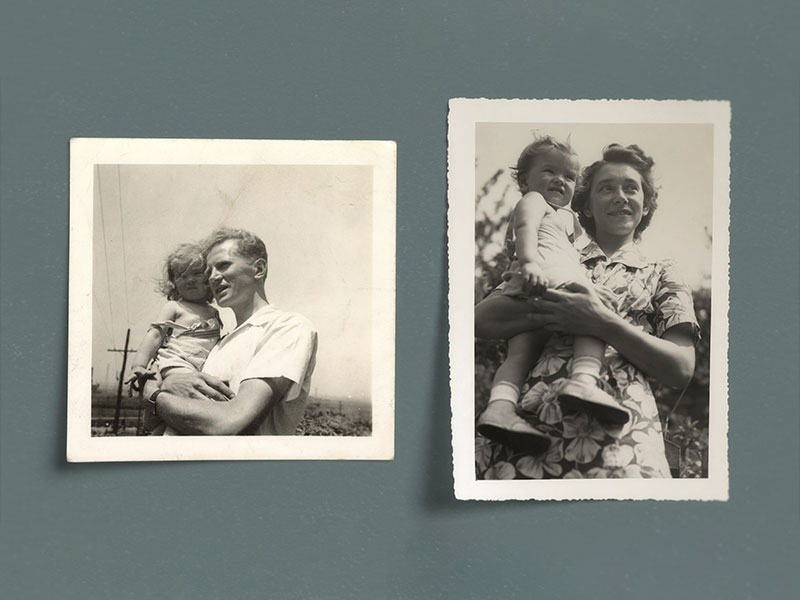
We need your help to stay independent

Explaining the popularity of the bar among locals and travelers, hotel executive Adriana Zermeno, a native to Mexico City, describes it as a “mystical hideaway where cocktails are inspired by magic and folklore and crafted with care by a talented team of women.” She calls it “the perfect spot for an unforgettable night in Mexico City.”

This witchy-themed menu is available now through 2025 with a bar warning that: “Once you take a sip, a spell is said to take over your mind, body and soul!” 

The 9 biggest bombshells from Netflix’s Martha Stewart documentary, “Martha”

“I dislike waste. I dislike inefficiency. Avoidance. Impatience. I dislike people who think they can do more than they can do. I dislike not paying attention to details, being mean just to be mean. I dislike aprons and housedresses. I used to dislike the color purple,” Martha Stewart says in the opening moments of “Martha,” Netflix’s latest celebrity documentary.

Directed by R.J. Cutler, the nearly two-hour showcase spotlights the queen of domesticity (also hailed as America’s original influencer) and chronicles Stewart’s illustrious career. It begins with Stewart’s upbringing in a working-class family, later delving into her less-than-picture-perfect marriage, her success as a businesswoman and her bombshell involvement in the ImClone stock trading scandal.

“People don’t quite understand just how much of a visionary Martha was and continues to be. She understood synergy long before others did; she understood the lack of barriers between different kinds of content before others did; she understood the power of the personal brand before others did,” Cutler told Netflix. “She made the world a more beautiful place, and she gave us greater access to beauty. She democratized fashion, taste, and style. She saw the future before others saw it and she always had to overcome enormous obstacles that were in her way.”

Indeed, Stewart overcame many obstacles to become the first self-made female billionaire in the U.S. As the documentary shows, her journey was certainly not an easy one. Nor was it forgiving. The most intimate moments from Stewart’s personal and professional lives are displayed through intimate interviews with Stewart herself along with private archives of her diaries and letters.

Here are the biggest bombshells from the documentary:

01
Stewart says she’s a “perfectionist,” just like her father
MarthaMartha (Courtesy of Netflix)

“I am a perfectionist. And it runs in the family. And it started with my father,” Stewart said in the opening of her documentary.


Stewart’s father, Edward Kostyra, worked as a salesman and struggled to support his family of eight. To make sure his children had food on their plates, Kostyra grew gardens and instructed his children to take care of them. Stewart recalled her father watching over her and her siblings like “a sergeant.”


“We had our whippings. It was the yardstick,” said Stewart’s brother, Frank Kostyra. “We dreaded the yardstick. And at times, it was the end of the belt.” 


“To this day I despise gardening,” said Stewart’s brother, Eric Scott. 


Stewart’s relationship with her father was different. According to her, she was “the ideal daughter” because she wanted to learn and was willing to listen to her father.


“He loved me. And it was very obvious to everybody that I was his favorite,” Stewart said. “He thought I was more like him than the other children.”


Stewart and her father had a bitter fight years later when Stewart asked to marry her then-boyfriend Andrew “Andy” Stewart.


“But I went home and told my dad, and my dad slapped me,” she recalled. “And he slapped me hard on…on my face and said, ‘No. You’re not marrying him. He’s a Jew.’”


“I remember getting that slap,” Stewart continued. “I was not at all surprised because he was a bigot. And he was impulsive. But I said, ‘I’m gonna get married no matter what you think.’”

02
Stewart kissed a stranger in a cathedral while on her honeymoon
MarthaMartha Stewart in "Martha" (Courtesy of Netflix)

During her five-month-long honeymoon in Europe, Stewart traveled across Italy and visited Florence the night before Easter. “I had to go to church, and I went to the cathedral,” she said.


Stewart's husband wasn’t interested in visiting the Duomo with her and stayed back in their hotel.


“Listening to that amazing music in that cathedral…it was a very romantic place, crowded with tourists,” she recalled. At that moment, Stewart met a “very handsome guy.”


She continued, “He didn’t know I was married. I was this waif of a girl hanging out in the cathedral on Easter Eve. He was emotional. I was emotional. It’s just because it was such an emotional place. It was unlike anything I had ever experienced. An expansive dome so beautiful and paintings all around you.” 


“It was like nothing I had ever done before. And so why not kiss a stranger?”


Stewart said the act was “neither naughty nor unfaithful.” Instead, “it was just emotional, of the moment.”

03
Stewart admits she cheated on her husband
MarthaMartha Stewart in "Martha" (Courtesy of Netflix)

On the outside, Stewart and her husband had the perfect life and perfect marriage. Stewart had a successful catering business and Andy ran a successful publishing company. But things weren’t as fabulous as they seemed.


Stewart said Andy was cheating on her and had multiple girlfriends (although, she’s not sure of the specific number).


“Young women, listen to my advice. If you’re married, and you think you’re happily married, and your husband starts to cheat on you … get out of it," Stewart said.


“Didn't you have an affair early on in the relationship?” a producer behind the camera then asked Stewart.


Stewart said she did when she worked as a stockbroker on Wall Street in the 1960s, but Andy never knew of her infidelity.


“He did say he knew about it,” the producer clarified. “You had confessed it. He says he didn’t stray from the marriage until you told him you had already strayed.”


“Oh, that’s not true. I don’t think,” Stewart responded.


She said she had a “very brief affair with a very attractive Irish man.” The affair meant nothing to Stewart.


“I would never have broken up a marriage for it. It was nothing…It was like the kiss in the cathedral.”

04
Andy’s affairs took an emotional and physical toll on Stewart
MarthaMartha Stewart and Andrew "Andy" Stewart in "Martha" (Courtesy of Netflix)

Stewart recalled one of the most heartbreaking moments in her marriage. Andy was having an affair with Robyn Fairclough, a flower designer who was working for Stewart and lived in the barn house on her Connecticut property. Stewart had offered Fairclough a place to stay after she had lost her apartment. 


“It was like I put out a snack for Andy,” Stewart said. “Andy betrayed me right on our property. Not nice.”    


The affair took such an emotional and physical toll on Stewart that she would pull her hair out. In a series of letters to Andy, Stewart wrote, “I am agonizingly jealous of your other women.” “I’m so miserable, I cannot believe myself,” she wrote in another. “I should be vital, beautiful, sexual, and desirable … I’m worried and lonely, alone, hopeless.”


“I have to go to San Francisco and talk about weddings and my wonderful life,” she wrote. “I hope you are enjoying your freedom. And I hope my plane crashes.”


Stewart and Andy separated in 1987 and divorced in 1990. She said the decision to split was Andy’s.

05
Stewart says the prosecutors who put her in prison “should’ve been put in a Cuisinart and turned on high”
MarthaMartha Stewart in "Martha" (Courtesy of Netflix)

In Dec. 2001, Stewart had sold her stake in ImClone Systems, a now-defunct biopharmaceutical company, after receiving word from her broker, Peter Bacanovic, that ImClone CEO Sam Waksal and his daughter Aliza Waksal had placed orders to sell all their ImClone stock. Because the Waksals’ decision to sell was not public information, Bacanovic and Stewart were accused of acting on insider information and lying to federal prosecutors.  


In March 2004, Stewart was found guilty of conspiracy, obstruction and two counts of lying to federal investigators. She was sentenced in July 2004 to five months in prison, along with five months of home confinement and two years of supervised probation.


“It was so horrifying to me that I had to go through that to be a trophy for these idiots in the U.S. attorney's office,” Stewart said in the documentary. “Those prosecutors should’ve been put in a Cuisinart and turned on high.”

06
Stewart was placed in solitary confinement for touching a prison guard’s chain
MarthaMartha Stewart in "Martha" (Courtesy of Netflix)

Stewart was sent to Alderson Federal Prison Camp, a minimum-security women's prison in West Virginia. In one of her many journal entries, Stewart recalled the time she was punished for touching a prison guard. 


“Today, I saw two very well-dressed ladies walking, and I breezed by them, remarking on the beautiful warm morning and how nice they looked,” she wrote. “When I realized, from the big silver keychain, that they were guards, I lightly brushed the chain.”


“Later, I was called in to be told never, ever to touch a guard without expecting severe reprimand. Of course, I apologized, but the incident was so minor when it occurred that I did not think about it for the rest of the day.”


Stewart said she was dragged into solitary confinement for touching an officer. She received no food or water for a day. 


The prison itself had been nicknamed Camp Cupcake by several tabloids. “It was not a cupcake,” Stewart said.

07
Stewart’s boyfriend, Charles Simonyi, visited her only once while she was in prison
MarthaMartha Stewart in "Martha" (Courtesy of Netflix)

“I don’t think he liked hanging out with somebody in jail,” Stewart said when asked why Charles Simonyi, a Hungarian software developer who she dated from 1993 to 2008, visited her only once while she was in prison.


“He was out on his boat, floating around the world. That was distressing to me.”


Three years after Stewart was released from prison, she and Simonyi went on an elaborate trip to visit the president of Iceland. Simonyi eventually told Stewart that he was getting married to Lisa Persdotter, a Swedish millionaire heiress 32 years his junior. Stewart said she was dumped by her longtime partner while the two were in bed.    


“He said, ‘You know, Martha, I’m gonna get married to Lisa.’ I said, ‘Lisa who?’ He hadn’t told me a word,” Stewart said. Simonyi also told her, “And, by the way, her parents don’t want me to ever speak to you again.”


“How can a man who spent 15 years with me just do that? What a stupid thing to do to someone that you actually care about.”

08
Stewart says her daytime show “was more like prison than being at Alderson”
MarthaMartha Stewart in "Martha" (Courtesy of Netflix)

Stewart opened up about her squabble with Mark Burnett, the executive producer behind “The Martha Stewart Show.” Burnett, who created “The Apprentice” with Donald Trump the year before, had a different outlook on what Stewart’s daytime show would look like.


“Mark Burnett wanted a talk show with variety guests, and I really wanted my old format of ‘how-to,’” Stewart said. Unfortunately, Stewart didn’t have much say about her own show considering that she was fresh out of prison and struggling financially. Stewart had to cancel her previous how-to format television show, “Martha Stewart Living.” She was also forced to resign from her position as head of her company, Martha Stewart Living Omnimedia.


“She was in a really vulnerable moment right then,” L.A. Times reporter Meg James, who covered Stewart during the early aughts, said in the documentary. “Had Martha not gone to prison, she wouldn't have done the deal with Mark Burnett. She lost control, and the result wasn't what she or the audience came to expect. It just felt forced.”


“The Martha Stewart Show” ran on air for eight years, from 2005 to 2012. Stewart, however, said she was disappointed with the show. Burnett, she claimed, “missed the point of Martha Stewart. A live audience, crummy music, that was more like prison than being at Alderson.”


“I was much more agile prior to prison, and my life became a little less exciting,” she said.

09
Stewart solidified her friendship with Snoop Dogg during Comedy Central's roast of Justin Bieber
MarthaMartha Stewart attends the New York premiere of The Netflix Documentary: Martha on October 21, 2024 in New York City. (Kevin Mazur/Kevin Mazur/Getty Images for Netflix)

After losing over one billion dollars from selling her company “Martha Stewart Living,” Stewart said her “mojo was damaged.” However she bounced back in 2015 — and gained a new friend.


Stewart solidified her friendship with rapper Snoop Dogg during Comedy Central’s roast of Justin Bieber. The iconic duo would later appear on the “$100,000 Pyramid” as a celebrity team; host their own show, “Martha and Snoop’s Potluck Dinner Party,”; publish a cookbook together and co-host the Puppy Bowl.

"Martha" is currently streaming on Netflix. Watch a trailer below, via YouTube: