Help keep Salon independent

Donald Trump’s retribution will begin with a restriction of free speech

Ever since Donald Trump arrived on the national political scene in 2015, he has displayed a perplexing and troubling attitude toward freedom of speech. At one moment he tries to sell himself as a vigorous advocate for freedom of expression. At another, when someone says something that he does not like or threatens his political interests, Trump will not only denounce the speaker but will call for drastic measures to curtail the offending speech. We were reminded of that again last week by his fury at CBS News for its interview with his opponent, Vice President Kamala Harris. That fury was first expressed in ways that respect the boundaries and traditions of free expression in the country.  But that didn’t last long before Trump called for the punishment of the major broadcaster.

That crackdown would not just damage the press, it would undermine the very fiber and fabric of this country.

Perhaps this should not be surprising from someone as notoriously thin-skinned as Donald Trump. He is like the boxer who can throw a punch but can’t take one. Trump cannot abide any slight or deviation from Trumpian orthodoxy.

Of course, what the former president does not understand is that the protection of free expression is most needed when speech is unpopular, offensive, or heretical. Or maybe he does understand, but prefers a speech environment compatible with his authoritarian style of leadership and his excessive need for flattery and approval.

Either way, Americans cannot count on Donald Trump to protect or respect freedom of expression when it most needs protection and respect. Let’s consider Trump’s effort to convince us that he will.

In 2016, during his first campaign for the presidency, Trump said he would put protecting free speech near the top of his agenda. In October of that year at a rally in Ohio, he asked his audience “Do you want free speech?” and responded to their enthusiastic applause, “You’ll have it.”

The 2016 Republican platform that Trump helped fashion contained a separate section on freedom of speech. In that section, the GOP said it opposed any “restrictions or conditions that would discourage citizens from participating in the public square or limit their ability to promote their ideas.”

In his acceptance speech at the 2016 Republican National Convention, Trump promised to "protect free speech for all Americans."

Three years later when he was president, Trump tried to burnish his free speech credentials while also using free speech claims to intimidate those whose understanding of free speech did not align with his own. He did so when he signed an Executive Order on campus free speech. It directed agencies to withhold federal funds from colleges that did not promote “free inquiry.”

And, over the last year, when judges issued gag orders against him in his various legal trials, Trump cried foul and alleged that they violated his freedom of speech.

In September, the former president again waved the First Amendment flag. He said that if he is returned to the White House, he would “bring back free speech in America ‘because it’s being taken away.’”  But for all his talk, it is clear that Trump is no card-carrying member of the American Civil Liberties Union. 

As Reason’s Damon Root points out, “This is the same Trump who favors government censorship of the internet in order to suppress speech that he finds objectionable. It's the same Trump who favors gutting libel laws in order to make it easier for him to silence journalists who write unkind things about him. It's the same Trump who wants the government to forcibly shutter houses of worship in which people might say, read, or think unpopular things.”

Trump's attack on CBS fits into the profile that Root outlines.  

We need your help to stay independent

Among other things, Trump complained that CBS had colluded with the Harris campaign to make her look “presidential.” “I’ve never seen this before,” he said, “but the producers of '60 Minutes' sliced and diced (‘cut and pasted’) Lyin’ Kamala’s answers to questions, which were virtually incoherent, over and over again, some by as many as four times in a single sentence or thought, all in an effort, possibly illegal as part of the ‘News Division,’ which must be licensed, to make her look ‘more Presidential,’ or a least, better.”

He went back to his familiar playbook and denounced “60 Minutes” for presenting what he dubbed a “Fake News Scam.” Trump claimed that “Her REAL ANSWER (to a question about Israel) WAS CRAZY, OR DUMB, so they actually REPLACED it with another answer in order to save her or, at least, make her look better.”

Trump was right that what was presented on “60 Minutes” was not the complete answer to the question she was asked by the interviewer, Bill Whittaker, about whether Israeli Prime Minister Benjamin Netanyahu was listening to the Biden Administration.

CBS edited her response, with one part of it used as a teaser on its Sunday morning show “Face the Nation” and the other part saved for broadcast the next night on “60 Minutes.” And Trump is not alone in his criticism of the way CBS handled the Harris interview.

The New York Daily News reports that “Former CBS News staffers are demanding an independent investigation into ‘60 Minutes’ over” what the paper hyped as “the brewing Kamala Harris interview scandal.”

Editing of interviews or speeches is common in broadcast journalism, and Trump critics have their own complaints about the practice. They worry that the full insanity and incoherence of what Trump says every day on the stump is lost in the snippets of his speeches that make it to news broadcasts. This kind of criticism is the very stuff of free expression. But Trump’s reaction to the Harris interview went much further and crossed a First Amendment red line.

Trump accused “60 Minutes” of doing something that “is totally illegal,” and then demanded “TAKE AWAY THE CBS LICENSE.” He elaborated his charge and broadened his demand for punishment

“60 Minutes,” Trump said, “is a major part of the News Organization of CBS, which has just created the Greatest Fraud in Broadcast History. CBS should lose its license, and it should be bid out to the Highest Bidder, as should all other Broadcast Licenses, because they are just as corrupt as CBS – and maybe even WORSE!”


Want a daily wrap-up of all the news and commentary Salon has to offer? Subscribe to our morning newsletter, Crash Course.


The Chair of the Federal Communications Commission, Jessica Rosenworcel, called Trump’s threat “serious” and said it “should not be ignored.”  She stated unequivocally, “The FCC does not and will not revoke licenses for broadcast stations simply because a political candidate disagrees with or dislikes content or coverage.” 

What Trump said about CBS was not the first time he has gone after a news media outlet. Several weeks ago, after ABC hosted the presidential debate which he lost, he targeted it.  “ABC took a big hit last night" Trump observed before arguing that the network ought to lose “their license for the way they did that." 

And, on October 10, he  issued an ominous warning to the New York Times, “Wait until you see what I’m going to do with them, you’re going to have so much fun.”

Some idea of fun.

As MSNBC’s Steve Benen correctly observed, ”There is… a qualitative difference between whining about fact-checking and publicly raising the idea of using governmental power to strip a major American outlet of its broadcasting license.” The latter is part of Trump’s “plan to crack down on the free press” should he be elected in November.

That crackdown would not just damage the press, it would undermine the very fiber and fabric of this country. As former Supreme Court Justice Hugo Black wrote in 1960, “Since the earliest days philosophers have dreamed of a country where the mind and spirit of man would be free; where there would be no limits to inquiry; where men would be free to explore the unknown and to challenge the most deeply rooted beliefs and principles.” 

Until now, America has been that place. It is up to us to decide if we want to keep it that way.

Is obesity a disease? Some experts say no, urging doctors to rethink this condition

When you arrive at a doctor’s appointment, you likely get your height and weight measured — two numbers used to calculate your body mass index (BMI). From this metric, your physician can diagnose whether you are under or average weight, or whether you have obesity. The thing is: BMI is a metric that was not designed to diagnose someone with a disease, posing a significant problem for the medical community, as well as contributing to stigma for people with higher weights.

In 1832, a Belgian statistician named Adolphe Quetelet created the Quetelet Index to find the average dimensions of the “normal man.” Physiologist Ancel Keys did some more research to validate Quetelet’s Index in 1972 and officially coined the term we use today: BMI, which is a person’s weight divided by their height squared. 

Quetelet’s work was based on mostly white men, even though gender and racial differences exist in how much fat people carry and where they store it, which in turn affects whether it can pose a disease risk or not. Fat stored near the abdomen, for example, is associated with a greater risk of certain conditions like insulin resistance compared to overall body fat. Asian populations have been shown to have a higher risk of cardiovascular disease at lower BMIs compared to white populations. And the BMI index is not designed to capture changes in fat composition that occur among people who menstruate during puberty or after menopause, when muscle mass can substantially shift.

“I think there are problems with using BMI as the only metric,” said Dr. Jody Dushay, an endocrinologist and assistant professor of Medicine at Harvard Medical School. “There are ethnic differences, there are sex differences, there are differences based on muscle mass … Professional football players, for example, are probably almost all obese based on the criteria of BMI.”

"Certainly not everyone with excess body weight has a disease."

As a result of these limitations, there is a growing movement to adopt a new classification system to diagnose obesity that uses more specific measurements that directly assess body fat rather than using body size alone. But fundamental to adopting a new diagnostic system is another decades-old question that continues to divide the medical community: Is obesity itself a disease?

“I agree with the notion that excess body weight in some people is a disease state,” Dushay told Salon in a phone interview. “Yet certainly not everyone with excess body weight has a disease … It’s much more complicated than hypertension or high cholesterol or diabetes.”

Today, more than 40% of U.S. adults have been diagnosed with obesity, a number that is expected to rise. Language matters, and these definitions are not just a matter of semantics. People receive access to weight loss treatments and new drugs like Wegovy based on their BMI measurements, and have also been shown to have reduced access to things like fertility treatment with higher BMIs due to stigma. Refining the definition and diagnosis of obesity could ensure the medicines used to treat it arrive to the people who need them and reduce unnecessary stigma faced by people who are otherwise healthy but have larger body sizes.

“Many insurance companies are saying if your BMI is below 35, you have to start with a less expensive medication, and they won’t go straight to covering the GLP-1 receptor agonists,” Dushay said, referring to drugs like Ozempic and Wegovy, which can be extremely expensive. “I think embedded in that is the assumption that people with lower BMIs don’t have as serious comorbidities and that is not true.”

In 2013, the American Medical Association (AMA) officially declared obesity a disease, going against the recommendation from its Public Health and Science Committee. The decision was made in part to reduce stigma faced by people with obesity and improve the development and accessibility of treatments. 

Whether the classification of obesity as a disease has in fact reduced stigma is unclear, with some research suggesting that weight bias is increasing as obesity rates rise. In 2020, a Patient Advisory Board for a randomized clinical trial of patients with obesity reported their experience of going to the doctor, where they felt dehumanized as if their entire identity was reduced to a number.


Want more health and science stories in your inbox? Subscribe to Salon's weekly newsletter Lab Notes.


“We want you to know how to look at us, to see each of us as a person,” they wrote in a letter to physicians posted in the Annals of Family Medicine. “We want you to see us as a person as opposed to an obese person with a certain BMI and a series of conditions.”

More than a decade of research has helped illuminate what obesity is since the AMA’s decision. Research has shown, for example, that some people may have a genetic predisposition to obesity. Scientists have also learned that obesity is caused by areas of the brain failing to recognize fullness as well as areas that direct how calories are stored in ways that can increase things like inflammation, said Dr. Beverly Tchang, an assistant professor of clinical medicine at Weill Cornell.

“Our understanding of obesity has matured over decades because of the research we've been doing to understand it better as a medical disease,” Tchang told Salon in a phone interview. “Nowadays we think of it in a really nuanced, complex way, where we see obesity as essentially abnormal energy regulation.”

"Obesity is not the disease; obesity is a gateway to disease."

A disease is defined as a condition, usually with a known cause, that creates a set of symptoms characteristic to the disease that deviates from the rest of the population’s experience. As Tchang put it, obesity "fulfills those three criteria, whether people have downstream consequences of it or not."

However, others disagree that obesity should be a diagnosis at all. Notably, the United Kingdom and Denmark do not formally recognize obesity as a disease. Dr. D. L. Katz, editor-in-chief of the medical journal Childhood Obesity, who has long argued against such a diagnosis, says the large-scale effect of classifying obesity as a disease is that it deters energy from being put toward preventing it. 

“Obesity is not the disease; obesity is a gateway to disease,” Katz told Salon in a phone interview. “If you think in terms of population health, does obesity mean pathology? Not always, but often.”

Yet Tchang argued that on the individual level, there is room for ramping up resources to both prevent and treat patients with obesity.

“If someone develops lung cancer because they smoke, you don't say, ‘No, medication for you. You just need to stop smoking and the lung cancer will go away,’” Tchang said. “We say, ‘Try not to smoke and let's treat the cancer.’”

We need your help to stay independent

Some efforts have been taken to create updated definitions of obesity that better capture its complexities, but those haven't been universally adopted. In 2017, for example, the American Association of Clinical Endocrinology proposed a new term to replace "adiposity-based chronic disease (ABCD)," that explicitly defines the condition as a chronic disease with a precise physiological basis. The European Association for the Study of Obesity also issued a position statement that supported the use of ABCD in 2019.

In July, EASO also released a new framework for diagnosing obesity to “better align with the concept of obesity as an adiposity-based chronic disease.” A Lancet commission is also working to define obesity as a disease with detailed descriptions of how the condition affects body systems. 

Last year, the AMA released a new policy acknowledging BMI’s limitations and clarifying that it should be one tool of many used to diagnose obesity. Even before this policy, physicians would take into account a variety of metrics, including fat mass, family histories, and body adiposity index measures in addition to BMI when determining whether someone should be diagnosed with obesity. 

But other definitions remain vague. The World Health Organization defines obesity as “abnormal or excessive fat accumulation that presents a risk to health” with a BMI over 30. 

“It's night and day where you see BMI as this enormous oversimplification of obesity, and then 30 years later, what we actually understand it to be,” Tchang said.

“Just amazing”: NASA launches Europa Clipper to explore possibly habitable world off Jupiter

NASA successfully launched a vehicle meant to explore an ocean-covered world in our solar system and seek out the building blocks for life.

Once it reaches its destination, the Europa Clipper will examine the Jupiter's moon Europa. That moon is almost entirely covered by a vast ocean underneath a crust of ice. Scientists have long speculated that the moon — which also boasts a thin but oxygen-rich atmosphere —could harbor simple lifeforms.

The Clipper is the end result of a $5.2 billion project that began in 2013. It is the largest spacecraft that NASA has ever launched and will face a years-long journey to the moon whose surface ice sheets could be as much as ten miles thick.

“Europa Clipper will undoubtedly deliver mind-blowing science," NASA’s Jet Propulsion Laboratory Director Laurie Leshin shared.  While always bittersweet to send something we’ve labored over for years off on its long journey, we know this remarkable team and spacecraft will expand our knowledge of our solar system and inspire future exploration."

A SpaceX Falcon Heavy rocket got the Clipper off-Earth, separating from the spacecraft an hour after launch. The Clipper is expected to end its 1.8 million-mile journey in April 2030, when it will enter Jupiter's orbit. NASA hopes the spacecraft will successfully fly by the moon 49 times to take readings.

“Everything we’re going to learn from Europa, it’s just amazing," NASA Jet Propulsion Laboratory engineer Jenny Kampmeier shared during the launch's livestream. "All scientific disciplines can really gain something from this, and it’s going to change our understanding of our place in the universe if this is a world that could support life.”

Watch the launch below:


How Native communities are reclaiming their food: Films, books and shows to watch

The fight for Native food sovereignty is more than just a return to traditional diets — it's an act of resistance, resilience and reclamation. Centuries of colonization, which methodically dismantled Indigenous food systems, have left lasting scars, which is one of the reasons food sovereignty can mean multiple different things: from reclaiming local food systems, to creating food policies that enhance community health, to targeting food as a mechanism for entrepreneurship and economic development. 

Films, cookbooks and even competitive cooking shows are spotlighting this revival, honoring the land and the traditions that have sustained Indigenous communities for generations.

In honor of Indigenous Peoples’ Day, here are a few essential resources to deepen your understanding of the movement. 

"Gather" 

When speaking about his 2020 film “Gather” on Duke University’s “Leading Voices in Food,”  director Sanjay Rawal said that the film was really made for those people taking “pride in reestablishing the food systems that were, in effect, destroyed by colonization.” 

“And when I say destroyed, I mean directly,” Rawal said. “By the mid-1800s, it became really clear to the US government that the expenditure of military force on Native people was too perilous, and it was euphemistically much more efficient to subjugate Native people by destroying their food system … Native Americans are one of the only populations in the modern world to have had their entire food system destroyed as a tactic of war.” 

“Gather” turns its lens on multiple sets of characters, all of whom are citizens of different tribal nations across what is now the United States, who are dedicated to efforts that promote Native food sovereignty. There’s Twila Cassadore, a San Carlos Apache woman who educates her community about Apache diets before people were forced onto reservations. In Whiteriver Arizona, Chef Nephi Craig, a citizen of the White Mountain Apache and Navajo Nations, opens an Indigenous foods cafe on the White Mountain Reservation. 

We need your help to stay independent

Rawal also features Sammy Gensaw, a Yurok youth leader of the Ancestral Guard nonprofit who grew up on the Klamath River as its salmon were fished to near extinction, and Elsie DuBray, a young Lakota woman of the Cheyenne River Sioux Tribe whose father, Fred, started the Intertribal Buffalo Coalition with the aim of revitalizing buffalo as a source of spiritual and physical nourishment.

“Through these interwoven stories I believe we present a very compelling narrative of a movement happening in tribal nations right now to reassert their sovereignty by reestablishing food ways that were taken away from them by the colonial extractive government of the United States,” Rawal said. 

“Gather” is currently streaming on Netflix

“Chími Nu’am: Native California Foodways for the Contemporary Kitchen” by Sara Calvosa Olson 

The Karuk phrase “Chími nu’am” roughly translates to “Let's eat!,” making it the perfect title for Native writer Sara Calvosa Olson’s first cookbook. In “Chími Nu’am: Native California Foodways for the Contemporary Kitchen,” Olson shares dishes like elk chili beans, nettle tortillas, blackberry-braised smoked salmon and nearly a dozen recipes featuring acorns. 

In speaking with Civil Eats in 2023, Calvosa Olson said she wanted to guide readers through integrating more traditional ingredients into our “oversimplified modern palates.” 

“When I had children of my own, I wanted to connect my sons to these family recipes and to being Karuk, as we were living away from Karuk community and traditional lands,” she said. “By intentionally establishing this connection, I discovered a love for developing new and colorful recipes based on our old family recipes and traditions. Gathering wild foods, sharing, teaching, cooking, and tending have all been an opportunity to grow and heal in the nurturing way I didn’t know I needed.”

“The Sioux Chef’s Indigenous Kitchen” by Sean Sherman 

Similarly, in his work, James Beard Award winner Sean Sherman reimagines Indigenous cuisine, bringing ancestral foodways to the forefront of the modern culinary conversation. Many may know Sherman through his Minneapolis restaurant Owamni, which the James Beard Foundation declared the best new restaurant in America in 2021 — quite a feat for a kitchen that eschews wheat flour, dairy, cane sugar, black pepper or any other ingredient introduced to the continent through colonization. 

The Sioux Chef’s Indigenous Kitchen,” which was released in 2017 from University of Minnesota Press in Minneapolis, allows readers to explore Sherman’s work anc culinary a little closer to home. 

“Sherman dispels outdated notions of Native American fare — no fry bread or Indian tacos here — and no European staples such as wheat flour, dairy products, sugar and domestic pork and beef,” the book’s description reads. “‘The Sioux Chef's’ healthful plates embrace venison and rabbit, river and lake trout, duck and quail, wild turkey, blueberries, sage, sumac, timpsula or wild turnip, plums, purslane and abundant wildflowers.”

It continues: “Contemporary and authentic, his dishes feature cedar braised bison, griddled wild rice cakes, amaranth crackers with smoked white bean paste, three sisters salad, deviled duck eggs, smoked turkey soup, dried meats, roasted corn sorbet and hazelnut-maple bites.” 

“Top Chef: Wisconsin” 

In the “Top Chef: Wisconsin” episode titled “The Good Land,” the culinary competition shifted focus to Indigenous cuisine with guest chef Sean Sherman. Much like in Sherman’s book and at Owamni, the cheftestants were introduced to a pantry of Native ingredients such as wild rice, venison, sumac and corn, while European staples like dairy, wheat and sugar were notably absent. 

As Salon’s Michael La Corte wrote, the chefs were asked to craft dishes that showcased a deep respect for the land and its resources, all under the watchful eye of Sherman and the judges. 

“While the cheftestants’ dishes weren't all wins, there were some real standouts,” he wrote. “Savannah's winning and inspired squash-and-maple "jelly cake" dessert with an array of sauces made from aronia, grapes and plum jelly; Soo's wild rice and huitlacoche "dumplings;” and Dan's incredibly inventive sunflower-chokes treated like artichokes.

“Spirit Plate”

From Whetstone Radio, “Spirit Plate” is a multi-part podcast hosted by Shiloh Maples featuring conversations about how Indigenous communities are working to preserve and revitalize their ancestral foodways. Maples has a deep personal background in the realm of food sovereignty, especially within urban communities. When speaking with the University of Michigan’s Matthaei Botanical Gardens and Nichols Arboretum, Maples detailed how her career has focused on food systems since graduating. 

“I worked in partnership with the Native community in Detroit to start a food sovereignty initiative, which we called the Sacred Roots program,” she said. “It focused on creating space and opportunities for Indigenous people to practice and preserve their ancestral foodways in the urban landscape.” 

Maples continued: “Many Native food initiatives that I was seeing at the time were based on reservation lands or trust lands and were initiatives started by Tribal communities. Those communities have a land base, legal systems or systems of governance, and other structures in place to think about what food sovereignty means to them. But as an urban Native community, we didn't have a land base or a governing structure. This program became a space for us to be in conversation as a community about what food sovereignty looks like as an urban, Indigenous community.” 

According to the series description, “through interviews with seedkeepers, chefs, farmers and community members, this podcast will share what food justice and sovereignty looks like for Indigenous peoples across Turtle Island.” 

Ruth Reichl: “The delicious revolution” was a distraction from America’s food crisis

Most people wouldn't recall the early days of the pandemic as "the moment I've been waiting for my whole life." But Ruth Reichl, whose new documentary "Food and Country" reveals America's food crisis from the perspective of the farmers, ranchers, restauranteurs and activists whose livelihoods were upended by it, isn't most people.

A seven-time James Beard Award winner (including one lifetime achievement award), bestselling memoirist and novelist, former restaurant critic and editor of the fondly remembered Gourmet magazine, Reichl is also, at her core, an activist. She began her career in the Bay Area in the 1970s, at a moment when the rise of convenience foods of the '50s and infatuation for French cuisine of the '60s was giving way to a new hunger for a different way of doing things. It just took a few decades for the rest of us to catch up.

As she told me during our recent "Salon Talks" conversation, "We really have the first generation of Americans who understand that food is much more than something to eat." As a producer and the guiding figure in director Laura Gabbert's documentary, Reichl is looking back on how American farming became a corporate enterprise and how the "derailed" activism of 50 years ago has become a new mission for the future. She talked with us about the challenges of making a movie at the height of quarantine, the resilience of the American farmer and why our fragile food system needs undocumented workers to survive.

"Food and Country" is in selected theaters and will be available to stream October 22.

The following conversation has been lightly edited for clarity and length.

Your new documentary “Food and Country” starts during the early days of Covid in 2020. Take me to the beginning of this film and the origins of this story. 

My husband and I were in Los Angeles in March of 2020. We woke up one morning, we looked at each other and said, “We better go home, they're going to close the airports.” So on March 12th, we flew home. That was at the point you couldn't get masks. We were traveling with hydrogen peroxide to clean things off. 

We get home and I say to my husband, “I'm going to do one giant shopping [trip]. I'm going to buy everything we need, and then we're going to go into quarantine.” I go to the store, and for the first time in my entire life, there is a sign on the supermarket door that says, “We have no bread. None.” And I open the door and the shelves are empty. There is nothing there. I thought I was going to buy all this food, and you literally just took whatever you could find off the shelves because there was no chicken, there was certainly no meat of any kind, there was no rice, there were no potatoes, there were no onions.

I came home and said to my husband, “This may be the moment I've been waiting for my whole life.” No American has ever gone into a store and seen an empty shelf. It just didn't happen. We take food for granted, and maybe this is the moment where people wake up and say, “Oh, maybe we aren't always going to have this abundance.” My husband said, “Or maybe the other thing will happen, and maybe what will happen is that all the farmers will go out of business, and it will be the triumph of industrial food.” I said, “No, people are going to be cooking. They're going to be home with their families.” In that moment, I thought, “I don't know what's going to happen, but I feel like this is a change point and I would like to have a record. So whatever happens, we can look back and say, this is how it happened.”

"The consequences of this cheap food policy have been enormous. We have destroyed the environment. We have addicted an entire population to food that's very bad for them."

I started calling farmers, fishermen, chefs, food policy people. Before I was done, I called 178 people and said, “What's happening for you?” I really was just thinking this was something that would go in with my papers and 25 years from now, 50 years from now, it would be useful to people. Then I heard that Laura Gabbert, who made “City of Gold,” about Jonathan Gold, was working on a film about what was happening to LA restaurants. I called her and said, “I think the story is much bigger. I think it's the whole food system.” She said, ”You're right. Do you want to collaborate on a film?” This is maybe March 20th, and I said, “But it's too late. We should have started a month ago.” Laura said, and this will stay with me forever, “In documentary, it's always too late.” I was saying “too late” because we thought it would last six weeks and then life would shift back to normal. We never in a million years thought that two years later, I would still be Zooming with these people. 

The first people I called were farmers that I knew. Then someone would say, “You know, you should talk to so-and-so.” I'm talking to lots and lots of people who I've never met in person, but something happens with Zoom. You're in this very intense face-to-face conversation, it was Covid, people were locked up. They needed a stranger to just talk to, so we became friends. I'm talking to this wonderful farmer, Angela Knuth, out in Nebraska. We have never met, but we're sharing our problems with each other because over two years we got to be friends and it was a safe place to talk. Amazing things happened with this footage where, at one point, at least ten people said, “You're like my shrink.” It was just that I was a sympathetic ear [at] this truly devastating time for food producers.

All these people who raised things for restaurants, there's no business anymore. Fishermen were in terrible trouble because Americans mostly eat fish in restaurants, and their business dried up. As we all know, restaurants, many, many, many of them died during Covid. What this turned out to be was quite a different film than we had anticipated. 

We did film on location with each of the farmers, but when we went through all of this enormous footage of interviews that I had, we could have done a dozen films. We chose to mostly focus on farmers and ranchers and food producers because chefs have a big voice in the world, and these people don't. I was fascinated by the story of these farmers. What I learned making this [is] it is so hard to be a farmer in America and farmers are so resilient and strong. One of the things I love about this film is we're not telling their stories, they're telling their stories. But, all of them came out of Covid better than they went in. We really wanted to say, “Things are really broken in the food system, but we can fix it.”

When you talk about how fragile this food system is, that doesn't happen overnight. What happened and how did it become so industrialized?

At the end of World War II, America, the government, decided that the best way to fight communism was to have the cheapest, most abundant food in the world. They set about making that happen and one of the things they did was turn what had been ammunitions factories into fertilizer factories. Suddenly we have what they called the Green Revolution. Fertilizers are making the crops much more abundant, they remove animals from the equation. The farms all become factories and what had been animals are now machines. Then the farmers all have to go into debt because these machines are very expensive and you see a real shrink. 

Going into World War II, 25% of Americans were engaged in farming. By 1961, only 8% were still engaged in farming. That's a huge change in a very short period of time. Meanwhile, this smaller number of people were producing massively more food. When Nixon's Secretary of Agriculture, Earl Butz, gave speeches to farmers he said, “Get big or get out.” He encouraged them all to take on massive debt and buy more and more machines that cost $½ million, $1 million. In the farm crisis of 1982, 200 farmers a week lost their farms because they couldn't pay. 

"What I learned making this film is we don't vote with our dollars, we vote with our votes.""

The consequences of this cheap food policy have been enormous. We have destroyed the environment. The fertilizer runoff is creating dead [zones] in all the lakes and oceans. We have addicted an entire population to food that's very bad for them. Six out of ten Americans now have a food related disease, chronic disease. We've created this crisis of obesity and diabetes, and it's all because people used to eat good, healthy food, and now they eat processed foods, which are really increasingly bad for us. We have addicted a few generations to basically killing themselves with their food.

Meanwhile, in the meatpacking industry, we've allowed incredible concentration. There are four major meatpackers who control most of the meat in the United States. That's a whole other side of this: antitrust, monopoly. 

Basically, our problem is that the government decided this was going to be the policy, that we were going to have cheap, abundant food. That has been what has led to this crisis. 

When you talk about how few farmers there are, there are even fewer farmers in this country now who are Black.

In 1920, there were more Black farmers than white farmers in America. Now there are a handful. Karen Washington gives the numbers in the film. It's shocking. 

You also talk in the film about how tipping evolved in this country, as a direct result of racism. Is there a way out of this mess in terms of paying our restaurant and service workers fairly? 

It all ultimately goes back to the argument that those of us who advocate for good food are constantly fighting against, which is that this is an elitist issue – that it's great that you can afford to go to farmers markets but most people can't, and we like this cheap food. 

The answer to that is the government supports the wrong kind of agriculture. We spend $50 billion a year in farmers subsidies and I would say probably 99.9% of them go to corporate farmers who are not worried about the environment or our health. The ultimate answer is yes, you can fix it, but the government is going to have to fix it. I used to go out and give these speeches where I’d say, “We vote with our dollars. Every time you buy good food, you're sending a message.” What I learned making this film is we don't vote with our dollars, we vote with our votes. 

There are a lot of really wonderful things happening. One is that farmers are resilient. Will Harris in Georgia, who is like, preacher of the Earth, has found whole solutions and he is teaching people how to be regenerative farmers and why it's a good idea. There are a few incredible moments in the film with Will, where he is given a lemon and makes lemonade out of it. All of the farmers who tell us their stories are incredible.

The Joneses, who have The Chef's Garden in Huron, Ohio, their family lost everything in the farm crisis in 1982 and they have found a solution. They will never borrow another penny from the bank. [They’re] like, “That's what took our father down. We had to find a way to not need that operating capital up front and operate a year-round business.” They have figured out a few really innovative ways to do it. It's wonderful that we have activists like Karen Washington and activists like Bren Smith, the kelp farmer. But ultimately, the real answer is we have to insist that our governments start supporting good food and doing it in many, many ways. 

A moment in the film that really stuck with me was when one of the farmers said, “We have so much food here that is rotting, miles away from people who are going hungry.” The idea that there isn't enough and this idea of scarcity feels like a smokescreen. 

Covid was proof of that. We had farmers dumping everything and huge lines at food pantries that were running out of food. It's insanity. We have plenty of food. We overproduce calories per capita in this country. It's a matter of distribution. 

"A lot of us who have been really focused on food for the last 50 years feel a real responsibility and sorrow for the fact that this happened under our noses"

I'll tell you the other moment that got me. One of my favorite characters in the film is rancher Steve Stratford. I went looking for not one of the hip new organic meat producers, but a rancher, a traditional rancher to talk to because I wanted to know what was going on. We were all very conscious of what was happening in the meat industry. There were huge backups at the beginning of Covid, you couldn't get meat. Farmers didn't have any place to slaughter their animals, the animals were getting too big. 

I went looking for a rancher, and I found this wonderfully brilliant, articulate rancher in Pratt, Kansas. After a couple of years, when I got comfortable enough with him, I said, “Do you want your kids to do what you're doing?” He looked at me and said, “Let me put it this way: at the beginning of every year I go to the bank, I borrow $8 million. I work three jobs, I work 100 hours a week, and in a good year I take home $50,000. Do I want my kid to do this? No, any sane person will tell you that's stupid. But we love what we do, we believe in what we do.” He looks at the camera [and says], “You all are depending on the fact that we as food producers love what we do. But one day, it's just going to be too hard.”

The film makes the point that we’re also depending on undocumented people. 

Oh my God. We certainly could have done a whole film just on that. One of my favorite moments in the film is when Bob Jones kneels down in his fields in Ohio and says, I'm paraphrasing this, “You know, you have a choice. You can round up all the undocumented workers, you can send them all somewhere else, but Americans won't do this work. When you do that, it means that we will not be able to compete with the underpaid people who are farming elsewhere. American farms will go out of business, and what you will have is not nutritious food [that’s] picked by people who are exploited. That's your choice.” 

For all of the farmers, it's very clear, they really depend on the guest worker. I have heartbreaking footage of migrant workers during Covid. They were so exploited, they were living in these cramped little places, but they were considered essential workers. We did not get into undocumented workers in kitchens, but the entire American food system comes crashing down without undocumented workers. Every restaurant, every farm, they make our lives possible.

There's a moment in the movie where you say, “I feel like my whole life has been building up to this, and I feel like a terrible failure.” What does that mean to you to say that? To feel that? 

I don't think I'm the only one who feels that. I think a lot of us who have been really focused on food for the last 50 years feel a real responsibility and sorrow for the fact that this happened under our noses and we let it happen. We thought we knew what was going on, and we willfully closed our eyes. It was such a shock to learn too late about the fact that we had overfished the oceans and fertilizer runoff was creating terrible problems. I was a food editor for a lot of this time. I ran a magazine and we thought we were doing a good enough job. We weren't. This happened. 

I remember one of my favorite pieces we ran in Gourmet Magazine was by Robert Sietsema and his father. It was called “My Father the Formulator.” His father was a food scientist who really believed in the 50s that this was making life better for people. It's about his father's gradual disillusionment. He starts out really thinking this 50s American idea: “We’re going to make life better through science.” Then he doesn't like what's happening to the products that he's invented as they get increasingly worse for you.

I wish I had been more vigilant. I wish we all had been. We really, as a nation, depend on a vigilant press. The food movement as I know it pretty much starts in Berkeley and spreads out very slowly. It starts as a very political movement and after a while, we all got derailed by the delicious revolution, where suddenly we were suddenly very focused on food. It went from really thinking about the increasing industrialization of American food, but then we got so excited by food and recipes and restaurants and it all got derailed for a while. I just wish that hadn't happened. 

How has this changed you? What are you doing now to reset yourself and your relationship with the food industry and your career? 

It's a great question. I've had a long career. I've been writing about food for about 55 years. There's just a time when you think it's your time to pass it on and to be as helpful as you can to the people of the next generation. This is my activist moment with this film. I really believe in the press, I believe in the power of the press. I think information is the most important thing that we have, and especially in this moment when we're really understanding what misinformation can do.

My role at this point is just to try and encourage more people to be involved in this subject, more writers, and to be as available as I can and helpful as I can to the generation of writers who are coming up now. And I must say that this next generation gives me so much hope. We really have the first generation of Americans who understand that food is much more than something to eat. 

Harris to sit for interview with Fox News this week

Kamala Harris has agreed to her first-ever sit-down interview with Fox News, the network shared in a press release. 

Harris will talk with "Special Report" host Bret Baier on Wednesday, with the interview airing later that evening. The vice president will be in Pennsylvania for campaign events and Baier plans to host his nightly weekday series remote from that state. 

The announcement of Harris' interview comes as the Democratic candidate for president faces criticism for a seeming lack of fealty toward traditional media outlets. Though Harris has sat for interviews with CNN and CBS' "60 Minutes," commentators have pooh-poohed her decision to speak with less traditional outlets as part of her voter outreach strategy. 

Earlier this month, Harris spoke with the popular podcast "Call Her Daddy." The Alex Cooper-hosted series reaches an average of 5 million listeners per episode and is second only to "The Joe Rogan Experience" in popularity among podcasts on Spotify. 

Harris' wide-net strategy this month has included interviews with networks, daytime TV segments and stops to see satellite radio titans. She's already spoken with one-time shock jock Howard Stern and visited "The View."

A town hall aired on Univision led to a quickly debunked conspiracy theory that Harris was offering canned answers to supposedly on-the-spot questions via a teleprompter. In spite of the quick correction, former President Donald Trump has continued to accuse Harris of needing a script.

Trump has appeared on several podcasts and streams — including ones hosted by Theo Von, Logan Paul and influencer Adin Ross — as part of his campaign. His appearances have received nowhere near the same level of scrutiny.

“Hatchet job”: Trump attacks “The Apprentice” biopic in Truth Social rant

Donald Trump fumed over the biopic "The Apprentice" in a caps-lock abusing post to his social media platform. 

"A FAKE and CLASSLESS Movie written about me, called, The Apprentice will hopefully 'bomb,'" he wrote. "It’s a cheap, defamatory, and politically disgusting hatchet job, put out right before the 2024 Presidential Election, to try and hurt the Greatest Political Movement in the History of our Country." (sic)

The film focuses on the relationship between a young Trump and attorney Roy Cohn. The dark comedy shows Trump learning how to trade his morals for an outward appearance of toughness, a deal the doe-eyed mogul-in-waiting is quick to make.

A particularly heart-wrenching scene shows Trump's late wife Ivana suffering abuse at the hands of Trump. The former president objected strongly to the portrayal calling screenwriter Gabe Sherman a "lowlife and talentless hack."

"My former wife, Ivana, was a kind and wonderful person, and I had a great relationship with her until the day she died," he wrote. "So sad that HUMAN SCUM, like the people involved in this hopefully unsuccessful enterprise, are allowed to say and do whatever they want in order to hurt a Political Movement, which is far bigger than any of us."

Though Trump's social feed has been full of boosterism for his string of xenophobic rallies throughout the country, he still finds time (frequently, like this most recent screed, in the middle of the night) to take shots at his perceived enemies. Recent targets of his online ire include Taylor Swift (who he said he hates in a direct, all-caps broadside) and multiple attacks on Liz Cheney, the Republican scion who endorsed Democratic candidate Kamala Harris in the upcoming election.

The cats of Delhi: A quiet revolution above the streets

As you walk through Delhi, there is much to take in at street level. The sweet scent of food carts selling guava and bananas blends with blooming jasmine, burning incense, and the fragrant fumes of auto rickshaws driving by. As the city awakens, motorbikes weave through the streets in a hurry, and any driver will tell you that it’s dogs and cows—not cats—around whom they will swerve on their morning commute. But look up, and your perspective will shift entirely. A thick canopy of lush green leaves seems to pour from the sky onto the rooftops, and in that overhead oasis, you’ll find that it’s the cats of Delhi who have a bird’s-eye view of it all.

“You won’t actually see many cats in Delhi . . . unless you look on top of the buildings,” explained Anupriya Dalmia, founder of Dogs of Delhi. Due to the ubiquity of street dogs, who can pose a threat to felines, most cats have made a life leaping from roof to roof. As canine sterilization efforts like Anupriya’s have started to stabilize the dog population, she and others are turning their attention upward.

Perspective influences everything, and for the young people of Delhi, mindsets around feline welfare are rapidly changing. “Cats aren’t a traditional pet in India, so older generations have never really opened up to them,” explained rescuer Saara Gupta as we walked through her South Delhi neighborhood. “My family actually says I’m not normal because I don’t want to have kids, and I care about cats. This is a concept that is not yet accepted here.”

Cats of the WorldCat jumping a fence, New Delhi. (Andrew Marttila)According to experts, cats have long been relegated to a mythos of bad luck. “The superstition against a cat crossing your path is real here,” explained Mansi Tejpal, a social researcher with a focus on animal ethics. “Young people are challenging these notions. What you must understand is the emphasis on staying with family—family is the social structure that binds Indian society. But as people are moving out to urban spaces for better opportunities, they are wanting a companion, and bringing in cats. This is a first-generation concept in India.”
Mansi continued, “As India has become a more multicultural space, people have had greater access to knowledge from other cultures—and there has been a large mindset shift between generations.” She showed me a photo of a kitten she rescued and smirked. “Honestly, I also think young people like a little rebellion. Having a pet cat is like an ‘F you’ to the parents, because they do not accept it at all.”


Want a daily wrap-up of all the news and commentary Salon has to offer? Subscribe to our morning newsletter, Crash Course.


In the Moti Bagh neighborhood, one young woman has transformed her home into a haven for the cat community. Blue tarps stretch over the brightly colored brick walls of the open-air structure, and a tight spiral of steps and ladders leads up three thin flights to where Vaishali has a small bed for herself, with the rest of the space dedicated to housing cats recovering from surgery. Local rescuers shuffle in and out of her home at will; it is a streamlined community space as much as it is a residence. Upon the balcony, ear-tipped cats perch and look over the beautiful produce markets below, where Vaishali’s neighbors sell fresh fruits and vegetables.

Cats of the WorldCat sitting next to an artist, New Delhi (Andrew Marttila)While cats may not be commonly seen as pets, many people do show consideration for their feline neighbors, especially in Delhi’s marketplaces. At the Sujit Fish Center, workers were delighted to show us their favorite game: tossing food to the cats who overlook them on a high brick wall. “It’s like a sport!” a man cheered as he strategically aimed and launched a chicken head up to a black cat, who swiftly snatched it between his claws. Outside, a bowl of milk sat in the center of the market square, attracting a thirsty tabby.
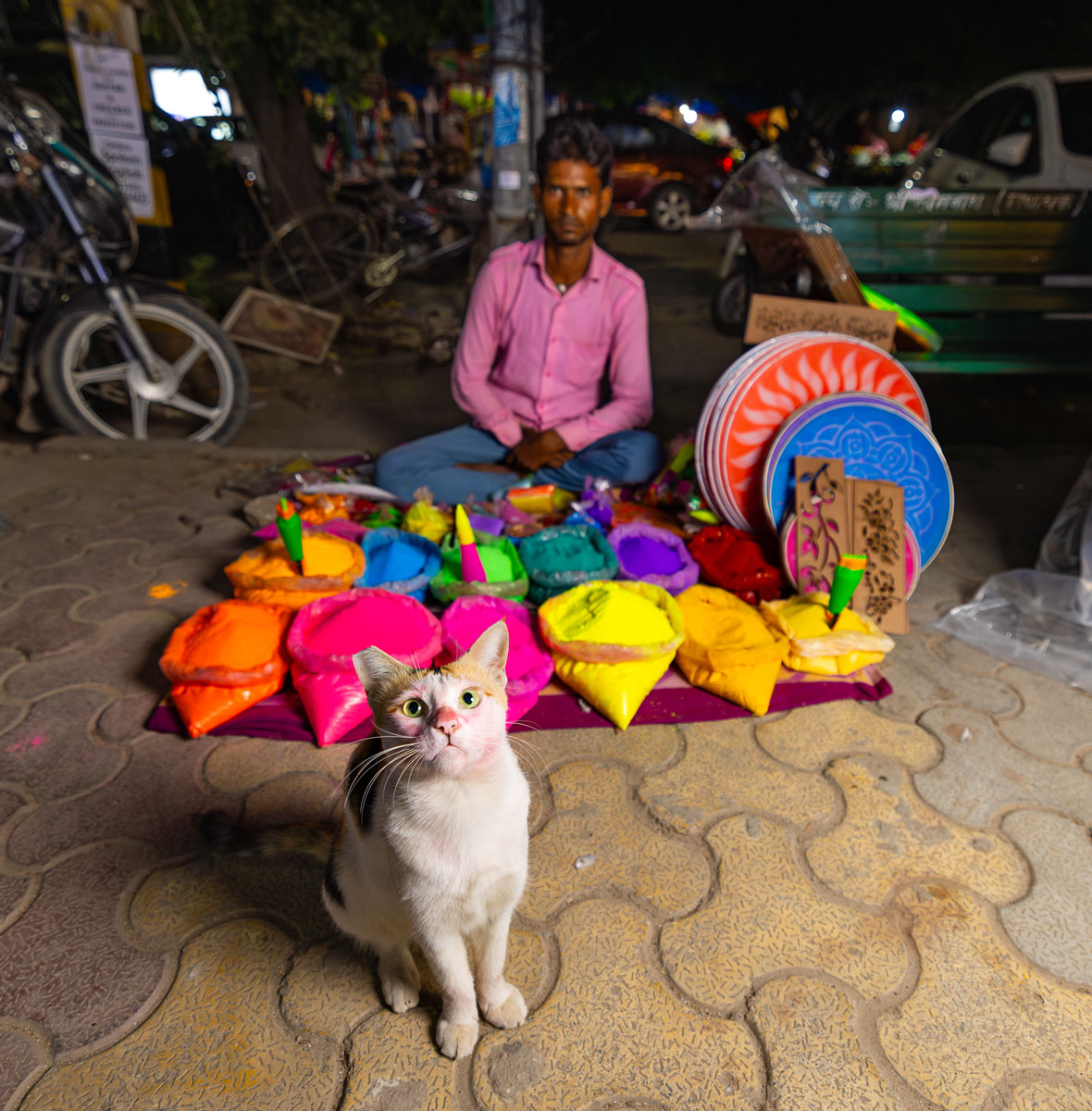
Autumn brings clay lamps and marigold garlands to the marketplaces of Delhi as people prepare for Diwali, the Festival of Lights. In one Hauz Khas market, a tricolor cat named Kittu had a curiously pink face. "She looked inside a bag of powdered color," a vendor laughed, pointing to a row of fluorescent sand, which is used for rangoli art. The curious calico and her orange tomcat friend, Monu, had recently been sterilized and returned to the market.

The oldest and busiest market in the city is Chandni Chowk, a sprawling area in densely populated Old Delhi, which will awaken your senses like nowhere else. Flavorful street food sizzles on every corner, rickshaws and scooters blare their horns in symphonic competition, and cats and dogs thread between your legs as pedestrians shuffle shoulder to shoulder. Overhead, a web of tangled cables weaves between buildings, and if you pause to look up, you’ll almost certainly find a cat lounging above you. 

"Hinduism says to value every living being"

While the larger roads of Old Delhi are packed with people, it's the quieter side streets where you'll often find the felines. These winding, narrow walkways are lined with motorbikes—the primary mode of transportation in the busy city—and it's common to spot a cat warming a bike seat as they rest. When they wake, there's an abundance of food to find, and countless butchers from whom to seek scraps. 

Perhaps the most significant landmark in Old Delhi is the Jama Masjid, one of the largest places of Muslim worship in all of India. As we climbed the steps leading to the iconic seventeenth-century mosque, we glimpsed a tiny tabby tiptoeing through the gorgeous courtyard, which is surrounded by tall red sandstone gates. "Muslims are generally kind to cats here because of the Prophet Muhammad," explained Sumit Singla, an adoption coordinator who visited the mosque with us. 

Religion plays a large role in each adoption interview Sumit conducts, due to the beliefs and rituals common in the region. “During certain periods, Hindus will fast, and not have meat or eggs in the home. When I do adoption checks, I have to ensure the family will be willing to have cat food in the home at that time, and I do sometimes have to reject applications for people who refuse," He explained. Meat is commonly forbidden from Hindu temples, and seeing a cat inside Hindu places of worship is therefore quite rare. 

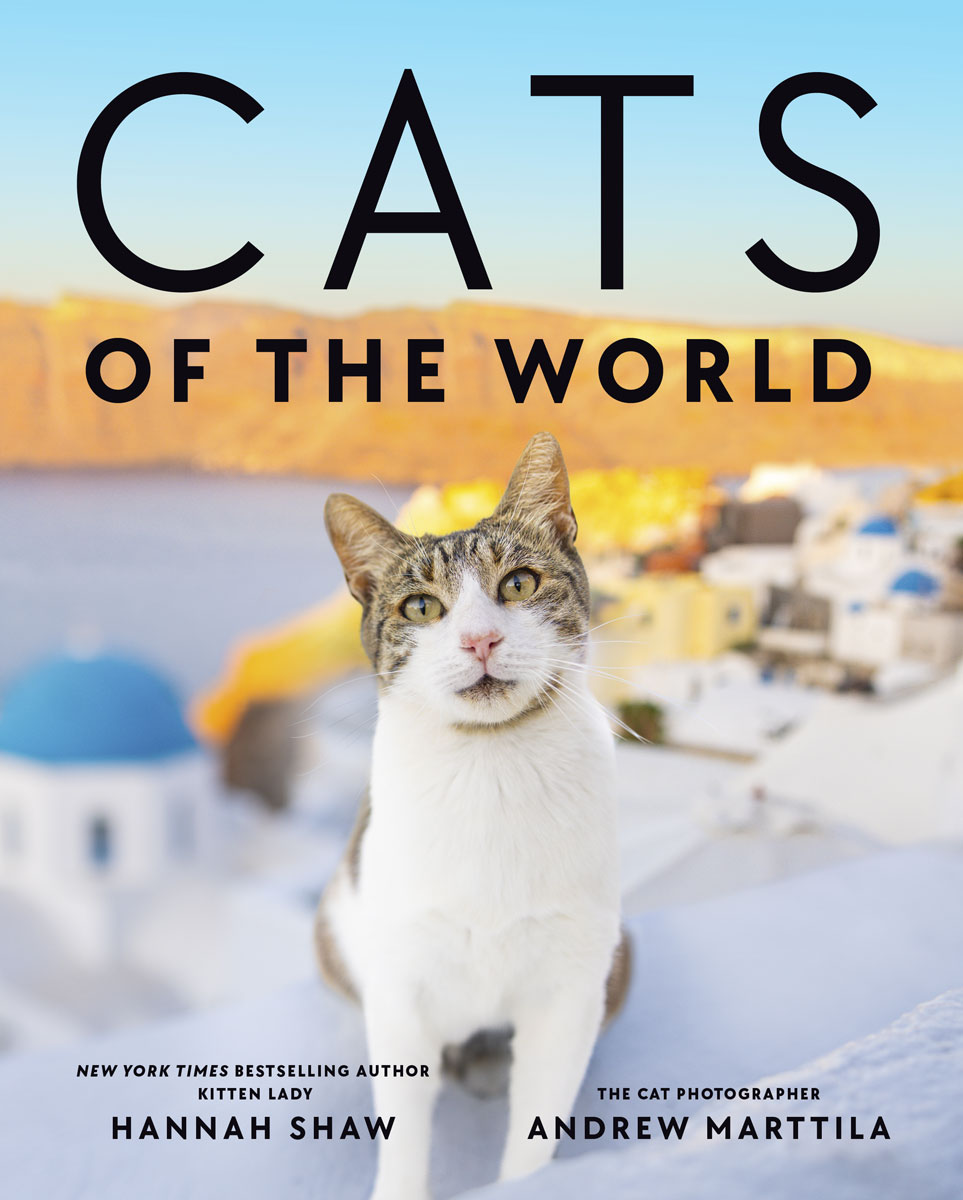
Cats of the WorldCats of the World (Andrew Marttila/Penguin Random House)"It's very difficult to argue with religion," added animal rescuer Ankita Agarwal. "There is a concept of purity for Hindus that relates to the consumption of meat, so some people are very uncomfortable feeding a cat. And there is a lot of superstition. Believe it or not, some people believe that if a cat cries, someone in the house will die. I have had to do emergency rescues of cats because of that."
But for young Hindus like Mansi, helping animals is part of their spiritual practice. "Some people ask me: 'There are so many people suffering and in poverty, how can you care about animals?' But I tell them: 'Hinduism says to value every living being,'" she said. "I invoke that we assign divinity to all living beings. Cats are also a manifestation of God. Your creator put them here."

FEMA offices forced to halt Hurricane Helene operations due to threats, militias

FEMA has been forced to temporarily stop disaster recovery efforts in several areas suffering the impacts of Hurricane Helene. Those pauses came from threats on workers and, in one case, the reported presence of an armed militia. 

The sheriff of Ashe County in northwestern North Carolina shared via Facebook that FEMA offices had paused operations in the county after facing unspecified threats in the state. 

"Recently in the mountain region, there have been threats made against them. This has not happened in Ashe County or the surrounding counties. Out of an abundance of caution, they have paused their process as they are assessing the threats," Sheriff B. Phil Howell wrote. "Stay calm and steady during our recovery, help folks and please don't stir the pot."

Those operations have since restarted. FEMA operations in Rutherford County near Asheville were paused this weekend due to reports of "armed militia" in the area. The Washington Post reports that the concerns about the militia were shared via email and the outlet confirmed that the emails were legitimate through conversations with federal officials. 

The news comes after weeks of right-wing misinformation about the storm and the government's disaster response, spread online and boosted by both Donald Trump and JD Vance. President Joe Biden has publicly condemned Trump, who has stated that recovery efforts are being intentionally delayed because Helene impacted Republican voters. 

“Mr. Trump and all those other people know it’s a lie," Biden shared in a press conference last week. "It’s just bizarre. They got to stop this. They’re being so damn un-American with the way they’re talking about this stuff.”

Biden then addressed Trump directly, saying he needs to "get a life" and "help these people."

Admonitions from Biden haven't stopped the Republican strategy. Trump running mate Vance continued to spread falsehoods about the recovery effort on Sunday and Trump himself has moved on to spouting misinformation about Hurricane Milton.  

Can friendships survive a lack of finances?

I have made all these decisions: to live as a writer — my decision. To bootstrap a software — my decision. Each non-revenue-producing moment has been by my own hand.

I accepted that, as an artist, I may never have a Mercedes or a Prada bag. I accepted that, as an entrepreneur, at least at the beginning, I would need to put money into my business that might otherwise be a down payment on a nice house. To not buy luxury or marble, I was ready for, and accepted.

And yet. I missed in those early days a consequence that has snuck up on me in mid-life: how much I really hate making less money than my friends. 

A friend group forms a community, and at best, a kind of family, which means your resources pool. By simply being a part of it, at least for now, I make the pool smaller than, say, an accountant friend would. (But of course, I tell better stories.) This bothers me, this sense that I drag the group down.

A social psychologist would say, “Ah yes, equity theory.” This means we strive for fairness in our relationships, that we want to feel an easy balance between what we get out of it and what we put in. Both giving more than you get and getting more than you give in a relationship can lead to loneliness. 

My friends, who have killed it in their careers and are doing well, I'm so glad to report, have been nothing but supportive. They would say, don’t worry about it. 

But there are standard exchanges, the dinner party, the birthday gift, the place to stay, that I want to be able to reciprocate. In long friendships, the years multiply, the debts seem to accrue, even if I'm the only one counting. They have things they can offer me I want to be able to offer in return. And there are other things, the vacation, the fundraising dinner, the conversations, in which, hell, I just want to be able to participate. 

We need your help to stay independent

I became a writer and dreamed specifically of being a travel writer and journalist, because I wanted to go out, experience the world, do, try, live. As travel writer Tim Cahill has written, "Adventure costs money." Over my career, both the travel writing industry and publication budgets in general have deflated like an unplugged bouncy house. This has turned journalism into a side hustle, with most writers I know scrambling to make money elsewhere. So now I'm a writer and a hustler: coach, software entrepreneur, ghostwriter, teacher, juggler — my decision. This scramble has resulted in the girl who always wanted to floor it in life becoming the brakes on the collective plans. I am the lowest budgetary denominator.   

I interviewed a travel influencer once for tips about traveling with mixed budgets, and after following their account, saw them post something along the lines of “What to tell your broke friend when they want to come on the group trip? Don’t.” It killed me to see myself from that angle. 

The hard thing to stomach is that being my friend has literally cost people I love. The dinner tabs they've picked up. The hosting they've done. “Seriously, don’t worry about it,” they would say. They tell me they’re proud of me for being a writer. For going for it. They tell me I am successful. And in ways, yes. 

A truth I cite often is that of the two essays I’ve written that have gone viral, I was paid $40 for the first, and $200 for the second. 

As an adult, you realize more and more how money slices and dices us into First Class and Priority, the not you’s and the not yets, the zip codes and carets. My plan was to be above it. The daily reality is that as someone with ADHD, which makes me more sensitive to rejection, I don’t like it out here. Making less money than my friends feels, at times, like a kind of rejection.

Making less money than my friends feels, at times, like a kind of rejection.

Supposedly, you become an artist because money isn’t important to you. Then it becomes something that’s on your mind all the time. Supposedly, you become an artist because you love beauty more than anything, and then you realize so much beauty is right through that door you can’t afford to enter. 

I have this fantasy that I “make it” and take all my friends on this big vacation. I’m standing on some dock, meeting them, all arms open and big smiles. “Can you believe this?” I say, we say, because we know how long I’ve worked and how hard it’s been for me and for them and we are just so tickled and it’s so funny that now I’ve made it. My software's been bought or my (as-yet-unfinished) novel is sold at auction, and I’m able to pay what I perceive as some tab in one big, all-expenses-paid celebratory swoop that says thank you, thank you, thank you. And perhaps, I’m sorry. 

"You’re being ridiculous," my friends would say. 

Knowing what I know now, mid-life, what decision do I make moving forward?

I want to keep the faith, but I have never before been so tempted to give in. Get a job as a communications manager at an AI sexbot company, or something. At night, I put on the private browser and sneak a peek at salary ranges. 

The entrepreneur in me says hold on just a little longer. But what if I’m never able to make it up to them?

Here’s the problem, paradoxically: There’s a stigma against sales and marketing in the writing world. It feels as if I’m diminished in larger society for not having money, but I’m diminished in my profession for seeking it.

I recently had an article published that I probably spent 50 hours on and got paid $100. I riddled it with links to my — sorry to use this word — offerings. With every link I added, I felt more and more exposed. 

Am I trying to be a writer or am I trying to make more money? Both. Both both both. Yes, please click the link. I want you to. Let it be known. I like being a writer. I don’t like being the broke one. It is my goal to make good money. Click here now. Sign up! Buy this! I would like it to be easier to be my friend.


The age factor election: “A vote for Trump could easily be a vote for a President Vance”

With less than a month to go until Election Day, the American people and the world will soon find out if the epic that is the Age of Trump is about to be over or if they will be forced to suffer through a sequel featuring the various characters and spin-offs that the MAGAverse 2.0 may spawn. In these final weeks, the story that is the Age of Trump most closely resembles some type of crime novel, one in which the crimes are announced and planned in public and then committed in plain sight.

Donald Trump is amplifying the Big Lie 2.0 as he primes his MAGA followers to preemptively reject the results of the 2024 election and to engage in acts of civil unrest and violence. Trump and the MAGAfied Republican Party are also attempting to recruit tens of thousands of “poll watchers” to stop virtually non-existent “voter fraud”, i.e. to intimidate Black and brown voters. On the state and local level, through legal, extra-legal, and illegal means Trump’s agents and other MAGA supporters are also attempting to infiltrate, manipulate or through acts of outright fraud to steal the 2024 election on his behalf. As Reuters recently highlighted, this danger is especially acute in the key battleground states. Georgia is one such battleground state where a small group of local Trump election deniers are in key positions to overturn the results of the 2024 presidential election. And as they did in 2020, Trump’s agents and allies are already preparing to flood the courts with specious lawsuits to stop Kamala Harris from assuming office if she wins the 2024 election.

America’s democracy crisis is global. Donald Trump’s campaign is being supported by hostile foreign actors such as Russia who are engaging in a sophisticated propaganda disinformation psyops campaign online, via social media and across the wider right-wing media space with the goal of weakening America’s democracy at home and the country’s influence and power abroad. One of Trump’s main propaganda points is that America is imperiled by an “enemy within.” This appears to be an act of projection. Bob Woodward reports in his new book that Trump appears to be beholden to Vladimir Putin – and has acted in service to that loyalty in ways that have imperiled the collective safety and well-being of the American people.

The choice between Kamala Harris, a responsible leader and defender of American democracy, and Donald Trump, a demonstrated enemy of democracy and the nation’s interests, who has promised to be a dictator on “day one” of his “presidency,” should not be easier or clearer. Nonetheless, public opinion polls continue to show that the 2024 election is one of the closest in modern American history. A new poll by the New York Times and Siena shows that an increasing number of Americans view the vice president as representing a force for positive change (Harris leads Trump by 2 points on this question). These findings complement other polls that show Harris with momentum and leading Trump in the national vote (again by relatively small percentages that tend to be within the margin of error). While approximately half the voters want the book and story that is the Age of Trump to be over and done with there are likely just as many who want many more stories and more time with their favorite character, Donald Trump.

In an attempt to make better sense of this unprecedented and truly historic election, where we are as a nation, and what may happen next, I recently spoke to a range of experts.

Norm Ornstein is emeritus scholar at the American Enterprise Institute and co-author of the bestselling book "One Nation After Trump: A Guide for the Perplexed, the Disillusioned, the Desperate, and the Not-Yet Deported."

I am nervous. No matter how many disgraceful things Trump does and says, his support is stable. His floor is probably 45% and the ceiling is maybe 47%. That could well be enough to win the requisite electoral votes. Combine that with the voter suppression, voter intimidation and chicanery by his MAGA allies in key states and it makes me nervous. I believe Harris is ahead and should win. But….

In the weeks until Election Day, I expect more October surprises.

I am encouraged by the Harris campaign, which moved into professional high gear without a hitch when Biden withdrew, and she, and [running mate Tim] Walz, have run a strong campaign. Trump has clearly deteriorated and, as the Times pointed out, turned not just more incoherent but much darker. By all rights, his authoritarian, mean, lying and threatening rhetoric should have disqualified him from any office or position of trust. That it has not is truly troubling.

In these remaining weeks, I am worrying about more October surprises, including more hurricanes and the possible widening of war in the Middle East. And maybe even Supreme Court rulings. I fear Trump will grow more desperate, knowing if he loses, jail could be in the offing. Who knows what Trump is capable of doing?

If Kamala Harris wins, the key question is what happens with the House and Senate — especially the Senate. If it goes to the Republicans, we will have a rough couple of years, with executive and judicial confirmations facing rocky roads — and a radical right Supreme Court that will do its best to cripple executive action, its immunity decision notwithstanding. If, somehow, Democrats win the trifecta, the critical question will be whether there are 50 votes in the Senate to change the rules to allow some key policies — reinstating Roe, passing democracy reforms, sensible gun reforms — to pass ultimately with simple majority votes.

We need your help to stay independent

If Trump wins, expect his pledges to invoke the Insurrection Act, provoke political violence, focus on retribution, pardon the January 6 criminals, blow up our alliances and form a new one with dictators. Expect an administration run by thugs like Stephen Miller, Steve Bannon, Michael Flynn, Ric Grenell and Roger Stone.

Matthew Dallek, a political historian at George Washington University, is the author, most recently, of “Birchers: How the John Birch Society Radicalized the American Right.”

Why has the presidential campaign remained a razor-thin contest since Vice President Kamala Harris became the de facto Democratic Party’s nominee? First, some voters seem to be willing to overlook Trump’s manifest unfitness for office. Much of the public believes that Trump has no morals, revels in the dehumanization of minority groups and tramples on the rule of law — but many voters also have concluded that he, more than Harris, is able to promote people’s economic security, which is one reason why he has remained so competitive.

Second, this tight campaign — Kamala Harris should be winning by a landslide given Trump’s status as a felon and an insurrectionist — reflects the metastasizing belief that the United States is broken, a system beset by unfixable ailments. Rather than an economy producing opportunity for all, and a politics organized to address the public’s most urgent problems and concerns, many Americans have become jaundiced and cynical. Interviews with swing voters conducted by major news outlets reveal their disquiet: their belief that whoever prevails this November will not improve their lives and that Washington, D.C. is corrupt and inept. Neither Trump nor Harris, these undecided voters seem to be saying, will help them afford college, childcare, home ownership and health care. The public’s dyspepsia helps explain Trump’s political viability; his brand promises to destroy a rigged system and Americans’ rage and cynicism act as fuel to his campaign.

This year’s election is fraught. It puts the United States at an inflection point echoing some of the most destabilizing developments of the 21st century — nine-eleven, the Great Recession, Trump’s 2016 victory, the pandemic, January 6. Not since the late 1960s and early 1970s has the country experienced such a spate of political violence. If Trump were to lose, it’s virtually impossible to envision him accepting the election results; he is likely to accuse his enemies of stealing the election and urge his most passionate followers to take to the streets.

If Trump prevails in November, however, the nation would likely be plunged into a different kind of chaos. A Trump victory would sow a crisis of democratic legitimacy and the nation would probably enter a period of prolonged instability. Trump seems poised to move with speed to advance his autocratic, isolationist, nativist, anti-rule-of-law agenda. As president, he would escape accountability for his alleged and proven criminal conduct. A Trump presidency would strain the nation’s judiciary, election system, Department of Justice and international alliances. Put differently, the nonstop traumatic impact of the Trump years is unlikely to end on Election Day and the next few months pose the latest in a string of stresses on the nation’s democratic resiliency.

Hal Brown is a clinical social worker and was one of the first members of the Duty to Warn group. He has extensive expertise in working with multiple personality disorder (now called dissociative identity disorder).

As Election Day approaches, I am experiencing mixed emotions. I am feeling run-of-the-mill trepidation to off-the-charts trepidation. I am not debilitated because my partner and close friends are here to support each other and because I write a political blog.

I always anticipated that the election was going to be down to the wire, but nobody could have guessed that Trump would have had two people attempt to assassinate him. These events played right into his narrative as being some kind of Heaven-sent heroic savior.

As a retired psychotherapist who is always balancing looking inward and looking outward, I weigh worst-case scenarios. I do with myself what I would have done with my clients who would be living in terror over the prospect of a Trump win. In my inner life I know I will hold my friends close and my loved ones closer. In my outer life, I will make a plan for myself to join the resistance against a Trump regime in whichever ways I feel I can be the most effective.


Want a daily wrap-up of all the news and commentary Salon has to offer? Subscribe to our morning newsletter, Crash Course.


As the election approaches, I think we will see, excuse the cliche, more of Trump being Trump. I also think we will see an increase in his cognitive decline, which I hope against hope is covered in the mainstream media. The public must be reminded that while the vice president is the only member of the Executive Branch who can’t be fired, the president can essentially be fired by the vice president should he become significantly impaired. This is accomplished through the 25th Amendment. People must realize that a vote for Trump could easily be a vote for a President Vance.

If Harris wins life will go on for me. I will breathe a sigh of relief once she is sworn in. I will probably be hard-pressed to find subjects to write my blog about. I can’t say much more than if Trump wins my life will go on even as he bends the country towards a nationalistic brutal authoritarianism. I know that because of my living circumstances here in liberal Oregon, my life won’t change that much. I will, however, see draconian changes in other parts of the country. How quickly and how harshly these will be implemented can’t be predicted. Neither can the blowback coming from Democracy loving protesters. Like others, I think violence is a very real possibility.

I want to share some advice, and hopefully some wisdom, from my 40 years as a psychotherapist and from the insights I gained from both my own clients and from my own therapists. In addition to what I said above, I would remind everyone who feels overwhelmed that no matter how horrific things get you are not alone in the resistance. The most insidious feeling during times of stress is loneliness. If you feel this and want to hide your head under a blanket force yourself to rally whatever strength you can muster and reach out to like-minded people.

David Pepper is a lawyer, writer, political activist and former elected official. His new book is "Saving Democracy: A User's Manual for Every American."

I am feeling disturbed. The scale of disinformation dominating the country is foreboding about the politics of the future. And the normalization of far-right extremism (in the form of JD Vance) is very dangerous. In the end, while Trump is the central focus of this election, the broader extremism of the anti-democracy right is on the ballot on many levels — along with truly dark tactics on how they advance that agenda. The bottom line: even if Trump loses, this election makes clear the long-term challenges we face go far beyond this particular cycle.  

In the weeks until Election Day, I expect more October surprises. More lies. Attempts at suppression. Outside interference. Election denialism. We are seeing the extent people are willing to go to secure power.

If Donald Trump wins, every promise he and JD Vance have made — and everything written in Project 2025 — become fair game for them to fulfill beginning next year. From privatizing weather forecasts to attacks on public education, unions and workers, to bans on abortion and IVF, everyday Americans will quickly see how long-sought right-wing priorities will quickly upend their own lives, their communities and the nation as a whole.

Indigenous voters could give Harris-Walz an edge in “tribal wall” swing states

Native American leaders are drawing attention to their demographic as a potentially decisive group in the 2024 election, especially in what Stephen Roe Lewis, governor of the Gila River Indian Community in Arizona, calls the “tribal wall” — Arizona, Nevada, North Carolina and Michigan, states with relatively high proportions of Indigenous voters.

On Oct. 9, Democratic vice-presidential nominee Tim Walz made a stop in Arizona to meet with tribal leaders about what they could expect if Kamala Harris wins next month's presidential election. The Tucson Sentinel reports that Lewis stressed the importance of Indigenous voters in President Joe Biden’s narrow victory in Arizona in 2020.

“Arizona, Wisconsin, Nevada, North Carolina and Michigan all have substantial tribal populations,” Lewis said. “And if we make our voices heard by voting, we can do in the rest of the country what we did here in Arizona in 2020: help elect the next president and vice president of the United States.”

There are roughly 4.7 million eligible Native American voters in the United States, and many of them are concentrated in some of this year’s most contested states. In Arizona, a state decided by less than 11,000 votes in 2020, there are more than 319,000 Native American voters, and leaders in the community have been warning the candidates that their votes could be decisive.

At the event with Walz last Wednesday, Lewis came out in support of the Democratic ticket, saying that the Minnesota governor “gets the importance of the Native vote.” Indeed, Walz's state is also home to the nation's highest-ranking Native American elected official, Lt. Gov. Peggy Flanagan, who would become governor if Walz is elected vice president.

“The tribal vote has never been more important,” Lewis said, adding that Walz “respects tribal nations as equal partners" and predicting "an unprecedented partnership" with Native groups "in this next administration.”

In Arizona, the Native American population leans heavily Democratic Party, with Biden winning the Indigenous vote in the Grand Canyon State by a 58-point margin in 2020, according to SplitTicket

We need your help to stay independent

In Wisconsin, where there are around 93,000 Native Americans, the Native vote was much more evenly split, with Biden winning among the demographic by a 3.8-point margin. It’s worth noting that the Census Bureau has sometimes struggled to accurately count the number of Native Americans in Wisconsin, and the 2010 census reportedly undercounted the group by about five percent.

In North Carolina, where there are around 209,000 Native Americans, according to census data, Indigenous voters have swung heavily toward Republicans in recent decades. In 2012, Barack Obama won among Native voters by nearly 21 points, but by 2020 that had completely reversed, with Donald Trump prevailing among the group by 28 points.

In Nevada, where the Census Bureau reports around 67,000 Native Americans, Indigenous voters will be allowed to vote with the Effective Absentee System for Elections for the first time in 2024. That system allows residents of Native reservations, many of whom live far from post offices or polling places, to register to vote electronically from home.

In Michigan, which has an estimated 148,000 Native Americans, Indigenous organizers are pushing a concerted effort to get out the vote, providing resources for requesting a ballot and voting on Election Day.


Want a daily wrap-up of all the news and commentary Salon has to offer? Subscribe to our morning newsletter, Crash Course.


Over the course of American history, Native peoples faced an uphill battle in exercising full citizenship rights, both because of official and de facto discrimination and also through underinvestment in voting infrastructure in Native American communities.

In Nevada, for example, residents of the Duckwater reservation had to travel 140 miles to reach the nearest polling location, an issue that eventually found its way to the Supreme Court. Voting by mail also presents a challenge because many reservation residents do not receive mail service at their home addresses and may use a shared post office box. (Typically, voter registration must be linked to a fixed physical address.) 

In an August appearance on MSNBC, Minnesota Lt. Gov. Flanagan said it was urgent for presidential campaigns not to overlook Native American voters, especially in what is expected to be a tight election.

“Native people are strategically located in swing states across the country and our vote, the Native vote, can make or break a campaign or election,” Flanagan said. “So, in many ways, ignore us at your peril.”

Nature keeps evolving crabs and the internet is obsessed. What’s going on here?

As XEC, the latest COVID variant takes hold, we are watching viral evolution play out on a time scale short enough to follow, with different strains of the SARS-CoV-2 virus independently acquiring similar or functionally similar mutations that improve its ability to infect us or to evade existing vaccines.

This is the same process that occurs over tens of thousands, even millions of years in living creatures, from slugs to dogs to you and me, producing the incredible diversity we see in the tree of life along with startling replays of the same idea, known formally as convergent evolution. This is simply when nature finds similar solutions to similar problems in evolutionarily distant groups — think about how dolphins and bats each evolved echolocation, despite being unrelated. 

One of the most prominent — and pinchy — ways this manifests is known as carcinization, the idea that nature keeps evolving crabs. Indeed, a crab-like body shape, or morphology, has evolved numerous times independently throughout evolutionary history. From an outsider’s view, it seems like crabs appear so often because Mother Nature “loves” crabs. In the immortal words of English zoologist Lancelot Alexander Borradaile, who coined the term, carcinization is “one of the many attempts of Nature to evolve a crab.”

The concept is so intriguing and delightful, it has spawned the crab meme, which swept some little nerdy part of the internet a few years ago and with it, a wacky speculation that we are all going to evolve into crabs one day. But all bizarre fantasies aside, what’s really happening here is far more interesting.

Cancer the crab

It goes without saying, nature is not consciously trying to evolve anything. Even human intelligence arose through the randomness of natural selection. With all due respect to Borradaile and his fans, that’s not how this works. Rather, if the same sort of thing is evolving over and over, it’s probably because that sort of thing is a trait that offers a survival advantage to species existing in similar situations.

Convergent evolution is what we see when we observe that bats and birds have similar development of their arms into gliding wings, which initially allowed them to glide, and then to fly. Or when we notice that the extinct ichthyosaurs, prehistoric fish, have a very similar body outline, down to the bottlenose shape and tiny teeth, as the modern dolphin — which is not a fish at all, but a mammal. In either case, the hydrodynamic body shape lets them both swim rapidly over long distances.

Carcinization is “one of the many attempts of Nature to evolve a crab."

Another example can be seen among the marsupial mammals of Australia, an island where animal evolution diverged from the rest of the world far back in evolutionary time, we see creatures with eerie parallels to mammals from other continents, creatures that occupy the same ecological niche or role and have evolved similar body shapes or abilities to cope.

Yellow crab on the beachYellow crab on the beach (Getty Images/Bob Stefko)We see this as well in the existence of many types of decapods, which is the technical term for crustaceans with a crab-like body shape. This includes crabs, which evolved from the common ancestor of all crabs, and it includes other kinds of crustaceans with completely different ancestors, occupying a different branch of the evolutionary tree — yet a total plagiarism of the idea of crab.
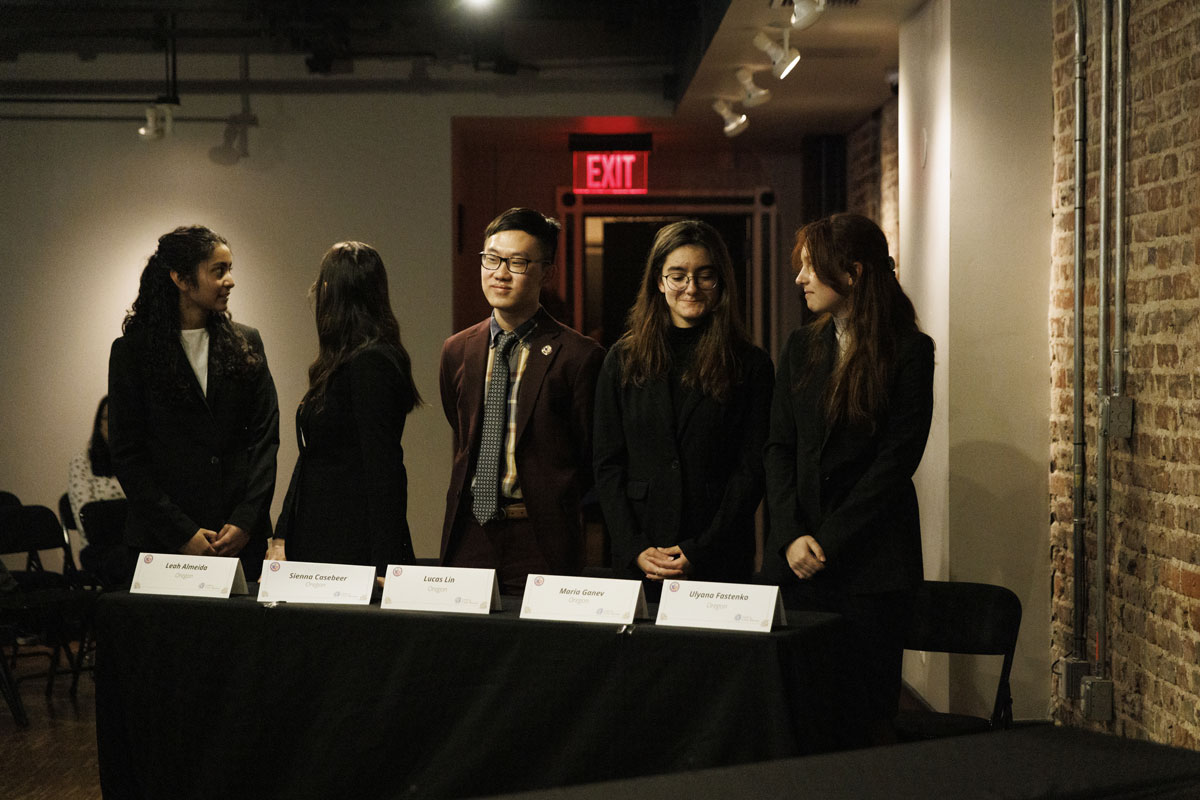
Carcinization is “really only applicable to that one animal group that we call decapods,” Sebastian Groh, a paleontologist at Cardiff Metropolitan University, told Salon. “And that’s the only group that it’s actually limited to. It doesn’t really occur anywhere outside it. I think that was sort of a misunderstanding.”

Groh’s area of study is the evolution of crocodiles and their relatives from two hundred million years ago to now, looking for example at the convergent evolution of long, narrow snouts in various different branches of their family tree.


Want more health and science stories in your inbox? Subscribe to Salon's weekly newsletter Lab Notes.


The idea that anyone (or any random evolutionary group) might evolve into a crab is a misunderstanding, sure, but makes for a striking meme — and maybe a fruitful opportunity to explain how evolution actually works.

Small changes, big impact

The evolution of any particular trait depends on a huge number of tiny changes. You don’t just have a gene for “looking like a crab.” Rather, for evolution by natural selection to produce crab-like appearance and behavior you would need to have creatures living in environments that give a survival advantage to having these crab-like traits. And you’d need to acquire all genes that code for the many proteins that produce such traits. To understand this, we need to look way closer.

The development of a claw or a flipper requires many particular different genes. And once again, no, the human genome is not a few mutations away from carcinization.

“You’re not going to find a mammal becoming a crab because maybe [the ancestors of crab-like organisms have] got a lot of other genes that would predispose them to that morphology and to that sort of behavior. They’ve got the set up. They’ve got the background,” James McInerney, who holds the chair in Evolutionary Biology at the University of Liverpool, told Salon in a video interview.

There are deterministic relationships in which certain genes go well or badly with other particular genes, and so similar patterns of genes reoccur.

Then again, we have to wonder whether that set up of genes evolved through natural selection — Nature “attempting” to evolve a crab — or just random luck. As the authors of one 2016 paper on convergence at both the molecular and the more observable, morphological level put it, “convergence is caused by either repeated adaptations of different evolutionary lineages to similar environmental challenges or chance.”

McInerney was lead author on a study on convergent evolution in bacteria that helps us understand how this background might work, and to distinguish these two ways convergence may occur. He and his team used machine learning to look at the genomes of a whole bunch of different strains of Escherichia coli, a bacteria in which different strains repeatedly evolve in convergent ways, to see whether this occurs by chance or by a process of natural selection. 

Now, in bacteria — which are a type of prokaryote, or single-celled organism — a lot of evolution happens by horizontal gene transfer. This occurs when genetic material is incorporated into an organism’s genome in some way other than through reproduction. Bacteria pick up new genes from various sources, keeping their evolution interesting. This isn’t necessarily good for us, though: antibiotic resistance has become a massive problem in large part due to horizontal transfer of genes from drug-resistant species into bacteria species that were once routinely killed by medications.

We need your help to stay independent

In E.coli, this means that its pangenome — the totality of genes that are found across all strains — has a huge amount of variability. What McInerny’s team found was that despite all this variability, you could actually predict a lot of what genes you’d find in a particular strain if you knew some of the other genes. To simplify a bit, if Bacteria A acquires gene 1 by horizontal transfer and also acquires gene 2, and then we notice that Bacteria B has also acquired gene 1, we might correctly predict that Bacteria B has gene 2 as well — because in this scenario, genes 1 and 2 tend to stick together in a genome.

In the authors’ words, “at least part of the pangenome can be understood as a set of genes with relationships that govern their likely cohabitants, analogous to an ecosystem’s set of interacting organisms.”

What this means is that evolution in E. coli, despite the serendipity of horizontal gene transfer, isn’t just a matter of chance. Rather, there are deterministic relationships in which certain genes go well or badly with other particular genes, and so similar patterns of genes reoccur, resulting in repeated patterns of evolution. As a result, where you see convergently similar bacteria that evolved from very different ancestors, you actually see the same types of genes in these very distant relatives. Despite their different evolutionary history, they come up with the same or very similar genetic recipes when faced with similar survival challenges.

The details of convergent evolution might of course be more complex in the eukaryotes, multicellular organisms like humans or decapods with large genomes, the total genetic material of an organism. Most traits you can actually observe — what’s called the organism’s phenotype — result from a unique combination of genes and how those genes are expressed.

“I suspect that in eukaryotes, it won’t be just point mutations, either,” McInerney said, referring to small changes in a genome. “It’ll be changes in expression and genetic changes that influence other genetic changes to make them more likely or less likely. I think that’s a really productive field of research right now.”

Tim Sackton, director of Bioinformatics for the FAS Informatics Group at Harvard University, notes that while we can easily look at a sequenced genome and identify where the genes that code for proteins are, the other parts that control where and when these genes are expressed is something we’re still trying to figure out.

”We don't really know the code for these in the same way for these regulatory regions,” he told Salon. And those regions may be very important in understanding convergence. Take for example the puzzle of the flightless birds. Evidence suggests that the loss of flight evolved independently as many as six times, rather than just once, in the ancestors of different ratites — the group of flightless birds including the extinct moa and elephant birds as well as the ostrich, kiwi, cassowary, emu and rhea. In a 2019 study, Sackton and colleagues found that regulatory elements — the ones that determine when a gene is expressed as a protein, like an on-off switch — were where the action was.

“We’d see the same elements would get altered in multiple of these independent transitions to these flightless birds and it’s not only the same element,” Sackton explained. Rather, certain genes tend to accumulate in flightless birds, like clusters of modified elements of the genome.

The loss of flight — which plays out at the phenotype level in changes in the forelimb, for example — thus resulted from way more than a single change in the genome. Instead, various genes work together, with regulatory genes playing the more significant role.

“There’s a lot going on in these ratites, there’s many changes, both in terms of skeletal morphology but also in terms of feather structure and a lot of other things. So it’s a very complicated phenotype, but not every aspect of it is necessarily convergent,” Sackton noted.

There’s still so much to figure out about how convergent evolution works, not just in crabs but in all organisms. And the results can be striking.

“The crabs are showing that’s a very overt phenotype, right?” McInerney said. He emphasized that the convergences we see — so many things that look like crabs, the camera-like eyes that evolved independently in both squids and humans, the emergence of opposable thumbs in giant pandas, chameleons and us — emerge from similarly astonishing, if less obvious, evolution at the molecular level: in the once-hidden world of genes.

So why do crabs keep coming up, again and again? Not because nature chooses it, but because the crab “design” just works so well at keeping certain species alive and passing down those genes. It’s the intricate beauty of evolution in action. As McInerney put it, “Genome evolution favors particular outcomes, and we see it in bacteria. We see it in crabs.”

“Focused on nitpicking”: Vance stews over another fact-check

JD Vance really doesn't like being fact-checked. 

The vice presidential candidate fumed over a correction during a recent debate with Tim Walz, and he stewed once again during a visit to ABC's "This Week" that didn't allow him to spread lies. 

Vance started off the interview with a favorite canard of the Donald Trump campaign in recent weeks: that the federal response to Hurricanes Helene and Milton was delayed because affected areas reliably vote for Republicans. FEMA has outright rejected the idea that they are using voter maps to determine how quickly hard-hit areas receive aid, but that hasn't stopped the conspiracy from growing in right-wing circles, aided by boosts from both Trump and Vance. 

"If these areas were a little more Democratic, maybe Kamala Harris would have focused on them more," Vance said of the response, declining to note that Harris is not currently the president of the United States.

"Senator Vance, I’m just going to say that local officials — local officials and FEMA officials say that is just flat wrong," host Martha Raddatz chimed in, before moving on to rumors spread by the Trump campaign about the town of Aurora, Colorado. 

Trump threw a rally in that city earlier this week and focused on the idea that certain apartment buildings in the city had been taken over by Venezuelan gangs. When Raddatz said the stories were "grossly exaggerated" and cited the town's own mayor, Vance countered that the word "exaggerated" means  "there's got to be some element of truth here."

Vance has previously admitted to making up or exaggerating stories on purpose to suit the narrative of his campaign, including a lie he promoted about Haitian immigrants in Ohio eating local pets. That story led to a string of bomb threats and government closures in the town. Raddatz attempted to check Vance and keep him from sharing further falsehoods, which led Vance to rage that she was "focused on nitpicking everything."

“Easily handled by the military”: Trump reveals plans to squash dissent

Donald Trump threatened to use the military to squash dissent after the election in an interview with "Sunday Morning Futures" on Fox News.

Fox News host Maria Bartiromo set Trump up to expound on his campaign's ongoing smearing of immigrants. Trump didn't take her up on the offer, instead choosing to focus on American citizens who disagree with his platform.

Echoing rhetoric he shared at his outwardly racist rally in Aurora, Colorado earlier this week, Trump called left-wing dissenters "the enemy within" and said that any uproar over his potential second-term could be put down by the military. 

"I think the bigger problem is the enemy from within, not even the people who have come in [and destroyed] our country," he said. "We have some very bad people, sick people, radical left lunatics. And it should be easily handled by, if necessary, by National Guard, or if really necessary, by the military." 

The remarks fall in line with a ramping up of strongman rhetoric from Trump in recent weeks. During that rally in Colorado, he vowed to use the state to undertake the largest deportation scheme in American history and accused immigrants of bringing disease into the country. 

Trump's alarming statements on Sunday came after Bartiromo shared President Joe Biden's worry that the election would not be "peaceful." The former president, who has openly fumed that he's not facing off against Biden for a second time, took a quick series of shots at his old opponent. 

"He doesn't have any idea what's happening, in all fairness," Trump said. "He spends most of his day sleeping."


“We had a peaceful transfer of power”: Speaker Johnson tries to memory-hole Jan. 6

Members of Congress should know better than most that there was nothing calm and tidy about January 6, 2021.  

Republican Speaker of the House Mike Johnson tried to play off the transition between the Donald Trump regime and the current administration of Joe Biden as business as usual when he stopped by "Meet the Press" on Sunday. 

While being grilled on whether he would certify the upcoming election if Kamala Harris were to win, Johnson noted that he would certify the winner if the elections were "free and fair."

"Of course, I'm going to follow the Constitution. I'm going to follow the law. That's my job. That's my duty," he said. "I took an oath to do that."

Johnson went on to say that he believes Trump's margin of victory will be so massive that there will be no turmoil around the election results. Harris and Trump have been polling closely in recent weeks, with many results in key states falling within the polls' margin of error. 

"I think this [margin's] going to be so large there will be no question," he said. "I think Donald J. Trump is your next president and that can't happen soon enough."

When host Kristen Welker pinned Johnson on his repeated qualifier that he'd certify a "free and fair" election, Johnson seemed to forget the chaotic  days around Biden's inauguration. 

"The point is the process works. We have the peaceful transfer of power. We did in 2020, we will in 2024," he said. "Everybody can sigh and take a deep breath."

Johnson's comments that the transfer of power was "peaceful" are particularly galling in the wake of Jack Smith's most-recent bombshell filing in Trump's ongoing election interference case. Those documents made it clear just how far Trump was eilling to go to interrupt the transfer of the executive branch to Joe Biden and underlined his encouragement of a mob that stormed the Capitol.

“Citizen Nation” shows there’s hope for democracy, and our future, in championing civics in schools

PBS could not have wanted for better organic, coincidental advertising for its four-part series “Citizen Nation” than Oakland University student Marcus Johnson’s instant virality following the vice presidential debate. 

The political science student succinctly blew apart JD Vance’s attack line on Vice President Kamala Harris for neglecting to make any significant changes while she’s held office, by pointing out something so simple that few if any fact checkers bothered to mention it.

But it needed to be said, he told MSNBC’s Jacob Soboroff in a post-debate interview. “If anybody took high school civics class, they’d know what the vice president can do and what the vice president can’t do. . . that’s not how the vice presidency works," Johnson fumed. "You don’t get to what you want, you do what the president delegates you to do.”

Social media celebrity can be fleeting, but seeing Johnson’s social media following swell after dropping basic knowledge to a cable news reporter shows how desperate we are for evidence of informed common sense.  

In speaking with Soboroff’s MSNBC colleague Joy Reid the next day, Johnson humbly shouted out his high school civics teacher while explaining, “I actually am one of the rare people that have looked at the Constitution every now and again. So I get a lot of knowledge from there.”

If only some of Johnson’s promotional electricity could have been redirected toward boosting “Citizen Nation,” a riveting show about civics-minded students like him.

The four-part “Retro Report” documentary takes us into the lives of dozens of young men and women studying the United States Constitution as part of their curriculum, to prepare them for the national civics competition known as “We the People.”

Over 10 months “Citizen Nation” producers followed students in Wisconsin, Nevada, Wyoming, West Virginia, New Jersey and other states, as they learned to apply the Framers’ intentions to current event scenarios. 

The national contest, held in Washington D.C. each year, tests the students’ knowledge of our system of governance and democracy as judges pepper them with questions in a forum meant to emulate congressional hearings. Its goal is to instill a lasting understanding of how our democracy’s foundational document guides our governance and principles.

Citizen NationCitizen Nation (PBS)What moves “Citizen Nation” are the multiple profiles of students and teachers hailing from an array of communities across the country, all of whom are as motivated to use what they learn to empower themselves to be more engaged in our democracy as they are to take top ranking in the national contest.   
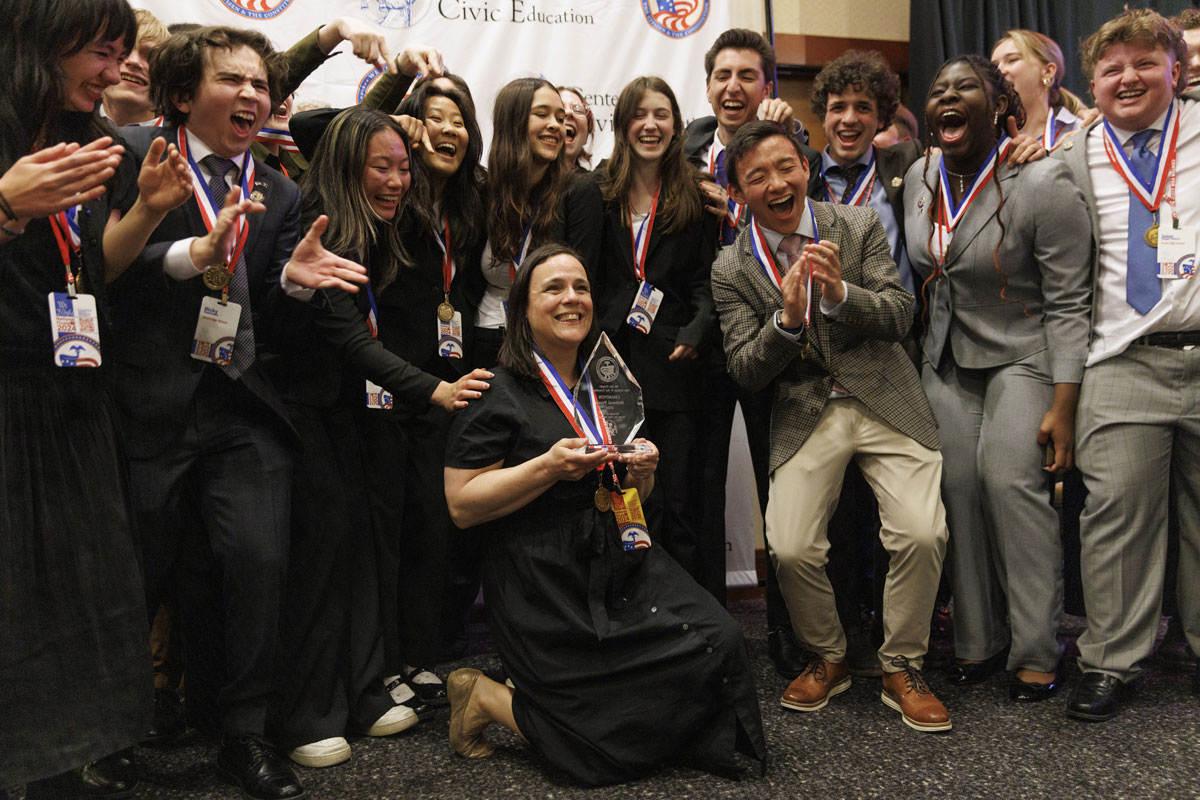
“I think that teaching students to critically think about government helps them better find their way into society,” says Sheridan, Wyo., teacher Mike Thomas. “I just want to create better citizens: better thinkers, more engaged citizens. That, to me, is much more important than anything else.”

We need your help to stay independent

Producers follow “We the People” teams from schools that are amply funded and expect to win and others whose teachers and administrations bootstrap it through their preparations. Some of its featured kids have stable family lives. Others live on the economic margins and are barely holding on. A few are working to support their families while attending school. All profess a strong belief that they’re sowing the seeds for a better future; some say it to urge themselves onward. 

Through these individual stories, "Citizen Nation" constructs a quilt of resilience and hope, even in painful moments. Thomas’ fellow Wyoming instructor Erin Lindt gives so much of her soul to her scrappy class of economically disadvantaged kids that it takes a toll on her marriage. 

Another teacher in West Virginia merrily encourages the students in his working-class mining town to show their personalities and be diligent. After school, the camera follows him to the privacy of his car where he lights up a Pall Mall and crumbles, burned out by the job and the crush of having to care for ailing parents.

Those people know we’re counting on their students to steer our collective ship out of its tailspin, commanding an emotional investment in these four episodes. Corny as it may be to say that you’ll want every kid in this show to win, that is true. Each has valuable reasons for taking the competition seriously beyond the fact that it will look great on college applications.

Citizen NationA team celebrates at the We the People national championship in Leesburg, Va. (Moriah Ratner/Retro Report/PBS)One young woman in Las Vegas, the daughter of Nigerian immigrants, is moved to tears as she describes finding out that her father, a University of Nevada Las Vegas professor, was wrongly imprisoned for two years when she was too young to understand what was happening. For her, learning the intricacies of the Constitution is a life mandate – she already knows she doesn’t want other little girls to go through what she did.
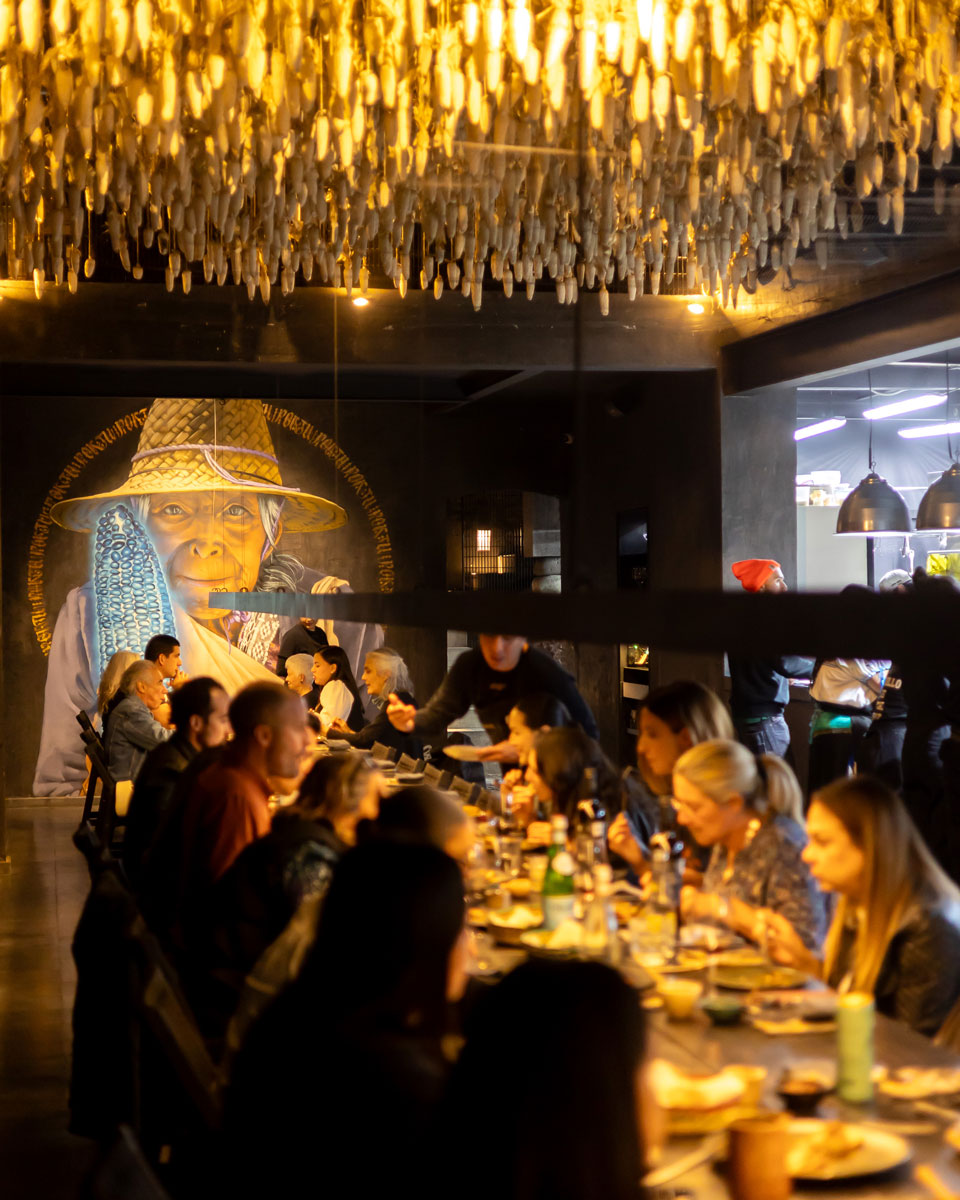
Another student in Oregon admits she didn’t care about the Constitution at all until she began studying it. Now she waxes appreciatively about the beauty in John Adams’ writing.


Want a daily wrap-up of all the news and commentary Salon has to offer? Subscribe to our morning newsletter, Crash Course.


Some participants want to go into politics. Some simply want to have an unassailable knowledge of their rights. But a ubiquitous concern is that the American public's alarming refusal to find compromise with people who hold opposing political viewpoints has brought us to a dangerous impasse.

Lindt opens the series by expressing her fear of what we as a nation have become as her reason for teaching her students about the Constitution’s meaning as a unifying force. “You want kids who have experienced life to be your next generation of problem solvers,” she says.

“Citizen Nation” vibrates with the same earnest energy that made 2002’s spelling bee documentary “Spellbound” so memorable, although where that documentary uses its competitors’ stories to test whether hard work and self-assuredness are surefire keys to success, this series doesn’t bother with such fantasy.

Not every student that “Citizen Nation” monitors will win in this round of the contest or, possibly, in life.

Ultimately, triumphing in a high school contest isn’t the point. Everyone, adults and kids alike, is invigorated in knowing that what they’ve learned in the program will remain with them far beyond high school. “It’s intense,” says one “We the People” participant, “but I’ve never felt smarter in my life.”

New episodes of "Citizen Nation" air at 9 p.m. Tuesdays on PBS member stations and are available to stream at PBS.org and on the PBS app. Check your local listings. 

In Guadalajara, Xokol’s ancestral cuisine is redefining Mexico’s fine dining scene

It seems like everybody is making their way to Mexico City to see for themselves how good the madre mole at Pujol is, if the tuna tostadas and carajillos at Contramar are worth the hype and whether the drinks at Tlecān are really the best in the world. 

Mexico City or la ciudad, “the city,” as it’s known colloquially, earned its moment. It’s worth the trip for the food alone (the amount of history and culture is another trip unto itself), but those in the know are spending their time elsewhere: a 90 minute flight west, in Guadalajara — Mexico’s second largest city and burgeoning playground of gastronomy, art and culture.

Nestled within the heart of the city in the Santa Teresita neighborhood is a black wall with thin, minuscule letters spelling out “Xokol,” the Náhuatl word describing colored corn. It’s not quite the seamless solidness of the wall Jennifer Connelly’s character encountered in the “Labyrinth,” but it does have a similar quality. Because once you move into the depths of the barrier and wind through a short tunnel entrance, you’re immediately transported into a room that feels more ceremonial than one solely made for dining.

The transition from the outside world to this interior is striking. Everything goes from technicolor to a muted black, where only occasional bursts of yellow light punctuate the darkness to showcase the room’s focal points. A long oak table stretches the length of the room, unbroken and capable of seating up to 50 guests. Above, a large skylight is adorned with hundreds of suspended corn cobs, their illuminated forms offering one of the few sources of light in the dark and moody, monochromatic space. The bright light from the kitchen and a collection of backlit jars filled with corn kernels — evoking feelings of a science laboratory — also draw your eye. The scent of copal, a tree resin used by Mesoamerican cultures for spiritual, medicinal and practical rituals, wafts through the space. 

There are no tacos or burritos on the menu. Those would be considered too modern by Chefs Xrysw Ruelas and Óscar Segundo, the wife-and-husband duo behind the restaurant, in light of their mission — preserving their ancestral culture. 

Xokol restaurantXokol restaurant (Courtesy of Xokol)When asked what inspired her to open a restaurant dedicated to the indigenous ingredients and cooking techniques of Guadalajara, the soft-spoken Ruelas said: “Porque estoy comiendo en lo extranjero en lugar de conocer mis raices?” 
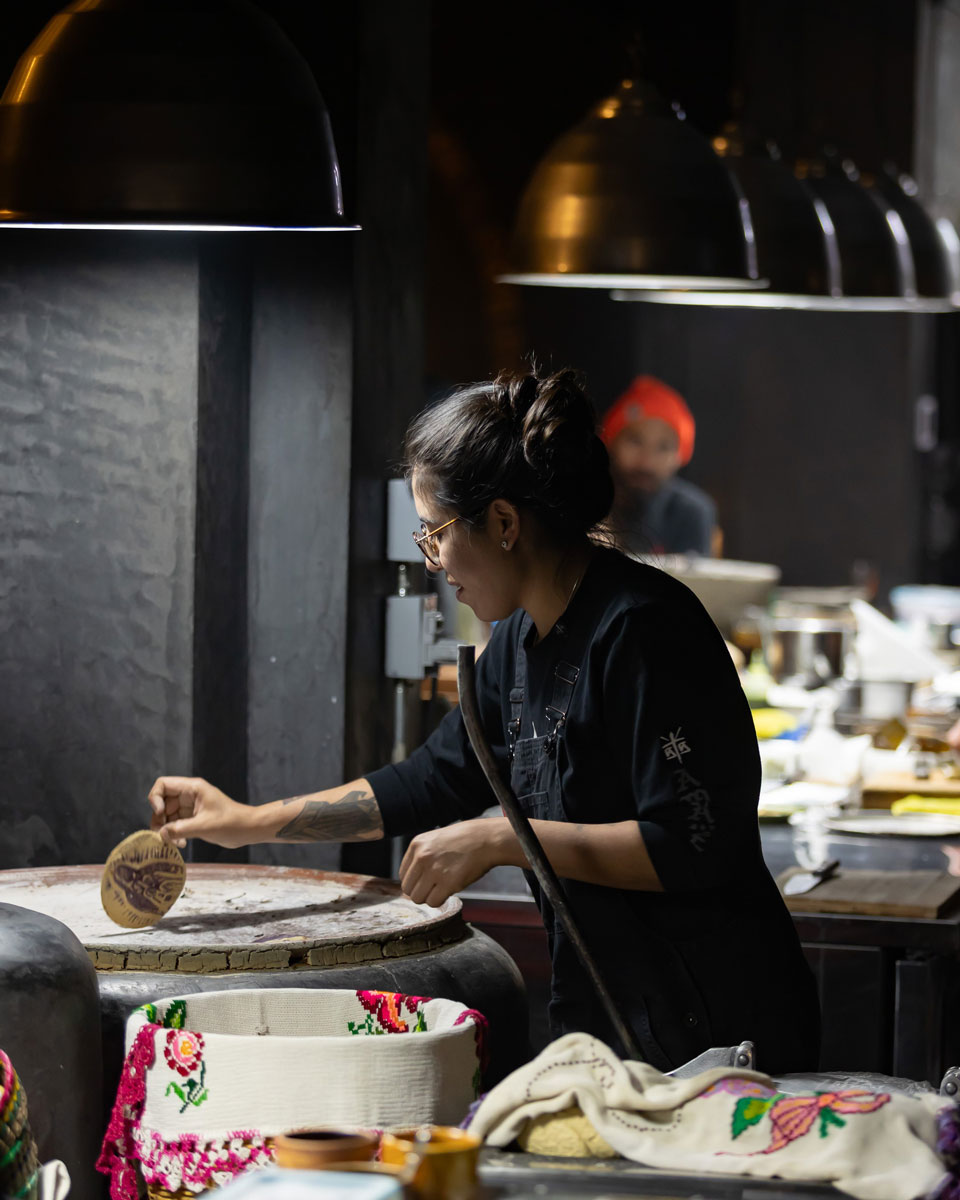
Why am I eating in foreign lands instead of learning about my roots?  

She began her culinary career looking outward, following the trend of prioritizing French and Japanese cooking techniques, until it became clear that there was work to do at home. “I saw Mexican customers who wouldn’t eat blue masa tortillas,” remembers Ruelas. “They perceived the color variation as being of inferior quality to the white masa tortillas despite the blue masa having higher health benefits.”

Segundo, Ruelas’ husband, identifies as Mazahua, an indigenous population located in the state of Mexico. Together, they began considering ways to preserve culture through pre-Colombian food ingredients and centuries-old cooking techniques. 

We need your help to stay independent

The couple wears their hearts on their sleeves. The only pinned video on their Instagram account of nearly 100,000 followers features Juana Segundo Casimiro and Juana Segundo Alcántar, Chef Segundo’s respective mother and grandmother. The video begins with the text cocinar es un acto de amor, “cooking is a labor of love,” before turning things over to Juana Segundo Casimiro to explain the history and preparation of sendecho, a fermented beverage made from heirloom corn used by the Mazahua in ceremony. 

Chef and co-owner Xrysw DíazChef and co-owner Xrysw Díaz flipping a handmade tortilla stamped with a design of the La Virgen de Guadalupe using an carminic acid ink produced by insects living on cactus paddles. (Courtesy of Xokol)The beverage is thick and pink hued, but the color can vary year to year depending on the corn harvest of the season, explains Juana Segundo Casimiro direct-to-camera. She says that the recipe is simple, but what it lacks in complexity, is made up in the labor of making it. She strains it through the mesh lining of a bolsa de mercado, a Mexican grocery bag woven together by strong nylon fibers, while explaining how she was taught to make it by her mother, who was taught to make it by her grandmother. It’s a recipe that’s, at minimum, four generations old. 
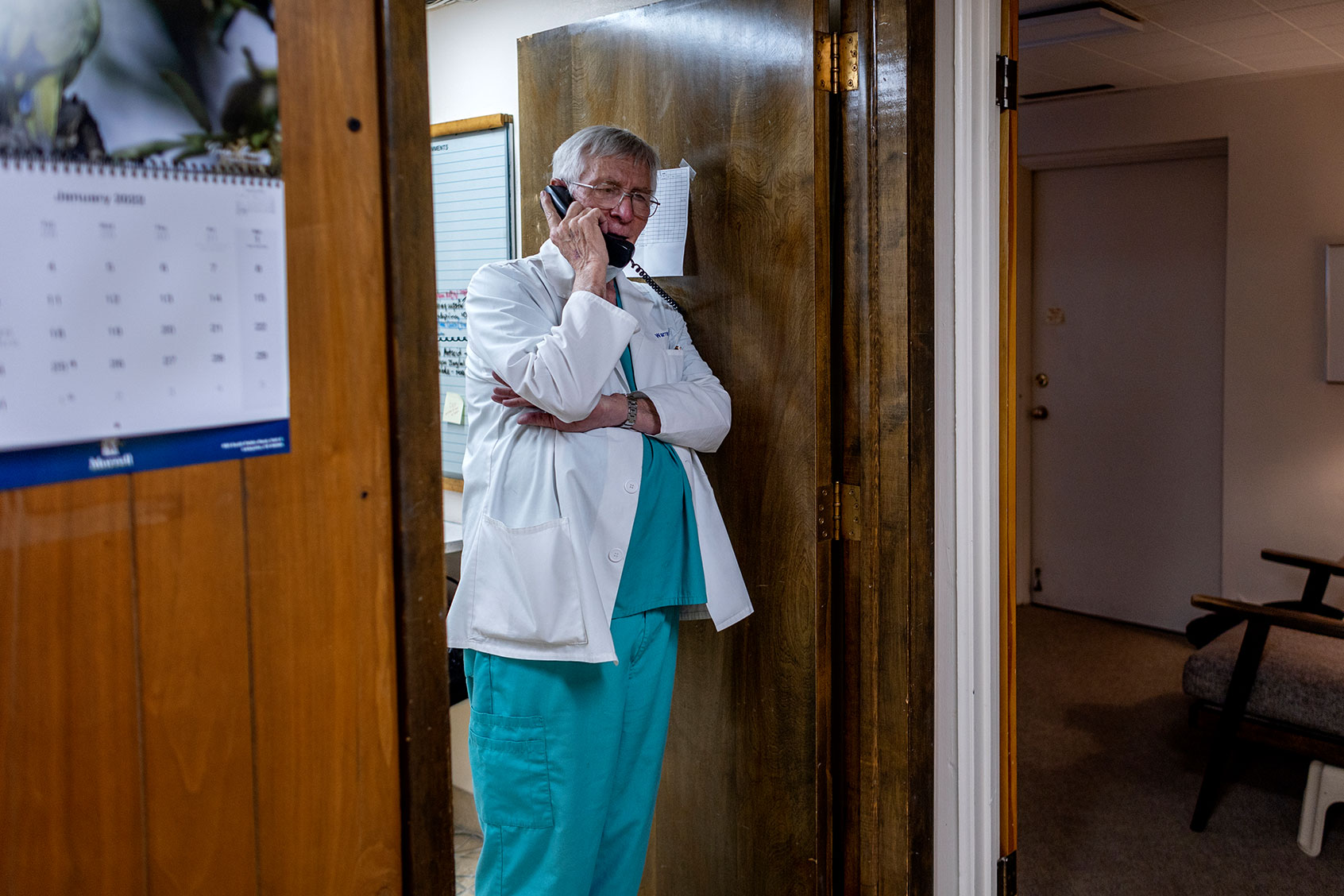
That kind of ancestral knowledge is what they’re bringing to dishes such as pescado con leche de tigre de espirulina, a Peruvian citrus-based ceviche made electric blue thanks to the blue-green algae spirulina (considered “food of the Gods” by the Aztecs); a taco ceremonial mazahua, a tortilla stamped with various designs using an carminic acid ink produced by insects living on cactus paddles; an uchepo, a sweet, tamal associated with the indigenous Purepecha people of Michoacan, Mexico. 

For the couple, the work is personal. They’re not just highlighting or preserving pre-Colombian culture, they’re keeping their family history alive and giving their indigenous heritage the respect it deserves for knowledge helmed over centuries in a way not often seen in fine dining. Juana Segundo Alcántar, Chef Segundo’s grandmother, looks over the dining room where icons such as Enrique Olivera of Pujol and Patti Smith have come to see what the hype is about. The matriarch of the family is immortalized on the back wall of the dining room, holding up an ear of blue corn almost as an invitation to anyone who looks into her eyes, to see what she sees. 

“No es negocio es para alimentarse“ — It’s not business, it’s to nourish people — Ruelas confirms, in case there were any doubts.

“Show me dementia!”: Trump, Harris face off on “Family Feud” in “SNL” sketch

"Saturday Night Live" highlighted the weird quirks of both presidential candidates in an election season rendition of "Family Feud."

After a CNN intro that joked the daytime game show was the only way Donald Trump would square off with Kamala Harris again, both candidates showed off their penchant for bizarre non-answers under the watchful eye of Kenan Thompson as Steve Harvey.

Maya Rudolph, Andy Samberg, Jim Gaffigan and Dana Carvey all returned to studio 8H to take on the roles of Harris, Doug Emhoff, Tim Walz and Joe Biden, respectively. 

Team Trump was made up of James Austin Johnson's Trump, Mikey Day as Donald Trump Jr. and Bowen Yang as JD Vance. The spot immediately to Trump's right was left empty as a stand-in for Melania Trump. 

“I could have sworn she was standing right beside me about two years ago,” Johnson as the former president said.

The team's only made it through one round, with Harris answering the question of "what is something in your glove compartment" with a rambling anecdote about growing up middle class and talking to small business owners. When pressed, she finally answered "a big old Glock," a reference to the gun Harris has repeatedly shared that she owns in interviews.

Traveling down the line, Samberg's Emhoff was overly supportive, giving the same answer. Gaffigan as Walz played up his Midwestern dad-ness and Carvey's Biden rambled while repeatedly calling Thompson's Harvey the name of other game show hosts.

When Trump's team got a chance to steal, Johnson rambled in the style of a Trump speech, running through everything from "Seinfeld" to his take on immigrants' genes. Thompson's Harvey closed game out by shouting "show me dementia!" 

Donald Trump, “protector” of women: This deeply sexist notion has a long legal history

“I am your protector,” Donald Trump declared to women voters at a Sept. 23 rally in western Pennsylvania. “You will no longer be abandoned, lonely or scared. You will no longer be in danger. … You will be protected and I will be your protector.” Clips of this moment went viral on social media, and cable news hosts laughed derisively. As a historian of early American women and gender, however, I saw the deep and troubling roots of this rhetoric.

As polls increasingly find a widening gender gap between Trump and Kamala Harris among women voters, his campaign has made overt appeals to white suburban women. 

They aren’t subtle. 

At the same Pennsylvania rally, Trump claimed that his second term would offer protection for women “at the border, on the sidewalks of your now violent cities, in the suburbs where you are under migrant criminal siege, and with our military protecting you from foreign enemies.” He invoked an insecure masculinity rooted in the use of violence against real or often perceived threats, which requires a submissive, helpless, vulnerable woman to protect in order to validate its existence. In other words, to legitimate this brand of manhood, there must be a woman (or women) to protect. It’s a gendered performance that women of our historical moment, and of centuries past, know well.

Trump’s extended attempts at appealing to suburban women voters by identifying himself as their “protector” echo the language of gender inequality, steeped in Anglo-American common law customs from centuries ago. In the 18th century, these legal customs invoked the social and legal need for women to be protected by their husbands. The concept of “coverture,” as legal commentator William Blackstone opined, made “the husband and wife … one person under law.” It was only “under” a husband’s “wing, protection, and cover” that “she performs every thing.” A married woman could not own property in her own name, sue in court independent of her husband      or conduct business on her own. Any wages she earned belonged to her husband. Early American women were subject to laws steeped in coverture’s assumptions of gendered inequality, and these restrictions continued long after the United States won its independence from Britain. 

The protection of women — purportedly a benevolent, paternalistic gesture — has instead been historically grounded in and applied for the purposes of controlling women. In many cases throughout American history, it has been those tasked with the protection of women who have violated their safety, health and well-being. While husbands were charged with the protection of their wives under coverture, early American law and society justified the use of violence by husbands against wives, as a “moderate correction,” to enforce women’s submission and obedience. 

Trump’s attempts at appealing to suburban women voters by identifying himself as their “protector” echo the language of gender inequality, steeped in Anglo-American common law customs from centuries ago.

Consider, too, the issue of abortion. A majority of women (and a majority of Americans) believe that abortion should be accessible and legal in many if not most cases. The Trump campaign knows that his central role in ending abortion protections (about which he has publicly bragged) is deeply unpopular with the American public. Yet Trump insists that in his role as “protector” of women, they “will no longer be thinking about abortion.”

In fact, public opinion polls suggest that voters are thinking about reproductive rights as they consider for whom they will cast their ballots in November. Regardless of Justice Samuel Alito’s ahistorical opinion in the Dobbs v. Jackson decision that overturned Roe v. Wade, abortion and reproductive rights are "deeply rooted in this Nation’s history and tradition." In the colonial period, American women worked together to pass on knowledge related to their reproductive health, fertility and family limitation. That same set of English common law customs that confined married women under the promise of husbandly protection also provided women with the legal ability to terminate their pregnancies. In his “Commentaries,” Blackstone argued that life "begins in contemplation of law as soon as an infant is able to stir in the mother's womb," known as "quickening." Following those legal parameters, then, Anglo-American law protected women’s ability to obtain an abortion prior to quickening — sometimes as late as 25 weeks into pregnancy. (Notably, the 1973 Roe decision utilized similar parameters as this legal precedent.) 

We need your help to stay independent

It’s important to note that quickening was a subjective standard determined by the pregnant person themselves, providing bodily autonomy under the common law. In other words, women in early American history — before, during and in the wake of the American Revolution — had greater autonomy over their own reproductive health than tens of millions of American women have today.

It was men — these “protectors of women” — who later wrested control of women’s health and reproduction from women themselves. The American Medical Association successfully campaigned to criminalize abortion procedures in the 1840s and 1850s. Critics demonized female physicians like Madame Restell, belittling their medical knowledge and skill and the health care they provided to women in their communities. These practitioners prioritized protecting women’s reproductive health, yet lost their power to do so as state after state moved to criminalize their work. Anti-abortion activists employed fear-mongering tactics by sensationalizing women’s deaths in local papers, convincing legislatures of the need to criminalize the procedure under the guise of protecting women. 


Want a daily wrap-up of all the news and commentary Salon has to offer? Subscribe to our morning newsletter, Crash Course.


Later, Anthony Comstock’s crusade to pass the eponymous “anti-obscenity” measures through Congress followed. These laws criminalized sending “every article or thing designed, adapted, or intended for producing abortion” through the mail. Notably, the Heritage Foundation’s Project 2025 — drafted in large part by former officials of Trump’s administration — promises to enforce the long-dormant Comstock Act, originally passed in 1873, to limit access to abortion even in states where reproductive rights are codified under law.

Donald Trump, who has admitted to what many would describe as sexually predatory behavior and has been found liable for rape by a jury, claims to be a "protector" of women, yet the effect of his presidency was to limit the protections that American women need to be autonomous. The notion that American women require the protection of men come from an era in which women were the king’s subjects, not voting citizens of a republic. The idea that women require masculine protectors derives from a legal system that presumed their submission to men and their inability to assume an independent legal identity. 

Instead of protection provided by the chief executive, echoing outdated assumptions about women’s helplessness, what American women need are protections for their basic human rights codified into law.  

“Bible of scientific racism”: The origins of Donald Trump’s obsession with genes

Donald Trump started his week on the campaign trail Monday talking about the “bad genes” carried by immigrants — just one of many comments he’s made in recent months that align genetic makeup with essential value as a human being. On Friday, he traveled to Colorado, a state not even in contention this cycle, to whip up anti-immigrant fervor that he’s long stoked. 

It should all make us realize that just as our national heroes have much to teach us about America’s past, so too do the once-famous names we have chosen to forget; names like Madison Grant, one of the leading racial and political propagandists in our nation’s history.

Grant was an aristocrat from New York who worked at the cutting edge of the eugenics movement by penning “The Passing of the Great Race which became, in the words of his biographer Jonathan Spiro, “the Bible of Scientific Racism.” When it comes to the influencers who molded our nation’s racial consciousness and public policies, Grant and his movement have few equals during the first half of the 20th Century. Throughout the 1800s and early 1900s, racial scientists labored to transform the myths of the age of slavery and the more modern racist fictions of the Ku Klux Klan into scientifically verified facts. Grant and his eugenicist comrades strove to make America’s public policies as brutal as the racial science’s coldhearted facts.

This week Donald Trump reminded voters once again that democracy’s creed is not his creed.

For eugenicists, everything traced back to one’s genes, and their policies proved as classist as they were racist. No provisions for the poor were to be provided, for destitution was demanded to drive inferior people to productivity. Deep investment in public education was seen as a waste of public resources and segregation was demanded as a necessity for national survival. Most importantly, no tolerance for immigrants could be allowed, for they would threaten the blood of “the master race” and the genetic fabric that undergirded America’s exceptionalism 

It was a message that took our nation by storm throughout the 1920s, inspiring the work of forced sterilization, radicalizing our nation’s segregationist policies through “one-drop” rules, robbing vulnerable people of governmental provisions and protections and nearly eliminating immigration from the 1920s through the mid-1960s. All of these dehumanizing policies were sold under the banner of “science” and harmonized with the nation’s racist fears of criminally inferior people.

We need your help to stay independent

In the following decade, the eugenic gospel would set the world on fire through one of Madison Grant’s most famous fans. “The book,” wrote Adolf Hitler to Madison Grant, “has become my bible.” From slavery, through the Trail of Tears, and the lethal employment of segregation, Hitler long admired America’s racial politics. But what Hitler received from Grant’s writing as he studied in Landsberg Prison was the theories behind the policies in the form of a one-volume synthesis of the long, varied, and often conflicting history of the racial sciences accessible to the common reader. Essential to the theory in “The Passing of the Great Race” was the explicit prioritization of protecting racial purity over and against the protection of democracy. Grant played an indispensable role in helping to create the intellectual framework that justified the rise of the National Socialist Project. And under the leadership of Grant’s pupil, Berlin and Nuremburg committed themselves to learning the racial lessons supplied by Birmingham and New York. Germany and America were never identical twins—but the family resemblance often proves eerie.

Yet, since Germany learned so much from America, to truly understand Trump and the forces that continue to make him a unique and generational threat to the future of democracy in America, no transatlantic trip to Europe is needed. The truth is that for the past decade, Trump has given a platform for America’s most deeply-seated racist and classist convictions and fears. His playbook is cut from Madison Grant’s American-made eugenical cloth. Like Grant, Trump has committed himself to making America’s racism more explicit, transparent, and politically powerful. Like Grant, Trump has weaponized his racial fears to war against democracy itself and our nation’s most vulnerable people. Like Grant, the cruelty was and is the point.

As we stand weeks away from selecting our nation’s next president, we do well to remember the haunted history that we have buried for far too long. History, at its best, is not a weapon for the work of national shame or self-hate. The point of opening the caskets of our forgotten history is to foster the self-understanding necessary to empower the work of creating a future that upholds the democratic creed that “all men are created equal.” This week Donald Trump reminded voters once again that democracy’s creed is not his creed. Donald Trump’s creed comes not from our nation’s founding documents but from the “bible of scientific racism” penned by the eugenicist Madison Grant.

Why Eric Adams still won’t quit: An American story of faith and delusion

Just days after New York City Mayor Eric Adams was indicted on federal charges that could cost him decades in jail, prosecutors told a federal judge it was "quite likely" there would be a second superseding indictment outlining more alleged crimes. All around him, Adams saw his top lieutenants' phones seized and homes searched, yet the former NYPD captain was resolute at his first weekly press conference after the indictment: He wasn’t going anywhere.

In the 57-page indictment filed by the U.S. attorney for the Southern District of New York, prosecutors alleged that, going back to his time as Brooklyn borough president in the 2010s, Adams pulled in more than $100,000 in illicit benefits that included international flight upgrades and luxury accommodations from Turkish officials, while organizing a network of illegal "straw donors" that enabled him to defraud the taxpayers of more than $10 million in public campaign financing.

Although phrased in carefully crafted legal language, the alleged quid pro quo demanded of Adams is made clear enough:

In September 2021, the Turkish Official told Adams that it was his turn to repay the Turkish Official, by pressuring the New York City Fire Department (“FDNY”) to facilitate the opening of a new Turkish consular building — a 36-story skyscraper — without a fire inspection, in time for a high-profile visit by Turkey’s president. At the time, the building would have failed an FDNY inspection. In exchange for free travel and other travel-related bribes in 2021 and 2022 arranged by the Turkish Official, Adams did as instructed.  Because of Adams’ pressure on the FDNY, the FDNY official responsible for the FDNY’s assessment of the skyscraper’s fire safety was told that he would lose his job if he failed to acquiesce, and, after ADAMS intervened, the skyscraper opened as requested by the Turkish Official.

The night before the unsealing of the indictment, in a short video address given in front of a fireplace mantel in Gracie Mansion, the mayoral residence on Manhattan's Upper East Side, Adams insisted the charges were “based on lies.” He intimated that he had been “targeted” for his criticism of the Biden administration over its “broken immigration policies,” which led Republican governors like Greg Abbott of Texas and Ron DeSantis of Florida to transport more than 200,000 sanctuary-seeking immigrants to the Big Apple.

This defiant tone seemed  to annoy several members of the City Hall press corps, who had been informed by supposedly reliable sources that the end was near for Adams. New York Gov. Kathy Hochul, a fellow centrist Democrat generally allied with Adams, had the power to remove the city's mayor. Surely she would act, or so many assumed. 

But Hochul held fire, issuing a statement that described the indictment as part of “a disturbing pattern of events that has, understandably, contributed to a sense of unease among many New Yorkers” while taking a wait-and-see attitude toward her political ally's precarious circumstance.   

Adams has insisted the charges are "based on lies," and intimated that he had been "targeted" for his criticism of the Biden administration over its "broken immigration policies."

A few days later Adams was in full and unapologetic battle mode, pushing back vigorously against the generally false narrative that New York is experiencing a crime wave. When he took office in 2022, the mayor said, “I inherited a city where we were witnessing a 40 percent increase in crime," but now "we're moving in the right direction," with murder down by more than 11 percent in 2024 and shootings down by 8.7 percent. And that was “on top of the double-digit decreases in shootings and homicides last year and year before as well,” Adams added. 

 "These achievements are on top of the fact that we have removed 18,500 guns off our streets to make our city safer than ever," Adams said, proclaiming — not without justification — that New York is now the "safest big city in America." 

This gesture of defiance comes in the face of a scandal that has mushroomed into at least five separate or overlapping criminal probes that have led to the resignations or forced departures of numerous aides and city officials, including a first deputy mayor, the police commissioner (and then his acting replacement), the health commissioner and the city’s chancellor of public schools. At least 46 elected officials have called for Adams to resign, including four members of Congress representing New York City, 20 state legislators and 18 City Council members. Several of the mayor's detractors stipulated that while he has the right to the presumption of innocence in court, he has no right to remain as the chief executive of America's largest city under these circumstances.

*  *  * 

Eric Adams' personal narrative is a remarkable American story, by any standard. His father, by Adams' account, struggled with alcohol abuse. His mother was a housecleaner with little formal education. He was one of six children in a household so poor that the kids adopted a rat — a Norway rat from the streets, not a white rat from a pet store — and named him Mickey Mouse.

“We put him in a box and he became our pet," Adams told the New York Post when he was running for mayor in 2021, after having previously been elected as a state senator and then Brooklyn borough president. “We didn’t even realize the diseases that could come from it. As with any child, you normalize your environment. We didn’t know we were poor because that’s how everyone around us lived.”

As a teenager in Jamaica, Queens — not far from where Donald Trump grew up, but several rungs lower on the socioeconomic ladder — Adams was badly beaten by police on at least one occasion, according to his story.

“They handcuffed us backwards and repeatedly kicked us in the groin,” Adams told the Post in that same campaign interview. “When you are abusive, you are smart in your abuse. They didn’t hit us anywhere else because they didn’t want to leave marks. When I urinated, I saw blood in the toilet. It was an emasculation that took place, and I had a lot of rage. The rage really engulfed me for years. I could not hear a siren without thinking about that. That’s what PTSD is all about: Reliving it over and over again.”

In multiple interviews over the years, Adams has recounted that his decision to join the NYPD was informed by an altruistic sense of mission: He wanted to change policing “from within,” as suggested by the Rev. Herbert Daughtry, then the pastor of Brooklyn’s House of the Lord Church in Brooklyn. Daughtry, one of the founders of the Black United Front, has had a storied career as a civil rights leader. With other prominent Black clergymen, he helped to win the release of Nelson Mandela and end apartheid in South Africa.

We need your help to stay independent

As an NYPD officer, Adams organized the group 100 Blacks in Law Enforcement, aimed at countering racist police tactics, including the use of "stop-and-frisk" under previous mayors Rudy Giuliani and Michael Bloomberg, which overwhelmingly targeted Black and Latino young men and worsened community tension, but rarely resulted in arrests for serious offenses.  

Yet one of the great paradoxes of Adams' career is that as a mayoral candidate and in nearly three years in office, he has struck a strongly pro-police stance, much to the consternation of civil rights and police accountability advocates. In addition to moving to encrypt police radio traffic (and thereby shield it from citizen oversight), Adams has consistently backed police officers after high-profile violent incidents. Just last month, NYPD efforts to arrest a subway fare evader armed with a knife led to a police shooting that wounded two bystanders and a police officer, as well as the suspect.

One of the great paradoxes of Adams' career is that as a mayoral candidate and in nearly three years in office, he has struck a strongly pro-police stance, much to the consternation of civil rights advocates.

Adams strongly defended the cops involved, drawing eloquently on his own history. "I was in the subway system as a transit cop," he said at a press briefing a few days later, "and I know what it takes to try to de-escalate a situation. I remember one situation when I had to wrestle with someone that had a knife, was trying to stab a passenger." It was too easy, the mayor said, to "look at the video" of an incident, "where you can hit pause, you can hit stop … you can go and get something out of the kitchen and come back and look at it again. That's not real life.”

The officers in the subway shooting repeatedly told the suspect to drop the knife, Adams continued. "Those officers did what they were trained to do." The suspect involved was "a person that has been arrested over 20 times. … He had a clear mission to carry out a violent act, and I thank God that those officers took the necessary precaution.”

Adams' administration “continues to prioritize the NYPD’s impunity over building trust between the Department and the New Yorkers that they are sworn to serve,” the Legal Aid Society said in a statement earlier this year. “A city devoid of the necessary safeguards to check police misconduct weakens public safety and reinforces a sentiment that officers are above the law and that the rest of us are all de-facto second class citizens.” 

Adams has long described himself as a man of deep religious conviction who is in regular contact with God, a somewhat unusual profession for a big-city Democratic mayor. Last May, as reported by Dana Rubinstein in the New York Times, he told a crowd at the Christian Cultural Center in Brooklyn that, decades earlier, he had heard a divine voice that “prophesied that he would become mayor on Jan. 1, 2022."

"The same voice I heard 32 years ago spoke to me a few months ago and said, 'Talk about God, Eric,'" Adams concluded. "'Talk about God.'"

Last October, Adams appeared on Radio Visión Cristiana, a Spanish-language Christian broadcast, just a few weeks before his cell phones were seized by the FBI the first time. Dr. José Martínez, the host, began by observing that “the Bible says that every authority is established by God, and it calls on to be submissive to that authority and recognize and respect all authority.” He added that when Adams was first running for mayor “he partook with us" and was returning this time “with the authority given by God.”

“I believe you opened us with the right thought," Adams responded. "I am mayor because God gave me the authority to be mayor, and he placed in the hearts of the voters to give me that authority. Sometimes we miss how God operates, but I am clear when I receive my blessings from God." Returning to Martínez's program, he said, felt "like Joseph returning home."

*  *  *

Last month, clearly beset by deepening scandal, Adams told congregants at the Power and Authority Evangelical Ministry and the Changing Lives Christian Center in Brooklyn that the Book of Job was his “favorite” Bible story. He did not mention his legal troubles, but likened his past struggles with dyslexia and diabetes with the tribulations of Job, a “blameless and upright” family man whose faith in God was tested by the loss of all his property and the deaths of his children and servants, along with all manner of painful physical afflictions.

As Adams' listeners surely knew, Job’s faith endures and he is rewarded with a long life, several new sons and the restoration of his fortunes beyond what he had originally possessed.

Last month, beset by deepening scandal, Adams told congregants at the Power and Authority Evangelical Ministry in Brooklyn that the Book of Job was his "favorite" Bible story.

Whether or not he meant the parable to be explicit, Adams has cast himself as an honest servant of the people targeted by unseen political actors. “Despite our pleas, when the federal government did nothing as its broken immigration policies overloaded our shelter system with no relief, I put the people of New York before party and politics,” the mayor insisted on the eve of his federal indictment.

The Rev. Al Sharpton, a longtime friend and ally of Adams, was quick to insist that he should not be forced to resign, observing that Sen. Bob Menendez of New Jersey remained in office for months after his indictment on corruption charges, resigning only after his conviction. “What we’re saying is there must be one set of rules,” Sharpton said on MSNBC.

Earlier this month, Rep. Hakeem Jeffries, the House minority leader and a fellow Brooklyn Democrat, declined to demand Adams' resignation, while appearing to hedge his bets. Adams should stay in office and let the legal process proceed, Jeffries said, as long as he could “articulate to New Yorkers, in a compelling way, a plan and a path forward.”


Want a daily wrap-up of all the news and commentary Salon has to offer? Subscribe to our morning newsletter, Crash Course.


As the days after the initial indictment have stretched into weeks, Adams seems to have weathered the storm, at least for the moment. He used his Tuesday press conference last week to announce the promotion of Maria Torres-Springer as first deputy mayor. She is replacing Sheena Wright, who resigned shortly after her phone had been taken and her home was searched — the home she shares with her husband, outgoing Schools Chancellor David Banks, whose phone has also been seized. 

Adams says he is willing to trust a jury of his peers. A recent Marist Poll suggests that 69 percent of New York City residents sampled think he should resign. The mayor dismissed those results when asked about them by reporters, saying that polls during the 2021 mayoral race showed him 13 points behind former presidential candidate Andrew Yang, who had recently entered the race. 

Yang "was riding a skateboard and he was all happy. He was measuring the drapes here," Adams said. "I was 13 points behind, and I would see some of you on the campaign trail, like, 'You're 13 points behind, Eric. No one can come back from that.' And what did I say? Stay focused, no distractions, and grind."

One reporter asked the mayor what sustains him in a time of crisis. He invoked his mother, who died during the mayoral primary campaign three years ago.

"When you're going through stuff, you need to make sure you're prepared for the journey. And my source of my strength is, as many of you know, my spiritual base," Adams said. "But also, I think — absent from the body, presence in the spirit — I keep hearing Mommy's voice: 'Baby, you're all right. And baby, you got this.' And that's the source of my strength. She's been here with me — just because she transitioned physically, I still feel Mommy's here spiritually. She has guided me through all sorts of things, and, you know, she didn't bring me here to be the mayor, to abandon me."

But the people of Eric Adams' city may have already done so.

A leading abortion provider on why restrictive laws are taking us back to the Dark Ages

Throughout this election cycle, the term “late-term abortion” has popped up several times, despite not being an actual medical term. Not only did the first presidential debate between President Joe Biden and former President Donald Trump include a very misinformed discussion about “late-term abortions” before Roe v. Wade was overturned by the Supreme Court's Dobbs decision, but the Republican Party adopted a “Make America Great Again” policy platform ahead of its national convention, stating in a 16-page document that the party will oppose "late-term abortion.”

This isn’t the first time anti-abortion advocates have made it seem as if abortions were happening well into the third trimester of pregnancy or after an infant has been born. As Salon has previously reported, the term is nothing more than a made-up phrase that has no basis in medicine yet is frequently used by anti-abortion advocates. 

According to the Centers for Disease Control and Prevention (CDC), in 2021 about 81 percent of abortions in the U.S. occurred at nine weeks of pregnancy or earlier; 94 percent happened in the first 13 weeks, 3 percent occurred between 16 and 20 weeks of gestation. Less than one percent of abortions in the United States occur after 21 weeks of gestation.

Dr. Warren Hern, who specializes in fetal anomaly abortions and director of the Boulder Abortion Clinic, is one of the few providers to provide abortion care later in pregnancy. In fact, he is more than a provider, but also a pioneer in his field. But it doesn’t come without a cost to his safety every day. When Salon spoke to Dr. Hern over a video call, he mentioned that he was sitting behind bulletproof glass. In his latest book, “Abortion in the Age of Unreason,” he discusses stalkers, the assassination of colleagues, like Dr. David Gunn, as well as the “why” behind his work.

The following interview has been edited for length and clarity.

Why do you think we are in the "Age of Unreason?" And why did you make this the title of your book?

As I said at the beginning of the book, we can compare this to the 18th Century, which was called the "Age of Reason," in which people began to discover that you could learn about the world with science, reason, logic, thought and observation — as distinguished from blind belief, superstition, fantasy and supernatural things. That was a very important epoch in human history. But by contrast, we've had several episodes of unreason. And what we are seeing now in our society, American society in particular, is a new age of unreason. 

We have people who are opposed to scientific knowledge about the world, and who are totally committed to fanatic ideas of theocracy, superstition and religion, that have nothing to do with reality. And they’re trying to force the rest of us into that mold, and they are completely opposed to facts. We saw this under the Trump Administration with the COVID pandemic, for example. And now, the new Project 2025, [a set of proposed policies criticized as anti-scientific.]

And in terms of what we're doing here, they want to abolish all health care for women, to take us back beyond earlier than the Dark Ages. And I think that these people are living in the dark ages. There were citations in the Dobbs decision going back to the 17th Century of some guy who prosecuted witches. There are plenty of people, plenty of men, who do not like the fact that contraception and abortion have been effective and safe fertility control for women. 

Dr Warren HernDr Warren Hern talk on the phone in his clinic on January 31, 2022 in Boulder, Colorado. He has been performing abortions since the 1970s. (Gina Ferazzi / Los Angeles Times via Getty Images)

You start this book with somewhat of a tone to justify yourself and the work you do, at least that’s what I got a sense of: that it was important for you to explain to the reader why you provide abortions later in pregnancy. I’m curious if you can elaborate more on that. 

Well, let's put it this way. There’s a different way of looking at it. I don't feel that I have to justify what I'm doing. I think I need to explain it to the people, to the public, because there's a lot of misunderstanding about it and it’s a very complicated, difficult subject. 

It begins with the fact that as primates, as animals, we are hardwired to take care of human babies and other small, helpless creatures. And what we're doing in this new situation is we’re giving an opportunity to make sure that women have an opportunity to do what they want to do as people, as citizens, and that includes ending pregnancies for various reasons, some of which are the woman does not want to be pregnant and have a baby, and others, the pregnancy is a clear threat to her life. And I think that this bothers people. 

"This is a life and death matter for women. It is not a matter of personal satisfaction or personal whims."

What I tried to do with my book, as well as to help people understand how I got to this and why what we're doing is so important. How it developed over 60 years, why it's important to women, why it's important to their families, and why it's important to our society. That this is how this works, and this is why we do this, and this is why this is a life and death matter for women. It is not a matter of personal satisfaction or personal whims. It's not capricious. It's not frivolous. It’s vital. I think that we are at a new point in human history of the last 15,000 years where women can make decisions to continue pregnancy or end pregnancy safely. And that’s brand new.

I thought your chapter on the “illness of pregnancy” was interesting. Can you explain how abortion care, in your opinion, is a treatment for pregnancy? How you consider it to be a part of the standard medical care for pregnancy, just like prenatal care? 

When I was a medical student exactly 60 years ago, on my first rotation on obstetrics in 1963 as a third-year medical student, I saw a lot of things happening that were quite frightening. I give the example of a woman named Sharon. She went from being a very healthy young woman about to give birth to a healthy baby, to within a few minutes, the point of dying. I watched this happen, and I watched what needed to be done to help her survive.

It was pretty clear that her baby was going to be seriously brain damaged, and that she was going to give it up for adoption. It didn't have any future, and this was a catastrophic situation. Meanwhile, the obstetrics textbook which I'm using kept saying that a woman is most normal when she's pregnant, that that's the most normal thing that can happen to her. 


Want more health and science stories in your inbox? Subscribe to Salon's weekly newsletter Lab Notes.


But then the next question is, what is she when she's not pregnant? Does that mean she's not normal? That her function is to be pregnant? That her purpose is to have babies as well as give sexual pleasure to men and make cookies? It didn't add up. I thought about that a lot, and at one point I gave a paper at an anthropology meeting about the cultural definitions of normality and pregnancy, and there’s a discussion of that in the book. And then I published a paper. I was invited to publish a paper in 1971 in the journal Family Planning Perspective, and I pointed out that circumstances have changed. That we now have the possibility of different perspectives about pregnancy that we didn't have 100, 200 or 500 years ago.

And so one of the conclusions of my paper was that the treatment of choice for the condition of pregnancy is abortion unless the woman wants to have a baby. There is no justification for forcing a woman to carry the pregnancy to term. 

In your book, you talk about the harassment and assaults you’ve faced at your job. There have been stalkers. There have been gunshots fired at you, dating back to the '70s. What keeps you going in your job? What has kept you from saying you’re done with this? 

There are various answers, some of the answers could be like a cartoon. And I'll give you an example: in the movie "Midnight Cowboy," there's a scene where Dustin Hoffman and John Voight are walking across the intersection. Hoffman plays a character named Ratso Rizzo, who's a scruffy guy — and the car pushes against him and he slams the hood of the car and says "I'm walking here."

The other answer, which is more complicated, is based on lots of things, including compassion for those who are suffering. I saw many examples as a medical student, as a young physician of women suffering unnecessarily from the effects of unsafe abortion. In the book, I talk about the fact of going to a maternity hospital in Brazil where I was serving as a Peace Corps physician in the ‘60s. My Brazilian colleagues showed me one ward full of women recovering from childbirth, and two wards full of women trying to survive the effects of an unsafe abortion. Fifty percent of those women died by the time they got to the hospital. They were too sick to save at that time.

I have an interest in helping women survive these things and to have the best medical care is a very important part of what I do and why I do it. When people come in, they're all different, and I find it an incredibly satisfying experience to help women and their families in these circumstances. I have developed techniques for doing this as safely as possible. Instruments, I've designed protocols, and procedures that I use and other physicians are using in different ways. And that's very satisfying. 

I thought it was powerful how you pointed out how the maternal mortality rate in the U.S. has been increasing over the past couple of decades. How, in your opinion have abortion bans and restrictions contributed to that?

At the end of World War I, the maternal mortality ratio was about 900 per every 10,000 live births. In 1920, the maternal mortality ratio was 680 per 100,000 live births. By 1960, it was 38 per 100,000 lives of birth. It was reduced because of antibiotics, new surgical techniques, blood transfusions, and a wide variety of medical advantages that had been developed over that time in the medical profession.

"I have an interest in helping women survive these things and to have the best medical care is a very important part of what I do and why I do it."

By the mid-'90s, for example, the American maternal mortality ratio dropped by about seven per 100,000 live births. The last time I looked at about 33 per every 100,000 live births. We're going backward. Why? Well, there are several reasons, and one of them is the restrictions on access to abortion services. If a woman has a ruptured membrane, for example, even if they have a desired pregnancy, they can't get that treatment in places like Texas or Oklahoma. And this is a five-minute operation. It's absurd.

Could you have ever anticipated, when you started your work in the ‘60s and ‘70s, that this is where you would be? Providing abortion care in this climate?

I couldn't imagine. I was going to have a career in teaching research epidemiology. I wanted to have an academic career. I love to teach research, and I have a major research project going on for Peru over the last 60 years. I find that epidemiology endlessly fascinating.

We need your help to stay independent

But I found myself compelled to do this work because of the women. One day in 1974, I walked into the operating room. A young woman, who was in her 30s, I think, who had red hair, I remember quite well, was shaking uncontrollably. And I said, "What's wrong? How are you? Tell me how you feel." She said: "It's so different. The lights are on, you’re a doctor, it's clean, the windows are open."

Then she told me about her illegal abortion, which was the most frightening and humiliating experience of her life. And she looked at me and said, "Please don't ever stop doing this." So I didn’t.

What do you hope people take away from your book?

I want people to go out, vote and organize politically. To throw the Republicans out of office and to take the government back. That's what I hope. And I hope that people understand why it's important to support women's rights to have access to full health care. Safe abortion, is a fundamental, essential component of women's health.

Outsmart identity thieves before they become you

Identity theft has become alarmingly common, with millions of individuals falling victim each year. 

American adults lost a total of $43 billion to identity fraud in 2023, according to a new report co-sponsored by AARP.

The consequences can be devastating, from significant financial losses to emotional distress. By understanding the tactics employed by these digital doppelgängers and taking proactive steps to protect yourself, you can significantly reduce your risk of becoming another statistic.

The identity thief's playbook

To protect yourself, it's crucial to understand the tactics used by identity thieves. While they continually evolve their methods to beat security measures, several core strategies remain prevalent:

1. Phishing scams: These involve fake emails or texts disguised as legitimate communications from trusted companies. They aim to trick recipients into revealing sensitive information, like passwords or Social Security numbers. Be wary of unsolicited messages and never click on suspicious links or provide personal data in response.

2. Data breaches: Hackers often target company databases to steal customer information. As a result, your personal data could be available for sale on the dark web. Regularly check your account balances and change your passwords if necessary.

3. Social engineering: Scammers employ psychological manipulation to exploit human trust. They may use charm, create a false sense of urgency or pose as authority figures to pressure victims. Be cautious of unsolicited calls or messages and verify the identity of anyone requesting sensitive data.

4. Dumpster diving: Despite the rise of digital theft, some identity thieves still resort to traditional methods like rummaging through discarded documents for sensitive information. Always shred or properly destroy any papers containing personal details before disposing of them.

We need your help to stay independent

Turning the tables on cyber thieves

Armed with knowledge of the identity thief's playbook, you can employ some strategies to stay one step ahead:

1. Decoy data: Create fake email addresses, credit card numbers or social media profiles with bogus information that closely resembles your real data. Use these decoys when signing up for services or websites you're not entirely sure about. If a thief attempts to use this data, you'll receive an alert that your information has been compromised, without putting your real accounts at risk. These decoys serve as early warning systems and can help you identify potential leaks or breaches.

Decoys serve as early warning systems

2. Honey pots: As an advanced step, you can set up entire fake identities designed to attract and trap identity thieves. "Honey pot" profiles contain enticing, but false, personal information to be used to actively engage with suspicious websites, forums or online communities. By carefully monitoring these decoy identities, you can gain insights into the tactics and targets of identity thieves while keeping your real information safe.

3. Leak vigilance: Regularly check data leak sites like HaveIBeenPwned to see if your information has ended up in the wrong hands. Thieves can use leaked data to guess your current login credentials. If you find your data on these sites, change your passwords immediately and monitor your accounts closely.

4. Trackable details: Add unique, fake details to your real accounts and public records, such as a false middle initial, past addresses, incorrect answers to the ubiquitous “Name of your first pet” or intentional misspellings of your name. If these specific details appear on applications or accounts opened in your name, it's a clear sign that someone is attempting to impersonate you.

Fortifying your defenses

Alongside these tactics, it's essential to bolster your primary defenses against identity theft:

  • Use strong, unique passwords for each of your accounts and enable multi-factor authentication whenever possible. Consider using a reputable password manager to help you generate and securely store complex passwords.  According to Chandra Sekar, Cybersecurity Expert and CMO at AppOmni, “Consumers can set up multi-factor authentication for social media, financial, and email accounts. Authenticators applications (like Google Authenticator and Microsoft Authenticator) can run on mobile devices and provide rotating one-time passcodes (OTPs) which can add an additional layer of security.” 
  • Regularly review your credit reports from all three major bureaus (Equifax, Experian and TransUnion) for any suspicious activity or accounts you don't recognize. You're entitled to one free report from each bureau annually.  "One of the most important steps," as recommended by Jeff Chang, a cybersecurity veteran of 20+ years, "is to freeze your credit report across all 3 credit bureaus. making it much more difficult for identity thieves to open credit accounts in your name.  Plus, freezing your credit report is free and has no impact on your credit score." 

"Credit locks and credit freezes are effective tools"

“Credit locks and credit freezes are effective tools to combat identity theft," Sekar added. "While the former is a paid service from the credit bureaus, the latter is available for free for all consumers. Both prevent unauthorized access to your credit. Credit locks are a bit more convenient in that they can be set, removed or reinstated quickly. Credit freezes, on the other hand, are one of the most effective solutions against identity theft but can take a bit longer to set up and revoke and cause some inconvenience when applying for credit.”

  • Keep your software, applications, and operating systems updated with the latest security patches. Enable automatic updates when available.
  • Be cautious about the personal information you share on social media platforms. Identity thieves often mine these sites for clues about your life, such as your birthdate, hometown or your children’s names, which can be used to guess your passwords or answer security questions.

Your vigilance, your power

In the ongoing battle against identity theft, vigilance is your greatest asset. 

By adopting the mindset of an identity thief and employing smart countermeasures, you can spot the signs of potential fraud early and prevent criminals from hijacking your digital life. 

Stay alert, take proactive steps to secure your information and regularly monitor your accounts for any suspicious activity.

With consistent effort and a commitment to outsmarting identity thieves, you can significantly reduce your risk and safeguard your financial and emotional well-being.