Spring Offer: Get 1 Year, Save 58%

As the American hunger crisis worsens, Republicans prepare to take a big bite out of SNAP

On Valentine’s Day, during a hearing of the House Agriculture Committee, Chairman Glenn “GT” Thompson, a Republican from Pennsylvania, proposed a funding framework for the Farm Bill that included a $30 billion cut in Supplemental Nutrition Assistance Program benefits over the next decade. 

The proposal would limit future updates to the Thrifty Food Plan, which is used by the United States Department of Agriculture to set SNAP benefits; in the ensuing months, Thompson has argued it’s not a “real cut” because average benefits would still rise incrementally alongside food inflation, but food insecurity experts have pushed back on that assertion, both because the costs of what constitutes a healthy diet may rise in the next decade for reasons other than inflation, and because America is already in the midst of a worsening hunger crisis. However, the proposal has already gained significant support from Republican lawmakers.

“SNAP is our nation’s most effective tool for combating hunger and food insecurity,” Joseph Llobera, the director of research at the Center of Budget and Policy Priorities, said in late February. “We shouldn’t go backwards and allow SNAP benefits to become increasingly out of step with the cost of a healthy diet.” 

The current farm bill — which was already extended once by President Biden, expires in September — and last Monday, after more than a year of hearing and listening sessions, Thompson released a title-by-title overview of his draft farm bill and scheduled a markup of the legislation for May 23rd, meaning that the pressure among food security advocates to address the situation is rapidly mounting. 

According to a report released this month from the Urban Institute’s Poonam Gupta and Elaine Waxman, Thompson’s proposed cost neutrality approach to SNAP — in which the benefits would tick up or down in accordance with food inflation — erodes program participants’ purchasing power and ignores modern dietary guidelines. 

That’s one of the reasons a provision was introduced to the bipartisan 2018 Farm Bill requiring the USDA to review the adequacy of the Thrifty Food Program every five years. As a result, the USDA released a mandated update to the program in 2021. 

“Before the 2021 TFP update, the old TFP assumed an average family consisting of a man, woman, and two children predominantly purchased milk, potatoes, fruits, and rice, and spent roughly two hours a day preparing food from scratch, including tasks like hand-soaking dried beans,” Gupta and Waxman wrote. “All of these assumptions were proven to be grossly out of step with actual food preparation and consumption behaviors and are not grounded in the reality of everyday life.” 

We need your help to stay independent

They continue: “The reality is, our interactions with our food environment are constantly evolving as people and food systems grow and adapt to climate change and other external factors. In response, dietary guidelines, consumption patterns, and preparation times will continue to shift.” 

Another important result of the 2021 update to the TFP was an acknowledgement from the USDA that nearly nine out of 10 SNAP participants reported facing barriers to achieving a healthy diet, with the most common barrier being the cost of healthy foods; the reevaluation of the program, in turn, “concluded that the cost of a nutritious, practical, cost effective diet is 21% higher than the current Thrifty Food Plan,” which led to an increase in benefits. Simultaneously, the revised plan included more fish and red and orange vegetables to align with recommendations in the Dietary Guidelines for Americans, 2020-2025. 

At the time, Agriculture Secretary Tom Vilsack praised the decision as a demonstration of the government’s investment in the nation’s health, economy and security. 

“Ensuring low-income families have access to a healthy diet helps prevent disease, supports children in the classroom, reduces health care costs, and more,” Vilsack said. “And the additional money families will spend on groceries helps grow the food economy, creating thousands of new jobs along the way.”

The cost neutrality policy proposed in the new farm bill would undo the work of the TFP update. It would also come at a time when food insecurity in America is already on the rise. As Salon Food reported last year, just a few days before Thanksgiving, new data from the Census Bureau’s Household Pulse Survey showed that nearly 28 million people reported experiencing food scarcity in October — both the highest number of 2023 and the highest number recorded by the survey since December 2020. 

In the ensuing months, as food inflation has remained a constant stress, many Americans have reported feeling major anxiety about being able to afford groceries. Some experts, including Gupta and Waxman, suggest spending cuts to SNAP couldn’t come at a more dangerous time. 

“Cost neutrality essentially guarantees an inadequate SNAP benefit and ensures the country can make no meaningful progress toward nutrition security,” they wrote. “Instead, policymakers should aim to work in the best interest of families and allow benefit reevaluation to be guided by science and data.”


John Oliver rates his favorite Eurovision contestant, Windows95man, a “14,000 out of 10”

While the Eurovision Song Contest, which took place over the weekend, may have been shrouded in serious news, comedian John Oliver still managed to relish in the annual international competition's inherent goofiness. 

Oliver opened Sunday night's episode of "Last Week Tonight" by briefly jesting about a few of the many punchy U.S. news headlines in the past week. He noted how Kristi Noem, the Republican governor of South Dakota, has elected to suspend her book tour, "allowing her more time at home, which should be concerning to any of her remaining pets," jabbing at her recent revelation that she'd once shot her pet dog. Oliver also underscored news of how more than a decade ago, doctors determined that a parasitic worm had eaten part of Robert F. Kennedy Jr.'s brain, which he claimed "honestly sounds like a terrible experience for that worm."

From there, the late-night host pivoted to Eurovision, which saw a nonbinary artist from Switzerland, Nemo, take home the victory. 

“The Eurovision Song Contest took place amid a slew of controversies, from calls for boycotts over Israel's participation to the last-minute elimination of this Dutch contestant for alleged unlawful threats backstage,” Oliver said. “It was a lot of serious news around what is usually a magnificently silly competition, which to be fair still had some striking contestants, from Baby Lasagna from Croatia to Bambi Thug from Ireland to my absolute favorite, this guy from Finland.”

Oliver then proceeded to show a clip of Finnish contestant Windows95man emerging from a giant denim egg while performing his song, "No Rules."

“Yes! 14,000 out of 10," Oliver said, rating the production. "A man with flowing blonde locks and pervert glasses hatching out of a denim egg? It’s like Botticelli’s 'Birth of Venus' — only this time, it’s actually good.”

Oliver continued by discussing the Windows95man, whose real name is Teemu Keisteri, and his stage persona. 

“The name of that artist — and I do mean artist — is Windows95man,” Oliver said. “His stage costume consists of a Windows95 T-shirt, hat, and, importantly, not much else, which is why performances basically consisted of doing an extended Austin Powers bit."

We need your help to stay independent

"But maybe the best thing about Windows95man — other than his name, face outfit, and partial nudity — is that during Finland’s contest to pick its representative at Eurovision, the jury ranked him dead last," he continued. "But he took the audience vote by such a large margin, he won anyway — which makes sense to me. The people of Finland are naturals at ski jumping, sauna and knowing a f**king star when they see one.

“I don’t know what their other contestants were like, but I highly doubt that they had stagecraft like a pair of jean shorts descending from the ceiling followed by this,” he added, showing the bit where Windows95man shoots fireworks out of what looks like rope attached to his jean shorts after he puts them on.

“F**k all other music. It is dead to me now,” Oliver said, concluding his Eurovision segment by referencing "No Rules" lyrics: “To quote a great poet clad in exploding denim: ‘I don’t care what’s wrong or right, it’s how I live my life,’ and that is my champion right there.”

Last Week Tonight with John Oliver airs on Sundays at 11 p.m. ET on Max.

Chimps continue learning tool use even as adults, study finds

Many younger people know the pain of trying to teach an older person how to print a PDF or navigate the internet. But, of course, some people keep with the times and still learn how to use new tools later in life. Does the same hold true for other primates? The answer seems to be yes, at least when it comes to chimpanzees (Pan troglodytes).

Scientists in the African country of Côte d’Ivoire spent seven-and-a-half years quietly recording 70 wild chimpanzees of all ages. They did so because, while researchers have known for decades that chimpanzees can use tools, they did not know whether these primates are like humans in being able to continue learning throughout their lifetimes.

"Studies examining how chimpanzee tool use manipulative skills develop across their lifetime, especially in the wild, are rare."

According to the recent study published in the journal PLOS Biology, the wild western chimpanzees were able to develop their use of stick tools into adulthood.

The chimpanzees, who were studied in their natural home at Taï National Park, became increasingly adept as they aged at utilizing various finger grips to handle the sticks they used for retrieving food. After beginning to develop their dexterity by the age of six, these animals were usually not fully capable of removing insects from hard-to-reach places or adjusting their grip when necessary until they reached the age of 15. Scientists conclude this means that the chimpanzees have to keep learning new technological skills as they grow older; it is not simply a question of physical aptitude.

“In wild chimpanzees, the intricacies of tool use learning continue into adulthood," the authors said in a statement. "This pattern supports ideas that large brains across hominids allow continued learning through the first two decades of life.”

At this point, the next step for researchers is to learn why chimpanzees do not become even more skilled in their tool use than they currently are.

"Whether the limiting factor preventing more tool use and manufacture in chimpanzees populations is cognitive capacity in specific domains (e.g., action planning) or is rather due to limited exposure to role models to acquire culture cumulatively remains to be examined," the authors write.

Studying tool use is one of the best ways to understand the evolution of intelligence. Other species demonstrate using tools in various flexible ways. In fact, humans' ability to use tools has been argued to be one of the most fundamental differences between us and other animals. The authors point out that New Caledonian crows, Goffin's cockatoos, woodpecker finches, bearded capuchins, bottlenose dolphins, orangutans, gorillas and sea otters can also use tools flexibly. At the same time, they explain that chimpanzees are one of the only species where the ability to flexibly use tools is "regularly observed across individuals, populations, tool materials and contexts."

This is also true for humans, and because chimpanzees are one of our closest living relatives, studying how chimpanzees use tools can ultimately illuminate how humans developed those same skills.


Want more health and science stories in your inbox? Subscribe to Salon's weekly newsletter Lab Notes.


New Caledonian crows, Goffin's cockatoos, woodpecker finches, bearded capuchins, bottlenose dolphins, orangutans, gorillas and sea otters also can use tools flexibly.

"While significant differences exist between the hand anatomy of chimpanzees and humans, with the former having long digits and small and weak thumb considered inoperant in precise handling, chimpanzees employ all hand grips described in humans, including the pad-to-pad precision grip, a complex hand grip long thought to be unique to humans," the authors write.

This study is only the latest in a long series of papers that repeatedly amaze humans with the intelligence of their primate relatives. A paper this month in the journal Nature revealed that an orangutan had been filmed grinding up plant matter and applying it to a facial wound. This may have been the first documented case of a wild animal treating its own wound with medicine. The researchers wrote that "this possibly innovative behavior presents the first systematically documented case of active wound treatment with a plant species know to contain biologically active substances by a wild animal and provides new insights into the origins of human wound care."

Other recent studies have focused specifically on chimpanzee intelligence. In a study published for the journal Nature Communications, scientists placed fake snakes among wild chimpanzees in Uganda to monitor their vocalizations as they reacted. They observed that the chimpanzees produced a "waa-bark" sound in order to recruit other chimpanzees to deal with the "snake," while if they were surprised they produced a sound called an "alarm-huus." In the process, the chimpanzees effectively created the equivalent of syllables and words to form sentences that communicated complex ideas — also known as language.

"We propose the 'alarm-huu + waa-bark' represents a compositional syntactic-like structure, where the meaning of the call combination is derived from the meaning of its parts," the authors explain in their study.

Another recent study, this one published in the journal Communications Biology, also studied a group of chimpanzees at Taï National Park. This time the scientists looked at 46 animals, analyzing the sounds they produced in order to better understand how they communicate.

We need your help to stay independent

"Chimpanzees produced 390 unique vocal sequences," the scientists wrote. "Most vocal units emitted singly were also emitted in two-unit sequences (bigrams), which in turn were embedded into three-unit sequences (trigrams)."

As in the study on chimpanzee tool use, the study on their complex vocalizations benefited immensely from the fact that it was performed on wild animals. As the authors of the tool study observe, the greatest challenge in understanding chimpanzees it is that so difficult to obtain sufficient records of their activities while they are still in the wild. Given that chimpanzees are endangered as a result of human activity, the opportunities to observe them in the wild are sparse and increasingly hard to come by.

"Studies examining how chimpanzee tool use manipulative skills develop across their lifetime, especially in the wild, are rare," the scientists write. "This gap in the literature impedes our understanding of the motor and cognitive skills that may underlie chimpanzee natural tool use behavior."

Trump feared that “a lot of women” would come out with stories about him, Michael Cohen testifies

Before Donald Trump announced he was running for president in 2016, he turned to his former fixer, Michael Cohen, and told him to get ready for a slew of damaging claims that could be made about him, according to Monday's testimony in his Manhattan hush money trial.

"You know that when this comes out, meaning the announcement, just be prepared — there's going to be a lot of women coming forward," Trump said, according to Cohen.

Trump announced his first run for the White House in June 2015. Two months later, he and Cohen met with David Pecker, former publisher of the National Enquirer, where they hammered out a deal to "catch and kill" negative stories before they came out; the tabloid would also begin running negative stories about Trump's rivals.

"What was discussed was the power of the National Enquirer being at the cash register of so many supermarkets and bodegas," Cohen said. The publication would go on to run hit pieces on Trump's Republican rivals, including Ben Carson, Marco Rubio and Ted Cruz.

But the core of the arrangement was making sure nothing negative about Trump made it to print, there or anywhere else.

In June 2016, Cohen testified that he received a call from Pecker and one of his underlings about Karen McDougal, a Playboy model who was claiming she had an affair with Trump.

After receiving the call about McDougal, Cohen said he went to Trump, believing the story was "significant" and could harm his 2016 campaign, NBC News reported. Trump's response when asked if he knew McDougal, according to Cohen, was: "She's really beautiful."

"I said, 'Okay, but there's a story that's right now being shopped,'" Cohen testified.

The National Enquirer went on to pay McDougal $150,000 for the rights to her story, which it never published. Prosecutors argue that shows Trump paid the money because he was worried about the impact on his campaign — something he would do again months later with Stormy Daniels, allegedly falsifying business records to make sure the payment was not disclosed.

Michael Cohen testimony: Trump “never” sends emails because he’s afraid “prosecutors can use” them

Donald Trump doesn't say anything over email — or even have an email address — because he has long feared leaving a trail of documents that could be obtained by prosecutors, former fixer Michael Cohen testified Monday.

"Mr. Trump never had an email address," Cohen said, according to NBC News. Trump's former personal attorney, testifying in his Manhattan hush money case, said that the Republican candidate views emails as akin to physical documents that could be used against him.

Trump believes "emails are like written papers," Cohen testified, "and he knows too many people who have gone down from using emails that prosecutors can use."

Cohen's claim was supported last week by former Trump personal assistant Madeleine Westerhout, who testified that, "to my knowledge," Trump did not use email or even a computer while in office.

Testifying Monday, Cohen said he himself would sometimes turn to an encrypted messaging app, Signal, which he admitted using to communicate with former National Enquirer publisher David Pecker, per CNN. Cohen was previously sentenced to three years in prison for his role in paying off Stormy Daniels and misclassifying that hush payment as a legal expense.

"Depending upon the matter," Cohen said when asked if he sent encrypted messages to Pecker. "Sometimes we thought that encryption and not having the event traceable would be beneficial."

“The fight is fixed”: Legal expert calls out Judge Cannon as “MAGA activist in a black robe”

Donald Trump took classified documents with him after he left the White House, refused to give them back and after two-plus years of lying about what he possessed – military secrets, including battle plans and the details of certain “nuclear programs” – a grand jury finally indicted him last June.

The classified documents case could have been history by now. With the facts already made public, including Trump on tape talking about a document he should not have possessed with people who should not have been told about it, it is likely the once-and-future Republican nominee would already have been the first former president ever convicted of a crime after leaving office.

“This case could and should have been ready for trial in December [2023] or January,” according to Joyce Vance, a former U.S. attorney. But Trump was fortunate: U.S. District Judge Aileen Cannon won the lottery to hear the case, making an appointee of the defendant the one to decide if or when the case goes before jurors.

Last week, Cannon formally decided that Trump’s trial will be held maybe never: She threw out the May 20 start date that at least existed on paper, saying it would be “imprudent” to set another time, for now. The reason, Cannon said, is that she there are still “myriad and interconnected” issues that the judge herself must rule on.

In other words: the trial cannot begin because Cannon has not finished the work that she imposed on herself – on questions raised by the Trump defense team that, per Vance, would be “routinely denied” hearings by anyone else.

As Vance noted in a post on her website, the trial could have been held already had Cannon “been working on the motions and [setting] realistic deadlines all along.” Instead, she has given Trump “what he wanted all along,” which is perpetual delay, potentially pushing a trial back to 2025 at the earliest, when a Trump-led Department of Justice could kill it off altogether.

“She has made bad decisions that have no relationship to what the law is in this case,” former Watergate prosecutor Jill Wine-Banks said in an interview on MSNBC over the weekend. “She has refused to make decisions that should have been made months ago."

Instead of a trial, Cannon will be using the next month to hold hearings on motions that most legal experts say would not get a hearing in almost any other federal court, including the defense’s claim that it should receive discovery material not just from prosecutors, but potentially the White House, part of its claim that Trump is being persecuted by President Joe Biden; that issue alone will be discussed for three days in June.

We need your help to stay independent

Cannon has also repeatedly pushed back deadlines of her own making, recently giving Trump’s legal team more time to say what classified information it intends to present at trial. That is truly a complex issue, governed by the Classified Information Procedures Act, that will ultimately require Cannon to decide what redactions are permissible – that is, it’s an issue that most judges would have tried to resolve last year.

“She is not dumb,” Wine-Banks said, “but she is really not doing her job.”

Or, as others see it, Cannon is indeed doing exactly what is expected of her.

“When people say the fight is fixed, this is the type of stuff they are talking about,” former Justice Department spokesperson Anthony Coley said on MSNBC. “You have a woman here who intentionally appears to be dragging her feet,” he observed, arguing Cannon is less an objective judge and more someone who appears to be “a MAGA activist in a black robe.”

It’s not just liberals on MSNBC who see Cannon as hopelessly biased against special counsel Jack Smith.

“My favorite member of the Trump campaign,” an ally of the former president joked to Rolling Stone; “a godsend,” said another.

Republicans ready for a Trump loss

What happens if he loses? 

The mainstream press has finally turned its focus to what a second Donald Trump administration will look like should he win the White House in 2024. Salon has been covering this since Trump first flew off to Mar-a-Lago in 2021 and it was obvious that unless something happened to his health, Trump would be the 2024 nominee and the rest of the GOP would be developing a multi-faceted program to grant themselves unlimited power. None of this was anything but predictable once we saw what they were capable of during the post-election period of 2020 and the events of January 6, 2021. 

Trump won't go quietly into this good night if he loses, nor will his followers.

The mainstream media has caught up and over the past few months has produced in-depth features and front page articles on the new MAGAfied Heritage Foundation's Project 2025Schedule FAgenda 47 and the details within all of those and other plans which reveal an authoritarian, anti-democratic crackdown on Americans' rights and a full rollback of safety regulations and vital programs. The proposals for foreign policy and national security are even more horrifying. Trump is as narcissistic as ever and his motives remain purely personal but he's got a full crew of authoritarian lackeys ready to take the wheel who are prepared to serve him well as they transform the United States into a full-blown autocracy for their own purposes. 

So kudos to the media for doing what they need to do. Informing the public of Trump's plans should he win is job one. But we should probably also prepare ourselves for what they will do if he loses.

I think we all know that he will not gracefully concede and quietly retire to play golf and cash in his political chits. In fact, he recently told Time magazine, "If we don't win, you know, it depends. It always depends on the fairness of an election" and elaborated in a later interview, “If everything’s honest, I’ll gladly accept the results…If it’s not, you have to fight for the right of the country.” Does anyone doubt that he believes there is no such thing as a fair election that he loses? 

It's important to remember that he won't be the incumbent president as he was in 2020 and will not have the same tools at his disposal. He cannot try to deploy the Justice Department to illegally interfere in the process on his behalf and while his henchmen could theoretically plan another fake elector scheme, as long as Vice President Kamala Harris performs the constitutional duty of counting the electoral college votes they wouldn't get anywhere with it. He also won't be able to draw up plans to seize voting machines or declare martial law and his bully pulpit will be limited to sore loser press conferences carried live on Fox News and Newsmax. 

However, Trump also has some advantages he didn't have the last time, the first being that virtually the entire Republican establishment has bought into the lie that the 2020 election was stolen and is clearly ready to back Trump's claims that it will have been stolen in 2024:

Ohio Sen. J.D. Vance told CNN that he'll accept the results if they're "fair and free" and previously said that if he were Trump's vice president he'd tell states to send in alternate electors, apparently so that he could personally pick and choose which ones to accept as legitimate. 

We need your help to stay independent

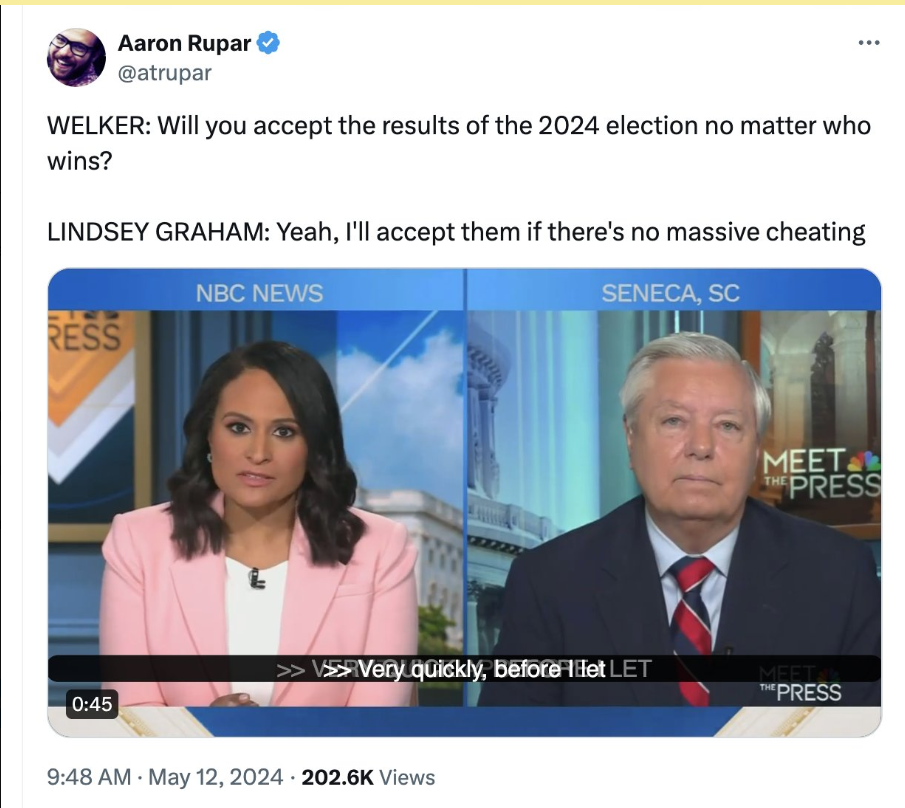
South Carolina senator and top contender for Trump's running mate Tim Scott famously evaded the question on "Meet the Press," saying that he wouldn't answer hypothetical questions. 

The Republican National Committee, now run by Trump's family and personal henchmen,  will not hire anyone who doesn't avow that Trump actually won the 2020 election. I think it's indisputable that if Trump loses, they will all rise up to declare once again that it was stolen. You can't have a democracy if one party is unwilling to accept that they lost. 

The Washington Post reports that the Trump campaign is planning a "leaner" and "more efficient" operation this time out because Trump has "told them to not worry about getting out the vote since he could do it himself. He told them to 'focus on the cheating.'" 

To that end, it appears that Trump and the party are preparing to turn the election itself into a chaotic mess. Starting last December, Trump began employing a phrase used by his disgraced former National Security Adviser and QAnon adherent Michael Flynn: "Guard the vote." He told his supporters to “go into” cities including Detroit, Philadelphia and Atlanta to “watch those votes when they come in.” This tactic was tried in the 2022 election when armed citizens staked out lock boxes, intimidating voters as they attempted to drop off their ballots. We can expect more of that driven by outside groups and Trump's exhortations at his rallies.


Want a daily wrap-up of all the news and commentary Salon has to offer? Subscribe to our morning newsletter, Crash Course.


The new chair of the Republican National Committee (RNC), Lara Trump, announced that the party is building a massive "election integrity" unit with a program to send 100,000 poll watchers all over the country who will be able to “protect the vote and ensure a big win.” She said, “We now have the ability at the RNC not just to have poll watchers, people standing in polling locations, but people who can physically handle the ballots." (Actually, they cannot.) In other words, the party is doubling and tripling down on voter suppression to win. Unfortunately, that's unlikely to have the effect that it used to have back in the old days when the GOP had to be put under a consent decree after it was successfully sued for intimidating racial minorities at the polls. Today we have early voting and vote by mail (and Trump has trained his flock to mistrust those methods.) That's why they have also concentrated on intimidating election workers and plan to do more of it during the counting process. 

If all that doesn't work to ensure him a win, he will obviously challenge the vote count. They plan to have lawyers stationed in every swing state to prepare the charges of voter fraud in the event he does come up short. He won't be relying on the likes of Rudy Giuliani or Sidney Powell this time. Now that the whole GOP establishment has been completely absorbed into the MAGA universe, they'll have higher-quality legal minds working on overturning the results. It's a good career move. 

And then if all else fails, they will have their violent mob ready to explode and that possibility will be hovering over every other tactic they deploy. Trump said recently, "If I don’t get elected, it’s going to be a bloodbath for the whole — that’s gonna be the least of it. It’s going to be a bloodbath for the country" and "If this election isn’t won, I’m not sure that you’ll ever have another election in this country.” These are very thinly veiled threats in a climate where his followers are being brainwashed by his lies into believing that he has a massive, unbeatable lead in the polls which is entirely untrue. And according to WIRED, the militia movement is on the rise again. One recent Facebook post shows where their thoughts are leading:

“When the government tries to steal the election again and they think we’ll just sit and take it … It won’t be like the last time … Just remember, they started it … We just wanted to be left alone … We prefer ballots over bullets … But …” 

The sad reality is that the worst of all possible worlds is that Trump wins the election in November. But Trump won't go quietly into this good night if he loses and neither will his followers. Either way, the election itself is just the beginning.


The long-awaited Donald Trump vs. Michael Cohen showdown is not “High Noon”

Somewhere in the twisted, addled and nearly empty mind of Donald Trump, he’s enjoying the showdown coming. Michael Cohen, his former fixer, will take the stand against Drowsy Don in Manhattan today and to Trump, it’s part of the grade B movie narrative of his life. He knows there are real consequences, but he can’t help enjoying being the center of attention. He views himself as a cinematic hero facing off against the forces trying to bring him down. Like any true villain, he always sees himself as the hero. He promotes himself as Gary Cooper in “High Noon”; the brave, rugged individualist ready to save the gentry as Lon Chaney Jr. admits, “People gotta talk themselves into law and order before they do anything about it. Maybe because down deep they don't care. They just don't care.”

But Trump isn’t the salvation. He’s the storm. And the reality is, he’s more like Lee Marvin in “The Man Who Shot Liberty Valance,” though he’d love everyone to think he’s John Wayne. 

For the record, Michael Cohen is neither Gary Cooper in “High Noon” nor John Wayne as Tom Doniphon in “Liberty Valance.” Cohen is the city-dwelling Ransom Stoddard as played by Jimmy Stewart in “Liberty Valance,” but with a few more colorful curse words at his disposal than Stewart. Yet, as was done by Stewart in the movie, Cohen will show up in a Manhattan courtroom to deliver the message Trump doesn’t want to accept: “All men are created equal” as written in the Declaration of Independence. “A lot of people forget that part,” Stewart said in “Liberty Valance.”

Either way, the stage is set for an epic showdown of biblical proportions this week as Cohen will testify against Donald Trump in Manhattan. Cohen will help decide one way or another, whether Trump will be held accountable for some of his alleged criminal activities in the last several decades after climbing out from under his father’s armpit and reigning supreme in the national public cesspool.

With the Mar-a-Lago sensitive document’s trial on indefinite hold, the Georgia state trial facing a substantial challenge in appeals court, and the D.C. Jan. 6 trial awaiting a Supreme Court decision on presidential immunity that may not come before the end of June, the Manhattan trial against Donald Trump – often cited as the weakest case against Trump – looms as the only set of criminal charges Trump may face before the November general election.

Can Cohen be bombastic? Sure. Will he be in court? I saw him testify in Congress when he admitted his indiscretions and took his lumps. He candidly admits he’d still be in Trump’s inner circle if he weren’t run over by the Trump bus.

The facts show the case is anything but weak. Norm Eisen, the former ethics czar of the Barack Obama administration recently said on the podcast “Just Ask the Question” that the facts themselves are clear enough. Trump tried to buy the silence of former adult film star Stormy Daniels, with whom he’d had extra-marital sex.

What would make it a felony is if Trump tried to buy her silence for the sake of avoiding the scrutiny of voters prior to the 2016 election.

That is why Cohen’s testimony is seen as the lynchpin to the prosecution’s case. Since Trump had him pay off Daniels, he can effectively sink Trump’s narrative that he paid her off for a noble cause or any other reason. It will be Cohen facing Trump face to face in court – for the first time since Cohen left Trump – or if you prefer was thrown under the bus. Cohen was federally charged with campaign finance violations, tax crimes and lying to Congress. His credibility on the stand and with the jury may make or break Manhattan District Attorney Alvin Bragg’s case. 

Eisen, who spent a lot of time with Cohen as he prepared for one of Trump’s two impeachments, said he believes Cohen will perform as required. “He’s maintained the same story to me for years. He’s credible. And I don’t think he’ll take any bait laid out by Trump. I know the prosecutors have spoken with him about the need for professionalism. I think he’ll deliver it.”

Others aren’t so sure.

Trump’s attorneys have asked Judge Juan Merchan to order Cohen to stop talking about the trial and Trump. With terms that refer to Trump like “VonShitzinPants” already having been made public, Trump’s attorneys pointed to a recent TikTok video Cohen posted this week wearing a T-shirt that shows Trump behind bars as another reason to gag Cohen.

“Our request that the court order the government to instruct the witness to not talk about President Trump or this case until the case is over,” Trump attorney Todd Blanche said. As a response Assistant District Attorney Joshua Steinglass said the prosecution has repeatedly told all witnesses to keep their mouths shut, but “we have no control over what they do,” he added.

We need your help to stay independent

The dramatic showdown between the two volatile men threatens to be the stuff of legends, or at least a WWE smackdown on a bad Thursday night. It will definitely be historic. But it’s not just Cohen’s demeanor or bombast that is of concern. Will Donald Trump lose it in court and risk being jailed for violating his gag order? He’s already been fined and the judge has warned him he could find himself cooling his heels in a lockup if he keeps talking. Eisen said it’s a “calculated risk” that Trump could make to try and push Cohen into losing his temper on the stand. “I don’t think he’d be successful” Eisen explained. At the same time Trump runs the risk of not only a night in a secure holding facility for contempt, but should he found guilty of a felony, further violation of his gag order could weigh against Trump at the sentencing phase of the trial.

Having spent a great deal of time with Cohen in writing and researching his latest book, “Revenge,” I can state for the record that Cohen was very meticulous about getting the facts down on paper – and left little room for conjecture. “I want the truth to get out,” he said on numerous occasions. He did more than say it. I saw him actively pursue the facts and wouldn’t accept anything but the facts. 

Can Cohen be bombastic? Sure. Will he be in court? I saw him testify in Congress when he admitted his indiscretions and took his lumps. He candidly admits he’d still be in Trump’s inner circle if he weren’t run over by the Trump bus. He admitted everything he did wrong – and continuously explained that he did it all for the benefit of Donald Trump. Nothing he did was for himself. 

While Cohen isn’t historically a selfless man – again something he candidly admits – he has also continuously told me he wants to do right by his wife and children and set the record straight. I’ve never caught him lying to me. So, if it boils down to a battle of wits between Cohen and Trump, I’d candidly say Trump comes into the battle only half-armed.

Having been in close contact with both men over an extended period of time, I find Cohen has the advantage. He’s smarter, he’s been humbled already and paid the price for his hubris. Trump has an overinflated sense of his self-worth, has never been held accountable for what he does and has the demeanor of a five-year-old bully. More importantly, he’s not that bright. 


Want a daily wrap-up of all the news and commentary Salon has to offer? Subscribe to our morning newsletter, Crash Course.


Of course, this could all blow up in the prosecution’s face. But the prosecutors have wisely introduced a wide variety of written evidence, including receipts, texts, emails and the statements of David Pecker and Stormy Daniels to establish why Donald Trump paid off Daniels.

The evidence is indisputable and the defense, while it still has yet to put on its case, has offered little in the way of cross-examination that would destroy the prosecution’s narrative. The only thing the defense has done is ask for a mistrial – twice – to no avail.

At the end of the day, Trump is facing the same fate as the ill-tempered, angry, narcissistic and purely fictional Liberty Valance. But it won’t be John Wayne or Jimmy Stewart that will level Trump.

Let the facts show that Trump is the instrument of his own demise. He chose Michael Cohen. He chose Stormy Daniels. Trump lacks morality, accountability, intelligence, humility and empathy for everyone on the planet.

At the end of the day there is no grand conspiracy to bring down Donald Trump. He once said he was “the storm." Jeffery Epstein, of all people, said Trump had a problem with morals (and I guess Epstein would know). In short, Donald Trump created the myth of Trump in his head and he’s going down via self-inflicted wounds.

The guy standing in the shadows taking him down is merely the reflection of himself.

Donald Trump’s obsession with control is backfiring on his lawyers in court

Ted Cruz took to Fox News last week to defend a man who once called his wife ugly and suggested that his father murdered JFK.

"There is no person on planet earth that believes Donald Trump has been celibate all his life," the GOP senator from Texas told host Sean Hannity.

Cruz, a graduate of Harvard Law School, knows that Trump is not actually on trial for having sex with adult film actress Stormy Daniels, of course. His bit of dishonesty was in service of hiding the actual charges — which pertain to Trump's efforts to hide his adultery from the public with an illegal cover-up using hush money paid to Daniels — from Fox viewers. But Cruz is also telling a more subtle lie about "no person" being in denial about Trump's sex life.

There is one person who very much is denying the sex with Daniels: Donald J. Trump. Even worse, he's making his lawyers, who are paid for with Grandma MAGA's small-dollar donations, deny it as well. During opening statements, Trump's lead lawyer, Todd Blanche, said Daniels is offering a "false claim of a sexual encounter." In her cross-examination of Daniels, Susan Necheles, another defense attorney, repeatedly accused Daniels of lying, even sneeringly saying, "You have a lot of experience in making phony stories about sex appear to be real." (Daniels' retort: "The sex in the films is very much real, just like what happened to me in that room.")

Perhaps Cruz, who is an experienced attorney, was wishcasting that Trump's lawyers had gone with a better strategy of just admitting the sex happened. By the end of Thursday, Trump's lawyers were likely quietly agreeing with Cruz, as Judge Juan Merchan ruled, yet again, that the Daniels testimony was necessary precisely because Trump's team refuses to concede on the issue of their client's non-celibacy. 


Want more Amanda Marcotte on politics? Subscribe to her newsletter Standing Room Only.


To translate from legalese to English: If Trump had just admitted he had sex with Daniels, she wouldn't have had to testify. Having forced her to tell her side of the story, he's now whining that it makes him look bad. That's no one's fault but Trump's. He's the one who is making his lawyers stick to this preposterous denial. 

Trump's current micromanaging of his defense team certainly cuts against the claims that he would have let his former lawyer, Michael Cohen, arrange hush money payments that ended up costing Trump more than $200,000 without Trump's knowledge.

As the reporters at the New York Times recently wrote, "Trump views himself as his own best legal strategist." They also report that he's boxed his lawyers into an "absolutist" defense, to appease a client "who despises weakness and is allergic to anything but praise from the people around him." But, as legal experts told the Times, claiming your client is a perfect angel who has never done anything wrong tends to backfire with juries because it's not credible. Instead, experts explained, attorneys tend to prefer the "My client might not be a nice guy, but he’s no criminal" defense.

Trump's current micromanaging of his defense team certainly cuts against the claims that he would have let his former lawyer, Michael Cohen, arrange hush money payments that ended up costing Trump more than $200,000 without Trump's knowledge. But it's also creating all manner of logistical problems for his defense team, including this most recent screw-up that allowed Daniels to testify at great length. 

For instance, Trump has been angry that prosecutors aren't telling the defense team what witnesses they are calling and when. On Tuesday, he temporarily violated a gag order placed on him by posting, and then quickly deleting, that he had just been "told who the witness is today," and griping there's "no time for lawyers to prepare." (The witness was Daniels.) Of course, the only person responsible for this situation is Trump himself. Typically, prosecutors do give the defense team a heads-up. But, with Judge Merchan's blessing, the Manhattan prosecutors have declined to do so in this case, out of concern that Trump would use social media to intimidate or harass them. By posting this, even if he deleted it 30 minutes later, he justified those fears. 

After Daniels testified, Trump's typing fingers clearly got itchy, because he made his lawyers ask if the judge would suspend the gag order so Trump could "respond" to her. It was a request that perfectly captured his toxic obsession with control and his fundamental cowardice. As Daniels herself reminded Trump, he is free to testify in court, if he actually wants to rebut her story.

But of course, he doesn't want to do that, because the prosecution could challenge his lies. Instead, he wants to hide in his safe space at Mar-a-Lago, flinging abuse at people online while being shielded from any consequences for it. By making this asinine request for their client, Trump's lawyers only further beclowned themselves in front of a judge who is already sick of their antics. 

Most of Trump's browbeating of his defense attorneys is probably not visible to the jury. It's a shame because it would help prove a central point of the prosecution's case: There's no way that Trump was unaware of the hush money scheme. Trump can't let the expensive professionals he hired just do their jobs. Instead, he is constantly managing them, pushing them to do foolish things to flatter his ego. By his own admission, Cohen was a two-bit flunkie who barely worked as a lawyer but more as a "fixer." Of course, Trump was controlling Cohen, and dictating his every move. 

This stuff matters outside of the realm of this sordid court case, as well. Trump is both cowardly and controlling, a toxic combination that leads to his authoritarian politics. He's someone who wants to hide in a bunker while sending out minions to force his will by fiat, which is exactly what happened on January 6, 2021. These kinds of leaders are misleadingly called "strongmen," when in reality, they tend to be weak people who use fascism to hide their own frailty. And, as Trump's management of his defense shows, their egos tend to cause incompetence. Hopefully voters will grasp that a man who can't even understand how to defend himself has no business running the nation. 

How cannabis and psilocybin might help some of the 50 million Americans experiencing chronic pain

The U.S. Drug Enforcement Agency announced in late April 2024 that it plans to ease federal restrictions on cannabis, reclassifying it from a Schedule I drug to the less restricted Schedule III, which includes drugs such as Tylenol with codeine, testosterone and other anabolic steroids. This historic shift signals an acknowledgment of the promising medicinal value of cannabis.

The move comes in tandem with growing interest in the use of psilocybin, the active component in magic mushrooms, for treatment of depression, chronic pain and other conditions. In 2018 and 2019, the U.S. Food and Drug Administration granted a breakthrough therapy designation to psilocybin, meant to expedite drug development given that preliminary studies suggest it may have substantial therapeutic value over currently available therapies for treatment-resistant depression and major depressive disorder.

Both of these developments represent a dramatic change from long-standing federal policy around these substances that has historically criminalized their use and blocked or delayed research efforts into their therapeutic potential.

As an assistant professor of anesthesiology and a pain researcher, I study alternative pain management options, including cannabis and psychedelics.

I also have a personal stake in improving chronic pain treatment: In early 2009 I was diagnosed with fibromyalgia, a condition characterized by widespread pain throughout the body, sleep disturbances and generalized sensory sensitivity.

I see cannabis and psilocybin as promising therapies that can contribute to bridging that need. Given that an estimated 50 million Americans have chronic pain – meaning pain that persists for three months or more – I want to help understand how to effectively use cannabis and psilocybin as potential tools for pain management.

Cannabis has been listed as a Schedule I drug, which includes dangerous drugs such as heroin and LSD, for more than 50 years.

Cannabis versus other pain medications

Cannabis, also known as marijuana, is an ancient medicinal plant. Cannabis-based medicines have been used for at least 5,000 years for applications such as arthritis and pain control during and after surgery.

This use extended through antiquity to modern times, with contemporary cannabis-based medications for treating certain seizure disorders, promoting weight gain for HIV/AIDS-related anorexia and treating nausea during chemotherapy.

As with anything you put in your body, cannabis does have health risks: Driving while high may increase risk of accidents. Some people develop cyclical vomiting, while others develop motivation or dependence problems, especially with heavy use at younger ages.

That said, lethal overdoses from cannabis are almost unheard of. This is remarkable considering that nearly 50 million Americans use it each year.

In contrast, opioids, which are often prescribed for chronic pain, have contributed to hundreds of thousands of overdose deaths over the past few decades. Even common pain medications like nonsteroidal anti-inflammatory drugs, such as ibuprofen, cause tens of thousands of hospitalizations and thousands of deaths each year from gastrointestinal damage.

One study shows about half of those who used medical cannabis reduced their use of opioids.

Furthermore, both opioids and nonopioid pain medications have limited effectiveness for treating chronic pain. Medications used for chronic pain can provide small to moderate pain relief in some people, but many ultimately cause side effects that outweigh any gains.

These safety issues and limited benefit have led many people with chronic pain to try cannabis as a chronic pain treatment alternative. Indeed, in survey studies, my colleagues and I show that people substituted cannabis for pain medications often because cannabis had fewer negative side effects.

However, more rigorous research on cannabis for chronic pain is needed. So far, clinical trials – considered the gold standard – have been short in length and focused on small numbers of people. What’s more, my colleagues and I have shown that these studies employ medications and dosing regimes that are far different from how consumers actually use products from state-licensed cannabis dispensaries. Cannabis also causes recognizable effects such as euphoria, altered perceptions and thinking differently, so it is difficult to conduct double-blind studies.

Despite these challenges, a group of cannabis and pain specialists published a proposed guideline for clinical practice in early 2024 to synthesize existing evidence and help guide clinical practice. This guideline recommended that cannabis products be used when pain is coupled with sleep problems, muscle spasticity and anxiety. These multiple benefits mean that cannabis could potentially help people avoid taking a separate medication for each symptom.

Traditional hurdles to studying cannabis

Since the Controlled Substance Act was passed in 1970, the federal government has designated cannabis as a Schedule I substance, along with other drugs such as heroin and LSD. Possession of these drugs is criminalized, and under the federal definition they have “no currently accepted medical use, with a high potential for abuse.” Because of this designation and the limits placed on drug manufacturing, cannabis is very difficult to study.

State and federal regulatory barriers also delay or prevent studies from being approved and conducted. For example, I can purchase cannabis from state-licensed dispensaries in my hometown of Ann Arbor, Michigan. As a scientist, however, it is very challenging to legally test whether these products help pain.

Reclassifying cannabis as a Schedule III drug has the potential to substantially open up this research landscape and help overcome these barriers.

The emerging role of psychedelics

Psychedelics, such as psilocybin-containing mushrooms, occupy an eerily similar scientific and political landscape as cannabis. Used for thousands of years for ceremonial and healing purposes, psilocybin is also classified as a Schedule I drug. It can cause substantial changes in sensory perception, mood and sense of self that can lead to therapeutic benefits. And, like cannabis, psilocybin has minimal risk of lethal overdose.

Clinical trials combining psilocybin with psychotherapy in the weeks before and after taking the drug report substantial improvements in symptoms of psychiatric conditions such as treatment-resistant depression and alcohol use disorder.

Risks are typically psychological. A small number of people report suicidal thoughts or self-harm behaviors after taking psilocybin. Some also experience heightened openness and vulnerability, which can be exploited by therapists and lead to abuse.

There are few published clinical trials of psilocybin therapy for chronic pain, although many are ongoing, including a pilot study for fibromyalgia conducted by our team at the University of Michigan. This treatment may help people develop a healthier relationship with their pain by eliciting greater acceptance of it and decreasing rumination often related to negative thoughts and feelings around pain.

As with cannabis, some states, such as Colorado and Oregon, have decriminalized psilocybin and are building infrastructure to increase accessibility to psilocybin-assisted therapy. One recent analysis suggests that if psychedelics follow a similar legalization pattern to cannabis, the majority of states will legalize psychedelics between 2034 and 2037.

Colorado voted to decriminalize psilocybin in 2022, but the state is still developing its regulations for “healing centers.”

Challenges ahead

These ancient yet relatively “new” treatments offer a unique glimpse into the messy intersection of drugs, medicine and society. The justifiable excitement about cannabis and psilocybin has led to state policies that have increased access for some people, yet federal criminalization and substantial barriers to scientific investigation remain. In the years ahead, I hope to contribute toward pragmatic studies that work within these difficult parameters.

For example, our team developed a coaching intervention to help veterans use commercially available cannabis products to more effectively treat their pain. Coaches emphasize how judicious use can minimize side effects while maximizing benefits. Should our approach work, health care providers and cannabis dispensaries everywhere could use this treatment to help clients in chronic pain.

Approaches like these can supplement more traditional clinical trials to help researchers determine whether these drug classes offer benefit and whether they have comparable or less harm than current treatments. As our society connects to the rich history of healing using these ancient drugs, these proposed changes may offer safer and substantive options for the 50 million Americans living with chronic pain.


This article is part of Legal cannabis turns 10, a series examining the impact of a decade of recreational cannabis use.

Who is most to blame for climate change? Regardless of the answer, global cooperation is critical

Climate change is one of the biggest existential threats to humanity, but in the ongoing struggle to fight it, a debate rages on over which countries are most responsible for emitting the greenhouse gases accelerating the crisis. China currently emits more CO2 than the U.S., but both countries are the world's top producers of the heat-trapping compound. Yet doesn't just matter who currently emits the most, but also how long they've been doing it and what those countries are doing to curb emissions.

"Speaking personally, I think that obliges the U.S. to be a leader in the energy transition — i.e. you broke it, you fix it."

The stakes could not be higher. Humans are experiencing the hottest months in recorded human history, with scientists warning that humanity is living on "borrowed time." As climate change worsens people can expect frequent and intensified tropical storms, wildfires, droughts and heatwaves, as well as rising sea levels and resource scarcity. This has put a spotlight on the issue, as well as on questions of how to fix the problem. Salon spoke to several climatologists about America's role in both causing and solving climate change, and all of them agreed on two things: First, America is the world's largest legacy climate polluter — that is, they have put more total carbon pollution into the atmosphere than any other nation; and second, a heavy burden therefore falls on America to take responsibility.

"In 2023, global temperatures came close to 1.5º C above pre-industrial levels – and the US is by far the biggest contributor to that," said Dr Simon Evans, Senior Policy Editor at the policy website Carbon Brief, which among other things keeps track of greenhouse gas emissions. Evans said that their analysis shows that more than one-fifth of all the warming currently being experienced on Earth was caused by America's cumulative greenhouse gas emissions. Even though China has a much larger population than the United States (1.4 billion versus 333 million), their total role in causing global warming is only around half of America's contribution. Furthermore, China is the leader of transitioning to renewable energy.

It is "relatively easy" to estimate any country's contribution to climate change — or, for that matter, any industrial sector's contribution, Dr. Gavin A. Schmidt, a climatologist and Director of the NASA Goddard Institute for Space Studies, told Salon. He referred interested parties to a website that helps ordinary citizens acquire that information for themselves. When they do so, it is important for them to understand the science behind how climate change is happening.

"The dominant driver of current climate change is CO2 emissions, and they have a property that means (roughly speaking) that the impact on climate is related to the accumulated emissions of CO2," said Schmidt. "This is different to the impact from air pollution or methane whose effects are really just related to current emissions. So that means you can relatively easily estimate any country’s (or any sector’s) contribution to current climate change by just looking at their cumulative CO2 emissions."

By doing that, it's clear that the United States has had the largest impact, followed by the European Union, China and the United Kingdom.


Want more health and science stories in your inbox? Subscribe to Salon's weekly newsletter Lab Notes.


"That’s what we saw during the Trump presidency, when the U.S. signaled to the rest of the world it was no longer serious about climate action."

According to some climatologists, America's disproportionate role in causing climate change puts a burden on the United States to take the lead in addressing the issue.

"This means that it is absolutely essential that the U.S. take a leadership role in global climate action," said Dr. Michael E. Mann, a climatologist at the University of Pennsylvania. He said this should include "reducing carbon emissions by 60% over the next decade. Without American leadership, it’s easy for other countries to come up with excuses and do less, and even back-pedal."

Mann added, "That’s what we saw during the Trump presidency, when the U.S. signaled to the rest of the world it was no longer serious about climate action."

Dr. Peter Kalmus, a NASA climate scientist who emphasized his opinions are his own, criticized the United States for not doing more to tackle climate change.

"The U.S. needs to get its own climate ducks in a row before the other nations of the world will listen to it on climate policy," said Kalmus. "The U.S. has the wealth and technology to be a powerful global leader on climate action, but instead continues to double down on fossil fuels, which is so incredibly stupid. We've squandered the chance to do good in the world and in doing good in the world to ensure a strong post-carbon economy for ourselves. It's just so stupid. "

Salon also spoke with Dr. James Hansen, a climatologist at Columbia University whose 1988 Senate testimony was a landmark event in the history of spreading public knowledge about global warming. Hansen said that "the fossil fuel industry decided to deny climate change rather than begin to invest in carbon-free energies." Because they discovered "it was easier to buy off politicians" than invest in green technology, oil companies have stymied efforts to spread public awareness about climate change and thereby cultivate the collective will to implement solutions. According to Hansen's recent paper in the journal Oxford Open Climate Change, feasible solutions do exist.

"That means a simple honest rising price on carbon, implemented in a way that the public will accept, i.e., with the funds collected from the fossil fuel industry distributed to the public," Hansen said. "Additional details include the need for 'clean energy portfolio standards' not 'renewables-only portfolio standards.'"

Hansen said that although President Joe Biden has attempted to address this issue — and he, unlike Trump, recognizes the scientific reality of climate change — his policies fall far short of what is needed. Hansen described the Inflation Reduction Act, which included environmental measures, as a bill that "produces inflation by borrowing huge sums from our children and grandchildren, but which has only [a] slight effect on reducing global emissions."

Now that America has failed to take the lead globally, Hansen argues that they may have permanently forfeited their world leadership on this front.

We need your help to stay independent

"Given that we failed to help get effective global policies, China is now the greatest source of present and future emissions," said Hansen. He said that "we should give priority to working with China. Instead we are intent on painting them as our enemy, an approach that tends to be self-fulfilling. The hope now is that Europe will be smart enough to not follow that lead."

The bottom line is that pointing fingers at who is the "worst" polluter is probably not a very productive use of time and energy, especially as the clock is ticking to avoid the worst effects of our changing climate. International cooperation will be key — after all, global heating is a global problem.

"Speaking personally, I think that obliges the U.S. to be a leader in the energy transition — i.e. you broke it, you fix it," Schmidt said. "But I don’t think it means that it’s all on the U.S. Rather, all the big emitters need to get their emissions down."

Actor “Sympathizer” Soldier Spy: How Australia’s Hoa Xuande became the ultimate double agent

Hoa Xuande has been waiting to get some good lines. And the Australian actor delivers plenty as the star of "The Sympathizer," HBO's seven-part adaptation of Viet Thanh Nguyen's post-Vietnam War novel, a feast and feat of wordsmithery that earned him a Pulitzer. 

"A line that comes to mind is: 'Wars never really die, they just hold their breath,'" Xuande tells me. "It encapsulates our inability as humans to forgive each other or move on sometimes. That we can all to a certain extent carry a war within ourselves, waiting for a chance to ignite again, which is the unfortunate nature of why we as humans still choose to fight each other over anything."

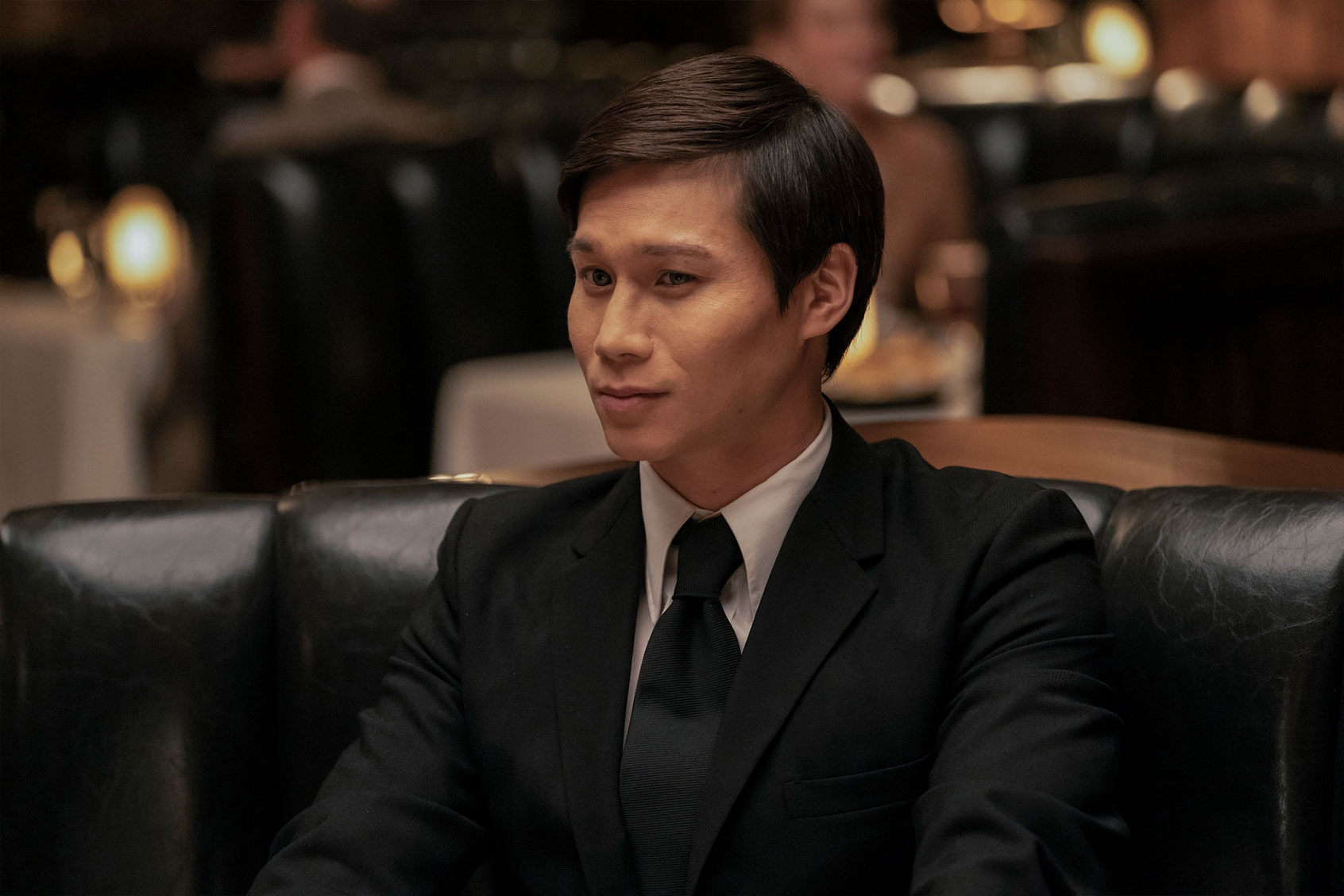
It all comes down to language in "The Sympathizer," in which Xuande plays Captain, a bilingual double agent whose ability to speak fluent Vietnamese and English makes him an invaluable asset (or is it a pawn?) for everyone he encounters. Captain is secretly a North Vietnamese communist mole planted in the South Vietnamese army, while also reporting to the CIA when Saigon falls in 1975, sending him and his Southern associates fleeing to the United States.

"Wars never really die, they just hold their breath."

Herein lies the value of "The Sympathizer" as an American-made tale – co-created by Park Chan-wook and Don McKellar – that offers the rare Vietnamese perspective of the war and its aftermath, especially for the refugees displaced and mourning their family, their home, their identity, their peace. Xuande is the offspring of Vietnamese refugees like I am, although we've ended up on opposite sides of the globe. Not having experienced the war ourselves, we're dependent on what has filtered down to us through our parents: scant, often disjointed details devoid of context and a true accounting of the loss involved. Language is often a barrier as well for offering the types of complex, nuanced reflections that are challenging for elders learning their second or even third language upon immigration.

"I'd heard stories from my mom and dad growing up," Xuande confirms. "And it feels really bad to say, but there are the times when they told me stories, but I wasn't really paying attention. As I've gotten older, when they've retold me these stories, especially when they're more pertinent to things like this show that I actually started to listen and actually understand what it was they really had to go through."

The SympathizerHoa Xuande in "The Sympathizer" (HBO)

The war in Vietnam is complicated. Hell, even the decision to call it the Vietnam War versus the American War, which is what Vietnamese people call it, comes with its own baggage and misinterpretations. Gruesome narratives from the U.S. like "Apocalypse Now" and "Platoon" do little to foster understanding of the people whose country was invaded by those purportedly sent to save them. 

"What the show allowed me to do was to really deep dive, find out the causes of the people, a lot of which I've never really fully investigated before," Xuande says. "When we watch movies about the Vietnam War, we get the perspective, mostly of the Americans or the allies. And so doing a project like this really allowed me to deep dive into the perspective of the Vietnamese civilians on the ground because there's a lot of those stories that aren't told. If you really look deep enough you can find them, and also the horrible campaigns that were run actually on all sides and how that really impacts the war."

How much can we trust a man who is telling his tale under duress?

Fluency is Captain's cultural currency as an interpreter, an intermediary and a spy. But there's one extra layer to Captain's linguistic deployment that is worth considering. In the series, as in the novel, we realize that we are getting an accounting of Captain's experiences as a written confession. The entire tale is told in retrospect now that he's returned to Vietnam after his sojourn in the U.S. and it's his North Vietnamese comrades in the reeducation camp — or are they his jailors? — whom he must convince of his loyalties. 

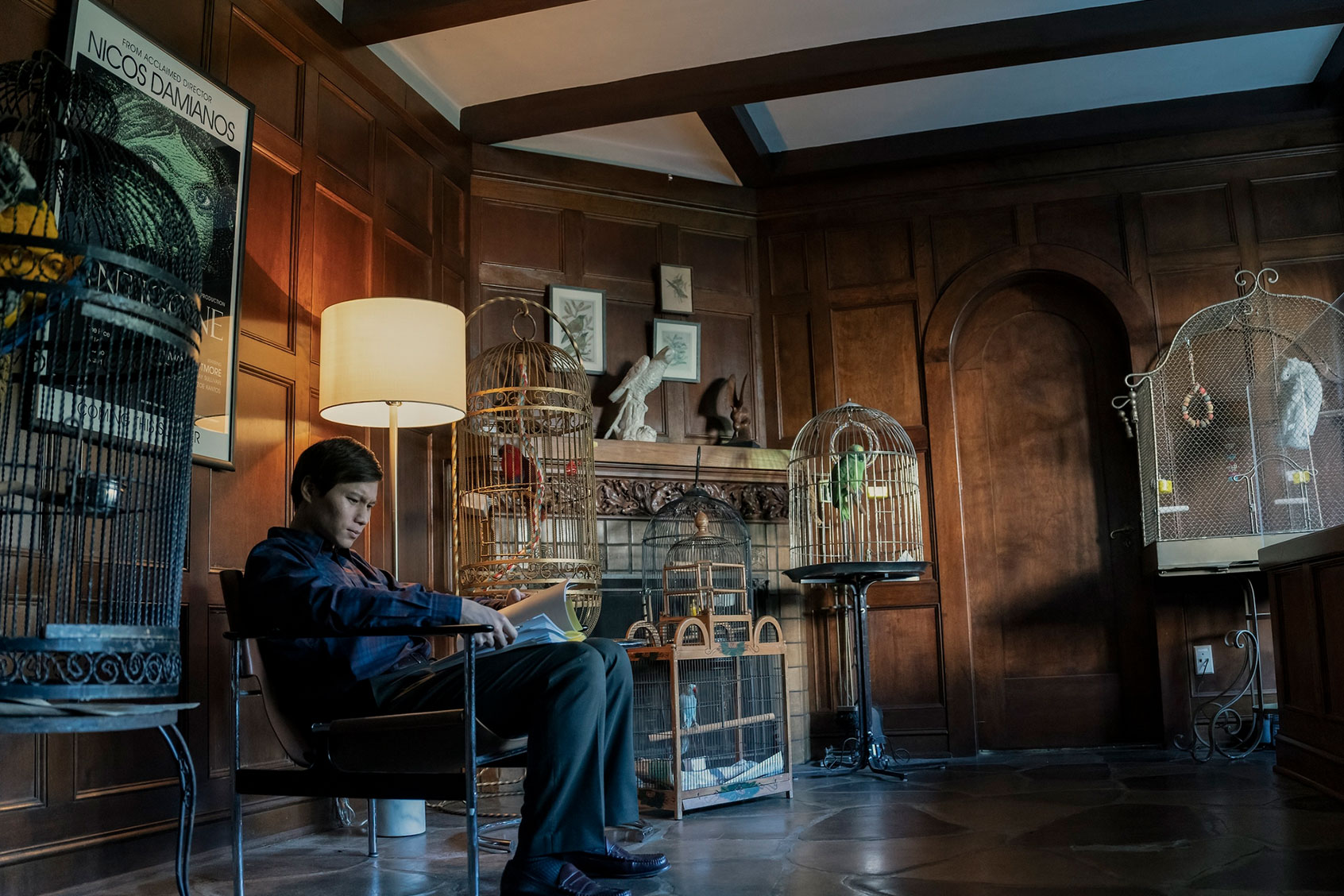
He must convince us as an audience as well. Because how much can we trust a man who is telling his tale under duress, while locked in a cell and denied nourishment and human interaction? How much can one know the motivations of a man whose name we never learn? Like the protagonist in Daphne du Maurier's "Rebecca," Captain tells his story in first person, but never names himself. Instead, he relates a tale that occasionally incorporates storytelling flourishes like flashbacks, elaborate tangents or imagined conversations by others in his absence. It has all the colorful characters, wry observations and unbelievable pacing that can be found in a novel. The piled sheaf of papers from his confession resembles a manuscript.

Fight for your right (accent)

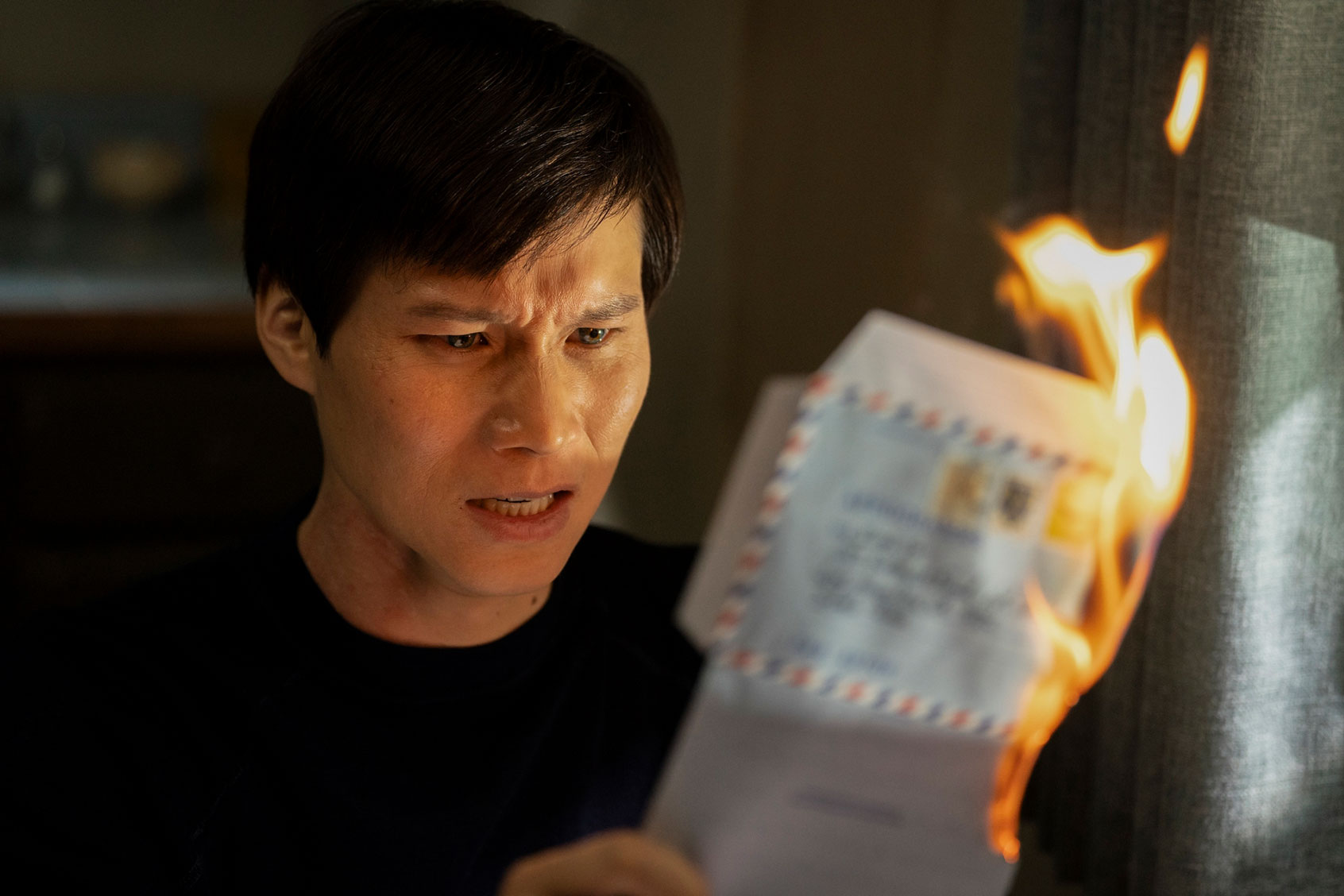
The SympathizerHoa Xuande in "The Sympathizer" (HBO)When Captain has the opportunity to be the Vietnamese adviser on a Hollywood movie, he pens a letter in code to ask the opinion of his North Vietnamese handler Man (Duy Nguyen).
"Go be the adviser for our people," Man responds. "Your influence may be small, but as they say, if you keep rustling the winds will gather and give us a storm. Give us some good lines."

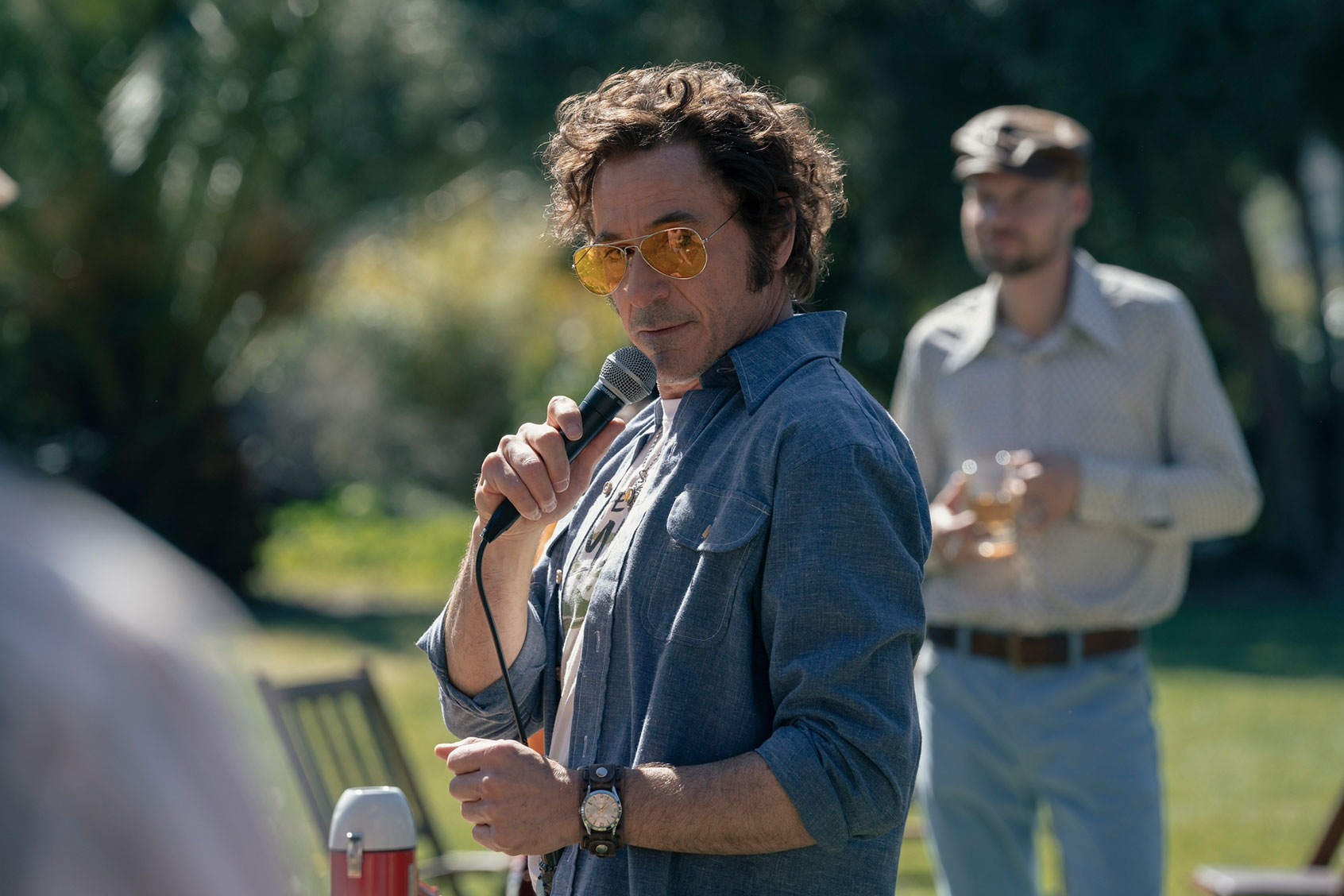
Again, Captain must leverage his language skills, this time to afford his people some smidgen of a presence in Hollywood. It turns out that director Nicos Damianos, (Robert Downey Jr.) who's making his Vietnam War magnum opus "The Hamlet" only wants a yes man, not actual input. Therefore, Captain must go to battle for every line, especially since Nicos never wrote any for his Northern Vietnamese background characters, whom he compares to the docile water buffalo. 

"Robert [Downey Jr.] as the auteur is probably the most antagonistic person that I face in the show," acknowledges Xuande. "He's really just a major a**hole. For my character's sake, I felt like that was really what it must have been like to really have to fight for your representation back in the '70s when they were illustrating apparently your war back to you in a certain way that only highlights their humanities.

"That antagonistic character representing the establishment that is Hollywood makes you really feel like you are nothing," he continues. "There are a lot of those eye-roll moments on set [back then]. I feel like that's the only way you can really deal with that at the time because they're not going to listen to you. You've been told by an establishment that you're just a few people who apparently were so lucky to have survived and made it to the mainland of America. Then, apparently, you just have to eat up whatever they feed you."

https://www.instagram.com/reel/C61S0skO204/?utm_source=ig_web_copy_link&igsh=MzRlODBiNWFlZA==

The need for accurate representation in Hollywood is often misunderstood as merely a gift affecting the marginalized – to afford them jobs they may not be considered for and to see themselves onscreen. Certainly, both are necessary and empowering, but equally as important, it's about how those in power — in this case, a white genius director and his presumably predominantly white audience — will begin to see the Vietnamese as people and not some intrinsically alien, subhuman other. 

Therefore, by making Damianos concede that his movie's villagers need spoken dialogue, Captain has forced the director to acknowledge the Vietnamese people's very humanity. This might have been enough for the American filmmaker, but Captain isn't content with just a show of representation. Captain first points out that one vocal Asian extra is not even speaking Vietnamese  . . . because she's Chinese. Thus, Captain gets the green light to recast his own people as background extras, which leads to the following conversation with his Southern General, who will source extras from the refugees in his camp.

"What accents are required: Northern or Southern?"

"Northern is better but if they're from the South I can coach them."

It's a conversation that only matters to the Vietnamese people involved, since Damianos certainly doesn't know or care. (His Assistant Director thought Vietnamese was just another type of Chinese accent.) Here, the accent or more accurately the dialect that's being discussed indicates far more than just which geographical region one hails from. It's an indicator of one's possible allegiance, a shared mindset and experience that means so much more outside of one's homeland. 

The SympathizerRobert Downey Jr. in "The Sympathizer" (HBO)As those who technically lost the war, it's the Southerners whose accents are the most common among the Vietnamese diaspora. It's why my hodge-podge accent – neither entirely Southern nor Northern – made me feel self-conscious to speak, compounding my anxieties about exposing my already shaky grasp on the language.
Damianos' fictional film "The Hamlet" is set in North Vietnam, hence the need for those with that dialect. Captain's loyalties may be red, aligned with the North, but he was born in the South, similar to the actual spy on which he's based.

"It's Pham Xuan An. He was the real-life spy that inspired 'The Sympathizer,'" says Xuande. "He actually has a southern accent, and so it actually confirmed to me that I didn't need to have a Northern accent for this character to be plausible. I could actually just use my natural Southern accent. And my Southern accent is not the modern-day accent. It's probably closer to 1970 because of the way my parents spoke when they left Vietnam, and that is the only real reference that I have of that time through my parents. And so my accent naturally comes from them."

"His weakness is that he can see all the sides."

While Xuande could speak conversational Vietnamese, he needed to perfect it for the series. His Vietnamese skills needed to project who he presented himself to be as highly educated and well-trained. After all, any self-respecting spy wouldn't let anything slip through sloppy language.

"Growing up in Australia, especially when I didn't really have any Asian friends, I was kind of ashamed of being Vietnamese," he admits. "I didn't want to speak my language. It took me a long time to accept and be comfortable with the fact that I had a second language and I could speak it. 

"When I took on this project, they put me through a two-week crash course," he continues. "I learned that quite quickly because I obviously have a grasp of the language. But there's words that I've never used before, which were really difficult for me to learn when you have to say things like 'Commandant' or 'public execution' or 'dialectical materialism.' There are words that you probably wouldn't even say in English, let alone Vietnamese. And I'm learning these words for the first time. So they that was a bit of a struggle."

The SympathizerHoa Xuande in "The Sympathizer" (HBO)Xuande had yet another linguistic hurdle to surmount as well. Captain is a Vietnamese man who learned to speak English while studying abroad in Los Angeles. The actor's Aussie accent wasn't about to cut it, and judging by his performance in "The Sympathizer," he studied just as diligently to craft his flawless American speech. It's only slightly less sharp when speaking to me in the interview.
"The American accent I'm putting on now, it's kind of diluted, not as good as it was when I was shooting," he says. "I just just do this for ease of interviews. To be honest, I can switch to my natural accent, but you'll probably be scratching your head for half the time."

Xuande is not alone in the decision to alter his speech to be better understood, especially by the American press. Having interviewed both Christian Bale and Jodie Comer – before and after they decided to soften and dilute the stronger aspects of their native speech – I admit that the latter does make for better transcribing and less confusion. 

It's also a skill they can wield with precision and ease that many of us can't.

A meeting of minds

I don't use the word "wield" lightly when it comes to the ability to change speech. Language is central to the power in "The Sympathizer," referring to both the story and the man. We get one of the first inklings of Captain's true mastery of language whenever he's challenged by one of the incarnations of Robert Downey Jr. in the series. 

The SympathizerHoa Xuande in "The Sympathizer" (HBO)

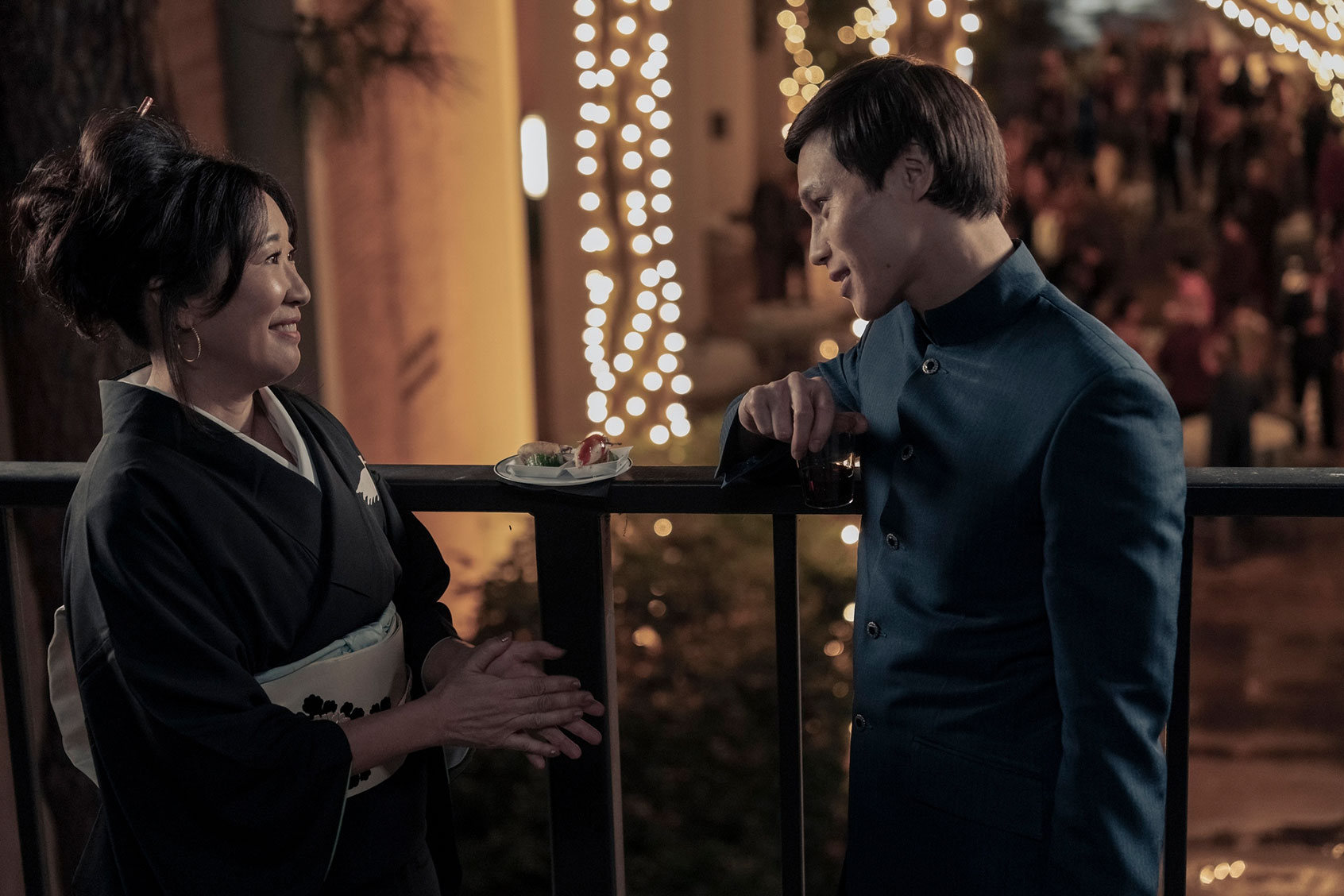
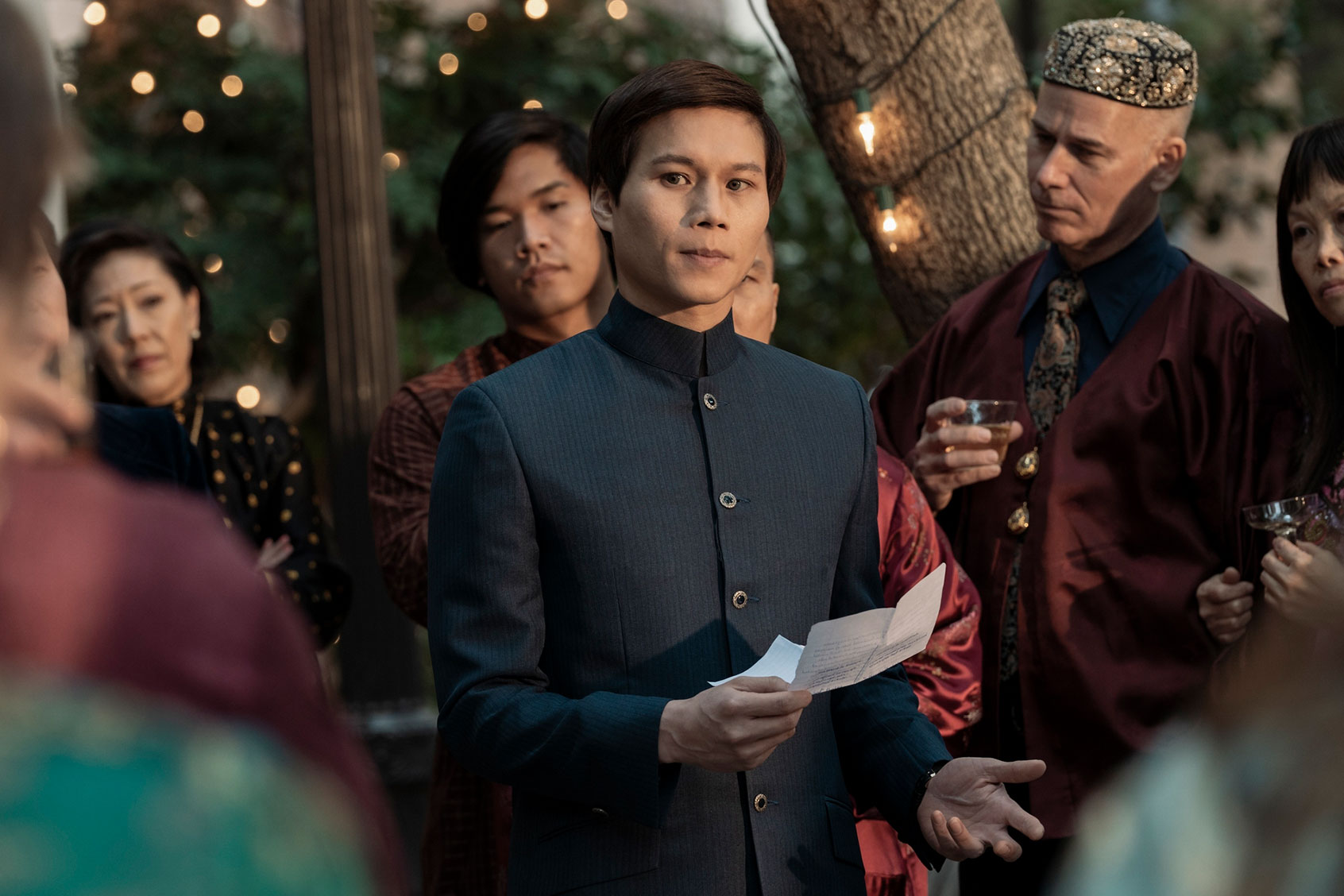
An extreme example arises from Captain's external appearance. Being half Vietnamese and half French invites the curiosity from Prof. Hammer (also Downey, Jr.), who teaches Orientalism in grad school and therefore believes he understands Asians . . . often better than they do themselves. When Captain attends a donors' party, Prof. Hammer calls upon him to perform. It's not a song or dance, but rather a thought experiment for Captain to break down his two sides: Western and Eastern. It's condescending and othering, as Hammer points out to guests that Captain's mixed race makes a "lovely combination as you can see, but complicated."

Captain holds forth and delivers the following speech with aplomb:

Contradiction: The crux of the issue has always been about contradiction. The Occidental side of me see contradiction as something to overcome. But the Oriental side as something to endure. Hence the Oriental side of me is never afraid to accept contradiction when faced by an unexpected turn of events and say, "I expected this." But the Occidental side says, "What? Why did this happen?" and immediately begins to analyze.

The Oriental me feels comfortable in a crowd, but the Occidental me is always ready to take the stage. I think in two frames of minds either/or to the Occidental me and both/and to the Oriental Me. So accordingly, half of me values independence, but the other half appreciates interdependence. Also ––

At this point, Prof. Hammer interrupts, a bit flustered by being outmaneuvered. 

"I found the speech really fun to do," says Xuande. "If you're going to analyze what that scene is, it speaks to the establishment that is trying to dissect our Asianness, that is always trying to perceive the Asian person as something other than potentially human. That there's something that is like us, and there's something that isn't us. Imagine having to write a list of all the qualities that apparently you possess, that aren't normal or human-like or whatever. All throughout history, we've done that to marginalized people, and so I think that scene encapsulates that very notion that there was a point in time when education or cultural establishments tried to basically analyze people as if they weren't people."

Prof. Hammer wants a performative type of Asianness, one that conforms to what he believes Captain to be, and he gets that . . . at first. Captain dutifully accedes to the professor's wishes by delineating a binary persona, but as the speech goes on, it's clear that he's commanding the party through his charismatic rhetoric. He's not letting himself be relegated to being a mere spectacle, which is why Hammer stops him mid-sentence. 

"Robert does a really good job of hamming up that perspective of having some kind of superior understanding of what our culture is, that somehow our culture has to be educated back to us," says Xuande. "He embodies that idea of: we know what you're supposed to be like, and we know the differences and we know what the similarities are. These are the things that you're supposed to do and not supposed to do. And if you're not doing it, then you're wrong."

The SympathizerSandra Oh and Hoa Xuande in "The Sympathizer" (HBO)To reestablish his power, Hammer immediately corrects his secretary Ms. Sofia Mori (Sandra Oh) on the proper way to wear a kimono. Growing up in Gardena, California, Sofia is a second-generation Japanese American who becomes Captain's girlfriend when he returns to the U.S. At the party, the two commiserate over being the props for the evening's entertainment. Both have been styled, if you will, by the professor. It's clear that Sofia would have preferred not to serve food while wearing a kimono with chopsticks in her hair, while Captain's Mandarin-collared suit was hand-picked by Hammer. 
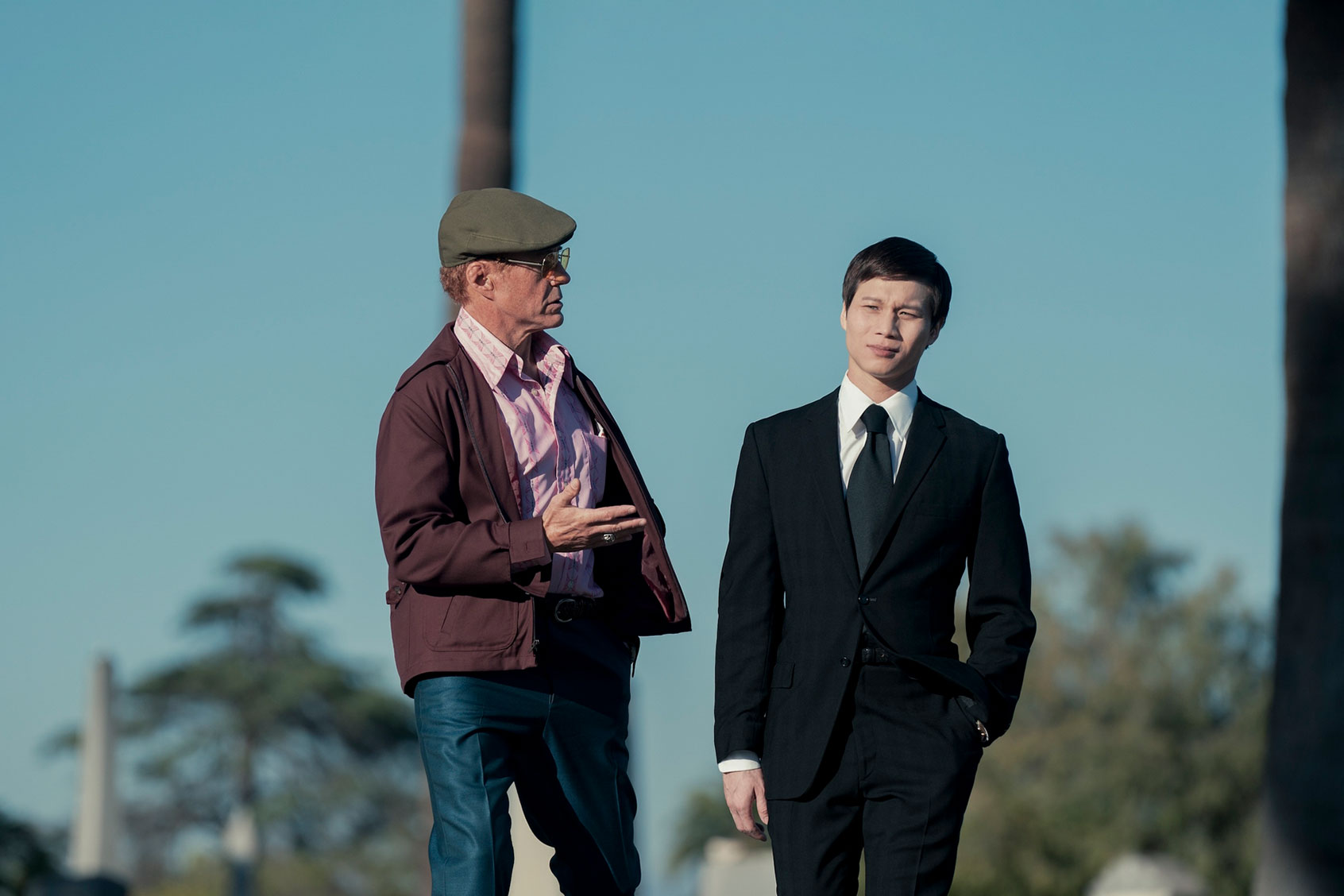
Being a double agent of mixed heritage also makes Captain the ultimate stand-in for the dual immigrant identity – having left the homeland and yet not wholly embraced by the new country because of one's looks. Captain is the perpetual outsider no matter where he is, but he gains a conditional entry through his facility with language. This eventually becomes his undoing, however, because to truly understand a language is to understand the people who speak it and their ways of thought. Their very ability to embed in other groups is why they might be swayed to their side.

"I think his weakness is that he can see all the sides," observes Xuande. "Therefore he doesn't quite know who is actually – it's really hard to put these words because there are no victors and there are no losers. Everyone loses, right? So when you start teetering on understanding that actually, everybody is right and wrong at the same time, it actually puts you in a position that you're you are at your most vulnerable."

Sure, language can provide Captain's primary weapons for both offense and defense. And sometimes deploying them blows up in his face.

More than a few people begin to distrust how well he speaks English and knows American culture. His own blood brother and handler Man tries to make Captain admit that he's more American than Vietnamese now. But it's the various Robert Downey Jr. iterations who push Captain to reveal that he's not as docile as the water buffalo they're expecting. While he's had the most combative interactions with director Nicos Damianos, it's the friendly collaborations with his CIA mentor Claude (Downey Jr.) that are filled with ongoing tension. Every time the Captain corrects Claude's misattribution of a quote or misidentification of an American musician, it feels like a test. At what point will Claude be fed up with his mentee having his own thoughts and will?

The SympathizerRobert Downey Jr. and Hoa Xuande in "The Sympathizer" (HBO)In a way, an actor is the ultimate person to identify with the role-playing required of being a spy. While his task is outward-facing – to be believed as a specific character – he has his own agenda. Xuande is the first to admit that his career is still really just starting out, but he's already played with a number of ways to present himself: as an exchange student with an accent in the comedy "Ronny Chieng: International Student," as the spirit of a Southern Vietnamese soldier in the horror drama "Hungry Ghosts," and as one half of a set of bada** twin enforcers in "Cowboy Bebop."
But it's as Captain that Xuande has the most opportunities to fully embrace the braided dualities of being a mole, an immigrant, an actor – all of which require gauging one's audience and delivering an appropriate performance to get through to them. It seems fitting then, that he cites the 2016 science fiction film "Arrival" as resonating strongly with him. In the film, unlocking the secrets of how to communicate with alien visitors has the power to change how one experiences reality.

"I recently watched 'Arrival' and that's by Denis Villeneuve," says Xuande. "I still remember that movie quite often because it's just got such a beautiful message of understanding the world. It's a message about, if we knew that we could be better, would we try and act better? And if I can still remember a film years on after it's released, I feel like that's a project that's going to have a lot of impact, that's going to resonate with a lot of people. 

"So I feel like this project ['The Sympathizer'] was perfect in that way. Because regardless of what depictions of the war of this, that and the other or some of the tragic moments or light-hearted moments, I think the message of this show will really resonate and carry on through more than just the Vietnamese diaspora."

The captain has spoken.

"The Sympathizer" airs Sunday nights on HBO and streams on Max.


Mary Tyler Mom: My mother was a style icon — but our tastes couldn’t have been more different

Last winter, when I was stuck in bed for 10 days with the flu, the only thing that stood between me and insanity was reruns of "The Mary Tyler Moore Show"; I watched miles and miles of them. The classic sitcom is objectively worth watching, but I binged for another reason. For much of my childhood, my mother didn’t just look like Mary Richards, especially when they both had chin-length golden bobs; my mother was Mary Richards, a Waspy, single career woman when there weren’t a whole lot of them.

This made me something of a rarity growing up in the Boston suburbs in the 1970s: a kid with a working mom — not to mention a divorced one. A few years after my parents split up, my mother went to graduate school, to which she wore an orange ruana. After she got her degree and a job, that was pretty much it for her hippie look. She was sufficiently invested in appearing put-together to keep a makeup mirror on our bathroom counter with a sliding bar that changed the mirror’s illumination level from “Day” to “Office” to “Home” to “Evening.” Mesmerized, I would futz with the mirror when I was in the bathroom. I would also inspect the windowsill, where she kept her hot rollers and what I would eventually figure out was her diaphragm.

I was smug about having a mother who cared about looking chic. (One of my classmates’ moms had a hairdo that confused me; I would later learn it was called a beehive.) My mom liked shopping for clothes at Dimensions — a T.J. Maxx antecedent, I can see now, and the place where she bought me my wicked cool dolphin shorts. Her work wardrobe was largely slacks — not pants: slacks — and sweater vests (she and I were always cold) over collared shirts, typically worn with delicate gold-chain necklaces. Then again, there’s a photo of her wearing a devastating pink knit minidress while standing by her office building in Boston, so she may have had the audacity to wear that to work as well.

One time when I came to the dinner table wearing thick black liquid eyeliner, I saw tears of what I took to be disappointment in her eyes.

My mother’s philosophy was to dress tastefully — inevitably, she had a DVF wrap dress — and to wear nothing showy or signifying indulgence, although she made an exception for a pair of Frye boots (whatever those are, was my thinking at the time). I registered that the boots purchase was a Big Deal — she dragged me all the way to Harvard Square to buy them — and it was an Equally Big Deal when she got her ears pierced in her 30s, having waited that long because she was of the generation of Wasps who had to be convinced that pierced ears didn’t make women look cheap.

When she took me to Manhattan to visit her likewise divorced friend Marybeth, my mom told me she would buy me exactly one thing from Saks Fifth Avenue. I knew she didn’t make much money and that I was lucky to get anything at all, so I chose carefully and unimaginatively. When I held up a simple white elastic belt with a clasp, there was no moue of disapproval from my mom, as there would be a few years later, when I was in high school and discovered punk rock, which vaporized any influence she may have had on my style. One time when I came to the dinner table wearing thick black liquid eyeliner, I saw tears of what I took to be disappointment in her eyes. I knew better than to expect her to cheer when I started dyeing my hair Wilma Flintstone red while living in a Greenwich Village dorm in the 1980s, much less admire the dreadlocks I began cultivating while I was out of her sight.

I had just graduated from college when my mom started dating this spectacular guy who would soon become my stepfather. While her politics were always liberal, her taste as a married person seemed to get more conservative — or maybe the world was changing on her. After she met one of my graduate school teachers, she informed me that she was not a fan of the woman’s severely asymmetrical hairstyle. Half a dozen years later, when I wanted to introduce my mom to the musician I was dating, she had a question for me: Did he wear any jewelry? Thinking she meant medallions or Liberace rings, I told her he did not. Later I realized she was trying to make sure he didn’t have any piercings.

Half a dozen years later, when I wanted to introduce my mom to the musician I was dating, she had a question for me: Did he wear any jewelry?

I was married to the musician (still am) when she gave me an old flannel nightgown of hers: white and lumpy-looking, with faded flowers. I was mildly piqued, as I detected politics in that gift: since she knew full well that I didn’t like clothes with flowers, she was imposing her tastes on me — I mean, wasn’t she? I declined the gift, saying something along the lines of, “That thing won’t make me very attractive to my husband.” It was among my worst daughterly moments. Whereas I had a husband, she no longer did because my stepfather had died of cancer a few years earlier.

And then in 2010 cancer got her too. When I was going through her clothes after she died so I could clear out her apartment, I didn’t keep a thing — she had four inches on me, so even if I somehow found something I liked, it wasn’t going to fit — but now I’m worried that I passed over that pink minidress. And I wish I hadn’t spurned her offer of that flannel nightie. I never would have worn it, but she didn’t need to know that. And I don’t see any politics now. I see only my mother’s effort to keep me — like her, always trying to warm up — from being cold.

Missed the northern lights? Auroras expected to continue into this week

Since Friday, social media has been packed with stunning images of the night sky glowing with streaks of pink, violet and green as a massive G5 category solar storm rages on, making bursts of the northern lights visible all across the United States. However, if cloud cover has impacted some stargazers’ ability to see the auroras thus far, experts say they may have another chance or two. 

According to a report from NBC News, National Oceanic and Atmospheric Administration forecasters say the geomagnetic storm activity underlying the bursts of northern lights will likely return at full strength on Sunday, with storm activity extending into Monday and possibly Tuesday. To see them fully, experts recommend getting away from city lights and finding a dark, rural place to set up. 

“Severe storm levels” were expected on Sunday, “active to severe storm levels” on Monday, and “unsettled to minor storm levels” on Tuesday, the NOAA’s Weather Prediction Center said in a forecast published on Saturday. Typically, the northern lights are only visible in the most northern regions of the continent, but experts say this is the most “powerful geomagnetic storm to impact Earth” since 2003, which has created a special opportunity. 

“For many people, the aurora is a beautiful nighttime phenomenon that is worth traveling to arctic regions just to observe,” the center writes. “ It is the only way for most people to actually experience space weather.”

I finally understand my mother’s tough love

I remember, as if it were yesterday, sitting in an Alabama church as the Baptist preacher eulogized my grandmother. I waited patiently for tears to stream down my cheeks. They did not.

Only days before, I’d received notification my grandmother had died from one of the four roommates I shared a house with on Harvard Street in Washington, D.C. It was 1982 and I was a student at Howard University. I’d gone to the fall Homecoming concert featuring musical groups Time and Vanity 6 at Crampton Auditorium on campus. This was before cellphones, texting and other instant communication, so my mother had to call the police station in D.C., give them my address, and ask them to send a patrol car to our house where the message was relayed to me before I was about to go inside the auditorium.

I remembered being in that church — numb, unsure of how to act or respond to death. I’d been close to Grandmother. I loved her dearly; yet, I did not cry.

I wanted to display a sense of love and affection, that tenderness death exposes. I wanted Grandmother to know the crater she left inside my heart was gargantuan, unfillable. However, it is difficult to escape the lessons of supposed manhood from neighborhood cats that specialized in the art of misogynistic behavior, believed in preying on the weak, and being a real N___ was the only thing in life to aspire to. What I mean is from an early age both inside and outside the home, I was taught real men don’t cry. They bet not.

The majority of this I had learned by the tender age of eight, from pouring shots of white and red liquor in my grandmother’s shot house.

During this transformation from college student to drug seller, my mother and I had a difficult time being in the same room without arguing about my life choices.

My grandmother’s shot house was frequented by men hardened by the weatherworn elements of time, those tiny particles of memory that refuse erasure. They held it all in. There was no crying. The emotive was damn near mythological and prohibited by the innate laws that governed these men. I watched them. I learned from them. I wanted to be them.

It was an environment my mother was accustomed to as well, having come of age in that old veridian clapboard house, an experience she never wanted to talk about, especially what it was like for a young woman to be present in a place that sexualized women on the daily. Even before my grandmother died, my mother and I always had this sort of brokenness, a fractured claim to connection. It seemed like we would never find a way to bond as mother and son, or wade in an emotional state of comfort.

By the time I was in that southern church processing Grandmother's death, I’d become a participant in the national narrative of cocaine through a Cuban cartel operating out of Miami.

In the future version of Randall, there would be twin-engine planes, cigarette boats moving through Caribbean waters with fiberglass kilos headed to Miami. There would also be homelessness and prison. There would be near-death misses, near-deaths attempted. I was a lost human drifting through the corridors of consciousness. What I am trying to say is I had become immersed in a culture of drugs. At the time of my grandmother’s death I was a college student in name and appearance only.

I was straddling a wafer-thin allegorical fence: The young man my parents wanted me to be versus who I was becoming.

During this transformation from college student to drug seller, my mother and I had a difficult time being in the same room without arguing about my life choices. To be honest, I did not make it easy. I rebelled at authority. Our disagreements were intense, mainly because, in the end, I wanted her to love me in a way I could not express. So I acted out, even as an adult. Perhaps my father saw this dynamic play out more than anyone, and when I was alone and angry, he would only offer, “You and your mother are just alike.”

My mother was never easy on me. Even as a boy she demanded I be tough, that I not cry. One time when I was homeless in D.C., I called the house late one night, and while my dad wanted to talk to me, my mother told my dad to hang up the damn phone. If I am honest with myself, I know why. I needed a tough love because a conventional love wasn’t working. It would take many years to understand my mother, that the silence she lived with growing up around her mother, the things she witnessed, it all played a part in how she raised me as her son. She saw how society withered those men up and took the joy out of living before they returned to the dirt. The booze, the women of the night, the gambling, the cons, all of these factors of the living she grew up around, as did I.

The day before my mother passed, I was at home in Birmingham, Alabama.

My mother had recently suffered a mild stroke, so mild she wasn’t aware until she went to the hospital and the doctor confirmed bleeding on the brain. The prognosis seemed to be good, so I did not fly home. I came two months later on my way to a literary conference in Dallas.

Perhaps my father saw this dynamic play out more than anyone, and when I was alone and angry, he would only offer, “You and your mother are just alike.”

The night before my flight departed for Texas, I was working on my panel presentation in my father’s office downstairs when I looked up and saw my mother lingering in the doorway with the most angelic smile. At that moment, wading in my own silence, I felt the sincerest connection I’d ever shared with my mother. Her glowing face was full of innocent youth. It was as if she were a teenager, and I was meeting her for the first time. My mother proceeded to explain she’d backed the car out of the garage and back in. A simple task, but for her it was validation that she was on the road to full recovery.

When I finished my panel the next day in Dallas, I checked my cell phone only to see way too many missed calls from my brother-in-law. The sheer volume told something was wrong. My mother had suffered a severe stroke. I needed to return to Birmingham immediately.

At the hospital my dad, sister and I received the prognosis there was nothing else to do, that she would never regain consciousness.  My mother would hang between the balance of life and death for the next five days. I could only think back to our exchange in the doorway of my father's office, that moment when whatever we were battling against with each other was over. In many ways that moment told me that whatever connection we had or did not have, I was her child, and she was my mother. The only way I knew to deal with the impending loss was to visit mother every day in the hospital and read her passages from my soon-to-be published book, "Dead Weight: A Memoir in Essays."

The first essay I read was from “November 2nd and A Mother’s Love,” in which I recall my mother and I attending the Inaugural Ball in honor of President-elect Barak Obama.

I wanted my mother to know how special that moment was when we shared the first dance, dressed to the nines in formal attire in the nation’s capital. This dance came after a five-year bid inside the carceral state, after two years in a drug program, a bachelor's degree, an MFA, and a PhD. After the PhD came my first tenure track job. I was now following in the shadow of my mother, also a lifelong educator.

The second passage came from my essay, “Eleven Days.” It took my mother 57 years to reveal to me — or rather, to my wife, on a visit after our marriage — that after my premature birth in 1961, I’d been separated from my mother for 11 days, for the sole reason of race. I recount what it must have felt like for her to have a child and then not have a child. For all the reasons in the world, this revelation made sense in terms of our broken claim to connection, and why we’d been on this journey since my birth.

Though my mother could not formulate words, I could stare into her fading eyes, and as I did, I became in sync with her every breath. I’d like to think she saw the passion, the writer in me, and never imagined this to be my destiny. I uttered the most difficult words I've had to speak when I told her, "It is OK to let go." 

Author at 5 months oldAuthor at 5 months old (Photo courtesy of Randall Horton)

I cried at the foot of her bed like I’d never lived by the code that weeping is for the weak. I didn’t give a damn. Whatever it was that I could not articulate had to come out. And in the crying came the baptism, and after the baptism came a sense that our love had always been that of mother and son, and maybe in the progression of death we truly understood each other. This was my mother’s final gift to me.

At the funeral, it was assumed, that I — the writer — would say something.

I sat in that same basement study where I last saw my mother alive, and after another good cry,  the first words I wrote were: “Come celebrate with us this life of longevity, a life realized through a commitment to service and achievement, taking every inch of what this social order gives, with all its constructs and ideologies within a nation that never could have imagined the existence of the strong Black woman — who is often cloaked in a sort of invisibility.” I wanted my mother to know she was never invisible.

I returned home a motherless child.

The next morning, while working on a creative nonfiction essay on my backyard deck in North Jersey, two doves appeared on the wooden railing. It is a backyard visited by darting sparrows and dignified blue jays lingering in the skeletal tree branches of spring. Sometimes against the background of a shed and garden, cardinals flash their emblematic red wings. But never doves.

As a poet, I viewed these two birds as Grandma and Momma, the two most important women in my life, checking in on me, letting me know they are always here, there, everywhere. 

“You’re mother!”: Maya Rudolph leads “SNL” for a Mother’s Day-themed episode

On shows that take place the night before Mother’s Day, the cast members of “Saturday Night Live” have a longstanding tradition of changing focus, at least for a beat, to shout out their own mothers through some soft, self-deprecating jokes, typically told with flowers in-hand. Last night was no different — up to a point. 

“With so many upsetting stories in the world right now, we thought we’d take a break from a regular cold open and hear some heartwarming stories from our moms instead,” Kenan Thompson said after introducing his mom to the Studio 8H audience. 

“Really? I was excited to see who was going to play Stormy Daniels,” Mrs. Thompson, in turn, deadpanned to the audience, referencing a cold open about the ongoing trial of former president Donald Trump

After the rest of the cast similarly introduced their moms, host Maya Rudolph took to the stage. While Rudolph is a mother of four children (“That I know of!” she joked), cast members Bowen Yang and Sarah Sherman informed her that she means something more to certain members of the audience.  “You’re not just a mom,” Yang said. “You’re mother!”

“You’re a 30 Rock legend,” Sherman added. “You’ve had your foot on our necks since Y2K.”

This kicked off a “house of Rockefeller”-themed song and dance number, which saw Rudolph rapping about her career on “SNL,” as well as her appearance in the 2011 movie “Bridesmaids.” 

“Remember in that movie when I pooped my pants,” she sang. “When you were a baby you pooped your pants and I changed your diaper. I’m your mother.”

Controlled demolition scheduled Sunday at collapsed Baltimore bridge site

On March 26, the Francis Scott Key Bridge in Maryland collapsed after one of its support columns was hit by the Dali, a massive container ship that had lost power. For weeks, the Dali has been trapped amid the remaining wreckage, but now crews are scheduled to conduct a controlled demolition on Sunday that should allow the ship to be refloated — and for maritime traffic to return to normal in the Port of Baltimore’s main channel. 

According to a report from NPR, engineers will use “surgical precision” to cut the steel trusses trapping the container, which will then be “thrust away from the Dali” when explosives are detonated. The demolished steel sections will be lifted onto barges using hydraulic grabbers and hauled away. 

The Dali’s 21-member crew has not been allowed to leave the ship since the accident, which is being investigated by the National Transportation Safety Board and the FBI. William Marks, a spokesperson for the crew, told NPR in an email that “all precautions are being taken to ensure everyone's safety” and that the crew would be in a designated safe area during the explosions. 

Officials did not say how soon after the controlled demolition the Dali would be returned to the Port of Baltimore, but The Baltimore Sun obtained an email that indicated it is expected “on or about May 14.” 


Modern motherhood is a major challenge and many parents are struggling to cope

Someone once told me, “parenting has a PR problem in the United States.” To which I responded: does it? 

What was once misguidedly glorified as peak happiness of the female experience has turned into a dominant depiction of something quite different. Minna Dubin’s book "Mom Rage," recently examined the “hidden crisis of rage” affecting so many American mothers today while Jessica Grose’s book “Screaming on the Inside '' investigated the unsustainability of motherhood in America. These public narratives have likely contributed to viral essays, like the one by Vox writer Rachel Cohen, who wrote “it’s genuinely difficult to find mainstream portrayals of moms who are not stressed to the brink, depressed, isolated or increasingly resentful.” 

When I was pregnant two years ago, I wondered if motherhood would be as difficult as I read about in the public discourse. When I asked experts and historians if this was the worst time in American history to be a mom, I was told it wasn’t a great time, but it wasn’t the worst time. That Americans' experience of motherhood had always, and still does, depend on factors like race and class.

"I would say that the moms are not okay."

But since 2022, the path to pregnancy and choosing to become a mother has become more dangerous in the face of strict abortion laws. Black women are three times more likely to die from a pregnancy-related cause than white women. It’s nearly impossible to unanimously distill the experience of American motherhood into one narrative, especially along the backdrop of a changing reproductive access landscape. In an attempt to assess the current state of motherhood, I asked a dozen mothers from across the country point-blank: What’s it like to be an American mom in 2024?

“I would say that the moms are not okay and I find myself saying that in a variety of contexts,” Erin Erenberg, founder of Chamber of Mothers, a nonprofit that advocates for better support for moms, with local chapters in 21 states told Salon. “There are folks who are facing motherhood and having a more difficult time of it because they're up against systemic racism and poverty.”


Want more health and science stories in your inbox? Subscribe to Salon's weekly newsletter Lab Notes.


Erenberg, a mom of three children, used the example of it being a privilege for an American mom to have a desk job today. 

“We have mothers in our communities who are saying 'I can't go back to work when I'm still bleeding because I work on a fulfillment floor,'” Erenberg said. “[They say] ‘Here I am standing picking and packing boxes, bleeding through my jeans, my milk is seeping through my top.' There are so many different levels of privilege and pain, but the thing that is uniting all of us right now is that we're not okay.” 

Lack of federal paid support influences major life choices 

One theme I noticed in interviewing dozens of moms from different parts of the country with kids of all different ages is how a lack of federal support — from no paid parental leave to affordable child care — affects major life decisions. According to Paid Leave U.S., 25 percent of American mothers return to work two weeks after giving birth. Meanwhile, 51 percent of people in the U.S. live in a “childcare desert,” which the Center for American Progress defines as a place that has either no child care providers or so few options.

"I think it's almost impossible to be a mother in America today because we live in an economy where most of us need to have two-income households."

In 2024, there is still no U.S. federal law that provides a right to paid family leave, leaving most women to depend on their employer to take time off after having children or if their children get sick. It’s this lack of federal paid support that’s influencing where mothers work, live and how many more children they want to have, if any.

“I've stayed in roles I'd otherwise left because I had paid leave,” Amy Sterner Nelson, a mom of four, told Salon. “It's impacted my career choices.” 

Nelson was a lawyer for a decade, but left her job after her second child was born because she didn’t have a flexible work environment. “I think it's almost impossible to be a mother in America today because we live in an economy where most of us need to have two-income households,” she said. Indeed, families are paying 25% more for groceries than they were before the COVID-19 pandemic. “But we live in a culture where no one recognizes what that means.” 

Nelson pivoted to start her own business, a network of coworking spaces called The Riveter, to have more flexibility. Still, her schedule is demanding. She works between 5 and 7 in the morning, gets her kids ready for school, then works more between 8:30 am and 2:30 pm. “Then I pick my kids up and I'm mostly with them after school and that is because I can't find reliable after-school childcare, right?” she said. “We live in Ohio, now 500 yards from my parents, so they can help fill in gaps, otherwise it wouldn't be doable.” 

But starting your own business to have more flexibility later in parenthood comes with a cost when it comes to having another child. Taryn Lagonigro, also an entrepreneur, said with all four of her pregnancies, she had to make a decision about how long her maternity leave would be based on their financial situation at the time. With her third daughter, she was able to take six weeks off. 

“But since I was able to work from home, I still considered myself fortunate,” she said. “My youngest daughter required open heart surgery when she was just a few months old, so I had to take an extended leave that was fully unpaid to be able to stay home for her recovery.”

Eileen Lamb, author of "All Across The Spectrum" and a mom of two children with autism, said finding someone who's able to take care of her son's needs is certainly “difficult.” But she feels lucky to work for a company, Autism Speaks, that is understanding of her needing time off to take care of her kids. She said finding an employer who is understanding and offers flexibility when it comes to parenting children with higher needs has been key.

Carley Storm, a mom of two, said that lack of affordable childcare has influenced her decision on having another kid. She was paying $1,600 a month, totaling $19,200 annually, for childcare.

“The financial burden made it necessary for me to wait until my oldest child was in kindergarten before considering having a second child,” Storm said. “This delay was driven by the need to balance the financial strain of child care expenses with providing a stable environment for my growing family.”

According to the U.S. Department of Labor, childcare costs for one child take up between 8 percent to 19.3 percent of median family income.

Many moms feel "time poor"

In addition to the financial strain of childcare costs or not having paid maternity leave, there is also a feeling of being “time poor” for many American mothers. Dawn Robinette, a mom of a 13-year-old in Texas, said she thinks this feeling of not having enough time to do anything is “the reality for most moms today.”

“One priority causes another priority to fall off your plate,” Robinette said. “And most of the time, everything seems like a priority, so you must be okay with something not getting done. And then of course, you feel bad that something didn’t get done.”

Erenberg said she sees this struggle a lot among local chapters of Chamber of Mothers, too, and feels it herself. She thinks it’s in part because American motherhood is getting “bigger and bigger and bigger.” 

“It comes back again to this notion that we've misunderstood having it all with doing it all,” she said. “With the first wave of feminism, having it all was about you can have a career and you can be a mother, but I think what that's evolved to is that we have to do it all.”

We need your help to stay independent

Erenberg said the month of May, for Mother’s Day, is filled with tons of activities at her children’s school, which is great. But she’s left wondering how mothers are actually supposed to attend these activities. 

Brit Jones, a full-time working mom of two, said “balance” is “impossible to achieve,” in her opinion.

“My kids are 9 and 14, and there’s never a day where I feel like, ‘yes, I have succeeded across all fronts.’” she said. “Or, ‘I’m gonna high five myself, no balls were dropped today.’” 

When asked what people misunderstand about motherhood the most, answers differed. But mostly it was that the struggles for moms vary. Some mothers said lack of affordable childcare wasn’t an issue because they had a strong support system or lived in a family. Another mom told me she and her husband moved in with their parents to have built-in childcare. 

Erenberg said while all mothers’ struggles depend on a variety of factors, they are the one thing that brings mothers together right now. “The thing that is uniting all of us right now is that we're not okay,” Erenberg said.

Where we find ourselves

In 2024, the number of anti-LGBTQIA+ bills put forward in the United States has far surpassed the number put forward in any previous year; five hundred and fifty pieces of legislation were proposed in less than three months. The laws range from drag bans to bathroom bills to healthcare restrictions. One hundred and thirty-seven of the bills are focused on denying or curtailing access to gender-affirming healthcare and my home state of West Virginia is carrying a disproportionately hefty load. Twenty-nine of these are West Virginia House and Senate bills. 

It is not only the quantity of current legislation that is making me reflect at this moment, but also the fact that less than two weeks from now, I will be publishing a novel, "Shae," with a central character who is a young trans woman living in a slightly fictionalized version of my hometown. When I began writing "Shae" in 2017, I had no idea that by the time it was published, the gender-affirming healthcare that one of the main characters receives would be out of reach for real-life West Virginian youths. I now find myself looking around and asking how we got here and what we can do to fight back.

When I say “we” I mean everyone in the LGBTQIA+ community and our allies but I also mean it in a more specific way. I mean “we” as in LGBTQIA+ folks living in rural spaces. In 2015 I moved back to my hometown of Alderson, West Virginia. When I left in 2003, I was still in the closet. When I returned, I was not. I spent my first year back in West Virginia exploring how my little corner of Appalachia had changed for LGBTQIA+ youth. In 2019, I wrote an essay for “Oxford American” about Kris Arbuckle, a young trans man who had very recently graduated from the same high school I attended. All around me, I saw good reason for hope and optimism. 

There was a queer film festival in the county seat, an LGBTQIA+ club at the high school, Arbuckle was living openly in my hometown, he had taken his girlfriend to prom and was supported by his teachers. And then there was the passage of a local ordinance that affirmed the rights of individuals to use the bathroom that best fit their own identity. Things all seemed to be moving in the right direction, perhaps a bit slowly, but they were moving, nonetheless. Nine years later, I called Arbuckle just as the West Virginia Senate began committee work on some of the most sweeping anti-trans bills to date and the House of Delegates in Tennessee, where Arbuckle now lives, introduced the Youth Health Protection Act which would criminalize all gender-affirming healthcare. 


Want a daily wrap-up of all the news and commentary Salon has to offer? Subscribe to our morning newsletter, Crash Course.


When I get Arbuckle on the phone, he is giving his stepdaughter a bath and I can hear her chirpy voice in the background over the running water. He and his fiancée both work for a plumbing company, Kris is the office manager, and his fiancée works in the field. He says his life is good right now, but he misses West Virginia and sometimes doesn’t feel safe in Knoxville. 

“We've gotten some comments,” he says, referring to himself and his fiancée. “We've gotten, you know, some stares, but we've also gotten a lot of support. Like this lady, after someone was kind of rude to us and, you know, she walked up and she was like, I really commend you all doing what you do and having the cool and the calm to deal with it instead of blowing up.” Arbuckle is always ready to bend toward optimism, but I can hear the worry in his voice. “In general, though, I feel less safe here than I did back home. I mean, there's so many more people in the queer community here but it seems like I was safer in a small rural town than I ever would be in a college town or city for that matter, which is insane to think. The thing of it is though, the more people there are the easier it is for the hateful people to say whatever they want to say and then hide. And I think that's the difference in a small town, people tend to be more honest and direct. Here, people take whatever they see on TV, or the internet, or whatever and then they see somebody out in a restaurant or bar and then they say hateful things without even thinking twice about it because they don’t even think you are human, and they’ll never see you again, so they don’t have to deal with the consequences. But in small towns, you're not just a faceless nonperson, people know your family going way back. When someone knows you, it solidifies more that you're a human. And that sounds ridiculous, right, but it’s basic.” 

"When I began writing 'Shae' in 2017, I had no idea that by the time it was published, the gender-affirming healthcare that one of the main characters receives would be out of reach for real-life West Virginian youths."

I ask Arbuckle about his thoughts on how things have shifted culturally and legislatively since we last spoke and he agrees that things seemed much more optimistic back in 2015. “There was so much hope,” he says, but now, “people in the company I work for get worried for me. But I don't think these new laws even have anything to do with the community in question anymore. Like, I think we're just being used as a distraction for something more and that's the unfortunate part that people are getting attacked for the government to distract, to do something shady behind whatever smokescreen they wanna use. And as I've gotten older the more it just seems like a ploy and it goes through these cycles every few years and you pick a marginalized group to pick on and they just exploit people's fears and biases to create a smoke screen. They act like these bills are to protect children, but they don’t care about children they just know that will get people riled up.”

Kris is not the first person to notice that the focus on children really motivates constituents on the far right. In June of 2023, Michael Barbaro interviewed Adam Nagourney about how trans kids became a rallying cry for the G.O.P. and Nagourney traced the kid-focused rhetoric back to Anita Bryant and Save Our Children. “This is nothing new,” Nagourney said. “The idea of conservatives who oppose gay rights, speaking generally, framing the issue around children has been going on at least since the 1970s.” And Barbaro responded, “You’re saying this approach by conservatives of focusing on kids worked early on in fighting gay rights. So it stands to reason that it would work against trans rights.”

Nagourney also links the new onslaught of anti-trans legislation to the (relatively) new visibility of trans folks in America and the political shift after the legalization of gay marriage, “you start seeing these same organizations that had been lobbying for gay marriage turn their attention to laws that would protect trans people […] And at the same time, we’re seeing more changes culturally in society in terms of transgender visibility.” 

We need your help to stay independent

Caitlyn Jenner’s “Vanity Fair” cover shot was released on June 1, 2015. On June 26th, the U.S. Supreme Court struck down all state bans on same-sex marriage and legalized it in all fifty states. Activists on the left were not the only ones linking trans rights and the Court’s decision. The Right was ready to pivot as well. 

To anyone with knowledge of LGBTQIA+ communities, Jenner’s photoshoot was not a shock. Queer and trans folks have, of course, lived in the United States for hundreds of years, even in rural places. In southern West Virginia, there is documentation of trans men living in Greenbrier and Pocahontas counties as early as 1868. It is the publicity that is new. As Helen Lewis Lindsley said, “Of course, sex has been all things in all periods…But on the whole, the farm enjoyed sex more, respected it more, and discussed it less…Sex was like groceries…most of the people stored their supplies at home.” But the ‘keep it at home’ attitude manifests in isolation. Even if mainstream publicity, like Jenner’s photoshoot, has at least partially led to this new legislation, Lindsley’s “discuss it less” attitude is certainly not the solution. 

Sometimes I wish I had more of Kris’s natural optimism. “It might be two steps forward and three steps back but, hey, when you look at it overall for a long enough time, it’s progress,” he says. And he’s not wrong. But I also can’t help but think about historical periods like Weimar Germany and how progress for queer communities can revert so drastically. Maybe Kris’s observations about small towns are what we should be focused on, how we can make a real impact in a place where people know us. Maybe we need to focus more on local elections, local network building, and affirmation through art and documentation. We — queer and trans rural Americans — are here and we have been here, and we will always be here.

India’s Hindu nationalist regime is a threat to Muslims — and bad news for the U.S.

With India’s elections in full swing, the victory of current Prime Minister Narendra Modi and his Hindu nationalist Bharatiya Janata Party seems all but assured. That is dire news for religious minorities and anti-government critics in India, who are frequent targets for the violence and retaliatory incarceration of the Modi regime. 

While Modi’s decision to call Muslims “infiltrators” in a campaign speech received attention in the West, the full extent of the prime minister's hate speech in the current election is not well known. Other recent speeches of his have promoted Islamophobic conspiracy theories, including the claim that Muslims are practicing a "Love Jihad." This is similar to racist notions in the U.S. depicting African-American men as sexual predators, and the “love jihad” claim has motivated killings of Muslim men throughout India. Modi has also described Muslims as “terrorists” who are conniving to steal the welfare benefits of caste-oppressed groups, and presented the opposition Congress Party as stealing Hindu money in order to give it to Muslims. 

This kind of bigotry and persecution is not solely directed at Muslims. Last year, India's intelligence service allegedly launched two assassination attempts against Sikh activists in North America, ordering the murder of Hardeep Singh Nijjar in Canada last June and hiring a hitman in a failed effort to kill Gurpatwant Singh Pannun, a U.S. citizen who lives in New York. Nijjar's killing provoked a major crisis in Indo-Canadian relations, but the Washington Post reports that the Biden administration has sought to respond to the attempted assassination of Pannun "without risking a wider rupture with India" or directly implicating officials in Modi's government. 

Americans should be aware that the spread of such ideas is much more than a faraway event in a remote country. When BJP leaders call for violence against religious minorities, the India-based relatives of American families are endangered. When Indian Americans raise millions of dollars for Modi and the BJP, and advocate for their policies in the halls of Congress, it helps to legitimize an authoritarian regime. This regime targets U.S. citizens and Indians alike. What goes on there has a profound impact on what goes on here — and vice versa.

As an Indian-American Muslim, I am deeply worried about my relatives in India. But I have also learned that the 4.4-million-strong Indian American diaspora, along with everyone else in the U.S., can be a force for good in the entwined future of our two countries. 

I first began to get a sense of how the United States could stand up for human rights abroad in 2002. I was employed as an engineer at IBM at the time, and one day when I was at work, I started to receive call after call from my friends and relatives. Did I see, they wondered, what was happening in Gujarat? 

Anti-Muslim riots had erupted across the north Indian state. At the end of a week of violence, Hindu nationalist mobs had killed an estimated 2,000 people, most of them Muslim Indians, and had destroyed hundreds of mosques and displaced more than 100,000 people. 

As the U.S. seeks to bring India into a military and strategic alliance against China and Russia, the era of reliable, widespread criticism of Modi's government and its propensity for bigotry, discrimination and violence has come to an end.

Nishrin Hussain, an Indian-American community member from Delaware, lost her father, Ehsan Jafri. A prominent politician in Gujarat, he was burned alive by Hindu nationalist paramilitary groups during the pogrom. He had allegedly called Modi, who was then the state’s chief minister, begging for help before his death, but to no avail.

In the aftermath, more and more evidence piled up suggesting that Modi was at least partly culpable for the violence. Human Rights Watch and the British Foreign Office both suggested that Modi helped stoke religious tensions beforehand and ordered police not to stop the rioters. 

The Gujarat violence shattered my perception of India. Though anti-Muslim violence has a long history in India, my birth country now seemed far more dangerous for my friends and family. 

My allies and I set to work organizing across religious and political lines in the U.S., to make sure that the violence was not forgotten. After relentless advocacy, the State Department revoked Modi’s U.S. travel visa in 2005, in recognition of his complicity in the riots, banning him from setting foot in the U.S. for almost eight years. 

That was a major victory, showing that Indian Americans could positively influence our country’s relationship with India. In subsequent years, my coalition has successfully blocked anti-Muslim ideologues from addressing American crowds and raised awareness about Islamophobia among Hindu nationalist organizations based in the U.S. 

We need your help to stay independent

Once Modi became prime minister in 2014, however, his political fortunes in the U.S. began to turn. Modi had his visa privileges restored and, in 2023, received red-carpet treatment on a state visit for meetings with President Biden. As the U.S. seeks to bring India into a military and strategic alliance against China and Russia, the era of reliable, widespread criticism of Modi's government and its propensity for bigotry, discrimination and violence has come to an end.

In 2019, Modi hosted a Texas event with Donald Trump, helping to galvanize an increasingly influential U.S.-based Hindu nationalist movement. This movement’s most extreme proponents have hosted fundraisers in Texas to fund anti-minority violence in India and have paraded anti-Muslim hate symbols in New Jersey. Other factions have pursued subtler forms of influence, such as inserting Islamophobic language into an Illinois state legislative bill or hosting "yogathons" in an effort to whitewash the image of U.S.-based organizations with ties to Indian paramilitary groups. 

In January, Indian Americans hosted a Times Square celebration for Modi’s consecration of a huge Hindu temple that had been built over the remains of an ancient mosque that was razed by mobs in 1992. Crowds in New York called for the takeover of two other historic mosques

With India now the most populous nation in the world and by far its largest electoral democracy, with influence that extends worldwide, the U.S. has become yet another battleground for Hindu nationalism. If American citizens and our political leaders continue to court Modi and accept this poisonous ideology, the decision could come back to haunt us. 

As mentioned above, Modi's government has reportedly targeted Sikh activists in the U.S. and Canada for assassination. Hindu nationalists issued numerous death threats to California state Sen. Aisha Wahhab, a Muslim of Afghan ancestry, after she introduced legislation aimed at combating caste discrimination in her state. A smear campaign orchestrated by an Indian intelligence officer was launched against my organization and our allies, Hindus for Human Rights, distributing dossiers full of misinformation in Congress. Indian Americans have lost their visas and resident cards for speaking out against the Modi regime. 


Want a daily wrap-up of all the news and commentary Salon has to offer? Subscribe to our morning newsletter, Crash Course.


If Modi and the BJP sweep the elections in India, as expected, we are likely we to see more transnational repression and more violence against Muslims, Christians, Sikhs and other regime critics living in India. We can expect to see more Indians seeking refuge in North America. We can expect to see more division within the diaspora along lines of religious and nationalist identity.

But we will also see more and more vibrant, diverse and resilient resistance. We will see young people coming together to refuse the discredited propaganda of this brutal regime. 

India stands at a crossroads, facing grave threats to its democracy, to the rights of minorities and to the separation of religion and government. Indian Americans of all backgrounds, along with other Americans who believe in democracy and human rights, need to stand up now to ensure our country takes the right path. 

Can you actually steal a recipe? The answer is legally (and ethically) complicated

Secret recipes have always held a certain allure in American culture. Their existence has helped mythologize companies, from Coca-Cola — which kept its secret formula in a vault at the Trust Company Bank in Atlanta for 86 years before eventually moving it to the the World of Coca‑Cola in 2011 — to KFC’s “11 herbs and spices,” a marketing concept once praised by Wendy’s founder David Thomas because, as he put it, "everybody wants in on a secret.” That’s probably why for every story of a secret recipe catapulting a cook or company to fame, there’s a story about one getting stolen.

For instance, a few weeks ago on this season of “Top Chef,” competitor Danny Garcia was accused of copying a recipe created by his former boss, Blanca head chef Victoria Blamey — a dish she had previously credited in part to him. Eater New York investigated the accusation, which centered on scallop chou farci, a dish served at the now-closed Tribeca restaurant, Mena, where Blamey managed Garcia. After Garcia won an elimination challenge with the dish, which host Kristen Kish declared “luscious,” Blamey took to Instagram to decry the choice. 

“To have someone copy the exact same dish and win Top Chef is not only a lack of moral and professionalism but a sad demonstration how this person has no creative guts of his own,” she wrote. “Surprise that @bravotopchef doesn’t do their research better.” 

To further complicate the narrative, Eater’s Melissa McCart found a 2022 Resy interview in which Blamey had specifically mentioned collaborating with Garcia on Mena’s version of scallop chou farci. The situation is muddy — but so is the broader question of whether or not a recipe (and what kinds) can be stolen. 

From a legal perspective, the question of whether one can sue for recipe theft often hinges on the nuances of intellectual property law, which encompasses copyright, patent, trademark and trade secrets. Trade secrets typically constitute corporate “insider knowledge,” like the Coca-Cola formula, and their protection can be enforced through non-disclosure agreements that are signed by employees, manufacturers and distributors. 

A patent could be sought to protect a method for preparing a dish, though the creator would have to prove novelty (not to mention the recipe would be published in full if the patent was approved, thus defeating the purpose if full secrecy was the goal), while a trademark would be used to protect names and logos associated with a food product. Finally, recipes themselves typically aren’t protected by copyright, but their expression in written form can be, meaning that if a recipe is copied verbatim, or nearly so, it may constitute copyright infringement. However, merely listing ingredients is likely not enough to obtain copyright protection. 

We need your help to stay independent

That’s perhaps why accusations of recipe plagiarism are so rampant, especially after the explosion of digital food blogs and recipe sites; everyone from Martha Stewart —who was accused in the CNN documentary series “The Many Lives of Martha Stewart” of stealing an employee’s cranberry nut torte — to “Cravings” author Chrissy Teigan have been accused of lifting other cook’s dishes without credit. 

In 2022, Teigan was accused by a Twitter user, whom Page Six speculated may have simply been a troll, of copying a recipe from a man named “Chef Mike” who had once cooked for Teigan and her family.“I have never stolen a recipe from anyone and I actively talk about the restaurants I love,” Tiegan said in response at the time. “[I]magine the ego to think someone is copying you when they haven't heard of you?"

That same year, baker Jordan Rondel, who owns The Caker, a line of high-end boxed cake mixes, accused Teigan of copying elements of her company’s design in her Cravings by Chrissy Teigen boxed cake line. 

“Chrissy Teigen released her own line of elevated baking mixes (pictured here alongside mine) right after we collaborated on a cake mix together,” Rondel wrote on Instagram. “I’ve taken a week to try to process everything and could say a lot more here, but I just want to acknowledge the support from everyone who has messaged me or commented online to stick up for The Caker. Thank you from the bottom of my exhausted heart. I have no issue with anyone releasing baking mixes, but I think you guys are right that this particular situation isn’t chill, especially because we’re just a small [sister-run] business.“ 

As Bon Appetit reported at the time, while there were some serious differences in the ingredients used in the products, there were notable similarities between the two lines in terms of the packaging. “Is it a straight rip-off?” they wrote. “Who can say for sure, but there’s certainly enough overlap in the overall aesthetics to raise some shady eyebrows.” 

The ethics of recipe-stealing are just as murky as the legal implications, which is apparent in the many, many Reddit posts debating the etiquette of recreating someone else’s recipe. Take, for instance, the post titled “AITA for ‘stealing my friend’s family recipe?” The post writer describes cooking for a dinner party with her friend, Sam. 

“One time when I was helping, Sam decided to make her family's secret recipe,” they wrote. “It's a chicken casserole. She said that she only made it once or twice a year, always around the holidays, because it was special.” 

"Word somehow worked its way back to Sam and she was pissed. She called me, yelling about how I'd ‘stolen’ her family's secret recipe."

The writer really liked the dish, spent some time recreating it at home and eventually served it at their own family function. 

“Everyone loved it, and my sister asked me about the recipe,” they wrote. “I told her where I learned it and gave her the recipe. Word somehow worked its way back to Sam and she was pissed. She called me, yelling about how I'd ‘stolen’ her family's secret recipe. I told her it's just chicken casserole and not worth screaming at me for, but she just called me a word that rhymes with bunt and then disinvited me from all future dinner parties.” 

The comment section was pretty starkly divided among people who felt like the writer was in the right — “It’s just  chicken casserole,” like the original post said — and people who felt like a grave culinary sin had been committed. Largely, that’s been how the response to the scallop chou farci debacle on “Top Chef” has been divided, too. 

“Regardless [of] who did what in the original dish, I think it was a pretty bad move by Danny to copy exactly a signature dish without acknowledging Victoria Blamey or restaurant Mena,” one user wrote in a Reddit thread about the drama. “Yes, chefs copy others’ recipes all the time, but this is not like steak and potatoes or truffle fries. This is also not a random dish in the menu of his old workplace: this is a signature dish that Blamey was especially proud of, talks about it all the time, and brings with her to every restaurant she’s the chef.” 

Another simply wrote: “I hope her food isn't this salty and bitter.” 

As for Garcia’s side of the story, the curious among us will have to wait a few more weeks to see if he chooses to speak out; contestants are barred from talking about the season in progress. 


Haley out: Trump’s VP nominee shortlist shrinks

Donald Trump’s VP nominee shortlist just got even smaller, as the former president confirmed that Nikki Haley, his former primary challenger and UN Ambassador, isn’t in the running.

“Nikki Haley is not under consideration for the V.P. slot, but I wish her well,” Trump wrote on Truth Social, ending speculation that Haley, who ran against Trump in the 2024 primary before dropping out in March, is still nabbing nearly 20% of GOP votes in recent contests in Pennsylvania and Indiana. Haley didn’t endorse the apparent winner of the race, and previously said she wouldn’t take the VP job.

Trump, who is currently on criminal trial in New York for interfering in the 2016 election by making hush money payments to kill negative stories, will officially receive the party’s nomination in July at the Republican National Convention in Milwaukee, where a running mate is expected to be revealed. Mike Pence's nomination was announced in July of 2016, also around the time of the convention.

Also likely out is South Dakota Gov. Kristi Noem, once a frontrunner for a spot on the ticket. A passage in her book that grotesquely described her killing her dog Cricket drew bipartisan condemnation, with Trump himself reportedly “disgruntled” by the news.

The shortlist is unknown, but reports speculate that Vivek Ramaswany, Representative Elise Stefanik of New York, Sens. Marco Rubio of Florida and Tim Scott of South Carolina, and North Dakota Gov. Doug Burgum sit at the top of the list.

Trump is in search of a new running mate after he and former Vice President Pence parted ways, no doubt in part because his supporters chanted “hang Mike Pence” outside the Capitol Building on January 6th for his failure to participate in a plot to steal the election.

Trump’s tax cheats on Chicago tower may cost him $100 million

Donald Trump double-dipped on tax breaks stemming from losses on his Chicago skyscraper, an ill-conceived move now sending him further into the hole. 

Per ProPublica and New York Times reporting on an Internal Revenue Service inquiry, Trump International Hotel and Tower, completed in 2009, opened amidst economic downturn and led to massive losses for Trump. But he engaged in accounting maneuvers to effectively double the tax benefits stemming from those losses, the report says.

Trump allegedly wrote off the losses once, then transferred the building’s holding company into a new entity, declaring $168 million more in losses through the new company. The move sparked IRS interest, with a legal probe into the move beginning during his presidency.

Per ProPublica and the New York Times, Trump could owe more than $100 million to the IRS for the evasive move, though they note that IRS actions in investigating and collecting on the sum have been unclear since 2022.

In a statement from Eric Trump, the former President’s son and Trump Organization executive, the organization denies all wrongdoing.

“This matter was settled years ago, only to be brought back to life once my father ran for office,” Eric Trump said. “We are confident in our position, which is supported by opinion letters from various tax experts, including the former general counsel of the IRS.”

Trump, who has a history of tax mishaps and underpayment, paid no federal taxes at all for a decade leading up to his presidency. 

The tax bill, with potential penalties, could add to Trump’s mounting financial challenges, including a nearly half a billion dollar fine stemming from other Trump Organization valuation fraud in New York.

“Life is warm, even when it’s hard”: Author John Green on challenging the OCD narrative

John Green has a burning question.

"How do you convince yourself that you're real?"

It's a spiny yet philosophically critical conundrum that the best-selling author of "Looking for Alaska" and "The Fault in Our Stars" has spent years thinking about. 

For Green, it's an especially relevant query — for most of his life, he's felt fictional. There's an element of irony braided into this observation, as his most commercially successful writing has been novels about the lives of imagined adolescent characters. More importantly, however, it's a sentiment suffused with intensely personal meaning. Having obsessive-compulsive disorder (OCD), Green is no stranger to the very thoughts and emotions that plague Aza Holmes, the teenage protagonist of his 2017 novel, "Turtles All the Way Down," which was adapted into a film for Max, streaming now.

In "Turtles," Aza's inner world crackles and spirals as a result of her mental illness, often sapping her confidence and ability to feel secure in relationships with others. "Maybe the reason I've been successful as a writer is because I don't really romanticize adolescence," Green told me recently on "Salon Talks." "It was a time of real instability and difficulty and profound loss and grief and all that stuff, so I wanted to capture that and kind of send a little time capsule back to 16-year-old me and say, 'You don't know the whole story yet.'"

But the story's not all that bleak — a pivotal prong of Green's message is that "there is hope."

"Even when your brain tells you that there is no hope, there is hope," the novelist shared. "I'm living evidence of that. I have a serious mental illness. I've had it most of my life. It's often been debilitating, and yet also I have a wonderful life, and that's something we really wanted to capture in 'Turtles All The Way Down.' It's a funny movie. It's a big-hearted movie, and that's because life is funny. Life is big-hearted. Life is warm, even when it's hard."

You can watch my full interview with Green here on YouTube, or read our conversation below.

The following transcript has been lightly edited for clarity and length.

How much of a role did you have in translating "Turtles All the Way Down" into a visual medium?

I got to really feel like I was a part of the movie from the beginning. Hannah Marks, the director, is such a welcoming, collaborative person and the producers were the same folks I've worked with for over 10 years. It was just a blast. It was really the joy of a lifetime. I was on set almost every day. We filmed in Cincinnati, which is not too far from my hometown of Indianapolis, which is why the book is set there. I love writing about Indianapolis. I love Indianapolis so much. We have our problems, but I still love it.

The film explores Aza Holmes' struggles with obsessive-compulsive disorder. Her anxiety is not explicitly labeled in the book. You have talked about coping with OCD throughout your life. What did you want to convey in the movie's portrayal of it?

Well, I think it's really hard. In the past, Hollywood has done a terrible job of portraying obsessive-compulsive disorder in particular, but mental health disorders in general. A lot of times OCD is played for laughs. Other times, it's romanticized as something that gives you superpowers or makes you a really good detective.

That is why I wanted this to be a detective story, but one where the plot keeps getting sidelined by this person's actual inability to be a detective because they're so consumed by their own obsessive thoughts.

Holmes is a nod to Sherlock Holmes, of course.

Yeah, it was a little nod to Sherlock Holmes there. But [Aza] can't be a good detective precisely because she's so sick, and that's my own experience with OCD. When I'm really sick I can't notice the end of my nose, let alone conclude what you do for a job by giving you the once over. I wanted to try to find some kind of form or language for the experience of obsessive fear and how disabling it can be. 

"All simple stories about the human experience are untrue. The truth is much more complex than mere despair."

The worry with the movie, for me, was always that it's so hard to translate a really interior experience into a film. Films are so much about the literal exterior of people, and so I was really worried about that. But once I met Hannah Marks, our director, when she came to pitch the movie, she actually had a two-minute video that she'd made that depicted what she thought these intrusive thoughts could look and sound like, and that it looked and sounded and felt so much like my own experience of OCD that from that moment on, I just wanted her to direct the movie. I felt like we would be fine as long as she did.

You really do see that come across on-screen with the visuals of the microbes and a staticky sound that Aza hears before she's about to have an intrusive thought. It is very visceral.

Yeah, it's quite visceral. There were definitely days when I was on set where I could only just bear it, where there were some really hard days where I wanted to even intervene and say, “We need to stop.” But Isabela [Merced] always assured me that she was OK, and this is her job and something that she enjoys doing, but she's so good at it that I had a hard time at least.

The roles of Aza, Daisy and Davis. Were the actors loosely what you were imagining for these characters, and did any of their performances surprise you?

Well, I don't have much of a visual imagination, so I don't see faces or anything. But when I went back and reread part of “Turtles All The Way Down” recently for an audio thing, I found myself picturing Davis as Felix and Aza as Bela and Daisy as Cree, and that was such an interesting experience for me because they'd become those characters so deeply for me that I was now seeing them — even though before I kind of saw no one. 

All three of them when they first auditioned, I felt like, gosh, these have to be the people. Bella especially seemed to understand the inside of obsessive thoughts so, so well and so viscerally.

The film shows how layered and complex anxiety is, especially how it can impact our relationships with those close to us. In fact, Daisy tells Aza that she's pathologically uncurious about other people's lives because so much of our lived experience is internal. How important was it to you to really show both sides of the coin of an anxiety disorder?

It's really hard because this is something that affects caregivers as well and affects your loved ones. I was talking to an expert in OCD recently who said OCD is a family disease, and it really can – and in my life it's certainly affected not just me, but also people who are close to me. But at the same time, that doesn't mean that that's something I'm doing. That's something that's happening as a result of me being sick. And I don't want to be sick and they don't want me to be sick, and we're all just trying to figure out the best way forward together, and that can be really hard. 

That's hard with any chronic illness, I think. I wanted to try to acknowledge that, but especially when you're 16 and you're trying to be a good best friend, that's pretty hard in the best of circumstances. Sixteen-year-olds' best friendships are super fraught and complicated, and I wanted to try to capture the truth of that.

Definitely. We see Aza speak with Professor Abbott, played by J. Smith Cameron, when she visits Northwestern with Davis. She tells her that she doesn't feel real, that her thoughts and behaviors are not her own, effectively, which prompts Professor Abbott to share the story behind the expression and title “Turtles All The Way Down.” This scene seems to illuminate the crux of Aza's fear, which isn't necessarily the possibility of contracting C. diff, but perhaps of not being in control of her mind and body. In effect, she is this fictional character having the story of her life told to her by someone else. Would you agree with that assessment?

Yeah, you're my dream reader. That's exactly right. And of course, she is fictional. In real life she is a fictional character in a novel, and I wanted to play with that a little, but mostly I think that this is something I've struggled with. Half the cells in my body aren't mine, and those cells do some of my thinking for me. The bacteria in my body, they can affect whether I feel happy, whether I feel sad, they can affect what I'm hungry for, they can affect when I feel certain things. That's real. That's not an obsessive thought or fear. That's a real thing, and we kind of whisper ourselves into being as an individual, but everything about us is so contingent, not just upon the bacteria that live inside of us, but upon everything, upon our friendships and our relationships and where we live and how we grow up.

"I want to be public about living with mental illness, even though it's uncomfortable for me to be honest."

We are a product of circumstance to such a degree that can you really say that there's a you independent of that circumstance? That's a question that Aza really struggles with, and certainly when I was writing the book, I was coming out of a period where I intensely struggled with that question and I felt like I felt fictional. If you can't choose your thoughts, if you can't choose what's happening to you, to what extent are you real? That's something I would always ask my people in my life to try to get. I was always looking for comfort. 

When you have OCD, you're always looking to close the loop on the thought and find a way that you can just shut down the worry. And I would always ask people, including strangers, how do you convince yourself that you're real? And I don't have a great answer for that even now.

Yeah, neither did my philosophy lectures in college.

The more philosophy you read, the worse it gets, unfortunately.

What is it that draws you to want to write about young people in your books so often?

Well, I've liked writing about young people for a lot of reasons. I think one of the things from a creative perspective is that they're doing so much for the first time. They’re approaching questions not just around romantic love (but that's exciting to have happen for the first time) but also the big philosophical questions — questions around grief and suffering and what we owe each other and what we owe ourselves. They're asking those questions without any irony, which I love. They're so earnest in that exploration. They're so honest about it. They understand that this has real-life consequences. 

You get older and you start to think of that stuff as almost like to the side of the real world. And the real world is paying your mortgage and paying off your car, and that's truth. All that is super important. But I like the purity with which they approach those questions. 

And then as readers, they're just the best. They're so generous, they're so open-minded, and the books that I read when I was 16 mean so much to me even now. And if I can have that be the case for some young readers today, that's just amazing.

Even if you don't know what it's like to have OCD, “Turtles All The Way Down” has entry points for everyone. Anxiety, love, grief – these are all real things that people grapple with. What can you offer to adolescents who might be struggling with some of the same issues Aza is, OCD or otherwise?

Well, the brain, especially when it's unwell, it tells an incredibly compelling and simple and straightforward story, which is that despair is the correct response to consciousness, that we should be merely hopeless. That nothing matters, that everything is stupid and meaningless and painful, and that's such a compelling story when you're not well. It just happens to be untrue. All simple stories about the human experience are untrue. The truth is much more complex than mere despair. And I guess what I would say to young people who are going through a hard time is first, there is help available.

There is hope. Even when your brain tells you that there is no hope, there is hope. I'm living evidence of that. I have a serious mental illness. I've had it most of my life. It's often been debilitating, and yet also I have a wonderful life, and that's something we really wanted to capture in “Turtles All The Way Down.” It's a funny movie. It's a big-hearted movie, and that's because life is funny. Life is big-hearted. Life is warm, even when it's hard. Those things don't negate each other. We have to find a way to live in a world where all of this stuff is true at the same time.

Clearly, you identify with some of the same issues that Aza has. Did you write her with yourself in mind? Which of her traits do you feel you most identify with?

Well, I have a different form of OCD than her, but I still have pretty severe OCD. That's one thing. She lives in Indianapolis. I live in Indianapolis. She loves an Applebee's. I'm open-minded to an Applebee's, but I think the biggest thing is that I wanted to find some way of talking back to the person I was then. 

I don't know what it's like to be 16. I don't know what it's like to be a girl. I didn't even know what it was like to be 16 when I was 16. I felt like I was like an anthropologist studying 16 rather than someone experiencing it. But I wanted to write a letter back to that kid who was in the hopes that maybe the kids who are today going through similar stuff might find some solace or some consolation in it, because it was a really hard time of my life. 

"Life is warm, even when it's hard. We have to find a way to live in a world where all of this stuff is true."

Maybe the reason I've been successful as a writer is because I don't really romanticize adolescence. It sucked. I hated it. People who say it's the best years of your life. I don't know what went wrong with their lives, but for me, it was simply not the best years of my life. It was a time of real instability and difficulty and profound loss and grief and all that stuff. So I wanted to capture that and kind of send a little time capsule back to 16-year-old me and say, "You don't know the whole story yet.”

The role of the novelist today is an interesting and often challenging question. You faced long-standing backlash for your debut novel, “Looking For Alaska,” specifically in your Florida and Indiana. It's frequently been listed on the American Library Association's banned novels list. What does it mean to you to be a storyteller today, especially in an era of censorship and radicalism surrounding literature?

Well, it's really weird. I mean, it's quite unpleasant to be called a pornographer. I don't think I am or to be called the other terrible things that people say. But I also think it's important to note that novelists are not the main character of that story. The main characters are the librarians and teachers who are prevented from doing their jobs by these radical school boards, and that's the hardest. Those are the people who are really at the front lines of this. And then secondarily, the readers who are being denied opportunities to read books. 

I don't want other people's parents, other parents deciding what my kids read, and I don't want other kids' parents deciding what's available in public libraries. And so I think that the vast majority of people are on the same page about this, but the people who would restrict access to information, restrict intellectual freedom in the United States are very well organized, and it does seem like they're a growing force in American political life and that scares the crap out of me.

Having your novels adapted, is that a creative process that you ever imagined as someone who studied writing? 

When I'm writing books, I never think that they're going to be movies. This book, in particular, I kind of partly wrote it because it couldn't be made into a movie. It was impossible to imagine this book that takes place entirely inside of someone's head being a film. I don't really think about movies in the context of writing. I don't understand the movie business very well. I can't write a screenplay or anything like that. I'm just along for the ride, and it's been a fun ride.

As a writer I'm really always fascinated by other writers' creative processes. Where and when do you feel like you are the most creative?

It varies a lot. I mean, it varies by book too. So when I was writing “The Fault in Our Stars,” I wanted to be in a place with people, I wanted to be . . . So I was at the Starbucks at 86th and Ditch Street in Indianapolis. I know we could name Ditch anything, but we call it Ditch. We could name that Madam CJ Walker Way, but we call it Ditch. So I wrote that book at a Starbucks, and it felt good to be around people. It felt good to be seated. 

“Turtles All The Way Down” was so interior that I wrote most of it in bed or in my chair alone in my room or in the basement just trying to really minimize the amount of stimulus that I was experiencing so that I could focus internally and focus on the way down deep stuff that's hard to find language for.

Earlier you said watching some of those scenes were slightly triggering for you. Was writing some of that also difficult for you from time to time?

Yeah, it was a hard book to write, but also I want to be cautious not to complain too much about writing, which is a pretty good job in the scheme of things. Whenever I complain to my dad about writing, he always says, "Well, it ain't roofing.”

Culturally, we are in the midst of a teen mental health crisis. Studies trace this to smartphones and social media, as well as the COVID-19 pandemic. How much, if at all, was this crisis a consideration in the production of “Turtles”?

It was something we talked and thought about a lot because this is a very strange moment in history where mental health in young people is clearly getting worse. I don't think we know all the reasons why, although I think that you've nailed a couple of them, but it really worries me. When I was a kid, I was one of the only kids in my school who took psychotropic medication who was in therapy, and now there were probably other kids who needed to be in therapy and needed to have access to medication. But I just worry that we don't have nearly the infrastructure right now to support the amount of mental health care needed. 

We're in this situation where it's really difficult to access care and especially for young people. And that is really frustrating for me. And so I hope that people understand that there is hope and there is help, but right now it can be difficult to access it. That’s just not acceptable. We need a better healthcare system when it comes – I mean, obviously we need a better healthcare system overall – but we need to be taking mental health issues much more seriously. 

Part of that for me is also trying to destigmatize them. OCD is still stigmatized. Major depression is still stigmatized, but especially schizoaffective disorder or bipolar disorder are hugely stigmatized in our culture and finding ways to talk about that stuff. That's one of the reasons I want to be public about living with mental illness, even though it's uncomfortable for me to be honest, is because I don't think there's anything shameful or embarrassing about this. It's just a reality for a lot of people.