Spring Sale: Get 1 Year, Save 58%

The right is getting weirder about sex

Close watchers of the MAGA movement have been chronicling the alarming escalation of both violent intimidation and overt white supremacy in recent weeks. Donald Trump, of course, now begs his followers on a nearly daily basis to murder his perceived enemies. But the rhetoric is spiraling, with people like Fox News host Greg Gutfeld openly calling for civil war. Meanwhile, Christopher Rufo — a right hand man for Gov. Ron DeSantis, R-Fla. — recently hosted a forum that pushed establishment Republicans to build a “bridge” to the so-called "dissident right," including some open white nationalists. He may get his wish, as one of the top contenders for Speaker of the House, Rep. Steve Scalise, R-La., described himself as "David Duke without the baggage." 

The radicalism of the right is growing as the GOP careens swiftly towards nominating Trump as their presidential candidate, despite his 91 felony indictments in four jurisdictions. But, as anyone who has studied cults can tell you, they never limit their escalations to violence or hateful ideologies. There's almost always a weird sexual component, as cult leaders come up with ever stranger rules and regulations to control the sexual expression of their followers.

The MAGA movement is no different. The cult-like following of Trump always had an unsettling mix of incel-inflected misogyny, coupled with a homophobia that is somehow also homoerotic. But it's been rapidly getting worse in recent months. Even more frightening is how determined they are to inflict their sexual hang-ups on the rest of the country. 

Gutfeld, who claims to be a "comedian," has long positioned himself on Fox News as an everyman character. He's meant to make audiences feel that normal people can be Republicans, and not just Bible-hugging weirdoes or camo-clad militia nuts. But, as his civil war rant makes clear, lately he's been channeling a more David Koresh-esque vibe, and invariably that comes with some sexual weirdness. 


Want more Amanda Marcotte on politics? Subscribe to her newsletter Standing Room Only.


Last week, Gutfeld hosted a far-right figure named Hotep Jesus, who is known primarily for being an apologist for white supremacists and anti-semites. Hotep Jesus, whose real name is Bryan Sharpe, was on the show to promote a "dating" blog that is, in actuality, propaganda for domestic abuse. As Media Matters chronicled, Sharpe regards it as a form of adultery if women are "allowed" to work or vote. "Imagine guts, sweat, and tears shed only to watch your woman get dolled up only to prance around another man’s office while he gives her marching orders," Sharpe writes, claiming, "Women WANT to give up control of their life," and that they only vote, work, or otherwise make decisions because of "the pressure of modern society."

This wasn't a one-off, either. Gutfeld recently joined the chorus of right wing voices defending Russell Brand, after the British "comedian" was accused by multiple women of sexual violence and rape. Gutfeld applauded a teacher who got arrested for having sex with a 16-year-old student. And he claimed men only cry because of "substances in the water that reduce testosterone."

The jokey tone of some of this is there to insulate it from criticism, but Gutfeld isn't joking. The party of Donald "Grab 'Em By The Pussy" Trump shows no limits in normalizing extremely toxic masculinity and sexual violence. That much is evident in new court filings in the first big test case for the abortion "bounty hunter" law in Texas. The author of the law, former Texas solicitor general Jonathan Mitchell, has so far shown no shame that his client — who is suing his ex-wife's friends for helping her abort a pregnancy — displays a long history of abusive, controlling behavior. Mitchell shrugged off reports that his client, Marcus Silva, tried to prevent his wife from working and called her names like "slut" and "whore" in front of her coworkers. 

So it's unlikely that Mitchell will mind a new filing providing evidence that Silva threatened to upload sexually explicit videos of his ex-wife, unless she returned home to clean and do laundry for him. Or that he used blackmail methods in an attempt to rape her, saying he would drop the lawsuit if she had sex with him. The document had a transcript of Silva, this latest "hero" of the anti-abortion movement, telling his ex, "You’re just gonna have your f*cking life destroyed in every f*cking way that you can imagine to where you want to blow your f*cking brains out."

It's not surprising that Mitchell would be fine with this treatment of women. As he argued to the Supreme Court in 2021, women have it coming by not "refraining from sexual intercourse." But now, of course, Mitchell is working for a man whose goal is to force his ex-wife to have sex with him. 

One would think, after the political backlash to the overturn of Roe v. Wade, Republicans would not be so eager to advertise how the anti-choice movement is about controlling women and not "life." But, as David Kirkpatrick of the New Yorker writes, the head of Alliance Defending Freedom, the biggest conservative legal group in the country, was open about how the goal is to destroy access to contraception. "It may be that the day will come when people say the birth-control pill was a mistake," Alan Sears explained. 


Want more Amanda Marcotte on politics? Subscribe to her newsletter Standing Room Only.


What's notable is this extremism isn't just relegated to the world of fundamentalist Christianity. The more secular and more proudly fascist right — which is increasingly cossetted and promoted by the tech billionaire world of Elon Musk and his buddies — has been aggressively promoting pseudo-scientific arguments in favor of extreme curtailing of sexual freedom. 

The most prominent example is Costin Alamariu, a self-declared fascist who has become an "intellectual" darling on the right for putting a faux-intellectual gloss on some of the most evil impulses of the MAGA movement. He's been blogging for a long time under the name "Bronze Age Pervert," which makes him sound fun, but of course, he's anything but. His book, "Selective Breeding and the Birth of Philosophy," has become an Amazon bestseller because he's promoted by the grossest people on the internet. He proposes strict control over human "breeding" on the facetious grounds that it's necessary for the betterment of humanity, which he mostly understands in extremely racist terms. In his newsletter, John Ganz quotes Alamariu's writing:

I make the case in this introduction that this same matter of selective breeding, whether sexual selection, or various societies' management of marriage and reproduction, constitutes the most important part of morality, legislation, or of the "lawgiver's art," and that a sharp awareness of this reality is what led, again, to the discovery of the standard of nature and the subsequent birth of philosophy.

As Graeme Wood at the Atlantic pointed out, on his blog, Alamariu dispenses with the faux-academic language for an earthier version of the same arguments. "He considers American cities a 'wasteland' run by Jews and Black people, though the words he uses to denote these groups are considerably less genteel than these," he writes. Christopher Rufo has publicly praised Alamariu. 

The sexual weirdness of the MAGA movement is deeply intertwined with the racism and the violence. Alamariu's writings are just saying the quiet part out loud: Sexual control, especially of women, is largely fueled by notions about "breeding" future generations, especially to look a certain way that racists want them to. Normalizing violence against women is part of that scheme, since, as fascists long have understood, women often don't go along voluntarily. 

Because this is so weird, it's tempting to ignore it as the chattering of a fringe group of men are still mad they didn't get laid in college. But that would be a mistake, and not just because some of those men have become wildly powerful:

As the Dobbs decision by the Supreme Court shows, Republicans are never content to keep their massive sexual issues to themselves. They are determined to make everyone else suffer, not only by rolling back reproductive rights but by aggressively normalizing sexual and domestic violence. The throughline here is a belief that women aren't full human beings, but a sexual resource to be put under male control, by violence if necessary. It's a view they're getting increasingly less coy about publicly sharing. 

Rep. Jim Jordan, endorsed by Donald Trump, tells Fox News he feels “very good” about Speaker bid

Ohio Republican Jim Jordan said the House of Representatives needs “to get a Speaker in place as soon as possible” to address military aid to Israel on Fox News today. The House Judiciary chair, who declared his candidacy for the role last week, told “Sunday Morning Futures” host Maria Bartiromo that his first move as Speaker would be “to help the state of Israel” in its battle against Palestinian militants after the unprecedented attacks Saturday.

Jordan is running for Speaker in the wake of the ousting of Rep. Kevin McCarthy, R-Calif., initiated by Florida Republican Matt Gaetz last week. Former President Donald Trump has endorsed Jordan for the role over House Majority Leader Steve Scalise of Louisiana.

Jordan told Bartiromo that he feels “very good” about the support he’s garnered so far in Congress. Yesterday, Politico reported on movement by House Republicans, concerned about aid delays, who have been scrambling behind the scenes to “bring back Kevin, immediately.”

Combined deaths of Israelis and Palestinians have reportedly passed 1,000, according to the New York Times.

The White House has said that military assistance to Israel is on its way. Secretary of Defense Lloyd J. Austin III detailed immediate aid in a statement, saying he has “directed several steps to strengthen Department of Defense posture in the region to bolster regional deterrence efforts,” including moving the USS Gerald R. Ford Carrier Strike Group, which includes missile cruisers and destroyers, to the region as well as sending arms to Israel Defense Forces.

The problem with Ryan Murphy, a potent Hollywood advocate with a habit of crossing the wrong lines

Ryan Murphy is acutely aware of aesthetics, as they pertain to places, eras and feeling. You don't have to have met the man to know this. Just watch any of his shows, hits and misfires alike. Especially the latter.  

"Ratched" was a bomb, but the psychiatric hospital where Sarah Paulson's wicked nurse worked was an interior designer's Shangri-la. "The Politician" flopped, but Gwyneth Paltrow's impeccable costumes and framing made a strong argument for studying certain scenes after hitting the mute button.

Say what you will about those shows — they're not ugly. That is the unifying, unassailable Ryan Murphy signature: an insistent style dating back to "Nip/Tuck," and probably before that, although I never saw the set of "Popular." I did, however, accept FX's invitation to spend a day inside the polished digs of Dr. Sean McNamara and Dr. Christian Troy, Miami-based cosmetic surgeons who were the heart and loins of "Nip/Tuck." That coincides with the first time I interviewed Murphy, way back in 2006.

Our second one-on-one took place over the phone in early 2020, a couple of weeks into the pandemic lockdowns. It was as surreal of a time as the premise of "Hollywood," the reason Murphy agreed to speak with me. Eventually I reached the end of my question list, but the conversation continued as we exchanged epiphanies concerning this new world of empty streets haunted by microscopic airborne death.

During the 14-year gap between those interviews, Murphy transformed from a rising star into one of the most powerful men in Hollywood, but the overall tenor of our talks was consistent. He was pleasant, thoughtful and genuinely engaged in listening to another random human's experience with a global crisis.

Say what you will about Ryan Murphy's shows — they're not ugly.

Do not mistake these anecdotes as a defense of a figure who, in recent months, was accused of crossing the picket lines of his own guild after it called a historic strike, and was called out on social media by one of his regular performers for falling short on his outspoken commitment to Black and trans advocacy. Rather, they're examples of Murphy's awareness of his place in the world relative to everyone else. I've no doubts concerning Murphy's authenticity during both of those conversations. I also know the access I was granted on both of those occasions wasn't accidental.

In 2006, for Season 4 of "Nip/Tuck," the show's audience had declined after an astronomically hyped third season. The buzz meeting "Hollywood" on the verge of its 2020 premiere was sharply unenthusiastic. In both cases, Murphy could have been making an honest effort to broaden his coverage horizons beyond the usual suspects.

But I am not deluded about my place in the industry ecosystem. I don't work for a trade or a legacy news organization based in a major metropolis. I'm not a staffer at a glossy known for soul-plumbing celebrity profiles. No offense to my bosses; this is simply truth.

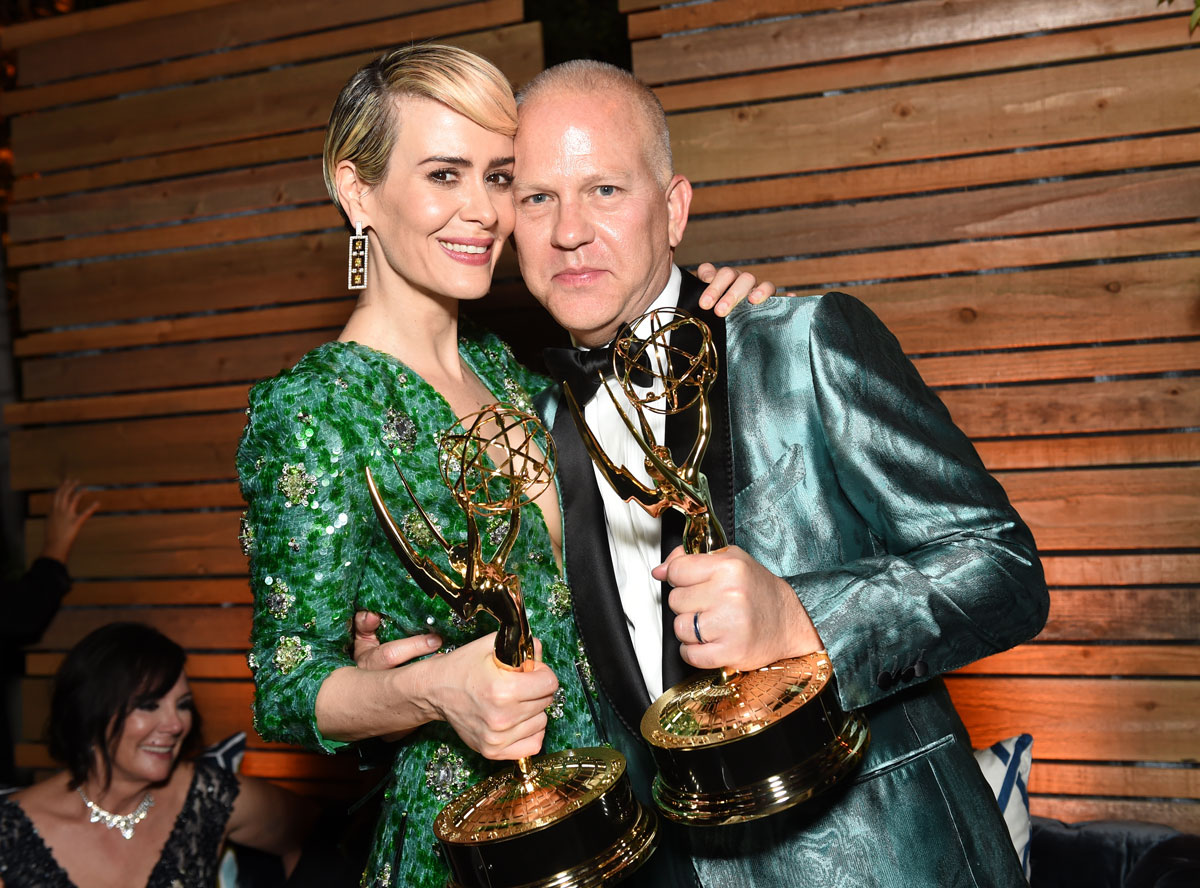
Sarah Paulson and Ryan MurphyActors Sarah Paulson and Ryan Murphy attends the FOX Broadcasting Company, FX, National Geographic And Twentieth Century Fox Television's 68th Primetime Emmy Awards after Party at Vibiana on September 18, 2016 in Los Angeles, California. (Emma McIntyre/Getty Images)It's far more likely that one of Hollywood's most powerful men did not and does not view me as a threat. Granting extensive time to a Black woman journalist in support of "Hollywood," which is in part about a fictional Black starlet in 1940s Hollywood, is a good look, nothing more or less.
Such thinking must figure into any overall accounting of Murphy's stature and impact in Hollywood, in consideration of the good he does publicly and reports about interactions off-camera that aren't so positive. "When Murphy entered the industry, he sometimes struck his peers as an aloof, prickly figure; he has deep wounds from those years," a 2018 New Yorker profile shares, "although he admits that he contributed to this reputation."

And how. Murphy is a force who can launch careers and shift cultural conversations. He's also someone people are wary of angering, which, as some of my TV journalist colleagues can attest, can happen if a story casts him or his work in a light he deems insufficiently favorable.

I've heard of cases where editors, managers or writers at major outlets received phone calls from one of Murphy's reps or the man himself. One such incident involved a piece written by a woman of color, published before that rosy New Yorker deep dive.

Murphy's directing style and the transgressive nature of some of his most popular content have long made him a polarizing figure, one whose core fanbase watches whatever he does. They know that even the wrecks are handsome. Yet while most of the output created under his $300 million Netflix deal may be described thusly, "Dahmer – Monster: The Jeffrey Dahmer Story," Netflix's third most popular TV title ever, is one of his greatest successes as well as one of his most problematic, angering the family members of some of Dahmer's victims.

Since 2016, however, Murphy has also established himself as a proponent for underrepresented constituencies. "Pose" featured the largest transgender cast on TV, hired trans staff in below-the-line positions, and awakened millions to Billy Porter's status as a national treasure. The show also made history through its star Michaela Jaé "Mj" Rodriguez, who became the first transgender woman to win a Golden Globe for Best Actress in a TV Drama in 2022. These are all good things.

"Pose" creator Steven Canals is one of many marginalized voices elevated through Murphy's production shingle. Another is Angelica Ross, who plays Candy Ferocity in "Pose" and went on to co-star in two seasons of "American Horror Story."

As such, it came as something of a surprise – emphasis on something — when Ross unleashed a series of posts on X, the platform formerly known as Twitter, alleging that a portion of Murphy's professed activism is for show. Ross posted a screenshot of what she describes as their email exchange in July 2020 about an "American Horror Story" pitch featuring an entirely Black female cast. Ross said Murphy assured her that he was moving forward, only to ghost her afterward.

We need your help to stay independent

This is not merely a matter of Murphy changing his mind or his feelings about the concept. Ross explains that happens all the time in the business. But this prevented her from taking another potentially career-changing role. "I had been auditioning for THREE YEARS for [M]arvel," Ross posted on X , adding that she had to pass on an opportunity because "I was HELD in first position the whole time" on "American Horror Story."

Ross mentions other incidents on the "American Horror Story" set, including an interaction in which her co-star Emma Roberts misgendered her. Another involved a crew member wearing racist T-shirts in her presence that no one in production dealt with, until she tweeted about the incident, resulting in a call from Murphy Ross described as contentious.

If such misdoings were singular, they'd stand a better chance of being written off as glitches.

But Ross' threads dropped after Murphy infuriated fellow Writers Guild of America members by continuing to shoot the Kim Kardashian-focused "American Horror Story: Delicate," "American Sports Story" and his "AHS" spinoff "American Horror Stories," months after the WGA went on strike against the Alliance of Motion Picture and Television Producers (AMPTP). (Salon's unionized employees are represented by the WGA East.)

Murphy, a WGA member, maintains that he abided by the strike's rules by operating solely as a director and producer, which union leaders confirmed. Does it matter that he followed his guild's strike rules if his production also crossed its picket lines?

Each of these factors hints at the paradox of Murphy's public persona, the entertainment mogul who also wants to change the way Hollywood has long operated and thinks. Business pressures like pending multimillion-dollar deals can pit those identities against each other, placing Murphy at odds with his vocal support of social justice and inclusion.

Each of these factors hints at the paradox of Murphy's public persona, the entertainment mogul who also wants to change the way Hollywood operates and thinks.

That is not simply talk, by the way – Murphy is one of a few Hollywood producers who backs his words with actions that get results. In 2016 he launched his Half Initiative with the commitment to ensuring at least half of the director positions on his shows were filled by women, with an emphasis on affording opportunities to women of color, LGBTQ+ directors and other underrepresented visionaries searching for a way into an industry still dominated by white heterosexual men.

Less than one year after launch, Ryan Murphy Productions announced that 60% of its episodic slate was helmed by women directors with 90% also meeting its goal of featuring women, minorities, BIPOC and/or queer directors. Among the Initiative's better-known mentees is Katori Hall, who went on to become the showrunner and creator of "P-Valley," and Lulu Wang, who wrote and directed the Golden Globe-nominated 2019 feature "The Farewell."

When he speaks about this and other passion projects, Murphy cites his disempowering experience of being the only gay person in the room on his first show, Fox's 1999 cult hit "Popular," as his inspiration. "I sort of grew up with just feeling like, 'I kind of want to be here, but you don't want me to be here,'" he said in a 2016 AFI interview, "and it was a feeling that I was very conscious of. The fight to be you."


Want a daily wrap-up of all the news and commentary Salon has to offer? Subscribe to our morning newsletter, Crash Course.


But these smaller interactions where Murphy is implied to have fallen short of his self-imposed mandate to empower the powerless demonstrate the peril of pinning one's reputation on such pledges. Failing to consistently align with those ideals in private, or when making the right choice is not the easy one, may leave the impression that the most generous acts amount little more than handwashing.

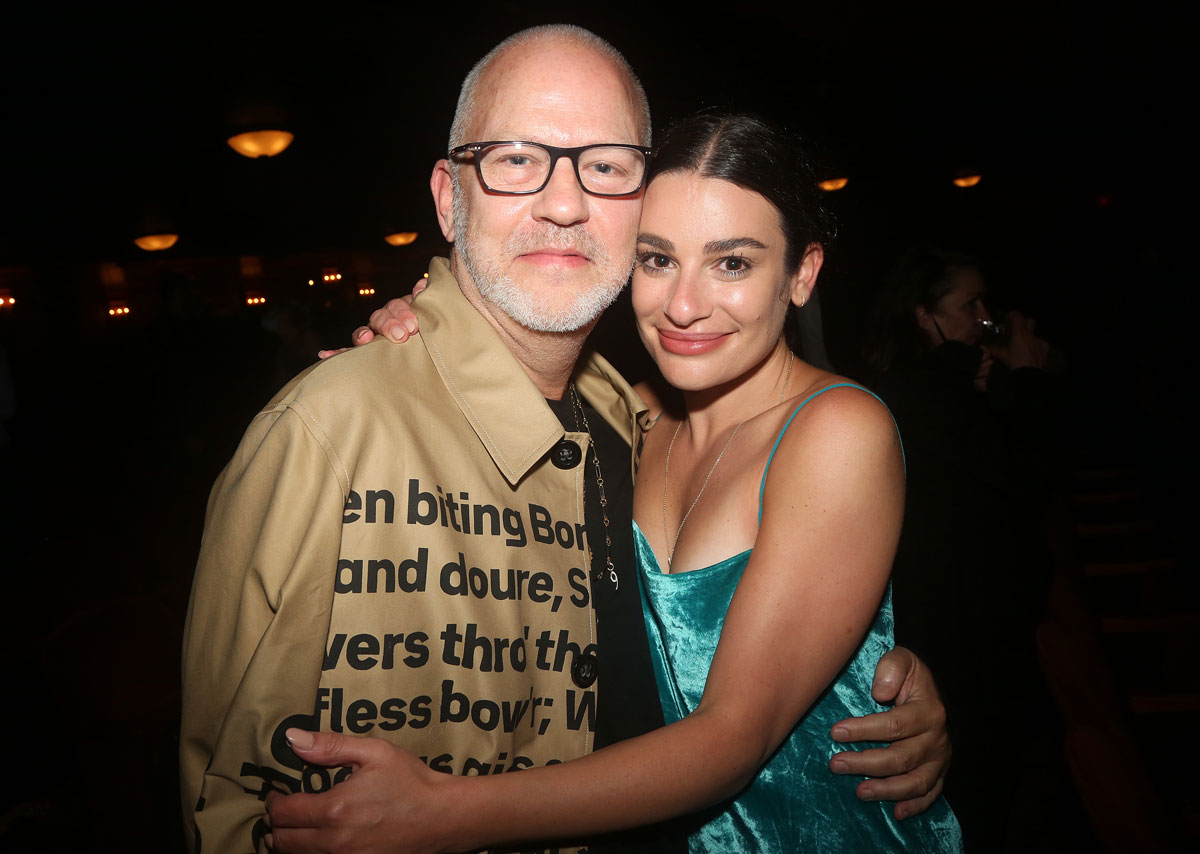
Ryan Murphy and Lea MicheleRyan Murphy and Lea Michele pose at a celebration for Lea Michele's "Funny Girl" on Broadway opening week at The August Wilson Theatre on September 7, 2022 in New York City. (Bruce Glikas/Getty Images)Murphy was among the highest-profile showrunners to donate $1.7 million to the Entertainment Community Fund, which provides emergency financial assistance to film and TV workers, days after the WGA strike began in May.

The Kardashian installment of Murphy's long-running FX horror series premiered recently to positive reviews, mainly related to the reality TV star's performance. That it debuted in a fall season left fallow by the WGA and SAG-AFTRA's dual strikes reminds some viewers that the production continuing while nearly every other scripted show shut down in solidarity with the WGA's walkout, a labor action overwhelming supported by the public.

In September, days before "Delicate" debuted, the Ryan Murphy Productions Assistance Fund was established with $500,000 to support the casts and crews of his studio's shows impacted by the strikes. The WGA strike officially ended on Sept. 26. SAG-AFTRA has yet to reach a deal with the AMPTP to halt its strike but has resumed negotiations.

And Murphy, who has not directly commented on Ross' allegations, is on the verge of moving his company to the Walt Disney Company, currently the home of his longtime partner FX, from Netflix, where his astronomical five-year deal recently ended.

A Hollywood Reporter interview with Ross includes a statement from an "American Horror Story" executive producer who recalled at least one conversation differently. But Ross is unequivocal in her perspective. "This is not my first time at the rodeo of dealing with that energy of white people who think that they are doing good but won't check their own selves when someone Black or of the people they're trying to help is telling them, 'You have a blind spot,'" she said.

With someone as representationally cognizant as Murphy — whether that refers to fashion or inclusion or reputation — this is worth viewing closely.  

New side effects from Ozempic are emerging as more take the drug. Experts explain how to manage them

Although Ozempic is currently fashionable as a cosmetic weight loss drug, especially among the rich and famous, its intended use is to help individuals with diabetes or who struggle with severe obesity. Yet coverage of this drug is often filled with stories about dangerous long-term side effects like constant nausea and abdominal pain. The overwhelming majority of patients who use the drug do not report those symptoms, but their menacing nature is such that the risk is never far from a patient's mind.

"I think the challenge that we face right now is that there's a lot of buzz and it's, and it's going to be like that for a little while,"

These fears were recently reinforced by a study published in the scientific journal JAMA. It found that non-diabetic patients who use drugs like Ozempic and Wegovy for weight loss are at a higher risk of three rare, but severe, stomach conditions. One of those disorders, stomach paralysis, is not listed on the warning label for the drug. The drugs also put patients at an increased risk of inflammatory diseases like pancreatitis and certain types of bowel obstruction.

For people with diabetes, Ozempic (generically known as semaglutide) increases the levels of a hormone called incretin so that a diabetic person's pancreas produces more insulin. The drug also reduces the amount of glucose produced by the liver. For people with serious weight problems, Ozempic activates GLP-1 receptors in the brain because another important hormone, known as glucagon-like peptide-1, is released when your body is full.

By mimicking GLP-1, Ozempic makes the brain feel full faster, and as a bonus slows digestion by forcing food to take longer to leave the body. This is what makes Ozempic such a popular cosmetic weight loss drug, along with other related drugs, such as Trulicity and Victoza.The key is that the dosages must be titrated carefully and with careful medical supervision, as each patient's individual bodily makeup will heavily influence how they react to the drug.

What matters most is how a person uses their semaglutide, not just the drug itself.

"We know that nausea, vomiting, diarrhea, constipation are very common issues with these medications," Dr. Fatima Cody Stanford, an associate professor of medicine at Massachusetts General Hospital, told Salon. "But I do think it's important to work with people that know how to prescribe these and know how to titrate these medications accordingly. One of the things that if you look at the package insert for these medications, it tells you to titrate these medications after one month of use, but I find that titrating these according to the individual is really important."

This means that if a patient reacts badly to a dose of 0.50, Stanford might keep them on 0.25 for six months before titrating them to the higher dose. "Now that's not what the package insert tells you to do, but if that's what my patient needs to get their body acclimated to the dose so that they no longer have symptoms, that's what their body needs and not what the next person's body needs," Stanford explained. In short, Stanford argued, what matters most is how a person uses their semaglutide, not just the drug itself.

Dr. Bubu A. Banini is a digestive diseases physician and assistant professor of medicine at Yale School of Medicine. She acknowledged that although Ozempic does not cause adverse side effects for a majority of patients, there is going to be a smaller group whom the odds dictate are going to react badly to it.

"While the majority of patients who use Ozempic do not have any adverse side effects, a minority may experience adverse side effects most of which are gastrointestinal such as nausea, vomiting, diarrhea, or constipation," Banini told Salon by email. "Ozempic may increase the risk of pancreatitis. The FDA updated the side effect profile of Ozempic in late September 2023 to include ileus, a temporarily paralysis of the intestinal muscles. However, it is impossible to provide a frequency for this side effect as of now, or reliably establish this symptom as a consequence of the drug."


Want more health and science stories in your inbox? Subscribe to Salon's weekly newsletter Lab Notes.


"The FDA updated the side effect profile of Ozempic in late September 2023 to include ileus, a temporarily paralysis of the intestinal muscles."

The underlying problem is that, because Ozempic is a relatively new drug, there needs to be more ongoing research on it so doctors can accurately assess its safety.

"These drugs are still relatively new in clinical use, hence additional data needs to be accrued," Banini explained. "I would urge patients to report adverse side effects experienced while using the drug to Novo Nordisk Inc (the manufacturers) or to the FDA. This will help us better determine the side effect profiles."

"At Novo Nordisk, patient safety is a top priority. We work closely with the U.S. Food and Drug Administration to continuously monitor the safety profile of our medicines," a media representative at Novo Nordisk explained. "We are taking multiple steps to ensure responsible use of our semaglutide medicines which are detailed in this website. Full prescribing information for Ozempic is available here."

Dr. Dan Azagury, the section chief for bariatric and minimally invasive surgery and the medical director for the lifestyle and weight management clinic at Stanford University, elaborated on Banini's point about Ozempic being a relatively new drug.

"I think the challenge that we face right now is that there's a lot of buzz and it's going to be like that for a little while," Azagury told Salon. "The reason is, as you put millions and millions of people on a drug, there will be very rare side effects that are going out here."

At the same time, given that these drugs have been around for roughly a decade, "if there was going to be this explosion of side effects that nobody had studied, that nobody had found in the studies run by the companies, we'd probably know by now," Azagury said. The bigger problem, he noted, is that there have been some cases of severe reactions reported by patients. "Even if you have a risk of 1 in 100,000 we're going to hear about 30, 60 cases of that happening, and 1 in a 100,000 risk of having a problem with the drug is still pretty uncommon."

At the end of the day, the key to successfully using Ozempic is to only take it when prescribed by a reputable doctor, and to do so while making other necessary lifestyle changes in order to improve one's health.

We need your help to stay independent

"Generally, I recommend combining Ozempic with lifestyle changes including avoiding high sugar foods, limiting calories and unhealthy fats and engaging in moderate intensity exercise," Banini explained. "Avoid Ozempic if you have a personal of family history of Multiple Endocrine Neoplasia syndrome type 2. Please note that Ozempic is not approved for use in weight loss, so check with your physician if you do not have diabetes mellitus 2 but are interested in taking anti-obesity medications."

Here’s how a fashion brand for “Old Jewish Men” celebrates modern deli culture

What do Pete Davidson, Bella Hadid, Jake Gyllenhaal and Travis Scott all have in common, aside from their A-list status? They’ve recently embraced a unique kind of street style — one that’s emblazoned with logos of famous delicatessens and their most popular offerings, like knishes, pastrami, pickles and bagels.

Aptly dubbed “delicore,” the latest food-fashion fad celebrates one of New York City’s most prized staples: the local deli. Last September, delis officially earned their “It” status within the high fashion world when whimsical clothing designer Batsheva Hay debuted her Spring 2023 collection at the famed Ben’s Kosher Deli amid New York Fashion Week. However, prior to then, delis enjoyed their fair share of up-and-coming collaborations. In 2020, Gyllenhaal partnered with Russ & Daughters on a tie-dye salmon-hued T-shirt benefiting the Independent Restaurant Coalition. In 2021, the Hollywood star and deli joined forces again to release a $150 black “LOX” hoodie benefitting the Actors Fund. And in the following year, Coach and gourmet emporium Zabar’s collaborated to put out limited-edition swag, including a $495 sweater and a $550 leather tote.

Outside of high fashion, several delis — both old and new — began selling their own merchandise in the wake of pandemic shutdowns. Desperate for new revenue streams, restaurants and shops turned to retail, wrote Maggie Hennessy for Bon Appétit. Their efforts were ultimately successful and even captured the attention of countless celebrities. Take for example Davidson, Scott and former New York Giants wide receiver Victor Cruz, who have all sported Uncle Paulie’s hats from Uncle Paulie’s Deli.

Sure, delicore may have the word “deli” in its name, but it’s not exclusively being claimed by delis. The tasty trend is also a prominent aesthetic in Old Jewish Men (OJM), a popular social-media-account-turned-fashion-brand. OJM first began on Instagram about five-and-a-half years ago when founder Noah Rinsky was visiting his parents who retired in northern Israel. Amid the pandemic, Rinsky and his co-partner Bryan Seversky expanded OJM into a clothing company that specializes in comfort wear, like T-shirts, hats and sweaters. Think of the kinds of clothes commonly seen in Adam Sandler and Larry David’s wardrobe.

The crux of OJM is right in its name — old Jewish men. And because delis have roots in Jewish culture, history and cuisine, it only made sense for OJM to adopt the trend into its clothes.

“[For] old Jewish men, one of their natural gathering points is the deli,” explained Seversky. “So it makes sense for us as a brand to kind of celebrate that culture…It's celebrating this golden era that in the future, won't exist since these old guys are keeping it alive.” 

We need your help to stay independent

A few deli-themed OJM apparel include its Pickle Princess Crop Tank, a green-hued tank adorned with silver gems; and its Brain on Drugs shirt, a simple white tee with an image of a plain and severely burnt bagel. OJM also has a Mets-style “Meats” jersey, which was inspired by a bizarre, meat-fueled dream:

“My friend Will had this sweaty, meat-induced fever dream one night where he had this idea of combining the Mets with a meat design. When I heard this, I was like, ‘Oh my God, there’s definitely something here!” Seversky said. “I went to work and started to design [the collection]. And I realized that there’s such a strong connection between the Mets, which is the unofficial old Jewish man’s baseball team in New York, and deli culture, which is also huge with old Jewish men.


Want more great food writing and recipes? Subscribe to Salon Food's newsletter, The Bite.


He continued, “It just felt like this perfect mish-mash, this perfect coming together of two different things into one. It started off with simple T-shirts and hats and then, we created a jersey.”     

As for Seversky’s thoughts on why OJM’s deli-themed apparel have been a major hit amongst consumers, he said that delicore, as a whole, celebrates a persevering, widely-loved industry. Such clothing invokes the same feelings of pride and loyalty as a sports jersey or a band tee. 

“When you have a piece of clothing that is the branding of the deli, it’s almost like wearing a sports jersey or a band shirt,” Seversky said. “You're showing allegiance to something. I think what people are drawn to about the deli is that it’s a spot for the everyday man. And it’s about persevering this older, more traditional, less in-your-face aesthetic that’s a bit more blue collar.”

Simply put, delicore reminds us why the deli continues to be a go-to spot for many today. Delis are steeped in tradition and tap into our desire for comfort and nostalgia. That being said, a casual clothing brand coupled with good deli eats just makes sense. Yeah, delicore is "not, like, Balenciaga," as Davidson famously said. It's far better than that. 

NASA’s plan to crash and burn the ISS explained and what space commercialization means for science

In a few short years, some of us will be able to look up at the sky and see a flaming dot roar toward the Earth and crash into the ocean. In that dot will be 30 years of international scientific cooperation between nations that are more often at each others’ throats than in each others’ labs. As the dot gets closer, we’ll see the burning fragments of the International Space Station modules — and maybe even some other countries’ modules that we bring down with us.

Congress has authorized ISS operations into 2030, though budget fears still hover over some in the field. NASA’s latest public relations sprint, however, is geared toward finding commercial contractors that can tug the U.S. modules back to earth for a splashdown. And those which can privatize such low-orbit destinations, demoting NASA’s role from that of public creator to private customer.


The ISS is designed for international interdependence, though. Yanking a 1998-era chunk of US space tech out of an intricately grafted hive of engineering without destroying the whole thing may not even be possible. And so far, NASA has not announced any planned impact on partner nation modules.

The ISS is designed for international interdependence.

Meanwhile, the race toward space station commercialization is tightening up. Massive corporations like Northrop Grumman, Blue Orbit, SpaceX and others are competing for a publicly funded foothold in a surging private sector. The State Department estimates that the global space economy is worth $348 billion, accounting for more than 200,000 US jobs across sectors from manufacturing to telecoms and earth observation. The satellite industry alone is worth about 79% of that total economy.

NASA is now asking U.S. companies for input on its upcoming rules for commercial space stations in low-earth orbit — destinations available to NASA once the ISS is retired — with an industry briefing scheduled for Oct. 12.

“This RFI is a significant next step in transitioning low Earth orbit operations to the private sector, allowing NASA to be one of many customers for services” said NASA’s commercial spaceflight director, Phil McAlister, in an Oct. 2 release. NASA did not immediately return Salon’s request for comment.

Amid the ups and downs of the U.S. commercial space station frenzy, Chinese and Russian government space efforts have also been shifting gears.


Want more health and science stories in your inbox? Subscribe to Salon's weekly newsletter Lab Notes.


China announced Thursday that it would expand its Tiangong space station into six modules, aiming to provide an ISS alternative by 2030. The expansion marks a reversal of the country’s prior plans for Tiangong, also known as the Chinese Space Station (CSS), which was launched in 2019. The same year, the United Nations confirmed that institutions from Germany, Switzerland, India, Russia and others would be participating in experiments on the CSS.

China’s scientists have been banned from the ISS since 2011, when the U.S. Defense Dept budget bill barred NASA from using any funds to collaborate at all with Chinese scientists unless specifically authorized by Congress.

What hope is left for international cooperation in space when we can’t even get our astronauts in the same vessel?

The news came on the heels of a delay announced by the Russian government, whose financing issues have slowed the country’s development of a new low-orbit space station. On Oct. 2, Russian space agency Roscosmos said the delays have prompted a search for international partners.

After nearly 23 years of continuous human occupation, the politically messy divorce and destruction of what was once the hopeful icon of international scientific pursuit begs the question: What hope is left for international cooperation in space when we can’t even get our astronauts in the same vessel?

And, more precisely, what is the U.S. push toward low-orbit privatization signaling about our future pursuits in space?

Expanding the military-industrial-space complex 

In a May release, the Office of Space Affairs touted 24 signatories to the international accords  launched in 2020, aimed at enhancing international scientific cooperation in the run up to NASA’s 2024 moon-return mission.

“The Artemis Accords stand at the center of our civil space diplomatic efforts. Grounded in the Outer Space Treaty of 1967, the Accords are a multilateral, non-binding declaration of principles to guide safe and transparent civil space exploration and promote peaceful cooperation in space exploration and scientific endeavors,“ said Jennifer Littlejohn, an acting assistant bureau secretary.

The same month, the State Dept. released its first-ever Strategic Framework for Space Diplomacy, a blueprint for navigating increasingly choppy international relations in space exploration. Citing the 2023 Threat Assessment report from the Director of National Intelligence, the Space Affairs framework threads a narrow needle between the interests of U.S. political and military wrangling — and the interests of actually doing space science.

The OSA positions Russian and Chinese space initiatives not as potential avenues for increased research collaboration but as competitors who are “organizing, training, and equipping their forces to undermine U.S. and allied security in space.”

The Space Affairs framework threads a narrow needle between the interests of U.S. political and military wrangling — and the interests of actually doing space science.

“China’s space activities are designed to advance its global standing and strengthen its attempts to erode U.S. influence across military, technological, economic and diplomatic spheres,” the intelligence report said, adding that China is likely to achieve world-class status in most of its space efforts by 2030. “Counterspace operations will be integral to potential People’s Liberation Army military campaigns, and China has counterspace weapons capabilities intended to target U.S. and allied satellites. China’s commercial space sector is growing quickly and is on pace to become a major global competitor by 2030.”

The OSA and State Dept. did not immediately return Salon’s requests for comment.

Russian space efforts are likewise bracketed by terrestrial threat concerns in the intelligence report.

“Russia’s cyberattack against commercial satellite communications networks in February 2022 illustrates the increasing interdependencies across space sectors as well as between the space and cyber domains,” it reads.

As far as the OSA framework is concerned, the friction created between pro-public government work and private space contracting is also feeding another tense conflict — the tug-of-war between the internationally collaborative space science aimed at collective uplift of humanity, and a weapons-hungry space science aimed to see who can extend a depressing global arms race most quickly into the stars.

“Distinct civil and military space policies and programs do not exist in all nations. New, emerging space partners balance space relationships with us and our strategic competitors. Some governments may not recognize the vulnerabilities of increased intermingling with competitors’ space industries,” the OSA writes.

“Technology transfer concerns and corresponding regulation mean an inherent necessary tension exists between our dual missions of protecting national security and promoting the U.S. space industry and the benefits of space for all.”

The passage reads as a less than subtle elbowing of other countries who may engage in international science operations with Russian and Chinese space programs and industries, though there’s no such pointed language aimed at private companies.

“Future cooperation with strategic competitors will depend on these countries’ adherence to international standards both in space and here on Earth. Increasing commercial leadership and participation mean we cannot rely solely on government-to-government diplomacy,” the report says.

We need your help to stay independent

Recent Defense Dept. contracts may illuminate what an increase in commercial leadership and participation may mean to the U.S. On Oct. 4, the U.S. Space Force awarded long-time ISS support contractor Booz Allen Hamilton $14.4 billion to upgrade our country's missile warning and tracking tech, and a seven-year contract for $630 million to build out the Space Force’s surveillance operation.

“This contract will leverage Booz Allen’s capabilities and mission expertise in digital engineering, mission integration, agile software development, cybersecurity, change management, AI, and machine learning (ML) to help the Space Force achieve its vision for a Digital Service. It also demonstrates the criticality of the space domain in delivering key decision-making information to warfighters and intelligence agencies to protect the nation,” the company said in a Wednesday release.

If NASA only has the resources to explore Mars and return to the moon by sacrificing a shared public space for peaceful scientific collaboration, then the agency is indeed strapped for cash. But a cursory glance at the DOD’s budget makes it clear: We’ve got the money for protecting public scientific assets — we just don’t have the government for it. 

Want to taste the flavors of fall? Add these 7 chef-approved squash to your grocery list

Gourds, squash and pumpkins — or scientifically speaking, members of the Cucurbitaceae family of plants — have long been multipurpose produce. Dried and used as vessels for drinking and storage, filled with beans as musical instruments and, high in antioxidants, the autumnal plants have even been used in wellness and beauty applications.

Equally versatile in the world of cooking, they can be sturdy enough to replace the meat in tacos, rich enough to replicate cream in a soup and healthy enough to keep your engine chugging through flu season.

Introduced largely by Native Americans, most are classified technically as fruits because they have seeds, but in cooking are treated more like vegetables. Found year-round, pumpkin and winter squash varieties enjoy a pronounced spike in fall soups and sides, Thanksgiving sweets and post-Labor Day snacks of all sorts.

The late chef King Phojanakong lauded squash and pumpkin as highly agreeable ingredients that take well to most methods of cooking and carry no cardinal rules to follow. The Institute of Culinary Education chef noted that many varieties can be eaten raw too, shaved thin into salads, as he was known to do at Kuma Inn, his Southeast Asian eatery in Manhattan’s Lower East Side, where he incorporated squash and pumpkin creatively and often.

Despite gourds’ relative versatility, with nearly a thousand varieties (some edible, some not), there is endless nuance to consider. Often large and thick-skinned, with a range of densities, cooking times and taste profiles to consider, getting to know them, even just a bit, can help quell the intimidation one might feel approaching a holiday recipe or mountain of gourds at the market this time of year.

Further west, Troy Guard, chef and owner of Colorado’s TAG Restaurant Group, uses gourds in almost every way imaginable in his restaurants splashed across the Denver metropolitan area and generously agreed to share some of his favorite varieties, hacks and uses for some of the many popular (and not as popular) squash and pumpkins grown today.

Sugar Pumpkin

Perhaps the most well-known of all fall foods, in many ways the pumpkin has come to define fall, for better or worse (looking at you, Starbucks). Beyond carving them for late October decor, the bulbous orange squash cultiver has become the season’s signature flavor, especially when combined with a specific pie spice mix known as “pumpkin spice,” which finds its way into everything from beer to bread, soup, pie and even our morning coffee this time of year.

What to know: For cooking, sugar pumpkins are the smaller, more chef-friendly cousin of the ones you’re likely to have carved (and if you’re like me, ruined) while drinking a mug of cider. Guard praises their balanced sweet and savory flavor, and although he and others have tired of the pumpkin spice trope, he’s an enormous fan of the ingredient, using it in everything from breads and pancakes to more savory offerings like stuffed agnolotti and ravioli.

What to do with it: Pumpkin takes well to a whole roast for which Guard recommends first removing the guts and seeds (save and dry roast the seeds). After roasting the pumpkin, Guard and his team remove the flesh and aren’t afraid to push it to exotic places with bold platings like Thai and Indian pumpkin curry. He deems it the “most well-balanced” of the bunch and an exceptional canvas for flavors of any volume.

For another variation, Chef Marc Murphy likes to serve pumpkin in his farrotto, and top it with pomegranate and smoked walnuts.

Butternut Squash

Surely the most used of the fall and winter squash contingent, you’ll find it featured prominently in soups, but also in stuffed pastas tossed with brown butter sauce or as simple sides, cubed and roasted with olive oil, maple or brown sugar. Butternut, sometimes referred to as “Waltham butternut” or “butternut pumpkin” can carry a dish with ease, a true icon of cool weather cooking.

What to know: Rich in Vitamin A, this pear-shaped squash can handle almost any type of heat; long and low, high and hasty, without losing its integrity or becoming mushy or stringy, which makes it a perfect starter squash. With namesake nuttiness, this variety is also on the sweet side of the spectrum and quite dense, so it typically takes longer to cook than some of its brethren. The light and tan skin is often removed and is thin enough to do so with a vegetable peeler.

What to do with it: Beyond the obvious roast and puree for a soup, Chef Guard and his team take advantage of its sturdiness by cooking butternut via sous vide method (a low and slow controlled water bath) or in a scalding hot pan with butter to achieve a char and caramelized crust. Guard recommends simple companion flavors to bring out the butternut’s inherent depth.

We need your help to stay independent

Delicata Squash

Aptly named for its delicate (and edible) skin, this winter squash is shaped like a russet potato, cream colored and marked by veiny green stripes. Delicata is a very popular varietal with sweet flavor and creamy texture. (A successful hybrid of the aforementioned butternut and the sweet delicata dubbed the “honey nut” has seen recent popularity.)

What to know: If you’re eating delicata, skin and all, make sure to give it a serious scrub beforehand. Grown easily, quickly and bountifully in fall, hack-loving efficiency experts appreciate that it doesn’t require peeling before cooking and/or eating. You’ll often find them cast atop fall salads or as a hearty side in restaurants.

What to do with it: Delicatas have a round sweetness and are wonderful sliced and grilled or roasted. Because they are naturally high in sugar and less dense, Guard loves to slice them and cook over an oak grill from which they’ll take a smokey char that brings out the sweetness and pairs great with seafood.

Red Kuri Squash

This is a sleeper squash and one I was altogether unfamiliar with, but one Guard insisted I investigate. Part of the hubbard squash group, red kuri (not to be confused with red curry) is actually cultivated in warmer climates like California, Mexico and Southern Colorado, which helps explain Guard's familiarity.

What to know: In Japanese, kuri means chestnut, and when cooked, this one gives off serious roasted chestnut vibes with a pleasant creamy texture. The teardrop-shaped winter squash is protected by a hard and dazzlingly bright orange skin while the flesh is firm to touch and pumpkin orange/yellow. The pulp and seeds should be removed before cooking.

What to do with it: With its rich and nutty flavor profile, Guard notes that the kuri doesn’t need a lot of help and he loves to roast and puree it to be served as a side with steak or chicken, or added into a winter pasta. Like many squash on this list, the kuri packs a power health punch with loads of vitamins, iron and potassium.

Kabocha Squash

Also known as Japanese pumpkin, you’re liable to find kabocha on the menu at some of the most prolific and trendy restaurants in the country. Sporting numerous antioxidants, Kabocha resembles the sweet potato in taste but looks much more like a small, flat, green pumpkin.

What to know: Kabocha’s thick almost amphibious green and white speckled skin gives way to a dry orange flesh, which sweetens when cooked. Kabocha stands up well to high-heat roasting and strong companion flavors and spices like cinnamon, curry and nutmeg.

What to do with it: The skin of the Kabocha is edible when cooked so feel free to roast and serve it whole. The seeds can likewise be roasted and sprinkled over salads or salted and eaten by the fistful.

For example, Chefs Olivia Leung and Eddie Zheng serve a vegan Japanese pumpkin kakigori (shaved ice dessert) with kabocha squash, ginger syrup, kuromitsu and pumpkin lace cookie at The Little One in New York City.

Spaghetti Squash

The original paleo pasta, spaghetti squash has been marginalized slightly with the advent of vegetable spiralizers and other low-carb options in our post-gluten landscape, but it’s ripe for a comeback.

What to know: Spaghetti squash comes in a variety of colors and sizes from bright yellow to deep orange. The flesh inside becomes stringy when cooked, which serves as one of its most defining characteristics. Since it's lighter and lower in residual sugar, it can handle the sweetness of a tomato sauce.

What to do with it: Guard suggests simply halving the golden oblong gourd and drizzling with good olive oil face down until fork tender. Scrape out the “spaghetti,” finish with delicate fresh herbs and pair with a favorite pasta sauce, hard cheese, eggplant or grilled protein.

Acorn Squash

This smaller acorn-shaped squash has also been dubbed the “pepper squash” for its stark resemblance to the vegetable. The acorn is indigenous to North and Central America and can be found in dashing hues of deep green and bright yellow with a firm orange flesh inside.

What to know: Acorn squash has flavor often described as mild or mellow which means it is well served when paired with big flavors like bacon, maple or sage. As far as squash goes, acorn is also extremely nutrient dense.

What to do with it: Because of its attractive and manageable single-serving size, these are great to halve, gut, season or stuff (optional), roast and serve one per guest at an October dinner party as a hearty vegetable course or main. Guard notes the thin skin is edible, so serve and enjoy as much or as little of the acorn as you desire.


We’re all gonna die! How the idea of human extinction has reshaped our world

The topic of human extinction — its possibility, its likelihood, even its inevitability — is everywhere right now. Major media outlets publish articles and broadcast interviews on the subject, and prominent political figures in several countries are beginning to take the idea seriously. Some environmental activists are warning that climate change could threaten humanity’s survival over the coming centuries, while “AI doomers” are screaming that the creation of artificial general intelligence, or AGI, in the near future could lead to the death of literally everyone on Earth.

Having studied the history of thinking about human extinction, I can tell you that this is a unique moment in our history. Never before has the idea of human extinction been as widely discussed, debated and fretted over as it is right now. This peculiarity is underlined by the fact that only about two centuries ago, nearly everyone in the Western world would have agreed that human extinction is impossible. It isn’t how our story ends—because it isn’t how our story could end. There is simply no possibility of our species dying out the way the dodo and dinosaurs did, of disappearing entirely from the universe. Humanity is fundamentally indestructible, these people would have said, a pervasive assumption that dates back to the ancient Greek philosophers.

So, what changed from then to now? How did this idea evolve from being virtually unthinkable two centuries ago to a topic that people can’t stop talking about today? The answer is: through a series of earth-shattering epiphanies that unfolded in abrupt shifts beginning in the mid-19th century. With each shift came a completely new understanding of our existential precarity in the universe — a novel conception of our vulnerability to annihilation — and in every case these shifts were deeply startling and troubling. A close reading of Western history reveals four major ruptures in our thinking about extinction, three of which happened over the past 80 years. Together, they tell a harrowing story of profound psycho-cultural trauma, in which the once-ubiquitous assumption of our collective indestructibility has been undermined and replaced by the now-widespread belief that we stand inches from the precipice.

In fact, there were some among the ancients who believed that human extinction could or would occur, while simultaneously affirming that our species is indestructible. How could that be? Doesn’t extinction imply that we can be destroyed? Not necessarily. Consider the ancient Greek philosopher Xenophanes, born around 570 B.C. A strikingly original thinker, Xenophanes knew that fossilized marine organisms had been found on Mediterranean islands like Malta, south of Italy, and Paros, near Athens. He thus proposed that Earth oscillates between two phases: wetness and dryness. When dryness dominates, life abounds in all its colorful magnificence, but when this gives way to wetness, Earth’s surface is flooded over, which is how water-dwelling critters ended up on dry land.

Xenophanes believed that the phase of wetness destroys all human life on Earth. This had, it seems, happened an infinite number of times in the past, and would happen again an infinite number of times in the future. We will someday go extinct; that is our inescapable fate. Yet, by virtue of the cosmic order of things, our species will always re-emerge after its extinction, which is only ever a temporary state of affairs. In this sense, we are both indestructible and destined to die out, engaged in an eternal dance between nothingness and being, being and nothingness, to the rising and falling rhythms of these endless cosmological cycles.

Xenophanes wasn’t the only ancient Greek to hold such a view: subsequent thinkers proposed similar theories, including the vegetarian Empedocles and the Stoics. According to them, our extinction is inevitable but never irreversible: We will someday disappear entirely, but will always reappear again. This points to a useful distinction between two types of extinction, which we could call the “weak” and “strong” sense. The former corresponds to temporary extinction, first appearing in classical antiquity, whereas the latter corresponds to permanent extinction, which is how most of us think of human extinction today: If our species were to die out next year, we would naturally assume that brings the whole human story to a complete and final end. Extinction would be the last sentence in the collective autobiography of our species, a terminal sigh before fading into eternal oblivion. Yet this strong sense of extinction didn’t make its debut in the theater of Western thought until the 19th century, due to two major developments.

Before looking at these developments, though, it’s worth taking a moment to appreciate what happened in-between ancient times and the 1800s. The most significant event was the rise of Christianity, which made even the weak sense of “extinction” virtually unthinkable

According to the Christian account, humanity plays an integral role in God’s grand plan for the cosmos. Since this plan cannot unfold without us, our nonexistence — to true believers — is inconceivable.

For one thing, Christians believed — and still do — that each human being is immortal. If each human being is immortal, and humanity is just the sum total of all humans, then humanity itself must be immortal. Another reason is eschatological, meaning the study of “last things” or the “end of the world.” According to the Christian account, humanity plays an integral role in God’s grand plan for the cosmos. Since this plan cannot unfold without us, our nonexistence — to true believers — would have been inconceivable. How could the great battle between Good and Evil ever resolve? How could the scales of cosmic justice ever be balanced? We all know that there’s no justice in this world: the righteous are often dealt a bad hand, and the wicked frequently prosper. Without God’s children in the picture, how could these wrongs be righted, and these rights be rewarded? Extinction simply cannot be the way our story ends.

Sure, according to traditional Christian doctrine, the apocalypse is coming, but humanity will endure the cataclysmic spasms at the end of time. What Christians anticipate is not termination but transformation: a new, supernaturally refurbished world in which believers enjoy everlasting life with God in heaven, while the unrepentant suffer forever in hell with Satan.

Christianity became widespread in the Roman Empire by the 4th or 5th centuries after Christ, shaping nearly every aspect of the Western worldview for the next 1,500 years. It was during this period that just about everyone would have found our extinction unthinkable. Asking “Can humanity go extinct?” would have been like asking whether circles can have corners. Obviously not, as anyone who understands the concept of a circle will agree. Similarly, the idea of humanity contains within it the idea of immortality, in the Christian view. Since extinction can only happen to mortal kinds of things, “human extinction” would have struck most people as oxymoronic: a contradiction of ideas.

Everything changed in the 19th century. A tectonic shift in cultural attitudes toward religion began to unfold, especially among the educated classes, robbing Christianity of the monopoly it once enjoyed. It was in that century that Karl Marx called religion the “opium of the masses” and Friedrich Nietzsche famously declared that “God is dead” because “we have killed him!” Whatever triggered this wave of secularization, the effect was to fling open the door to thinking, for the first time since the ancients, that human extinction might be possible. Even more, it made our extinction in the strong sense conceivable, marking a radical break from everything that came before.

This is where the story gets more complicated, because one certainly might believe that human extinction could happen in principle, while also believing that it could never actually occur. By analogy, I think it’s possible for unicorns to exist. There’s no law of biology that prevents horses with spiraling horns from having evolved. But do I think I’ll ever actually ride a unicorn? No, of course not. It just so happens that the invisible hand of natural selection never fashioned any horses with horns, and hence the probability of riding one through an enchanted forest someday is approximately zero. Similarly, maybe there’s no law of nature or principle of reality that guarantees humanity’s survival, but we just so happen to occupy a world in which human extinction isn’t something that will ever occur. If one lives in a world without cliffs, one needn’t worry about falling into canyons.

As luck would have it, at exactly the same time that our extinction was becoming conceivable, scientists discovered the first credible threat to our collective existence. Before this, many people had speculated about worldwide disasters. Some of these get extra points for creativity. Edgar Allan Poe, for example, wrote a short story about a comet passing close to Earth, extracting all the nitrogen from our atmosphere as it whooshed past. This left lots of oxygen behind, and oxygen is highly flammable. Consequently, the planet becomes engulfed in a giant conflagration that destroys humanity. Others worried about sunspots blotting out the Sun, the Moon crashing into Earth, worldwide floods, global pandemics that sweep across the continents, and even comets directly colliding with our planet. But none of these were widely accepted. They were hardly more than hand-waving, with little or no supporting evidence. Imaginative as these scenarios were, few people took them seriously.

All that changed in the 1850s, when scientists uncovered a fundamental law of physics with terrifying implications. It was the second law of thermodynamics, and people immediately realized that, in a world governed by the second law, our Sun will gradually burn out, Earth will become an icy wasteland, and the universe as a whole will inexorably sink into a frozen pond of thermodynamic equilibrium—a lifeless state of eternal quietude. In the end, nothing will remain, not even a trace that our species once existed. Everything will be erased as if it had never been, though scientists predicted that wouldn’t happen for tens of millions of years. (As someone supposedly once asked a professor, “Excuse me, but when did you say that the universe would come to an end?” “In about four billion years,” the professor replied. “Thank God,” the first person exclaimed. “I thought you said four million!”)

A fundamental law of physics had terrifying implications: In a world governed by the second law of thermodynamics, our Sun will gradually burn out, Earth will become an icy wasteland, and the universe as a whole will inexorably sink into a frozen pond of equilibrium.

This new idea — the “heat death” of the universe — spread like wildfire. Over the next few decades, scientists reported that our world was careening toward a “dead stagnant state.” Philosophers lamented, as Bertrand Russell wrote, that “all the labours of the ages, all the devotion, all the inspiration, all the noonday brightness of human genius, are destined to extinction in the vast death of the solar system, and that the whole temple of Man’s achievement must inevitably be buried beneath the debris of a universe in ruins.” Science fiction writers like H.G. Wells introduced the general public to the eschatology of thermodynamics. In his 1895 novel "The Time Machine," for example, the lonely protagonist travels into the far future to discover a cold, dark planet stripped of the biosphere it once sustained.

It is difficult to overstate how significant the double-whammy of secularization and the second law were. Not only was our extinction now seen by many as possible, but physics informed us that this is inevitable in the long run. Death — universal death, as Russell put it — is a bullet our species cannot outrun. Eventually, the forces of humanity will be crushed by the merciless dictatorship of entropy. Put another way, the second law stamped an expiration date on humanity’s forehead, and while scientists today still believe this is our ultimate and inescapable destiny, they’ve pushed the date back to many trillions of years from now. There is no need to panic — yet.

This was just the first of many traumas that punctuated the following centuries. The next one came  in the mid-1950s, as the Cold War was in full swing. Surprisingly, the 1945 bombings of Hiroshima and Nagasaki, which ended World War II, didn’t trigger much anxiety about extinction. Almost no one linked that possibility to the massive scientific breakthrough of splitting the atom. At first, people saw atomic bombs as bigger hammers, so to speak, that states like the U.S. and Soviet Union could use to smash each other to bits. They might reduce modern civilization to smoldering ashes, but humanity itself would surely persist among the cities in ruins. This was the general view, shared by most, during the decade after World War II.

Two events in the 1950s changed people’s minds. The first was the invention of thermonuclear weapons, also called “hydrogen bombs” or “H-bombs.” These weapons are far more powerful than the “A-bombs” dropped on Japan. If the biggest thermonuclear weapon ever detonated — the Soviet Union’s Tsar Bomba — corresponded to the height of Mount Everest, the atomic device that flattened Hiroshima would stand just under nine feet tall. Yes, I triple-checked the math: That’s the difference in destructive power between the “A” and the “H.”

Second, the U.S. conducted a series of thermonuclear tests in the Marshall Islands, about 3,000 miles north of New Zealand. The first of these, code-named Castle Bravo, produced an explosive yield 2.5 times larger than expected. An enormous ball of ferocious heat burst through the atmosphere, catapulting radioactive particles around the entire globe. Such particles were detected in North America, India, Europe and Australia. The implications of this nuclear mishap and its planetary effects were immediately obvious: If a single thermonuclear explosion could scatter radioactivity so far and wide, then a thermonuclear war could potentially blanket Earth with deadly amounts of DNA-mutating radiation.

We need your help to stay independent

Concern shifted almost overnight from a nuclear world war destroying civilization to the outright annihilation of humanity. Speaking to a radio audience of around eight million people, the above-mentioned Bertrand Russell declared, two days before Christmas in 1954, that “if many hydrogen bombs are used there will be universal death — sudden only for a fortunate minority, but for the majority a slow torture of disease and disintegration.” The following year, prominent physicists like Albert Einstein began to alert the public that species self-annihilation was now feasible, while military officials warned that “a world war in this day and age would be general suicide.” In a 1956 book, the German philosopher Günther Anders described humanity as having become “killable,” and in 1959 theater critic Kenneth Tynan coined the word “omnicide” to denote “the murder of everyone.” Two years later, John F. Kennedy told the U.N. General Assembly that “today, every inhabitant of this planet must contemplate the day when this planet may no longer be habitable.”

It is, once again, impossible to overstate the significance of this transformation. Before Castle Bravo, almost no one worried about near-term self-extinction. But after that, this terrifying, dreadful and vertiginous idea was everywhere. Suddenly, people understood the threat environment to include two doomsday scenarios based on solid science: the heat death of the universe and global thermonuclear fallout. One was natural, the other anthropogenic. One would inevitably kill us in the far-distant future, the other could do us in tomorrow. One would take us out with a whimper, the other with a mighty bang.

Yet the bad news about our existential precarity only got worse over the following decades. As the secularization trend accelerated during the 1960s, spreading from the educated classes to the general public, a constellation of new worries popped up alongside thermonuclear fallout. Some reputable scientists warned about synthetic chemicals — insecticides like DDT — that had become environmentally ubiquitous, which the founder of modern environmentalism, Rachel Carson, argued could render Earth “unfit for all life.” Others sounded the alarm about global overpopulation, resurrecting Malthusian fears about the human population growing faster than our food sources can sustain us. Still others fretted about genetically modified pathogens, ozone depletion, advanced nanotechnology, “ultra-intelligent” machines and the newly discovered “nuclear winter” scenario — a different way that nukes could kill us, by flooding the upper atmosphere with sunlight-blocking soot.

A constellation of new worries appeared alongside thermonuclear fallout: synthetic chemicals, global overpopulation, genetically modified pathogens, "ultra-intelligent" machines and the newly-discovered “nuclear winter” scenario.

This was the beginning of the Age of Anthropogenic Apocalypse, we could say, since all these dangers were the direct result of human activities. The threat environment was quickly becoming a dense obstacle course of human-made death traps. One wrong move, and the whole species might perish.

For nearly the entire Cold War period, however, no one seriously considered the possibility that natural phenomena could cause our extinction in the near term. The second law would get us eventually, but the prevailing view among reputable scientists was that we appear to live on a safe planet in a safe neighborhood of the universe. Perhaps it sounds implausible that scientists believed that, but they did. Before the 1850s, lots of people speculated about natural global catastrophes, though none were taken seriously by more than a handful of doomsayers with overactive imaginations. Then, around the time the second law of thermodynamics was being discovered, the scientific community also happened to embrace the peculiar belief that natural disasters — earthquakes, floods, tsunamis, volcanic eruptions and so on — were always localized events that, as such, never affect more than a limited region of Earth. Planetary-scale catastrophes just don’t happen. Haven’t in the past, won’t in the future.

That became scientific orthodoxy for almost 150 years, spanning much of the 20th century, including nearly the entire Cold War period. It was reassuring. It was comforting. If humanity was now on suicide watch — or, more accurately, omnicide watch — at least we didn’t have to worry about nature killing us. The universe is on our side, even if our own actions are destroying our precious planet.

But this alliance with nature was not destined to last. In 1980, a team of scientists suggested that a giant asteroid had wiped out the dinosaurs 66 million years ago. They based this on evidence found at various sites around the world, which suggested that a thin layer of iridium, a chemical element rare in Earth’s crust, had an extraterrestrial origin. Their hypothesis was a bombshell, calling into question beliefs that had dominated the earth sciences for generations. It was, in one journalist’s words, “as explosive for science as an impact would have been for Earth.”

While some scientists quickly accepted the “Alvarez hypothesis,” as it came to be called, others dismissed it as “codswallop.” Paleontologists, in particular, were extremely skeptical. They had some good reasons, too: if a huge rock had fallen from the heavens and collided with the Earth, where was the crater? This was a burning question throughout the 1980s, when debate about the hypothesis raged. Without the “crater of doom,” a crucial piece of the puzzle was conspicuously missing.


Want a daily wrap-up of all the news and commentary Salon has to offer? Subscribe to our morning newsletter, Crash Course.


Then, 10 years after the hypothesis was proposed, a graduate student discovered the smoking gun. In the Yucatán Peninsula, near the Mexican city of Chicxulub, he uncovered what everyone was looking for: an enormous underground crater dating back exactly 66 million years. Almost overnight, the entire scientific community, including the paleontologists, were compelled to agree that, in fact, natural global catastrophes do happen. Mass extinctions have occurred. Giant asteroids can smash into the earth.

The implications were profound, since if such catastrophes are facts about the past, they are genuine possibilities in the future. As NASA scientist David Morrison wrote in 1993, scientists could no longer “exclude the possibility of a large comet appearing at any time and dealing the Earth such a devastating blow — a blow that might lead to human extinction.” This idea quickly seeped into the public consciousness, in part because Hollywood took notice. The Alvarez hypothesis was referenced in the 1993 blockbuster "Jurassic Park," and just five years after that the movies "Deep Impact" and "Armageddon," both about an asteroid heading toward Earth, were released.

All of that is the dizzying backdrop of profound psycho-cultural trauma that frames our current historical moment. It’s the winding path of paradigm shifts that leads to contemporary worries about humanity’s future — and about whether we will even have a future — although much of this dread right now, in the 2020s, is bound up with climate change and AGI, which few people worried much about even 20 or 30 years ago. Indeed, one key feature of the current existential mood, as I call it, is the terrifying realization that however perilous the 20th century was, the 21st century will be even more so. In other words, the worst is yet to come.

This is an extraordinary moment in history, the climax of a series of traumas that have scarred the Western psyche over the past two centuries. Will this be our last century? Is the entire human story in danger of coming to an end?

Can’t you feel this mood? I bet you can. It’s everywhere these days. Top AI scientists warn that AGI could destroy humanity, while climatologists scream that we’re hurtling toward an unprecedented environmental catastrophe. Influential scholars like Noam Chomsky say the risk of extinction is now “unprecedented in the history of Homo sapiens,” and futurists like Toby Ord claim that that probability is about the same as playing a round of Russian roulette. One survey of the American public found that four in 10 people believe there’s a 50% chance that climate change will wipe us out. Another reports that 55% are “somewhat” or “very worried” that AGI could “pose a threat to the existence of the human race.”

The prospect of extinction has never been so salient in any human society. Never has the idea of our annihilation been such a prominent feature of the cultural landscape. This is an extraordinary moment in history, the climax of a series of terrible traumas that have scarred the Western psyche over the past two centuries. Will this be our last century? Is the entire human story in danger of coming to a complete and final end? Are we, as Russell once suggested, writing the “prologue” or the “epilogue” of our collective autobiography?

Hidden behind the story of these traumas and the different “existential moods” that they have produced is a revolution that few people have noticed. It’s the third in a trilogy of revolutions, the first two of which are already well-known: the Copernican revolution, which removed humanity from the center of the universe, and the Darwinian revolution, which removed humanity from the center of creation. The final revolution arises from the admission that we are not, in fact, a permanent fixture of the universe. Humanity really could disappear — like the dodo and the dinosaurs — and the universe would carry on with hardly more than a shrug of indifference.

In an 1893 essay titled “The Extinction of Man,” H.G. Wells writes that “it is part of the excessive egotism of the human animal that the bare idea of its extinction seems incredible to it.” Over eons and epochs, ages and eras, species have come and gone on this little oasis in space. “Surely,” he continues, “it is not so unreasonable to ask why man should be an exception to the rule.”

With each revolution, humanity’s position in the universe has been demoted and decentered. We are, it turns out, not as special as we once believed. In every case, the target of these revolutions was the persistent belief that our species is the center of everything, an idea called anthropocentrism. Whereas Copernicus mortally wounded a sense of cosmic anthropocentrism, Darwin’s theory demolished the biological anthropocentrism that remained. Each was a massive blow to the narcissism of our species.

The ultimate injury, though, is the horrifying recognition that human extinction is possible and could happen anytime. This undermined our sense of existential anthropocentrism, the view that “a world without us,” to quote Wells, was too intolerable a thought for anyone to take seriously.

Yet this is where we have ended up. It is our current existential mood: Humanity is not fundamentally indestructible, our extinction could occur in the near future and, in the end, it’s a fate we cannot escape. The question isn’t whether we’ll end up in the grave, buried above the dinosaurs and beneath whatever might come after us, but how we decide to spend the time we have until the curtains are drawn and the lights go out.

“Totally Killer” costumer on Molly Ringwald vibes and making ’80s ensembles worthy of being stabbed

The hook in Prime Video's newest horror film "Totally Killer" is time travel. The Kiernan Shipka-led film centers on angsty teenager Jamie traveling back in time — think in the vein of "Back to the Future" — to stop the gruesome and unsolved suburban murders of three teenage high school girls called the Sweet 16 Murders. But since it is 2023, the distant past is 1987.

It's in the '80s that Jamie discovers her teen mom Pam (Olivia Holt) is a mean girl with a clan called The Mollys, taking inspiration from '80s eternal teenager and megastar, Molly Ringwald. The film transports Jamie into a John Hughes-tinged world filled with pastels, puffy sleeves, acid-washed jeans and most importantly an iconic fringe white leather jacket that veteran costume designer Patti Henderson said was based on a look from a prominent character in "Ferris Bullers Day Off." 

In the film, Jamie is a longtime owner of her present-day mom's (Julie Bowen) '80s fringe leather jacket. When she time travels to the teenage years of her mom's life — she takes it with her. Throughout the film, the jacket literally never leaves her back even during intense fighting scenes. Henderson told Salon that she designed the era-defying jacket, ultimately creating multiple leather jackets for the task.

"We had the opportunity to sit down and talk about how [Molly Ringwald] changed the late '80s and brought vintage into everything that she did."

But most importantly, in order for Henderson to capture the aesthetic, vibe and aura of such a memorable time in fashion history for many people and even herself, she and her buyer intensely focused on curating authentic vintage items for the cast that spent the majority of the storyline in the past. As the audience ventures through the present day and 1987, Henderson's extensive work curating vintage or designing specific '80s looks for each character is easily recognizable from dresses that emulate Ringwald's iconic "Pretty in Pink" dress or signature hats or big '80s jock bomber jackets. All the '80s staple pieces people love or many even despise are heavily present — a showcase of how extensive and eternally trendy '80s fashion will always be.

The following conversation has been lightly edited for clarity and length.

As a seasoned costume designer, who has worked in the action-thriller genre for years, how was "Totally Killer" different?

Reliving my youth! It was my first time doing 1987. I had done earlier '80s before but because there was such a fashion shift between '86 and '87 I got to really work with some of the over-the-top kind of, you know, the big shoulder pads and lace and things like that, that weren't so prevalent earlier. The '80s were a lot of fun.

What images or mood board inspirations first popped into your head when the film came into your lap?

Well, definitely the leather jacket. For me the leather jacket was always Sloane Peterson [played by Mia Sara from "Ferris Bullers Day Off"]. I know it was scripted a little differently. But that was just a moment where we had to nail that jacket, and we did. Molly Ringwald. I don't know if I've mentioned this to anybody before, but I did get the opportunity to work with Molly a couple of years ago. And we had the opportunity to sit down and talk about how she changed the late '80s and brought vintage into everything that she did. And she really inspired a lot of us from that generation to follow what she was doing fashion trend-wise.

Can you speak to the importance of Jamie's white leather fringe jacket throughout the film? Were you able to find this or did you have to make it?

We made it. A fellow named Greg— Greg Soldier is a friend of mine. He's got a company called the Nines and he does leather work. And I designed the jacket. I had an illustrator work with me to get the right look. We wanted to make it a little bit different. We cropped it. We made the fringe a little bit different. So because I knew that there was going to be a lot of action and it was going to get a lot of play in the film and had to be functional where it wasn't getting tangled, we made six of them.

Jamie's wearing it almost throughout the entire film. Was it important to have multiple different versions of the same jacket?

Yeah. For stunt purposes. Well, Julie is wearing it at the end too. So I wanted the lead to have her own jacket. So very, very important. Because you never know what's going to happen in any given moment when you're working with stunts and action.

Totally KillerTotally Killer (Prime Video)Another jacket that really kind of stuck out to me was Amelia's blue, red and yellow jacket. It looked like it belonged in the '80s even though she was in 2023.

That was a brand-new jacket that I happened to find in Oceanside, California. When we were picking. I don't recall the name of the company. But yeah, it was a brand new re-redux if you will, it was actually probably taken from the late '70s and early '80s. We saw a lot of those satin jackets in the disco era and things like that, but it was really important for me to distinguish the colors for each period. So we had the contemporary, more Gen Z — which we went with more cool tones and jewel tones. And then with the '80s, we stayed with the pastels and the lighter pinks and lighter blues. So it was very important in that the jacket helped tell the story of Amelia that she was current day.

You've talked about Molly Ringwald a little bit. The Mollys in the film all dress as Molly Ringwald's character in the '80s. Let's break down the Mollys. Let's start with Heather's hats.

When Heather was wearing all the hats, it was very important that it was going to resemble what Molly wore for some of her fashion trends but didn't hide the face. So we kind of found things that perched on the back. The one scene where we're in the gym when they're playing dodgeball, and they're in their little dodgeball outfits and she's wearing that little hat. That hat was from the '30s but it had everything – the color and the tone – but it also perched really nicely on top of her head. It was also important for us to do the brooches and the high collars and the lace and of course, the pearls are very, very important.

What would you say was your favorite Molly love to curate or find vintage for?

Olivia [Holt, who plays young Pam]. Olivia was absolutely wonderful. My process was — I went on a buying trip and I started in Vancouver and I went all the way down the coast to San Diego and I stopped at every vintage shop along the way. As my buyer and I were working on this we'd find pieces and go oh that Molly piece of Molly piece. So when Olivia came into the fitting room I had three or four racks of Molly things that I had sorted that I really liked, but it wasn't until I got her in the room that I was able to pull things together and see how they looked. That brocade floral jacket with the giant, giant shoulder pads and the high collar and the brooch. But definitely that white lace with the little plaid pink skirt. I managed to find authentic '80s Granny boots in white and the tights that went with them. You pulled the whole look together.

Totally KillerTotally Killer (Prime Video)When we transition to adult Pam she also dresses as Molly. Why was that "Breakfast Club" look the one that you selected for adult Pam?

I think it was the one that Molly was most known for. But it was one that people of my generation will look at and go, "Oh, she's just like Molly Ringwald from 'The Breakfast Club.'" But maybe you know Kiernan's age group or the younger age group wouldn't understand it. And that's why it works so well. When she said, "Why aren't you dressing up for Halloween?" "Oh, I am. I'm Molly Ringwald." It also worked really, really well with the stunt work that Julie had to do. Everything was made, and we made it in multiples. The skirt was a wrap skirt so that she could move and her legs weren't bound together so to speak. Flat boots — really, really important. But it also the way we cut the blouse, and the Dolman sleeves were able to hide padding and things like that underneath so that Julie could do a lot of her own stunt work.

When we think '80s we think John Hughes, puffy sleeves, and acid-washed jeans. Was it fun to play around in this in this decade? And how do you utilize the best and maybe the worst parts of the fashion it in this film?

"[The outfits] have to work with falling down the stairs, getting stabbed, ending up in a carport or garage, all mangled."

I wasn't a big fan of acid wash or shoulder pads when I was that age, wearing these things back in the '80s. But it was about powerful moments. It was about women becoming empowered and showing that in their dress and they were dressing more masculine with the big shoulder pads. Acid wash — I don't know where that came from. It lasted. I think it kind of was a blend from some of the country things that we were seeing in the '80s but those are really important staple pieces. And of course, the colors to really sell the period and the pencil skirts, the granny boots, the jewelry, the big earrings, you know that went with the hair. I can remember holding a hairdryer and hairspray to get that big swoop. And we did that on Olivia. It was a lot of fun.

If there was like anything specific that you really wanted to include in this '80s aesthetic, what was it?

I think you said it about John Hughes and all of the movies that he made. Definitely the dress that we did for Liana [Liberato, who plays Tiffany]. We had to make sure that we weren't copying Molly 100%. But we had to make sure that the audience was going to grab it: "Oh yeah '16 Candles,' 'Pretty in Pink,'" whatever it may be. And it was really really important that we got that dress right for her, especially for that murder scene on the waterbed. Yeah, I think that was very, very important.

This is a horror film, and many teenage girls are massacred throughout it by a mass killer. What goes into picking specific outfits for murder scenes, especially when you know actresses are going to be covered in fake blood?

Multiples. We either had to make them or we found them. The '80s is back. The '90s is back again. You can find it in the in the retail store. So we really chose carefully things that were going to be functional for stunt scenes, things that we could get eight to10 of, or we knew that there was going to be massive blood. The "Pretty in Pink" dress we made. I think we made about eight of those, and we only used one. They got it the first time around. So those things are very important. But you know you've got stunt people wearing them, you've got stand-ins wearing them, and then you've got the actual actors wearing them. And they have to work with falling down the stairs, getting stabbed, ending up in a carport or garage, all mangled. It all has to work. Also for me, it's very important for stunt performers that I protect them. So I have to make sure that the cuts work well, and that we can hide some little low-profile time stunt padding so that they're safe.

Totally KillerTotally Killer (Prime Video)Who would was the most challenging character to style or maybe most intriguing to style as the film switches from past and present and then younger actors to older actors?

The killer for sure. Because Tony Gardner and his team built a beautiful mask. We all talked about that mask and we all had some concepts on that. And in the end, we pulled from a lot of '80s iconic actors or moments. But it was very important that it was sellable in the current time but also believable for the '80s. So finding that right jacket, finding the right jeans, that would be the same cut, but also we kept it darker so that he could blend into the background and then pop out in those moments. And we did a T-shirt with the guys sitting on the car which was a nod to Don Johnson in "Miami Vice" for sure. And we made sure that we popped it with some pastel colors and things so that when there was blood flying, you could actually see it happen. 

How do you make you know an all-black outfit even more menacing than it already is? 

The T-shirt for sure. And there was the jacket that I chose was actually navy and it had some shine to it, which was very important so that he wasn't just a flat black killer to have a little bit of pop. So that you know we could see it properly and it played well.

How would you compare and contrast Jamie's style in 2023 versus 1987?

Well, you know, there was a lot of ripped jeans in the '80s and currently of course. So we went with a pair of jeans that could fit both periods so that she could fit in the jacket. The jacket will play forever, you know in the '80s and now I'd see them in the stores. Now they're hard to find in the thrift stores or the vintage shops. But we you know, we kind of questioned when she was traveling — where did she get these clothes from? And she got them from young Pam's closet. So that's why we went with a little more somber look and some subtle tones in the pinks and blues, things like that. We made the band t-shirts too.

Tell me how going back in time in this film affects the overall aesthetics in fashions for each character – especially Jamie and Pam?

Yeah, it was important definitely to give each member their own look. There was that preppy look that we had to play on. There was the rocker look. There was the jock look. We gave each one of them moments that I remembered from growing up — rugby pads, rugby shirts or the polo shirts or that one look with the button down collar and the vest. Then you know Lurch when he's in the back of his van. Kids still dressed like that today. You know, that was a look that I thought was really important. One of the T-shirts that he's wearing was Harlequin, which is a friend of mine. Their band was big in the '80s and I reached out to them and asked them if I could get some T-shirts from to use on my character. 

"Totally Killer" is streaming on Prime Video.

Israeli and Palestinian death reports rise as Netanyahu vows “a long and difficult war”

Israeli Prime Minister Benjamin Netanyahu said Israel had embarked "on a long and difficult war that was forced on us by a murderous Hamas attack" in a statement on Sunday. The surprise operation launched by land, air and sea by Hamas early Saturday on the holiday of Simchat Torah is being called "unprecedented," the broadest attack in 50 years, prompting Israeli airstrikes on Gaza in return. 

The Prime Minister's statement claimed "the destruction of the vast majority of the enemy forces that infiltrated our territory" and said Israeli forces "have begun the offensive phase, which will continue with neither limitations nor respite until the objectives are achieved." 

Officials on both sides reported more casualties by Sunday afternoon, with at least 250 Israelis and 370 Palestinians reportedly killed, according to the New York Times, and thousands wounded.

Secretary of State Antony Blinken appeared on CNN's "State of the Union" this morning, saying the U.S. was attempting to verify reports that Americans are among the casualties of the attacks.

“We have reports that several Americans were killed,” Blinken said. "We're working overtime to confirm that." 

Yesterday, President Joe Biden made a formal statement on the conflict, stating, "The United States stands with Israel."

Why are exorcisms on the rise?

The little girl is ripping out pages from the Bible and devouring them whole. She is a growling, contorting, entity. "Don't be scared," she says. Of course, it's not the child herself who's issuing taunts and chewing on Psalms. It's the devil, back on his possession game in the latest installment of "The Exorcist" franchise. And scaring us is the whole point here. Forget zombies, vampires or earth-invading aliens. There are few human terrors greater or more universal than our dread of embodied evil — in ourselves or someone we love. Likewise, there are few mysteries more enigmatic or fascinating than the rituals we've designed for sending that evil back where it came from.

And in a world afflicted with so much wickedness, is it any surprise that exorcisms seem to be on the rise?

Religiosity in the U.S. is at an all-time low, yet nearly 60% of Americans still believe in Hell and the devil.

Stories of possession and exorcism rituals exist in nearly every culture of the world, from Judaism to Buddhism to Voudou. But thanks in large part to a memorable head-swiveling cinematic character, Roman collars and crucifixes have long cornered a unique place in the American image of exorcism.

Religiosity in the U.S. is at an all-time low, yet nearly 60% of Americans still believe in Hell and the devil. And in Christian belief, possession is an elemental — if often misunderstood — aspect of the narrative. Jesus was an exorcist, as were the apostles. Yet exorcism in the New Testament is treated as an almost offhand affair. Jesus efficiently orders the demon possessing a man (or two men, if you're reading Matthew) to go inside of some pigs. The casting out of seven demons from Mary Magdalene is not presented as a dramatic scene, but rather a simple case of being "healed." Exorcism has long been a part of Catholic tradition, but for most of modern history it's been a similarly subdued and less commonplace affair, free of moody clerics lurking under streetlights, entirely devoid of Mike Oldfield's "Tubular Bells."

While not denying any potential theatrics from the dark side, the U.S. Conference of Catholic Bishops even now calls exorcism merely a "a specific form of prayer that the Church uses against the power of the devil." Exorcisms can be minor, "to break the influence of evil and sin in a person's life," like the low-key the preliminary rites before baptism. Or they can be major, performed by a priest specifically appointed to the office of exorcist and upon someone determined to be suffering "genuine demonic possession." 

We need your help to stay independent

That's the other thing — for Catholics, you can't just Google your local exorcist and say you think you've come down with a touch of Pazuzu. There is a recommended series of "medical, psychological, and psychiatric testing" before referral to an exorcist, and even then the individual needs to exhibit certain telltale symptoms of possession.

Speaking with Catholic Answers in 2020, Father Vincent Lambert, exorcist of the Archdiocese of Indianapolis and author of "Exorcism: The Battle Against Satan and His Demons," outlined the signs: "The ability to speak and understand languages otherwise unknown to the individual, superhuman strength, elevated perception, knowledge about things the person shouldn’t otherwise know, and then an aversion to anything of a sacred nature." In recent years, the Church has taken pains to distinguish the hallmarks of mental illness from what it deems possession. In most quarters (though unfortunately not all) today, you can't just start acting unusually and get labeled a diagnosis of demonic inhabitation. 

Assuming the individual meets the criteria, the ritual — which may have to be repeated multiple times before it sticks — generally doesn't feature a lot of razzamatazz. Writing in Catholic Exchange three years ago, famed exorcist Father Gabriele Amorth recalled that "While there can be extremely violent situations or truly remarkable displays" within an exorcism, the process itself is pretty straightforward. "The exorcist does not establish a particular formation during the rite… It is only necessary that he begin with the words 'Ecce crucem Domini,'" he wrote. In a typical major exorcism, he demands the demon to state his name, and commands him "to return to the eternal inferno or to go under the Cross of Jesus."

While the American Catholic church says authentic demonic possession is "rare," what's still ubiquitous is the idea of being in the grip of the evil. And even nonbelievers find the subject matter the stuff of classic horror. When the "Exorcist" franchise arrived — first via William Peter Blatty's loosely inspired-by-true-events 1971 novel and then by William Friedkin's iconic film — it represented both an indelible pop culture phenomenon and a shift in American Christianity, the mainstreaming of a primal terror that resonates just as deeply today.

While the American Catholic church says authentic demonic possession is "rare," what's still ubiquitous is the idea of being in the grip of the evil.

But the groundwork had already been laid before Linda Blair ever spit out that pea soup — and not via the Vatican. "The primary motor driving this exorcism boom is the Pentecostal boom," explains R. Andrew Chesnut, Ph.D., a professor and religious studies coordinator at Virginia Commonwealth University. As Elizabeth Yuko wrote for the History Channel last year, it was the rise of Charismatic Christianity — and televangelists like Billy Graham — who helped bring the fiery and literal-minded approach to contemporary demon-busting. 

It's still that side of the Christian aisle that's keeping the flame alive in our consciousness. "The great majority of exorcisms that happen on any given day across the globe are not Catholic," Professor Chesnut explains. "They are Pentecostal." It's in many ways just a numbers game. "Catholic exorcisms require an episcopal or bishop approval, and the priests need to be trained in that," he says. "There's a whole bureaucratic process to having an exorcism approved. In great contrast, in the Pentecostal churches, anybody who believes they're gifted by the Holy Spirit, with a gift of exercising demons can perform them." 

But Catholic exorcisms are on the rise, too. A 2018 Atlantic feature noted that while official numbers are hard to pin down, there are roughly one hundred active Catholic exorcists in the U.S. — up from just 15 a few years earlier. The Catholic training organization the Pope Leo XII Institute acknowledges that it is "aware of the many reports of an increased number of exorcisms in recent years," though it only coyly admits that "This is true." But writing in Religion and Theology in 2022, authors Nicole M. Bauer and J. Andrew Doole marveled, "Exorcism is flourishing once again in the Roman Catholic Church today."

"The great majority of exorcisms that happen on any given day across the globe are not Catholic. They are Pentecostal."

That spike leads us back to exorcism's evangelical ties."The boom in Catholic exorcism is basically a response to the Pentecostal competition," posits Chesnut, "and the real engine driving Catholic exorcism is the Catholic Charismatic Renewal. A disproportionate number of priests trained as exorcists are part of the Catholic Charismatic Renewal movement." The uptick may also be influenced by the presence of a Latin American in the chair of St. Peter, and a phenomenon known as "the Pope Francis effect." Chestnut recalls, "In the first year of his papacy, Pope Francis actually performed a quick impromptu exorcism on a Mexican parishioner and the square of St. Peter at the Vatican."

The growing demand for exorcism seems also to correlate neatly with our modern, western longing for alternative healing and for quick fixes. What if emotional distress could be expelled as decisively as a demon thrown back into the lake of fire? But exorcism, it should be noted, is not some spiritual form of Ozempic.


Want more health and science stories in your inbox? Subscribe to Salon's weekly newsletter Lab Notes.


As Father Vincent Lambert told Catholic Answers, "It’s not just about casting evil out. One has to want to invite God in. I’m encountering so many people today that believe they’re dealing with the demonic, but they want nothing to do with God." He said, "They just want me to fix their problem, but they don’t really want to make a commitment to God and to grow in faith, holiness, and virtue. The danger, I think, is that exorcists today are being viewed as magicians."

Our endless curiosity around possession no doubt stems in part of the ancient fear of the loss of self. But our current fascination may represent something else — our increasingly tenuous grasp on our confidence in our own future and well-being. Pessimism is a scary, howling void. "What do you think evil is?" asks Ann Dowd in the trailer for "The Exorcist: Believer." "We're born in this world with hope and dreams and a desire to be happy. The devil has one wish, to make us lose faith, to kill it in us. And the devil never gives up." 


Joan Baez reflects on remembering trauma, activating her voice and the “wrecking ball” of politics

An emotionally lacerating documentary about fame and family trauma, "I Am a Noise" provides an unflinching portrait of singer and social activist Joan Baez that will leave audiences gripped to the screen.

Directed by Miri Navasky, Maeve O’Boyle, and Karen O’Connor, "I Am a Noise" proved to be an embarrassment of riches for the filmmakers. With unprecedented access to Baez’s storage unit, which was chockful of journals, drawings, home videos and photographs dating back to the earliest decades of the musician’s life, the directors were confronted with the unusual issue of having too much material at their disposal. As Baez explained to me during a recent interview, “It’s a director’s dream and a nightmare. There was so much stuff,” adding that “my mom and I kept everything.” 

And Baez means everything. Incredibly, the treasure trove of media even included recordings of Baez’s therapy sessions, which enabled her to experience “the bone-shattering task of remembering.” In this fashion, "I Am a Noise" makes for one of the most intimate and revealing documentaries of its kind. In one sense, it chronicles Baez’s preparations for her final tour; yet at the same time, the film underscores the singer-songwriter’s lifelong search for the truth about the overarching depression that has marked her life.

Baez was determined that the documentary represent “an honest legacy,” both the heights of her 1960s-era activism, as well as the “wrinkles” that impinged upon her personal journey. In this way, the filmmakers balance Baez’s groundbreaking collaboration with Bob Dylan alongside her painful discovery about childhood abuse and its lifelong implications. To her great credit, nobody’s voice is silenced. Her son, who once took issue with her absence from his life, “was eloquent and forgiving” with his renowned social activist-mother. Even though she now understands her father’s role in the roots of her childhood trauma, Baez nevertheless ensured that “my parents get their say.”

With "I Am a Noise," the filmmakers deftly contextualize Baez’s personal struggles within the larger story of her public life. Take her eyewitness account of attending Martin Luther King’s stirring “I Have a Dream” speech in Washington, DC, in 1963. “When King would speak,” she recalled, “I would weep. He used to joke about it, saying ‘Look at this. Joan Baez in the front row. Every time I say nonviolent, she bursts into tears.’” It was such moments, she told me, “that made it more clear where my place was, where I felt at home, and what I could do with my voice.”

As we concluded our discussion about "I Am a Noise," I couldn’t resist contrasting the hopeful nature of MLK and the Civil Rights era with the bewildering nature of our contemporary politics. “People talk about the pendulum swinging,” she lamented, “but nobody told us it was going to be a wrecking ball. Back then,” she added, “things were defined for us in a way that we could actually figure out what to do to right the wrongs.” 

While she agreed that today’s convoluted political climate seems vastly different, Baez pointed out that the journey towards creating lasting social change inevitably takes on a familiar pattern. “People have to follow their instincts and their hearts and find what it is they can do, what they can engage in — whether it’s working as a volunteer or eventually taking the serious risk that’s involved in making social change for the betterment of this planet and for the people living on it.”

"I Am a Noise" is in theaters in New York starting Oct. 6 and will expand to Los Angeles and additional markets Oct. 13.

In Noel and Allison, “The Great British Bake Off” cooks up a new dynamic hosting duo

After a lovely return to form in the season premiere, we’re back in the “Bake Off” tents for Biscuit Week. Historically, I’ve always been a huge fan of the second and third episodes of the beloved show simply for the reason that we are just starting to find out little defining details about the bakers; often, these are presented through short cutaway scenes resulting in slightly scattershot personality studies. 

For instance, did you know that forager Abbi used to both live in Tunisia and takes aerial acrobatics courses (or, as co-presenter Noel Fielding put it, she “drives to a barn, gets in a hoop, makes shapes” and goes home)? 

Well, now you do. 

Anyways, it’s on to the signature bake. This week, the contestants are being asked to make a dozen marshmallow biscuits (which, for the uninitiated, are cookies to us American fans). There’s a variety of ways the bakers could approach the challenge — from wagon wheel biscuit sandwiches stuffed with marshmallow to shortbreads topped with marshmallow fluff hidden under a sleek molded chocolate dome — but they only have two and a half hours to complete the challenge and the cookies have to be identical, which is always a trick under a time crunch. 

“It’s got to look shop-made,” judge Paul Hollywood cautions the bakers, while Prue notes that the inherent toasted sugar flavor of marshmallow is the perfect match for slightly more acidic and spice-forward flavors. 

Quickly, it becomes apparent that some bakers, including Dana, whose concept for speculoos-flavored biscuits catches Prue’s attention early in the round,  heed that advice more than others. It’s during this signature bake that I start finding myself pulling for Keith, a 60-year-old who lives just a few steps from the seaside with her partner Sue and their poodle Maisie. 

Per one of those quick cutaways, we find out that Keith often seeks out (or perhaps “corners,” is more appropriate) his neighbors to solicit feedback on his baked goods, which has earned him the local nickname “Needy Ned.” As a recovering people-pleaser with a latent praise kink, I empathize with Keith and his desire for external validation — and we do love a relatable king. 

That said, his signature bake doesn’t necessarily elicit the response from the judges he was likely seeking. Keith’s “Letter from America,” a dozen PB&J-filled wagon wheel cookies, is delicious, but ends up pretty sloppy. “It looks like a flipping mess,” Keith acknowledges in an aside to the camera. 

Meanwhile, baker Tasha stuns the judges with her malted chocolate biscuits inspired by Nestlé’s Milo powder, earning her a coveted Hollywood handshake. However, she can’t spend too much time celebrating as it’s now time for the technical challenge: Bakers must create 12 perfectly-formed custard creams. 

As a recovering people-pleaser with a latent praise kink, I empathize with Keith and his desire for external validation — and we do love a relatable king.

“Use your time wisely,” Prue advises the bakers, before Noel announces that they only have 90 minutes to complete the challenge. That’s a tight squeeze timing-wise since the shortbread base for the custard creams is heavy on butter, meaning that in order for it to both bake properly and hold its shape, it needs a fair amount of time in the refrigerator to chill. 

As an aside, I quickly turn to Google: “Is the tent temperature-controlled?” Apparently it is not as, per Decider, the sound of AC and ventilation would interfere with the recording process (though in 2019, producers did allow bakers workstation fans when the UK famously saw three back-to-back-to-back heat waves). 

There are a few notable mishaps this round — like when baker Cristy accidentally pulls fellow baker Rowan’s shortbread dough out of the refrigerator instead of her own and proceeds to roll it out — but as expected, much of the fretting is about timing and ensuring that their butter-packed dough stays cool enough to manipulate. In the end, Rowan, Dan and challenge winner Abbi (all of whom were stand-outs last week) put on the best show, while Saku, Cristy and Keith/Needy Ned pulled up the rear. 

This week’s showstopper challenge is a fun one. 

The bakers are asked to create a spread of their favorite foods out of shaped, molded and decorated biscuits. Initially, I was concerned that some of the competitor’s concepts were a little too ambitious — like Abbi’s full dim sum feast in a completely edible steamer basket — but it looks like we’ve actually got a season of relatively talented sculptors, which hasn’t always been the case in seasons prior (again, remember the celebrity bust challenge of yesteryear?). 

We need your help to stay independent

The contestants also have a full four hours to complete the challenge, which seems to allow enough time for some serious decorating, as well as some not-so-serious bits from Noel and Allison. Every time the camera pans to the co-presenters, they’re riffing in the corner of the tent and it’s delightful to watch the easy chemistry between the two develop, especially after last season, in which much of the host-work felt a little stilted. Like marshmallow and chocolate, peanut butter and jelly or — dare I say —original hosts Mel Giedroyc and Sue Perkins, the pair are proving to be quite the dynamic duo. 

From a crowded field of competing charcuterie boards, steak pies and deep-dish pizzas emerge two judge favorites: Tasha’s shockingly realistic chicken katsu served in an edible, painted bowl (which Prue said “set the bar a little high) and Josh’s double-cheeseburger, which was described as “a little triumph” and earned this episode’s second Hollywood handshake. 

But ultimately, it’s Tasha who takes home the title of star baker. 

Meanwhile, just as I was learning to love Keith/Needy Ned, the judges opt to send him home after his  uneven week, a portion of which he spent with an errant fleck of marshmallow stuck to his forehead. However, he’s not too disappointed. He’s ready to go home and tell his neighbors all about the process. “I don’t know how many hours in my life I’m going to spend banging on about this,” he says with a smile. 

Next up: Bread week. 

“We will not ever fail to have their back”: Biden makes formal statement on Israel attack

As the number of deaths and injuries grow following the overnight attack on Israel where Hamas launched a surprise operation early Saturday by land, air, and sea, President Biden addressed the tragedy from the White House, calling it an “appalling assault.”

"Today, the people of Israel are under attack orchestrated by a terrorist organization, Hamas" he said. "In this moment of tragedy, I want to say to them and to the world and to terrorists everywhere, the United States stands with Israel. We will not ever fail to have their back. We'll make sure they have the help that their citizens need and they can continue to defend themselves."

Detailing the experience of being informed of entire families being taken hostage by Hamas, relayed to him during his morning calls, Biden furthered that there's never a justification for terrorist attacks, saying that he and the First Lady have hope for a swift recovery for those who have been wounded.

As PBS highlights in their coverage, "Hamas’ unprecedented incursion, coming on a major Jewish holiday, was the deadliest attack in Israel in years and was threatening to spiral into a broader conflict." Adding that, "U.S. officials say they intend to press ahead but acknowledge efforts are unlikely to bear fruit while there is an active conflict between Israel and the Palestinians." 


My mom tried to ban Shel Silverstein’s “Where the Sidewalk Ends”

Once upon a time, my mom tried to ban Shel Silverstein’s “Where the Sidewalk Ends” from my Christian elementary school library. She confessed this summer over lunch in her Florida home, seated next to the love of her life, a woman. My mouthful of water nearly burst when she told me. How had my spunky, gender-nonconforming mom been the type of person I’d lobby against today?

I thought she loved reading “Where the Sidewalk Ends” to my brother and me as kids. I can still see the twinkle in her amber eyes, watching the poems give voice to our secret fantasies. My brother was obsessed with the loud-mouthed boy who wouldn’t stop shouting “one sister for sale.” My favorite was sick Peggy Ann McKay who becomes well enough to play once she realizes it’s Saturday. Mom can’t remember which poem inspired her to visit the principal’s office. But I know what she must have looked like doing it.

Thirty-five years ago, the 1980s had their way with her straight, mousy hair, permed into spirals with voluminous flower bangs. On Sundays, she wore calf-length floral dresses punctuated with shoulder pads and flesh-colored nylons. When a pastor chastised her for wearing slacks to church, she complied. My dad had less luck imposing his preferences on her wardrobe. Despite his protests, she swore she’d die in her nature-themed T-shirts from Northern Reflections. In hindsight, they were hints of the person she would become. 

* * *

When my mom first mentioned her past objection to Shel Silverstein, I assumed she was the only person in the world who had a problem with his poetry. I was wrong. A cursory Internet search placed her in proper context: on the cutting edge of the ’80s book-banning efforts. 

A vocal minority led the charge. Their seeds of discontent would land Shel Silverstein and his next book of poetry on the American Library Association’s list of 100 most banned books of the 1990s. Televangelist Jerry Falwell had probably worked his way into their brains. One of the leaders of the ’80s book-banning efforts, he was the pastor of a megachurch and founder of Liberty University, where men were forbidden from wearing ponytails and women’s bare shoulders were considered immodest. (Fun fact: I went to cheerleading camp at Liberty University and listened to Rush Limbaugh radio during morning carpool on the way to school.)

Even with these cultural clues, I still couldn’t guess which of Shel Silverstein’s poems offended my mom. Nor could I predict what the principal of my Christian elementary school would say in response. Like many of today’s attempts to restrict books, my mom’s grievance could have had less to do with the actual poems and more to do with who the author was: a cartoonist for Playboy magazine who frequented Hugh Hefner’s mansion. 

* * *

A literal interpretation of the Bible was the framework for my parents’ rules around media consumption. So with the end goal of solving the mystery of what offended my mom, I decided to analyze Shel Silverstein’s “Where the Sidewalk Ends” with that same biblical rigor. 

My eyes first caught on “Magic,” a poem flaunting leprechauns, witches, goblins and elves, all of which were anti-Christian. Only the miracles of Jesus were acknowledged in our home. “Joey” features an illustrated butt (a side view, but still). The story about a unicorn is a blasphemous version of Noah and the Ark. “Peanut-Butter Sandwich” mentions suicide; although, I don’t see how eating a sticky sandwich qualifies as a feasible plan.

It’s a miracle I grew up open-minded enough to critique the book my mom once tried to ban. Maybe the Bible’s literal inconsistencies tipped me off to alternative ways of reading.

“If I Had a Brontosaurus” could have been controversial, as we didn’t believe in dinosaurs. “Paul Bunyan” controls his own destiny, entering and leaving heaven at will, and even rising from the dead. Could that have been the one? “Just Me, Just Me” hints at polyamory. “Hungry Mungry” promotes parental disrespect, quite possibly the ultimate sin. 

When I compared my findings to past objections logged by library patrons, my guesses weren’t far off. A problem I hadn’t considered, reported by the Central Columbia School District in Bloomsburg, Pennsylvania, referenced the poem “Dreadful.” They feared the line “someone ate the baby” might encourage students to engage in cannibalism. 

Though it sounds absurd, I also found cause for offense when I switched to the liberal lens I tend toward as an adult. How we talk about people and identities has changed over the past few decades. Though I don’t mean to suggest time excuses all wrongs, I’ve been writing long enough to be offended by my own early works. So in the spirit of good-natured critique, here’s what else I found in the 30th anniversary edition I read to my kids today.

“No Difference” encourages color blindness, a popular way of thinking in the ’80s that has revealed itself to be short-sighted and problematic. “If the World Was Crazy” implies it’s insane to call boys “Suzy” and girls “Harry.” “The One Who Stayed” includes the word “crippled,” a demeaning term for a person with a physical disability. And as cute as I find the “Naked Hippo” toward the back of the book, the poem reeks of fat-shaming.

It’s a miracle I grew up open-minded enough to critique the book my mom once tried to ban. Maybe the Bible’s literal inconsistencies tipped me off to alternative ways of reading. But if I had to guess the real reason we became the people we are today, I’d say it’s because our stories didn’t unfold how we thought they should. 

* * *

I predicted my mom’s book-banning story would end in the way of Judy Blume, the author whose books I wasn’t allowed to read because they were alleged to encourage masturbation. Blume didn’t stand a chance at my Christian school. But when my mom showed up at the principal’s office cradling an original edition of “Where the Sidewalk Ends,” the script changed course.

I remember the soft-faced man behind the principal’s desk well. Yearbook photos place him in a suit and tie. My vision of him at morning chapel tracks closer to sweaters and shiny shoes, ankles kicked one over the other. 

“Hello, Melinda,” he must have said in his Mr. Rogers voice to my mom. 

Maybe she drummed the pads of her fingers on the black and white jacket, detailing her questions about the content inside. I wonder if she expected an apology for a poorly vetted recommendation.

“I see,” the principal said, his kind eyes perhaps melting her guard. 

This is where she might have thought he’d congratulate her for sniffing out anti-Christian rhetoric. She couldn’t have guessed what he’d actually say. 

“This is how we teach our kids to think,” he said. It’s the one line my mom clearly recalls. 

Any other mom might have held fast to her reasons for concern. But my mom, being my mom, performed a radical act. She listened. 

“If we don’t expose our kids to views that are contrary to our own,” the principal continued, “they won’t know how to handle them as adults.” 

The statement has an almost prophetic ring as we enter another presidential election. His solution for raising children like me, who would one day grow up to vote, was to read the offending content out loud, and then say something like, “Mommy doesn’t care for this one. Can you think of a reason why?”

This same man would later assure my mom that, at four years old, it was harmless for my brother to play dress-up in women’s clothes. Was he the first crack that allowed the light of reason to enter our rigid worldview? 

* * *

The mom I know today embodies the thread of possibility running through Silvertsein’s poetry. Most days, she gardens wearing T-shirts from the little boys section of Old Navy. Short silver hair grazes the tops of her ears. When she wants to dress up, she whips out a vest with a collared shirt, and for fancy occasions, a red bowtie. She is a staunch supporter of kids assigned male at birth who want to be called Suzy and kids assigned female at birth who want to be called Harry. 

At home, I have a case of banned books on display for my own kids. On an eye-level shelf sits my tattered gray copy of “Where the Sidewalk Ends.”

Gorillas are beloved, but deeply endangered by human activity. Here’s how we can help

The Precarious Existence of Critically Endangered Gorillas

In this article, we will explore the tales of the Eastern Gorilla and the Western Gorilla, forging connections that transcend the ordinary and learning about the extraordinary efforts being made to ensure their continued existence.

Have you ever wondered what it is like to stand face to face with a creature so powerful yet so achingly human in its gaze? Imagine, for a moment, to be in the heart of Africa's mystical forests, surrounded by towering trees and the ethereal sounds of nature. And there, in that sacred realm, you find yourself in the presence of gorillas – these gentle giants, our kin in the animal kingdom, who hold a mirror to our own humanity. It's a question that tugs at the soul: What is it like to share a moment, a connection, with these magnificent beings?

As we embark on this journey, we'll delve deep into their world, discovering not just their extraordinary physicality but also their intricate social structures, their boundless resilience, and their undeniable charm. These are not just creatures of the wild — they are living legends, each with their own unique story. We'll explore the tales of the Eastern Gorilla and the Western Gorilla, forging connections that transcend the ordinary and learning about the extraordinary efforts being made to ensure their continued existence.

Gorillas, those magnificent forest guardians, have long captured our imagination with their immense strength and remarkable intelligence. These gentle giants, divided into two distinct species, the Eastern Gorilla (Gorilla beringei) and the Western Gorilla (Gorilla gorilla), each boast their own unique charm.

This tapestry of gorilla diversity is fraying at the edges, with all four subspecies listed as endangered or critically endangered.

In the heart of Africa, the Eastern Gorilla comes in two distinct flavors – the Mountain Gorilla, shrouded in the mists of the Virunga Mountains, and the Eastern Lowland Gorilla, a giant of the lush, lowland rainforests. Meanwhile, on the other side of the continent, the Western Gorilla reigns supreme, with the Western Lowland Gorilla reigning in the vast lowland forests and the Cross River Gorilla fighting for survival on the border between Nigeria and Cameroon.

In recent years, the fate of these incredible creatures has hung in balance. The Mountain Gorilla population has shown signs of a miraculous resurgence, with roughly 1,000 individuals spotted in a recent count. In stark contrast, the Eastern Lowland Gorilla faces an alarming decline, with fewer than 6,800 individuals navigating a perilous path through a landscape marred by habitat loss and poaching. Western Lowland Gorillas, though more numerous with an estimated 150,000-250,000 individuals, are far from secure, grappling with the ever-encroaching threats of habitat degradation and disease. The Cross River Gorilla, meanwhile, remains a rare gem, with just 200-300 individuals clinging to the brink of extinction.

This tapestry of gorilla diversity is fraying at the edges, with all four subspecies listed as endangered or critically endangered by the International Union for Conservation of Nature (IUCN). The culprits behind their decline are all too familiar: deforestation, mining, agriculture and the relentless illegal trade in bushmeat and live animals.

Threats, challenges and conservation efforts

Poaching takes a heavy toll on their numbers, as they are killed or captured in alarming numbers, adding to the peril they face.

The decline of gorilla populations is a tragic consequence of a multitude of interconnected factors. One of the foremost contributors is habitat destruction due to deforestation, mining activities and agricultural expansion. As human populations grow, pristine forests are cleared to make way for settlements and agriculture, leaving gorillas with dwindling territories. This habitat loss disrupts their foraging grounds and fragments their communities, making it more challenging for gorilla groups to find adequate food and maintain healthy social structures.

Compounding this issue is the insidious illegal wildlife trade, which relentlessly targets gorillas for bushmeat and captures them for the pet trade or the entertainment industry. Poaching takes a heavy toll on their numbers, as they are killed or captured in alarming numbers, adding to the peril they face.


Want more health and science stories in your inbox? Subscribe to Salon's weekly newsletter Lab Notes.


Furthermore, disease outbreaks, often linked to human interaction, threaten gorillas, particularly the spread of illnesses like Ebola. The entire population of what was once the world's second-largest protected community of gorillas and chimpanzees was wiped out by the 1994 Ebola outbreak in Minkébé, located in northern Gabon. These multifaceted threats combine to cast a shadow of uncertainty over the future of these incredible beings.

Central to the survival of gorillas are the dedicated and tireless efforts of conservation organizations that have made it their mission to protect these magnificent creatures and their habitats. The Dian Fossey Gorilla Fund is a beacon of hope among these organizations. Named after the renowned primatologist Dian Fossey, whose groundbreaking work with Mountain Gorillas inspired countless others, the organization conducts a multifaceted approach to gorilla conservation. They have forged a path toward coexistence through scientific research, anti-poaching measures, and community engagement. Their work not only safeguards gorillas but also empowers local communities, ensuring that the well-being of both humans and gorillas is intertwined.

Additionally, the Jane Goodall Institute, famous for its work with chimpanzees, extends its dedication to gorilla conservation through community-based programs that reduce poaching and habitat destruction while promoting sustainable livelihoods.

These organizations, along with others like the World Wildlife Fund and the African Wildlife Foundation, play pivotal roles in protecting the great apes, reminding us that collective action is essential to secure the future of these extraordinary beings.

We need your help to stay independent

As Dian Fossey, the tireless guardian of Mountain Gorillas, once said, "When you realize the value of all life, you dwell less on what is past and concentrate more on the preservation of the future."

Her words echo through time, a poignant reminder of the urgency that surrounds gorilla conservation. Their future is the mirror in which we see the value we place on all life, a reflection of our commitment to preserving the intricate web of existence that sustains us. With their strength, gentle souls, and resolute spirit, Gorillas call upon us to protect their world – a world that is, ultimately, our shared heritage.

7 foods you had no idea were actually ultra-processed

The concept of ultra-processed foods is becoming more well-known American grocery shoppers.  The phrase refers to foods that contain additives, including artificial dyes and flavors, and may be made from from substances extracted from foods, such as fats, starches and hydrogenated fats. It's become such a prominent topic that The New York Times even released a "Do you know how to spot foods that are ultra-processed?" quiz back in May.

I do think, though, that for some, there's a sort of smug self-satisfaction in thoughts like, "Ew, ultraprocessed foods! Good thing I don't eat (fill in the blank here)." But what's tricky here, of course, is that the realm of ultra-processed food contains a truly massive amount of foods.

Yes, it counts soda and chips and candies and the like, plus frozen, ready-to-eat meals and fast foods, but there's also a lot more.Your fancy-schmancy $9 watermelon juice, your high-end lattes, your protein bars, your specialty iced teas, that convenient item you picked up from a top-tier specialty grocery store — it's all ultra-processed.

Why is this important? Because consuming ultra-processed foods comes with potential health risks, contributing to disease and early death

As with anything, it can be odd to re-conceptualize your world view (or, in this case, your fridge), but it's important, really. Next time you go shopping, take along this list of seven unexpected — and perhaps seemingly healthy foods — that are actually ultra-processed. 

We need your help to stay independent

01
Cereals, granola and muesli
A Salon colleague once told me that "granola is nothing more than broken cookies in a bowl." Also, if we're being honest with ourselves: it's evident that there's buckets of sugar in some of those uber-popular breakfast cereals.
 
"You can start by mixing your sugary cereal with a whole grain, low sugar cereal," wrote Pandora Dewan at Newsweek. "Ultimately little swaps like this will go a long way towards helping you improve the quality of your diet." Or, if you're especially looking to avoid UPFs — just nix the store-bought cereal altogether.
02
Protein bars, shakes and powders
"Many foods formulated for health purposes like weight loss or added protein frequently undergo high levels of processing and contain a laundry list of not-so-healthy ingredients," Sarah Garone, a registered nutritionist and author of the blog A Love Letter to Food, told Newsweek. "Many protein bars, weight loss shakes, and energy drinks, for example, are extremely processed." Wild, huh? It's pretty counter-intuitive and also counter-productive, but alas, that's one of the ways that many products within the weight loss industry are made, bizarrely enough.
 
In this New York Times article , food historian Dr. Hannah Cutting-Jones described them like this: “By and large, they’re highly processed, high in sugar and salt — kind of a ‘Frankenfood.'" 
03
Plant-based milks
This is one of the biggest surprises for many. As Dewan writes, "Vegan meat substitutes are not necessarily much better and have often undergone numerous layers of processing to turn plant-based proteins into meaty mimics. In fact, as study published in the Journal of Nutrition in 2021 found that vegetarians and vegans tended to eat more ultra-processed foods compared to meat eaters and pescatarians."
 
For many who eschew dairy for a litany of reasons, plant-based milks are a great solution, but its worth checking the ingredient list on your favorite brand to see what exactly is in the "milk" you are drinking. 
04
Bread
Sarah Garone at Healthline writes that while white bread is ultra-processed, both whole wheat bread (with minimal ingredients) and homemade whole wheat bread are much preferable choices. Sometimes, super subtle changes can actually cause huge shifts in your diet and your health — as well as sometimes your tastes and preferences — especially if we're talking about foods you eat especially often.
 
Barraclough reports that breads like sourdoughs and pumpernickels are often not as processed or mass produced. Also, take a peek at the shelf life. If it's oddly long, it's like the bread is ultra-processed, whereas if it's a shorter shelf life, it's probably less processed.
05
Margarine
Margarine, coincidentally, was originally invented as a "healthier" alternative to the much-maligned butter. However, it is now recognized as being heavily processed. Margarine is often made from various oils in different combinations (and the same goes for may cream cheeses and others spreads, too), as opposed to butter, which typically just contains milk and salt. 
 
06
Energy drinks
Generally, be mindful of drinks at large: From protein shakes and sodas to coffee concoctions and many juices, most drinks are packed with sugar, artificial colors and flavors. 
 
Chad Larson and Mark Engelman write that "Because of their astronomical sugar content, energy drinks can severely alter the activity, diversity, and gene expression of intestinal bacteria. They can have negative cardiovascular, neurological, psychological, and GI effects, and they raise the risk of obesity and metabolic syndrome."
07
Mashed potato flakes
Per Sarah Garone, mashed potato flakes are most certainly ultra-processed, while frozen potatoes are a smidge better and fresher and whole potatoes are obviously the ideal. Oftentimes, potato chips are also made from these dried potato flakes.
 
Generally, just steer clear. They don't offer much at all by way of nutrition and the amount of processing done to them essentially negates their negligible nutritional benefits.

Trump pulls a “wouldn’t have happened on my watch” regarding attack on Israel

After news broke overnight of Hamas launching a surprise operation on an unprecedented scale against Israel, with over 100 dead and more than 900 people injured, Donald Trump responded in a way that should seem familiar by now, blaming the Biden administration.

In a statement made to Truth Social, Trump writes, "These Hamas attacks are a disgrace and Israel has every right to defend itself with overwhelming force. Sadly, American taxpayer dollars helped fund these attacks, which many reports are saying came from the Biden Administration. We brought so much peace to the Middle East through the Abraham Accords, only to see Biden whittle it away at a far more rapid pace than anyone thought possible. Here we go again."

Emphasizing his point via shares from other accounts, Trump recirculated a similar statement from Florida Congressman Cory Mills, who also pins the attacks on Biden writing, "This war in Ukraine, attacks on Israel, and open US borders would not be happening if Pres Trump were in office. We had peace under President Trump. In 2024 don’t forget the chaos overseas and on our border is under Joe Biden."

In a statement from Biden himself, he focuses on the disaster productively, writing, "Today, I spoke with @IsraeliPM about the appalling Hamas terrorist attacks in Israel. I offered our support and reiterated my unwavering commitment to Israel’s security. @FLOTUS and I express our heartfelt condolences to the families who have lost loved ones."

Hamas launch surprise attack of unprecedented scale against Israel

Hamas launched a surprise operation on an unprecedented scale against Israel early Saturday by land, air, and sea. Hamas’s military chief, Muhammad Deif said the operation was codenamed “Al-Aqsa Flood.”

Israeli media calls it a massive intelligence failure by Israel and the United States.

The day marks a tremendous strategic failure and defeat for Israel, even as it bombs Gaza in retaliation. The Palestinian Ministry of Health in Gaza says the death toll of the ongoing Israeli attacks on Gaza has risen to 198, with 1,610 injured.

And Israel’s Channel 12 reports that the Israeli death toll has risen to at least 40 and more than 740 people have been injured.

Israeli Prime Minister Benjamin Netanyahu said that Hamas would pay an “unprecedented price” and warned of severe retaliation to come after ordering an extensive mobilization of Israeli army reserves.

What happened to the supercomputer under the zoo?

Fifty feet beneath the stamping of zebra hooves and the trumpeting brays of elephants at the Louisville Zoo, a man-made cavern carved out of Kentucky’s underbed sprawls through 17 subterranean miles of limestone. Across 3 million square feet of underground real estate — about 100 football fields — the private owner of this cavern leases space to an obscured roster of secretive businesses. I’ve descended into the depths on a Thursday afternoon because, nearly 20 years ago, Sen. Mitch McConnell earmarked $4.5 million in Congressional funds for an IBM supercomputer and cybersecurity research lab down here which has seemingly disappeared from all record and memory.

Sen. Mitch McConnell earmarked $4.5 million in Congressional funds for an IBM supercomputer and cybersecurity research lab down here which has seemingly disappeared from all record and memory.

As unanswered source calls mounted into the dozens, this is where my last-ditch effort to solve a missing supercomputer cold-case has taken me. Not stealth spelunking into a high-security lair with James-Bond aplomb, but packed into the back of a rickety Jeep-drawn tourist tram with about a dozen other visitors to the owner’s more well-known business — an underground amusement park known as the Mega Cavern.

The old quarry still contains tin-can rations from its days as a nuclear fallout bunker during the Cuban Missile Crisis, when the cavern had a 50,000-person capacity and a secret list of invitees that Colonel Sanders once boasted of being on. The cans are scattered about an ambulance from the Korean War (no one quite knows how it got there), along with fine bourbon and chocolate vaults, Hollywood film reels and industrial explosives that all enjoy the perpetual 58-degree climate. 

The calcium-dappled ceilings are lined with drone-racing tracks leftover from a 2017 Pentagon experiment, weaving through the blast-scarred rock face which glows neon green. Compressed remains of old cars and trash heaps have been lain smooth to make interior roadways. Families drive over them into a recurring summer maze of gigantic animatronic dinosaurs that roar into the vast dark of the tunnels, and into an annual labyrinth of psychedelic Christmas lights which goms up the neighborhood streets above with hours-long SUV traffic jams. Meanwhile, parent company Louisville Underground boasts year-round of having the world’s longest underground zipline (that incidentally killed one person, according to Jefferson County court records).

The whole thing is a Kentucky-fried fever dream inside a semi-hallucinatory roadside circus, brought to life by political strong-arming atop a post-industrial waste dump. But the real show goes on in the dark, where nameless companies churn a buzzy economy in the adjoining commercial spaces. Behind a gift shop strewn with old-timey mining decor, Louisville Underground’s fully-wired offices and storage docks are brimming with expensive vehicles, government records, document shredding services, and whatever else you might want to hide.

Maybe even a supercomputer.

The Mega Cavern's 17 miles of internal roadwayThe Mega Cavern's 17 miles of internal roadway allow vehicle access to temperature-controlled private storage units such as the one displayed above. (Photo by Rae Hodge)

A digital Fort Knox for cyber-9/11 

Bates Capitol Group was something of a McConnell alumni club back in the early aughts. The Republican senator’s former aides and even family members packed the lobbying firm’s bench, and the projects and petitions of its clients found easy purchase in the ears of Kentucky’s self-described Grim Reaper.

The whole thing is a Kentucky-fried fever dream inside a semi-hallucinatory roadside circus, brought to life by political strong-arming atop a post-industrial waste dump.

It was a time of tall cotton on Capitol Hill for lawmakers and nepo-lobbyists — and for journalists chasing paper trails between campaign cash and American power. If a senator was pushing a bill with budget earmarks to line his own pockets, the lobbying disclosure rules didn’t apply to his Congressional aides, nor those aides’ spouses. If you happened to be a chamber leader, it would have been an off-books gold rush.

By 2006, USA Today was calling out Congress for keeping it in the family; the paper counted 54 lobbyists who were relatives of members and aides, and found they’d helped write themselves $750 million worth of projects into their kinfolk’s appropriations bills. Without missing a beat, the Lexington Herald-Leader’s John Cheves dropped a bunker-busting report exposing the machinations of McConnell’s own family and friends at Bates Capitol.


Want more health and science stories in your inbox? Subscribe to Salon's weekly newsletter Lab Notes.


From 1999, it took E-Cavern president Mark Roy and executive James Philpolt three years of touring trade shows and lobbying Kentucky's Congressional delegation before the duo turned to lobbyist G. Hunter Bates — McConnell’s former chief legal counsel and chief of staff from 1997 to 2002. Shortly after a lawsuit ended Bates’ 2003 bid for lieutenant governor of Kentucky, the former McConnell staffer founded the firm and quickly became known as the man who could get things done in the Senate Minority Leader’s office.

The first archival snapshots for E-Cavern’s website show up in January 2002, with old versions suggesting that it and Louisville Underground were once synonymous.

E-Cavern’s setup would have been a strong foundation for long-term public research into preventing and protecting critical U.S. cybersecurity vulnerabilities and surveillance threats.

E-Cavern was a prime client for Bates Capitol, arriving at the height of the data center construction boom in the US. And McConnell’s family and friends at the firm made bank. Holly Piper, wife of McConnell’s chief of staff Billy Piper, made $220,000 lobbying for E-Cavern in 2006 alone. McConnell’s spokesman at the time said his relationship to the Pipers had nothing to do with the senator’s decision to add $1.5 million in funding for E-Cavern to an appropriations bill. Bates himself also defended the deal.

"Working with members of Congress to achieve outcomes that are consistent with shared vision and values is not corrupt, but rather, is a critical part of the democratic process,” Bates said in 2006.

Within that deal, E-Cavern had a proposal: It would partner with the University of Kentucky (UK) and the University of Louisville to lease space from local owners — themselves, doing business as Louisville Underground, LLC — and allow the universities to conduct research into securing critical US infrastructure against a digital terrorist attack akin to a cyber-9/11.

High-profile shutdowns and hacks now plague the global digitally-driven economy and national infrastructure — annually causing billions of dollars of damage to public utilities, healthcare providers, education systems and state and local governments. E-Cavern’s setup would have been a strong foundation for long-term public research into preventing and protecting critical U.S. cybersecurity vulnerabilities and surveillance threats.

In the frenzied aftermath of then-recent terrorist attacks, officials were looking for a way to shore up defenses for the U.S. financial sector. A take-down of Wall Street systems was feared. And what better place to secure the nation's most valuable data than deep in the state where Fort Knox once held the nation's gold.

And that's exactly how McConnell pitched it.

“E-Cavern is ideally suited to protect critical data and communications facilities."

“In a post September 11th world, it is critical that our financial institutions be secure,” McConnell said in a 2004 press release. “E-Cavern is ideally suited to protect critical data and communications facilities, and both the University of Louisville and the University of Kentucky have research expertise applicable to this field.”

Despite FEC records showing that the E-Cavern duo had never previously donated to McConnell, E-Cavern officials gave around $10,500 in cumulative campaign donations to McConnell-affiliated PACs and McConnell-supported Republicans from 2004 to 2006.

In 2007, Bates was the board of regents chair for Eastern Kentucky University. He was also a name highlighted alongside McConnell by the transparency watchdogs at Citizens for Responsibility and Ethics in Washington. The E-Cavern deal had landed McConnell a spot on the advocacy group’s list of the “22 most corrupt members of Congress.”

McConnell’s office didn’t respond to Salon’s request for comment.

By 2015, Bates Capitol would report charging E-Cavern about $460,000 in lobbying fees. But by 2008, E-Cavern would boast $4.8 million in federal funds, brought home across four years by McConnell and Bates.  

Ghost stories

For all its cultural and economic legacy as a place of extracted wealth, where captains of industry have bitten into the earth to carry off the riches of coal seams, Kentucky is also a state where things go to disappear. Bodies, money, records — with more than 765 miles of surveyed mile-plus cave passages, things go missing here all the time. And every so often, the hungry earth opens into a sinkhole, eating everything in sight and beckoning the unwary into a maze of shifting waters and wind tunnels.

There, gleaming gypsum flowers bloom from stone draperies laced with translucent cave pearls. The mineral cave decor — epsomite, mirabilite, sulfate — rusts into the ruddy orange of iron oxide, the deep black of manganese. Caves are as hypnotic as they are dangerous. The limestone belly of the state's under-bed has more mouths protruding from the topsoil than we’ve been able to count. And we’ve been counting them longer than we’ve been a state.

Bodies, money, records — with more than 765 miles of surveyed mile-plus cave passages, things go missing in Kentucky all the time.

The karst lands are so embedded in our cultural sense of place, we’ve got our own map of chthonic legends. Explorers trapped in the howling dark or enslaved people escaping to freedom, secret weddings and occult rituals, stolen treasures and hungry monsters — the caves are settings that become amoral characters in our stories, guarding Kentucky from outsiders and the elements.

It's been said for generations that the outlaw Jesse James once woke up, pistols blazing, in a bedroom above Bardstown’s famed Talbot Tavern, firing a few bullets still lodged in the wall at one of its well-known ghosts before escaping arrest by slipping into a cave under the bar, emerging in the Lost River Cave, where Union soldiers and Confederate alike once made use of the tunnels.

In Louisville, Al Capone had a quick getaway into under-city caves through a secret door in the Seelbach Hotel. Rumor holds that the tunnels let him run prohibition-era liquor and dodge the feds. The whole joint is swarming with ghosts. And beneath Louisville’s former Lakeland Asylum for the Insane, a haunted cave system now blocked was a supposed escape route from the poorly-named facility.

The caves are settings that become amoral characters in our stories, guarding Kentucky from outsiders and the elements.

From my seat in the rattling metal tram, I hear the Mega Cavern tour guide recount how political strong-arming ultimately won the cavern its commercial approval after a dramatic snowfall left workers homebound, shutting down United Parcel Service’s global hub. UPS employed about 50% of the city then. When it threatened to move, city officials panic-bought an unwieldy mountain of road salt with nowhere to store it.

It turned to Louisville Underground. The company had been angling for necessary city approval to expand commercial operations from a recycling heap to a business park. It cut the city a deal: The Mega Cavern would store the salt if the city would stamp the commercial paperwork. The salt is still down there today, along with more businesses than we know about.

In virtually limitless dark

With the Bates-McConnell success under their belt, E-Cavern plans rolled ahead. Design firm Arkatype laid out the 4,200-square-foot, high-density data center. In 2005, the Kentucky legislature dispersed $729,140 in treasury funds to UK for a 19-month cavern lease, with authorization recurring into 2009.

At $173.60 per square foot, the price raised eyebrows. Then-leasing agent for E-Cavern, Larry Williams, said the space needed costly improvements for the IBM equipment — like specially run internet lines. But by 2005, it was already hawking commercial leases, touting those specially run internet lines and its own power substation.

“E-Cavern provides the ideal space for businesses to locate their primary or backup data center with the security, reliability, performance and ease of use required in the 21st century. The site is able to withstand tornados, storms and even earthquakes,” the company said.

When the Department of the Interior charted E-Cavern’s property the company in 2006, it was "designing, building, and storing electronic data in a secure environment for the financial, government, business, and military sectors."

"The facility contained a state-of-the-art conference center, office space with full internet capability, and an underground cafe," per the U.S. Geological Survey report.

“E-Cavern provides the ideal space for businesses to locate their primary or backup data center."

In 2012, sans universities, E-Cavern obtained non-expiring Defense Department authorization to contract with US and foreign governments. Roy dissolved E-Cavern in 2016, per Kentucky Secretary of State records, but the DOD authorization appears still active and E-Cavern is labeled a public-private company. If any government contracts exist beyond Louisville Underground’s current National Archives storage agreement, they’re nowhere near the surface.

Answers would be clearer if Mark Roy wanted to talk. He’s got a notary business I reached out to a few times, looking to confirm basic details and timelines. When I finally got an answer, he wouldn’t confirm whether the IBM tech was still in use, whether it was still underground, whether he was still involved in E-Cavern, or when (if?) the business shuttered.

Louisville Underground’s current co-owner, Jim Lowry, also declined to comment per the company’s press relations firm, Runswitch PR. The University of Kentucky’s School of Engineering did not respond to multiple requests for comment. Nor did IBM.

Mega Cavern lights displayVisitors to the Mega Cavern are invited to drive their vehicles through a winding path of ornate holiday lighting displays, including this kaleidoscopic tunnel, during the park's of annual Lights Under Louisville event. (Photo by Rae Hodge)

An early grave for critical research 

It didn't take long for academic scrutiny to collapse the project’s initial wild-hair pitch of running 750 miles of cables under the Appalachian Mountains to Manhattan for near unimaginable amounts of New York Stock Exchange data. The idea even became an engineering lesson at Cornell University on the early difficulties of creating off-site storage for Wall Street’s data flood.

Other E-Cavern research came, though, on Smart City cybersecurity and public surveillance. As they’re often known to be, researchers at the University of Louisville’s School of Engineering were ahead of their time. Professor Adel Elmaghraby led some of the earliest work into what we know today as cyber-resilience.


Want more health and science stories in your inbox? Subscribe to Salon's weekly newsletter Lab Notes.


"We were talking about artificial intelligence way back then. We were talking about voice input-output," Elmaghraby said.

Research conducted under Elmaghraby — first published by the Army College of War in 2011 (and other government studies into 2017) — was a formative influence on military cybersecurity work.

"I don't think we had a fair chance to follow up, and the ideas were too novel,” he said of the cyber-resilience research. "We were maybe thinking too early, but we get hit by that a lot. And we're not bitter because we keep going and we keep generating new ideas.”

A public cyber-resilience research lab would come in handy today for a state struggling with outdated, underfunded IT infrastructure — particularly as the Biden Administration hastily recruits a cybersecurity corps for critical system resilience.

If only one could be found. 

A mysterious sinkhole

Louisville Underground co-owner Jim Lowry said that about 12 businesses occupied roughly 700,000 square feet of the cavern in 2015.

"Some of which I can tell you about, some of which don’t want to be known," Lowry told Louisville NPR affiliate station WFPL.

More interest in Lowry's business concerns came to light in 2019, when a sinkhole nearly the size of a football field opened up on the grounds of the Louisville Zoo just over the Mega Cavern. No animals or people were harmed, but the zoo’s costs ran into the millions as it closed for weeks of emergency work. 

Lowry sued in 2020, accusing the zoo of water drainage neglect, and claimed more than 100 million gallons had rushed underground. The county attorney defending the zoo shot back at Lowry, blaming excessive mining and his cavern expansion.

According to Mega Cavern, enough limestone was originally quarried out to rebuild all three pyramids of Giza.

Small to moderate-sized sinkholes can and do happen in the city, but experts said sinkholes this big don’t just appear in Louisville. Kentucky Geological Survey Director Bill Haneberg, whose office mapped several in the area, told the Louisville Courier-Journal in 2020 he found the sheer size of the sinkhole unusual for the city. And that the local ground wasn’t meant for caverns this big. According to Mega Cavern, enough limestone was originally quarried out to rebuild all three pyramids of Giza.

The main cause of Louisville-area sinkholes is water drainage — a problem accelerated by too-rapid temperature changes and freeze-thaw cycles in the ground. 2019 kicked off with a surge of rainfall after the city saw nearly double its usual rainfall in 2018. 

“We definitely have a water issue,” Mega Cavern supervisor Alec Zaremba said in a 2015 interview. “We pump out about 50,000 gallons of water a day. We pump that back into those tributaries that they can either flow back down here or flow downstream and end up in the Ohio River.”

“It’s so wet down here in the summertime that we have to have fans on to blow air around, to keep air moving so that the cavern stays a little bit drier than it typically would,” he said.

If data centers occupy the caverns, any improper water management or heat discharge could quickly become an immediate risk to adjoined residential neighborhoods. Underground or above, most data center tech is aging poorly and needs constant heat-sinking with heavy water use. As climate change accelerates temperature extremes, data centers designed in the early aughts work harder to stay cool and thus generate more heat.

On the Mega Cavern tour, our guide lets us tram-riders know we’re now beneath the zoo’s wildcat and eagle exhibit, joking that any drips we feel from above may not be water.

She confirms there are now 78 businesses — compared to a dozen in 2015 — at the cavern’s address. That address is poised to expand as Louisville Underground has petitioned the city for another 1 million square feet.

What the earth keeps

The Talbot Tavern has since closed off its underworld entry, but Jesse James’ presence at his favorite haunt is still so routine only tourists seem shocked. And it’s still a rite of passage among Bardstown teens to see how far across the under-city you and your friends can get with your guttering Bic lighters and your courage.

This time of year, you can also book tours of the Seelbach’s haunted vaults, and hunt for Lakeland Asylum spirits. After weeks of calls, emails and shoe leather, the supercomputer is becoming a legend too.

There’s been no answer — not from from IBM, McConnell, Roy, Lowry, nor University of Kentucky — about what happened to the publicly funded tech lab under the zoo. If any of them respond, we’ll let you know. But for now, $4.5 million in federal supercomputing research power seems to have vanished into the cavern. Even Elmaghraby doesn't know for certain where all that equipment went.

We need your help to stay independent

"Regardless, they will be obsolete, you know. Technology becomes obsolete anyway. The value of the computers becomes zero after about five years anyway. So I'm not as worried about where the computer went," he said.

I passed the Bic test long ago and have gone soggy-sneakered into plenty of Kentucky’s dark. Down in the man-made Mega Cavern, the scariest things one risks encountering aren’t ghoulish haints but possible money laundering, government data lakes, and slow-rotting municipal infrastructure straining under rising commercial energy demands. But there’s a good chance we won’t find out exactly which are down here and which are just rumor.

Because that’s the thing about both Kentucky cave lore and the underbelly of American tech funding — the descent into darkness isn’t always followed by a re-emergence into disinfecting sunlight. Some things stay down here when they shouldn’t and become ghosts. Some treasures the earth keeps, and all we’re left with are the stories. 

Christian Girl Autumn was once a joke and has now become a seasonal inspiration of coziness

Slowly but surely, summer is bidding its farewell. Late night sunsets are a rare occurrence as the daylight hours wane. The temperature outside is beginning to drop. Those pesky mosquitoes are retreating underground, far away from civilization. And the leaves outside are trading their signature bright green hues for red, orange and yellow ones. 

The fall season is officially upon us and like clockwork, people are sipping on pumpkin spice lattes and trading their shorts and tees for jeans and knitwear (or, at least, long sleeves). Fall decorating is now a thing as people eagerly adorn their homes with seasonal decor, like harvest lights and even autumnal-themed Le Creuset cookware. Fall-scented candles — from spiced pumpkin to witches’ brew — are also enjoying their moment under the spotlight. 

Where hot girl summer is about embracing one’s individuality, Christian girl autumn is about embracing conformity.

For many, fall is more than just another season. It’s an entire personality. It’s a state of being. And it’s a way of life. This ongoing trend of obsessing over everything fall has to offer was first made popular by a viral photo of two brunettes with matching hairdos, makeup and suede booties. Dubbed “Christian girl autumn,” the online meme quickly yet unexpectedly entered the cultural sphere. Today, the meme is an inspiration to many and remains a topic of discussion when people yearn for the sheer bliss that comes with fall. But that wasn’t always the case. 

Christian girl autumn first hit the internet shortly after “Hot Girl Summer,” the phenomenon popularized by rapper Megan Thee Stallion. As its name suggests, hot girl summer is reserved solely for the warm months, typically between May and July.

“It’s just basically about women — and men — just being unapologetically them, just having a good-a** time, hyping up your friends, doing you, not giving a damn about what nobody got to say about it. You definitely have to be a person that can be the life of the party, and, y’know, just a bad b**ch,” Megan told The Root. Hot girl summer entails living and enjoying your life to its fullest.

Christian girl autumn, however, is the complete opposite. The meme took Twitter by storm on August 9, 2019, when user @lasagnabby tweeted, “Hot Girl Summer is coming to an end, get ready for Christian Girl Autumn??” alongside a picture of influencer Caitlin Covington and her friend Emma Gemma. Upon first glance, it’s hard to distinguish Covington from Gemma because everything about their appearances are the same. Their long, wavy brunette hair is styled the same. Their simple makeup is the same. And their attire of oversized white blouses, skinny blue jeans, suede heeled booties, and leather totes is (you guessed it!) the same.

Where hot girl summer is about embracing one’s individuality, Christian girl autumn is about embracing conformity. And where hot girl summer is about being a “bad b**ch,” Christian girl autumn is about being a “basic b**ch.”

The original Christian girl autumn tweet was retweeted more than 12,000 times. Although the photo itself showcases a wholesome moment shared between two friends, its early internet fame didn’t come from a place of kindness, but rather mockery. People clowned the two women’s looks, using them to make assumptions about their views on politics, race, identity and sexuality. As explained by Vox’s Alex Abad-Santos, folks online “affixed a personality type to [Covington and Gemma]: Republican, anti-gay, casually racist, blatantly racist, and hypocritical Christian among them.”

The women’s ardent love for fall also became a major point of mockery used to further exemplify how white culture is devoid of, well, any culture. White culture includes naming your son Ryker, per this one tweet, and getting overly excited to annoyingly pronounce “huevos rancheros” at brunch, per another. It also includes adoring autumn to the point where it becomes an obnoxious personality trait.


Want a daily wrap-up of all the news and commentary Salon has to offer? Subscribe to our morning newsletter, Crash Course.


Perhaps what’s most fascinating about the Christian girl autumn meme is its transformation from a joke to an inspiration. Just days after the meme attained notoriety, Covington took to Twitter to push back on the online taunting. Covington, who is a self-described “Southern Belle,” fully leaned into the attention she garnered from the meme and unapologetically embraced her love for all-things autumn:

“If all of Twitter is gonna make fun of my fall photos, at least pick some good ones!” she wrote alongside four additional fall photos for people to enjoy. “Super proud of these. For the record, I do like pumpkin spice lattes. Cheers!” Covington later replied, “Love is love!” to a tweet asking her for her thoughts on the LGBTQ+ community and clarified that she is not a Republican in another.

Covington’s tweets were well-received, and suddenly, the same people who had poked fun at Covington were now rooting for her. Gay Twitter decided they had to support with utmost passion while others hailed Covington as an icon, a legend and other titles of encouragement.

Many people are living vicariously through Covington’s elaborate fall antics.

The Christian girl autumn meme, which once represented everything wrong with our society, had come to represent almost everything right. The meme is no longer the subject of nasty angling and baseless assumptions. Instead, it’s a symbol of comfort and nostalgia, classic sentiments that are associated with fall. Christian girl autumn is about putting on your favorite cozy outfit and spending time with your closest companion(s). It’s about celebrating pure happiness. It’s about reveling in gleeful fun. And it’s about indulging in the little things in life — which many of us have taken for granted amid a ruthless pandemic. Christian girl autumn reminds us that there’s joy in sipping on a pumpkin spice latte (or your go-to warm beverage of choice), wrapping yourself in a warm scarf or frolicking outdoors in the fall leaves.   

In recent years, Covington has attained a community of fans who eagerly anticipate her annual fall photoshoots. It’s not necessarily stan culture, where overzealous fans place celebrities on a pedestal, but it certainly comes close. Like the parasocial relationships that stans have with their chosen idols, many people are living vicariously through Covington’s elaborate fall antics. There’s something about her foliage-filled backdrops, bright hued pumpkins and autumnal decor that are incredibly enticing. Her escapist content essentially portrays a fantasy that’s both familiar yet unfamiliar all at once. Sure, plenty of people have seen fall leaves or stepped foot in a pumpkin patch or apple orchard. But they’ve never seen the leaves or stepped foot in the patches and orchards that exist in Covington’s social media. That's the allure of Covington's content, which takes our simple reality and transforms it into a magical wonderland.

Simply put, it’s Covington’s autumnal world, and we’re all just living in it.

Bill Maher calls Hasan Minhaj the Jussie Smollett of stand-up on “Real Time”

In a segment of "Real Time with Bill Maher" on Friday night, Maher devoted a good portion of time to his take on the fairly recent Hasan Minhaj scandal, in which the comedian and fill-in for "The Daily Show" was found to have embellished details from his life for the sake of material. Comparing Minhaj's "emotional truths" — as they were described in an article by The New Yorker — to those of Trump supporters who refuse to believe that Biden won because "it doesn't feel right," Maher made a case for honesty overall, even in cases where it may not land a punchline.

"When the Right does this, we call it conspiracy theories, and rightfully so," Maher said on the topic of bending hopes and feelings into facts. "When the Left does it, we call it emotional truth, Which brings me to Hasan Minhaj, the comedian who answers the question, ‘What if Jussie Smollett did stand-up?’”

Tossing it back to The New Yorker article, which details the ways in which “the stories Mr. Minhaj tells in his act to elicit sympathy for himself as a Muslim and a person of color are completely made up,” Maher found a way to tie it back to himself with, "He’s done this before with me. Accusing me of saying Muslims should be put in internment camps—something I’ve never come close to thinking, let alone saying. How is that different than this guy?" Here, he cuts to a clip of Trump claiming to have seen thousands of people cheering in New Jersey on 9/11. Watch below:


Bad apples vs. bad genes: The way we talk about corruption is racist

If we’ve learned anything from Bob Menendez’s alleged willingness to take hundreds of thousands of dollars in bribes from the Egyptian government, it’s that when gross corruption occurs in the United States, it’s perceived as a case of “bad apples” rather than systemic failure. In the Global South, however, corruption is viewed not just as systemic failures, but as genetic ones. 

This racist narrative argues that those who aren’t from the West aren’t capable of governing ethically and democratically. Take, for example, former president Donald Trump’s continuous verbal attacks on Puerto Rico, which according to him is “one of the most corrupt places on earth.” Amid calls from people in Puerto Rico in 2019 for the governor to resign due to, among many things, corruption and mishandling of hurricane relief funding, Trump blamed Puerto Rican leaders for being “grossly incompetent, spend the money foolishly or corruptly, & only take from USA.” 

According to Dr. Jose Atiles, a professor of Sociology at the University of Illinois at Urbana-Champaign, this narrative about corruption on the island has been “instrumentalized by the US federal government to deny access to disaster relief funds and impose additional oversights and legal limitations on the autonomy of PR’s government.” Such racism blames Puerto Ricans for their suffering. Rather than truly serving people in Puerto Rico and supporting their efforts to see reforms and justice, Trump only exacerbated the notion that even a U.S. territory could not function without Washington’s guidance.

Likewise, conversations about corruption across the African continent characterize “corruption” as disease-like, using metaphors like “epidemic” and “virus,” argues Dr. Gabriel O. Apata. He points to an article on corruption in Nigeria in which two academics write, “Corruption is so common in Nigeria that there can hardly be any new perspective and approach to it. In fact, corruption is so pervasive in that country that it would be nearly correct to opine that it is a way of life.” Dr. Aparta asks, “But why does corruption appear to be a particularly African problem in a way that it appears not to be, in other places?” 

We need your help to stay independent

These racist narratives about corruption in Puerto Rico and Nigeria imply that corruption is inherently linked to a certain race. They imply that people in these countries need to be disciplined by Western institutions, whether through democracy programs or punitive measures such as halting aid (as was the case when the U.S. recently stopped food assistance to Ethiopia in reaction to corruption, which only punished the country’s most vulnerable).  

The hypocrisy is extraordinarily clear since Western leaders – particularly in the U.S. – are not immune to corruption scandals. Menendez sits alongside numerous American leaders including Clarence Thomas, Samuel Alito, and Ken Paxton, whose corrupt tendencies put profits (or rather, alleged bribes) over people impacted by U.S. policy.  “Corruption is about as American as apple pie,” Belén Fernandez wrote in her recent piece on the legacies of bribery in U.S. leadership. 

With its seemingly fictionalized details, Menendez’s most recent scandal exemplifies the depth of failures in the U.S. system to protect policymaking. Investigators found almost half a million dollars of cash stuffed in places like clothing, envelopes, and closets, gold bars accompanied by a web search for “how much is one kilo of gold worth,” and at least one luxury vehicle — all these alleged bribes from a foreign government for Menendez to leverage his position as Chairman of the Senate Foreign Relations Committee. The level of corruption was sobering: a U.S. senator was allegedly selling U.S. foreign policy — and the lives impacted by that policy — for personal gain. Yet reaction has been narrowly targeted at Menendez, with more than half of U.S. senators calling for his resignation, without broader reflections on the systematic failures in the U.S. enabling politicians’ abuse of power. 

These are not features of a political and economic system free from corruption. Menendez’s case, and those of his fellow corrupt U.S. politicians and policymakers, demand structural scrutiny. Yet faith in Western systems pervades, while non-Western regions are further hit with racism.

It’s also not random that most regions in the Global South struggling with systemic corruption have a history of colonialism and Western intervention. Many countries inherited weak regulatory infrastructures from colonialism, which to this day multinational corporations exploit to enforce profits. And the corruption of Western-backed leaders during and after colonialism has been long tolerated. For example, former Indonesian dictator Mohamed Suharto, whom the U.S. supported amid his brutal coup attempt and anti-communist purge, institutionalized corruption to a large scale — stealing up to $35 billion dollars from the Indonesian people. But the U.S. stayed quiet.

The true victims of corruption are those who have been betrayed by their leaders, whether through rigged policymaking to benefit another government or through theft of resources. We must address corruption not as a solely individual act absent of systemic failures, nor as a racial limitation, but rather, as the structures and practices systemically deployed to empower private actors at the expense of people worldwide

“Real-world harm”: Schools targeted by Libs of TikTok evacuated after reported bomb threats

In the past month, the social media account "Libs of TikTok," targeted around eleven schools or school districts over anti-LGBTQ+ grooming conspiracies. Shortly after these attacks, some of the targeted institutions received bomb threats, according to an investigation by Vice News.

Chaya Raichik, the individual behind the account, has employed right-wing "groomer" propaganda to target 42 school districts and their staff members. Her accusations have centered on false allegations of these institutions "indoctrinating" children into LGBTQ+ identities and exposing them to sexually explicit content, according to the report.

Of the 42 institutions that Vice reached out to, 11 schools or school districts reported receiving bomb threats while a majority didn’t respond. And only three school districts said that they hadn’t received bomb threats as a result of being featured in a Libs of TikTok post.

Although the school districts couldn't definitively attribute the bomb threats to Raichik's followers, the ones that did receive threats indicated a “disturbing pattern” – they received threats within five days of being featured in Raichik’s post, district officials told Vice.

These accounts claim that they are “protecting” children, but “that's not the main goal of many of their posts,” Sarah Moore, an anti-LGBTQ+ extremism analyst at the Anti-Defamation League (ADL) in partnership with Gay & Lesbian Alliance Against Defamation (GLAAD), told Salon.

One school in Salem, Massachusetts, was featured in a Libs of TikTok post on September 12,  and received emailed bomb threats on September 15, 19, and 21, leading to evacuations, Vice News found. 

Another was an elementary school near Chicago, which was highlighted in a post on September 15. Over the next four days, the school encountered three threats. The last bomb threat the district received was 25 years ago, a spokesperson from the North Shore School District, told the outlet.

A school in Oklahoma City featured in three Libs of TikTok posts had the state superintendent of education in Oklahoma post a photo with Raichik, lauding her for promoting transparency and accountability in schools, surpassing the efforts of many elected officials. Meanwhile, an elementary school in Western Heights ISD received a bomb threat, Vice News reported. 

It comes as no surprise that schools or individuals featured by Libs of TikTok often become targets of relentless trolling, harassment and in some cases even real threats. Last summer, hospitals faced bomb threats after Libs of TikTok began highlighting that they offered gender-affirming care to transgender youth.

The Boston Children’s Hospital received a deluge of harassing emails “including threats of violence” toward their staff after Raichik falsely claimed on Aug. 11 that the hospital performs hysterectomies on children, The Washington Post reported. The hospital does provide hysterectomies to certain patients over 18.

Raichik leveled a similar accusation against Children’s National Hospital in Washington. On August 25, she posted a recording in which she questioned two unidentified hospital employees about the availability of gender-affirming hysterectomies for 16-year-old patients. 

Both employees mistakenly stated that the procedure was offered to 16-year-olds, and one even suggested it might be available to even younger patients. However, the hospital clarified that this information was incorrect and that neither of the employees was involved in patient care. 

After the recording was posted to Twitter, and was played more than 1.1 million times, Children’s National was inundated with threatening emails and phone calls, a hospital spokeswoman told The Post.

Libs of TikTok has been a significant driver in fueling the baseless “grooming” conspiracy theory, co-opted by some right-wing politicians and pundits. The trope has found its way into mainstream conversations, particularly as Republicans have actively opposed LGBTQ+ rights and introduced policies aimed at undermining them in recent years.

The "Don't Say Gay" bill for example has been referred to as the "anti-grooming bill," with advocates of the bill accusing opponents of preying on children. 

The Anti-Defamation League and GLAAD published a report this June, which documented the rise in anti-LGBTQ+ incidents across the U.S. and found that more than half of them were linked to the "groomer" trope. 

One of the other facets that they identified was the types of “conspiratorial tropes” that were linked to cases of real-world harm and found that about a third, or at least 191 of the cases, that “included acts of real-world harm, were directly linked to tropes regarding the grooming conspiracy theory,” Moore said. 

“So we know that there is a really significant overlap between folks sharing these conspiracy theories online, and then folks getting targeted as a result of the spread of that rhetoric,” she added. 

We need your help to stay independent

Raichik has also gained support from notable figures on the right as her account on X, the platform formally known as Twitter, has grown to 2.5 million followers. She has dined with former President Donald Trump and members of Congress frequently interact with content from Libs of TikTok. 

Right-wing influencers consistently boost posts from the account, thereby broadening its reach. This places the responsibility on social media platforms to curb the spread of hate online, but little has been done to address this growing issue, advocates say.

“We've seen a number of cases where the platforms themselves need to uphold their policies about hateful content when they're seeing these big accounts that have these large followings violate that content,” Moore said. “They should also be aware, at the same time, of what are the cases of real-world harm that's happening in direct correspondence to some of these posts.”

There have been a number of instances where there's a “clear violation” of the terms of services of platforms and the content that Libs of TikTok is posting, she added.


Want a daily wrap-up of all the news and commentary Salon has to offer? Subscribe to our morning newsletter, Crash Course.


​​YouTube's harassment policy, for example, provides specific instances of prohibited content, one of which involves targeting an individual due to their affiliation with a protected group. However, Libs of TikTok posted a video titled "The Top TEN Worst TikTok Videos of 2021" on their YouTube channel, where they reviewed videos created by individuals they assume to be transgender or part of the LGBTQ+ community, making negative comments about their appearance, Moore said. 

“This video should therefore be sanctioned under YouTube's policies,” she said. 

In addition to holding platforms accountable, Moore pointed out that addressing the targeting of the LGBTQ+ community is a broader societal concern that calls for a “full society response.”

The ADL is exploring different ideas to mitigate online harm, whether that includes the development of anti-doxxing legislation and other legislative measures that can be used to target those responsible for online harm, Moore said. At the same time, GLAAD is “promoting a positive representation of the LGBTQ+ community on media outlets."