Spring Sale: Get 1 Year, Save 58%

The names for COVID variants are a confusing alphabet soup. Here’s why it got so muddled

Last week, a COVID-19 variant known as FL.1.5.1 was responsible for an estimated 13% of infections, according to virus tracking data from the Centers for Disease Control and Prevention. But despite a surge in COVID-19 cases this summer that continues to rise as the school year starts, you may not have even heard of this variant. FL.1.5.1 is an alias for XBB.1.9.2.1.5.1, which descends from Omicron and is colloquially called Fornax. If you’re confused about what this variant soup of names means and why you should care, you’re not alone.

The World Health Organization (WHO) has criteria for determining which variants rise to a high enough threat level to warrant a Greek letter designation like Alpha, Delta or Omicron. Whether a variant rises to the level of a Greek letter designation or not, every variant gets a numeral name in the Pango naming system related to its genetic makeup, like XBB.1.5, which has driven the vast majority of infections in 2023 in the U.S.

The virus has mutated thousands of times and will continue to do so, but not every mutation is advantageous or makes things worse for humans. Only some strains transform in such a way that they become notably more infectious or problematic. Most fade away without doing much harm and some likely exist but aren’t even on our radar.

In 2021, more than a dozen “variants of concern” or “variants of interest” were considered to pose enough of a threat to be assigned Greek letters. But no Greek letter designations have been given since Omicron was named in November 2021, partly because the WHO changed its designation system to no longer give letters to the lower severity classification, variants of interest.

“Since March 2023, WHO only gives names to new variants of concern,” the WHO told Salon in an email. “This is true even if the new variant stems from Omicron.”

Omicron shows no signs of disappearing one and a half years after it was first identified.

Some scientists are calling for an updated naming system that lowers the bar for what the WHO considers a “variant of concern,” so that we can move on from Omicron and get people, many of whom have checked out of the pandemic, to pay attention to it again, said Victoria Easton, Ph.D., a virologist at the University of Leeds. 

“If you just label it as Omicron, it’s like this is unchanging, and it’s kind of to be forgotten,” Easton told Salon in a phone interview. “But it really shouldn’t be, because it’s still current.”

Omicron has been the top-circulating family of COVID-19 variants since it came on the scene in 2021 and shows no signs of disappearing one and a half years after it was first identified. None of its mutations have been genetically different enough or spread enough severe illness to warrant moving on from Omicron to the next Greek letter, Pi, according to the WHO’s system.

Yet some waves caused by different variants within Omicron were larger than other lineages that did get the Greek designation, including BA.2 and BA.5 in April and August 2022 respectively. Vaccines have had to be updated twice because Omicron variants have been so different, and 1,700 variants and recombinants have been discovered that all fall under the Omicron umbrella, said T. Ryan Gregory, Ph.D., an evolutionary and genome biologist at the University of Guelph in Canada.

“But [we] are not given a way to communicate clearly about variants now that the Greek letter system has become stuck on Omicron for nearly two years,” Gregory told Salon in an email.

Because many Pango designations never make it to a degree of severity the WHO determines warrants a Greek letter, a group of virus trackers has come up with their own way of talking about variants, nicknaming the ones they think are most concerning with names like Fornax, which are based on astronomical objects. (Fornax is a constellation in the southern hemisphere.)

The fact that the current system is enough to make anyone’s head spin gives the public a reason to ignore new variants, which can be harmful, Gregory said. The idea is to make the information on COVID variants more accessible so the public can engage with it.

“The fact that the only choices for communicating about a variant were to call it ‘Omicron’ (not very informative) or to use the technical name (not very accessible) meant that we needed to have something in between, similar to ‘common names’ in biology,” Gregory said.

What he means is that if you had to identify which animal was going through your garbage, you’d call it a raccoon, rather than saying it was “a mammal” or Procyon lotor. 

“Same for variants,” Gregory said. “We have the group name, ‘Omicron,’ and the technical species names (e.g., ‘EG.5.1’), but we didn’t have accessible common names.”

“I’d rather have people complaining that we’re not naming enough than that we’re naming too many.”

On the other hand, public health systems have to balance keeping the public informed with overwhelming them with information. Pandemic fatigue is real, and when the emergency was declared “over,” many people threw in the towel, stopped masking and tuned out. Sounding the alarm for every new variant that is detected could cause unnecessary anxiety. Plus, it’s sort of like “crying wolf,” said Jeremy Kamil, Ph.D., an associate professor of microbiology and immunology at Louisiana State University Health Shreveport. 

“What I really respect is that the WHO is being sort of thrifty about not burning its credibility,” Kamil told Salon in a phone interview. “I’d rather have people complaining that we’re not naming enough than that we’re naming too many. It’s like if you sound a fire alarm all the time, people will stop evacuating the building quickly.”


Want more health and science stories in your inbox? Subscribe to Salon’s weekly newsletter Lab Notes.


Although the severity of the pandemic is lower than it was in its earlier years, largely due to increased immunity and vaccines, that doesn’t mean it has disappeared. As of Thursday, COVID data showed hospitalizations have increased by two-thirds across the country since June, though they are still about one-quarter of the levels recorded at the same time last year. Deaths are continuing to decrease, but the rate of infection is once again climbing, and recent variants like FL.1.5.1, along with EG.5 and BA2.86 are being monitored by the CDC. 

BA.2.86 caught virus hunters’ attention because it is about as genetically different from Omicron as Omicron was from the original COVID strain first detected in Wuhan, China in late 2019. The WHO was quick to label it a “variant under monitoring,” but because it has only been detected in very few cases (at least 13 cases in 7 countries), it hasn’t yet reached the level of transmission that warrants a new Greek letter. Vaccine manufacturers have said vaccines coming out this fall will still work against BA.2.86, along with EG.5 and FL.1.5.1.

We need your help to stay independent

Of all the variants in circulation, BA.2.86 is a “clear candidate” for a Greek letter designation if it begins to spread widely — although it could also burn itself out like some prior strains that were also highly mutated, Kamil said. The next strain, if named Pi, could be something highly mutated like this, or something like Delta that had just enough mutations to escape the dominant antivirus responses that prevent the virus from infecting most of us, he added. 

“Until one of them packs a real punch to cause a seismic shift in the pandemic, maybe it doesn’t need a Greek name,” Kamil said. “I think you could debate either side and there’s not necessarily a right answer.”

It’s unclear what the “next Omicron,” will look like, but scientists agree it’s probably only a matter of time before it does. And it’s important for the public to be tuned in when that day comes.

“This virus is still a problem,” Kamil said.

“We call that kind of love a cult”: Experts on the latest disturbing poll of Trump supporters

As I have previously explored in a series of conversations with cult and mind control expert Steven Hassan, Donald Trump meets most if not all the characteristics of a cult leader. Trump holds extreme power over his followers, who subsume their own identities and will to him. He persuades them to reject their own perceptions of reality and to trust only him and his approved messengers. To a large degree, they have lost the ability to engage in what psychologists describe as “reality testing.”

Trump’s mug shot, taken at the Fulton County jail in Atlanta last Thursday, is an image of murderous rage and a bottomless lust for revenge. Trump has already used it to raise yet more campaign cash. In all probability, Trump’s upcoming criminal trials will only make him more popular and powerful among his core followers, not less.

Like other cult movements, the MAGA phenomenon is rooted in manipulation and psychological abuse. Trump effectively exploits the death anxieties and other existential fears of his followers, presenting himself as their only protector and savior. The MAGA cult is authoritarian, preying on lonely, socially isolated and otherwise vulnerable people and providing them with a sense of order, meaning, community and destiny.

A poll conducted from Aug. 16 to 18 by CBS News/YouGov demonstrates just how firm Trump’s power over his followers continues to be. A large majority of Republican voters view Trump as “honest and trustworthy,” which would be hilarious if it were not deeply alarming. Furthermore, “Trump’s voters hold him as a source of true information, even more so than other sources, including conservative media figures, religious leaders, and even their own friends and family.” When asked who they believe tells them the truth, 71% of Trump voters picked him, more than picked friends and family members (63%), right-wing media commentators (56%) and religious leaders (only 42%).

Beyond the numbers, mental health expert Dr. Justin Frank, author of the bestseller “Trump on the Couch,” perceives a tragic and pathetic human dimension to the CBS News poll, as he told me by email: 

What this poll doesn’t measure or explain is the cause and effect of the profound loyalty of Trump’s core supporters. It’s this factor that continues to baffle pundits and call into question everything we thought we knew about American politics and the future of democracy. How did these startling figures come to be?

Trump taps into specific needs certain people have to love and to feel loved in return. People who feel they have been lied to — whether as children or adults — yearn for a person or group to trust, in which to place unwavering faith. While I think this type of blind loyalty to Trump is a delusion, it’s also a common human experience. In some people it overwhelms an otherwise healthy emotional state in which most of us simultaneously understand that authority figures can be both admirable and disappointing. Televangelists are able to captivate and exploit their vulnerable audiences for this reason. It’s also why cash (from many who can ill afford it) pours into Trump’s coffers each time he’s indicted for a new crime.

As I wrote in “Trump on the Couch,” Donald Trump himself felt lied to by his parents, which binds him and his fan base even closer. Trump provides the kind of love they crave because he instinctively meets those unconscious needs, in part because he shares them unconsciously himself.

Frank further suggests that Trump “invites maternal love” from many of his followers, who “are touched at a deep level by their awareness of his neediness, which endears them to him”:

In his rallies he repeats “believe me” the way a child does when telling a lie or feeling unloved. He is quick to … paint himself as a maligned victim. He becomes someone they want to protect from assault … [by] sharing his sense of betrayal with his audience and psychologically merging with their own histories of having been disappointed. What evolves is an inability to differentiate oneself from the idolized other that results in an emotional bond that is deep and thrilling to share. To those outside the mystical Trump romance, this unconditional love makes no sense. We call that kind of love a cult. How can such an overt liar and accused criminal can be so admired?

What we don’t remember when we see such a cult in operation, Frank says, is that all children seek to protect “the image of their loved parents from the inevitable disbeliefs and hurts that even the best parents create”:

They do this by splitting their early experiences into good and bad, black and white. What evolves is a yearning for comfort, aided by binary thinking, from a figure who is only good, despite any evidence to the contrary.

So, here we are as a nation, confused and divided in the darkness of our deepest fears and needs. Trump offers his devoted flock a shared sense of purpose and meaning. They’ve been groomed to look outside for someone to safeguard their best interests and provide shared faith and support. I think it may not be possible for those diehard Trump adherents to discover that this a dangerous illusion.

I also asked Jen Senko, director of the documentary “The Brainwashing of My Dad,” about what insights she could share on the findings of the CBS News poll regarding Trump’s hold over his followers. She said she found it “stupid, and maddening, that many on television ‘news’ seem shocked” by the poll’s findings:  

Have they been living under a rock? More likely they’ve been living in denial because it’s a lot easier than accepting the truth. … Though many of us understand this now, too little emphasis has been put on how millions of Americans lost their minds and became right-wing zombies. It’s the media, stupid! … As someone who saw the writing on the wall decades ago and made a documentary about it in 2016, it’s particularly frustrating. Too many people laughed at Rush Limbaugh. Too many people thought Fox News was a legitimate “conservative'”alternative to the “liberal media.” Too many people didn’t question the barrage of email propaganda (often put out by think tanks and disguised as homespun bits of wisdom) emphasizing over and over: Democrats bad, Democrats evil. Democrats not real Americans. Republicans are all that is good and holy. 

Limbaugh was allowed to get on the Armed Forces Network. Fox News is still on it, and became the go-to news station for bus stations, airports, restaurants, bars, doctors’ offices. When humans immerse themselves in false information that gets repeated, it stands to reason that millions of them become “cultified” right-wing zombies. What can be done about it, I leave to the experts. When will America acknowledge that we are in an information war? That’s what worries me every day.

Former right-wing pundit Rich Logis was immersed in TrumpWorld and the MAGA movement for years, but managed to escape. He said it was an “irrefutable fact” that MAGA had a cultlike ethos: 

I know this because I was once quite deep in the MAGA rabbit hole. Had Trump won in 2020, I probably would have gone deeper into it, with the odds of escaping close to zero.

There are two prevailing ties that bind the MAGA cult. The first is that Trump is an omniscient, omnipotent, martyred savior of America; some believe him to be sent by God. (Note that Ron DeSantis poached this heresy last year, in his re-election campaign.) Martyrdom is the final stage of cult leadership, and to those in a cult, it is the outside world who are deceived. Those in this first category are willing to see through the cult to its fiery end. The second is among those who are … politically traumatized by their hyper-partisan, paralytic, paranoid worldview that Democrats, socialists, communists and Marxists have long conspired to tyrannically infringe upon their rights and freedoms. I knew some who fell into one, or both, categories.


Want a daily wrap-up of all the news and commentary Salon has to offer? Subscribe to our morning newsletter, Crash Course.


Logis suggests that Trump’s voters should not be dehumanized “and had some valid motivations for supporting Trump, even though he exploited those concerns and fears”:

We must, as a nation, build a broad consensus that electing Trump was one of the most egregious mistakes in our history. Admitting when we’re wrong is an unnatural act, but it is possible — and liberating. When I look back at my MAGA time, I remain stunned at the level of political trauma I put upon myself; my hope is that others will begin to recognize their own trauma, which has been, to some extent, self-inflicted.

The only real hope for awakening or deprogramming MAGA cult members, Logis said, will come from “resounding losses of MAGA candidates next year, up and down the ballot. Though such losses will probably not “save” most MAGA voters, it will, likely, save some — and ‘some’ equals millions of Americans.”

Former Republican congressman Joe Walsh, now a leading never-Trumper conservative and democracy advocate, described the CBS News polls findings as “the least surprising thing ever.” I conclude here with his words of warning:

Three and a half years ago, while campaigning in Des Moines against Trump, I asked 40 people in line to enter a Trump rally if Donald Trump had ever told a lie. All 40 Trump supporters said no, Donald Trump had never told a lie. I knew then and there that my primary challenge against Trump was hopeless, but I also knew then and there that my soon-to-be-former political party was hopelessly gone too. I knew then and there what I’d sensed for the past six years: The Republican Party is a cult, an authoritarian-embracing, truth-denying cult. So what do we do about it? Well, we all come together in 2024 to defeat this anti-democracy cult. Again. That’s job No. 1. But my other job is to continue to try to rescue members of the Trump cult. That’s not a job for everyone, but as someone who helped create the cult and then escaped from the cult, it’s my job. It’s my penance.

Experts say you should talk to your dog like a baby. A surprising new study reveals the canine brain

An encounter with a puppy or a baby, it doesn’t matter, can often draw out the same behavior, almost involuntarily. You know the one: A high pitched cooing, an exaggerated drawl, a tone beaming with unconditional love. Scientists call this “exaggerated prosody.” To ordinary people, we know it as “the cute-sie voice.”

New research reveals that dog brains are actually sensitive to this tone, which has surprising implications for how they evolved to be man’s best friend.

To learn whether dogs prefer the cute-sie voice or not, researchers from the Department of Ethology, Eötvös Loránd University, the Research Centre for Natural Sciences and the Eötvös Loránd Research Network used a functional magnetic resonance imaging machine (fMRI) on trained, conscious family dogs. The pups then listened to recorded speech from 12 men and 12 women as articulated for adults, infants or dogs. The purpose was to monitor how the dogs’ brains reacted to the different types of speech (e.g., man-to-adult, man-to-dog, woman-to-infant, etc.) and compare those reactions to data previously recorded among infants. Their results were published in the journal Communications Biology.

“Our study encourages dog owners to use this special speech style when talking to dogs.”

The Hungarian scientists who performed this study are certainly familiar with the cute-sie voice: In a video accompanying their research, they show actress Jennifer Aniston from the TV show “Friends” using it on both a baby and a dog. This juxtaposition is far from coincidental, as the researchers’ experiments revealed that dog brains respond in the same positive ways to exaggerated prosody as our very own infants.

“This study provides the first neural evidence for dogs’ heightened responsiveness for speech with exaggerated prosody (specifically to dog- and infant-directed speech) as compared to adult-directed speech, especially when spoken by women,” Dr. Anna Gábor, a study co-author and postdoctoral researcher at the Neuroethology of Communication Lab at Eötvös Loránd University’s Department of Ethology, told Salon by email. “Previous research has shown that dogs exhibit a behavioral preference for dog-directed speech. However, it was previously unknown that their brains also react more to this speech style and that they show a preference for women’s dog- and infant-directed speech specifically.”

When asked if this means that people who use “cute-sie” language with their dogs should claim vindication, Gábor unequivocally said yes.

“Yes, our study encourages dog owners to use this special speech style when talking to dogs, as it is proven that the way we speak matters even at the brain level,” Gábor told Salon.

Dogs also have a clear preference when it comes to the sex of the person using the “cute-sie” voice: Females received better responses than males in the study.

“Interestingly, the sensitivity of dog brains to dog- and infant-directed speech was driven by voice pitch and its variations,” Gábor observed. “This suggests that the higher and more intensely modulated voice pitch often used by women may be more effective when communicating with dogs.”


Want more health and science stories in your inbox? Subscribe to Salon’s weekly newsletter Lab Notes.


“This suggests that the higher and more intensely modulated voice pitch often used by women may be more effective when communicating with dogs.”

“Studying how dog brains process dog-directed speech is exciting, because it can help us understand how exaggerated prosody contributes to efficient speech processing in a nonhuman species skilled at relying on different speech cues (e.g. follow verbal commands),” Anna Gergely, co-first author of the study, explained in a statement.

Indeed, from the perspective of understanding canine evolution, the research raises many provocative questions that scientists are likely eager to tackle.

“What makes this result particularly interesting is that in dogs, as opposed to infants, this sensitivity cannot be explained by either ancient responsiveness to conspecific signals or by intrauterine exposure to women’s voice,” Gábor wrote to Salon. “Remarkably, the voice tone patterns characterizing women’s dog-directed speech are not typically used in dog-dog communication – our results may thus serve evidence for a neural preference that dogs developed during their domestication.”

While some of the scientific facts remain to be learned, anyone who has felt the overwhelming urge to gibber and squeal upon seeing an adorable dog now knows for sure what their hearts always told them: In some strange way, they are getting through to them by doing so. Dogs are mysterious and yet, at the same time, their inherent friendliness — and consequent compatibility with humans — gets repeated confirmed by our day-to-day experiences. Even the scientists noted this during their experiments.

“Our dogs underwent extensive training using social learning and positive reinforcement before becoming able to participate in fMRI studies,” Gábor recalled. “As a result of this training, the dogs became highly motivated to be scanned and would even compete with each other to get into the scanner. On one occasion, as another dog exited the scanner, I called for a Hungarian Vizsla named Luna who had been waiting in the nearby room.”

We need your help to stay independent

Anyone who has dealt with an excited doggo can predict what happened next.

“Luna was so excited for her turn that she promptly stood up, vigorously wagged her tail and let out a joyful bark, clearly displaying her happiness,” Gábor told Salon. “It was an incredibly endearing moment.”

Trump fans are ready for political violence. Why are the backers of endless war so shocked?

Ever since Donald Trump became a former president, news outlets and commentators have cited polls showing that many Republicans believe violence might be needed to save the country. As Trump’s legal woes worsen, so do mainstream media warnings about the specter of violent response. But we’ve heard virtually nothing about the connections between two decades of nonstop U.S. warfare overseas and attitudes favoring political violence at home.

For more than 20 years, a bipartisan approach in Congress and the Oval Office has made sure that the United States uses enormous and lethal violence abroad. Stripped of the usual noble rhetoric, that approach amounts to “might makes right,” an easy conceit when the U.S. military is by far the most powerful in the world. Reinforced in the name of a “war on terror,” this self-righteous posturing has made perpetual war seem normal.

When Trump loyalists attacked the U.S. Capitol building on Jan. 6, 2021, a disproportionate number of those who led and participated in the assault were military veterans. By then, two decades of ongoing U.S. warfare had fueled the presumption that using deadly force is justified when all else fails.

War is all about inflicting sufficient violence to achieve goals. That was the basic method of the pro-Trump mob that attacked the Capitol in a desperate attempt to prevent Joe Biden from becoming president.

Those who laid siege to the Capitol two and half years ago were responding to what they understood as an order from Trump, their commander in chief. Many of the assault’s leaders drew on their military training and knowhow to pull off the successful breach of security on Capitol Hill.

“It was like a war zone,” some House and Senate members have recalled, using identical words to describe and deplore what they saw that day. But Congress actually likes — and lavishly subsidizes — real war zones. Hefty majorities of Democrats and Republicans keep approving huge appropriations to create faraway war zones or make them more deadly.

We need your help to stay independent

As a result — along with several million deaths inside attacked countries as well as terrible injuries to bodies and minds — the still-continuing “war on terror” has meant large numbers of violence-traumatized veterans. “Between 1.9 and 3 million service members have served in post-9/11 war operations in Afghanistan and Iraq, and over half of them have deployed more than once,” the Costs of War project at Brown University reports. “Many times that number of Americans have borne the costs of war as spouses, parents, children, and friends cope with their loved ones’ absence, mourn their deaths, or greet the changed person who often returns.”

All along the way, the U.S. media and political establishment has glorified the ostensibly heroic exploits of the Pentagon’s forces as they’ve implemented vast violence. War-making is routinely equated with ultimate patriotism.


Want a daily wrap-up of all the news and commentary Salon has to offer? Subscribe to our morning newsletter, Crash Course.


The war machine does not have an automatic “off” switch when soldiers return home. Military drills can morph into political maneuvers. And some key takeaways from the rigidly authoritarian structure of the military are well-suited for MAGA forces.

“With thresholds of acceptability declining in domestic political life, the Trump frenzy came more and more to resemble the mentalities of warfare,” I write in my new book “War Made Invisible.” And “the insurrectionists, exhibiting loyalty to the man at the top of the command structure, escalated to violence when all else had failed. … Trump was drawing on a deeply militaristic cultural mentality, fueled by nearly 20 years of nonstop war at that point; the ‘training’ of his militant and dangerous supporters was most importantly about mindsets.”

The classic military strategist Carl von Clausewitz wrote two centuries ago that “war is nothing but a continuation of politics with the admixture of other means.” Now some of Trump’s true believers are eager to adapt the violent precepts of perpetual war to American politics.

Climate change will raise sea levels, cause apocalyptic floods and displace almost a billion people

When climatologist Dr. Twila Moon described a future of climate change-caused horrors as “baked in,” she may not have intended to create a darkly apt pun for global warming. Certainly the future she laid out for sea level rise, a term for an increase in the level of the world’s oceans, is a very grim one. As humans burn fossil fuels and emit so many greenhouse gases that they unnaturally overheat the planet, scientists agree that complex processes result which culminate in rising sea levels.

“Sea level rise from our past of heat trapping emissions is really baked in for the next few decades.”

“Sea level rise from our past of heat trapping emissions is really baked in for the next few decades,” Moon, who is the deputy lead scientist at NASA’s National Snow and Ice Data Center explained. “We are going to be seeing sea levels rise for the next several decades.”

Moon says this will occur regardless of the actions undertaken today, and humanity will need to plan accordingly. There will be an increased number of inland floods, permanently changed coastlines and infrastructure damage, including everything from water sewage to transportation. If the billions of people who live near the coasts decide to move further away from the ocean, there will also be a massive population shift fueled by climate refugees.

Salon wanted to learn more about the consequences of sea level rise — how bad the inevitable will be, and how much worse it will turn out if humanity fails to control the “super emitters” among us (that is, the wealthy who are disproportionately responsible for climate change). At the same time, there is also cause for hope, if for no other reason than our species is armed with that most powerful of weapons: Our scientific knowledge.

It was that very knowledge which led mankind to collectively sign the Paris climate agreement in 2015, which primarily exists to commit the species to restrict global warming to 1.5°C — and certainly no higher than 2°C — above pre-industrial levels. To understand the base case scenario for sea level rise due to climate change, one must start with a hypothetical universe in which humanity meets its Paris climate agreement targets.

“If we are able to keep below 2º C degrees warming above pre-industrial levels, the likely range of global sea-level rise by 2100 is between 0.4 and 0.7 m (1.3 f to 2.3 f), with a median projection of 0.5 m (1.6 f),” explained Dr. Ben Hamlington, research scientist at the NASA Jet Propulsion Laboratory and Dr. William Sweet, oceanographer at the National Oceanic and Atmospheric Administration (NOAA), in an email. They later added that when it comes to the United States and its coastline, “this would be about 0.7 m of rise on average above 2000 levels (about 0.6 m [2 feet]) above 2020 levels) due to other factors like regional changes in land elevation, ocean heating and circulation and gravitation and rotational effects from land-based ice melt and discharge.

“U.S. coastlines would fundamentally change and put most coastal infrastructure/systems at risk of serious damages or total failure based upon today’s vulnerabilities.”

Of course, this is only the absolute best case scenario. There are a wide range of possible outcomes in terms of climate change predictions, and with each one comes a different situation for regions on or near the world’s coasts. If you want to look at your own community and how it will fare amidst various contingencies, NASA has a very helpful (albeit imperfect) website for doing that: A sea level projection tool that takes users to a map and a panel where they can select specific scenarios in terms of climate change. (The SSP1-2.6 and SSP1-1.9 scenarios are those ones that meet the 2015 accord targets.) Yet if you want to know the worst case scenario, Hamlington and Sweet offer a succinct summary.

“The worst case is associated with the potential for rapid ice sheet loss and subsequent sea level rise,” they wrote. “‘Rapid’ still refers to changes occurring over decades and not years, but if some of the deeply uncertain physical processes in the Antarctic come into play, sea level rise could approach 2 meters by 2100 [6.6 feet] and substantially higher after 2100. This is among the most active areas of research and our understanding of the possible upper end of sea level rise continues to evolve.”

They later narrowed their scope to analyzing merely the United States, arguing that “a worst case scenario that we have developed for the U.S. is defined by the high sea level scenario of 2 meters by 2100 globally. At a regional level, this high sea level scenario would equate to a 1.8 meters [5.9 feet] rise along the US NW Pacific coastline to 2.6 meters [8.5 feet] along the Western Gulf coast. In short, U.S. coastlines would fundamentally change and put most coastal infrastructure/systems at risk of serious damages or total failure based upon today’s vulnerabilities.”


Want more health and science stories in your inbox? Subscribe to Salon’s weekly newsletter The Vulgar Scientist.


To understand why the worst case scenario is so bad, one needs to start with grasping how “sea level rise is insidious,” in the words of Dr. Kevin E. Trenberth, a distinguished scholar at the National Center for Atmospheric Research. “It is mostly, about 60% due to melting of land ice (glaciers, Greenland, Antarctica) that puts more water into the oceans. Most of the rest is from thermal expansion of the ocean as it warms up.”

As such, the effects of sea level rise depend on a number of variables including “the rise in ocean waters [versus] the land” as “in many places land is subsiding because of ground water withdrawals etc. And locally that can be a major factor, but it is far from universal,” Trenberth said. It also depends on highly unpredictable factors like the tide and whether there are strong storm surges.

“There is a fair bit of resilience in coastal regions because of tides and storms; it is when all factors coincide that risk of inundation and erosion etc is greatest,” Trenberth wrote. “Modeling of ice sheets is primitive and uncertain. The West Antarctic ice is grounded below sea level and is vulnerable and could collapse at some point. But sea level rise is relentless. Because of uncertainties it is generally best not to say what [sea level rise] is at a particular date but rather that the amount in question occurs between these dates…  It is not a matter of if but when.”

“If we continue with business-as-usual fossil fuel burning, we could be looking at 6 feet of sea level rise by the end of the century.”

Moon also alluded to the importance of recognizing that the experts are uncertain about the finer details of how climate change will manifest itself. Indeed, even their gloomier projections do not necessarily spell doom for people who live in coastal regions. Humans can be surprisingly resilient, after all.

“People have created all sorts of ways to live in more challenging places that flood,” Moon said when asked about the likelihood of mass climate refugee crises. “Someone who maybe lived in a more standard construction might decide to build themself something on stilts, and they can live in the same place with a very different amount of flooding. And they might have to get around in different ways. There might be different services available to them. You can’t think of it in as it entirely black and white as far as who’s going to stay put and who’s going to move.”

At the end of the day, “a lot depends on us,” Dr. Michael E. Mann, a professor of Earth and Environmental Science at the University of Pennsylvania, said. “If we act to reduce carbon emissions dramatically in the decades ahead, we can probably keep sea level rise to roughly a meter by 2100. That would be hugely disruptive but not civilization ending. It would mean the displacement of hundreds of millions of people, but it would take place over decades, and managed, orderly retreat would be possible.”

By contrast, Mann said, “if we continue with business-as-usual fossil fuel burning, we could be looking at 6 feet of sea level rise by the end of the century, the displacement of nearly a billion people, and we can’t rule out the possibility that it would happen on an accelerated timeframe. So we still have much to say about this.”

Long COVID is debilitating children. Doctors worry there aren’t enough centers to treat them

When 11-year-old Jack Coviello contracted COVID-19 in January 2022, his worst symptom was a sore throat that kept him out of school for a week. A couple of days later, graver symptoms started to appear: gastrointestinal issues, tachycardia, panic attacks, and extreme fatigue that kept him sleeping 20 hours a day. 

It would be a full month of running tests in which doctors continued to say Jack was “fine,” until his pediatrician diagnosed him with post-COVID syndrome, also known as long COVID, and referred him to a specialized clinic, said his mother, Kelli Coviello, who is a principal’s assistant at an elementary school in Massachusetts.

“It’s been a challenge of them not really, truly understanding,” Coviello told Salon in a phone interview. “They think it’s just school avoidance, and he doesn’t want to come in or maybe it’s just anxiety, and all this other stuff. … But he’s an 11-year-old boy, who is looking at you saying, ‘Am I dying? What’s happening to me?'”

Jack is one of thousands of children that has been diagnosed with long COVID. Last month, the National Institutes of Health updated its considerations for long COVID to say the burden of the condition in children “may be quite large.” Studies estimating its prevalence in pediatric populations are limited and conflicting, estimating up to 25% of children infected with the SARS-CoV-2 virus could go on to develop long COVID, though it’s more likely between 2% and 10%. Older children with existing chronic diseases or who had a more severe COVID-19 infection have an increased risk.

As COVID cases rise again and new variants emerge, coupled with school starting up again, previous waves indicate that long COVID cases could spike along with hospitalizations and deaths. Though kids generally have milder infections, they aren’t always spared from the worst outcomes of infection.

“I’ve heard from a lot of our families that they had to go to multiple different doctors to even find someone that believed what their child was experiencing was true.”

However, evidence suggests long COVID is underestimated in adults, and the same is likely true for children. Plus, some providers still don’t know much about long COVID, which may delay diagnoses, said Dr. Alexandra Yonts, a pediatric infectious disease physician at the Pediatric Post-COVID program at Children’s National Hospital.

“I’ve heard from a lot of our families that they had to go to multiple different doctors to even find someone that believed what their child was experiencing was true,” Yonts told Salon in a phone interview.

As testing and research funding dwindle, there is less data to uncover some of the unknowns surrounding long COVID. It’s not clear what causes long COVID, nor what its long-term consequences are, though some of the effects it has been shown to produce in the brain alarmingly mirror those caused by neurodegenerative diseases. What we do know is that the inflammatory response triggered by a COVID-19 infection extends to the cardiovascular system as well as the neurological system, said Sonia Villapol, Ph.D., a neuroscientist at the Houston Methodist Research Institute.


Want more health and science stories in your inbox? Subscribe to Salon’s weekly newsletter Lab Notes.


“Frequently, the infection can prompt the reawakening of other viruses, induce tissue damage and even lead to disruptions in the microbiome balance,” Villapol told Salon in an email. “This intricate interplay of factors has the potential to disturb the immune system, heightening the vulnerability to other ailments and perpetuating lingering COVID symptoms that resist fading away.”

Charlie McCone, a long COVID patient and advocate said the spread of the condition could shape up to be “the greatest mass-disabling event in human history.”

There is currently no cure or drug approved to treat long COVID. Instead, a few more than a dozen clinics across the country staffed with multidisciplinary teams of neurologists, pulmonologists, infectious disease specialists and others work to manage long COVID symptoms in children. But those facilities don’t have the capacity to handle the number of cases flooding in, while other children in remote areas have to travel hours or even fly in to make appointments.

“Where I practice in Northern California, we don’t have anything available,” said Dr. Dean Blumberg, chief of pediatric infectious diseases and associate professor in the Department of Pediatrics at the University of California, Davis.

“The closest center is in Southern California, so that makes it just not feasible for patients,” he added.

“It’s like Whac-a-Mole. You’ll say, ‘Okay, we got rid of that symptom.’ Then something new pops up or that old symptom comes back again.”

Like adult “long-haulers,” many families at earlier stages of the pandemic resorted to Facebook and patient advocacy groups to get care for their children. This patient advocacy movement is a large part to thank for the research and resources being put toward the study of the disease, Yonts said.

“When we first started on this journey, I was looking for information, and there wasn’t a lot out there,” Coviello said. “I found a mom COVID support group, and that’s where I get a lot of information.”

It took one month after Jack’s diagnosis to get an appointment at the Boston Children’s Hospital’s long COVID clinic, and another seven months until he could meet with a neurologist. Coviello said her family was lucky to live an hour’s drive away from this Boston clinic, but even those trips initially wore Jack out so much that he would sleep for two days after.

“He’s not just tired,” she said. “It is flat out, we can’t wake him up.”

Long COVID symptoms include severe fatigue, malaise, headaches and other neurological symptoms like brain fog, as well as nausea, decreased appetite, weight loss, joint pain and loss of smell and taste. Symptoms emerge in the three months after infection and last anywhere from a couple of months to years.

“Anything can pop up at any given time, and his symptoms change a lot,” Coviello said. “It’s like Whac-a-Mole. You’ll say, ‘Okay, we got rid of that symptom.’ Then something new pops up or that old symptom comes back again.”

The condition ranges in severity but can be debilitating, with about 80% of patients in Yonts’ clinic experiencing extreme fatigue, she said. Long COVID can also impact children’s mental health and development, especially after many were already facing academic delays due to virtual learning in the earlier stages of the pandemic.

“We had one young man that was set to go to college on a track and field scholarship — but because of this infection, that totally disappeared,” Yonts said. “He had to reevaluate his plan for post-secondary education and what his life is going to look like because the critical timing was when all this happened to him — that all fell apart.”

For Jack, long COVID impacted more than his physical health. He was a straight A student who played in the band and the basketball team. Although he’s managed to stay at grade level, at one point he struggled to do simple math additions due to his brain fog. 

With the help of a home tutor throughout seventh grade, he slowly built up his stamina from being able to focus on tasks for 20 minutes to two hours. He went through periods of depression and suffered from anxiety and panic attacks. Over time, his muscles atrophied from disuse and he also needed physical therapy. 

“It’s middle school, so everybody’s kind of figuring out their pecking order, and now you’re the guy that is no longer around,” Coviello said. “Your friends are asking you to go places and you missed the call because you were asleep.”

Many children with long COVID do improve slowly over time, and one study showed most children recover within five months.

We need your help to stay independent

For Jack, it has been a long journey of understanding his new limitations and giving himself enough time to rest so he doesn’t hit a wall and crash, his mother said. But he has been resilient. A year and a half after his diagnosis in June 2023, Jack started to see meaningful improvements. Now age 13, he has worked up to being able to play basketball for about 20 minutes at a time on good days. He even made it out to a Celtic’s game with his father, with their seats intentionally selected close to the entrance so he didn’t have to walk too far.

Still, Coviello worries if or when he’ll be able to return to the basketball team and his pre-COVID activities, as well as what the longer-term effects of his illness will be.

“We just look at the next day, the next week,” Coviello said. “We try really hard to stay in the moment.”

Scam Likely: The scruffy “Telemarketers” asks us to pay attention to those calls we’d rather ignore

Our love affair with true crime links to their duality as triggering devices and a weird type of comfort. When the crime involves murder, we double-check that our doors are locked and maybe keep a knitting needle handy. When it’s a scam we assess our vulnerability and our gullibility. And when we watch stories about either we can take some dark relief in knowing that it happened to somebody else, not us. Surely we would be wiser.

“Telemarketers” pops that fantasy by diving into a type of wrongdoing that’s omnipresent, nearly unavoidable and, most frustratingly, impossible to regulate – mainly because the political will simply isn’t there. It’s also the type of crime where the perps already have your number or that of someone you love, or will find a way to get it, preying on people’s loyalty to law enforcement or desire to help the less vulnerable. Keeping our distance is nearly impossible. 

“Telemarketers” scroungy realism makes it stand out in a popular mainstream genre that’s been buffed to a shine.

But if this three-part docuseries sneaked into conversations recently, that’s due to its atypical heroes Sam Lipman-Stern, who co-directed the project, and Patrick Pespas, an avuncular Jersey guy turned fired-up anti-corruption crusader, drawing on years of industry experience and frustration.

Before Lipman-Stern and Pespas set out to expose this endlessly sprawling grift, they worked for one of the firms that gave birth to the problem. Lipman-Stern’s story starts in 2001 when he was a 14-year-old high school dropout whose parents made him get a job. Among the few places that would hire a kid with a ninth-grade education was a fly-by-night New Jersey telemarketing firm called Civic Development Group, or CDG. There he worked beside felons, moonlighting professionals and other hourly workers making cold calls to raise money for various law enforcement charities.  

In reality, only about 10 percent of whatever CDG took in actually went to the charities they claimed to be helping. Most of the remaining 90 percent went into the pockets of the business owners.

Eventually the federal government shut down CDG, but other telemarketing companies quickly stepped in to replicate the blueprint CDG established, including crooked cops and, eventually, political action committees.

“Telemarketers” scroungy realism makes it stand out in a popular mainstream genre that’s been buffed to a shine through the work of notable documentarians working with skilled editors and researchers. This, in contrast, is based on the work of a kid goofing with his video camera who filmed his workplace’s hijinks to show what he and his co-workers were able to get away with — including shots of a heroin-hazy Pespas nodding off at his desk.

Whenever you see a Fraternal Order of Police stickers on cars or in the windows of businesses, you’re likely witnessing evidence of someone who’s been conned.

The joke was that all a person needed to qualify for a job at CDG was to be able to pronounce the word “benevolent.” That low bar resulted in a wild workplace environment where Lipman-Stern used his video camera to film his co-workers drinking, getting high, engaging in sexual acts and destroying property. One series of clips captures a co-worker’s tiny turtle crawling across his computer keyboard. This was all permissible at CDG as long as employees made their sales.

Such scenes lend the opening episode the raggedy, gonzo appeal of a low-rent imitation of MTV’s early aughts hit prank show “Jackass,” and take on another tone as the years roll on and Lipman-Stern and Pespas’ shared interest in what CDG is really doing matures.

TelemarketersSam Lipman-Stern in “Telemarketers” (HBO)Their moral evolution is also reflected in Lipman-Stern’s steady transformation as a filmmaker over the two decades he and Pespas chase down a culprit that’s constantly expanding its reach and upgrading its methods. The grimy industry that springs like weeds from CDG’s grave grows into a nationwide web of fraud, whose operators claim to collect funds for cops and firefighters, but also cancer victims, disabled veterans, and other vulnerable groups, virtually unfettered by federal regulation. Some groups for whom these firms claiming to raise funds never see a dime. Others, mainly police unions, work with them, reasoning that skimming a small percentage of the take is better than getting nothing.

“Telemarketers”‘ bootstrapped feel, shaped by Lipman-Stern and his cousin and co-director Adam Bhala Lough, brings us close to a topic and a group of people we’re conditioned to avoid, helping us to see how pervasive the problem has become. Whenever you see a Fraternal Order of Police stickers on cars or in the windows of businesses, you’re likely witnessing evidence of someone who’s been conned.

We need your help to stay independent

And as the series rolls on Lipman-Stern and Pespas reveal what kind of person may be on the other end of the phone or pulling those workers’ strings – including convicted murderers and one source whose identity is hidden and sounds a lot like a low-level mob boss.

Telemarketers target those who are most likely to fork over cash out of a sense of civic loyalty or partisan allegiance, mainly the elderly.

But whether purely by accident or as a byproduct of Lipman-Stern and Pespas growing into their role, “Telemarketers” successfully shows us the structural and psychological reasons enabling this wide-reaching industry to thrive, and it in the main it all circles back to our societies tangled relationship with the cops.

As they explain, telemarketers target those who are most likely to fork over cash out of a sense of civic loyalty or partisan allegiance, mainly the elderly. More often than not they capitalize on a person’s fear, whether it’s the kind that makes us want to get out of speeding tickets or something more sinister, like the threat of deportation.

Among the first details the series establishes by showing a young Lipman-Stern in action is that monetary gifts are rewarded with a “thank you” decal a telemarketer encourages a donor to display in a prominent place – like say, your vehicle – as a sign or support. 

But these groups also target non-English speakers, presuming that they’d rather buy off the caller who claims to be with the cops instead of attracting undesired attention.

Of course, it’s less likely that an actual police officer is on the line than an ex-con who can’t find more honest work. String all of this together and we have a cash cow riding an ouroboros of systemic failures, circling between the prison industrial complex and the easily exploitable through various flavors of apprehension related to the police.


Want a daily wrap-up of all the news and commentary Salon has to offer? Subscribe to our morning newsletter, Crash Course.


This includes their political power – near the series close, Pespas and Lipman-Stern learn the hard way how much influence police organizations wield both at the state and federal levels. Nearly everyone in a politically advantageous position to curb telemarketing scams balks at going against law enforcement organizations, aware of the sway they hold over their constituents – the same supporters whose pockets some are picking.

TelemarketersPat Pespas in “Telemarketers” (HBO)It would all feel so hopeless if not for Lipman-Stern and Pespas standing shoulder to shoulder with us every step of the way, learning to swim in the sewage as they uncover, sometimes clumsily, the various sources spouting it. Pespas is especially winning as someone with a passion for doing right and ample integrity, but lacking the journalistic polish to properly chase down leads and perhaps follow up a source’s answers with the obvious they may yield.   

For some reason, he decides he needs to wear sunglasses in all of his in-person interviews as if to mimic the conversational barrier his telemarketing phone once provided. It’s a personal style detail the filmmakers rarely question. Maybe they don’t need to. It’s enough that he’s answering a call most of us are content to ignore, and intently glaring at massive wrongdoing most don’t realize we may be facilitating.

The season finale of “Telemarketers” debuts Sunday, Aug. 27 at 10 p.m. on HBO. Parts 1 and 2 are streaming on Max.


Trump gripes on Truth Social that indictments are keeping him from PGA championship in Scotland

In the midst of a considerable amount of legal woes, Trump appears to be spending his Sunday focusing on what’s most important to him presently . . . golf.

In a dispatch to Truth Social, the former president griped about having to miss a game this weekend due to court cases and the looming possibility of a lengthy jail sentence for charges too numerous to list at this point, but they’re easy enough to tally: 91 criminal counts

“I have the Staysure Senior PGA Championship in Aberdeen, Scotland, on my great course, and I can’t go. I have to stay around and fight off the Crazed Radical Left Lunatics, Communists, Marxists, and Fascists. I wouldn’t want to be in Europe and watch this COUNTRY DESTROYING Scum work their disgusting and illegal ‘magic’ on unsuspecting Republican ‘leaders’ who just don’t think it is appropriate to Fight Fire With Fire. BUT WE WILL WIN. MAKE AMERICA GREAT AGAIN!”

According to reporting from BBC earlier this month, Sarah Malone, executive vice-president of Trump International Scotland, said, “Mr Trump’s ongoing legal issues were not a distraction and that it was ‘business as usual’ at the course.” 

“We have always lived with politics, prejudice, and media coverage. That is part and parcel of who we are, she furthered. “Trump is a great leader, he is also a formidable opponent. He has overcome seemingly impossible odds and we are confident he will do that again.”

We eat ultra-processed foods all the time. So, why does lab-grown chicken feel so different?

A few weeks back, when lab-grown chicken was announced as being “approved for sale in the United States,” I was overjoyed. 

As someone who’s foregone all red meats (my friend clarifies it as such: “Michael doesn’t eat anything that once walked on four legs”), I’ve been aiming to also give up poultry and fish in due time, too. Over the last few months, there has been a lot of buzz about lab-grown proteins, the restaurants and chefs who aim to incorporate it in their menu and the wondrous ways lab-grown protein might aid in animal welfare and environmental concerns. 

To me, it all seemed like good news — that is, until I brought up the topic nonchalantly when I was with friends. In my circle, at least, lab-grown meat was met with mistrust that bordered on revilement.

There were questions of “3D-printed chickens,” the dangers or diseases that might be contained within lab-grown food, correlations to AI and just general unease about the future. I was befuddled. I thought we — aside from farmers and those who work in the meat industries — were all game for lab-grown meat? 

It turns out that the anxiety surrounding the innovations aren’t just in my immediate circle. Back in February, a survey of 1,247 adults conducted by the AP and NORC Center for Public Affairs responded that more than half would “not try cell-based meat.” In light of that data, and as I considered the subject more over the coming weeks following the conversation with my friends, a bigger, more overarching question kept coming to mind. 

In America, we eat a lot of ultra-processed foods, defined by Harvard Medical School as having: 

Many added ingredients such as sugar, salt, fat, and artificial colors or preservatives. Ultra-processed foods are made mostly from substances extracted from foods, such as fats, starches, added sugars, and hydrogenated fats. They may also contain additives like artificial colors and flavors or stabilizers. Examples of these foods are frozen meals, soft drinks, hot dogs and cold cuts, fast food, packaged cookies, cakes, and salty snacks.

Recent research from Northeastern University’s Network Science Institute indicates that 73% of the United States food supply is ultra-processed. That is an overwhelming amount. So, what cognitive dissonance exists that we could continue to eat ultra-processed foods, but shun lab-grown protein? 

The answer, as you can probably imagine, isn’t a simple one. 

According to Nichole Dandrea-Russert, dietitian and author of “The Vegan Athlete’s Nutrition Handbook”, novelty is a large element here. 

“Consumers may know that ultra processed foods aren’t the healthiest option, but that concept may be downplayed since ultra processed foods have become the norm and lab grown meat is a new process that is not yet accepted by all consumers,” Dandrea-Russert told Salon Food. 

Despite the fact that shifting to lab-grown meat could reduce gas emissions, deforestation and pollution — and even if diners care about those causes outside of the doors of the dining room — some skeptics “may be attached to traditional ways of producing and consuming meat and might find it difficult to accept a product that is created in a lab,” Dandrea-Russert said. 

This has a lot to do with what we have been conditioned to think of as “natural” as opposed to unnatural within our already distorted food system. After it was announced that chef José Andrés would serve lab-grown chicken at his DC-based restaurant China Chilcano, WAMU’s Jacob Fenston and Amanda Michelle Gomez interviewed several other chefs about the development, including Chef Rob Rubba of Oyster Oyster, who voiced some skepticism. 

“I think it detaches us once again from our food source from the natural world,” he said of cultivated chicken. “I think there’s a lot of conscious things about it that are very nice, like ‘oh, we’re not harming an animal’ … But I think we just need to be more mindful of how we’re eating and what we’re doing to the environment. And I’m not exactly sure what that will lead to.”

However, I find myself returning a statement made by Josh Tetrick that sort of hits the nail on the head for me. Tetrick, who is the the co-founder and CEO of Eat Just (GOOD Meat, one of the lab-grown chicken companies approved for sale back in June, is owned by Eat Just), told Modern Farmer it was time to push back on the concept that most of the factory-farmed chicken available in American supermarkets is somehow more virtuous. 

We need your help to stay independent

“Let’s just talk about that word: natural. I would ask, ‘Do you think chicken that is produced in the United States—99 percent of it—do you look at that as natural?'” he asked the publication. 

This isn’t to say that cultivated or lab-grown chicken is devoid of ethical quandaries. 

A lot of questions remain about how current farmers could adapt to a world with lab-grown meat without their livelihoods being completely decimated. Dandrea-Russert points to a program called “Transfarmation,” run by Mercy for Animals, which has a mission of “helping farmers transition from industrial animal agriculture to growing specialty crops.” 

And, as Dandrea-Russert explains, while cultured chicken is sometimes called no-kill chicken, it isn’t actually devoid of animal products. 

“It uses animal cells to grow meat with a goal to create a product that is similar in taste, texture, and nutritional composition to conventional meat but without the environmental and animal welfare concerns around conventional meat,” she said. “While some vegans might consider lab-grown meat as a more ethically acceptable option than conventionally raised meat, as it reduces the demand for animal farming and addresses concerns about animal welfare and environmental impact, they may still choose to avoid consuming it since it’s still [technically] an animal product.” 

For someone like me, though, who’s not vegan (I could never give up cheese), lab-grown poultry is the ideal offering which would help me make the leap from merely abstaining from red meat to abstaining from all animal products overall.

However, as Tetrick told Modern Farmer, it is a long journey to making lab-grown chicken available commercially en masse. 

“It is real chicken,” Tetrick said. “It’s just made in a way that doesn’t require the live animal to be a part of the production process. And because it doesn’t require the live animal to be a part of the production process, we think, ultimately, that we can make a lot more of that less expensively. Now, that’s a long journey to get there.”

For now, lab-grown proteins aren’t embraced unilaterally. But hopefully that shifts as the product becomes more commonly available and even better tasting — ideally helping it to become more generally accepted as time goes. Just like some of those ultra-processed items lining store shelves we eat now without paying any mind. 

Communication breakdown: Here’s how to have better “Difficult Conversations”

The world has changed dramatically in the near quarter of a century since the first edition of “Difficult Conversations: How to Discuss What Matters Most” appeared. Did people even argue about before social media? Have tough conversations just become tougher? Well, yes and no.

As the newly updated version of Douglas Stone, Bruce Patton and Sheila Heen’s bestselling guide to more productive communication recognizes our understanding of power dynamics has evolved. And the ways in which we can talk to each other — and misunderstand each other — have changed. But certain dynamics of human interaction remain consistent. We all have different ways of looking at things and we all share a need to feel heard and seen.

I talked recently to one of the book’s authors, Triad Consulting founder and Harvard lecturer Douglas Stone, about what’s changed about having challenging conversations, what good intentions aren’t good enough and why the first person you need to negotiate with is always yourself.

We don’t always understand that difficult conversations are not necessarily fights, are not necessarily conflicts. You and your co-authors break it down so well in the book. Explain to me, what is a difficult conversation?

For me, the key is just the word difference. When there’s a difference, we’re going to have trouble communicating. How you handle that difference could result in a conflict. It could damage the relationship. Or if both people are handling it well, it can go fine and you can problem solve and move into a better place. 

There can be conflict and a difficult conversation, but there doesn’t have to be. So our definition of a difficult conversation is literally anything that you subjectively experience as difficult. We’ve gotten some pushback on that, like, “There must be something more technical to it.” And there really isn’t.

If a person subjectively feels worried about a conversation, or they’re up at night, and they can’t figure out, it doesn’t matter. It doesn’t matter if it’s something that will have big consequences, or just returning something without a receipt and feeling, “Do they think I’m trying to get away with something here?” That’s not a very important conversation, but if it feels hard for somebody, it’s a difficult conversation.

We need your help to stay independent

It’s called “Difficult” for a reason. Some things are just going to be hard and to understand that is really key because we are avoidant in our culture.

When I teach this material, I often begin by saying, “The good news is, by the end of the day, you will have some skills that will help you have these conversations more effectively, and that will make it more likely that the conversation will go well. But no matter how skilled you become, there’s nothing that turns a difficult conversation into an easy conversation or a fun conversation.”

It’s really a matter of being more effective, having more information going back and forth and hopefully reducing some of the stress and anxiety that we feel. But all the problems in life don’t disappear just because you acquire some skills.

You start the book with the question, “What happened?” How do we get that clarity? Even if we can’t agree on what happened, we can understand that maybe there are different accounts of what happened.

In working with many, many people on their conversations, one of the most interesting things was that we started to see patterns in ways conversations were going wrong. One of our categories is the “What happened?” conversation, literally meaning our recollection of who said what, who did what and what that means. It’s basically everything other than emotions or identity issues, which are the other two categories. In terms of understanding what actually happened between us, if there is some conflict or issue there, there are roads that we go down that are not useful. 

We often go through life without ever getting the feedback that the way we see things is just a way of seeing things.

One of them is that we assume, “I know what’s happening in my life. We had a conversation, I remember what it was. When I describe it to you, it’s not that hard to figure out.” Of course, the other person is feeling the same thing, that that they see the world their way and that they’re right. We often go through life without ever getting the feedback that the way we see things is just a way of seeing things. 

There’s two broad reasons for why two people could look at exactly the same thing and see completely different things. One is that we’re we’re taking in different information. No matter what we’re looking at, we might be looking at different parts of it. Or I might have access to information that you don’t have access to, for a variety of reasons. Another big piece of that is that we’re going to interpret what we see in our own particular way.

Two people might overhear a conversation and one might say, “Well, that was a racist comment.” The other person might say, “It didn’t seem like a good comment, but I didn’t think it was racist.” Both people have noticed the same thing. They’re just filtering it differently. They’re making meaning out of it differently. We do that all the time. 

If I’m looking through the filter of “The world is unfair,” it’s very easy to see lots of things that are unfair, and I’m right about those things as I see them. If I’m looking through the filter of, “The world is as fair as it reasonably could be,” I’m going to notice a lot of things that are remarkably fair, given how complicated the world is. Those are two very different orientations toward the world. And there’s a million of those kinds of orientations that are inside of us, and are going to impact how we make sense of our lives.

You talk a lot about intention, and this is where I always get screwed up, because I’m positive I can read everybody else’s mind and everyone can read mine and knows what I really meant. How do we rephrase leaping to intention, which is a real stumbling block? 

I would say that it absolutely matters how it’s received. It also often matters what the intention is. Not always. We feel more patient if we’re driving, and we’re being blocked because someone’s being loaded into an ambulance, than if someone’s double parked their fancy sports car because they felt like looking at the scenery. It’s the same impact on us, which is we can’t drive for being blocked. But we know there’s a different reason, there’s a different intention behind each of them. Both intentions and impacts matter. 

“Just having good intentions doesn’t fix anything.”

But it’s really important to observe that just having good intentions doesn’t fix anything. If I make a joke and my intention is to break the ice, and the other person is saying, “That joke was actually inappropriate and sexist,” and then I say, “No, it’s fine because I meant it as a good thing,” that doesn’t fix the problem. It might help to know that my intention was to use it as a social lubricant. But whatever the whatever the impact is, is still the impact.

If we’re doing something that’s discriminating against a group of people, and we’re saying, “We were doing for this other reason, so it’s fine,” we have to look at the impact and solve that as well. People are too quick to feel that their own good intentions just fixes the problem. 

The word that comes up so much in this book is feelings. I love Antonio Damasio, and his work acknowledging that feelings have value, that they drive a lot of our decision making. Those things matter. 

Damasio, at least from my perspective, was really the person who made that case, that it’s not like, there’s rational thought over here, and then there’s feelings over here. That division isn’t a real division. There’s no such thing as rational thought with no feelings, and then just feelings. All the rational calculation in the world doesn’t get you very far. We need to care about things, we need to want things and be afraid of things and have values. 

How do we then balance that? I am a great believer in the power of emotion to guide us to compassion, to empathy, to listening, to conflict resolution and to intelligent, informed decision making. 

We can make a case that feelings are integral to decision making, in a good way. It’s also true that feelings, handled a certain way, can result in bad decisions. There are lots of examples where we make decisions based on emotion in the moment that seem right. And then the next day or a year later, we look back on it, and we think, “Oh, that was not a good decision.”

But the answer there isn’t to throw out feelings. We can’t do that. The answer is just to start to notice our own patterns in terms of what how emotions impact decision making. When you notice, “I tend to make worse decisions when I’m really stressed out and anxious or fearful,” then you can try to correct for that, try to postpone the decision or whatever you have to do. Feelings can lead us in a direction that we don’t want to go. The answer isn’t, therefore don’t listen to your feelings. The answer is actually listen to them more, get better understanding of how they impact your life. And then, try to move from there.

Another thing is to listen. The hardest thing for most of us to do is to just shut up. 

“Listening is both the most important piece of all of this, and the hardest.”

Listening is both the most important piece of all of this, and the hardest. One reason I know that it’s the hardest is because it’s also the hardest for me. When I’m teaching this, students will say “When will listening become my default? When will it start to get easier and I’ll just get better at it?” My slightly cynical answer is “Well, really never.” If someone’s attacking you, you’re never going to think, “The thing I should do here is say, ‘Tell me more about that.'” It tends not to feel natural. 

Often, I remind myself right before the conversation, there are going to be moments during this when you’re overwhelmed with a desire to disagree or to interject or to flee. The thing to do when you feel those things instead is time to ask a question or to say, “Tell me more about that,” to lean into what they’re saying. 

Towards the end of the book, you answer the questions of “What if…?” and “What about…?” I think about power dynamics a lot, the inequities and the emotional labor and the heavy lifting more vulnerable people have to do. You can be respectful and you can be listening, but if the other person is holding more of the cards, you maybe have put in exponentially more work.

That’s one of the topics that we’re adding to the third edition. That’s very much on our minds. We felt that we did not sufficiently address it in the previous editions that we had. 

In our revisions, we talk to both sides of that. We say to the people who tend to be in the more powerful position, “Be aware of this dynamic that that you might be putting in X amount of time, and this other person’s putting in 10X. That’s a big difference, and do what you can on your end to try to even that out.” And we do in the book acknowledge that there are situations that are just structurally unfair. 


Want more health and science stories in your inbox? Subscribe to Salon’s weekly newsletter Lab Notes.


What we sometimes hear is people will say, “It’s unfair, therefore, I’m not going to have the conversation.” That will sometimes be a good choice. But what we’re also making the case for is saying, even as it’s unfair, what you can do is just the best that you can do, given the cards that you do have, given whatever leverage or power you have in the situation. Try to put it together as well as you can. At the same time, you can be working to make society just more fair, generally in structural and systemic ways.

Sometimes people are treating it like it’s an either/or, like you can stick up for yourself individual situation, or you can try to change the system. The book is more about the individual conversations. But that doesn’t in any way preclude us from trying to make systemic change as well.

Celebrate “Dumpling Daughter” and host a dumping party at home to thrill all of your loved ones

These dumplings bring me right back to Grandma’s house.

Grandma was from Harbin, China and made dumplings in true northern Chinese style, with thicker, chewier skins. The aromatic chives would fill the house with an enticing scent that got us excited for dinner.

I like to eat these boiled. (They are also delicious pan-seared, but i like to stick with my family tradition here!) If you are making the dumpling dough, go with the cold water method. 

Here’s a tip: Cut the chives right before you’re ready to wrap the dumplings, then gently mix them into the filling. Wrap right away to envelop the delicious aromas.

Prepared dumplings on a trayPrepared dumplings on a tray (Dumpling Daughter)

Recipe courtesy of Dumpling Daughter: Heirloom Recipes from Our Restaurants and Home Kitchens by Nadia Liu Spellman, recipes by Sally Ling, 2022

Purchase the book here

Dumpling Daughter: Pork & Chive Dumplings
Yields
50 to 60 dumplings

Ingredients

2 large napa cabbage leaves, finely chopped with excess water squeezed out (approximately 1 cup)

1 1⁄2 teaspoons fresh ginger root (about 1⁄2 – inch piece), peeled and minced

1 pound ground pork, 80% lean

1⁄2 teaspoon salt

1⁄2 teaspoon sugar

1 teaspoon soy sauce

1 tablespoon oyster sauce

1 tablespoon sesame oil

3 ounces Chinese chives, chopped (approximately 11⁄2 cups)

50 to 60 dumpling skins (homemade or from store)

4 tablespoons vegetable oil, for cooking


Directions

  1. MAKE THE FILLING: In a large bowl, combine the filling ingredients and mix. Using chopsticks, stir in a circular motion in one direction for at least 7 to 8 minutes to loosen, break down, and tenderize the meat. Cover the bowl with plastic wrap and leave in the refrigerator until ready to wrap the dumplings.
  2. LINE A BAKING SHEET with parchment paper for the fresh dumplings.
  3. RIGHT BEFORE you’re ready to wrap the dumplings, rinse and dry the chives as thoroughly as possible. Chop them into 1⁄4 – inch pieces, and gently fold into the filling.
  4. Cooking Method: Boiling – Bring 6 cups of water to a rapid boil over high heat. Carefully drop in 8 to 12 dumplings at a time and stir immediately to prevent them from sticking to the bottom of the pot. Return to a boil.
  5. Once boiling, add 2 cups of cold water and return to a boil. Once at a rapid boil, reduce heat to medium and continue cooking for about 6 minutes more.
  6. The dumplings’ internal temperature should reach 165°F. Cut one in half to check for doneness.
  7. Remove the dumplings with a slotted spoon, taking care to shake off any excess water, then place on a serving plate.
  8. Cook the remaining dumplings in the same fashion.
  9. Serve alongside our Perfect Dumpling Sauce.

 Dumpling preparationDumpling preparation (Dumpling Daughter)
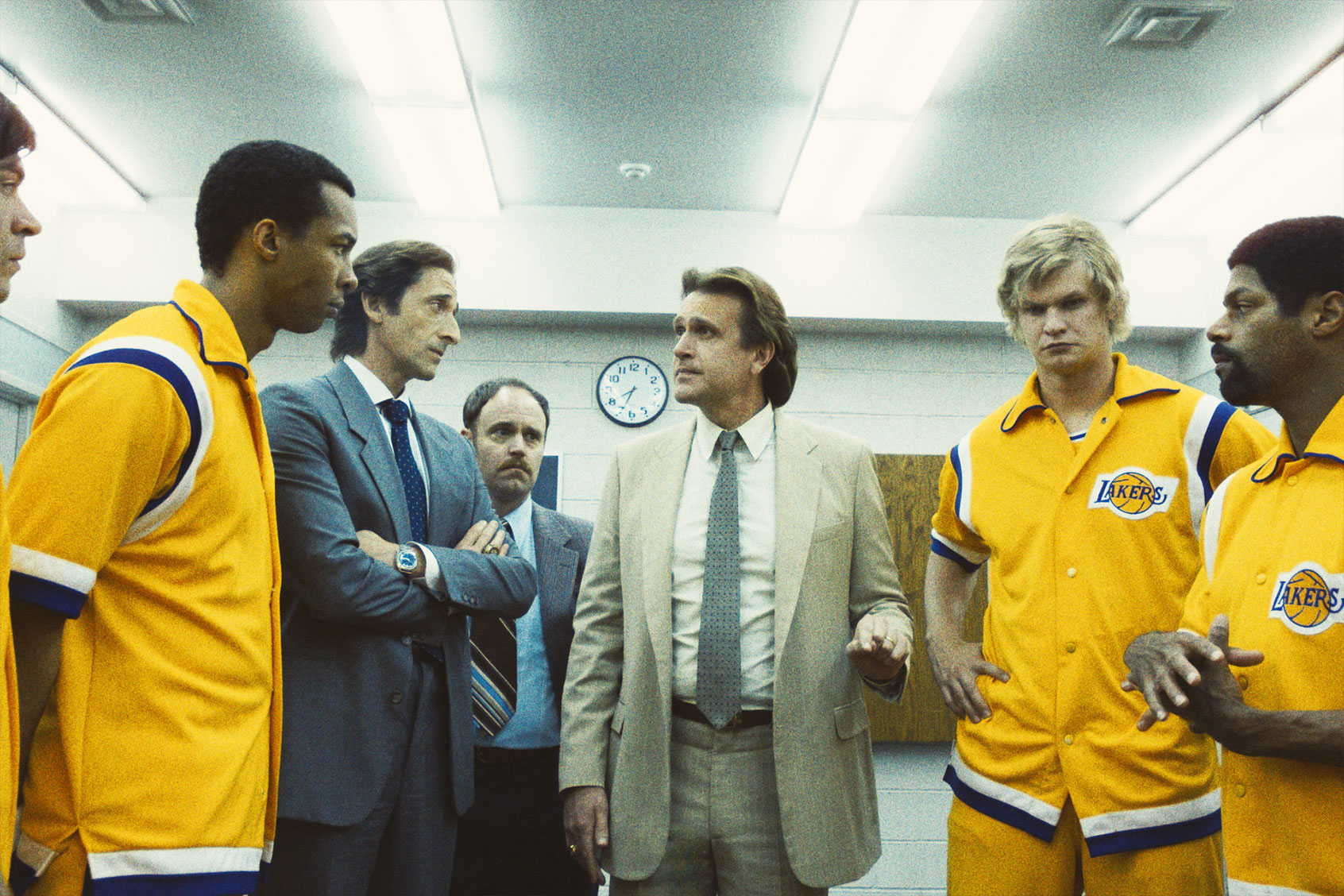
Mike Pence and “The Book”: A master class in disingenuous biblical interpretation

While it’s tough to come back from a mob chanting about hanging you, Mike Pence reminded viewers at last Wednesday night’s GOP presidential debate that he can still preach a good sermon. And one that, in a few short sentences, used some tried-and-true strategies to present his own viewpoint as the unassailable truth.

About half an hour into the debate, the topic turned to abortion and whether the assembled Republican candidates would support a federal ban, now that Roe v. Wade is no more. There was some hemming and hawing from Nikki Haley about the inarguable fact that Republicans are well short of the 60 votes required in the Senate to support a ban, and some bobbing and weaving from Ron DeSantis for unclear reasons. But when the question came to Pence, the former vice president turned solemn. He first reminded DeSantis, “I’m not new to this cause,” and then pivoted to deeply religious conversion language.

“After I gave my life to Jesus Christ as my Lord and Savior, I opened up the Book,” Pence began — you could hear the capitalization in the way he intoned these words — where he reported finding the foundational text for his staunch opposition to abortion. “And I read,” he continued, “‘Before I formed you in the womb, I knew you, and see, I set before you life and death, blessings and curses. Now choose life.'” (Those last two words should probably be capitalized as well, lest viewers miss that they’ve seen this phrase on a bumper sticker.)

“And I knew this cause had to be my cause,” Pence concluded. It was a nice anecdote, tightly packaged to explain to faithful Christians where his pro-life beliefs come from, and to foreclose any argument against this political position.

But to get to this point, the former veep had to make some extremely dubious leaps in interpretation — leaps that probably aren’t obvious to most observers. This short paragraph of Pence’s offered a master class in evangelical biblical interpretation, with all the sloppy readings and false claims to authority that this practice entails.

The first thing to note is that Pence takes two Bible verses, from different books, with many pages and likely several centuries between them, and stitches them together into one Frankenstein quotation. Pence’s interpolated “and see” covers up a major snip, which he uses to connect Jeremiah 1:5 to Deuteronomy 30:19. The first passage is God telling Jeremiah that he will be a prophet to the people of Jerusalem, and letting him know all the plans that God has for his work. The second, occurring hundreds of years earlier, is from the final speech of Moses, as the people of Israel are about to enter into the promised land of Canaan. In this context, choosing life clearly means following all of God’s commandments; death is equated with idolatry.

Last week, Mike Pence offered a master class in evangelical biblical interpretation, with all the sloppy readings and false claims to authority that practice entails.

This isn’t the first time Pence has quoted the verse from Jeremiah 1:5 to support his position on abortion; he also used it in the 2016 vice presidential debate with Tim Kaine. But with this mash-up, he’s doing something different, creating a hybrid verse clearly designed to give the impression of being a single verse. That’s the first sleight-of-hand Pence pulls in this response.

The second is related: ignoring the context of the two verses. In the study of hermeneutics, this is a technique known as proof texting: starting with a particular belief and working backward to find a biblical passage that seems to support this idea. When you don’t have to concern yourself with context, it’s pretty easy to find a biblical statement to support just about any position you like. When literary and historical context become a part of the discussion, however, these proof texts often don’t seem as persuasive any more. That’s certainly the case with Pence’s employment of Jeremiah and Deuteronomy — once you dig a little deeper into the texts, it’s clear that they have nothing to do with abortion. That doesn’t mean that they can’t inform an anti-choice worldview, as the Jeremiah passage clearly does for Pence. It simply means that they do not offer the slam-dunk case for a particular political agenda that they might at first seem.

But these two flaws don’t exhaust the problems with Pence’s biblical interpretation strategy. In refusing to offer a citation for the individual quotations, Pence leaves his listener with only a single source: “The Book.” By attributing these quotations to “The Book,” rather than to two specific and quite different books of the Bible, Pence is claiming the authority of the entirety of Scripture for his political worldview.

Still, the biggest act of prestidigitation is yet to come, and actually occurs after Pence provides his proof texts. After framing his composite biblical quotation within the language of conversion — as if reading these two passages was the first thing he did after his born-again experience — Pence employs two verbs. He introduces the quotation with “I read,” and follows that up with “I knew.” By using these two verbs, Pence is trying to erase the fact that any interpretation happened at all — it was a simple act of reading, followed by knowing. Pence seems to be channeling the bumper sticker “God said it, I believe it, that settles it.” Except that’s not how reading works.

The first thing any seminarian will learn in a class on biblical interpretation is that all reading is interpretation. We have to take what we read and make sense of it — and depending on the text involved, this can be a more or less difficult process. For something like the Bible, we’re faced with a pretty high degree of difficulty. It’s a book (or, more accurately, a collection of books) written several thousand years ago, in different languages and in an entirely different cultural context from ours. And, as most serious biblical scholars will agree, it was written by a diverse group people with varying religious, social and political agendas, all of which don’t necessarily cohere with each other. There are so many layers of translation we have to wade through in order to even begin the process of interpretation.

In biblical interpretation as practiced by evangelical Christians, this process is frequently erased, hidden behind the scenes so the interpreter can pretend that he or she is giving us direct access to the truth, not something that has been mediated through a process of discovery. That’s what Pence does when he jumps straight from “I read” to “I knew” — he’s trying to hide the act of interpretation, hoping that we will be so transfixed by his invocation of “the Book” and his deeply sincere tone of voice that we don’t recognize what he’s doing.


Want a daily wrap-up of all the news and commentary Salon has to offer? Subscribe to our morning newsletter, Crash Course.


To be fair to the practice of hermeneutics, there is also a more charitable way to look at Pence’s remarks. In the context of a debate, with eight candidates on stage warring for attention, any remark has to be concise, memorable and directly focused on the point the speaker is trying to make. And a national debate audience isn’t interested in a deep lesson in biblical interpretation. They just want to understand that Pence’s pro-life views are a sincere expression of his faith, and the story he told neatly conveyed that point.

But as I see it, that lets Pence — and other interpreters who use the same sort of misdirection when they’re using the Bible for their own ends — off the hook too easily. By obscuring the interpretive work Pence is doing, by trying to erase the reality that what he is really offering us is not just reading and knowing but his own subjective understanding, Pence is claiming the authority of the Bible and God for his political agenda, and trying to bully his listener into accepting that his way is the only way to look at the world. It’s almost a Keyser Soze move — the interpreter trying to make the world think that interpretation doesn’t exist.

For many of us, it’s easy to dismiss this kind of rhetoric as outdated or irrelevant. But for others, the kind of appeal Pence made last week is deeply affecting. One step toward reducing the power this kind of language can have is to make sure we supply the missing verb, and missing concept, of interpretation, and pushing back against what evangelical biblical interpretation tries to leave out: context, and the reality that political beliefs like Pence’s are choices, born no doubt from deeply held worldviews, but not commandments required of us by a few cut-and-pasted biblical passages.

Gen Z needs “Winning Time’s” history lessons to understand why they enjoy the NBA now

HBO’s “Winning Time” should be required to watch for true NBA fans.

I recently talked basketball with some kids at a summer writing workshop. 

Greg, a scrappy poet, cuts everyone off in a room to scream, “LeBron, it is all about LeBron. The King would destroy everyone in the ’60s, ’70s, ’80s and ’90s on God!” 

“So you never heard of Michael Jordan?” I replied, “Look at your shoes; you aren’t wearing LeBrons right now; they are Jordan 2’s!” 

How could you not love LeBron?

The class laughed at his Chicago red and white air Jordans. Then I quickly calmed them because I am a huge LeBron James fan. He is one of the most talented basketball players in history, and no one can believe that he lived up to the hype he received coming out of high school. The dude is beyond great, and every professional athlete, or public figure in general, could learn from how he conducts himself off the court. After all he speaks out on Black issues, is a devoted and committed family man and has literally never had a scandal. How could you not love LeBron? 

These kids are all between the ages of 18 and 21, the same age I was when Michael Jordan dominated – and yes, it was hard to sell me on Dr. J having the skills to take on MJ, even though I knew that the Doctor was one of Jordan’s biggest influences. The difference between me and these kids is that I took time to acknowledge history and watch films on guys like “Tiny” Nate Archibald, Walt Clyde Frazier, and the great Earl “The Pearl” Monroe. This group was prepared to consider their generation and nothing else. 

This group was prepared to consider their generation and nothing else.

“I can’t lie, Professor Watkins. Videos of those guys playing back in the day look really funny,” Ebony, a young essayist said. 

I agree that the game evolves. Bob Cousy would not know what to do with Allen Iverson’s crossover; however, origins and roots matter. The most dangerous part about ignoring the history of basketball in America is that it erases the pioneers’ blood, sweat and tears. 

LeBron is the GOAT of his era,” I told the group, “But there were other GOATs in different eras, and we can’t write off the people that LeBron learned from, like Magic Johnson. Did you ever watch ‘Winning Time’?” 

Winning Time: The Rise of the Lakers DynastyJimel Atkins, Adrien Brody, Jason Segel, Austin Aaron and DeVaughn Nixon in “Winning Time: The Rise of the Lakers Dynasty” (Warrick Page/HBO)

HBO’s scripted series “Winning Time” documents the rise of the Showtime era and the beginning of the dominance of the NBA. At the center of the universe is Earvin Magic Johnson (Quincy Isaiah), Kareem Abdul-Jabbar (Solomon Hughes), Doctor Jerry Buss (John C. Reilly) and Pat Riley (Adrien Brody). 

The show follows all of their unique individual storylines, and the countless amount of explosions that happen when they intersect: Magic’s lady problems, Pat Riley’s early uncertainties, Buss’ lady problems and erratic behavior, and Abdul-Jabbar’s rage against racism while working as an entertainer in a country deeply rooted in racism. 

When Magic Johnson entered the NBA in 1979, players were not multi-millionaires with huge shoe contracts, limitless disposable income and the ability to create generational wealth. The NBA was known for fights, drug addiction and its inability to maintain consistent fans. Dr. Buss saw the fledgling league as a gold mine and knew that showmanship provided a direct path to the promised land. “Winning Time” teaches us how Dr. Buss turned his franchise into a real production by implementing halftime shows, the Laker Girls and even a expensive after-the-game hangout spot for players, business tycoons and tastemakers.

 The show also teaches us how the arrival of Magic Johnson and his flashy play, in combination with Larry Bird’s gritty, blue-collar hustle, not only created one of the most beautiful NBA rivals of all time but also put the nation on notice – letting sports fans know that the NBA was serious and ready to move past the old stereotypes, had real competitors, addictive storylines and the potential to be as lasting as Pro Football and Major League Baseball. 

“You should watch the show. They cover all of this,” I continue to the group, “Anybody knows how much money Jaylen Brown signed for?” 

“304 million!” a kid blurted in response to the young 26-year-old Boston Celtics forward, who just signed the biggest deal in NBA history, a $304 million, five-year contract. 

“Magic Johnson had the biggest contract back in his day, too,” I laughed, “It was a $25 million contract to be paid over 25 years. At the time, the deal was mind-blowing, just like the Brown deal is now. But what those two guys have in common is that they both get to thank their elders for setting a precedent and making those milestones available, which is why you should watch the show.”

Fani Willis to map out election case details during federal court hearing on Monday

On Monday, Fulton County District Attorney Fani Willis will begin mapping out the details of the 2020 election case involving Donald Trump and 18 other co-defendants during a federal court hearing. As CNN points out, “this will be the first time that substantive arguments will be made in court about the four criminal cases brought against Trump this year.” 

The main focus of the hearing will revolve around former White House chief of staff Mark Meadows’ motion to move his case to federal court, or even have it thrown out, but it will generally serve as the first big overview of how this could all potentially shake out for Trump and the others.

Per CNN, “Willis is expected to preview the case that she is planning to bring against the 19 co-defendants, getting on the public record some of her evidence and legal arguments for why Trump and his allies broke the law when pressuring Georgia election officials to meddle with the 2020 results.” Referenced in the outlet’s reporting are the following things to watch out for on Monday: ‘Opening salvo’ in bids to move to federal court, what the judge will be considering and key witnesses potentially taking the stand. They add that, “Georgia Secretary of State Brad Raffensperger, who received the January 2021 call from Trump to “find” the votes that would reverse his loss, has been subpoenaed to testify, along with an investigator in his office and two other lawyers who were present on the call.”  


Bloodthirsty Silicon Valley vampires won’t stop: It’s time to stake our claim

It's no secret that, for years now, the ultra-wealthy — including Silicon Valley tech moguls like Peter Thiel and Bryan Johnson — have taken up the Elizabeth Báthory method of obtaining eternal youth: young blood. Despite Johnson's recent admission that his costly indulgence in pseudoscientific young blood transfusions offered "no benefits" — so he has stopped injecting himself with the blood plasma of his son and other young folks — the quest for immortality among the rich is far from over. While it's true that the rich have thrown millions-upon-millions of dollars into these frantically vain bunk-science investments, the rest of us actually have far more stake in death-defying discoveries. And we should be willing to claim them. 

Most of the science behind young blood transfusion is bunk — that much is true, according to the Food and Drug Administration. But there's still just enough scientific reason to keep looking for a blood-based answer to ease the strain of age and illness, and more research keeps coming. 

In April, research from Harvard Medical School found promising results in an anti-aging experiment where the lives of elder mice were extended up to 9% by connecting their circulatory systems to those of younger mice. On Aug. 24, a trio of studies found that older mice showed regenerative and cognitive improvements after being injected old with certain blood platelets from younger mice. When these kinds of findings beckon from the periphery, it's not a stretch to assume that, if there's a scientifically viable way to reverse aging, the wealthy are determined to fund it and find it. 

Above his pitches for proprietary health-nut dietary blends, Johnson's slogan of "Don't die" hangs like an apotropaic talisman on his social media banners. But it reads less like a command and more like the desperate cry of grief too often heard in hospital rooms and gun-silenced school hallways. It's a casual assertion of privilege that even Paris Hilton's fake "stop being poor" t-shirt couldn't beat. And more than a decade of this nonsense has been playing out in the tech trades and in luxury-lifestyle ad-copy. 

"There are all these people who say that death is natural, it's just part of life, and I think that nothing can be further from the truth," Thiel told Insider back in 2012, framing our apparently not-so-inevitable mortality as a problem to be solved. Patent absurdity, of course, as much then as now — no matter how many 3D-printed organs we churn out, how long we extend our telomeres, nor how many quaffs of plasma we down.


Want more health and science stories in your inbox? Subscribe to Salon's weekly newsletter Lab Notes.


"There are all these people who say that death is natural, it's just part of life, and I think that nothing can be further from the truth."

There's an obvious bone worth picking here, of course. Continued research into emergent branches of regenerative medicine is still a worthwhile pursuit despite the anti-aging hokum, particularly given the need to advance therapies around stem cells, immunomodulation and transplantation. Any non-wealthy family that's weathered the devastation of Alzheimer's disease and fought the US medical industry can tell you why this kind of research is valuable beyond what it can offer any vain billionaire fleeing death. 

Even among the trembling frailty of the vain, however, one can find still find philosophical room for grace. In the geologic time scale, humans barely exist for the span of a breath and, for most of us, that's just long enough to be born into a cruel world and suffer its grief. I don't begrudge a man his fear of dying, his raging refusal to go quietly, nor his defiant tilting against its windmill. 

Slimy as some of these blood-sucking west coastlings can be, it's hard to imagine any villain so foul that — if he astonished the world with some proof of his immortality — his crimes would at all lessen the gravity of his victory over death. After all, the last time anyone around here heard tale of a man who couldn't be killed, the news triggered 2,000 years of people asking how he did it. 

"Jesus fed bread and wine for an afterlife without guarantee," tweeted Johnson. "I feed you Olive Oil for continued life and money back guarantee."

The intoning of memento mori seeds a joyful duty toward the pursuit of human longevity as an act of grateful humility before the wonder of life.

Thiel, Johnson, and every rich jerk with $8,000 to blow on a teen blood bag — none of them will escape death (for that, O Lord, we thank thee) and if any of them do something saintly in the extra days they've bought, the next pint of A-positive is on me. But even if they waste every hour, the unwitting blood-suckers are still the de facto philosophical opponents of something I hate slightly more — religious fundamentalist death-cults with apocalyptic politics, hellbent on fomenting feverish martyr lust among the vulnerable. Enemy of my enemy, in this case. 

And whether the entitled elite understand it or not, their fearful grappling with mortality is at the heart of the world's richest religious traditions — built, without exception, by the poor. On its better days, the intoning of memento mori seeds a joyful duty toward the pursuit of human longevity as an act of grateful humility before the wonder of life, a devoted awe for all we have yet to learn about this world's splendor and science — and all the precious knowledge we may yet preserve and teach. 

We need your help to stay independent

Longevity, itself, is neither the point nor the virtue here. Rather, both are found in what that longevity affords. One more day of unmerited grace in which we might enflesh in this world slightly more mercy than the suffering we cause. One more day to reach toward the unknowable with a student's hand and a teacher's mind — to chop more wood, carry more water. One more day to cast down the mighty, lift up the lowly and send the rich away. 

All of which is to say that, grave as our poverty may be, we poors have got more stakes in the matter than the rich — and the rich should keep those stakes sharply in mind when refusing to see the grave.

“The Miseducation of Lauryn Hill” turns 25: A tribute to the album that refined hip-hop and feminism

She remains the most recent Black woman to win album of the year at the Grammys.

Singer, songwriter, producer, rapper and multi-hyphenate Lauryn Hill is a household name for a reason. The eight-time Grammy winner masterfully created one of the most influential hip-hop albums in the history of the genre and she wrote and produced it when she was 22 and pregnant with her firstborn son. As the genre that Hill redefined turns 50, and “The Miseducation of Lauryn Hill” turns 25 — there is a need to look back at why the album still hits just as hard and continues to be a touchstone in people’s lives.

Hill redefined the genre in her personal style – combining reggae, hip-hop and soul to create her own sound separate from what was prominent in a male-dominated Biggie and Tupac, NWA-fueled hip-hop scene. Her distinct, pioneering sound even made the crossover to pop — literally reinventing what mainstream music looked like after decades of Black artists had been excluded from the larger conversation in popular music. “Miseducation” was the first hip-hop album to receive an album of the year Grammy award. In her winning speech, the then-23-year-old Hill said, “This is crazy because this is hip-hop music.” She remains the most recent Black woman to win album of the year at the Grammys.

Surrounded by a male-dominated ’90s hip-hop scene, the cross-gendered misunderstandings fueled competition between Black men and women and their perspectives on money, sex and power. Female hip-hop artists like Salt-N-Pepa, Lil’Kim, Queen Latifah and Missy Elliott questioned who held the power and how women wielded the power, sometimes through money, sometimes through their vulnerabilities or through their sexual prowess.

Further, Hill posed all these questions in her only solo album. In her wordsmith-like rhythms and reggae and neo-soul twinged beats, she answered them wittly, standing proudly in her Black womanhood. Her lead single on “Miseducation” was “Doo Wop (That Thing).” It became Hill’s first and only Billboard No. 1 hit. The song touched on the same power struggle woven through the theme of the album. “Doo Wop (That Thing)” served as a cultural criticism of superficial love and relationships and women finding their independence, self-worth and power outside of their physical appearance and men.

She sings:

Girlfriend, let me break it down for you again
You know I only say it ’cause I’m truly genuine
Don’t be a hard rock when you really are a gem
Baby girl, respect is just a minimum
N***** f**k up and you still defending ’em

It’s silly when girls sell their souls because it’s in.

How you gonna win when you ain’t right within?

Not only did Hill beautifully paint the portrait of the authentic experience of Black girlhood and the transition into womanhood (“To Zion,” featuring legendary guitarist Carlos Santana) she also wrote about real, unrelenting heartbreak. Some of the best songs on the album (“I Used to Love Him” featuring R&B powerhouse Mary J. Blige) are an arrow pointed towards her former Fugees bandmate Wyclef Jean, who she had a romantic relationship with for several years in the ’90s before it broke up the Grammy-winning band.

Lauryn HillAmerican musician Lauryn Hill performs an acoustic, solo set during the JVC Jazz Festival at Carnegie Hall, New York, New York, June 23, 2002. (Jack Vartoogian/Getty Images)The slow, classic break-up R&B song “Ex-Factor” is speculated to be about Hill’s relationship with Jean too. Hill painfully begs her lover to let her go, confused that her lover isn’t measuring up to the words they promised her. 

In the chorus, Hill sings:

No matter how I think we grow
You always seem to let me know
It ain’t working (It ain’t working, no), it ain’t working
And when I try to walk away
You’d hurt yourself to make me stay
This is crazy, this is crazy (Oh, this is crazy, uh-huh)

In Hill’s song with iconic ’90s R&B artist, D’Angelo, “Nothing Even Matters,” the two showcase through buttery falsettos and a stunning vocal performance that love is the answer. The soul-filled, sensual duet glides like an easy love, unburdened by pain — different than the pulsing heartache in the rest of the album.

One of the reasons why the album continues to connect is because of its versatility in subject matter and style. One second, Hill is schooling the listeners on why Black people “always be the ones to settle” in a religiously twinged “Forgive Them Father” or criticizing the counterfeit encrusted shine attached to fame in “Superstar.”  In another moment she is pining about love on a remixed, unapologetically hip-hop take on Frankie Valli’s “Can’t Take My Eyes Off You.” 

We need your help to stay independent

The diversity in Hill’s artistry will forever be a part of hip-hop and pop history. It’s why her music is able to relate to a whole new generation of hip-hop and R&B listeners discovering Hill on TikTok through viral snippets of her songs used for videos across the platform. Not only is the singer popular on TikTok but she is a musical inspiration to many new-age hip-hop artists who are pushing forward the resurgence of hip-hop and R&B in the current music industry. Drake has sampled “Ex-Factor” for his 2018 hit “Nice for What” and so has Cardi B for her song “Be Careful.” Countless other artists like Omarion, Kehlani and Kanye West have sampled Hill too.

Hill showcased the essence of what it means to be a young, vulnerable Black woman in America on her own terms.

For the 25th anniversary of “Miseducation,” the artist who has mostly stayed out of the public eye after her troubled experiences with fame post-album, is coming back to tour the beloved album across the U.S. with opening guest stars the Fugees. There’s probably no way Hill herself could have ever predicted or fully understood the cultural implications and impact “Miseducation” has had on music when she was creating it. But that’s what makes the album so timeless and indestructible. Hill showcased the essence of what it means to be a young, vulnerable Black woman in America on her own terms and for that, she will forever deserve her flowers.

Henry Kissinger at 100: A centenarian with a remarkable life — and still a war criminal

Henry Alfred Kissinger turned 100 on May 27 of this year. Once a teenage refugee from Nazi Germany, for many decades an adviser to presidents and an avatar of American realpolitik, he’s managed to reach the century mark while still evidently retaining all his marbles. That those marbles remain hard and cold is no surprise.

A couple of months after that 100th birthday, he traveled to China, as he had first done secretly in 1971 when he was still President Richard Nixon’s national security adviser. There — in contrast to the tepid reception recently given to U.S. officials like Treasury Secretary Janet Yellen and special presidential envoy John Kerry — Kissinger was welcomed with full honors by Chinese President Xi Jinping and other dignitaries.

‘That ‘lovefest,'” as Daniel Drezner of the Fletcher School of Law and Diplomacy wrote at Politico, “served the interests of both parties.” For China, it was a signal that the United States would be better off pursuing the warm-embrace policy initiated so long ago by Nixon at Kissinger’s behest, rather than the cold shoulder more recent administrations have offered. For Kissinger, as Drezner put it, “the visit represents an opportunity to do what he has been trying to do ever since he left public office: maintain his relevancy and influence.”

Even as a centenarian, his “relevancy” remains intact, and his influence, I’d argue, as malevolent as ever.

Rehab for politicians

It’s hard for powerful political actors to give up the stage once their performances are over. Many crave an encore even as their audience begins to gaze at newer stars. Sometimes regaining relevance and influence is only possible after a political memory wipe, in which echoes of their terrible actions and even crimes, domestic or international, fade into silence.

This was certainly the case for Nixon who, after resigning in disgrace to avoid impeachment in 1974, worked hard for decades to once again be seen as a wise man of international relations. He published his memoirs (for a cool $2 million), while raking in another $600,000 for interviews with David Frost (during which he infamously said that “when the president does it, that means it is not illegal”). His diligence was rewarded in 1986 with a Newsweek cover story headlined, “He’s Back: The Rehabilitation of Richard Nixon.”

Of course, for the mainstream media (and the House of Representatives debating his possible impeachment in 1974), Nixon’s high crimes and misdemeanors involved just the infamous Watergate break-in at Democratic National Committee headquarters and his subsequent attempts to cover it up. Among members of the House, only 12, led by the Jesuit priest Robert Drinan, had the courage to suggest that Nixon be charged with the crime that led directly to the death of an estimated 150,000 civilians: the secret and illegal bombing of Cambodia during the Vietnam War.

More recently, we’ve seen the rehabilitation of George W. Bush, under whose administration the U.S. committed repeated war crimes. Those included the launching of an illegal war against Iraq under the pretext of eliminating that country’s nonexistent weapons of mass destruction, attempting to legalize torture and unlawful detentions, and causing the death of almost half a million civilians. No matter. All it took for the mainstream media to welcome him back into the fold of “responsible” Republicans was to spend some years painting portraits of American military veterans and taking an oblique swipe or two at then-President Donald Trump.

A “statesman” needs no rehabilitation

Unlike the president he served as national security adviser and secretary of state, and some of those for whom he acted as an informal counselor (Ronald Reagan and George W. Bush), Kissinger’s reputation as a brilliant statesman never required rehabilitation. Having provided advice — formal or otherwise — to every president from Dwight D. Eisenhower to Donald Trump (though not, apparently, Joe Biden), he put his imprint on the foreign policies of both major parties. And in all those years, no “serious” American news outfit ever saw fit to remind the world of his long history of bloody crimes. Indeed, as his 100th birthday approached, he was greeted with fawning interviews by, for example, “PBS NewsHour” anchor Judy Woodruff.

If nothing else, Kissinger’s approach to international politics has been consistent for more than half a century: Only actions advancing the military and imperial might of the United States were to be pursued.

His crimes did come up in the mainstream, only to be dismissed as evidence of his career’s “broad scope.” CNN ran a piece by David Andelman, a former New York Times foreign correspondent and onetime student of Kissinger’s at Harvard. He described watching “in wonder” as demonstrators gathered outside New York City’s 92nd Street Y to protest a 2011 talk by the great man himself. How, he asked himself, could they refer to Kissinger as a “renowned war criminal”? A few years later, Andelman added, he found himself wondering again, as a similar set of protesters at the same venue decried Kissinger’s “history concerning Timor-Leste (East Timor), West Papua, Vietnam, Cambodia, Chile, Cyprus, Bangladesh, Angola, and elsewhere.”

We need your help to stay independent

The “events they were protesting were decades in the past,” he observed, having happened at a time when most of the protesters “were only barely alive.” In effect, like so many others who seek to exonerate old war criminals, Andelman was implying that the crimes of the past hold no meaning, except perhaps in testifying “to the broad scope of people, places, and events that [Kissinger] has influenced in the course of a remarkable career.” (“Influenced” serves here as a remarkable euphemism for “devastated” or simply “killed.”)

Fortunately, other institutions have not been so deferential. In preparation for Kissinger’s 100th, the National Security Archive, a center of investigative journalism, assembled a dossier of some of its most important holdings on his legacy. They provide some insight into the places named by those protesters.

A dispassionate Cold Warrior

If nothing else, Kissinger’s approach to international politics has been consistent for more than half a century. Only actions advancing the military and imperial might of the United States were to be pursued. To be avoided were those actions that might diminish its power in any way or — in the Cold War era — enhance the power of its great adversary, the Soviet Union. Under such a rubric, any indigenous current favoring independence — whether political or economic — or seeking more democratic governance elsewhere on Earth came to represent a threat to this country. Such movements and their adherents were to be eradicated — covertly, if possible; overtly, if necessary.  

Richard Nixon’s presidency was, of course, the period of Kissinger’s greatest influence. Between 1969 and 1974, Kissinger served as the architect of U.S. actions in key locales globally. Here are just a few of them:

Papua, East Timor and Indonesia: In 1969, in an effort to keep Indonesia fully in the American Cold War camp, Kissinger put his imprimatur on a fake plebiscite in Papua, which had been seeking independence from Indonesia. He chose to be there in person during an “election” in which Indonesia counted only the ballots of 1,100 hand-picked “representatives” of the Papuan population. Unsurprisingly, they voted unanimously to remain part of Indonesia.

Why did the U.S. care about the fate of half of a then strategically unimportant island in the South China Sea? Because holding onto the loyalty of Indonesia’s autocratic anticommunist ruler Suharto was considered crucial to Washington’s Cold War foreign policy in Asia. Suharto himself had come to power on a wave of mass extermination, during which between 500,000 and 1.2 million supposed communists and their “sympathizers” were slaughtered.

In 1975, Kissinger also greenlit Indonesia’s invasion of East Timor, during which hundreds of thousands died. In contravention of U.S. law, President Gerald Ford’s administration (in which Kissinger continued to serve as national security adviser and secretary of state after Nixon’s resignation) provided the Indonesian military with weapons and training. Kissinger waved off any legal concerns with a favorite aphorism: “The illegal we do immediately; the unconstitutional takes a little longer.”

Southeast Asia: Beginning in 1969, Kissinger was also the architect of Nixon’s secret bombing campaign in Cambodia, an attempt to interdict the flow of supplies from North Vietnam to the revolutionary Viet Cong in South Vietnam. He believed it would force the North Vietnamese to the bargaining table. In this, the great statesman was sadly mistaken. It’s fair to say, in fact, that Kissinger either initiated or at least supported just about every one of the ugly tactics the U.S. military used in its ultimately losing war in Vietnam, from the carpet bombing of North Vietnam to the widespread use of napalm and the carcinogenic herbicide Agent Orange to the CIA’s Phoenix Program, which led to the torturing or killing of more than 20,000 people.

The Vietnam War might well have ended in 1968, rather than dragging on until 1975, had it not been for the backstage machinations of Henry Kissinger.

The Vietnam War might well have ended in 1968, rather than dragging on until 1975, had it not been for Henry Kissinger. He was acting as a conduit to North Vietnam for the administration of President Lyndon Johnson, which was working on a peace deal it hoped to announce before the 1968 presidential election. Believing Republican candidate Richard Nixon would be more likely to advance his version of U.S. strategic interests in Vietnam than Democratic candidate and Vice President Hubert Humphrey, Kissinger passed information about those negotiations with the North Vietnamese on to the Nixon campaign. Although Nixon had no clout in Hanoi, he had a channel to U.S. ally and South Vietnamese President Nguyen Van Thieu and convinced him to pull out of the peace talks shortly before the election. Thanks to Kissinger, the war would follow its cruel course for another seven years of death and destruction.

Pakistan and Bangladesh: In 1971, in a famous “tilt” towards Pakistan, Kissinger gave tacit support to that country’s military dictator, Gen. Agha Muhammad Yahya Khan. In response to a surprise victory by an opposition party in Pakistan’s first democratic election, Yahya then loosed his military on the people of East Pakistan, that party’s geographical base. Three million people died in the ensuing genocidal conflict that eventually led to the creation of the state of Bangladesh. In addition, as many as 10 million members of Bengali ethnic groups fled to India, inflaming tensions between Pakistan and India, which eventually erupted in war. Although the U.S. Congress had forbidden military support for either nation, Kissinger arranged for an American nuclear-powered aircraft carrier to travel to the Bay of Bengal and provide war materiel to Pakistan. (By then, contempt for congressional restrictions had become a habit for him.)

But why the tilt toward Pakistan? Because that country was helping Kissinger create his all-important opening to China and because he also viewed India as a “Soviet stooge.”

For all his supposedly “brilliant statesmanship,” Kissinger proved incapable of imagining any event as having a significant local or regional meaning. Only the actions or interests of the great powers could adequately explain events anywhere in the world.

Latin America: There was a time when Sept. 11 called to mind not the terrorist attacks on the World Trade Center and the Pentagon but the violent 1973 overthrow of Salvador Allende, Chile’s elected socialist president. That coup, which made Gen. Augusto Pinochet the country’s dictator, was the culmination of a multi-year U.S. campaign of economic and political sabotage, orchestrated by Henry Kissinger.


Want a daily wrap-up of all the news and commentary Salon has to offer? Subscribe to our morning newsletter, Crash Course.


Once again, a genuinely indigenous economic reform movement was (mis)interpreted as evidence of growing Soviet strength in South America. Within the first few days of the coup, 40,000 people would be imprisoned at the National Stadium in the capital, Santiago. Many of them would be tortured and murdered in the first stages of what became a regime characterized for decades by institutionalized torture.

Similarly, Kissinger and the presidents he advised supported Argentina’s “dirty war” against dissidents and the larger Operation Condor, in which the CIA coordinated coups d’étatrepression, torture and the deaths of tens of thousands of socialists, students and other activists across Latin America.

So what should we give a 100-year-old presidential adviser for his birthday? How about a summons to appear at the International Criminal Court to answer for the blood of millions staining his hands?

What’s real about realpolitik?

If you google images for “realpolitik,” the first thing you’ll see is a drawing of Henry Kissinger holding forth to a rapt Richard Nixon. As a political thinker who prides himself on never having been swayed by passion, Kissinger would seem the perfect exemplar of a realpolitik worldview.

Kissinger’s brand of realpolitik is associated not with “what is” but with “what ought to be,” an ethical stance that privileges only America’s imperial advantage.

He eschews the term, however, probably because, given his background, he recognizes its roots in the 19th-century German liberal tradition, where it served as a reminder not to be blinded by ideology or aspirational belief when taking in a political situation. Philosophically, realpolitik was a belief that a dispassionate examination of any situation, uninflected by ideology, was the most effective way to grasp the array of forces present in a particular historical moment.

Realpolitik has, however, come to mean something quite different in the United States, being associated not with “what is” (an epistemological stance) but with “what ought to be” — an ethical stance, one that privileges only this country’s imperial advantage. In the realpolitik world of Henry Kissinger, actions are good only when they sustain and advance American strategic power globally. Any concern for the well-being of human beings, or for the law and the Constitution, not to mention democratic values globally, is, by definition, illegitimate, if not in fact a moral failing.

That is the realpolitik of Henry Alfred Kissinger, an ethical system that rejects ethics as unreal. It should not surprise anyone that such a worldview would engender in a man with his level of influence a history of crimes against law and humanity.

In fact, however, Kissinger’s brand of realpolitik is itself delusional. The idea that the only “realistic” choices for Washington’s leaders require privileging American global power over every other consideration has led this country to its current desperate state — a dying empire whose citizens live in ever-increasing insecurity. In fact, choosing America first (as Donald Trump would put it) is not the only choice, but one delusional option among many. Perhaps there is still time, before the planet burns us all to death, to make other, more realistic choices.

Michael Cohen warns co-defendants in election case: “Donald doesn’t care about you”

In an MSNBC interview on Saturday, former Trump attorney Michael Cohen issued a warning to the 18 co-defendants in Trump’s 2020 election case. Based on his own experience working with (and against) the former president, he offered first-hand knowledge of what could happen in a case where someone previously on Trump’s “side” decides to put themselves first.

“If any one of them ends up turning, it’s destruction for the rest,” Cohen said. “Donald doesn’t care about you. He doesn’t care about you one bit. He will use you as the scapegoat and the system will use you as the scapegoat in order to get somebody.”

Using himself repeatedly as an example, he went on to say, “[Prosecutors] will get them to turn, because these three could easily end up in the same situation that I ended up. And I can promise you something, it’s not fun. Exactly what happened to me is going to happen to all 18 of the co-indicted defendants.” The three people he’s referring to here are Trump’s attorneys Rudy Giuliani and John Eastman, and his former Chief of Staff Mark Meadows.

As The Hill highlights in their coverage of the interview, “Cohen himself turned on Trump, cooperating with New York prosecutors investigating falsified business records related to hush money payments for Trump’s alleged affairs. Once one of the former president’s closest confidants, he has since become one of his loudest critics.”

My parents are dead—can I afford avocado toast now?

Lately the Grim Reaper and I have grown so close we might as well exchange friendship bracelets. My mom — therapist, beachgoer, "Jeopardy!" fan — died of liver disease in 2020. In 2023, my dad — architect, golfer, ABBA fan — died of pancreatic cancer. I'm 35 years old, smack dab in the middle of the Millennial generation, and grief is the least of my problems. What I'm really struggling with is the legal and financial aftermath.

In the days before my dad died, the hospital was already asking me to make major financial decisions. What funeral home or crematorium do you want to use? Do you really want the basic package? Was your beloved father basic? Funeral homes aren't even required to list prices on their websites — though that may be changing thanks to the Federal Trade Commission. While Dad was on his deathbed, I was Googling customer reviews and checking my credit card limit.

Since then, my life has been consumed by settling my parents' estate. Executor and Successor Trustee is my new part-time job — one I never asked for, and one I'm technically not being paid to do, though I suppose the inheritance counts. Over the past few months, I've learned about death certificates (you will need an absurd number of copies), the difference between having something notarized and getting a Medallion Signature Guarantee (the latter is essentially a fancier version of the former), and how you should respond when your dead parent receives a jury summons (depends on the state, but you usually have to contact the County Clerk to have the aforementioned dead parent removed from their lists). I've had to sell a condo, a boat and a car. Real estate: every Millennial's expertise!

On top of the complicated stuff that might get me in trouble with the law if I mess up, there's also the weird, sad stuff. In their Florida condo, my mom had 34 decorative fish. What am I supposed to do with those? What's the best way to transfer my dad's ashes from the basic urn to the nicer, Frank Lloyd Wright-esque urn I purchased for his eternal rest? The answer, as it turns out, is a Solo cup.

Many Millennials are barely scraping by as it is. And while for some of them, an inheritance may help, for others there will be no inheritance — only more creditors to deal with.

And then there's the memorial, which is like planning a depressing wedding, both in logistics and in cost. According to the National Funeral Directors Association, the average cost of a funeral in 2021 was $7,848 — a little less if the guest of honor is cremated. But that's what the life insurance money is for, right? Assuming your parents had a life insurance policy.

Fortunately, ours did — a few, in fact. We held my mom's memorial at a local bar-restaurant and catered it with her favorite pizza. We held my dad's at the golf course near our childhood home — he designed the clubhouse. It was easier the second time around: we already had easels to display the pictures, and we were able to import the invites from Mom's big day over to Dad's.

No one is truly prepared for their parents to die. When I asked my aunts and uncles and friends' parents for advice, they didn't have much to spare—all they could remember was the horrible grief of it. And many of them had hired lawyers and accountants to deal with the bureaucracy for them; unlike my generation, their generation had already built the financial security to afford such luxuries.

In Boomers' defense, those luxuries can sometimes become necessities. Though my dad had a living trust — which should have saved my sister and me from probate court — he failed to update one life insurance policy, so it does have to go through probate, and we've hired a lawyer in Florida accordingly. We'll be more than able to cover her fees with the money we're paying her to get for us.

I wish death had been a common dinner table conversation. Money, too.

But I'd argue that Millennials are particularly ill-equipped to navigate the obstacle course of estate law. I'm extraordinarily privileged in that I have no student loans to pay off and my parents weren't carrying loads of debt. The vast majority of my friends — and the vast majority of my generation — are not in my position. Many Millennials are barely scraping by as it is. And while for some of them, an inheritance may help, for others there will be no inheritance — only more creditors to deal with.

Even as a privileged Millennial, this process is by no means easy. Every day, whether I'm trying to untangle my parents' TD Ameritrade account (how does the stock market work?) or correct my dad's death certificate (did you know a death certificate can be wrong?), I'm confronted with the reality that I have no idea what I'm doing. It's terrifying.

Death wasn't a taboo in our household, but it wasn't a common dinner table conversation, either. I knew both my parents wanted to be cremated. My mom sometimes joked that we should "just shoot her" if she became very ill, and though my dad had plenty of guns (which I also had to figure out how to sell), none of us wanted to call her bluff during her last days. After I broke the news that he wasn't going to get out of the hospital this time, my dad told me the name of his lawyer. "He won't screw you," were his exact words.

I wish death had been a common dinner table conversation. Money, too. Don't spend more than you have is about the extent of my financial literacy. I wish my parents had talked to me about their assets instead of leaving me a cardboard box full of paperwork to comb through next to the Christmas decorations. At least I'm old enough to know how a checkbook works.

People keep telling me how sad it is that I lost both parents at such a young age. Here's what I want to tell them: I'm at the bottom of a bell curve. The Boomers are starting to die — my parents just went early. Over the next decade or two, more and more of my peers are going to join the dead parents club. The time to get cozy with the Grim Reaper is now, before he comes uninvited.

We should all be lunching like Europeans — it’s better for your mind and body

The morning had been an intense morning of lessons and group work on conflict resolution and peacebuilding. We had covered terrorism and violence, from Palestine to Ukraine — but it was now 12:30, so we were going to go do the next important action item on our agenda. My classmates, facilitators and I were going go to downstairs for a three-course, hour-long meal. Because this is Europe, and people still eat lunch here.

We need your help to stay independent

In my regular American life, lunch is an afterthought, almost an embarrassment. The majority of my friends and colleagues, like me, only leave their desks for a proper midday meal a few times a year. I have a publishing executive friend who I meet up with occasionally for an early breakfast; by her own admission she hasn’t actually eaten a weekday lunch in years. And this is all somehow taken as normal and productive. A 2021 survey by the hygiene brand Tork found that even with more of us working from home, 39% of respondents said they “occasionally, rarely or never” took breaks during the workday. Nearly a quarter admitted they “feel guilty or judged when they step away from work midday.” A 2019 survey from the California Walnut Board & Commission found that two in three millennials responded that they often skip lunch to “get ahead” at work. And even when we do take a break, it’s not for long. The recent Compass Group’s Global Eating at Work Survey found that the average American lunch break is just 30 minutes long.

In other countries, though, it’s understood that the rhythm of the day requires an ebb and flow. In France, eating your desk isn’t just a strange idea, it’s against the nation’s labor laws. Food-culture historian Martin Bruegel told NPR last year, “People are just simply happier when they take some downtime during the workday. It’s good for their well-being.”

And well-being is both a physical and psychological investment. “In the fast-paced world of work, it’s easy to overlook the significance of pausing to nourish ourselves, but doing so holds numerous benefits for our overall health,” says Marissa Moore, a Licensed Professional Counselor and writer at Mentalyc.

Stopping for lunch, she explains, “provides your body with the necessary nutrients and energy to sustain productivity throughout the day,” while “skipping meals can lead to spikes and crashes in blood sugar, affecting mood and cognitive function.” It sounds simple, but really, there’s a cure for being hangry and it’s called eating something. But lunch is also about giving your brain a break, Moore says, noting that “stepping away from work tasks and engaging in different activities can lead to cognitive rejuvenation, better problem-solving, and increased cognitive flexibility.” 

We Americans aren’t just skipping lunch to prove how productive we are. Inflation has made eating seem like a luxury for many of us. An April survey by Clever Real Estate found that nearly 40% of respondents admitted they’d skipped meals to meet their housing payments.

Yet even if you can’t afford to eat in the middle of the day or don’t like to — and those $30 takeout salads are a real racket — you can and should absolutely still find a way to step away from your desk and get a chance of scenery. “There is this idea that it’s a weakness to take a break, it’s a weakness to need to eat lunch,” says Natasha Feldman, author of “The Dinner Party Project: A No-Stress Guide to Food with Friends.” But a lunch break doesn’t always need to involve eating lunch. Feldman acknowledges, “Our culture and our agriculture aren’t built around the people as much as the profit. One of the ways that you really can combat that is just, is there a park? Is there a bench? Can you sit with another human?” 

It doesn’t even have to be at lunchtime. 

“Maybe you can just say, ‘Hey, I need one hour within the day,'” says Feldman. “Even if it’s at 4 pm, I need a break.” Likewise, while certified RDN Melissa Baker of the recipe guide Food Queries does encourage everyone to “refuel with the nutrients you need to power through the afternoon,” she also acknowledges it’s important to just “give your mind a rest.” As she says, “Chat with some coworkers, take a walk outside, and just relax for a bit. This gives your brain a chance to recharge so you can tackle the rest of the day with focus.”

“There is this idea that it’s a weakness to take a break, it’s a weakness to need to eat lunch.”

We glamorize overworking and we privilege isolation, as if eating food and meeting up with friends or coworkers are just weekends and nights things. But the pandemic only served to diminish our free time and extend our workdays — while disintegrating that buffer transition time that commuting can offer. In related news, we’re burning out in record numbers. A worldwide poll from the Future Forum released this spring found that over 41% of American desk job workers said they feel burned out at their jobs, defined as having “feelings of energy depletion or exhaustion, increased mental distance from one’s job, or feelings of negativism or cynicism related to one’s job and reduced professional efficacy.” Women and workers under the age of 30 were likelier to report burnout. A similar US-specific 2022 survey from Aflac found that 59% of respondents reported “experiencing at least moderate levels of burnout.”

It’s clear that running ourselves into the ground doesn’t work, either for the forces of late stage capitalism or our basic human nature. Jovana Durovic, the Serbia-born editor of the coffee enthusiast site Home Grounds, observes, “In my country, lunch is the main meal of the day, while dinner is a much lighter affair. I was really astounded when I moved away to study and realized that not everyone has the same eating habits. I was shocked to see my peers eating at their desks, or only eating a small amount to sustain them throughout the day. After a while, I found that my own behavior had shifted to accommodate this.”

Eventually, she says, “Changing my mealtimes was having a detrimental effect on my energy, concentration, and digestion. Eating later was stopping me from sleeping properly, and I learned that this is because, instead of resting, your body is working to digest your food. I was struggling to focus, and experiencing headaches. I learned a new phrase, ‘hangry,’ and this definitely applied to me.” But now, she says, “I eat a proper, nutritious lunch, and take the time to eat mindfully. I still go out for dinner with friends, but order a smaller portion, or take leftovers home. My energy levels are back to normal, and I can concentrate better.”

“I was shocked to see my peers eating at their desks, or only eating a small amount to sustain them throughout the day.”

Most of my regular life days, I have sat in front of my laptop chewing uninspiredly through some microwaved leftovers while answering emails and catching up on the horrors of the day in my newsfeed. But while I’ve been spending a few weeks in Switzerland, I have been doing things differently. On weekends, I have idled in cafes, reading books and watching shopkeepers close their doors for their own daily sabbaticals. On weekdays, my colleagues and I have sat together around a long table, consuming plates of pasta followed by fresh sorbets or salads chased with bony fish filets, rarely if ever even looking at our phones. On one recent class day, I savored some pork knuckle over white wine risotto, followed by chocolate mousse. What is this strange feeling, I wondered as we climbed the steps back upstairs afterward for continuation of our work. Then I realized, I was satisfied. I want to hang on to that sensation. I want to stop trying to run on fumes, and lean in to being nourished.

“All we do as Americans is try to fight off our natural urges,” observes Natasha Feldman. “If we just allowed ourselves to like exist as normal humans and take the breaks that are needed, and have these meals where we’re not shoving food in our face as quickly as possible and going back to work, we would actually I think save a lot of time.” 

Five ways movie theaters are luring back audiences, from discounts to fancy concessions

Movie theaters may not be dying, but they certainly won’t ever be the same.

That’s because countless cinemas nationwide have been losing their audiences, thus causing some to also lose a big chunk of their revenue and others to completely shut down for good. Much of the blame can be placed on the COVID-19 pandemic, which forced several theaters — including big name chains — to indefinitely close their doors to the public. Back in March 2020, AMC Theaters closed all of its locations nationwide, thus causing the company to lose a whopping $4.6 billion that year. The situation got so dire that director Cristopher Nolan penned an op-ed in The Washington Post, urging people to save their beloved theaters.

Many cinephiles, however, ditched the theaters way before the pandemic due to rising ticket and concessions prices. A Morning Consult poll found that 55% of respondents said they are more interested in watching movies at home because it’s both cheaper and safer. Thanks to streaming services, people can do that more easily and more often. Long gone are the days when people had to rent DVDs, only to return them after a certain number of days. Now, viewers can watch as many movies as they want whenever they want.

In an effort to bring back audiences, movie theaters are getting creative with new offerings, amenities and special discounts. The most notable perk is National Cinema Day on Sunday, Aug. 27, which offers super cheap tickets to moviegoers.

Here are a few other ways theaters are hoping to lure us back:

01
Renting out auditoriums
An empty movie theater auditorium (Getty Images / KEHAN CHEN)

In an effort to maintain social distancing and promote COVID-19 safety guidelines, many theaters have allowed moviegoers to rent out theaters for private, intimate screenings. Fans of AMC and Cinemark can still reserve a theater in advance to watch new releases or fan-favorite films starting at just $99, which can be a cost saver with enough friends attending.


It’s perfect for a birthday party, special occasion, corporate event or movie experience with friends and family. Cinemark offers several group rental options, including ones for birthday parties, field trips, religious events and video game parties. Both AMC and Cinemark are allowing groups of up to 20 to rent out their theaters.

02
Trivia and bingo nights
Bingo game card (Getty Images / Tetra Images)

Many major and independent theaters offer trivia and bingo nights to encourage audiences to enjoy either before or after going to the movies. Select Alamo Drafthouse locations in Washington D.C. and Virginia offer Think-N-Drink Trivia nights every Thursday at 7 p.m. Trivia themes range from TV and sports to pop culture, music, current events and history. Additionally, the luxury cinema chain hosts drag bingo events at select locations with no cover and no tickets necessary.


As for the smaller theaters, Hollywood Blvd Cinema, located in Woodridge, Ill., will host various themed trivia nights from September up until December. There’s also Brooklyn’s Nitehawk Cinema, which hosts movie trivia nights every other Tuesday starting at 8 p.m. The winning team gets free movie tickets and free drinks while the runner-up gets free movie tickets!

03
Luxury reclining seats
Recliner-style movie seats (Getty Images / lenka_x)

Several big chains, including AMC, Cinemark and Regal, have enhanced the movie-watching experience and prioritized viewers’ comfort with luxury reclining seats – bringing the comforts of home to the public. The swanky seats have replaced many of the traditional theater seats, which are infamously itchy and incredibly uncomfortable. Luxury seats are adjustable and include armrests and cup holders for drinks and food.


Such seats are also a common sight across a few stylish cinemas nationwide, including Brooklyn’s Nitehawk Cinema, Oakland’s New Parkway Theater, Las Vegas’ Eclipse Theaters, along with multiple Cinépolis and iPic locations.

04
Fun, themed concessions
Popcorn and theater concessions (Getty Images / Jackyenjoyphotography)
To celebrate the release of Greta Gerwig’s highly anticipated film “Barbie,” Alamo Drafthouse offered a Barbie Brunch as part of their special menu. The theater also launched its own BARBIE X Alamo Drafthouse Collection, which includes a ton of Barbie-themed goodies for moviegoers and die-hard fans to purchase.


In the same vein, Regal, in partnership with Pops Corn, offered fans gourmet caramel popcorn in Barbie’s signature color. Cinemark also launched its own line of “Barbie” merchandise, including a Barbie-themed popcorn tin, a Barbie “B” 22-ounce cup, a Barbie Diamond Double Wall cup and a Barbie-themed Blanket in a Bag. Landmark sold several Barbie dolls from the film and AMC sold their own “Barbie” merchandise alongside their Barbie Popcorn Corvette — popcorn served in a container that looks like Barbie’s signature pink Corvette.


The trend will continue. Alamo Drafthouse also recently released its all-new Teenage Mutant Ninja Turtles-themed menu in celebration of ​​the animated film “Teenage Mutant Ninja Turtles: Mutant Mayhem.” Menu offerings include Bebopcorn, Mutant Mayhem Pizza, Pepperoni & Pickle Pizza, Shell Shocked Turtle Loaded Donut Holes and Ooze Juice. Bon appétit!

05
Discount tickets
Digital movie ticket (Getty Images / Drs Producoes)

Sunday, Aug. 27 marks National Cinema Day, an annual event when tickets at several nationwide chains and participating theaters are available for just $4. This year, moviegoers can watch movies currently playing in theaters along with a number of classics, including “Jurassic Park,” “Beauty and the Beast,” “Lady Bird” and plenty others. (Some chains like Regal even carry that $4 price tag to concession combos.)


Beyond that one day a year, however, additional regular discounts include AMC’s Discount Tuesdays, available for all AMC Stubs members, regardless of tier. Members save every week on tickets to Tuesday showtimes and can snag a small fountain drink and a small popcorn for just $5. Regal also offers Regal Crown Club Value Days, a special discount on movie tickets for all Crown Club members, while Alamo Drafthouse offers BFD Tuesdays, which offer discounted tickets to regular priced 2D movies.

From #Scandoval to “Love Is Blind,” understanding the new reality heyday in this Hot Labor Summer

Two weeks after members of the Writers Guild of America who work in the film and TV industry went on strike, one of the most highly anticipated TV episodes of the year made its cable TV debut: “#Scandoval,” the hastily filmed season finale of Bravo’s “Vanderpump Rules.”

The hour revealed the fallout of an affair between original cast member Tom Sandoval – who had been in a nine-year relationship with castmate Ariana Madix – and Raquel Leviss, who first appeared in the series’ fifth season.

TMZ spilled the tea about the affair shortly after Madix discovered it, revealing the news to viewers four installments into a 10th season depicting Sandoval as still happily involved with Madix, and Leviss behaving like her loyal friend. 

The news changed the nature of the season’s viewing experience, turning the audience into witnesses to a tragedy they knew was unfolding while the players involved remained oblivious.

Online discussions comparing the action in each episode to the escalating frenzy surrounding the mess caused its viewership to swell until the long-awaited “#Scandoval” burst forth, attracting a series-high of 4.1 million viewers watching it Bravo, NBCU’s streaming platform Peacock and video on demand within three days of its original airing, according to Variety.

This crowned the show’s 10th season, which reached 11.4 million viewers to date.

If for some reason you don’t know who these people are or why the resurgence of “Vanderpump Rules” 10 seasons along matters . . . well, first of all, congratulations. That means you’ve been spared regular sightings of Sandoval’s unfortunate porn villain mustache and white nail polish.

But that also may leave you out of the loop concerning one of the more compelling developments of this so-called Hot Labor Summer. Before the WGA officially went on strike, and two months before SAG-AFTRA members joined them on the picket lines, a common warning held that if writers and actors walked out, networks would flood the airwaves with disposable reality dreck as they did in the 2007-2008 WGA strike. (Salon’s unionized employees are represented by the WGA East.)

Looking at a few broadcast networks’ plans for the fall, that’s not entirely off-base. Broadcast and cable networks will be relying on a great deal of unscripted content to get by, along with true crime and reruns, as will cable and streaming.

But reality TV has transformed since that last writers’ strike, which has since been falsely credited for initiating reality’s surge. The longest-enduring reality shows on broadcast, including “Survivor,” “The Bachelor” and “The Apprentice” were successful long before the strike began.

So it’s unfair to tie that labor stoppage to the rise of Fulton County Jail Inmate P01135809.

One might instead link it to the unleashing of the Kardashians and their ilk.

Today’s unscripted hits are clones of Andy Cohen’s Bravo shows or “Keeping Up with the Kardashians,” which made its E! debut weeks before the 2007 strike began. Cohen’s first entry in his eternally popular “Real Housewives” franchise, “The Real Housewives of Orange County,” premiered in 2006.

But its second installment, “The Real Housewives of New York City,” debuted shortly after that strike ended, in March 2008. That title yielded the “Housewives” brand’s main tastemaker Bethenny Frankel and “Crappie Lake” co-star Luann de Lesseps. Restaurateur Lisa Vanderpump became the breakout star of the “Beverly Hills” edition, leading to her spinoff following the lives of her young, striving staff.

It’s unfair to tie the 2007-2008 WGA strike to the rise of Fulton County Jail Inmate P01135809. But one might link it to the unleashing of the Kardashians.

The Kardashianizing side of unscripted is much narrower by design, with a single family generating multiple spinoffs and product lines, cornering an entire segment of the attention economy. When it began in 2007 Kim Kardashian was primarily identified as a Playboy model who starred in an amateur sex tape and the stepdaughter to a former Olympian. Today Kim Kardashian is a fashion mogul, prison reform advocate and crosser of picket lines.

These shows and their slew of imitators populate cable and streaming services with a bounty of glitzy, heightened antics that rival anything the late Aaron Spelling produced in his heyday, while changing the definition of what it means to be a celebrity – and how performers view the value of reality TV.

Stars on MarsTom Schwartz on “Stars on Mars’ (FOX)Decades ago, a show like “Stars of Mars” might have been snickered at as the last stop before obscurity. Now Bravo personalities Porsha Williams Guobadia (of “The Real Housewives of Atlanta”) and #Scandoval accessory Tom Schwartz occupy the same strata as former cycling champion Lance Armstrong, comedian Natasha Leggero and NFL Super Bowl champion Marshawn Lynch.
The “Vanderpump Rules” cheating crisis proves that these people’s real lives produce plots as captivating as a scripted soap. Indeed, their ubiquity and popularity may be why so few primetime sudsers last beyond a season or two these days – it’s tough to make up anything as raw and wrenching as the dirty ways real people do to each other.  

All this may read as an argument that the studios shouldn’t be pressed to forge a fair deal with the people who create the TV shows and movies that form the basis of our cultural dialogue. That could not be farther from the truth. 

On the contrary: Season 10 “Vanderpump Rules” proves the point that Frankel and other reality personalities are making, which is that they deserve the type of contractual protections that unions like the WGA and SAG-AFTRA offer their members.

“I got paid $7,250 for my first season of reality TV, and people are still watching those episodes,” she revealed on Instagram, going on to add, “I myself have generated millions and millions of dollars in advertising and online impressions being on reality TV, and have never made a single residual. So either I’m missing something or we’re getting screwed too.”

https://www.instagram.com/p/Cu43FLjpkGF/

In the way of all things labor-related in the entertainment industry, Frankel, who starred in eight seasons of “The Real Housewives of New York” is not the prime example of someone being shortchanged by the reality TV machine. She parlayed her popularity on “RHONY” into a beverage brand, several spinoffs and a talk show, among other accomplishments. She realizes this, by the way, telling Variety’s Marc Malkin, “I’m fine. I’m doing just fine,” she said. “This is about the future and getting to control your own content and not accepting these deals anymore.”

But she is someone with influence and enough power to attract some momentum.

Frankel’s call for reality talent to unionize is gaining attention right now, but below-the-line unscripted TV staffers have been making noise for years about the punishing work schedules and environments. Some productions’ staff have secured protections by unionizing under IATSE. In March the writer-producers at BSTV, the studio behind such Food Network shows “The Kitchen” and “Trisha’s Southern Kitchen,” voted to unionize with the WGA East.

We need your help to stay independent

Unionizing reality talent, on the other hand, is a concept many struggle to take seriously although recent news stories about the behind-the-scenes conditions on shows such as “Love Is Blind” lend urgency to the call for basic labor protections.

In April, Insider.com published a multiple-sourced report recounting the unacceptable conditions to which “Love Is Blind” cast members are subjected in exchange for being recorded 24 hours a day and seven days a week for up to eight weeks.

Love Is Blind After the AltarKwame and Chelsea on “Love Is Blind: After the Altar” (Netflix)A lawsuit brought in June 2022 against Netflix and Kinetic Content by second-season castmember Jeremy Hartwell argues that Kinetic Content “willfully misclassified” contestants as independent contractors, proposing that this allowed the company to circumvent California’s minimum wage requirement for $15 an hour. According to Insider, participants receive a weekly stipend of $1,000 with a cap of $8,000.

The “Vanderpump Rules” cheating crisis proves that these people’s real lives produce plots as captivating as a scripted soap.

That stipend breaks down to $7.14 an hour, Insider said.

Beyond the compensation issues is the matter of the psychological and physical toll the experience took on several contestants who spoke with Insider. They describe 20-hour filming days and the toll of being entirely cut off from the outside world for the 10 days they dated in the pods.

Representatives for the show’s production company Kinetic Content “dictated when they could sleep and where and when they ate,” the article states. Hartwell’s lawsuit cites the production’s “unsafe and inhumane” working conditions, including depriving them of sleep, failing to provide enough food and water and overserving alcohol. Kinetic told Variety that Hartwell’s claims are without merit.

Veteran entertainment attorneys Bryan Freedman and Mark Geragos, said to be working with Frankel, are already on the move, sending a series of letters to NBCU’s general counsel, starting with one accusing the company of “a pattern and practice of grotesque and depraved mistreatment of the reality stars and crewmembers on whose account its coffers swell.”

A letter sent Aug. 20, the contents of which were reported by The Wrap, accuses NBCU of turning a blind eye as its reality production partners enforce illegal nondisclosure agreements.

It alleges that the NDAs have “caused hundreds or thousands of people to stay silent about unlawful workplace conduct they have witnessed or experienced, which has included: racism; sexism; sexual violence; revenge porn; child labor; forced intoxication; and psychological, emotional, and physical abuse.”

NBCU responded to these claims in various reports with some version of what they told The Hollywood Reporter, which embedded Freedman and Geragos’s full letter in its report.

“NBCUniversal is committed to maintaining a safe and respectful workplace for cast and crew on our reality shows,” the company said in a statement to THR.


Want a daily wrap-up of all the news and commentary Salon has to offer? Subscribe to our morning newsletter, Crash Course.


This sentiment is similar to what Kinetic Content told The LA Times in April in response to its follow-up to Insider’s “Love Is Blind” follow-up. “The well-being of our participants is of paramount importance to Kinetic. We have rigorous protocols in place to care for each person before, during, and after filming.”

Last week Leviss, who has returned to using her birth name Rachel, broke her silence on Frankel’s podcast after spending time in a mental health facility following the legendarily combative three-part “Vanderpump Rules” reunion. Her castmates and TMZ have refuted some claims she made to Frankel, including that her time on the show didn’t amount to “a single penny” in compensation. TMZ countered with a report that she made $361,000 a season, as Vanderpump asserts in an ambush interview.

The Real Housewives Of New York CityBrynn Whitfield, Erin Lichy, Sai De Silva, Jenna Lyons, Jessel Taank and Ubah Hassan from “The Real Housewives Of New York City” (Gavin Bond/Bravo)Whether that’s a worthwhile exchange for being one of the most reviled people in pop culture is yet to be seen. One certainty is that Bravo will be raking in plenty of returns for Season 10 for a long time. Frankel must know this, having starred in one of “RHONY’s” most memorable seasons in its run, which captures her toxic breakup with former castmate Jill Zarin.
She emerged from that run of episodes looking like a hero and parlayed it into an empire. Leviss probably can’t rely on the same luck – or that whatever extension of 15 minutes will set her up for the long run, to say nothing of protecting her public reputation. The “Vanderpump Rules” audience might say that lasting ignominy is what she deserves. Whether she also merits residuals for contributing to the show’s highest-rated season with the heartache she caused is a separate conversation. No matter; at the moment she won’t be getting them.

Billions are being invested in carbon removal strategies to fight global heating. Will they work?

In August, the Biden Administration granted $1.2 billion in federal funding to kickstart a project intended to vacuum carbon dioxide up from the atmosphere to offset global warming

Projects like these, generally known as carbon removal, aim to use industrialized technologies to suck up excess carbon in the atmosphere and bury it in long-term storage underground through CO2 pipelines. The direct air capture project funded by Biden will be located in Texas and Louisiana and is estimated to be the largest such project in the world. 

Similar methods are used in 18 facilities across the globe, and other projects are looking to produce similar results by capturing carbon in the ocean. This relatively new industry is now being backed by serious funding, and time will tell how effective these types of projects will be. Some are doubtful they’re ready to take on the vast amount of carbon that needs to be removed at a sustainable price.

Humans emit 35 billion tons of carbon into the atmosphere each year, reducing the earth’s ability to cool itself and increasing the rate of global warming. About half of humanity’s emissions are absorbed through natural processes in forests and the ocean, but the other half remains in the atmosphere.

In order to meet the regulations of the Paris Climate Agreement, limit global warming to 1.5°C above pre-industrial levels, and prevent the world from reaching “tipping points” in which ecosystems cannot return to equilibrium, two things must be accomplished. Emissions must be reduced, and the excess carbon that is stored in the atmosphere must be removed, said director of the Stanford Woods Institute for the Environment Christopher B. Field, Ph.D.

“No matter how aggressive we are about eliminating future emissions, that CO2 that we’ve already emitted is still in the atmosphere … even if we drive emissions to zero tomorrow, the warming will not go away,” Field told Salon in a phone interview. “If we want to solve the climate crisis, by not only preventing it from getting even warmer than it is now but by returning the temperature to something closer to pre-industrial, we have no choice other than removing some of the carbon dioxide from the atmosphere that’s been put there historically.”


Want more health and science stories in your inbox? Subscribe to Salon’s weekly newsletter The Vulgar Scientist.


How adept at removing carbon these strategies are remains to be seen. In an analysis of 11 projects included in the Department of Energy’s 2010 carbon capture plan, seven never got off the ground, one imploded — yes, you read that right — one shut down due to a lack of funding, and the other two “successful” projects barely captured enough carbon to balance out the energy cost of the facilities.

In a TEDTalk last month, former Vice President Al Gore said the amount of carbon captured with these technologies would be a “pathetic little sliver” of emissions compared to what the fossil fuel industry continues to produce. He also criticized the technology for being pricey and energy-demanding.

The Biden Administration set a target of each facility removing millions of tons annually with this technology and costing under $100 per ton of carbon removed. However, the world’s largest facility, Orca, in Iceland currently removes just 4,000 tons a year, and most of the 18 facilities in circulation globally cost between $200 to $800 per ton. One analysis found that the energy used for every ton of carbon removed using these technologies was equal to burning roughly 100 gallons of gasoline.

Even less is known about ocean carbon capture than atmospheric capture. However, the ocean is a giant carbon sink that naturally sequesters roughly 30% of emissions, and forests and terrestrial carbon sinks are increasingly depleted through deforestation. As a result, the ocean is becoming increasingly attractive as a place to develop carbon removal technologies, said Matthew Long, Ph.D., a former scientist at the oceanography section of the Climate & Global Dynamics Laboratory at the National Center for Atmospheric Research who now works at the non-profit [C]Worthy.

Mineralized CO2 from Climeworks’ DAC plant “Orca”, Iceland (Climeworks)

“The problem is, ocean uptake is relatively slow, compared to our rate of emission,” Long told Salon in a phone interview. “The idea with ocean carbon dioxide removal technology is to devise ways to accelerate that uptake.”

One type of ocean carbon removal, for example, would change the alkalinity of the ocean, increasing the rate of carbon absorption that naturally occurs. But one of the questions that remains to be answered is how a system like this that operates in the wide, open expanse of the ocean can be monitored, said Kate Moran, Ph.D., President & CEO of Ocean Networks Canada. It’s also unclear how these projects would impact local communities that depend on the ocean.

“In terms of enhancing ocean alkalinity, the difficult part is really developing the monitoring, reporting and verification, because you’re actually influencing a very large body of water,” Moran told Salon in a phone interview. “How do you measure that to actually say to some investor, yes, this approach has removed such and such amount of CO2?”

These technologies are still in their infancy, but the goal is to majorly scale them up by 2050, the same date the Biden Administration aims to reach net zero emissions. 

“We’re not yet in a world where we have abundant net-zero emissions and electricity, so part of the thing that’s happening with these developments now is, we’re really in a technology testing phase,” Field said. “Things that are the first out of the gate in terms of these new technologies won’t necessarily be delivering anything like the magnitude of benefits we’ll get eventually.”

Many scientists agree that although more data is necessary to understand the full impact of these technologies, both natural and industrial climate solutions will be necessary to offset emissions and reach these goals, said Sarah R. Cooley, Ph.D.the director of climate science at the Ocean Conservancy.

“A lot of researchers are very candid in saying that none of these methods should be considered as a substitute for rapidly decarbonizing and cutting emissions,” Cooley told Salon in a phone interview. 

“A lot of researchers are very candid in saying that none of these methods should be considered as a substitute for rapidly decarbonizing and cutting emissions.”

She compared emissions to an overflowing kitchen sink. In order to clean up the spill, you’d first shut off the tap before using a paper towel — or, in this metaphor, carbon removal strategies — to clean up the mess.

Still, some fear carbon removal will end up being an excuse for the fossil fuel industry to continue to burn fossil fuels and release emissions. A similar story played out when companies clamored to brand themselves as “carbon neutral,” buying carbon credits or planting trees to balance out carbon emissions. In reality, many failed to actually offset them at all, which isn’t surprising given that much research doesn’t support the idea of carbon offsets being effective.

“The CEO of one of the largest oil companies in the U.S. had told us what [carbon removal] is useful for,” Gore said in the TEDTalk. “It’s useful to give them an excuse for not ever stopping oil.”

We need your help to stay independent

Other scientists say investing in these technologies will be able to get them off the ground and build them up to the kind of carbon removal power necessary to make meaningful change.

“I think we are in a situation that says genuine crisis, and we really need all hands on deck or an all technologies on deck approach,” Field said. “That means aggressively decreasing emissions from fossil fuels at the same time we are spinning up other complementary technologies. … We need to figure out some way to do both and we need to do both a lot faster than we’re doing.”

While the mall food court struggles to survive, Costco thrives

Those who grew up in the suburbs know that no trip to the mall was ever complete without a pit stop to the food court. From kung pao chicken and chow mein to fresh, hot cinnamon rolls and salted pretzels, the food court was sure to satisfy whatever craving your heart desired. 

The appeal behind such foods isn’t necessarily the taste or the quality of ingredients. Rather, it’s the impulsivity and the instant gratification of enjoying something quick, classic and satisfying. As The New York Times put it, food court food “is the food that is available at the moment you want some food.” It’s not the kind of food you’d get dressed up to enjoy, but more the kind of food you’d relish after a long day of walking and shopping. 

That’s why it feels wrong — almost illegal — for malls to be devoid of food courts. After all, the two go hand-in-hand. And much like any iconic duo, if one struggles to stay afloat, then the other is bound to sink to the bottom too. Amid a ruthless pandemic, malls have managed to still stay in business. But the same can’t be said for many food-court mainstays, like Sbarro, Cinnabon, Jamba Juice, and Panda Express, that are hanging on by a thread. Threatening to take their places are swanky sit-down restaurants that are luring more folks (young, old and everyone in between) to come out to their nearby shopping outlets. 

Mall food courts are struggling to survive, there’s no doubt about it. But elsewhere, one food court is managing to do the exact opposite. In fact, it’s been staying strong for years. And it doesn’t look like it’s going out of business anytime soon.

That’s, of course, the one-and-only Costco food court, the beloved addition to the wholesale warehouse. The food courts have gained a cult-like following, notably on Reddit, and even earned mentions on TV shows like “Baskets” and “Modern Family.” There are devoted fans who religiously track new menu items and price hikes. And there are fans who run Costco fan sites and sell Costco-themed swag.

The secret to Costco’s food court popularity seems to be in their signature hot-dog-and-soda combo. The $1.50 offering is “one of the perks that helps persuade shoppers to dish out $60 or $120 for a membership every year,” reported CNN. While the hot-dog itself offers little to no profit for Costco, it’s part of the store’s “broader strategy to distinguish its warehouses.”

Costco Wholesale Food CourtCustomers line up with social distancing to purchase food at a Costco Wholesale store in San Mateo County, San Francisco Bay Area, the United States, May 21, 2020. (Xinhua/Wu Xiaoling via Getty Images)“Costco finds ways to improve quality while holding prices down on merchandise — TVs to furniture to groceries,” the outlet added. “To stand out against the likes of Amazon, Walmart, Target and Kroger, Costco masters the basics.”

Interestingly, most Costco food courts are placed conveniently near the entrance of stores, thus attracting consumers from the get-go. Those who have stepped into a Costco also know that the food court menu features only a small list of items. Those select few foods are mainly utilized to keep the price of the hot dog steady. This includes switching from 12-ounce soda cans to cheaper, 20-ounce fountain drinks and using cheaper condiments. Costco even built its own chicken plant in Nebraska to combat rising chicken feed prices. This allows the warehouse to produce roughly 100 million rotisserie chickens a year and keep their prices fixed.

We need your help to stay independent

At the crux of Costco’s appeal is simplicity. There’s nothing particularly fancy about the wholesale club or its offerings. But consumers keep coming back for more because it’s affordable, especially for the hefty amount of goods they get in return. As explained by CNN, “Costco has thrived in the online shopping era and created a loyal membership base by perfecting the blocking and tackling of retail: Low markups.” Costco is known for selling groceries, personal goods and household essentials in bulk for cheap. That means consumers can purchase a 3-pound tub of pretzels, a 7-pound tub of Nutella, four gallons of mayonnaise and plenty more for less than $20.

The food court is just an incentive for consumers to become loyal Costco members and fulfill all their shopping needs solely at Costco. And thus far, it’s been really successful.


Want more great food writing and recipes? Subscribe to Salon Food’s newsletter, The Bite.


In recent months, several food court staples have increased in price, all thanks to inflation. The chicken bake — Costco’s breaded delicacy stuffed with strips of chicken breast, bacon, cheese, green onions and Caesar dressing — is ringing up for $1 more at the food court. The individual bakes, which previously cost $2.99, are now priced at $3.99. The price of a 20-ounce fountain drink (with refill) also increased by 10 cents from $0.59 to $0.69. And on store aisles, 40-packs of Kirkland-branded water bottles increased from $1.89 to $4.

But in the midst of rising menu prices, Costco brought back a fan-favorite item to the food court, thus sending shoppers into a frenzy. Parade reported that Costco brought back its popular Berry Smoothie after testing out its not-so-popular Mango Smoothie earlier this summer. The former contains a mixture of strawberry, blackberry and acai with no added sugars, artificial flavors or coloring included. The smoothie is only available at select Costco locations at this time.

Costco’s food court has always put its customers first and in turn, reaped the benefits. At this point, the brand’s hot-dog-and-soda combo isn’t allowed to increase in price, even amid rising food costs. As Costco co-founder Jim Singal infamously told Costco CEO Craig Jelinek in what would go on to become a viral exchange, “If you raise the [price of the] effing hot dog, I will kill you. Figure it out.”